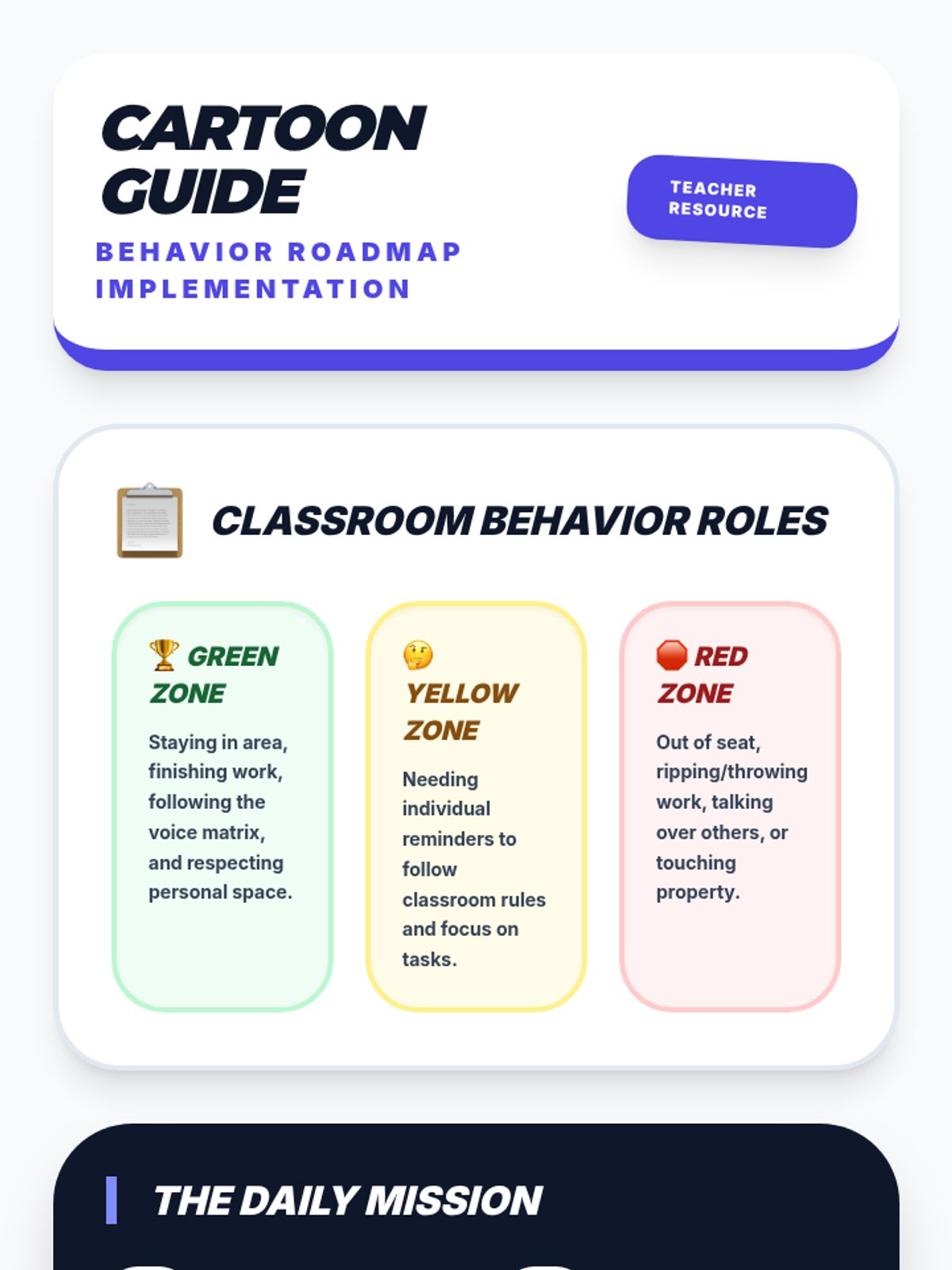
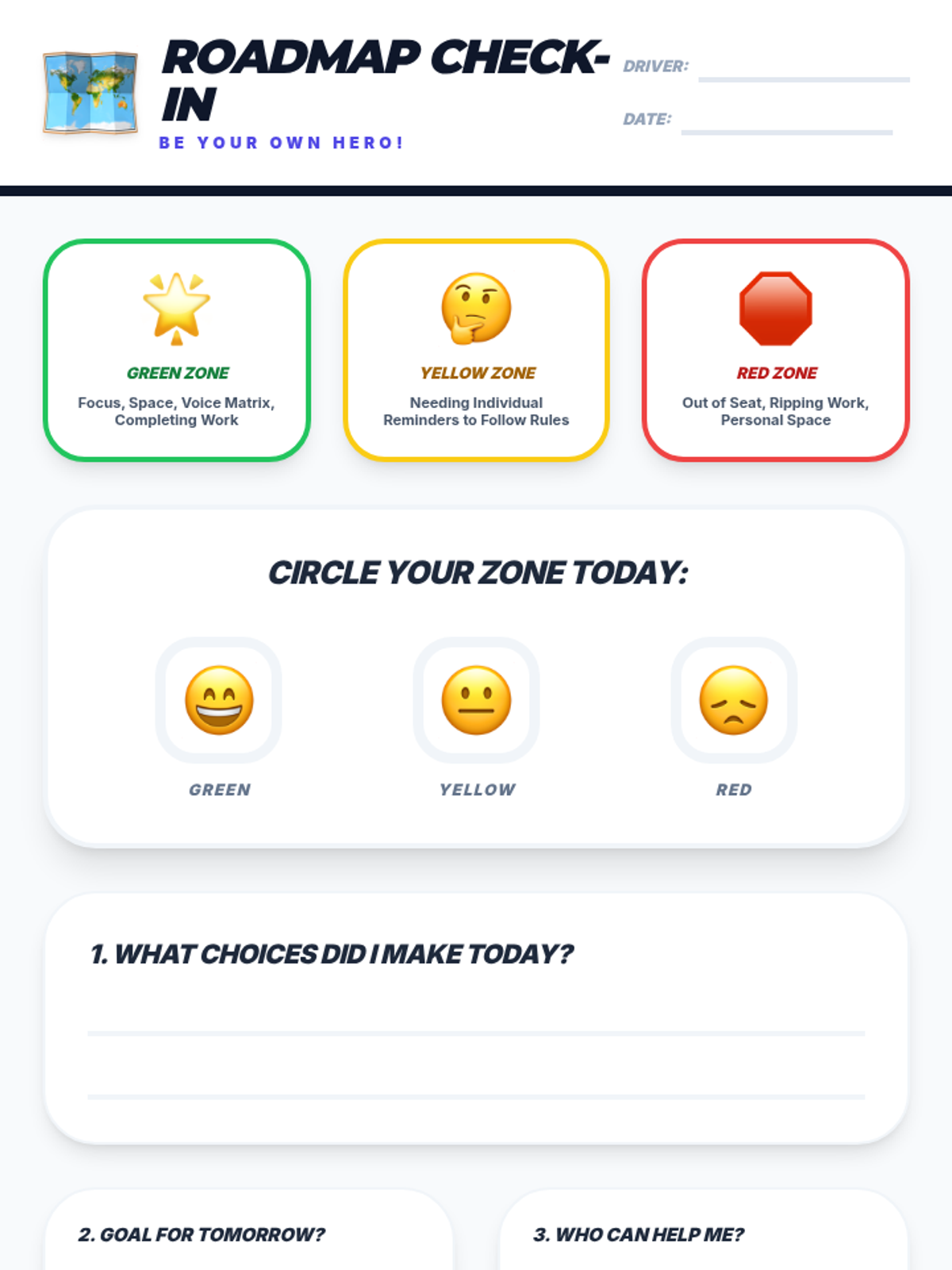
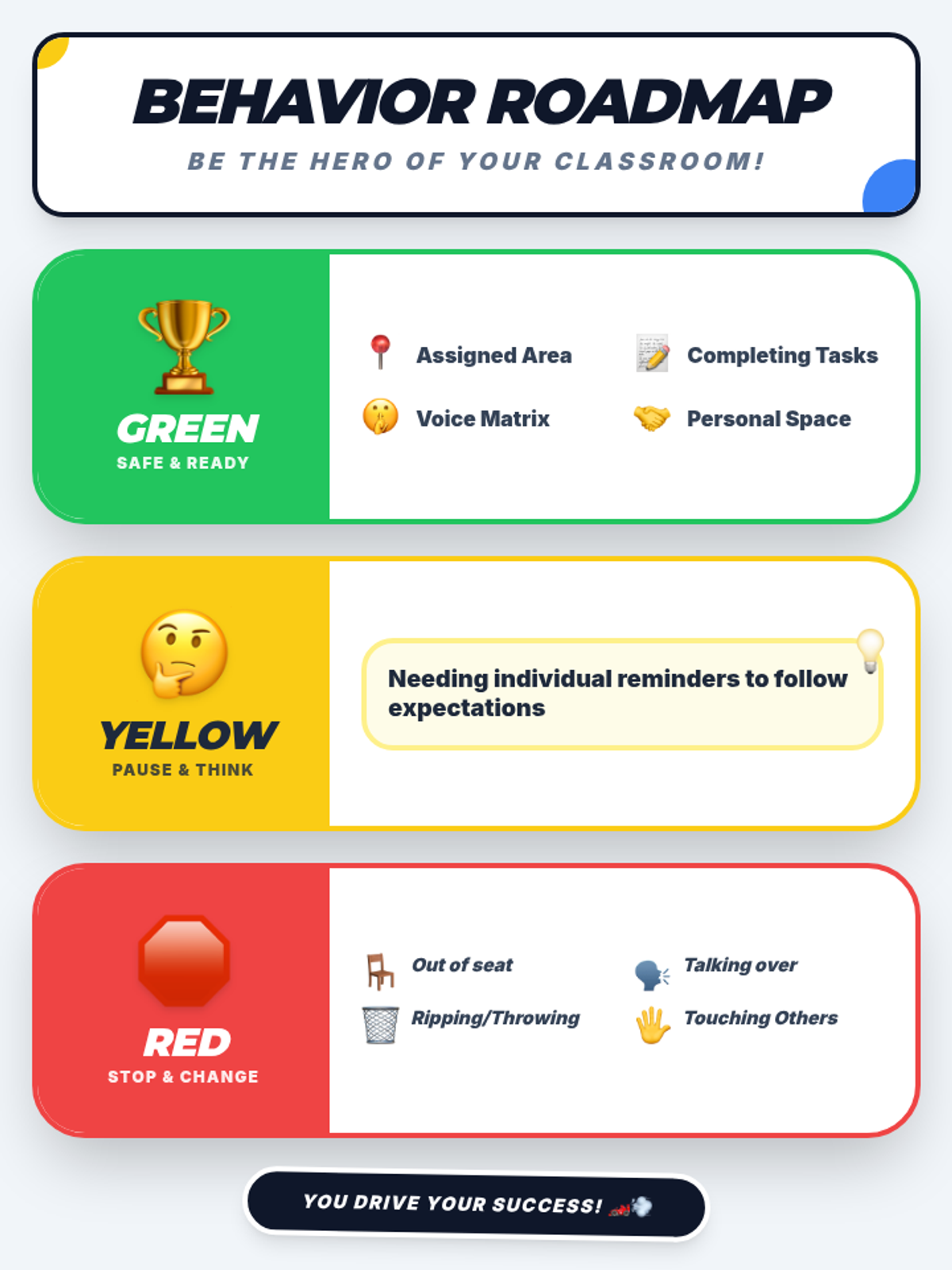
A teacher guide for Lesson 5 focusing on finalizing student profiles, role-playing self-advocacy conversations, and integrating these tools into classroom routines.
A short assessment for Wilson Reading Step 5.2, including marking practice, word/sentence dictation areas, and a teacher-led reading check.
Printable sorting cards for multi-syllabic words, designed for students to categorize words by their first syllable type (Open vs. Closed). Fits Wilson Reading Step 5.2.
A student worksheet for Wilson Reading Step 5.2 focusing on scooping and dividing words with open syllables. Includes division practice, nonsense syllable identification, and sentence reading.
Instructional slides for Wilson Reading Step 5.2, featuring the detective-themed "Syllable Secrets" aesthetic. Covers the open syllable rule, v/cv division, and marking strategies.
A comprehensive week-long teacher facilitation guide for Wilson Reading Step 5.2, including daily pacing, warm-up ideas, and a master word bank.
Bengal Tiger-themed teacher guide for facilitating the Tiger Tracker CICO system, including scoring protocols and reflection strategies.
Updated Tiger-themed daily behavior tracking sheet with reflection areas for wins and obstacles, featuring a Bengal Tiger aesthetic.
Updated Mission Control Guide for teachers, now including instructions on how to facilitate the "Mission Analysis" reflection and debrief session with the student.
Updated Mission Tracker CICO sheet for a 3rd grade student, featuring a dedicated "Mission Analysis" section for self-reflection on goal success, wins, and obstacles.
A comprehensive teacher resource explaining how to implement the Mission Tracker CICO system, including goal setting, scoring, and daily routines.
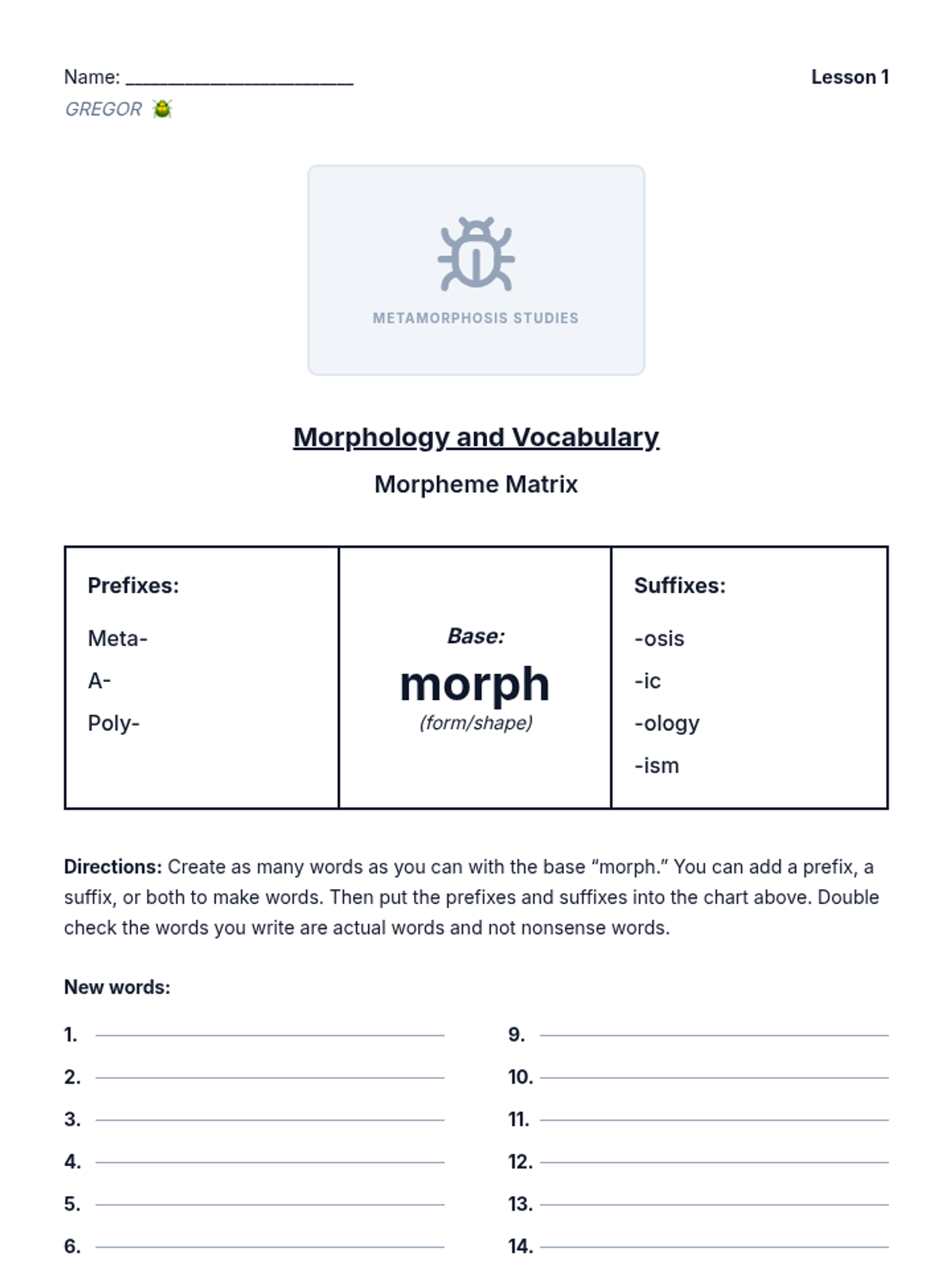
Updated daily behavior tracking sheet with a robust "Mission Analysis" section for reflecting on successes (what went right) and challenges (what went wrong).
A student reflection worksheet for the Mind Lab lesson. It includes space for video comprehension, personal reflection on metaphors, and an extension activity where students create their own metaphor for a specific feeling.
Printable reference cards for small group work. Each card explains one of the four main ADHD metaphors (Secretary, Whiteboard, Race Car, Sunburn) and provides a specific goal for the poster activity.
Engaging instructional slides for the Mind Lab lesson, featuring the 'How to (Explain) ADHD' video, visual breakdowns of key metaphors (Secretary, Whiteboard, Race Car), and activity instructions.
A comprehensive teacher's guide for the Mind Lab lesson, including a lesson timeline, discussion anchors, vocabulary definitions, and facilitation tips for teaching ADHD metaphors to 4th-6th graders.
A high-contrast, professional data collection sheet designed for recording 1-step directions and WH-question responses using a clean tally system.
High-contrast flashcards for common part signs: ed, er, ou, ow, st. Ideal for students with low vision.
High-contrast flashcards for the 'ch' group of contractions: ch, gh, sh, th, wh. Designed for tactile or visual practice.
Final mastery assessment for the 9-week Braille sequence, featuring pattern recognition and a comprehensive dictation challenge.
Week 7 practice pack for common part signs (ed, er, ou, ow, st), including pattern matching and writing mastery.
Week 4 practice pack for the 'ch' group of contractions, focusing on identification, tracing, and simple word building (ch, sh, th).
A teacher-facing dictation key for Weeks 1-3, providing word lists, practice sentences, and a short mastery passage for evaluating the student's Braille contraction skills.
A set of high-contrast, printable flashcards for the 'and', 'for', 'of', 'the', and 'with' contractions. Features large print and dot patterns for BLV accessibility.
Week 1 student practice pack for the 'and' group contractions, featuring pattern recognition, tracing/writing practice, and fill-in-the-blank sentences.
A comprehensive 9-week roadmap for teachers, outlining the instructional cycle, target contractions, and teaching strategies for BLV students.
A visual "dashboard" that allows the student to set a goal for their work session and track their progress through non-academic stages to evaluate self-regulation and goal-setting skills.
A set of printable task cards that challenge students to sort objects based on different attributes (color, function, size) to assess categorization skills.
A visual, step-by-step assembly guide that assesses a student's ability to inventory materials and follow a sequence of instructions for a non-academic task.
A comprehensive teacher's guide and scoring rubric for assessing organizational skills through non-academic tasks, including observation criteria and facilitation strategies.
A visual checklist for gym behaviors, strictly designed to fit on a single 8.5x11 inch page for easy printing and display.
A condensed, one-page version of the assembly social story, strictly designed to fit a single 8.5x11 inch page with clear text and icons.
A basketball-themed token board featuring a trajectory arc of 7 tokens leading to a hoop, designed to help students track progress on specific behaviors like following directions and task completion. Includes a matching set of printable basketball tokens.
A refined one-page substitute teacher cheat sheet with a professional design, featuring a detailed schedule, routine highlights, behavior management, and a structured end-of-day feedback section.
A set of 20 miniature sports-themed tokens (10 footballs and 10 basketballs) plus small goal cards, designed for easy cutting and lamination. Updated to be significantly smaller for compact reward boards.
A sports-themed reward board with a 10-token tracking system, goal selection area, and motivational instructions. Designed to be used with the Game Day Tokens.
A set of 16 sports-themed tokens (8 footballs and 8 basketballs) plus goal cards for a treasure box and movement break, designed for easy cutting and lamination. Now updated with smaller token sizes.
A weekly goal chart for students to track their progress in following the bus exit routine, featuring space for stickers or checkmarks.
A visual presentation to introduce the bus exit routine to students, featuring large icons and clear instructional text.
A 4-step visual schedule for students to follow when exiting the school bus, featuring clear icons and simple language.
A parent-facing handout for families of students recommended for the 15:1 Bridge to Success program. It highlights program benefits (small class size, expert support, social integration), campus details, and next steps for the Spring transition.
A teacher-facing one-pager and talking points guide for discussing the transition to the new 15:1 self-contained classroom at St. Jacob's. Includes key program details, sample scripts, and FAQs to help teachers communicate with excitement and confidence.
A facilitation guide for the co-taught School Mouse Mission lesson. It outlines specific roles for the Speech-Language Pathologist (SLP) and Occupational Therapist (OT), provides a 30-minute pacing guide, and offers differentiation strategies for students with varying needs in an autism classroom.
A visual slide deck supporting the co-taught lesson on 'If You Give a Mouse to School'. Features large vocabulary icons and clear visual prompts for WH-questions (Who, What, Where) to aid students with autism in comprehension. Includes specific reminders for OT handwriting success.
A structured worksheet designed for students with autism to practice answering WH-questions (Who, What, Where, When) based on the book 'If You Give a Mouse to School'. It includes large, clear icons for each question type and wide, high-contrast ruled lines to support OT handwriting goals.
A comprehensive teacher guide for implementing the "Feeling Calm" lesson. Includes instructional strategies, differentiation tips for students with intellectual disabilities, and a progress monitoring chart.
A set of visual cue cards designed to reinforce self-regulation techniques. These cards provide immediate visual prompts for smelling the flower, blowing out the candle, and other calming strategies.
A short, illustrated social story for students with intellectual disabilities focusing on deep breathing and muscle relaxation techniques. Each page features simple language and large visual supports.
A simple matching worksheet for identifying core emotions (happy, sad, frustrated, confused) and reinforcing the appropriate social action for seeking help in the classroom.