A dual-purpose printable resource containing cut-out visual support cards for K-2 students and script/message templates for 3-5 students. Includes a self-advocacy checklist to help students prepare for asking questions.
An updated slide deck for 6th-grade students with IEPs, now featuring additional scenario slides for identifying appropriate times to ask for help, alongside the visual checklist and social story.
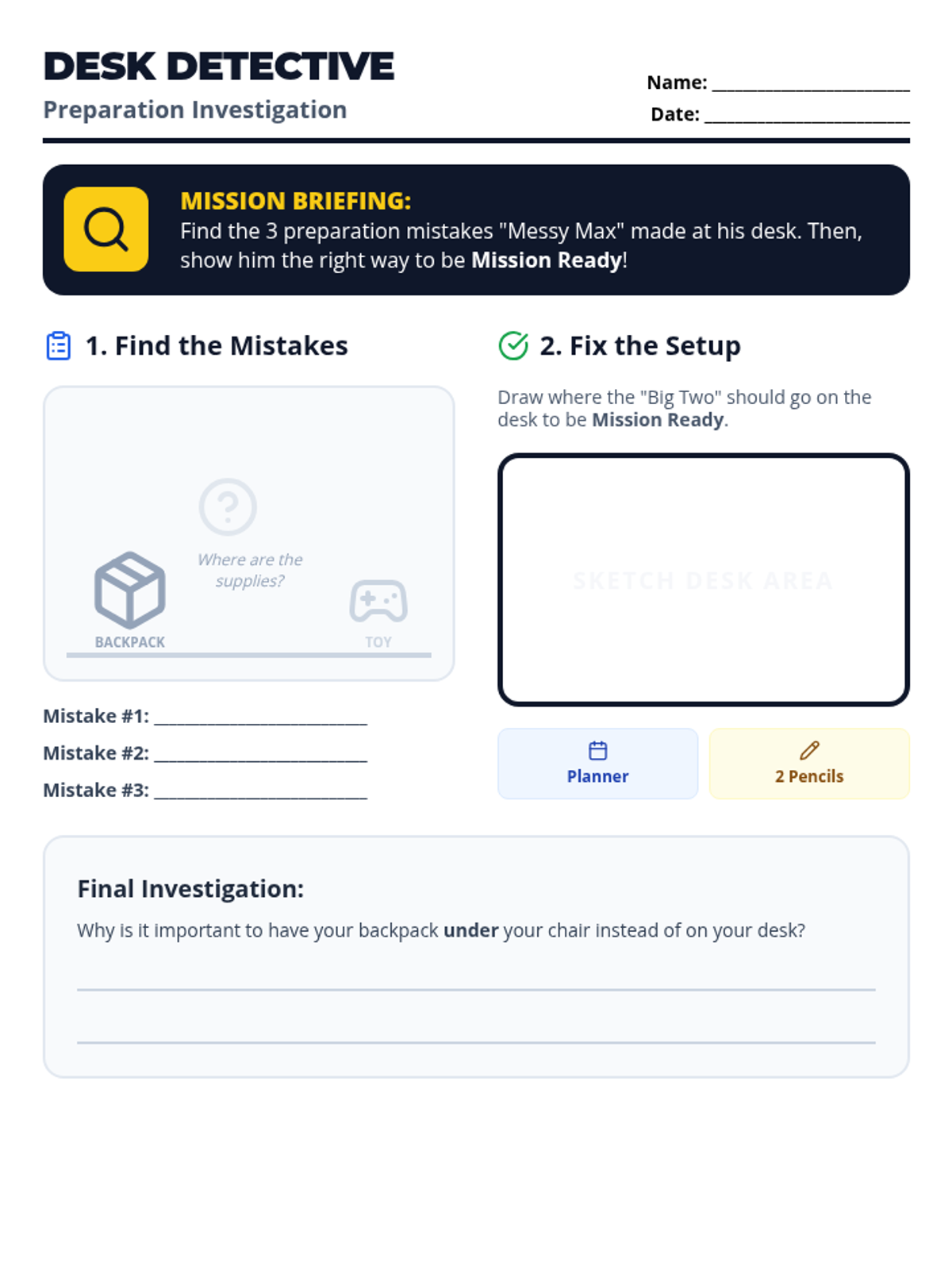
A visual worksheet where students act as "Desk Detectives" to identify organizational errors and practice setting up a "Mission Ready" workspace. No placeholder text; visual elements used to depict errors. Fits on one page.
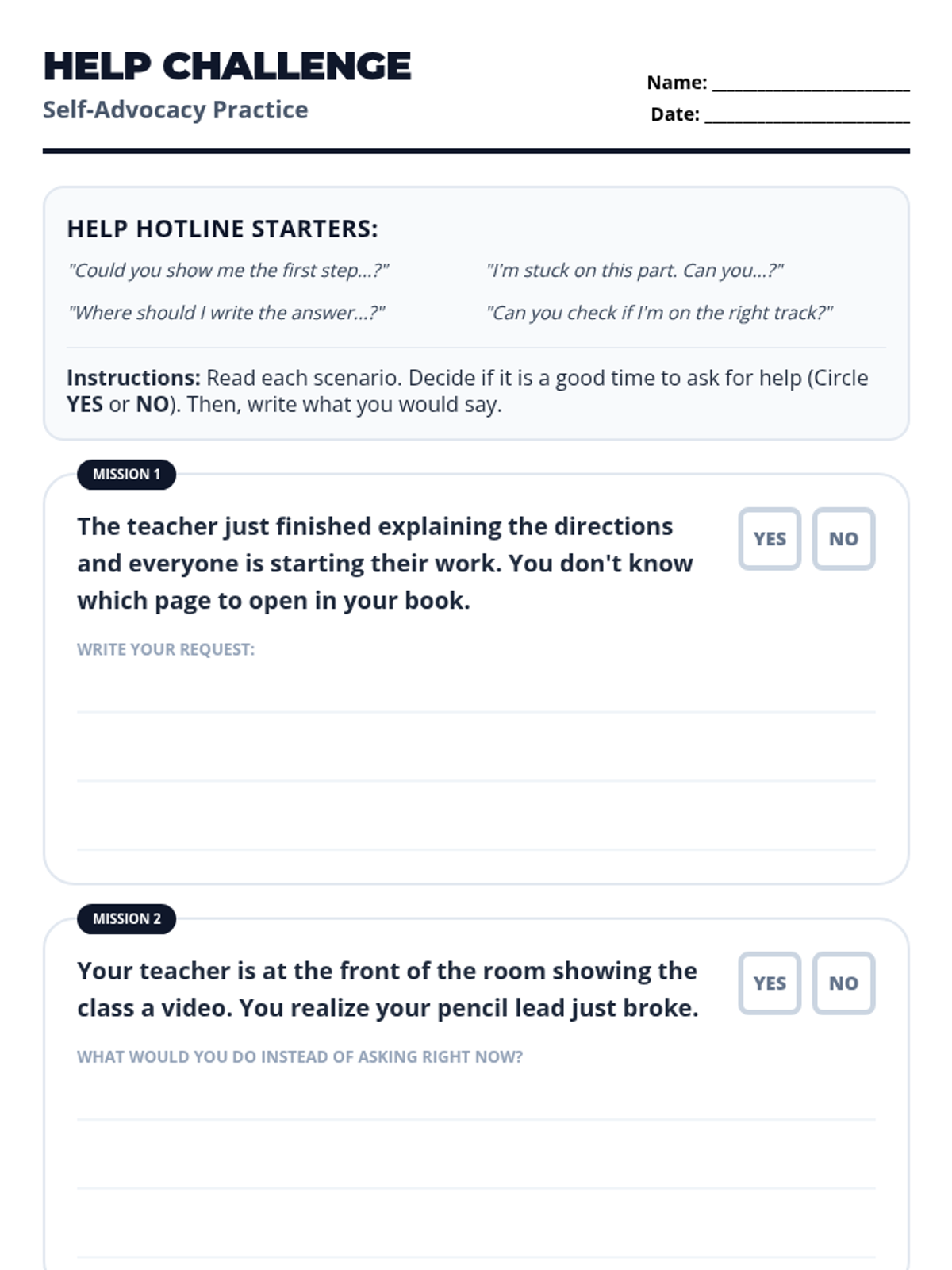
A worksheet for students to practice evaluating classroom scenarios. Students decide when it is appropriate to ask for help and practice writing out their requests using the sentence starters from the lesson. Provide multiple lines for handwriting.
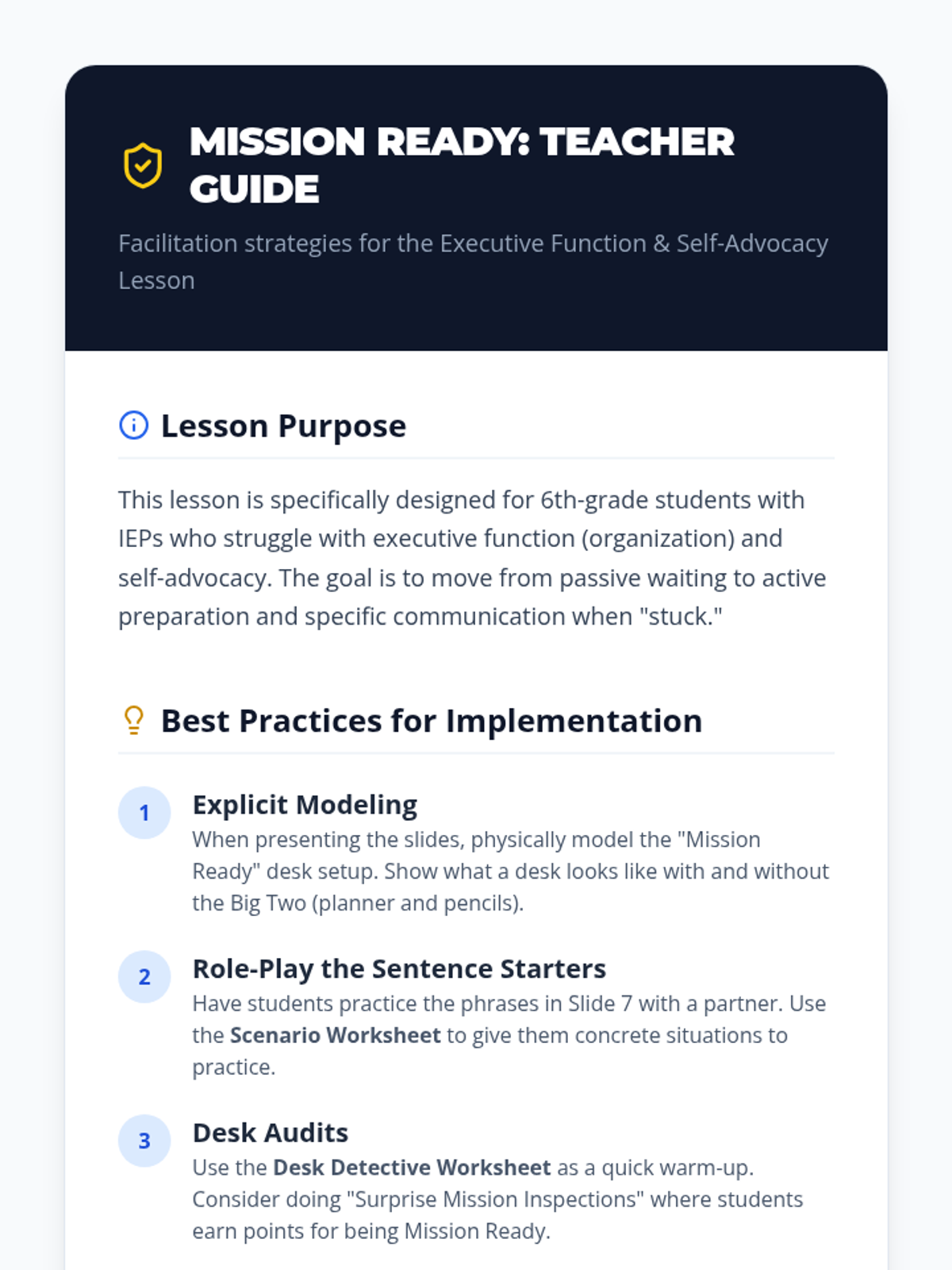
Updated teacher guide including instructions for the new scenario and desk detective worksheets, along with expanded scaffolding tips for anxiety and visual support.
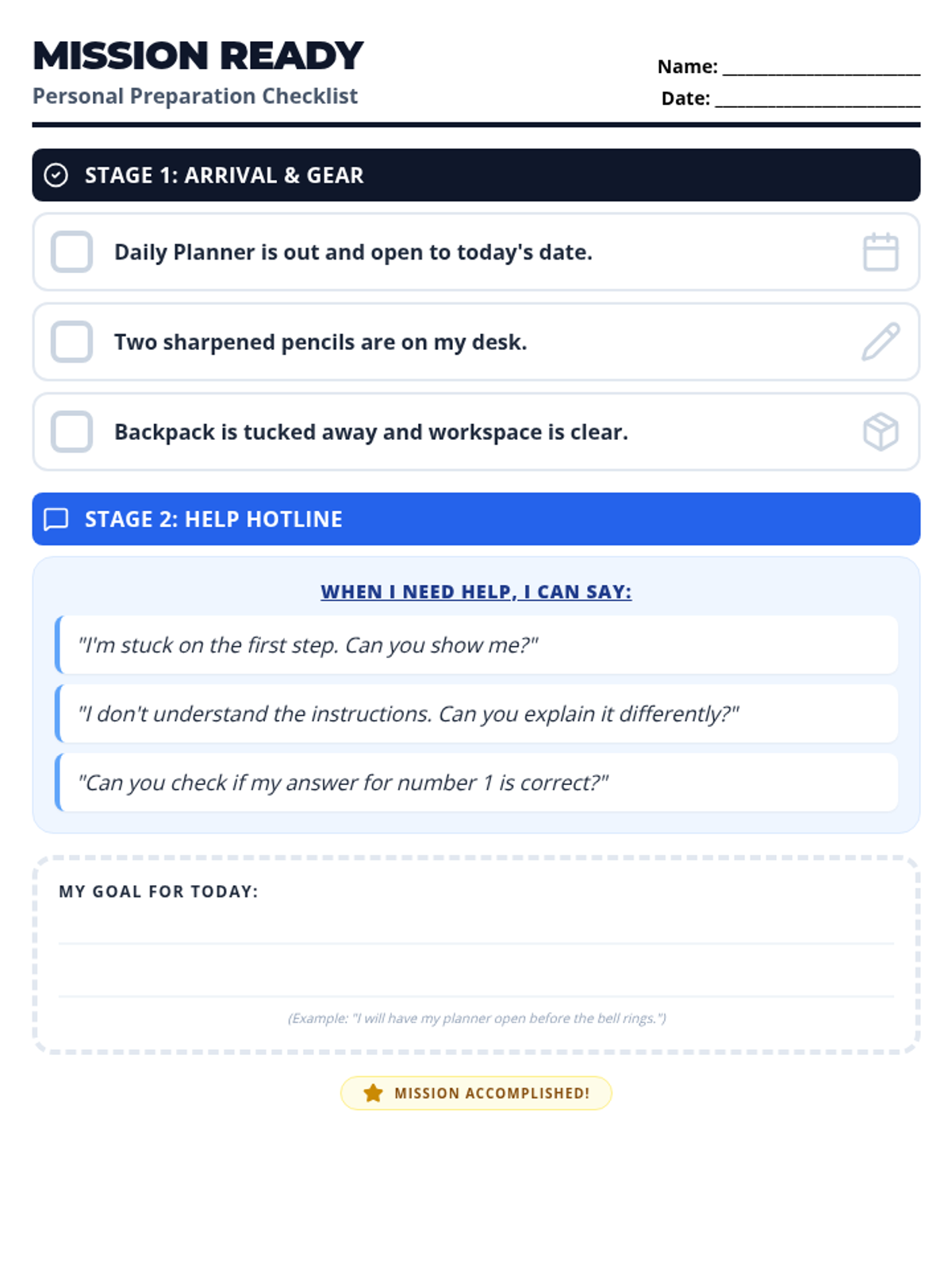
A printable step-by-step checklist for students to use at their desk. Includes preparation checks for planners and pencils, as well as a 'Help Hotline' section with scripted sentence starters for self-advocacy. Tightened for single-page printing.
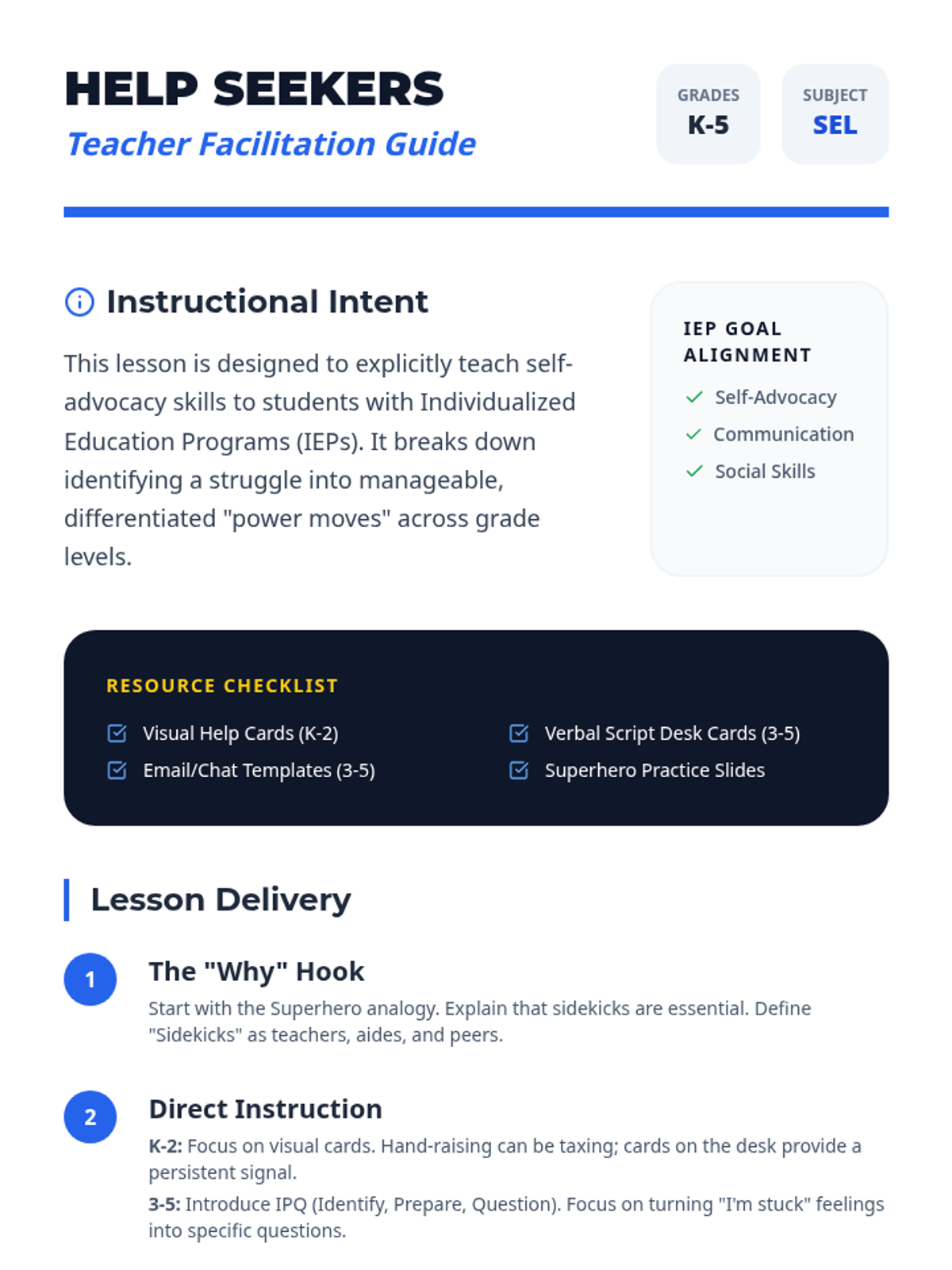
A comprehensive facilitation guide for teachers to deliver the self-advocacy lesson. Includes instructional strategies, IEP goal alignment, and specific differentiation tips for non-verbal students, students with anxiety, or those with processing speed challenges.
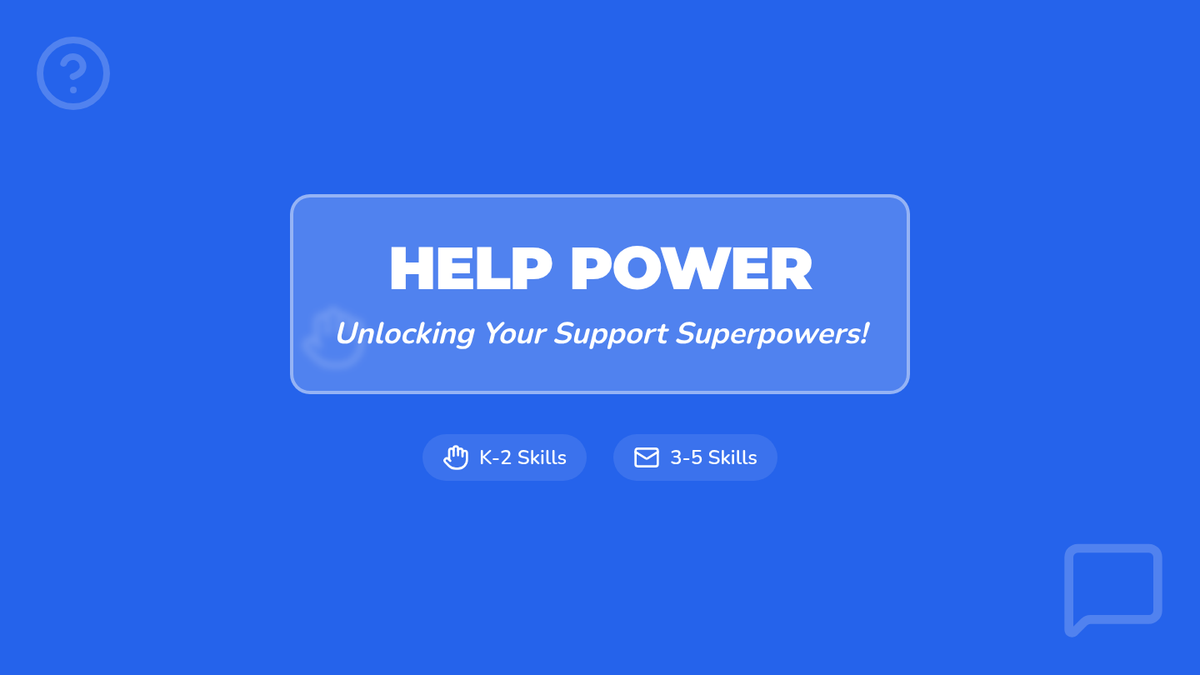
A vibrant and engaging 10-slide presentation designed for K-5 students with IEPs. It covers differentiated strategies for asking for help, including visual signals for K-2 and digital etiquette/verbal scripts for 3-5, all framed within a motivating 'superhero' theme.
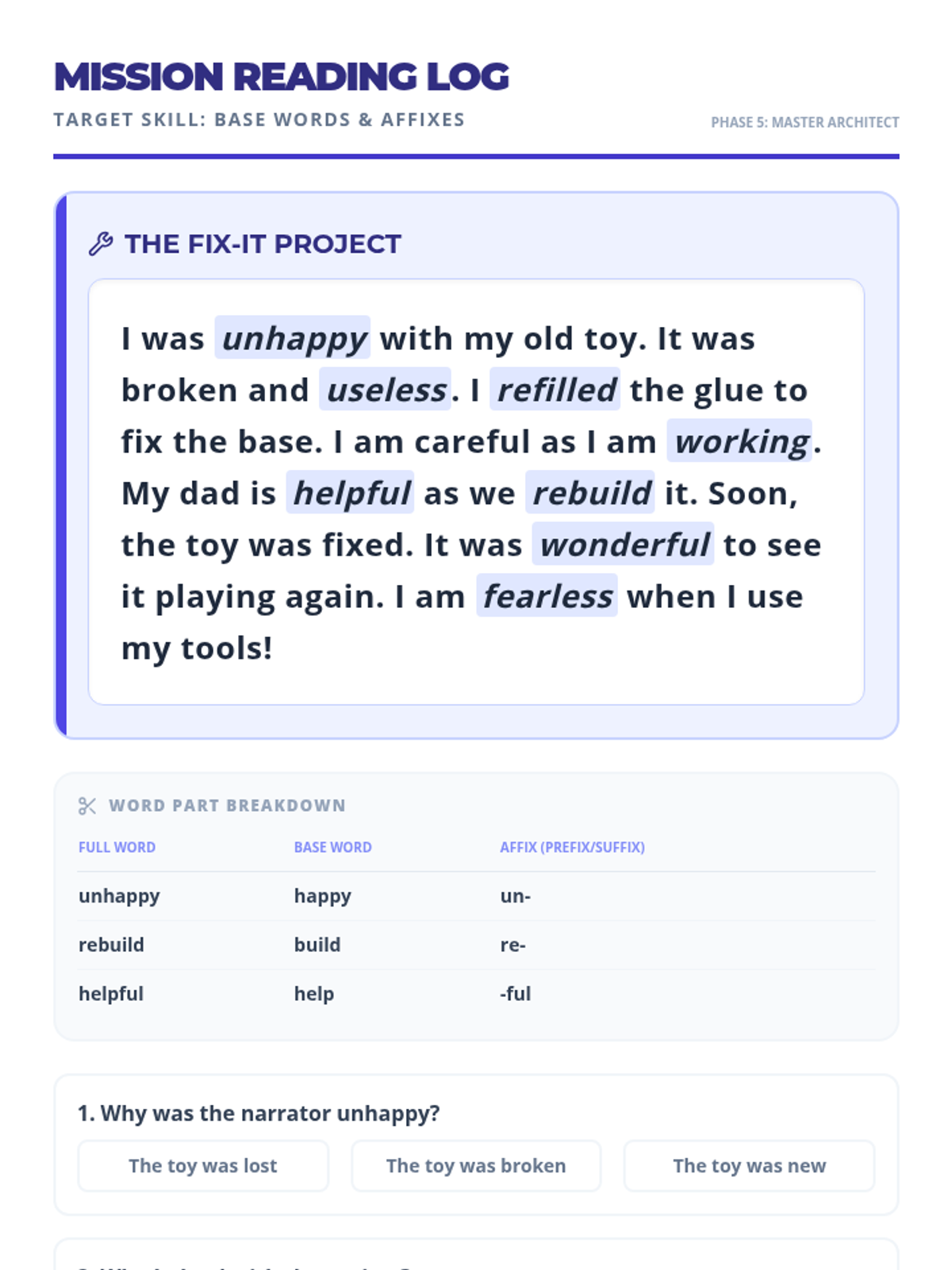
A decodable reading passage focusing on base words, prefixes, and suffixes, with comprehension questions and morphological analysis tasks.
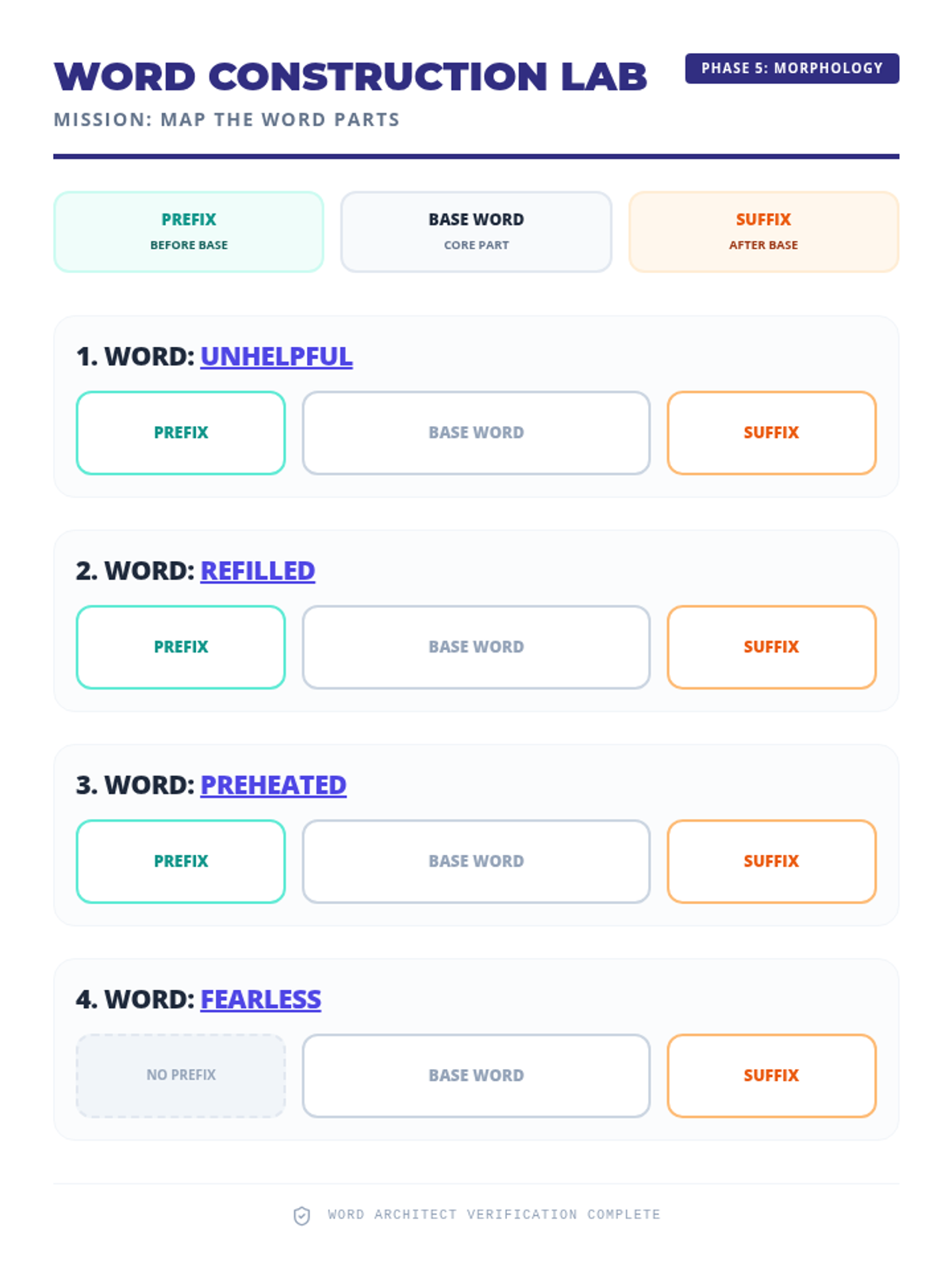
An activity for Phase 5 where students map words into their morphological components (prefix, base word, and suffix) using structured boxes.
A visual instructional presentation for Phase 5, introducing base words, prefixes, and suffixes to build multisyllabic decoding and meaning.
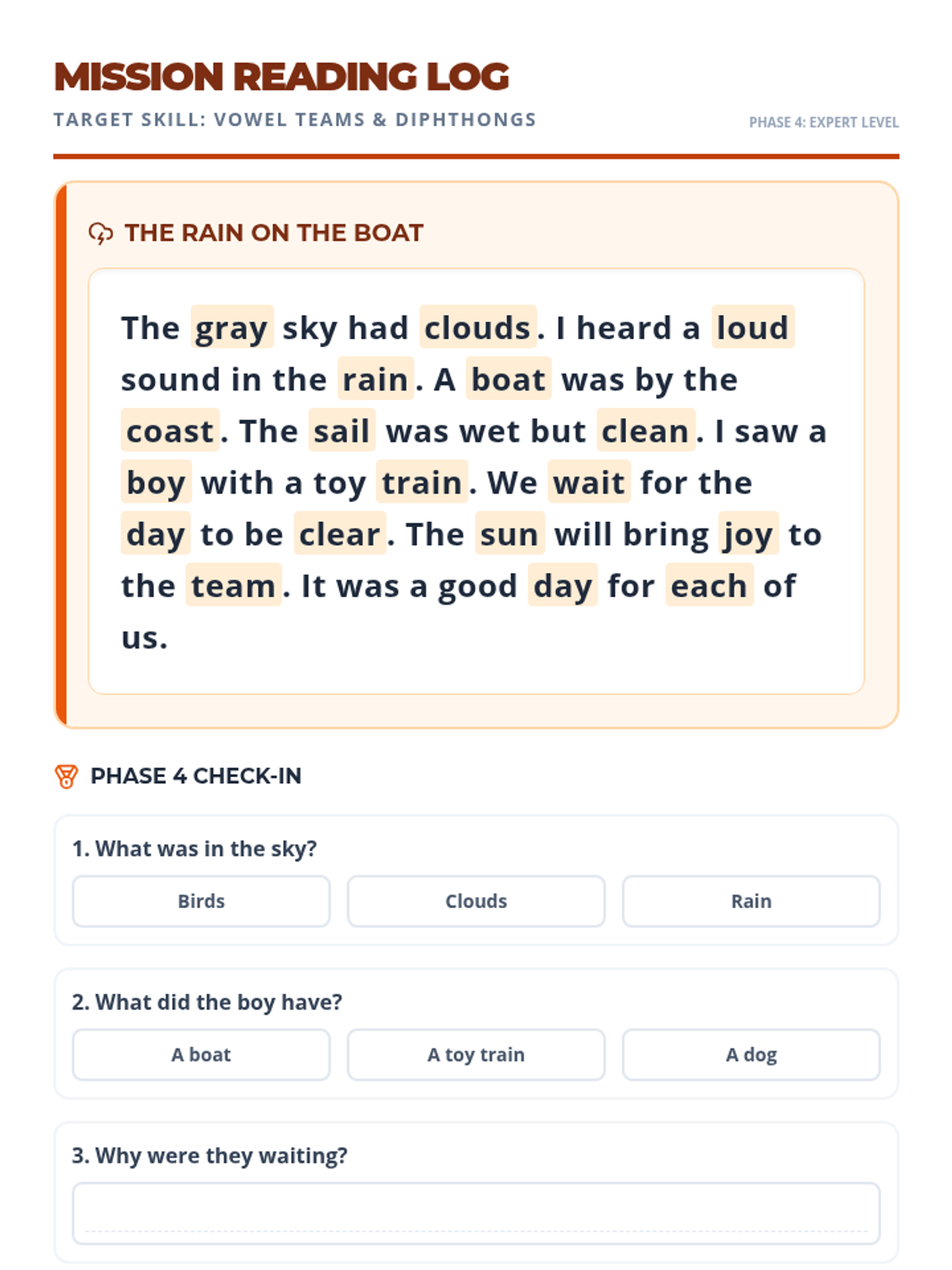
A decodable reading passage focusing on complex vowel teams and diphthongs, featuring comprehension questions and word identification tasks.
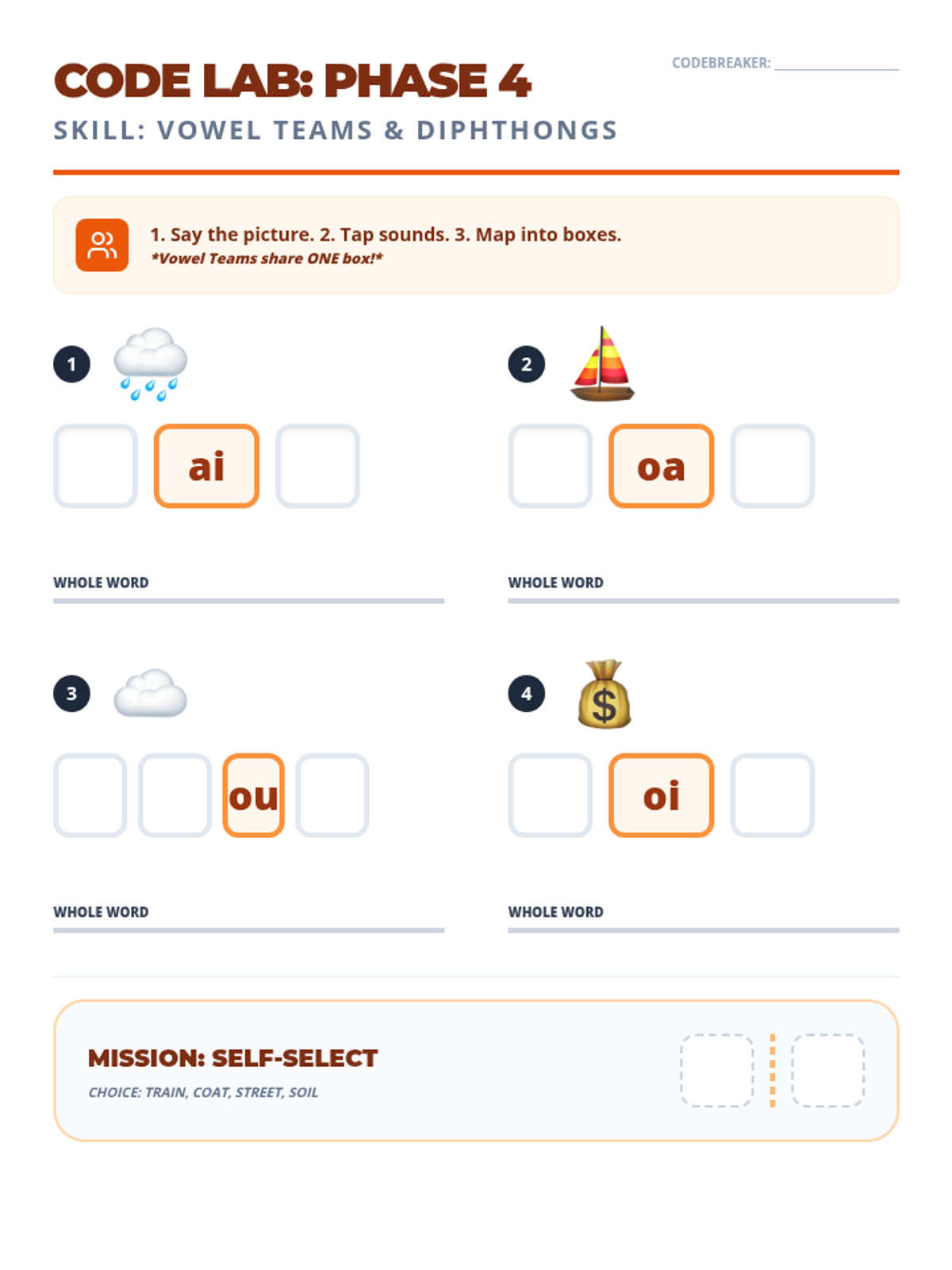
An orthographic mapping activity for Phase 4, focusing on vowel teams (adjacent vowels) and diphthongs using visual icons and sound boxes.
A visual instructional presentation for Phase 4, focusing on complex vowel teams (adjacent vowels) and diphthongs.
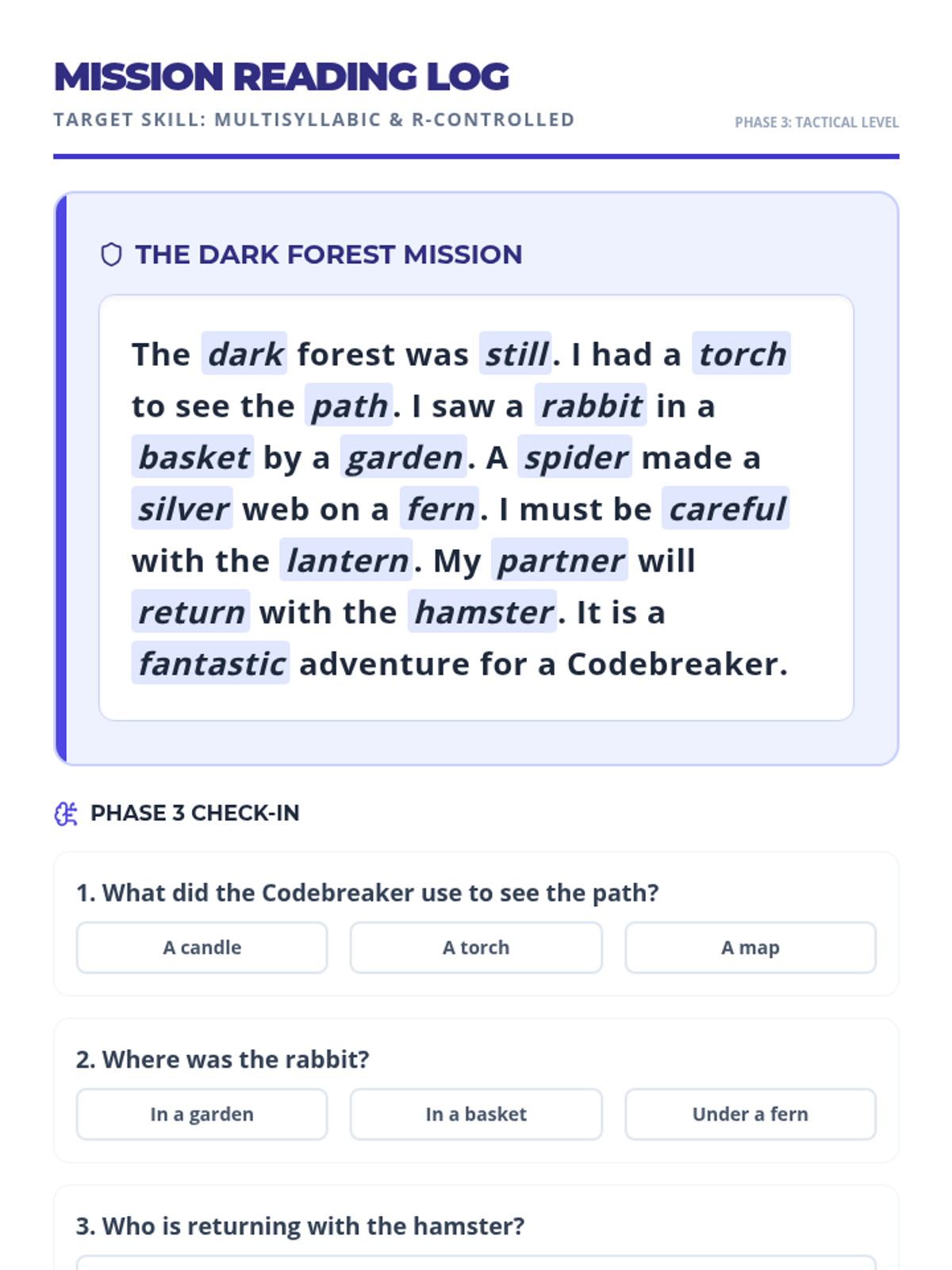
A decodable reading passage focusing on R-controlled vowels and multisyllabic words (2 and 3 syllables), featuring comprehension and word analysis questions.
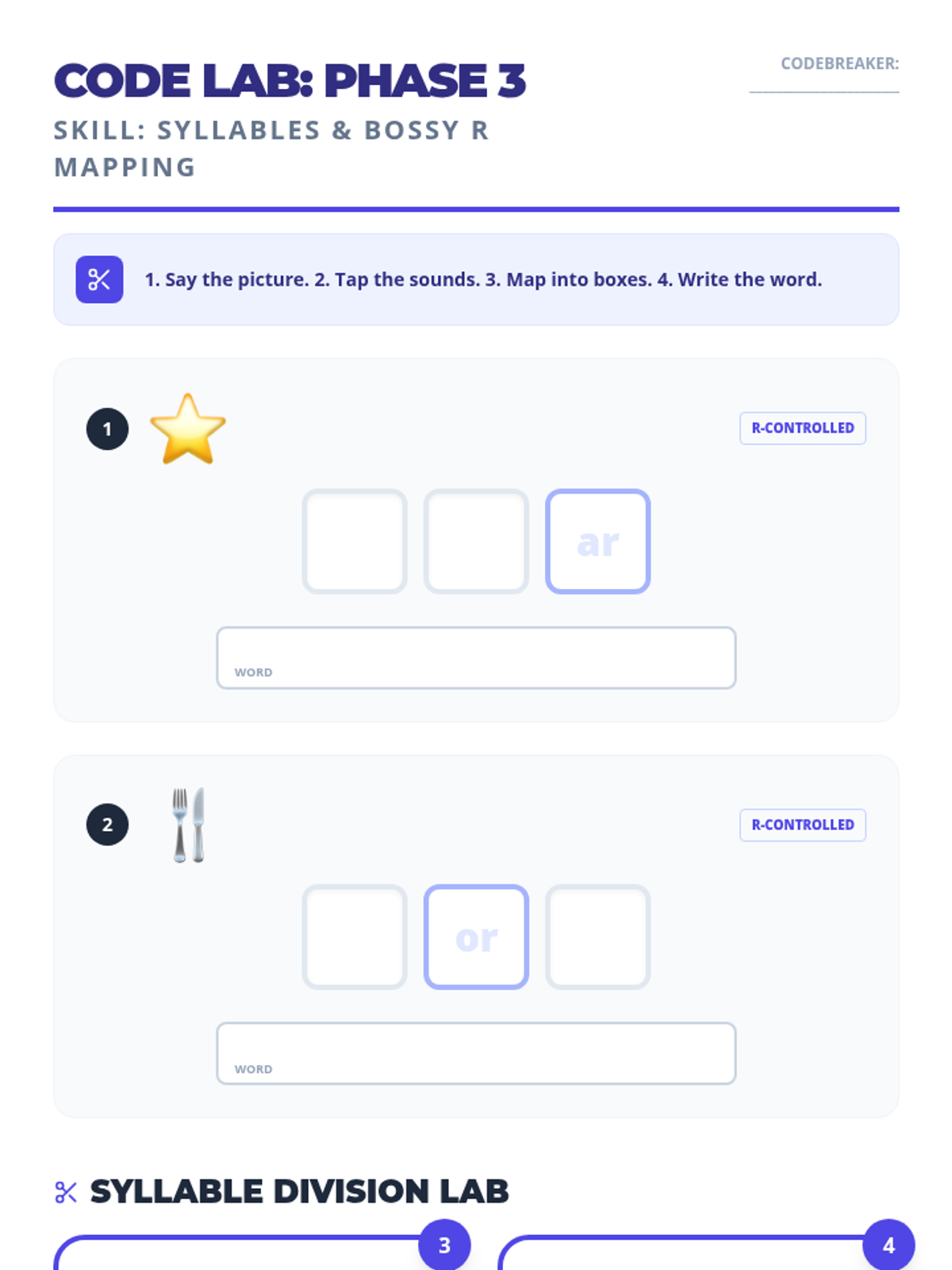
An orthographic mapping activity for Phase 3, focusing on R-controlled vowels and multi-syllable word division using sound boxes and visual markers.
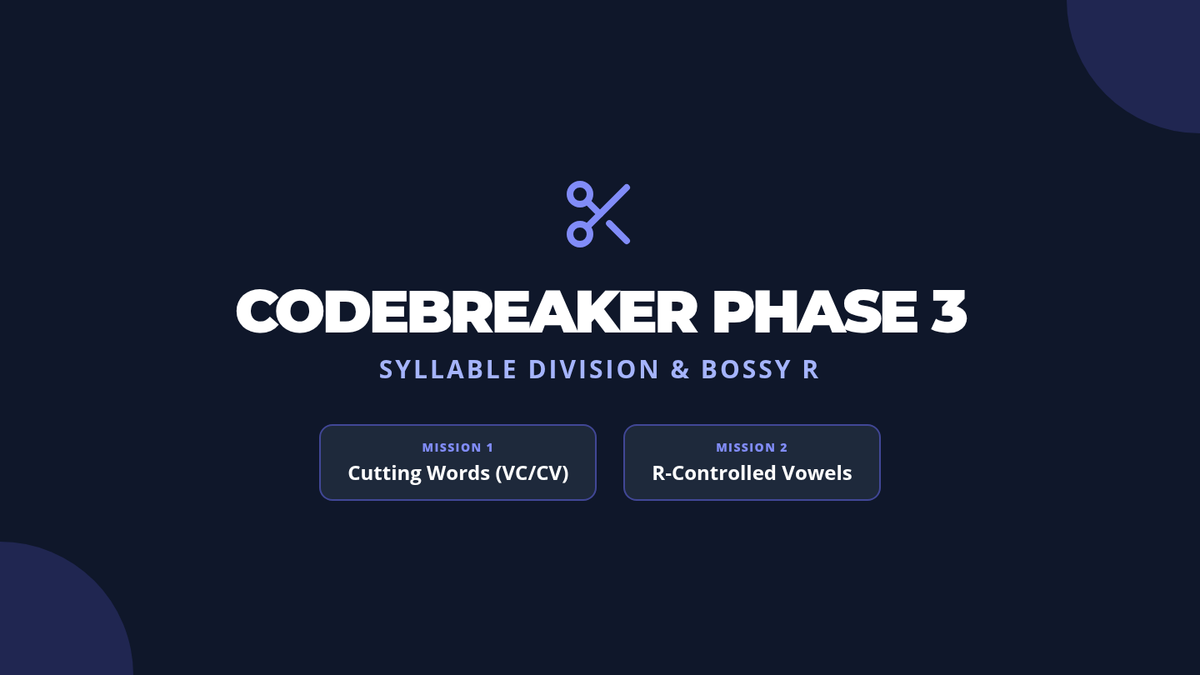
A visual instructional presentation for Phase 3, focusing on syllable division rules (VC/CV) for 2 and 3-syllable words and R-controlled vowel patterns.
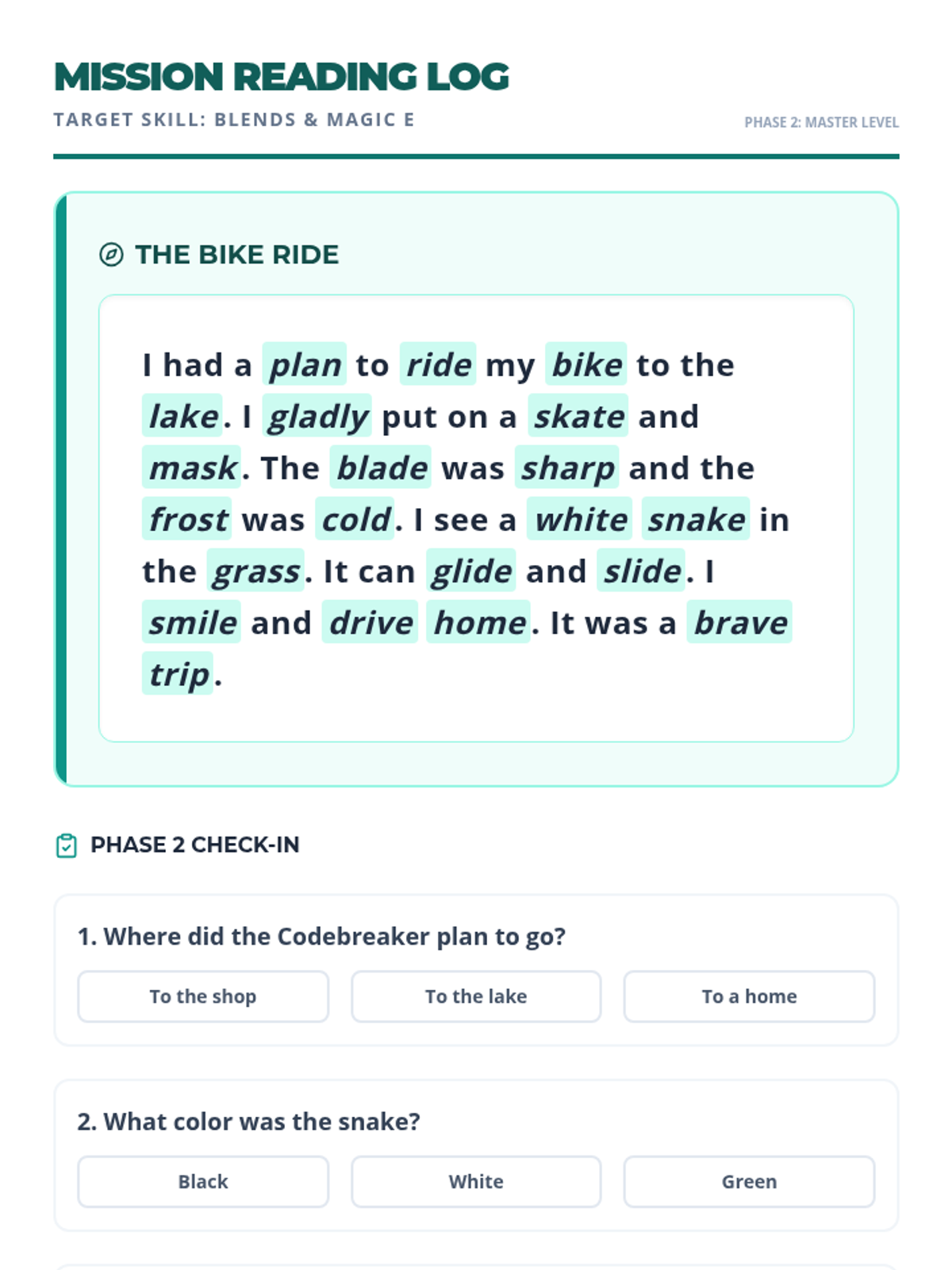
A decodable reading passage focusing on consonant blends and Magic E (VCE) patterns, including comprehension questions and high-frequency word support.
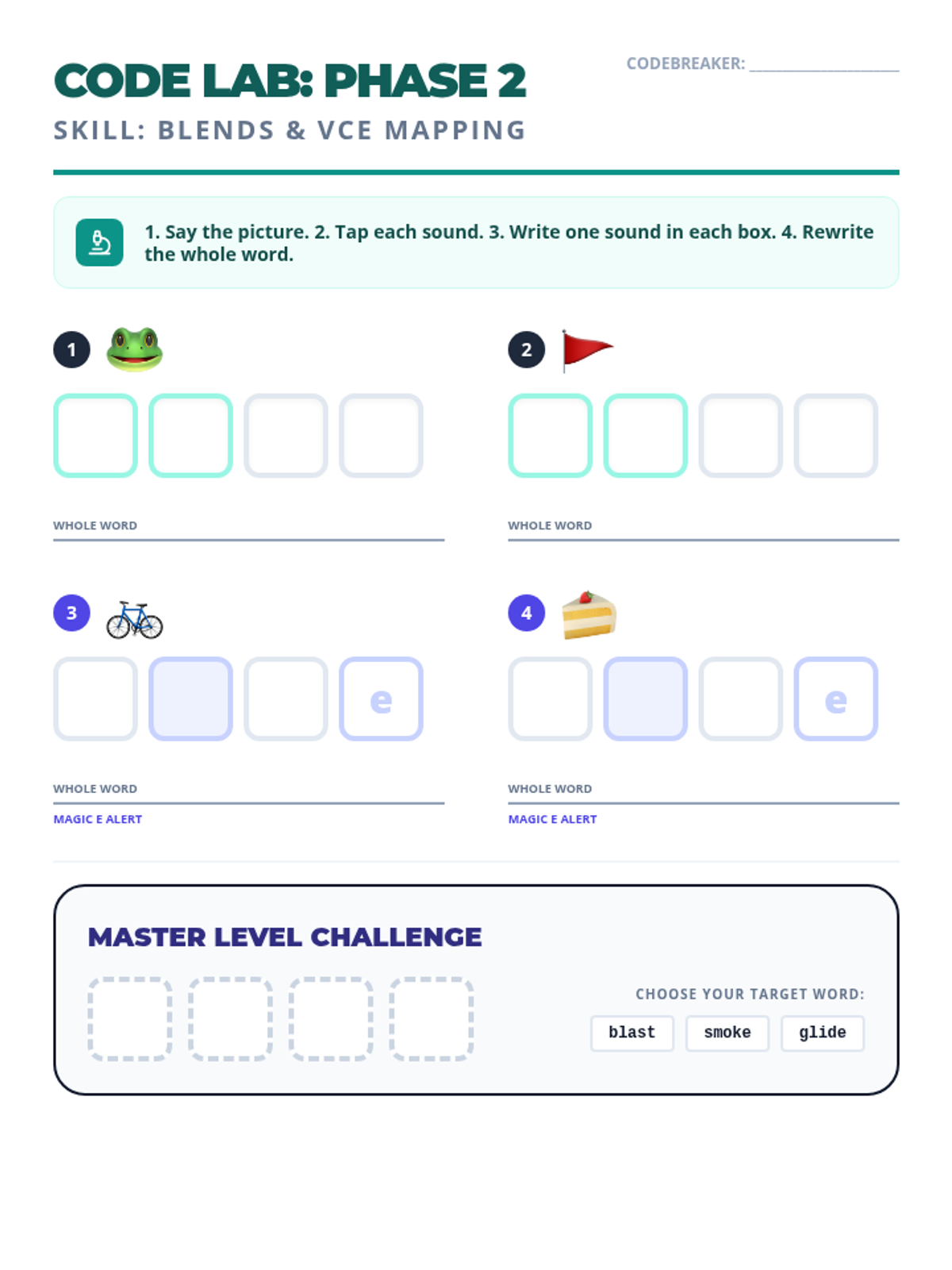
An orthographic mapping activity for Phase 2, focusing on consonant blends and VCE (Magic E) patterns using visual prompts and sound boxes.
A visual instructional presentation for teaching initial and final blends and the silent-e (VCE) marker pattern for long vowels.
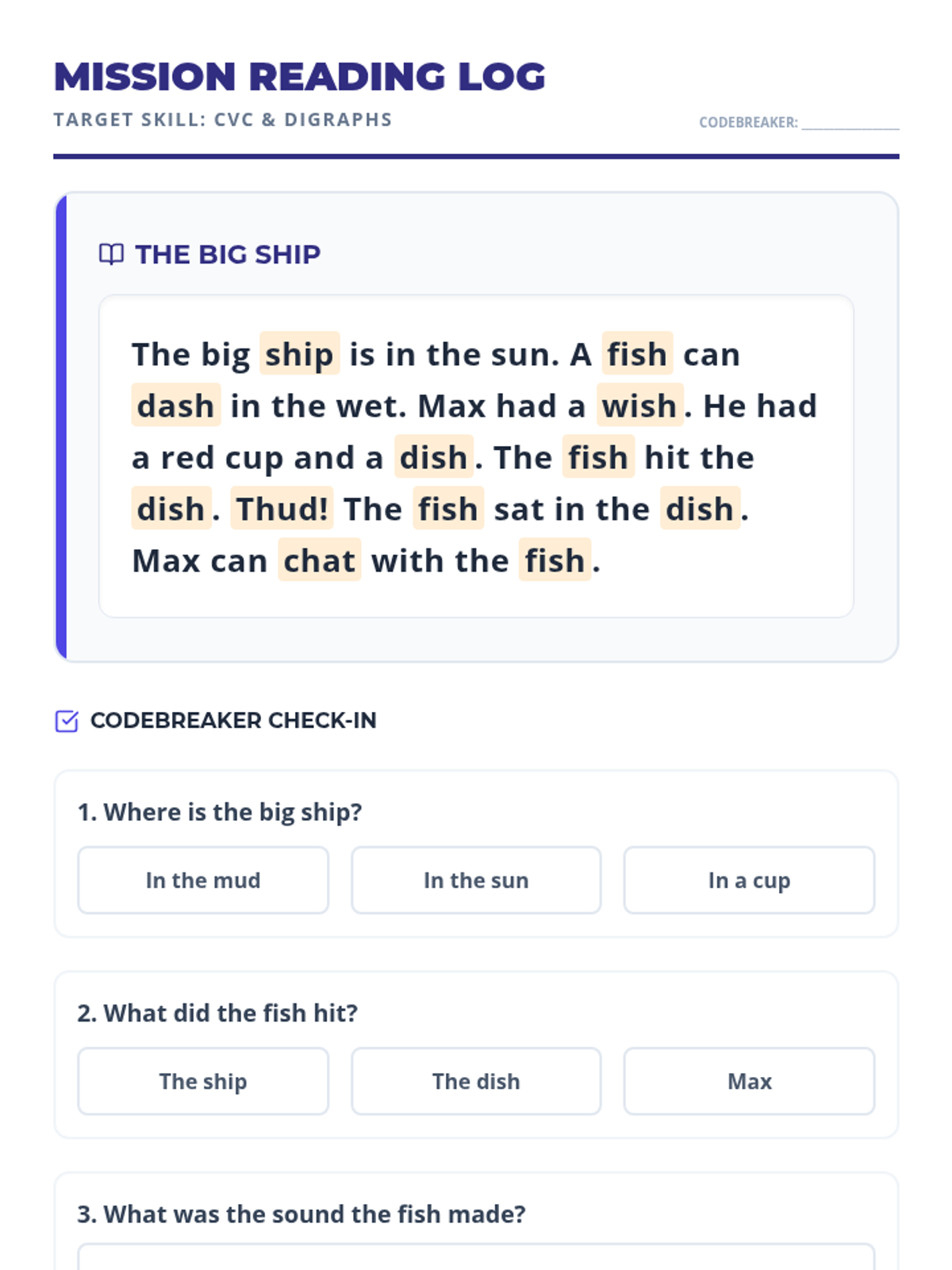
A decodable reading passage focusing on CVC words and consonant digraphs (sh, ch, th) with multiple-choice and open-ended comprehension questions.
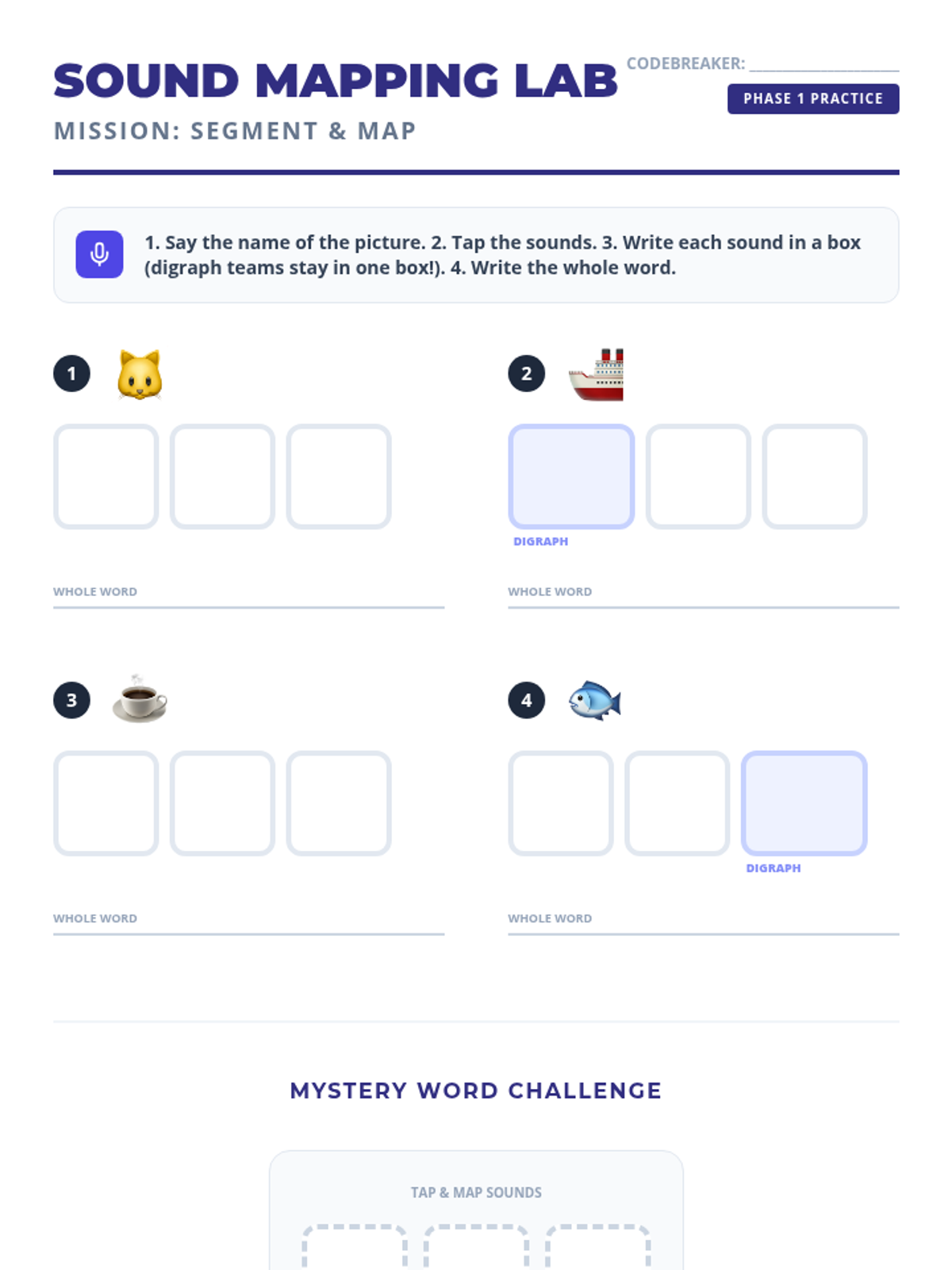
An orthographic mapping worksheet for students to practice segmenting and spelling CVC words and consonant digraphs sh, ch, and th.
A visual instructional presentation for teaching letter-sound correspondence, CVC blending techniques, and the introduction of digraphs sh, ch, and th.
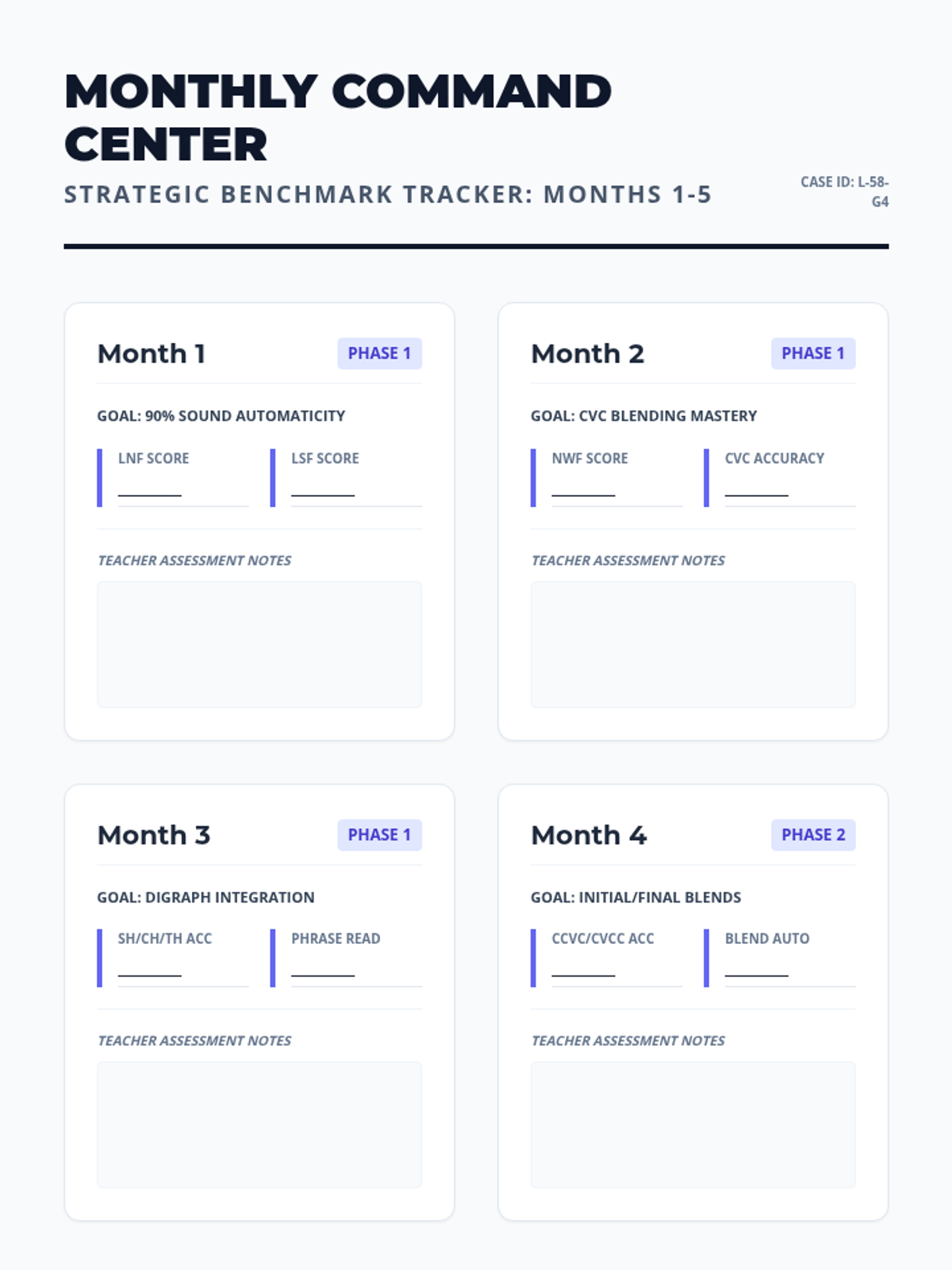
A monthly benchmarking tool for tracking progress across the 40-week intervention, featuring space for goals, scores, and teacher observations.
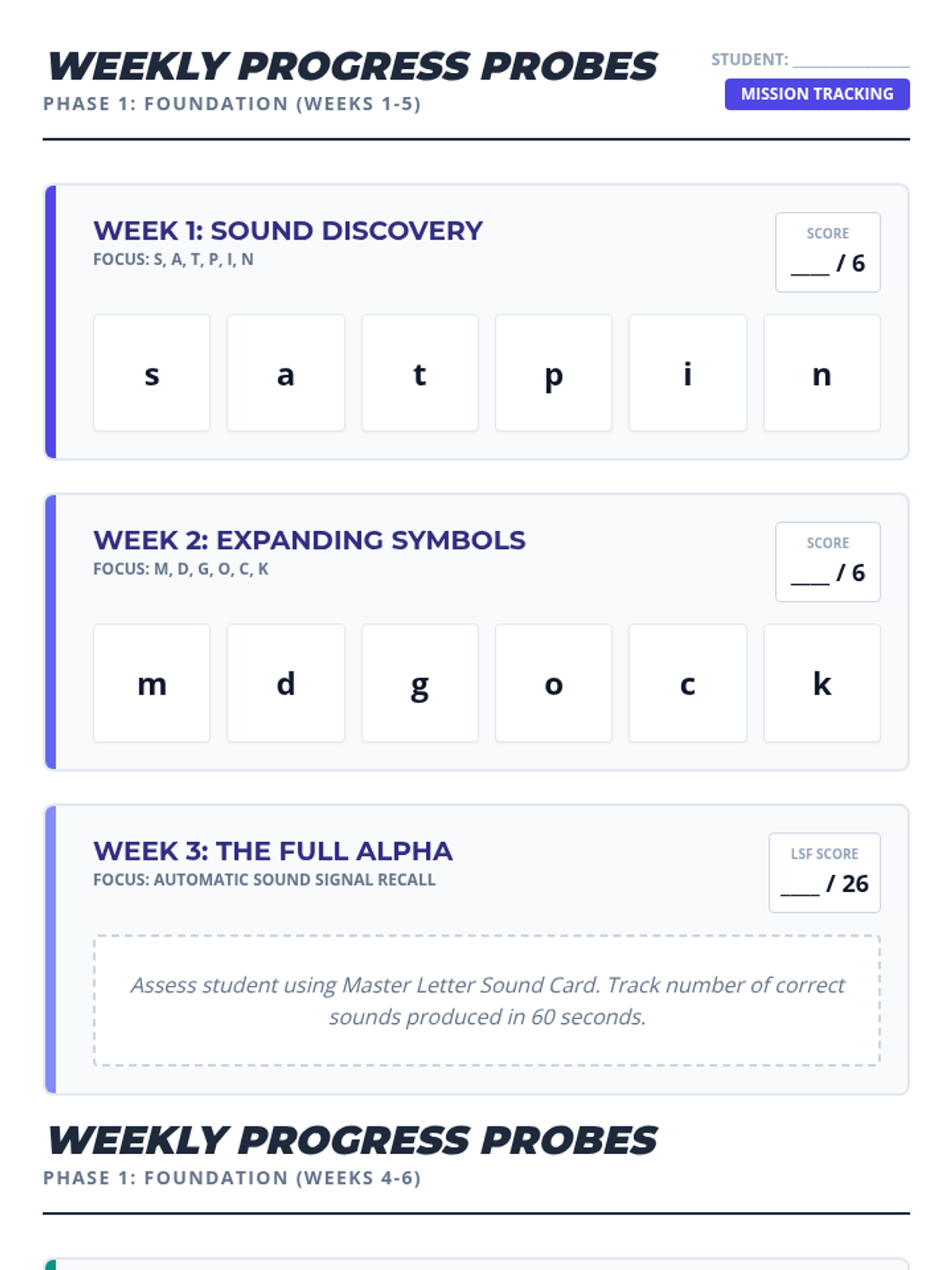
Weekly phonics probes for the first 10 weeks of intervention, designed to track letter-sound automaticity, CVC blending, and digraph recognition.
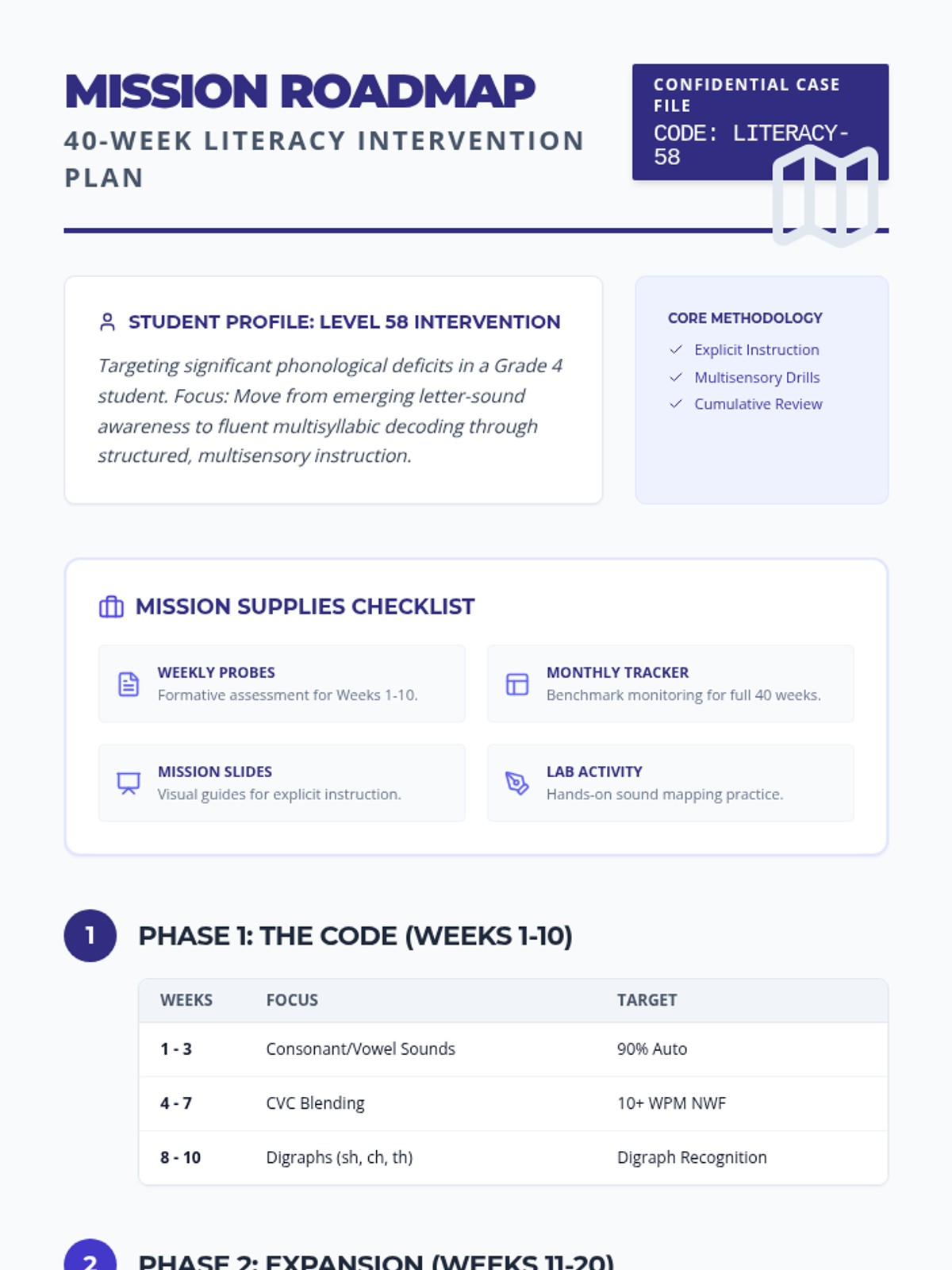
A comprehensive 40-week master plan for intensive dyslexia intervention, detailing the scope and sequence from basic phonics to advanced morphology.
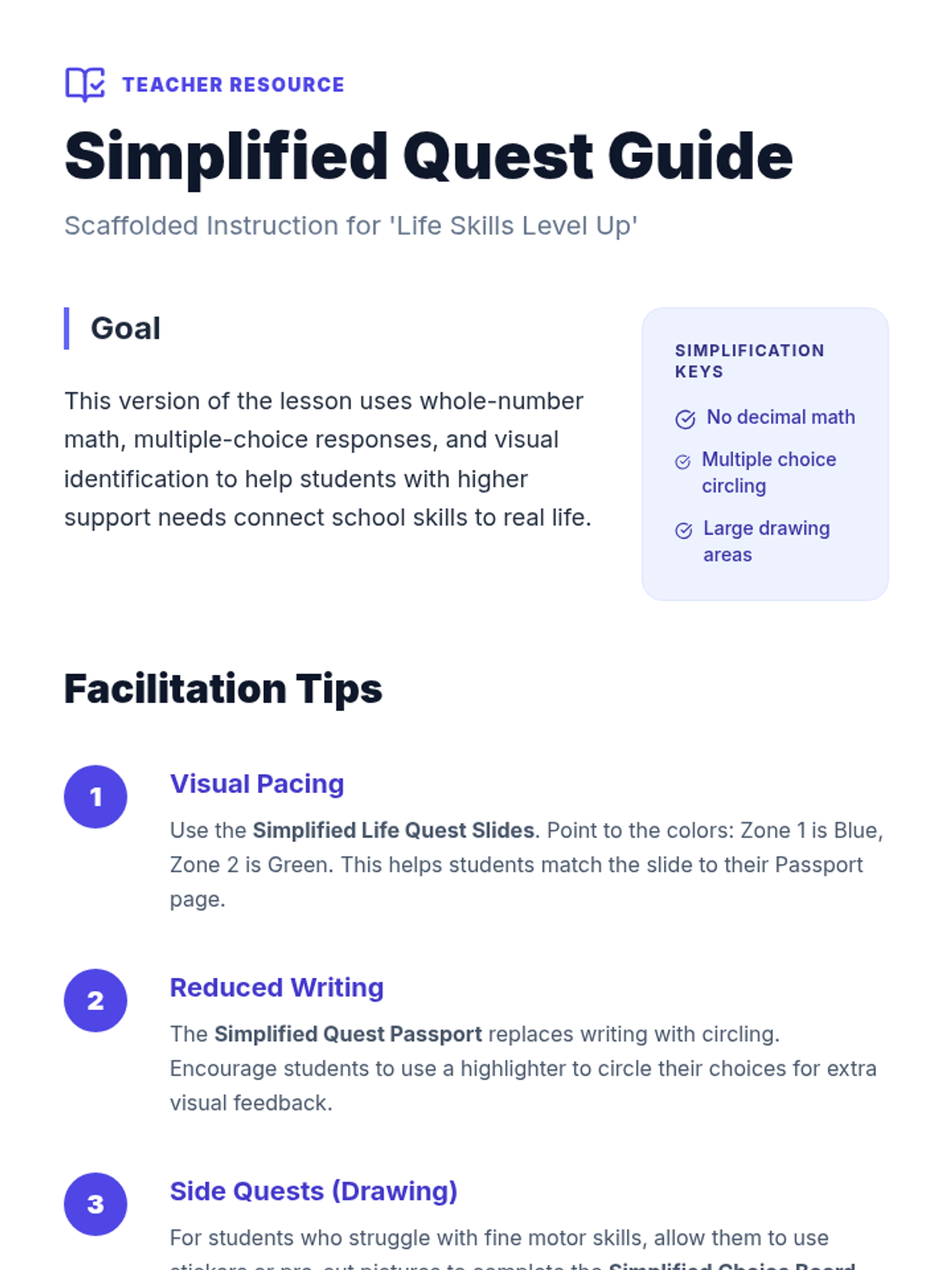
Updated Teacher Guidebook for the simplified 'Life Skills Level Up' lesson. Includes specific strategies for connecting classroom skills to real jobs (Baker, Driver, Cashier, Librarian) and adult independence, with an updated walkthrough for the new 'Skill Connections' slide.
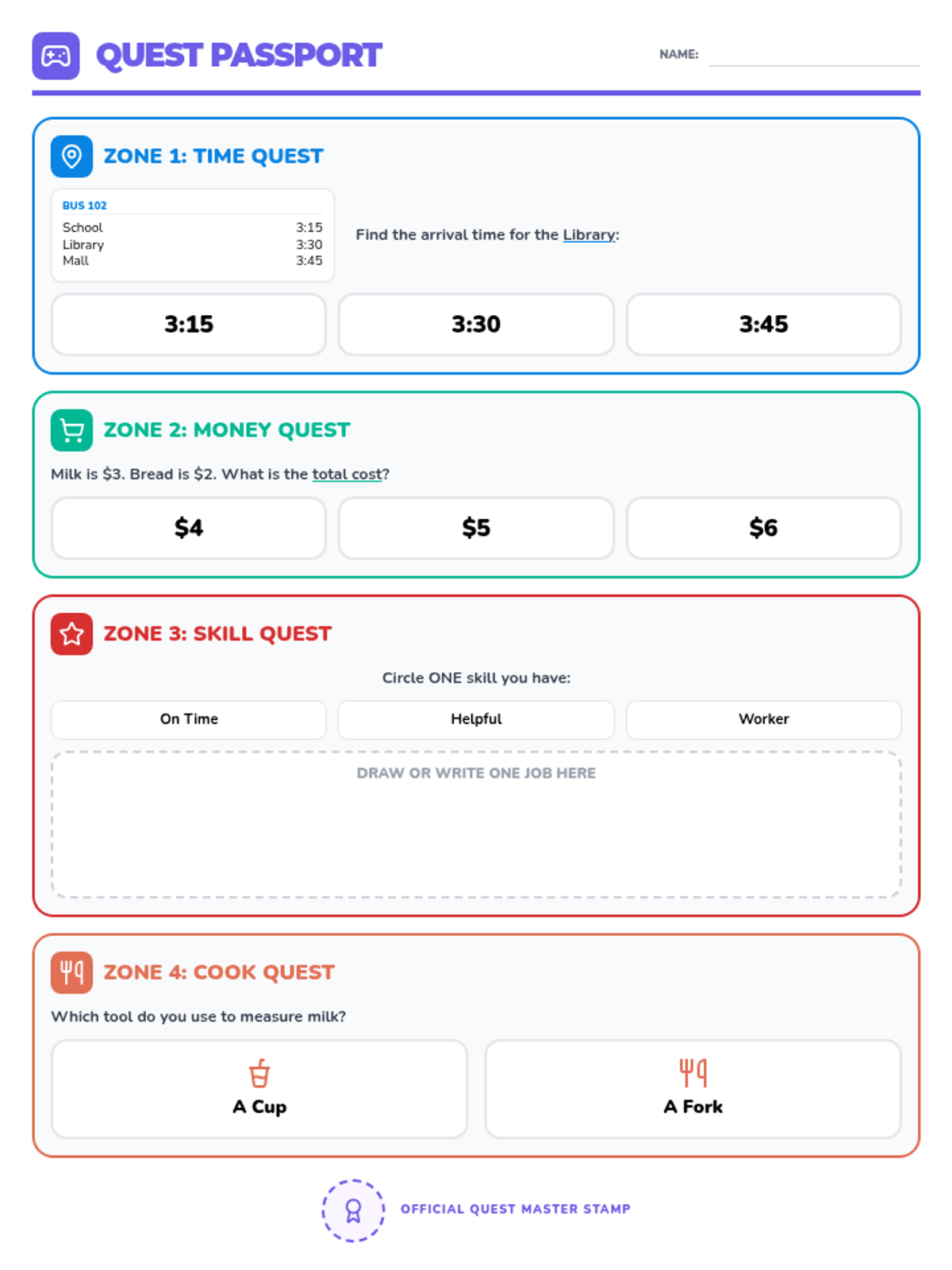
A simplified Quest Passport for 6th-grade IEP students. Includes visual references, multiple-choice options, job examples (Baker, Driver, Cashier, Librarian), and a "Big Idea" reflection section. Fits on one page.
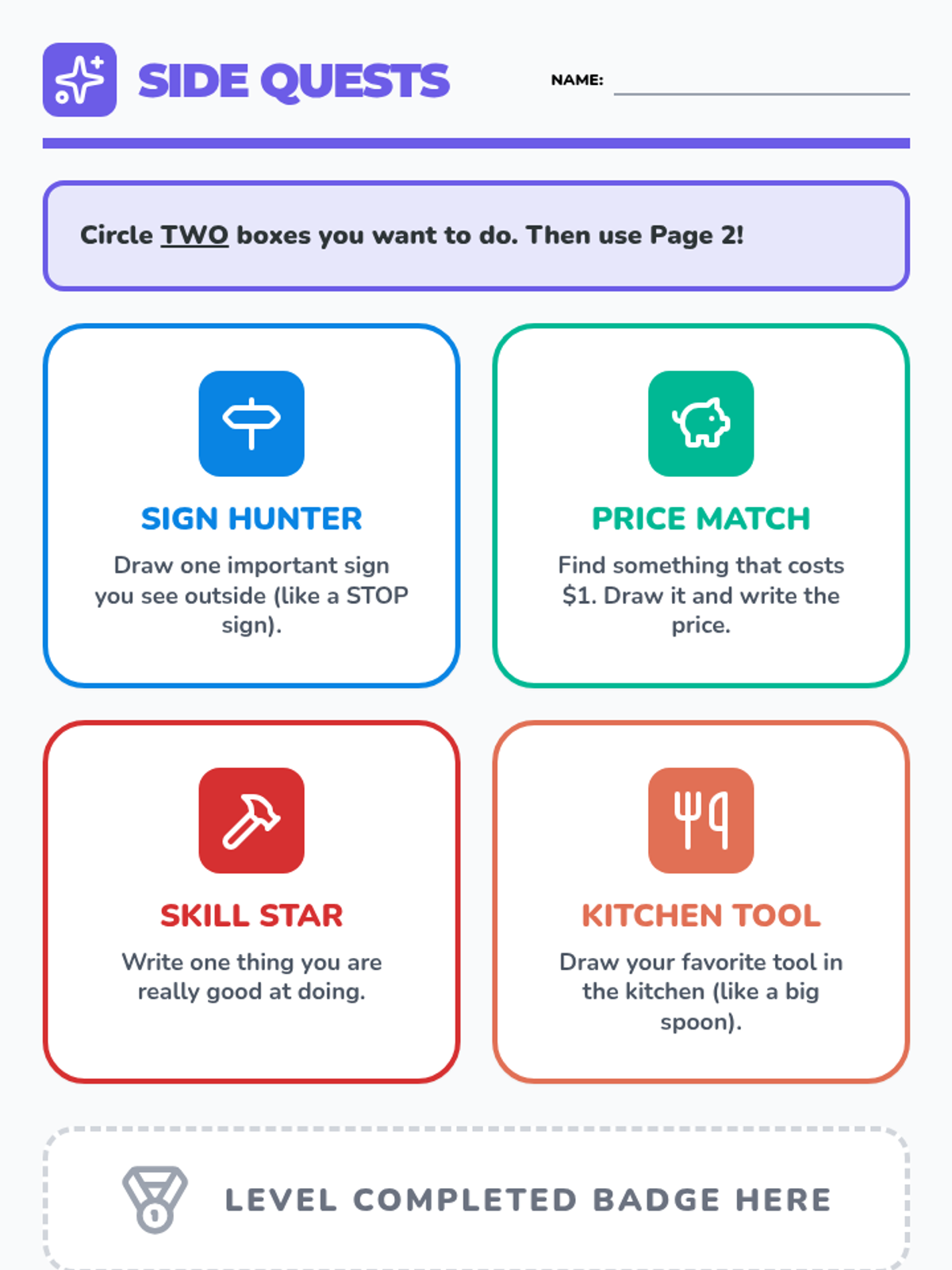
A simplified visual choice board for 6th-grade IEP students with reduced task complexity. Students choose two 'Side Quests' and complete them in large, designated work areas on a second page. Improved contrast for printing.
Simplified Life Quest slides for 6th-grade IEP students, featuring interactive visual choice layouts, whole-number math, and clear visual cues for each skill zone. Includes a new 'Skill Connections' power map and explicit links between school subjects and adult independence.
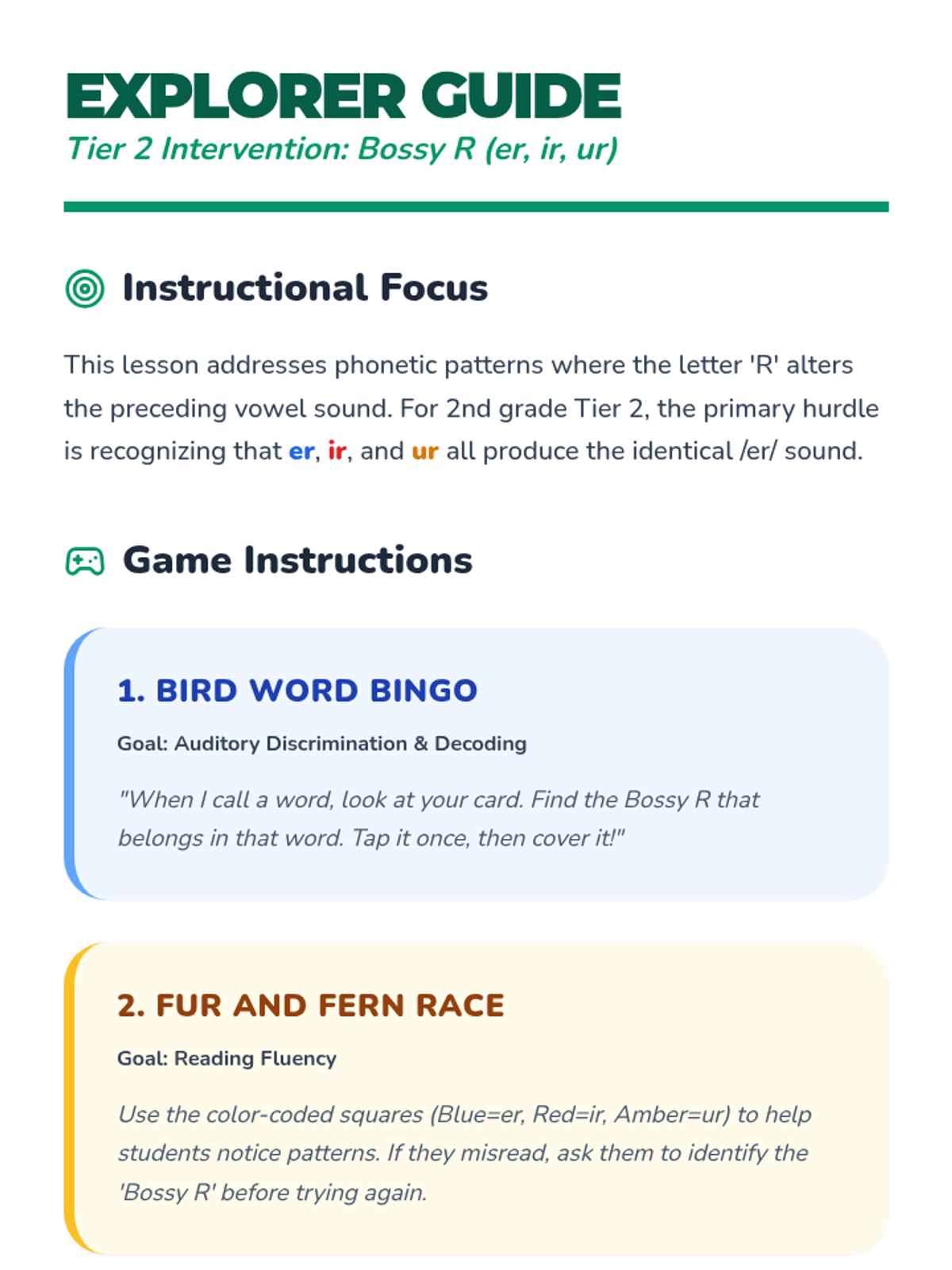
Teacher-facing guide providing instructional context, game rules, facilitation tips, and differentiation strategies for the R-controlled vowel intervention lesson.