A new folder reference sheet for RSP students, focused on "Ending Secrets" such as Silent e Drop, Plural Rules (s vs es), the 1-1-1 Doubling Rule, and Changing Y to I. Includes supportive checklists and a vowel suffix gallery.
A printable routine-building visual scheduler and self-reflection journal page. Helps students establish structure during unstructured summer days and self-regulate through visual templates.
A student social narrative worksheet featuring literal comprehension questions, visual play scenarios, and blank response boxes to practice sharing and requesting help at the park and pool.
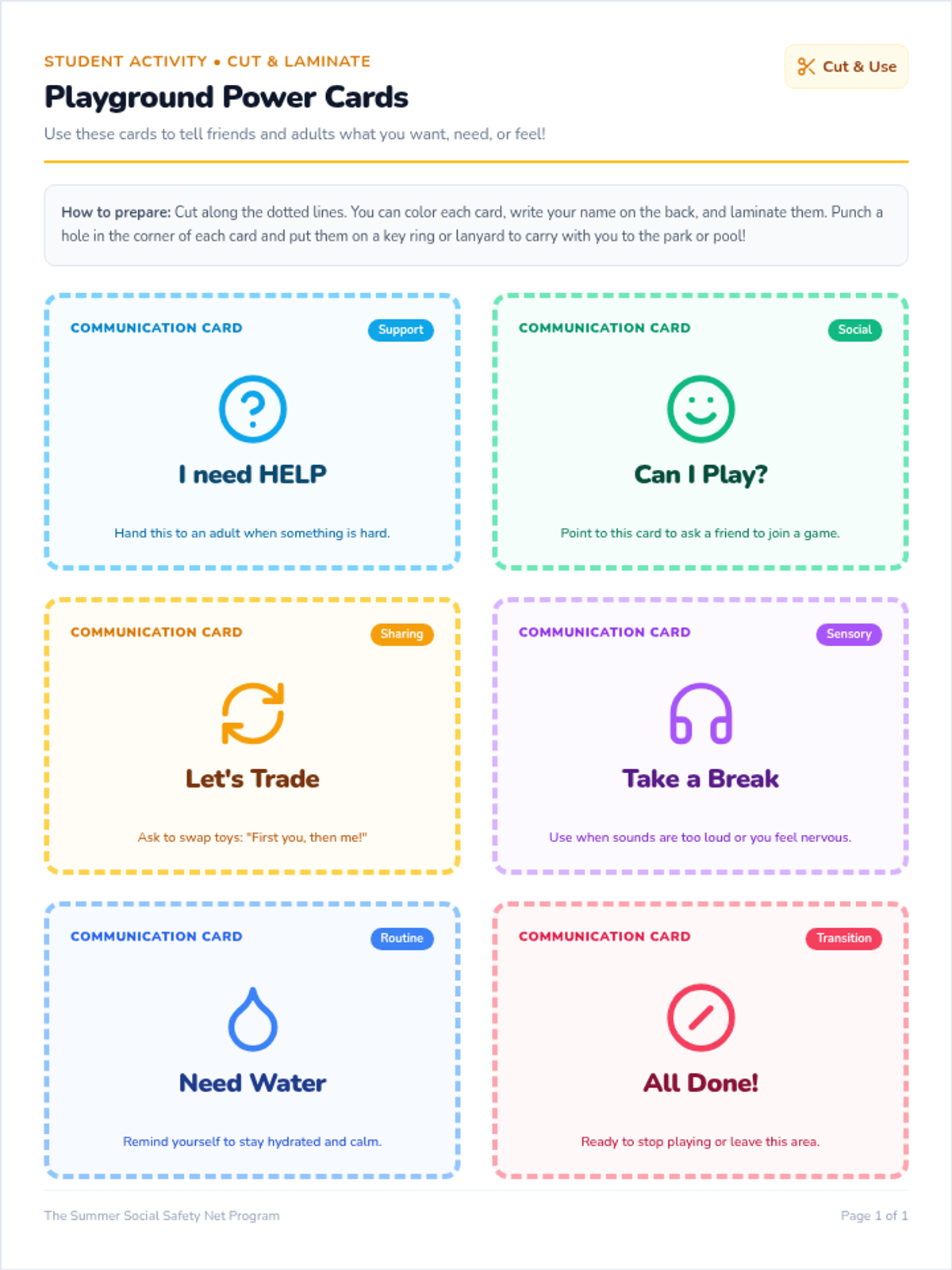
A set of printable visual communication cards and choice boards designed for students to cut out, color, and use to request help, share toys, or take sensory breaks in unstructured settings.
A visually supportive, high-legibility presentation designed for classroom instruction, group discussion, and guided role-plays. Employs large 24px+ text, clear icons, and structured visual scenarios covering the park, pool, sandbox, snack line, splash pad, camp cabin, library, fair, movie theater, store, amusement park, and a friend's house.
A comprehensive teacher's lesson plan and facilitation guide. It outlines the lesson structure, pacing, step-by-step instructions, interactive role-plays, social narratives, and specific neurodivergent accommodations for K-4 students with social communication needs.
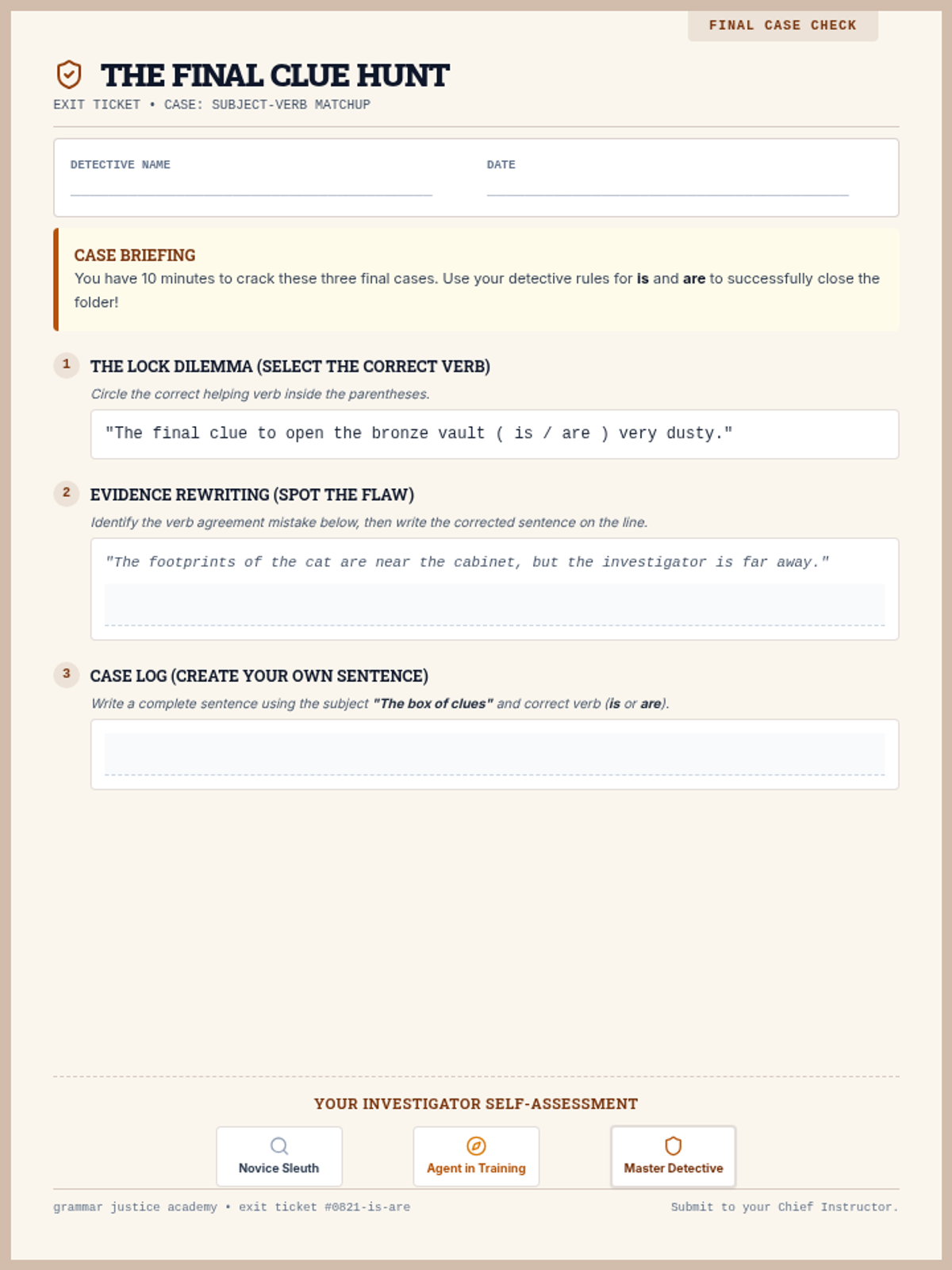
A quick 10-minute detective exit ticket designed to assess student mastery of subject-verb agreement under pressure, complete with a self-assessment 'Sleuth Meter'.
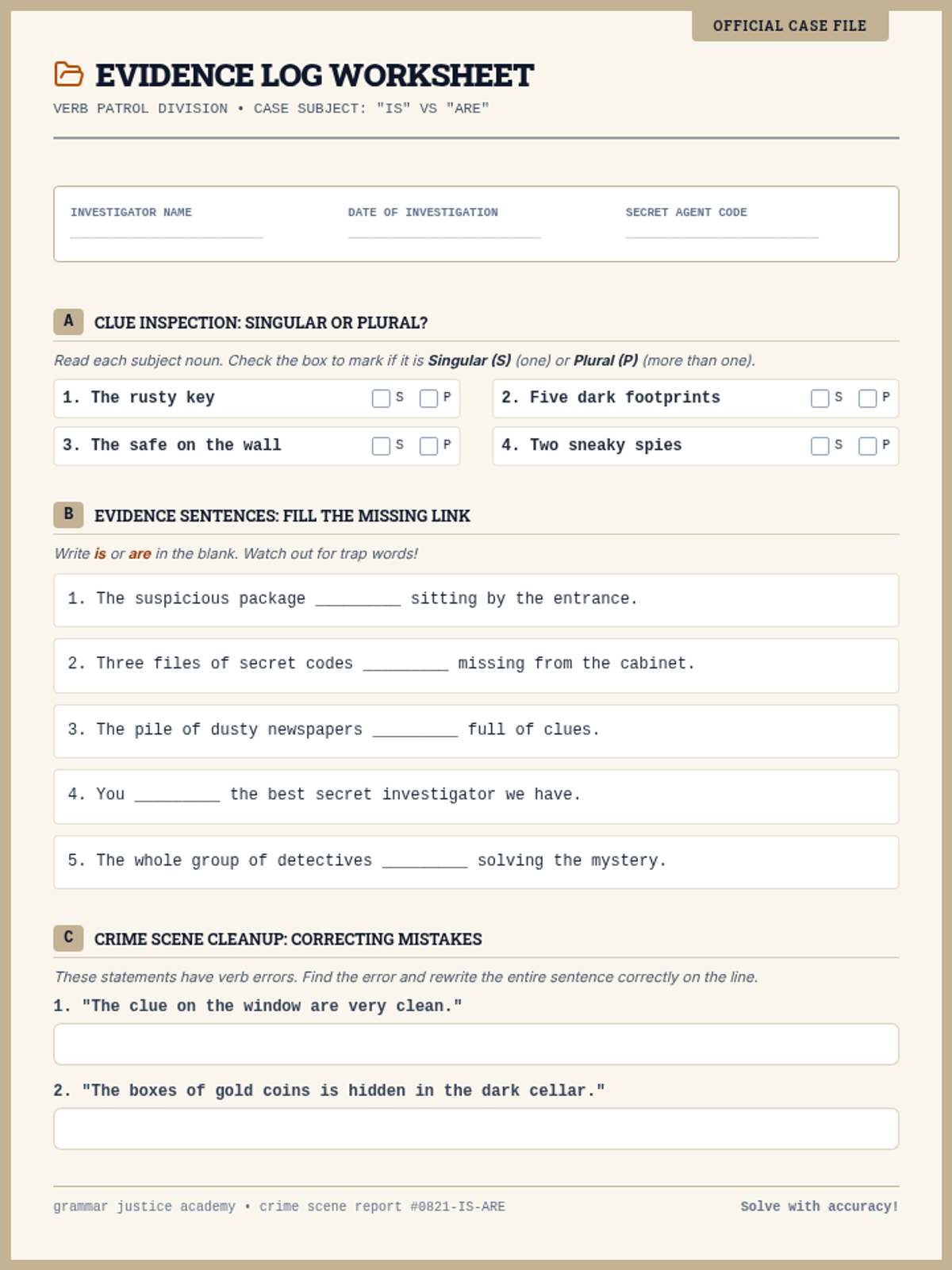
A detective-themed student practice worksheet containing noun sorting, fill-in-the-blank clue sentences, and proofreading corrections. Features a dedicated name/date field and ample handwriting spacing.
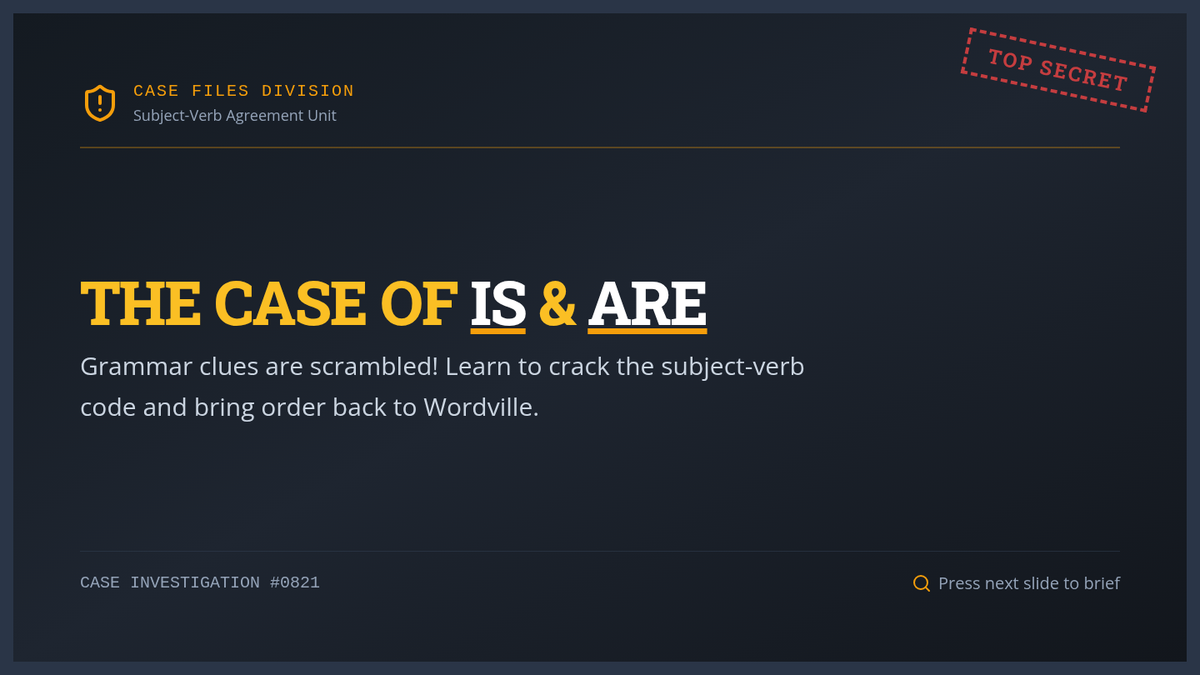
A visually compelling, dark-themed investigation board slide presentation that introduces the rules of 'is' vs 'are' and guides students through matching singular/plural nouns with their verb counterparts.
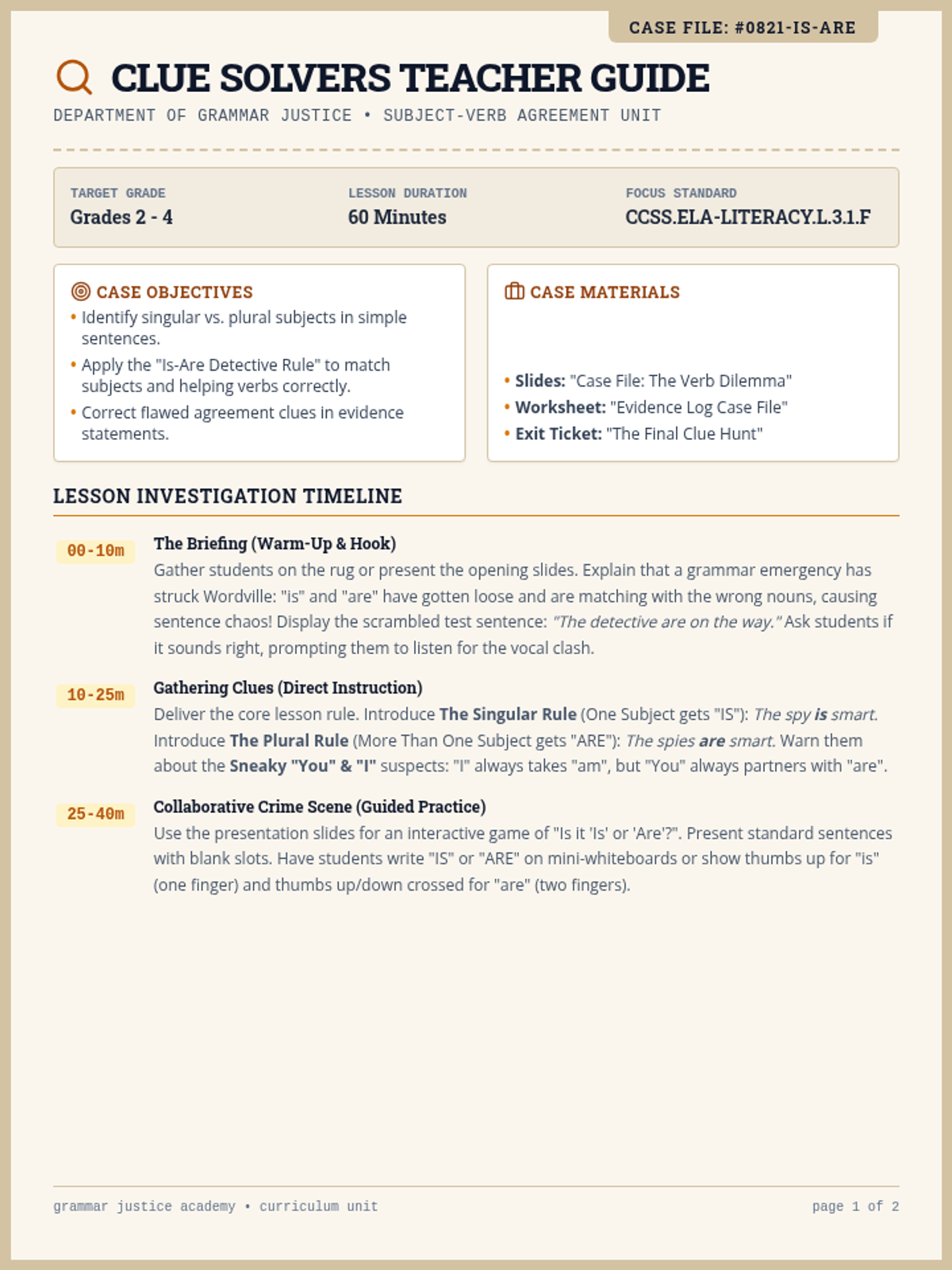
A comprehensive, typewriter-styled teacher guide that structures the 60-minute subject-verb agreement detective lesson, complete with learning objectives, guided prompts, common traps, and differentiation tips.
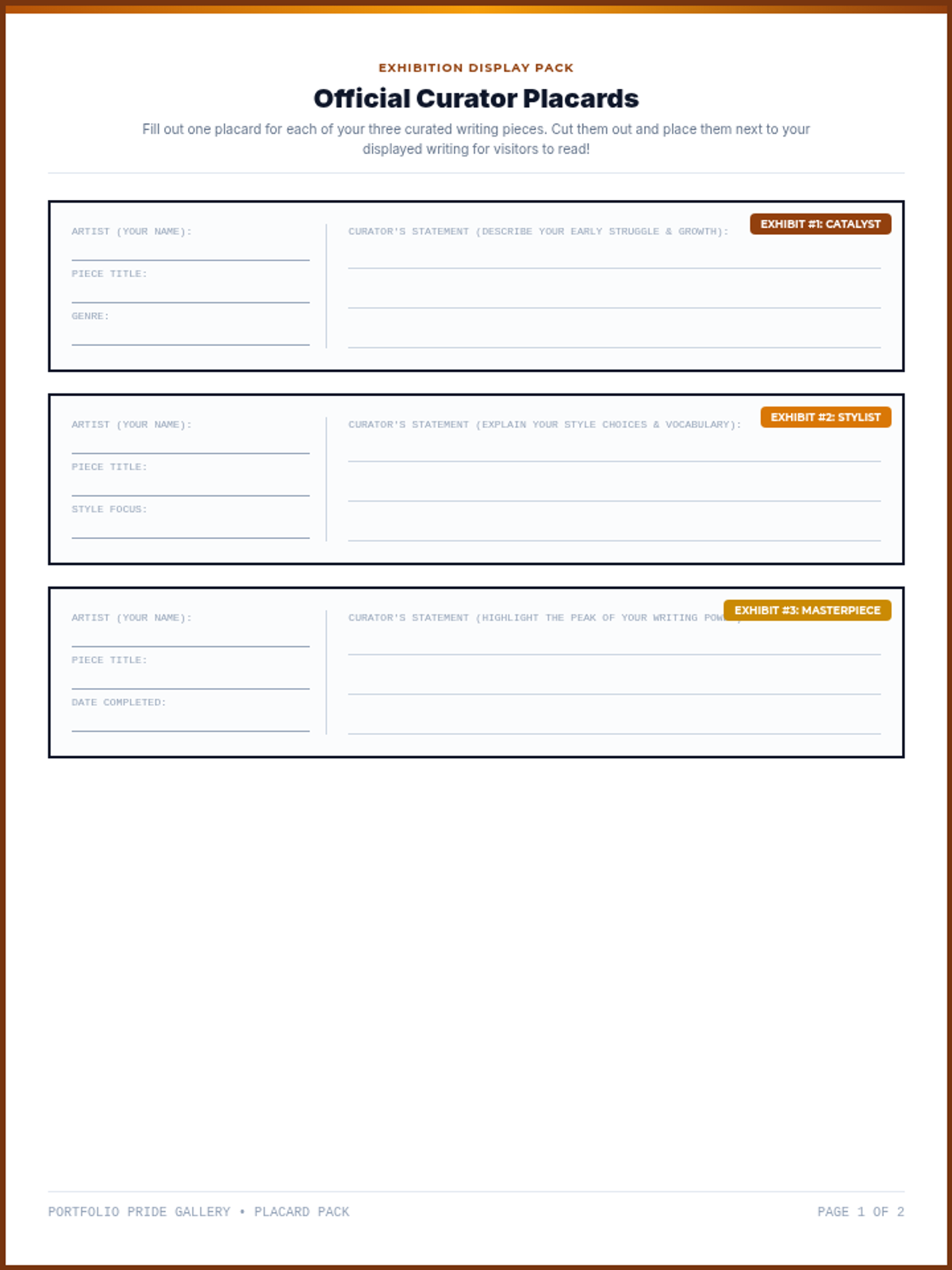
Printable museum placards/exhibit labels for students to write their curator statements, plus a customizable gallery invitation and curator rubric.
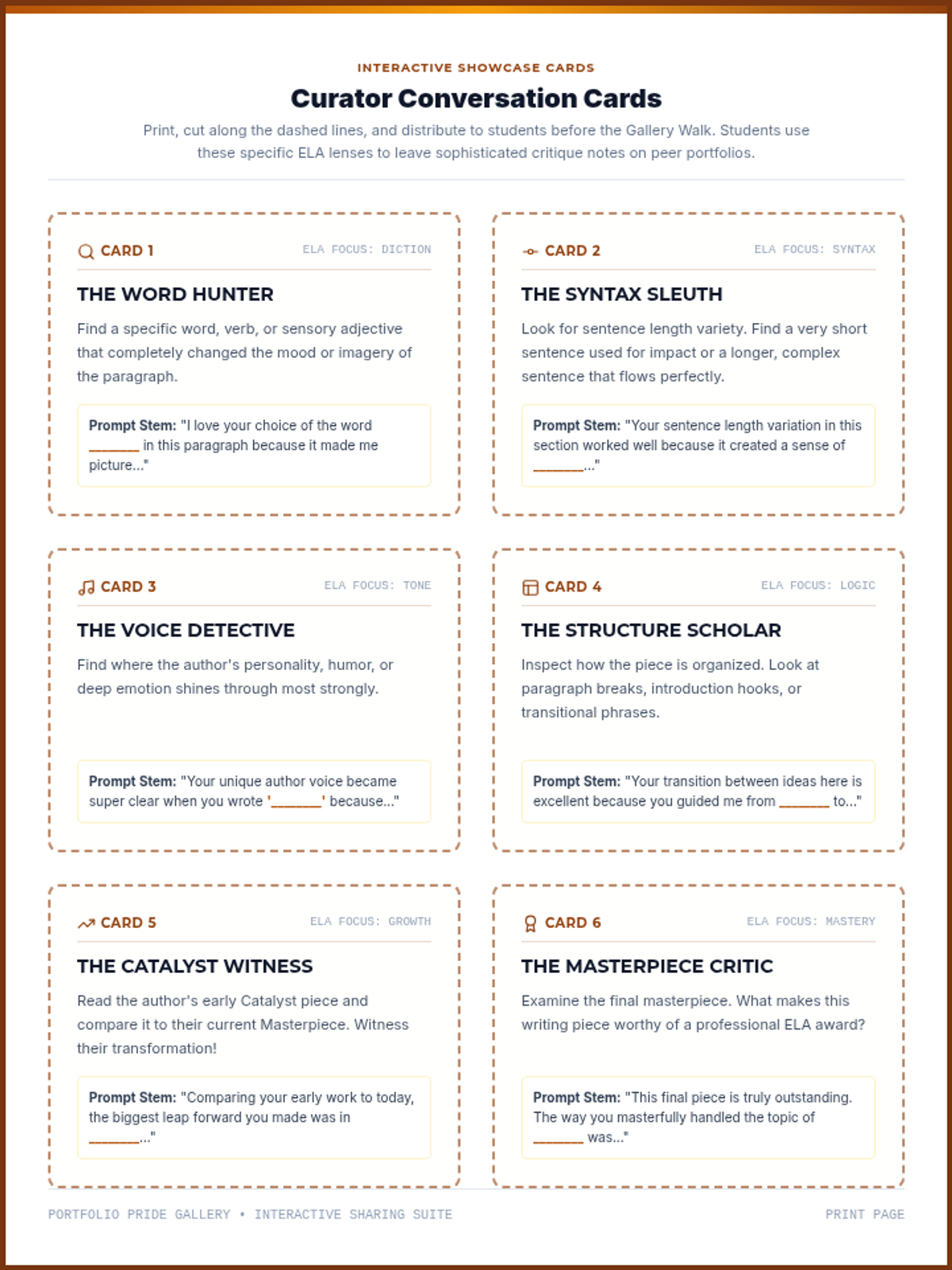
A printable set of discussion prompt cards for peer-to-peer critique and positive feedback during the showcase gallery walk.
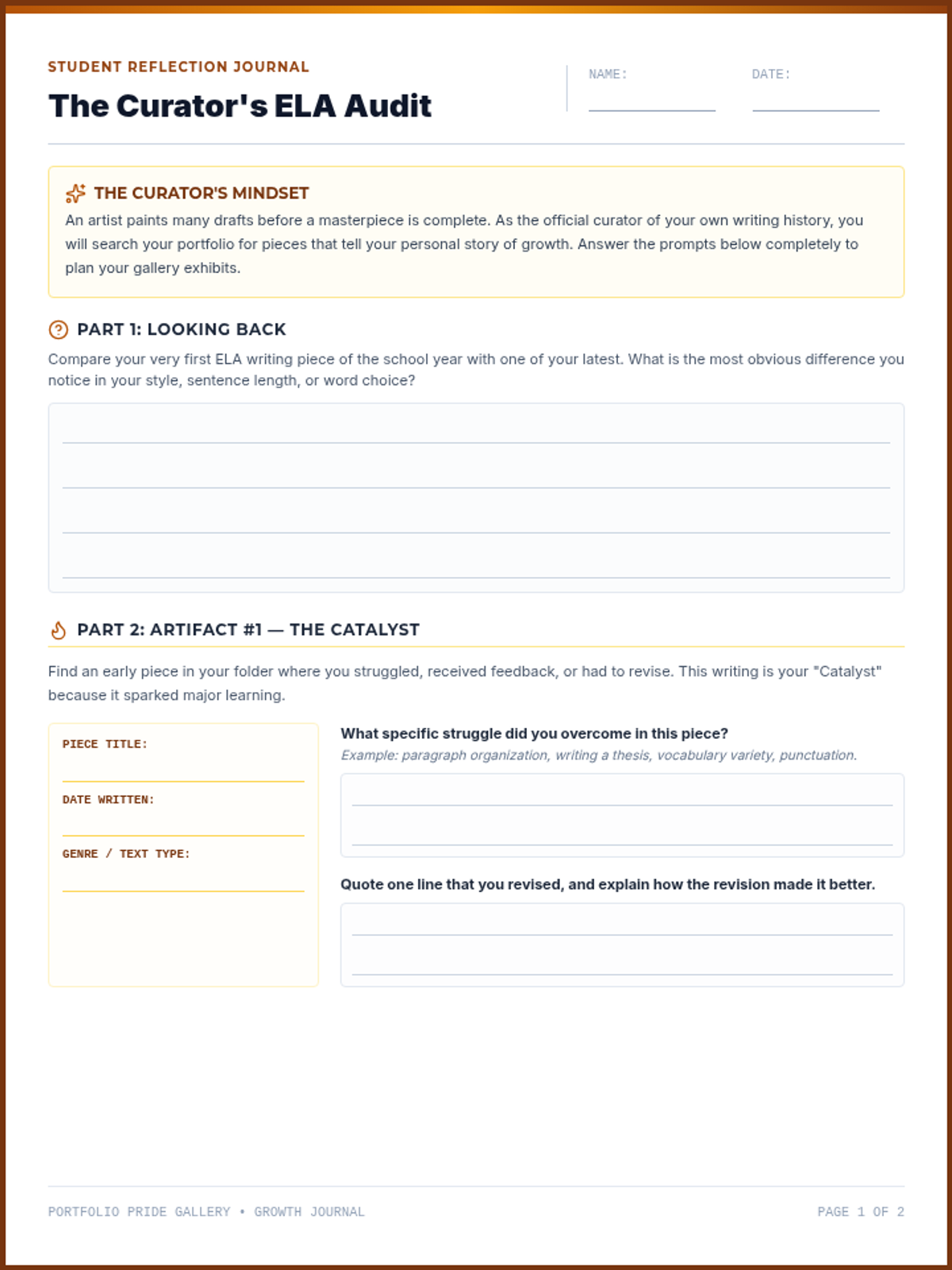
A structured student self-reflection journal with guided prompts to help students audit their ELA writing, identify milestones, and draft curator statements.
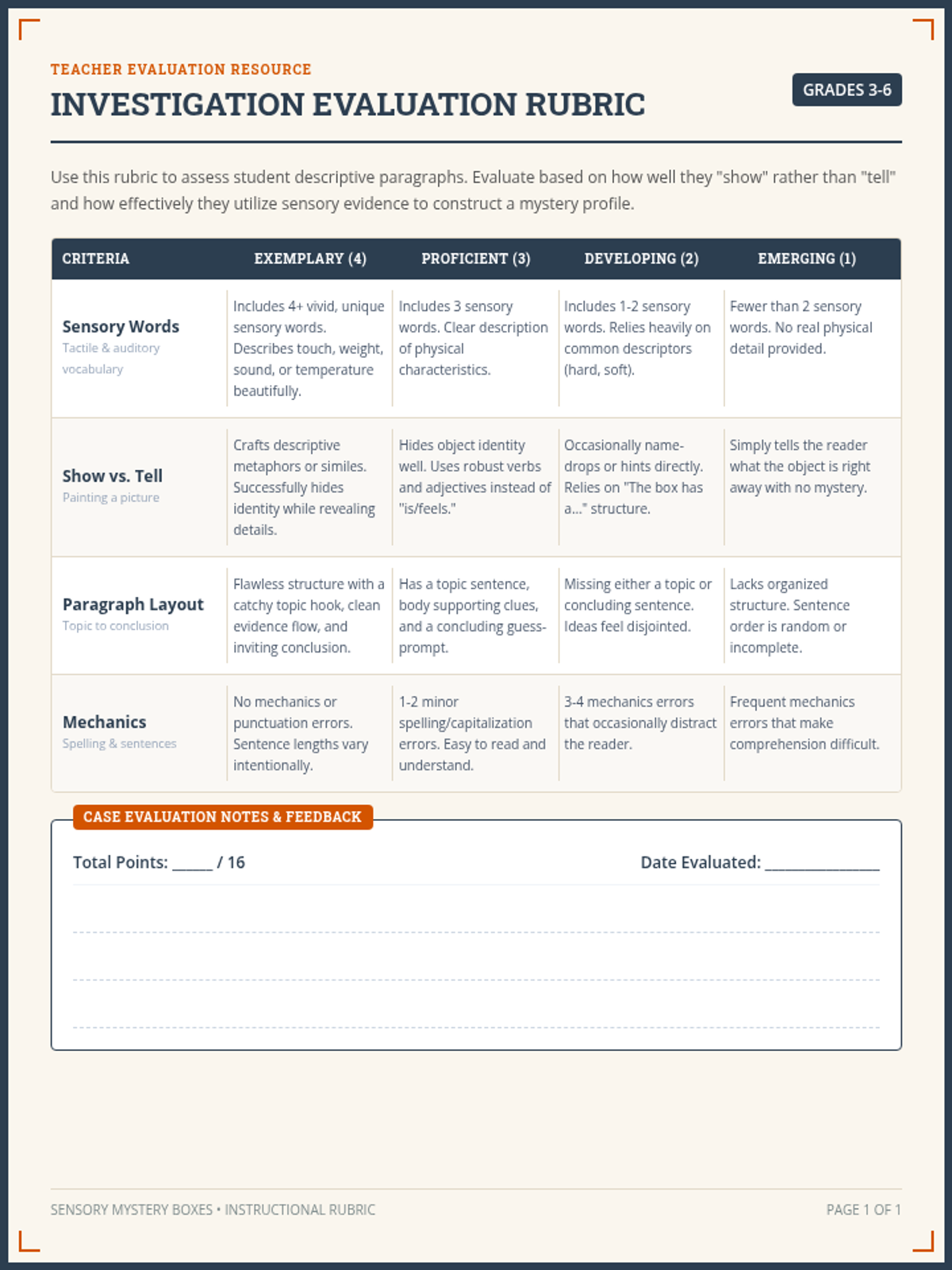
A standardized classroom grading rubric styled as an 'Investigation Evaluation Report', detailing assessment criteria for sensory vocabulary, writing structure, mechanics, and descriptive depth.
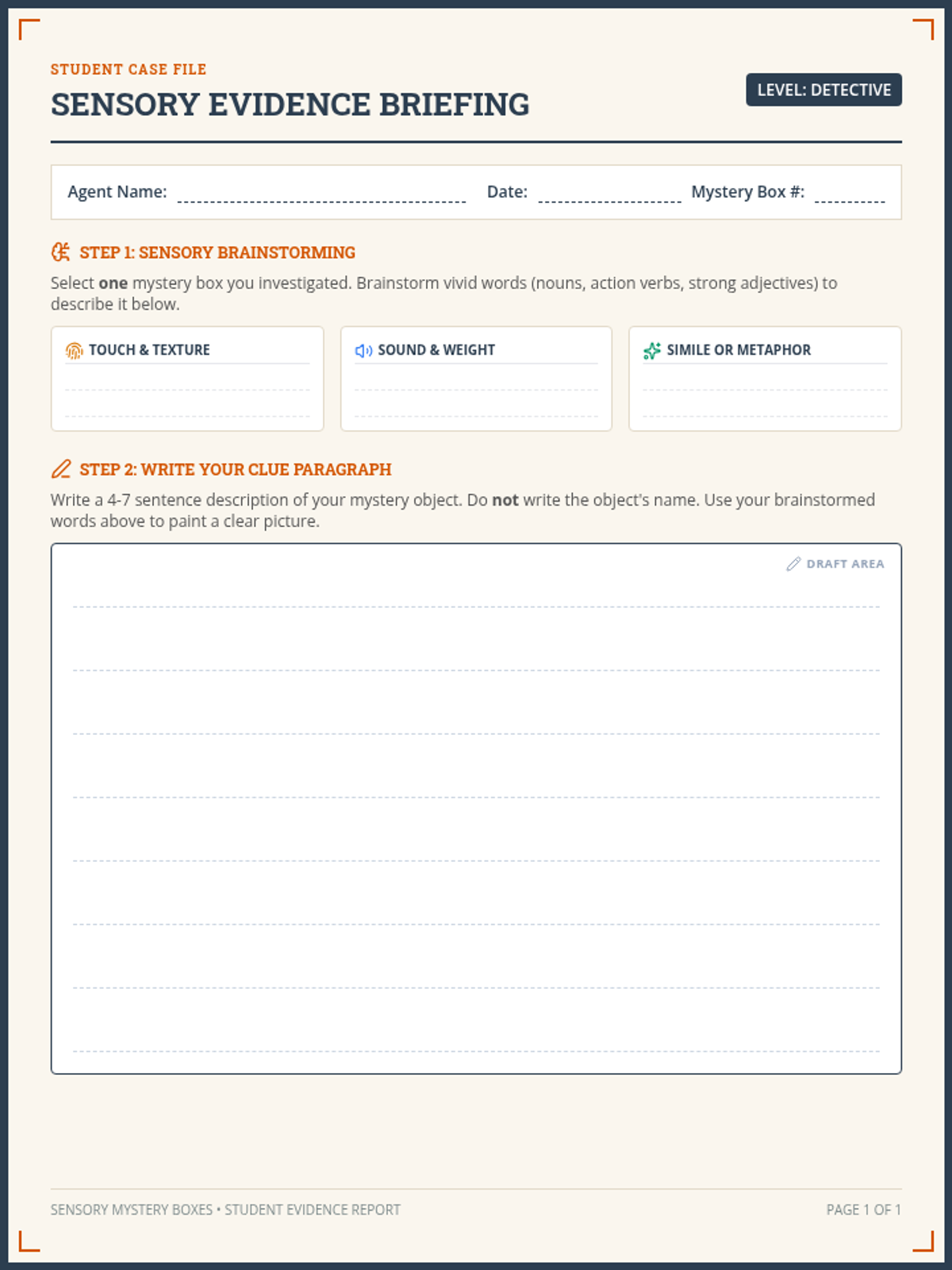
A structured student-facing worksheet for planning and writing their mystery box descriptive paragraph, featuring sensory brainstorming boxes, paragraph layout guidelines, and lined writing space.
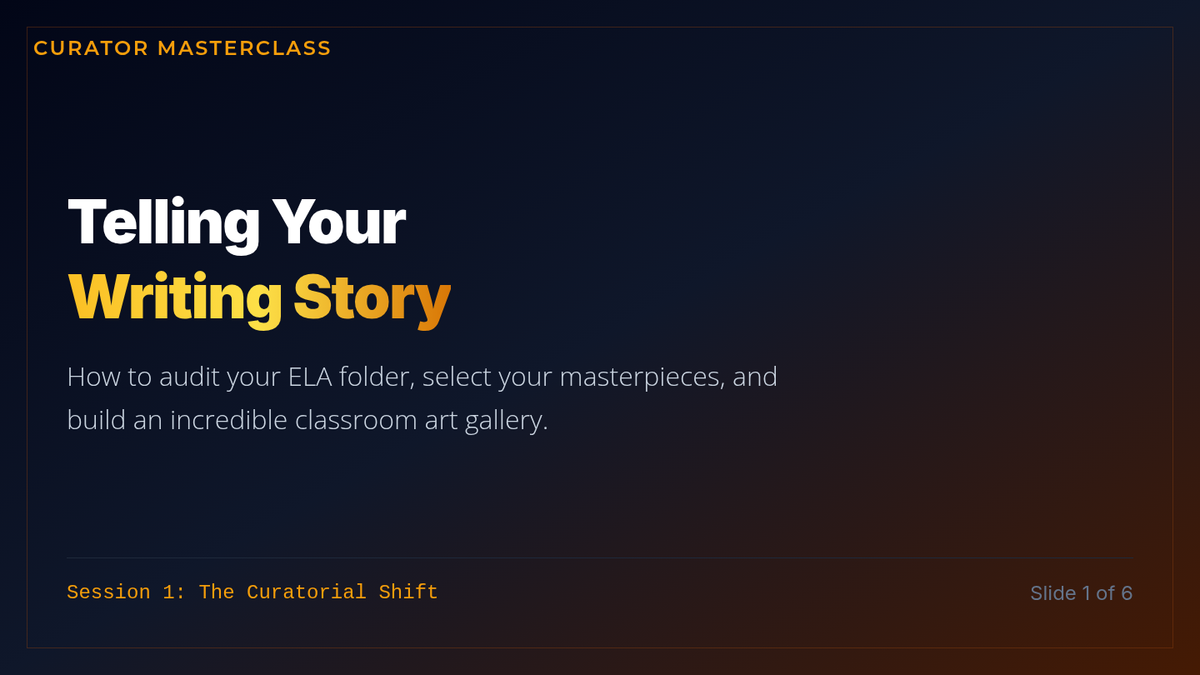
An interactive presentation for guiding students through the mindset of an art curator, modeling portfolio auditing, and setting gallery rules.
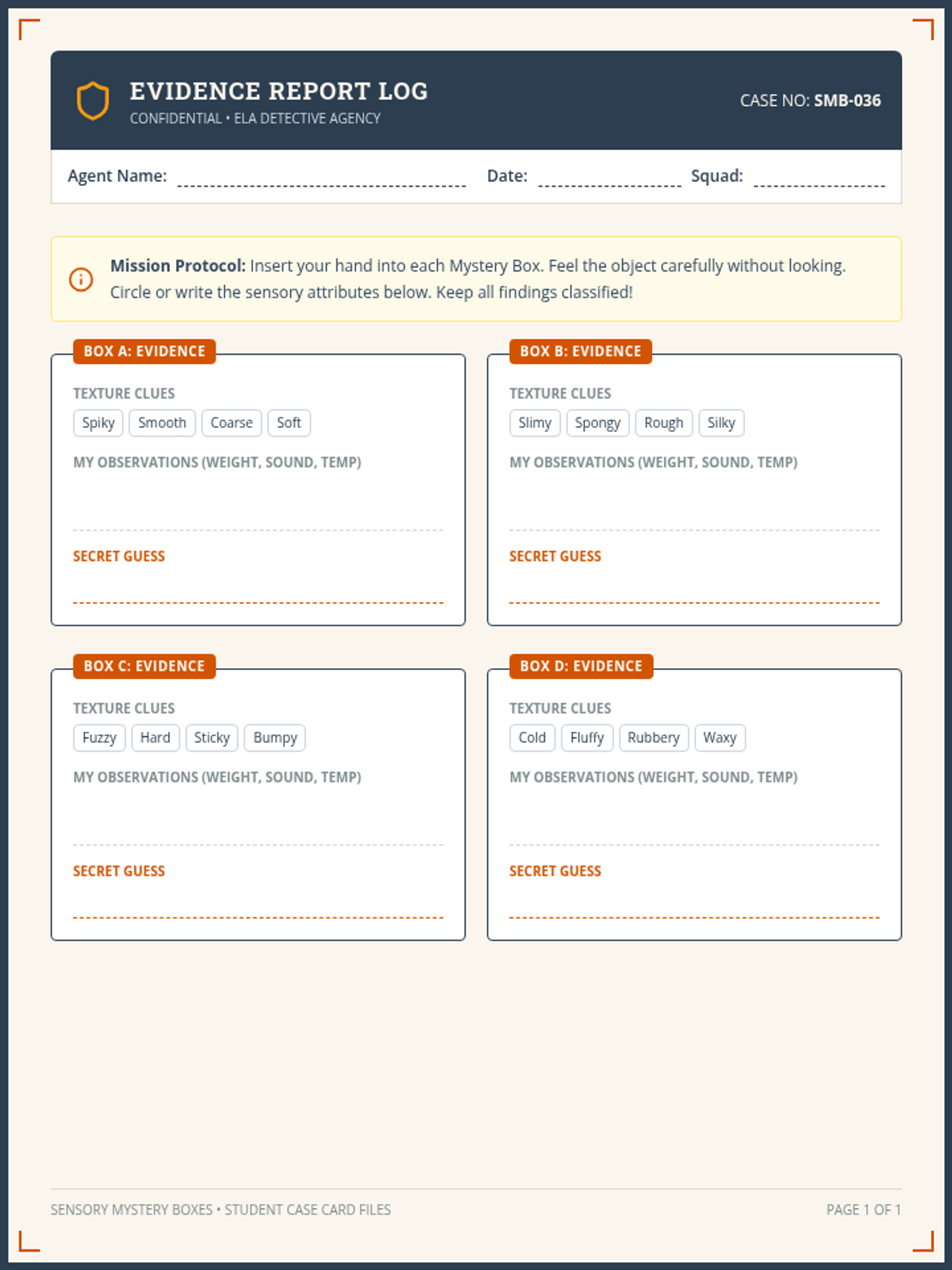
Hands-on evidence recording sheets and station signs designed for the physical mystery box investigation, providing clear spaces to record touch, sound, weight, temperature, and final guesses.
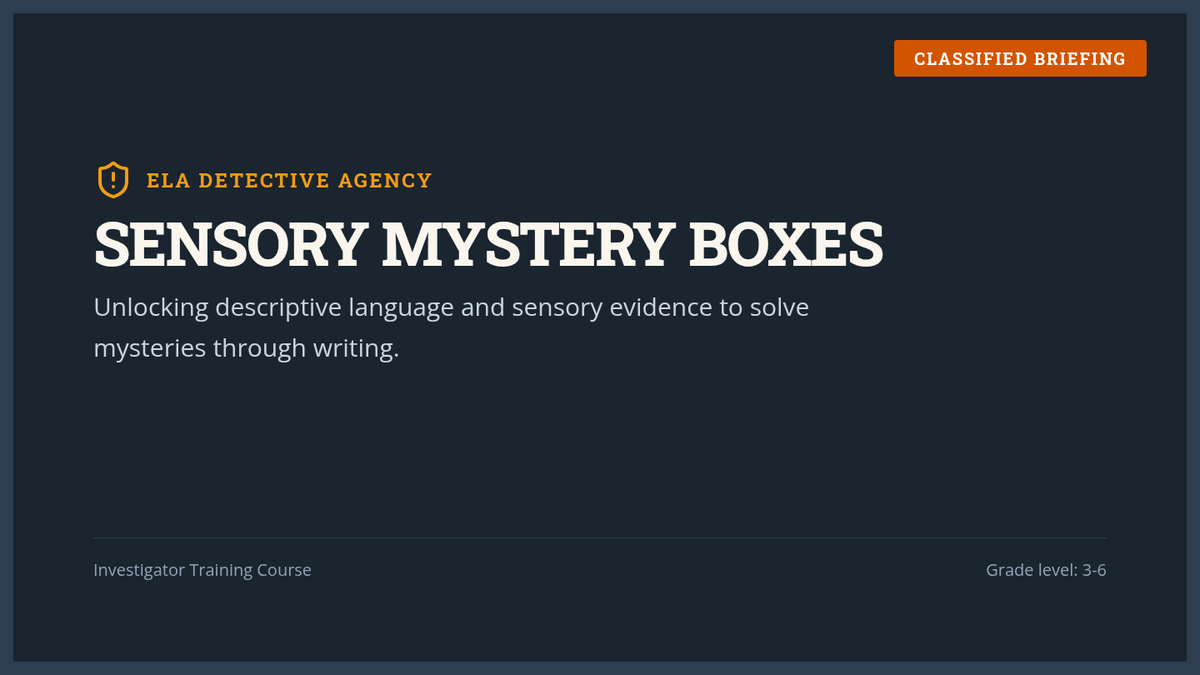
An interactive, visual slide presentation designed for teacher delivery, leading students through the rules of investigation, sensory adjective vocabulary, 'Show, Don't Tell' examples, and descriptive writing instructions.
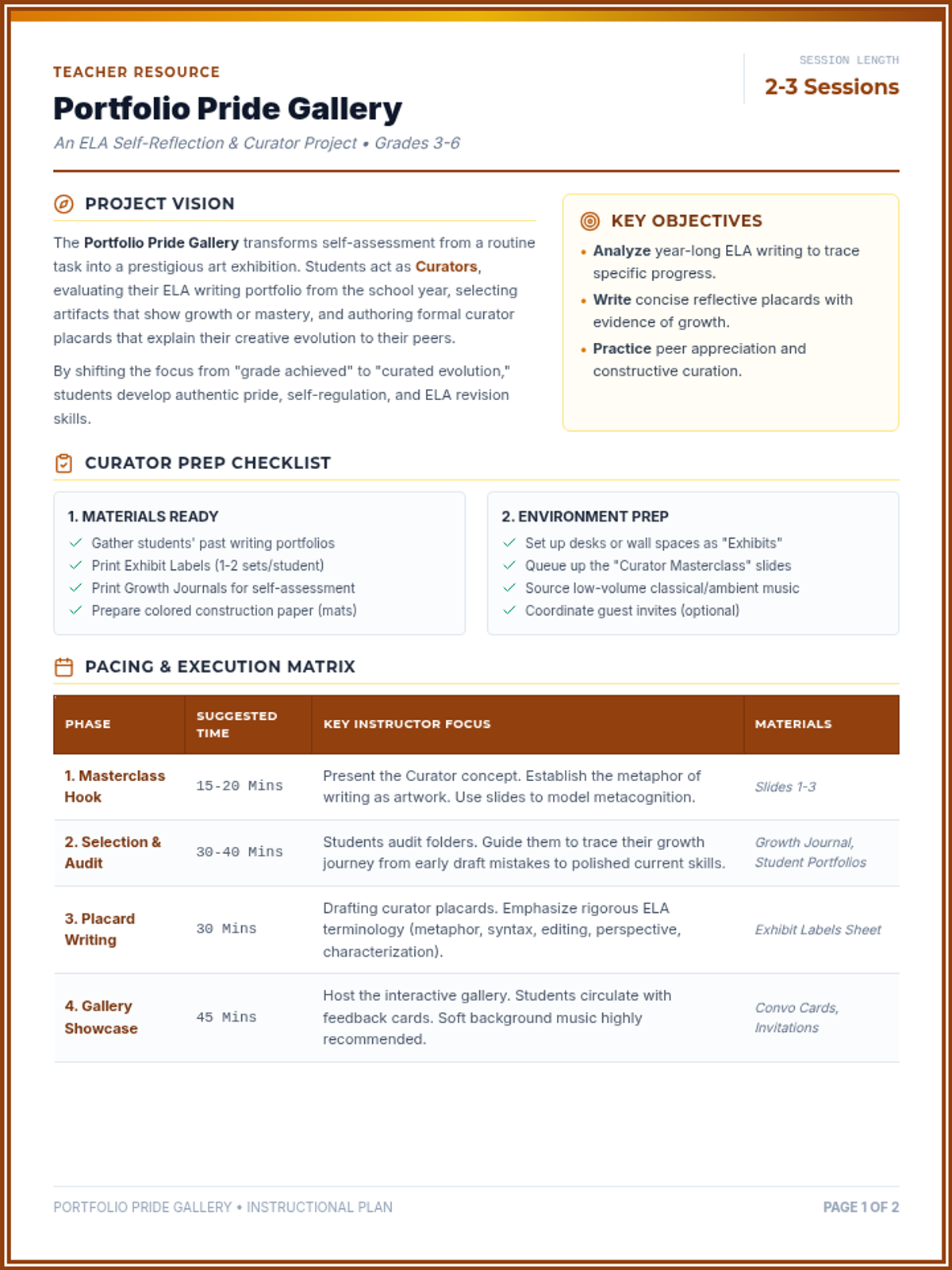
A comprehensive teacher facilitation guide containing detailed session pacing, discussion questions, preparation checklists, and differentiation strategies for the ELA gallery project.
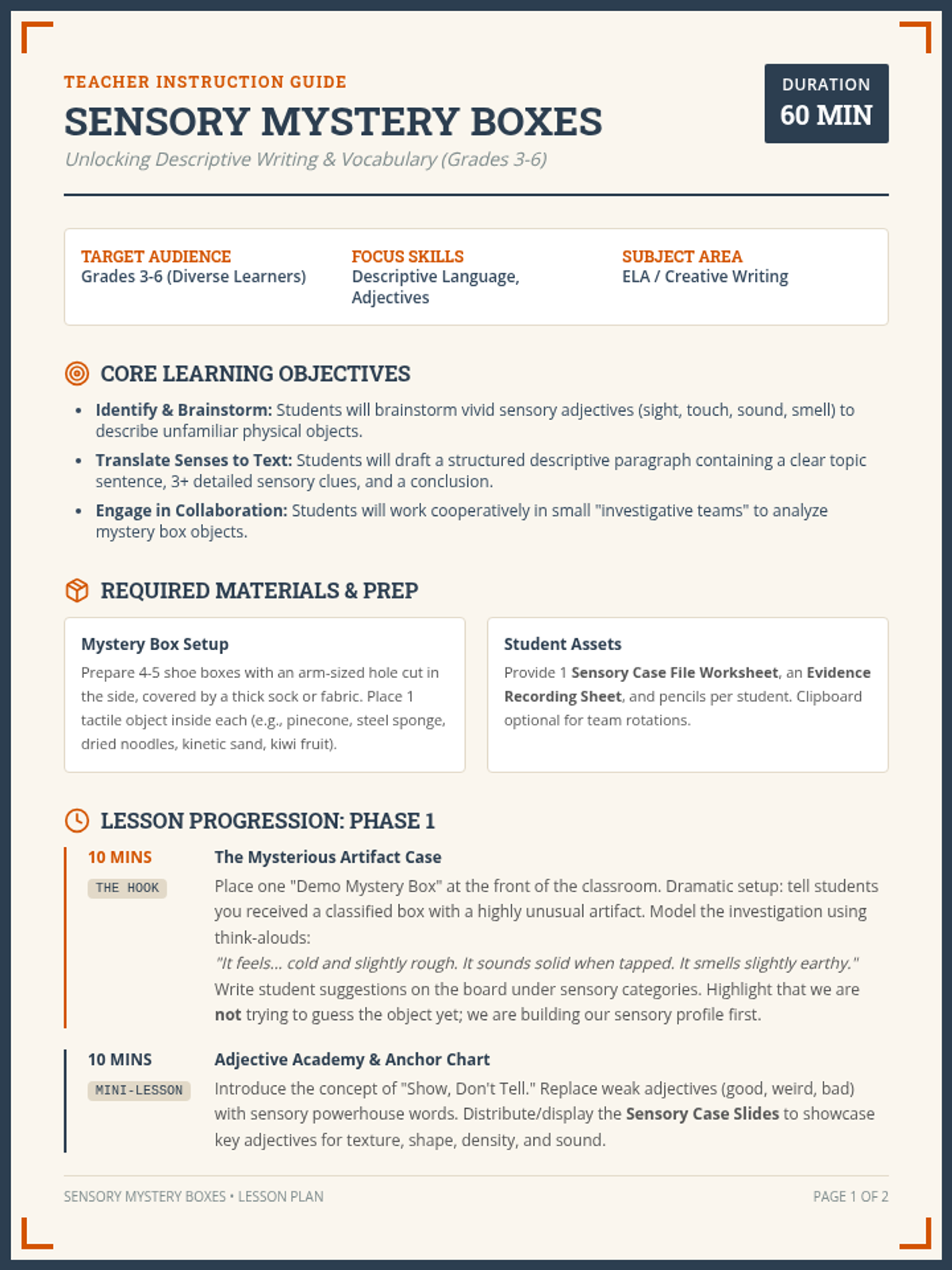
A comprehensive, step-by-step lesson plan styled as an 'Investigation Briefing' for teachers, detailing objectives, materials, setup, pacing, differentiation strategies, and group coordination.
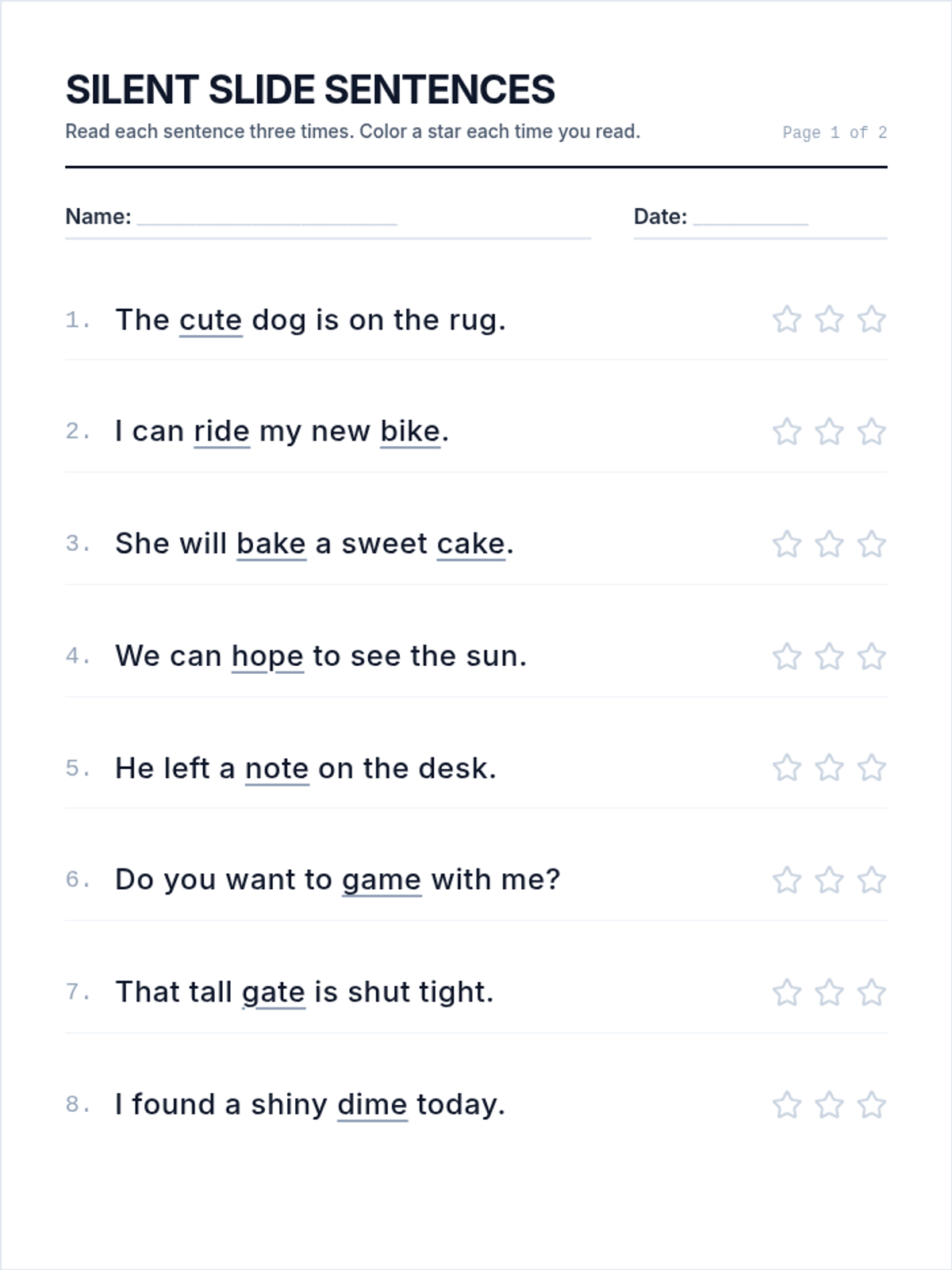
An ultra-simple, high-contrast reading worksheet featuring 16 sentences with vowel-consonant-e (silent e) words, designed with zero visual distractions and tracking bubbles for first-grade fluency practice.
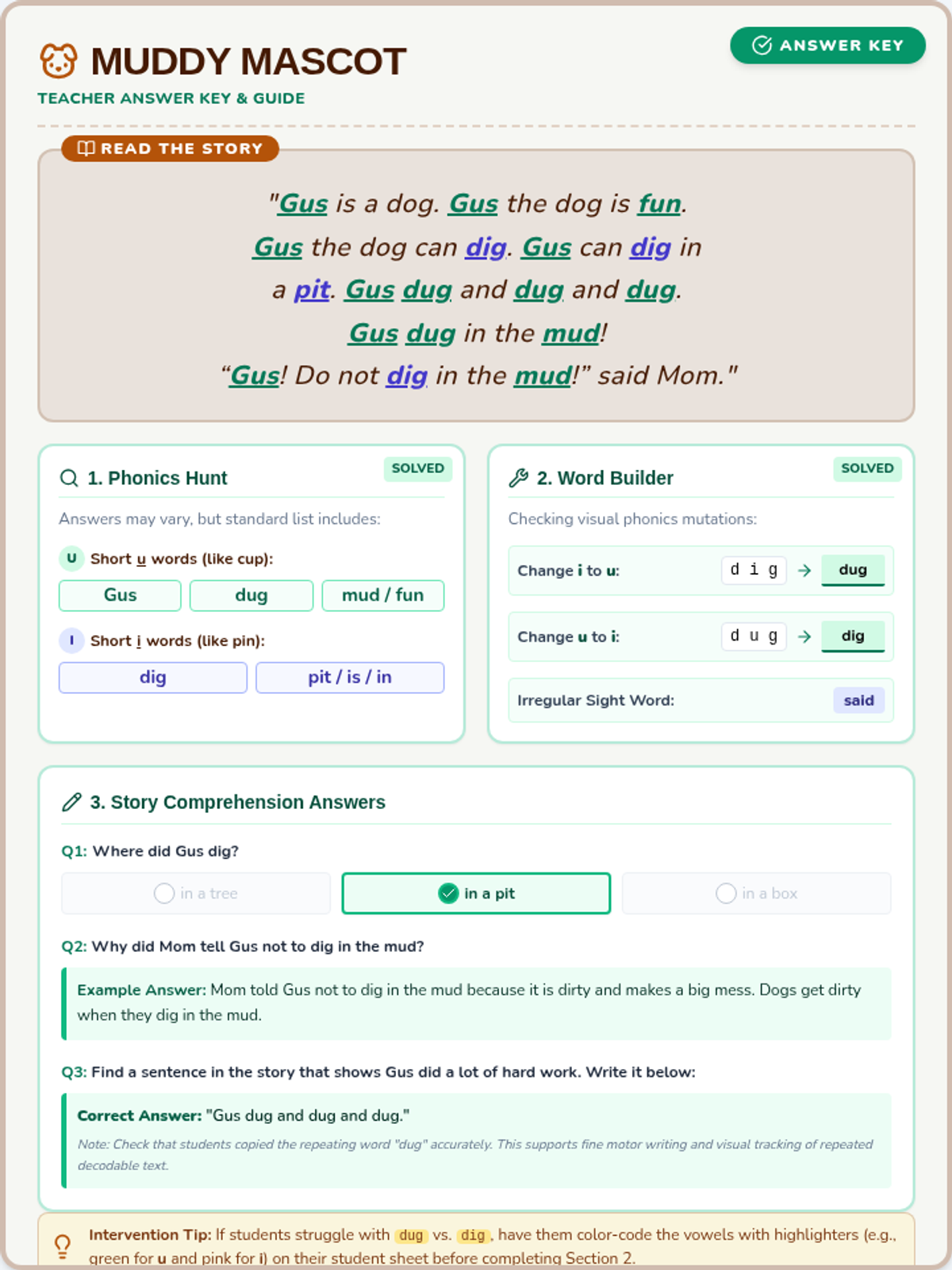
A comprehensive teacher answer key and phonics intervention guide. Includes completed fields for the Phonics Hunt, Word Builder, and comprehension questions, alongside teaching tips for decoding short 'u' sounds.
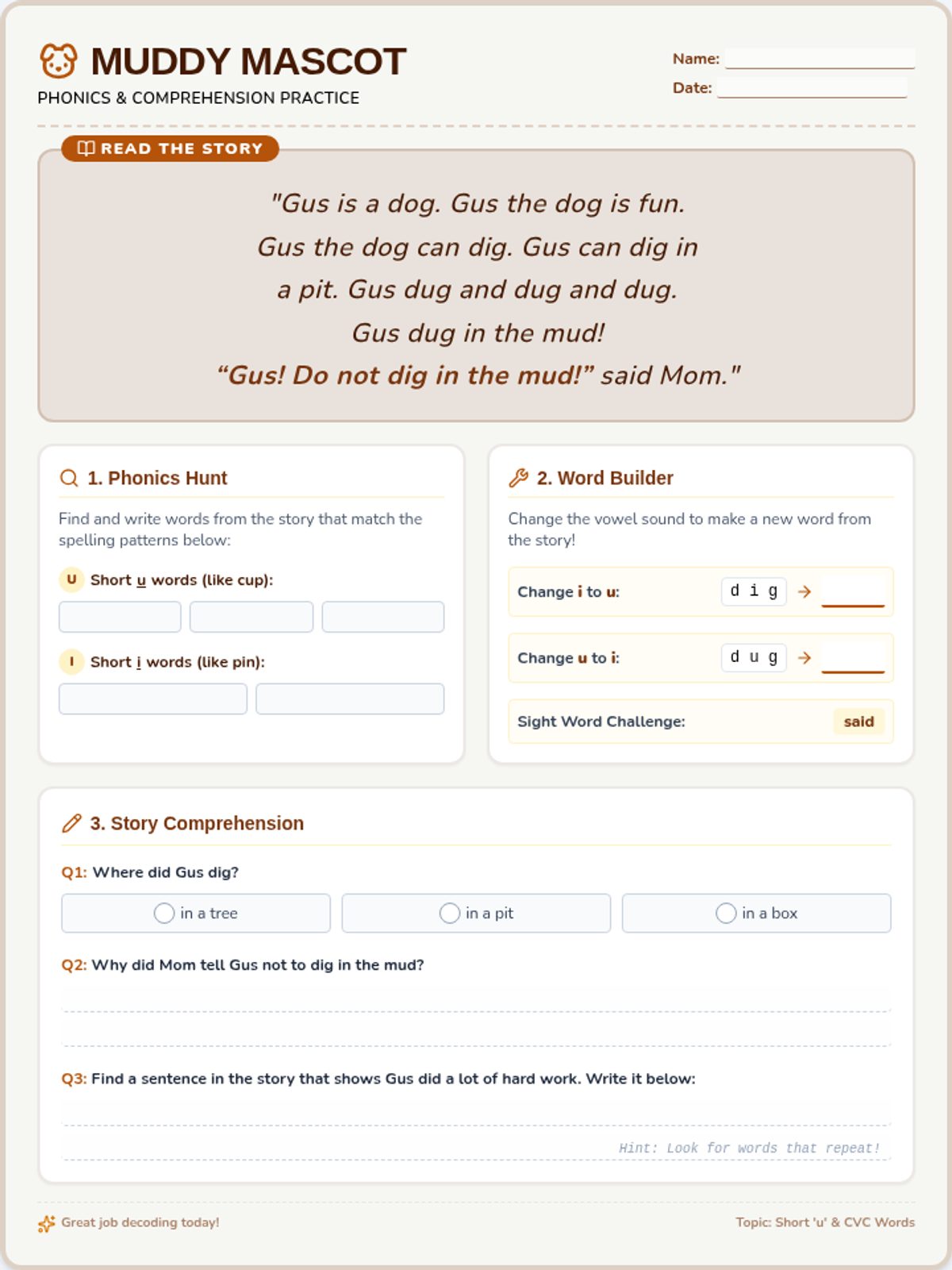
A student-facing phonics and reading comprehension worksheet featuring the story of Gus the Dog. Includes a decodable reading passage, a phonics search for short 'u' and CVC words, and text-dependent comprehension questions designed for Grade 3 reading intervention.
A comprehensive 6-slide deck that guides teachers and students through all 5 lessons of the 'River Writers' unit with visual anchors, co-constructed comparison charts, sensing verb symbols, and sentence-combining models.
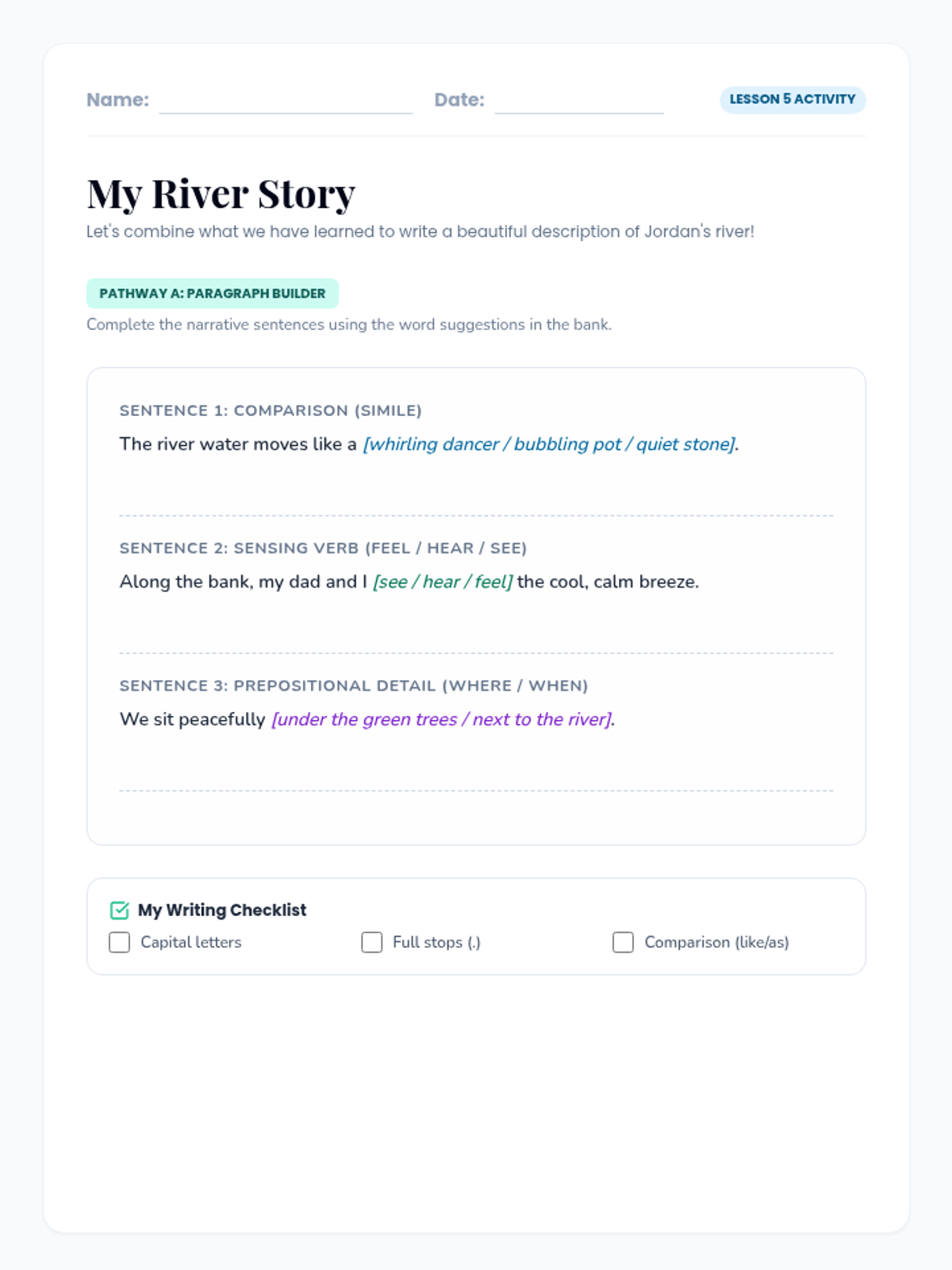
A descriptive paragraph worksheet for Lesson 5. Features Pathway A for standard Year 1 writing using guided sentence structures, word banks, and punctuation checklists, alongside Pathway B with tracing and drawing frames for early years learners.
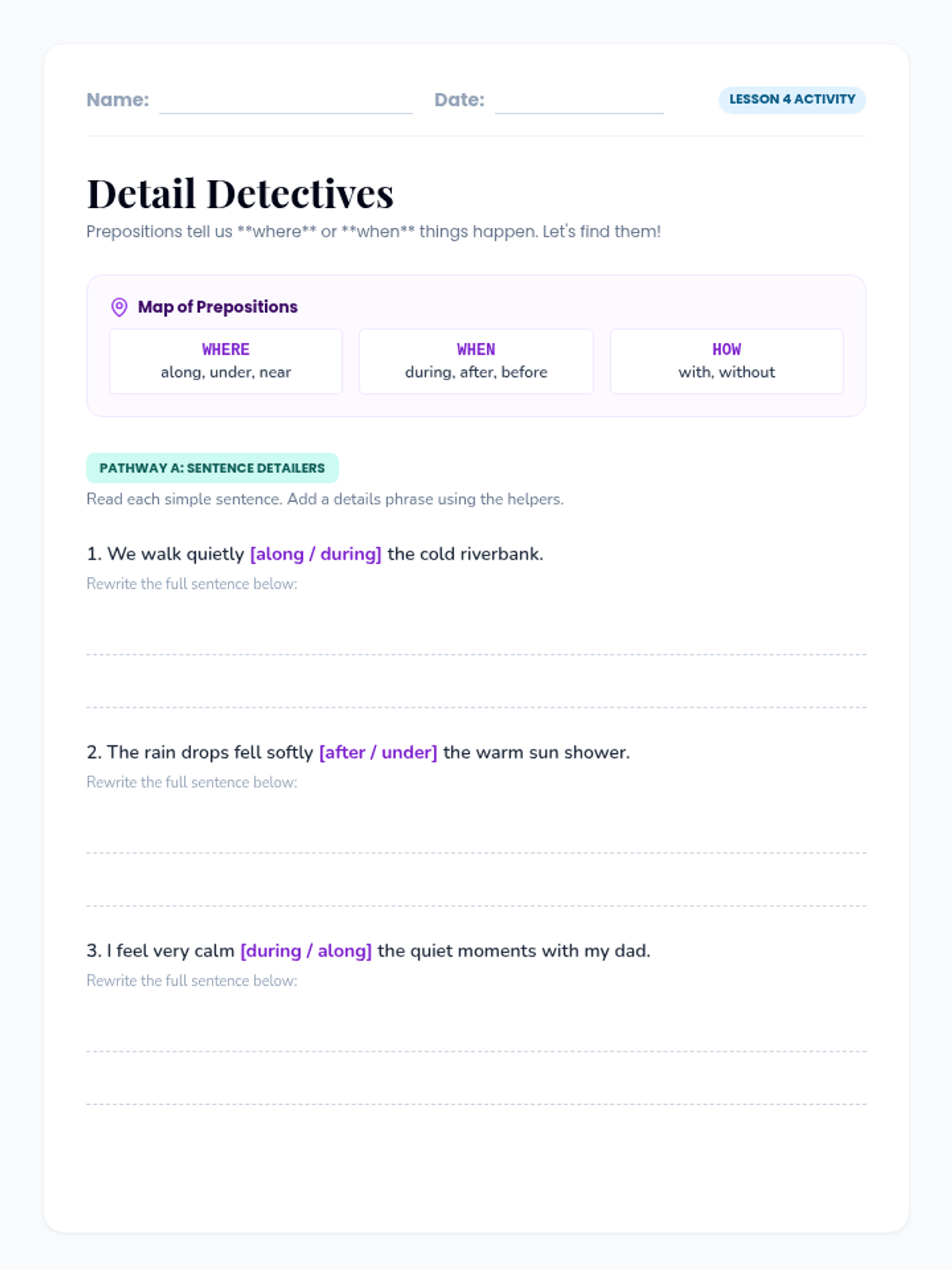
A prepositional phrases worksheet for Lesson 4 featuring a colored grammar reference box. Pathway A uses guided bracket-selection and full-sentence handwriting practice, while Pathway B offers tactile tracing of spatial prepositions and matching drawing prompts.
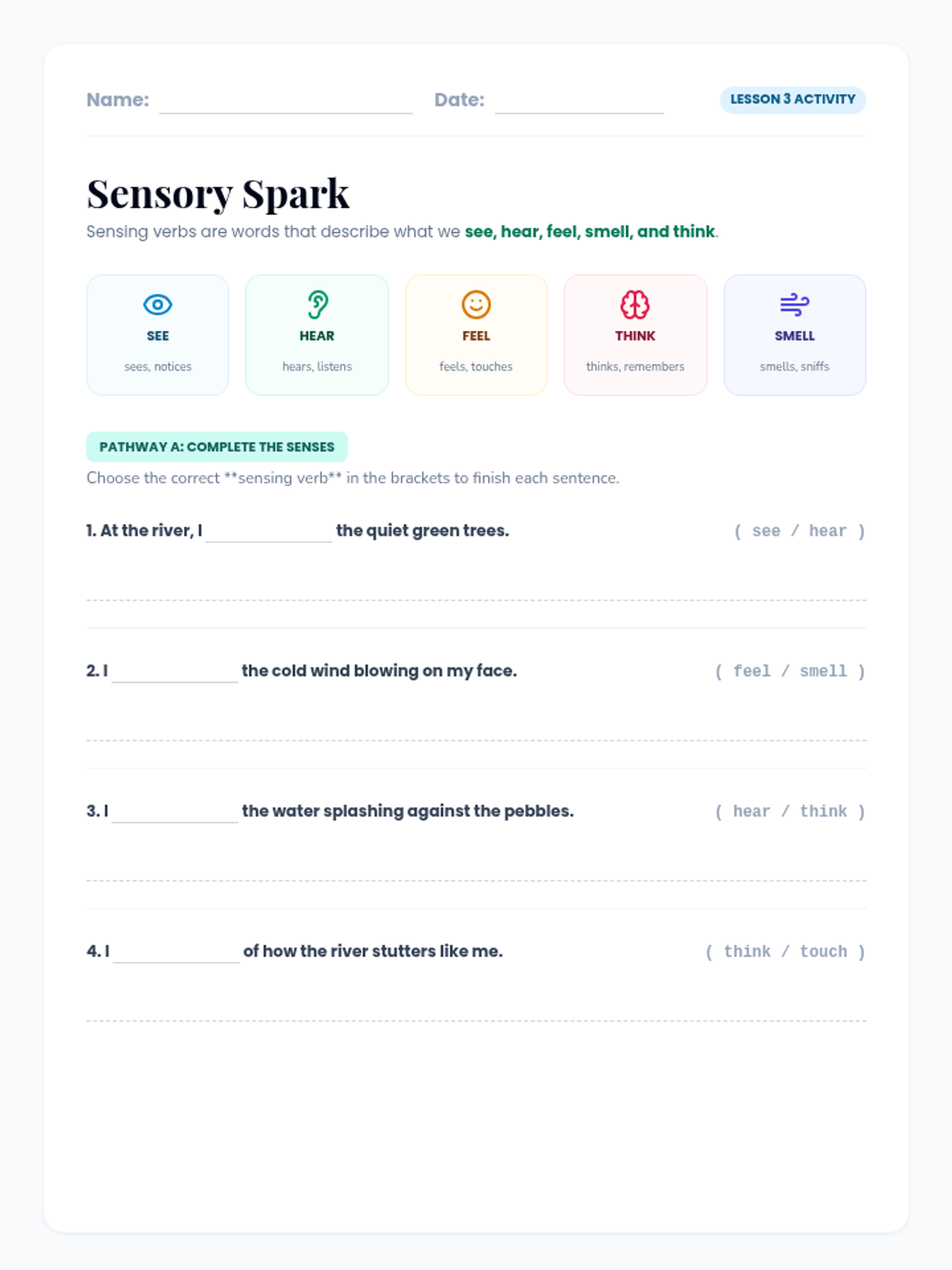
A sensing verbs worksheet for Lesson 3 featuring visual body-part icons corresponding to the 5 senses. Pathway A asks students to complete sentences about a river using standard Year 1 sensory vocabulary, while Pathway B targets Kindergarten learners through hand-eye matching activities and structured drawing frames.
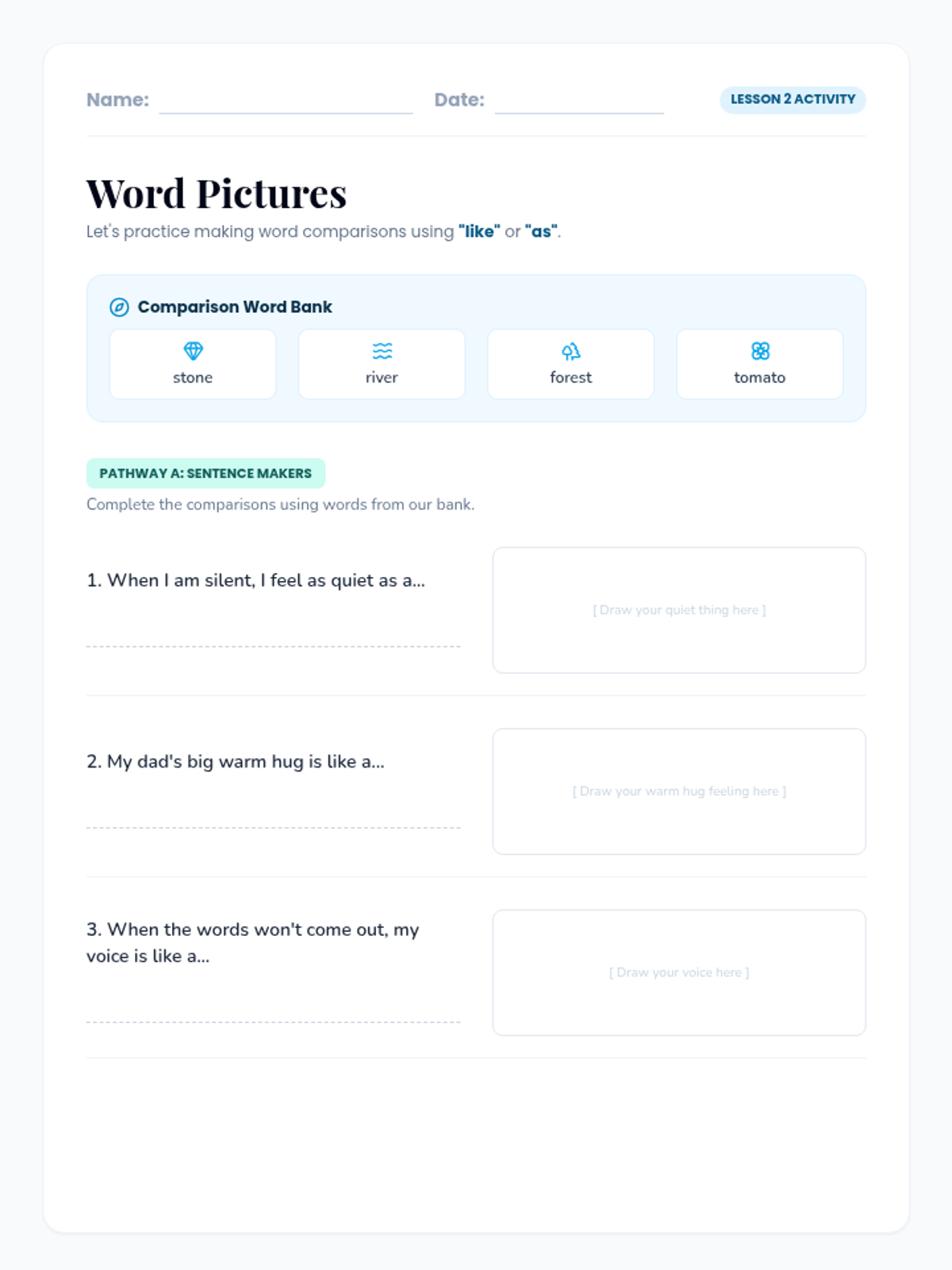
A figurative language worksheet for Lesson 2 featuring a dual-pathway system: Pathway A guides Year 1 level students to build comparisons using an illustrated word bank, while Pathway B offers tactile word-tracing and drawing exercises specifically designed for early years and Kindergarten learners.