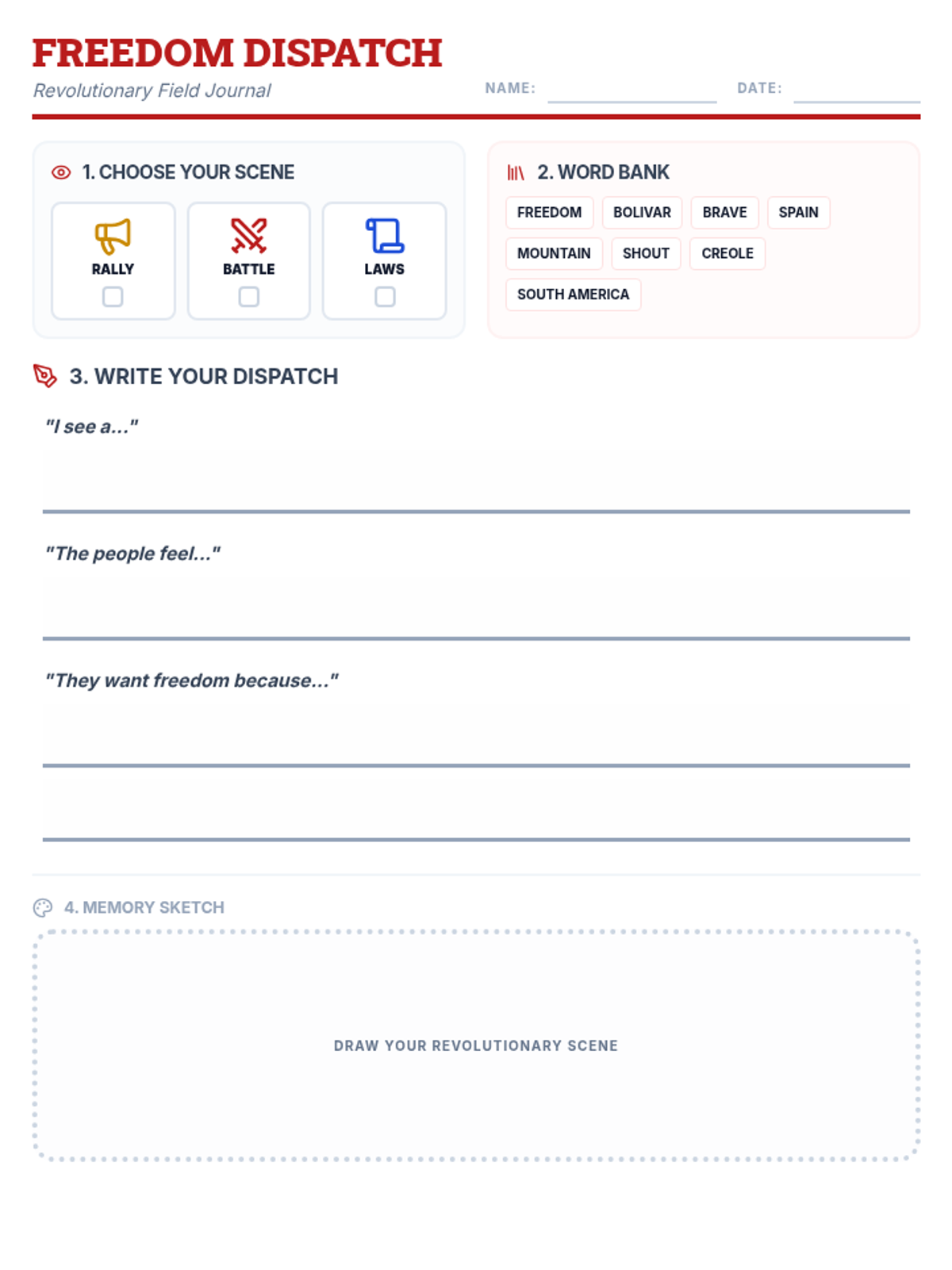
A visual presentation introducing key concepts of the Creole Revolutions, including the Grito de Dolores and Simón Bolívar's campaign, with large text and clear visuals for accessibility. Includes a dedicated slide for the IEP journal task.
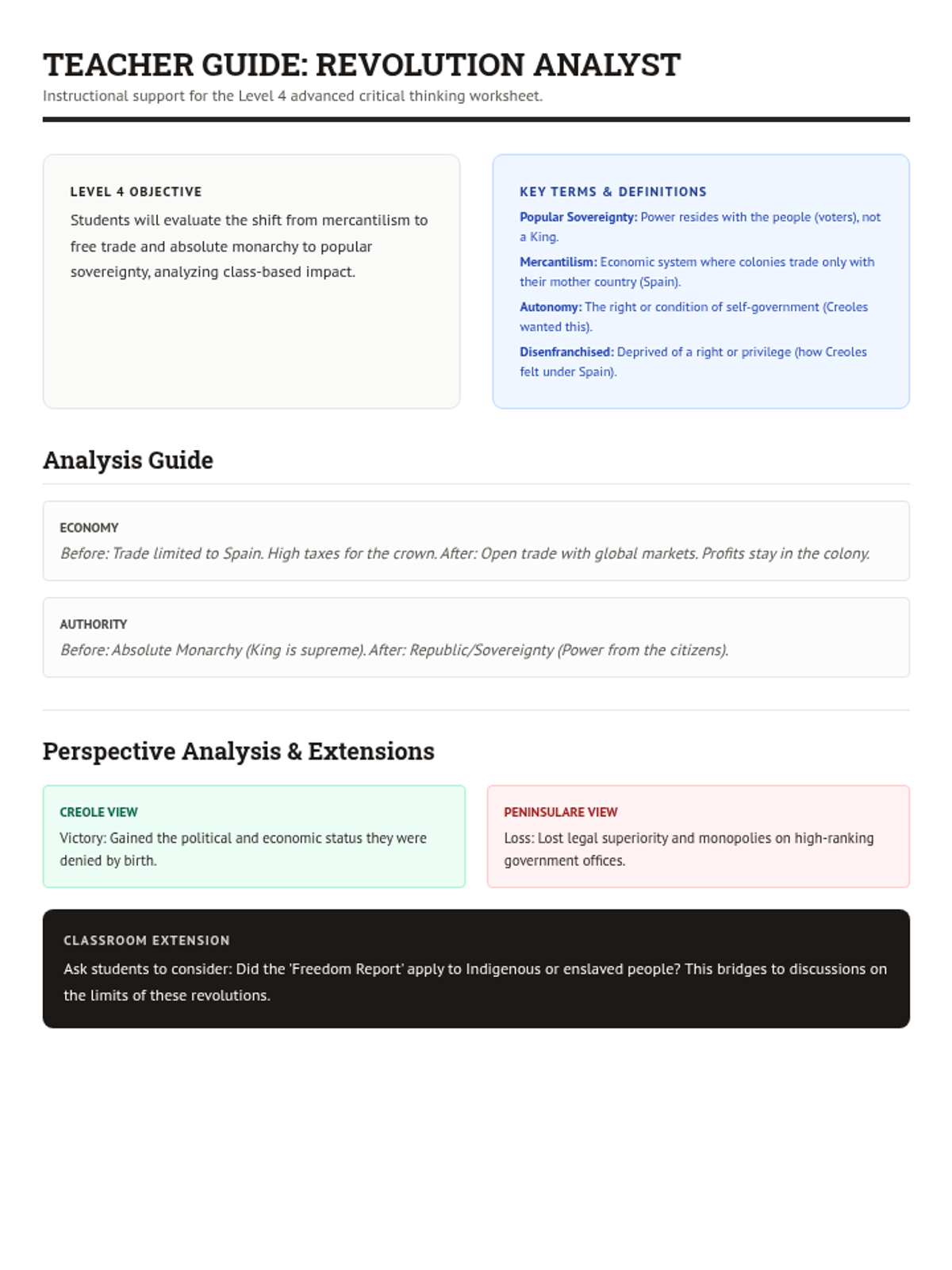
Teacher guide for the Level 4 analyst worksheet. Provides specific definitions for advanced terminology (Sovereignty, Autonomy, Mercantilism), expected student response summaries, and talking points for perspective analysis. Content is optimized for single-page printing.
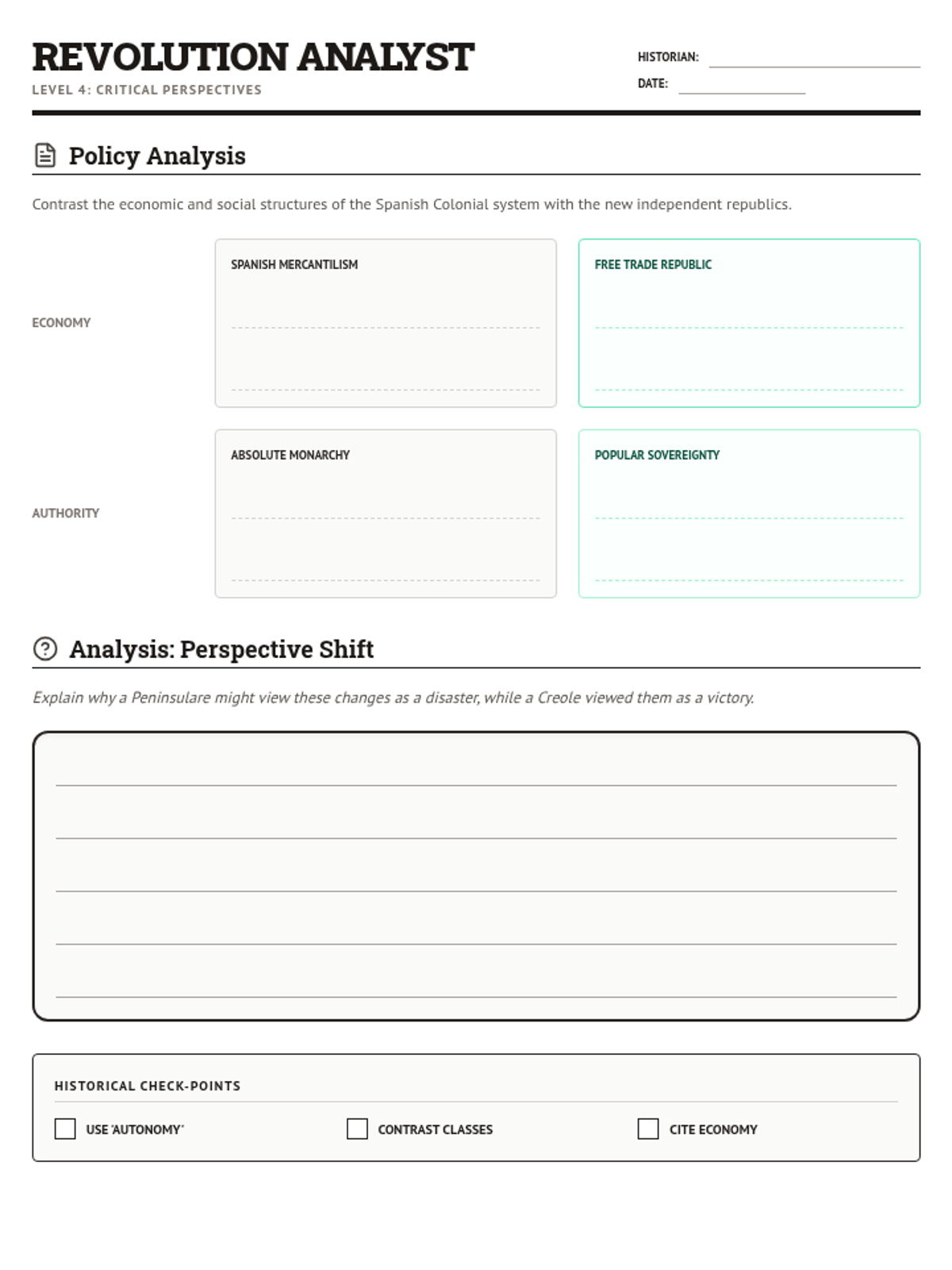
A Level 4 analyst worksheet for students who can handle higher cognitive complexity. Features comparative analysis of mercantilism vs. free trade and monarchy vs. sovereignty, along with a multi-perspective writing prompt. Consolidates content to one page.
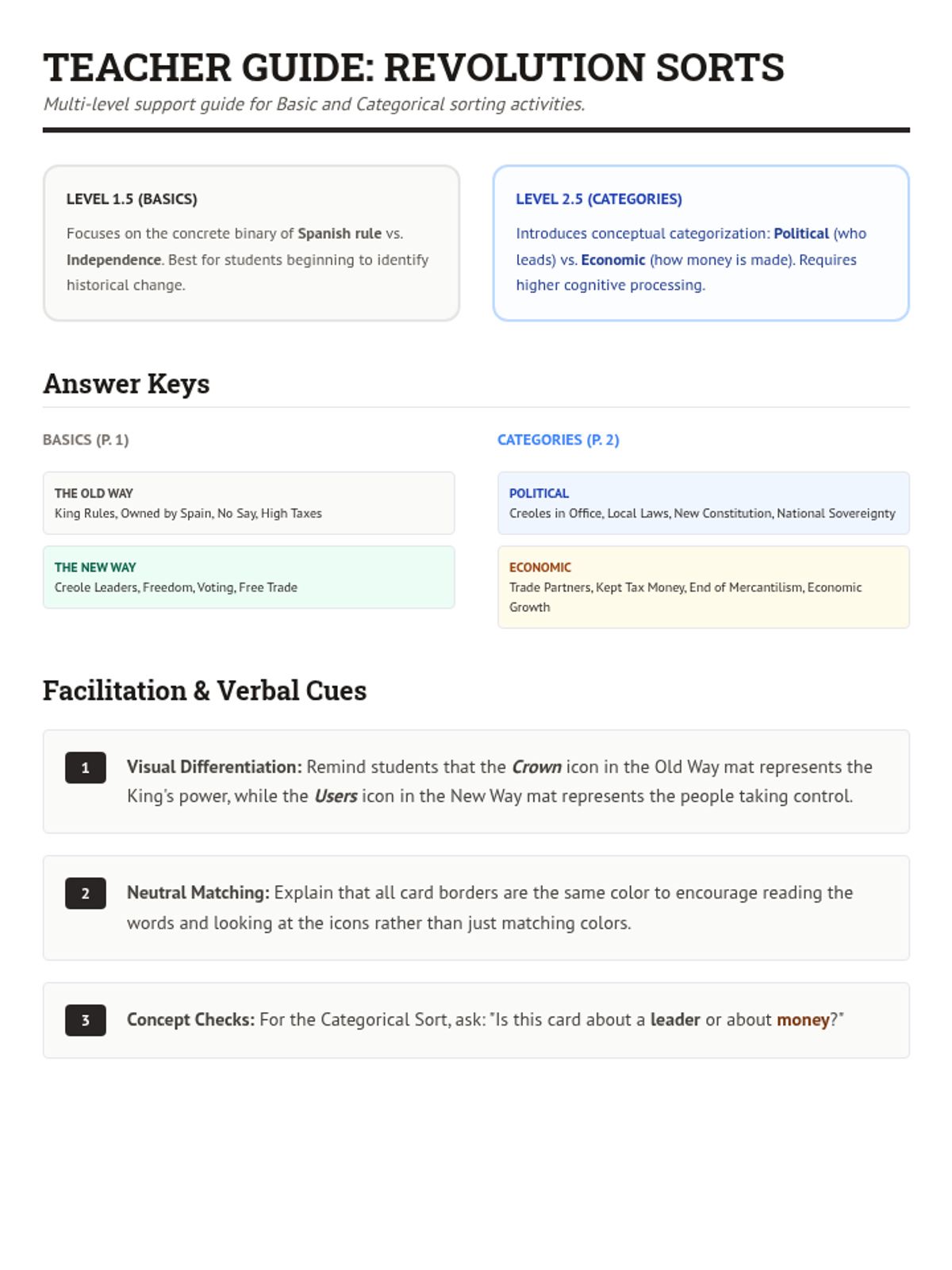
Teacher guide for the multi-level Revolution Sorting Activity. Includes answer keys for both Basic (Level 1.5) and Categorical (Level 2.5) sorts, along with instructional tips and verbal cues. Content is optimized for single-page printing.
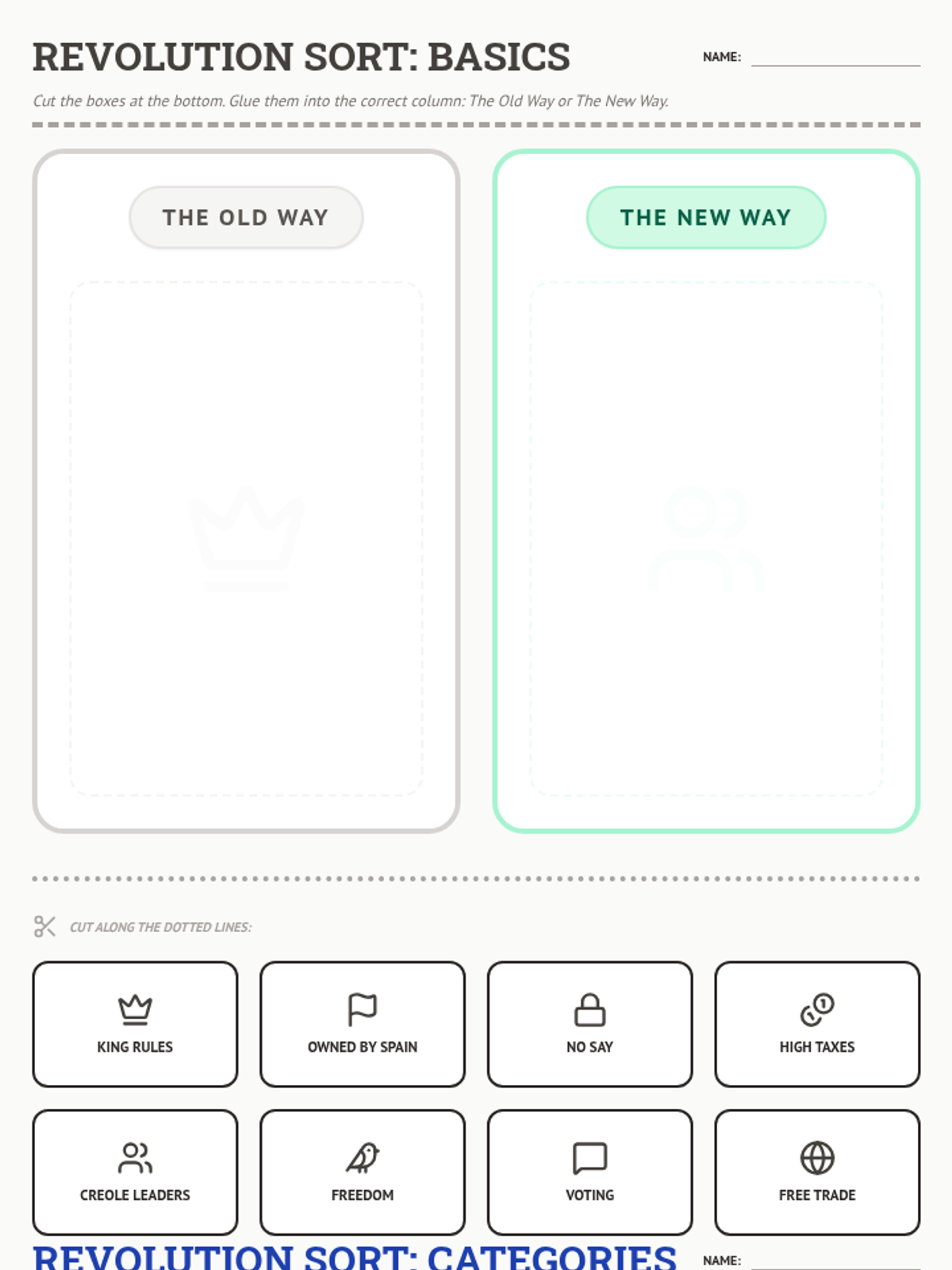
A multi-level sorting activity for IEP students. Features Level 1.5 (Basic "Old vs New" sort) and Level 2.5 (Categorical "Political vs Economic" sort). Includes neutral-colored cut-and-paste cards with icons to ensure focus on historical concepts over color-matching.
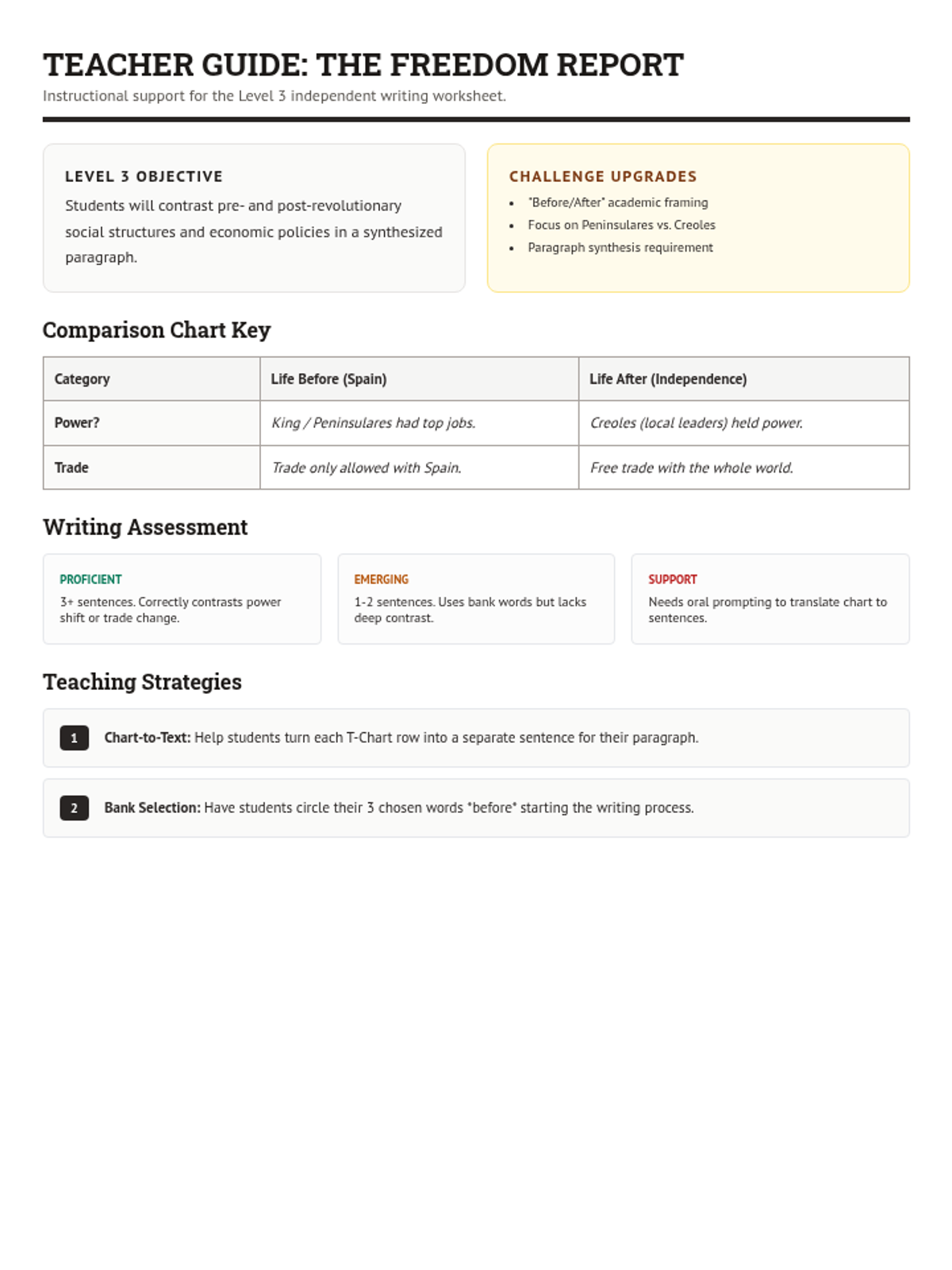
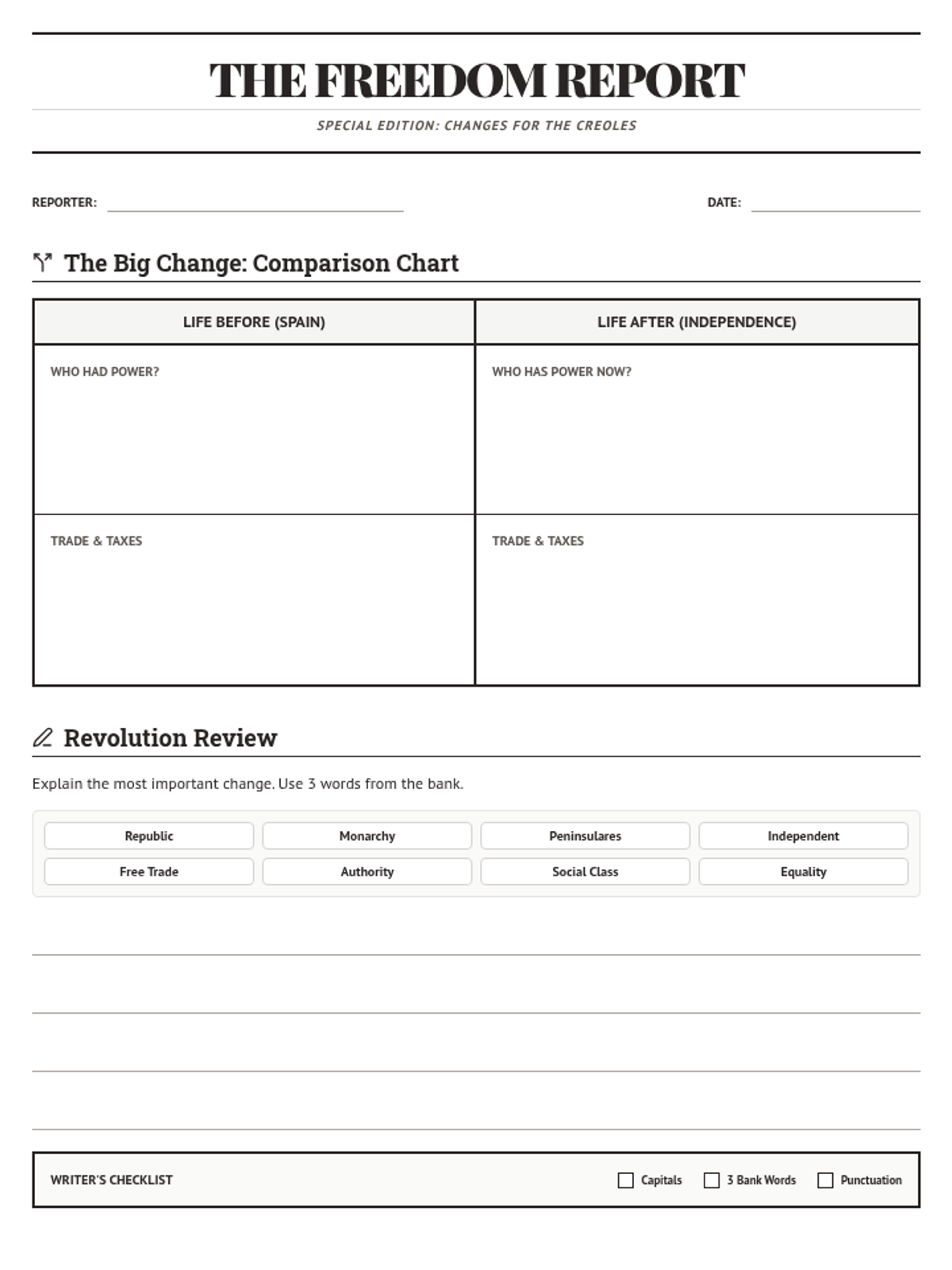
Teacher guide for the Level 3 "Revolution Impact Report" worksheet. Includes ideal answers for the T-chart, a 3-tier writing rubric, and specific instructional strategies for helping students transition from data entry to synthesis. Content is optimized for single-page printing.
A more challenging "Level 3" worksheet for IEP students. Features a T-chart for comparison, an expanded academic word bank, and a paragraph writing prompt with a self-check rubric. Designed for students who can write independently with scaffolding. Content is consolidated to fit on one page.
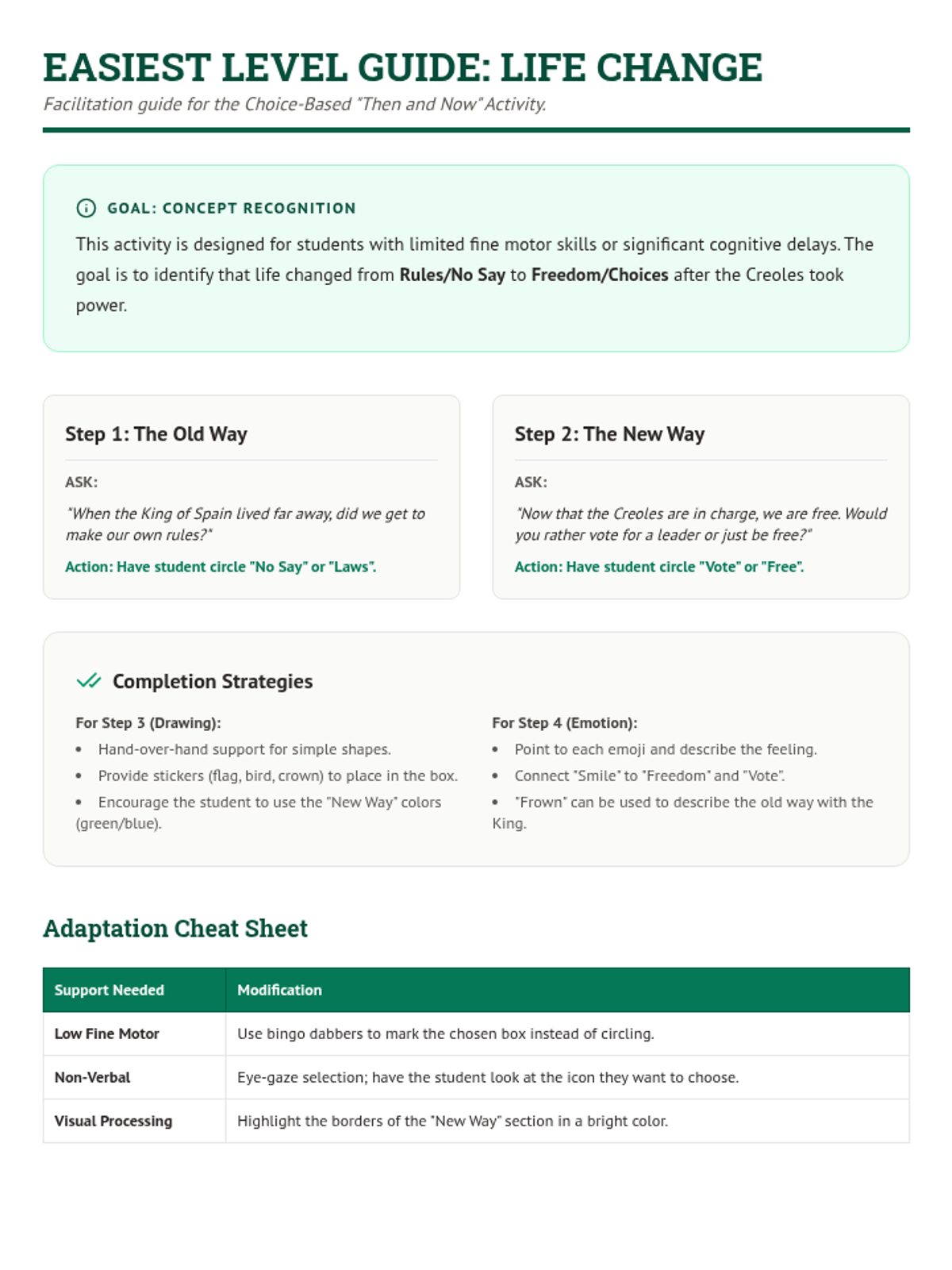
A specialized teacher guide for facilitating the "easiest" level of the Revolution impact activity. Includes specific verbal prompts, action steps for circling/matching, and a multi-modal accommodation table for students with diverse needs.
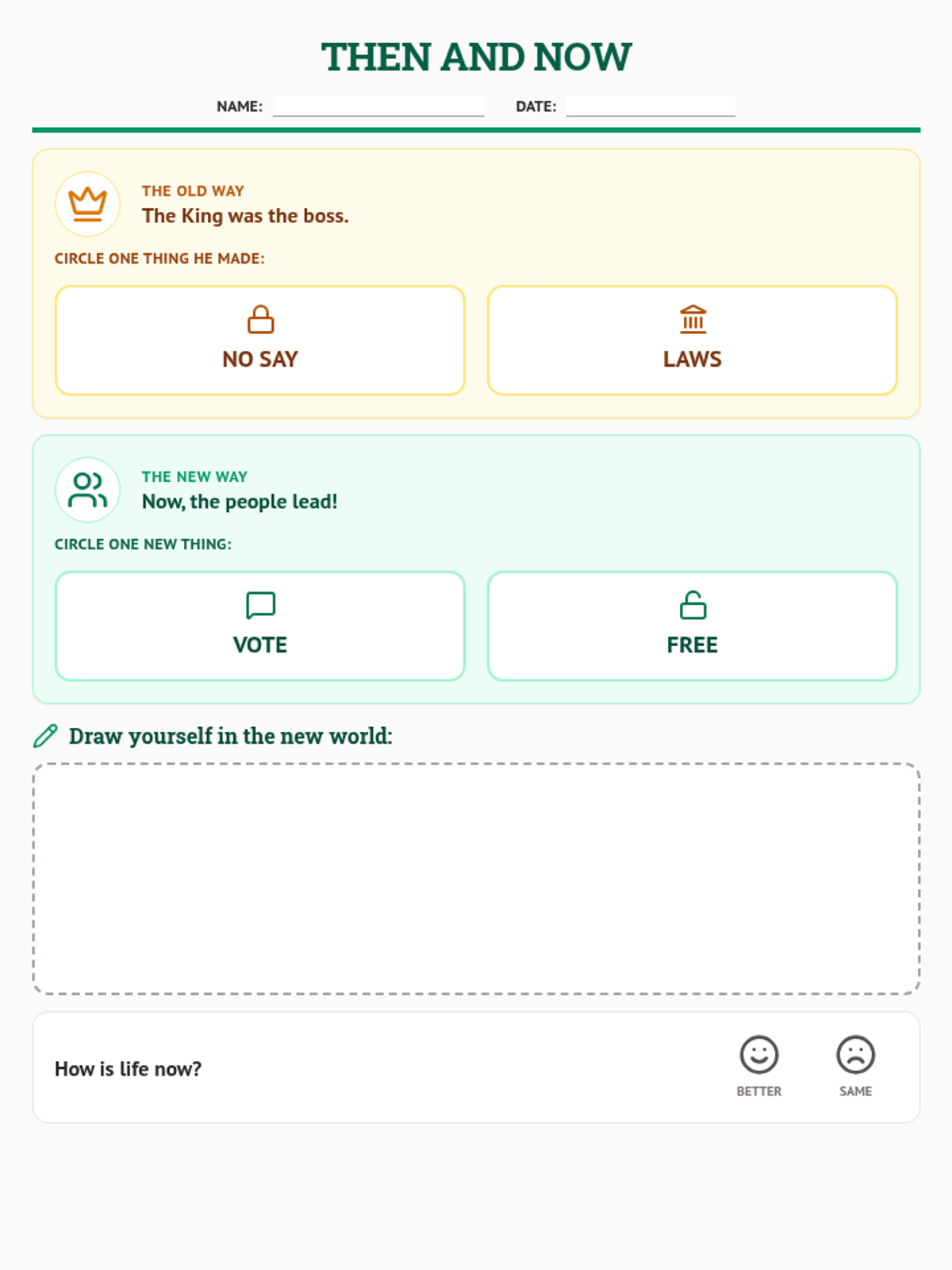
An "Easiest Level" worksheet for IEP students focused on the Creole Revolution. Uses a simplified "Circle the Answer" format with large icons and minimal text to evaluate "Then vs. Now" concepts without requiring writing. Content is consolidated to fit on one page.
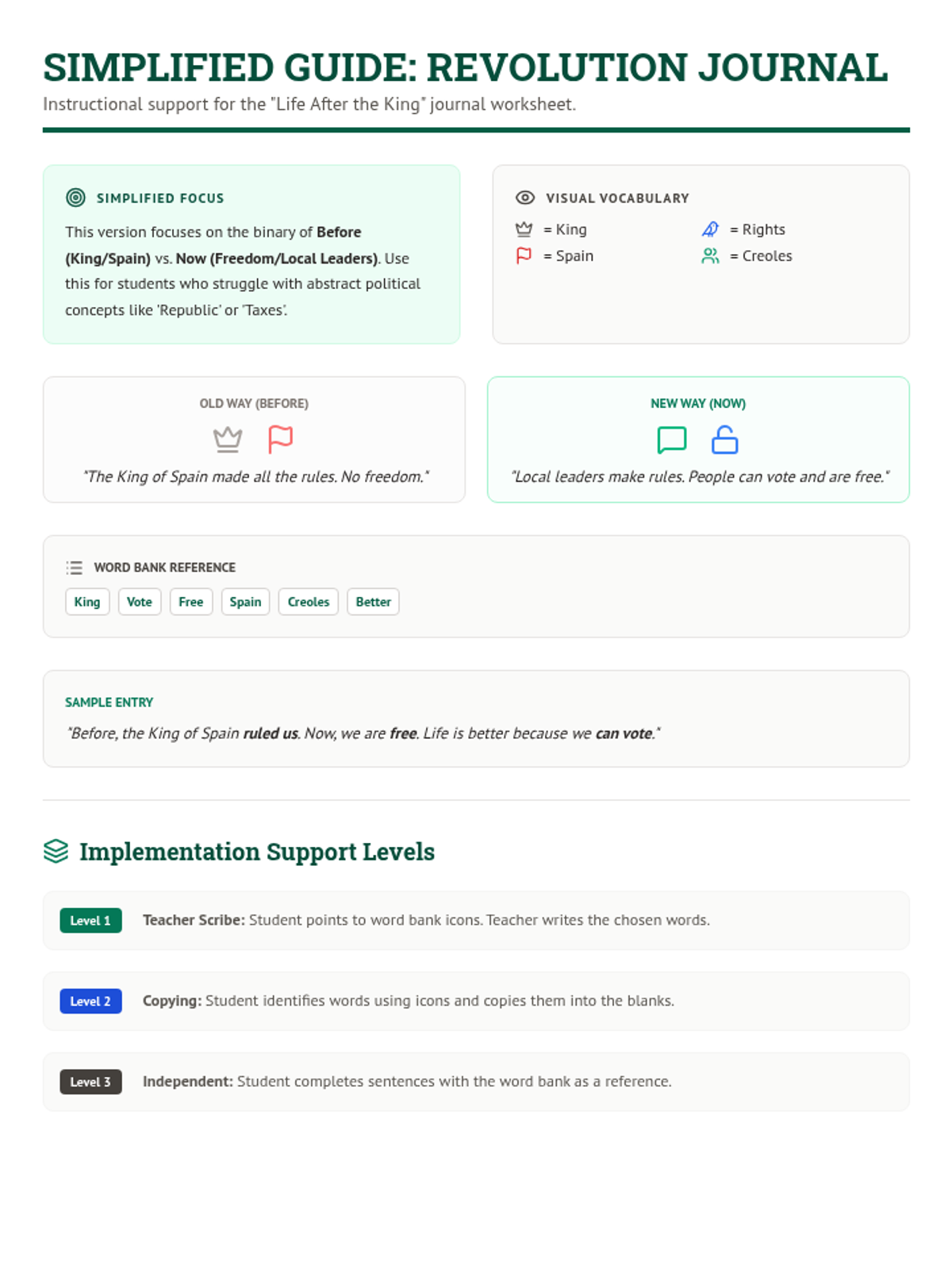
A modified teacher guide for the "easier" version of the Revolution Journal. Includes a simplified "Old vs New" content breakdown, visual cue explanations, and a 3-level support hierarchy for implementation.
An ultra-simplified journal worksheet for IEP students. Features visual icons in the word bank, clear "Old Way" vs "New Way" labels, and very short sentence frames to minimize cognitive load while meeting social studies standards.
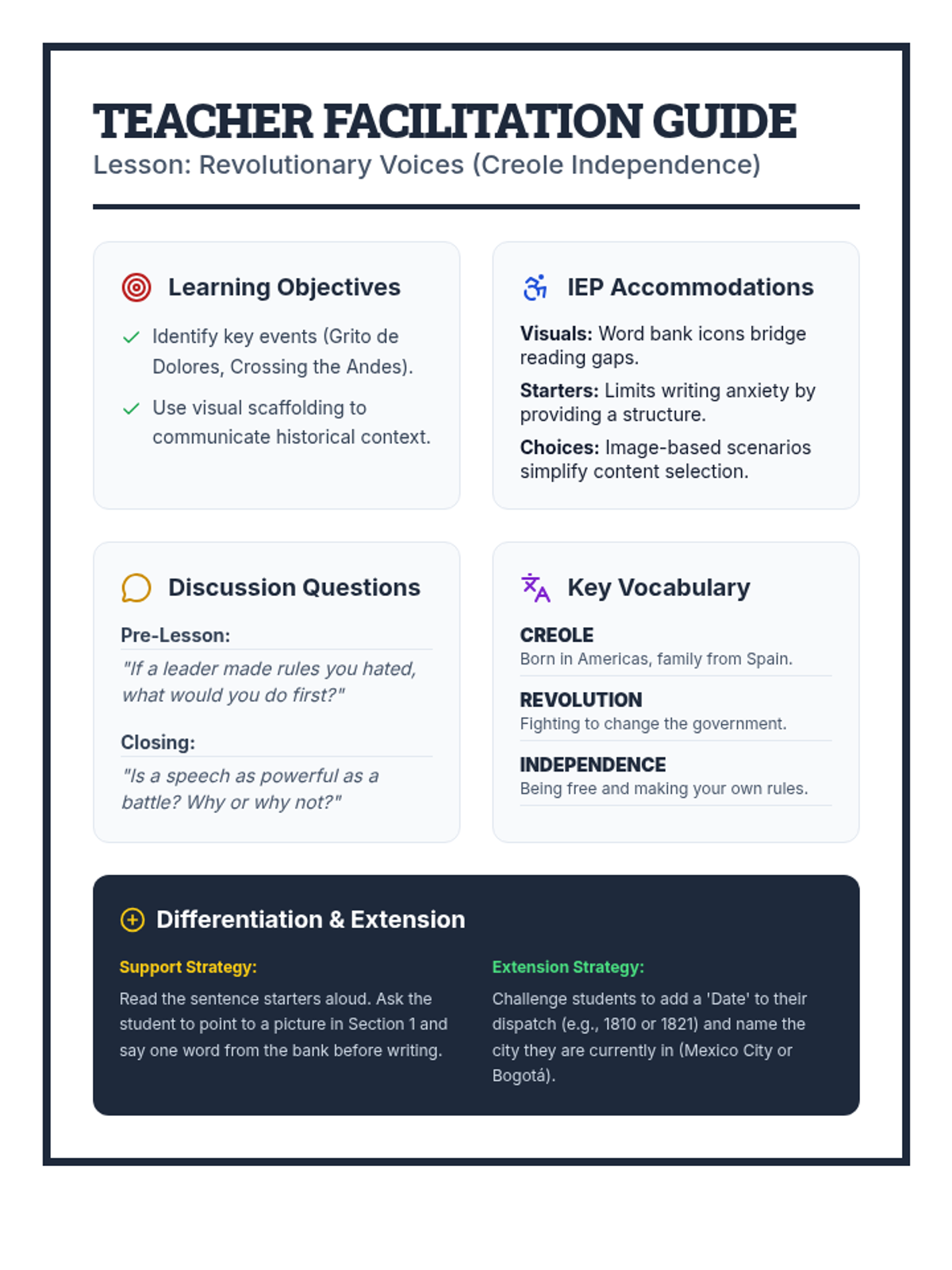
A teacher facilitation guide providing context, instructional strategies, vocabulary definitions, and differentiation suggestions for the Creole Revolutions lesson. Optimized for single-page printing.
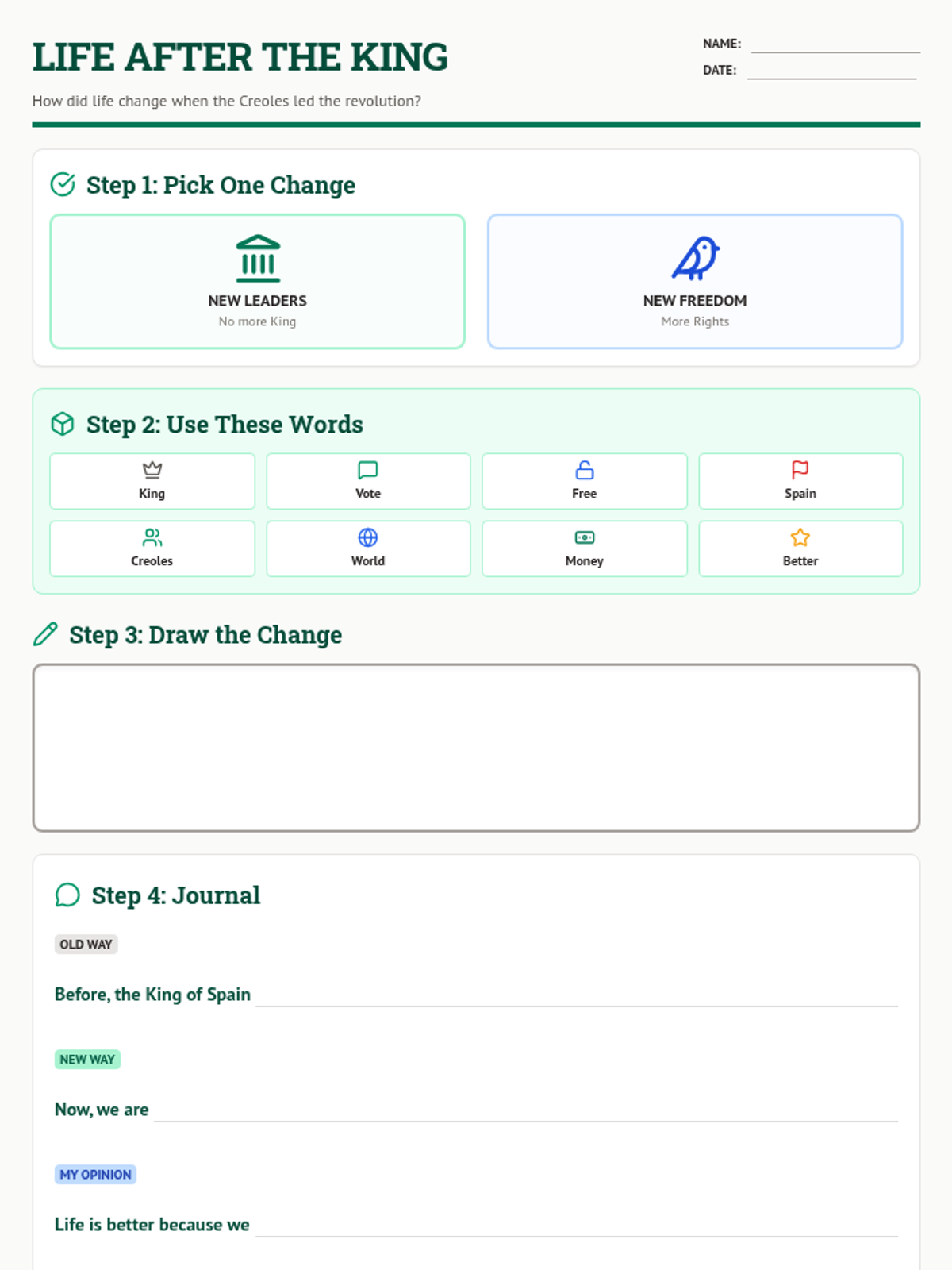
A heavily scaffolded journal prompt for IEP students about the Creole Revolutions, featuring picture-based response choices, a visual word bank, and sentence starters for structured writing. Consolidated into a single page for clarity.
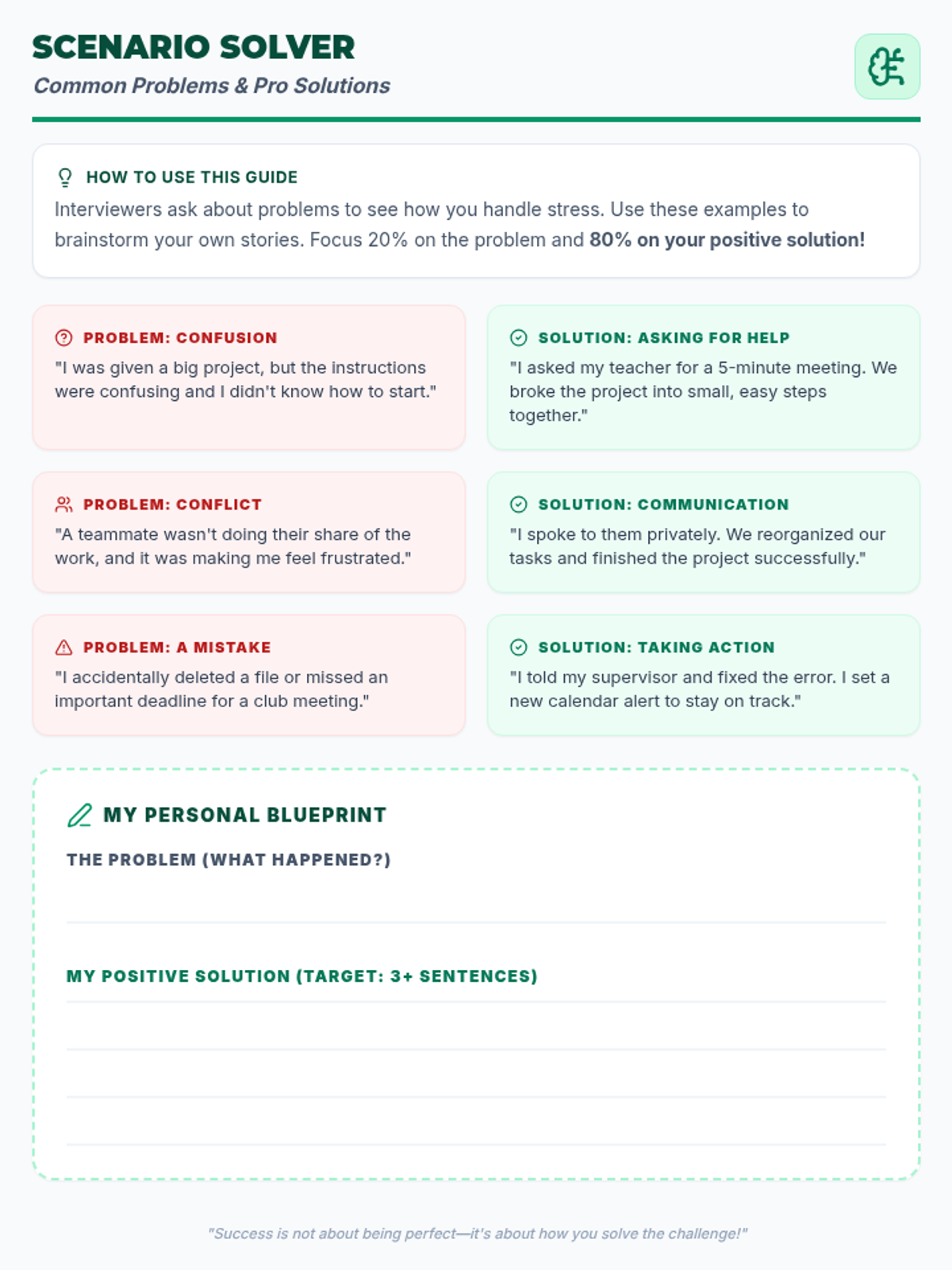
A reference and reflection worksheet that provides concrete examples of common school or workplace problems and their professional solutions, helping students brainstorm their own situational interview answers.
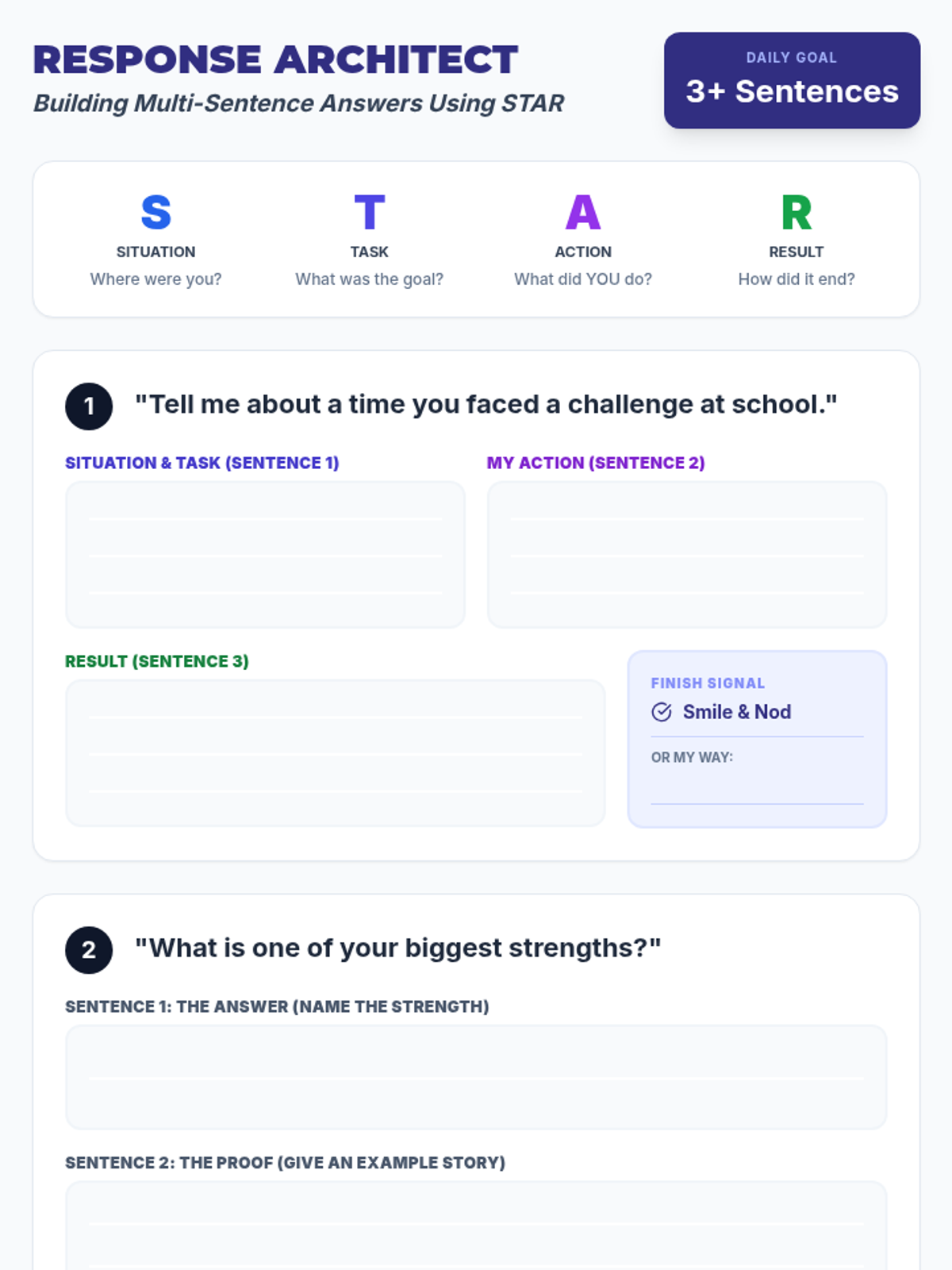
A strategy worksheet specifically designed to help students expand their interview answers from short phrases to multi-sentence replies using the STAR method and a structured 'Response Architect' approach.
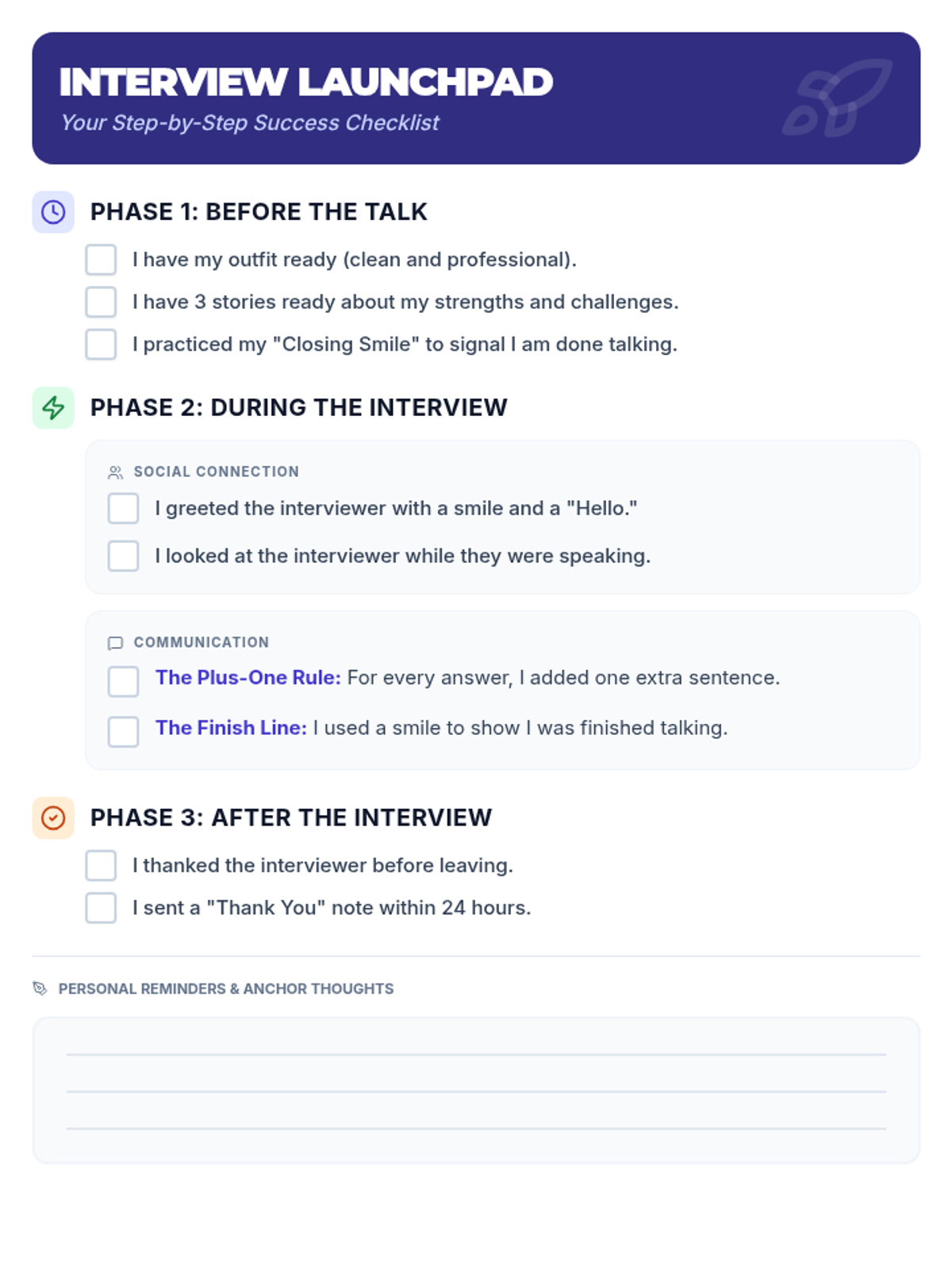
A comprehensive, visually structured checklist for high school students with autism to navigate the pre-interview, during-interview, and post-interview phases, with specific focus on social cues and expanded communication.
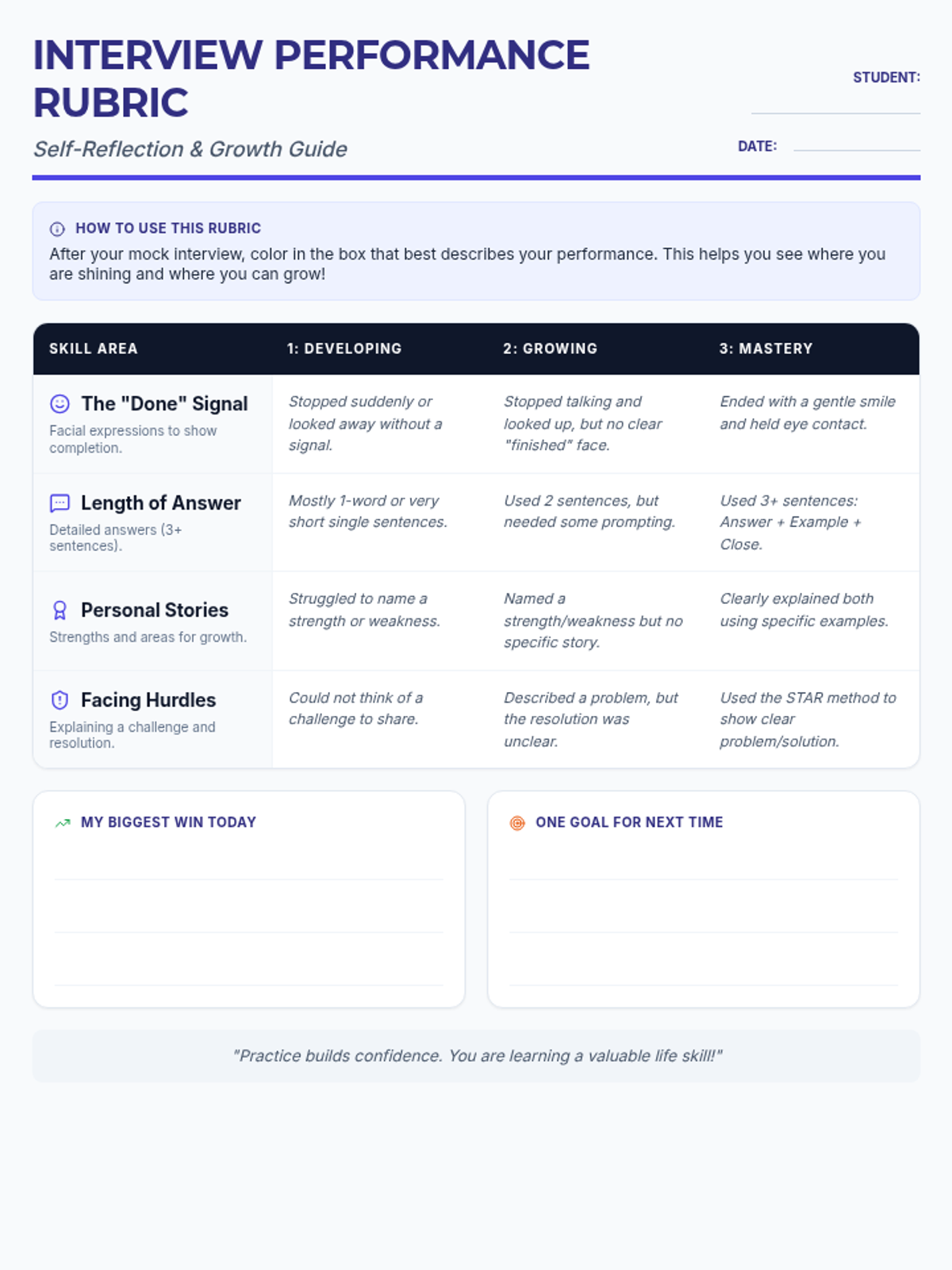
A structured self-reflection rubric for high school students with autism to evaluate their interview performance, focusing on facial cues, answer expansion, and key behavioral questions.
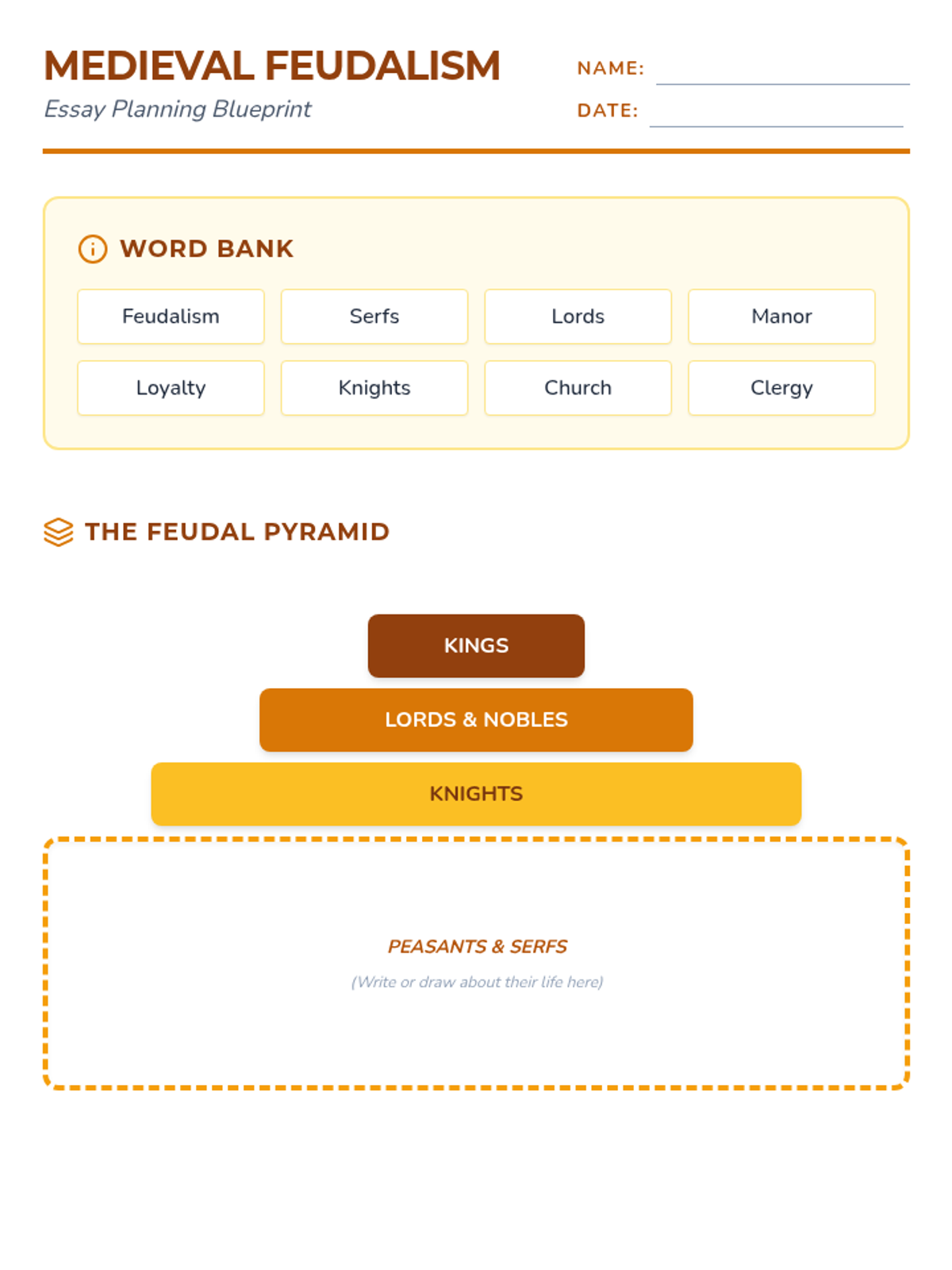
A visual planning tool and outline for writing about the feudal system in Medieval Europe, modified for accessibility and IEP support. Revised for better page layout and work area space.
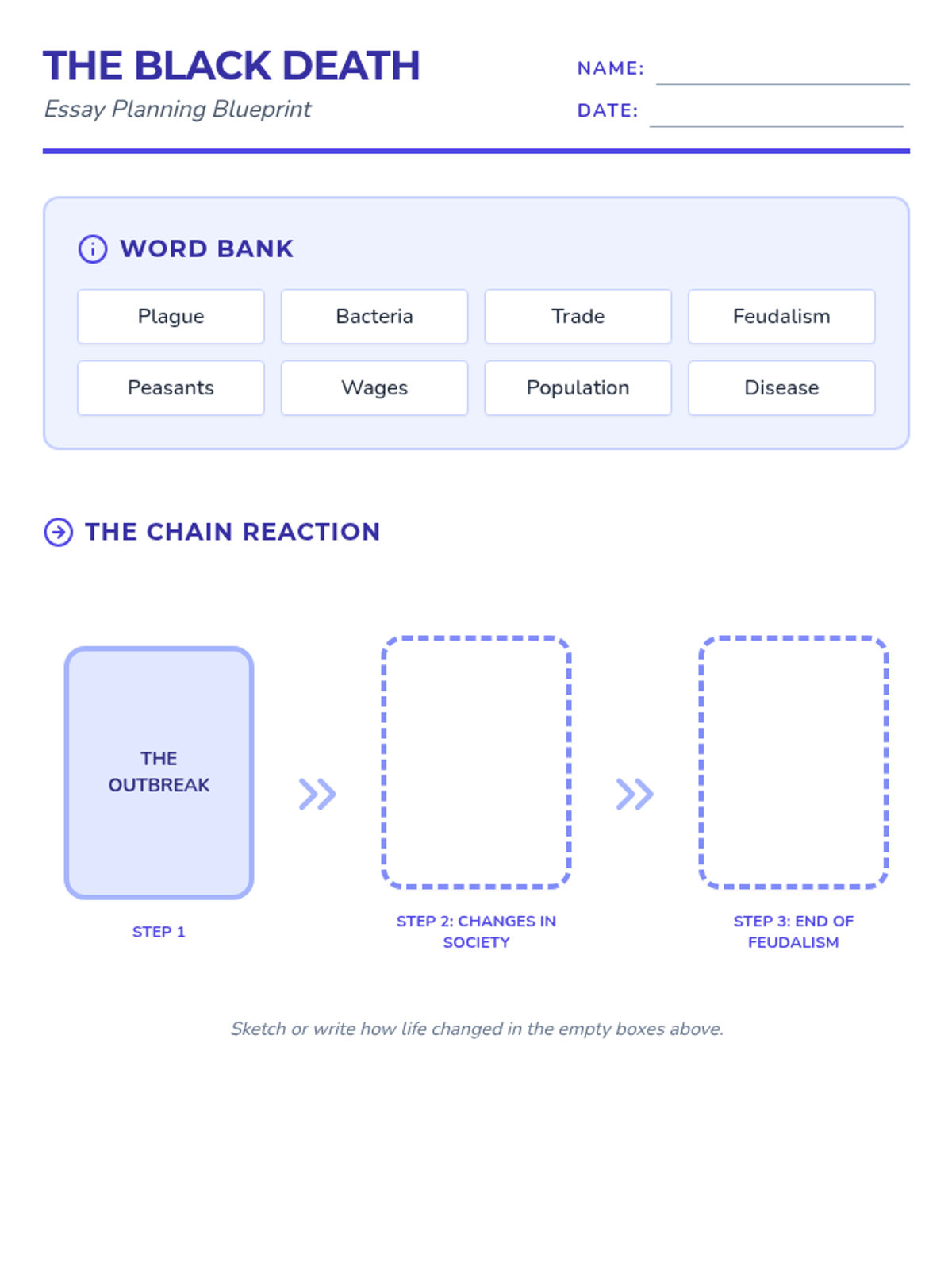
A scaffolded essay planning sheet for an informative essay on the Black Death and its impact on European society, designed for IEP support. Revised for better page layout and work area space.
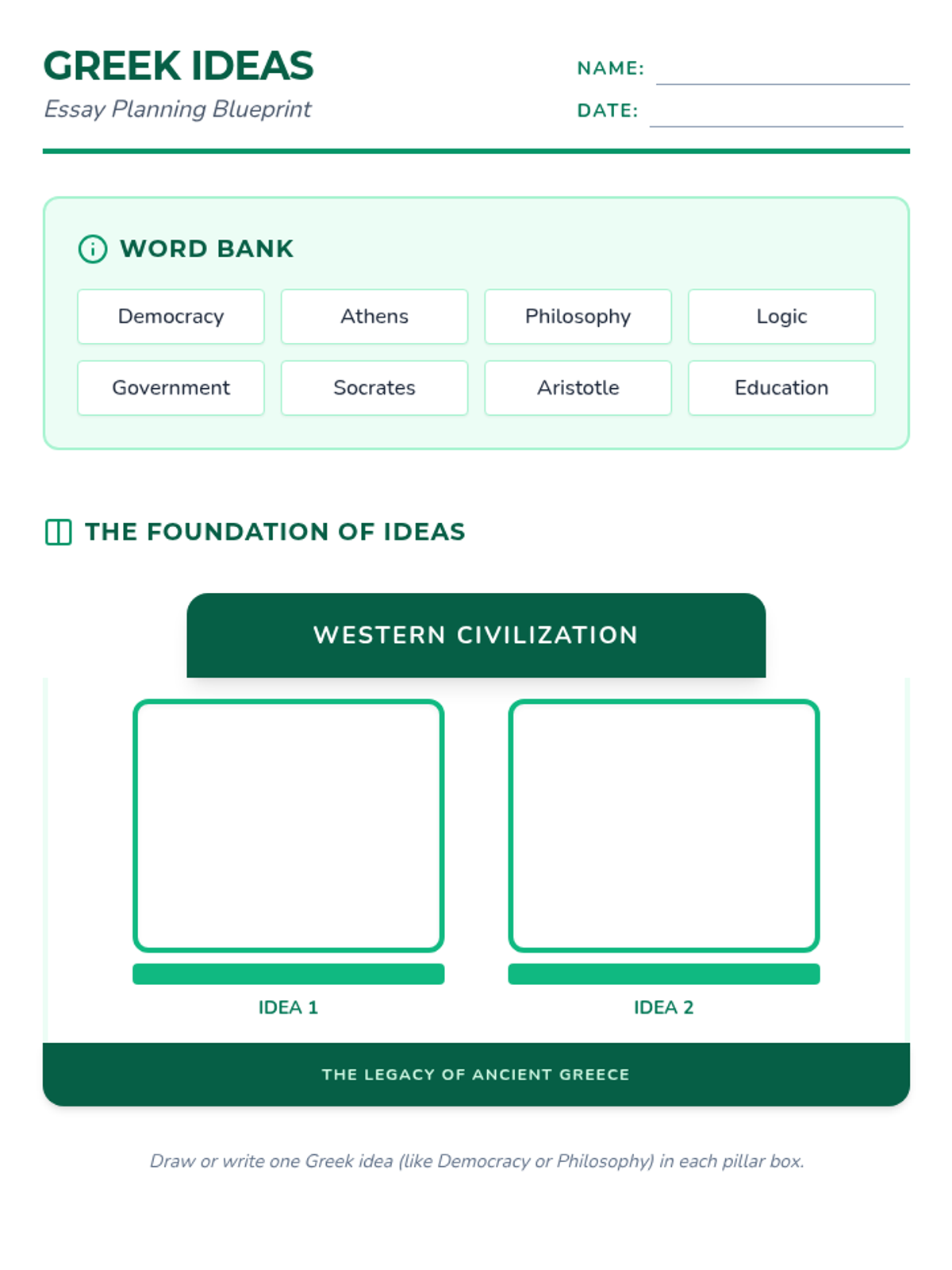
A modified essay planning guide for writing about Ancient Greek philosophy and democracy with simplified sections and visual supports for IEP students. Revised for better page layout and work area space.
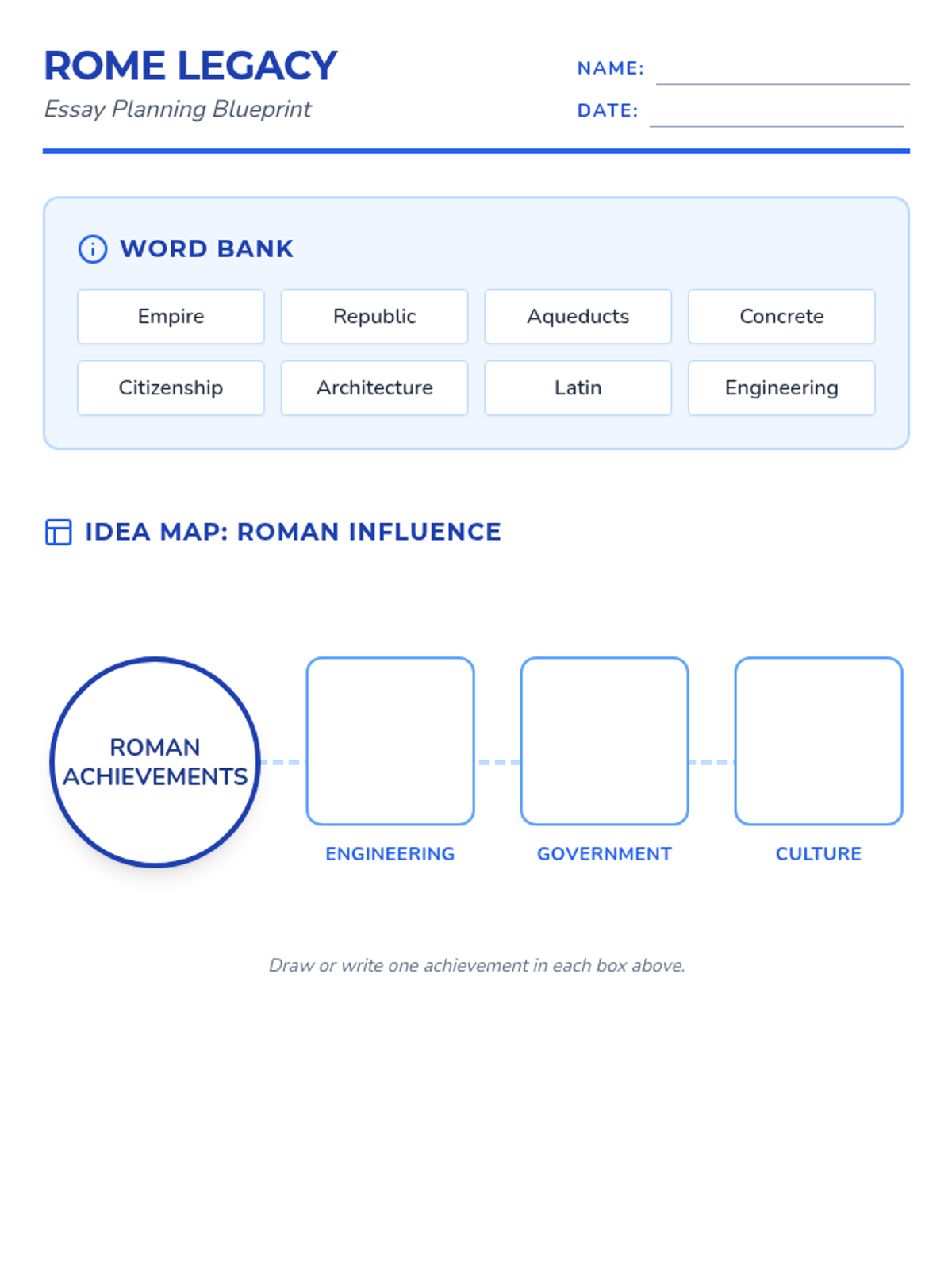
A modified 3-paragraph essay planner about the Roman Empire's influence, featuring a word bank and sentence starters for students with IEPs. Revised for better page layout and work area space.
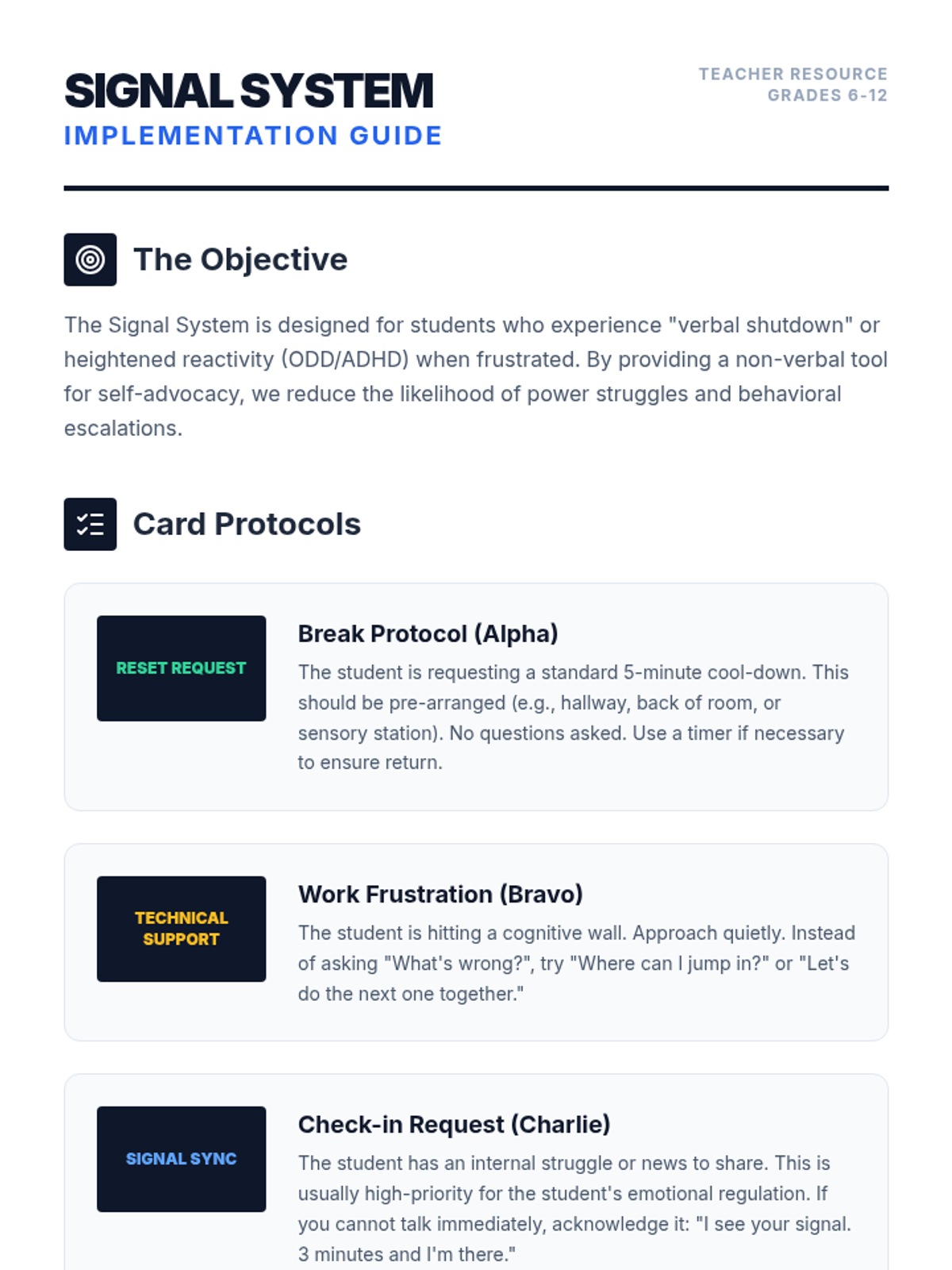
A teacher-facing implementation guide for the Signal System. This guide provides specific protocols for each card, explains the psychological rationale behind the system, and offers best practices for maintaining student dignity and classroom stability.
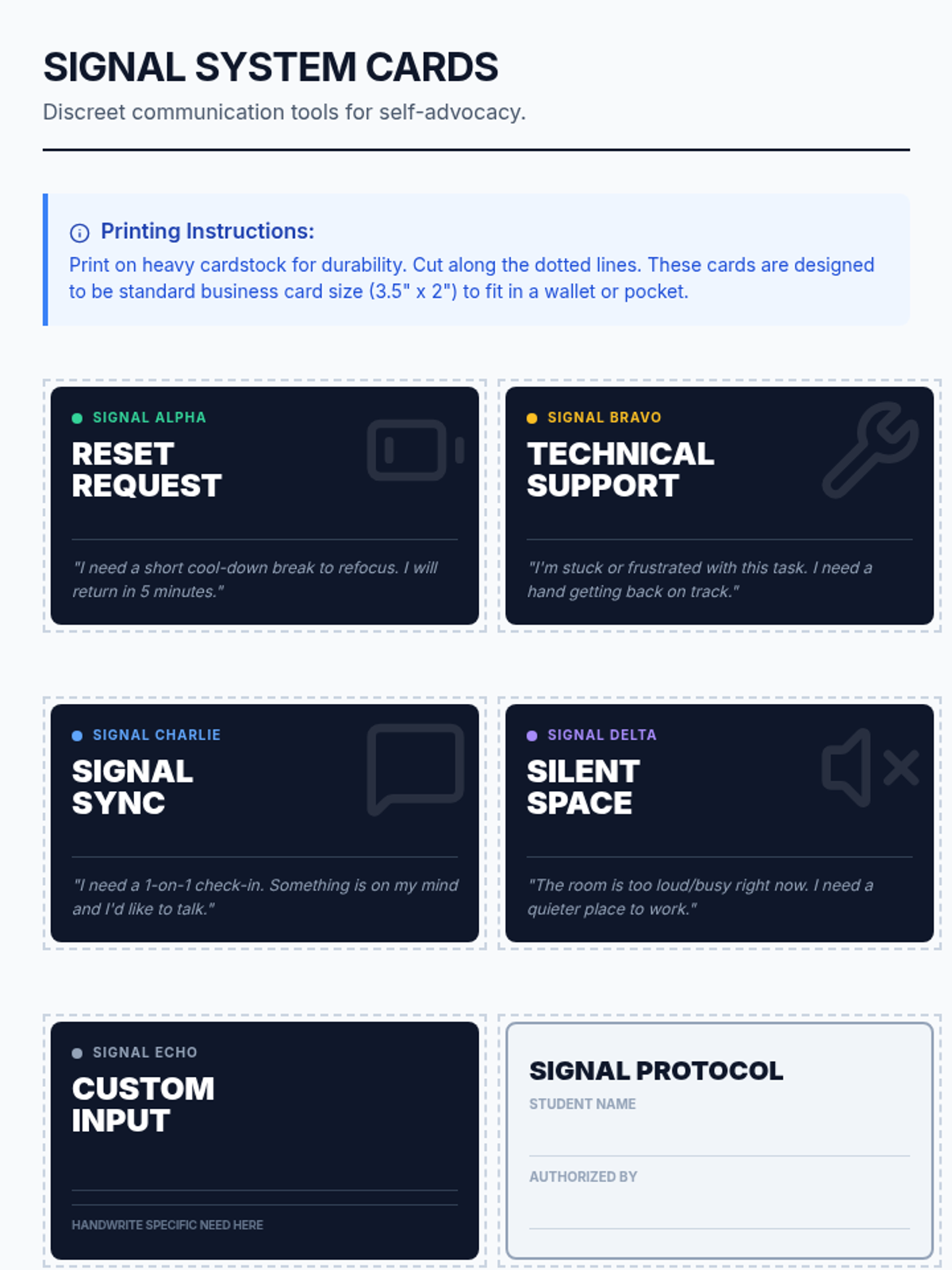
A set of discreet, wallet-sized communication cards designed for an 8th-grade student. The cards use a modern, minimalist 'Signal' aesthetic to help the student advocate for breaks, work assistance, and sensory needs without the pressure of verbal communication.
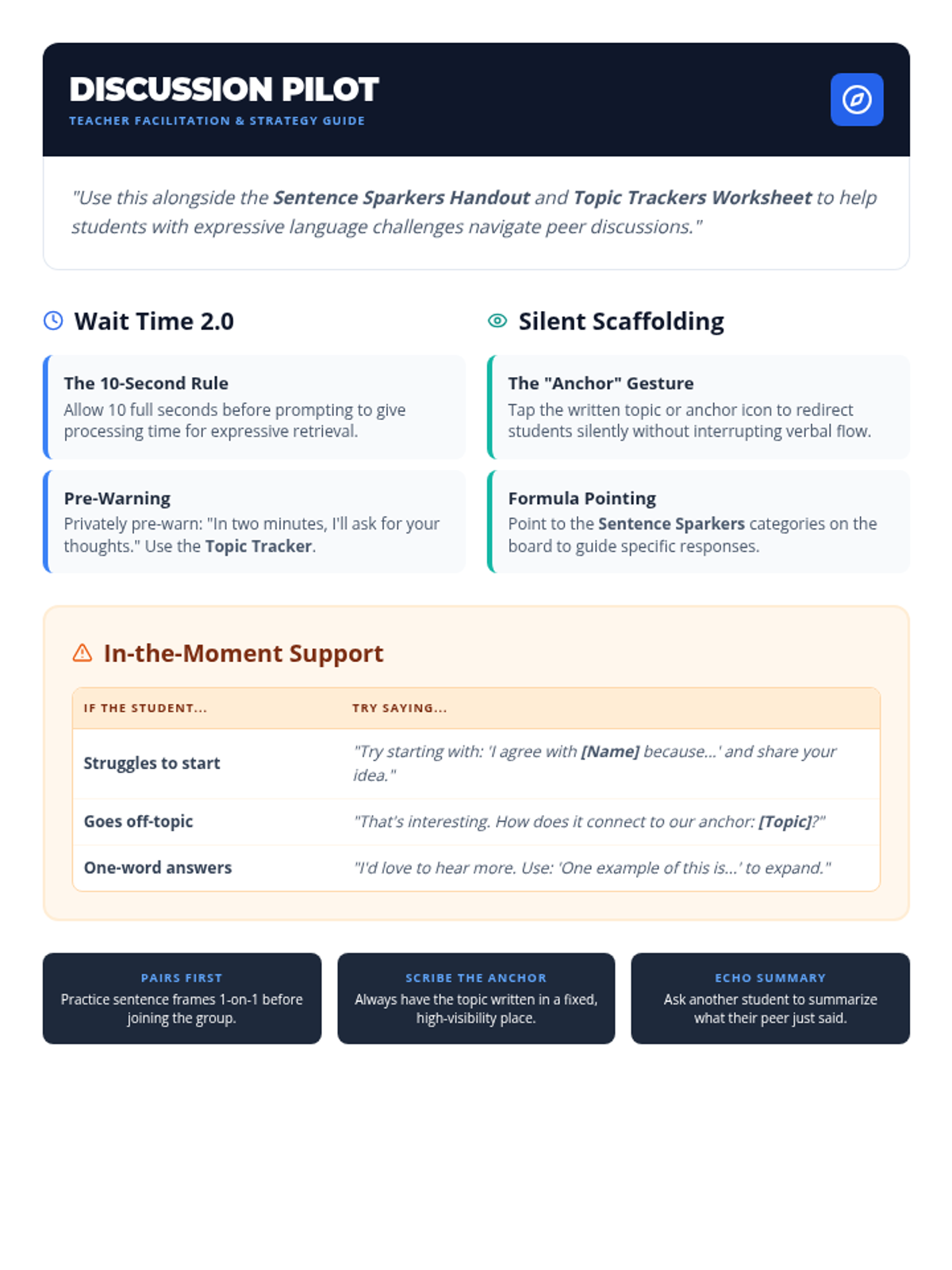
A teacher-facing guide providing specific pedagogical strategies, troubleshooting tips, and facilitation techniques to support students with expressive language and focus needs during discussions.
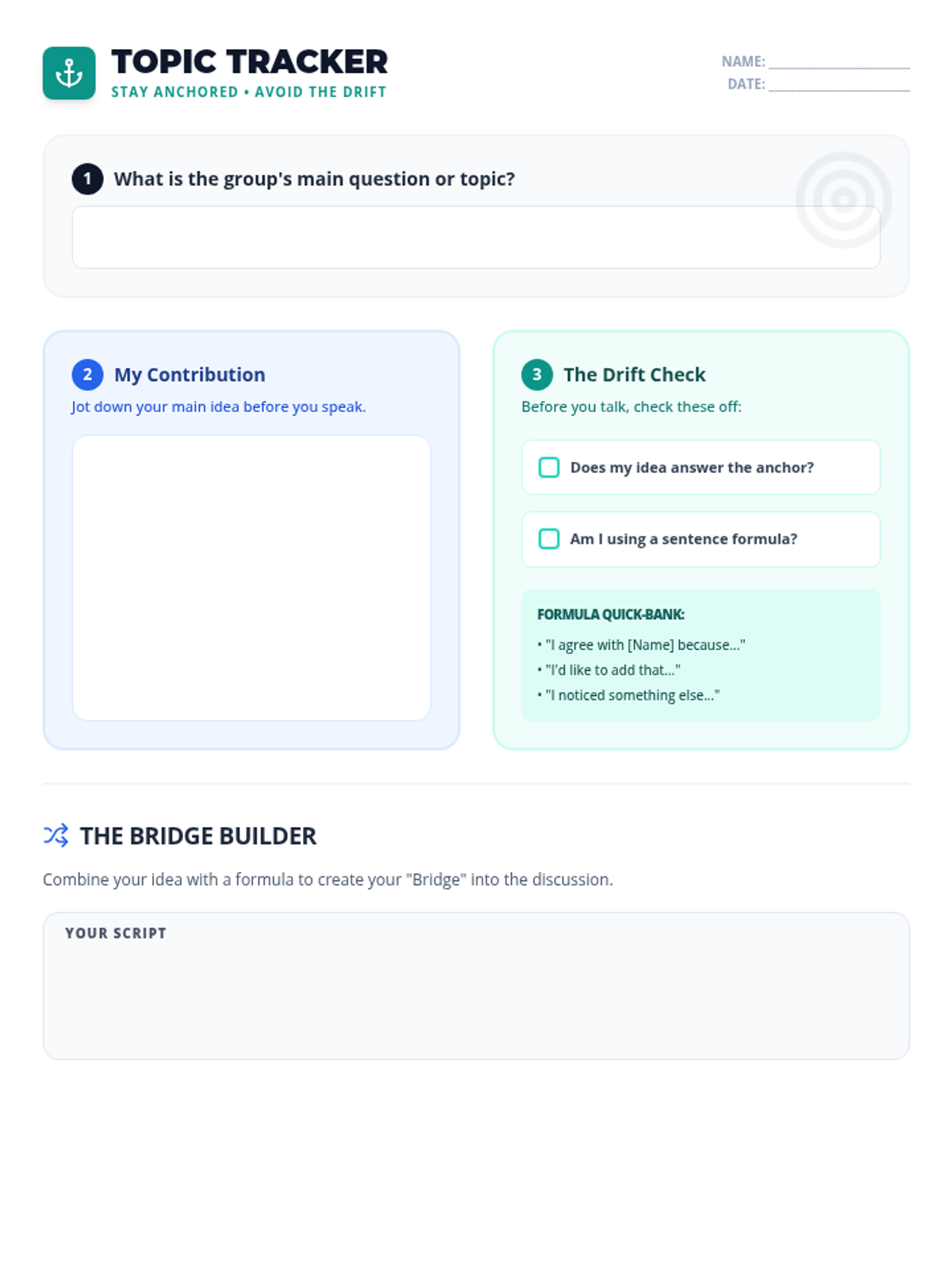
A graphic organizer to help students map out their thoughts before contributing to a discussion, ensuring they stay on topic and have a prepared 'bridge' into the conversation.
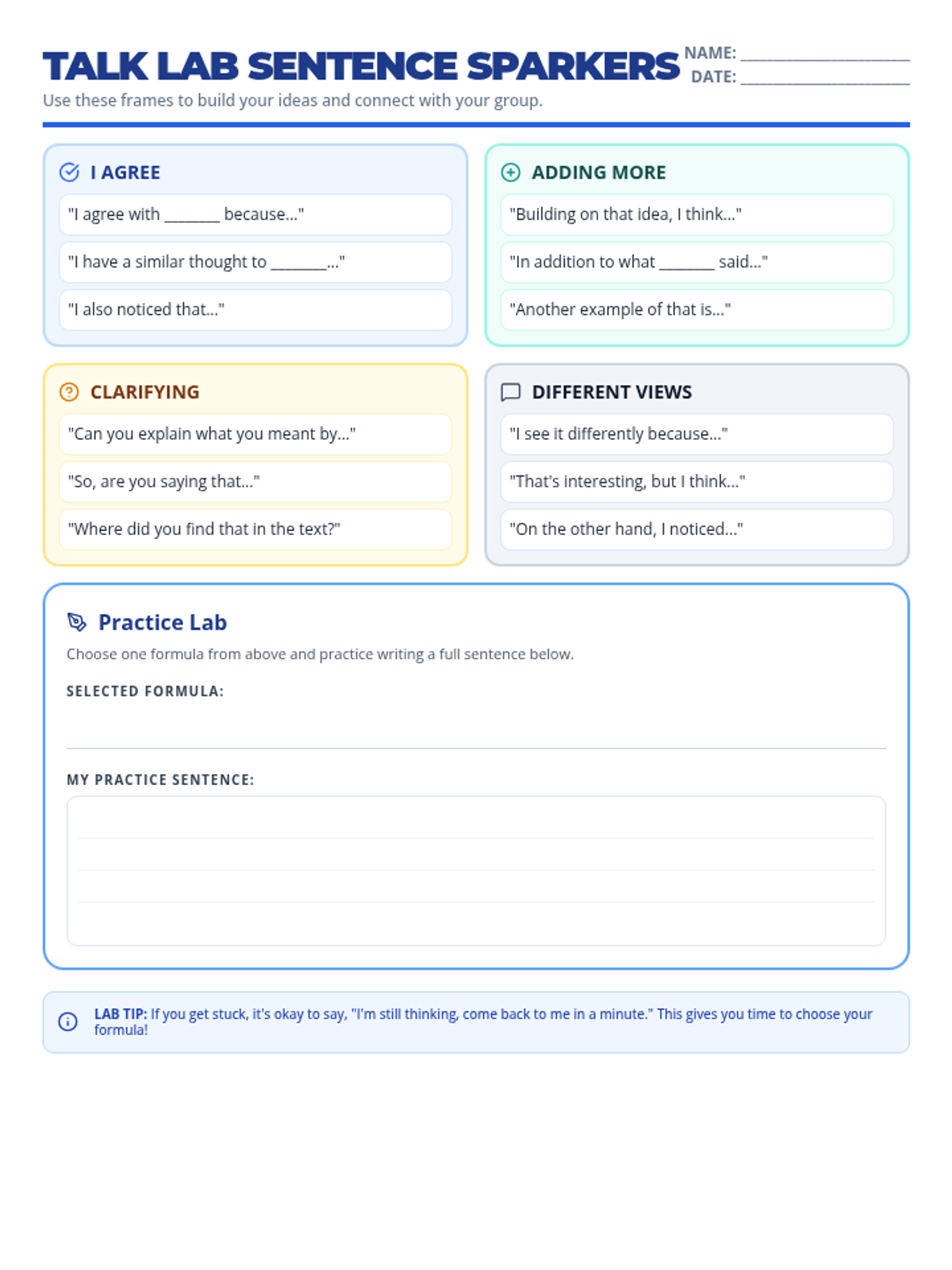
A printable reference sheet containing sentence stems and frames to support students with limited expressive language during peer discussions.
A visual presentation introducing the 'Talk Lab' concept, focusing on sentence formulas for expressive language and 'topic anchors' to help students stay on track during group discussions.
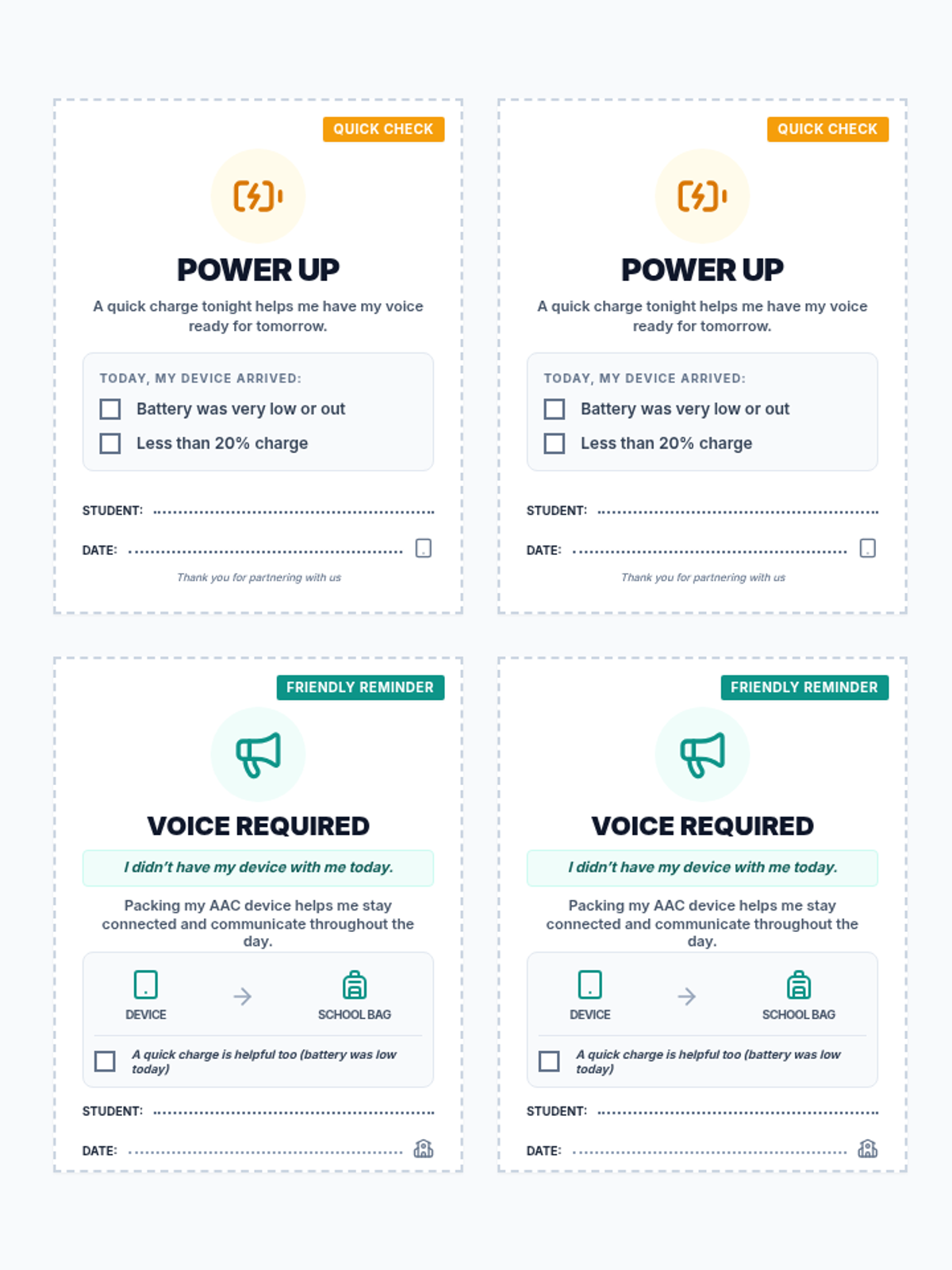
A combined set of printable reminder slips for AAC device charging (Power Up) and return-to-school reminders (Voice Required), featuring the Sherwood Autism Center logo for a professional, branded connection between school and home.
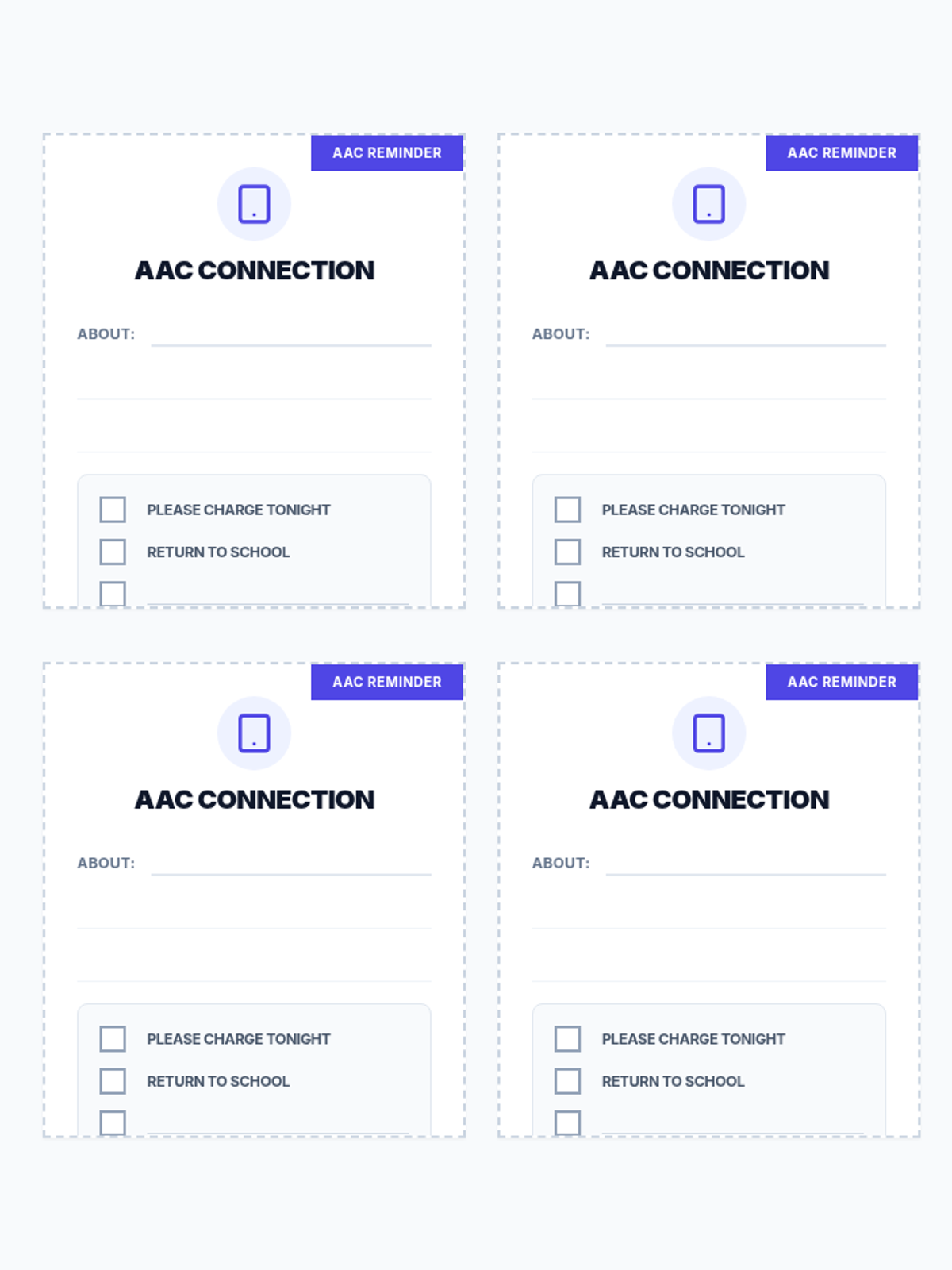
A set of four blank printable reminder slips for parents, featuring a large message area with 8 writing lines and compact checkboxes for key AAC reminders.
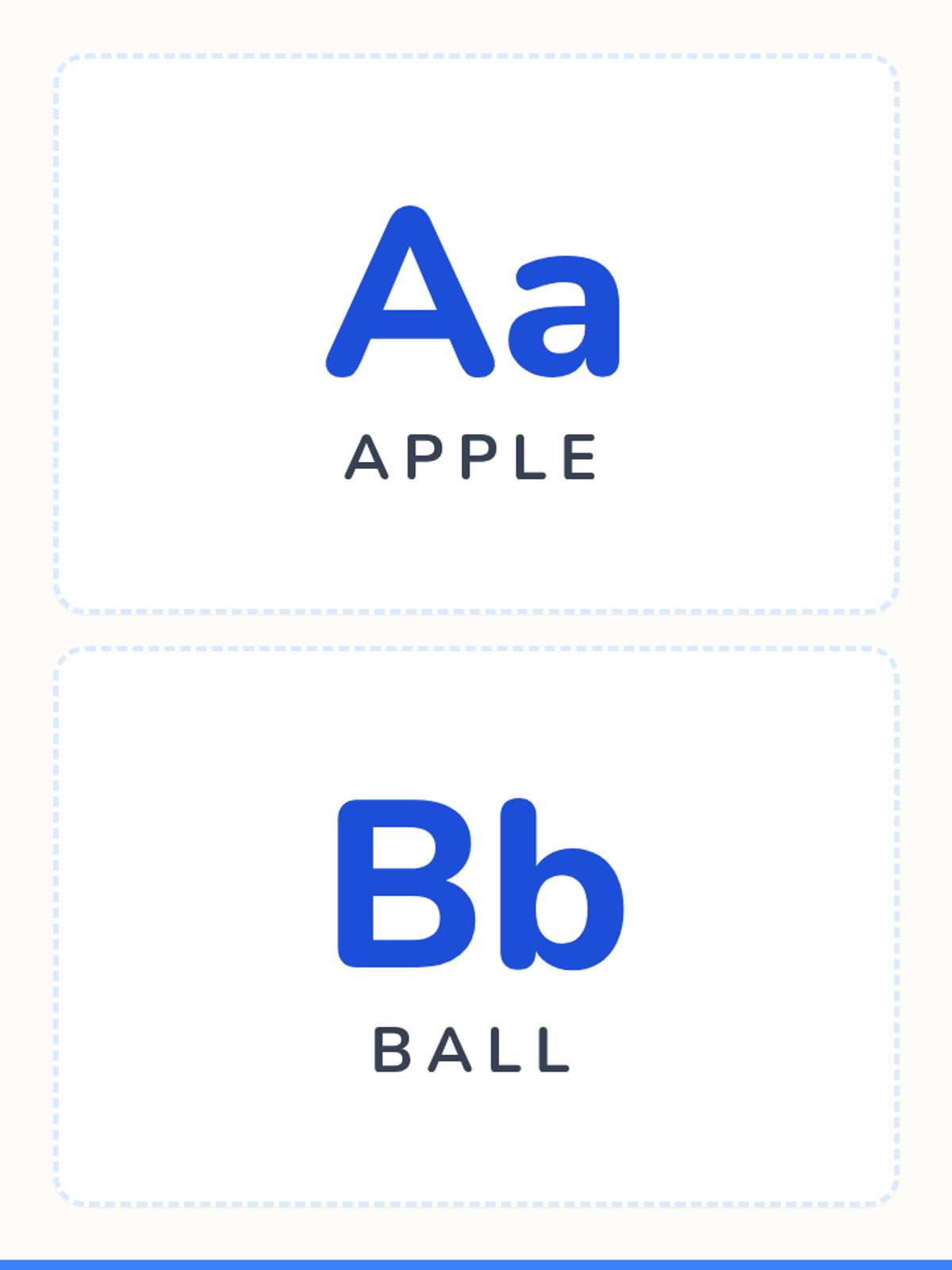
A set of high-contrast, large-format alphabet wall posters using the Nunito font, designed with rounded shapes and generous spacing to aid character recognition for students with dyslexia.
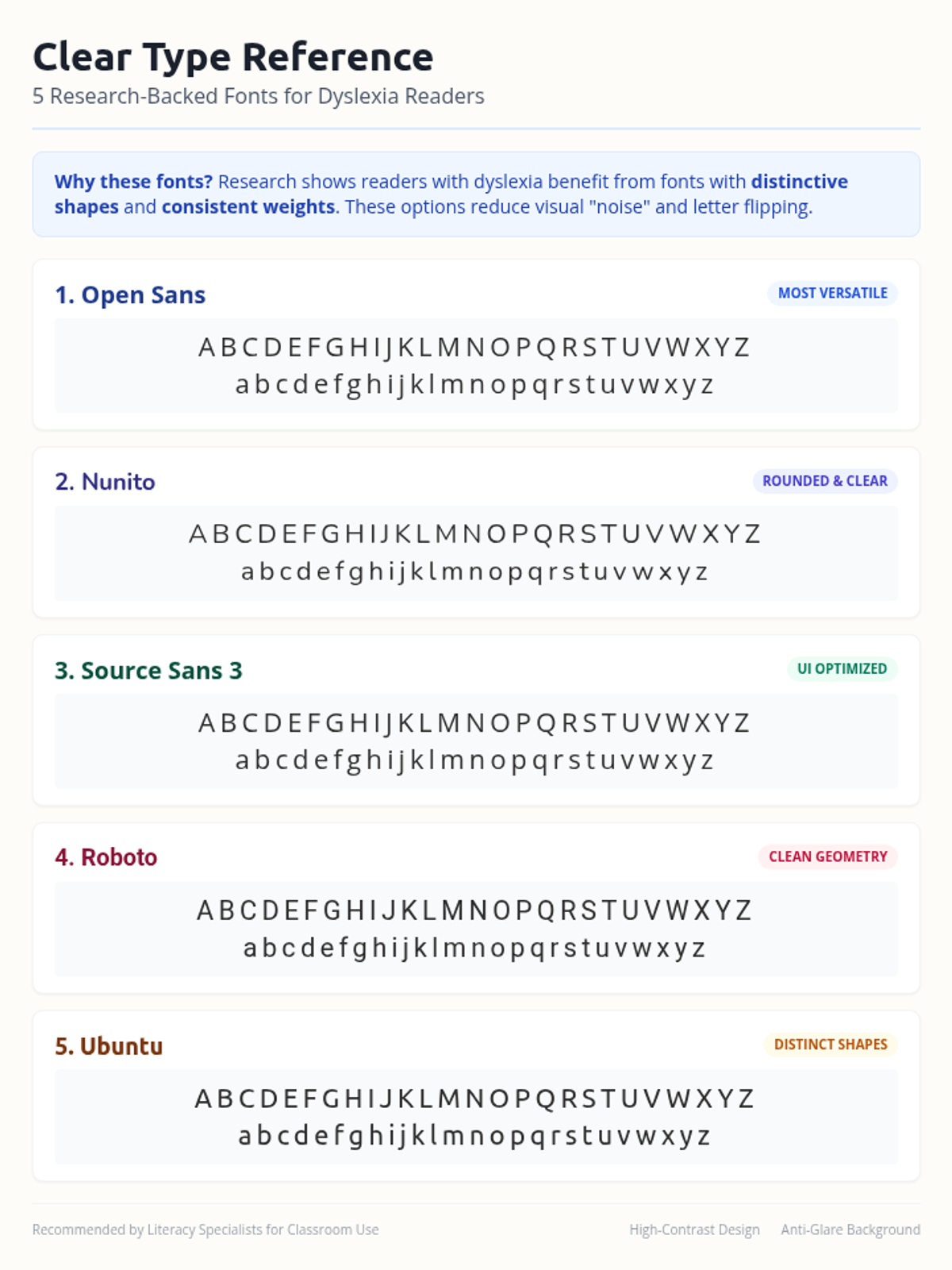
A single-page, high-readability reference guide featuring the 5 best research-backed fonts for dyslexia, showing full uppercase and lowercase alphabets in a clear, row-by-row layout.
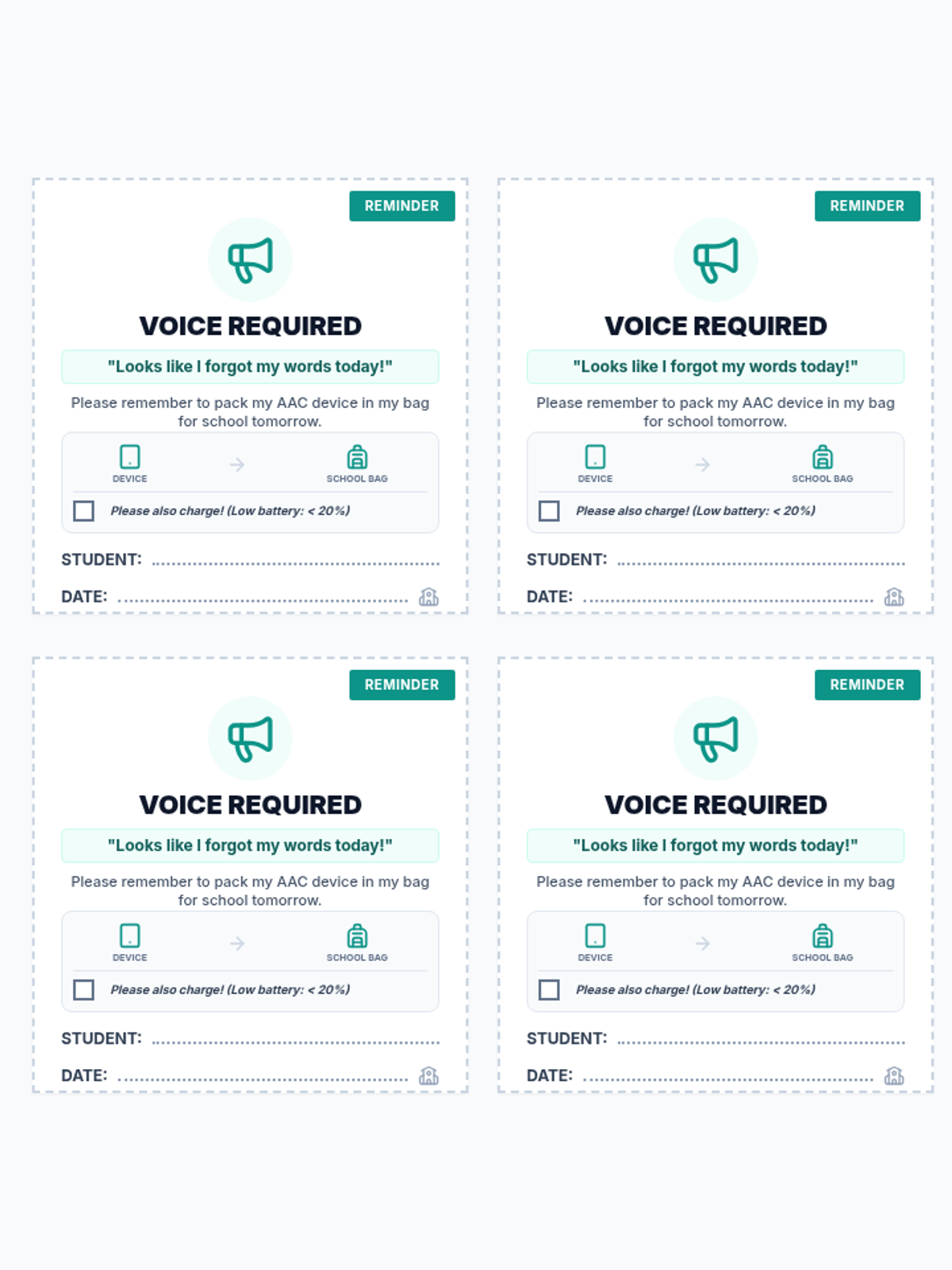
A set of four printable reminder slips for parents to ensure their child's AAC device is brought back to school, featuring the message "Looks like I forgot my words today!" and visual icons.
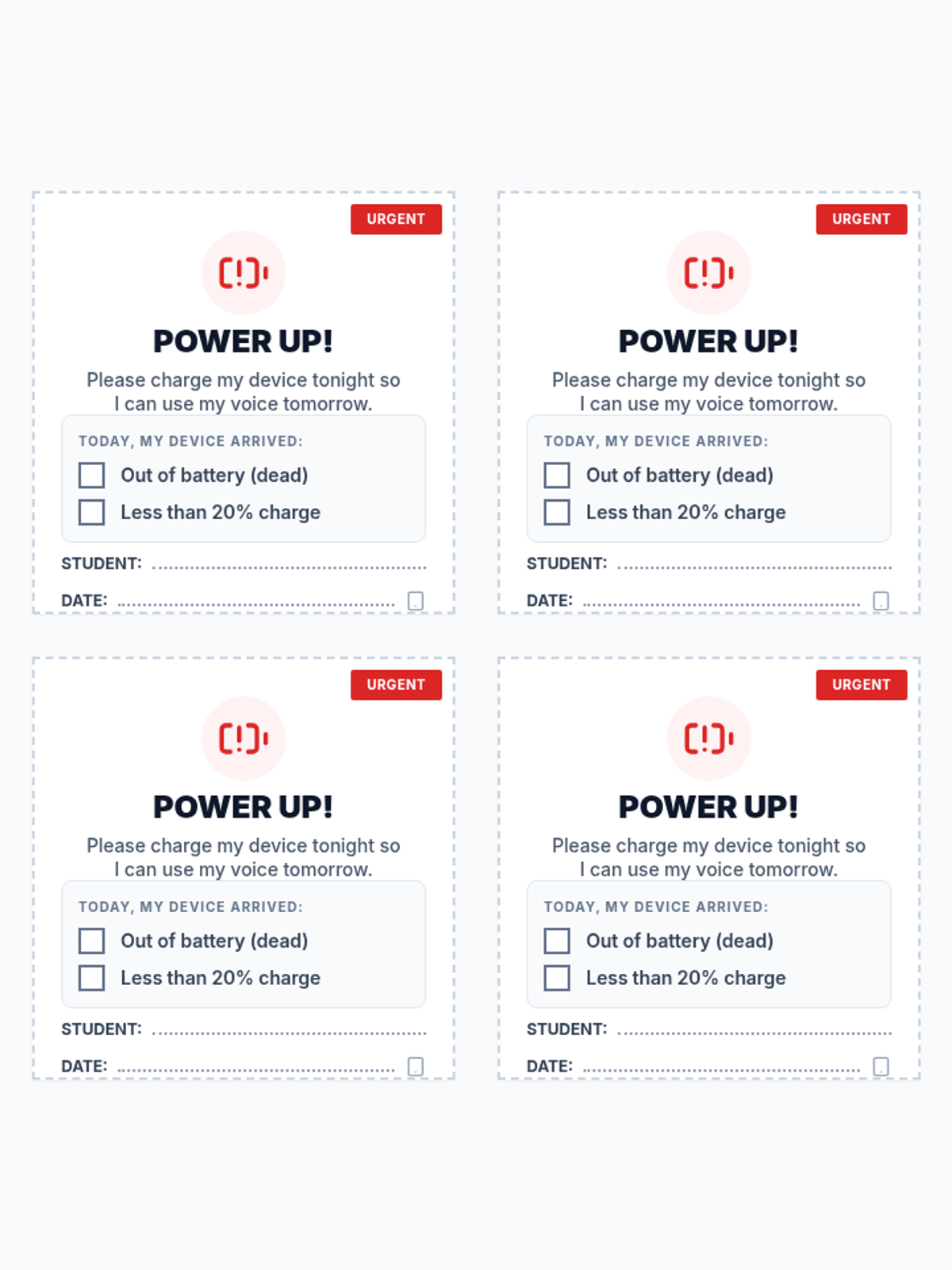
A set of four printable reminder slips for parents to charge their child's AAC device, featuring checkboxes for battery status and dedicated space for student name and date.
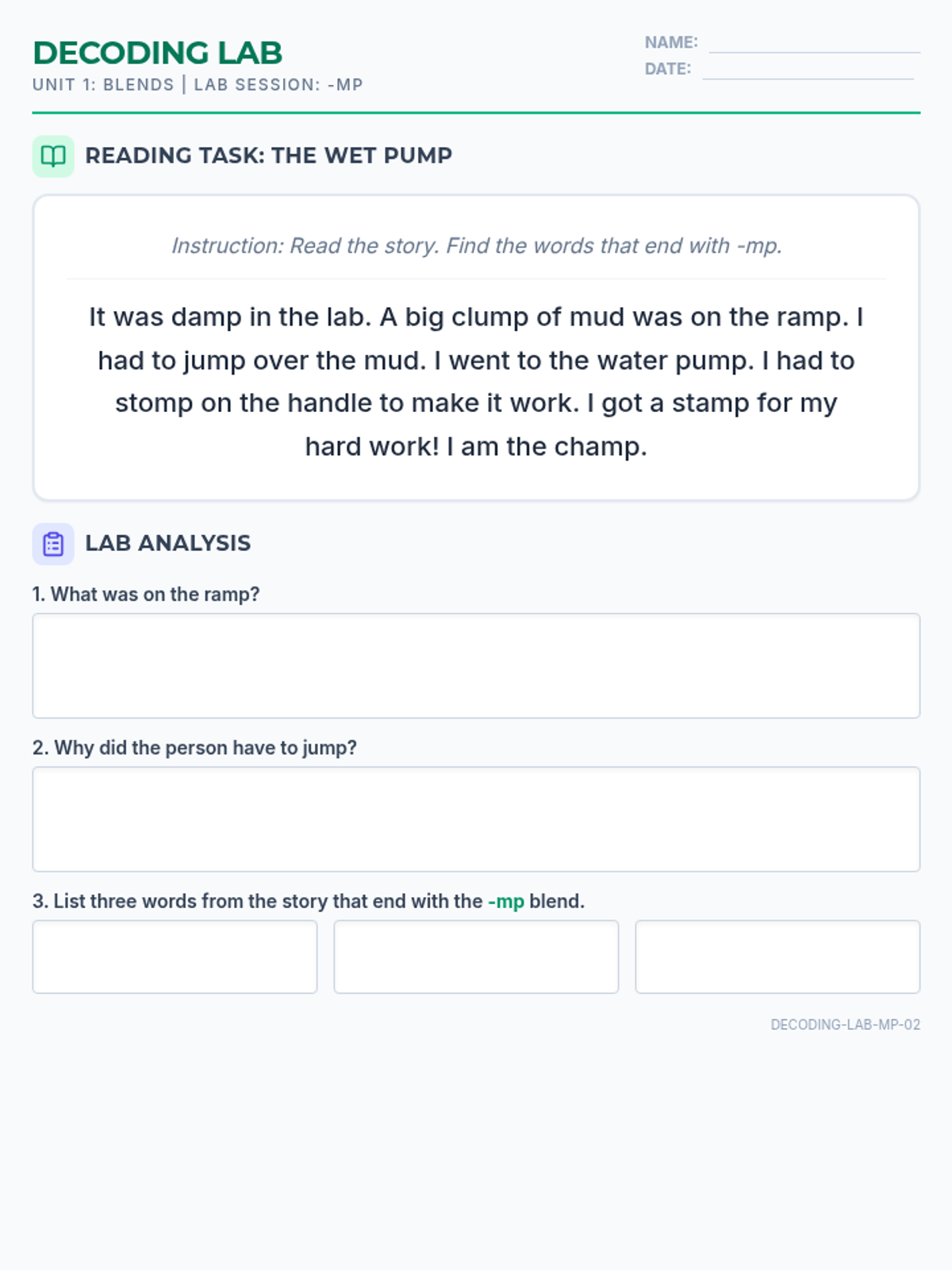
A short reading passage focused on the '-mp' ending blend, accompanied by comprehension questions. Designed with a 'Decoding Lab' theme for middle school students, featuring clear typography and large writing areas, all optimized for a single page.
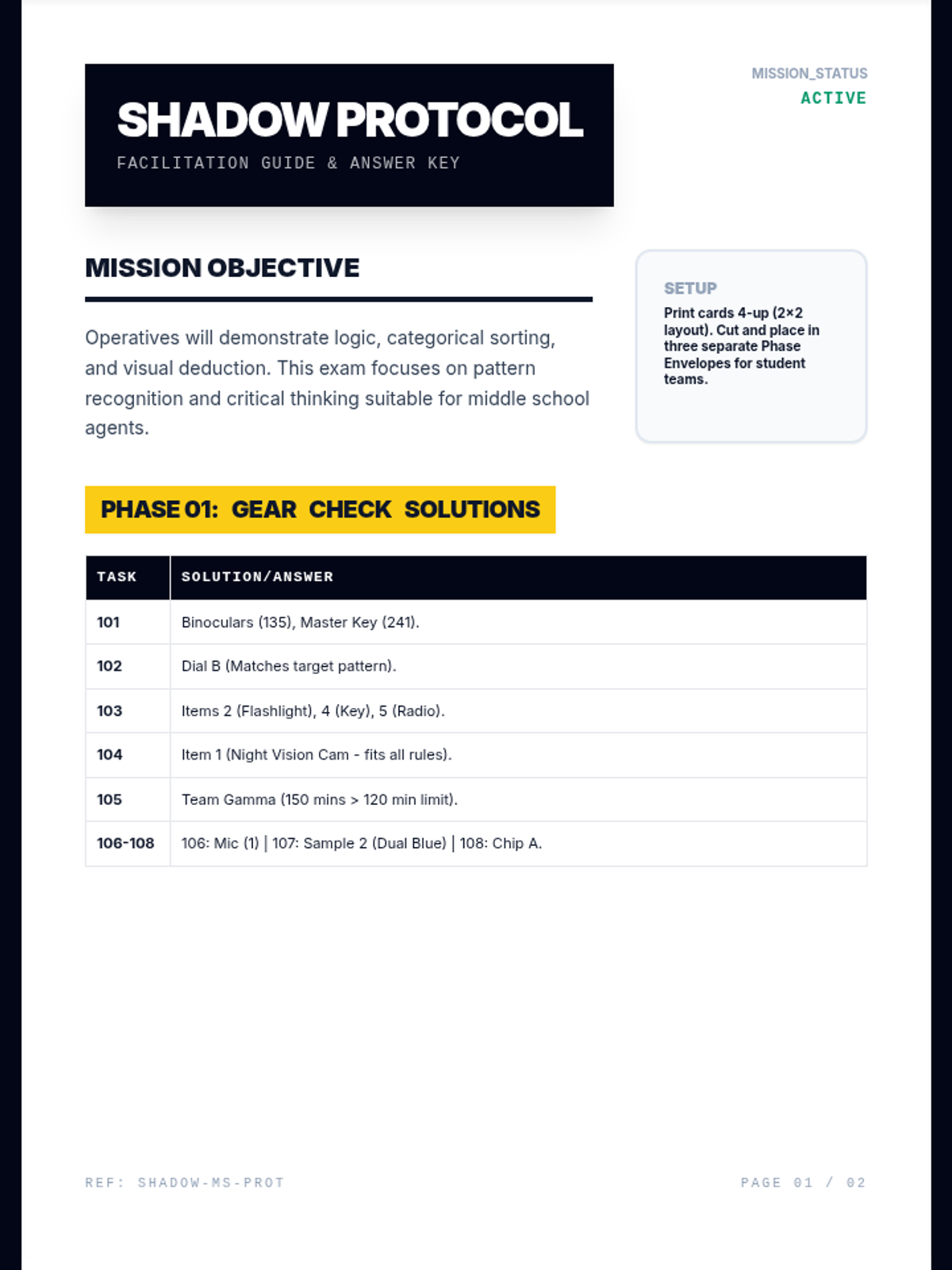
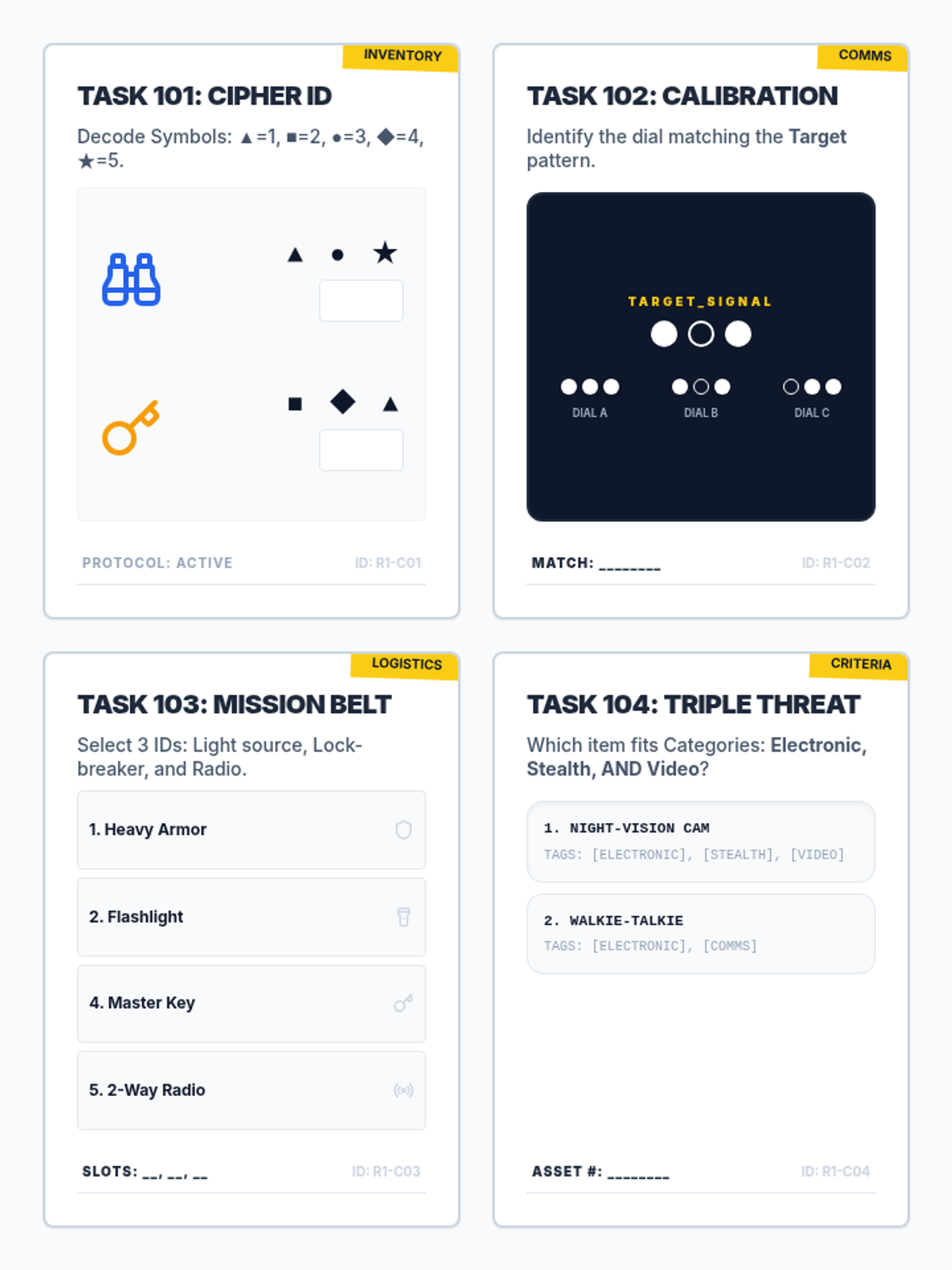
A sophisticated teacher guide and answer key for the middle school spy escape room. Includes detailed solutions for all 24 tasks across three phases, updated for the simplified logic and 2x2 card layout.
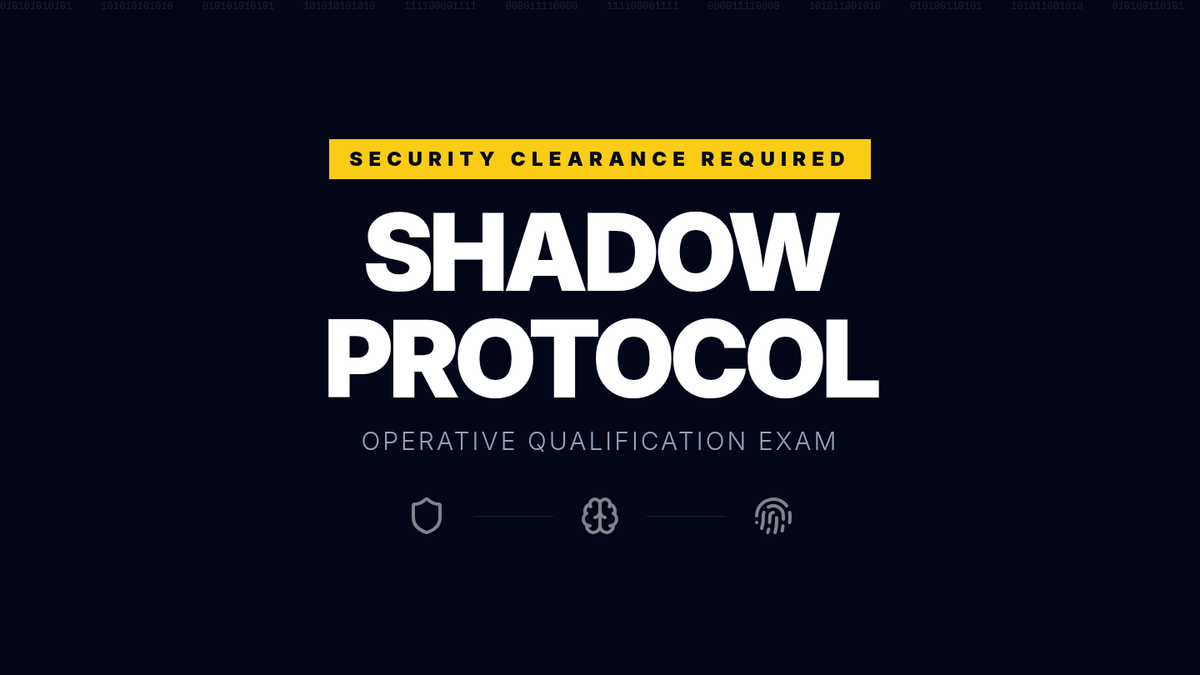
A high-impact visual briefing for the middle school spy escape room, introducing three rigorous phases of hardware analysis, logic deduction, and intelligence verification. Features bold typography and 24px+ text.
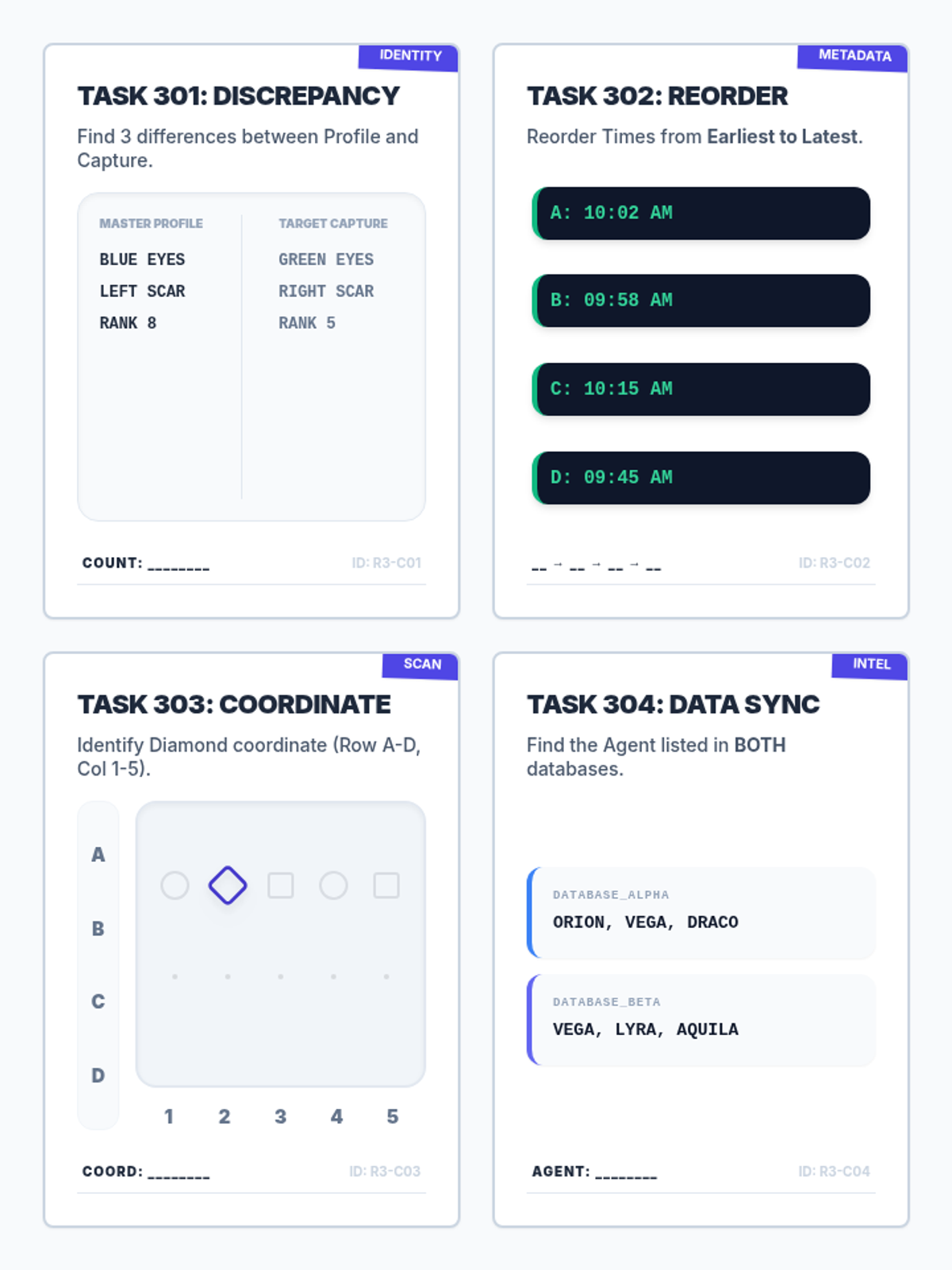
8 data analysis and identity verification task cards for Round 3, featuring facial recognition discrepancy detection, metadata sorting, and coordinate-based anomaly detection for middle school students. now in 2x2 layout.
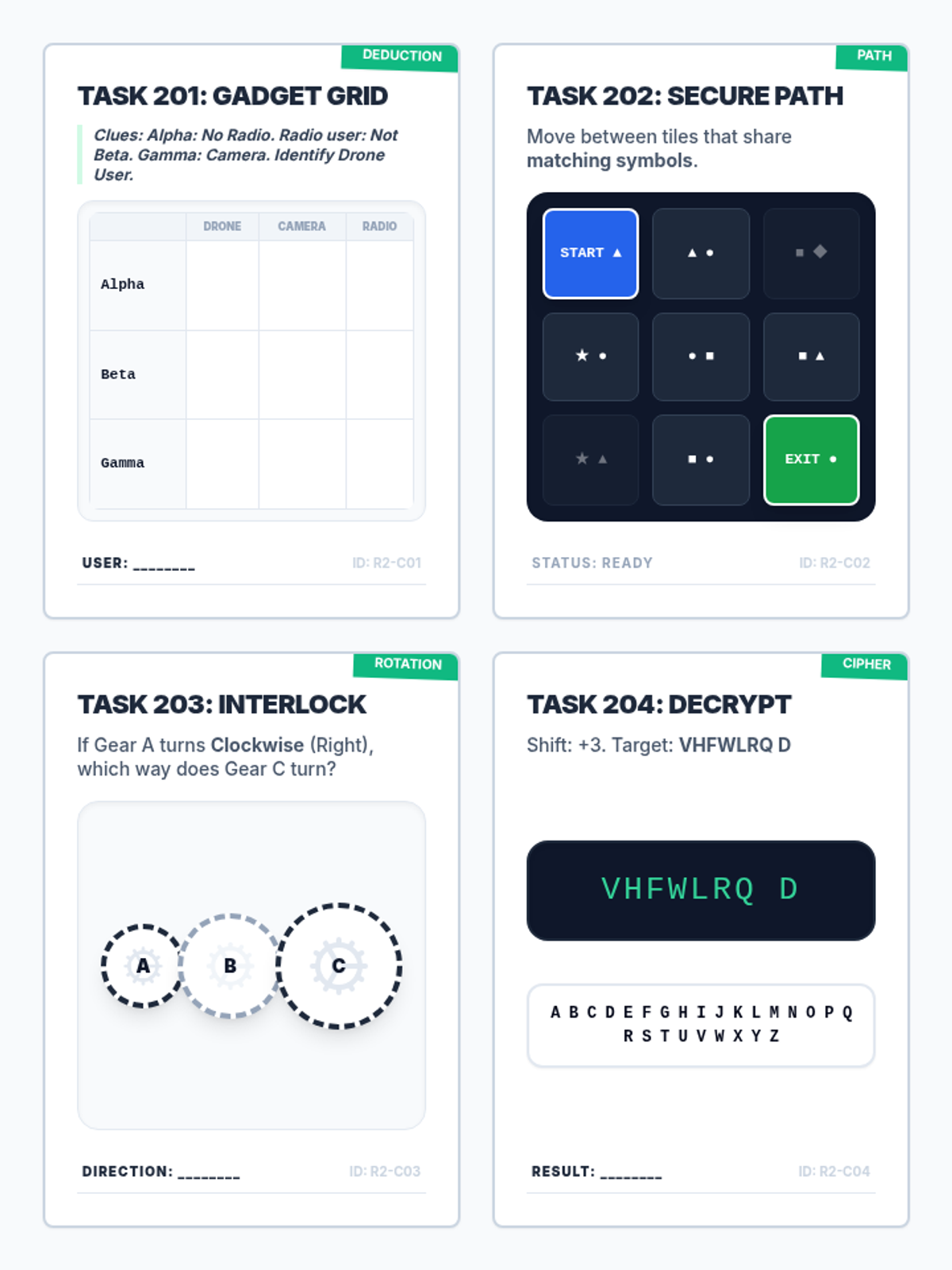
8 visual logic and deduction task cards for Round 2, featuring complex logic grids, binary pathfinding, mechanical rotational reasoning, and cryptography for middle school students. now in 2x2 layout.
A set of 8 task cards for Round 1 focusing on visual matching, simple logic patterns, and resource management in a 2x2 grid layout for easy printing. Designed to be accessible for middle schoolers without heavy math/science.
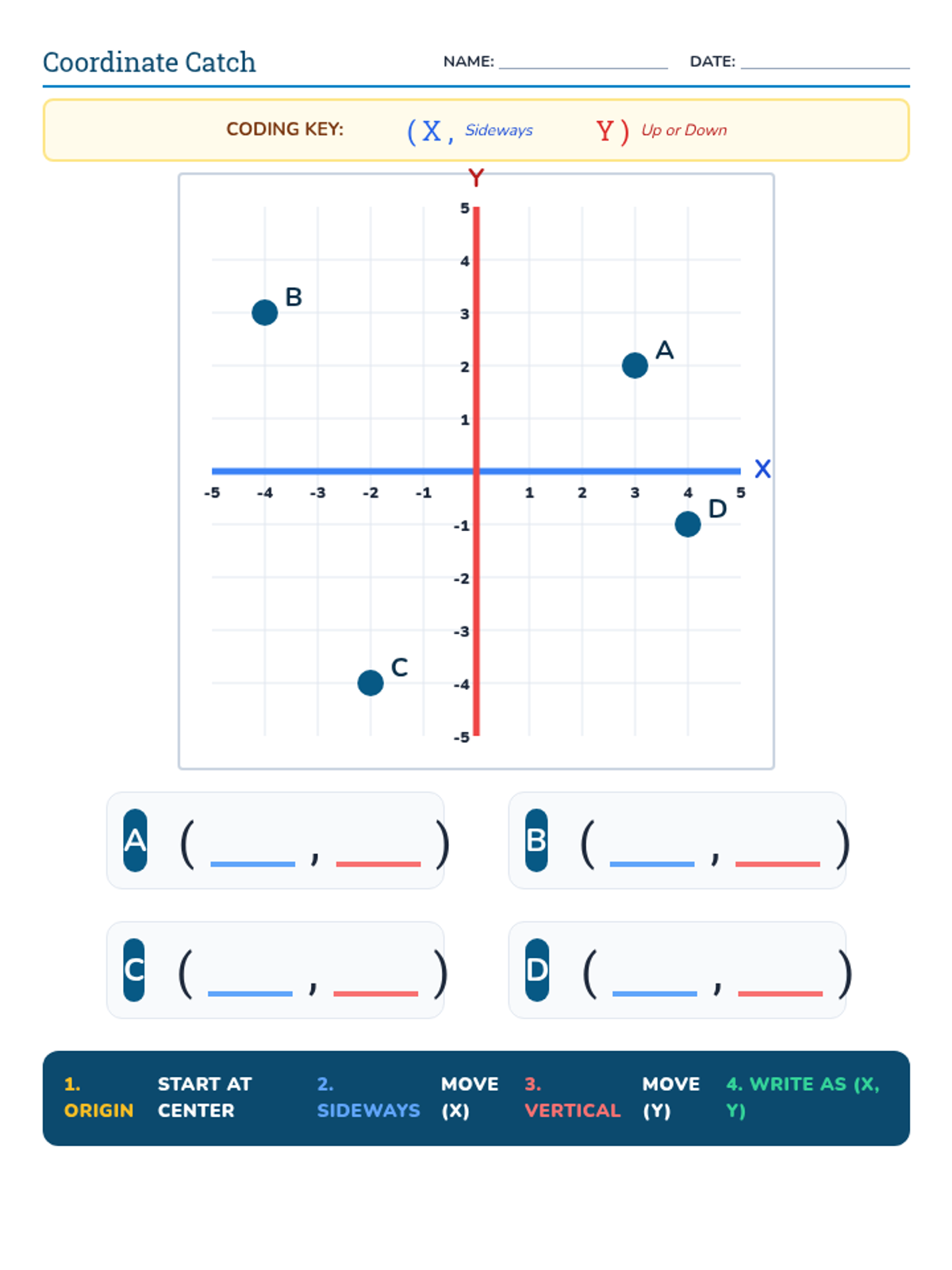
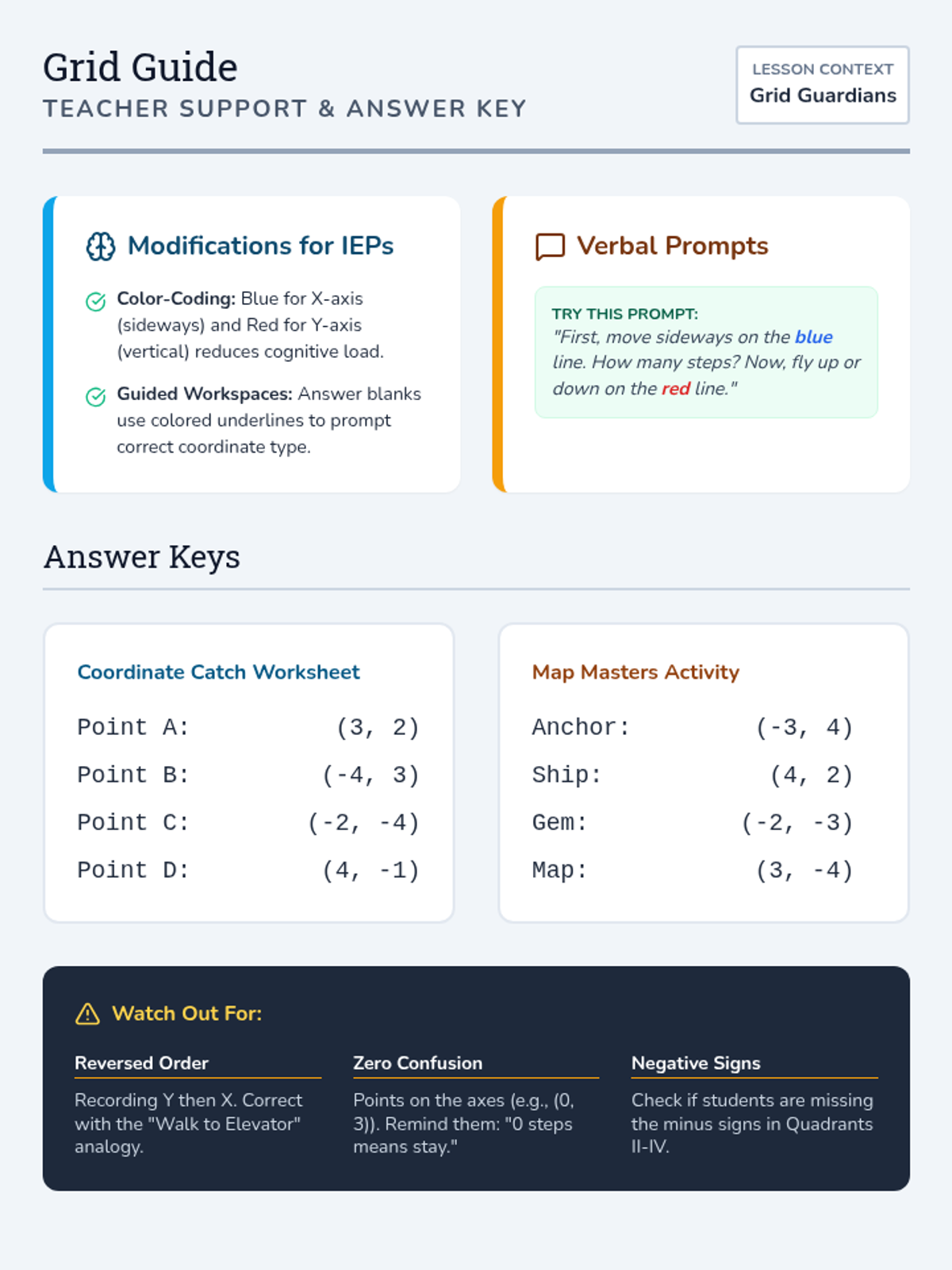
A comprehensive teacher guide for the Grid Guardians lesson, including answer keys, pedagogical strategies for IEP students, and common pitfalls.
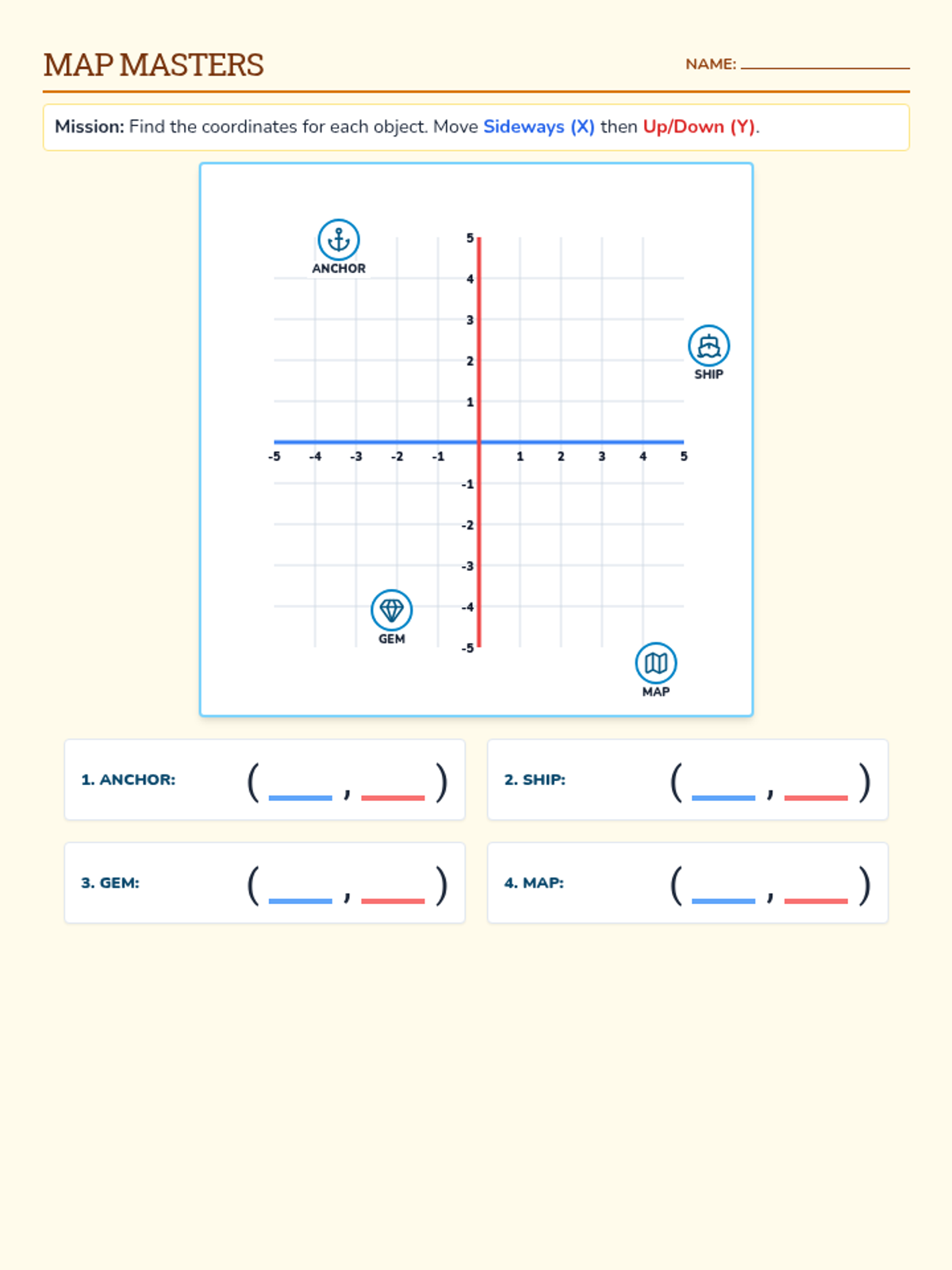
An engaging hands-on activity document where students use nautical icons on a coordinate plane to identify ordered pairs, reinforced by visual scaffolding.
A modified coordinate plane worksheet for IEP students featuring color-coded axes, guided ordered pair boxes, and a step-by-step visual aid for identifying coordinates.
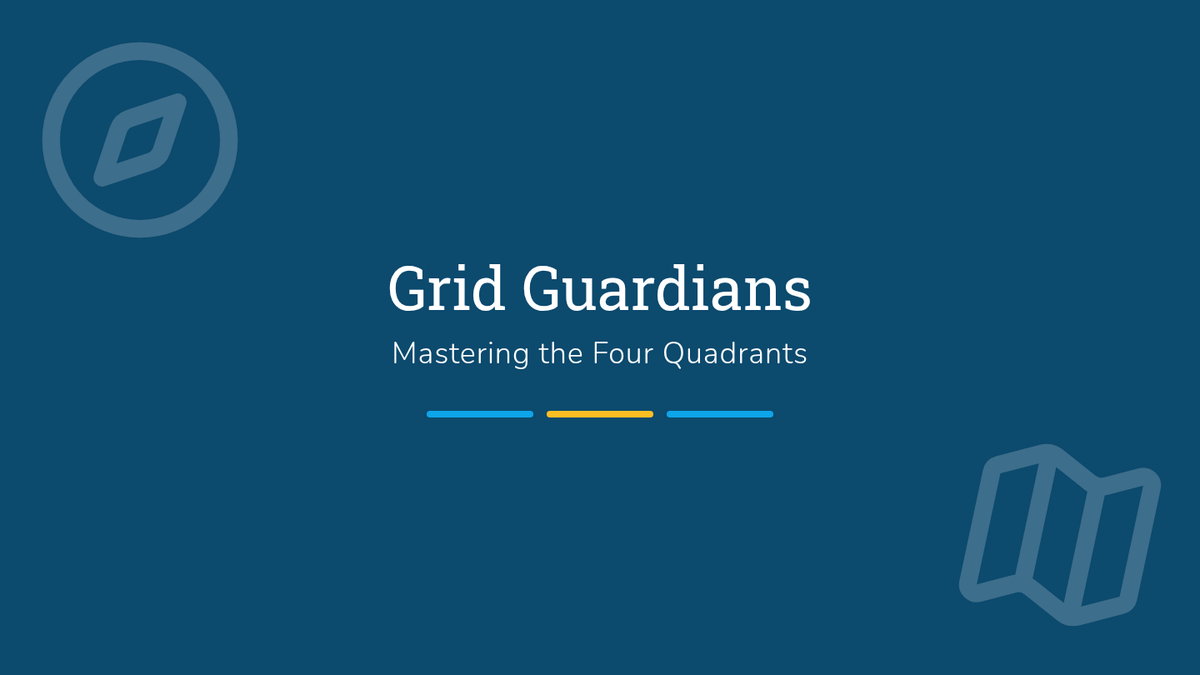
Visual slides introducing the coordinate plane with color-coded axes (Blue for X, Red for Y) and simple memory aids designed for accessibility and engagement.
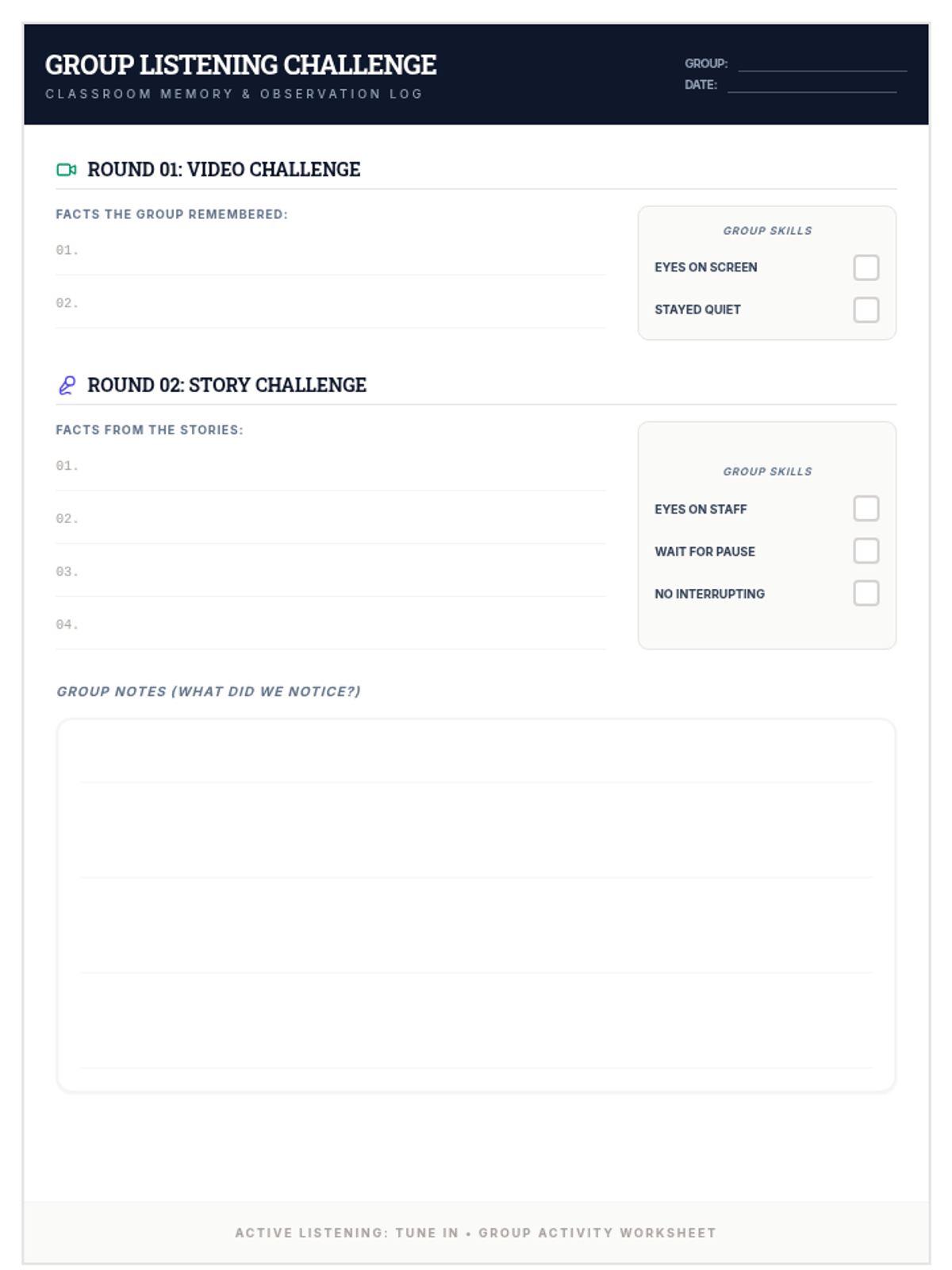
A group activity worksheet for students to record facts from the video and social stories. The layout matches across both sections with simple language and dedicated skill check-off areas. Optimized for a single-page layout.
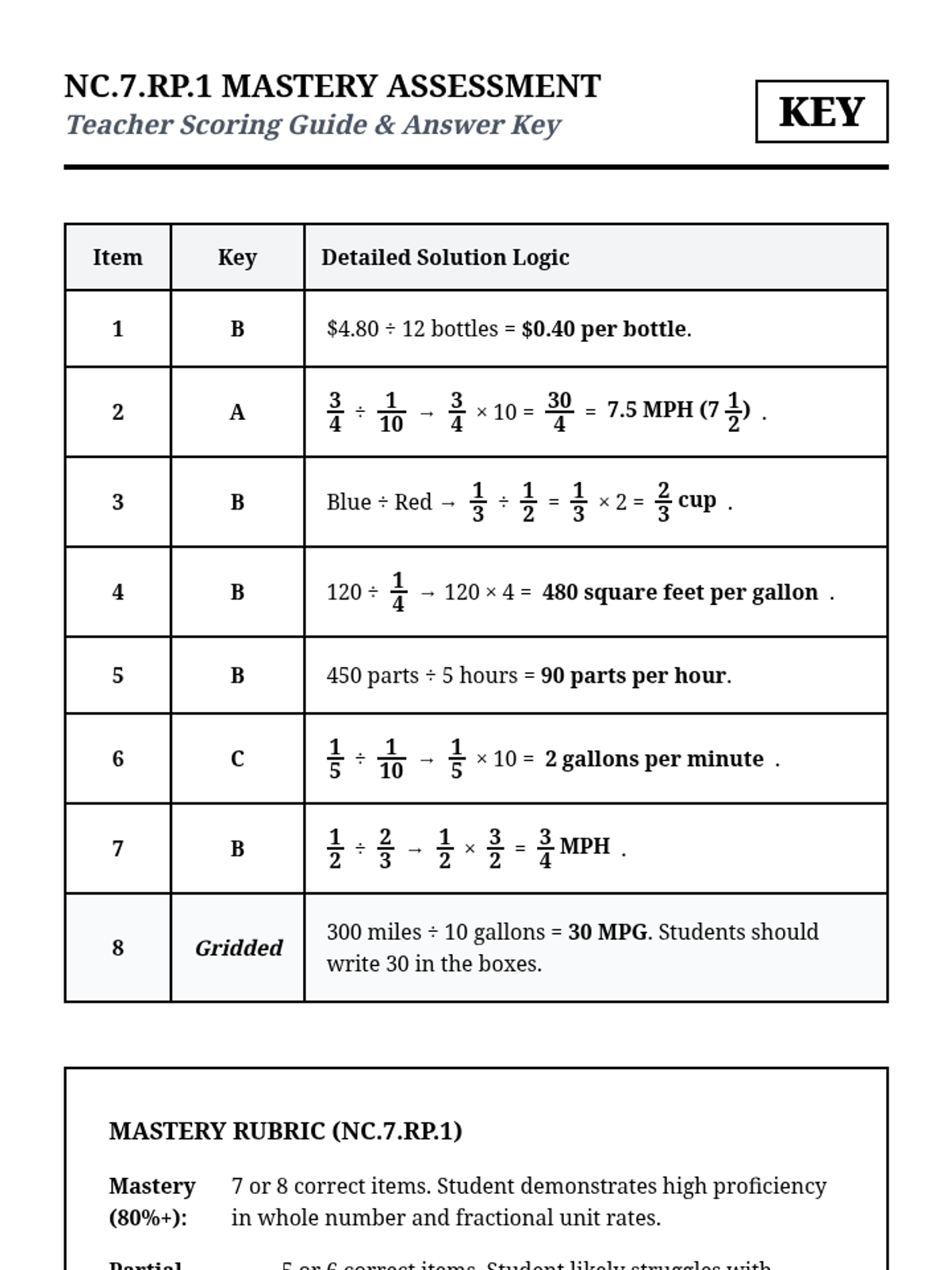
A formal scoring guide and answer key for the EOG Mastery Mock Test. Includes correct answers for all 8 items (7 MC, 1 gridded response), detailed step-by-step solution logic with vertical fraction bars, and a mastery rubric based on 80% accuracy.
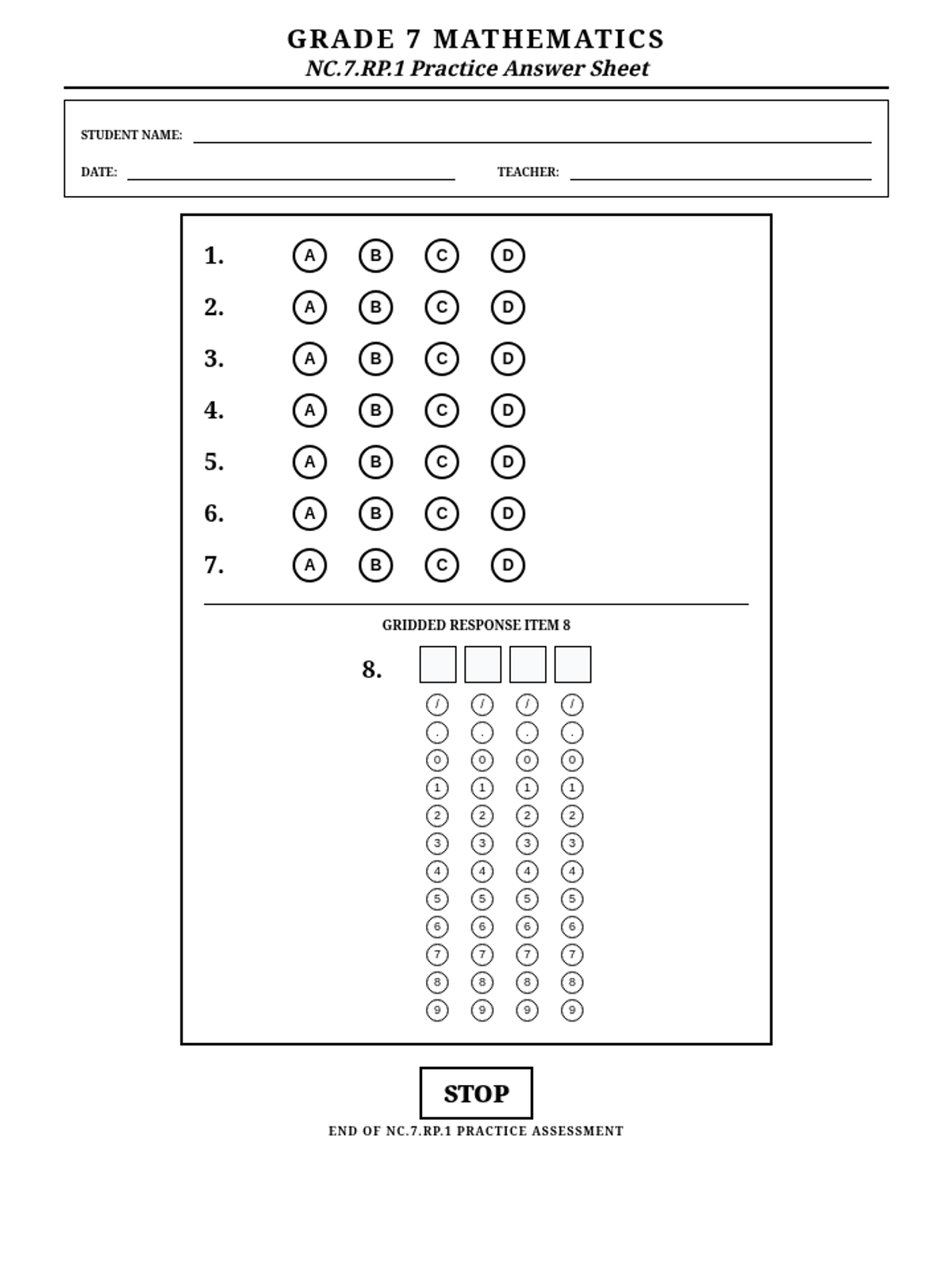
A formal student bubble sheet for the NC.7.RP.1 practice set. Designed to mimic the appearance of a state-released answer document, including multiple-choice bubbles and a simulated gridded response area with decimal and fraction bar options. Optimized to fit on a single page while maintaining large bubble sizes.
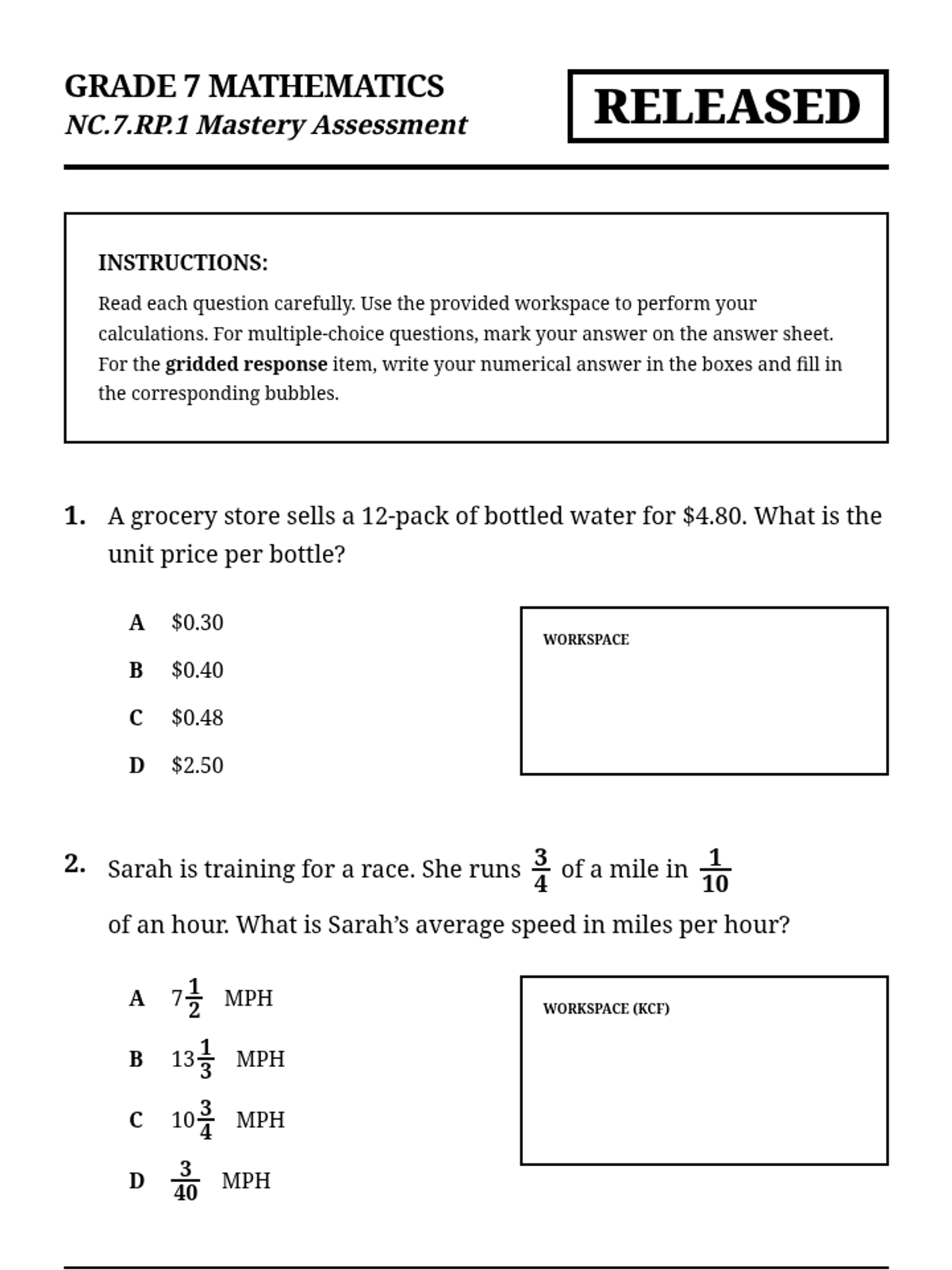
A formal, EOG-style mock assessment for NC.7.RP.1 expanded to 8 questions. Includes a mix of multiple-choice and a gridded response item, standardized formatting, and CSS-based fractions for stability. Revised to fix page breaks and answer alignment.