A 8-slide presentation for Grade 3 ELL students explaining neurodiversity without labels. It uses simple language and friendly visuals to discuss different ways of thinking, moving, and learning, emphasizing that difference is a strength.
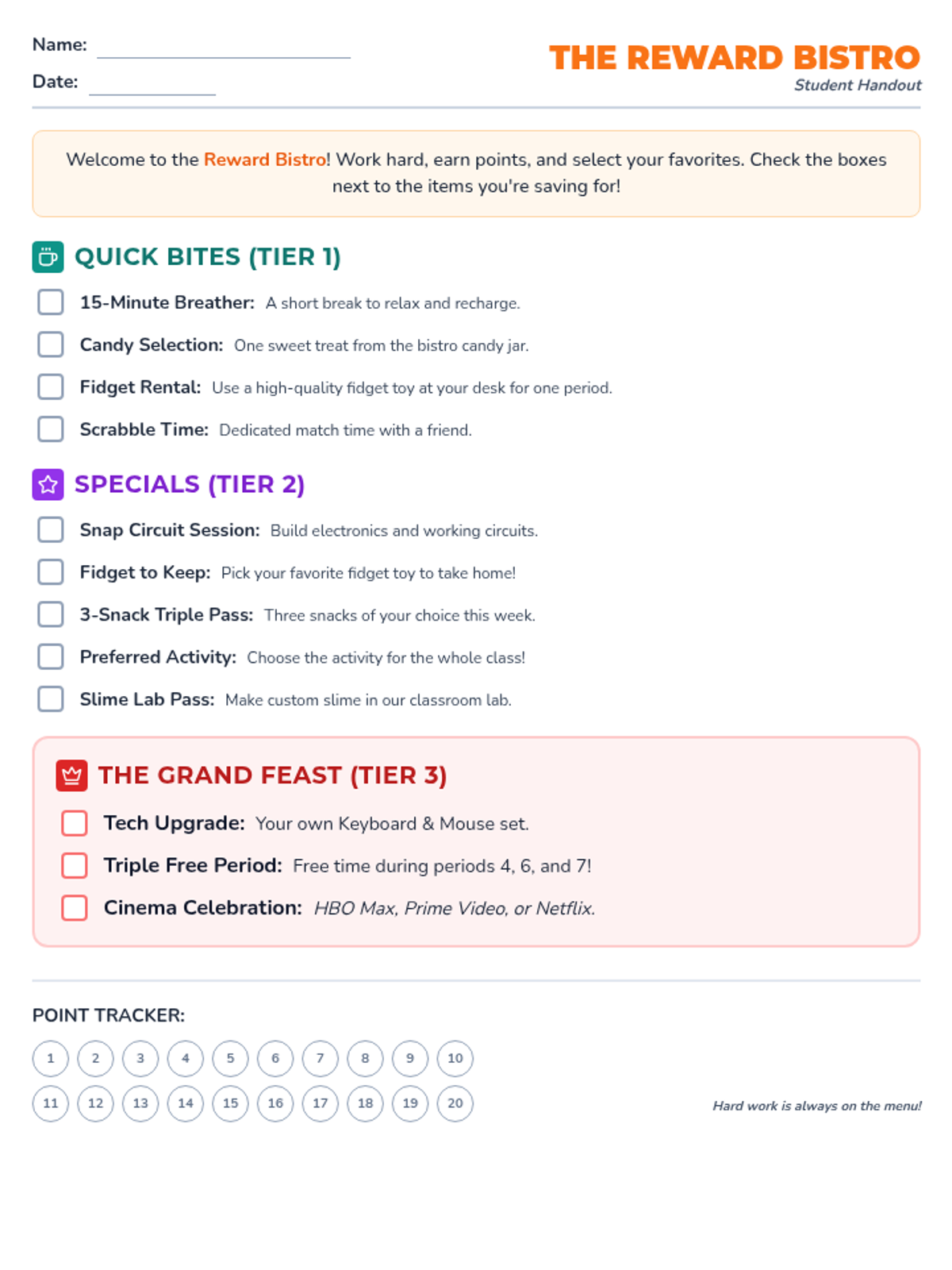
A student-facing handout version of the Reward Bistro menu. It includes name/date fields, the three tiers of rewards with checkboxes for selection, and a expanded 20-point tracking footer. Optimized for single-page printing and high-contrast reproduction.
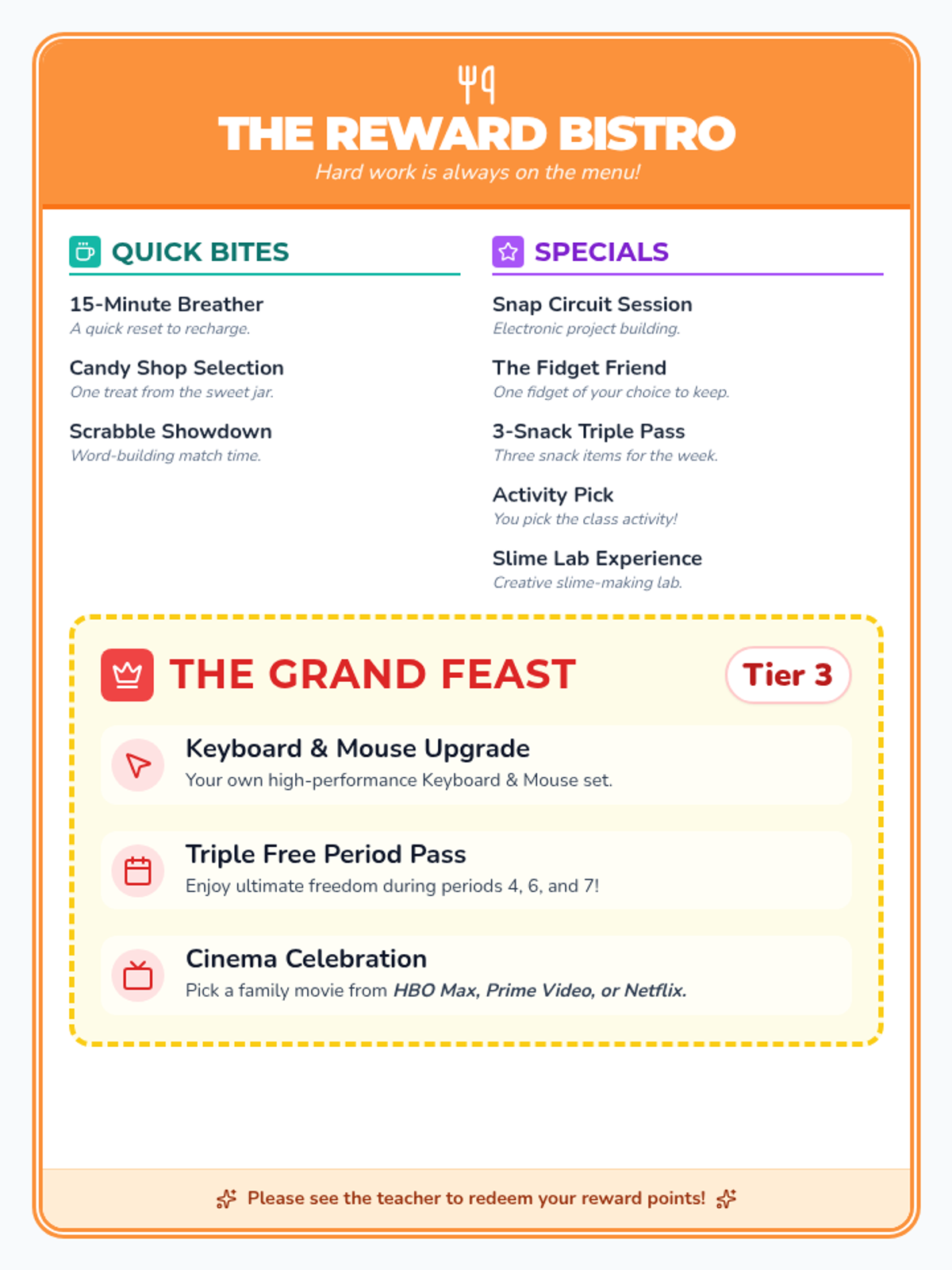
A vibrant, diner-themed classroom reward menu poster. It categorizes rewards into three tiers: Quick Bites (low cost), Signature Specials (medium cost), and The Grand Feast (high-value rewards like movies, free periods, and tech items). Optimized for single-page printing.
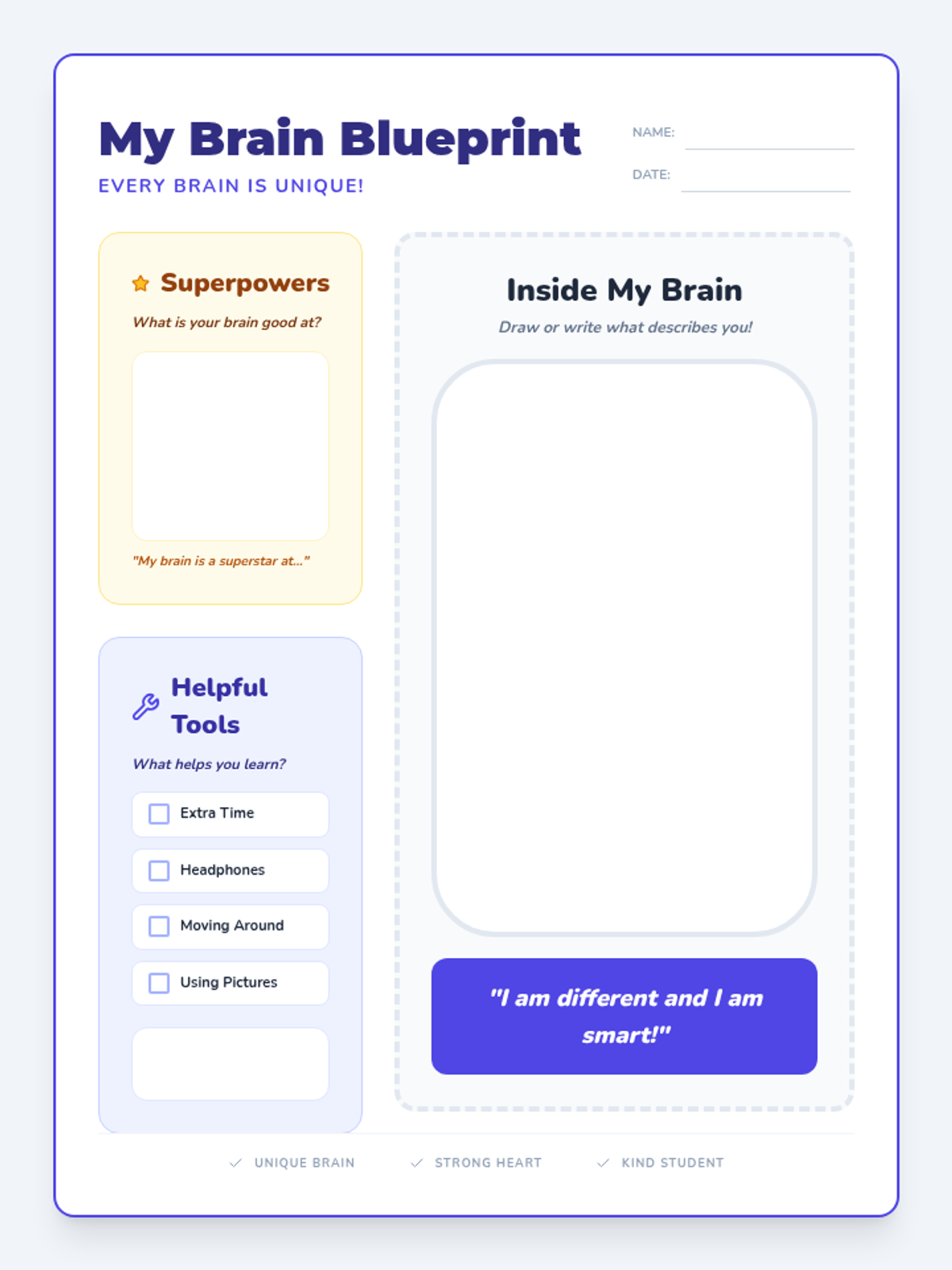
A student-facing activity sheet where students can draw and write about their own 'Brain Blueprint.' It includes sections for 'superpowers' (strengths), helpful tools, and a space for creative expression about how their brain works.
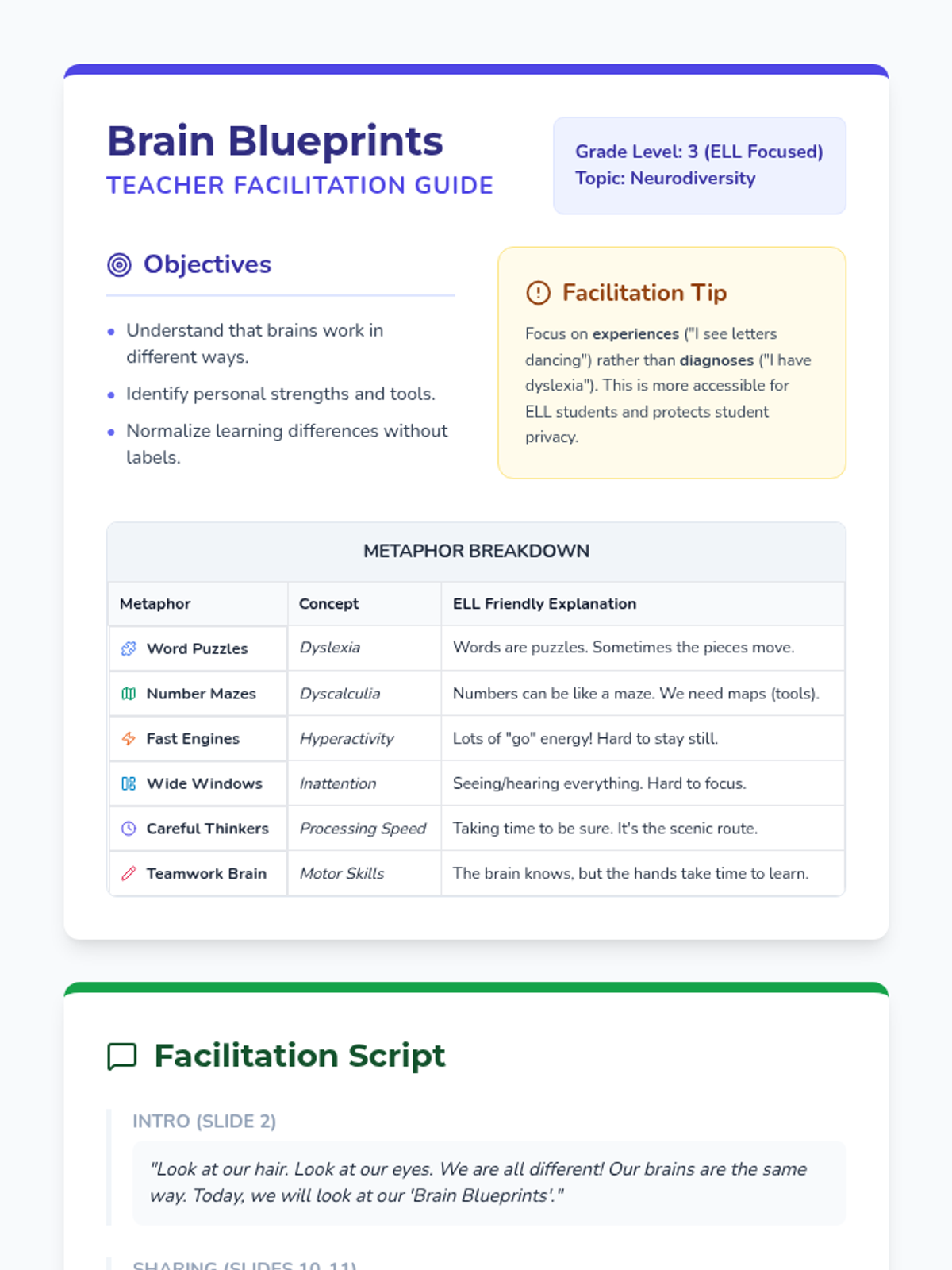
A comprehensive teacher's guide to help facilitate the Brain Blueprints lesson. It includes clinical-to-metaphor crosswalks, morning meeting scripts, and ELL-specific scaffolding strategies to discuss neurodiversity without labels.
An interactive slide deck for Grade 3 ELL students that explains neurodiversity using metaphors like 'Word Puzzles' and 'Fast Engines.' The presentation promotes awareness of individual needs and strengths without using clinical labels for students.
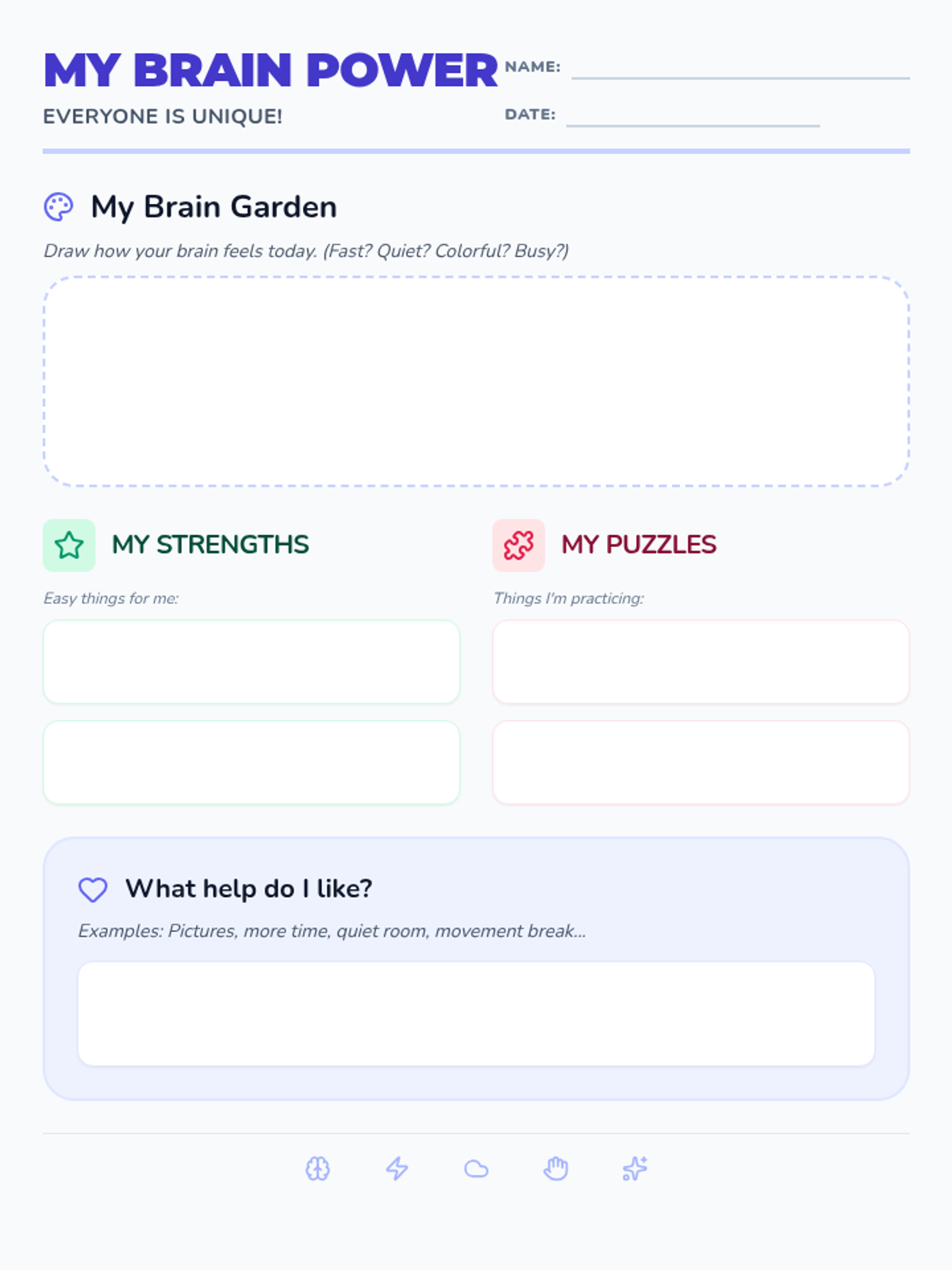
A reflective worksheet for Grade 3 ELL students to identify their own learning strengths and challenges (strengths and 'puzzles') using simple language and drawing spaces.
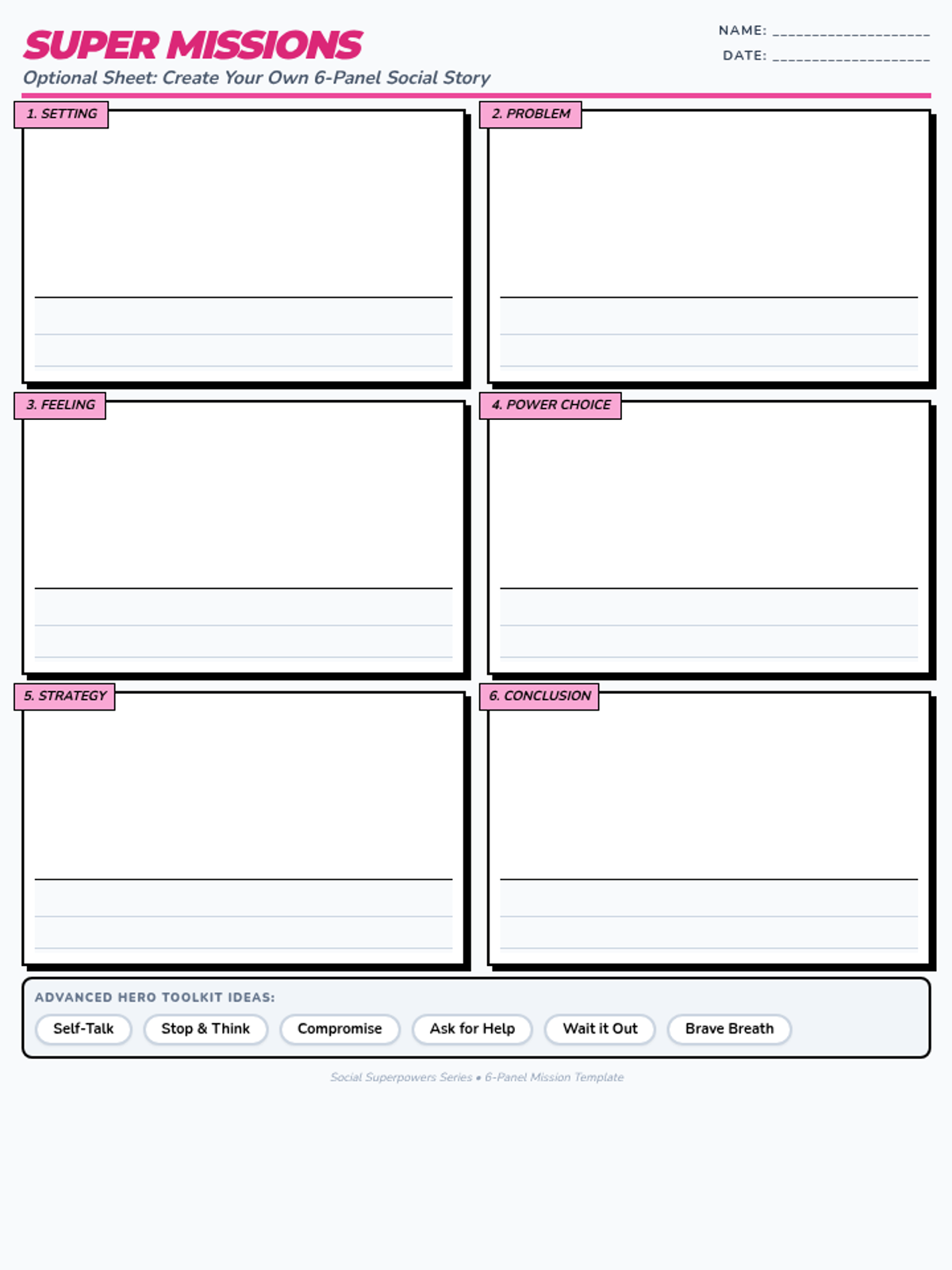
A blank 6-panel comic strip template for more complex social stories, featuring an "Advanced Hero Toolkit" for social-emotional learning. Revised for better handwriting space and page layout.
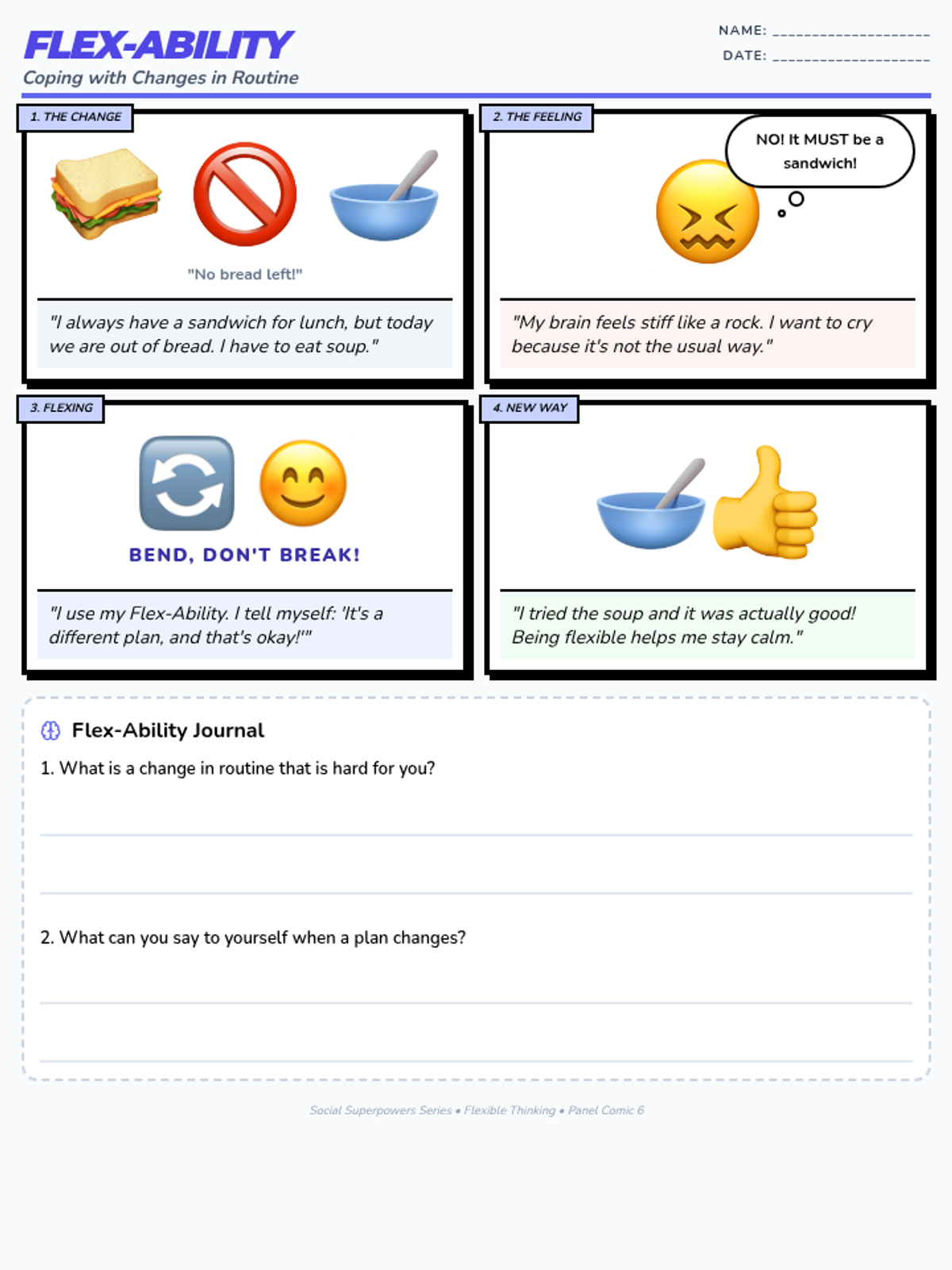
A 4-panel comic strip social story about flexible thinking and coping with changes in routine, featuring the "Flex-Ability" strategy. Revised for better emoji usage and handwriting space.
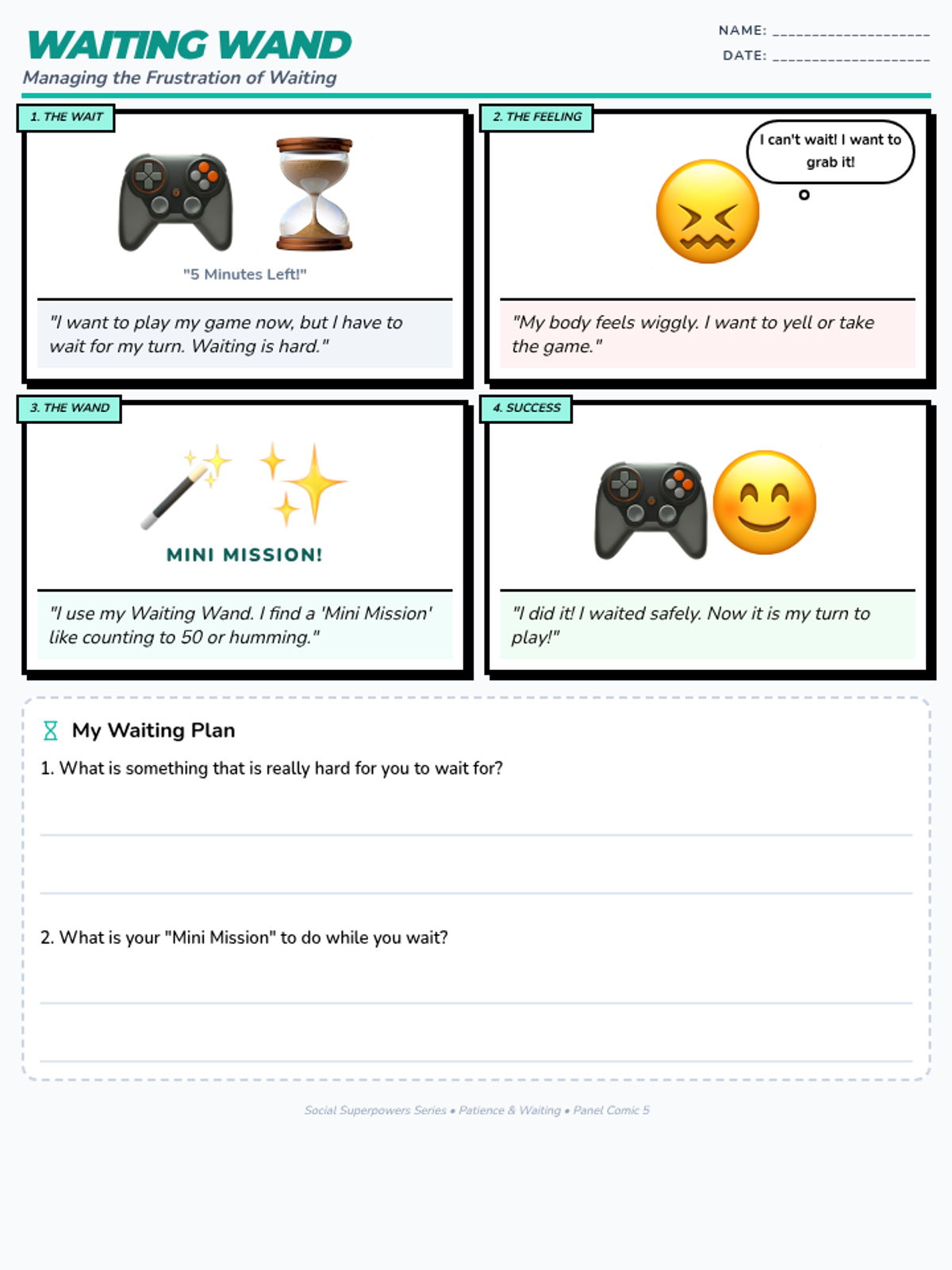
A 4-panel comic strip social story about managing the frustration of waiting, featuring the "Waiting Wand" strategy of using "mini-missions." Revised for better icon rendering and handwriting space.
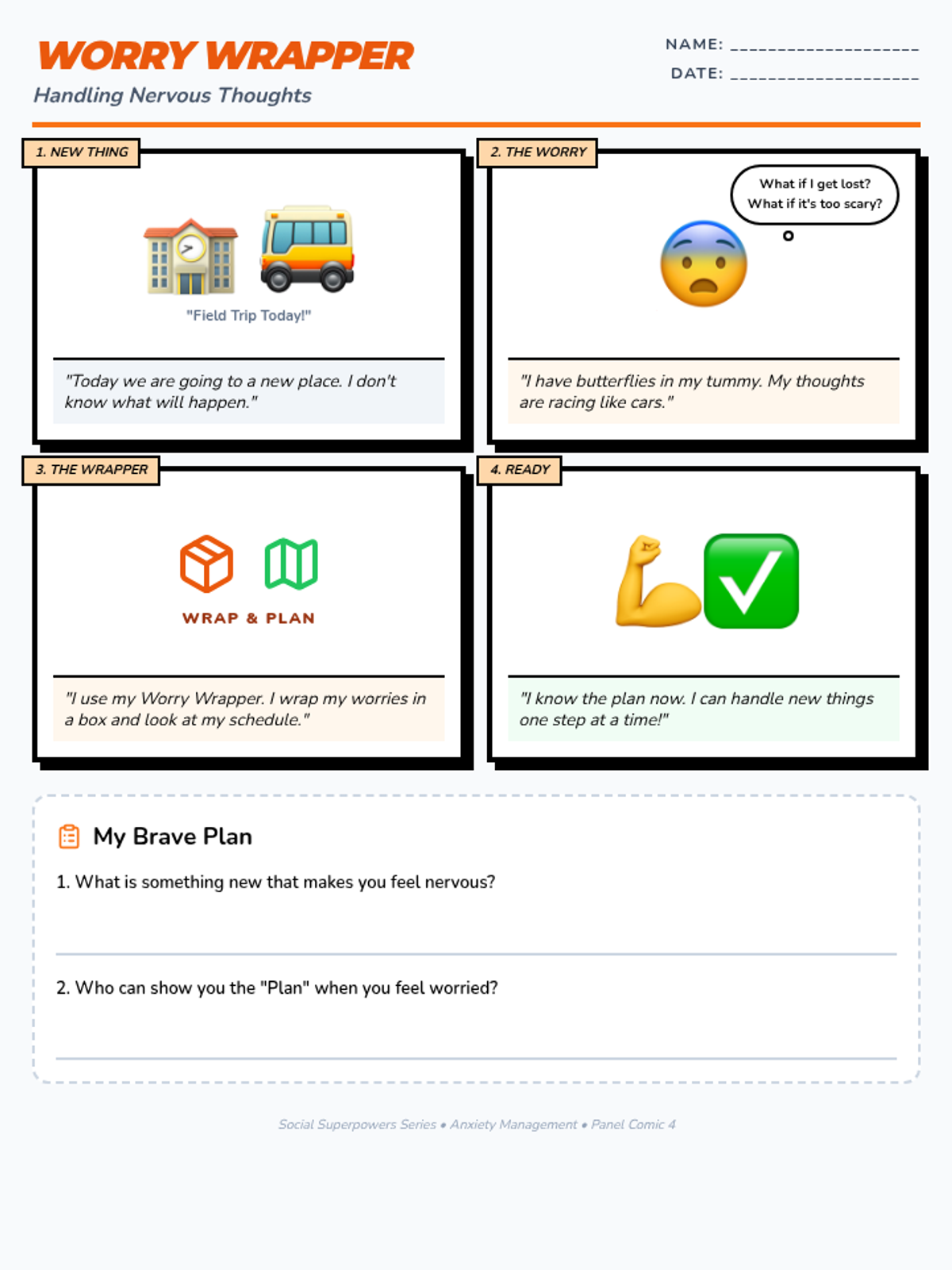
A 4-panel comic strip social story about managing anxiety and new situations, featuring the "Worry Wrapper" strategy.
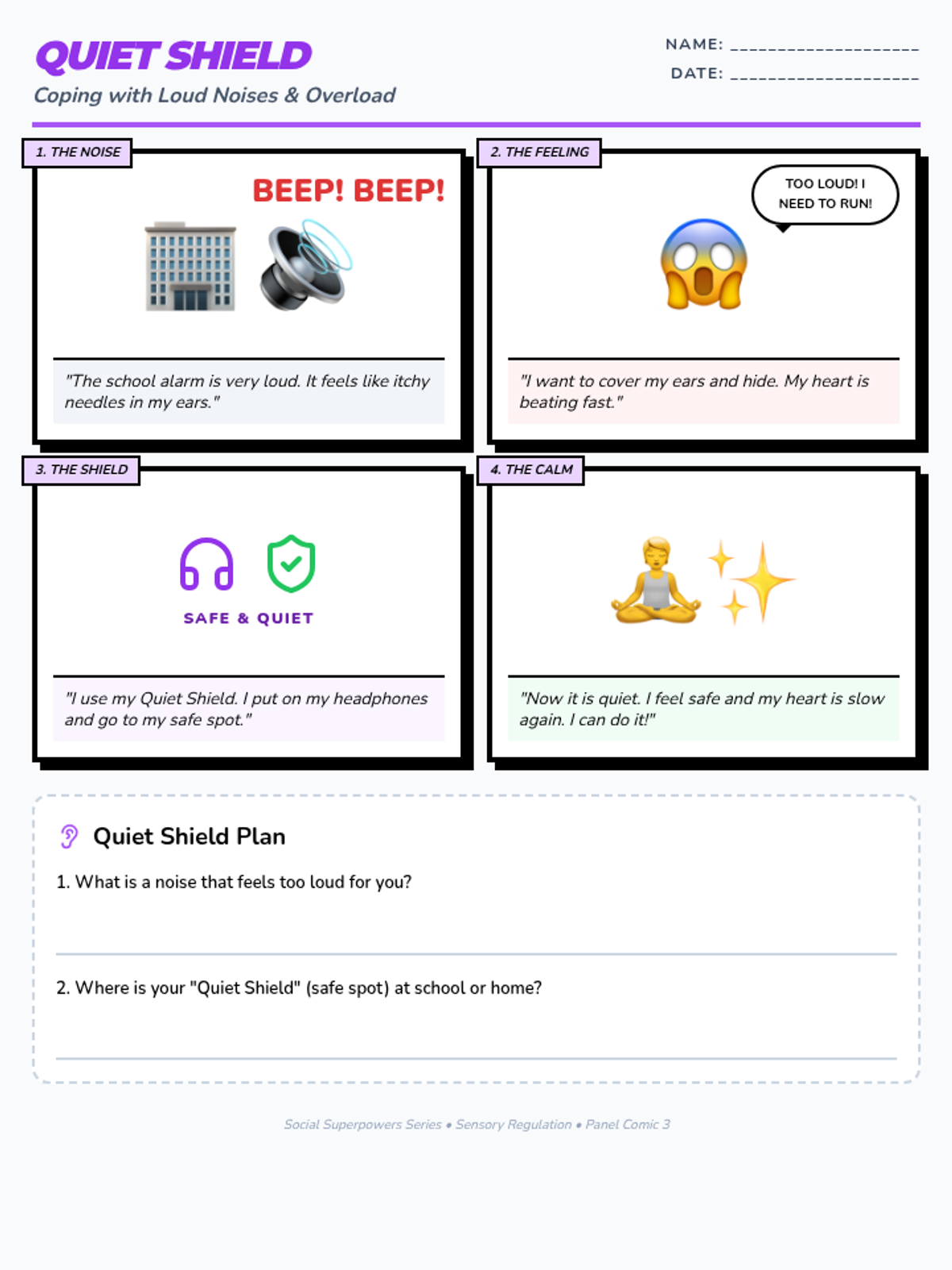
A 4-panel comic strip social story about managing sensory overload and loud noises, featuring the "Quiet Shield" strategy.
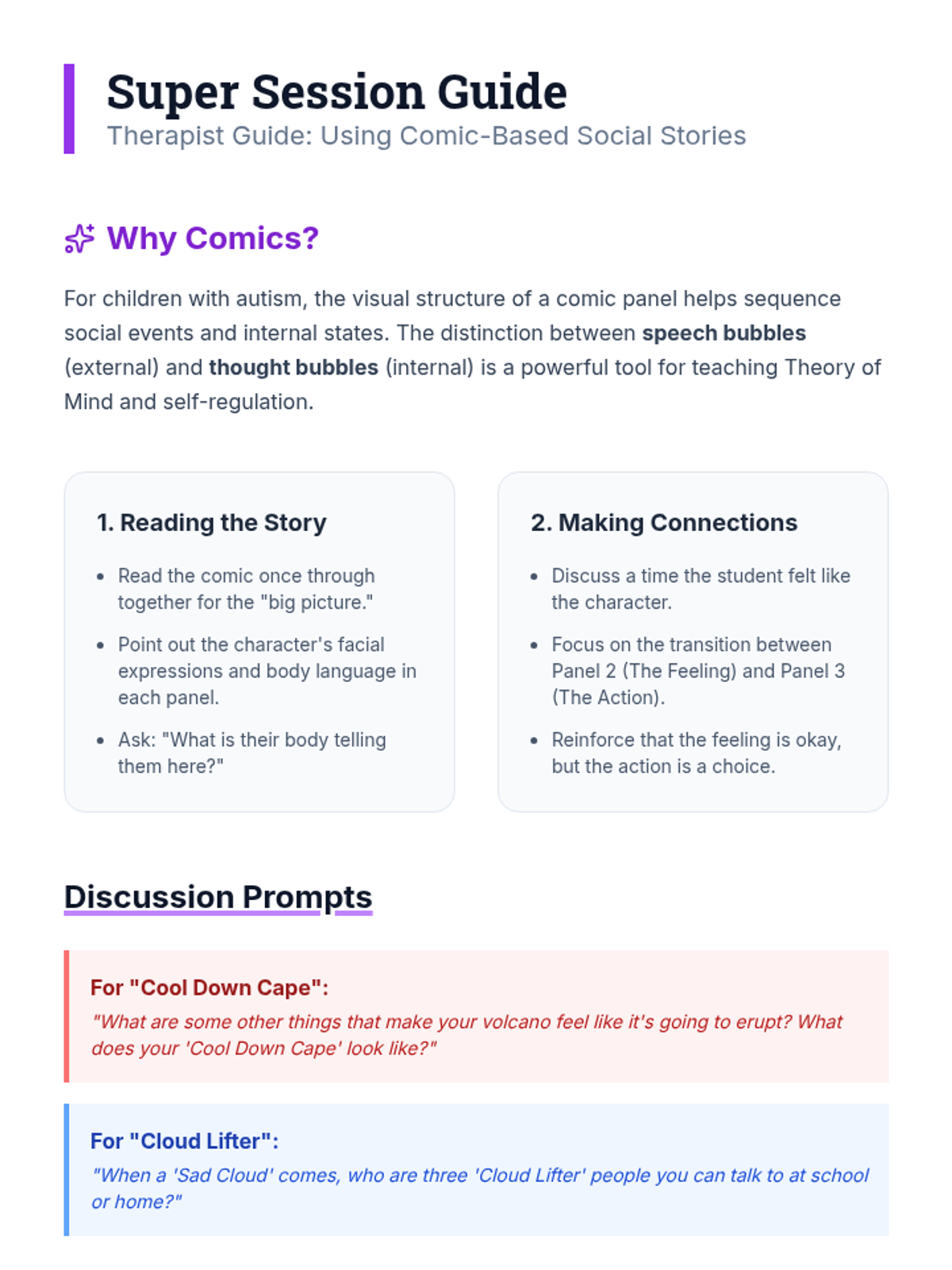
A guide for therapists and educators on how to implement the comic-based social stories, including discussion prompts and extension activities.
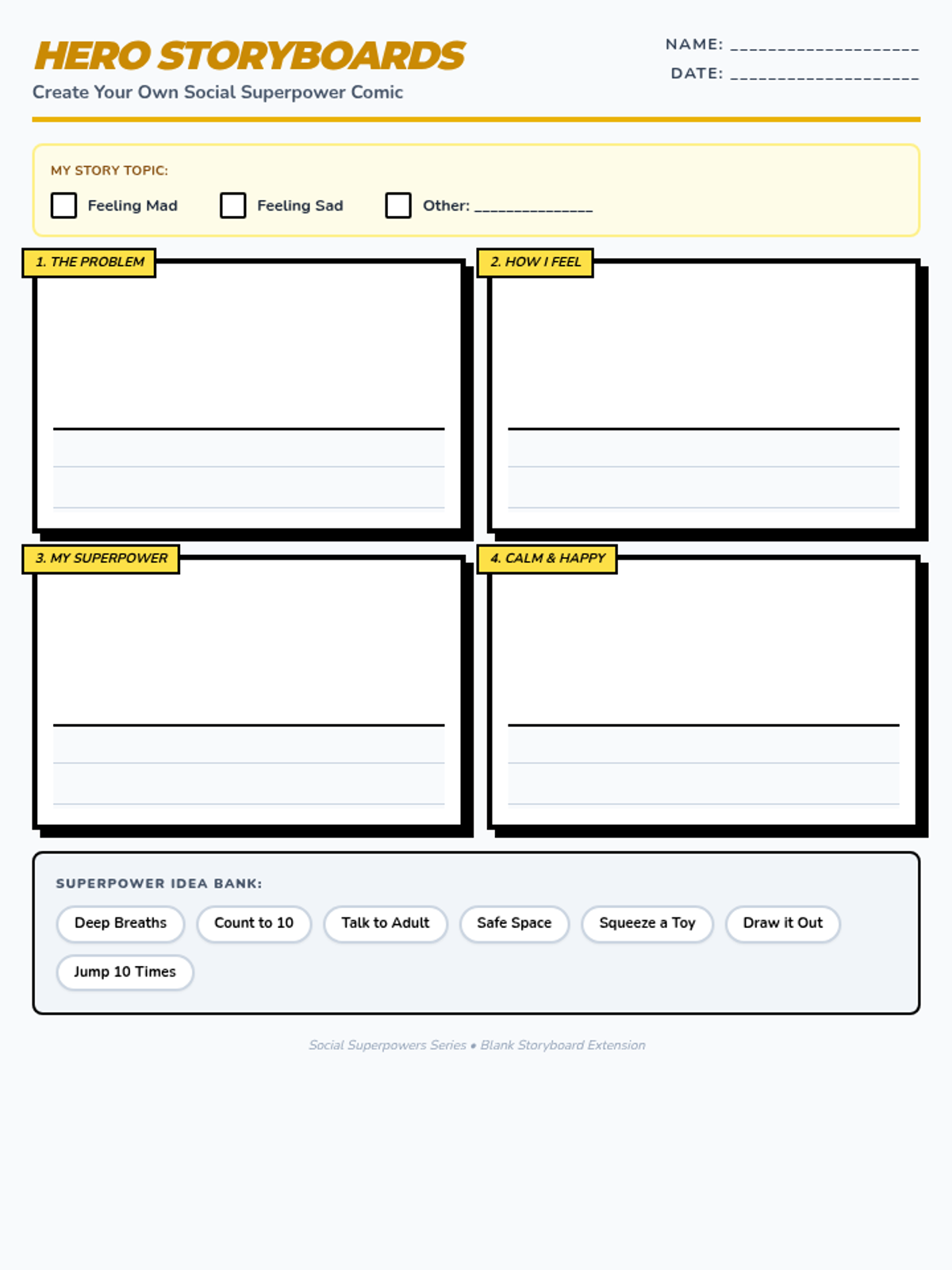
A blank 4-panel comic strip template for students to create their own social superpower story. Revised for better spacing and one-page layout.