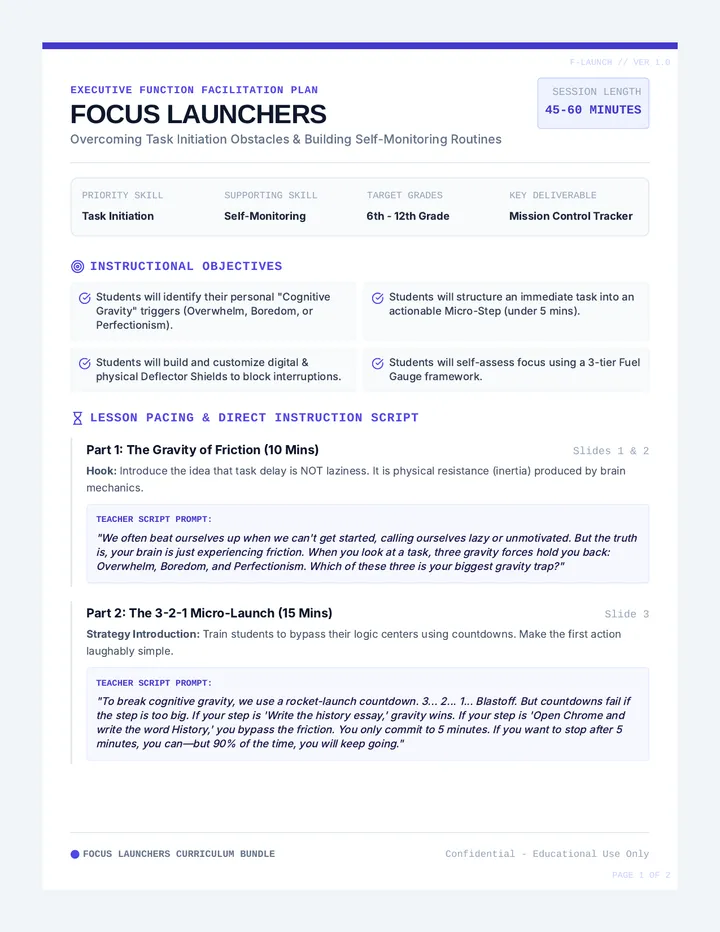
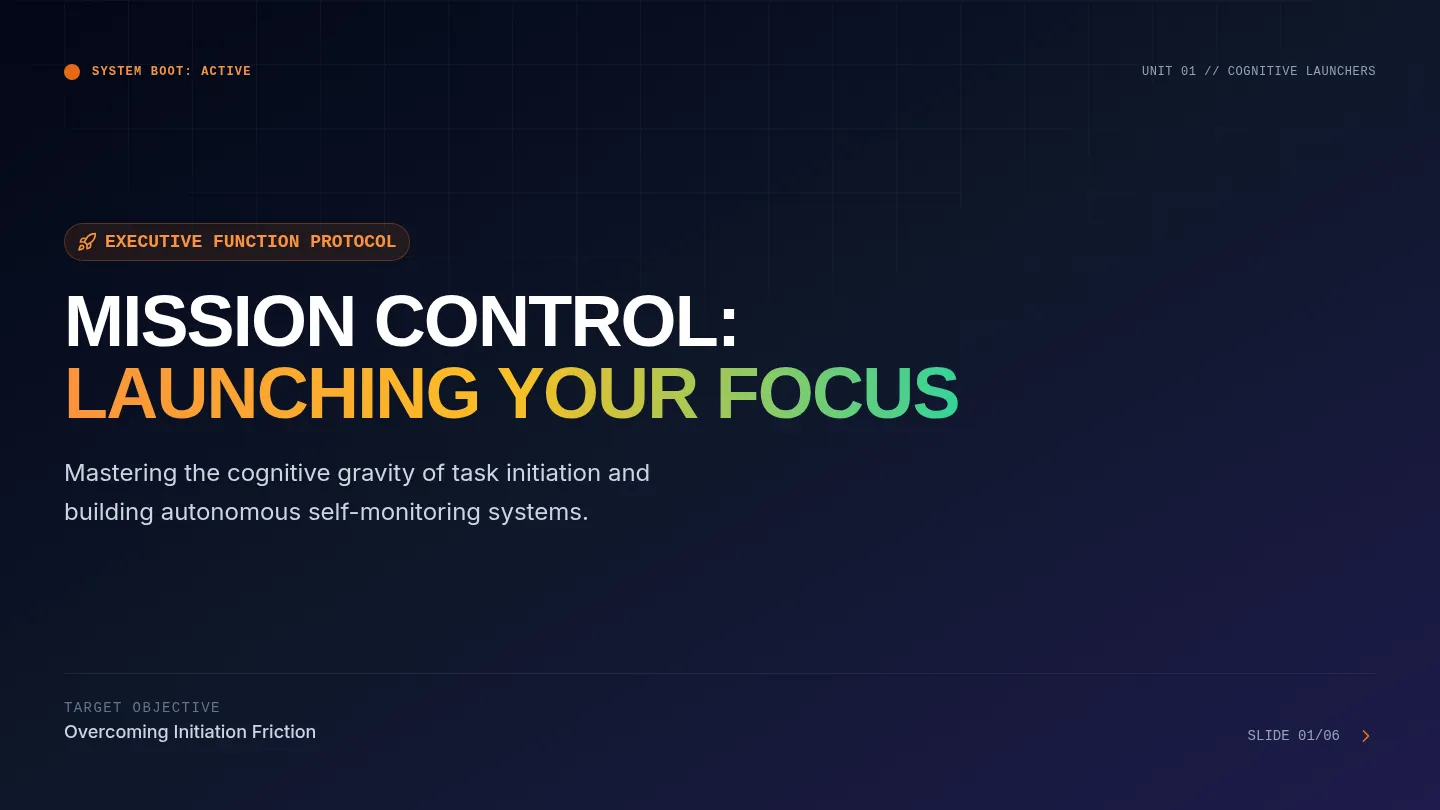
A visually engaging slide deck designed for high school students to understand executive function through a 'Command Center' analogy, featuring strategies for planning, organization, and task initiation.
Consolidated answer key for Market Math addition and subtraction worksheets, including teacher scoring notes and tips for student support.
Guided subtraction worksheet for students, using a cross-out method with visual icons to help students find the difference within 10.
Guided addition worksheet for students, featuring visual item icons and designated work areas to support counting and calculation within 10.
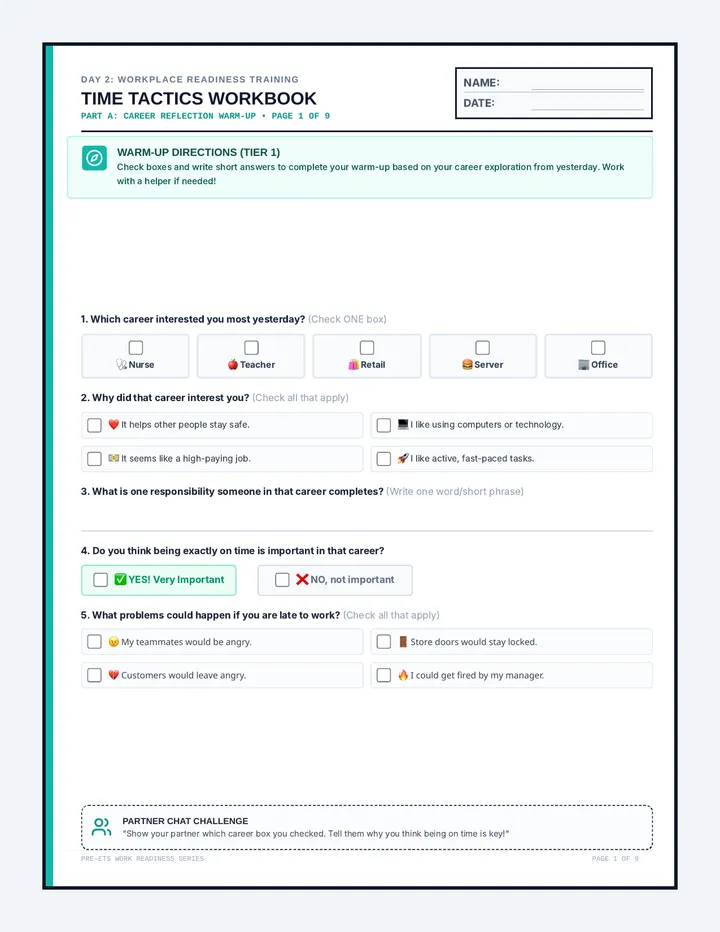
Comprehensive teacher guide for the Market Math lesson, including instructional steps, materials list, and differentiation strategies for students with developmental disabilities.
Visual introduction slides for Market Math lesson, featuring addition and subtraction concepts with grocery-themed icons and clear, large text for instructional clarity.
A weekly revision planner designed for AuDHD teenagers, focusing on energy budgeting, transition windows, and dopamine-based rewards rather than rigid time-blocking.
A guidance document for teachers and parents on how to effectively use the Brain Hack graphic organizers to support AuDHD teenagers with GCSE preparation, focusing on cognitive load and emotional regulation.
A graphic organizer focused on emotional regulation and sensory management for AuDHD teenagers, helping them diagnose energy levels, sensory overload, and choose appropriate recovery strategies.
A task-decomposition graphic organizer for AuDHD students to break down overwhelming GCSE study topics into micro-tasks, including a 'low-bar entry' strategy and time-tracking data.
A high-level graphic organizer for AuDHD teenagers to map out their GCSE subjects, identify energy requirements for each, and recognize their specific executive functioning friction points and support boosters.
A visual reference sheet listing sensory and organizational tools categorized for ADHD, ASD, and AuDHD neurotypes. Designed to help students identify practical supports for their unique processing styles.
A teacher's answer key and facilitation guide for the Neuro-Blueprint lesson. Includes sample answers for the graphic organizer and tips for explaining the complex AuDHD neurotype to middle schoolers.
A graphic organizer worksheet designed as a "Brain Blueprint." Students map the processing styles, strengths, and needs of ADHD, ASD, and AuDHD brains. Includes visual prompts and a reflection section for the unique paradoxes of AuDHD.
A visually-driven slide deck introducing the unique neuro-blueprints of ADHD, ASD, and AuDHD brains. Includes clear icons, bold typography, and visual metaphors to explain processing differences.
A visual sorting and diagramming activity where students use icons (Flame, Heart, Lightbulb) to categorize brain functions and annotate a realistic brain team map for internal coordination. UK spellings applied. Terminology updated to Neocortex.
A visual presentation introducing the Reptilian Brain, Limbic System, and Neocortex using realistic anatomical diagrams, large icons, and minimal text to explain how these three parts collaborate as a team. Terminology updated to Neocortex with UK English spellings.
A comprehensive teaching guide for facilitating the Brain Blueprint sequence, providing core philosophies, lesson breakdowns, a realistic anatomical brain map, and neuro-affirming facilitation tips. UK spellings applied. Terminology updated to include Neocortex with a lightbulb icon.
A resilience-building worksheet where students practice reframing self-critical labels (like 'lazy' or 'sensitive') into objective problem-solving statements focused on executive function and sensory needs. UK spellings applied. Terminology updated to Neocortex with a lightbulb icon.
A slides deck teaching ADHD and AuDHD students how to reframe self-criticism into objective problem-solving, emphasizing that 'failure' is simply data for finding better tools. UK spellings applied. Terminology updated to Neocortex with a lightbulb icon.
A collaborative matching and brainstorming activity where students pair common neurodivergent 'system errors' with effective strategies and interview peers about their own focus hacks. UK spellings applied. Terminology updated to include lightbulb iconography.
A presentation on practical executive function strategies and sensory tools specifically for ADHD and AuDHD students, framed as 'upgrades' to their brain's workshop. UK spellings applied. Terminology updated to include Neocortex with a lightbulb icon.
An interactive worksheet for students to identify their sensory profiles, dopamine triggers, and executive function challenges, fostering self-awareness and advocacy. UK spellings applied. Terminology updated to include Neocortex and realistic brain diagrams.
A visual guide to the neurobiology of ADHD and AuDHD brains, using an 'engine' and 'operating system' metaphor to explain executive function and sensory processing. UK spellings applied. Terminology updated to Neocortex with a lightbulb icon.