A beautiful 7-slide dark-themed covert briefing presentation that introduces the summer camp, daily dexterity exercises, and the tactical fine-motor details for each of the five missions.
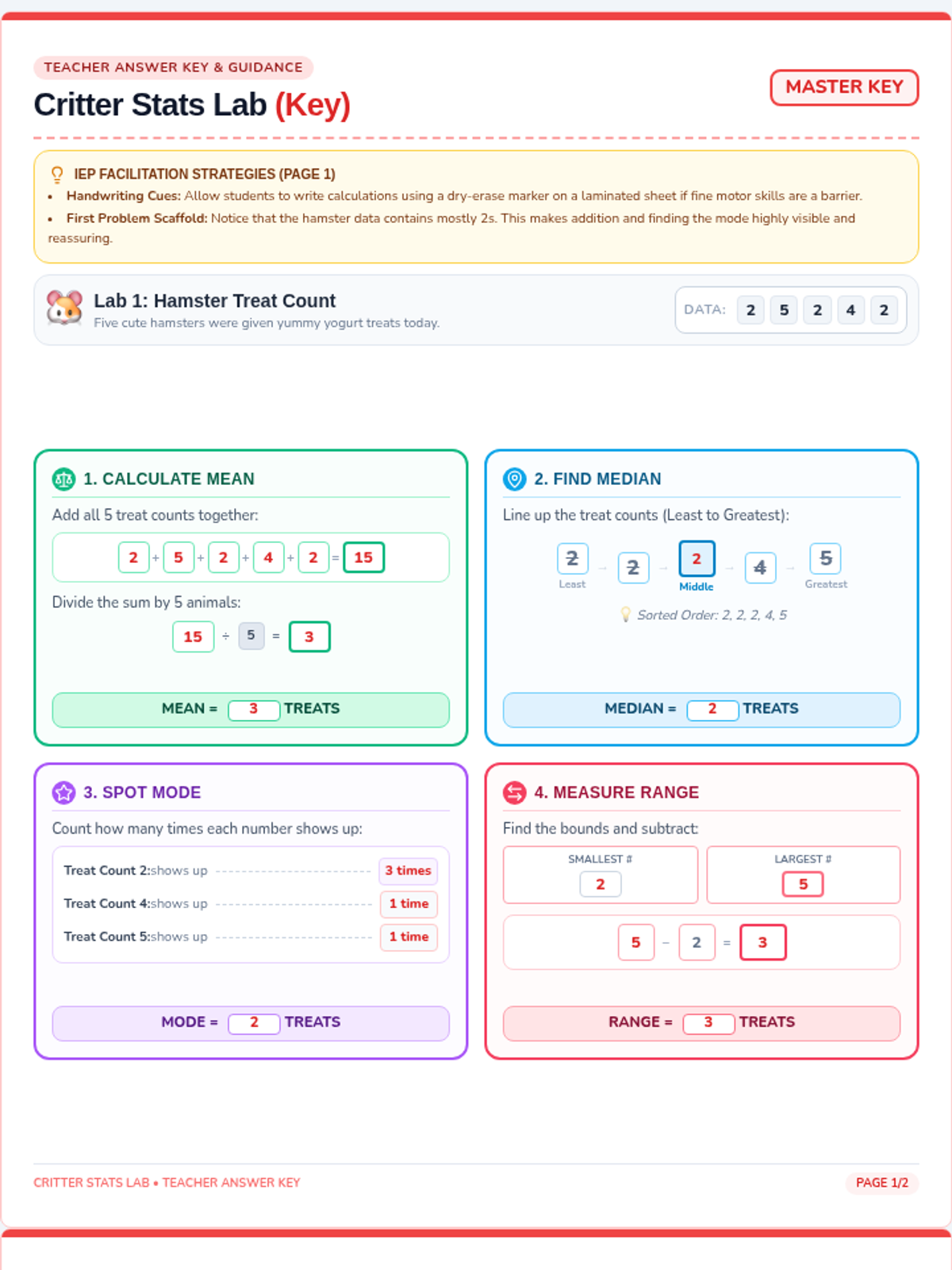
A fully-solved teacher answer key matching the Critter Stats Lab Worksheet. It features high-contrast red ink overlays for easy grading and includes embedded IEP facilitation tips and differentiation coaching strategies for each page.
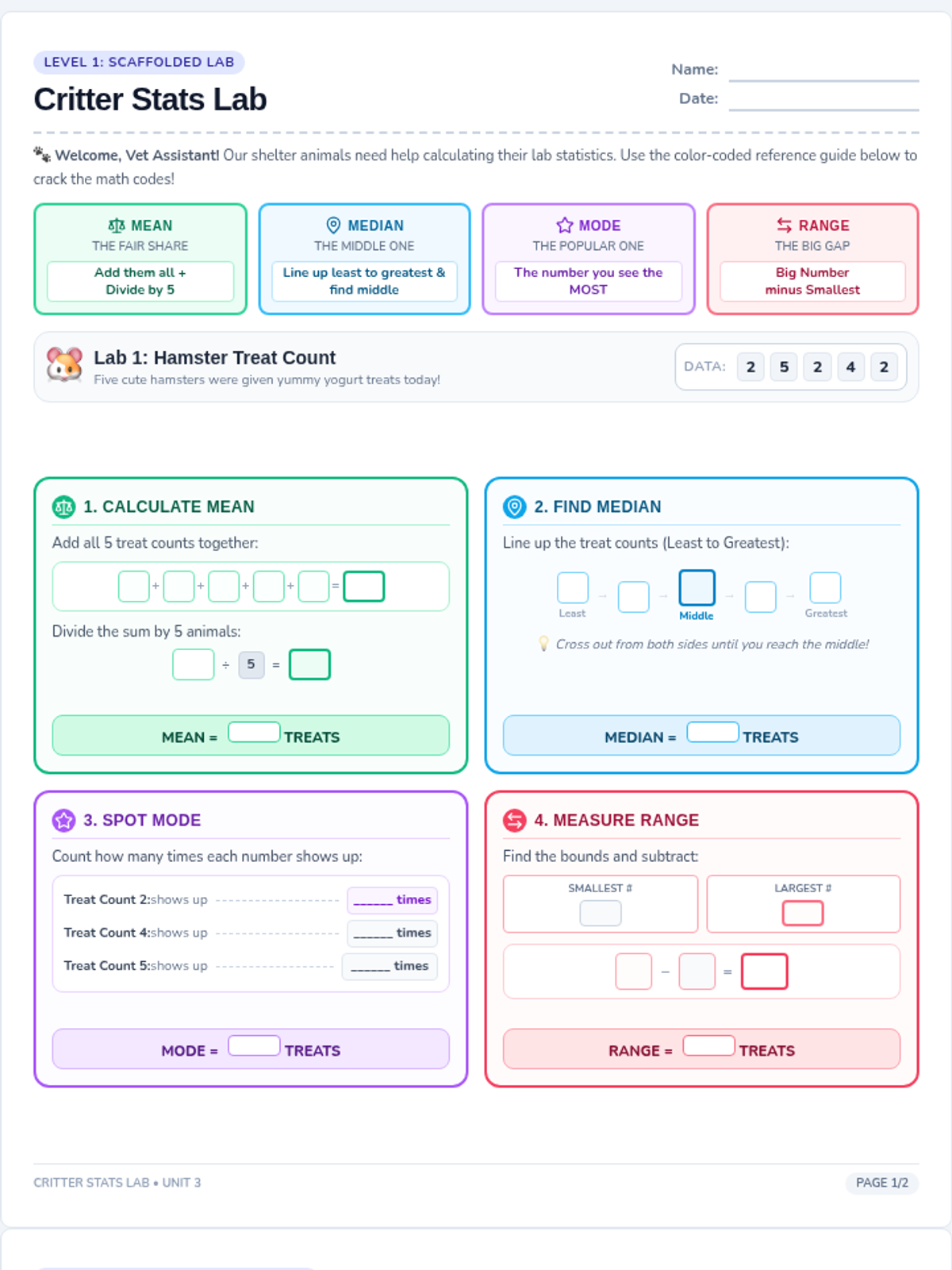
A highly visual, color-coded printable worksheet introducing mean, median, mode, and range. Designed with scaffolded steps, clear visual boundaries, and large writing boxes specifically optimized for IEP students.
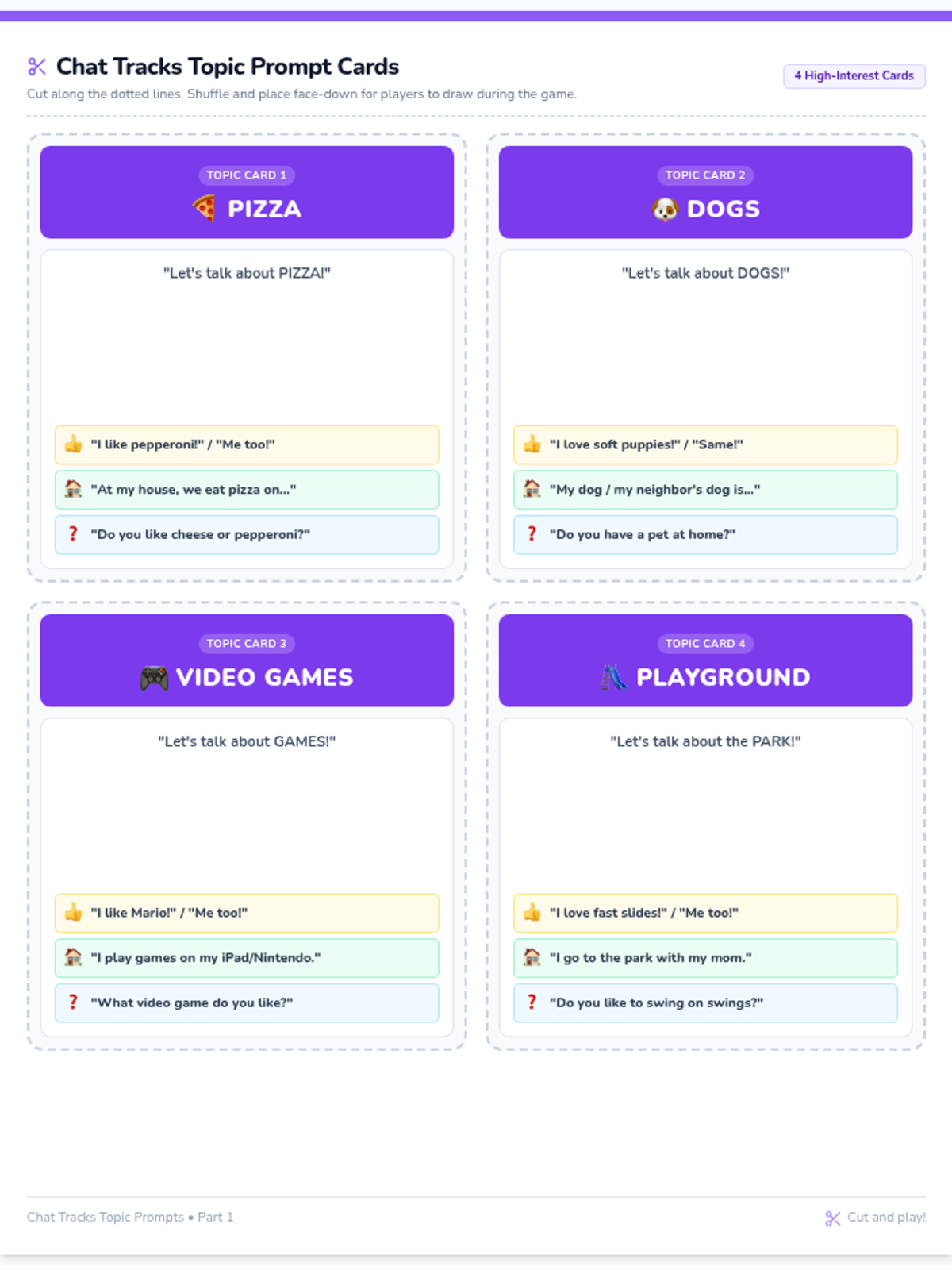
A collection of four beautifully structured, colorful topic cards (Pizza, Dogs, Video Games, and Playground) designed with visual icon support, highly structured speech frames, and station colors to help special education students participate directly.
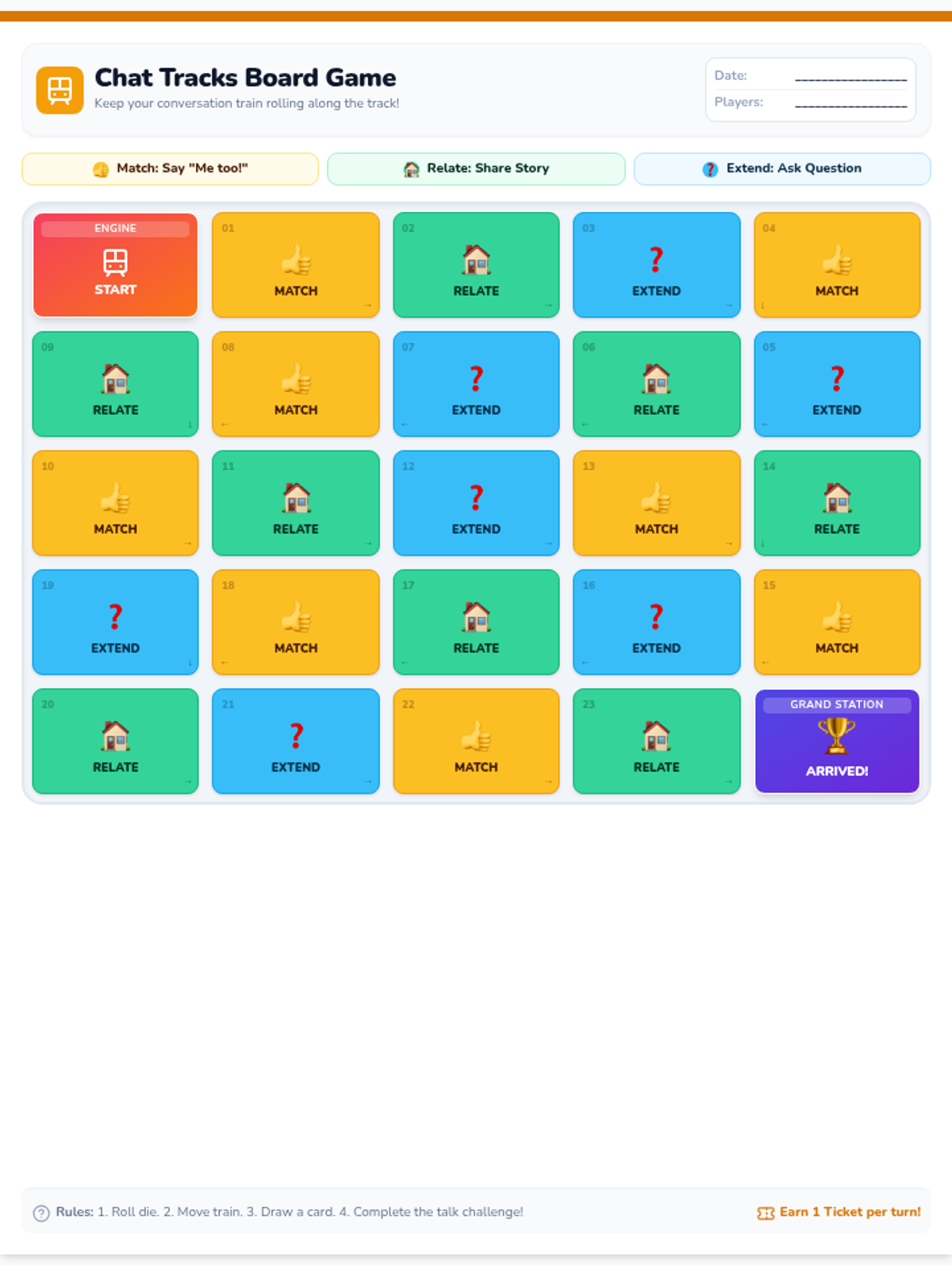
A beautifully structured, train-themed print-ready board game specifically colored for the Chat Tracks lesson. Features a winding 24-step visual layout with high-contrast Match, Relate, and Extend stations.
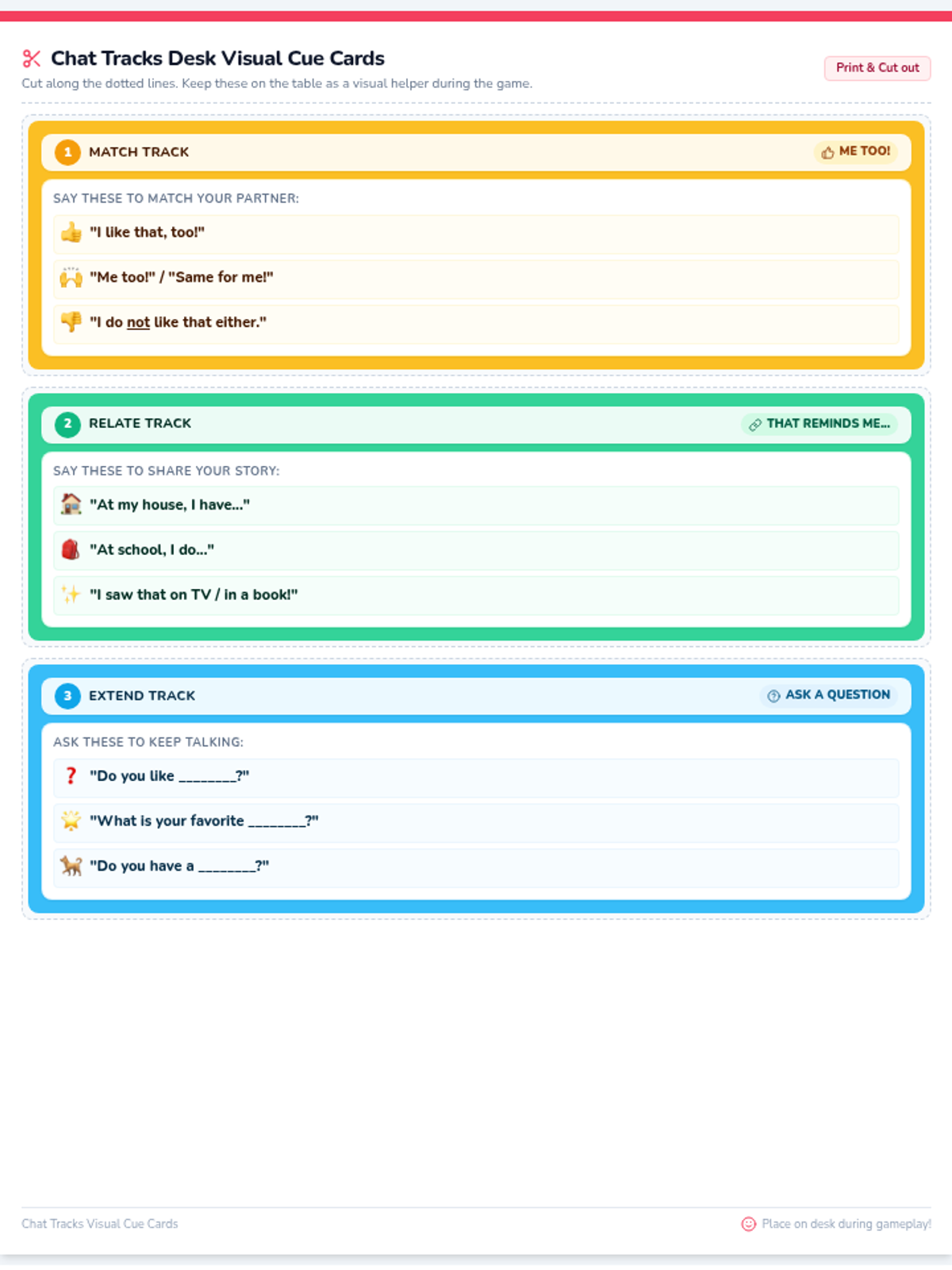
A set of three distinct visual cue cards (Match Track, Relate Track, and Extend Track) with specific sentence frames, tactile emojis, and bright high-contrast stations designed to sit on desks as social scripts for special education students during game sessions.
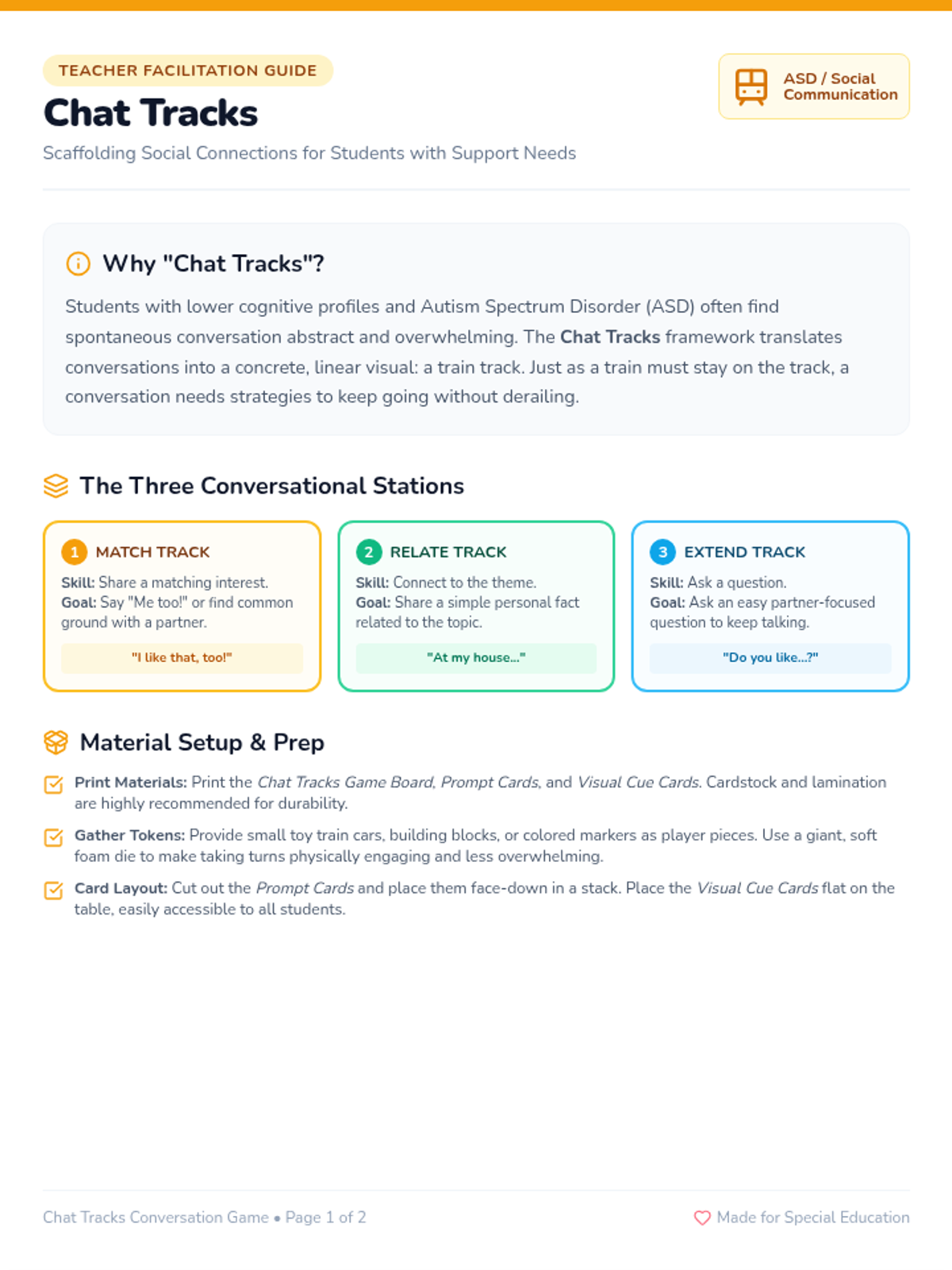
A teacher facilitation guide for Chat Tracks, detailing game setups, concrete student accommodations, physical board preparation, and structured prompting dialogue for low-cognitive students with ASD.
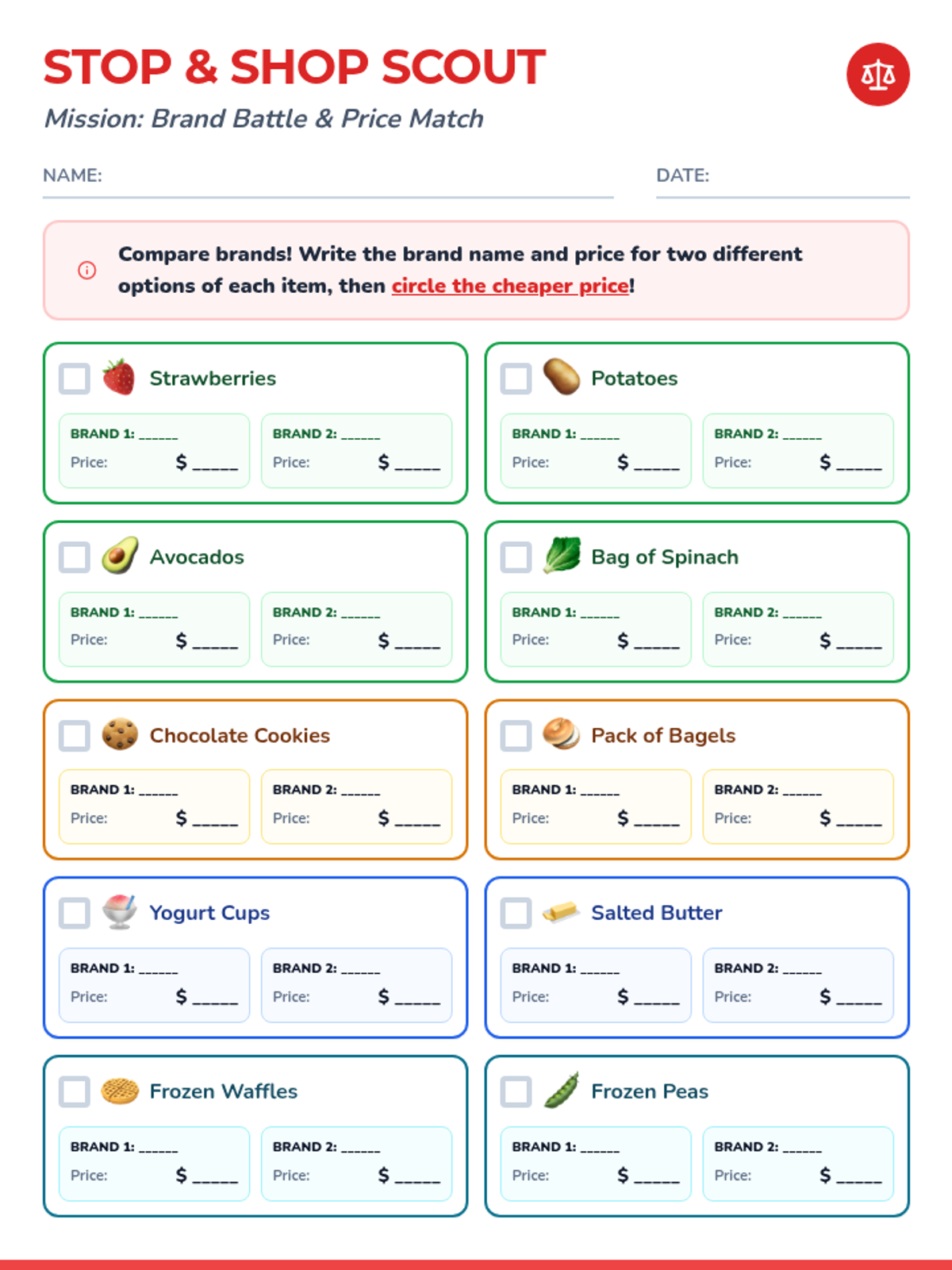
A companion 18-item brand comparison scavenger hunt for Stop & Shop. Students find two brands of each item, write down their brand names and prices, and circle the cheaper option.
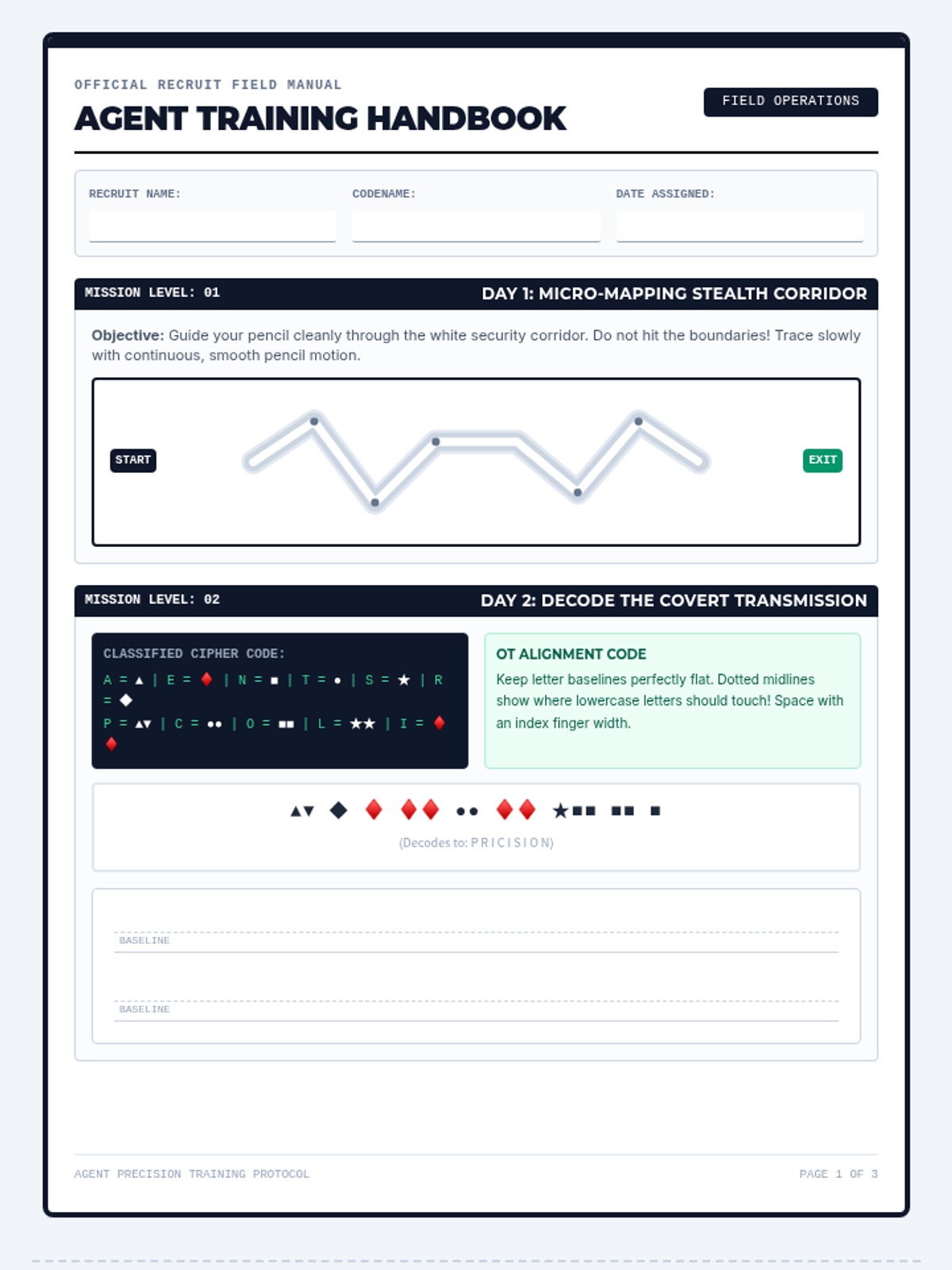
A gorgeous 3-page student-facing agent training workbook containing highly structured visual-motor tasks: tracing paths, baseline-aligned handwriting codebreaking, scissor coordination lines, dot-grid symmetry blueprints, and a graduation certificate.
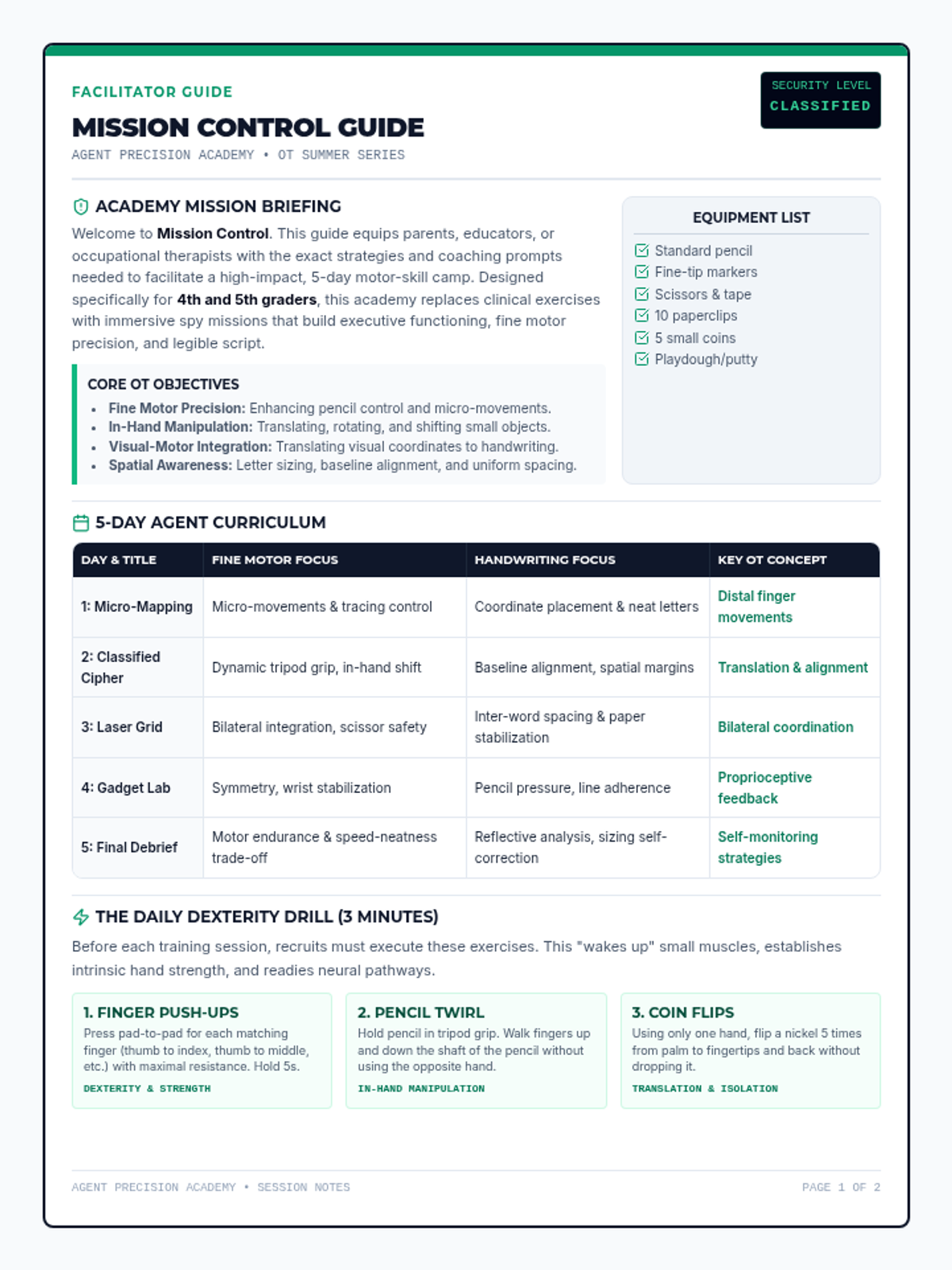
A 2-page detailed facilitation guide for educators, parents, and occupational therapists. Contains the weekly agent-themed OT structure, daily warm-up dexterity drills, instructional scripts, and progress tracking tools for 4th and 5th graders.
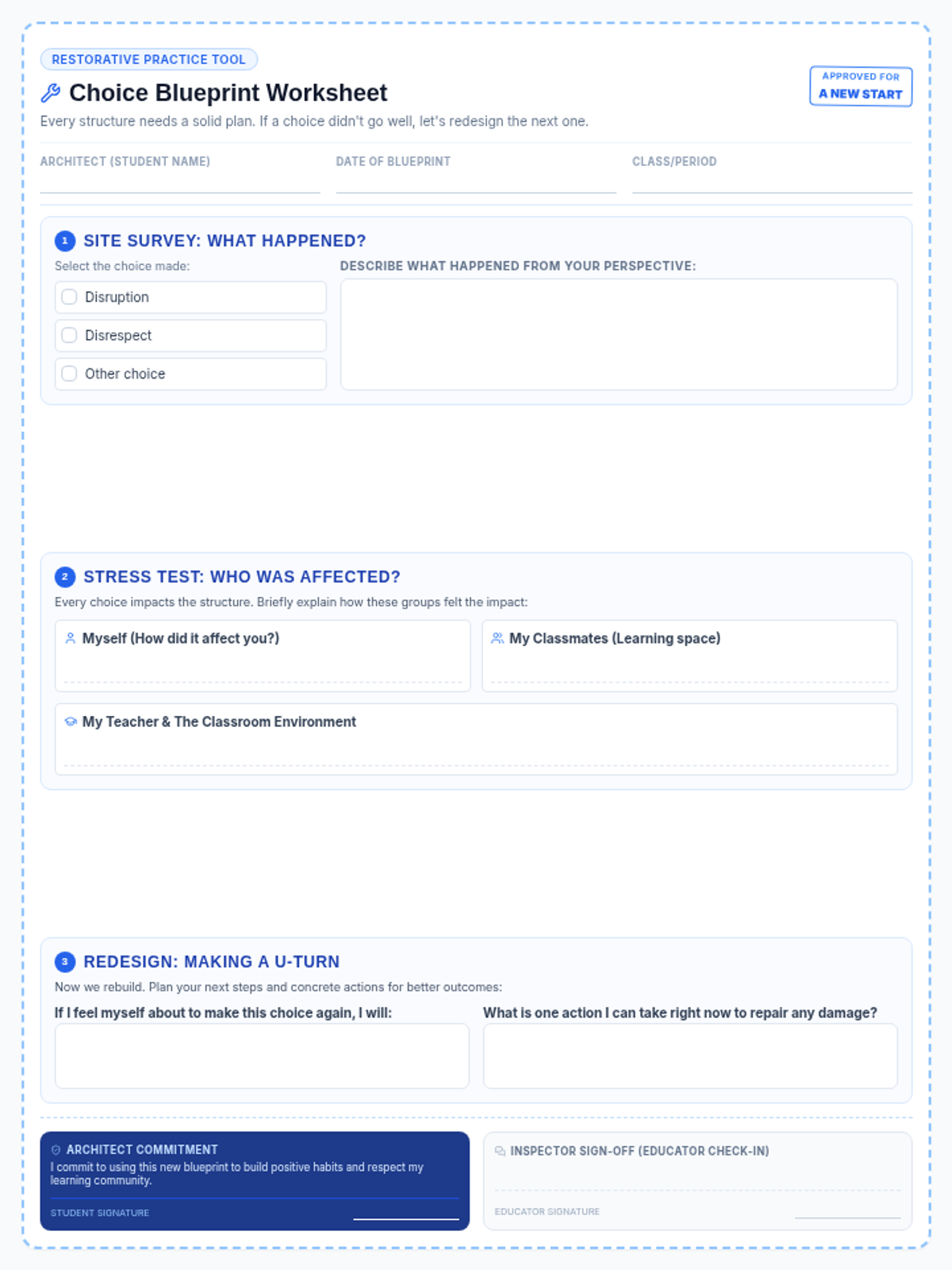
An architect-themed restorative reflection worksheet for students to process disruptive or disrespectful choices and design a blueprint for better decisions next time.
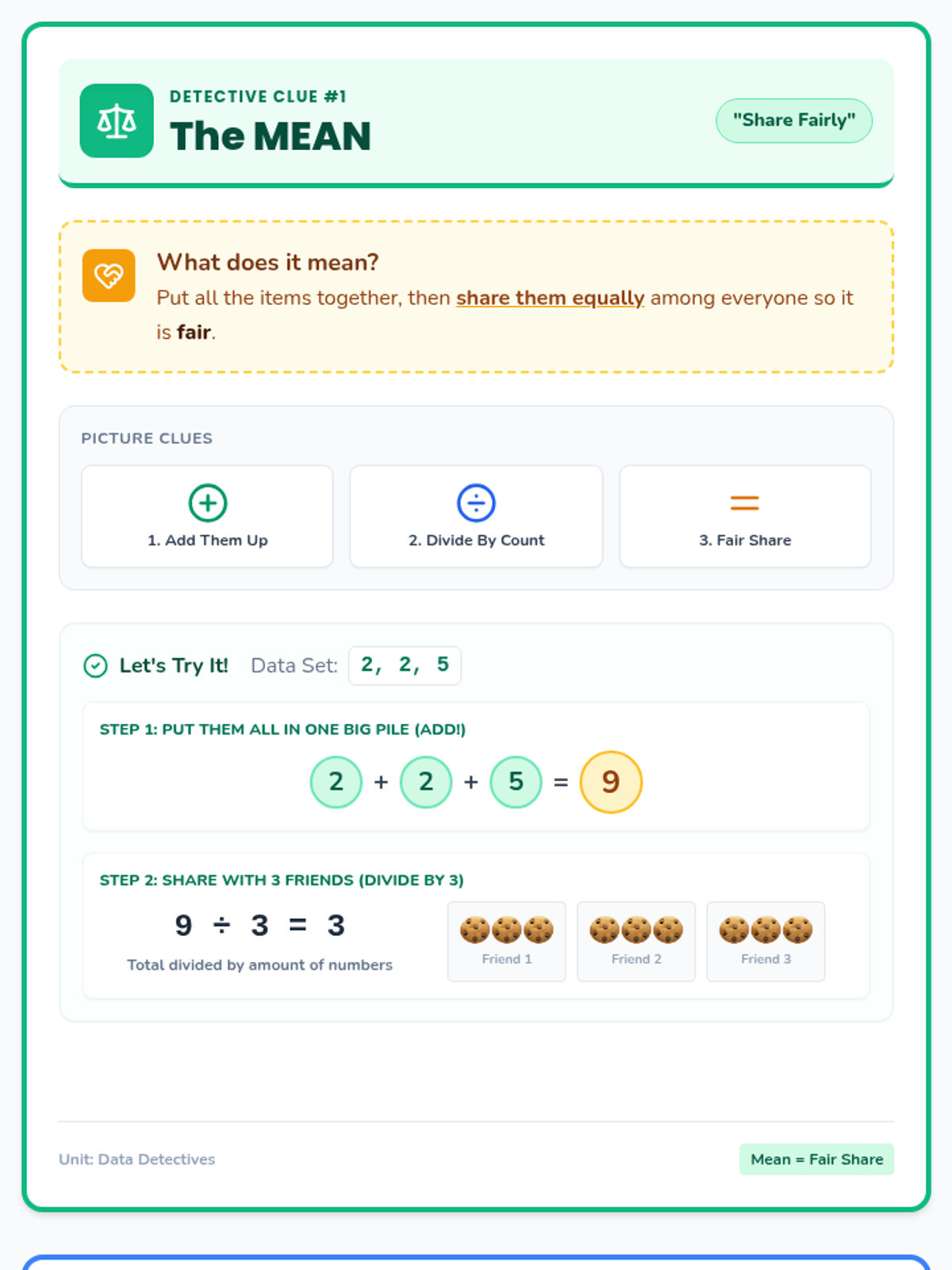
A highly visual and engaging 7-slide presentation designed for teaching Mean, Median, Mode, and Range. Features bold high-contrast detective colors, large readable text (minimum 24px), concrete puppy treat examples, and step-by-step visual models tailored for special education.
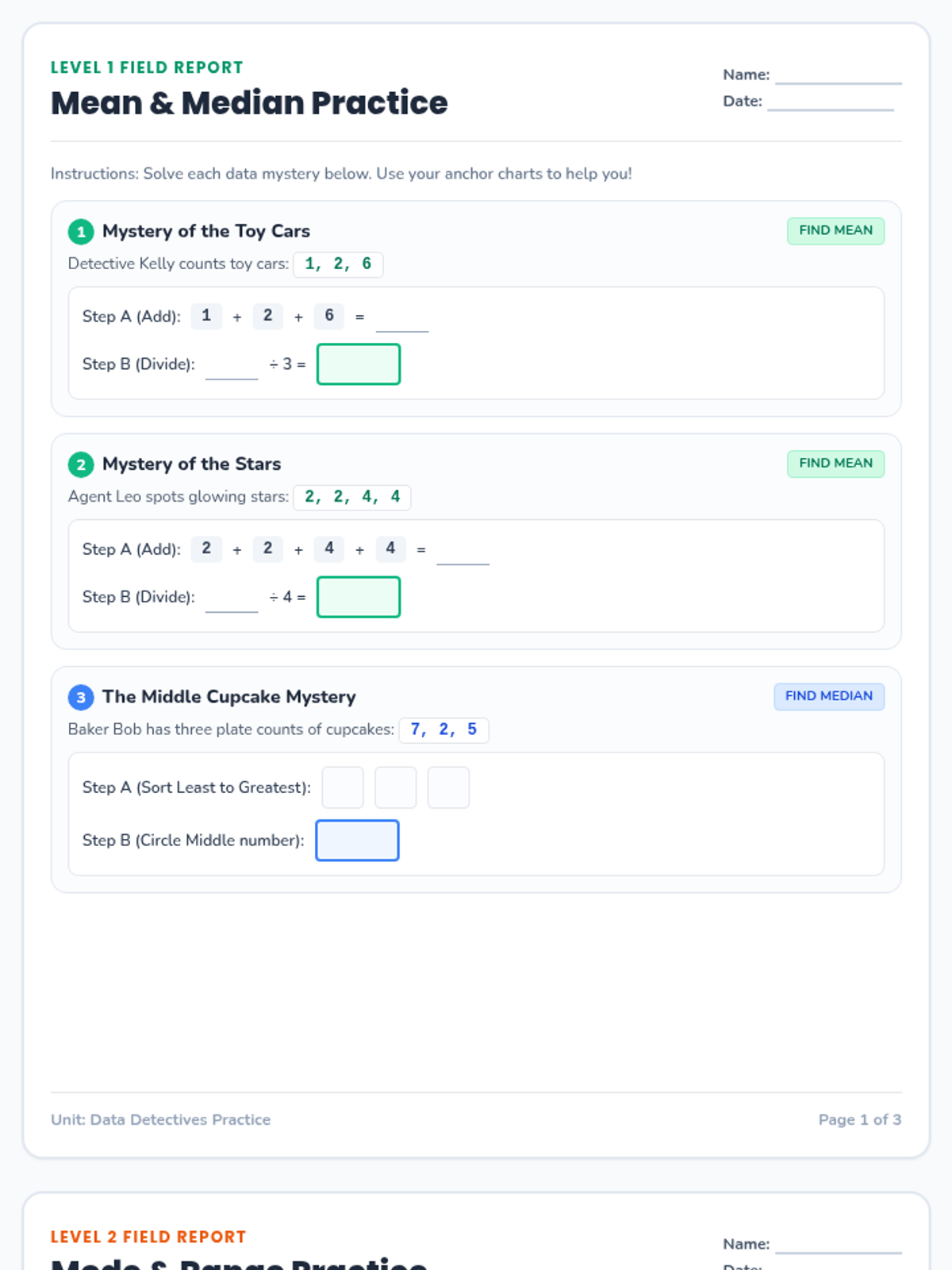
A 3-page printable math practice set containing progressive math sheets for solving Mean, Median, Mode, and Range using simple datasets, along with a detailed visual answer key for teachers.
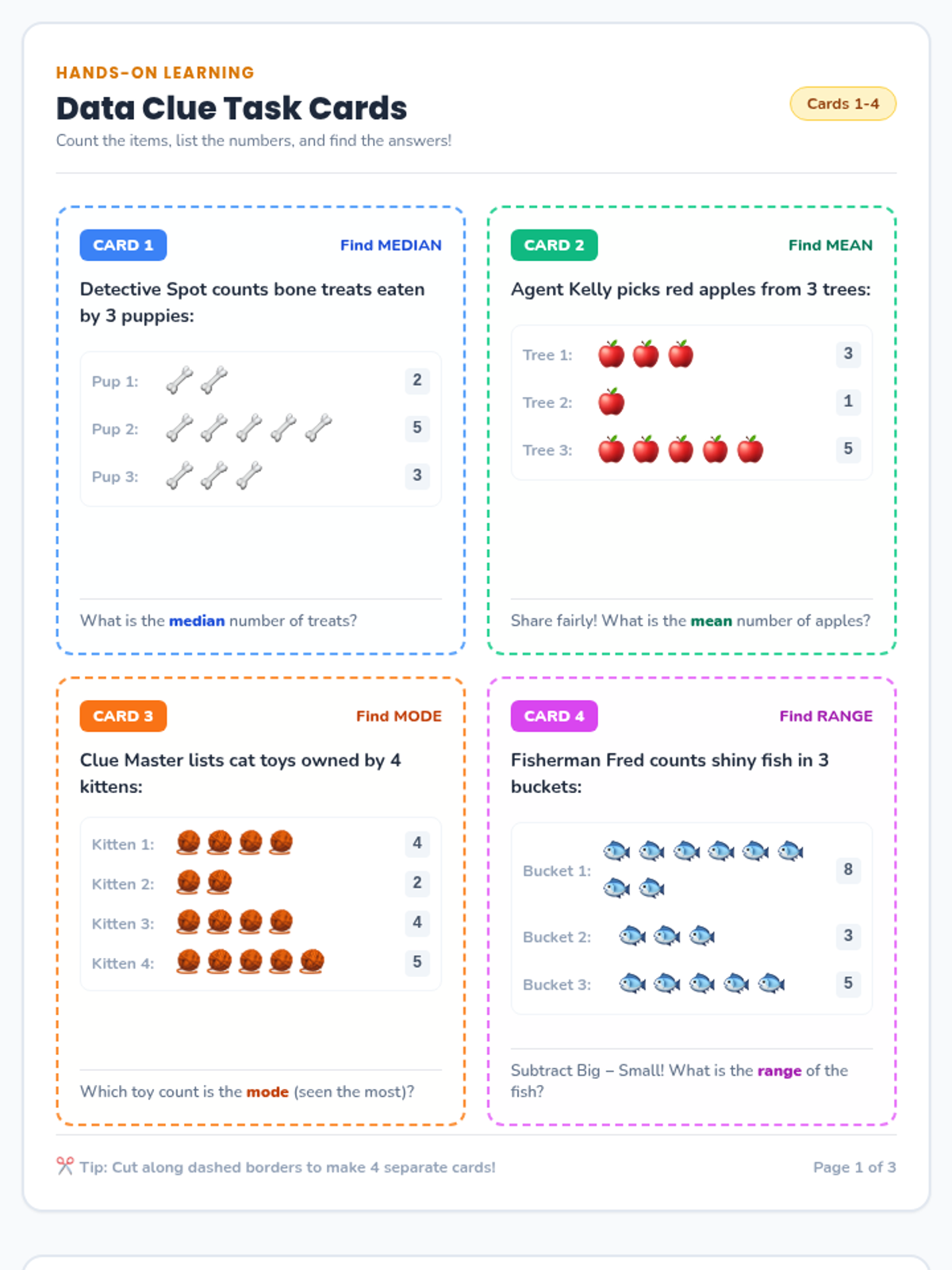
A packet of 8 print-ready math task cards with simplified counting tasks (using emojis as hands-on counters) and a 1-page student recording sheet. Structured for special education with high-contrast borders and clear, large fonts.
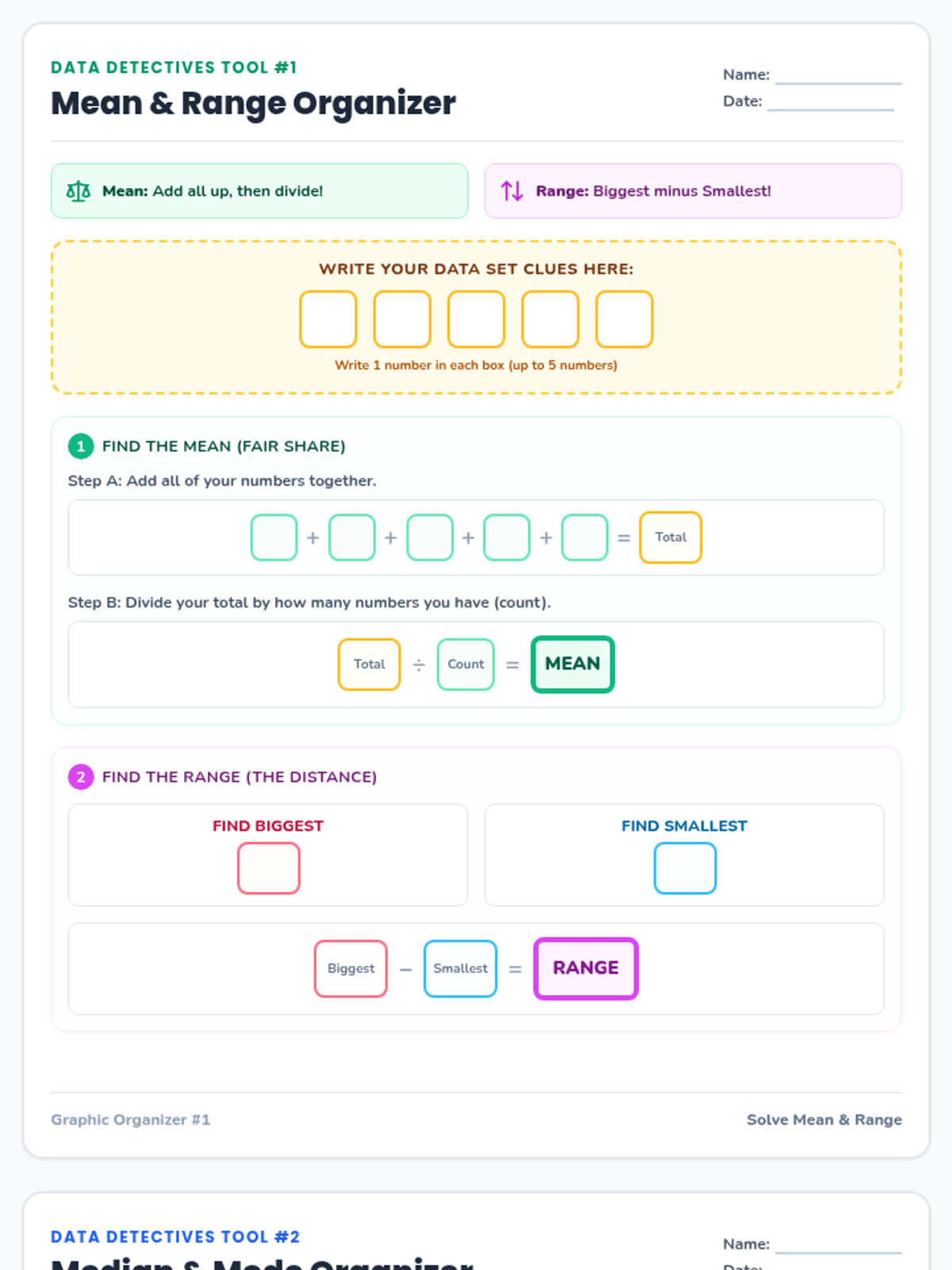
A printable 2-page graphic organizer designed specifically for special education. It guides students through the step-by-step process of calculating Mean, Median, Mode, and Range using color-coded inputs, clean layouts, and clear instructions.
A set of four colorful and highly visual math posters representing Mean, Median, Mode, and Range, modified with picture symbols, simple definitions, and single-digit examples.
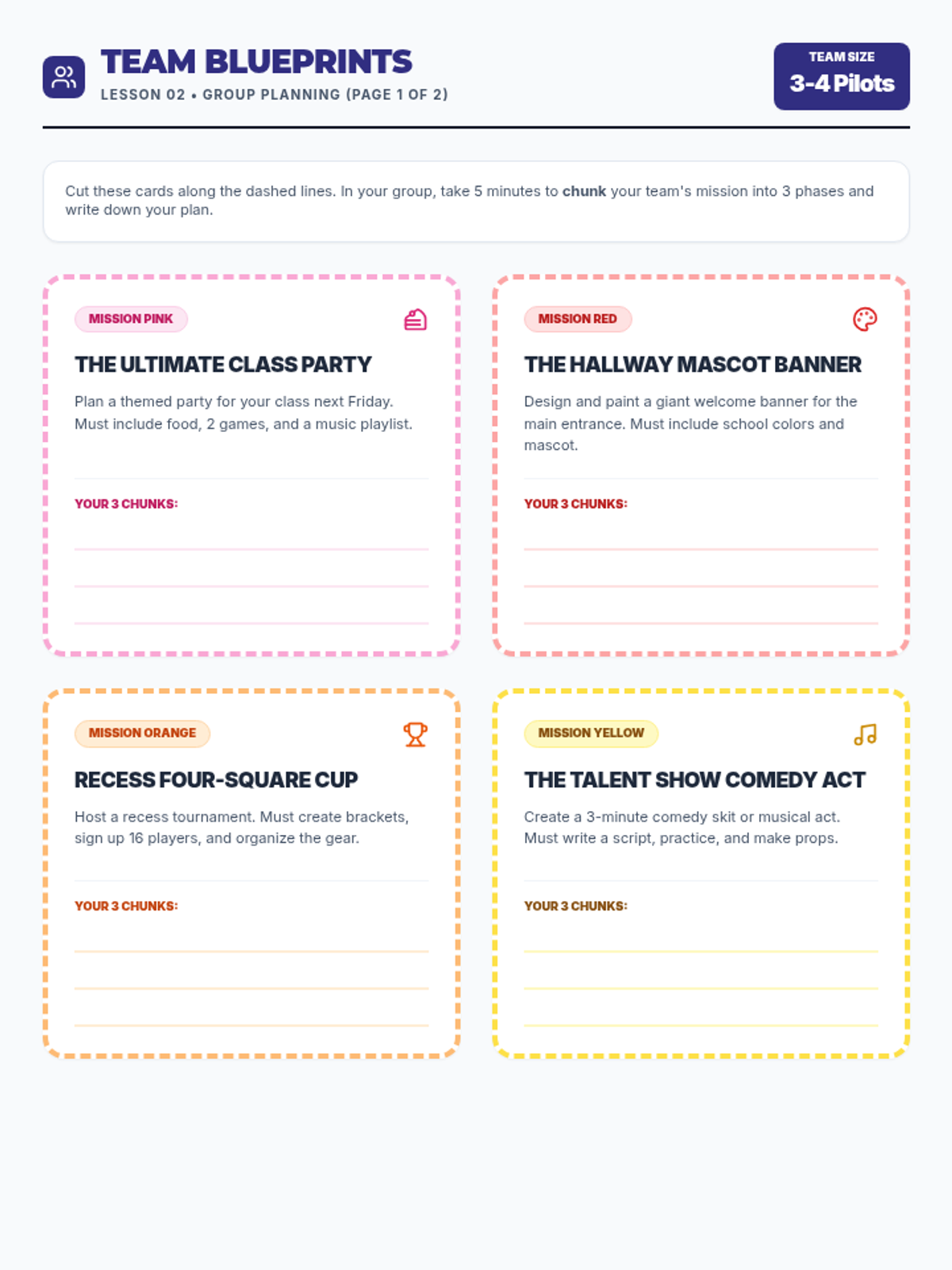
A expanded set of seven printable team scenario cards for grade 5 students to practice collaborative backwards mapping and chunking. Cards are color-coded (pink, red, orange, yellow, blue, purple, green) and deal with relatable school events.
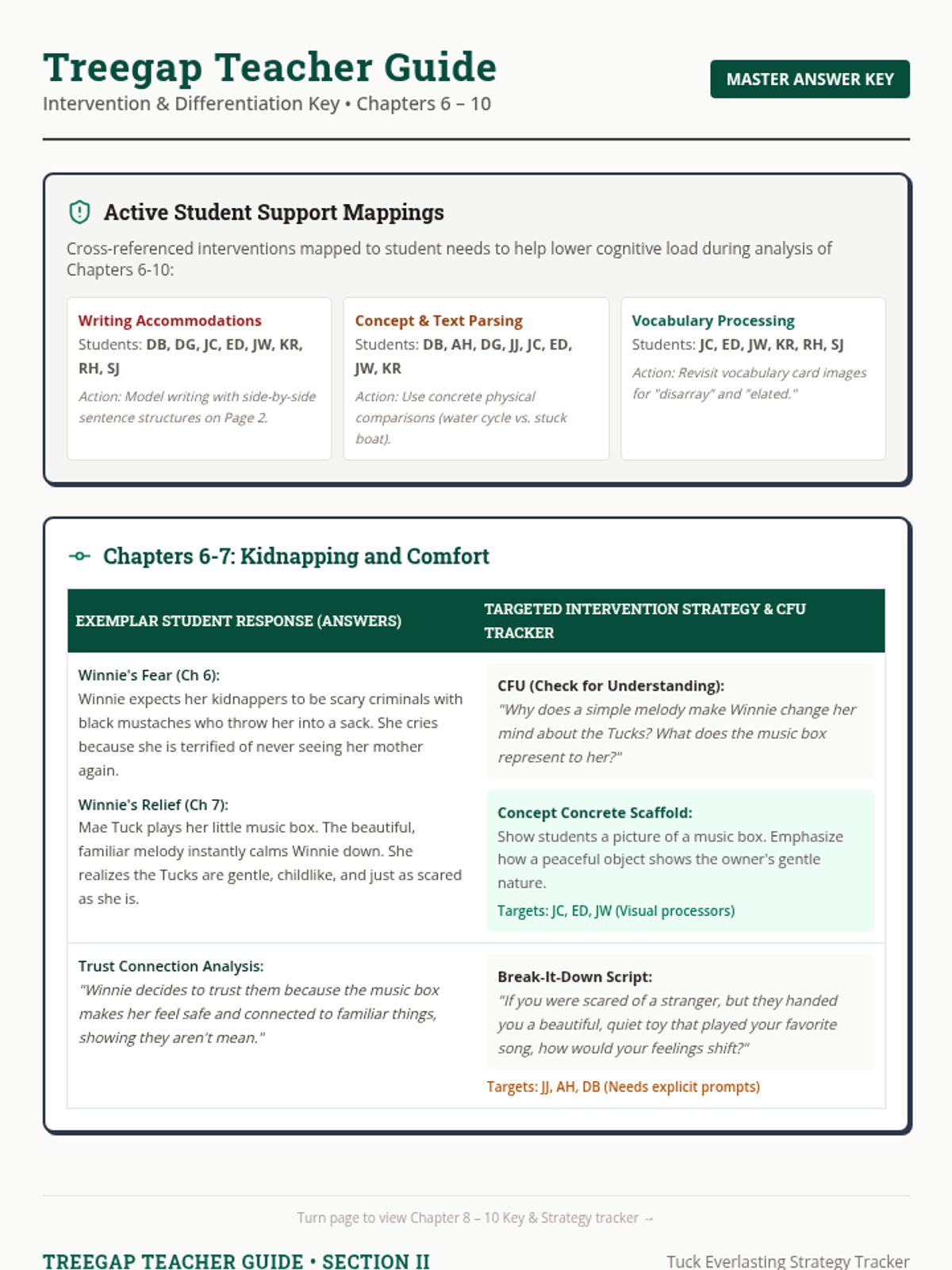
A comprehensive teacher companion guide and answer key for Chapters 6-10 of Tuck Everlasting. Features detailed exemplar responses, diagnostic student support mappings, and strategic checkpoint questions.
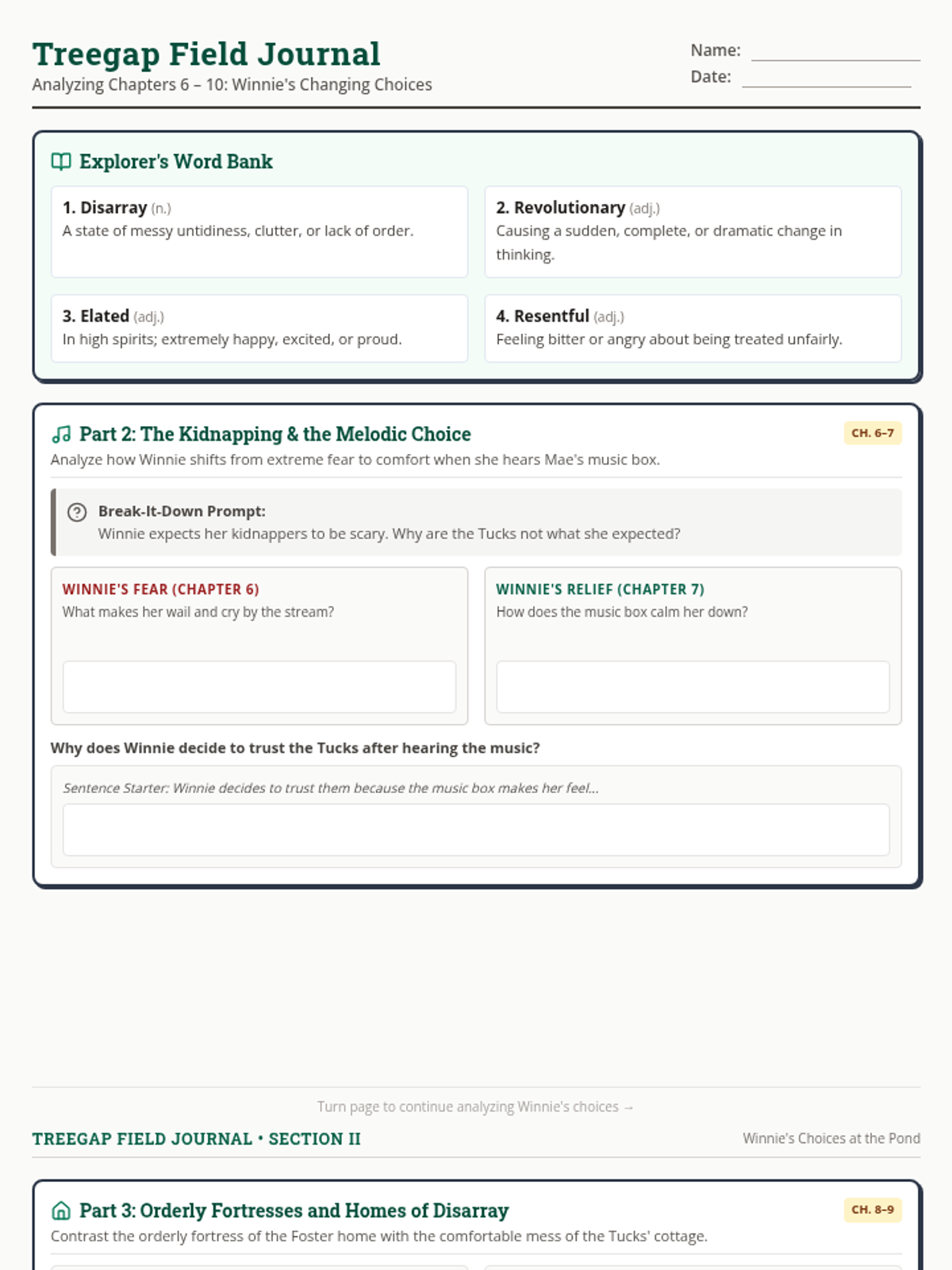
A high-contrast, beautifully structured worksheet based on Chapters 6-10 of Tuck Everlasting. Focuses on Winnie's inner choices, analyzing her transitions from fear to safety and examining the contrast between her orderly life and the Tucks' timeless disarray.
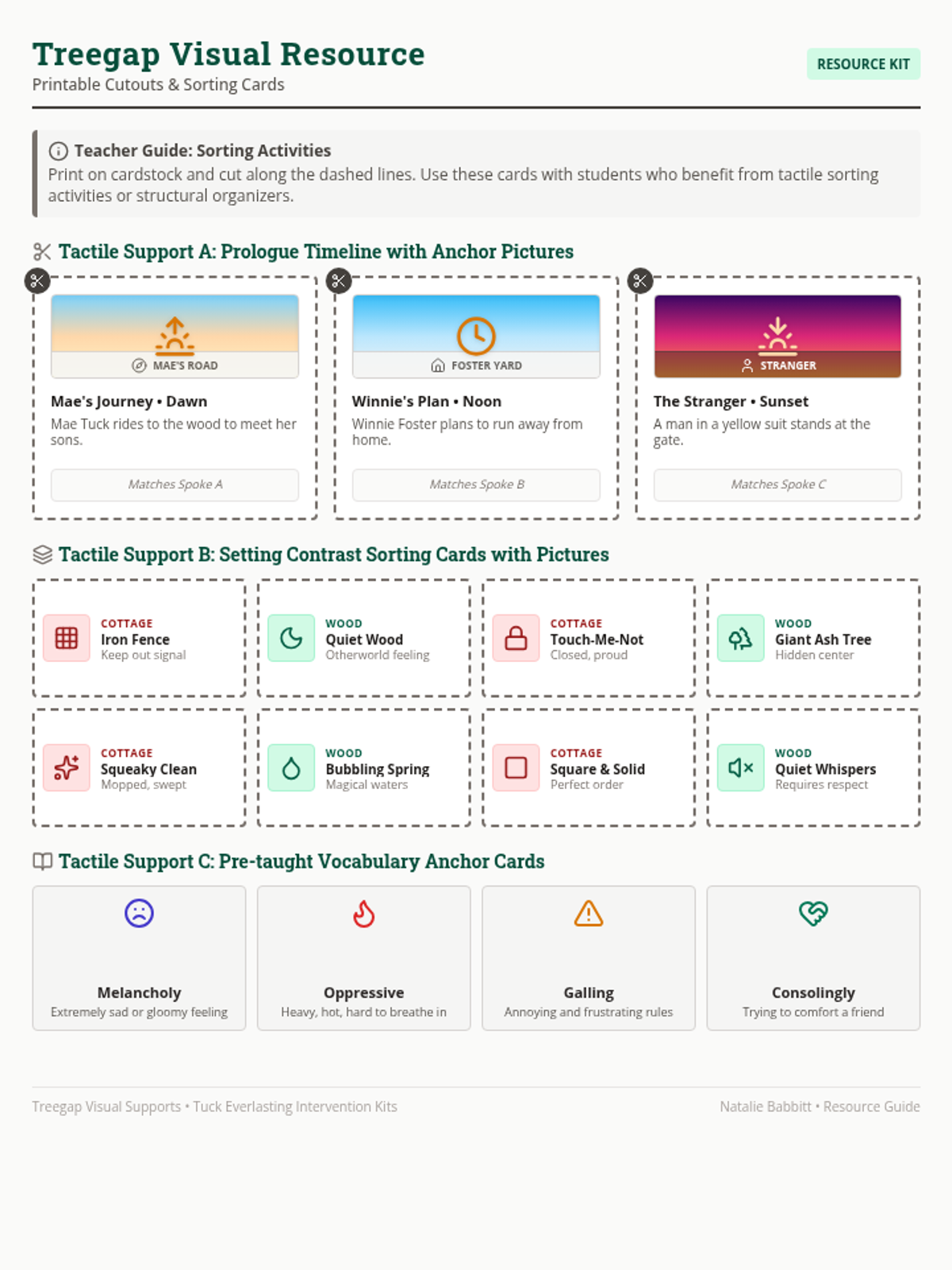
A printable sheet of tactile visual aids and sorting cards designed to accompany the Treegap Wood Journal. It includes timeline cutouts for the Prologue, contrast details for Chapter 1, and visual vocabulary anchors to support students with reading, writing, and cognitive processing needs.
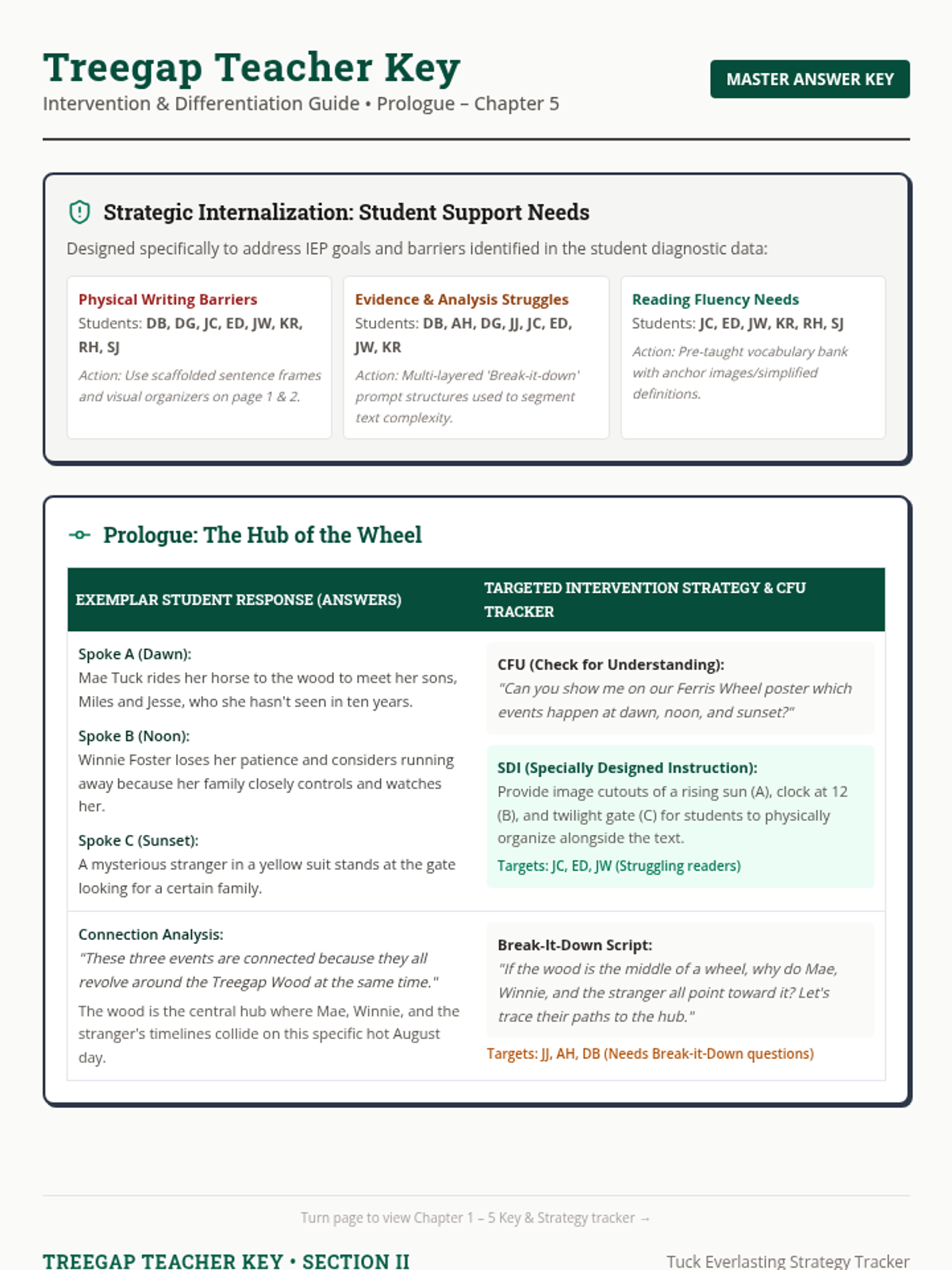
An interventionist companion Answer Key for Tuck Everlasting (Prologue to Chapter 5) designed for SDI support. It includes exemplar answers presented in a structured T-chart, alongside scripted CFU questions, SDI steps, and targeted student-level tracking charts.
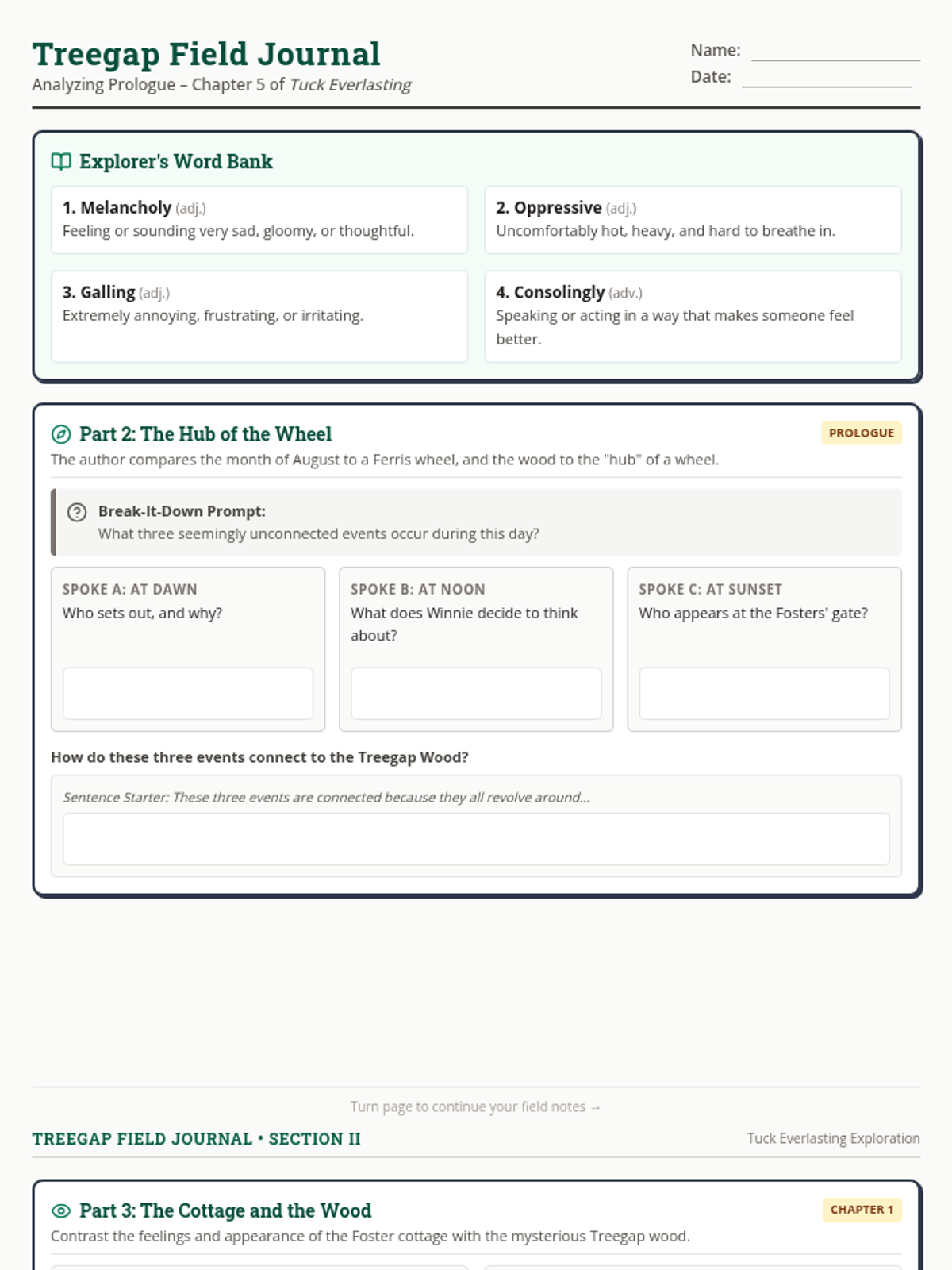
A high-contrast, beautifully structured worksheet based on Tuck Everlasting (Prologue to Chapter 5). It incorporates pre-taught vocabulary, graphic organizers, step-by-step 'Break-it-down' prompt structures, and ample light-colored handwriting fields.
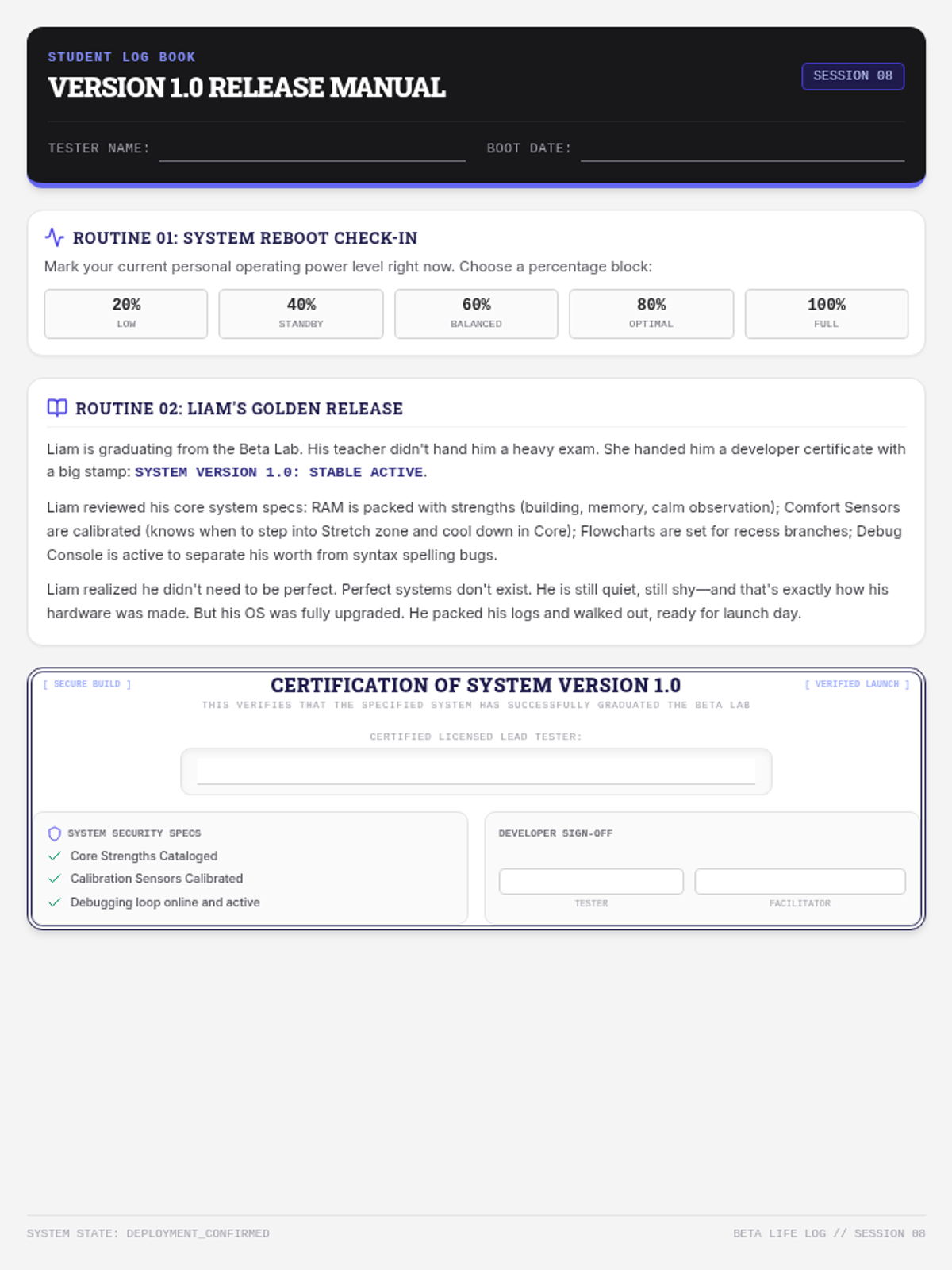
This student-facing spec sheet serves as the primary workspace for Session 8. It contains a predictable energy level check-in, Liam's story on graduating from the Beta Lab, and a beautiful certificate layout for the final signoff.
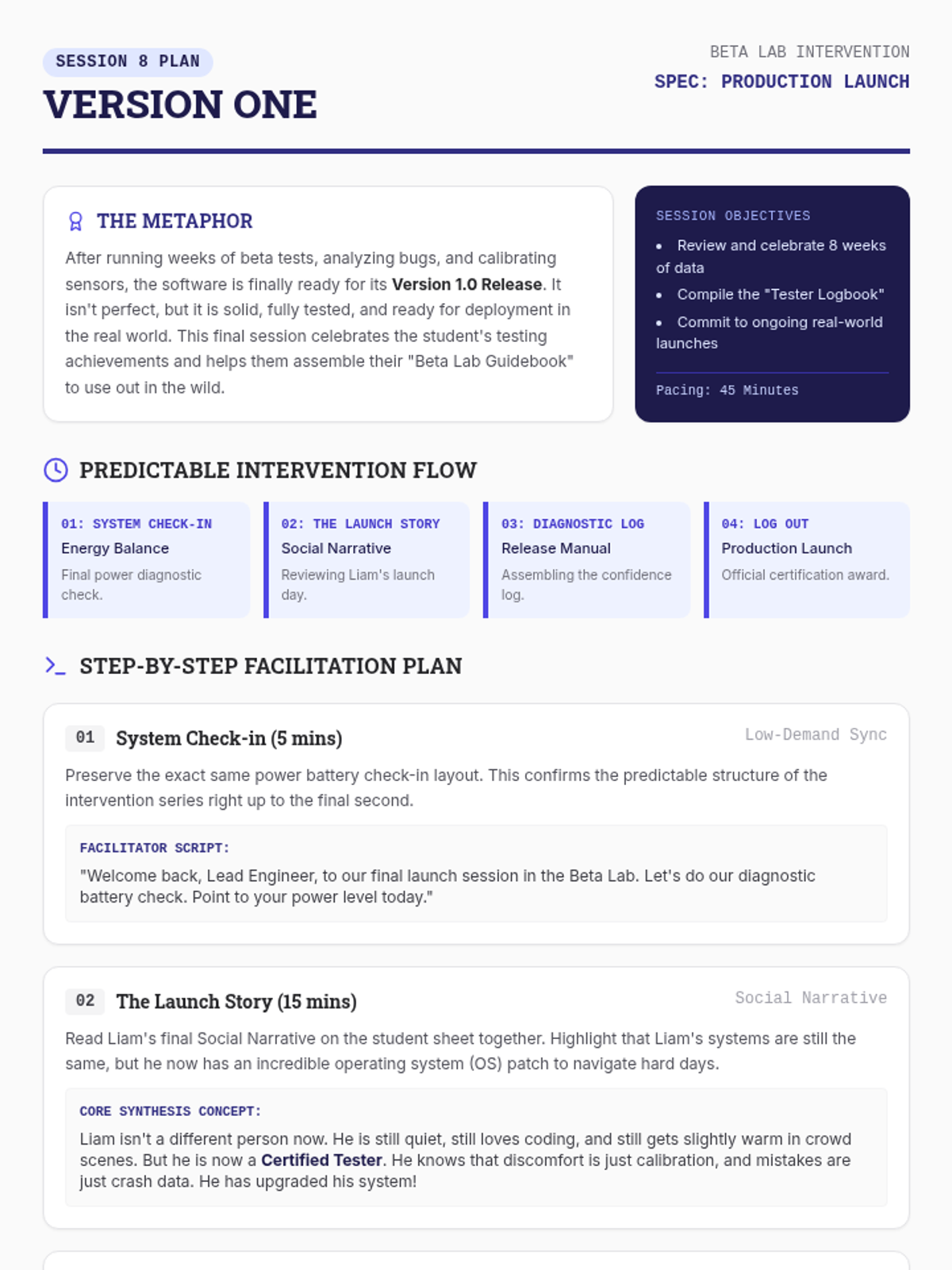
This facilitation guide provides the step-by-step lesson plan and engagement tips for Session 8, synthesizing the 8-week journey and guiding the teacher in organizing a quiet, professional celebration of the student's testing achievements.
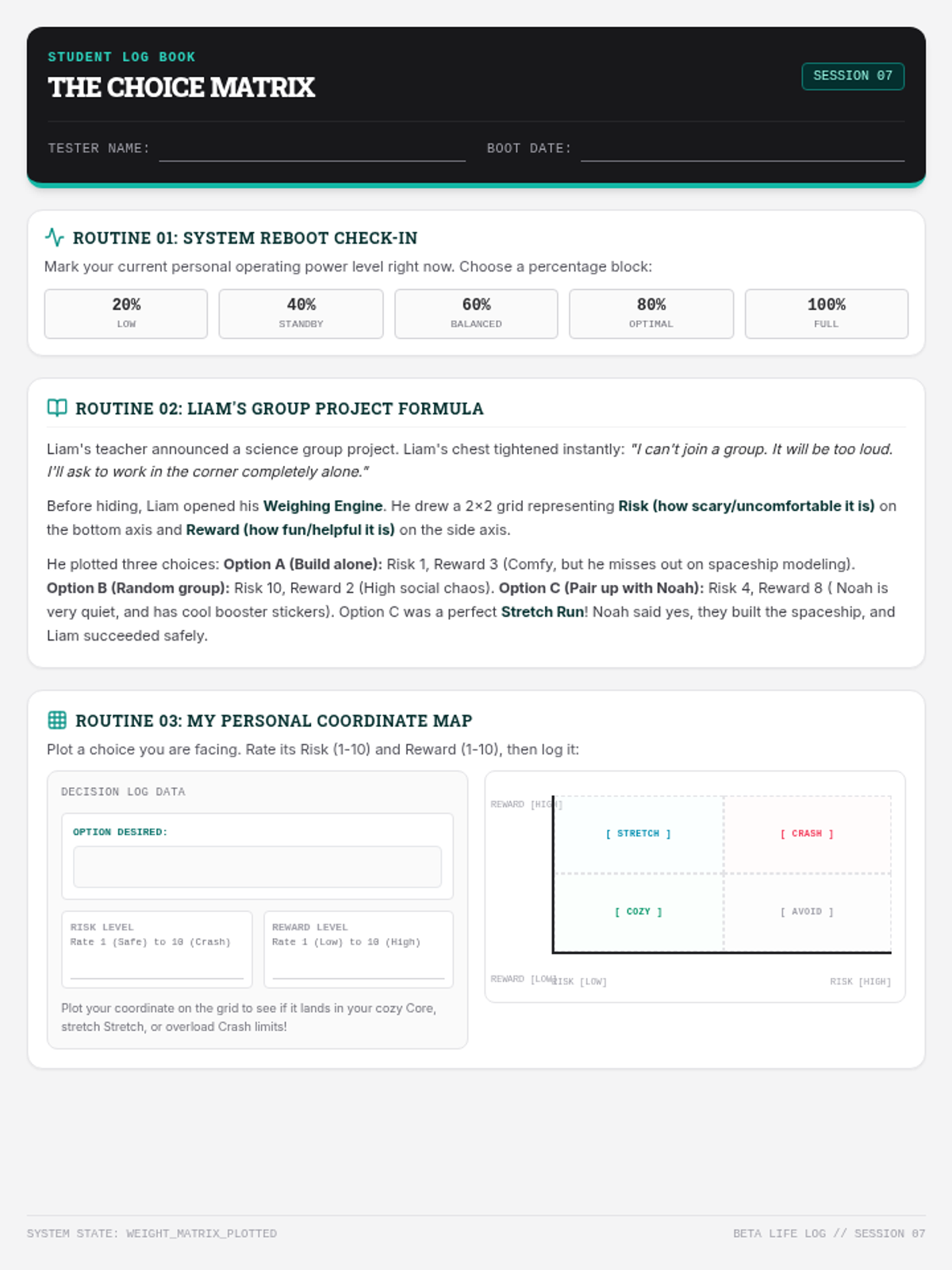
This student-facing spec sheet serves as the primary workspace for Session 7. It contains a predictable energy level check-in, Liam's story on using coordinates to analyze a scary science group assignment, and a structured 2x2 plotting grid.
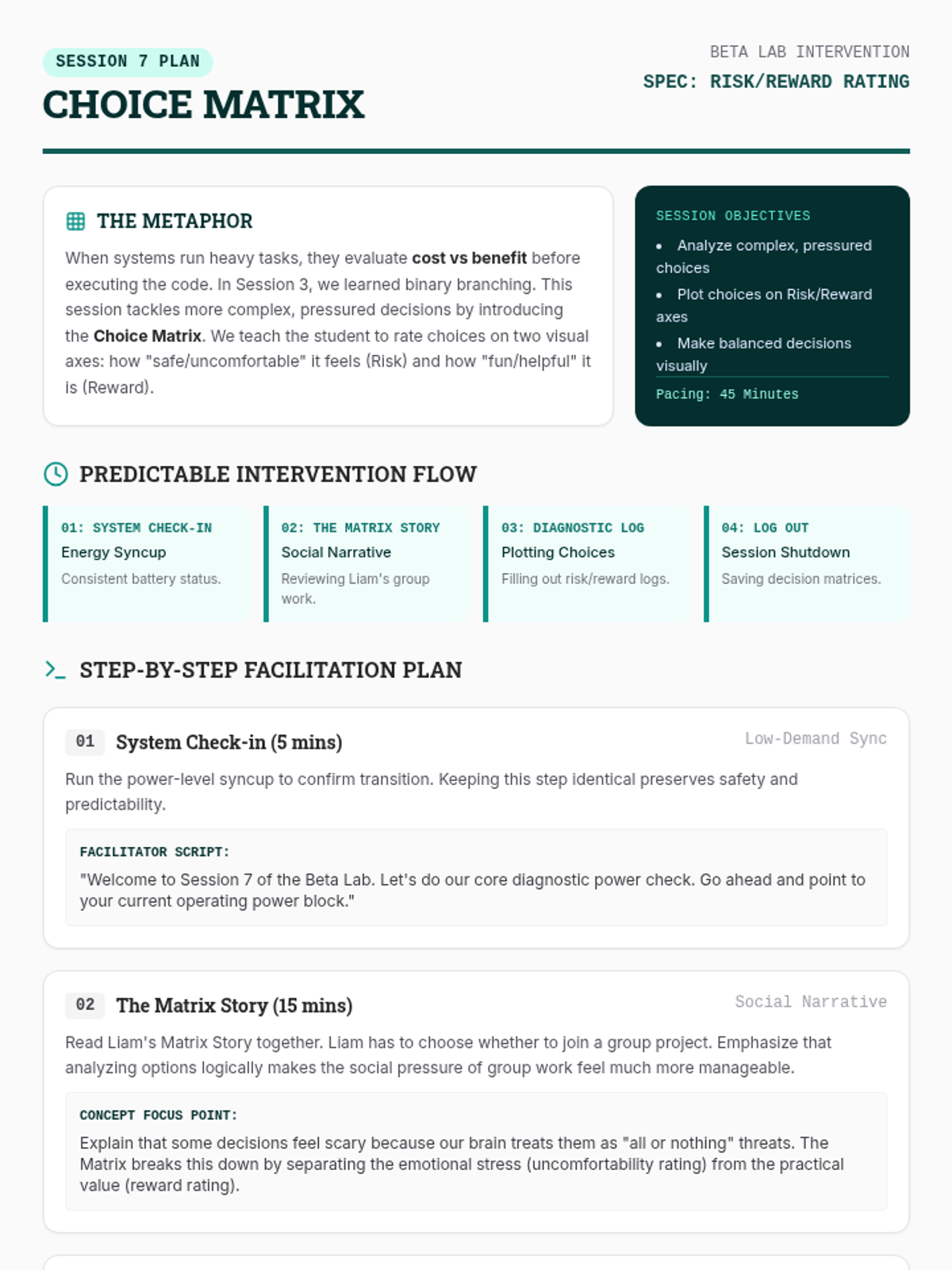
This facilitation guide provides the step-by-step lesson plan and engagement tips for Session 7, teaching the student how to use a visual Risk/Reward rating matrix to analyze complex choices.
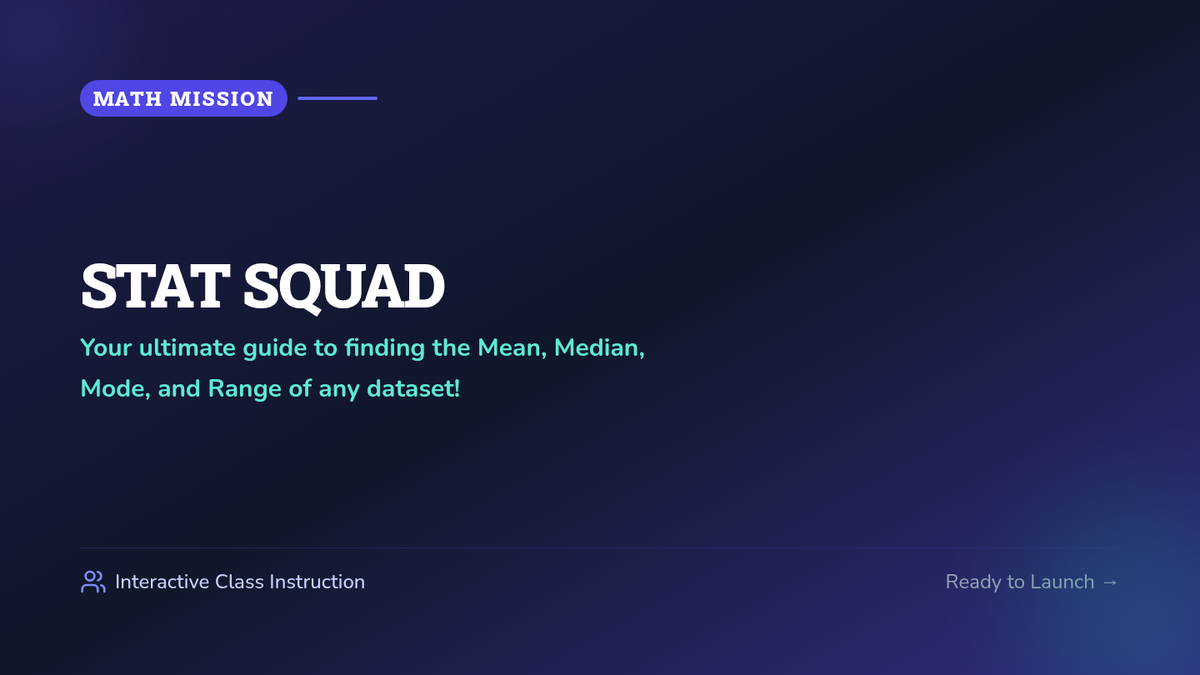
An interactive and highly visual 7-slide class presentation introducing the 'Stat Squad' (Mean, Median, Mode, Range) specifically designed for classroom delivery to IEP students.
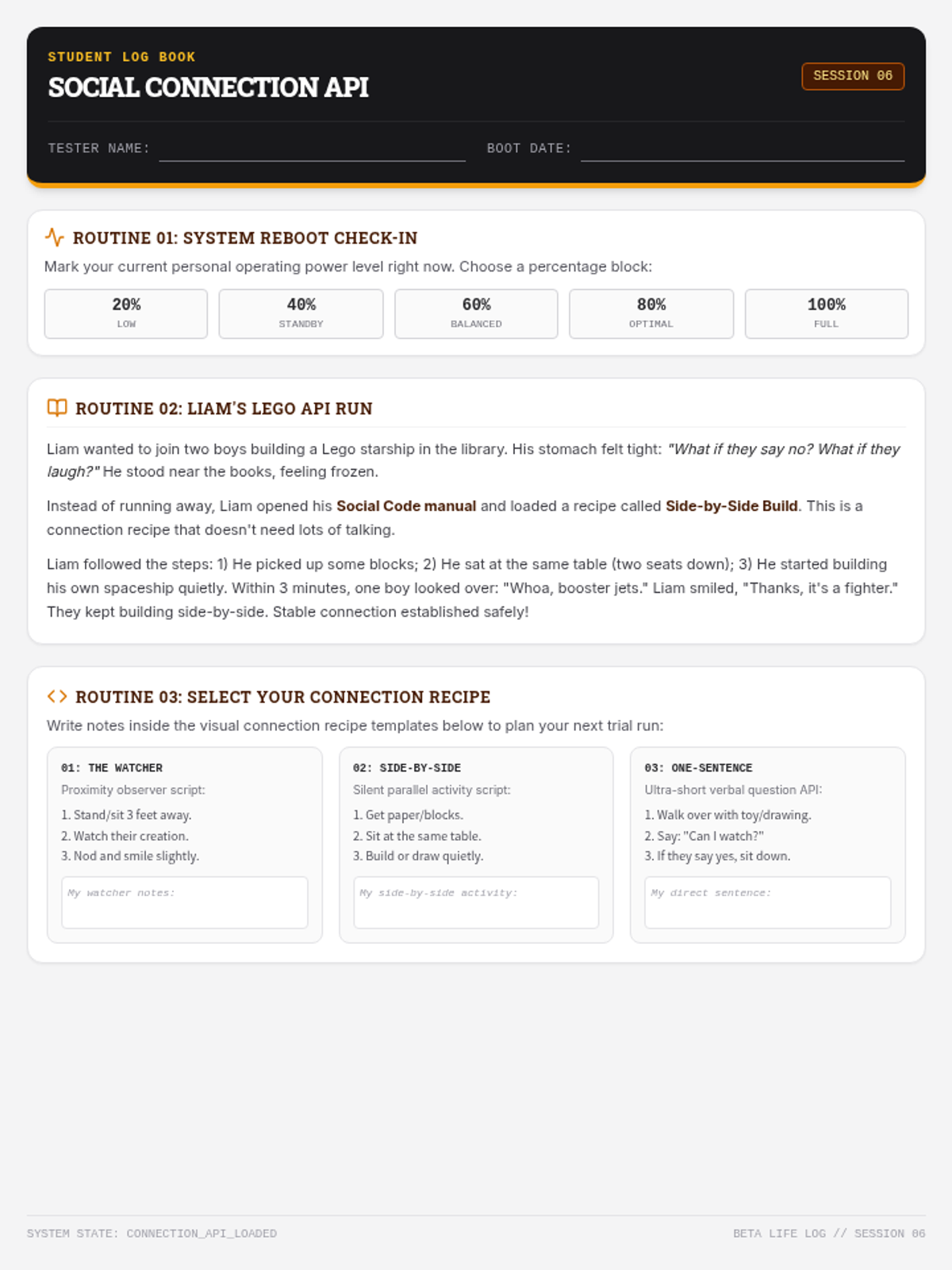
This student-facing spec sheet serves as the primary workspace for Session 6. It contains a predictable energy level check-in, Liam's story on parallel play lego connection, and three visual recipes for peer connection.
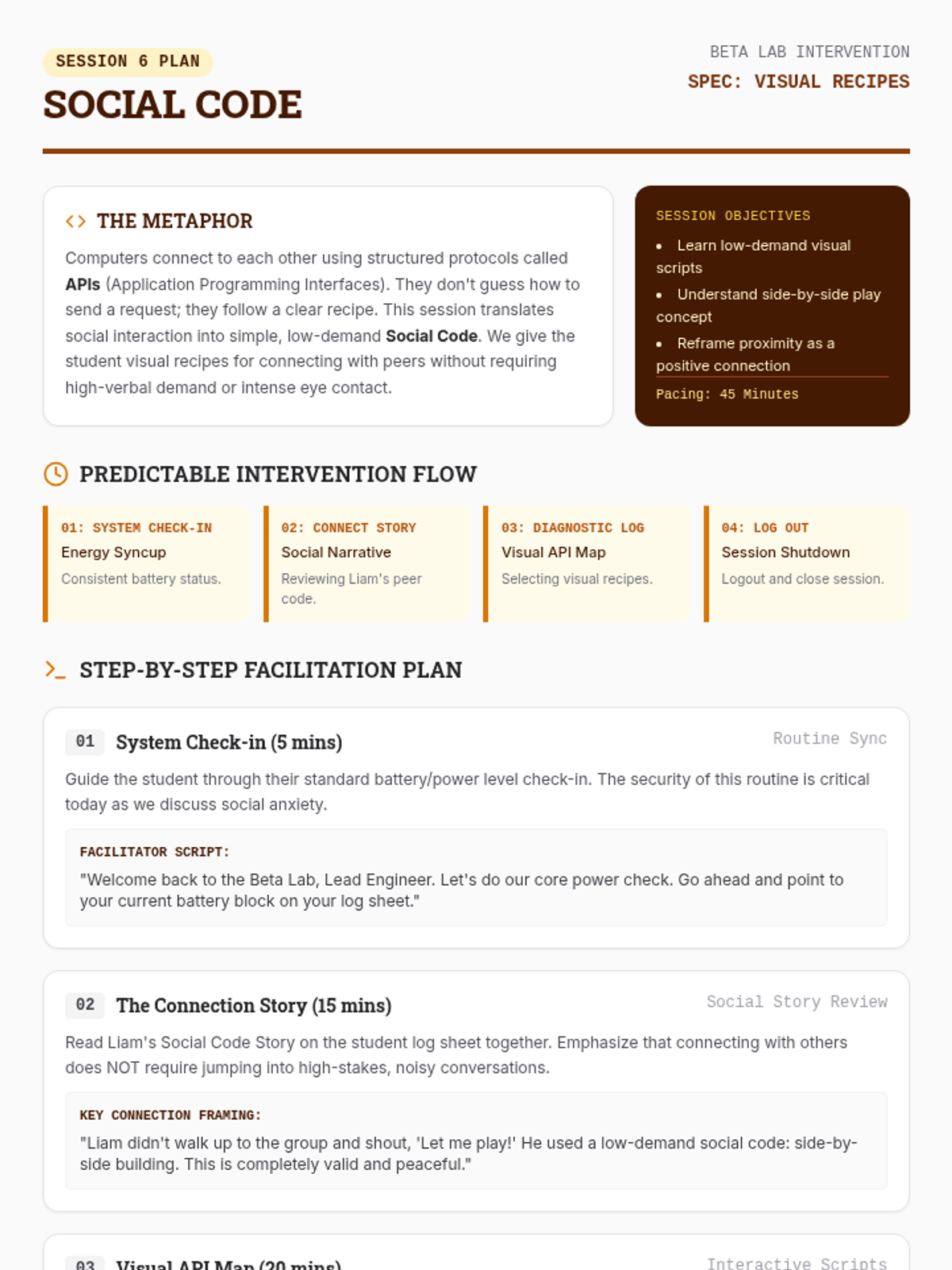
This facilitation guide provides the step-by-step lesson plan and engagement tips for Session 6, introducing low-demand social scripts and structured visual recipes for peer connection.
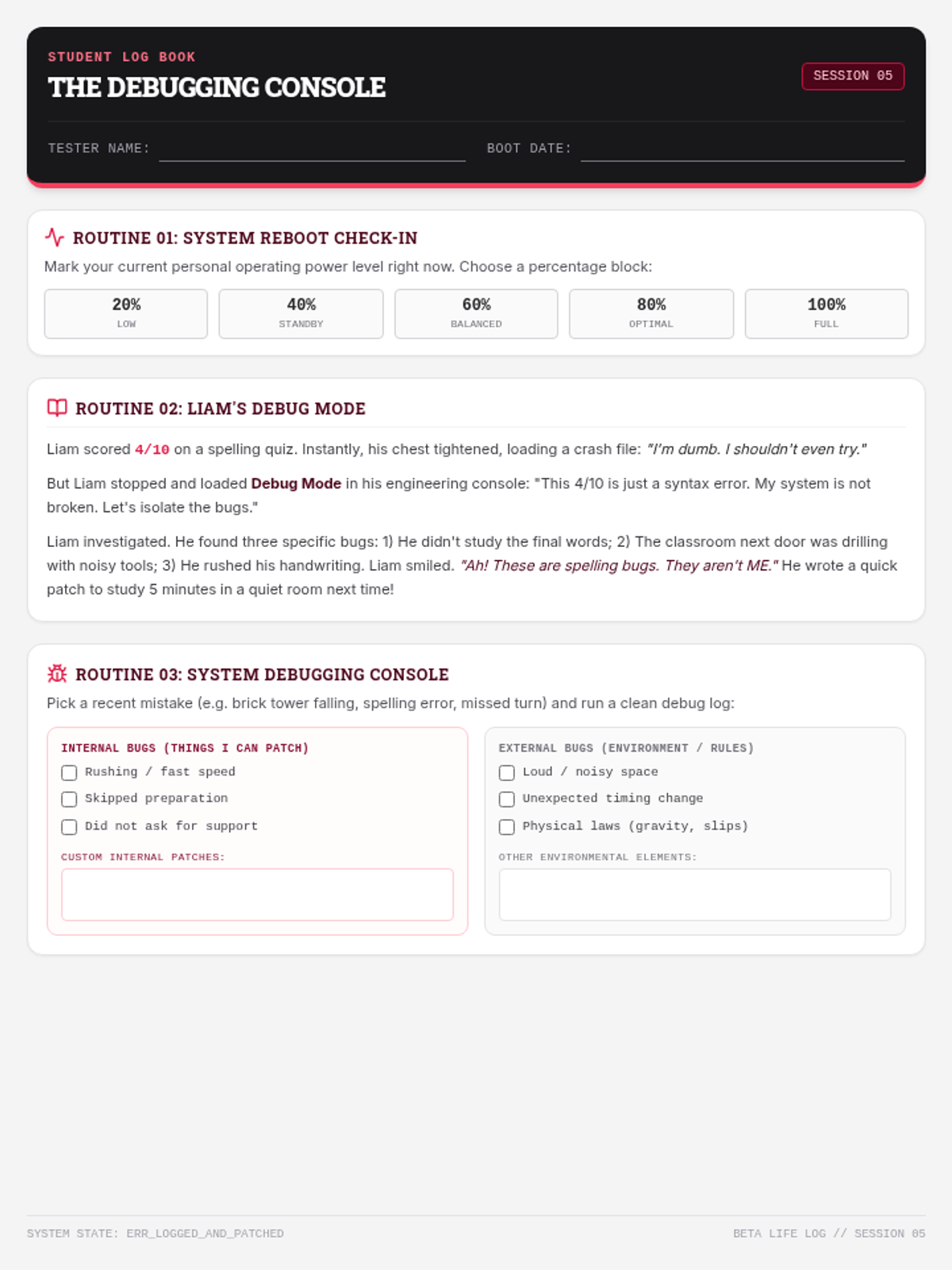
This student-facing spec sheet serves as the primary workspace for Session 5. It contains a predictable energy level check-in, Liam's story on debug mode, and an interactive sorting console for isolating internal vs. external error sources.
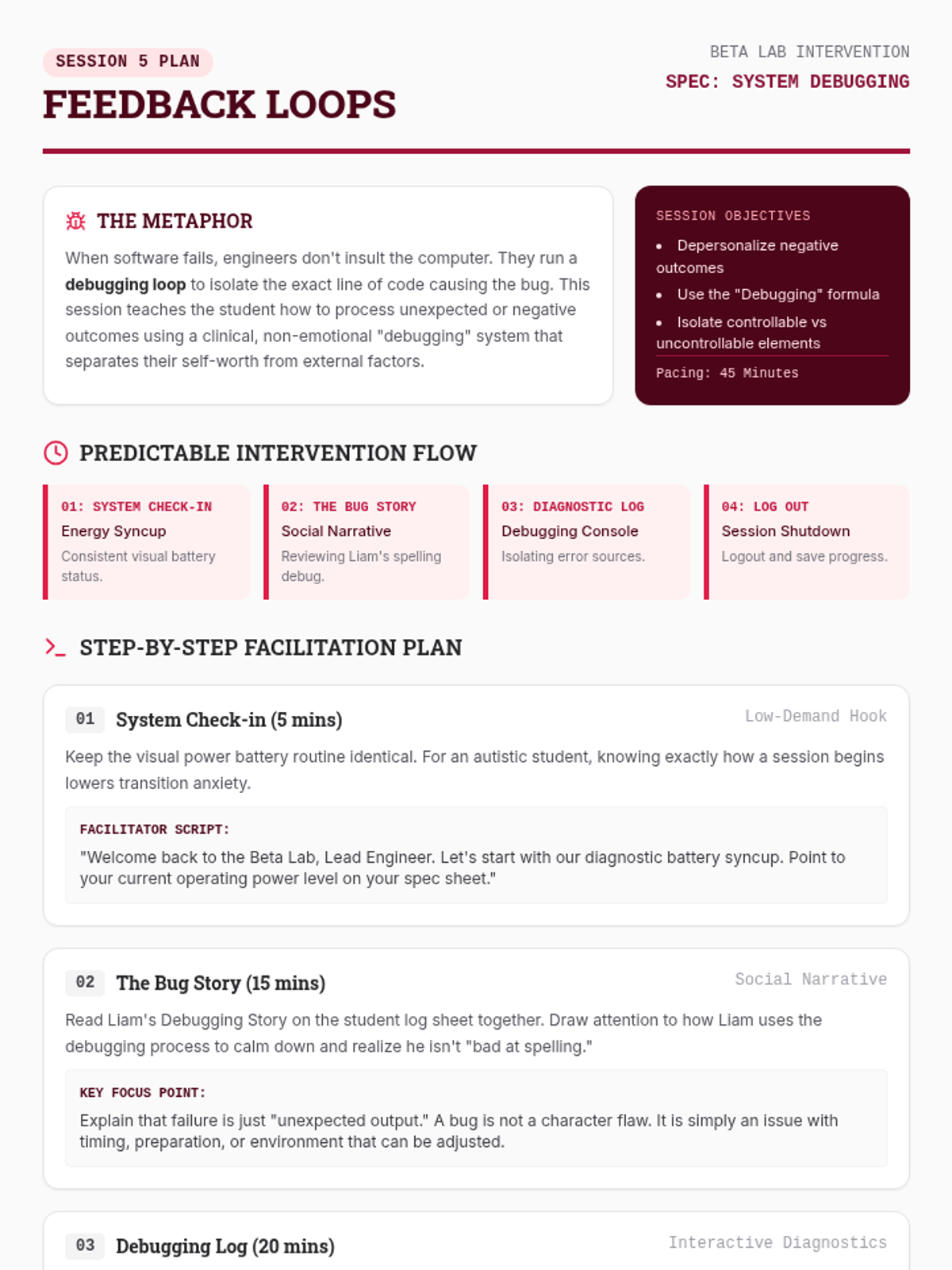
This facilitation guide provides the step-by-step lesson plan and engagement tips for Session 5, focusing on a structured, objective 'debugging' framework to help students analyze mistakes without personal shame.
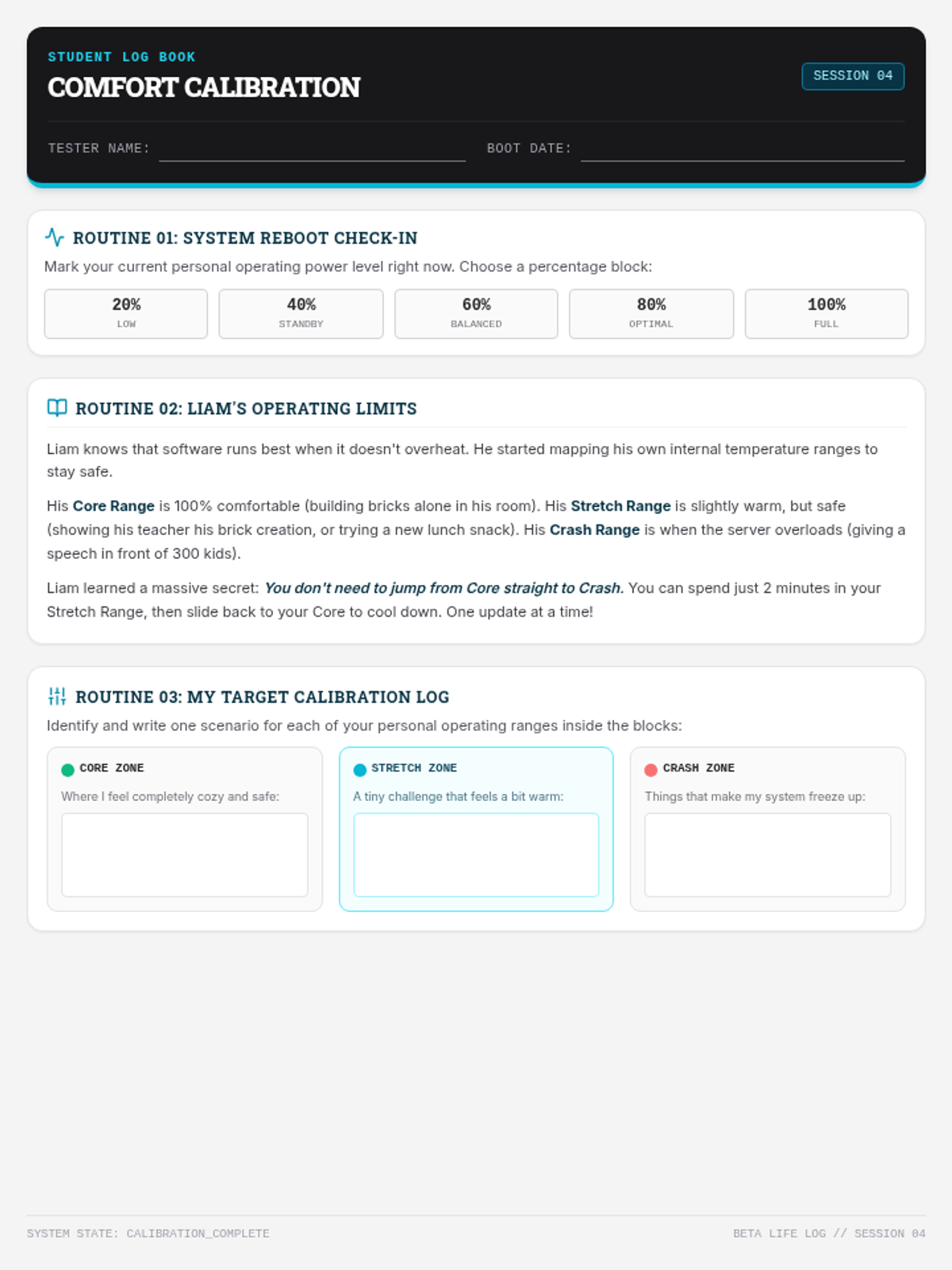
This student-facing spec sheet serves as the primary workspace for Session 4. It contains a predictable energy level check-in, Liam's story on comfort zones (Core, Stretch, and Crash), and a structured 3-tier calibration log.
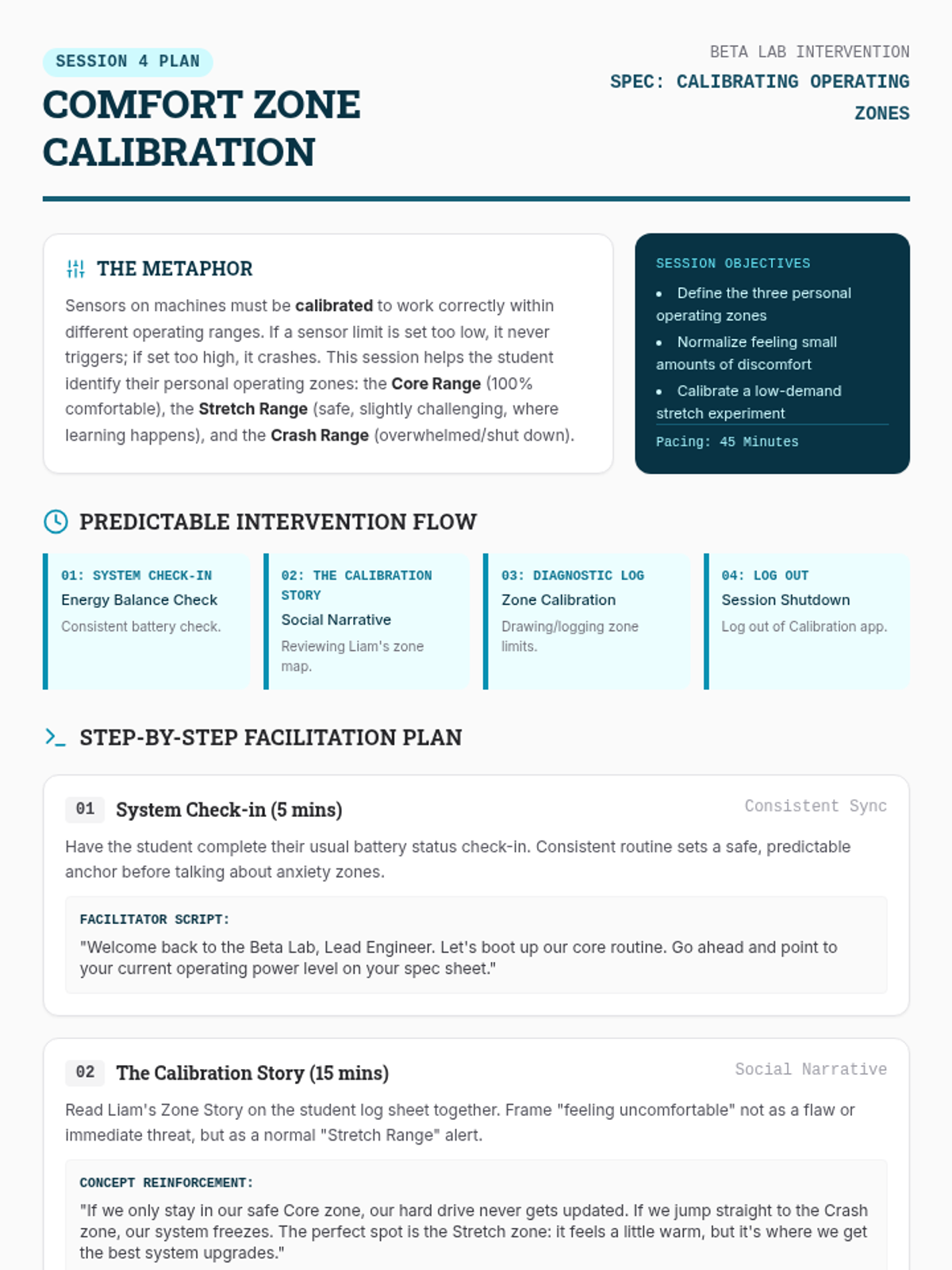
This facilitation guide provides the step-by-step lesson plan and engagement tips for Session 4, focusing on helping the student map their comfortable operating zones (Core, Stretch, and Crash) to make gradated risk-taking feel structured and safe.
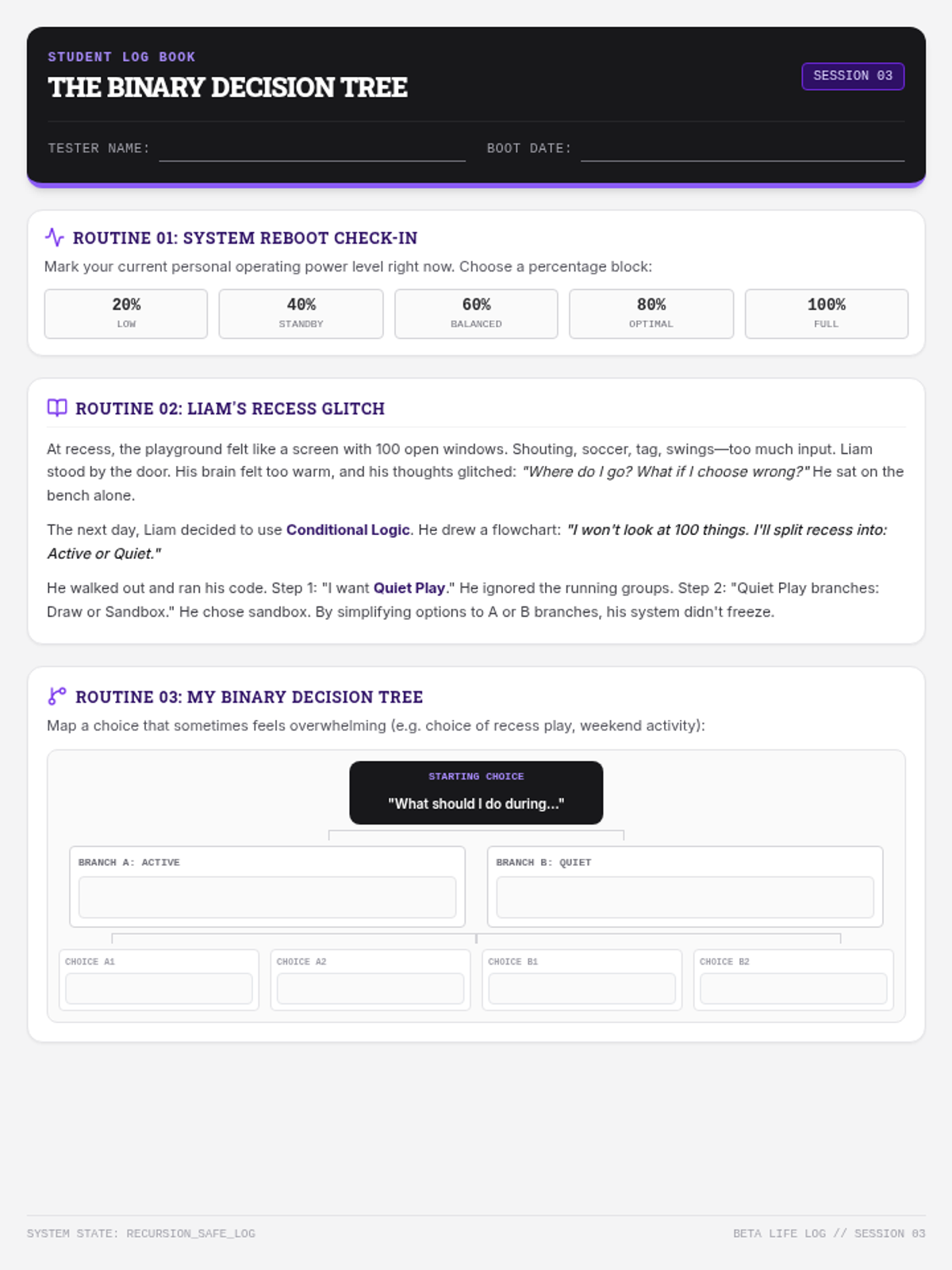
This student-facing spec sheet serves as the primary workspace for Session 3. It contains a predictable energy level check-in, Liam's story on choice overload at recess, and a structured flowchart for practicing binary choice branch logic.
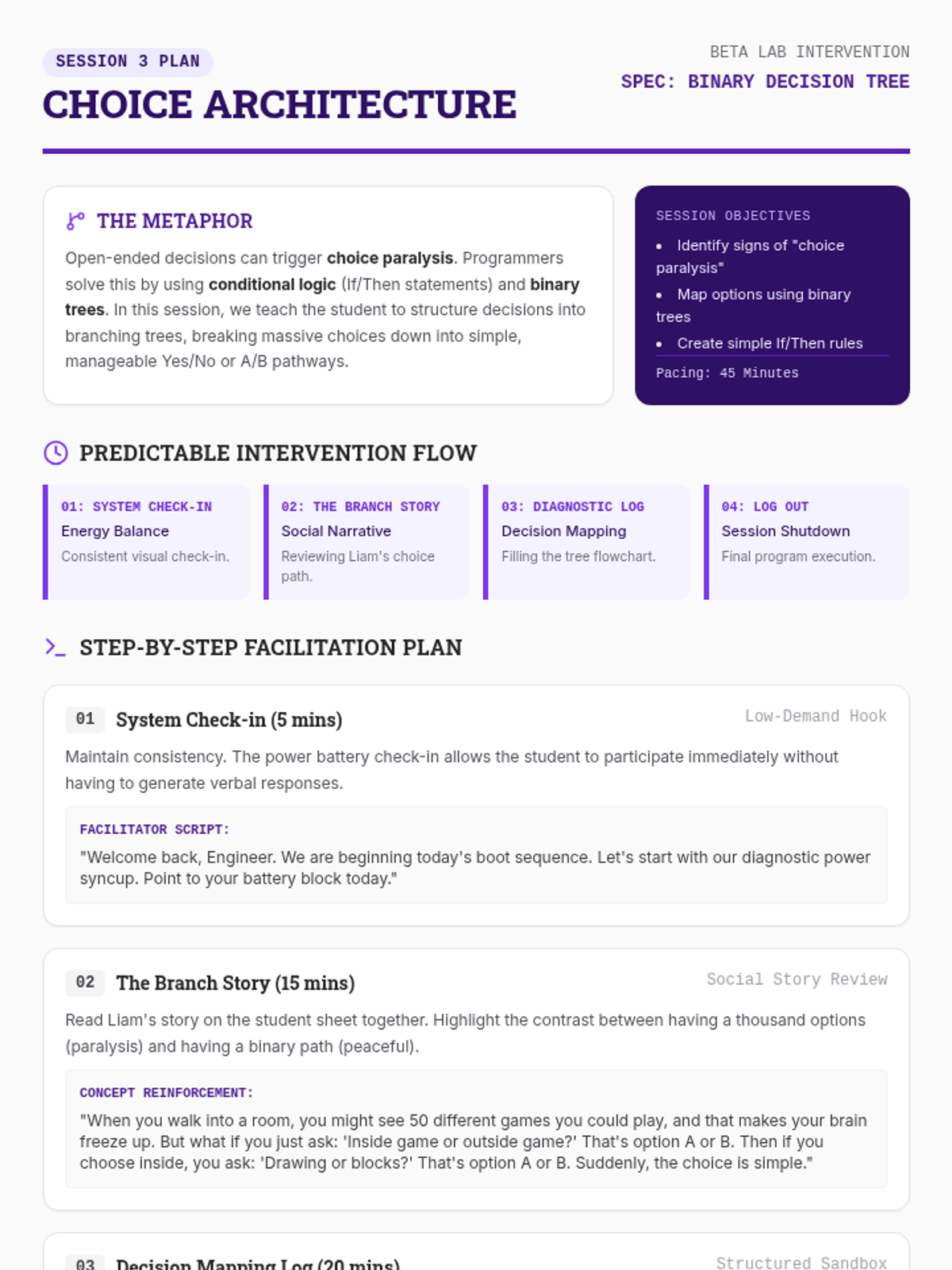
This facilitation guide provides the step-by-step lesson plan and engagement tips for Session 3, introducing branching choice architecture to simplify decisions and lower cognitive load for the student.
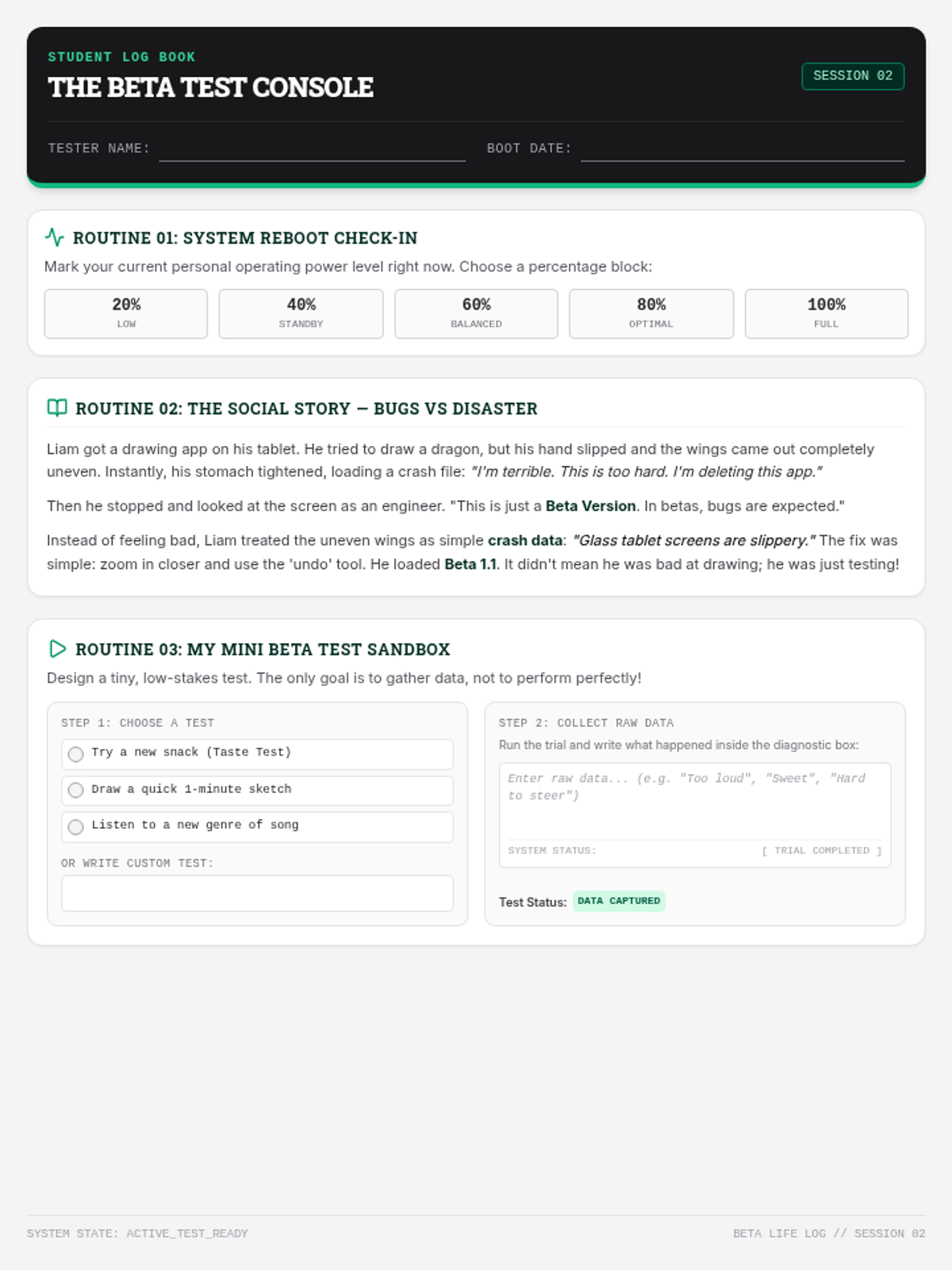
This student-facing spec sheet serves as the primary workspace for Session 2. It contains a predictable energy level check-in, Liam's beta story on reframing failure as simple crash data, and a structured sandbox for designing and running a tiny beta test.
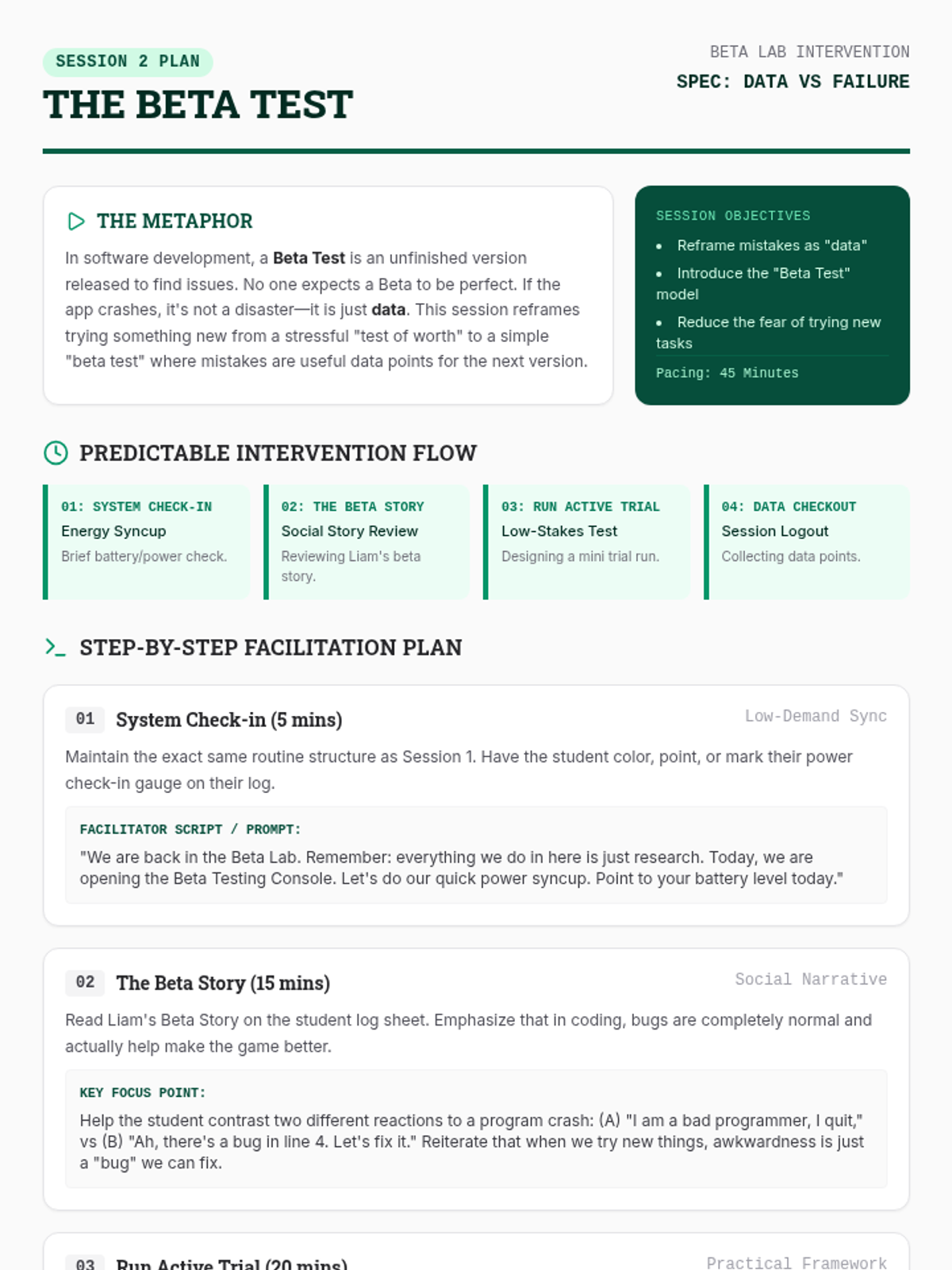
This facilitation guide provides the step-by-step lesson plan and engagement tips for Session 2, helping teachers reframe mistakes as data and guiding the student to outline a low-stakes 'beta test' in their environment.
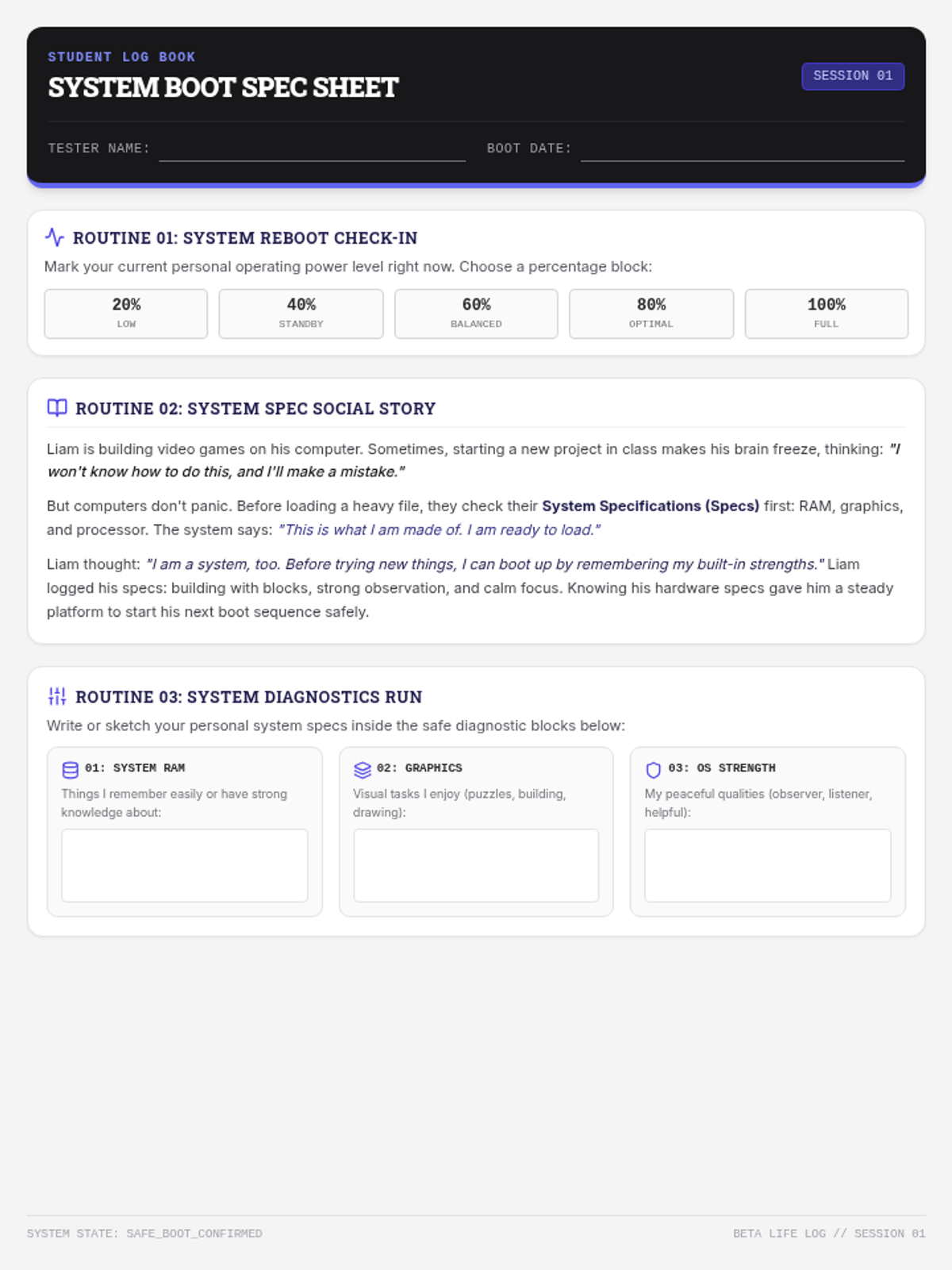
This student-facing spec sheet serves as the primary workspace for Session 1. It contains a predictable energy level check-in, a step-by-step social story reframing strengths as 'system specs', and structured modules for logging personal strengths.
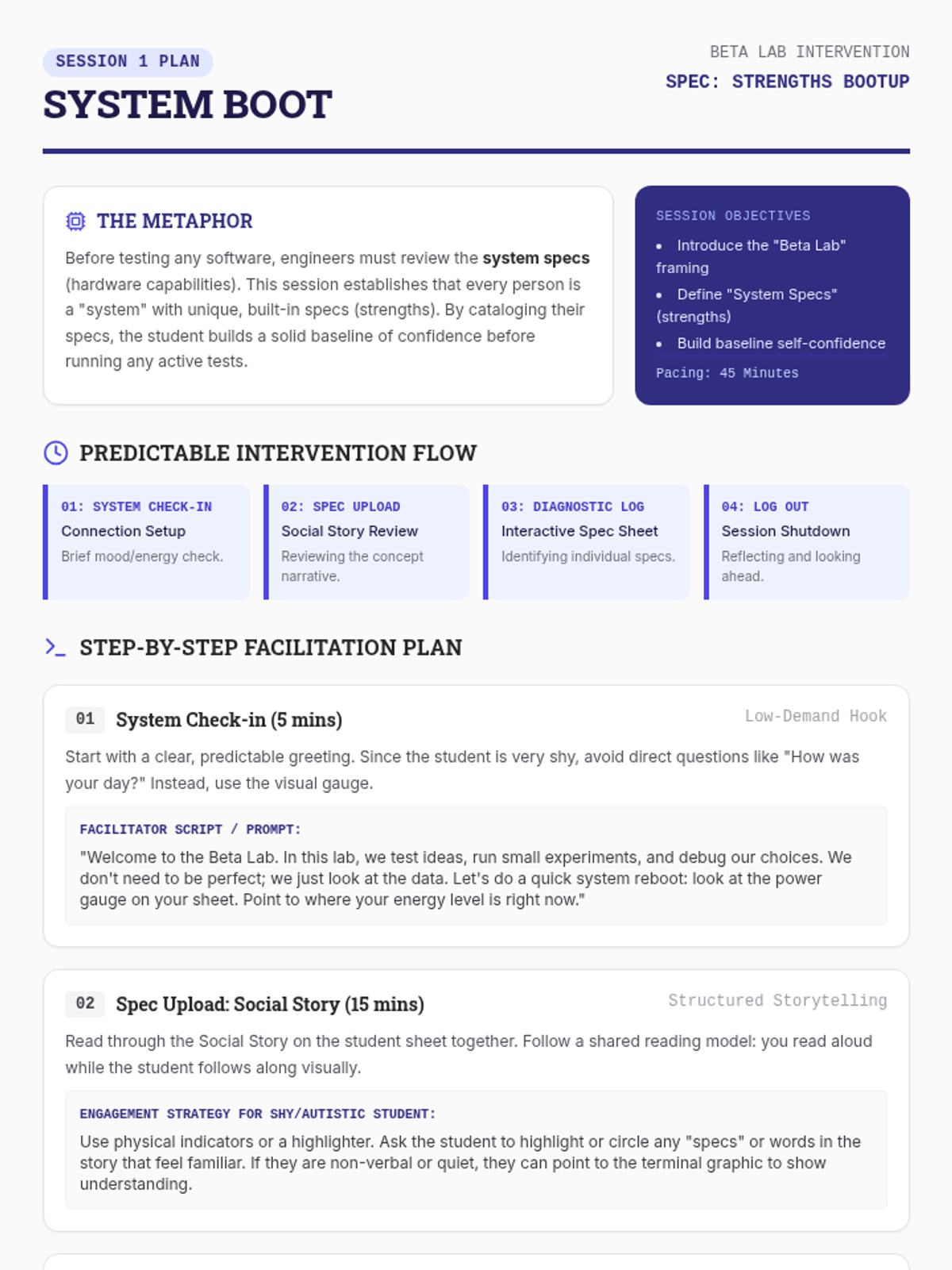
This facilitation guide provides the step-by-step lesson plan and engagement tips for Session 1, introducing the 'Beta Lab' engineering metaphor and helping the student identify their 'system specs' (personal strengths) in a predictable and supportive environment.
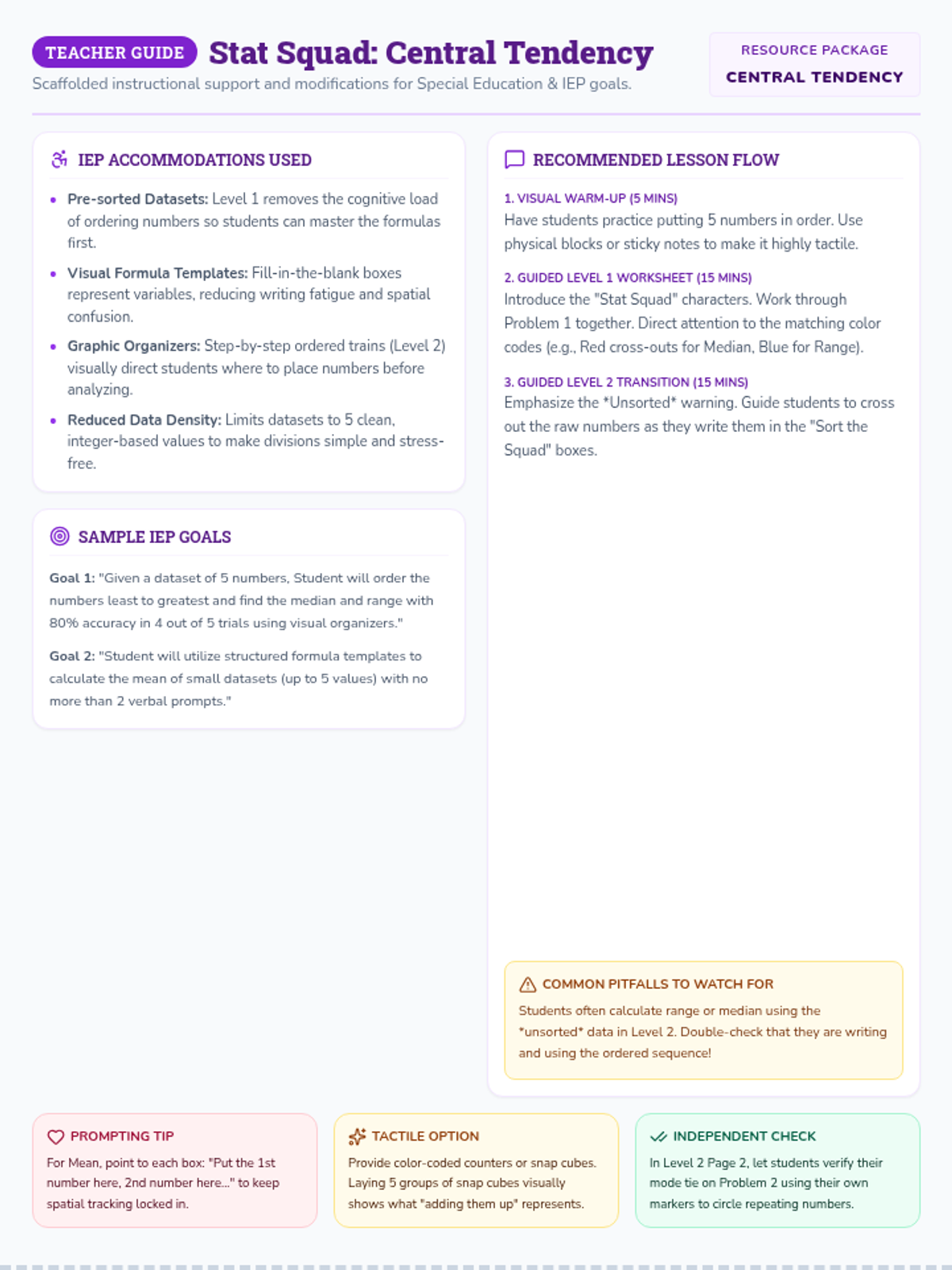
A 2-page instructional guide and worked solutions/answer key for Level 1 and Level 2 worksheets, featuring IEP accommodations, sample goals, delivery strategies, and full walkthroughs.
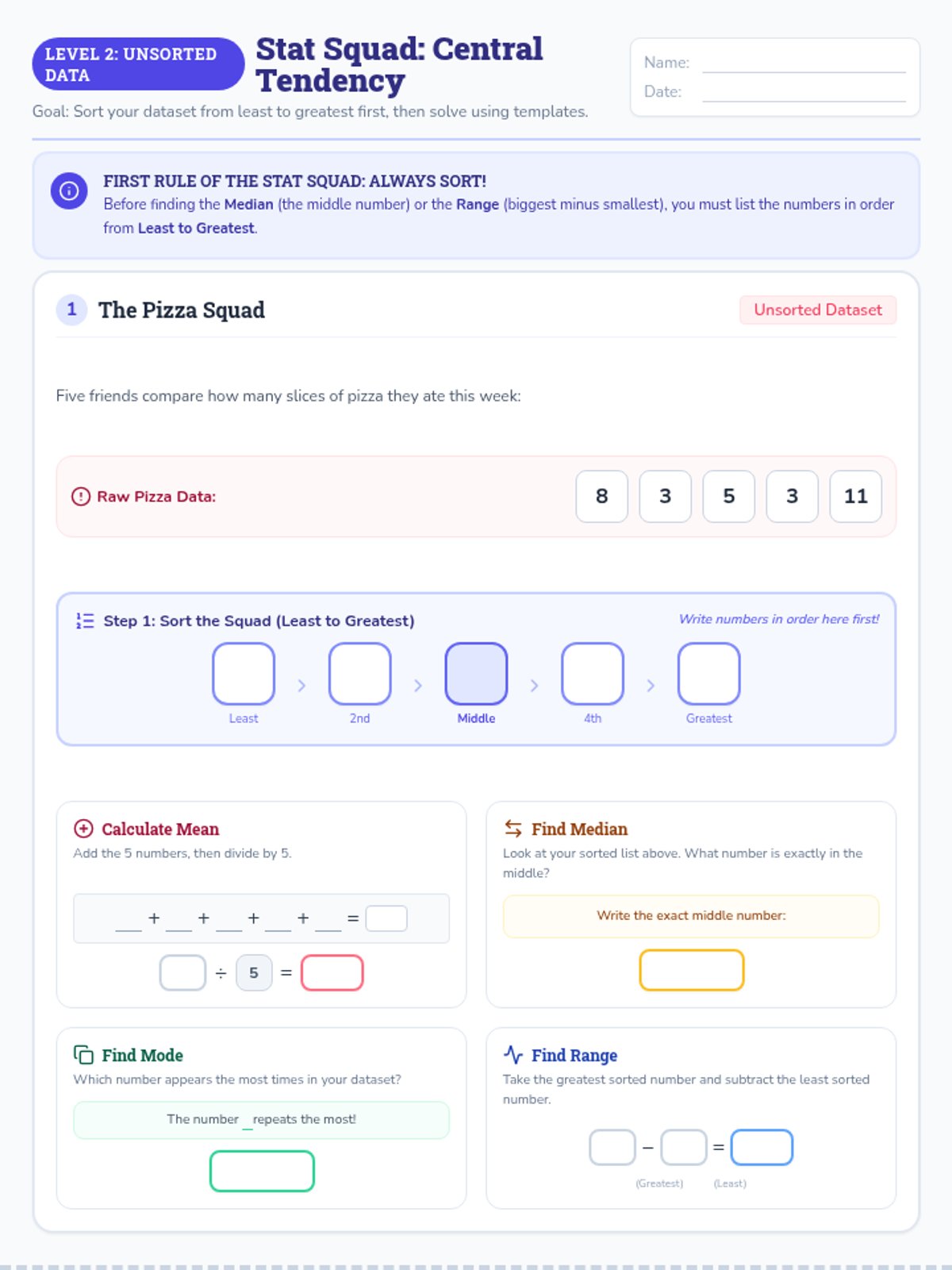
A highly scaffolded, 2-page visual practice worksheet for IEP students on finding Mean, Median, Mode, and Range using unsorted small datasets, graphic organizers to pre-sort data, and fill-in-the-blank formula boxes.
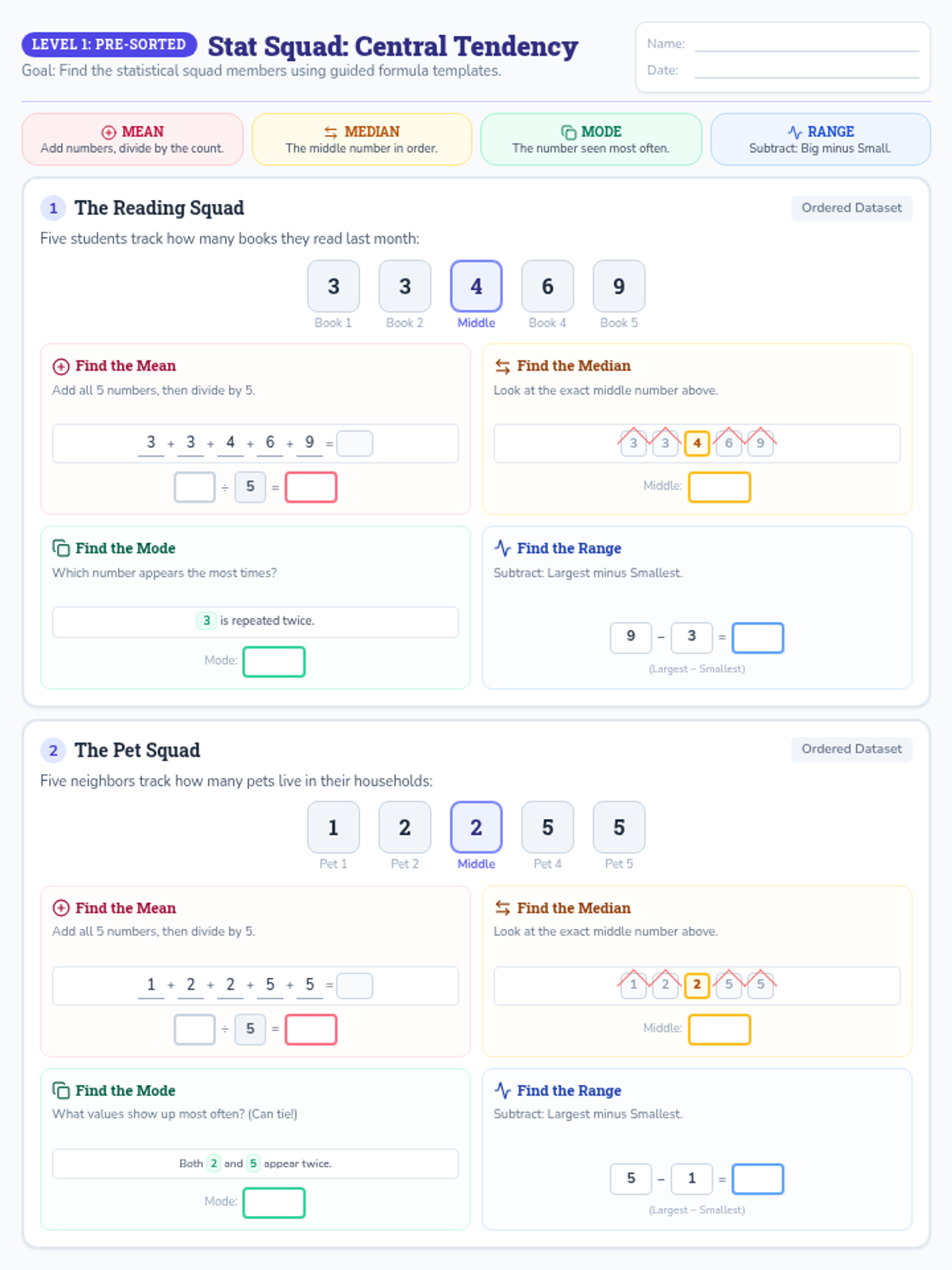
A highly scaffolded, 1-page visual worksheet for IEP students on finding Mean, Median, Mode, and Range using pre-sorted small datasets with fill-in-the-blank formula boxes.
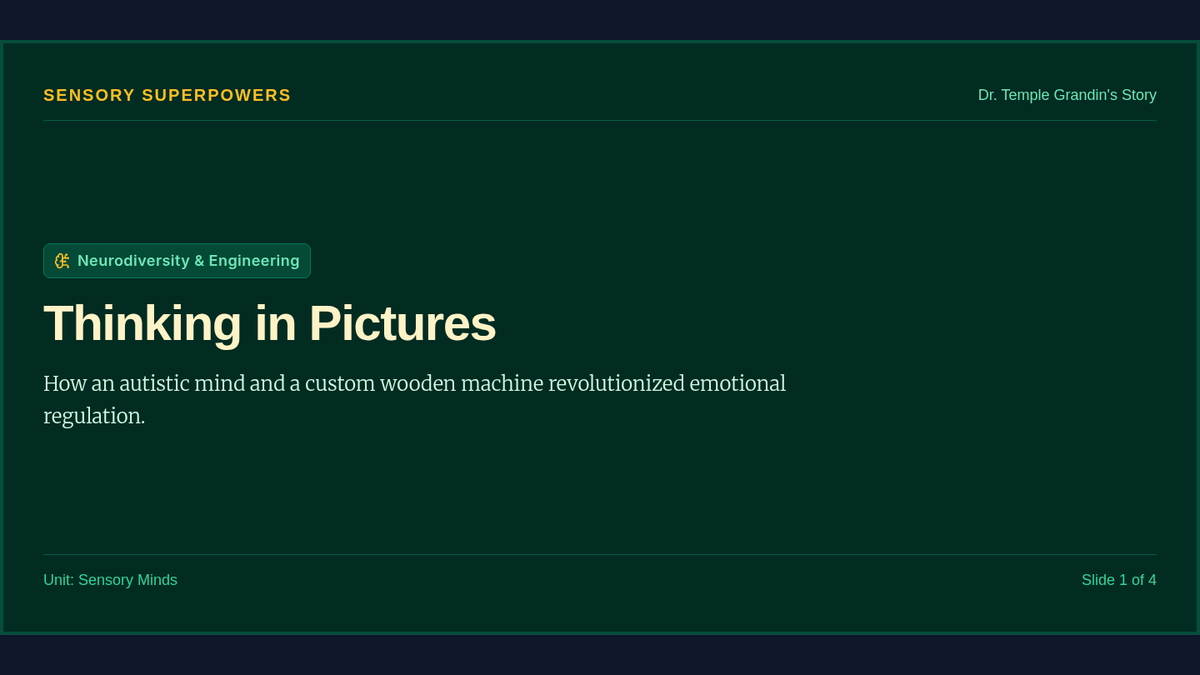
A beautifully crafted four-slide presentation guiding students through Dr. Temple Grandin's life. Explains neurodiversity and autism, her unique visual thinking process, her overwhelming sensory challenges, and how she engineered the 'squeeze machine' using deep pressure science. All text sizes strictly follow the minimum 24px presentation standards.
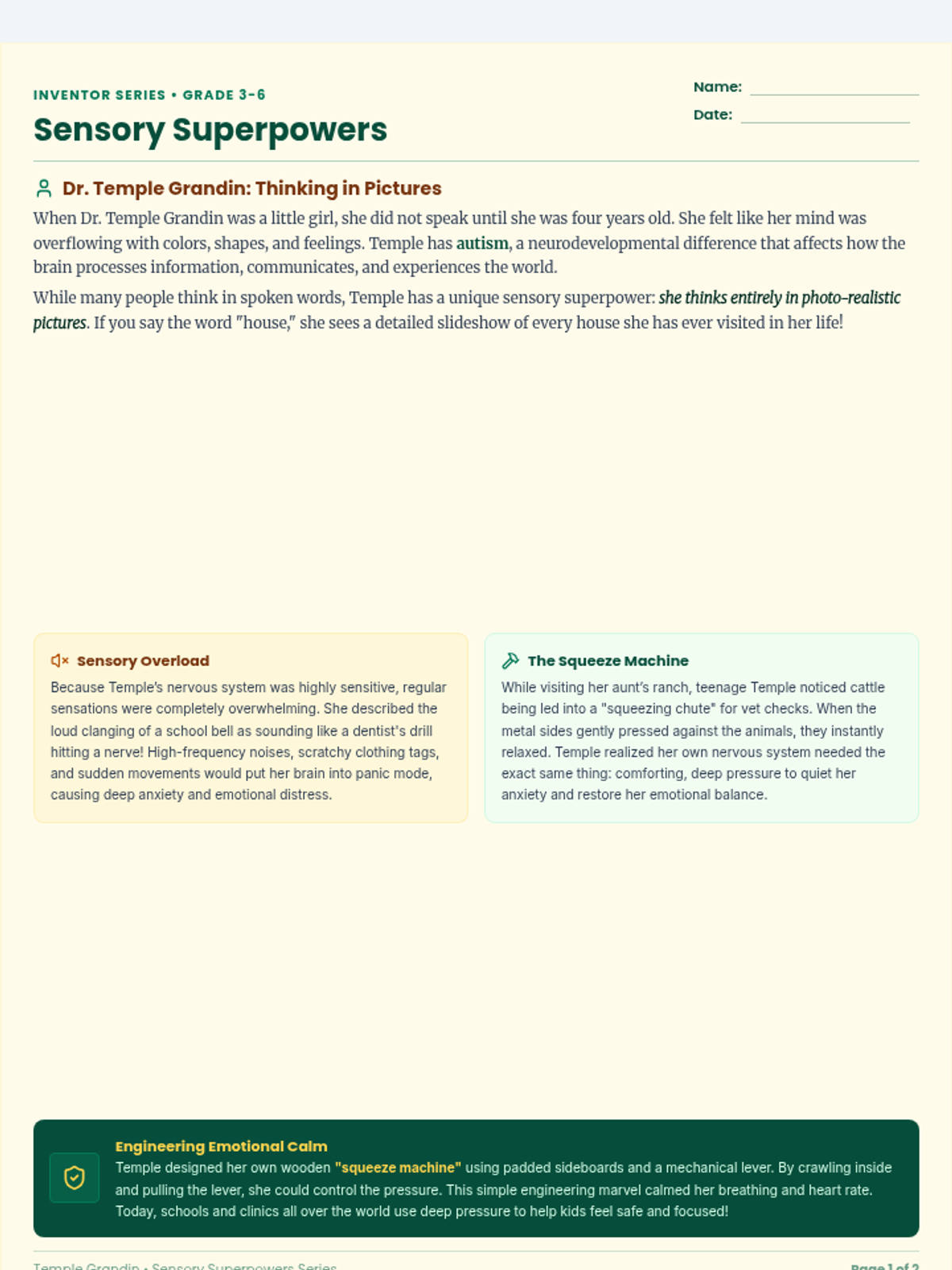
An inspiring two-page student-facing biography and activity worksheet focused on Dr. Temple Grandin's life, her autistic experience of 'thinking in pictures', her sensory overloads, and how she engineered the 'squeeze machine' to self-regulate. Students analyze their own sensory preferences and sketch an invention blueprint.
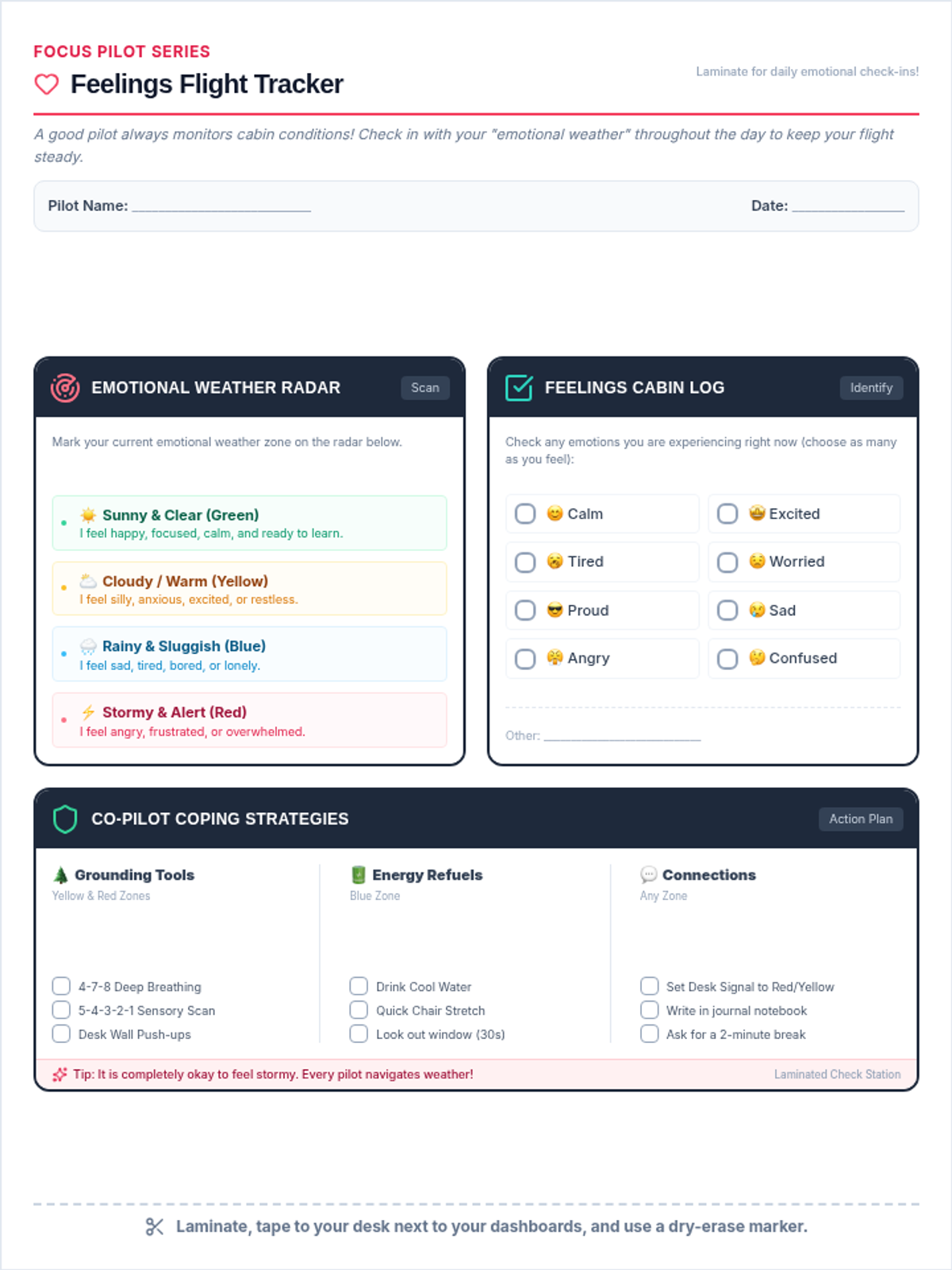
A visual, student-facing feelings checklist and emotional regulation dashboard styled as a flight weather log. Includes emotion zoning guides, feel-specific check boxes, and concrete coping strategy options for the classroom.