Zero Code Breakers Worksheet STEM History Dossier Case File #2026
Mission: Number Archaeology
2026 IN 5 DIFFERENT WORLDS
Target: Two Thousand, Twenty-Six (2,026)
Investigator 1:
Investigator 2:
Date:
Your STEM Mission: You and your partner are investigating how ancient civilizations wrote numbers before modern calculators existed. Today's target is the year 2026. Examine each culture's code, uncover their fatal mathematical bugs, and discover why India's invention changed human history forever.
1. Babylon — Base-60 & The Gap 60s System
Counts in sixties instead of tens: 2026 ÷ 60 = 33 with 46 left over. Written as two clusters: [33] [46].
𒌋𒌋𒌋 𒁹𒁹𒁹 | 𒌋𒌋𒌋𒌋 𒁹𒁹𒁹𒁹𒁹𒁹
Fatal Flaw: No symbol for an empty place. If the scribe left too small a space between 33 and 46, it merged into one illegible jumble.
2. Egypt — Additive Pictures Hieroglyphs
No place value. Scribes drew pictures for each power and added them: 2,000 + 20 + 6.
🪷 🪷 + 🦶 🦶 + | | | | | |
Fatal Flaw: Needs 10 symbols just for 2026! For 20,026, scribes had to carve 20 separate lotus flowers. Numbers exploded in physical size.
3. Greece — Letters as Numbers Ionic Greek
Alphabet letters double as values. Scholars had to memorize 27 distinct letter symbols: ͵β = 2,000, κ = 20, Ϛ = 6.
͵βκϚ
Fatal Flaw: Zero place value. You cannot tell the “2” in 2,000 is larger just by position—you must memorize completely different symbols!
4. China — Counting Rods Rod Calculus
Bamboo rods placed on a grid board: Thousands | Hundreds | Tens | Ones. Rod orientations alternated between vertical and horizontal to prevent confusion.
|| [ blank ] = ㅠ
Fatal Flaw: Brilliant on a physical board! But transferred onto paper without grid lines, the empty gap vanished. Was || = ㅠ equal to 2,026, 226, or 2,006? Scribes had no way to be sure.
5. India — The Zero Breakthrough The Solution
Indian mathematicians turned the empty space into an active symbol: 0 (śūnya, meaning void).
2026 • २ ० २ ६
Why It Conquered the World: Just 4 symbols. The 0 locks the hundreds column open, preventing confusion forever. It works on paper, stone, or clay!
When Was Zero Invented? 5th–7th Century CE
• ~3rd–4th C. CE (Bakhshali Manuscript): Earliest recorded dot symbol used as a positional zero placeholder in ancient India.• 498 CE (Aryabhata): Perfected decimal place value (“place to place each ten times the previous”).• 628 CE (Brahmagupta): In his masterwork Brahmasphutasiddhanta, he defined zero as a complete mathematical number with exact rules (1 + 0 = 1, 1 − 0 = 1, a × 0 = 0).
The Decoder Matrix: 2026 Side-by-Side Compare efficiency and clarity
Culture
2026 Looks Like
Symbols Needed
The Fatal Bug or Superpower
Babylon
𒌋𒌋𒌋𒁹𒁹𒁹 𒌋𒌋𒌋𒌋𒁹𒁹𒁹𒁹𒁹𒁹
13 wedges + a guess
Gap width determines meaning; easy to misread.
Egypt
🪷🪷 🦶🦶
Greece
͵βκϚ
3 memorized letters
Must memorize 27 letters; cannot reuse digits across places.
China
[ ] = ㅠ
India
2026 / २ ० २ ६
4 symbols, zero guessing
Zero holds the empty rank open anywhere on any medium!
Page 1 of 2 • Turn over for Multiple-Choice Investigation & Exit Ticket
MULTIPLE-CHOICE STEM INVESTIGATION
Part II: Questions & Exit Ticket
Work with your partner to analyze each question. Circle the single best answer for each item.
Reading Comprehension: Ancient Codes
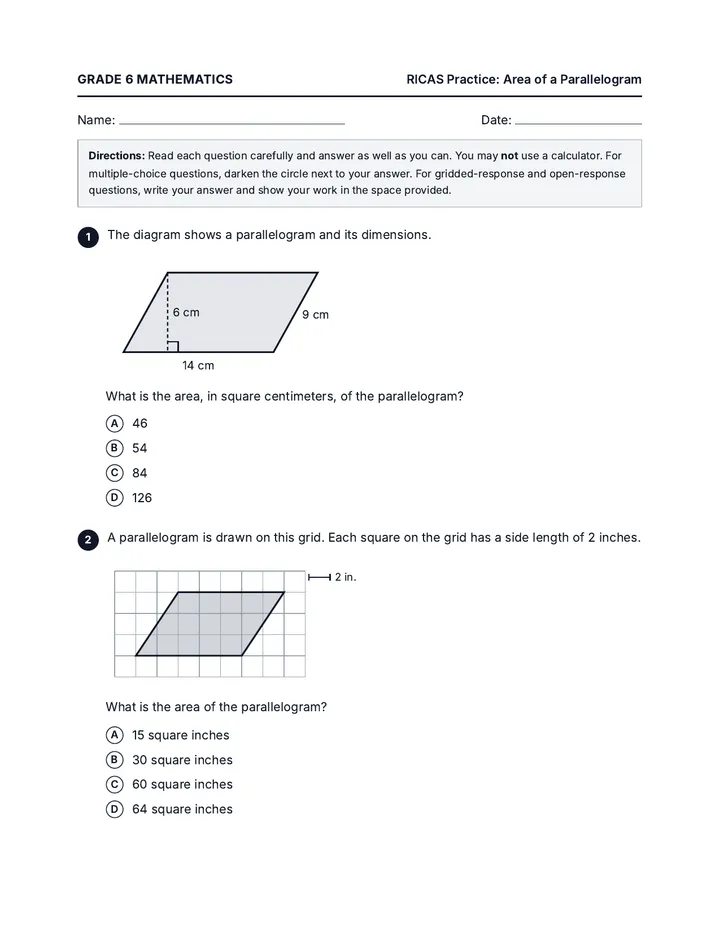
1. What fatal flaw did both the Babylonian base-60 and Chinese counting rod systems share?
A. They required memorizing over 27 distinct letters.
B. They relied on spaces that could blur or vanish on paper.
C. They could only calculate numbers divisible by 60.
D. They required carving dozens of picture glyphs.
2. Egypt used an additive system with no zero. Why did this become unmanageable for large numbers like 20,026?
A. Numbers grew physically huge because glyphs had to be repeated.
B. Scribes could not calculate odd or fractional numbers.
C. Scribes had to rotate rods horizontally every other column.
D. Readers could not tell positive values from negative values.
3. When was zero invented and formalized in India, and who defined its operational arithmetic rules in 628 CE?
A. 1st century BCE by Pythagoras in Greece.
B. Around 1202 CE by Fibonacci in Italy.
C. Between 3rd–7th C. CE, formalized by Brahmagupta in 628 CE.
D. 2500 BCE by Egyptian royal architects.
4. Why is India's invention of zero mathematically superior to just leaving an empty space or having "nothing"?
A. It eliminates all digits except zero and one.
B. It locks place ranks permanently and has algebraic math rules.
C. It allows numbers to be represented as letters.
D. It automatically converts addition into multiplication.
Section B: Partner Decoder Showdown Collaborative Challenge
Investigator 1: Egyptian Scribe Challenge
How would Egyptian scribes write the number 304 ?
A. 3 coils of rope + 4 strokes (heel bones skipped)
B. 3 heel bones + 4 strokes
C. 3 lotus flowers + 4 strokes
Investigator 2: Place-Value Bug Hunter
What happens if you omit the zero in 304 ?
A. It stays 304 because zero represents empty quantity.
B. It drops to 34 because the 3 loses its hundreds place.
C. It multiplies by ten to become 3,400.
Exit Ticket: The Master STEM Question Exit Question
Why would modern computing, scientific coordinate systems, and global technology immediately collapse if humanity had never adopted India's invention of zero?
A. Digital computing relies on binary logic (0 and 1), and STEM requires coordinate origins (0,0) and calculus limits.
B. Computer screens would lack physical pixels to display numbers written as Greek letters.
C. Banks would be forced to convert all currency into Babylonian base-60 clay wedges.
D. Rocket navigation would fail because gravity only acts on numbers without zeros.
Zero Code Breakers • Homeschool STEM Lesson Page 2 of 2
Zero Code Breakers Teacher Guide Homeschool Parent / Educator Guide Ages 11–14 • Middle School STEM
2-Student Collaborative Lab
Zero Code Breakers Teacher Guide
Pacing: 60–75 Minutes
Homeschool Dynamic: Mentoring Two Middle School Boys
• Friendly Code Rivalry: Let them test each other. In Section B, one acts as the “Ancient Scribe” and the other as the “Bug Hunter” who catches ambiguities.
• Kinesthetic Props: Grab 15 toothpicks or pencils for the Chinese counting rod section. Have them lay out rods on a table and slide them together to see why blank spaces vanish.
• Socratic Debates: Prompt them: “Is zero a number, an empty box, or an idea?” Let them debate before explaining Brahmagupta's dual breakthrough.
Suggested Pacing: 60–75 Minute Investigation 4 Phased Stages
Phase 1: Hook (10 min)
Write “2026” on paper. Erase the zero. Ask: “Did the value just drop by 1,800? Why?”
Phase 2: Dossier (20 min)
Read Page 1 together. Have the boys physically try to write 2026 in Babylonian wedges and Greek letters.
Phase 3: Lab (25 min)
Complete Questions 1–4 and the Partner Showdown in Section B. Discuss why each distractor is wrong.
Phase 4: Synthesis (15 min)
Complete the Multiple-Choice Exit Ticket. Discuss how zero powers computer binary code and space navigation.
Deep Historical Context: When Was Zero Invented in India?
Key Educator Background
Zero did not appear overnight—it evolved in ancient India through distinct mathematical phases, transforming from an intuitive philosophy of emptiness (śūnyatā) into an airtight algebraic engine:
~3rd–4th C. CE:
The Bakhshali Manuscript (Placeholder Zero): Birch bark text discovered in 1881. Carbon dating at Oxford University confirmed sections date to 224–383 CE. Uses bold ink dots (śūnya-bindu) to mark empty numerical ranks in calculations.
498 CE:
Aryabhata (Decimal Place Value): In his treatise Aryabhatiya, Aryabhata established decimal place value: “sthānāt sthānaṁ daśaguṇaṁ syāt” (“from place to place, each is ten times the preceding”).
628 CE:
Brahmagupta (Zero as an Arithmetic Number): In Brahmasphutasiddhanta (Chapter 18), Brahmagupta made the leap from placeholder to a legitimate mathematical number with operational laws . He defined rules for addition, subtraction, and multiplication involving zero, as well as negative numbers (debts vs. fortunes).
825 & 1202 CE:
Global Diffusion: Persian mathematician Al-Khwarizmi documented the Indian system in Baghdad (~825 CE). Later, Leonardo of Pisa (Fibonacci) introduced it to Europe in 1202 CE via Liber Abaci, sparking the European commercial revolution.
Page 1 of 2 • Turn over for Complete Answer Key & Multiple-Choice Rationales
MASTER ANSWER KEY & TEACHING NOTES
Multiple-Choice Solutions
Quick reference answers and conceptual talking points for each worksheet item.
Section A: Reading Comprehension Solutions
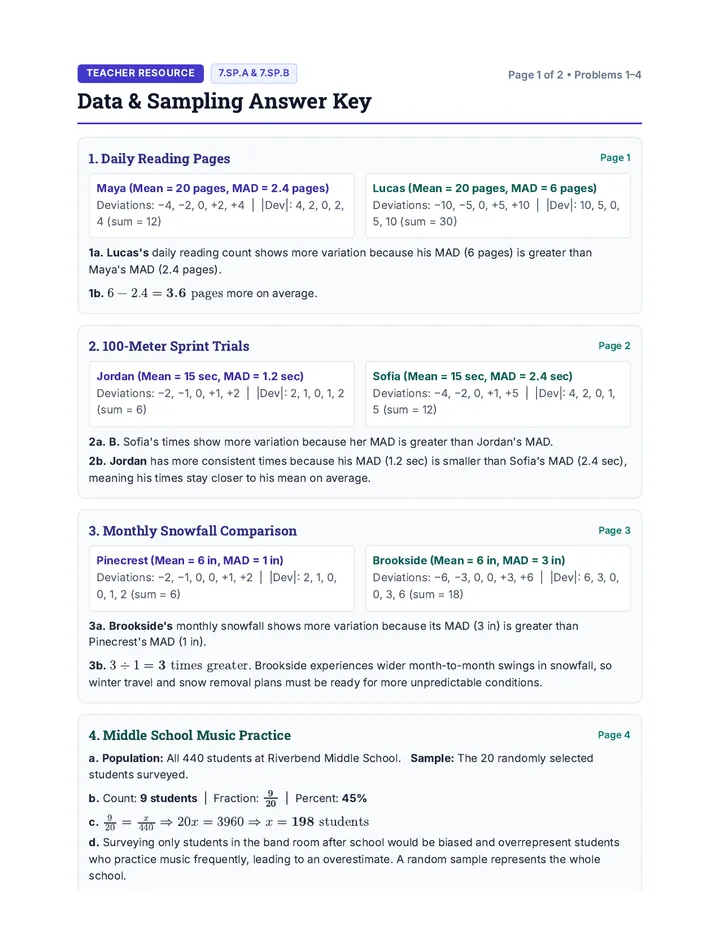
1. The Invisible Gap Bug → Correct Answer: B Physical Ambiguity
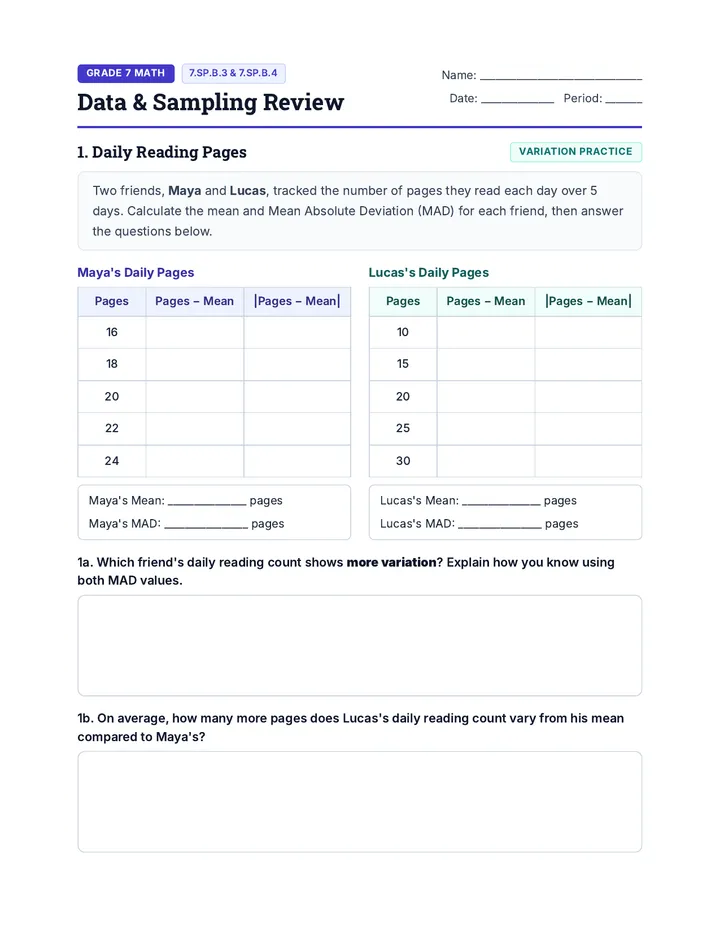
Why B is correct: Both Babylon and China tried to convey an empty column through blank physical space. In Babylon, unequal wedge spacing made 33,46 look like an illegible cluster. In China, counting rods worked on ruled boards, but copying the rods onto blank parchment caused the empty column to disappear, making 2026 indistinguishable from 226 or 2006.
2. Egyptian Additive Scaling → Correct Answer: A Symbol Explosion
Why A is correct: In Egypt's additive system, numbers are represented by repeating picture glyphs for each power of ten. To write 2026 required 10 symbols; for 20,026 it required carving 20 separate lotus flowers plus 2 heel bones and 6 strokes (28 total glyphs!). Writing large numbers quickly became physically overwhelming.
3. Historical Timeline of Zero → Correct Answer: C 3rd–7th C. CE Timeline
Why C is correct: India developed positional zero markers between the 3rd and 7th centuries CE (from the Bakhshali manuscript's ink dots to Aryabhata in 498 CE). In 628 CE , astronomer-mathematician Brahmagupta in Rajasthan formalized zero as a full arithmetic number with explicit operational laws.
4. Mathematical Superiority of Zero → Correct Answer: B Dual Identity
Why B is correct: Zero has two superpowers: (1) As a positional placeholder, it locks columns open so digits cannot slide into the wrong rank. (2) As an algebraic entity, it obeys mathematical laws (a + 0 = a, a × 0 = 0, etc.), enabling negative numbers and algebra.
Section B: Partner Decoder Showdown Solutions
Investigator 1: Target 304 → Answer A
Egyptians drew 3 coils of rope (100 each) and 4 strokes (1 each). Because there are no tens, the heel bone is completely skipped—no empty symbol needed!
Investigator 2: Dropping Zero → Answer B
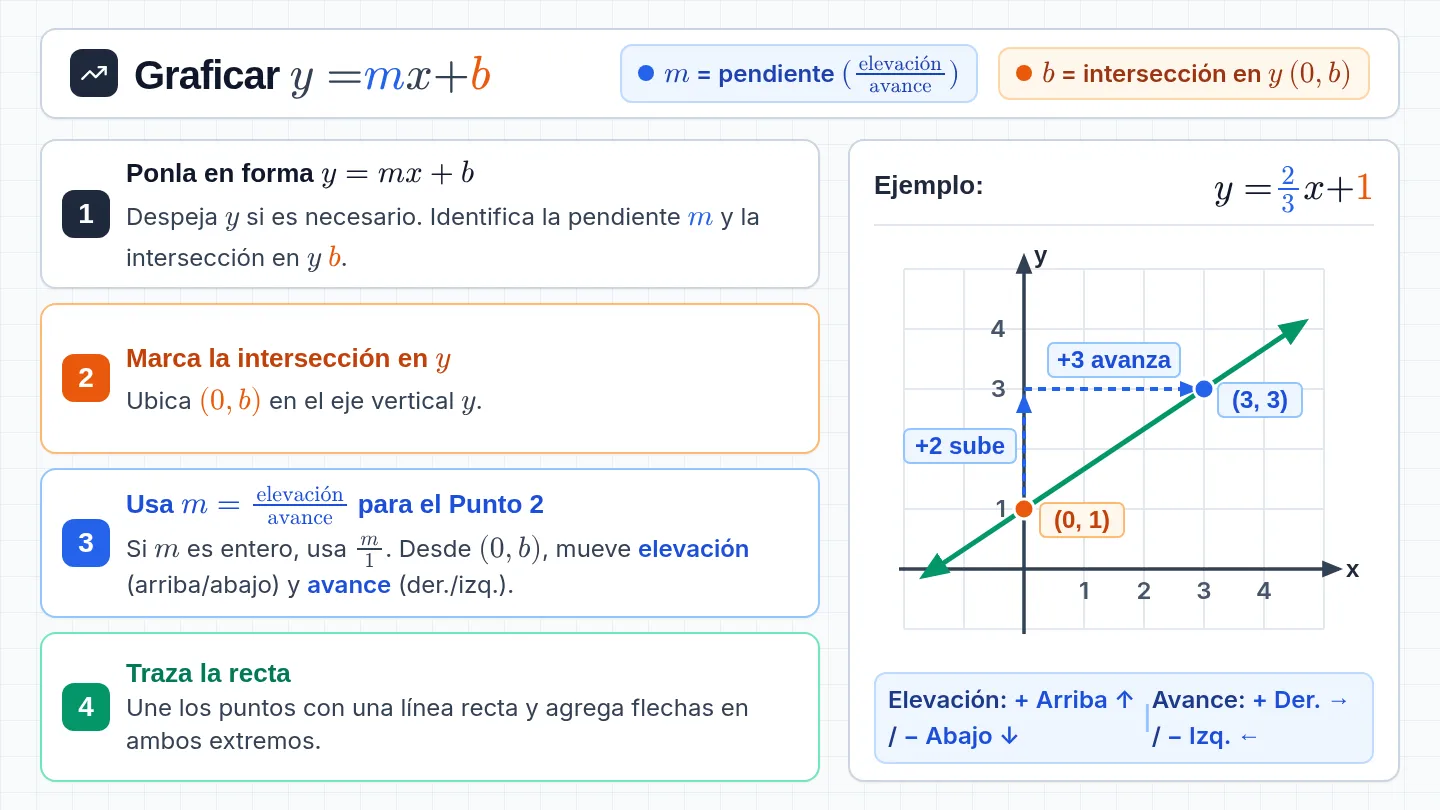
Without the zero placeholder, 304 collapses into 34. The digit 3 slides from the hundreds rank into the tens rank, losing 90% of its value!
Exit Ticket Solution → Correct Answer: A STEM Impact
Why A is the defining STEM concept: Digital computers operate on binary logic gates where electrical current is either OFF (0) or ON (1). Without zero, boolean algebra, machine code, and modern transistors cannot exist. Furthermore, physics and calculus require zero as the coordinate origin (0,0) and the foundation of limits ($\lim_{x \to 0}$).
Hands-On STEM Extension: The Binary Switch Race
Have the boys use 4 coins (Heads = 1, Tails = 0). Challenge them to count from 0 to 15 in binary: 0000, 0001, 0010, 0011... Ask: “Could computer memory store numbers if we didn't have a symbol for Tails (0)?”
Zero Code Breakers • Homeschool STEM Facilitation Guide Page 2 of 2
Zero Code Breakers Slides STEM History Dossier Target Year: 2026
Middle School STEM
2026 IN 5 DIFFERENT WORLDS
How ancient civilizations struggled with empty numbers—and how India’s invention of zero revolutionized human math.
1. Babylon
2. Egypt
3. Greece
4. China
5. India
Worlds 1 & 2: Babylon & Egypt
Pre-Zero Systems
Babylon: Base-60 2026 ÷ 60
Counts in sixties: 33 sixties + 46 ones. Written with wedges:
𒌋𒌋𒌋 𒁹𒁹𒁹 | 𒌋𒌋𒌋𒌋 𒁹𒁹𒁹𒁹𒁹𒁹
The Fatal Bug: No zero symbol. Scribes relied on spacing. If the gap was too small, 33 and 46 merged into a single jumble!
Egypt: Additive Pictures Hieroglyphs
No place value. Scribes drew pictures and added: 2,000 + 20 + 6:
🪷 🪷 + 🦶 🦶 + | | | | | |
The Fatal Bug: Needs 10 drawings for 2026. For 20,026, scribes had to carve 20 separate lotus flowers!
Slide 2 of 6 • Fatal Flaw: Ambiguous gaps and symbol explosions
Worlds 3 & 4: Greece & China
Memorization vs. Boards
Greece: Alphabet Letters 27 Symbols
Letters double as numbers: ͵β = 2,000, κ = 20, Ϛ = 6:
͵βκϚ
The Fatal Bug: No place value! You cannot tell the “2” in 2,000 is larger just by position—you must memorize 27 distinct letters.
China: Counting Rods Grid Board
Bamboo rods placed in columns. Blank space for empty ranks:
|| [ blank ] = ㅠ
The Fatal Bug: Perfect on a physical board! But copy it to paper without grid lines, and the blank space disappears: is that 2026, 226, or 2006?
Slide 3 of 6 • Fatal Flaw: No symbol exists to preserve empty positions on paper
World 5: India & The Invention of Zero
The STEM Solution
~3rd–4th Century CE
Bakhshali Manuscript
Ancient birch bark scroll discovered in Pakistan. Features bold ink dots (śūnya-bindu) used as positional placeholders.
First physical placeholder zero
498 CE
Aryabhata
Formulated decimal place value: “from place to place, each ten times the previous.” Established position-based mathematics.
Locked base-10 decimal hierarchy
628 CE
Brahmagupta
In Brahmasphutasiddhanta, he proved zero is an arithmetic number with operational laws: 1 + 0 = 1, a × 0 = 0.
Zero becomes an algebraic number!
Target 2026 in Indian numerals: २ ० २ ६ • 2 0 2 6 Only 4 symbols • Zero guessing
The Decoder Showdown: 2026 Matrix
Side-by-Side
Culture
What 2026 Looks Like
Symbols Needed
The Fatal Bug or Power
Babylon
𒌋𒌋𒌋𒁹𒁹𒁹 𒌋𒌋𒌋𒌋𒁹𒁹𒁹𒁹𒁹𒁹
13 wedges + a guess
Space width decides the number
Egypt
🪷🪷 🦶🦶
Greece
͵βκϚ
3 memorized letters
Must memorize 27 letters
China
[ ] = ㅠ
India
2026 / २ ० २ ६
4 symbols total
Zero locks place open forever!
Slide 5 of 6 • Compare efficiency, scalability, and handwriting clarity
The Big STEM Exit Challenge
Investigation Final
Core Question
Why would modern STEM collapse without India’s Zero?
1. Digital Computing
Every computer, phone, and AI processor runs on binary code: 0 and 1 (circuit OFF and ON). No zero = no software!
2. Coordinates & Calculus
GPS and space navigation require the origin point (0, 0). Calculus and engineering require limits approaching zero.
Now open your Zero Code Breakers Worksheet to complete Questions 1–4! Good luck, Code Breakers!