This lesson teaches high school students on the autism spectrum the fundamentals of sportsmanship, focusing on emotional regulation during wins and losses through social stories and interactive scenarios.
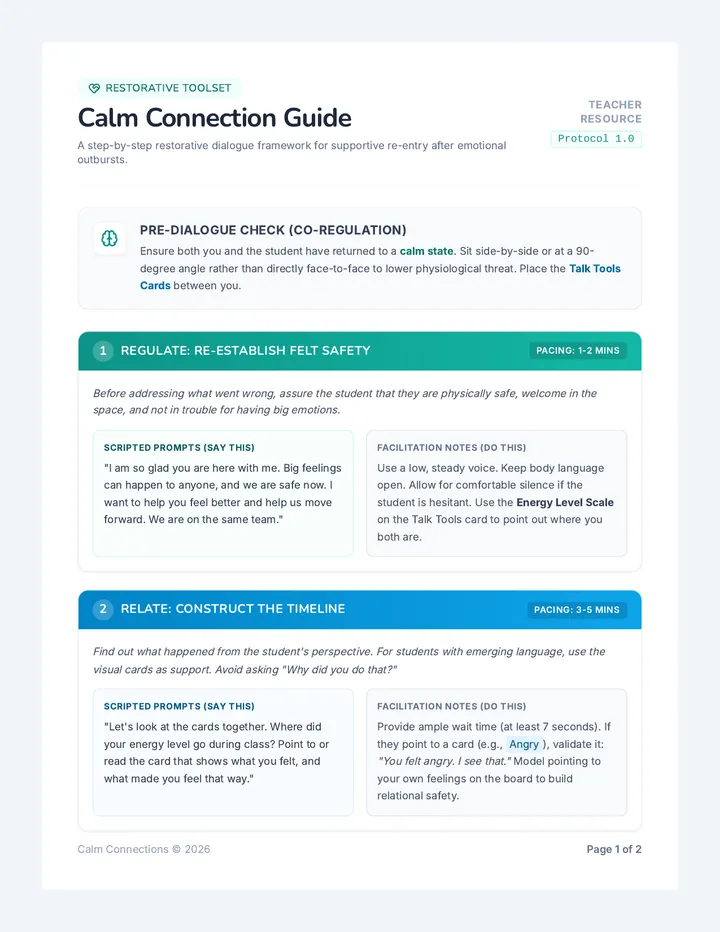
Develops sustained focus and signal filtering strategies to protect the brain's neural spotlight from internal and external noise.
Focuses on self-monitoring and metacognitive awareness, teaching students how to audit their own cognitive performance and adjust strategies mid-mission.
An introductory lesson on combining like terms designed for special education students, focusing on visual coding, shape-sorting strategies, and step-by-step guided practice.
A comprehensive guide and tracking system for implementing a UFLI-aligned kindergarten encoding goal throughout the academic year.
A vocabulary-focused station activity for Chapter 1 of 'Night' by Elie Wiesel, designed for 10th-grade students with ADHD and SLD. The lesson uses multisensory approaches to reinforce meaning, context, and visual representation of key terms.
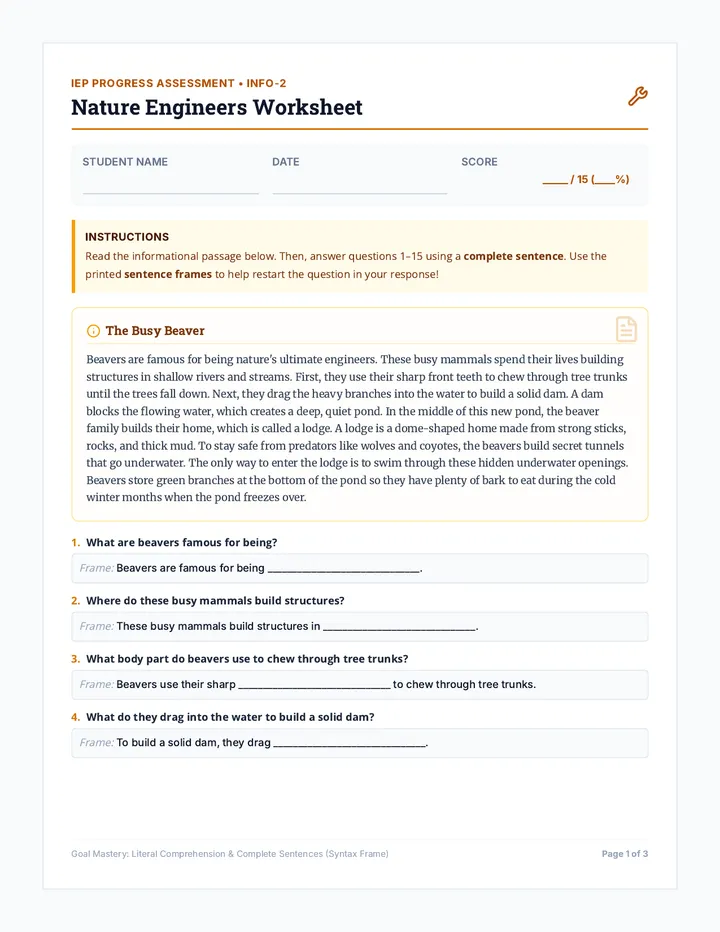
A cumulative review of the Cognitive Command framework, where students synthesize their skills into a personalized executive function handbook for future use.
Develops the 'cognitive brake' to manage impulsive reactions and implement pause protocols to improve inhibitory control.
Optimizes the brain's 'mental whiteboard' through chunking and visualization techniques to improve information retention during multi-step tasks.
Enhances cognitive flexibility and the ability to shift mindsets when encountering obstacles, fostering resilient problem-solving frameworks.
Addresses the 'activation energy' required to start tasks, utilizing neuroscience strategies to overcome procrastination and limbic system resistance.
Covers the sequencing and prioritization of complex tasks, teaching students how to deconstruct large projects into manageable neural pathways.
Explores temporal awareness and the estimation of task duration, providing tools to navigate deadlines and combat the 'planning fallacy.'
Develops external systems to reduce cognitive load, transforming physical and digital environments into efficient extensions of the brain's workspace.
Focuses on the transition from vague aspirations to structured SMART targets, emphasizing the role of the brain's reward system in goal attainment.
An introductory lesson exploring the neurobiology of executive functioning, centering on the prefrontal cortex as the brain's Command Center and identifying the core cognitive domains.