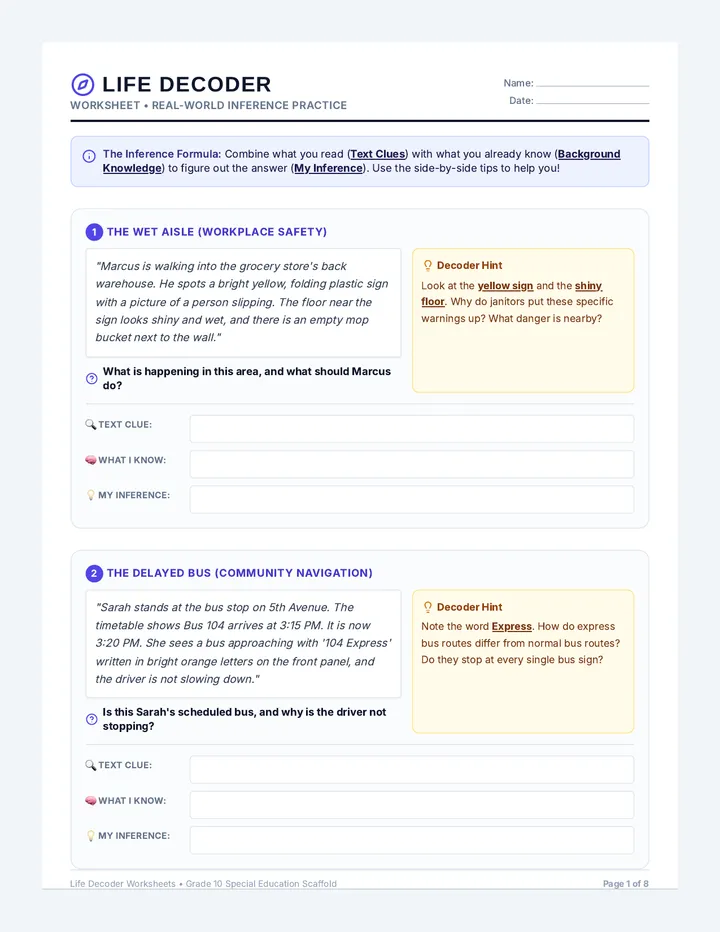
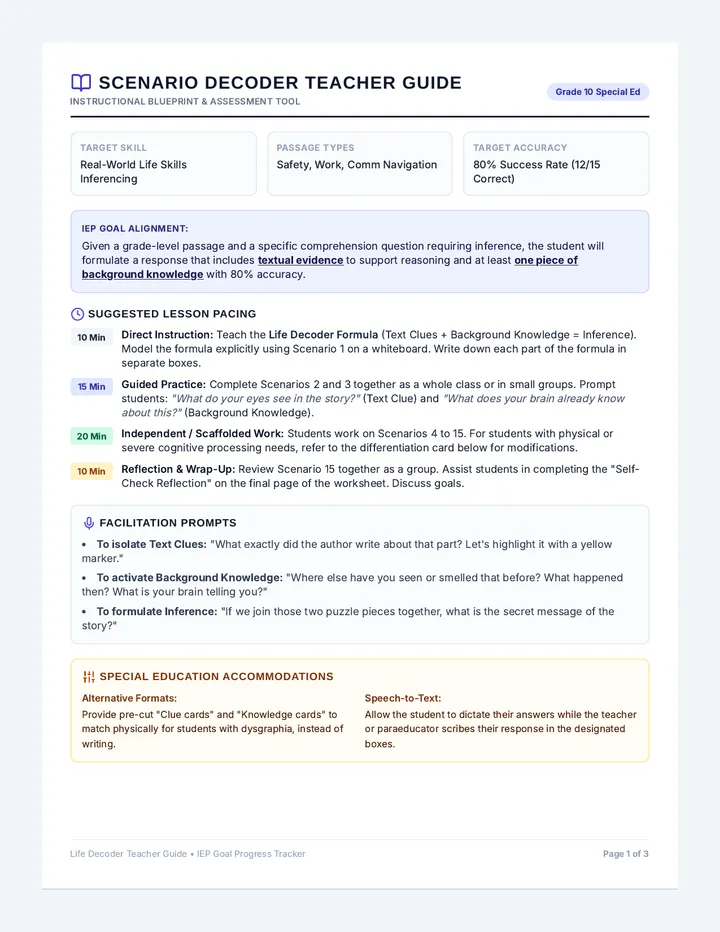
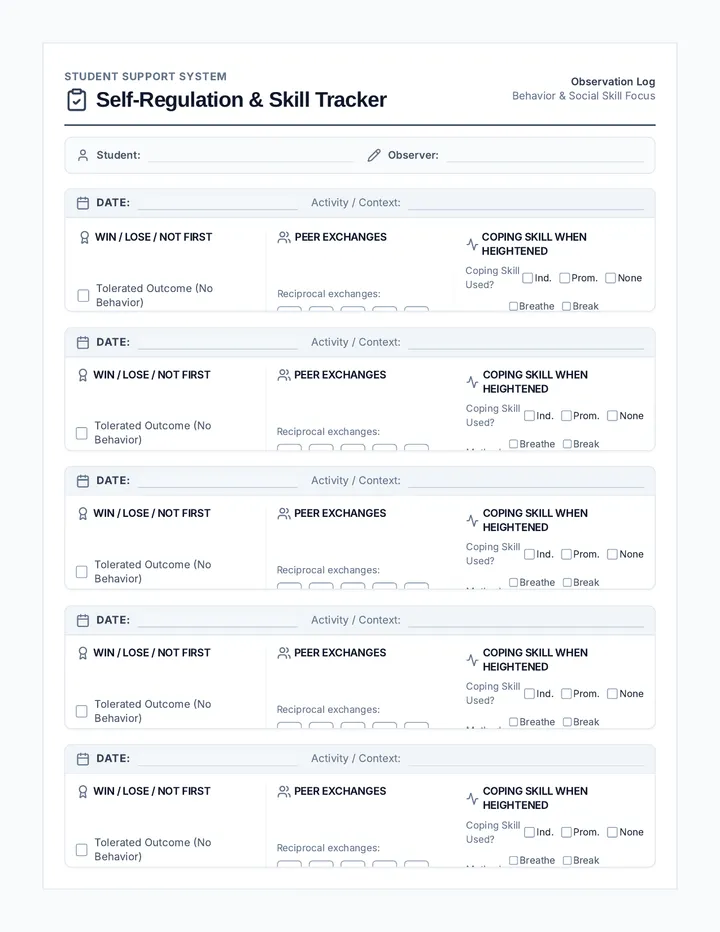
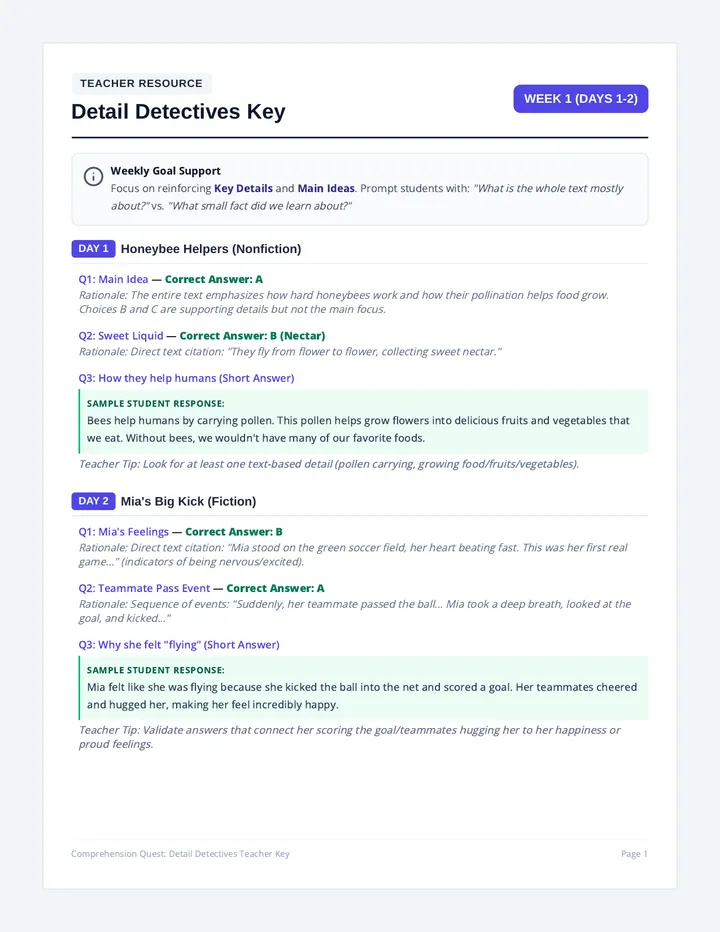
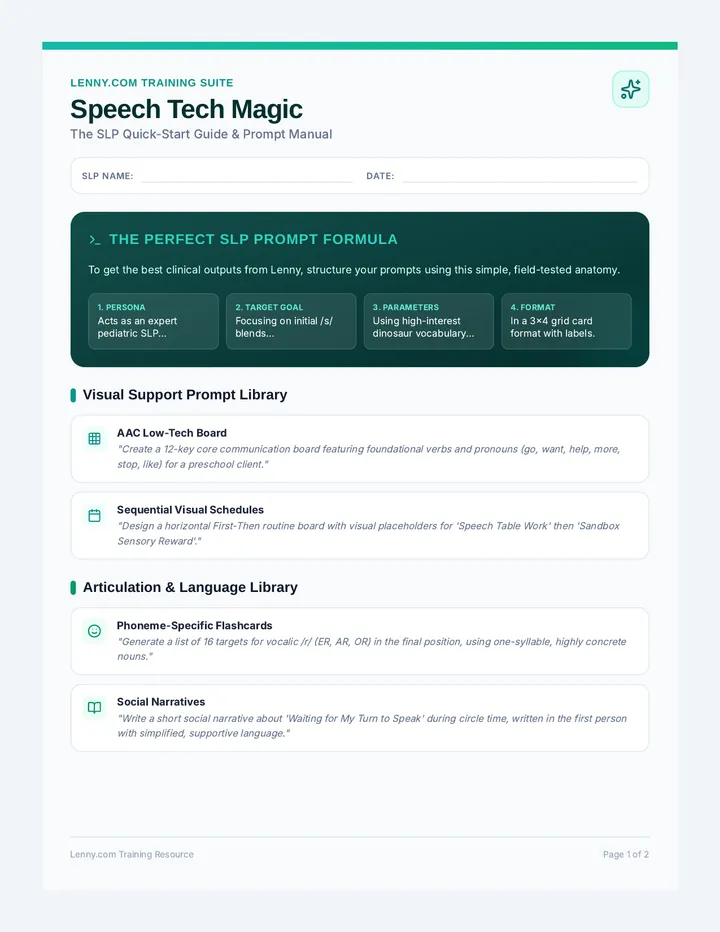
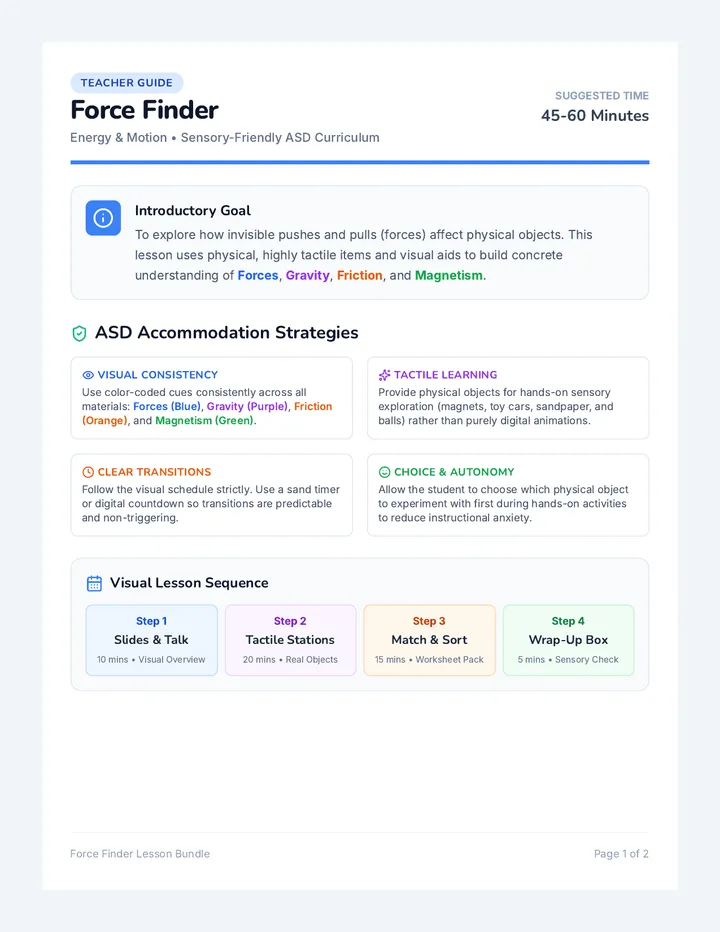
A collection of resources to help teachers and students navigate the technical aspects of virtual learning, with a focus on accessibility features like closed captioning.
A comprehensive 90-minute training session for individuals with disabilities to identify frustration triggers, build a toolkit of healthy coping mechanisms, and master self-advocacy skills. The lesson uses a 'Navigator' theme to help learners chart a course through difficult emotions toward confidence and resilience.
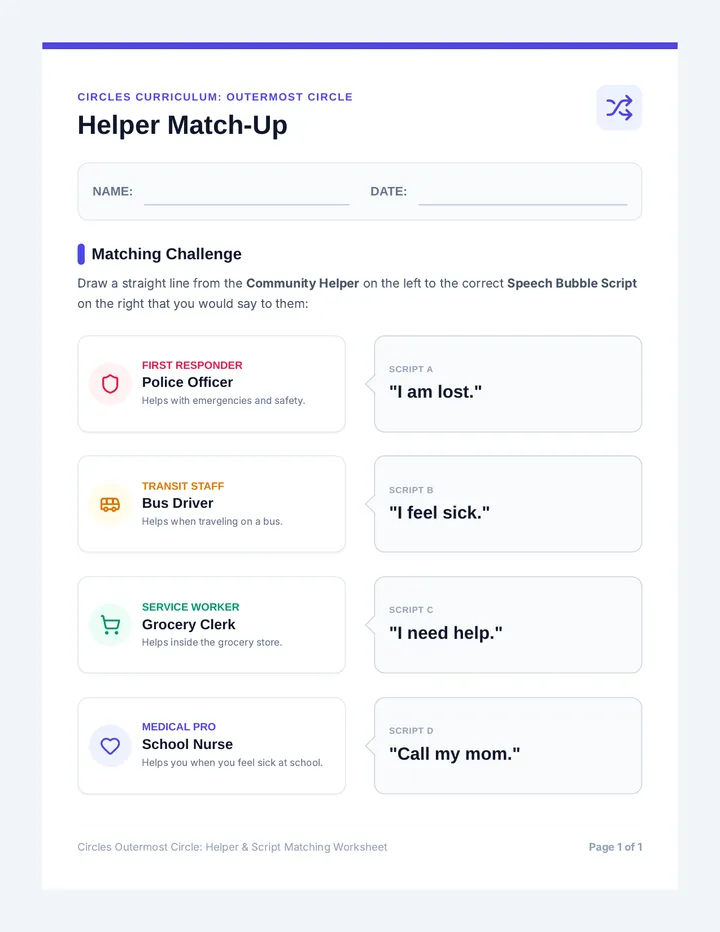
A social skills lesson for high school students with lower cognitive functioning, focusing on the DEAR MAN model to help them advocate for their needs in conversation.
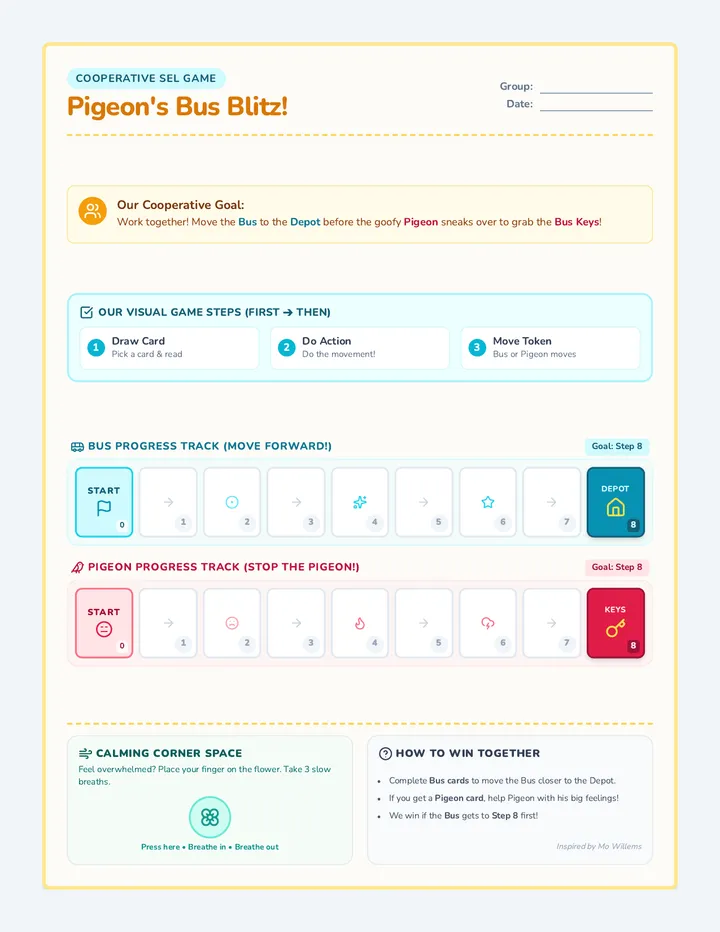
A highly visual, 15-minute activity designed for non-verbal students to practice turn-taking and sharing using concrete manipulatives and visual supports.
A comprehensive tool for tracking, analyzing, and responding to student behavior incidents to support positive interventions.
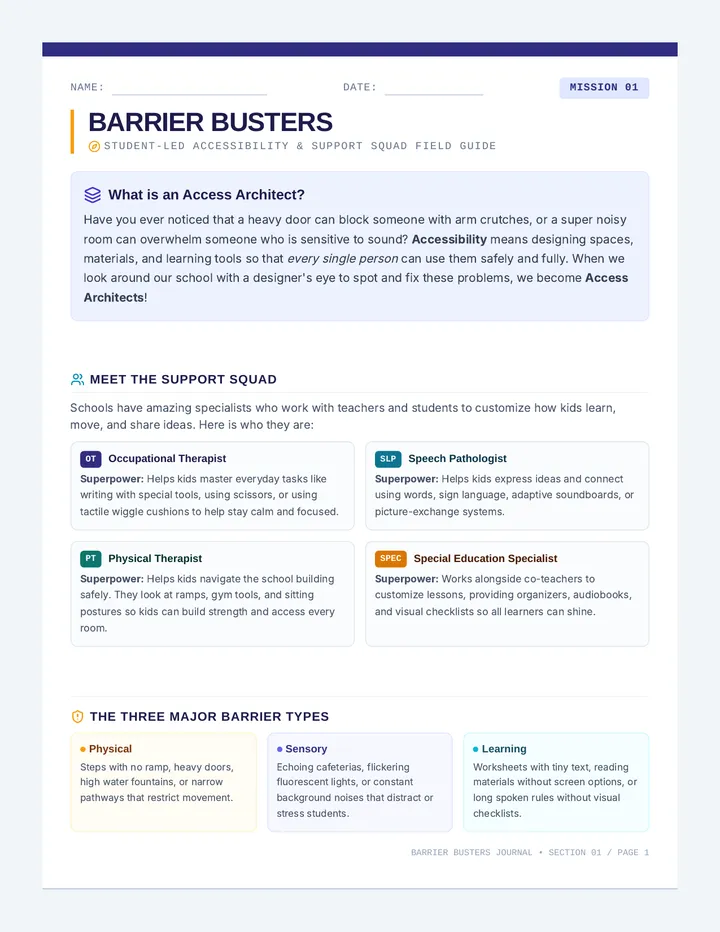
In this lesson, students explore the concepts of disability discrimination and accessibility, analyzing how physical, digital, and social barriers impact individuals and the health of a democracy. Students will learn to distinguish between discriminatory practices and legitimate professional boundaries.
A 10-15 minute daily check-in routine designed to help students build self-awareness regarding disruptive noises and expressions, focusing on 'signals' and 'impact'.
Post-game reflection sessions to accurately analyze conflict outcomes and the effectiveness of used strategies.
Using the 4-step 'Game Plan' (Identify, Brainstorm, Pick, Try) to solve independent problems without a referee's help.
Explicit coaching on 'Voice Passes' (I-statements) and active listening to resolve court-side friction through clear communication.
Practice in 'Fair Repair' (Apologizing and Compromising) to maintain team harmony and fix accidental mistakes.
Focus on 'Subbing Out' (Walking away and seeking adult help) when social situations become unsafe or 'Red Flag' moments occur on the court.
Introduction to the 'Starting Lineup' of conflict tools. Focuses on naming the 4 strategies in isolation using sports metaphors (Sub Out, Fair Repair, Voice Pass, Game Plan).
Intensive sessions focused on looking back at conflicts to determine tool effectiveness and accuracy (Goal 3).
Step-by-step guidance through a 4-step brainstorm process for independent problem solving (Goal 1 & 2).
Structured coaching on drafting and delivering I-statements for clear communication (Goal 1 & 2).
Practice in repairing social connections through apologies and finding fair deals (Goal 1 & 2).
Focus on discriminating between independent walking away and needing adult support for safety (Goal 1 & 2).
Explicit introduction to the 4 conflict resolution tools with high-repetition identification trials (Goal 1).
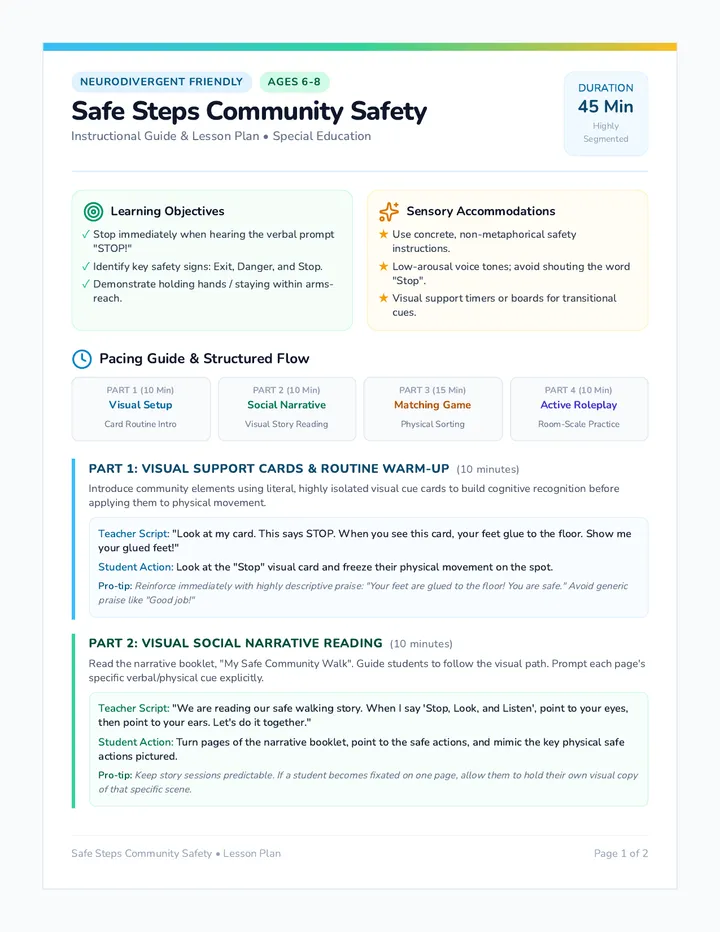
A concise, 20-minute social skills lesson designed for K-2 students with learning disorders, focusing on the core steps of following classroom directions through visual cues and sequencing.
This lesson introduces the concept of emotions as 'inner weather,' focusing specifically on identifying the physical 'warning signs' of stress and anxiety and introducing initial grounding techniques.
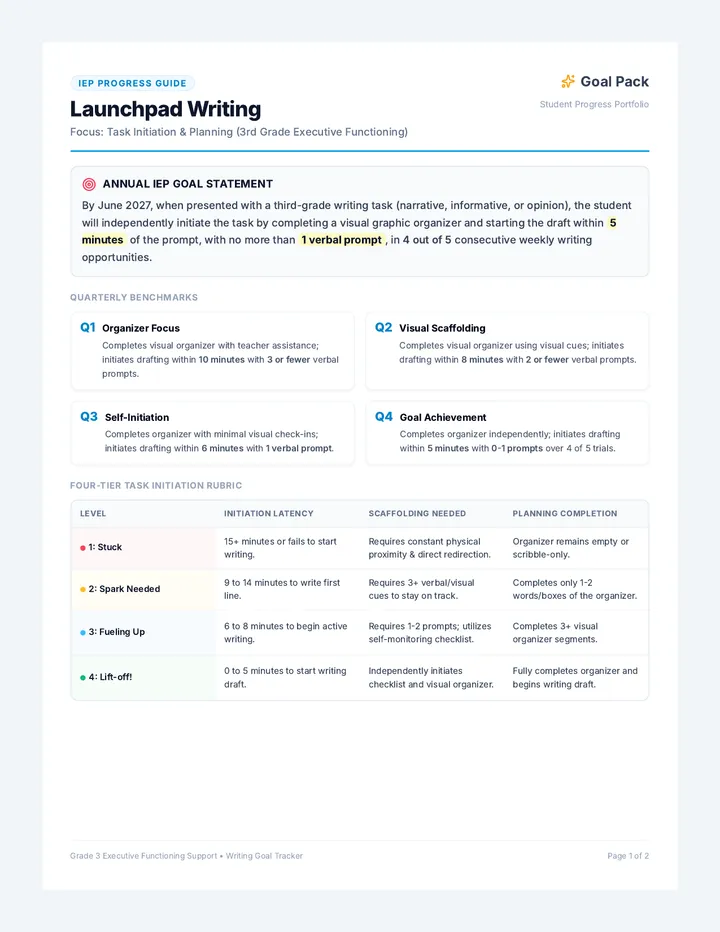
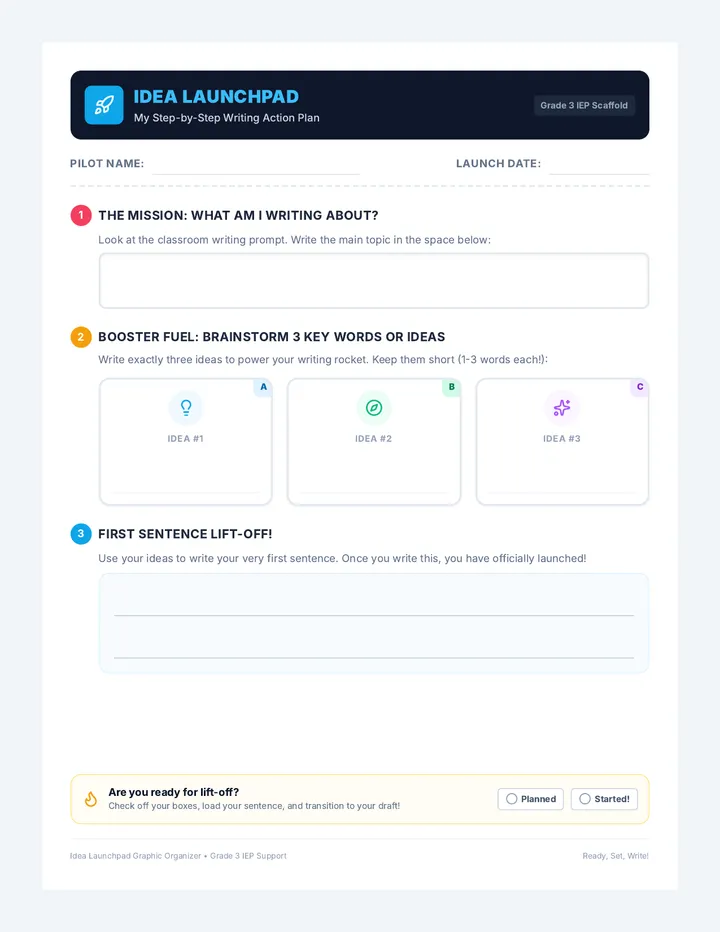
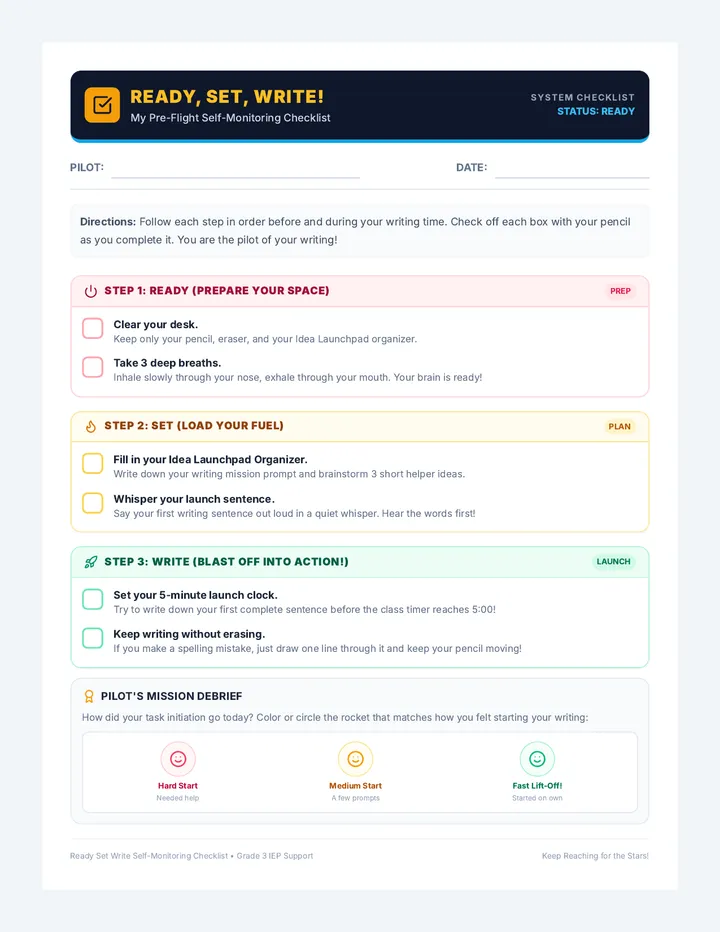
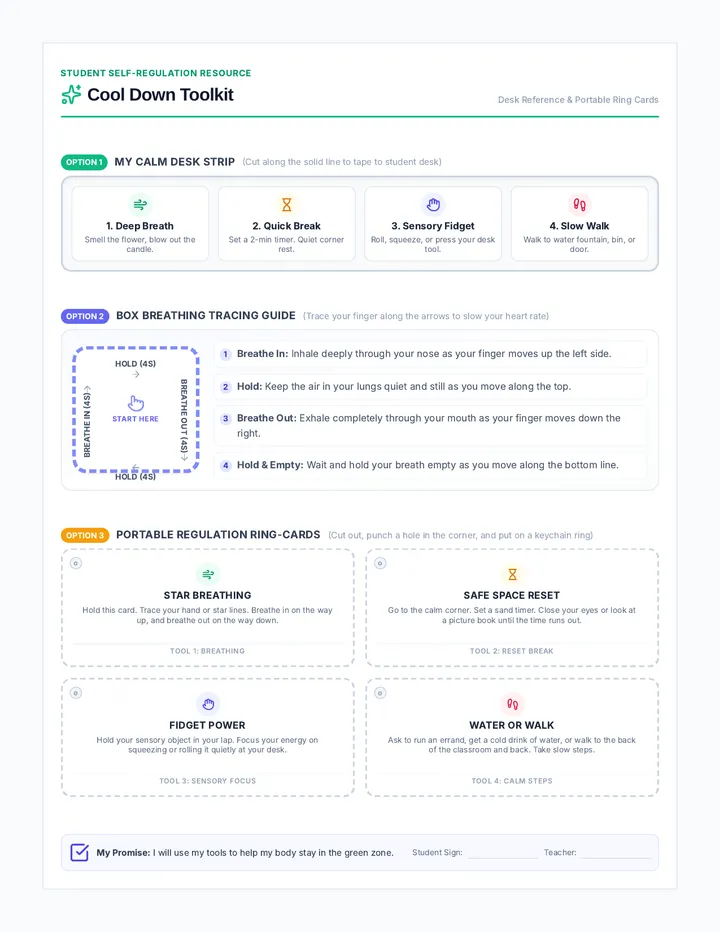
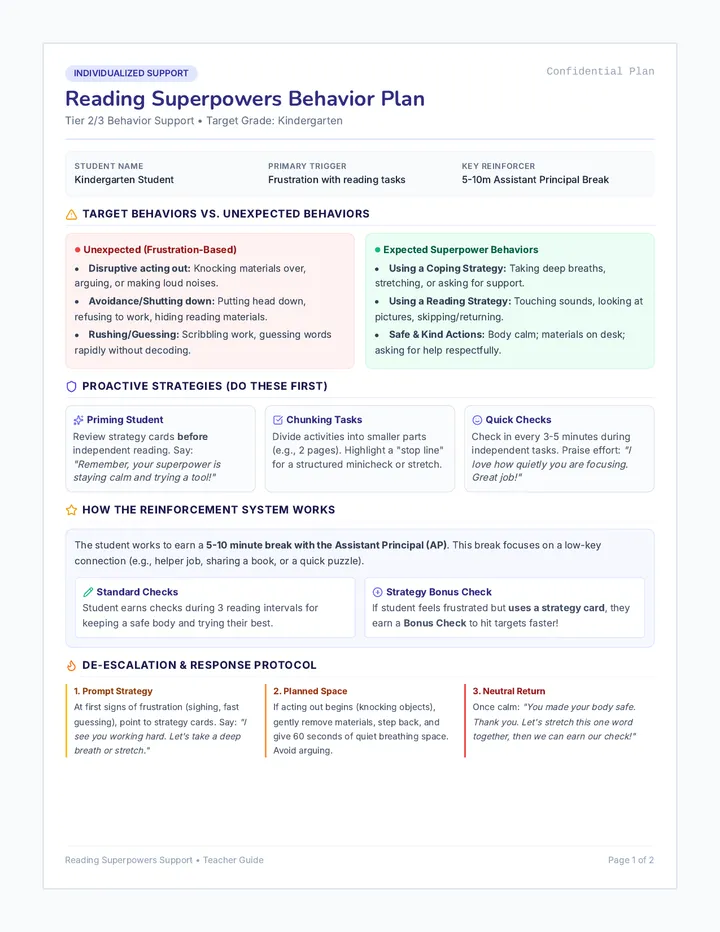
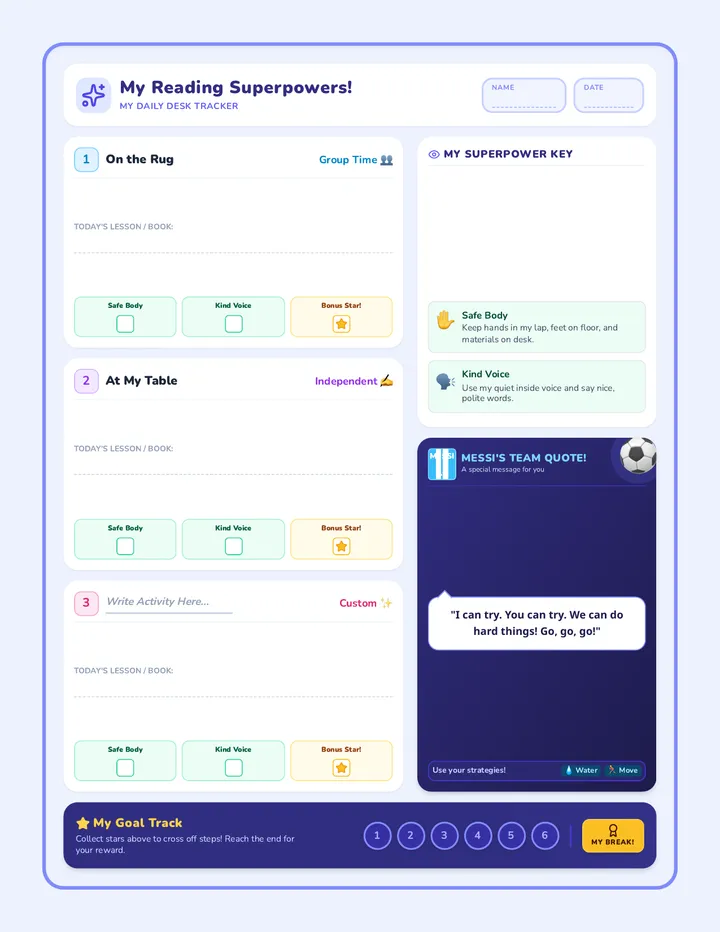
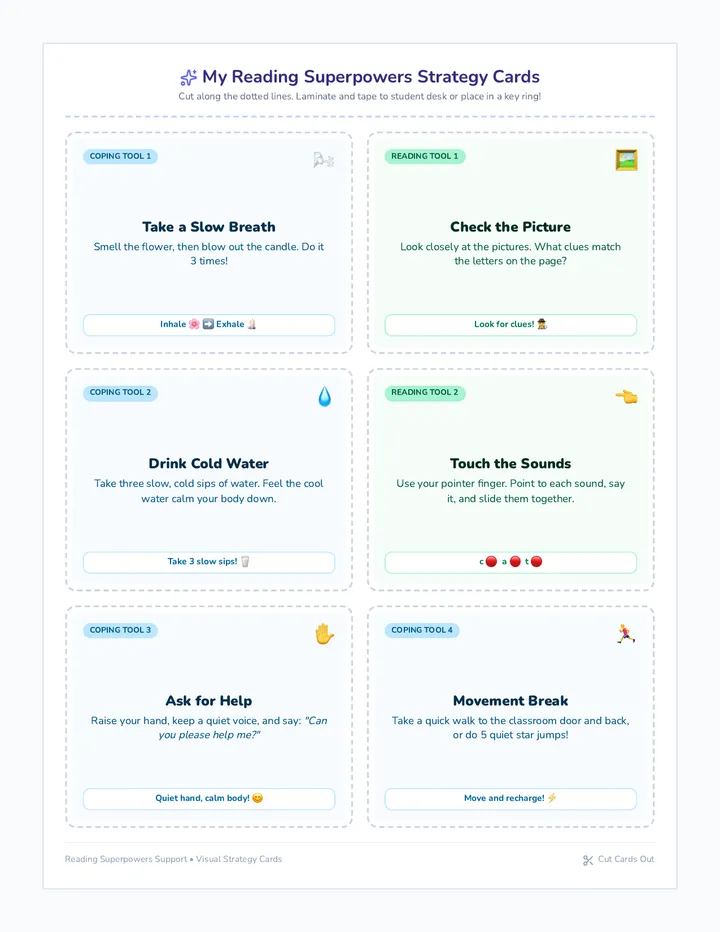
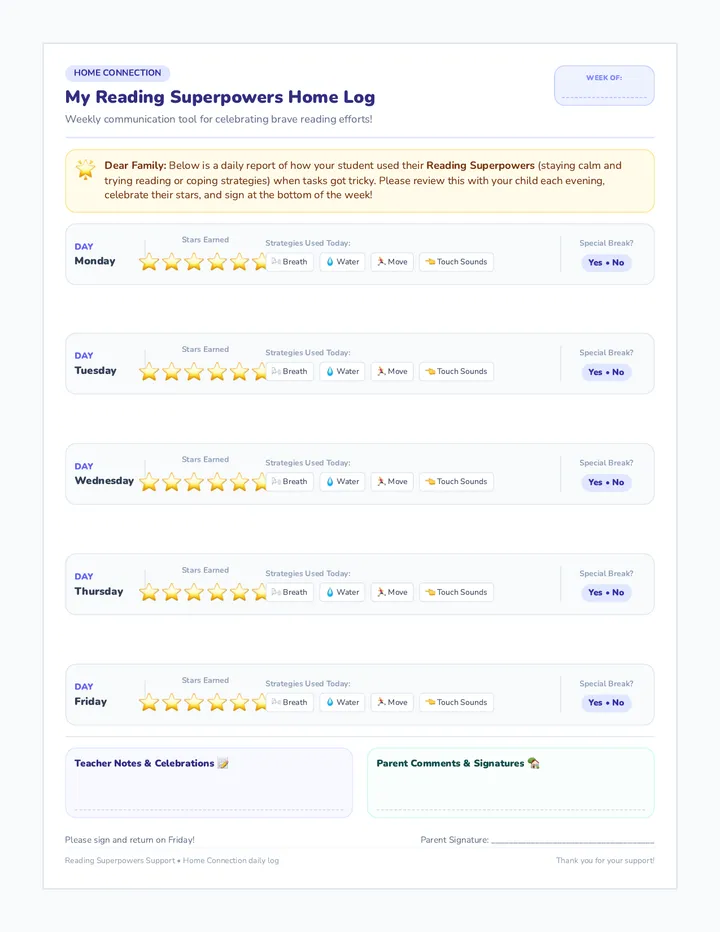
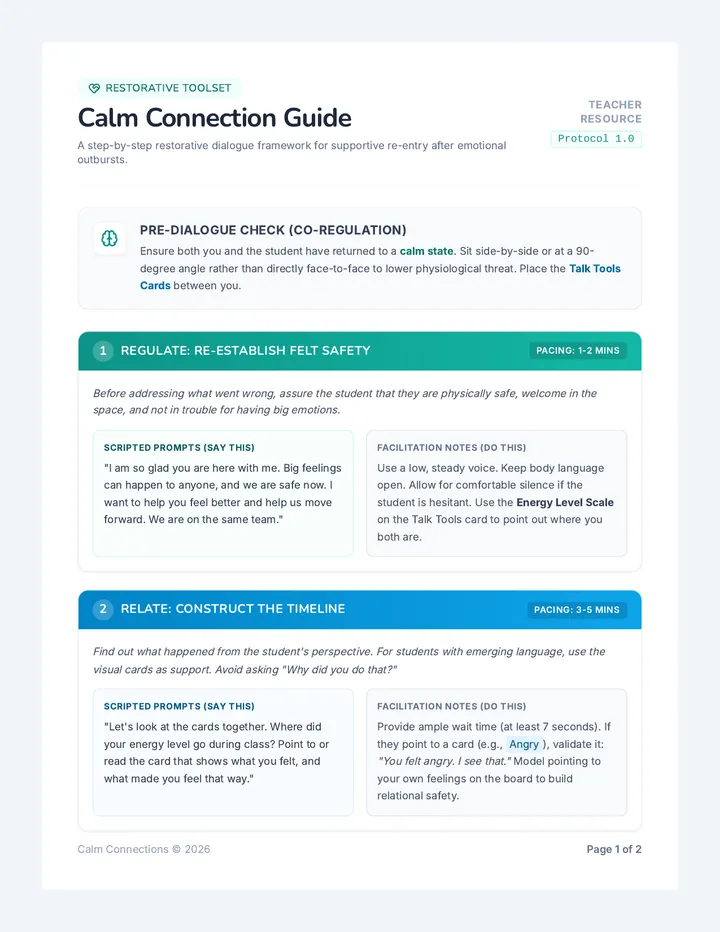
A collection of self-regulation tools for a student to improve focus, impulse control, and task completion. These resources help the student visualize their behavior choices and track daily progress through child-friendly rubrics and check-ins.
A final review of all strategies with a focus on independent mastery and final data collection for the reporting period.
Practicing the reflection process on real and hypothetical past conflicts to improve accuracy in self-assessment.
Introduction to the 'Post-Flight Review'—a reflection tool to evaluate how well a strategy worked after a conflict.
Fast-paced identification drills and implementation challenges to build fluency in strategy selection.
Guided role-play scenarios where students implement their chosen strategies in a controlled environment.
Teaching a 4-step process for solving problems independently: Identify, Brainstorm, Pick, and Try.
Developing 'I-statements' and active listening skills to resolve conflicts through talking and sharing.
Exploring the nuance of genuine apologies and the art of finding a 'middle ground' through compromise.
Focused practice on recognizing 'big' problems that need adult help and 'small' problems where walking away is the best first step.
A deep dive into knowing when a conflict requires walking away versus talking it out.
Students practice identifying which Peace Tool fits specific social scenarios, focusing on identifying strategies in context.
An introductory lesson where students meet the four core conflict resolution strategies and build their 'Peace Toolkit'. Focuses on identifying strategies in isolation.
The final meeting involves reviewing student work and observation data to analyze the impact of the instructional shift and determining how to sustain these practices.
The second meeting centers on designing a specific instructional "prototype" or shift to implement in the classroom, supported by evidence-based strategies and a clear action plan.
The first meeting focuses on auditing current practices, identifying specific areas for growth in differentiation or formative assessment, and establishing a clear goal for the coaching cycle.
A comprehensive training module for test administrators and proctors to ensure assessment integrity and a smooth testing environment.
A focused activity using a graphic organizer to break down complex social interactions and plan professional reactions.
Practical application of identifying emotions and choosing professional responses through illustrated workplace scenarios.
Students learn to observe non-verbal cues and environmental signals to identify which 'Zone' a supervisor or coworker might be in.
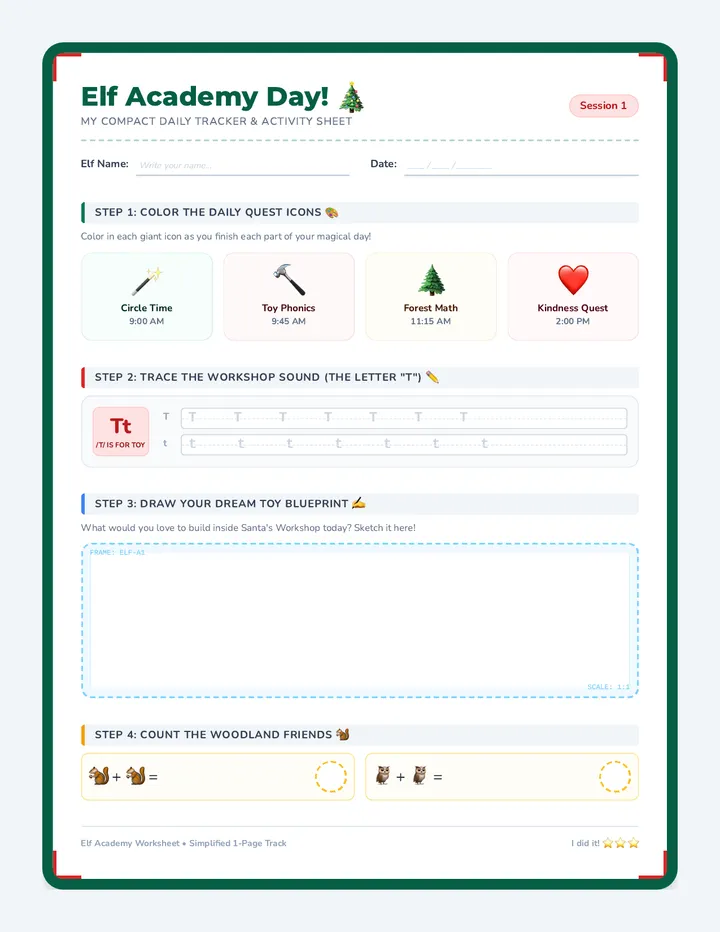
A 30-minute lesson designed for 9th-grade students with Autism to identify and assess their personal strengths and challenges within social and peer relationships using a structured 'blueprint' metaphor.
A specialized intervention lesson for a 3rd-grade student to improve morning social interactions. It features a hero-themed social story, reminder cards for "Green Light" phrases, and a teacher guide for effective implementation.