A 30-minute session introducing students to the five core ADHD motivators (Interest, Novelty, Challenge, Urgency, and Passion) and practicing how to apply them to everyday tasks.
A lesson for 7th-grade students with ASD to identify the magnitude of various school-related challenges and determine appropriate, proportional responses and solutions.
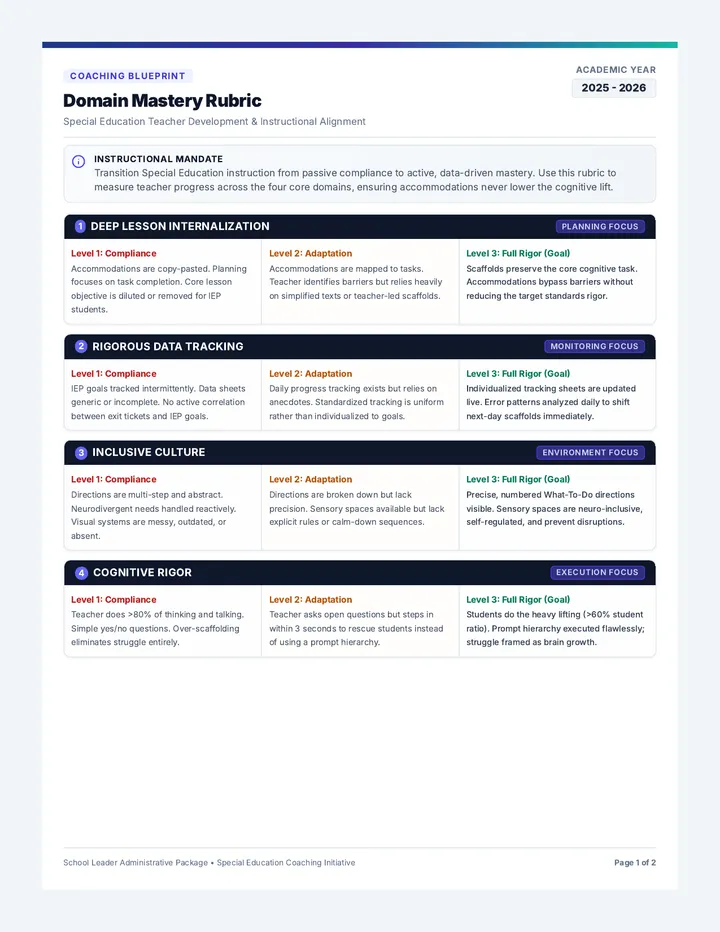
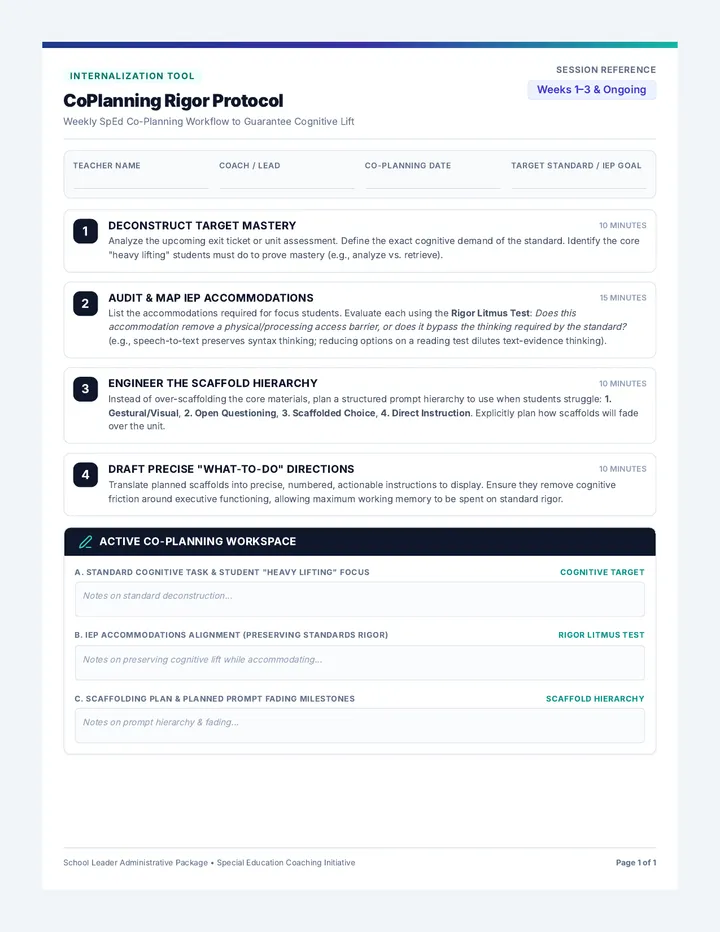
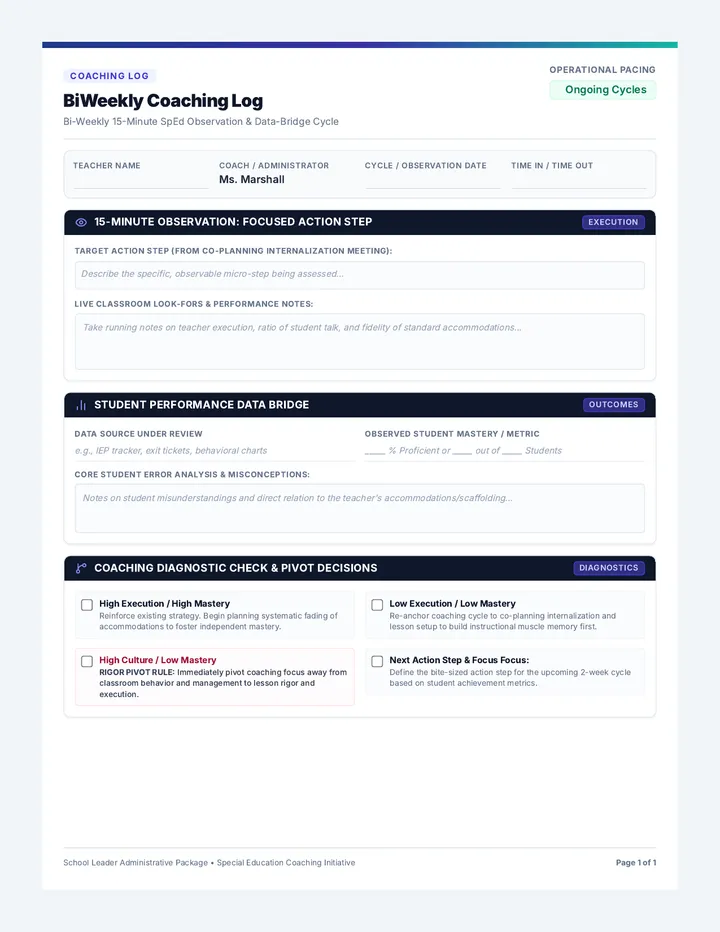
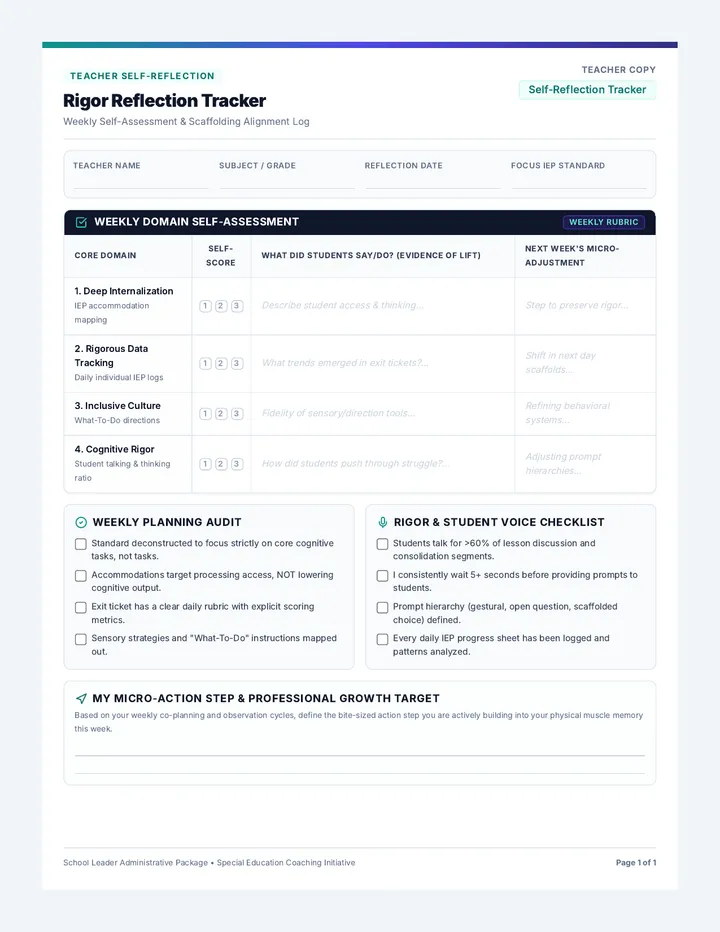
A professional development session focused on turning student data into actionable instructional plans through root cause analysis and collaborative planning.
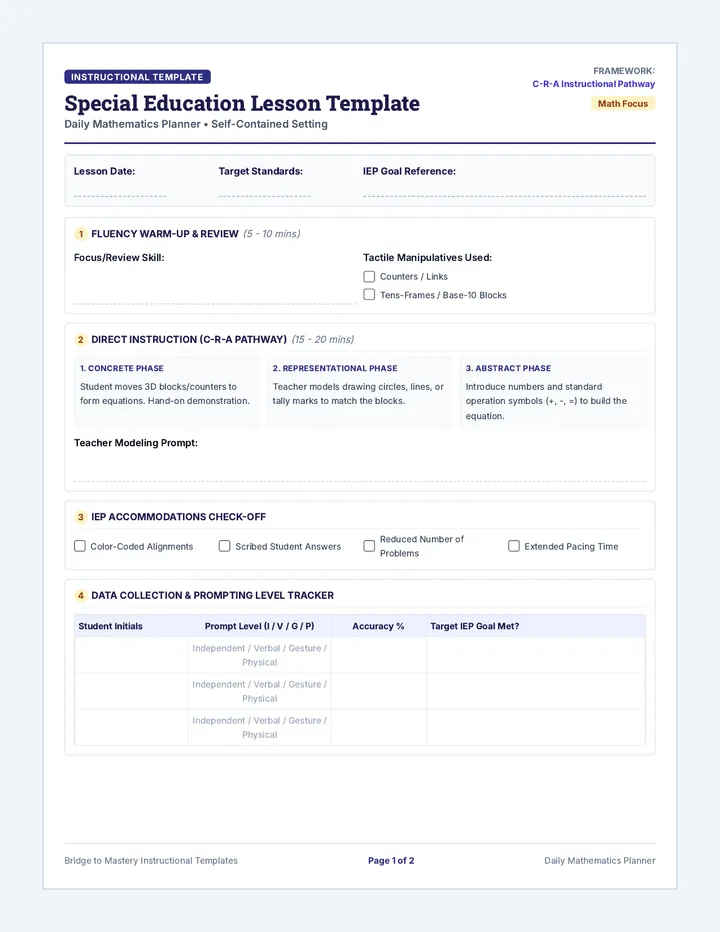
A comprehensive high school English Language Arts program model designed for Special Education environments, focusing on Tier 2 and Tier 3 accessibility. This lesson provides a scaffolded scope and sequence, implementation guides for tiered interventions, and universal student-facing scaffolds to ensure all learners can engage with the core curriculum.
A comprehensive collection of school-based Physical Therapy goals and tracking tools designed to improve student mobility, access, and participation in the educational environment.
A structured occupational therapy treatment session focused on improving handwriting legibility through architectural-themed activities. This lesson targets line placement accuracy and consistent letter formation for 5th-grade students, particularly those with ADHD.
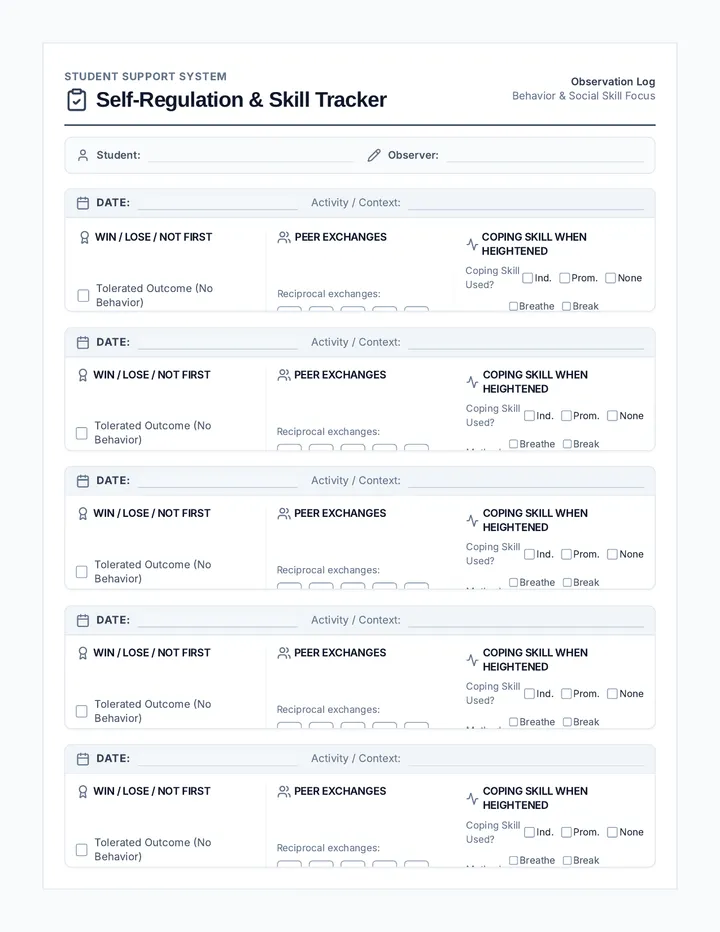
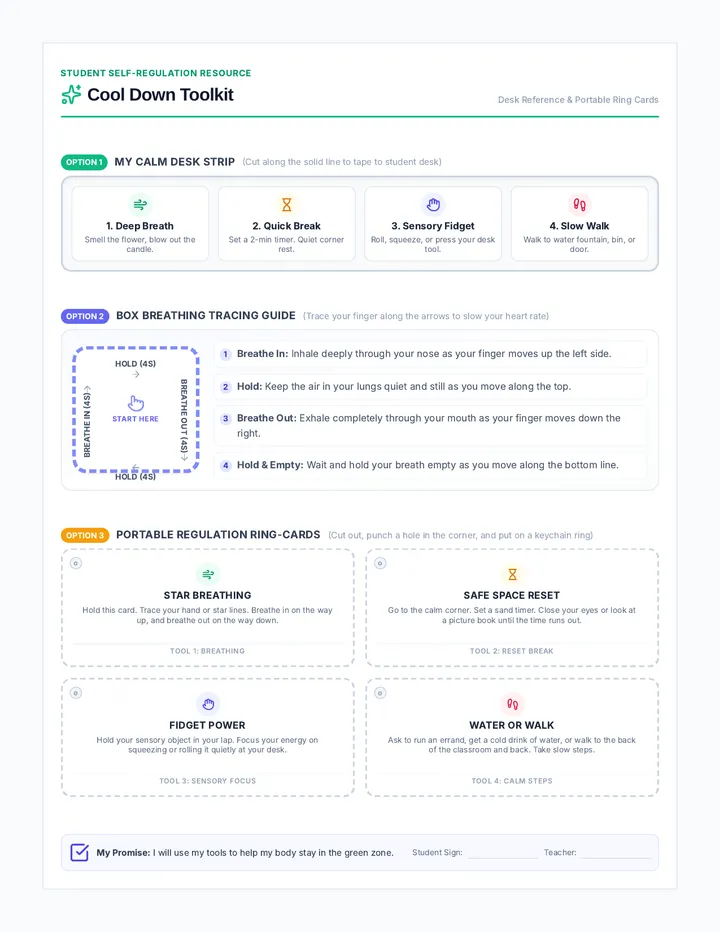
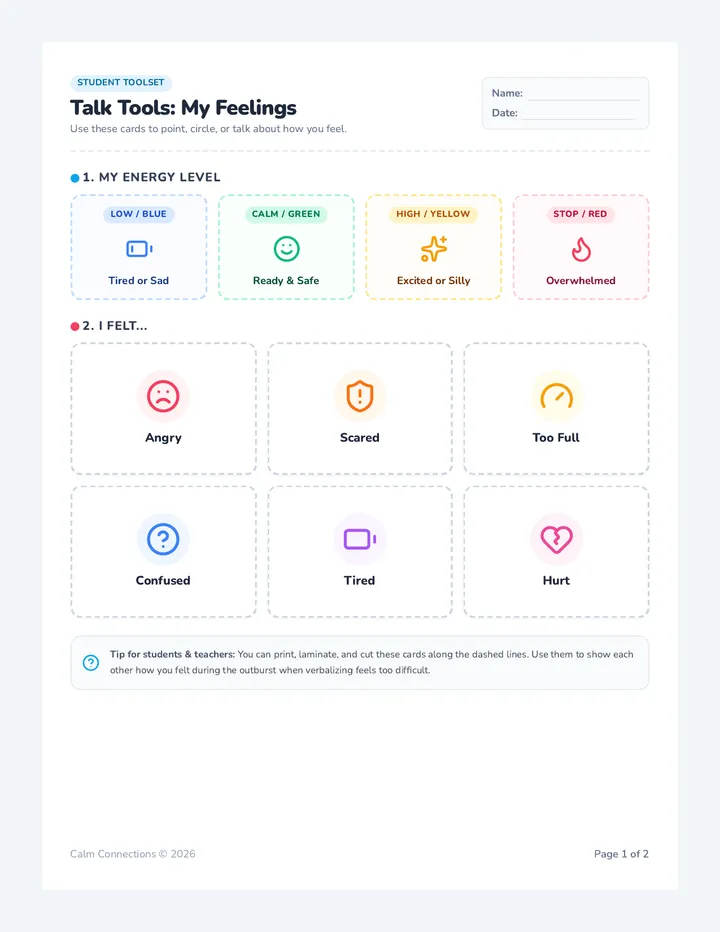
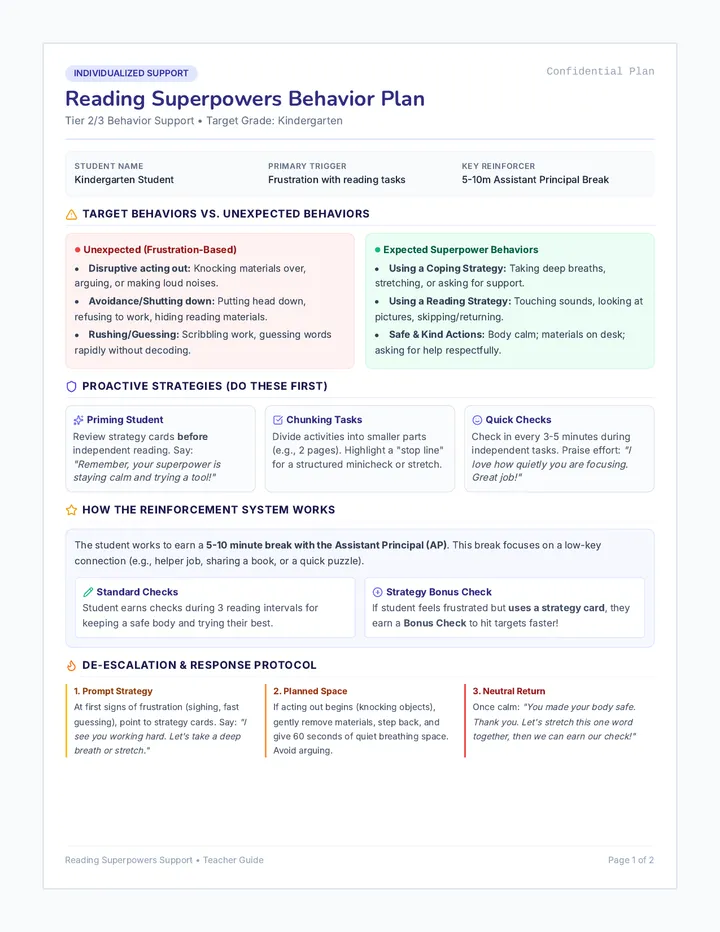
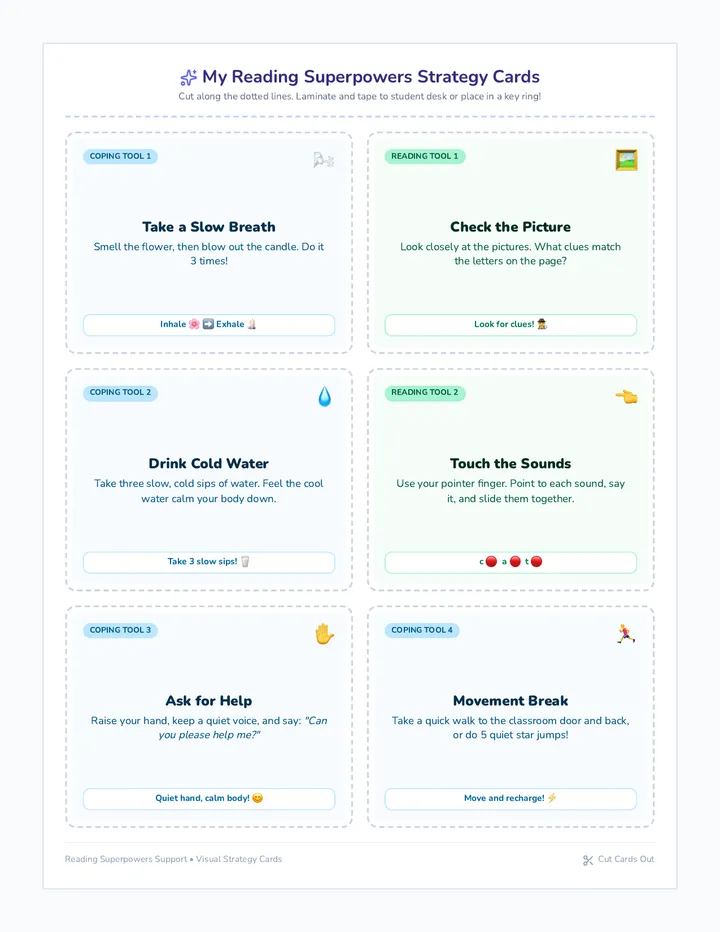
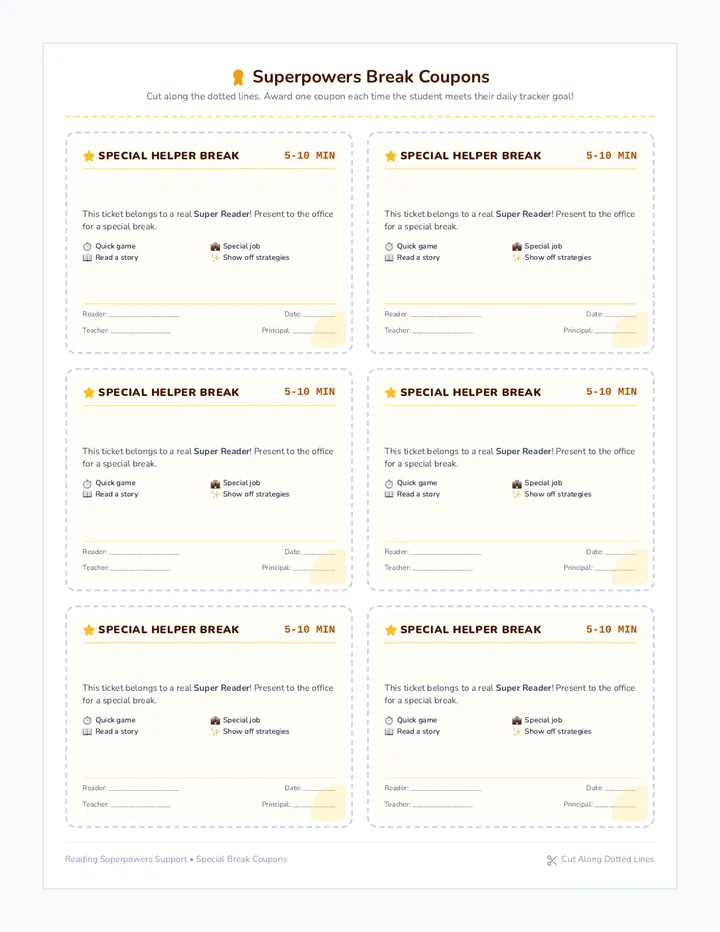
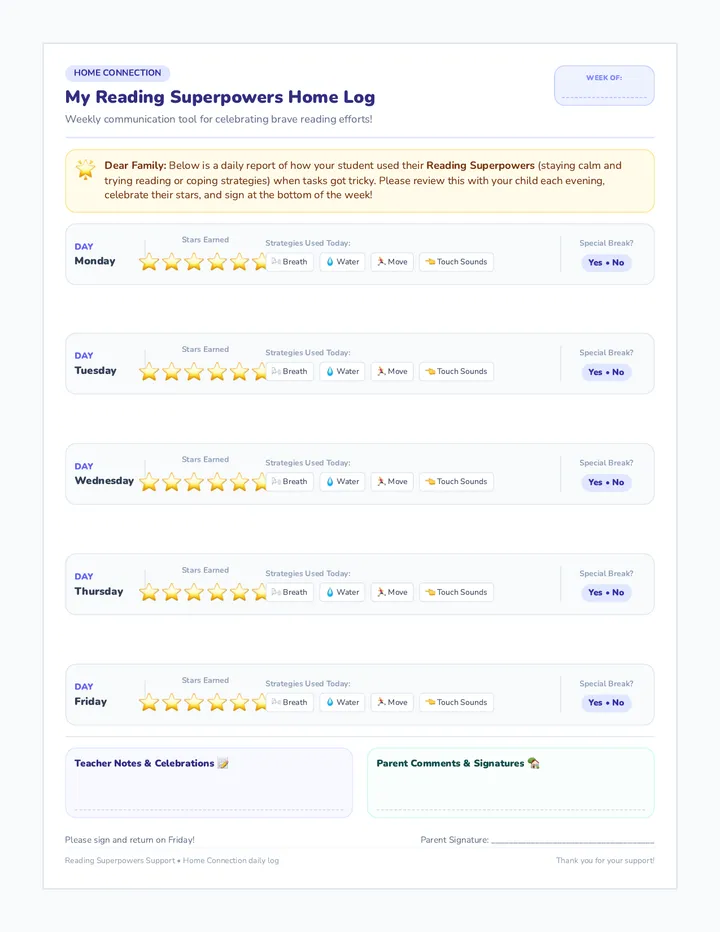
A comprehensive suite of resources for implementing tiered behavior supports in the general education classroom, focusing on emotional regulation and impulse control.
Practical application of time tools (calculators, phones) to determine the duration of real-world work and leisure events.
Using visual aids like timelines and number lines to calculate elapsed time for shifts and activities up to one hour.
Introductory time-telling skills focused on identifying and setting clocks to the nearest half hour.
Mastering the analog clock face by telling time to the nearest 5-minute interval in daily school routines.
Calculating elapsed time to the nearest 5-minute interval using analog and digital representations for travel and leisure.
Focused on identifying start and end times to calculate elapsed whole-hour intervals within work and community scenarios.
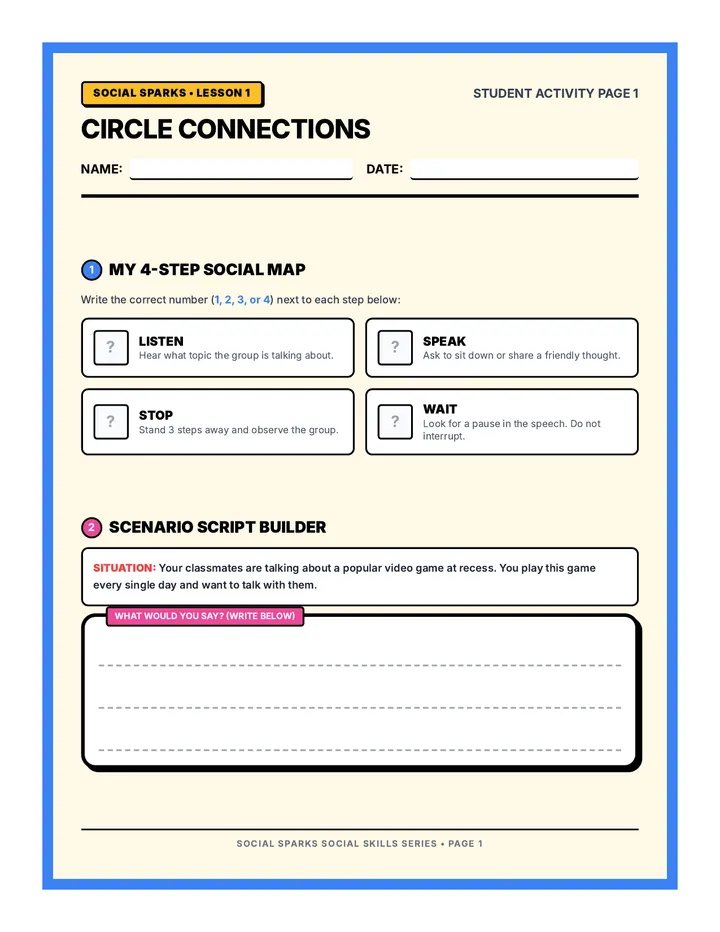
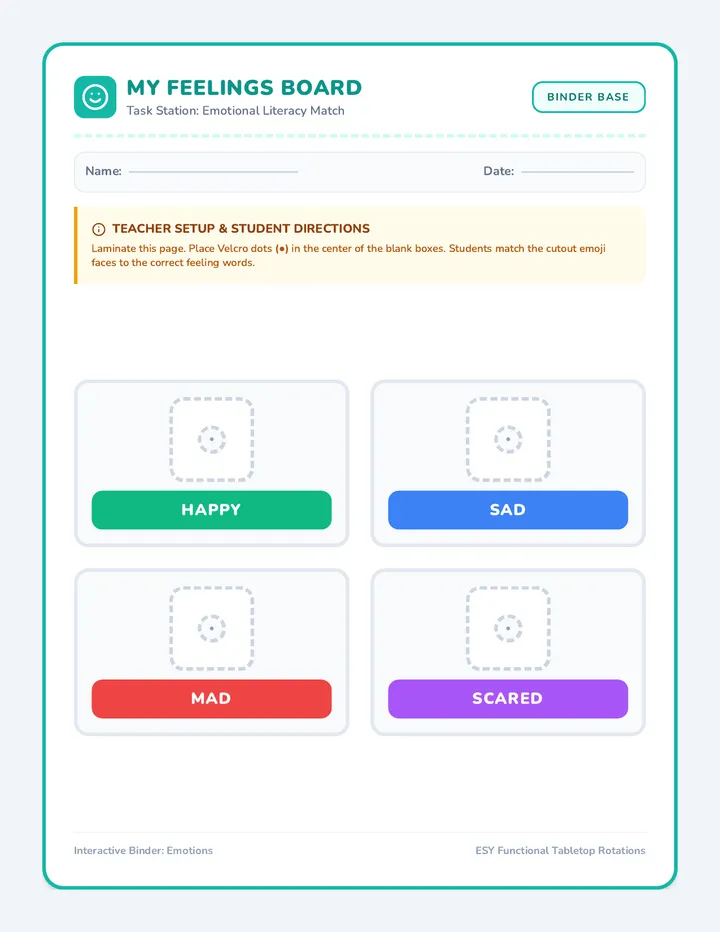
A structured social skills lesson for 8th grade students, focusing on peer interaction steps, emotional recognition, and self-regulation strategies using a 'Social Blueprint' theme.
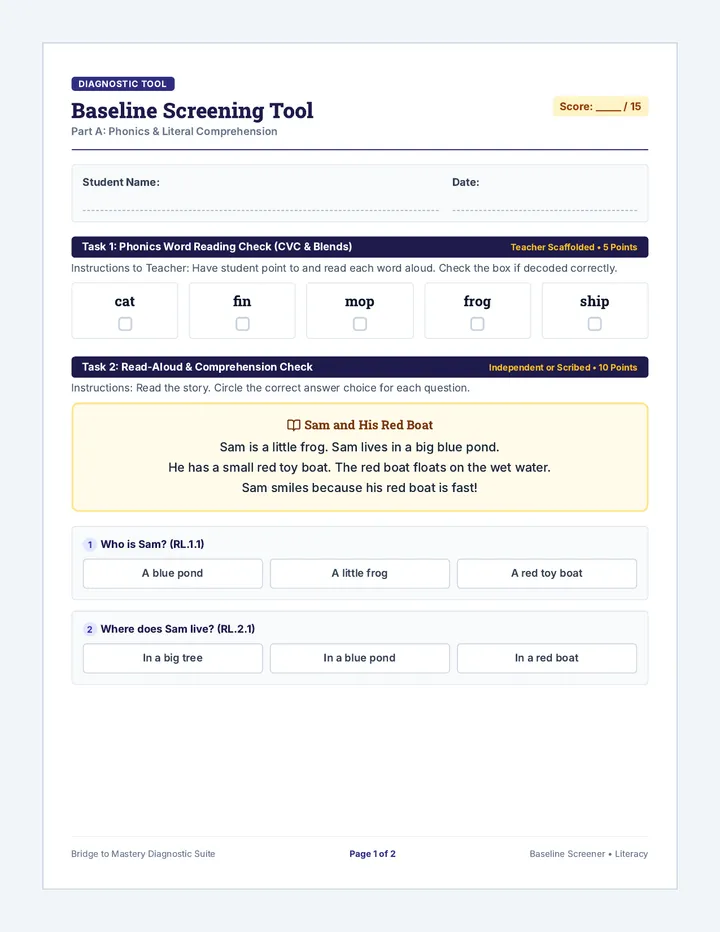
A comprehensive assessment focusing on decoding 2-3 syllable words across various syllable patterns including closed, VCe, r-controlled, open, and vowel teams.
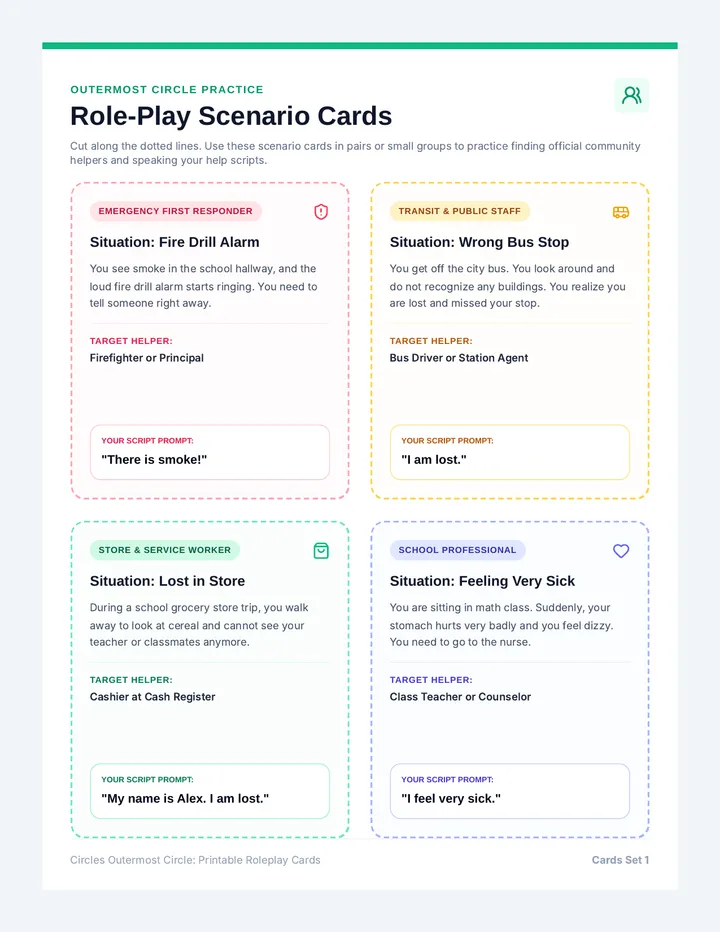
Provides structured role-playing scenarios and simulation activities to practice self-regulation and impulse control in real-world contexts.
Guides the student in building a personalized 'Regulation Menu' of strategies to use when emotional signals become too high-energy or overwhelming.
Introduces the concept of 'latency'—the gap between a stimulus and a response—and teaches the 'Stop, Scan, Select' protocol for impulse control.
Focuses on identifying internal physical signals (emotions) and mapping how they feel in the body using a technical 'dashboard' metaphor.
Focuses on the mechanics of initiating and maintaining reciprocal conversations using structured frameworks like OCQ and AAA.
A comprehensive system for 7th-grade students to monitor and improve their academic engagement, sensory needs, and growth mindset using a personalized 'Dashboard' approach.
A comprehensive social skills lesson focusing on conversation starters, active listening, and social cues for 6th grade autistic students using a 'Chat Circuit' tech theme.
This lesson provides an informal assessment for students to demonstrate their ability to read 2-3 syllable words containing common prefixes and suffixes. It includes a student-facing word list and a corresponding teacher recording sheet.
A specialized lesson for 1st-grade students with autism, focusing on the reciprocal nature of friendships through a Valentine's Day theme. The lesson teaches giving and receiving kindness and identifying positive friend qualities.
A comprehensive lesson designed for K-1 students to develop self-regulation and safety skills through a 'Super Pilot' theme. This lesson includes a social story, movement breaks, and positive reinforcement strategies to address hyperactivity and defiance.
A lesson designed for high school students to build self-awareness regarding their personal strengths and challenges, while teaching concrete strategies for identifying when and how to advocate for help in various environments.
A comprehensive lesson for high school special education students focusing on the 'ripple effect' of kindness through active listening, self-appreciation, and community building. Includes a hands-on chain-building craft and a daily challenge exit ticket.
A structured social skills session for 9th-grade students on the autism spectrum, focusing on identifying communication preferences and celebrating individual strengths through a 'Blueprint' theme.
A vocabulary assessment for the novel 'The Watsons Go to Birmingham – 1963' focused on the words desperate, exasperated, hypnotized, jabber, and tempt. Designed with accessibility and clear character context for scholars.
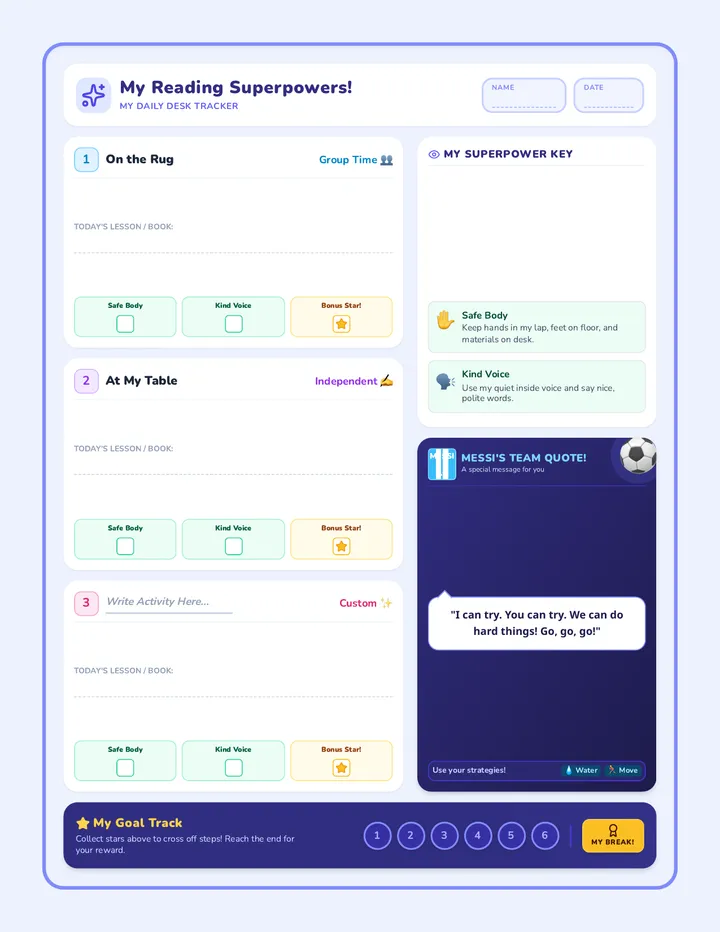
A soccer-themed reward and self-reflection system designed for a 4th-grade student to track progress and manage emotions through a growth mindset lens.
A lesson designed to help students master their morning routine through a structured token economy system focused on focus and completion.
A comprehensive 100th-day activity for high school special education students focusing on 100 practical life-skill math problems covering budgeting, time management, and social problem-solving.
A set of resources designed to monitor and improve a student's ability to independently initiate small-group academic tasks. Includes a detailed data tracking sheet and a facilitator guide for consistent implementation.