Introduces the 'Problem Sizing' framework to help students match their reactions to the size of the problem.
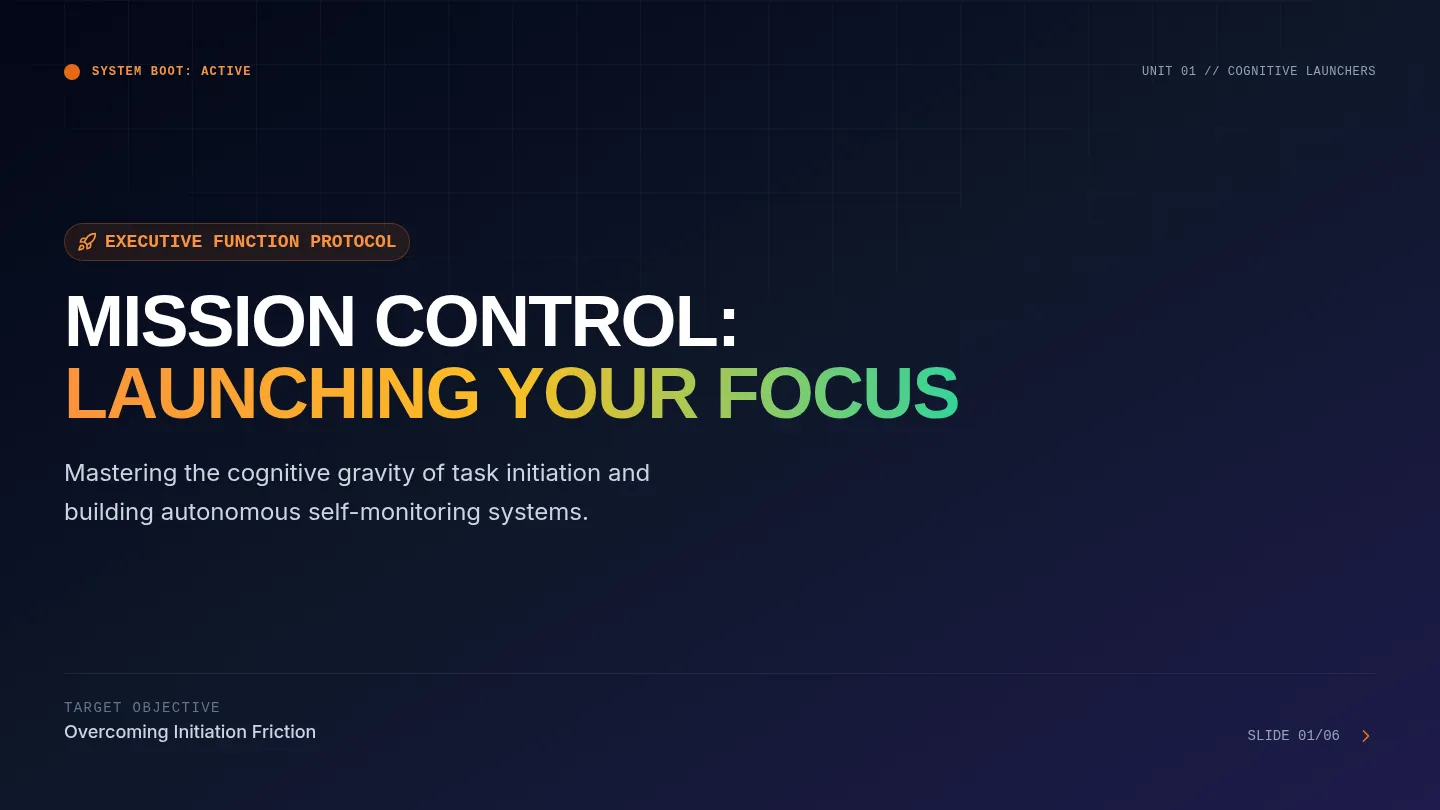
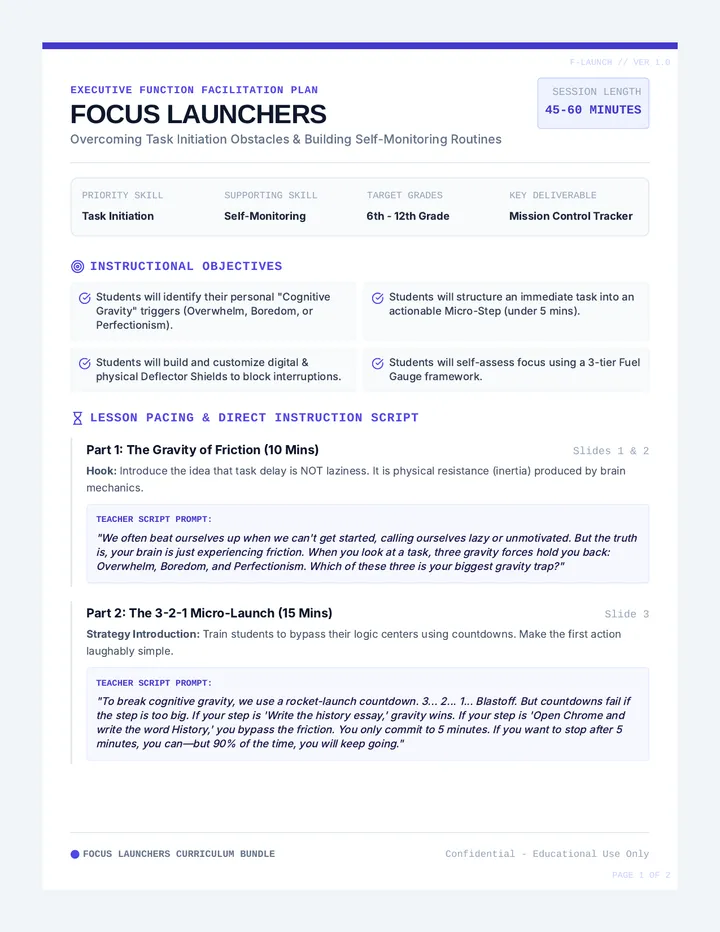
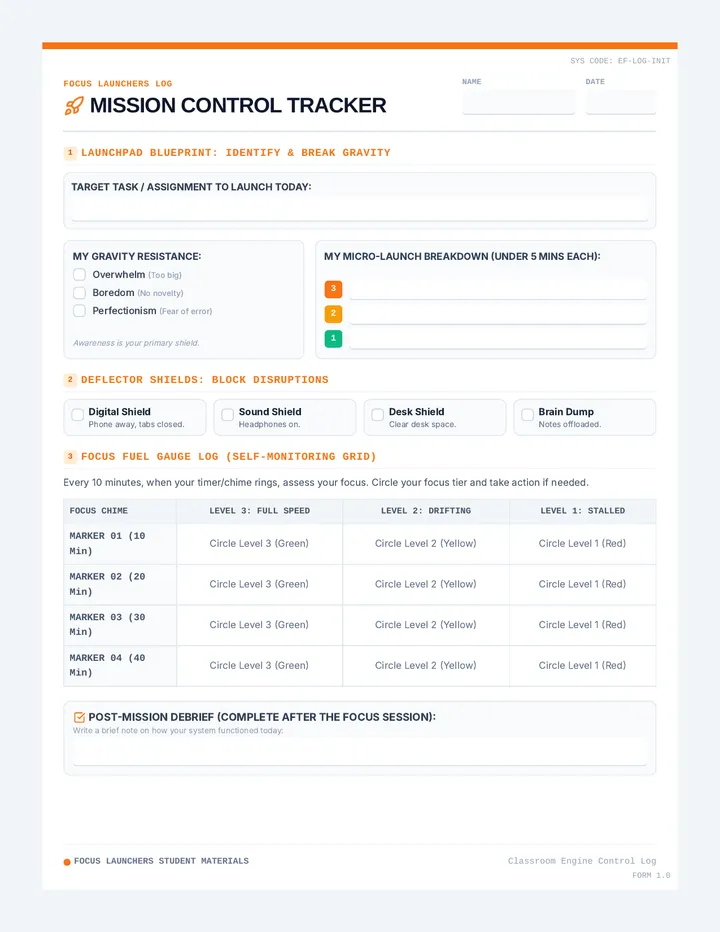
A comprehensive lesson package designed to teach students how to recognize initiation blocks, launch tasks using structured strategies, and self-monitor their focus independently. includes presentation slides, a teacher facilitation guide, and a student self-monitoring workbook.
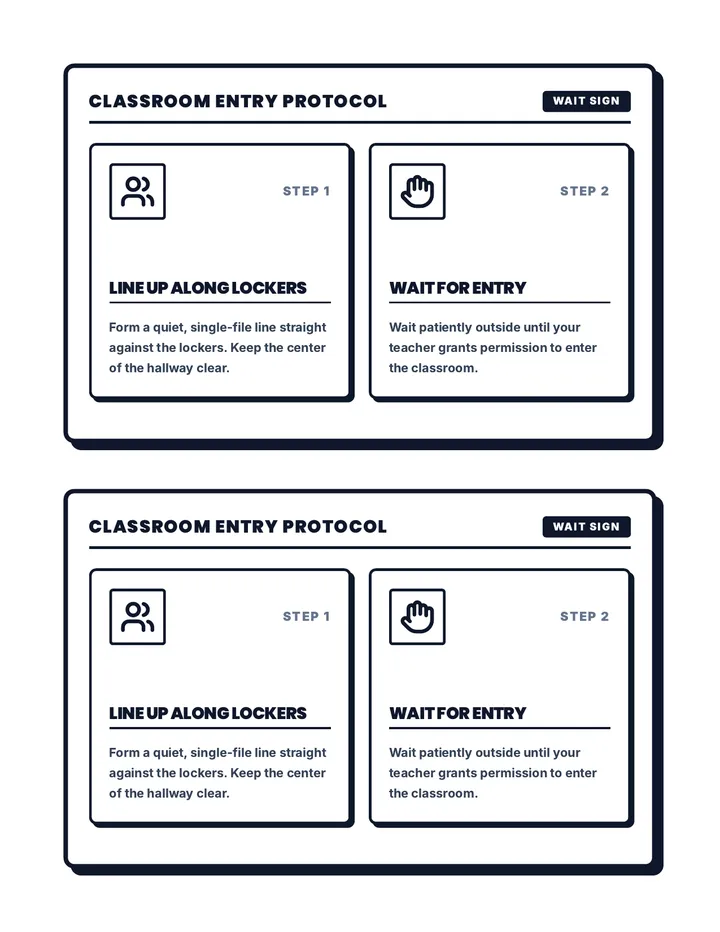
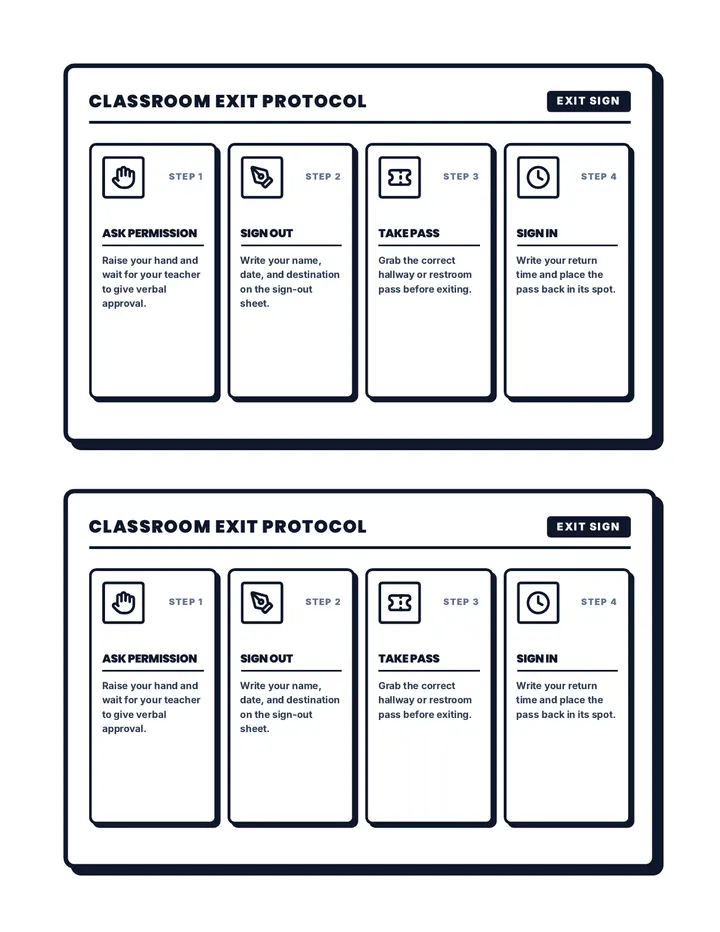
A collection of matching visual aids and signs to help manage classroom routines and expectations, including entry and exit procedures.
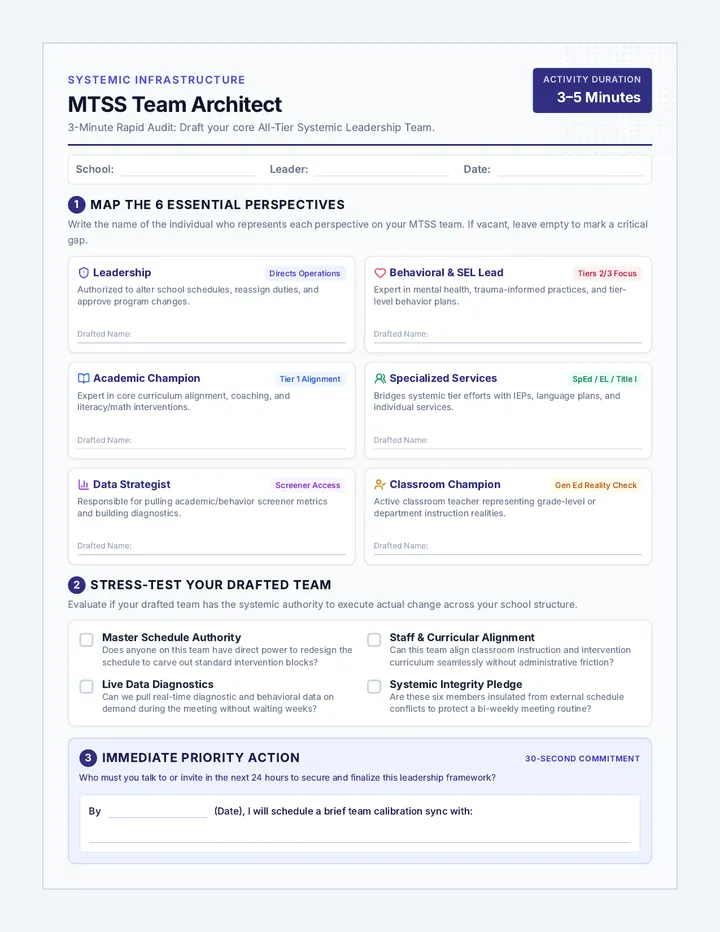
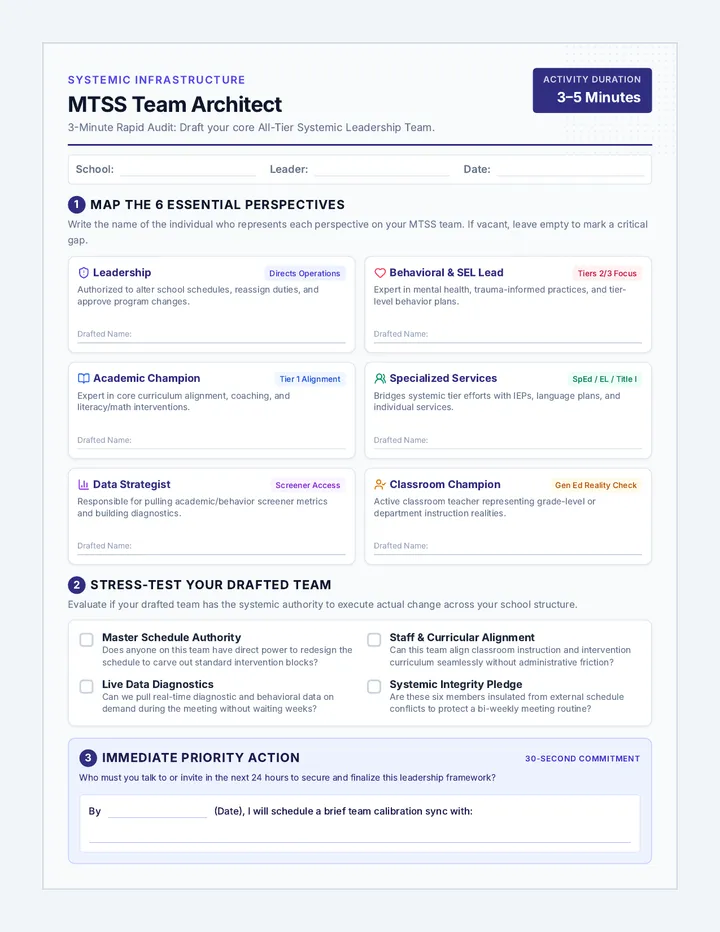
A rapid, action-oriented lesson designed for school leaders to analyze, audit, and draft their All-Tier Systemic MTSS leadership team in under five minutes.
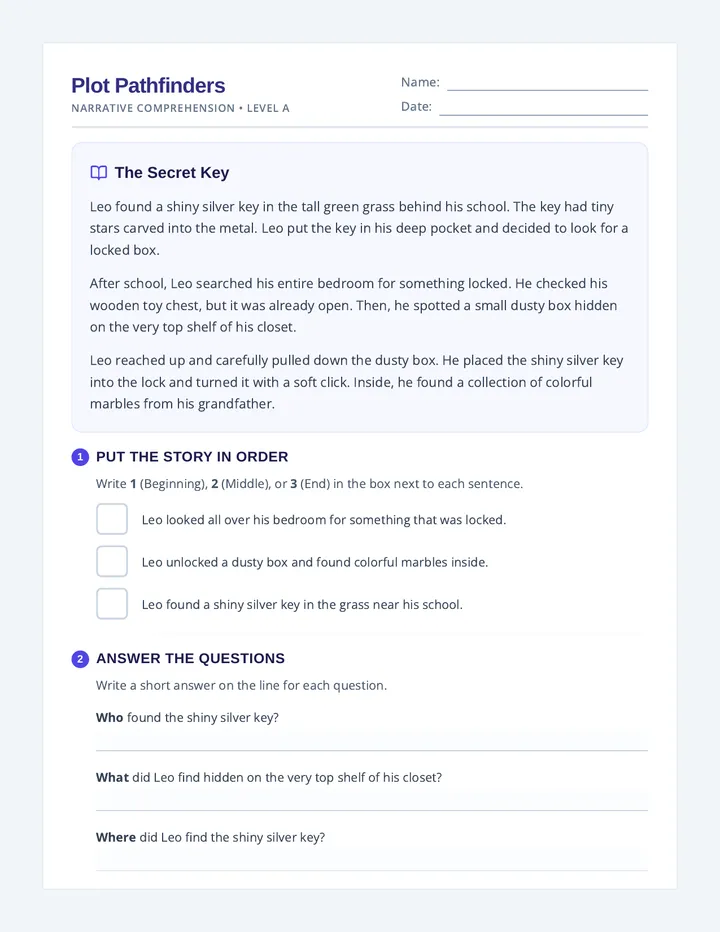
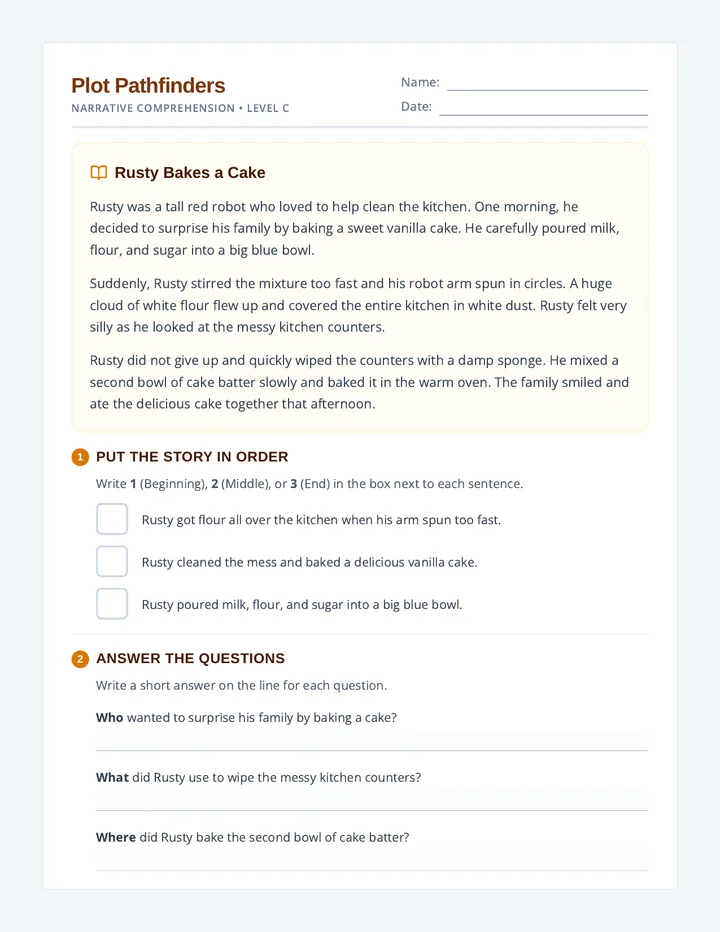
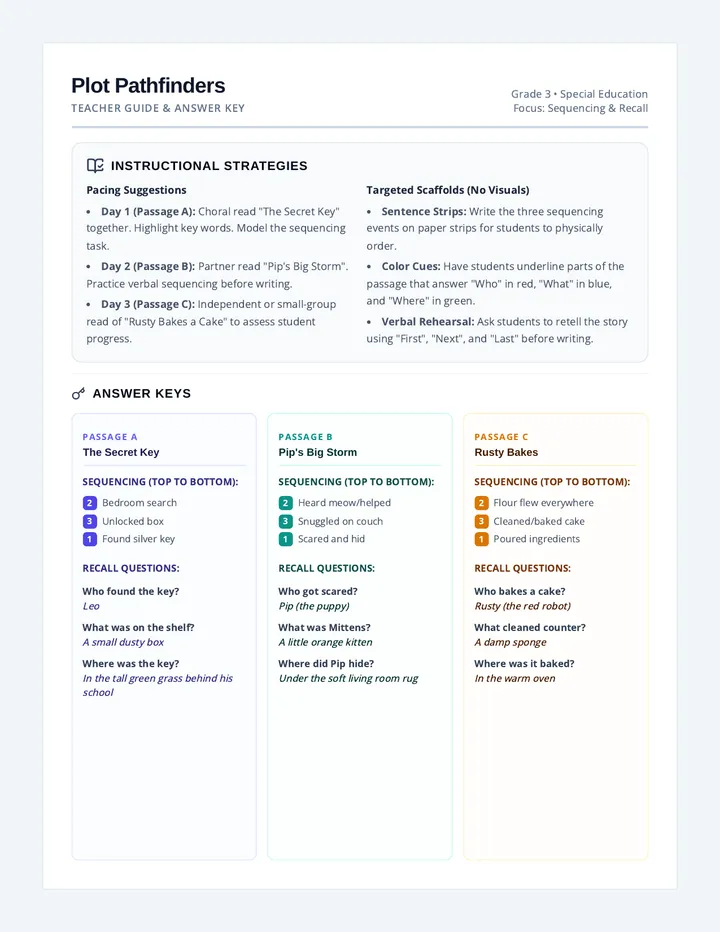
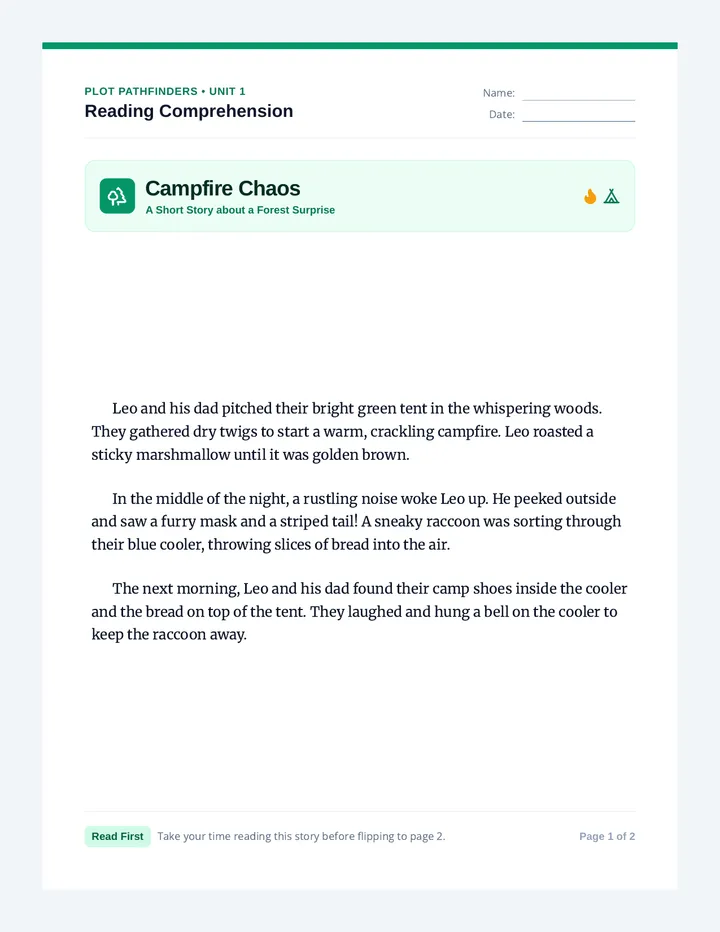
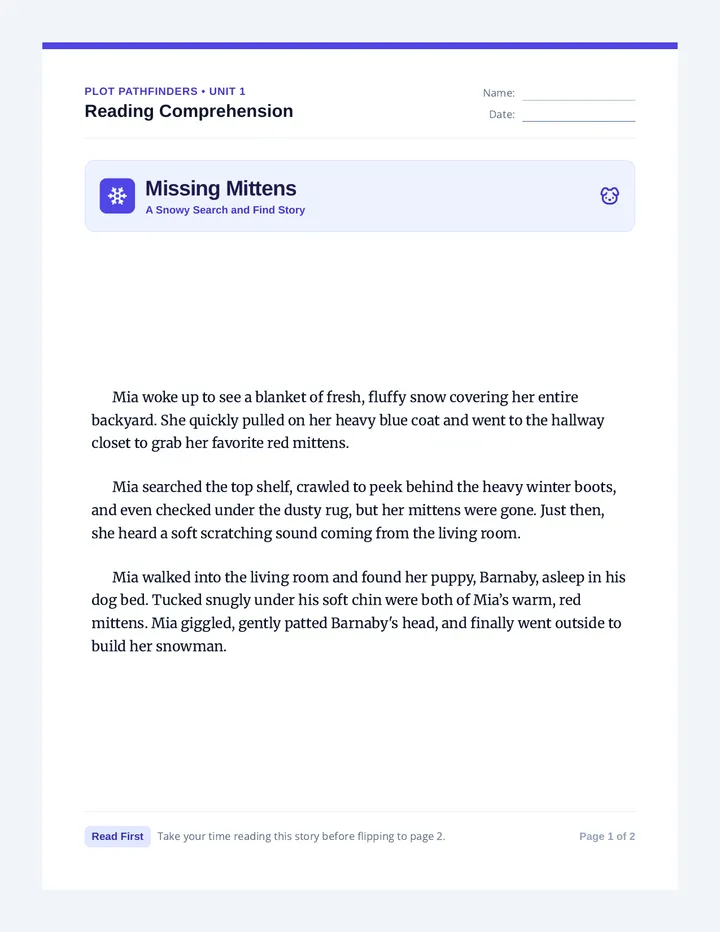
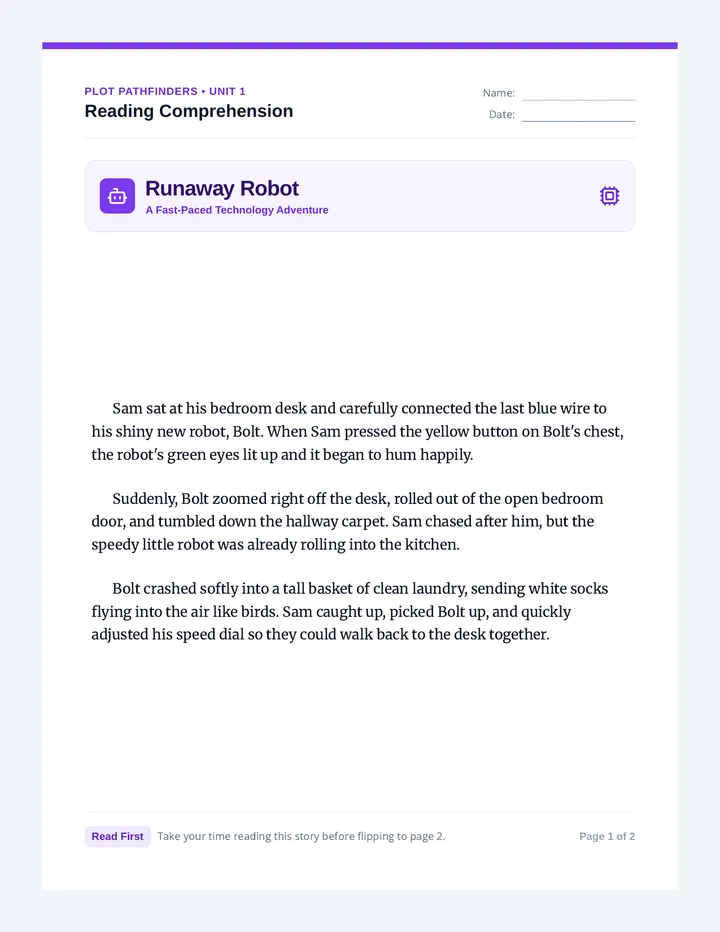
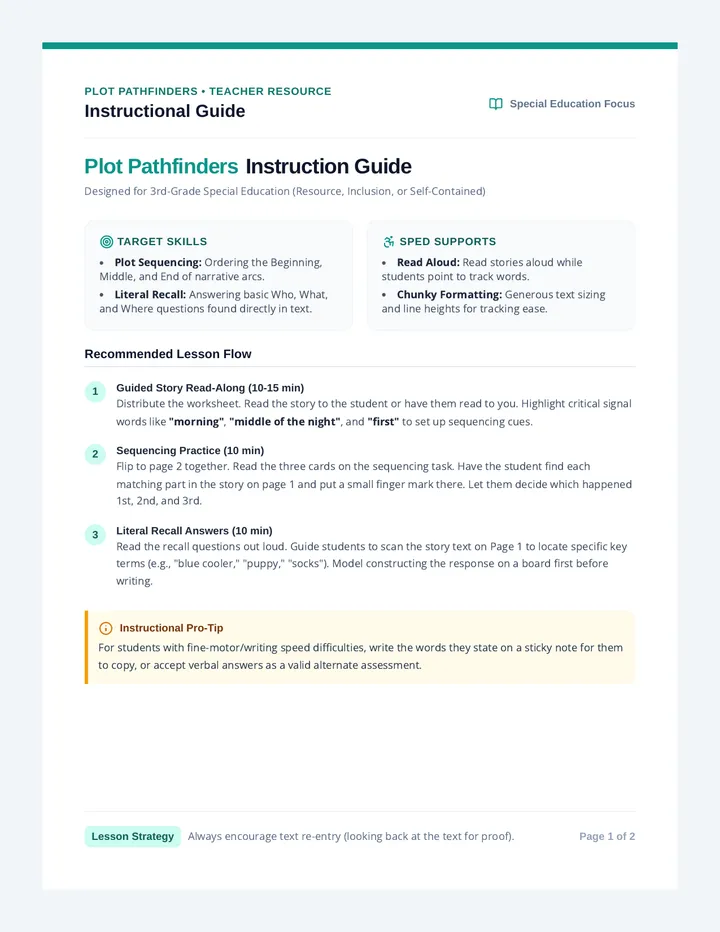
A reading comprehension lesson designed for 3rd-grade special education. It includes three narrative passages with three paragraphs each, focusing on sequencing events and literal recall questions (who, what, where).
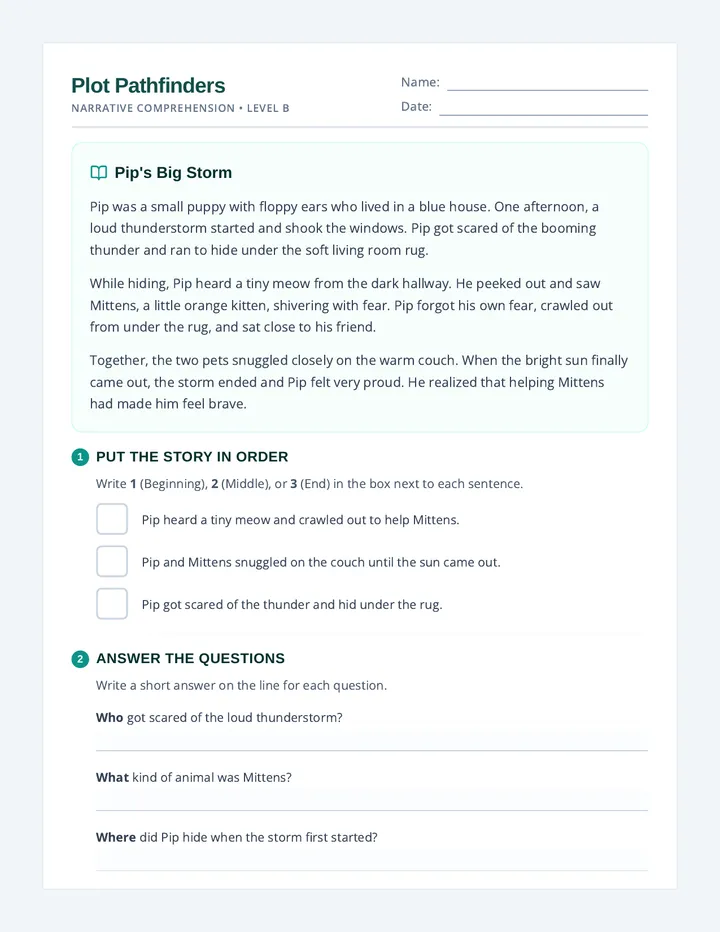
A reading comprehension lesson focused on narrative sequencing and simple literal recall for 3rd-grade special education students. Features three engaging, three-paragraph short stories with tailored open-ended questions.
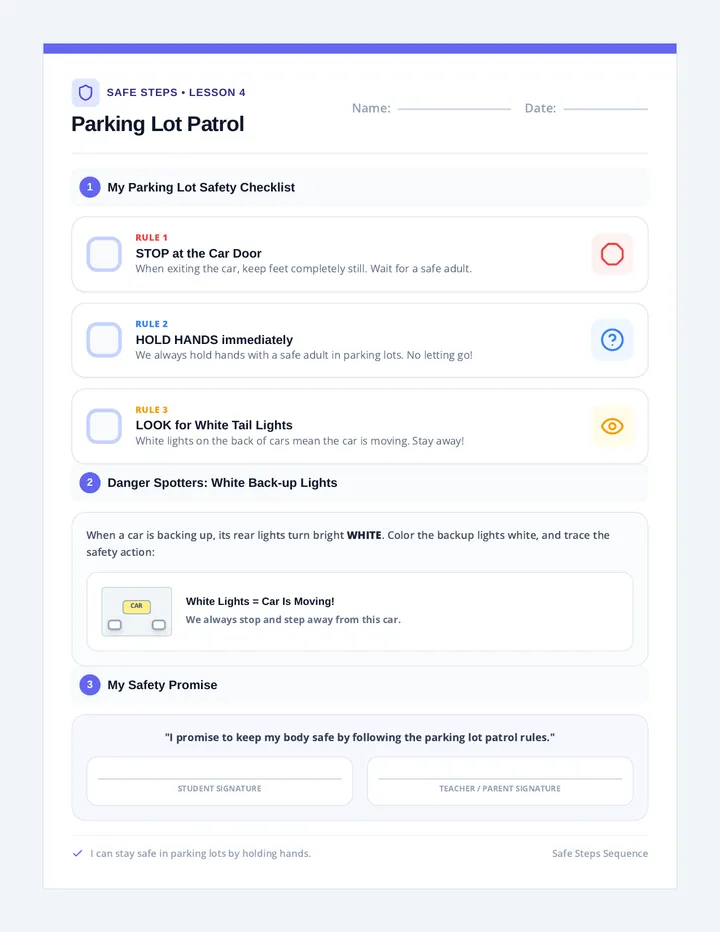
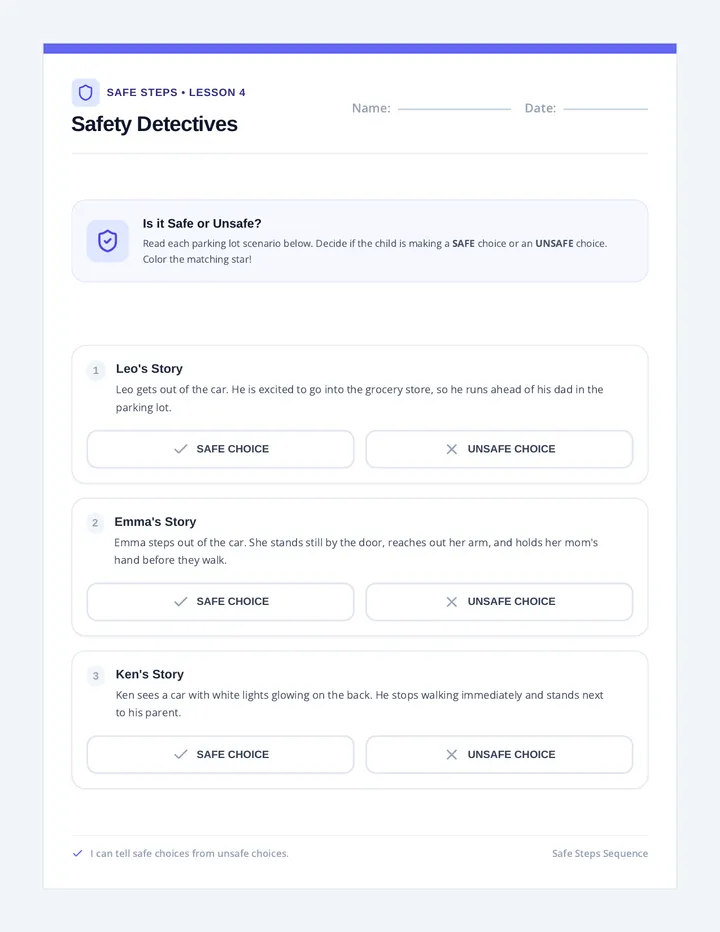
A structured, action-oriented lesson to teach parking lot safety rules, emphasizing the "Stop, Look, Hold Hands" routine and staying next to the vehicle.
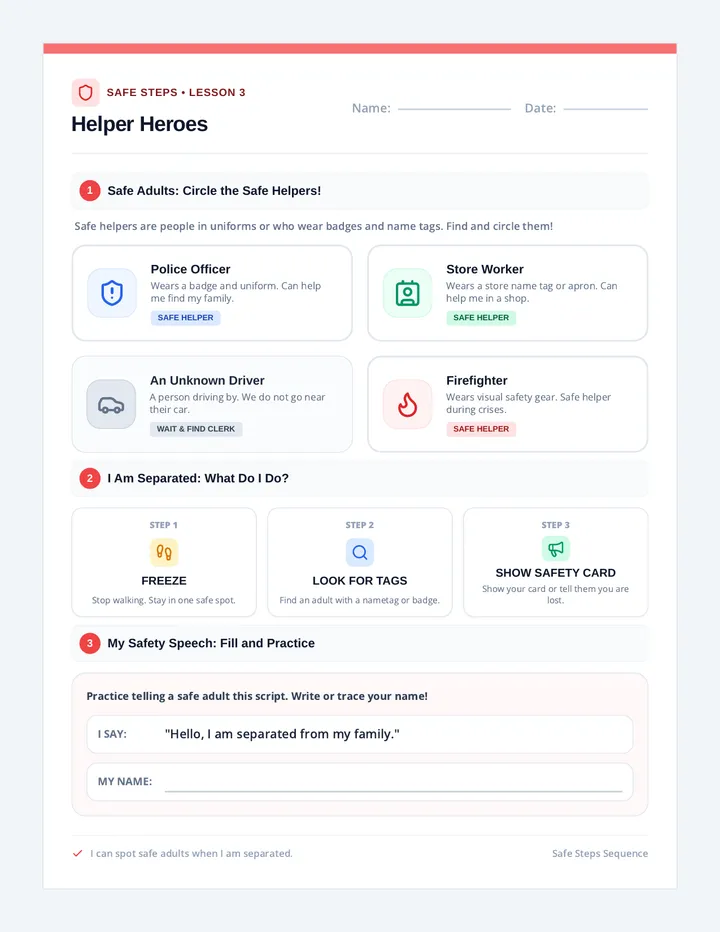
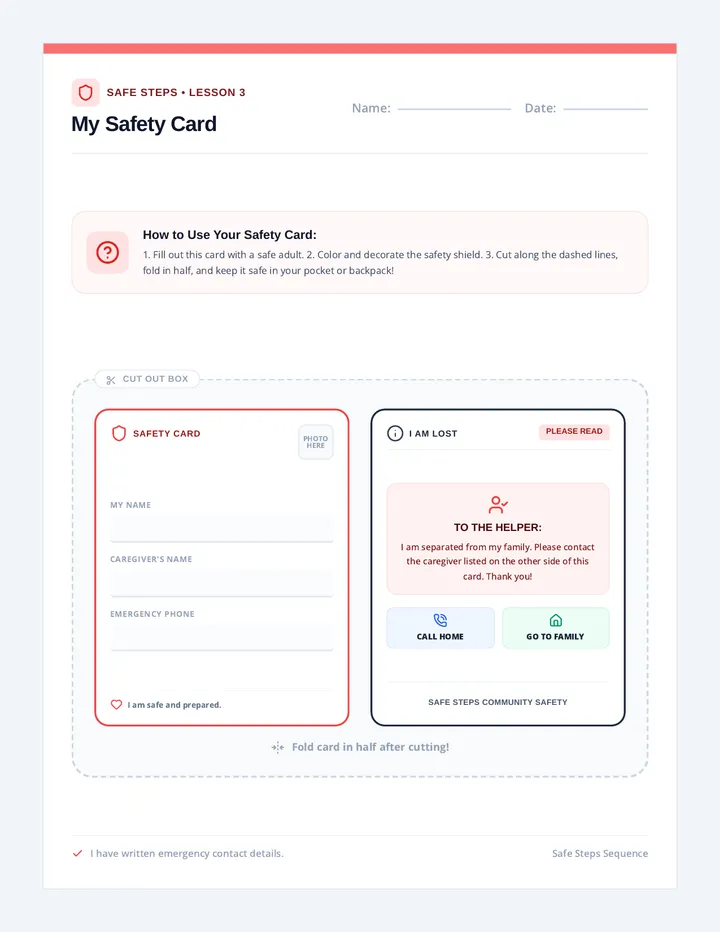
A concrete, sensory-friendly lesson teaching children how to identify "safe adults" (police officers, store employees) and use structured communication routines if separated from a caregiver.
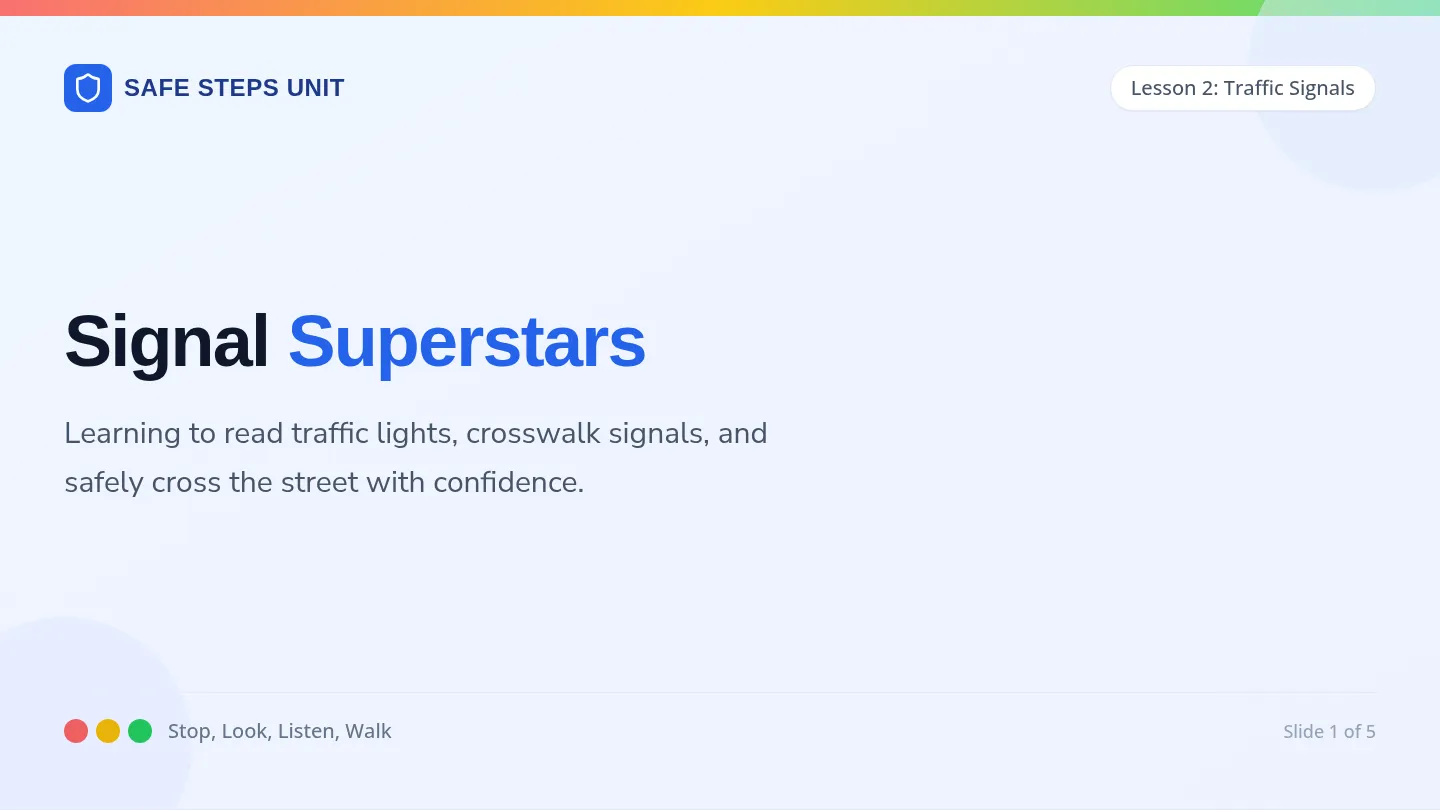
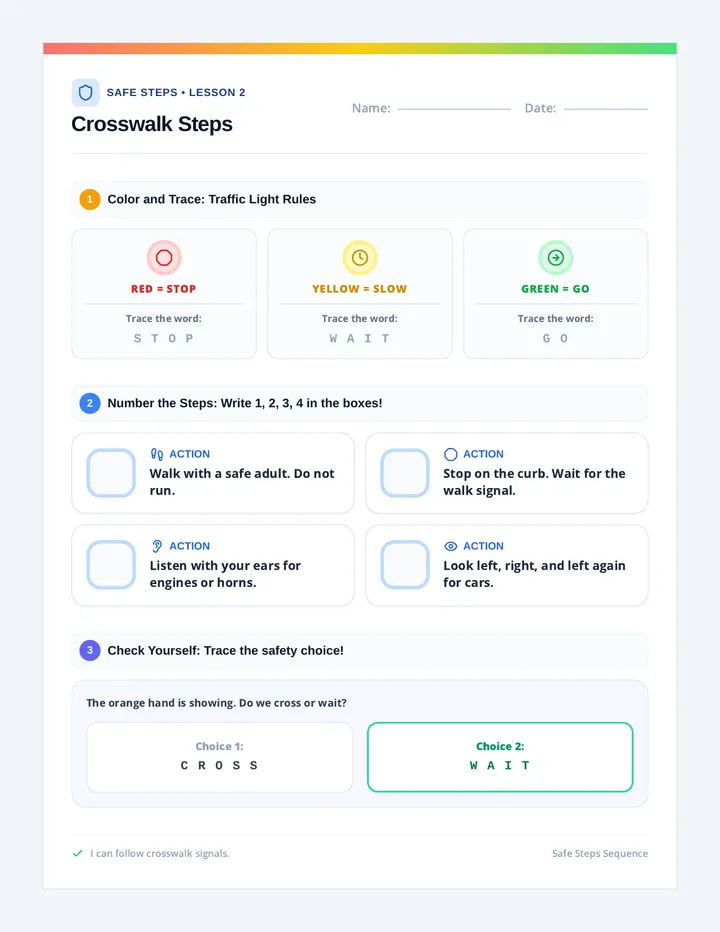
A highly visual, structured lesson focusing on understanding traffic lights, pedestrian crosswalk signals, and the action-steps for crossing the street safely.
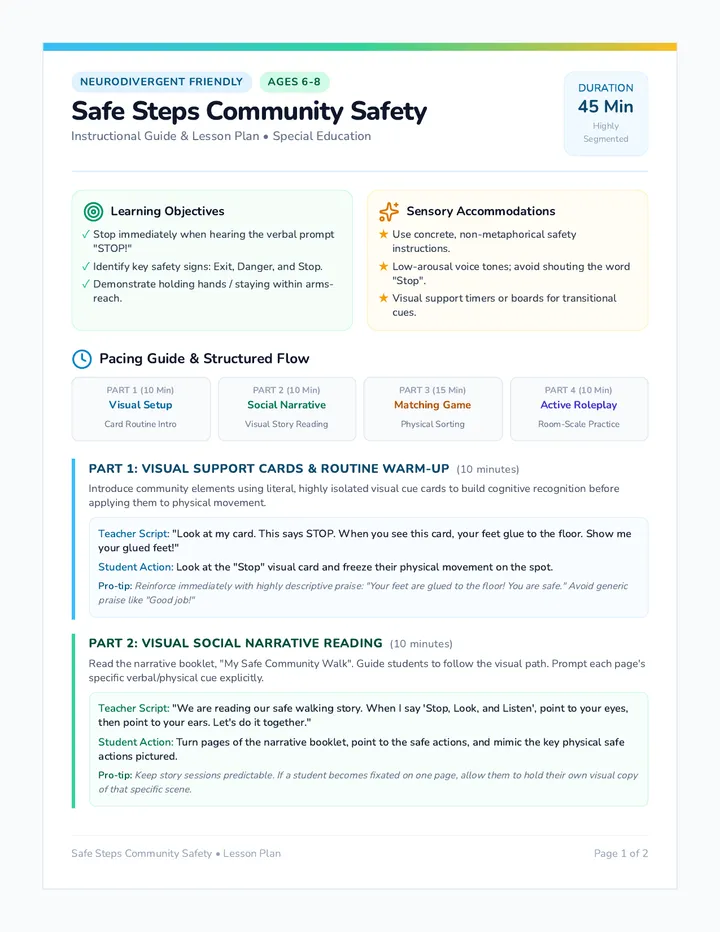
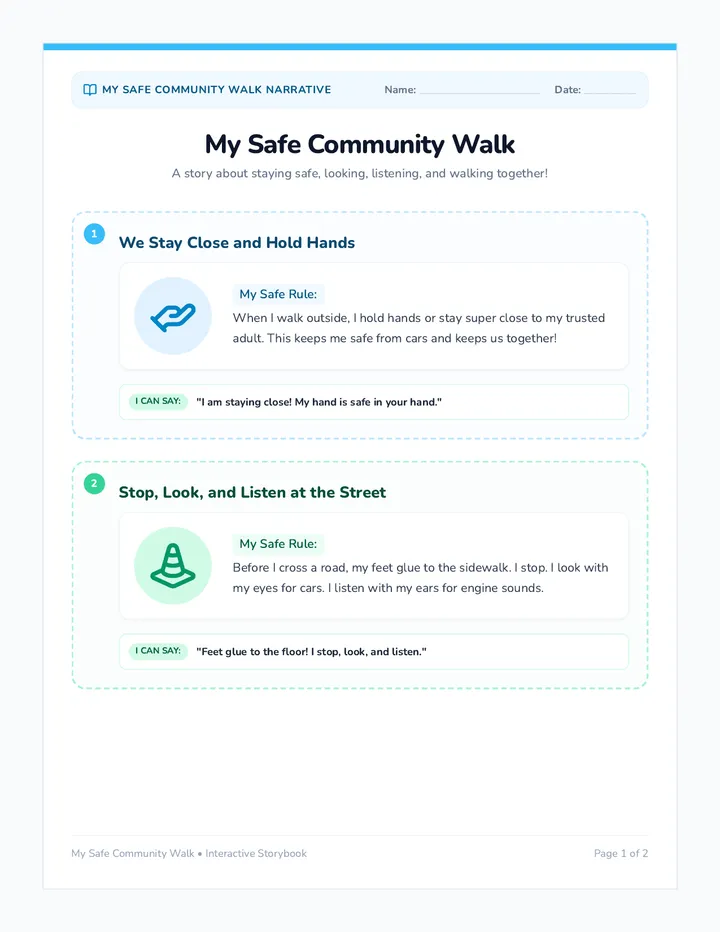
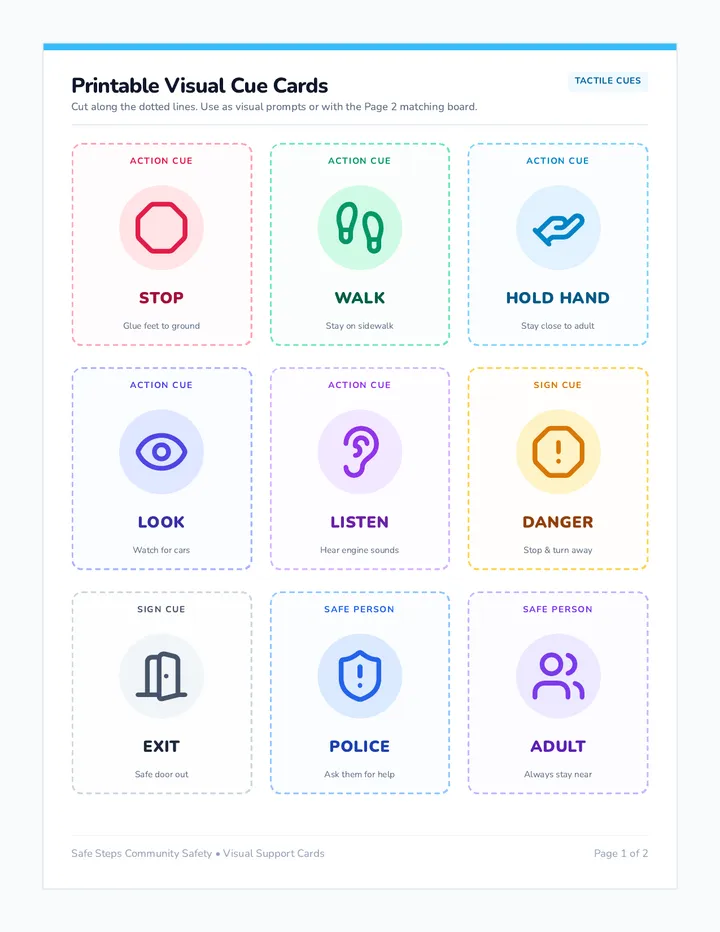
A highly structured, sensory-friendly lesson designed for children aged 6-8 with autism to learn and practice critical community safety directions through social narratives, visual support cards, and hands-on matching games.
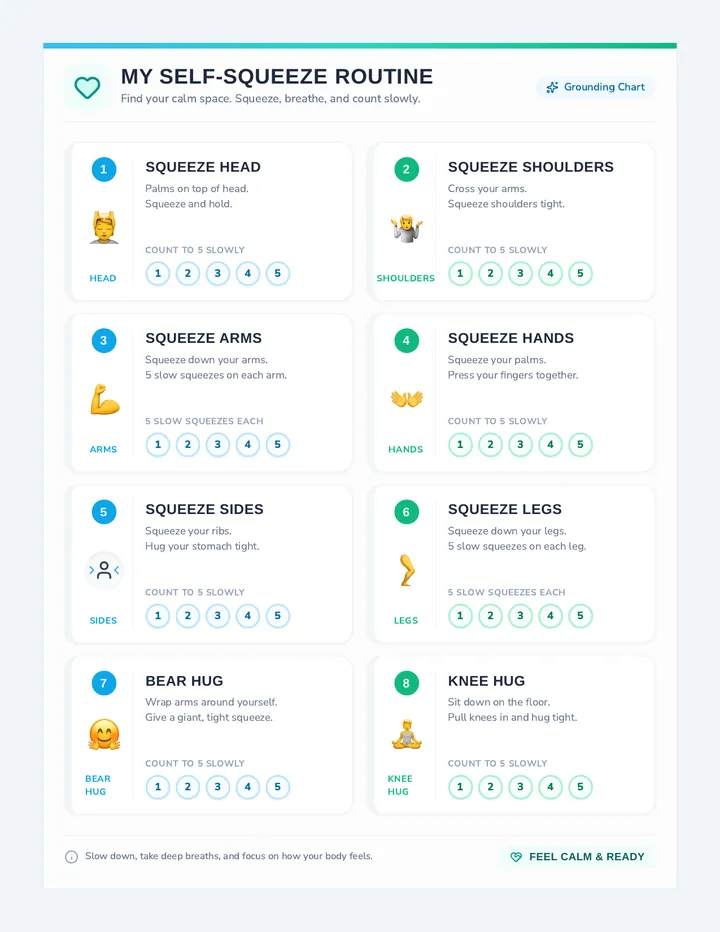
A pediatric grounding and sensory regulation lesson featuring a self-squeeze physical therapy routine to help students self-soothe and calm down.
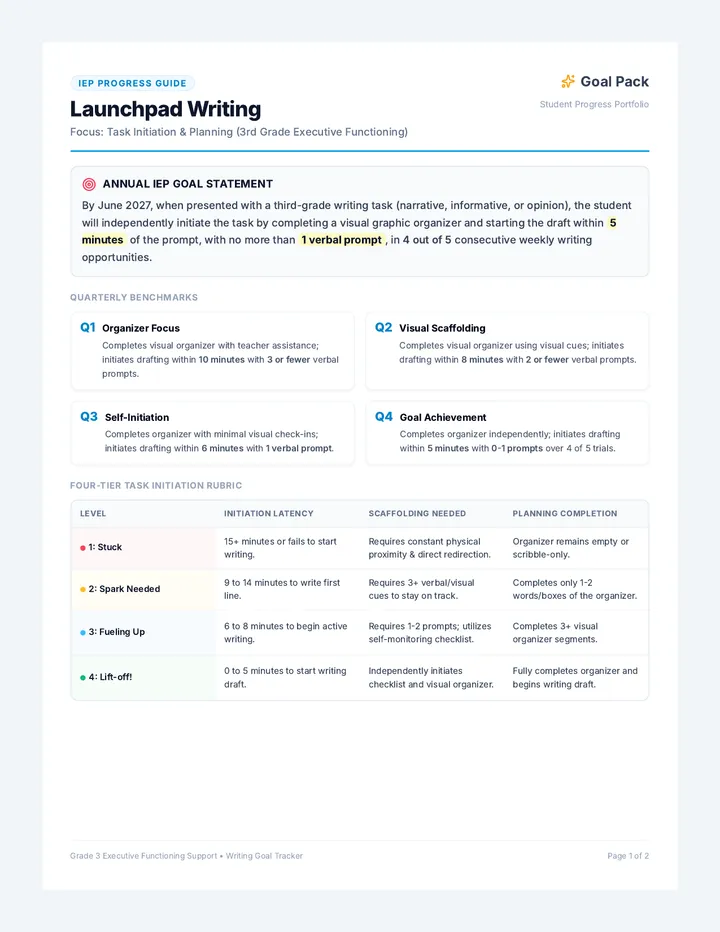
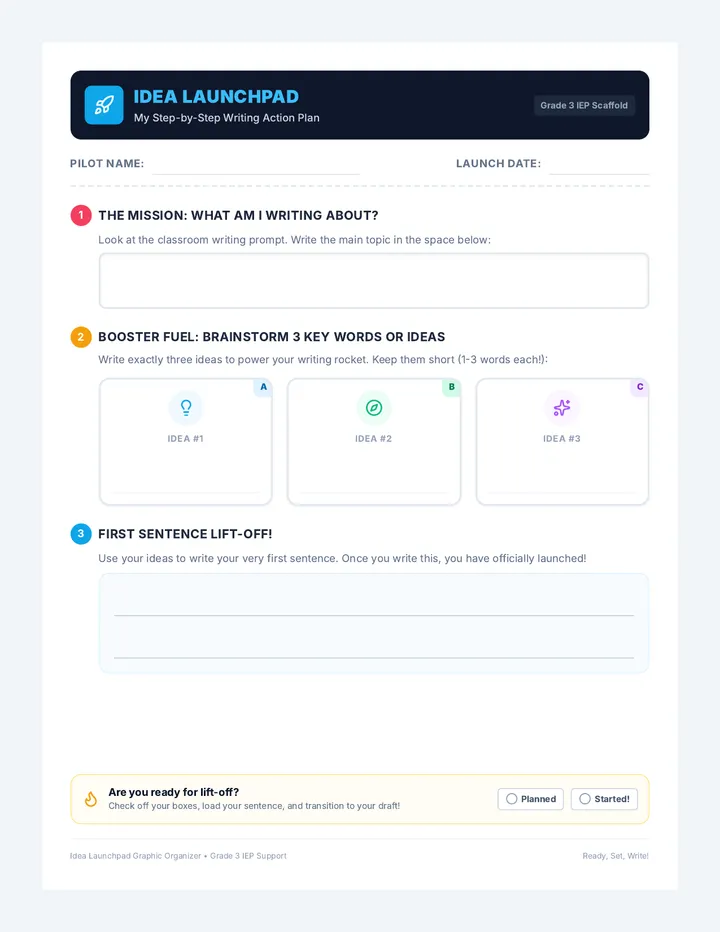
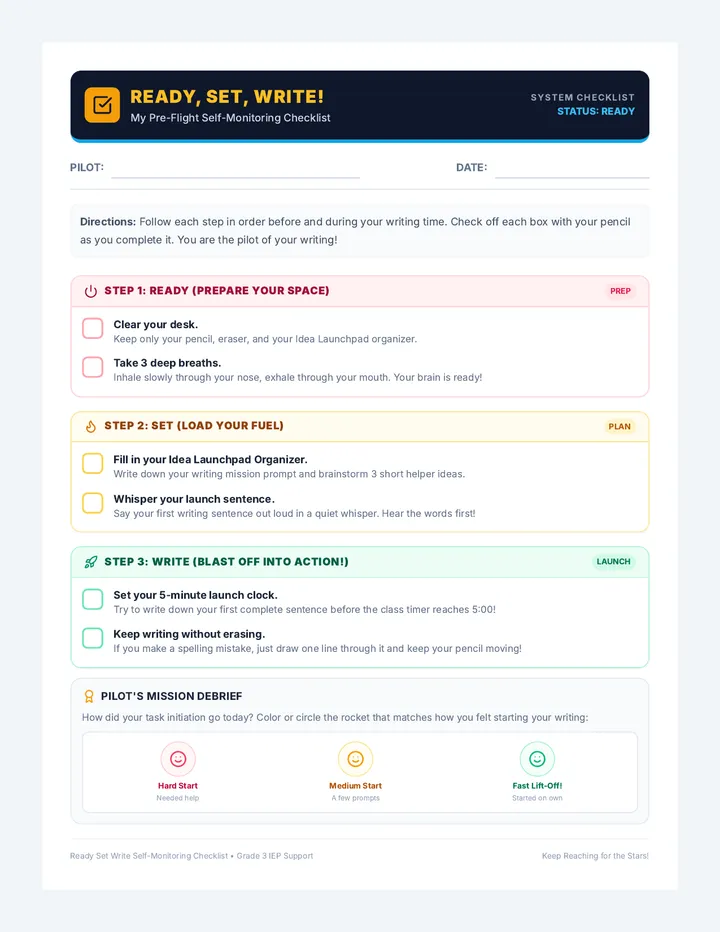
A comprehensive IEP support packet focused on third-grade task initiation and planning within the writing process. Includes teacher data tracking, structured graphic organizers, and self-monitoring visual checklists to help students start writing without getting stuck.
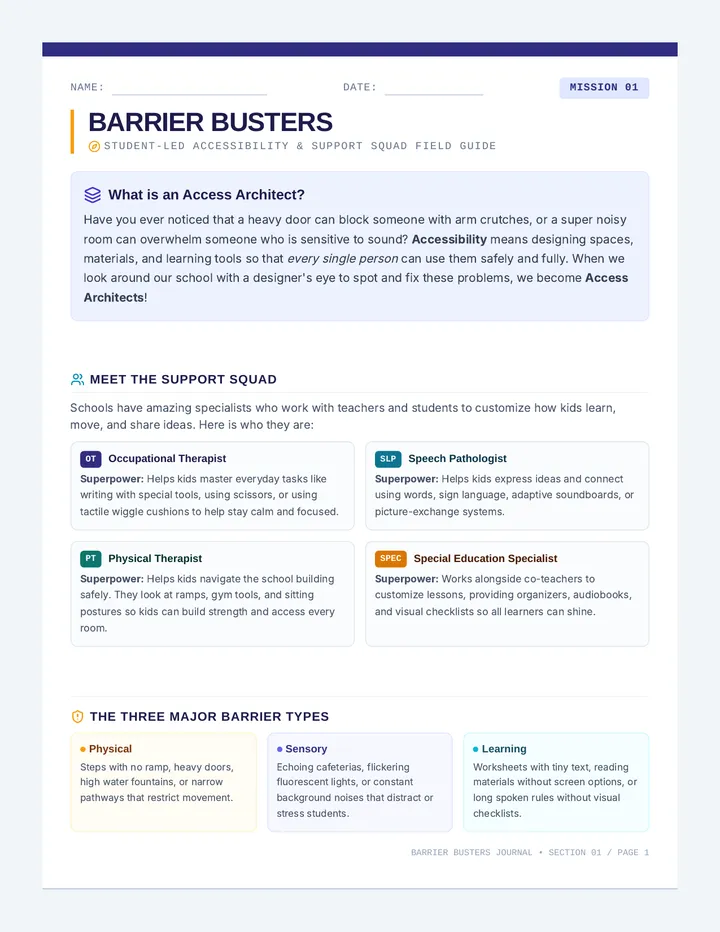
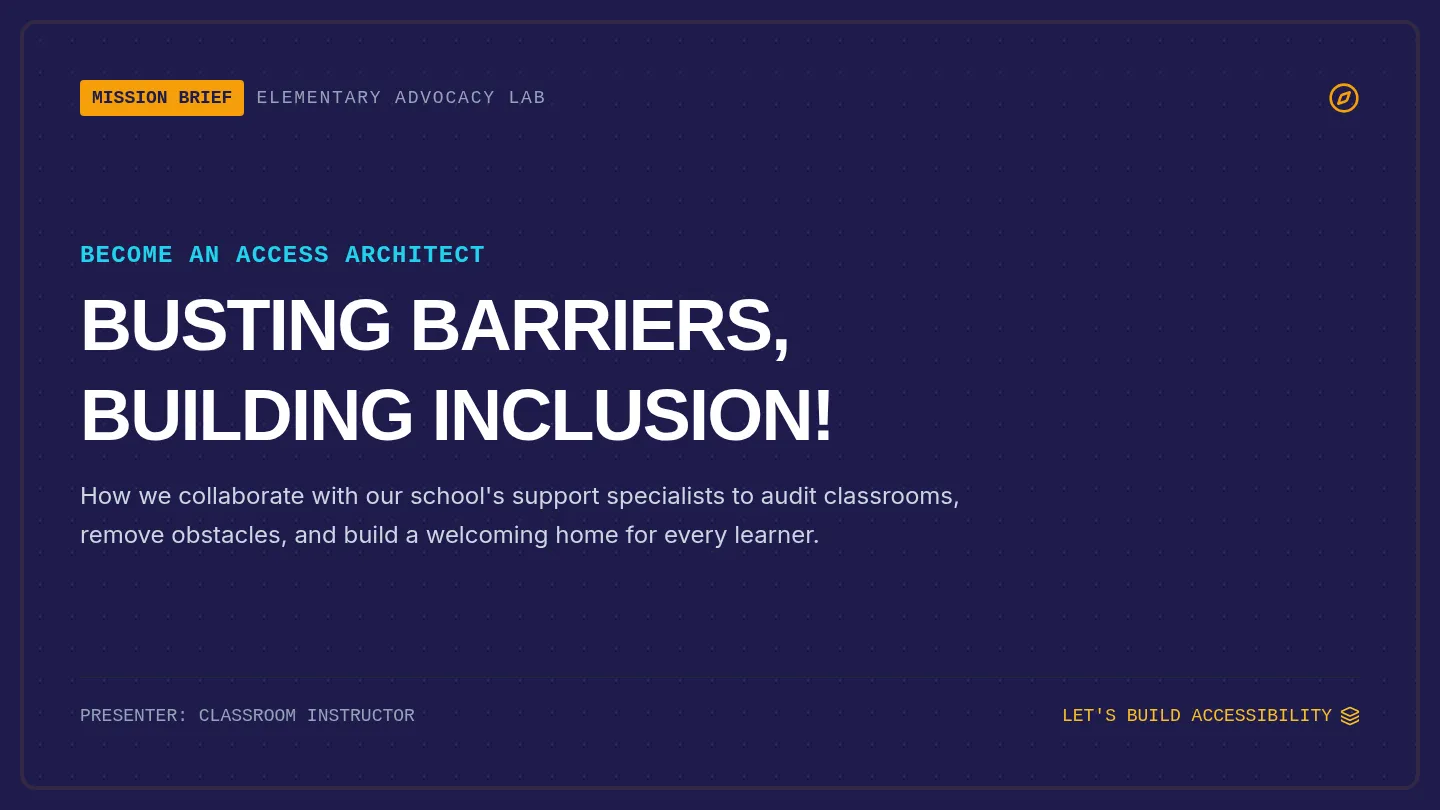
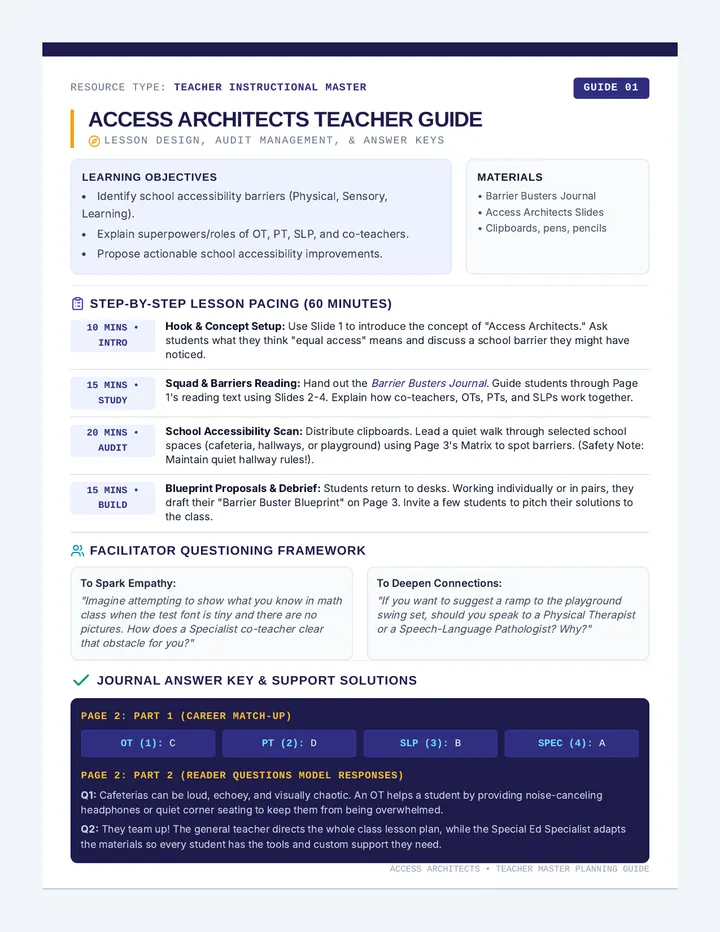
A student-led advocacy lesson focused on identifying school accessibility barriers and understanding special education careers. Students learn to collaborate with specialists, co-teachers, and therapists to make their school welcoming and accessible to everyone.
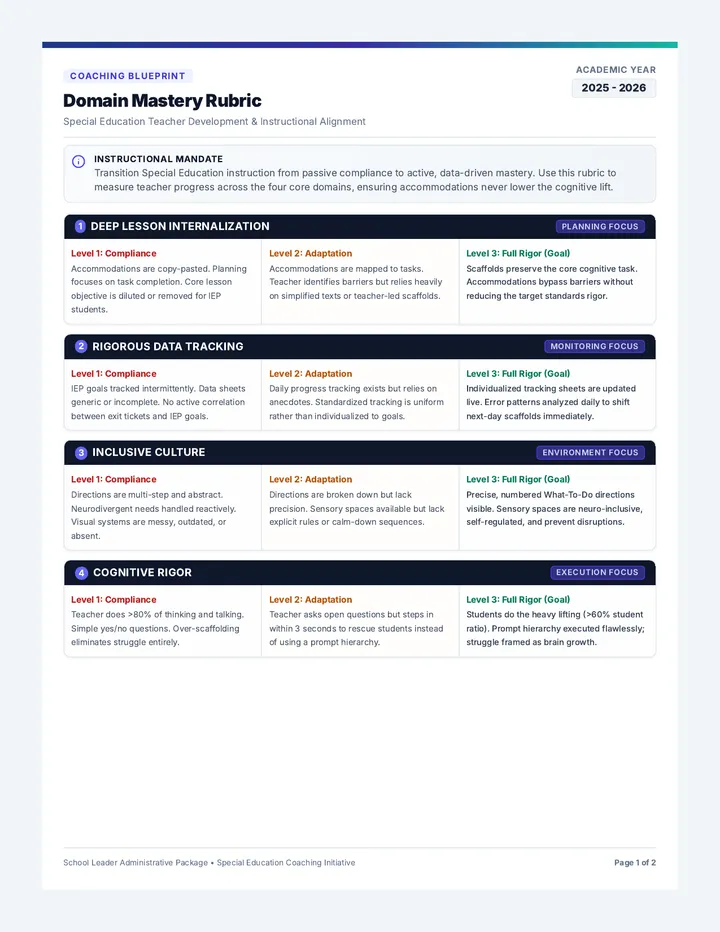
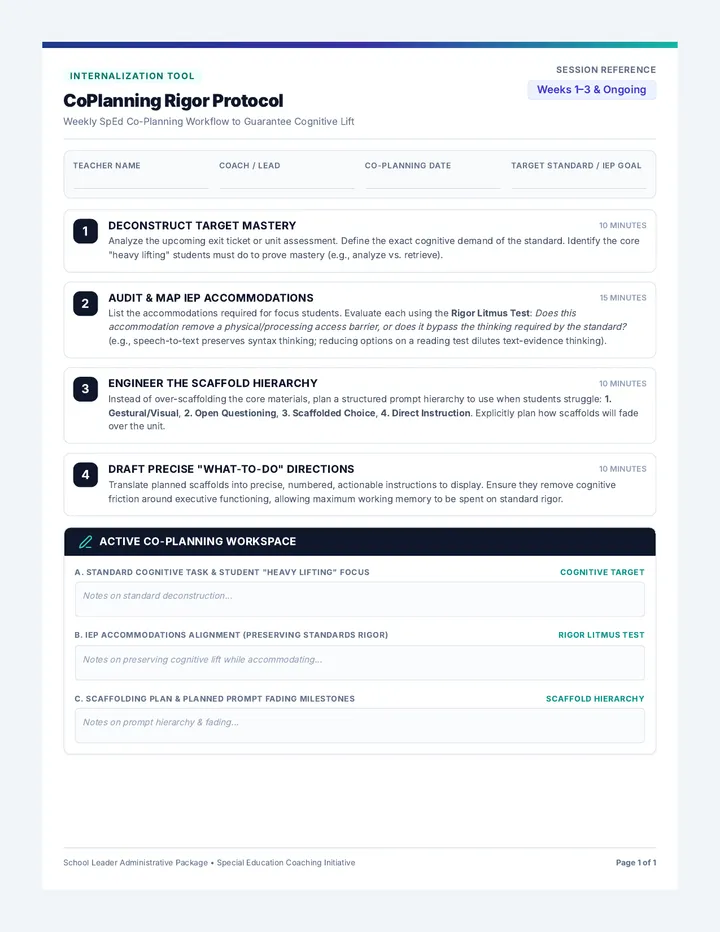
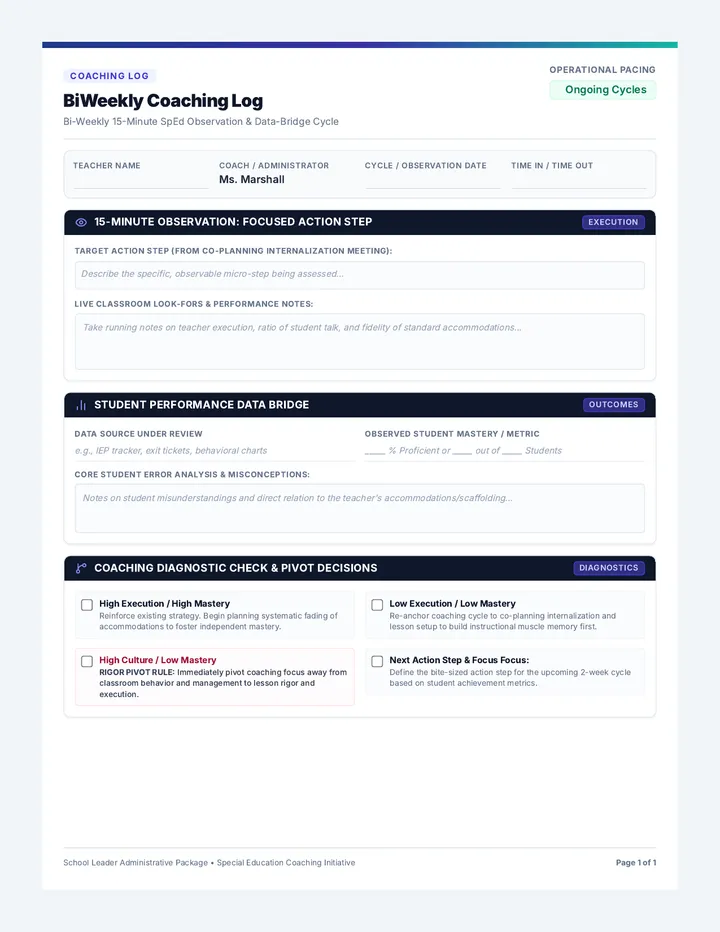
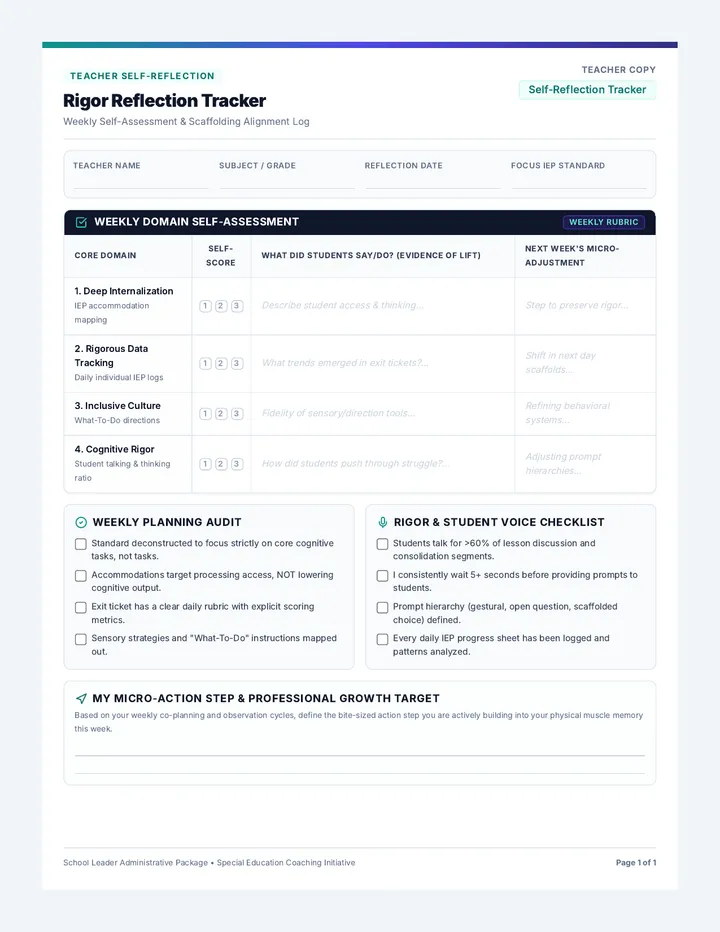
A comprehensive administrative coaching package designed to help school leaders transition Special Education teachers from general compliance monitoring to a highly responsive, data-driven coaching model across four core instructional domains.
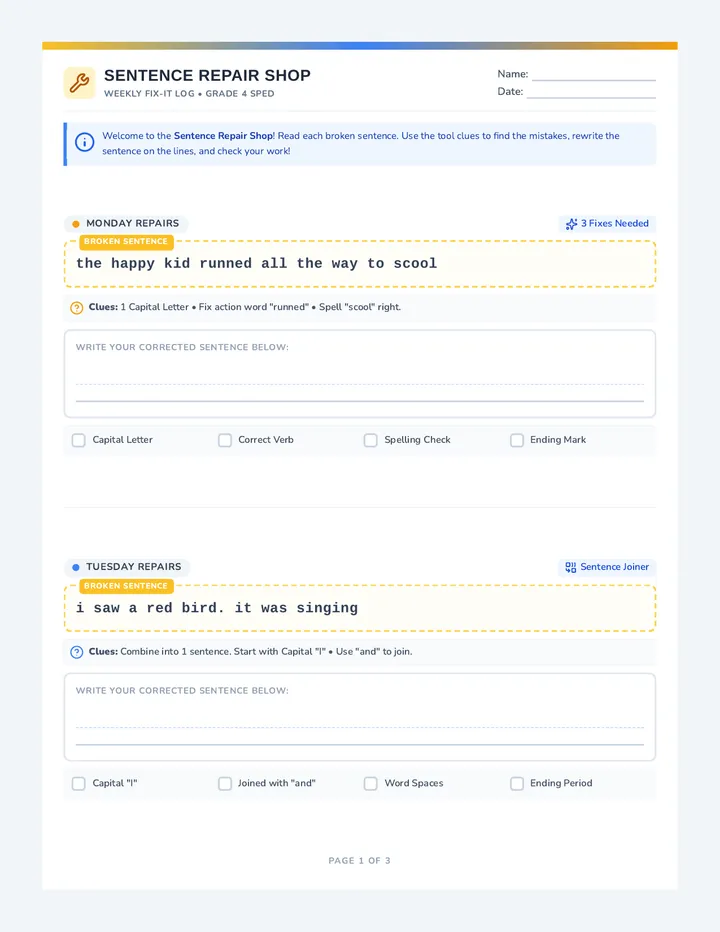
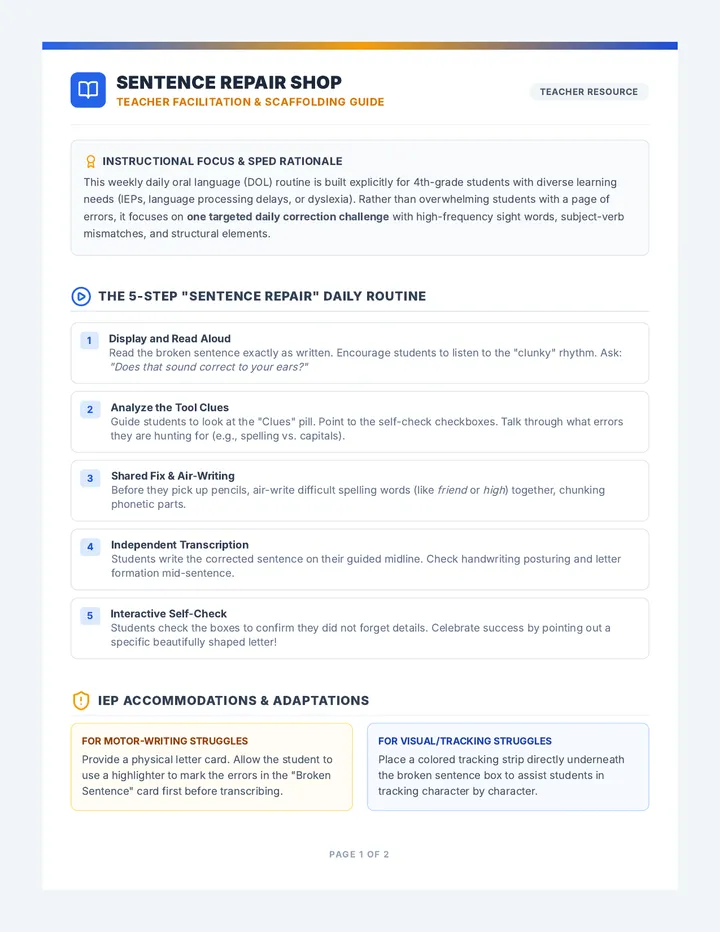
A structured weekly daily oral language (DOL) routine for 4th-grade special education students, focusing on sentence combining, subject-verb agreement, sight word spelling, and punctuation. Features scaffolding, systematic practice, and highly legible layouts.
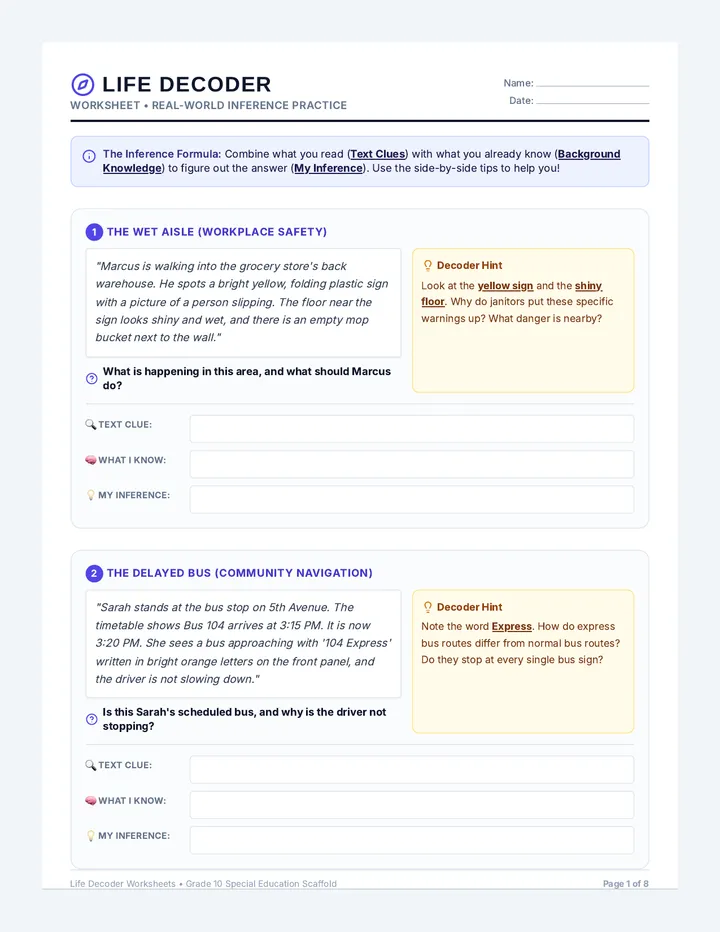
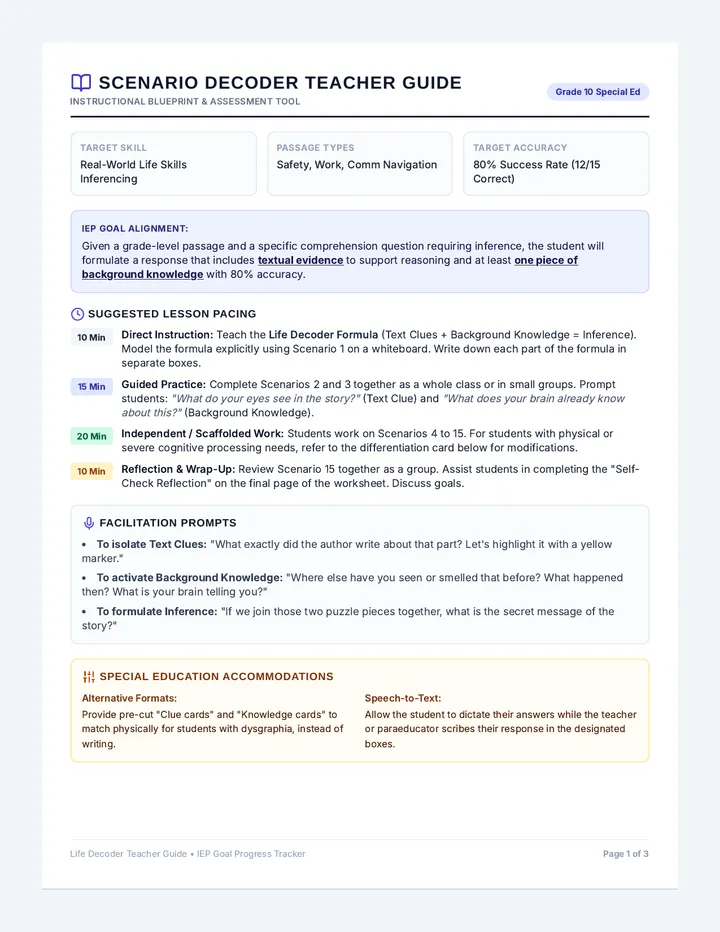
A lesson focused on developing real-world inferencing skills for tenth-grade students with special needs. Through life-skills scenarios, students learn to combine textual clues with prior knowledge to make logical conclusions.
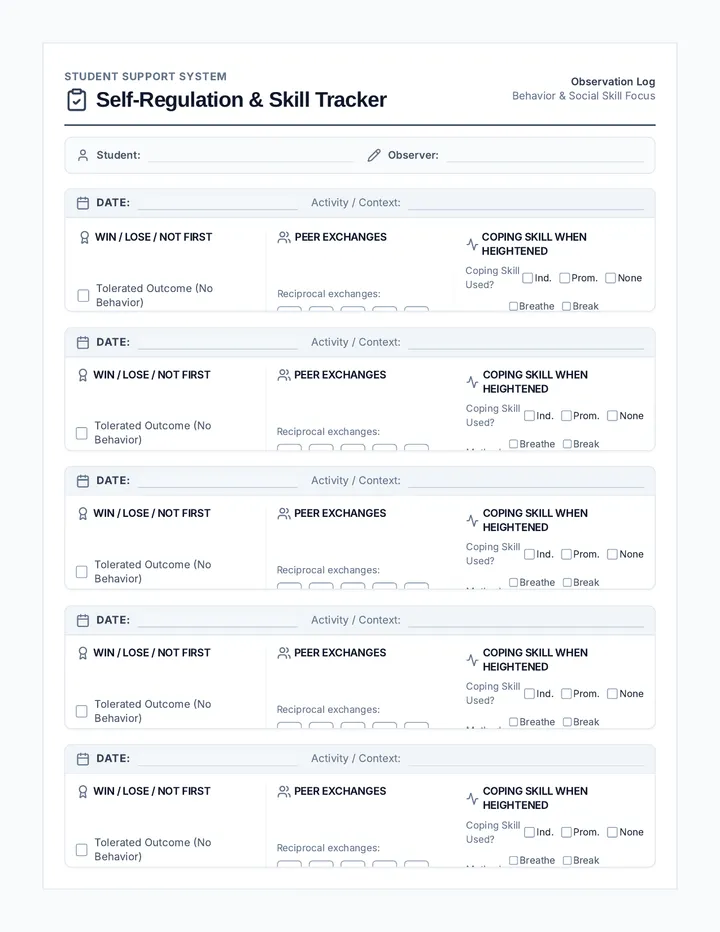
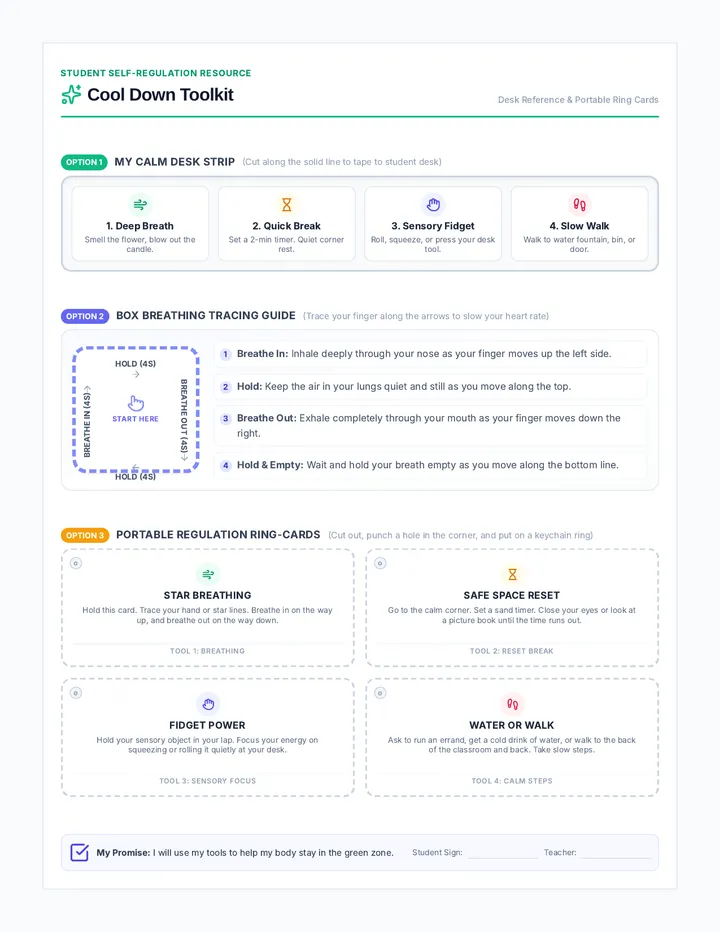
A comprehensive behavioral tracking and self-regulation kit focused on competitive grit, cooperative peer play, and calming strategies. This lesson contains a high-density daily data tracking sheet and a portable visual coping menu for desk-side student support.
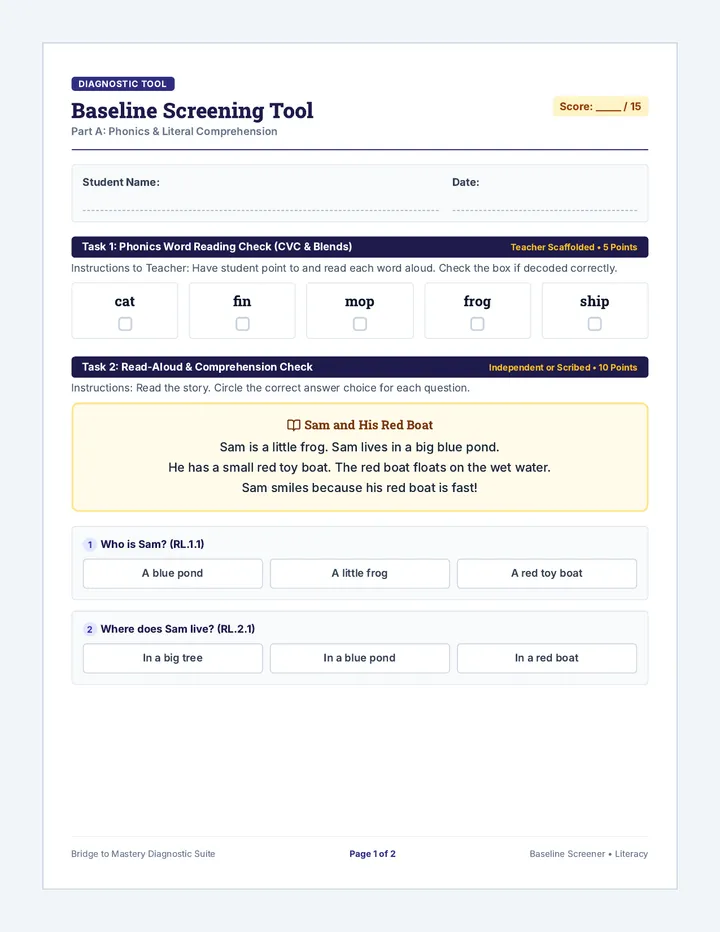
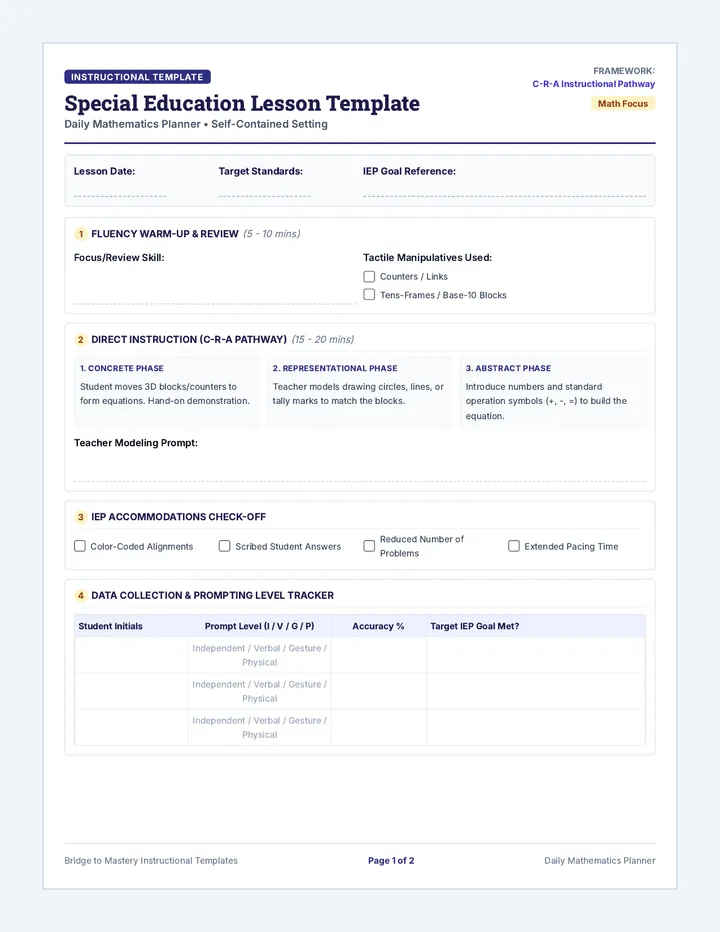
A collection of diagnostic screeners and specialized lesson planning templates designed for self-contained special education classrooms. These tools provide baseline student data and structure multi-sensory lessons to achieve target IEP goals.
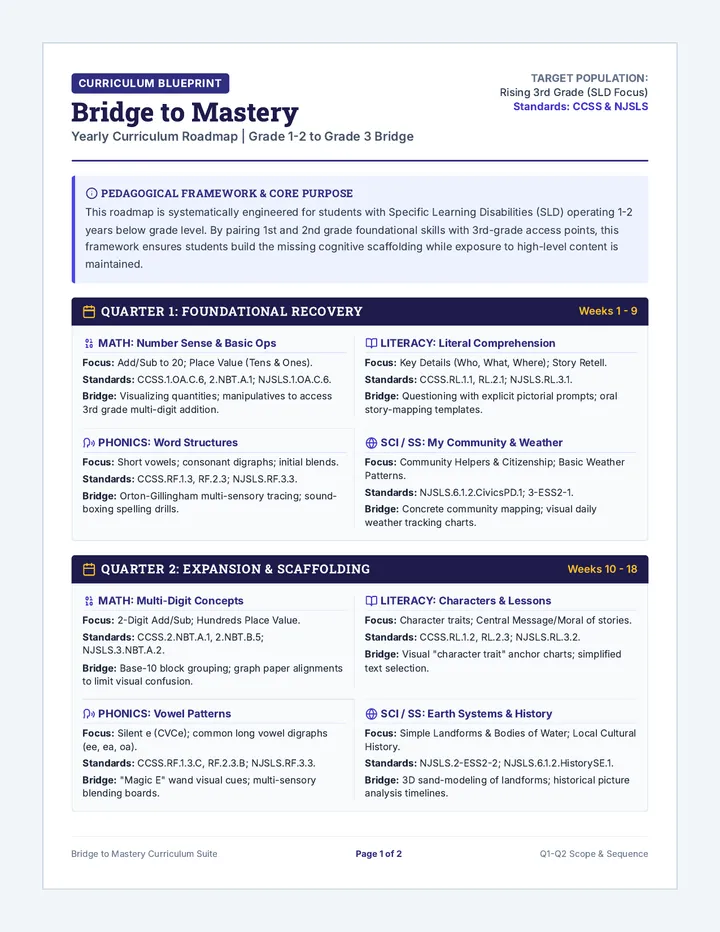
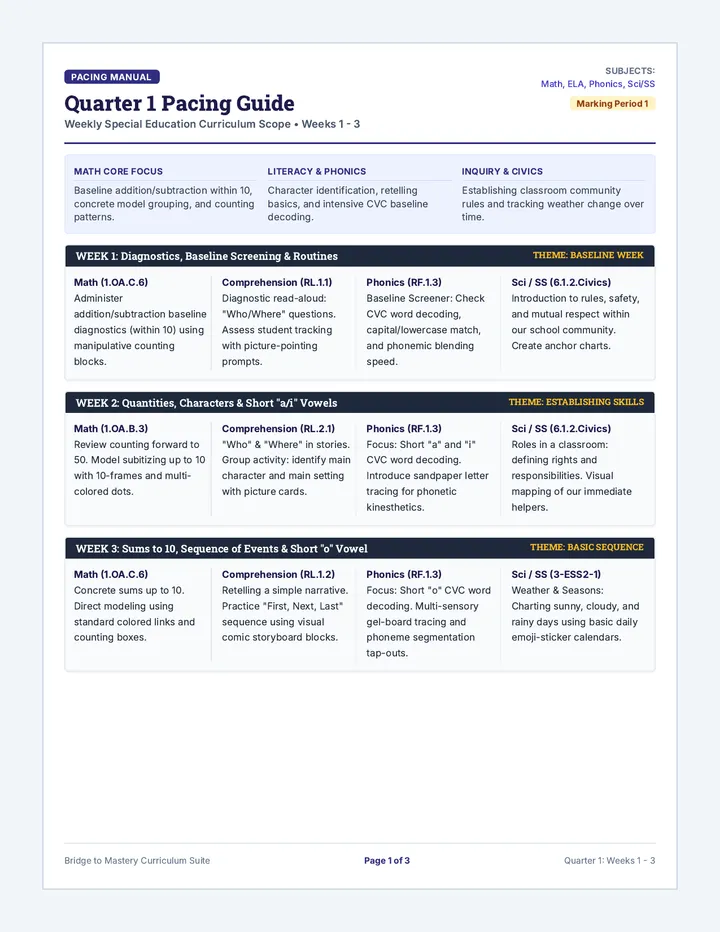
High-level and detailed academic roadmaps outlining the bridging of CCSS and NJSLS for SLD students. It provides a structured, standards-aligned pathway to close foundational gaps and transition towards grade-level concepts.
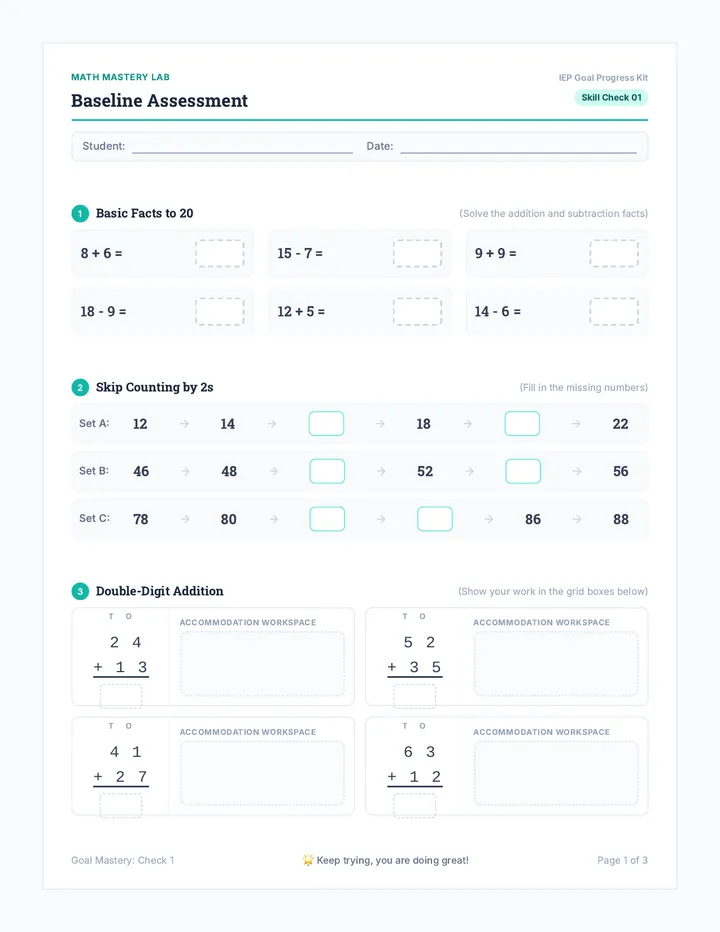
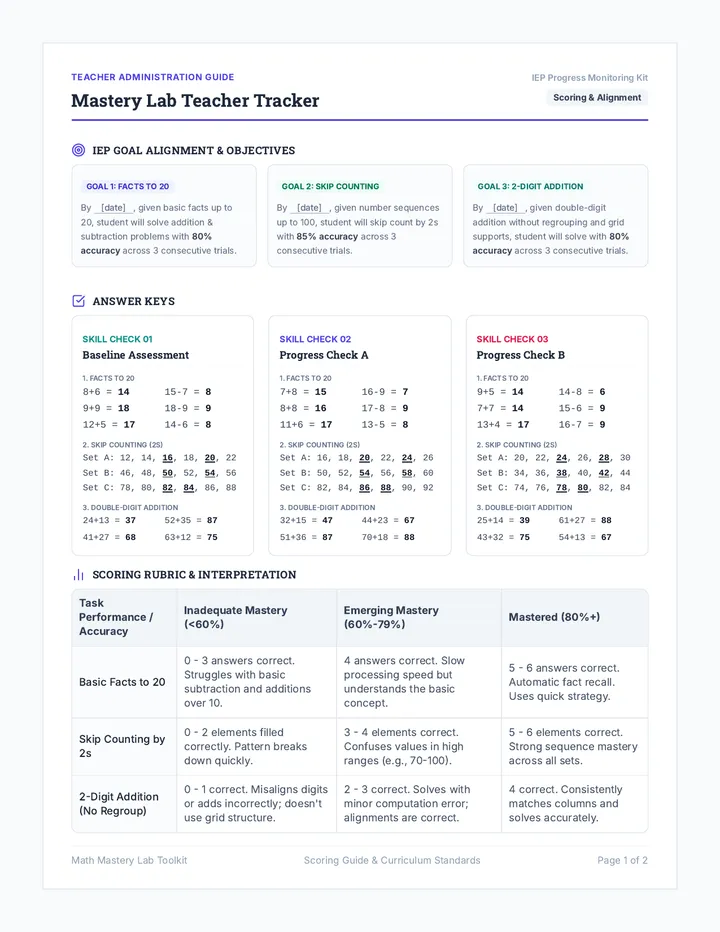
A comprehensive IEP progress monitoring assessment kit featuring baseline and progress checks for skip counting, basic facts to 20, and double-digit addition without regrouping.