An introductory lesson on biological evolution and natural selection using Pokemon regional variants as a scaffold for Special Education students. Students will compare game-style evolution with real-world natural selection.
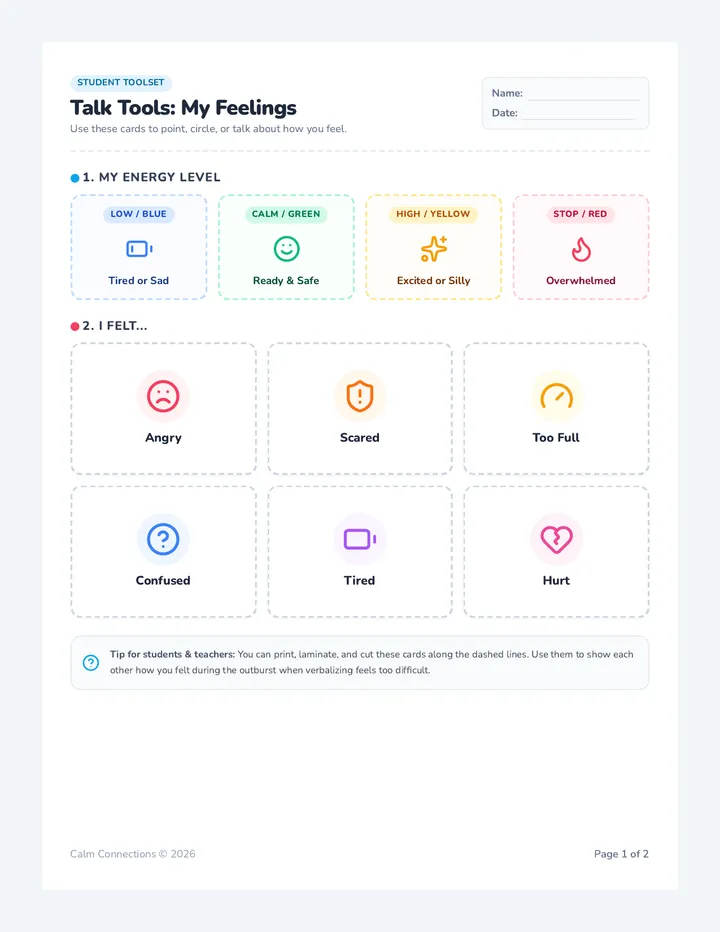
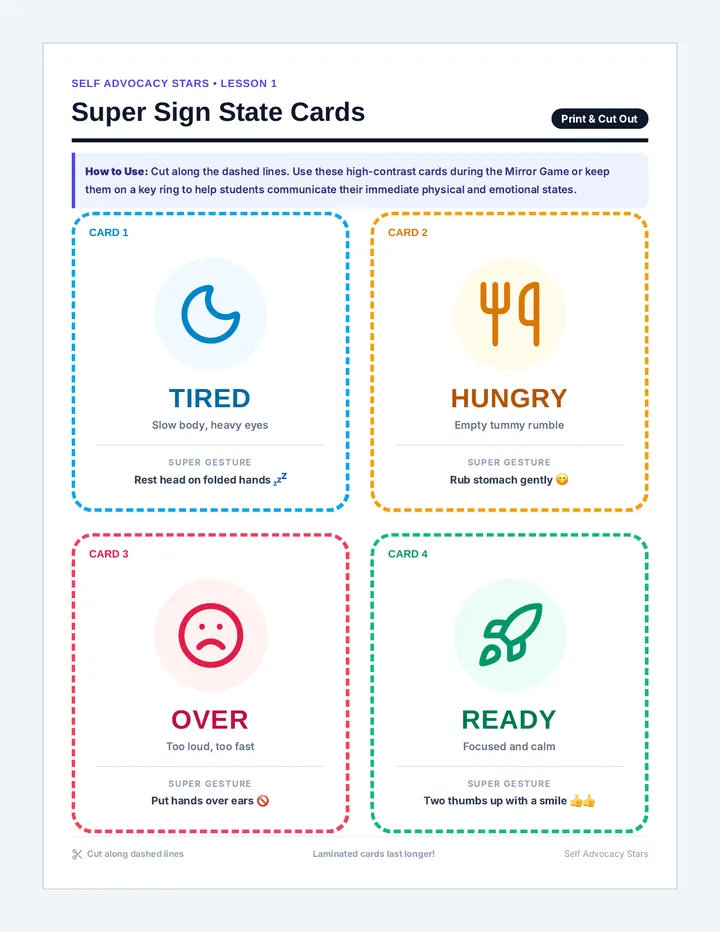
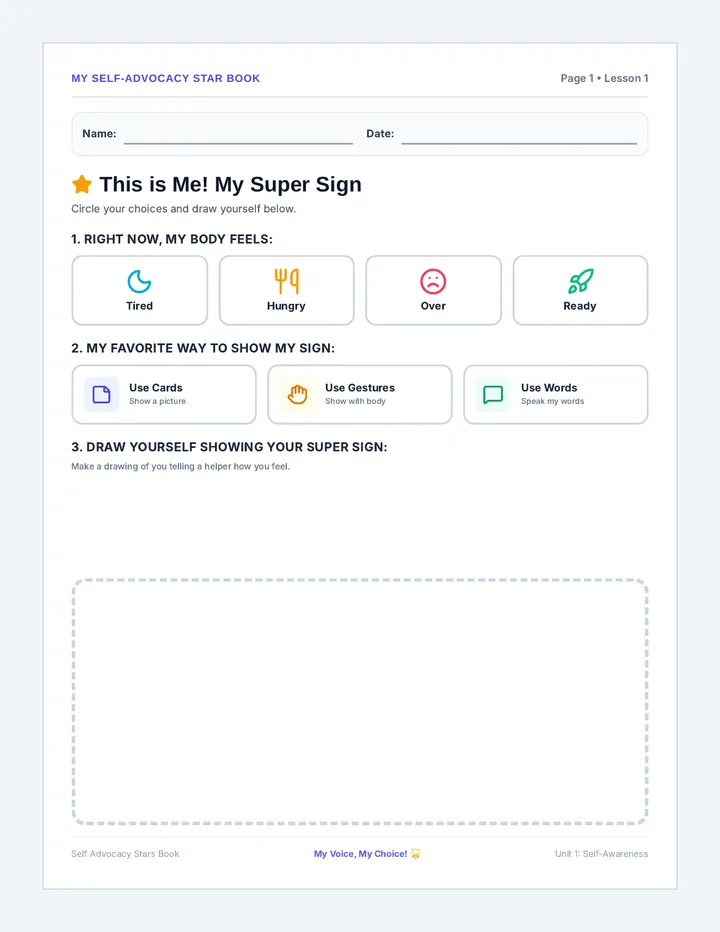
A 1:1 lesson for 4th-grade IDMI students focusing on identifying signs of overstimulation and practicing verbal and visual communication to request breaks or sensory support.
A cumulative review where students practice applying various social norms across multiple simulated environments.
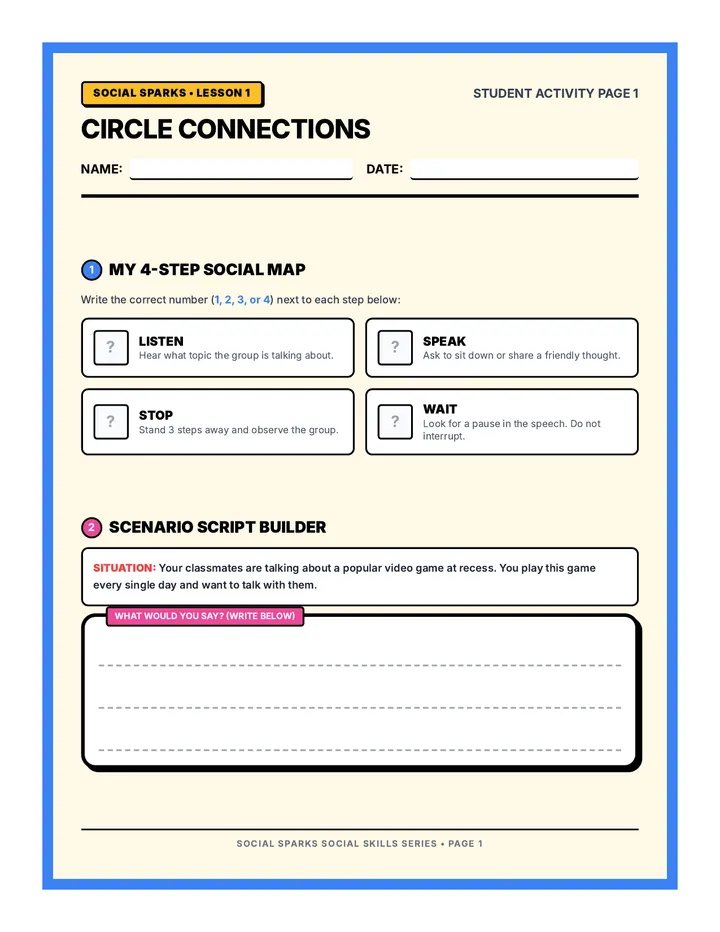
Focusing on specific expectations within the classroom and school environment to support learning and peer inclusion.
Applying social norms to home and community settings, including greetings, personal space, and public etiquette.
Exploring the purpose behind social norms, focusing on how our actions affect the feelings and comfort of others.
Introduction to the concept of social norms as 'unspoken rules' that help everyone feel comfortable and safe.
Students synthesize their main ideas and evidence into a cohesive summary paragraph using a scaffolded digital template. Final assessment focuses on content and structure.
Students learn to identify and select specific evidence from a text to support their main idea. Includes training on using speech-to-text tools for efficient drafting.
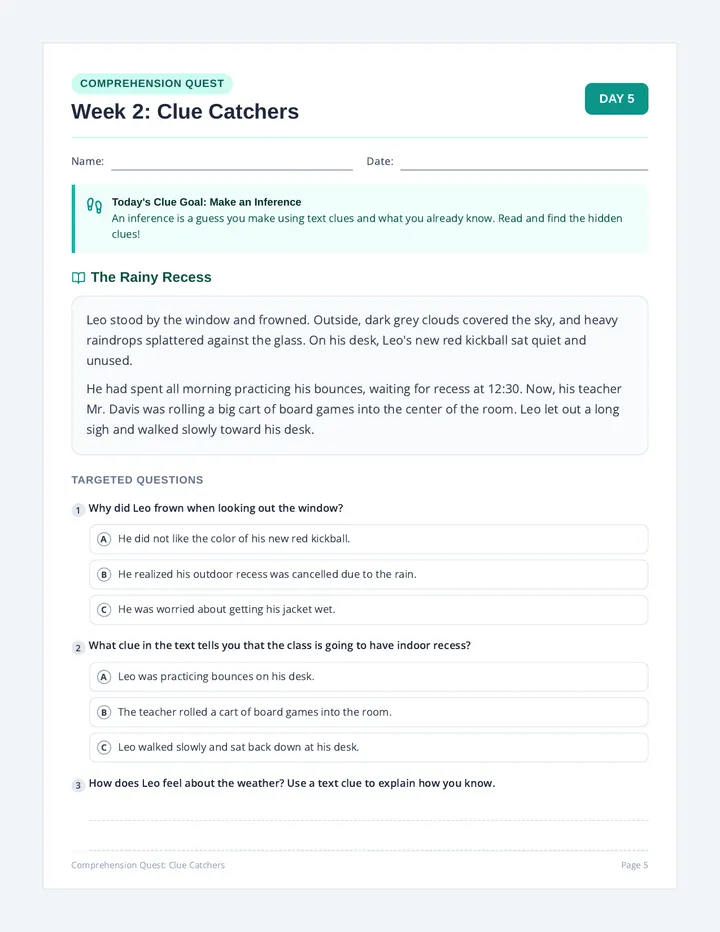
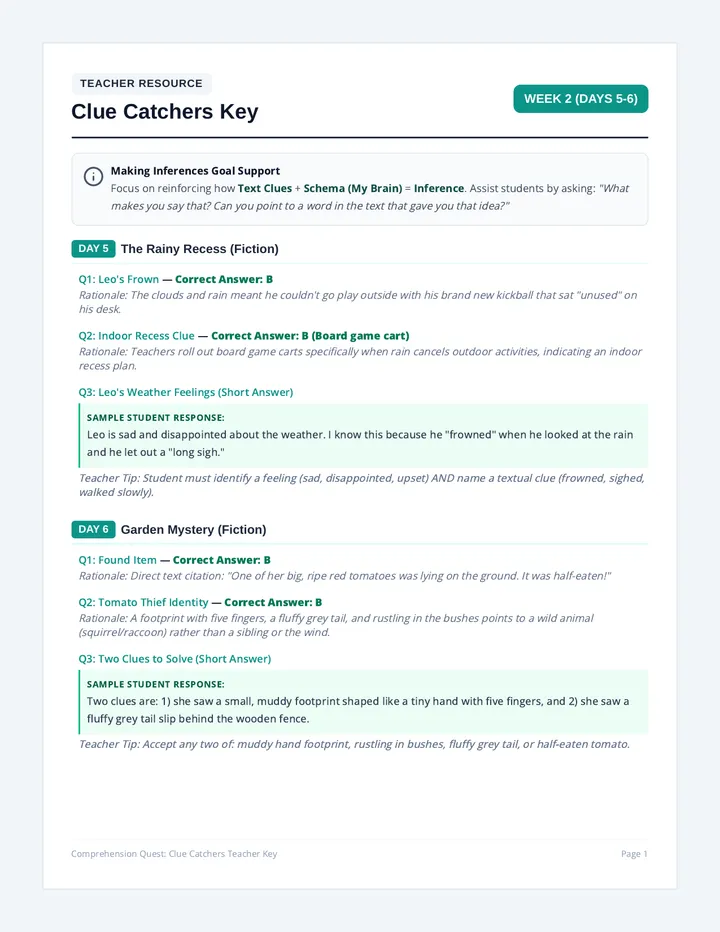
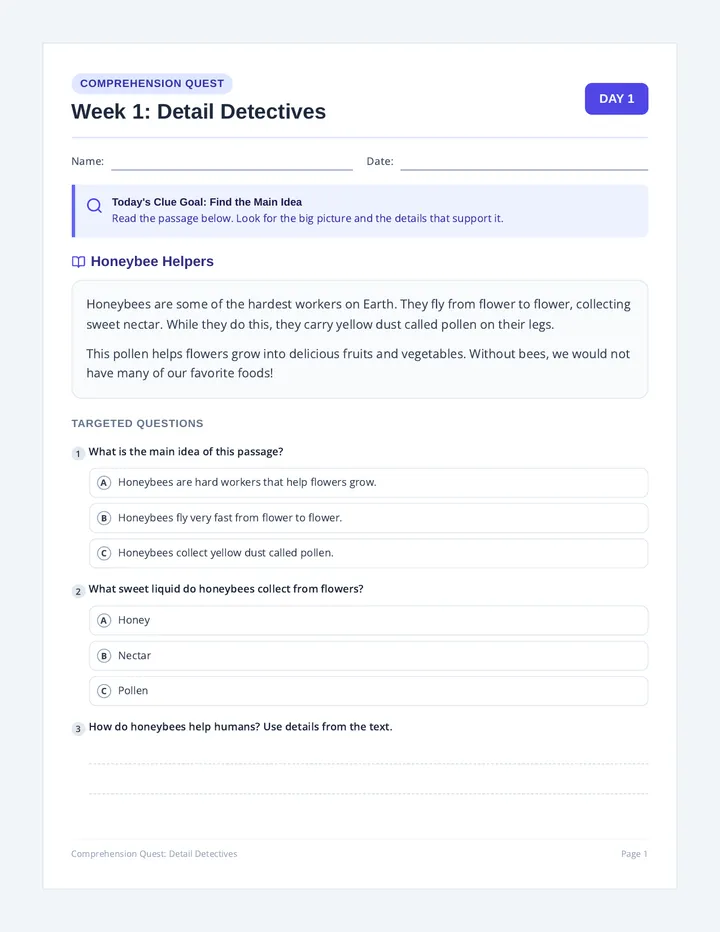
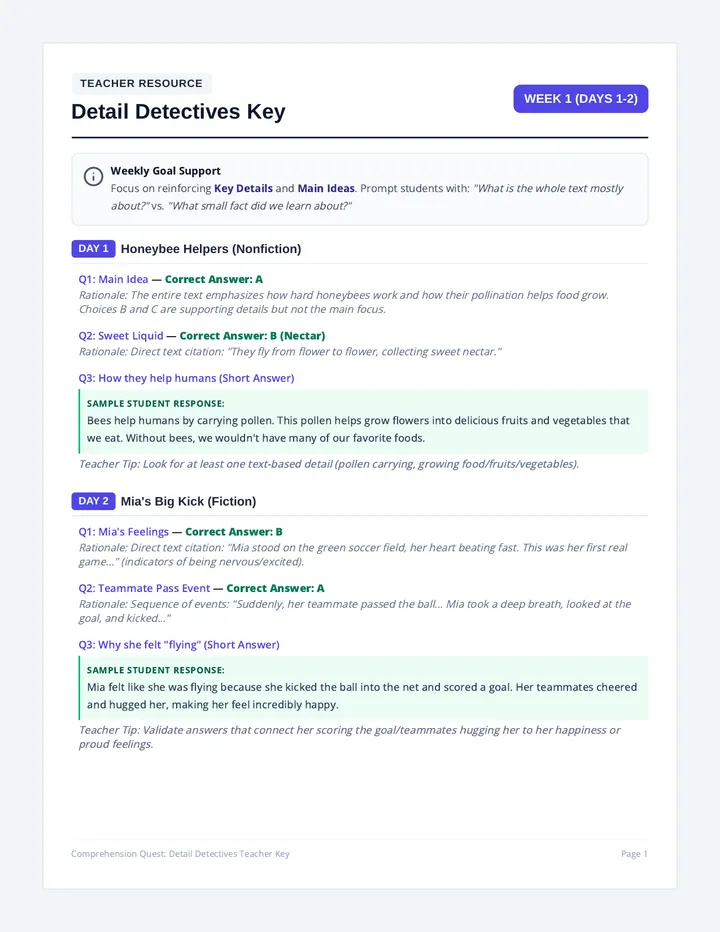
Students learn to distinguish between the main topic and supporting details in a nonfiction text using a digital graphic organizer. Focus is on 'brain-dumping' ideas before organizing them.
A lesson focused on identifying and counting US currency, including pennies, nickels, dimes, quarters, and one-dollar bills, specifically designed for 3rd-grade students with IEP goals.
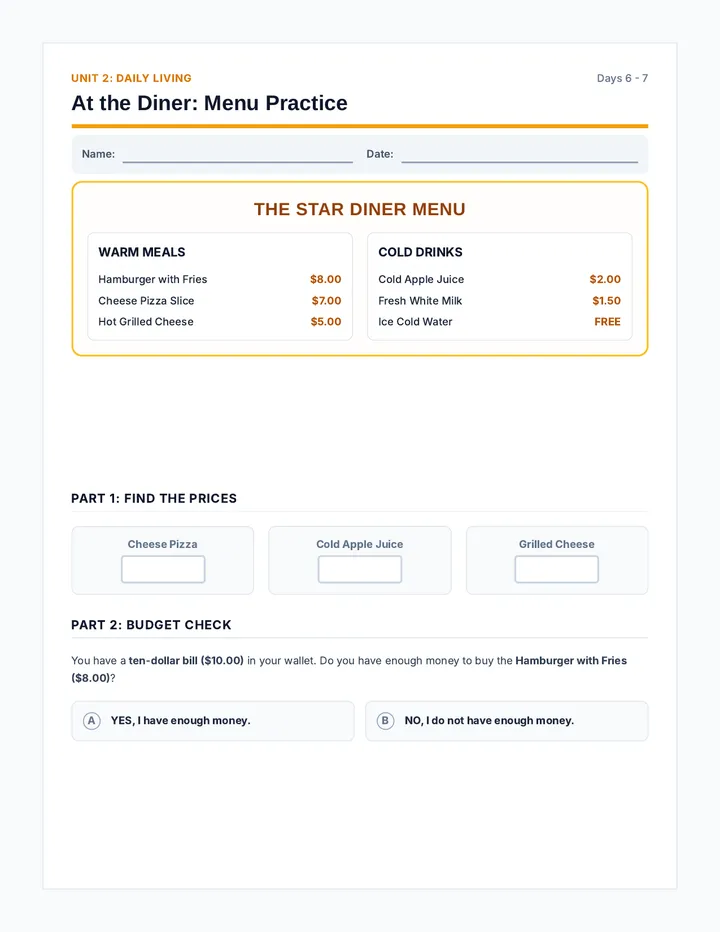
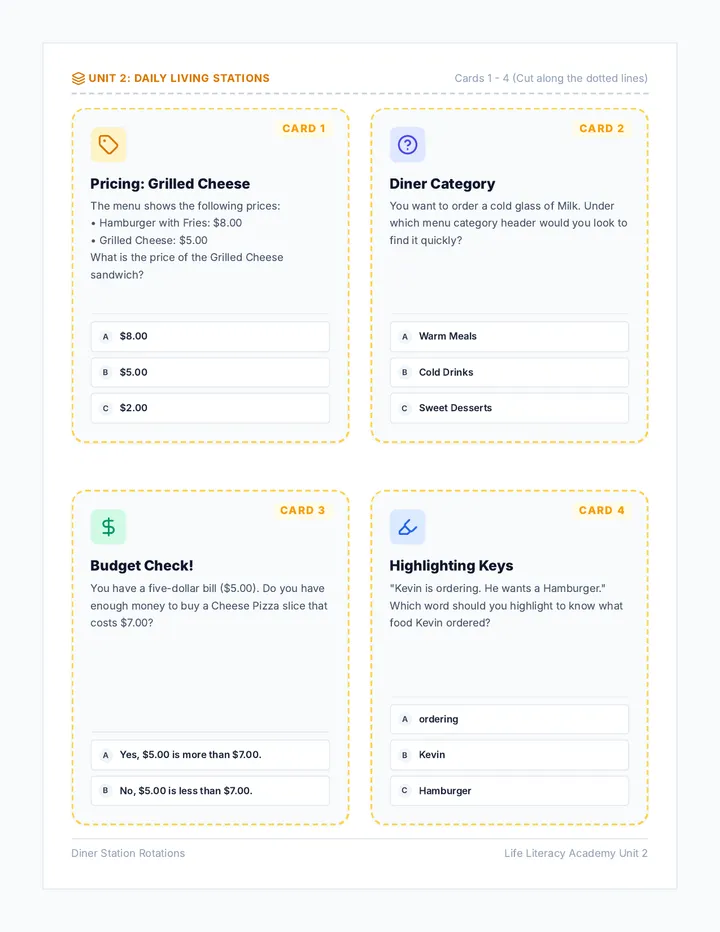
Reading menus, identifying categories (appetizers, entrees), prices, and special dietary symbols for dining out independently.
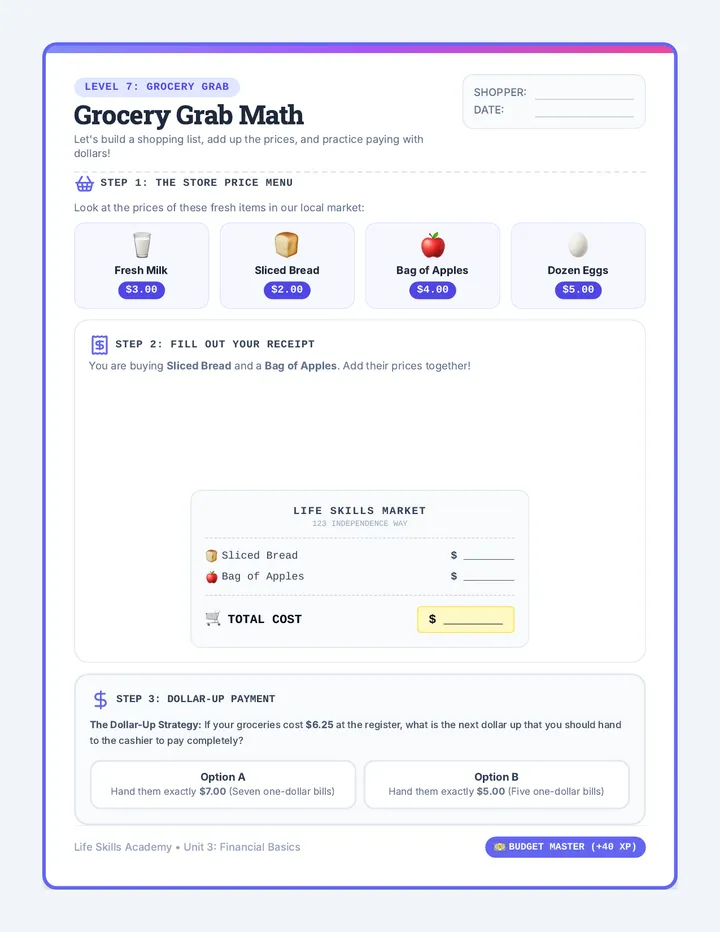
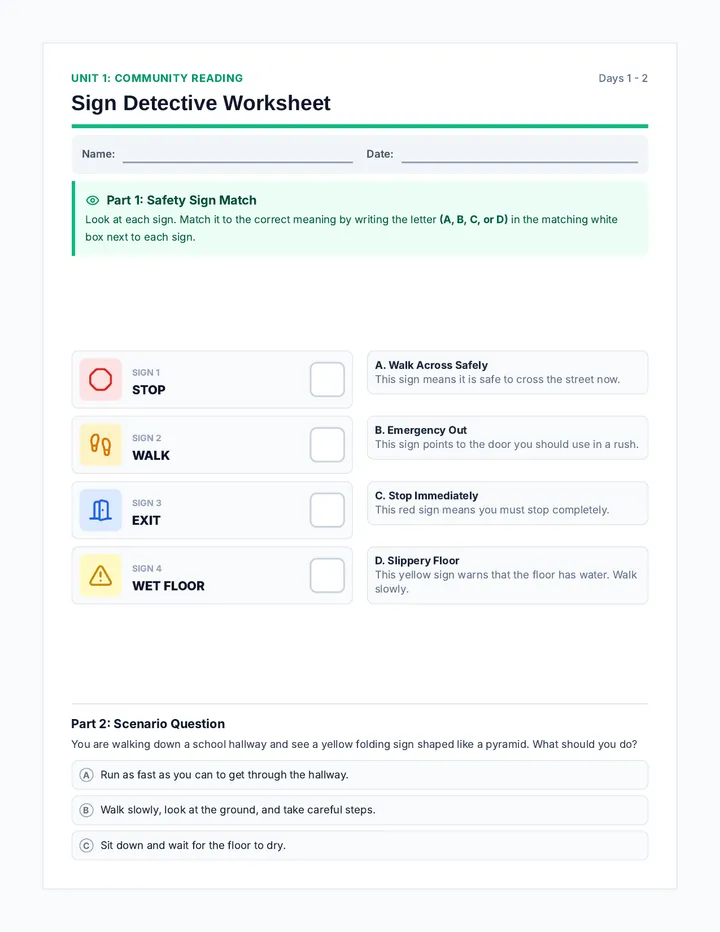
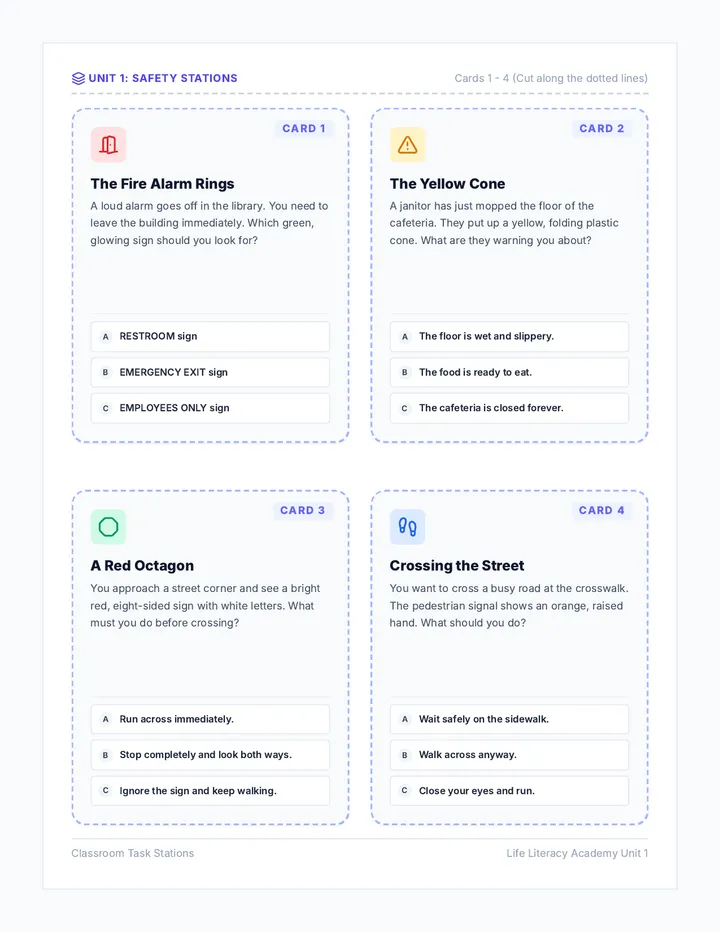
Navigating the grocery store through aisle signs, shelf tags, and interpreting receipts for budgeting.
Focused on medicine safety, reading dosage instructions, warning labels, and expiration dates on healthcare products.
Deep dive into nutrition labels, calorie counts, and serving sizes to help students make healthy choices through functional reading.
Introduces everyday product and food labels, focusing on product names, types, and basic information like size and weight. Includes hands-on exploration of household items.
A comprehensive set of counting task cards focusing on identical items up to 20, designed for children with autism using clear visuals and predictable layouts across four high-interest themes: bugs, animals, trucks, and cars.
A deep-dive lesson into the Purple Circle (Self), focusing on body autonomy, private vs. public spaces, and personal boundaries. Designed for a 45-minute instructional session.
Explores the Orange (Community/Professional) and Red (Stranger) circles, emphasizing safety, professional boundaries, and interacting with people in the community.
Covers the Green (Friends) and Yellow (Acquaintances) circles, teaching the difference between close friendship and casual social connections.
Introduces the Purple (Self) and Blue (Private/Family) circles, focusing on personal space, body autonomy, and the closest intimate relationships.
An interactive speech therapy lesson for 5th graders focused on /sh/ and vocalic /r/ sounds using a restaurant role-play theme. Students practice articulation through character descriptions and narrative-based ordering.
This lesson focuses on mastering 1-step directions by identifying and applying spatial, temporal, sequential, qualitative, and quantitative concepts. Students will use an anchor chart for reference and complete a targeted worksheet to demonstrate mastery.
An adapted exploration of Harper Lee's classic novel, focusing on the Radley mystery, Scout's coming-of-age, and the central trial through simplified character mapping and visual summaries.
An adapted study of Macbeth, exploring the supernatural influence of the witches and the psychological toll of ambition with simplified character motivations and visual plot summaries.
An adapted look at Hamlet, focusing on the Prince's dilemma, the ghostly sightings, and the theme of revenge with simplified character dynamics and visual plot summaries.
A simplified exploration of Shakespeare's tragic romance, focusing on character relationships and the feud between the Capulets and Montagues using visual aids and adapted summaries.
An adapted exploration of Shakespeare's classic tragedy, focusing on the central conflict, character motivations, and key plot points through visual scaffolding and simplified text.
A lesson focused on the impact of boating on manatees in the Everglades, designed for special education students to learn key vocabulary and conservation concepts through matching and visual activities.