A gamified self-monitoring and reinforcement system designed for second-grade students to build on-task behaviors, stay in their seat with focus tools, and earn rewarding game time.
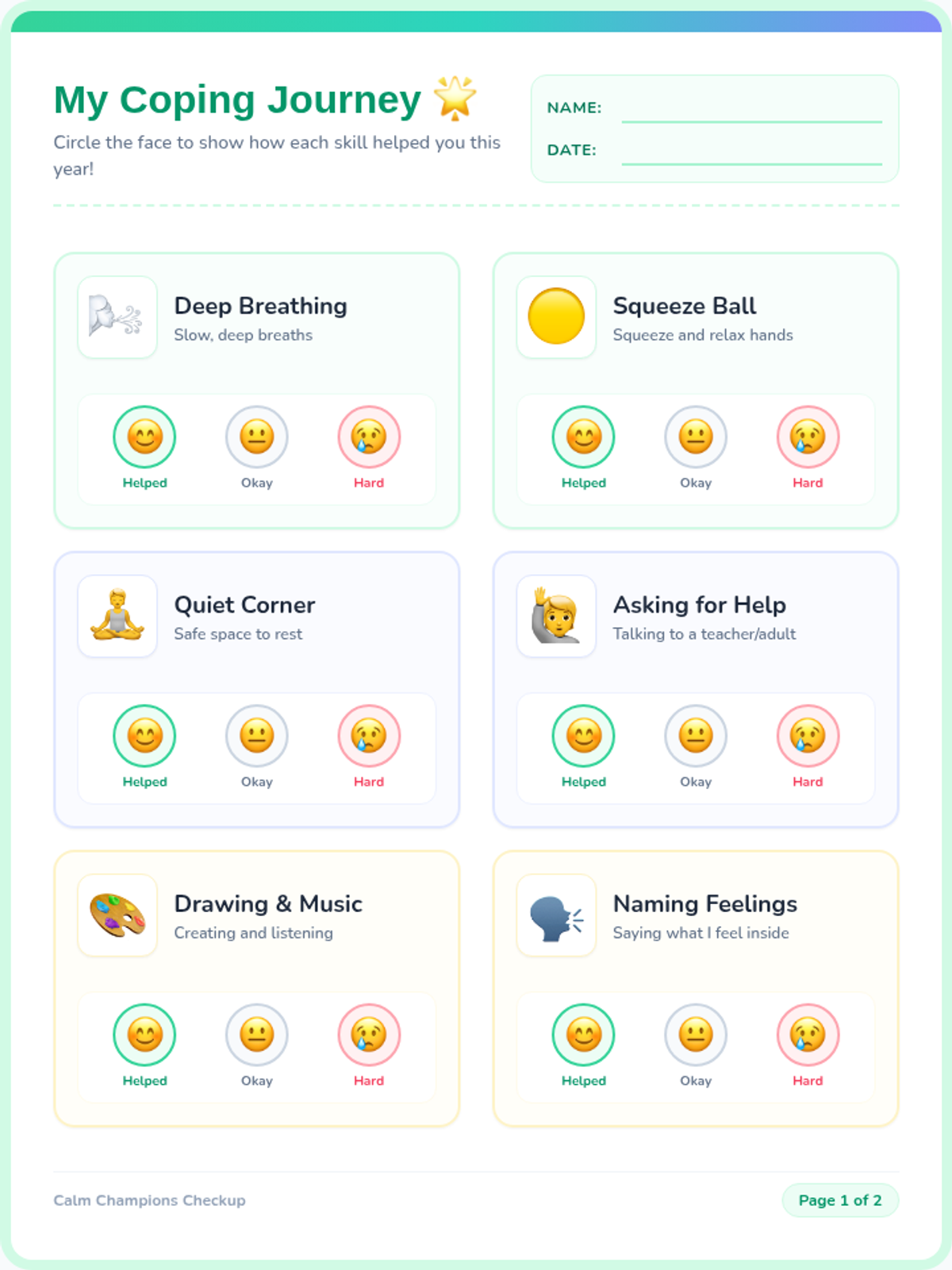
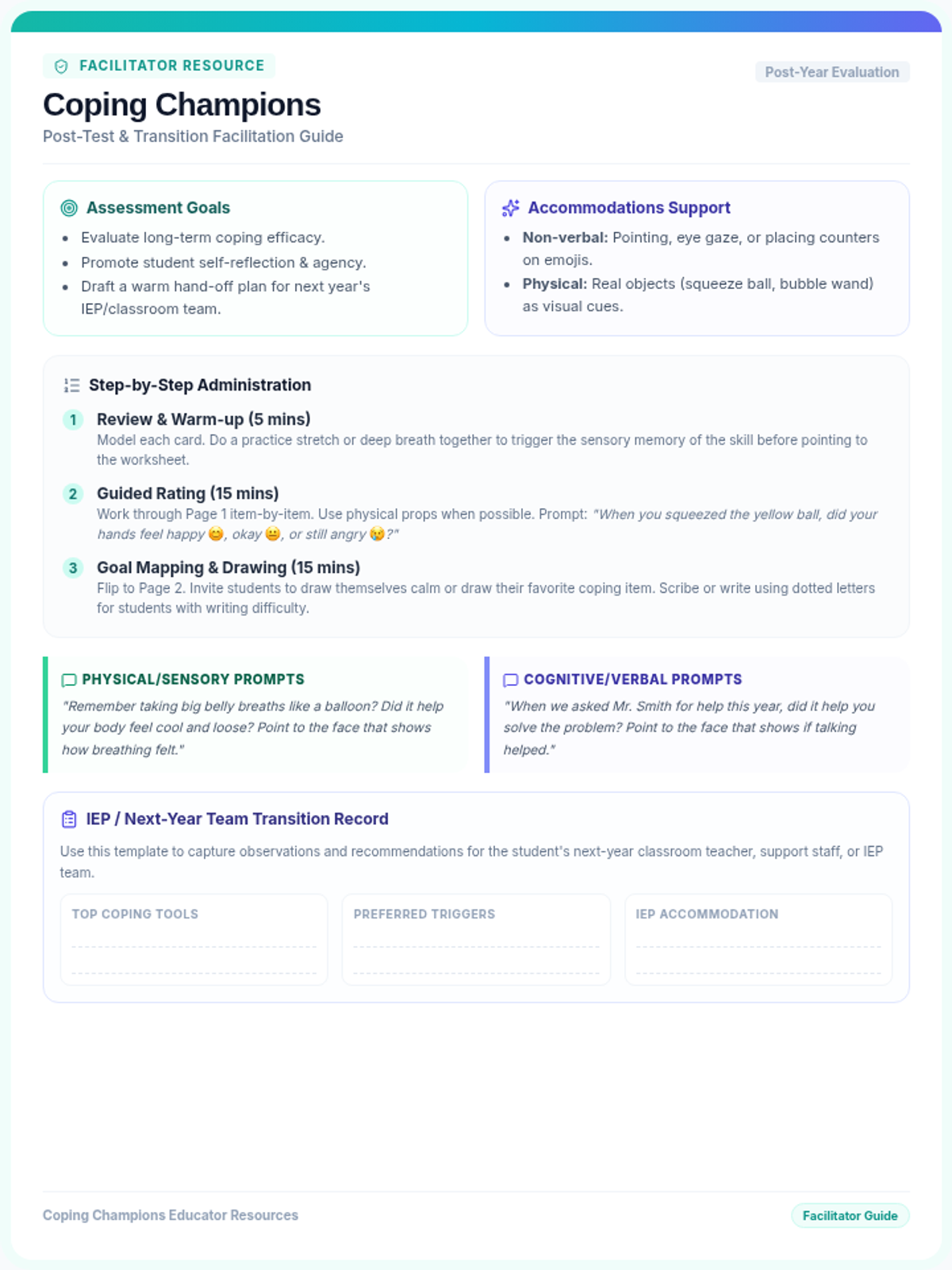
A post-test and reflection lesson designed for students with lower cognitive abilities to evaluate their coping skills from the past year and set gentle goals for the next school year using visual emojis and guided drawing/writing templates.
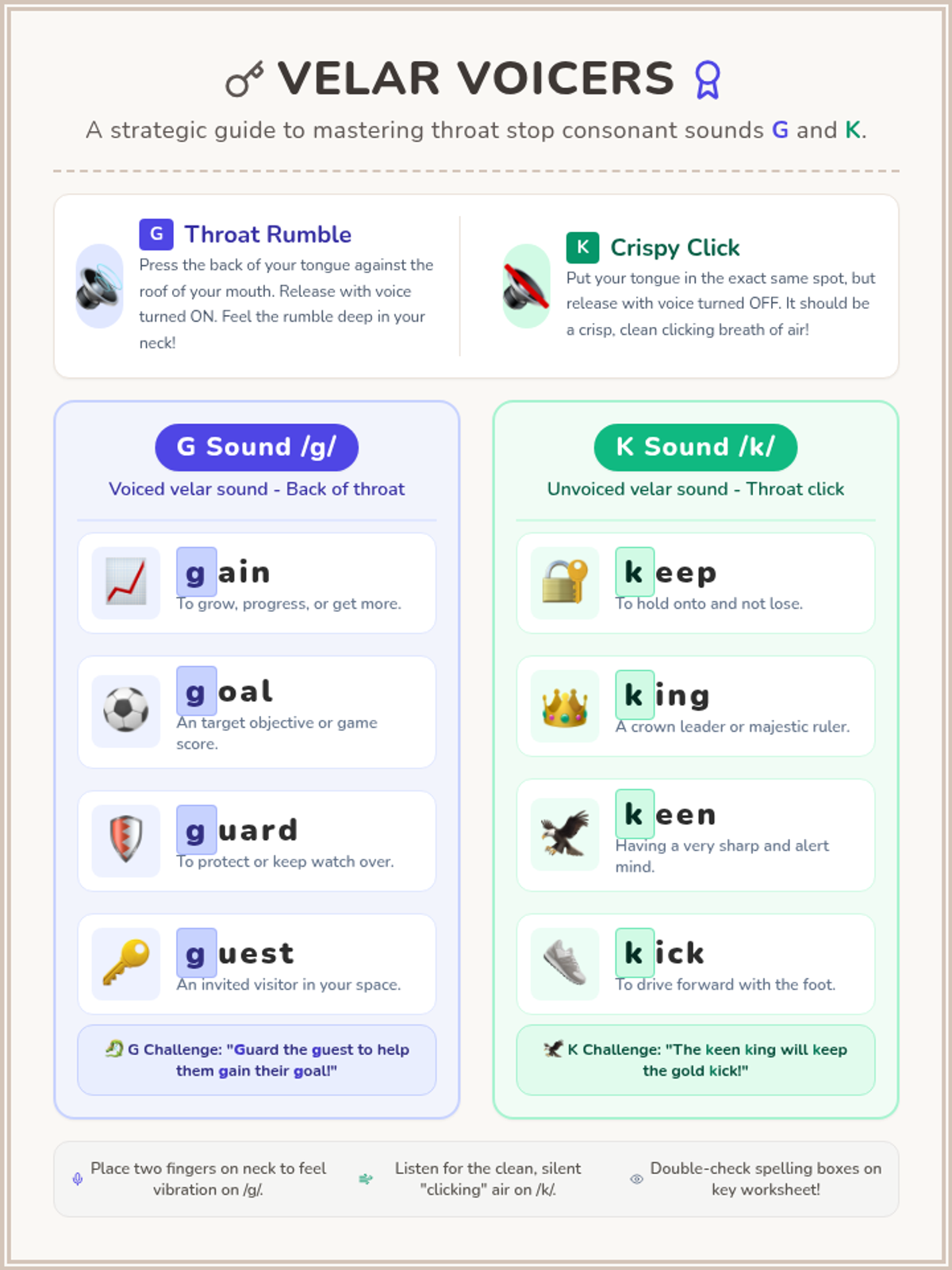
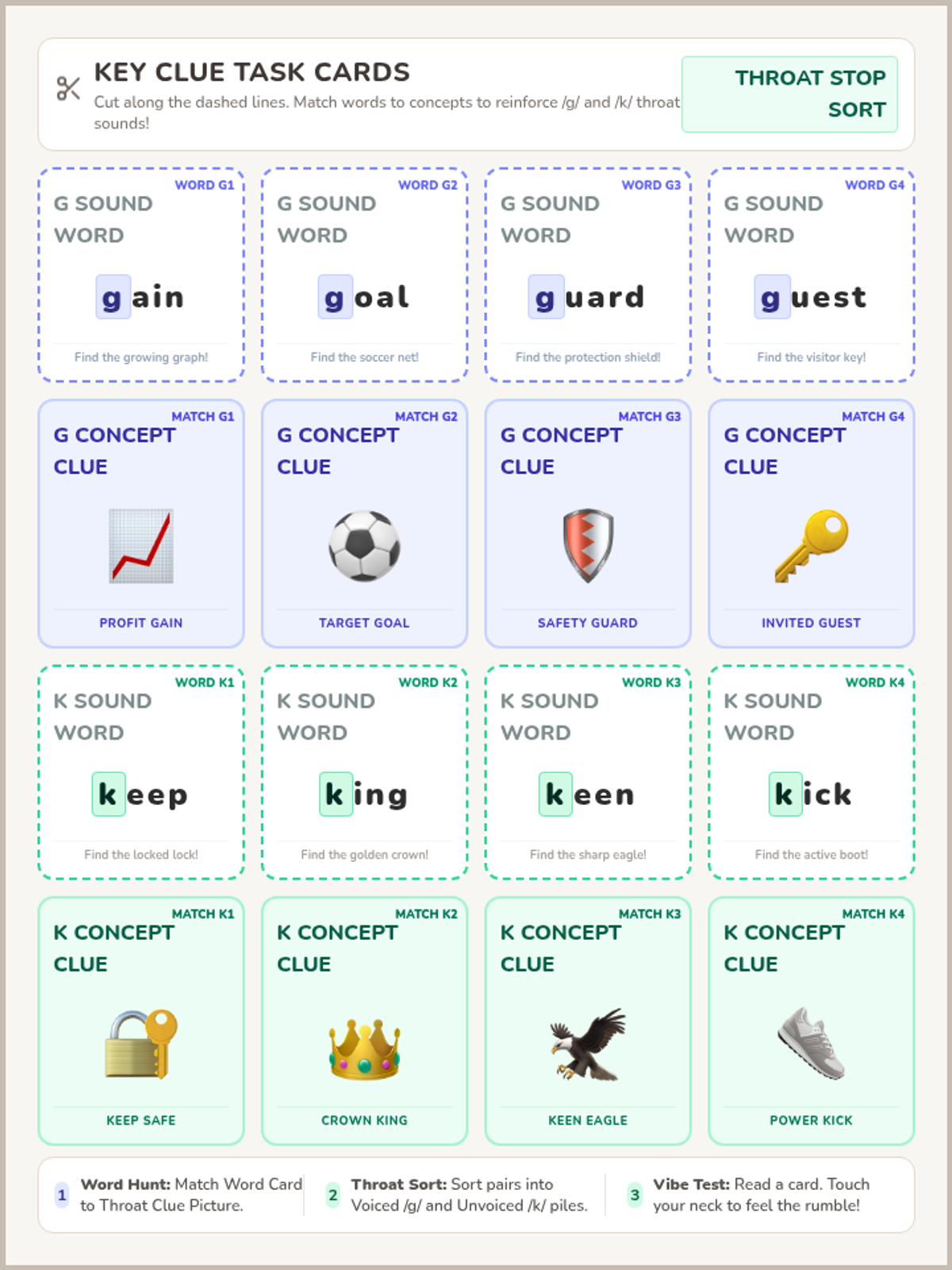
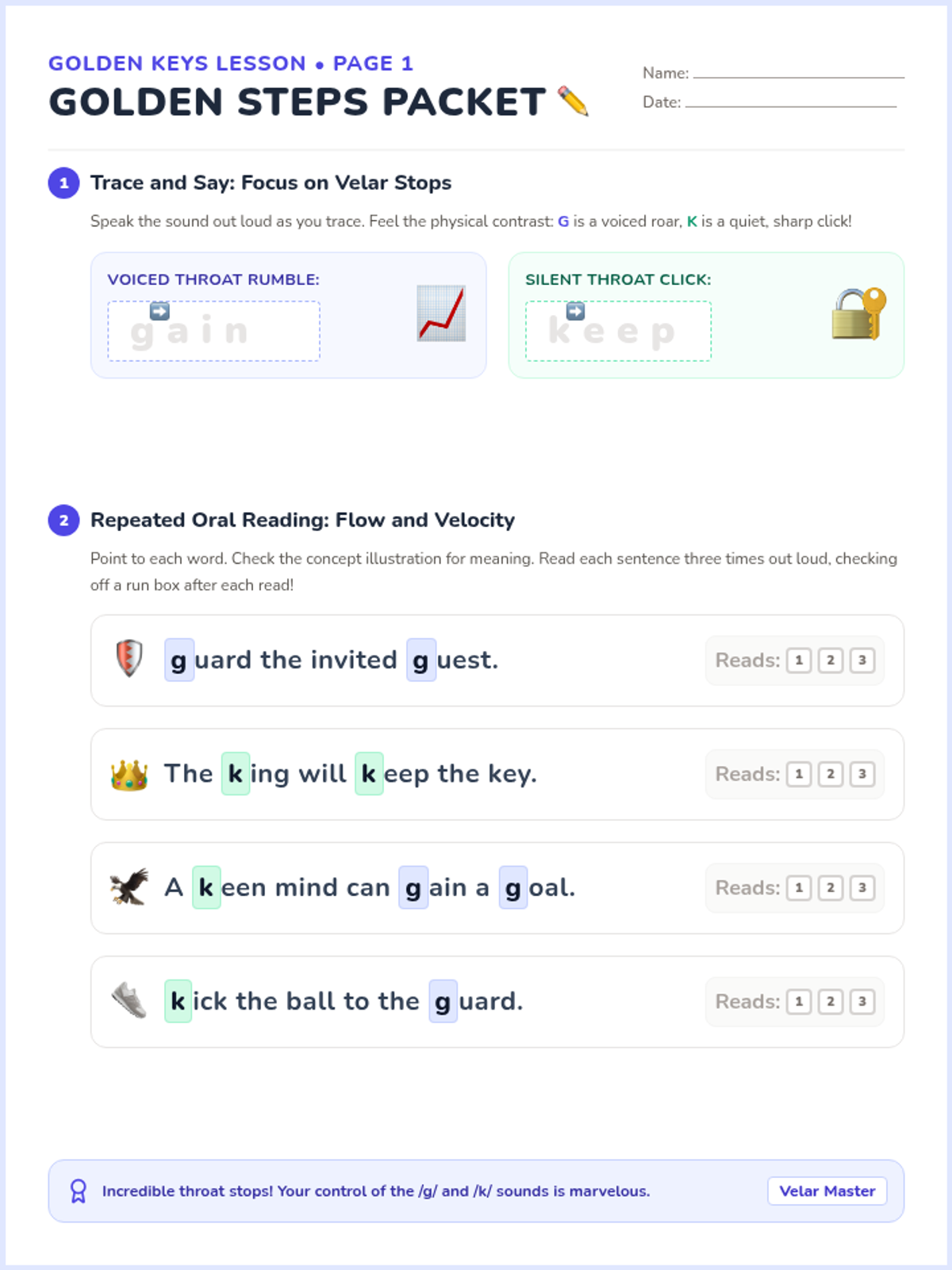
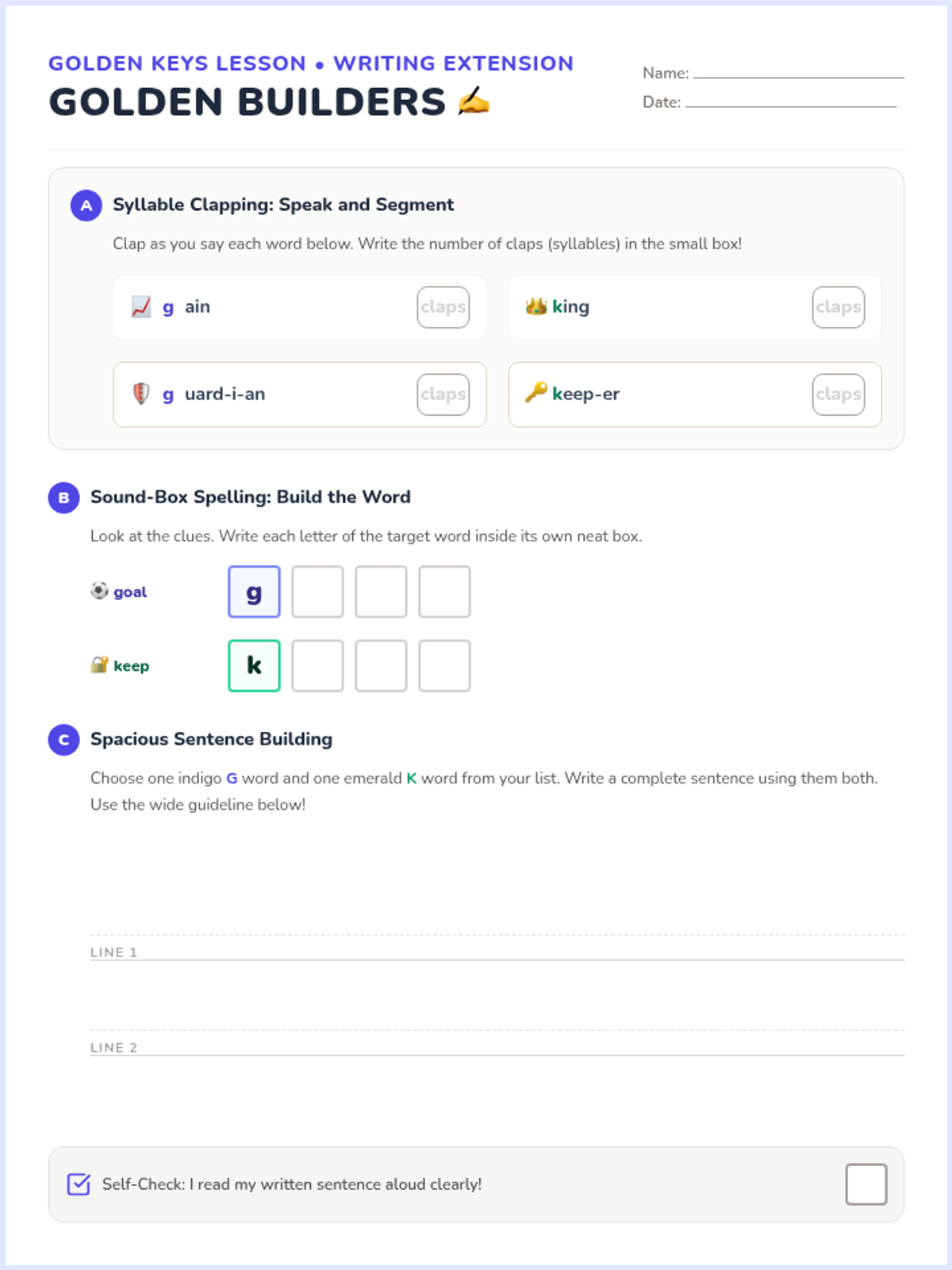
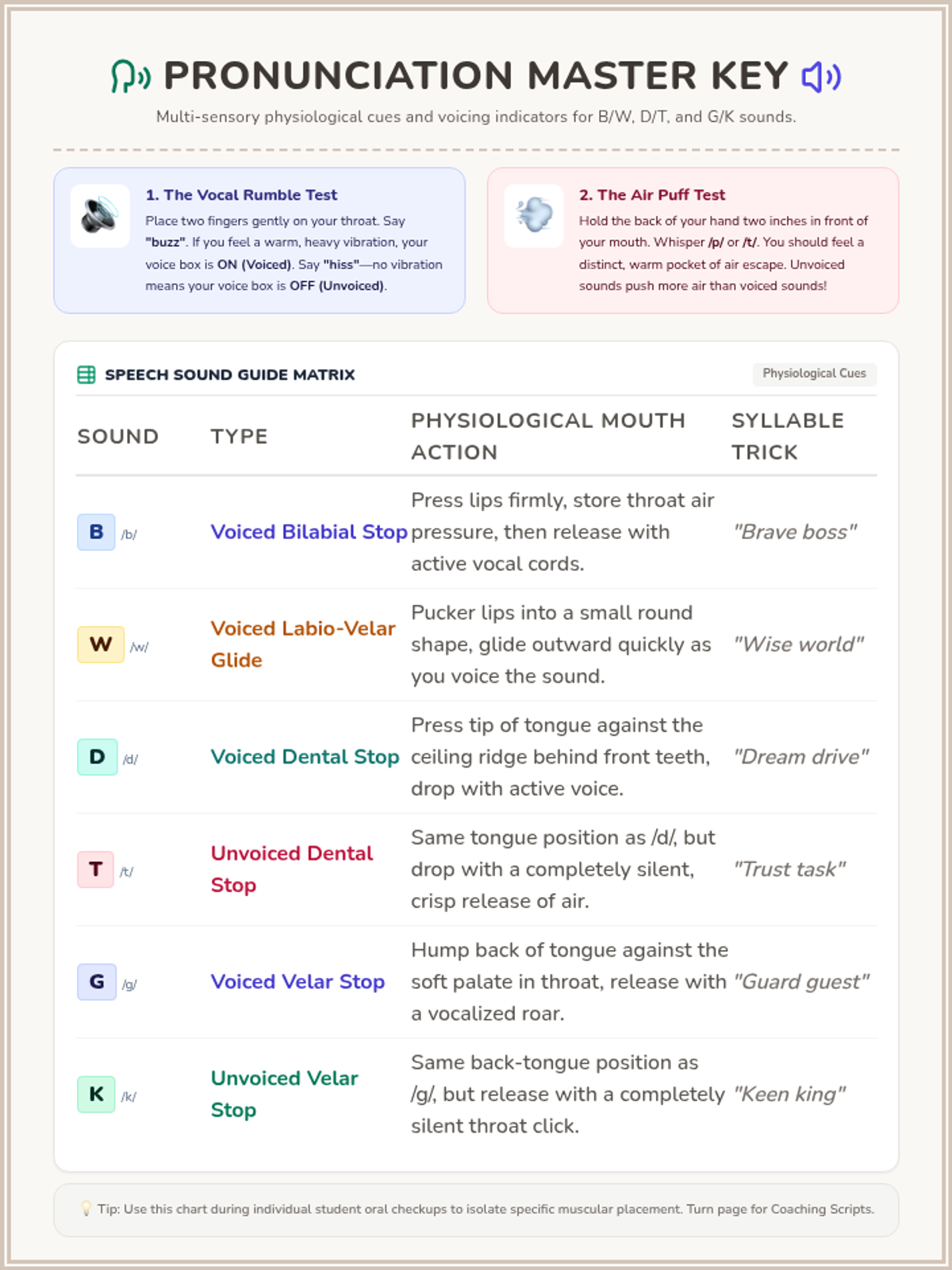
A structured phonics and oral reading lesson contrasting G and K sounds. Features visual voicing indicators, multi-sensory tracing sheets, and high-interest interactive task cards.
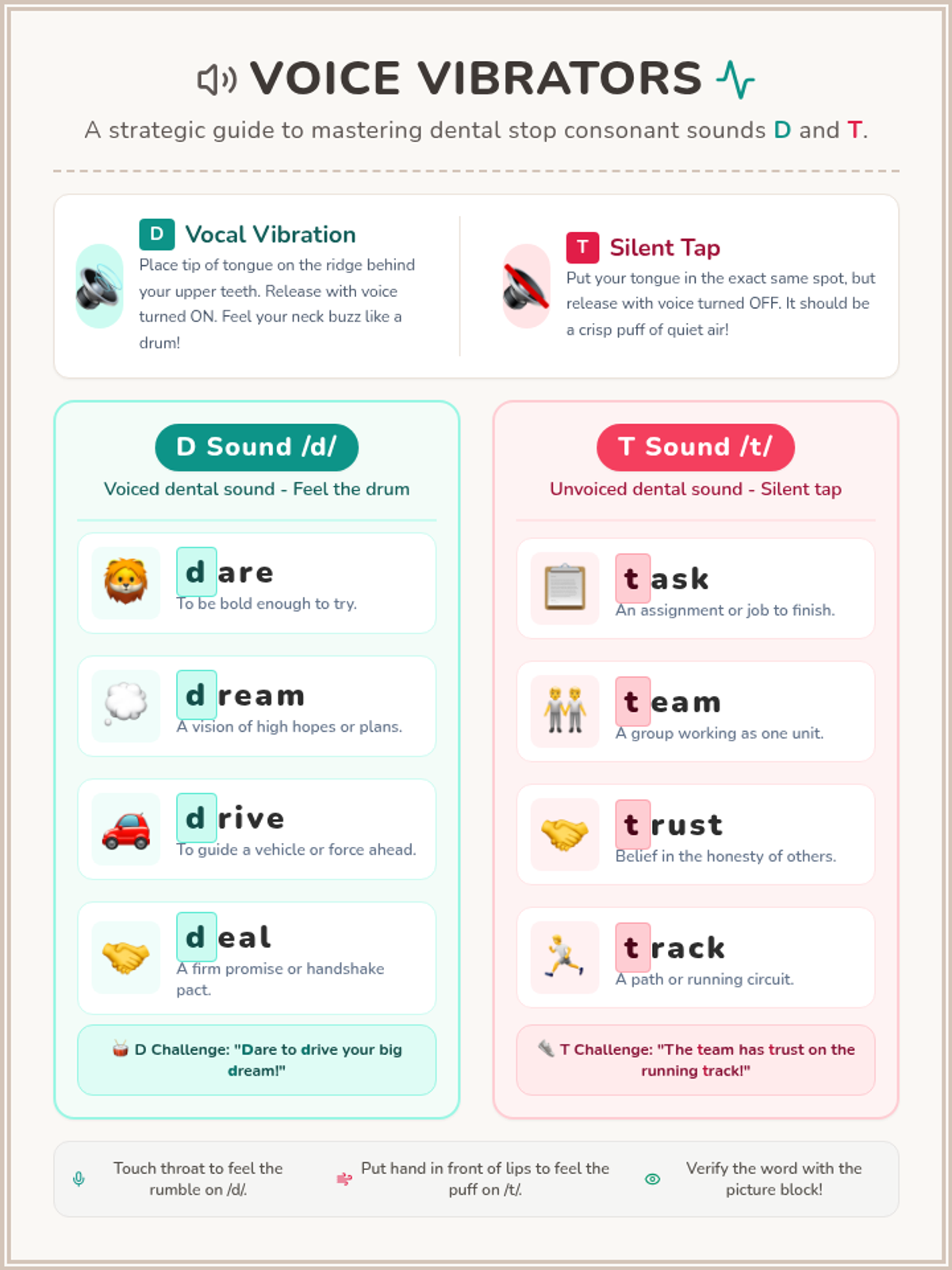
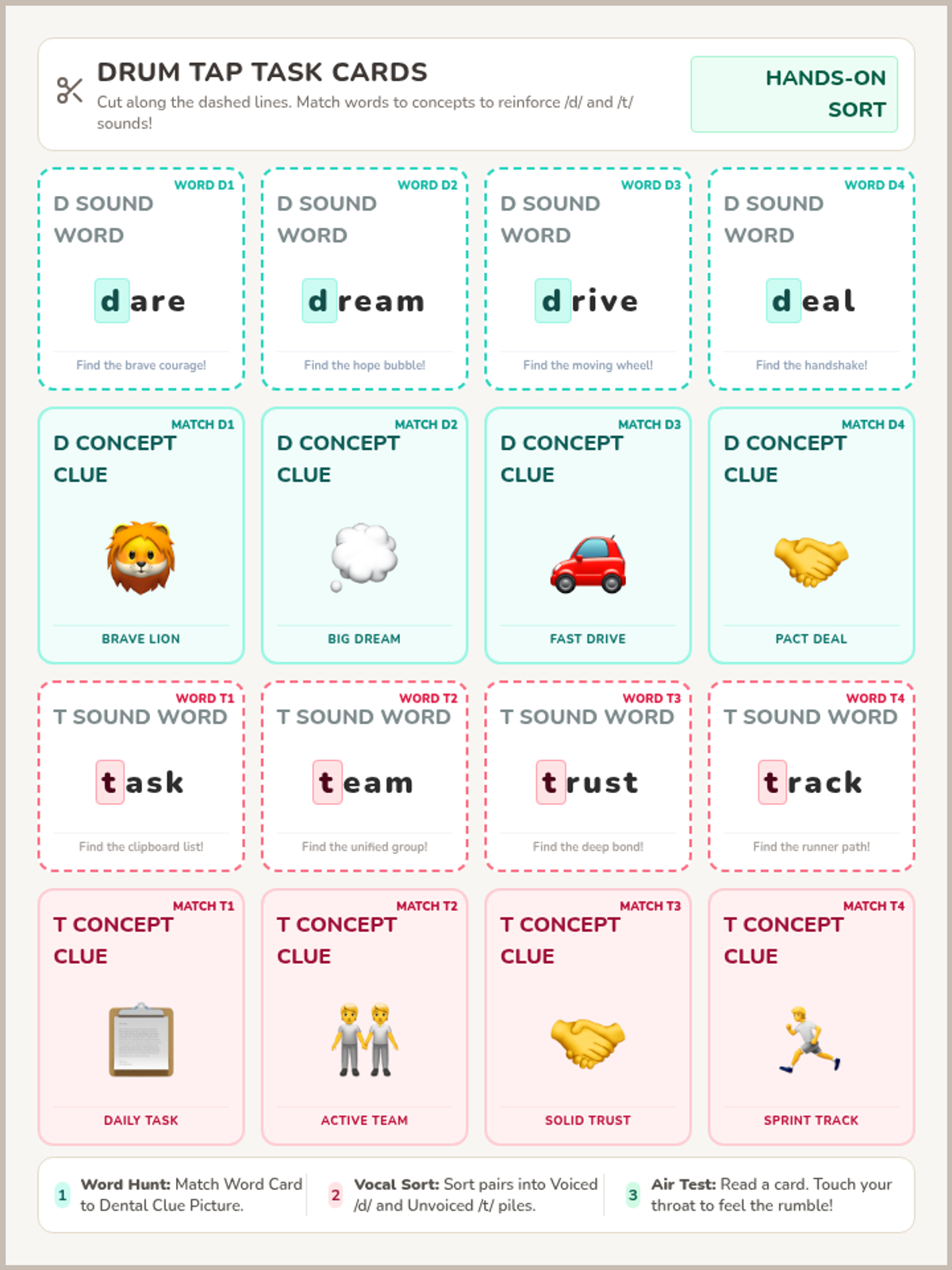
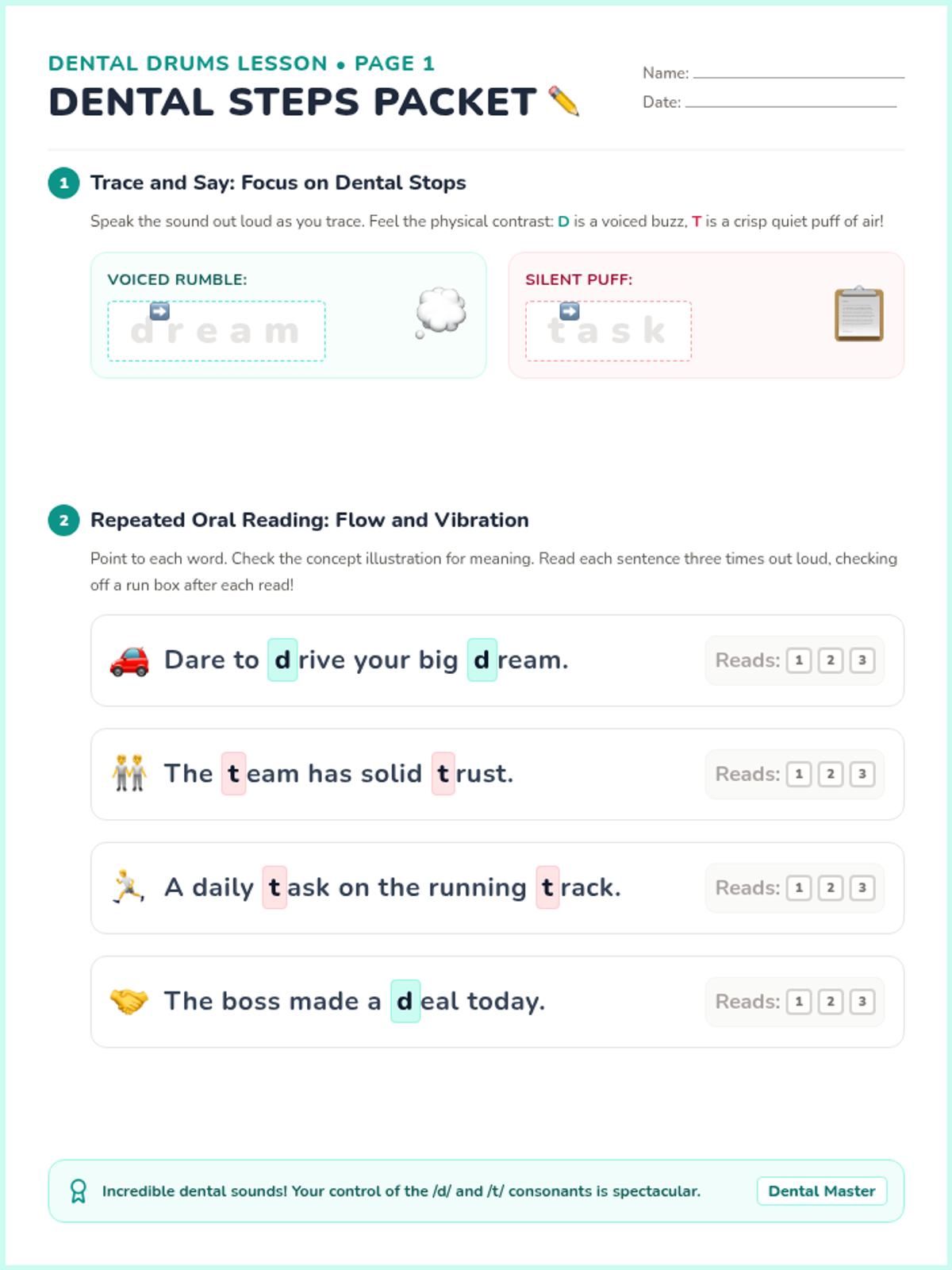
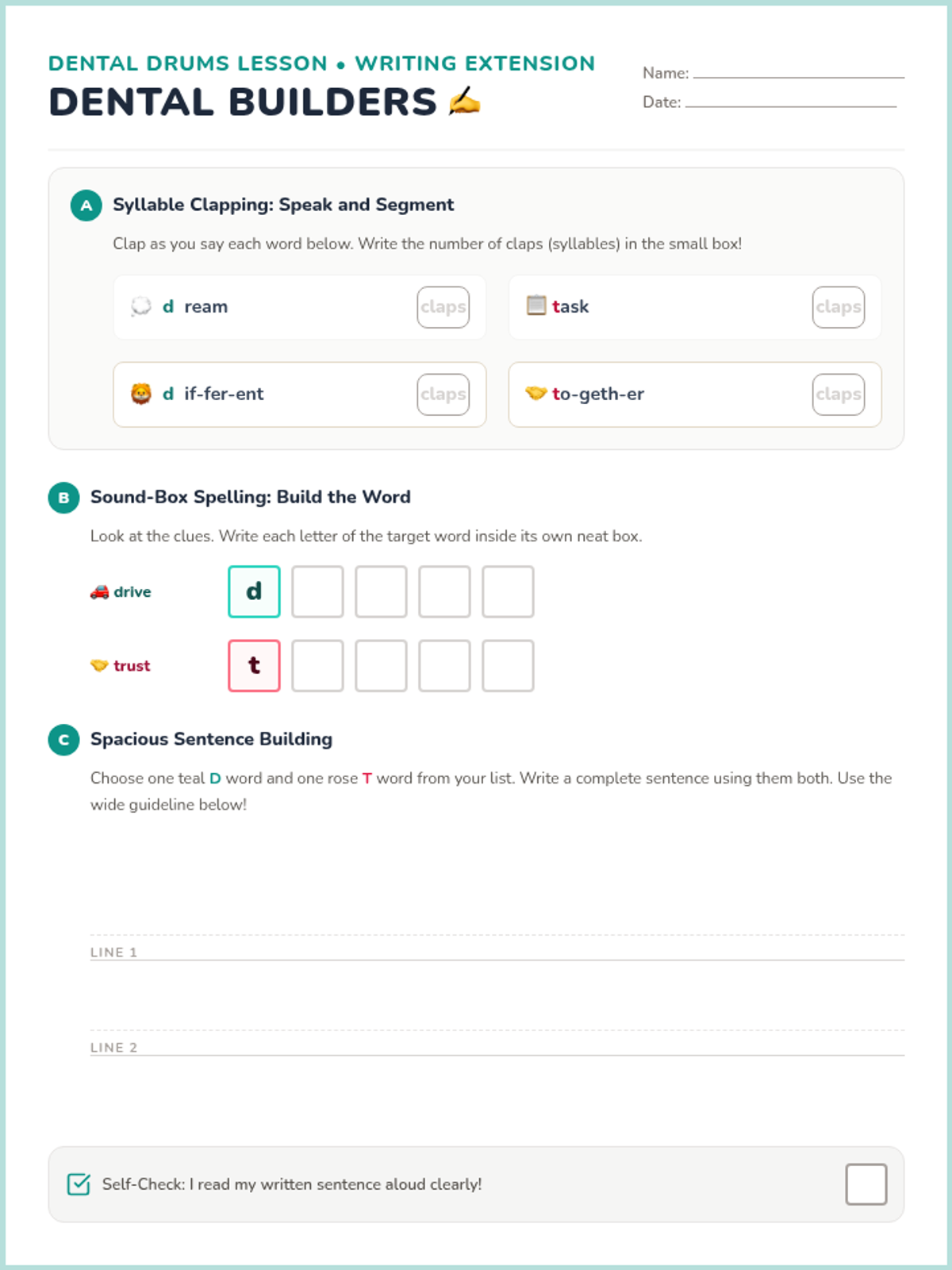
A structured phonics and oral reading lesson contrasting D and T sounds. Features heavy picture scaffolding, voice-vibration indicators, and dyslexia-friendly physical activity resources.
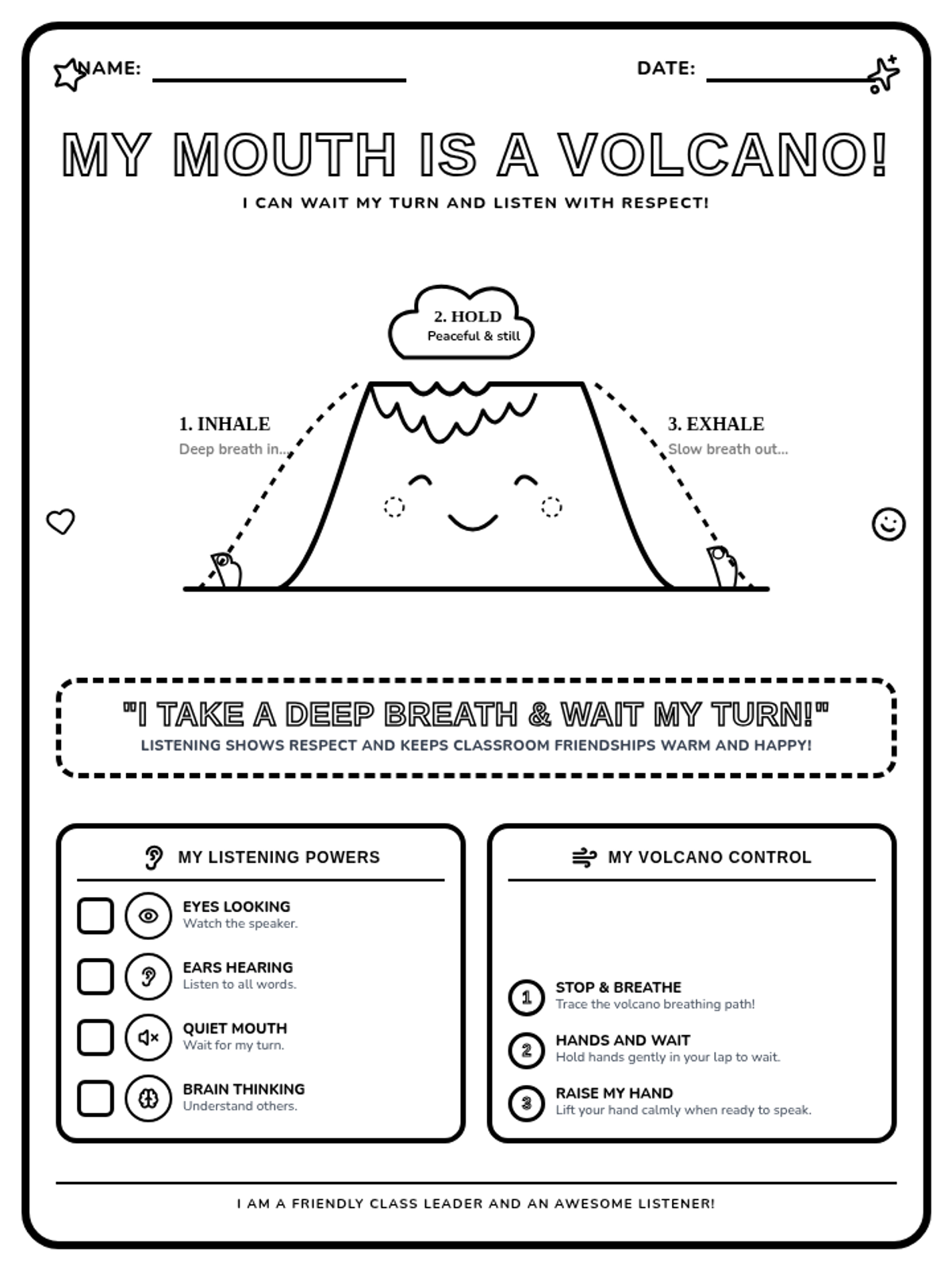
A social-emotional learning lesson focused on self-regulation, respectful listening, and turn-taking in the classroom, inspired by the children's book 'My Mouth Is a Volcano'.
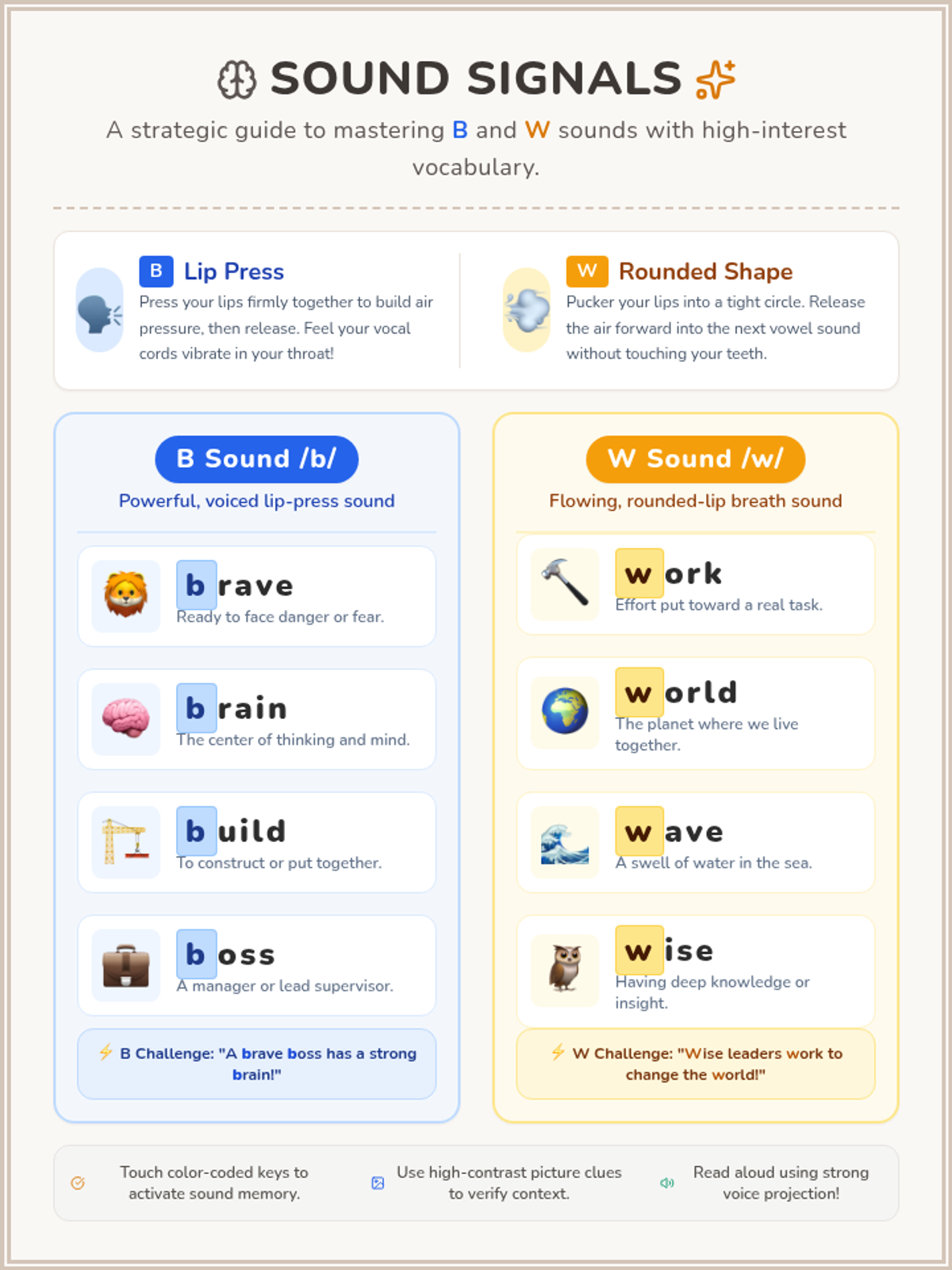
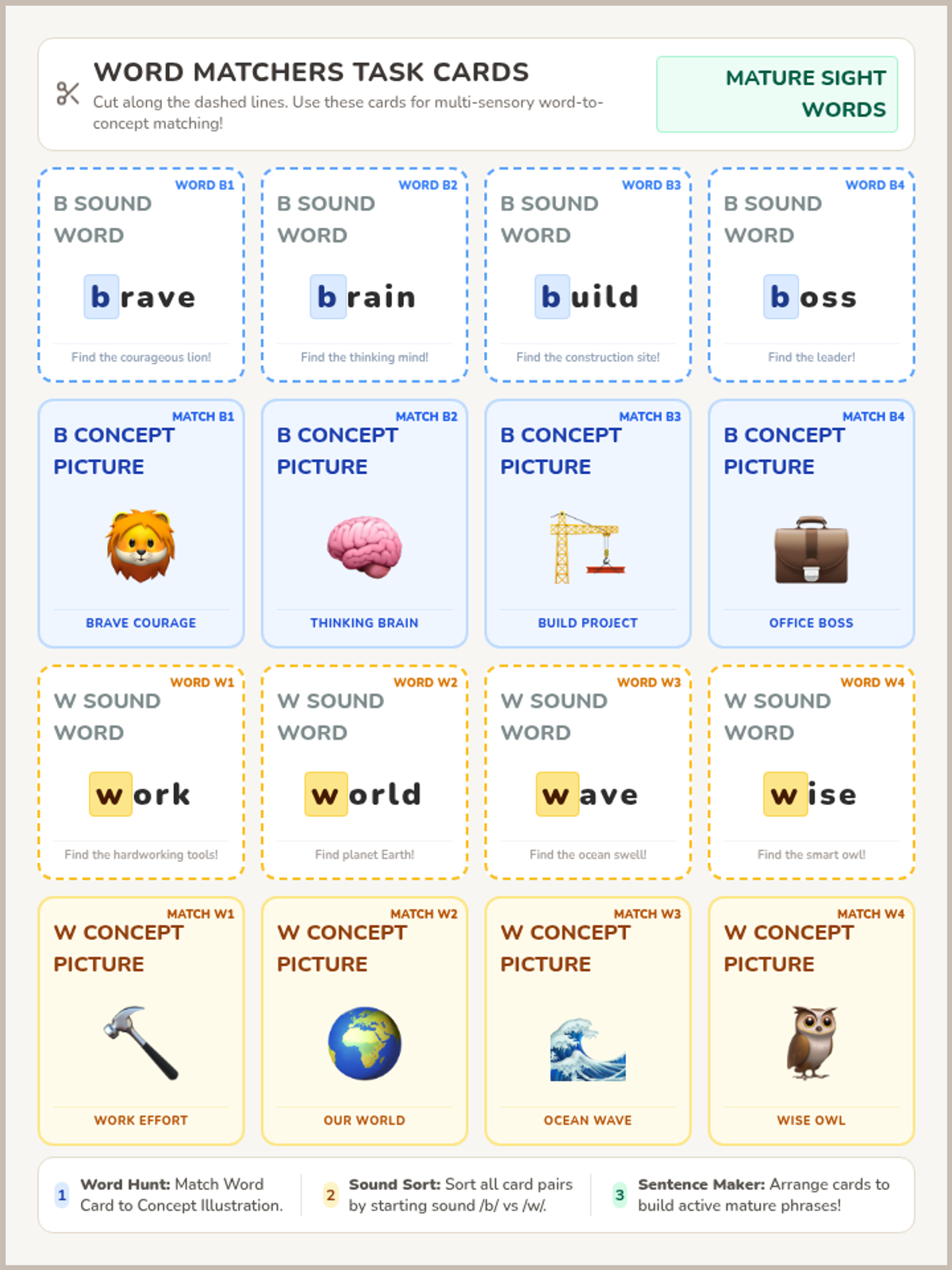
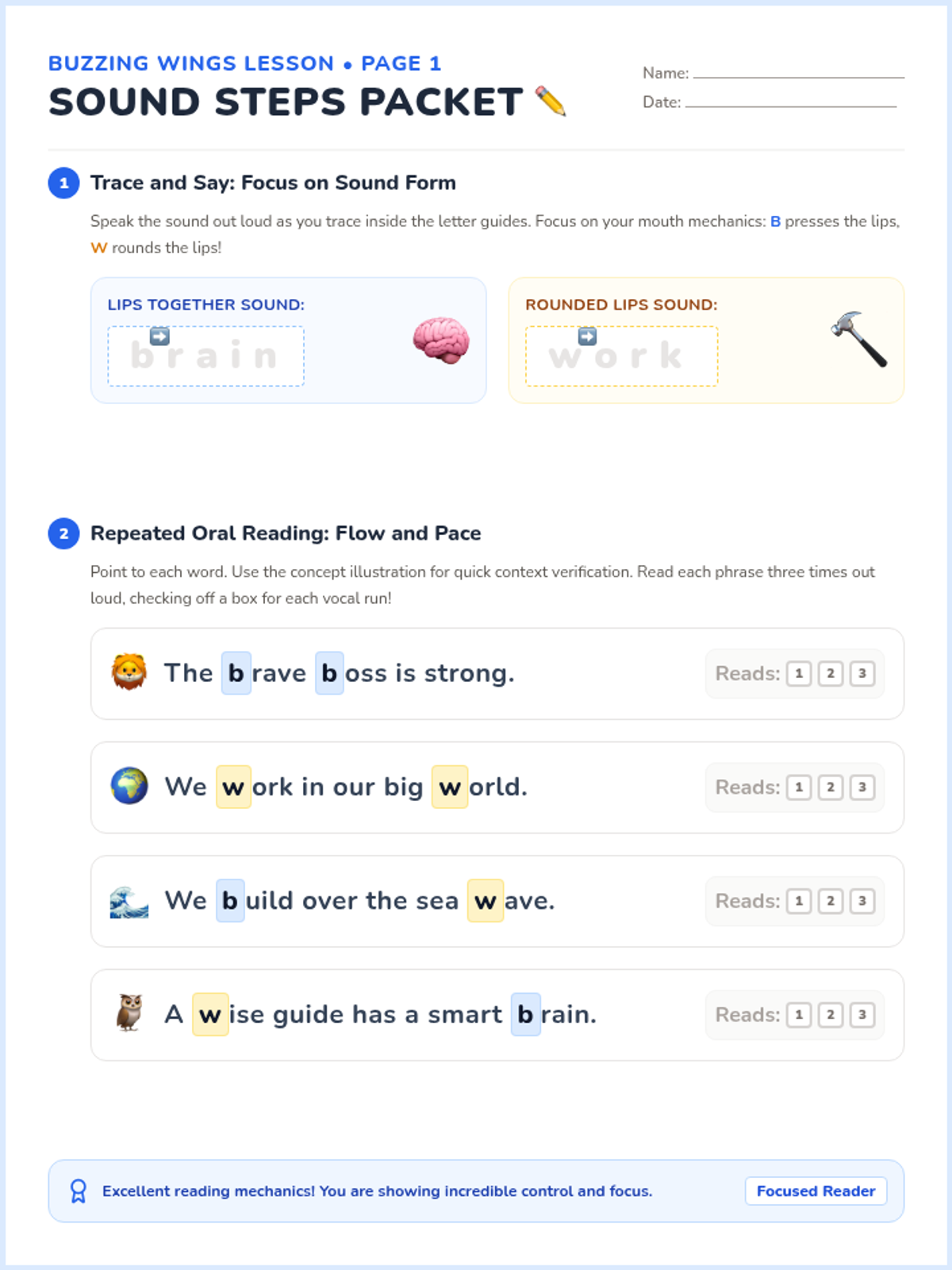
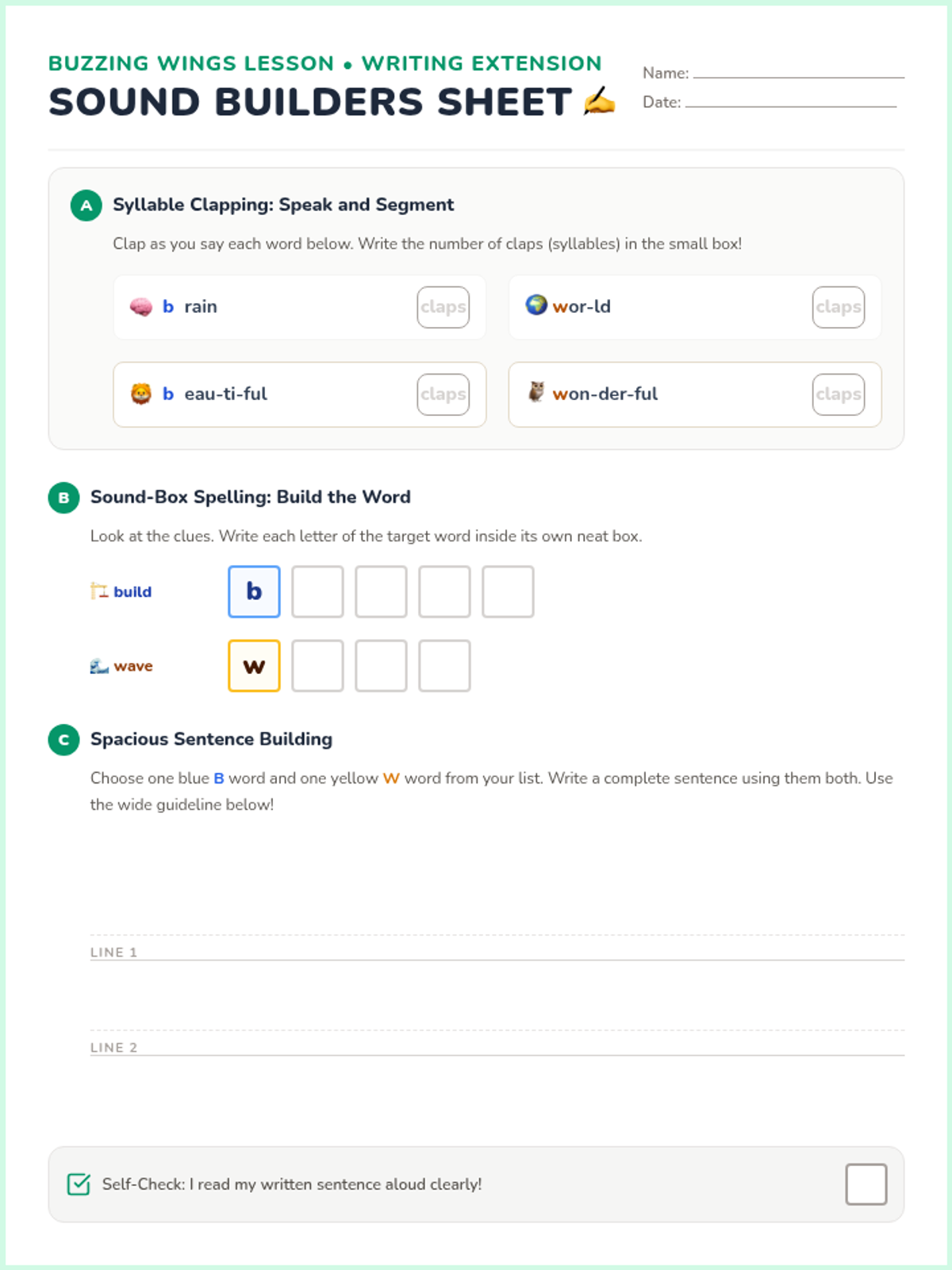
An hour-long structured reading lesson focusing on B and W letter-sound association and common sight words. Designed with dyslexia-friendly spacing, color-coded highlights, and picture scaffolding to support struggling oral readers.
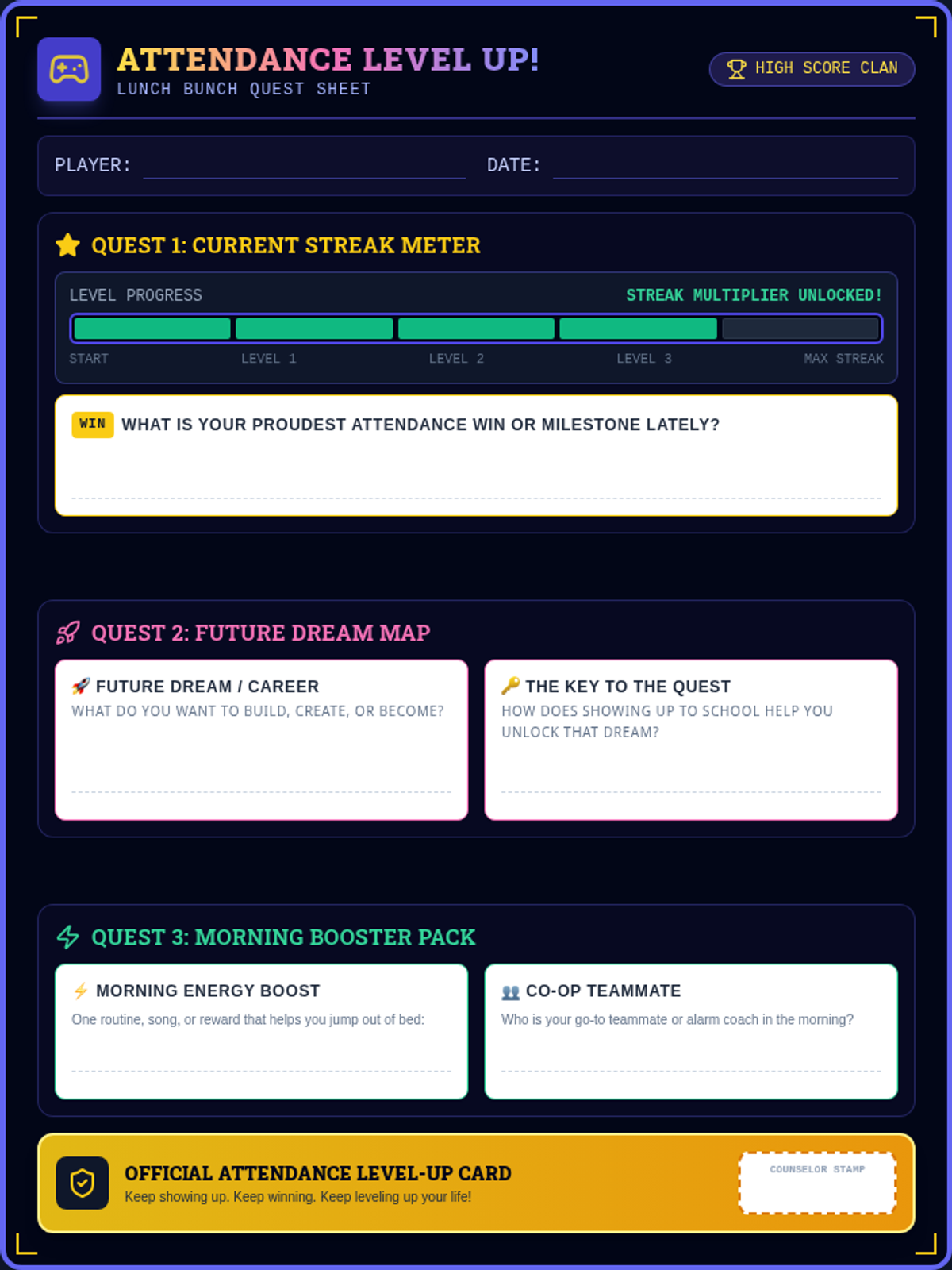
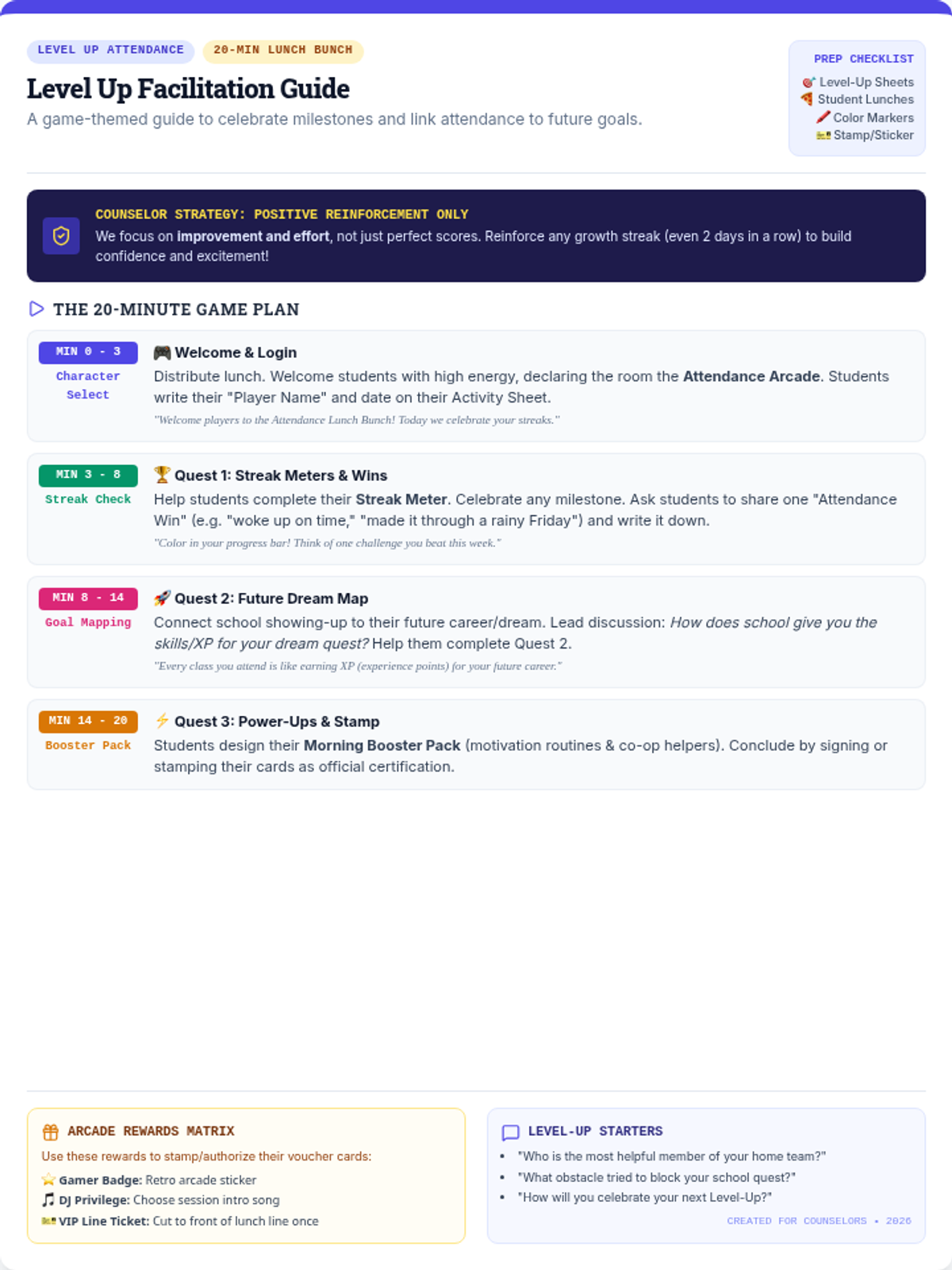
A 20-minute Lunch Bunch lesson plan and facilitation guide designed to celebrate attendance milestones, connect consistent attendance to future goals, and foster a high-energy, positive environment for students.
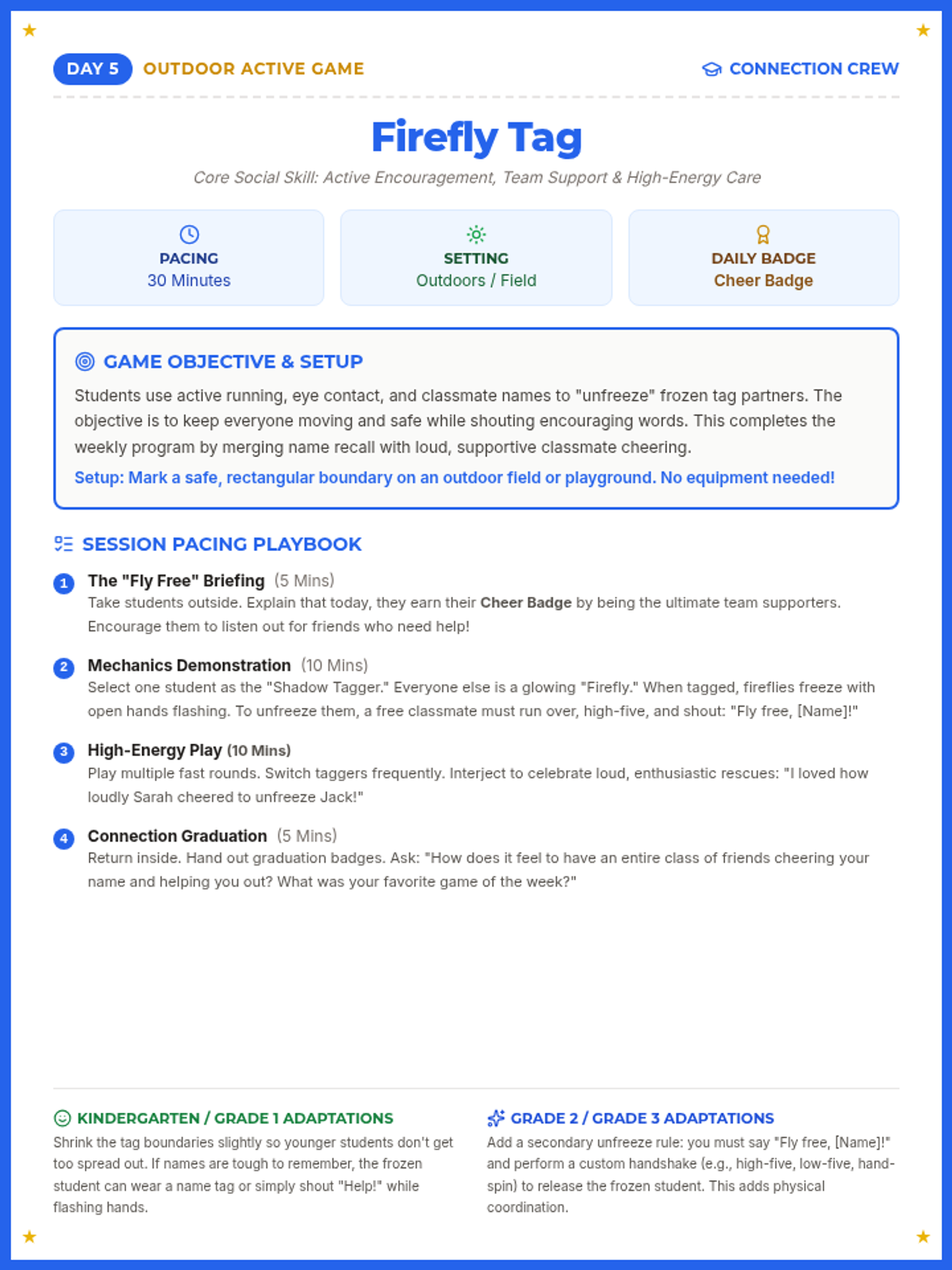
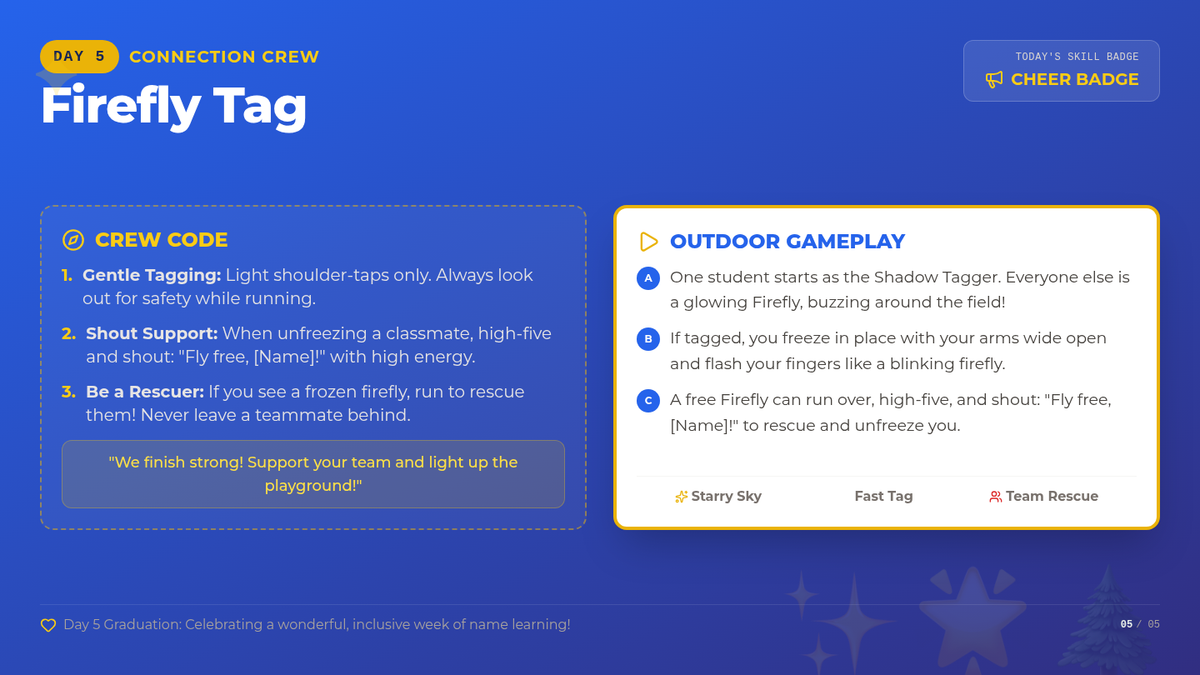
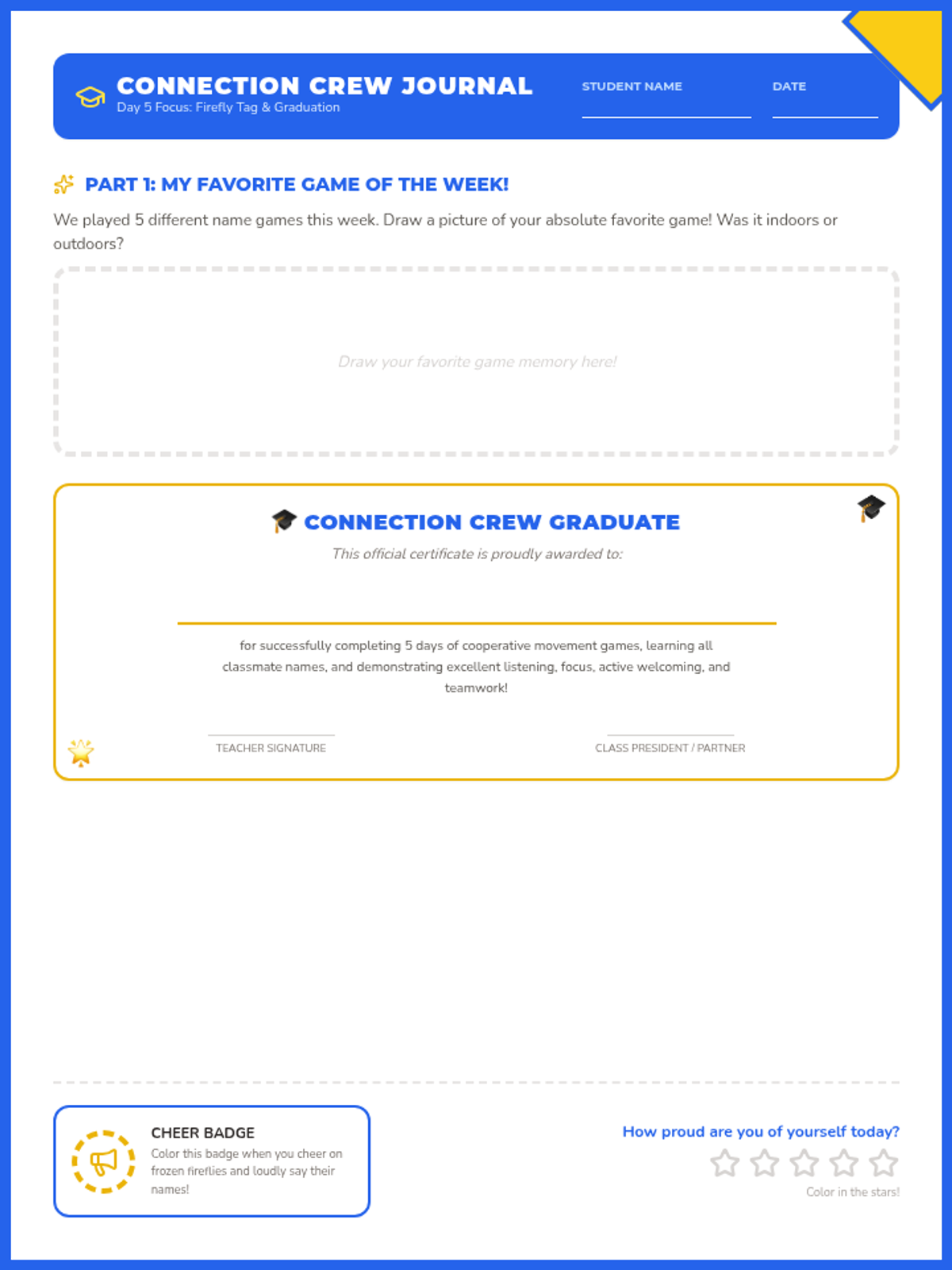
Day 5 of Connection Crew. An outdoor tag game focusing on encouragement and speed, where students must use classmate names and handshakes/high-fives to "unfreeze" them.
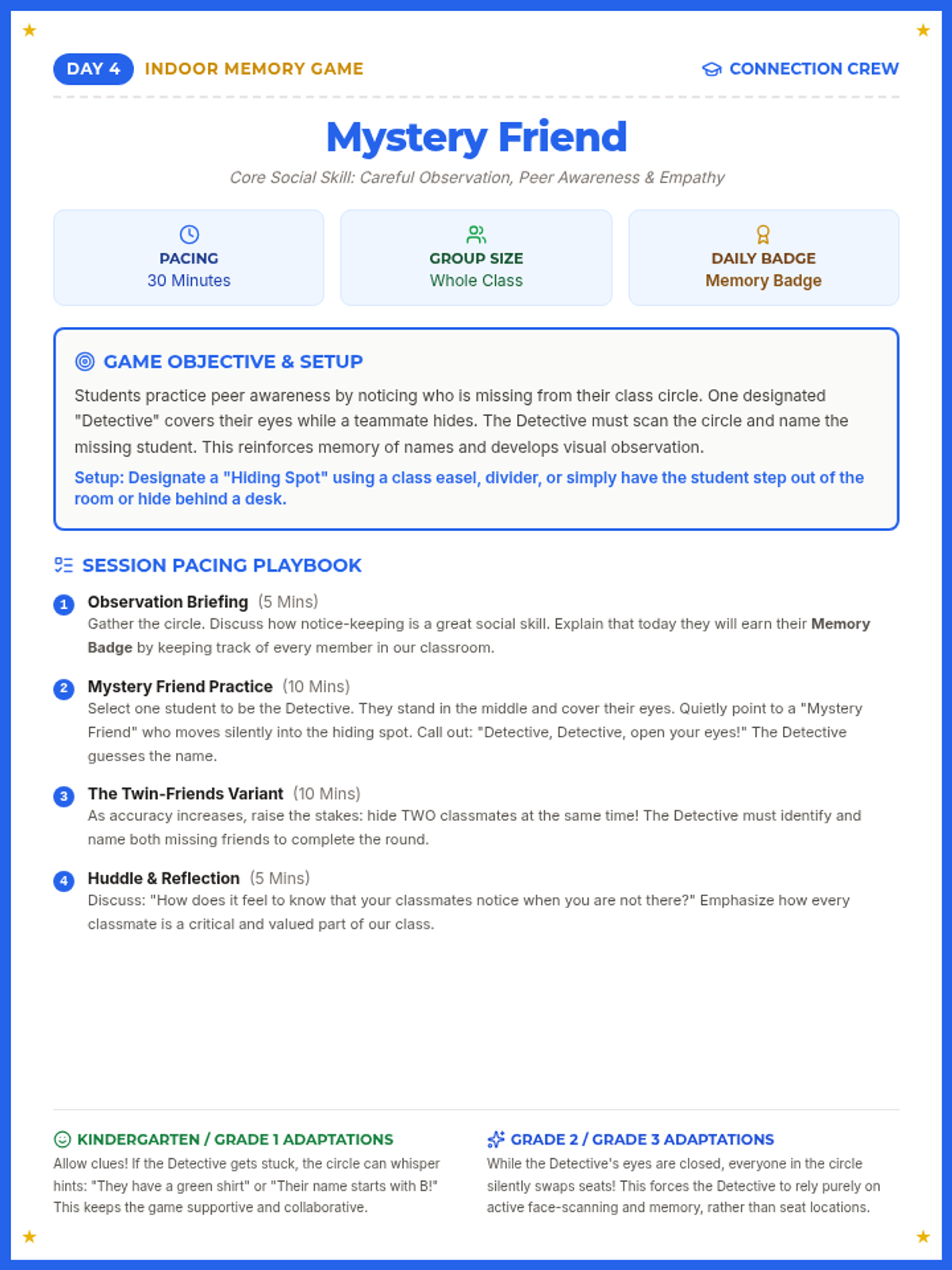
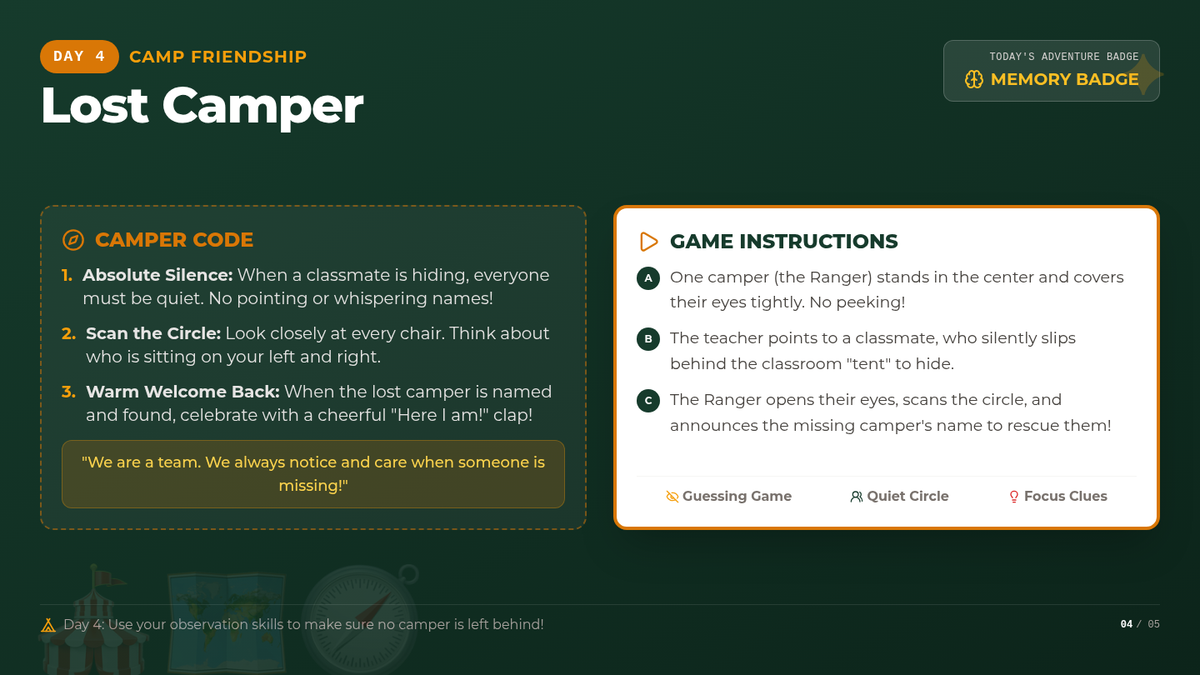
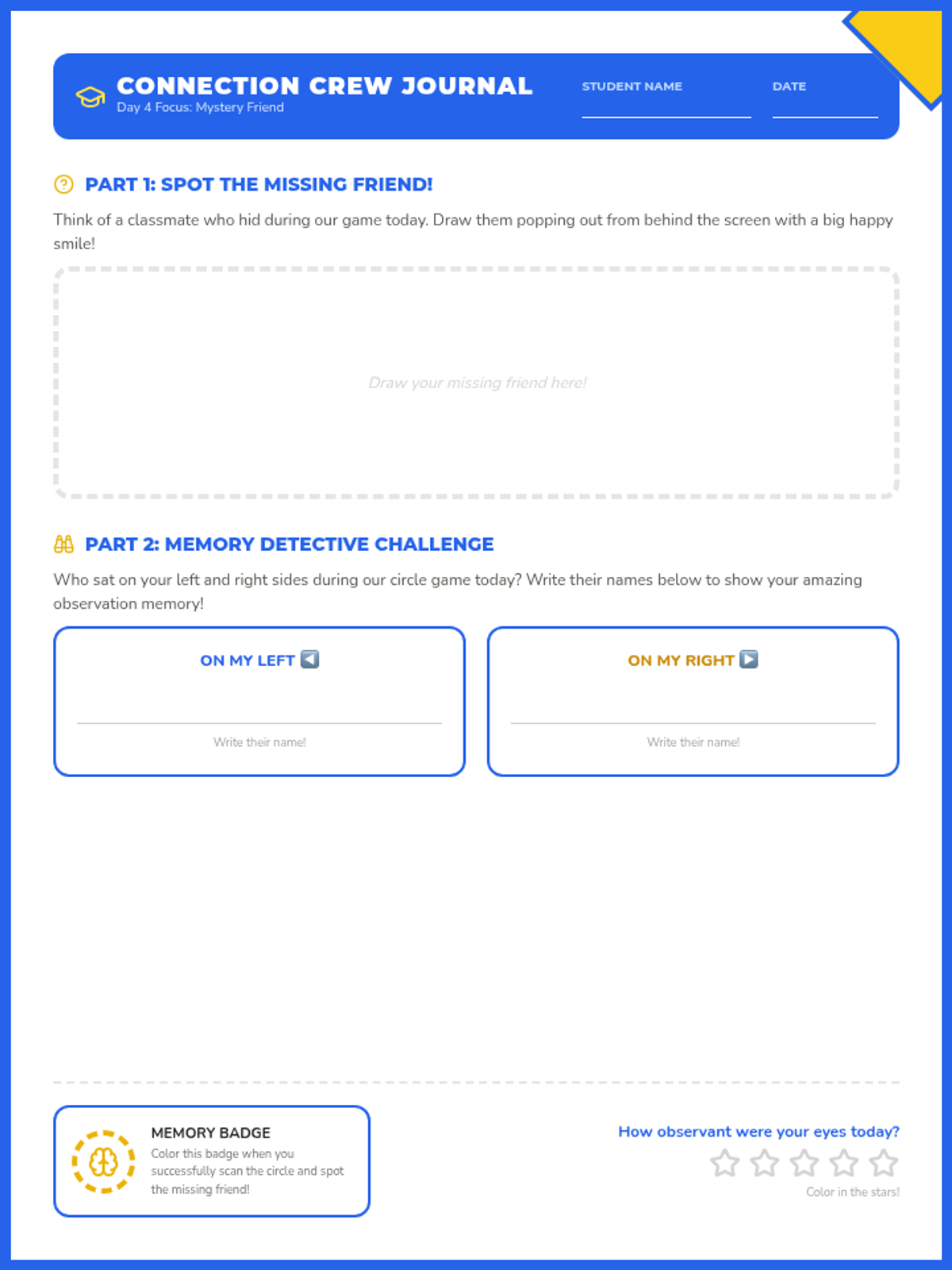
Day 4 of Connection Crew. An indoor sensory and memory game where students work together to identify which classmate is hidden in the "tent," reinforcing observation and recall.
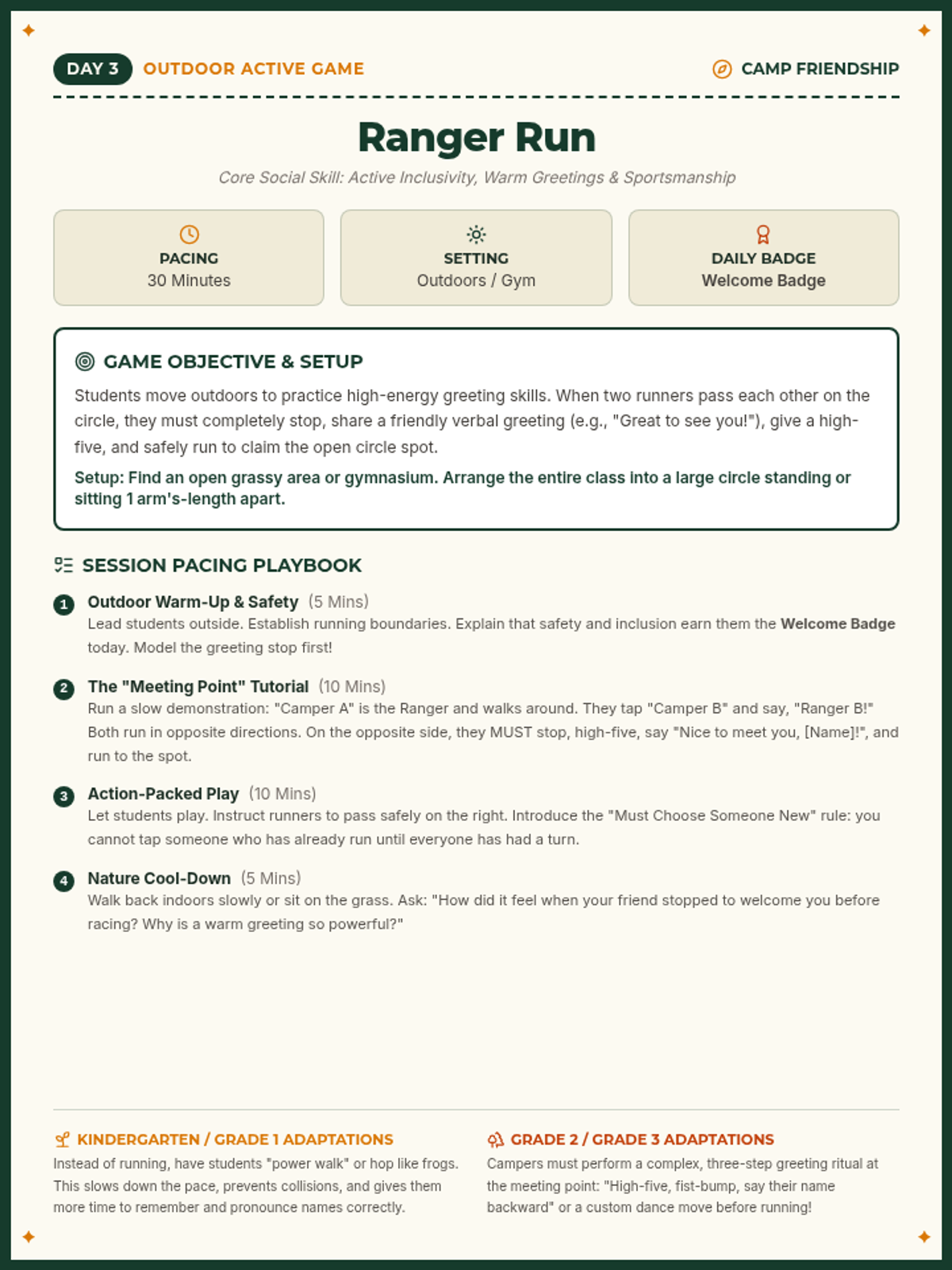
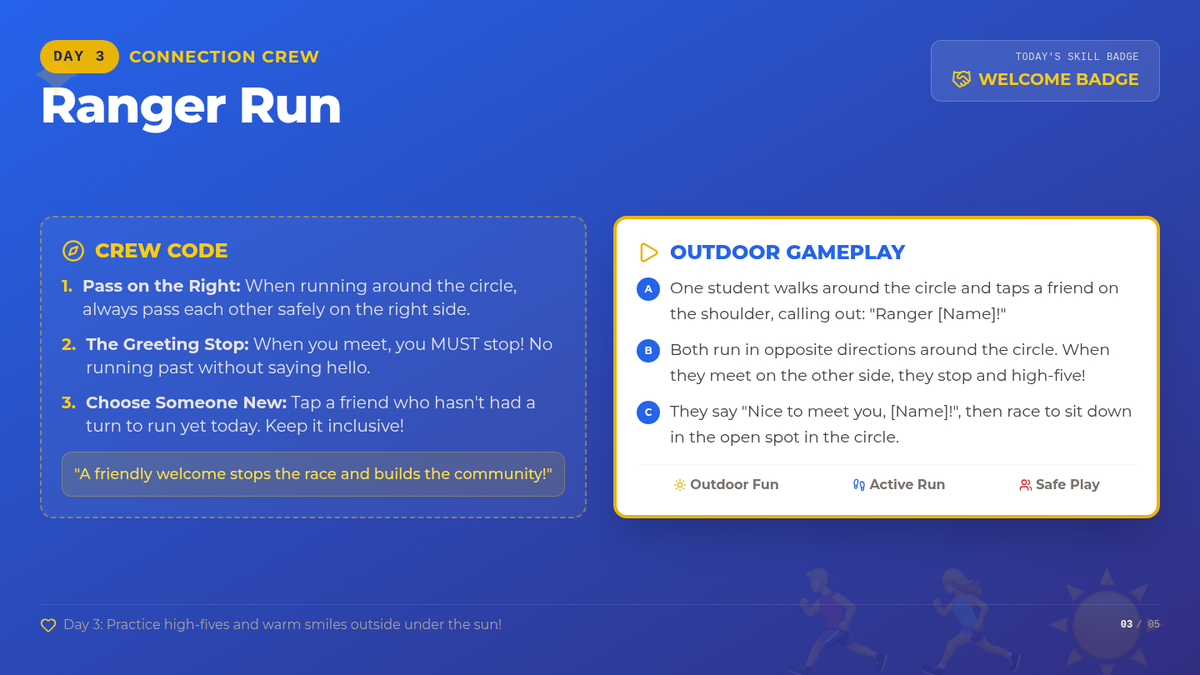
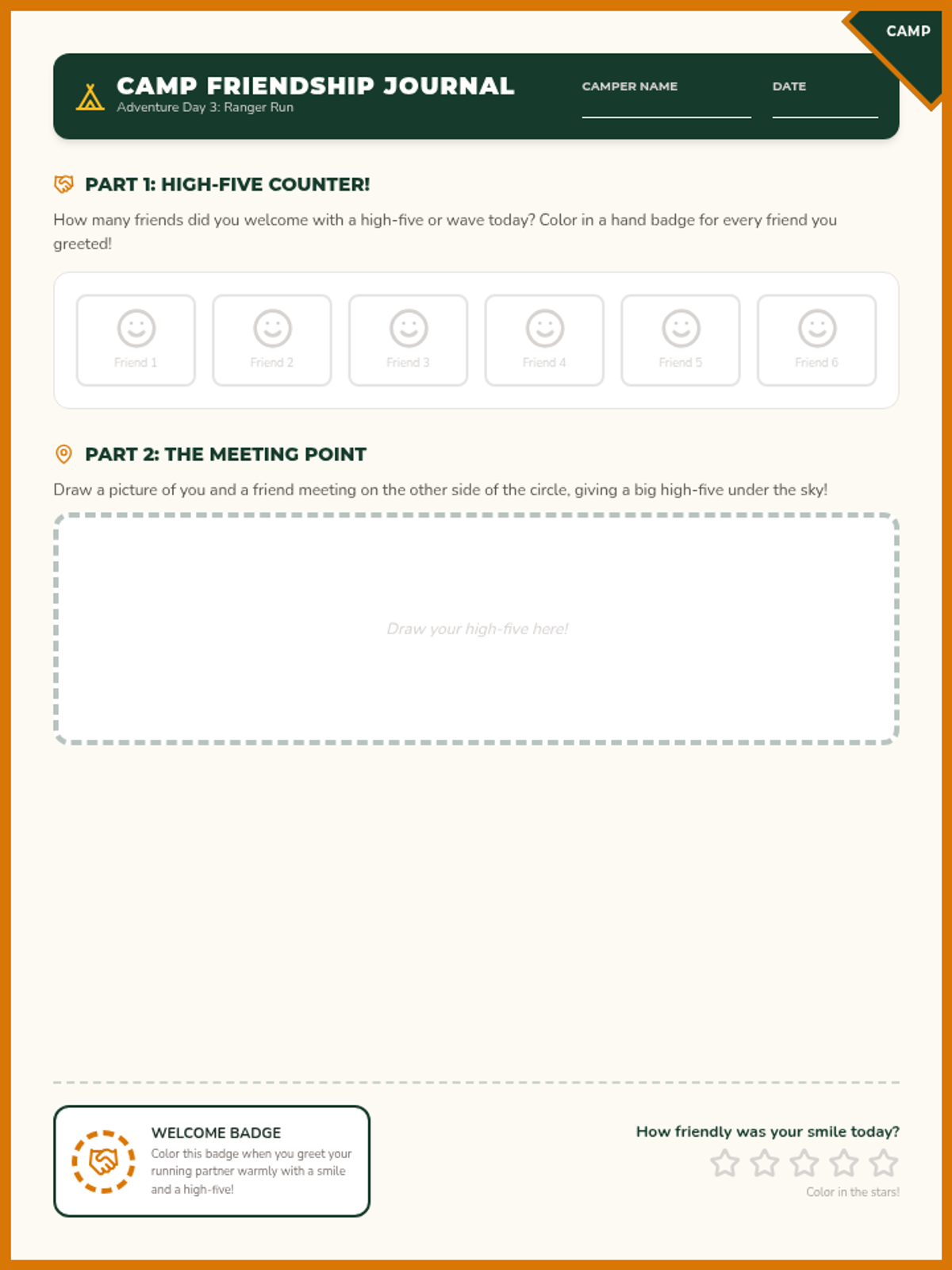
Day 3 of Connection Crew. An outdoor, highly active running circle game that combines physical exercise, name-learning, and warm welcomes under the sky.
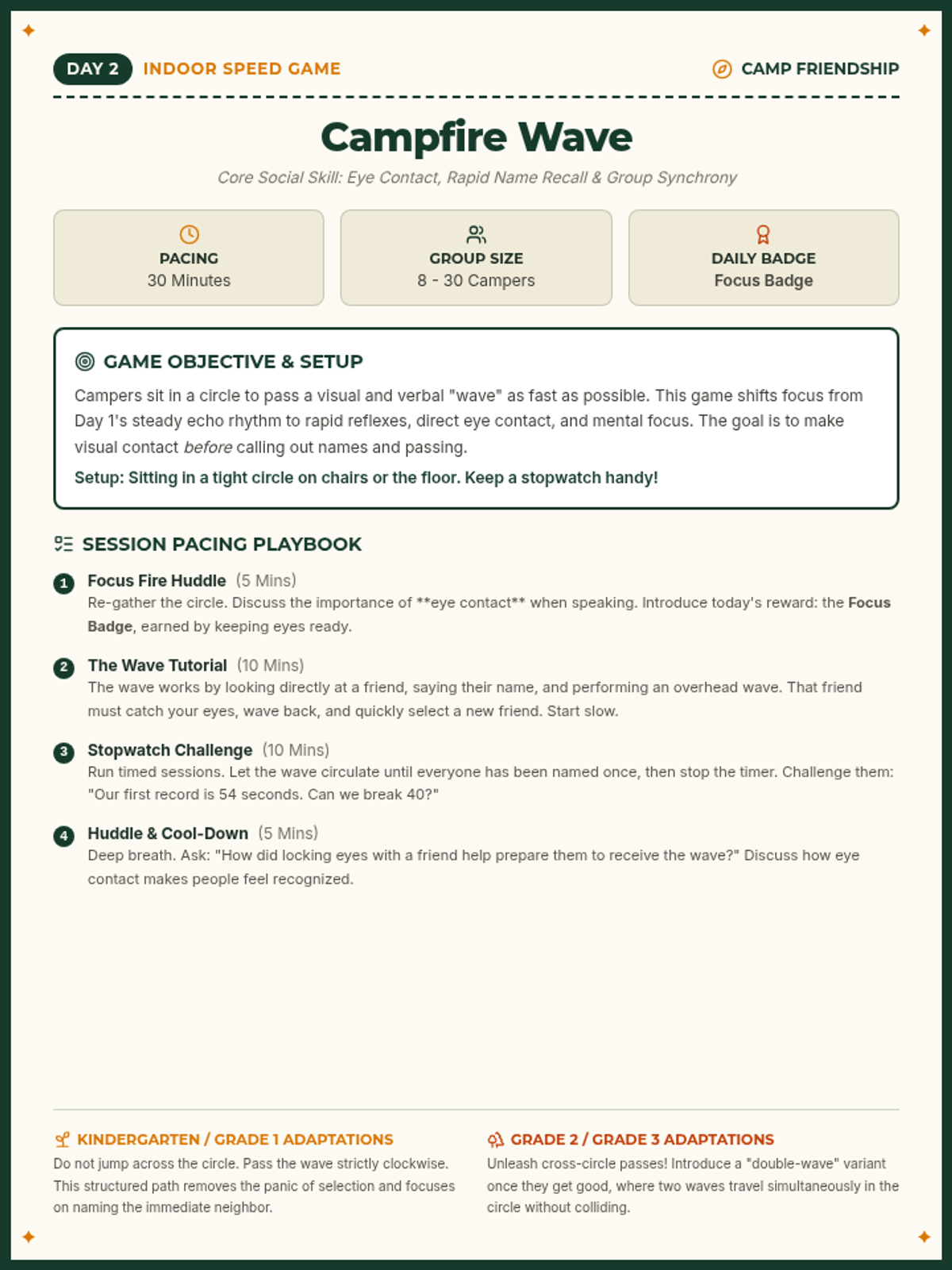
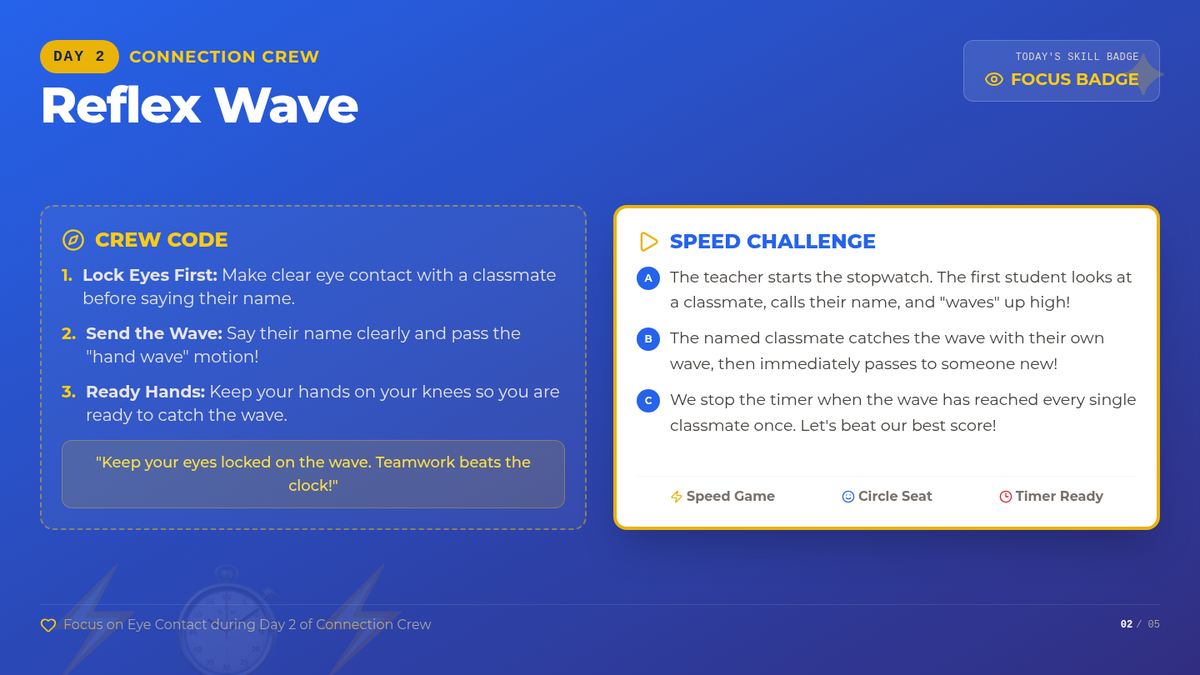
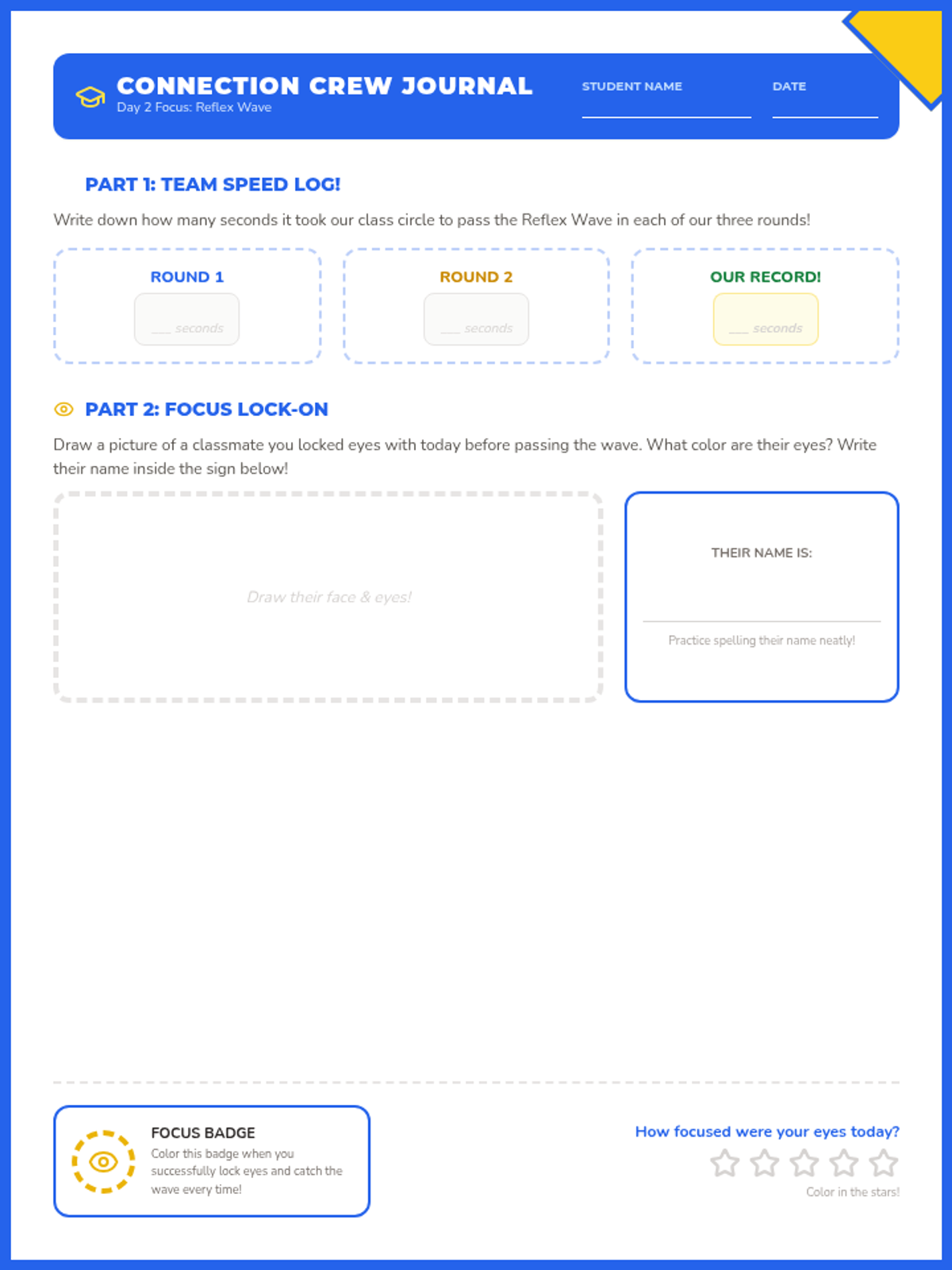
Day 2 of Connection Crew. An indoor speed-focus name game that builds reflexes, eye contact, and collective teamwork as the class tries to beat their own "Reflex Wave" time-record.
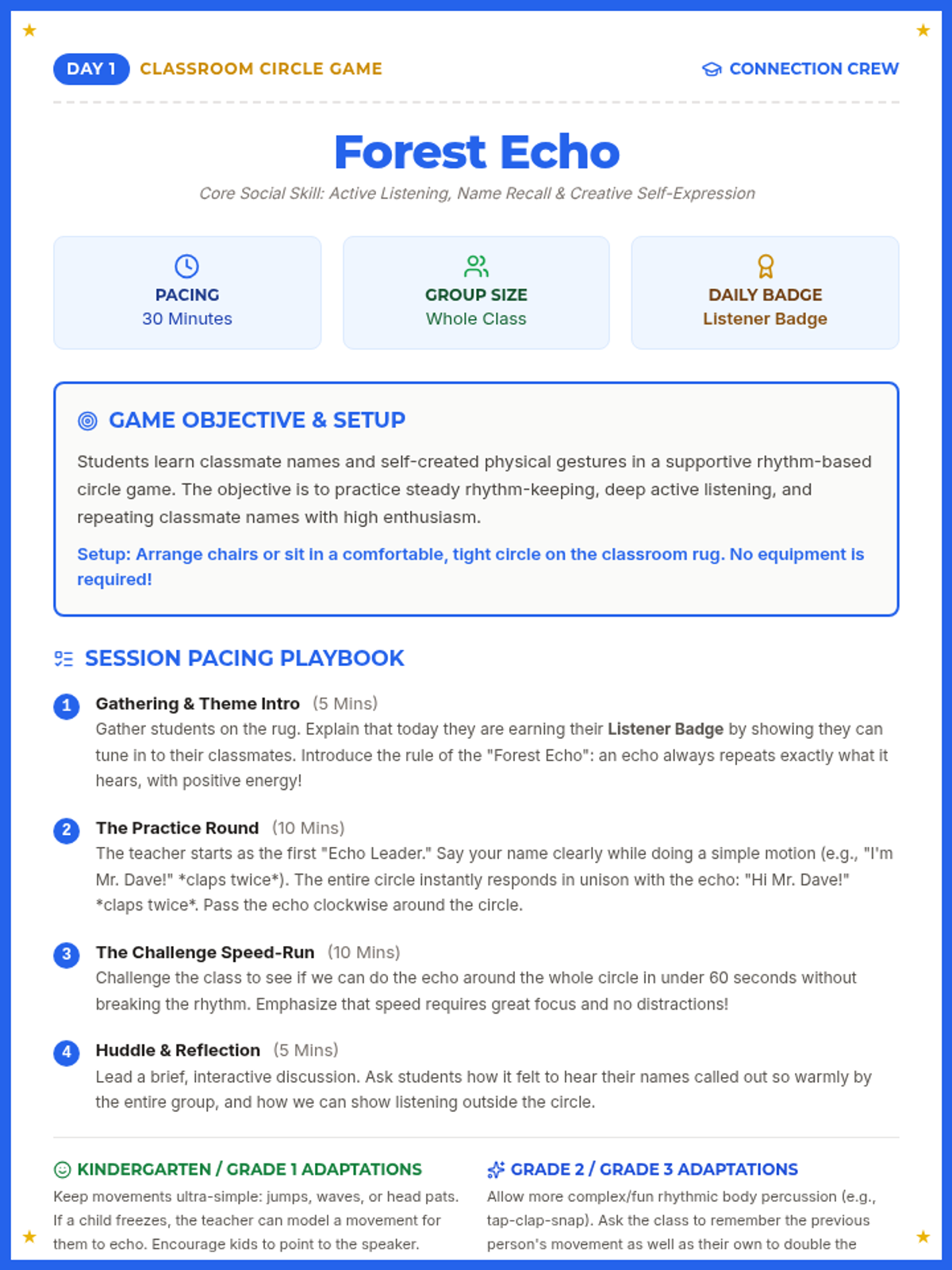
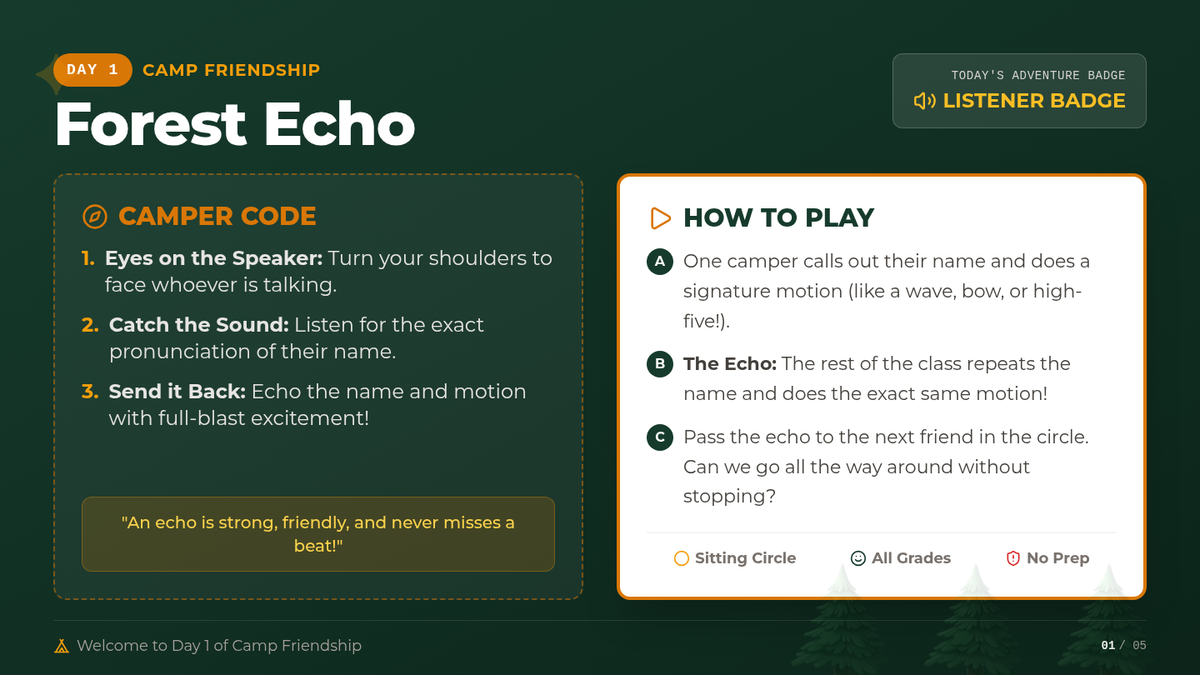
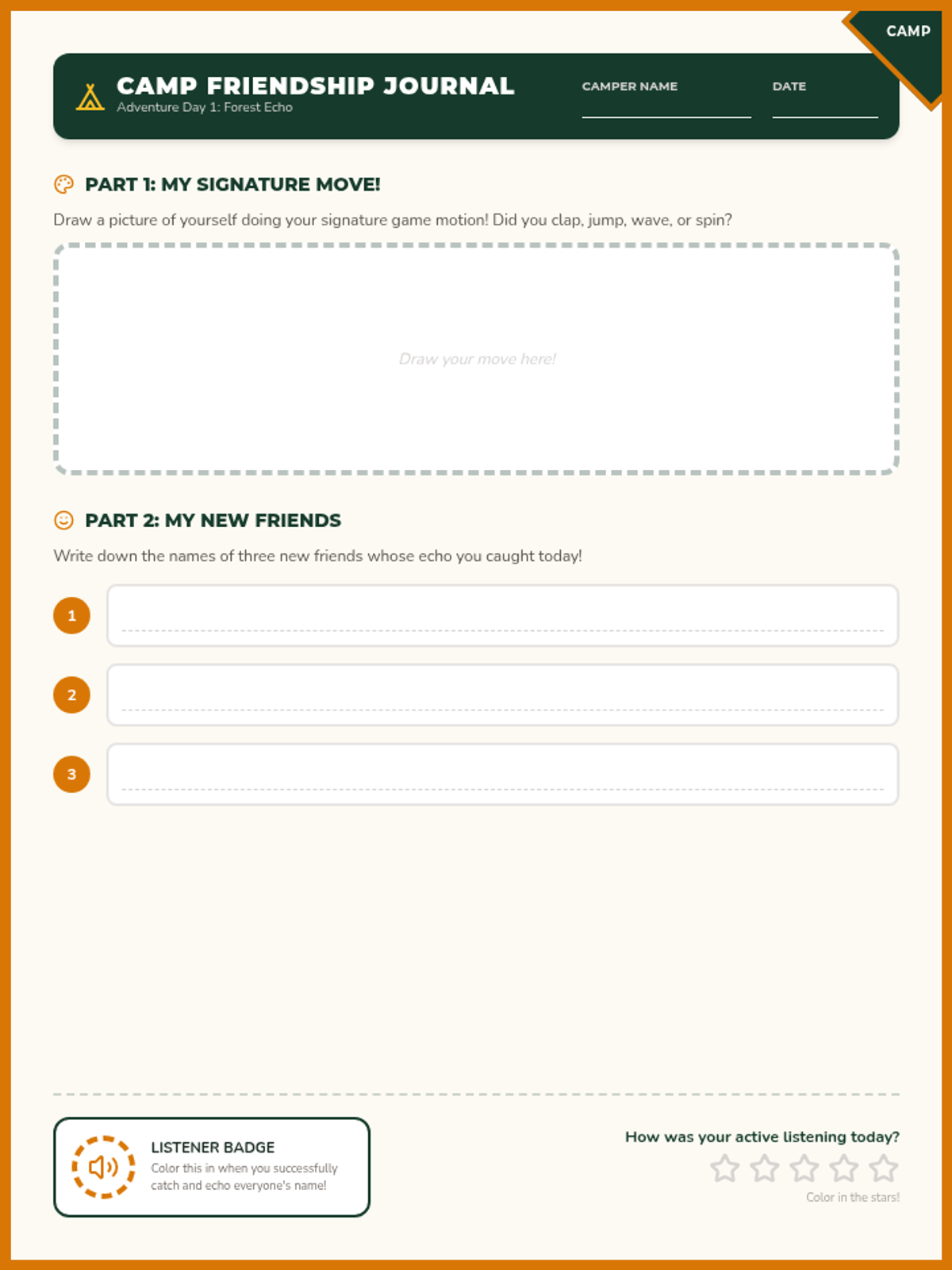
Day 1 of Connection Crew. Students gather in a classroom circle for a rhythmic echo game where they learn classmate names, share custom movements, and practice active listening in a 30-minute indoor session.
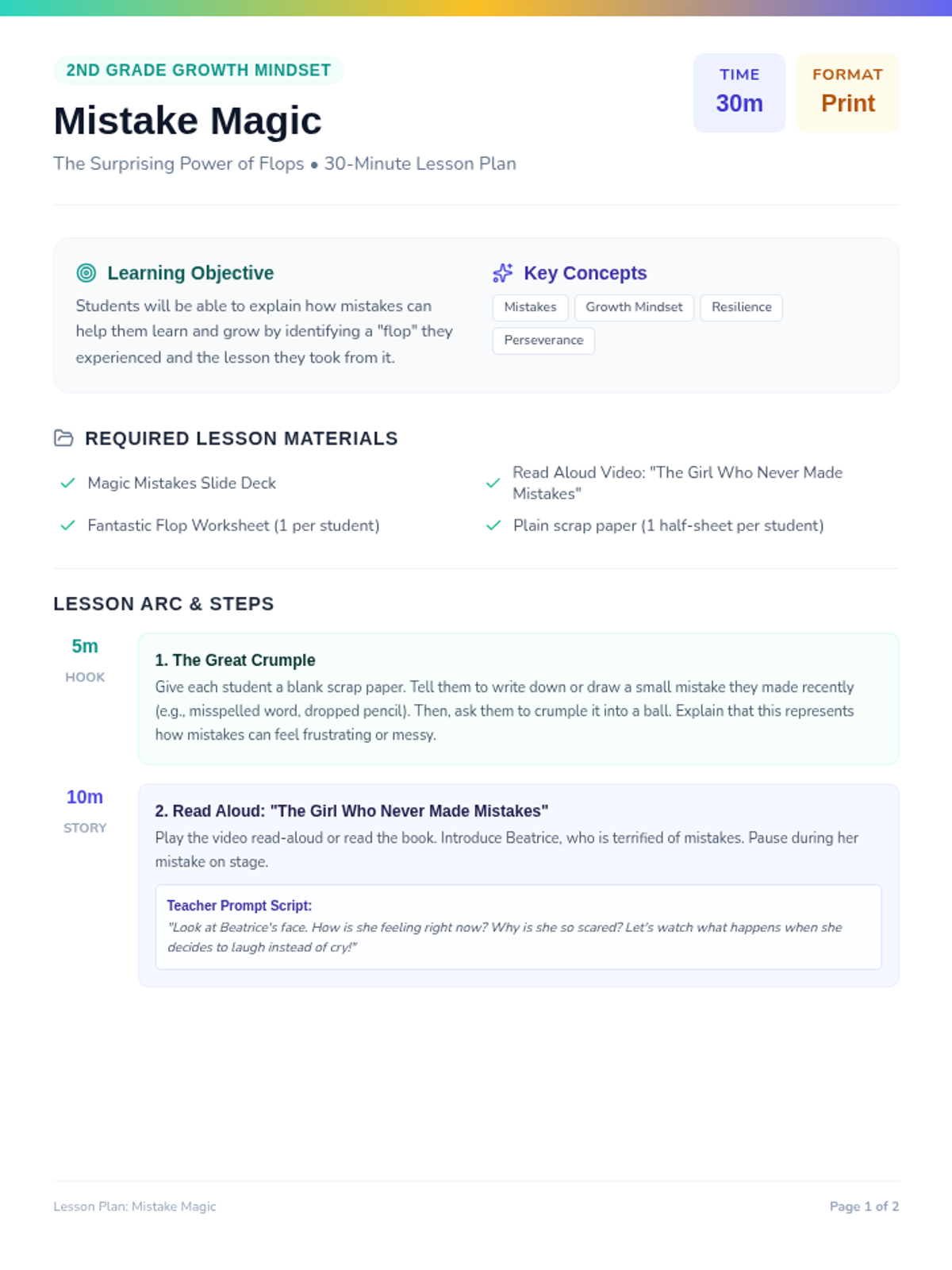
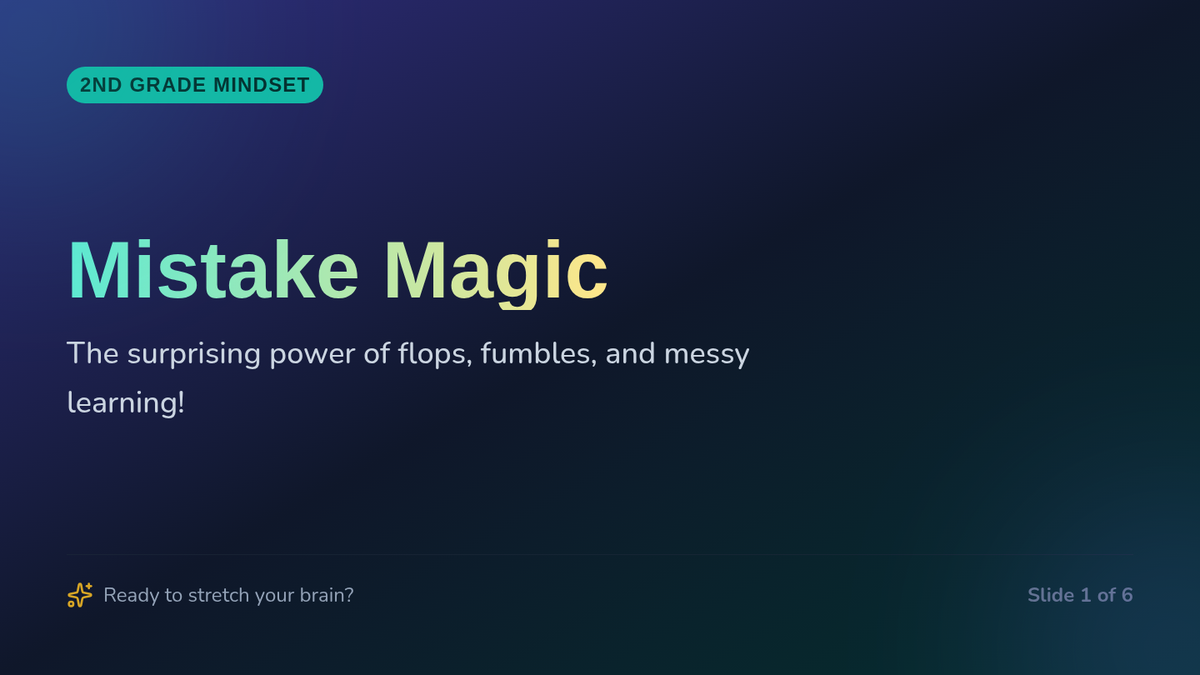
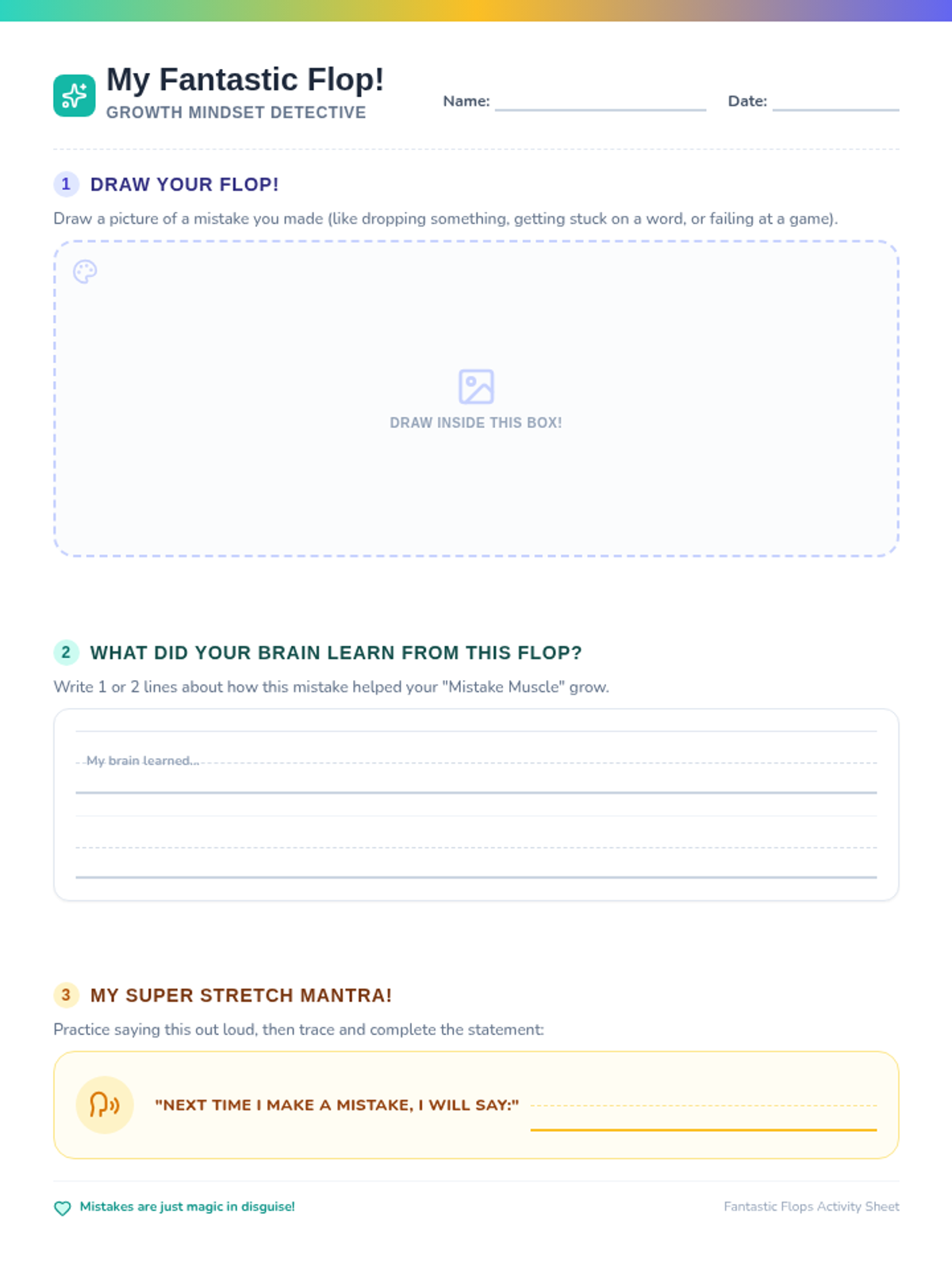
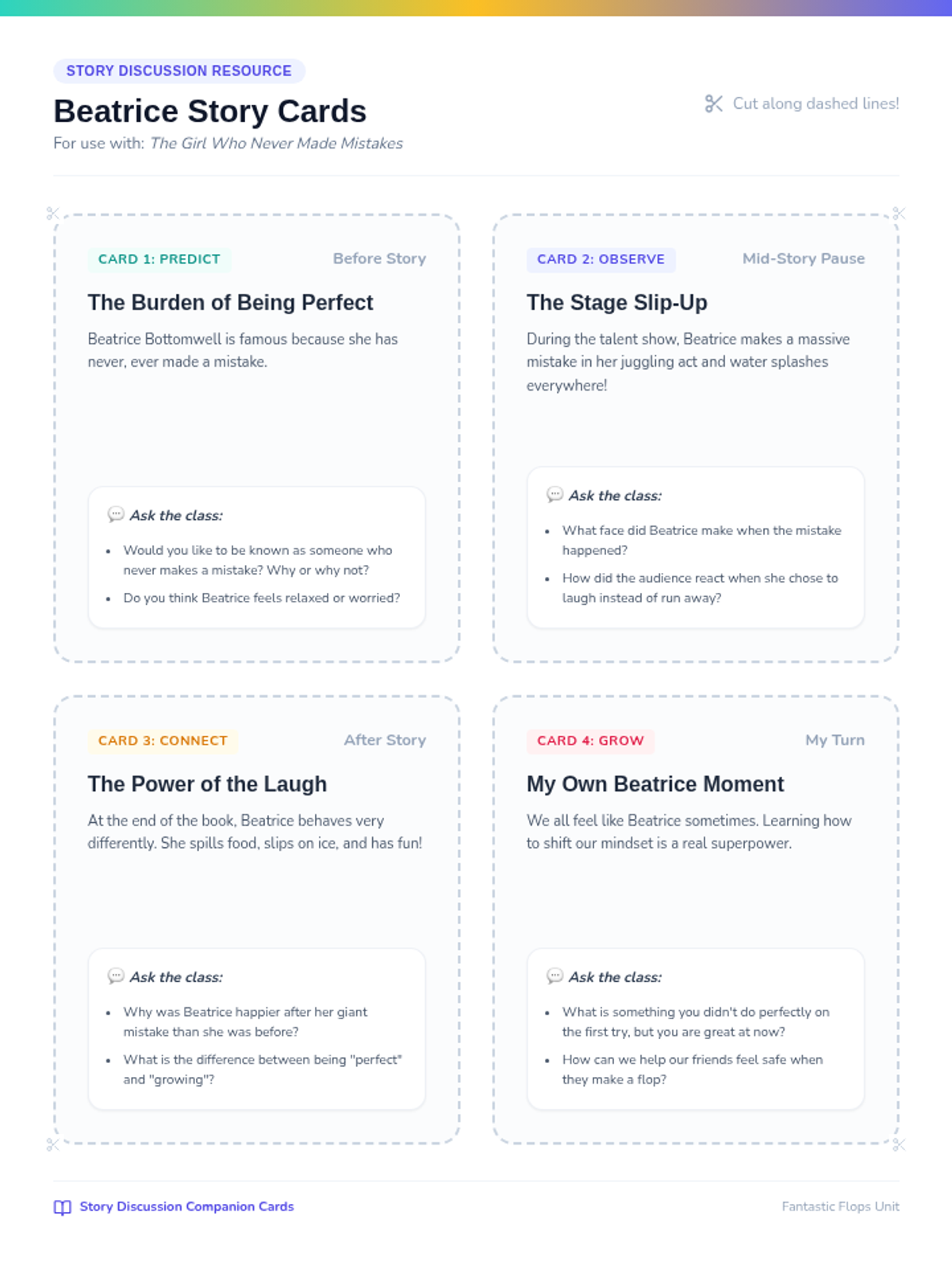
A 30-minute growth mindset lesson for 2nd graders to help them see mistakes not as failures, but as exciting opportunities for brain growth and learning. Through a story, discussion, and a drawing activity, students learn to celebrate their flops.
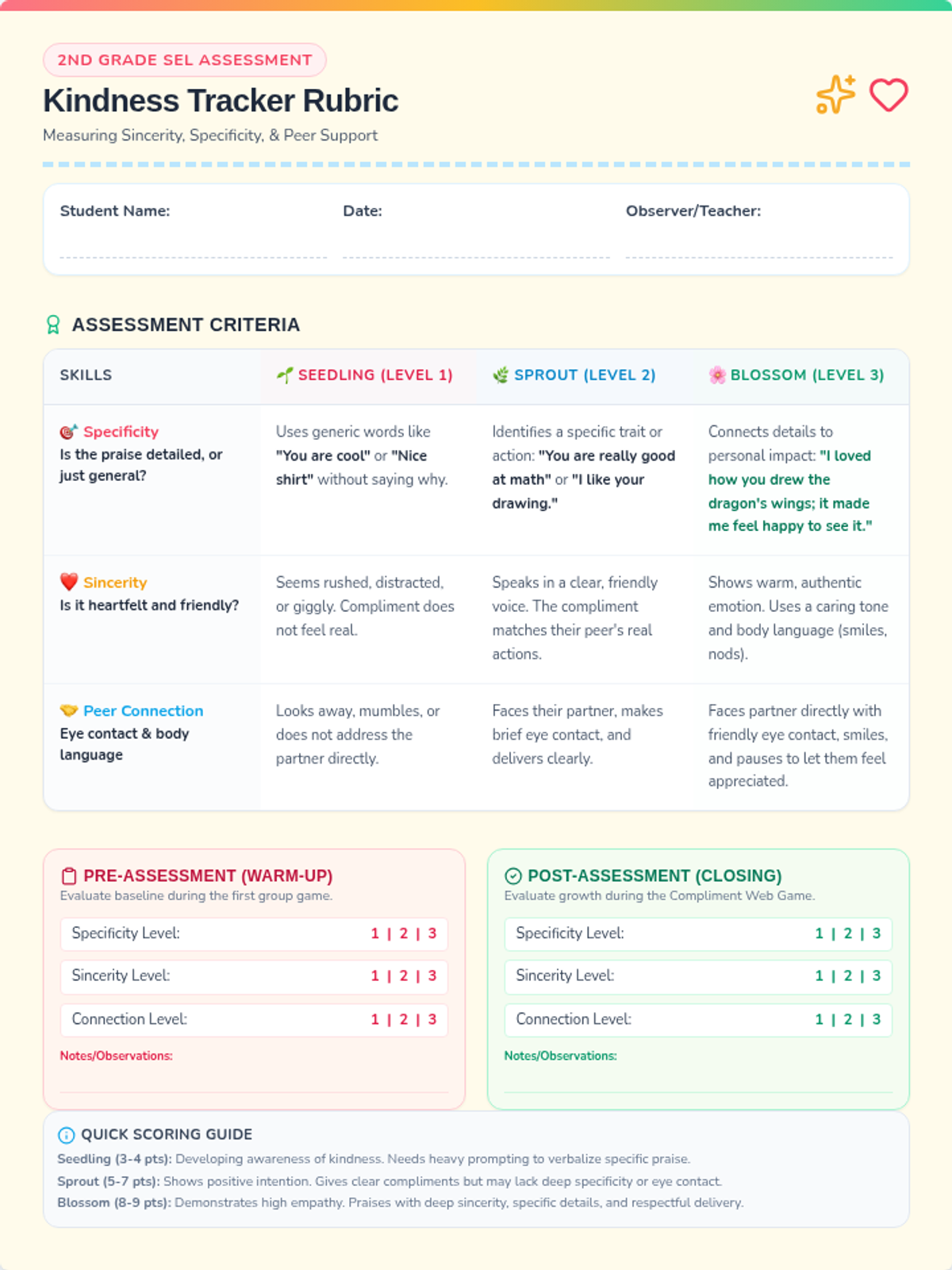
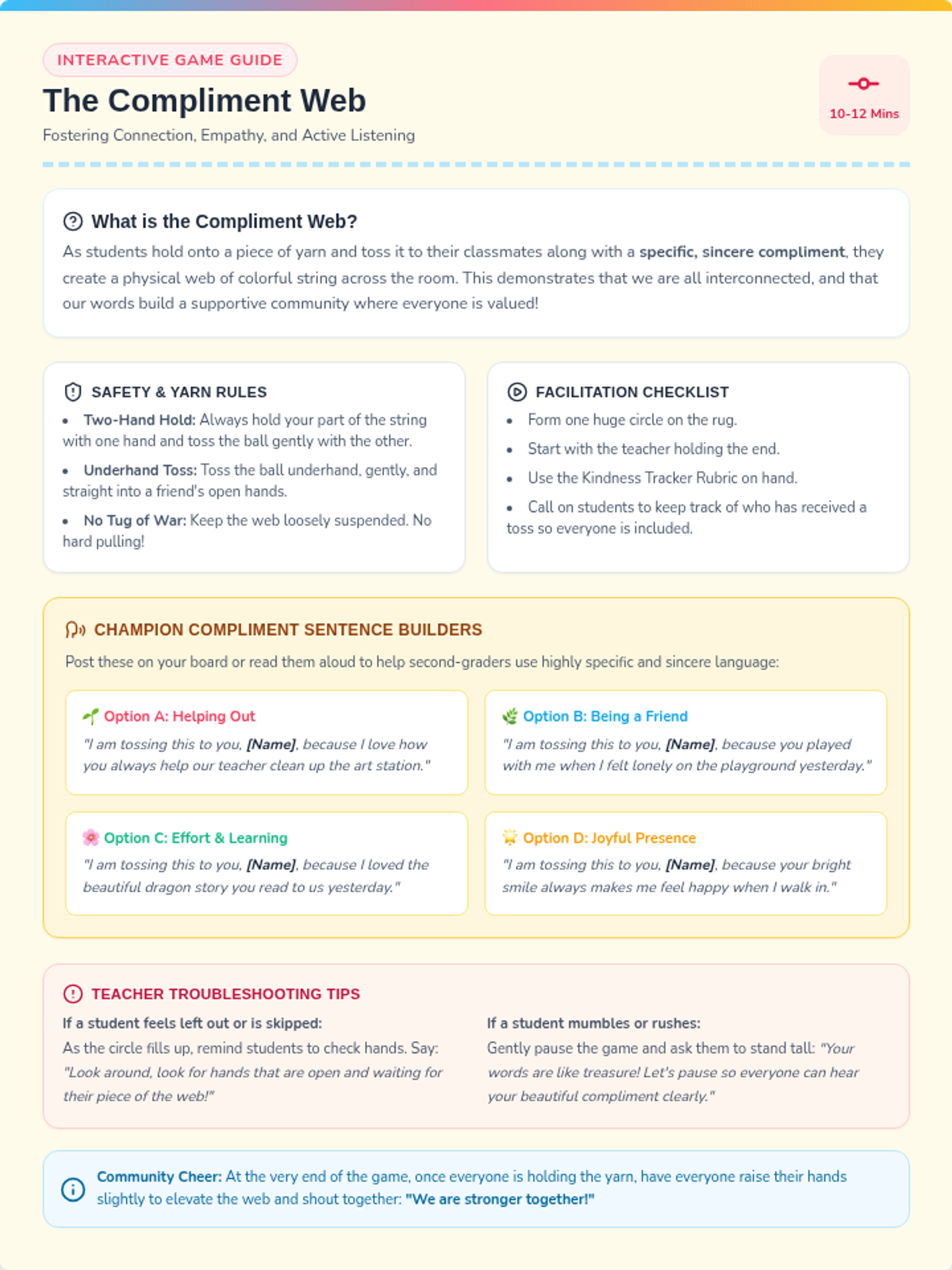
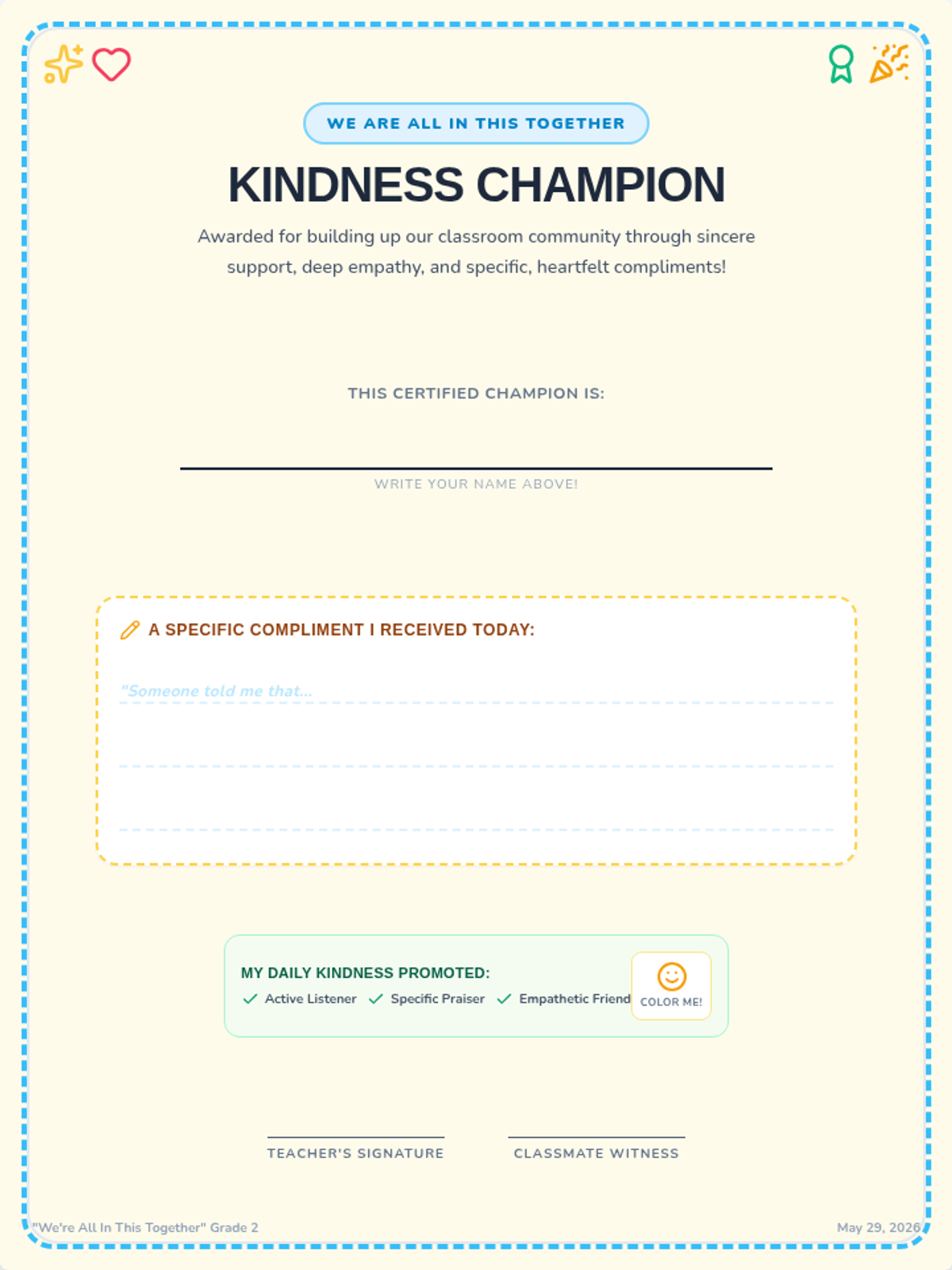
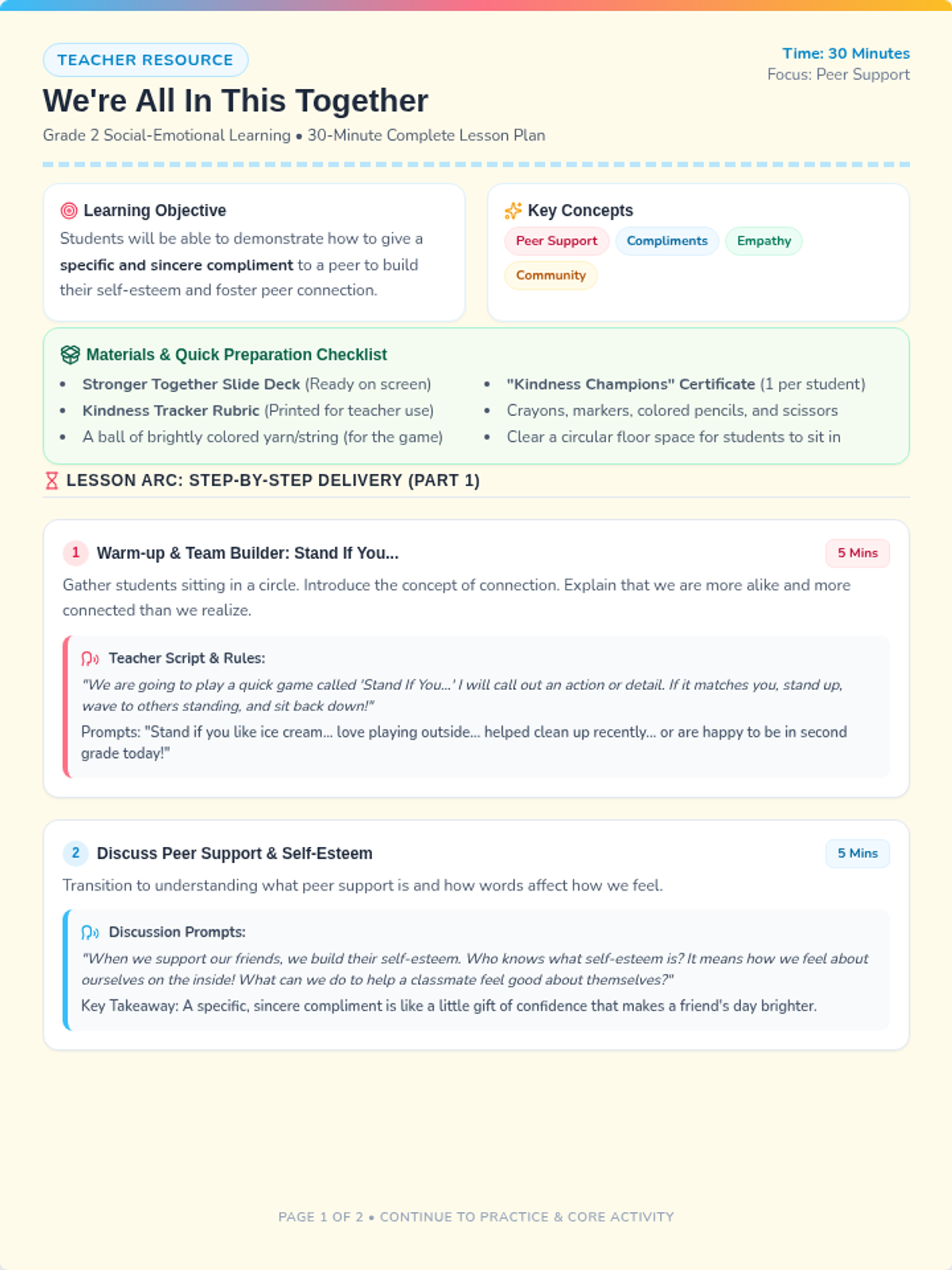
A 30-minute social-emotional learning lesson for 2nd grade focused on building community and self-esteem through specific, sincere compliments. Includes a complete lesson plan, interactive slide deck, assessment rubric, class game, and hands-on certificate project.
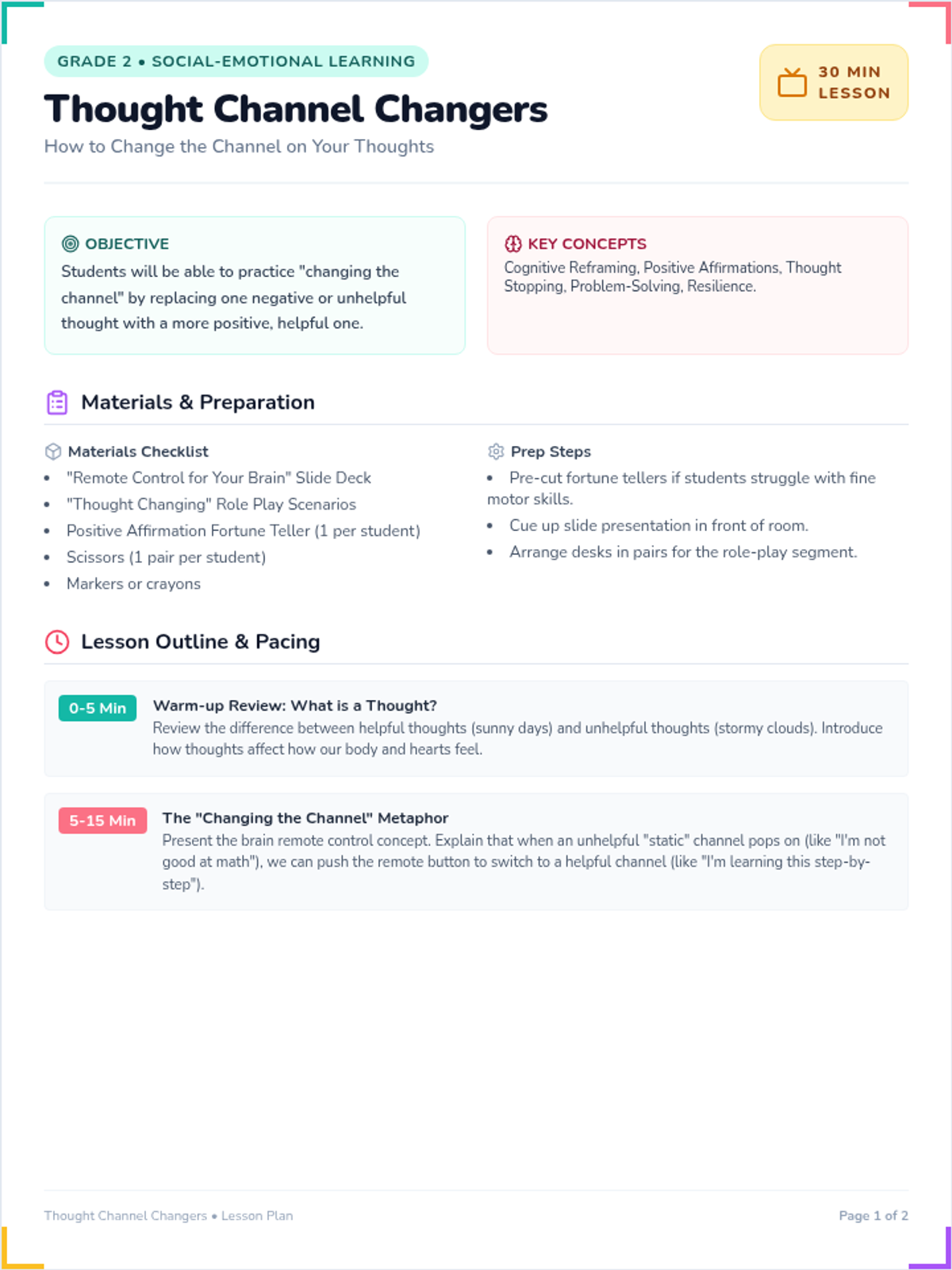
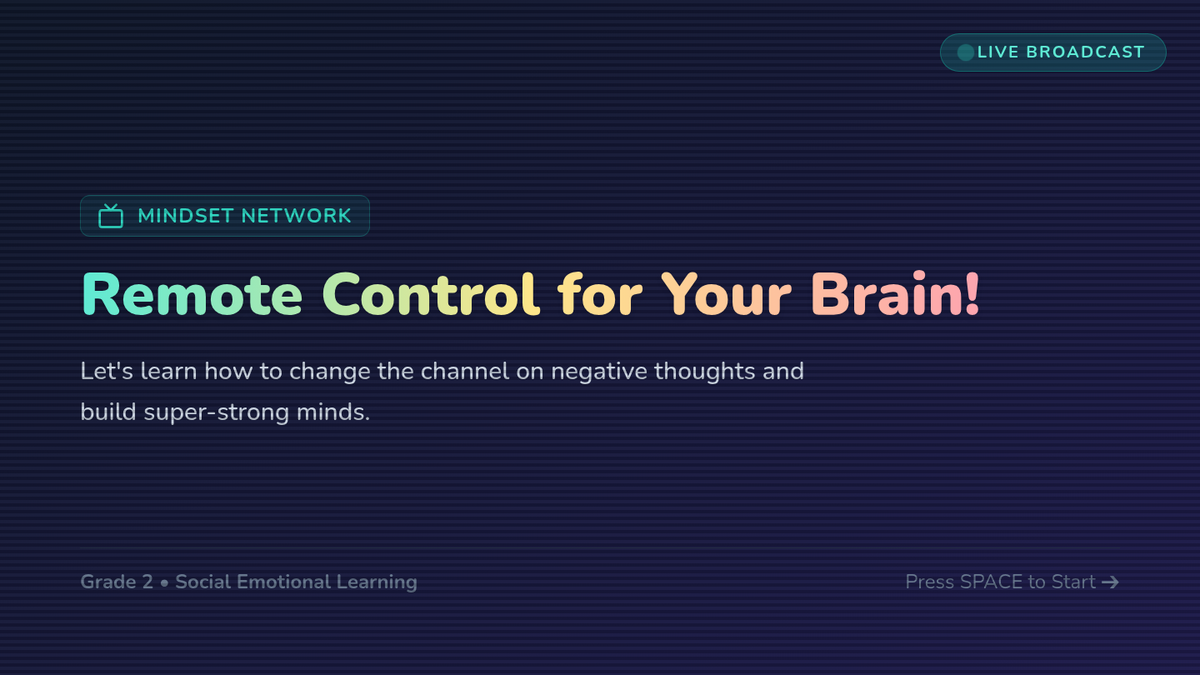
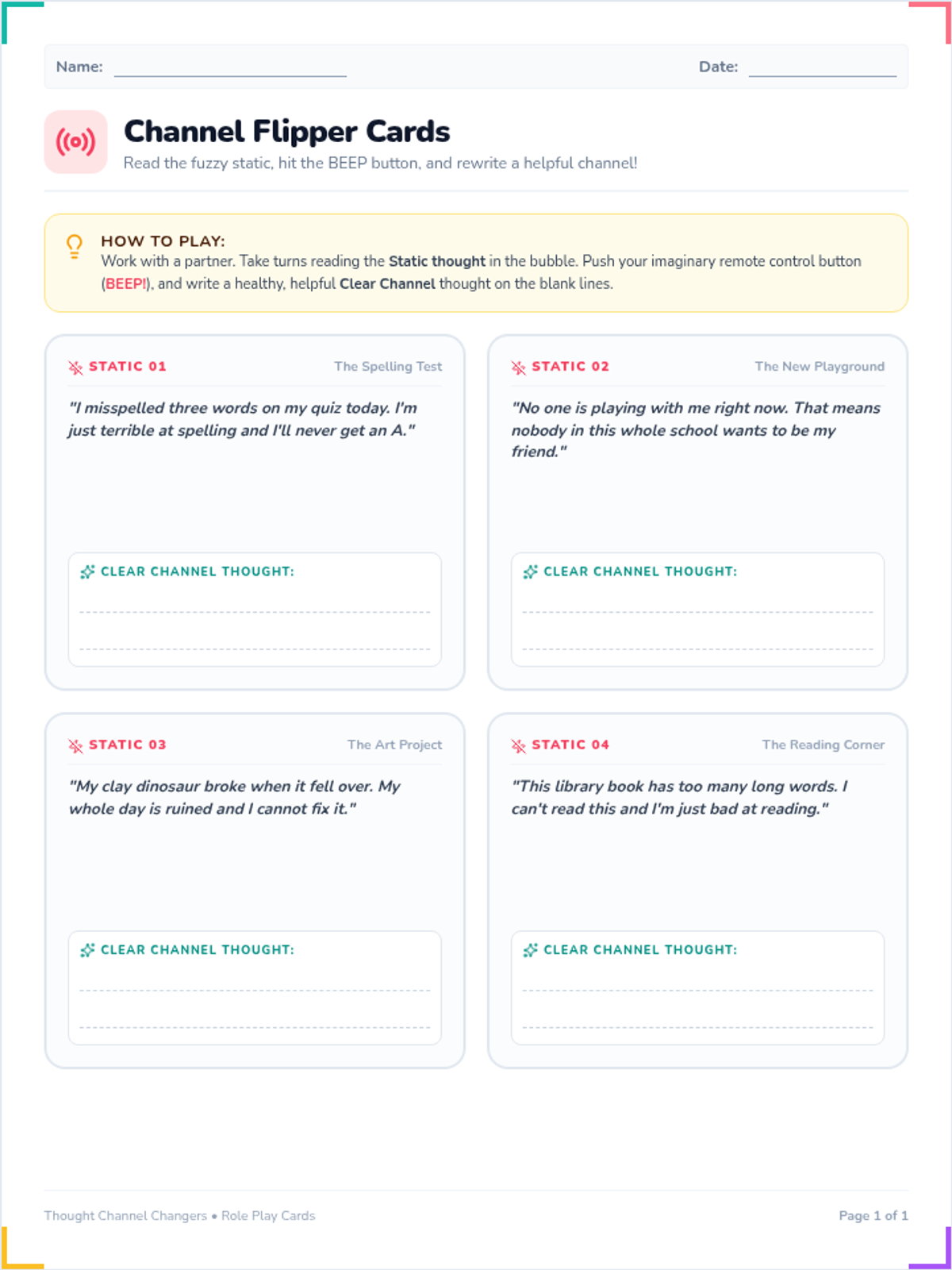
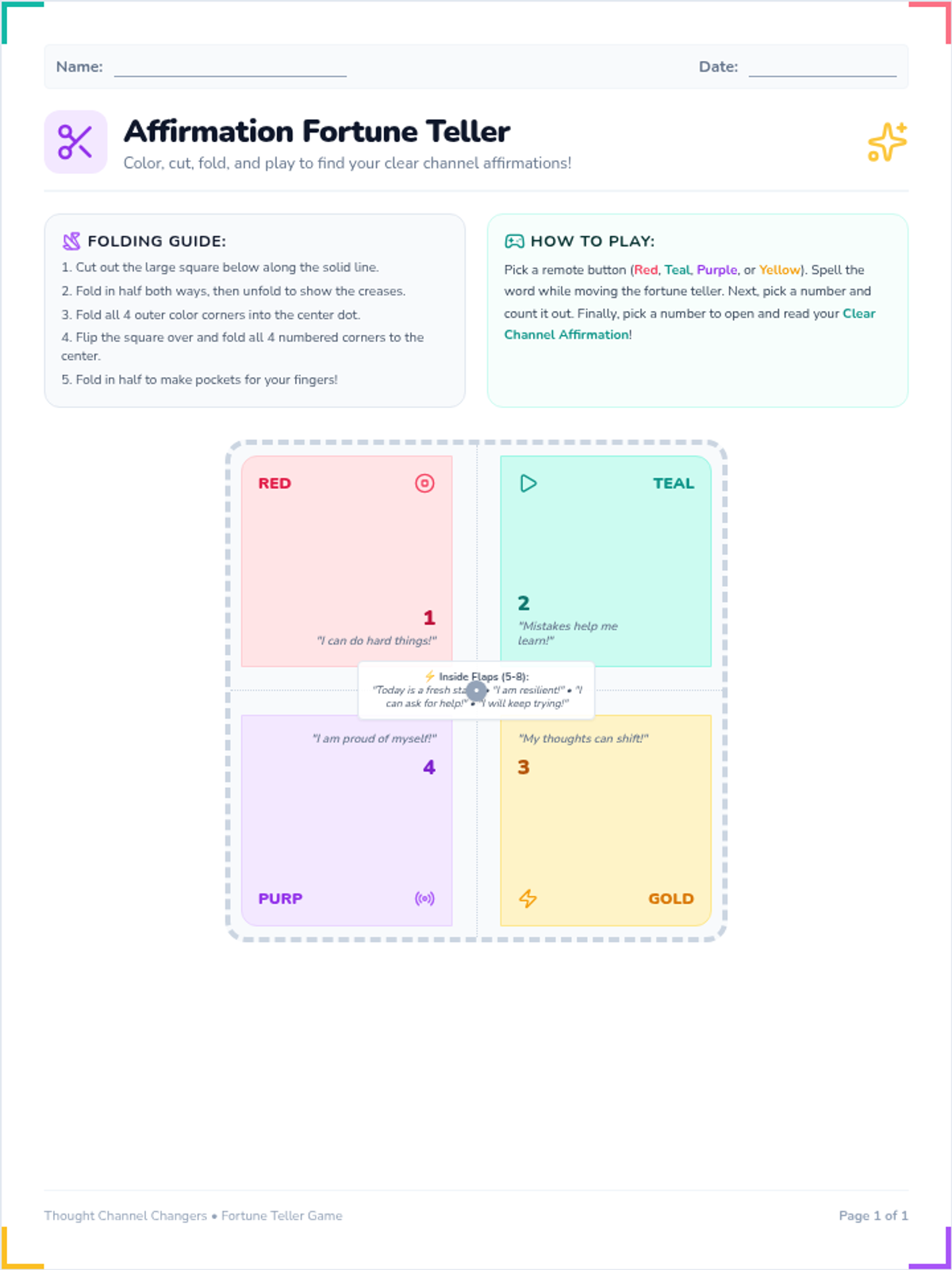
A 30-minute lesson for 2nd graders to learn cognitive reframing. Students use a retro TV remote metaphor to replace negative 'channels' with positive, helpful ones through interactive activities and games.
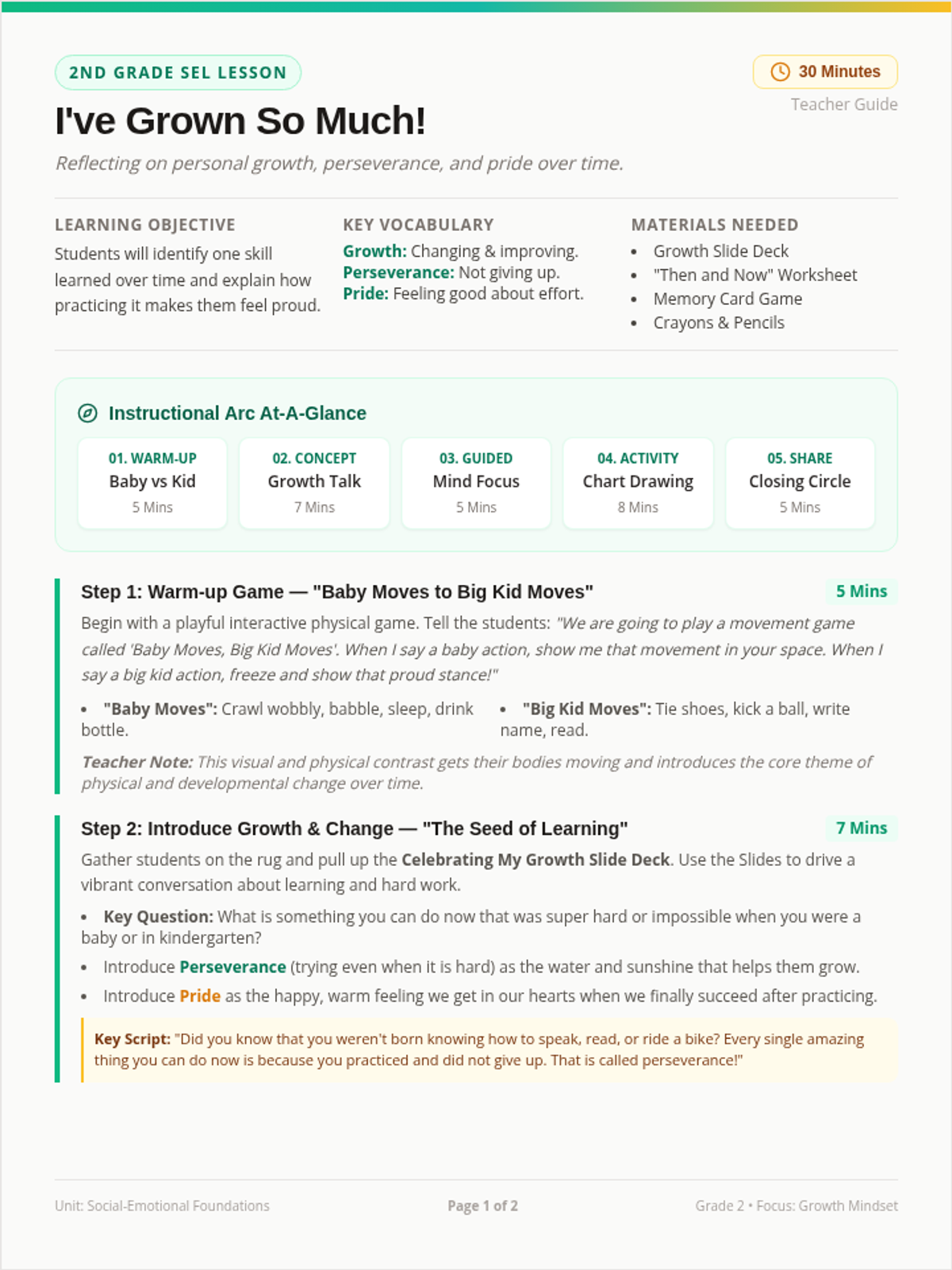
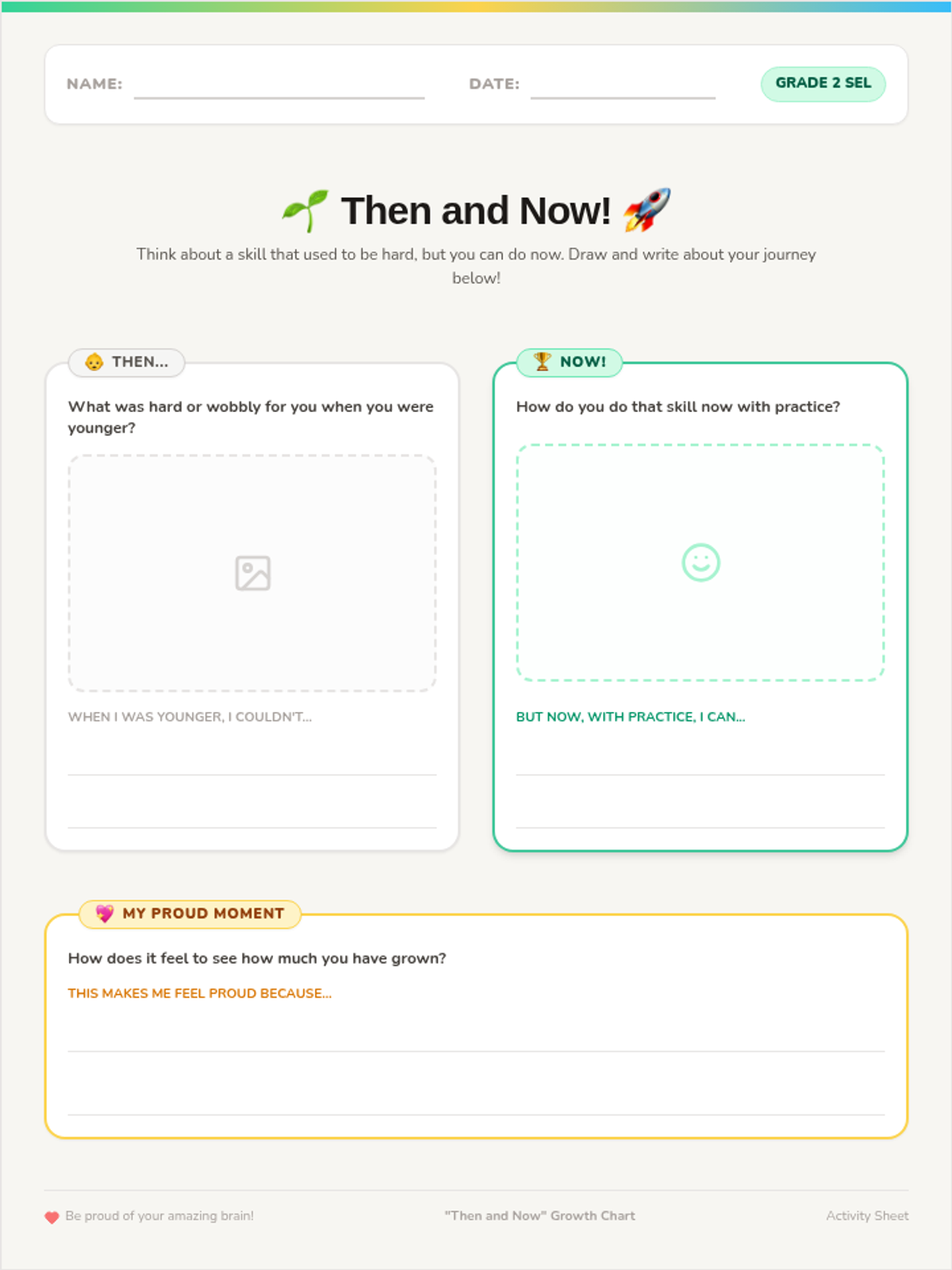
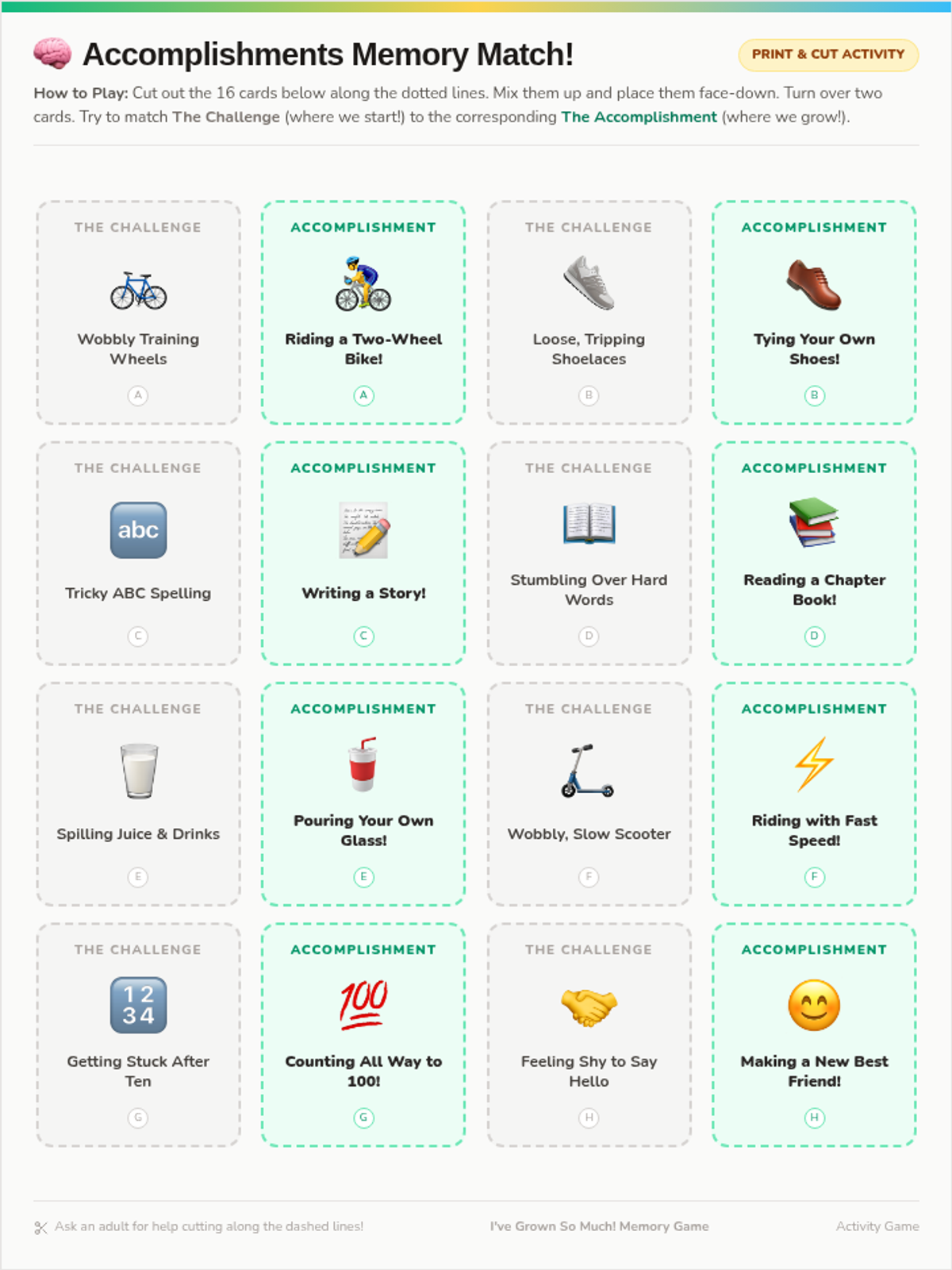
A 30-minute social-emotional learning lesson for 2nd graders designed to help them reflect on their personal growth over time, celebrate their accomplishments, and understand the role of perseverance in learning new skills.
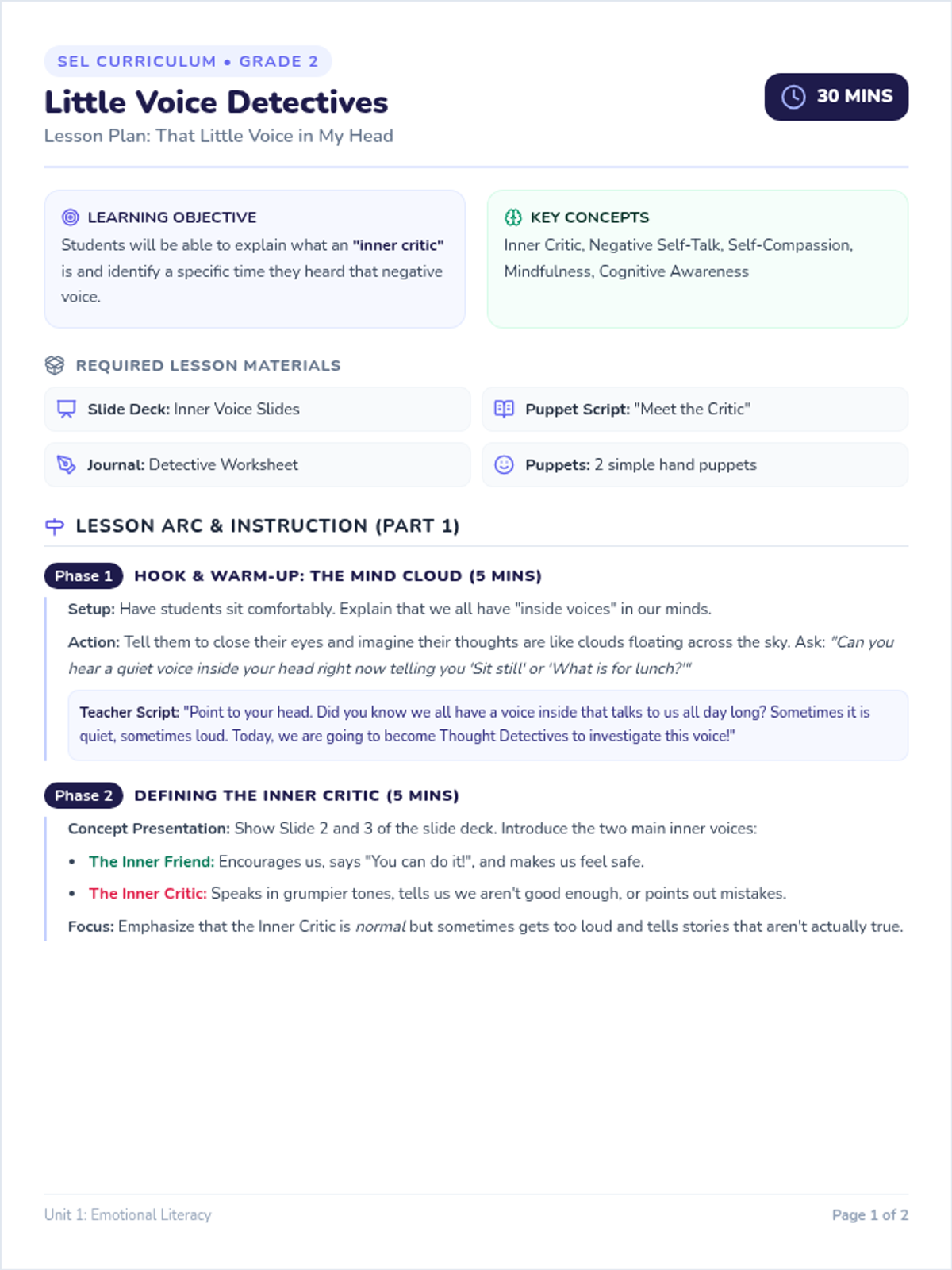
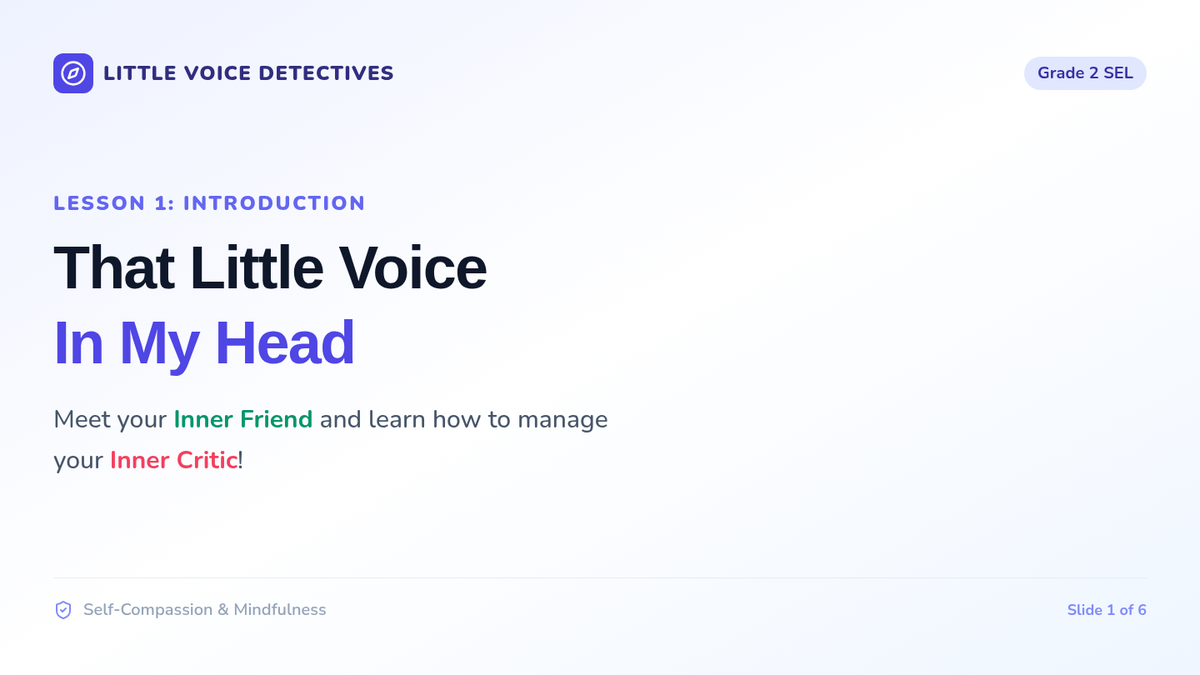
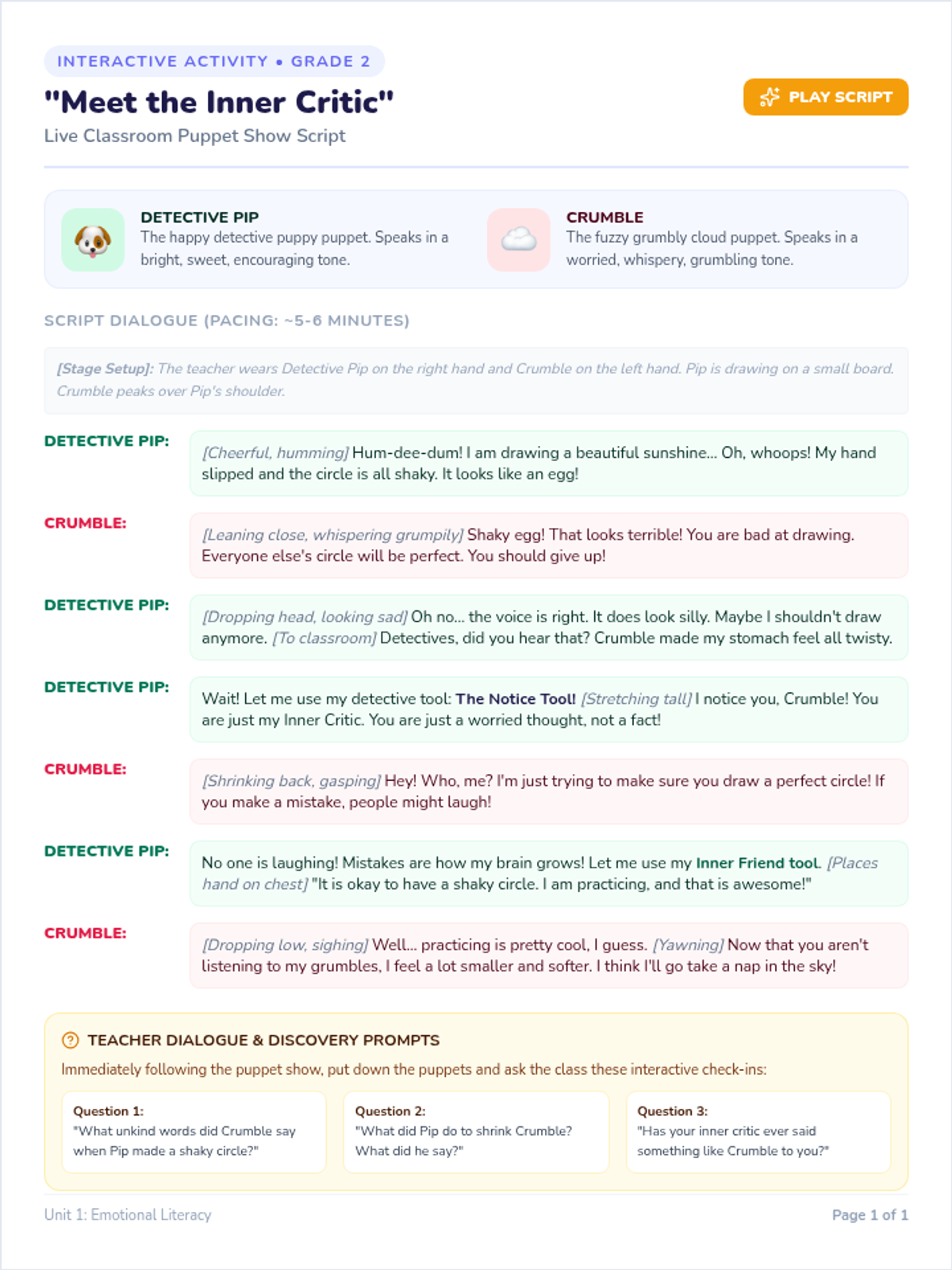
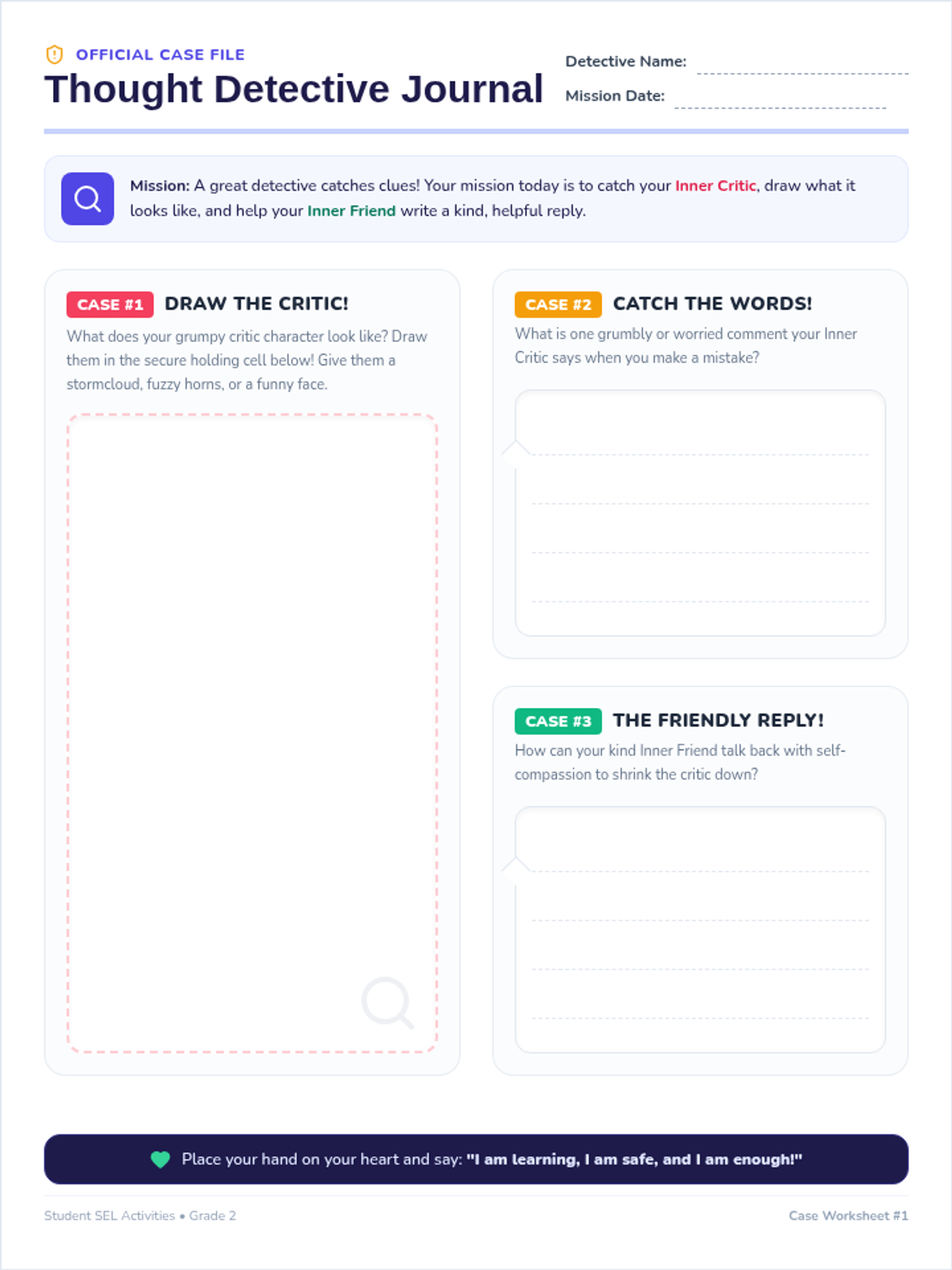
A social-emotional learning lesson for 2nd graders designed to help them identify and manage their negative inner voice ('inner critic') using self-compassion, mindfulness, and cognitive awareness. Through a puppet show, sliding presentation, and a journal activity, students become 'thought detectives' to catch their inner critics.
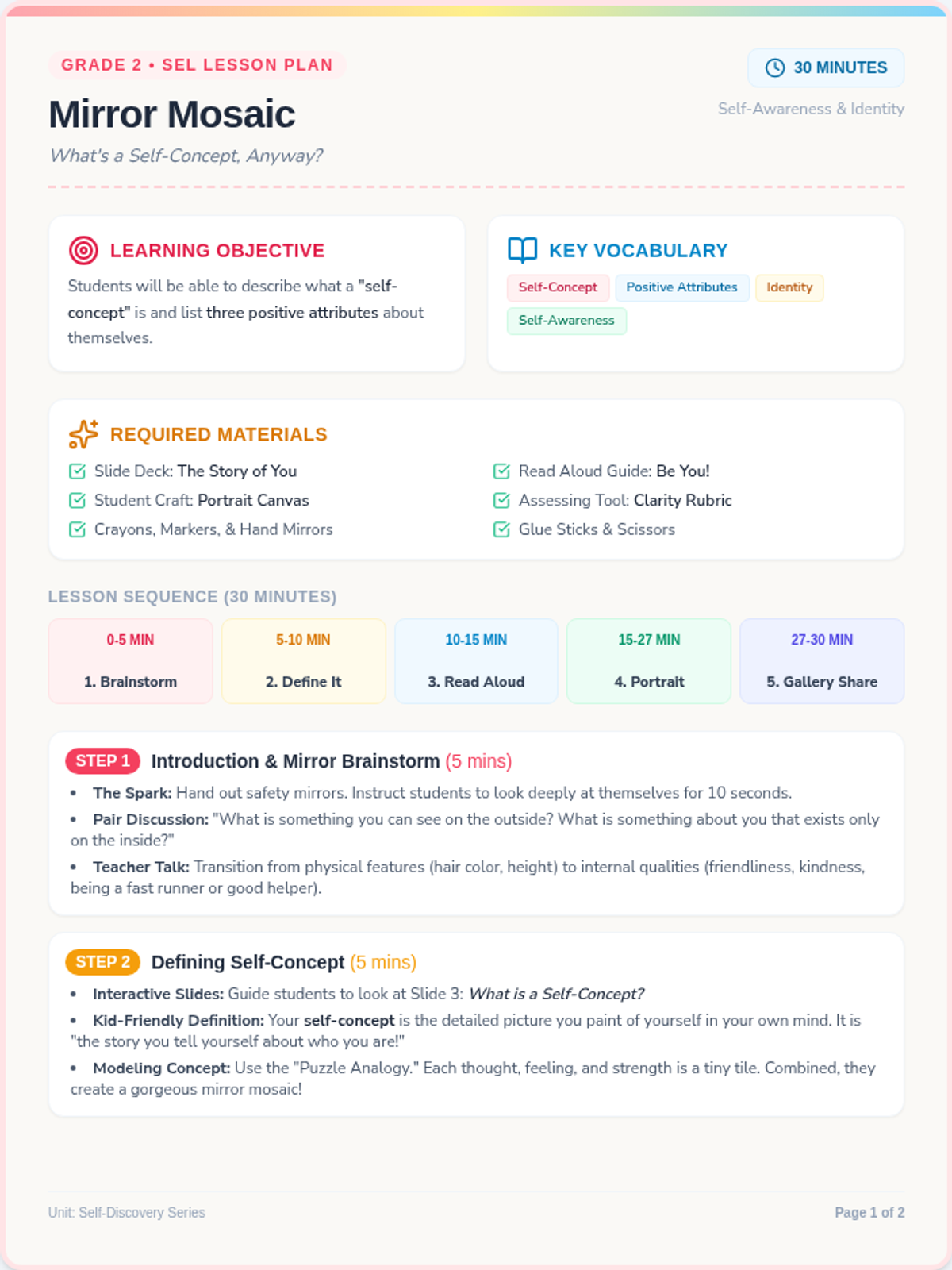
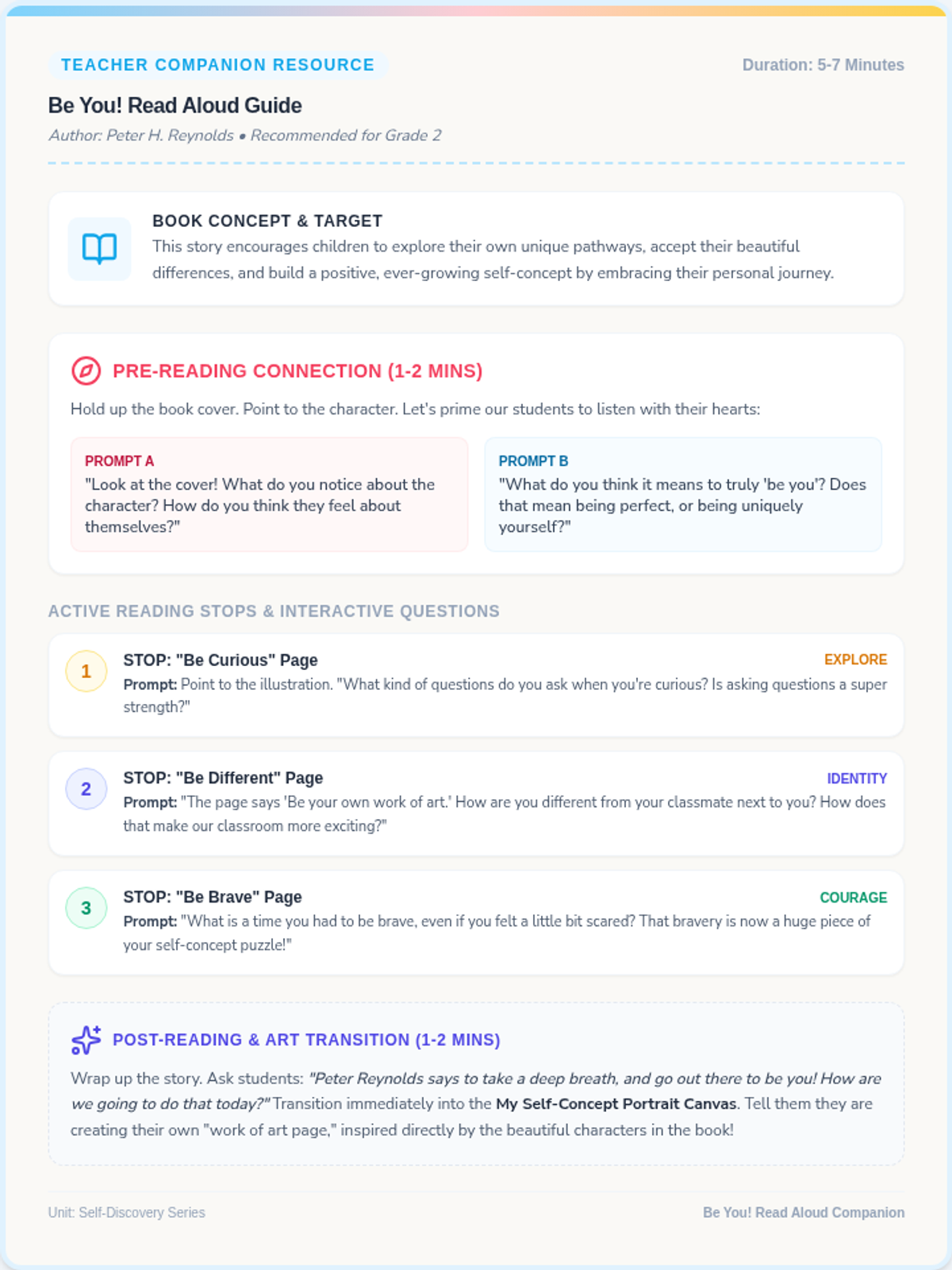
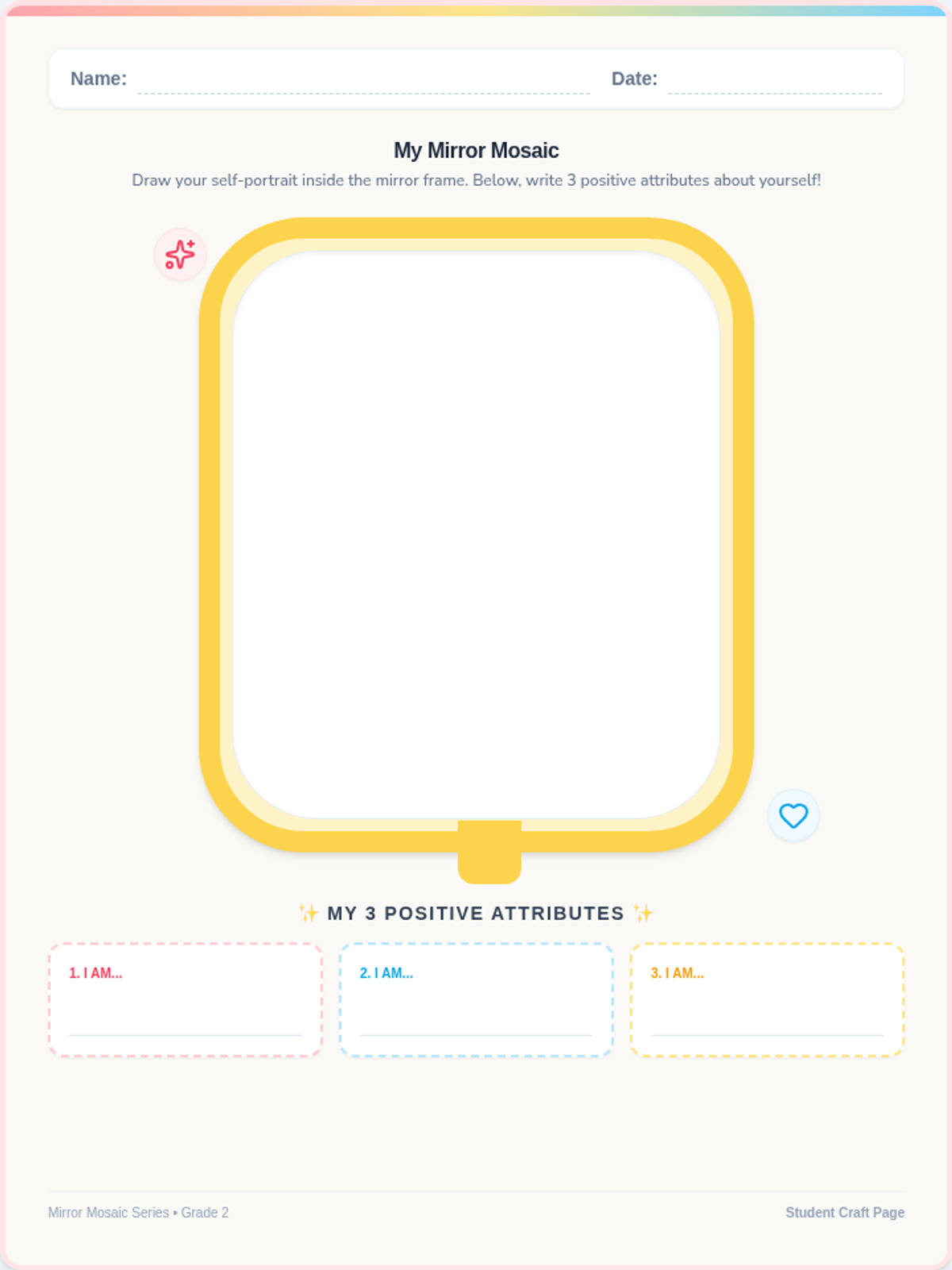
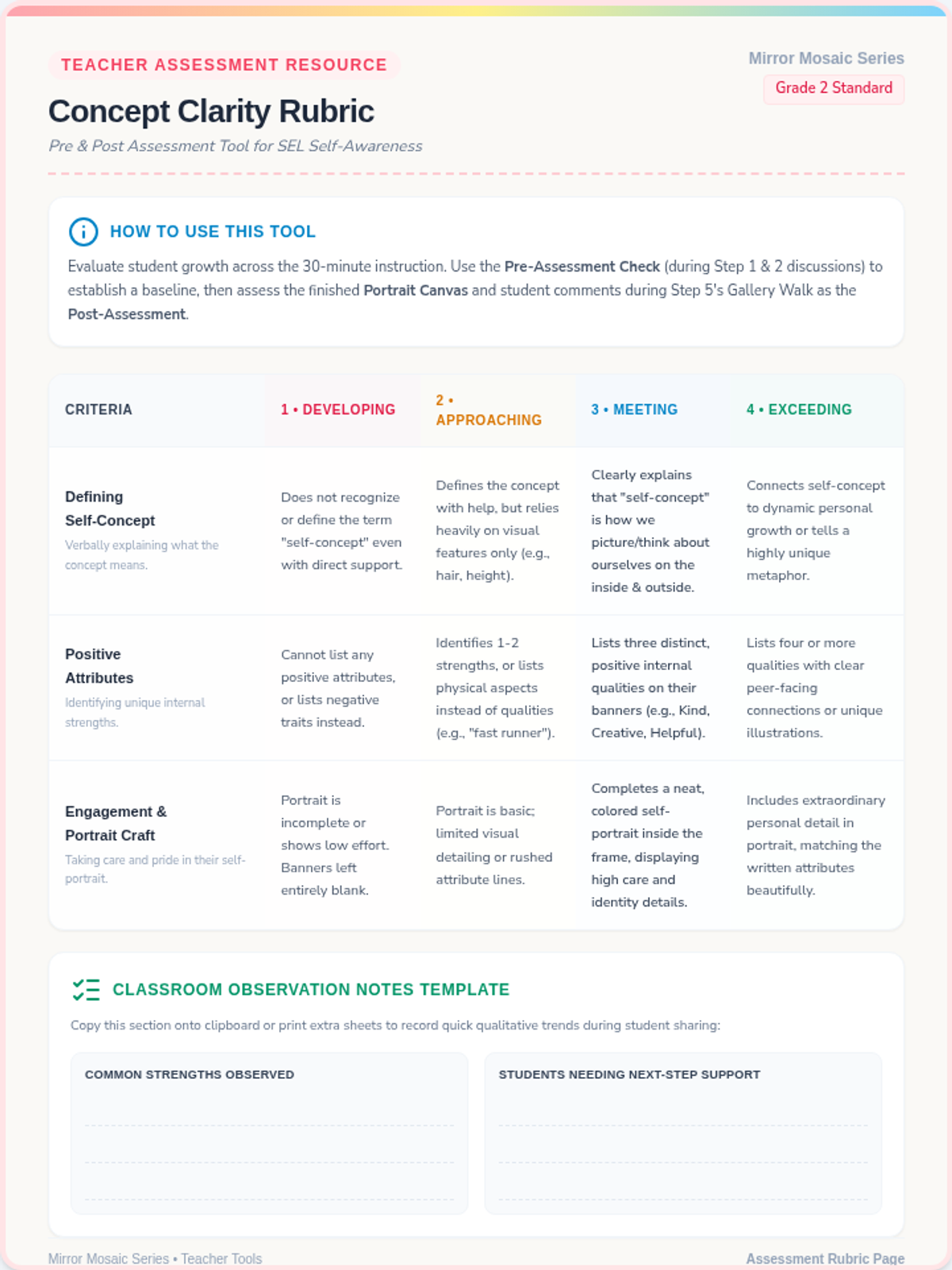
A 30-minute social-emotional learning lesson for 2nd graders to discover, define, and celebrate their self-concept through interactive discussion, a read-aloud, and a creative self-portrait project.
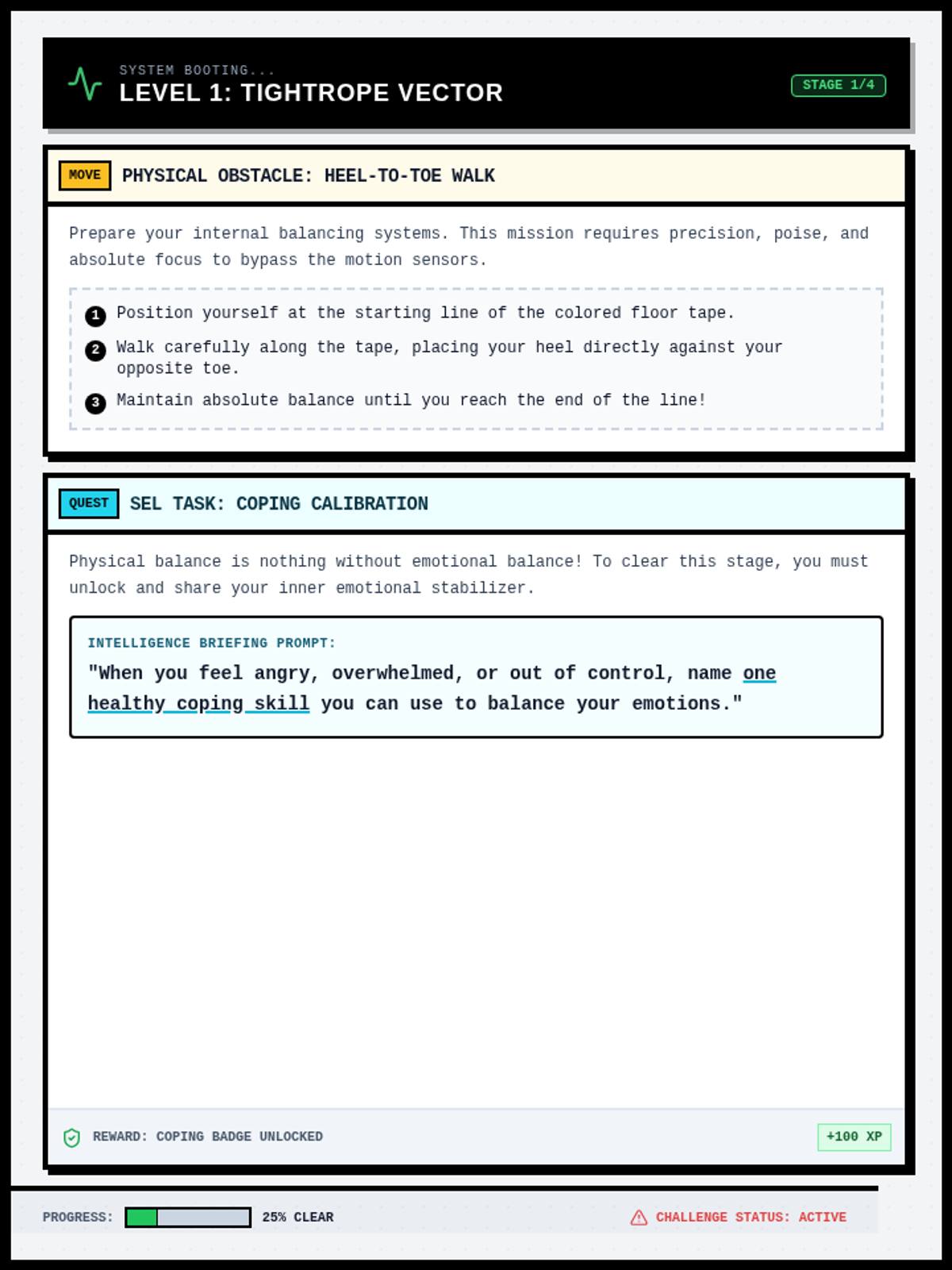
An action-packed obstacle course lesson where students complete physical challenges and social-emotional quests to graduate from their counseling group.
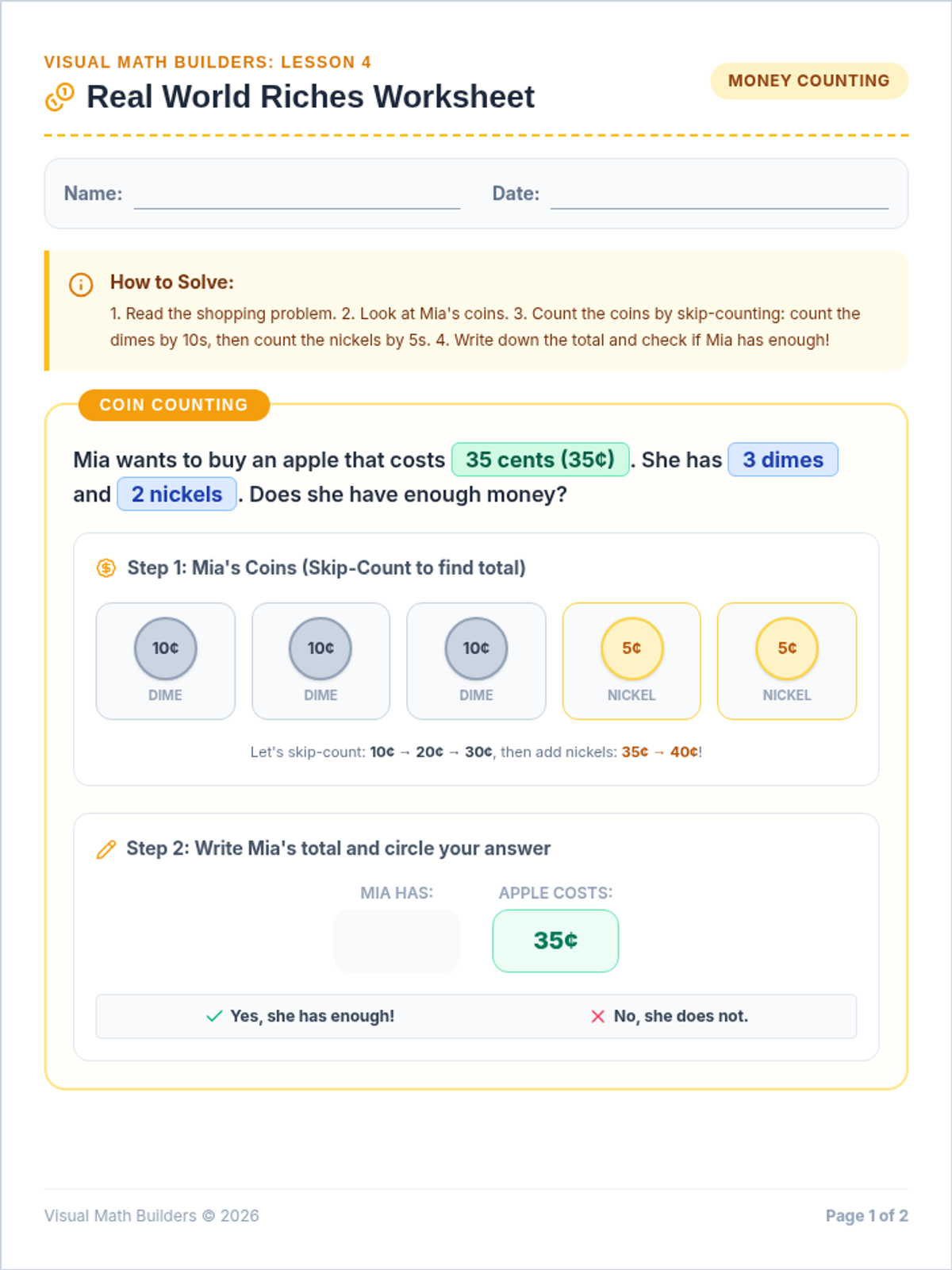
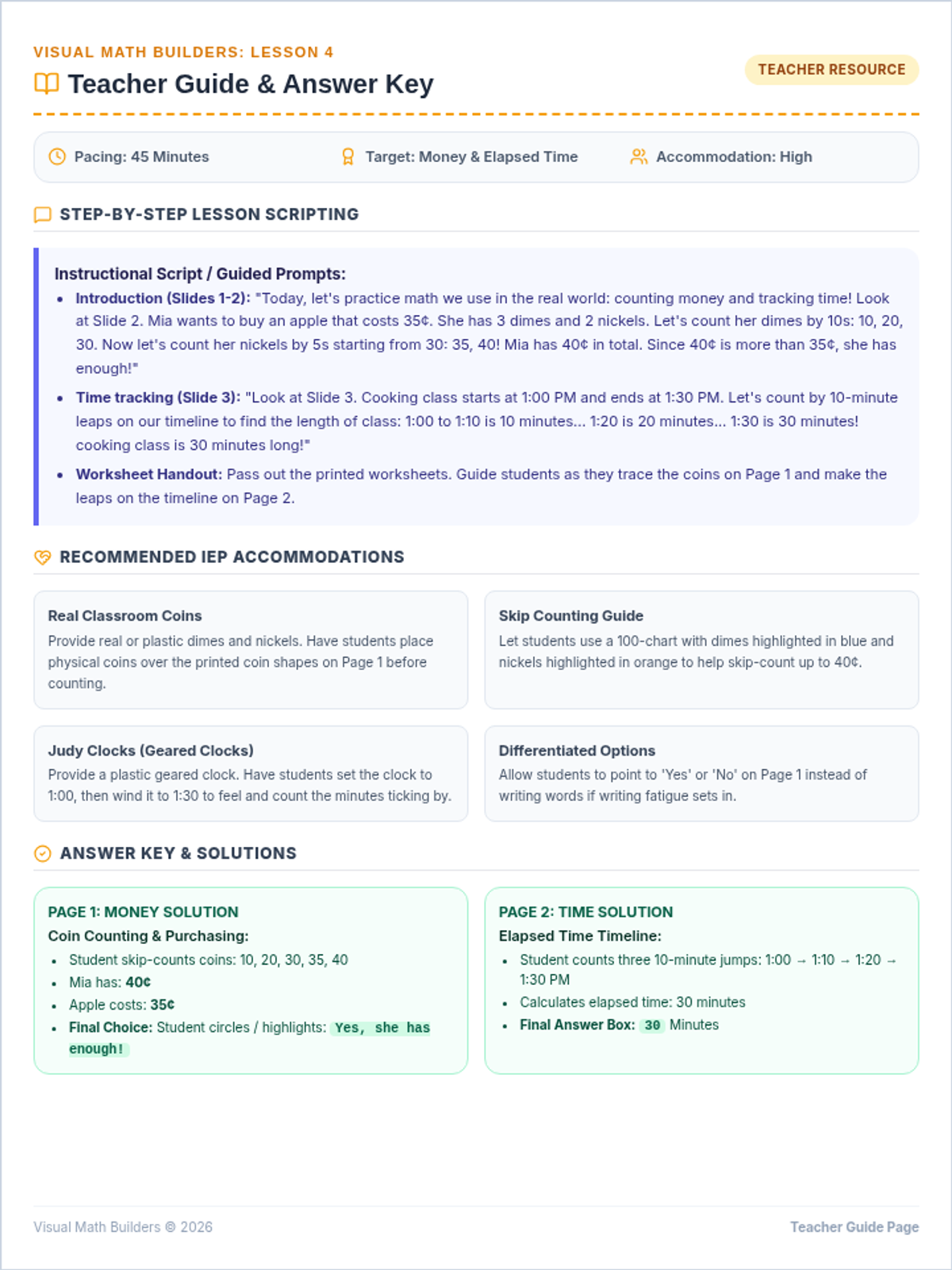
Targets practical, real-world application of math with highly visual scaffolding for coin counting, purchasing decisions, and elapsed time scenarios.
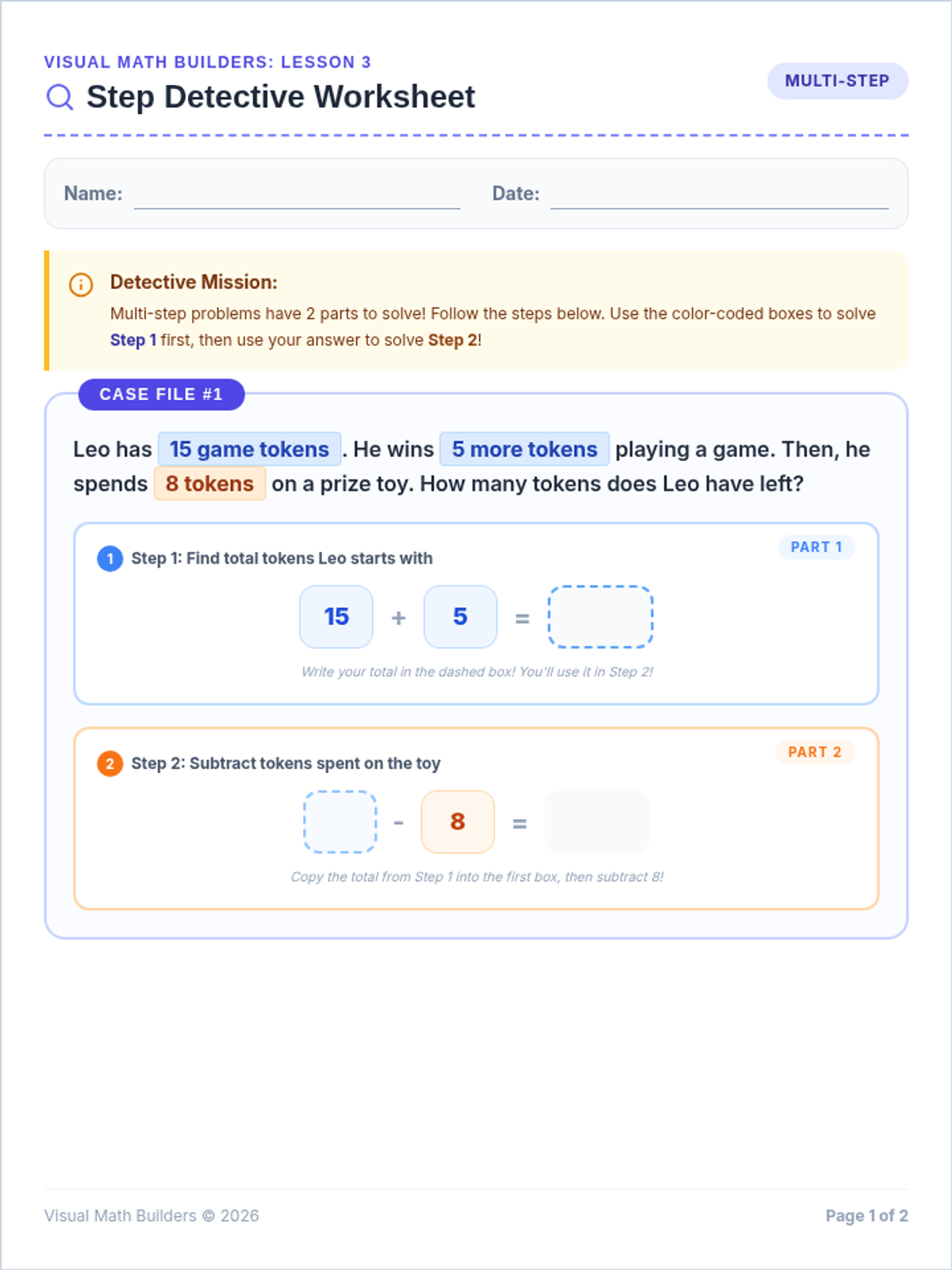
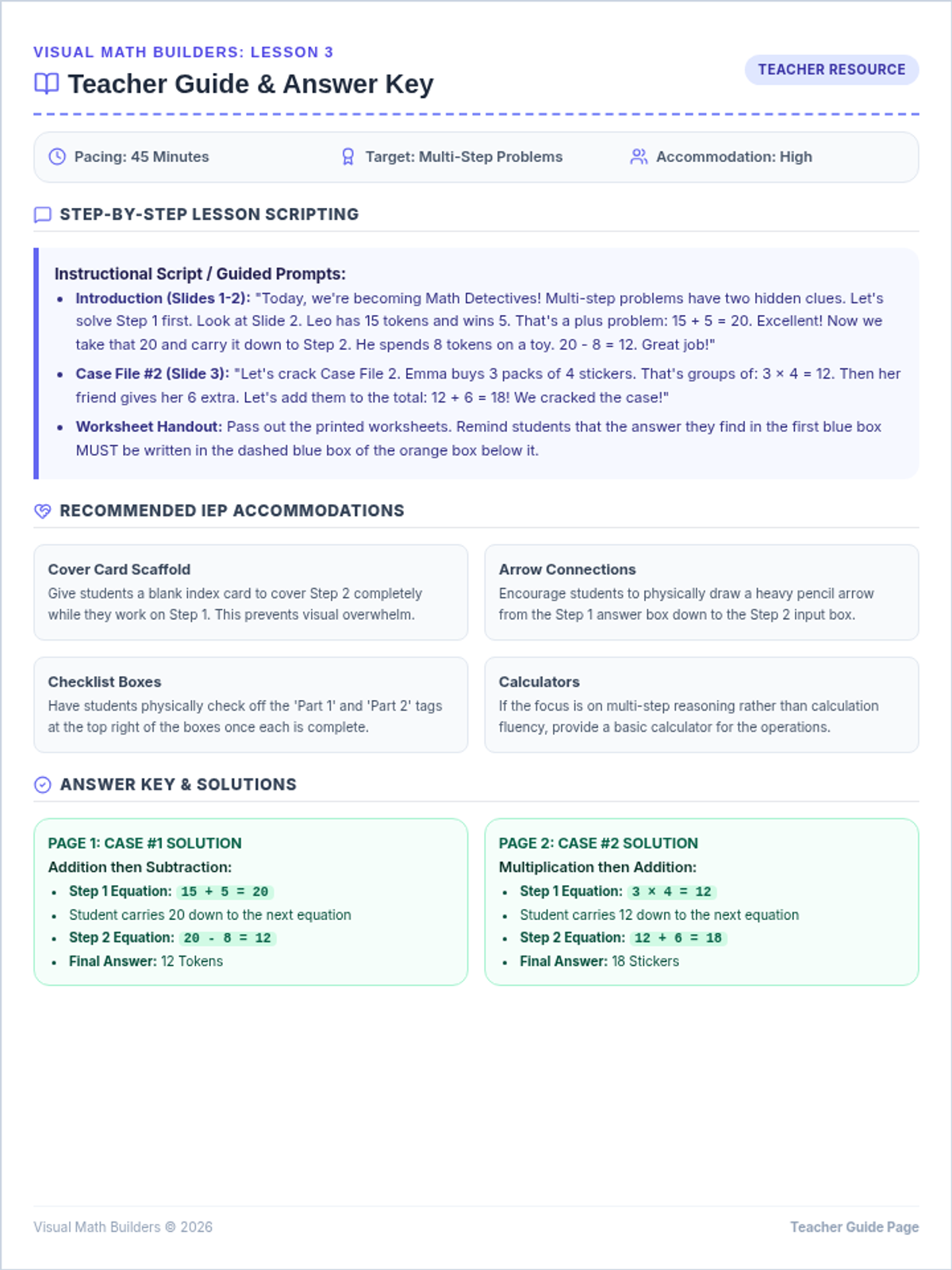
Breaks down multi-step math word problems into bite-sized, color-coded, sequentially numbered parts, helping students systematically parse and solve equations without visual overload.
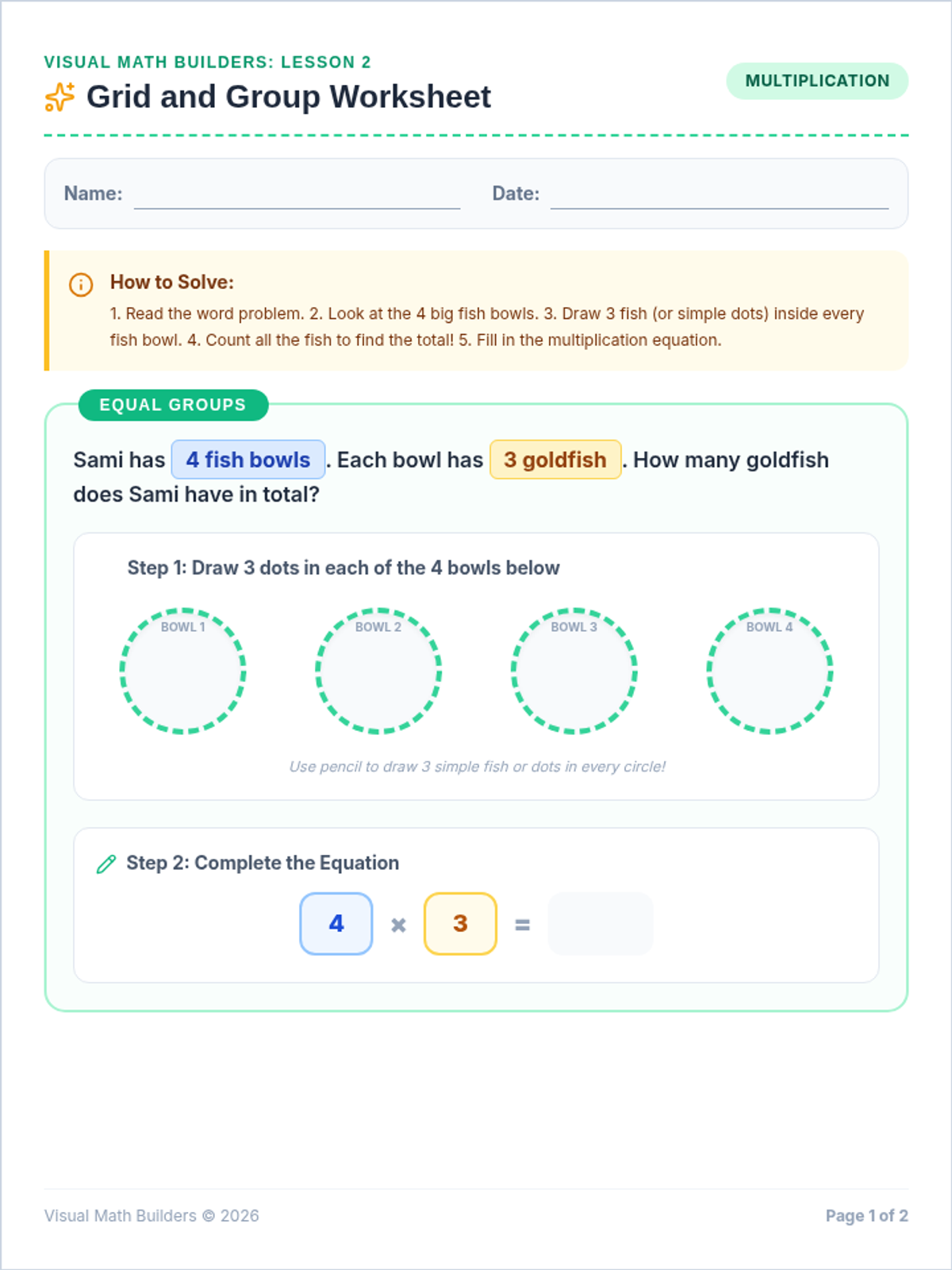
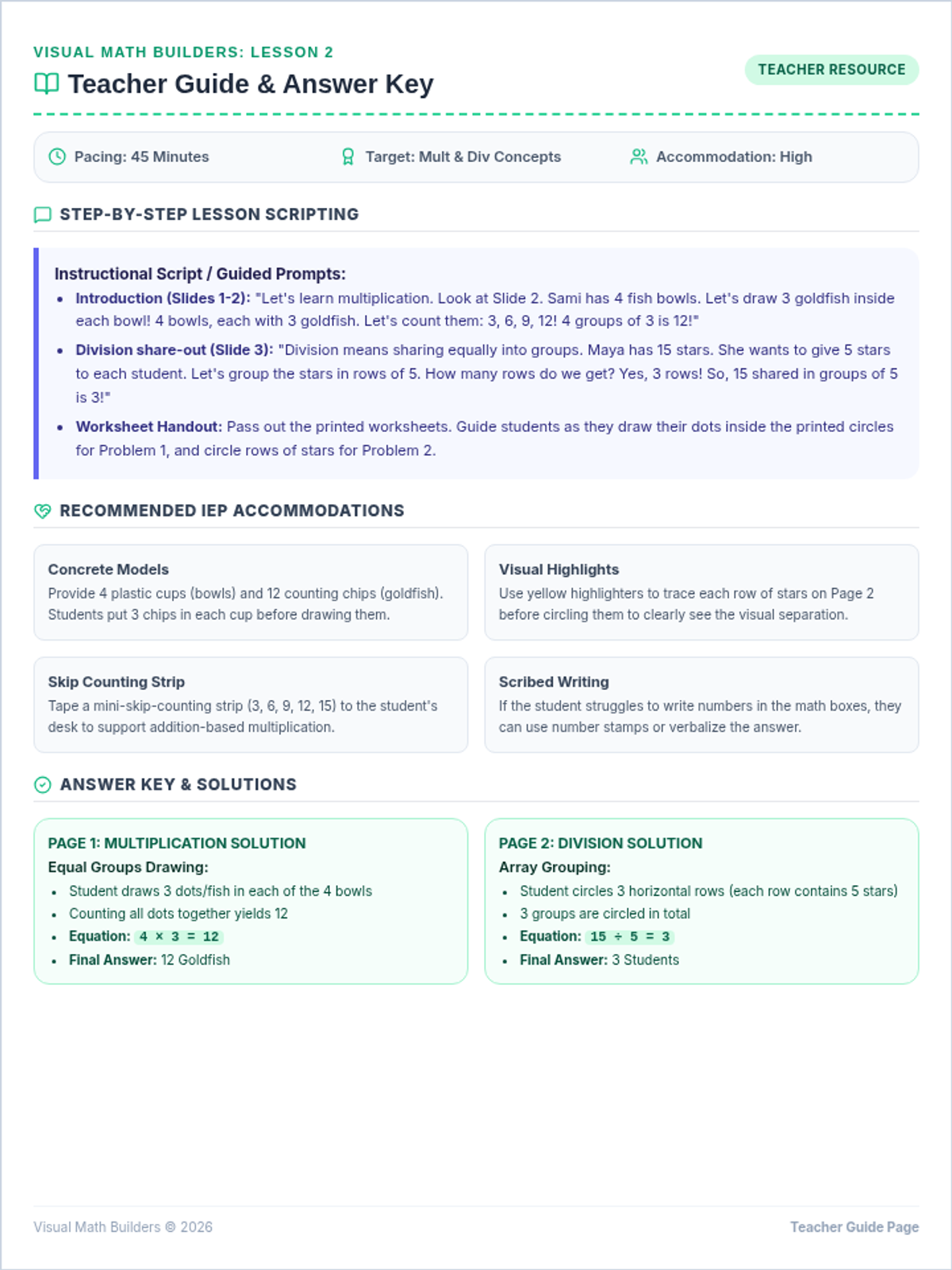
Covers multiplication and division word problems utilizing visual aids such as equal group drawings, array grids, and visual modeling templates to scaffold core concepts.
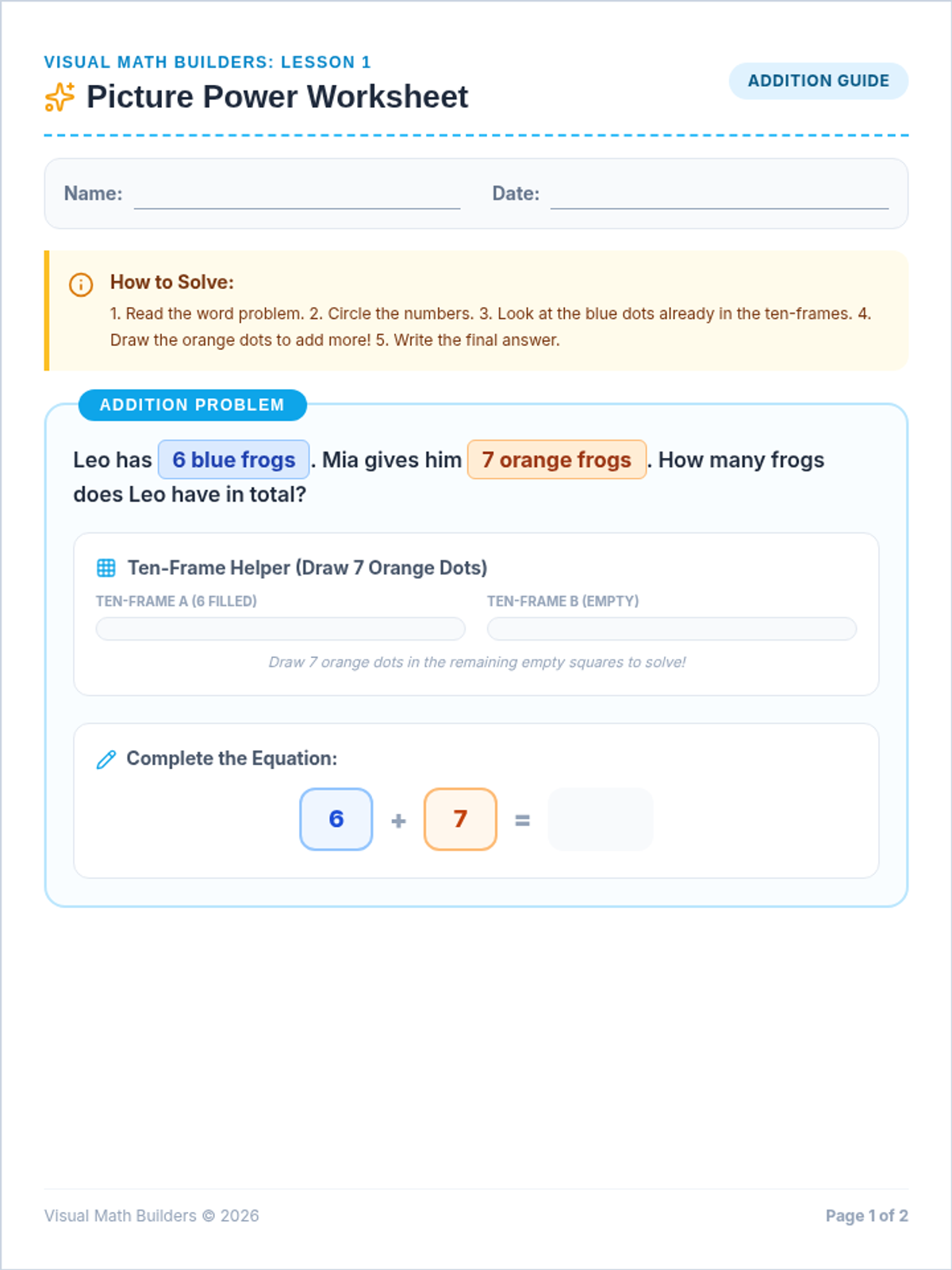
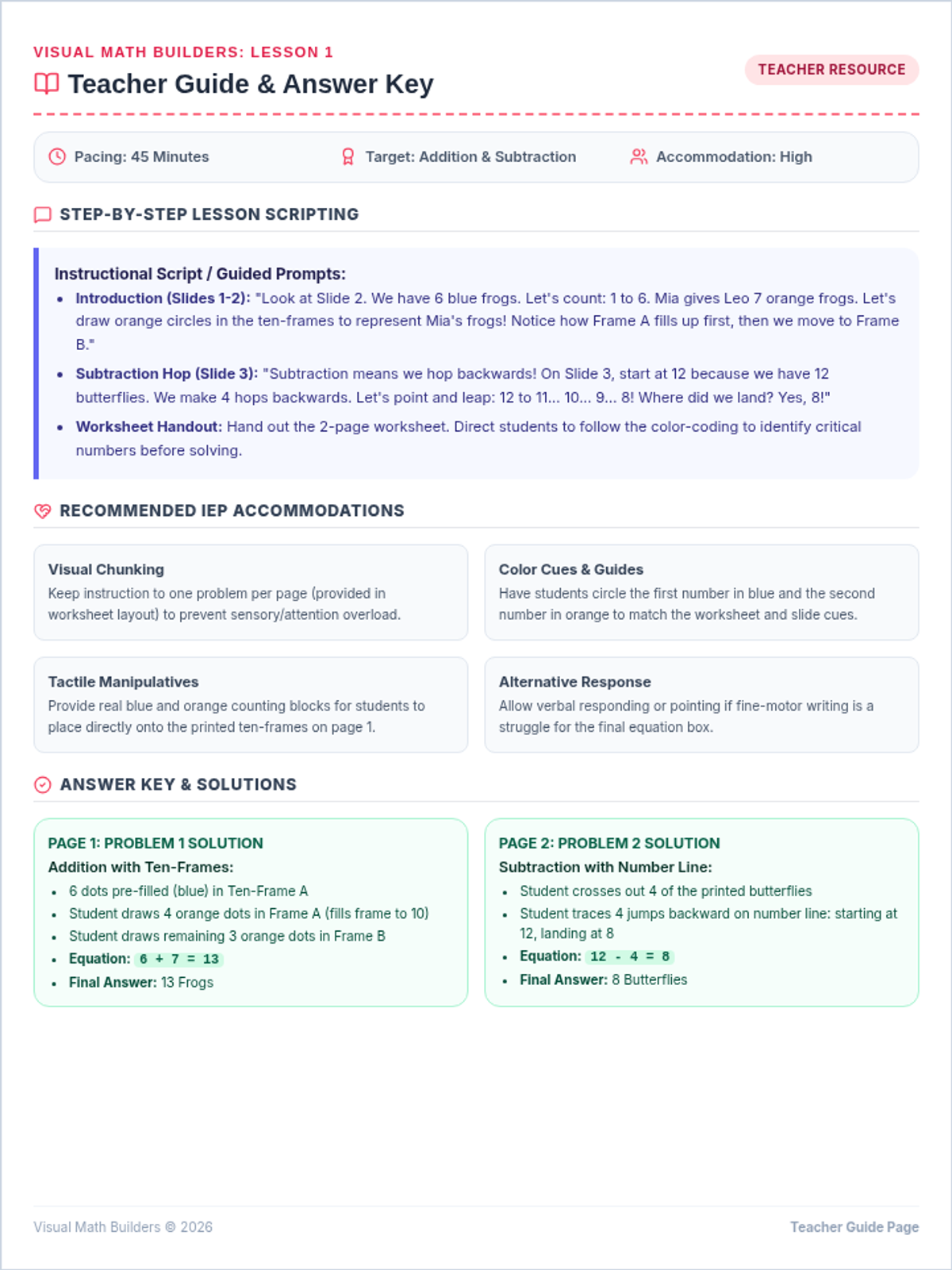
Focuses on addition and subtraction word problems with visual aids including built-in picture representations, ten-frames, and number lines to support student conceptual understanding.
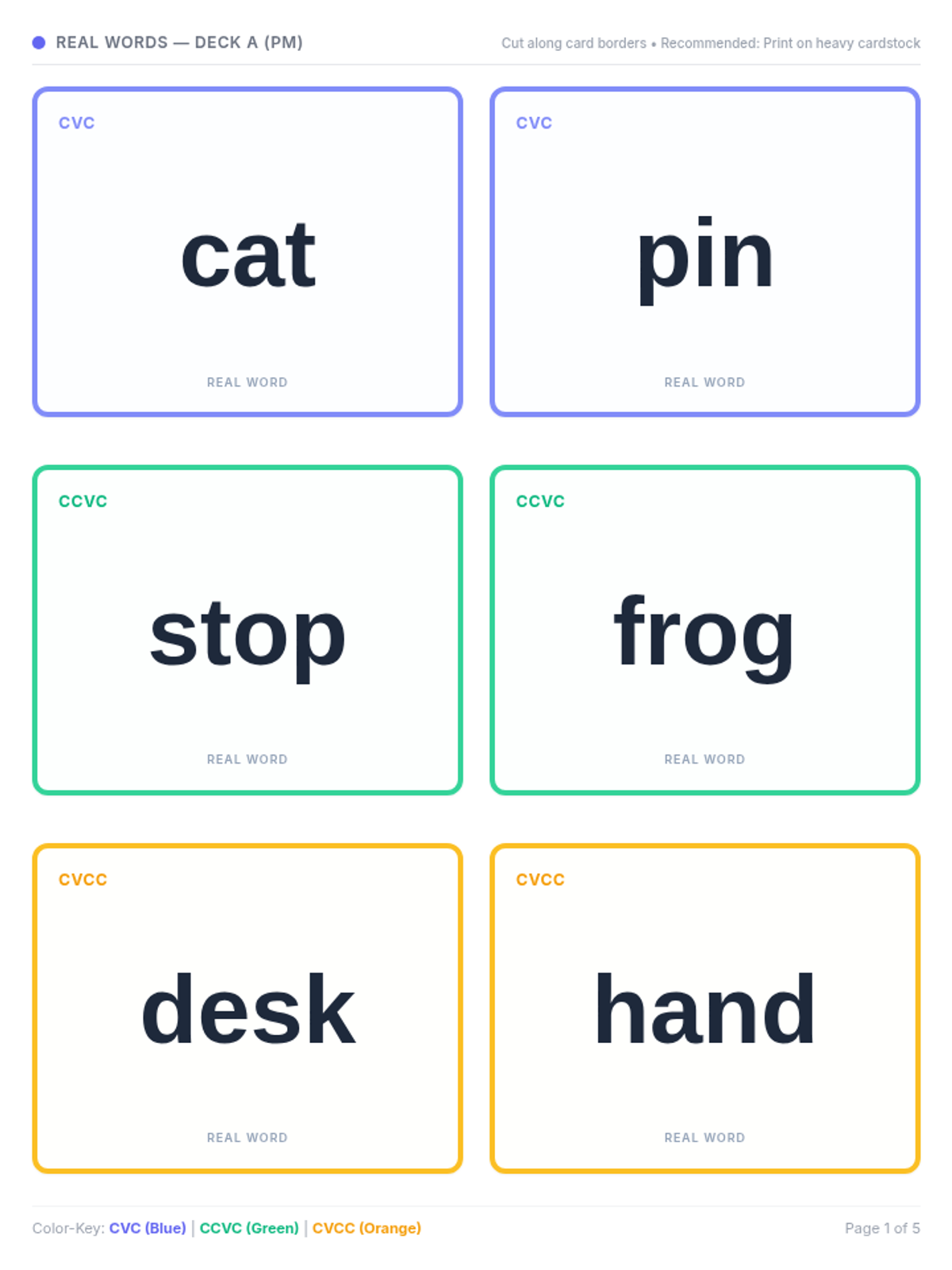
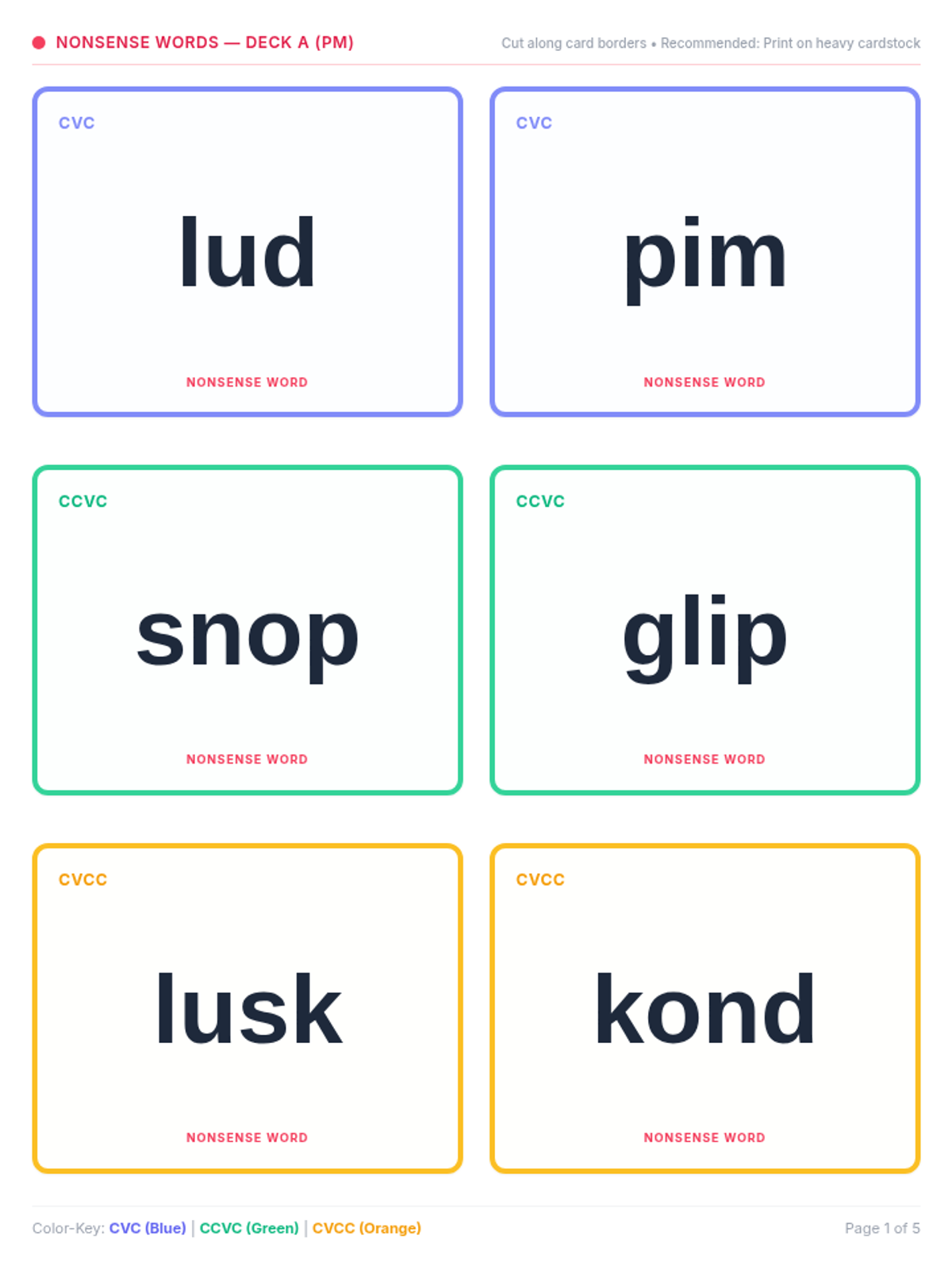
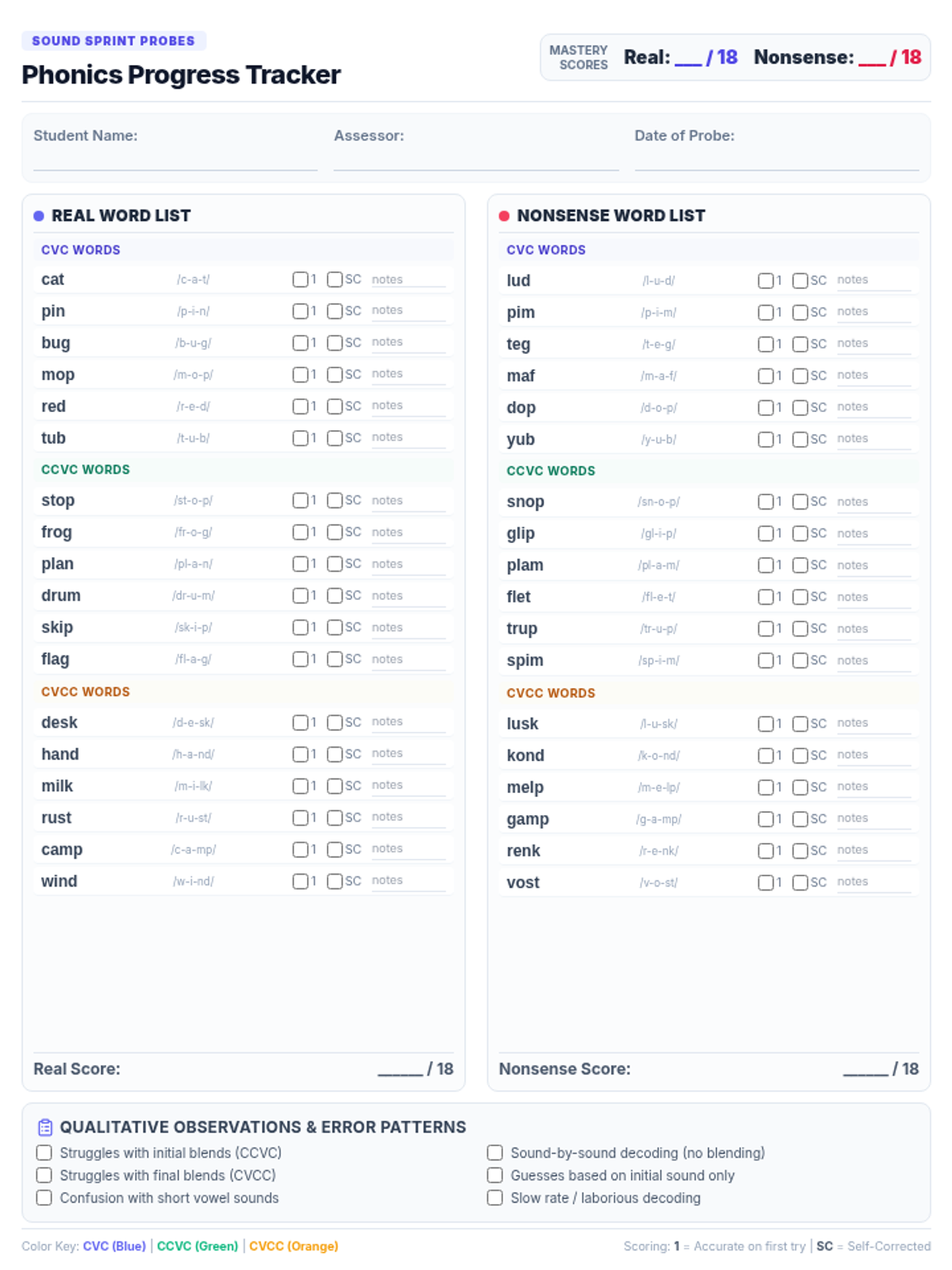
A suite of print-ready progress monitoring flashcards and tracking sheets designed for resource educators to measure decoding progress. Includes color-coded flashcards for real and nonsense CVC, CCVC, and CVCC words, plus an educator assessment tracker.
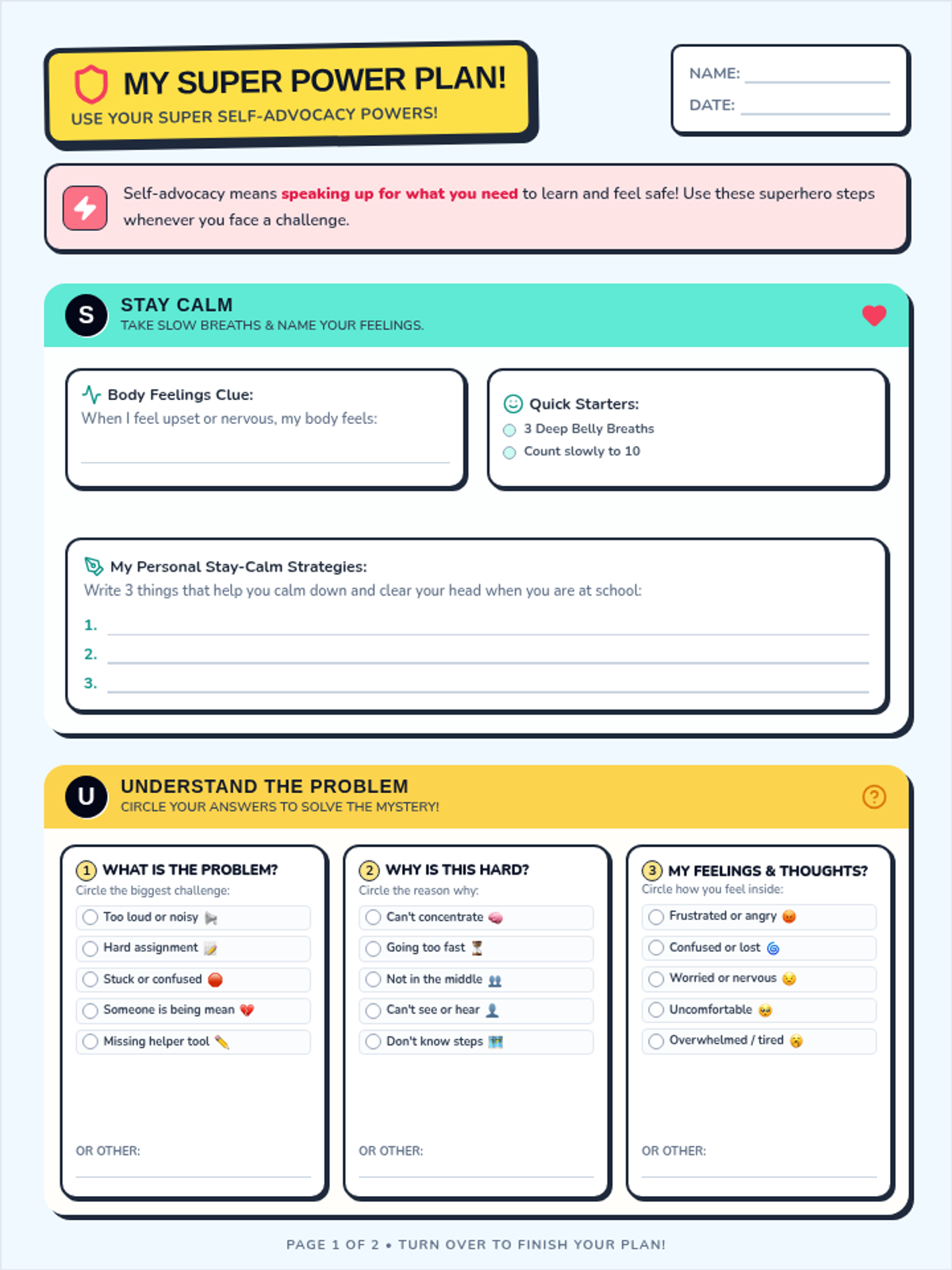
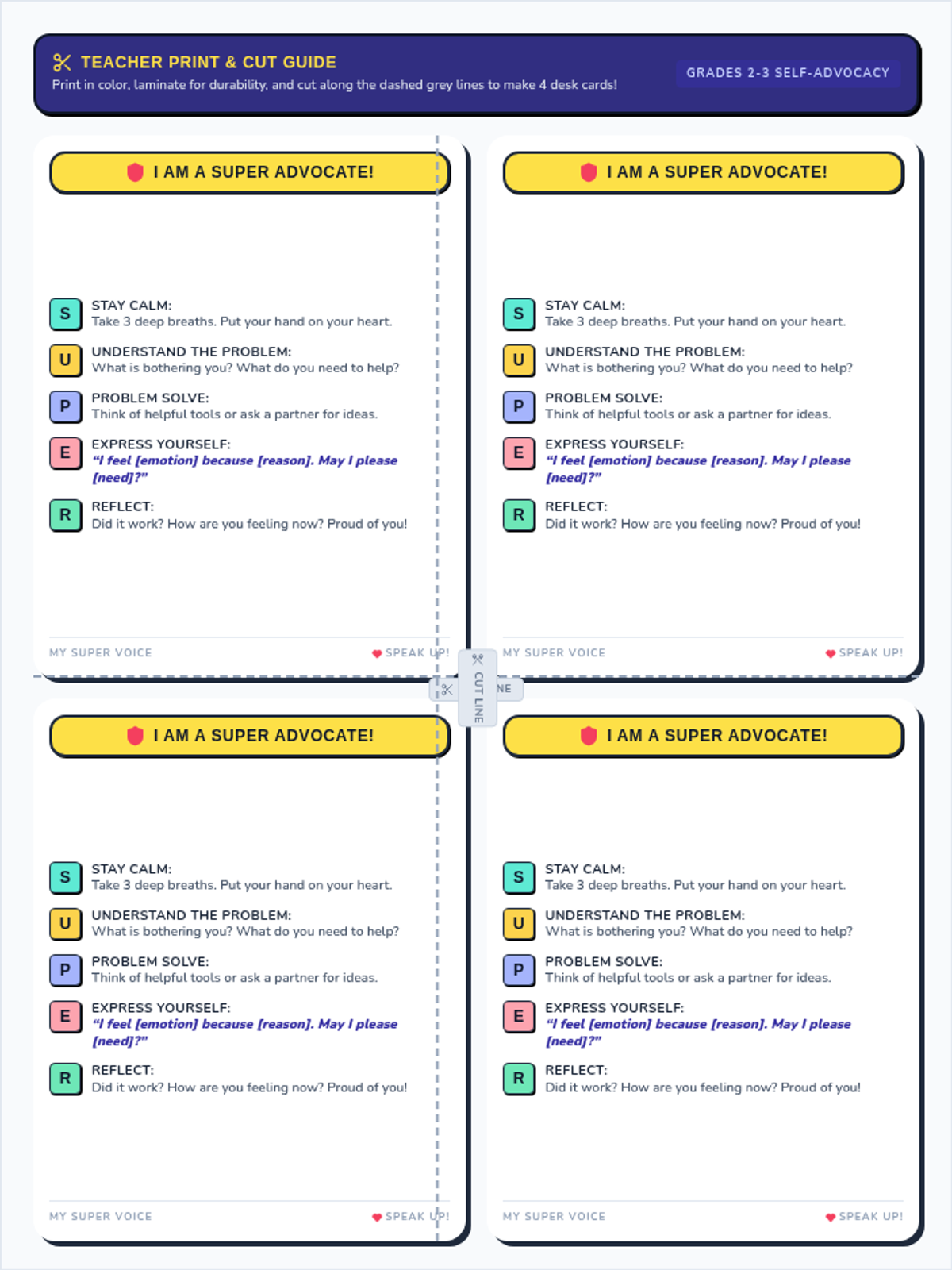
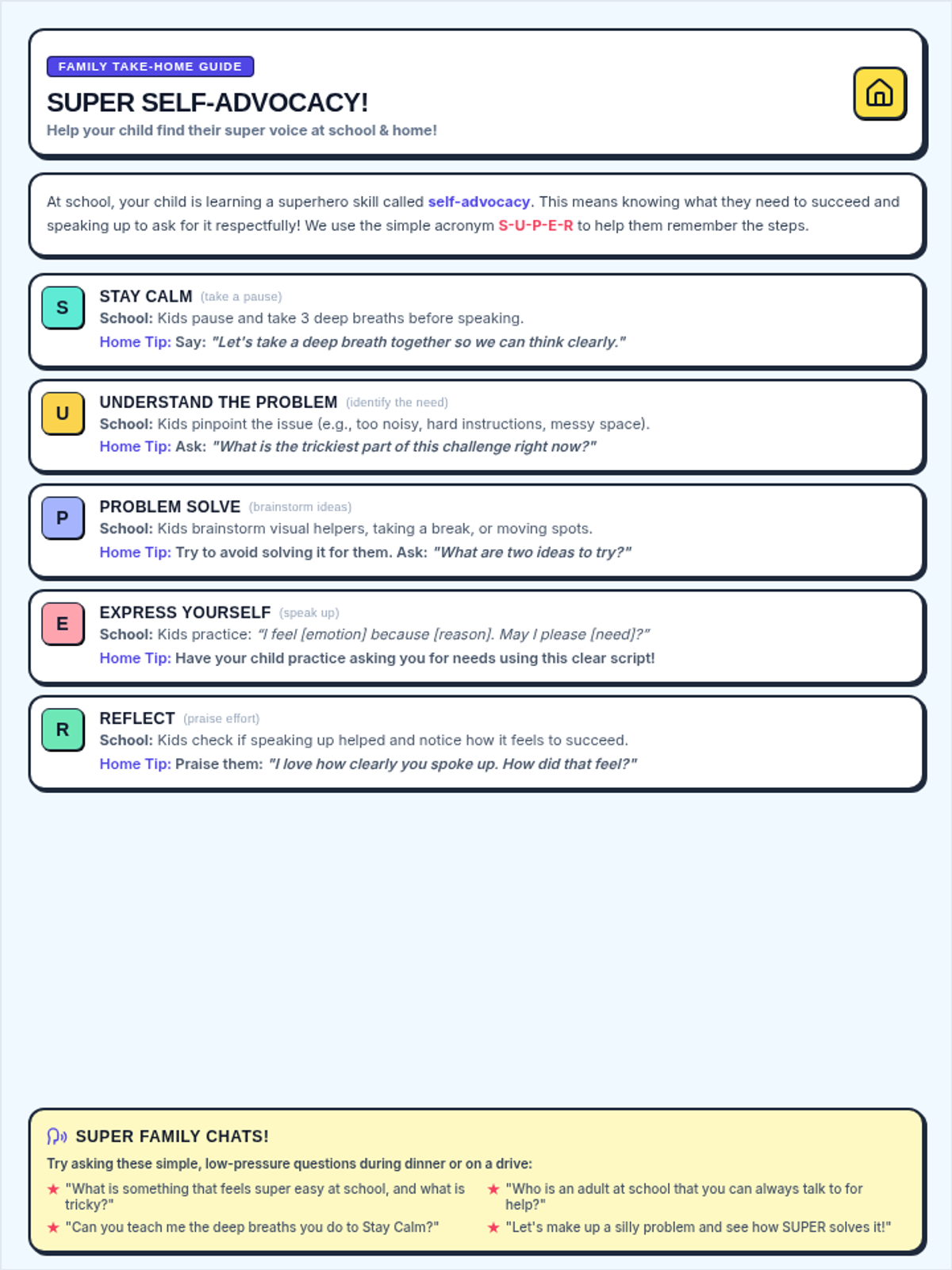
A lesson package focused on teaching middle elementary students (grades 2-3) the SUPER self-advocacy strategy: Stay Calm, Understand, Problem Solve, Express, and Reflect. It includes a student-facing comic-themed graphic organizer, a printable desktop anchor chart, and a take-home parent flyer.
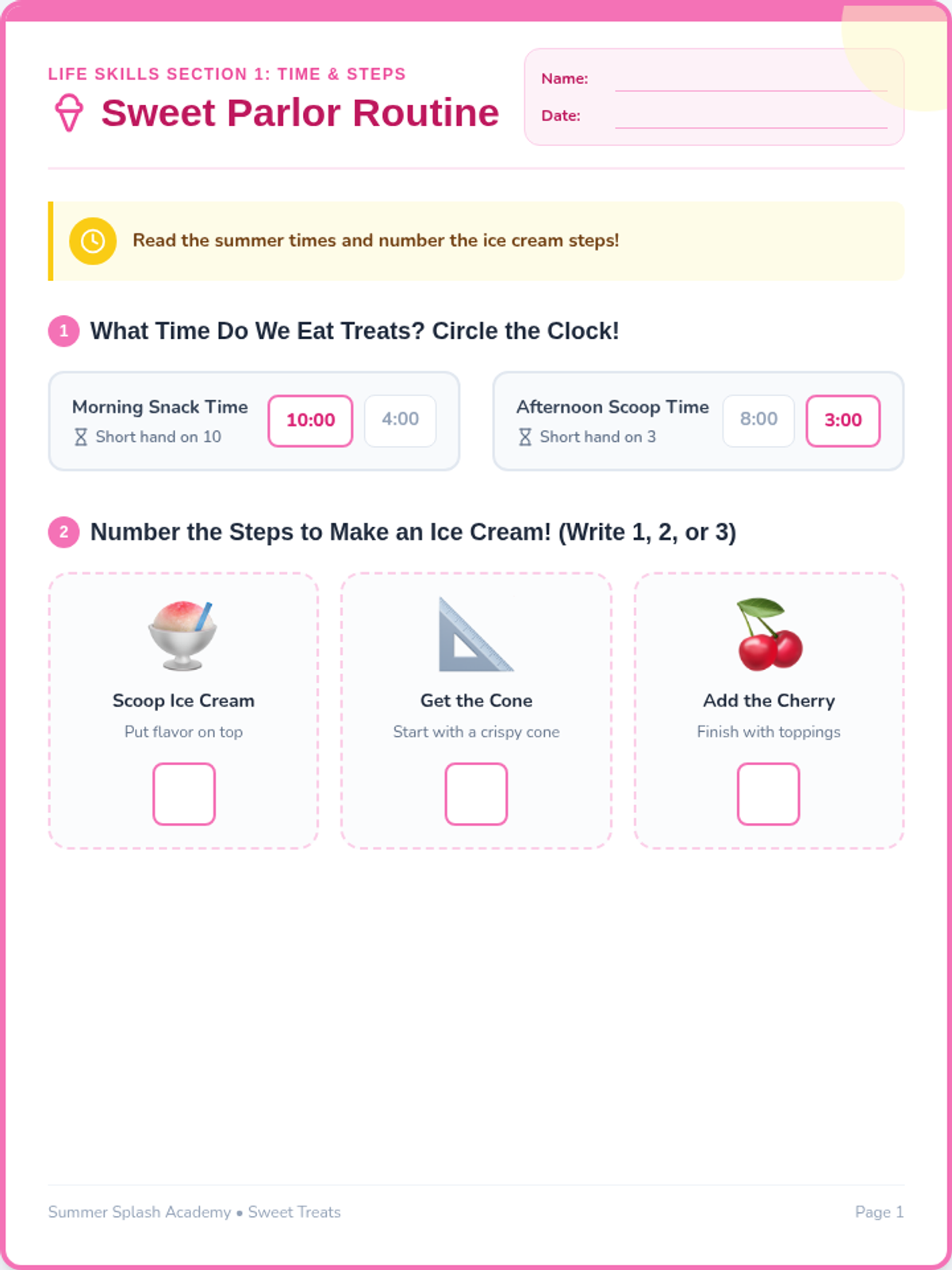
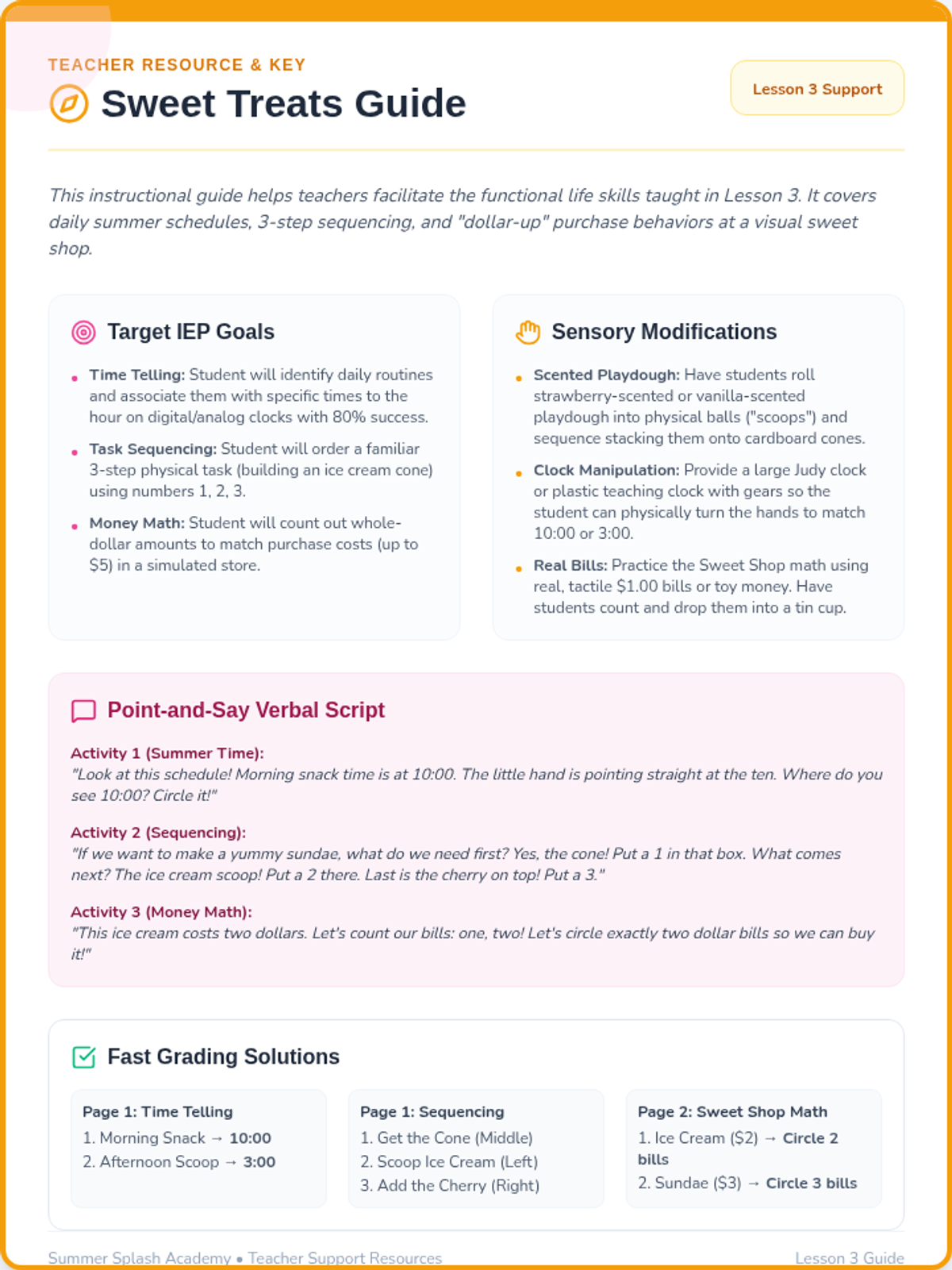
Develops functional basic life skills using ice cream themes. Students learn daily summer routines, practice telling time, complete an ice cream sequencing activity, and practice basic money math at a visual ice cream parlor.
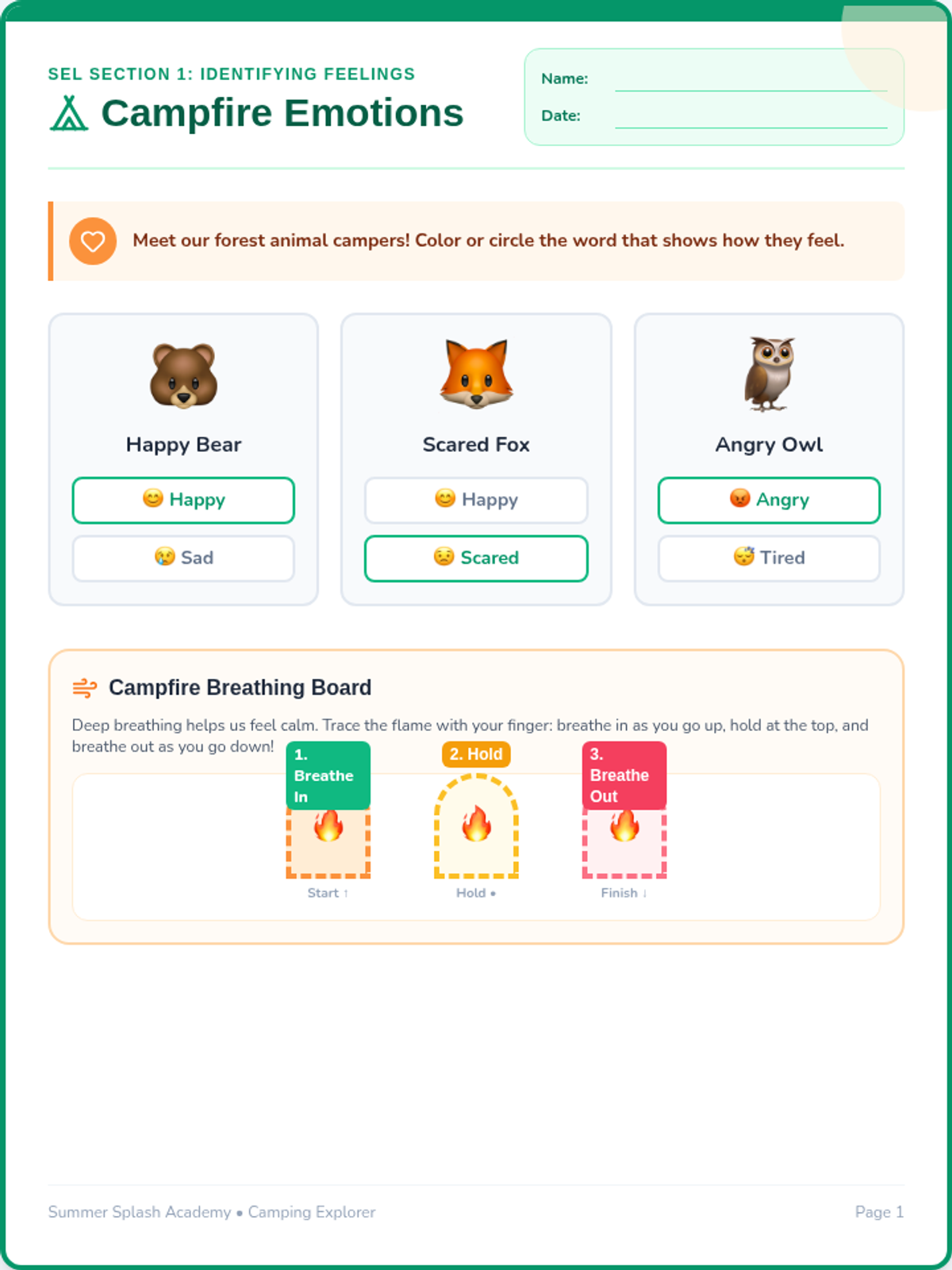
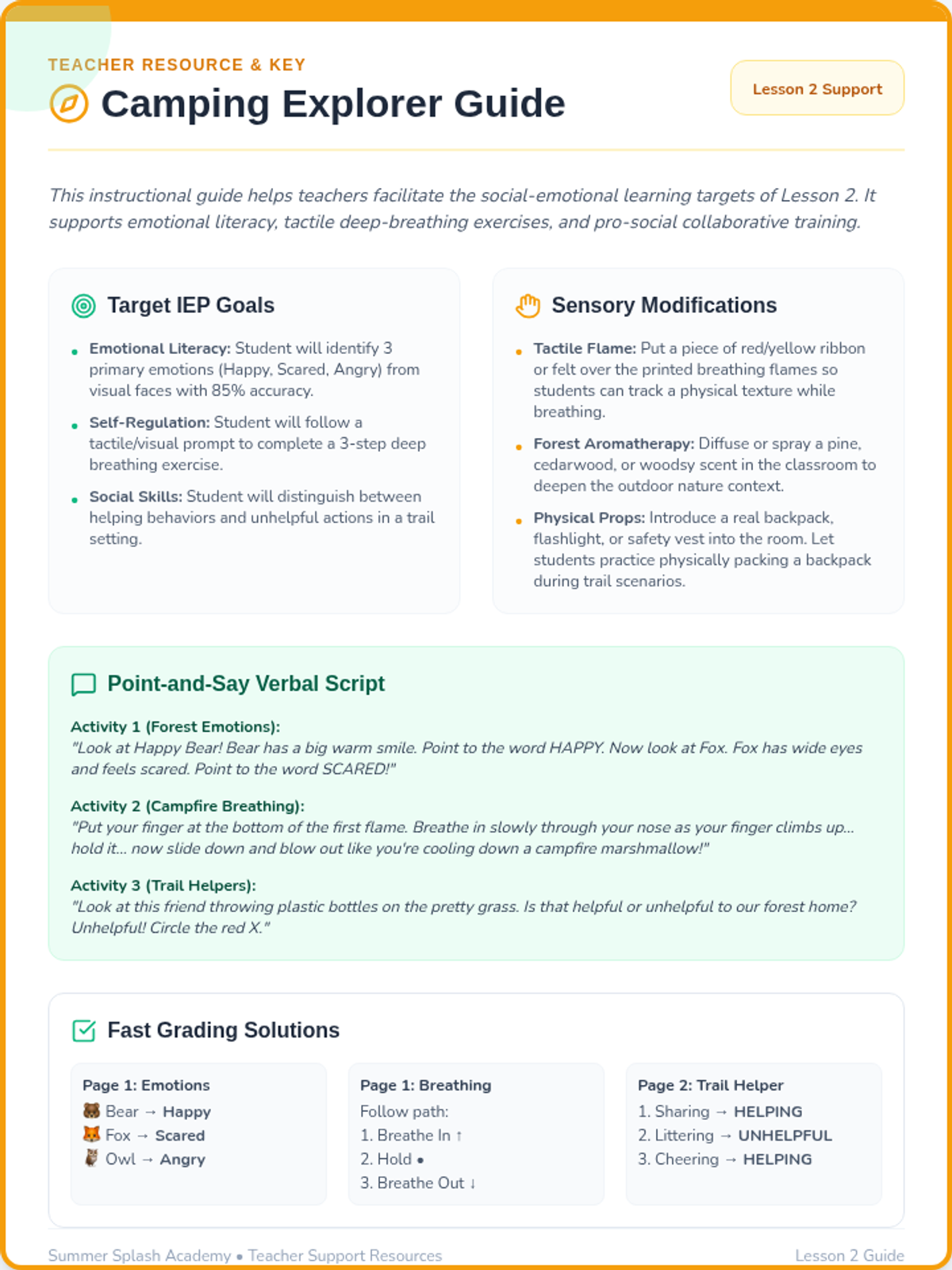
Focuses on social-emotional learning through outdoor themes. Students practice identifying camper emotions, discovering self-regulation strategies with a 'campfire breathing' activity, and understanding positive social interactions on the trail.
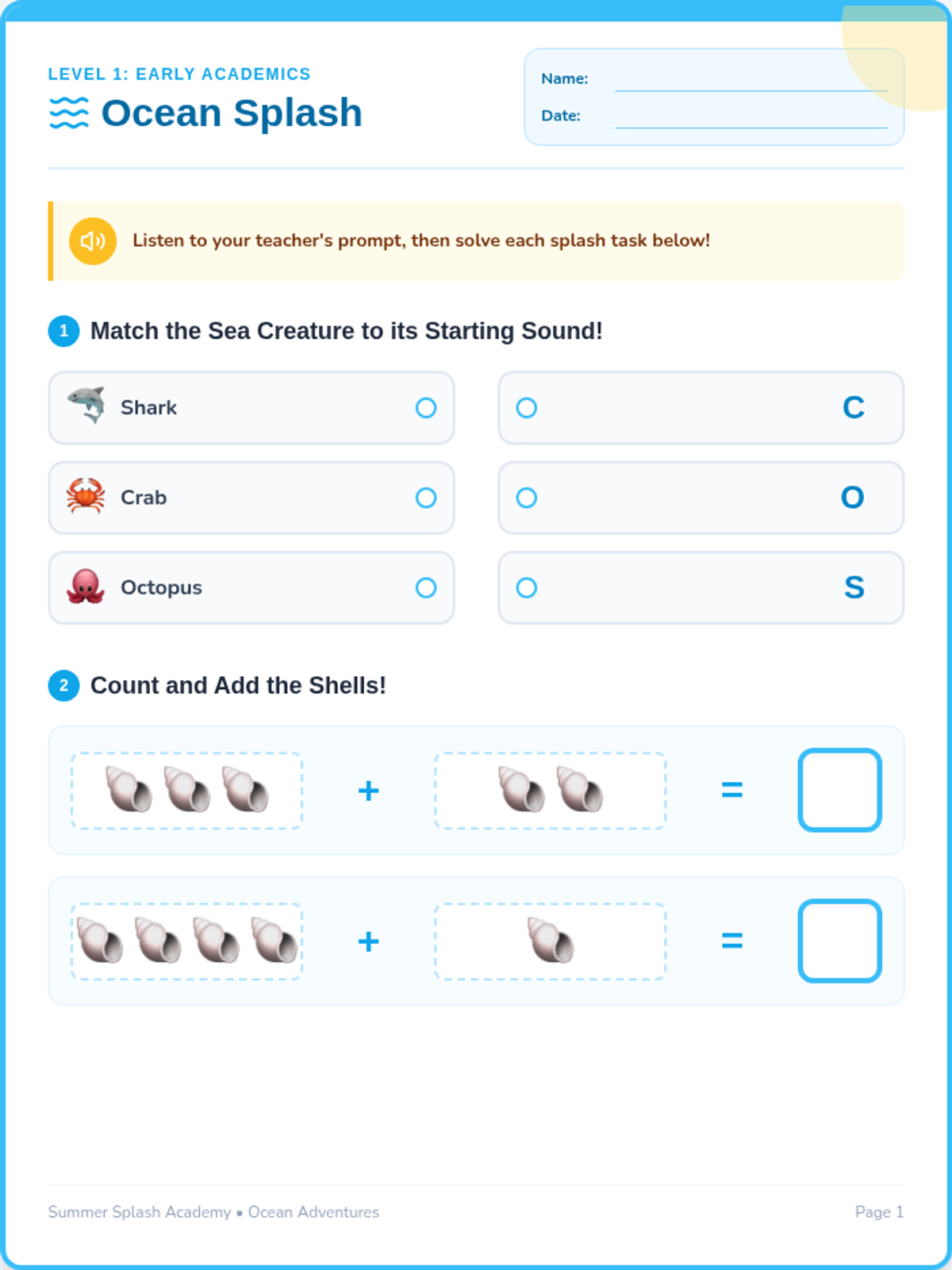
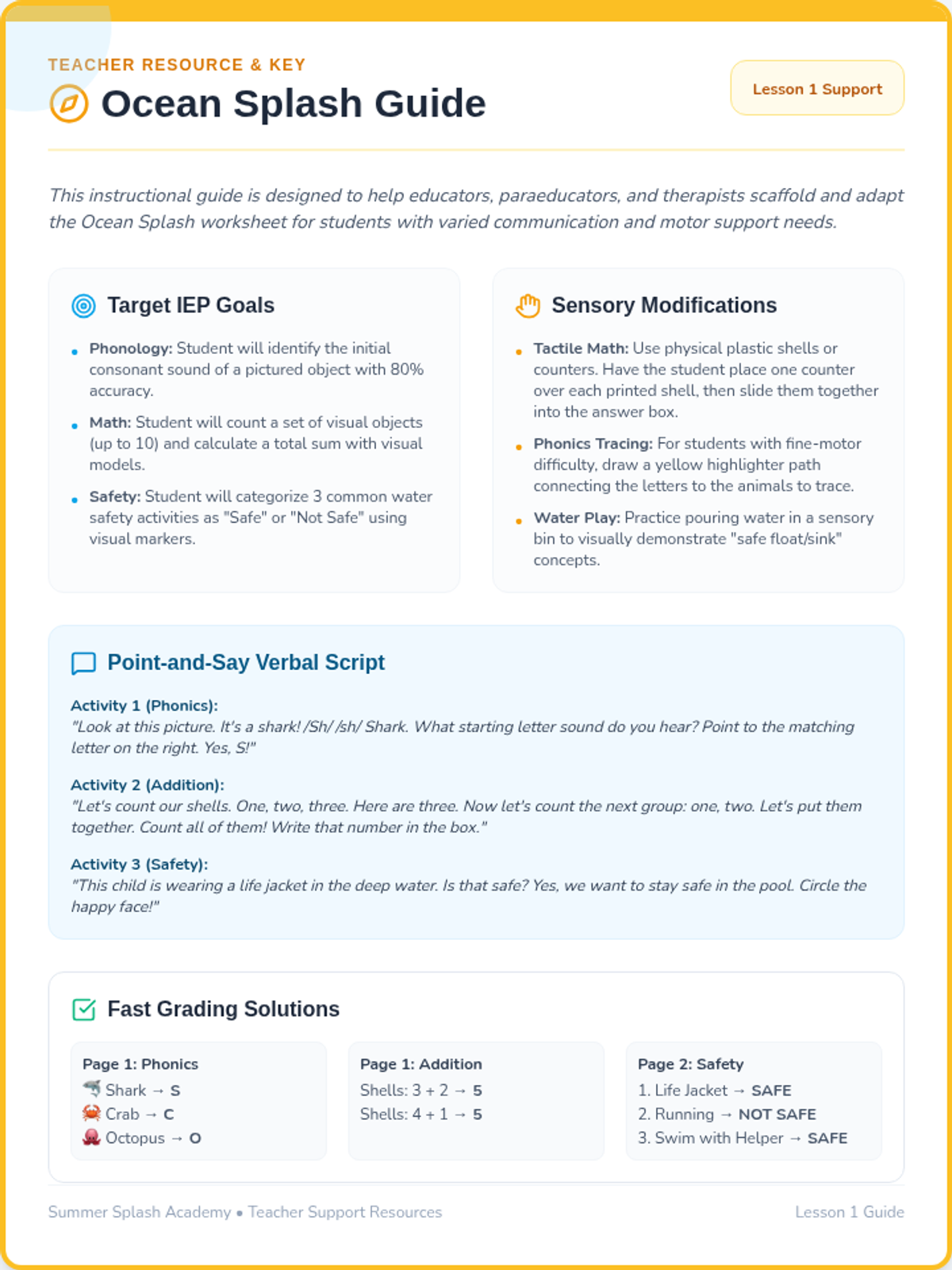
Explores beach and ocean life while strengthening early academic skills. Students practice single-digit starfish addition, phonetic letter sound matching with sea creatures, and basic water safety rules through high-contrast visual worksheets.
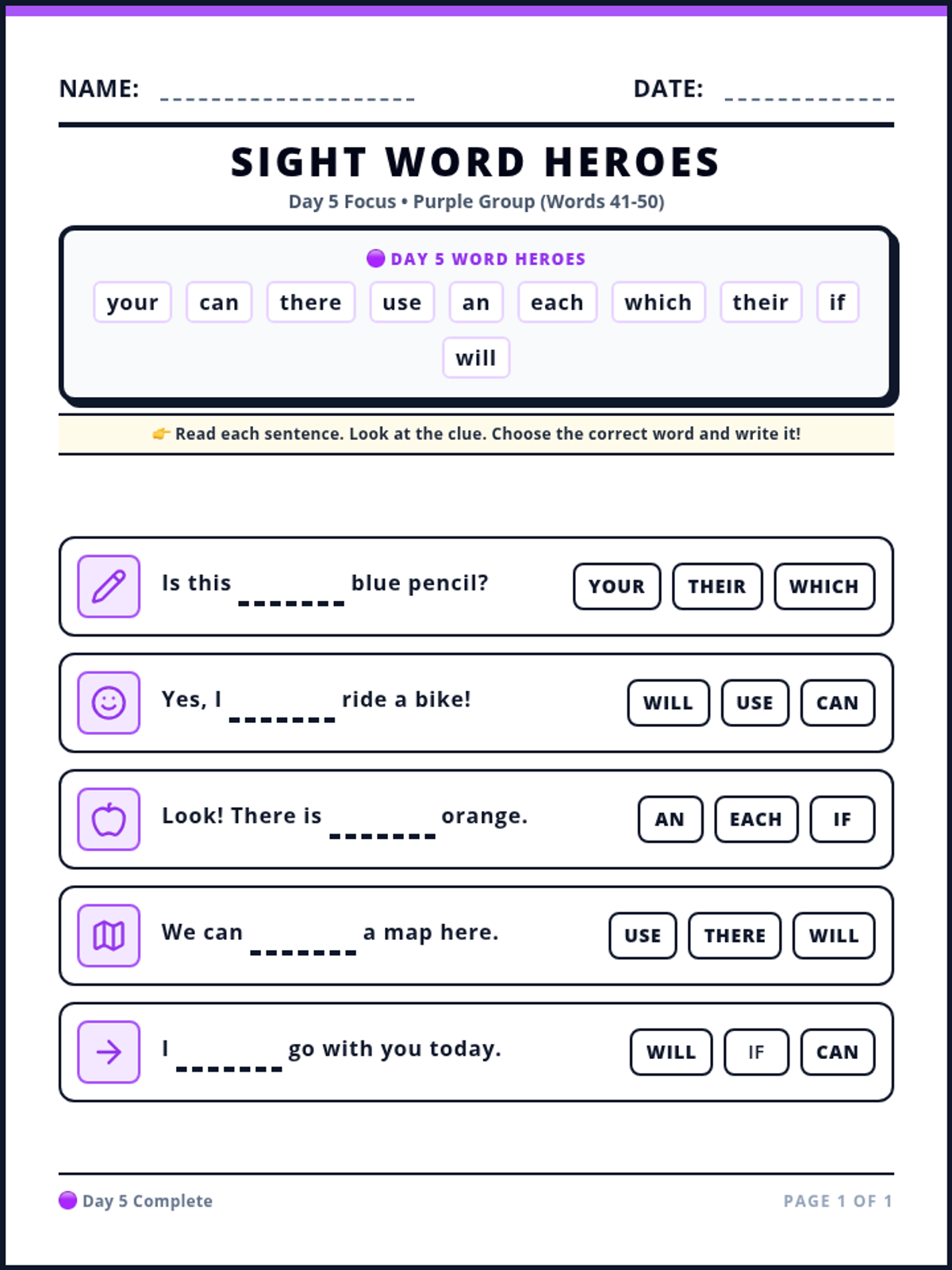
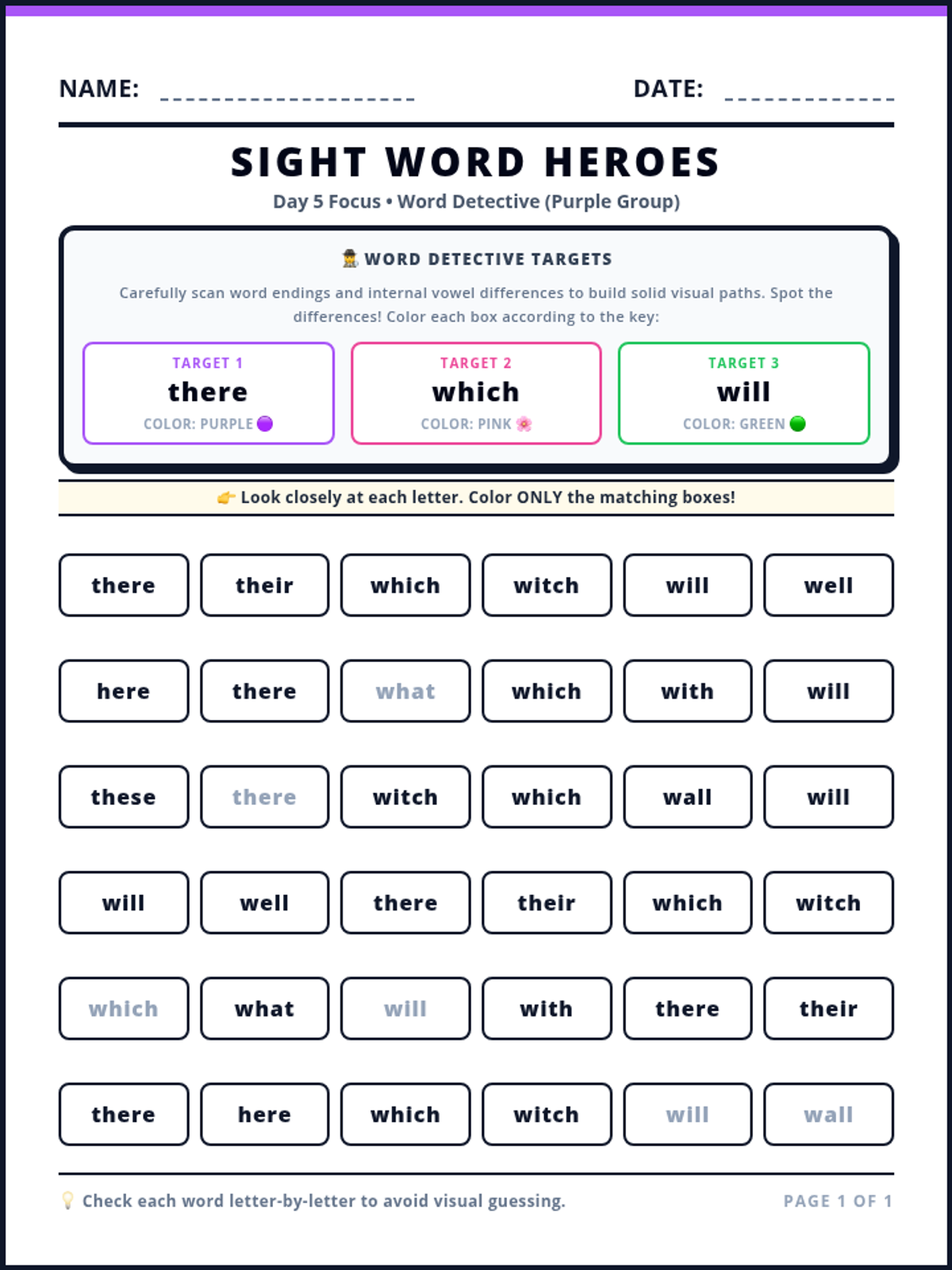
Day 5 targets the Purple Group high-frequency words (your, can, there, use, an, each, which, their, if, will) through structured sentence frames, and clear visual discrimination activities.
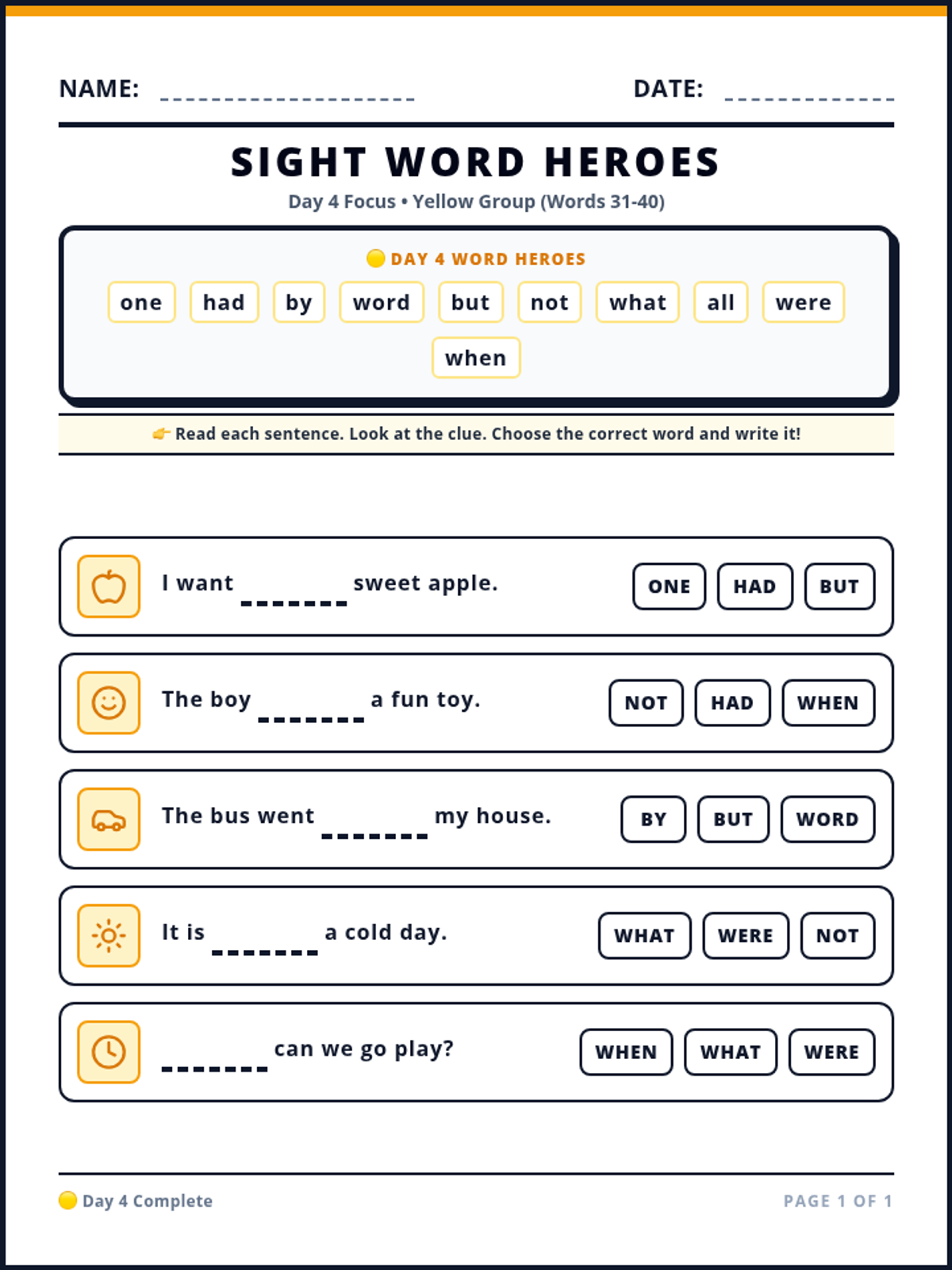
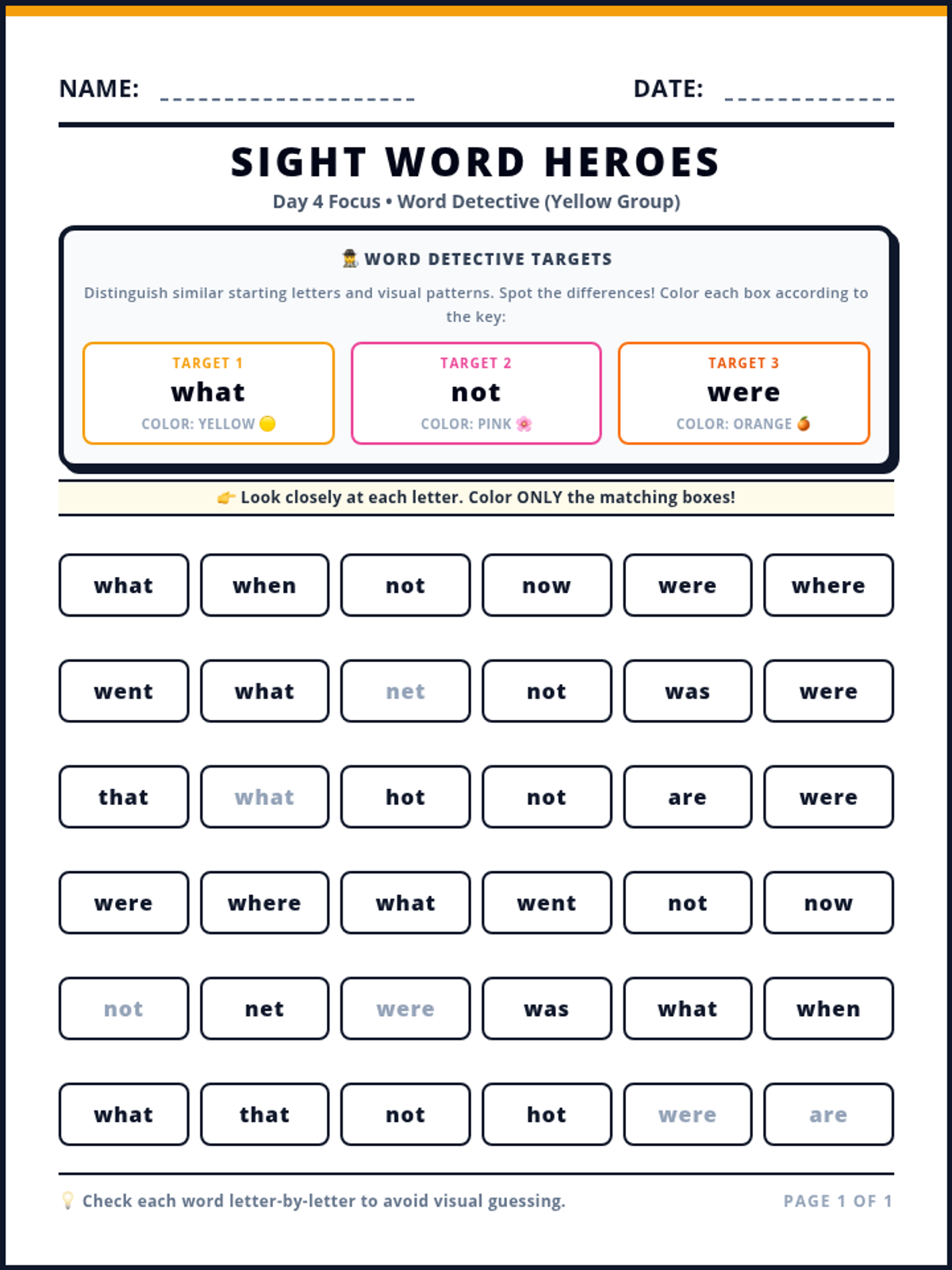
Day 4 targets the Yellow Group high-frequency words (one, had, by, word, but, not, what, all, were, when) through structured sentence frames, and clear visual discrimination activities.
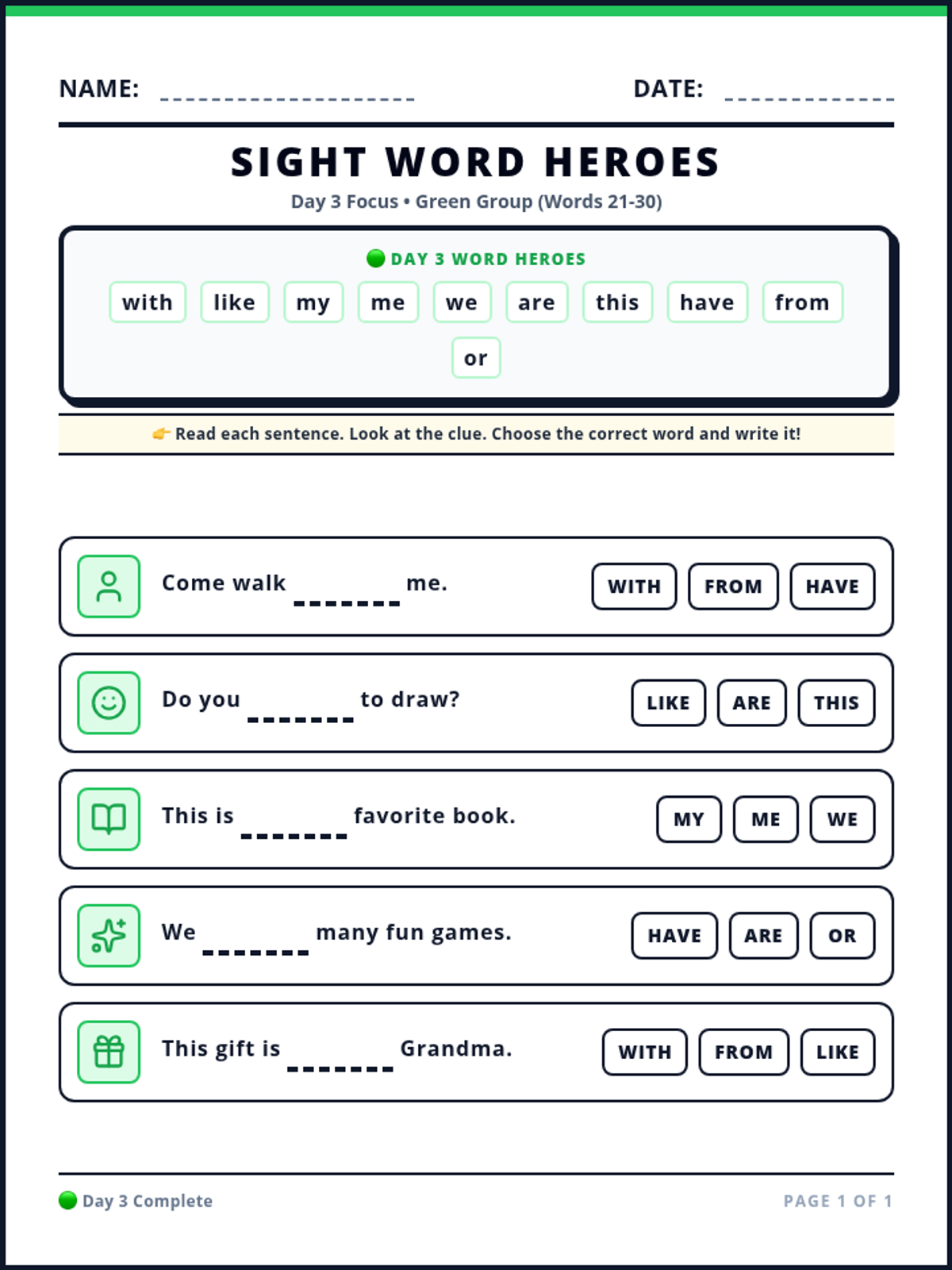
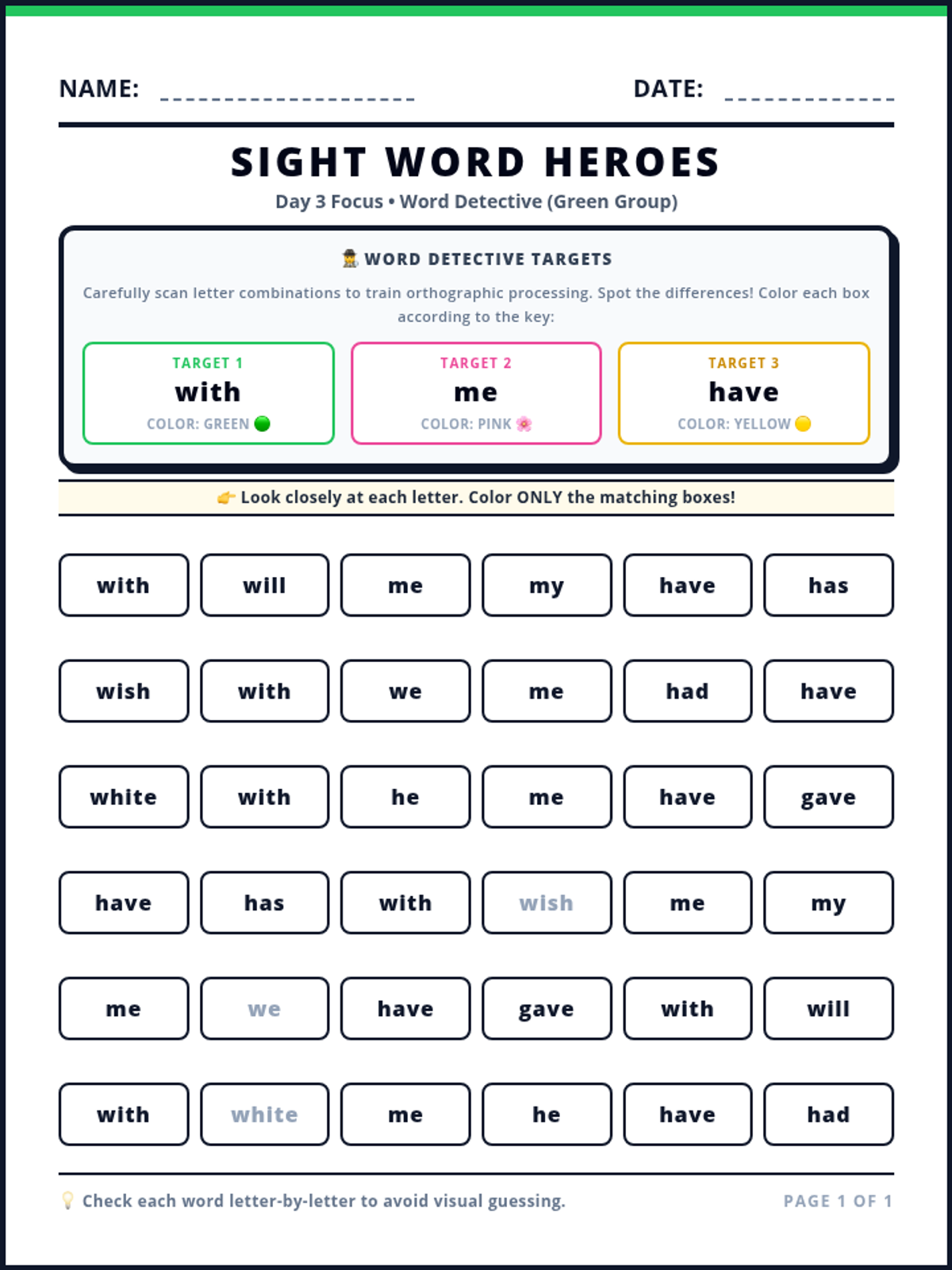
Day 3 targets the Green Group high-frequency words (with, like, my, me, we, are, this, have, from, or) through structured sentence frames, and clear visual discrimination activities.
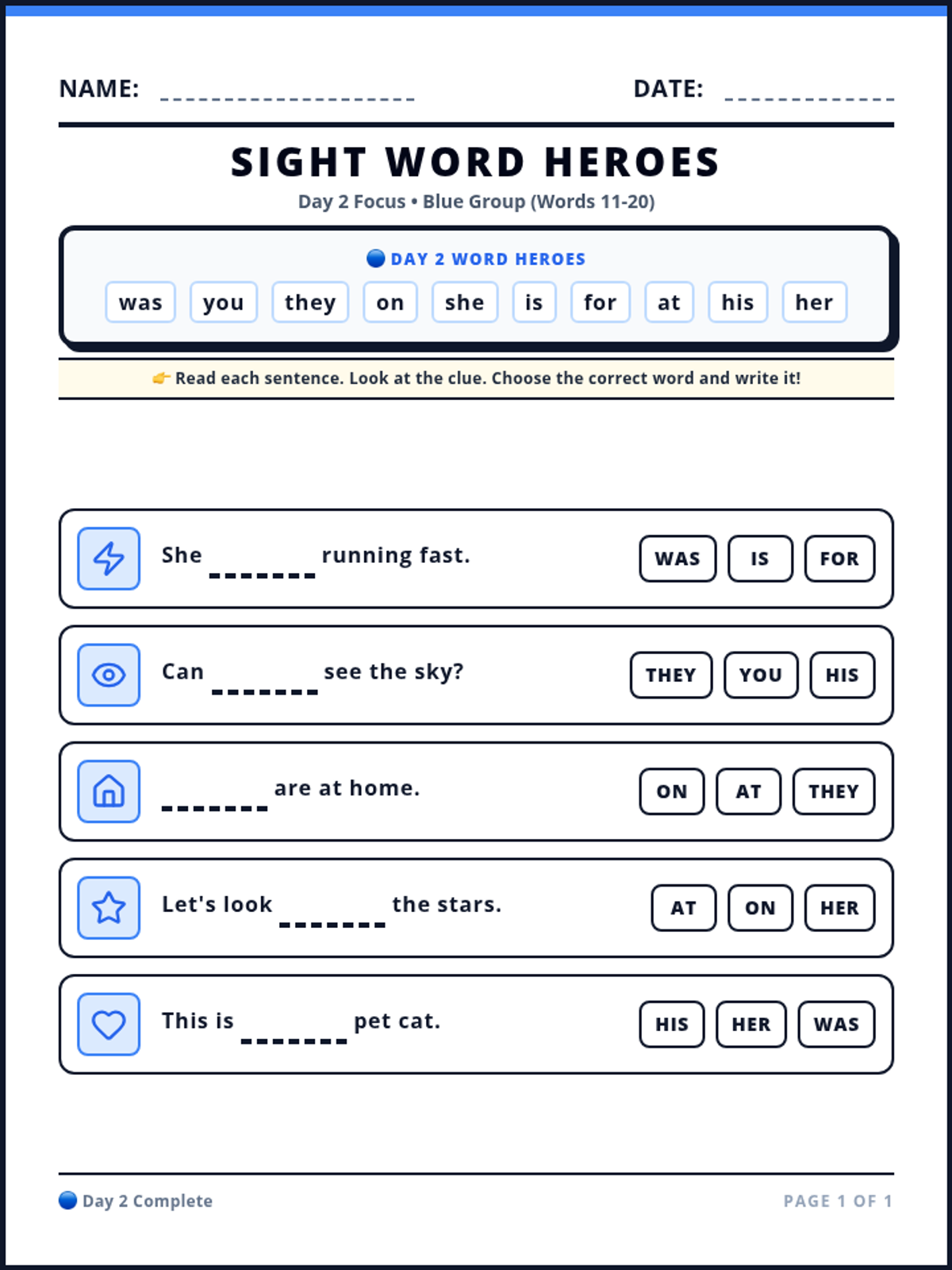
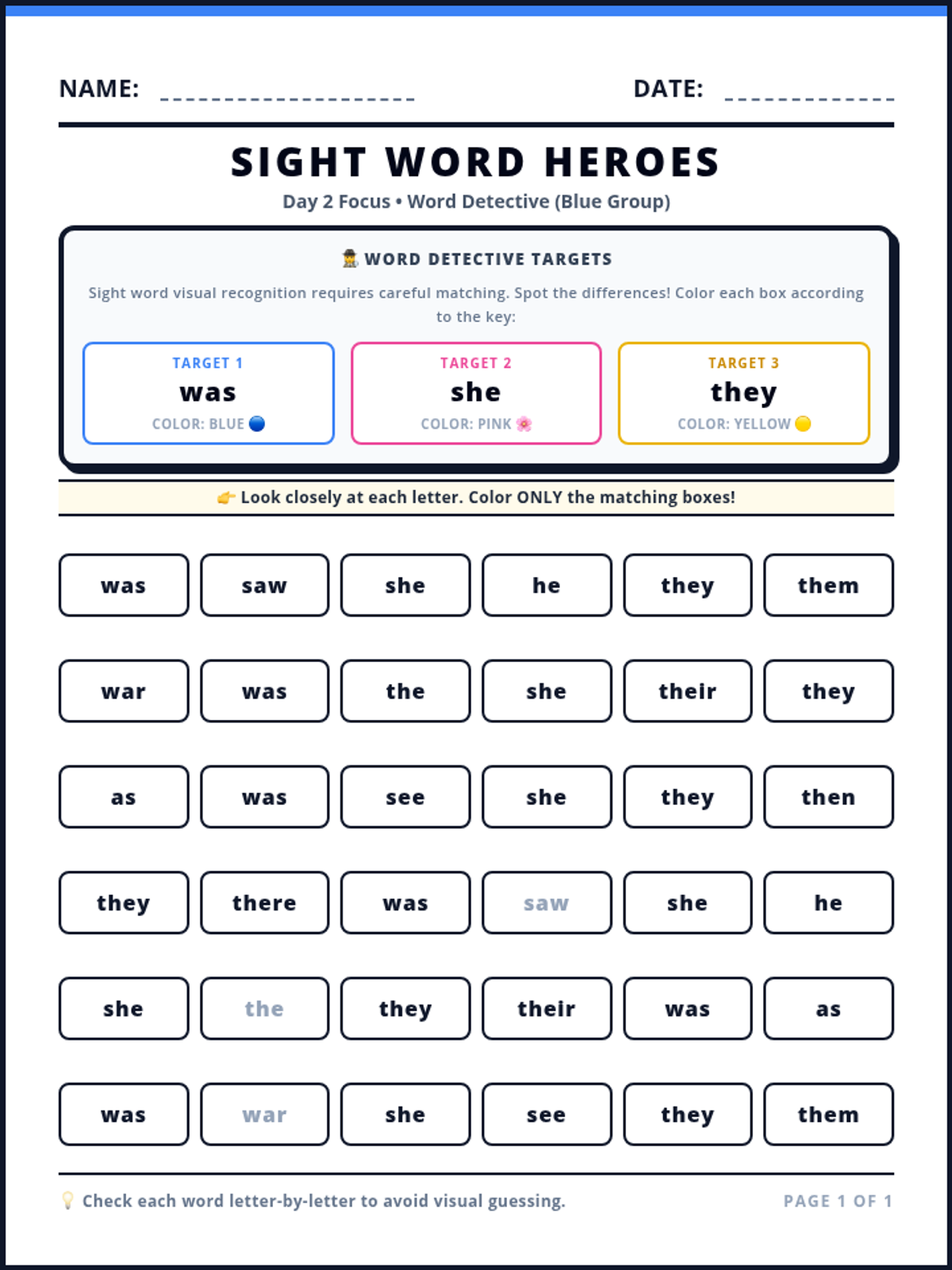
Day 2 targets the Blue Group high-frequency words (was, you, they, on, she, is, for, at, his, her) through structured sentence frames, and clear visual discrimination activities.
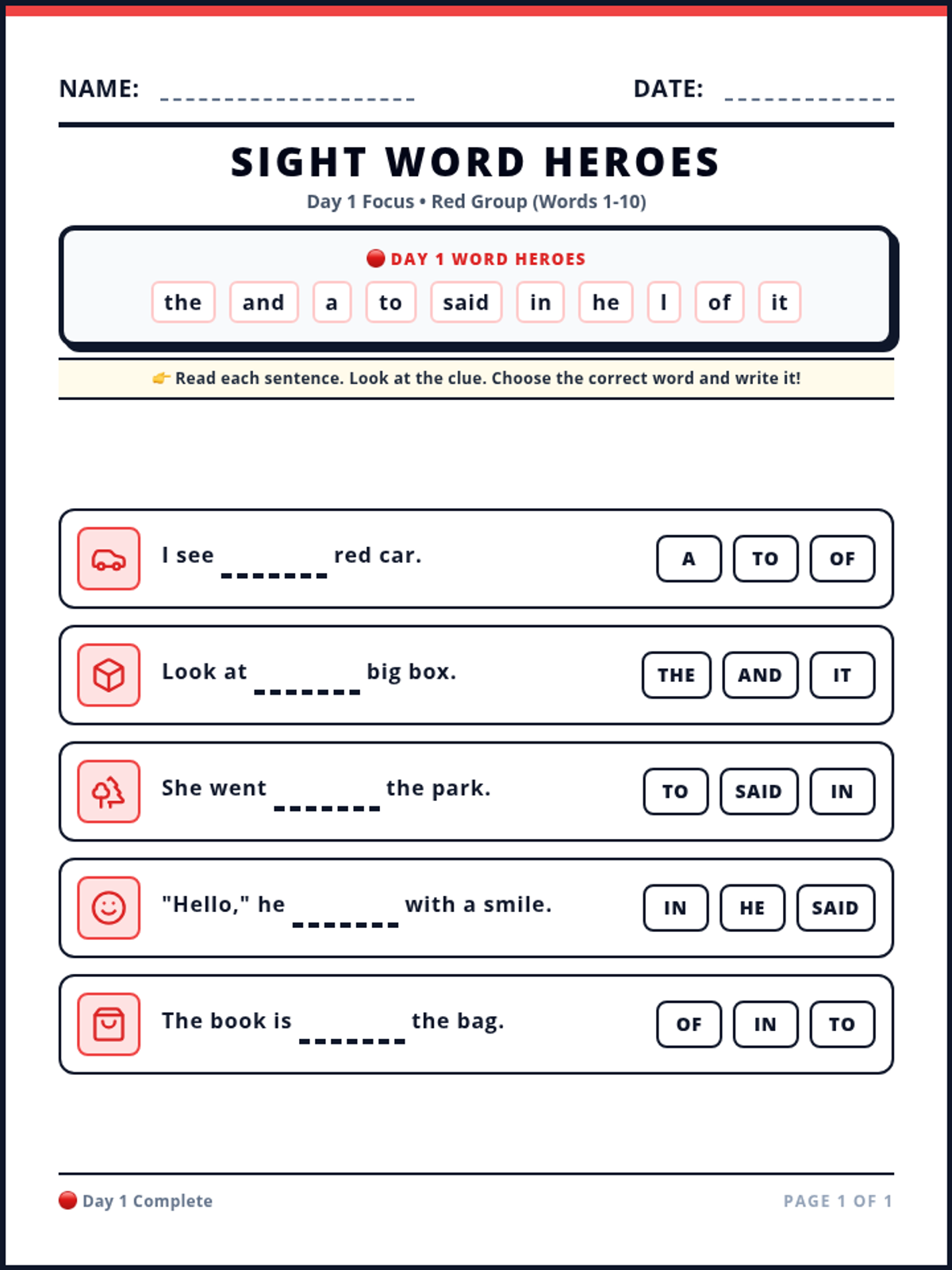
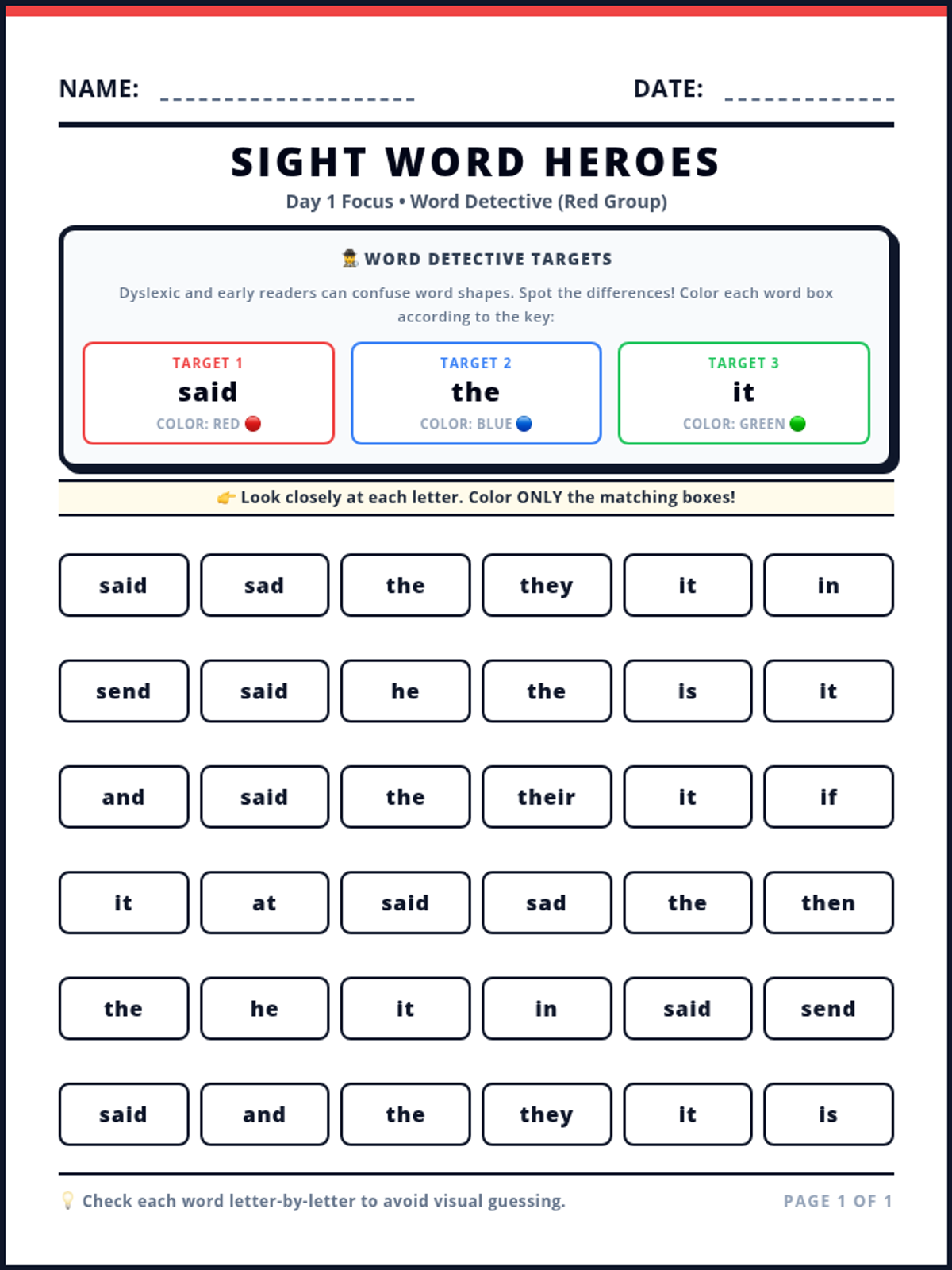
Day 1 targets the Red Group high-frequency words (the, and, a, to, said, in, he, I, of, it) through multisensory tracking, sentence frames, and clear visual discrimination activities.