A series of high-intensity, five-minute reading drills designed for 9th-grade special education students to improve decoding accuracy for suffixes and visually similar word pairs.
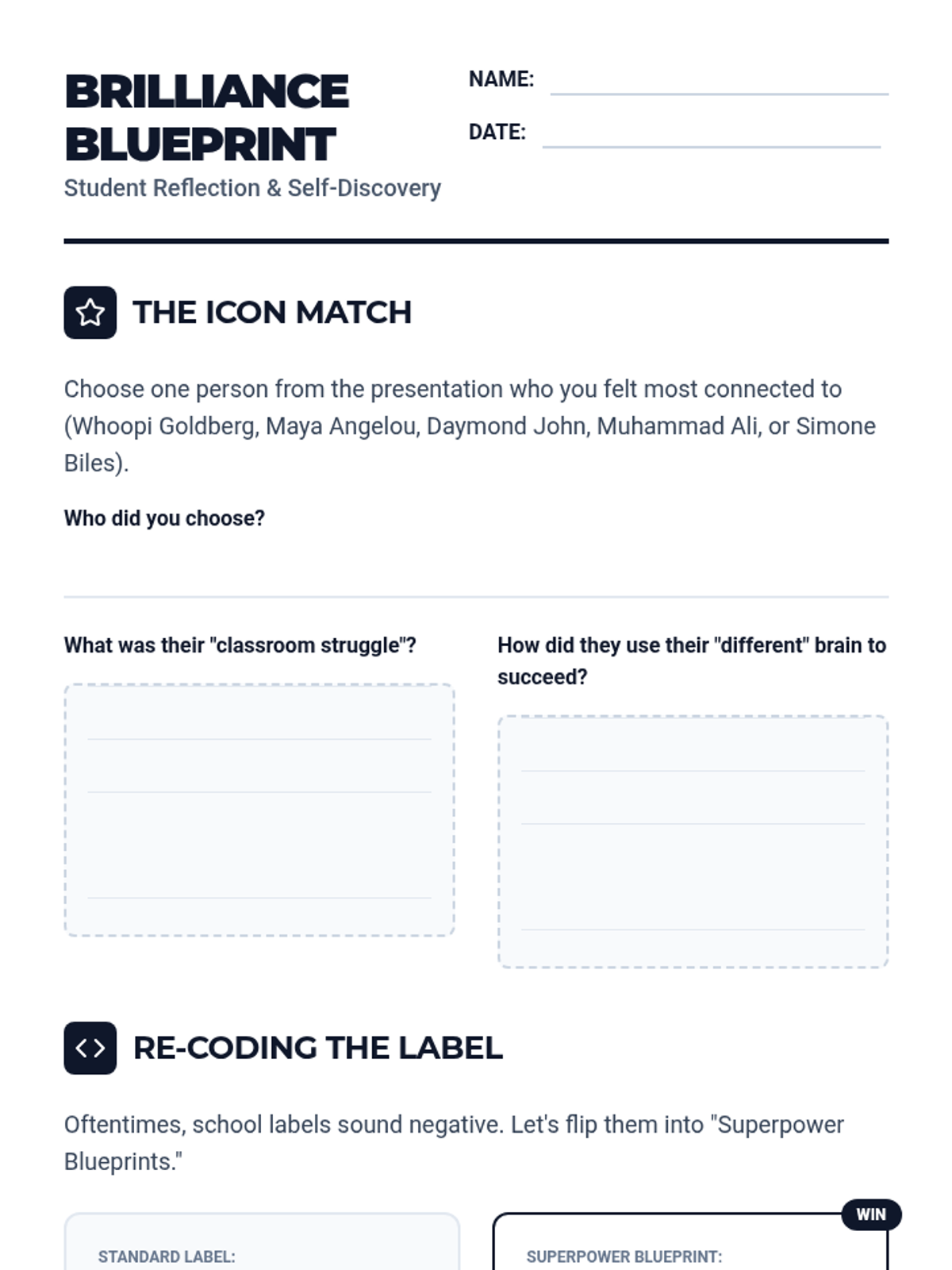
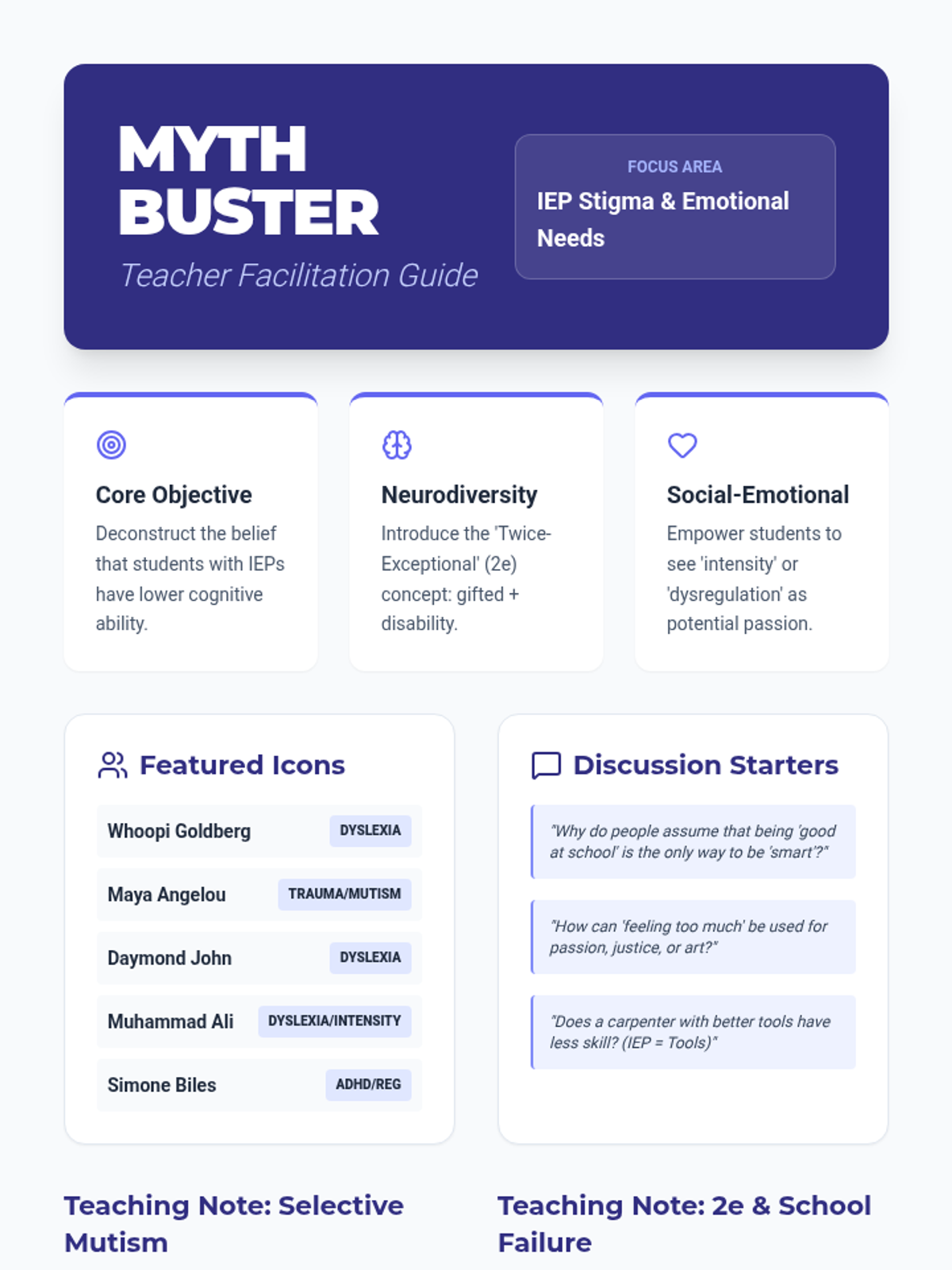
This lesson dismantles the stigma surrounding IEPs and emotional dysregulation by highlighting the 'twice-exceptional' nature of many brilliant minds. It features a slide presentation of successful African Americans who overcame learning and emotional challenges to achieve greatness.
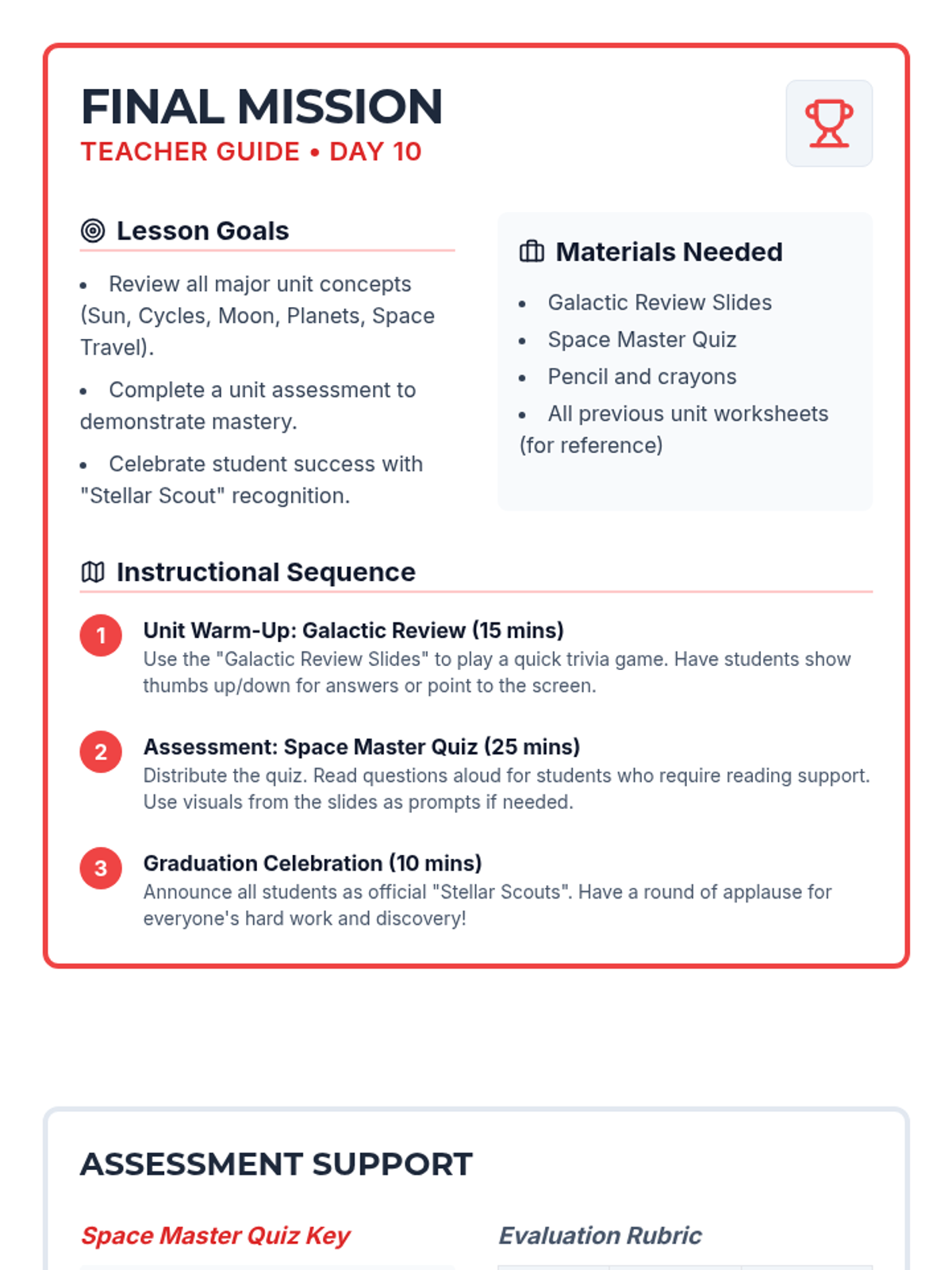
A comprehensive review of unit concepts followed by a final assessment designed for students with diverse learning needs.
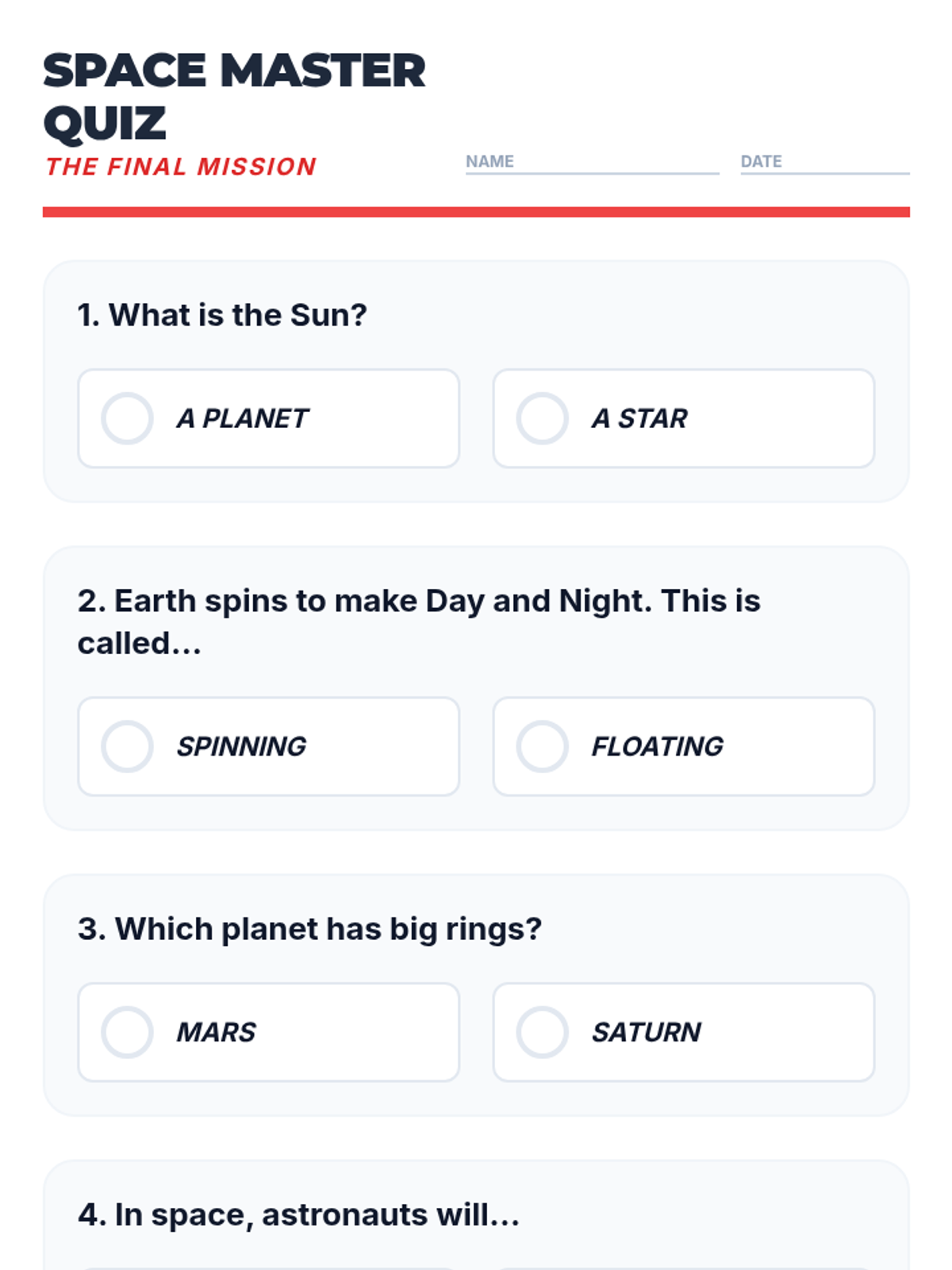
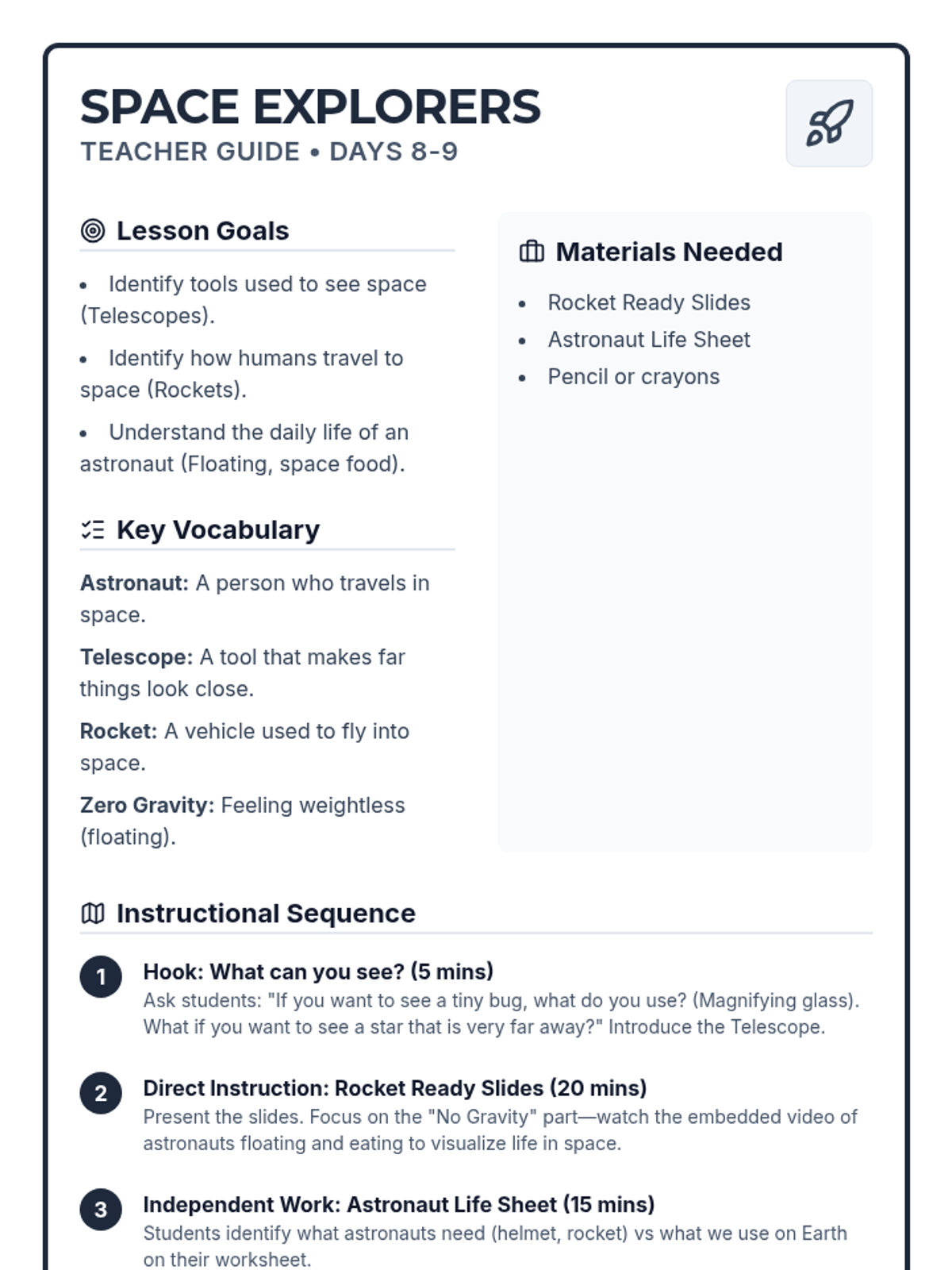
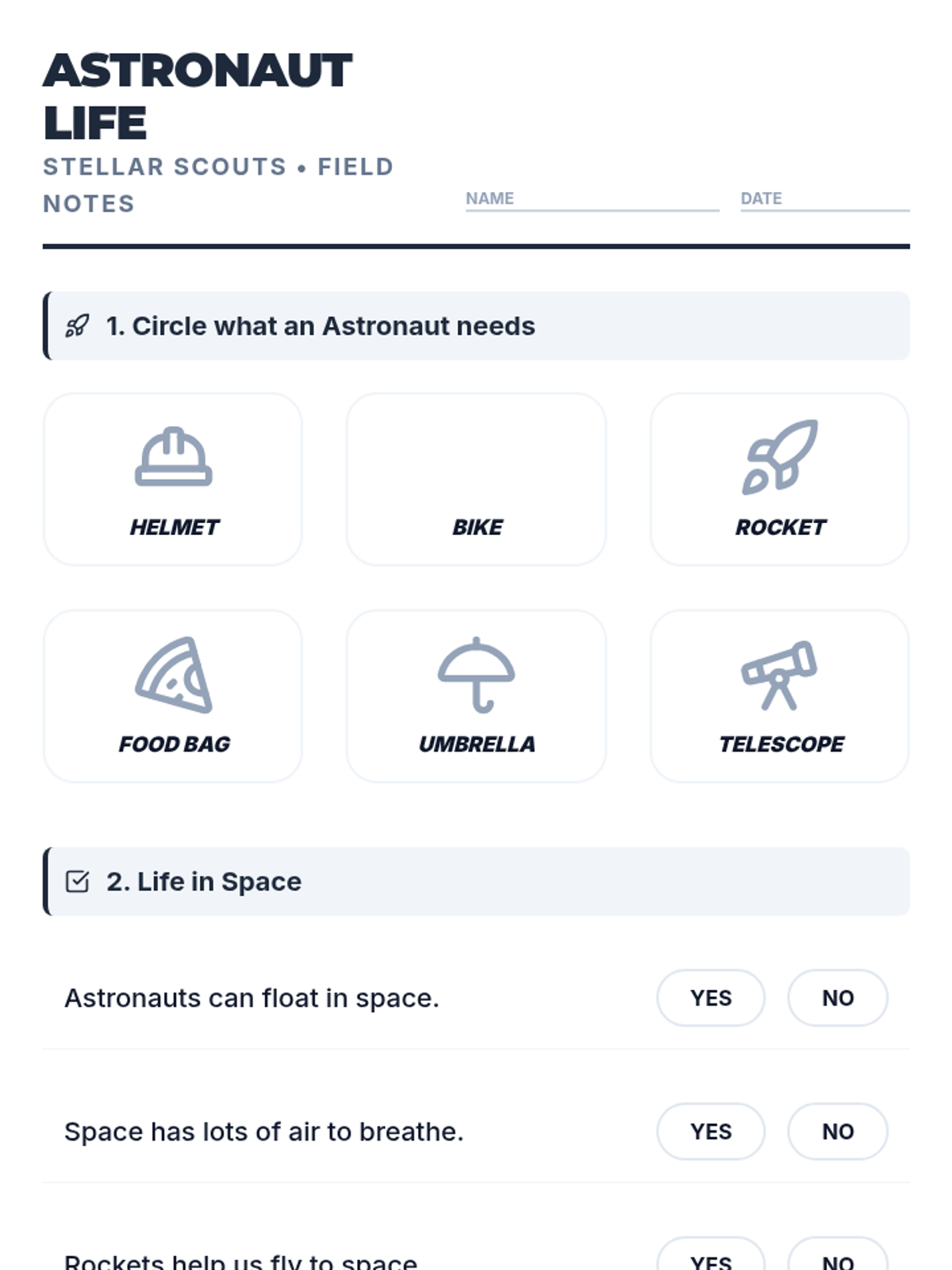
An introduction to how humans explore space, including the tools we use like telescopes and rockets, and what it is like to live and work as an astronaut.
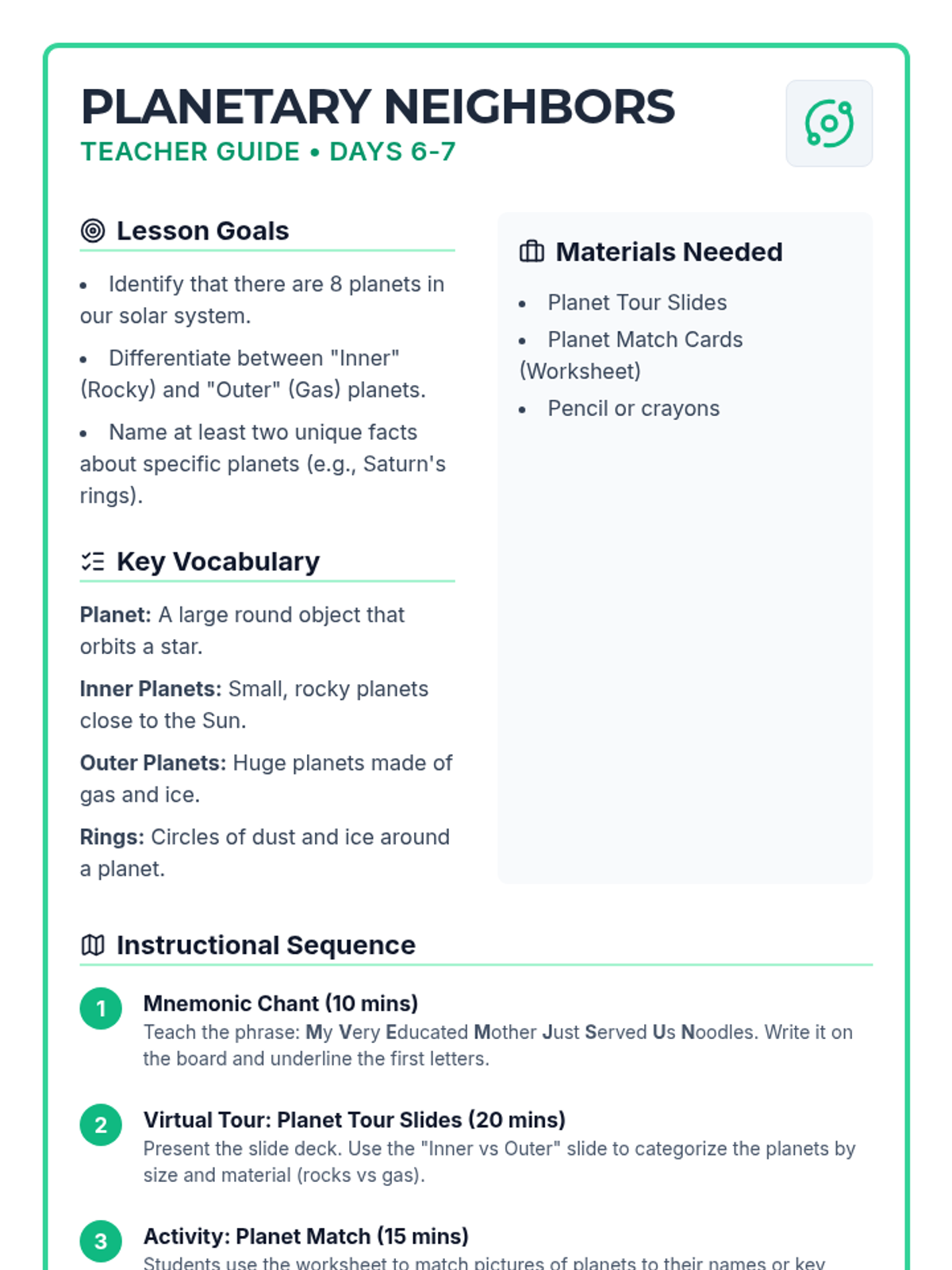
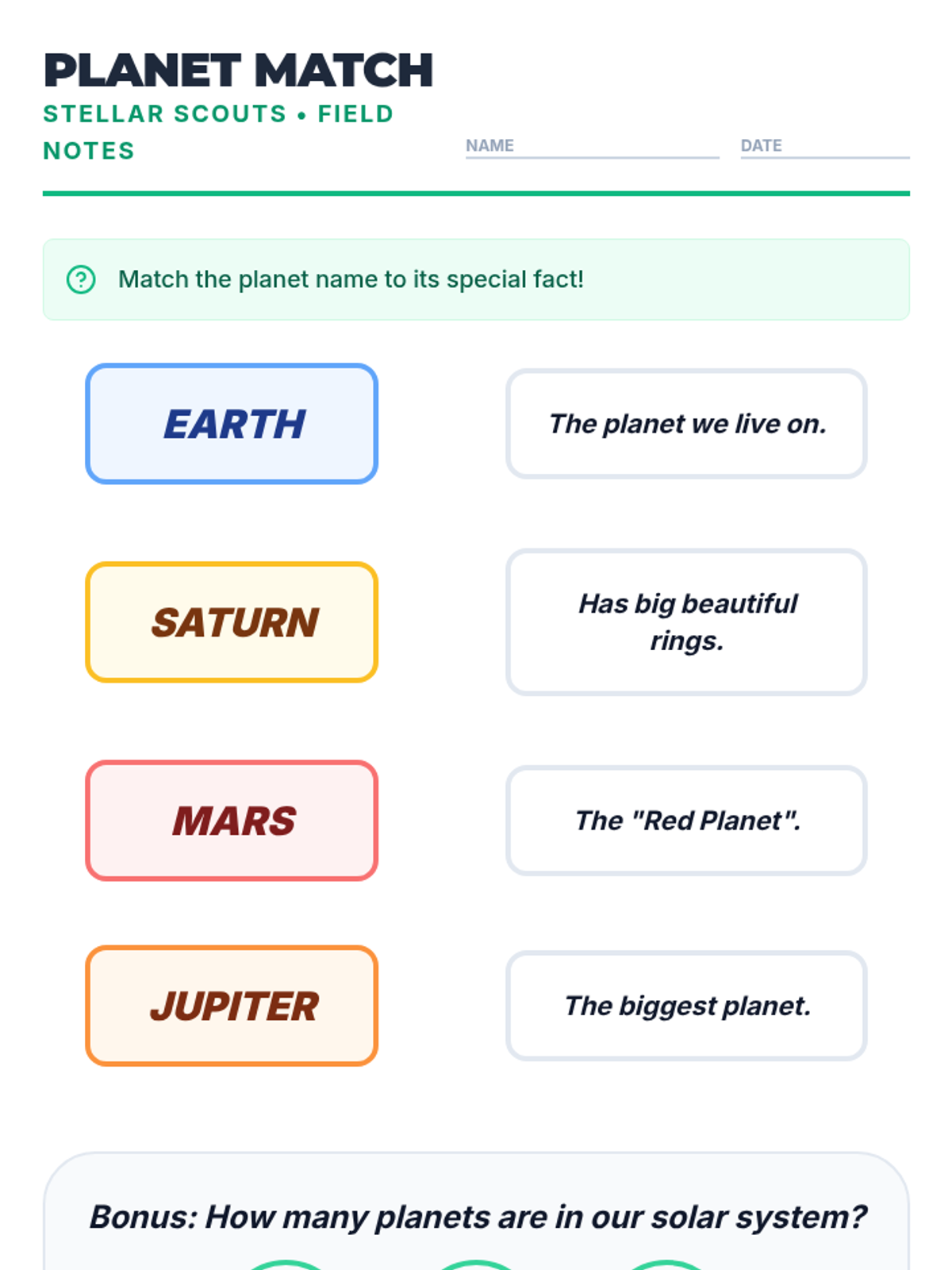
A guided tour of the eight planets in our solar system, categorized into rocky inner planets and gaseous outer planets with simple distinguishing characteristics for each.
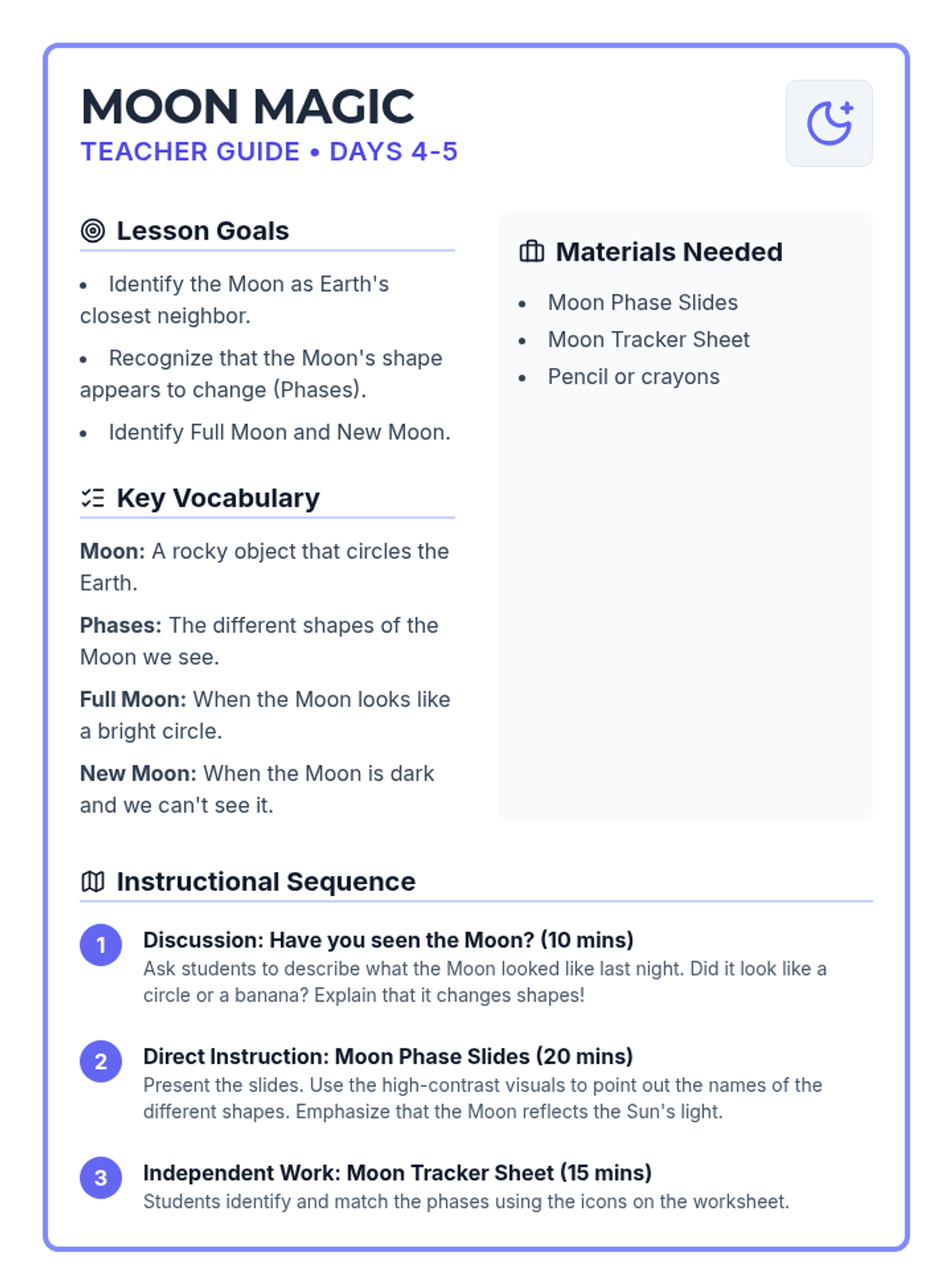
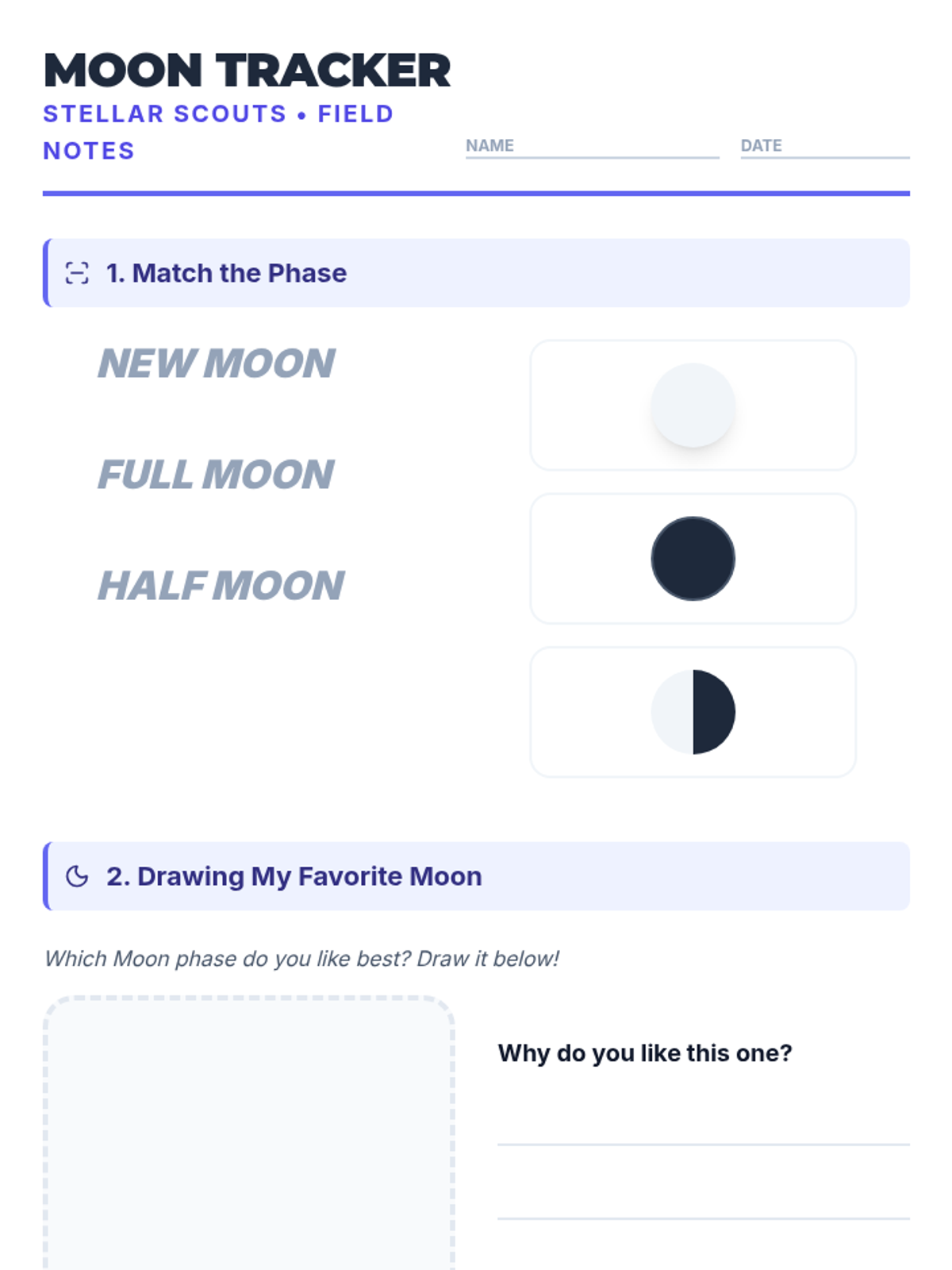
A study of the Moon's appearance and its relationship with Earth, focusing on the most recognizable phases and its role as our closest neighbor.
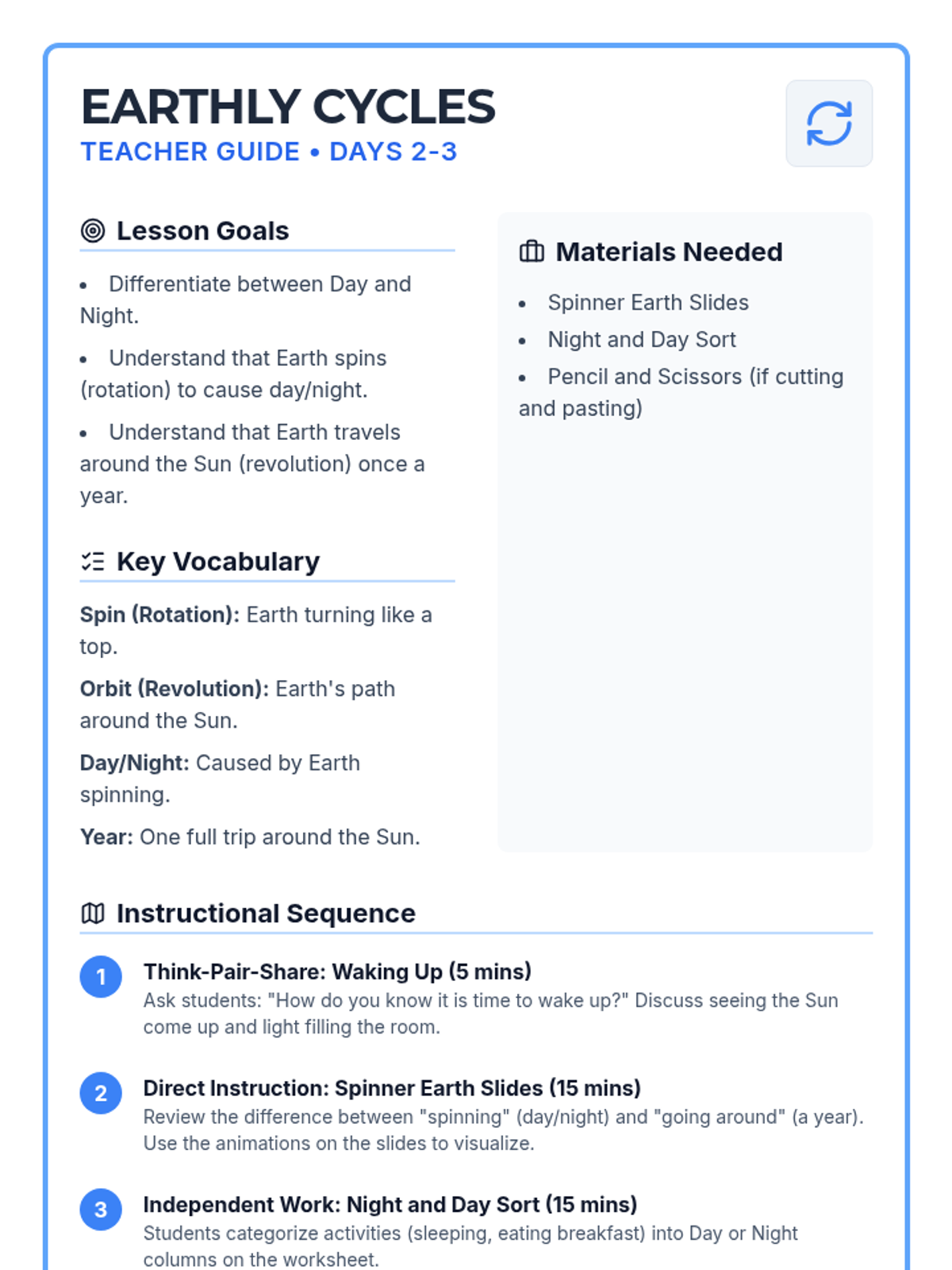
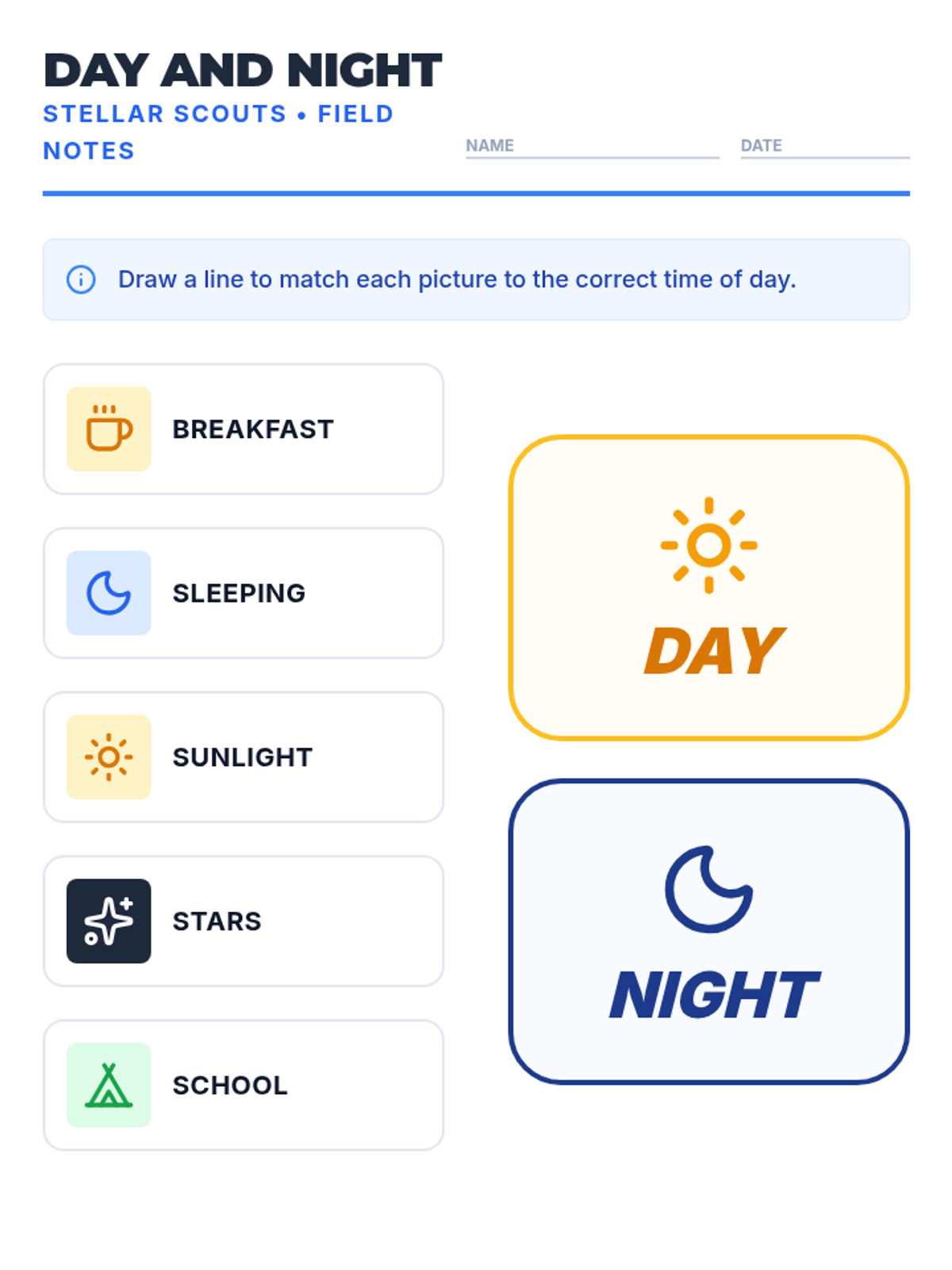
An exploration of why we have day and night (rotation) and why we have years and seasons (revolution), broken down into simple, relatable concepts.
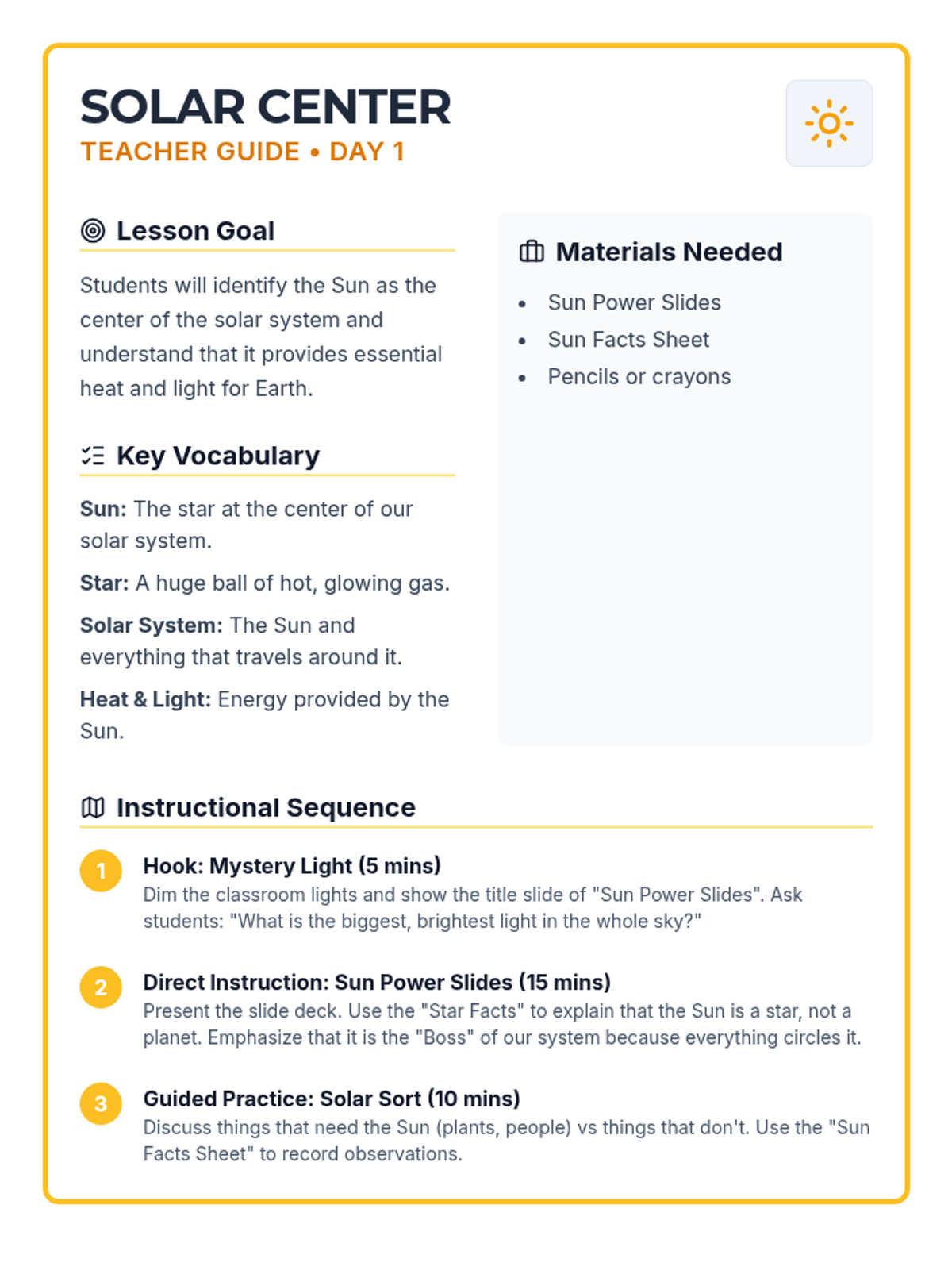
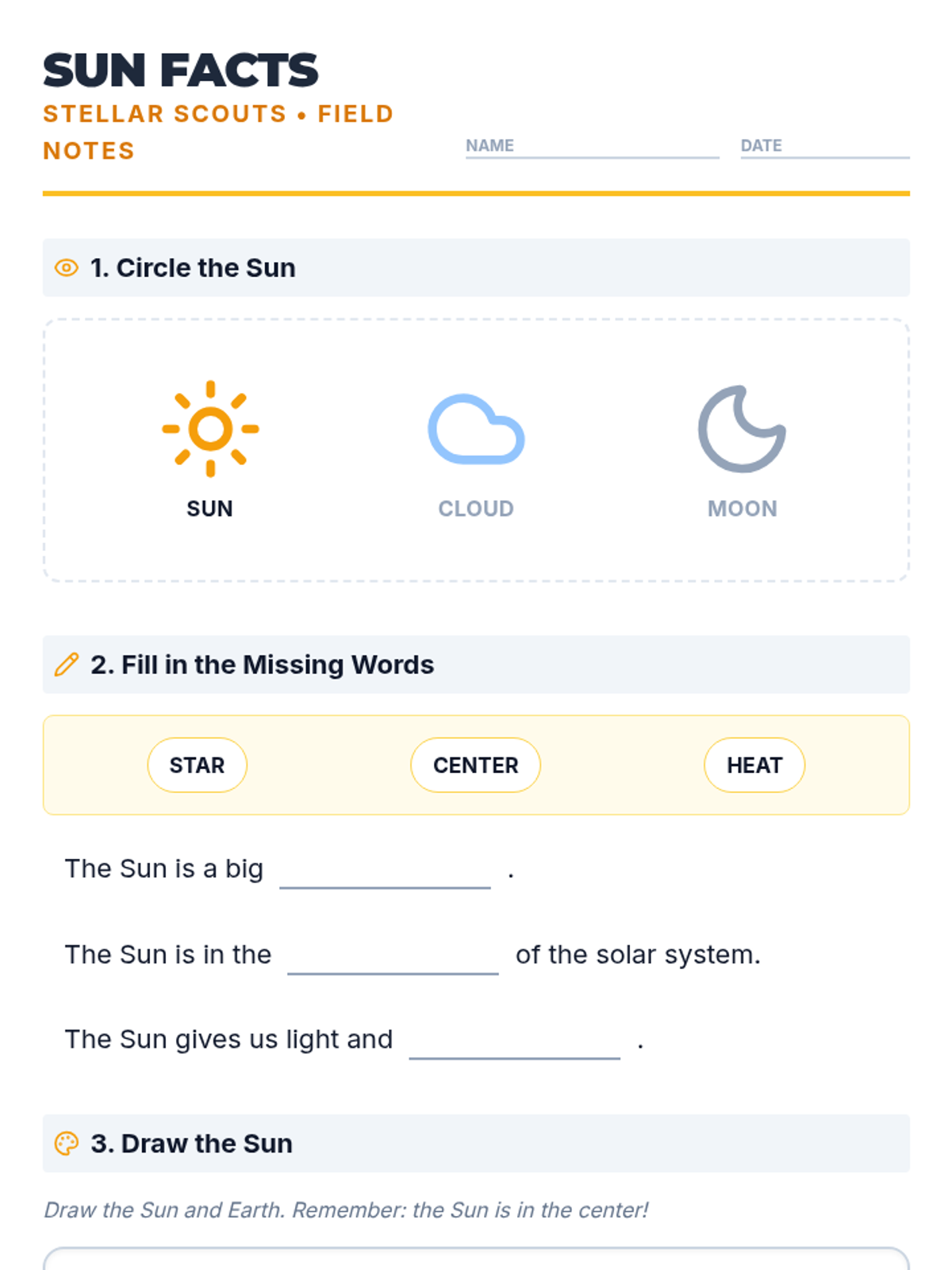
Students explore the Sun as the center of our solar system, learning about its heat, light, and importance for life on Earth using accessible language and clear visual aids.
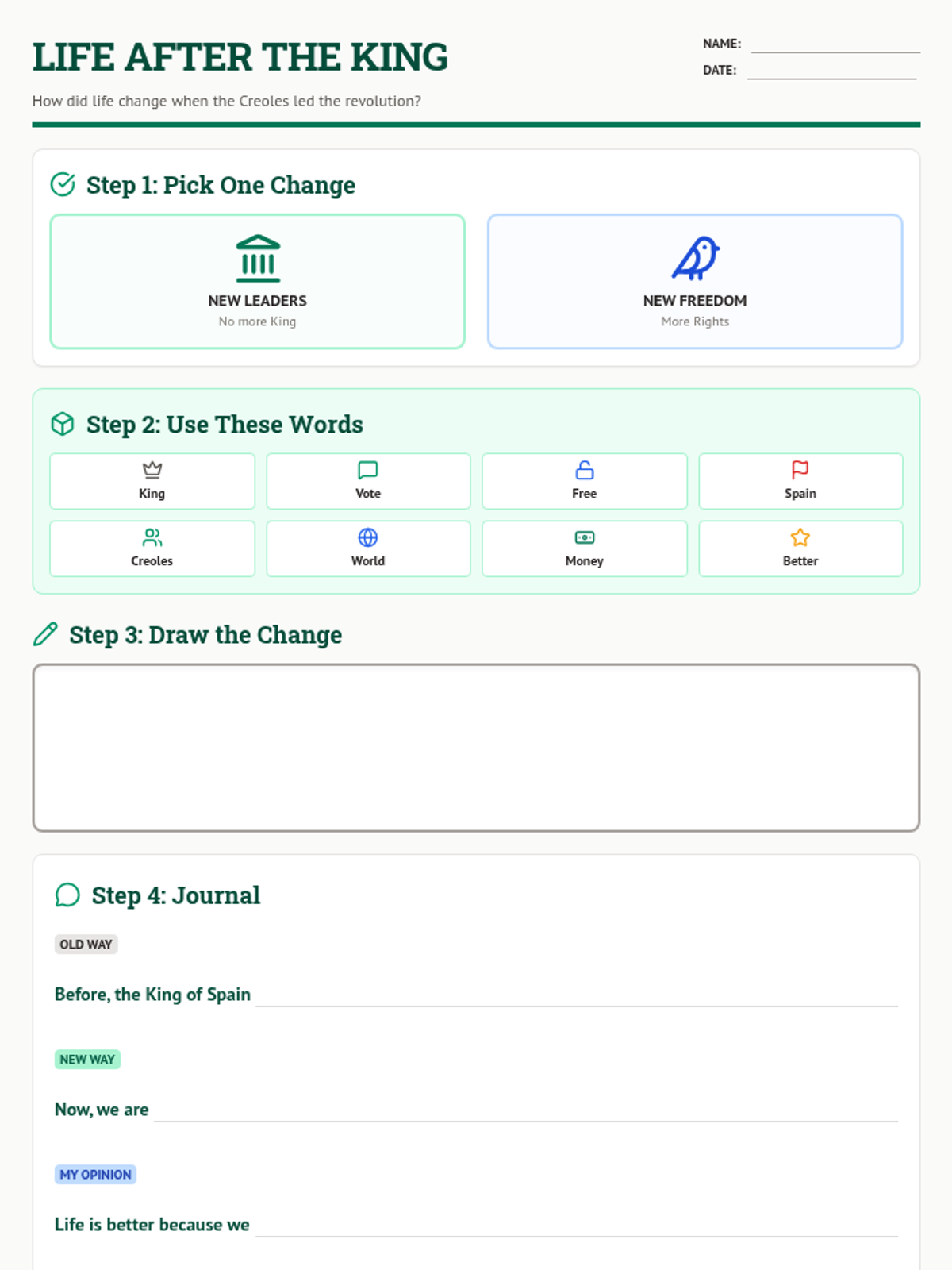
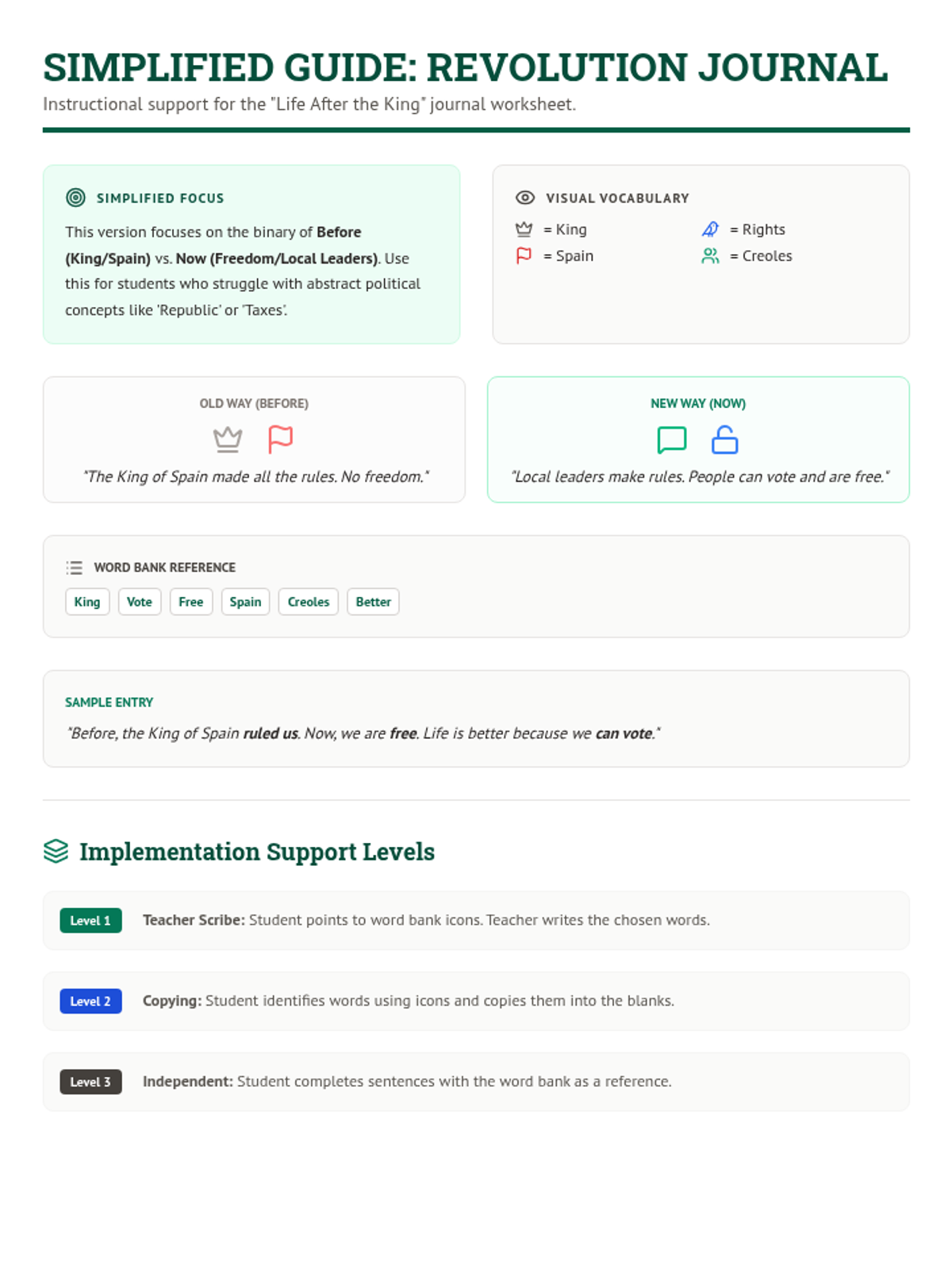
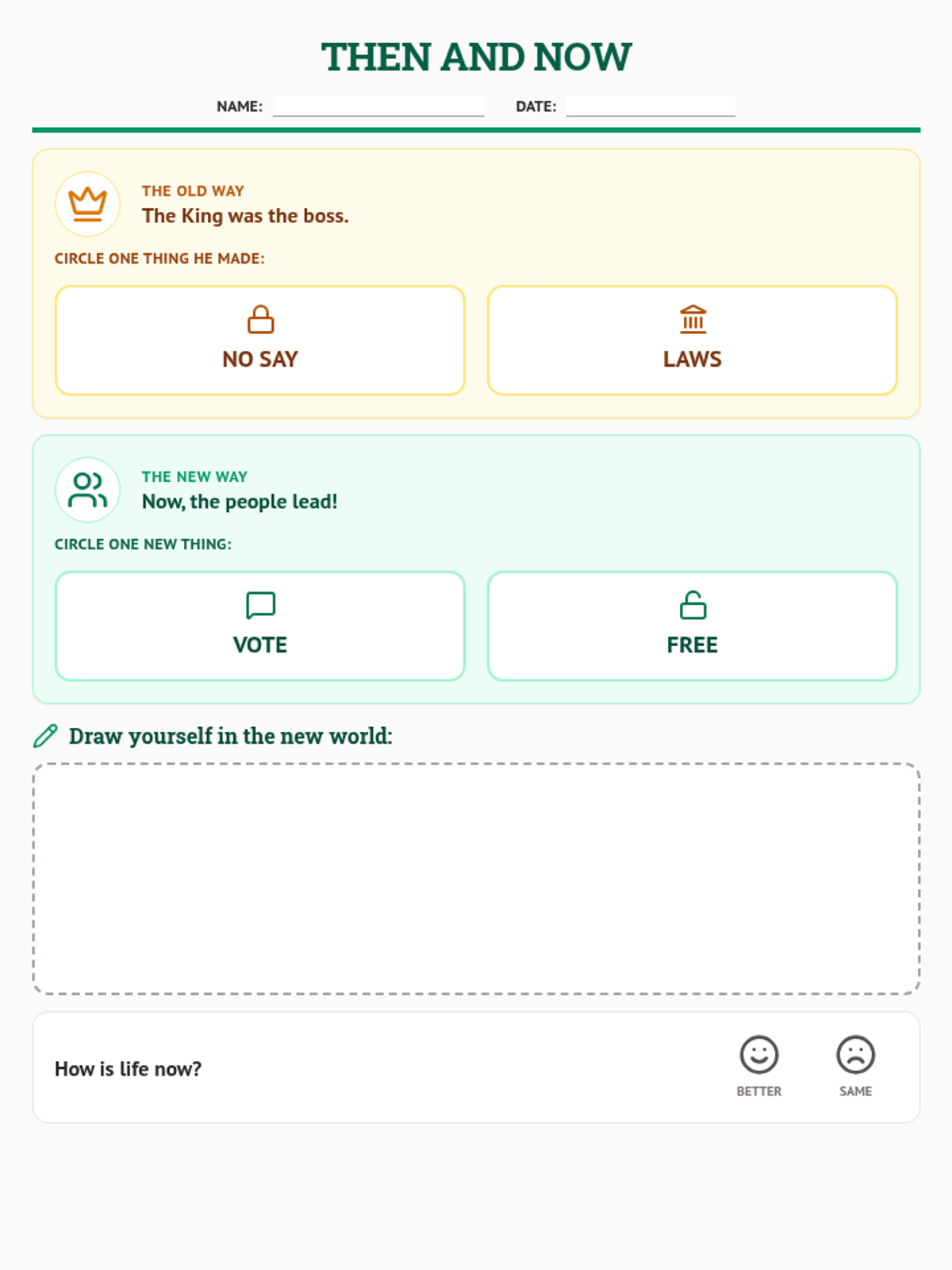
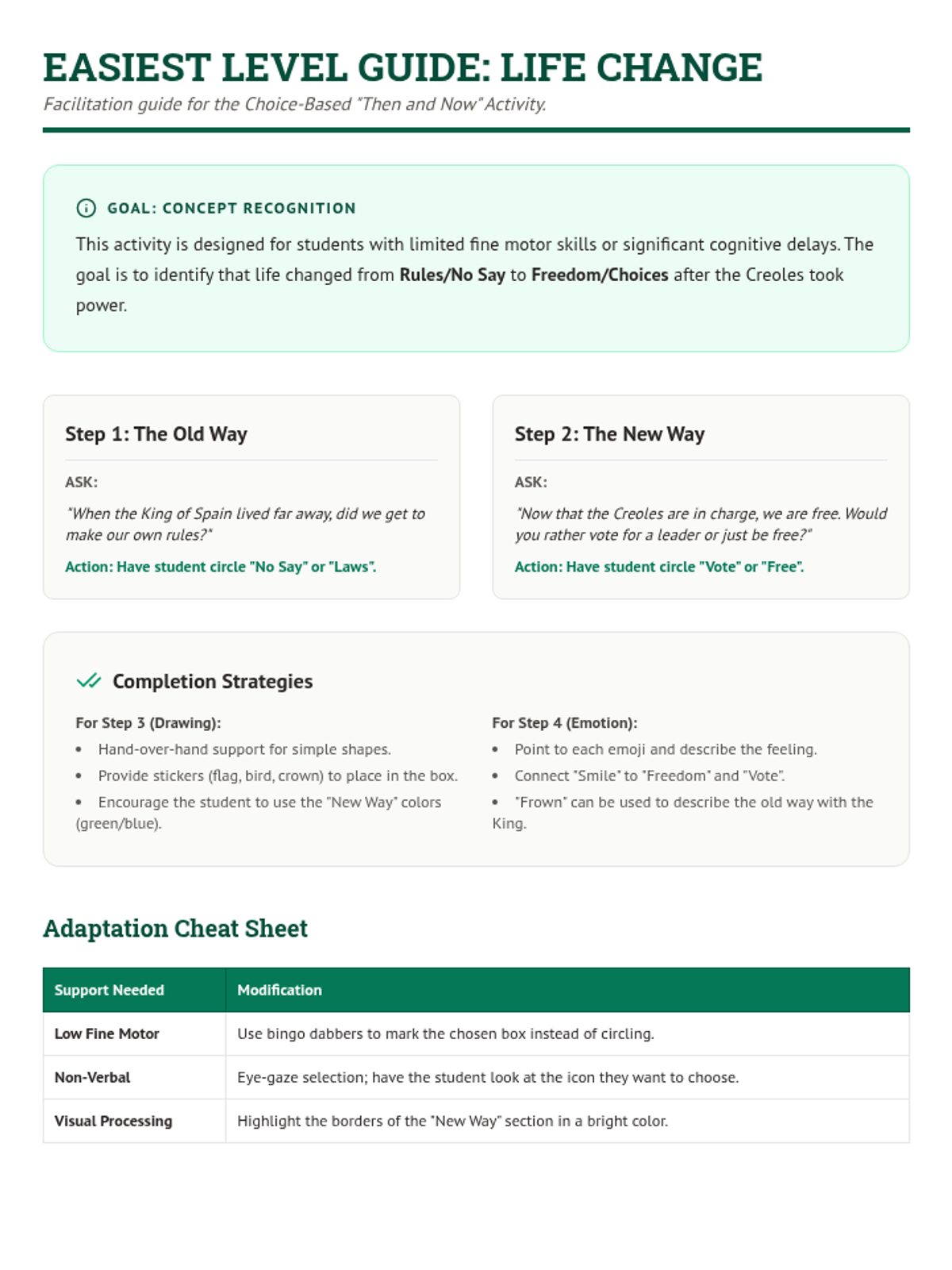
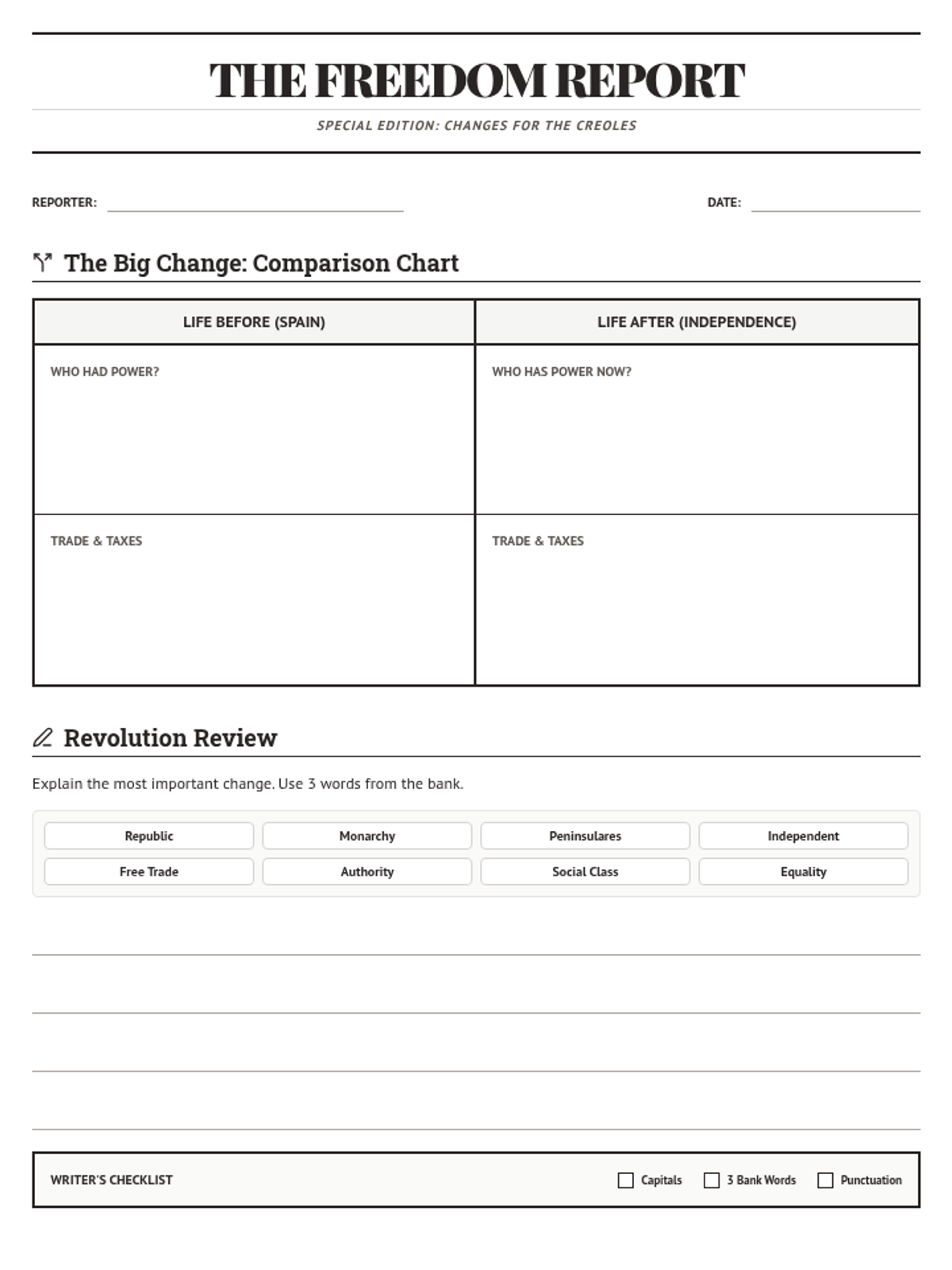
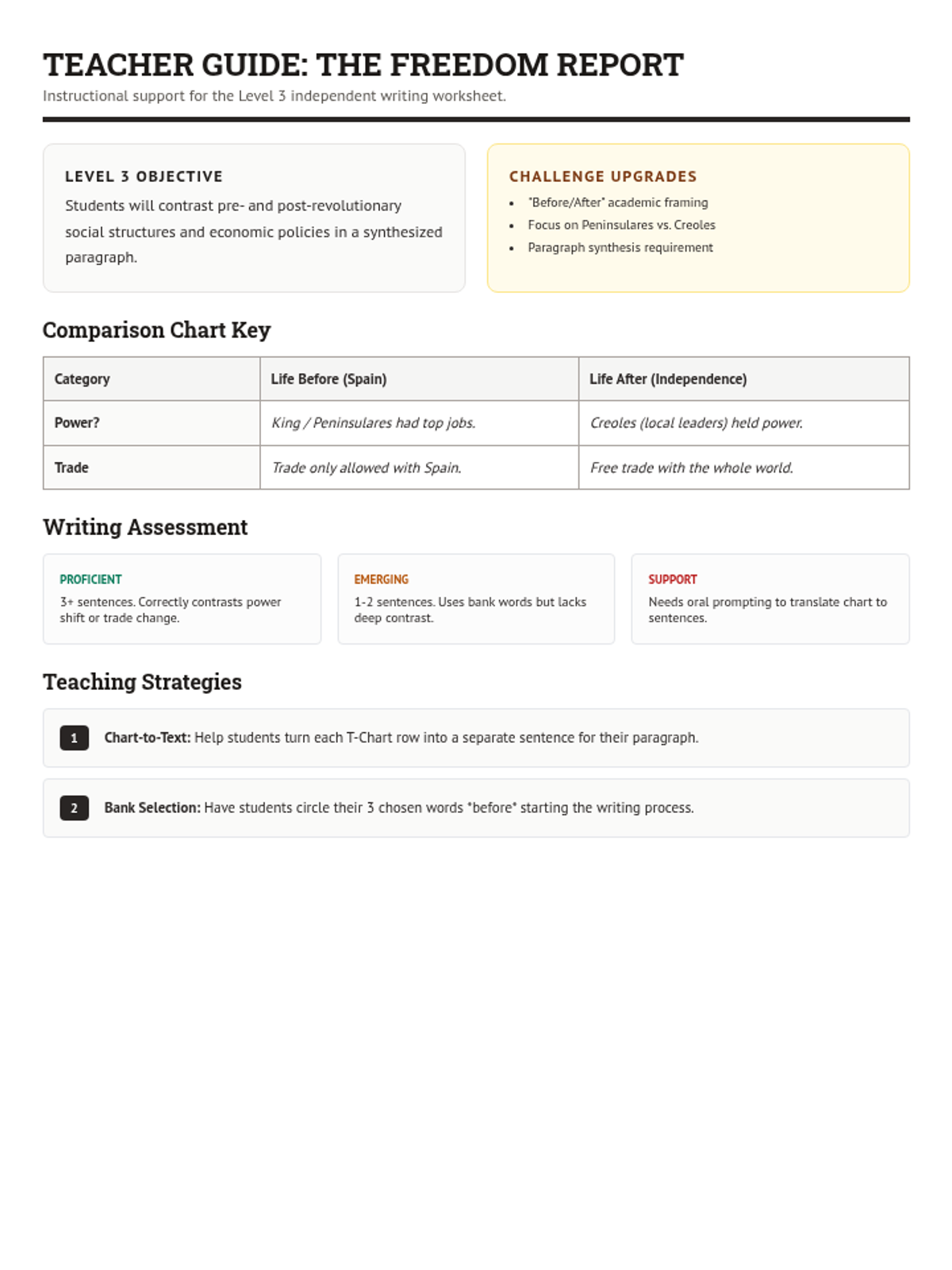
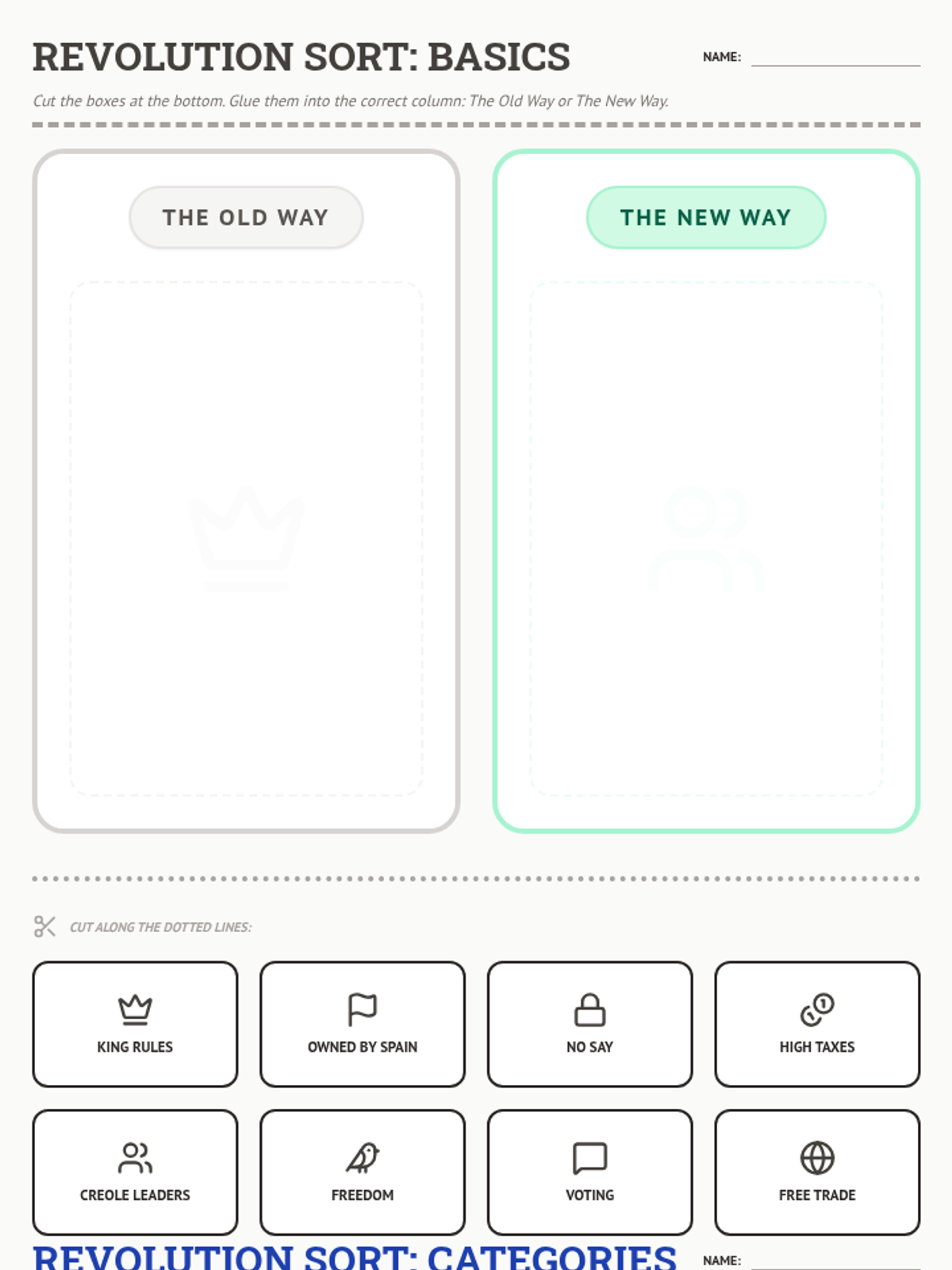
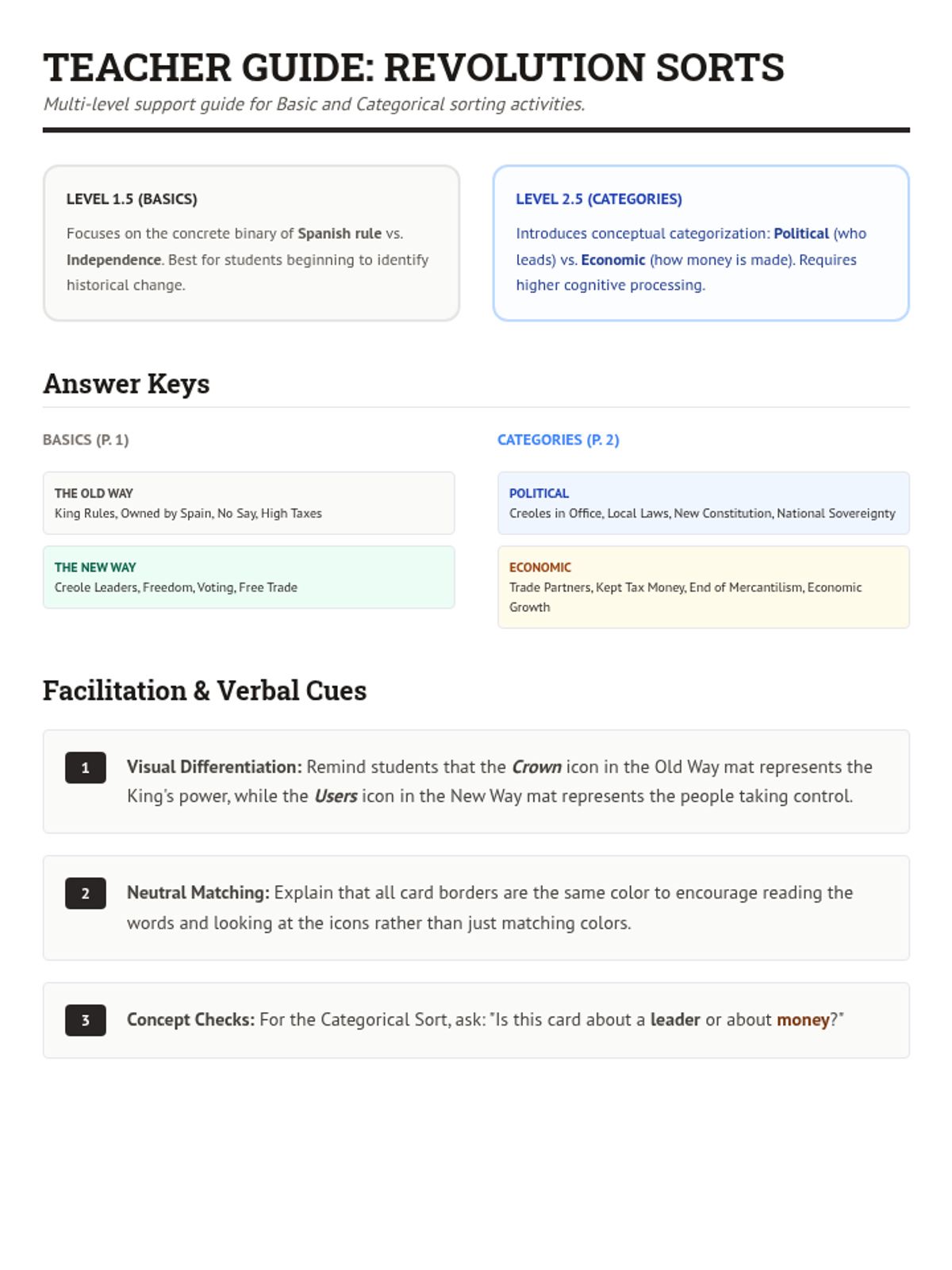
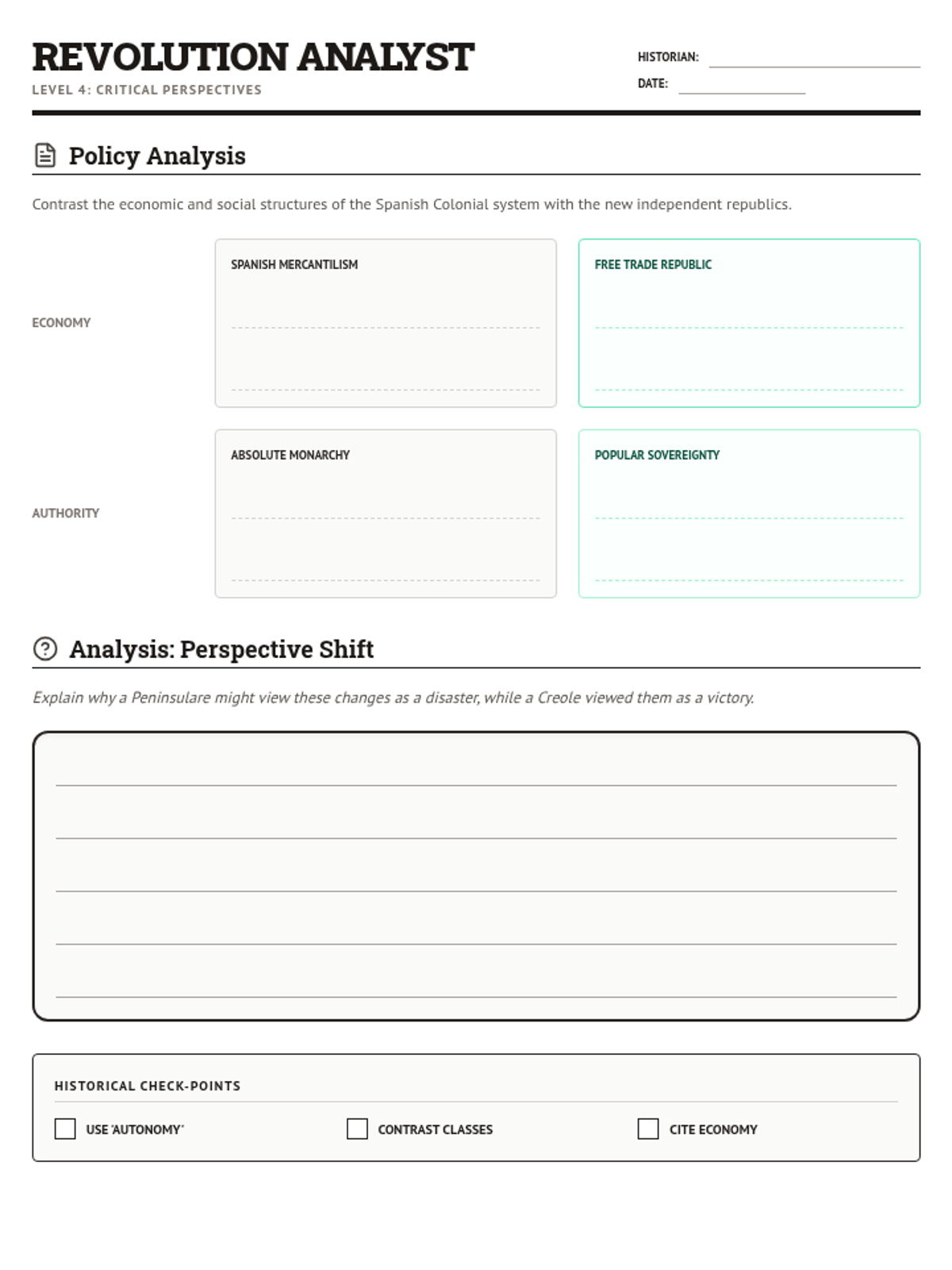
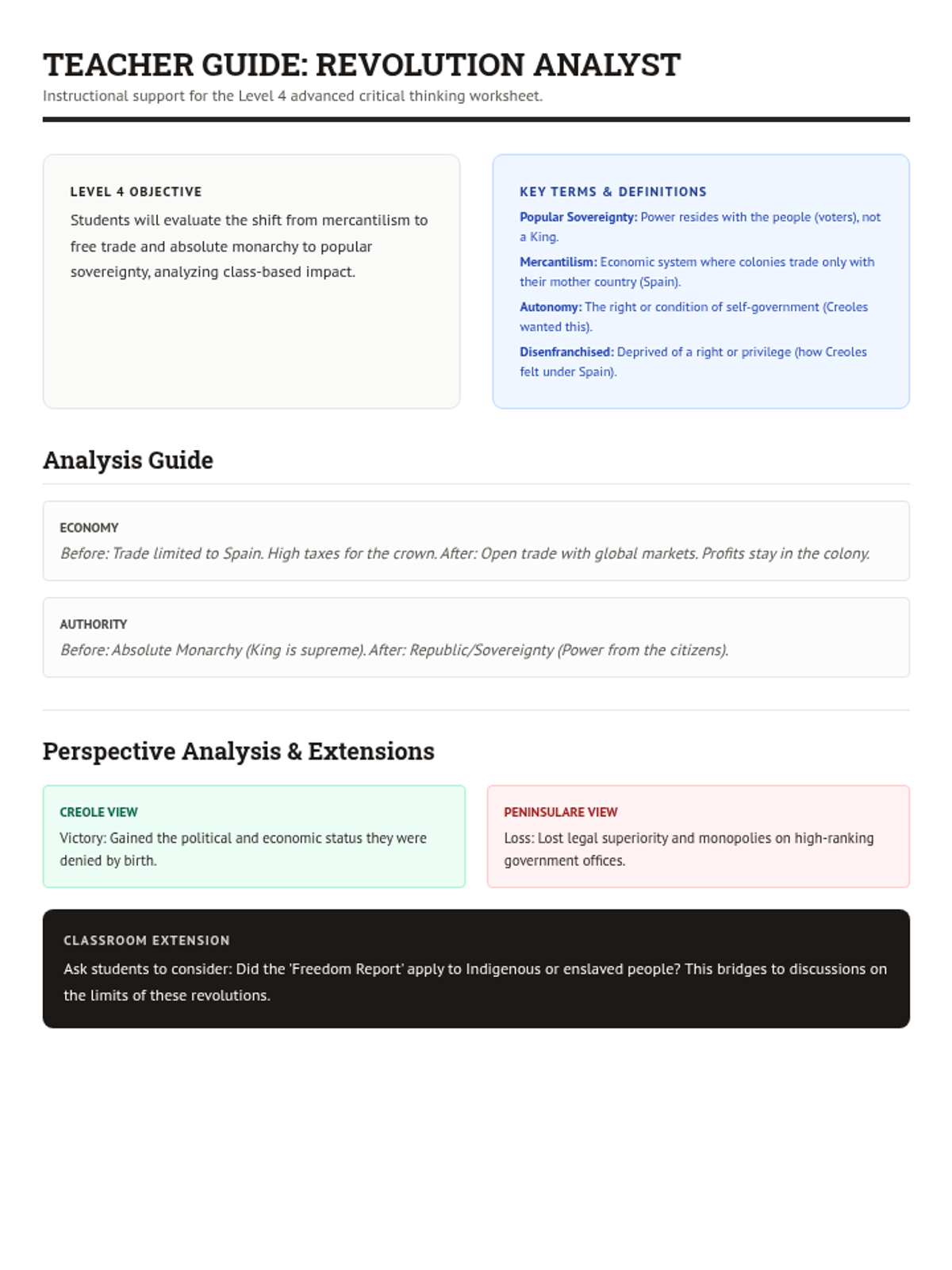
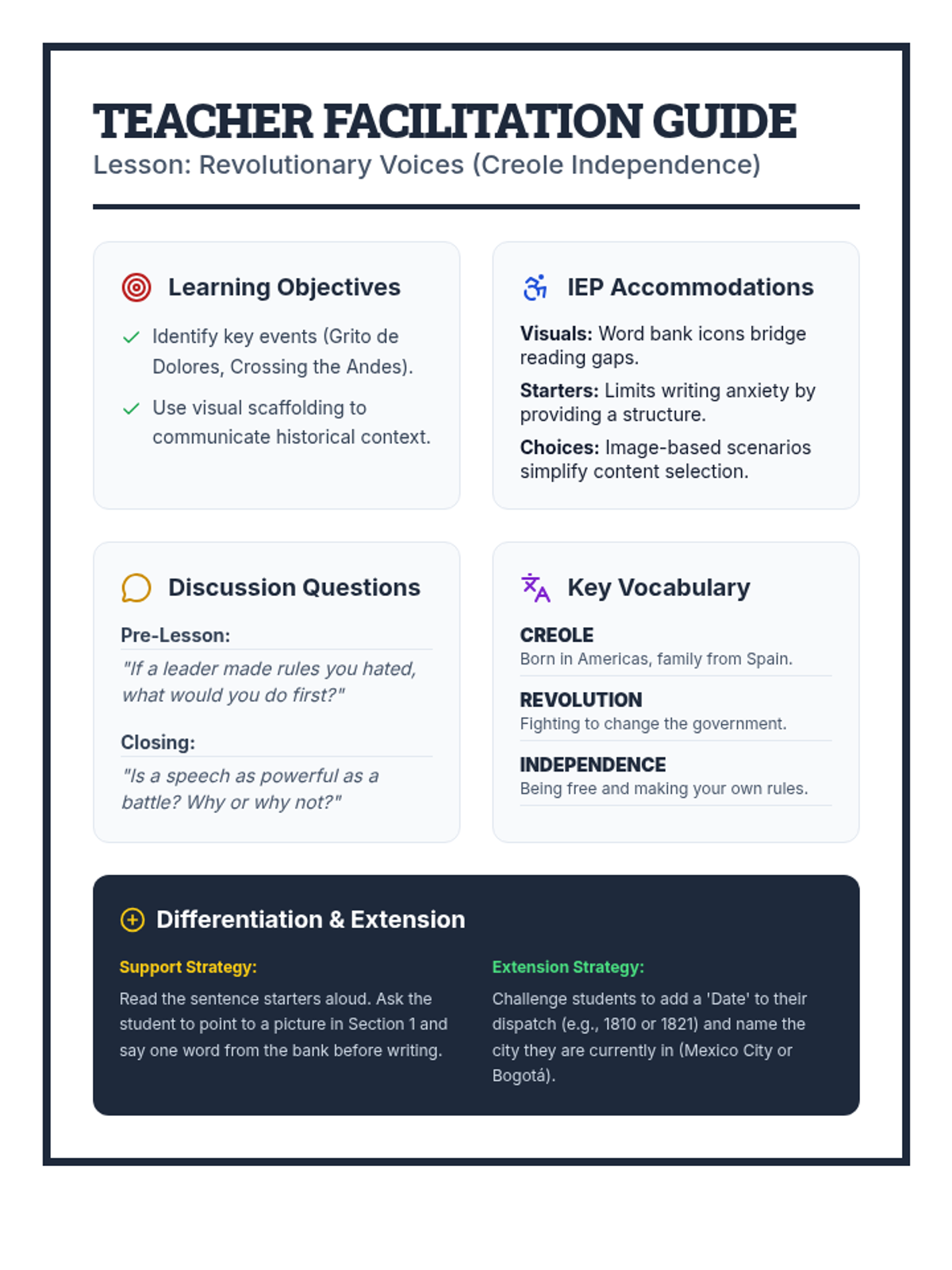
A lesson exploring the social and political changes following the Creole-led revolutions in Latin America, specifically designed for students requiring IEP accommodations.
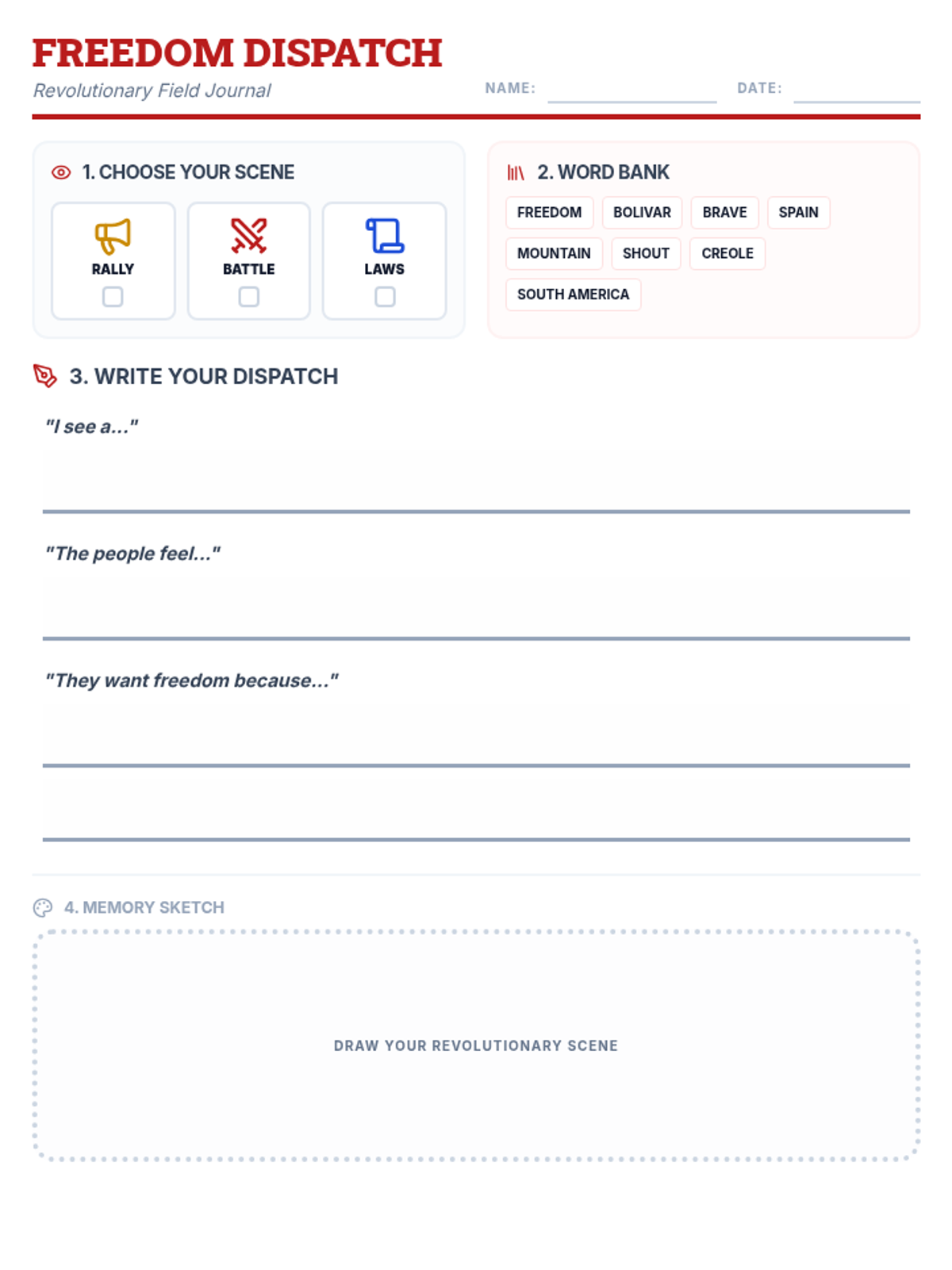
A lesson exploring the key moments of the Latin American Creole Revolutions, designed with heavy scaffolding for IEP students to express their understanding of revolutionary events through visual and written journals.
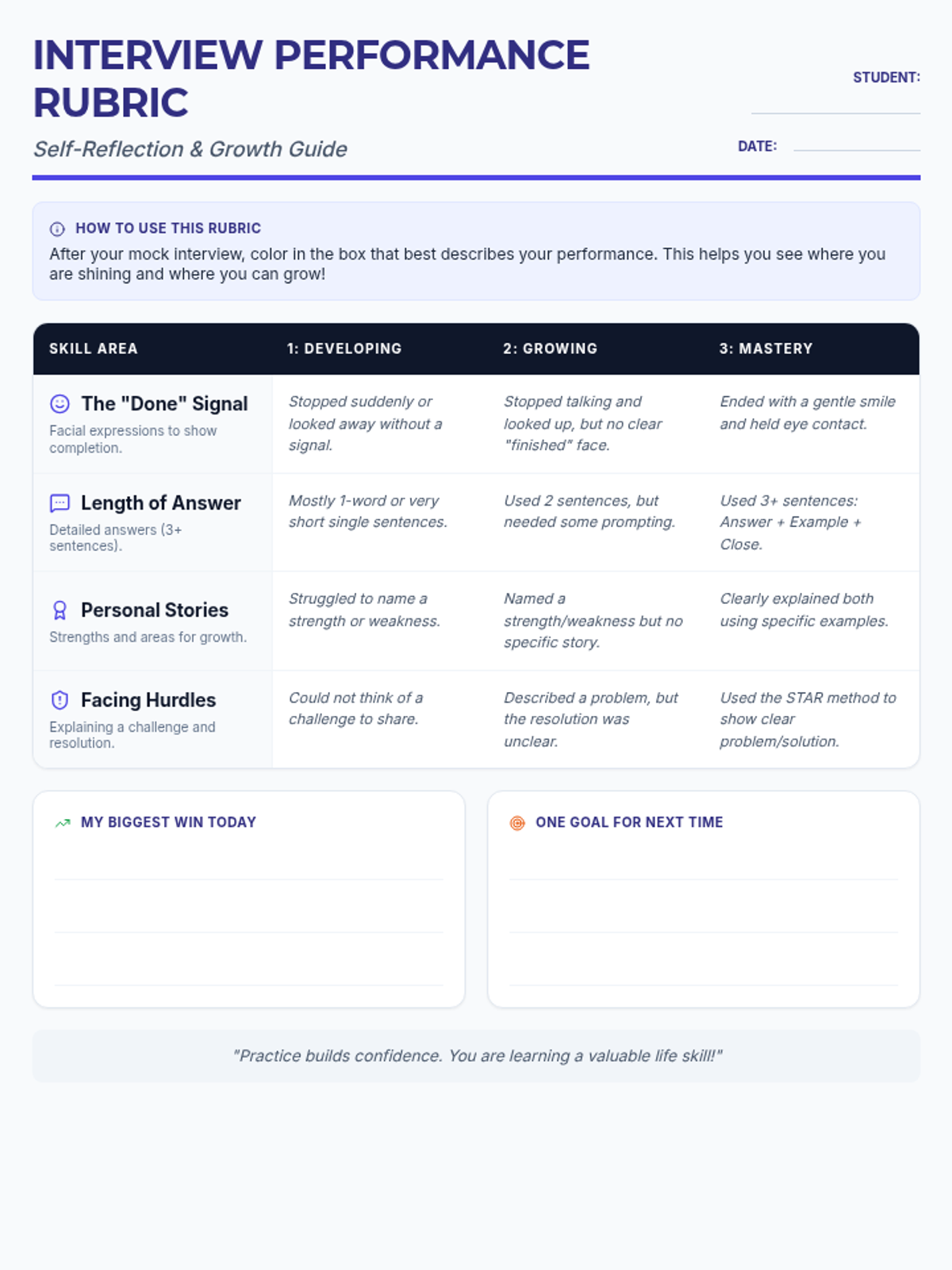
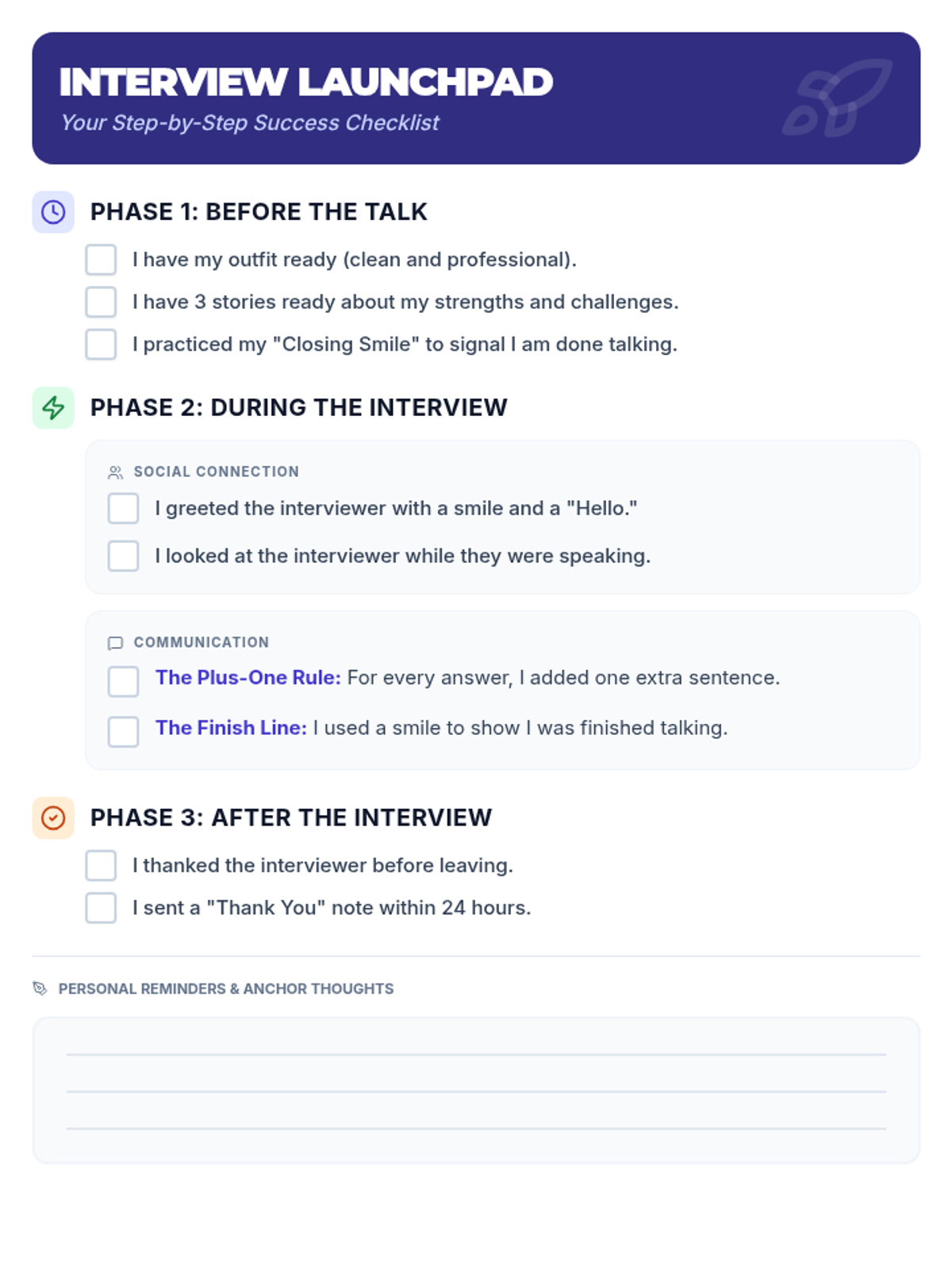
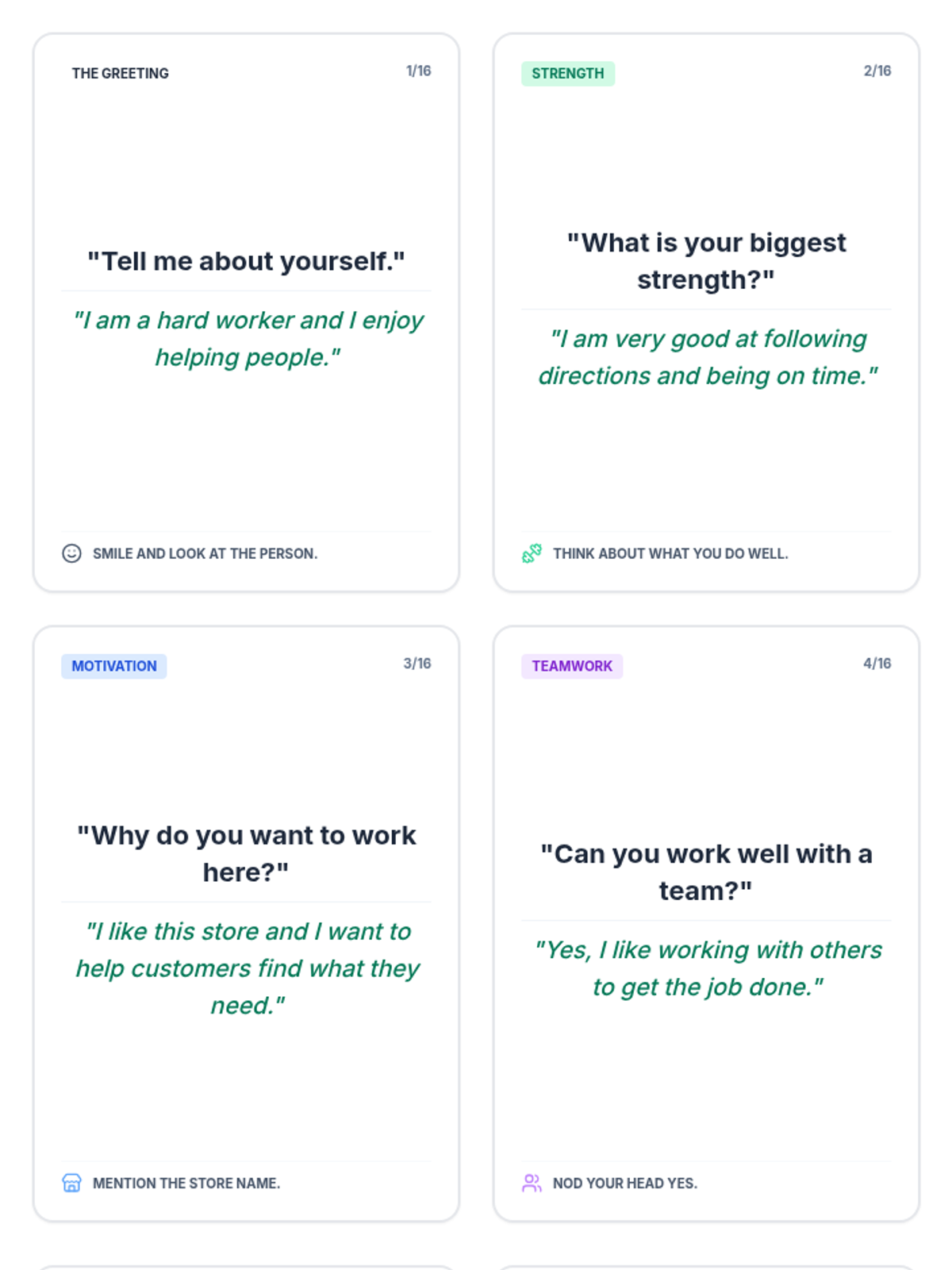
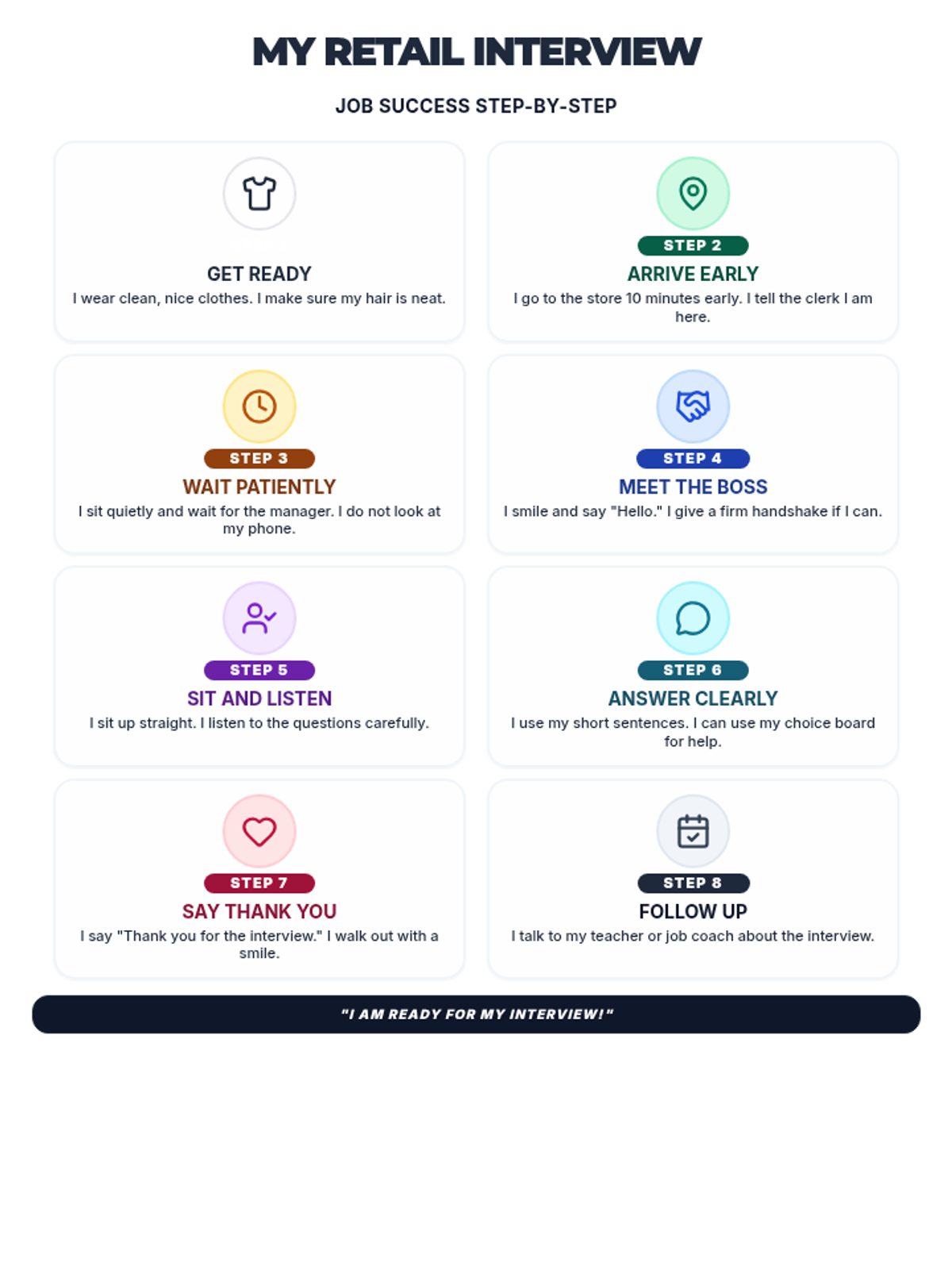
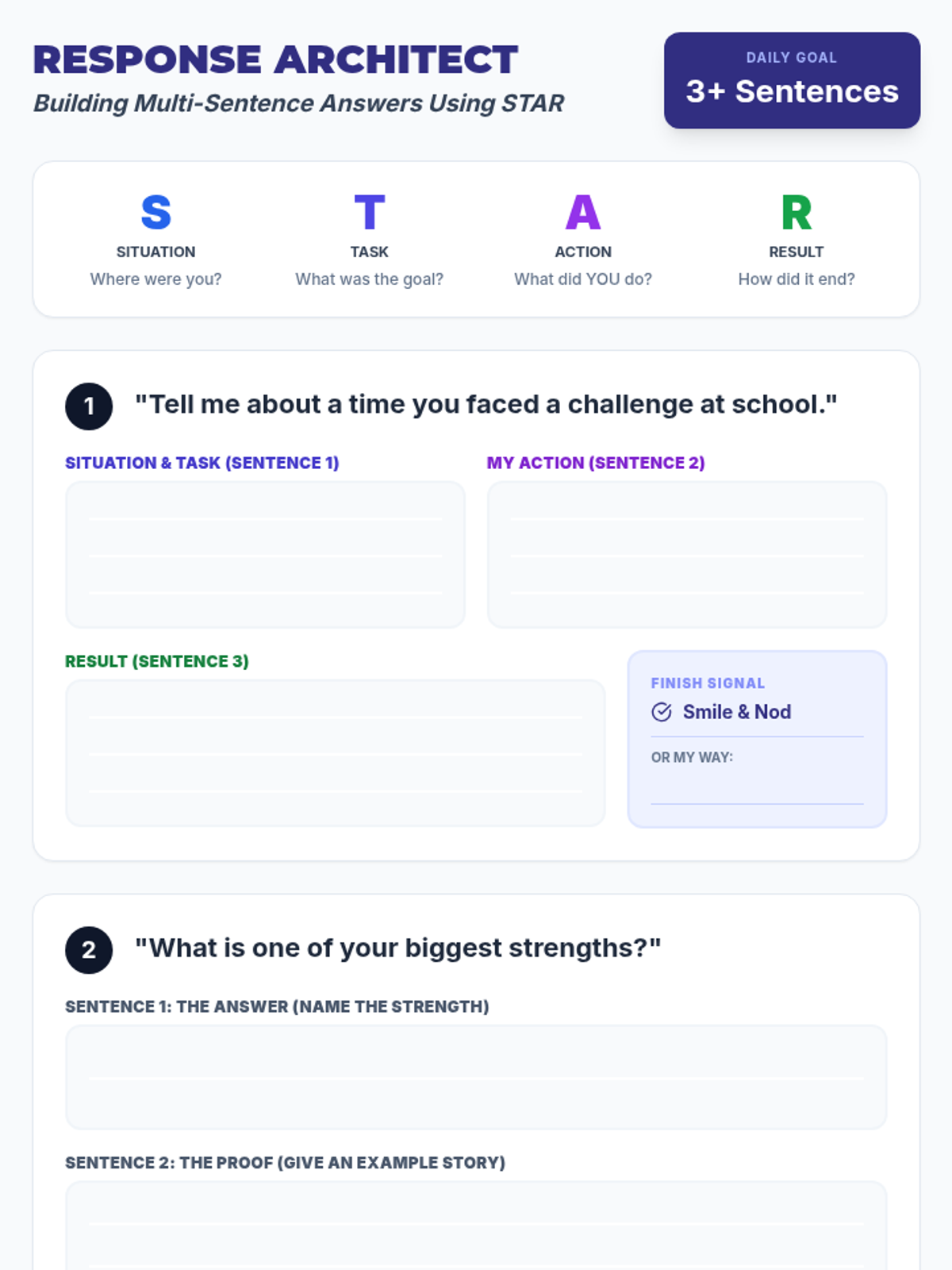
A set of structured tools designed to help high school students with autism master the nuances of job interviews, focusing on social cues and expanding answer length.
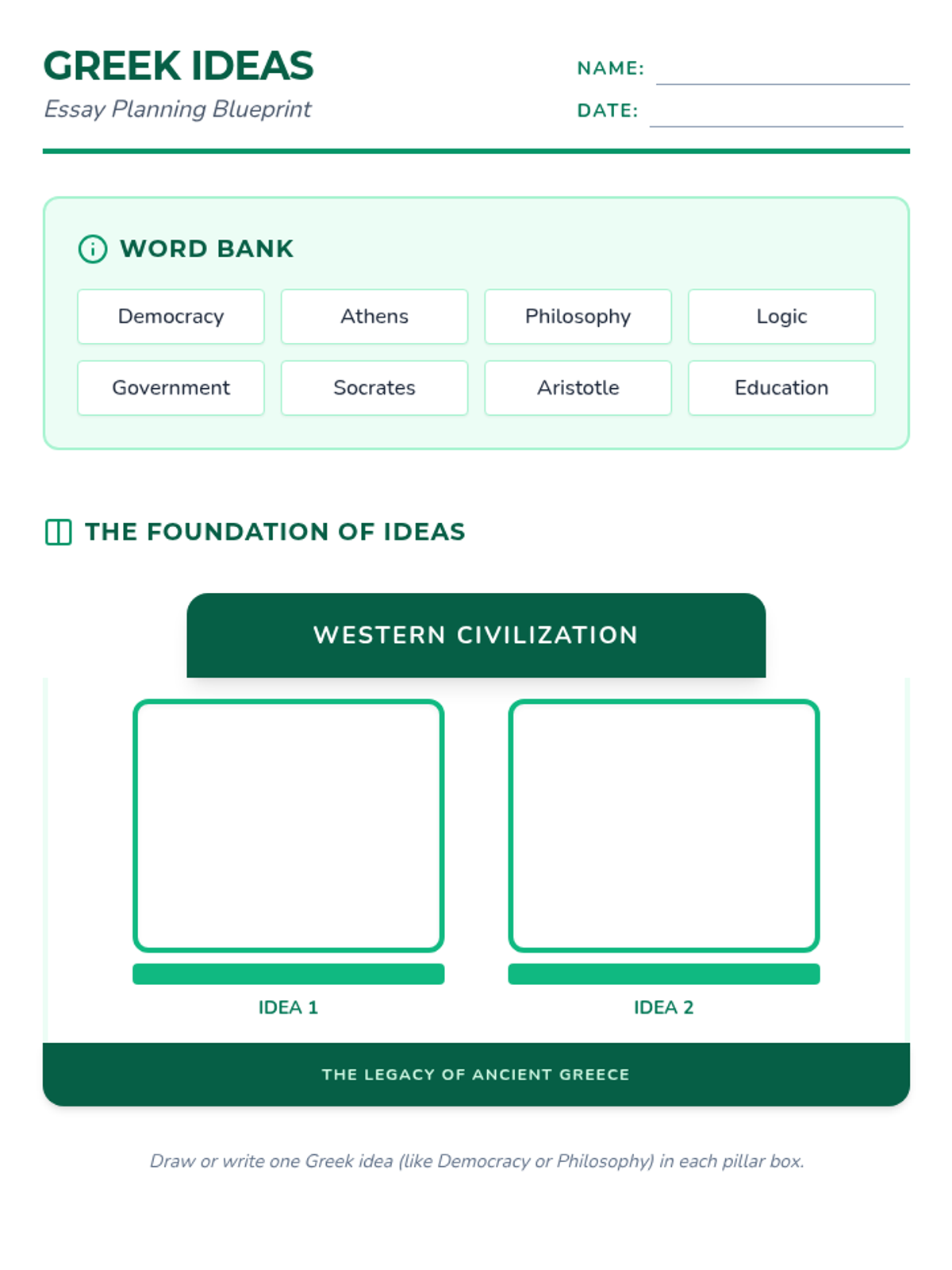
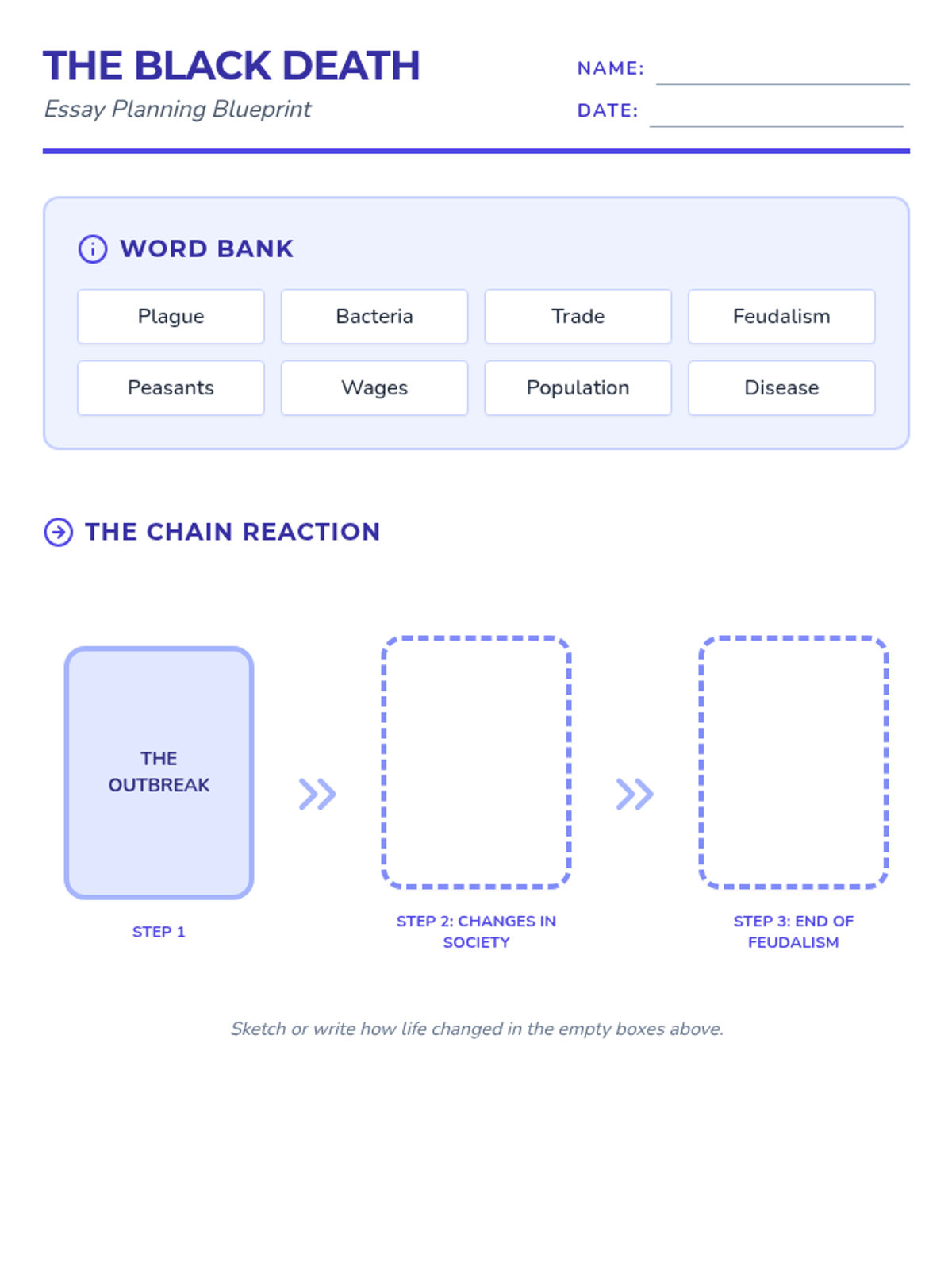
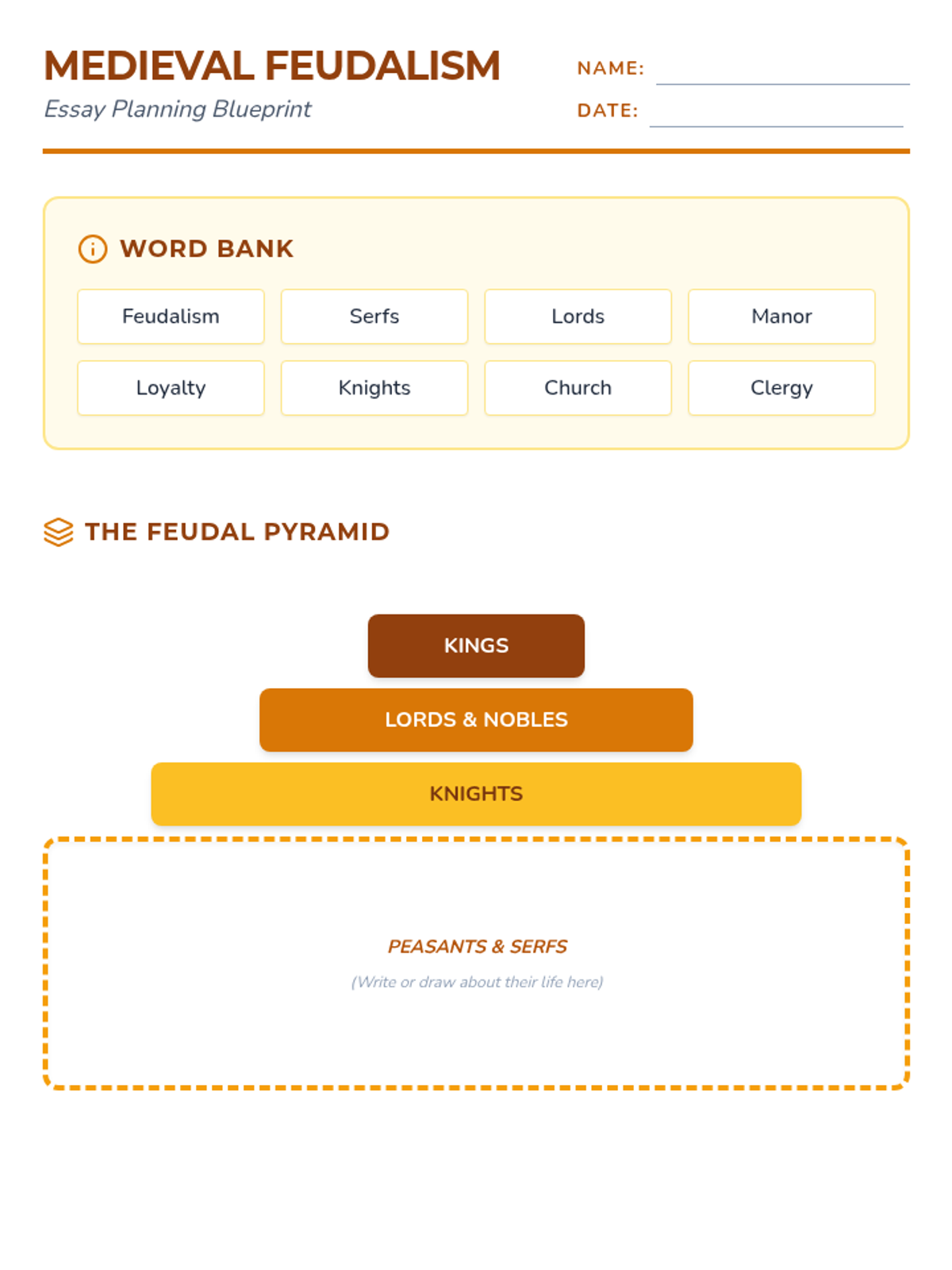
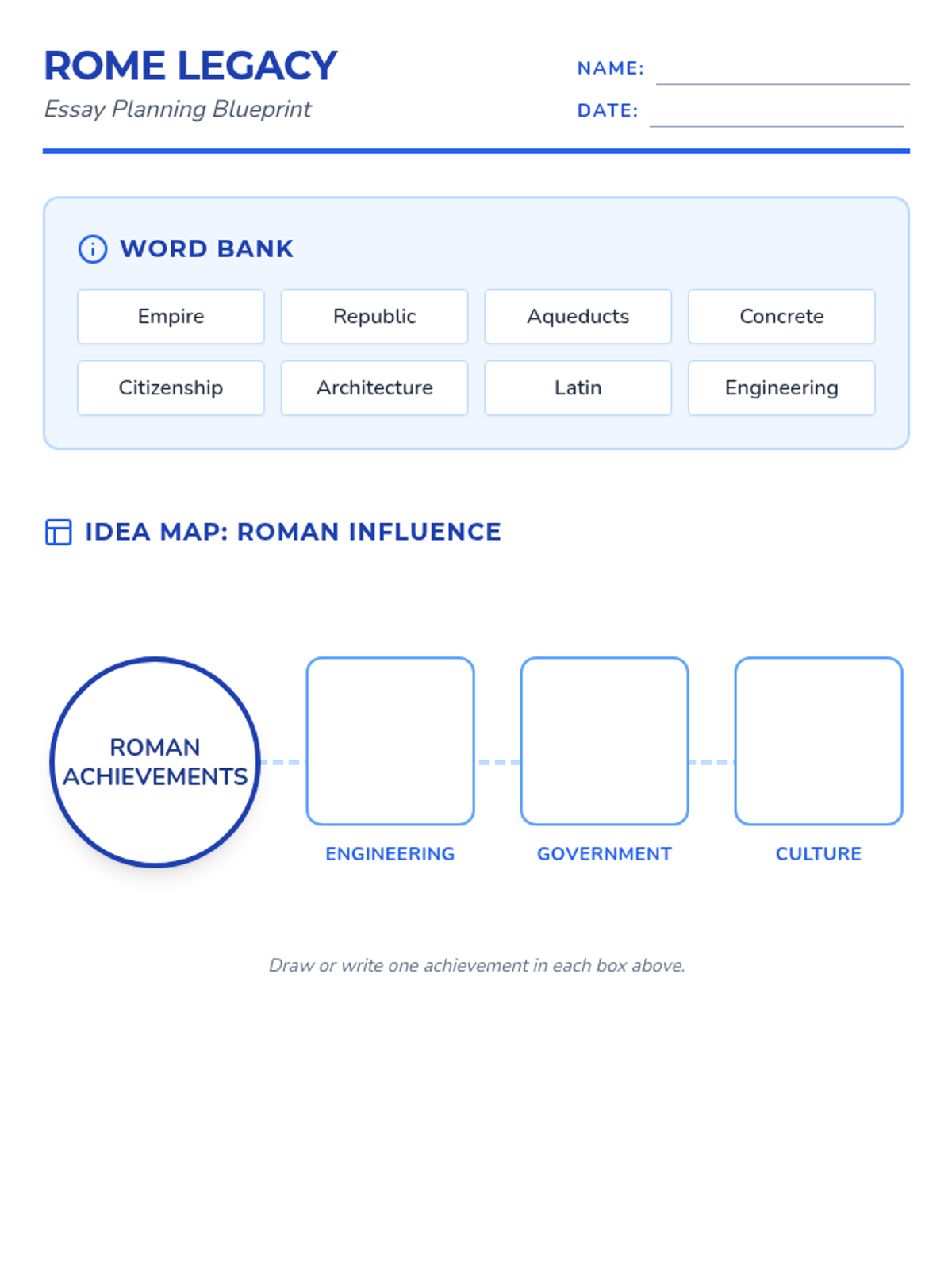
A collection of modified essay planning guides for key topics in European history, specifically designed for students with IEPs. Each guide features a simplified 3-paragraph structure, sentence starters, and visual organizers.
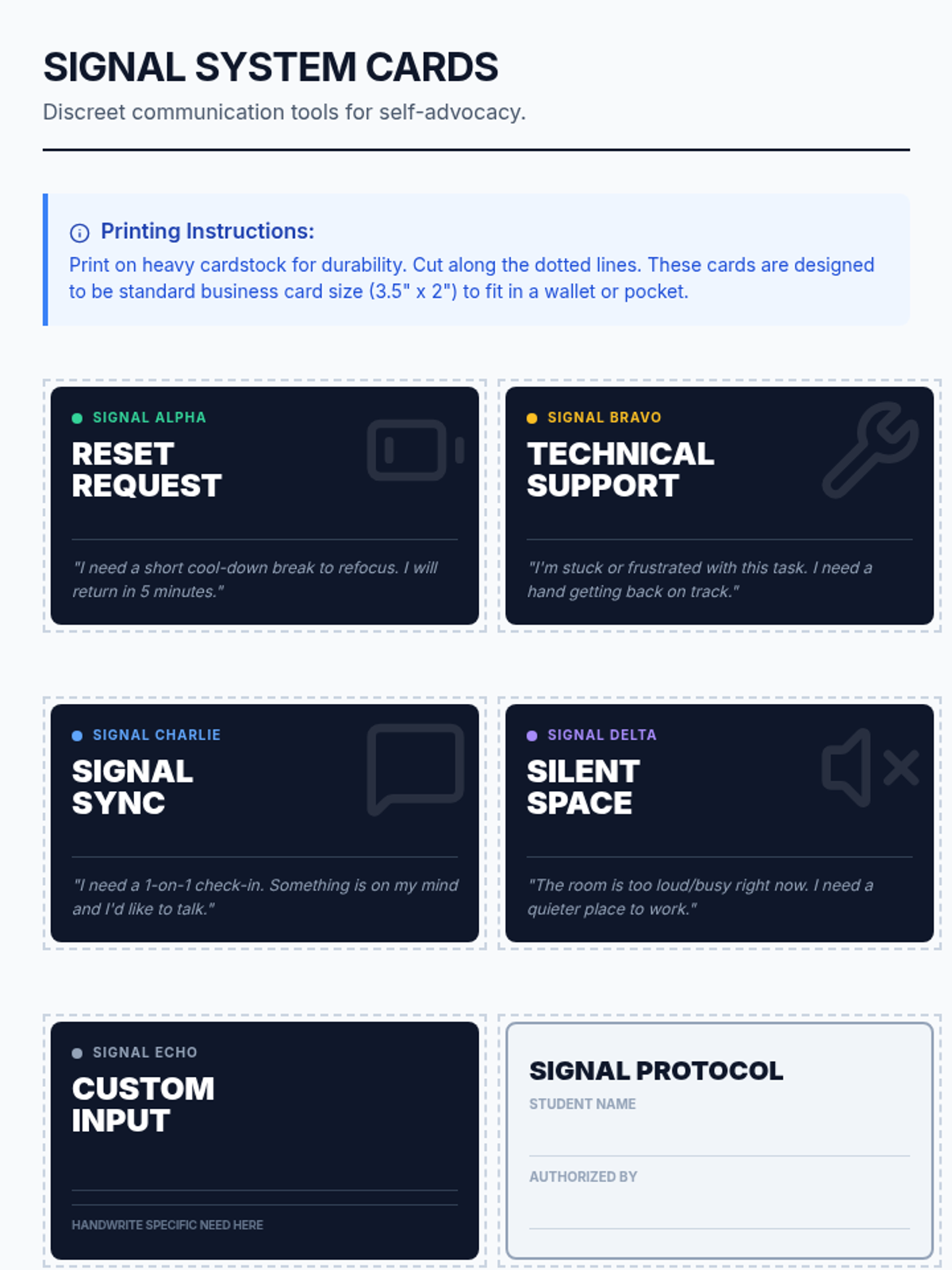
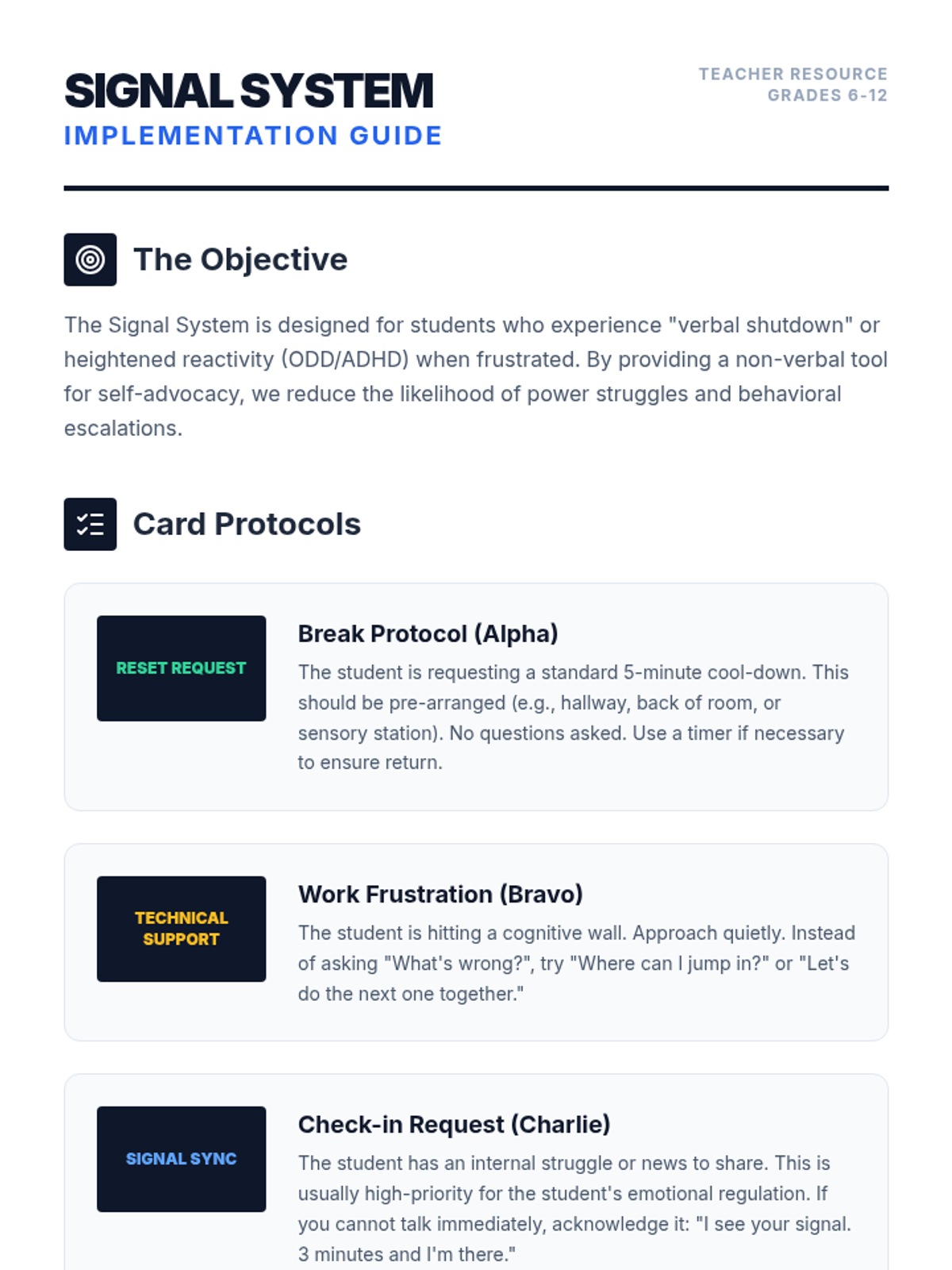
A set of discreet communication cards designed for an 8th-grade student to advocate for their needs during moments of frustration or sensory overwhelm.
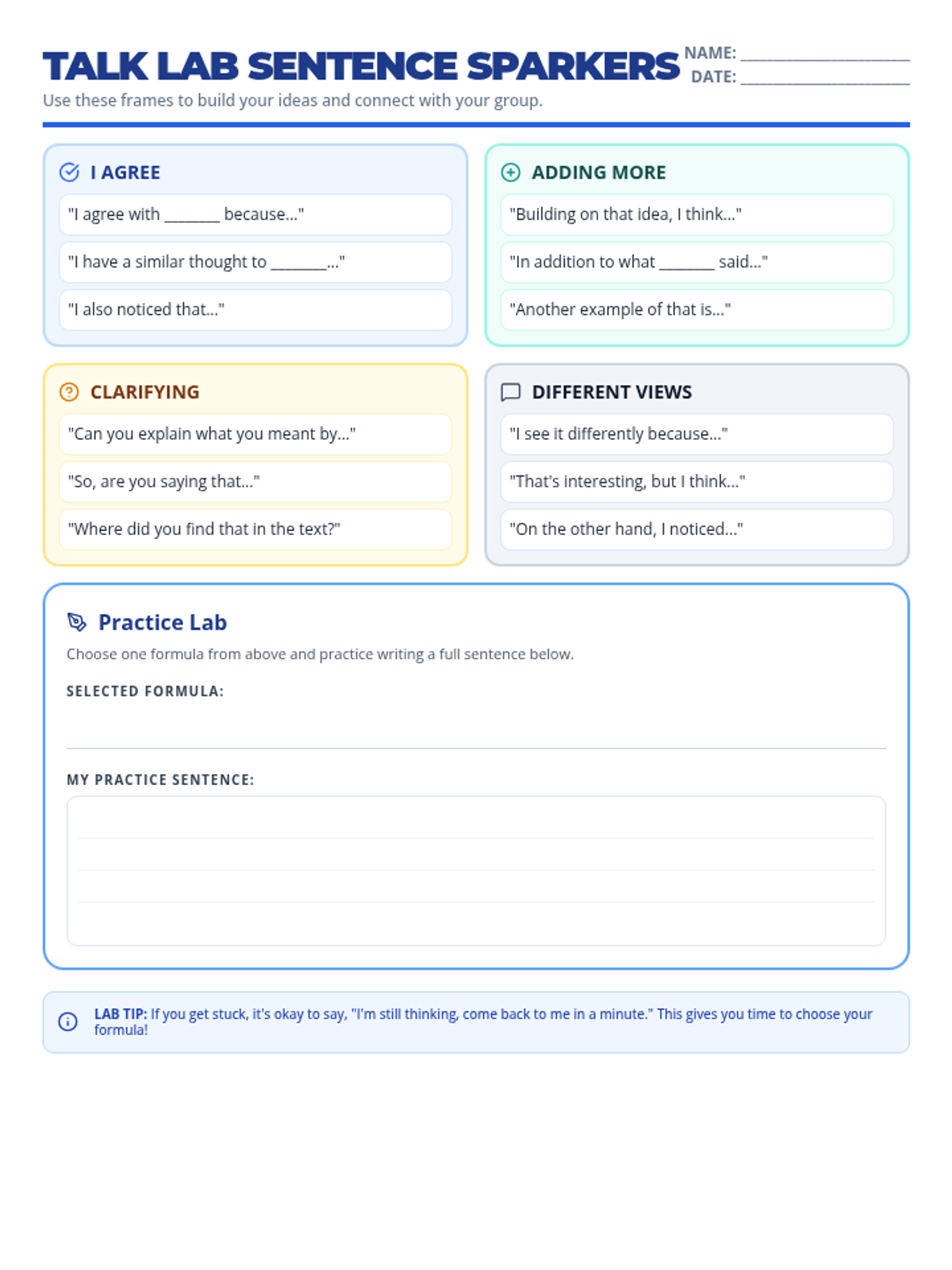
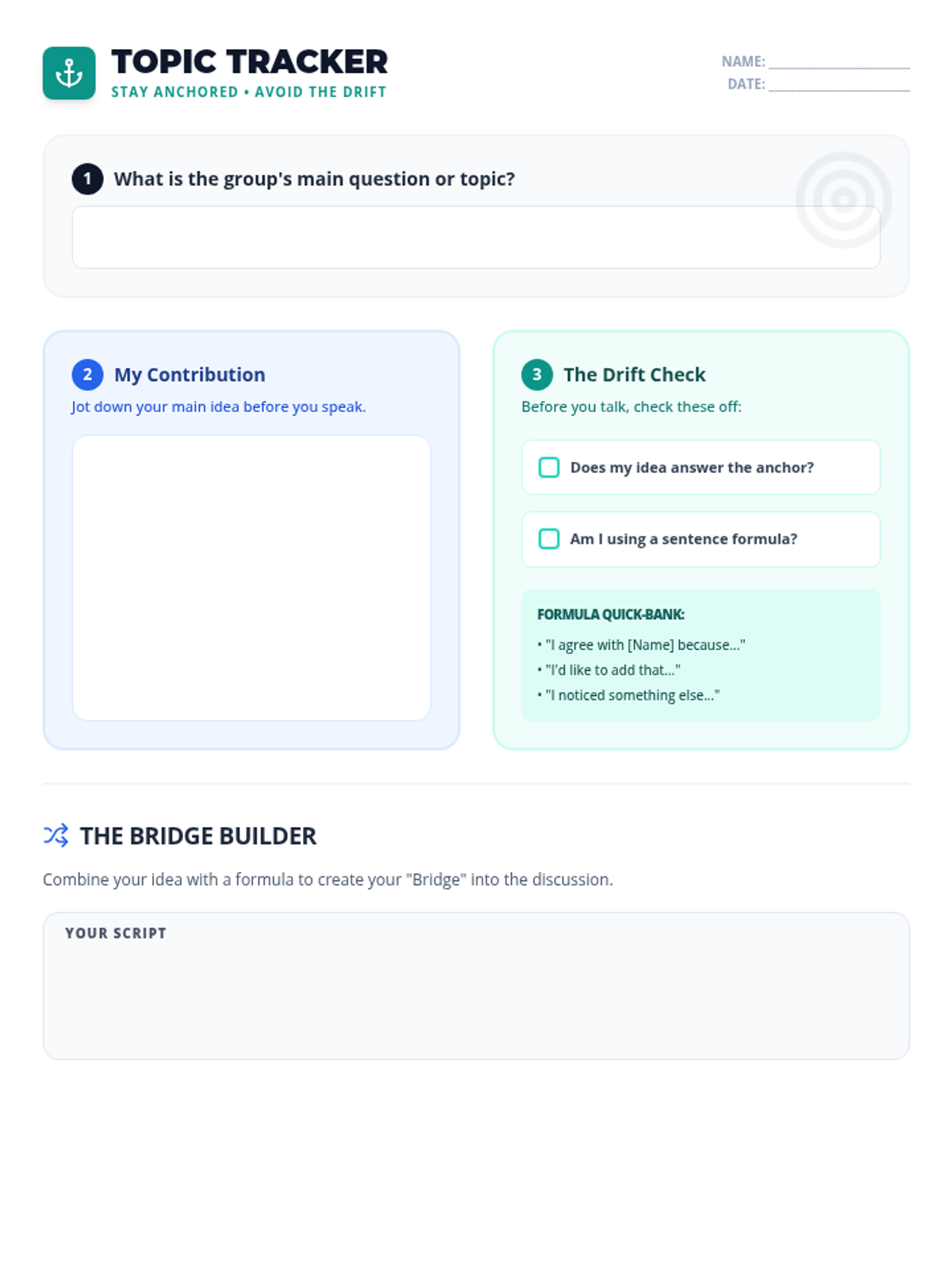
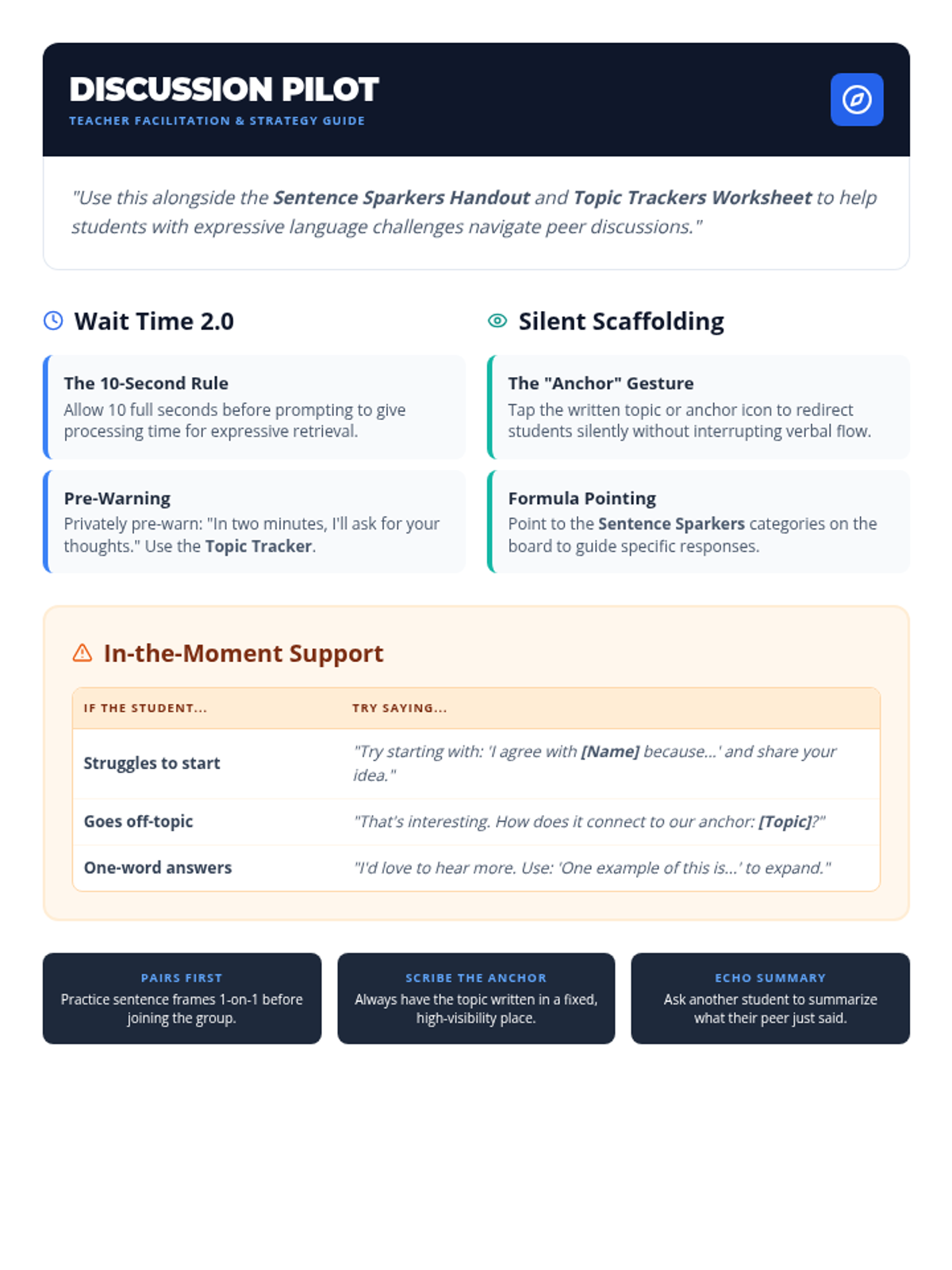
A toolkit designed to help students with expressive language challenges engage meaningfully in group discussions while remaining focused on the core topic.
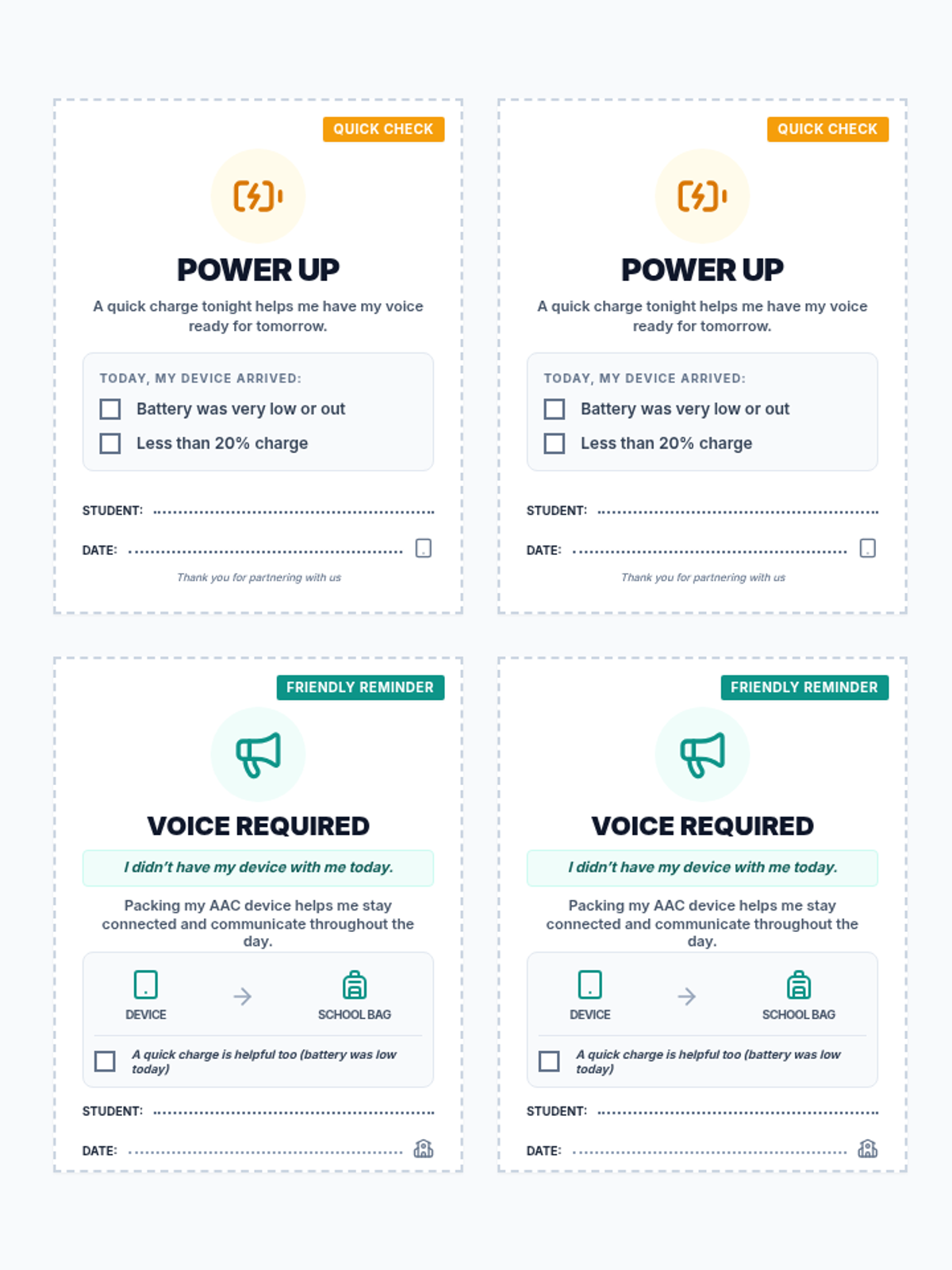
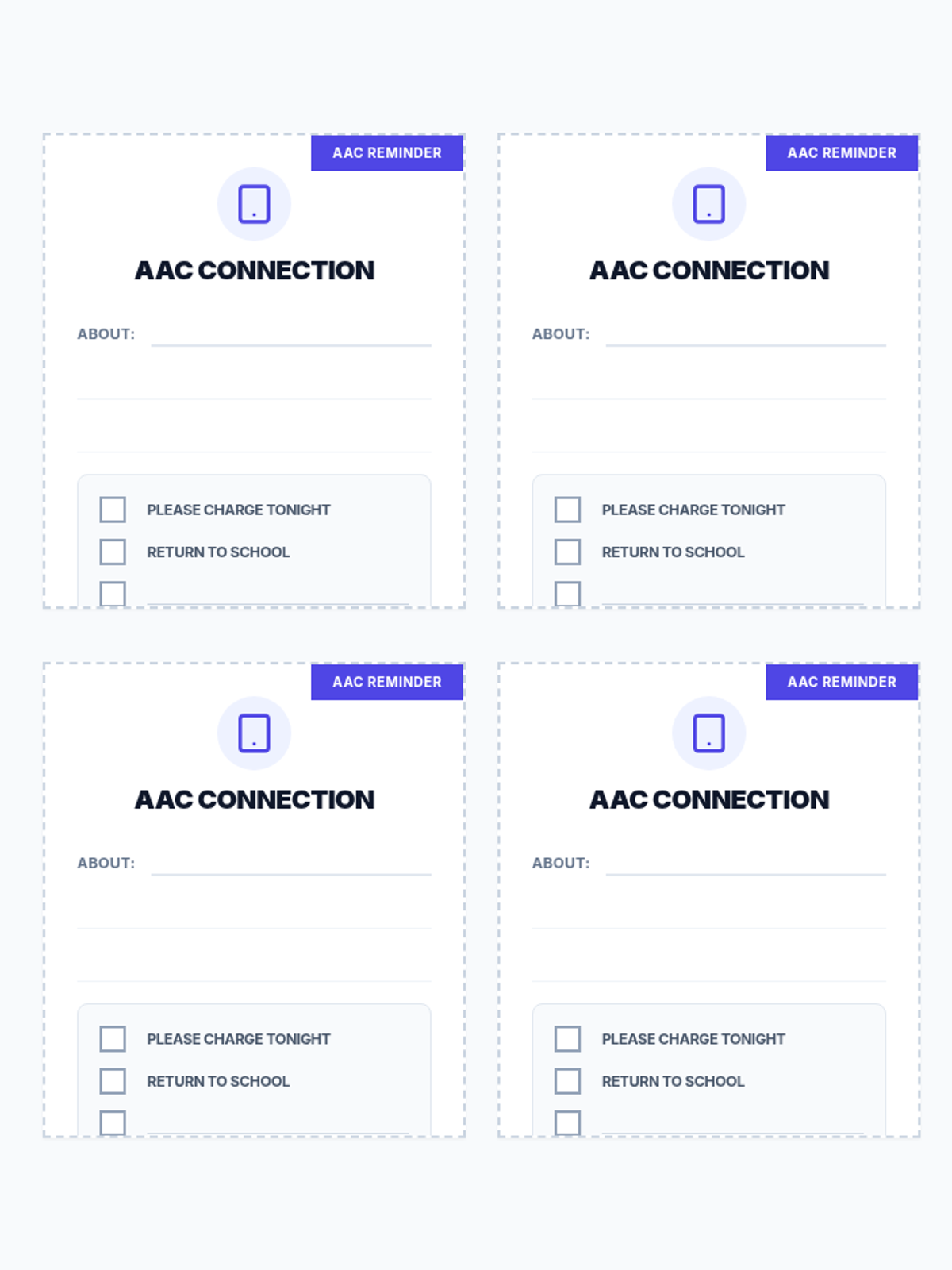
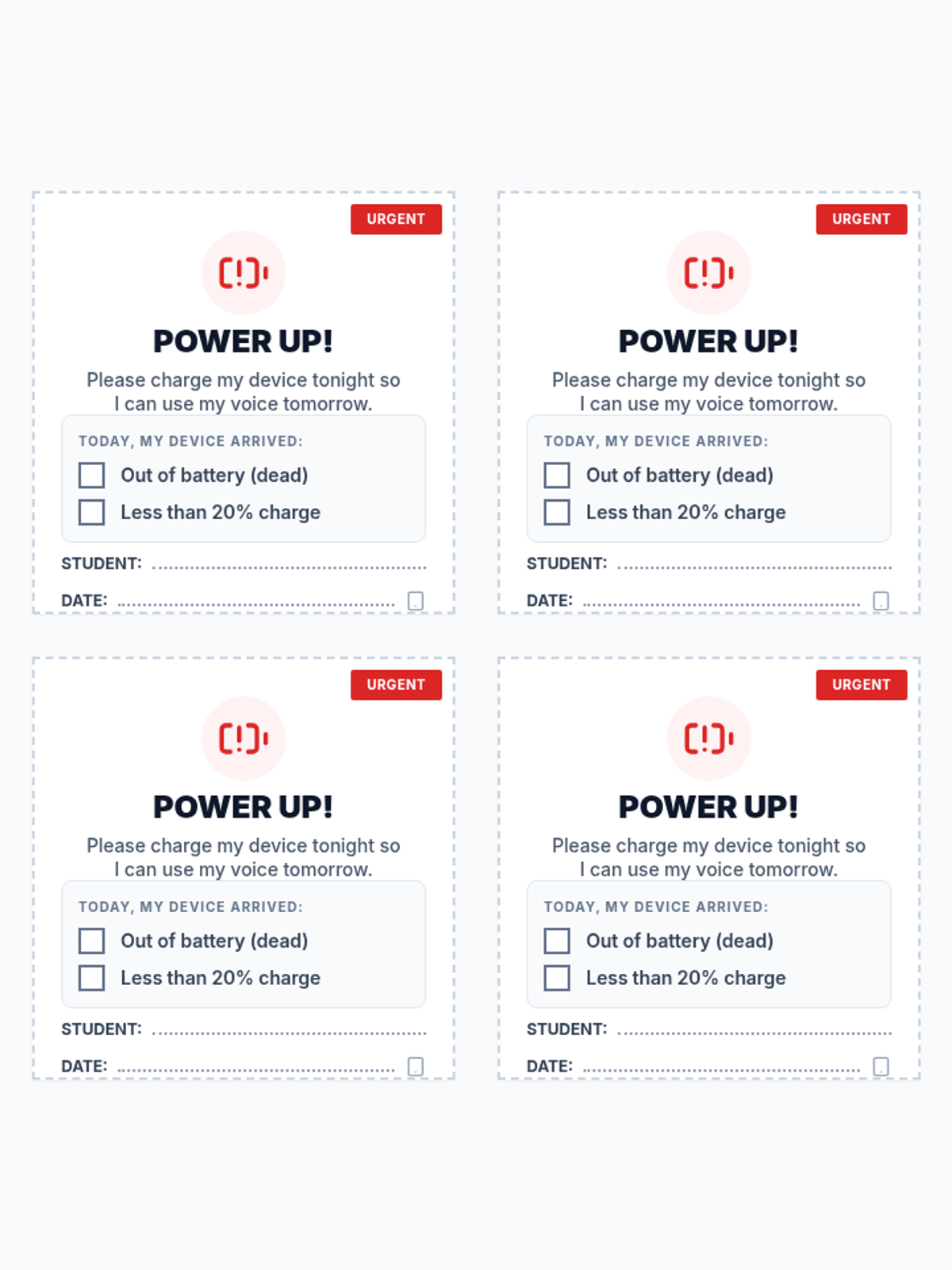
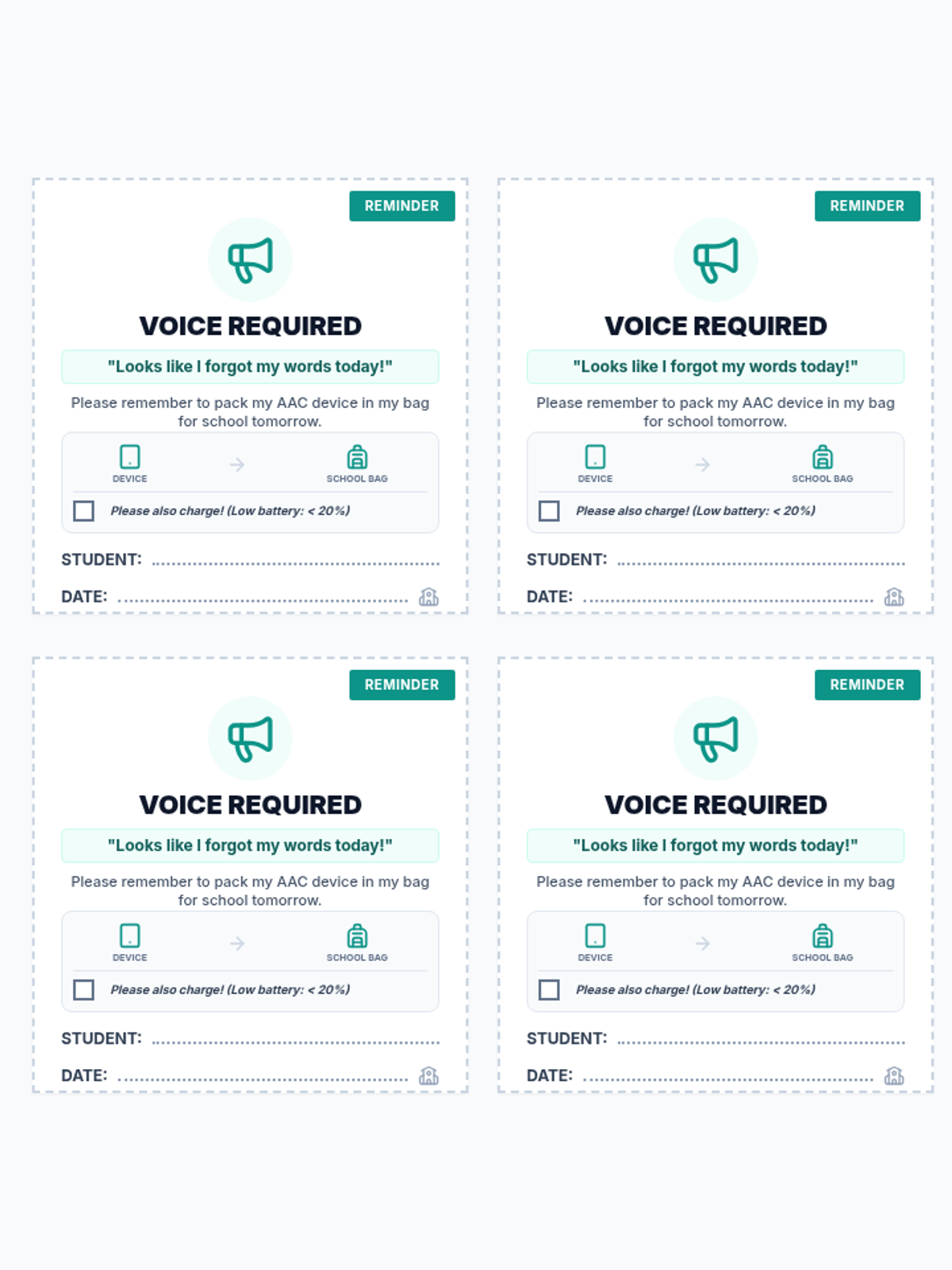
A collection of simple, visual reminder slips to help bridge the gap between home and school for students using AAC devices.
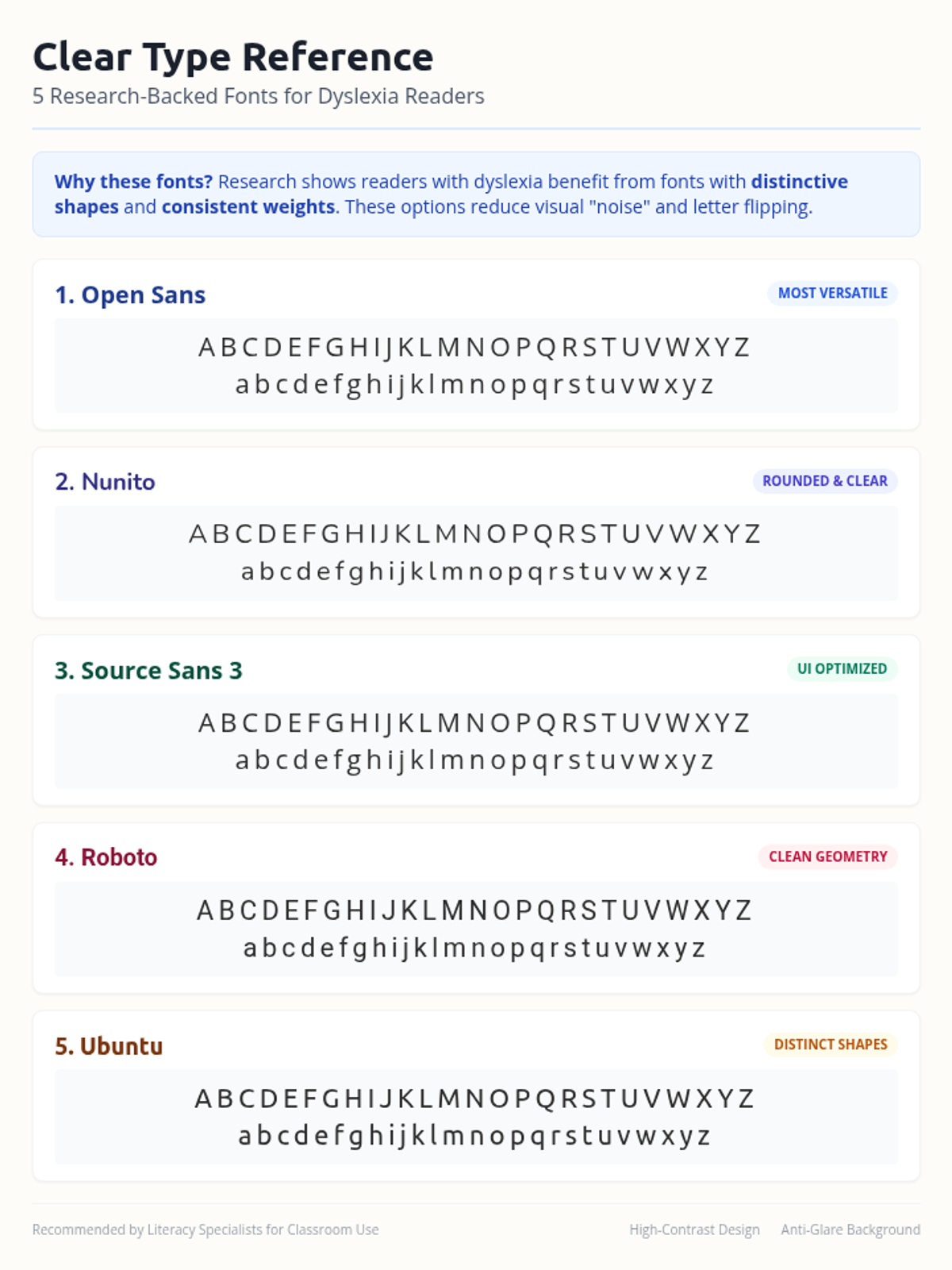
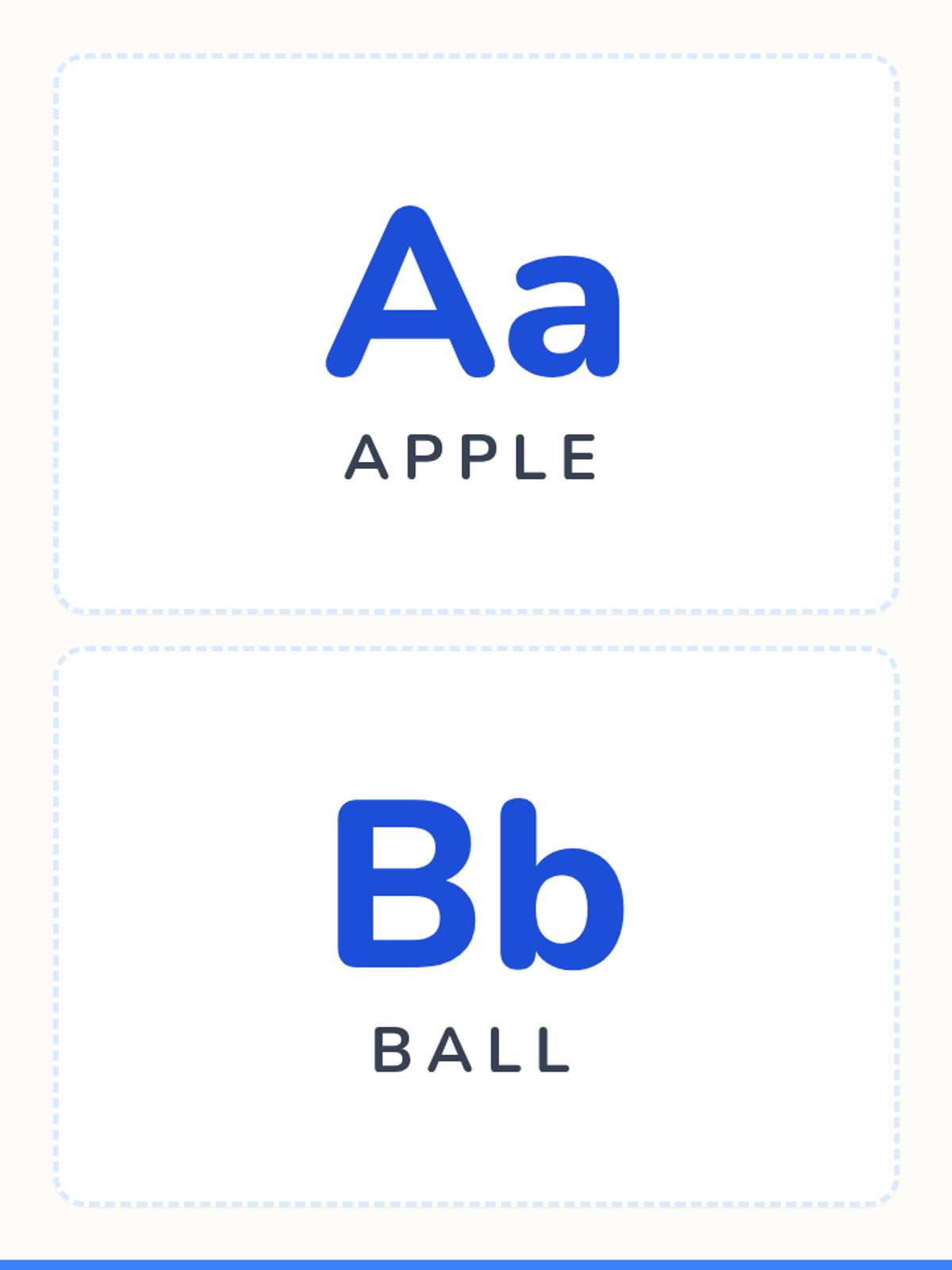
A collection of research-backed typographical resources designed to support readers with dyslexia, including reference guides and classroom visual aids.
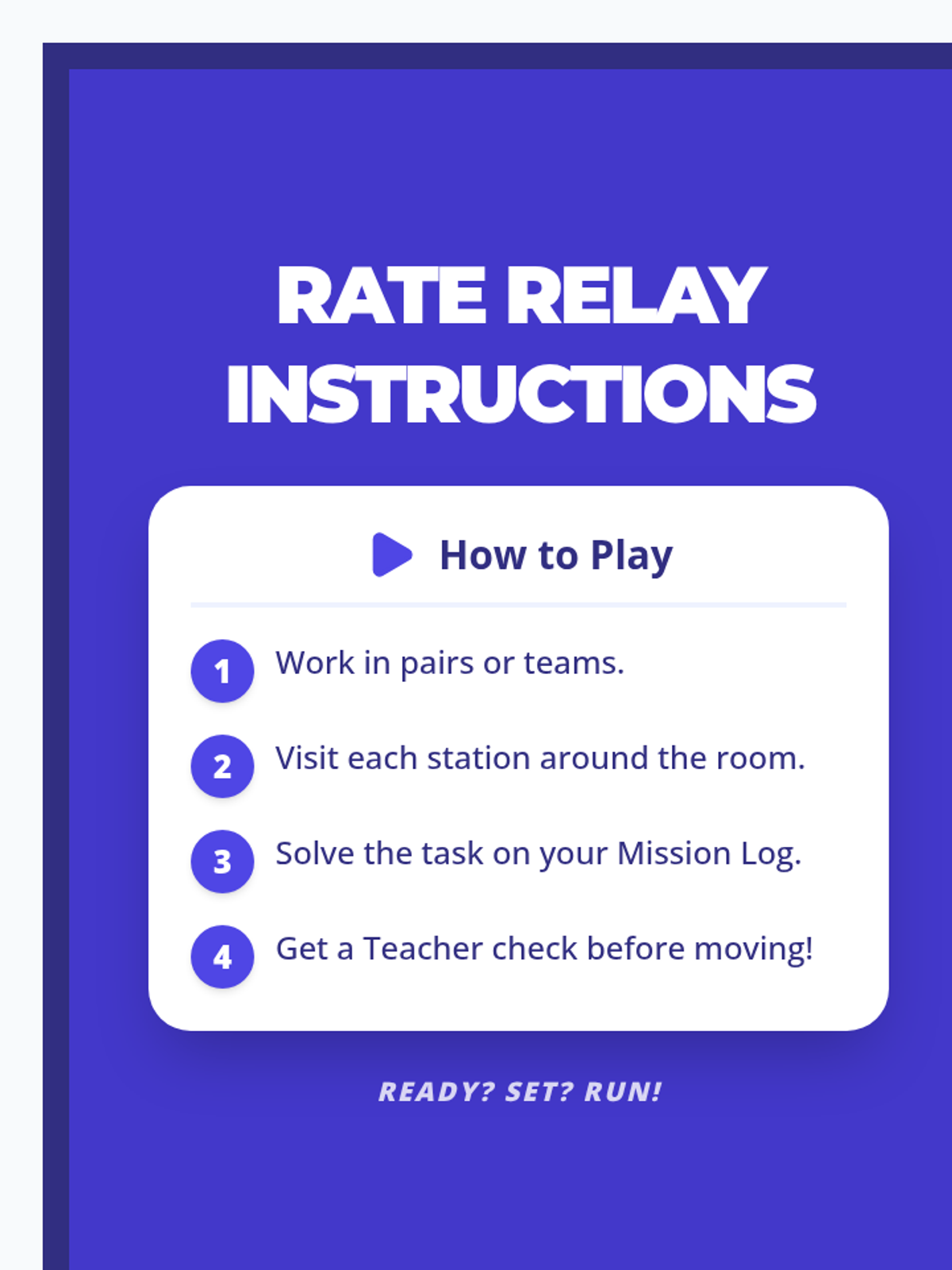
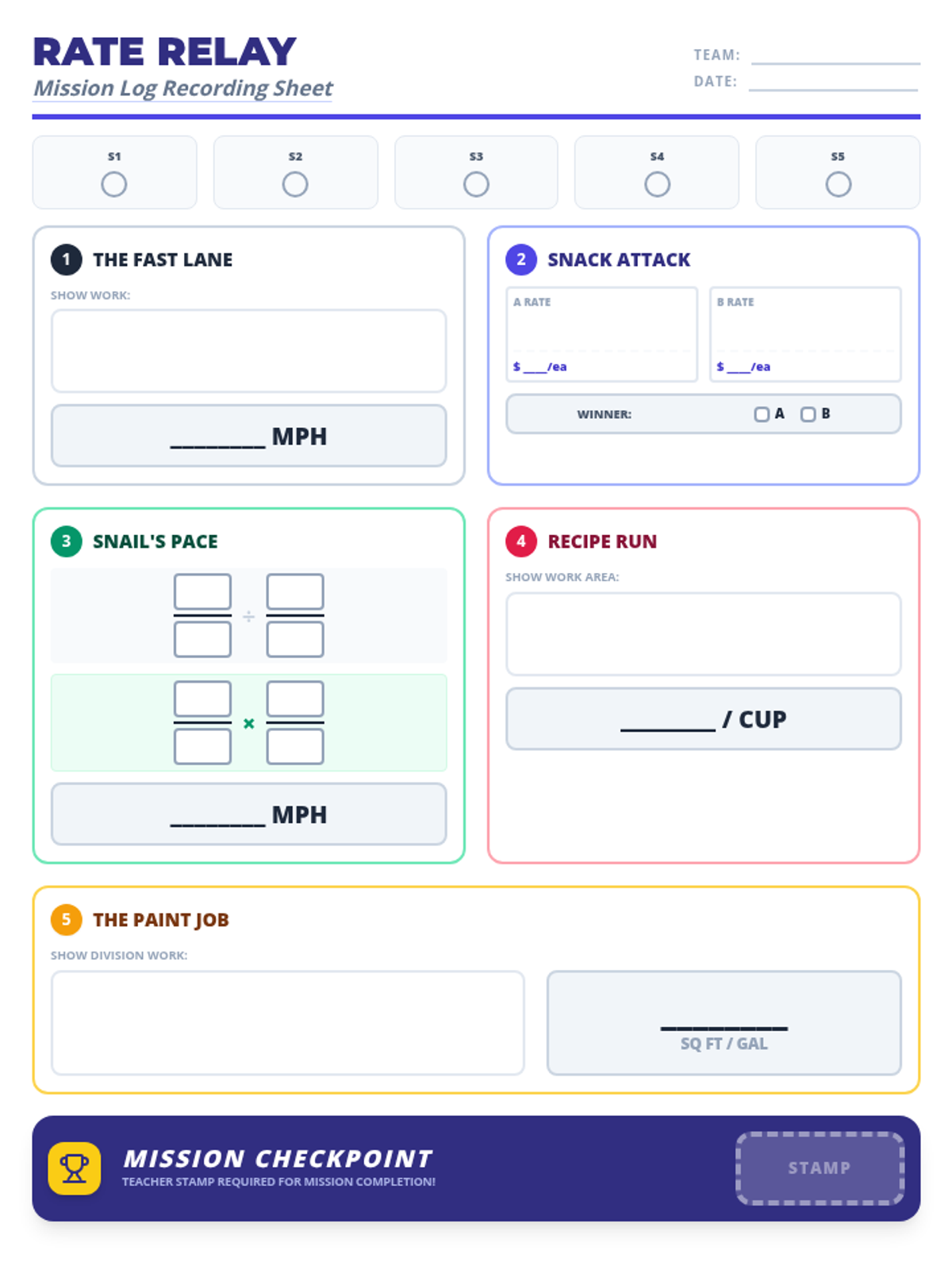
A high-energy collaborative review day. Students participate in a 'Relay Race' of unit rate tasks, moving through stations that cover whole numbers, fractions, consumer math, and measurement to reinforce skills before the final assessment.
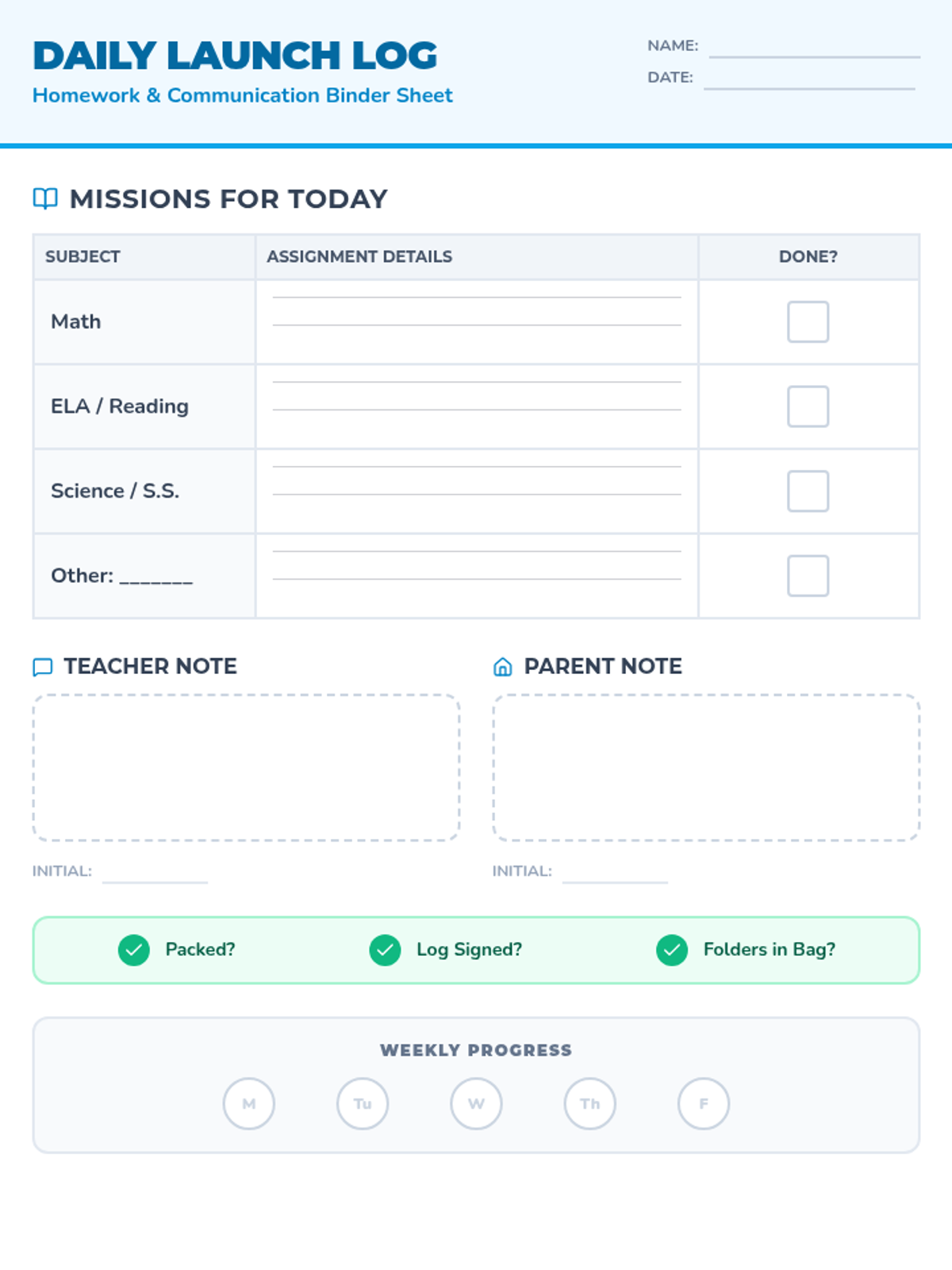
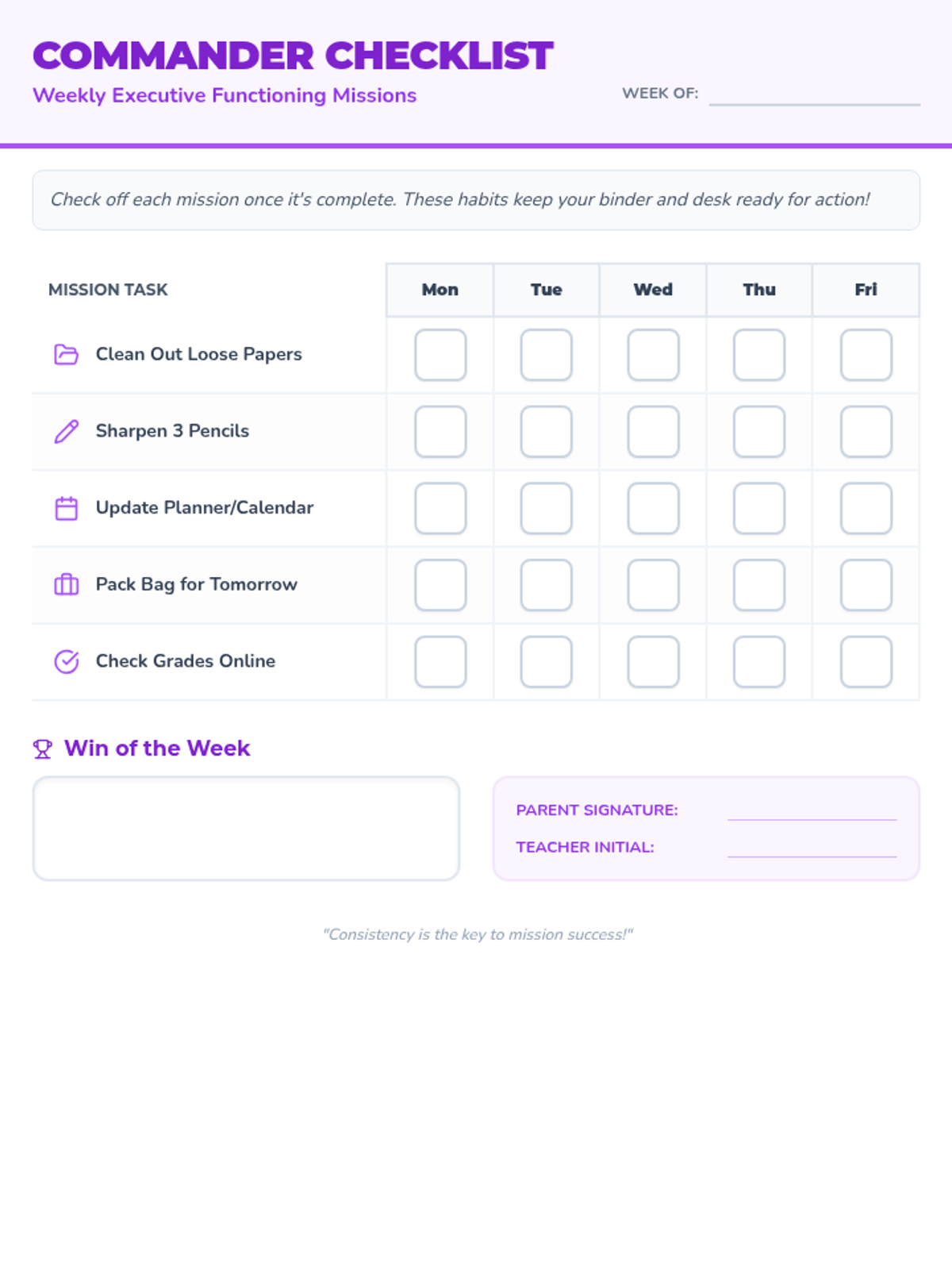
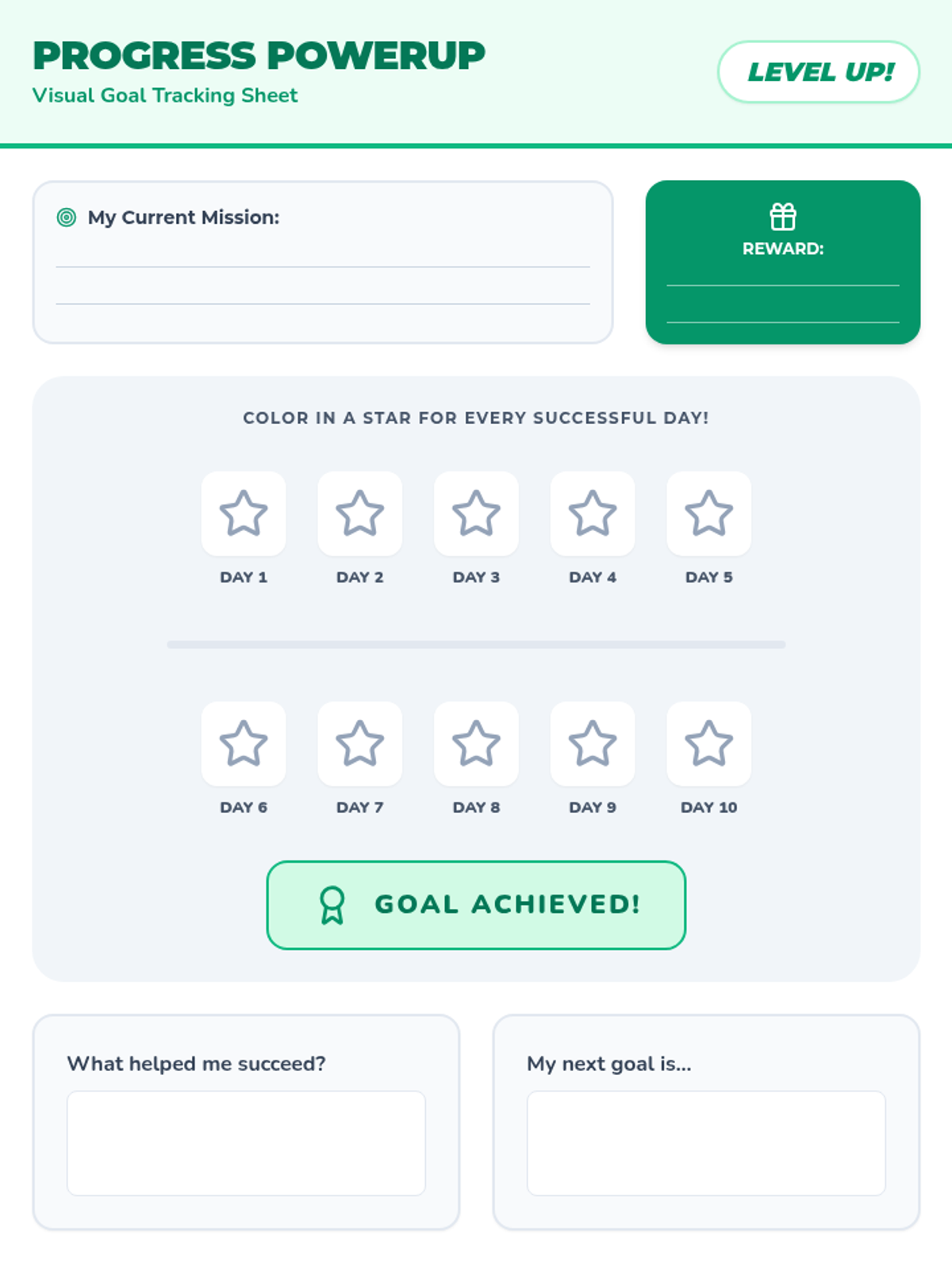
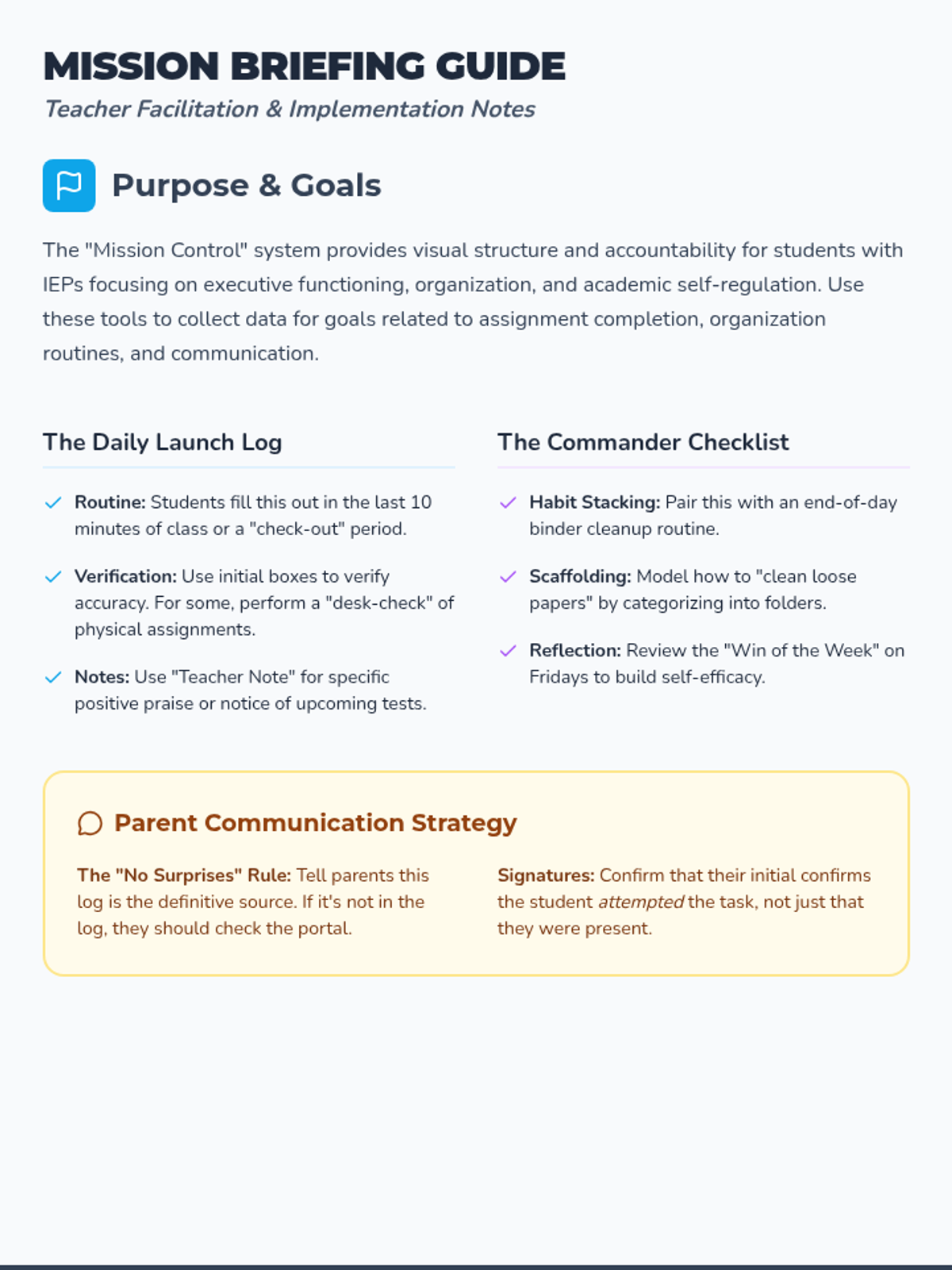
A comprehensive set of tools designed to help IEP students manage daily homework, develop executive functioning skills, and bridge communication between home and school.
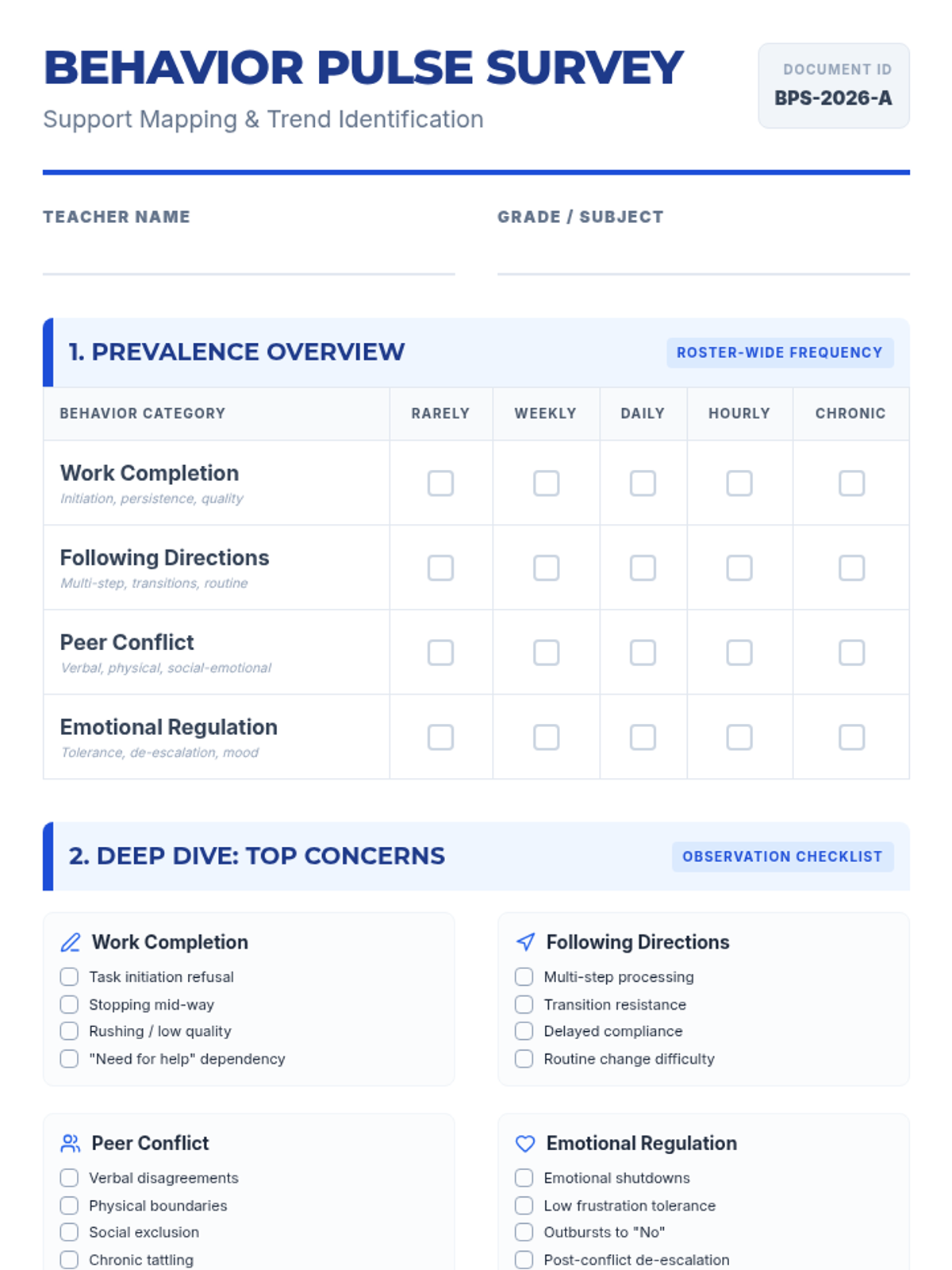
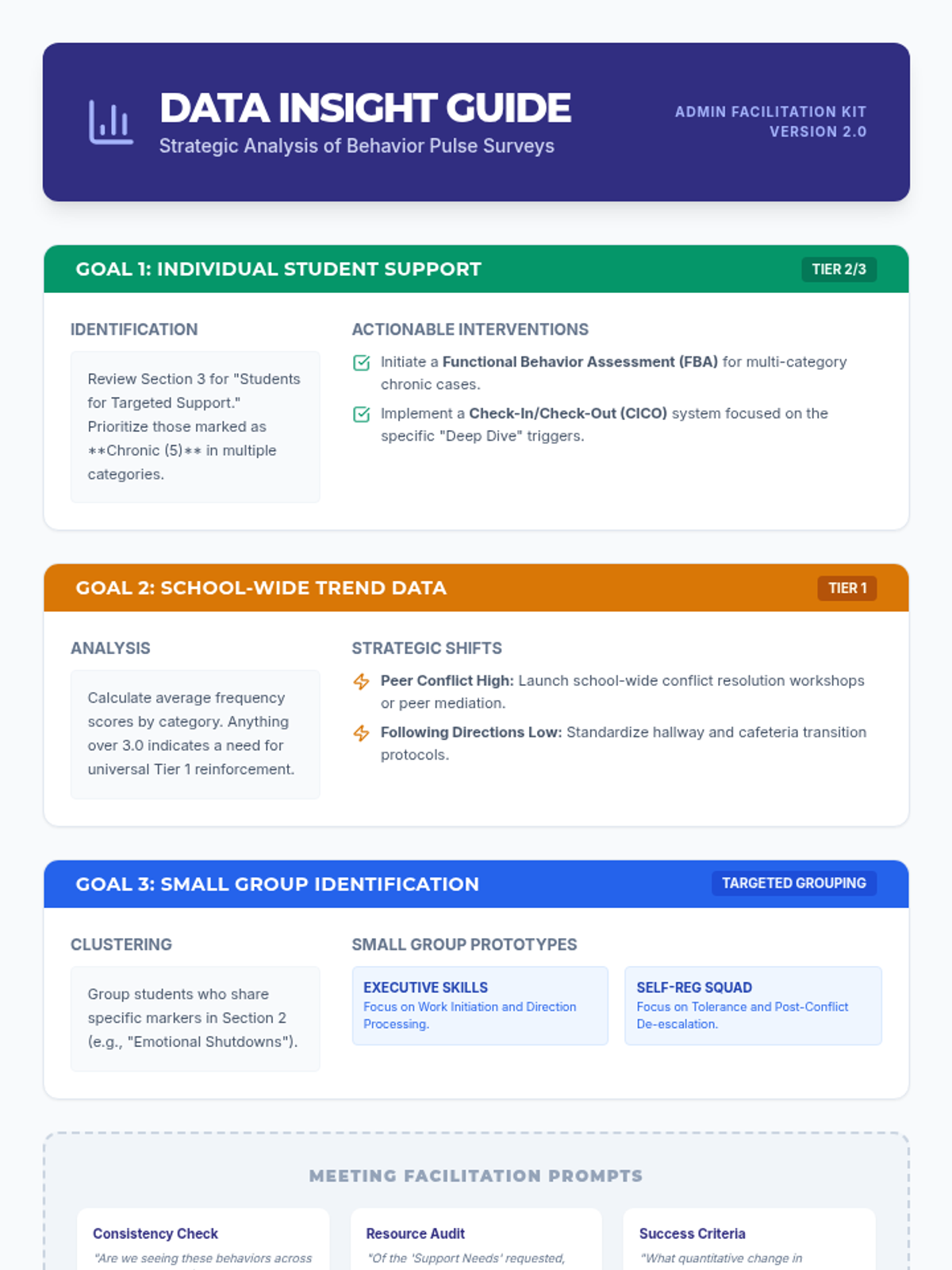
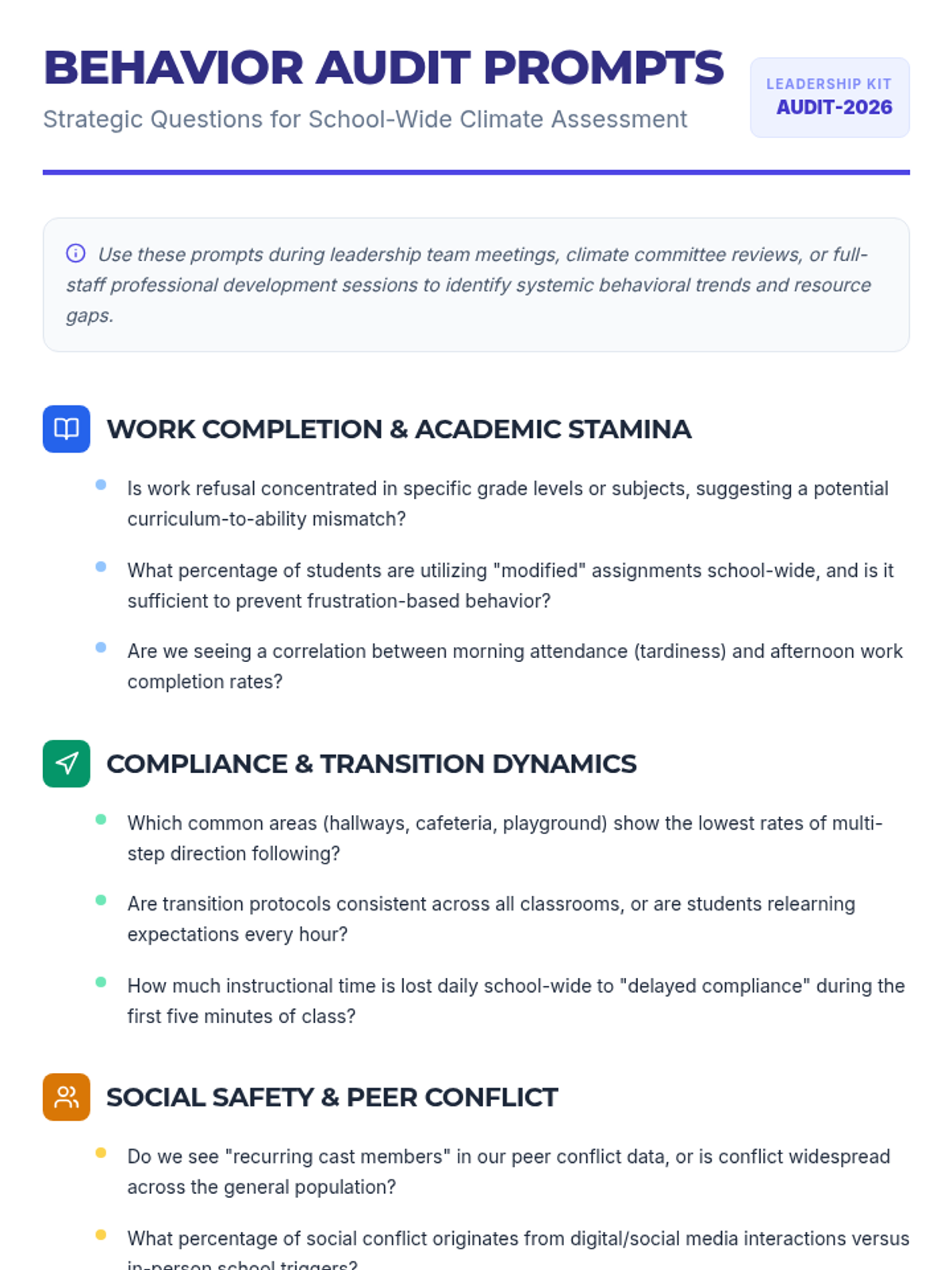
A comprehensive behavior assessment tool for teachers to track trends in work completion, following directions, peer conflict, and emotional regulation. This data is designed to drive individual support plans, school-wide initiatives, and small-group interventions.
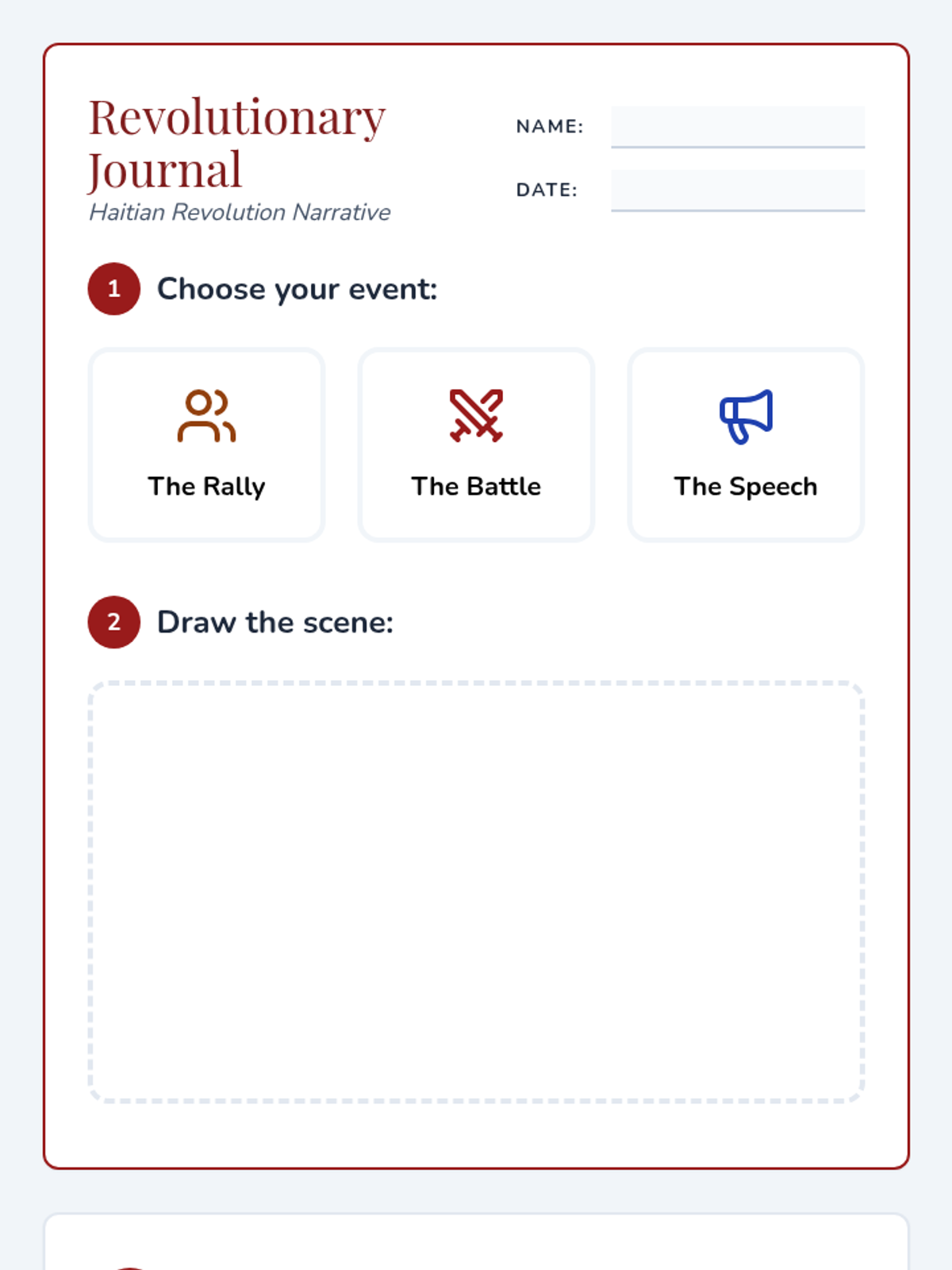
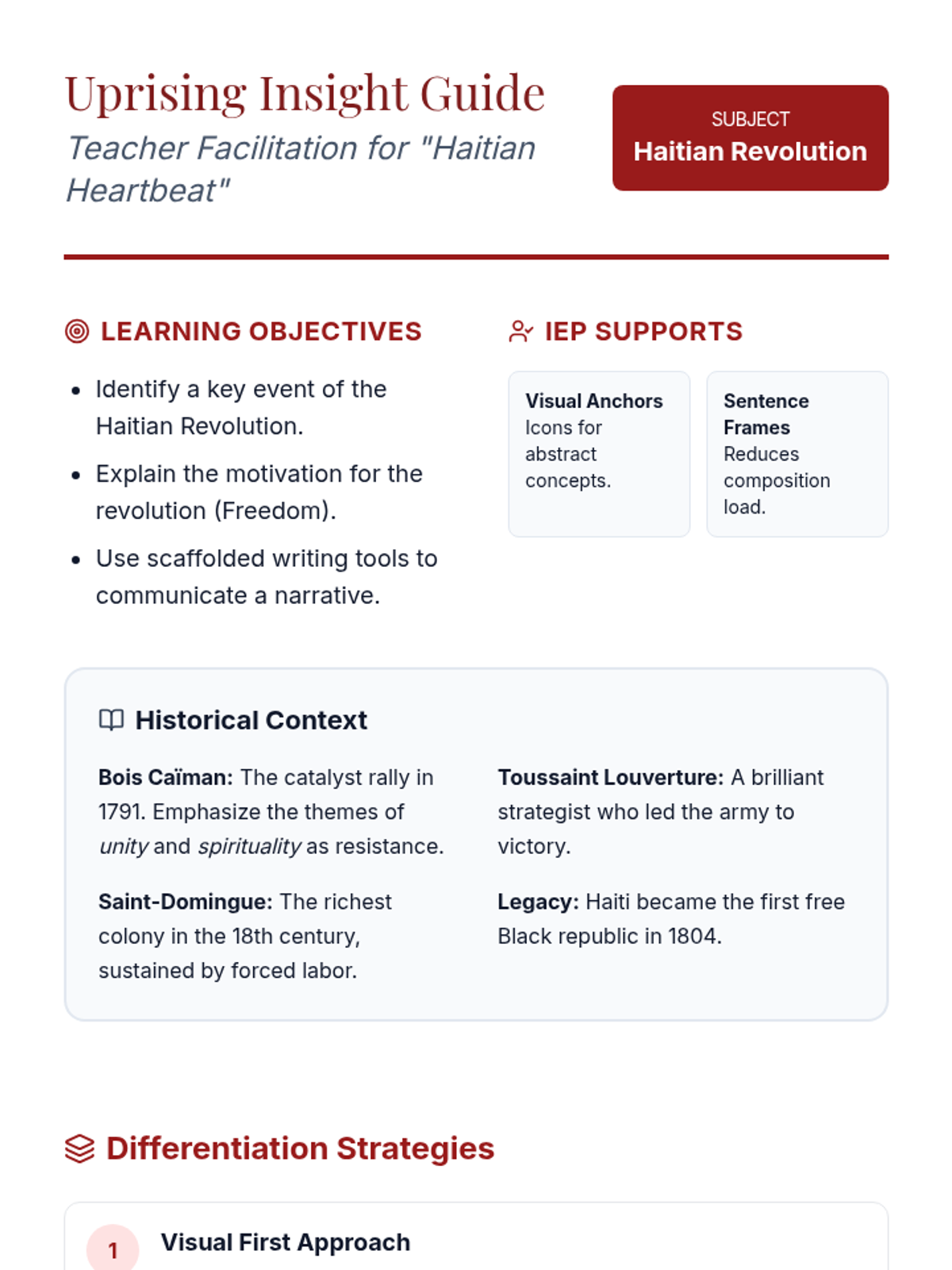
A lesson exploring the key events and motivations of the Haitian Revolution, designed specifically with scaffolded supports for students with IEPs. Students will analyze revolutionary actions like rallies and battles before completing a visually supported journal entry.
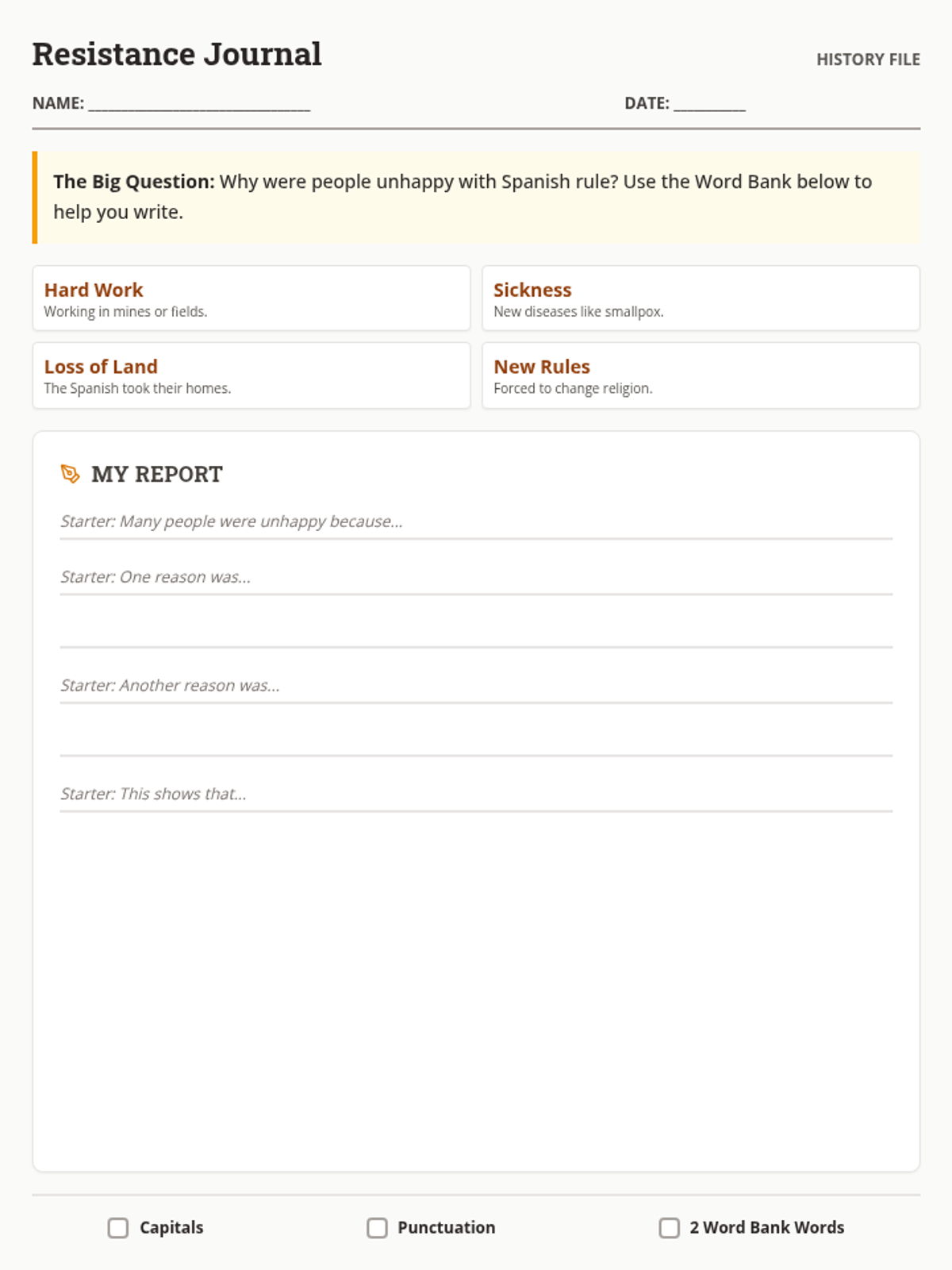
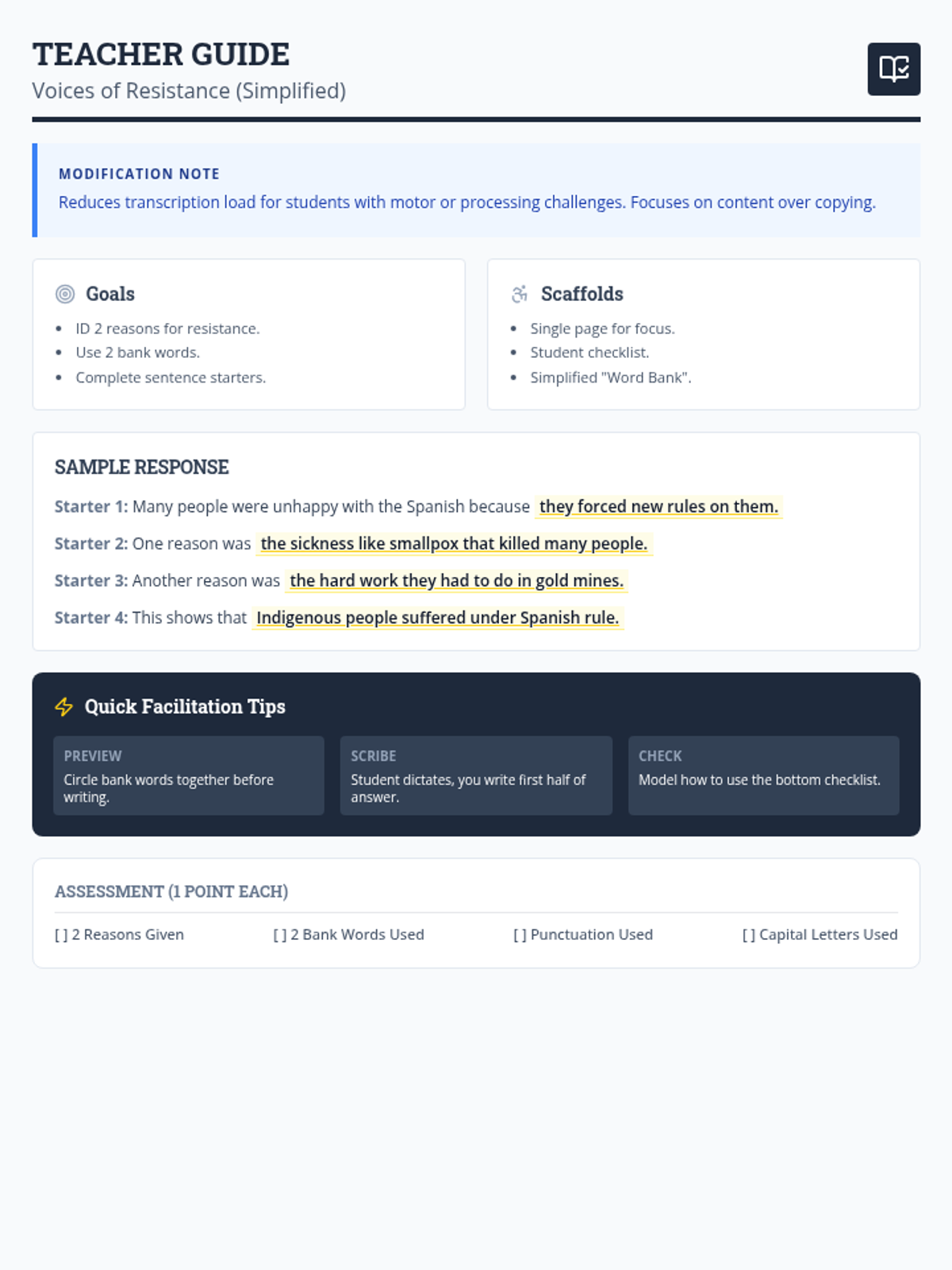
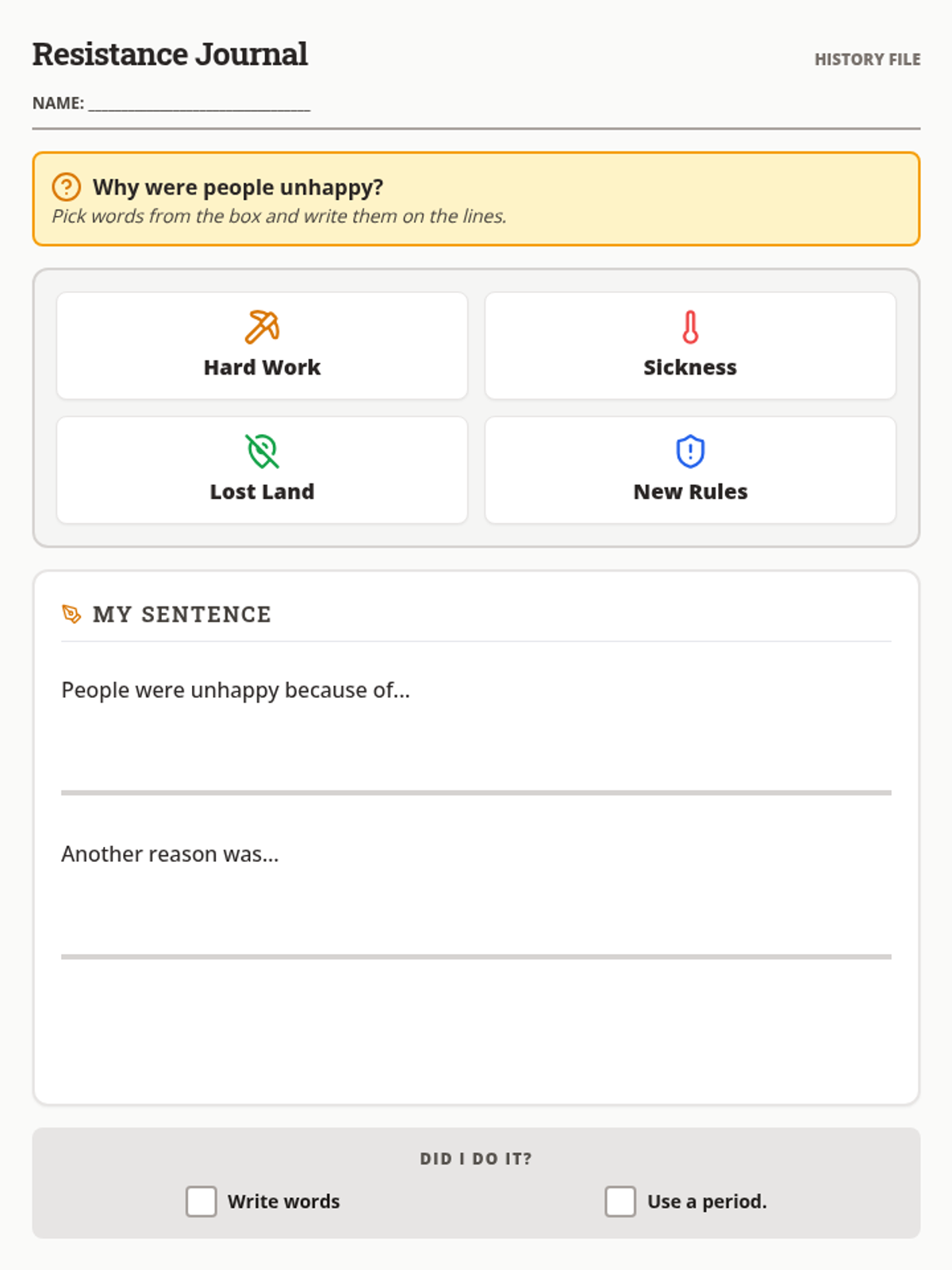
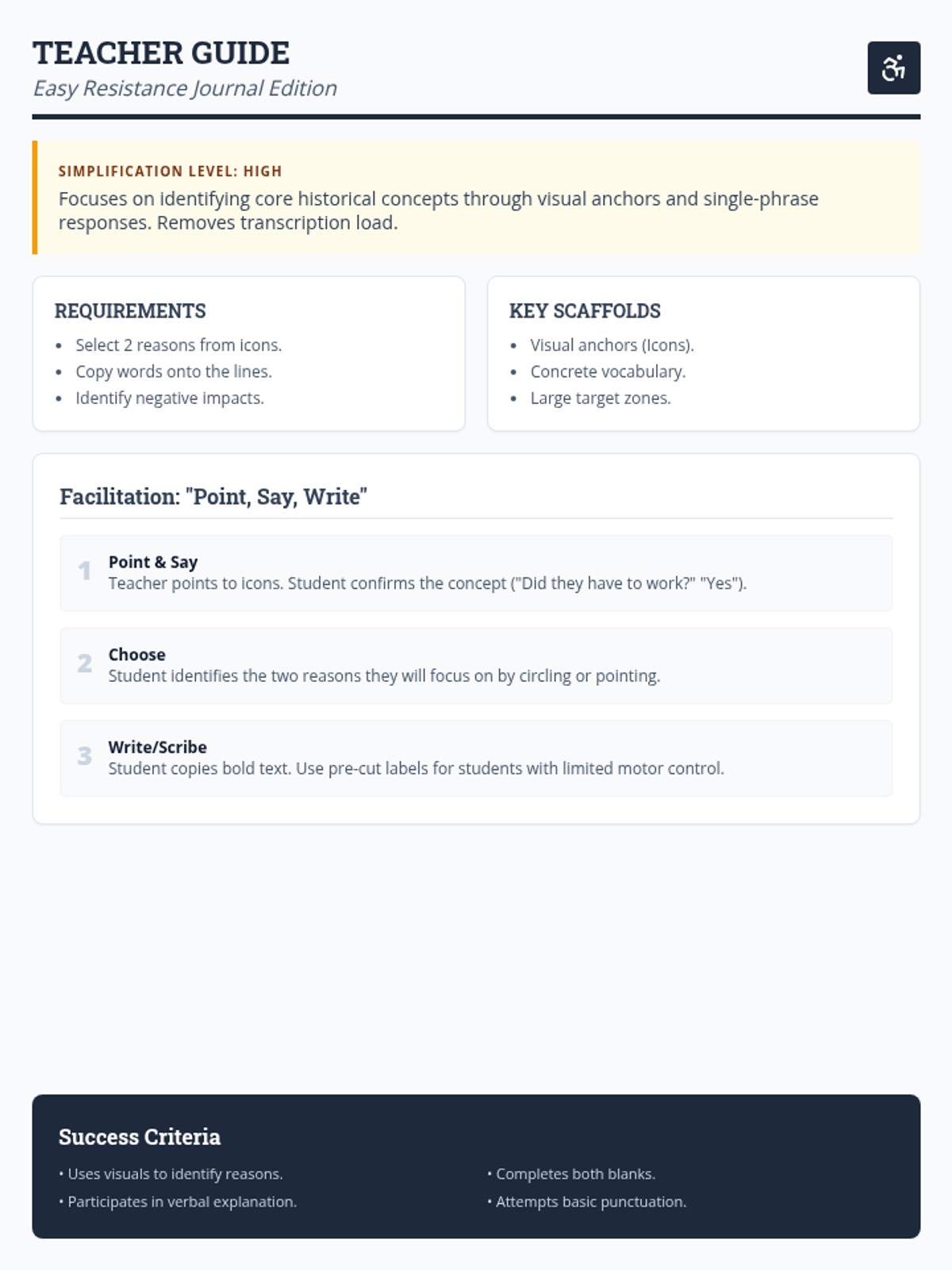
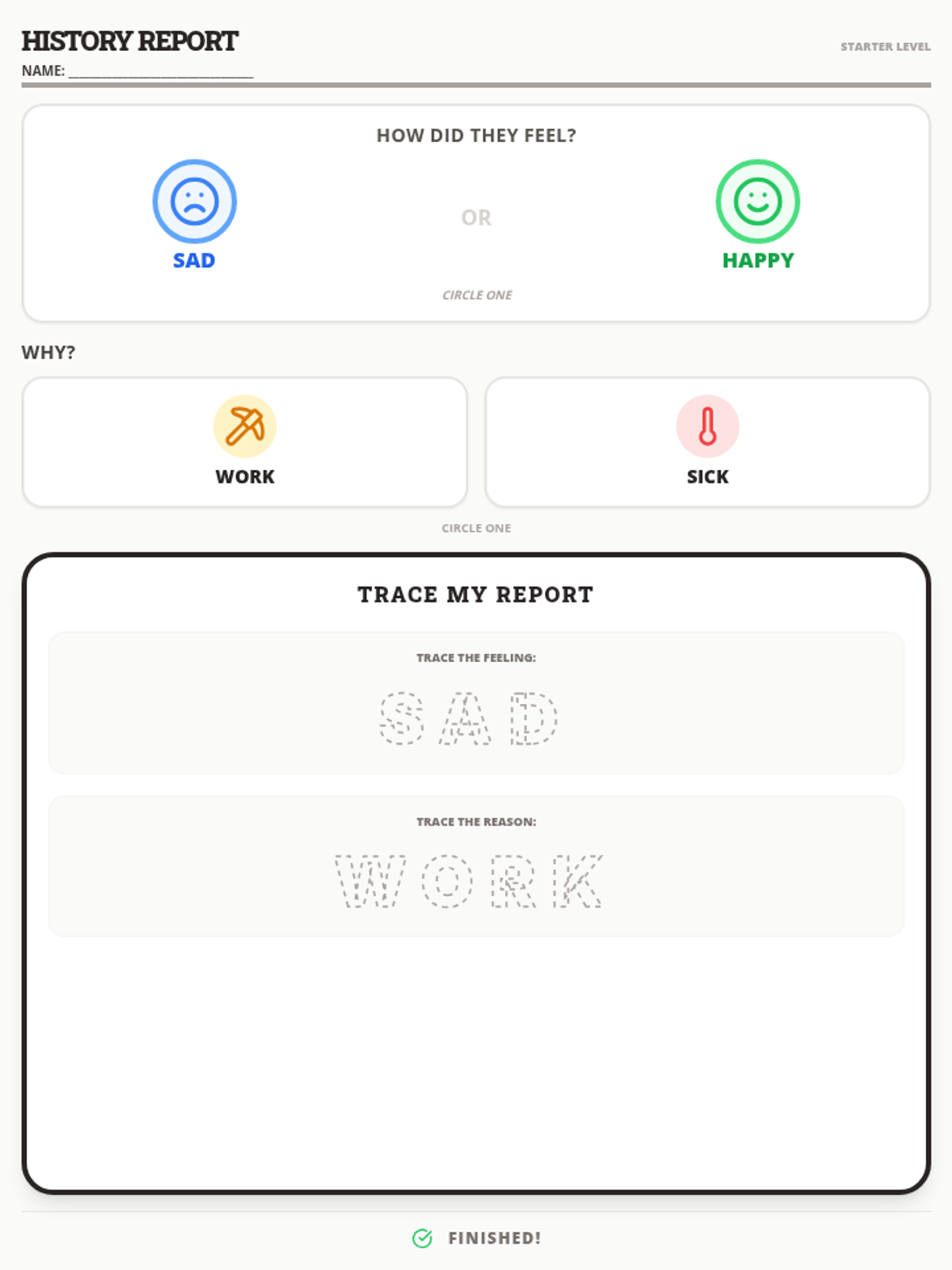
A structured writing lesson exploring the reasons for Indigenous resistance to Spanish colonial rule, specifically designed with scaffolds for IEP students.
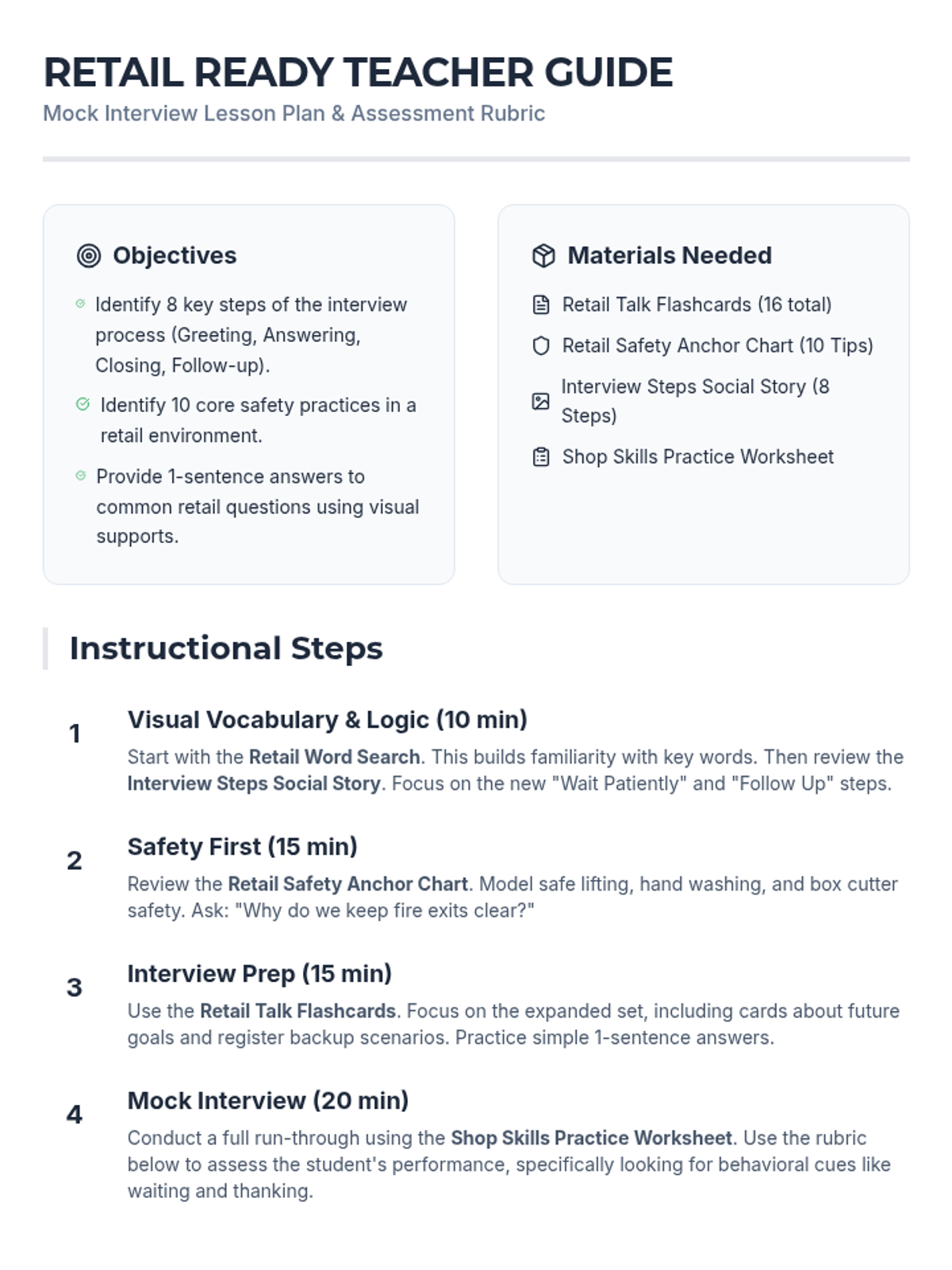
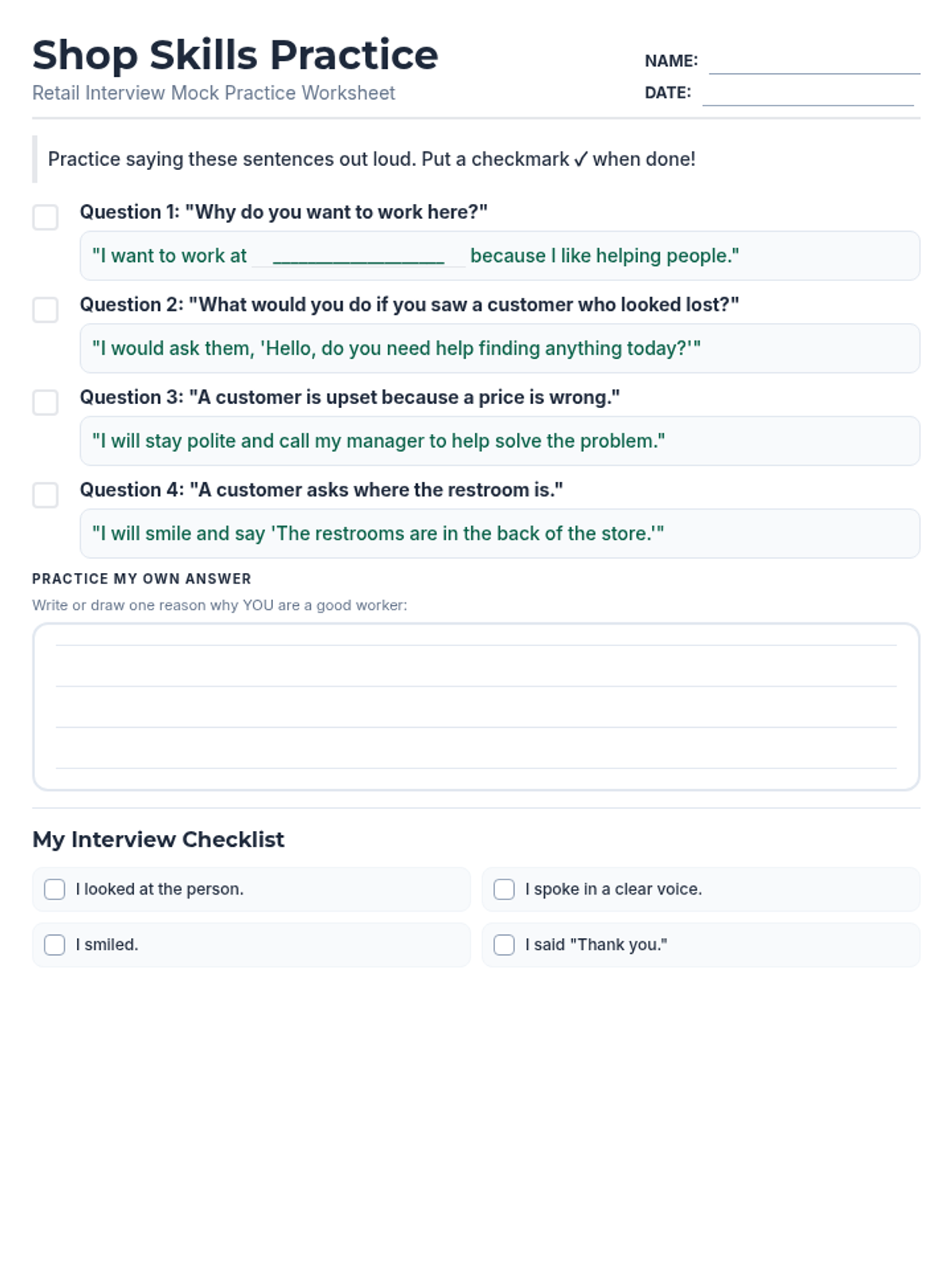
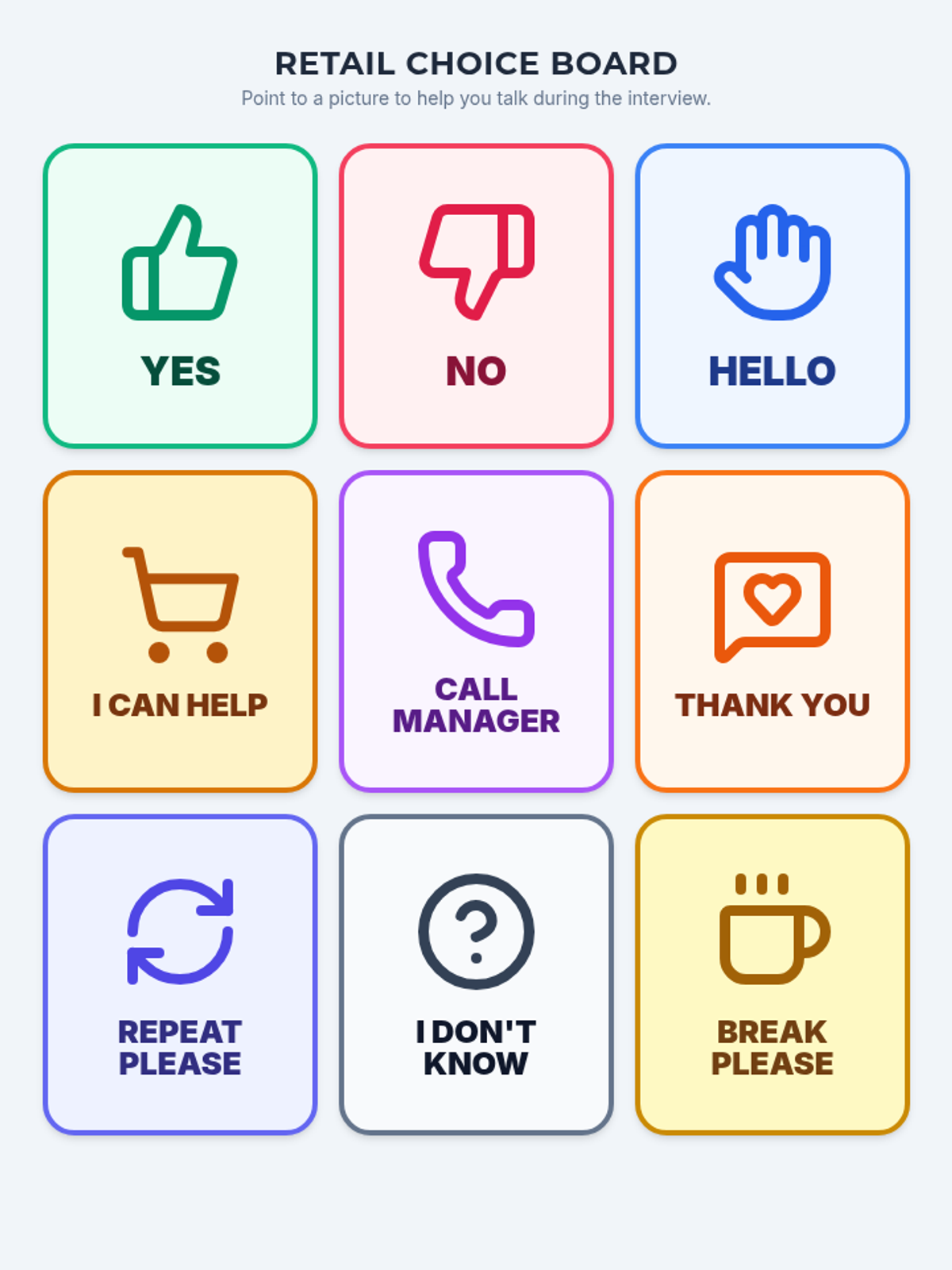
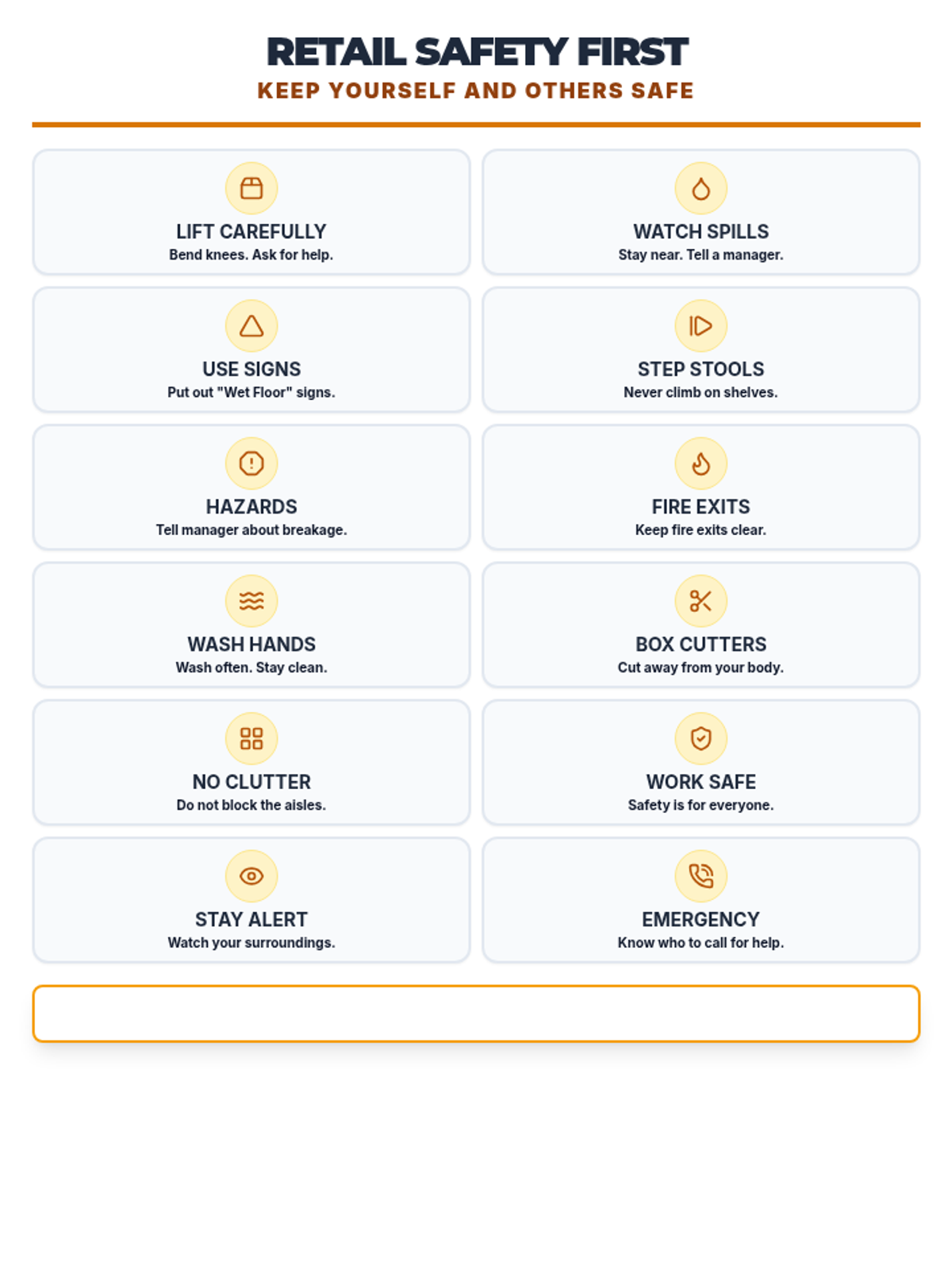
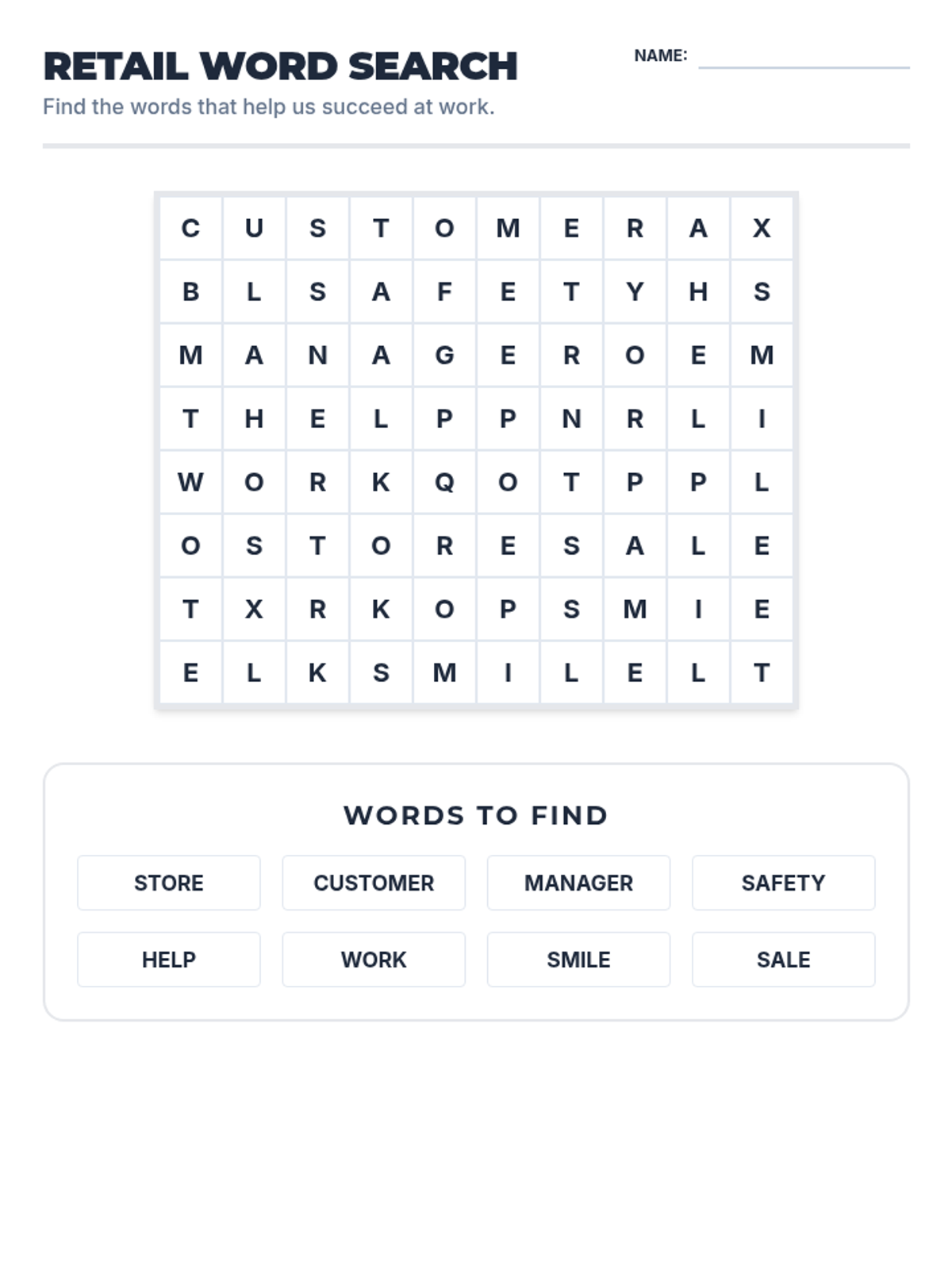
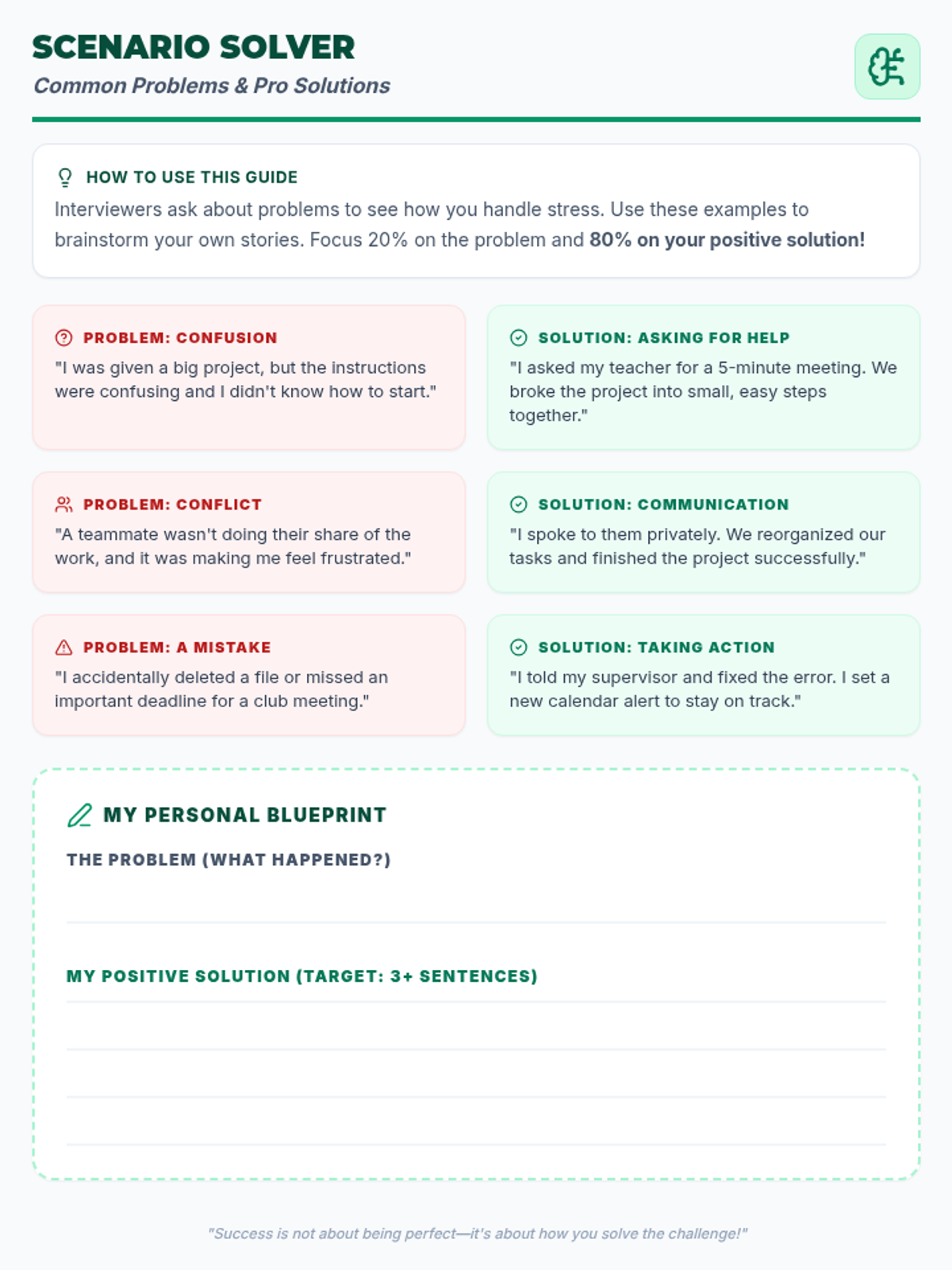
A comprehensive mock interview training program designed for learners seeking retail positions, focusing on visual supports, simple scripting, and situational problem-solving.
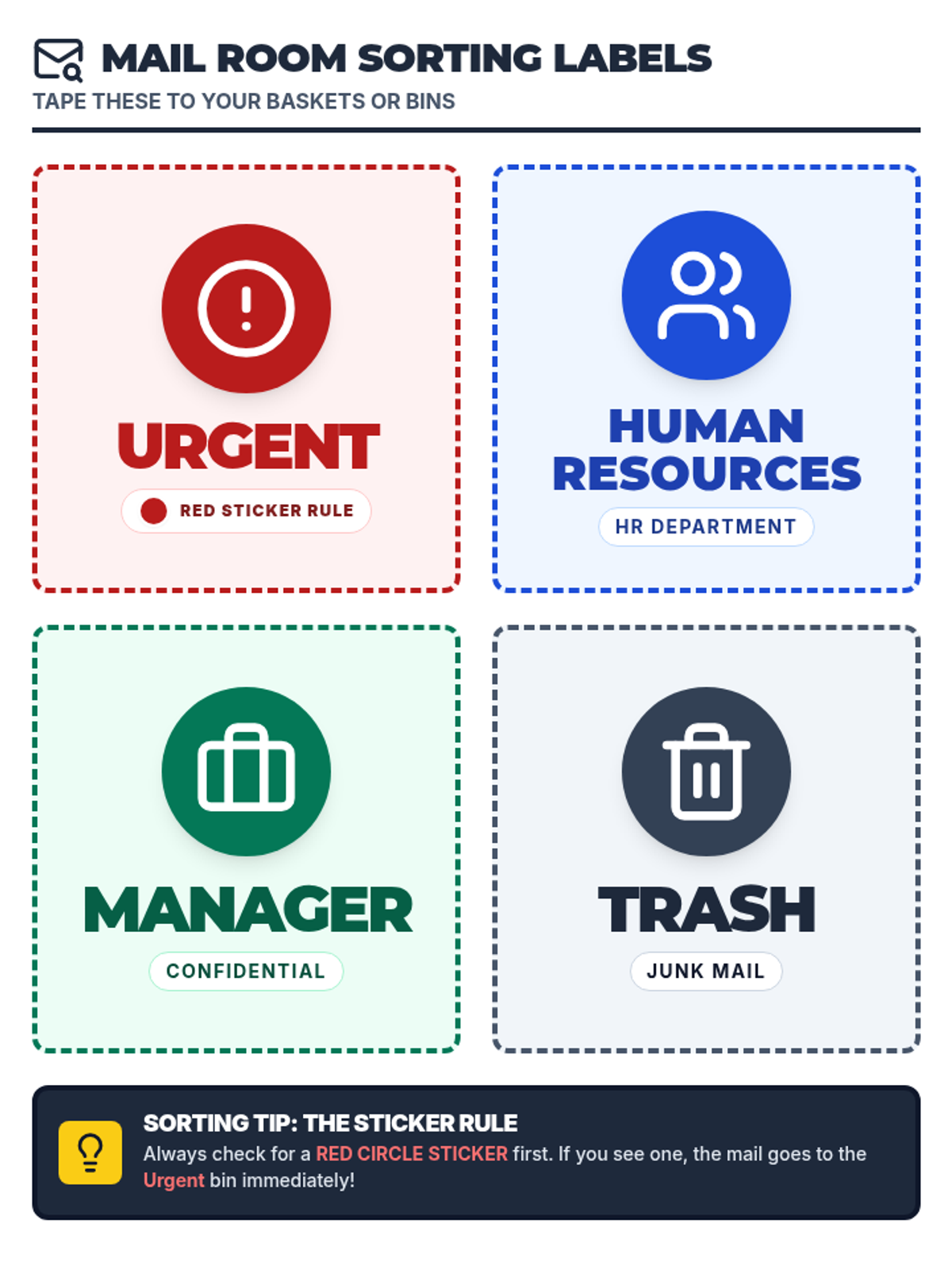
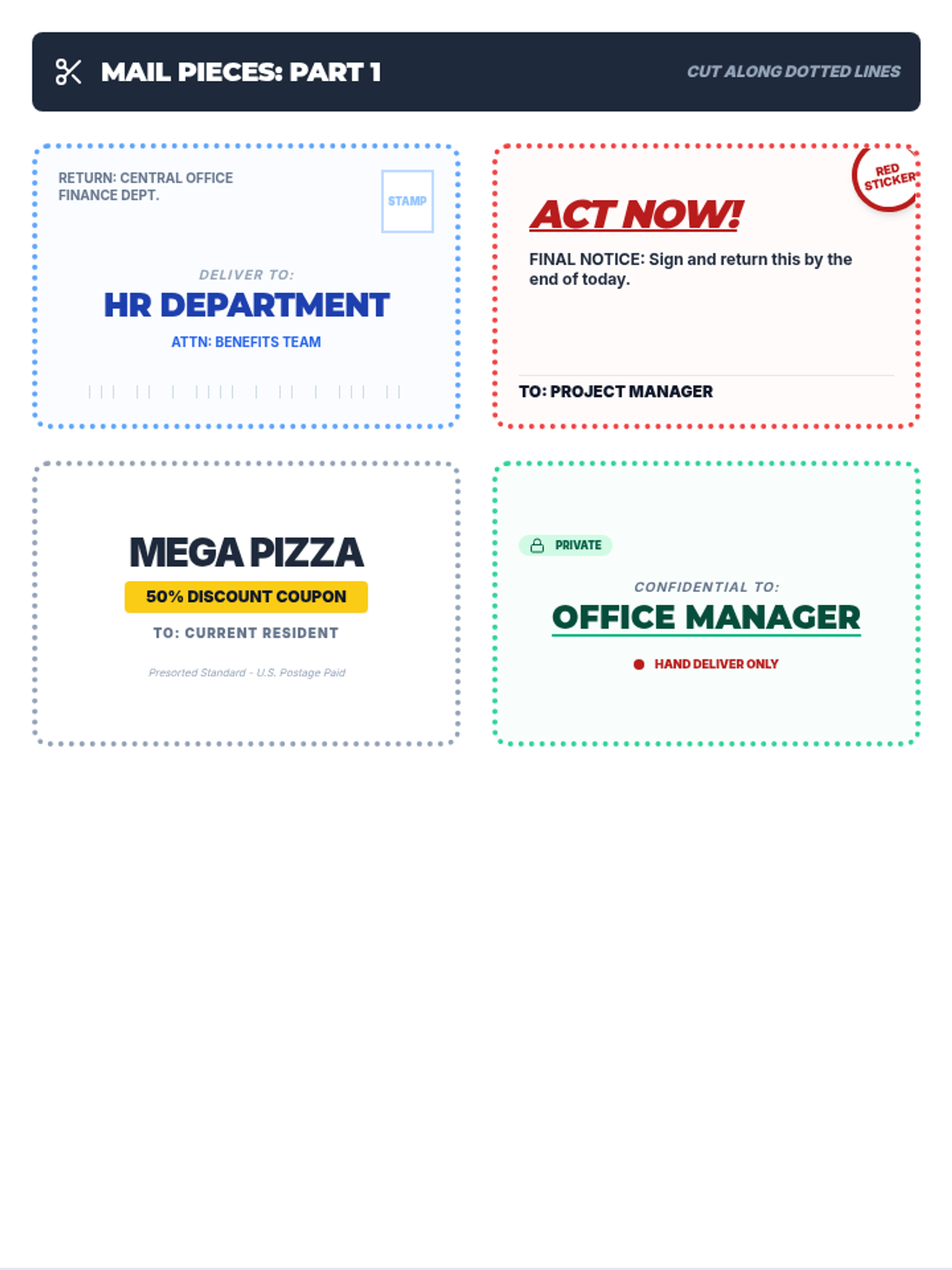
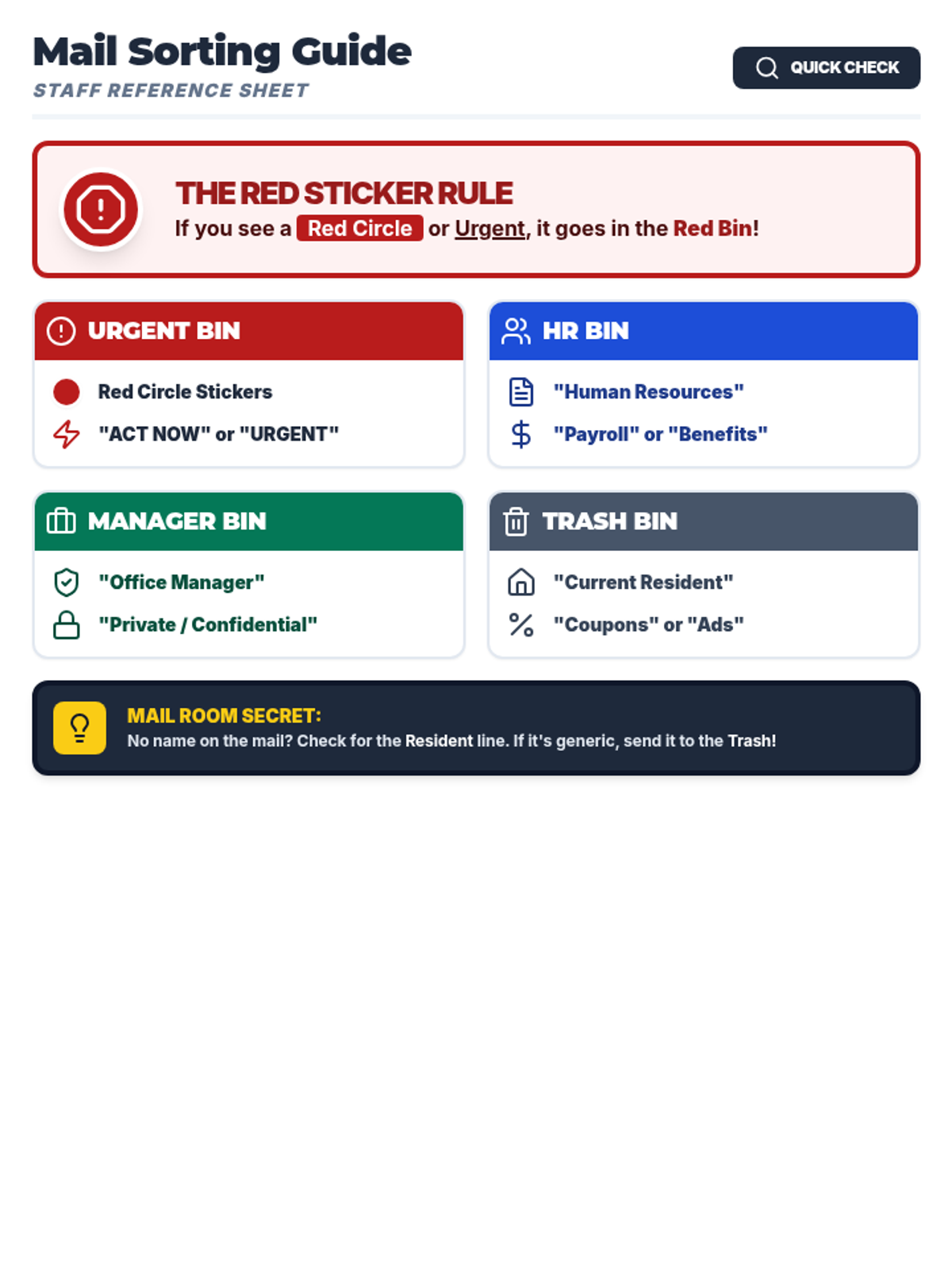
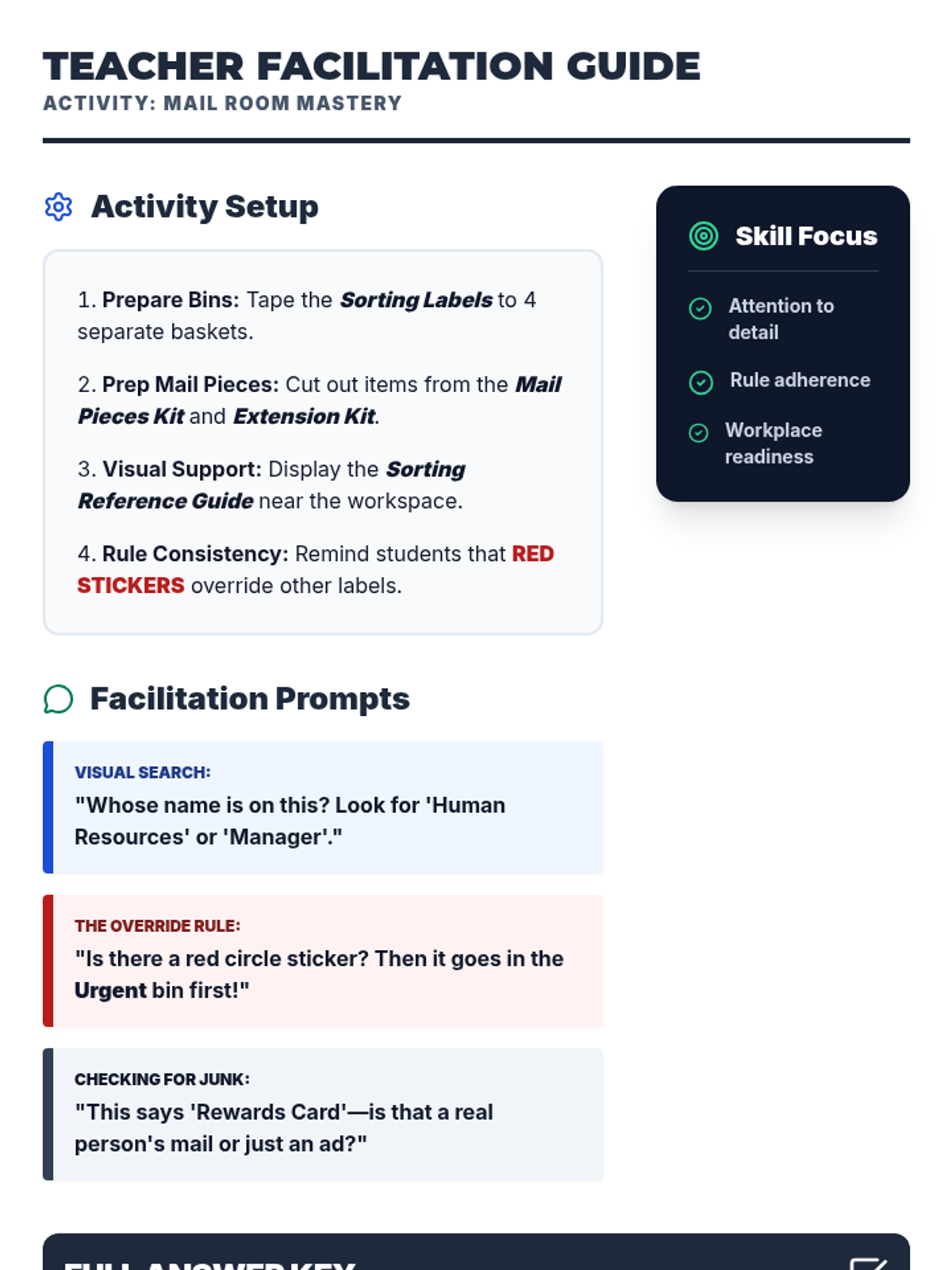
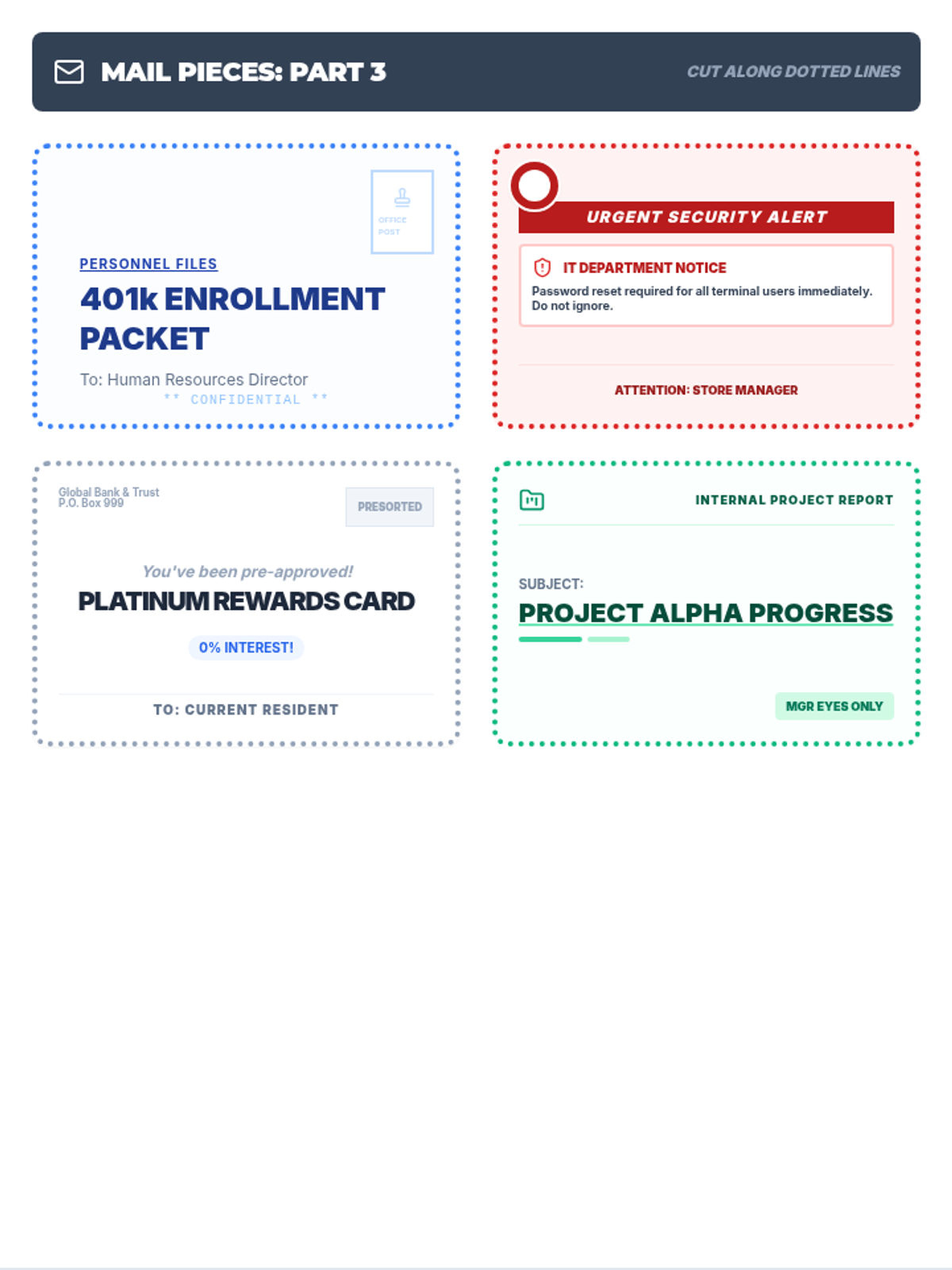
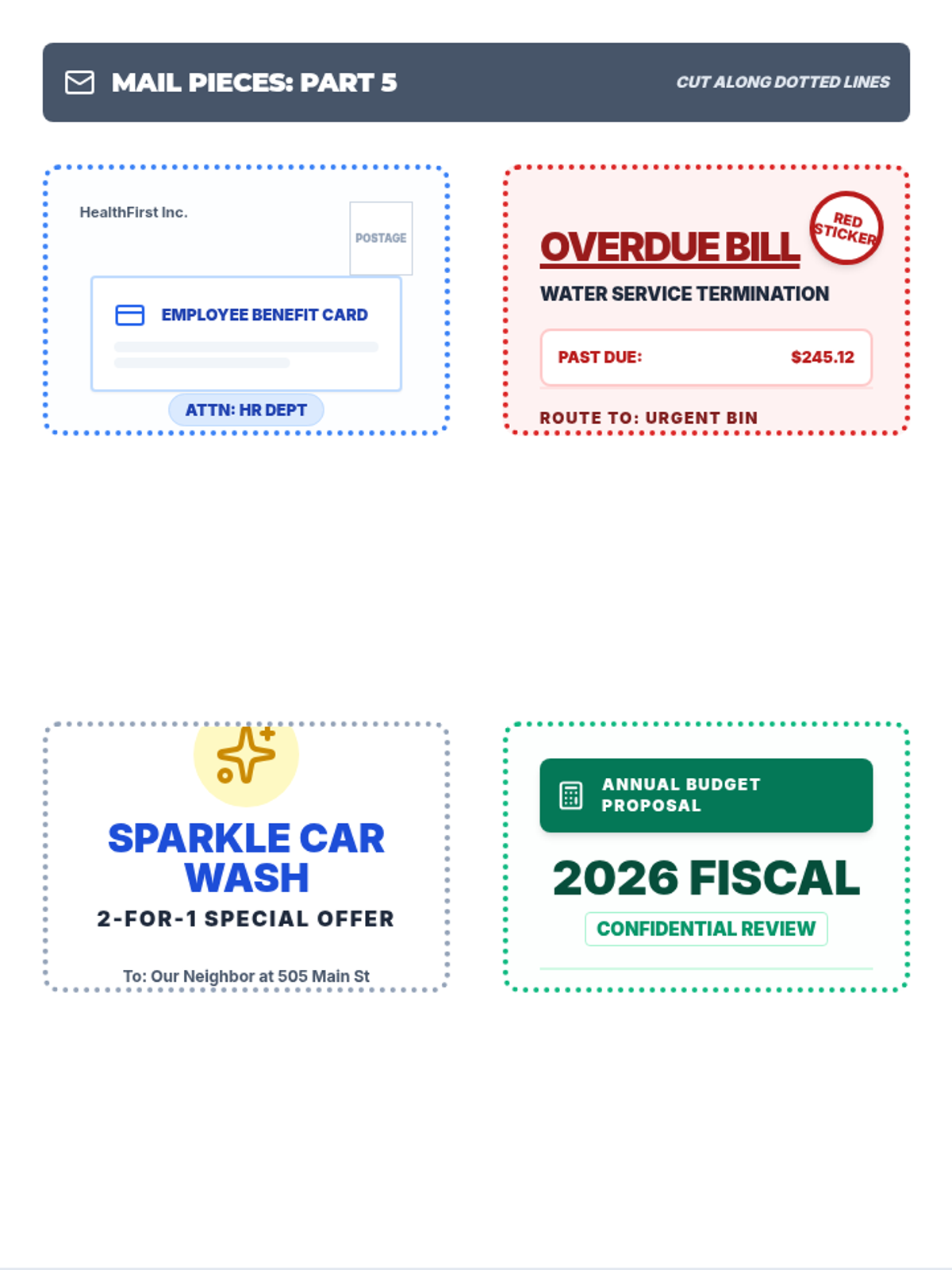
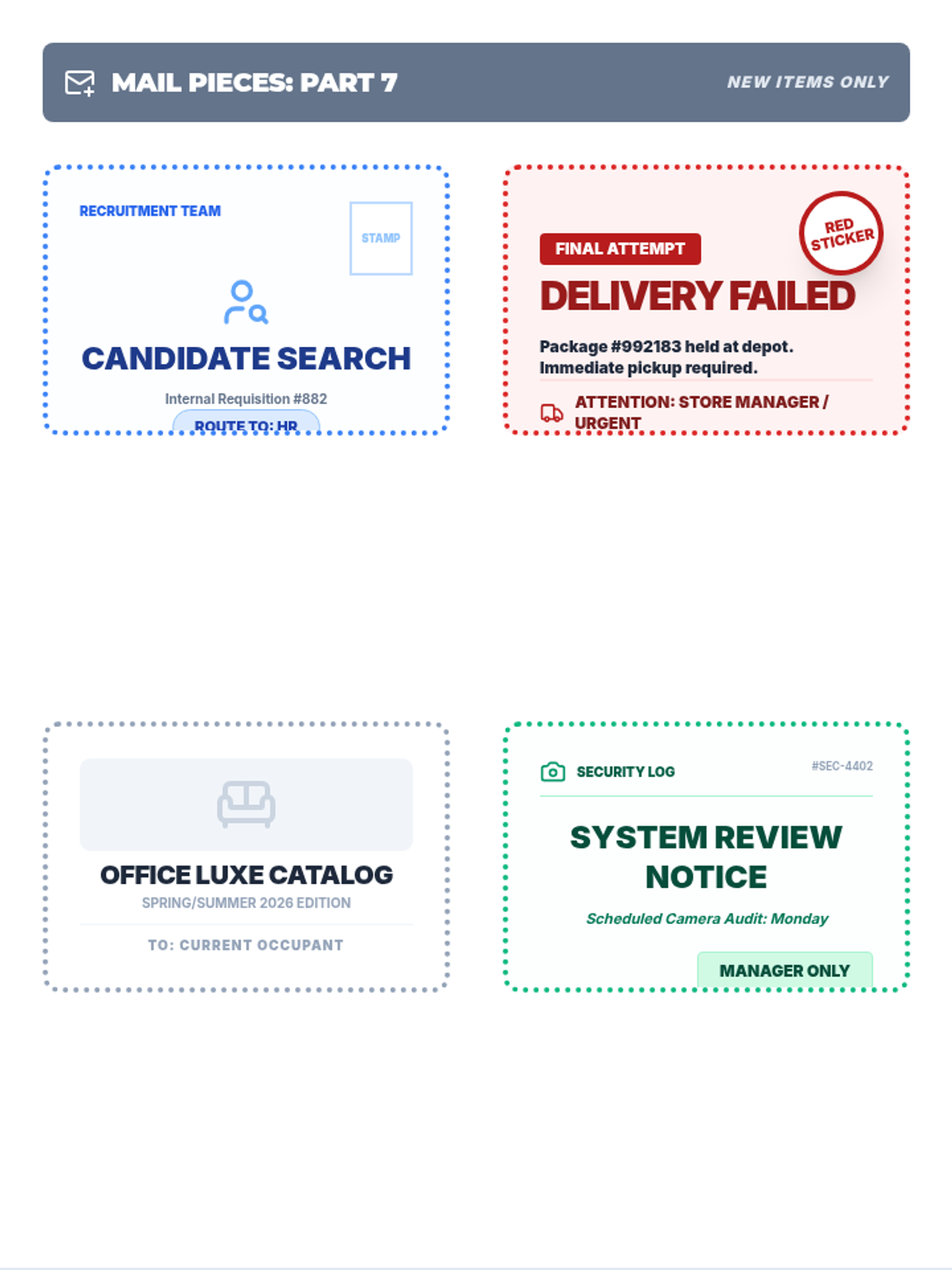
A hands-on vocational activity focused on sorting mail into categories like HR, Urgent, Manager, and Trash to build organizational and attention-to-detail skills.
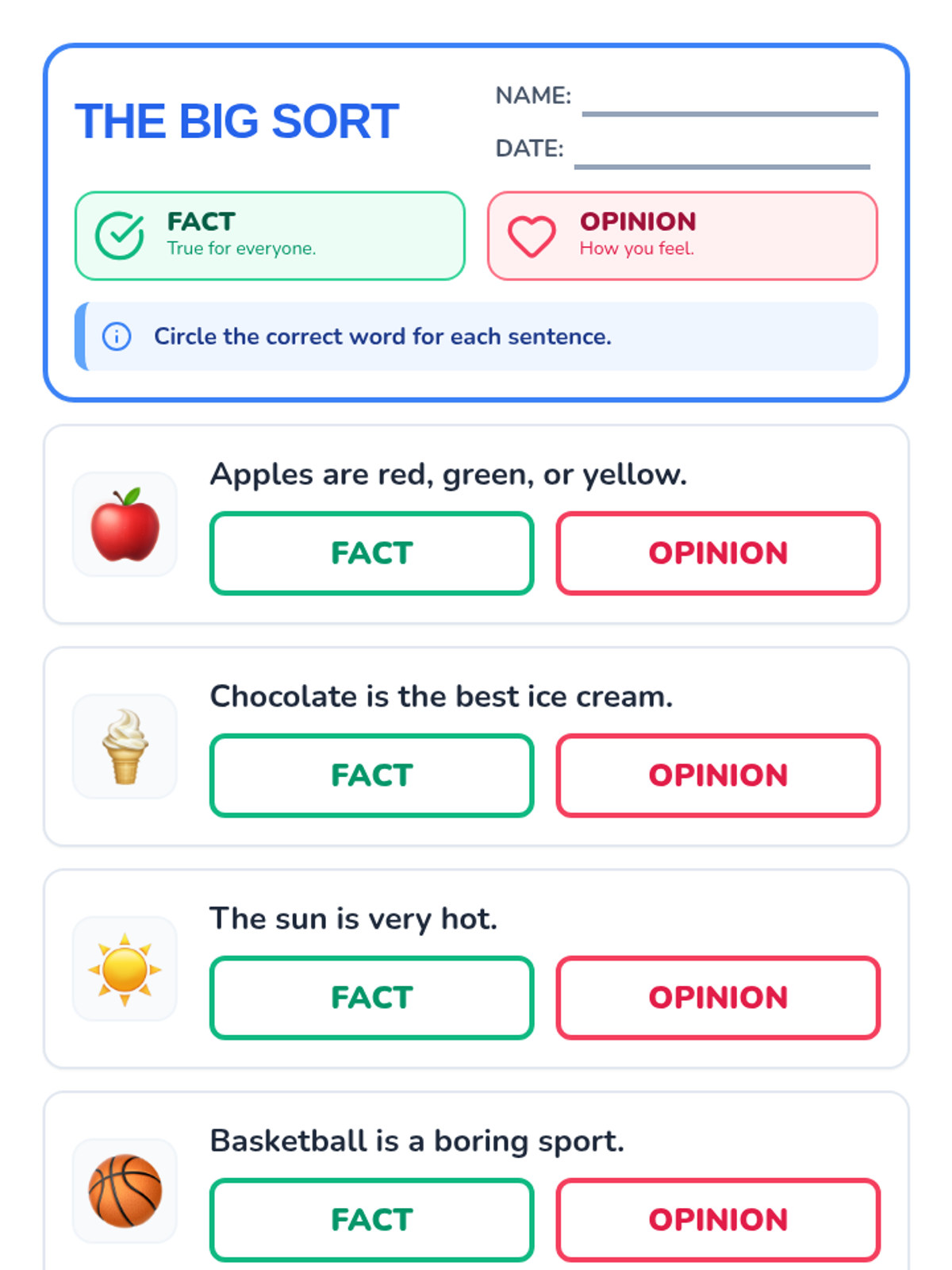
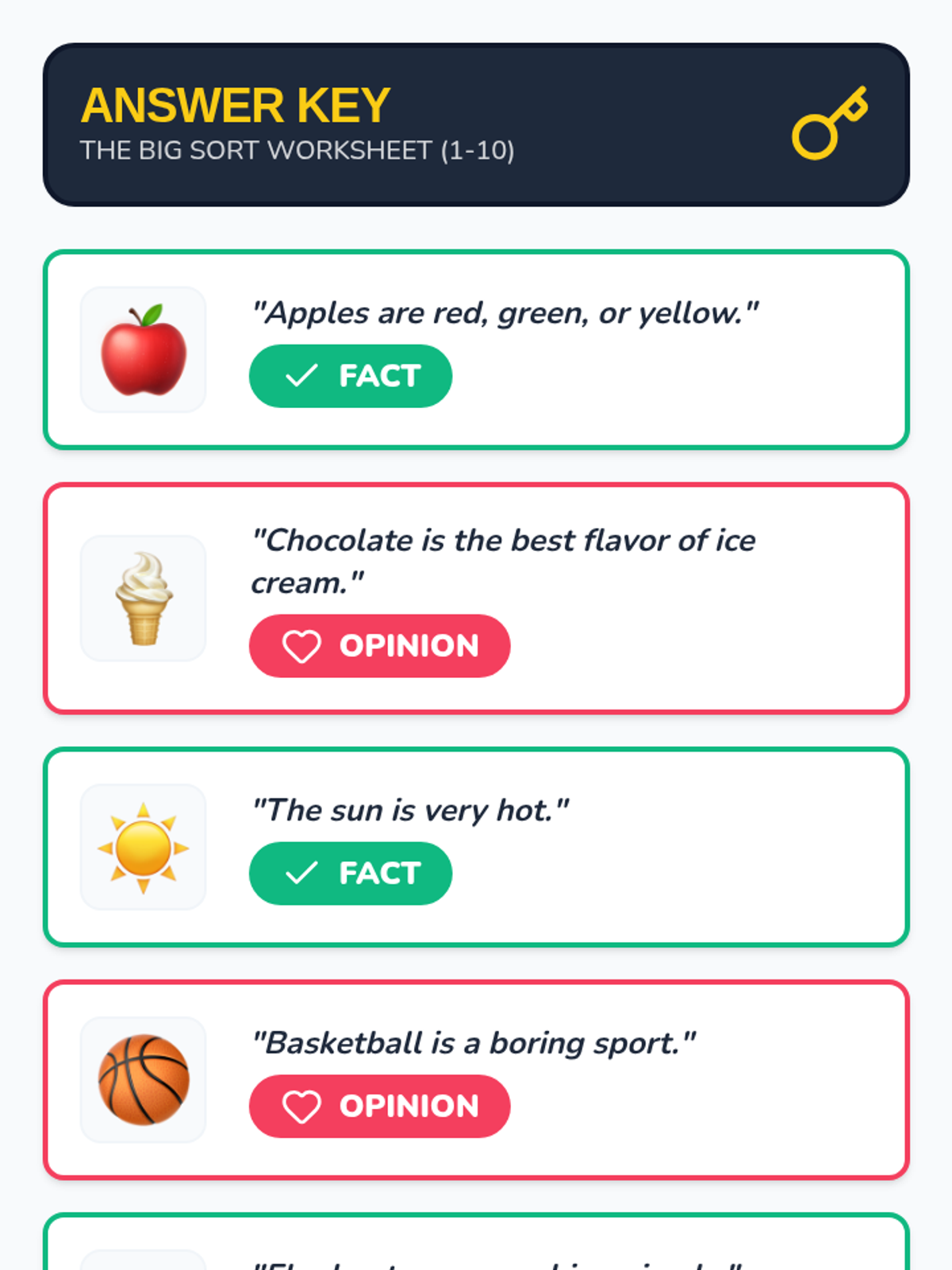
An introductory lesson on persuasive writing for high school students with intellectual disabilities, focusing on distinguishing between facts and opinions through visual sorting and simple examples.
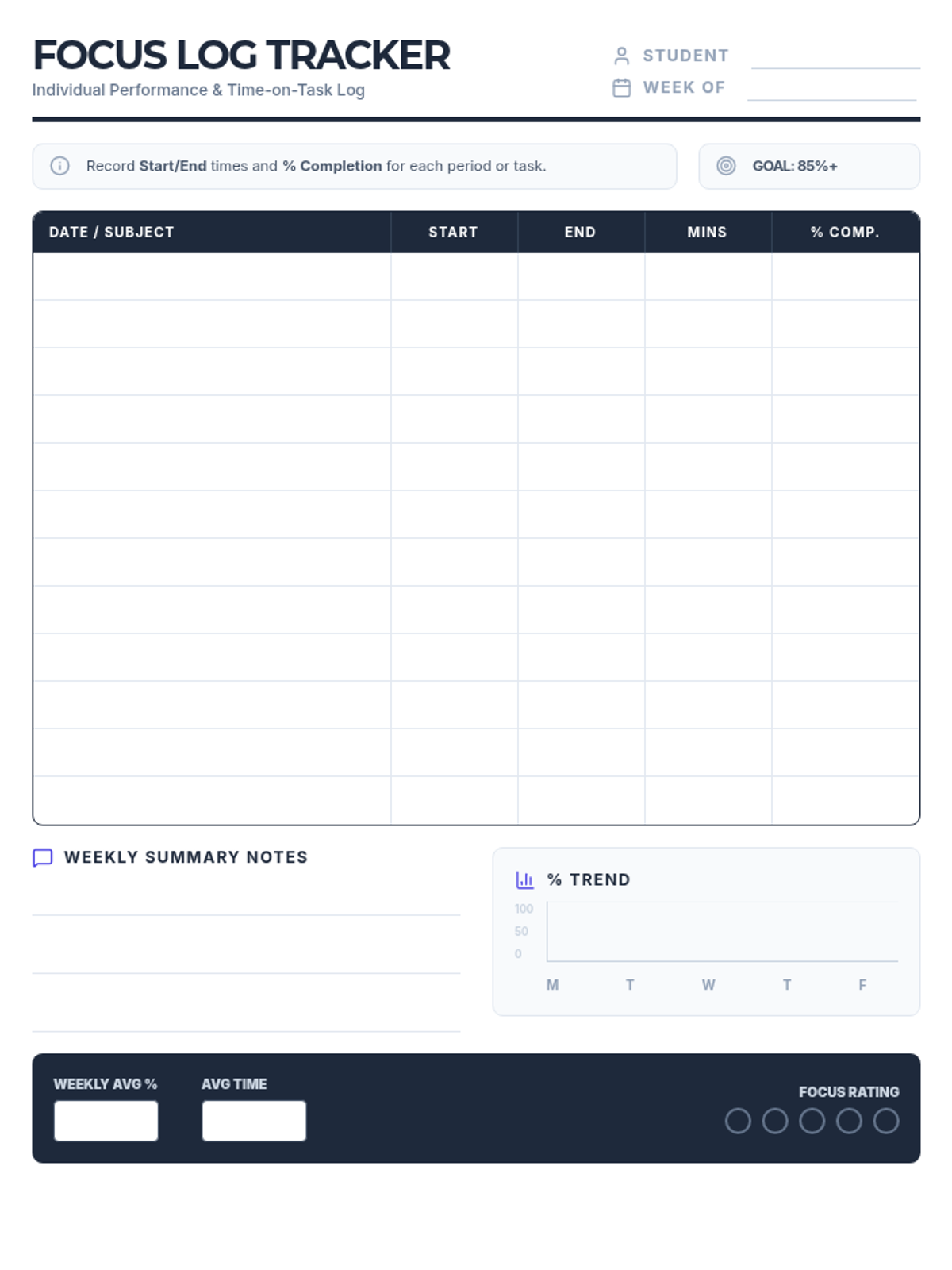
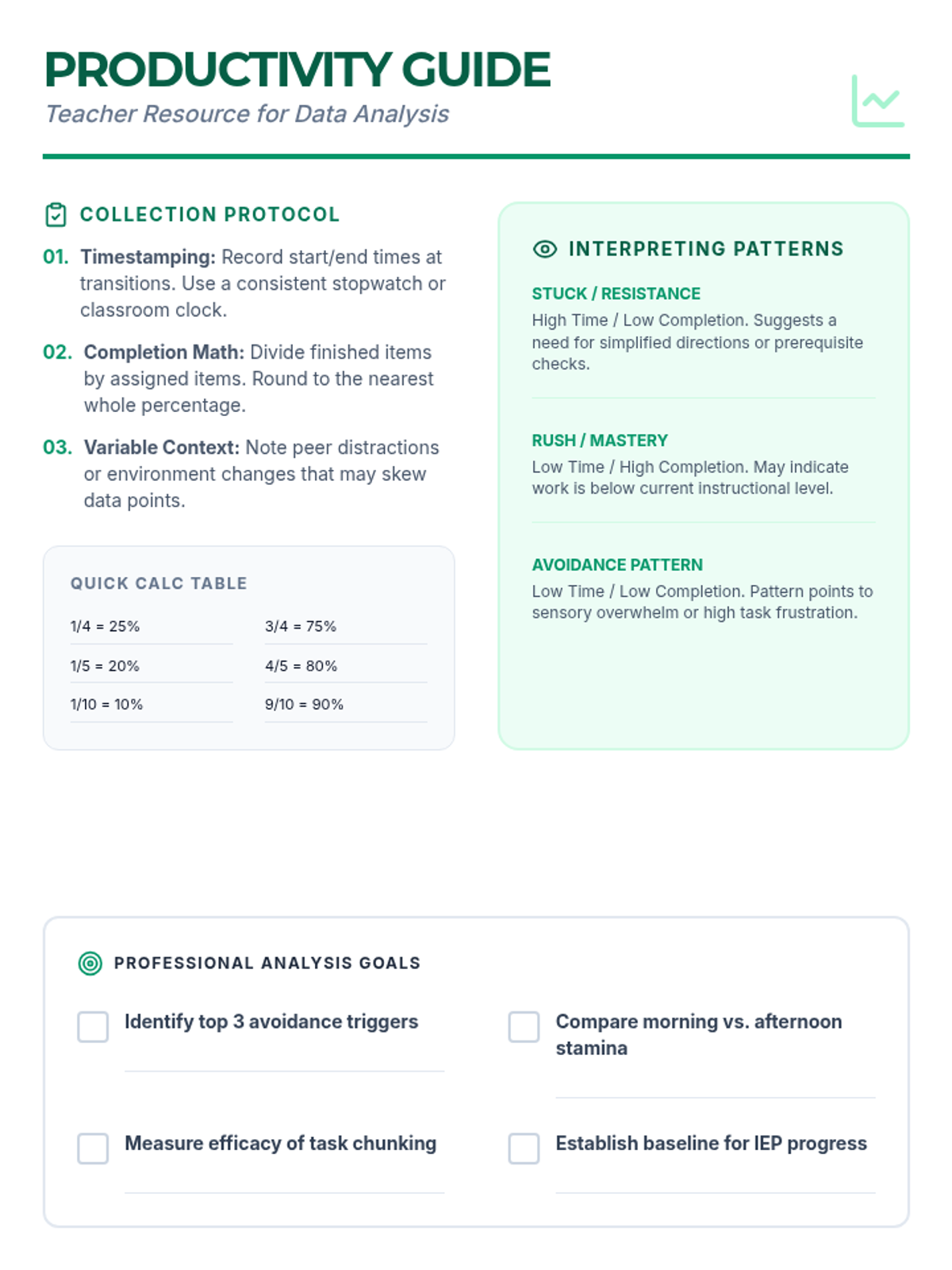
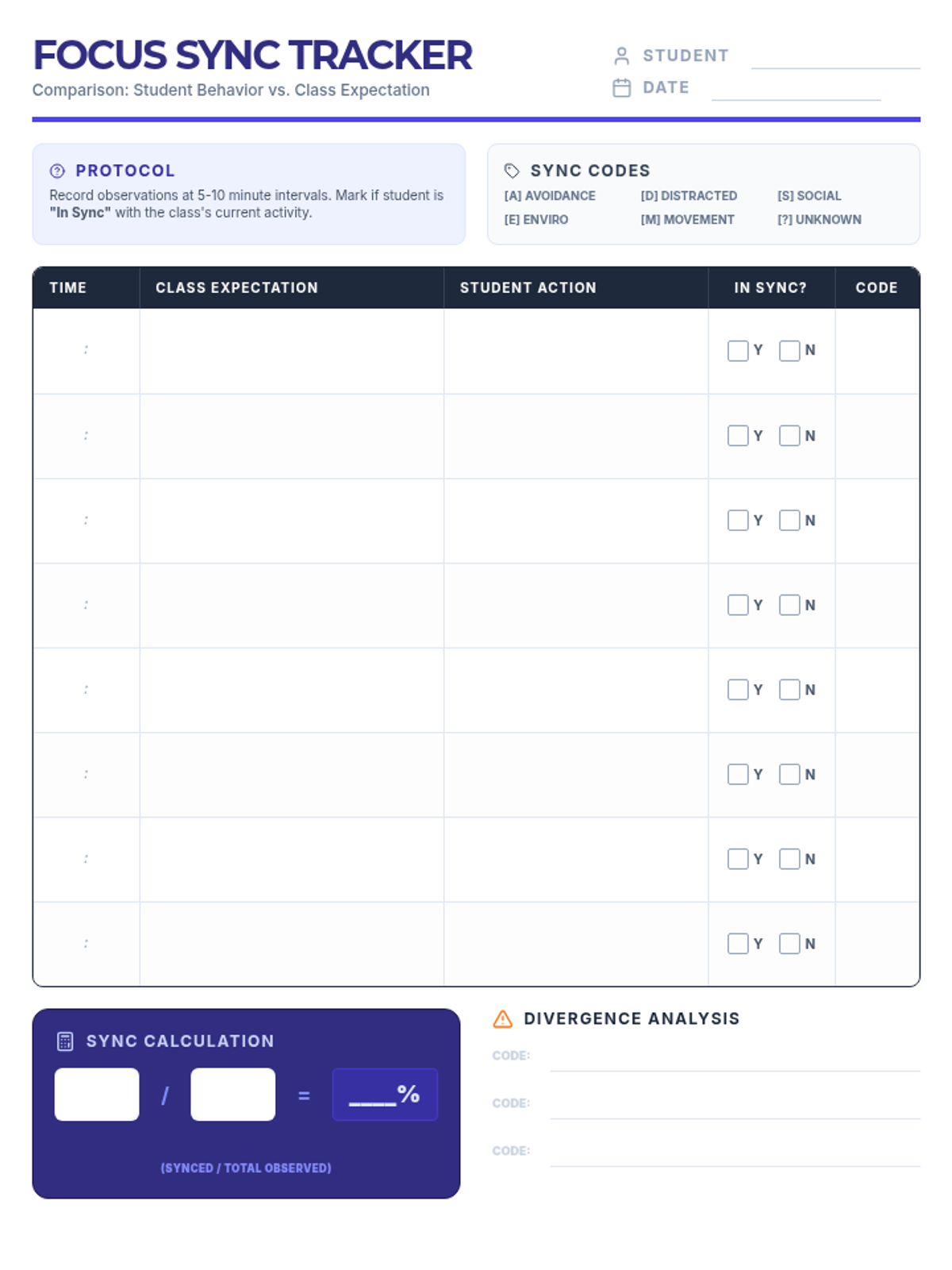
A system for teachers to monitor and analyze student time on task and work completion rates. These tools provide clear data points to identify patterns and support instructional adjustments.
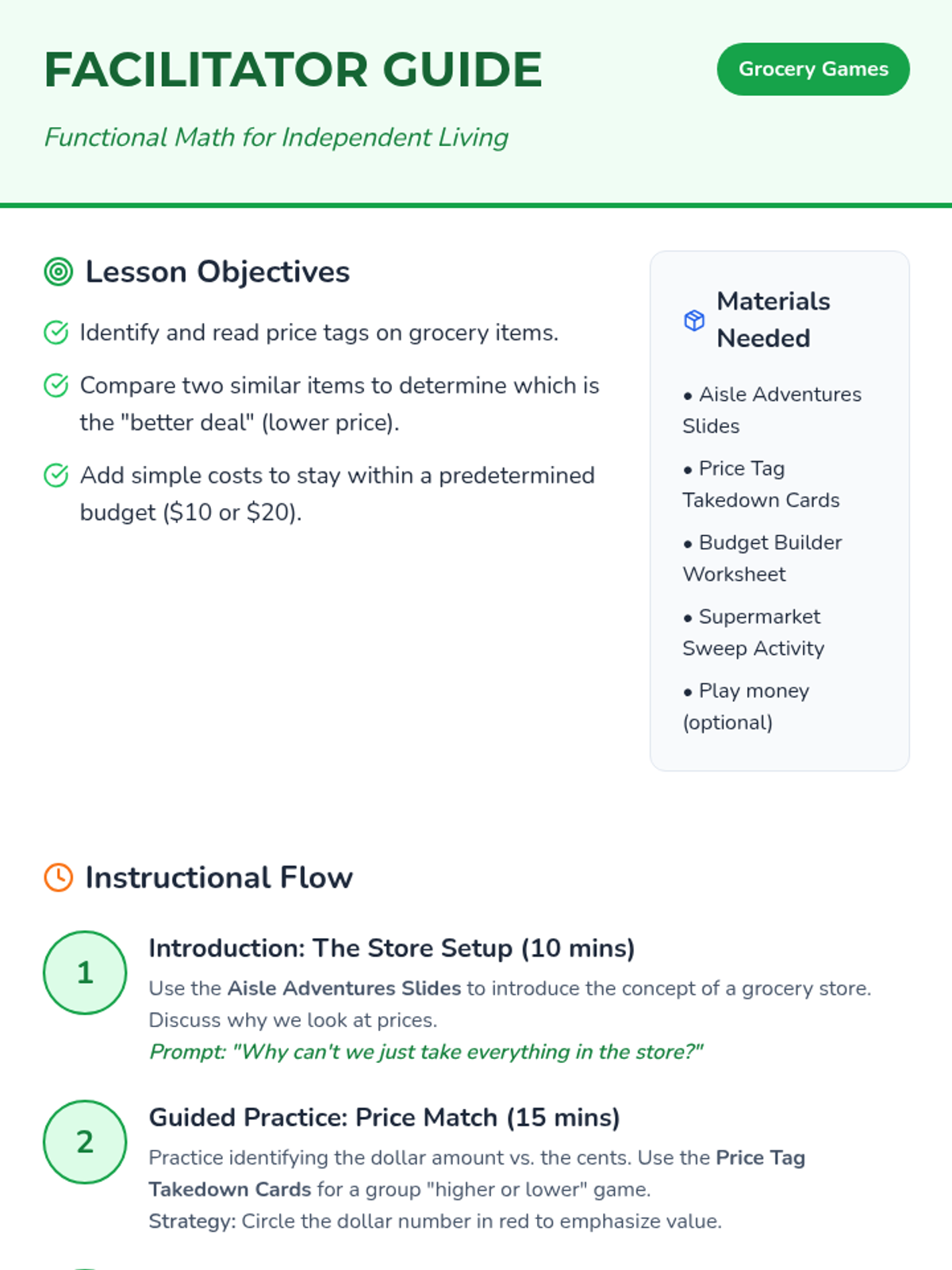
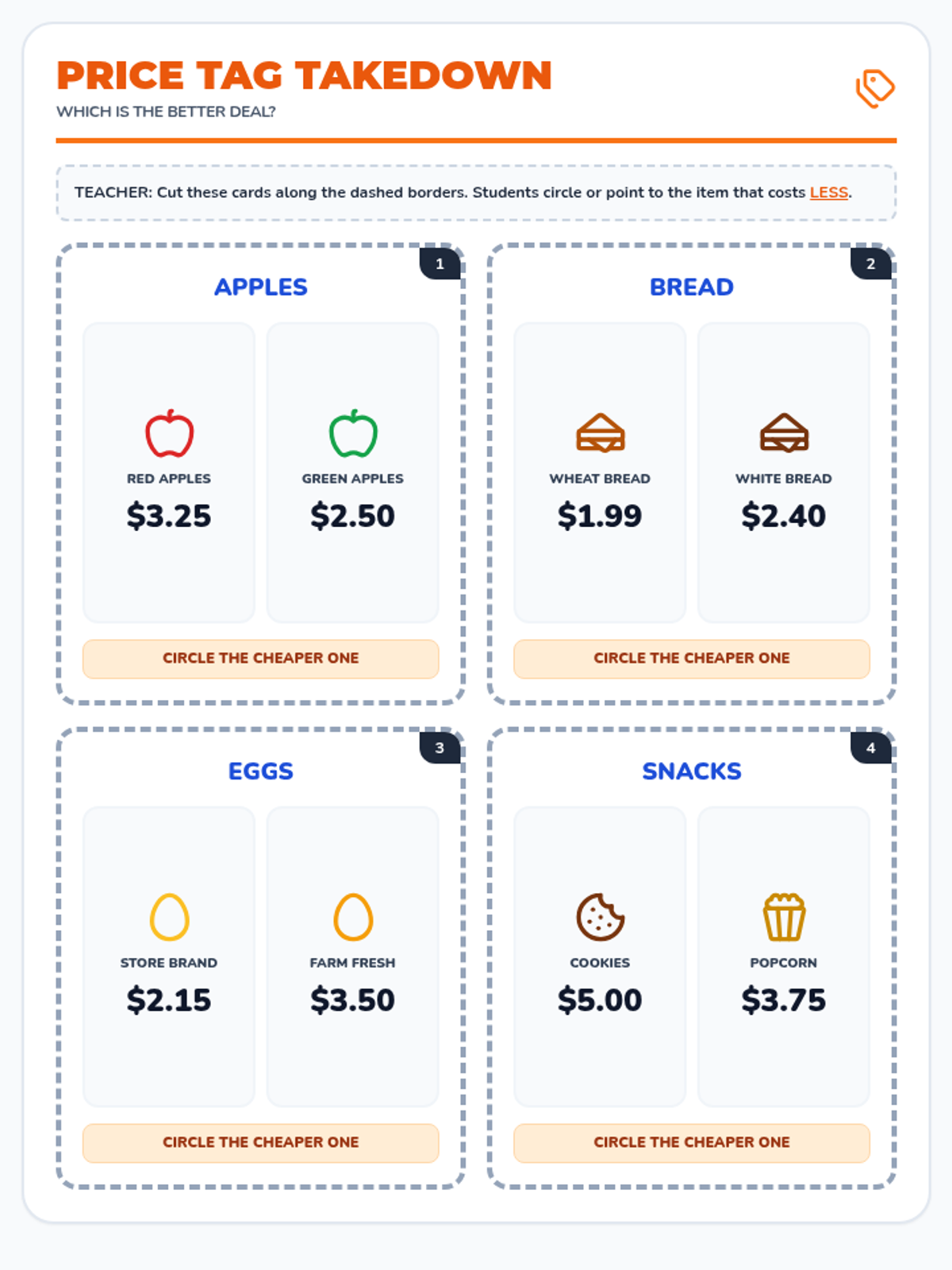
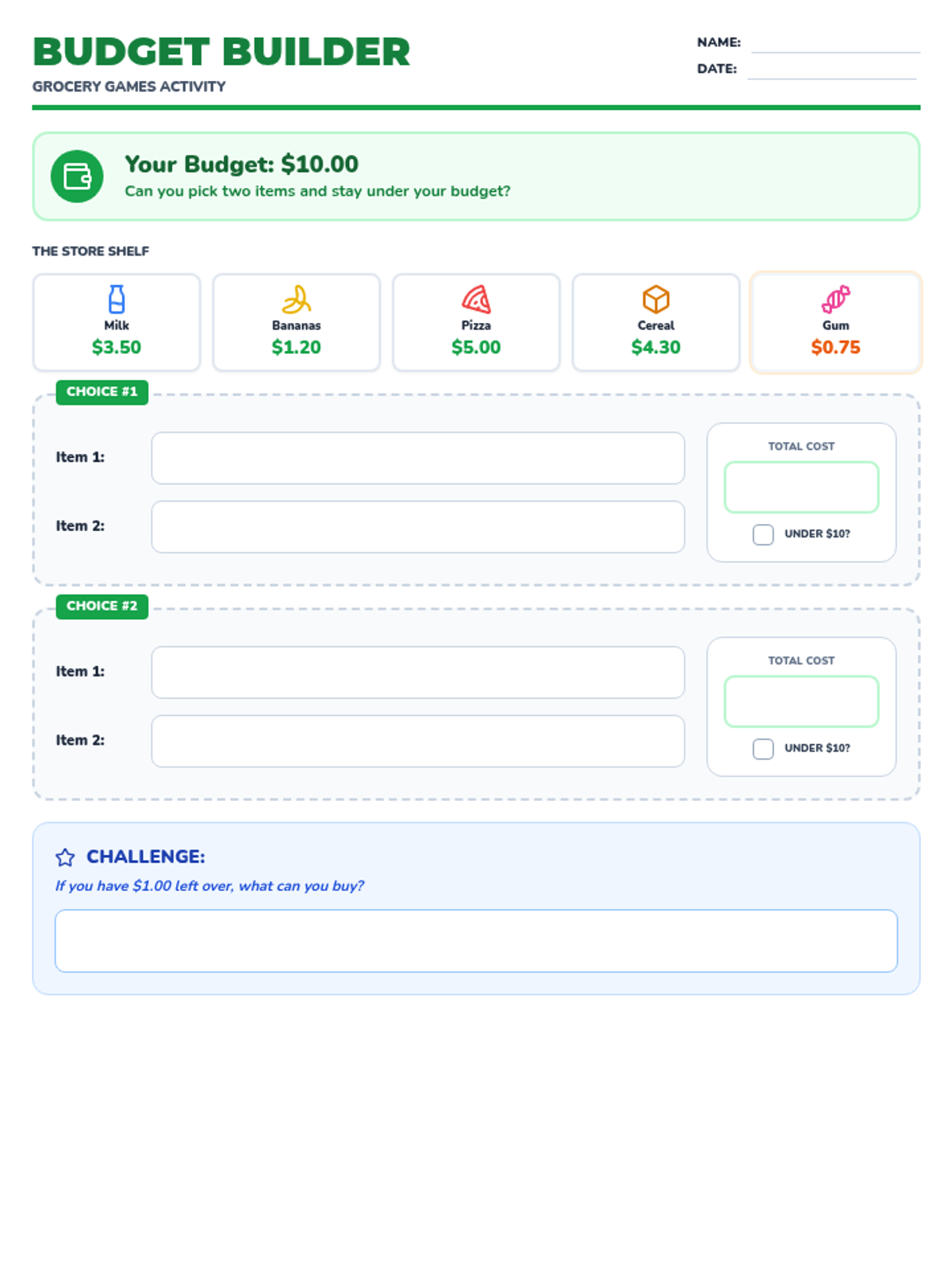
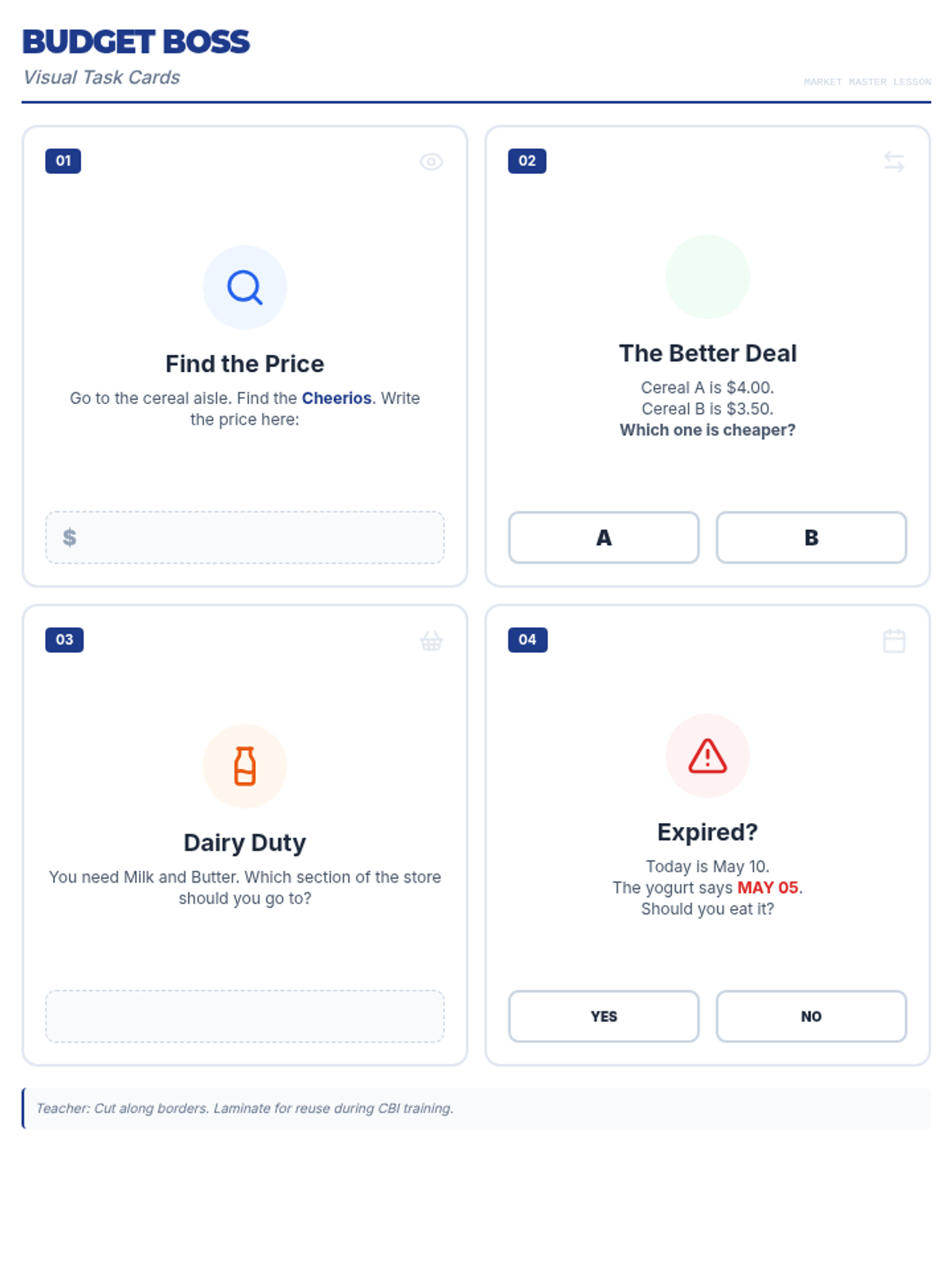
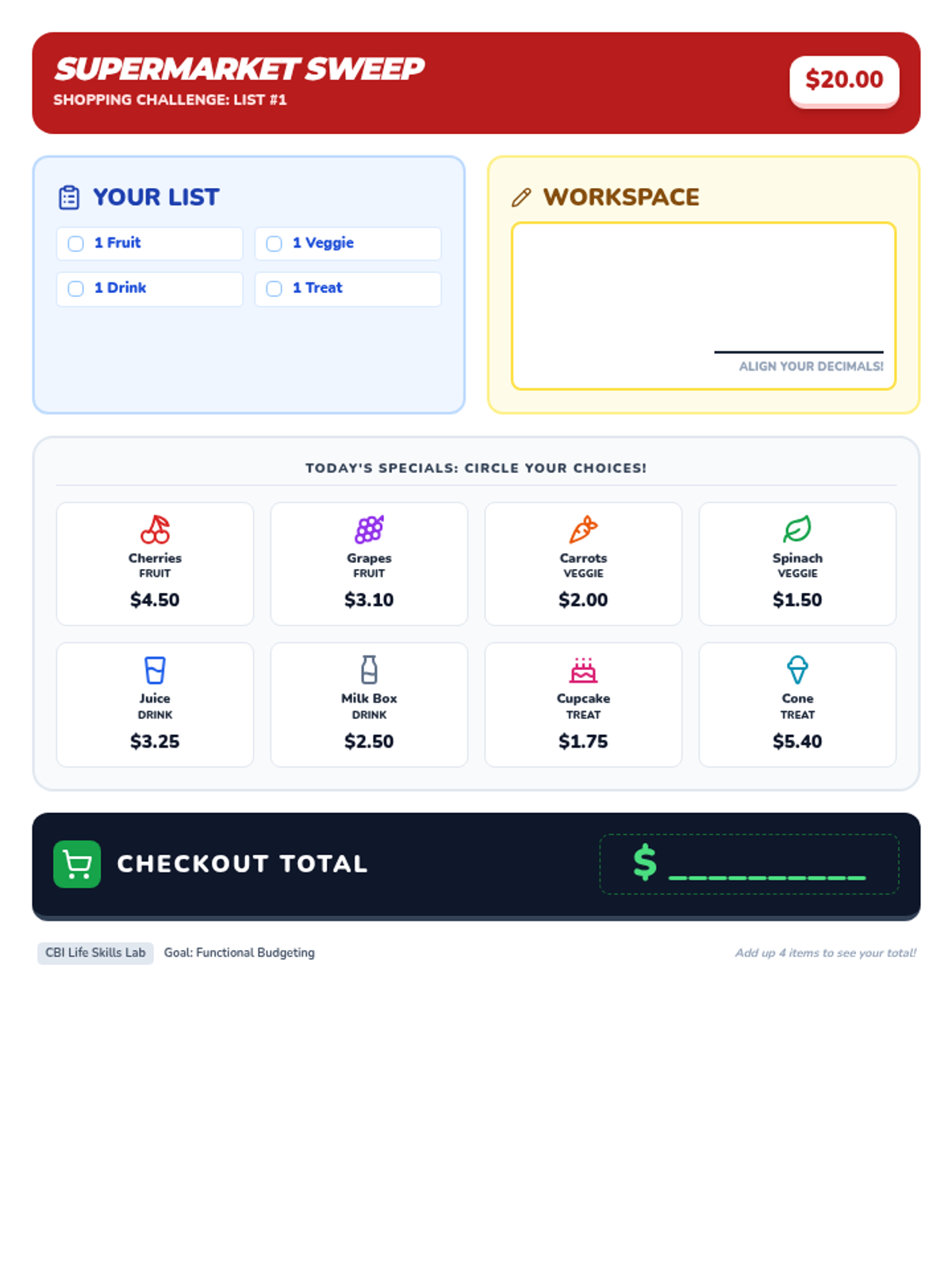
A functional math lesson designed for life skills students to practice budgeting and price comparison in a simulated grocery store environment. Students learn to navigate price tags and make smart shopping choices for independent living.
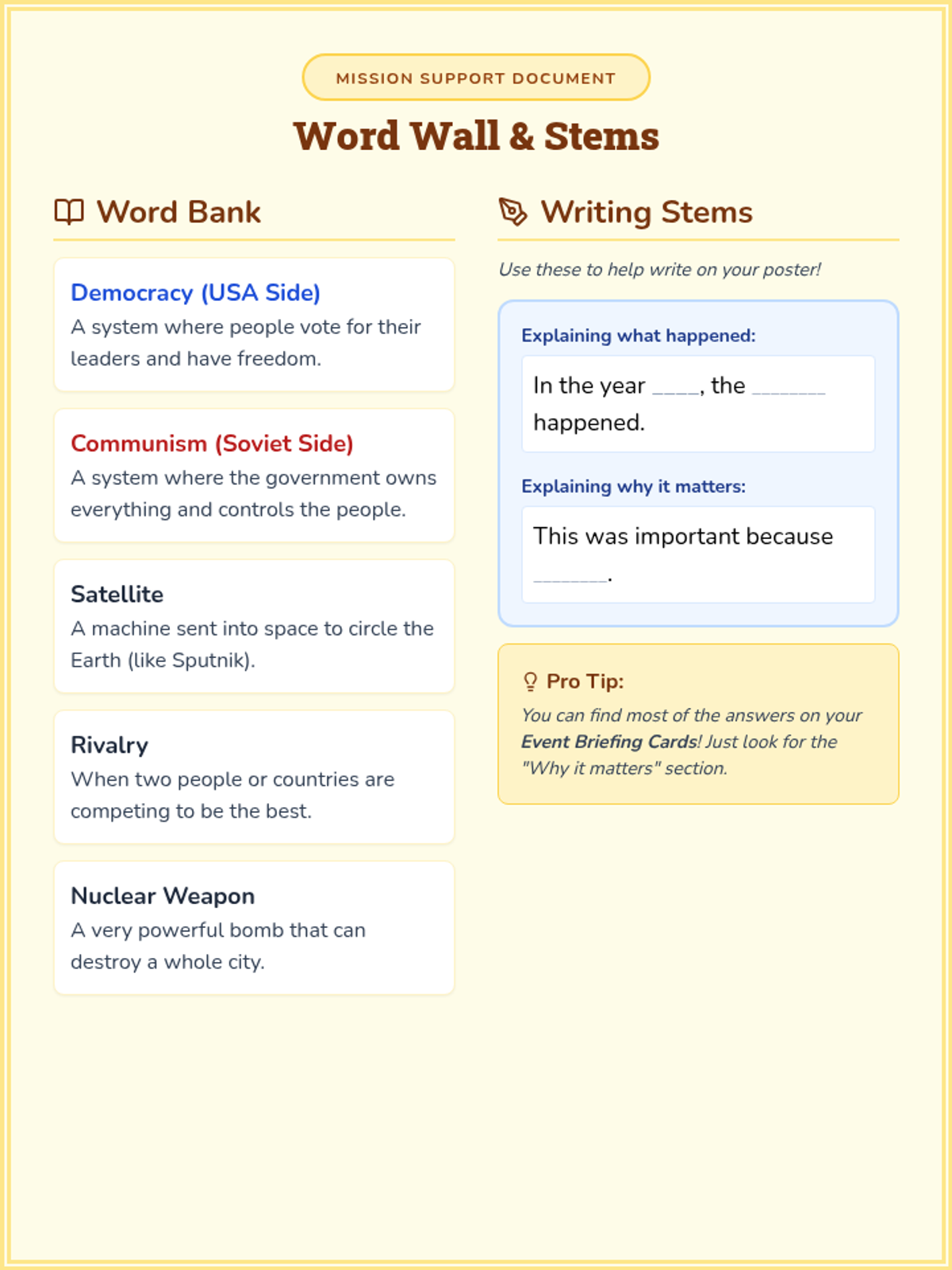
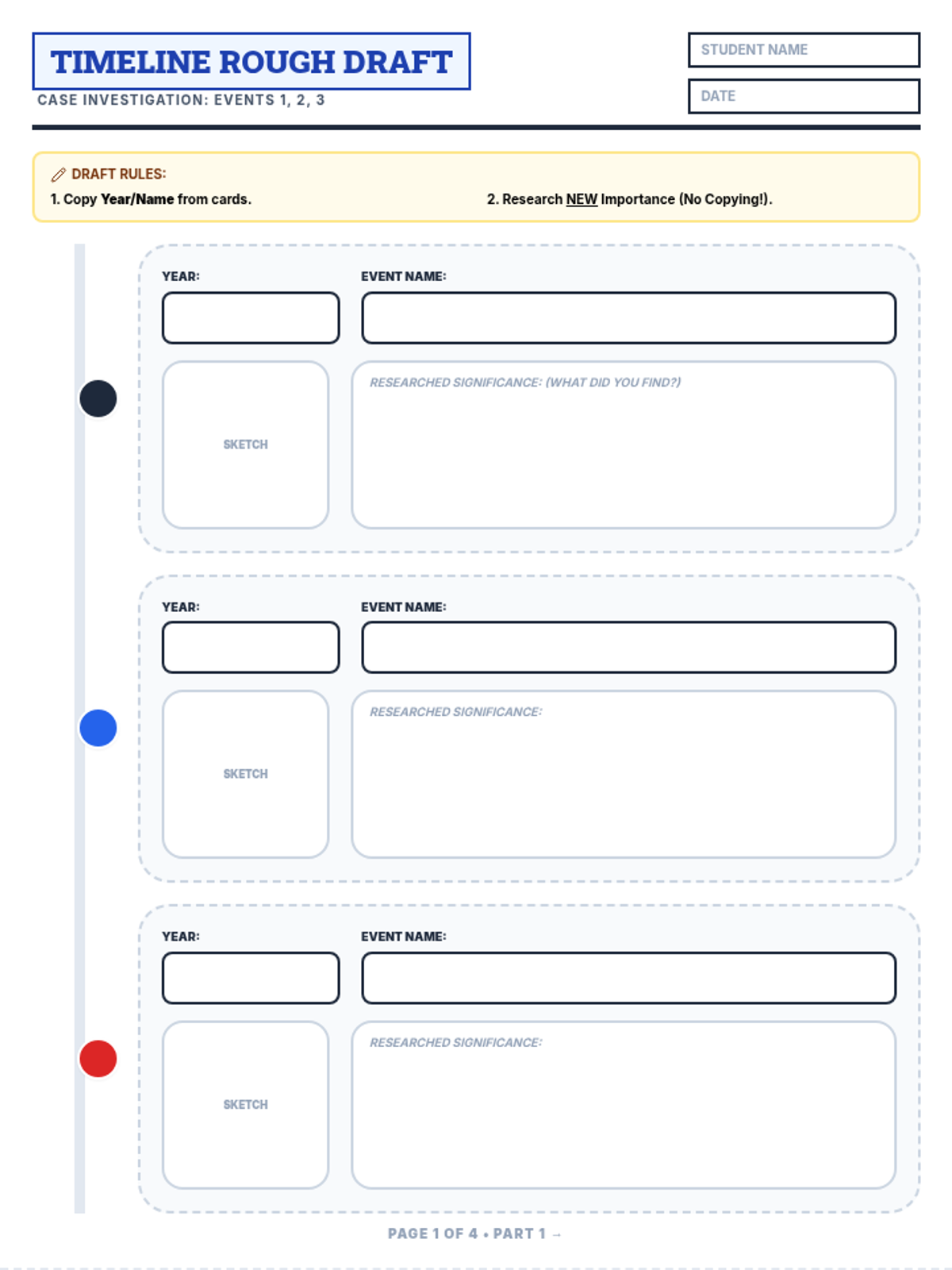
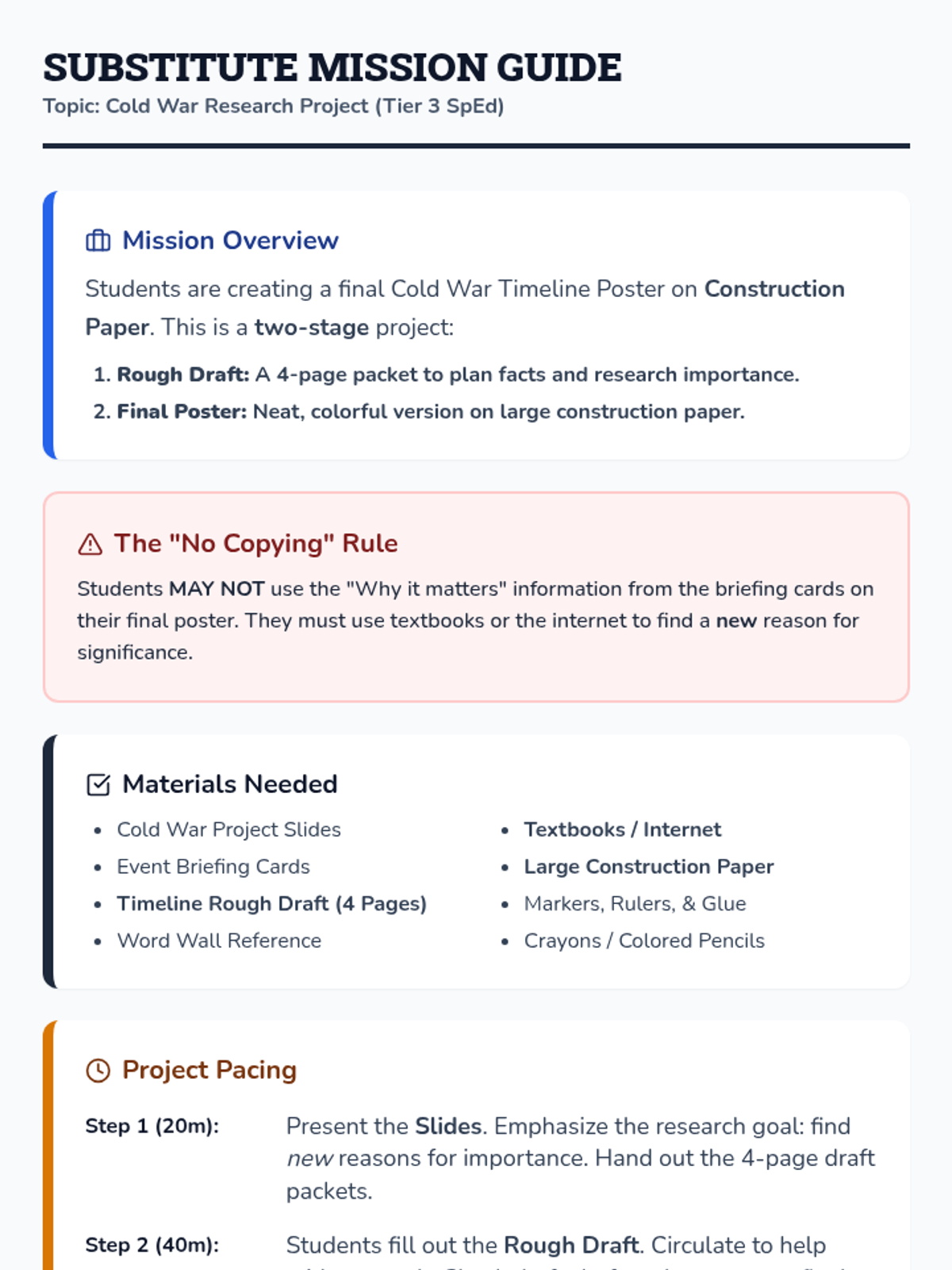
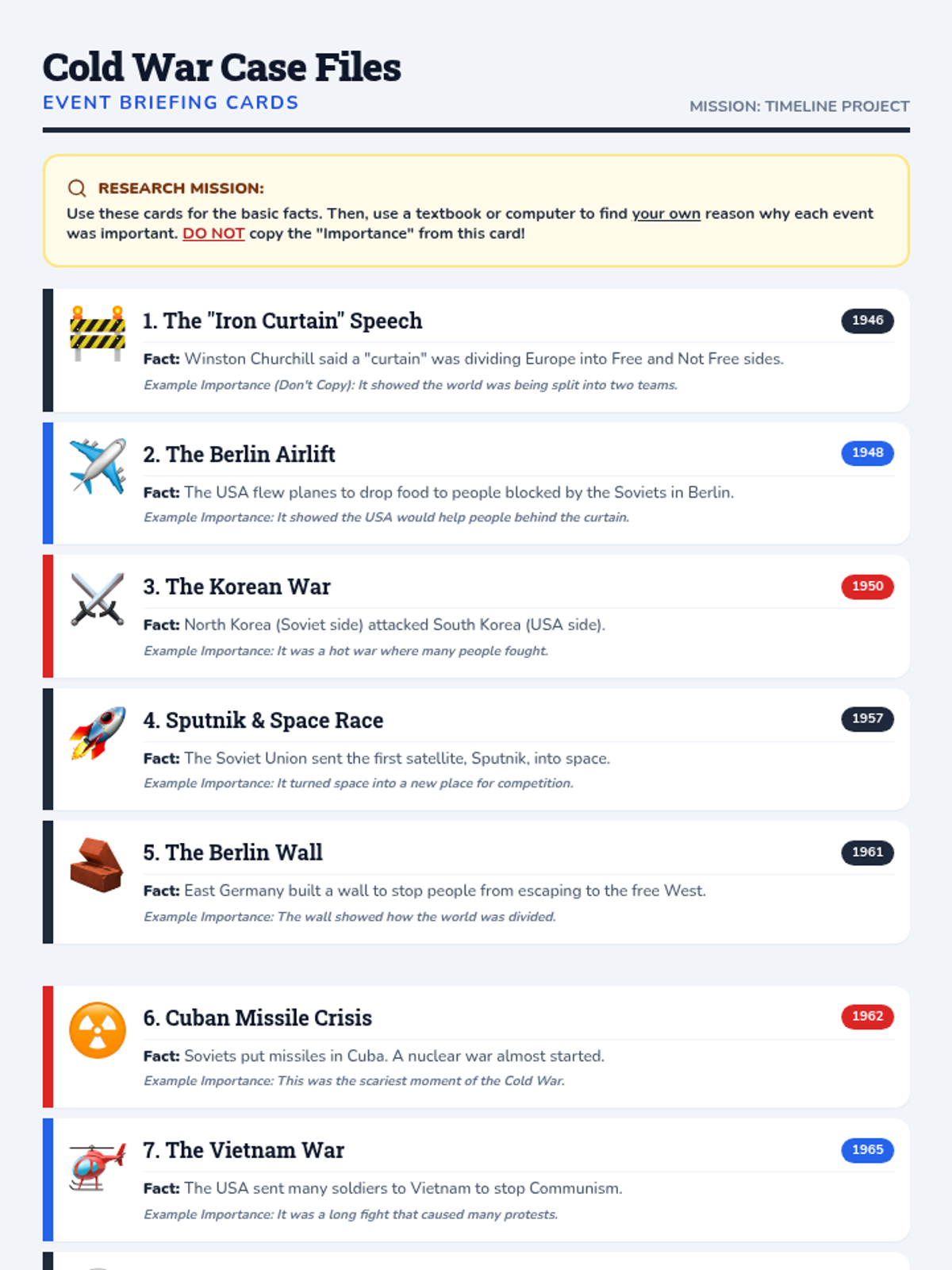
A simplified project-based lesson on the Cold War designed for Tier 3 Special Education students. Students use a 'Case File' approach to build a timeline of 10 major events with provided stems and visual supports.
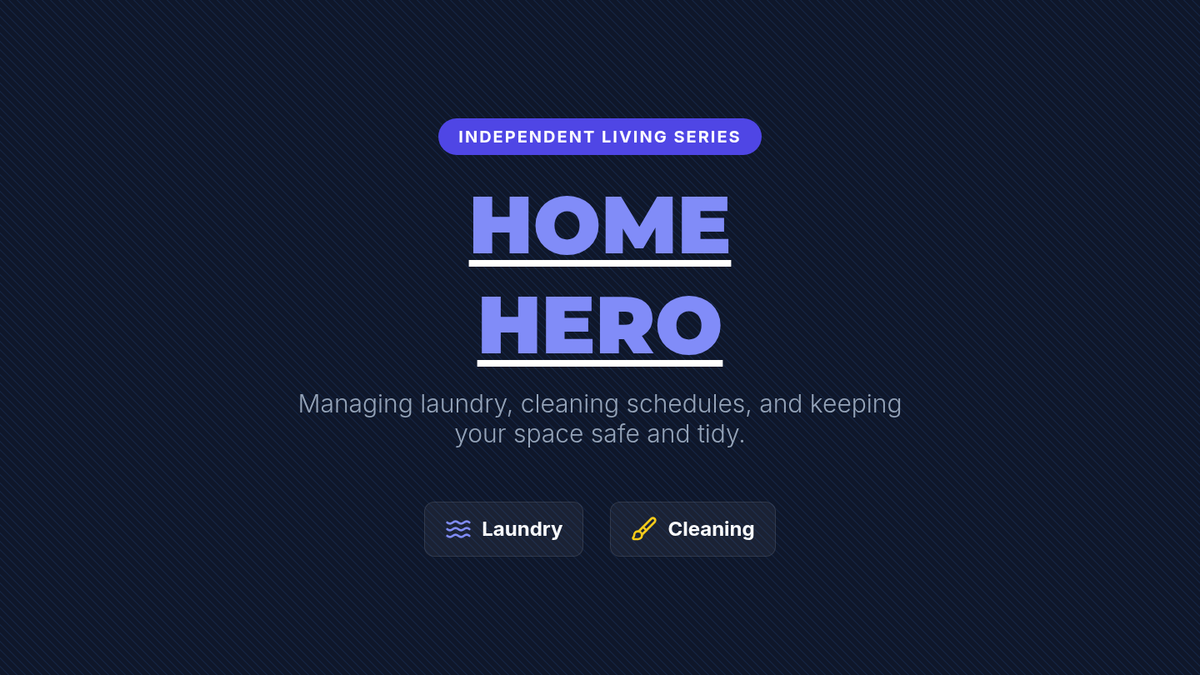
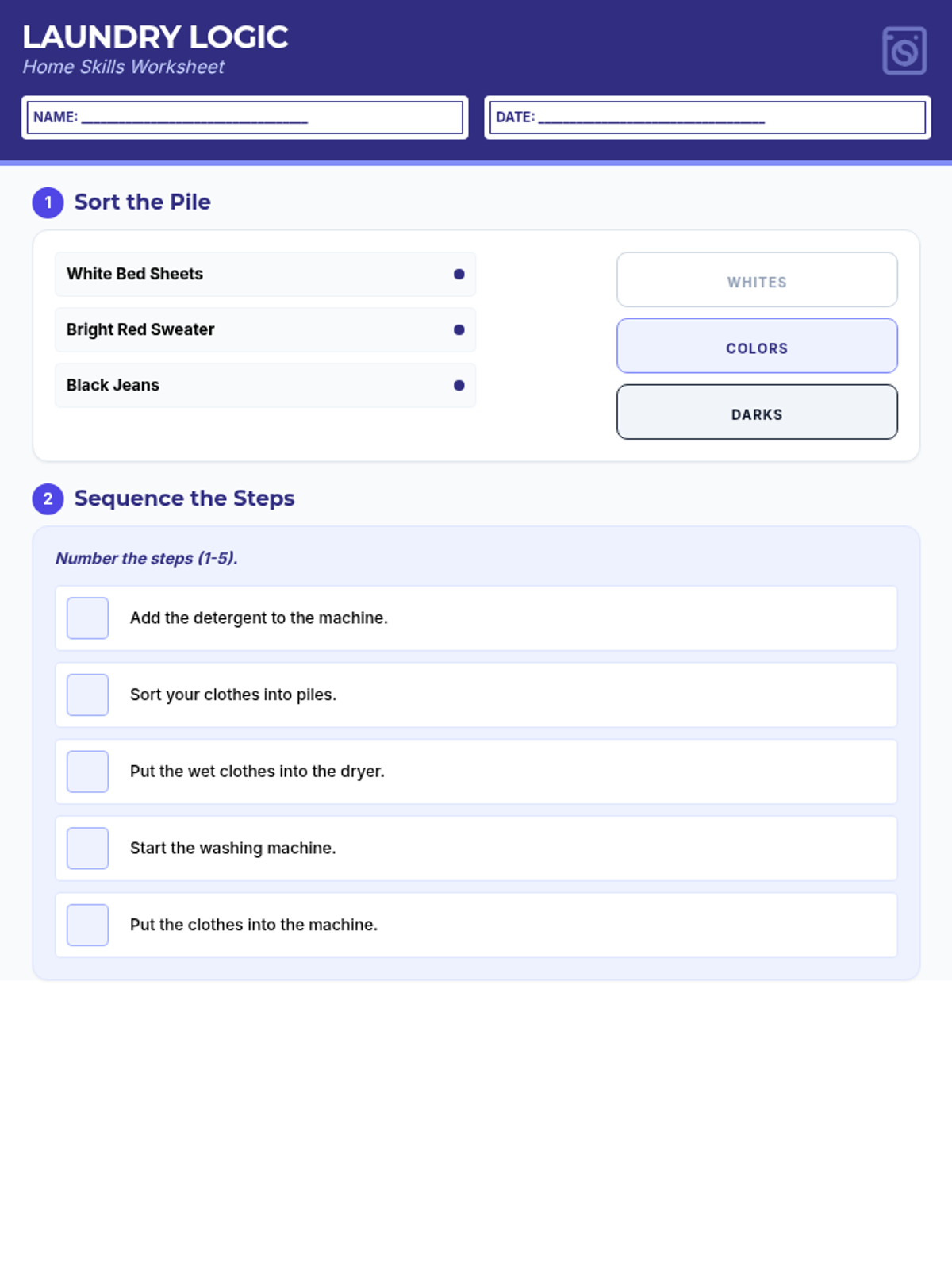
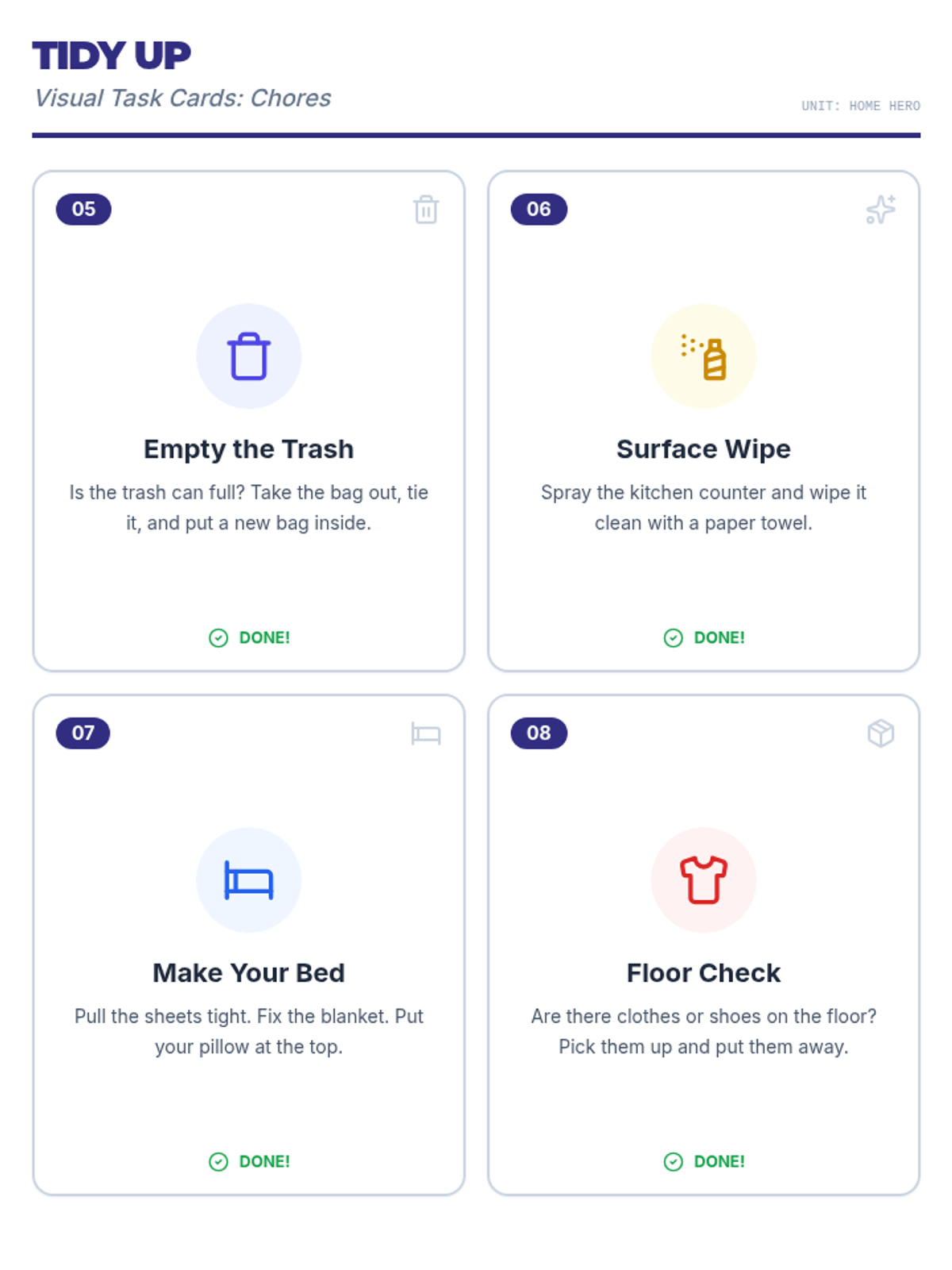
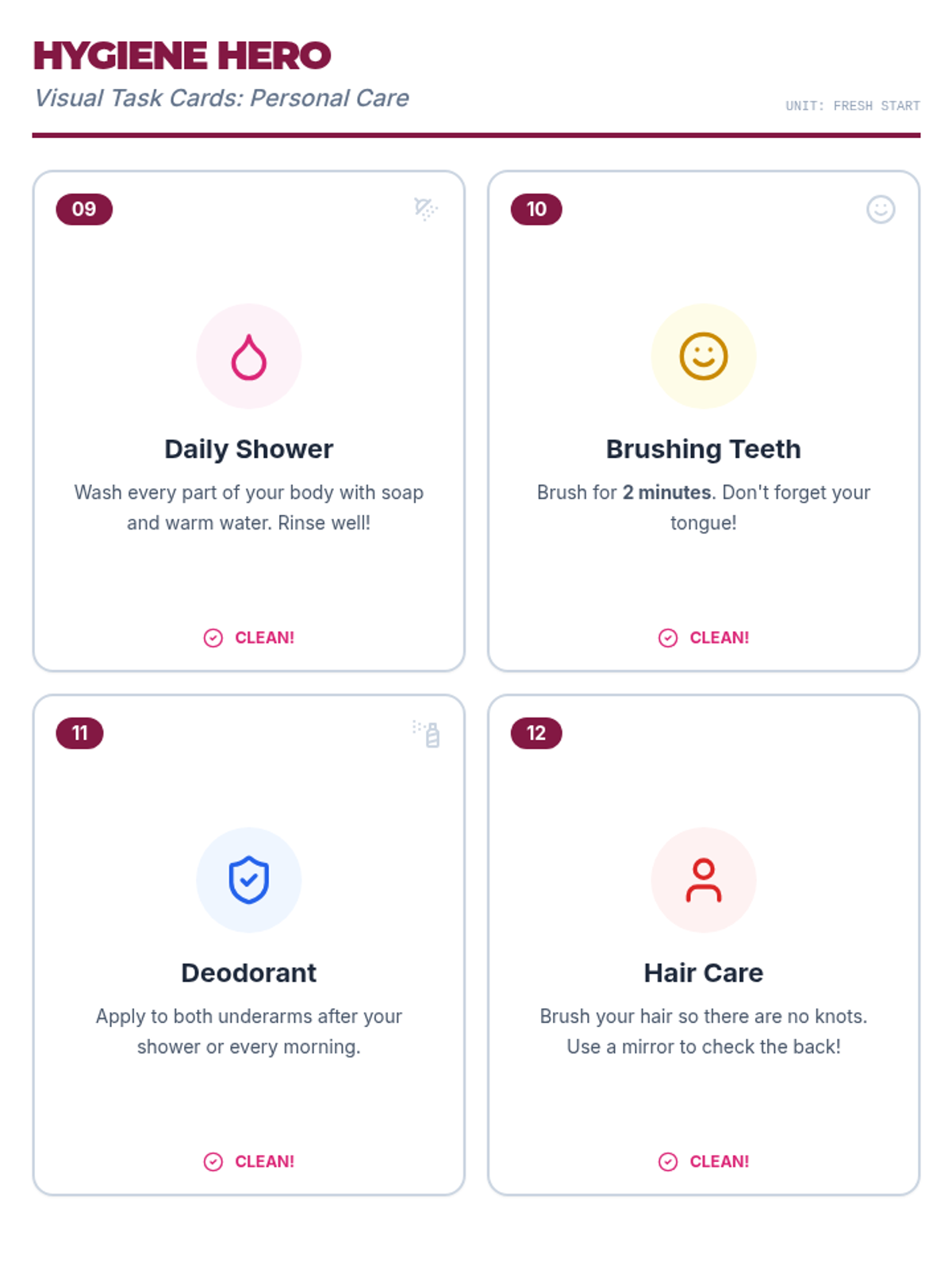
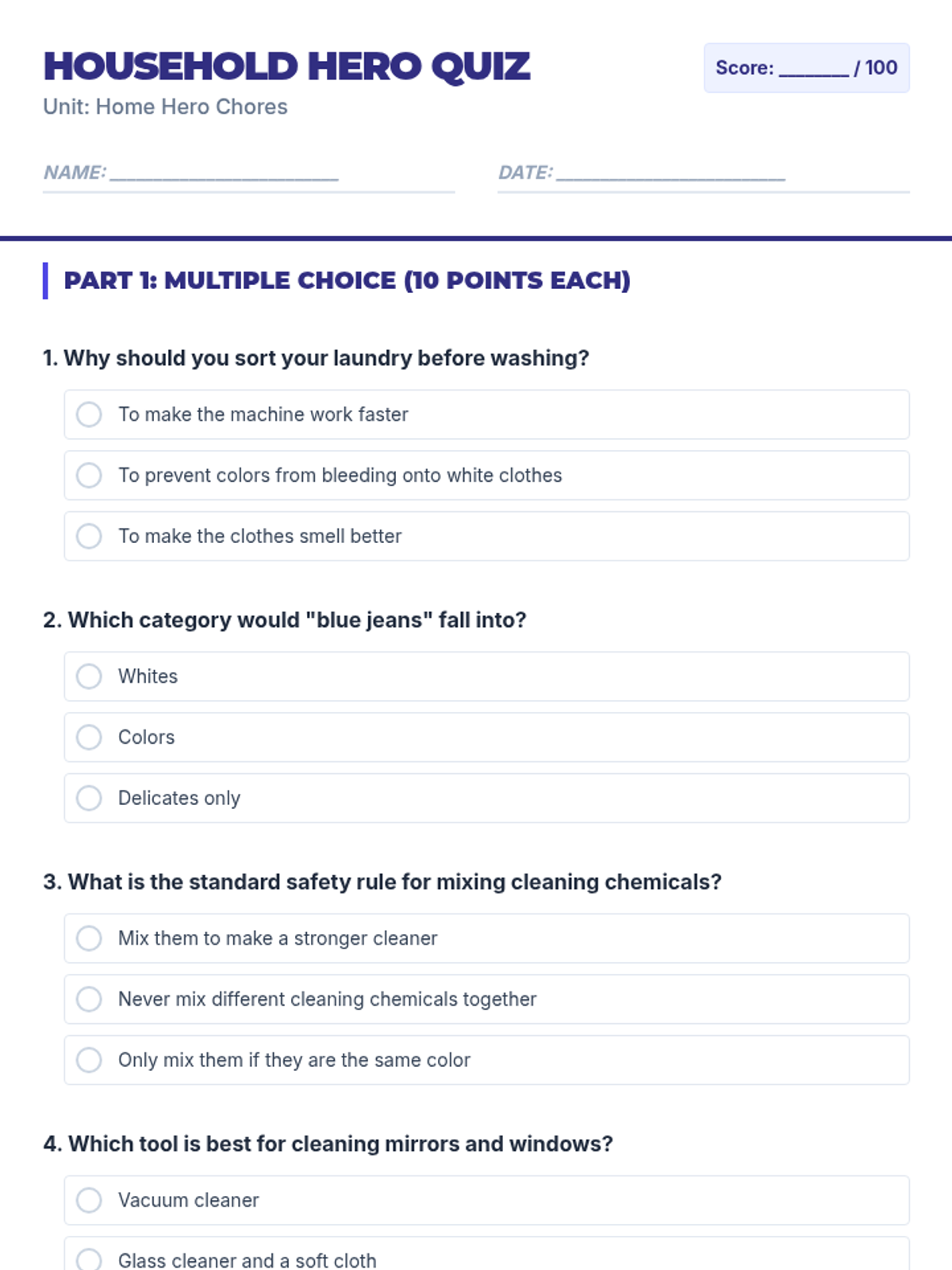
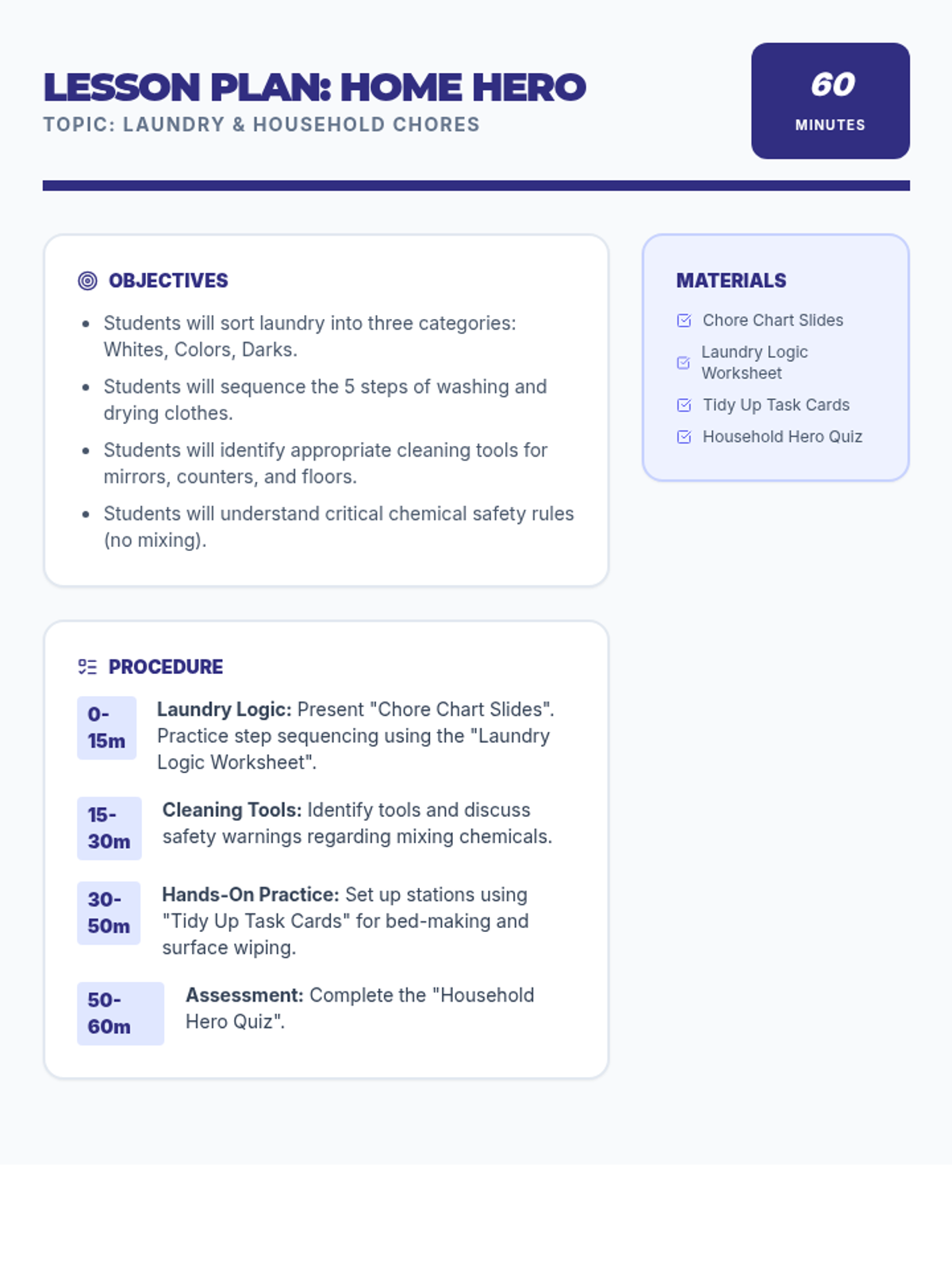
Mastering the art of laundry, cleaning schedules, and maintaining a healthy home environment.
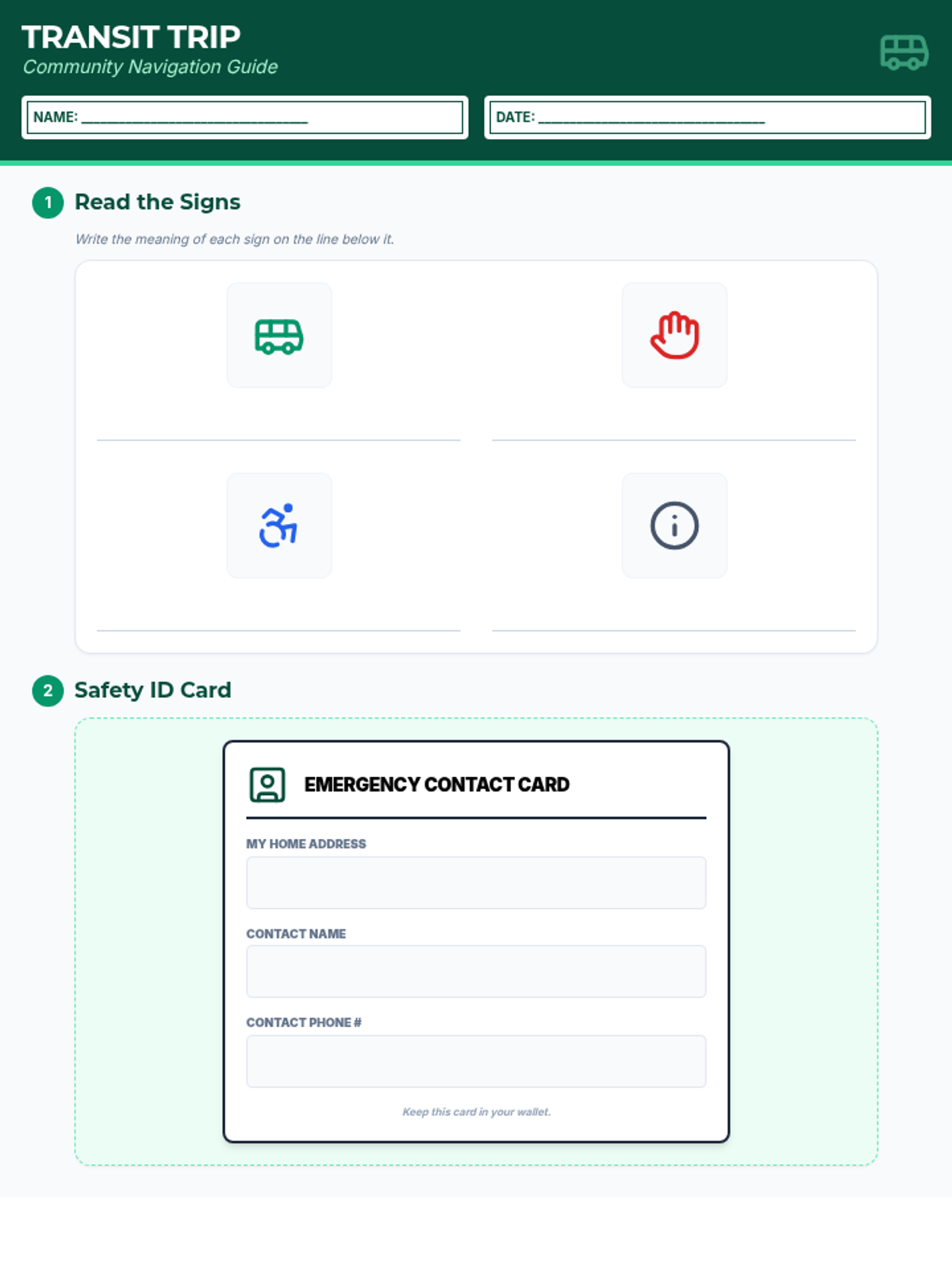
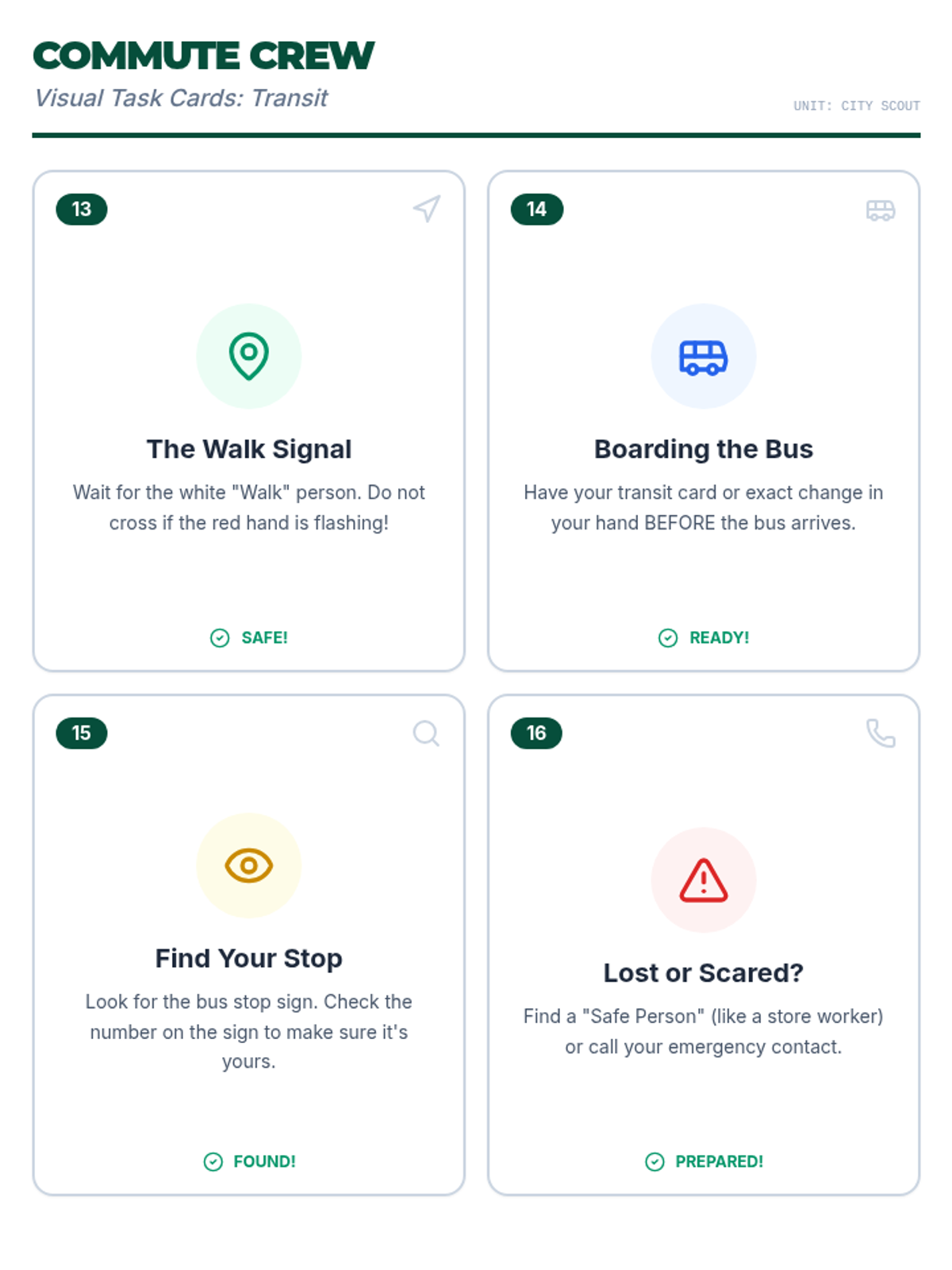
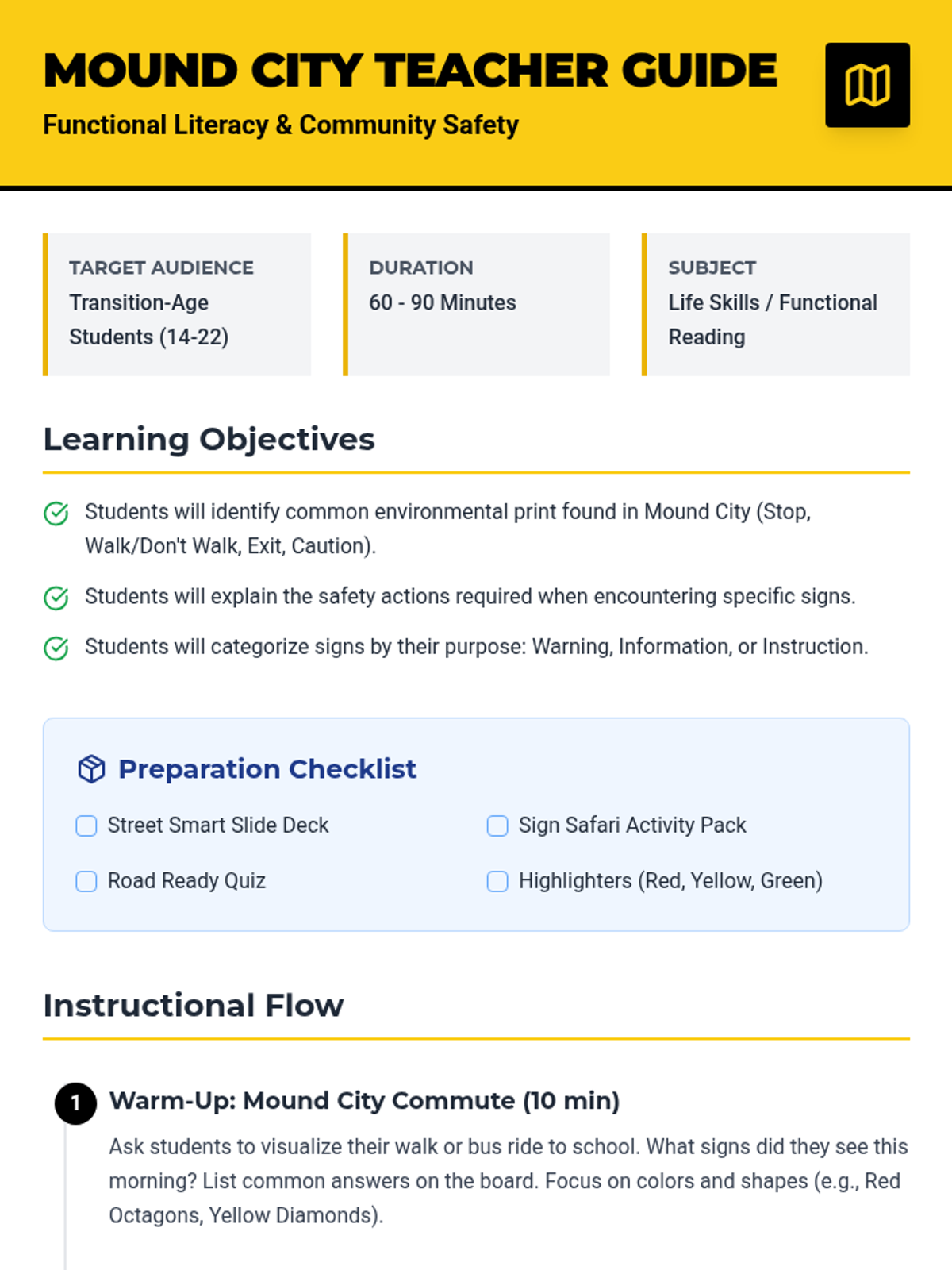
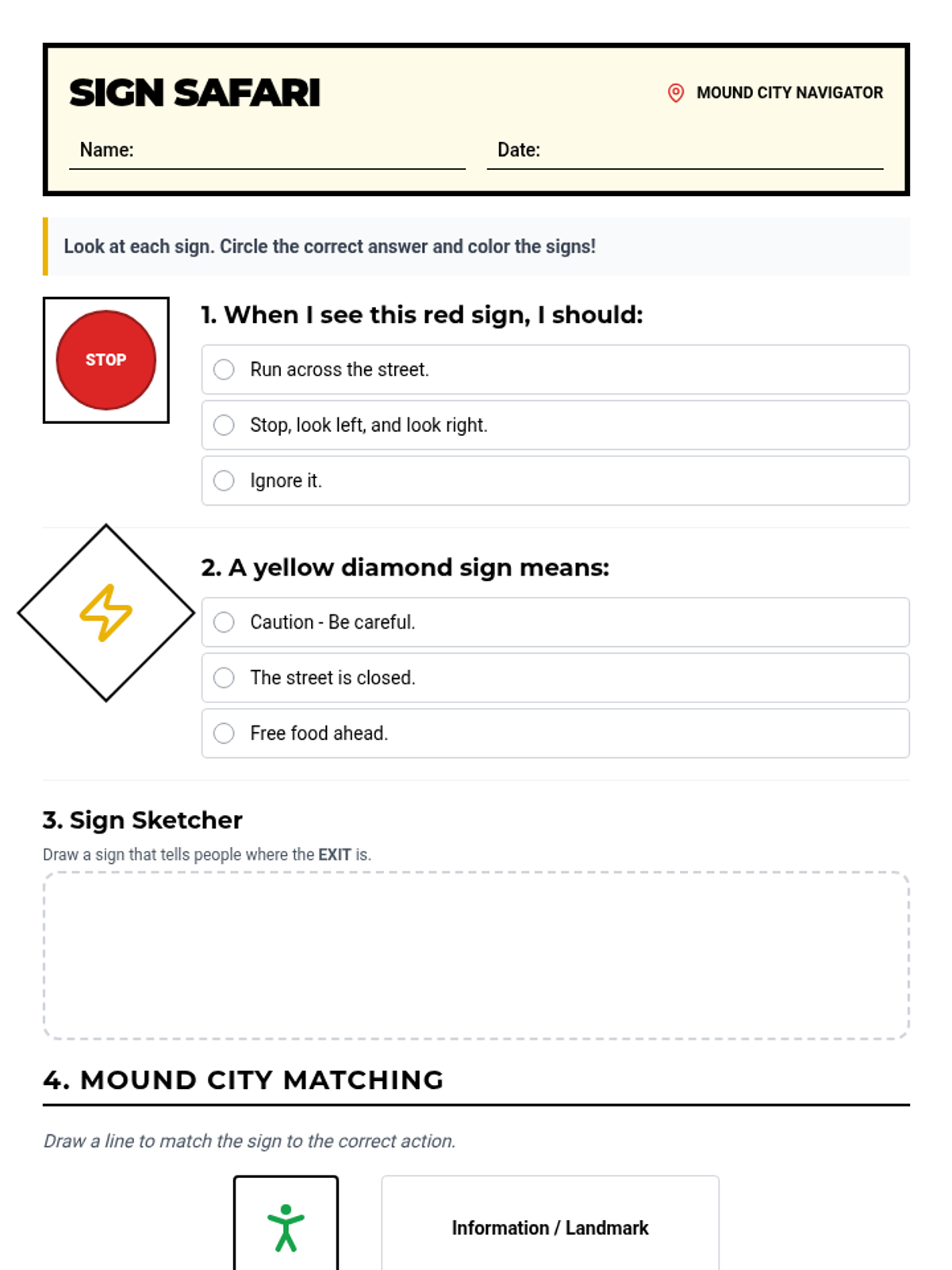
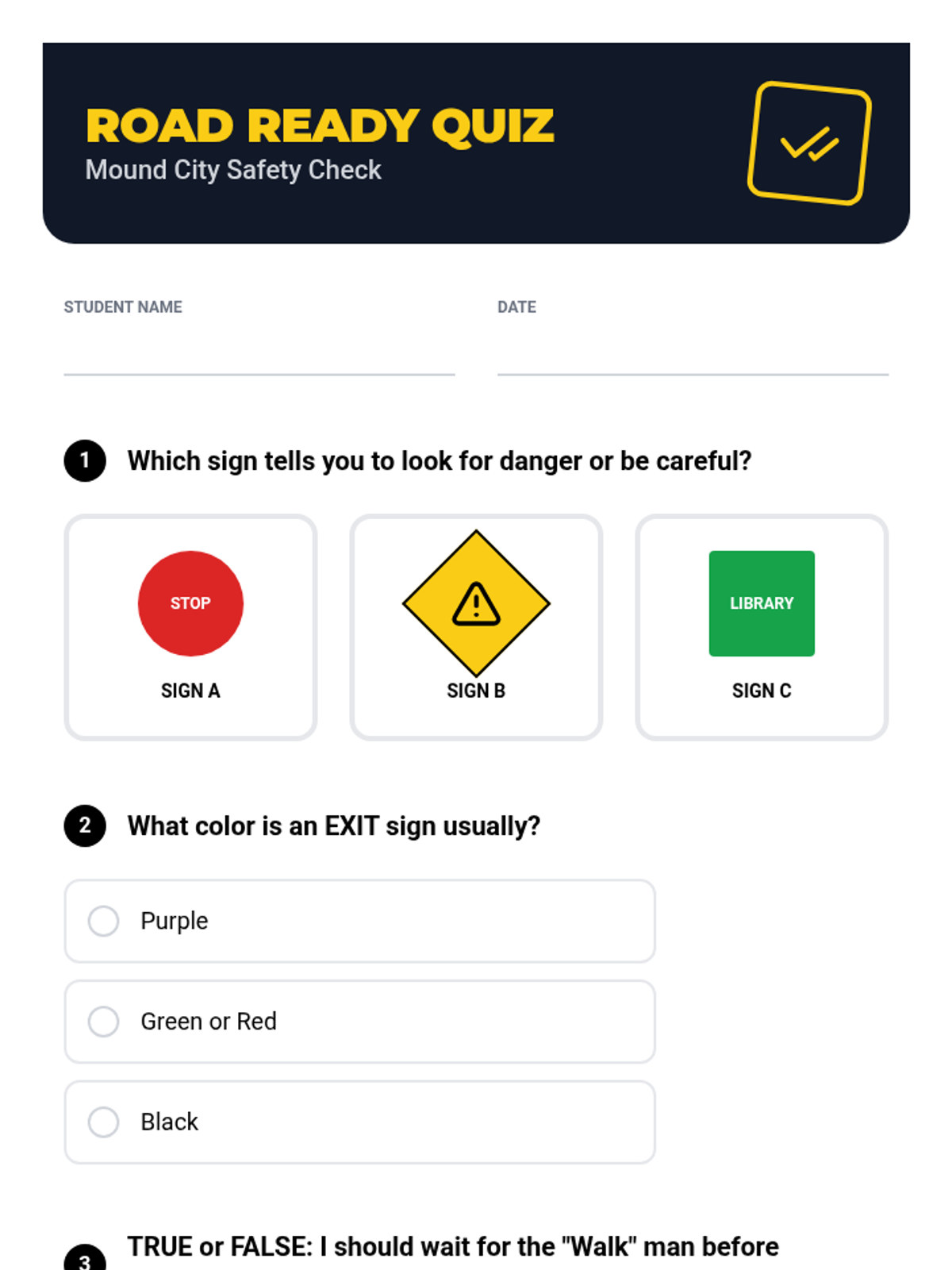
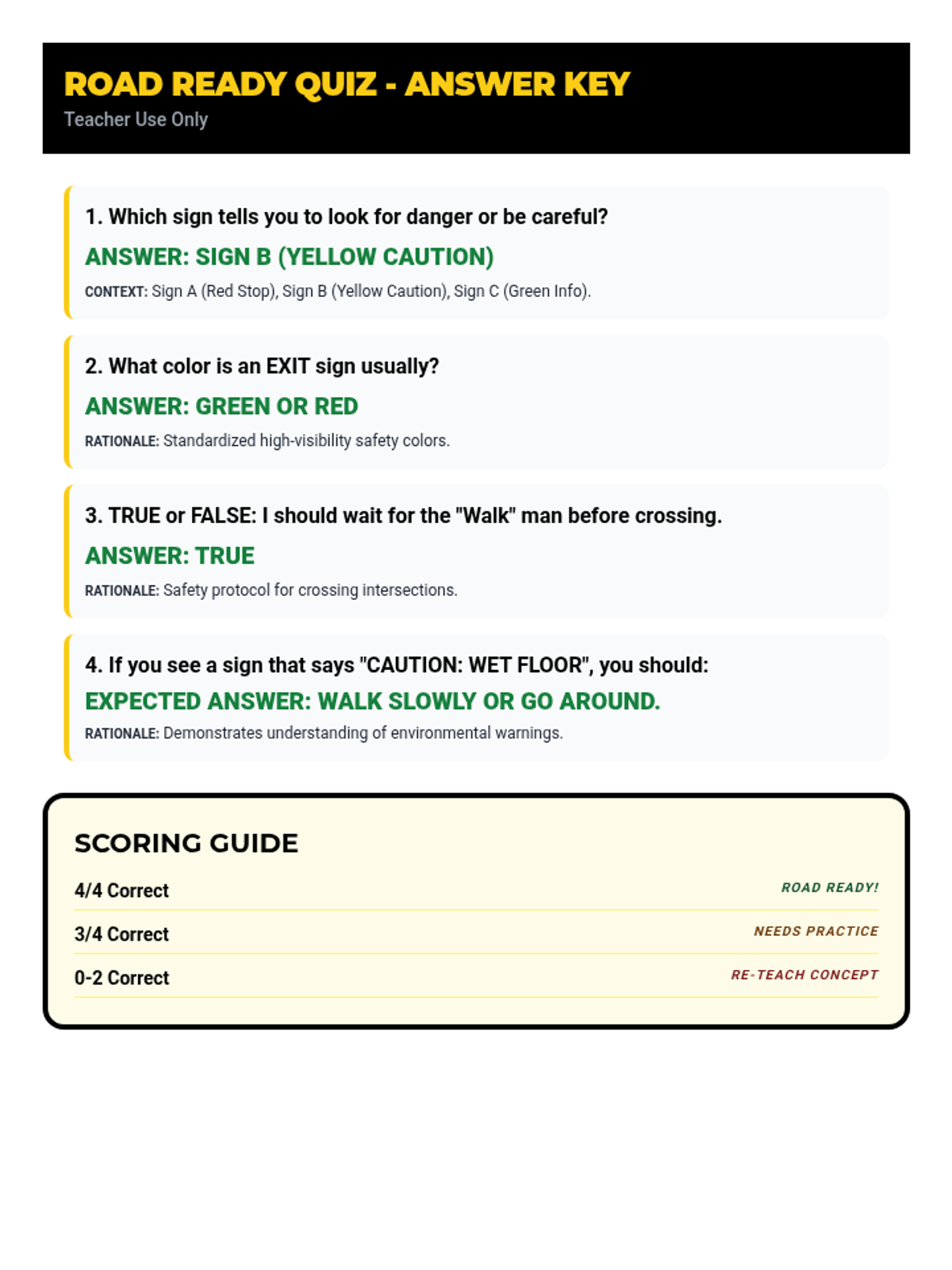
A functional literacy lesson for transition-age students focused on identifying and interpreting environmental print and safety signs in the Mound City community. Students build real-world independence through sign recognition and situational awareness.
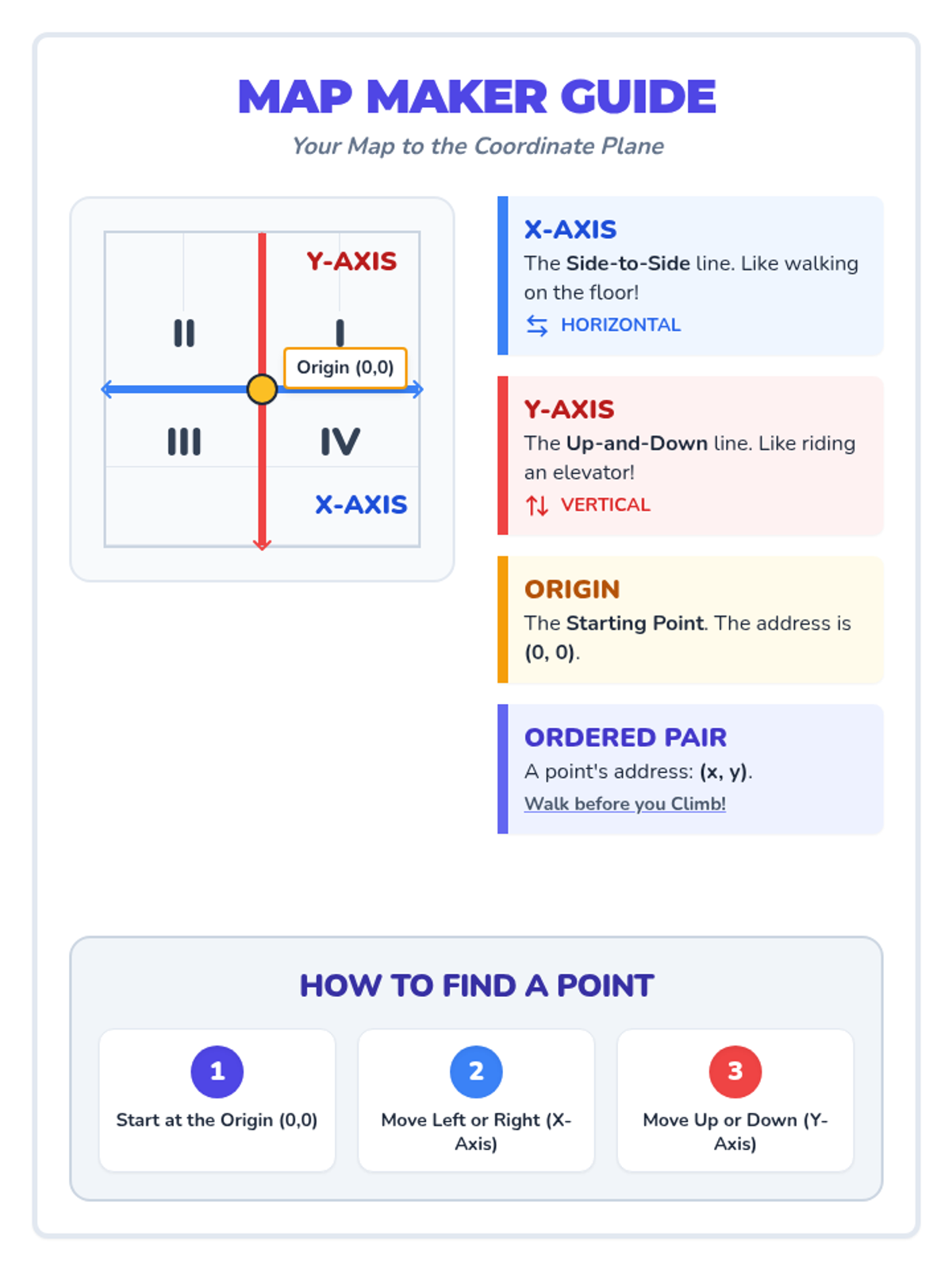
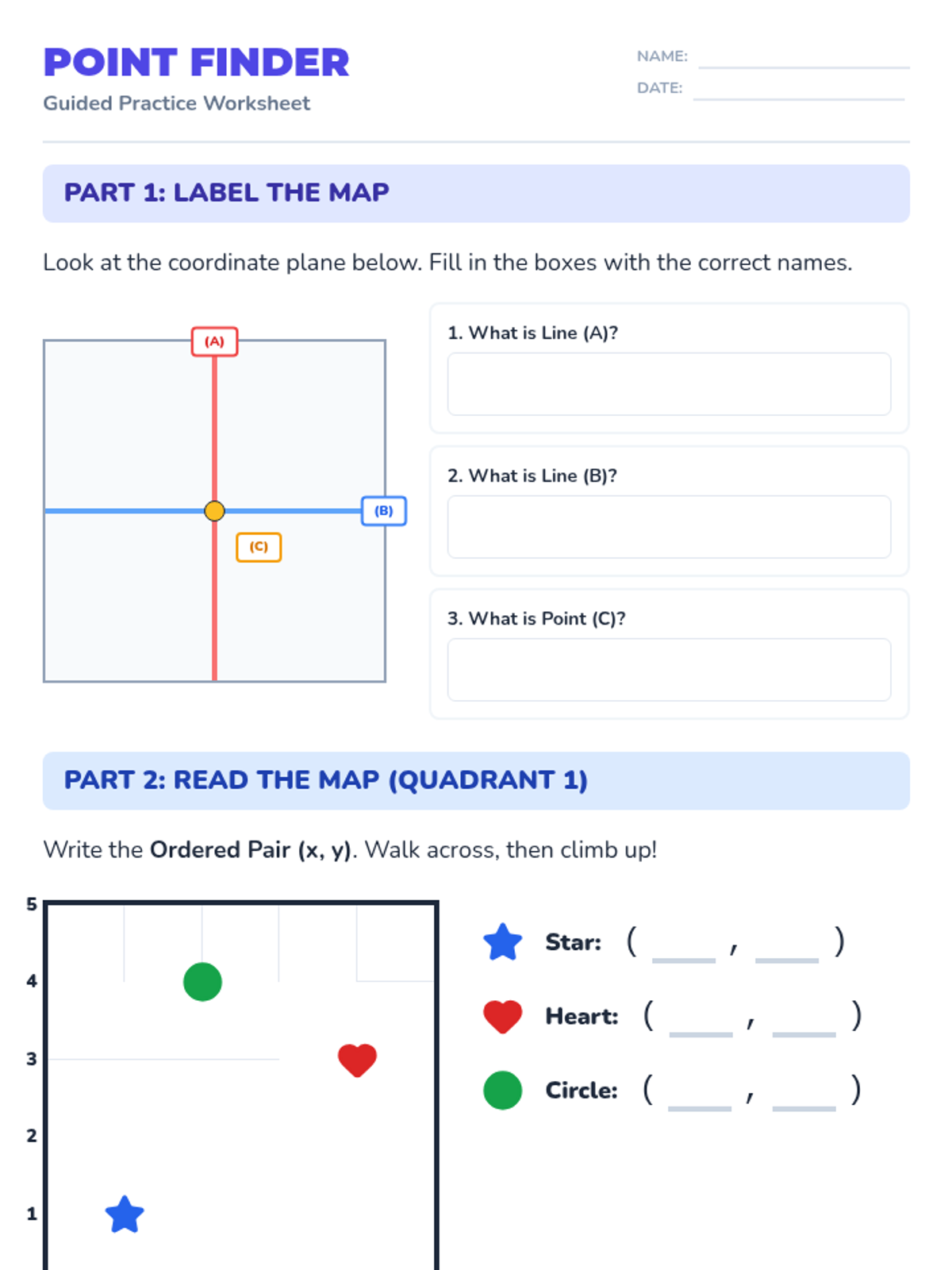
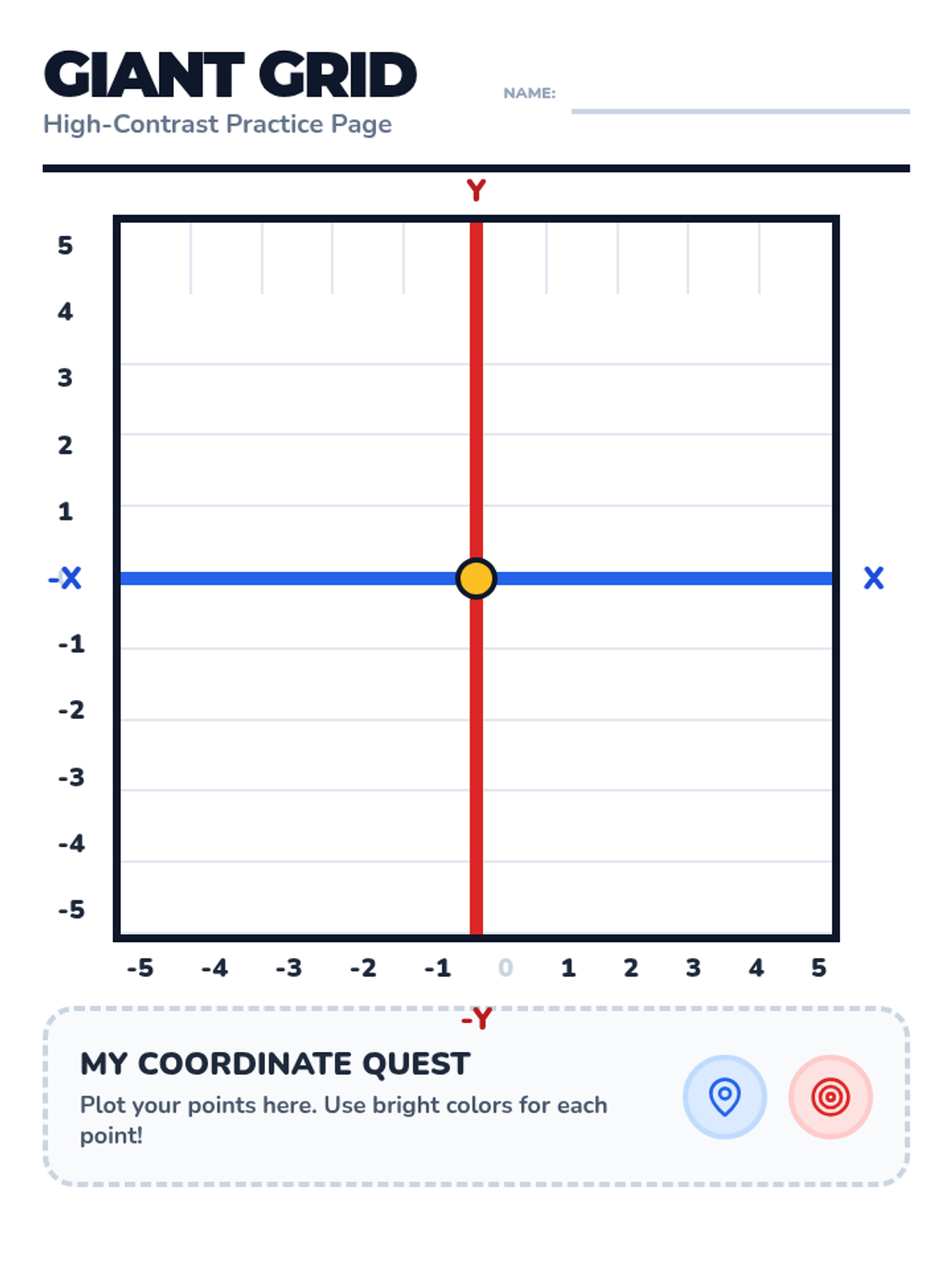
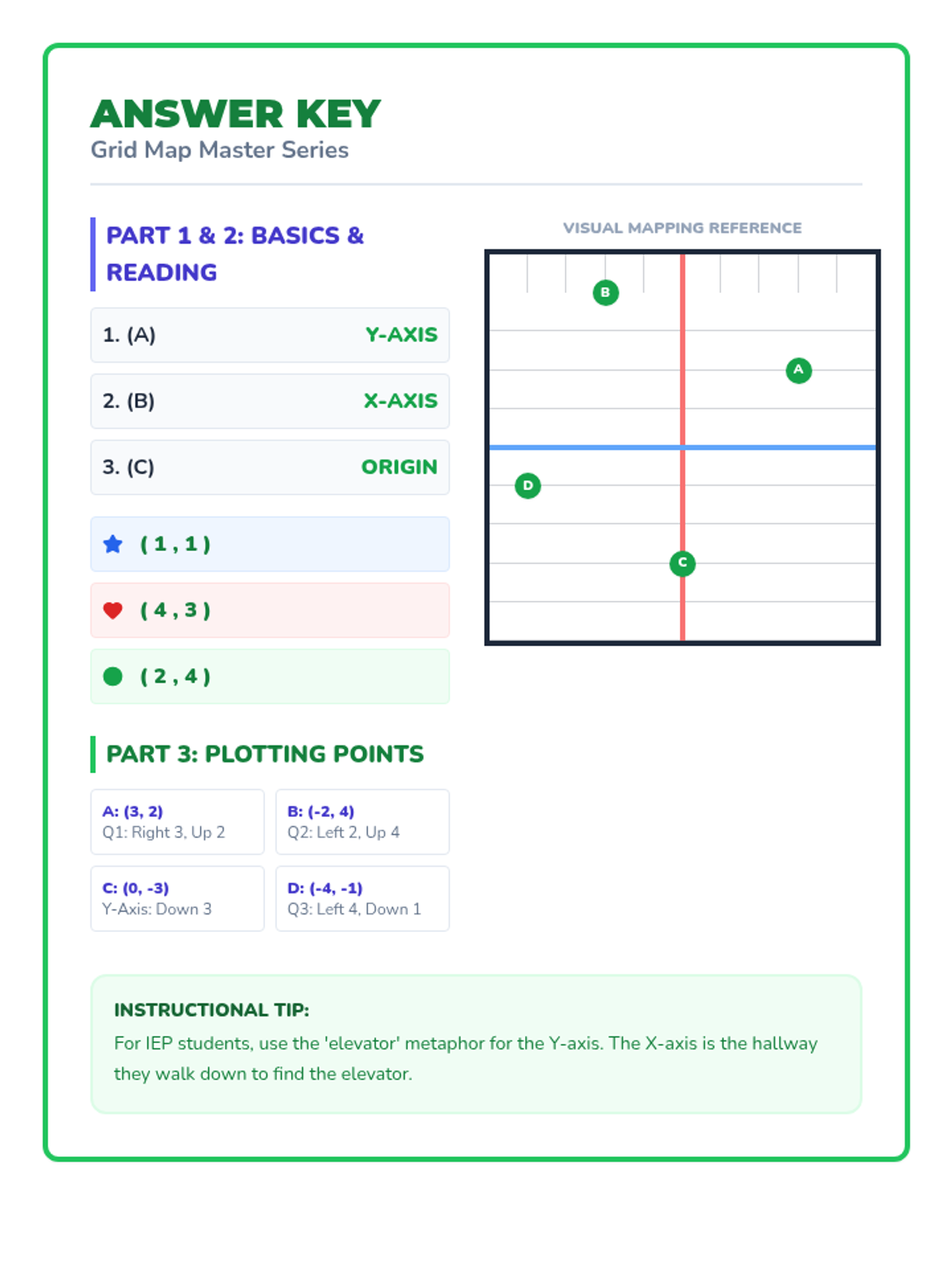
A foundational lesson on the coordinate plane designed for IEP students, focusing on vocabulary, quadrant identification, and step-by-step plotting and reading of points.
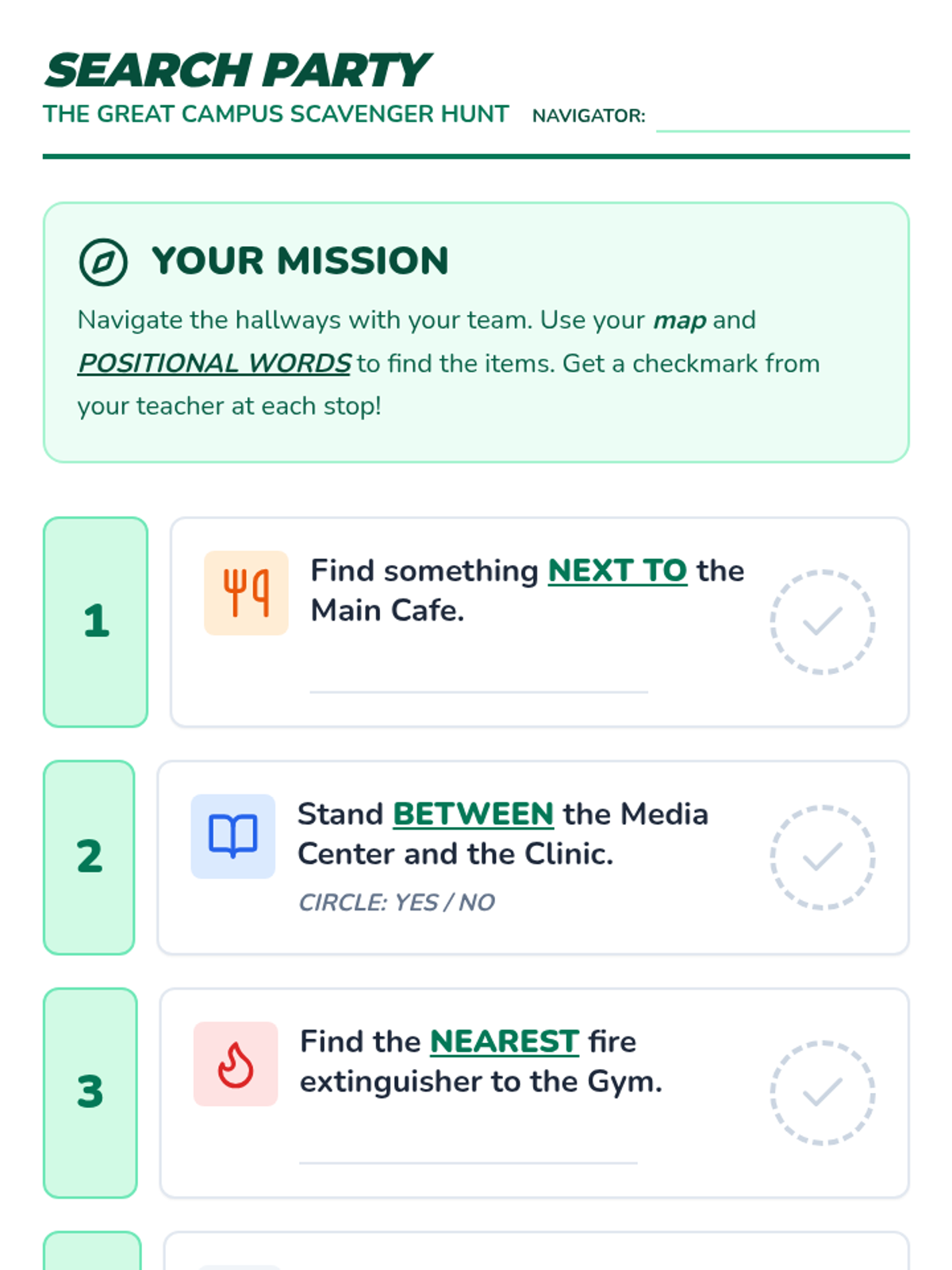
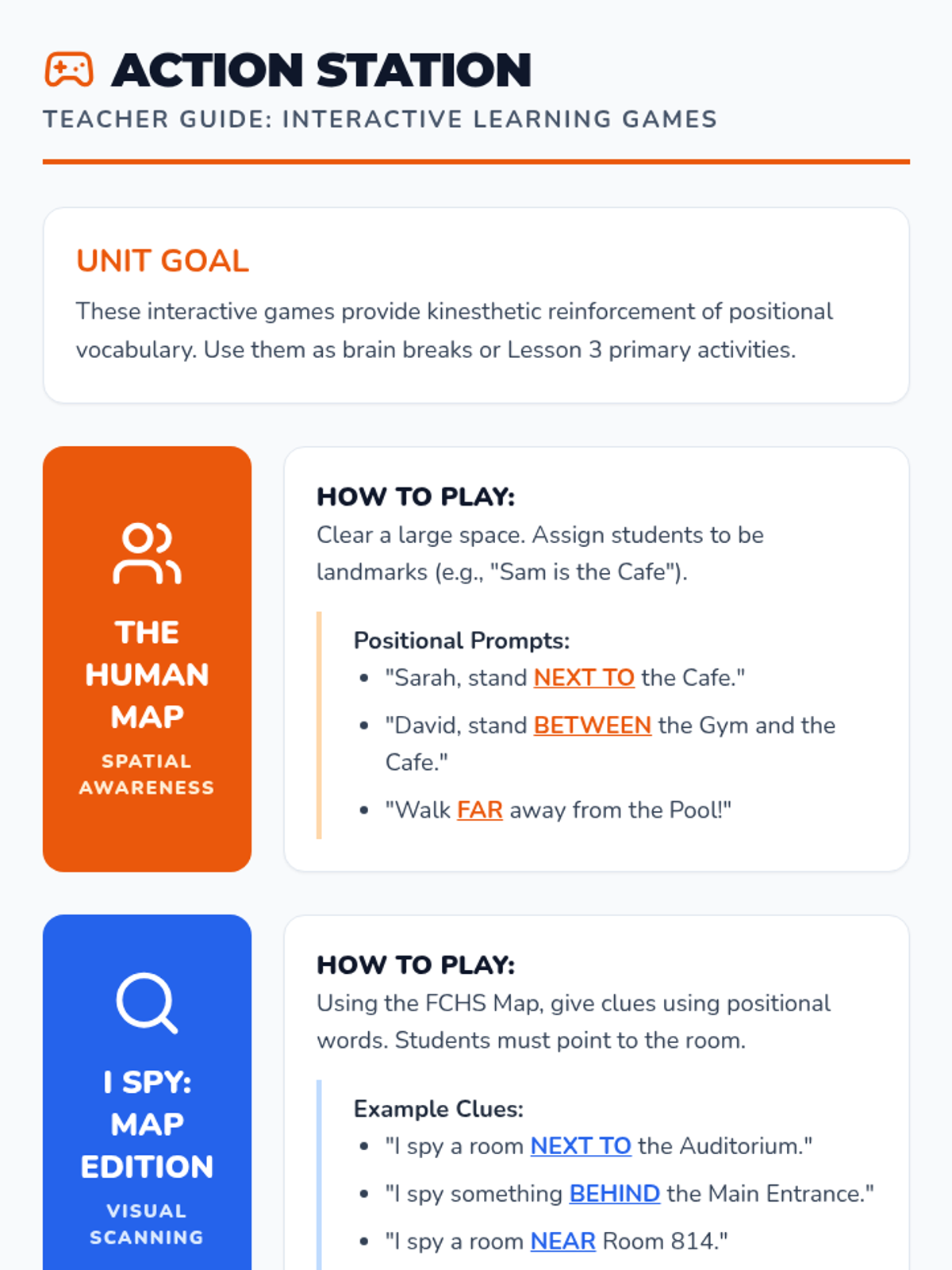
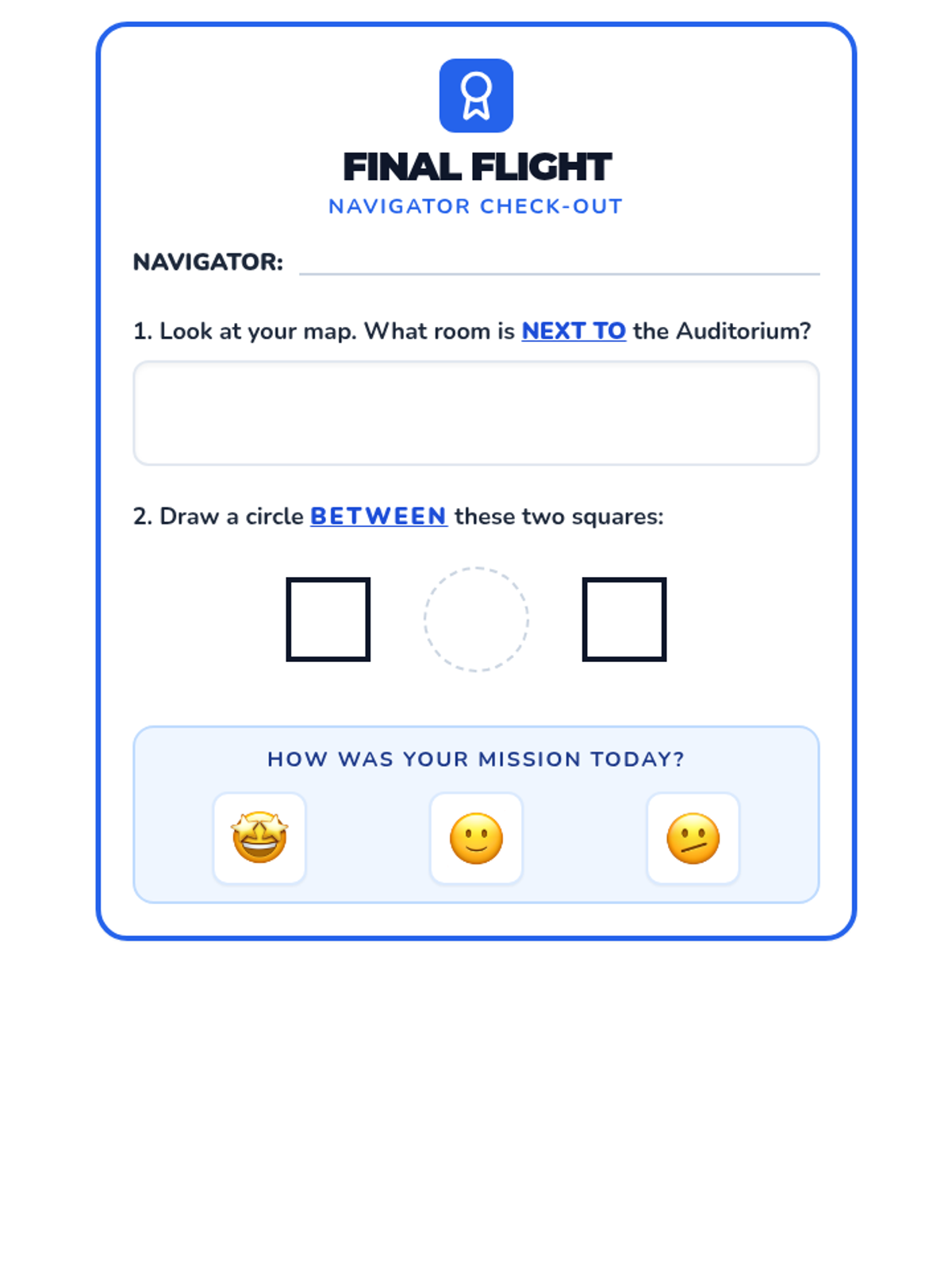
Hands-on application of spatial skills through school-wide scavenger hunts and interactive physical games.