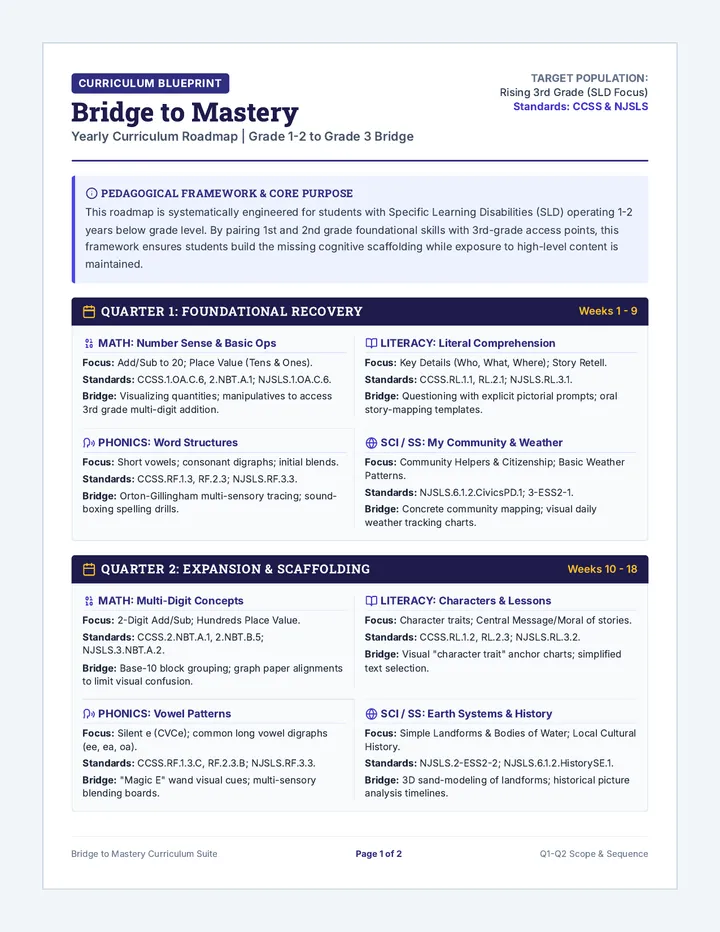
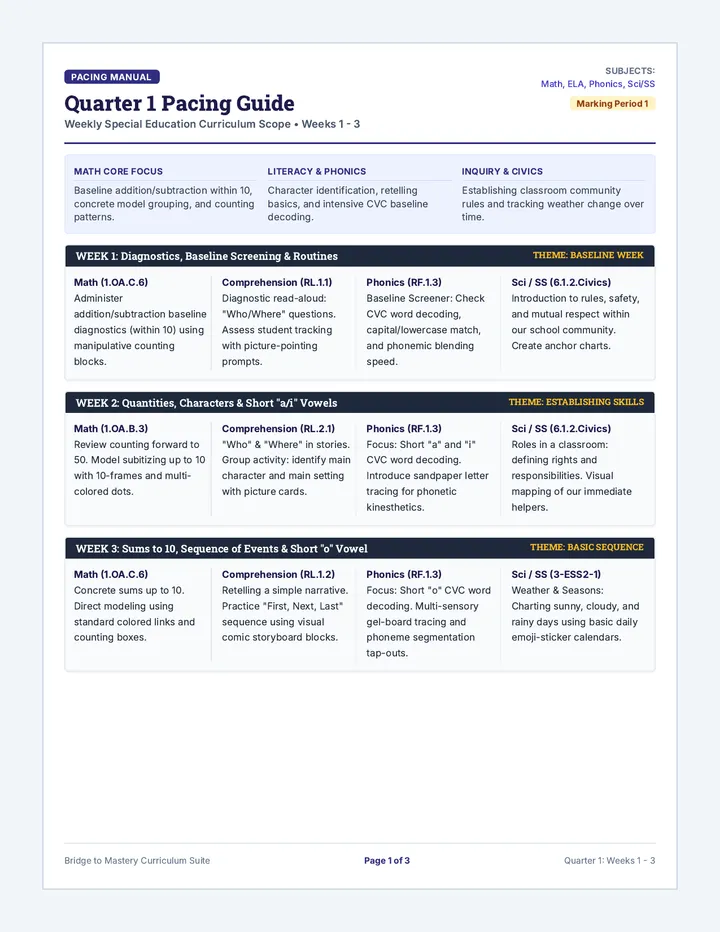
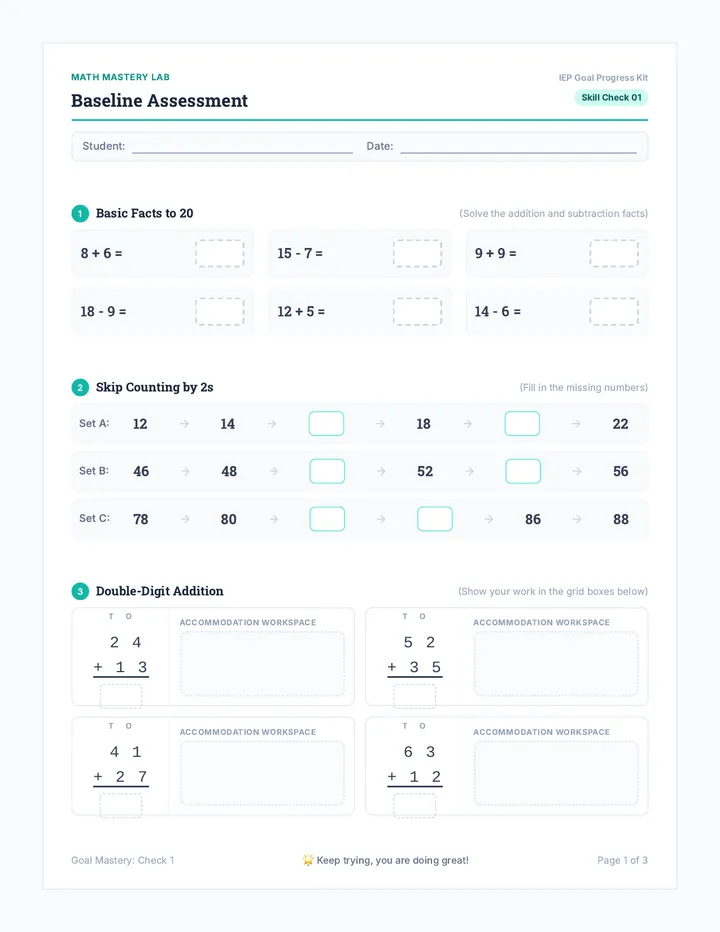
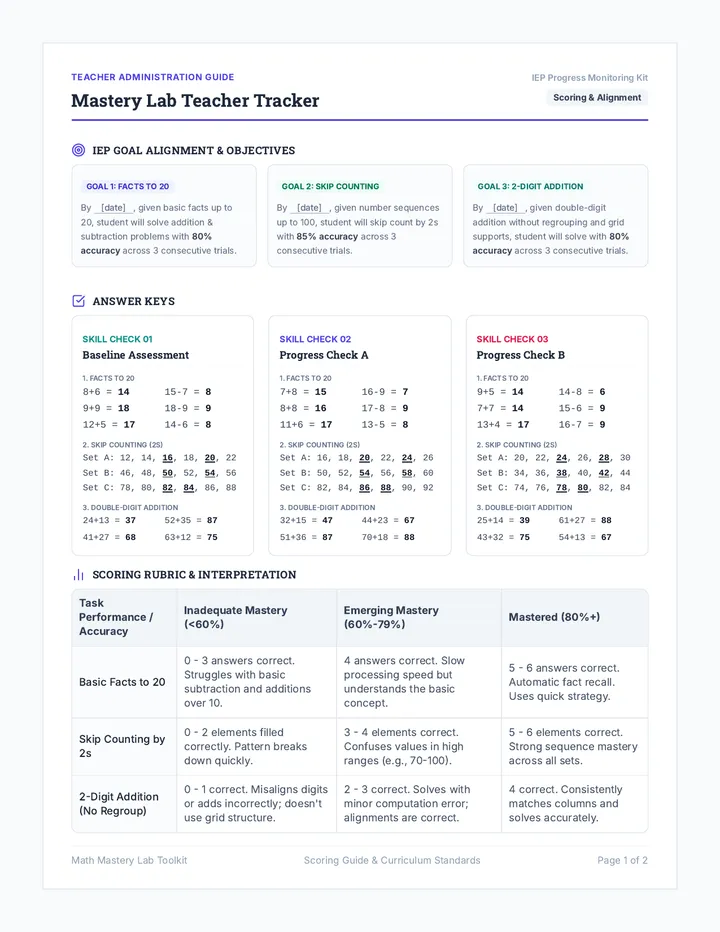
A set of executive functioning tools designed to help a student improve attendance, manage daily tasks, and reflect on personal barriers to success.
A set of tools designed to help 6th-grade students with OHI manage defiance, specifically focusing on remaining in their workspace and initiating tasks through self-regulation and reflection.
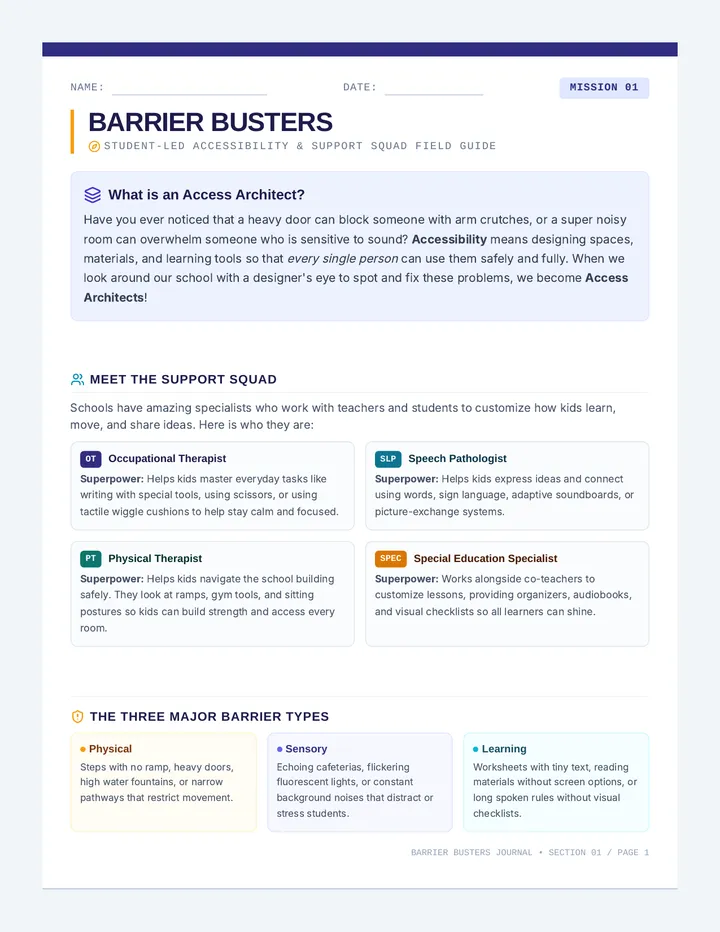
Teaches students to 'Follow the Group Plan' by understanding that a group has a shared goal (the Blueprint) and requires everyone to follow the same rules and directions to succeed.
A collection of accessible activities for chapters 1-6 of The Watsons Go to Birmingham – 1963, focusing on vocabulary, comprehension, and character analysis.
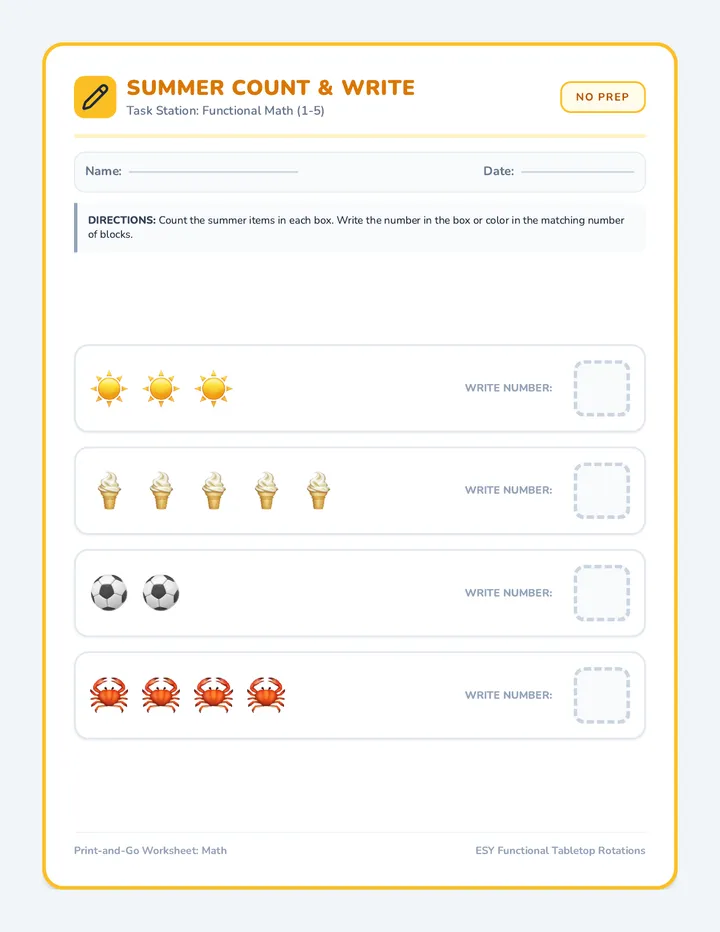
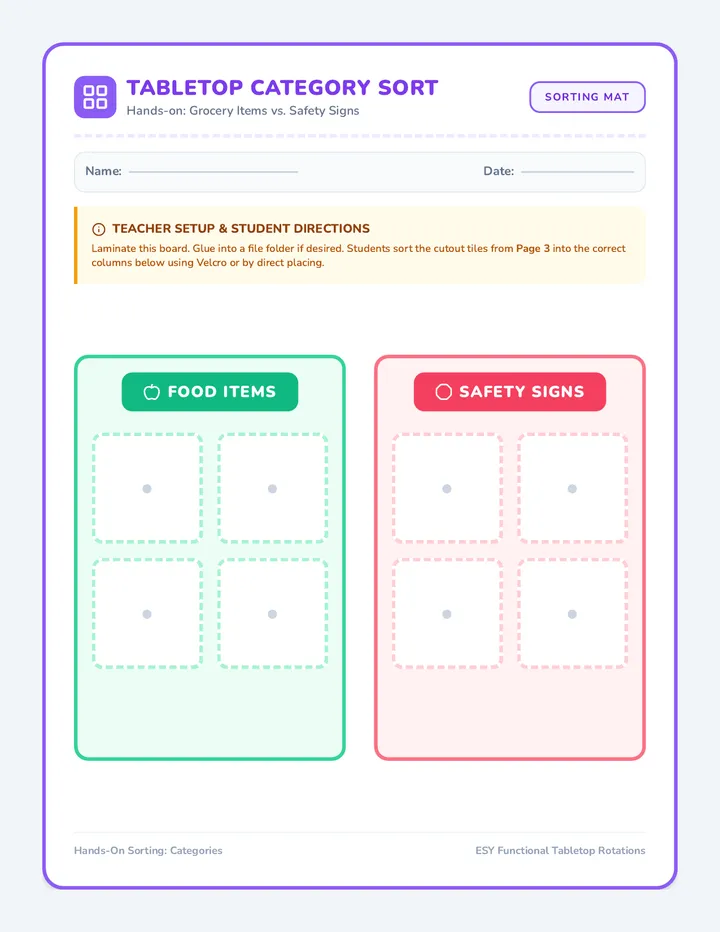
A hands-on introduction to basic budgeting and grocery shopping. Students practice identifying prices, comparing costs, and making simple purchasing decisions using dollars and cents with high visual support.
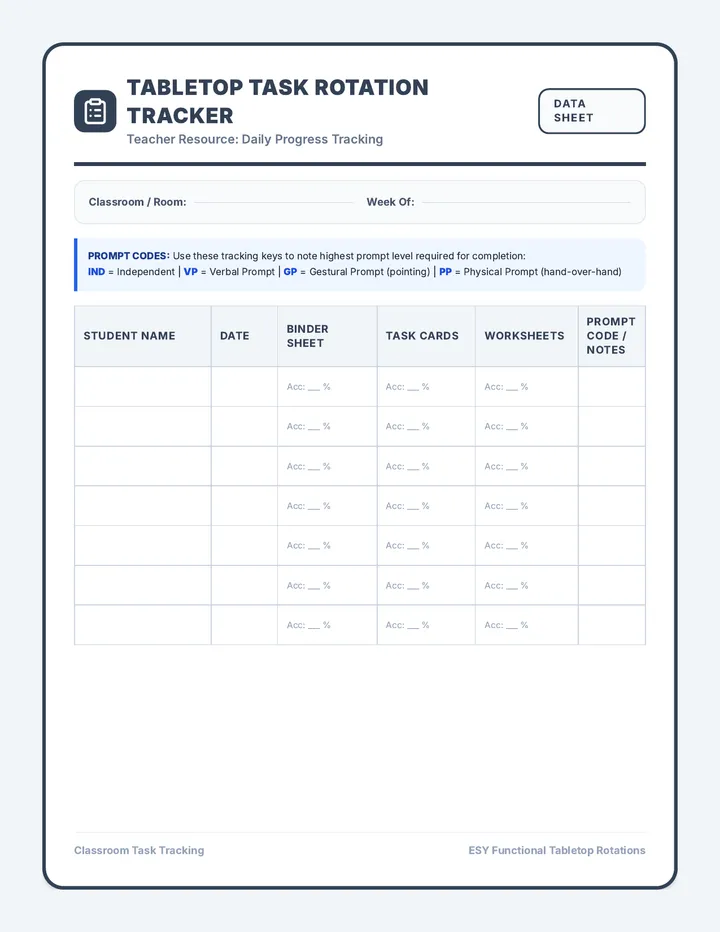
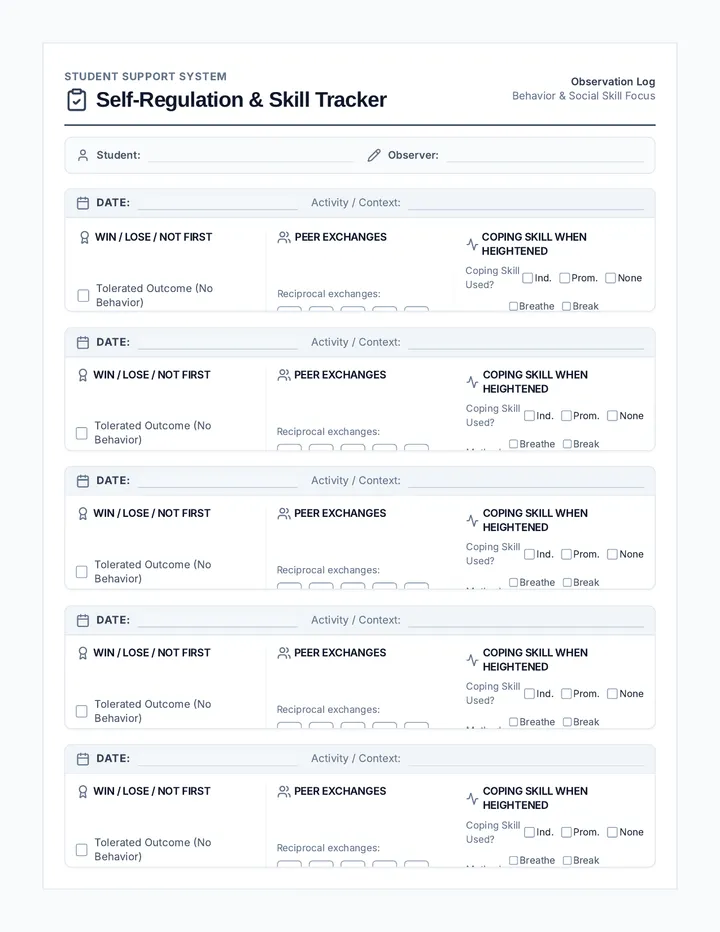
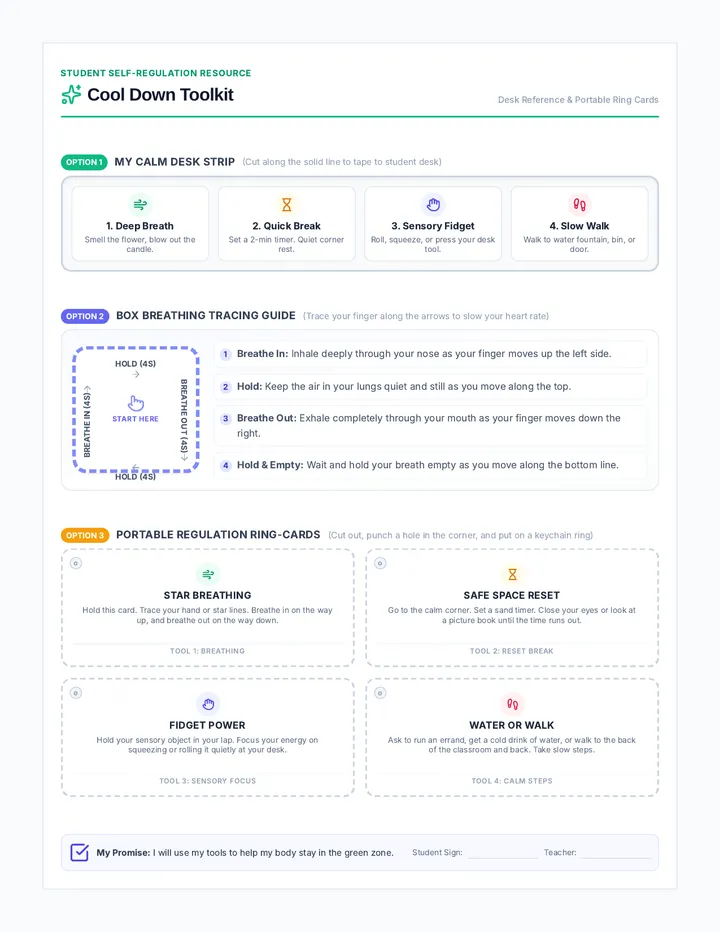
A comprehensive behavior intervention package designed for a 6th-grade student with ADHD to reduce impulsivity and suspensions. The materials provide a formal plan, a phased timeline for improvement, teacher response protocols, and student-facing tools for self-regulation.
A social story and support materials to help students in an 8:1:1 setting understand the importance of wearing a helmet during Adapted PE bike activities.
A comprehensive lesson focused on identifying safe and unsafe situations across home, school, and community settings, designed for high school students with IDD using visual supports and age-appropriate scenarios.
A transition-focused lesson designed for students interested in animal care and zoo careers. This lesson provides practical tools for mastering daily animal care tasks and exploring professional paths in zoology.
A hands-on lesson for first-grade special education students to explore bird anatomy, types, and life cycles using CVC words and pre-primer sight words.
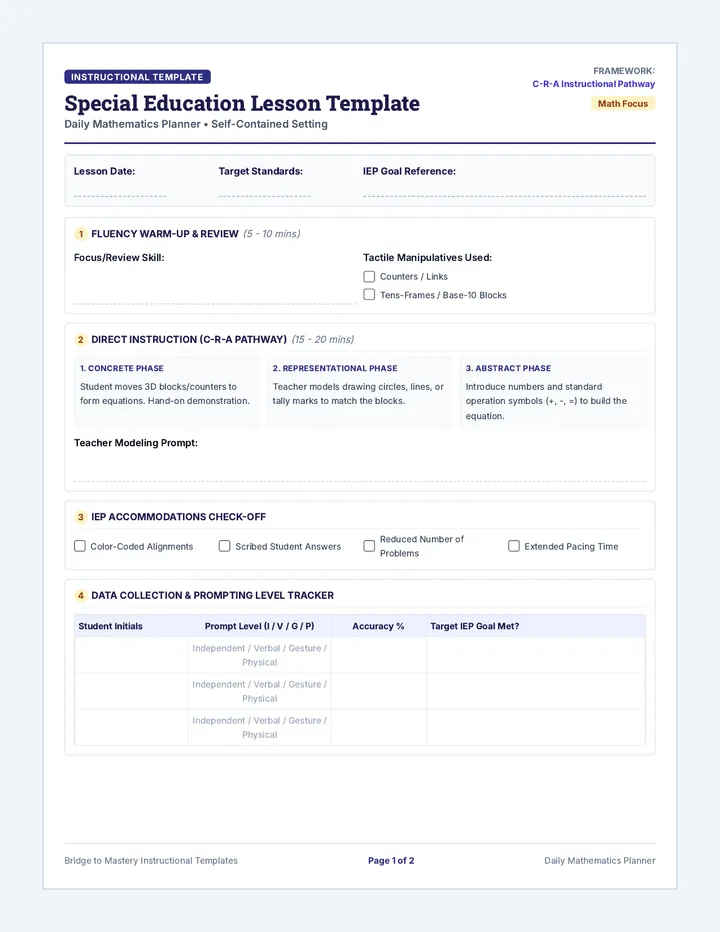
A multiplication mastery lesson focusing on pattern recognition (1s, 2s, 3s, 5s, 10s, 11s) for special education students. Includes a scaffolded 12x12 chart and teacher answer key.
This lesson introduces the concepts of "Brick Thinking" (rigid) and "Rubber Band Thinking" (flexible) to help 3rd-grade students with autism navigate mistakes, schedule changes, and difficult tasks. Students will learn to identify "stuck" moments and practice "stretching" their thinking to adapt to new situations.
A comprehensive set of essential proctoring guides and tools for general education teachers to effectively manage Special Education accommodations like extended time and read-aloud during assessments.
A collection of themed positive reinforcement tools, including dinosaur and farm animals, designed to encourage and track student progress.