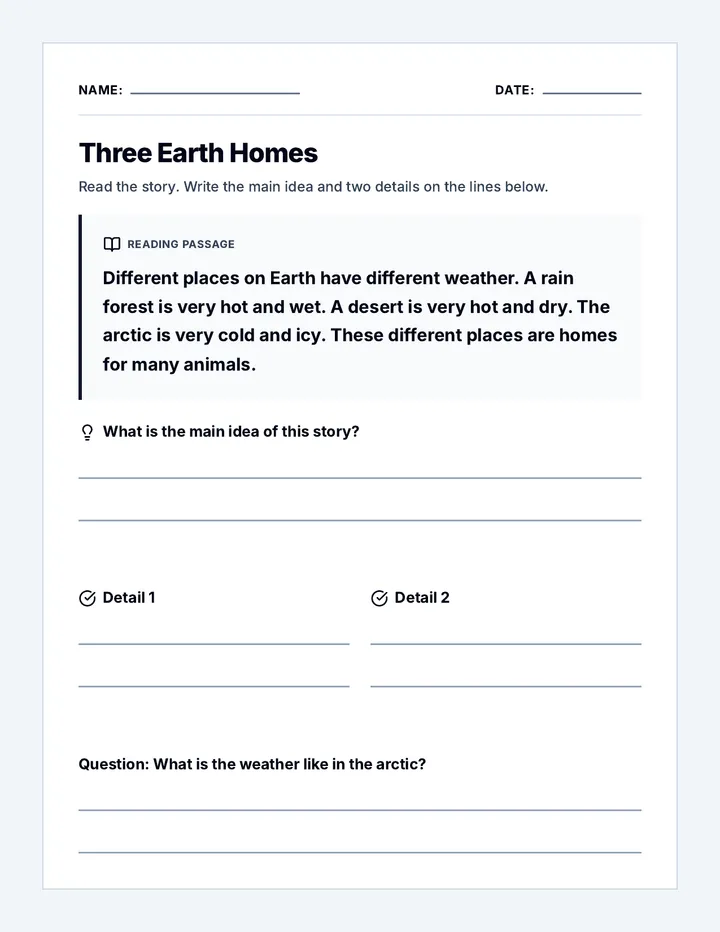
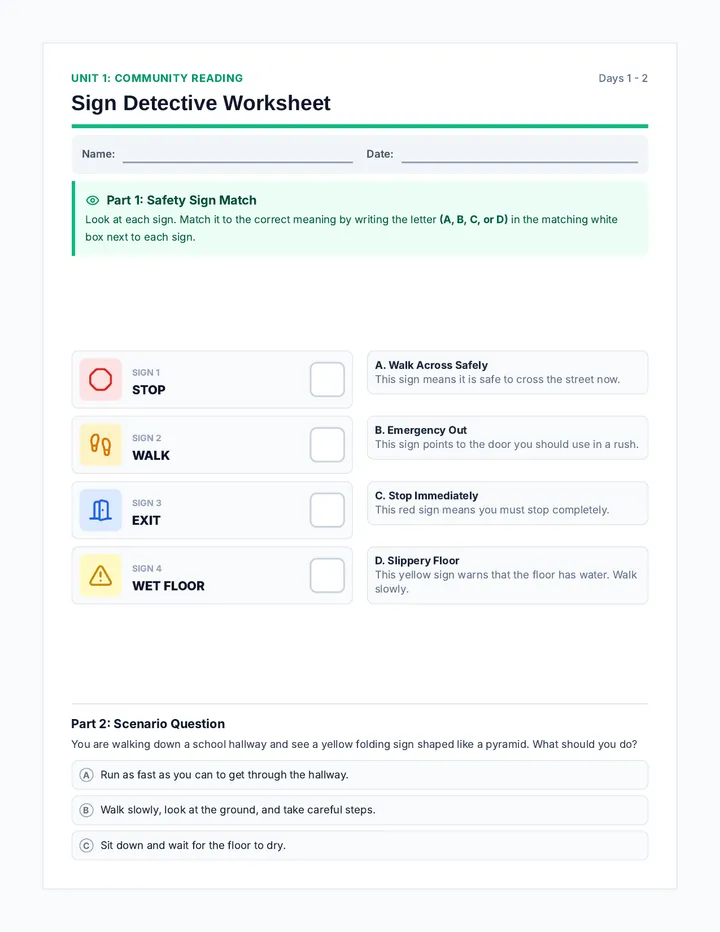
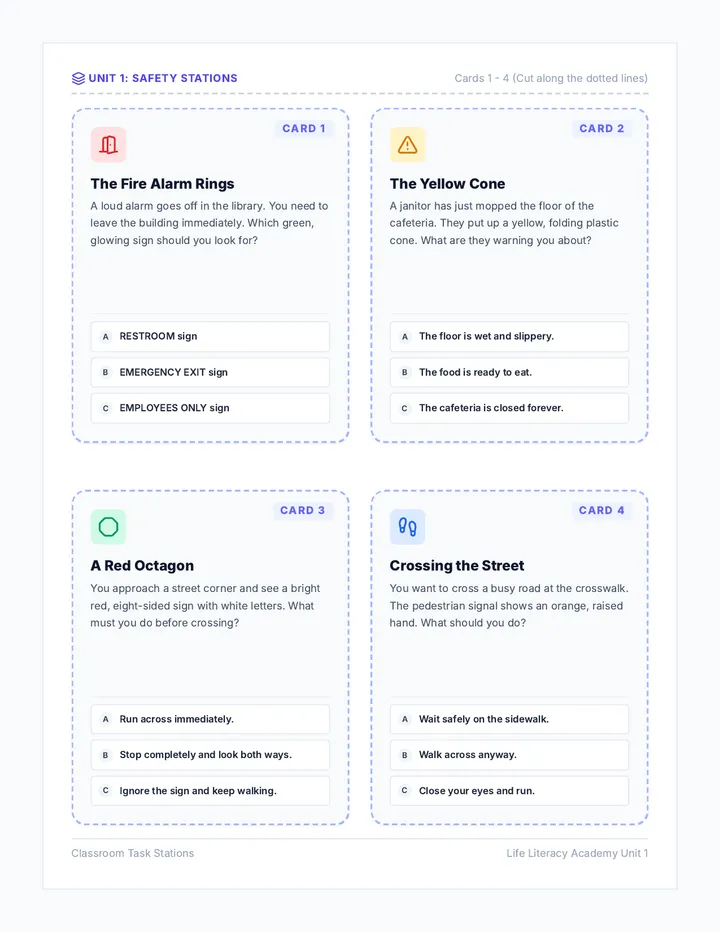
A comprehensive literacy assessment designed for middle school students in a self-contained setting, focusing on foundational phonics, sentence structure, and vocabulary at a 2nd-grade reading level.
Students develop skills in identifying and organizing sequences of events using visual logic, temporal keywords, and daily routine mapping.
A motivational incentive system designed to encourage students to complete and attempt their work through a themed collection of bison badges.
A targeted lesson focusing on the 'sh' and 'ch' digraphs. Students will learn to distinguish between the quiet 'sh' and the punchy 'ch' through visual cues, sorting, and writing practice.
A comprehensive set of resources designed for middle school students on the autism spectrum to understand personal space, body boundaries, and appropriate ways to seek attention or comfort. The lesson focuses on 'quiet hands' and respecting 'no' or 'stop' signals from others.
A comprehensive behavioral support system for a 6th-grade student, featuring visual schedules, reward trackers, and emotional regulation tools themed around a digital quest.
A comprehensive guide and set of activities designed to help educators and SLPs support novice AAC users in navigating TouchChat with WordPower across various functional contexts.
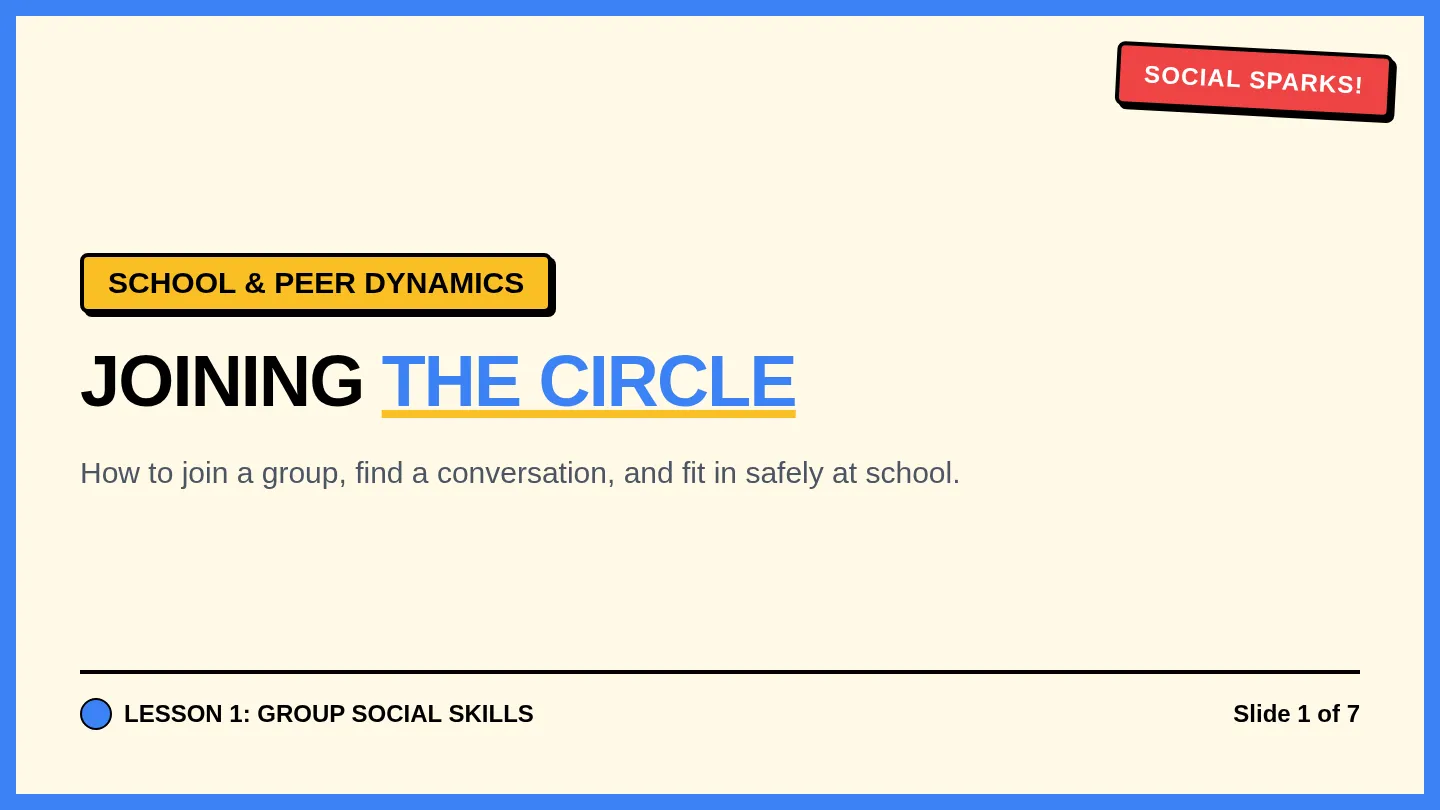
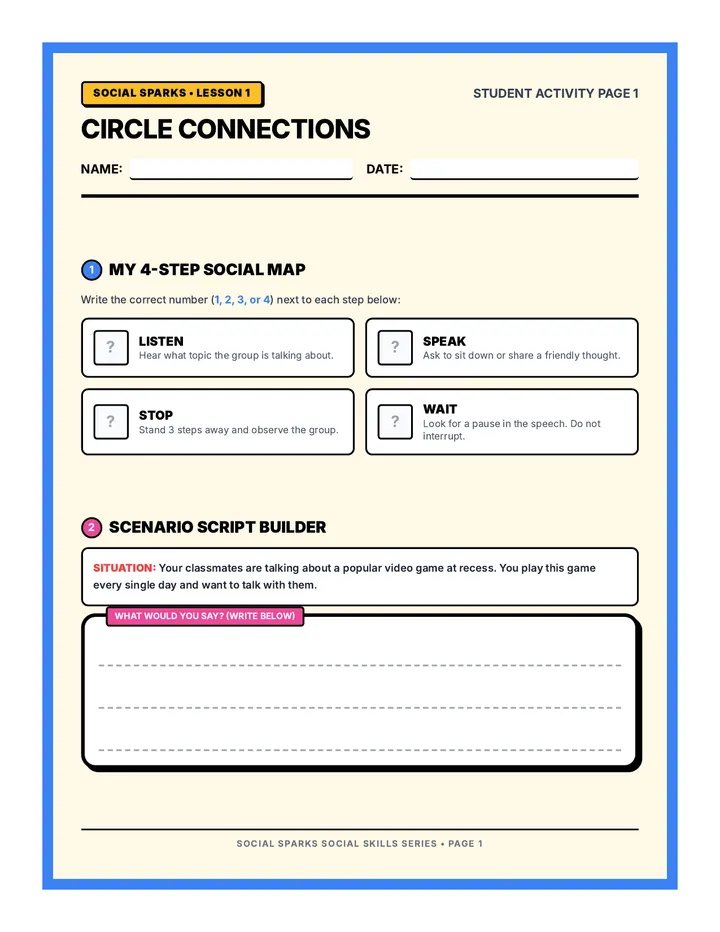
A lesson focused on identifying 'expected' social responses in common school scenarios to help students build social problem-solving skills and emotional regulation.
Consolidates skills through role-play and creates a personalized 'Voice Power' action plan for future use.
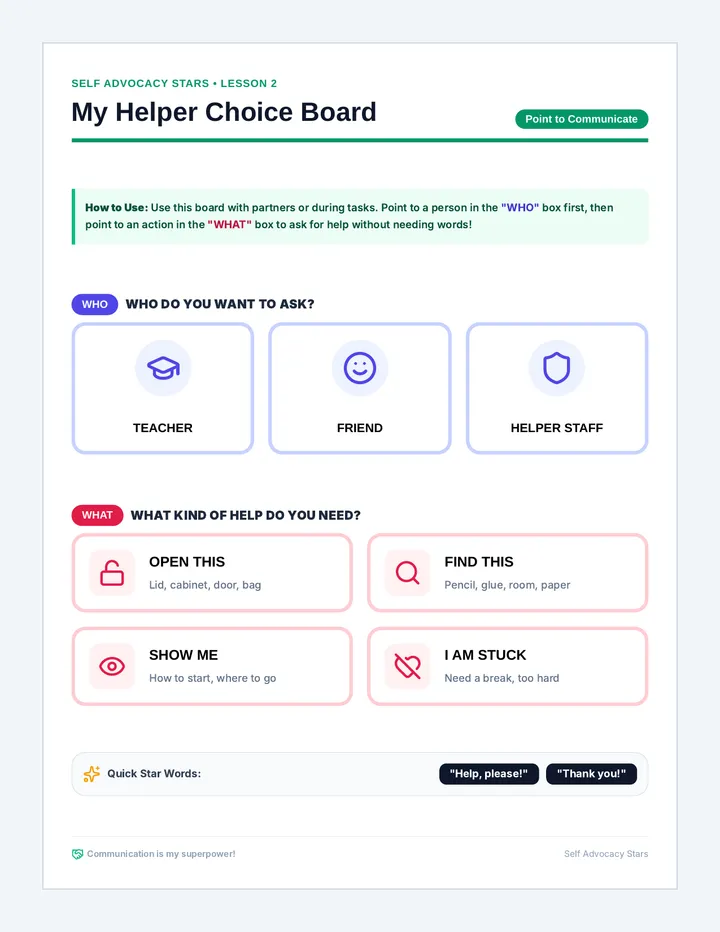
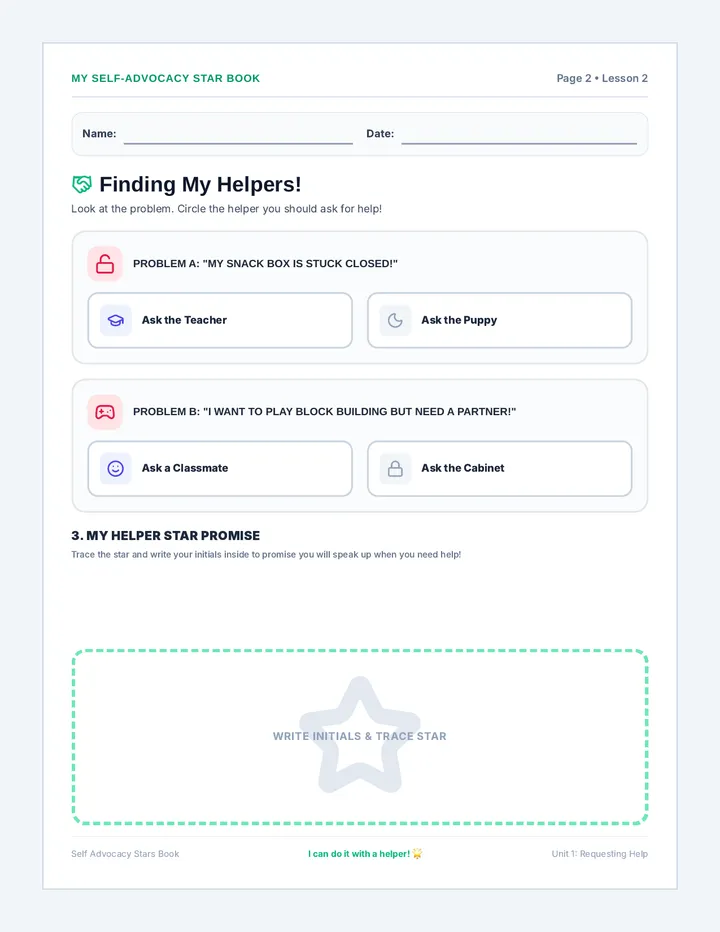
Teaches concrete scripts and methods for requesting assistance when tasks or situations become too difficult.
Helps the student identify physical and emotional 'warning lights' that indicate vulnerability or being overwhelmed.
Focuses on identifying when a break or stop is needed and learning various ways to communicate that boundary clearly and calmly.
A series of progressive multiplication worksheets designed for learners who benefit from clear visual supports, large print, and structured spacing. Covers facts from 1-5, 1-10, and up to 12.
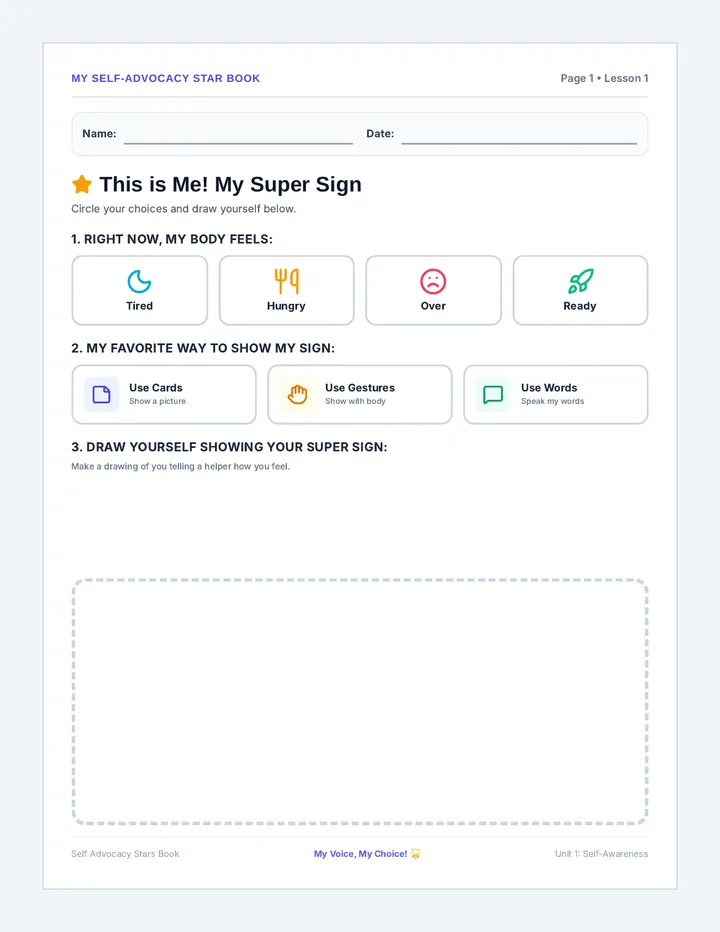
A 45-minute session designed for middle and high school students to develop self-advocacy skills, focusing on identifying needs and communicating them effectively to teachers and staff.
A St. Patrick's Day reading lesson focused on Wilson Step 4 multi-syllabic words and suffixes. Students will read a funny story about a leprechaun named Finbar and identify VCCV and -ic words.
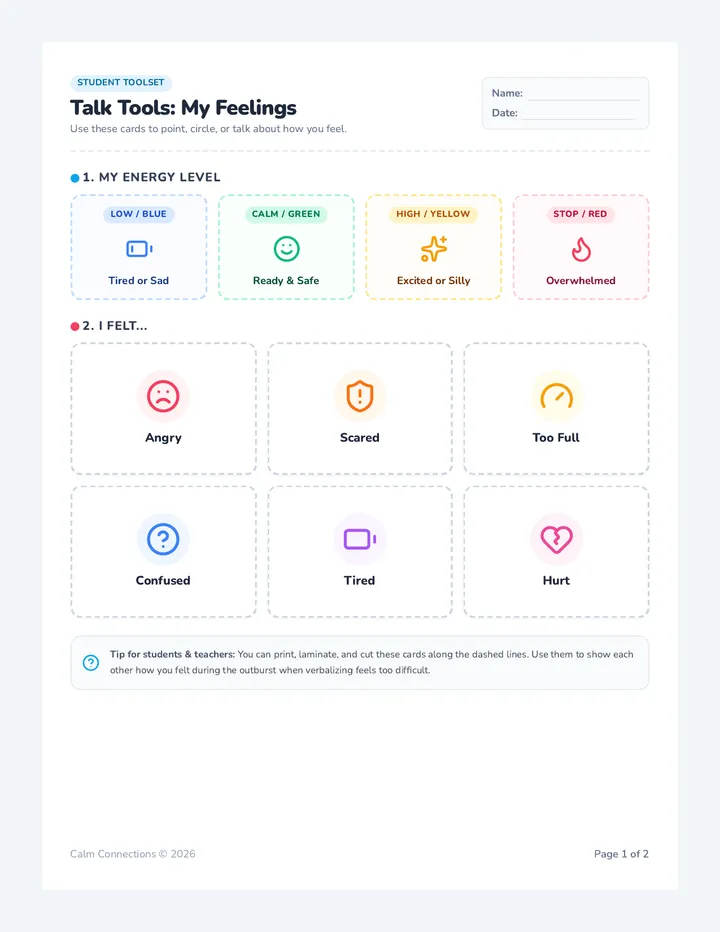
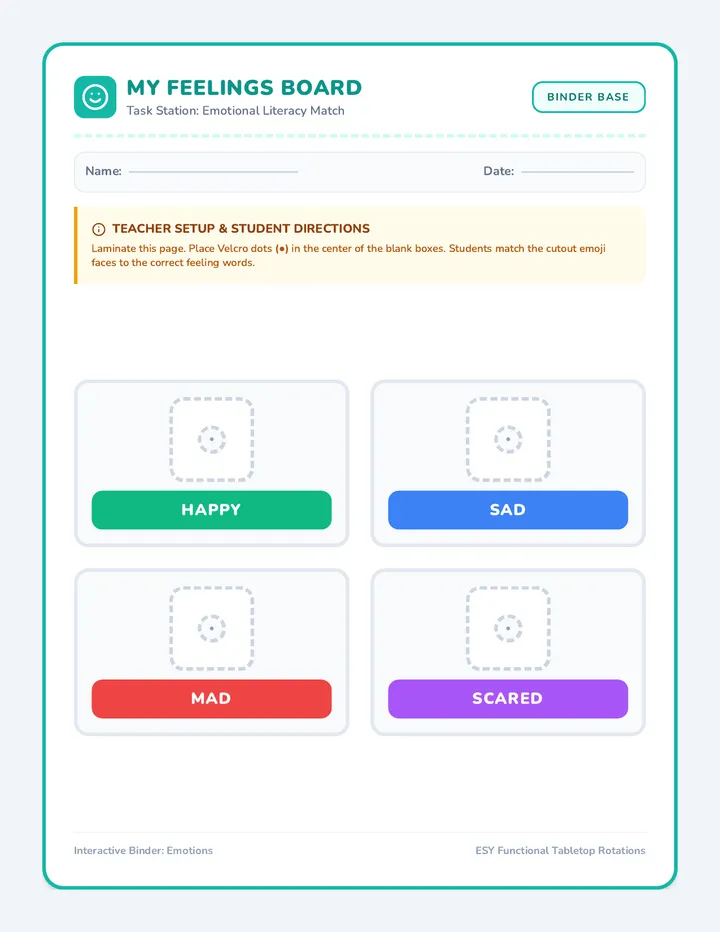
A week-long celebration and final assessment for students to demonstrate mastery of emotion identification, sensory overload management, and coping strategies. Students complete a final assessment booklet, create a personal calm plan poster, and celebrate their progress through the IEP goals.
A 20-minute speech therapy lesson for second graders centered on 'The Jungle Cafe.' Students act as cafe workers and customers, using /s/, /z/, /ch/, and /dg/ sounds while taking orders and describing messy meals. Focuses on repetitive 'has' and 'does' questions.
A lesson exploring the life of Saint Patrick and the history behind the holiday, designed with accessible language and visual supports for neurodivergent learners.
A collection of resources to help teachers and students navigate the technical aspects of virtual learning, with a focus on accessibility features like closed captioning.
A highly visual, 15-minute activity designed for non-verbal students to practice turn-taking and sharing using concrete manipulatives and visual supports.
In this lesson, students explore the concepts of disability discrimination and accessibility, analyzing how physical, digital, and social barriers impact individuals and the health of a democracy. Students will learn to distinguish between discriminatory practices and legitimate professional boundaries.
A 10-15 minute daily check-in routine designed to help students build self-awareness regarding disruptive noises and expressions, focusing on 'signals' and 'impact'.
A concise, 20-minute social skills lesson designed for K-2 students with learning disorders, focusing on the core steps of following classroom directions through visual cues and sequencing.
This lesson introduces the concept of emotions as 'inner weather,' focusing specifically on identifying the physical 'warning signs' of stress and anxiety and introducing initial grounding techniques.