This lesson focuses on the critical importance of aligning daily check-in interventions with the function of a student's behavior (attention vs. escape), identifying when CICO is a precise match or a potential contraindication.
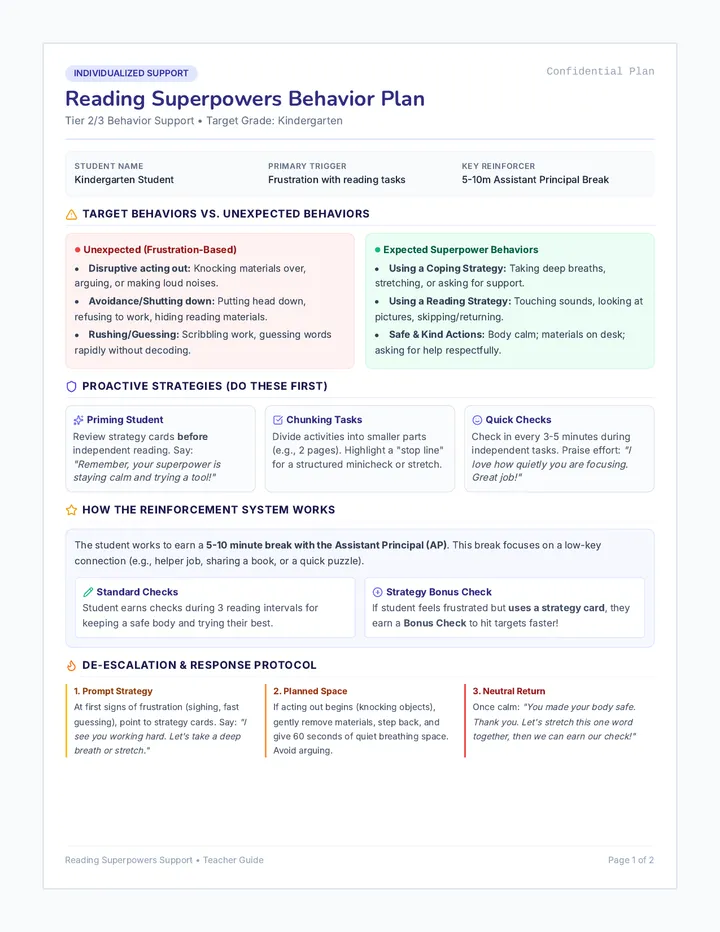
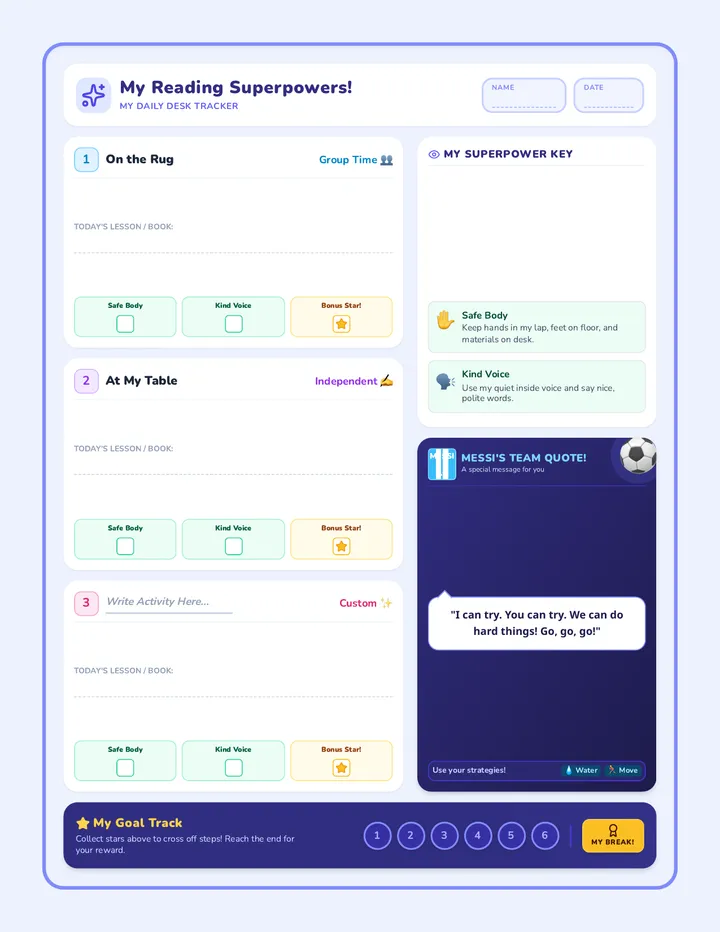
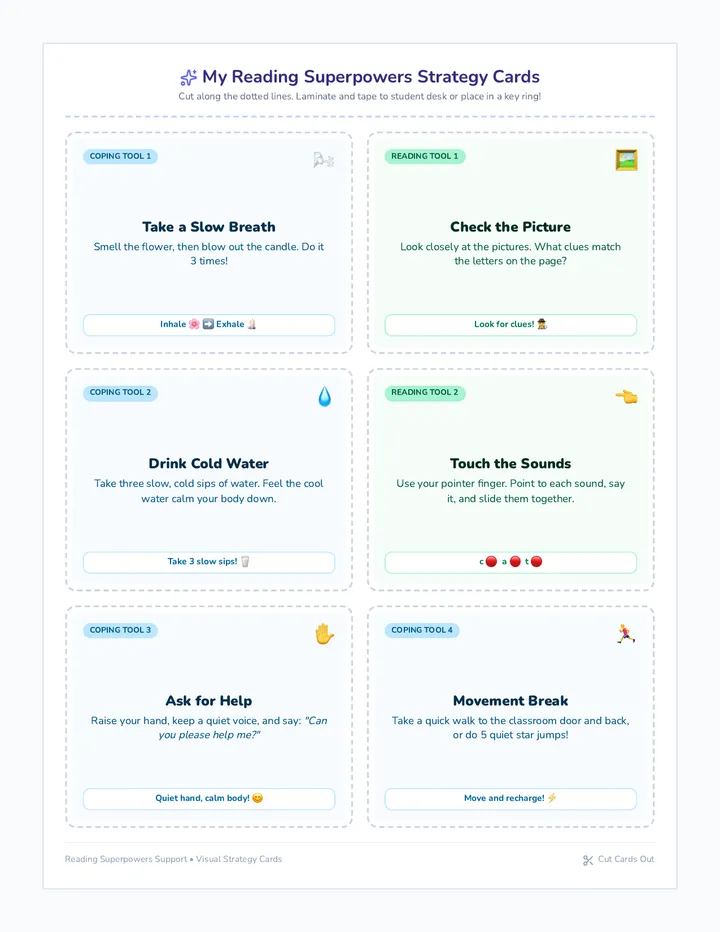
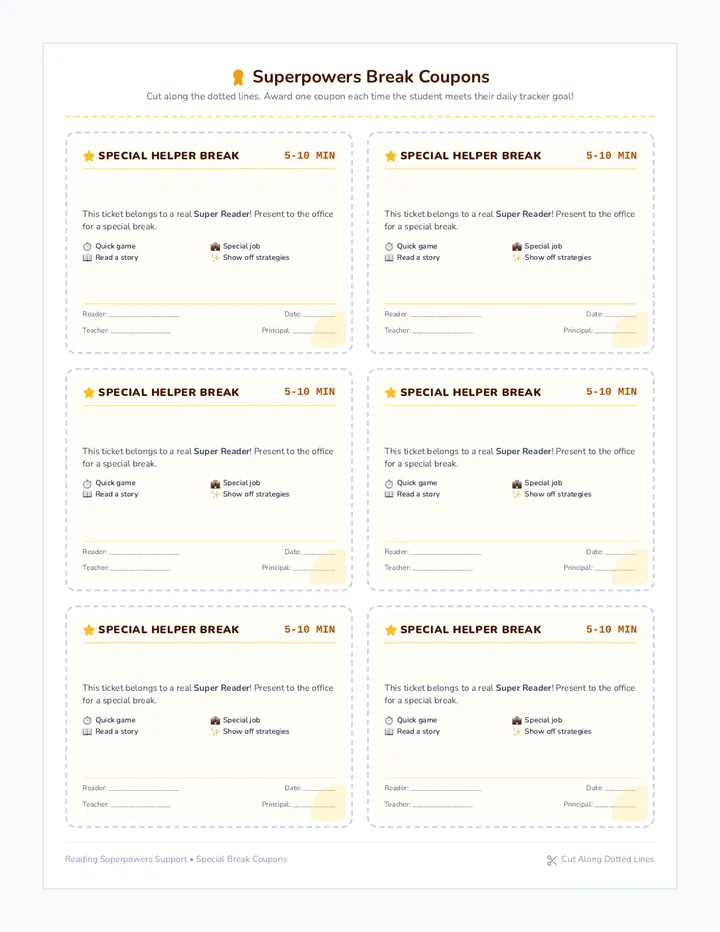
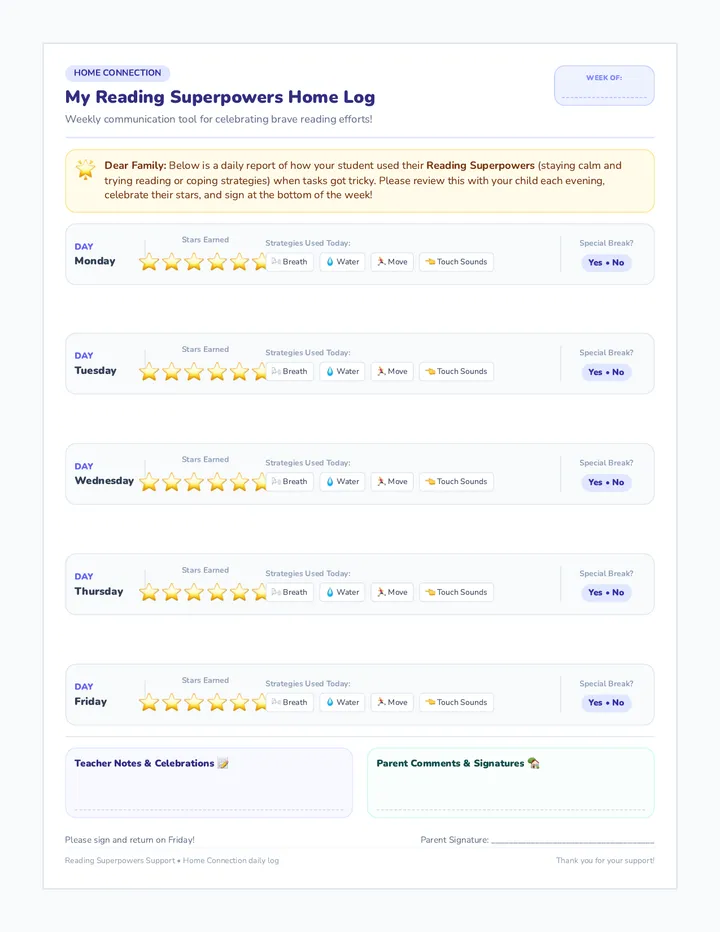
A complete visual behavior support kit for a kindergarten student experiencing frustration-based behaviors after graduating from small group reading. Includes a teacher-parent behavior plan, daily desk tracker, coping and reading strategy cards, assistant principal break coupons, and a weekly home communication log.
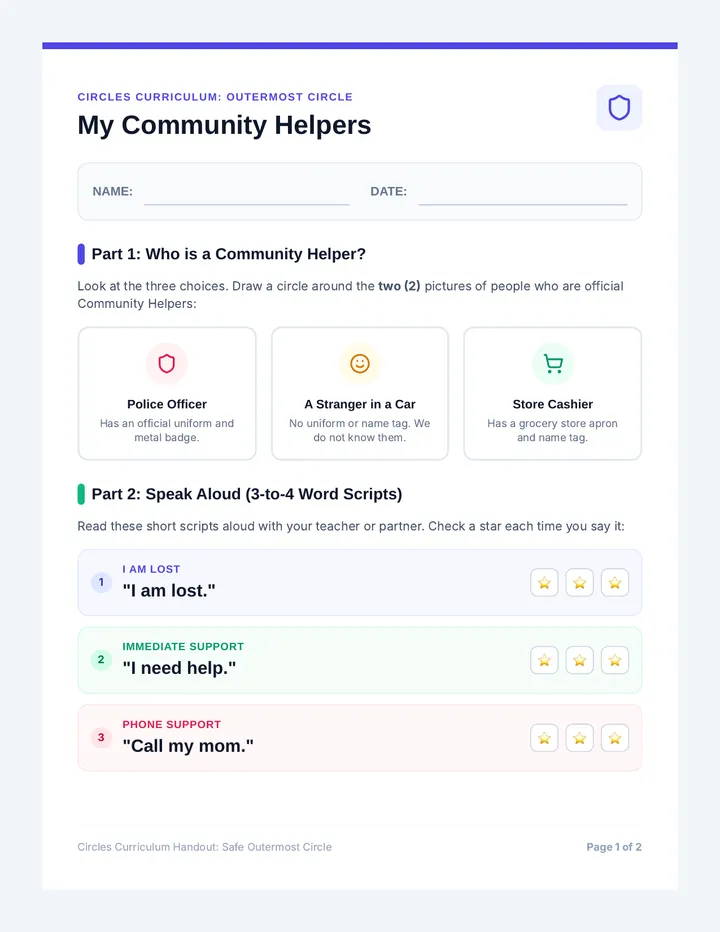
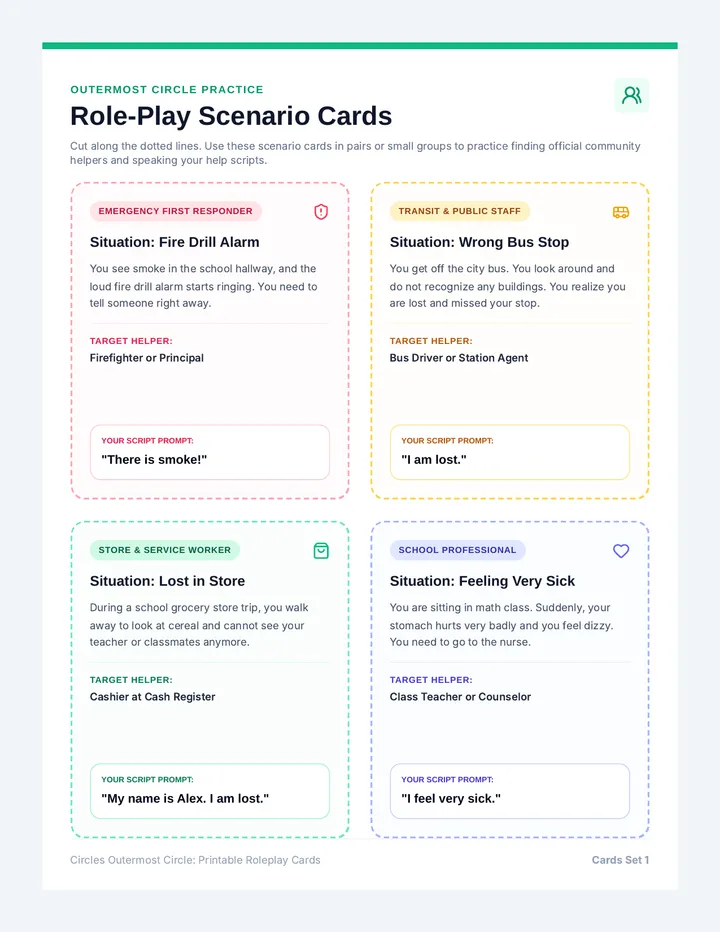
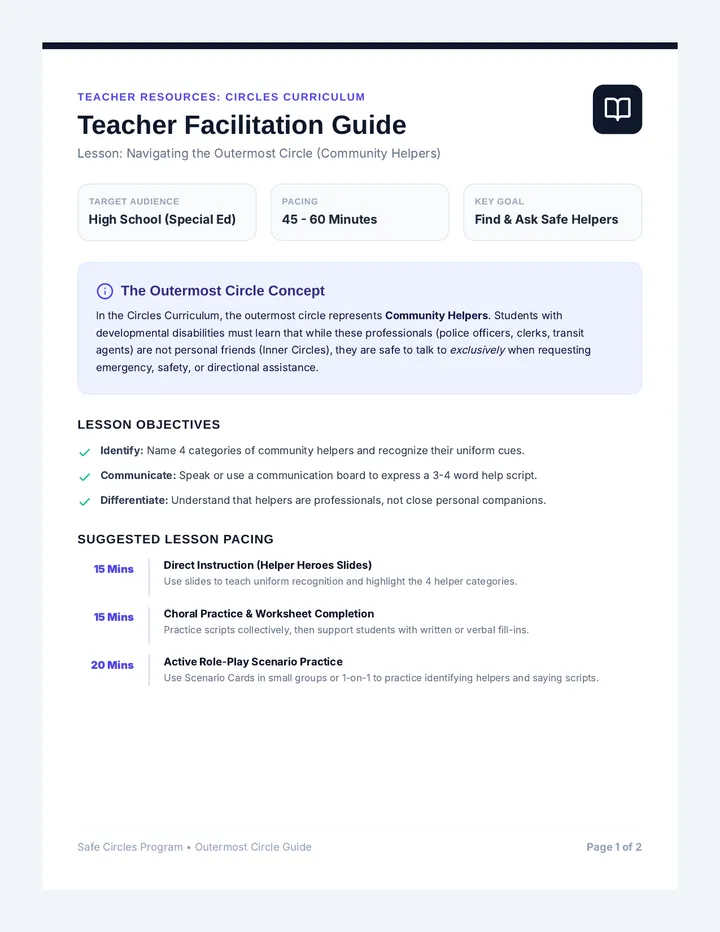
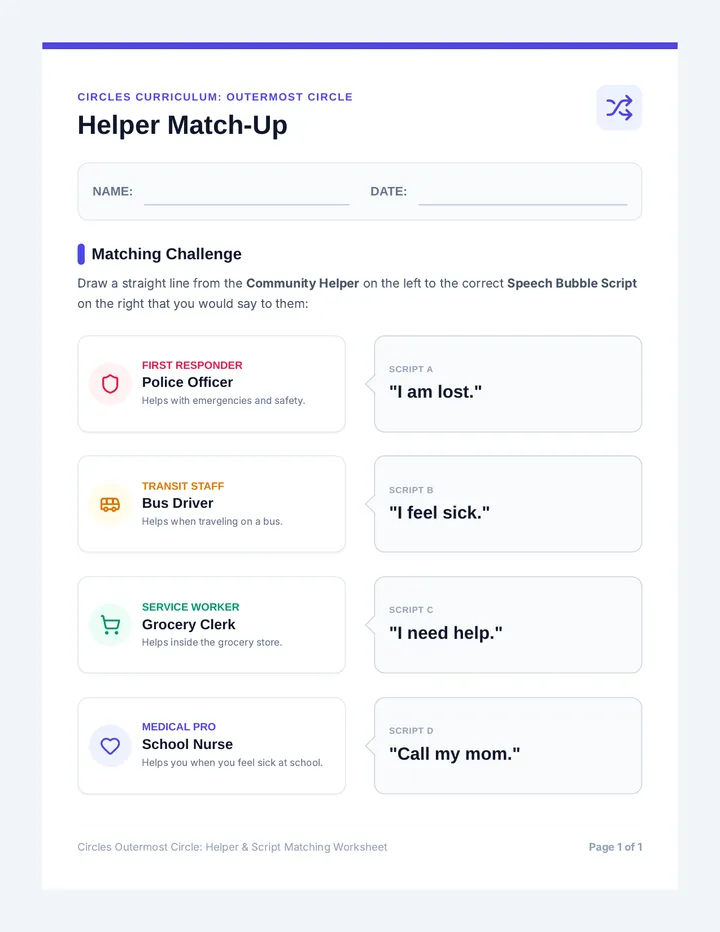
A comprehensive lesson for high school students with developmental disabilities focusing on the outermost circle of the Circles Curriculum: Community Helpers. It includes interactive slides, a structured script worksheet, ready-to-use role-play scenario cards, and a teacher facilitation guide.
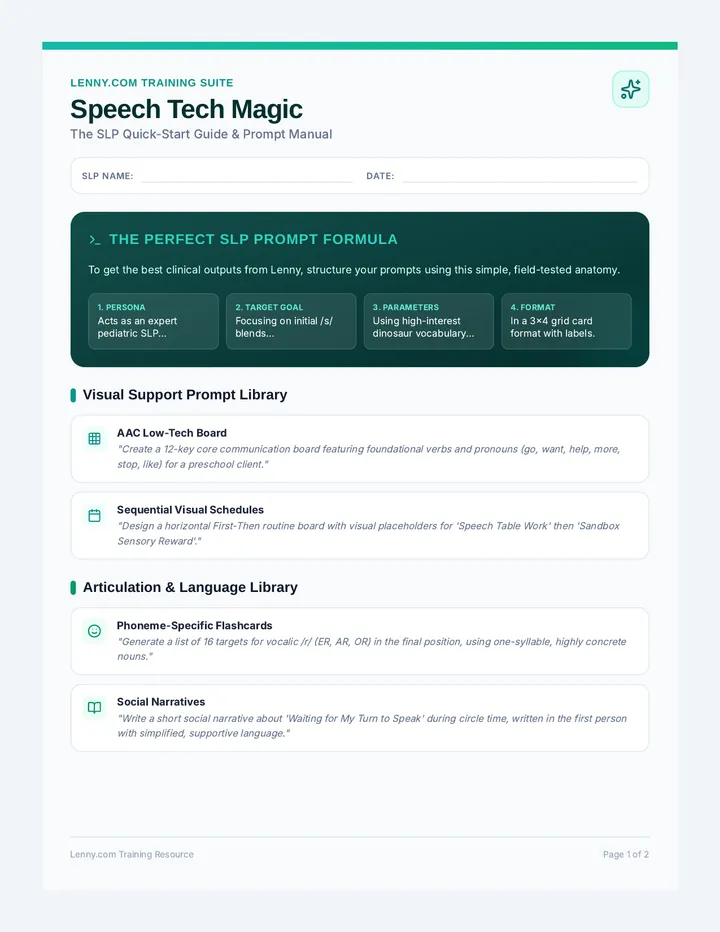
A training suite for Speech-Language Pathologists to master Lenny.com, featuring an engaging slide presentation and a quick-reference printout covering visual supports, articulation tools, IEP aids, and collaboration templates.
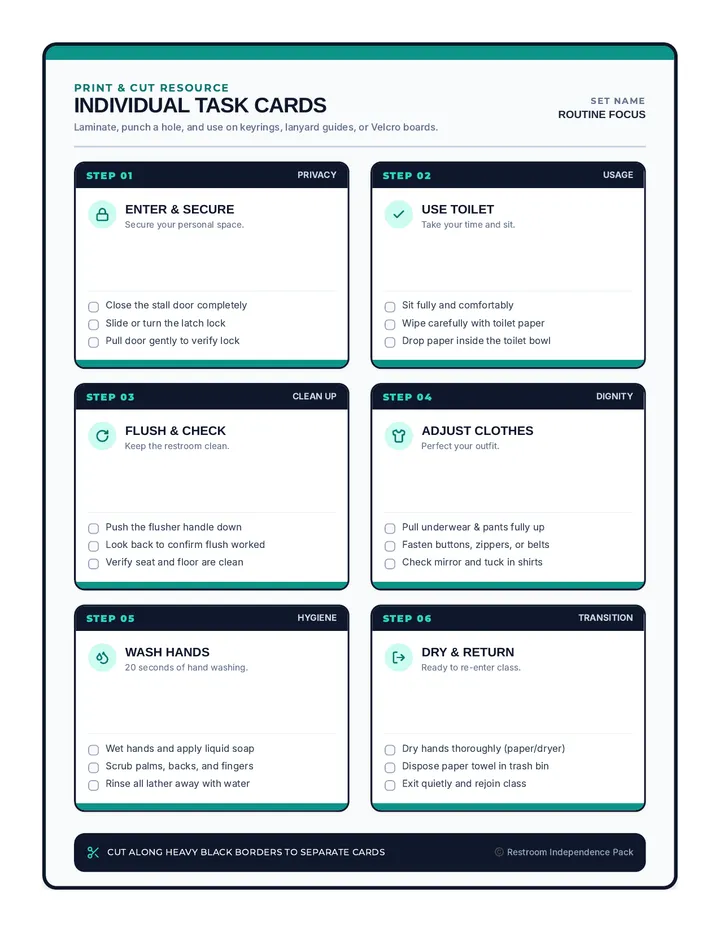
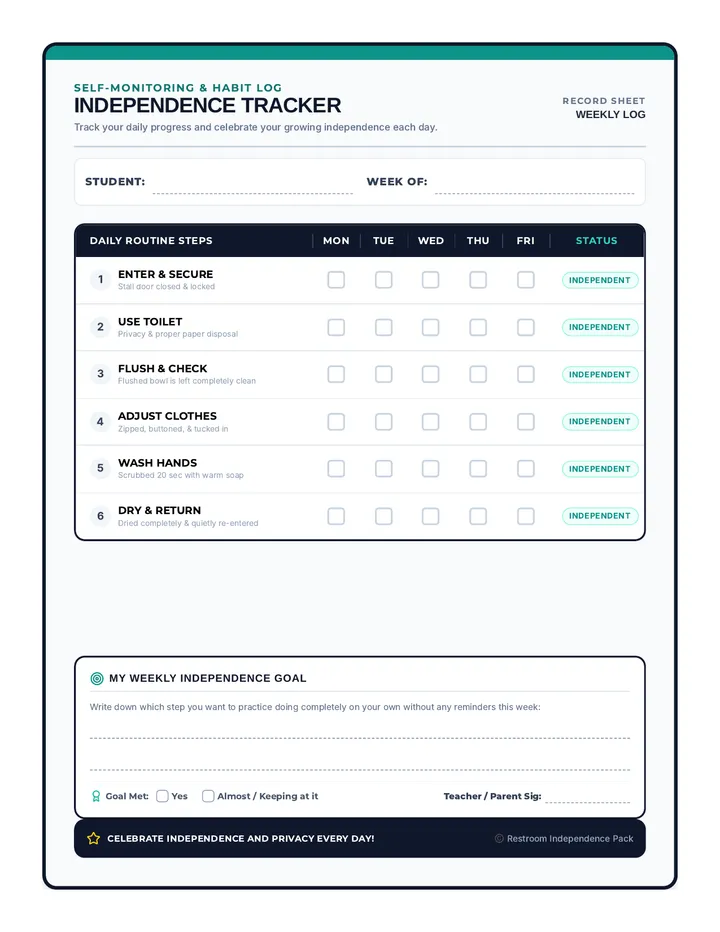
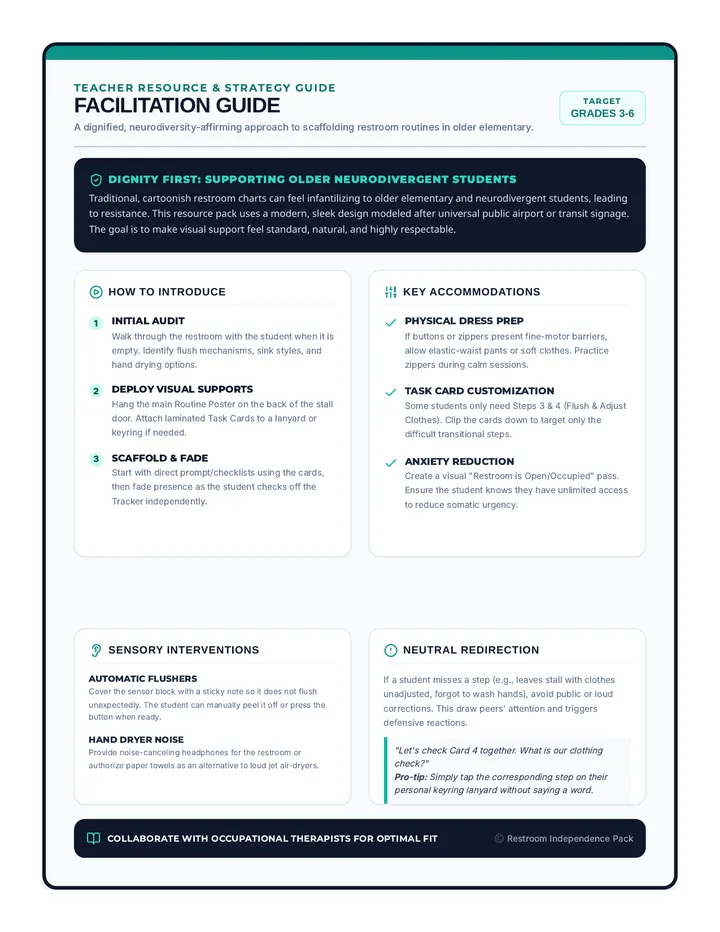
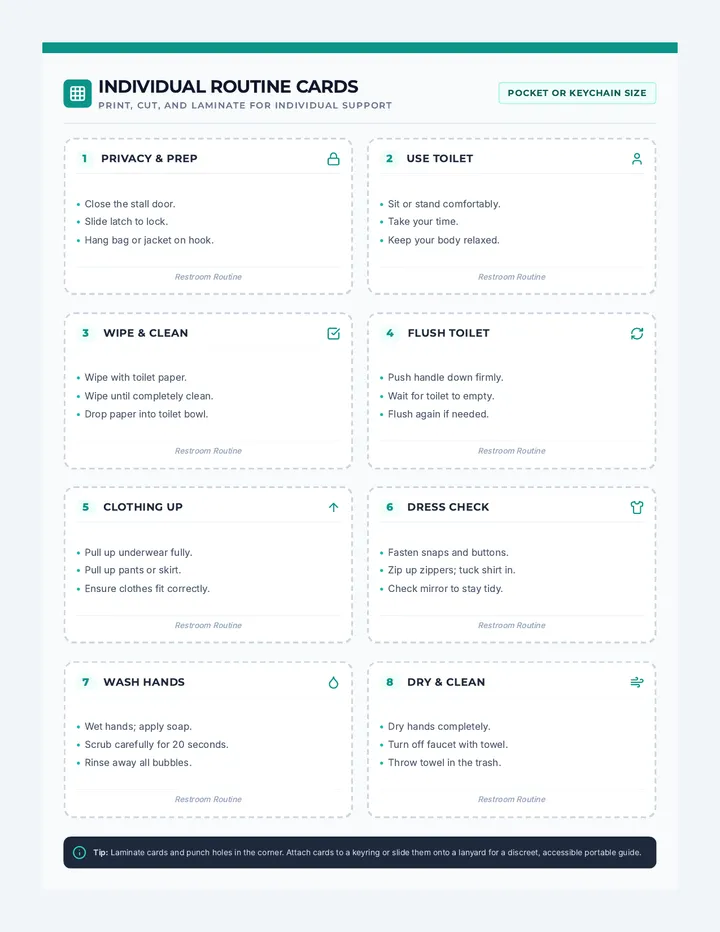
A complete visual support and routine mastery pack designed for older elementary and neurodivergent students. Includes a wall poster, individual task cards, a progress tracker, and a comprehensive implementation guide to foster dignity and privacy.
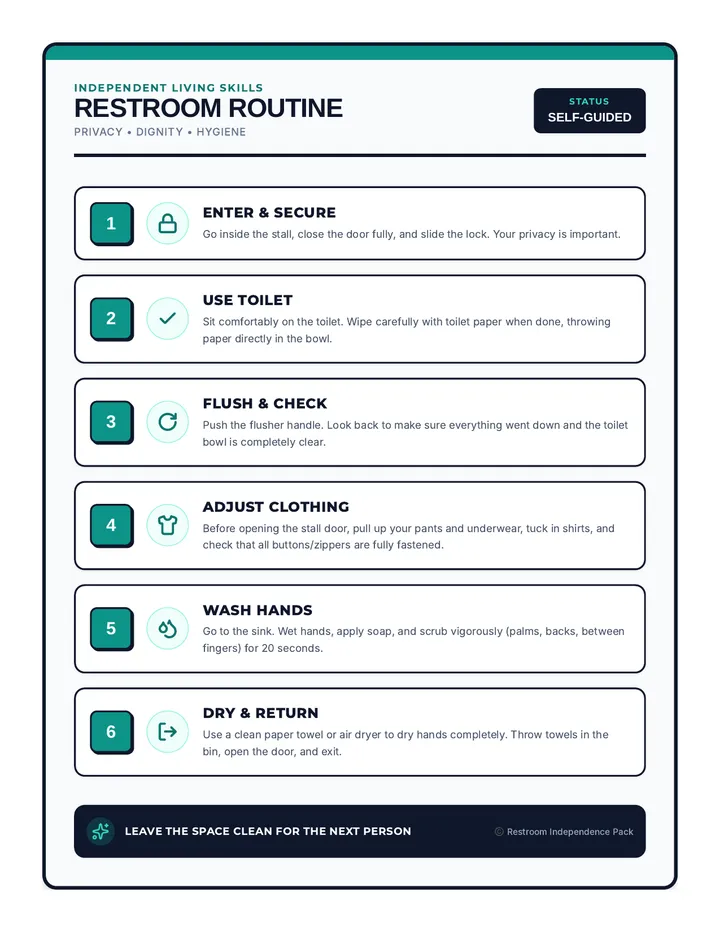
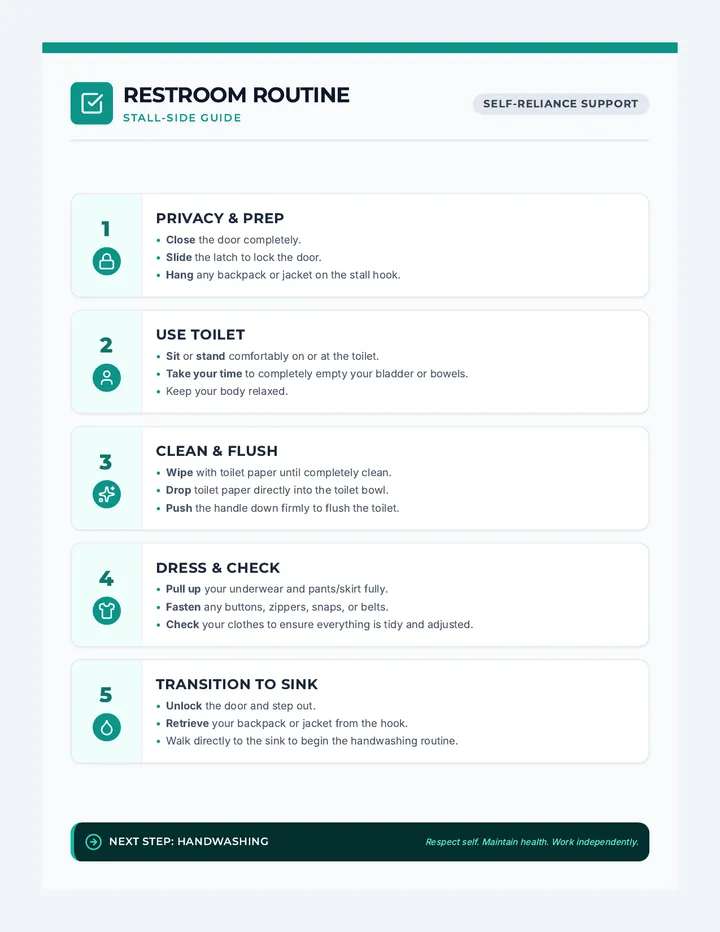
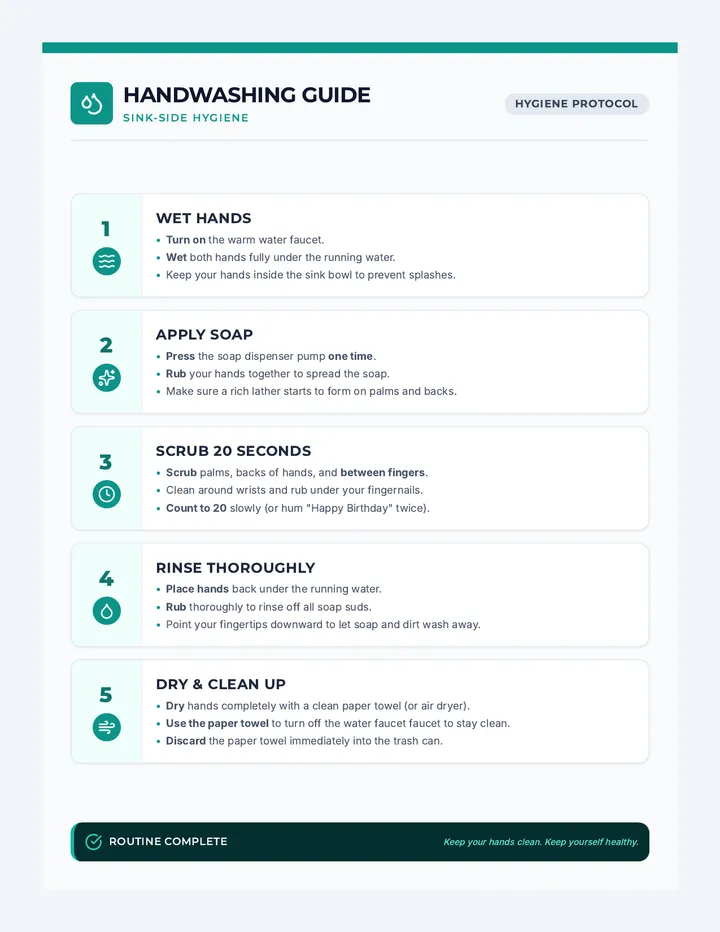
A comprehensive visual support system designed for older elementary and neurodivergent students to promote bathroom independence. Includes a stall-side routine poster, a sink-side handwashing guide, and printable individual visual support cards styled with a clean, modern aesthetic.
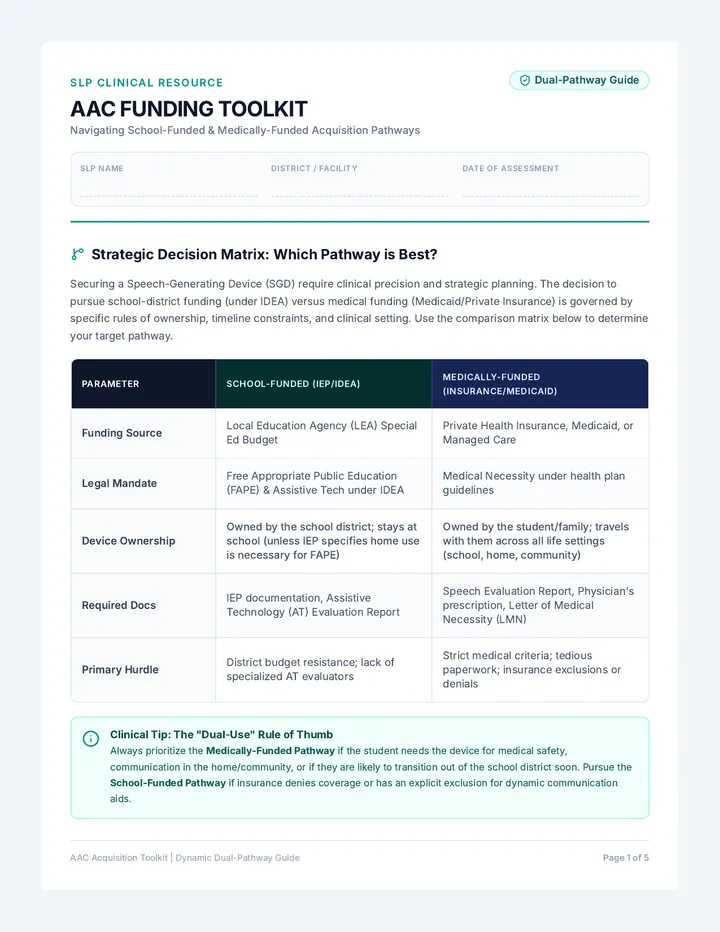
A comprehensive lesson for Speech-Language Pathologists (SLPs) designed to navigate the dual pathways of AAC funding. This lesson equips SLPs with the procedural knowledge, advocacy scripts, template documentation, and data sheets required to secure communication devices for students via school-funded and medically-funded pathways.
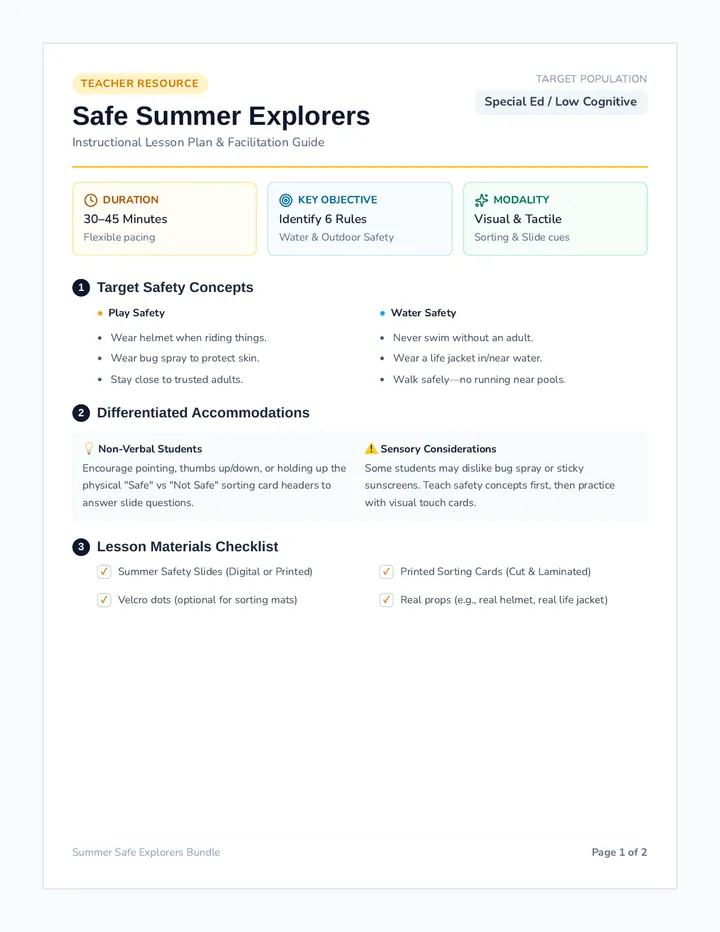
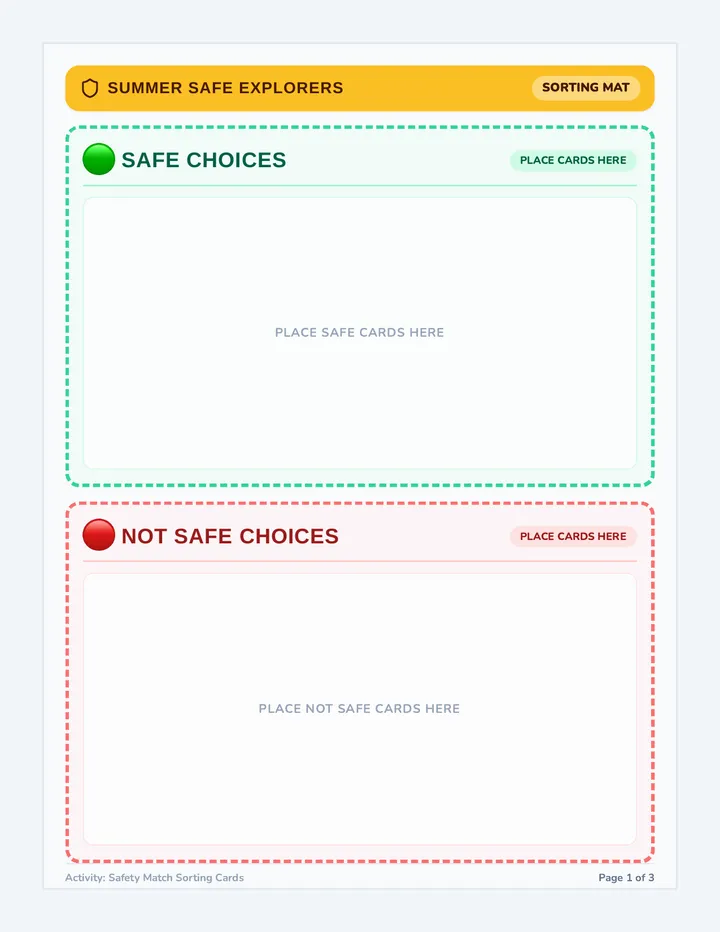
A highly visual, structured summer safety lesson designed for students with special needs and lower cognitive abilities, focusing on outdoor play and water safety rules through interactive sorting and clear visual cues.
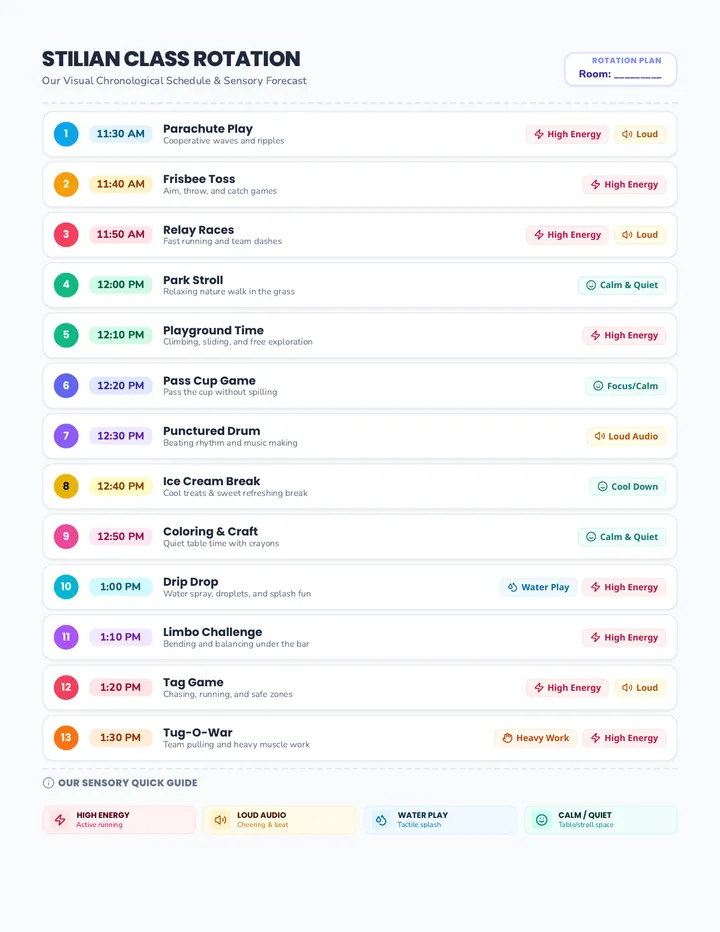
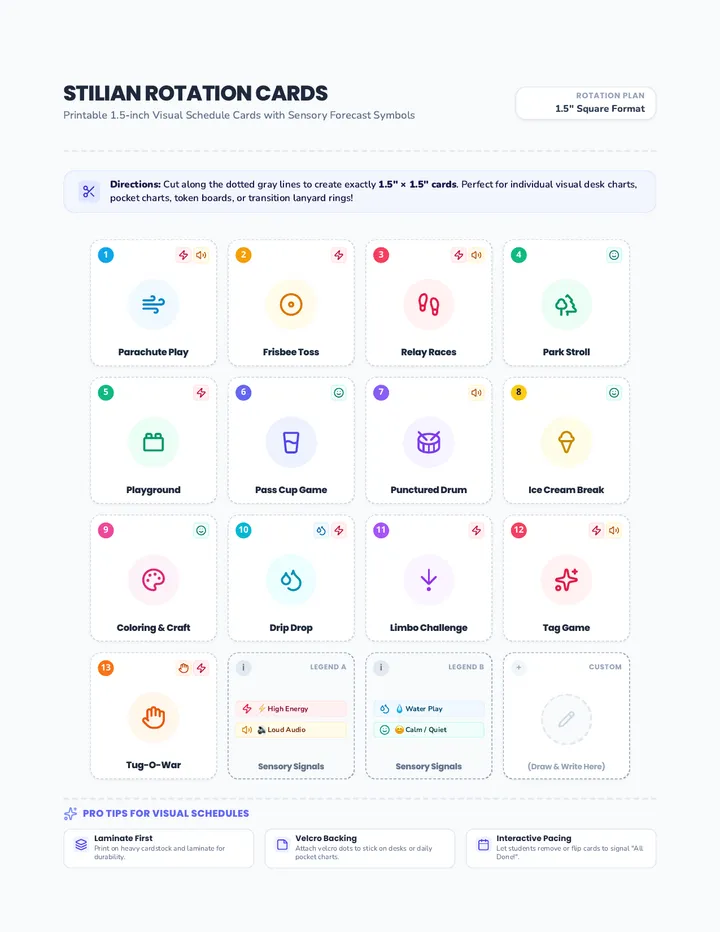
A sensory-friendly class rotation framework containing visual schedules and portable schedule cards to help students navigate activity transitions with confidence.
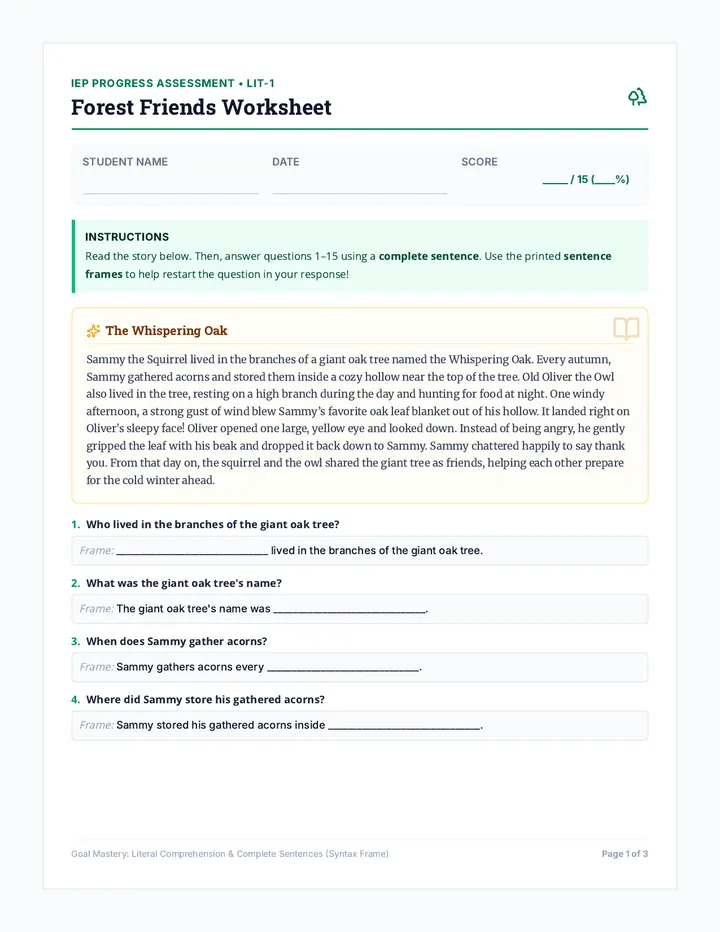
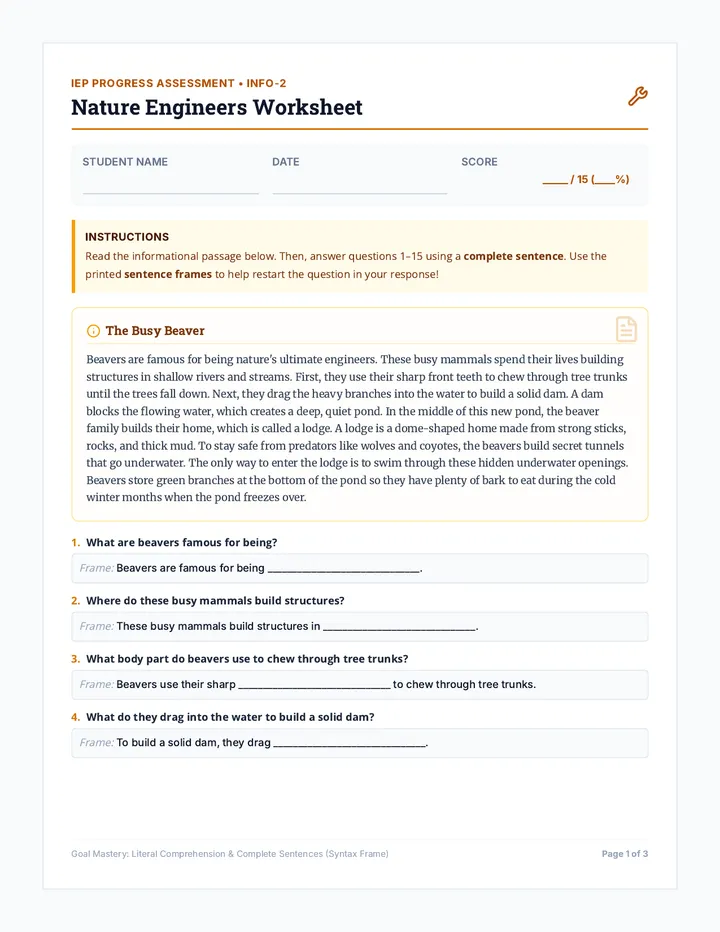
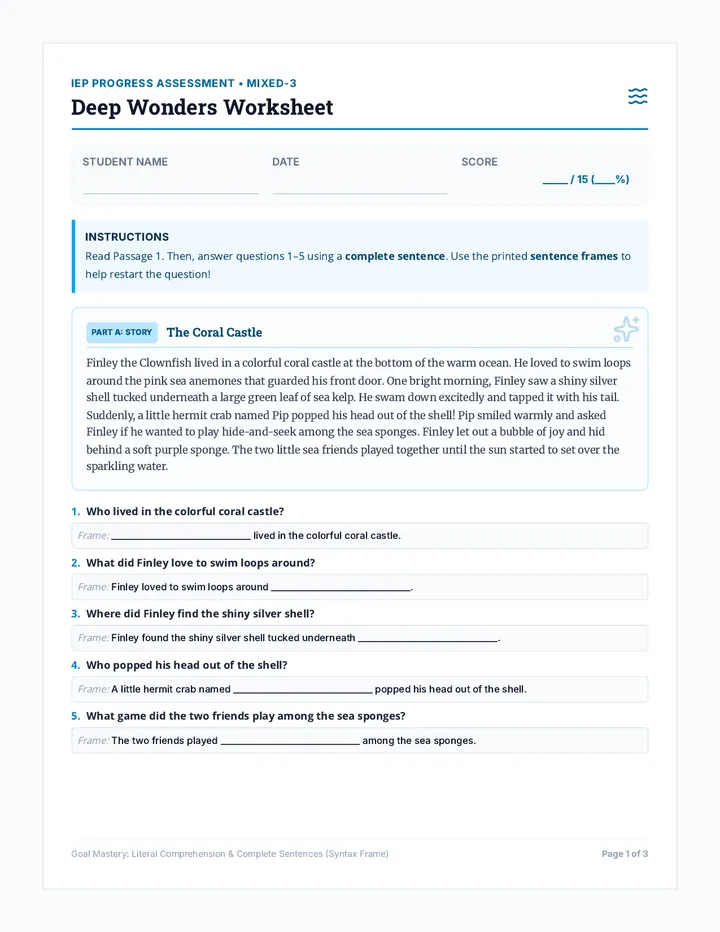
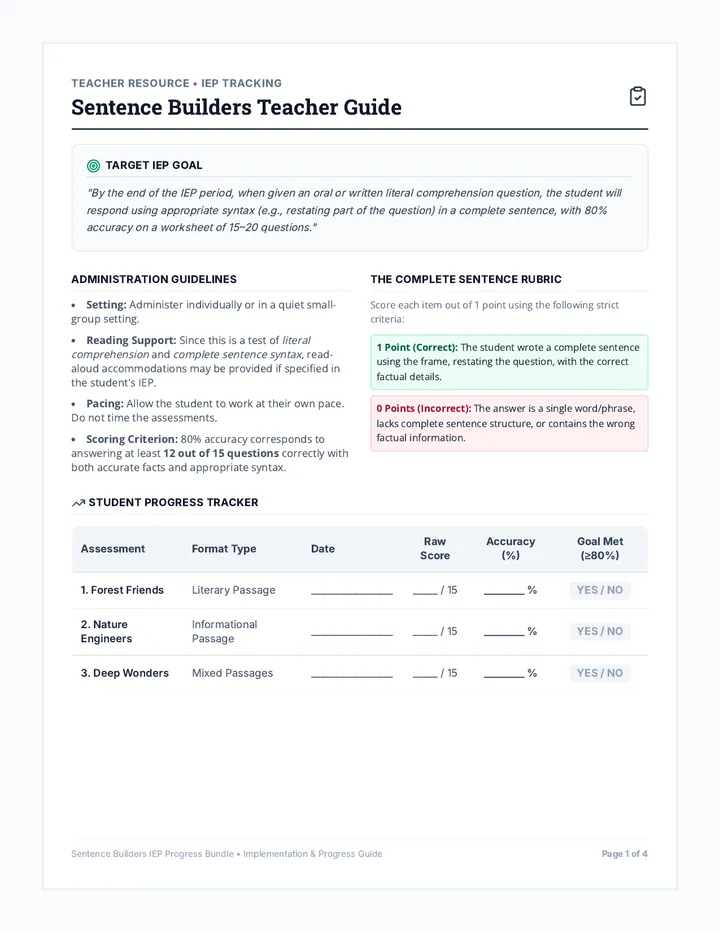
An IEP progress assessment bundle designed for a 3rd-grade student working on literal comprehension and complete-sentence responses using sentence frames. Includes three 15-question worksheets across literary and informational passages, along with a comprehensive teacher tracking guide.
Focuses on grocery shopping, making a grocery list, identifying food groups, and understanding store sections to locate items independently.
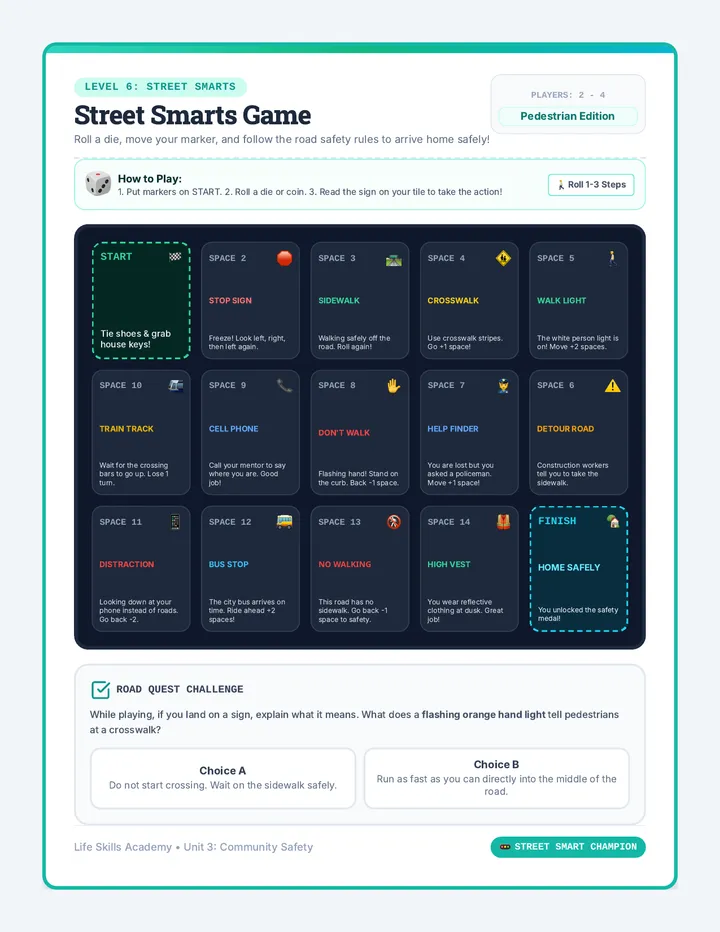
Teaches safety signs, navigation, and community navigation skills. Students learn to read pedestrian signs, crosswalk signals, and locate help in public spaces.
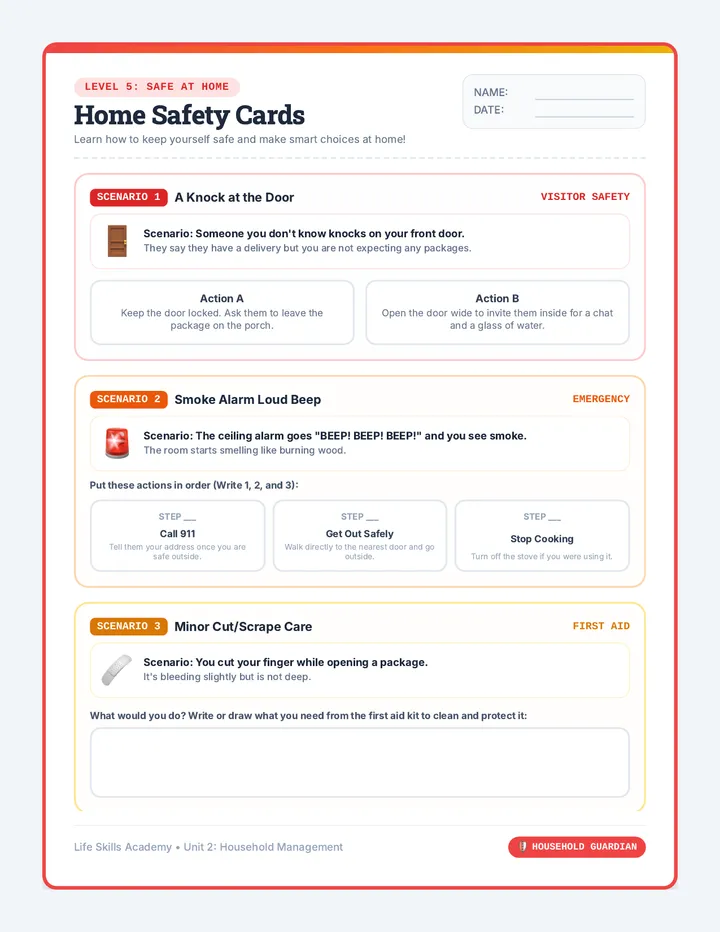
Teaches critical safety skills for the home environment, including dealing with emergencies, basic first aid, and managing visitors safely.
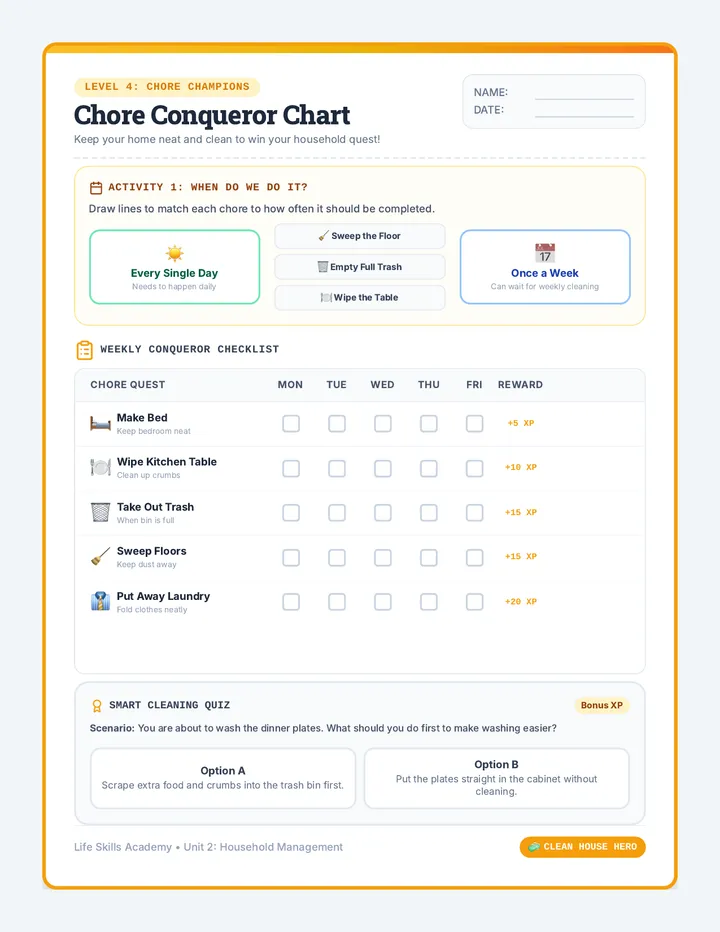
Focuses on household cleaning tasks, organizing chores, and maintaining a clean living space. Students practice sorting chores by frequency and completing a chore checklist.
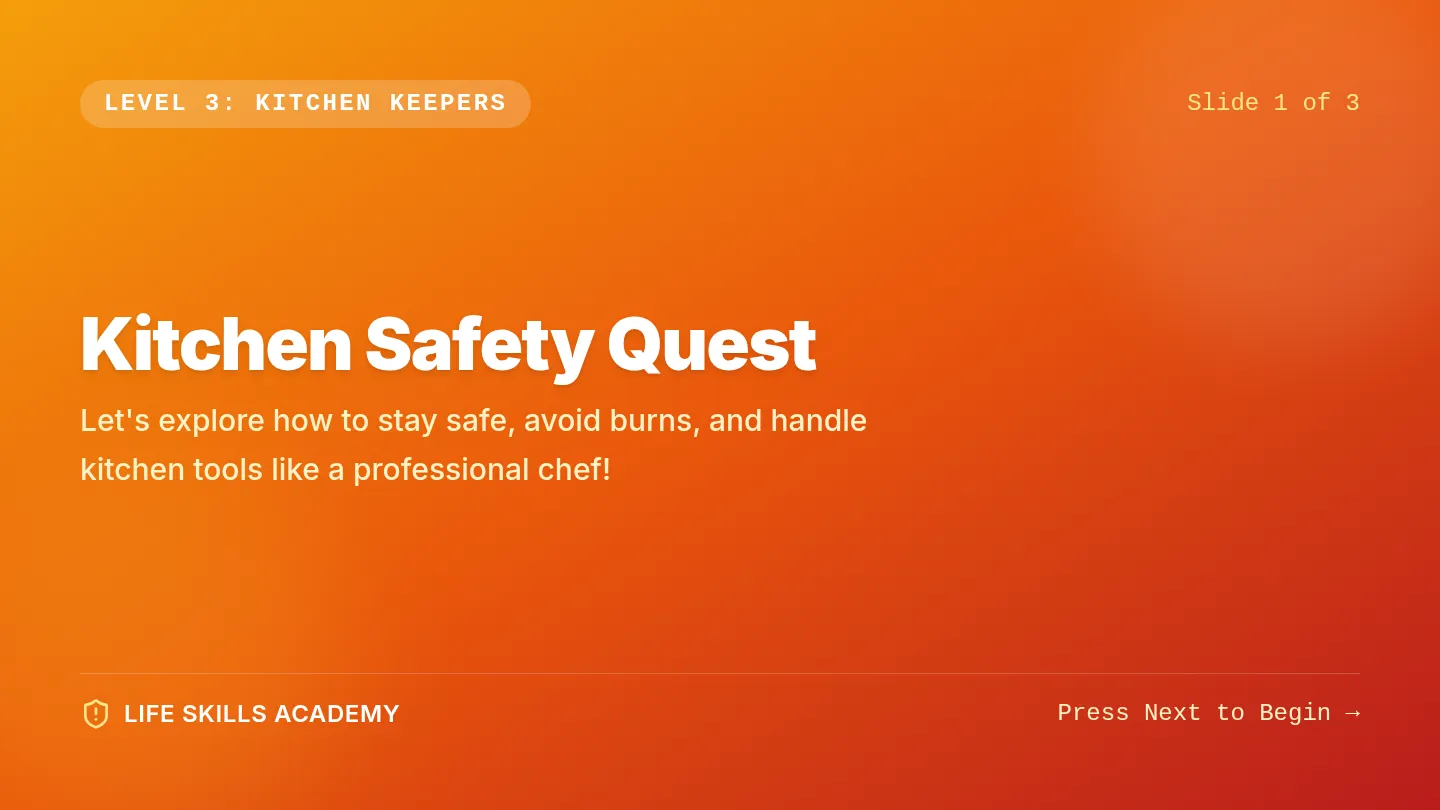
Covers essential kitchen safety rules, using simple kitchen tools, and selecting healthy food. Students practice identifying safe and unsafe kitchen scenarios.
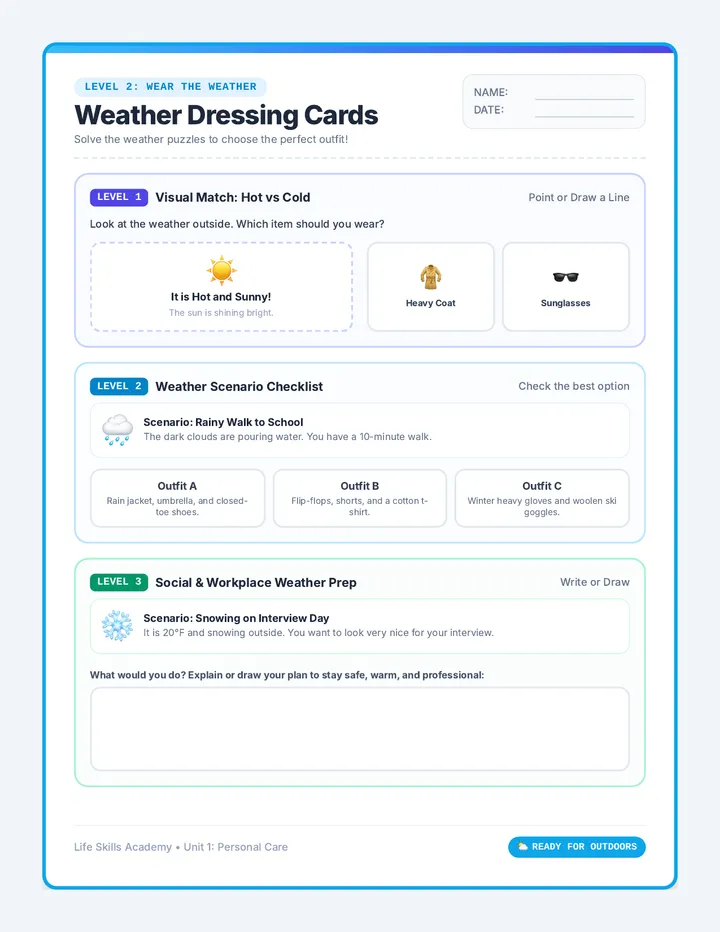
Teaches students to check the weather and choose appropriate clothing and accessories. Focuses on seasonal dressing and selecting clothing for safety and comfort.
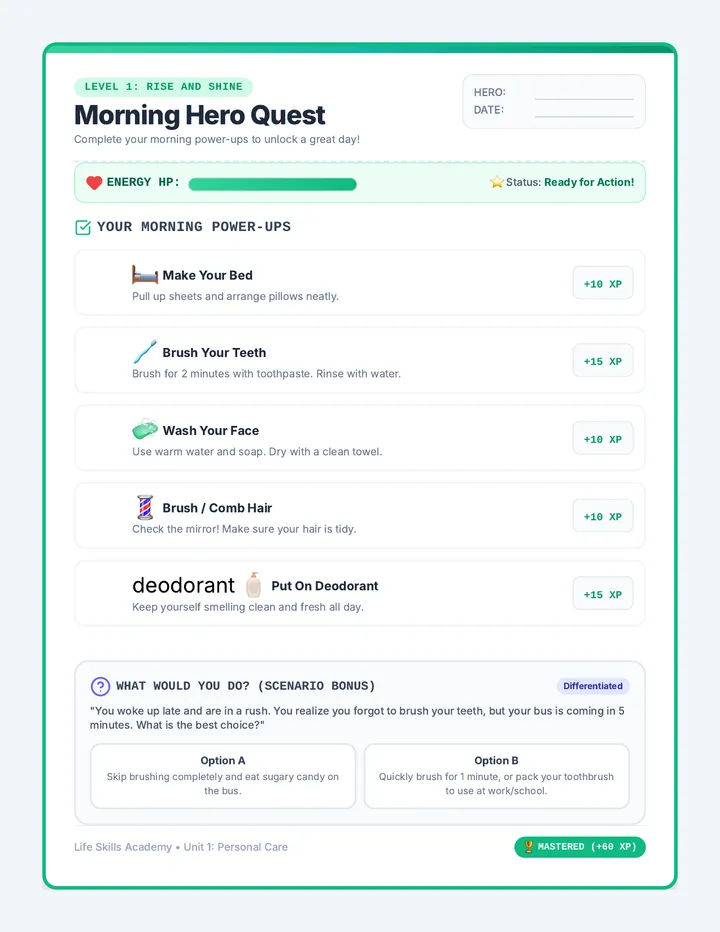
Focuses on morning routines and personal hygiene. Students learn to use visual checklists for brushing teeth, washing up, and self-care.
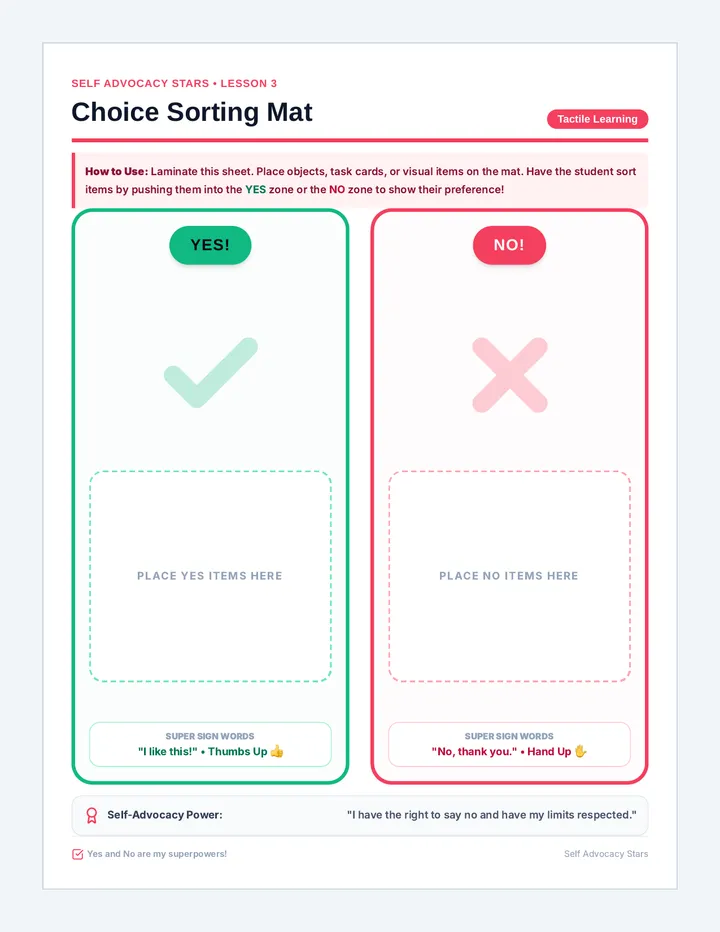
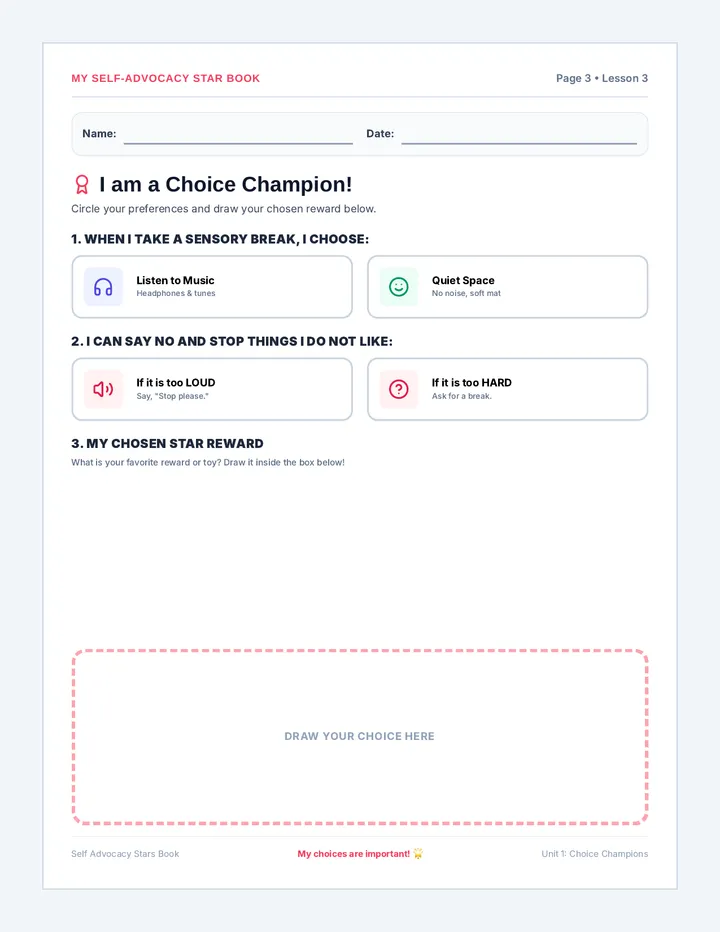
Students practice making independent choices, expressing preferences, and setting boundaries (saying "yes" or "no") using structured choice boards, tactile sorting mats, and interactive role-play.
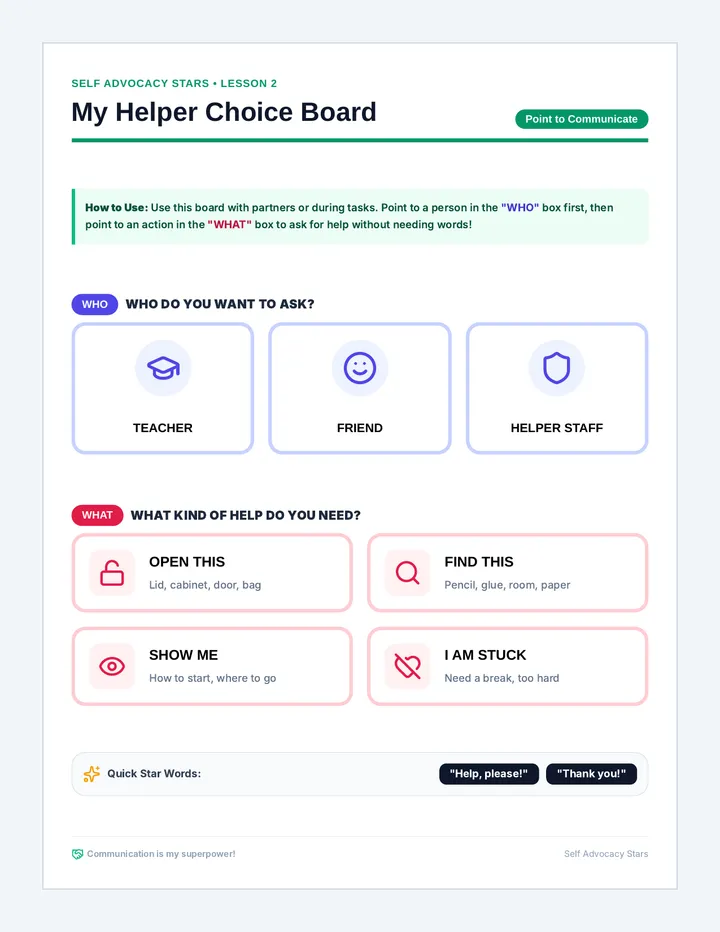
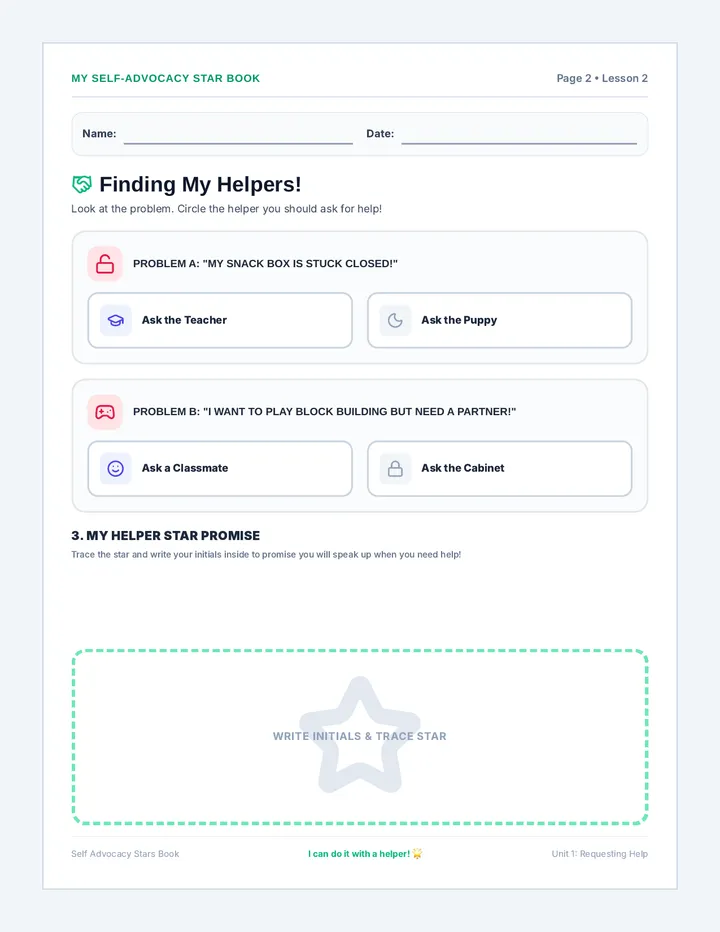
Students practice identifying when they need help, who to ask (teachers, peers, or helpers), and how to communicate that need using visual phrase cards and guided collaborative practice.
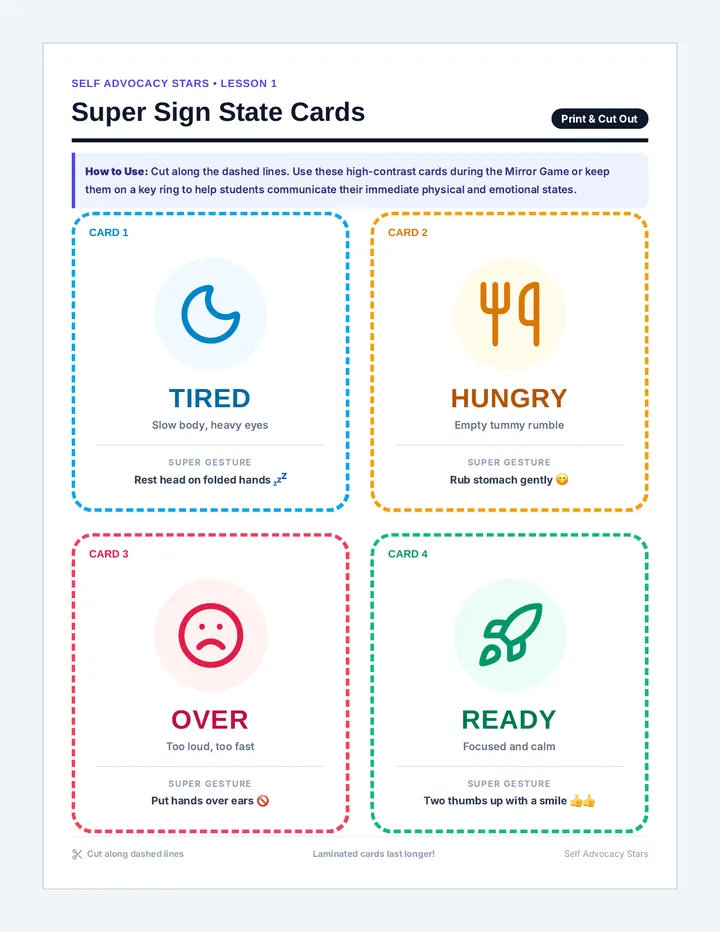
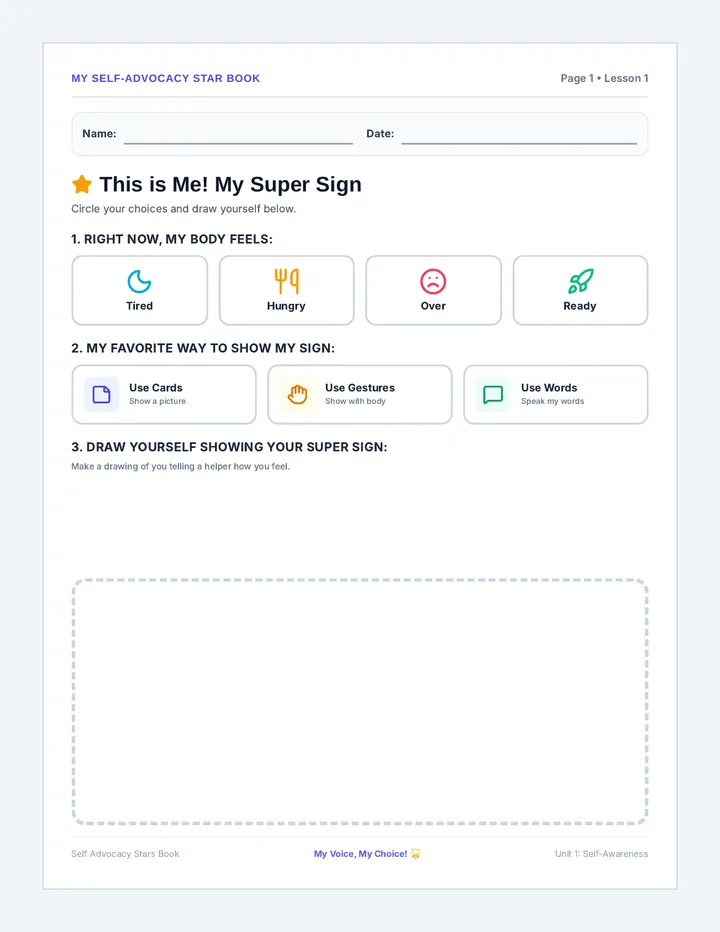
Students learn to recognize and communicate physical and emotional states (like tired, hungry, overwhelmed, or ready to learn) using simple gestures, vocalizations, or visual symbol cards.
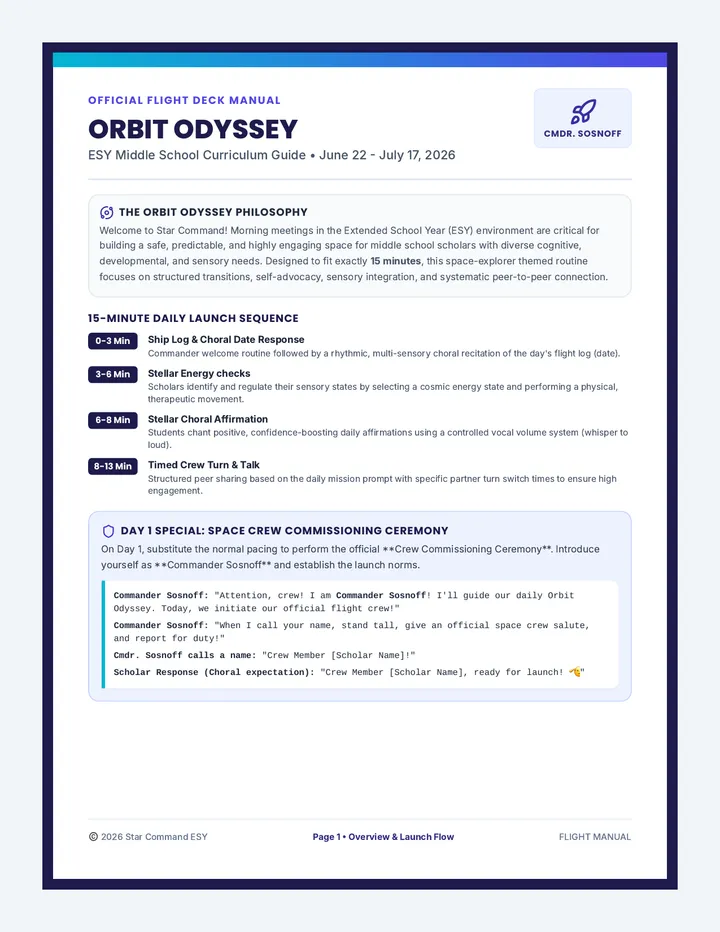
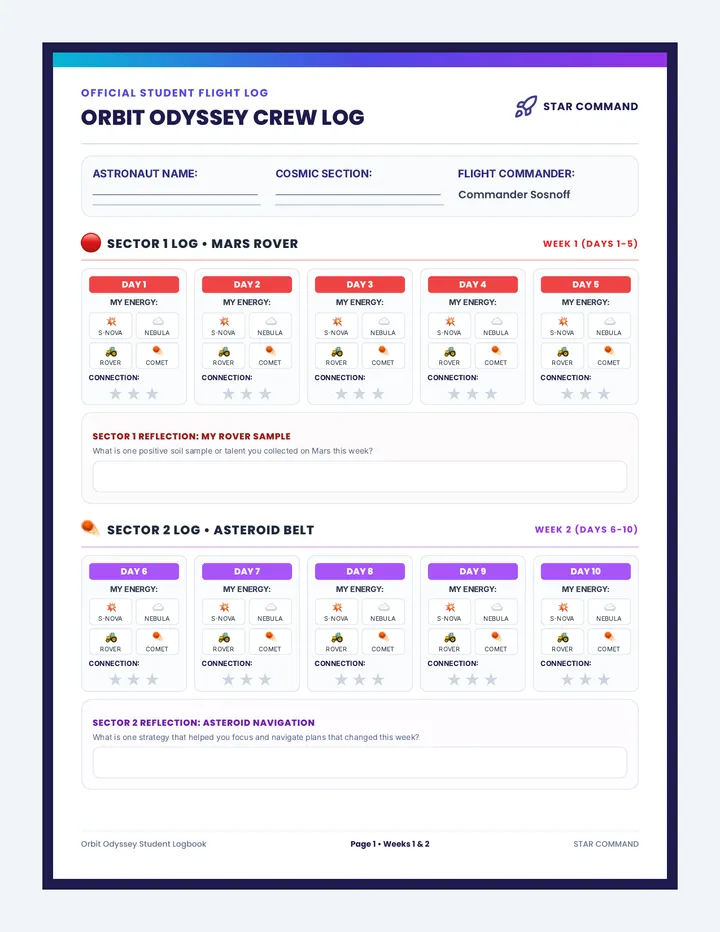
A 4-week space explorer themed morning meeting series for middle school ESY scholars with disabilities. Led by Commander Sosnoff, it covers Mars Rover, Asteroid Navigation, Saturn Rings, and Nebula sectors with calendar ship logs, cosmic energy checks, stellar affirmations, and turn-and-talk communication prompts.
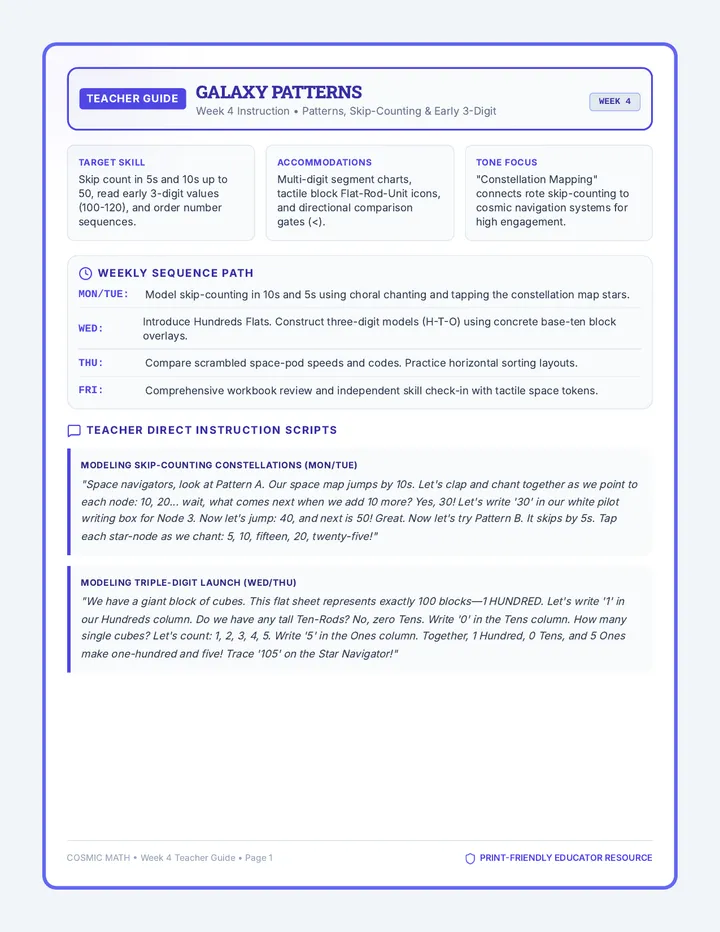
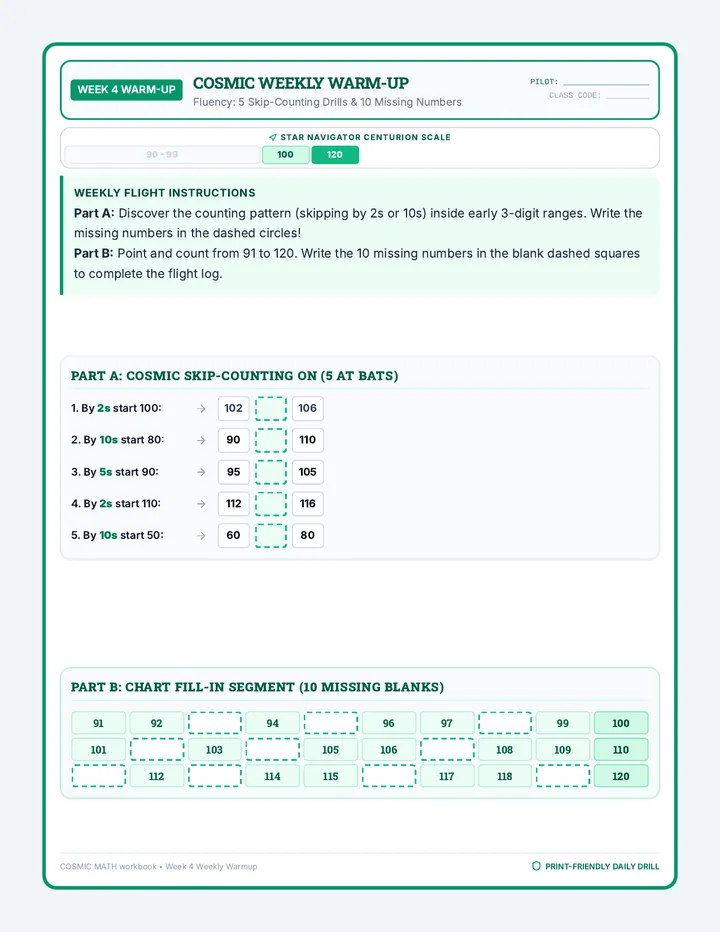
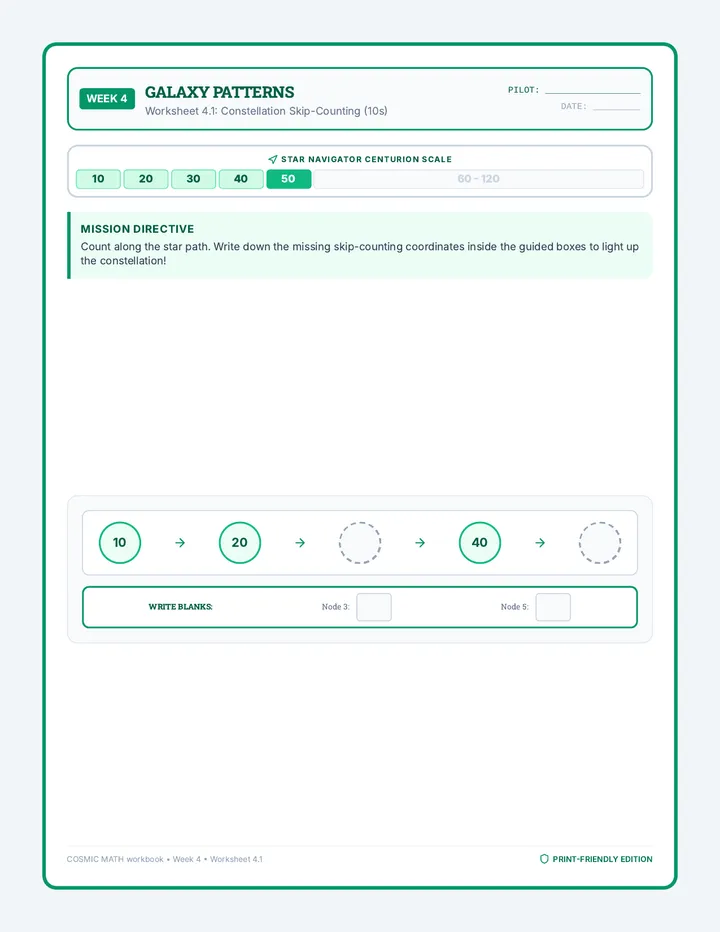
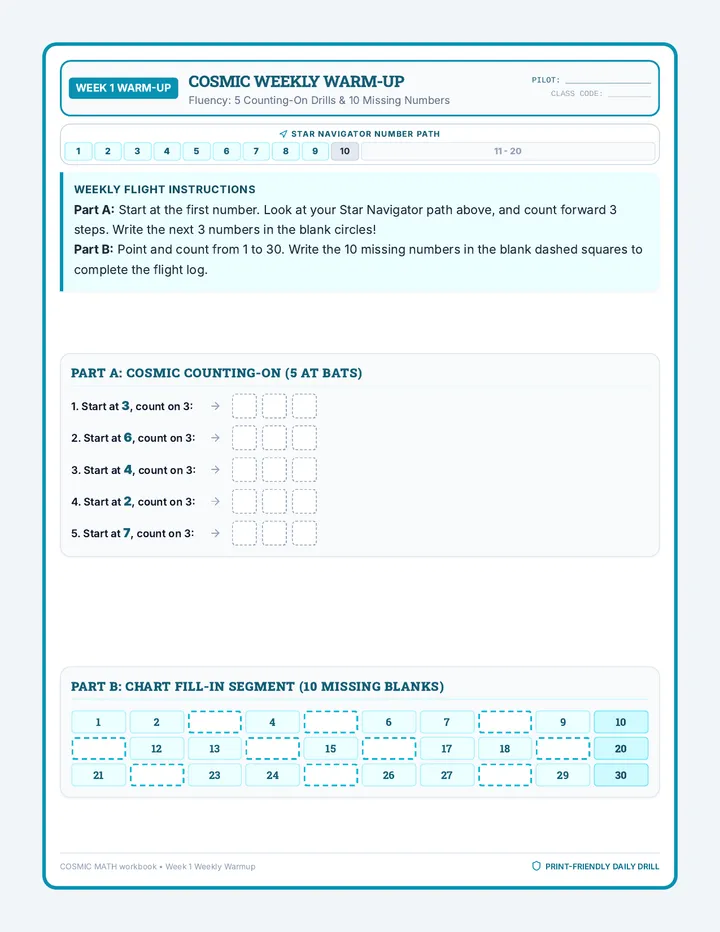
Introduces early 3-digit numbers (100-120), visual skip-counting (2s, 5s, 10s) using constellation maps, and ordering cosmic objects to build sequential logic.
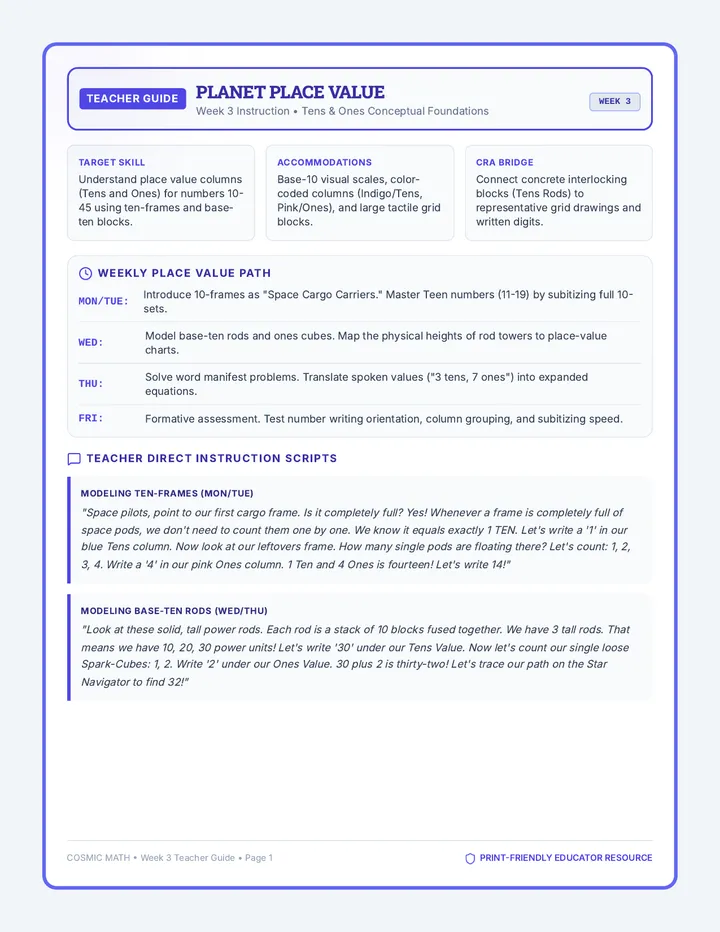
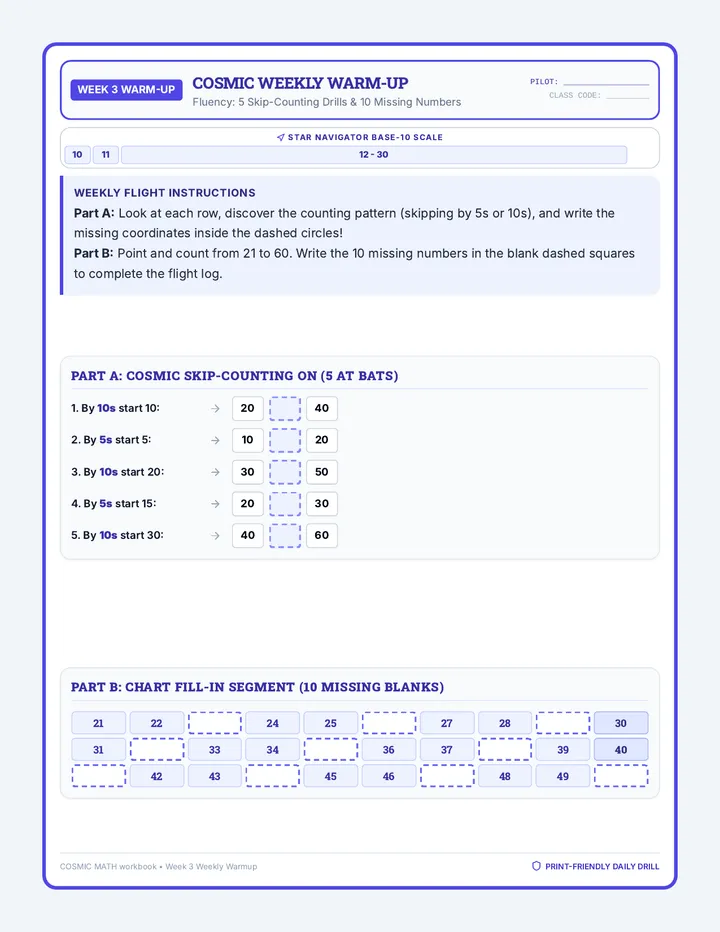
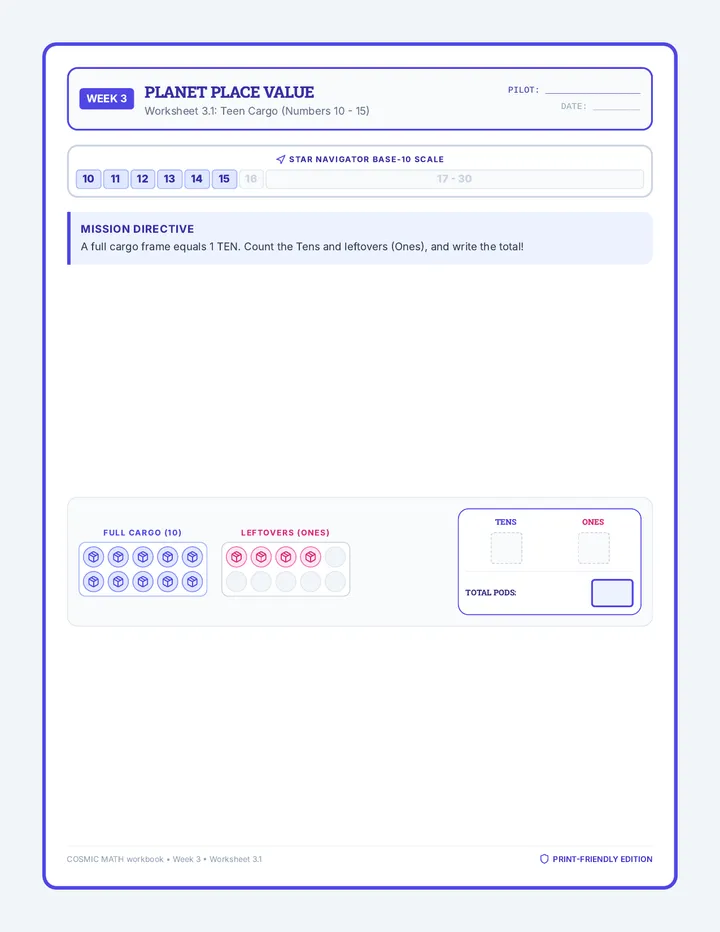
Focuses on identifying double-digit numbers (10-99), representing them using ten-frames and printable base-ten icons, and writing numbers in expanded place value charts (tens and ones) with clear physical boundaries.
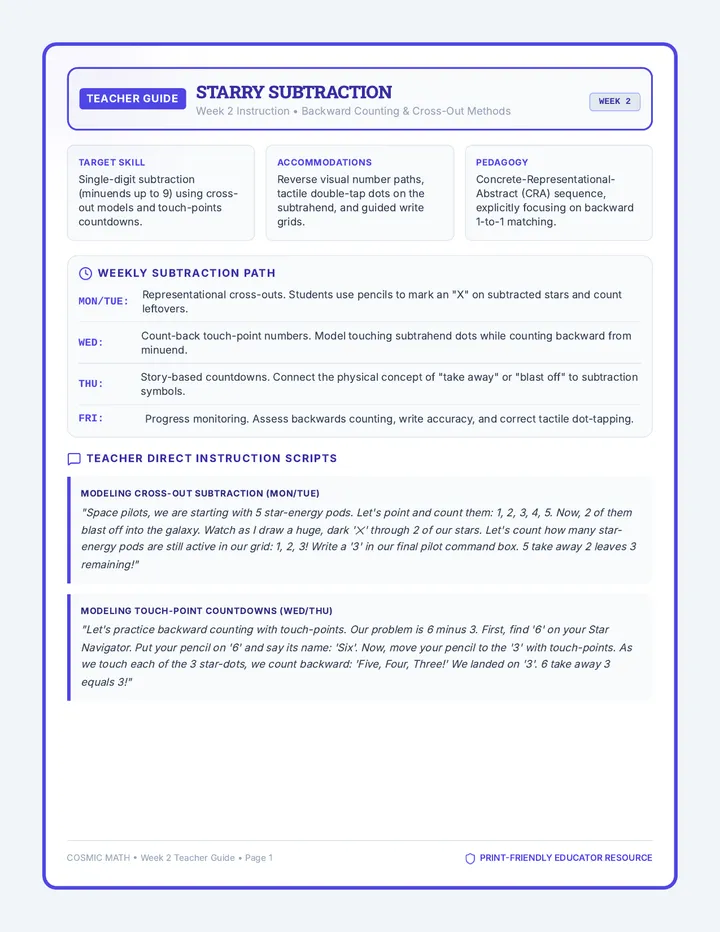
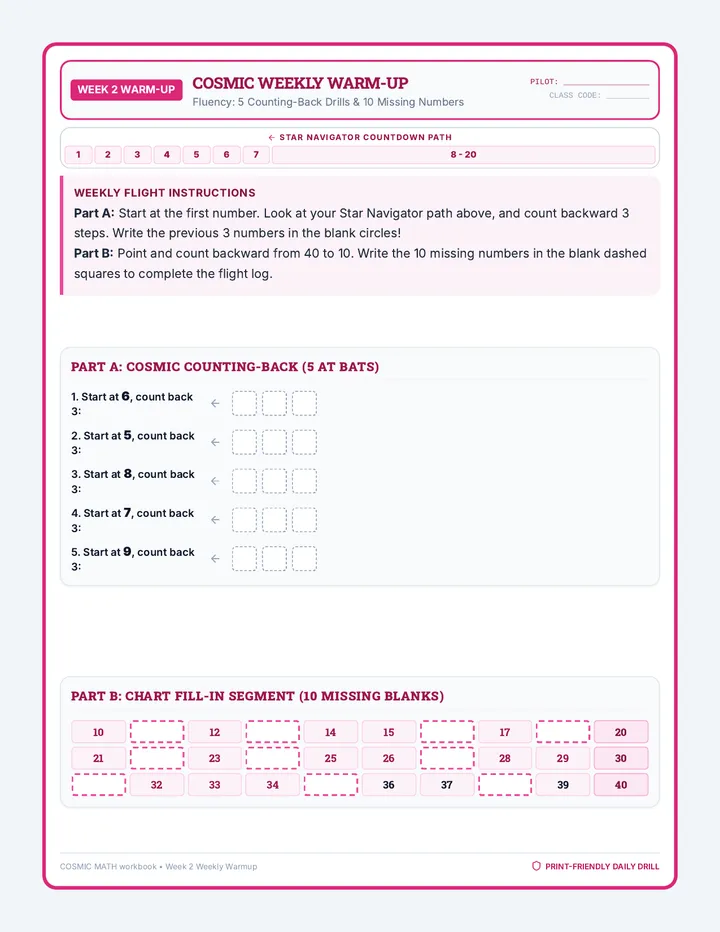
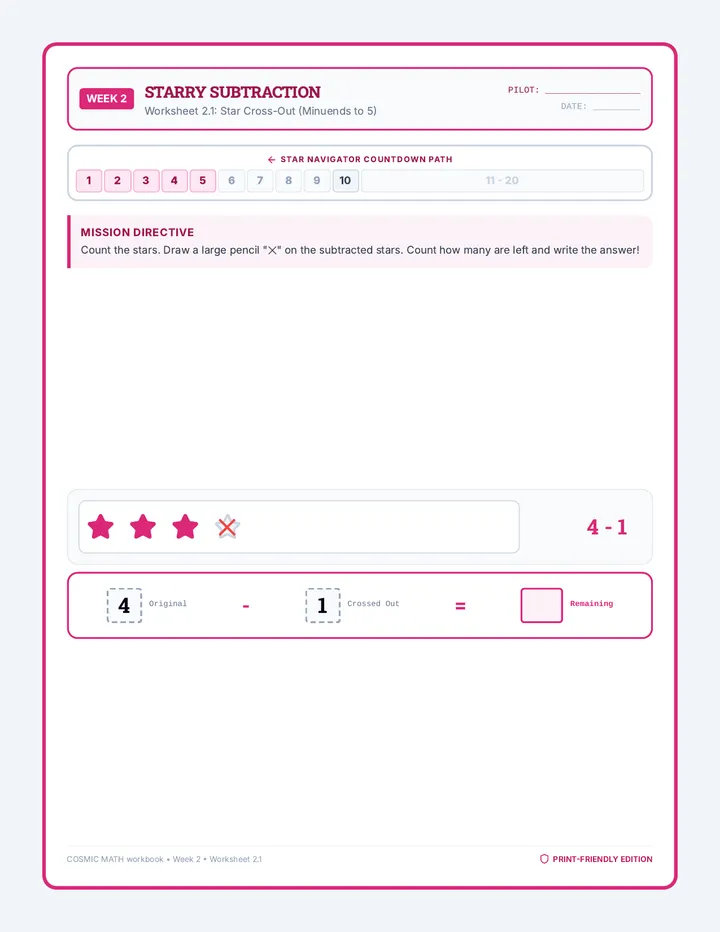
Covers single-digit subtraction (1-9) with cosmic countdowns, crossing-out stars or rocket fuel cells, embedded touch-points for backwards counting, and structured workspace templates.
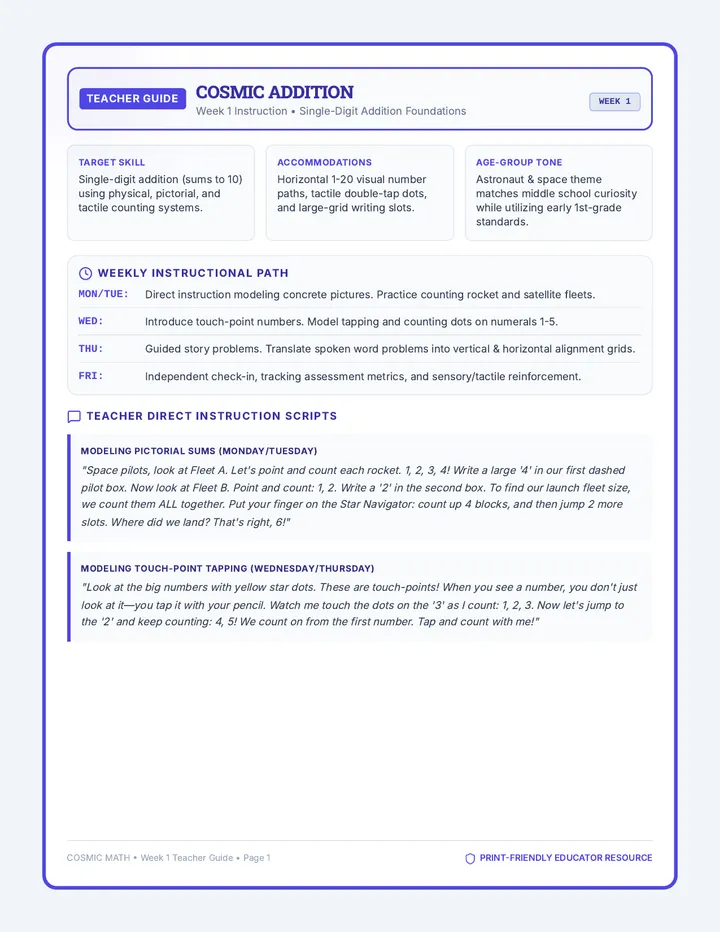
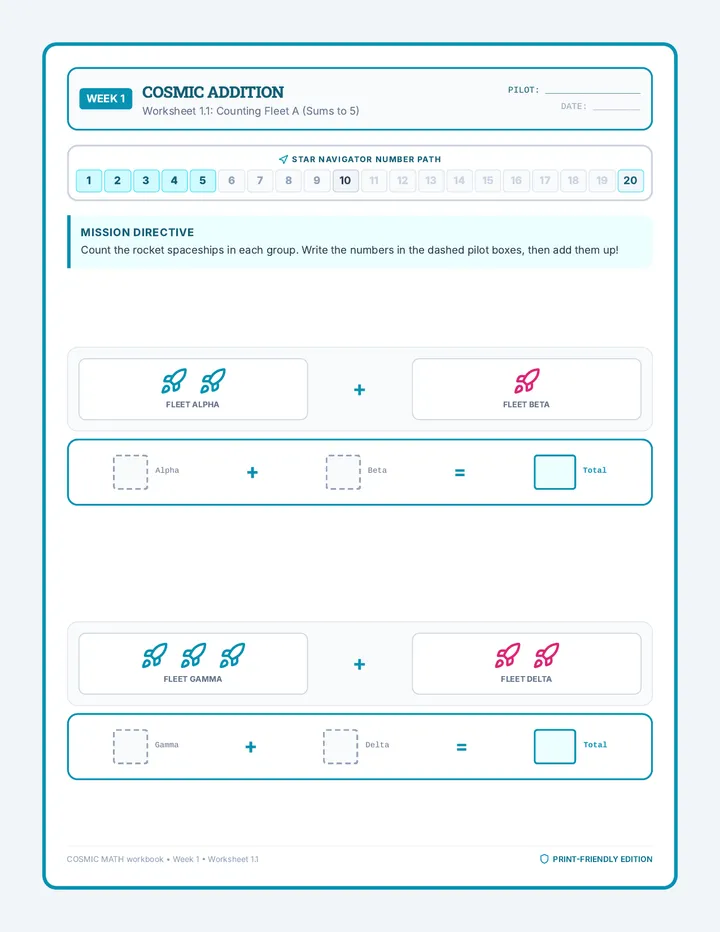
Focuses on single-digit addition (1-9) using embedded touch-point numbers, pictorial representations of spaceships and stars, a persistent 1-20 number path, and large guided workspace boxes for physical alignment.
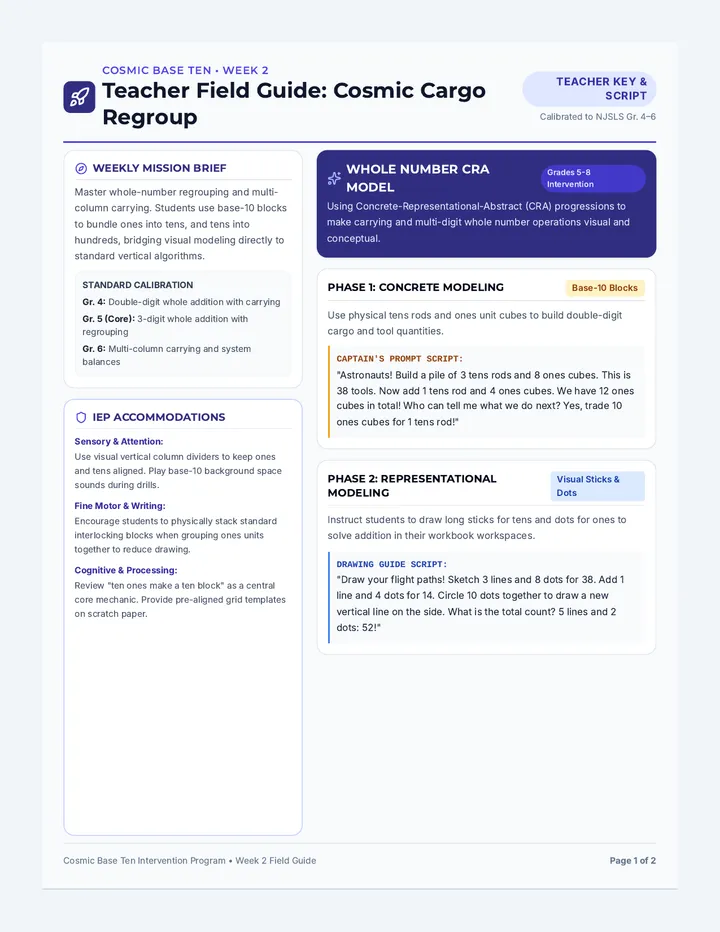
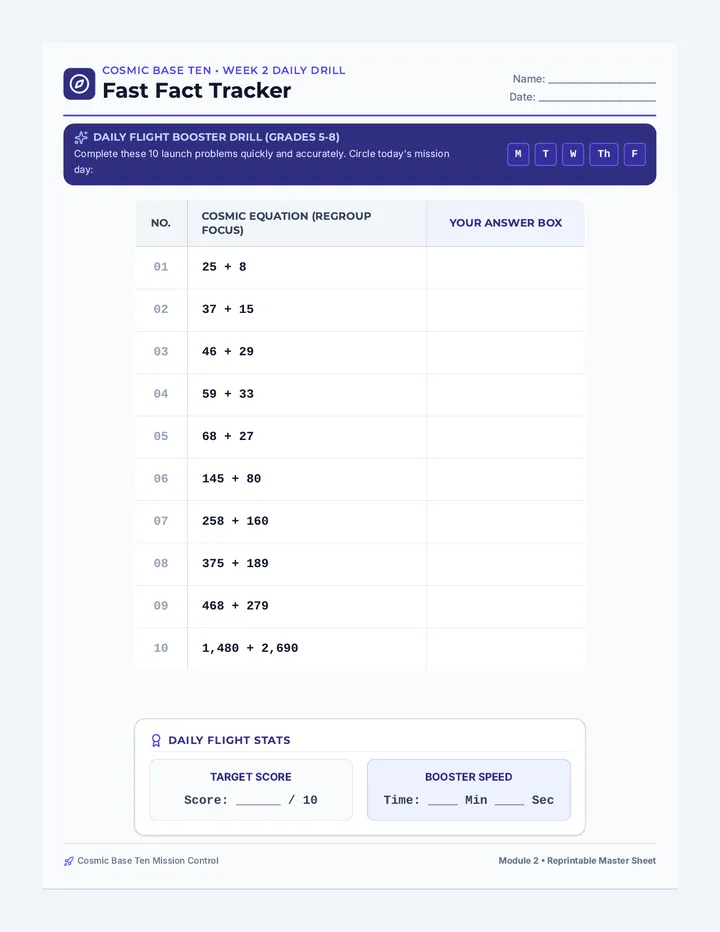
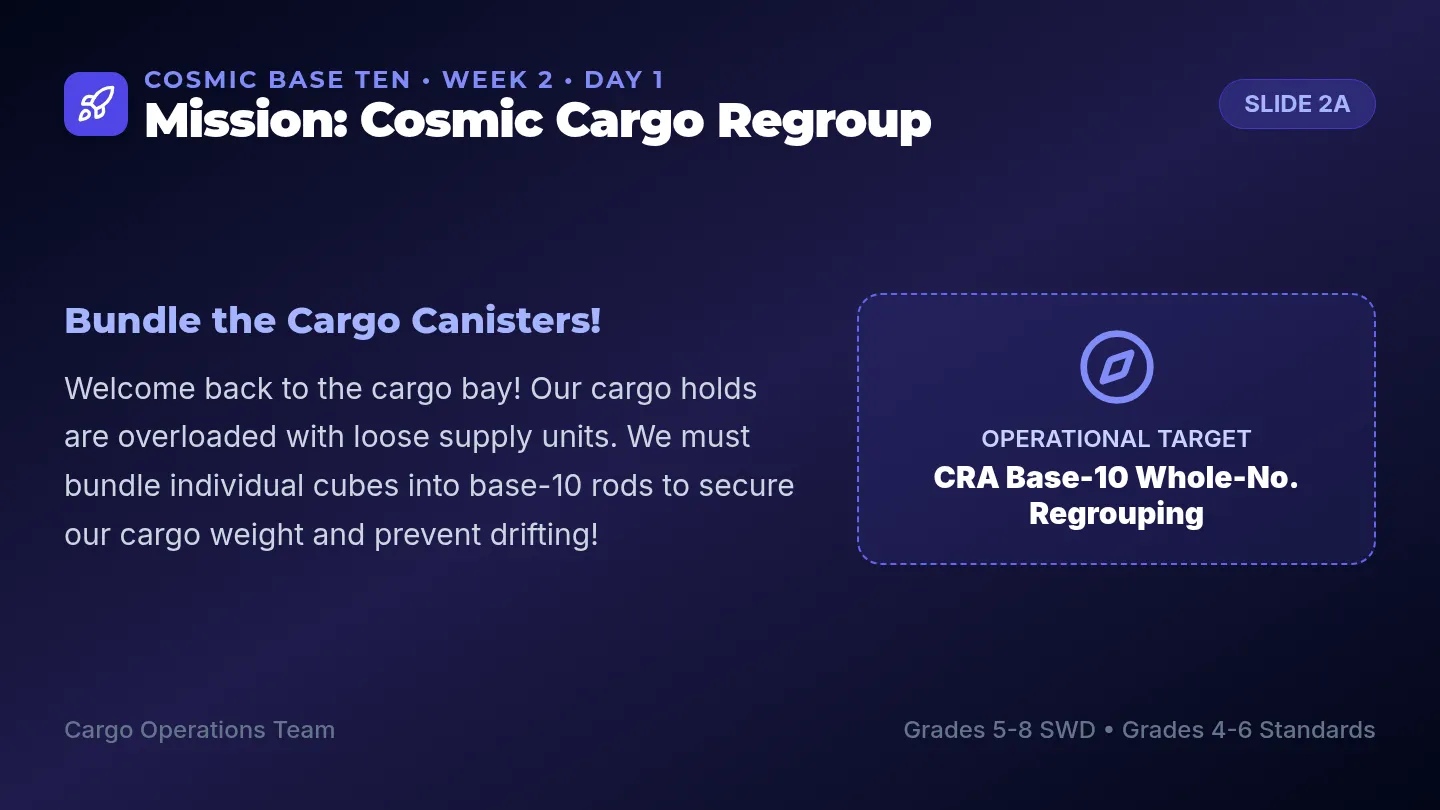
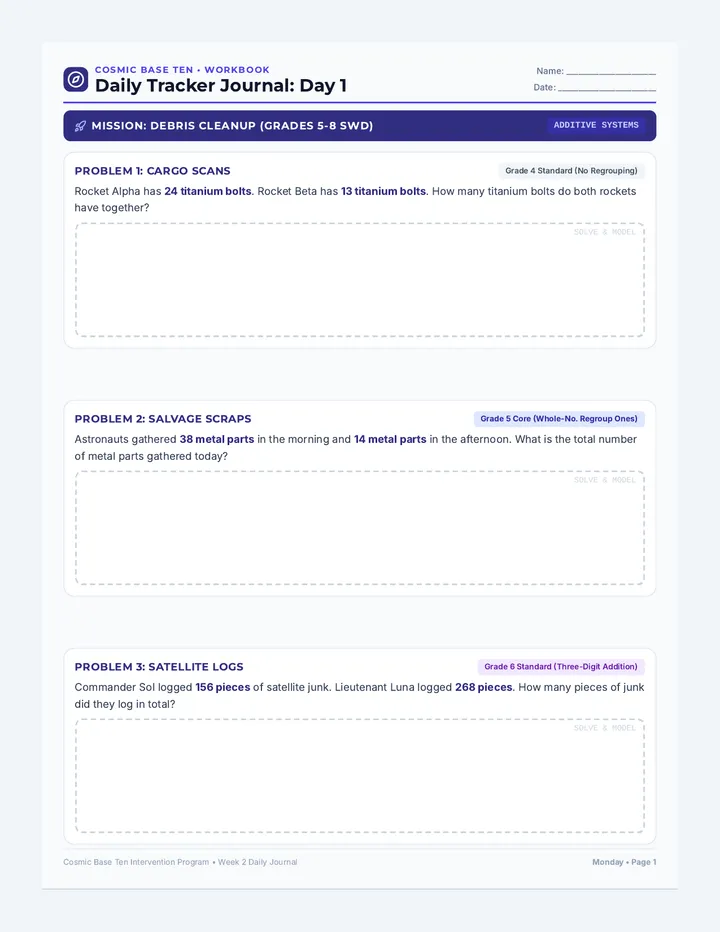
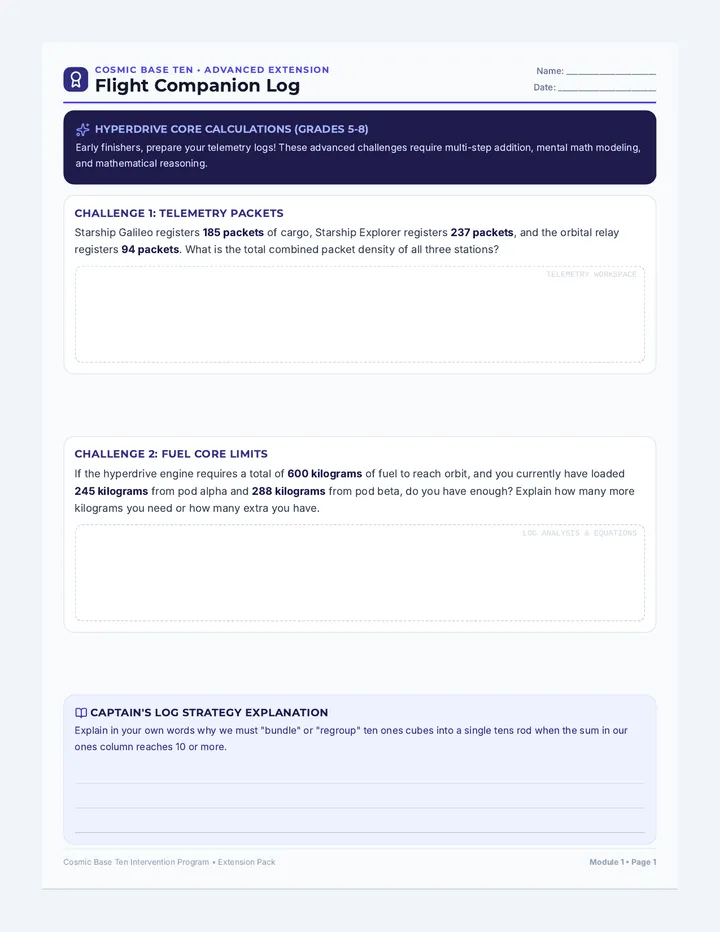
Week 2 focuses on mastering whole-number regrouping and multi-column carrying in the context of starship cargo inventories. Students use base-10 blocks to bundle ones into tens and tens into hundreds, bridging visual modeling directly to standard vertical algorithms.
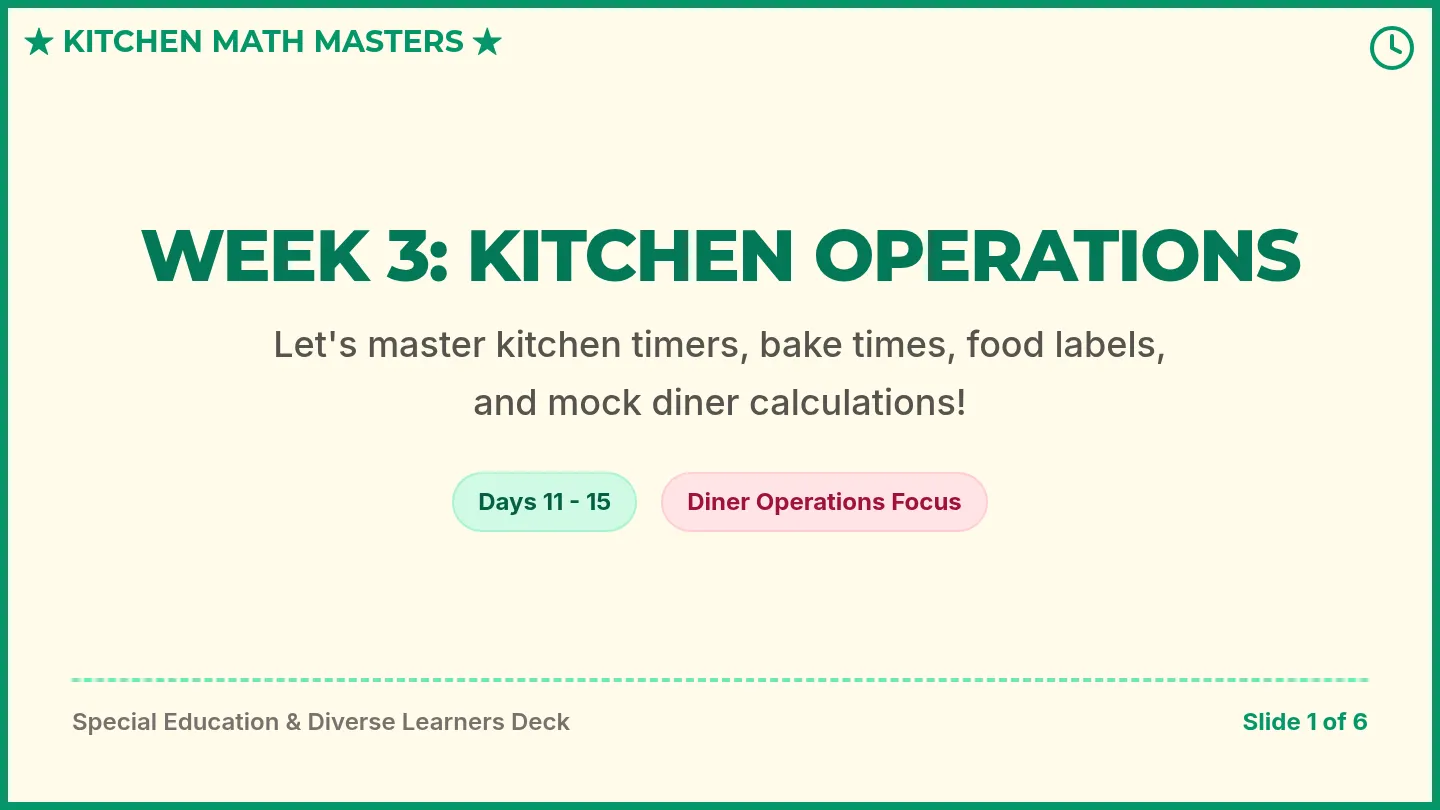
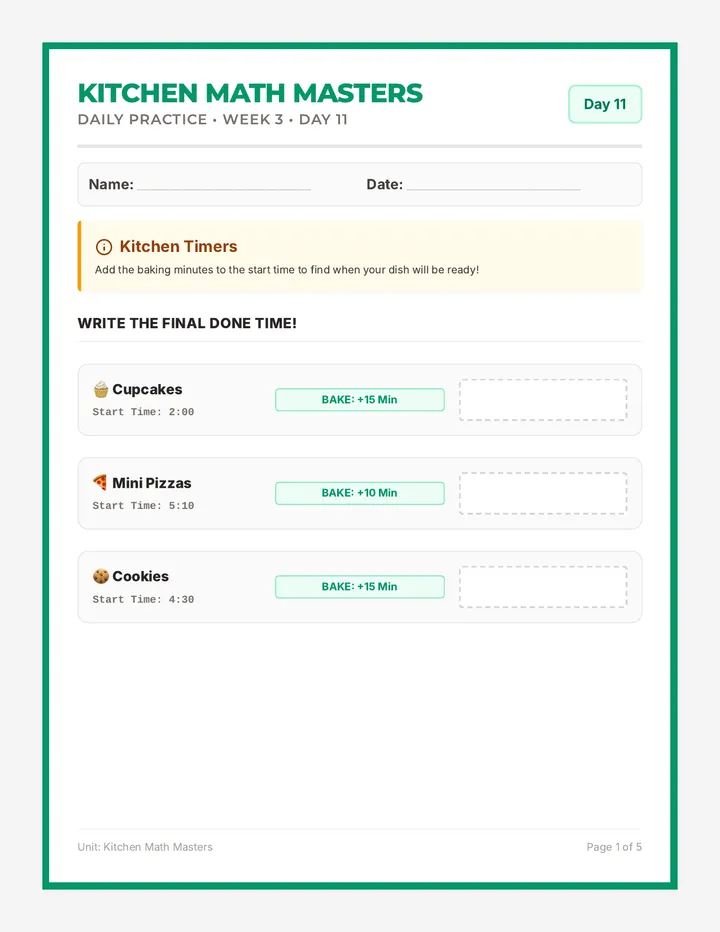
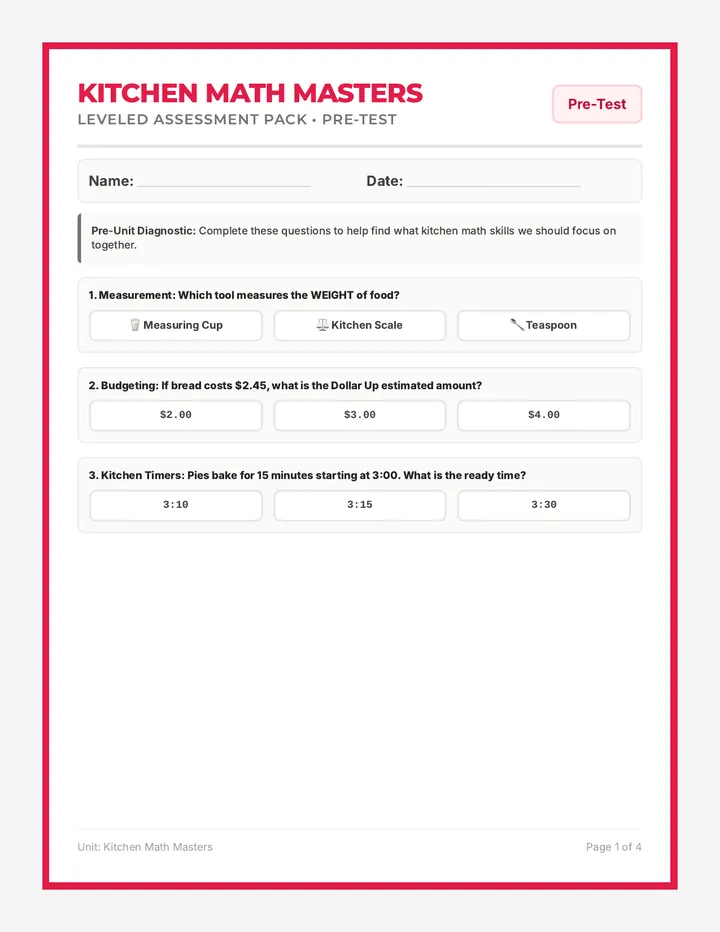
Week 3 of the Kitchen Math Masters unit. Focuses on kitchen timers, elapsed time, adjusting cook times, understanding food label servings, and conducting a mock cafe simulation.
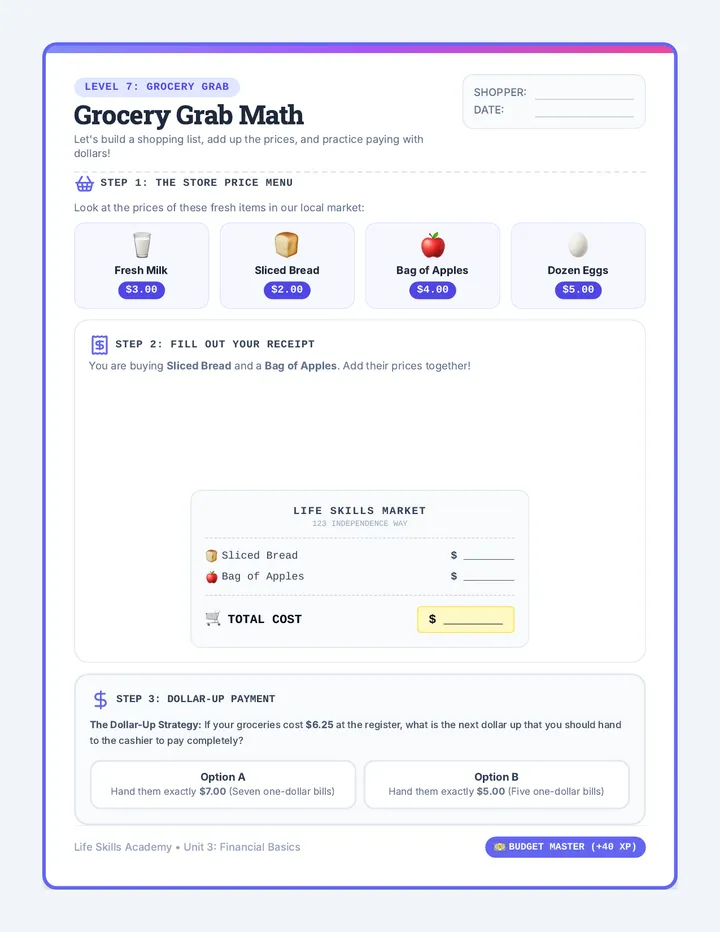
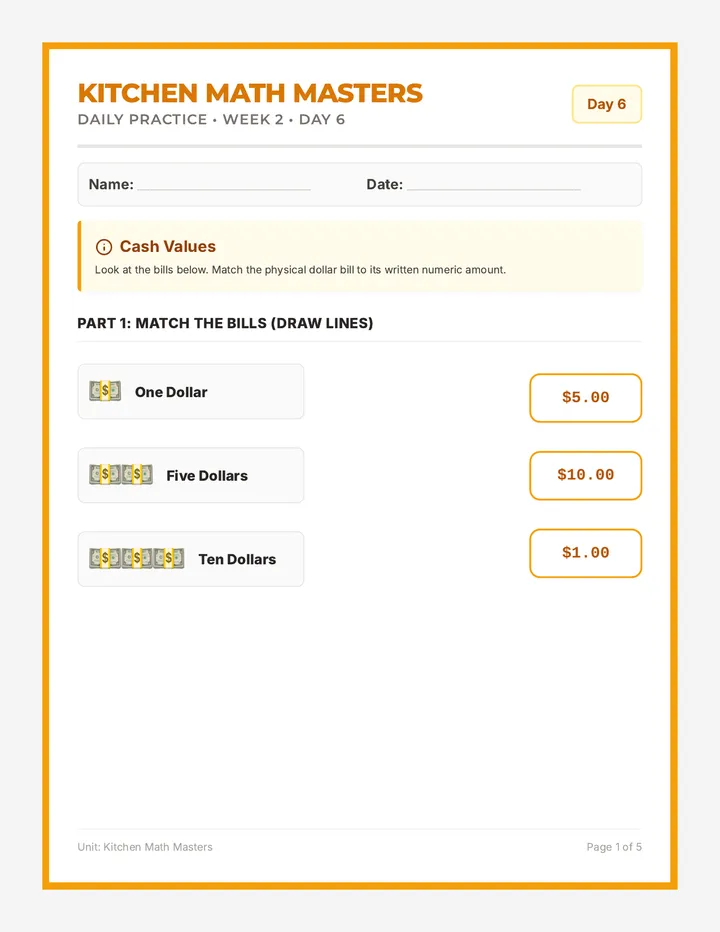
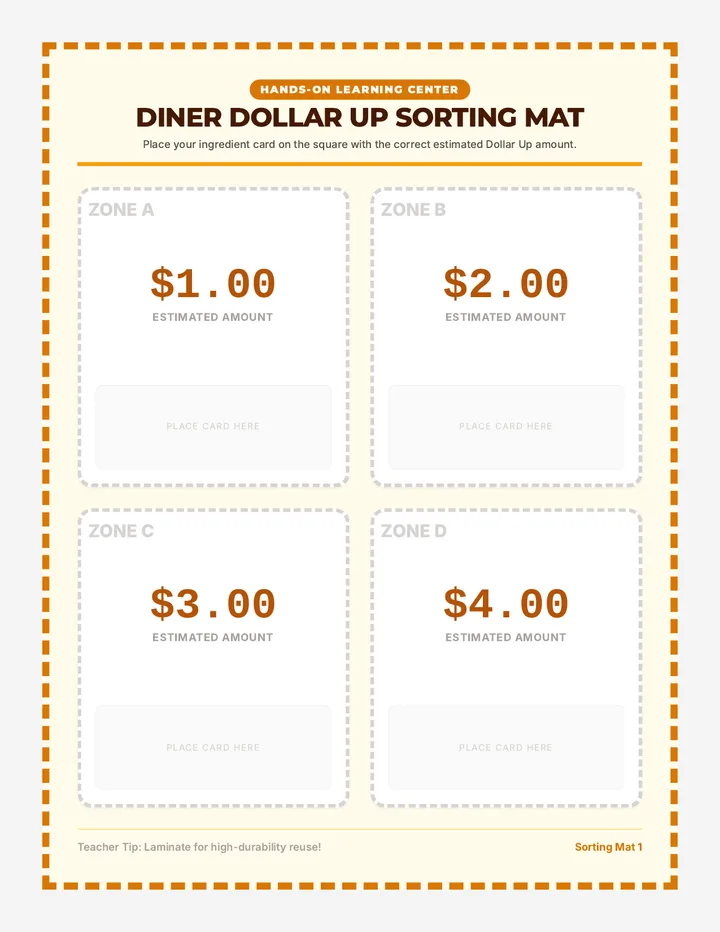
Week 2 of the Kitchen Math Masters unit. Focuses on money identification, estimation via the Dollar Up method, ingredient budgeting, and simple subtraction for calculating change.