Forest Feast Worksheet
Forest Feast
Help the forest friends find the biggest snack!
Name:
Date:
0
1
2
3
4
5
6
7
8
9
10
11
12
13
14
15
Instructions:
Count the items in each box. Write the number on the line below. Then, circle the box that has MORE.
Count: ________
Count: ________
Count: ________
Count: ________
Count: ________
Count: ________
Count: ________
Count: ________
Number Scouting
Circle the number that is GREATER (the most).
8
13
15
6
11
14
9
12
Bonus: Draw Your Own!
Draw a set of berries in the left box and leaves in the right box. Make the group of berries have LESS than the group of leaves.
Forest Feast Answer Key
Forest Feast [ANSWER KEY]
Comparison of sets and numbers up to 15.
Visual Counting & Comparison
Box A
7
Box B
10 (MORE)
Box A
13 (MORE)
Box B
9
Box A
11
Box B
15 (MORE)
Box A
14 (MORE)
Box B
12
Number Scouting (Greater Number)
8 13
15 6
11 14
9 12
Bonus: Draw Your Own!
Solutions will vary. Verify that the left box (berries) contains a smaller quantity than the right box (leaves).
Example: 5 berries and 12 leaves.
Forest Feast Slides
Forest Feast
Comparing Numbers 1 to 15
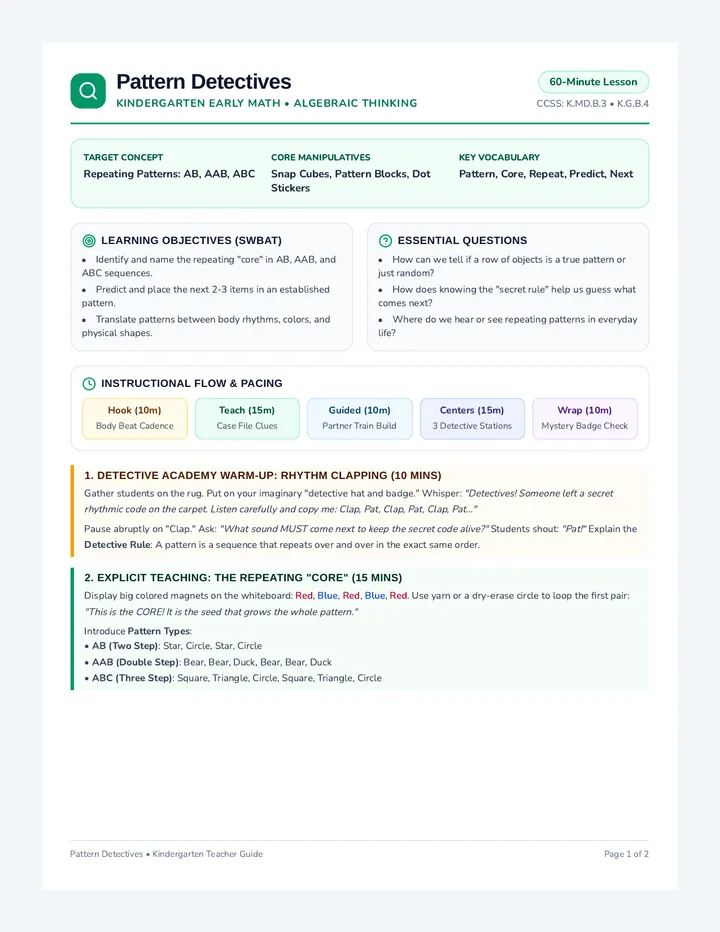
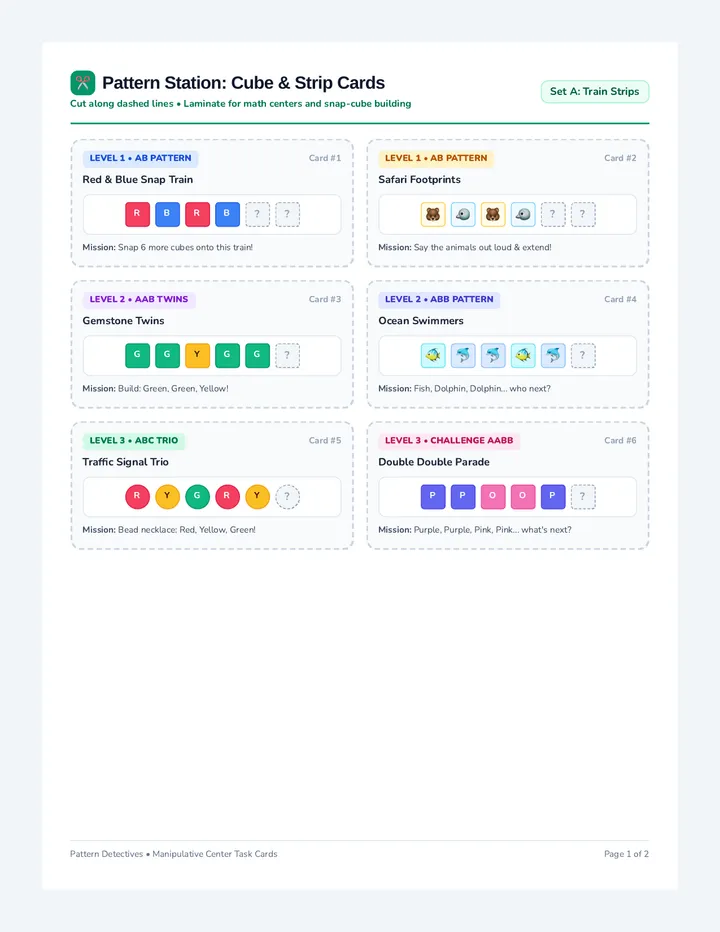
Warm Up Counting
1
2
3
4
5
6
7
8
9
10
11
12
13
14
15
Which is More?
More means a greater amount or a bigger number.
4
6 is MORE!
Practice: Berries
Count and find the greatest amount!
Box A
Box B
12 is more than 8!
Number Face-Off
Which number is higher on the number line?
11 vs 14
15 vs 9
7 vs 13
The bigger number is like a taller mountain!
Forest Feast Time
Grab your worksheet and help our forest friends find the most snacks!
Forest Feast Teacher Guide
Teacher Facilitation Guide
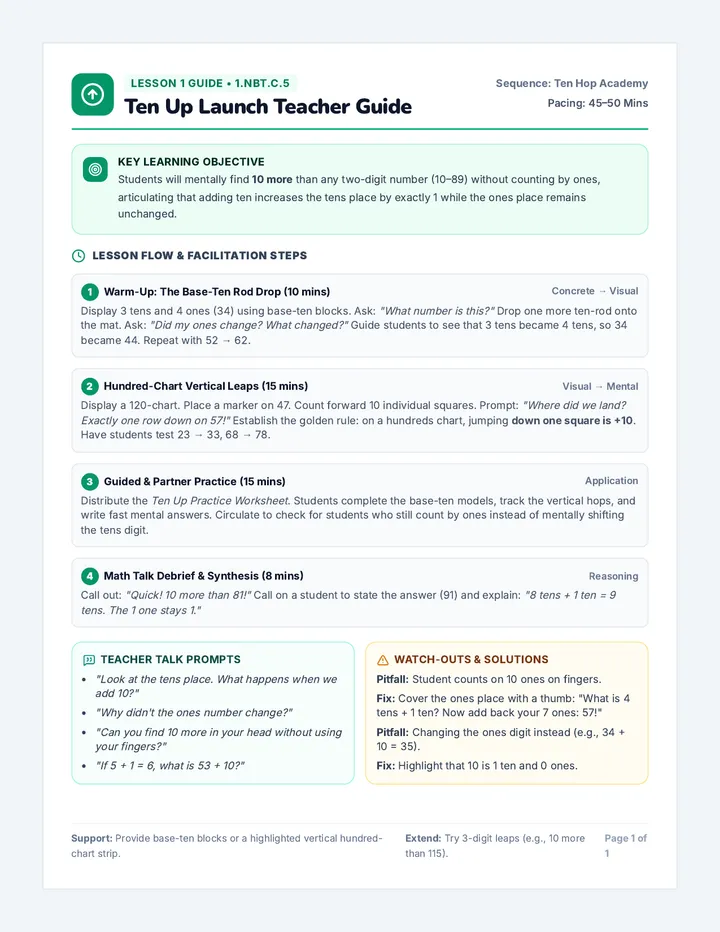
Lesson: Forest Feast Comparison
Grade: K-1 | Time: 40 min
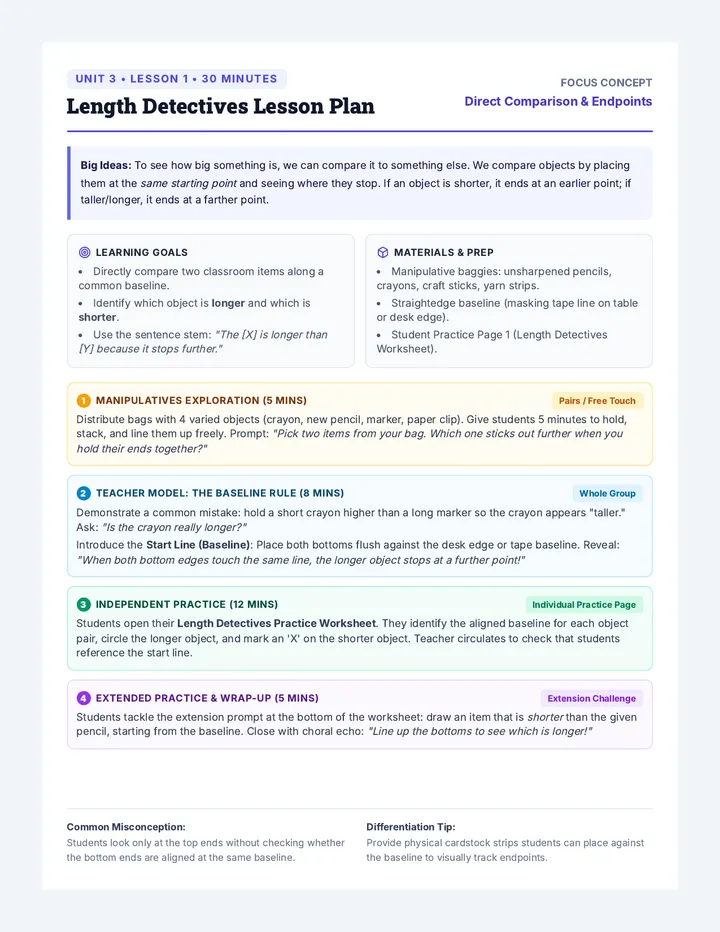
Learning Objectives
- Identify and count sets of objects up to 15 accurately.
- Compare two sets of objects and determine which has "more".
- Compare two numerals (1-15) and identify the greater value.
Materials Needed
- Forest Feast Slides
- Forest Feast Worksheet
- Small counters (optional)
Instructional Pacing
0-5 min
Warm Up & Hook (Slides 1-2)
Choral count from 1 to 15 with the class using Slide 2. Use a "slow-fast-slow" rhythm to keep students engaged. Ask: "What comes after 10? What is the biggest number we counted?"
5-15 min
Concept: Which is More? (Slide 3)
Define "more" as the group that is "bigger" or has "extra". Use the acorn example on Slide 3. Encourage students to "one-to-one match" with their fingers on the screen to see which side has leftovers.
15-25 min
Practice & Comparison (Slides 4-5)
Work through the berry example as a class. On Slide 5, introduce the idea of a number line or "height" of a number. Explain that numbers further along the counting sequence are always "more".
25-40 min
Independent Worksheet (Slide 6)
Students complete the Forest Feast Worksheet. Circulate to check for counting accuracy—students often skip items when they are grouped closely together (like the berries or pinecones).
Support Strategies
For students struggling to count to 15, provide a 1-20 number line for reference. Encourage them to cross out each item as they count on the worksheet to avoid double-counting.
Extension Ideas
Ask advanced students to determine how many more the greater group has. They can also try comparing three sets to find the "greatest" of all.
Discussion Questions
- ? "If I have 12 and you have 13, who has more? How do you know?"
- ? "Does 'more' always mean the items take up more space, or is it about the count?"
- ? "What is the smallest number we can have? What is the biggest number on our sheet?"