Multiplication Blueprint Teacher Guide IEP Instructional Plan
Multiplication Blueprint Teacher Guide
Target Skill: Two-Digit by Two-Digit Multiplication (CCSS.MATH.CONTENT.4.NBT.B.5)
Target Grade: 4th - 6th SpEd / Tier 2-3
Modality: CRA + Color Scaffolding
Standard IEP Annual Goal Formulation
Goal: By the end of the IEP period, when given two 2-digit numbers and visual scaffolding (area model grid / color-coded place value frames), the student will compute the correct product with 80% accuracy across 4 out of 5 consecutive trials as measured by weekly curriculum-based assessments.
CRA Instructional Progression
1. Concrete Stage
Base-ten blocks on place-value mats. Model breaking numbers into tens rods and ones units (e.g., \(24 \times 13\)). Physically form the array rectangle.
2. Representational
Area model (4-quadrant box). Students decompose into expanded form \((20+4) \times (10+3)\), calculate partial products, and sum horizontally/vertically.
3. Abstract (Algorithmic)
Vertical partial products and standard algorithm with color-coded guide arrows and dedicated placeholder "0" box for the tens-row shift.
Explicit Teaching Script & Step Directives
Step 1: Ones
"Multiply the bottom ones digit by the top ones, then top tens." Remind student to write regrouped tens in the top circle if product \(\ge 10\).
Step 2: Zero
"Drop the Place Holder 0 on line 2." Ask: "Why do we write 0?" (Because the next bottom digit is in the tens place, so multiplying by 3 tens equals tens, not ones).
Step 3: Tens
"Multiply the bottom tens digit by top ones, then top tens." Remind: cross out prior regrouped numbers so they are not added twice.
Step 4: Add
"Add both partial products together." Keep columns vertically aligned using grid lines. Check reasonableness using rounding estimation.
Least-to-Most Prompt Hierarchy
Level 1: Independent
Student initiates and solves using reference anchor chart.
Level 2: Gestural
Point to next step on the anchor chart or tap the placeholder zero box.
Level 3: Verbal Cue
"What digit do we multiply next?" or "Remember your placeholder zero."
Level 4: Direct Model
Teacher models the step on dry-erase board, student mirrors immediately.
Two-Digit Multiplication SpEd Instructional Module Teacher Guide • Page 1 of 2
IEP Assessment & Data
Diagnostic Tracking & Intervention
Formative assessment tools and targeted error correction strategies
Student Name: _______________________
Caseload Manager: ____________________
Error Analysis & Prescriptive Interventions
Observed Error Root Misconception Immediate Corrective Intervention Omission of Placeholder 0 Does not recognize the bottom tens digit represents a multiple of 10. Pre-highlight the placeholder circle in red/amber before student starts. Use phrase: "Zero the hero holds the tens place." Adding Regrouped Digits Prematurely Adds the regrouped number before multiplying the tens digit. Teach order of operations cue: "Multiply first, then add the carried friend." Keep multiplication tables visible. Re-adding Old Regrouped Digits Adds Step 1 carried digit during Step 3 multiplication. Explicitly instruct students to draw an "X" through the top regrouped number immediately after completing Step 1. Misaligned Place Value Columns Visual-spatial deficits cause slant, misaligning addition. Provide gridded paper or use vertical dotted guidelines dividing hundreds, tens, and ones.
Classroom Accommodations Checklist
Visual Step Anchor Chart
Provide laminated desktop copy with color-coded flow arrows.
Multiplication Fact Matrix
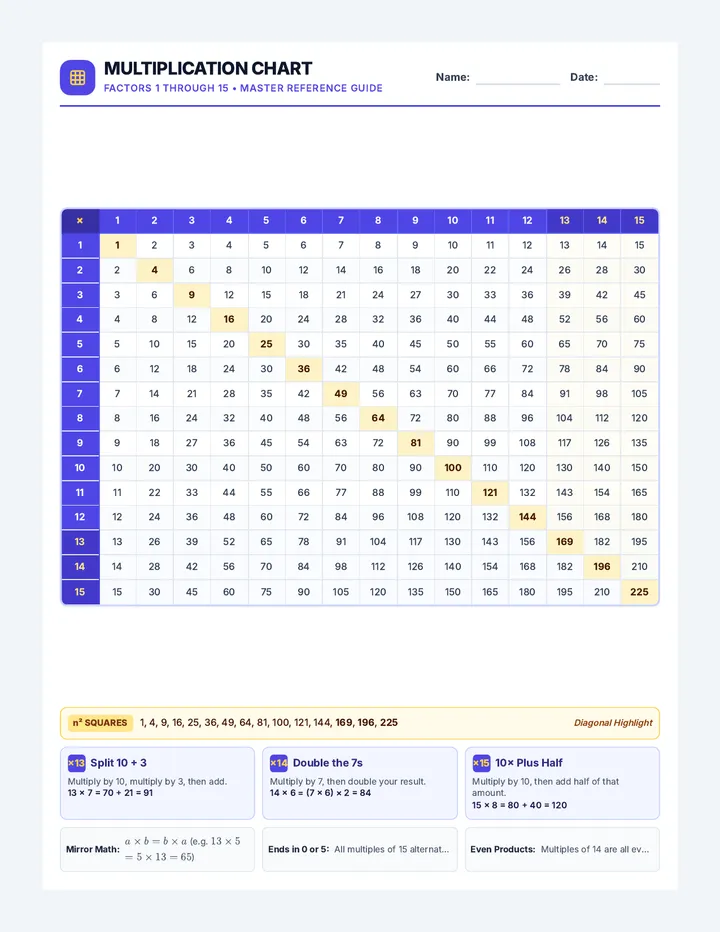
Allow 12x12 times table to reduce cognitive load on basic retrieval.
Chunked Problem Presentation
Present 3-4 problems per page maximum to prevent visual fatigue.
Dual Representation Model
Permit area model grid verification alongside vertical standard steps.
Weekly Progress Monitoring Tracker (5-Trial IEP Log)
Trial / Date Visual Scaffolding Used Accuracy (%) Prompt Level Required Goal Met? (Y/N) Trial 1: ___/___ [ ] Area Box [ ] Grid Lines ____ / 5 (____%) [ ] Ind [ ] Gest [ ] Verb [ ] Model [ ] Yes [ ] No Trial 2: ___/___ [ ] Area Box [ ] Grid Lines ____ / 5 (____%) [ ] Ind [ ] Gest [ ] Verb [ ] Model [ ] Yes [ ] No Trial 3: ___/___ [ ] Area Box [ ] Grid Lines ____ / 5 (____%) [ ] Ind [ ] Gest [ ] Verb [ ] Model [ ] Yes [ ] No Trial 4: ___/___ [ ] Area Box [ ] Grid Lines ____ / 5 (____%) [ ] Ind [ ] Gest [ ] Verb [ ] Model [ ] Yes [ ] No Trial 5: ___/___ [ ] Area Box [ ] Grid Lines ____ / 5 (____%) [ ] Ind [ ] Gest [ ] Verb [ ] Model [ ] Yes [ ] No
Two-Digit Multiplication SpEd Instructional Module Teacher Guide • Page 2 of 2
Double Digit Anchor Chart Visual Reference Guide
Double Digit Multiplication Steps
Step-by-step visual blueprint for \(36 \times 24\)
CRA Visual Anchor
Method A: Standard Steps Vertical
⁺² ⁺¹ ⁺²
3 6
× 2 4
Step 1 (4×36) 1 4 4
Step 2 & 3 (20×36) 7 2 0
Step 4 (Add) 8 6 4
Step 1: Multiply Bottom Ones (4) \(4 \times 6 = 24\) (carry 2, write 4). Then \(4 \times 3 = 12 + 2 = 14\).
Step 2: Place ZERO THE HERO! Put a 0 in the ones place of line 2. Cross out old carried numbers!
Step 3: Multiply Bottom Tens (2) \(2 \times 6 = 12\) (carry 1, write 2). Then \(2 \times 3 = 6 + 1 = 7\).
Step 4: Add the Two Rows \(144 + 720 = 864\). Keep place-value columns straight!
Method B: Area Model (Box) Expanded
Decompose into Tens + Ones: \(36 = 30 + 6\), \(24 = 20 + 4\)
30
6
20
\(20 \times 30\) 600
\(20 \times 6\) 120
4
\(4 \times 30\) 120
\(4 \times 6\) 24
Add All 4 Boxes Together:
600 + 120 + 120 + 24 = 864
Why the Box Method Works: Breaking numbers into tens and ones avoids regrouping mistakes. The zero rules are simple: \(20 \times 30\) is \(2 \times 3\) with two zeros \(= 600\)!
The 3 Golden Rules of Double Digit Multiplication
1 Zero the Hero
Never skip the 0 in line 2! When multiplying tens, the ones place MUST be zero.
2 Cross Out Old Carries
Put an \(X\) on the carried number from Step 1 before you start multiplying Step 3.
3 Line Up Columns
Keep hundreds, tens, and ones strictly in their lanes so your final addition is error-free.
Keep this reference sheet on your desk while working on practice problems! Anchor Reference Card
Step by Step Multiplication Worksheet Student Practice • Level 1
Step by Step Multiplication
Name:
Date:
Steps to Solve:
1 Multiply Ones 2 Place 0 3 Multiply Tens 4 Add Both
1 Area Model Scaffold: Calculate \(24 \times 15\) Decompose: \(24 = 20 + 4\) and \(15 = 10 + 5\)
20
4
10
\(10 \times 20 =\)
\(10 \times 4 =\)
5
\(5 \times 20 =\)
\(5 \times 4 =\)
Add All 4 Partial Products:
Final Product:
2 Standard Algorithm Grid: Calculate \(32 \times 24\) ★ Don't forget Placeholder 0 on Line 2!
Regroup:
3 2
× 2 4
Line 1: (4 × 32)
Line 2: (20 × 32)
0
Final Product (+)
Check Off Each Step: 1. Multiply 4 by 2, write in ones place. 2. Multiply 4 by 3, write in tens place. 3. Drop placeholder 0 in Line 2! 4. Multiply 2 by 2, then 2 by 3. 5. Add Line 1 and Line 2 together.
Turn page for independent practice & word problem Page 1 of 2
Student Practice • Level 2
Independent Multiplication Practice
Apply your preferred strategy: Box or Algorithm
3 Calculate: \(43 \times 25\) Standard Grid
4 3
× 2 5
(5 × 43)
(20 × 43)
0
Sum
Product:
4 Calculate: \(38 \times 16\) Your Choice
Show your work below (Area Box or Vertical Algorithm):
Product:
5 Real-World Application: The School Book Fair Word Problem
The school library ordered 24 boxes of exciting new books. Each box contains exactly 18 books . How many books did the school receive in total?
Equation: 24 × 18 = ? Workspace
Final Sentence:
Write your final answer including the unit label (books):
Student Self-Check Checklist:
1. Ones multiplied
2. Placeholder 0 placed
3. Tens multiplied
4. Columns added
Two-Digit Multiplication SpEd Instructional Module Page 2 of 2
Multiplication Mastery Answer Key Teacher Resource • Answer Key
Multiplication Mastery Answer Key
Fully worked solutions and scoring guides for Level 1 Guided Practice
Total Points: 20 pts
Mastery Target: 16/20 (80%)
1 Problem 1 Solution: \(24 \times 15\) (Area Model) Correct Product: 360
20
4
10
\(10 \times 20 =\) 200
\(10 \times 4 =\) 40
5
\(5 \times 20 =\) 100
\(5 \times 4 =\) 20
Addition Work:
2 0 0
+ 4 0
+ 1 0 0
+ 2 0
= 3 6 0
Scoring (4 pts): 1 pt each for correct grid boxes, 1 pt for final sum.
2 Problem 2 Solution: \(32 \times 24\) (Standard Algorithm) Correct Product: 768
Carried: ⁺¹ -
3 2
× 2 4
Line 1: 4 × 32 1 2 8
Line 2: 20 × 32 6 4 0
Line 3: Sum 7 6 8
Common Errors for #2:
Answer = 192? Student forgot the placeholder 0 and added \(128 + 64\).
Answer = 778? Regrouping error: student added the carried 1 to the second multiplication step incorrectly.
Scoring (4 pts): 1 pt line 1, 1 pt placeholder 0, 1 pt line 2, 1 pt sum.
IEP Step-Accuracy Rubric (4-Point Per Problem Rubric)
4 Points (Mastery)
Accurate facts, placeholder 0 positioned correctly, clean column addition.
3 Points (Minor Fact Error)
Correct steps & placeholder 0 used, but single single-digit multiplication slip.
2 Points (Procedural Slip)
Forgot placeholder 0 or misaligned addition columns, but correct individual digits.
1 Point (Emerging)
Completed Step 1 correctly; required teacher prompt for Line 2 and addition.
Two-Digit Multiplication SpEd Instructional Module Answer Key • Page 1 of 2
Teacher Resource • Answer Key
Independent Practice Solutions
Solutions for Problems 3, 4, and 5 with IEP goal reporting criteria
Page 2 Points: 12 pts
Cumulative Total: 20 pts
3 Solution: \(43 \times 25\) Ans: 1,075
Carried: ⁺¹
4 3
× 2 5
5 × 43: 2 1 5
20 × 43: 8 6 0
Total: 1 , 0 7 5
Note: \(5 \times 3 = 15\) (carry 1), \(5 \times 4 = 20 + 1 = 21\). Line 2 has zero, then \(2 \times 3 = 6\), \(2 \times 4 = 8\).
Double Digit Practice Worksheet IEP Progress Trial A
Double Digit Practice Worksheet
Visual models and structured algorithms for 2-digit multiplication
Name:
Date:
Trial A Reminder: Multiply ones first, place 0 on line 2, then multiply tens and add. Goal: 3/4 (75%+)
1 Calculate: \(31 \times 14\) Area Model
30
1
10
10×30
10×1
4
4×30
4×1
Add 4 parts:
Product:
2 Calculate: \(25 \times 23\) Area Model
20
5
20
20×20
20×5
3
3×20
3×5
Add 4 parts:
Product:
3 Calculate: \(42 \times 16\) 0 Included
4 2
× 1 6
(6×42)
(10×42)
0
Sum
Product:
4 Calculate: \(33 \times 25\) 0 Included
3 3
× 2 5
(5×33)
(20×33)
0
Sum
Product:
Trial A Scoring Summary:
Problems Correct: _____ / 4 Trial Accuracy: _____ % Goal Benchmark: [ ] Met (≥80%) [ ] Developing
Turn over for Trial B (Fading Scaffolding & Real-World Problems) Page 1 of 2
IEP Progress Trial B
Application & Independent Trials
Apply your multiplication method with faded visual cues
Trial Date: ____________________
5 Calculate: \(52 \times 17\) Remember 0!
5 2
× 1 7
Line 1
Line 2
Product
Answer:
6 Calculate: \(36 \times 28\) Regrouping
Workspace (Box Model or Vertical Algorithm):
Answer:
7 Story Problem: The Community Bakery Word Problem
The community bakery baked 35 trays of fresh chocolate chip cookies. Each tray holds 24 cookies . How many cookies did the bakery bake in all?
Show multiplication work: \(35 \times 24\)
Sentence Answer:
8 Story Problem: School Art Supplies Word Problem
The art teacher bought 18 packs of colorful markers for the classroom. Each pack contains 32 markers . What is the total number of markers?
Double Digit Practice Answer Key Teacher Resource • Answer Key
Practice Key: Trial A Solutions
Worked solutions and partial products for Problems 1 through 4
Trial A Points: 4 pts
Mastery Target: 3/4 (75%–100%)
1 Solution: \(31 \times 14\) Ans: 434
Area Model Breakdown:
\(10 \times 30 = \mathbf{300}\)
\(10 \times 1 = \mathbf{10}\)
\(4 \times 30 = \mathbf{120}\)
\(4 \times 1 = \mathbf{4}\)
Sum: \(300 + 10 + 120 + 4 =\) 434
Error Check: If product is 164, student likely forgot place-value zero when calculating \(10 \times 30 = 300\).
2 Solution: \(25 \times 23\) Ans: 575
Area Model Breakdown:
\(20 \times 20 = \mathbf{400}\)
\(20 \times 5 = \mathbf{100}\)
\(3 \times 20 = \mathbf{60}\)
\(3 \times 5 = \mathbf{15}\)
Sum: \(400 + 100 + 60 + 15 =\) 575
Error Check: Ensure student regroups when adding \(60 + 15 = 75\) to \(400 + 100 = 500\).
3 Solution: \(42 \times 16\) Ans: 672
Carried: ⁺¹
4 2
× 1 6
6 × 42: 2 5 2
10 × 42: 4 2 0
Total: 6 7 2
Placeholder Check: Without 0, student gets \(252 + 42 = 294\) (diagnostic flag).
4 Solution: \(33 \times 25\) Ans: 825
Carried: ⁺¹
3 3
× 2 5
5 × 33: 1 6 5
20 × 33: 6 6 0
Total: 8 2 5
Regrouping Check: \(5 \times 3 = 15\) (carry 1); \(5 \times 3 = 15 + 1 = 16\).
Trial A IEP Data Summary:
4 / 4 (100%) Goal Exceeded
3 / 4 (75%) Benchmark Met
2 / 4 (50%) Approaching
0–1 / 4 (<50%) Intensive Cueing
Two-Digit Multiplication SpEd Instructional Module Practice Key • Page 1 of 2
Teacher Resource • Answer Key
Practice Key: Trial B Solutions
Worked solutions and scoring for Problems 5 through 8
Trial B Points: 4 pts
Mastery Target: 3/4 (75%–100%)
5 Solution: \(52 \times 17\) Ans: 884
Carried: ⁺¹
5 2
× 1 7
7 × 52: 3 6 4
10 × 52: 5 2 0
Total: 8 8 4
Key Step: \(7 \times 2 = 14\) (carry 1); \(7 \times 5 = 35 + 1 = 36\). Line 2 has zero, then \(1 \times 52 = 52\).