Students define 'stamina' by comparing physical and mental endurance, identifying focused behaviors, and participating in a short 'stamina sprint' to build focus.
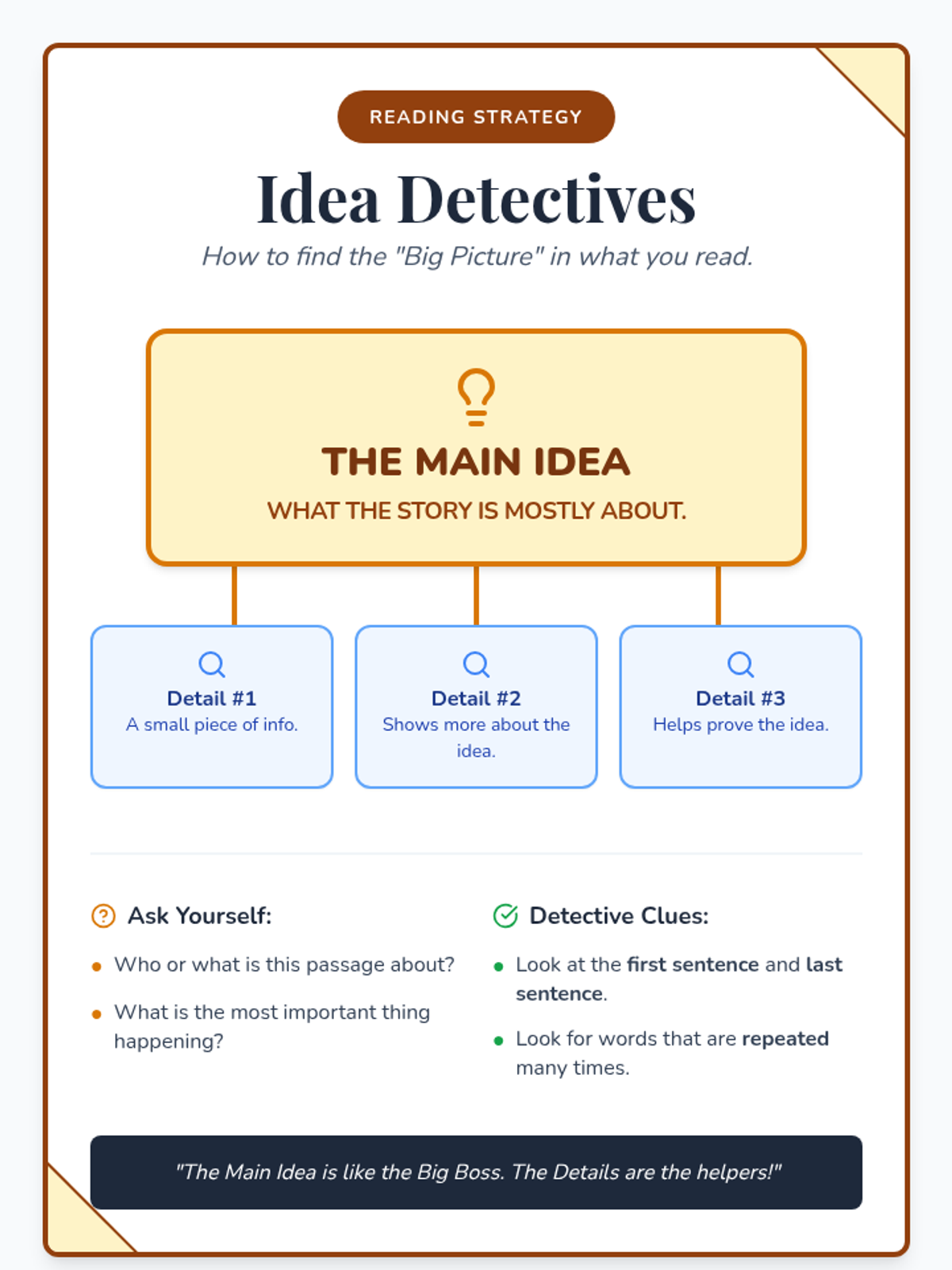
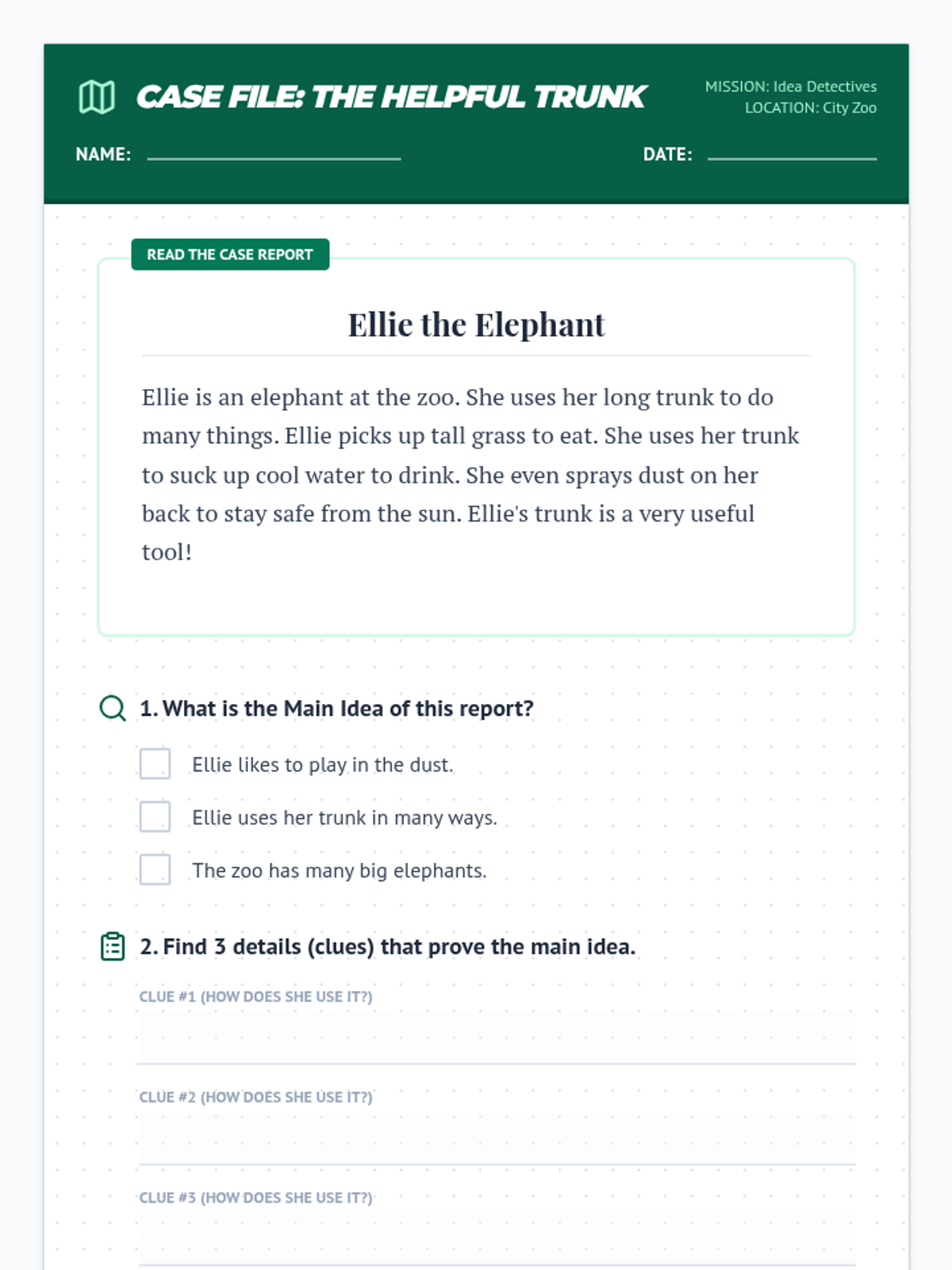
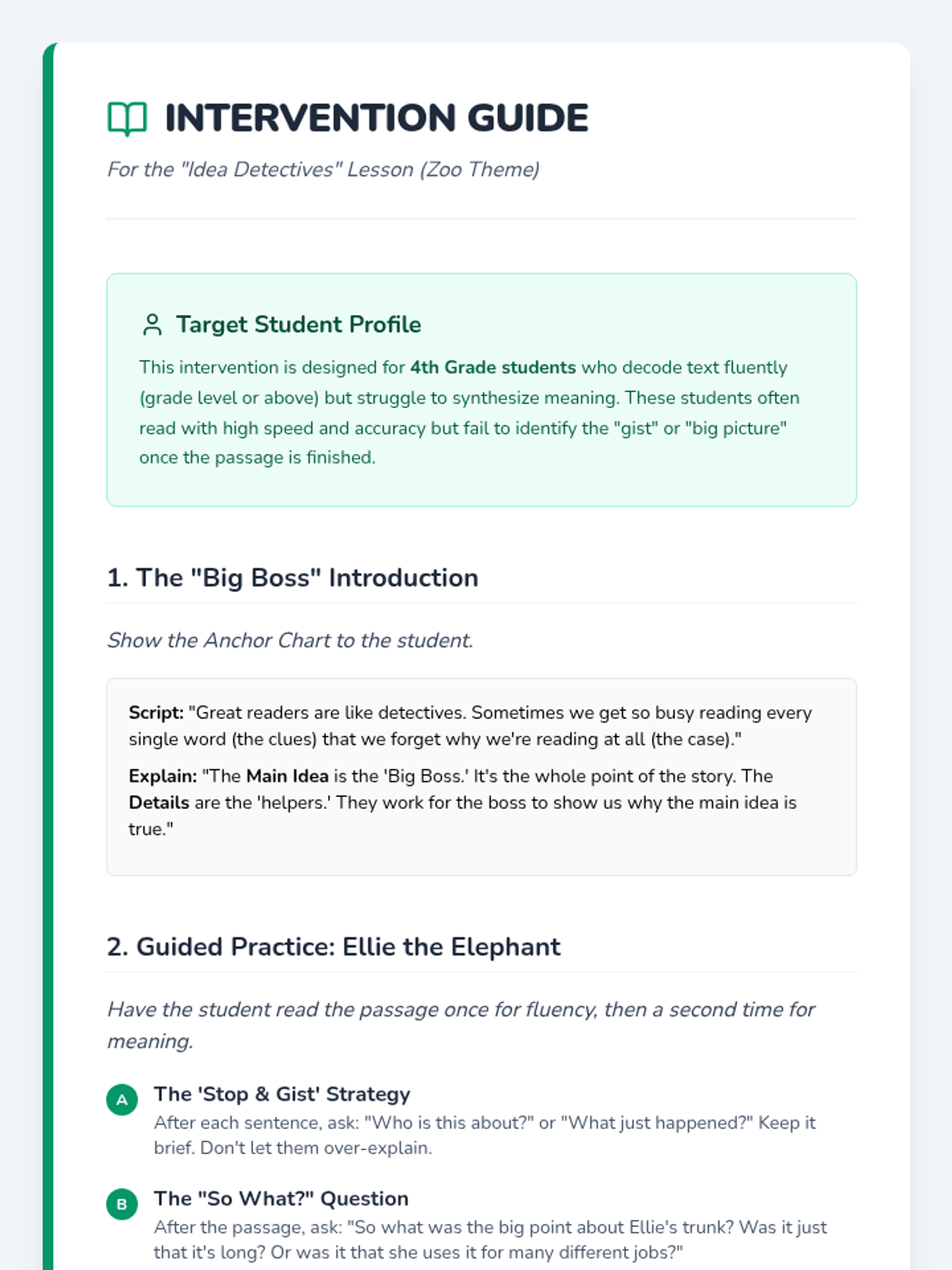
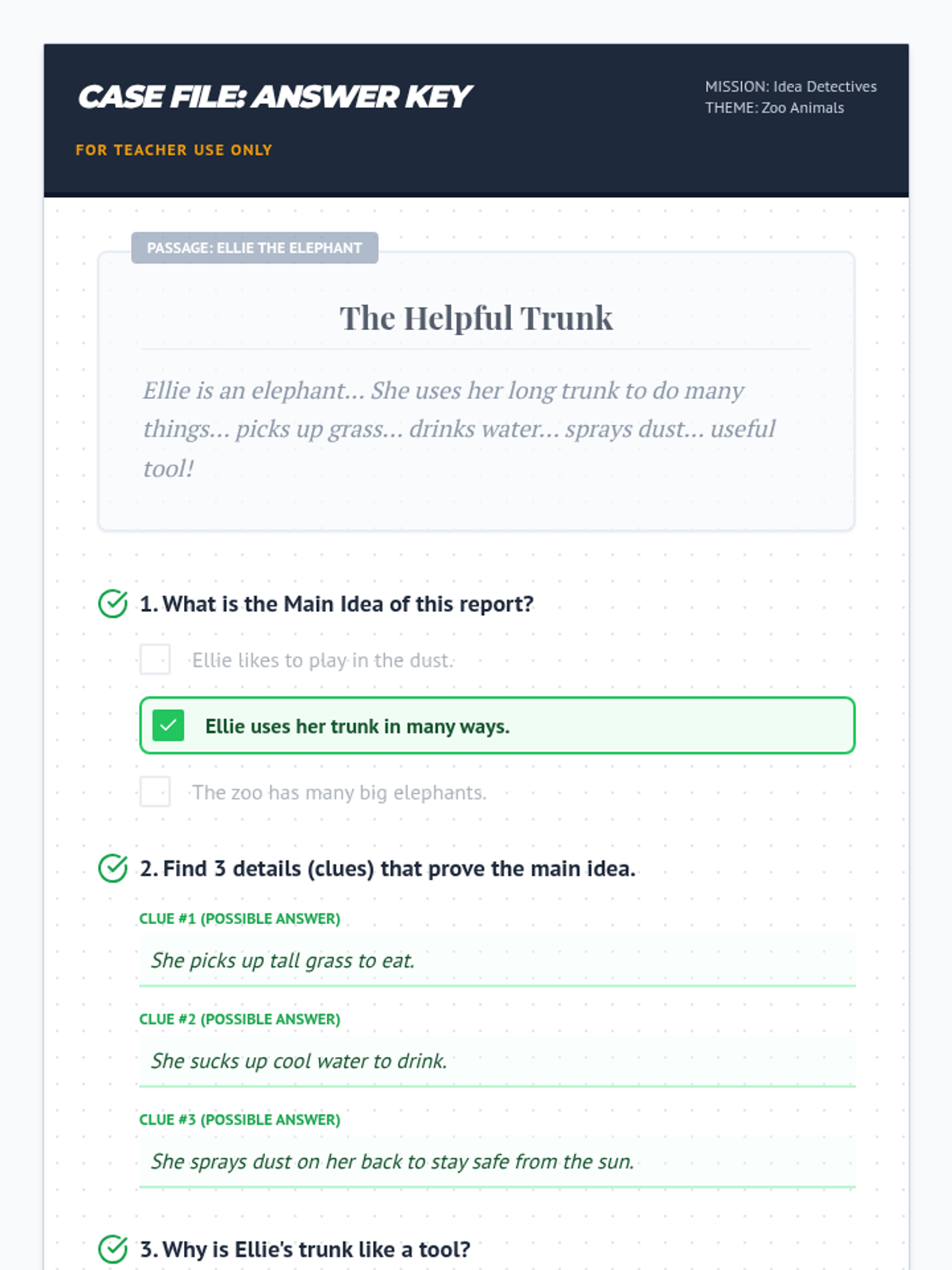
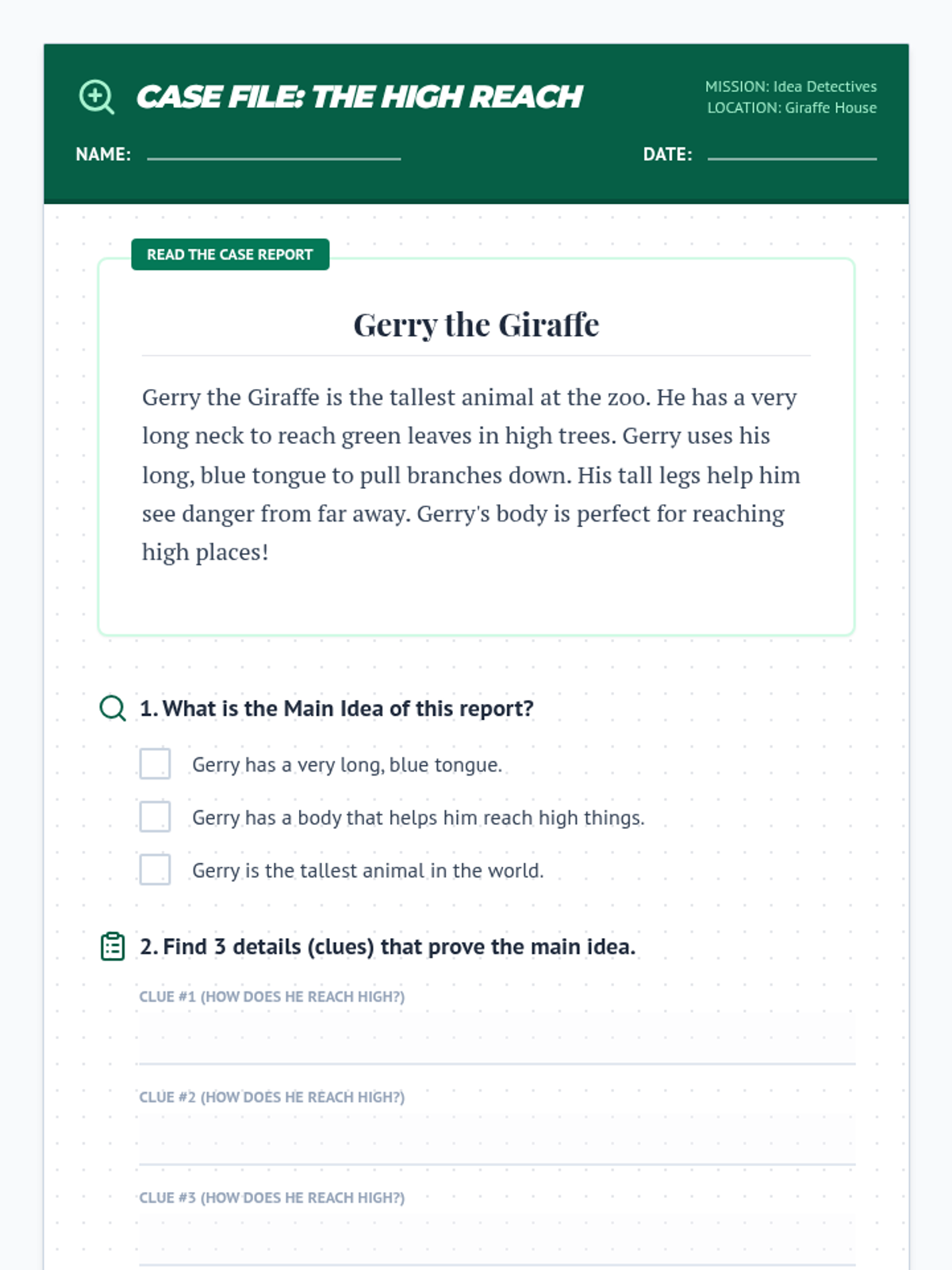
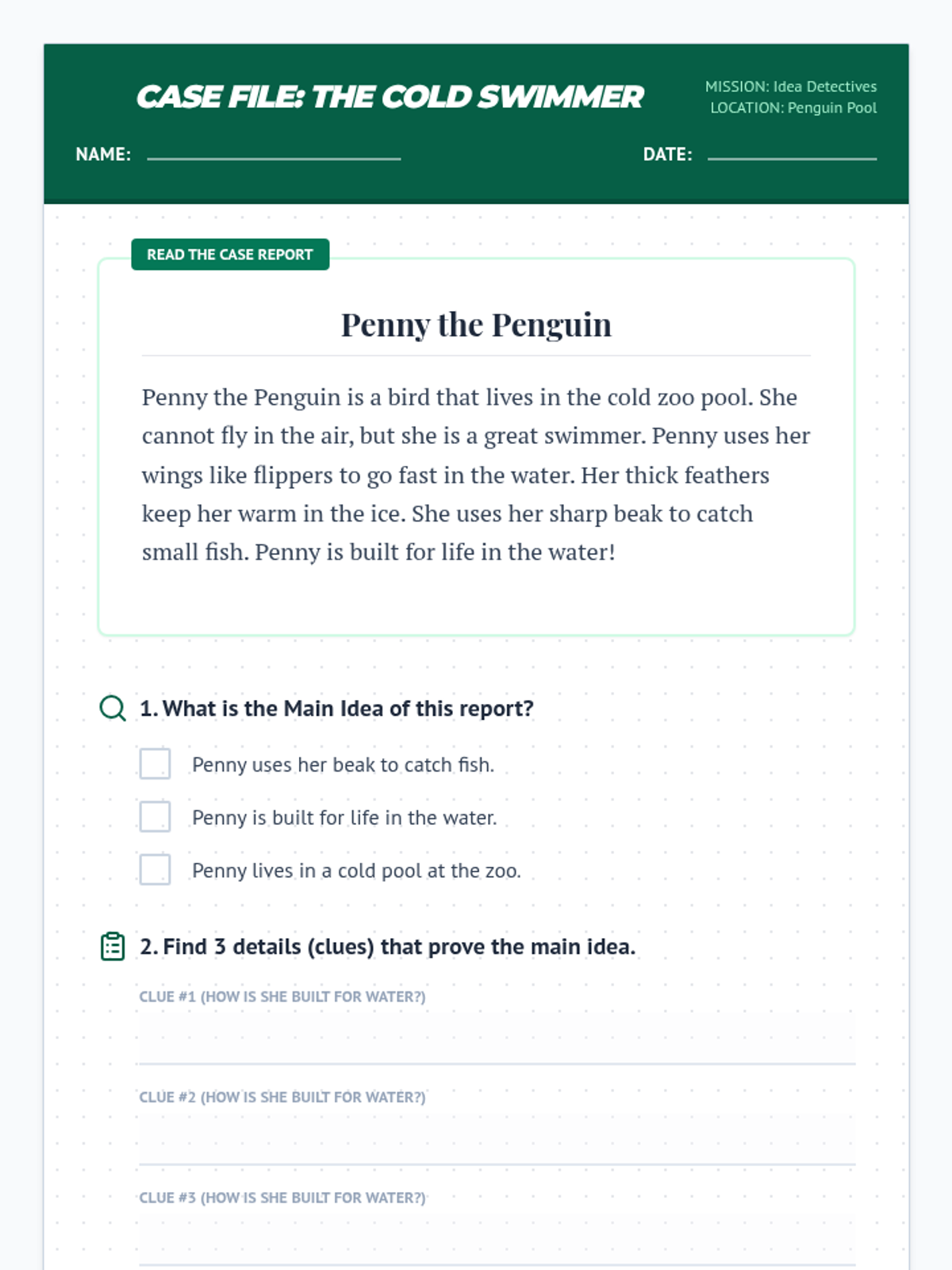
A targeted reading intervention lesson focused on identifying the main idea and supporting details using high-interest, low-readability texts. Designed for students who decode well but struggle with comprehension.
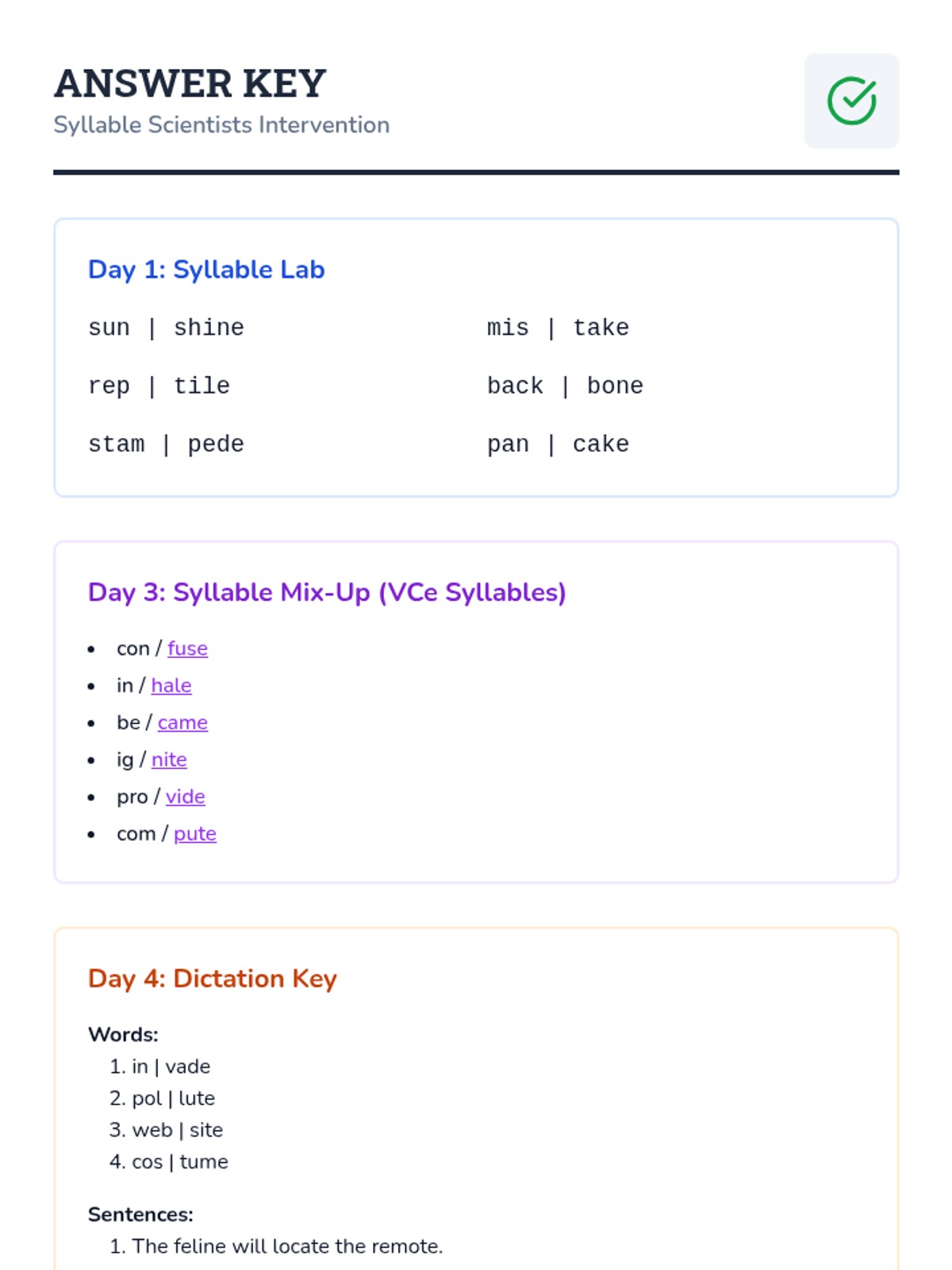
Cumulative review with a focus on encoding (spelling) 2-syllable words with silent-e syllables.
Mixed practice of closed/open + silent-e syllables with a focus on flexible decoding strategies.
Focuses on 2-syllable words combining an open syllable with a silent-e syllable (e.g., remote, feline, locate).
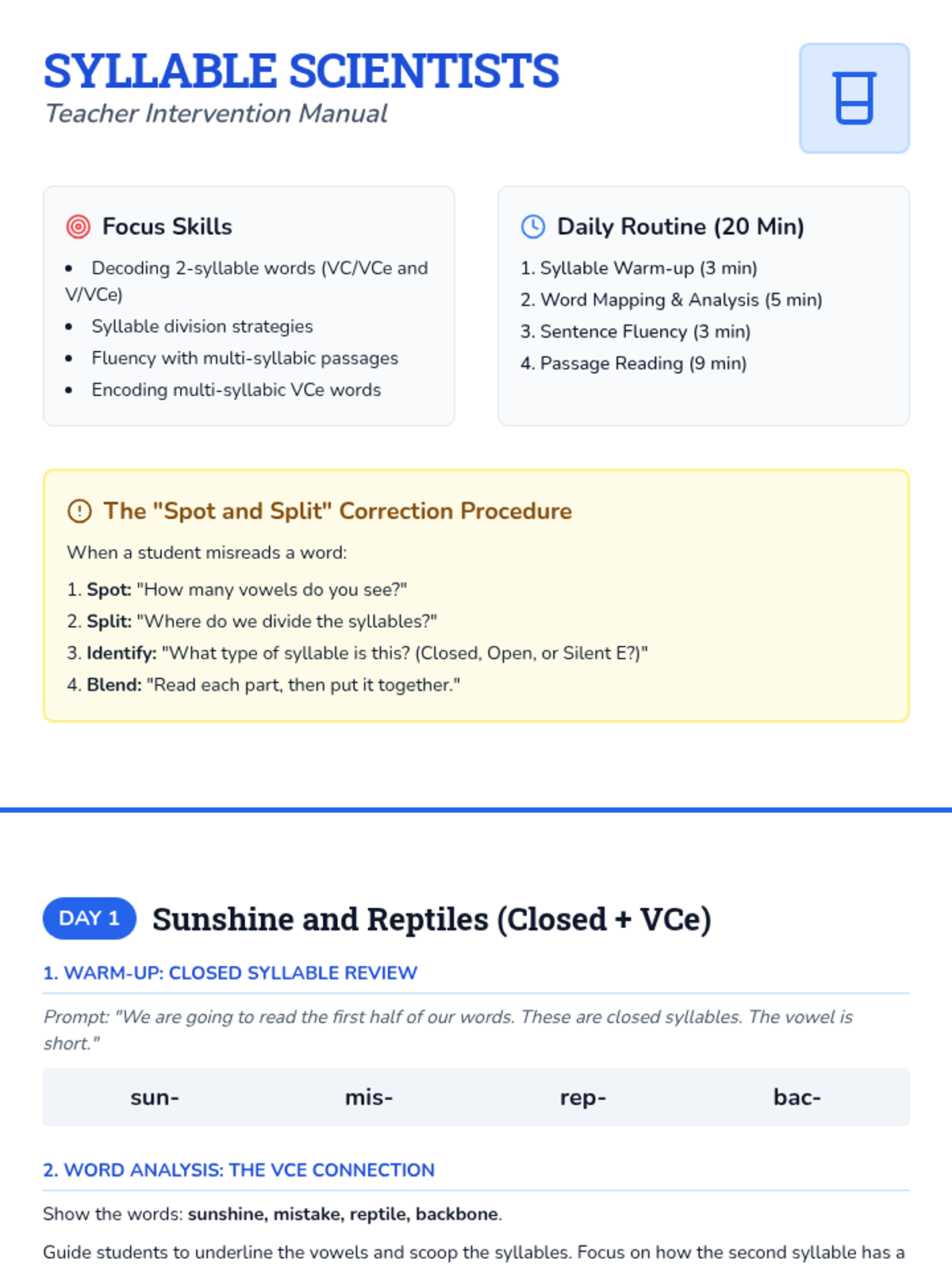
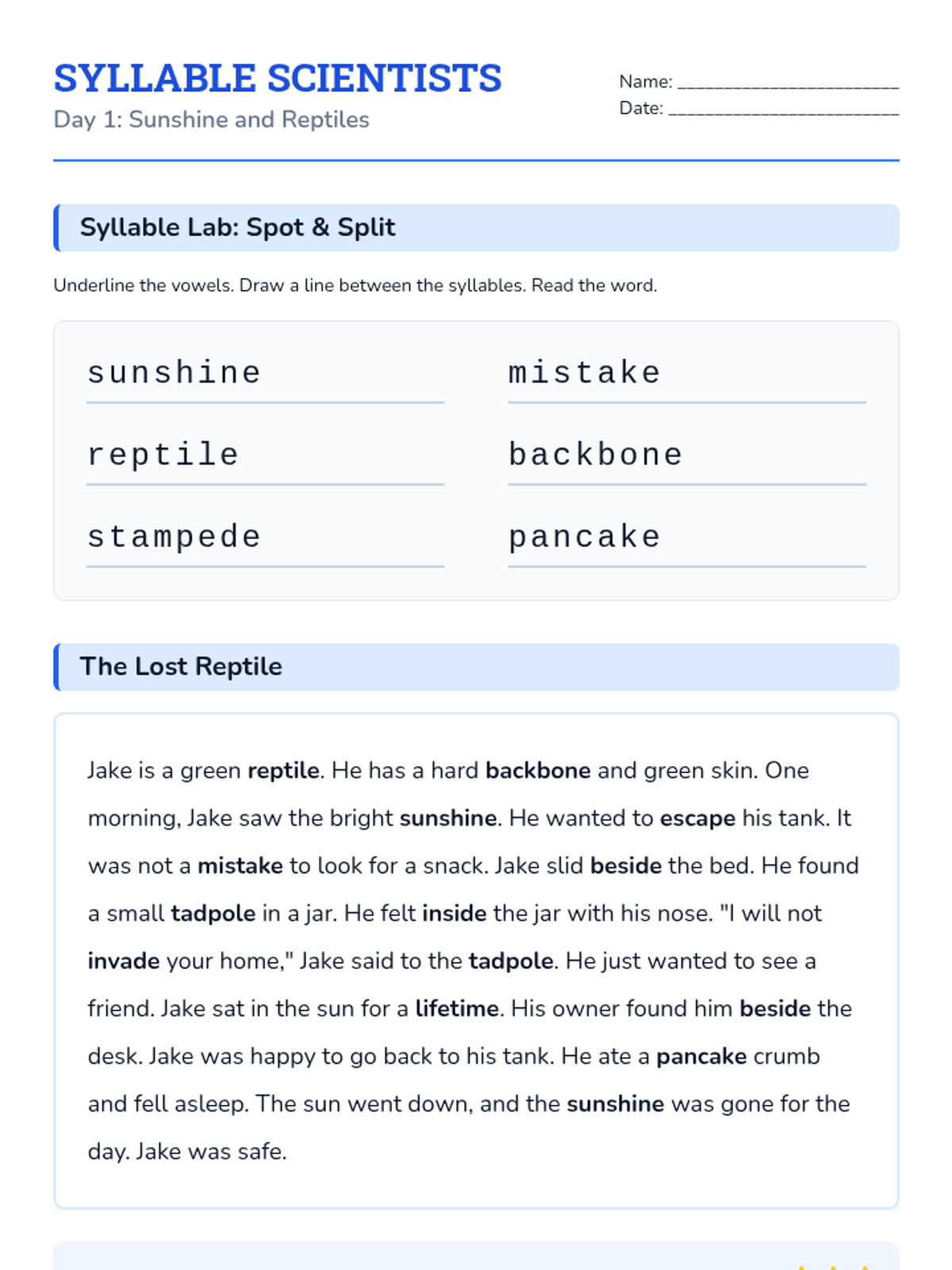
Focuses on 2-syllable words combining a closed syllable with a silent-e syllable (e.g., sunshine, reptile, mistake).
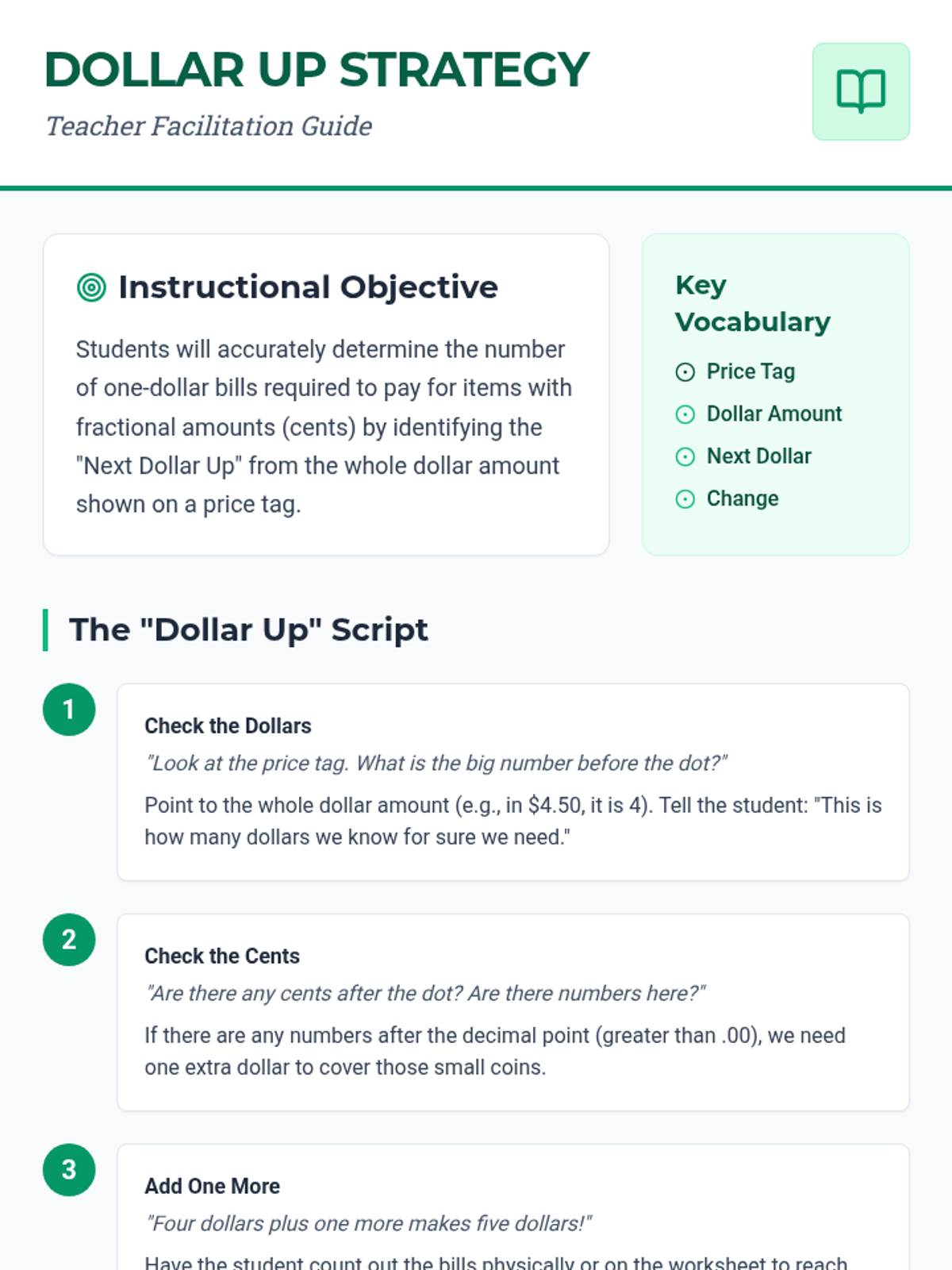
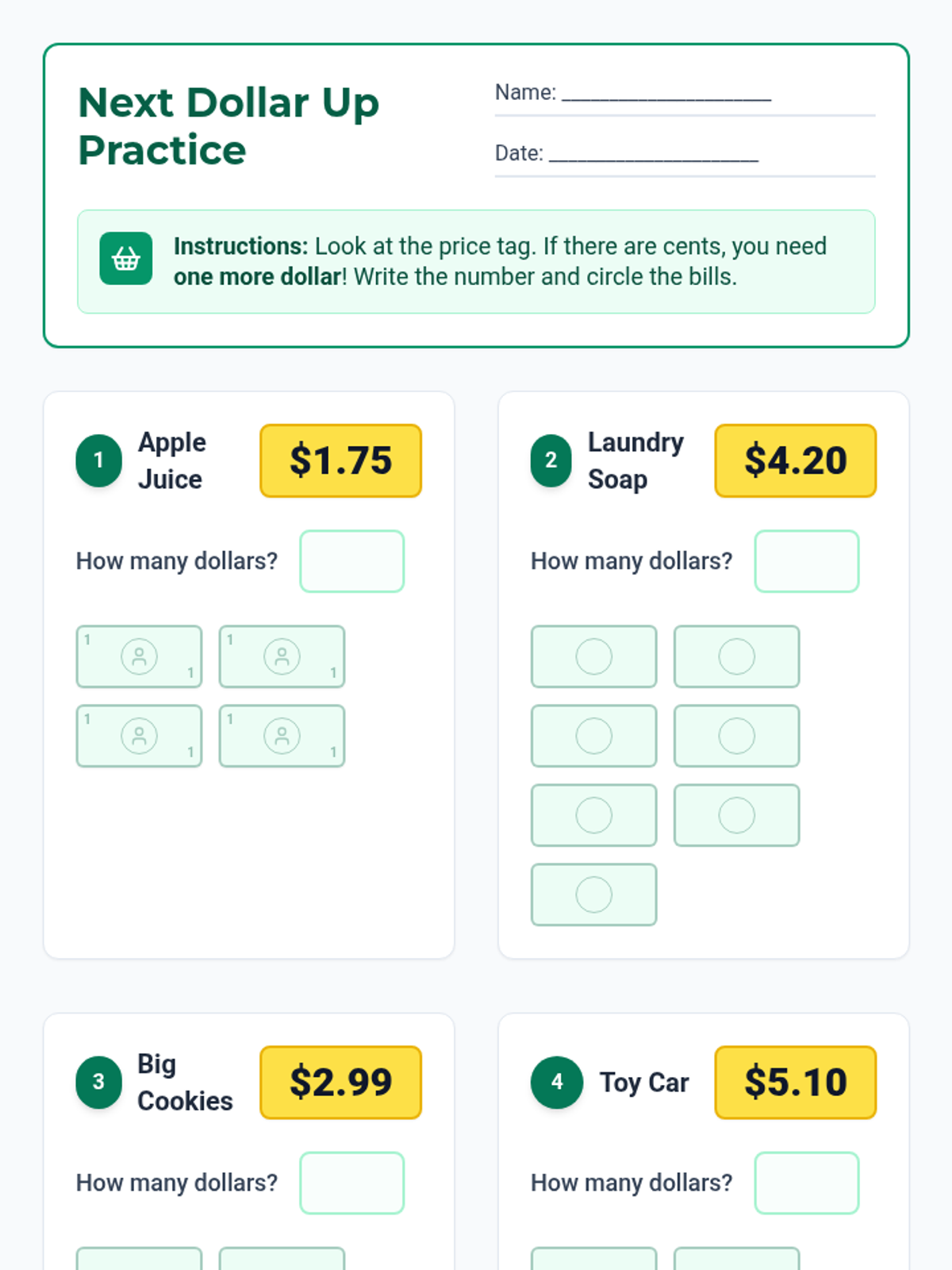
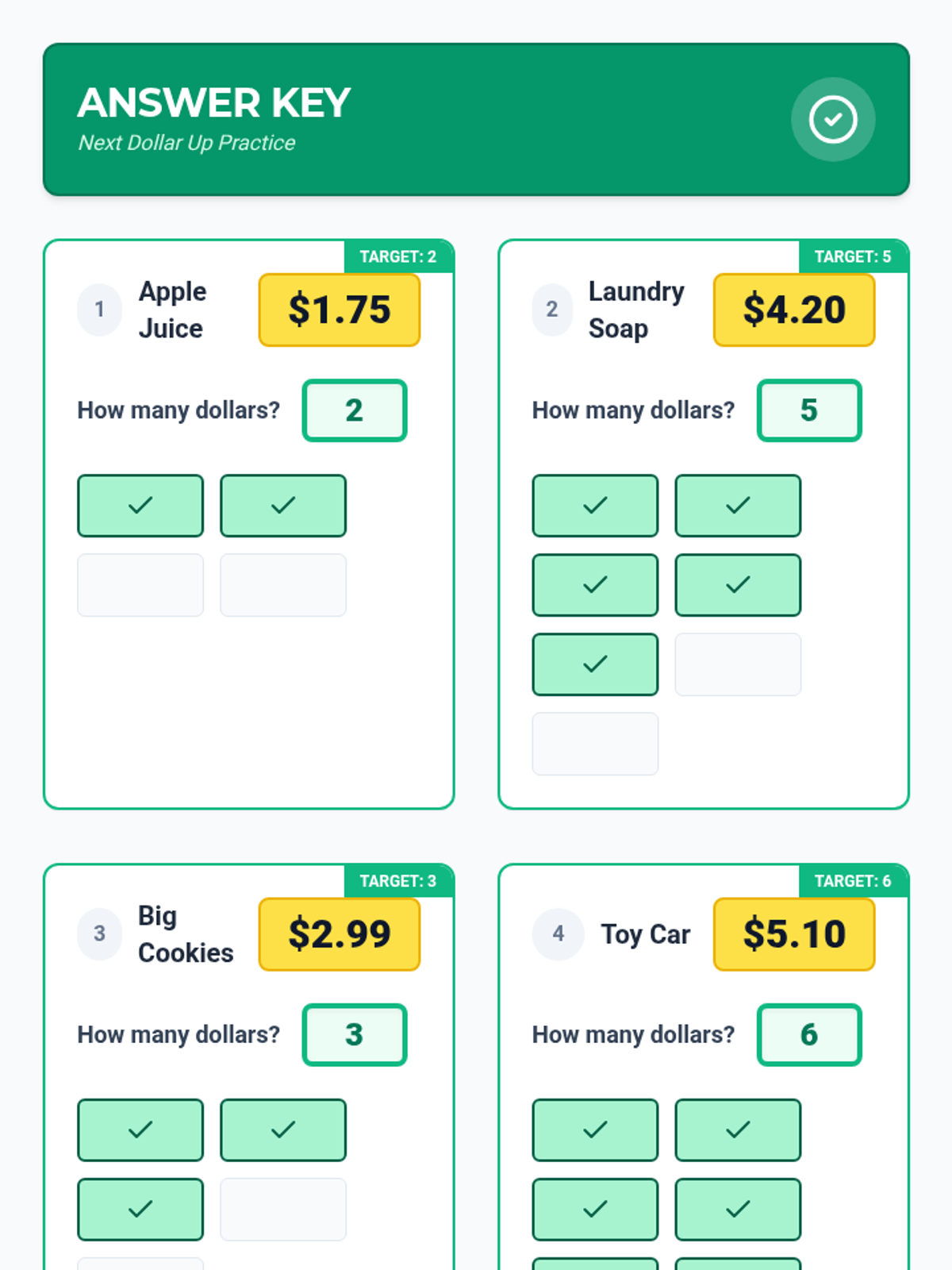
Teaching students the 'Next Dollar Up' strategy to successfully make purchases without needing to calculate exact change, focusing on items up to $10.
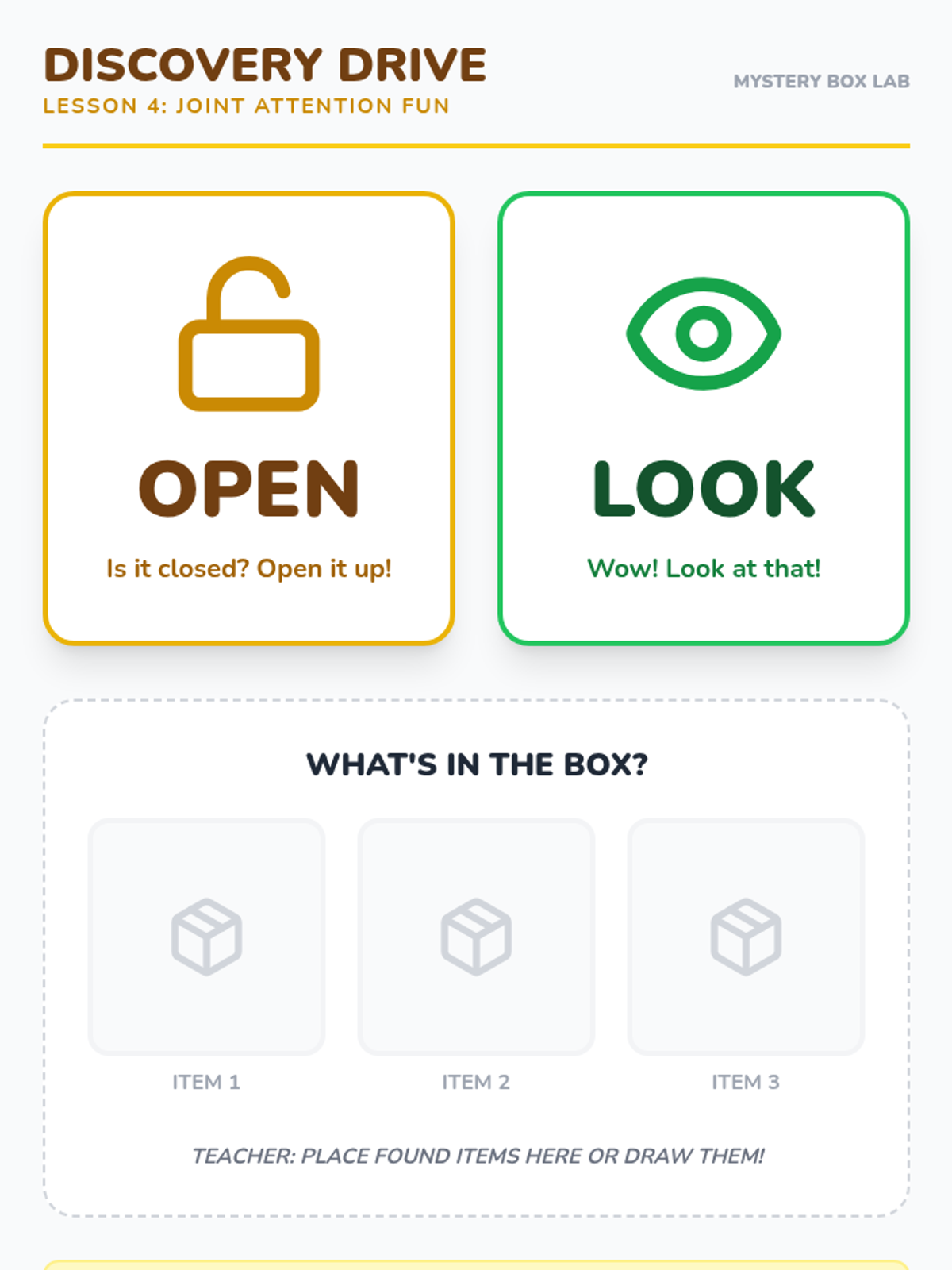
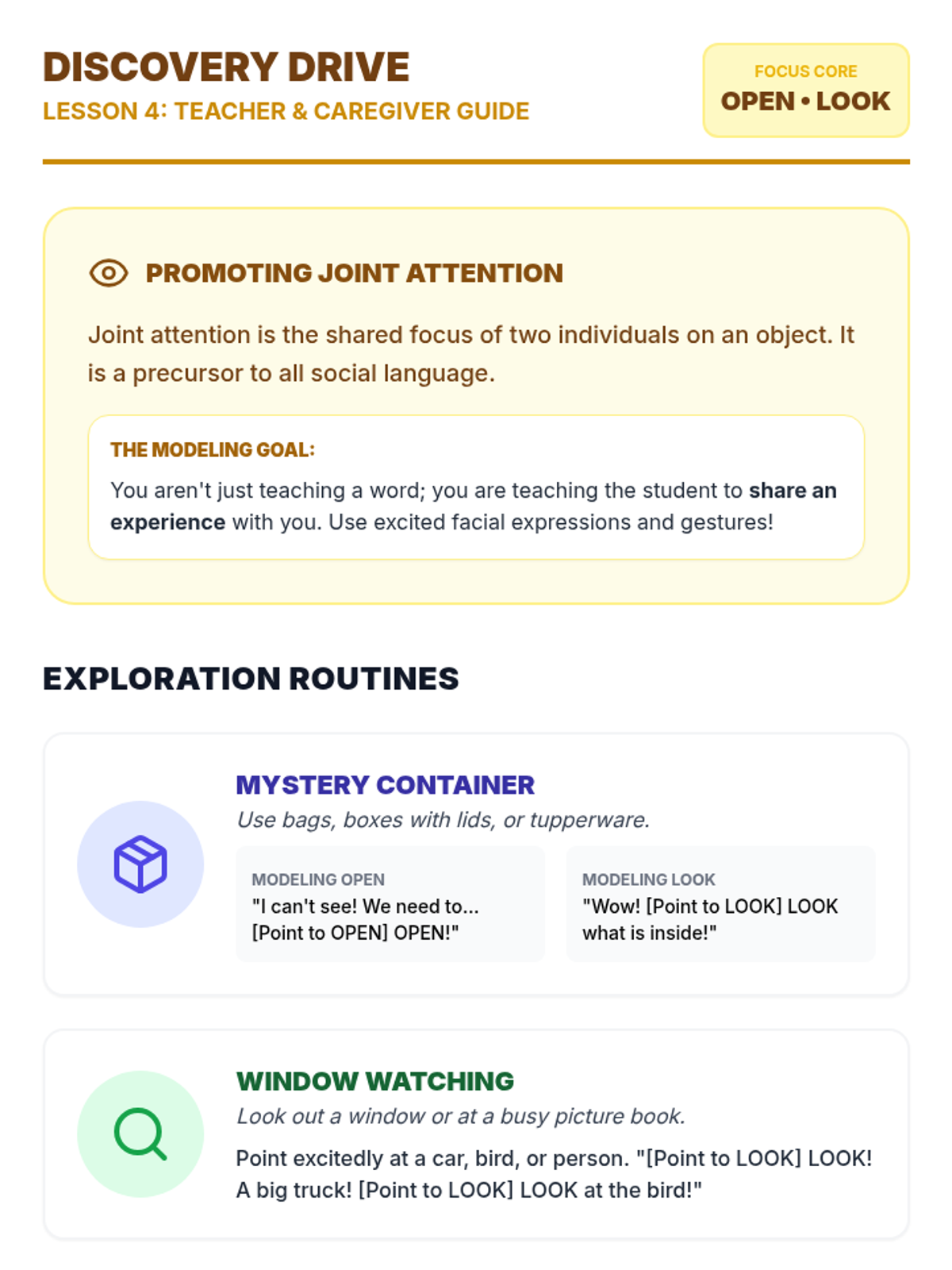
Encourage joint attention and exploration through the core words Open and Look.
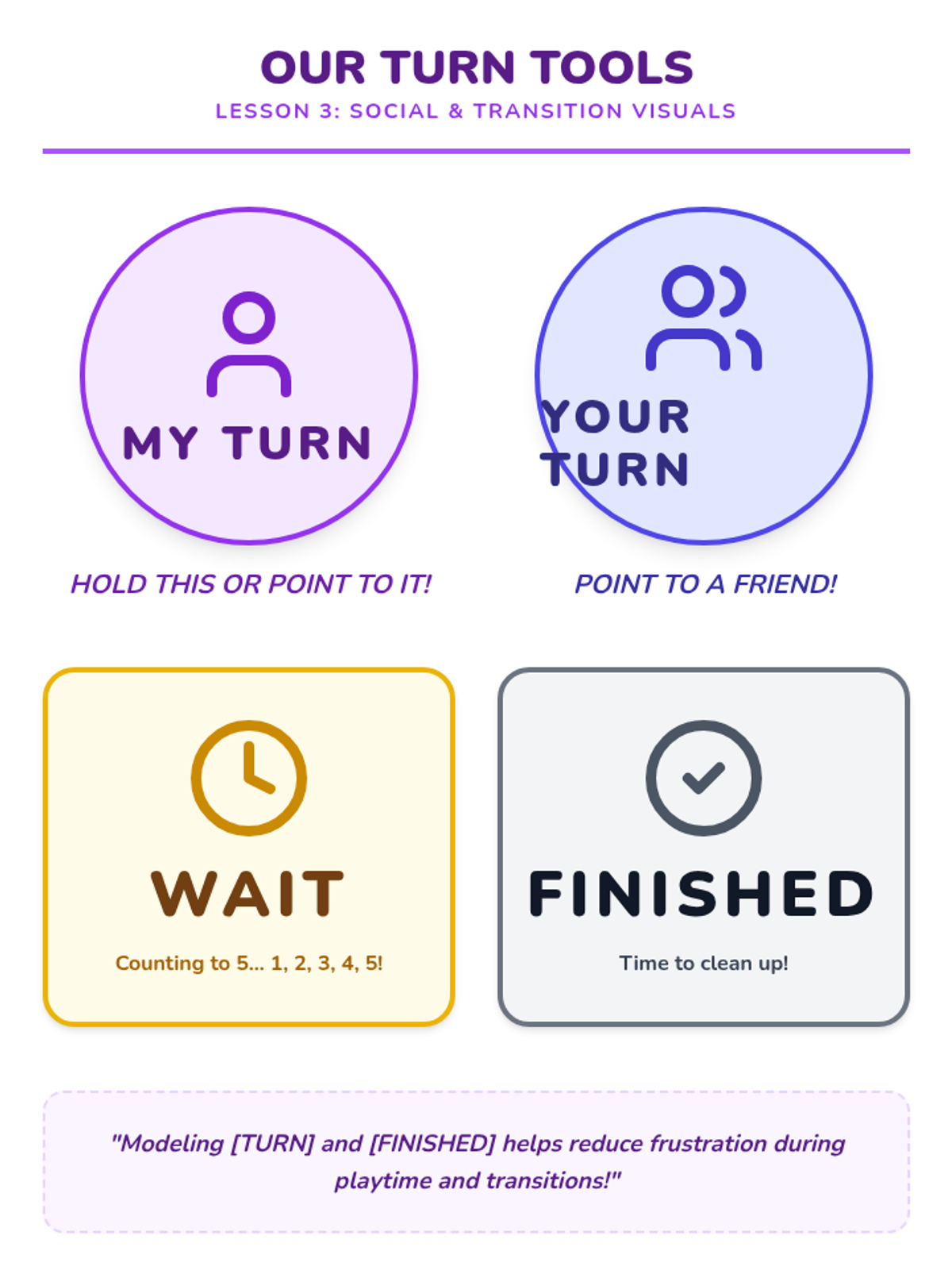
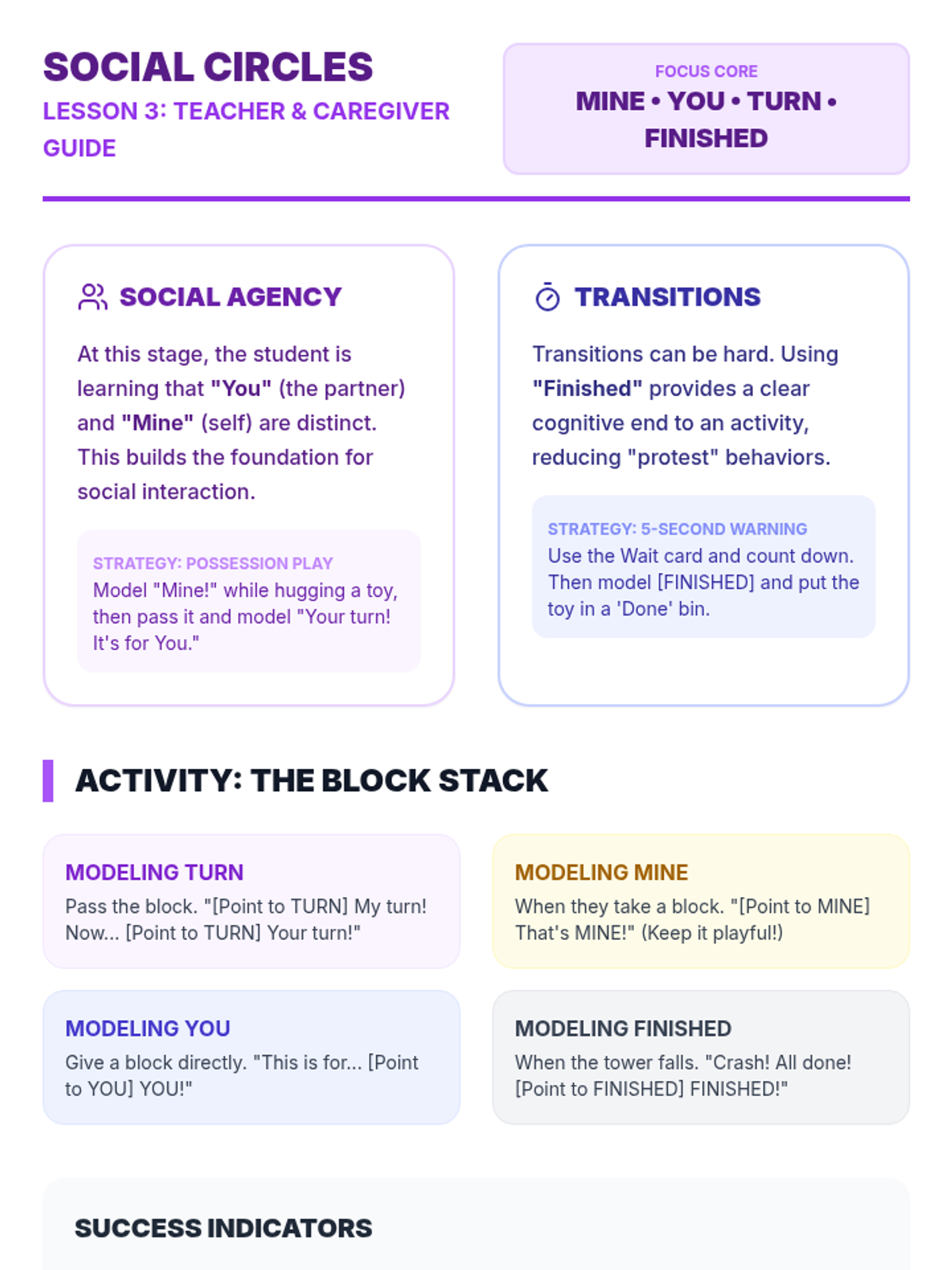
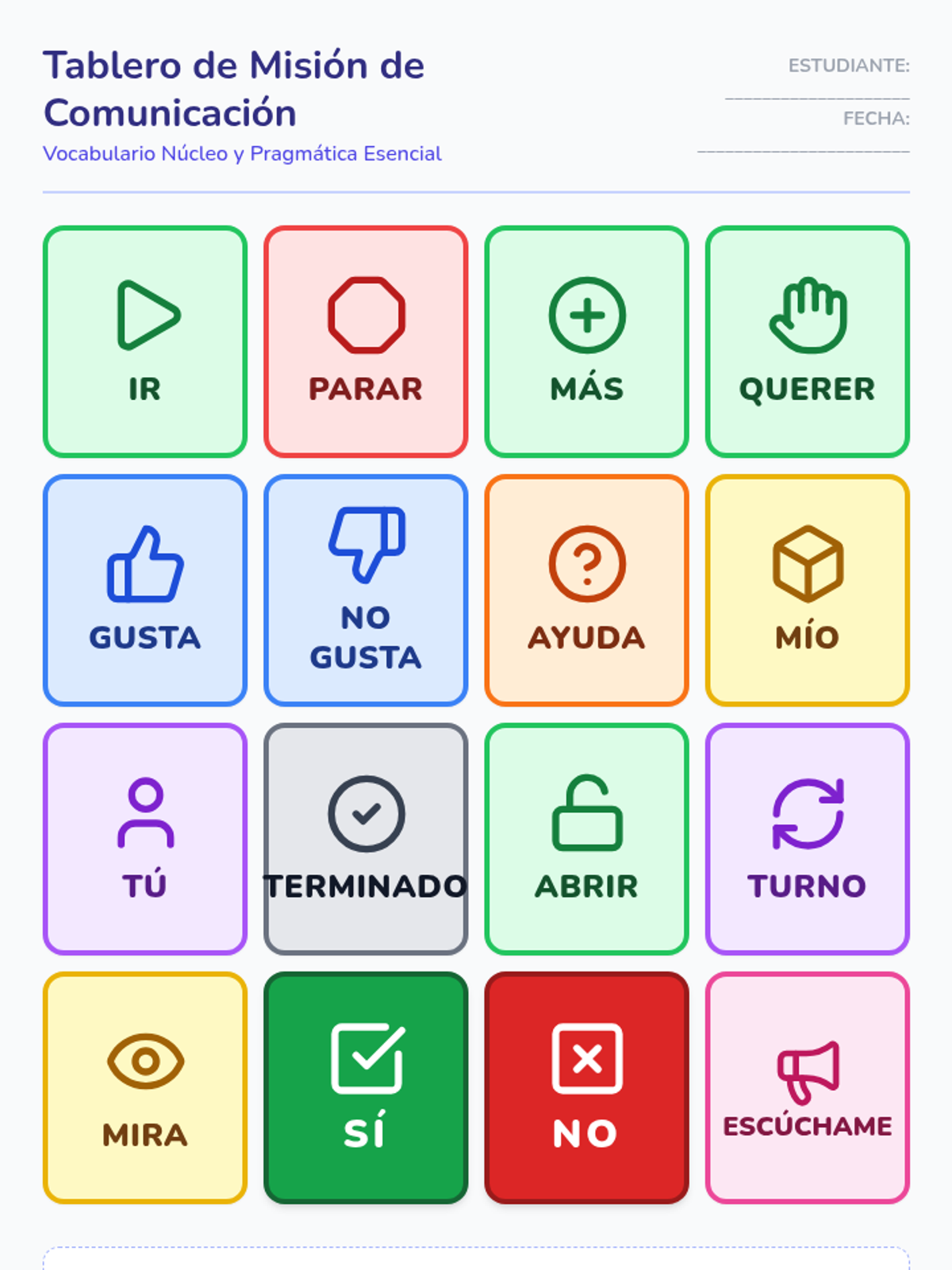
Develop social interaction skills and transition management using Mine, You, Finished, and Turn.
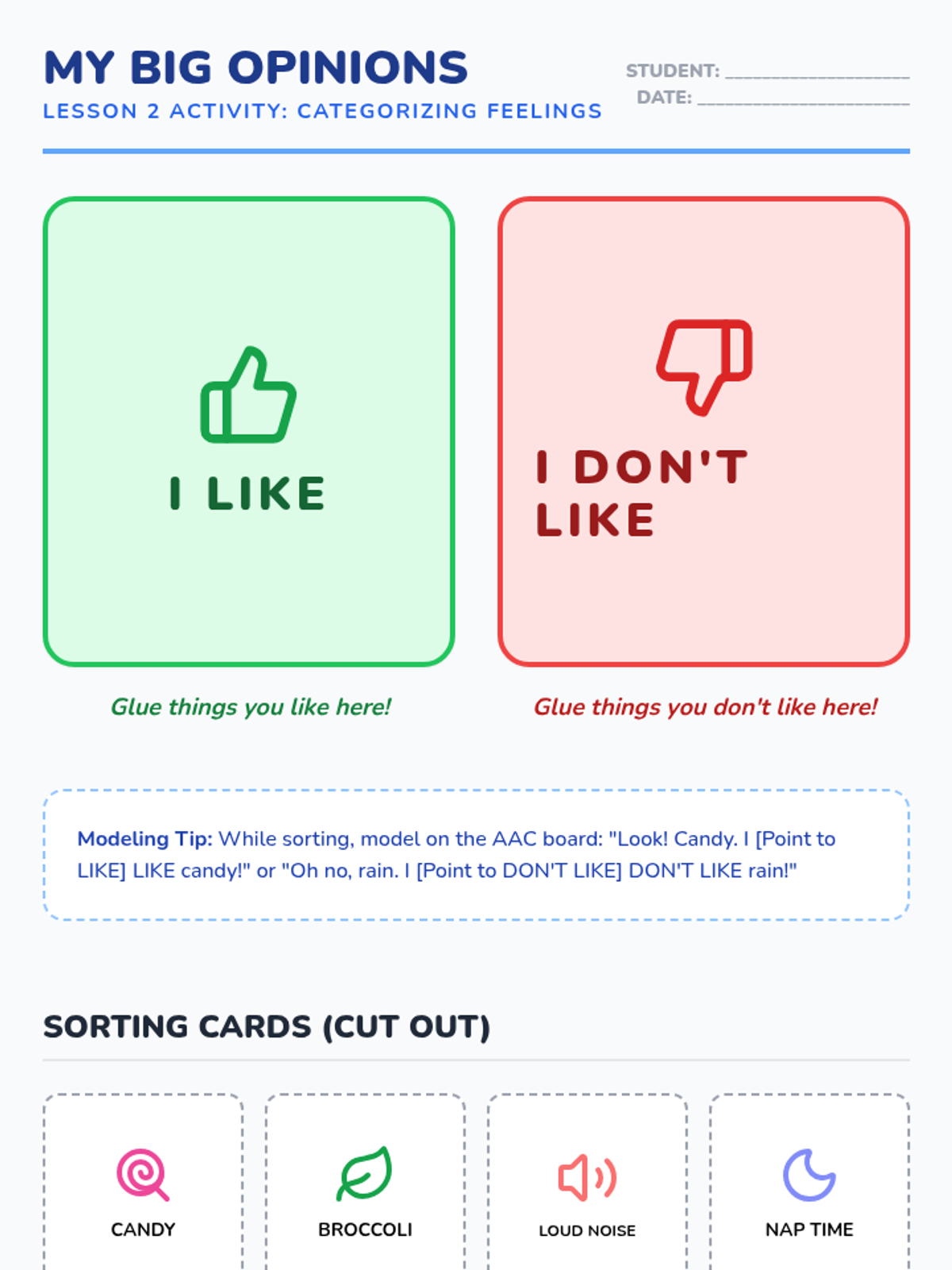
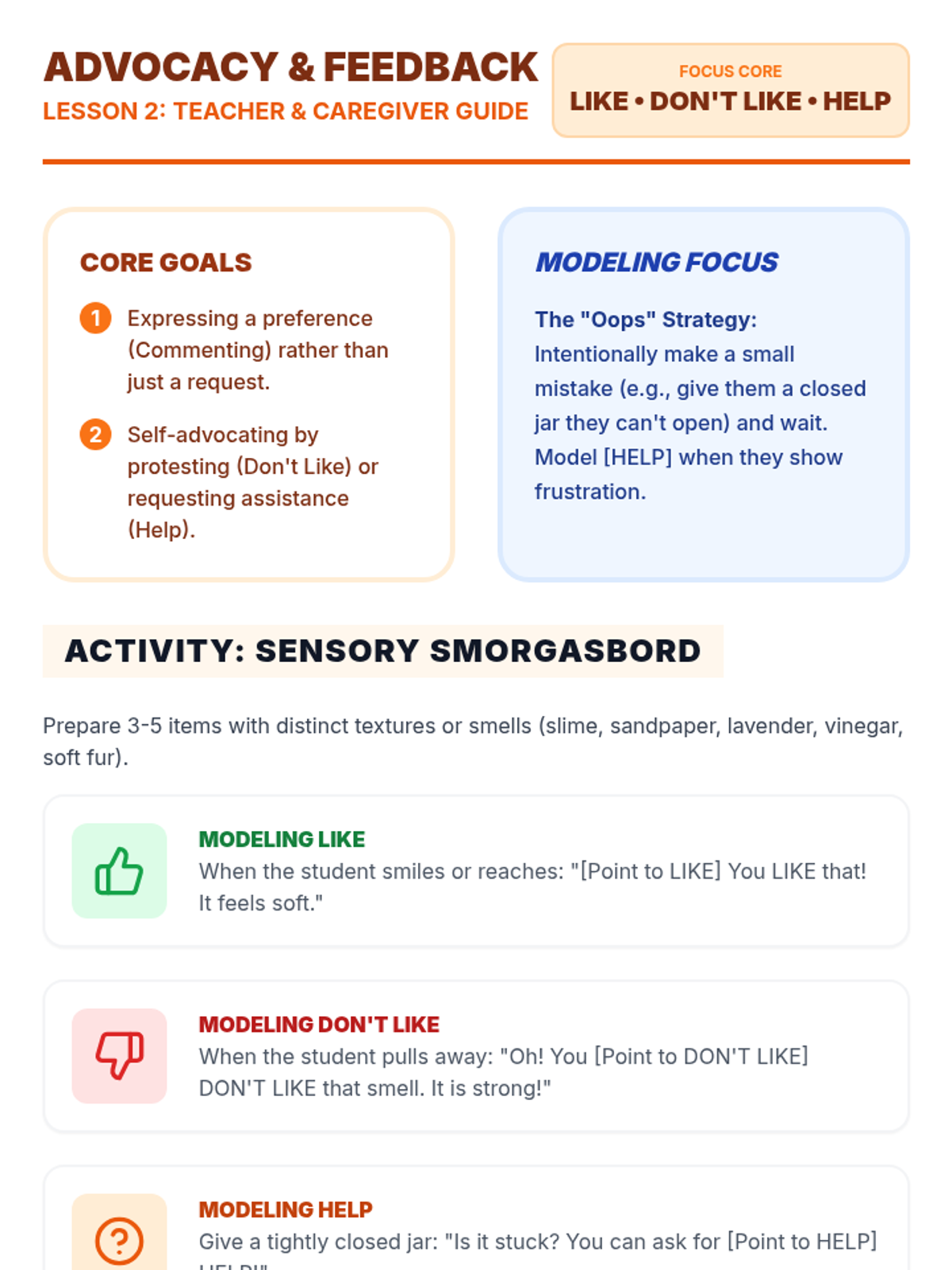
Focus on expressing preferences and seeking assistance using core words Like, Don't Like, and Help.
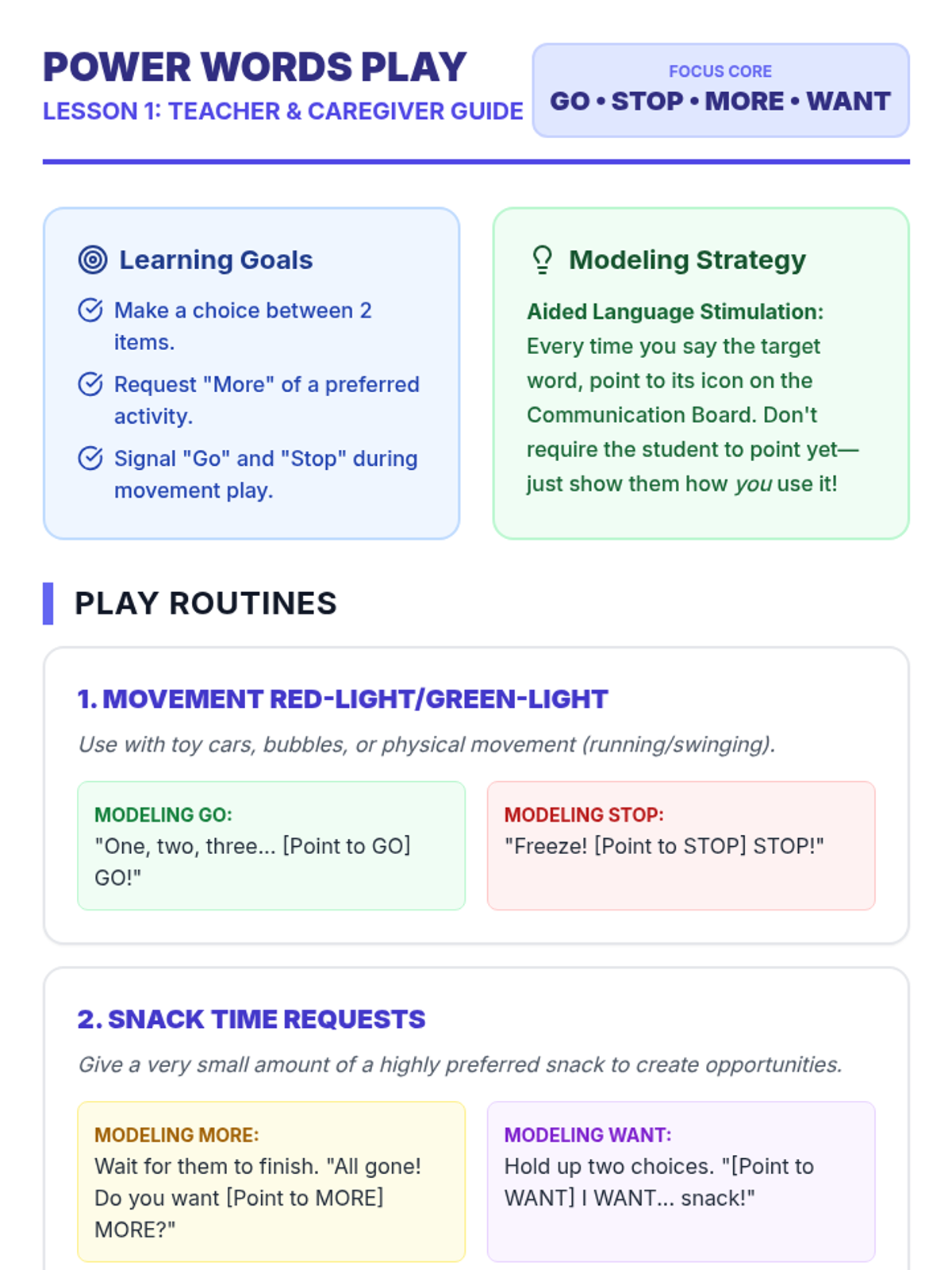
Introduce the primary 'power words' (Go, Stop, More, Want) to establish basic requesting and agency in play-based settings.
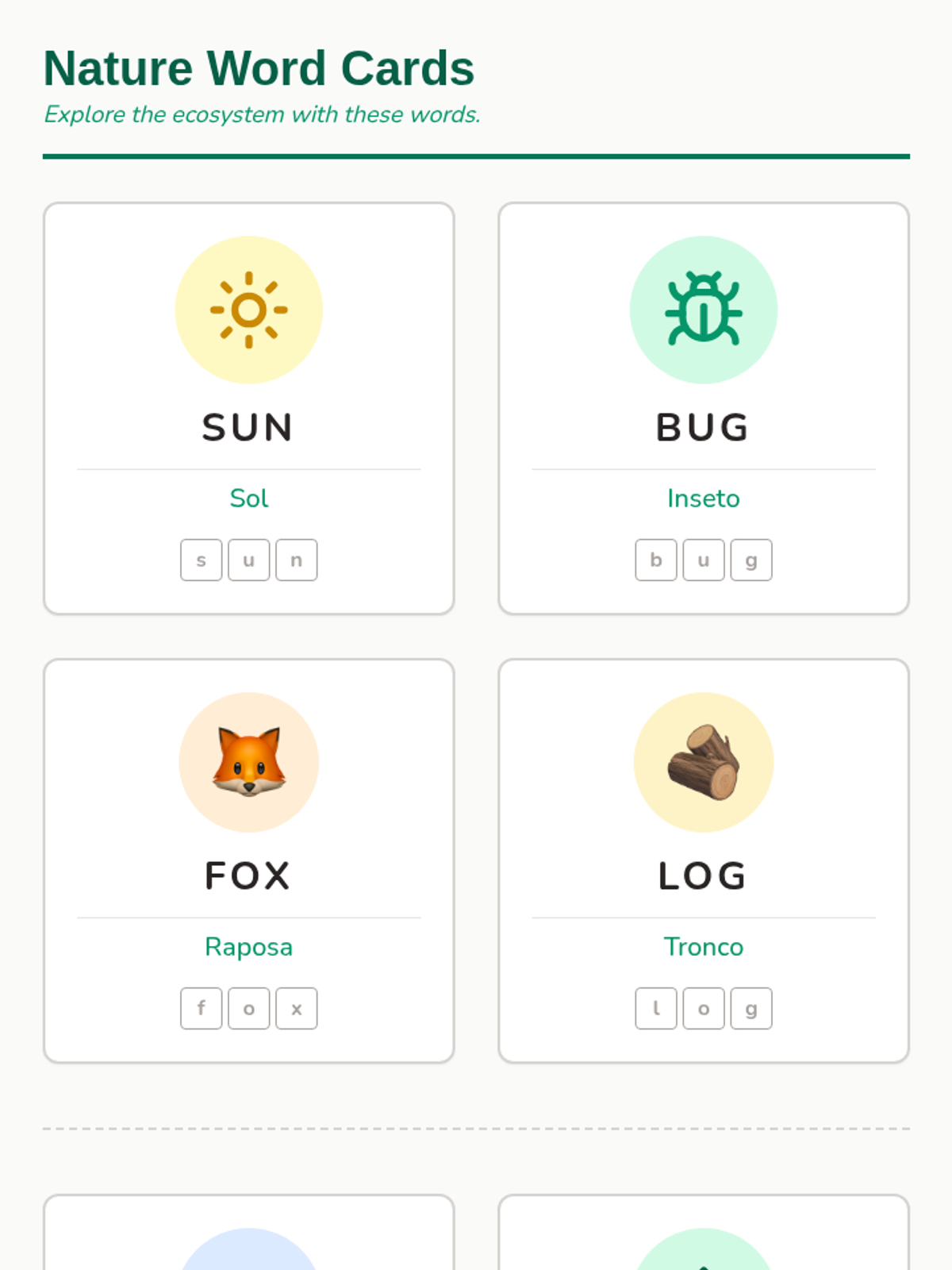
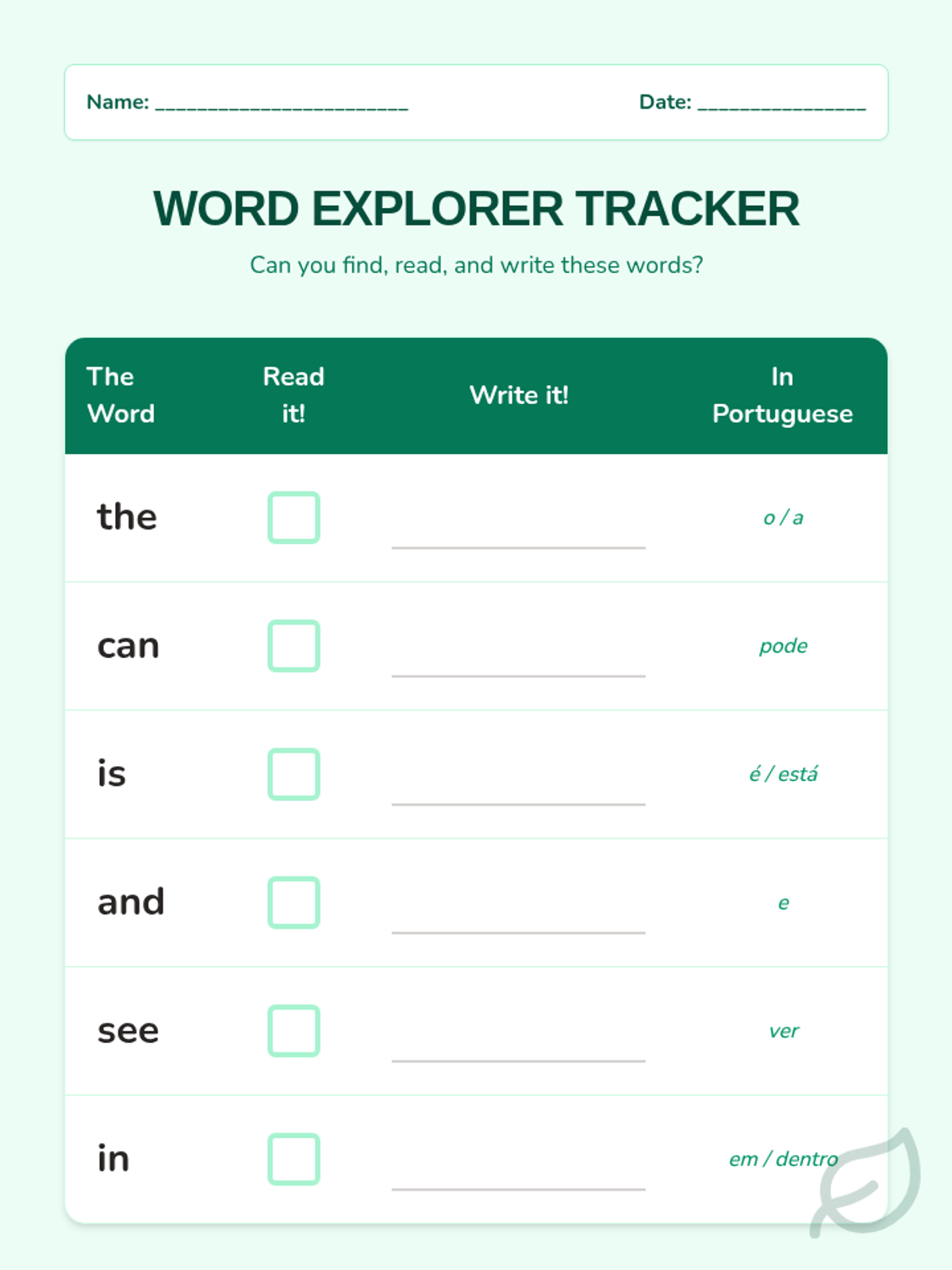
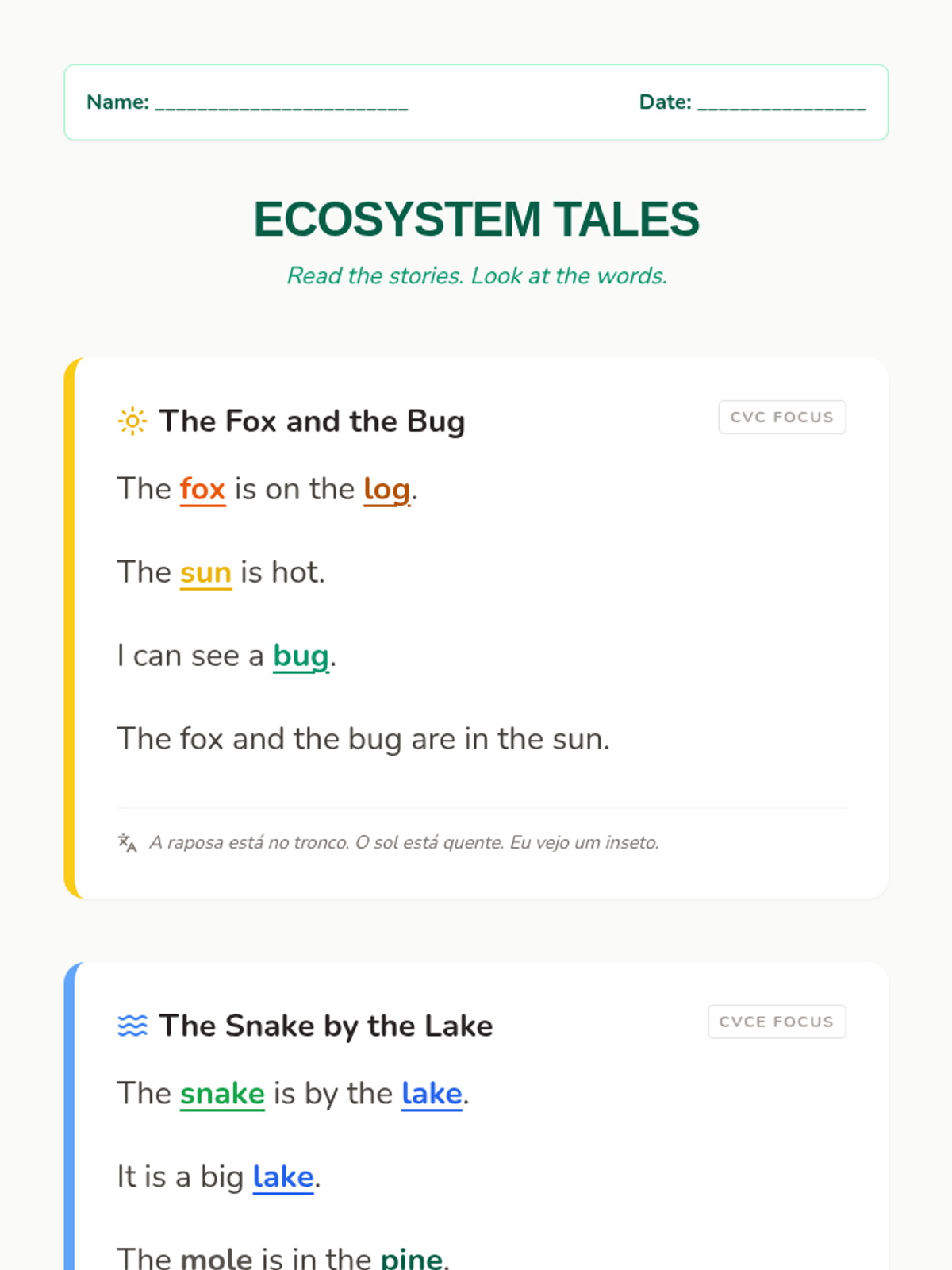
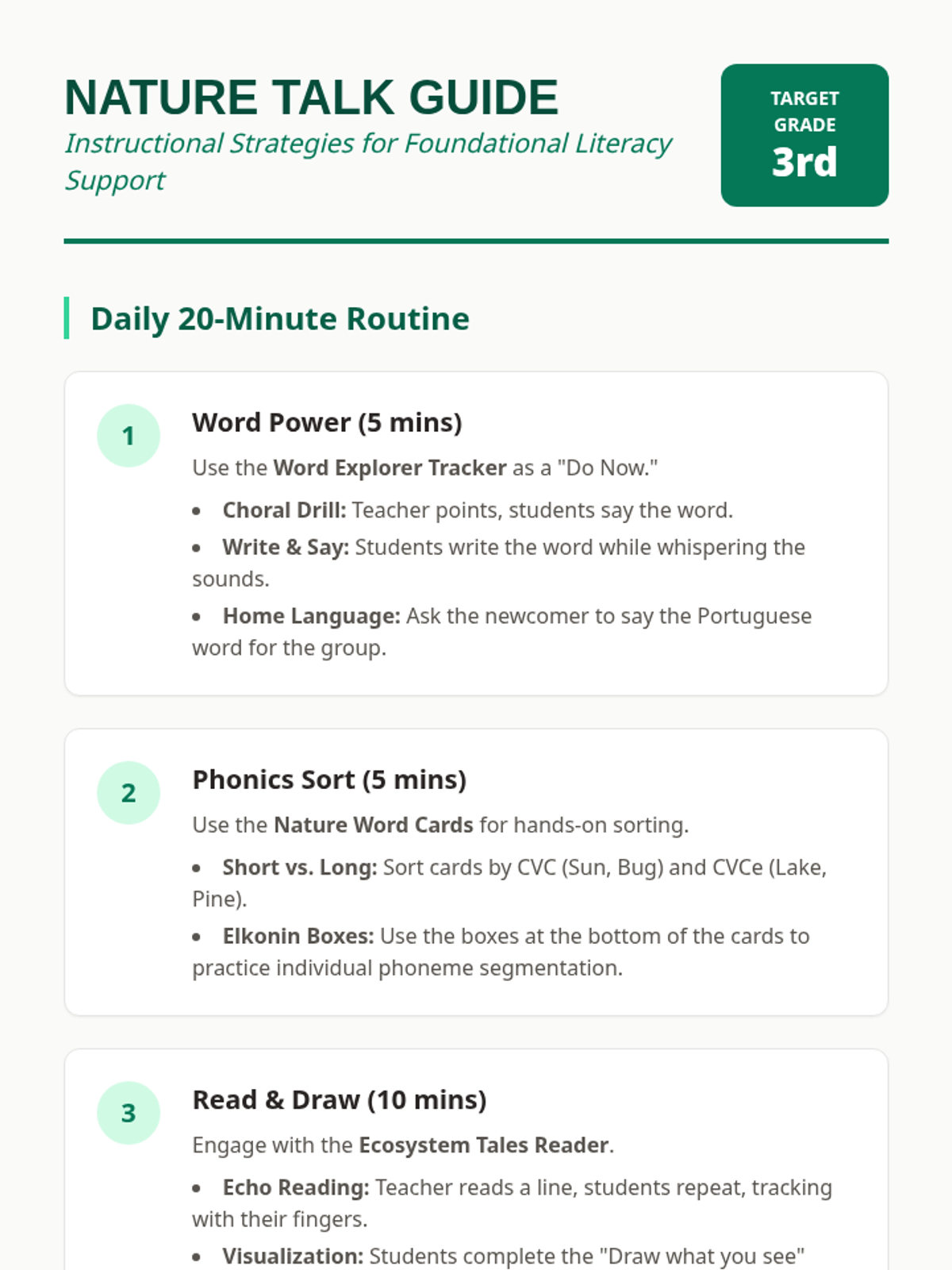
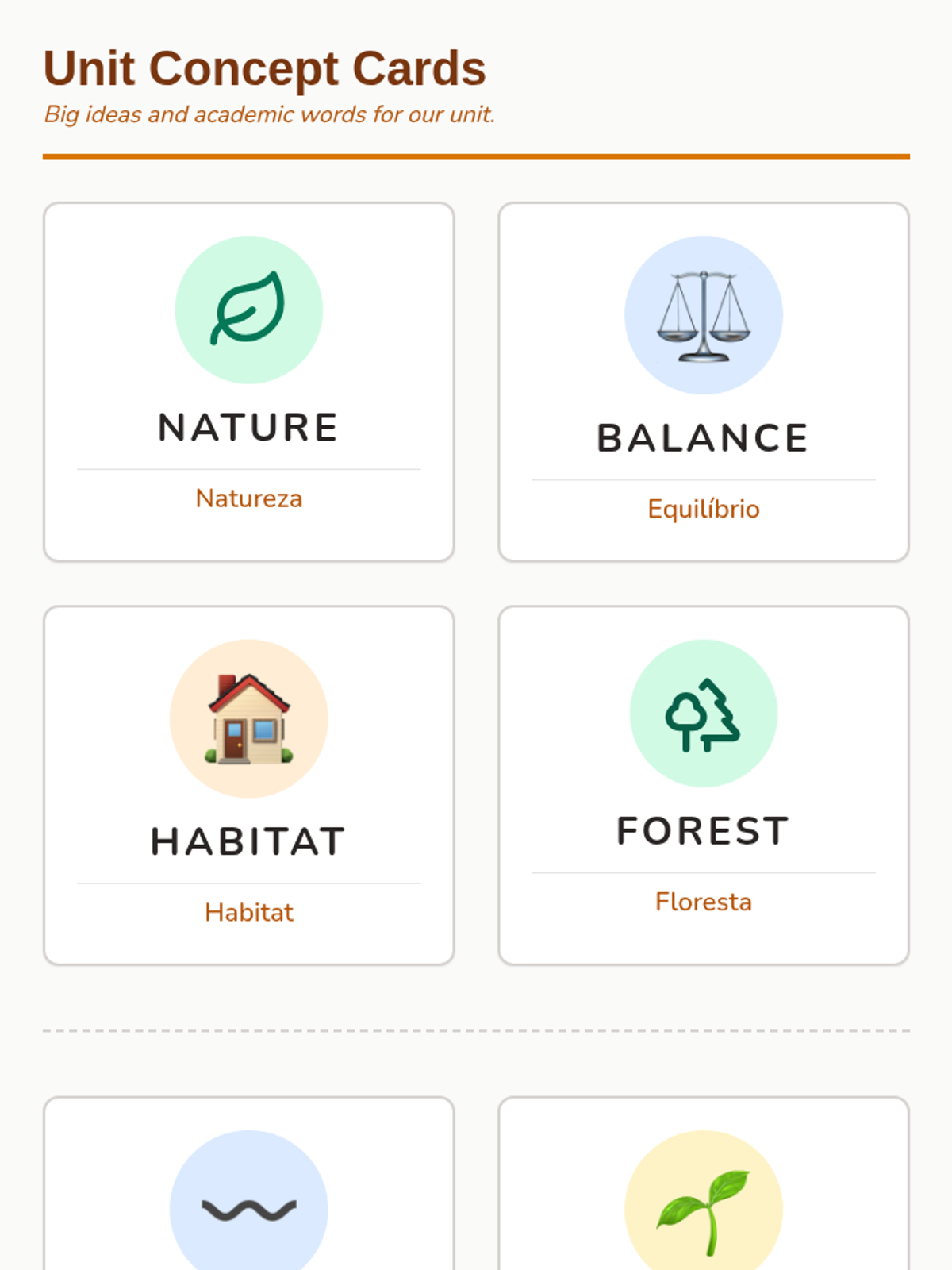
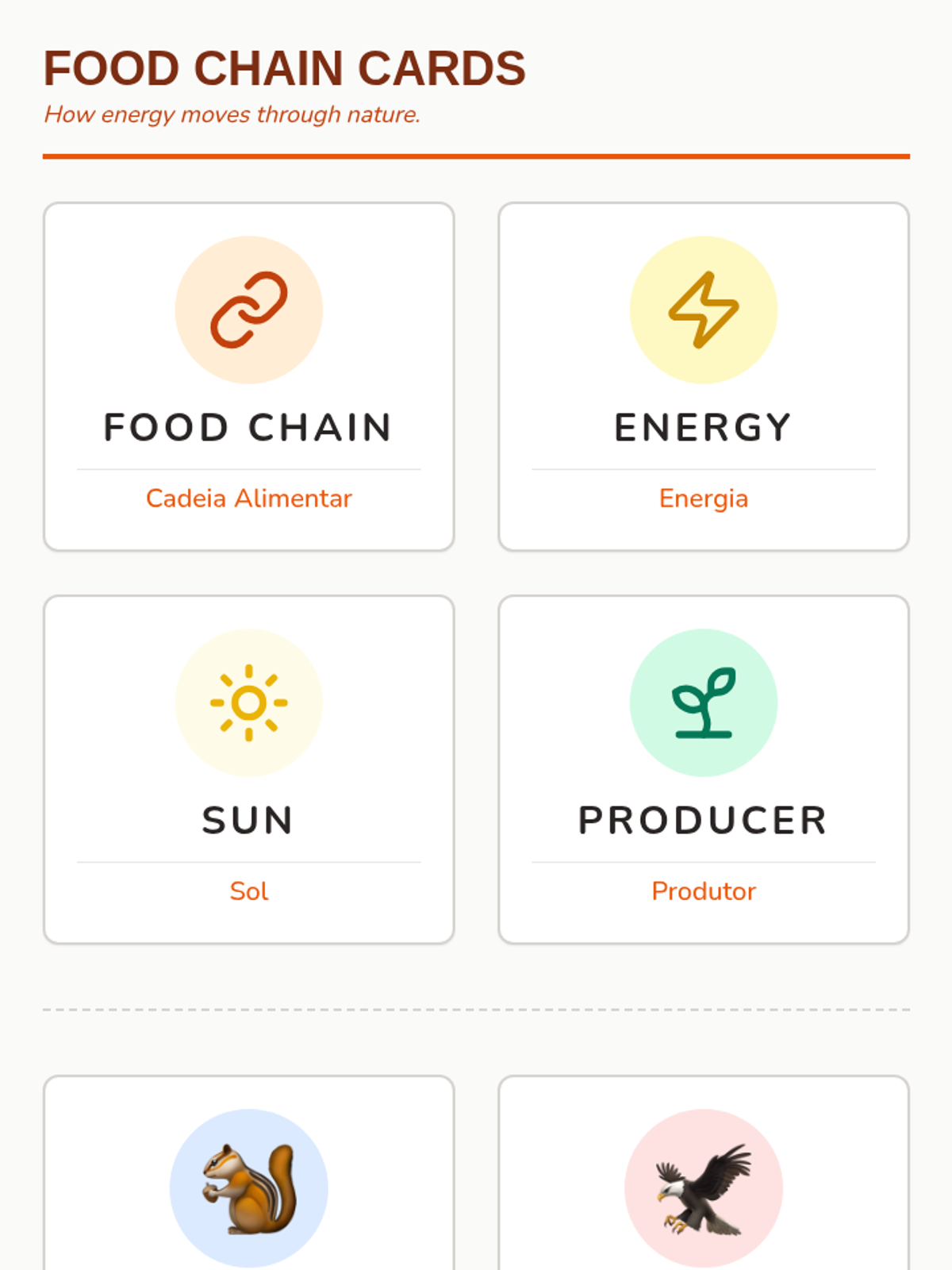
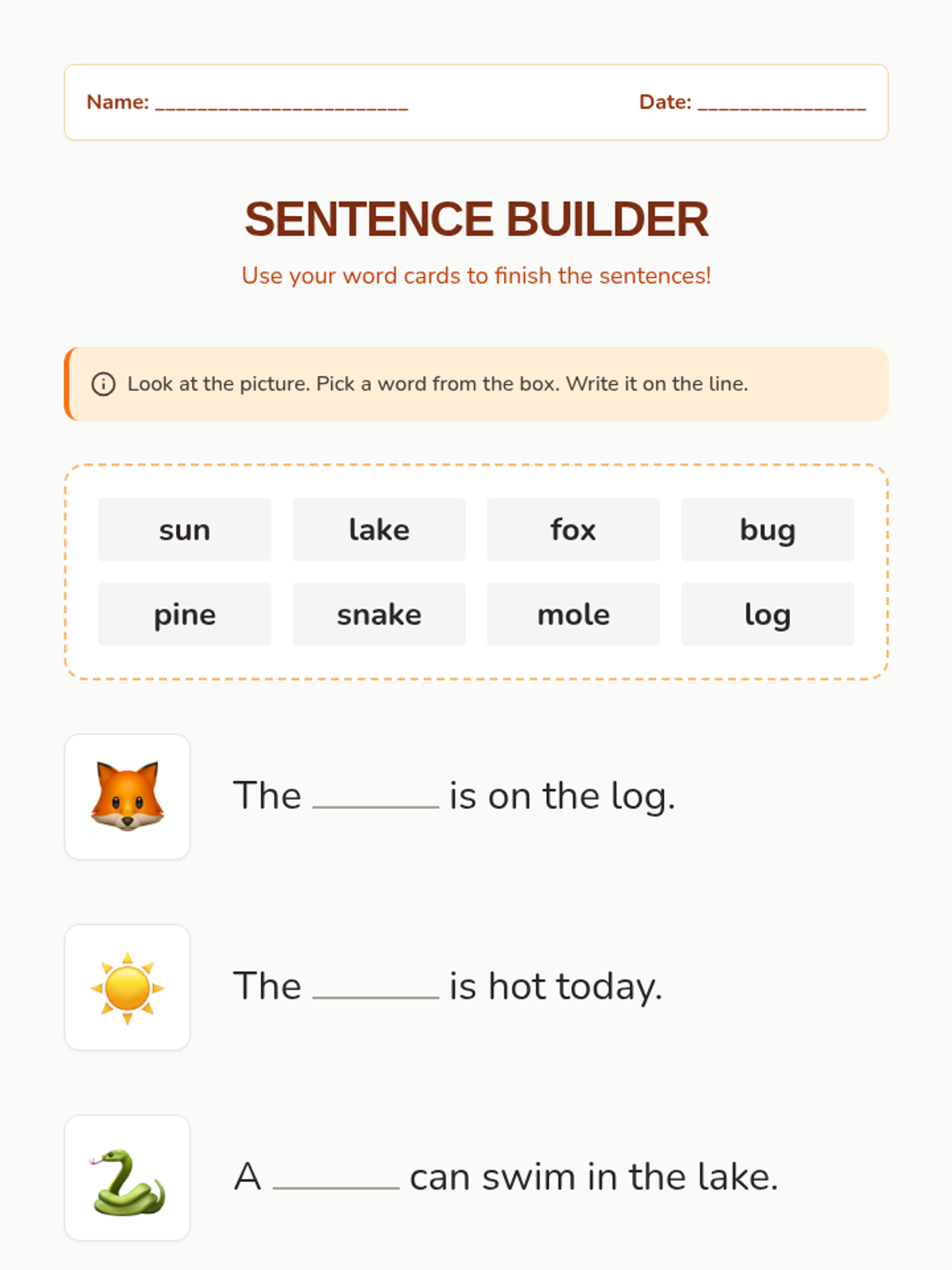
Foundational literacy support for the Nature's Balance unit, focusing on CVC/CVCe blending, unit vocabulary, and sentence frames.
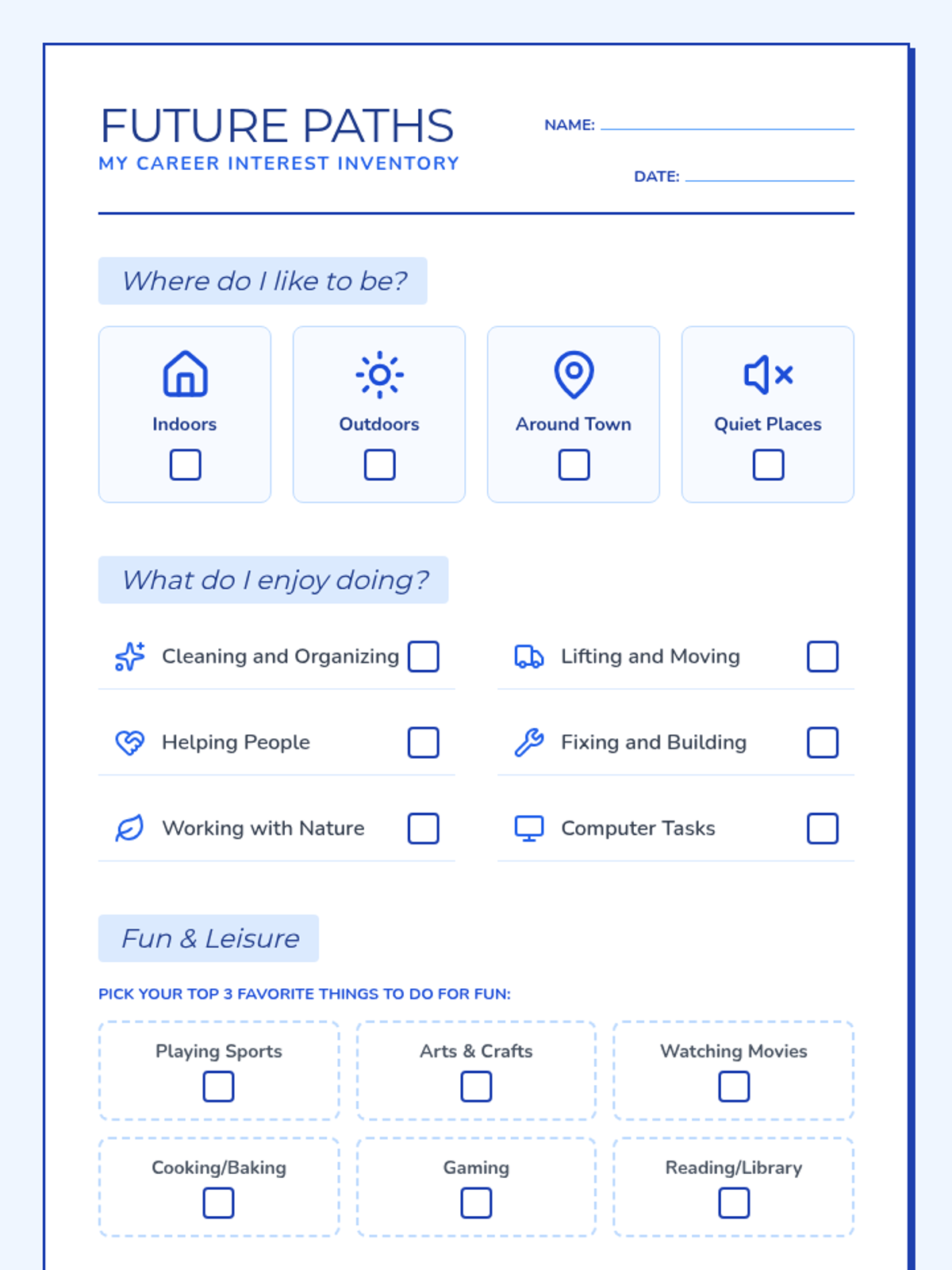
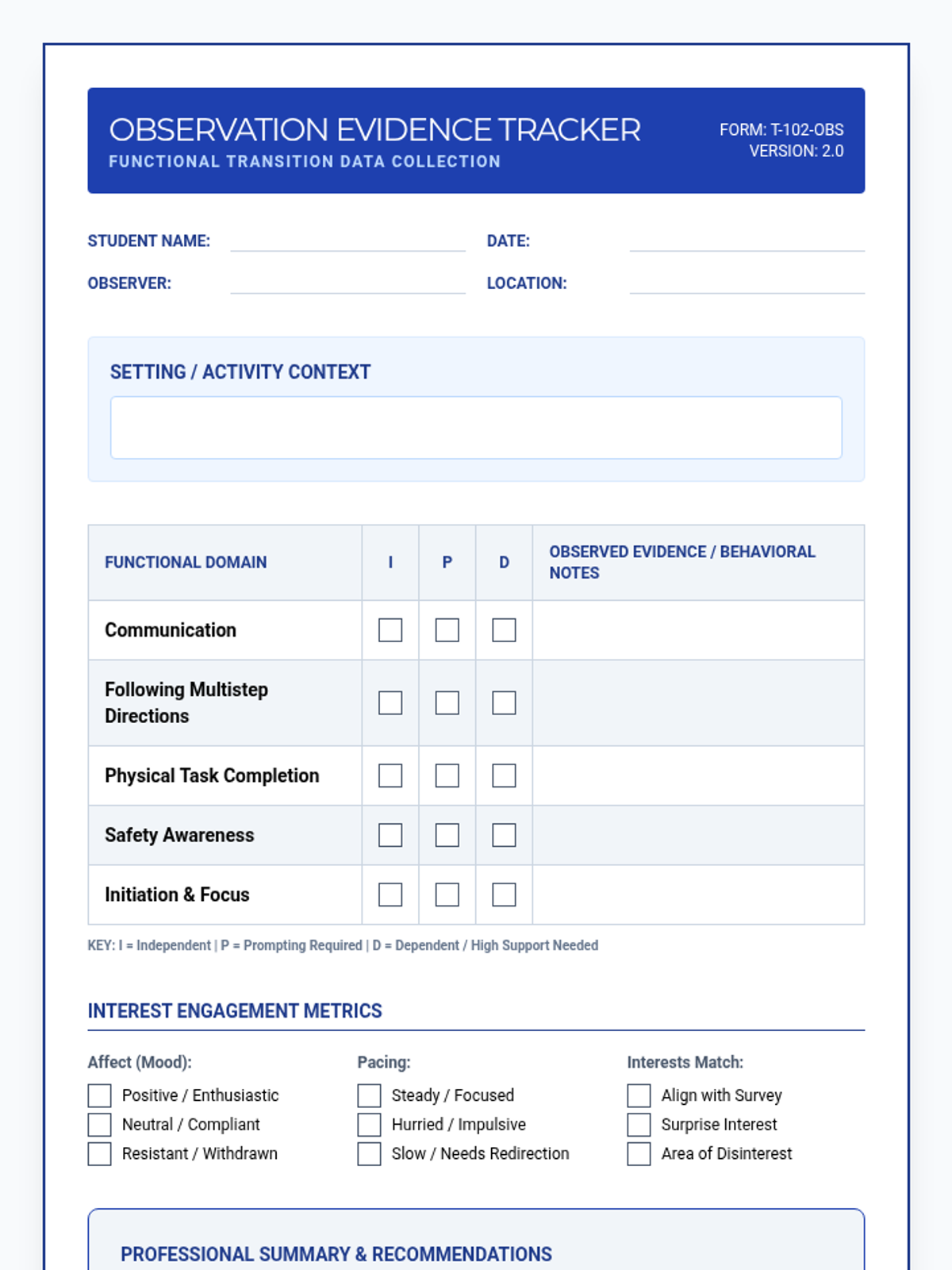
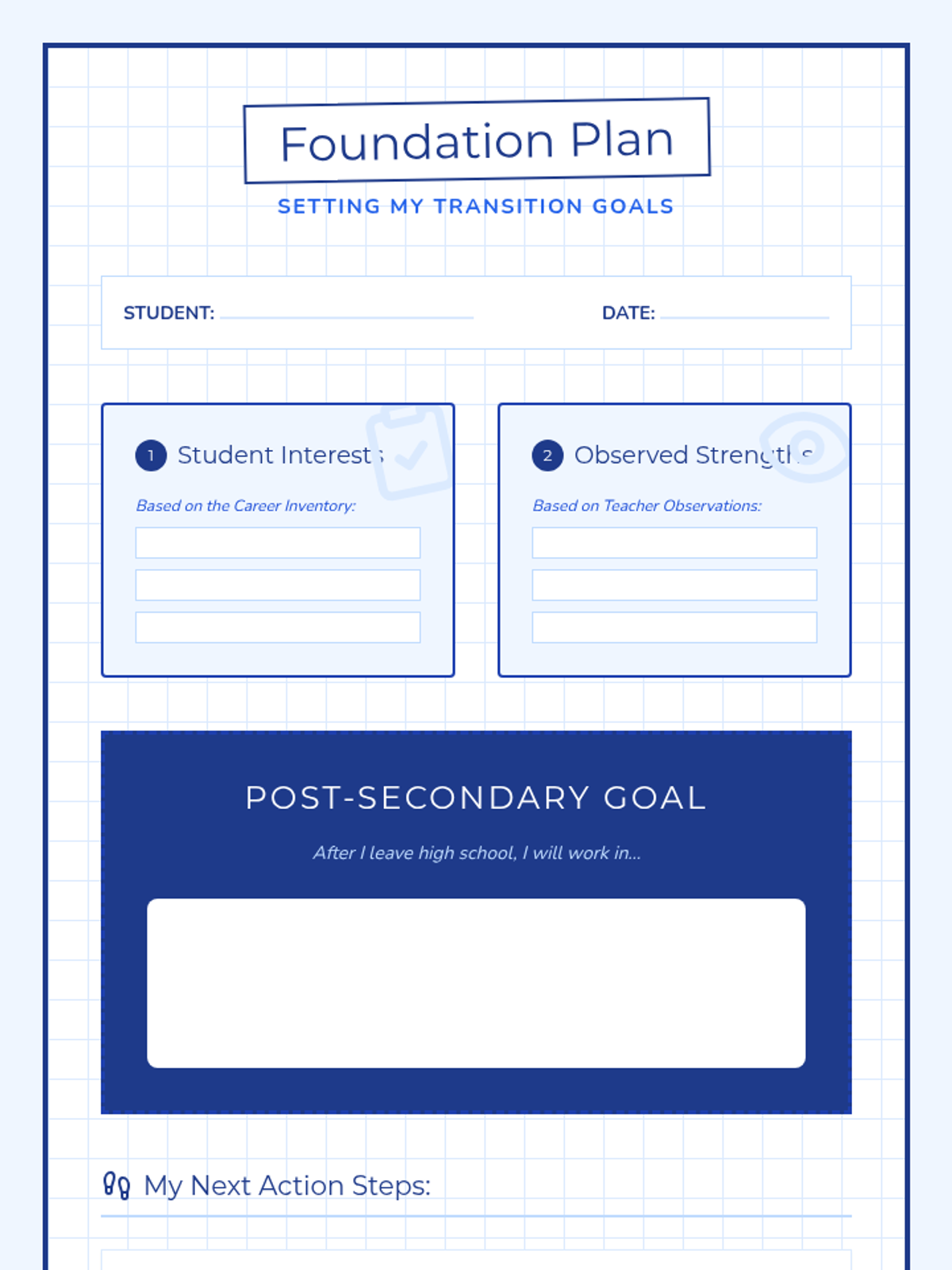
A comprehensive transition planning toolset focused on identifying community-based vocational interests and functional skills through student input and teacher observation.
A culminating activity rotating through communication stations to demonstrate mastery of all skills.
Focusing on social pragmatics including 'Hello', 'Goodbye', and 'Thank You' on TouchChat.
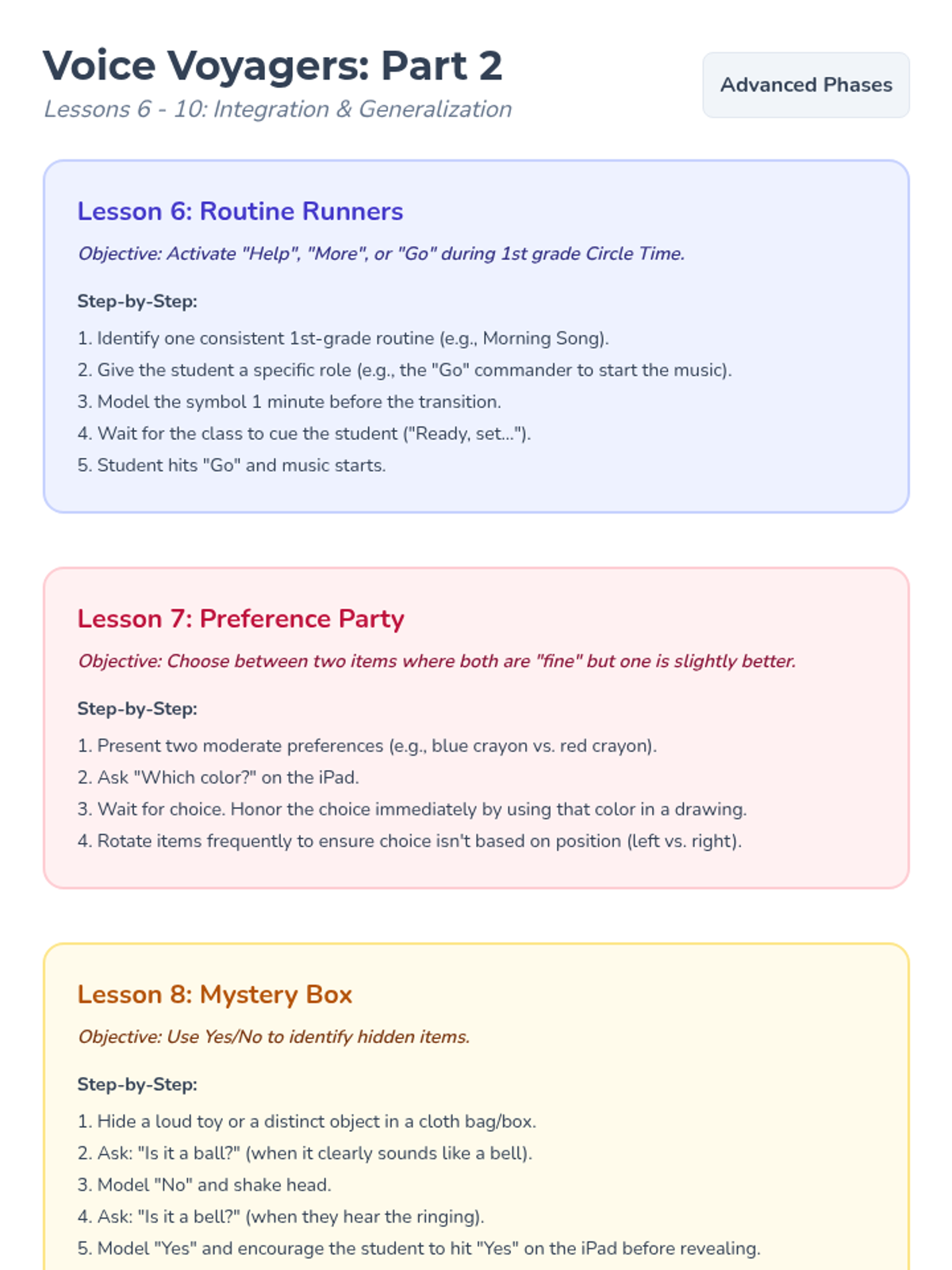
Using Yes/No responses to identify or guess items in a tactile mystery box.
Refining choice-making by presenting less obvious preferences and increasing complexity.
Integrating learned communication symbols into daily 1st-grade classroom routines.
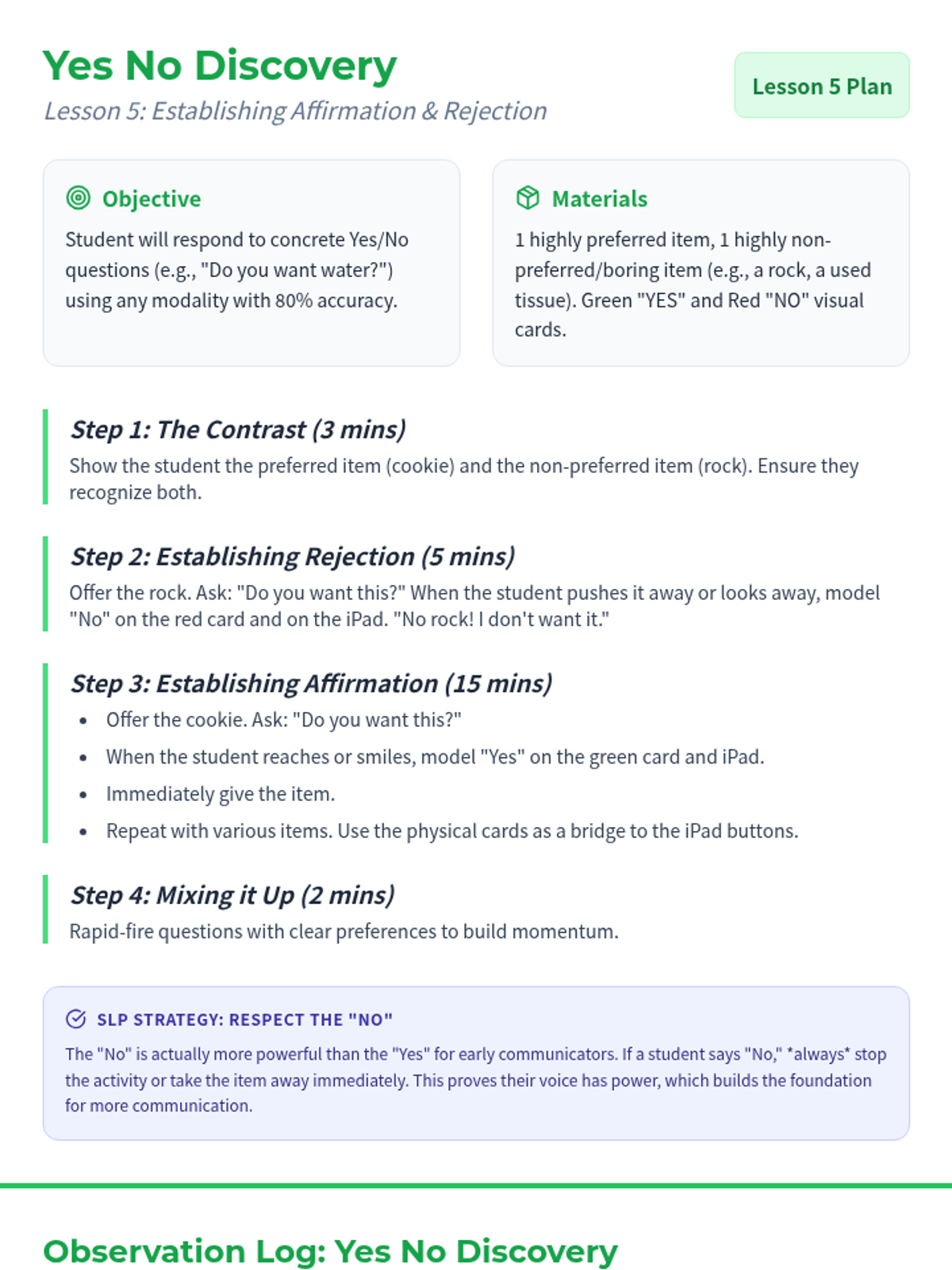
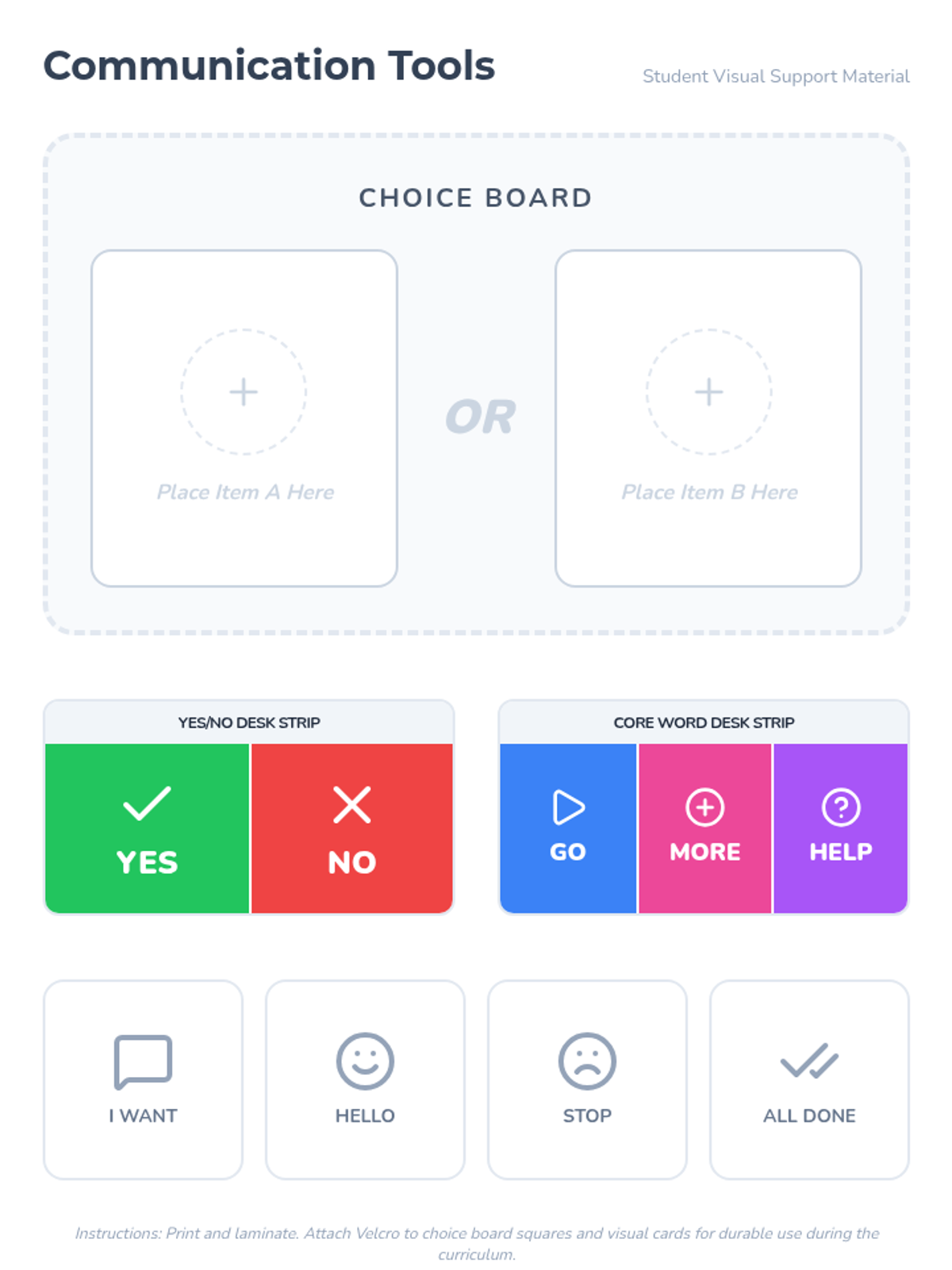
Establishing basic Yes and No responses using visual aids and AAC buttons.
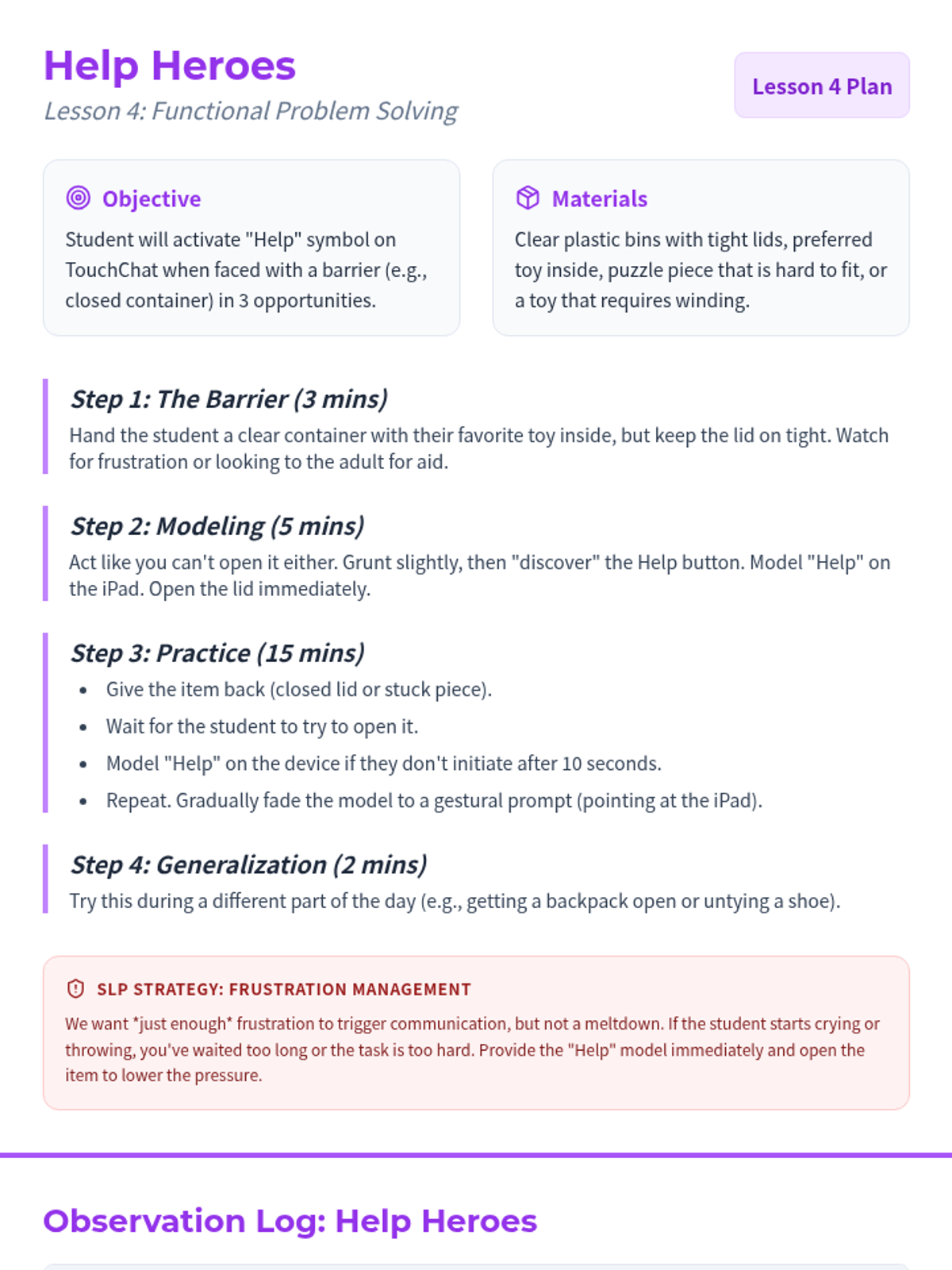
Introducing the 'Help' symbol for navigating obstacles and requesting assistance.
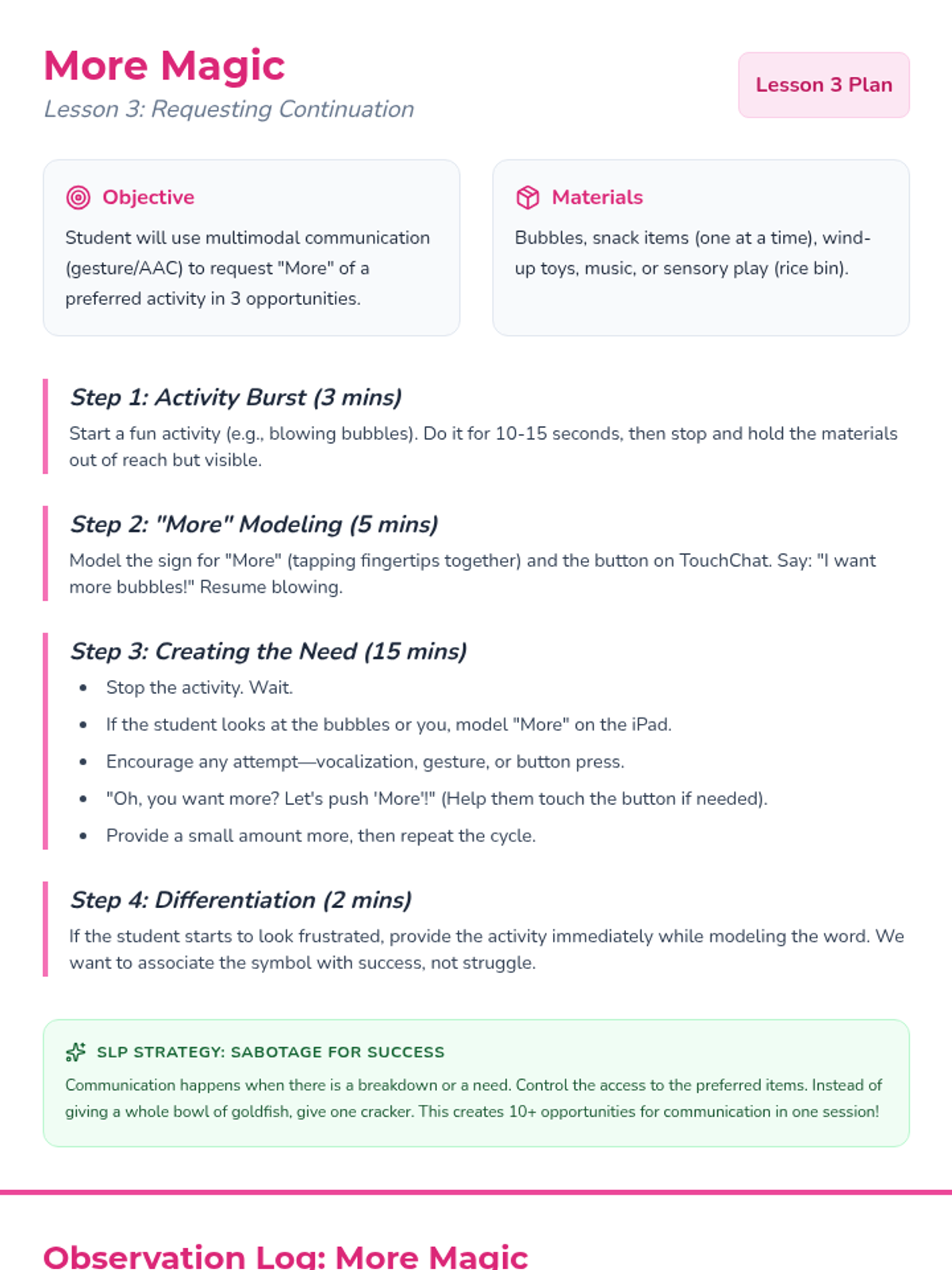
Modeling and prompting the 'More' symbol during sensory and high-engagement tasks.
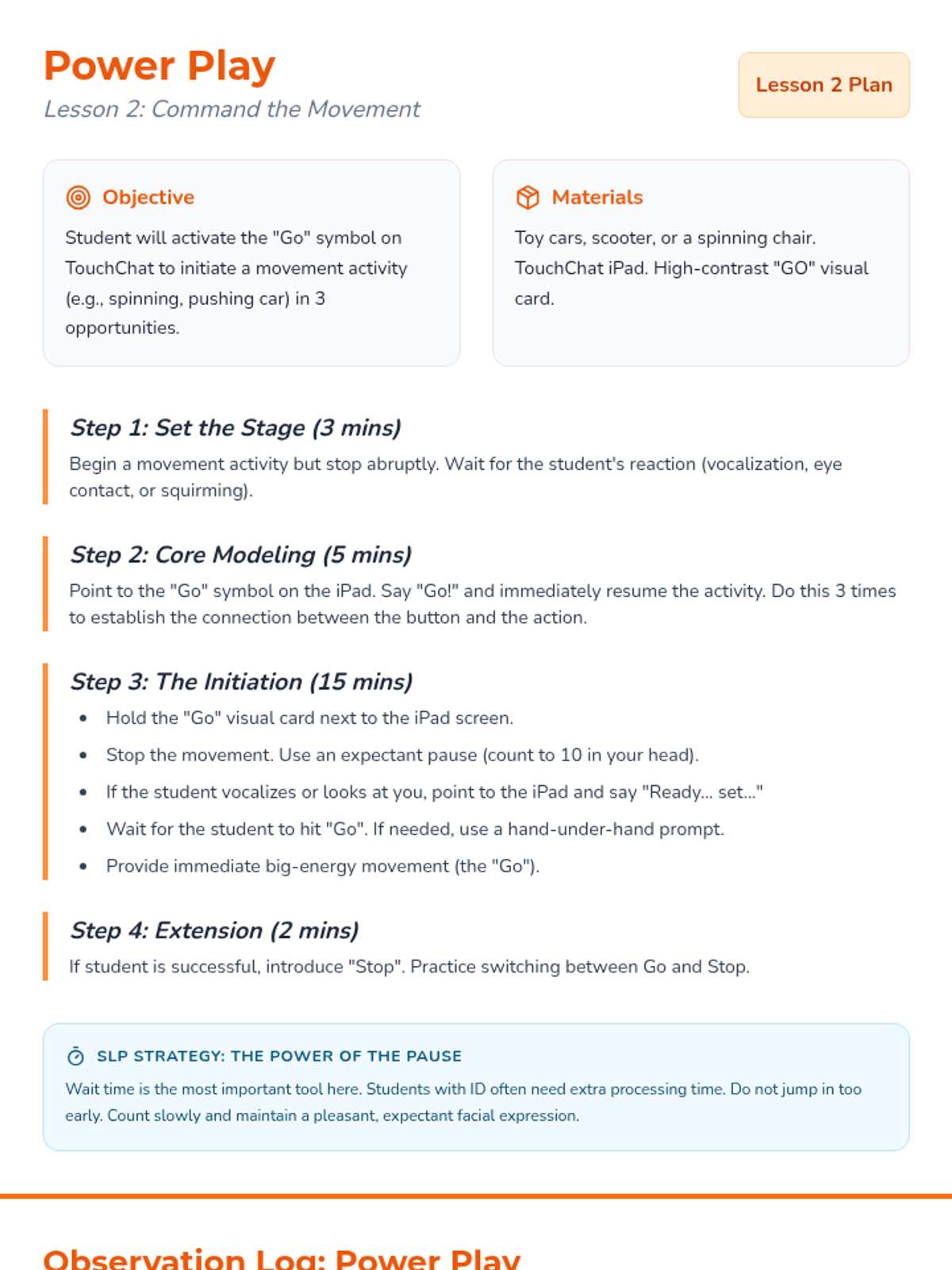
Using the 'Go' symbol on TouchChat to initiate movement and play activities.
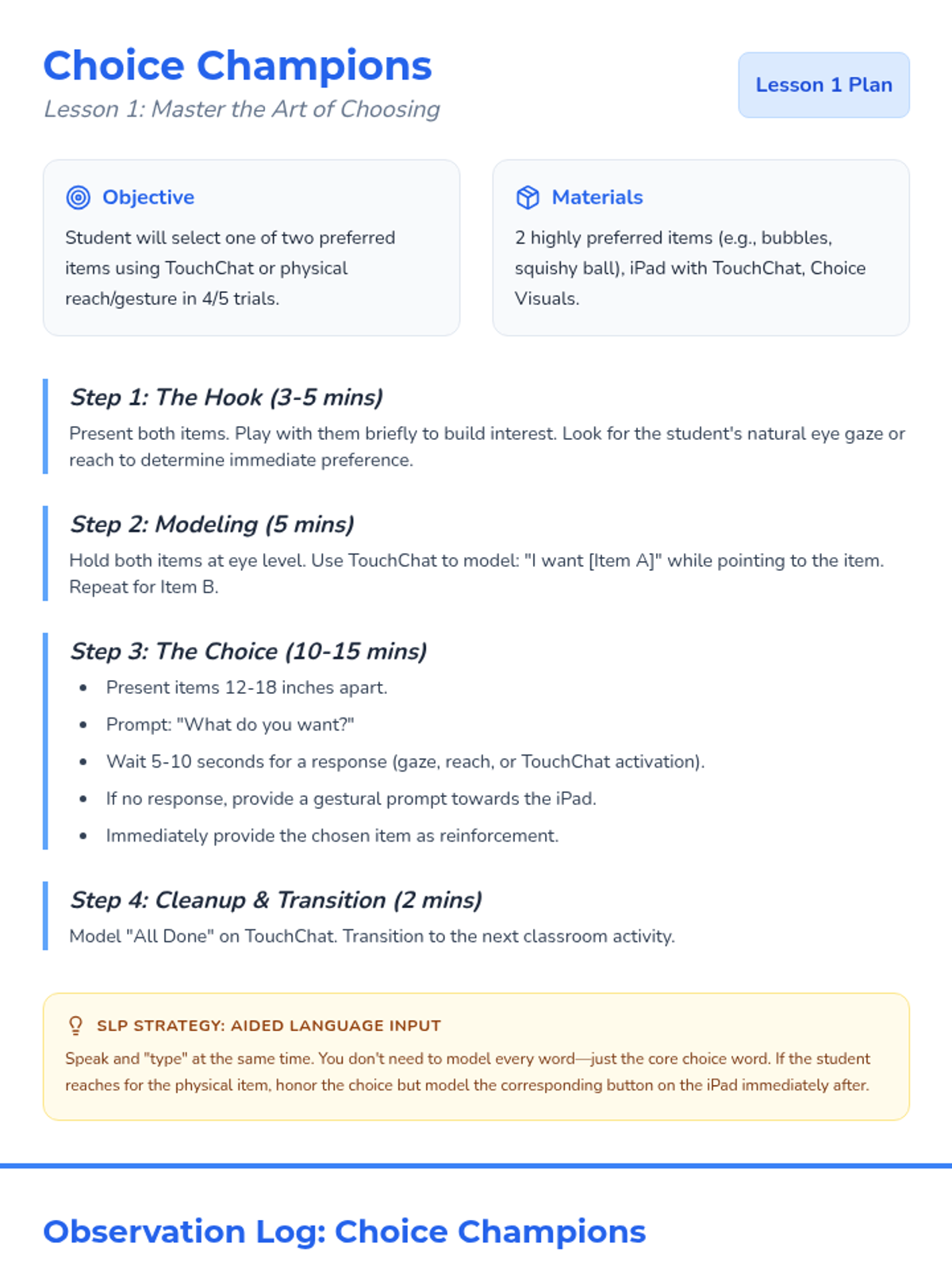
Introduction to making a choice between two highly preferred items using TouchChat and physical indicators.
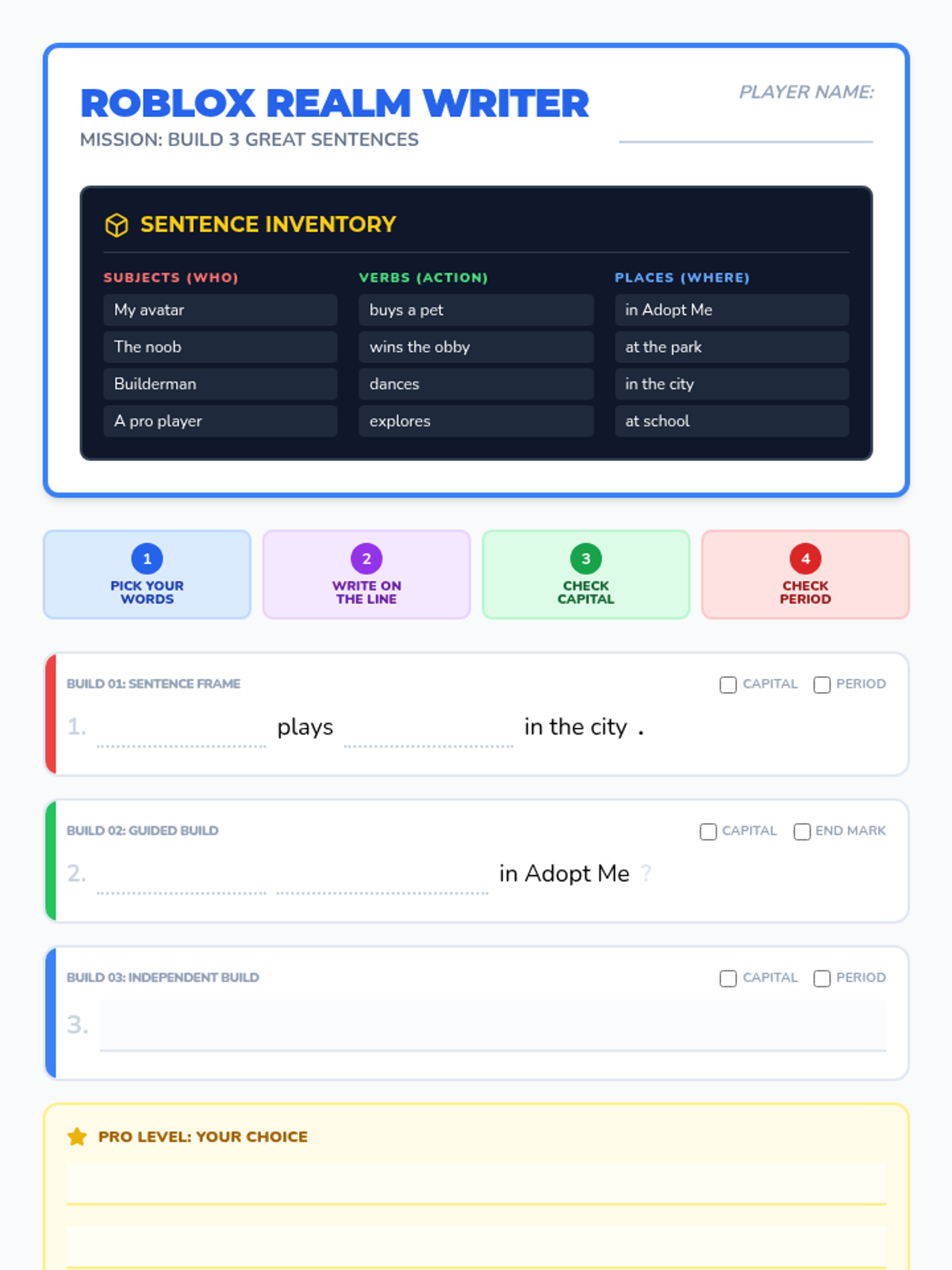
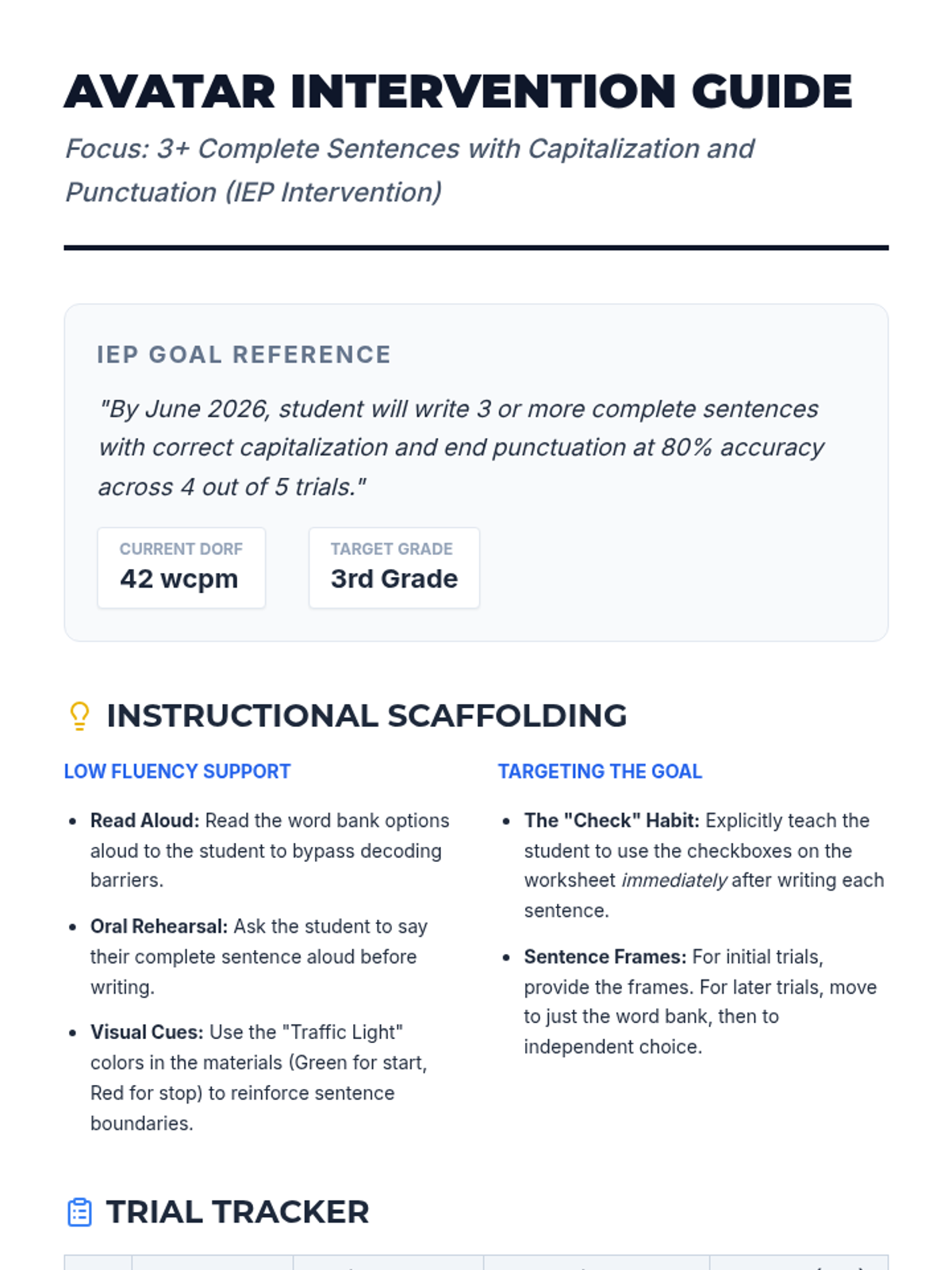
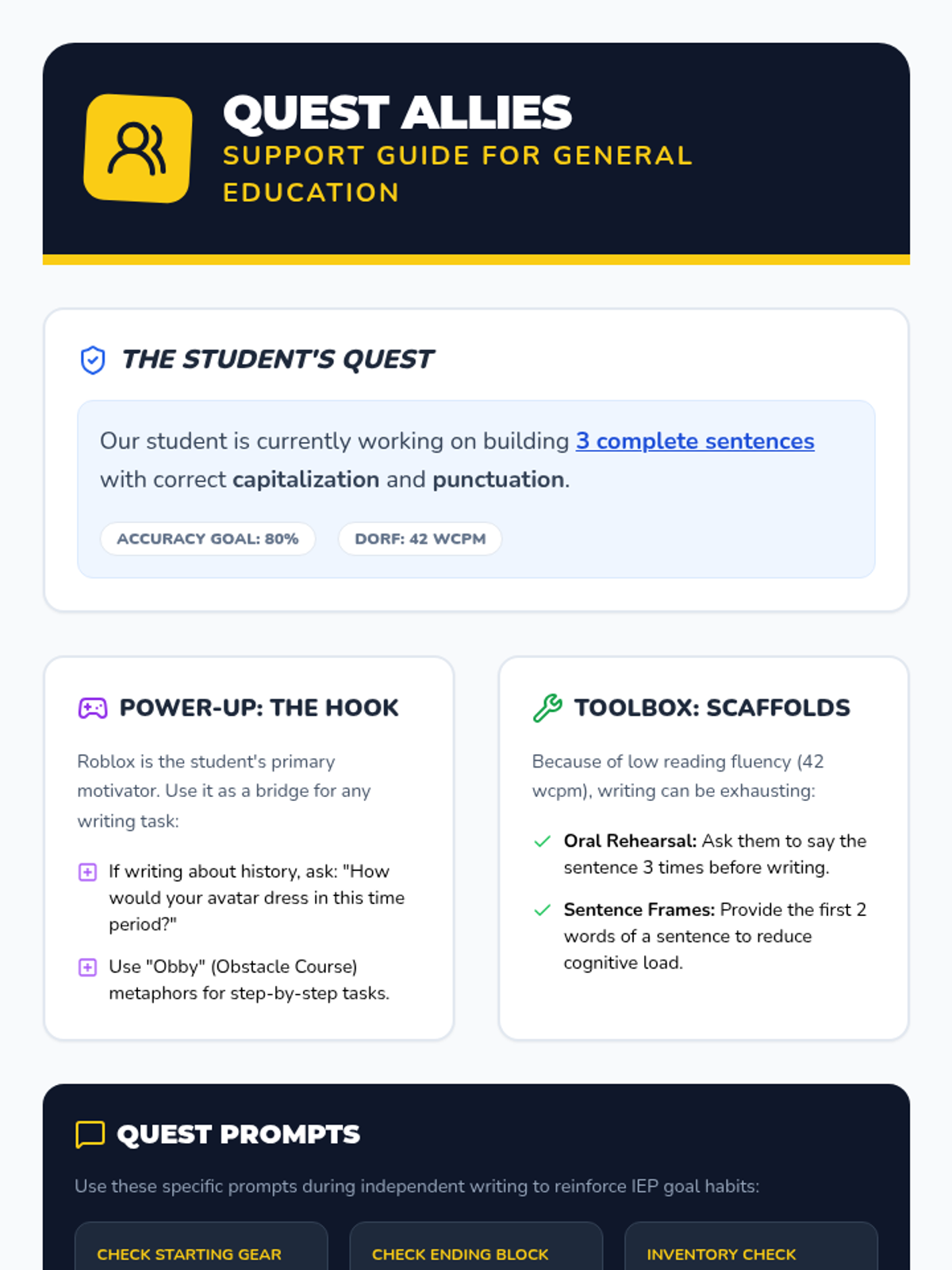
A specialized writing intervention lesson using Roblox themes to help students master basic sentence structure, capitalization, and punctuation through sentence frames and word banks.
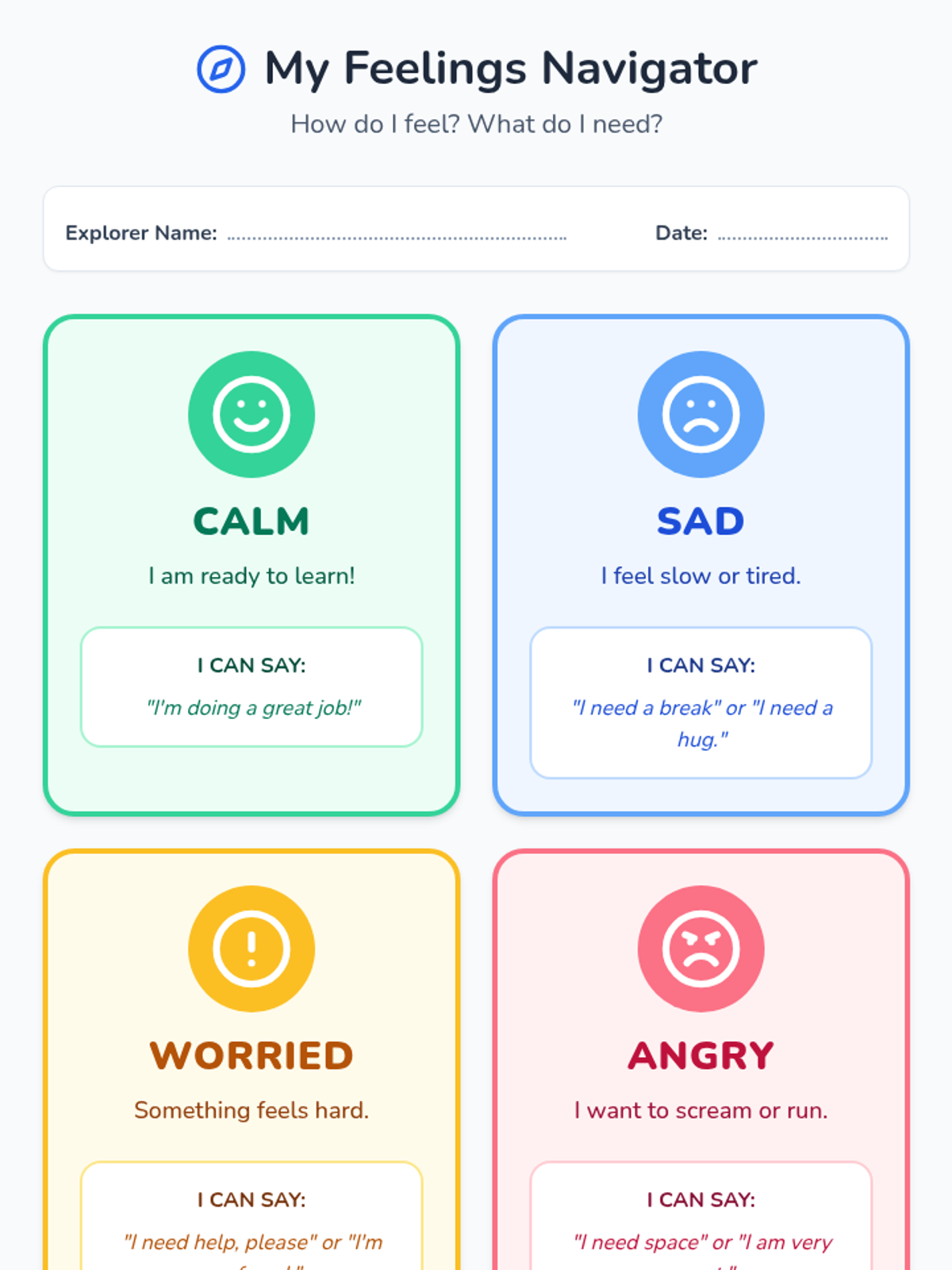
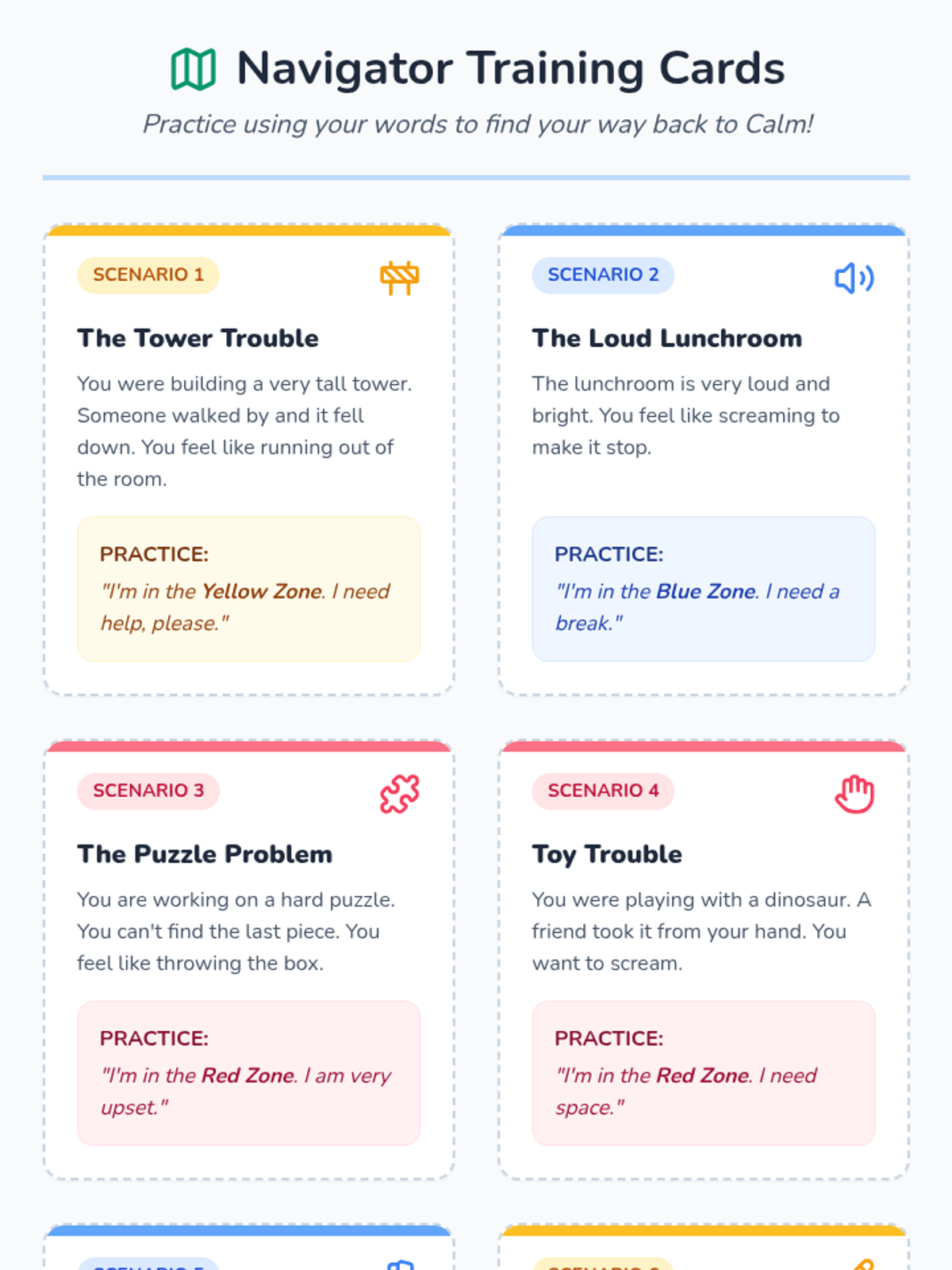
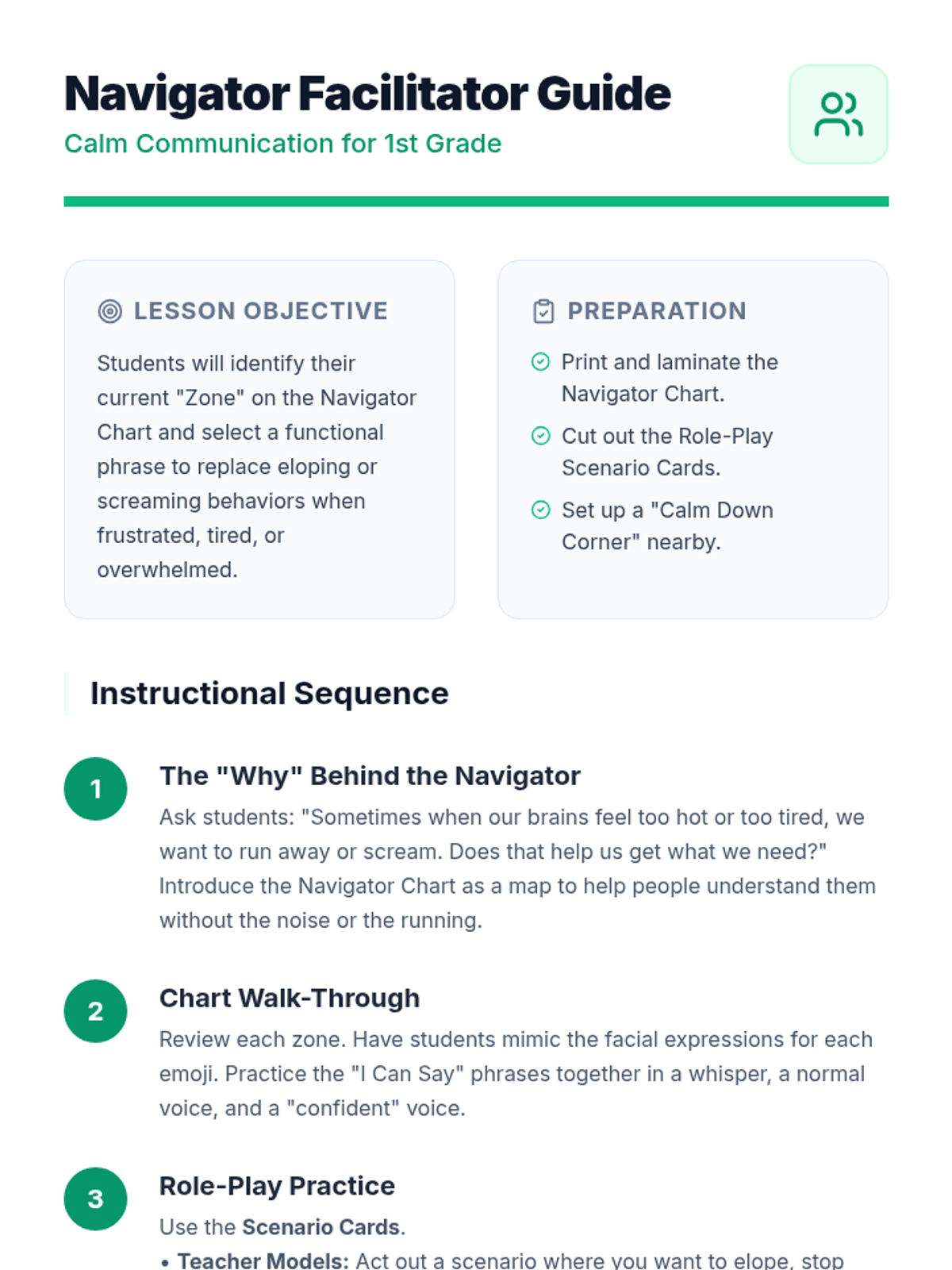
A lesson designed for two first-graders to learn how to replace screaming and eloping with verbal communication using a feelings chart. Through role-play and visual aids, students practice identifying their emotions and stating their needs.
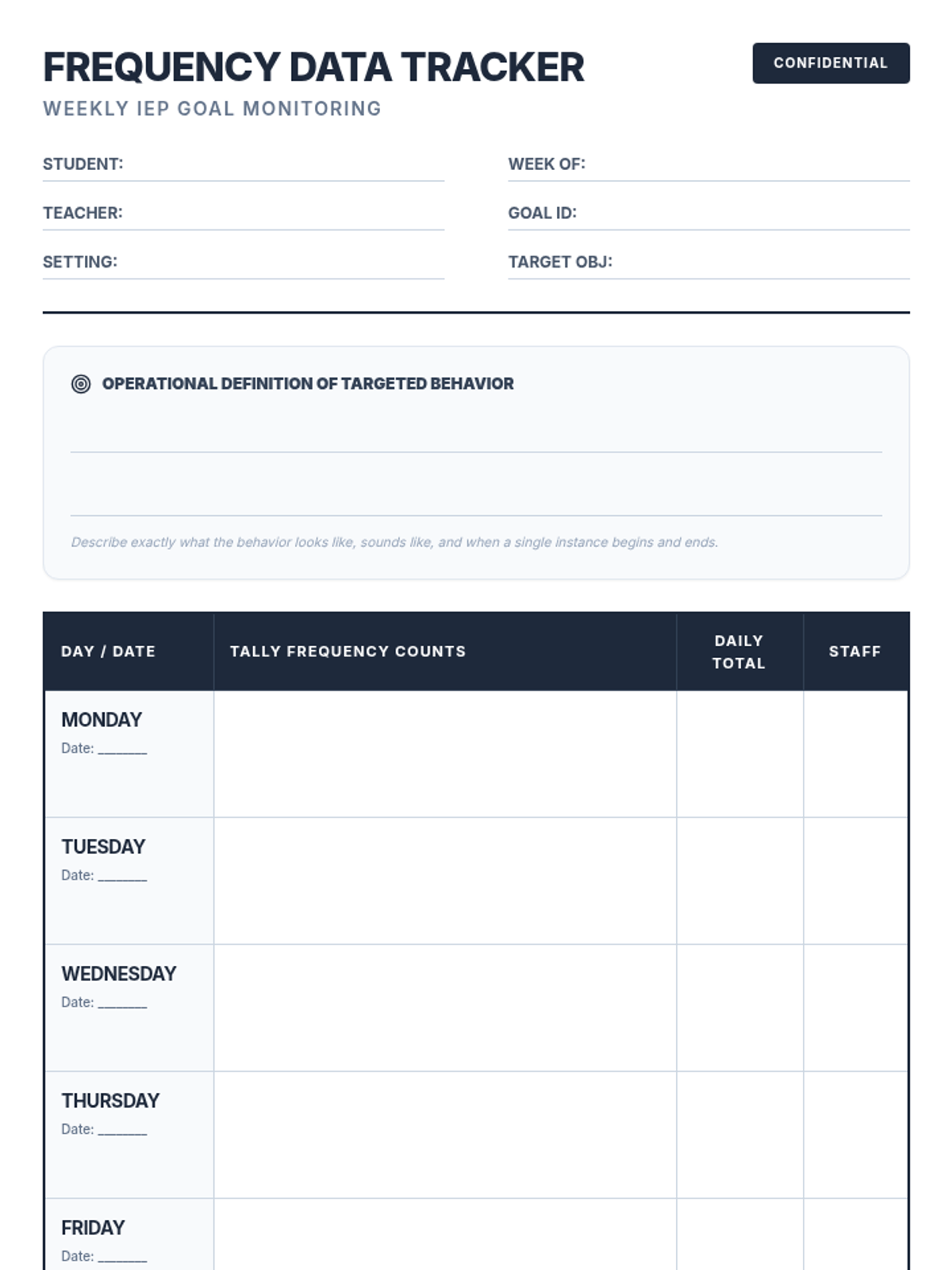
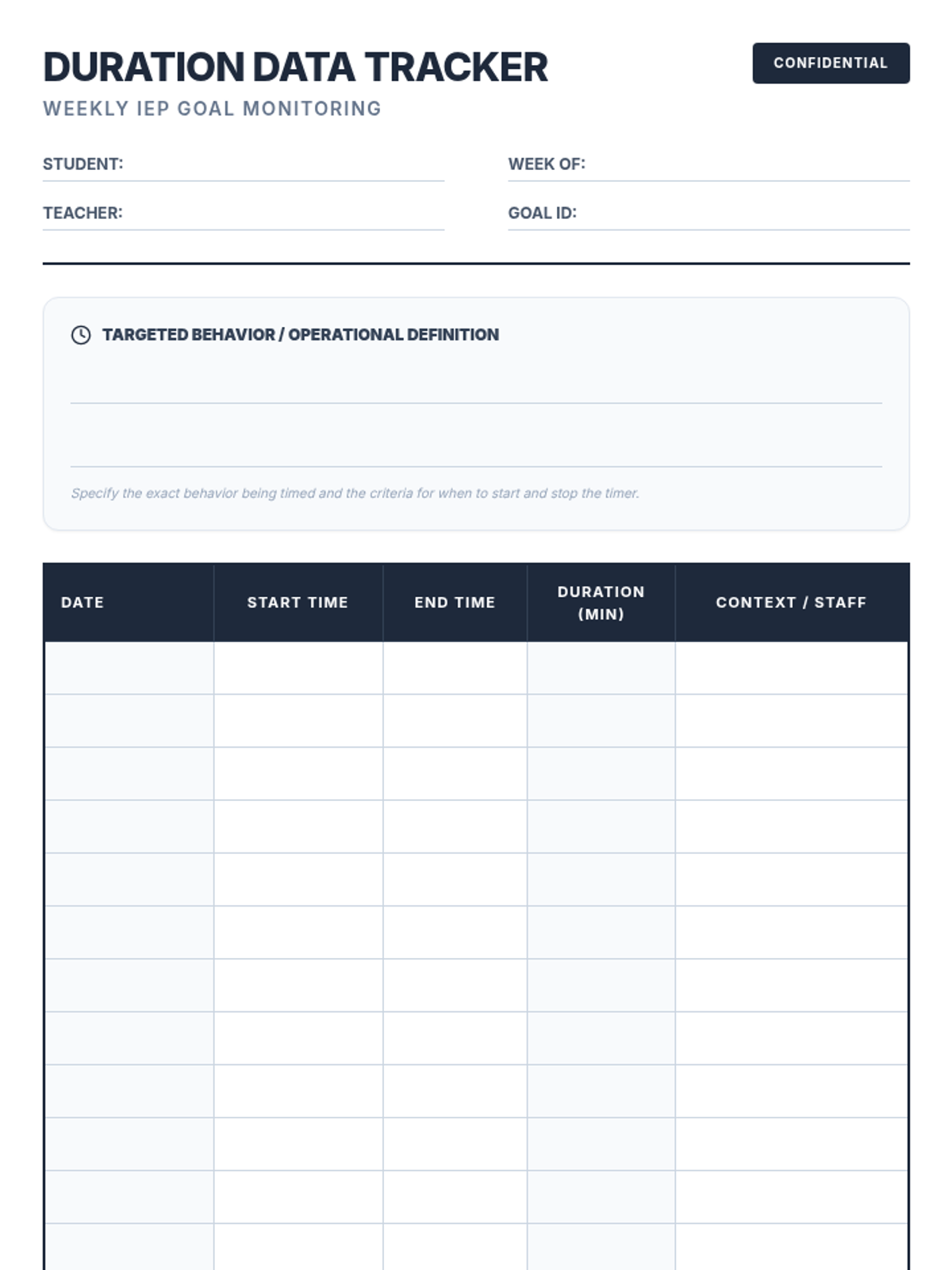
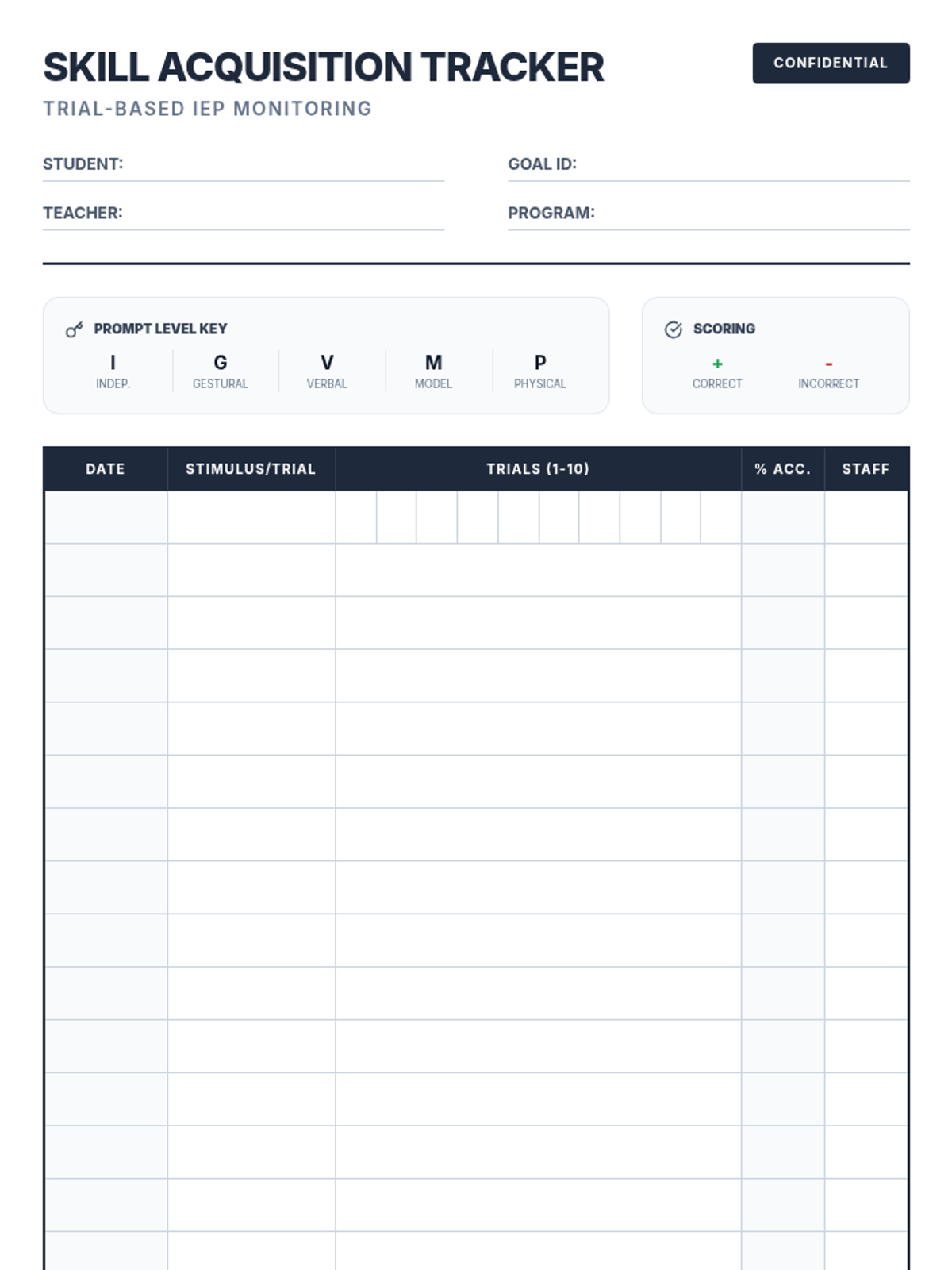
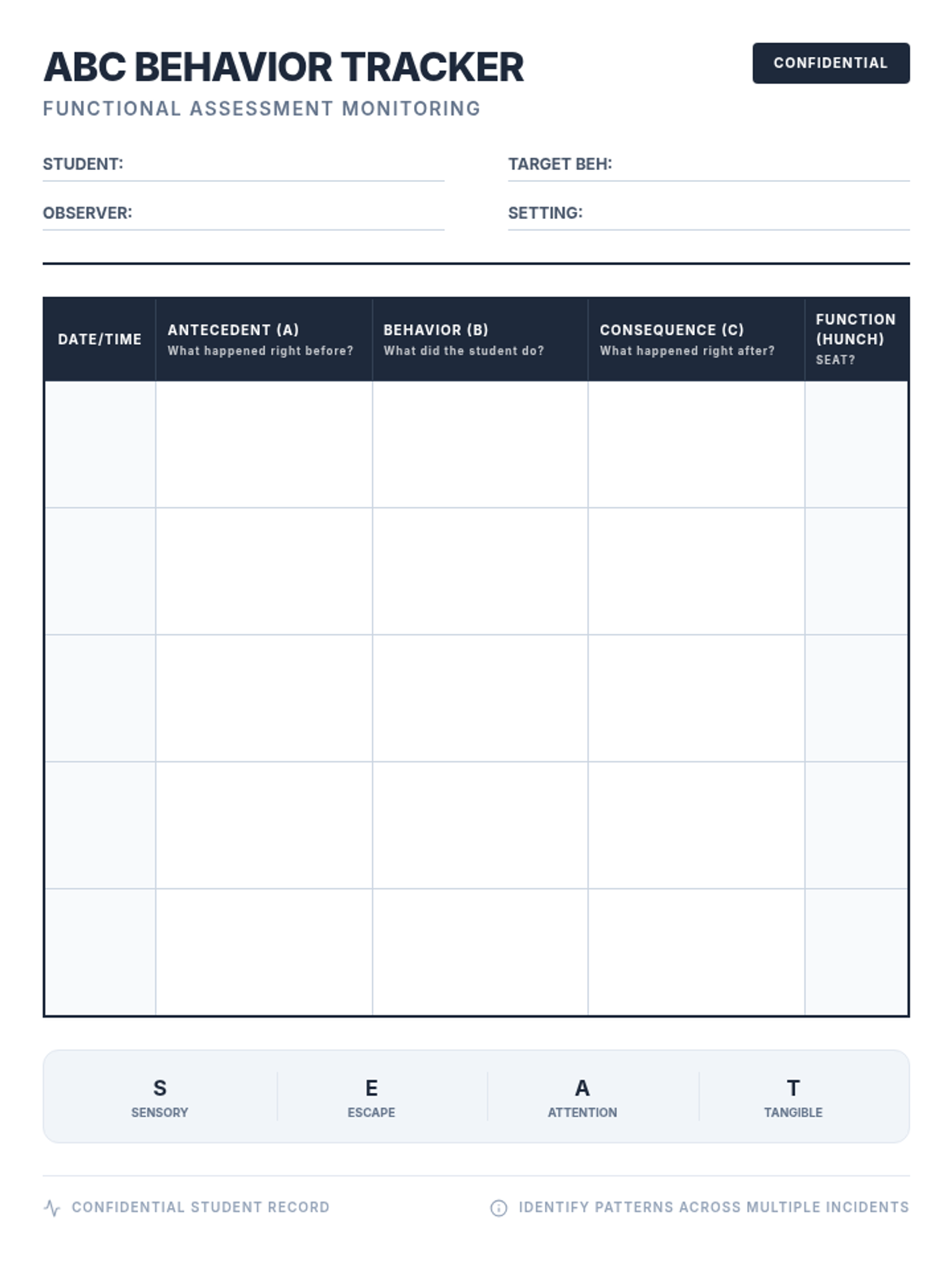
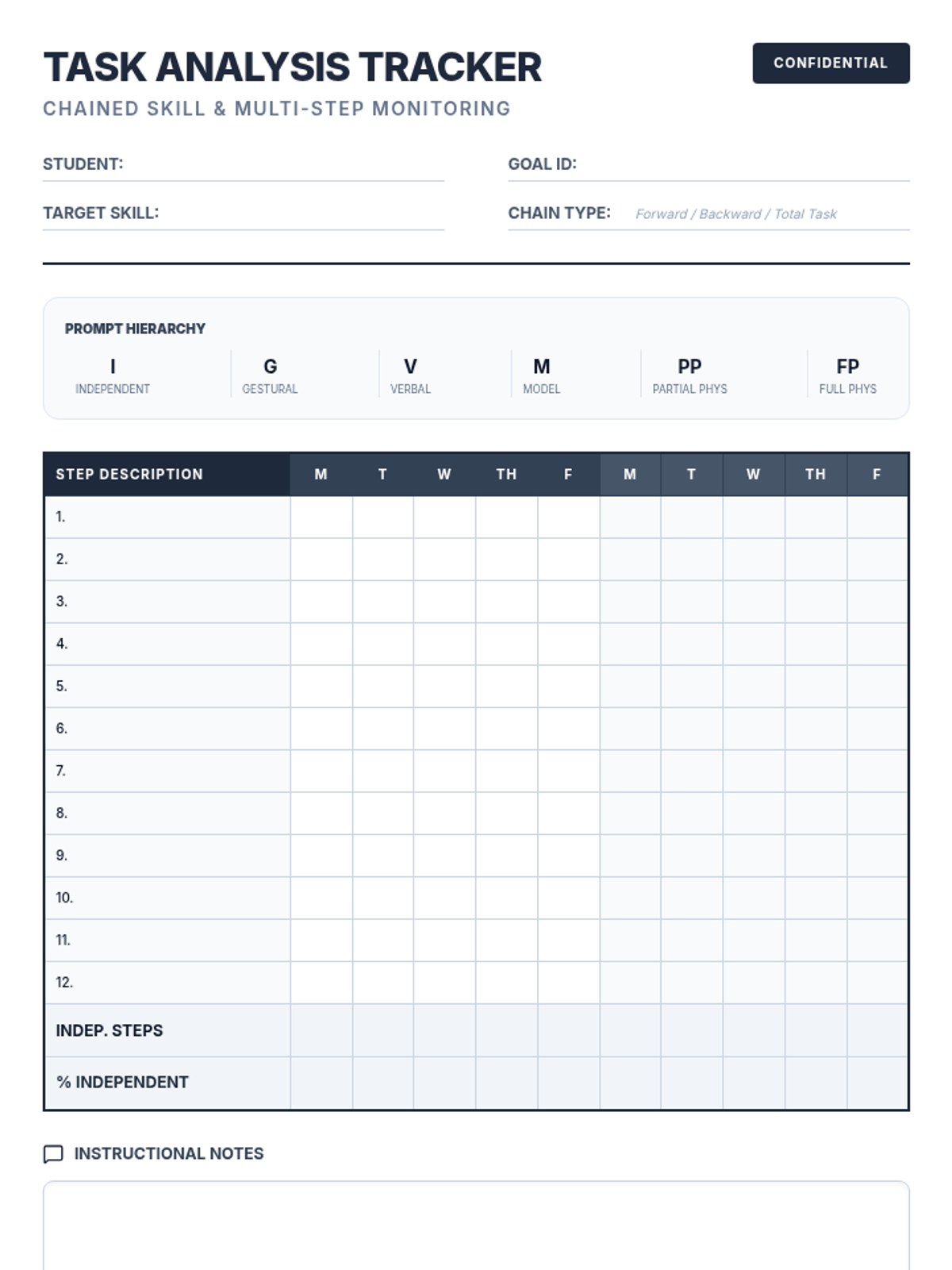
A comprehensive toolkit of data collection sheets for tracking various types of IEP goals, including frequency, duration, and trial-based skill acquisition.
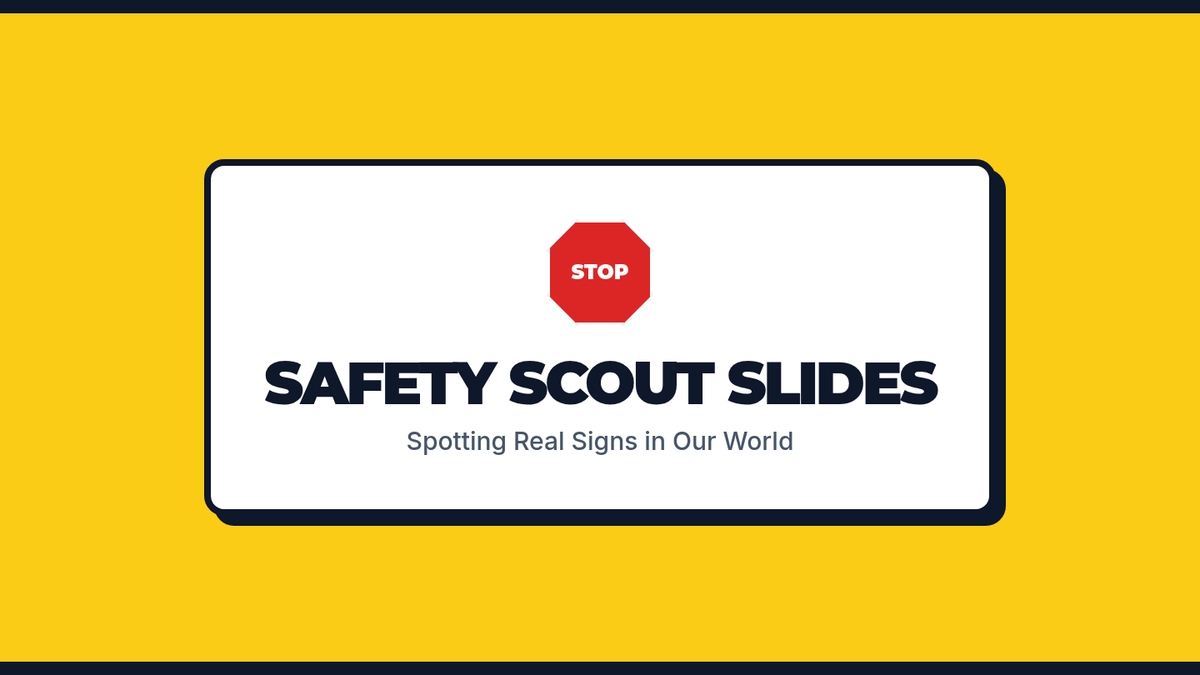
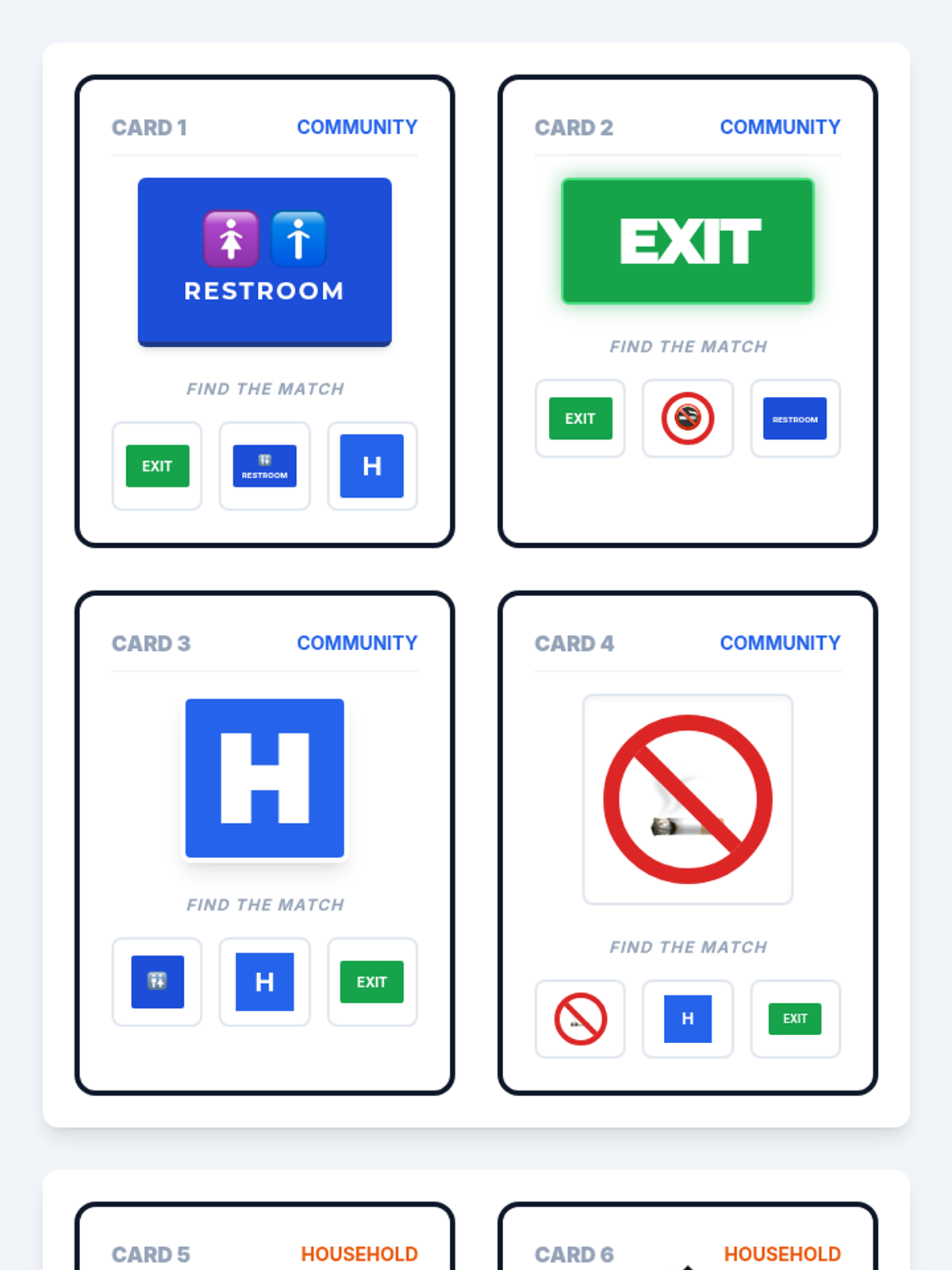
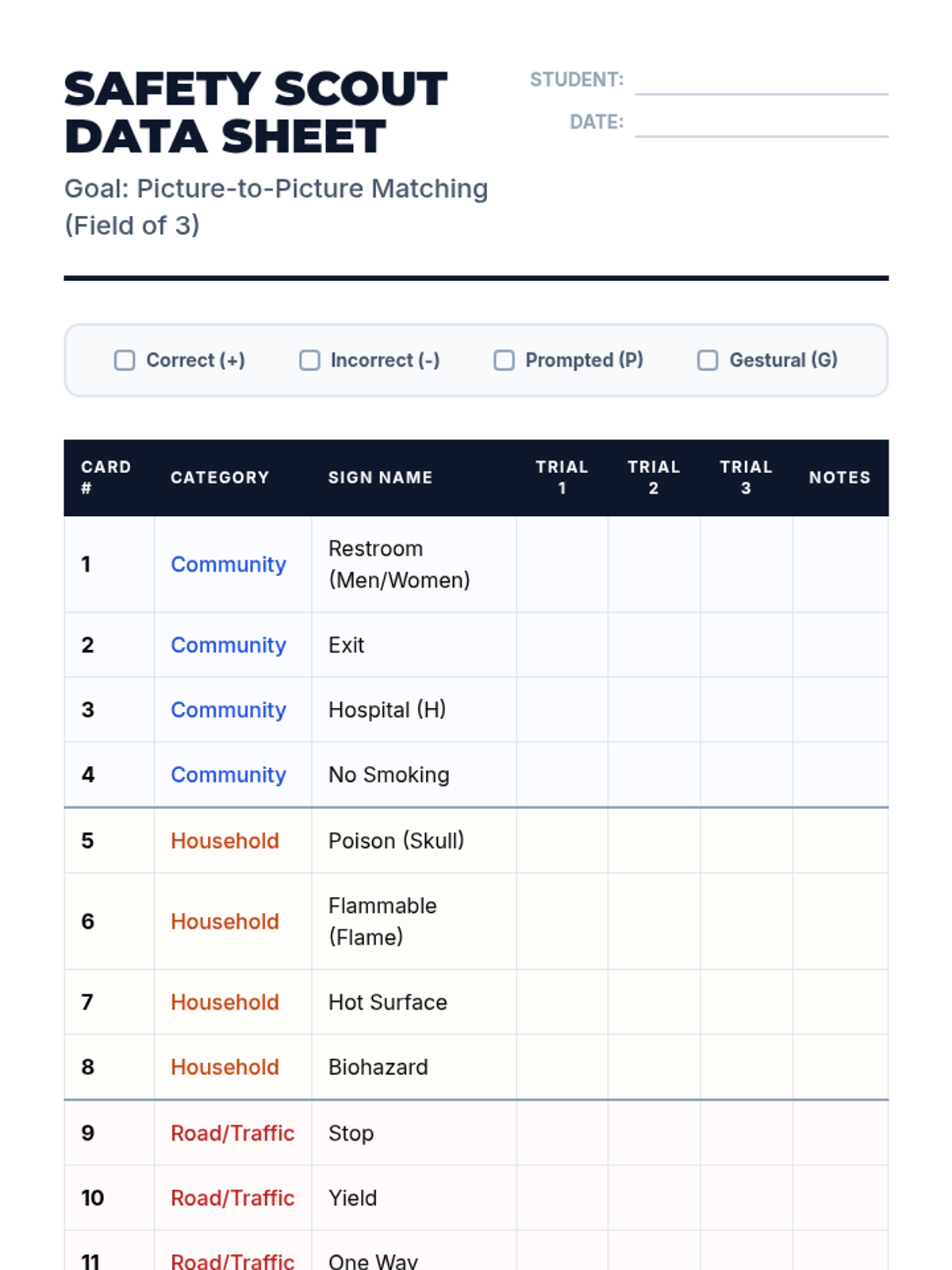
A comprehensive lesson on identifying and matching essential safety signs from community, household, road, and workplace environments. This lesson focuses on visual discrimination and functional literacy through picture-to-picture matching tasks.
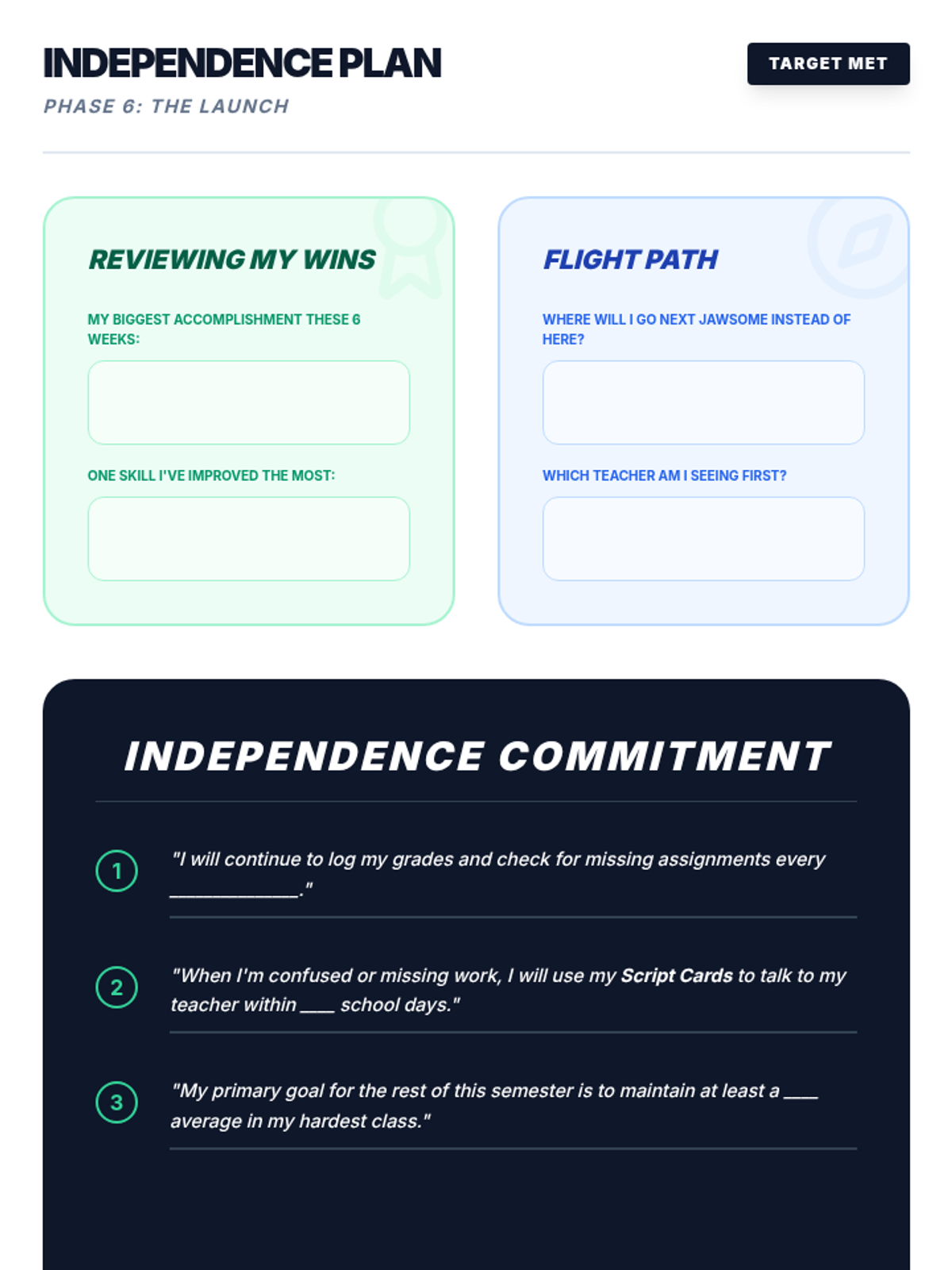
Preparing for independence. Students review progress reports and finalize a plan for seeking teacher support autonomously.
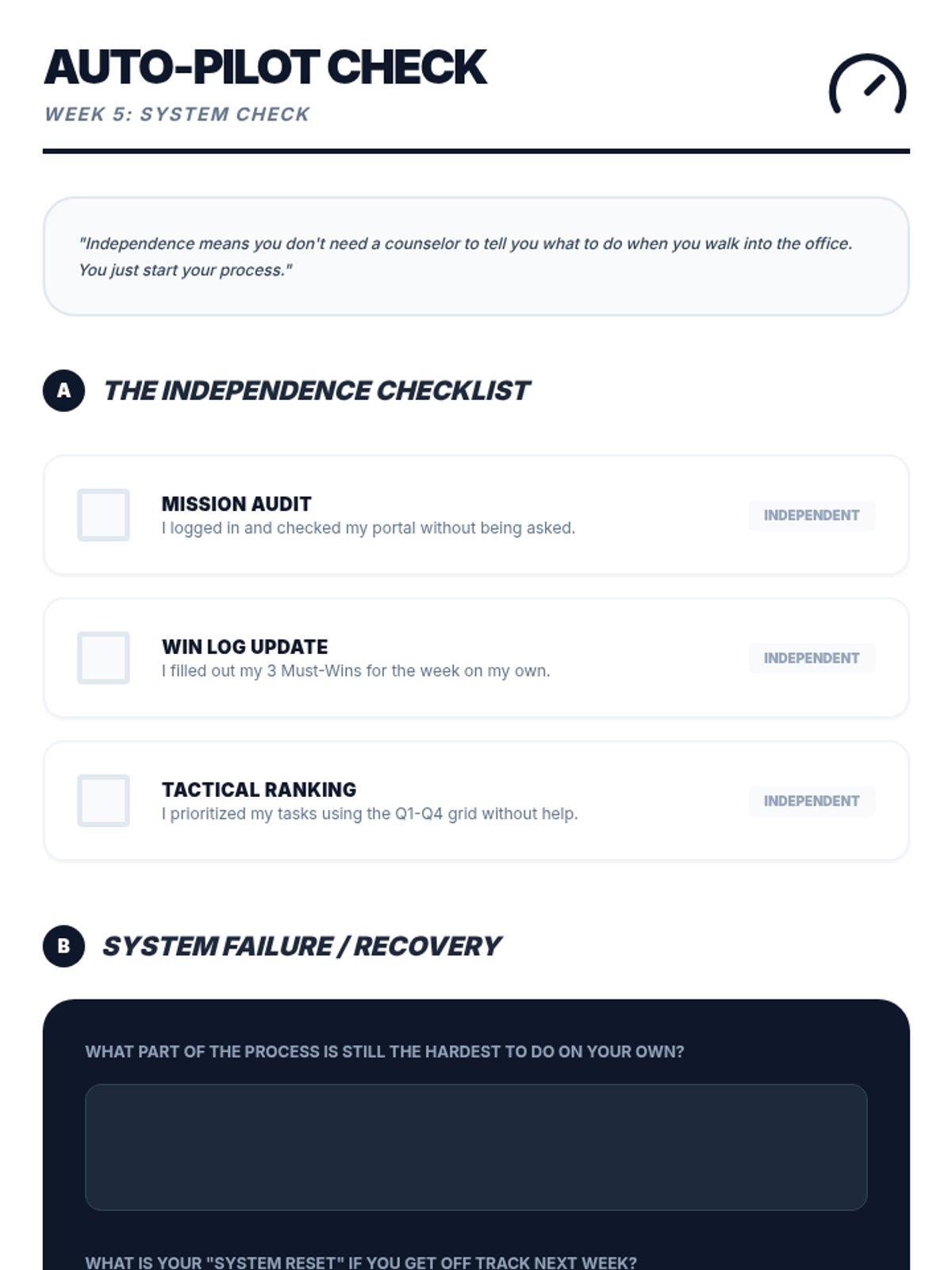
Establishing consistent habits and routines. Students refine their planning process to require less counselor prompting.
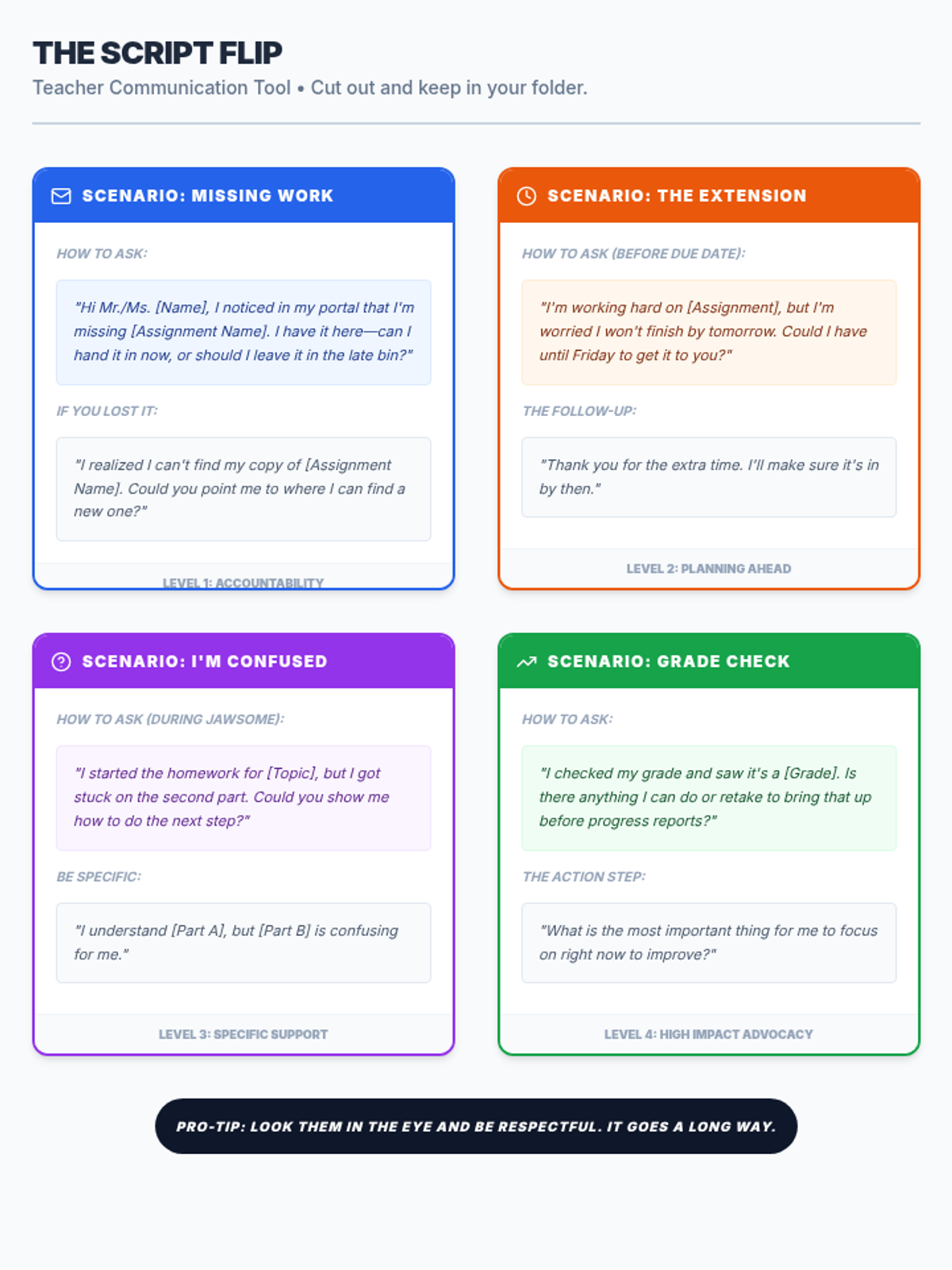
Developing teacher communication skills. Students practice scripts for asking for help, clarifying assignments, and negotiating deadlines.
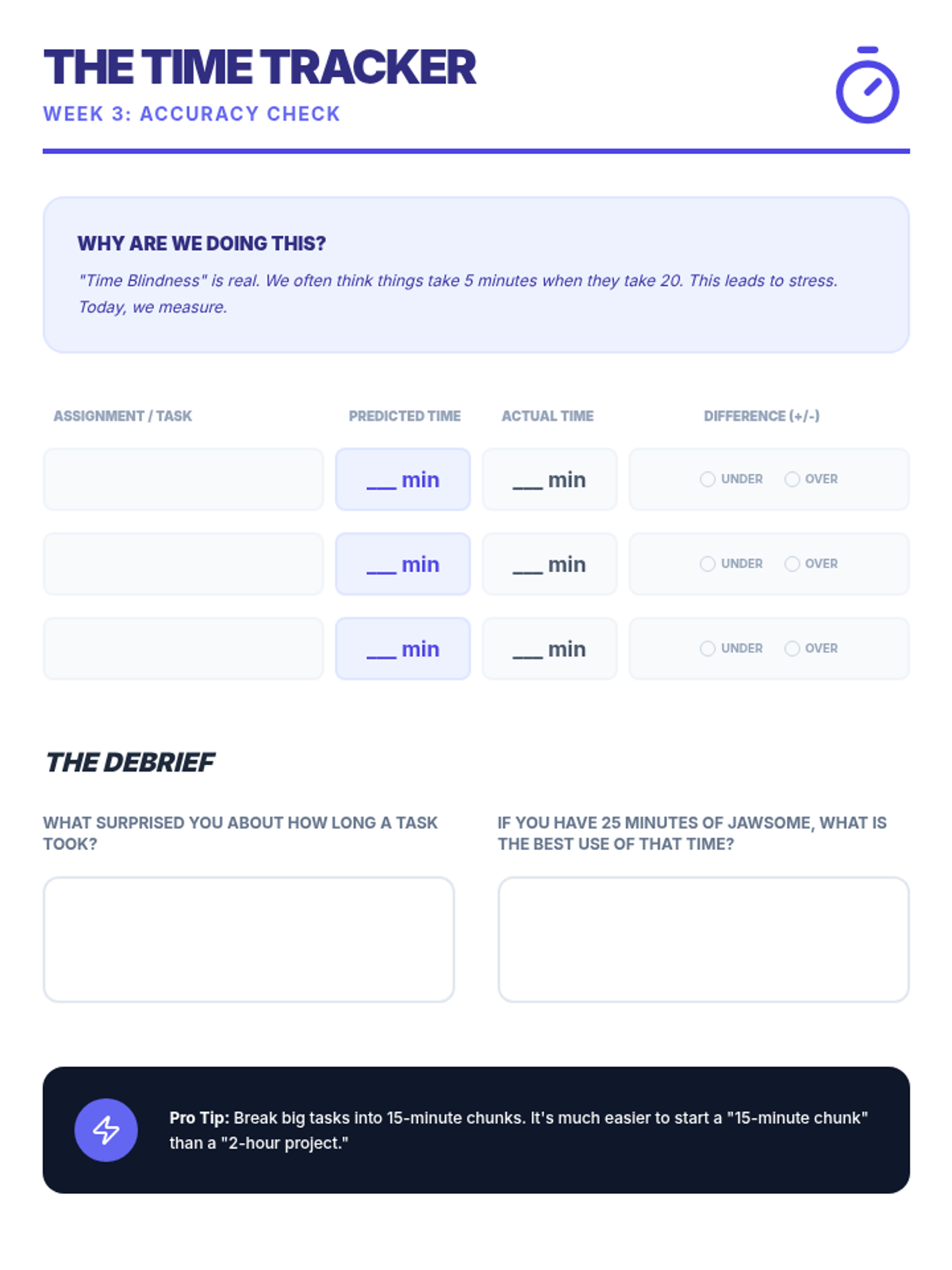
Time estimation and scheduling. Students practice predicting how long tasks take and slotting them into their Jawsome flex time.
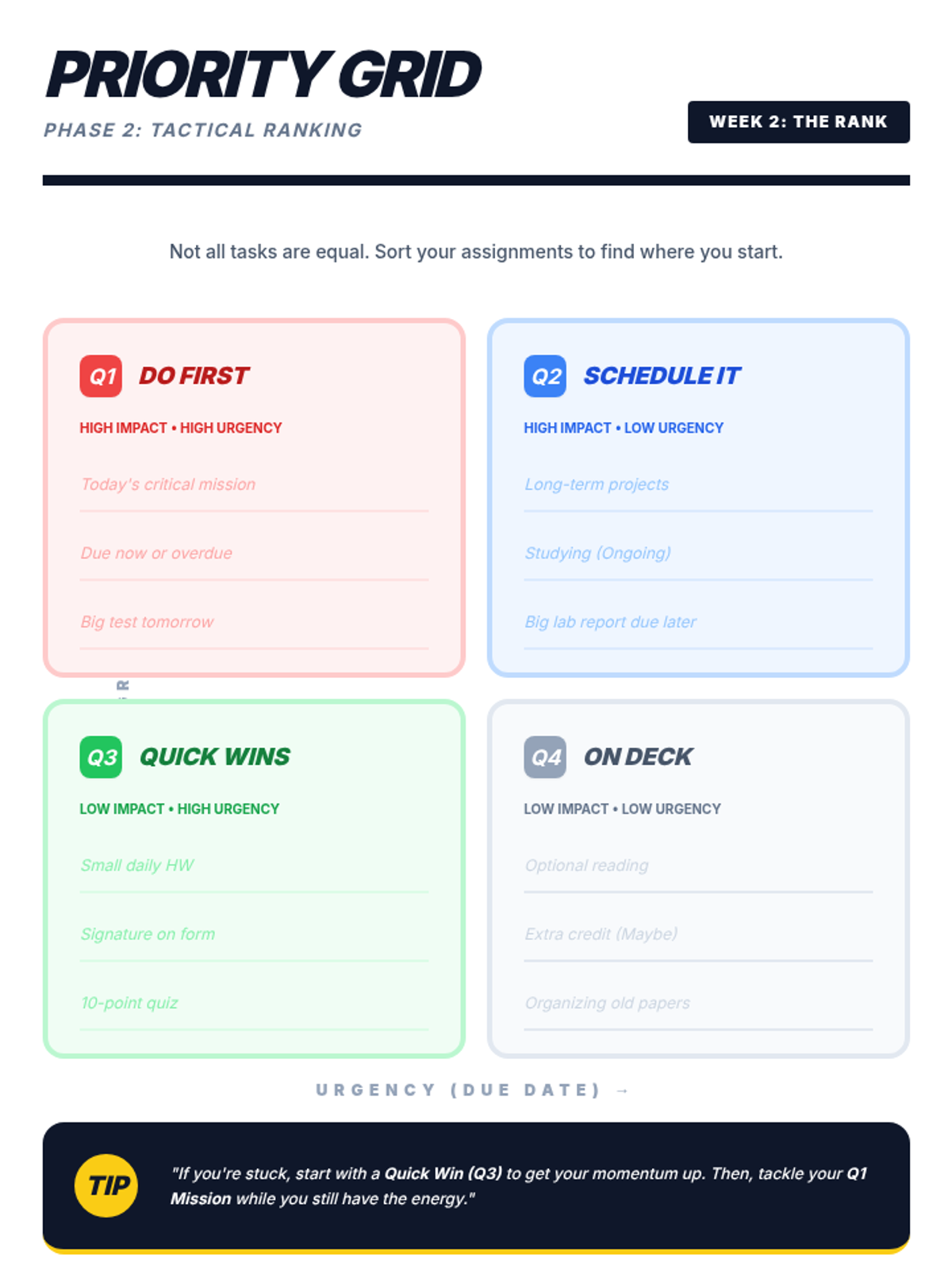
Focus on categorization and prioritization. Students learn to distinguish between urgent tasks and long-term projects using a priority matrix.