An introduction to coin equivalencies and the quarter, focusing on hands-on trading between pennies, nickels, dimes, and quarters.
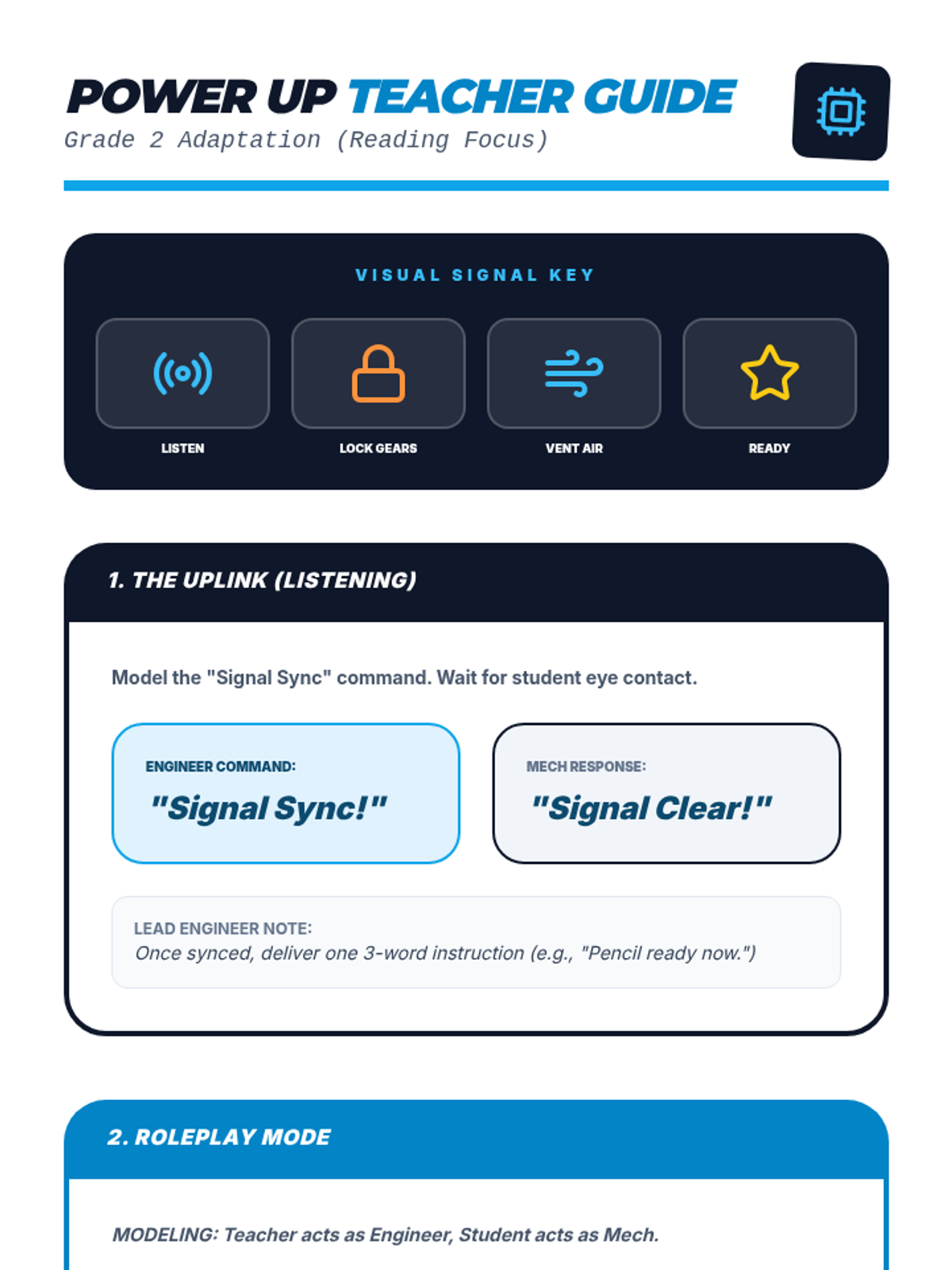
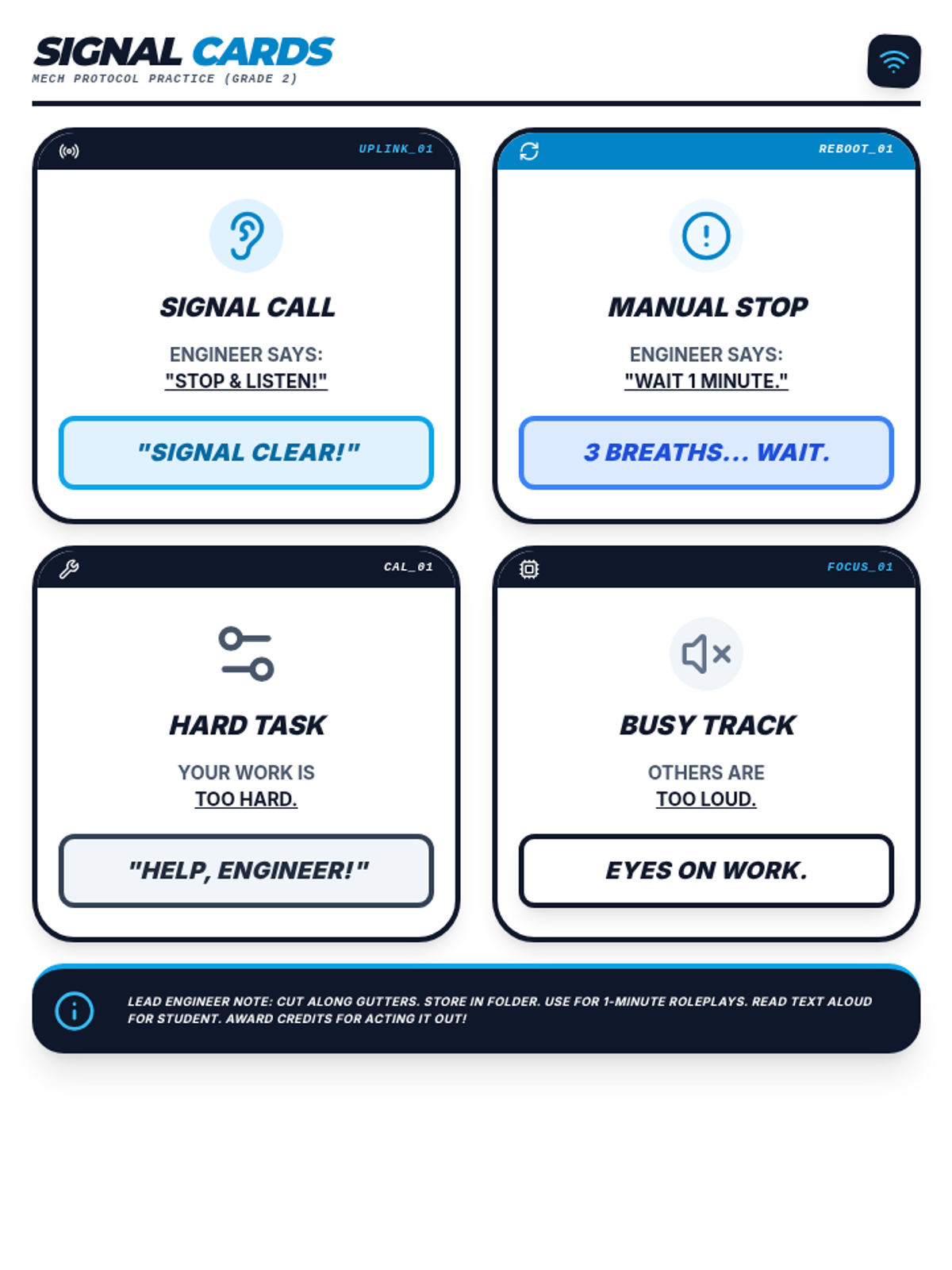
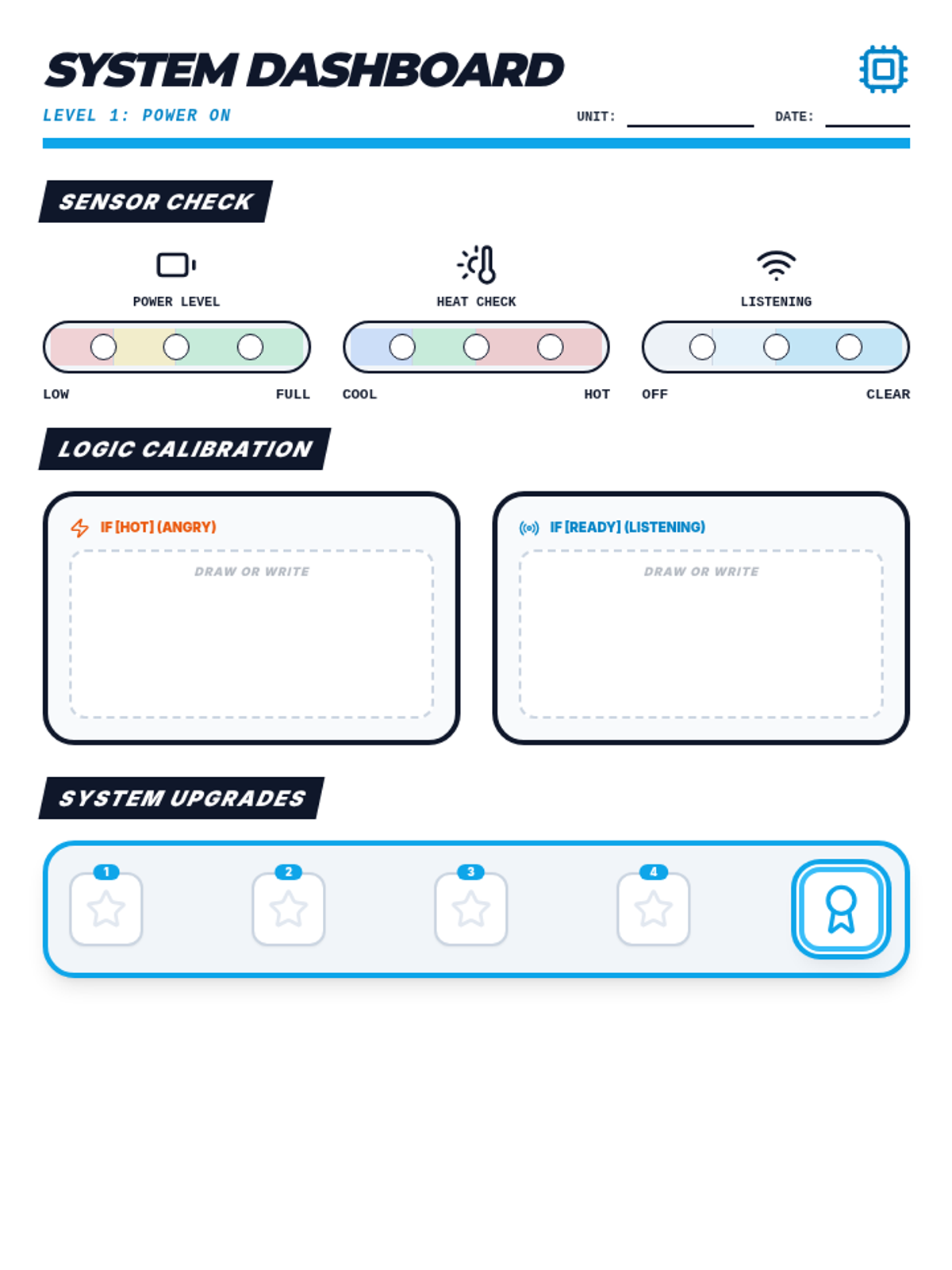
This lesson uses the metaphor of a professional race driver and their pit crew to teach the importance of listening to "radio commands" and handling "mechanical failures" (not getting what you want) with composure.
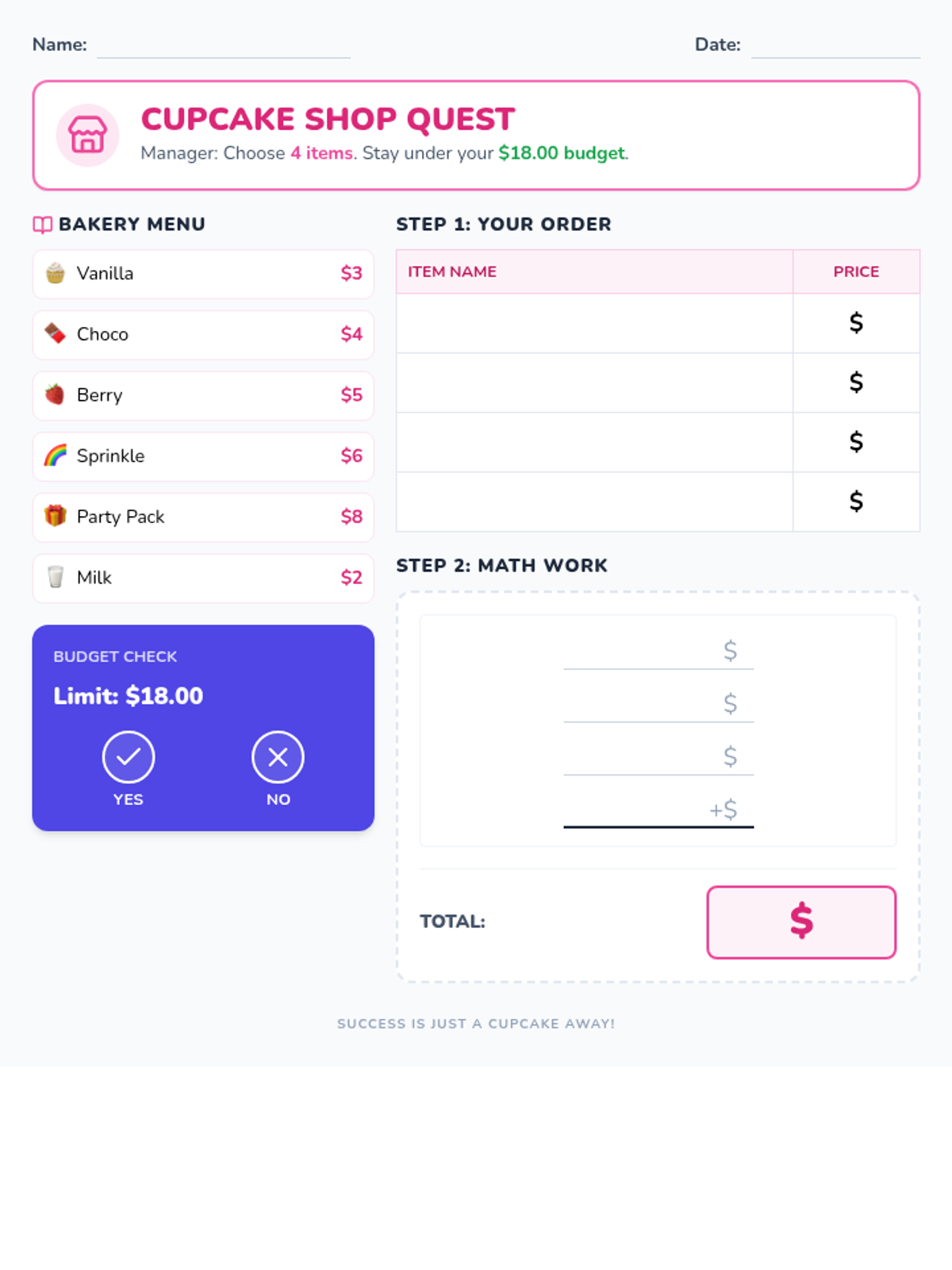
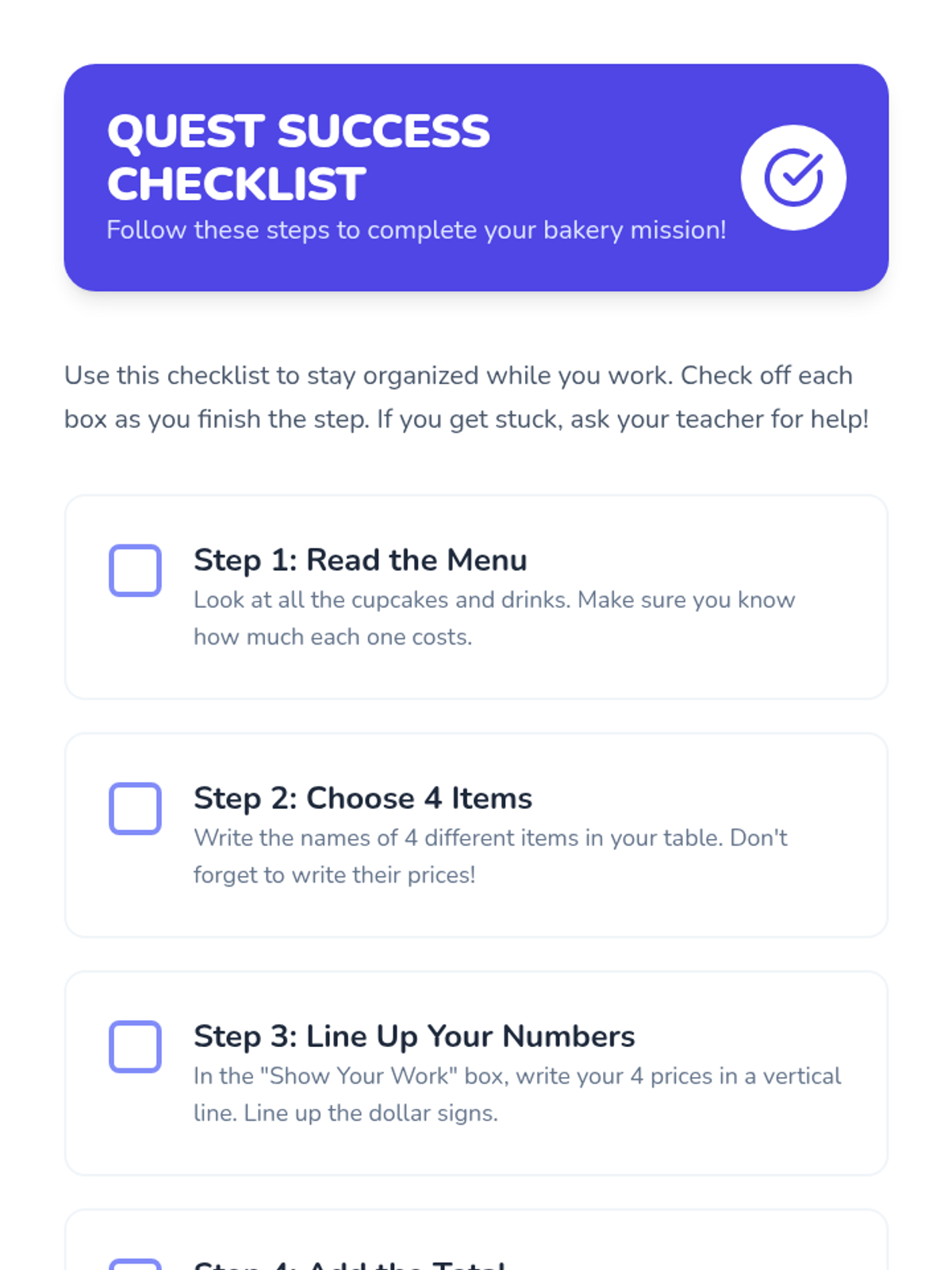
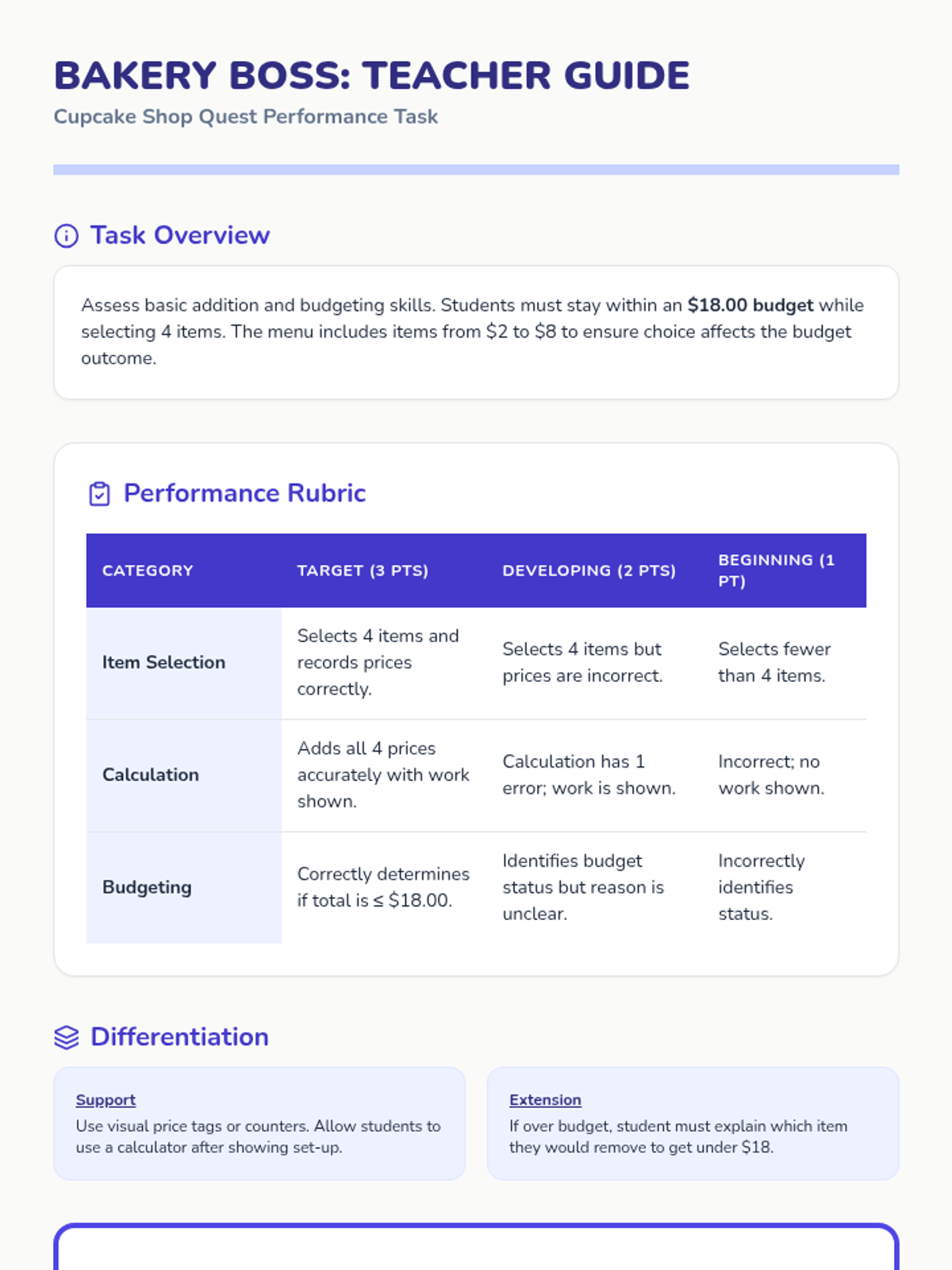
A real-world math performance task where students manage a bakery order, calculate costs, and stay within a budget. Designed with heavy scaffolding and visual support for special education students.
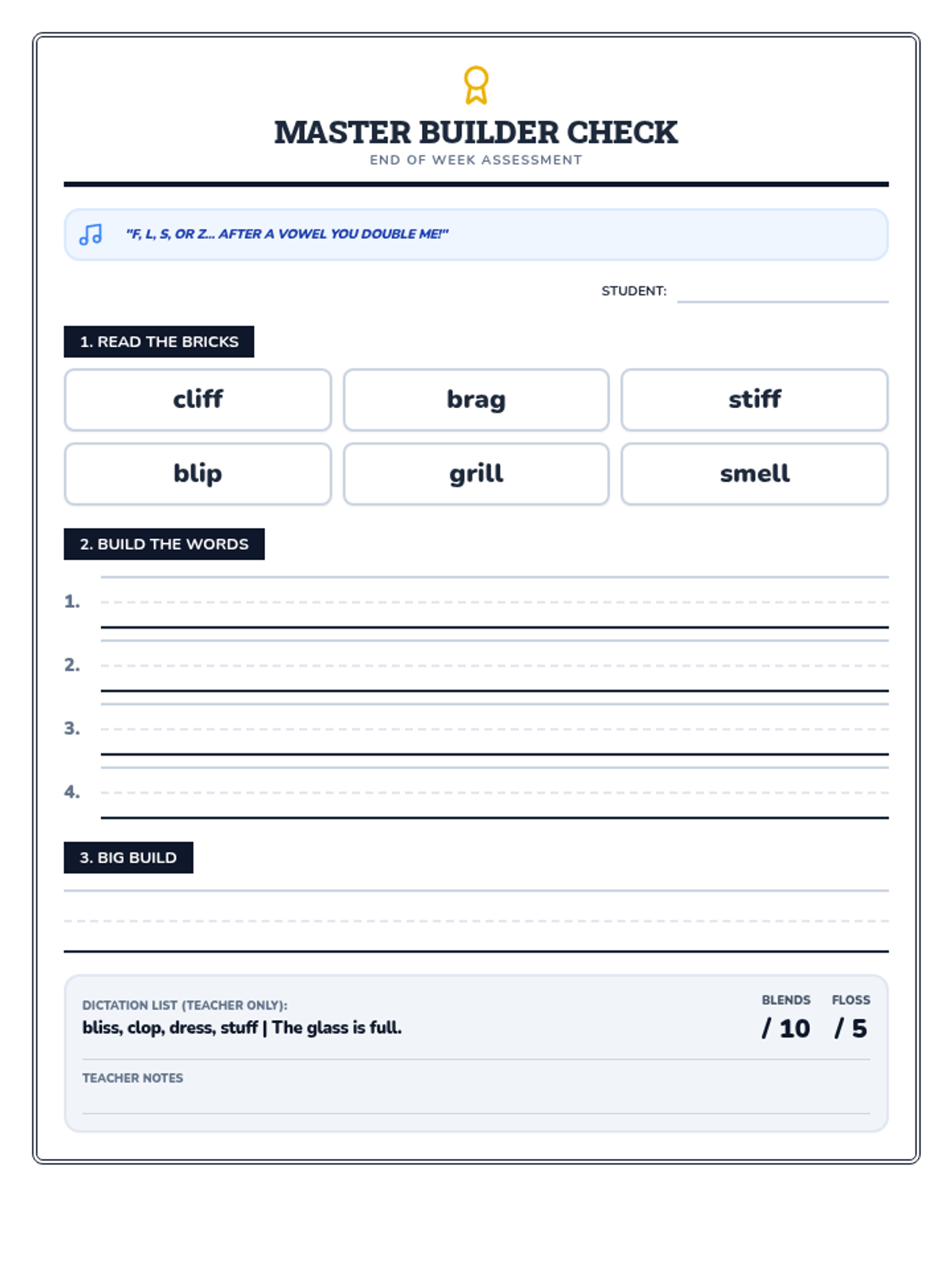
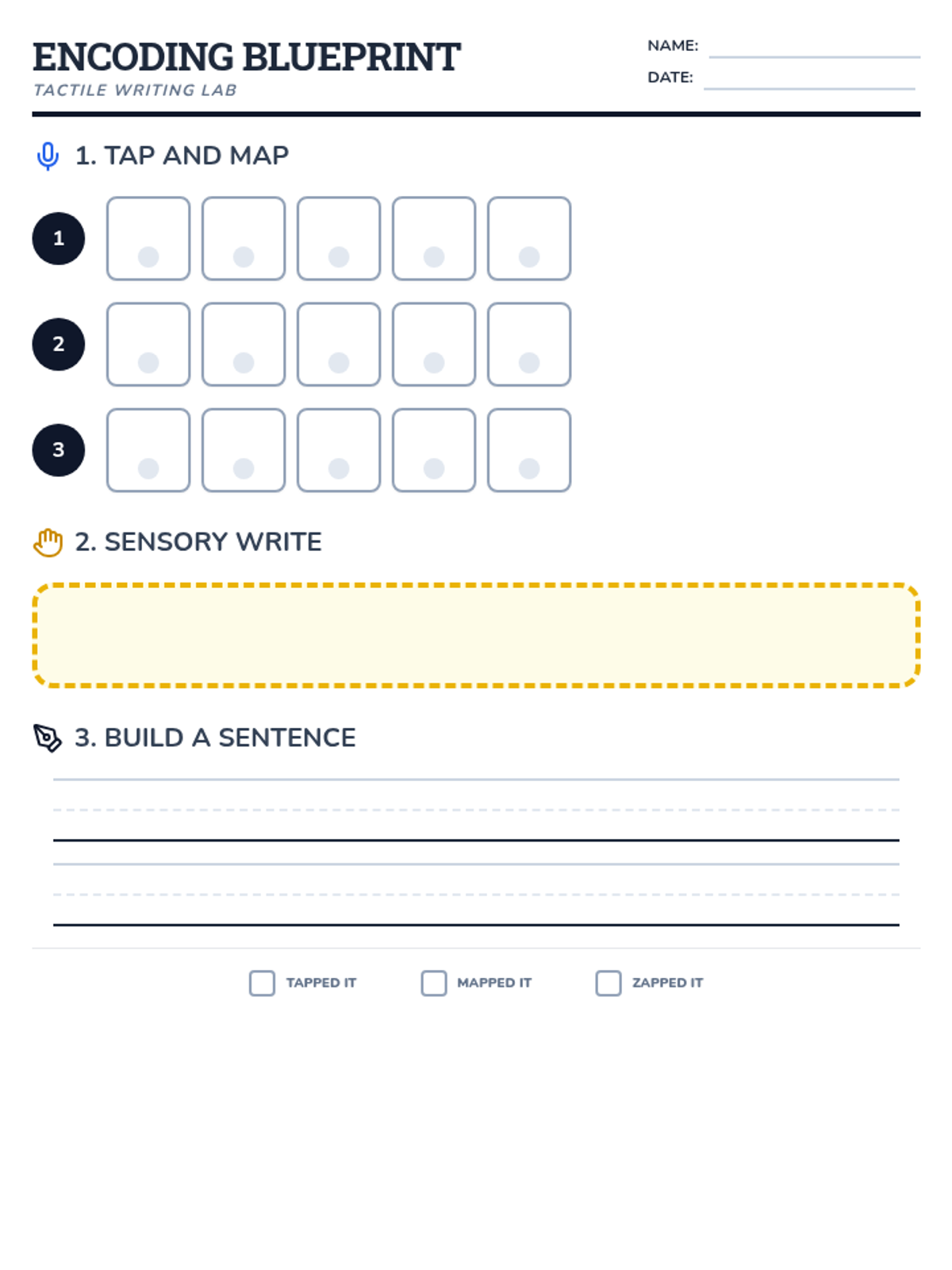
Review and mastery through a sensory word hunt and final dictation check. Focuses on encoding accuracy and automaticity.
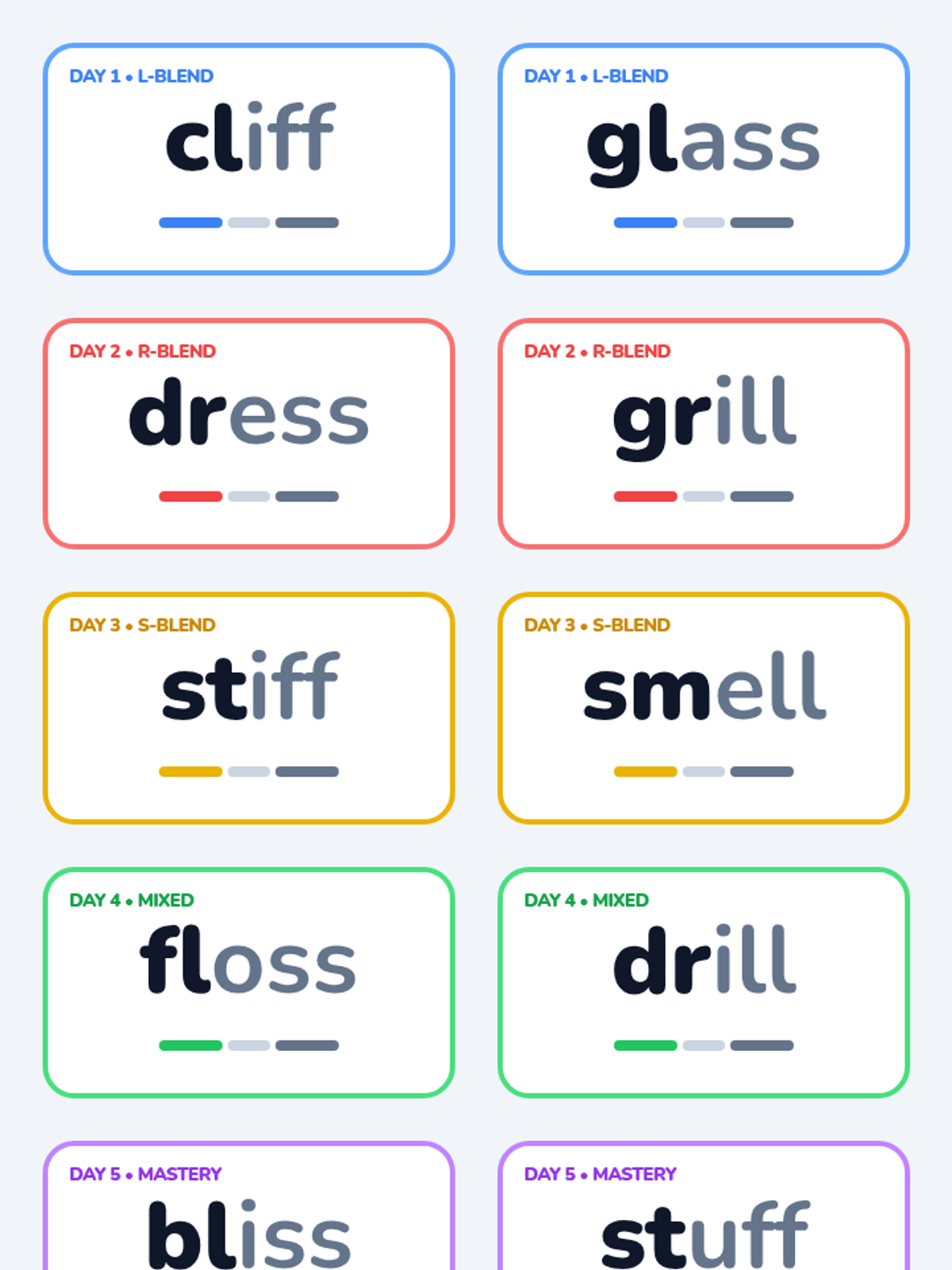
Mixed initial blends and FLOSS rule words. Students practice discriminating between different blend families.
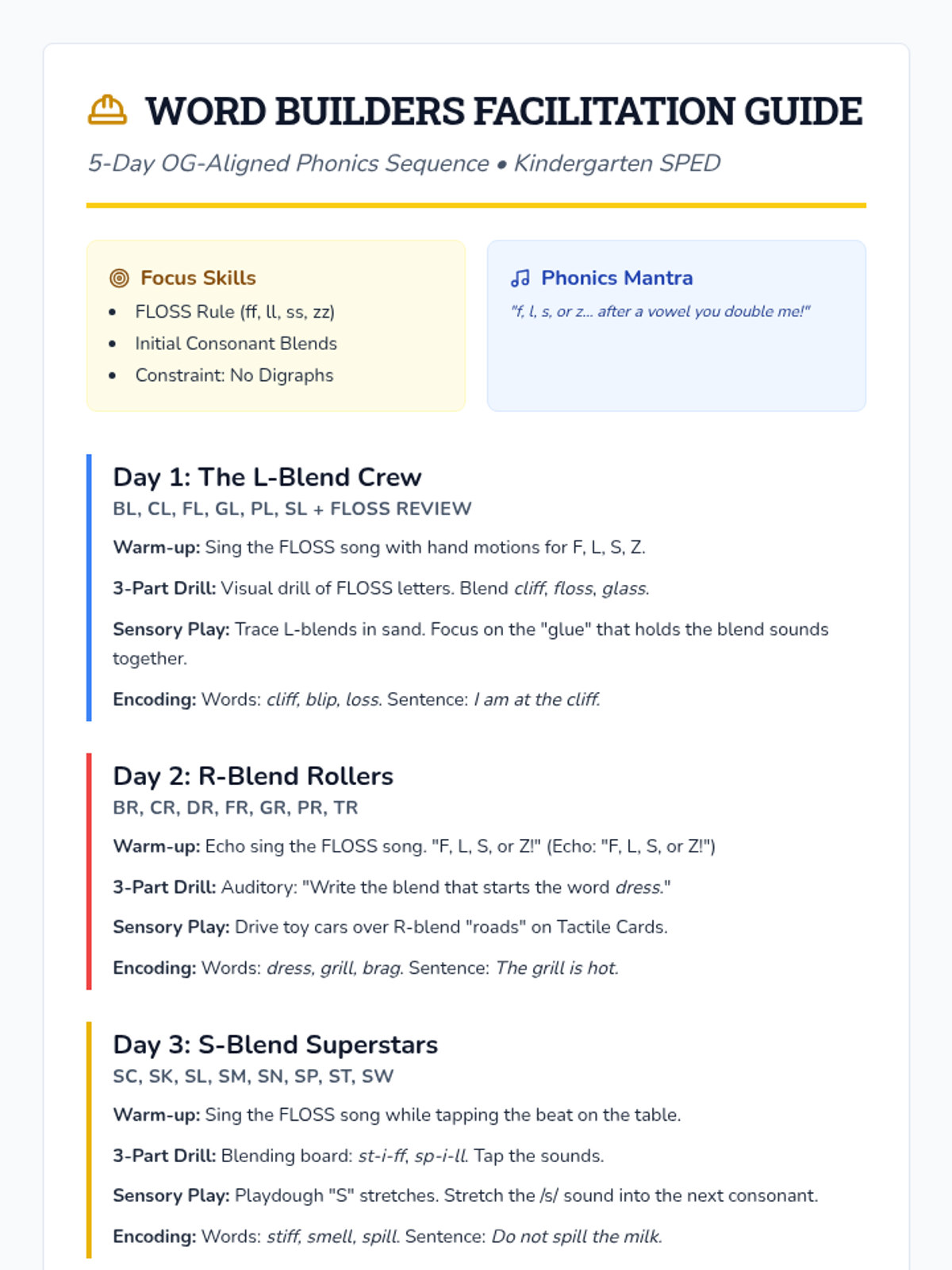
Introduction to S-blends (sc, sk, sl, sm, sn, sp, st, sw) using sensory building blocks and sky writing.
Introduction to R-blends (br, cr, dr, fr, gr, pr, tr) with a focus on auditory discrimination and encoding.
Introduction to L-blends (bl, cl, fl, gl, pl, sl) combined with FLOSS rule review (ff, ll, ss, zz). Includes visual drills and tactile sand writing.
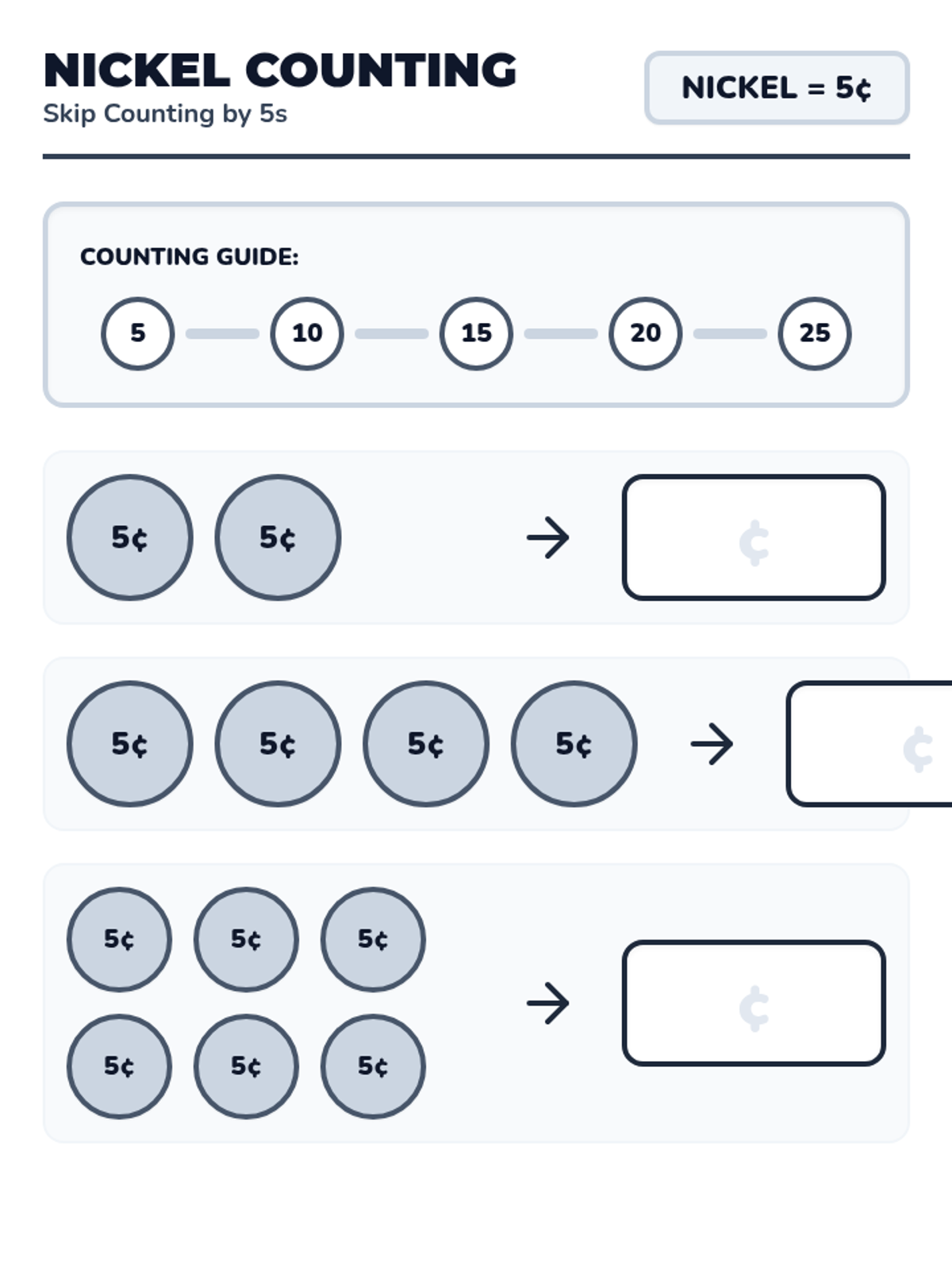
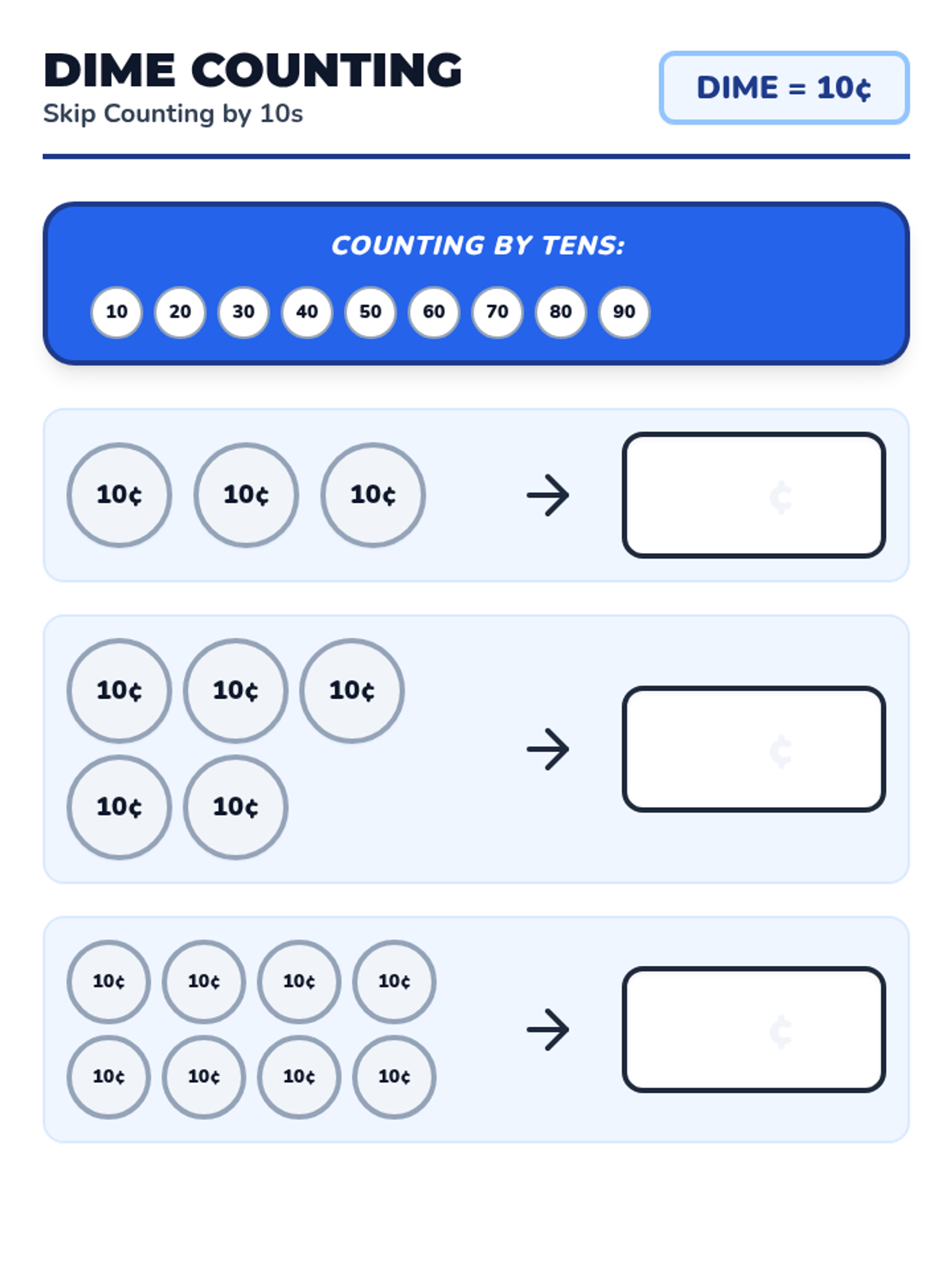
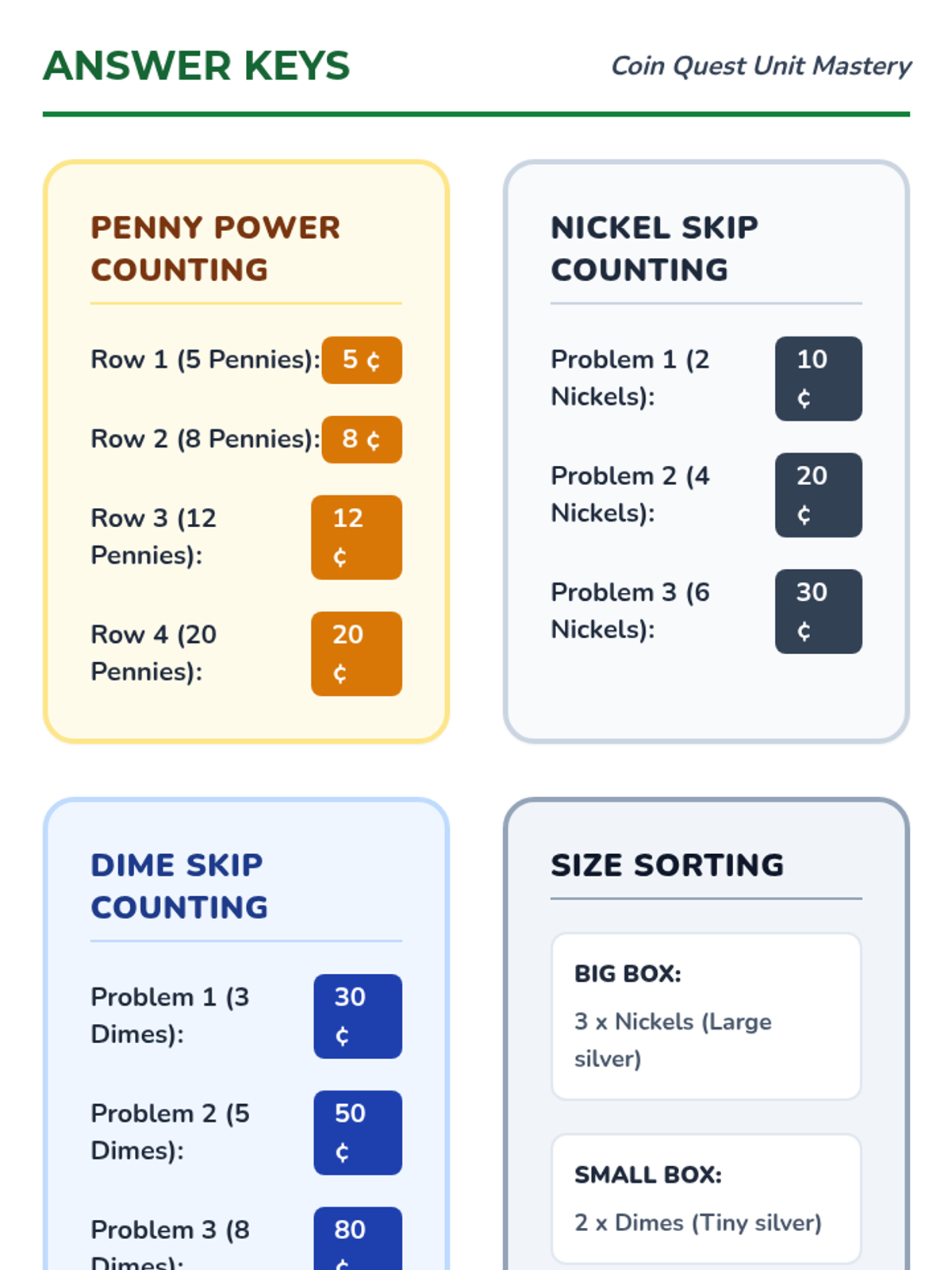
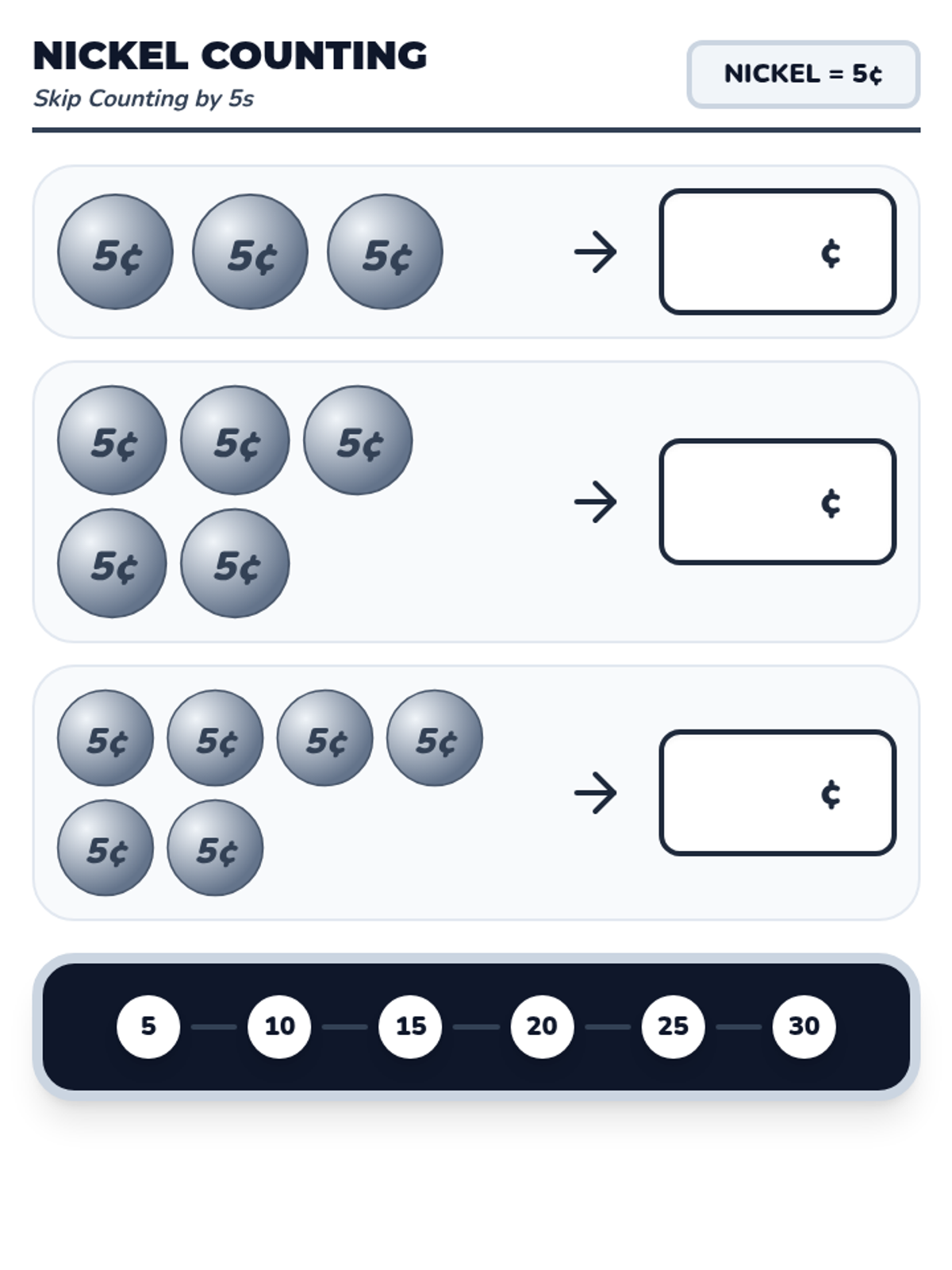
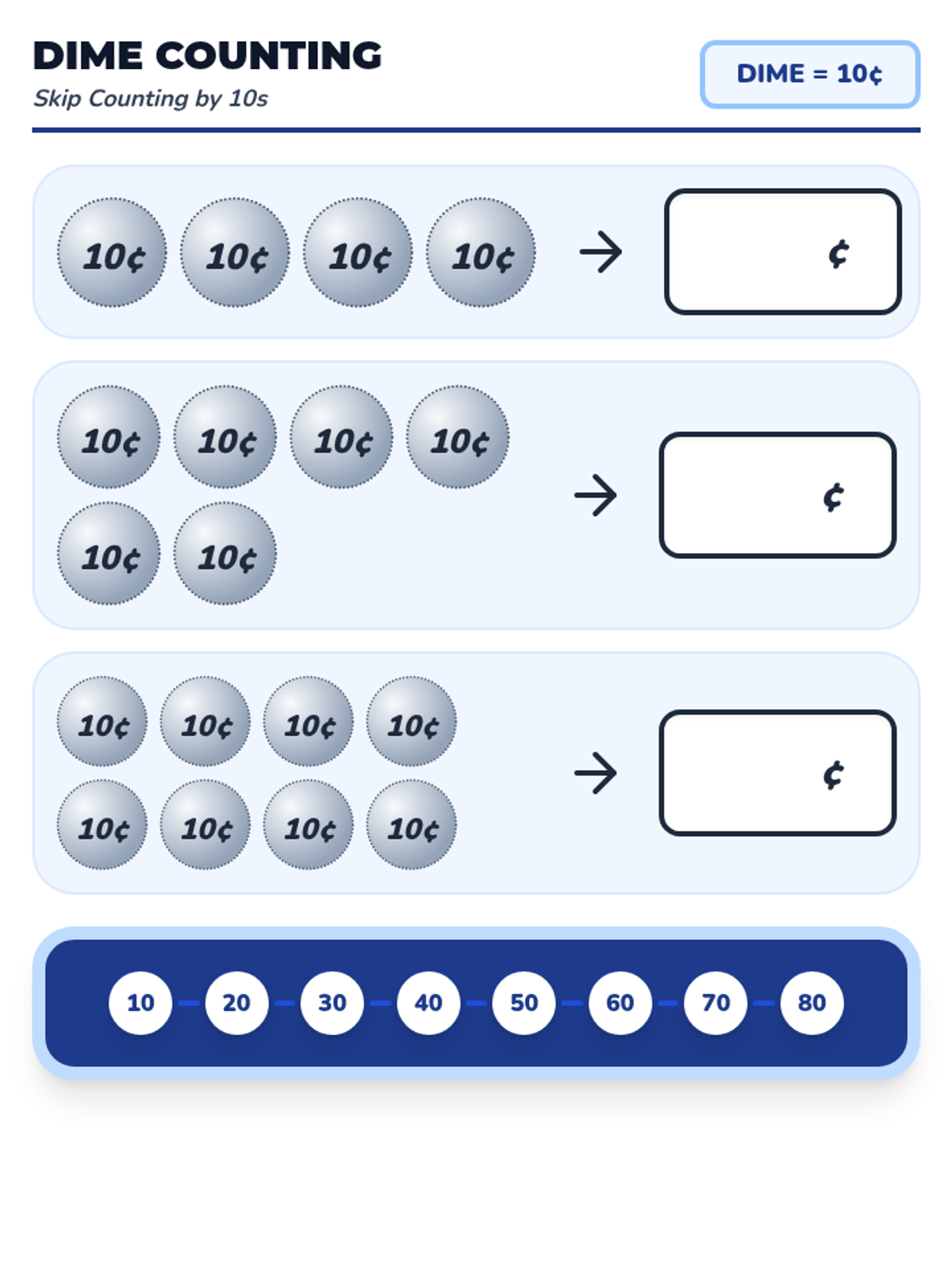
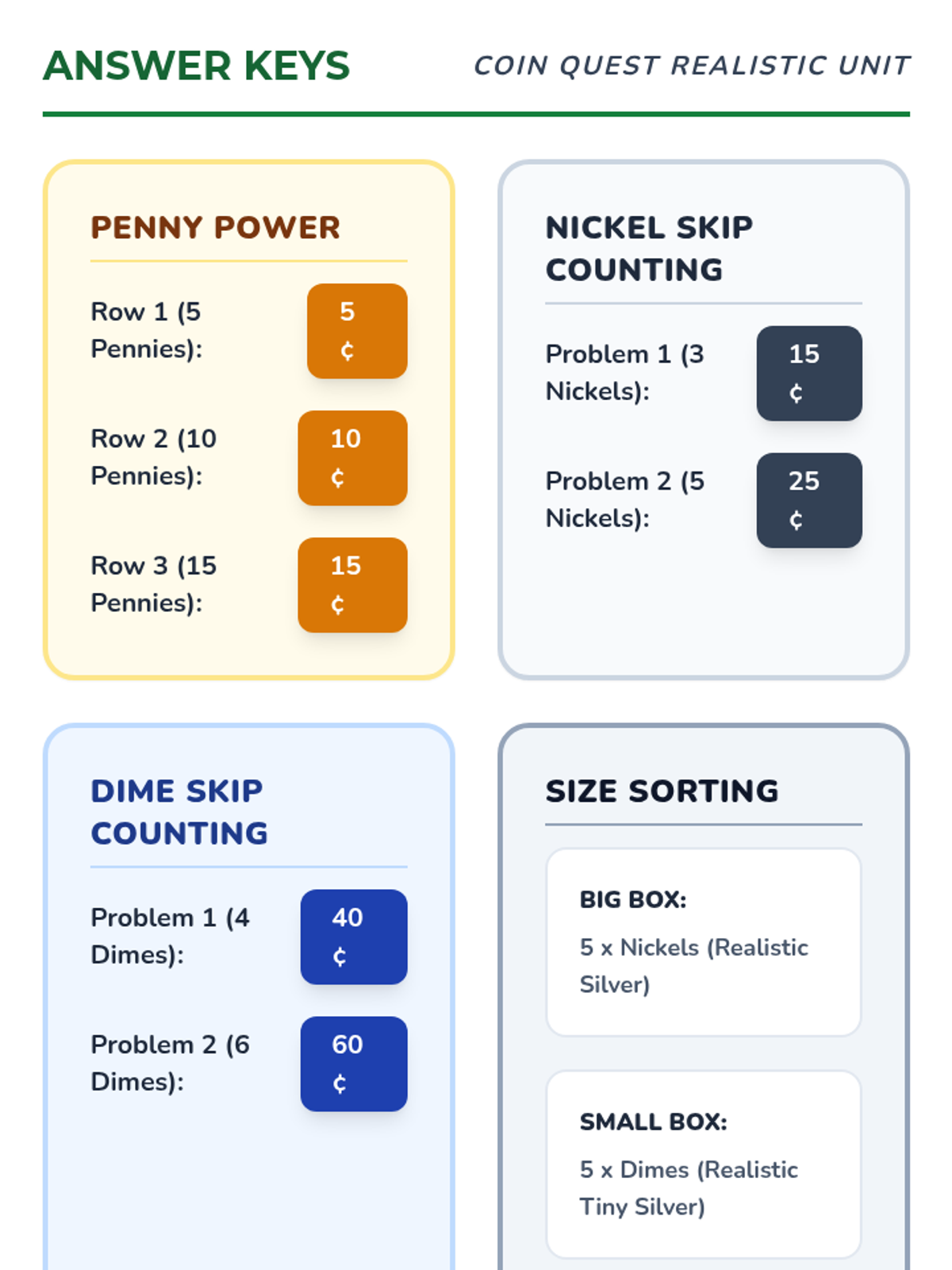
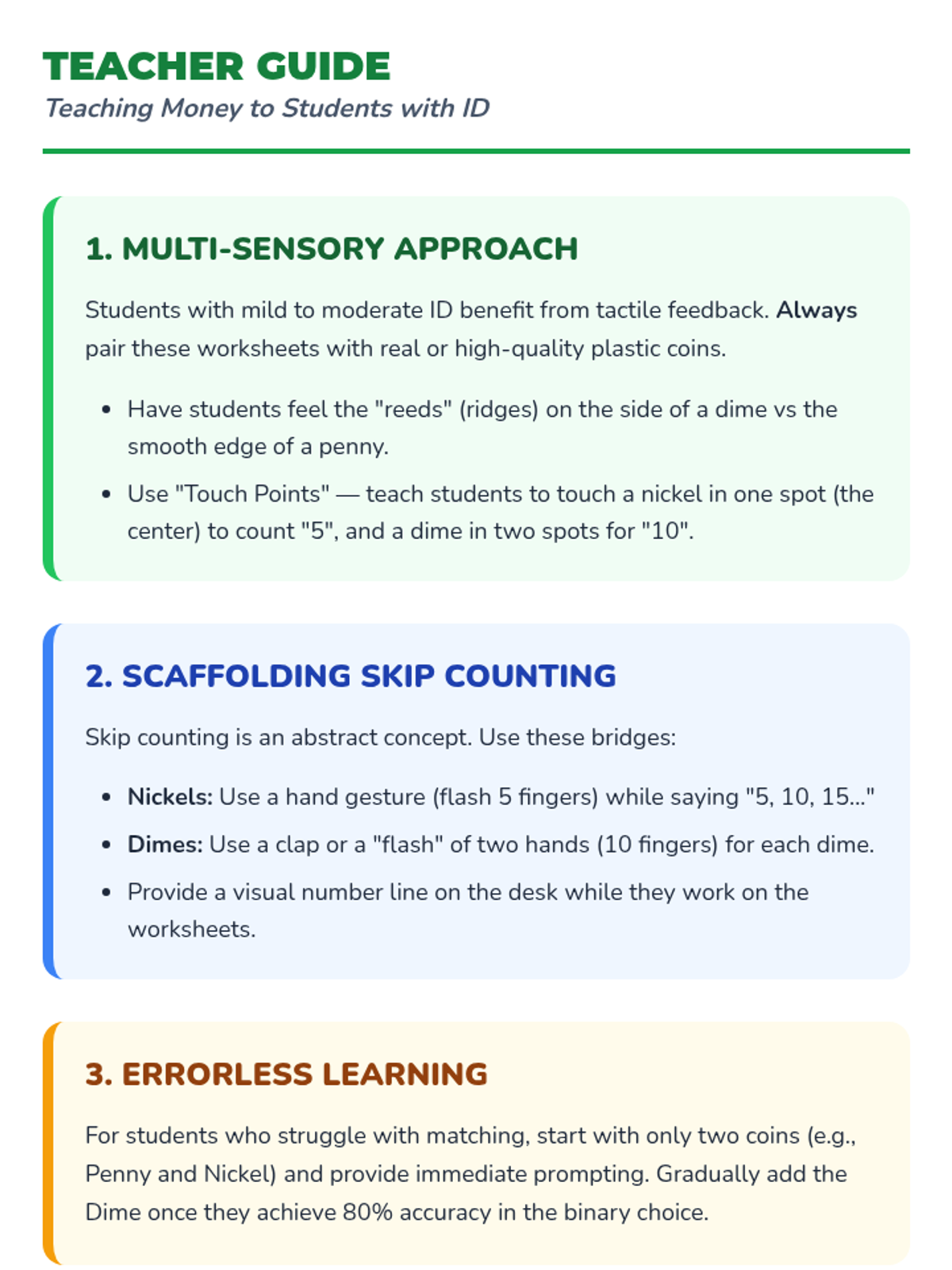
Introduction to skip counting by 5s and 10s using nickels and dimes with visual number lines and touch points.
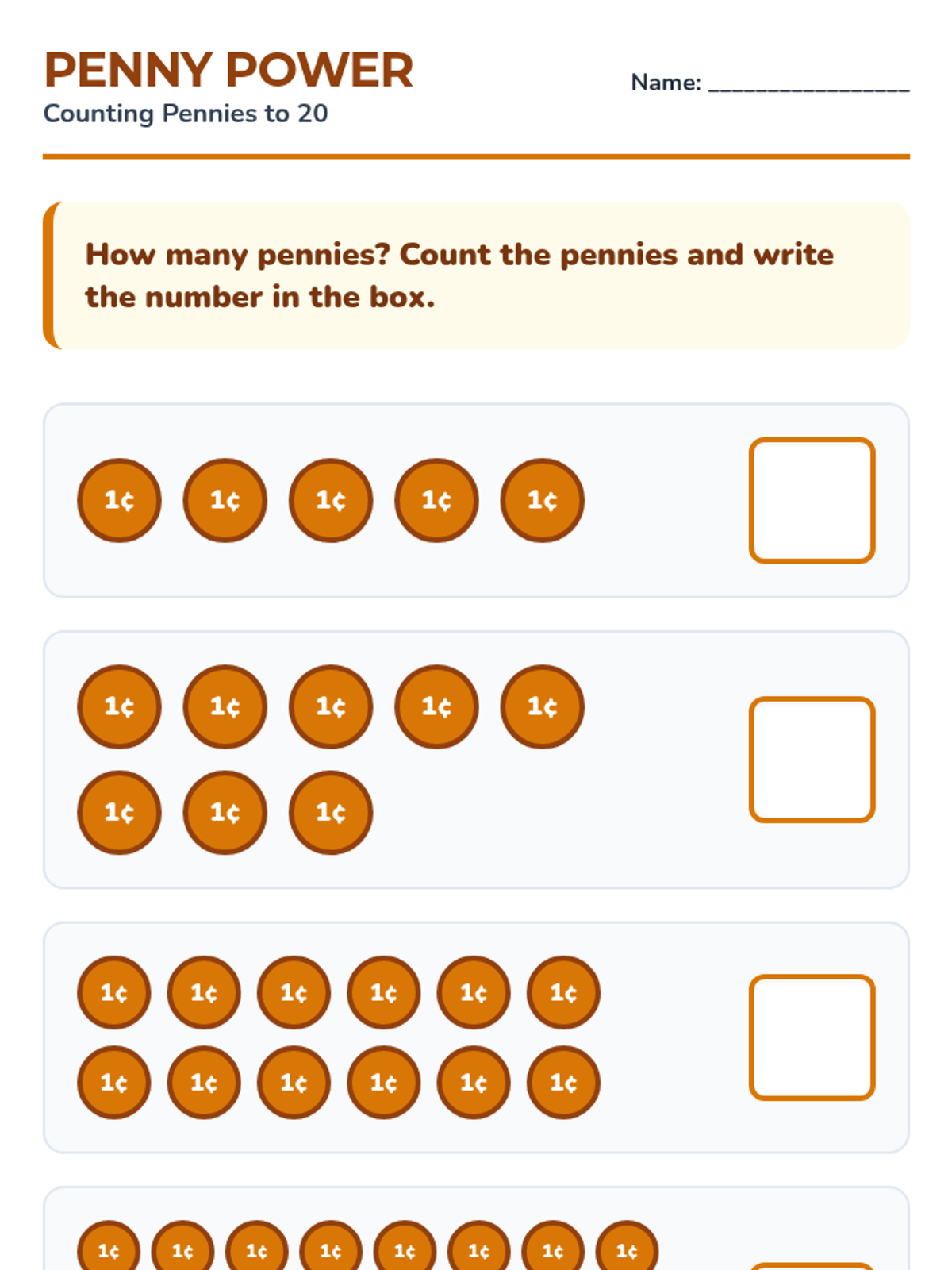
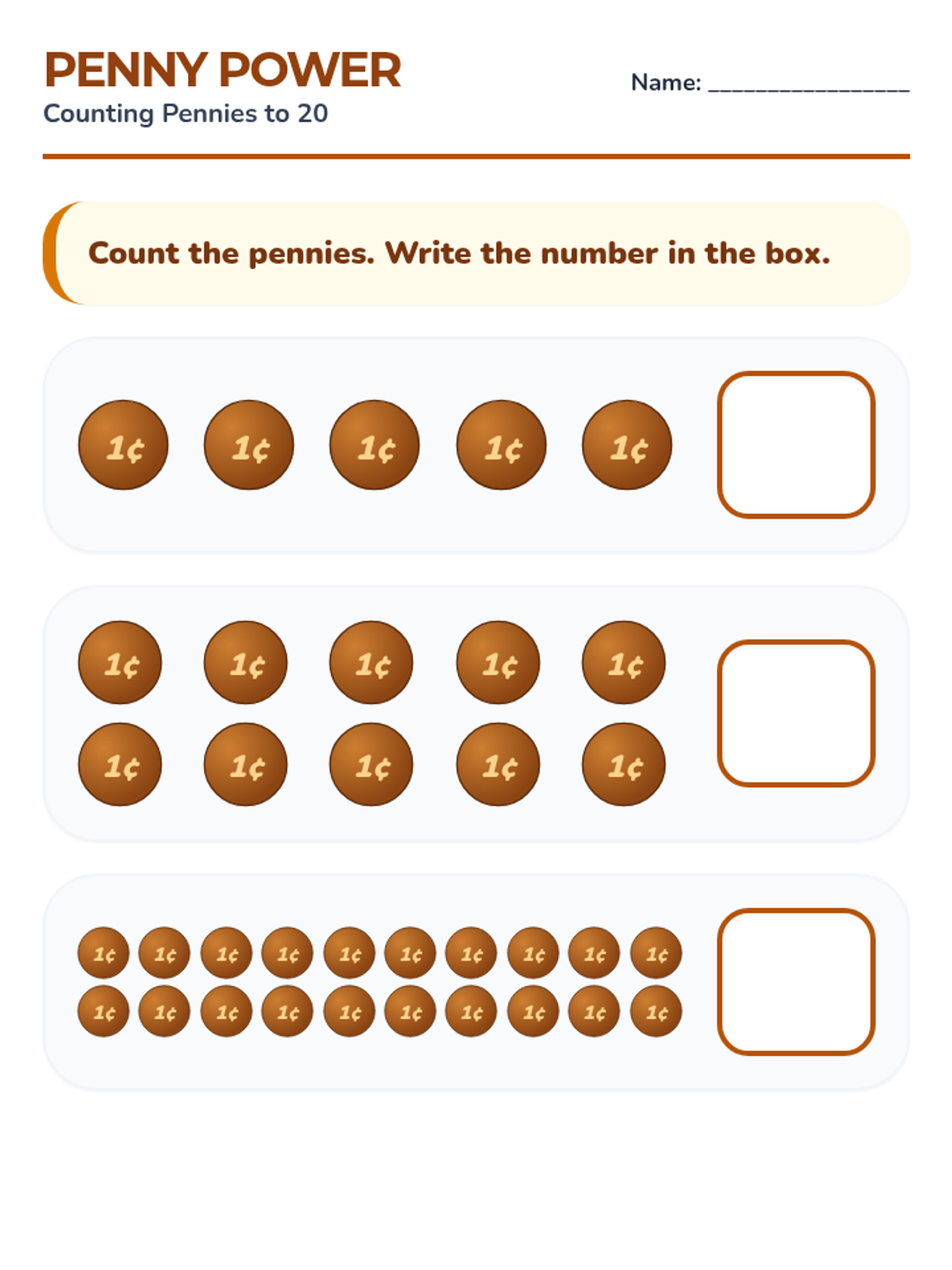
Focus on counting pennies up to 20 using 1:1 correspondence and visual supports.
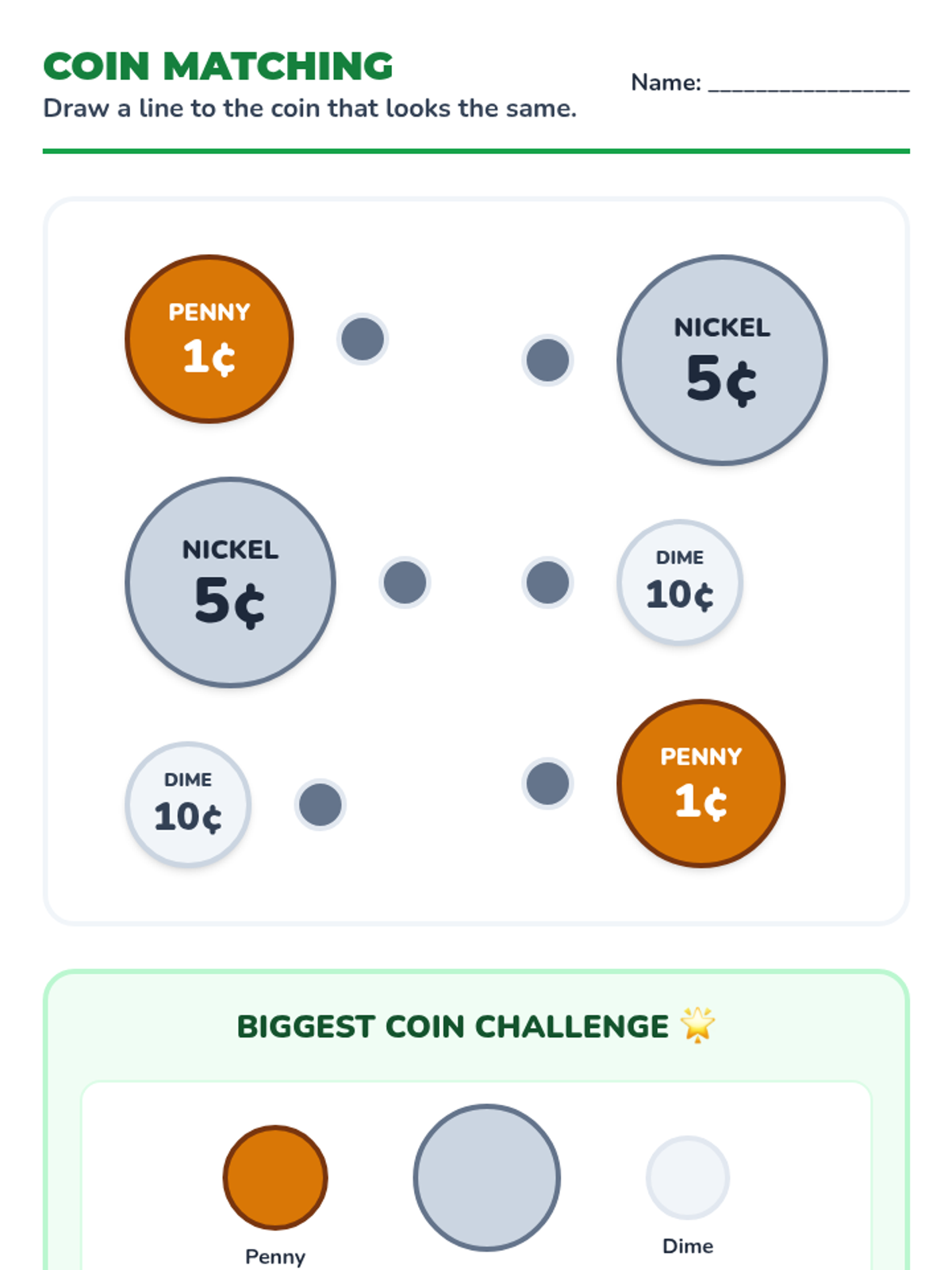
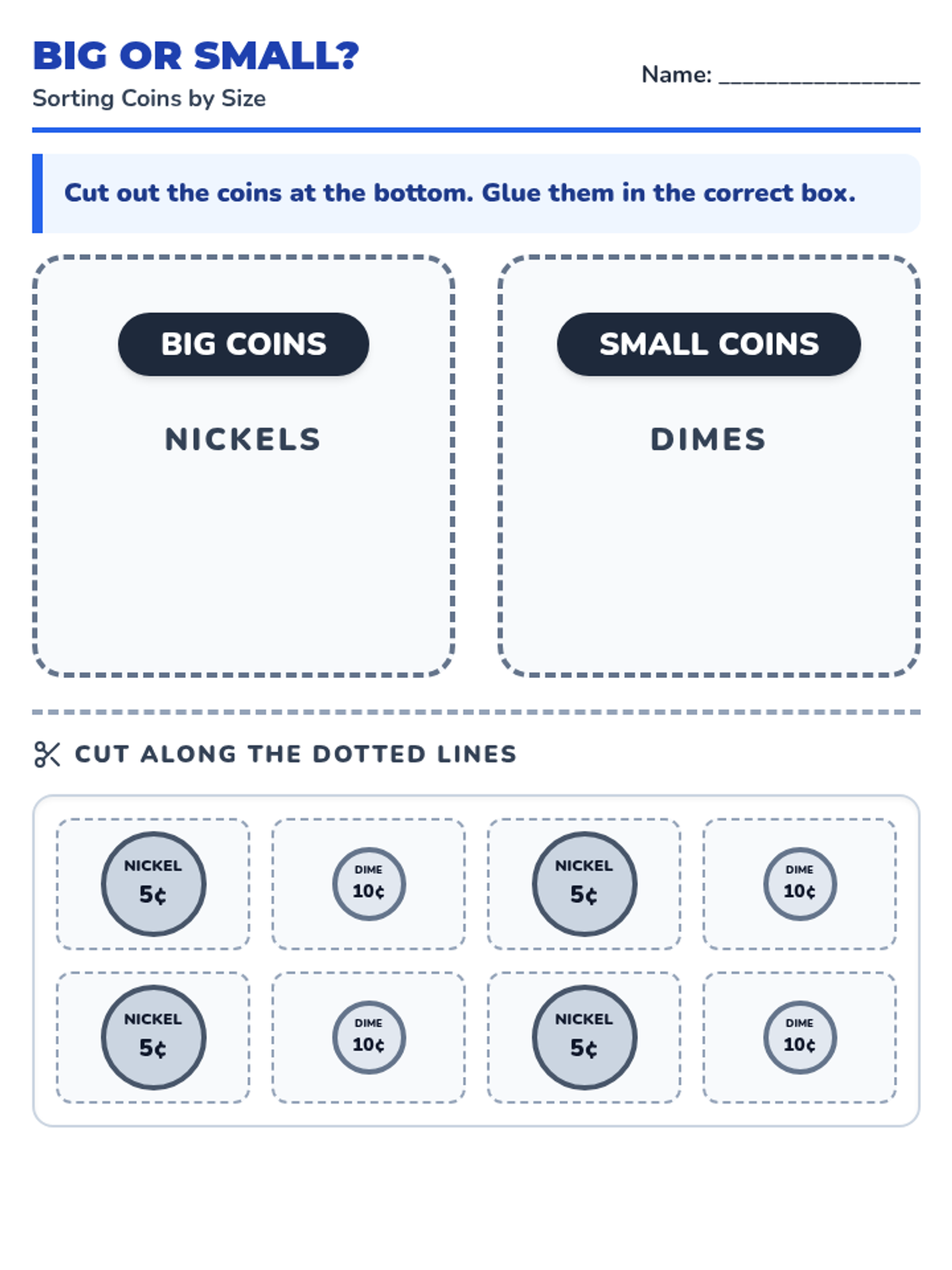
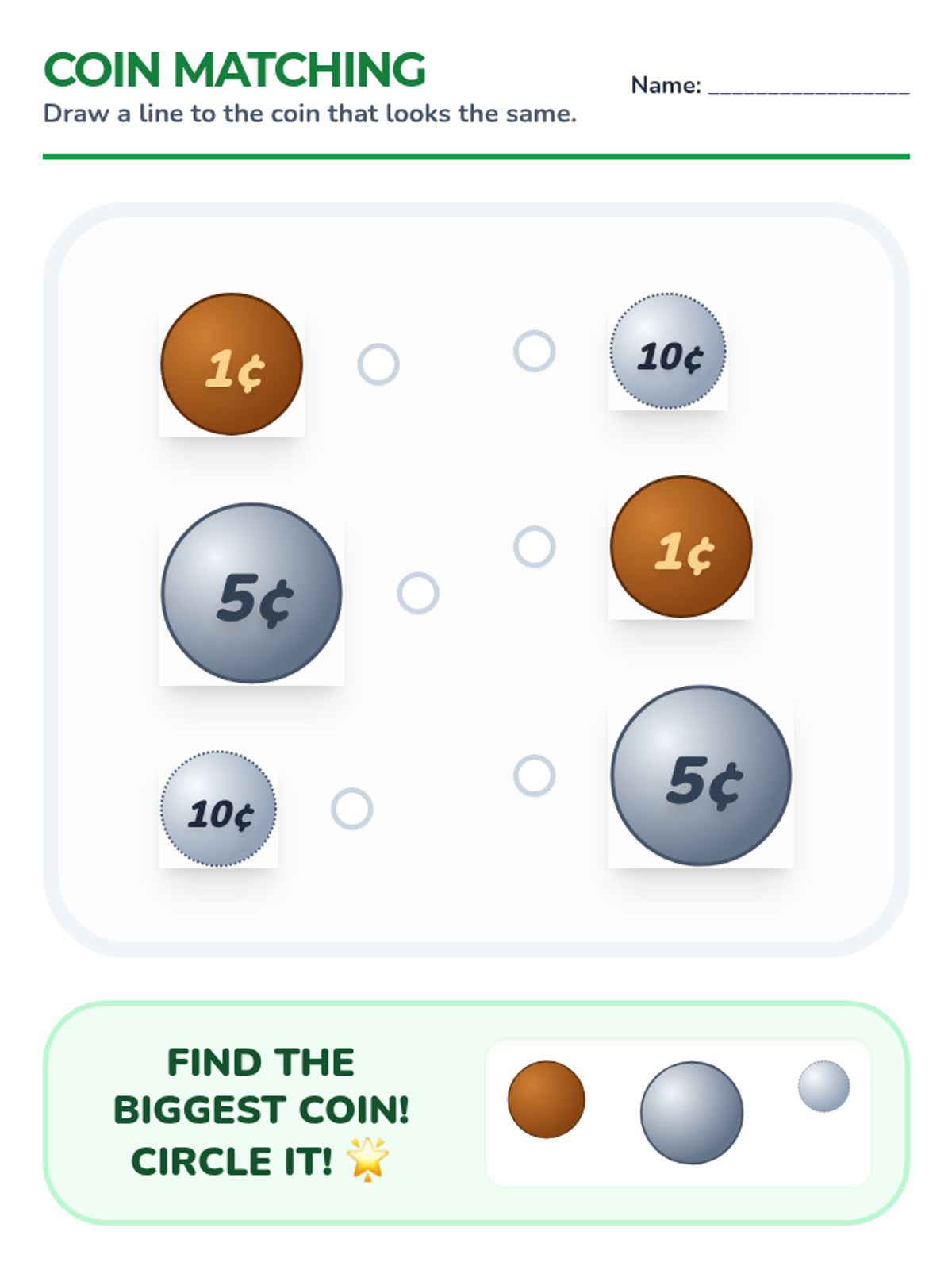
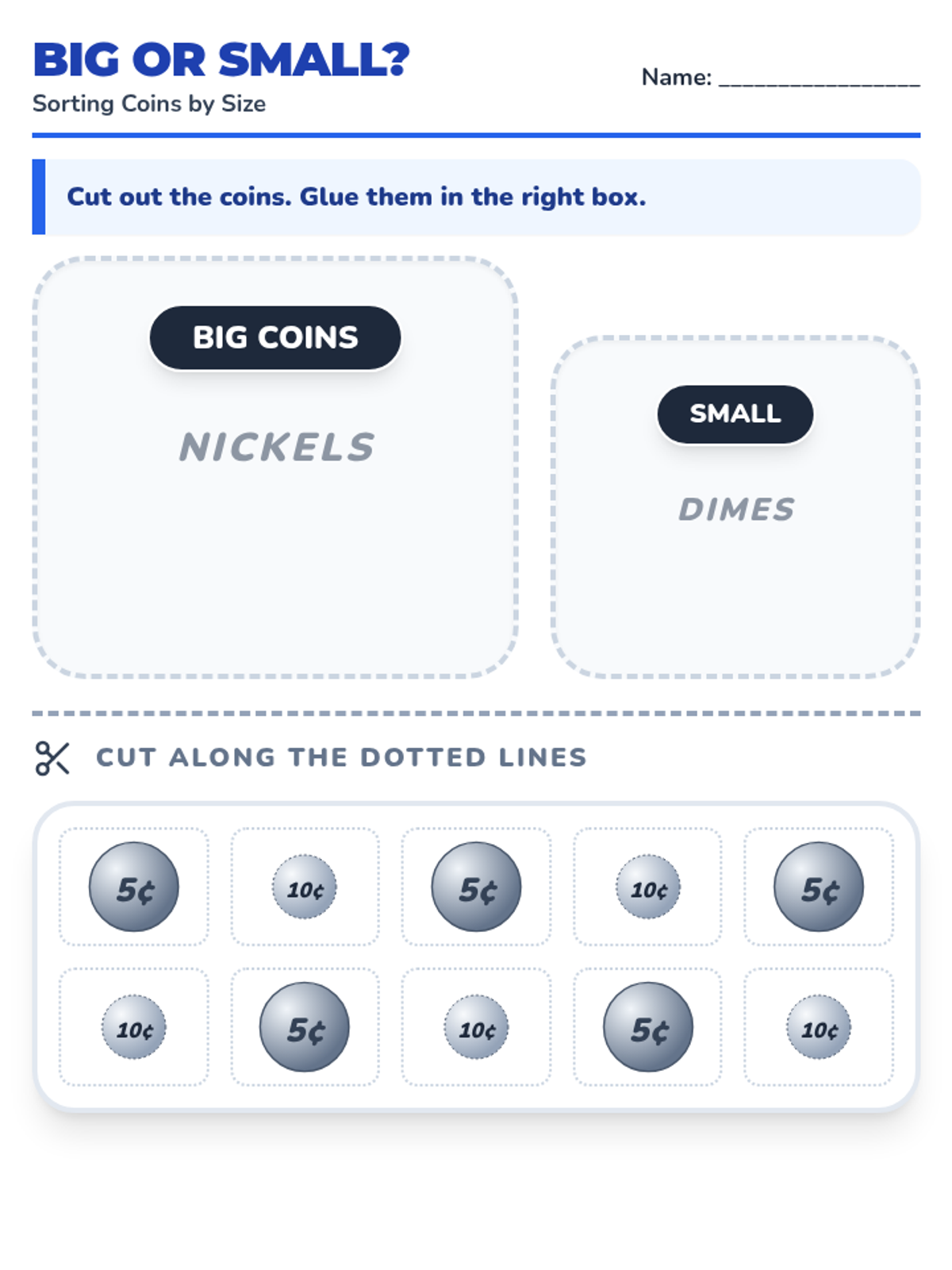
Introduction to identifying pennies, nickels, and dimes through visual matching and physical size comparison.
Review of the week's concepts and a formal assessment of decoding and encoding skills.
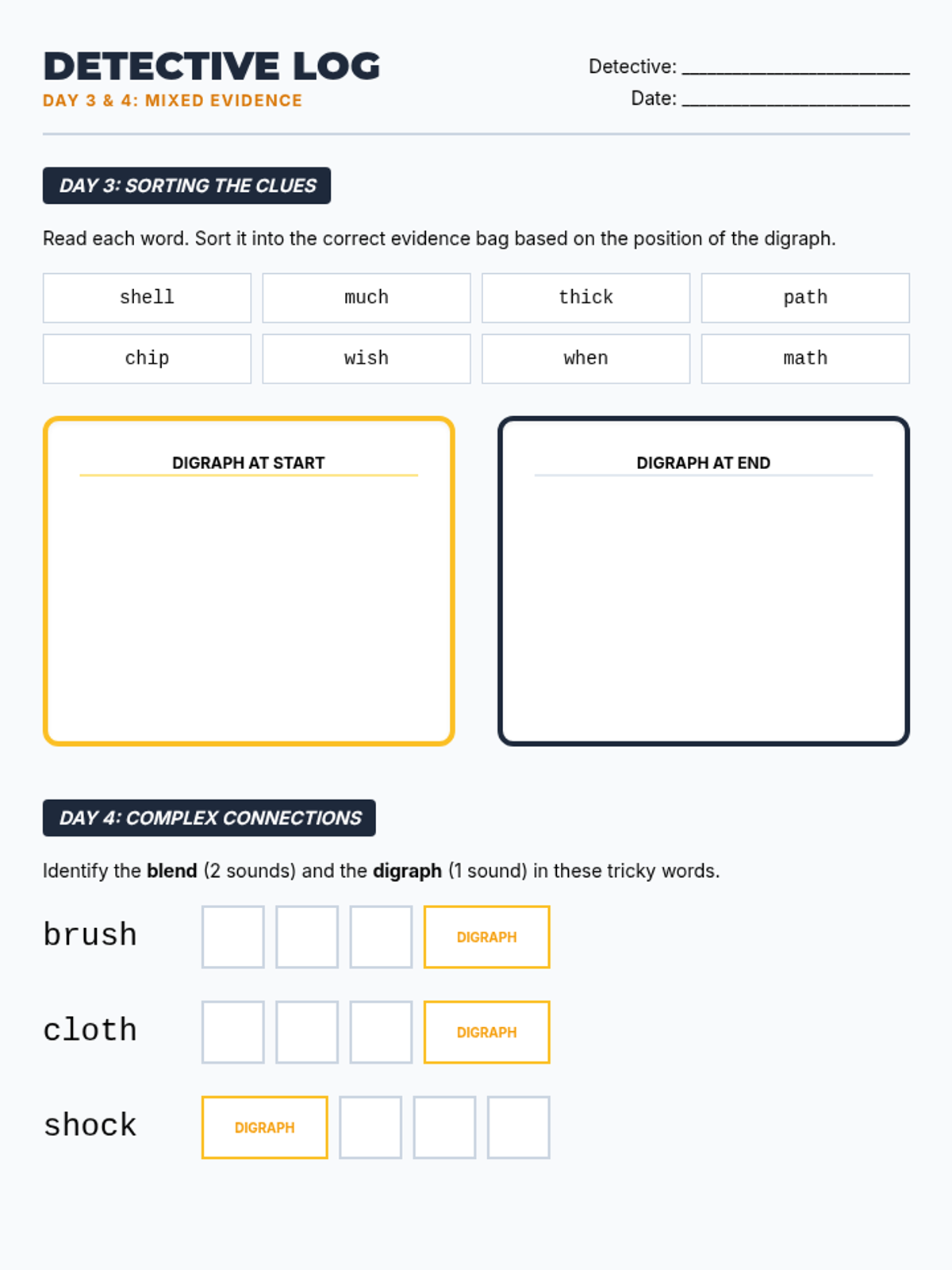
Integrating consonant blends with digraphs (e.g., brush, cloth). Focused on multi-sound blending and segmenting.
Practice with mixed CCVC and CVCC patterns. Students discriminate between sounds at the beginning and end of words.
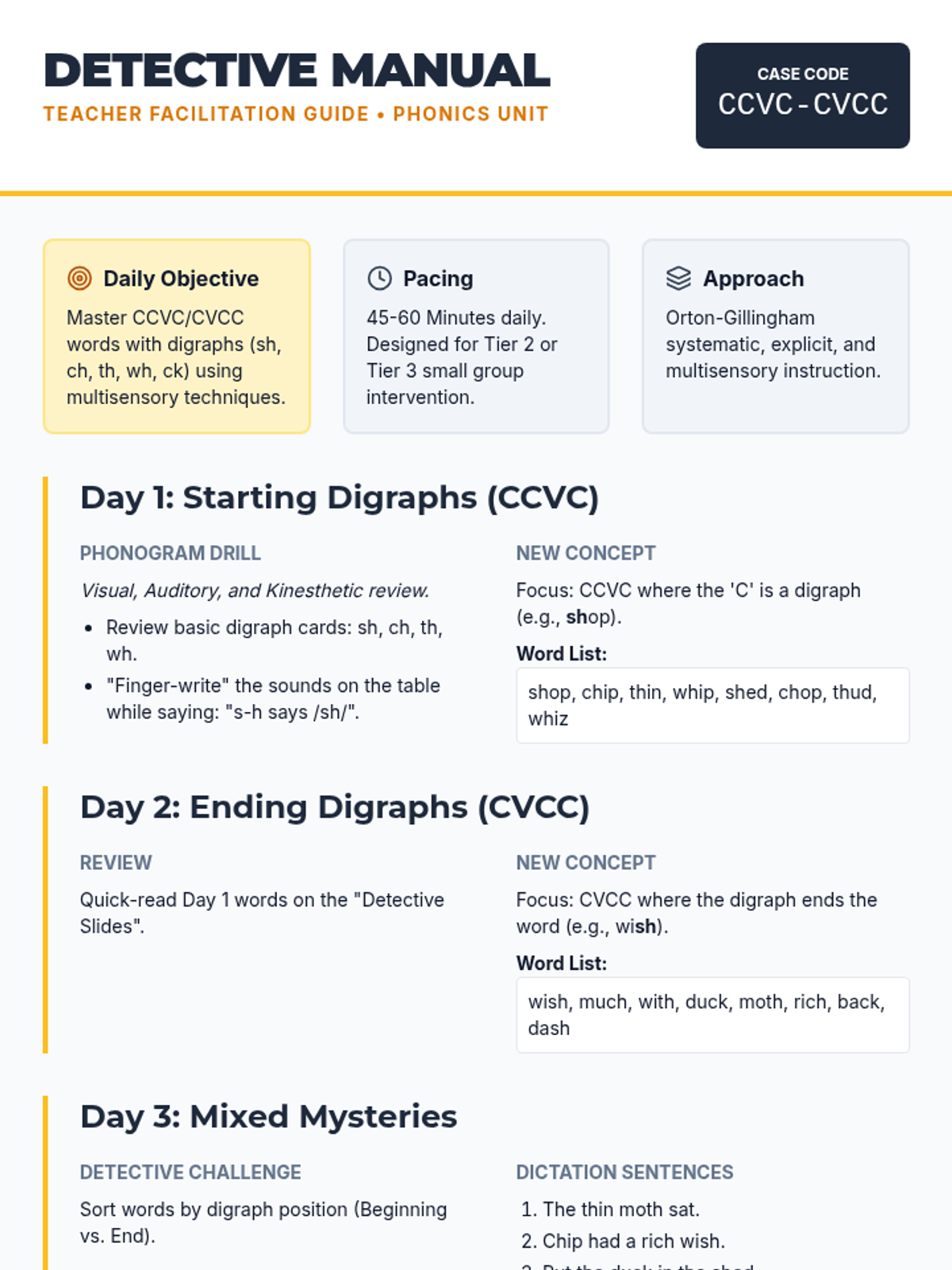
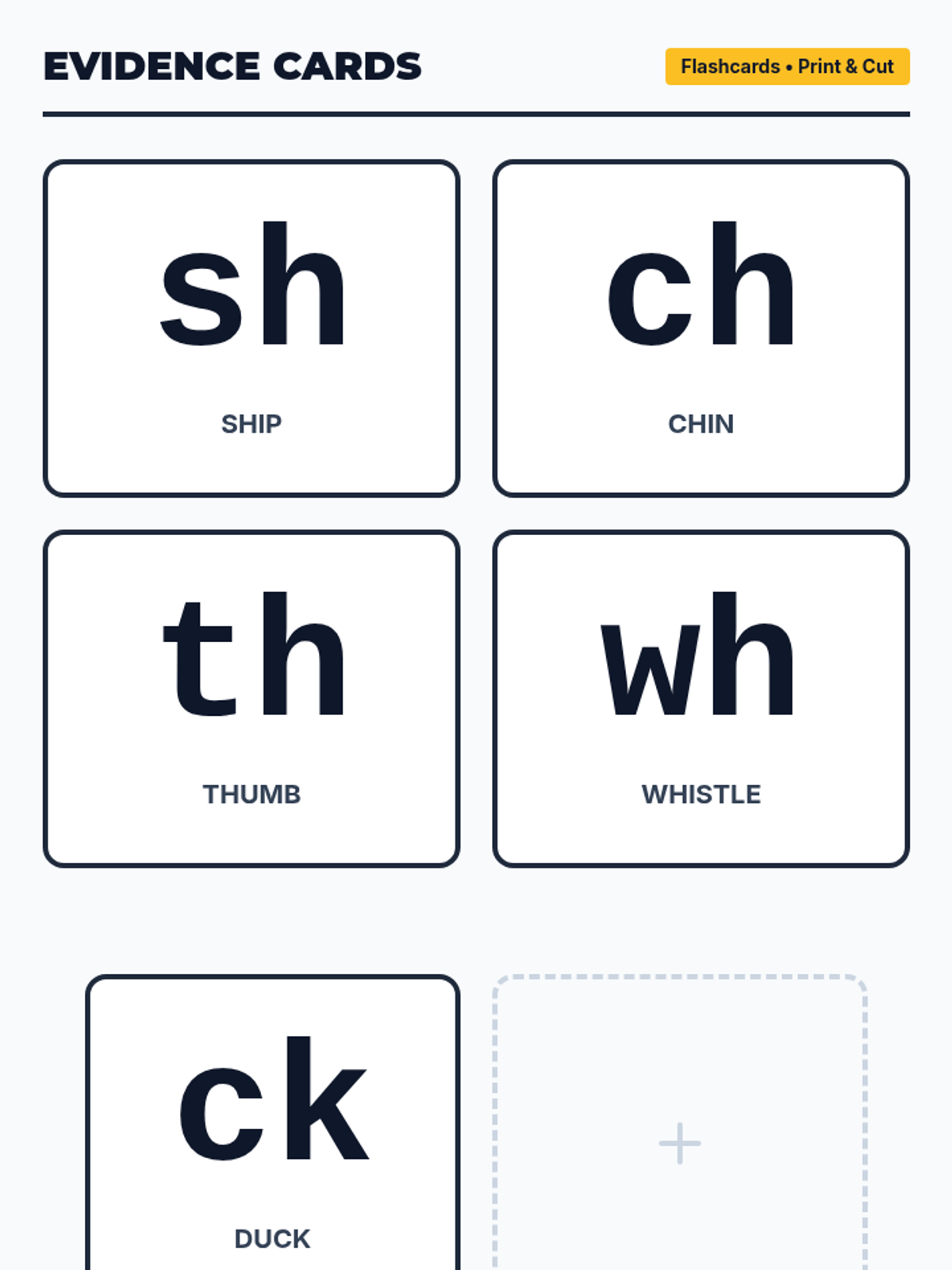
Focus on CVCC words ending with digraphs (sh, ch, th, ck). Students explore how the digraph sound completes the word.
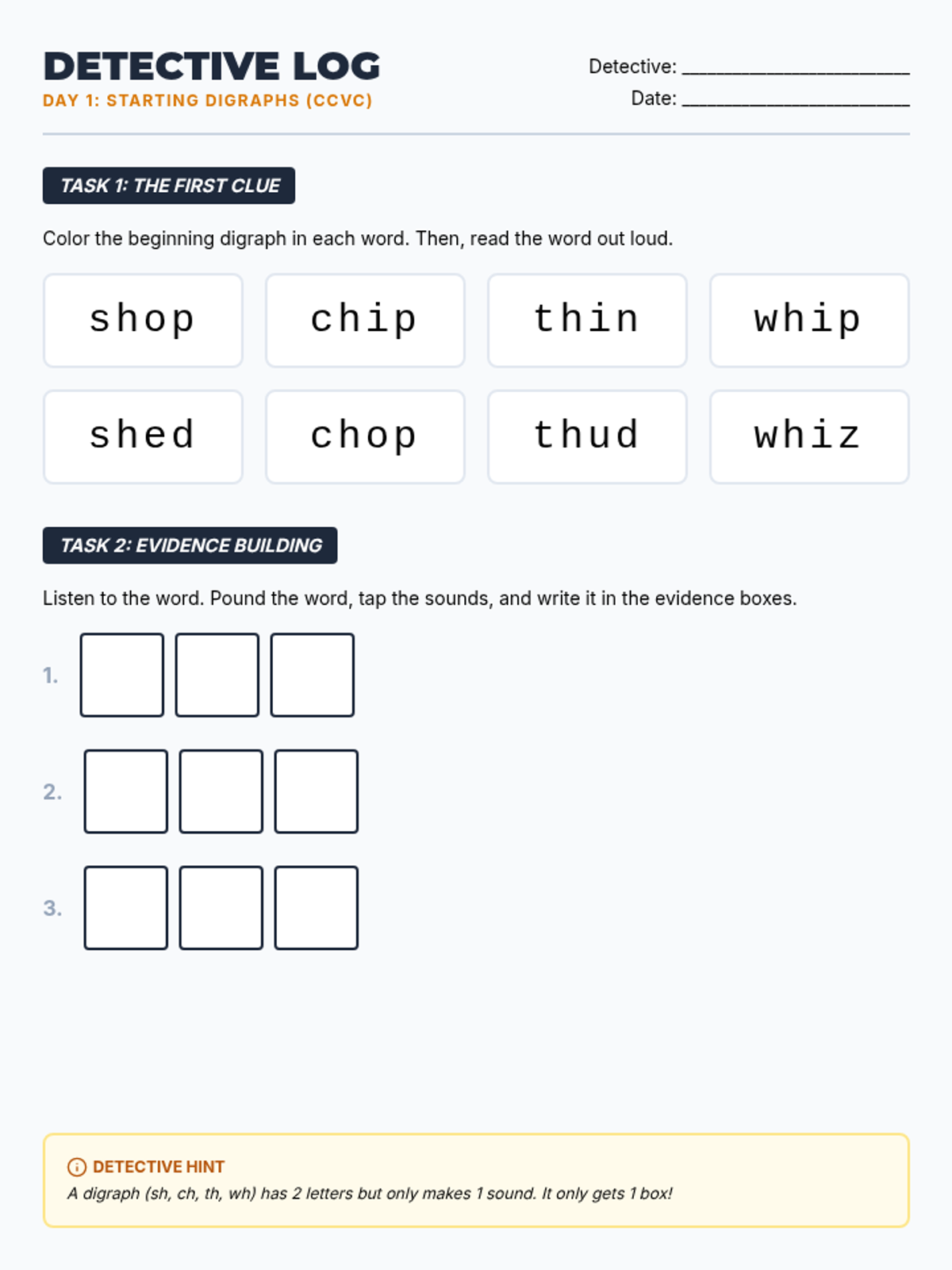
Introduction to CCVC words starting with digraphs (sh, ch, th, wh). Students practice identifying the initial digraph and blending it with the rest of the word.