Calm Captains Teacher Guide
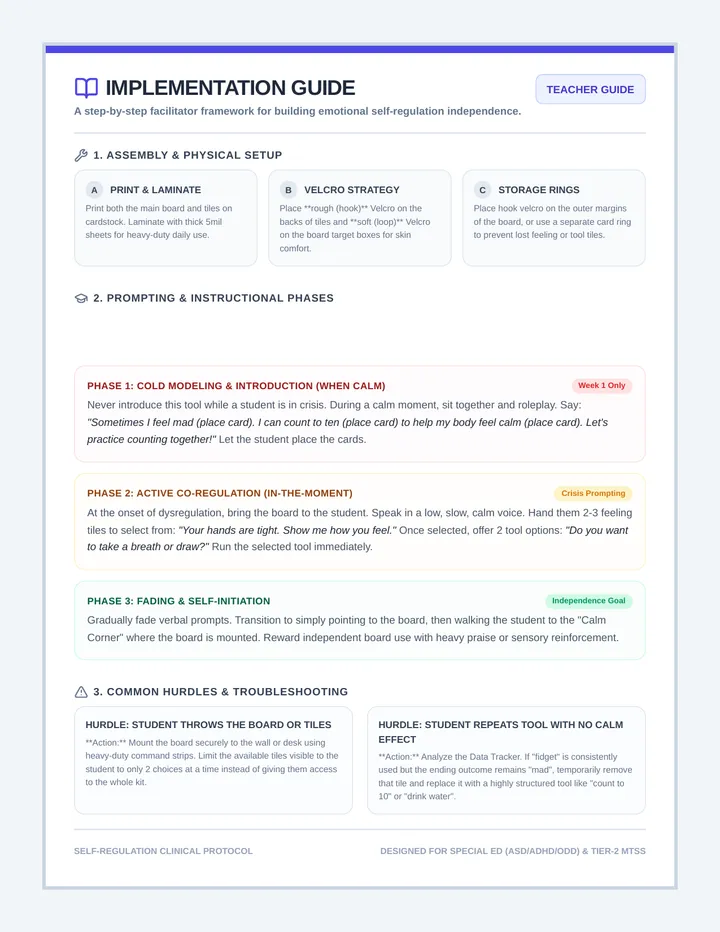
A comprehensive teacher instructional guide for an SEL lesson on self-management, specifically designed for 3rd-grade special education students with differentiation strategies and clear lesson steps.
Calm Captains Slides
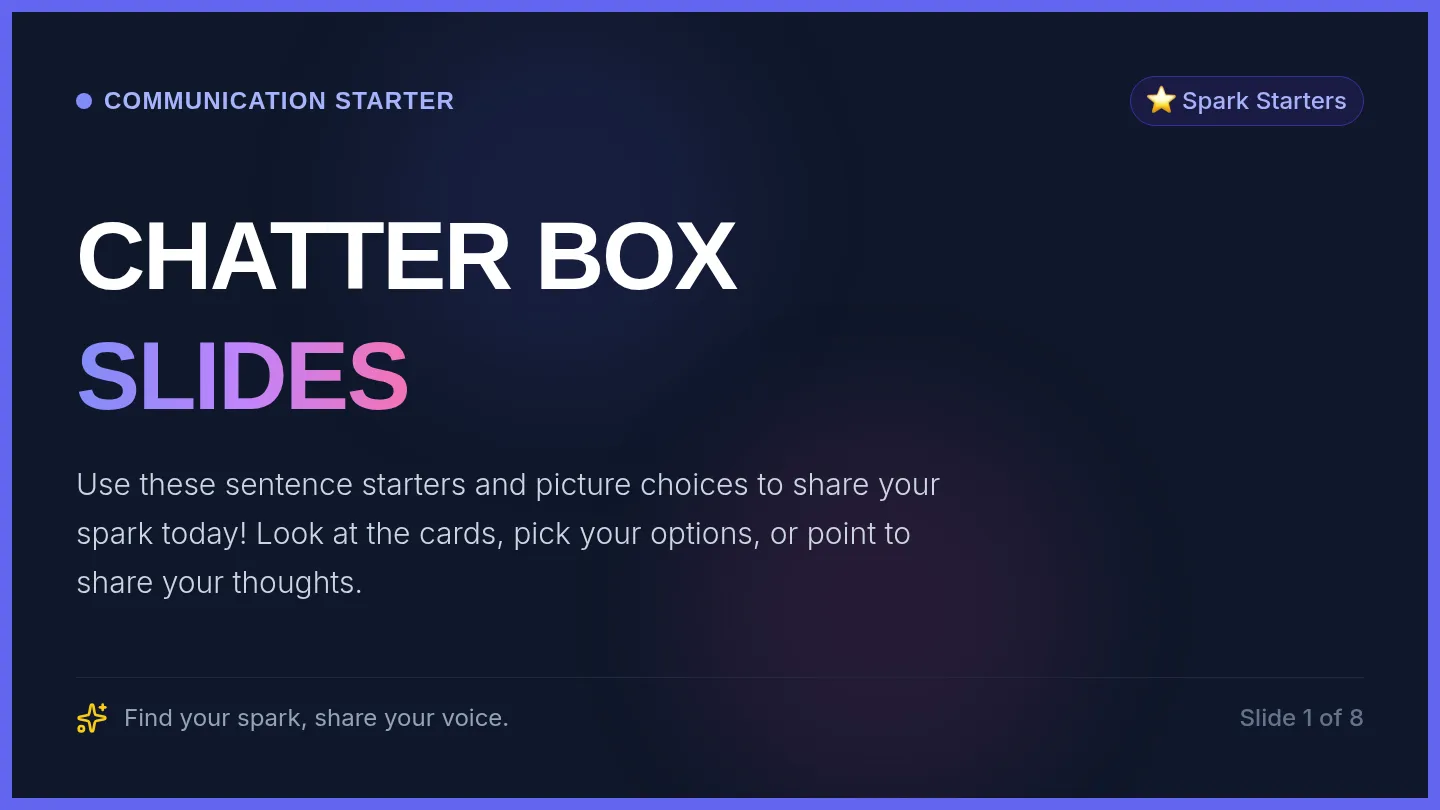
A vibrant and highly visual slide deck for 3rd-grade special education students, introducing the concept of self-management through the metaphor of a ship's captain. Includes body checks and specific calming strategies.
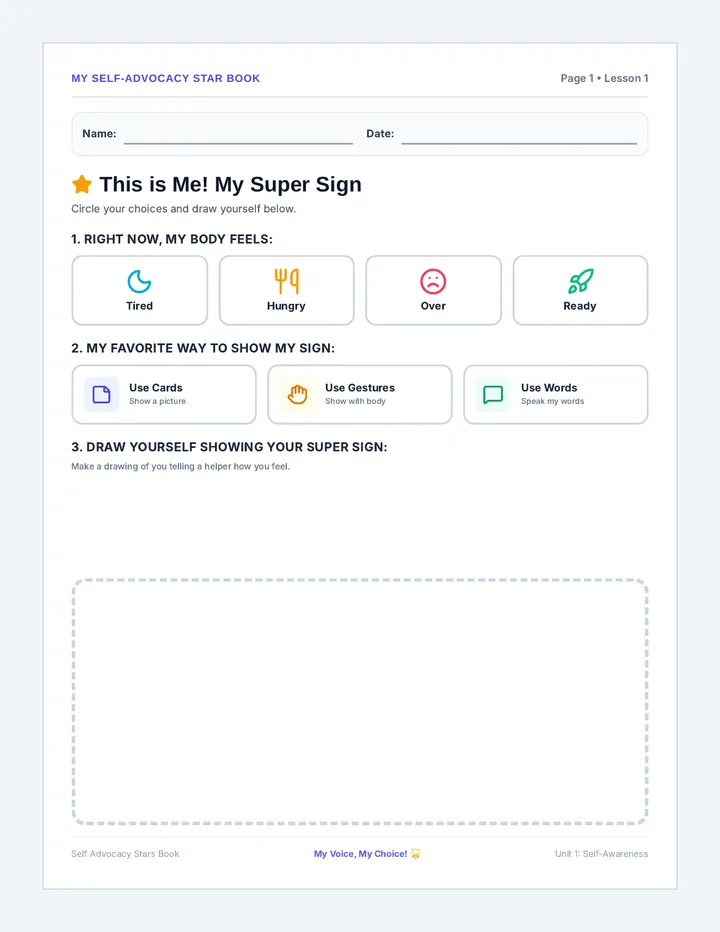
Calm Toolbox Worksheet
A student-facing worksheet for self-management, featuring a selection of calming tools and a drawing area. Includes a second page with large icons for students with fine motor challenges to cut and glue.
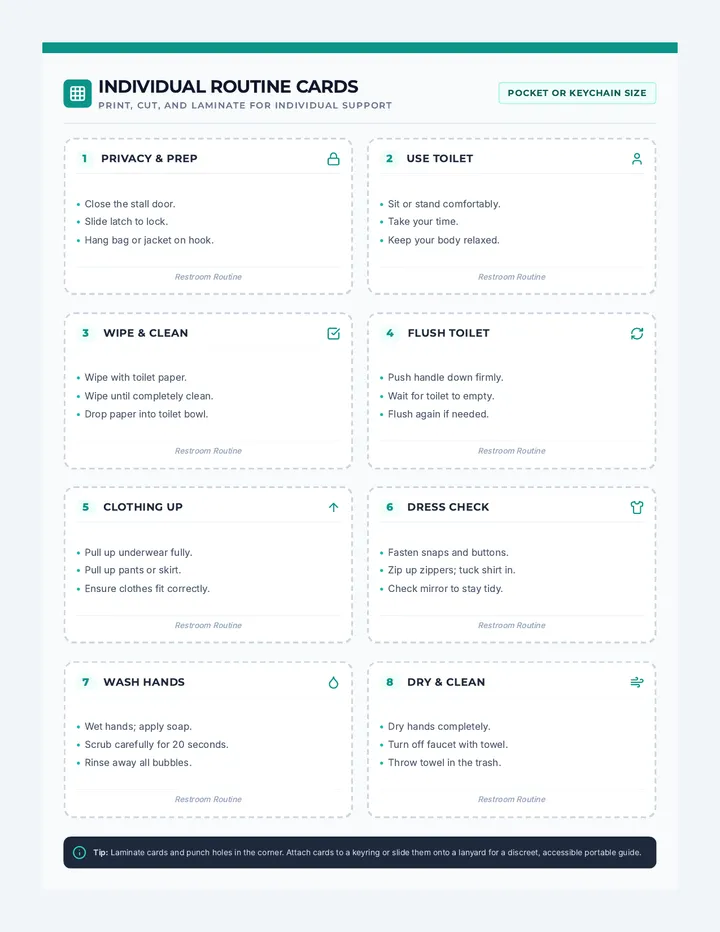
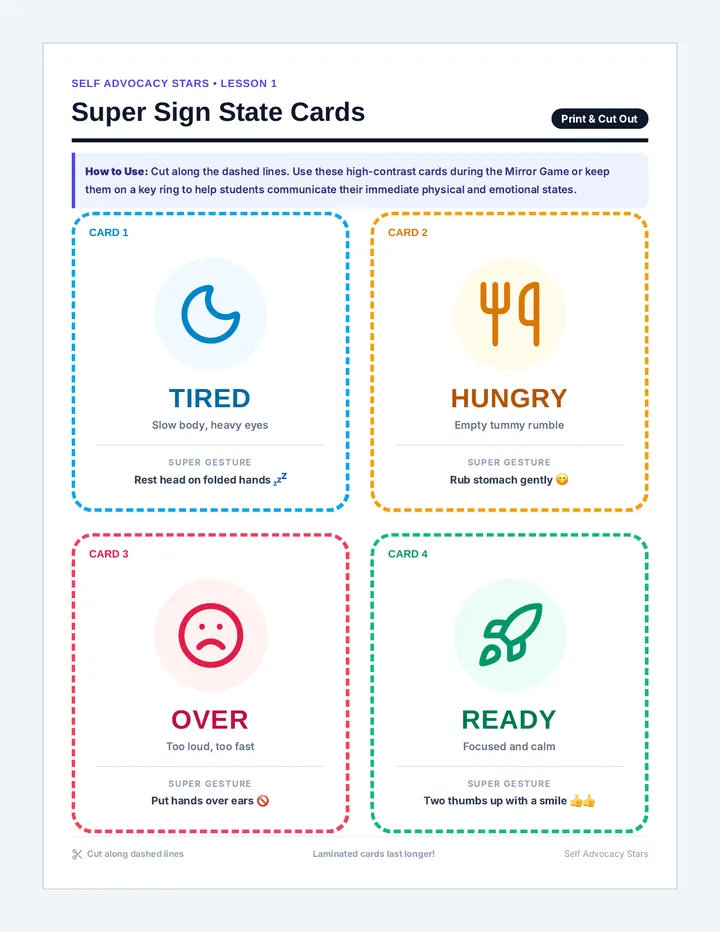
Calm Captains Desk Cards
Visual support cards for students to keep at their desks, providing quick reminders for self-regulation, breathing techniques, and requesting breaks. Designed for 3rd-grade special education needs.