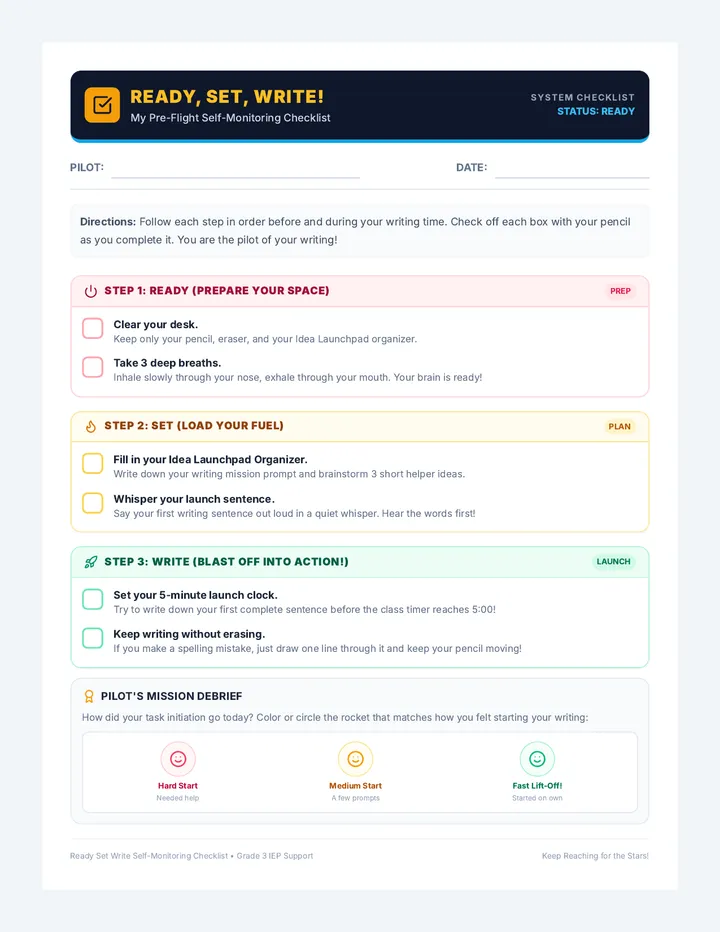
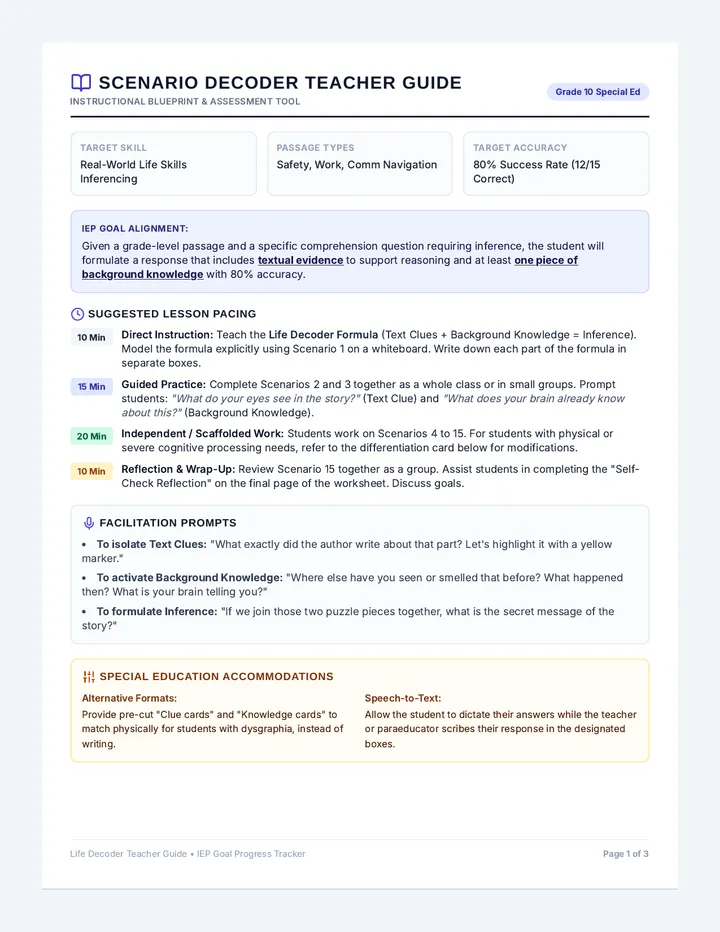
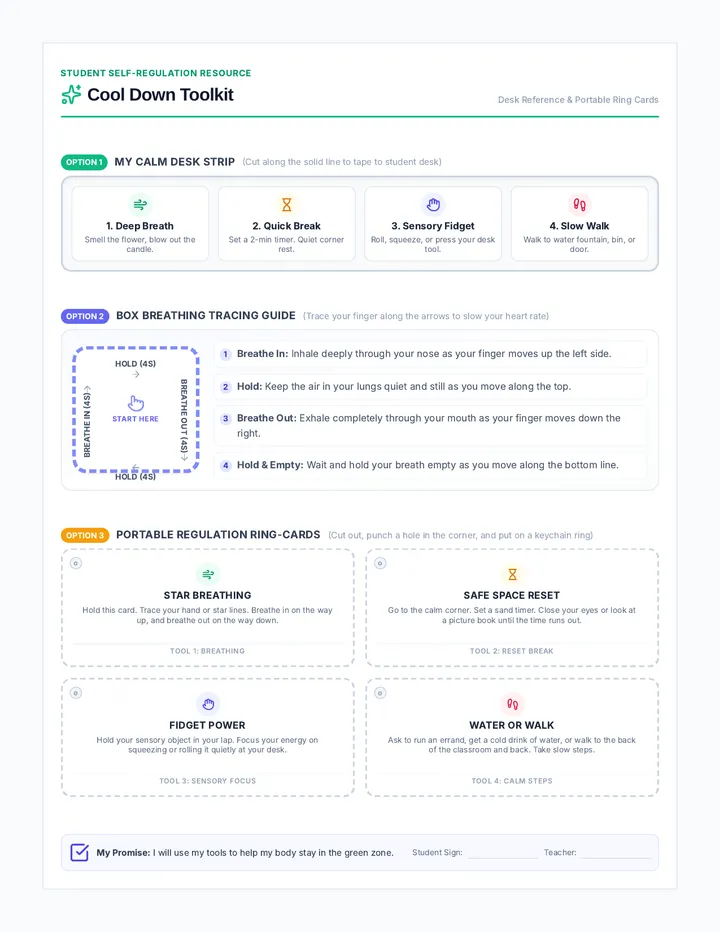
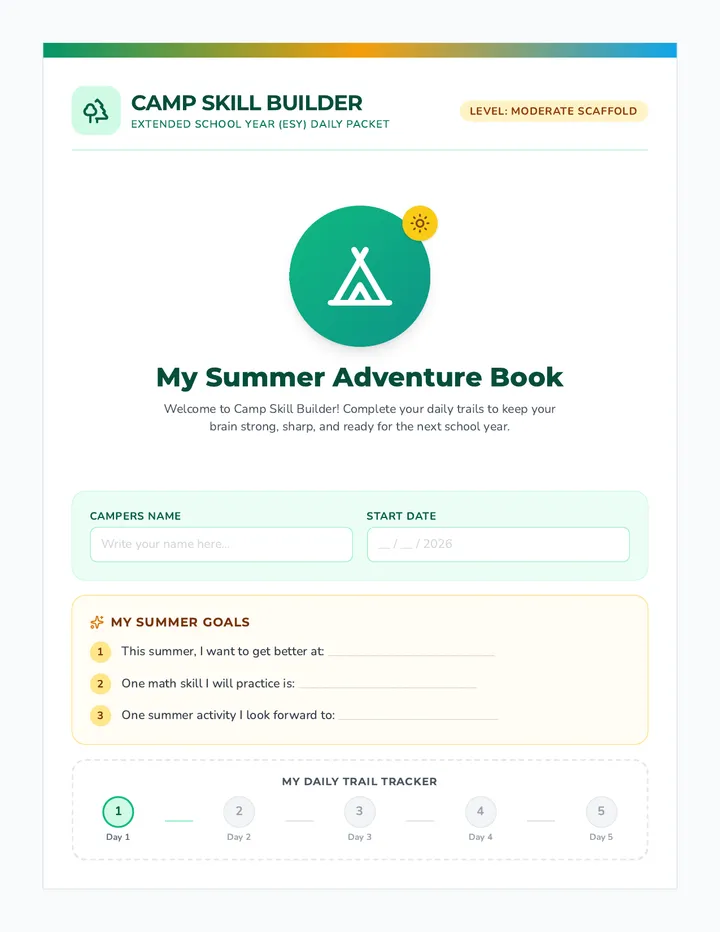
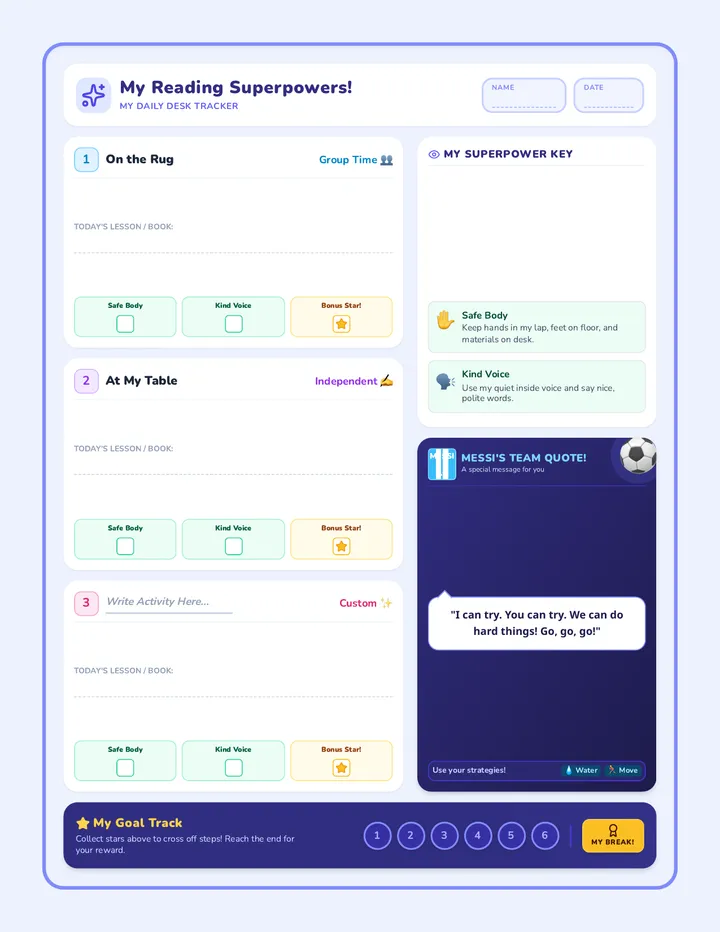
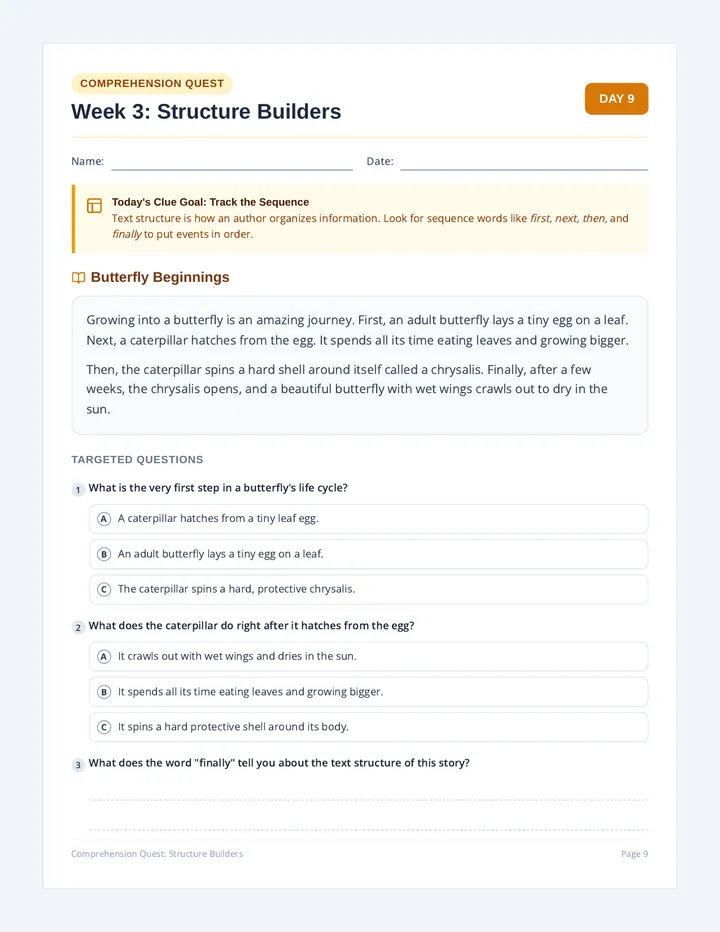
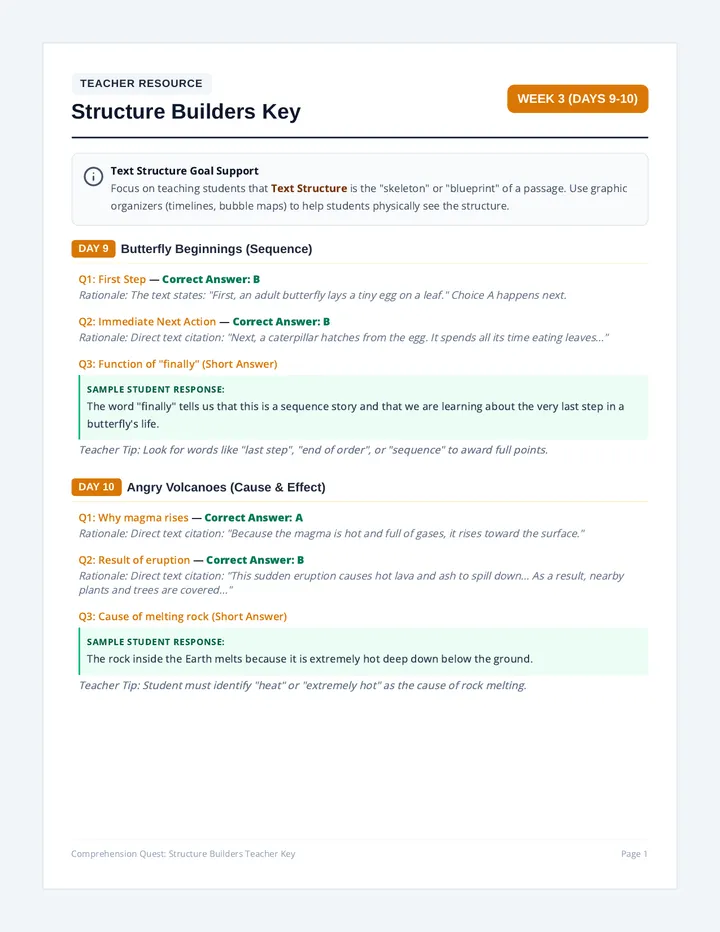
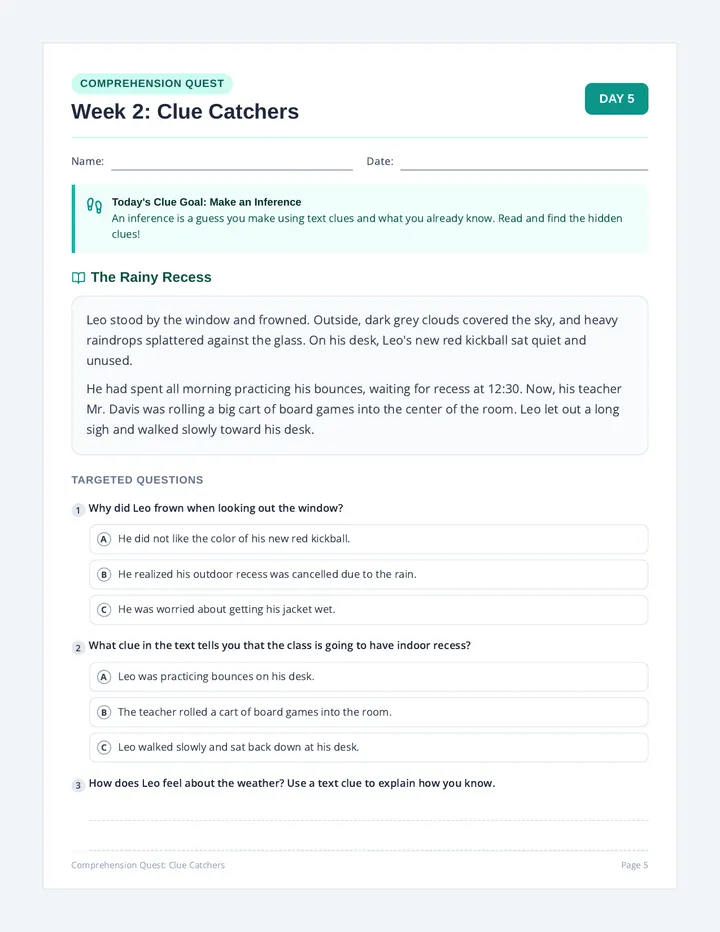
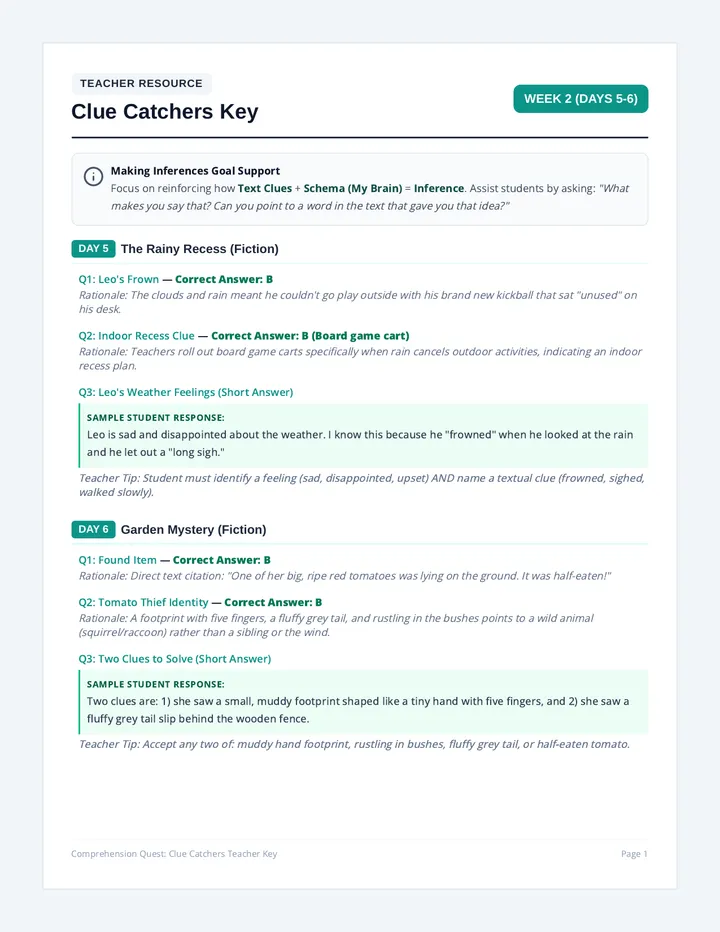
A positive reinforcement system designed to help students remain in the classroom through a themed 'Base Camp' tracking system. Includes a student-facing milestone chart and a teacher guide for implementation.
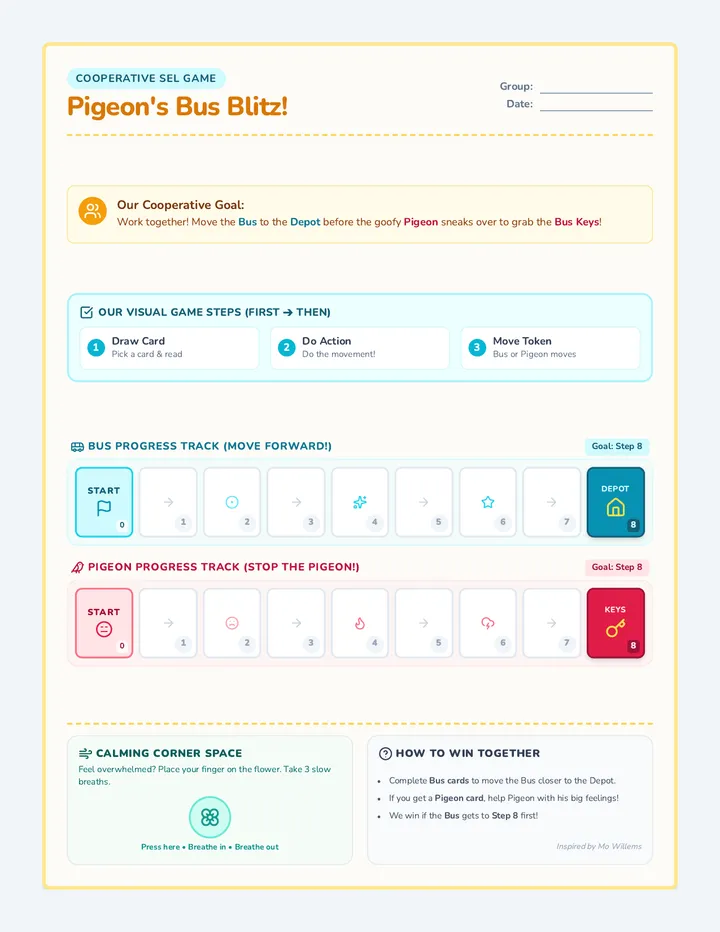
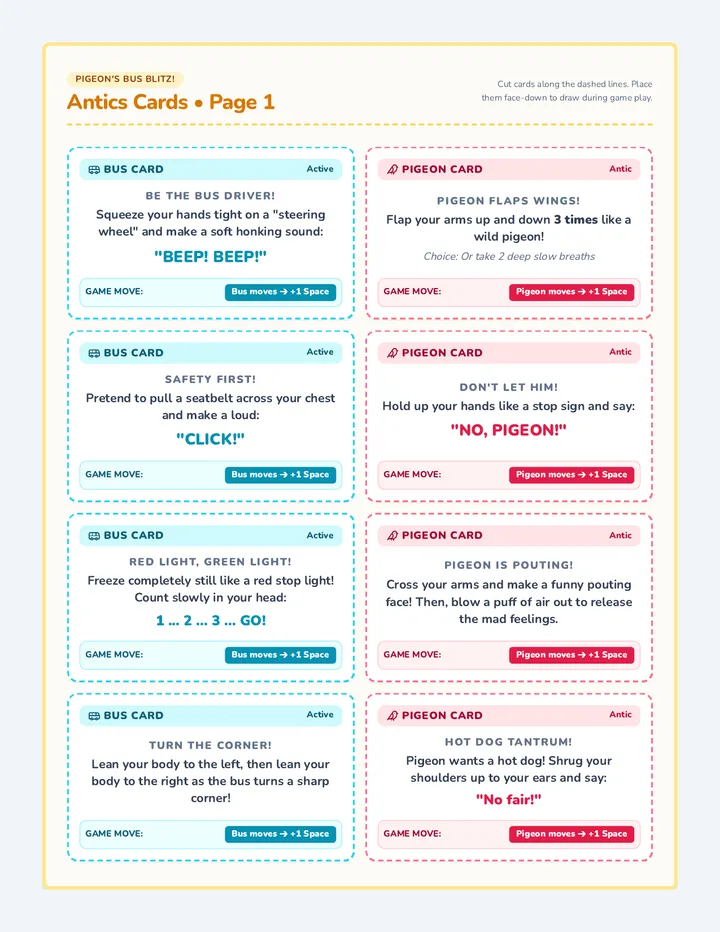
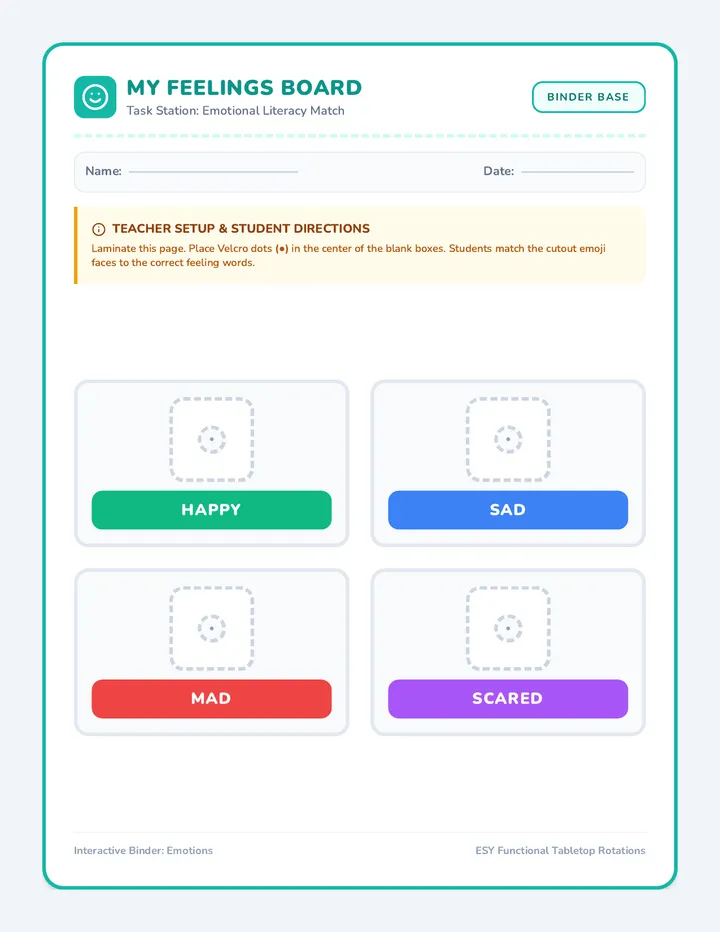
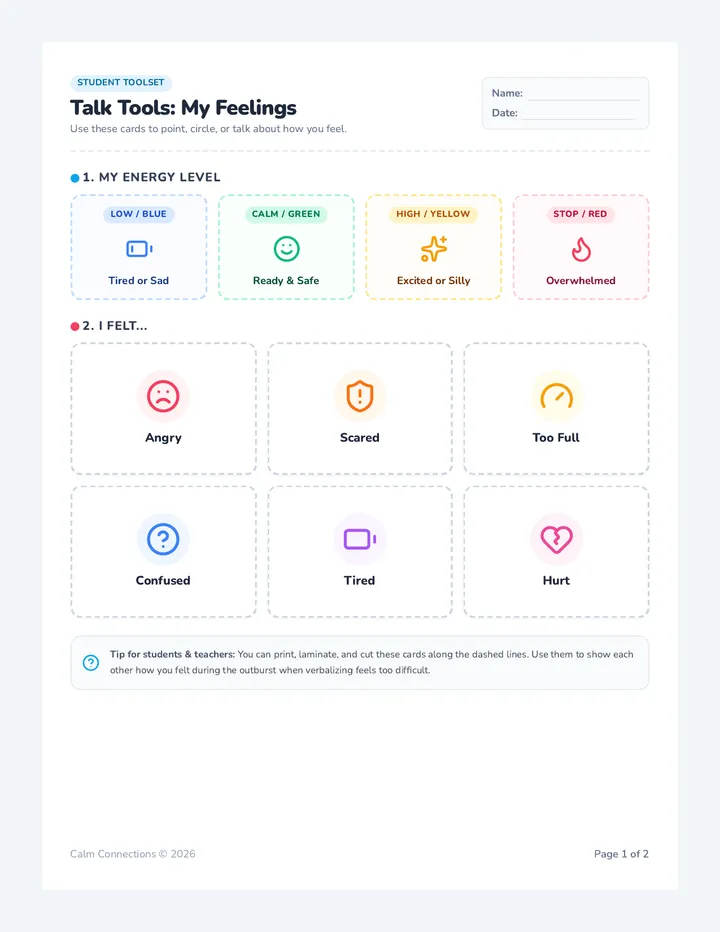
A lesson designed for two first-graders to learn how to replace screaming and eloping with verbal communication using a feelings chart. Through role-play and visual aids, students practice identifying their emotions and stating their needs.
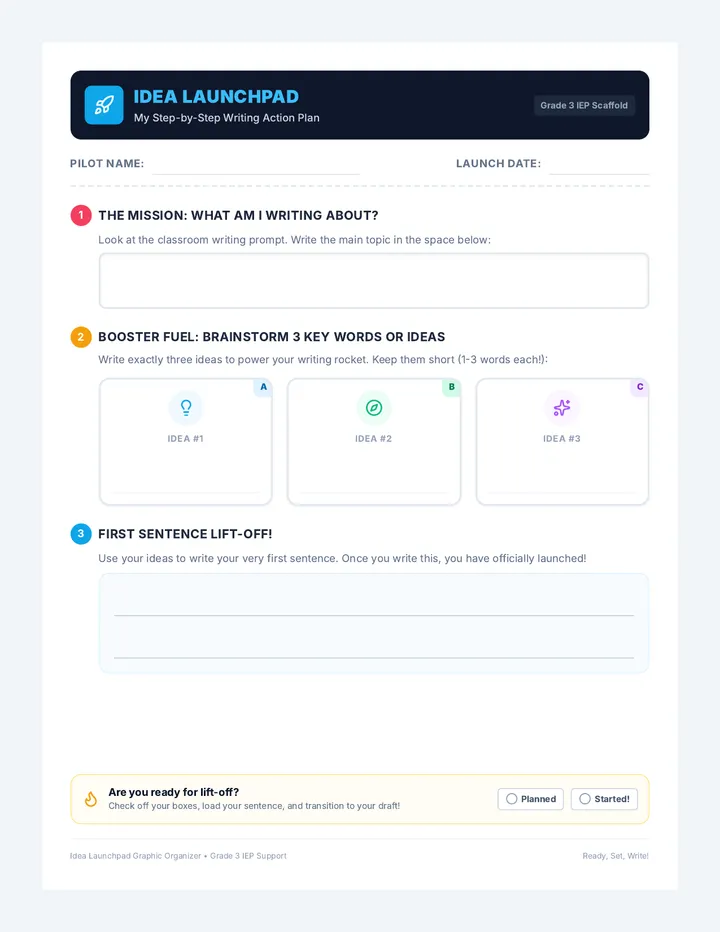
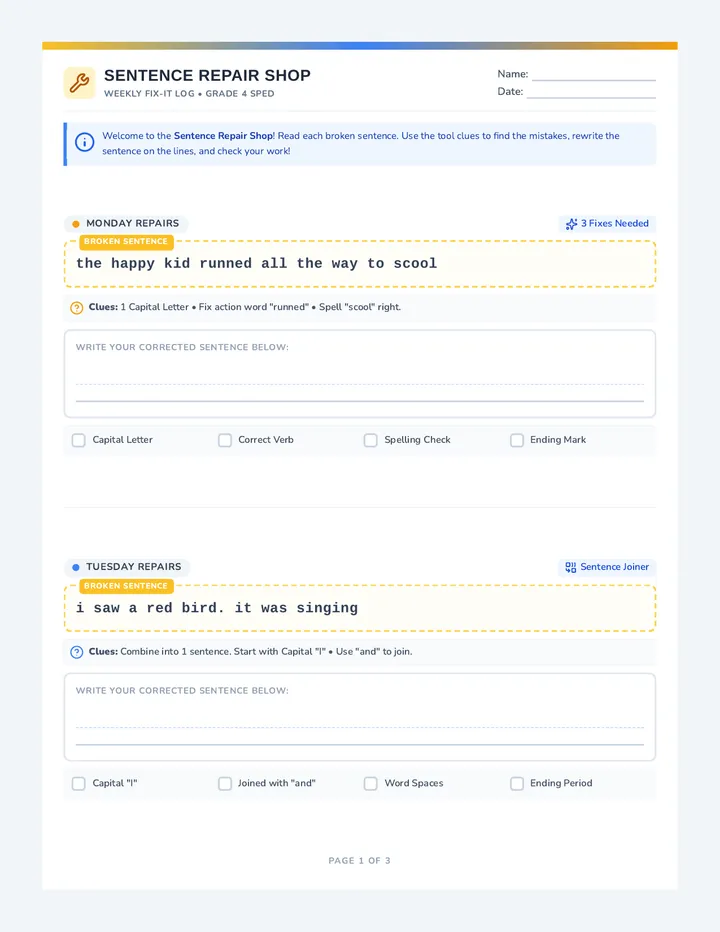
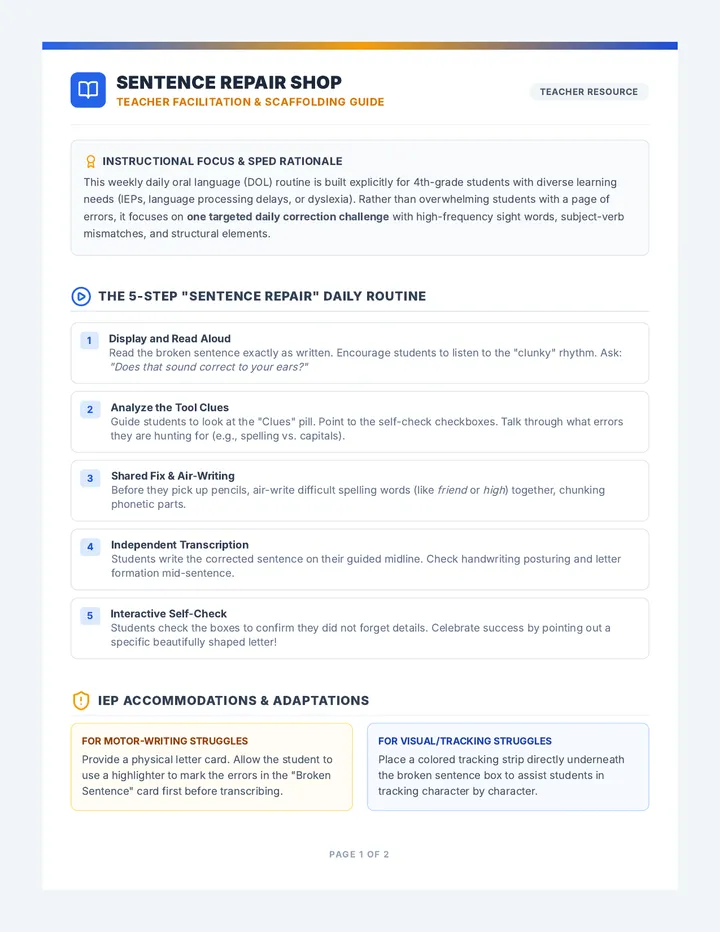
A structured approach to help a student write three complete sentences with correct mechanics, using high-interest animal prompts and scaffolded sentence starters.
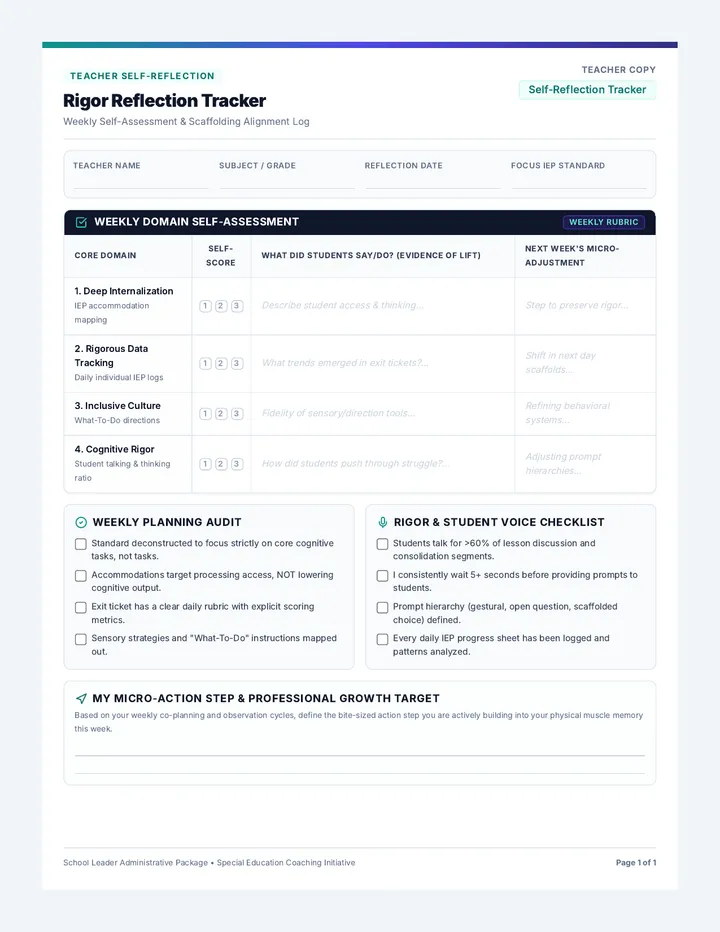
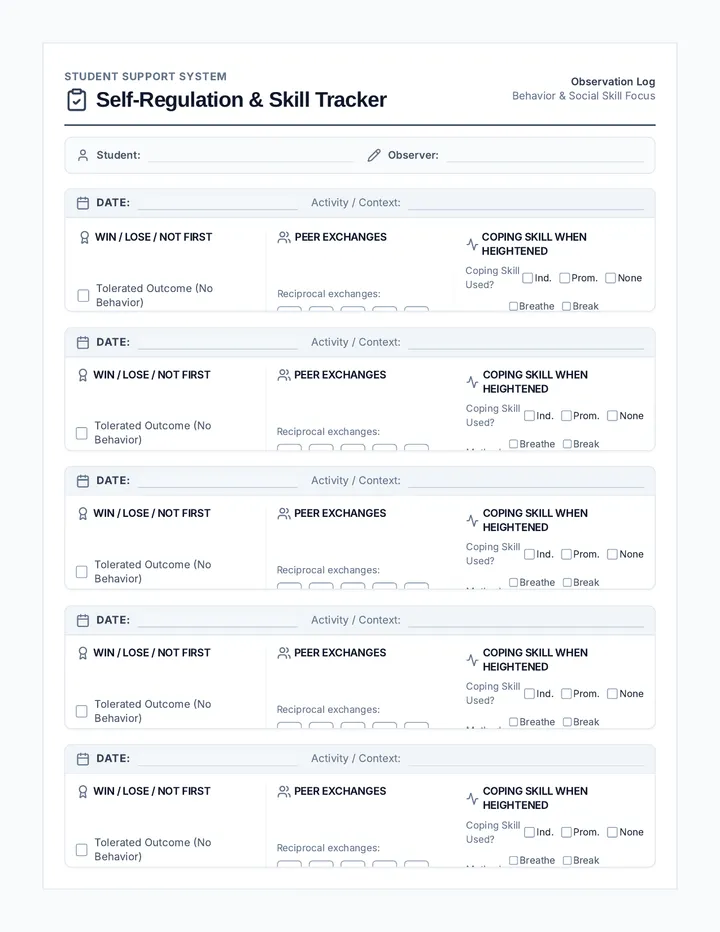
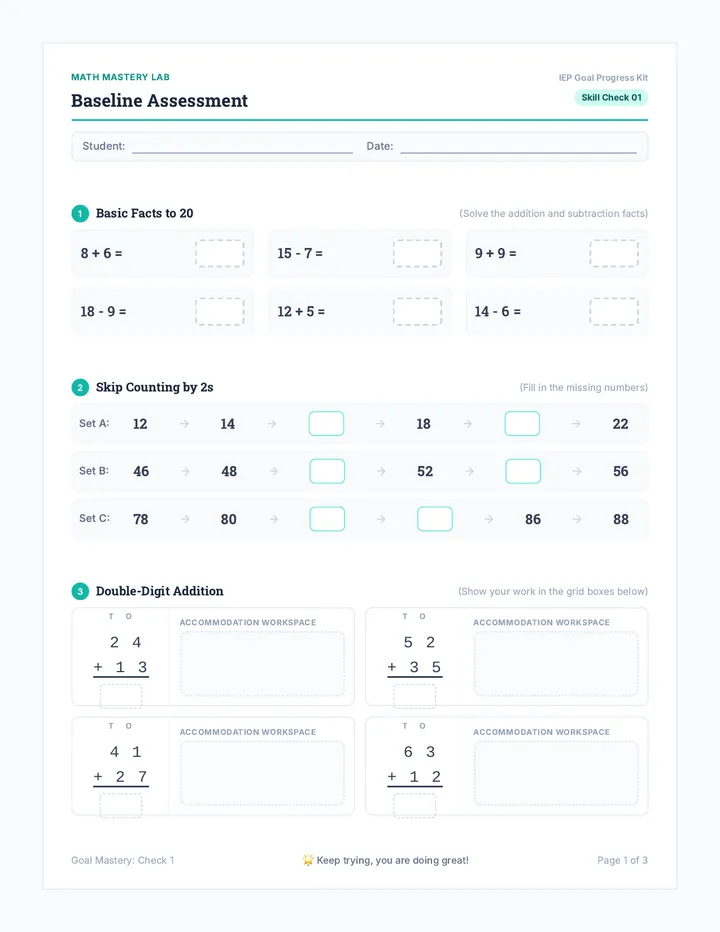
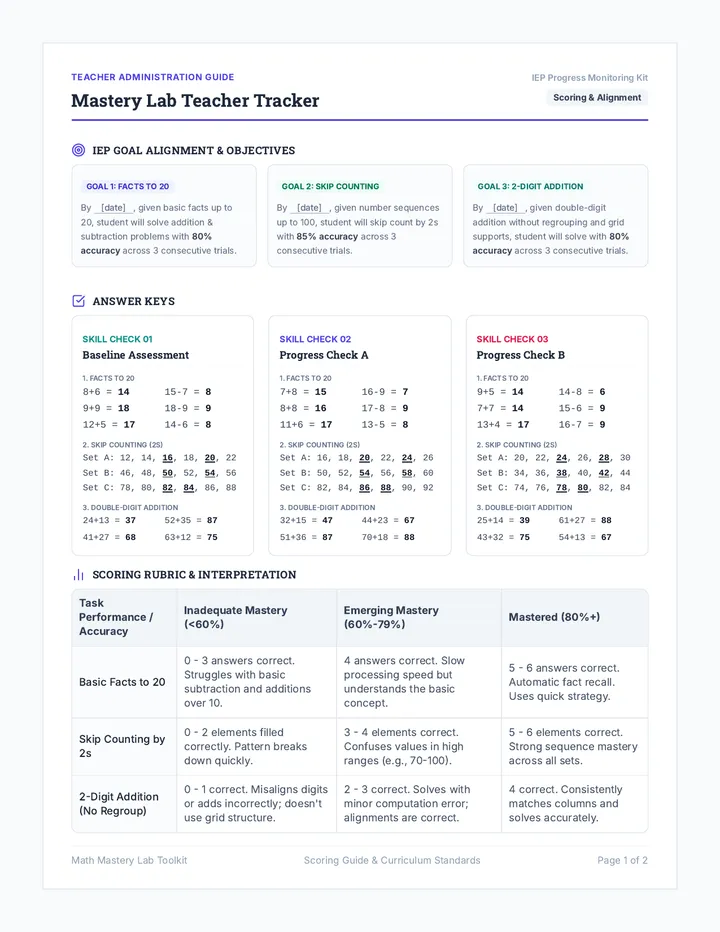
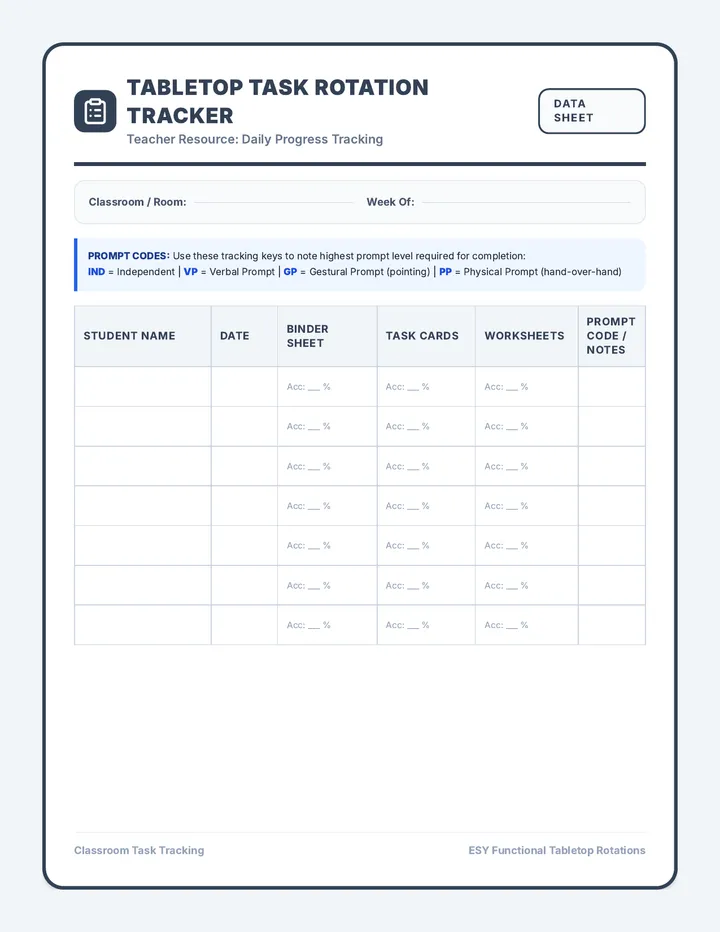
A comprehensive toolkit of data collection sheets for tracking various types of IEP goals, including frequency, duration, and trial-based skill acquisition.
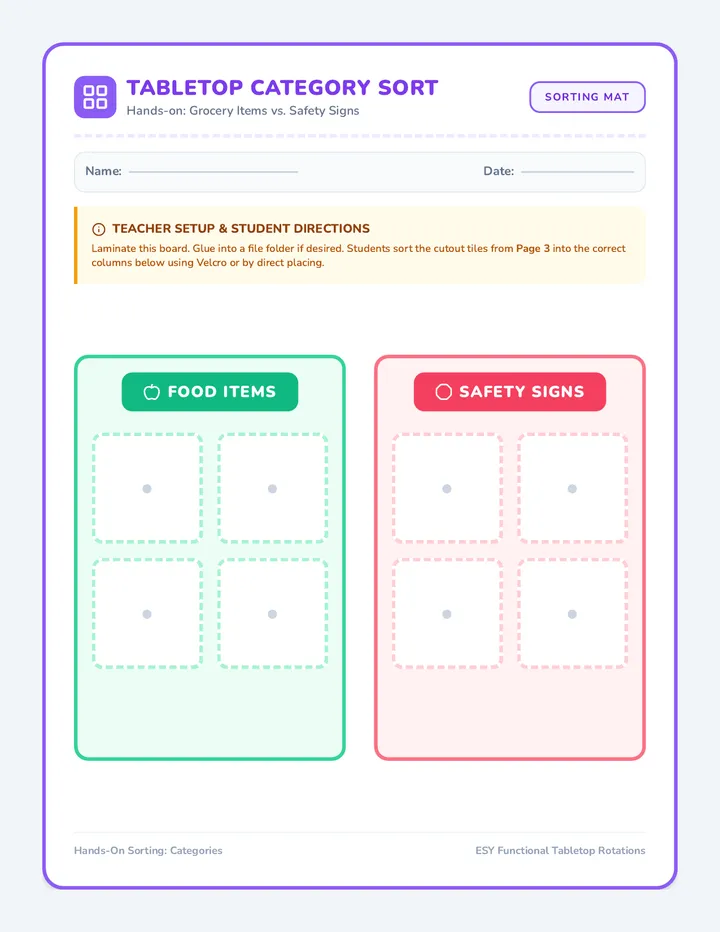
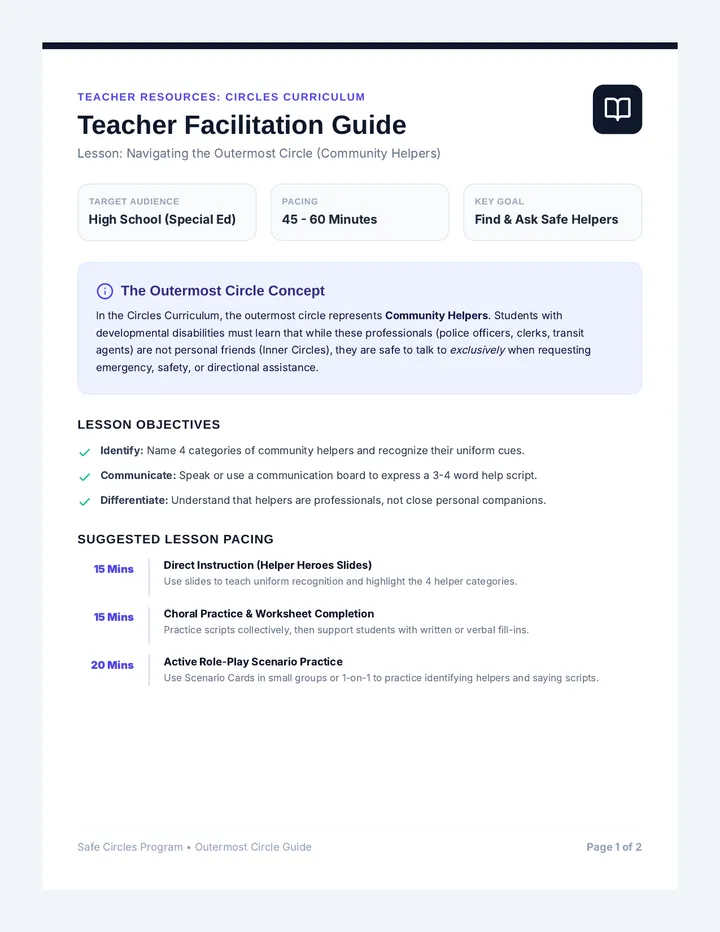
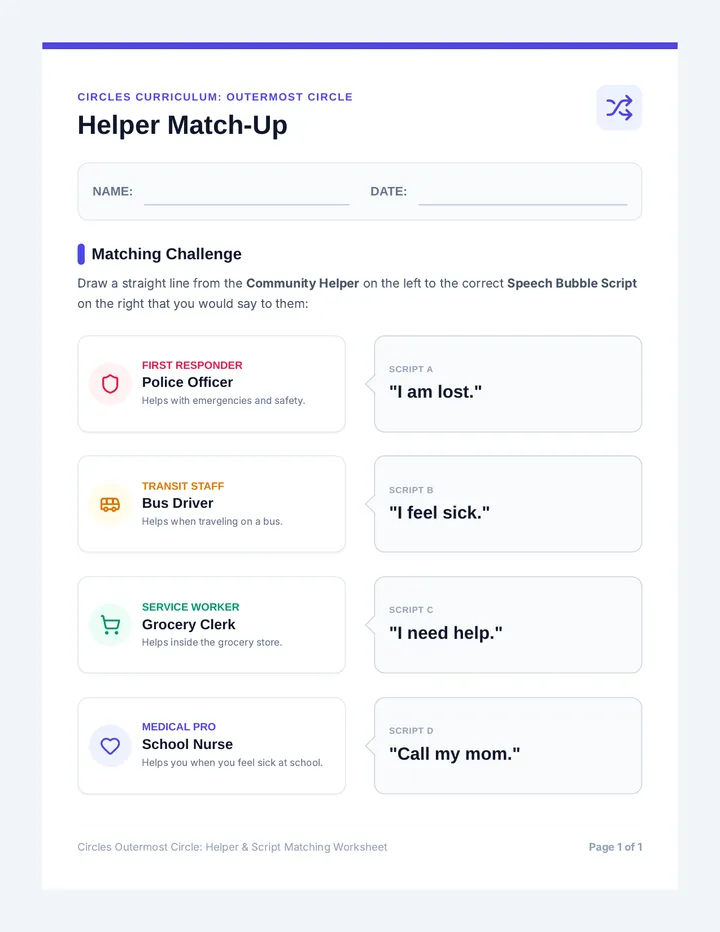
A comprehensive lesson on identifying and matching essential safety signs from community, household, road, and workplace environments. This lesson focuses on visual discrimination and functional literacy through picture-to-picture matching tasks.
The final lesson of the sequence, reviewing all prefixes, suffixes, and roots with a cumulative assessment.
Covers the Latin root 'ject' (throw), emphasizing the physical meanings behind abstract academic terms.
Explores the Latin root 'struct' (build), using word trees to visualize how multiple morphemes combine.
Focuses on the Latin root 'port' (carry), connecting it to familiar words like 'transport' and 'portable'.
Introduces the Latin root 'spect' (look), identifying it in common multisyllabic academic words.
A review of all suffixes covered, featuring a 'Suffix Showdown' game and a progress monitoring check.
Focuses on the quantity-based suffixes -ful and -less, using contrasting word pairs to build understanding.
Explores suffixes -ment and -ity, emphasizing how they transform verbs and adjectives into abstract nouns.
Examines noun-forming suffixes -tion and -sion, focusing on spelling patterns and syllable division.
Shifts focus to suffixes -able and -ible, helping students determine when to use each based on the root word.
A review lesson of all prefixes covered in the first four lessons, including a quick progress monitoring assessment.
Introduces time-based prefixes pre- and post-, focusing on academic vocabulary used in history and science contexts.
Investigates prefixes dis- and mis- to understand words related to opposites and errors, featuring word-sorting activities.
Focuses on identifying and using common prefixes like un- and re- to decode and understand multisyllabic words. Includes word building and sentence application.
Covers the 'not' prefixes in-, im-, il-, and ir-, exploring how spelling changes based on the root word's initial letter.
Preparing for independence. Students review progress reports and finalize a plan for seeking teacher support autonomously.
Establishing consistent habits and routines. Students refine their planning process to require less counselor prompting.
Developing teacher communication skills. Students practice scripts for asking for help, clarifying assignments, and negotiating deadlines.
Time estimation and scheduling. Students practice predicting how long tasks take and slotting them into their Jawsome flex time.
Focus on categorization and prioritization. Students learn to distinguish between urgent tasks and long-term projects using a priority matrix.
Introduction to the "Grade Audit" process. Students learn to navigate their online portals efficiently and identify missing assignments.
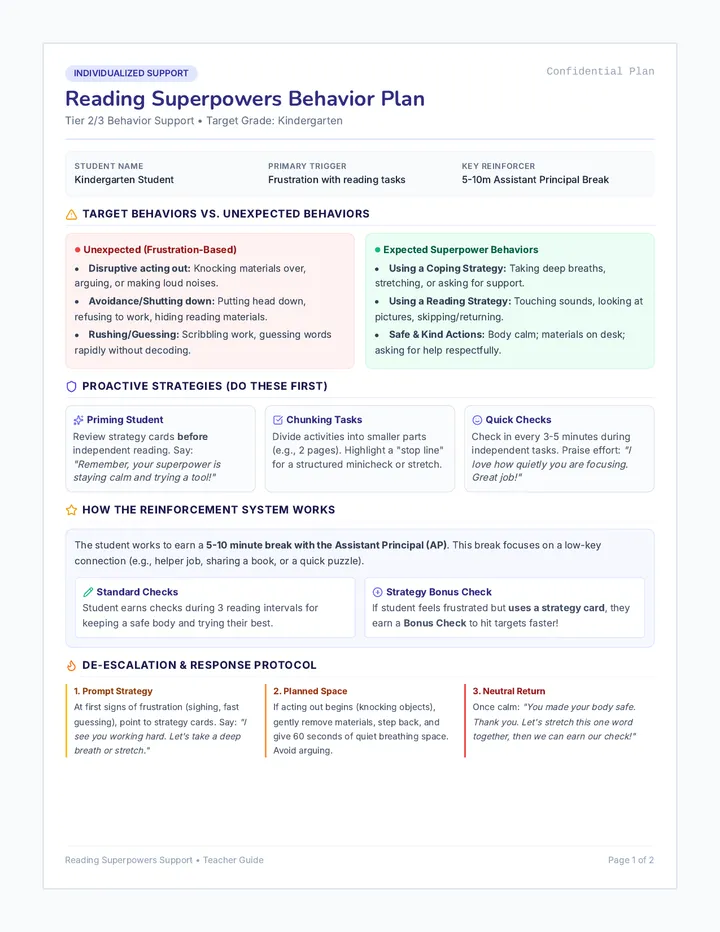
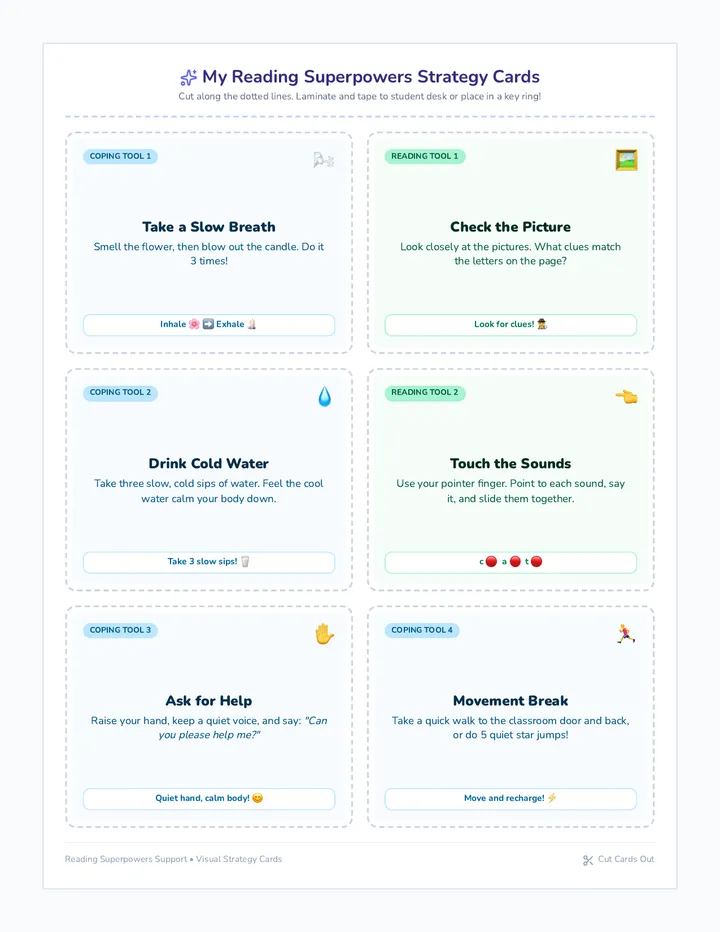
A comprehensive strategy set for educators to support students who struggle with long reading assignments through chunking, visual scaffolding, and self-regulation tools.