Lenny.com
Explore
Create
ActivitiesNewMathEnglish Language ArtsScience & EngineeringSocial StudiesGlobal LanguagesHealth & Physical EducationSpecial EducationCounseling & Life SkillsArts & CreativityESL
Lenny.com
Lenny.com
Explore
Create
ActivitiesNewMathEnglish Language ArtsScience & EngineeringSocial StudiesGlobal LanguagesHealth & Physical EducationSpecial EducationCounseling & Life SkillsArts & CreativityESL
Lenny.com
Lenny.com

Solutions

Lenny for EducatorsLenny for SchoolsLenny for Districts

Product

ExploreSign inCreateSupportAbout

Resources

Getting startedMTSS Acceleration Program

© 2026 Lenny Learning Inc.

TermsPrivacyAccessibility
LinkedInInstagramX
Lenny

Comparing Numbers

Mathematical symbols including greater than (>), less than (<), and equal to (=) to evaluate numerical relationships. Builds fluency in ordering sets and comparing quantities from single digits to multi-digit integers.

MathNumbers & CountingCounting ObjectsNumber NamesComparing NumbersNumber OperationsCounting SequenceNumbers 0-10Place Value Understanding and SystemAdd and Subtract Within 20Addition and Subtraction ConceptsAddition and Subtraction EquationsAddition and Subtraction ProblemsFoundations for MultiplicationMultiplication and Division PropertiesMultiply and Divide Within 100Multiplication and Division ProblemsFactors and MultiplesProperties of OperationsPatterns and RelationshipsGenerate and Analyze PatternsMulti-Digit ArithmeticPlace Value OperationsMulti-Digit and Decimal OperationsNumerical ExpressionsFour Operations and PatternsFour Operations Problem SolvingMeasurement & DataMeasurable AttributesMeasuring LengthsMeasure and Estimate Lengths in Standard UnitsRelate Addition and Subtraction to LengthClassifying and Counting ObjectsTime and MoneyArea Concepts and MeasurementPerimeter and Area MeasuresAngle Concepts and MeasurementTime, Volume, and MassMeasurement Unit ConversionsGeometryIdentifying ShapesShapes and AttributesShape Attributes and ReasoningShapes and CompositionClassifying 2D FiguresGeometric Figures and RelationshipsLines, Angles, and ShapesAngle, Area, and VolumeGeometric MeasurementVolume of 3D ShapesCoordinate Plane ApplicationsTransformations in the PlaneCongruence and SimilarityUnderstand congruence in terms of rigid motionsSimilarity and TransformationsProve Theorems Involving SimilarityPythagorean TheoremTrigonometry for General TrianglesMake Geometric ConstructionsProve Geometric TheoremsTheorems About CirclesFind Arc Lengths And Areas of Sectors of CirclesVolume FormulasRelationships Between Two-Dimensional and Three-Dimensional ObjectsProve Simple Geometric Theorems AlgebraicallyTranslate Between Geometric Description and Equation for Conic SectionApply Geometric Concepts in Modeling SituationsFractions & DecimalsFractions as NumbersBuilding FractionsFraction Equivalence and OrderingAdding and Subtracting FractionsMultiplying and Dividing FractionsDividing FractionsDecimal FractionsMulti-Digit Computation and FactorsAdd, Subtract, Multiply, and Divide Rational NumbersRational Number SystemIrrational Numbers and ApproximationsRatiosRatios and ProportionsProportional RelationshipsUnit RateAlgebraAlgebraic ExpressionsGenerate Equivalent ExpressionsQuantitative RelationshipsProportional Relationships and Linear EquationsEquations and InequalitiesEquation Solving and ReasoningLinear Equations and SystemsGraph Equations and InequalitiesSystems of EquationsReal-World Algebraic ProblemsQuantitative Reasoning with UnitsExpression StructureEquivalent Expression FormsRadicals and Integer ExponentsRational ExponentsRational and Irrational NumbersPolynomial OperationsPolynomial IdentitiesPolynomial Zeros and FactorsRational ExpressionsComplex Number OperationsComplex Numbers in PolynomialsComplex Numbers on PlaneStatistics & ProbabilityRepresent and Interpret DataData DistributionsStatistical VariabilityProbability ModelsCompound Event ProbabilitiesStatistical SamplingInterpret Categorical and Quantitative DataBivariate Data PatternsInterpret Linear ModelsComparing Two PopulationsRandom Processes in StatisticsIndependence and Conditional ProbabilityExpected ValuesProbability-Based Decision MakingStatistical Inference and ConclusionsFunctionsFunction Concepts and NotationDefine and Compare FunctionsInterpret Functions in ContextAnalyze Function RepresentationsModel Relationships with FunctionsIdentify Linear vs Exponential GrowthDistinguish Between Function TypesCompare Growth RatesInterpret Function ExpressionsBuild Functions from RelationshipsConstruct and Model FunctionsTransform and Combine FunctionsModel Comparison and SelectionSolve Exponential EquationsTrigonometryTrigonometric Ratios Involving Right TrianglesTrigonometric Functions and Unit CircleModel with Trigonometric FunctionsTrigonometric IdentitiesVectors & MatricesIntroduction to Vectors and MatricesVector QuantitiesVector OperationsMatrix OperationsCalculusLimits and ContinuityDerivative Concepts and NotationDerivative Rules and TechniquesApplications of DerivativesOptimization ProblemsRelated RatesCurve Sketching and AnalysisIntegration Concepts and NotationAntiderivatives and Indefinite IntegralsDefinite Integrals and AreaFundamental Theorem of CalculusIntegration TechniquesApplications of IntegrationDifferential EquationsSequences and SeriesParametric and Polar FunctionsVector-Valued Functions

Videos

Comparing and Ordering Numbers up to 20

Comparing and Ordering Numbers up to 20

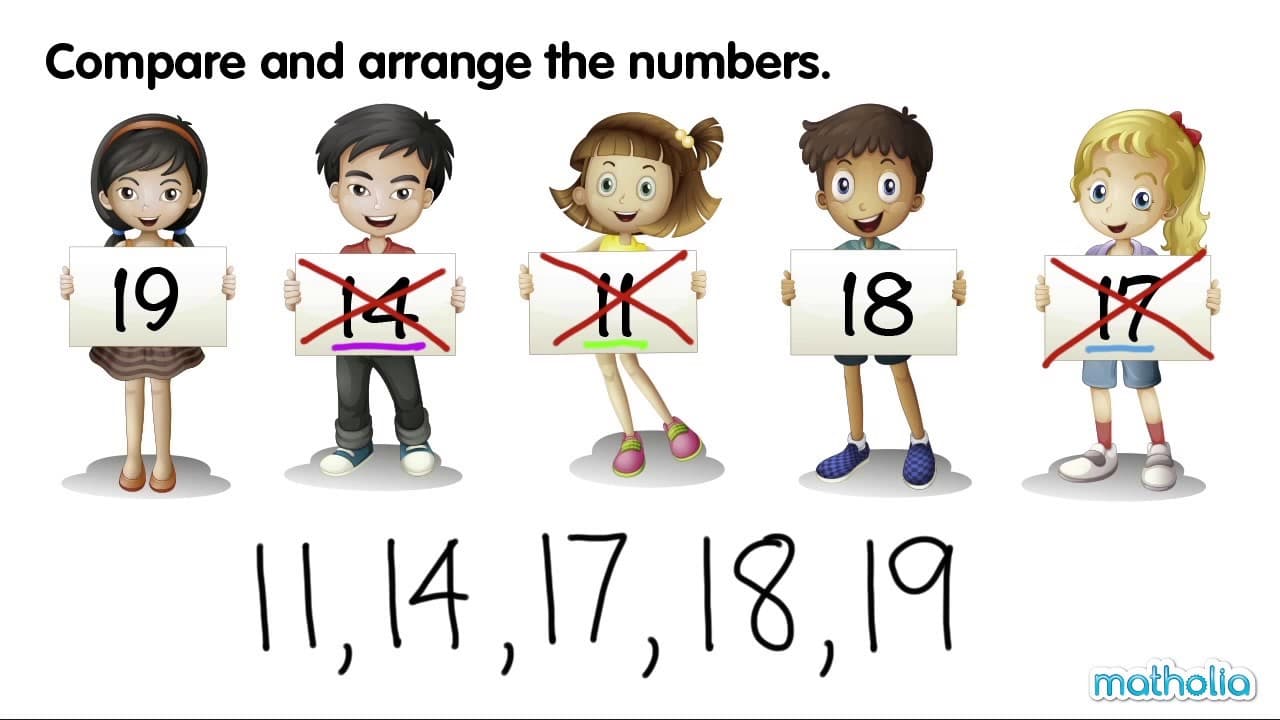
This educational video guides young students through the concepts of comparing and arranging numbers between 10 and 20. It progresses from concrete visual representations using stickers to more abstract number comparisons. The video uses clear narration and animated characters to demonstrate how to identify the smallest and greatest numbers in a set and how to order them sequentially.

MatholiaChannelMatholiaChannel

4mins 23s

How to Compare and Order Numbers Up to 1000

How to Compare and Order Numbers Up to 1000

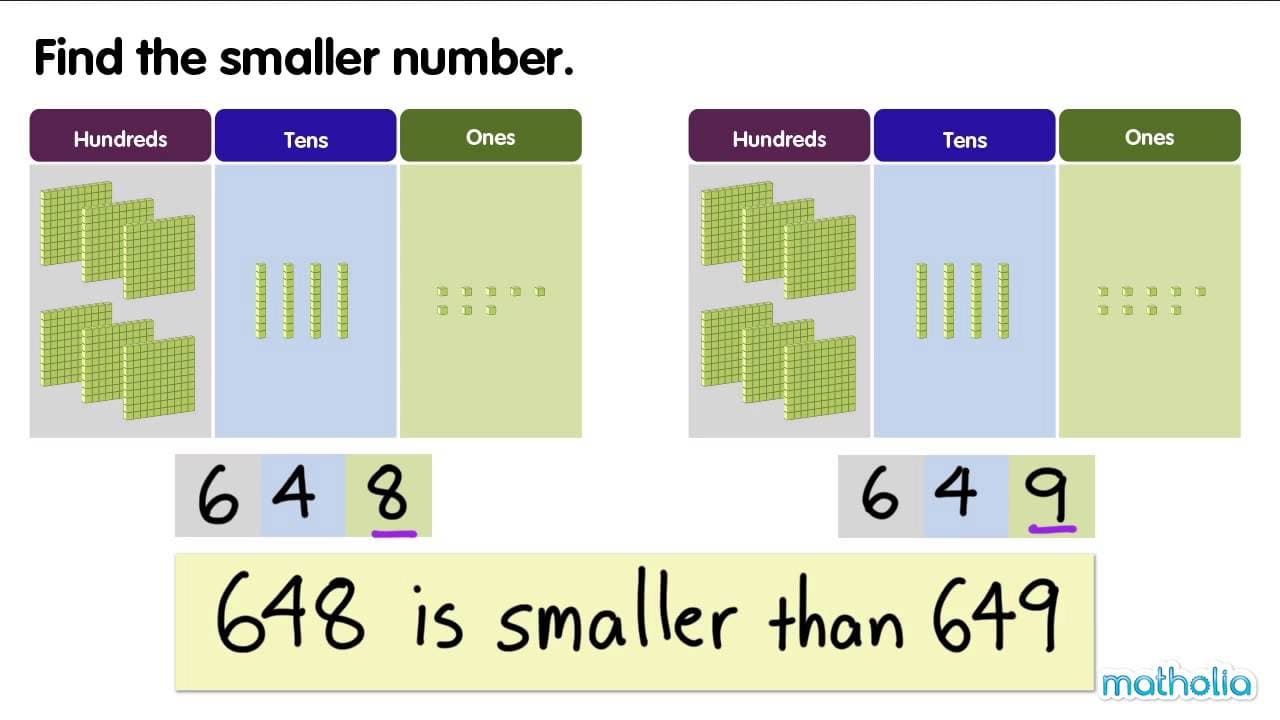
This educational video provides a clear, step-by-step tutorial on how to compare and order three-digit numbers. Using visual aids like base-10 blocks alongside numerical digits, the video demonstrates the logical process of comparing numbers by examining place value from left to right—starting with the hundreds, moving to the tens, and finally the ones. The content covers four specific scenarios: finding the greater of two numbers, finding the smaller of two numbers, arranging a set of three numbers from smallest to greatest, and arranging a set of four numbers from greatest to smallest. Each example reinforces the strategy of isolating digits within their specific place value columns to determine magnitude. This video is an excellent resource for 2nd and 3rd-grade classrooms introducing or reviewing number sense and place value concepts. The dual representation of numbers (blocks and digits) helps bridge the gap between concrete understanding and abstract numerical comparison, making it valuable for students who need visual scaffolding to grasp why one number is larger than another.

MatholiaChannelMatholiaChannel

4mins 46s

Comparing Three-Digit Numbers Using Inequality Symbols

Comparing Three-Digit Numbers Using Inequality Symbols

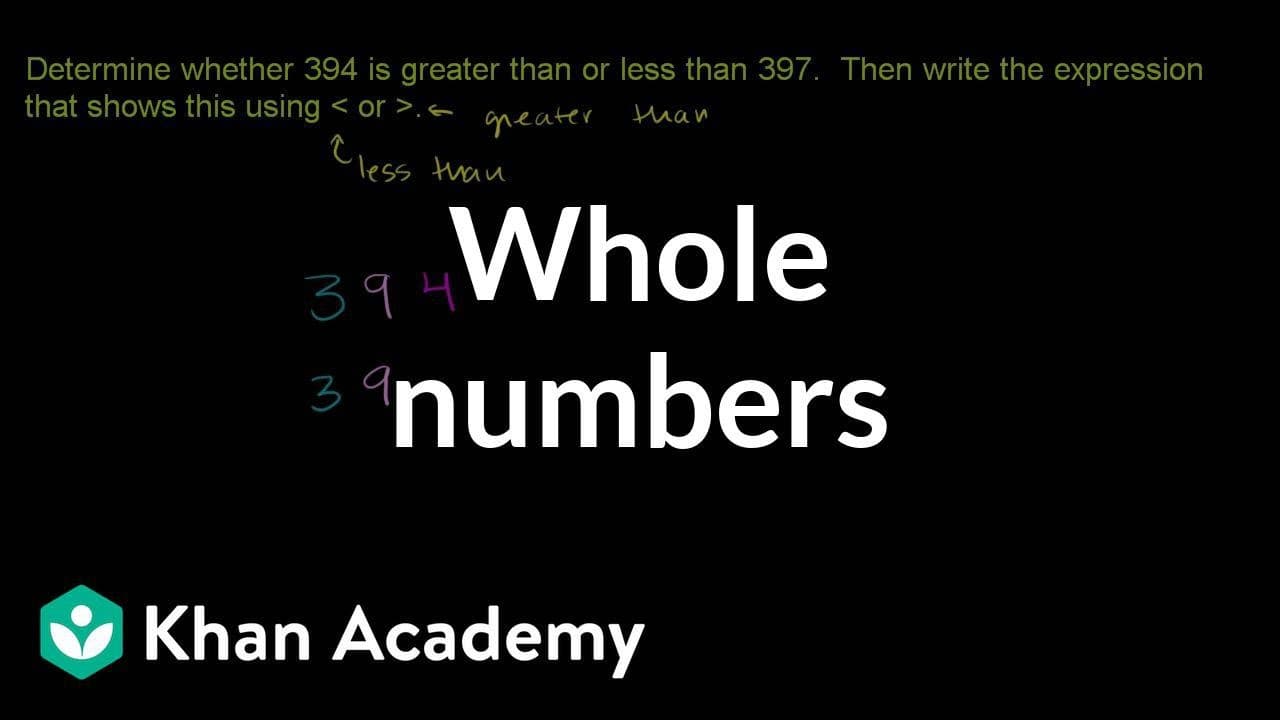
This educational video demonstrates how to compare two three-digit numbers (394 and 397) using place value strategies and inequality symbols. The narrator walks viewers through the step-by-step process of analyzing the digits in the hundreds, tens, and ones places to determine which number is larger. By aligning the numbers and comparing them digit-by-digit, the video provides a clear methodology for solving comparison problems. The content focuses on key mathematical concepts including place value understanding and the correct usage of "greater than" (>) and "less than" (<) symbols. A significant portion of the video is dedicated to explaining how to remember which symbol to use, providing a visual mnemonic where the "smaller side" of the symbol points to the smaller number and the "bigger side" opens toward the larger number. The narrator demonstrates that the comparison can be written in two valid ways: stating 394 is less than 397, or 397 is greater than 394. For educators, this video serves as an excellent model for teaching 2nd and 3rd-grade students how to articulate mathematical comparisons. It moves beyond just finding the answer to constructing a mathematical sentence (expression) that represents the relationship. The visual demonstration of the inequality symbols helps address the common student confusion between the two signs, making it a practical resource for introducing or reviewing inequalities.

Khan AcademyKhan Academy

2mins 4s

Comparing and Ordering Liquid Volume

Comparing and Ordering Liquid Volume

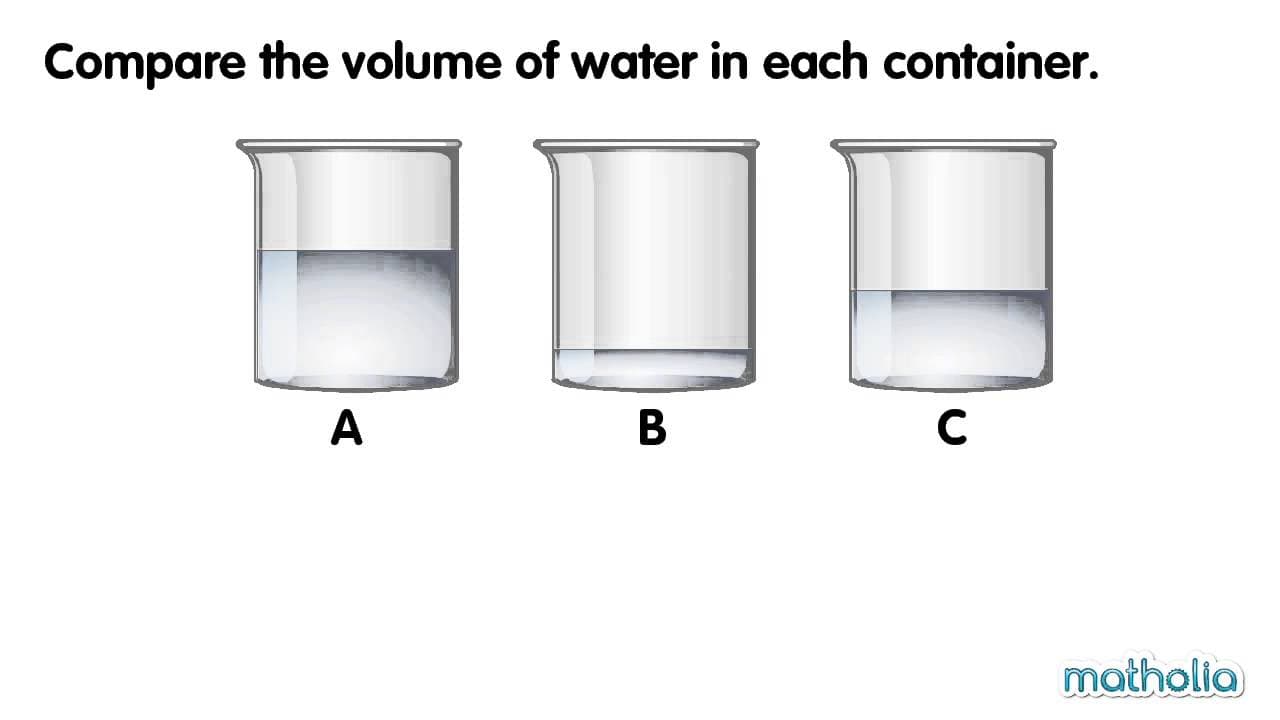
This educational video introduces early learners to the concept of volume by comparing liquid levels in identical containers. Using clear animations and simple narration, it guides students through the process of observing water levels to determine which container holds more or less liquid. The video progresses from comparing two containers using the terms "greater than" and "smaller than" to comparing three containers using superlatives like "greatest" and "smallest." The content specifically focuses on measurement vocabulary and the skill of ordering objects based on measurable attributes. It emphasizes the importance of controlling variables by repeatedly stating that the containers are the same size, allowing students to focus solely on the water level as the indicator of volume. The visual cues, such as blue lines marking the water levels, help reinforce the connection between height and volume in uniform containers. This resource is highly valuable for early elementary math classrooms as a visual anchor for lessons on measurement and capacity. It provides a clear, distraction-free model for comparing volume that can be easily replicated with real classroom materials. Teachers can use this video to introduce vocabulary before a hands-on water table activity or as a review tool to check understanding of ordering concepts.

MatholiaChannelMatholiaChannel

2mins 20s

Comparing Heights at the Campsite

Comparing Heights at the Campsite

This animated educational video introduces early learners to the concept of comparing heights through a fun, camping-themed narrative. Set in a colorful campsite environment, the narrator guides students to observe and compare various pairs of objects and characters, including two children named Dominic and Chelsea, two trees of different sizes, a mother and baby giraffe, and two different colored tents. The video uses clear visual cues, specifically blue dashed lines, to demonstrate exactly how height is measured and compared from a common baseline. The content focuses on building essential measurement vocabulary, specifically the terms "taller" and "shorter." It systematically models direct comparison by placing objects side-by-side and explicitly stating the relationship between them (e.g., "Dominic is taller than Chelsea"). The video progresses from comparing people to nature (trees), animals (giraffes), and objects (tents), reinforcing the concept across different categories while practicing the comparative language structures. For educators, this video serves as an ideal introduction or reinforcement for a measurement unit in early childhood classrooms. The clear, uncluttered visuals and slow pacing allow students to process the questions before the answers are revealed, making it interactive. The use of the horizontal dashed lines is a valuable pedagogical tool that helps students visualize the top-most point of objects to accurately judge height, addressing the common skill of aligning objects at a baseline to compare them fairly.
MatholiaChannelMatholiaChannel

2mins 11s

Using a Number Line to Compare Numbers

Using a Number Line to Compare Numbers

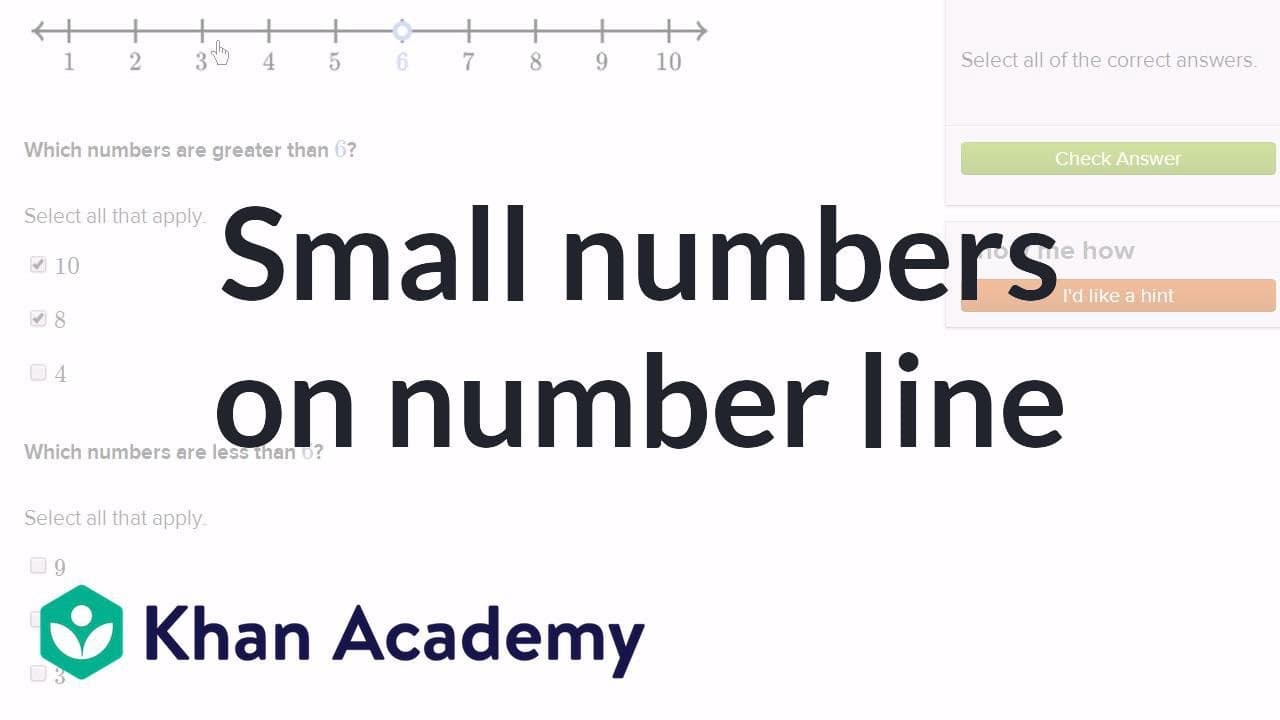
This educational video provides a clear, visual demonstration of how to compare whole numbers using a number line. The narrator walks through a digital math problem asking students to identify which numbers are greater than and less than six, explicitly connecting the concept of magnitude to spatial position (left versus right) on the number line. The video explores key themes of number sense, inequality, and spatial reasoning. It establishes the fundamental rule that on a standard number line, values increase as you move to the right and decrease as you move to the left. The narrator reinforces this abstract concept with a concrete real-world analogy involving bananas at the end of the video to ensure conceptual understanding. For classroom application, this video is an excellent tool for introducing or reinforcing comparison vocabulary ("greater than," "less than"). It helps bridge the gap between counting objects and understanding abstract numerical relationships. Teachers can use this to model how to use a number line as a reference tool for checking answers and to support students who struggle with mental math comparisons.

Khan AcademyKhan Academy

1min 31s

Materials

Book Jacket Studio Worksheet

Book Jacket Studio Worksheet

A comprehensive 2-page book jacket and front-matter design worksheet where students craft their own book cover illustration, back cover blurb, endorsements, dedication, table of contents, chapter names, preface, and interior illustration.

MG

MICHELLE GRIMALDI

Grade 4 Math Priority Pacing Guide

Grade 4 Math Priority Pacing Guide

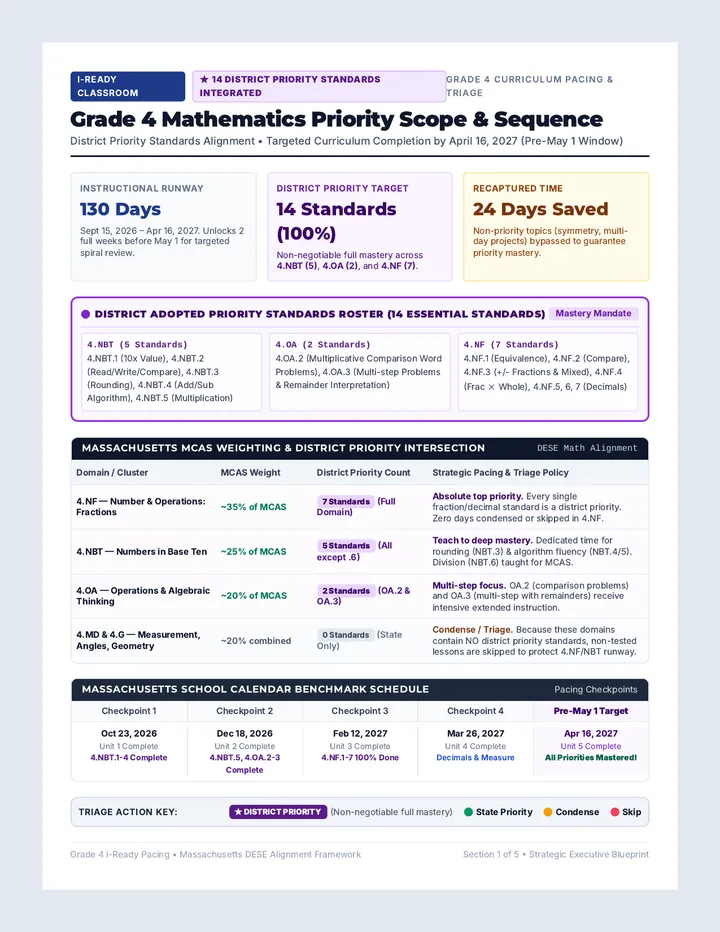
A comprehensive 5-page standards-aligned Grade 4 Mathematics curriculum pacing guide for i-Ready Classroom Mathematics, specifically incorporating the 14 designated District Priority Standards across 4.OA, 4.NBT, and 4.NF. Calibrated to the Massachusetts Curriculum Frameworks to guarantee 100% completion of all district priority standards before May 1, featuring explicit district priority badging, unit-by-unit pacing dates, strategic triage rationales for non-priority topics, and a Tier 2 prerequisite intervention bridge.

AS

Ashley Santiago

More Fewer Bunch Worksheet

More Fewer Bunch Worksheet

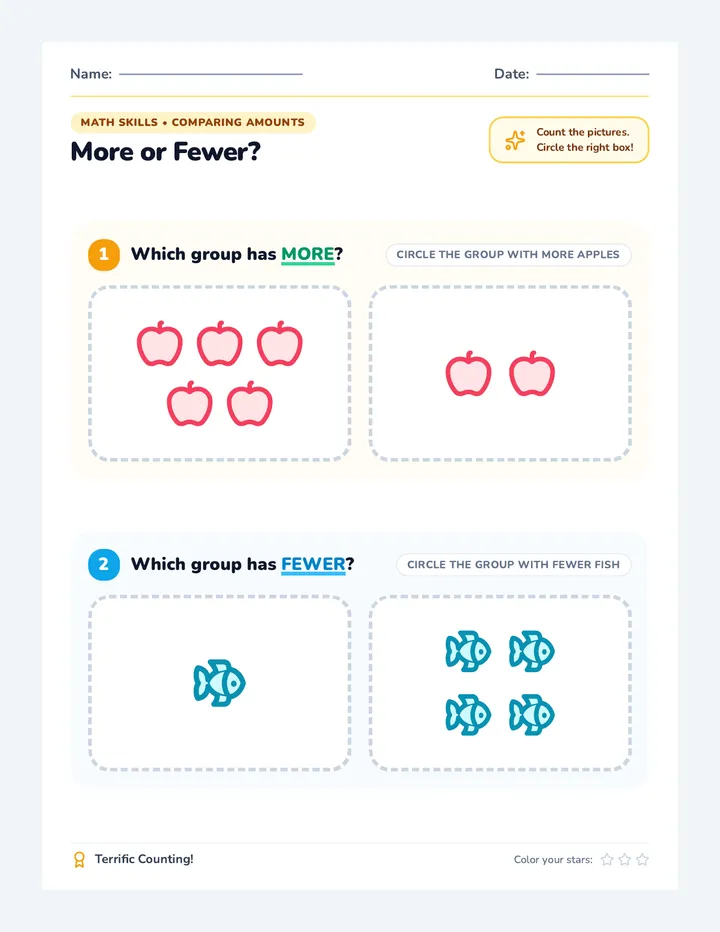
An early math worksheet featuring two oversized comparison exercises where young learners count colorful objects and circle the group that has more or fewer. Designed with large visual elements, clear touch targets, and generous spacing tailored for developing fine motor skills.

M

michelle.bernius

Number Power Spiral Worksheet

Number Power Spiral Worksheet

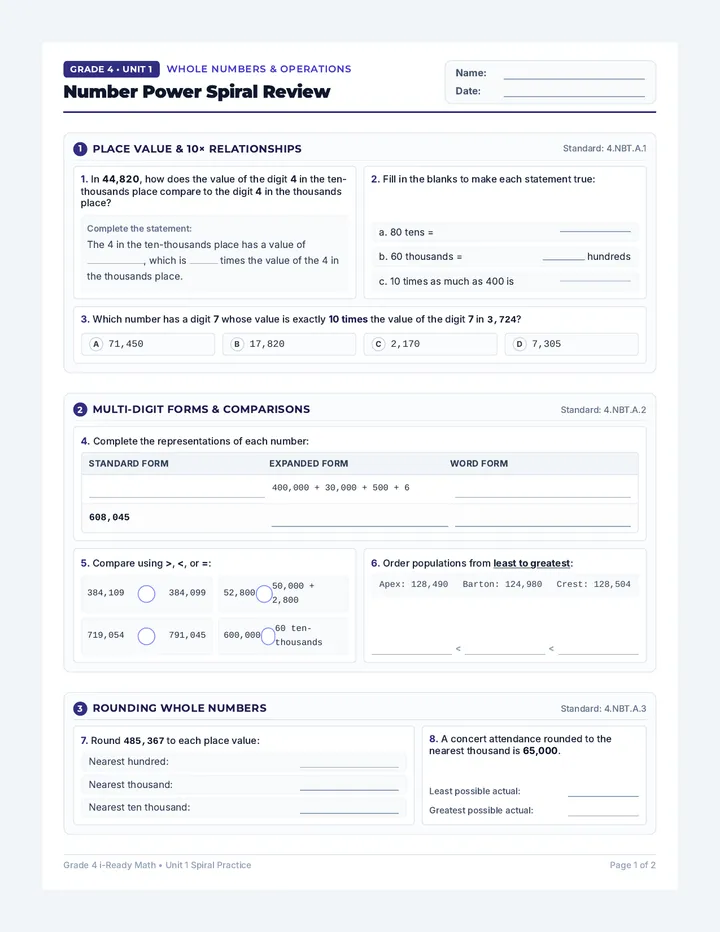
A comprehensive two-page printable spiral review worksheet for Grade 4 i-Ready Math Unit 1, covering place value relationships, multi-digit reading and writing in all forms, number comparison, rounding, multi-digit addition and subtraction across zeros, and multi-step word problem reasoning with dedicated blank show-your-work spaces.

KP

Kimberlee Piknick

Counting Strategies Exit Ticket

Counting Strategies Exit Ticket

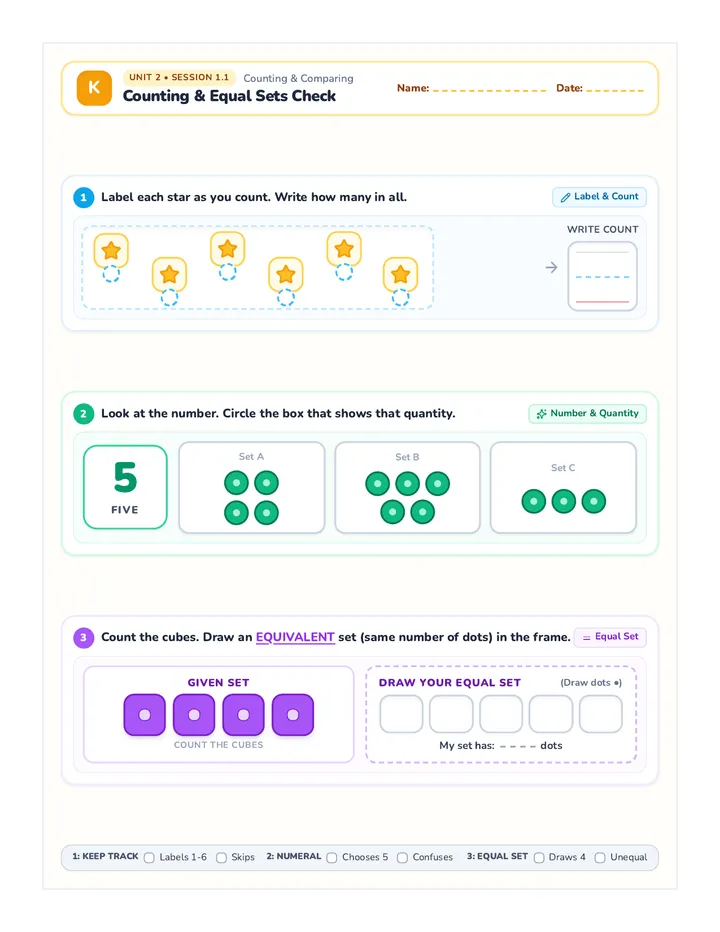
A Kindergarten exit ticket aligned to Investigations Unit 2 Session 1.1 assessing labeling strategies for keeping track of quantities, connecting numerals to quantities, and creating equivalent sets.

SB

Sondra Bell

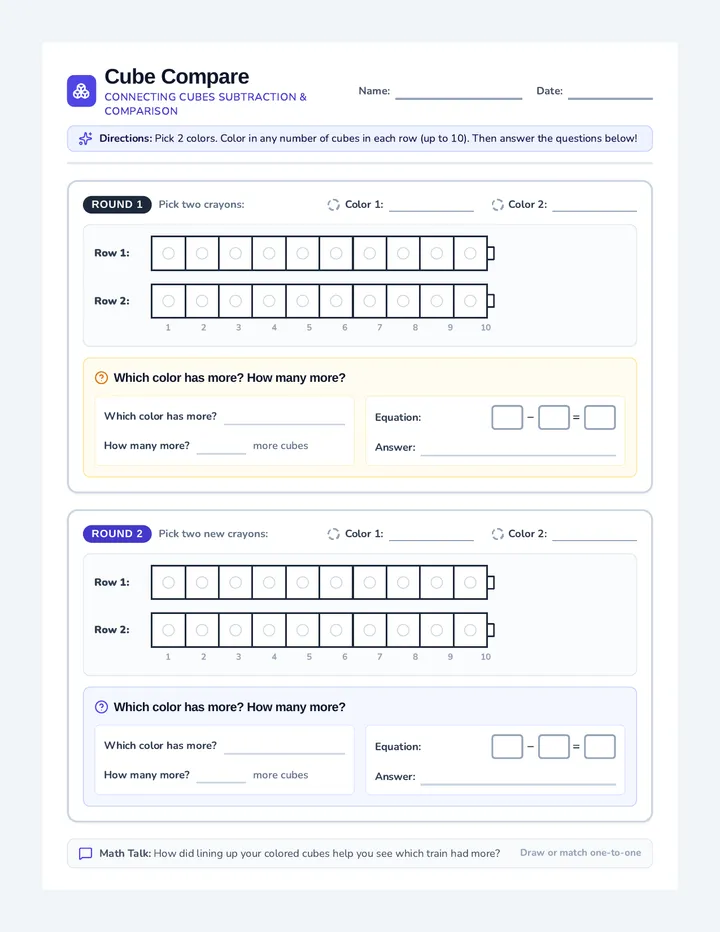
Cube Compare Worksheet

Cube Compare Worksheet

A primary math worksheet featuring two rows of ten math linking cubes for students to color and compare quantities. Includes prompts to determine which color has more, calculate the difference, and write the corresponding subtraction equation.

AA

Addison Armstrong

Sequences

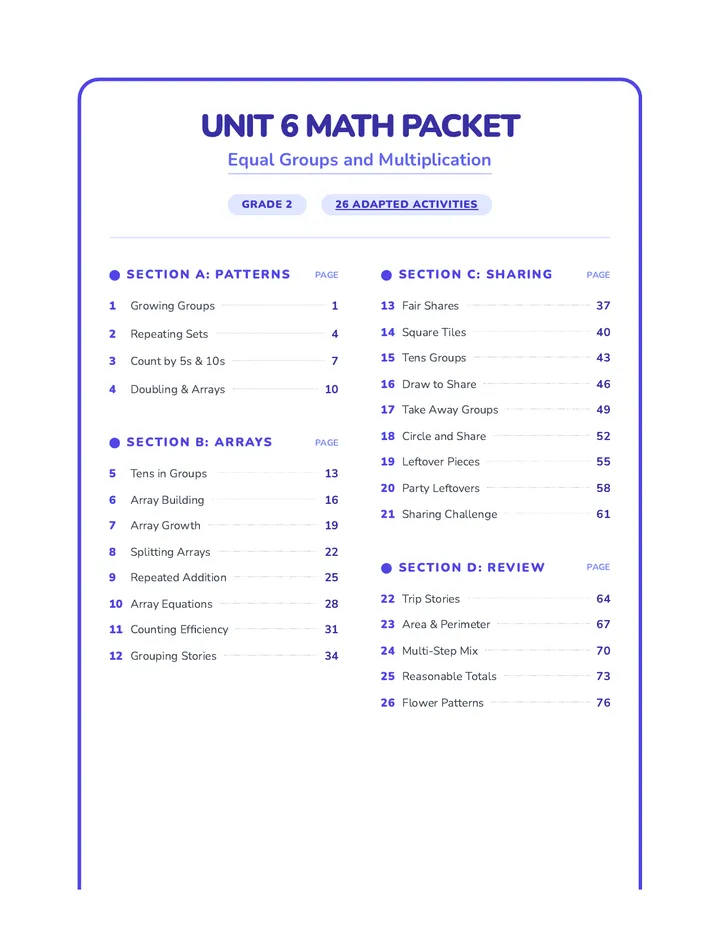
Packet Master TOC document

Unit 6 Equal Groups and Multiplication

A comprehensive Grade 2 math packet focused on skip counting, repeated addition, arrays, and equal groups.

N

nmack

39
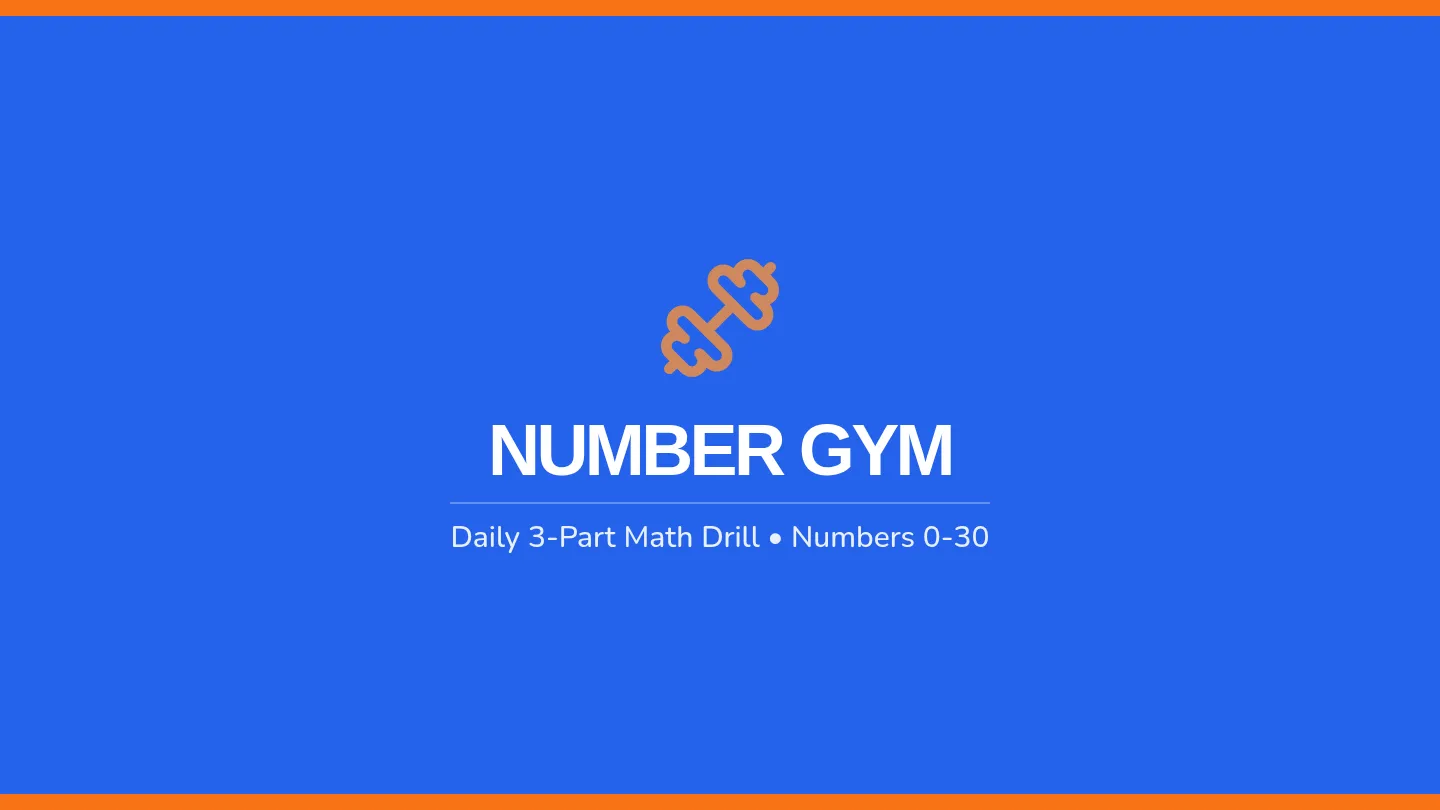
Number Gym Slides

Number Gym Circuit

A four-week intensive math intervention sequence for Tier 3 students. Each day features a 3-part drill targeting number identification, formation, and sequential counting. Weeks 1-2 focus on numbers 0-30; Weeks 3-4 expand to numbers 0-40.

NT

Nicole Thomson

22
Academy Final Mission Assessment

Pond Patrol Academy

A comprehensive math sequence designed for early learners to master counting from 1 to 20. Using a engaging pond theme, students progress from single-digit counting to understanding teen numbers and representing larger quantities.

CN

Coleman Newell

27
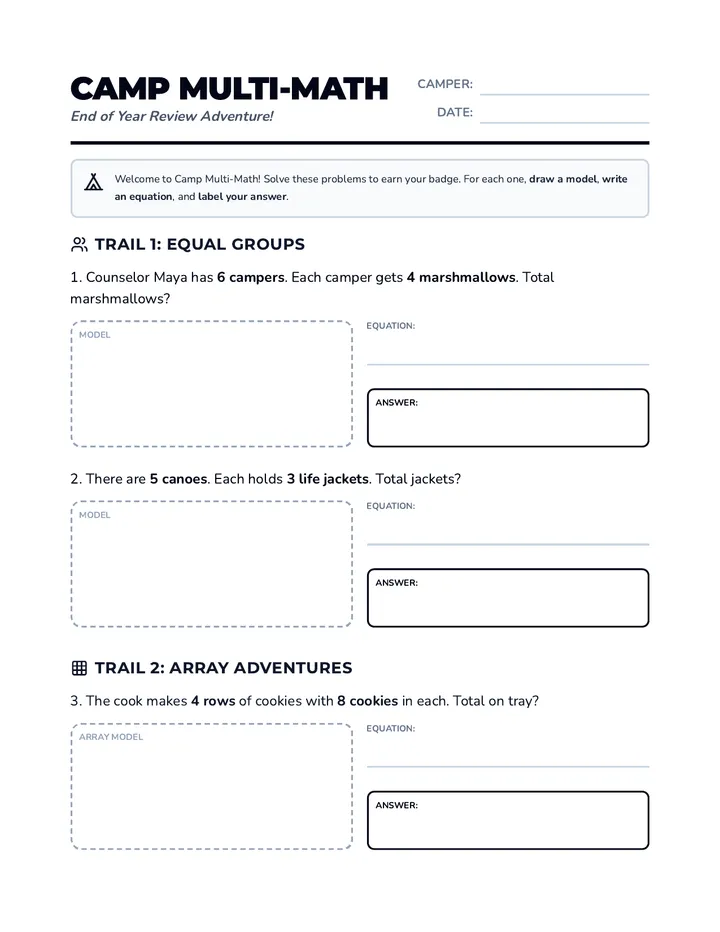
Camp Multi-Math Worksheet

Math Review Adventures

A collection of themed end-of-year math review adventures for different grade levels, focusing on spiraling key standards and problem-solving.

DB

Deborah Burton

21
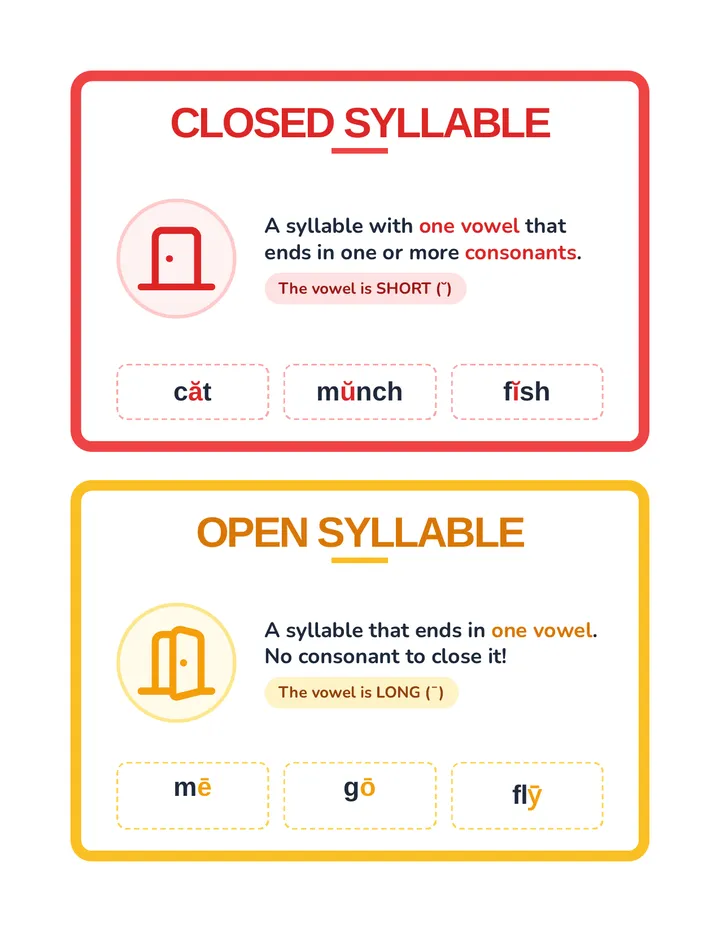
Syllable Type Anchor Charts

Foundational Skills Unit

A foundational skills unit covering literacy progress tracking and early numeracy strategies for decomposition and missing addends.

NT

Nicole Thomson

31
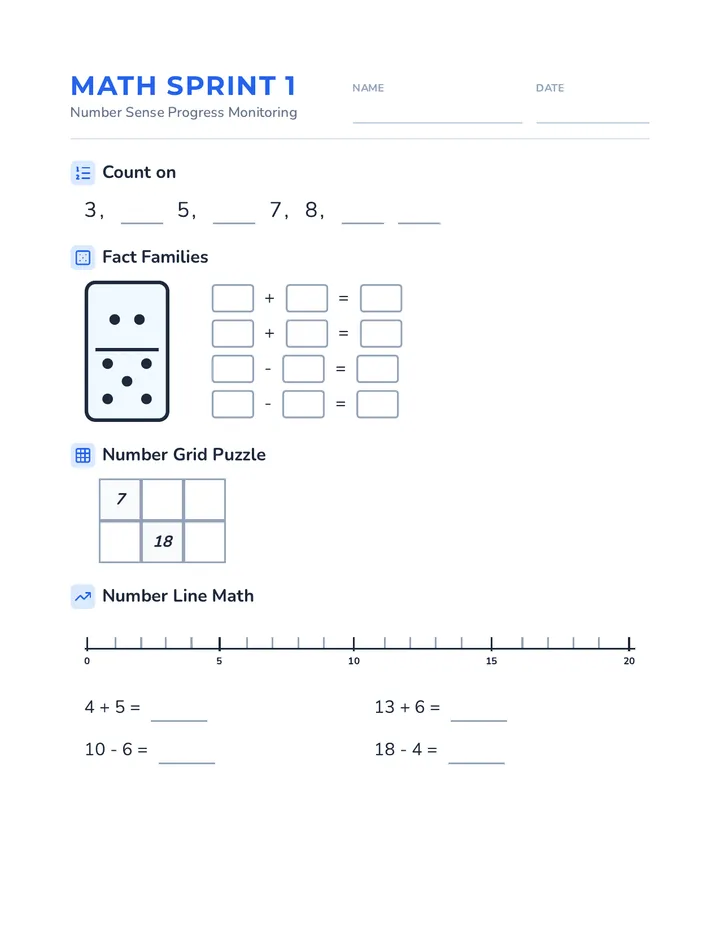
Math Sprint 1 Worksheet

Foundational Math Tracking

A comprehensive series of elementary math progress monitoring resources designed to track student growth in foundational arithmetic and number sense.

T

torrie.smith

24

Lessons

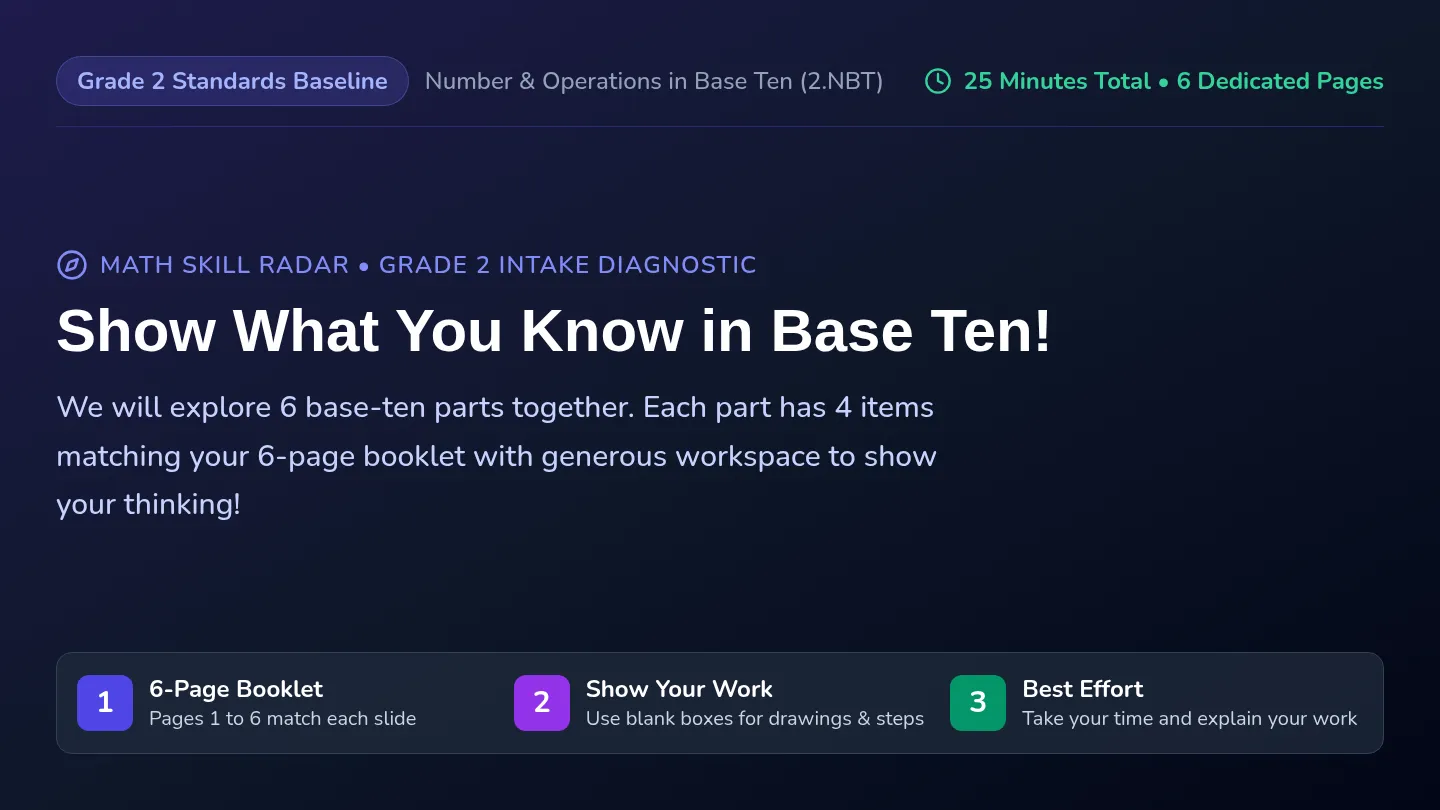
Math Radar Intake Slides

Math Skill Radar

A comprehensive baseline math diagnostic and intervention suite for special education spanning early numeracy through Grade 4. Features complete tiered intake assessments, practice packets, manipulative work mats, and master scoring keys for both 1st Grade Base Ten (1.NBT) and 2nd Grade Base Ten (2.NBT), alongside K-1 early number sense tools.

S

Sara

20
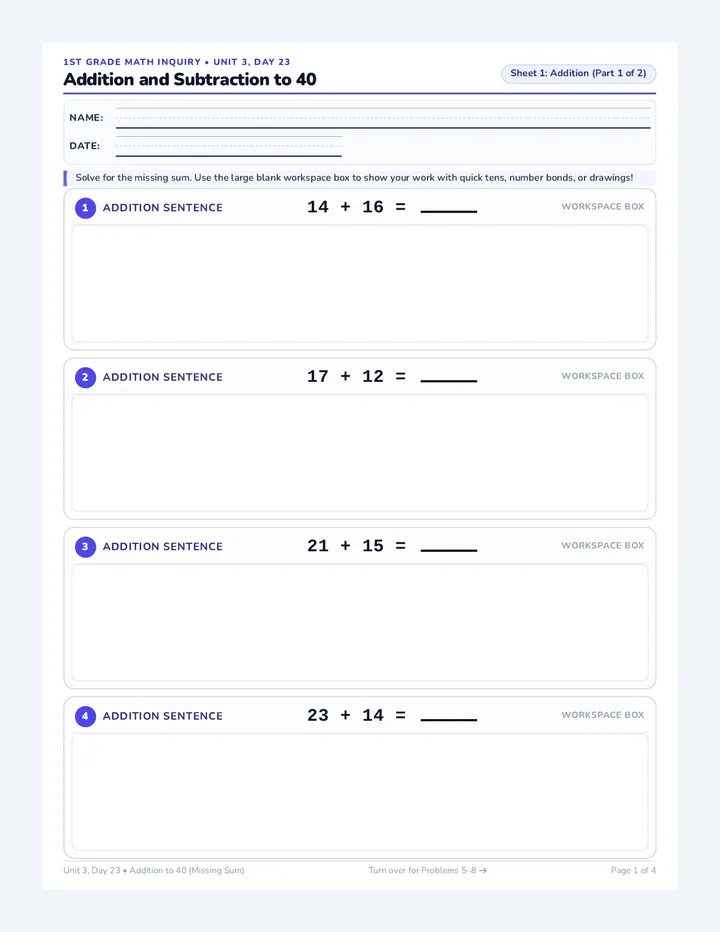
Operations Practice Worksheet

Operations Within Forty

A targeted primary mathematics lesson focused on mastering addition and subtraction number sentences within 40. Students demonstrate their mathematical thinking through dedicated visual workspaces and comparing challenge problems.

EB

Emily Brown

15
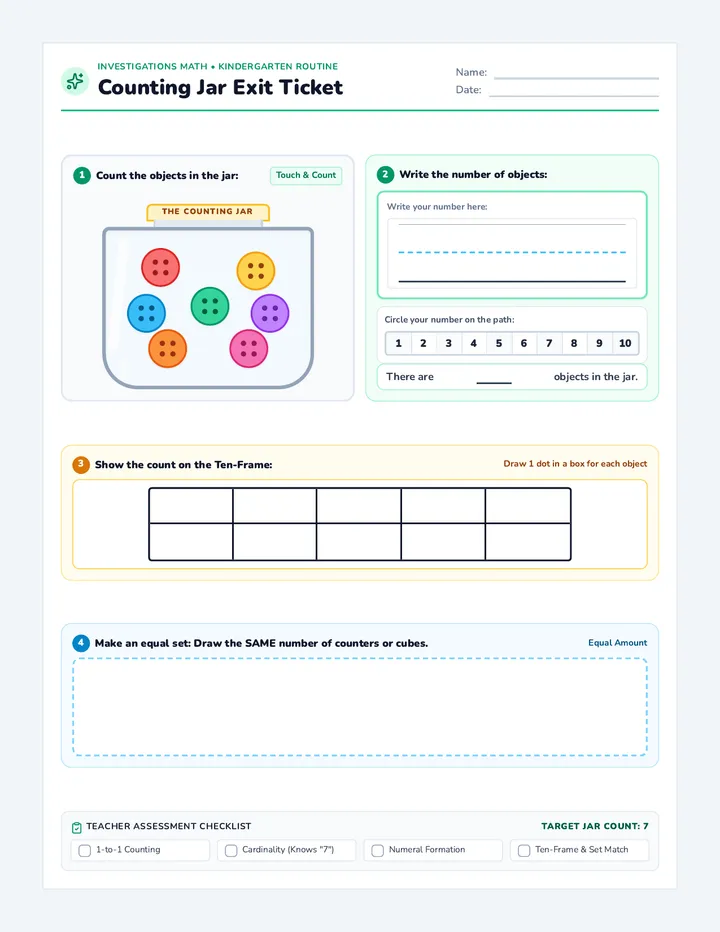
Counting Jar Exit Ticket

Number Trail Explorers

A kindergarten math lesson focused on counting routines, cardinality, and number sequence development up to 20. Students practice recording quantities, counting forwards, and identifying missing numerals in sequence.

SB

Sondra Bell

17
Builders Worksheet 1

Base Ten Addition Builders

A series of worksheets designed to help first-grade students practice two-digit addition without regrouping using the visual aid of base ten blocks. Students will 'build' numbers with tens and ones to solve horizontal equations.

LC

Lenore Chieffo

8
Forest Feast Worksheet

Forest Feast Comparison

A hands-on lesson focusing on counting and comparing sets of forest-themed items up to 15 to develop foundational number sense and comparison skills.

V

victoria.lesniak

5
Daily Review Practice Worksheet

Checkpoint One Review Lesson

A 10-day ILEARN grade 3 daily math review unit covering place value, rounding, multi-digit operations, algebraic word problems, and money calculations.

KY

Kylie Young

2