Lenny.com
Explore
Create
ActivitiesNewMathEnglish Language ArtsScience & EngineeringSocial StudiesGlobal LanguagesHealth & Physical EducationSpecial EducationCounseling & Life SkillsArts & CreativityESL
Lenny.com
Lenny.com
Explore
Create
ActivitiesNewMathEnglish Language ArtsScience & EngineeringSocial StudiesGlobal LanguagesHealth & Physical EducationSpecial EducationCounseling & Life SkillsArts & CreativityESL
Lenny.com
MathNumbers & CountingCounting ObjectsNumber NamesComparing NumbersNumber OperationsCounting SequenceNumbers 0-10Place Value Understanding and SystemAdd and Subtract Within 20Addition and Subtraction ConceptsAddition and Subtraction EquationsAddition and Subtraction ProblemsFoundations for MultiplicationMultiplication and Division PropertiesMultiply and Divide Within 100Multiplication and Division ProblemsFactors and MultiplesProperties of OperationsPatterns and RelationshipsGenerate and Analyze PatternsMulti-Digit ArithmeticPlace Value OperationsMulti-Digit and Decimal OperationsNumerical ExpressionsFour Operations and PatternsFour Operations Problem SolvingMeasurement & DataMeasurable AttributesMeasuring LengthsMeasure and Estimate Lengths in Standard UnitsRelate Addition and Subtraction to LengthClassifying and Counting ObjectsTime and MoneyArea Concepts and MeasurementPerimeter and Area MeasuresAngle Concepts and MeasurementTime, Volume, and MassMeasurement Unit ConversionsGeometryIdentifying ShapesShapes and AttributesShape Attributes and ReasoningShapes and CompositionClassifying 2D FiguresGeometric Figures and RelationshipsLines, Angles, and ShapesAngle, Area, and VolumeGeometric MeasurementVolume of 3D ShapesCoordinate Plane ApplicationsTransformations in the PlaneCongruence and SimilarityUnderstand congruence in terms of rigid motionsSimilarity and TransformationsProve Theorems Involving SimilarityPythagorean TheoremTrigonometry for General TrianglesMake Geometric ConstructionsProve Geometric TheoremsTheorems About CirclesFind Arc Lengths And Areas of Sectors of CirclesVolume FormulasRelationships Between Two-Dimensional and Three-Dimensional ObjectsProve Simple Geometric Theorems AlgebraicallyTranslate Between Geometric Description and Equation for Conic SectionApply Geometric Concepts in Modeling SituationsFractions & DecimalsFractions as NumbersBuilding FractionsFraction Equivalence and OrderingAdding and Subtracting FractionsMultiplying and Dividing FractionsDividing FractionsDecimal FractionsMulti-Digit Computation and FactorsAdd, Subtract, Multiply, and Divide Rational NumbersRational Number SystemIrrational Numbers and ApproximationsRatiosRatios and ProportionsProportional RelationshipsUnit RateAlgebraAlgebraic ExpressionsGenerate Equivalent ExpressionsQuantitative RelationshipsProportional Relationships and Linear EquationsEquations and InequalitiesEquation Solving and ReasoningLinear Equations and SystemsGraph Equations and InequalitiesSystems of EquationsReal-World Algebraic ProblemsQuantitative Reasoning with UnitsExpression StructureEquivalent Expression FormsRadicals and Integer ExponentsRational ExponentsRational and Irrational NumbersPolynomial OperationsPolynomial IdentitiesPolynomial Zeros and FactorsRational ExpressionsComplex Number OperationsComplex Numbers in PolynomialsComplex Numbers on PlaneStatistics & ProbabilityRepresent and Interpret DataData DistributionsStatistical VariabilityProbability ModelsCompound Event ProbabilitiesStatistical SamplingInterpret Categorical and Quantitative DataBivariate Data PatternsInterpret Linear ModelsComparing Two PopulationsRandom Processes in StatisticsIndependence and Conditional ProbabilityExpected ValuesProbability-Based Decision MakingStatistical Inference and ConclusionsFunctionsFunction Concepts and NotationDefine and Compare FunctionsInterpret Functions in ContextAnalyze Function RepresentationsModel Relationships with FunctionsIdentify Linear vs Exponential GrowthDistinguish Between Function TypesCompare Growth RatesInterpret Function ExpressionsBuild Functions from RelationshipsConstruct and Model FunctionsTransform and Combine FunctionsModel Comparison and SelectionSolve Exponential EquationsTrigonometryTrigonometric Ratios Involving Right TrianglesTrigonometric Functions and Unit CircleModel with Trigonometric FunctionsTrigonometric IdentitiesVectors & MatricesIntroduction to Vectors and MatricesVector QuantitiesVector OperationsMatrix OperationsCalculusLimits and ContinuityDerivative Concepts and NotationDerivative Rules and TechniquesApplications of DerivativesOptimization ProblemsRelated RatesCurve Sketching and AnalysisIntegration Concepts and NotationAntiderivatives and Indefinite IntegralsDefinite Integrals and AreaFundamental Theorem of CalculusIntegration TechniquesApplications of IntegrationDifferential EquationsSequences and SeriesParametric and Polar FunctionsVector-Valued Functions
Lenny.com

Solutions

Lenny for EducatorsLenny for SchoolsLenny for Districts

Product

ExploreSign inCreateSupportAbout

Resources

Getting startedMTSS Acceleration Program

© 2026 Lenny Learning Inc.

TermsPrivacyAccessibility
LinkedInInstagramX
Lenny

Generate and Analyze Patterns

Numerical and geometric sequence identification using explicit rules. Builds algebraic reasoning through the analysis of term-to-term relationships and coordinate plane representations.

Videos

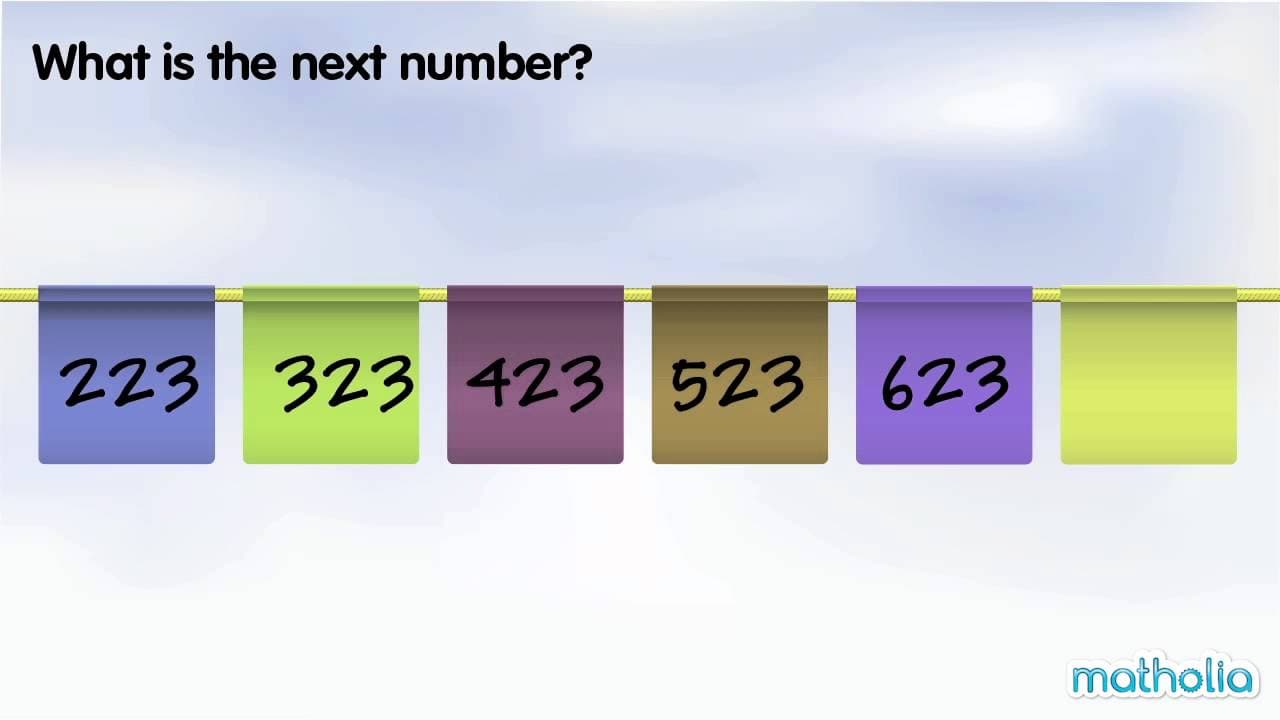
Predicting the Next Number in Arithmetic Patterns

Predicting the Next Number in Arithmetic Patterns

This educational video guides students through identifying and extending number patterns using three-digit numbers. Through four clear examples, the narrator demonstrates how to determine the rule of a sequence by looking at the difference between consecutive numbers. The video utilizes visual aids like colorful banners and directional arrows to explicitly show the addition or subtraction occurring at each step. The content covers a variety of common arithmetic patterns appropriate for early elementary mathematics. Specifically, it explores increasing sequences where numbers grow by 1, 10, and 100, as well as a decreasing sequence where numbers count down by 5. This variety helps students practice mental math strategies across different place values (ones, tens, and hundreds). For educators, this resource serves as an excellent visual model for teaching skip counting and early algebraic thinking. The clear, step-by-step narration allows teachers to pause the video before the answer is revealed, turning it into an interactive guessing game. It reinforces place value concepts by highlighting how specific digits change while others remain constant when adding multiples of 10 or 100.

MatholiaChannelMatholiaChannel

2mins 33s

Calculating Square Roots of Large Numbers by Hand

Calculating Square Roots of Large Numbers by Hand

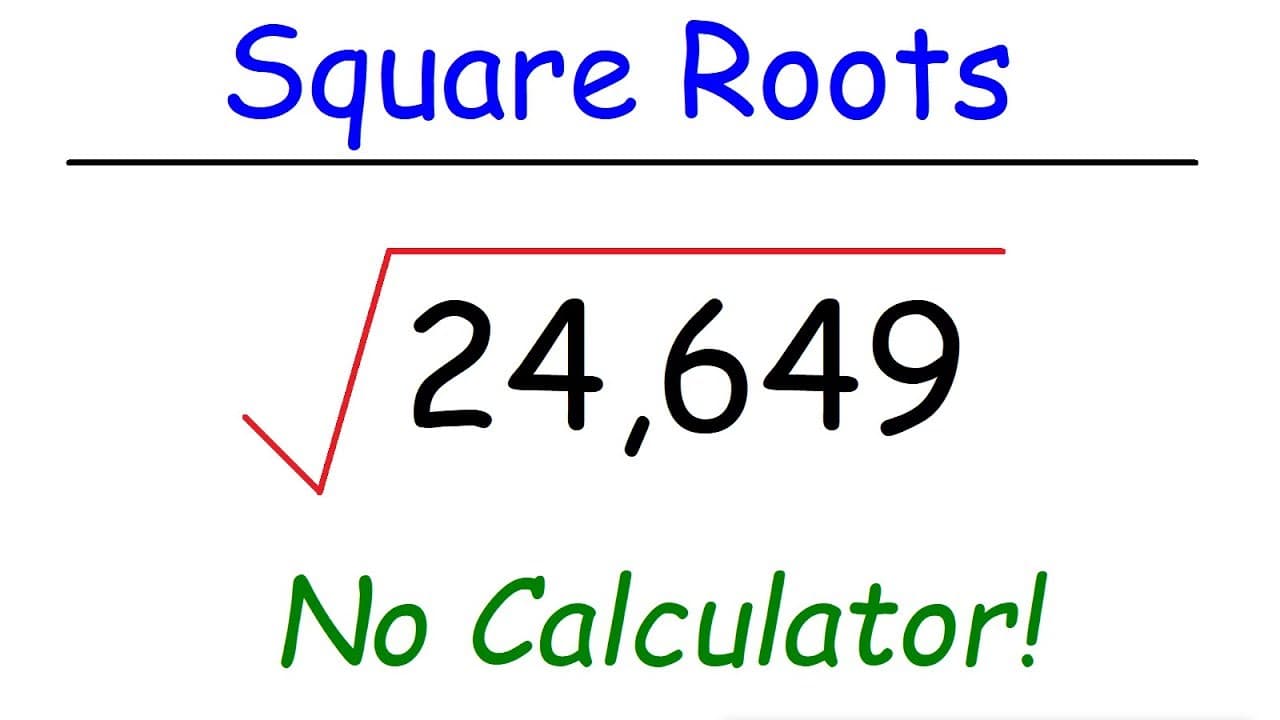
This instructional video presents a mental math strategy for calculating the square roots of large perfect square integers without a calculator. The narrator systematically breaks down the process into two main steps: pattern recognition of the unit digits and estimation of the remaining value. By identifying the correlation between the last digit of a number and the last digit of its square root, viewers learn to narrow down potential answers to two possibilities. The video then demonstrates how to determine the correct answer by estimating which multiple of 10 the number is closest to. The video explores key mathematical themes including perfect squares, unit digit patterns, and estimation strategies. It begins by listing the squares of numbers 1 through 20 to establish visual evidence of the repeating patterns in unit digits (e.g., numbers ending in 1 or 9 always square to numbers ending in 1). This foundational knowledge is then applied to increasingly difficult problems, moving from 4-digit numbers to 5-digit numbers, reinforcing number sense and an understanding of magnitude. For educators, this video serves as an excellent tool for Algebra and Pre-Algebra classes to deepen students' number sense beyond rote memorization. It demystifies square roots and empowers students with a logical method for checking their work or solving problems when technology is unavailable. The visual demonstration of patterns helps visual learners grasp the relationship between numbers and their squares, while the step-by-step guided practice allows for immediate classroom application and formative assessment.

The Organic Chemistry TutorThe Organic Chemistry Tutor

12mins 37s

How to Find Cube Roots of Large Numbers Mentally

How to Find Cube Roots of Large Numbers Mentally

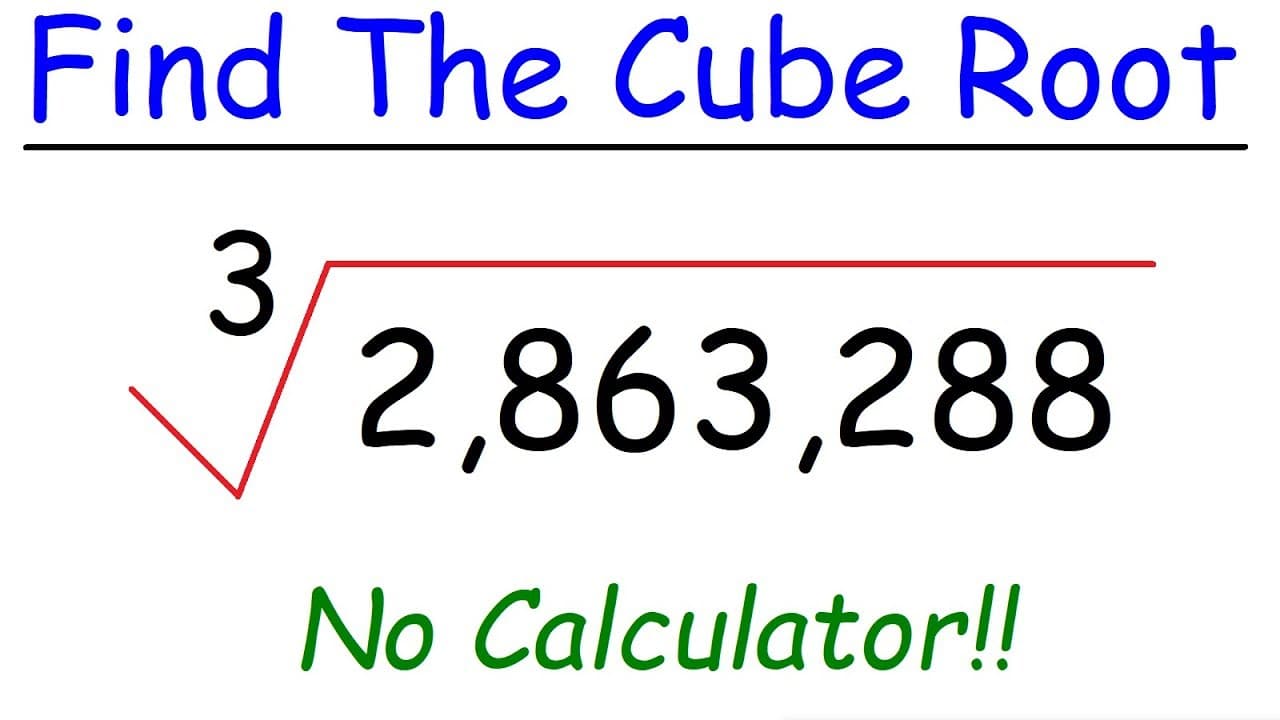
This math tutorial demonstrates a clever mental math technique for finding the cube root of large perfect cubes without using a calculator. The video begins by establishing the foundational knowledge required: memorizing perfect cubes from 1 to 10 and recognizing the specific patterns that exist between the last digit of a number and the last digit of its cube. The narrator systematically builds a reference table on the screen to guide viewers through the process. The core of the video is a step-by-step walkthrough of an algorithm that simplifies complex roots into two manageable steps. First, viewers learn to identify the last digit of the answer by looking at the last digit of the large number. Second, they learn how to find the preceding digits by "sandwiching" the remaining part of the number between known perfect cubes. The video progresses from 5-digit numbers up to 7-digit numbers, providing multiple practice opportunities to reinforce the skill. For educators, this video serves as an engaging hook for lessons on exponents, roots, and number sense. It moves beyond rote memorization of algorithms by encouraging students to look for patterns in numbers and use estimation strategies. It is particularly useful for Math Olympiad preparation, enrichment activities, or as a confidence-building exercise in Algebra classes to demystify large numbers and roots.

The Organic Chemistry TutorThe Organic Chemistry Tutor

11mins 49s

How to Solve Geometric Sequences with Negatives and Fractions

How to Solve Geometric Sequences with Negatives and Fractions

This educational math video explores advanced concepts in geometric sequences, moving beyond simple positive whole numbers to examine sequences involving negative numbers and fractions. The narrator, Justin, guides viewers through three distinct examples that demonstrate how common ratios can result in alternating signs or decreasing values. The video addresses the common confusion students face when numbers don't simply get "bigger" in a multiplicative pattern, introducing algebraic methods to find the common ratio definitively.

Miacademy & MiaPrep Learning ChannelMiacademy & MiaPrep Learning Channel

3mins 11s

Analyzing Relationships Between Number Patterns

Analyzing Relationships Between Number Patterns

This instructional math video guides students through the process of generating numerical patterns based on specific rules and then analyzing the mathematical relationships between two related patterns. The instructor, Mr. J, demonstrates how to create sequences by following "start at" and "add/subtract" directions, subsequently teaching viewers how to identify functional relationships between corresponding terms in the two sequences. The video covers four distinct examples involving addition, multiplication, division, and subtraction rules connecting the patterns. The core themes include generating numerical patterns, identifying arithmetic sequences, and determining algebraic relationships (rules) between two sets of numbers. A significant focus is placed on the vocabulary of "terms" and "corresponding terms," as well as the importance of verifying mathematical rules across multiple data points rather than assuming a pattern based on a single pair. The video introduces foundational algebraic thinking by expressing these relationships as equations (e.g., A + 2 = B or 3x = y). For educators, this video serves as an excellent direct instruction tool for Common Core standard 5.OA.B.3. It models precise mathematical procedures and metacognitive strategies, such as checking work to ensure validity. Teachers can use this video to introduce the concept of input/output tables, prepare students for graphing ordered pairs on a coordinate plane, or as a remediation tool for students struggling to see the connection between two changing variables.
Math with Mr. JMath with Mr. J

10mins 11s

Proving the Sum of an Arithmetic Series Formula

Proving the Sum of an Arithmetic Series Formula

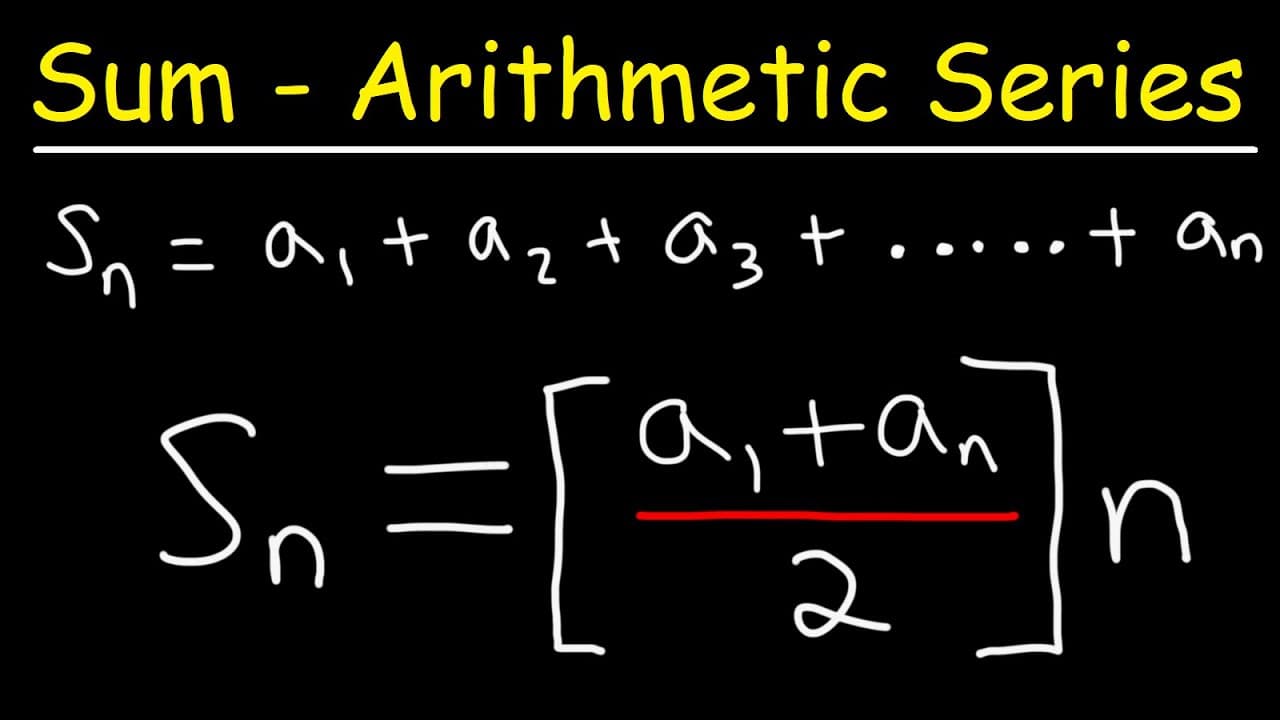
A focused mathematics tutorial that explains the difference between arithmetic sequences and series, demonstrates how to calculate the partial sum of a series, and provides a step-by-step algebraic proof for the arithmetic series sum formula. The video begins by distinguishing between a sequence (a list of numbers) and a series (the sum of those numbers) using a specific numerical example (5, 8, 11, 14, 17). The core of the video explores the derivation of the formula Sn = n/2 * (a1 + an). The instructor uses the "Gaussian method" of writing the series sum forwards and backwards, then adding the two equations together. This visual algebraic demonstration highlights how the common differences cancel out, leaving a clean result that proves why the formula works. This resource is highly valuable for high school Algebra II or Pre-Calculus classrooms. It moves beyond rote memorization by teaching the "why" behind the math. Teachers can use this to introduce the concept of formal proofs or to help students visualize the symmetry inherent in arithmetic progressions.

The Organic Chemistry TutorThe Organic Chemistry Tutor

6mins 38s

Materials

Figurative Patterns Slides Orientation Fix

Figurative Patterns Slides Orientation Fix

Fixed Slide 6 where the visualization of two paired triangular numbers forming a rectangle was missing. Replaced the previous layout with explicit flex rows to ensure the dots render correctly and clearly show how $T_4$ and its twin create a $4 \times 5$ rectangle. Label positioning and container sizing were also refined for better clarity. Adjusted Slide 4 to fill vertical space more effectively.

BC

Brenda Coombs

Grade 4 Math Priority Pacing Guide

Grade 4 Math Priority Pacing Guide

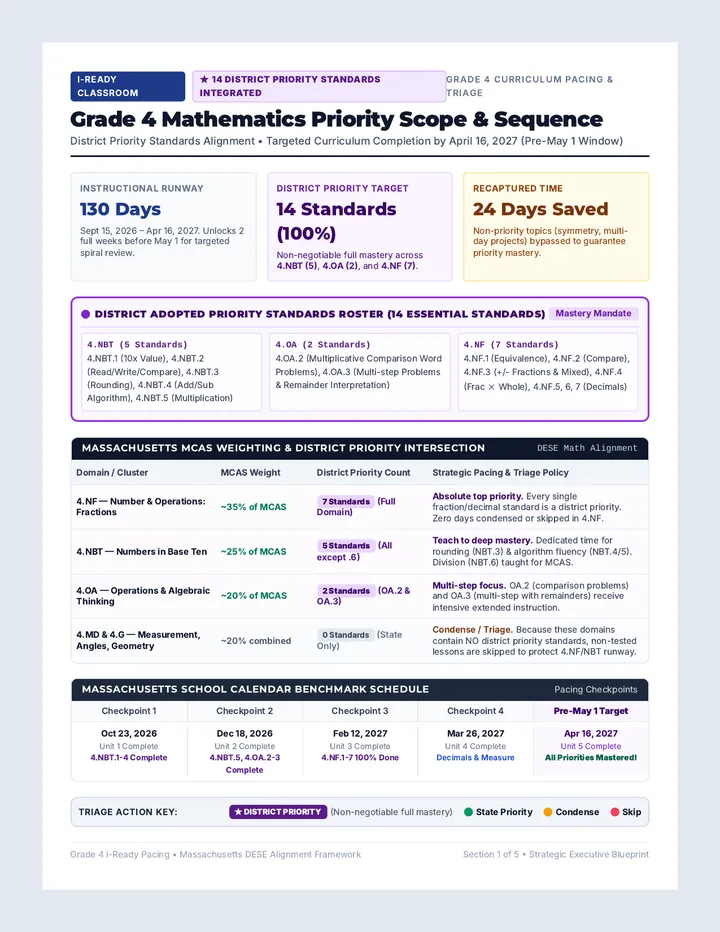
A comprehensive 5-page standards-aligned Grade 4 Mathematics curriculum pacing guide for i-Ready Classroom Mathematics, specifically incorporating the 14 designated District Priority Standards across 4.OA, 4.NBT, and 4.NF. Calibrated to the Massachusetts Curriculum Frameworks to guarantee 100% completion of all district priority standards before May 1, featuring explicit district priority badging, unit-by-unit pacing dates, strategic triage rationales for non-priority topics, and a Tier 2 prerequisite intervention bridge.

AS

Ashley Santiago

Patterns and Operations Workbook

Patterns and Operations Workbook

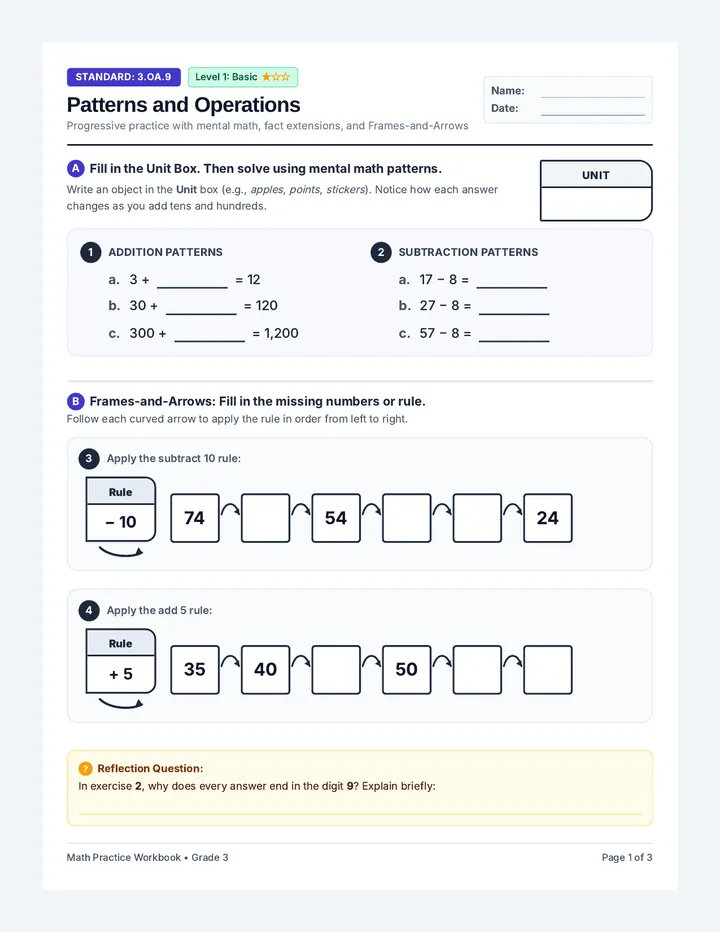
A 3-page progressive practice workbook featuring number patterns, mental addition and subtraction, and Everyday Math-style Frames-and-Arrows routines with graduated difficulty for third grade.

DL

Damaris Lopez Valentin

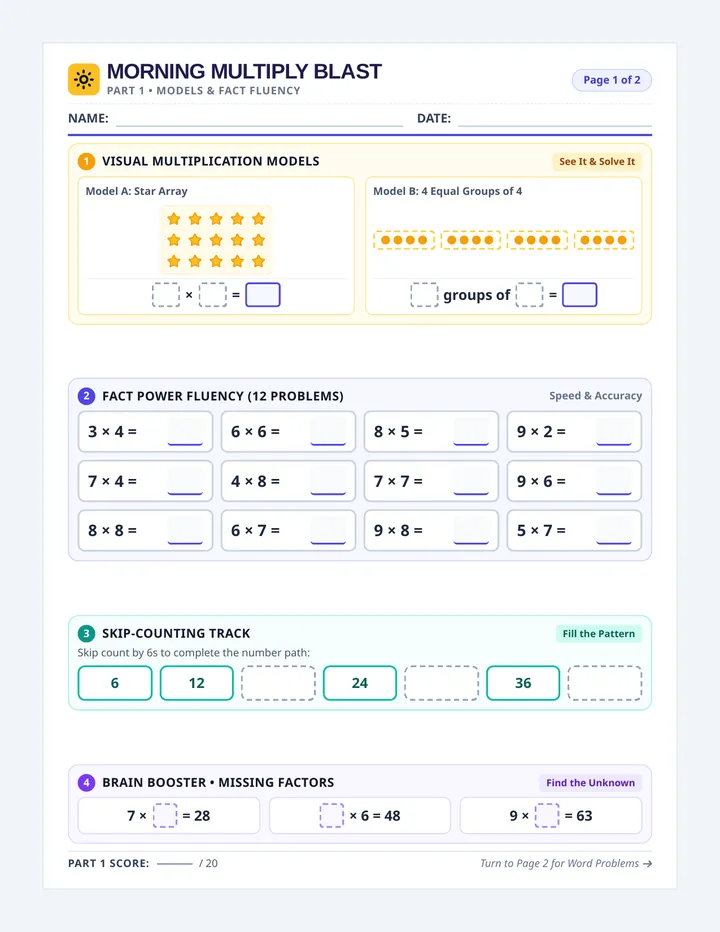
Morning Multiply Blast Worksheet

Morning Multiply Blast Worksheet

A comprehensive 2-page large-print morning work packet featuring visual array models, number line skip-counting, 12 core fact fluency drills, four structured word problem workstations, and a multi-step challenge.

RM

Rosalyn Mcrae

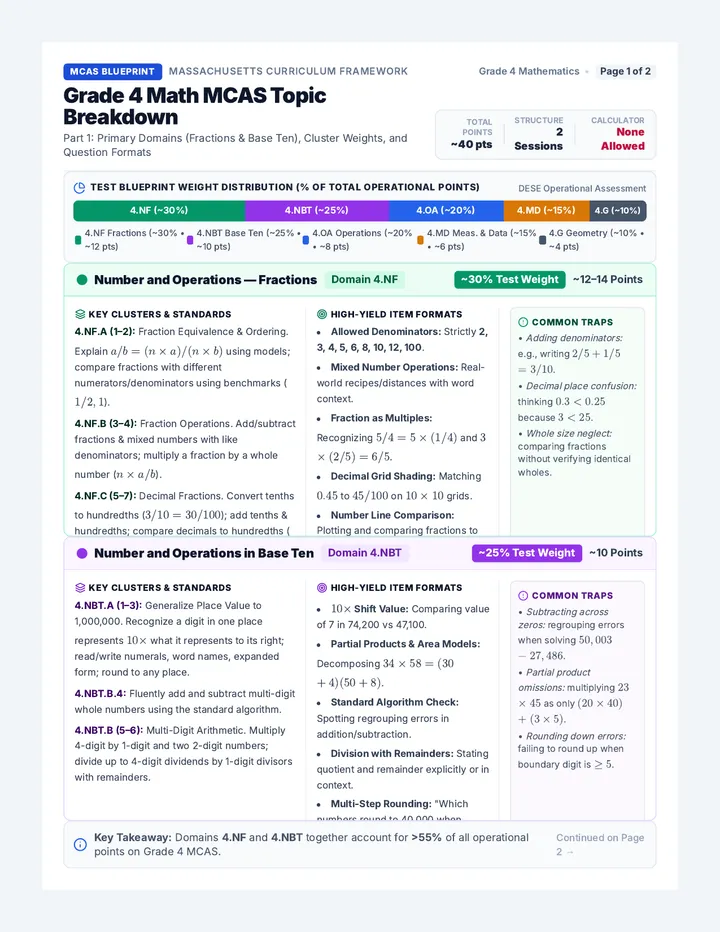
MCAS Grade Four Math Reference Chart

MCAS Grade Four Math Reference Chart

A comprehensive two-page reference chart detailing the Massachusetts MCAS Grade 4 Mathematics test blueprint, including domain weights, priority clusters, released item archetypes, common misconceptions, and constructed-response rubrics.

MS

Meaghan Smith

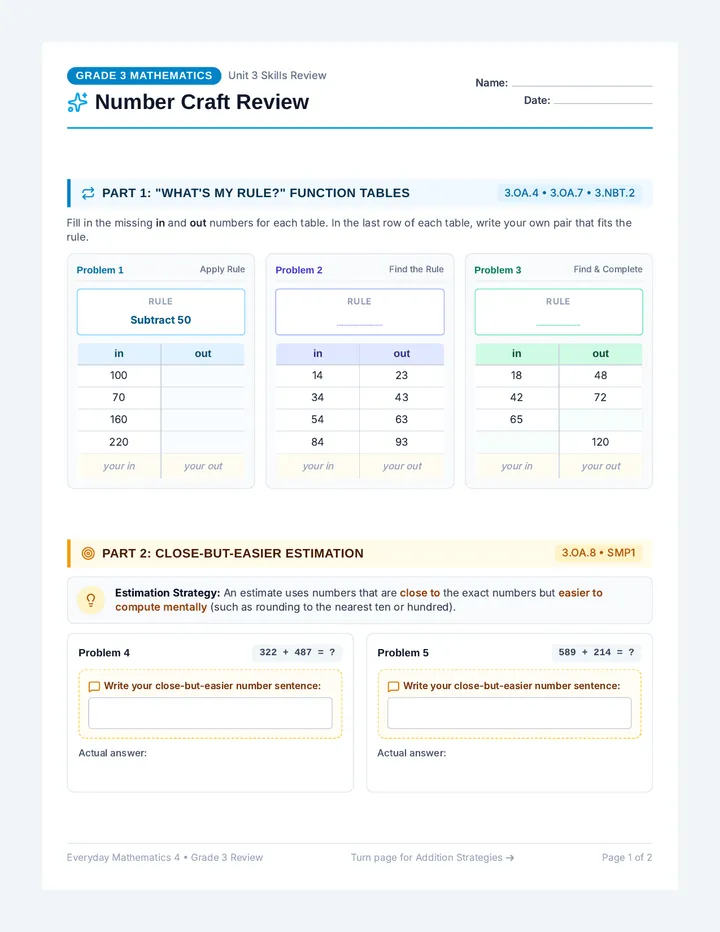
Number Craft Review Worksheet

Number Craft Review Worksheet

A comprehensive 2-page Grade 3 math review worksheet based on Everyday Mathematics Unit 3, covering What's My Rule function tables, close-but-easier estimation strategies, partial-sums addition, and column addition with place-value grids.

D

Dahlia.Sirilla

Sequences

Foundation Missions Part 1 Final

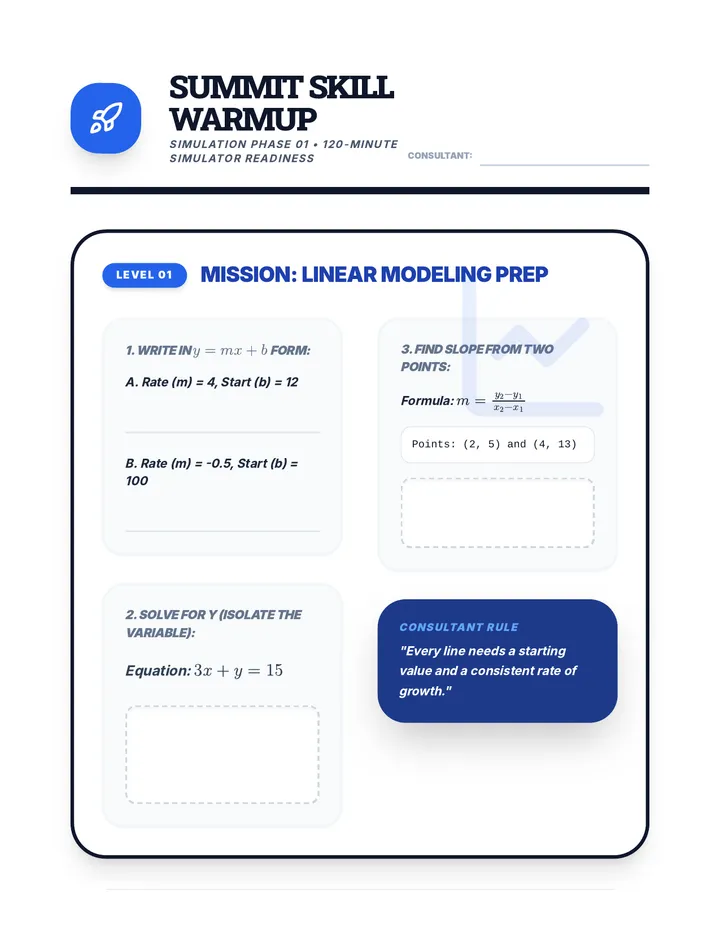
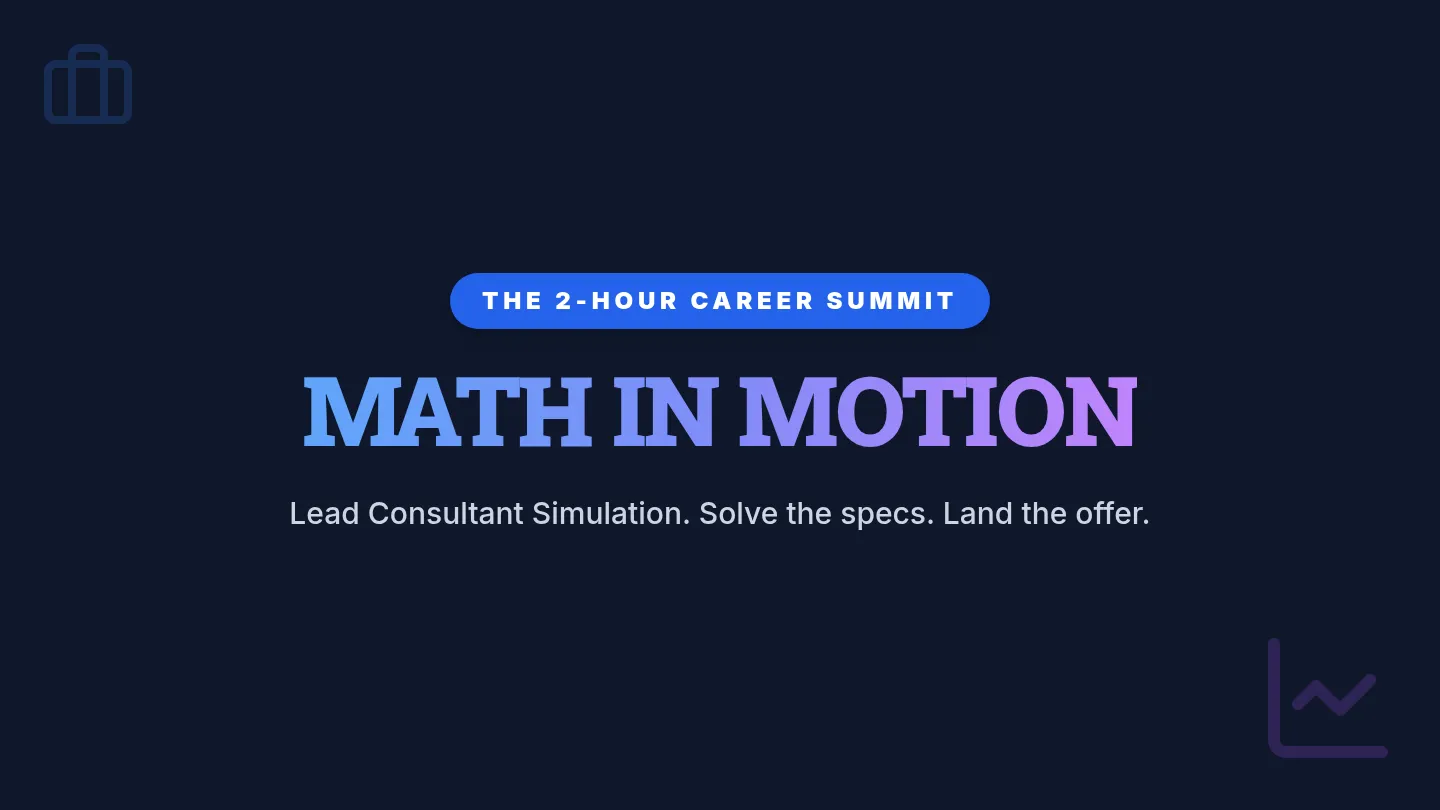
Math in Motion: The 2-Hour Summit

A high-intensity, 120-minute math simulation. Students act as lead consultants, completing a high-speed skill warmup before selecting a professional sector (Music, Urban Planning, Rocket Science, or Sports Analytics) to solve a series of complex work orders.

EL

Elsa LaLone

102
Project Mission Slides Final

Math in Motion: The 2-Hour Summit

A high-intensity, 120-minute math simulation. Students act as lead consultants, completing a high-speed skill warmup before selecting a professional sector (Music, Urban Planning, Rocket Science, or Sports Analytics) to solve a series of complex work orders.

EL

Elsa LaLone

102
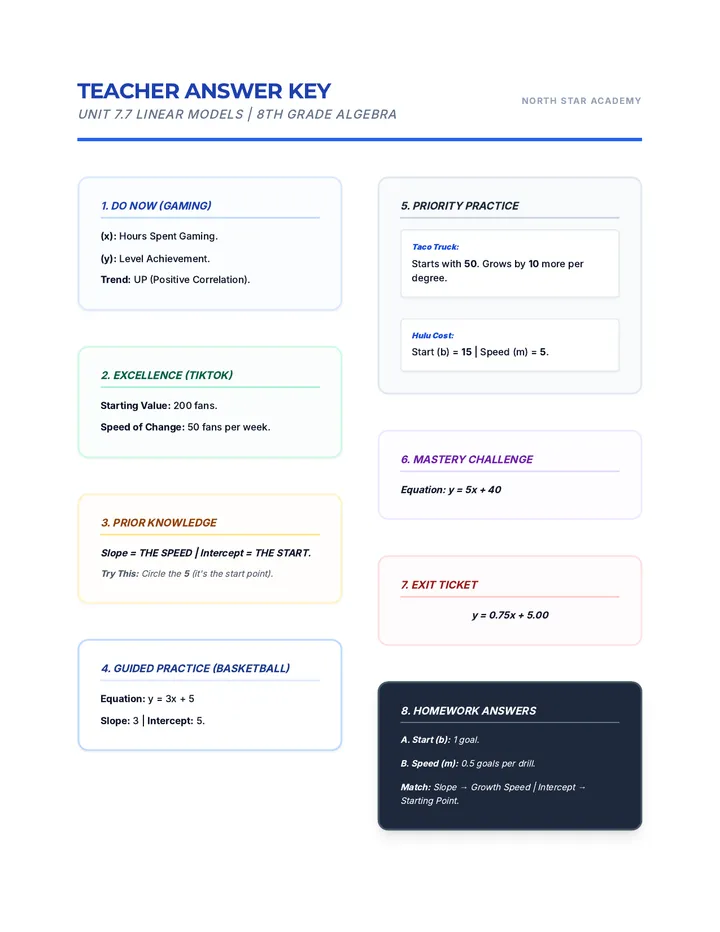
Trend Trackers Answer Key

Algebra Essentials Sequence

A series of 8th and 9th grade Algebra lessons focused on linear relationships and systems of equations, with a focus on SPED/IEP support.

D

deeohnny.jackson

55
Blueprint Basics Slides

Foundational Math Builders

A foundational math sequence for special education students (grades 5-6) focusing on algebraic thinking and spatial reasoning through highly visual, themed units.

JS

Janette Sullivan

37
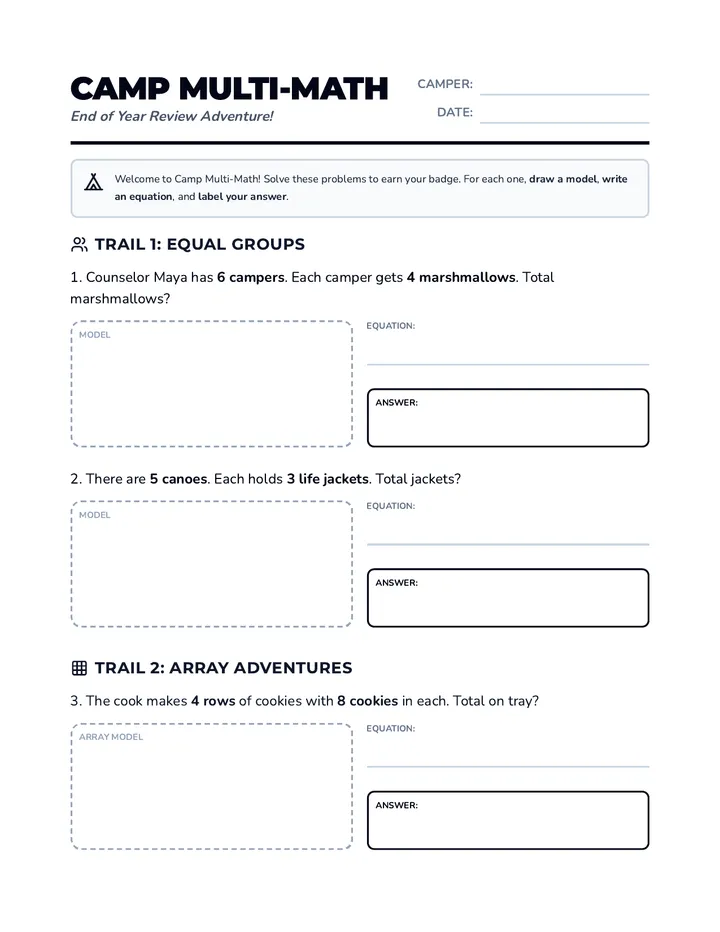
Camp Multi-Math Worksheet

Math Review Adventures

A collection of themed end-of-year math review adventures for different grade levels, focusing on spiraling key standards and problem-solving.

DB

Deborah Burton

21
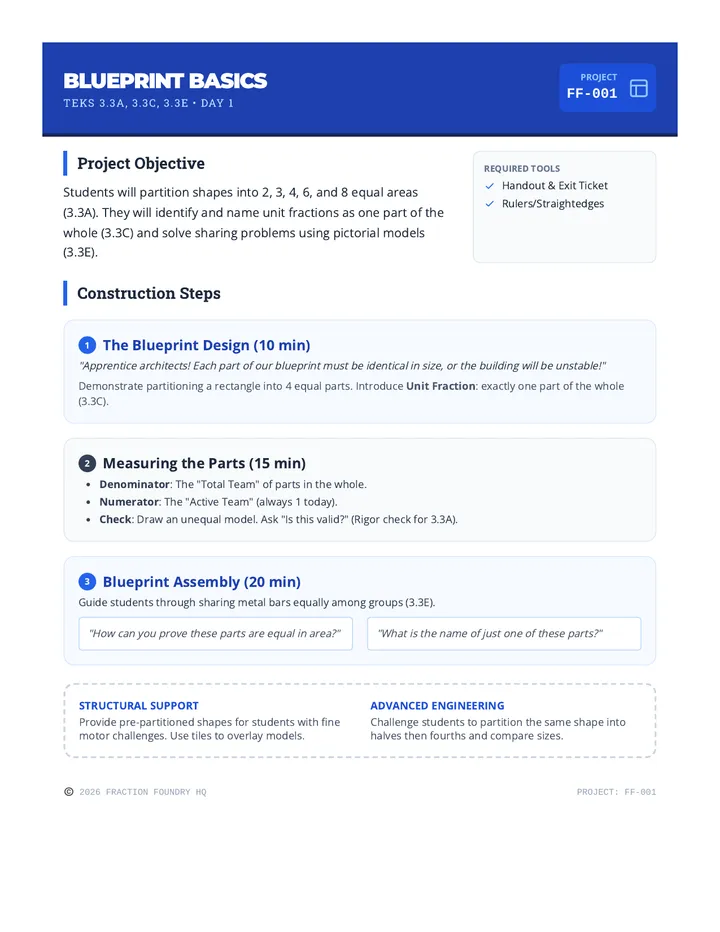
Blueprint Basics Teacher Guide

Fraction Foundry

A 5-day sequence on fraction fundamentals, including unit fractions, number lines, equivalent fractions, and comparison. Includes daily exit tickets and a final quick check.

MC

Melinda Cortez

23

Lessons

Math Radar Intake Slides

Math Skill Radar

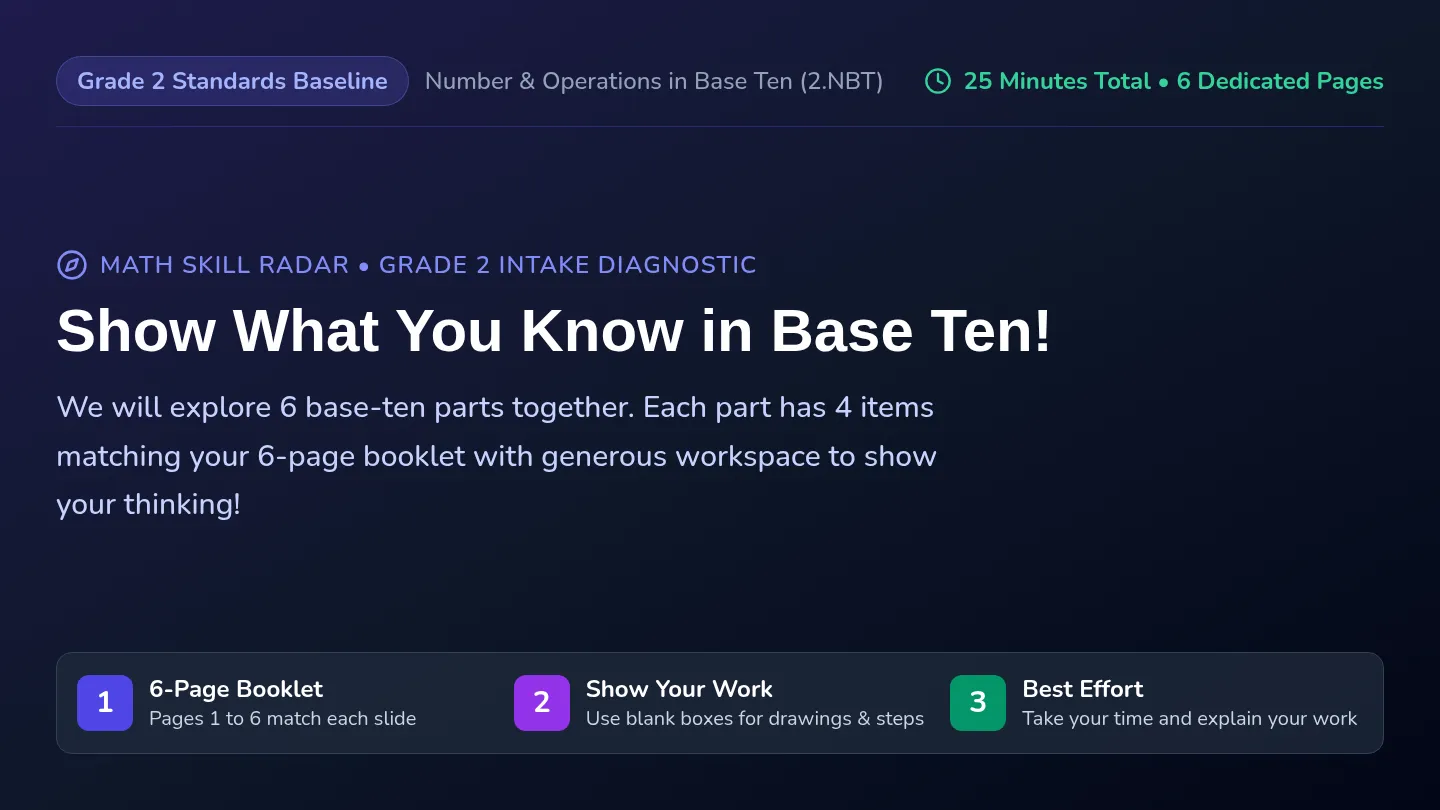
A comprehensive baseline math diagnostic and intervention suite for special education spanning early numeracy through Grade 4. Features complete tiered intake assessments, practice packets, manipulative work mats, and master scoring keys for both 1st Grade Base Ten (1.NBT) and 2nd Grade Base Ten (2.NBT), alongside K-1 early number sense tools.

S

Sara

20
Essential Standards Tracker Document

Arizona Mastery Trackers

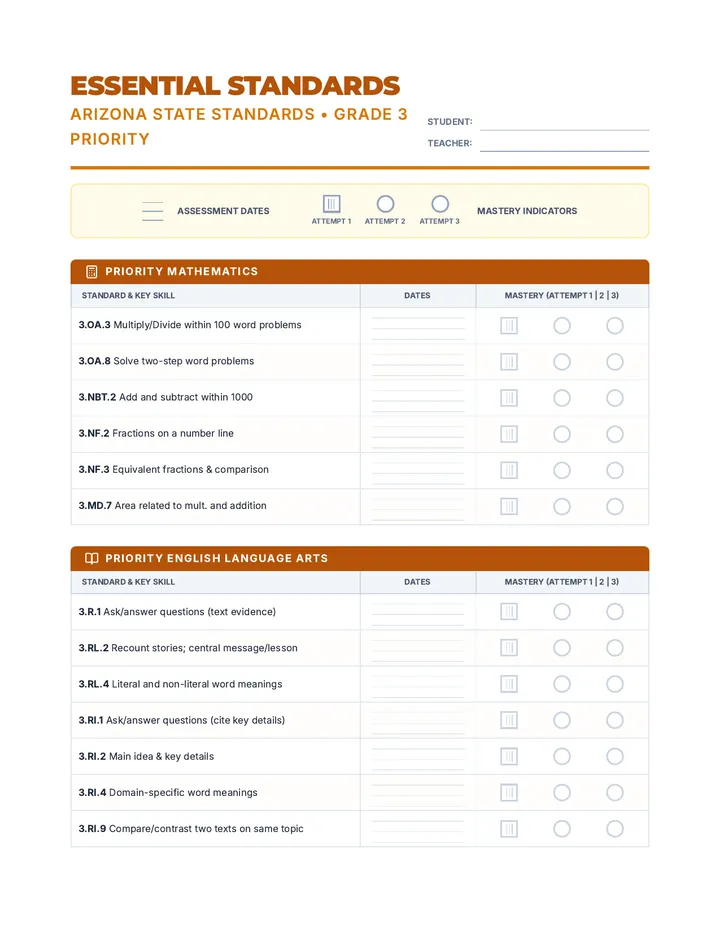
A collection of standards mastery tracking cards for Grade 3 Arizona students, covering Math and ELA with a consistent multi-attempt tracking system.

KB

Krista Bodkin

3
Slam Dunk Slides

Slam Dunk Exponents

A basketball-themed lesson for 8th grade students covering the product, quotient, and power rules of exponents with both numbers and variables. The lesson includes instructional slides, guided notes, and differentiated practice.

JS

Jennifer Stevens

19
Day 1 Review Packet

Geometry Benchmark Review

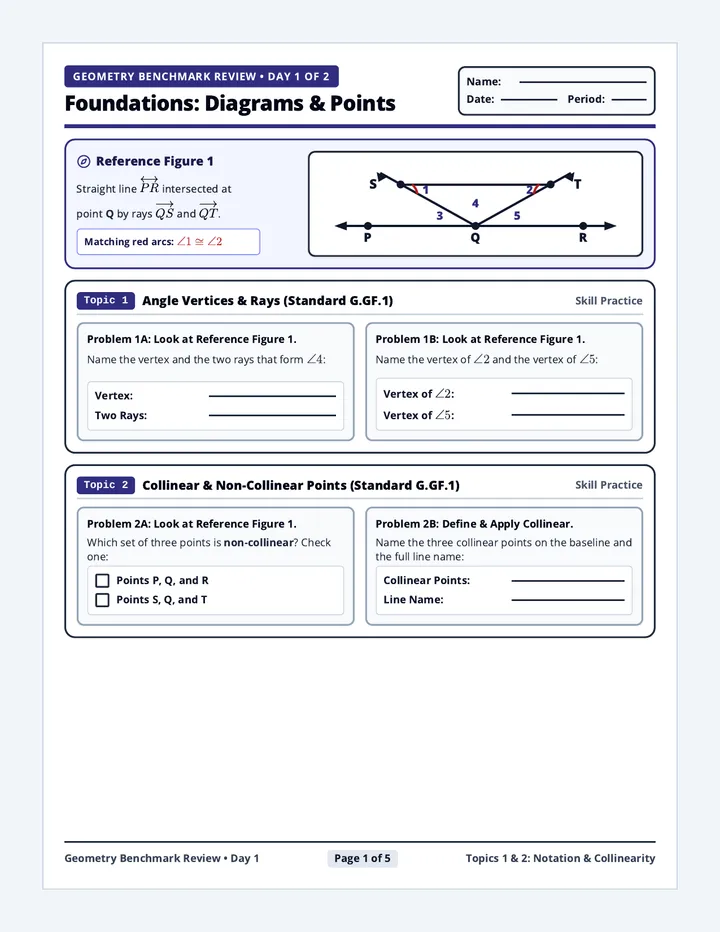
A structured two-day Quarter 1 Geometry Benchmark Review program featuring spacious, high-contrast, dyslexia-friendly student packets and comprehensive step-by-step answer keys covering geometric foundations, conditional logic, deductive postulates, and coordinate formulas.

C

Courtney.Smiley

6
Grade 3 Math Practice Test

Tar Heel Math Mastery

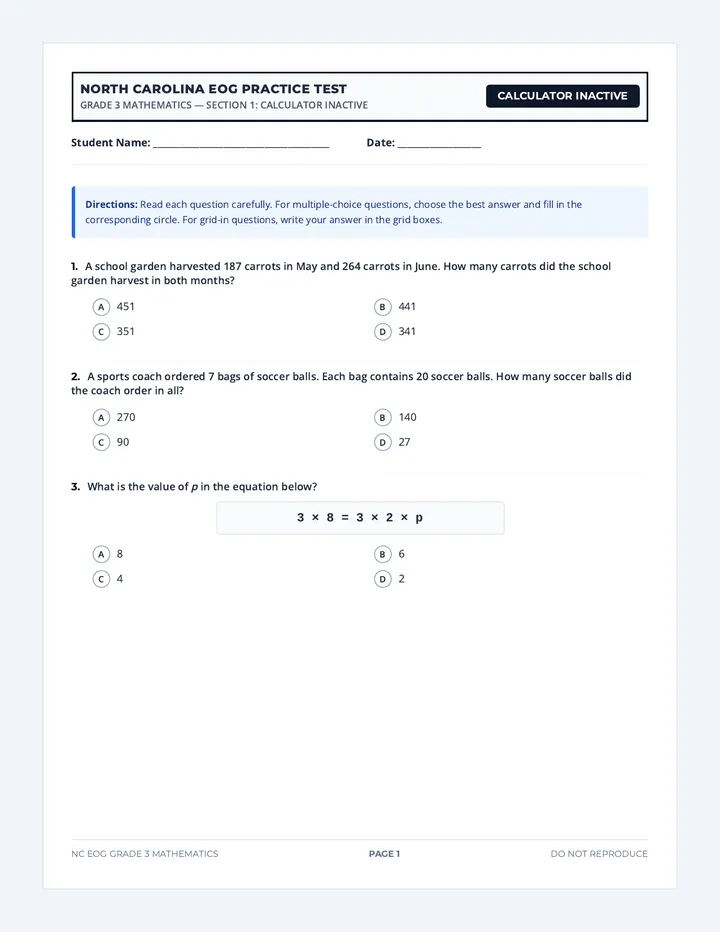
A comprehensive practice package designed for 3rd-grade students preparing for the North Carolina End-of-Grade (EOG) Mathematics assessment. It includes a complete 48-question exam covering all highly-tested standard course of study domains, an interactive student grid, an item-to-standard alignment map, and a full explanatory answer key.

SP

sashagaye Panton

3
Math Mastermind Project Guide

Math Mastermind Academy

A project-based lesson where 3rd grade students become the teachers, creating a math lesson and a corresponding game on key concepts like fractions, area, and operations.

KB

Krista Bodkin

7