Lenny.com
Explore
Create
ActivitiesNewMathEnglish Language ArtsScience & EngineeringSocial StudiesGlobal LanguagesHealth & Physical EducationSpecial EducationCounseling & Life SkillsArts & CreativityESL
Lenny.com
Lenny.com
Explore
Create
ActivitiesNewMathEnglish Language ArtsScience & EngineeringSocial StudiesGlobal LanguagesHealth & Physical EducationSpecial EducationCounseling & Life SkillsArts & CreativityESL
Lenny.com
MathNumbers & CountingCounting ObjectsNumber NamesComparing NumbersNumber OperationsCounting SequenceNumbers 0-10Place Value Understanding and SystemAdd and Subtract Within 20Addition and Subtraction ConceptsAddition and Subtraction EquationsAddition and Subtraction ProblemsFoundations for MultiplicationMultiplication and Division PropertiesMultiply and Divide Within 100Multiplication and Division ProblemsFactors and MultiplesProperties of OperationsPatterns and RelationshipsGenerate and Analyze PatternsMulti-Digit ArithmeticPlace Value OperationsMulti-Digit and Decimal OperationsNumerical ExpressionsFour Operations and PatternsFour Operations Problem SolvingMeasurement & DataMeasurable AttributesMeasuring LengthsMeasure and Estimate Lengths in Standard UnitsRelate Addition and Subtraction to LengthClassifying and Counting ObjectsTime and MoneyArea Concepts and MeasurementPerimeter and Area MeasuresAngle Concepts and MeasurementTime, Volume, and MassMeasurement Unit ConversionsGeometryIdentifying ShapesShapes and AttributesShape Attributes and ReasoningShapes and CompositionClassifying 2D FiguresGeometric Figures and RelationshipsLines, Angles, and ShapesAngle, Area, and VolumeGeometric MeasurementVolume of 3D ShapesCoordinate Plane ApplicationsTransformations in the PlaneCongruence and SimilarityUnderstand congruence in terms of rigid motionsSimilarity and TransformationsProve Theorems Involving SimilarityPythagorean TheoremTrigonometry for General TrianglesMake Geometric ConstructionsProve Geometric TheoremsTheorems About CirclesFind Arc Lengths And Areas of Sectors of CirclesVolume FormulasRelationships Between Two-Dimensional and Three-Dimensional ObjectsProve Simple Geometric Theorems AlgebraicallyTranslate Between Geometric Description and Equation for Conic SectionApply Geometric Concepts in Modeling SituationsFractions & DecimalsFractions as NumbersBuilding FractionsFraction Equivalence and OrderingAdding and Subtracting FractionsMultiplying and Dividing FractionsDividing FractionsDecimal FractionsMulti-Digit Computation and FactorsAdd, Subtract, Multiply, and Divide Rational NumbersRational Number SystemIrrational Numbers and ApproximationsRatiosRatios and ProportionsProportional RelationshipsUnit RateAlgebraAlgebraic ExpressionsGenerate Equivalent ExpressionsQuantitative RelationshipsProportional Relationships and Linear EquationsEquations and InequalitiesEquation Solving and ReasoningLinear Equations and SystemsGraph Equations and InequalitiesSystems of EquationsReal-World Algebraic ProblemsQuantitative Reasoning with UnitsExpression StructureEquivalent Expression FormsRadicals and Integer ExponentsRational ExponentsRational and Irrational NumbersPolynomial OperationsPolynomial IdentitiesPolynomial Zeros and FactorsRational ExpressionsComplex Number OperationsComplex Numbers in PolynomialsComplex Numbers on PlaneStatistics & ProbabilityRepresent and Interpret DataData DistributionsStatistical VariabilityProbability ModelsCompound Event ProbabilitiesStatistical SamplingInterpret Categorical and Quantitative DataBivariate Data PatternsInterpret Linear ModelsComparing Two PopulationsRandom Processes in StatisticsIndependence and Conditional ProbabilityExpected ValuesProbability-Based Decision MakingStatistical Inference and ConclusionsFunctionsFunction Concepts and NotationDefine and Compare FunctionsInterpret Functions in ContextAnalyze Function RepresentationsModel Relationships with FunctionsIdentify Linear vs Exponential GrowthDistinguish Between Function TypesCompare Growth RatesInterpret Function ExpressionsBuild Functions from RelationshipsConstruct and Model FunctionsTransform and Combine FunctionsModel Comparison and SelectionSolve Exponential EquationsTrigonometryTrigonometric Ratios Involving Right TrianglesTrigonometric Functions and Unit CircleModel with Trigonometric FunctionsTrigonometric IdentitiesVectors & MatricesIntroduction to Vectors and MatricesVector QuantitiesVector OperationsMatrix OperationsCalculusLimits and ContinuityDerivative Concepts and NotationDerivative Rules and TechniquesApplications of DerivativesOptimization ProblemsRelated RatesCurve Sketching and AnalysisIntegration Concepts and NotationAntiderivatives and Indefinite IntegralsDefinite Integrals and AreaFundamental Theorem of CalculusIntegration TechniquesApplications of IntegrationDifferential EquationsSequences and SeriesParametric and Polar FunctionsVector-Valued Functions

Perimeter and Area Measures

Formulas and strategies for calculating the boundary length and interior space of two-dimensional shapes. Develops skills in measuring polygons, circles, and composite figures through standard units and real-world applications.

Lenny.com

Solutions

Lenny for EducatorsLenny for SchoolsLenny for Districts

Product

ExploreSign inCreateSupportAbout

Resources

Getting startedMTSS Acceleration Program

© 2026 Lenny Learning Inc.

TermsPrivacyAccessibility
LinkedInInstagramX
Lenny

Videos

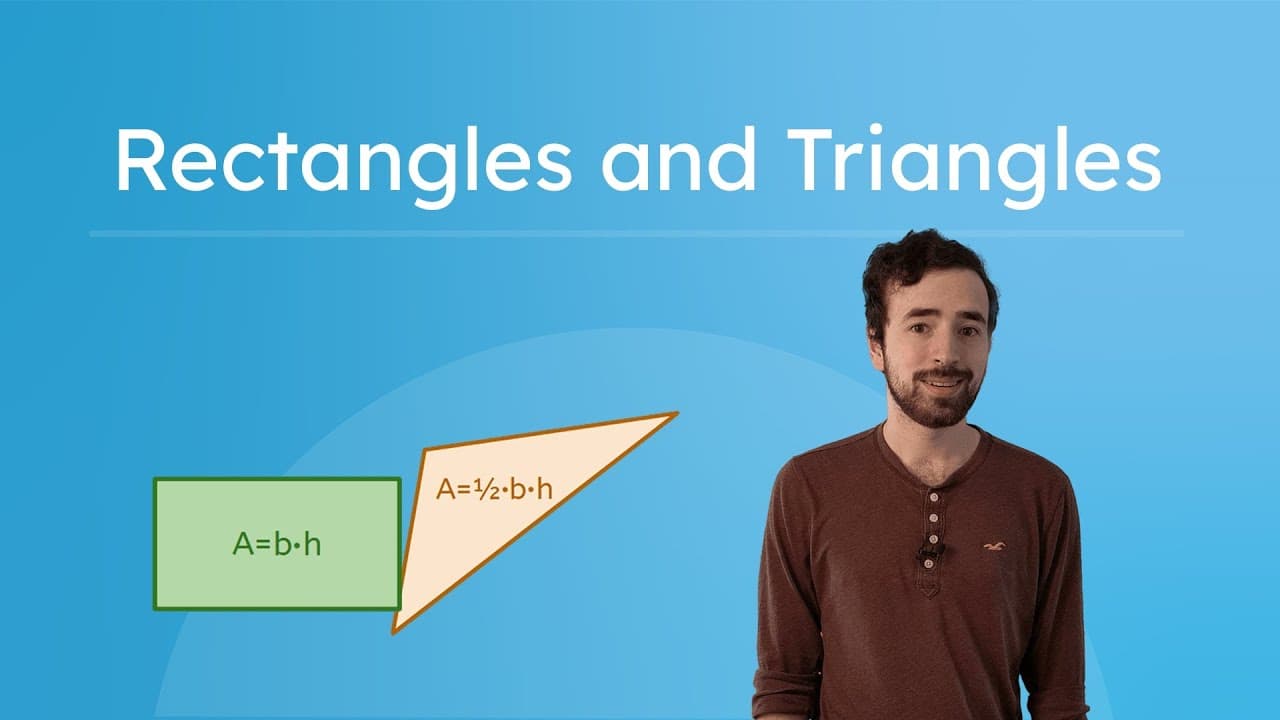
Mastering Area: Rectangles and Triangles

Mastering Area: Rectangles and Triangles

This educational video provides a clear and comprehensive guide to calculating the area of rectangles and triangles. Narrated by Justin, the lesson begins by revisiting the familiar area formula for rectangles ($A = l \times w$) and upgrading the terminology to "base times height" ($A = b \times h$) to allow for broader application across different polygons. The video then transitions to triangles, explaining the formula $A = \frac{1}{2} b \times h$ and demonstrating how to correctly identify the base and corresponding height (altitude) for acute, right, and obtuse triangles. Key themes explored include the importance of precise mathematical vocabulary, specifically the definition of height as the perpendicular distance from the base to the opposite vertex. The video visually demonstrates how height changes position relative to the shape depending on the type of triangle. It also integrates higher-level concepts by solving a complex example problem that requires using the Pythagorean theorem to find a missing height before calculating the area. For educators, this video serves as an excellent bridge between basic geometry and more advanced application. It is particularly useful for reinforcing the concept that "base" does not always mean "bottom" and for demonstrating multi-step problem solving. The step-by-step walkthroughs of finding a missing side length in a rectangle and calculating the area of a composite triangle make it a valuable resource for instruction, review, or flipped classroom assignments.

Miacademy & MiaPrep Learning ChannelMiacademy & MiaPrep Learning Channel

10mins 9s

Calculating and Deriving the Area of an Equilateral Triangle

Calculating and Deriving the Area of an Equilateral Triangle

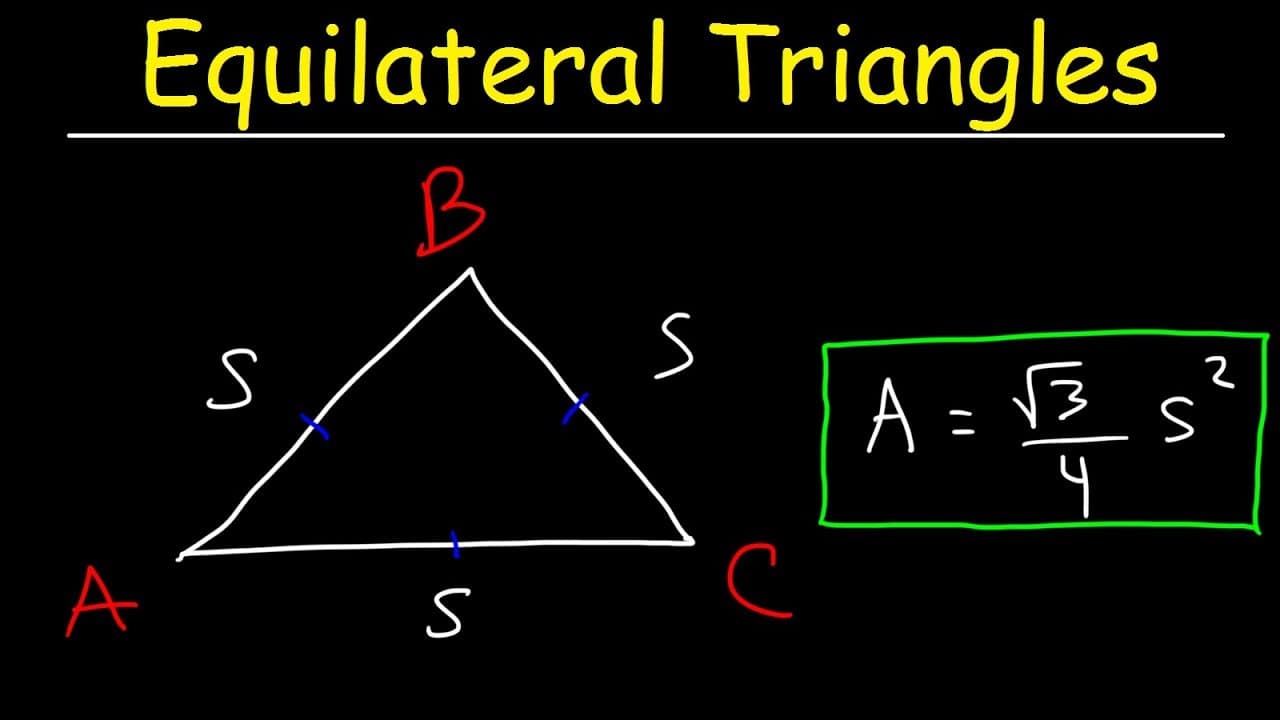
This educational math tutorial provides a comprehensive guide on how to find the area of an equilateral triangle. The video is divided into two distinct parts: first, it introduces the specific area formula for equilateral triangles and demonstrates a practical calculation using a side length of 10. Second, it guides viewers through the formal algebraic derivation of that formula, transitioning from rote memorization to deep conceptual understanding.

The Organic Chemistry TutorThe Organic Chemistry Tutor

5mins 26s

Mastering Arithmetic and Geometric Means, Ratios, and Proportions

Mastering Arithmetic and Geometric Means, Ratios, and Proportions

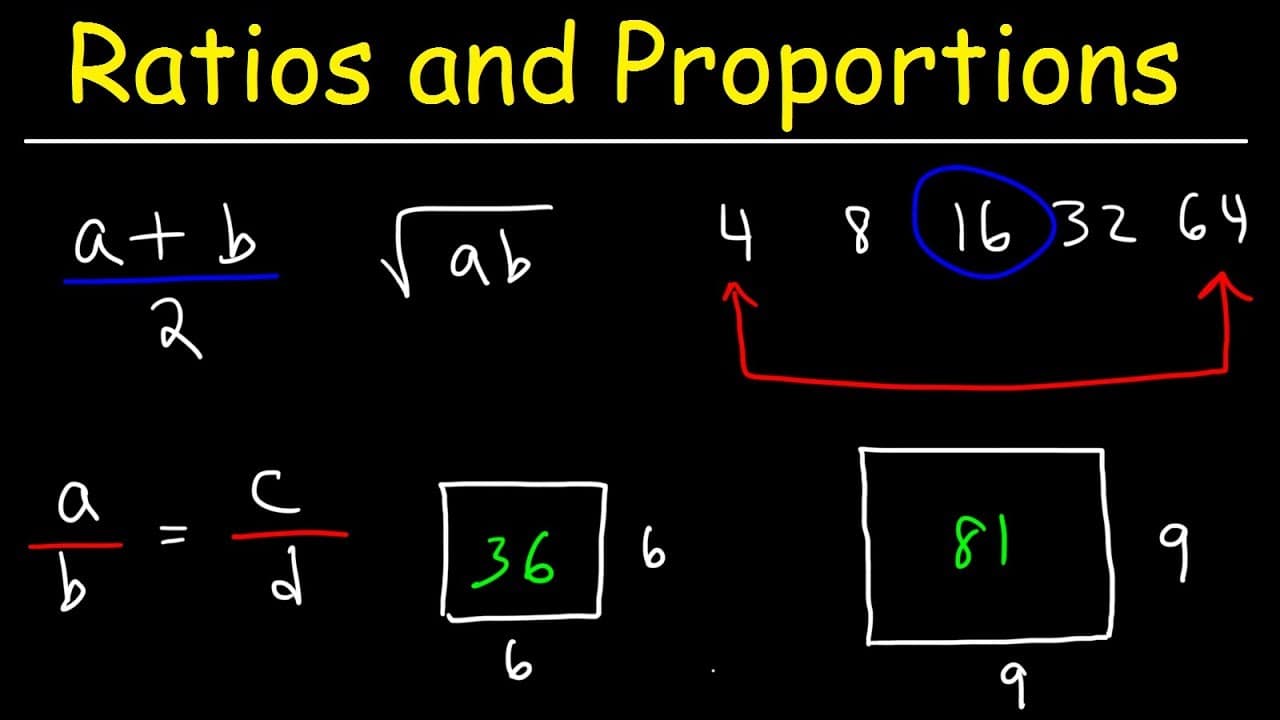
This comprehensive mathematics tutorial explores the fundamental differences between arithmetic and geometric means, followed by a series of practice problems involving ratios, proportions, and geometric applications. The video begins by conceptually defining arithmetic mean as the middle term of an arithmetic sequence and geometric mean as the middle term of a geometric sequence. It progresses through eight distinct problems ranging from basic mean calculations to complex word problems involving scale factors, geometric shapes, and algebraic manipulation.

The Organic Chemistry TutorThe Organic Chemistry Tutor

19mins 49s

Calculating Volume, Surface Area, and Diagonals of Rectangular Prisms

Calculating Volume, Surface Area, and Diagonals of Rectangular Prisms

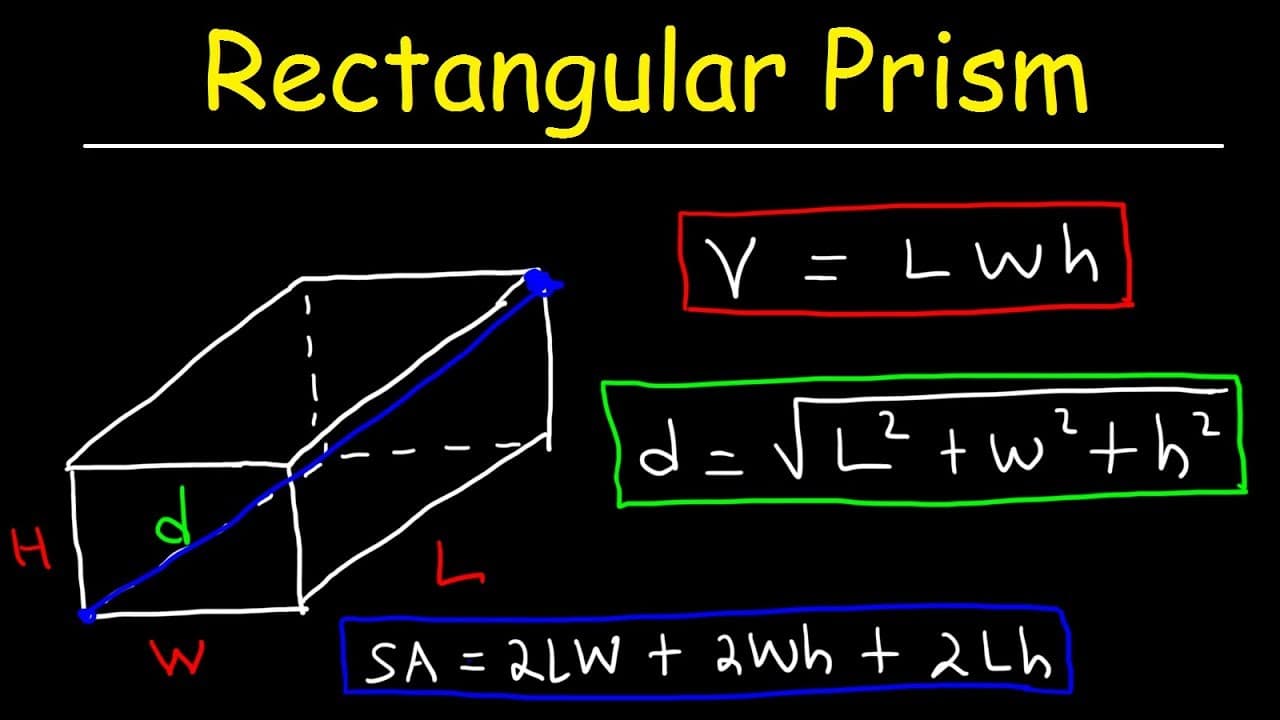
This educational video provides a comprehensive tutorial on mastering the fundamental calculations for rectangular prisms. The instructor guides viewers through three distinct example problems, each focusing on a different property: calculating volume, determining surface area, and finding the length of the space diagonal. The video uses a digital whiteboard format to visually demonstrate how to sketch the shapes, label dimensions, and apply the correct formulas step-by-step. Themes explored include solid geometry, spatial visualization, and algebraic substitution. The video breaks down complex 3D concepts into manageable 2D components, such as decomposing surface area into pairs of rectangular faces and using the Pythagorean theorem in two steps to derive the space diagonal formula. It emphasizes the importance of units (cubic vs. square) and logical checking of answers. For educators, this video serves as an excellent instructional tool for middle and high school geometry units. It can be used to introduce new concepts, reinforce formula application, or support students who struggle with visualizing 3D space. The clear, procedural walkthroughs make it valuable for flipping the classroom or as a review resource before assessments on geometric measurement.
The Organic Chemistry TutorThe Organic Chemistry Tutor

13mins 18s

How to Find the Area of Composite Figures

How to Find the Area of Composite Figures

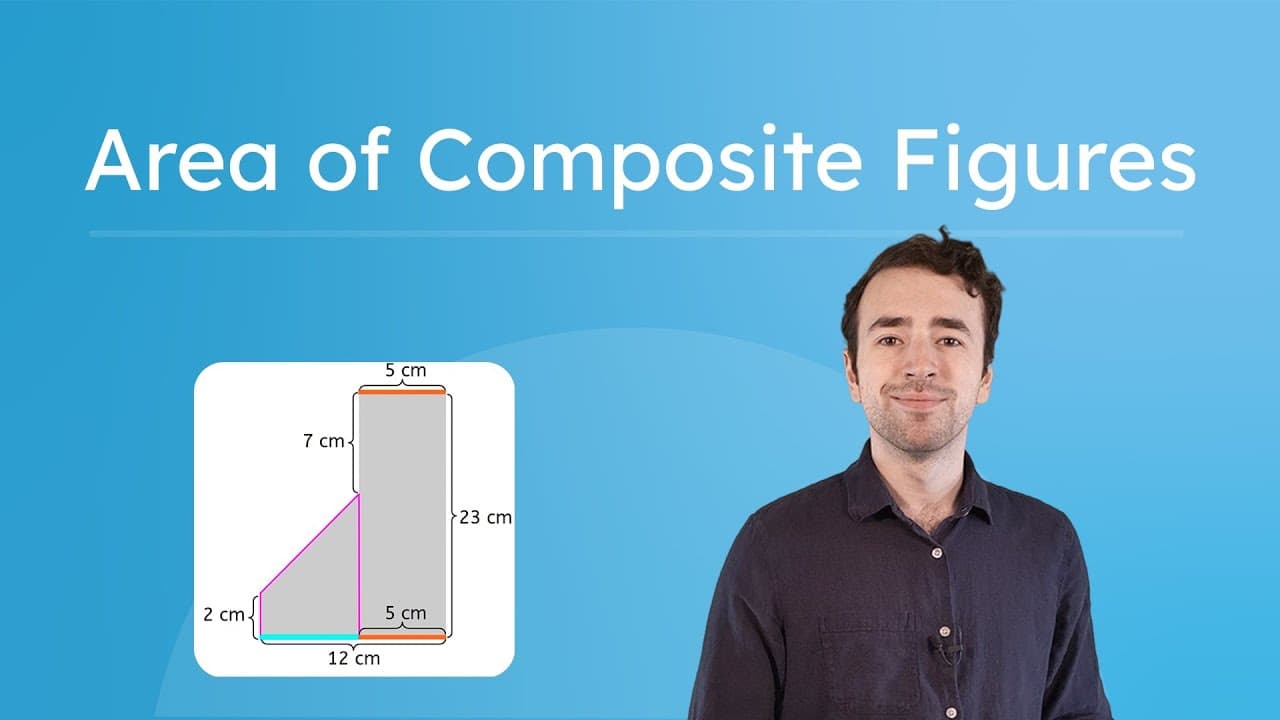
This instructional math video guides students through the process of calculating the area of composite figures—complex shapes formed by combining standard geometric shapes like rectangles, triangles, and trapezoids. The narrator, Justin, breaks down the problem-solving strategy into three clear steps: decomposing the complex figure into known standard shapes, calculating the area of each individual shape, and then combining those areas to find the total. The lesson emphasizes that there are often multiple valid ways to decompose a figure. The video explores key themes such as spatial visualization, the use of geometry formulas, and strategies for finding missing side lengths using deduction and subtraction. It explicitly addresses two types of problems: additive area problems (summing up shapes) and subtractive area problems (where a shape, like a semicircle, is 'cut out' of the figure). The video also clarifies assumptions students can make within the context of the lesson, such as assuming lines that appear perpendicular or parallel are so. This resource is highly valuable for middle school geometry classrooms as it provides a structured approach to a common stumbling block for students: seeing the 'hidden' shapes within a complex polygon. By walking through two distinct examples step-by-step—including finding tricky missing dimensions—it models the critical thinking required for solving geometry problems. It serves as an excellent direct instruction tool or a review resource for students learning to apply area formulas in more complex contexts.

Miacademy & MiaPrep Learning ChannelMiacademy & MiaPrep Learning Channel

13mins 13s

Calculating Circumference Given the Diameter

Calculating Circumference Given the Diameter

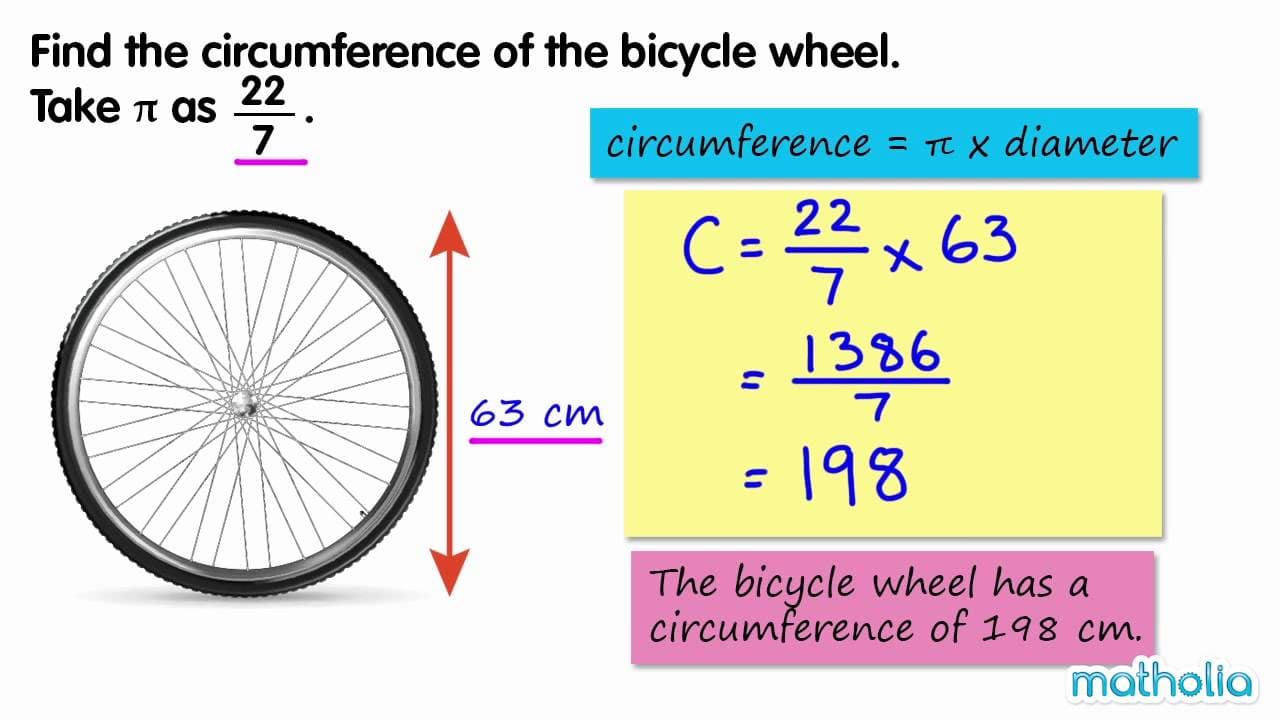
This educational video provides a clear, step-by-step demonstration of how to calculate the circumference of a circle when the diameter is known. It presents two distinct examples: one involving a real-world object (a bicycle wheel) using the fractional approximation of pi (22/7), and another involving an abstract circle using the decimal approximation of pi (3.14). The narration guides students through selecting the correct formula, substituting values, and performing the necessary calculations to find the final answer with appropriate units. The core themes explored include the geometric relationship between diameter and circumference, the application of the formula C = πd, and the flexibility of using different approximations for pi based on the problem's context. The video reinforces the importance of showing mathematical working, including writing the formula, substitution, calculation, and stating the final answer clearly with units. For educators, this video serves as an excellent model for direct instruction or review. It visually demonstrates the specific procedural steps students are expected to follow when solving geometry problems. The contrast between using 22/7 and 3.14 helps students understand that pi can be represented in different ways depending on the instructions or the numbers involved (e.g., using 22/7 when the diameter is a multiple of 7). It is particularly useful for transitioning students from concrete measurements to using abstract formulas.

MatholiaChannelMatholiaChannel

1min 24s

Materials

Grade 4 Math Priority Pacing Guide

Grade 4 Math Priority Pacing Guide

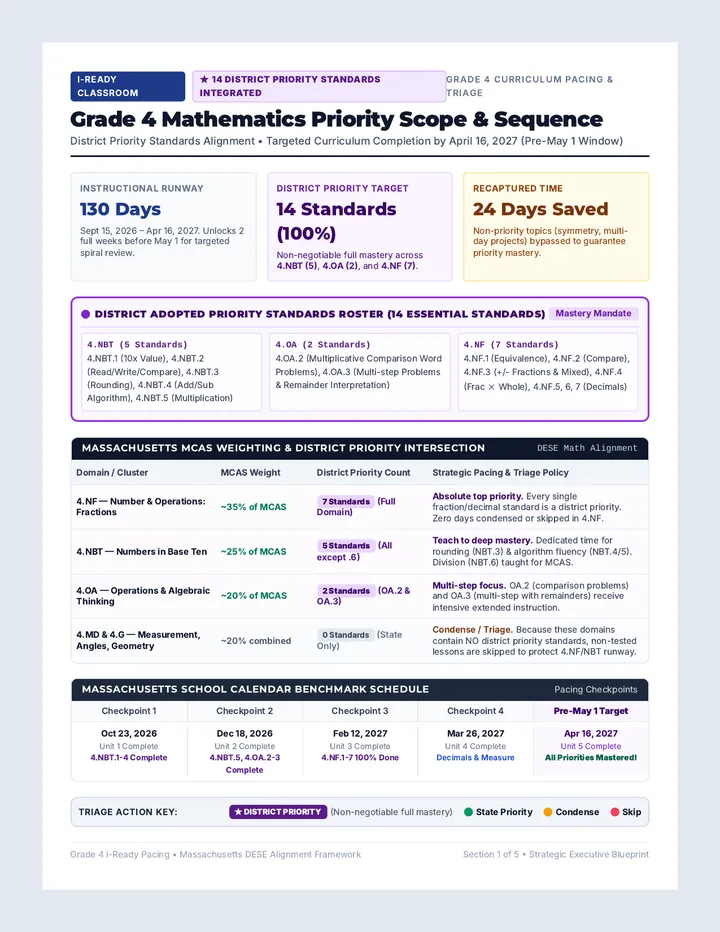
A comprehensive 5-page standards-aligned Grade 4 Mathematics curriculum pacing guide for i-Ready Classroom Mathematics, specifically incorporating the 14 designated District Priority Standards across 4.OA, 4.NBT, and 4.NF. Calibrated to the Massachusetts Curriculum Frameworks to guarantee 100% completion of all district priority standards before May 1, featuring explicit district priority badging, unit-by-unit pacing dates, strategic triage rationales for non-priority topics, and a Tier 2 prerequisite intervention bridge.

AS

Ashley Santiago

Composite Figures Review Packet

Composite Figures Review Packet

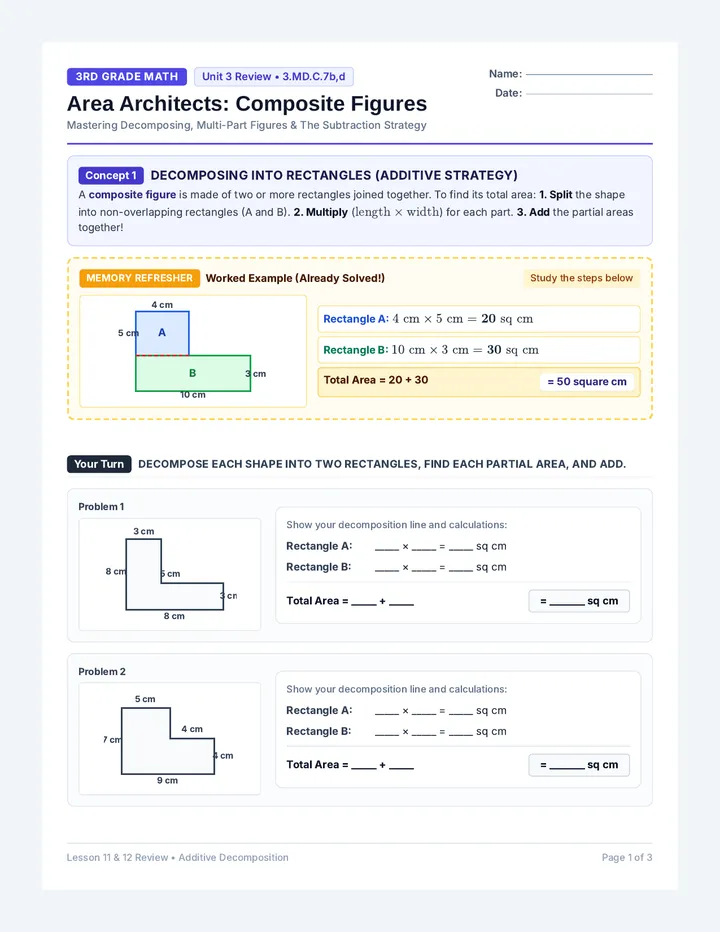
A comprehensive 3-page 3rd-grade math review packet covering composite area concepts from Lessons 11, 12, and 13. Features fully worked-out examples alongside structured practice problems for additive decomposition, multi-part figures, and the subtraction strategy.

SM

Samantha McBath

Shape Slicer Worksheet

Shape Slicer Worksheet

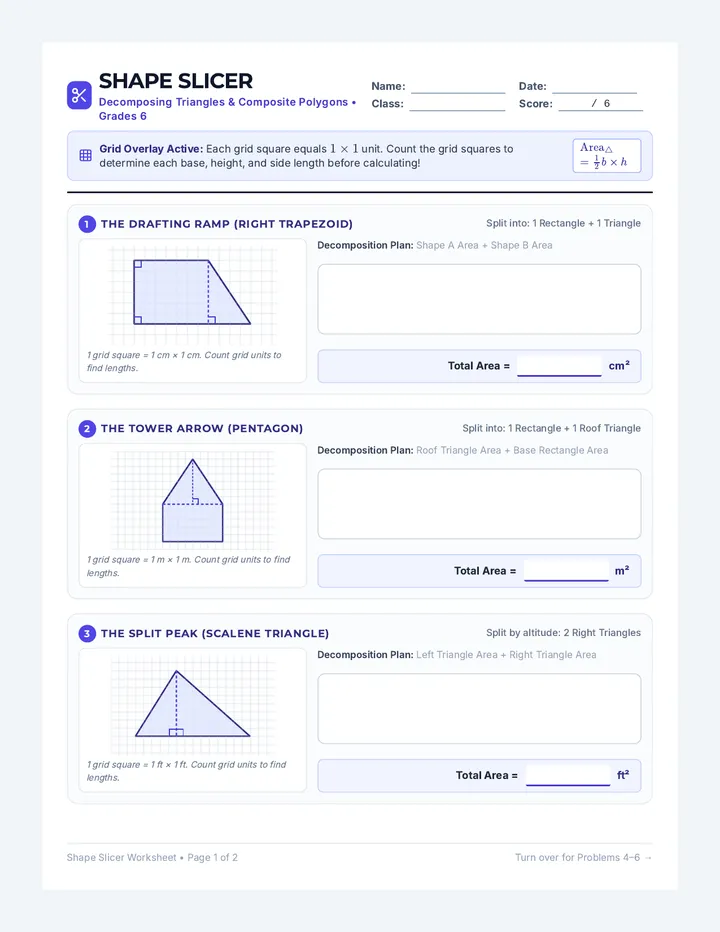
A two-page printable geometry worksheet for Grade 6 on decomposing polygons into triangles and rectangles. Questions 1–3 feature unlabeled figures on precision unit grids where students count grid squares to find dimensions, while Questions 4–6 provide labeled composite figures.

JC

Judia Chambers

Perimeter Patrol Quiz

Perimeter Patrol Quiz

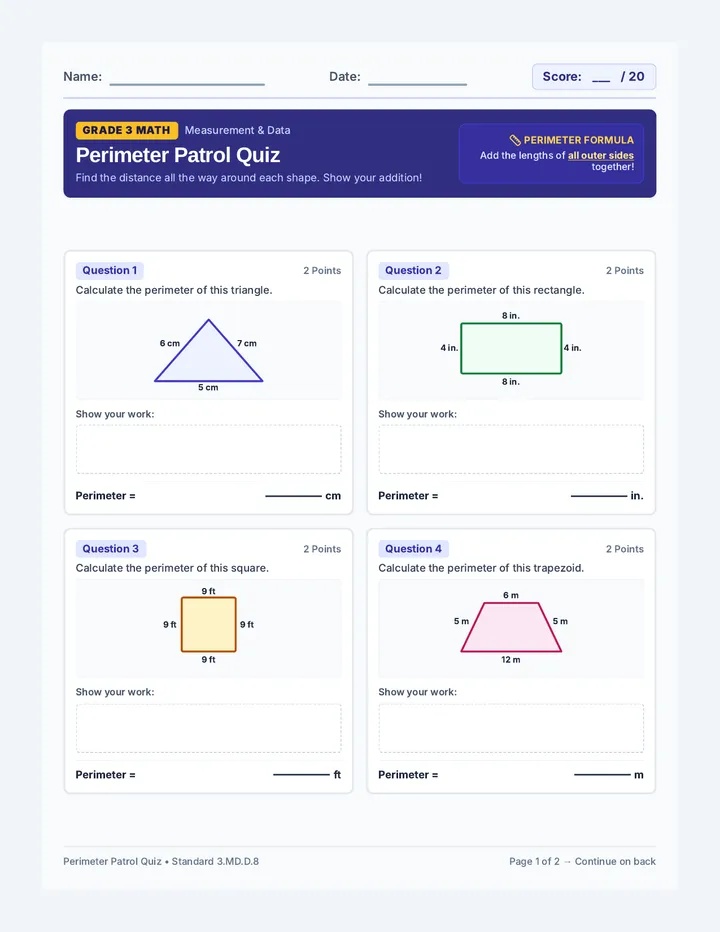
A two-page printable 3rd grade math quiz on calculating perimeter by adding labeled side lengths. Features clear polygon diagrams, structured work areas, real-world application, and error analysis.

KB

Kelly Bogacz

Home Math Missions Activity Sheet

Home Math Missions Activity Sheet

A two-page printable family math resource packed with hands-on everyday missions, parent math tips, an 8-prompt math talk stem guide, 5-minute household games, and a 12-mission family challenge board for 3rd grade math.

L

Lora.Hoover

Home Learning Playbook Handout

Home Learning Playbook Handout

A revised, accessible two-page guide tailored for parents of struggling middle schoolers, featuring 10 simplified ELA strategies and 10 low-stress math strategies designed to build foundational confidence and reduce homework anxiety.

S

soconnor

Sequences

Equation Balancing Student Packet

Distance Detectives

A highly visual geometry unit focused on applying algebraic formulas to coordinate planes. Students use coordinate grids, step-by-step graphic organizers, and tactile representations to solve real-world distance and segment length problems.

D

deeohnny.jackson

64
Project Mission Slides Final

Math in Motion: The 2-Hour Summit

A high-intensity, 120-minute math simulation. Students act as lead consultants, completing a high-speed skill warmup before selecting a professional sector (Music, Urban Planning, Rocket Science, or Sports Analytics) to solve a series of complex work orders.

EL

Elsa LaLone

102
Math Blueprint Week 1 Booklet (Definitive)

Math Blueprint Spiral

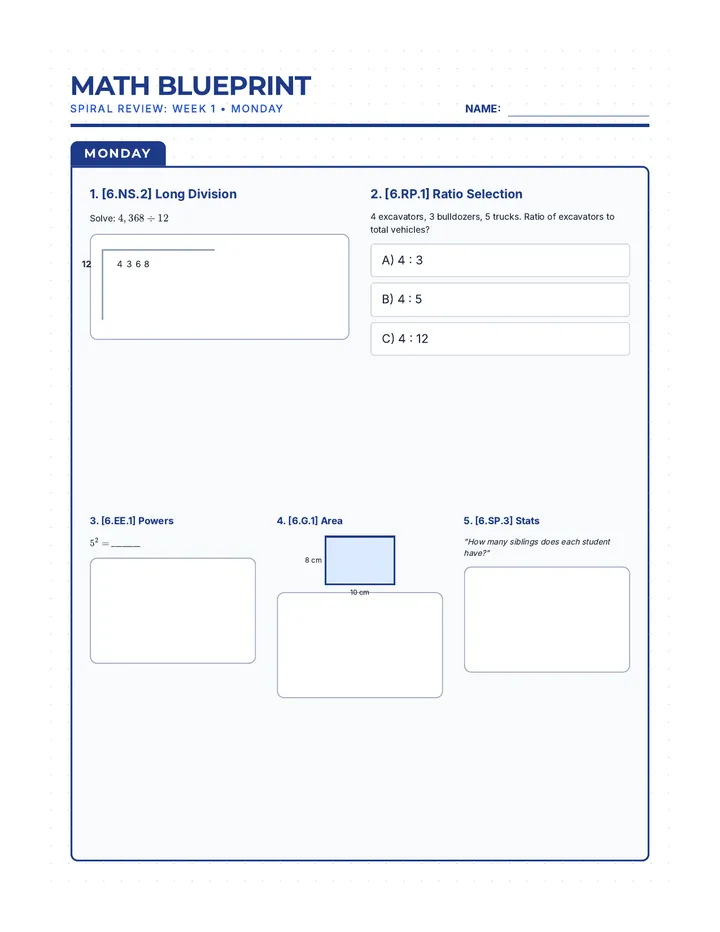
A 7-week comprehensive math review sequence designed to prepare 6th-grade students for North Carolina state testing, covering Number Systems, Ratios, Expressions, Geometry, and Statistics.

MK

Michell Kisler

27
Camp Multi-Math Worksheet

Math Review Adventures

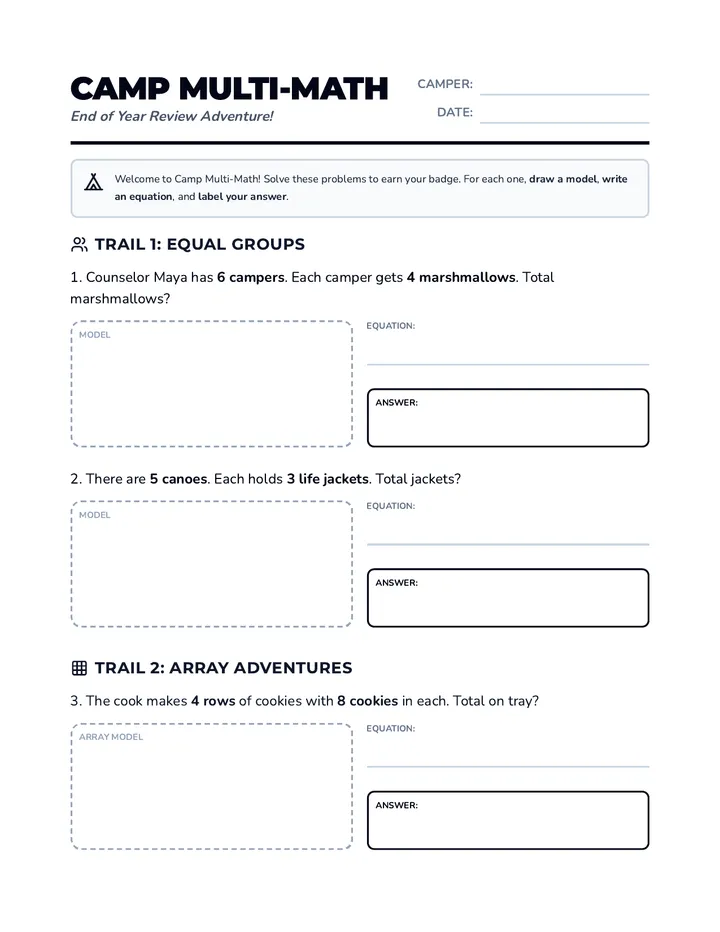
A collection of themed end-of-year math review adventures for different grade levels, focusing on spiraling key standards and problem-solving.

DB

Deborah Burton

21
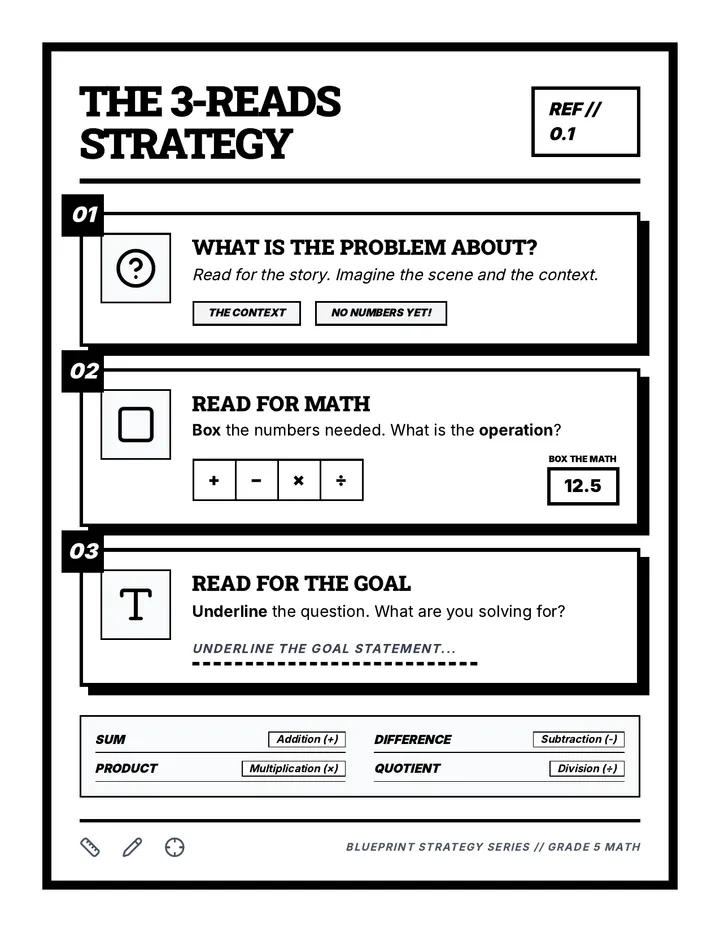
3 Reads Strategy Poster

Math Blueprints Grade 5

A comprehensive set of math supports for 5th-grade students in a co-taught environment. Each unit includes visual vocabulary, worked examples, cloze-style guided notes, and exit tickets featuring a 'Mistake of the Day' analysis.

HJ

Hope Joel

23
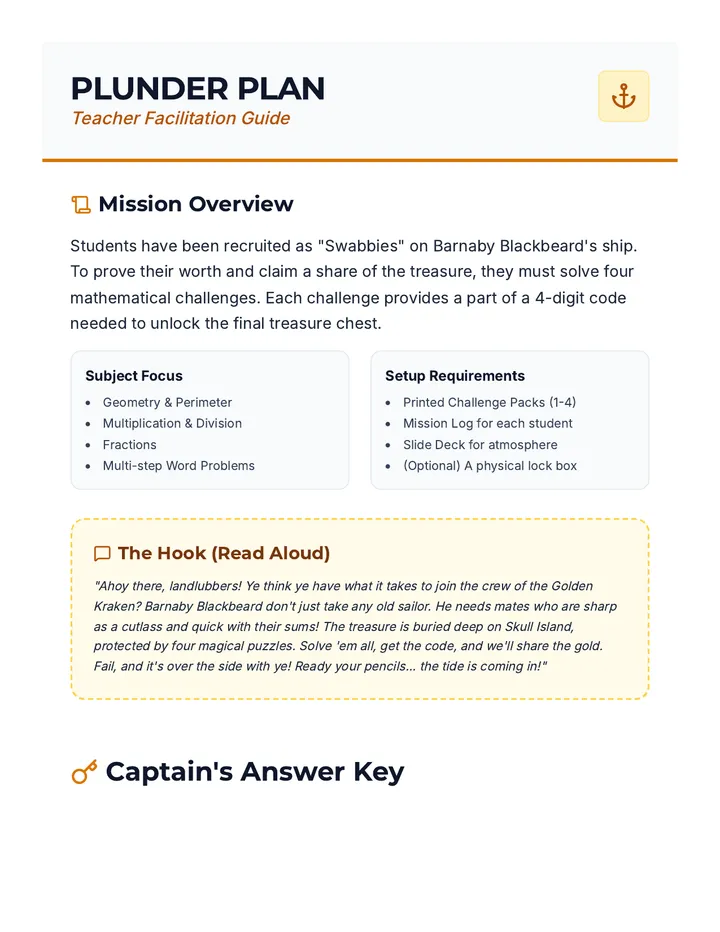
Plunder Plan Teacher Guide

Pirate Math Plunder

A pirate-themed 3rd grade math review escape room where students solve puzzles involving geometry, multiplication, division, fractions, and word problems to find the hidden treasure.

DG

Danielle Garland

12

Lessons

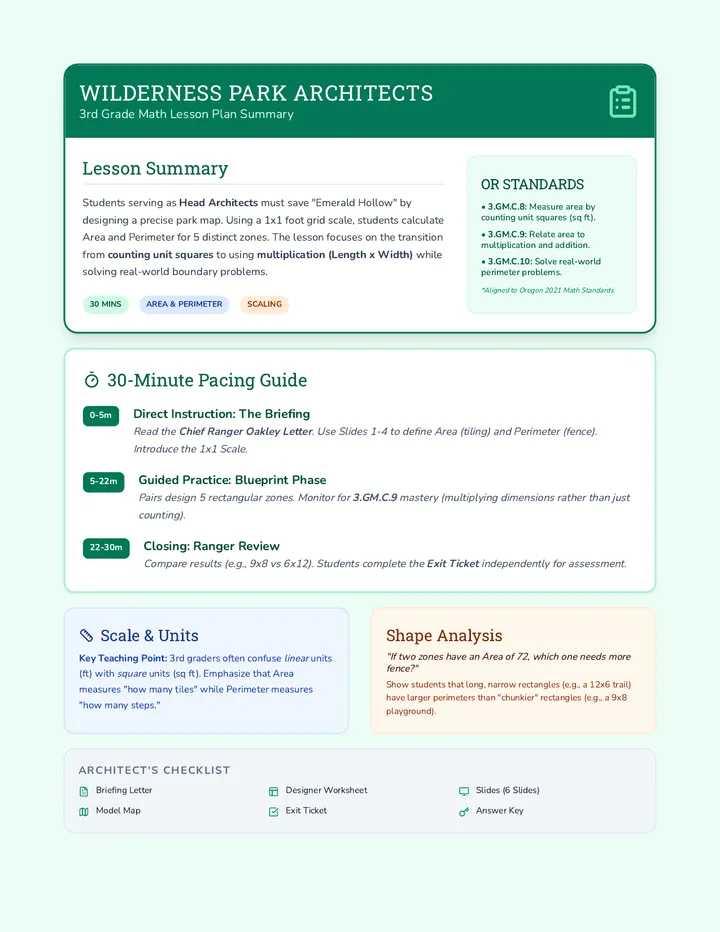
Wilderness Park Architects Teacher Guide

Wilderness Park Architects

A 30-minute interactive lesson where 3rd graders design a Wilderness Park, applying their knowledge of area and perimeter to create specific park zones on a 1x1 foot grid scale.

AJ

Alexander Jacinto

7
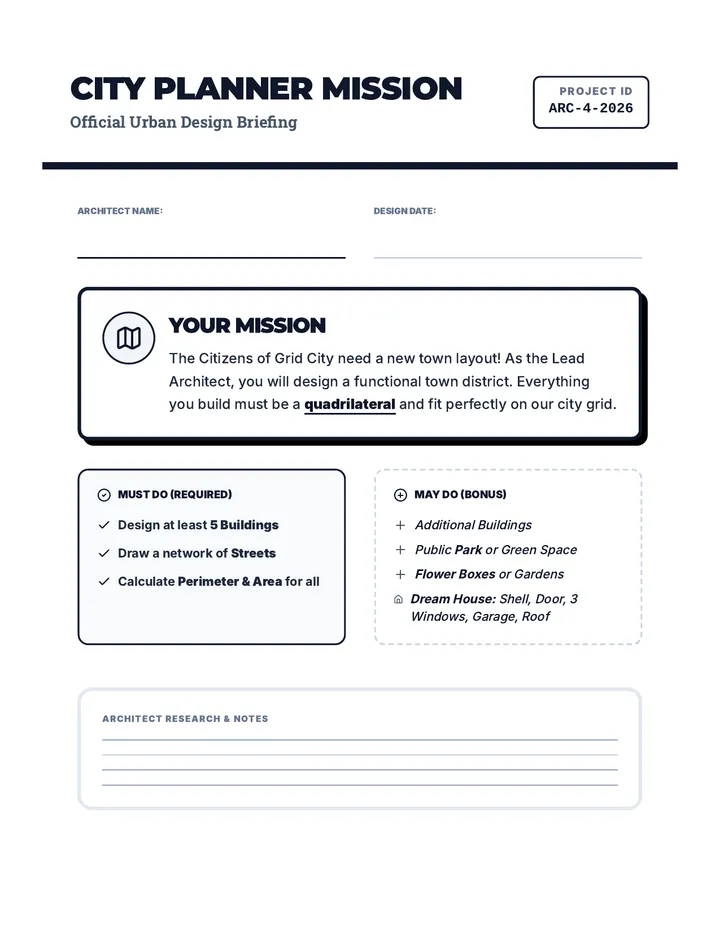
City Planner Mission Guide

Grid City Architects

Students act as urban architects to design a town using quadrilaterals on a grid, calculating perimeter and area for their structures.

TC

Tracey Craft

5
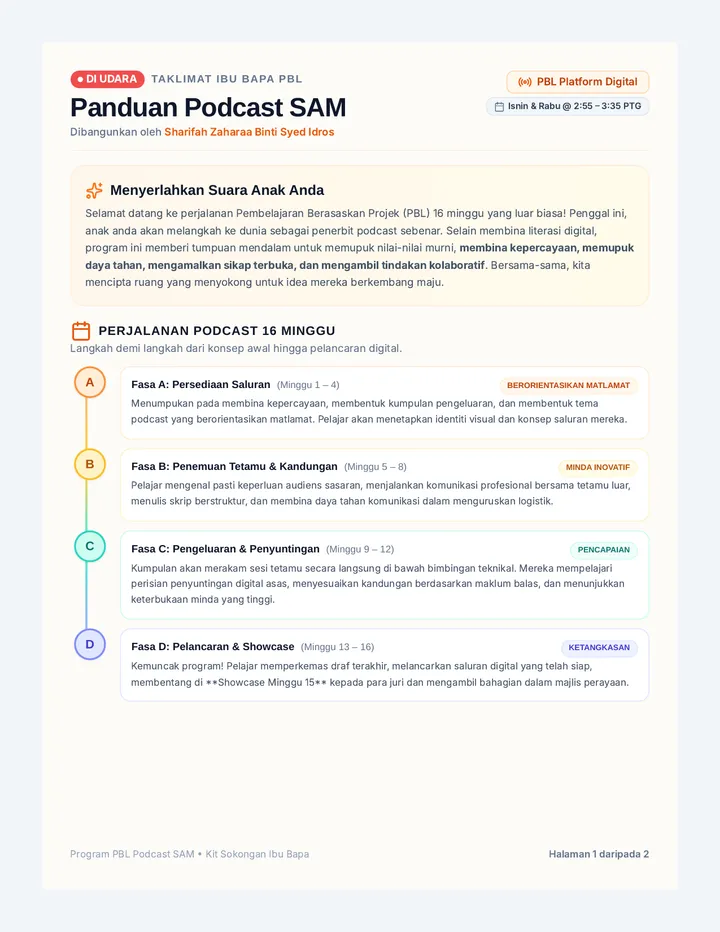
SAM Podcast Parent Briefing Guide

SAM Podcast PBL Launch

A comprehensive introductory lesson set for the SAM Podcast Project-Based Learning program. This lesson incorporates critical parent communication tools alongside specialized teacher lesson plans linking core academic subjects like KSSM Mathematics to real-world digital podcast applications.

AM

Arrthy Muthamilselvan

14
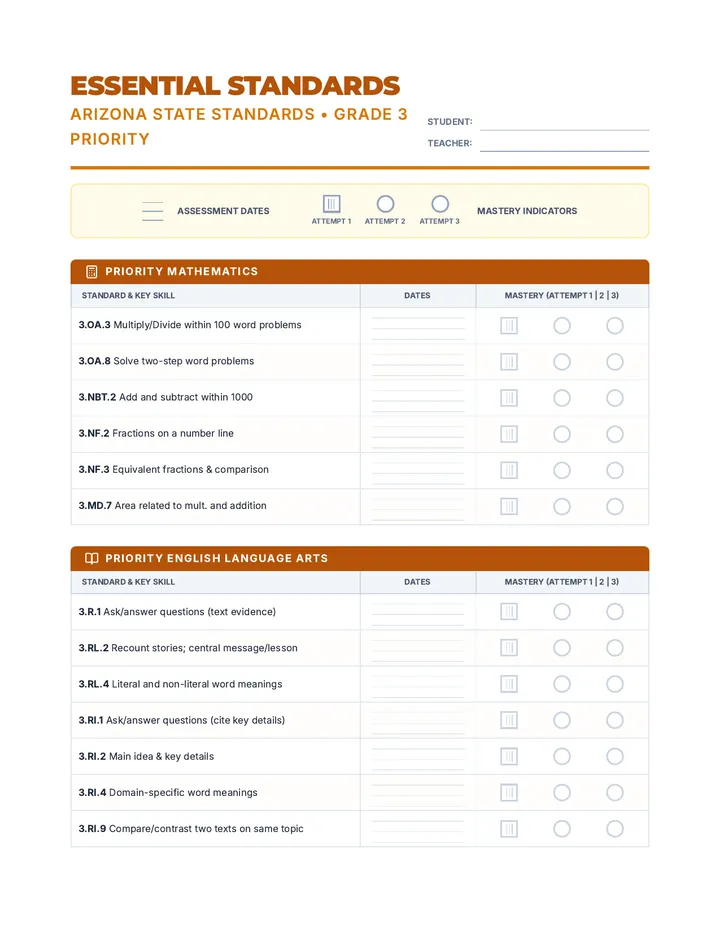
Essential Standards Tracker Document

Arizona Mastery Trackers

A collection of standards mastery tracking cards for Grade 3 Arizona students, covering Math and ELA with a consistent multi-attempt tracking system.

KB

Krista Bodkin

3
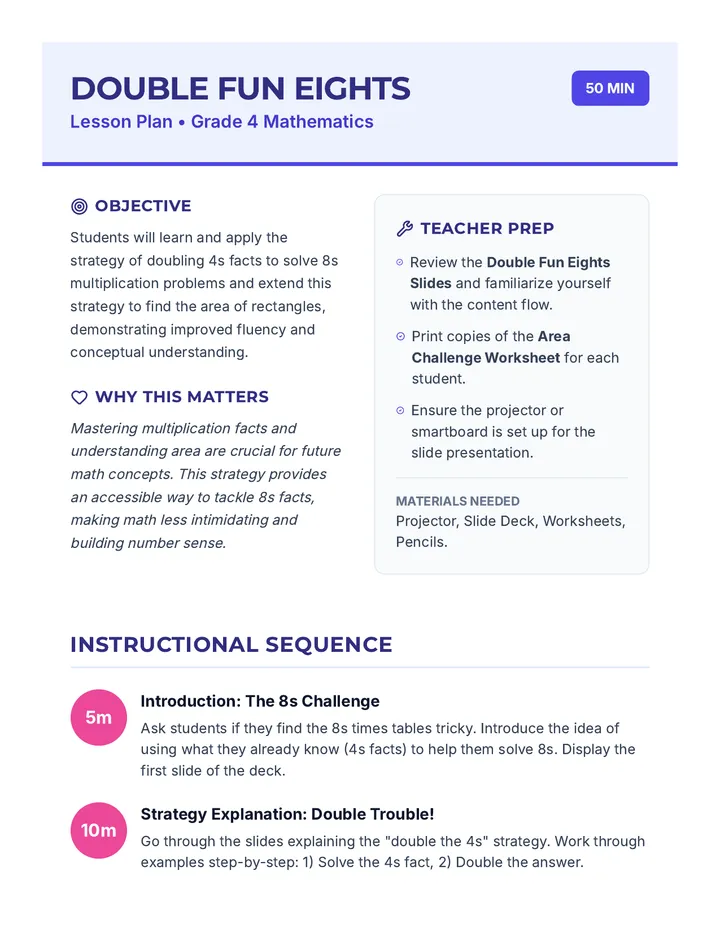
Double Fun Eights Lesson Plan

Double Fun Eights

This lesson introduces 4th-grade students to the doubling strategy for mastering 8s multiplication facts and applying them to find the area of rectangles.

DG

Diana Gordon

4
Precision Accountability Lesson Plan

Team Up Solve Up

This 45-minute lesson for 10th-grade students highlights the critical role of collaboration and problem-solving skills across all mathematical domains. Students will experience how diverse perspectives and teamwork lead to more effective and robust solutions, fostering a deeper appreciation for the interconnectedness of math and real-world challenges.

J

jtoomey

5