Lenny.com
Explore
Create
ActivitiesNewMathEnglish Language ArtsScience & EngineeringSocial StudiesGlobal LanguagesHealth & Physical EducationSpecial EducationCounseling & Life SkillsArts & CreativityESL
Lenny.com
Lenny.com
Explore
Create
ActivitiesNewMathEnglish Language ArtsScience & EngineeringSocial StudiesGlobal LanguagesHealth & Physical EducationSpecial EducationCounseling & Life SkillsArts & CreativityESL
Lenny.com
Lenny.com

Solutions

Lenny for EducatorsLenny for SchoolsLenny for Districts

Product

ExploreSign inCreateSupportAbout

Resources

Getting startedMTSS Acceleration Program

© 2026 Lenny Learning Inc.

TermsPrivacyAccessibility
LinkedInInstagramX
Lenny

Relationships Between Two-Dimensional and Three-Dimensional Objects

Cross-sections of three-dimensional solids and the generation of solids of revolution from two-dimensional shapes. Connects planar geometry to spatial visualization through nets and surface area calculations.

MathNumbers & CountingCounting ObjectsNumber NamesComparing NumbersNumber OperationsCounting SequenceNumbers 0-10Place Value Understanding and SystemAdd and Subtract Within 20Addition and Subtraction ConceptsAddition and Subtraction EquationsAddition and Subtraction ProblemsFoundations for MultiplicationMultiplication and Division PropertiesMultiply and Divide Within 100Multiplication and Division ProblemsFactors and MultiplesProperties of OperationsPatterns and RelationshipsGenerate and Analyze PatternsMulti-Digit ArithmeticPlace Value OperationsMulti-Digit and Decimal OperationsNumerical ExpressionsFour Operations and PatternsFour Operations Problem SolvingMeasurement & DataMeasurable AttributesMeasuring LengthsMeasure and Estimate Lengths in Standard UnitsRelate Addition and Subtraction to LengthClassifying and Counting ObjectsTime and MoneyArea Concepts and MeasurementPerimeter and Area MeasuresAngle Concepts and MeasurementTime, Volume, and MassMeasurement Unit ConversionsGeometryIdentifying ShapesShapes and AttributesShape Attributes and ReasoningShapes and CompositionClassifying 2D FiguresGeometric Figures and RelationshipsLines, Angles, and ShapesAngle, Area, and VolumeGeometric MeasurementVolume of 3D ShapesCoordinate Plane ApplicationsTransformations in the PlaneCongruence and SimilarityUnderstand congruence in terms of rigid motionsSimilarity and TransformationsProve Theorems Involving SimilarityPythagorean TheoremTrigonometry for General TrianglesMake Geometric ConstructionsProve Geometric TheoremsTheorems About CirclesFind Arc Lengths And Areas of Sectors of CirclesVolume FormulasRelationships Between Two-Dimensional and Three-Dimensional ObjectsProve Simple Geometric Theorems AlgebraicallyTranslate Between Geometric Description and Equation for Conic SectionApply Geometric Concepts in Modeling SituationsFractions & DecimalsFractions as NumbersBuilding FractionsFraction Equivalence and OrderingAdding and Subtracting FractionsMultiplying and Dividing FractionsDividing FractionsDecimal FractionsMulti-Digit Computation and FactorsAdd, Subtract, Multiply, and Divide Rational NumbersRational Number SystemIrrational Numbers and ApproximationsRatiosRatios and ProportionsProportional RelationshipsUnit RateAlgebraAlgebraic ExpressionsGenerate Equivalent ExpressionsQuantitative RelationshipsProportional Relationships and Linear EquationsEquations and InequalitiesEquation Solving and ReasoningLinear Equations and SystemsGraph Equations and InequalitiesSystems of EquationsReal-World Algebraic ProblemsQuantitative Reasoning with UnitsExpression StructureEquivalent Expression FormsRadicals and Integer ExponentsRational ExponentsRational and Irrational NumbersPolynomial OperationsPolynomial IdentitiesPolynomial Zeros and FactorsRational ExpressionsComplex Number OperationsComplex Numbers in PolynomialsComplex Numbers on PlaneStatistics & ProbabilityRepresent and Interpret DataData DistributionsStatistical VariabilityProbability ModelsCompound Event ProbabilitiesStatistical SamplingInterpret Categorical and Quantitative DataBivariate Data PatternsInterpret Linear ModelsComparing Two PopulationsRandom Processes in StatisticsIndependence and Conditional ProbabilityExpected ValuesProbability-Based Decision MakingStatistical Inference and ConclusionsFunctionsFunction Concepts and NotationDefine and Compare FunctionsInterpret Functions in ContextAnalyze Function RepresentationsModel Relationships with FunctionsIdentify Linear vs Exponential GrowthDistinguish Between Function TypesCompare Growth RatesInterpret Function ExpressionsBuild Functions from RelationshipsConstruct and Model FunctionsTransform and Combine FunctionsModel Comparison and SelectionSolve Exponential EquationsTrigonometryTrigonometric Ratios Involving Right TrianglesTrigonometric Functions and Unit CircleModel with Trigonometric FunctionsTrigonometric IdentitiesVectors & MatricesIntroduction to Vectors and MatricesVector QuantitiesVector OperationsMatrix OperationsCalculusLimits and ContinuityDerivative Concepts and NotationDerivative Rules and TechniquesApplications of DerivativesOptimization ProblemsRelated RatesCurve Sketching and AnalysisIntegration Concepts and NotationAntiderivatives and Indefinite IntegralsDefinite Integrals and AreaFundamental Theorem of CalculusIntegration TechniquesApplications of IntegrationDifferential EquationsSequences and SeriesParametric and Polar FunctionsVector-Valued Functions

Videos

Calculating Surface Area of 3D Shapes

Calculating Surface Area of 3D Shapes

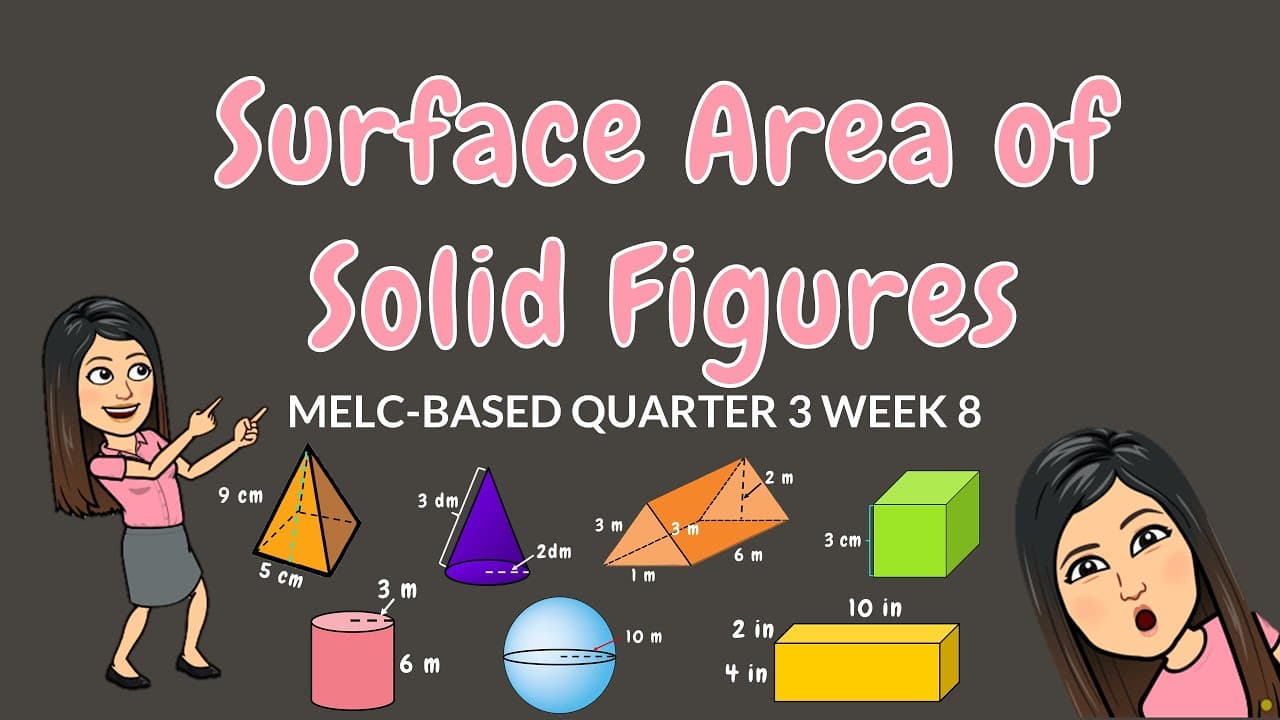
This educational math video provides a comprehensive, step-by-step tutorial on calculating the surface area of six common solid figures: a cube, rectangular prism, triangular prism, square pyramid, cylinder, cone, and sphere. Hosted by an animated teacher avatar in a digital classroom setting, the video introduces each 3D shape, identifies its key dimensions (such as length, width, height, radius, and slant height), presents the specific formula for its surface area, and then walks through a worked example using substitution and calculation. The video covers key geometry themes including identifying 3D shapes, understanding the difference between lateral and total surface area, and the practical application of algebraic formulas. It systematically breaks down complex formulas into manageable parts—calculating the area of specific faces or components (like the base versus the lateral faces) before summing them up for the final answer. The content emphasizes procedural fluency and the correct use of units (squared units for area). For teachers, this video serves as an excellent instructional aid or review tool for middle school geometry units. It can be paused after each shape is introduced to allow students to attempt the calculation before seeing the solution, or used as a reference guide for students working independently. The clear visual labeling of dimensions helps students map abstract variables in formulas to specific parts of a geometric figure, addressing a common hurdle in learning measurement geometry.
Sheena DoriaSheena Doria

9mins 11s

How to Read and Use the Unit Circle

How to Read and Use the Unit Circle

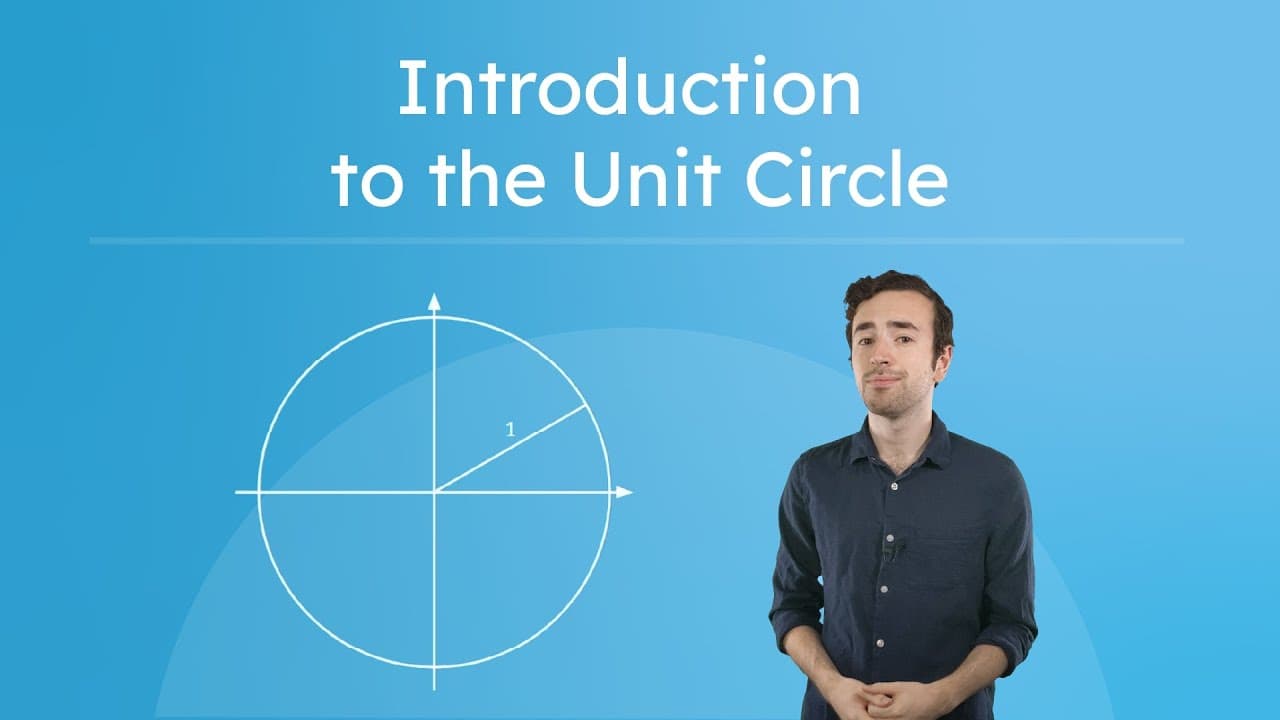
This educational video serves as a comprehensive introduction to the unit circle, a fundamental concept in trigonometry. The narrator explains the definition of a unit circle—a circle centered at the origin of a coordinate plane with a radius of one—and demonstrates how it interacts with the X and Y axes. The video transitions from basic definitions to the geometry behind the circle, showing students how to locate and label key points such as (1, 0) and (0, 1), and explains the concept of "standard position" for angles measured counter-clockwise from the positive x-axis.

Miacademy & MiaPrep Learning ChannelMiacademy & MiaPrep Learning Channel

12mins

How to Calculate Distance in 3D Space

How to Calculate Distance in 3D Space

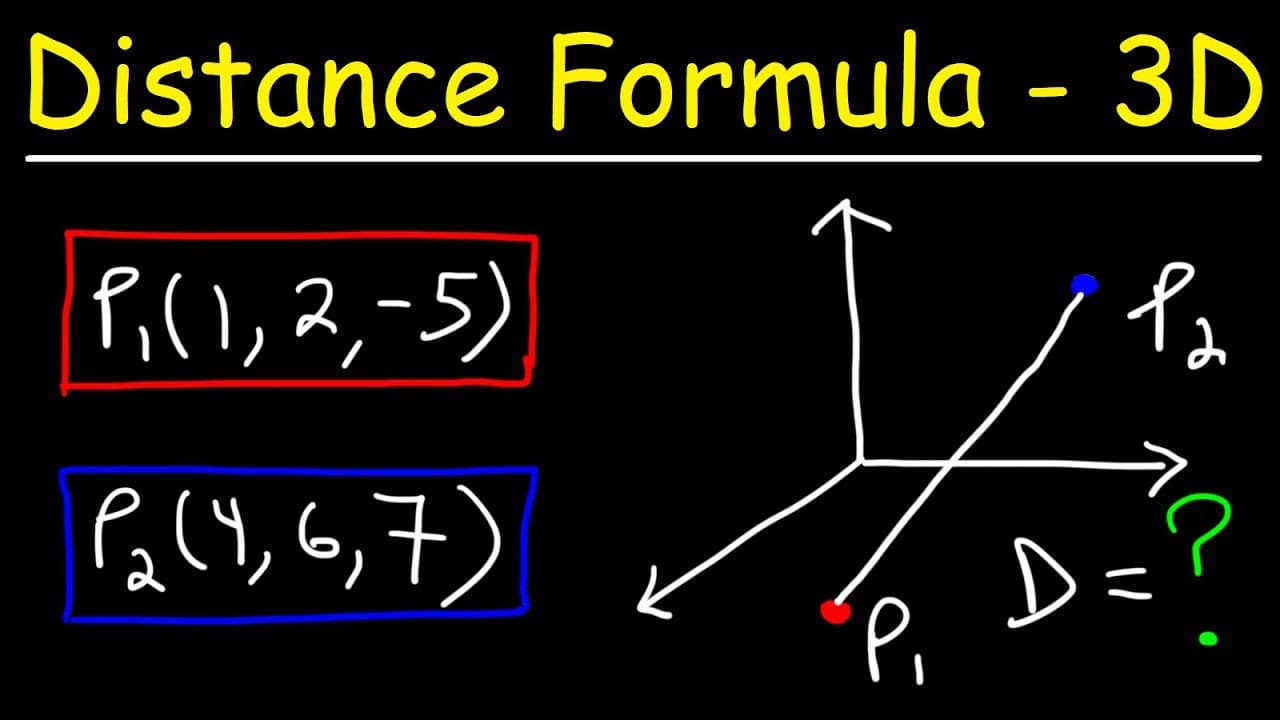
This educational video provides a comprehensive tutorial on calculating the distance between two points in three-dimensional space. The lesson begins by introducing the 3D distance formula and applying it to a specific problem with given coordinates. The narrator then transitions from simple calculation to geometric visualization, plotting the points on a 3D coordinate system (x, y, z axes) to show exactly where they sit in space. This visual approach helps students understand the spatial relationship between the points rather than just crunching numbers. The video explores key mathematical themes including 3D coordinate geometry, the application of the Pythagorean Theorem in multiple dimensions, and algebraic derivation. A significant portion of the video is dedicated to deriving the distance formula from scratch. By constructing right triangles within a 3D rectangular prism, the narrator demonstrates how the 3D formula is essentially the Pythagorean Theorem applied twice—first to find the diagonal of the base, and second to find the diagonal through space. For educators, this video is an excellent resource for bridging the gap between 2D and 3D geometry. It addresses the common student struggle of visualizing three-dimensional problems on a two-dimensional surface. The step-by-step derivation is particularly valuable for higher-level math classes, as it moves beyond rote memorization to foster a deep conceptual understanding of *why* the formula works. Teachers can use this video to introduce 3D vectors, prepare for calculus concepts, or reinforce algebra skills through geometric proofs.

The Organic Chemistry TutorThe Organic Chemistry Tutor

10mins 58s

Mastering Surface Area of Composite 3D Figures

Mastering Surface Area of Composite 3D Figures

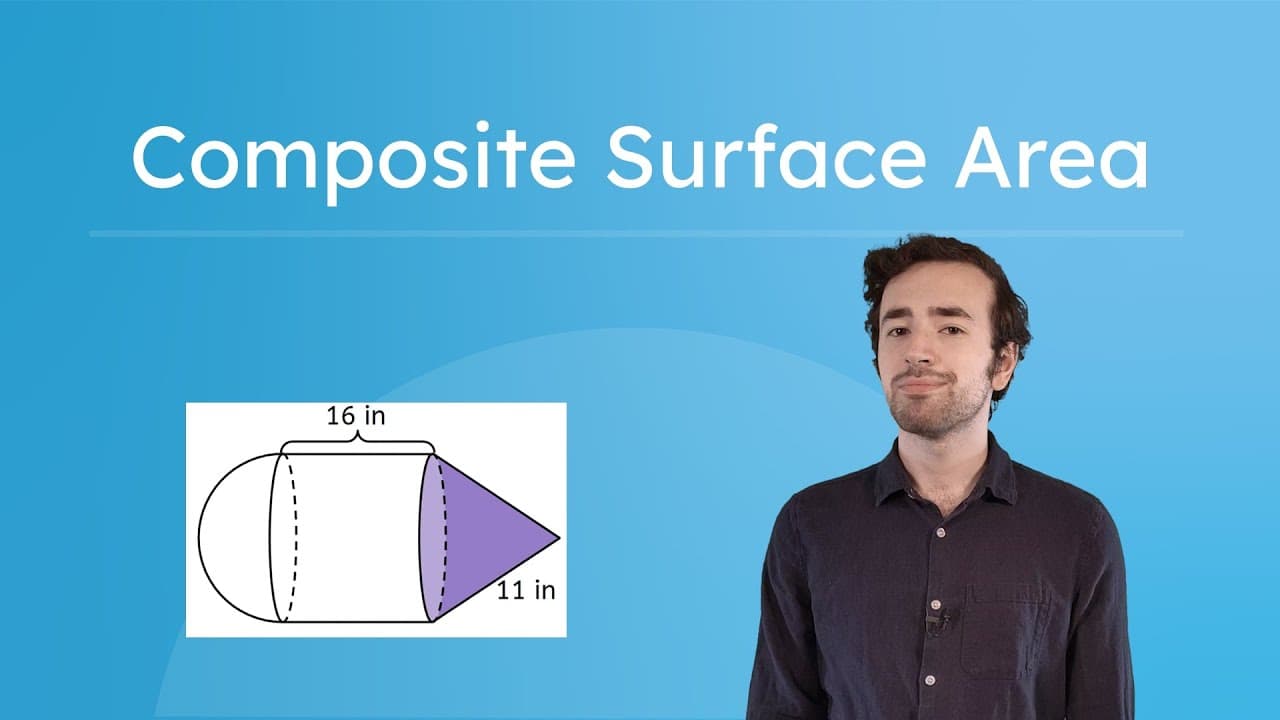
This educational video provides a clear, step-by-step guide to calculating the surface area of composite 3D figures—shapes created by combining or removing standard geometric solids like prisms, cylinders, pyramids, cones, and spheres. The instructor, Justin, moves beyond simple formula application to teach the conceptual understanding needed to determine which faces contribute to the total surface area and which are internal or removed. The lesson uses visual aids and specific examples to demonstrate that finding the surface area of a composite figure is not as simple as adding the total surface areas of its parts together. The video explores key geometric themes including spatial visualization, the decomposition of complex shapes, and the application of lateral versus total surface area formulas. It explicitly addresses the "hidden face" problem where two shapes join, using a "wrapping paper" analogy to help students visualize the exterior surface. Two detailed worked examples are provided: an additive figure combining a cylinder, cone, and hemisphere, and a subtractive figure where a pyramid is "removed" from a prism, creating a hollow indentation that paradoxically increases the total surface area. For educators, this video serves as an excellent instructional tool for middle and high school Geometry units. It effectively targets the common student misconception that calculating composite surface area involves simply summing the areas of individual shapes. By breaking down complex problems into manageable components and emphasizing the logic behind selecting specific parts of formulas (like using only lateral area), the video fosters critical thinking and precision in mathematical problem-solving.

Miacademy & MiaPrep Learning ChannelMiacademy & MiaPrep Learning Channel

14mins 45s

Mastering Volume and Surface Area of Cylinders

Mastering Volume and Surface Area of Cylinders

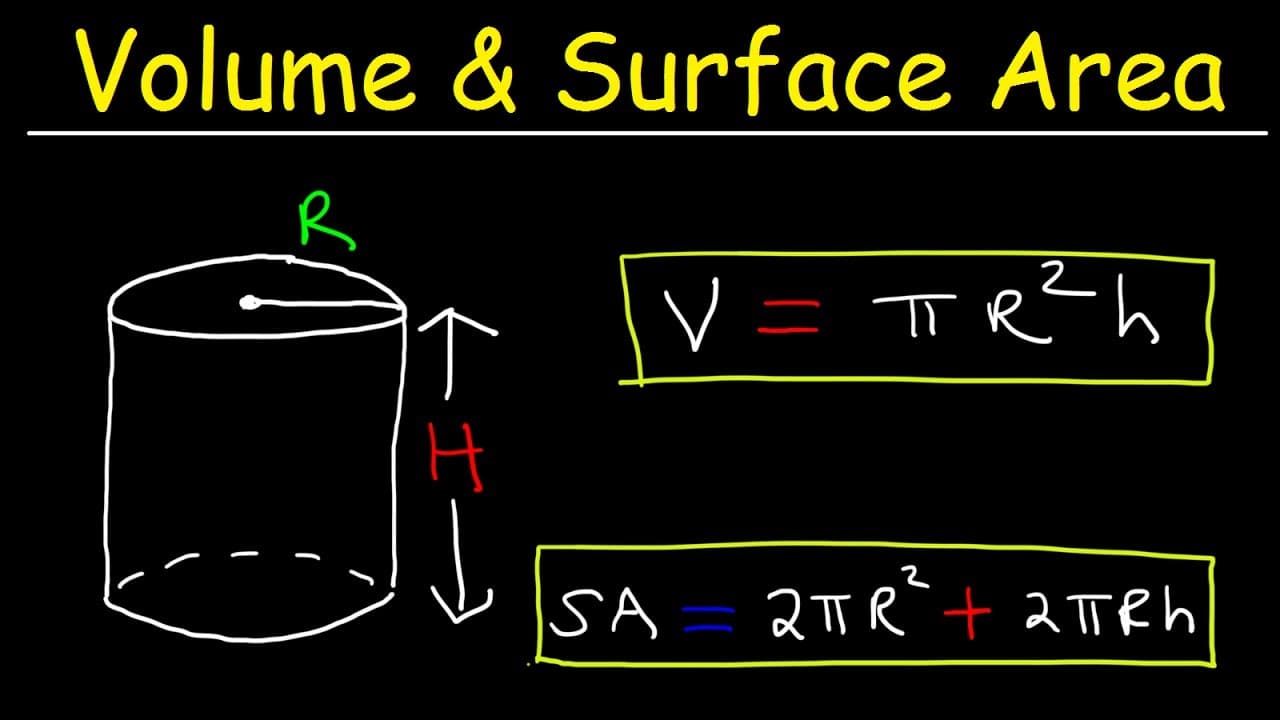
A comprehensive mathematics tutorial that guides students through the principles and calculations for finding the volume and surface area of cylinders. The video begins by conceptually deriving the formulas, using visual sketches to explain how the area of a circle relates to volume and how unrolling a cylinder reveals its surface area components. This conceptual foundation helps students understand the 'why' behind the math rather than just memorizing equations. The instructor then moves into practical application by solving four distinct word problems that increase in complexity. These examples cover standard calculations, distinguishing between cubic and square units, algebraic manipulation to find missing dimensions when given the volume, and handling unit conversions between feet and inches. The clear, step-by-step handwriting on a blackboard style background makes the procedures easy to follow. For educators, this resource serves as an excellent instructional tool for Geometry or Pre-Algebra units. It effectively addresses common student sticking points, such as the difference between lateral and total surface area, and the importance of unit consistency. The video's structure allows teachers to pause after each problem prompt for independent student practice before revealing the solution, making it highly interactive for classroom use.

The Organic Chemistry TutorThe Organic Chemistry Tutor

11mins 14s

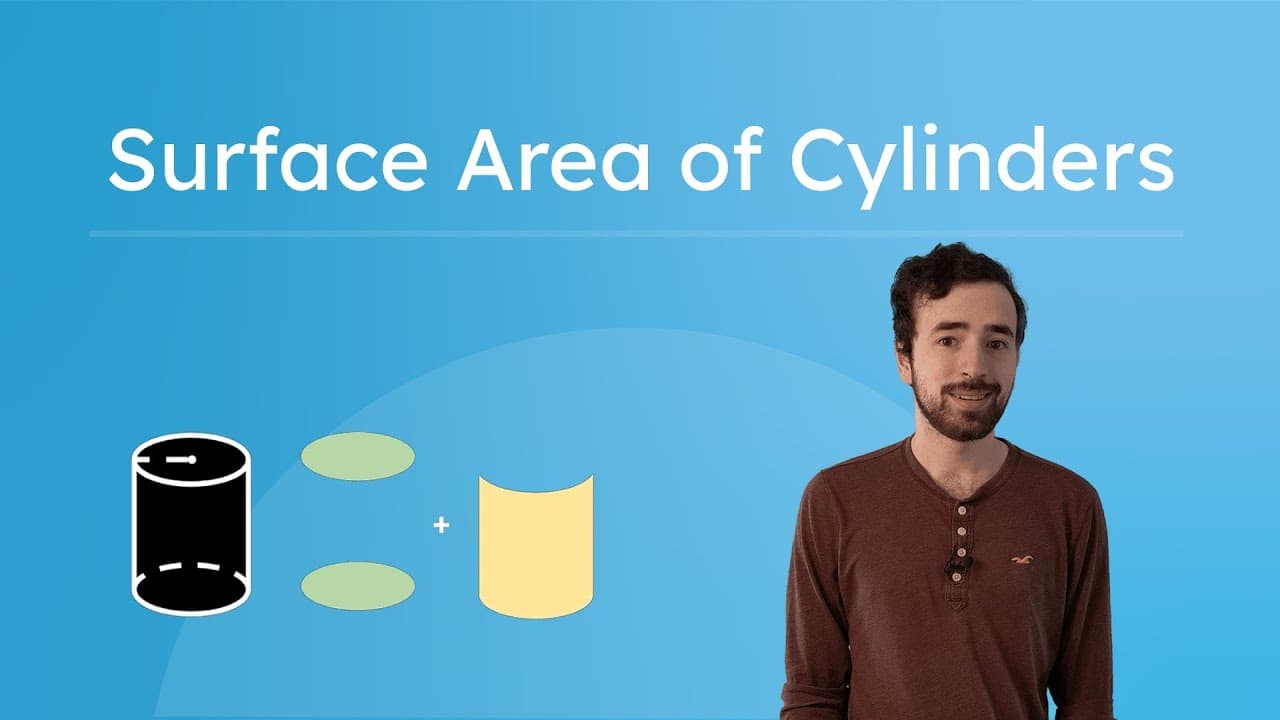
How to Find the Surface Area of Cylinders

How to Find the Surface Area of Cylinders

This instructional video guides students through the process of calculating the surface area of cylinders by connecting the concept to their prior knowledge of prisms. The lesson begins by reviewing the general surface area formula for prisms ($S = 2B + PH$) and demonstrates through a visual animation of a cylinder unfolding into a net that this same conceptual framework applies to cylinders. The video clearly illustrates how the lateral surface of a cylinder unrolls into a rectangle, where the length corresponds to the circumference of the circular base. The content covers key geometric concepts including the area of a circle ($\pi r^2$), the circumference of a circle ($2\pi r$), and how these components combine to form the total surface area. Detailed graphics help students visualize the relationship between 3D shapes and their 2D nets, making abstract formulas more concrete. The video encourages students to derive understanding rather than just memorizing a specific formula for cylinders. This resource is highly valuable for middle and high school geometry classrooms. It emphasizes precision in calculation by advising students to enter the entire expression into a calculator at once to avoid rounding errors. The step-by-step example problem provides a clear model for students to follow, making it an excellent tool for introducing the topic or for remediation for students struggling with geometric formulas.

Miacademy & MiaPrep Learning ChannelMiacademy & MiaPrep Learning Channel

6mins 9s

Materials

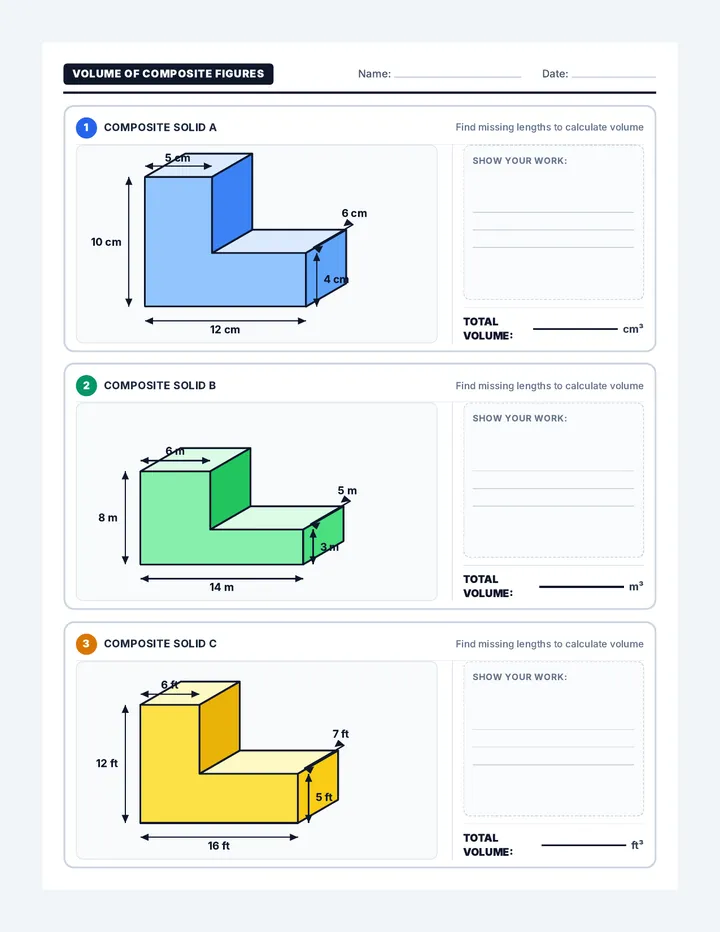
Composite Volume Worksheet

Composite Volume Worksheet

A clean, print-ready math worksheet containing three L-shaped composite 3D figures, each composed of two rectangular prisms with partial dimension labels for students to deduce missing measurements and calculate total volume.

KS

Kaila Strubhart

Indiana Math Standards Guide

Indiana Math Standards Guide

A comprehensive 4-page reference guide and curriculum pacing tracker for 6th Grade Indiana Academic Standards in Mathematics. Features complete standard codes, official descriptions, student-friendly 'I Can' statements, and tracking checkboxes for Number Sense, Computation, Algebraic Thinking, Geometry, and Data Analysis.

RG

Richard Gist

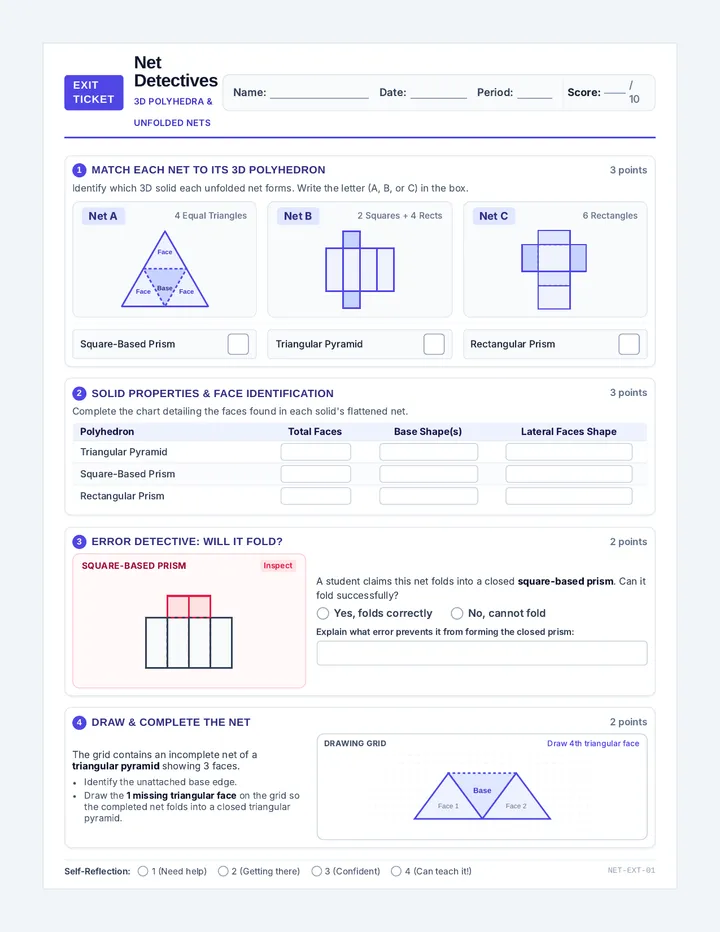
Net Detectives Exit Ticket

Net Detectives Exit Ticket

A targeted 1-page geometry exit ticket featuring large, clear diagrams and a mathematically congruent 4-equal-triangle net for the triangular pyramid, assessing nets of triangular pyramids, square-based prisms, and rectangular prisms.

JC

Judia Chambers

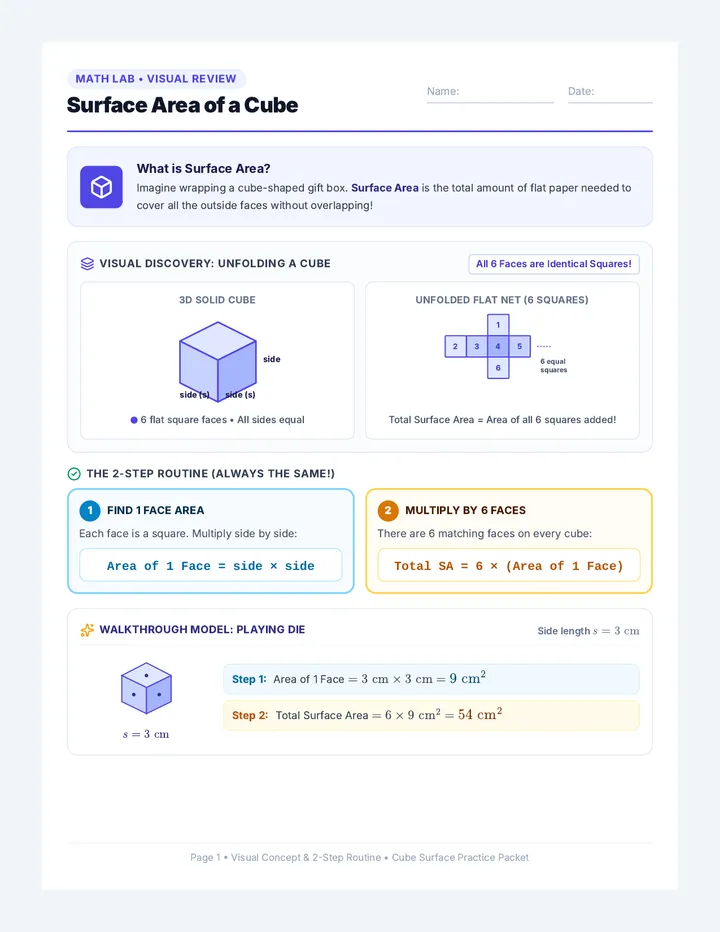
Cube Surface Practice Packet

Cube Surface Practice Packet

A 4-page visual practice packet for 6th graders reviewing the surface area of a cube. Includes scaffolded visual notes with concrete models and unfolding nets, structured 2-step guided practice, simplified independent practice, and an exit ticket.

AA

alicia accapezzato

Math IA Review Worksheet

Math IA Review Worksheet

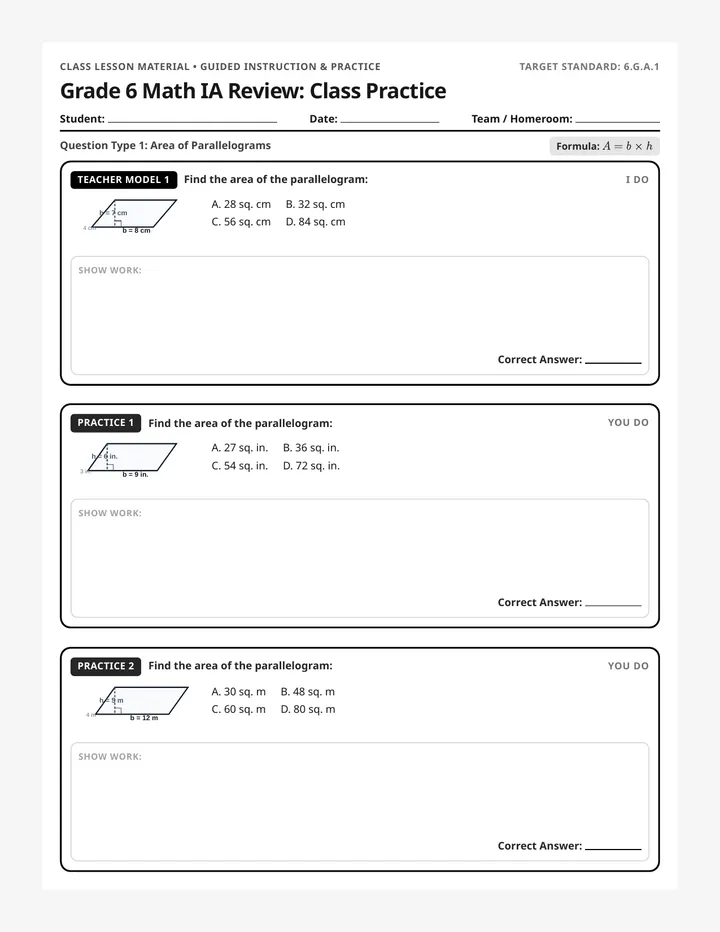
A comprehensive 11-page Grade 6 Math Interim Assessment review worksheet packet modeled after the multi-step equations instructional format. For each of the 11 assessment question types from the Grade 6 Math IA 1, the resource provides 1 Teacher Model (I DO) and 2 Independent Practice problems (YOU DO) with spacious student work boxes.

CE

Clifford Ernst

Surface Area Inclusion Lesson Plan

Surface Area Inclusion Lesson Plan

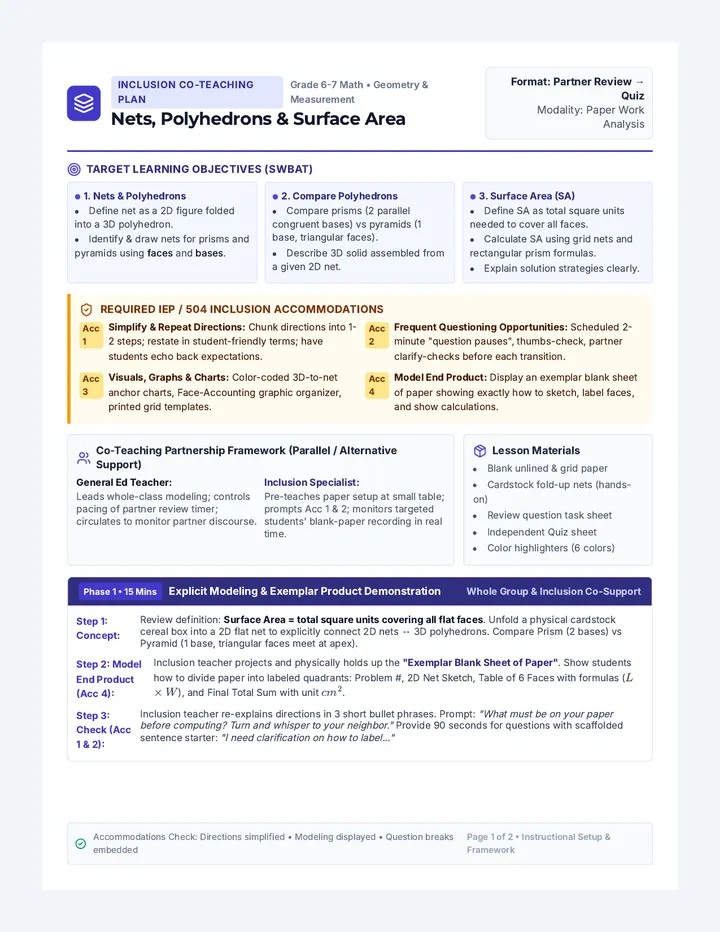
A comprehensive 2-page inclusion teacher lesson plan covering 3D figures, nets, and surface area with embedded accommodations, blank-paper student work protocols, partner review structures, and diagnostic error analysis.

SM

Syrel Marie Redulla

Sequences

Math Blueprint Week 1 Booklet (Definitive)

Math Blueprint Spiral

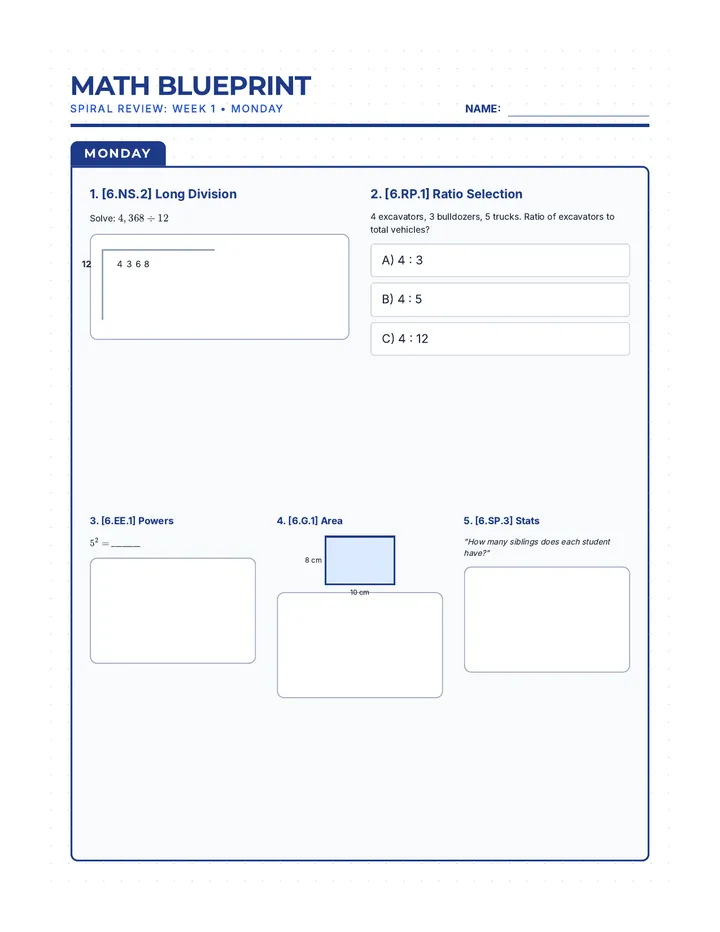
A 7-week comprehensive math review sequence designed to prepare 6th-grade students for North Carolina state testing, covering Number Systems, Ratios, Expressions, Geometry, and Statistics.

MK

Michell Kisler

27
Ratio Rumble Worksheet

Math Quest Review

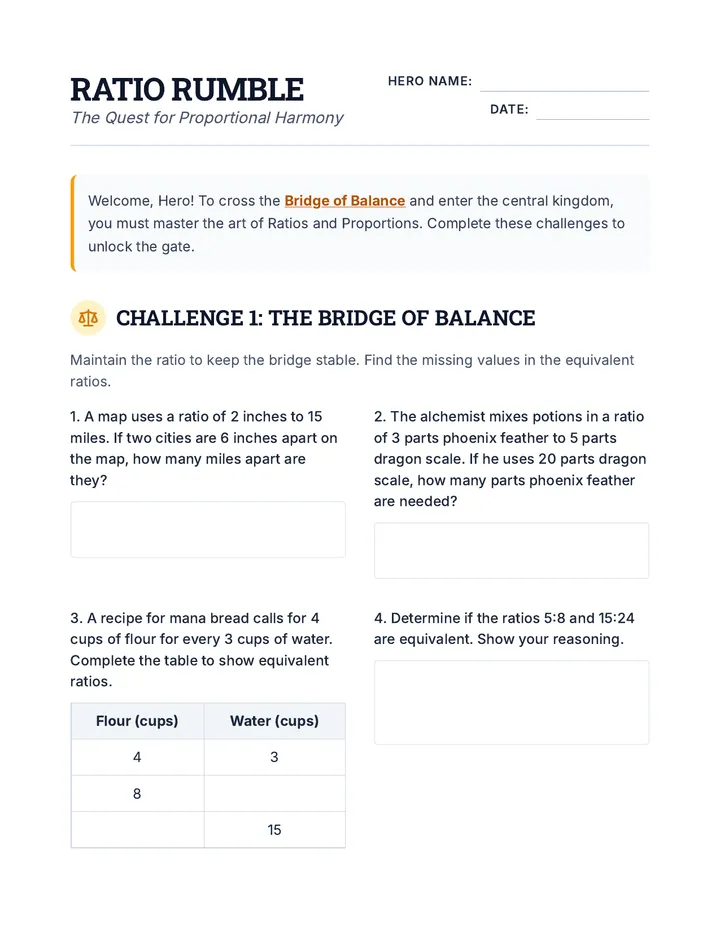
A week-long adventure-themed 6th-grade math review covering major clusters: Ratios & Proportions, Number System, Expressions & Equations, and Geometry. The sequence culminates in a mixed-review 'Quest Finale' to assess student mastery and readiness.

C

carlsond

15
Superpower Academy Slides

Math Mindset and Identity

A transformative math unit focusing on math identity, mindset, and practical superpowers. Integrates a rich Biblical worldview to show how mathematics is woven into each student's past, present, and future purpose.

CH

Carlina Hui

14
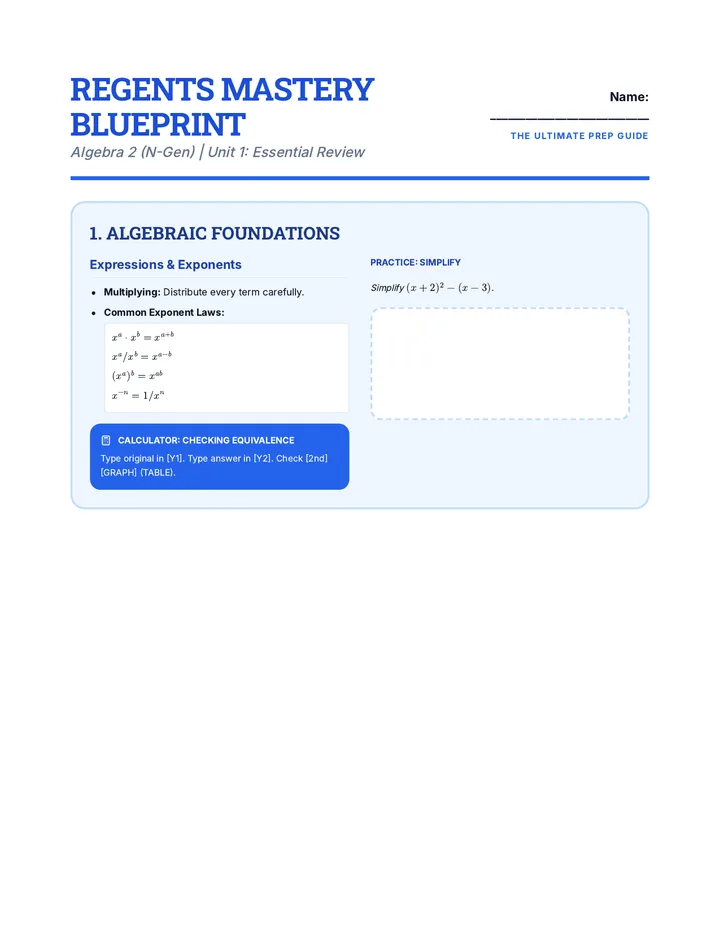
Regents Mastery Blueprint Study Guide

Regents Mastery Suite

A comprehensive review suite for the New York State Mathematics Regents exams, including Algebra 1, Geometry, and Algebra 2, featuring mastery blueprints, calculator strategies, and exam-taking tips.

KB

Kayla Borozny

15
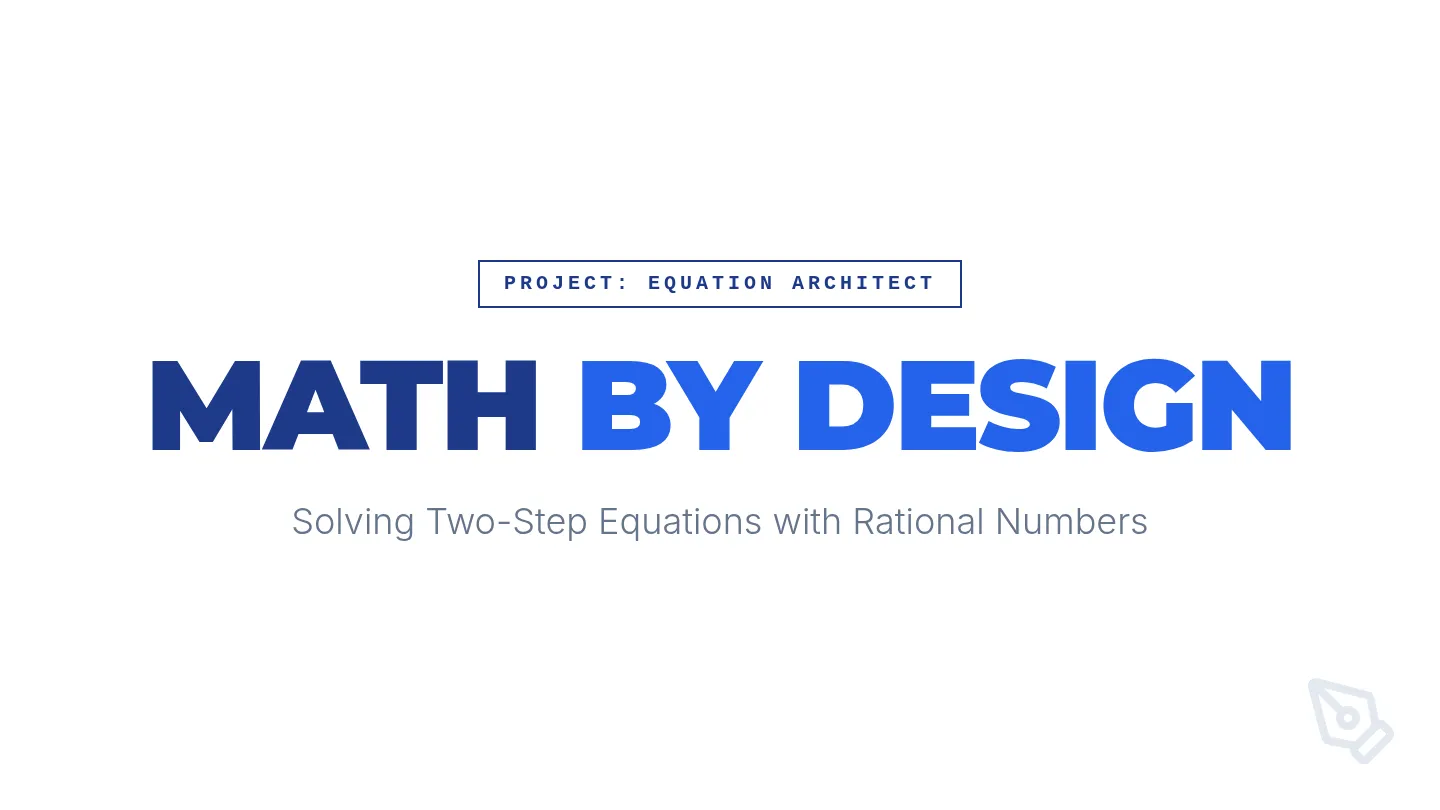
Equation Architect Slides

Geometric Foundations

A comprehensive unit covering 7th-grade geometry standards, focusing on scale drawings, geometric constructions, 3D cross-sections, angle relationships, and solving real-world area, volume, and surface area problems.

D

dbonicoro

25
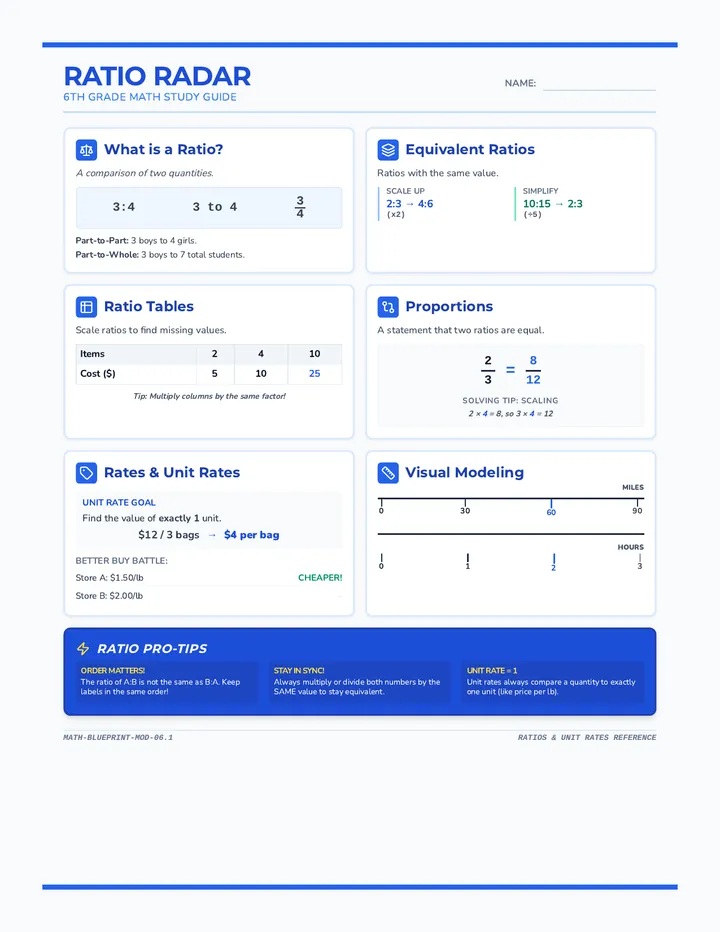
Ratio Radar Cheat Sheet

Math Mastery Guide

A collection of high-quality study tools and practice resources for 6th-grade math, focusing on Ratios, Proportions, Expressions, and Equations.

FB

Faith Bain-Lucey

24

Lessons

Similarity Secrets Anchor Charts

Similarity Squad

A comprehensive guide to understanding geometric similarity, covering ratios, proportions, and similarity criteria for polygons and triangles.

WM

Wilkzhie Maria Silva Moncada

19
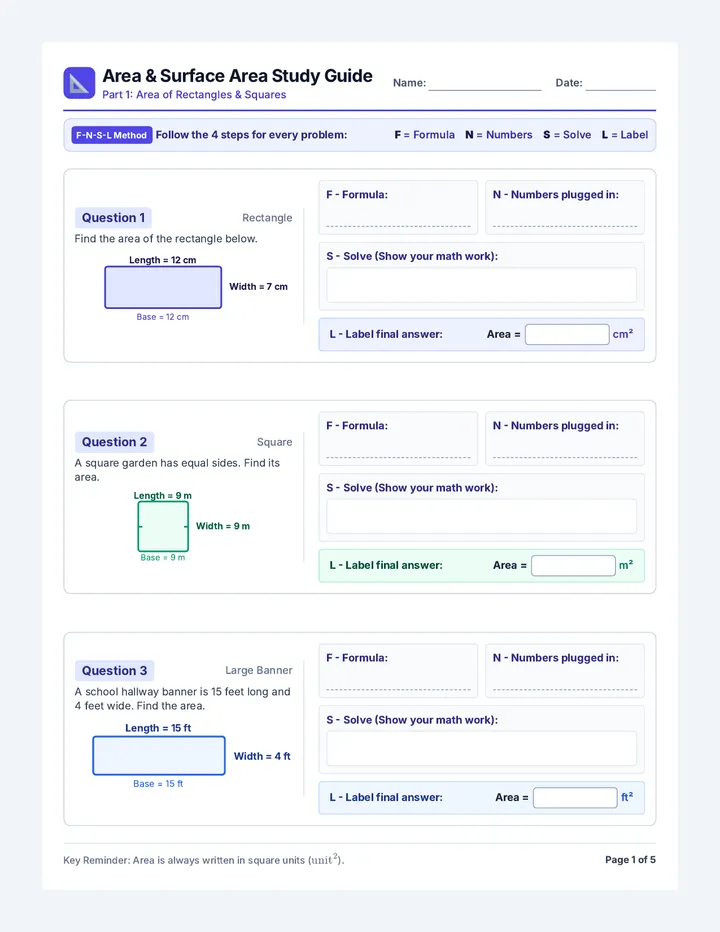
Area Master Study Guide

Shape Master Quest

A targeted 6th-grade geometry review unit mastering area of rectangles, parallelograms, triangles, composite polygons, and prism surface area using the four-step F-N-S-L problem-solving framework. Features high-clarity 2D and 3D visual diagrams, 4th-grade reading level accessibility, and dedicated accommodations for exceptional learners.

MK

Michell Kisler

7
Fold Space Lesson Plan

Fold Space Not Just Paper

Students explore the fascinating connection between origami and 3D topology, learning how folding transforms a 2D surface into complex 3D structures while preserving topological properties. This hands-on session bridges geometry, art, and abstract mathematical concepts for 7th-grade learners.

SH

Sarah Hurdle

6
Card Box Net Activity

Grand Slam Surface

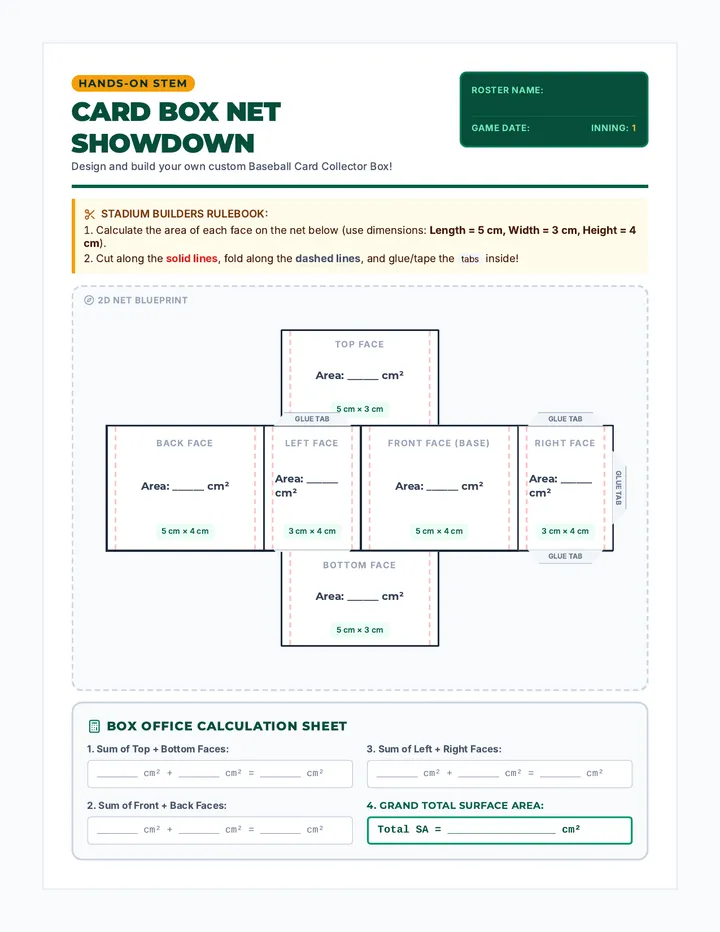
An immersive, baseball-themed introduction to surface area of rectangular prisms. Students analyze equipment crates and cut out a customizable baseball card box net to discover how the areas of individual faces sum to the total surface area.

AA

alicia accapezzato

5
Box Boss Project Guide

Box Boss Project

A hands-on engineering project where students design packaging for a folding chair, calculating the precise surface area and volume required for production.

M

mastronardil

9
Monday Circulation Tracker

Mix It Up Monitoring

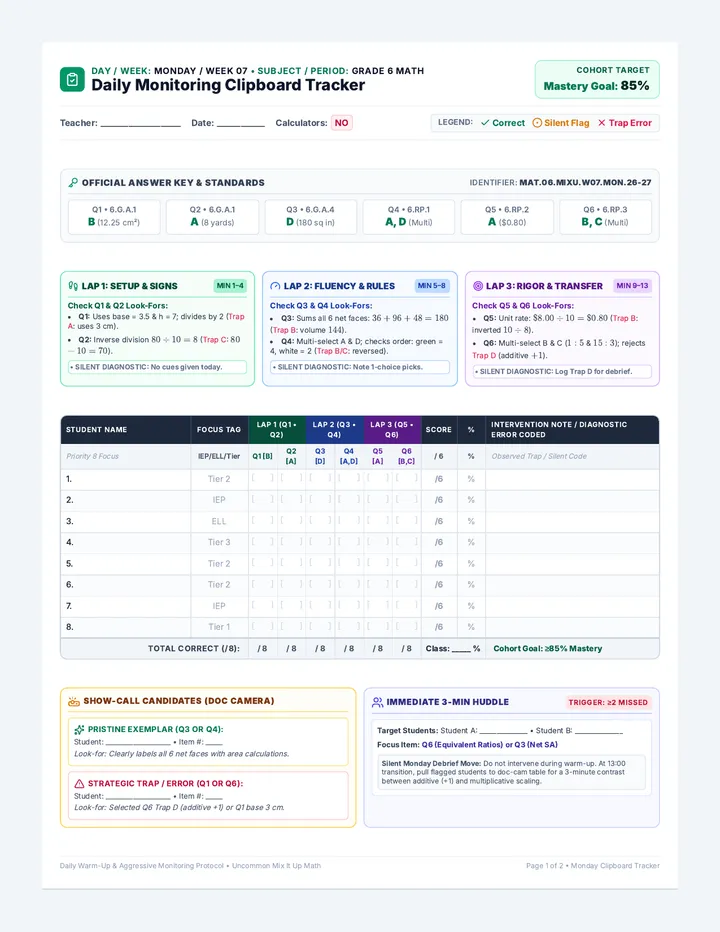
A rigorous two-day aggressive monitoring toolkit designed for Grade 6 Math Mix It Up Week 07, covering geometry and ratios standards. Contains daily clipboard circulation trackers and misconception diagnostic guides for Monday's silent baseline observation and Tuesday's guided feedback laps.

DB

Danny Brooks

2