Fold Space Lesson Plan Fold Space, Not Just Paper!
Lesson Plan • 30 Minutes
Audience
7th Grade Students
Why This Lesson?
This lesson helps students visualize abstract mathematical concepts through a fun, hands-on activity. It demonstrates how geometry and topology are present in art forms like origami, making math more tangible and engaging.
Objective
Students will be able to identify how a 2D sheet of paper can be transformed into a 3D topological shape through origami, and recognize basic topological properties like connectivity and surfaces in their creations.
Preparation (15 mins)
1 Review Materials : Familiarize yourself with the slide deck, script, warm-up, activity, and cool-down resources.
2 Paper Ready : Ensure each student has one square sheet of origami paper (or any square sheet).
3 Set Up : Projector ready with the Slide Deck: Fold Space, Not Just Paper!
Materials
Origami Paper
Lesson Slide Deck
Warm-Up Worksheet
Folding Activity Guide
Cool Down Ticket
Instructional Flow
Phase & Time Key Actions & Teacher Notes Warm Up
5 Minutes
|
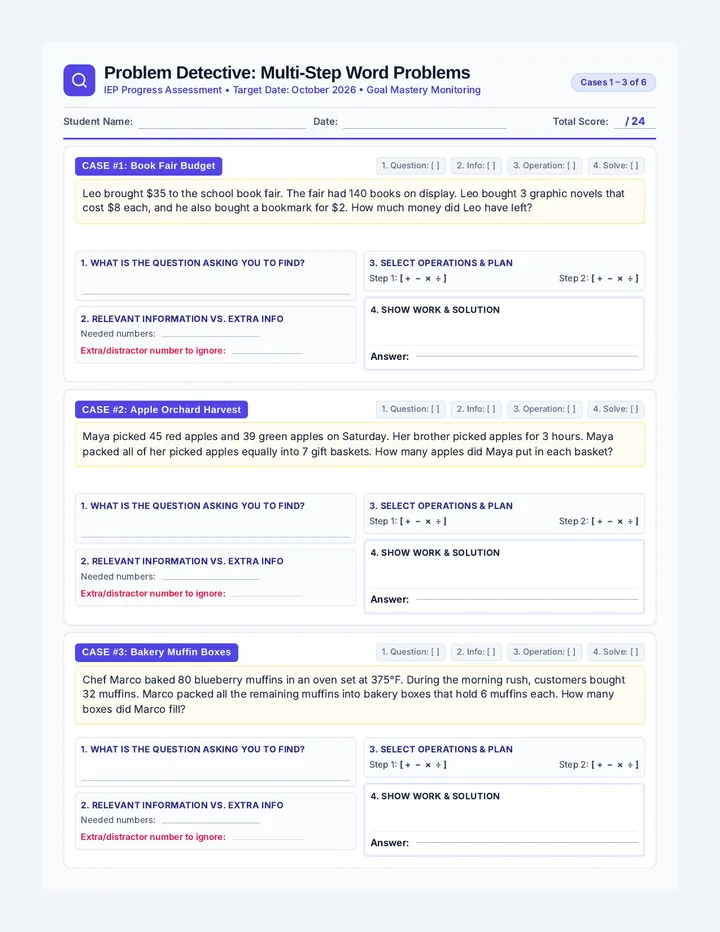
• Hand out the Warm Up Worksheet as students enter.
• Prompt students to consider the "geometry" of a flat sheet (sides, corners).
• Hook: Introduce the idea that simple folds can transform geometry without changing the fundamental identity of the material.
|
|
Introduction
10 Minutes
|
• Use Slide Deck slides 1-3 to define Topology: the study of shapes that can be stretched/bent without tearing or gluing.
• Connect to Origami: Folding transforms 2D to 3D while preserving topological properties .
• Example: Discuss the donut/coffee mug analogy (both have exactly one hole).
|
|
Folding Activity
10 Minutes
|
• Guide students through the Paper Boat Activity guide.
• Check for Understanding: As they fold, ask: "How many holes does your paper have now? How many surfaces can you trace?"
• Observe the transformation from a flat square to a structural volume.
|
|
Reflection
5 Minutes
|
• Facilitate a brief discussion using prompts from the Cool Down sheet.
• Focus on how origami is a practical laboratory for exploring abstract 3D math.
• Students submit the exit ticket as they transition.
|
Fold Space Slides Fold Space, Not Just Paper!
Exploring Origami and 3D Topology
Slide 1 of 5
What is Origami?
1
The ancient art of paper folding .
2
Transforms a flat square sheet into a finished sculpture.
3
Key Rule: Usually no cutting, no gluing—just folding!
Imagine the transformation...
What is Topology?
A branch of mathematics that studies shapes and spaces .
It looks at properties that stay the same when shapes are stretched, twisted, or bent .
The "Hole" Idea:
A donut and a coffee mug are topologically the same because they both have one hole !
Donut
Mug
"Topologically identical!"
Origami + Topology = ?
Folding changes a 2D flat surface into a 3D shape .
Because we don't cut or glue, we preserve topological properties.
We are changing Geometry , but not Topology .
Folding Space Without Breaking It
Let's Fold!
Today's Mission: The Paper Boat
Transformation
How does 2D become 3D?
Connectivity
Are you adding holes?
One Piece
Is it still one continuous surface?
Ready your paper!
Origami and Topology Script Origami & Topology Script
Facilitation Guide • Fold Space, Not Just Paper!
TEACHER RESOURCE
Warm-Up: Engaging Minds (5 minutes)
"Good morning/afternoon, everyone! Today we're going to dive into a really cool connection between art and math. To start, let's do a quick warm-up. Take a moment to look at a simple sheet of paper in front of you."
Prompting Question:
"Think about this: How many distinct sides does a flat piece of paper have? And how many corners ? Jot down your thoughts briefly."
(Give students 2 minutes to write. Then call for responses.)
"Okay, who would like to share their observations? Great! Keep those ideas in mind as we explore how this simple piece of paper can transform into something truly amazing and mathematically fascinating."
Intro to Topology & Origami (10 minutes)
Slides 1-2
"First, let's talk about the art part: Origami. Many of you might already know about it. What is origami? What are some of its basic rules?"
(Guide towards the idea of folding without cutting/gluing).
"Exactly! Origami is the art of paper folding, and a super important rule is that we usually don't cut or glue the paper. We just fold it to create incredible shapes and sculptures from a flat sheet."
Slide 3
"Now for the math part: Topology. It sounds like a big word, but it's really about studying shapes and spaces in a special way. Imagine you have a piece of play-doh. You can squish it, stretch it, bend it, even twist it, right? But it's still the same piece of play-doh."
"A classic example is a donut and a coffee mug. Believe it or not, to a topologist, they're the same! Why do you think that might be?"
(Wait for responses. Guide them to the idea of a single hole).
"Yes, they both have one hole! You could theoretically transform one into the other by stretching and bending without tearing. Pretty wild, huh?"
Origami + Topology = ? (10 minutes)
Slides 4-5
"So, what does this have to do with origami? Well, when we do origami, we take a flat, 2D piece of paper, and we transform it into a 3D object. But remember that key rule of origami? No cutting, no gluing! This means that even though we're changing the geometric shape of the paper, we are preserving its topological properties ."
"NOW, LET'S GET HANDS-ON! We're going to fold space!"
Guide students through the Paper Boat Activity . Circulate and use these prompts:
Origami Warm-Up Worksheet Origami Warm-Up!
Folding Space • Lesson Intro
Name:
Date:
Take a moment to look at a simple sheet of paper in front of you. Think about the physical properties of this flat object before we begin transforming it.
1
How many distinct sides does a flat piece of paper have?
2
How many corners does it have?
3
Can you think of a way to change its 3D shape without tearing it or adding anything to it?
Square
Volume
Folding Activity Guide Folding a Topological Wonder
Project: The Paper Boat
Follow these steps to transform your flat sheet of paper into a 3D boat. As you fold, pay close attention to how the paper's connectivity stays the same even as its geometry changes.
Materials
• 1 Square origami paper
• Flat surface for creasing
Step-by-Step Instructions
01
Start white-side up. Fold in half to form a rectangle. Crease well and unfold .
02
Fold in half again, perpendicular to the first fold, to make a smaller rectangle. Crease well.
03
From the top open end, fold the two top corners down to meet the center crease (like a paper hat).
04
Fold up the bottom flap of the front layer over the triangles. Crease well.
05
Flip over and fold up the remaining bottom flap. You now have a triangle "hat" shape.
06
Open the bottom of the hat and flatten it into a square. Original triangles meet at the center.
07
Take the bottom corner of the top layer and fold it up to meet the top corner. Crease well.
08
Flip it over and do the same with the other side. You should have another triangle.
09
Open the bottom of this triangle by pulling the center outwards and flatten it into a square.
10
Gently pull the two opposite points of the top layer outwards. Your boat will form! Flatten the bottom.
Observe and Reflect
How did the flat paper become a 3D object through these folds?
Did you ever cut or glue the paper? How does this relate to the concept of topology?
Is the paper still one continuous piece? How many distinct surfaces can you count on your boat? Topological Takeaways Exit Ticket Topological Takeaways
Exit Ticket • Fold Space, Not Just Paper!
Name:
Date:
Take a few minutes to reflect on today's exploration of origami and the mathematical world of topology.
1
In your own words, briefly explain the connection between origami and 3D topology.
2
What was one new idea or concept you learned today that surprised you?
3
Can you think of another everyday object that might be topologically similar to your paper boat (meaning you could stretch/bend one into the other without tearing)?
Space Folders Club