Lenny.com
Explore
Create
ActivitiesNewMathEnglish Language ArtsScience & EngineeringSocial StudiesGlobal LanguagesHealth & Physical EducationSpecial EducationCounseling & Life SkillsArts & CreativityESL
Lenny.com
Lenny.com
Explore
Create
ActivitiesNewMathEnglish Language ArtsScience & EngineeringSocial StudiesGlobal LanguagesHealth & Physical EducationSpecial EducationCounseling & Life SkillsArts & CreativityESL
Lenny.com
Lenny.com

Solutions

Lenny for EducatorsLenny for SchoolsLenny for Districts

Product

ExploreSign inCreateSupportAbout

Resources

Getting startedMTSS Acceleration Program

© 2026 Lenny Learning Inc.

TermsPrivacyAccessibility
LinkedInInstagramX
Lenny

Model Relationships with Functions

Mathematical modeling techniques representing variable dependencies through tables, graphs, and algebraic expressions. Analyzes functional behavior to predict outcomes and solve real-world contextual problems.

MathNumbers & CountingCounting ObjectsNumber NamesComparing NumbersNumber OperationsCounting SequenceNumbers 0-10Place Value Understanding and SystemAdd and Subtract Within 20Addition and Subtraction ConceptsAddition and Subtraction EquationsAddition and Subtraction ProblemsFoundations for MultiplicationMultiplication and Division PropertiesMultiply and Divide Within 100Multiplication and Division ProblemsFactors and MultiplesProperties of OperationsPatterns and RelationshipsGenerate and Analyze PatternsMulti-Digit ArithmeticPlace Value OperationsMulti-Digit and Decimal OperationsNumerical ExpressionsFour Operations and PatternsFour Operations Problem SolvingMeasurement & DataMeasurable AttributesMeasuring LengthsMeasure and Estimate Lengths in Standard UnitsRelate Addition and Subtraction to LengthClassifying and Counting ObjectsTime and MoneyArea Concepts and MeasurementPerimeter and Area MeasuresAngle Concepts and MeasurementTime, Volume, and MassMeasurement Unit ConversionsGeometryIdentifying ShapesShapes and AttributesShape Attributes and ReasoningShapes and CompositionClassifying 2D FiguresGeometric Figures and RelationshipsLines, Angles, and ShapesAngle, Area, and VolumeGeometric MeasurementVolume of 3D ShapesCoordinate Plane ApplicationsTransformations in the PlaneCongruence and SimilarityUnderstand congruence in terms of rigid motionsSimilarity and TransformationsProve Theorems Involving SimilarityPythagorean TheoremTrigonometry for General TrianglesMake Geometric ConstructionsProve Geometric TheoremsTheorems About CirclesFind Arc Lengths And Areas of Sectors of CirclesVolume FormulasRelationships Between Two-Dimensional and Three-Dimensional ObjectsProve Simple Geometric Theorems AlgebraicallyTranslate Between Geometric Description and Equation for Conic SectionApply Geometric Concepts in Modeling SituationsFractions & DecimalsFractions as NumbersBuilding FractionsFraction Equivalence and OrderingAdding and Subtracting FractionsMultiplying and Dividing FractionsDividing FractionsDecimal FractionsMulti-Digit Computation and FactorsAdd, Subtract, Multiply, and Divide Rational NumbersRational Number SystemIrrational Numbers and ApproximationsRatiosRatios and ProportionsProportional RelationshipsUnit RateAlgebraAlgebraic ExpressionsGenerate Equivalent ExpressionsQuantitative RelationshipsProportional Relationships and Linear EquationsEquations and InequalitiesEquation Solving and ReasoningLinear Equations and SystemsGraph Equations and InequalitiesSystems of EquationsReal-World Algebraic ProblemsQuantitative Reasoning with UnitsExpression StructureEquivalent Expression FormsRadicals and Integer ExponentsRational ExponentsRational and Irrational NumbersPolynomial OperationsPolynomial IdentitiesPolynomial Zeros and FactorsRational ExpressionsComplex Number OperationsComplex Numbers in PolynomialsComplex Numbers on PlaneStatistics & ProbabilityRepresent and Interpret DataData DistributionsStatistical VariabilityProbability ModelsCompound Event ProbabilitiesStatistical SamplingInterpret Categorical and Quantitative DataBivariate Data PatternsInterpret Linear ModelsComparing Two PopulationsRandom Processes in StatisticsIndependence and Conditional ProbabilityExpected ValuesProbability-Based Decision MakingStatistical Inference and ConclusionsFunctionsFunction Concepts and NotationDefine and Compare FunctionsInterpret Functions in ContextAnalyze Function RepresentationsModel Relationships with FunctionsIdentify Linear vs Exponential GrowthDistinguish Between Function TypesCompare Growth RatesInterpret Function ExpressionsBuild Functions from RelationshipsConstruct and Model FunctionsTransform and Combine FunctionsModel Comparison and SelectionSolve Exponential EquationsTrigonometryTrigonometric Ratios Involving Right TrianglesTrigonometric Functions and Unit CircleModel with Trigonometric FunctionsTrigonometric IdentitiesVectors & MatricesIntroduction to Vectors and MatricesVector QuantitiesVector OperationsMatrix OperationsCalculusLimits and ContinuityDerivative Concepts and NotationDerivative Rules and TechniquesApplications of DerivativesOptimization ProblemsRelated RatesCurve Sketching and AnalysisIntegration Concepts and NotationAntiderivatives and Indefinite IntegralsDefinite Integrals and AreaFundamental Theorem of CalculusIntegration TechniquesApplications of IntegrationDifferential EquationsSequences and SeriesParametric and Polar FunctionsVector-Valued Functions

Videos

Using Logarithmic Models to Solve Real-World Problems

Using Logarithmic Models to Solve Real-World Problems

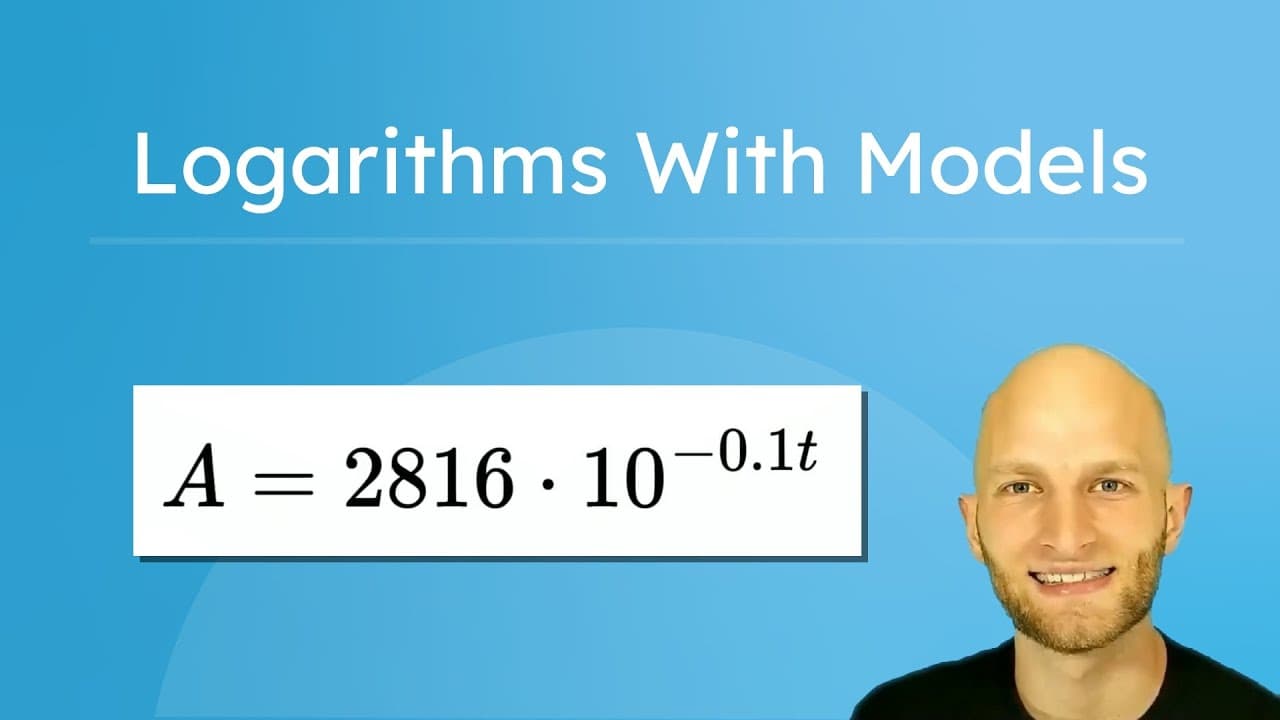
This video provides a practical demonstration of how to apply logarithmic and exponential models to solve real-world word problems. Using a specific example involving the shrinking area of a region in the Amazon jungle, the presenter, Randy, guides viewers through analyzing an exponential decay formula ($A = 2816 \cdot 10^{-0.1t}$). The video breaks down how to identify variables, determine initial conditions, and answer two distinct types of questions: solving for a future value given time, and solving for time given a specific value. The content focuses heavily on the algebraic mechanics required to solve these problems. Key topics include identifying knowns and unknowns, isolating the exponential term in an equation, converting exponential equations into logarithmic form to solve for a variable in the exponent, and calculator syntax tips (specifically distinguishing between the negative sign and subtraction key). It contrasts the ease of solving for the dependent variable (Area) versus the more complex steps required to solve for the independent variable (Time). For educators, this video serves as an excellent bridge between abstract algebraic skills and applied mathematics. It validates the question "when will we use this?" by applying logarithms to environmental science. The step-by-step framework presented at the end—Identify Variables, Write Equation, Solve—provides students with a transferable strategy for tackling any modeling word problem in Algebra II or Pre-Calculus contexts.

Miacademy & MiaPrep Learning ChannelMiacademy & MiaPrep Learning Channel

9mins 8s

Mastering Algebra Word Problems: From Sentences to Solutions

Mastering Algebra Word Problems: From Sentences to Solutions

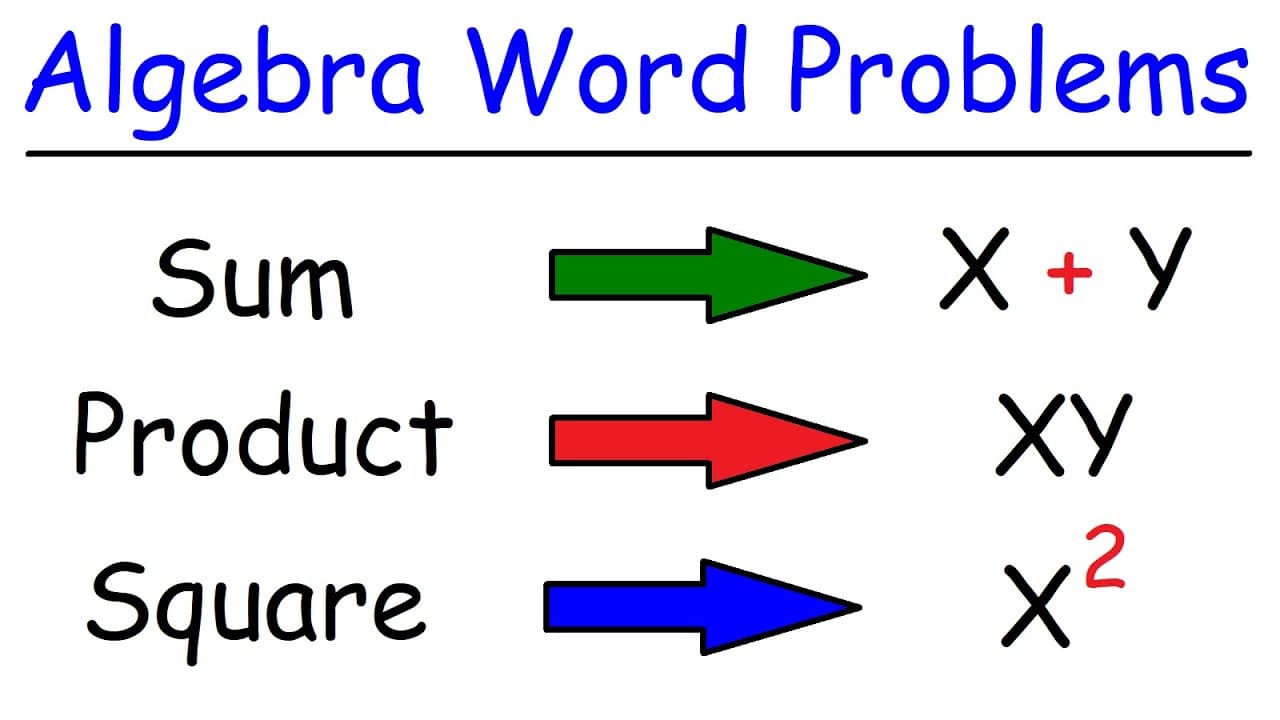
This comprehensive algebra tutorial guides students through the process of translating English sentences into mathematical equations to solve word problems. The video systematically progresses from basic linear equations to more complex problems involving quadratics, systems of equations, reciprocals, and square roots. It explicitly addresses common student stumbling blocks, such as the specific ordering required for phrases like "less than" and the necessity of checking for extraneous solutions in radical equations. The content covers a wide range of algebraic concepts including defining variables, setting up linear and quadratic equations, factoring trinomials (both with and without leading coefficients greater than one), solving systems via substitution and elimination, and clearing denominators in rational equations. The narrator uses a clear, step-by-step whiteboard style to demonstrate the logic behind each translation and solution method. This video is highly valuable for bridging the gap between literacy and mathematics, a skill often required in standardized testing and higher-level math courses. Teachers can use this resource to scaffold learning, starting with vocabulary acquisition (translating phrases) and moving toward higher-order problem solving. The segments exploring "extraneous solutions" and "reciprocals" provide excellent opportunities for deeper discussions about the domain and validity of algebraic solutions.

The Organic Chemistry TutorThe Organic Chemistry Tutor

22mins 35s

Direct Variation Explained: Formulas, Tables, and Word Problems

Direct Variation Explained: Formulas, Tables, and Word Problems

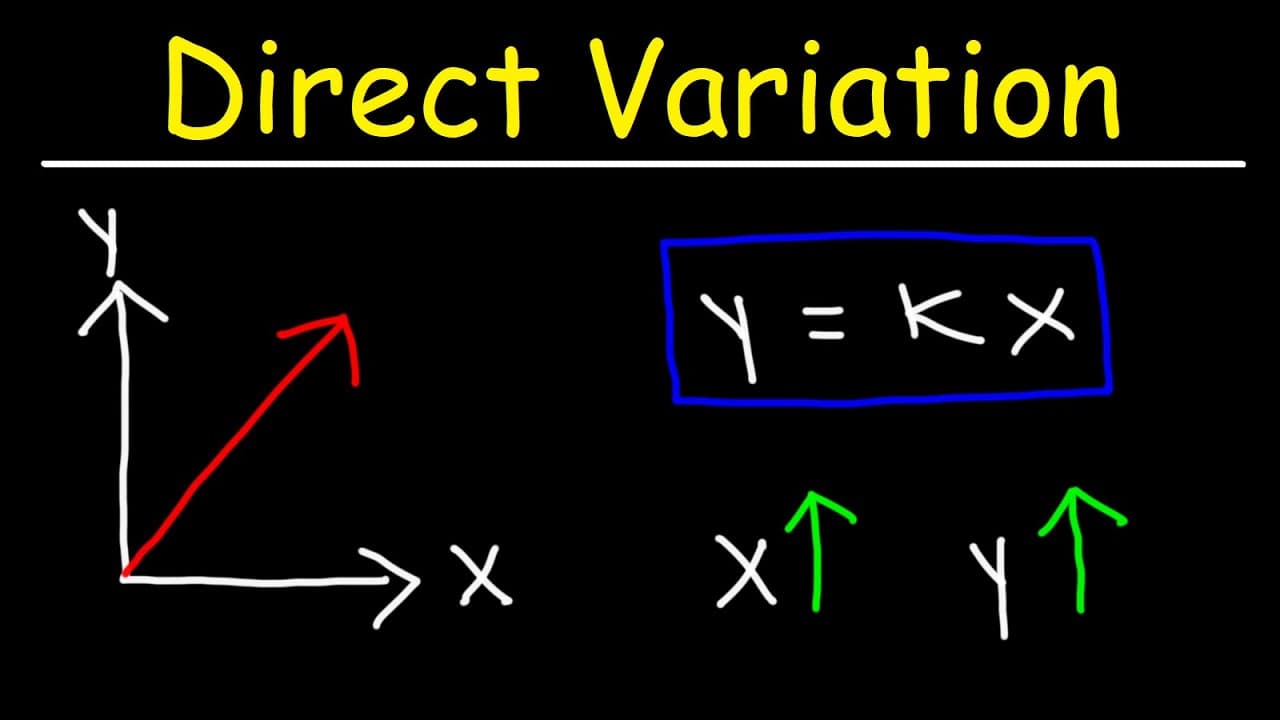
This instructional video provides a comprehensive guide to understanding and solving direct variation problems in algebra. It begins by defining direct variation as a linear relationship between two variables, x and y, where y varies directly with x according to the equation y = kx. The video breaks down the concept of the "constant of variation" (k) and demonstrates how to calculate it using the ratio y/x. Through clear, step-by-step examples, the narrator shows how to determine the constant k, write the specific direct variation equation, and then use that equation to solve for unknown values. Key themes explored include the graphical representation of direct variation as a line passing through the origin, the algebraic manipulation of the formula y = kx, and data analysis skills required to identify direct variation from tables of values. The video also transitions from abstract algebraic problems to real-world applications, specifically addressing distance-time word problems. A significant portion is dedicated to verifying proportional relationships by checking if the ratio of y to x remains constant across data sets. For educators, this video serves as an excellent resource for scaffolding algebra lessons. It moves logically from definition to computation, then to data analysis, and finally to application. The clear visual layout helps students follow the procedural steps of identifying k, writing the equation, and substituting values. The inclusion of a word problem with a unit conversion trap (minutes vs. hours) provides a valuable teaching moment about paying attention to details in mathematical modeling.
The Organic Chemistry TutorThe Organic Chemistry Tutor

10mins 29s

Solving Real-World Problems Using Point-Slope Form

Solving Real-World Problems Using Point-Slope Form

This educational video teaches students how to use the Point-Slope Form of linear equations to solve real-world word problems. The video begins by reviewing the limitations of Slope-Intercept Form when the y-intercept is not readily available, establishing Point-Slope Form as a more versatile alternative when working with random data points. It features a human host named Justin who introduces the topic, followed by animated robot characters that guide viewers through the mathematical procedures. The content is structured around three distinct examples: calculating taxi fares based on a rate and a single trip, predicting future city population growth based on two census years, and determining party costs using a flat fee and a specific booking example. Each scenario demonstrates a different way data might be presented—slope and one point, two points, or a y-intercept disguised as a data point—and walks through the step-by-step algebraic process of setting up and solving the equation. For educators, this video serves as an excellent practical application of algebra concepts. It moves beyond abstract equation manipulation to show how linear modeling works in context. The video is particularly useful for helping students decide which linear form is most efficient to use based on the information provided in a problem, addressing a common pain point in Algebra 1 curriculum where students struggle to translate word problems into solvable math equations.

Miacademy & MiaPrep Learning ChannelMiacademy & MiaPrep Learning Channel

6mins 11s

Solving Real-World Problems with Factored Quadratic Functions

Solving Real-World Problems with Factored Quadratic Functions

This educational video provides a clear, step-by-step guide on how to use factored forms of quadratic functions to solve real-world word problems. The lesson connects abstract algebraic concepts—like factoring, finding roots, and identifying vertices—with practical applications such as calculating electrical power, tracking distance over time during a run, and determining profit margins for a business. The instructor, Justin, uses three distinct examples to demonstrate how converting standard quadratic equations into factored form reveals critical data points like x-intercepts and lines of symmetry. The video explores key themes of quadratic optimization and graphical interpretation. It specifically focuses on how to identify the maximum or minimum values (vertices) and zeros (roots) of a function to answer specific questions about physical or economic scenarios. A significant portion of the video is dedicated to visualizing these algebraic solutions on a coordinate plane, helping students see the geometric relationship between the equation and the real-world narrative it represents. For educators, this video is a valuable resource for bridging the gap between mechanical factoring skills and critical thinking in Algebra. It models how to deconstruct a word problem, formulate a mathematical approach, and interpret the results. It is particularly useful for demonstrating why finding the vertex is essential for optimization problems and how roots relate to starting and ending points in time-based scenarios. The inclusion of a "pause and solve" opportunity allows for formative assessment within the lesson flow.

Miacademy & MiaPrep Learning ChannelMiacademy & MiaPrep Learning Channel

6mins 19s

Modeling Financial Growth and Decay with Exponential Functions

Modeling Financial Growth and Decay with Exponential Functions

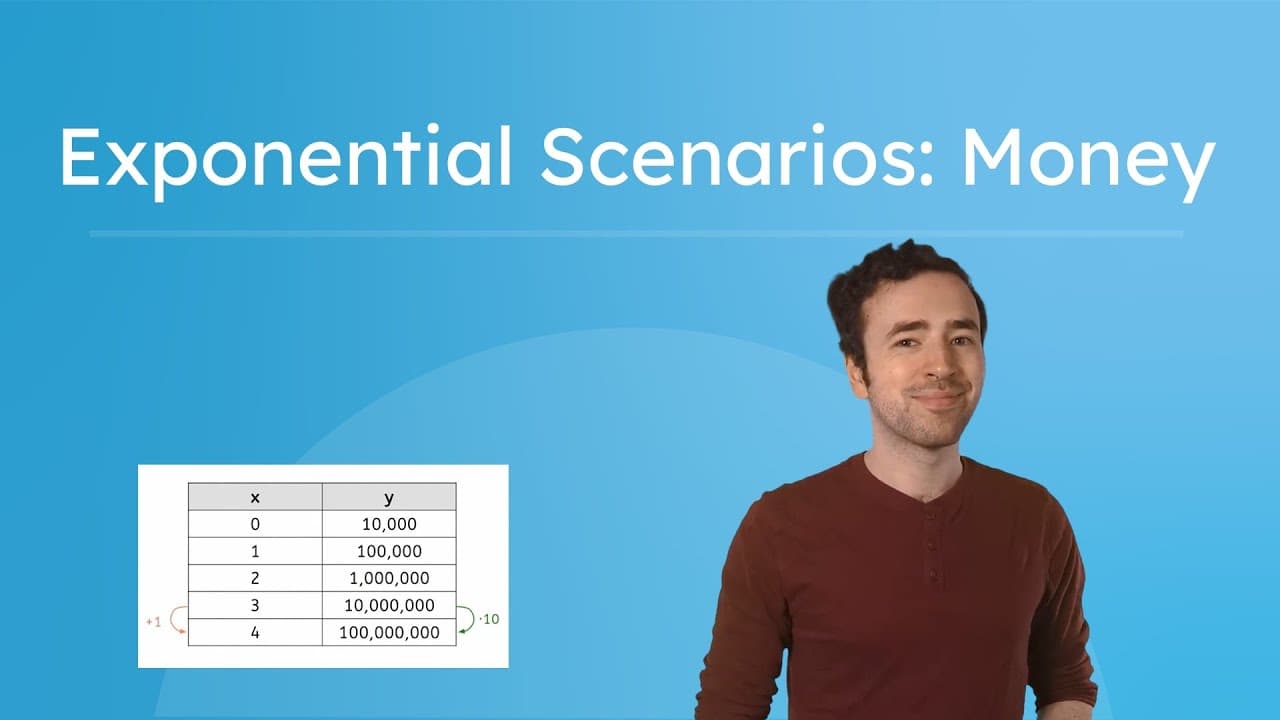
This video connects abstract algebraic concepts to real-world financial literacy by exploring how exponential functions model money. It specifically focuses on constructing equations in the form y = a(b)^x to represent scenarios involving compound interest and depreciation. Through a step-by-step analysis, the presenter, Justin, guides viewers through setting up equations, defining variables, and interpreting the results to make predictions about future value. The lesson addresses key themes such as the difference between growth and decay in financial contexts. A significant portion of the video is dedicated to debugging common student misconceptions, such as using the percentage rate directly as the base of the exponent. By testing these incorrect assumptions with input-output tables, the video visually demonstrates why the growth factor must be calculated as (1 + r) for growth and (1 - r) for decay, providing a deep conceptual understanding of the mathematics involved. For educators, this resource serves as an excellent bridge between theoretical algebra and practical application. It encourages critical thinking by asking students to predict outcomes and verify equations using logic and tables. The video culminates in a comprehensive word problem about a college savings account, providing a model for solving multi-step application problems that students will encounter in standard Algebra curricula.

Miacademy & MiaPrep Learning ChannelMiacademy & MiaPrep Learning Channel

14mins 21s

Materials

Fare Finder Chart

Fare Finder Chart

A high-resolution, full-page standalone math-accurate coordinate graph showing the linear cost of an Uber ride with base fare $2.50 and $1.50 per mile, with specific points highlighted and labeled at x = 3 ($7.00) and x = 12 ($20.50). Features minor gridlines at $1 increments.

PT

Patrick Timmons

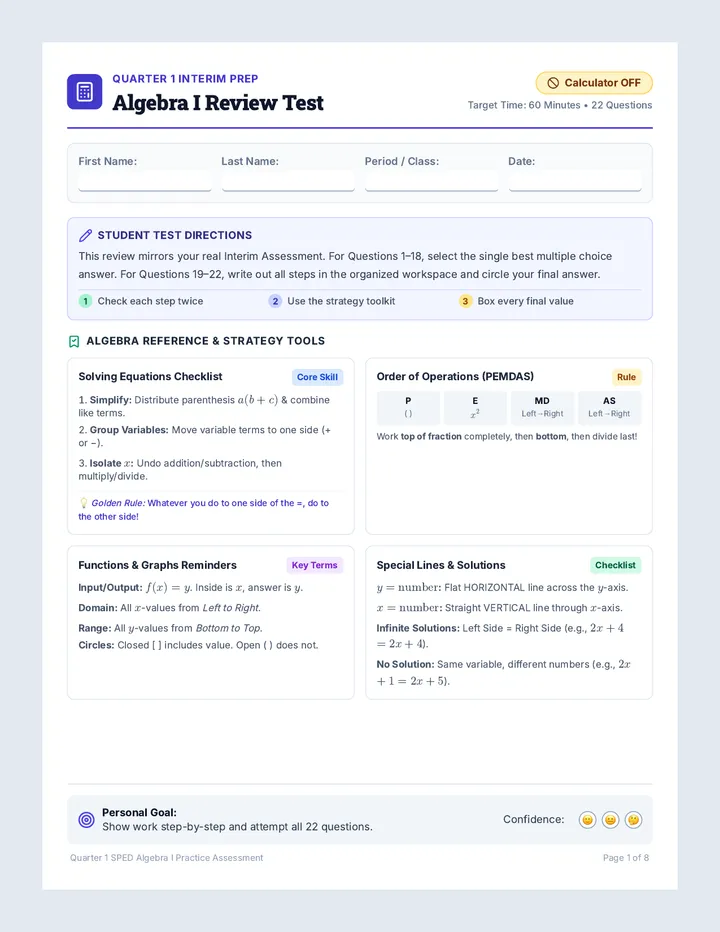
Algebra Review Test

Algebra Review Test

A comprehensive 8-page Quarter 1 Interim Review Assessment designed for 9th grade Special Education (SPED) Algebra 1 students, fully mirroring the 22-question assessment with built-in accommodations, reference toolkits, chunked questions, and scaffolded work spaces.

R

rubaiya.ahmed

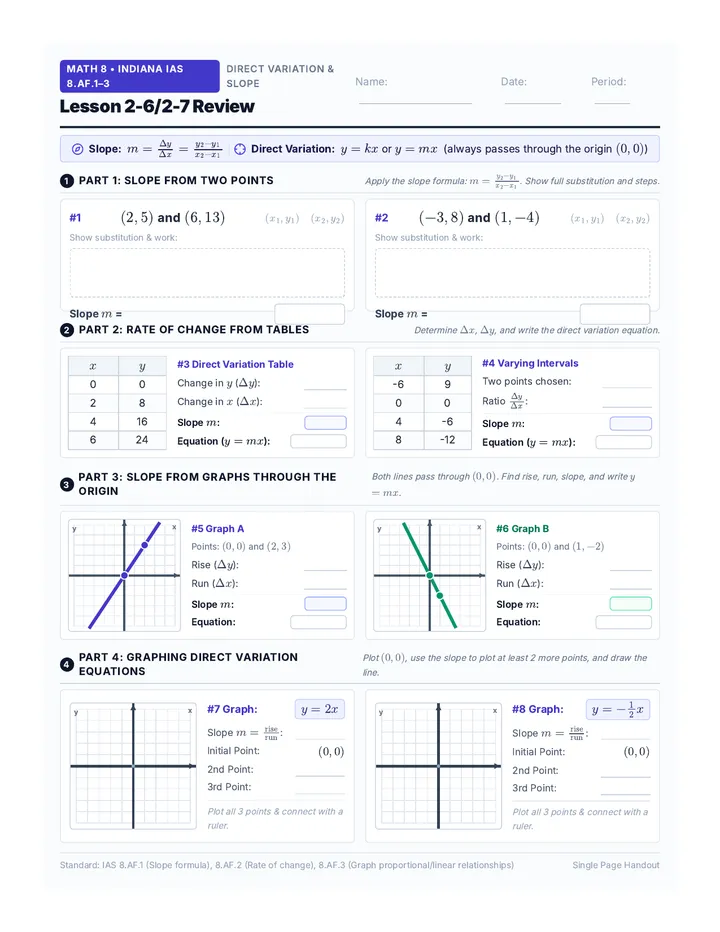
Line Craft Worksheet

Line Craft Worksheet

A Grade 8 review worksheet (Lessons 2-6/2-7) covering slope from ordered pairs with expanded work areas, rate of change from tables, slope from graphs through the origin, and graphing direct variation equations.

K

Kyle.Nicholson

Plumber Pricing Worksheet

Plumber Pricing Worksheet

A clean, printable 8.5x11 page featuring only a high-precision coordinate grid graph titled 'Cost of a Plumber' with plotted points at (1, 160) and (2, 220) and a line running from x = 0 to 8 with a slope of 60. The y-axis runs from 0 to 700 with a major gridline every 100 and minor gridline every 50. All point labels are positioned to the left.

PT

Patrick Timmons

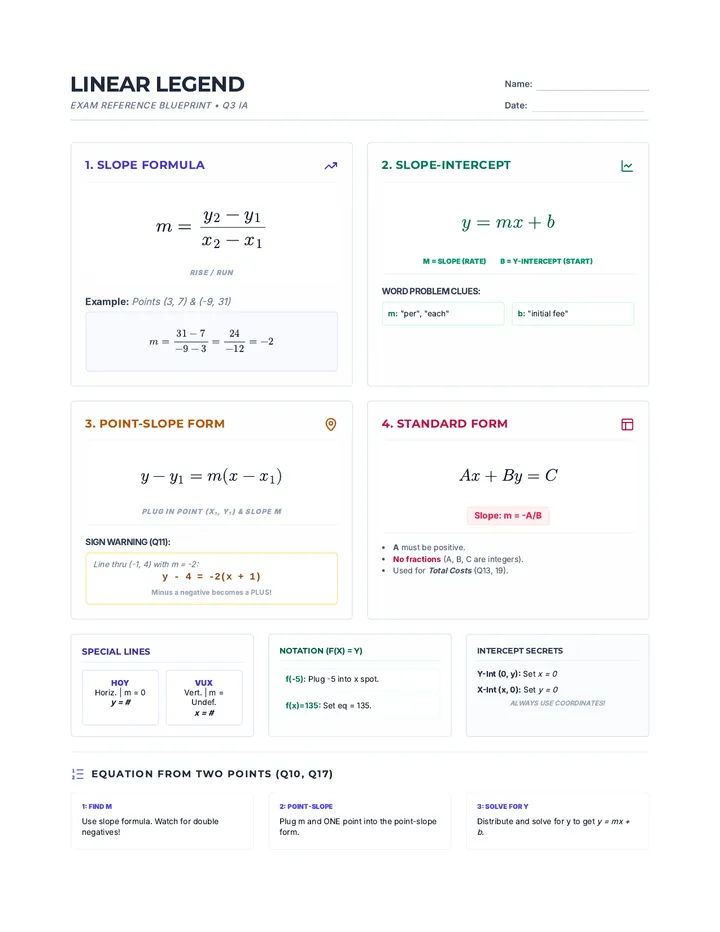
Linear Legend Formula Sheet Slice

Linear Legend Formula Sheet Slice

A print-optimized, one-page formula sheet for linear equations. Features reduced font sizes and a minimalist white-background design for high legibility and low ink usage. Includes slope formulas, all linear forms with examples, sign flip warnings, and step-by-step strategies.

D

david.marques

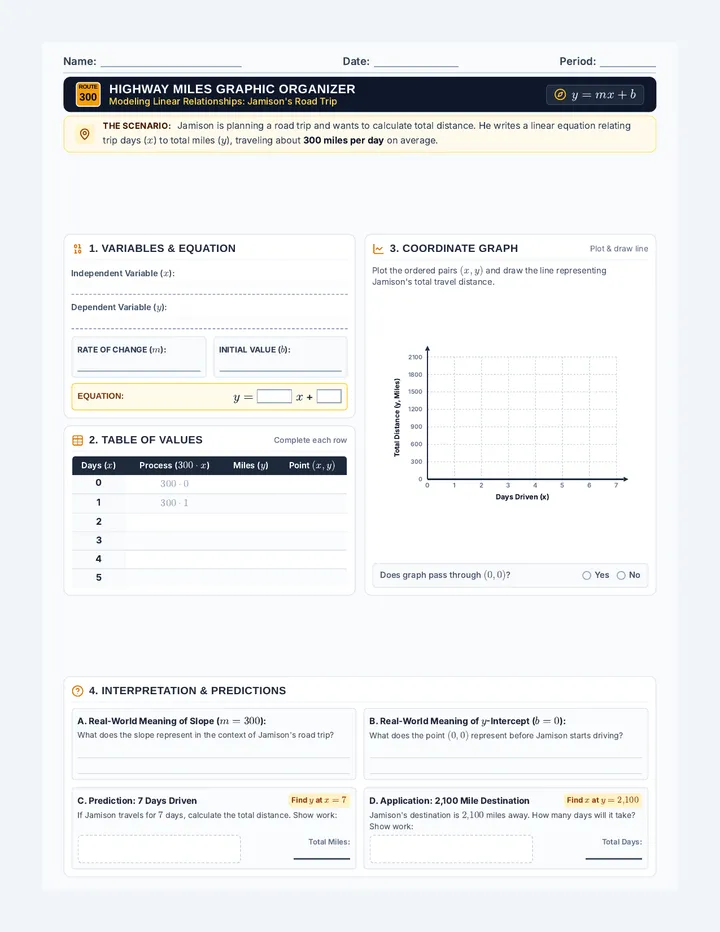
Highway Miles Graphic Organizer

Highway Miles Graphic Organizer

A road trip themed graphic organizer combining verbal, algebraic, tabular, and graphical representations of Jamison's linear equation (y = 300x), featuring a scaled coordinate grid (up to 7 days and 2,100 miles) and a 7-day distance prediction.

CR

Candice Richardson

Sequences

Foundation Missions Part 1 Final

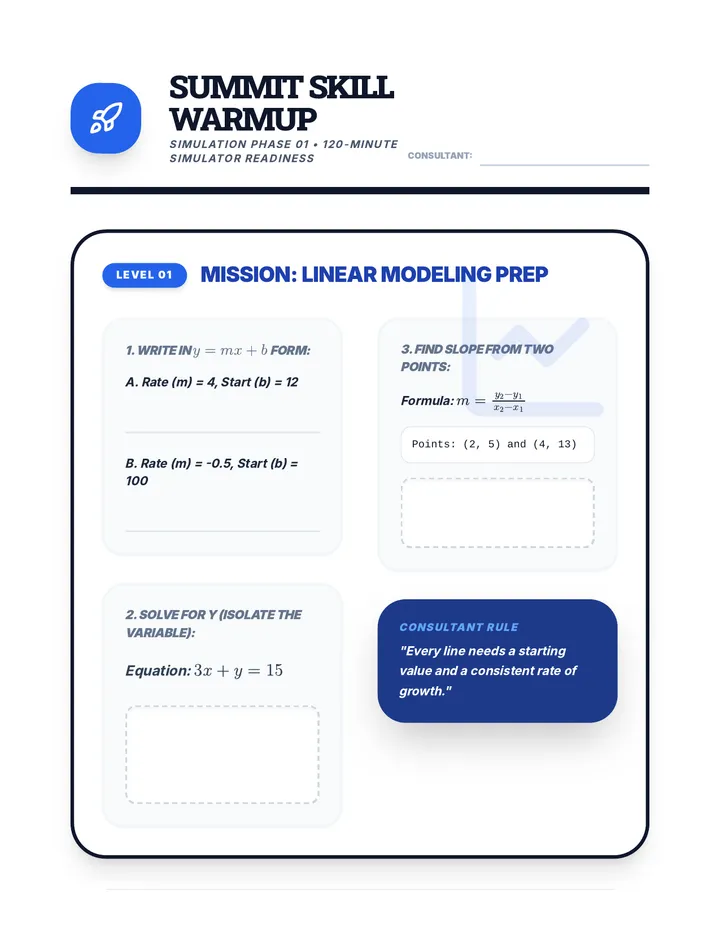
Math in Motion: The 2-Hour Summit

A high-intensity, 120-minute math simulation. Students act as lead consultants, completing a high-speed skill warmup before selecting a professional sector (Music, Urban Planning, Rocket Science, or Sports Analytics) to solve a series of complex work orders.

EL

Elsa LaLone

102
Project Mission Slides Final

Math in Motion: The 2-Hour Summit

A high-intensity, 120-minute math simulation. Students act as lead consultants, completing a high-speed skill warmup before selecting a professional sector (Music, Urban Planning, Rocket Science, or Sports Analytics) to solve a series of complex work orders.

EL

Elsa LaLone

102
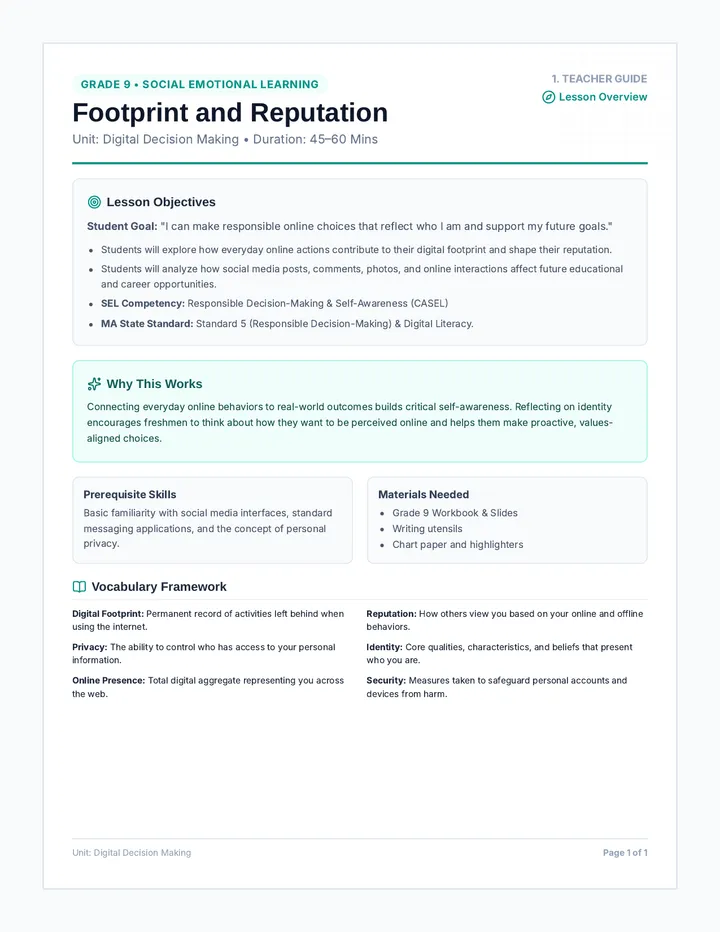
Footprint Teacher Guide

Digital Decision Making

A comprehensive four-year high school SEL unit focusing on responsible digital choices, critical evaluation of online sources, ethical interactions, and positive digital leadership.

J

jtoomey

44
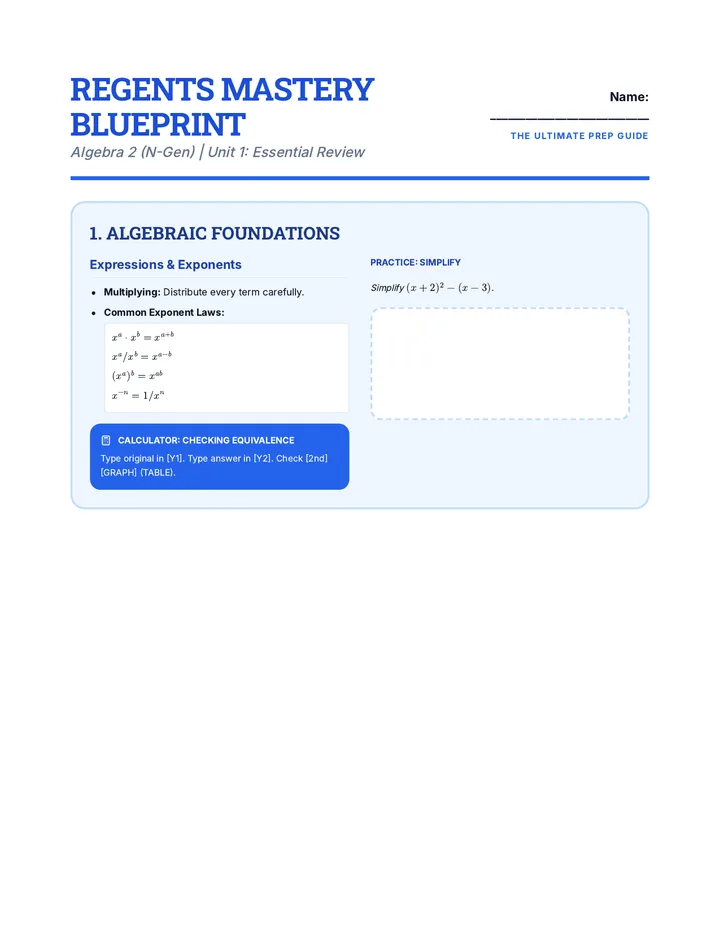
Regents Mastery Blueprint Study Guide

Regents Mastery Suite

A comprehensive review suite for the New York State Mathematics Regents exams, including Algebra 1, Geometry, and Algebra 2, featuring mastery blueprints, calculator strategies, and exam-taking tips.

KB

Kayla Borozny

15
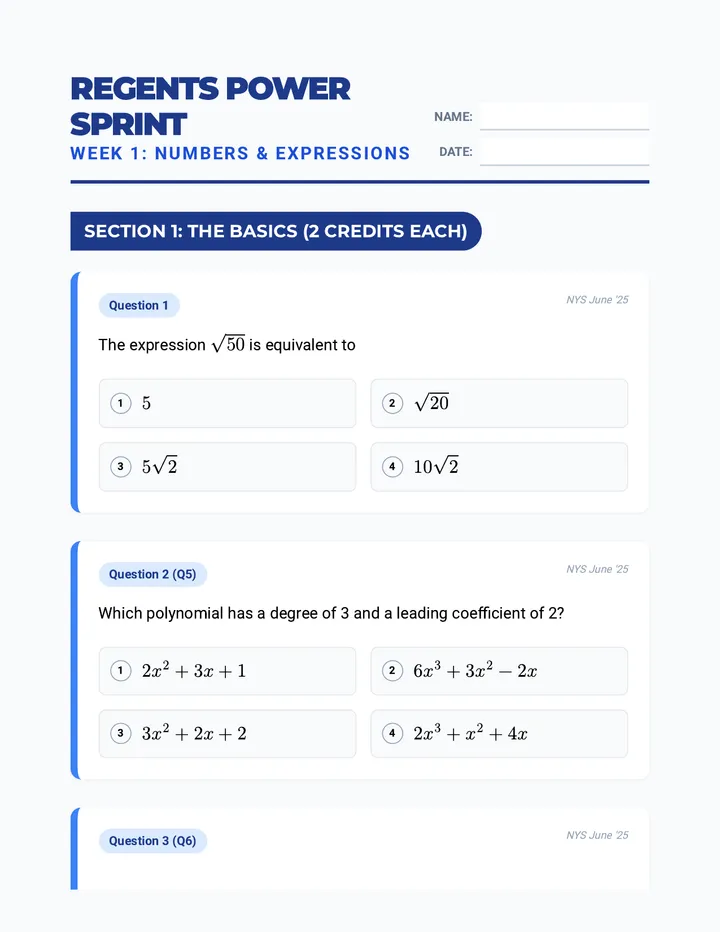
Week 1 Power Sprint Worksheet

Regents Road Map

A comprehensive 10-week preparation sequence designed to get students ready for the Algebra I Regents exam by May 15th, featuring bi-weekly 30-minute practice sessions and visual anchor charts.

L

laura.clar

31
Temple Craftsmen Slides

Middle School Math Block

A multi-subject middle school mathematics block for Week 1, covering 6th Grade Geometry (Temple Craftsmen: polygon decomposition, nets, surface area) and 7th/8th Grade Math (Faithful Stewards: proportional relationships, linear equations, inequalities, transversals) from a Christian perspective.

JR

Jamens Ray II

59

Lessons

Slope Decoded Guided Notes

Slope Decoded

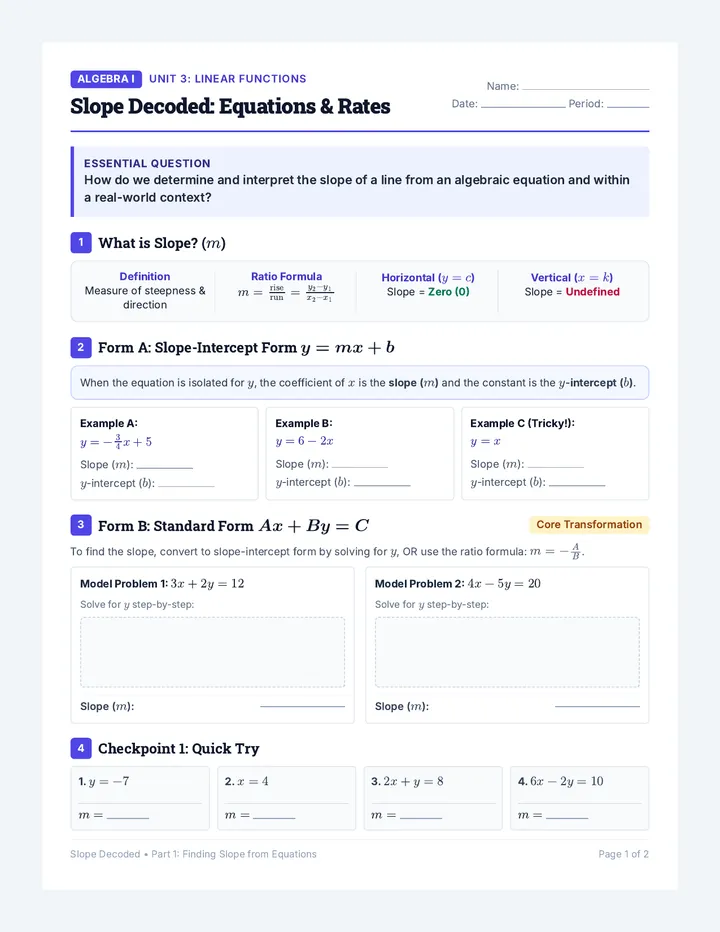
A comprehensive 100-minute high school algebra lesson exploring slope both algebraically from various equation forms and contextually as a real-world rate of change. Students transition from identifying and calculating slope in equations to interpreting unit rates, initial values, and contextual graphs.

LT

Lane Thompson

6
DNB Chrono Livret de Révision

Brevet Express

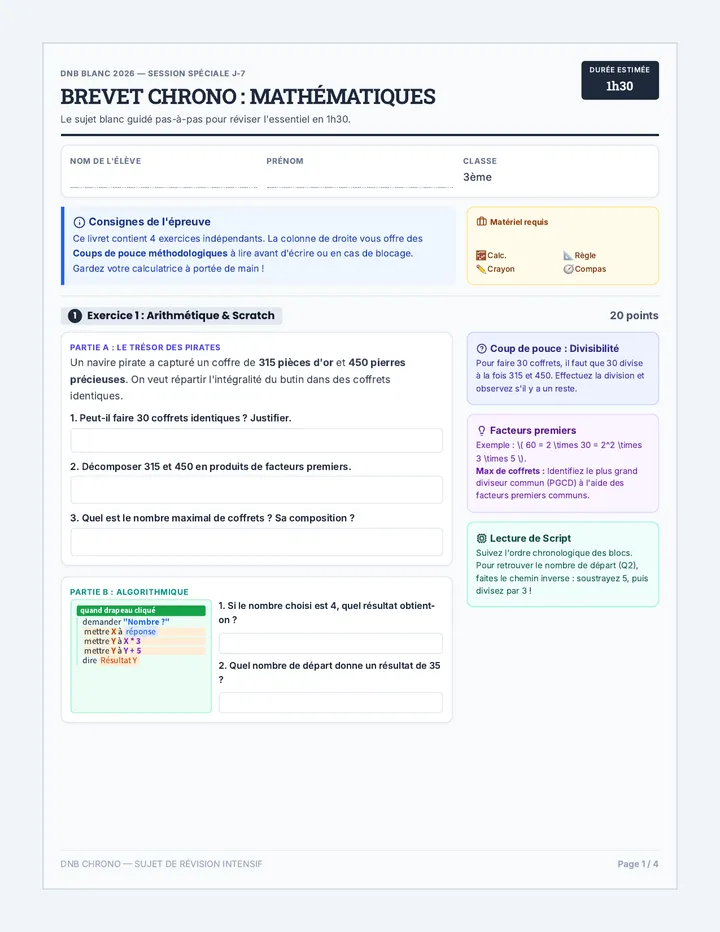
Un kit complet de révision de dernière minute pour le DNB de Mathématiques, comprenant un sujet blanc guidé pas-à-pas pour les élèves et un corrigé détaillé avec barème pour l'enseignant.

E

Enseignante

4
SAM Podcast Parent Briefing Guide

SAM Podcast PBL Launch

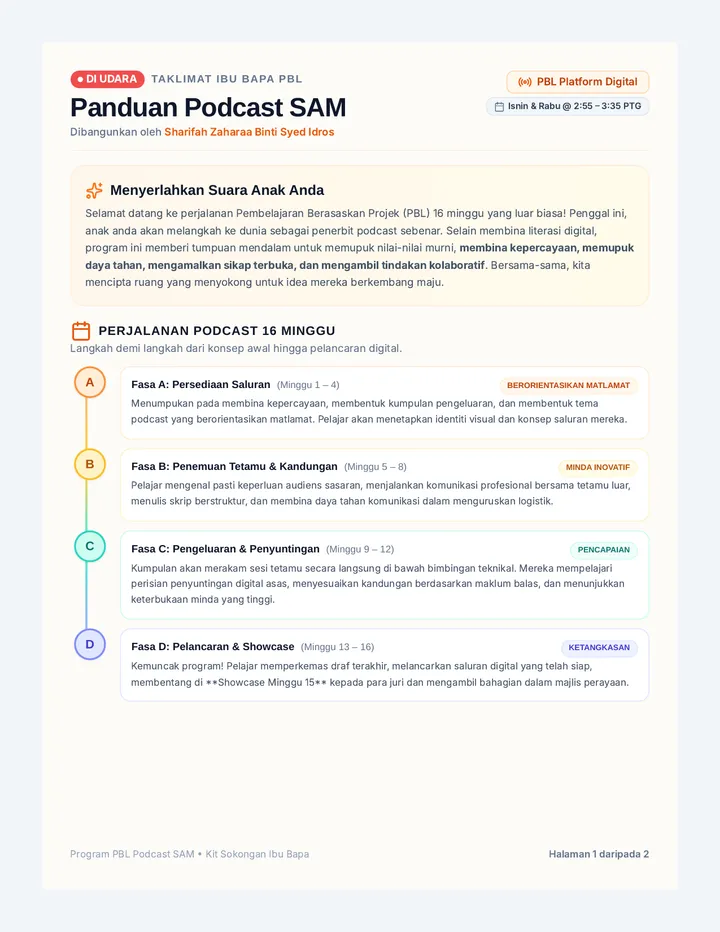
A comprehensive introductory lesson set for the SAM Podcast Project-Based Learning program. This lesson incorporates critical parent communication tools alongside specialized teacher lesson plans linking core academic subjects like KSSM Mathematics to real-world digital podcast applications.

AM

Arrthy Muthamilselvan

14
Constant Ratio Lab Worksheet

Proportional Power

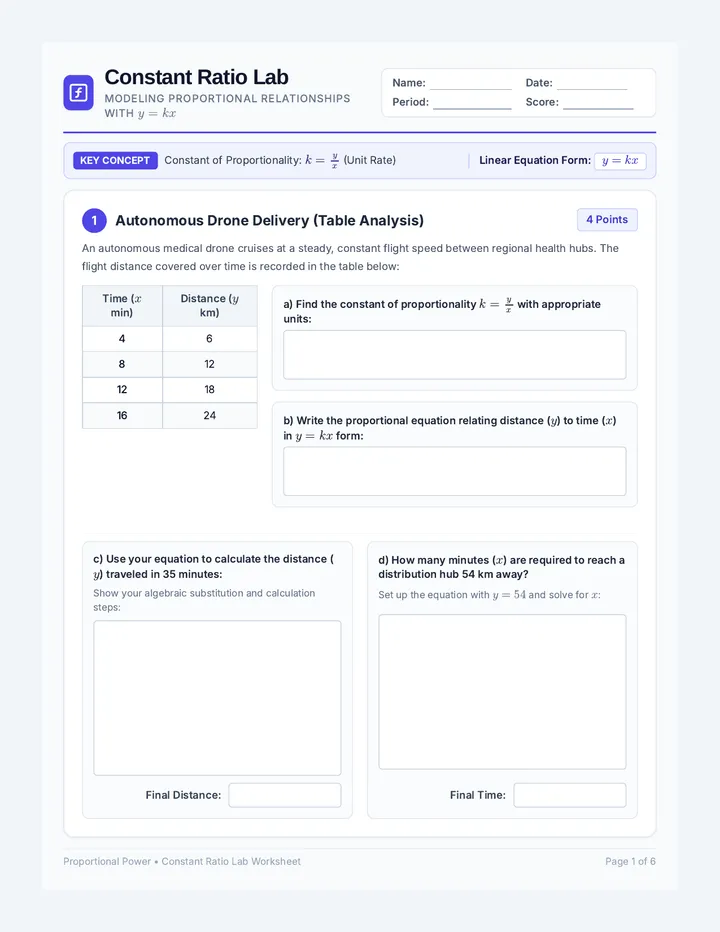
A comprehensive middle-school mathematics lesson focused on recognizing proportional relationships from tables, graphs, and verbal descriptions. Students calculate the unit rate (constant of proportionality, k), construct linear equations in y = kx form, and apply algebraic reasoning to solve contextual problems.

D

dlspadaro

9
Slope Mastery Presentation

Steepness of a Story

This lesson introduces 9th-grade students to the concept of slope, enabling them to calculate it from graphs or two given points and interpret it as a rate of change in real-world scenarios.

KC

Kris Coyne

8
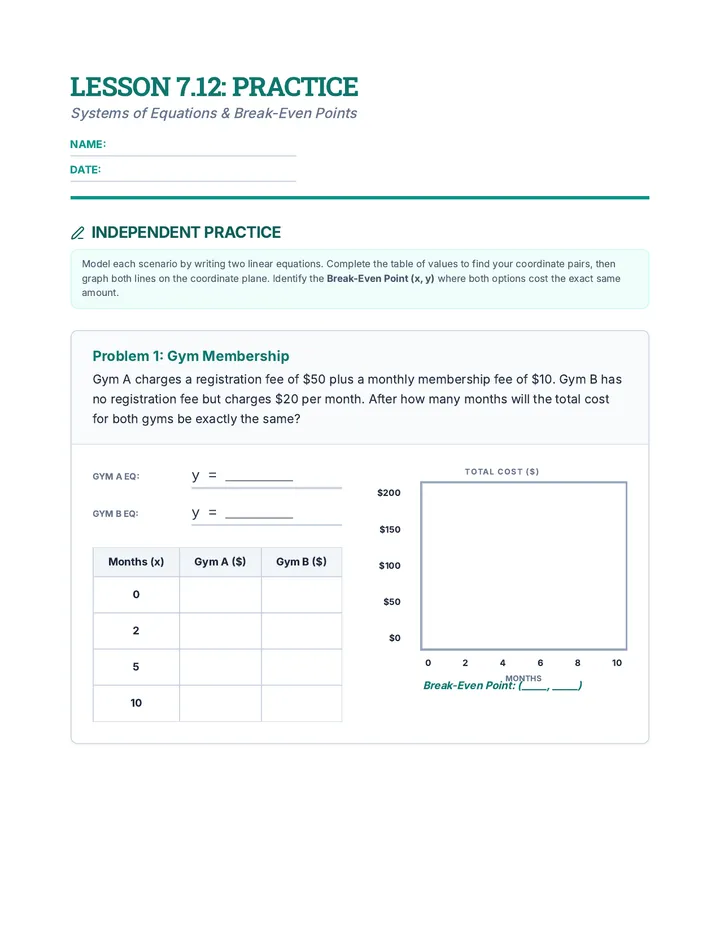
Lesson 7.12 Practice Worksheet

Lesson 7.12

A comprehensive series of activities where students learn to identify, model, and solve systems of linear equations to find the 'better deal' in real-world scenarios.

D

david.marques

4