A visual and sensory-focused slide deck designed for students with autism, exploring travel through simple concepts like packing, transportation, and international food with clear icons and high-contrast layouts.
A comprehensive 18-page student workbook containing a cover page, progress map, and all 16 mission worksheets from the Focus Hero Training sequence. Designed with high-contrast work areas and visual supports for students with learning disabilities. Revised for contrast and usability.
A comprehensive 18-page student workbook containing a cover page, progress map, and all 16 mission worksheets from the Focus Hero Training sequence. Designed with large work areas and visual supports for students with learning disabilities.
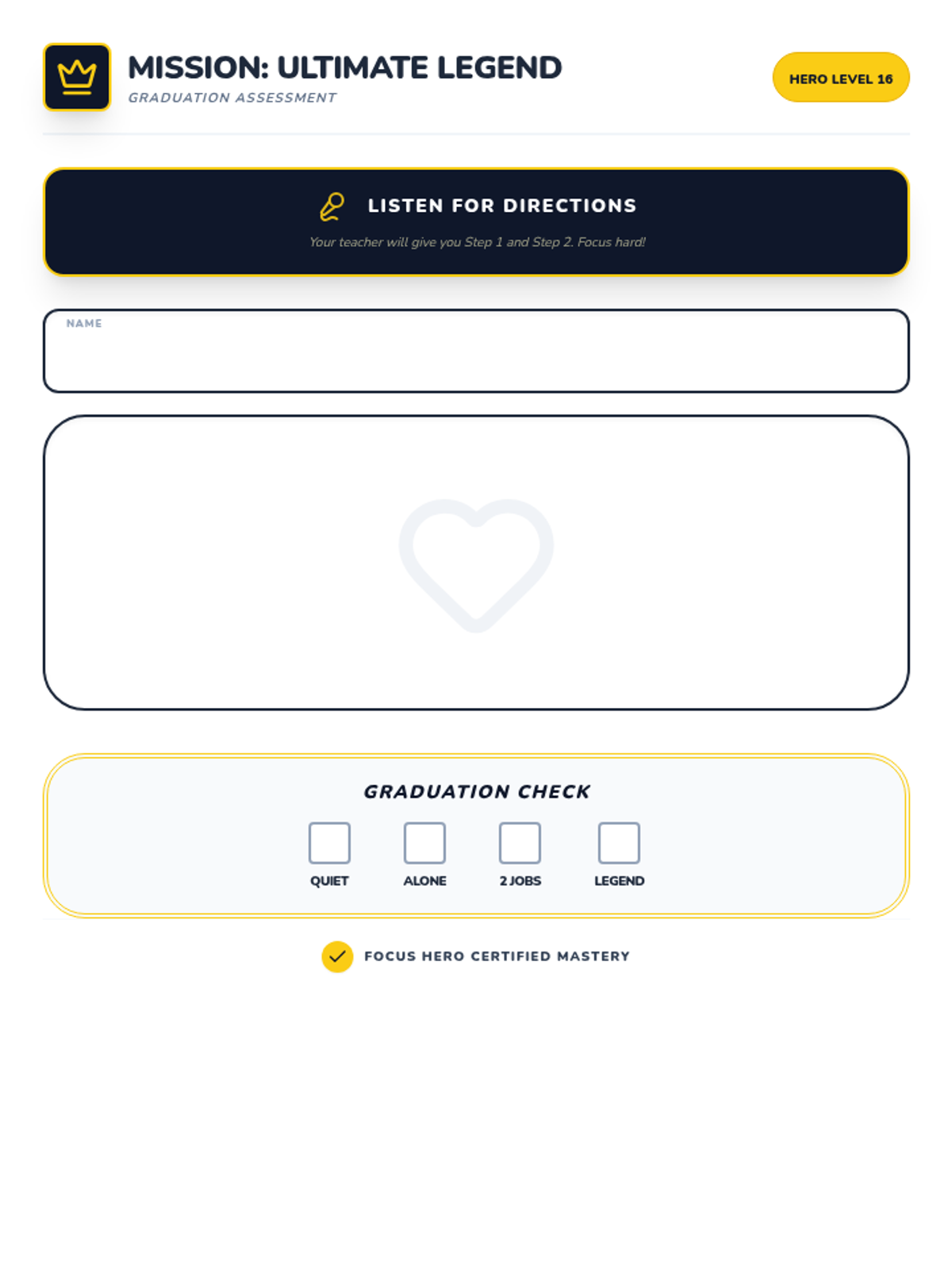
The final graduation mission worksheet for the 16-lesson sequence. Revised for 1-page fit, higher contrast assessment labels, and auditory direction focus.
Slide deck for the final graduation mission of the Focus Hero Training, featuring complex 2-step directions followed independently.
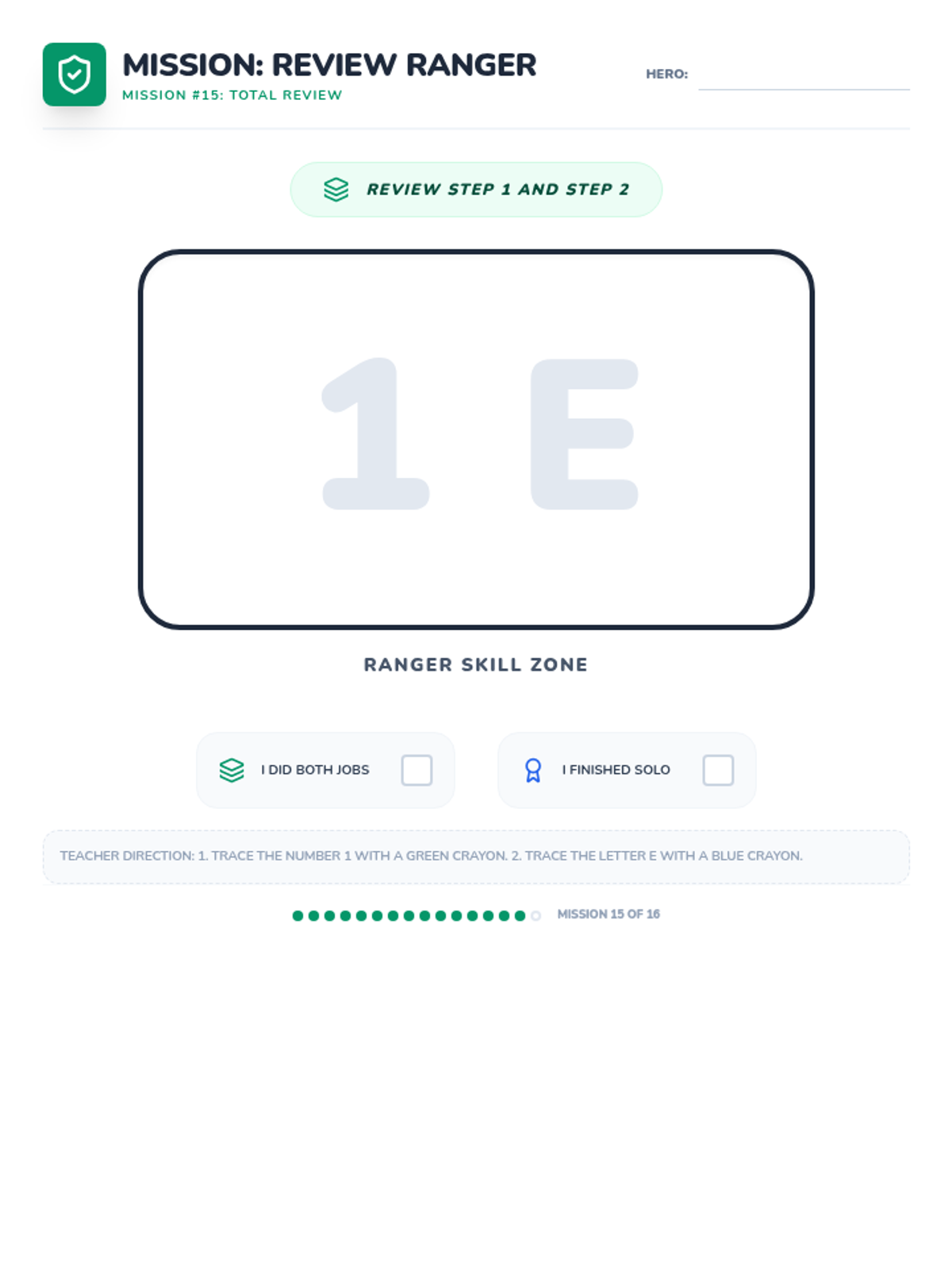
Worksheet for Lesson 15 providing a mixed review of 2-step directions. Revised for 1-page fit, higher contrast ghosting, and included teacher script footer.
Lesson 15 slides providing a mixed review of 2-step directions involving letters, numbers, and shapes, preparing for the final graduation.
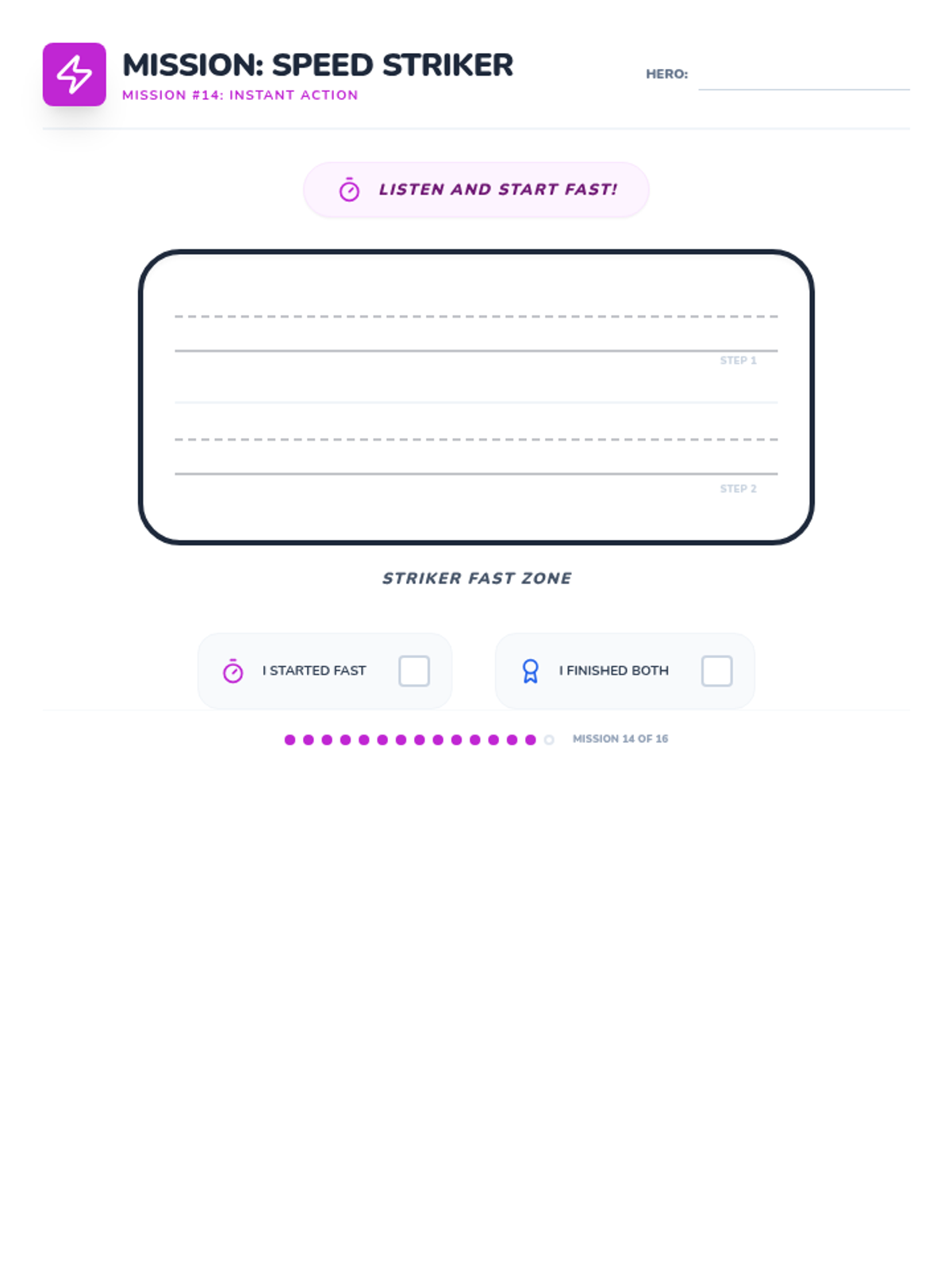
Worksheet for Lesson 14 requiring students to start a 2-step task immediately. Revised for 1-page fit, dual handwriting support guides, and increased visibility.
Lesson 14 slides focusing on impulse control and attention: starting the 2-step task immediately after the 'GO' signal without hesitation.
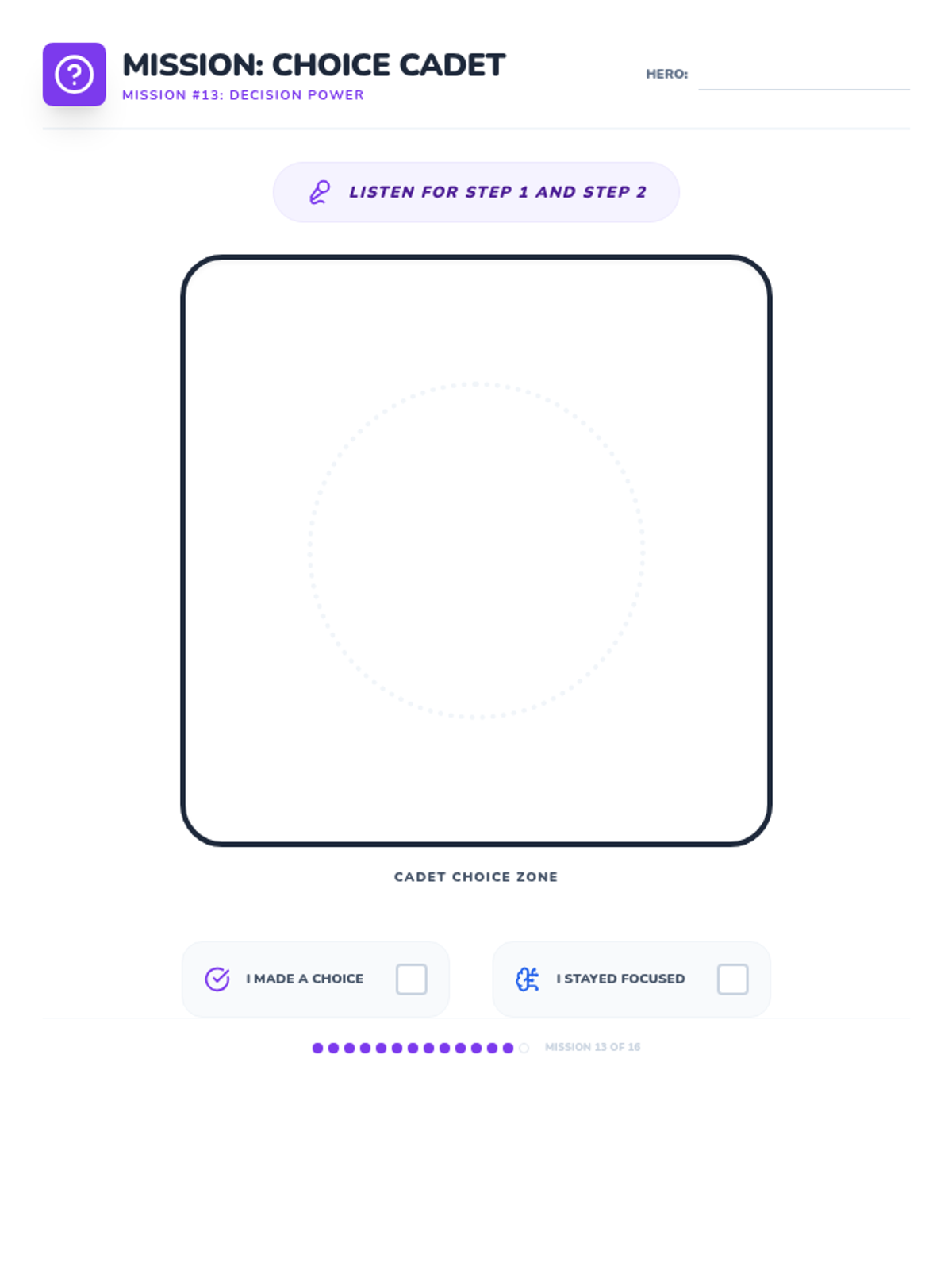
Worksheet for Lesson 13 requiring students to follow 2-step directions that include a choice. Revised for 1-page fit and oral direction focus.
Lesson 13 slides introducing 2-step directions where the student must choose between two options. Revised for high contrast visuals and clear modeling.
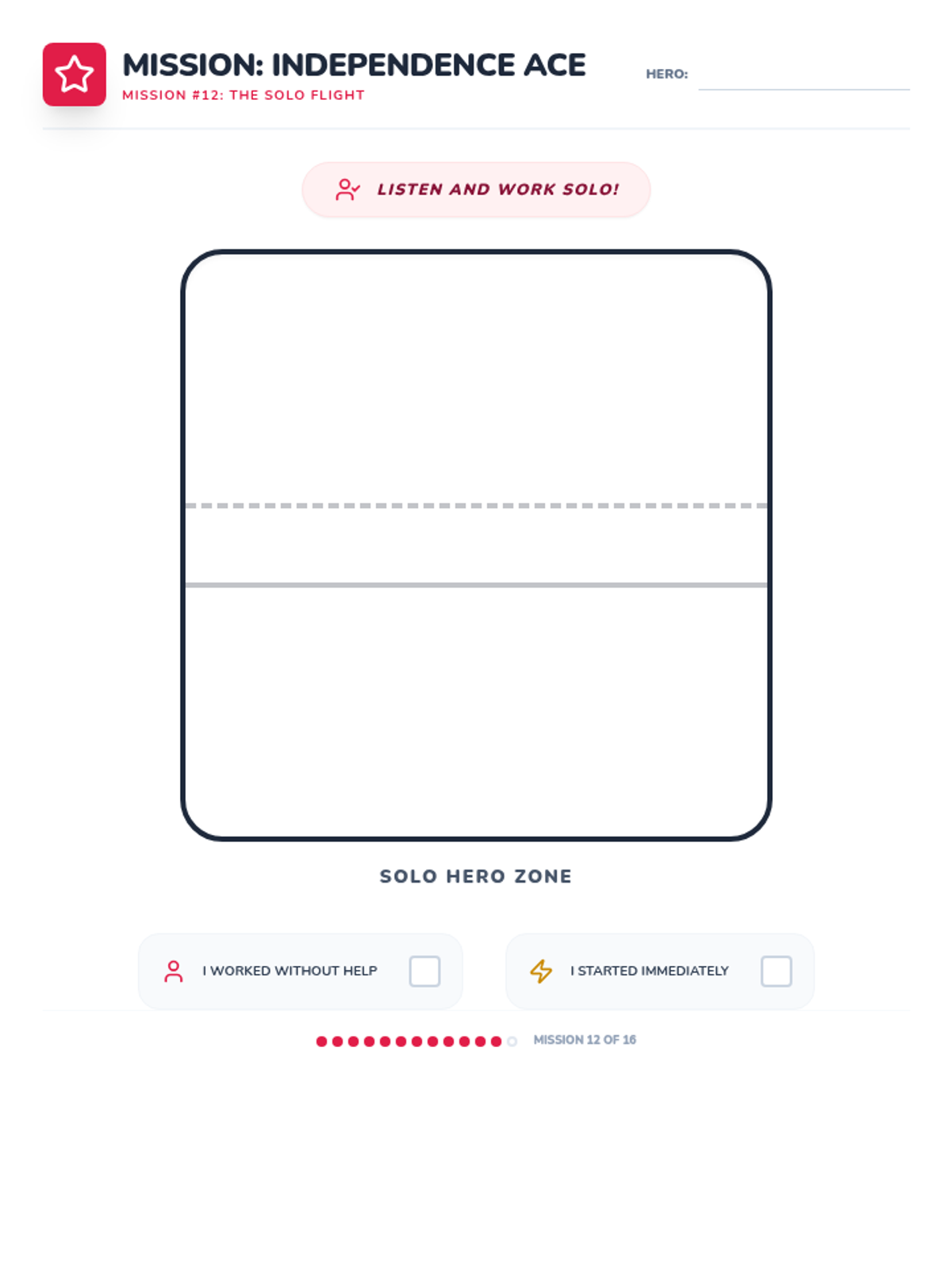
Worksheet for Lesson 12 requiring independent completion of 2-step directions. Revised with visible handwriting guides, larger labels, and 1-page fit.
Lesson 12 slides where students complete 2-step directions without any teacher repetition or prompting after the initial instruction, solidifying independent focus.
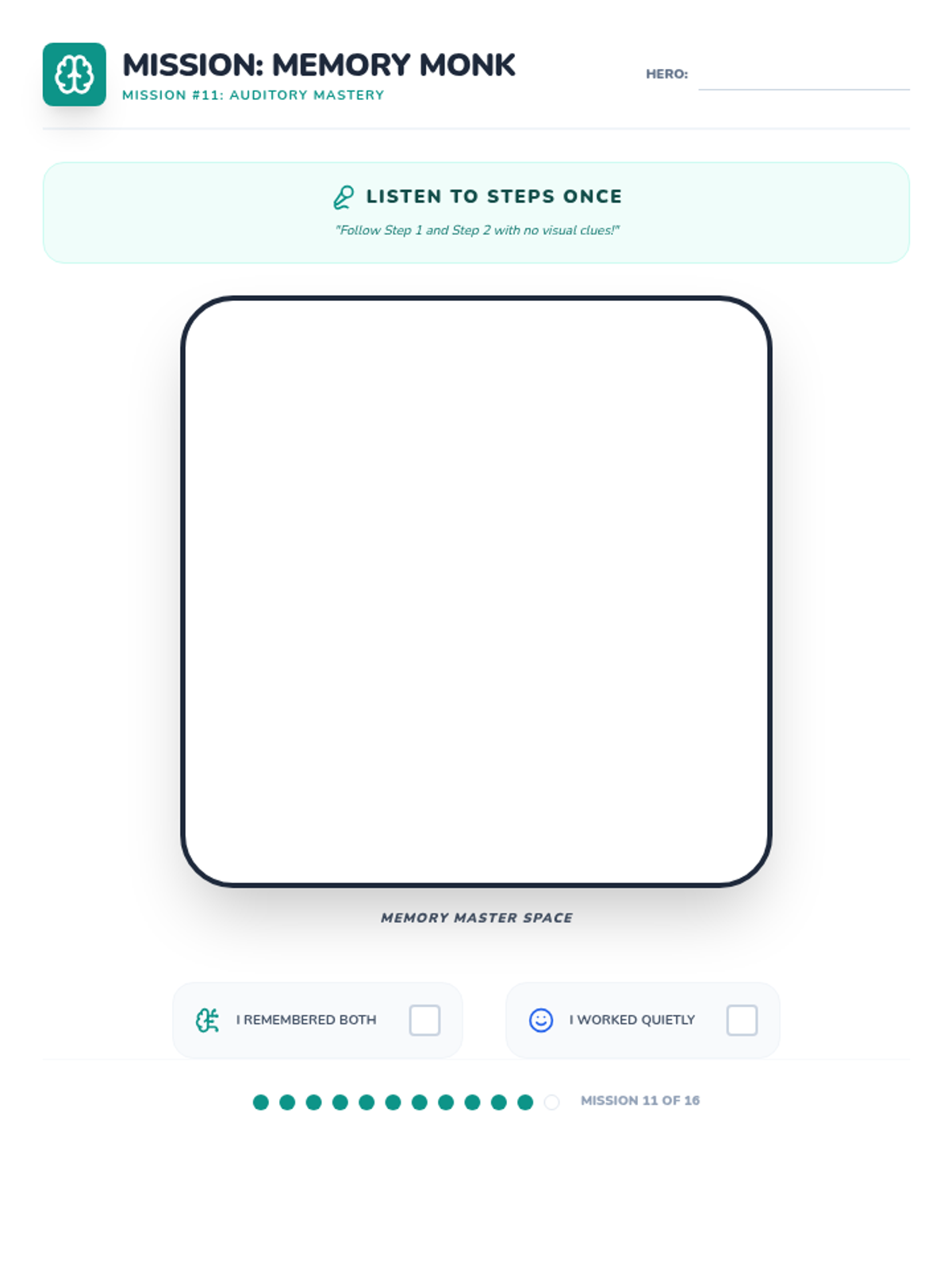
Worksheet for Lesson 11 focusing on auditory memory. Revised for 1-page fit and higher contrast labels.
Lesson 11 slides focusing on holding auditory directions in short-term memory without visual support during 2-step tasks, increasing the cognitive load.
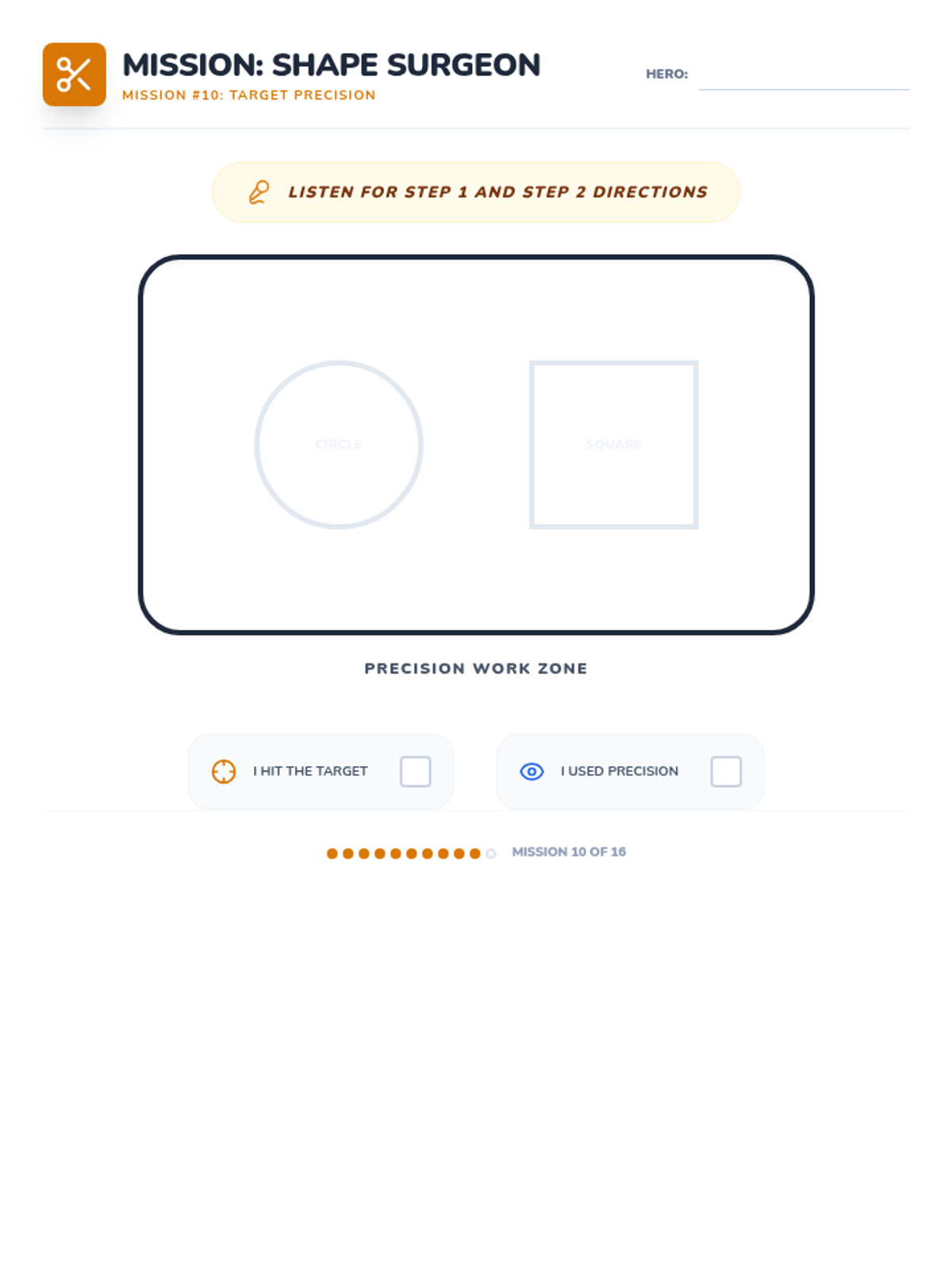
Worksheet for Lesson 10 requiring students to follow precise directions. Revised with target shapes in the workspace and corrected layout for 1-page fit.
Lesson 10 slides focusing on precise 2-step tasks: drawing a shape and then performing a specific action on it. Revised for better contrast and modeling accuracy.
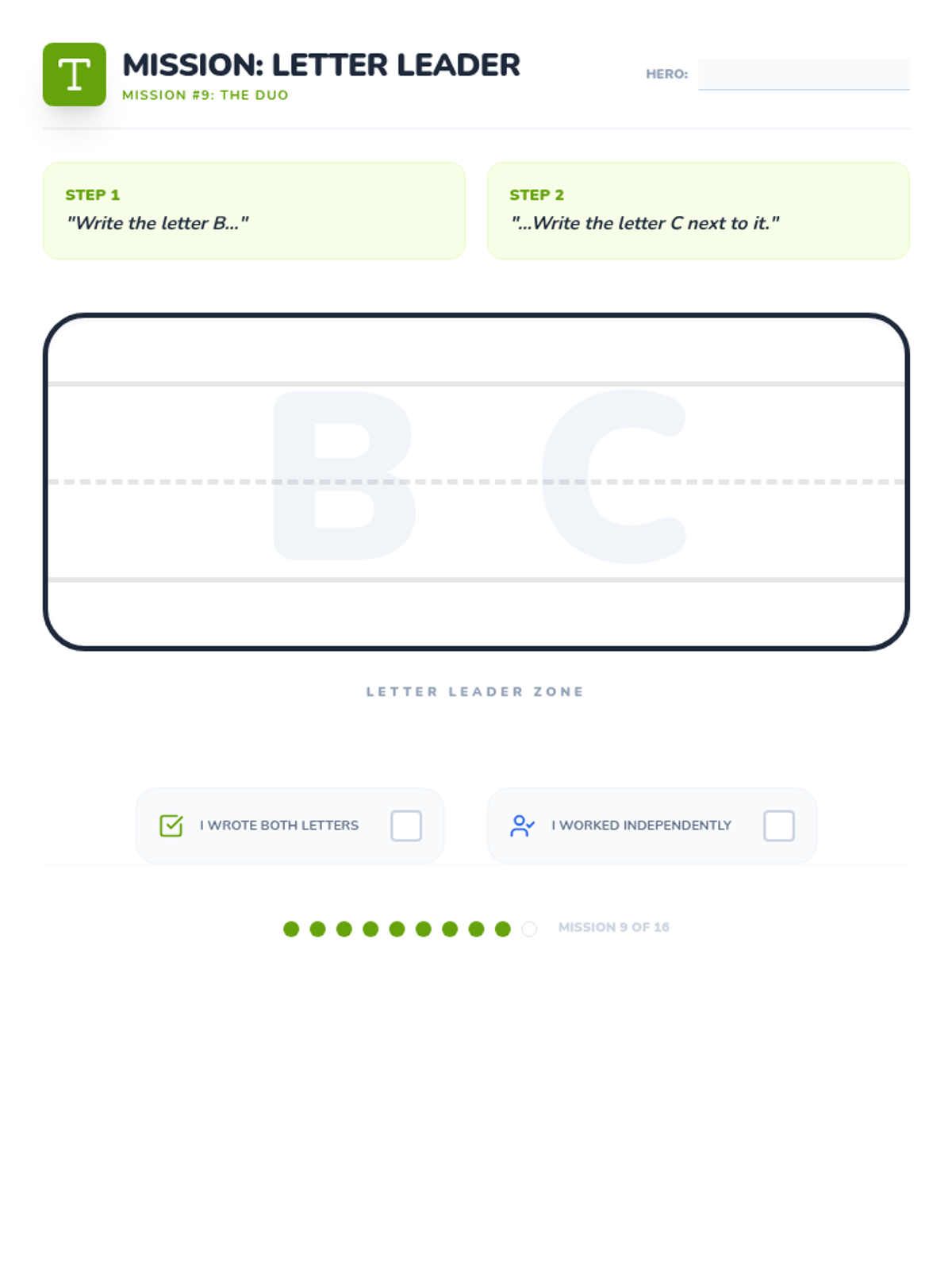
Worksheet for Lesson 9 requiring students to follow 2-step directions to write two different letters in sequence with proper spacing and independence.
Slide deck for Lesson 9 focusing on mastering 2-step directions involving writing two different letters in sequence.
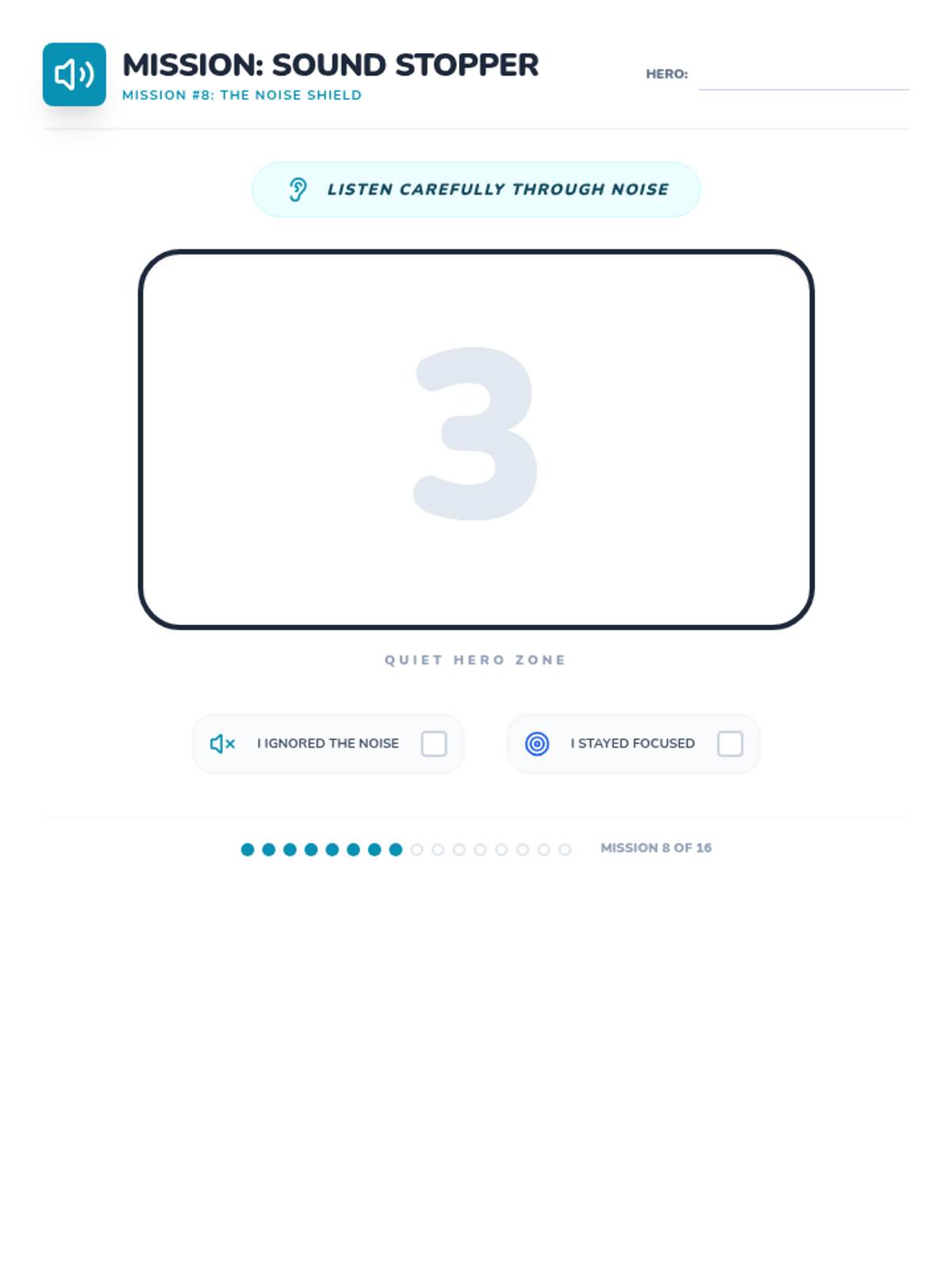
Worksheet for Lesson 8 focusing on focus through auditory distractions. Revised for 1-page fit, darker guide text, and accurate progress tracking.
Slide deck for Lesson 8 focusing on maintaining attention through mild auditory distractions, building resilience in focused task execution.
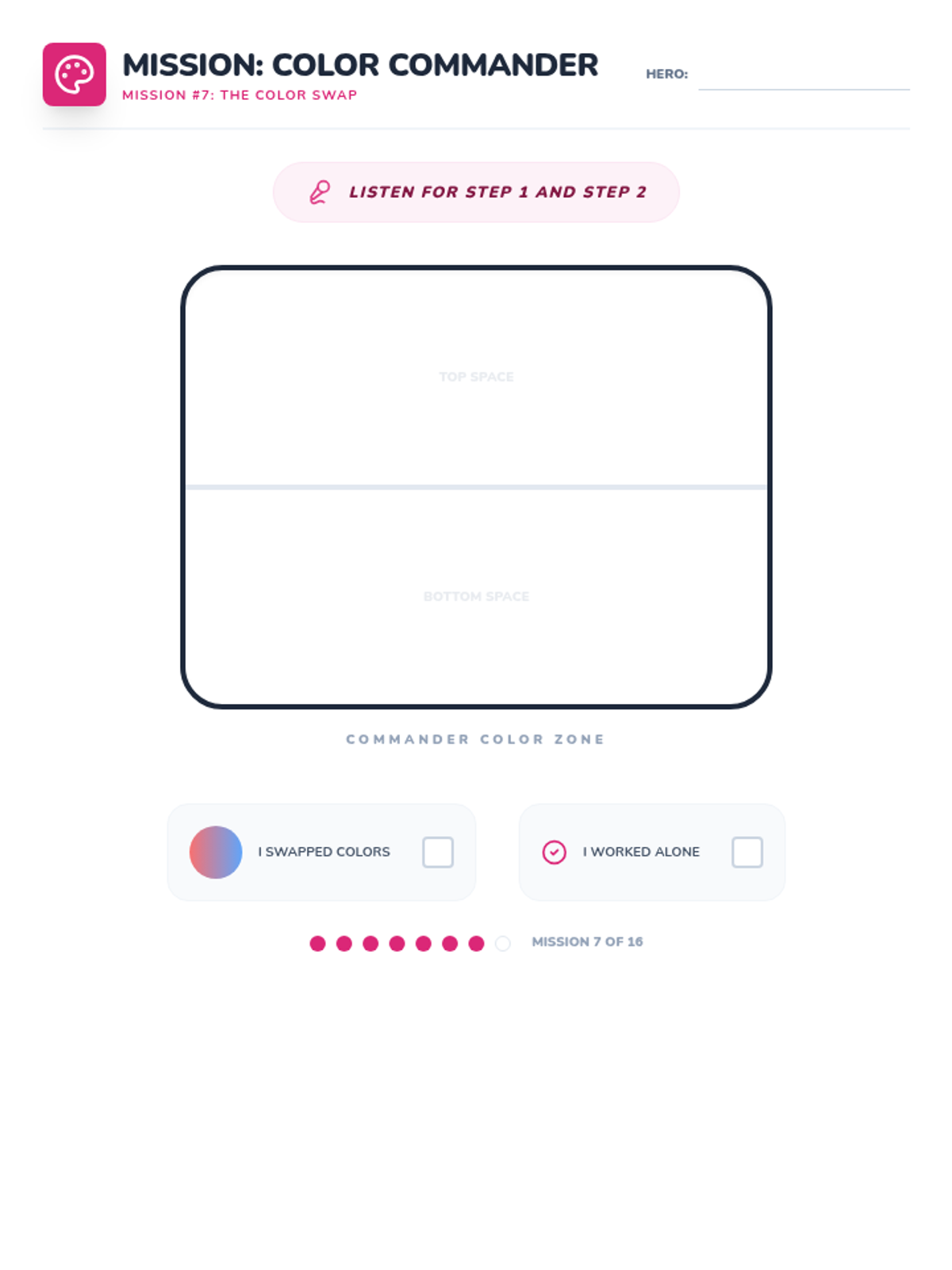
Worksheet for Lesson 7 requiring students to follow 2-step directions involving color changes on specific spatial areas of the page. Revised for 1-page fit and oral direction focus.
Slide deck for Lesson 7 requiring the use of two different colors on specific parts of a drawing. Revised for visual consistency with labels and increased contrast.
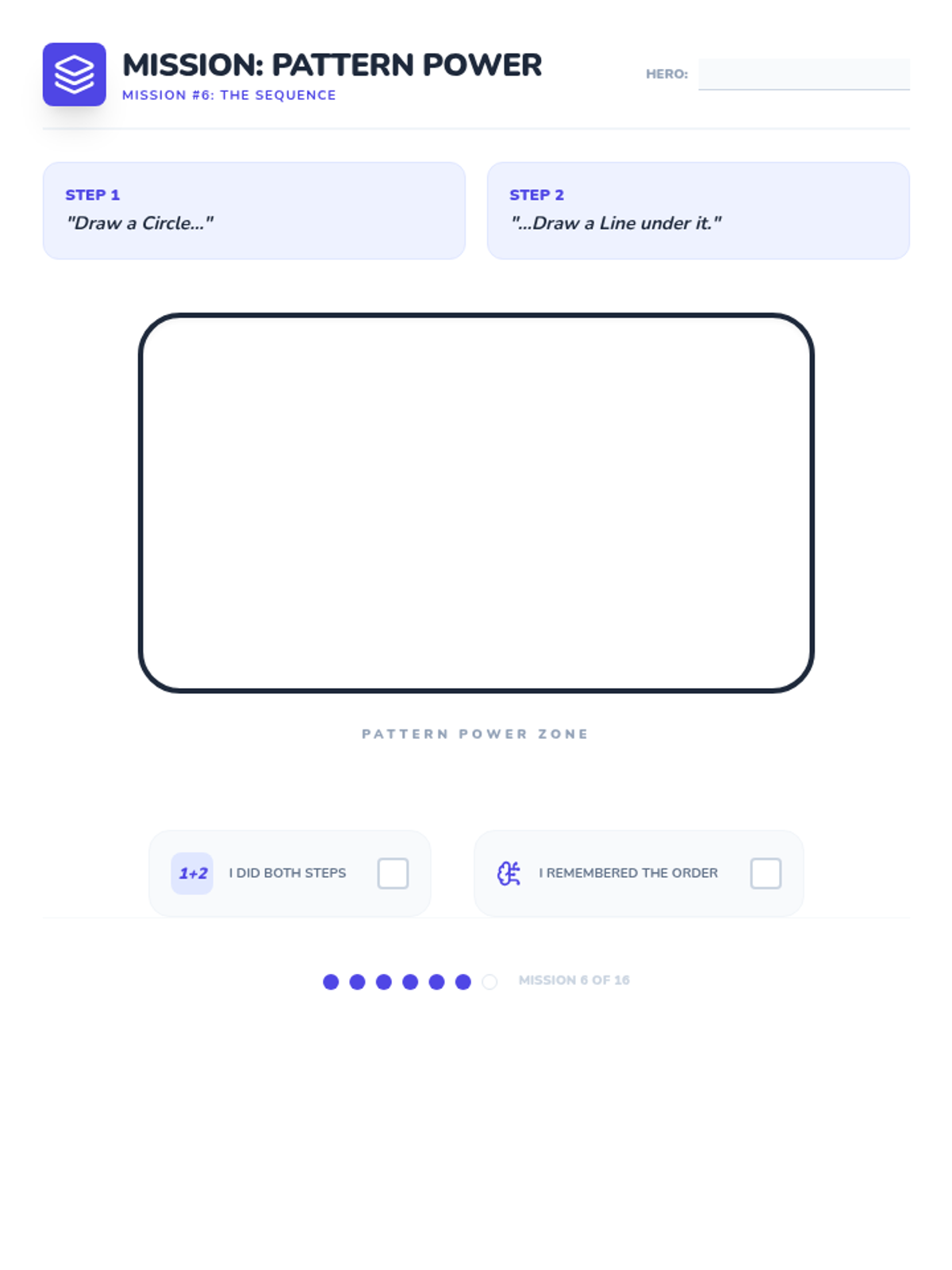
Worksheet for Lesson 6 introducing 2-step directions focused on creating simple patterns, requiring students to sequence two different tasks correctly.
Lesson 6 slides introducing 2-step directions focused on creating simple patterns, requiring students to sequence two different tasks.
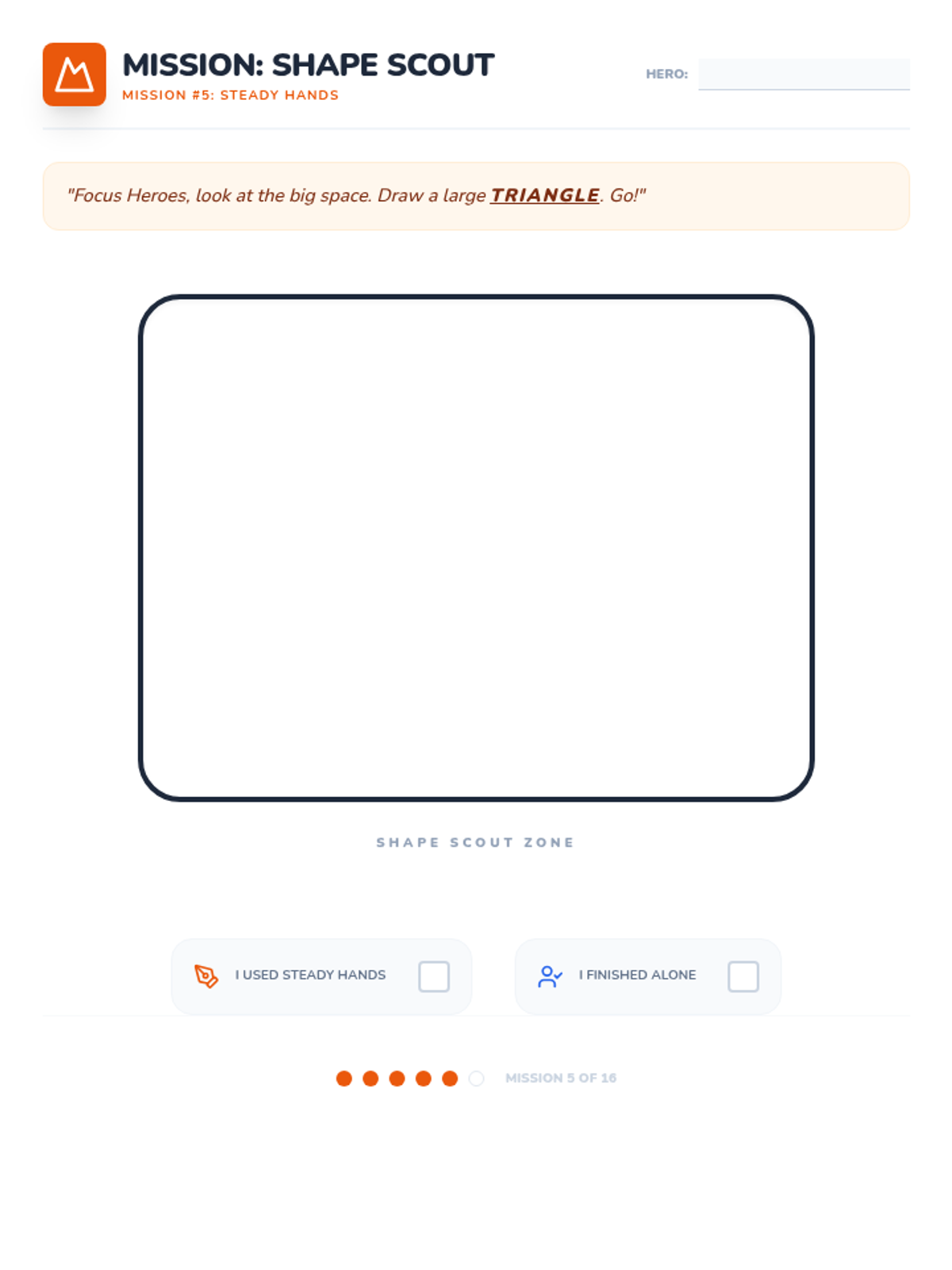
Kindergarten-level worksheet for Lesson 5 featuring a large work area for drawing a shape, designed to build precision and focused execution of a 1-step task.
Slide deck for Lesson 5 focusing on drawing basic geometric shapes. Revised with continuous path modeling arrows, higher contrast visuals, and bold instructional text.
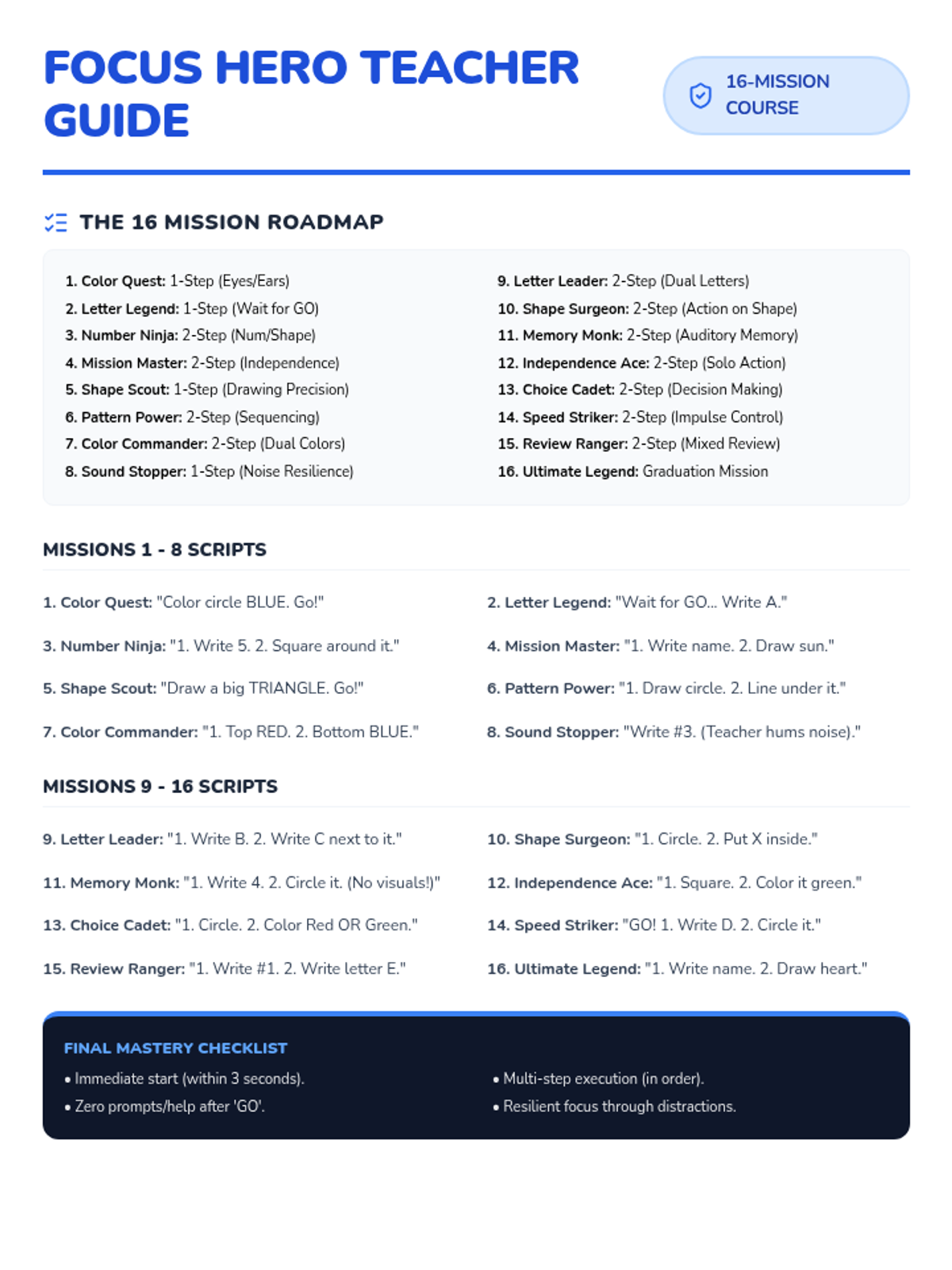
Comprehensive 16-lesson teacher guide with full scope and sequence, scripts for every lesson, and mastery indicators for monitoring student progress. Revised for font size legibility and completeness.
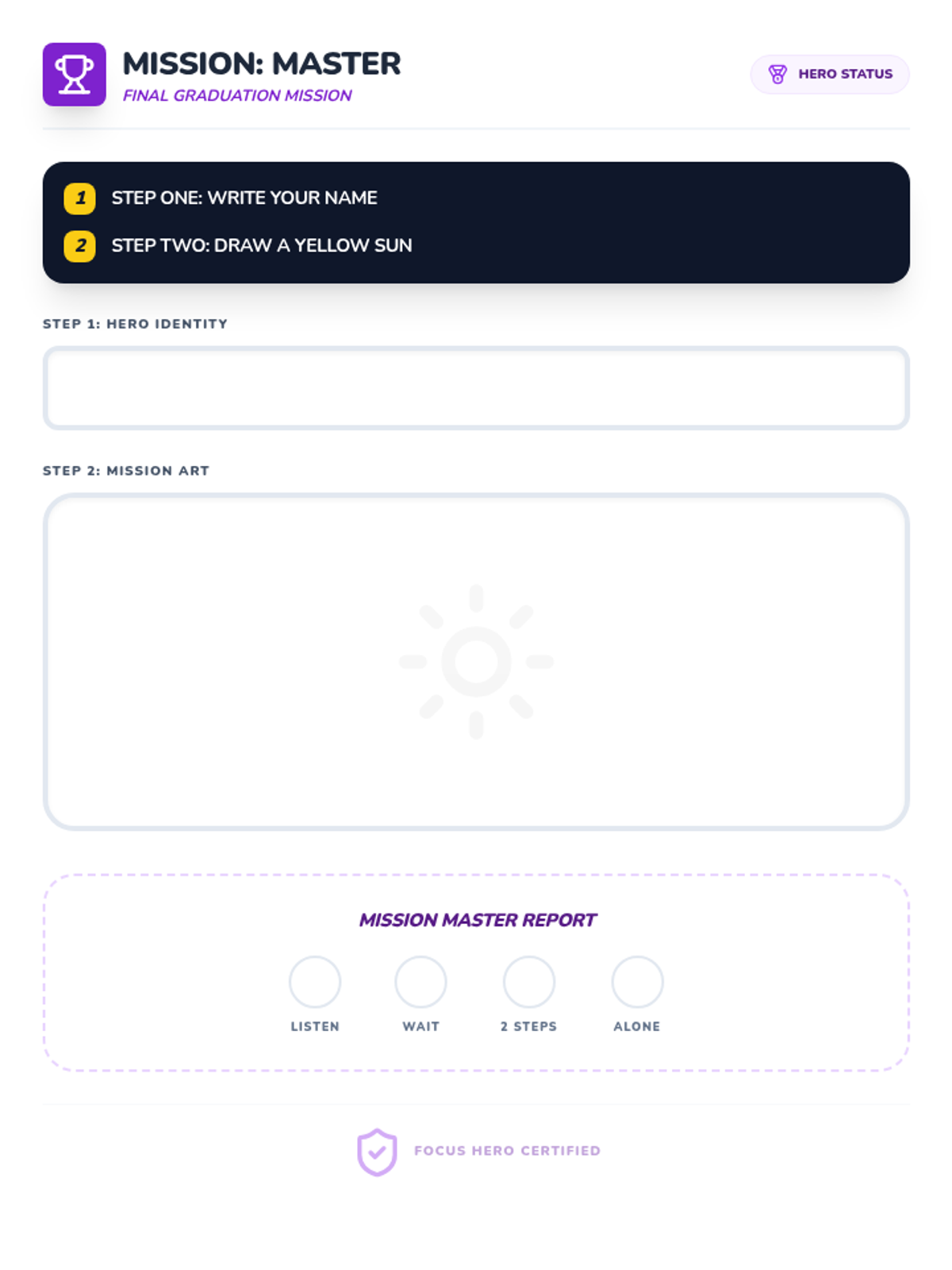
Final mission worksheet for Lesson 4, requiring the student to complete a 2-step task (name and drawing) independently with self-reporting checkboxes for attention behaviors.
Final lesson slides focusing on complete independence and self-directed task completion for a 2-step direction mission.
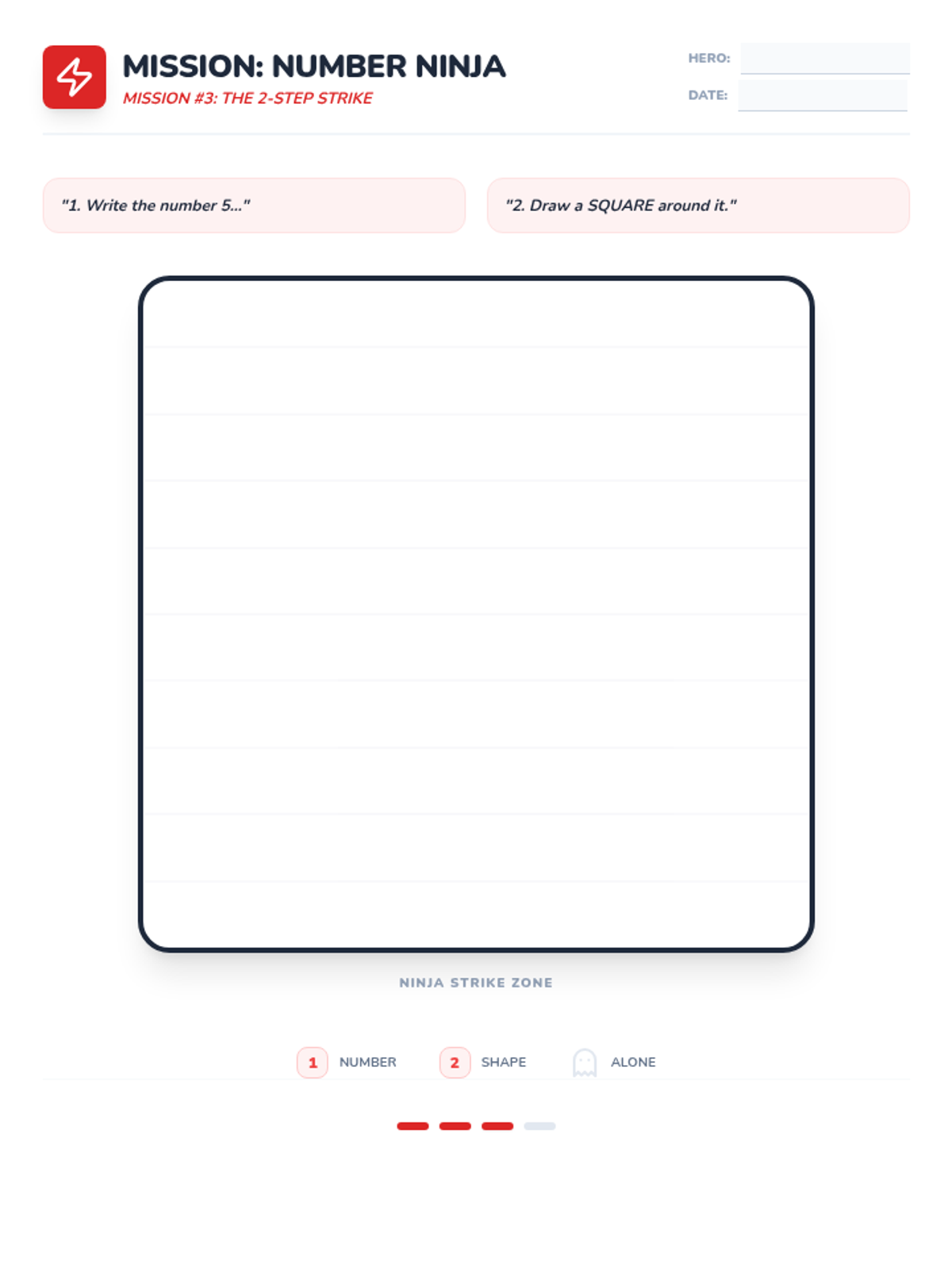
Kindergarten-level worksheet for Lesson 3 featuring a large 'strike zone' for a 2-step number and shape mission, designed to support memory retention.
Lesson 3 slides introducing 2-step directions, using a number-writing and shape-drawing task as the focus, with visual aids for memory retention.
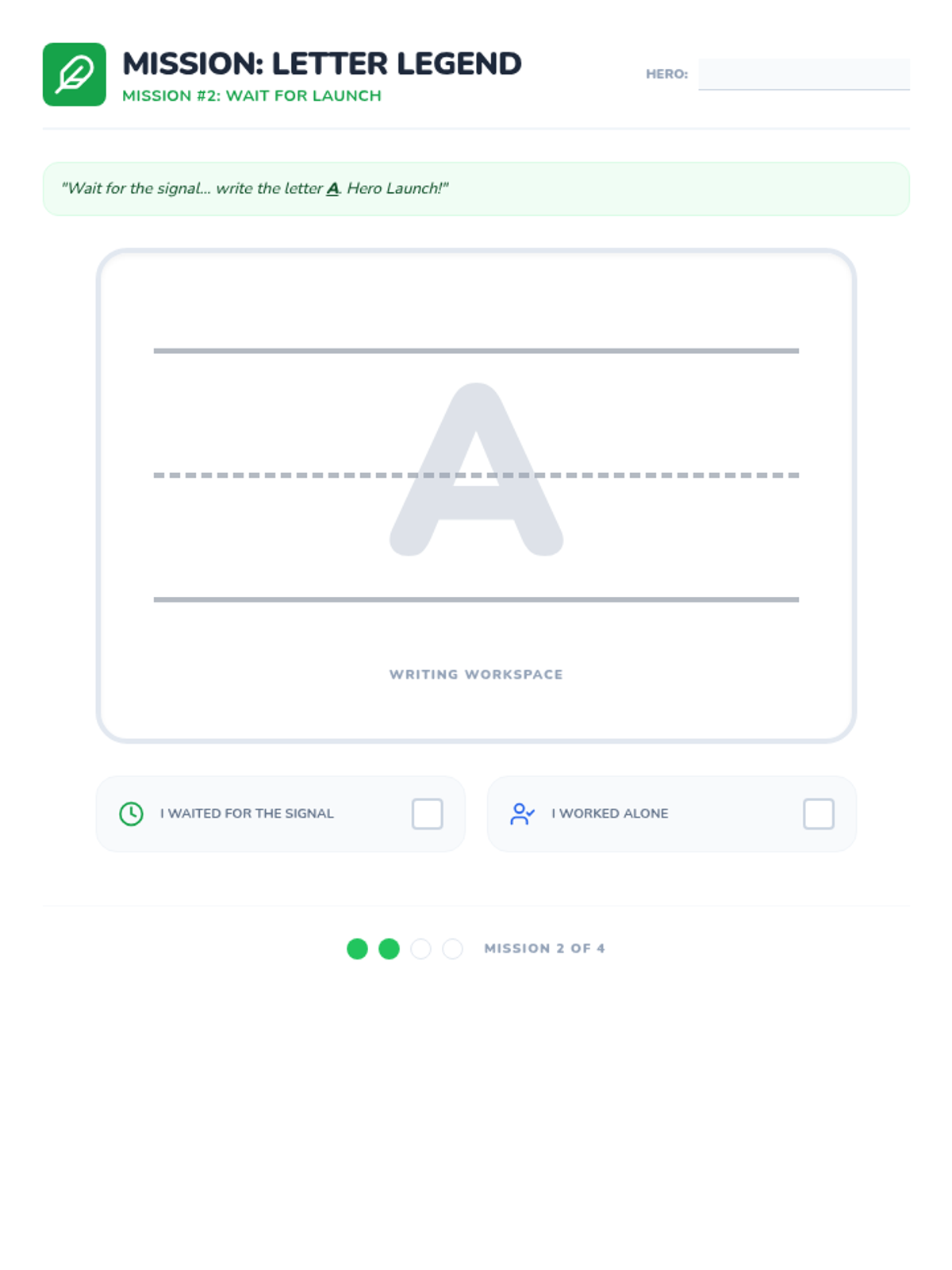
Worksheet for Lesson 2 featuring a large, guided handwriting space for a single letter and self-check anchors for waiting and independence.
Slide deck for Lesson 2 focused on waiting for the final 'go' signal ('Hero Launch') and modeling the motor steps for writing a kindergarten-level letter.
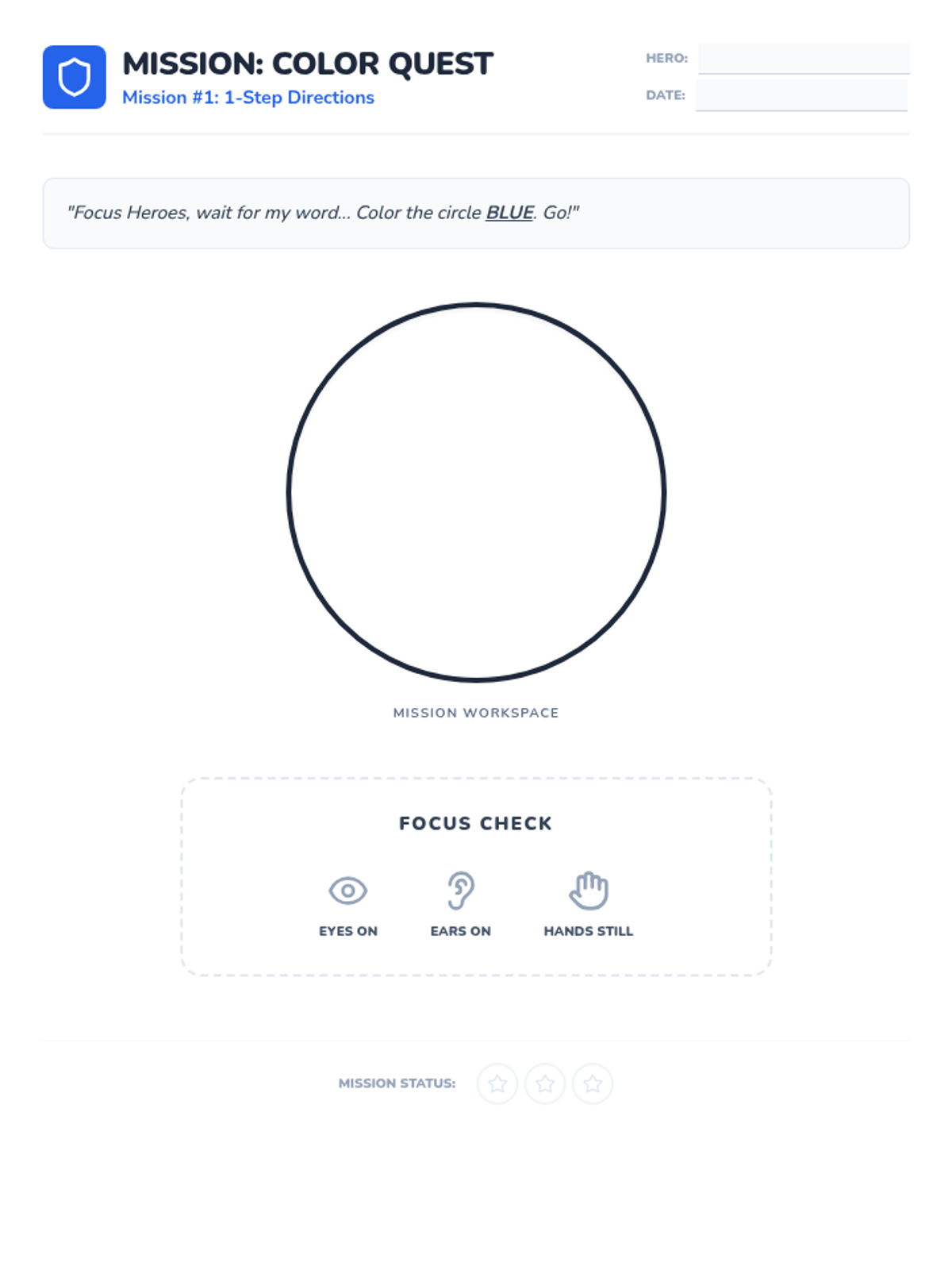
Kindergarten-level worksheet for Lesson 1 featuring a single large shape for the 1-step coloring mission, with clear work space and focus-check anchors.
Instructional slide deck for Lesson 1, focusing on 'Focus Pose' (eyes and ears ready) and a single-step coloring task with modeled expectations.
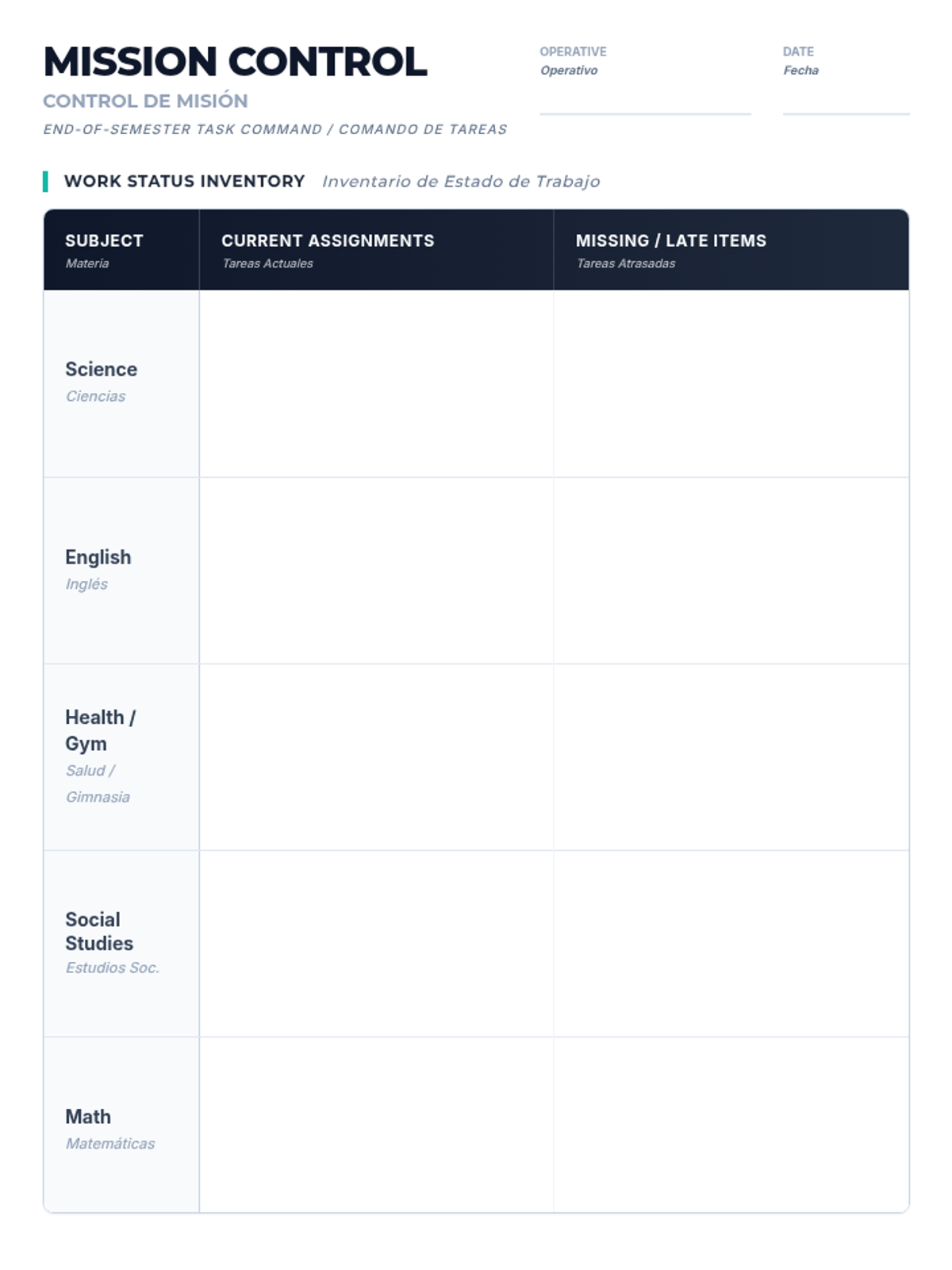
A bilingual (English/Spanish) 'Mission Control' organizer with significantly enlarged writing areas. Features a subject grid for current and missing work, a 'Deployment Sequence' for ordering assignments numerically, and updated reflection questions including a teacher check-in prompt.
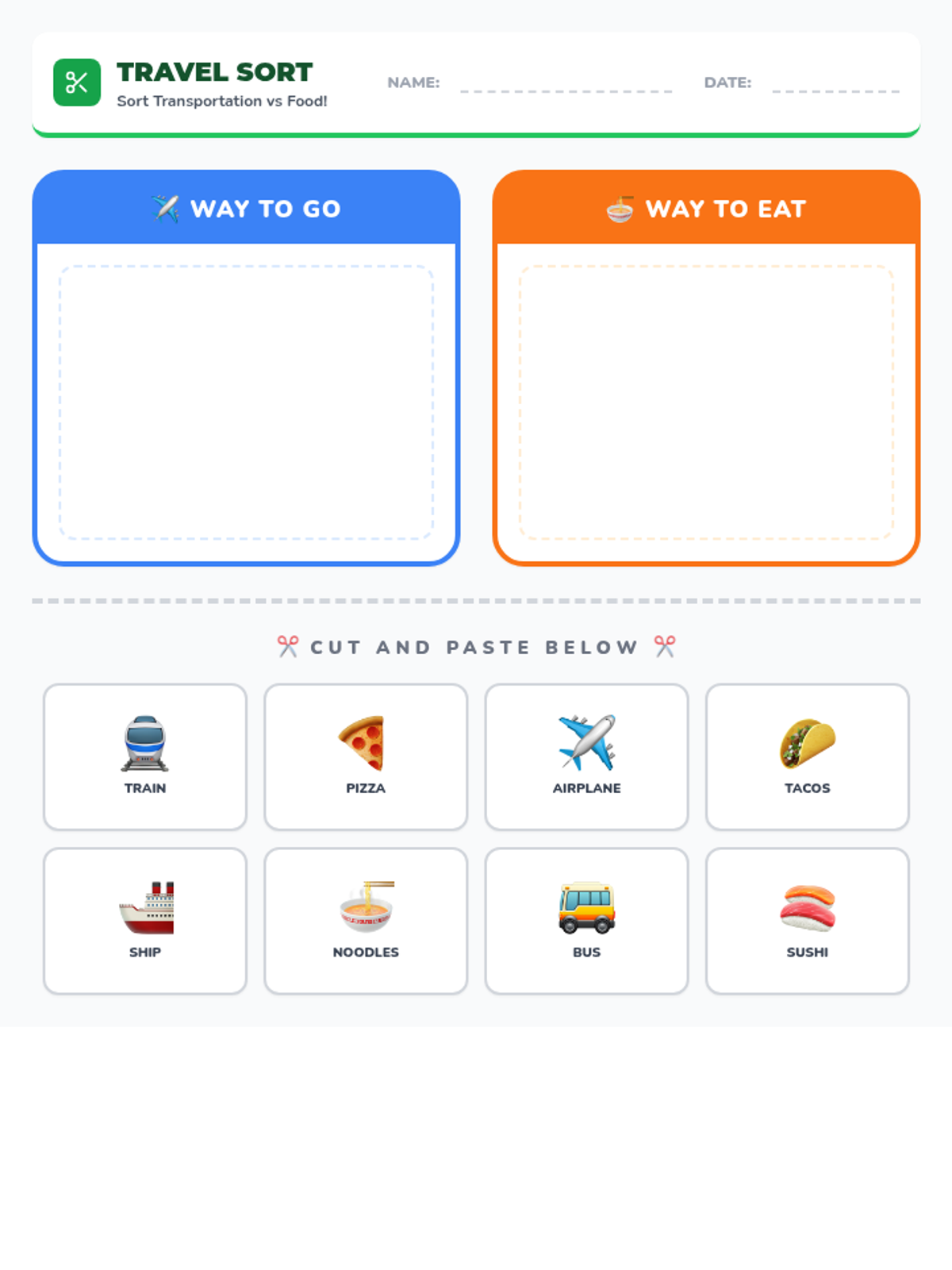
A hands-on cut-and-paste activity where students categorize transportation methods and global foods, featuring clear visual icons and designated sorting zones.
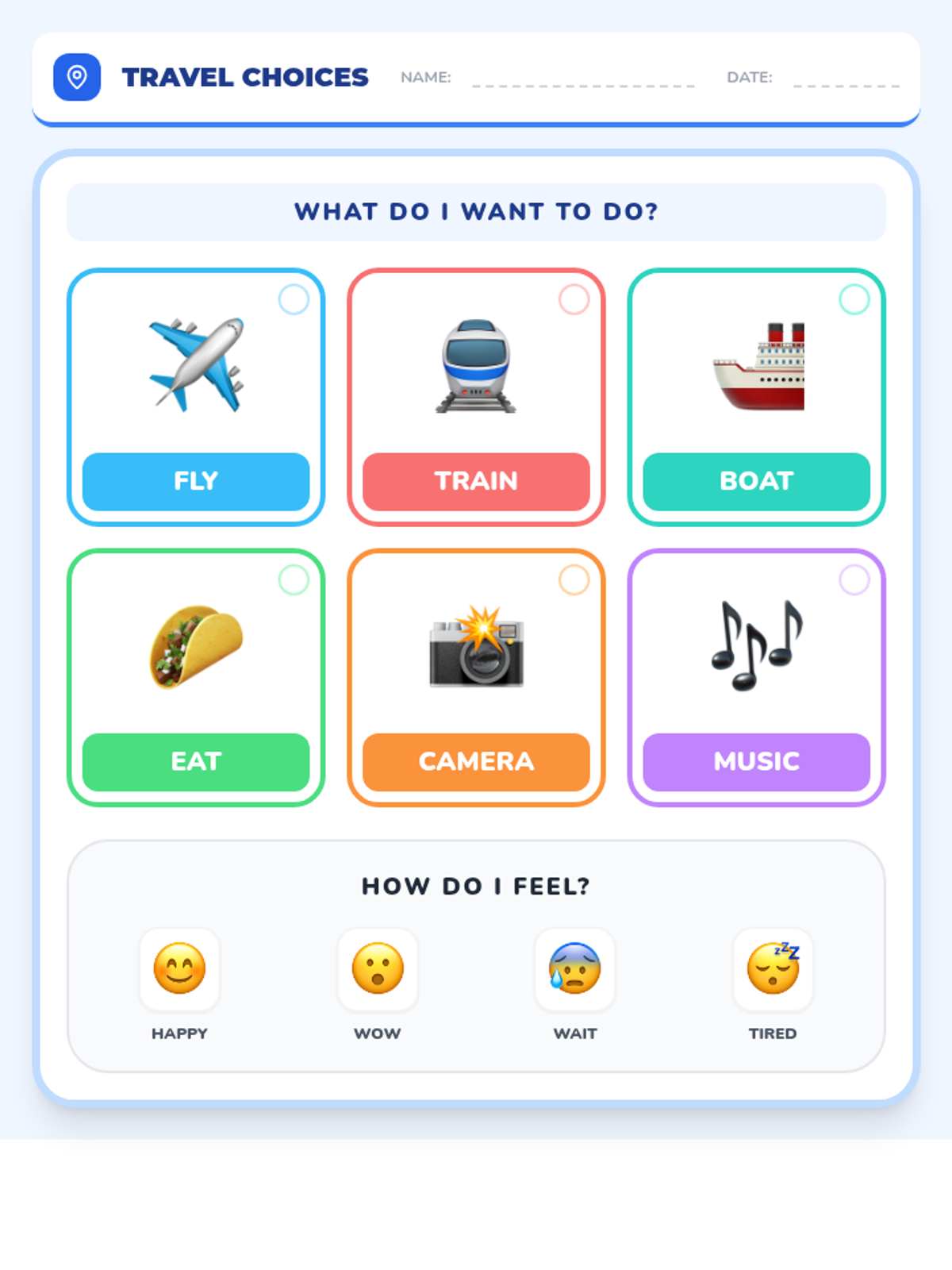
A high-visual communication tool for students to express preferences regarding travel methods and activities, including sensory experiences and an emotional check-in bar.
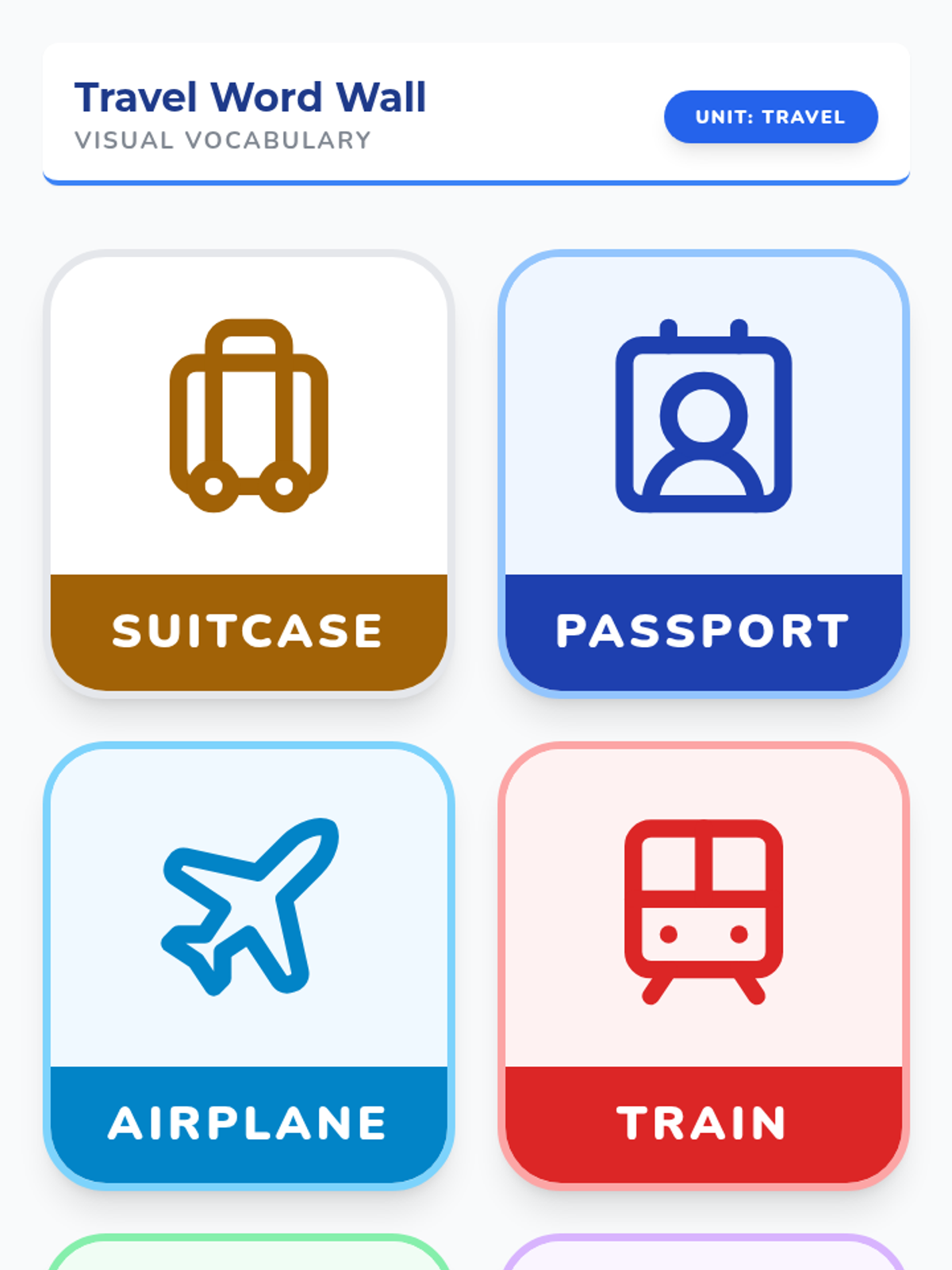
Large, high-contrast vocabulary cards featuring travel-related words like Suitcase, Passport, Airplane, Train, Food, and Tradition with clear icons and bold text for classroom display and student reference.