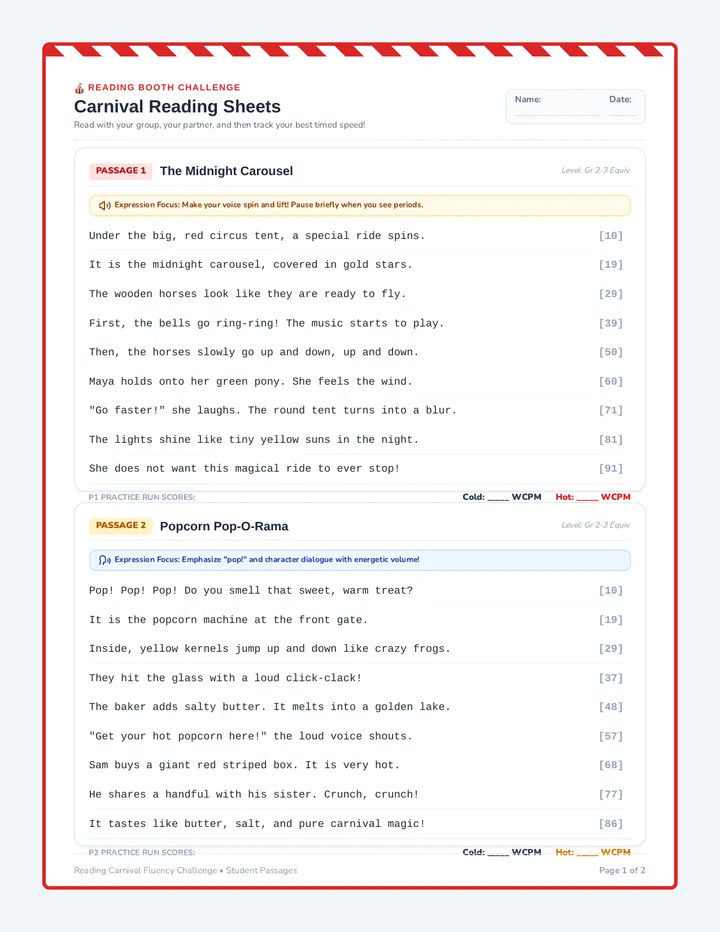
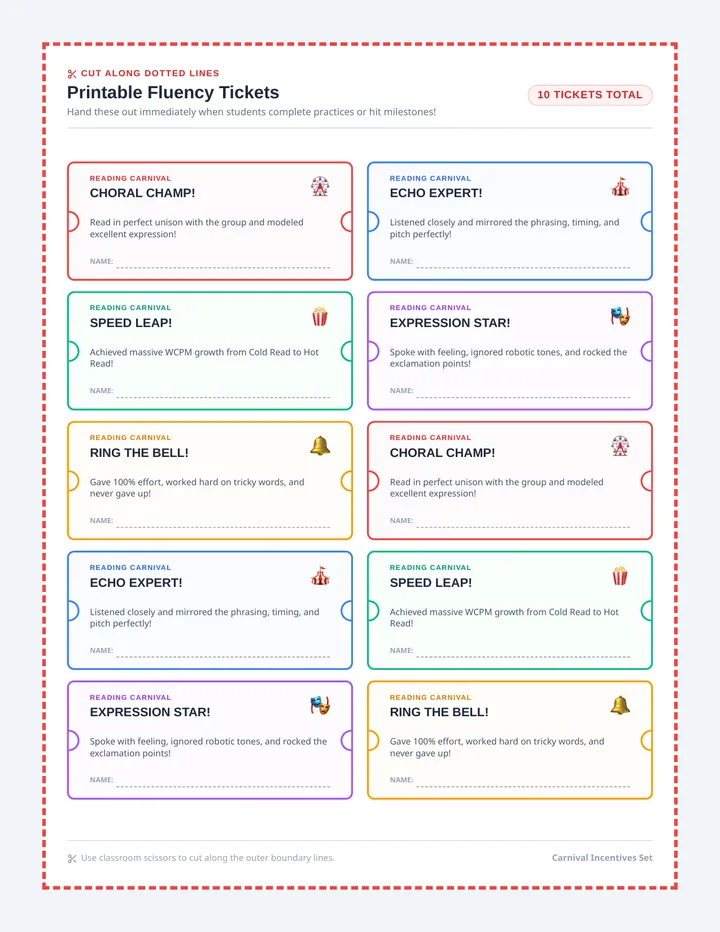
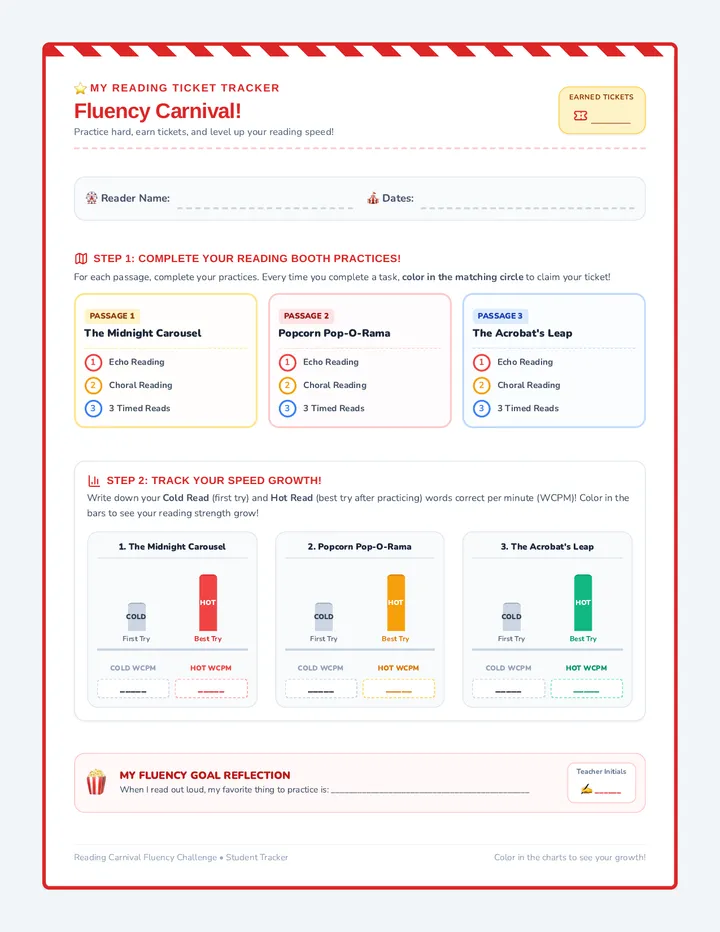
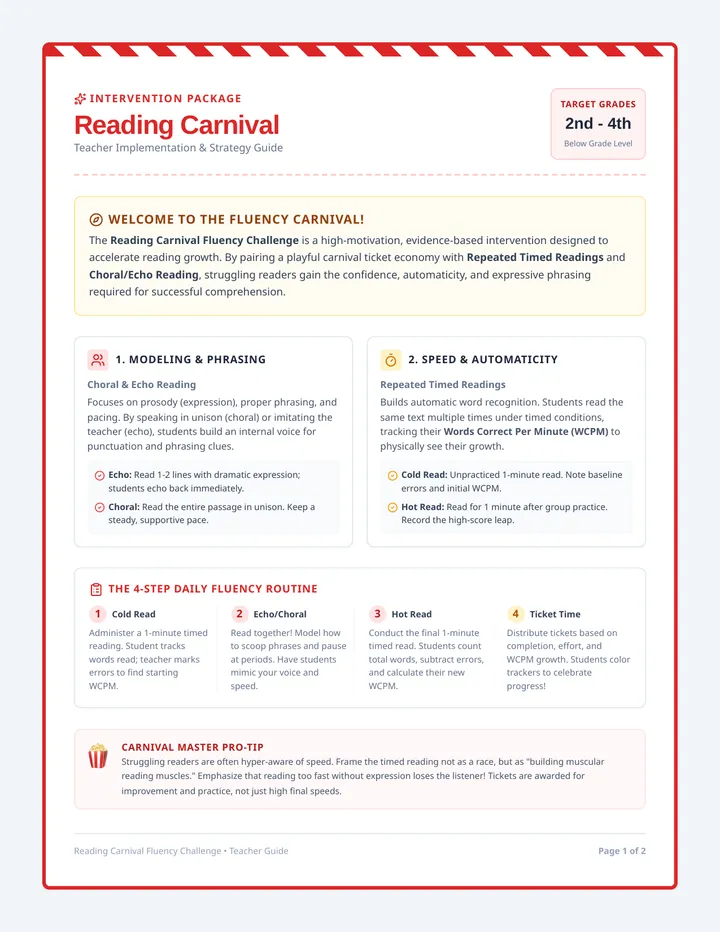
A set of three high-interest animal reading passages for 2nd-grade students, featuring word counts for fluency tracking, repeated reading checkboxes, and literal comprehension questions.
A facilitator guide for teachers to deliver the IEP self-advocacy lesson. Now optimized to fit on a single page with all headings and content together.
A student worksheet that helps individuals break down their own IEP goals using the "Blueprint Formula" (Goal, Barrier, Tool). Now optimized to fit on a single page with consistent work area styling and a clearer connection to the roleplay activity.
A set of four scenario cards for roleplaying self-advocacy in the classroom. Each card provides a specific IEP-related situation, a student prompt, and a teacher prompt to facilitate realistic practice. Now optimized to fit on a single printable page with cut lines.
A visual presentation introducing students to the concept of IEP goals and the "Blueprint Formula" for self-advocacy. Features clear, bold text and a construction theme to make complex legal terms accessible.
A teacher's guide for facilitating lessons on social boundaries, handling rejection, and physical positioning for middle schoolers with autism.
A practice worksheet with social scenarios and reflection questions to help the student process personal space rules and responses to rejection.
A two-page social story handout for a middle school boy with autism, detailing specific rules for personal space, responding to requests to move, and handling social rejection.
A visual presentation for 7th-grade students on personal space, handling rejection, and responding to social cues appropriately.
An answer key for the Vocabulary Map Worksheet, providing suggested synonyms and antonyms for 'tired' and 'hungry'. Features a clean, professional design.
A blank vocabulary map for students to choose their own words and identify synonyms and antonyms. Features a clean, professional layout suitable for any vocabulary lesson.
A basic vocabulary graphic organizer for second graders to identify synonyms and antonyms for 'tired' and 'hungry'. Features a clean layout with simple instructions.
A printable sorting game where students match 'fancy' synonyms to the simple words 'tired', 'hungry', 'excited', 'pretty', 'thirsty', and 'tasty' on themed burrow mats. Includes 18 word cards split across two pages and 6 sorting mats. Designed to be printed on multiple pages to avoid cutoff.
A comprehensive teacher resource containing vocabulary definitions, synonym/antonym banks, and discussion prompts for 'The Wombats Go Wild for Words'. It reflects the story's setting in the Evergreen Forest and the encounter with the duckling. Focuses on Tired and Hungry for the main lesson.
A visually engaging presentation focusing on synonyms and antonyms for 'Tired' and 'Hungry'. It reflects the story's setting in the Evergreen Forest and the encounter with the duckling. Now includes 'Fancy Game Words' and interactive reveal slides.
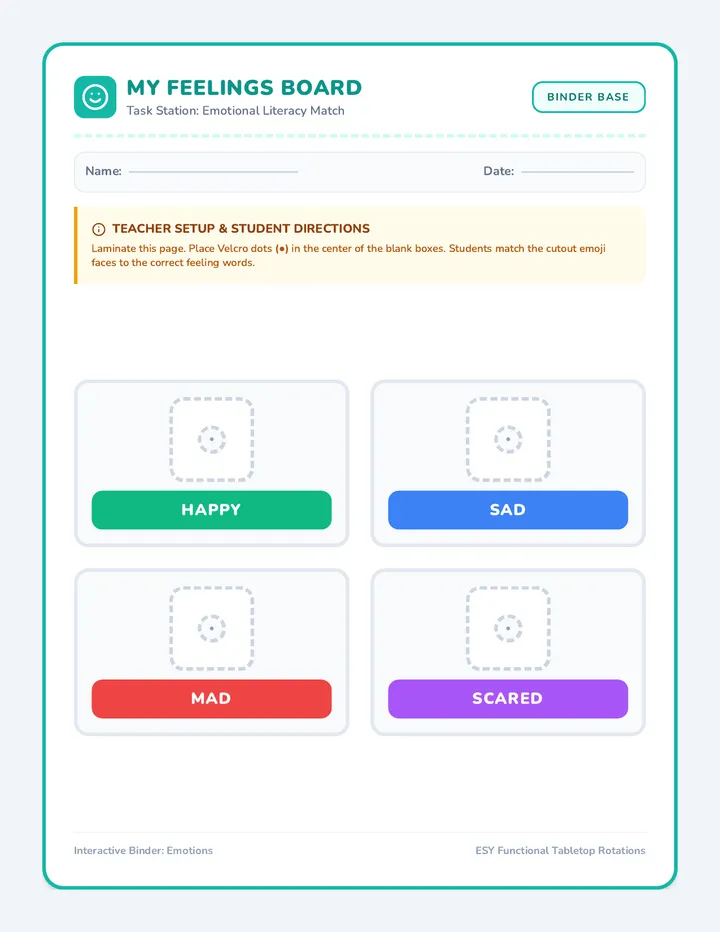
Interactive cut-and-paste worksheets for the 'Working' and 'Break' social stories, featuring choice boards and sequence plans.
Interactive cut-and-paste worksheets for the 'Listening' and 'Waiting' social stories, helping students engage with behavioral steps.
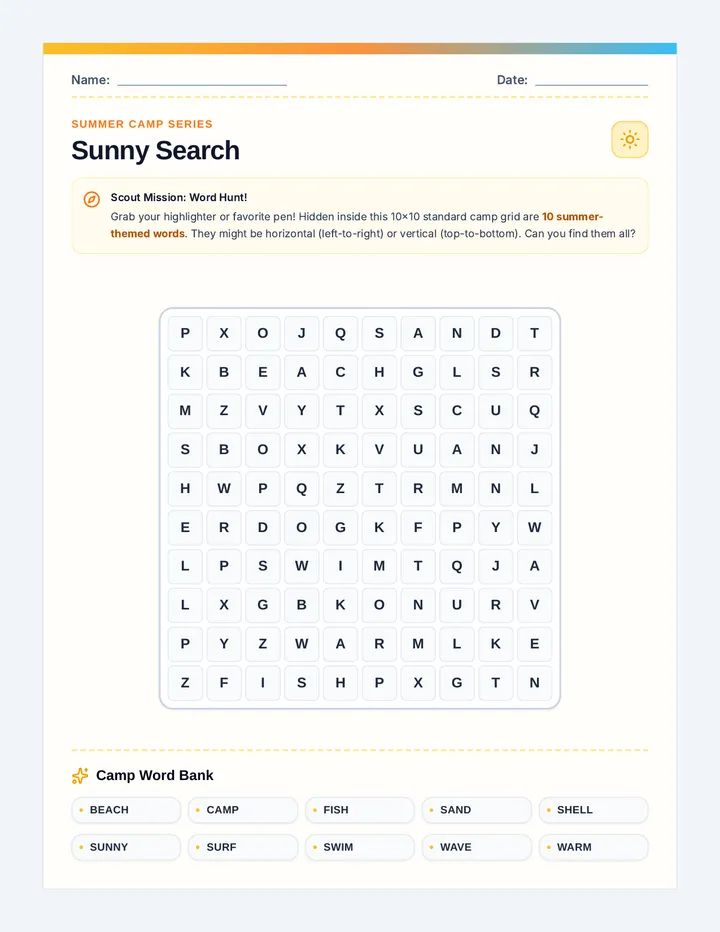
A cut-and-paste sorting activity where students categorize different classroom behaviors as 'Smart' or 'Unwise'.
A set of two 'First/Then' boards to provide clear structure and motivation for classroom tasks.
A set of four visual checklists for school skills, designed to be laminated and used with dry-erase markers.
A visual social story explaining when and how to take a break appropriately in the classroom.
A social story that encourages students to focus and complete their schoolwork, using simple language and clear visual cues.
A visual social story about waiting for a turn, featuring simple vocabulary and supportive icons.
A visual social story about listening to teachers, using simple sentences and clear icons for emergent readers.
A behavior incident tracking sheet designed for teachers to record antecedents, specific defiant behaviors, and the effectiveness of various redirection strategies to identify long-term patterns.
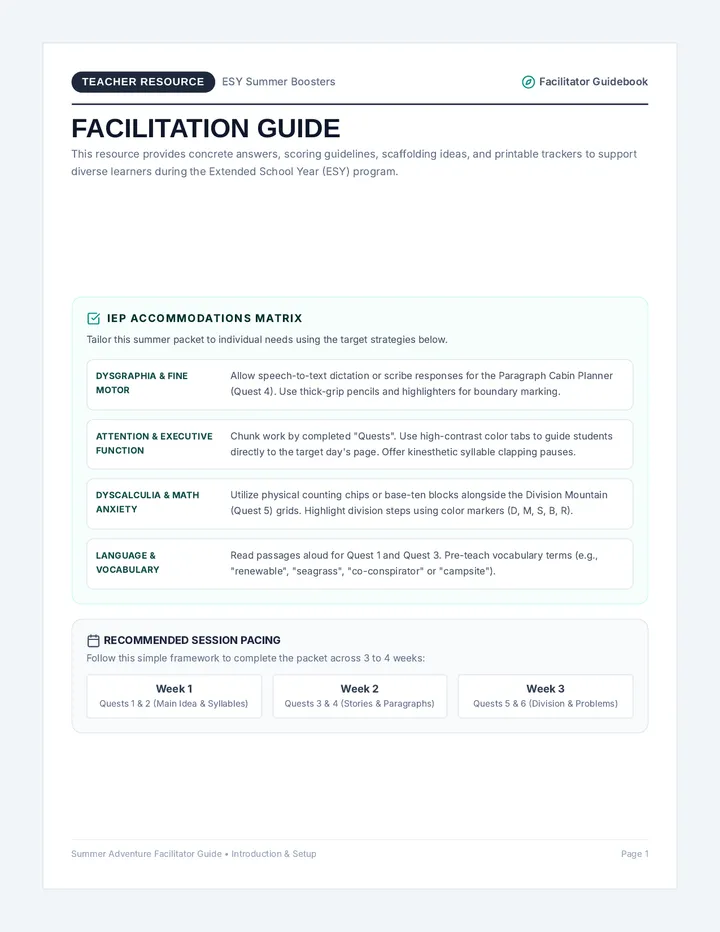
A detailed professional document for teachers outlining evidence-based interventions including Behavioral Momentum, Antecedent Modifications, and Functional Communication Training specifically for students with ADHD and defiant behaviors.
A printable quick-reference guide featuring four cut-out cards for teachers to keep on their desks, focusing on diffusing power struggles, low-profile redirection, ADHD support, and crisis de-escalation scripts.
A comprehensive guide for teachers including the correct narrative sequence, learning objectives, and discussion prompts to deepen student understanding.
A worksheet for students to transcribe their ordered sentences into a cohesive narrative. Includes a reflection question to identify the moral of the story.
A printable set of sentence strips from the story for students to cut out and manually arrange. Encourages tactile engagement and logical sequencing of the narrative events.
A vibrant slide deck to introduce the story of 'The Shepherd Boy' and guide students through the sequencing activity. Features clear, large text and visual cues to support narrative comprehension.
A teacher-facing intervention guide for 8th-grade students struggling with elopement and vandalism. It outlines the restorative justice approach, implementation steps for the Daily Route Map, and specific de-escalation strategies for task avoidance and boredom.
A visual schedule and check-in sheet for 8th-grade students. It uses a construction/blueprint theme and includes a period-by-period schedule, task breakdown area, incentive tracker, and alternative behavior list.