A teacher guide and student discovery sheet for the Texture Tinkers lesson, focusing on tactile exploration and crayon rubbings with specific adaptive strategies.

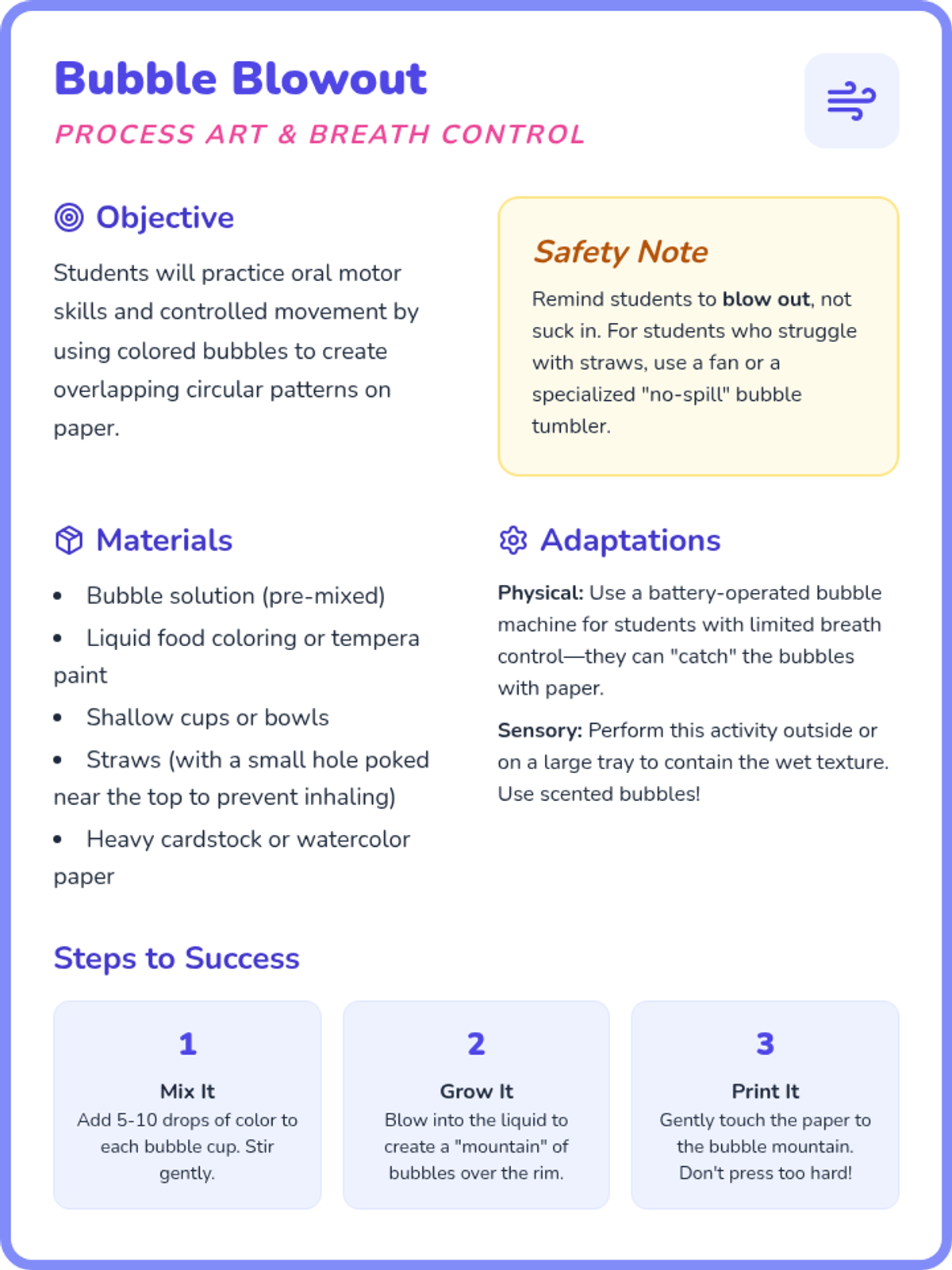
A slide deck for the Bubble Blowout lesson, illustrating the process of bubble printing with clear instructions and engaging visuals for early elementary students.
A resource pack for the Bubble Blowout lesson, including a teacher's adaptive guide and a student observation sheet for recording process art results.
A slide deck for the Dough Drifters lesson, focusing on hand warm-ups and sculpting techniques with bold, high-contrast visuals for K-2 students.
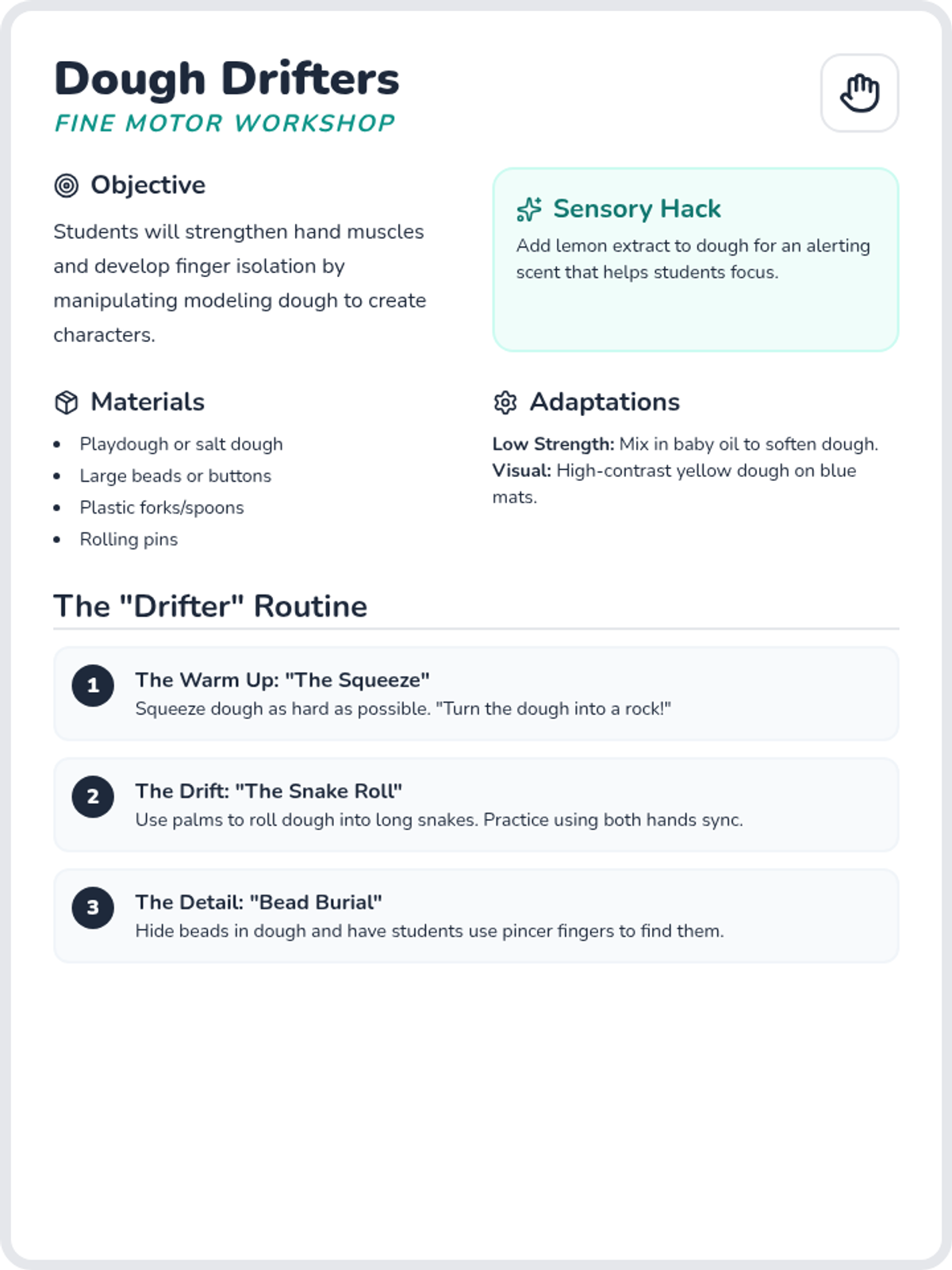
A resource pack for the Dough Drifters lesson, including a teacher's adaptive strategy guide and a visual student challenge sheet for fine motor skill development.
A vibrant presentation for the Texture Tinkers lesson, introducing the concept of texture and step-by-step instructions for rubbing activities with high-visibility visuals.
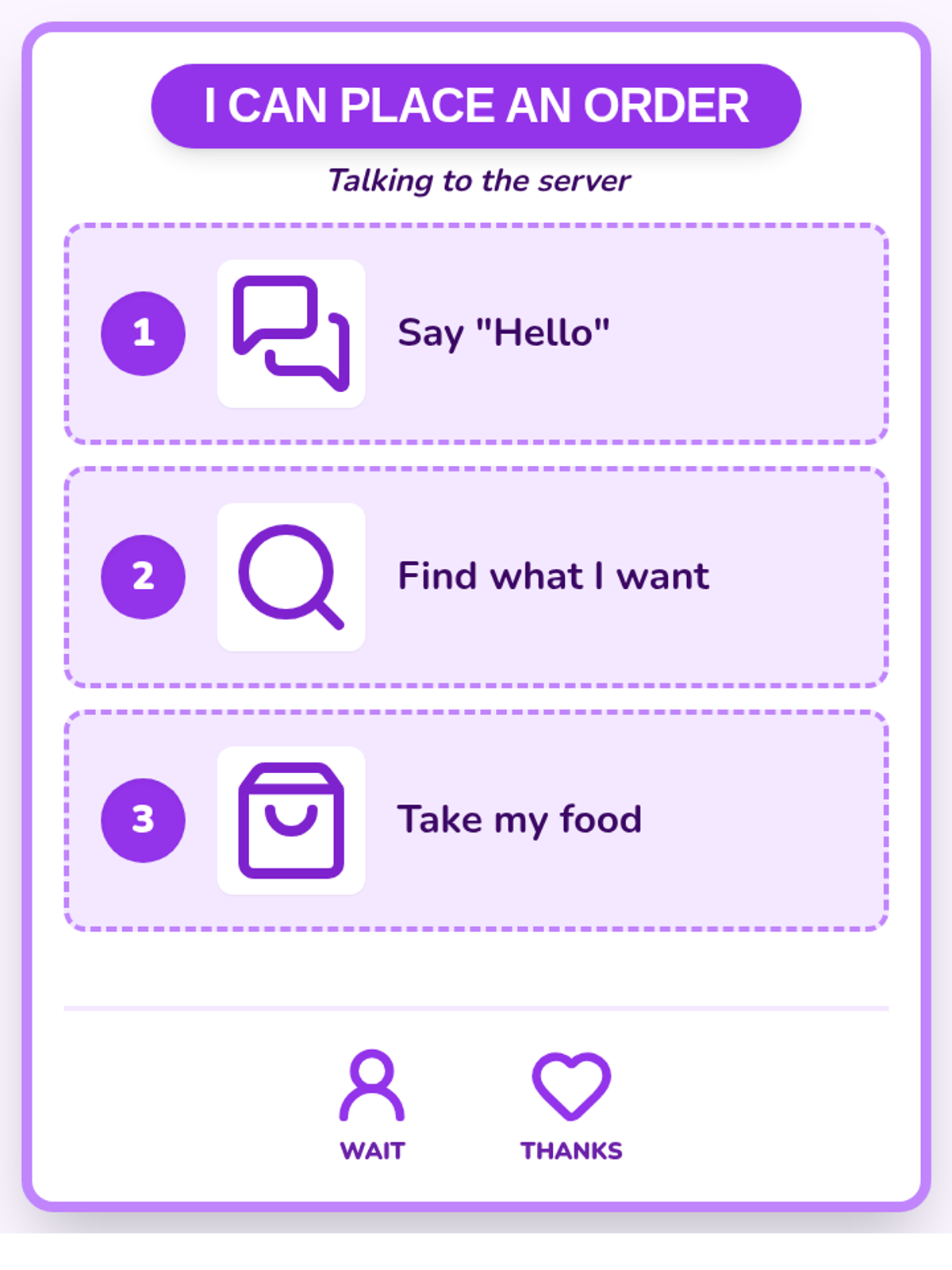
A visual anchor chart for ordering food, guiding non-readers through social steps. Revised for single-page layout and fixed inappropriate iconography.
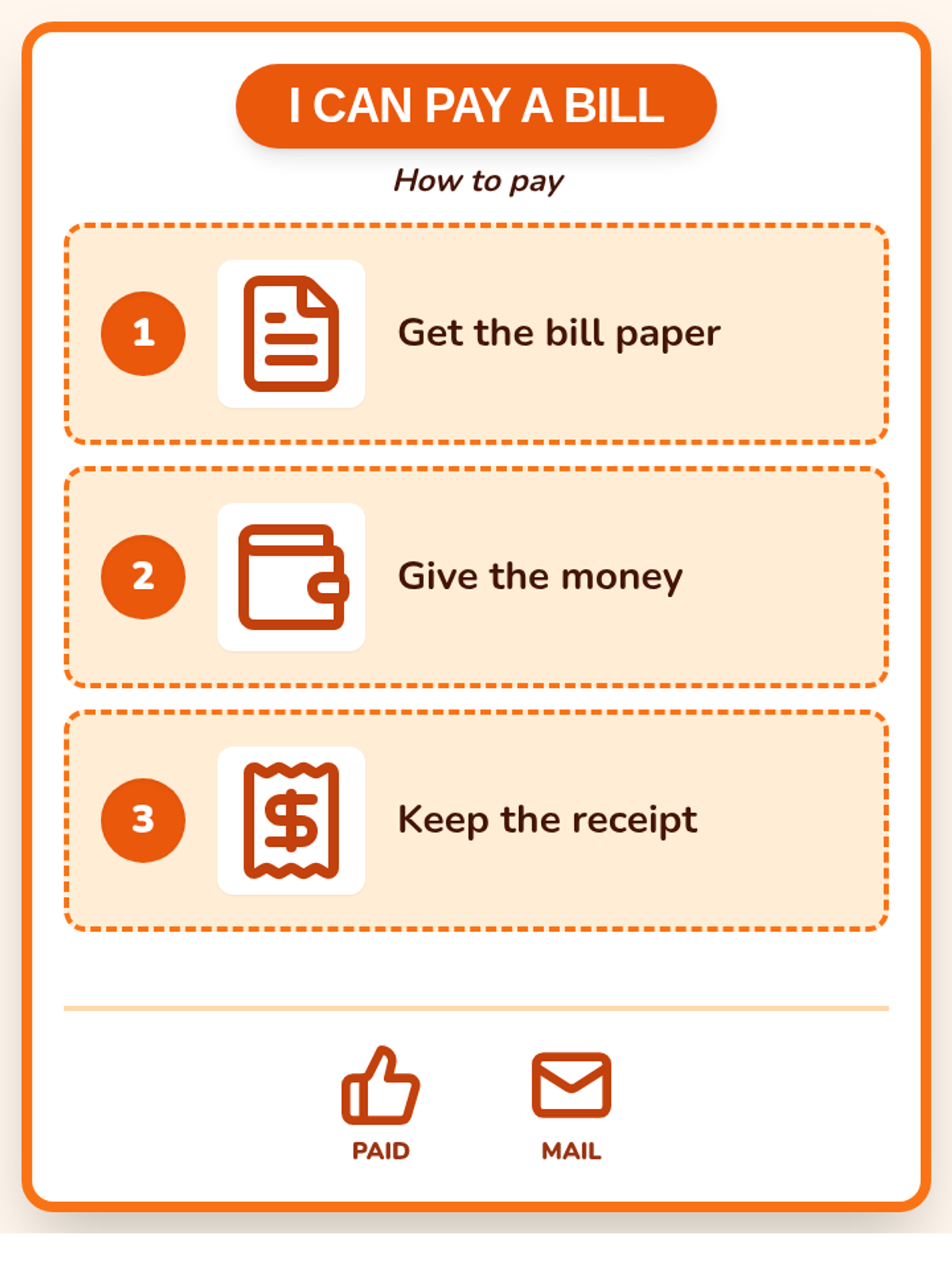
A visual anchor chart for paying bills, using high-contrast orange tones and clear icons. Revised for single-page layout and darkened borders.
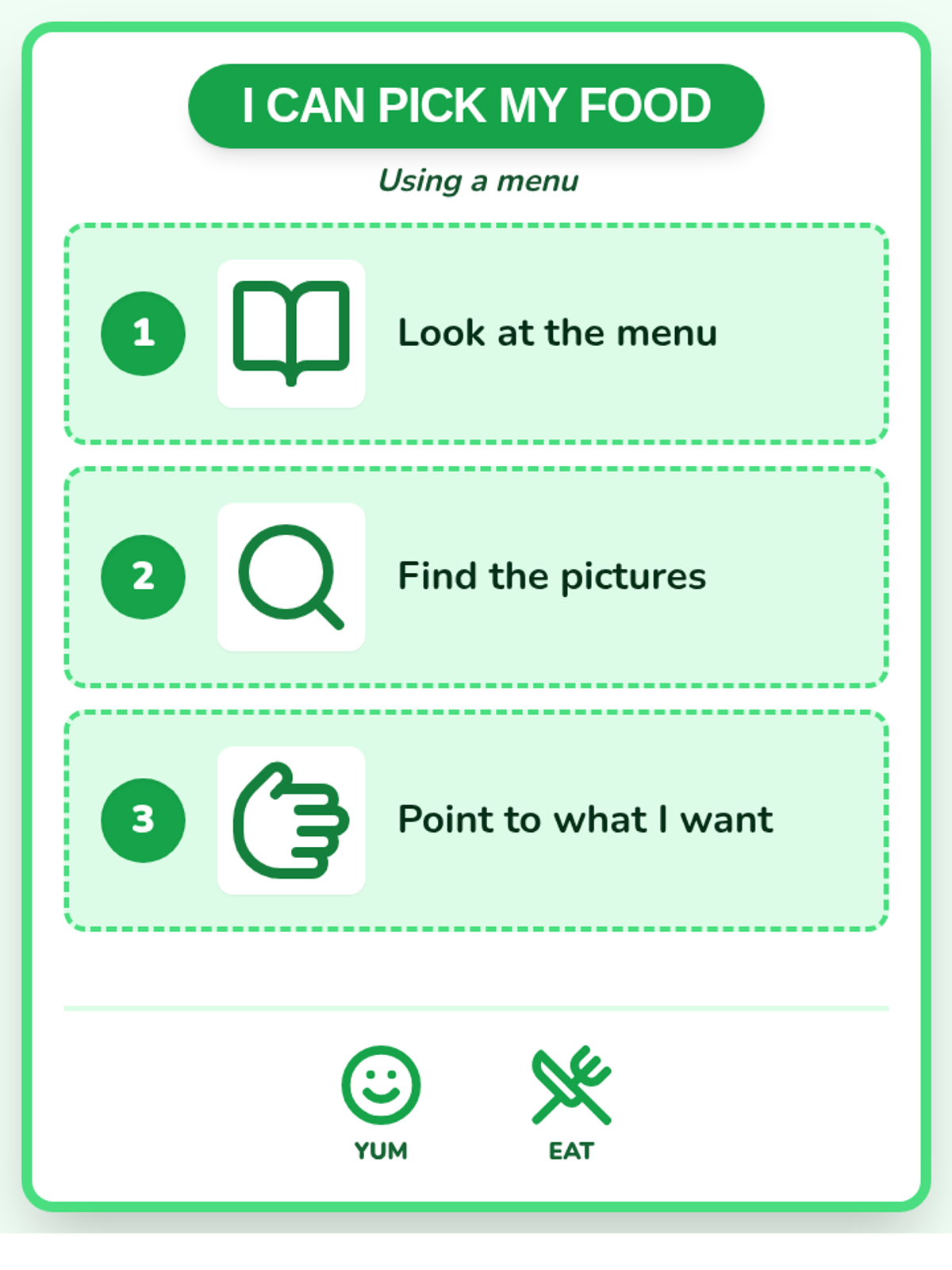
A visual anchor chart for menu reading skills, helping non-readers identify food items using pictures and pointing. Revised header size and fixed footer icon typo.
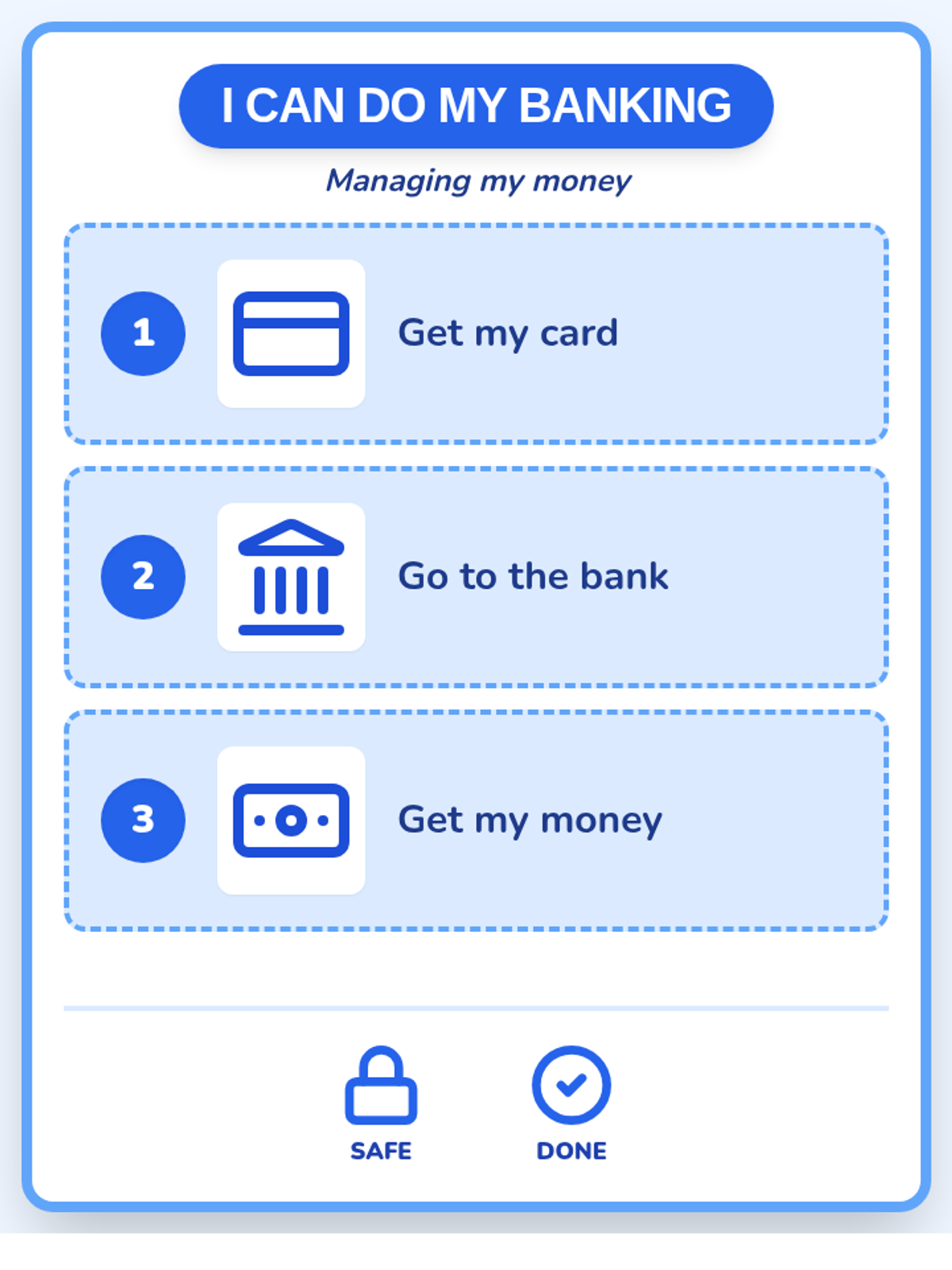
A visual anchor chart for daily banking skills, featuring large icons and numbered steps for non-readers. Revised to fit on a single page with high contrast. Added landmark icon for bank.
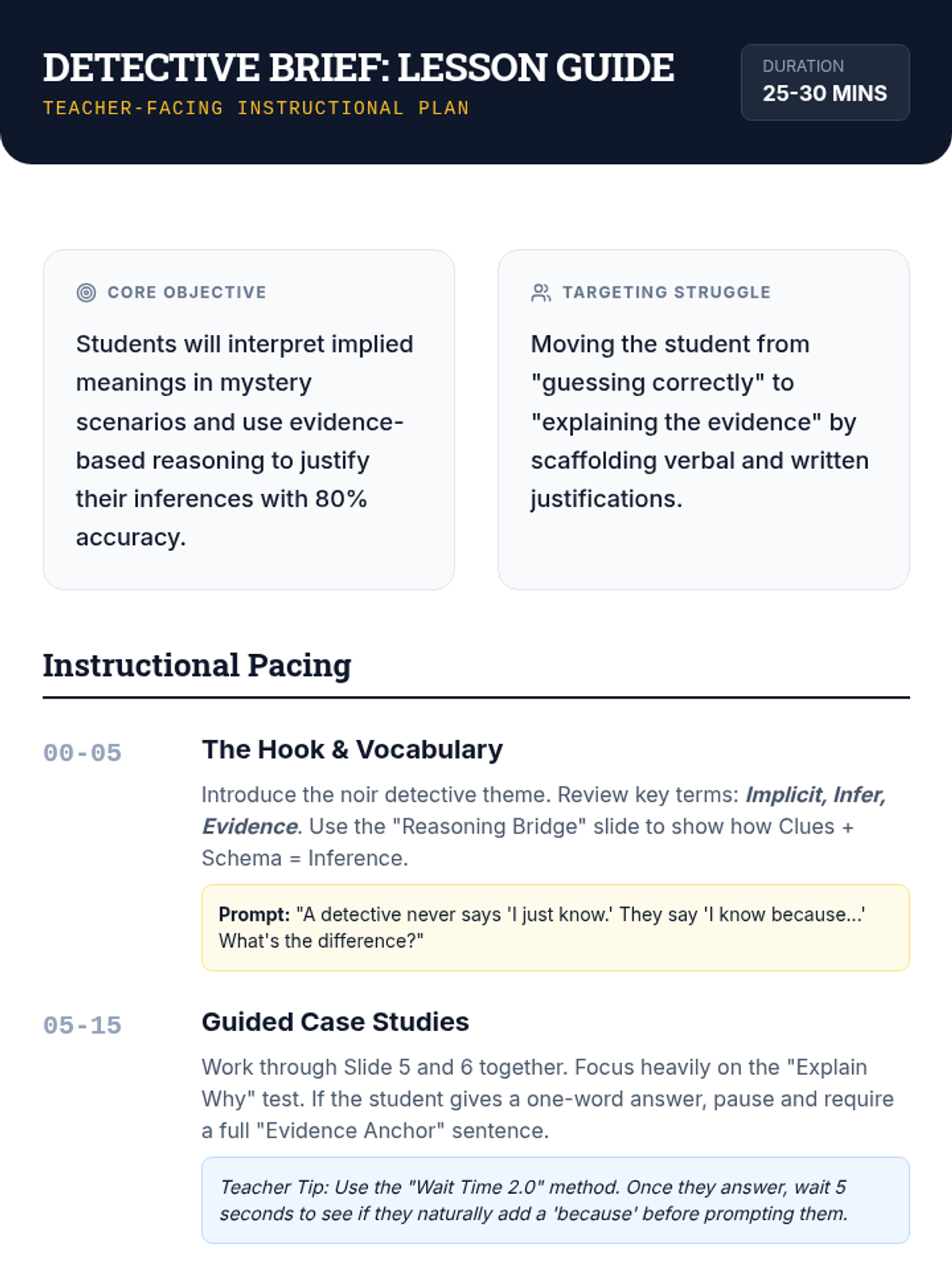
A comprehensive teacher guide for the 'Clue Hunter' lesson, including a 30-minute pacing guide, specific facilitator prompts, data collection criteria for tracking the 80% accuracy goal, and an answer key for all mystery scenarios.
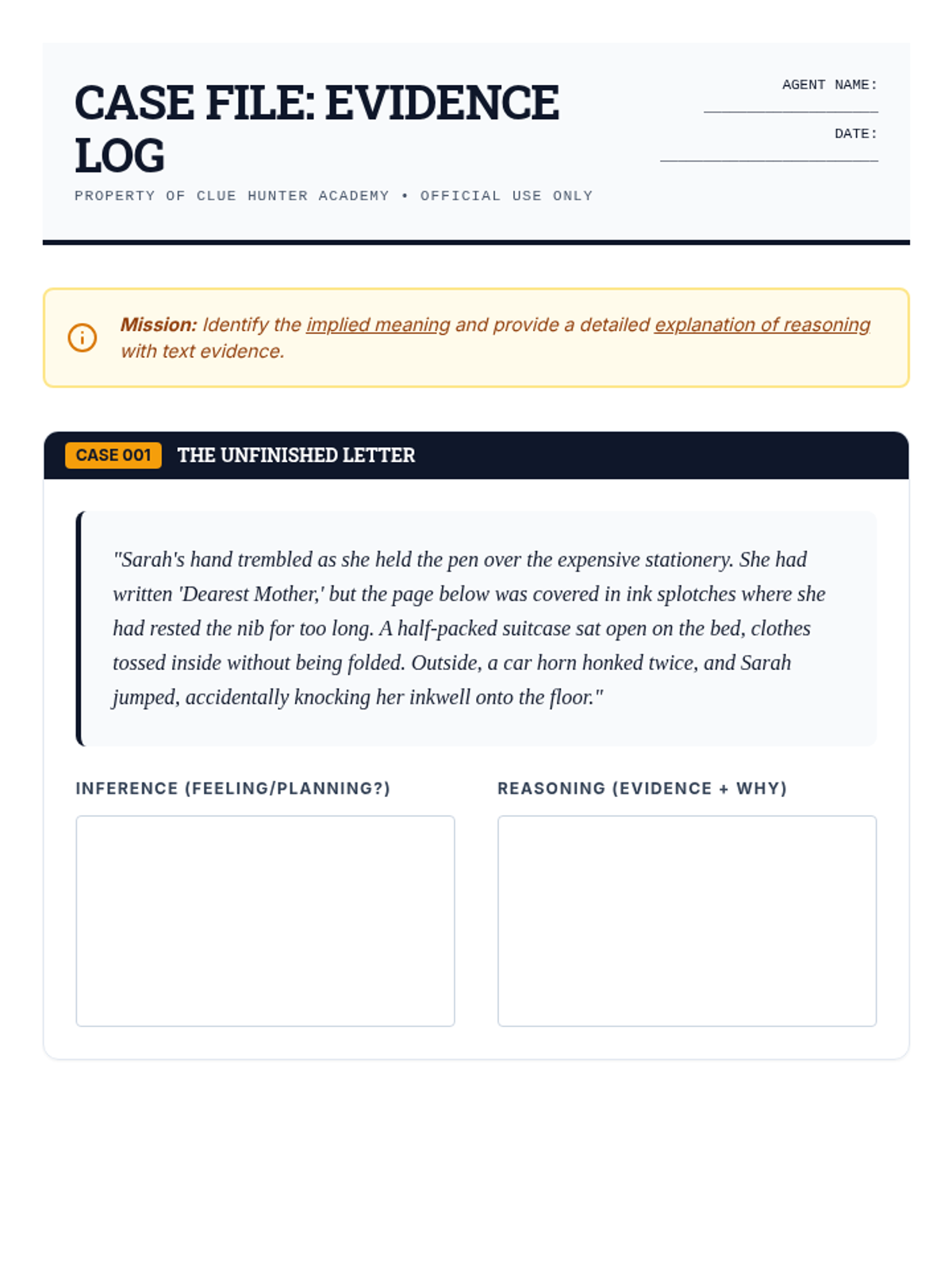
A structured practice worksheet for 1:1 sessions, featuring noir-inspired mystery scenarios. It provides dedicated workspace for students to record both their inferences and their evidence-based reasoning, alongside an academic vocabulary check and a self-reflection section.
An interactive instructional slide deck designed for a 1:1 mystery-themed lesson on inferential reasoning. It features academic vocabulary definitions, a visual 'Reasoning Bridge' model, and scaffolded scenarios with embedded sentence frames for evidence-based explanations.
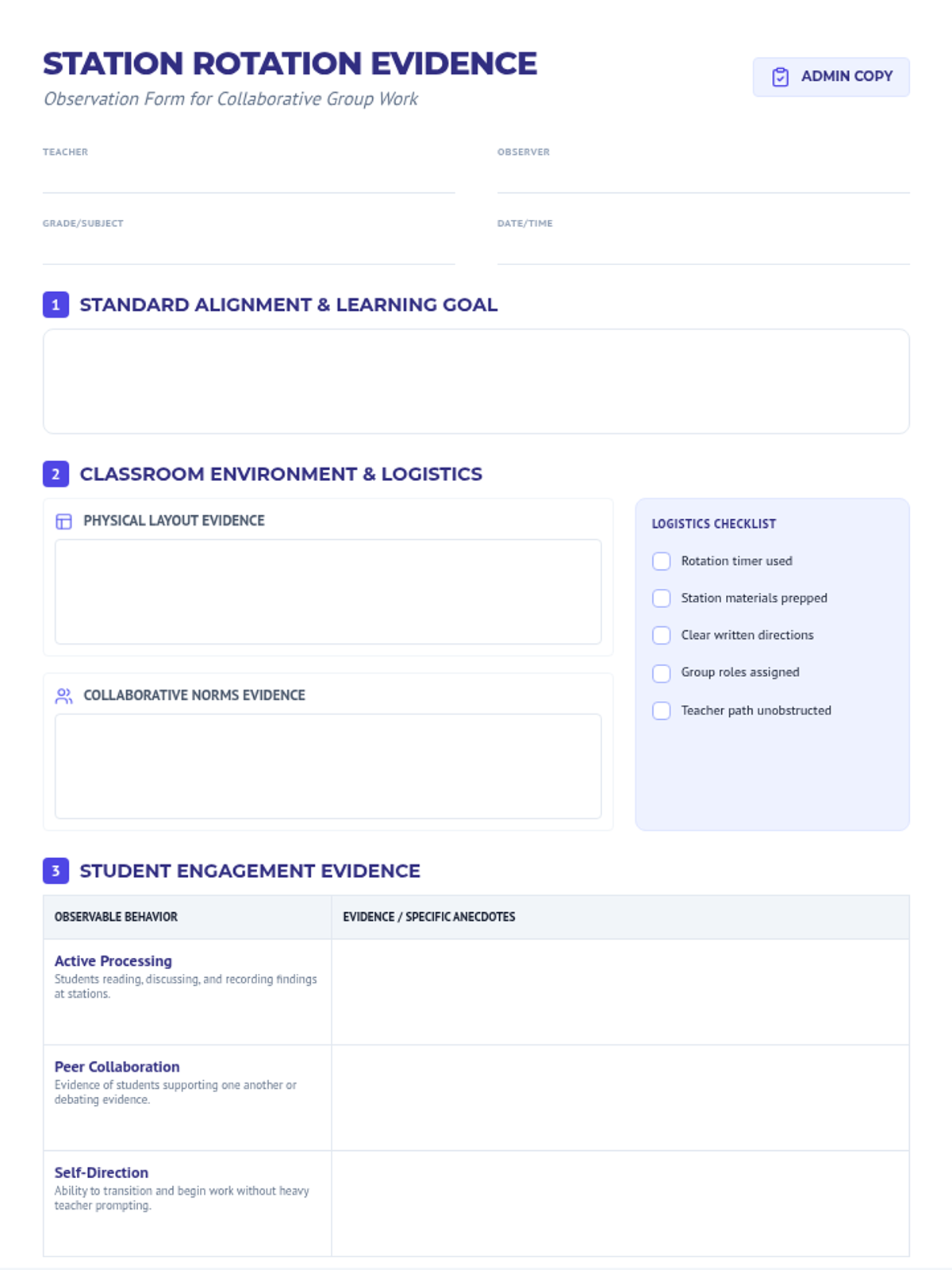
A professional, structured observation form designed for administrators to document collaborative station-based activities. It features sections for standard alignment, environment logistics, engagement evidence, and formative assessment checks.
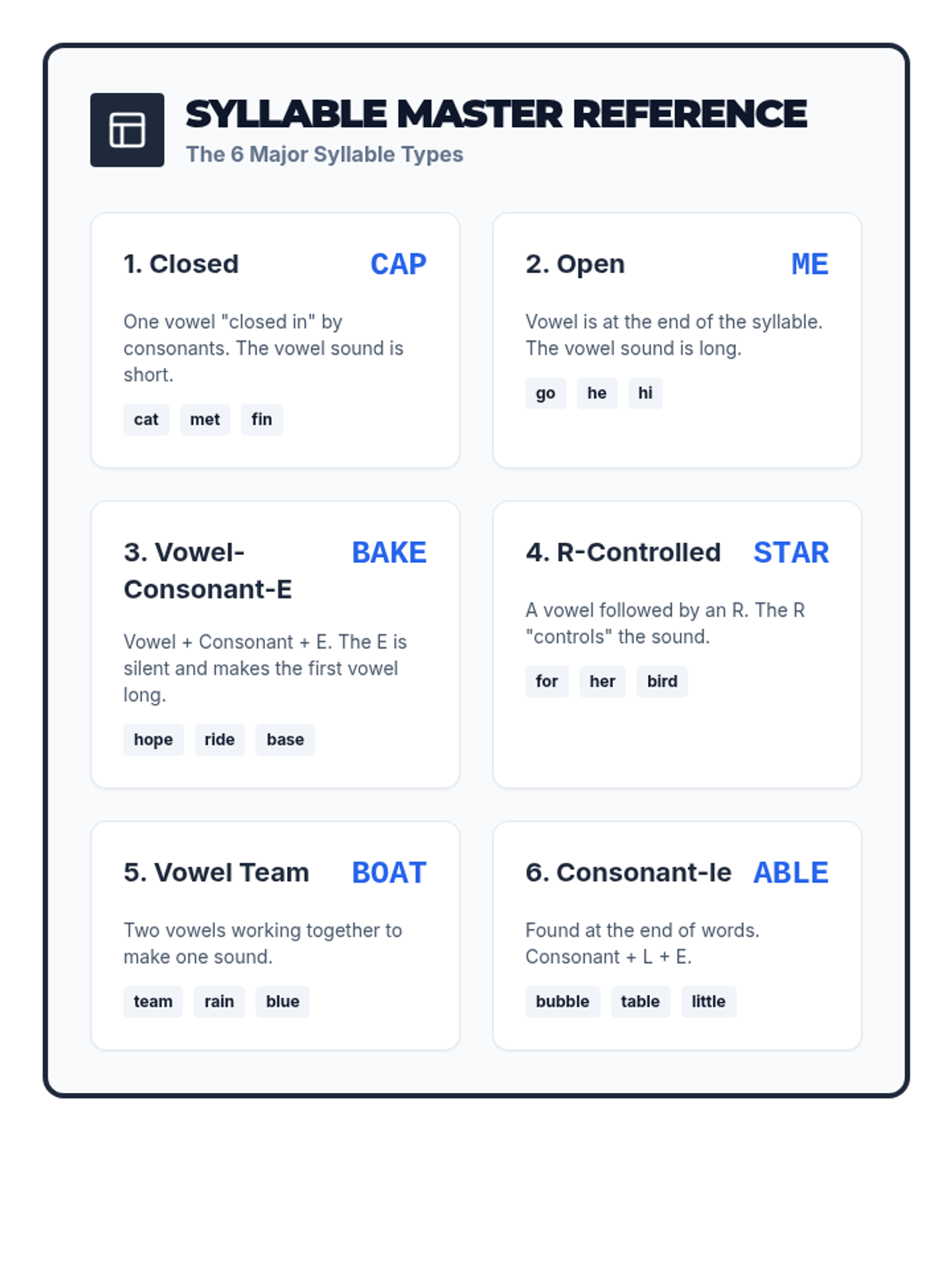
A clear, professional reference sheet for students explaining the 6 major syllable types in English using a mature design style.
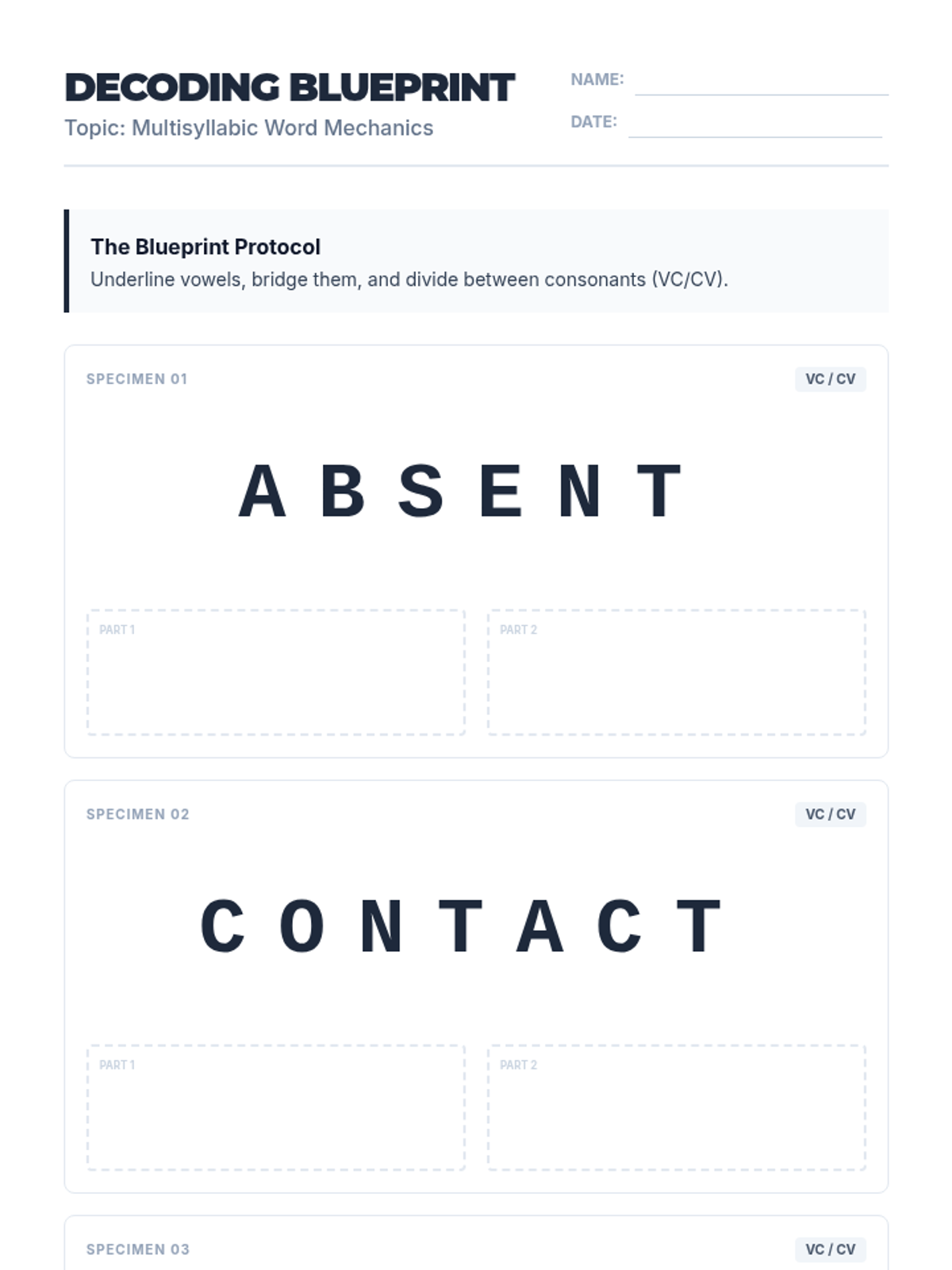
A student worksheet focusing on the 'blueprint' method of syllable division for multisyllabic words, designed for high school students with a mature, technical aesthetic.
A visually engaging slide deck designed for high school phonics instruction, using a professional 'Word Mechanics' theme to teach syllable types and decoding strategies.
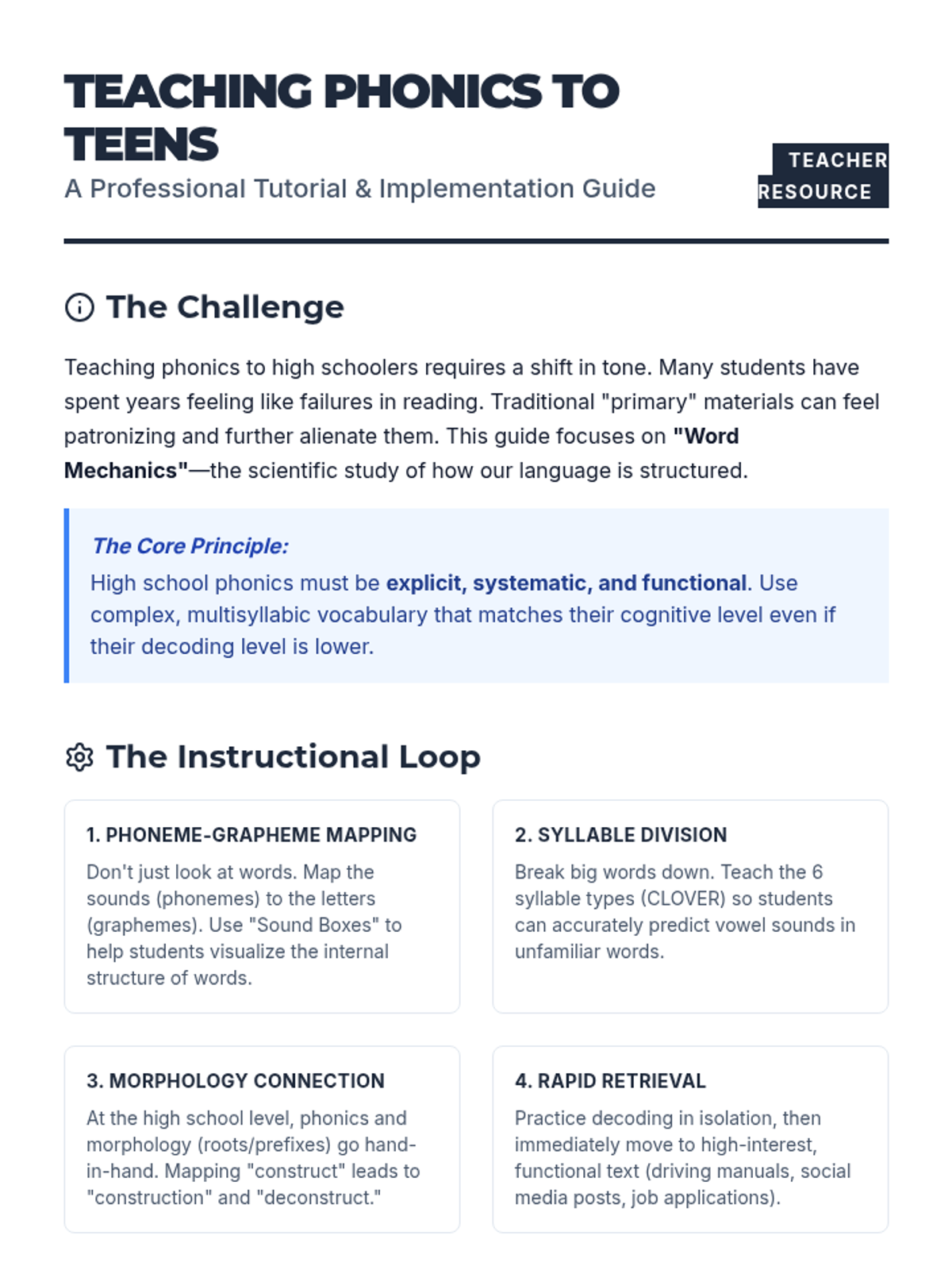
A comprehensive teacher's guide and tutorial for implementing phonics instruction with high school students, focusing on age-appropriate pedagogy and the 'Word Mechanics' framework.
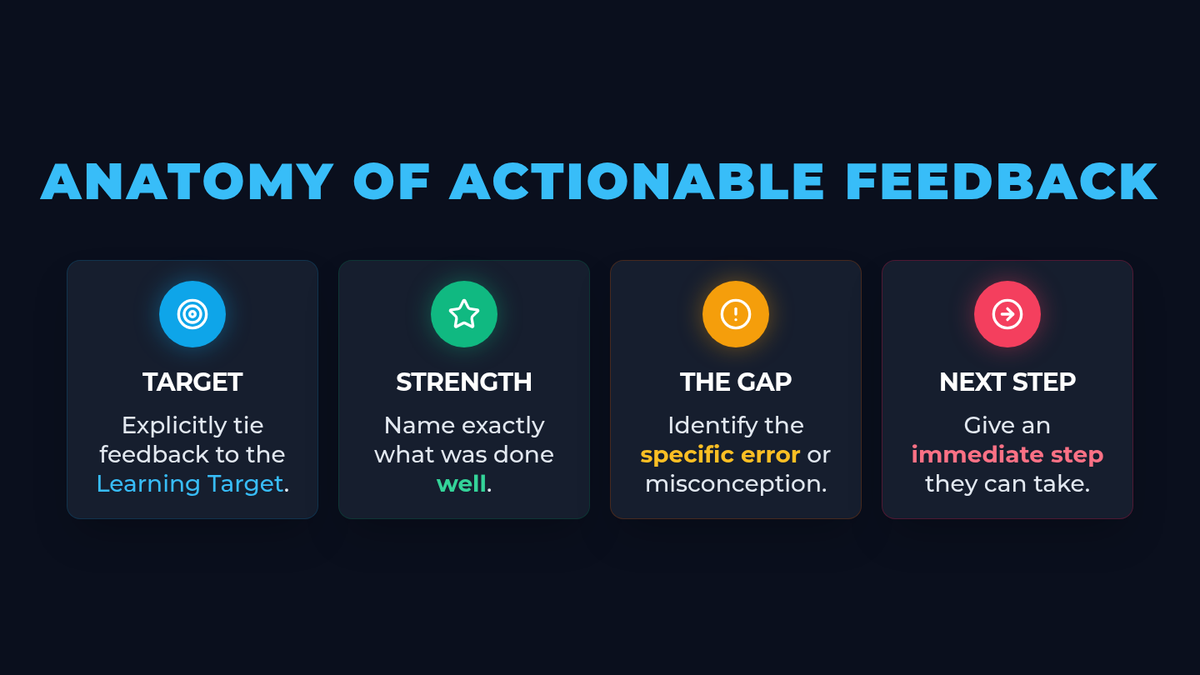
A high-impact slide presentation recreating the 'Anatomy of Actionable Feedback' graphic with enlarged text and prompt-based discussion slides for each component. Designed for interactive teacher professional development.
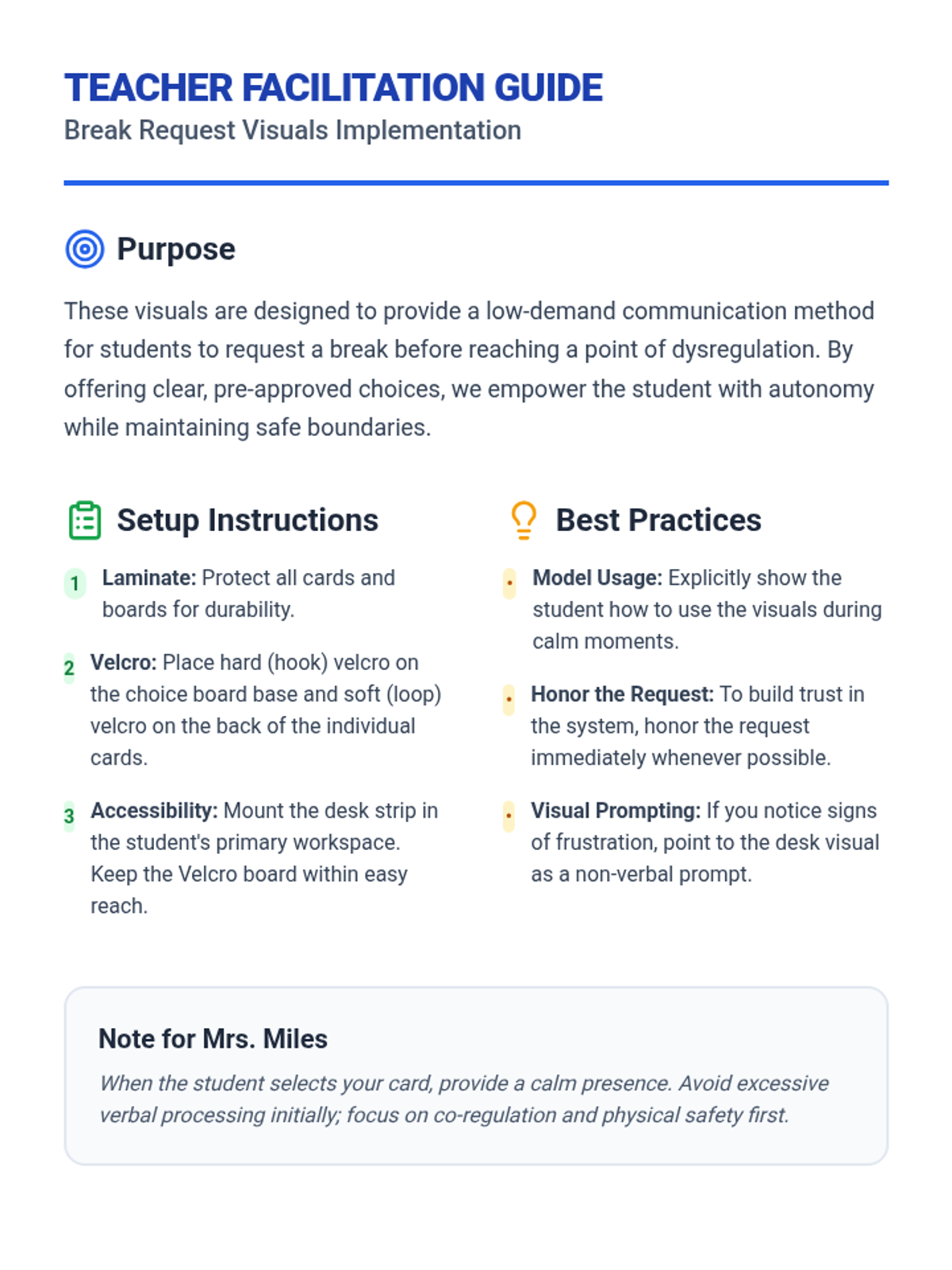
A guide for teachers and staff on how to assemble and effectively use the break request visuals with a student.
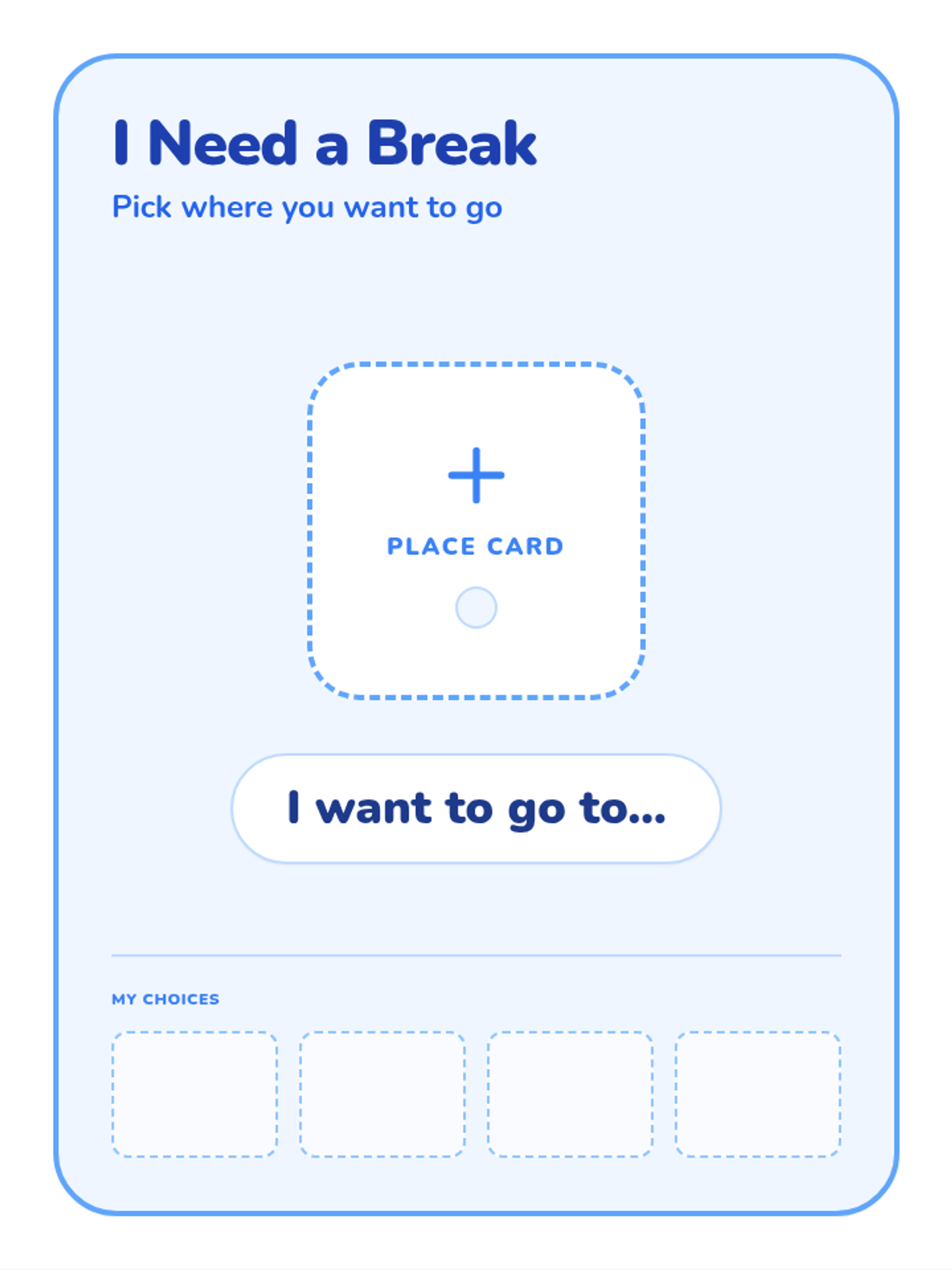
A multi-page resource including a choice board base and a set of four large cut-out cards designed for use with velcro.
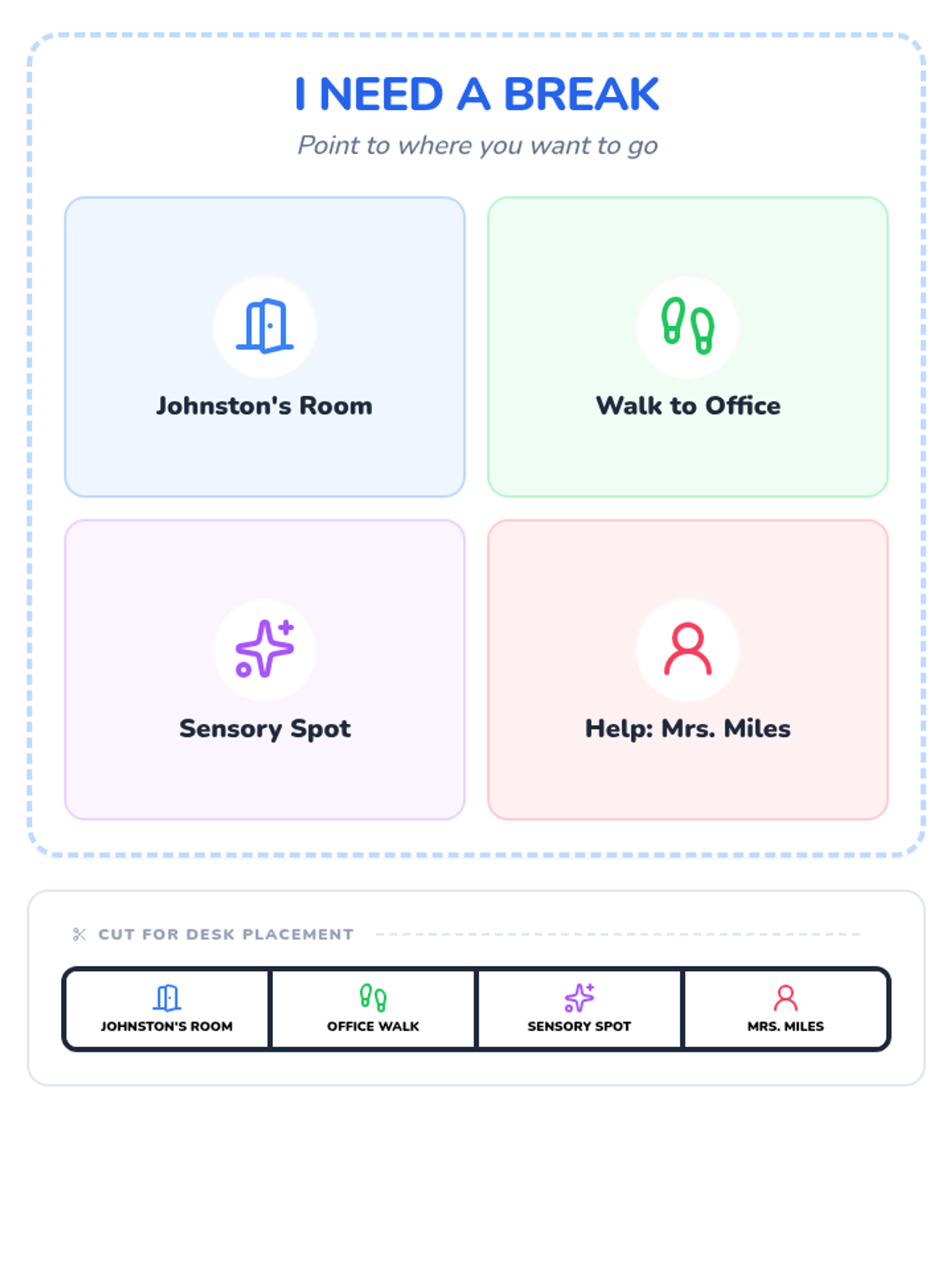
A single-page visual support featuring four break options and a mini-strip version for desk placement.
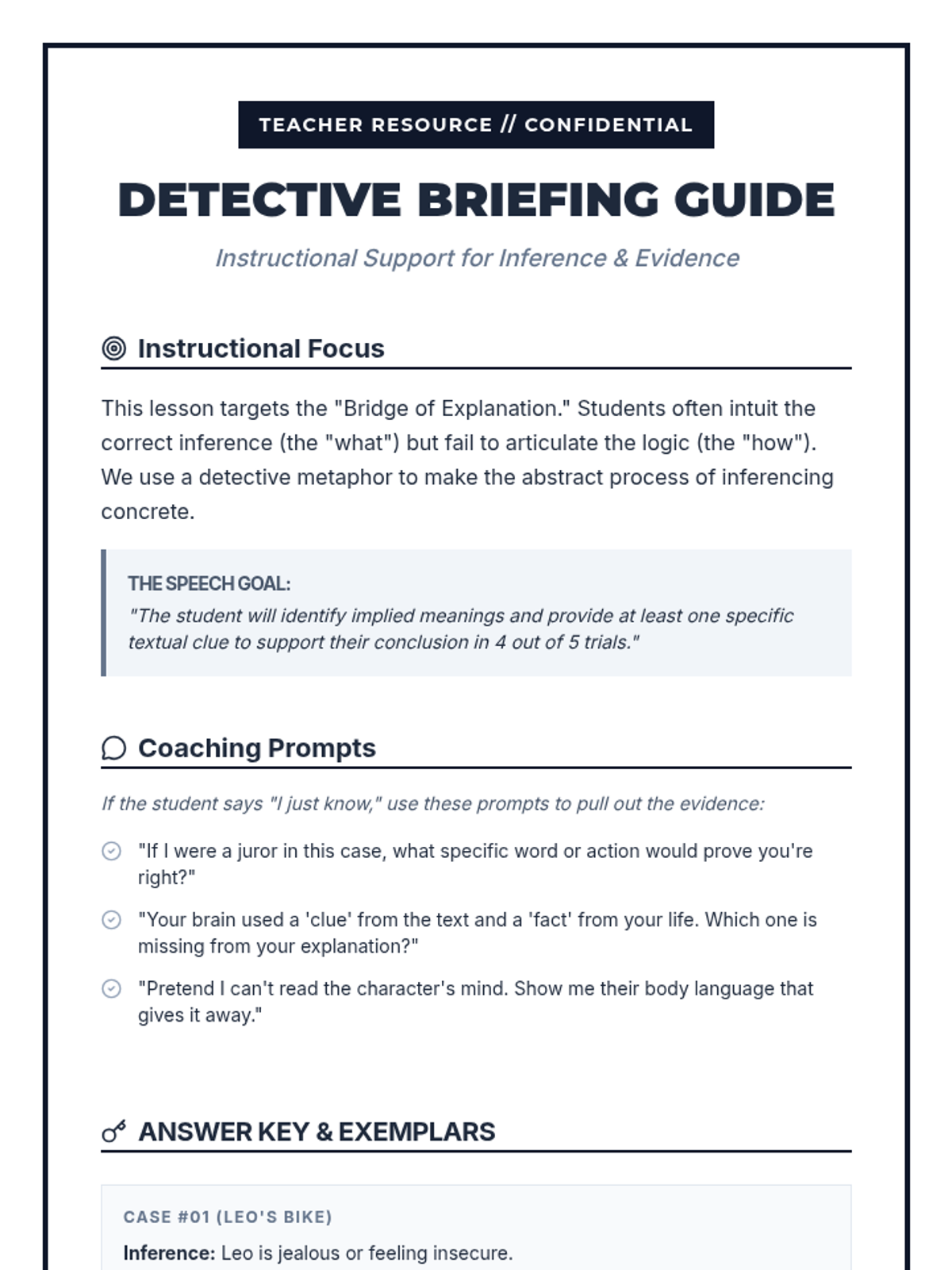
A comprehensive teacher's guide for the inference lesson, providing coaching prompts, speech therapy goals, and exemplar answers for the student materials.
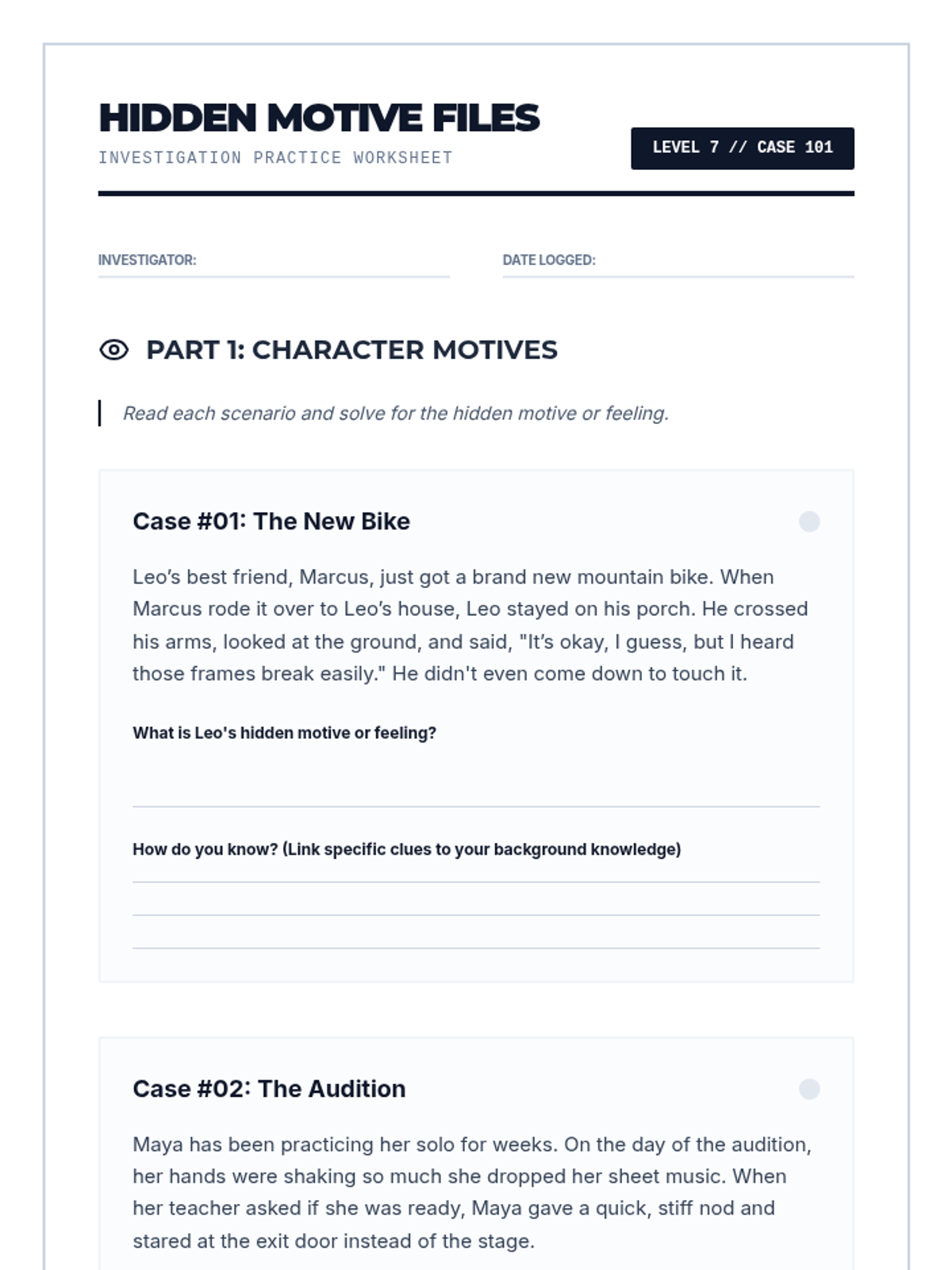
A practice worksheet with realistic scenarios and idioms, requiring 7th-grade students to identify character motives and figurative meanings while citing specific evidence.
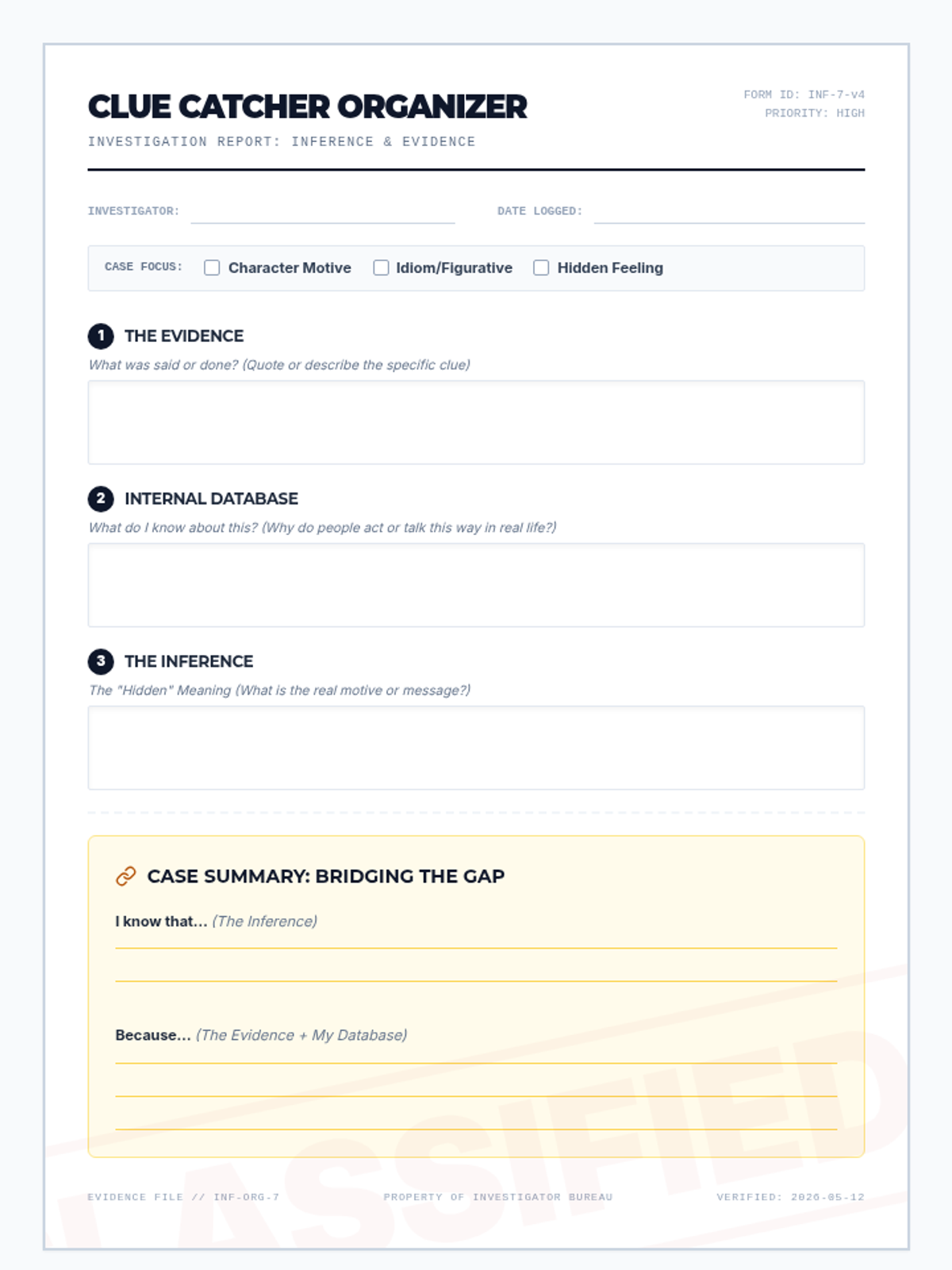
A detective-themed graphic organizer designed for 7th graders to track evidence and explain the reasoning behind inferences using a structured sentence frame.
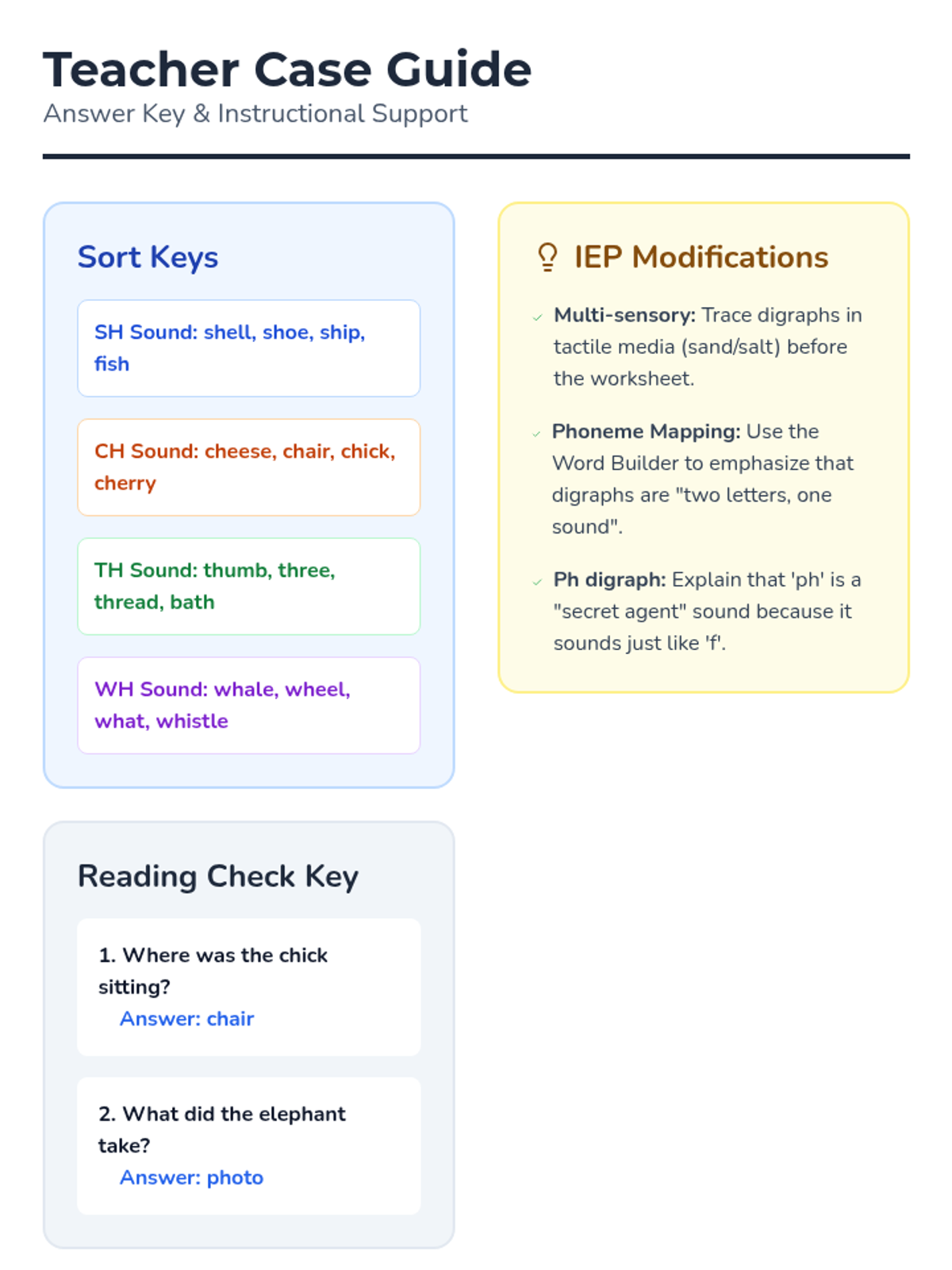
An answer key and teacher guide for the Digraph Detectives lesson, including correct sorting placements, reading comprehension answers, and specific instructional modifications for students with IEPs.
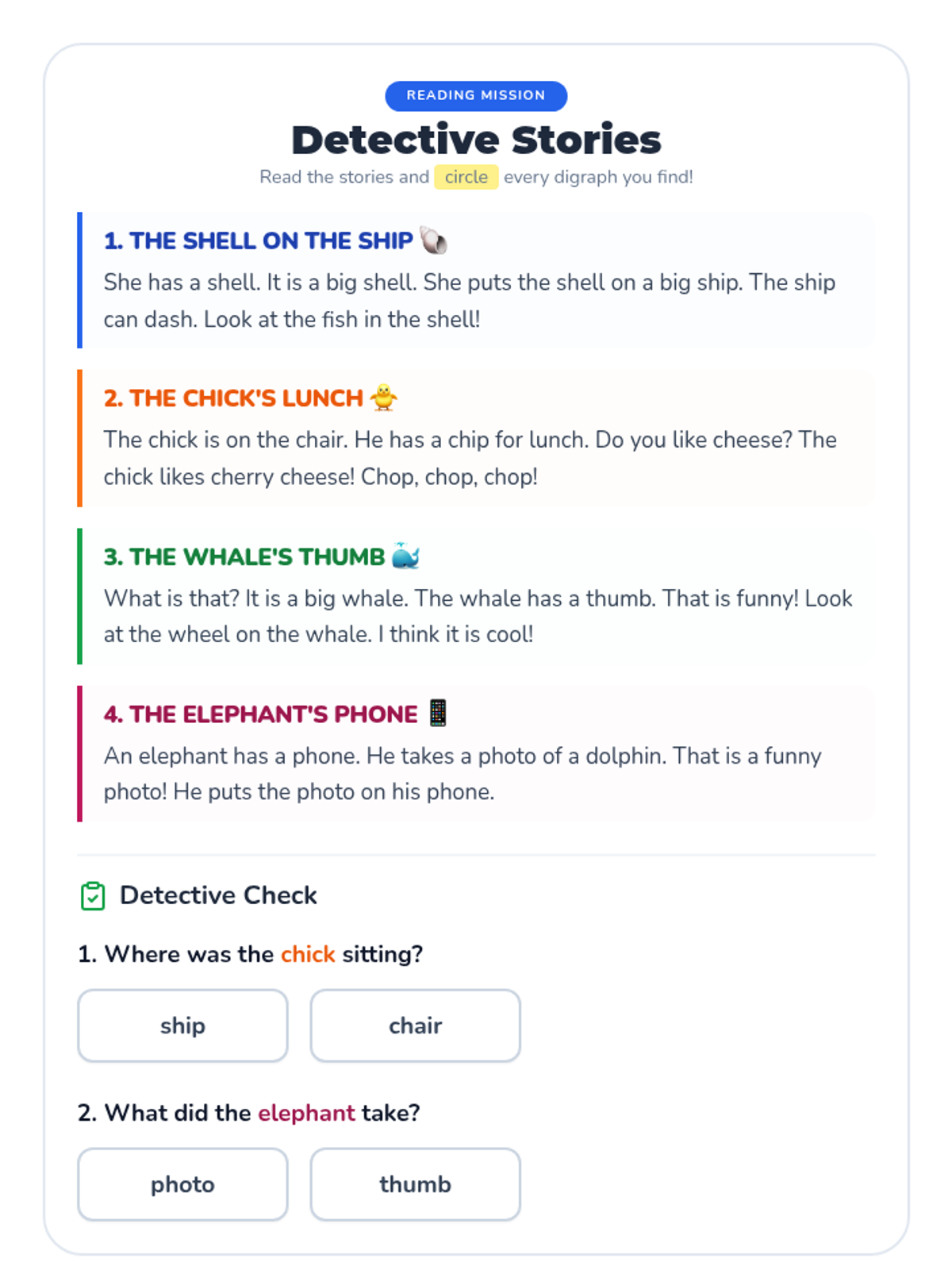
A collection of simple, decodable reading passages for students to practice identifying and reading digraphs in context. The text is large and spaced out, making it accessible for students with reading difficulties.
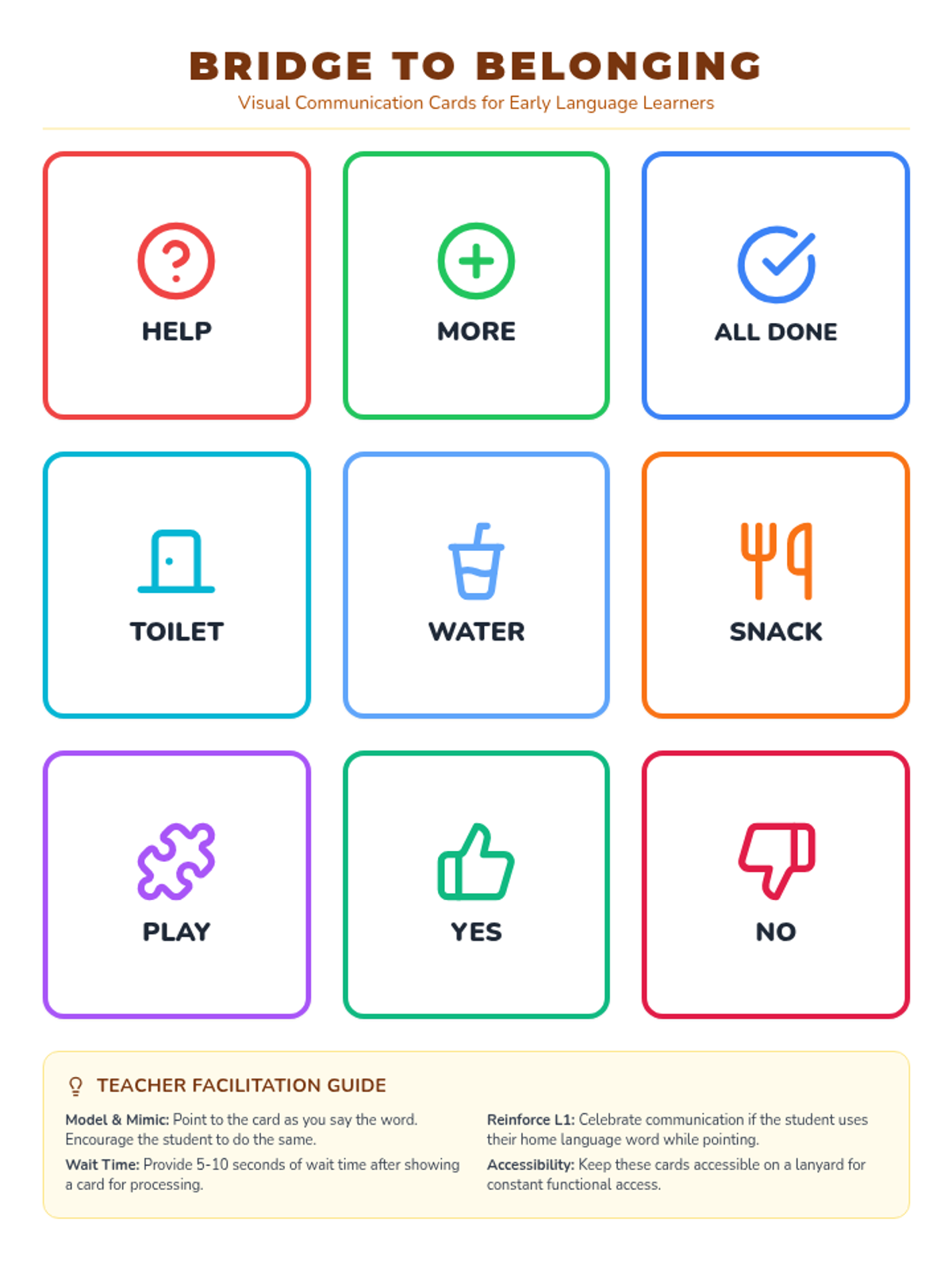
A set of visual communication cards to support functional language and participation for students who are not yet proficient in English.