A comprehensive teacher guide for the 'Clue Hunter' lesson, including a 30-minute pacing guide, specific facilitator prompts, data collection criteria for tracking the 80% accuracy goal, and an answer key for all mystery scenarios.
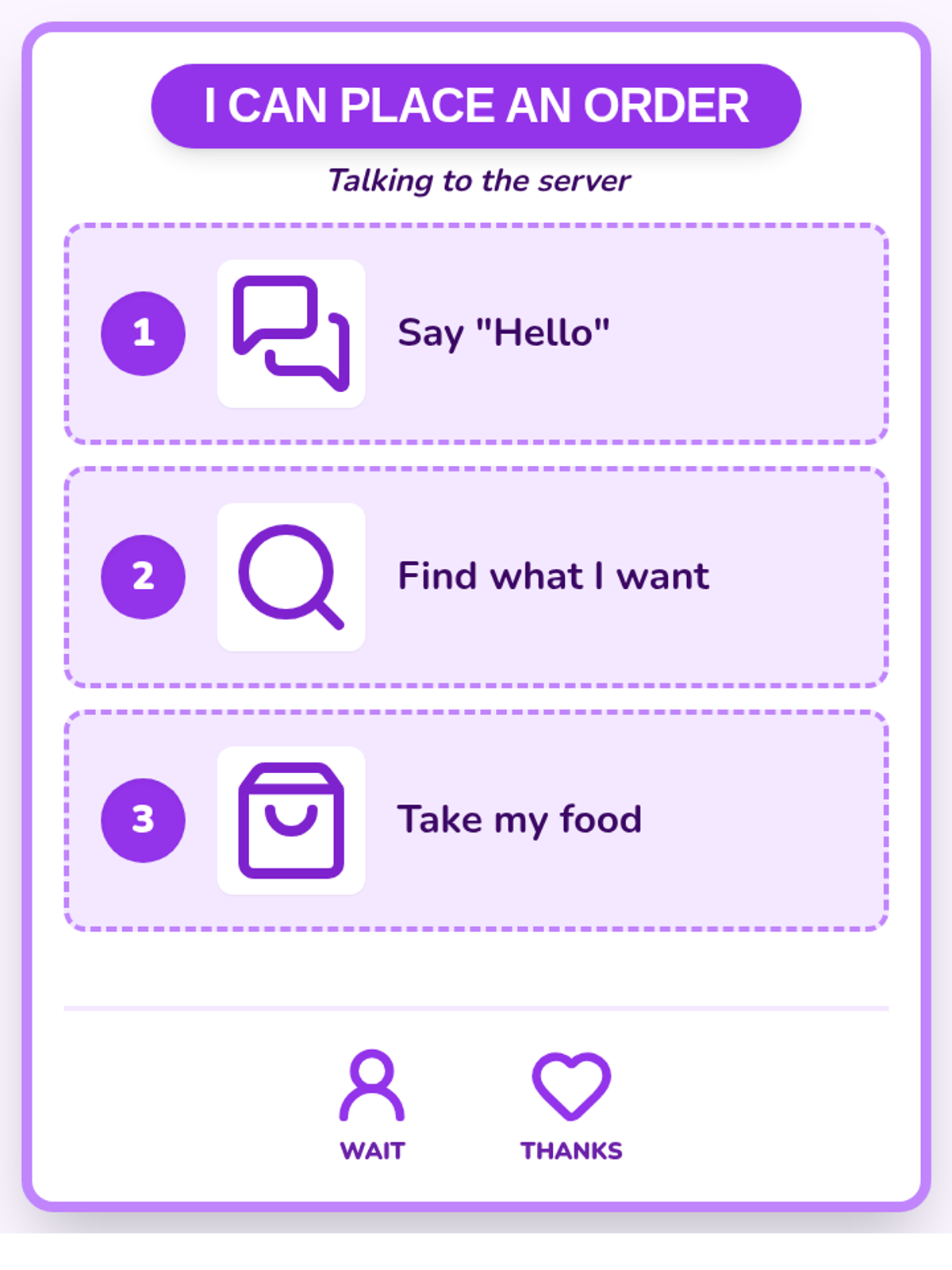
A visual anchor chart for ordering food, guiding non-readers through social steps. Revised for single-page layout and fixed inappropriate iconography.
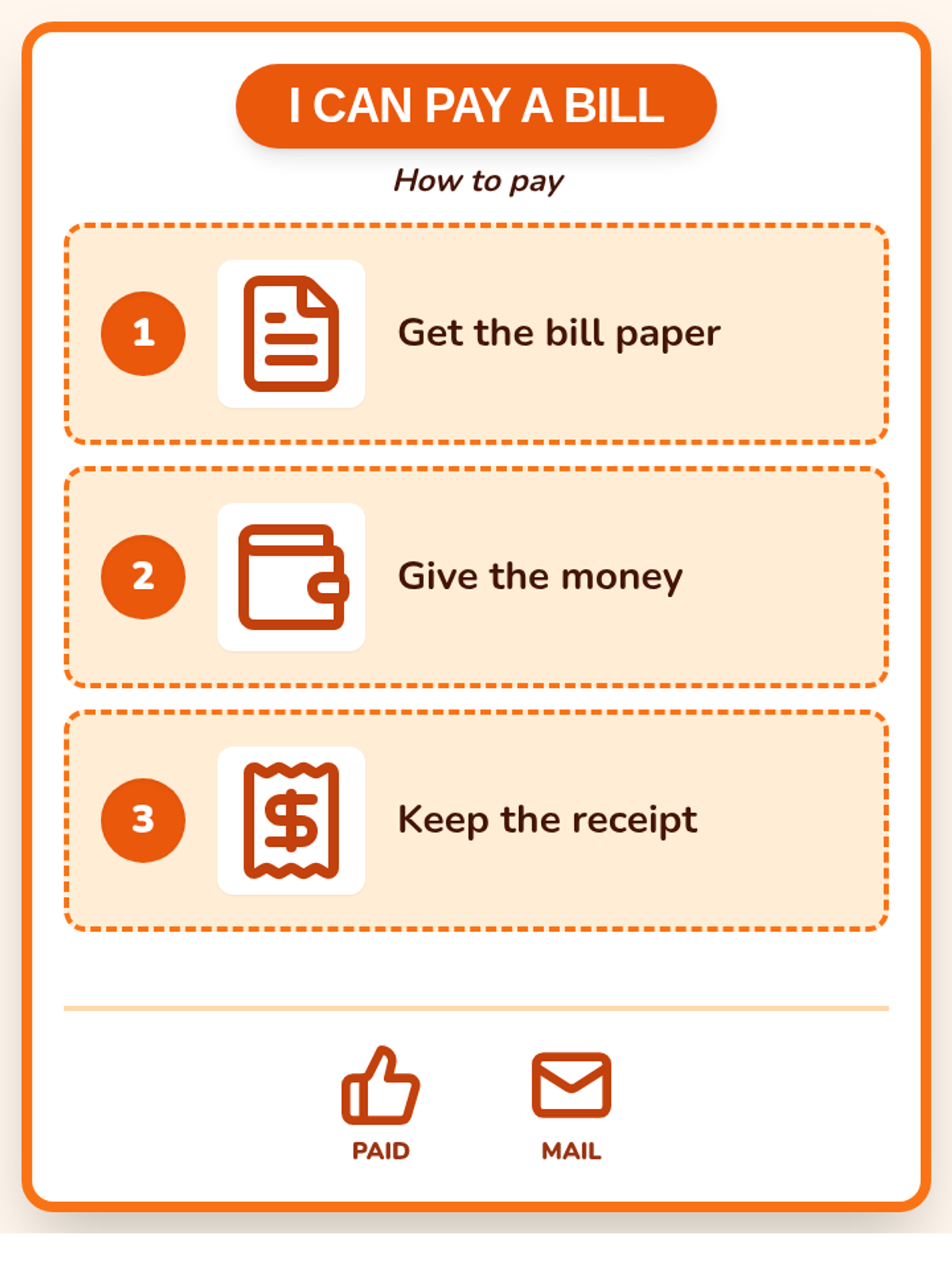
A visual anchor chart for paying bills, using high-contrast orange tones and clear icons. Revised for single-page layout and darkened borders.
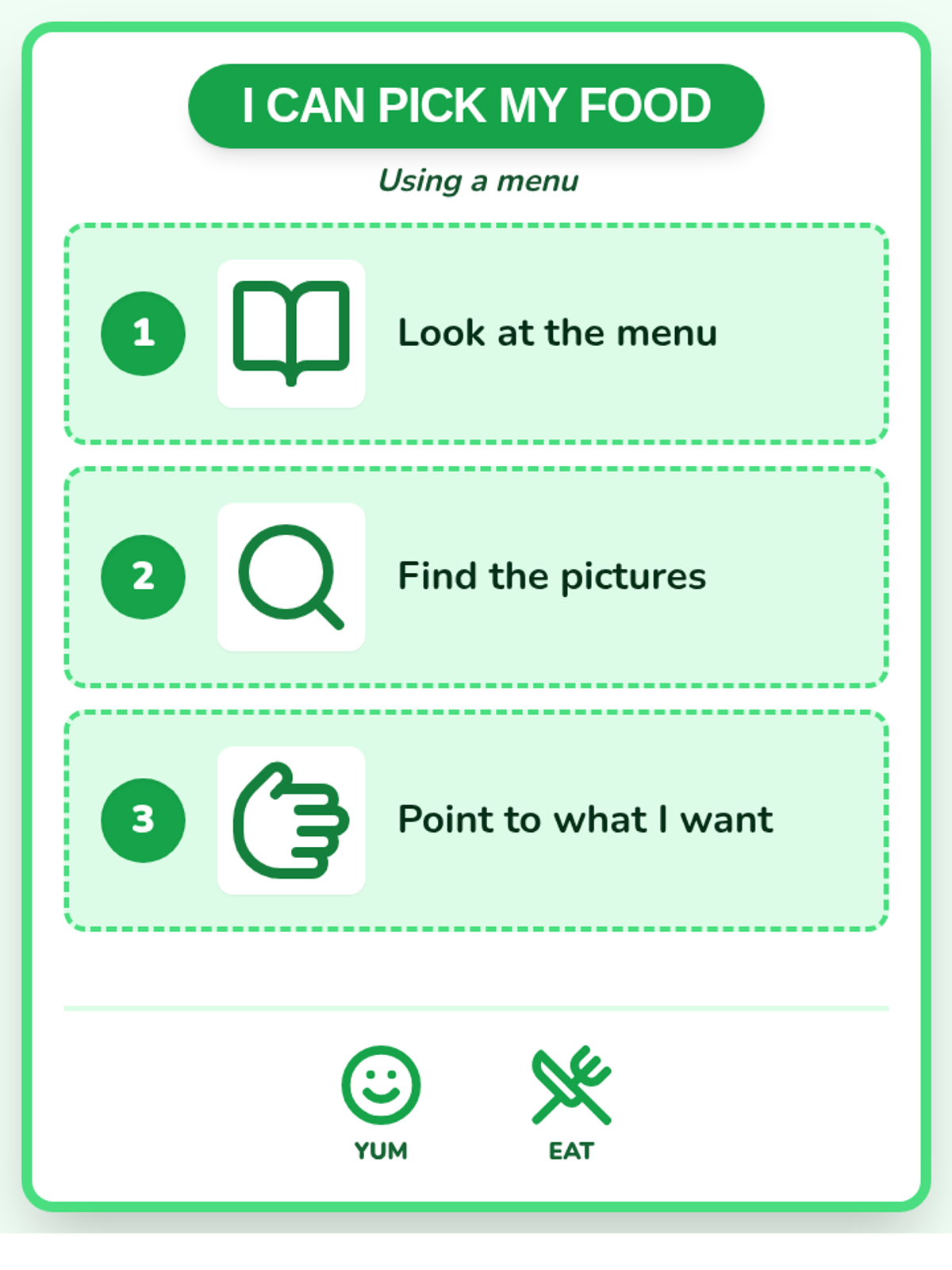
A visual anchor chart for menu reading skills, helping non-readers identify food items using pictures and pointing. Revised header size and fixed footer icon typo.
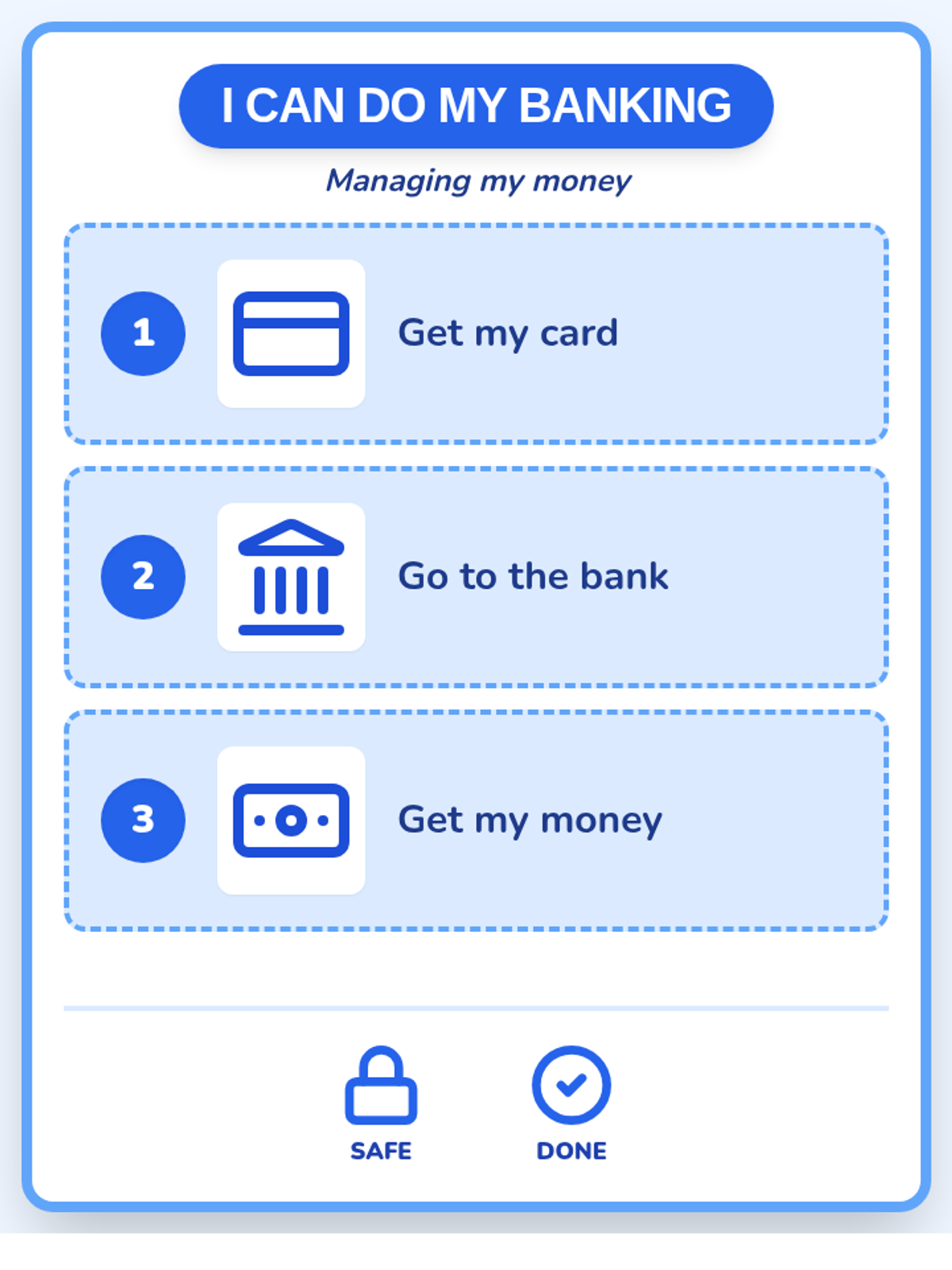
A visual anchor chart for daily banking skills, featuring large icons and numbered steps for non-readers. Revised to fit on a single page with high contrast. Added landmark icon for bank.
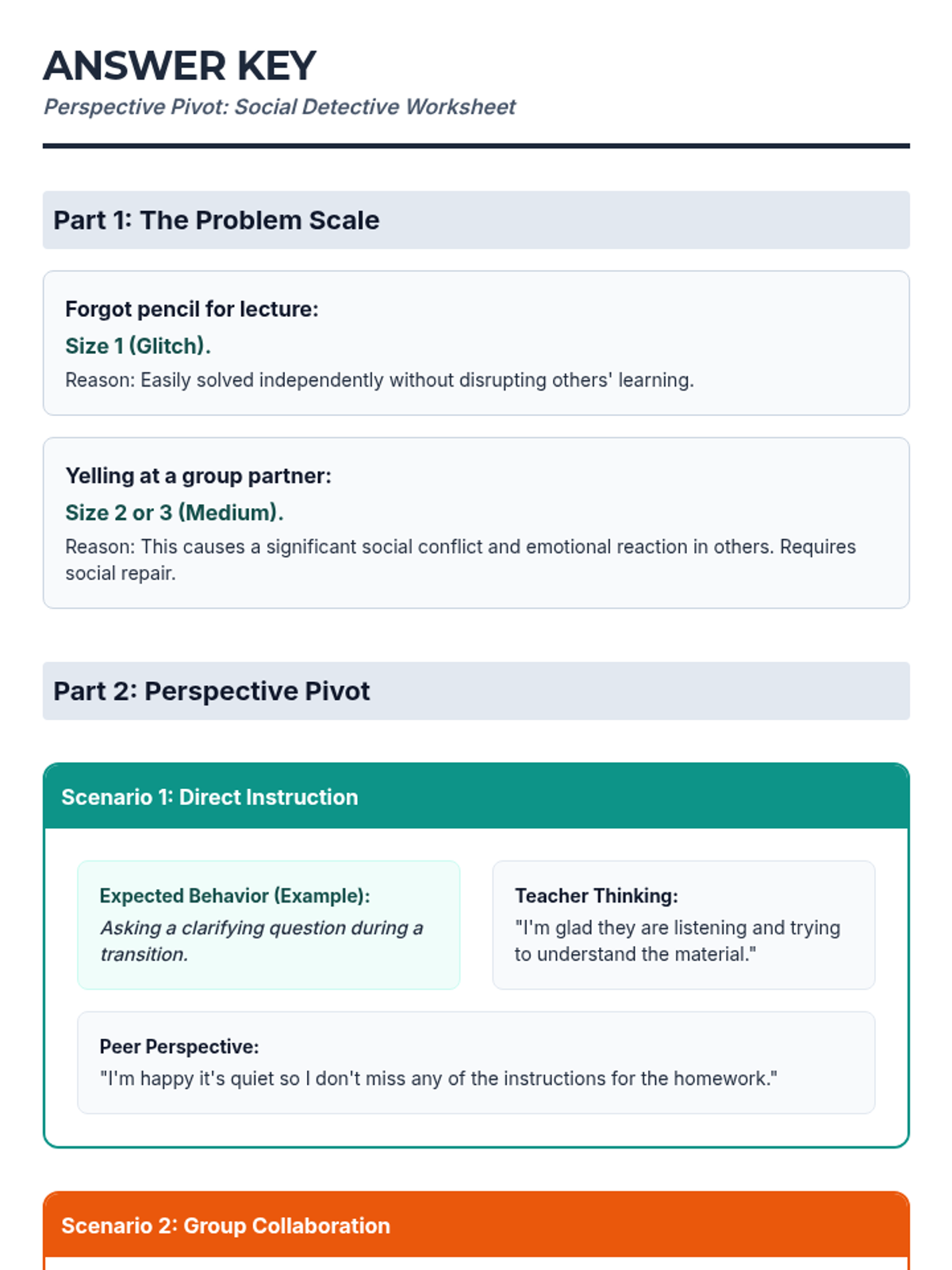
Answer key for the Social Detective Worksheet, updated to include correct answers for the multiple-choice scaffold in Scenario 1.
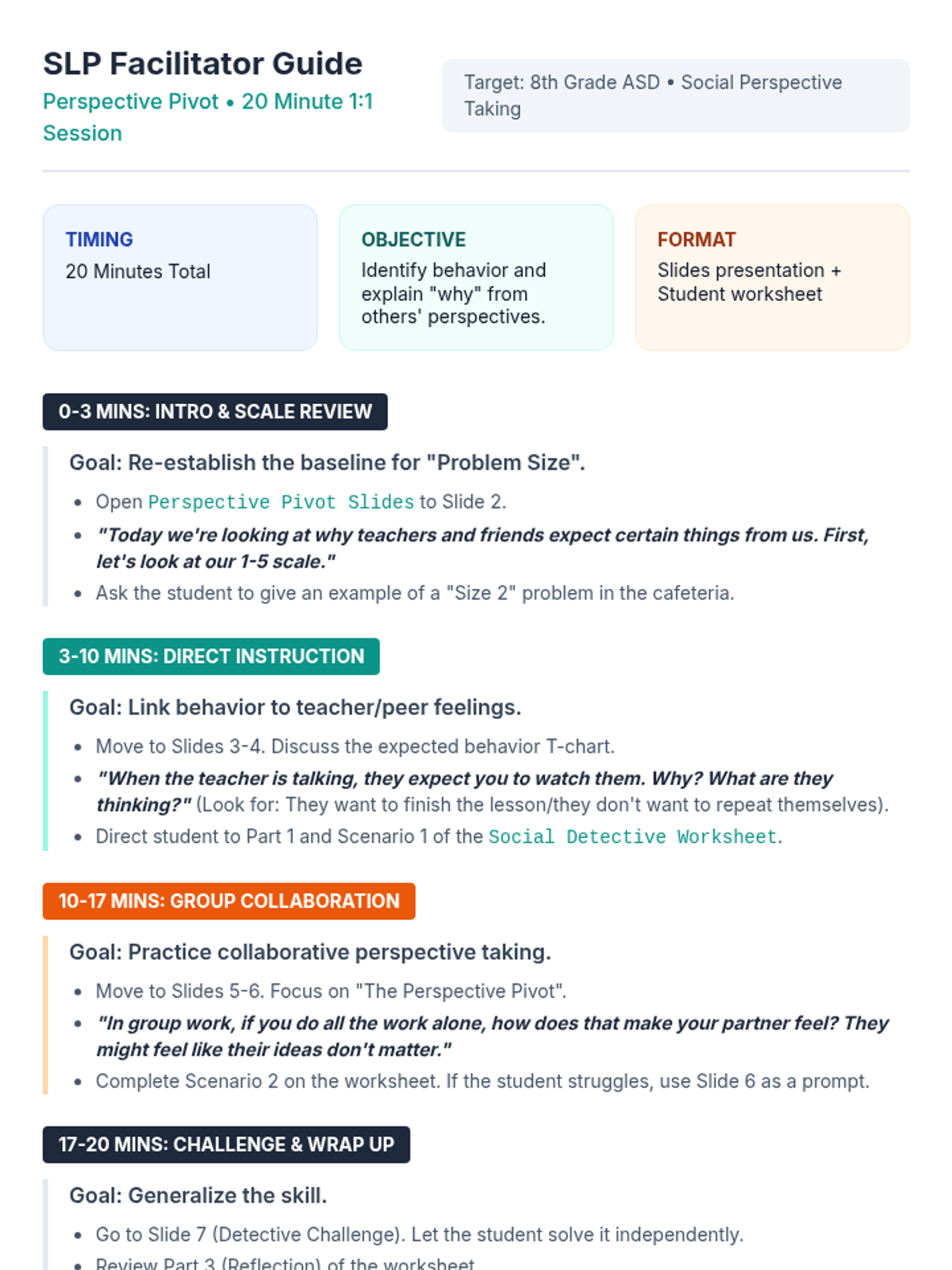
A facilitator guide for SLPs providing a minute-by-minute script and support strategies for a perspective-taking lesson.
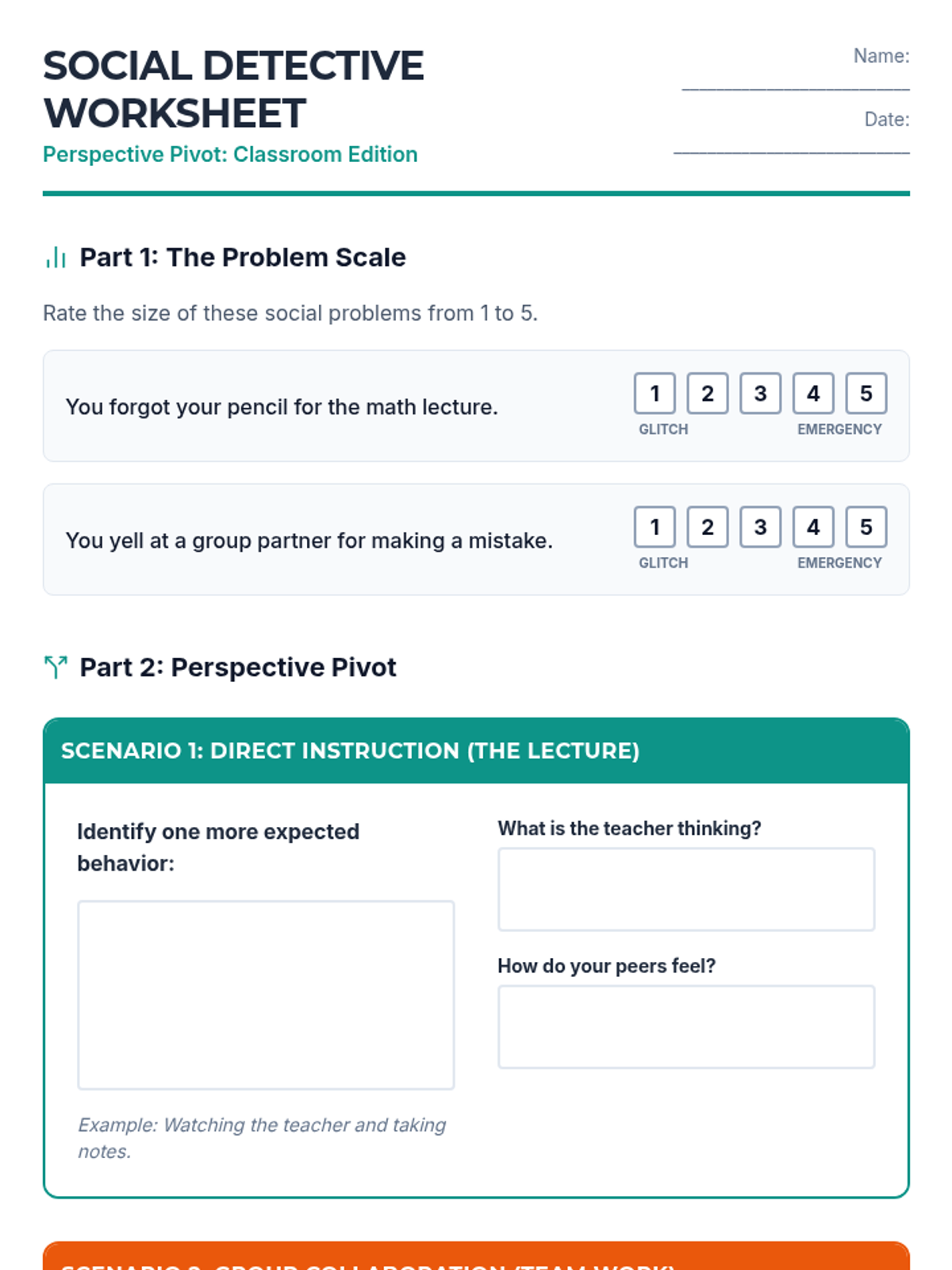
A student worksheet for identifying expected behaviors, sizing problems, and explaining teacher/peer perspectives in school scenarios, featuring a multiple-choice scaffold for the first scenario and improved page layout.
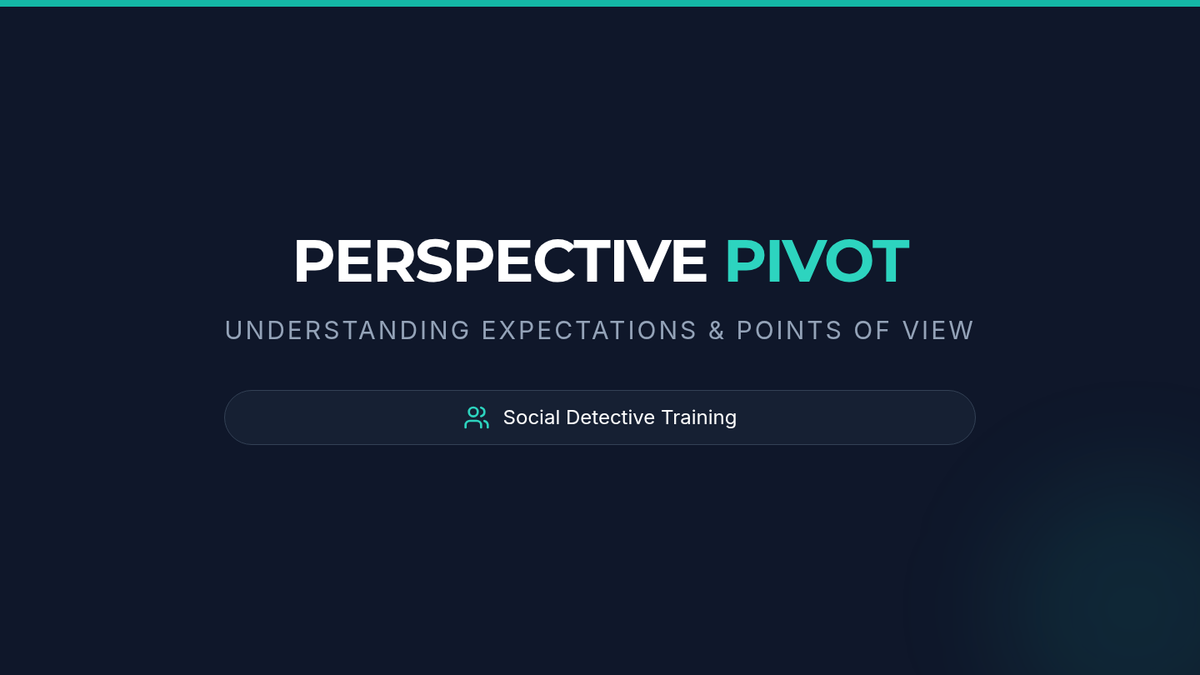
A visual presentation for a 1:1 SLP session focusing on identifying expected behaviors and perspective-taking during direct instruction and group work, featuring a 1-5 problem size scale.
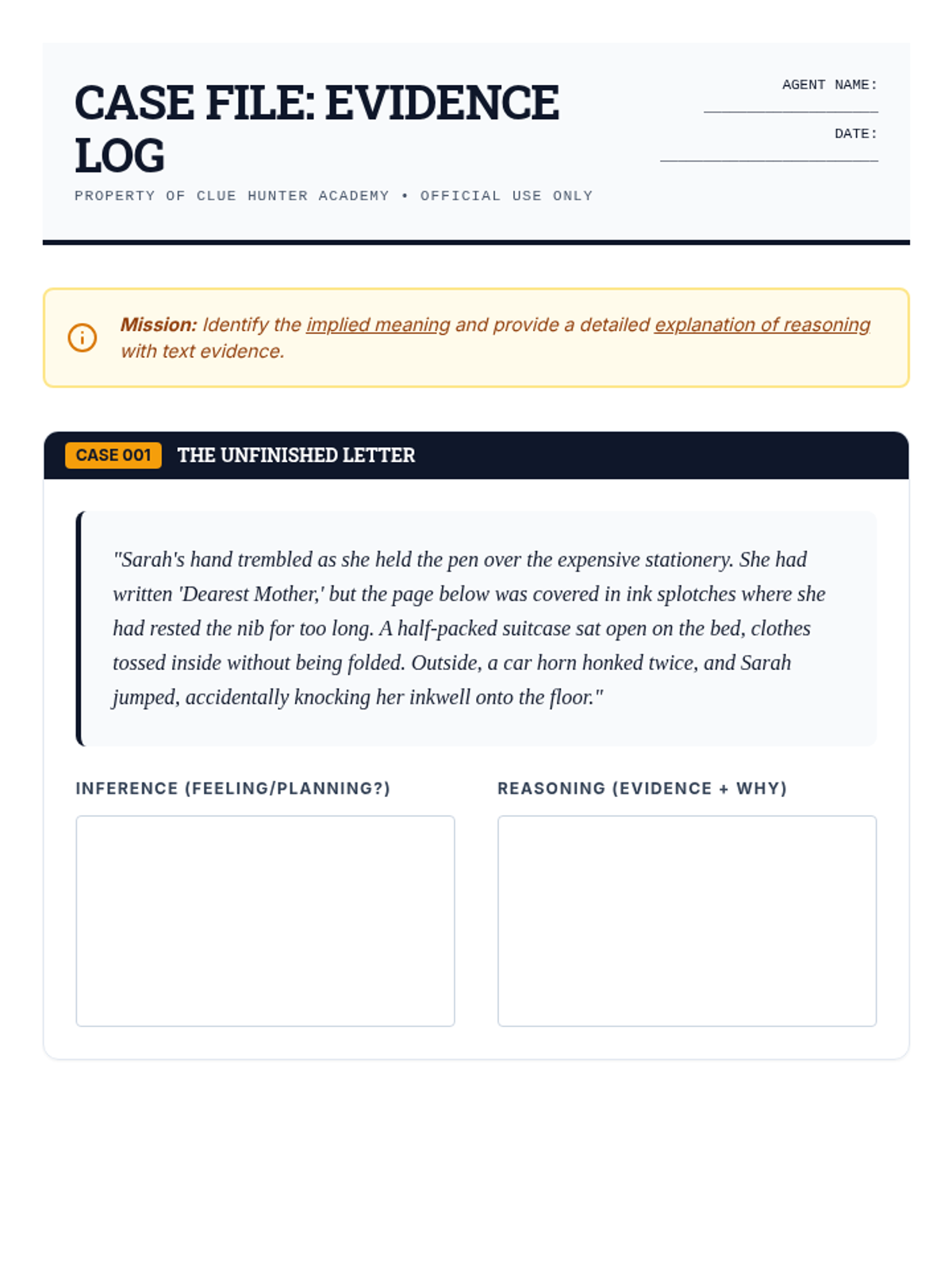
A structured practice worksheet for 1:1 sessions, featuring noir-inspired mystery scenarios. It provides dedicated workspace for students to record both their inferences and their evidence-based reasoning, alongside an academic vocabulary check and a self-reflection section.
An interactive instructional slide deck designed for a 1:1 mystery-themed lesson on inferential reasoning. It features academic vocabulary definitions, a visual 'Reasoning Bridge' model, and scaffolded scenarios with embedded sentence frames for evidence-based explanations.