A revised printable board game with a corrected S-curve path logic, directional arrows, darkened text for better contrast, and embedded quick rules to ensure the game is self-contained and easy to play.
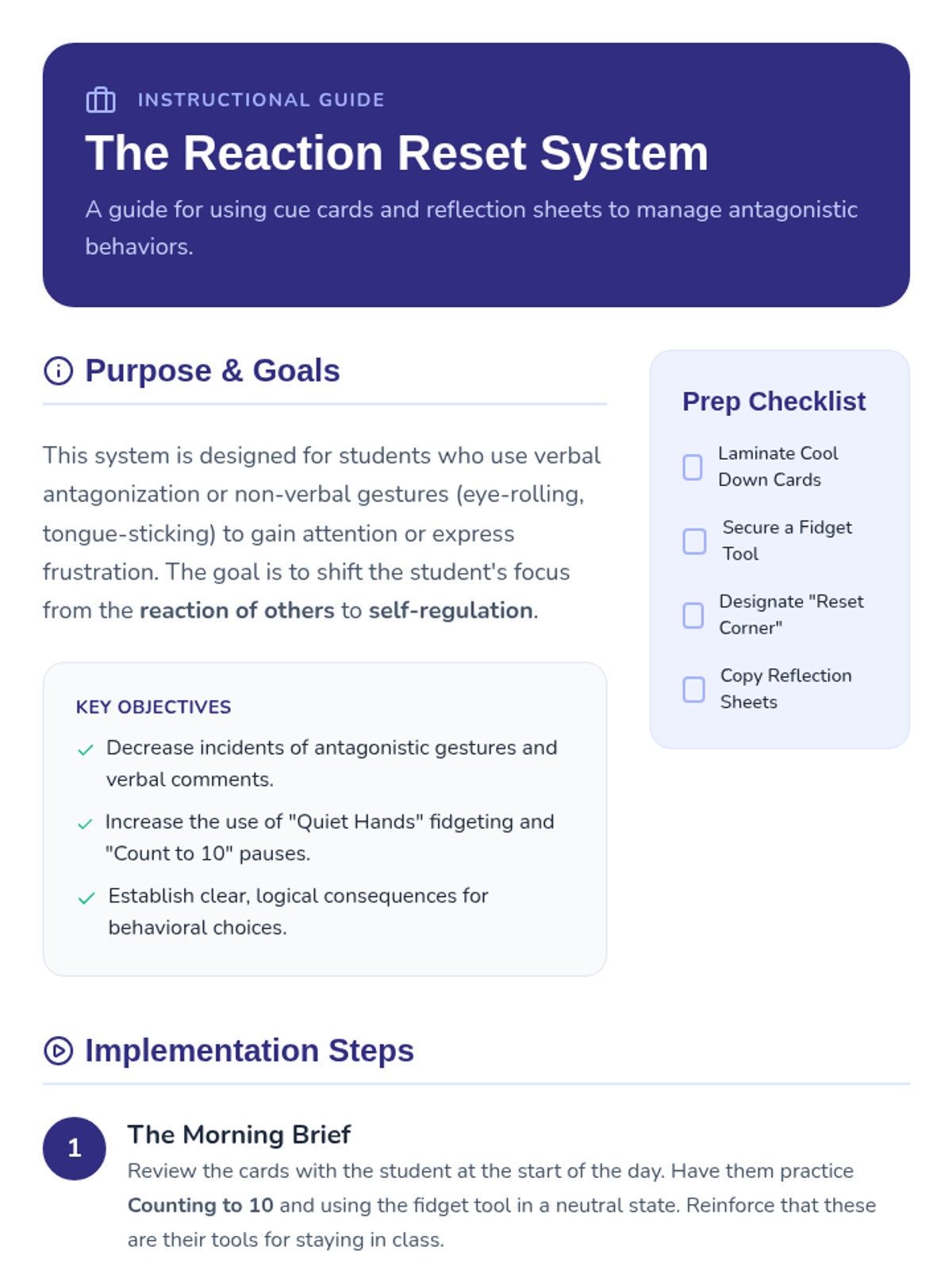
A teacher-facing instructional guide for implementing the Reaction Reset system. It provides strategic advice on introducing cue cards, using visual prompts, and managing accountability sessions with students who exhibit antagonistic behaviors.
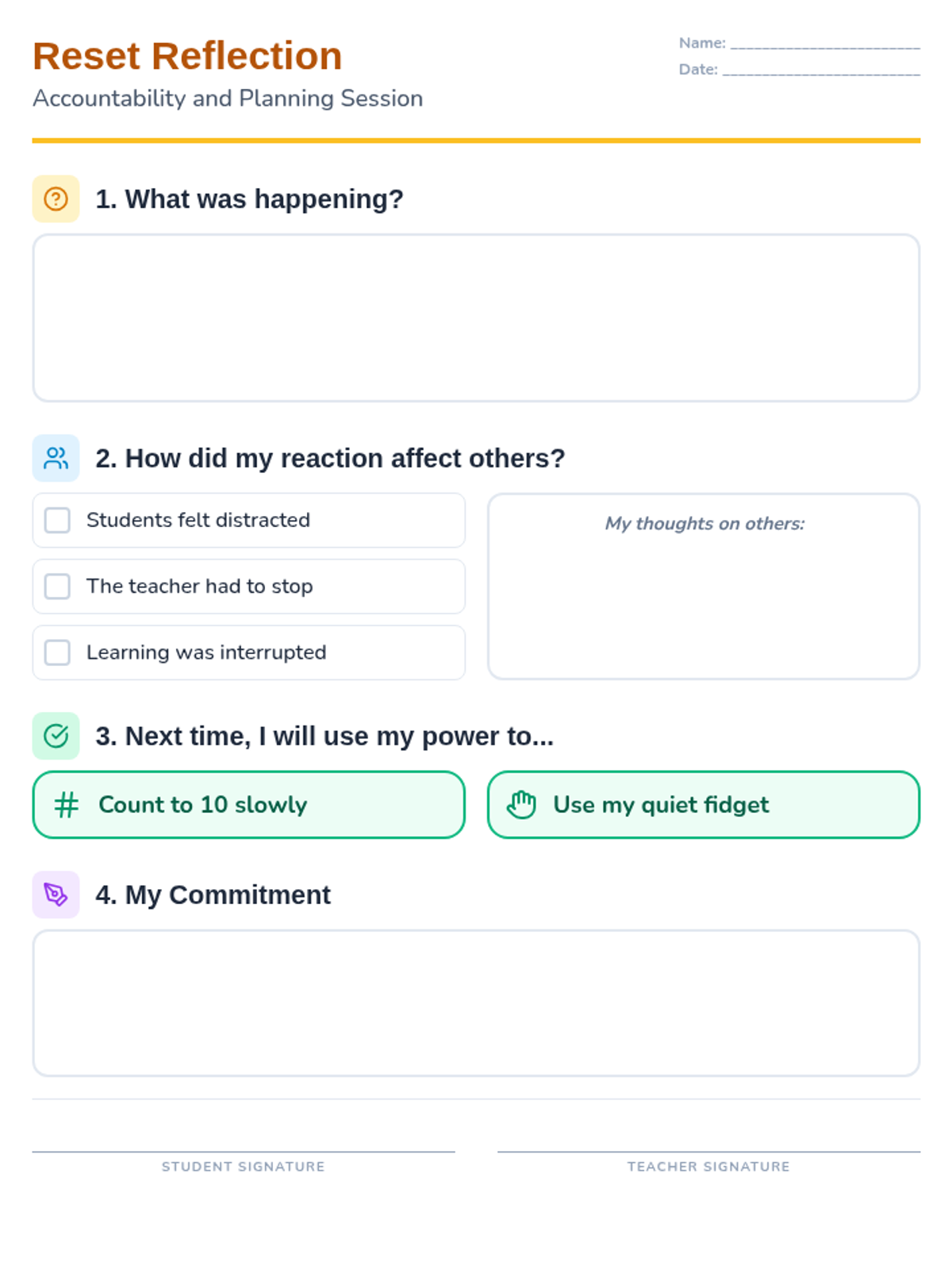
A structured accountability document for students to complete after a behavioral incident. It prompts the student to reflect on the situation, the impact on their peers and teacher, and commit to using their replacement behaviors (counting to 10 or using a fidget) next time.
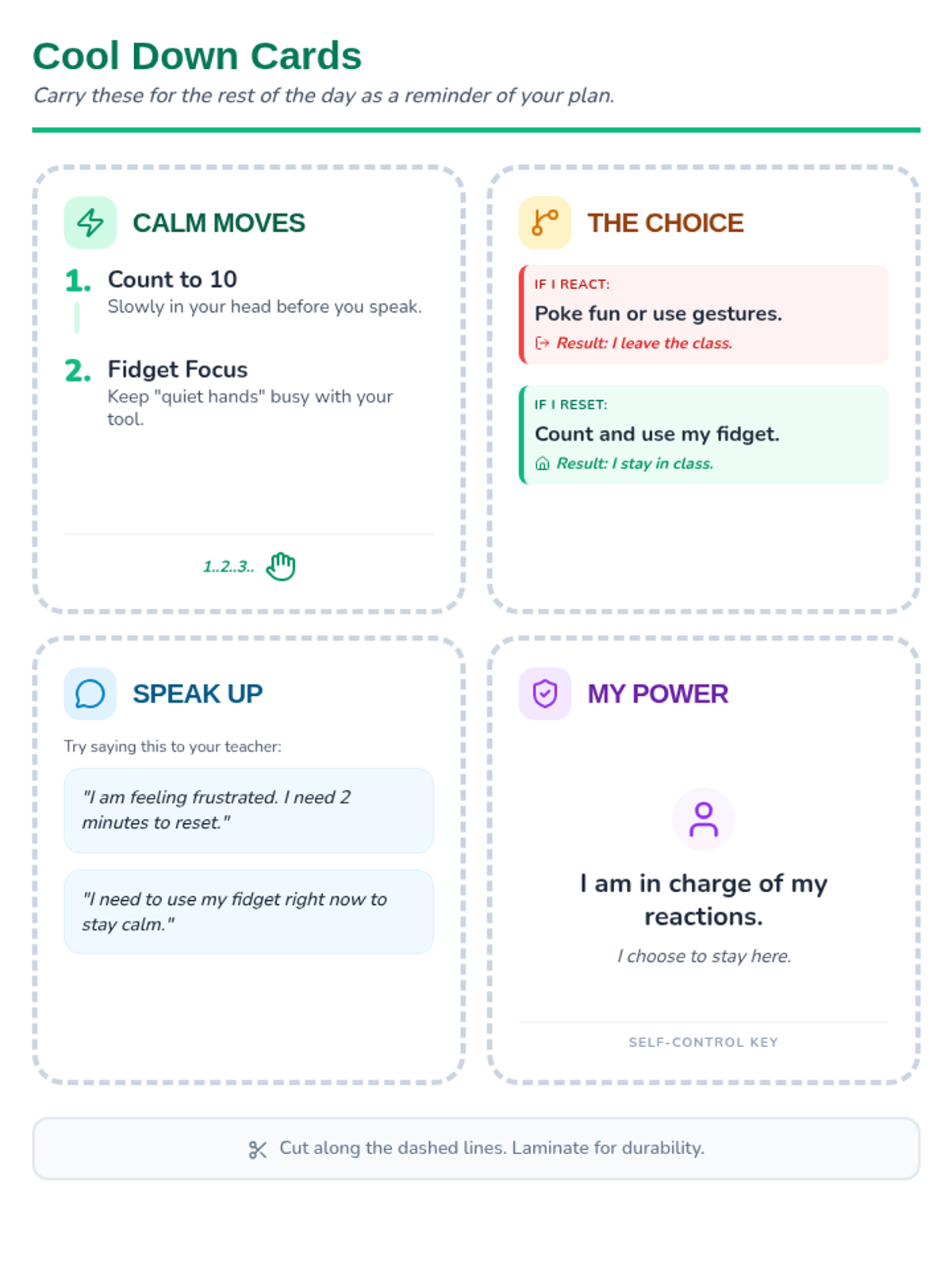
A set of four portable, pocket-sized cue cards for a student to use for behavioral self-regulation. Each card focuses on a different aspect: replacement behaviors (counting to 10, using a fidget), logical consequences (choice paths), communication prompts, and self-empowerment.
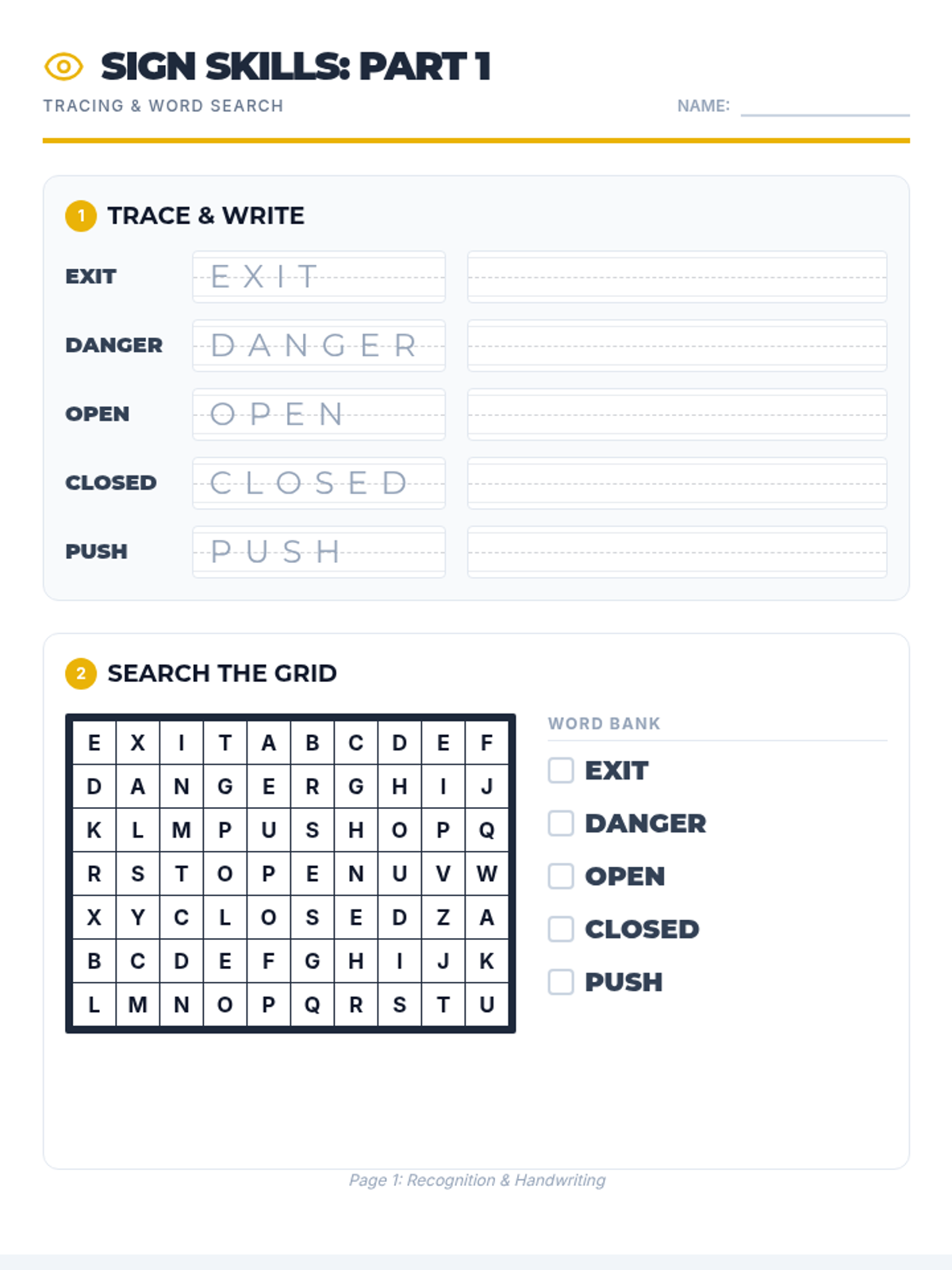
A comprehensive 2-page functional literacy activity pack combining tracing, word searching, matching, and context-based selection for five essential sign words.
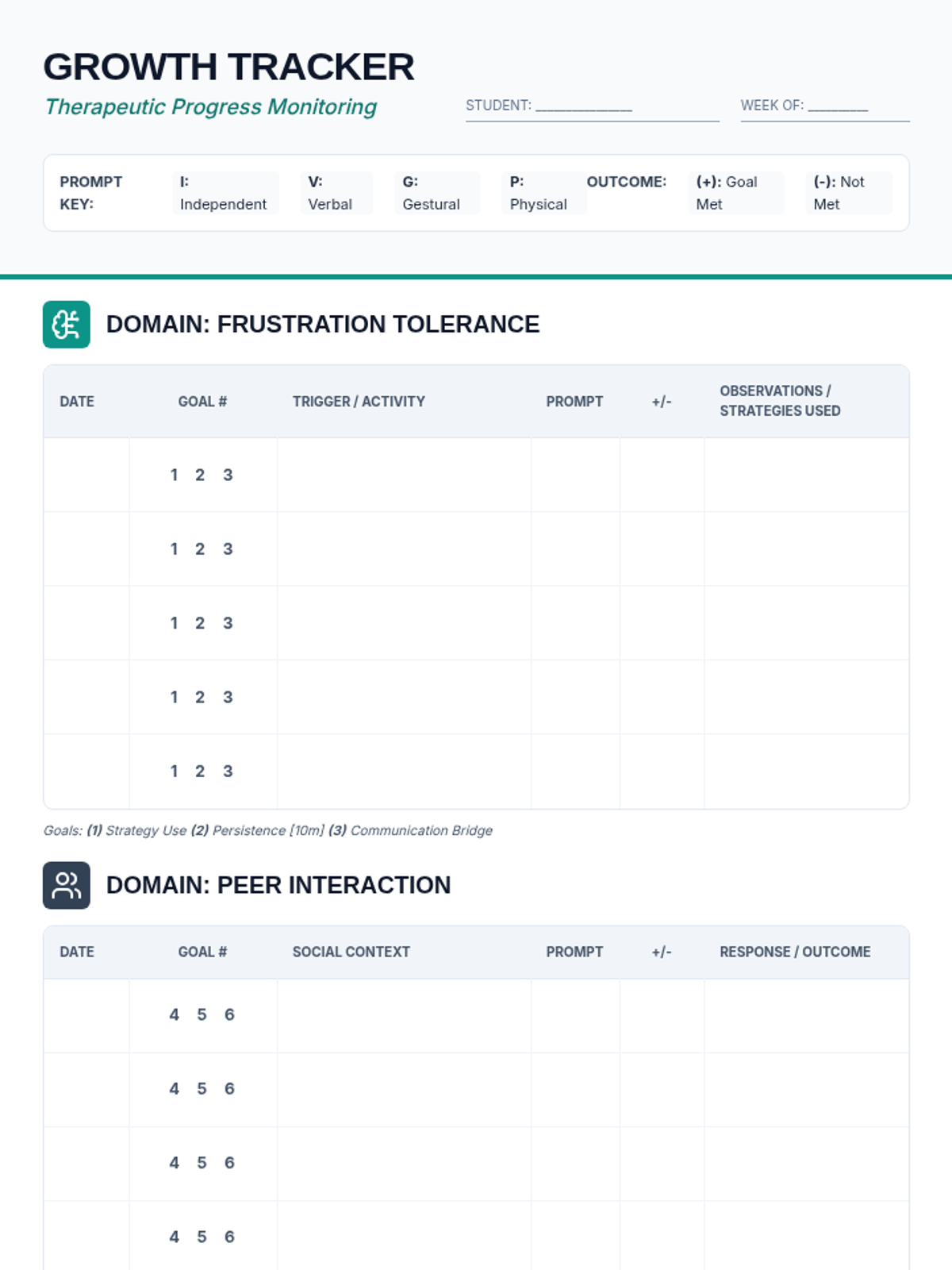
A daily and weekly progress monitoring sheet designed for school-based therapists to track data for the frustration tolerance and peer interaction goals. It includes prompt level keys, outcome indicators, and specific goal references for easy logging.
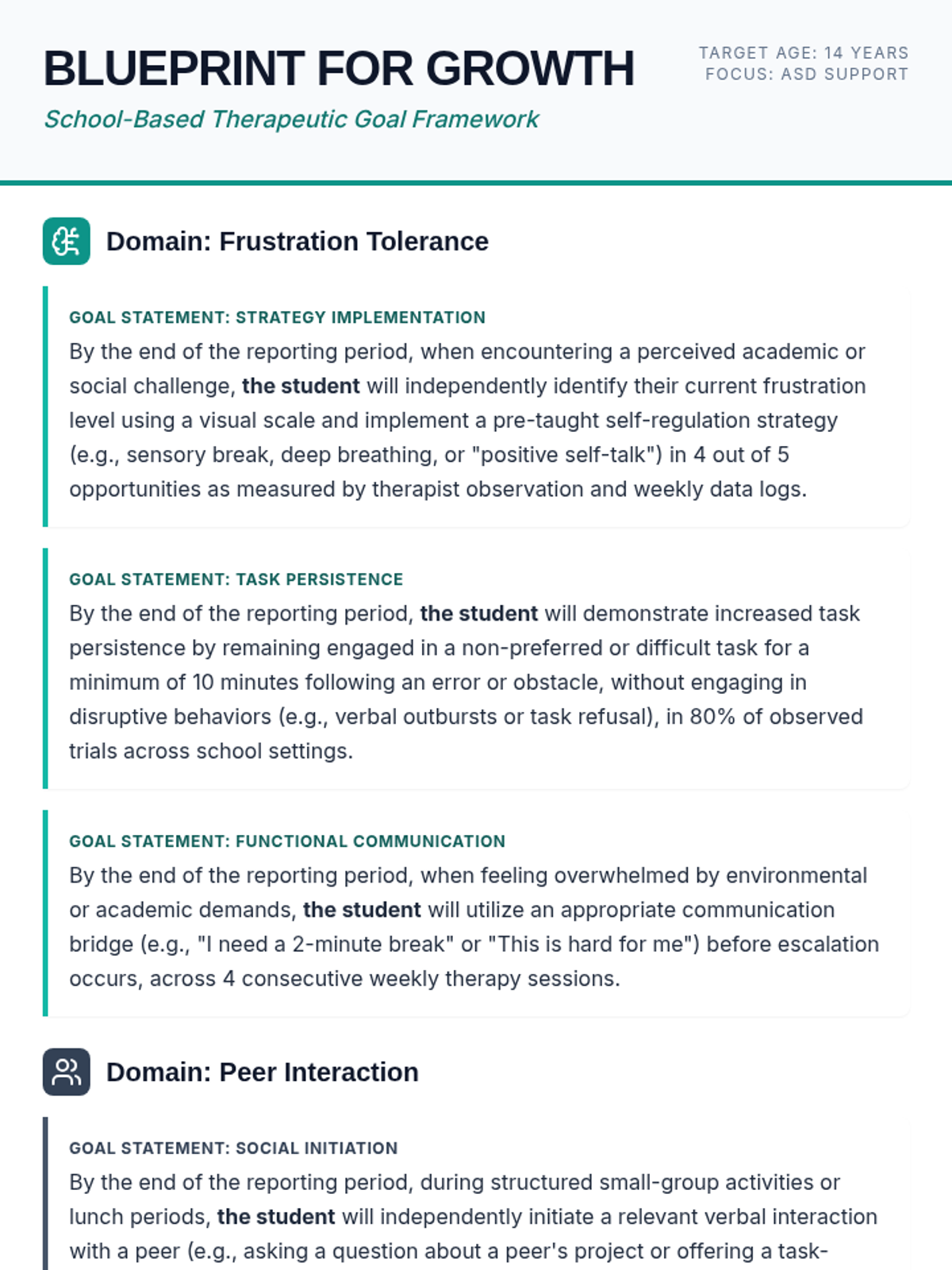
A therapeutic goal bank document for a 14-year-old student with autism, focusing on frustration tolerance, task persistence, and reciprocal peer interactions. It provides structured, measurable goal statements designed for school-based therapy and IEP development.
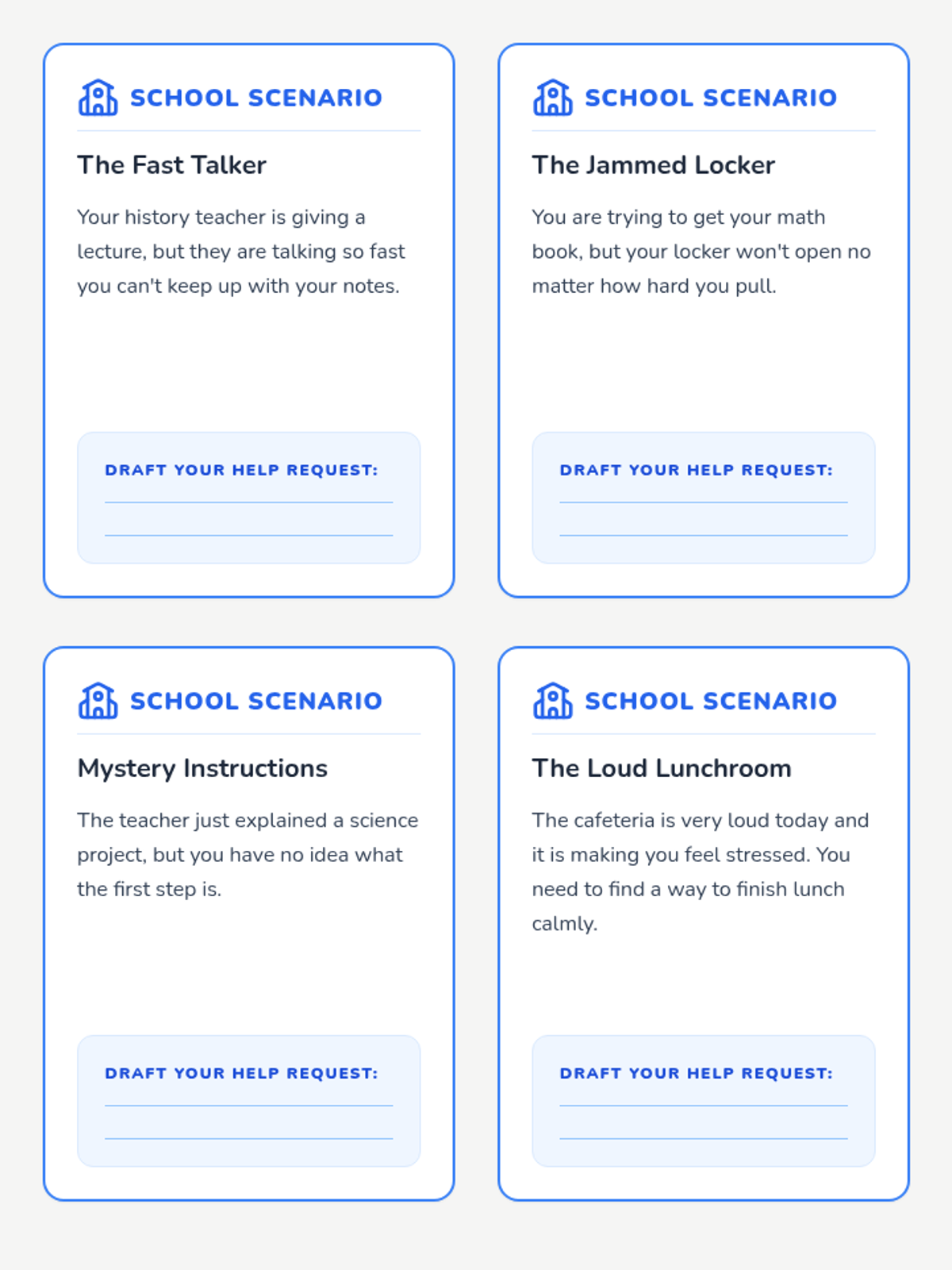
A complete set of 30 printable scenario cards with a dedicated writing area for students to draft their requests for help. Each card is clearly labeled and color-coded by setting (School, Home, Community).
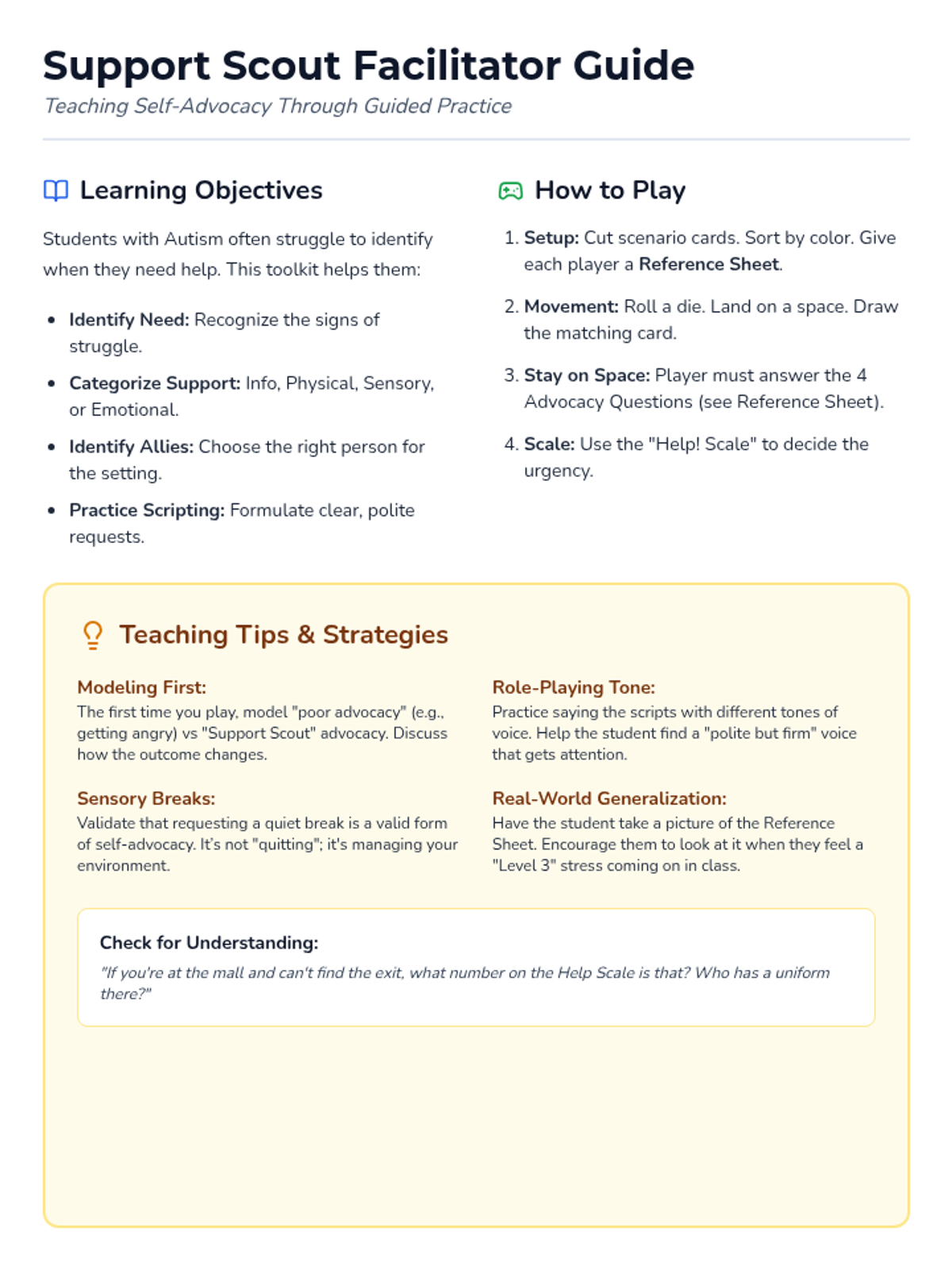
A consolidated one-page facilitator guide for the Support Scout Navigator lesson, including learning objectives, gameplay instructions, and instructional strategies for teaching self-advocacy.
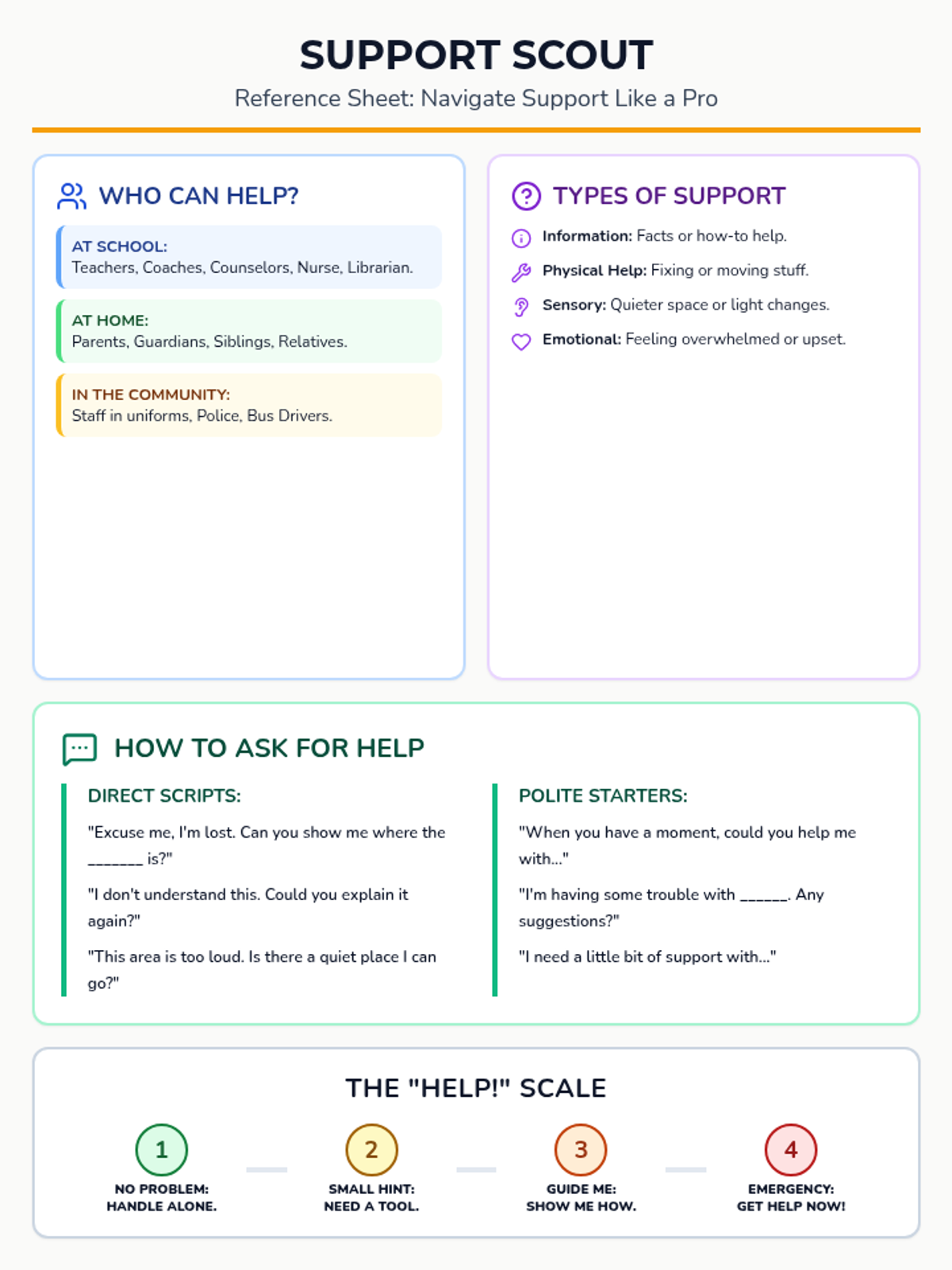
A consolidated visual reference sheet for students that defines different types of support, lists people they can ask for help in various settings, provides polite scripts for asking, and includes a four-point scale for measuring the level of help needed.
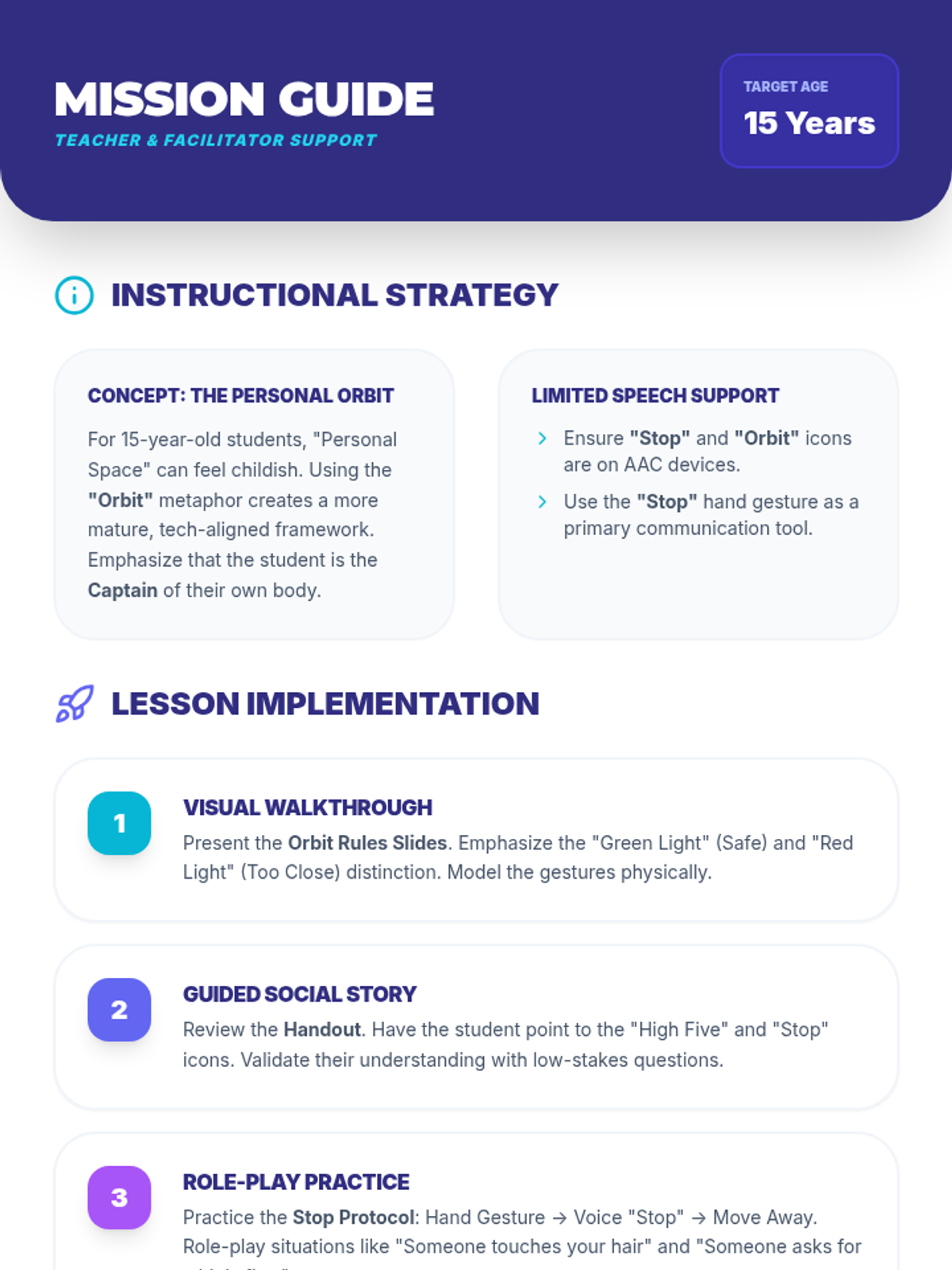
A facilitation guide for teachers to implement the Personal Orbit lesson with 15-year-old students who have limited speech. Includes instructional strategies, implementation steps, and an observation checklist for monitoring social progress.