A highly visual, 5-page workbook for students with severe ID, focusing on personal space, waiting, and choosing safe behaviors through simple icons and large tracking areas. Revised for icon consistency.
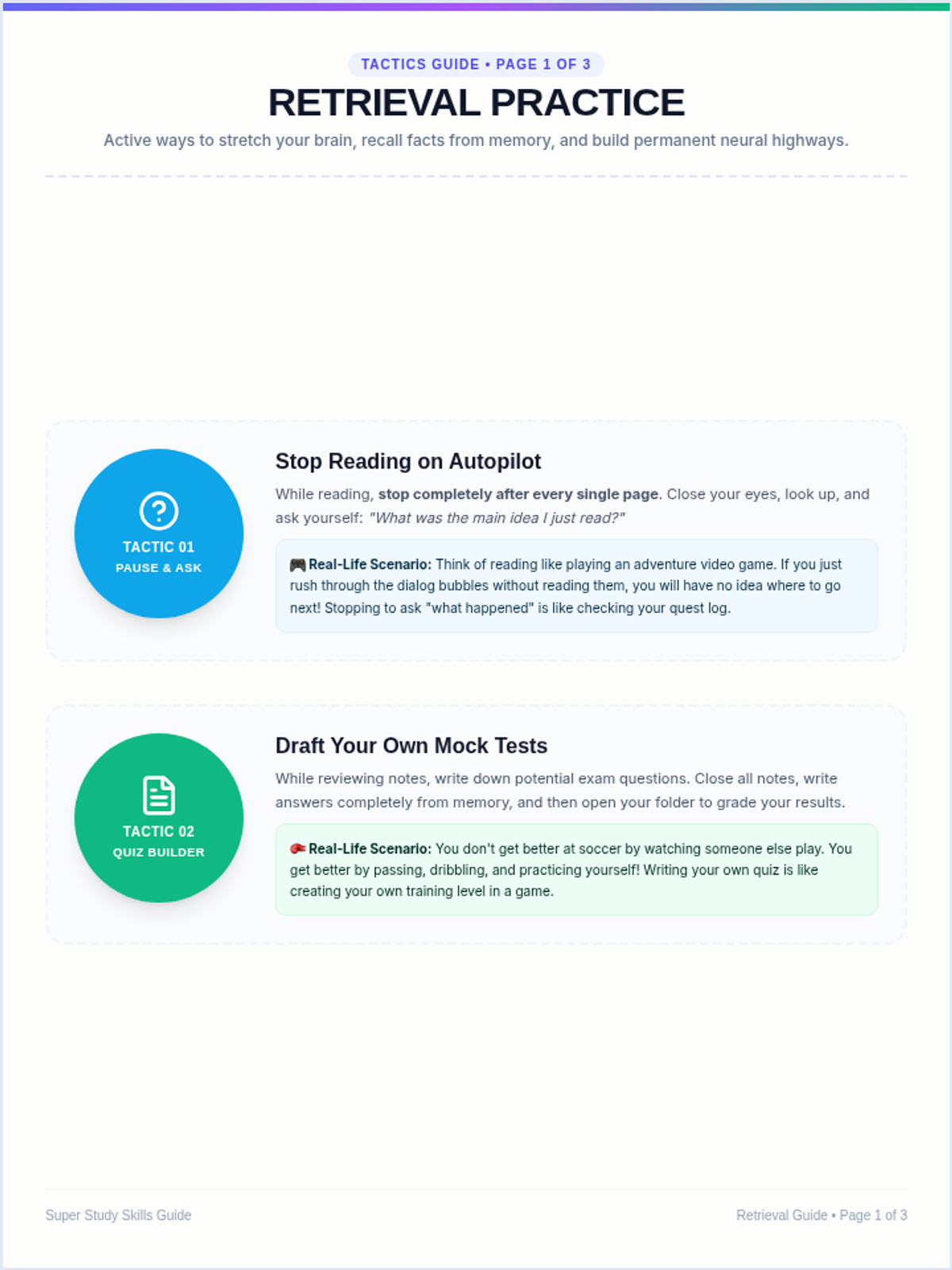
A highly polished, light-themed visual classroom anchor chart illustrating the 6 core methods of Retrieval Practice across 3 pages (two tactics per page), directly inspired by cognitive science research.
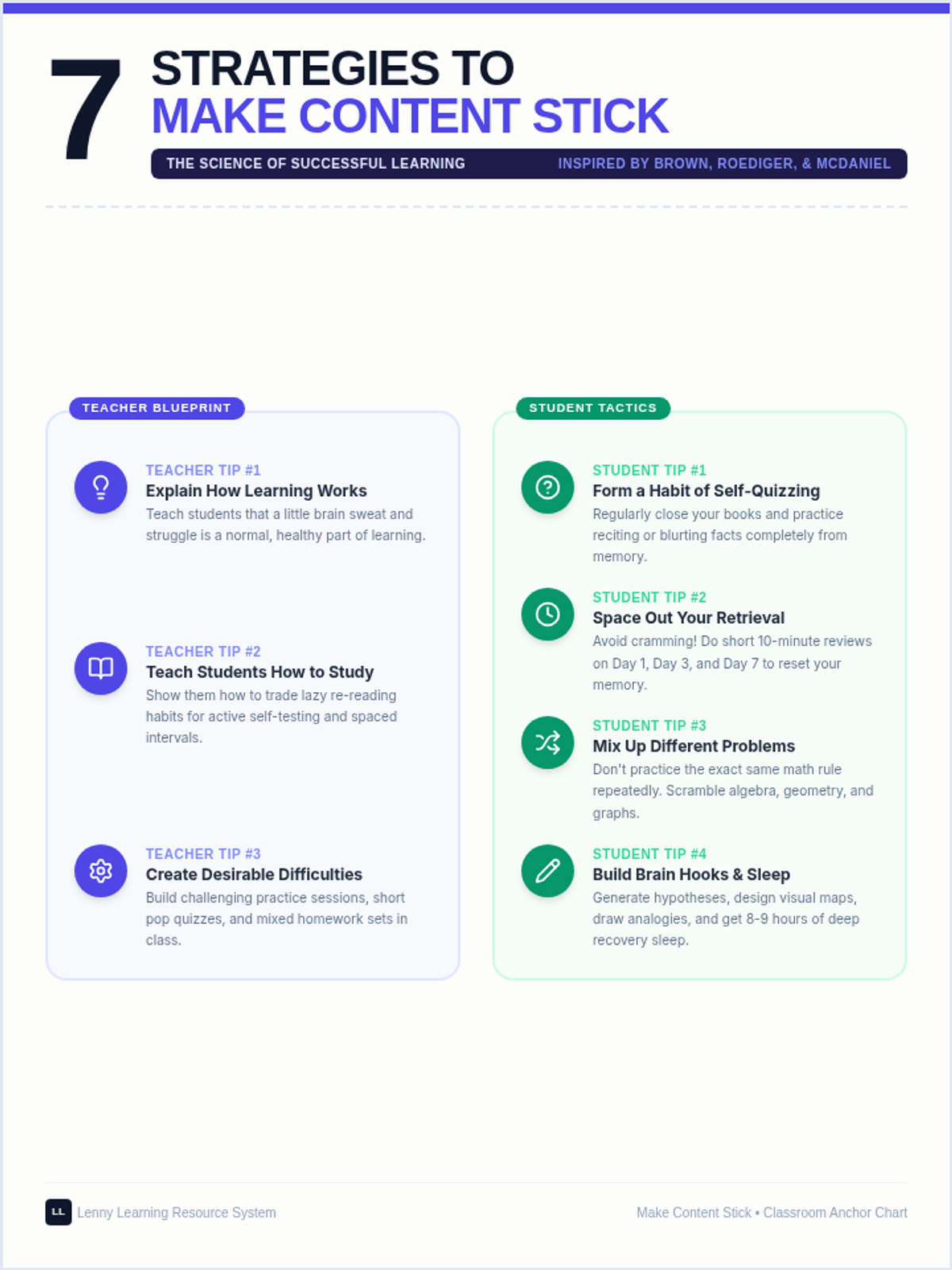
An elegant classroom anchor chart and infographic guide showing the 7 strategies to make content stick, directly inspired by the cognitive science of successful learning.
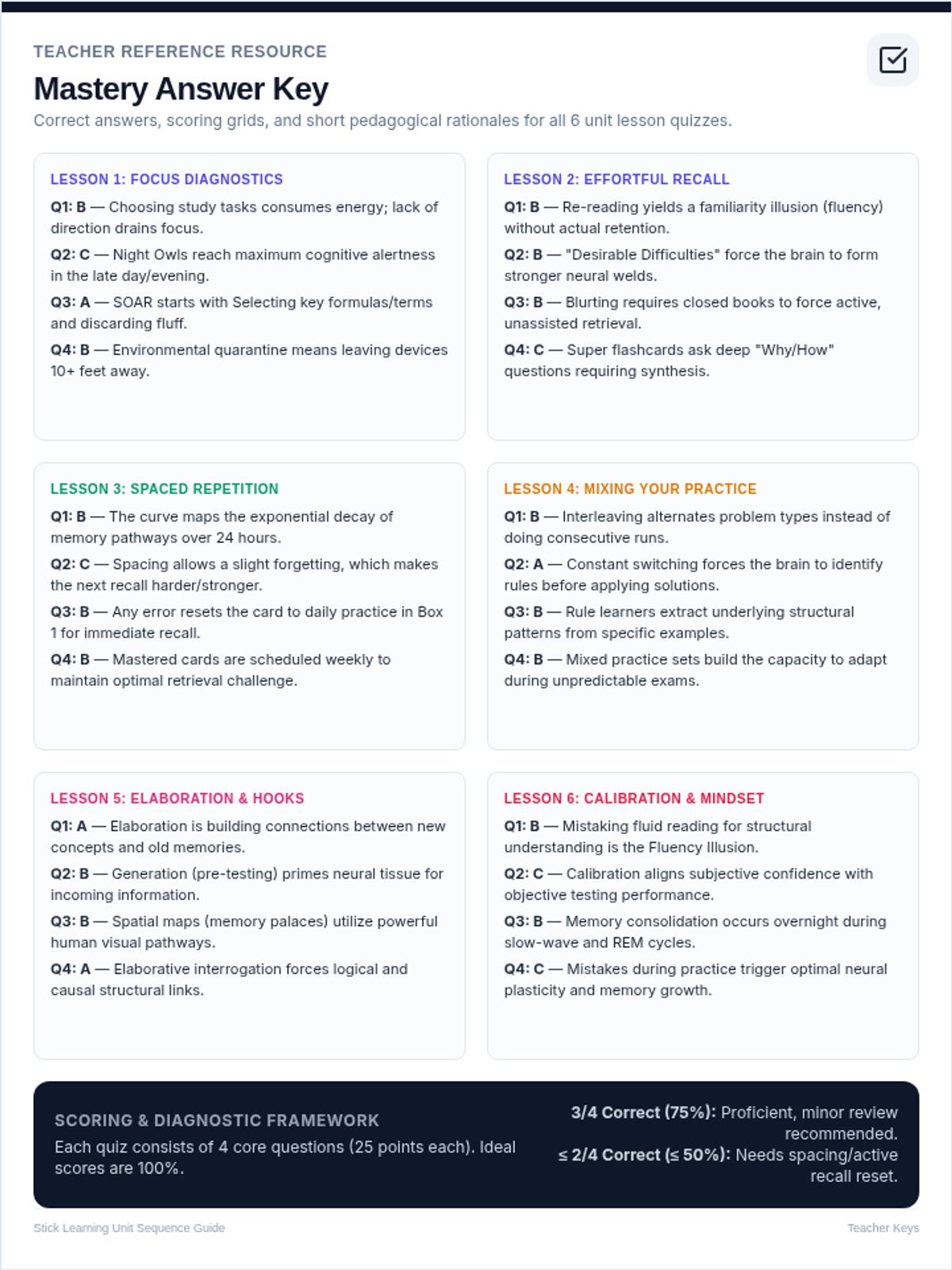
A highly structured, single-page reference sheet containing correct answers and brief educational explanations for all 6 lesson quizzes.
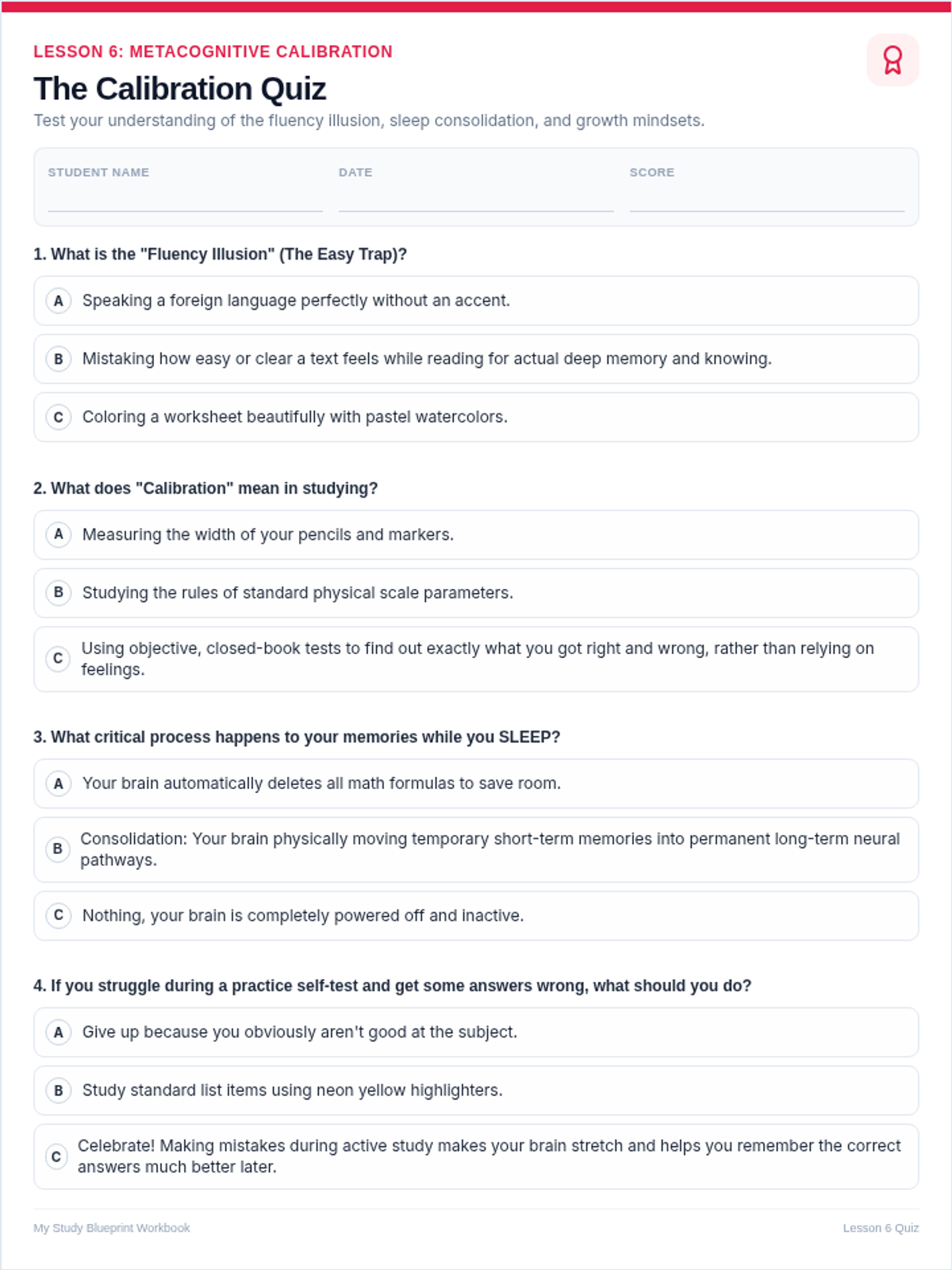
A quick, engaging 1-page assessment for Lesson 6 to verify understanding of study calibration, the fluency illusion, and sleep consolidation.
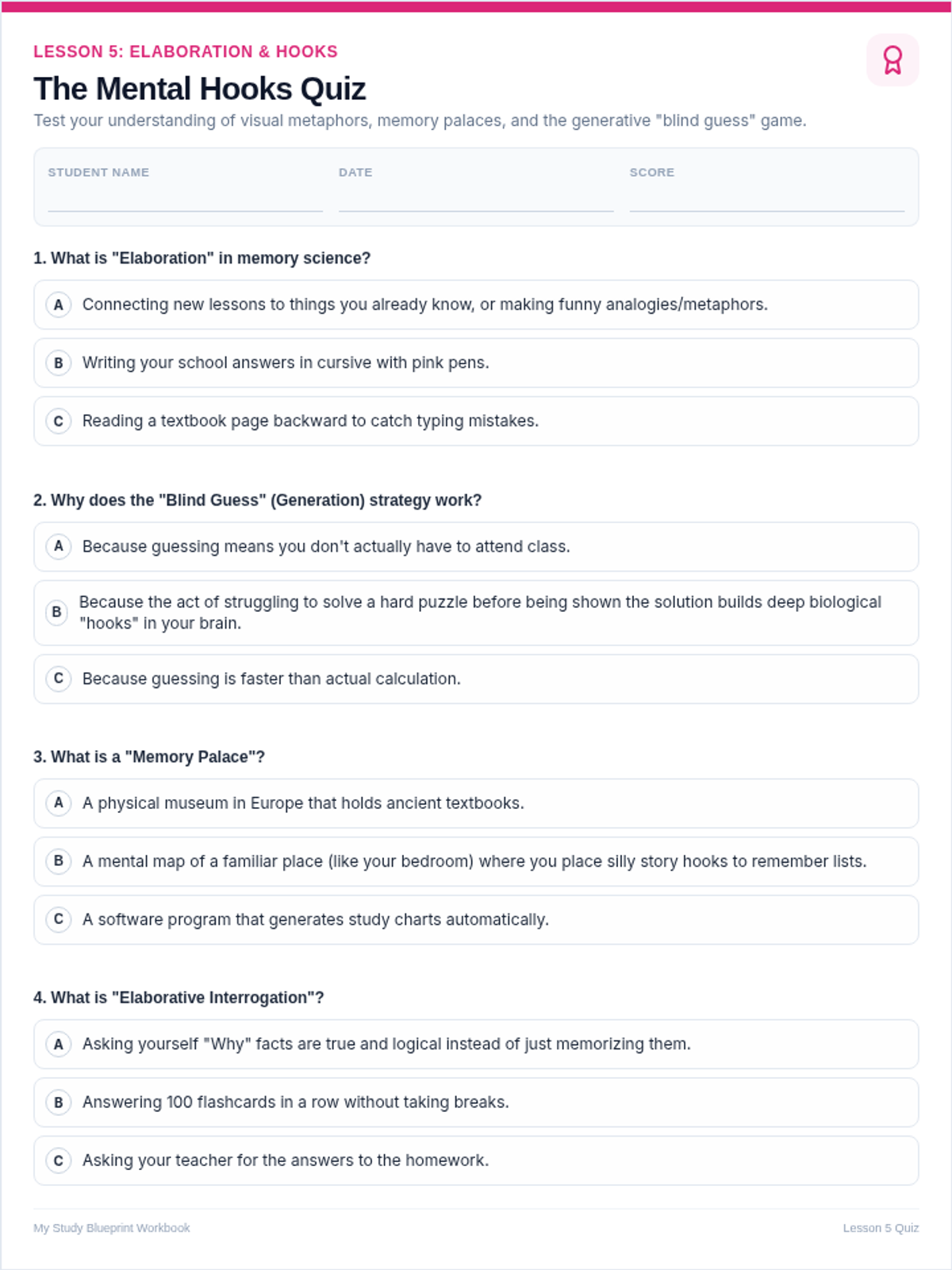
A quick, engaging 1-page assessment for Lesson 5 to verify understanding of elaboration, memory palaces, and visual analogy tools.
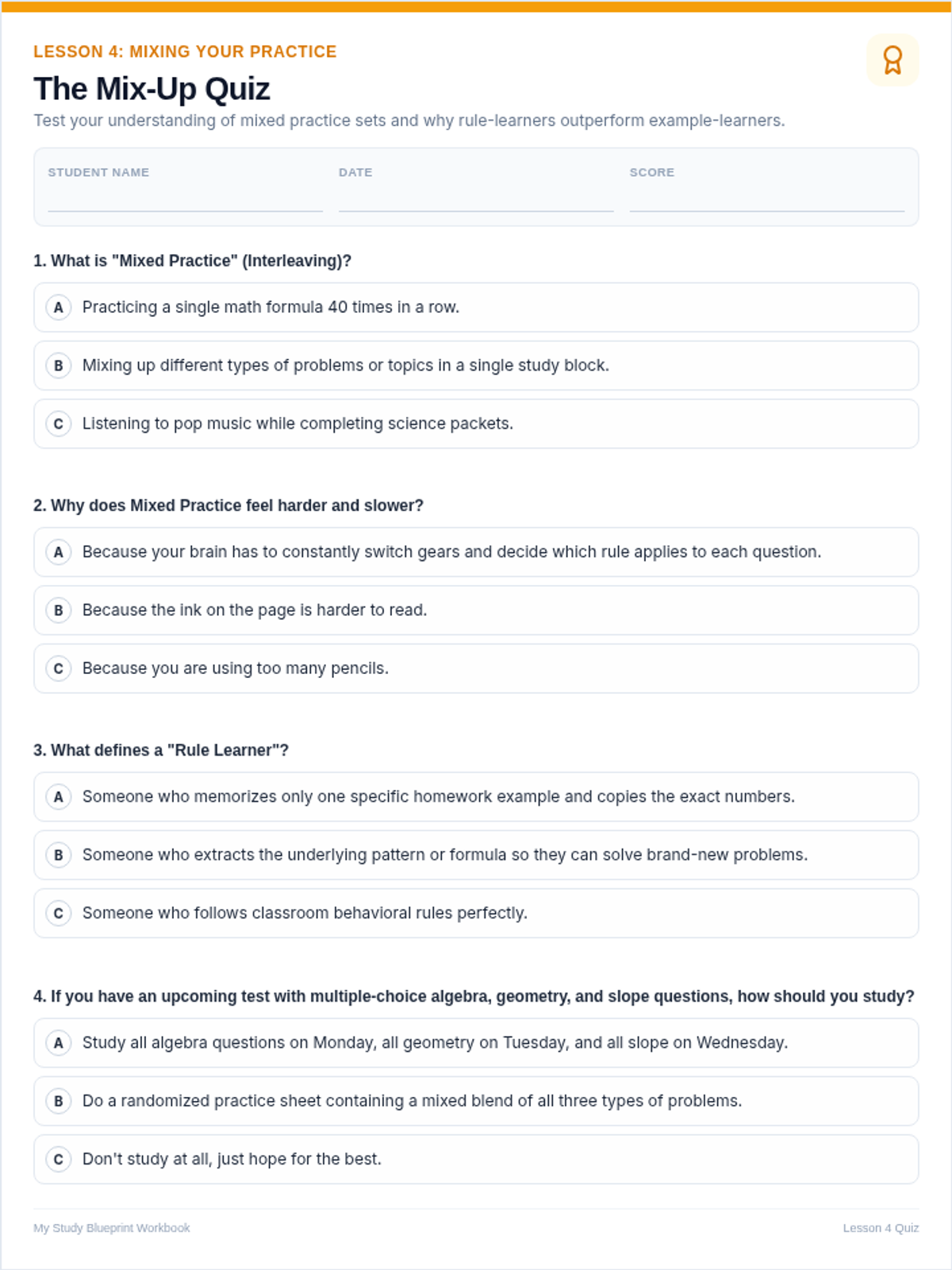
A quick, engaging 1-page assessment for Lesson 4 to verify understanding of interleaving, rule-learners, and mixed practice sets.
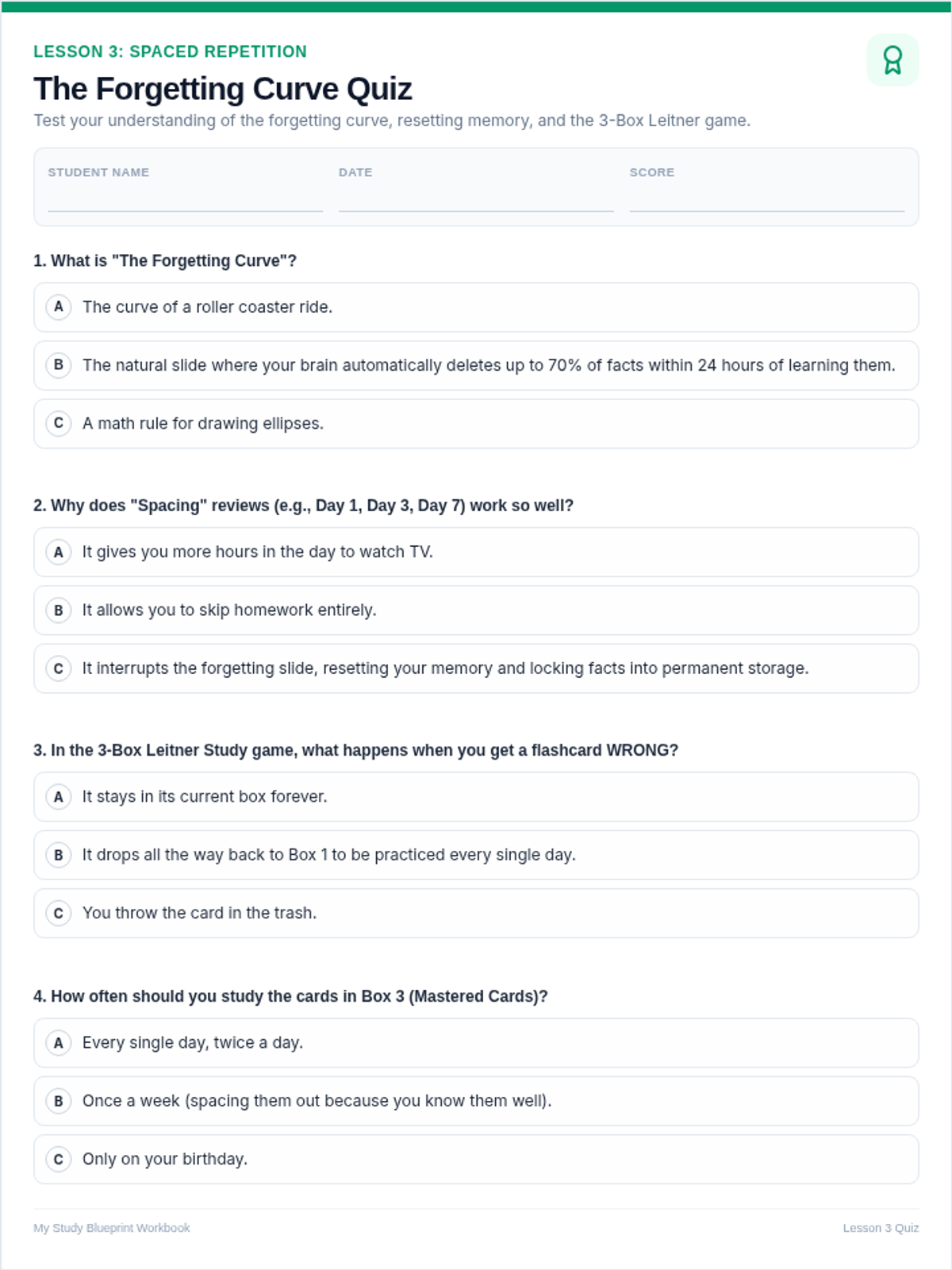
A quick, engaging 1-page assessment for Lesson 3 to verify understanding of spacing out study reviews, the forgetting curve, and the Leitner box system.
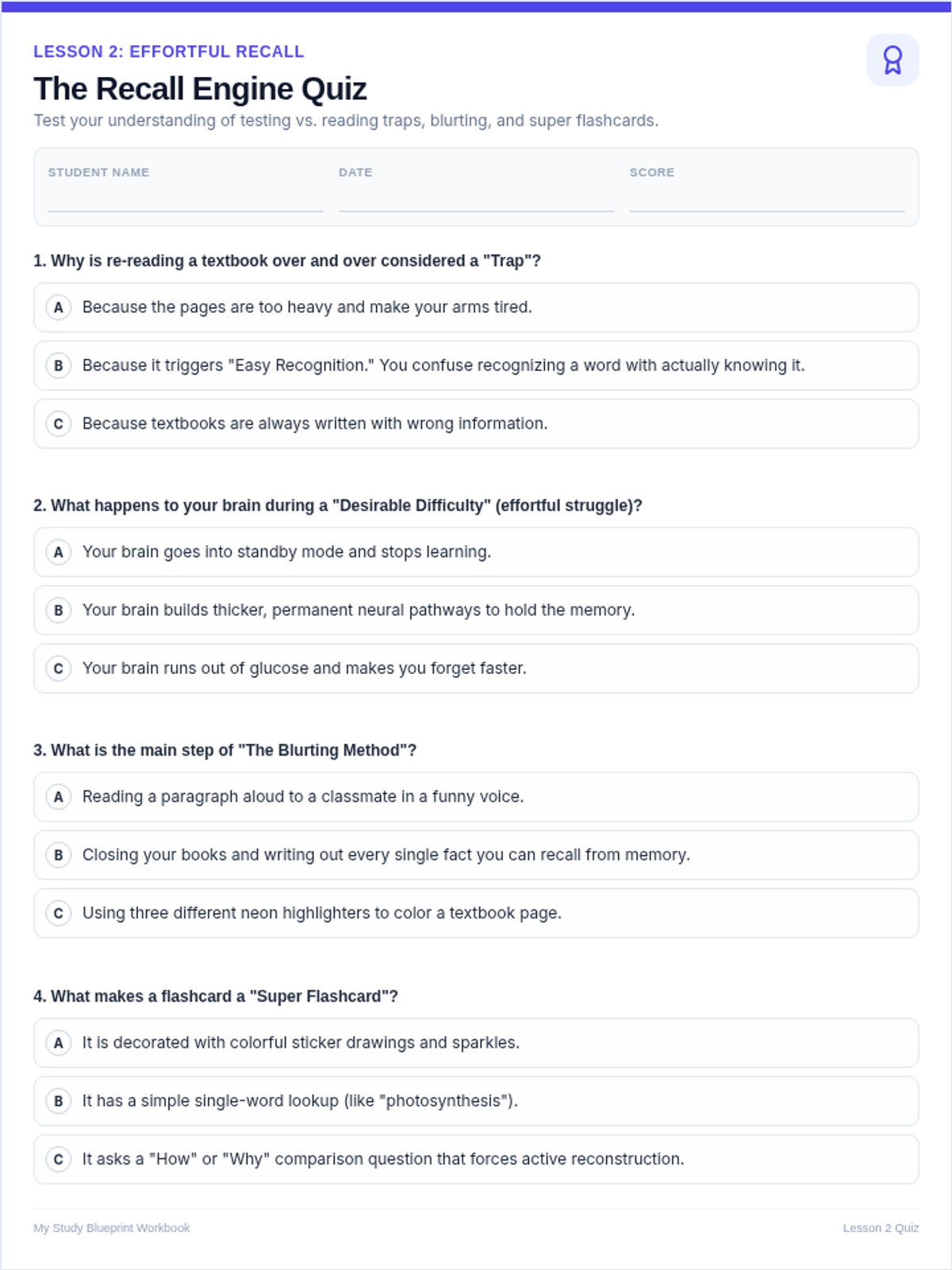
A quick, engaging 1-page assessment for Lesson 2 to verify understanding of active retrieval, the blurting method, and the passive recognition trap.
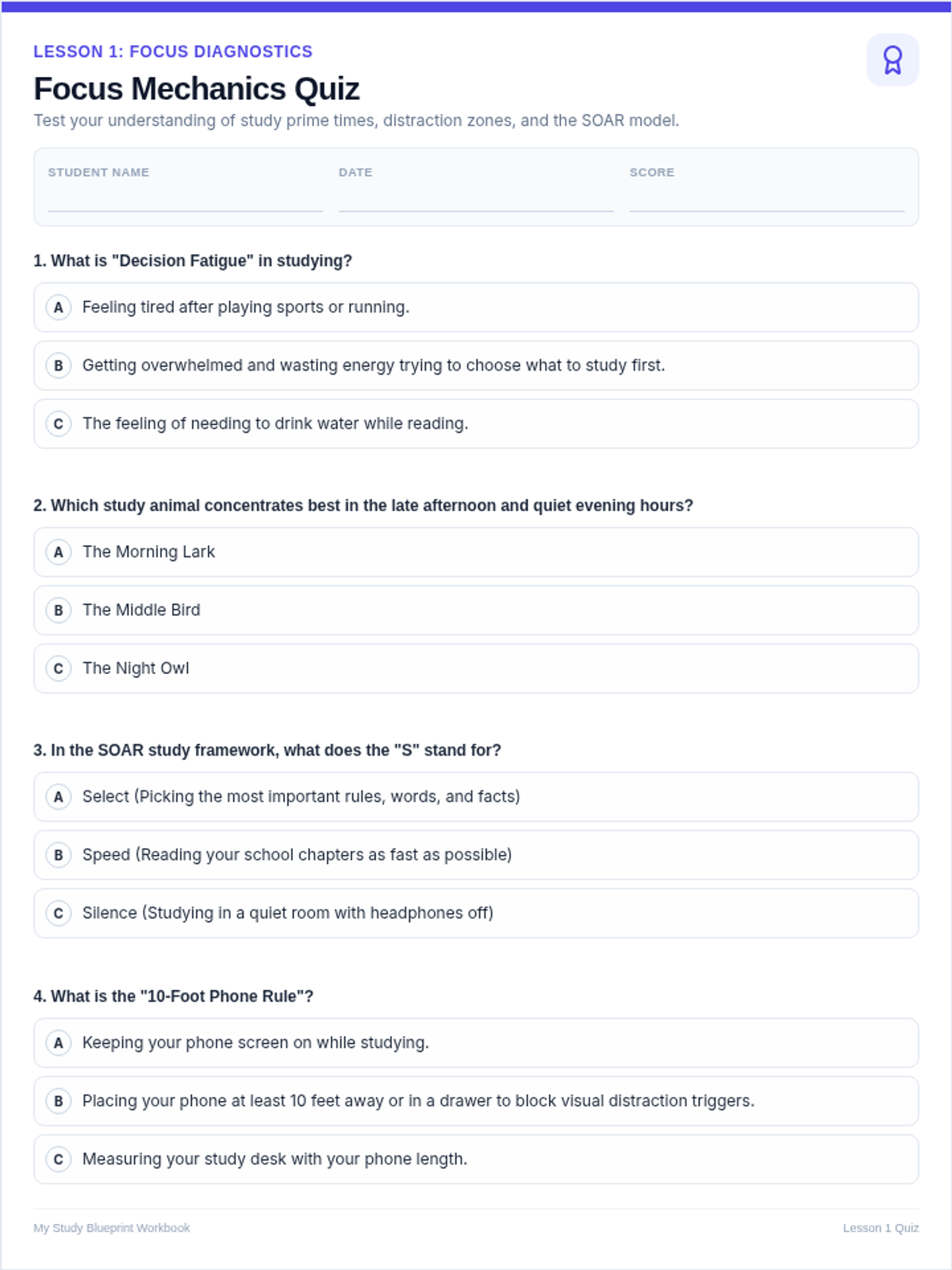
A quick, engaging 1-page assessment for Lesson 1 to verify understanding of distraction profiles, study prime times, and the SOAR model.
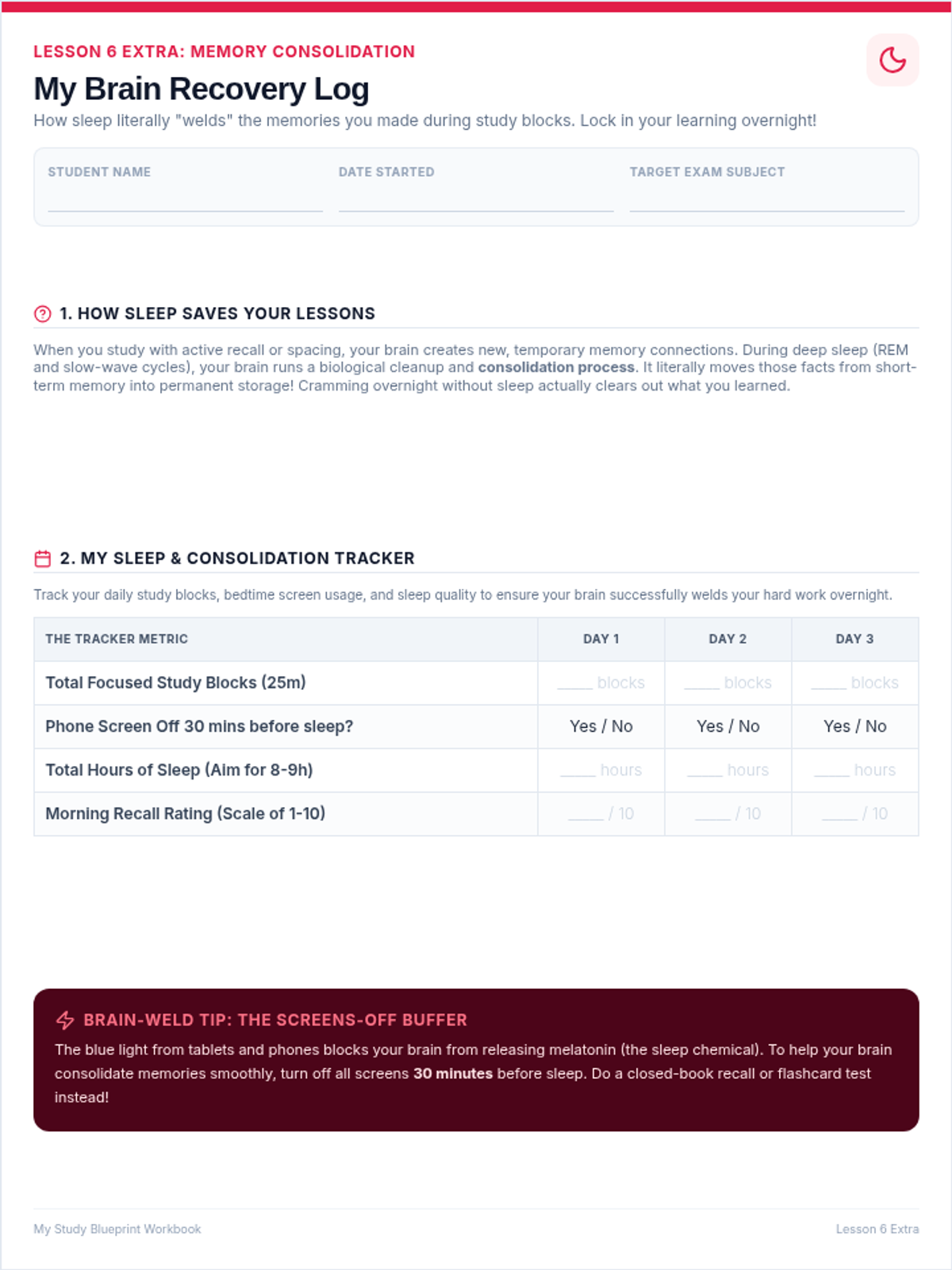
A study tracking log that shows students the critical role of sleep in consolidating new memories, allowing them to track study blocks, screen time, and sleep quality.
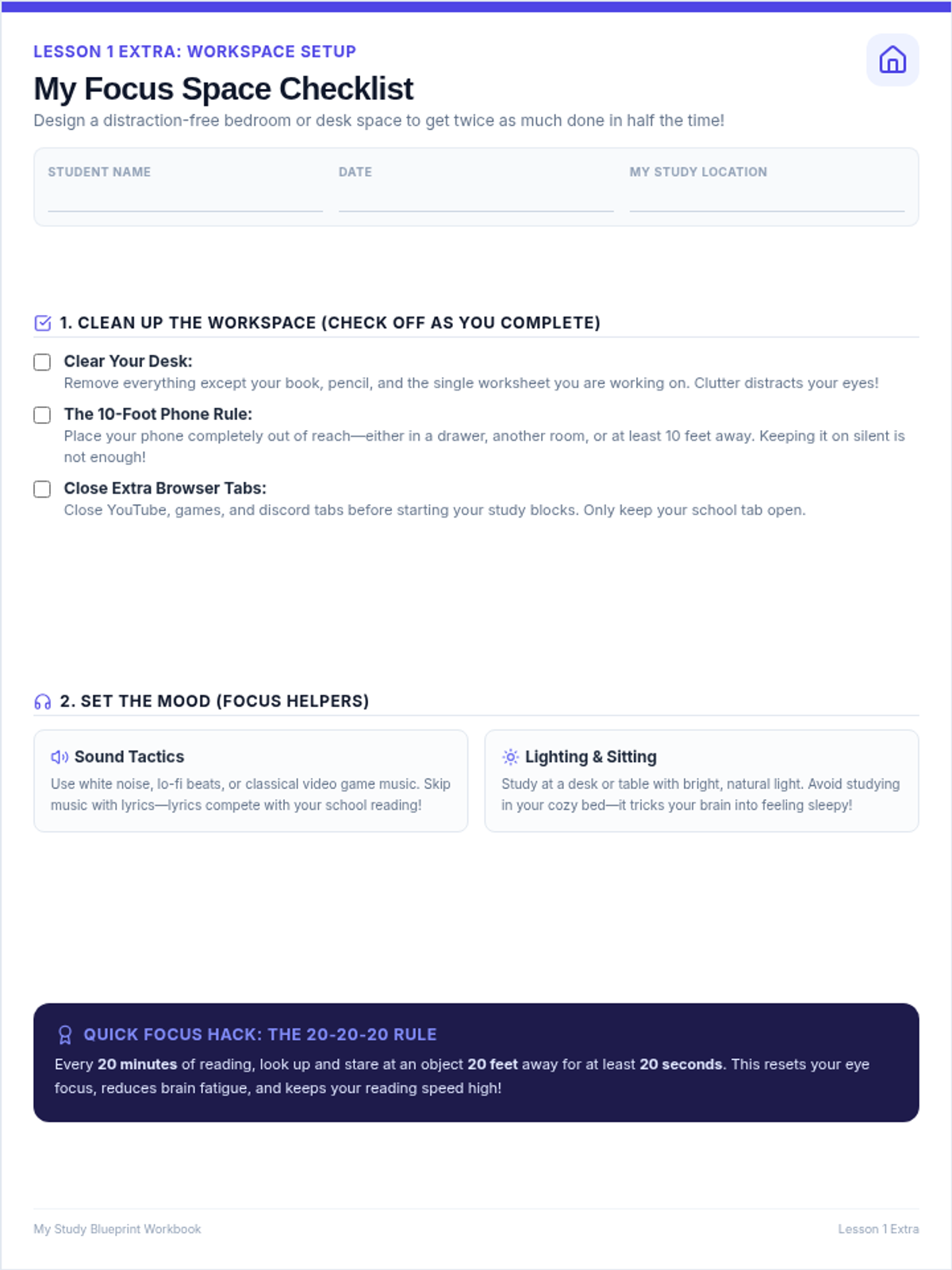
A student-friendly checklist and guide to setting up a high-focus physical study space, featuring environmental triggers, notification hacks, and active workspace tips.
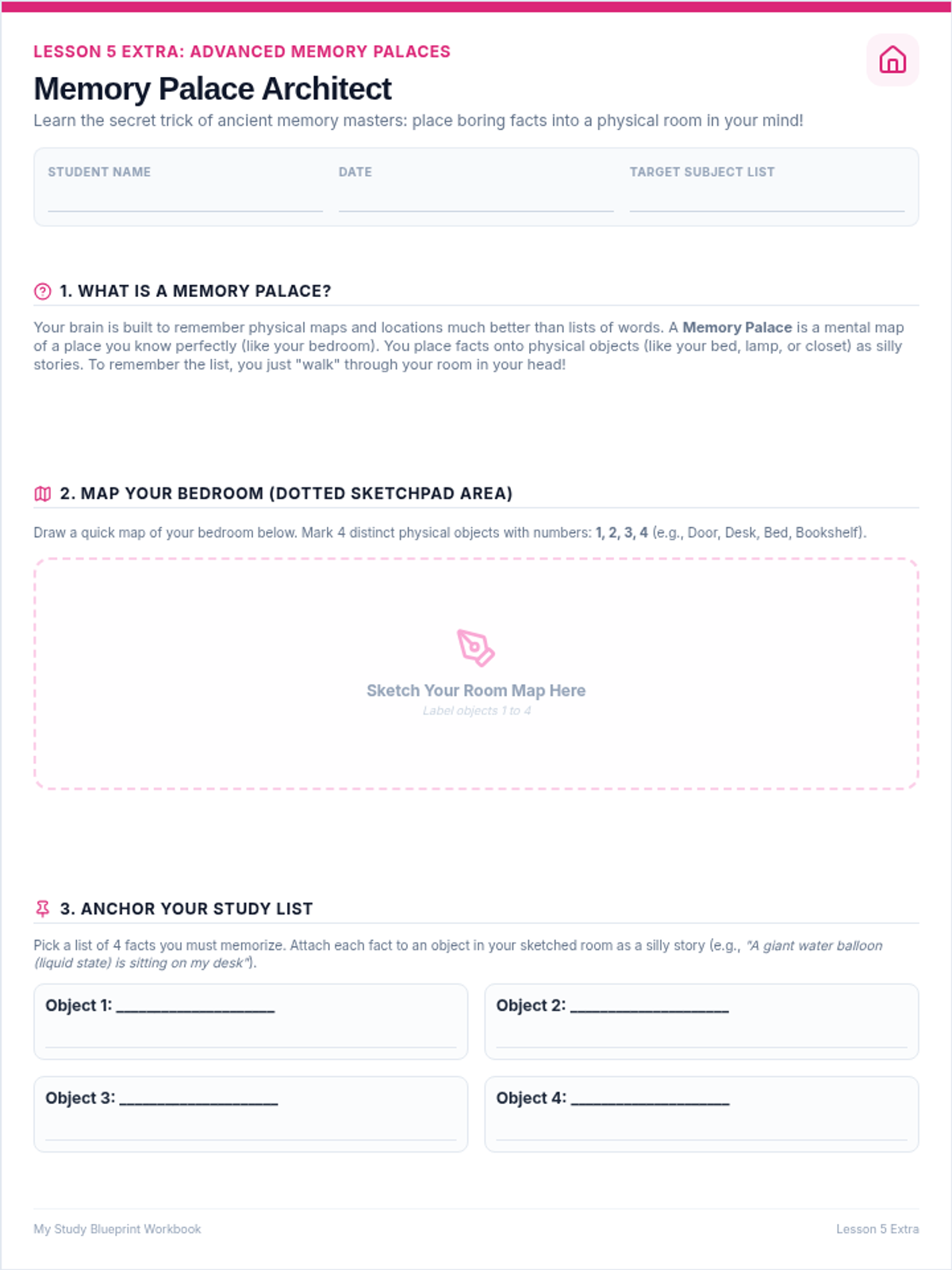
A creative worksheet designed to guide students in constructing a personal 'Memory Palace' to store lists of vocabulary, historical dates, or scientific facts visually.
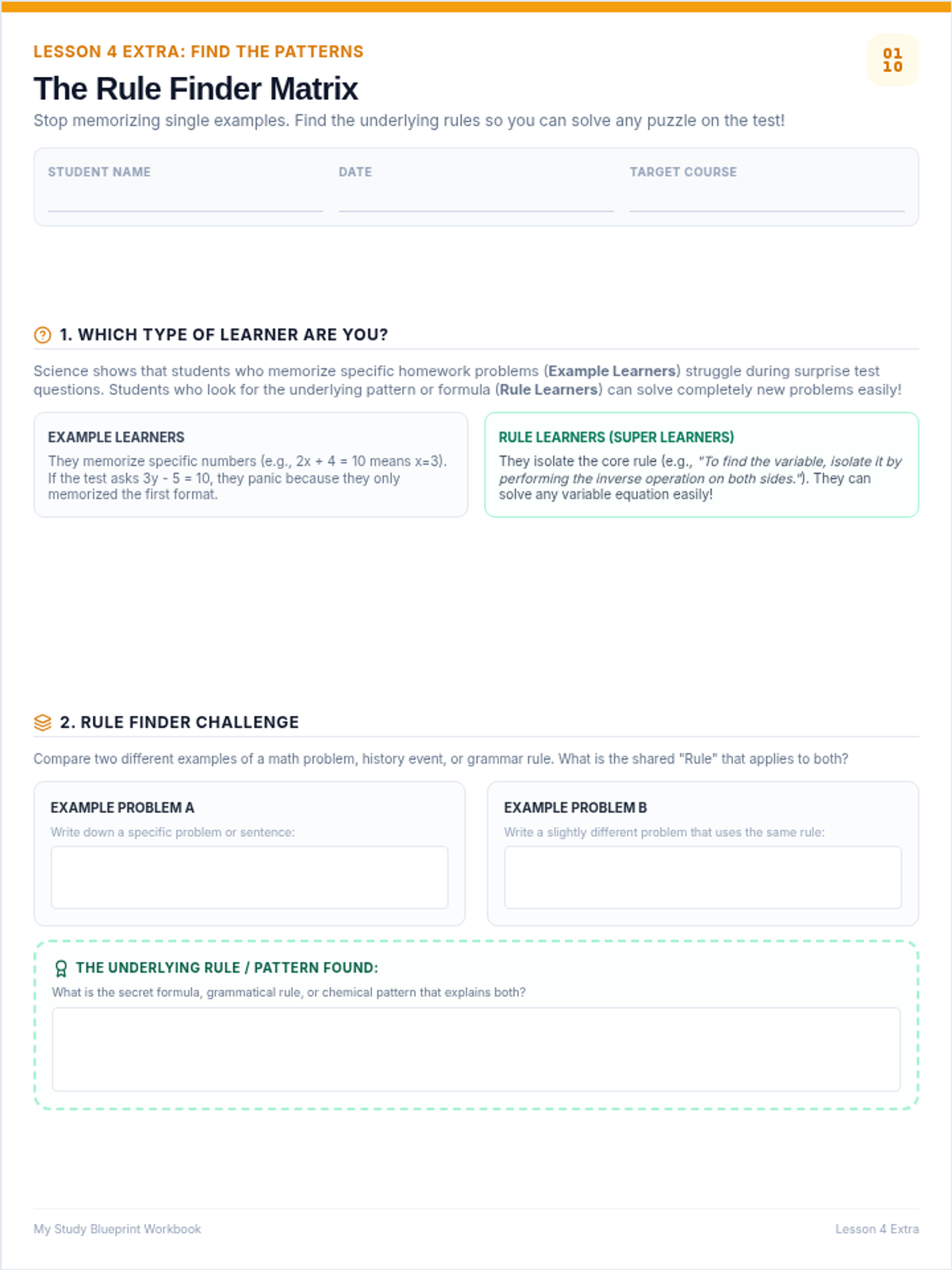
A structured workbook page designed to help students move from memorizing specific examples to extracting the underlying rules and core principles of a topic.
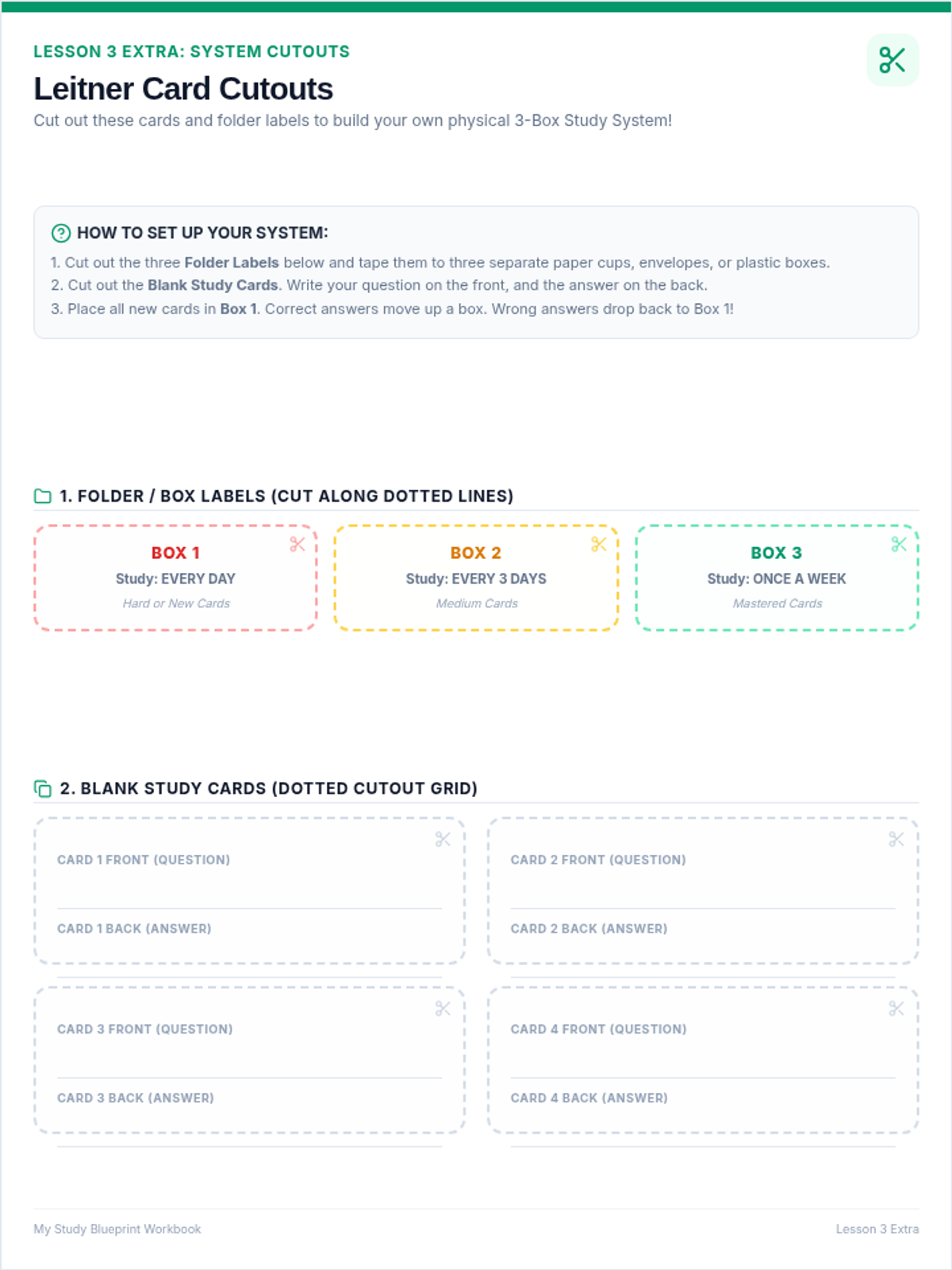
A physical printable card cutout sheet with ready-to-cut flashcard templates and Leitner system labels for student organization.
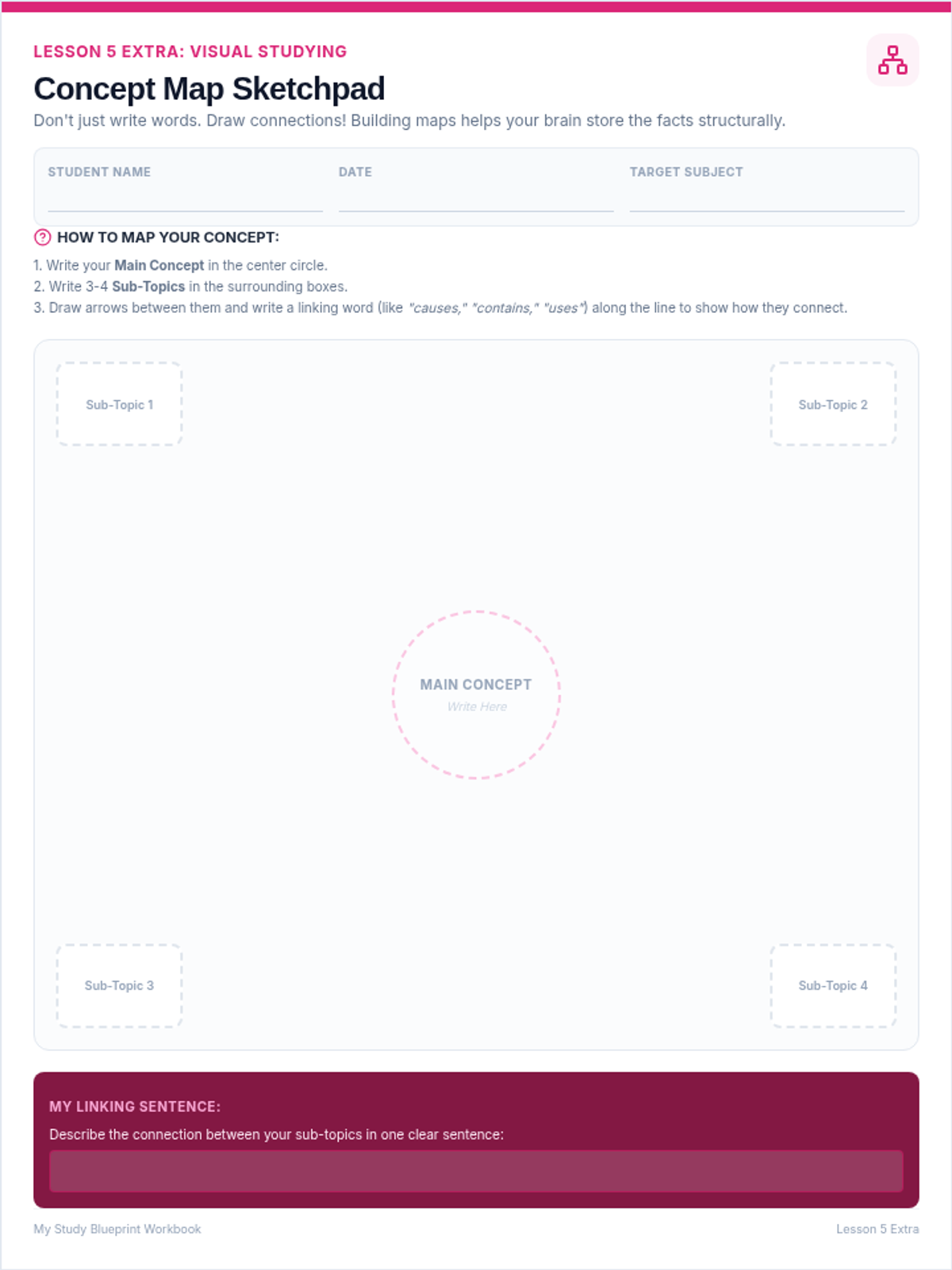
A creative layout sketchpad for students to sketch out active mind maps, Venn diagrams, or concept loops to organize complex subjects visually.
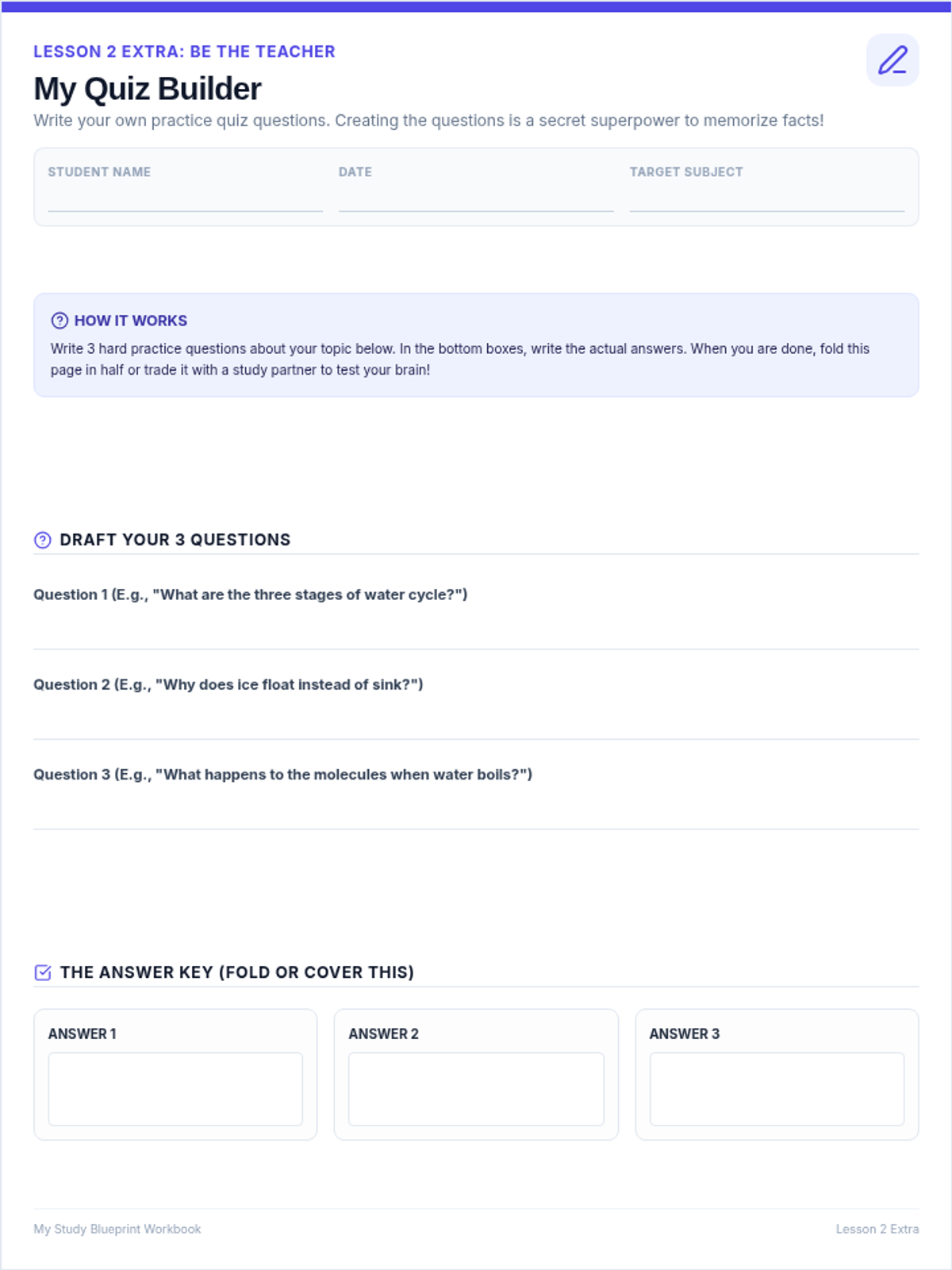
A structured template for students to draft their own custom mock quizzes, practicing active retrieval by writing questions and matching answers.
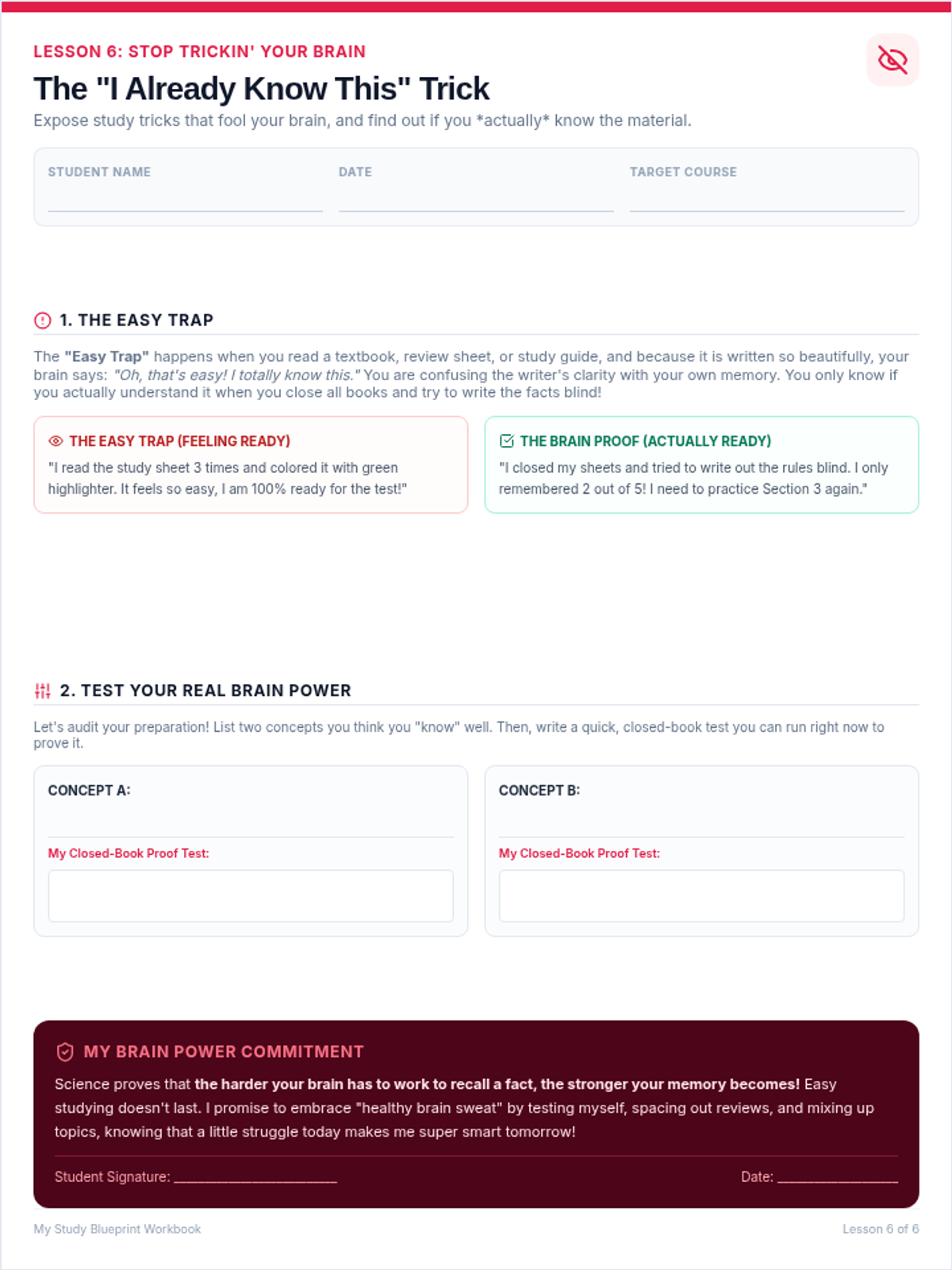
A structured workbook page designed to expose cognitive study illusions, teach metacognitive calibration, and help students transition from fluency traps to hard testing methods.
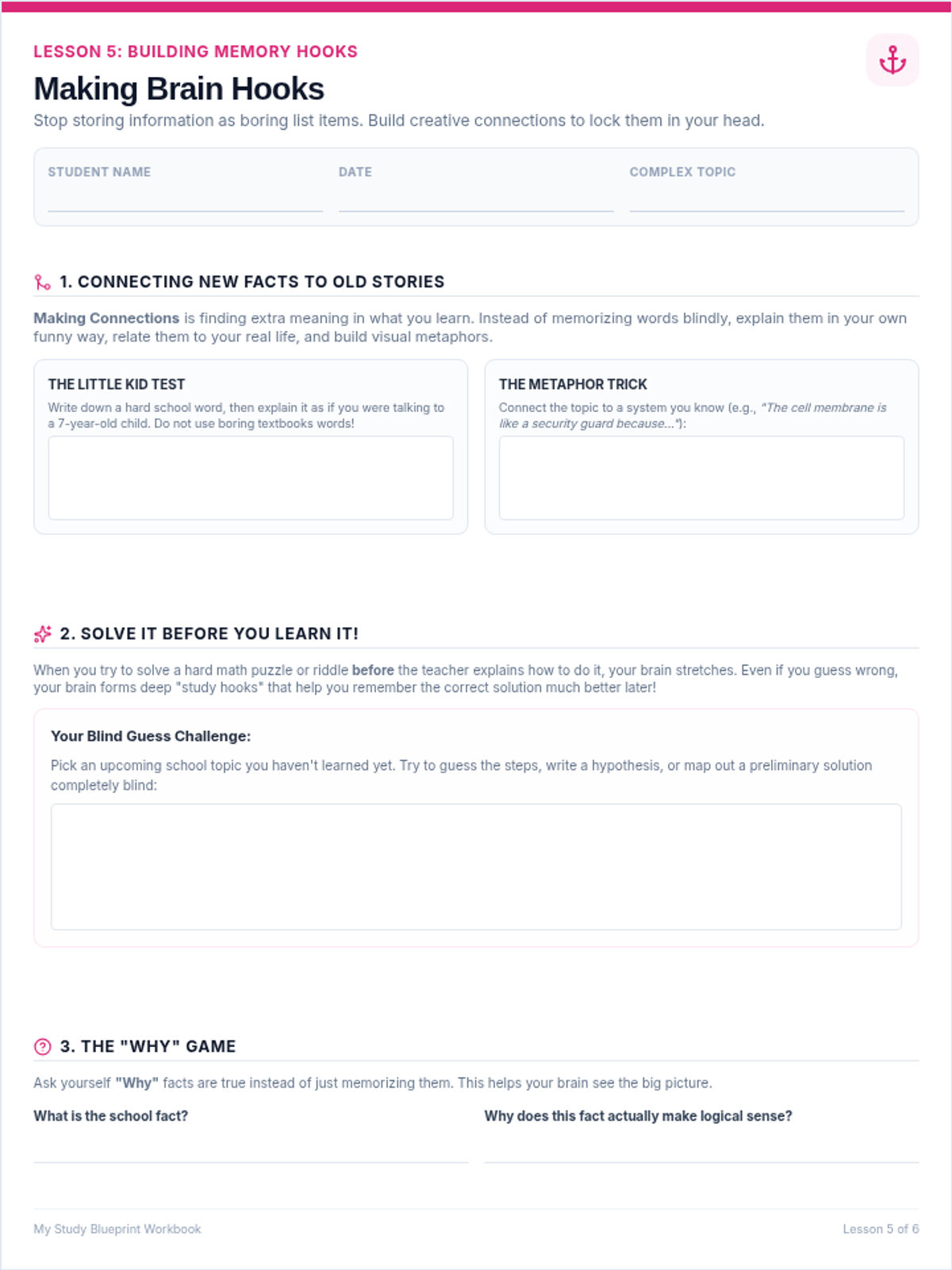
A structured workbook page guiding students through elaborative interrogation, drafting visual analogies, and solving complex problems using generative pre-testing.
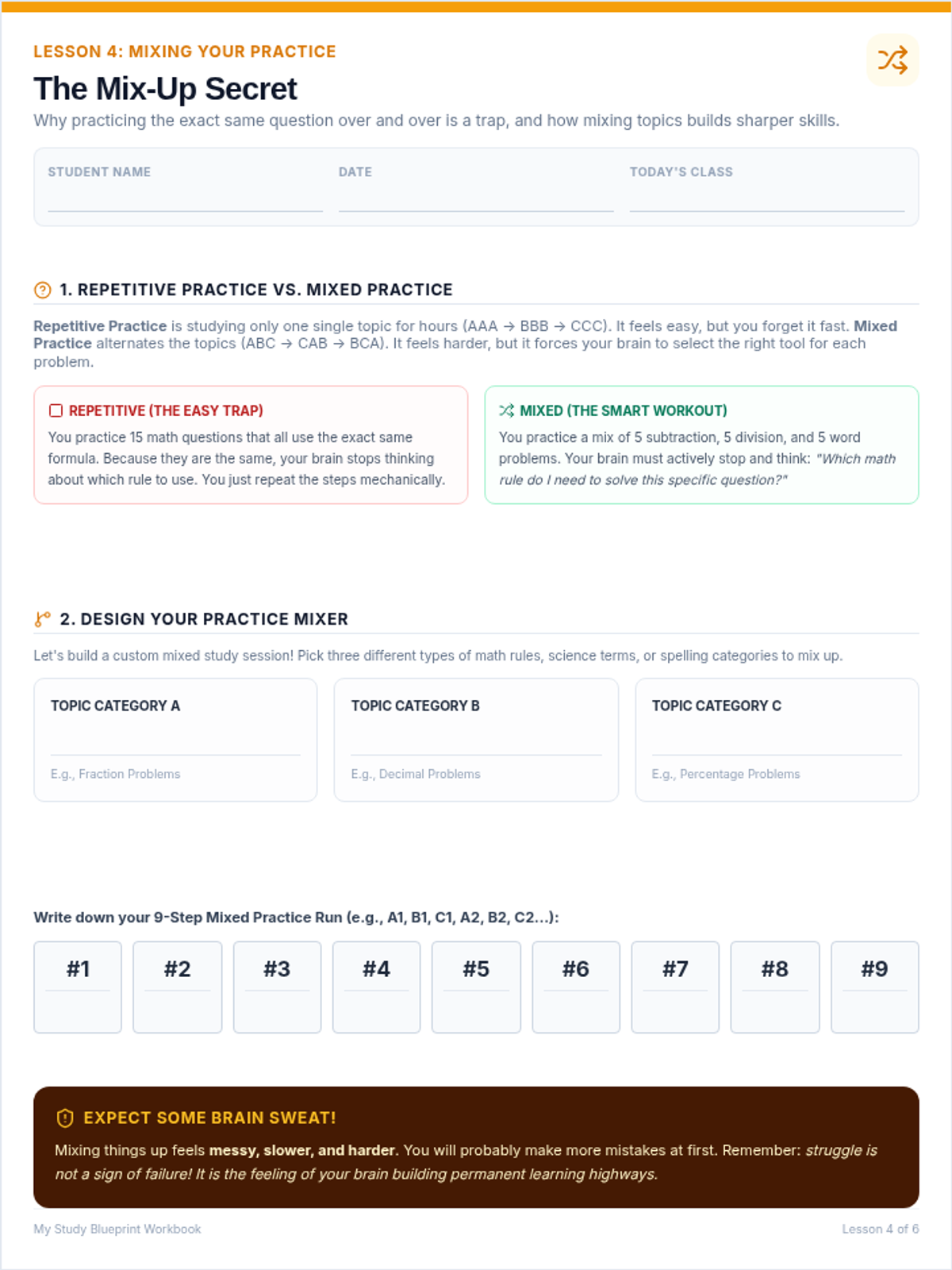
A structured workbook page designed to teach interleaving and mixed practice, guiding students to break out of blocked study traps and design varied problem sets.
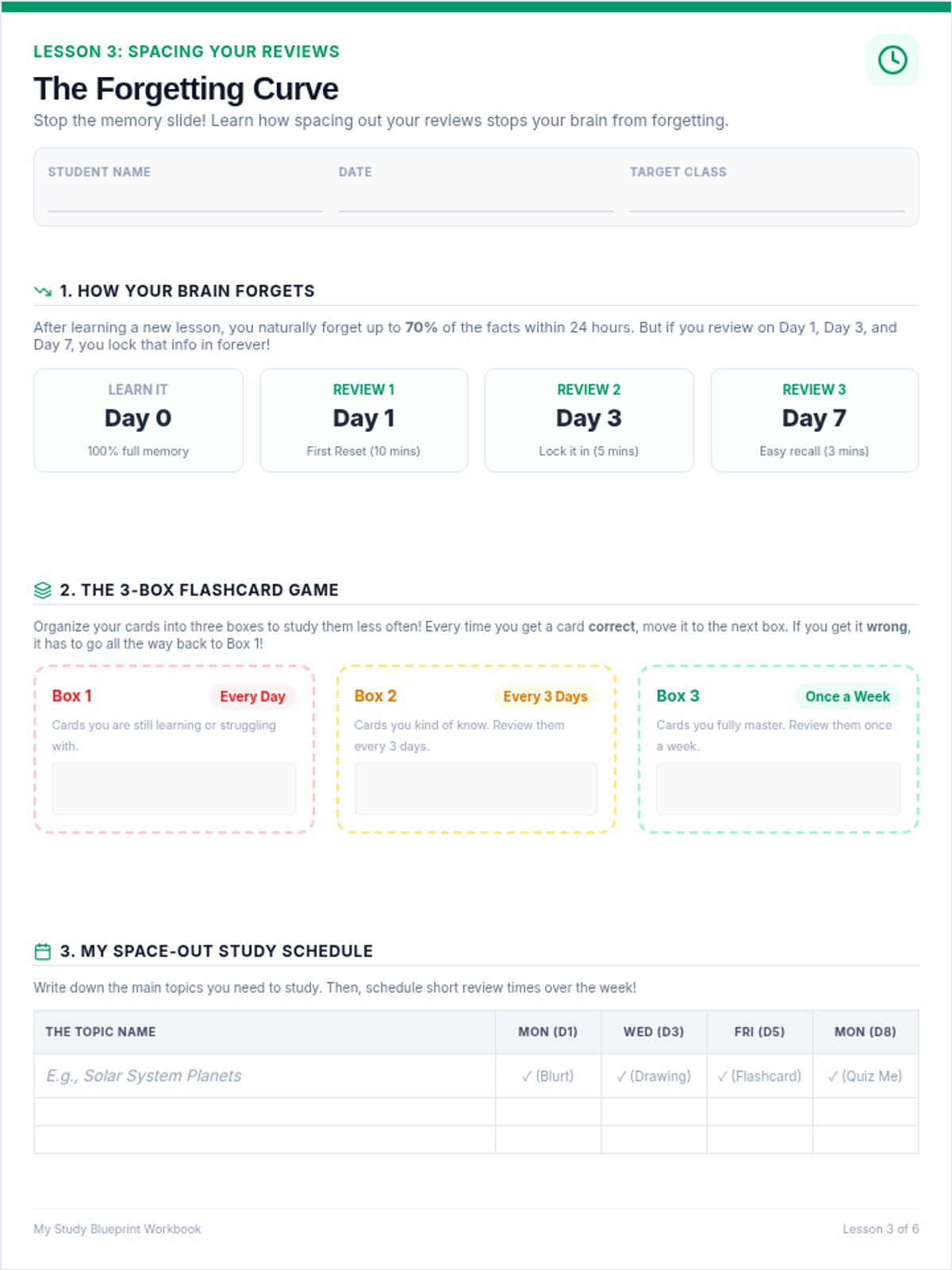
A structured template designed to teach students how to schedule study intervals, defeat the natural forgetting curve, and run a Leitner Box active card system.
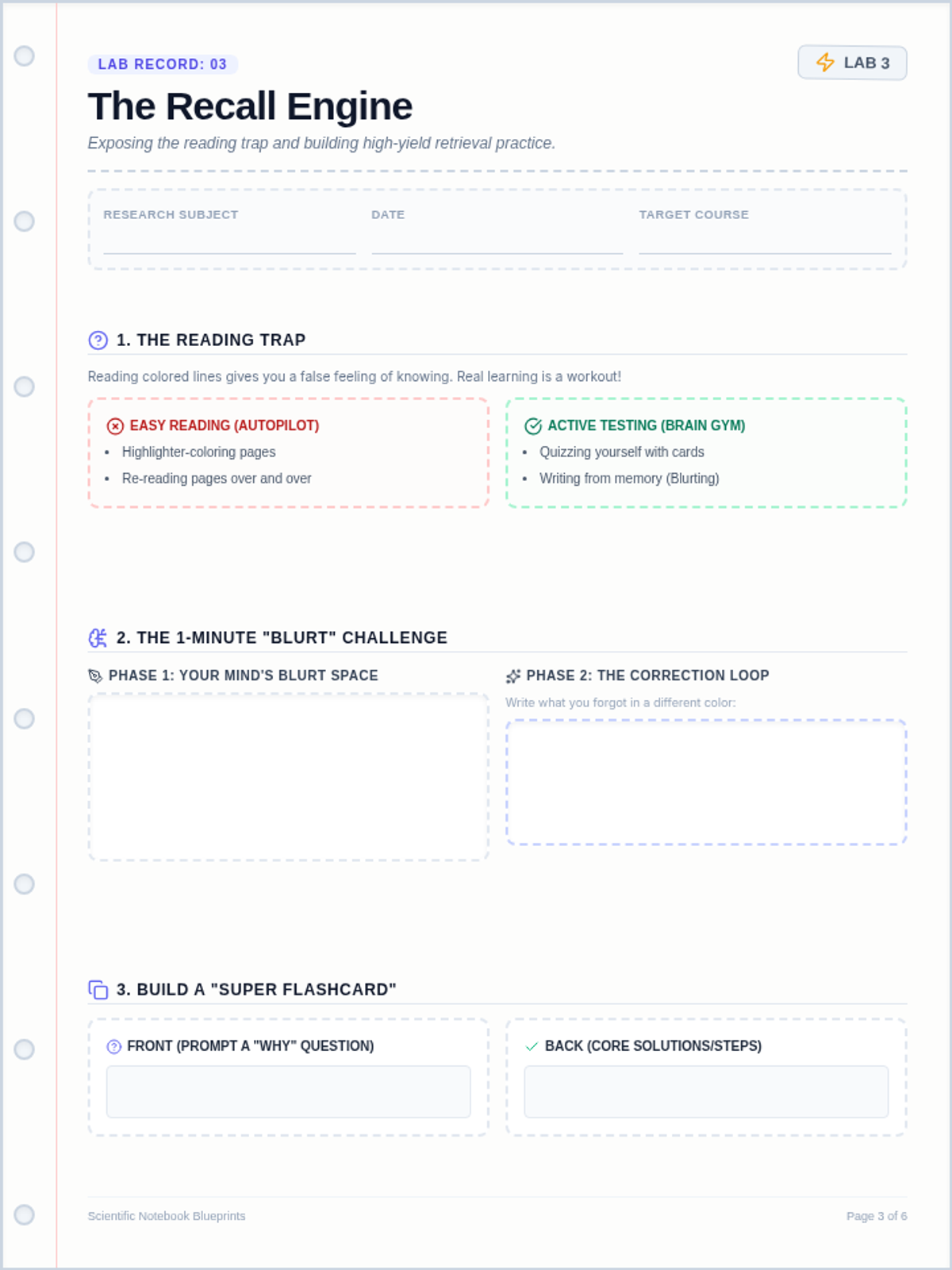
A highly practical retrieval practice workbook page helping students design active flashcards, run a 'blurting' test, and compare effortful recall against passive recognition.
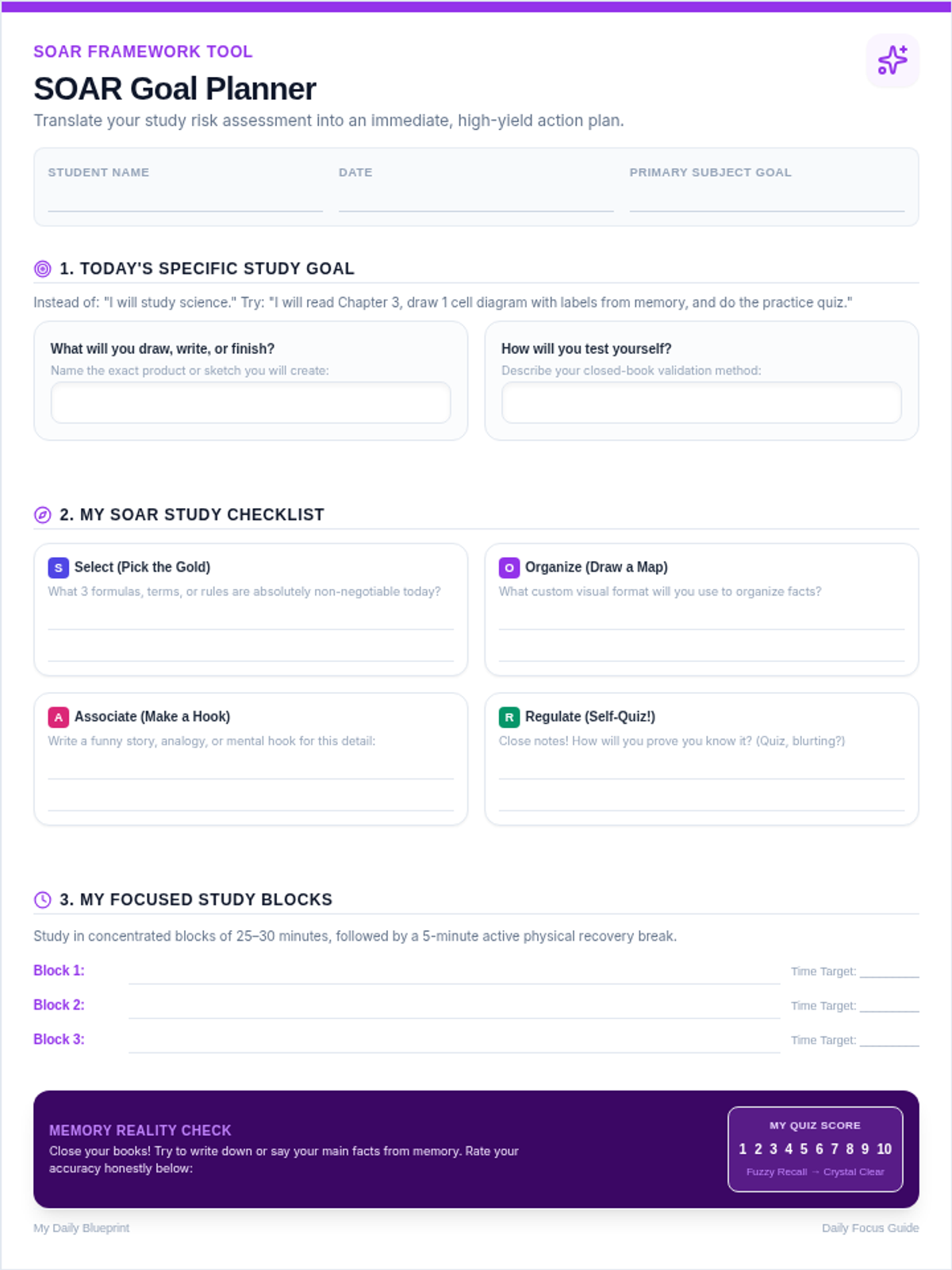
A 1-page structured daily study planner and SMART goal-setting template based on the SOAR study skills model to map daily objectives, tasks, and memory monitoring.
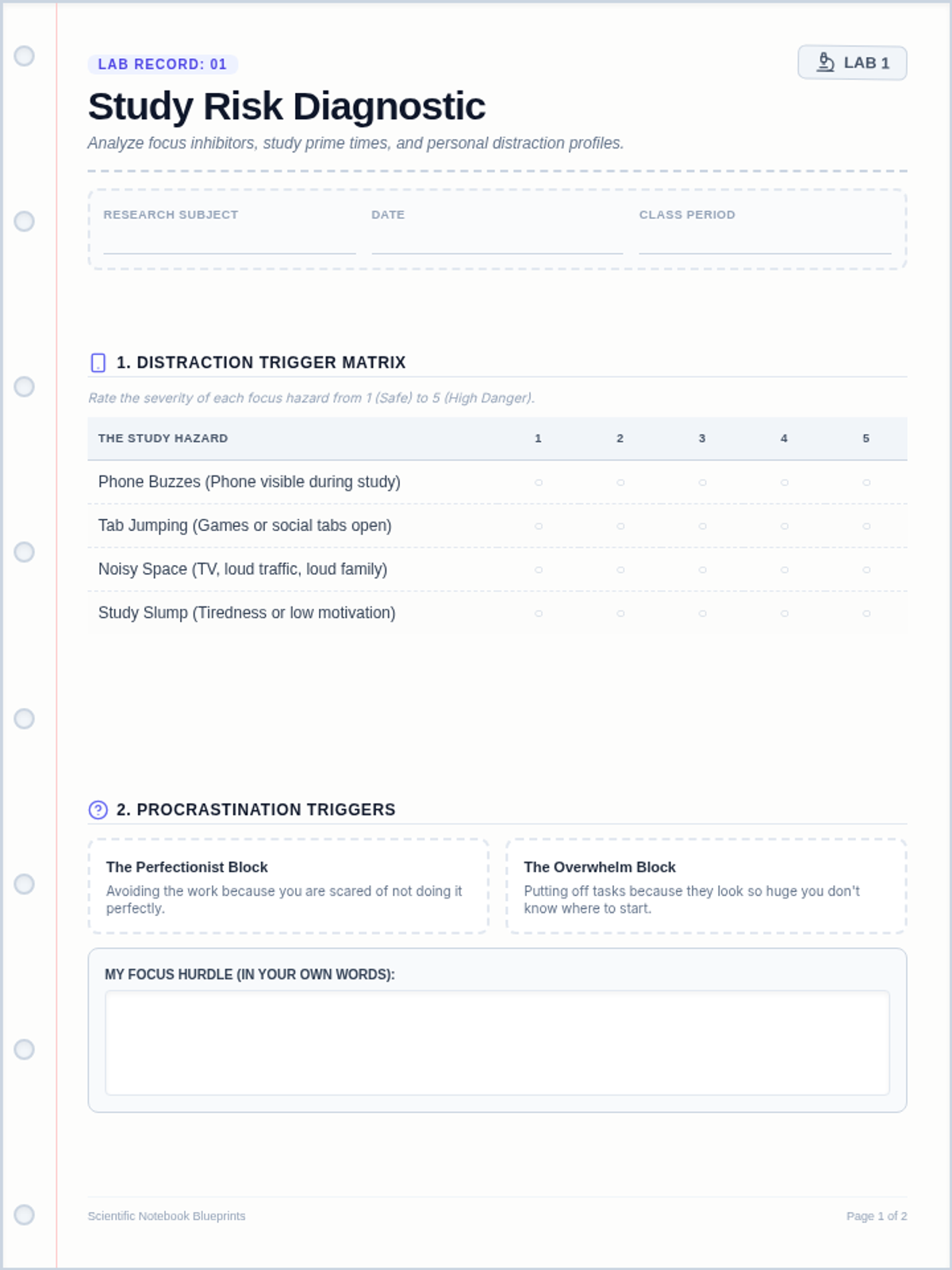
A highly readable diagnostic worksheet styled like a scientist's lab notebook, helping students analyze focus inhibitors, study prime times, and personal distraction profiles.
A polished, student-friendly presentation designed to introduce the science of focus, study prime times, and the SOAR framework to middle school students.
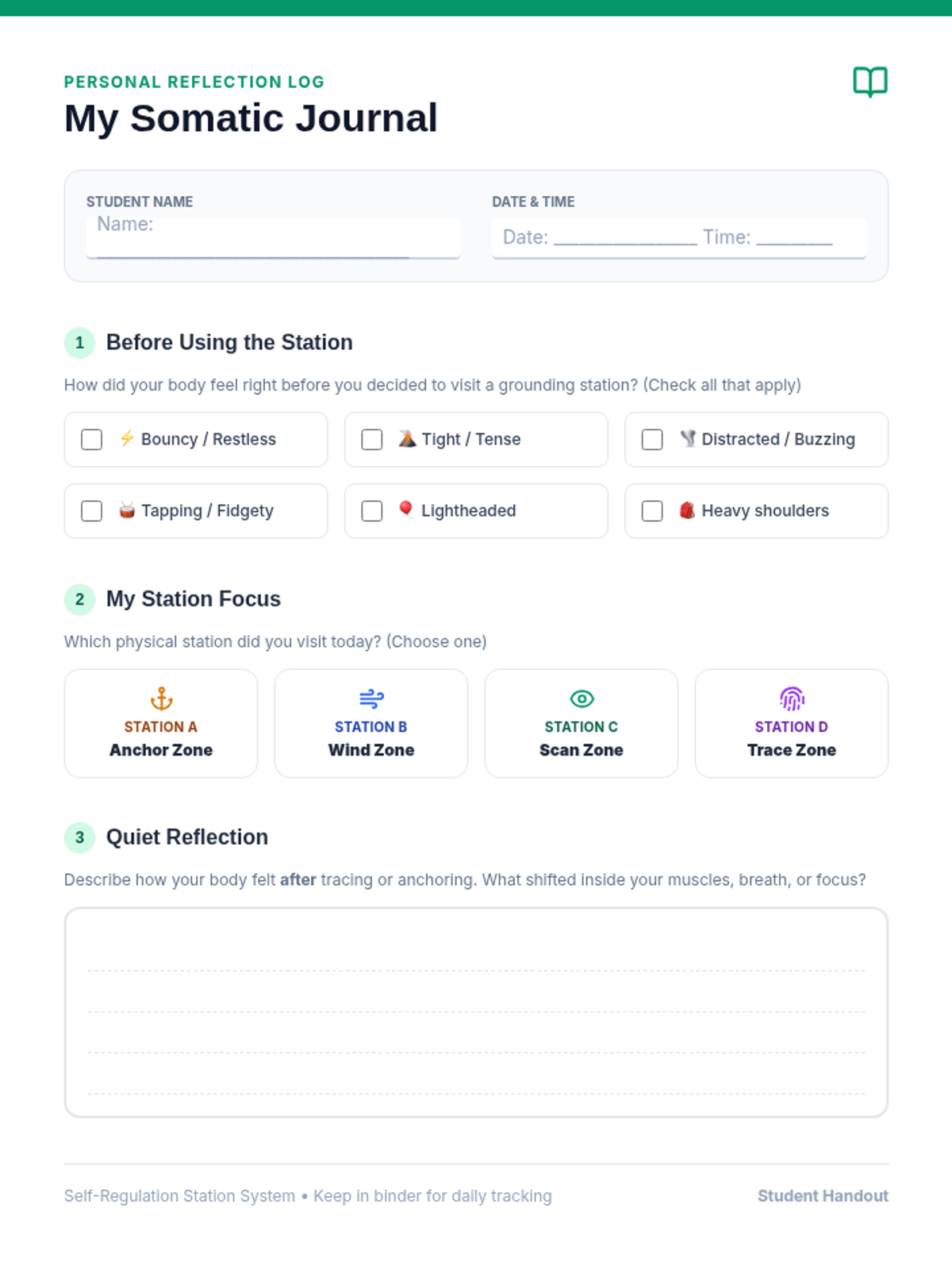
A student-facing somatic grounding reflection journal, featuring a body-check tracker, station logs, and quiet reflection writing lines to reinforce physiological self-awareness.
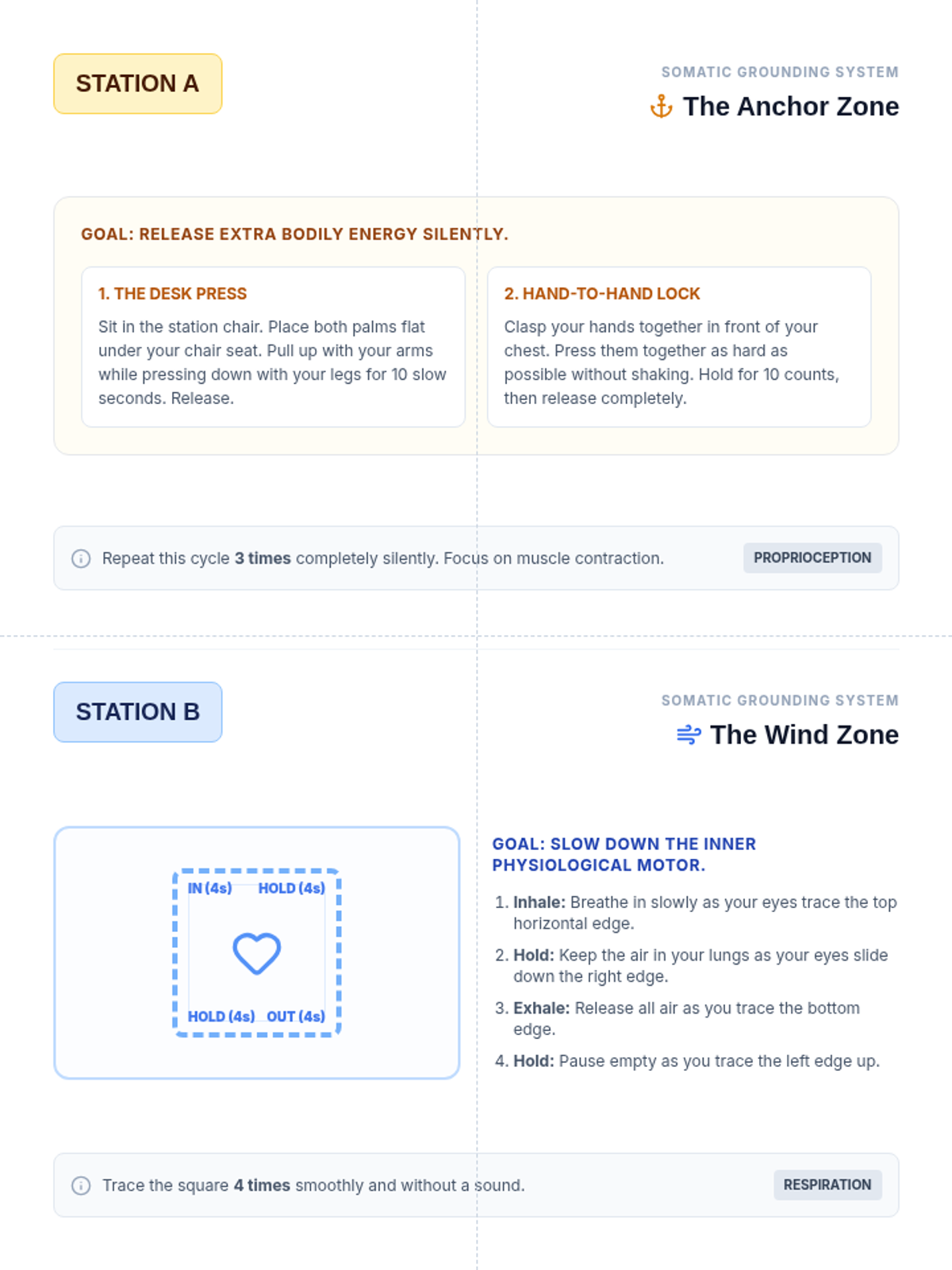
Printable high-contrast somatic grounding cards for Stations A, B, C, and D, featuring direct physical instructions, breath patterns, sensory scan boxes, and finger-tracing paths.
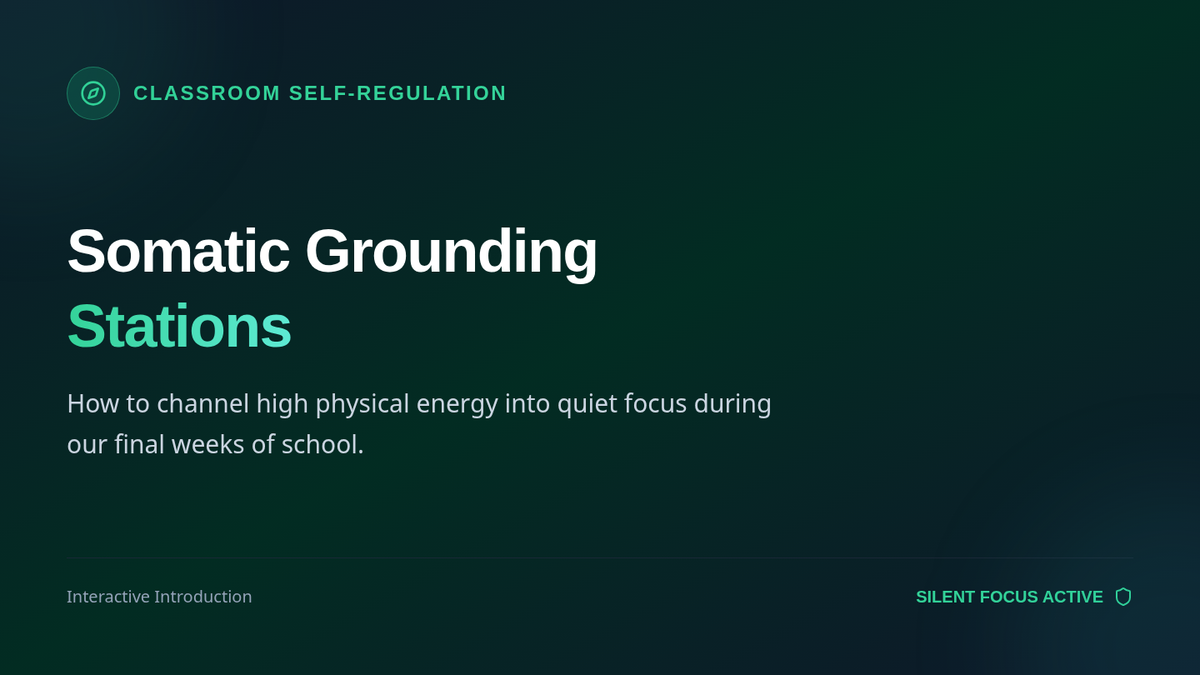
An engaging classroom slide deck designed to introduce students to the somatic grounding system, helping them understand physiological energy and how to use the silent stations.
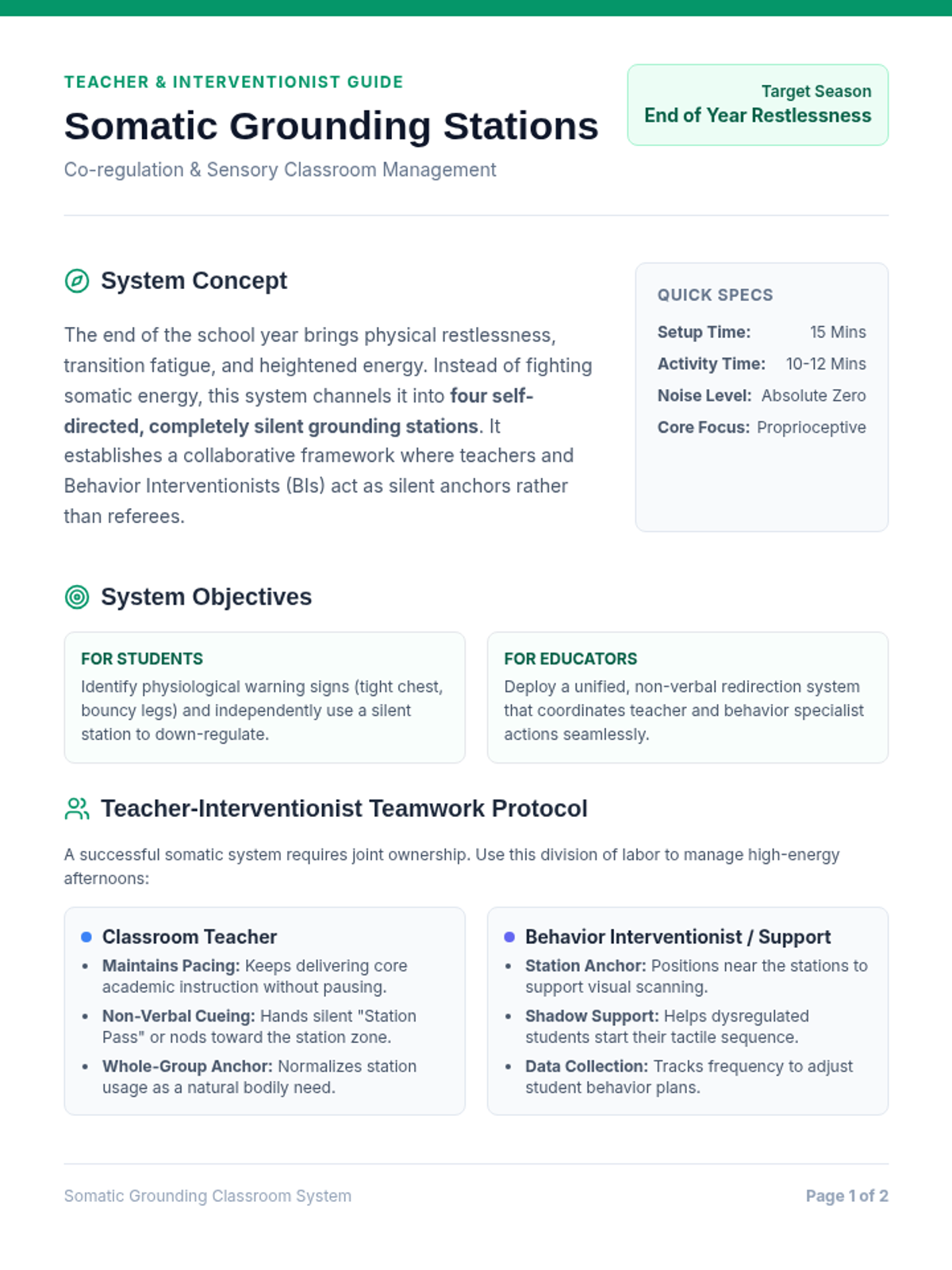
A detailed, 2-page teacher-facing lesson plan outlining the somatic grounding system, including teacher-interventionist collaboration protocols, room setup, and de-escalation scripts.