A slide deck introducing the concepts of sound vibrations and olfactory detection, including categories of scents and a guide for scent identification stations.
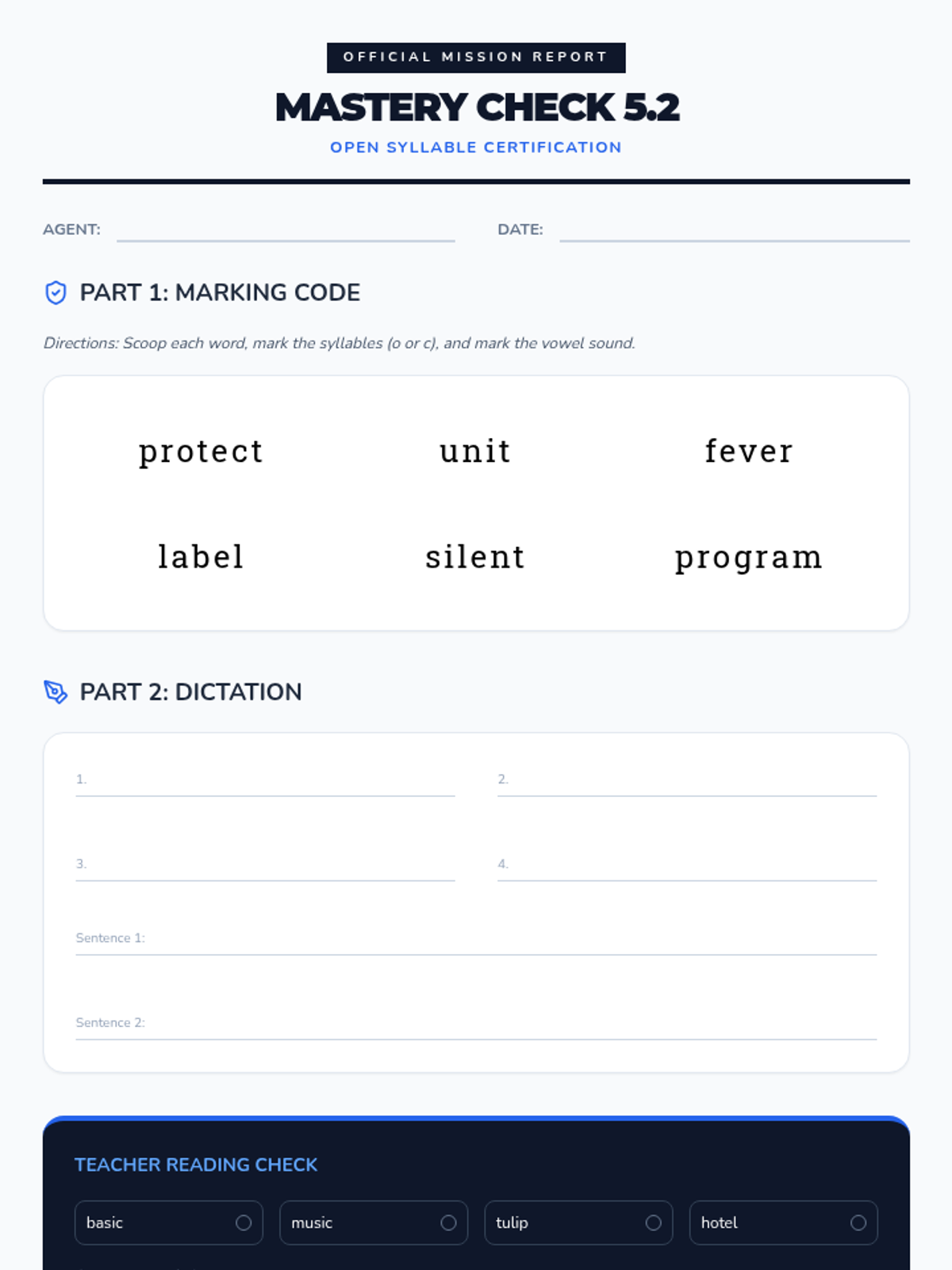
A short assessment for Wilson Reading Step 5.2, including marking practice, word/sentence dictation areas, and a teacher-led reading check.
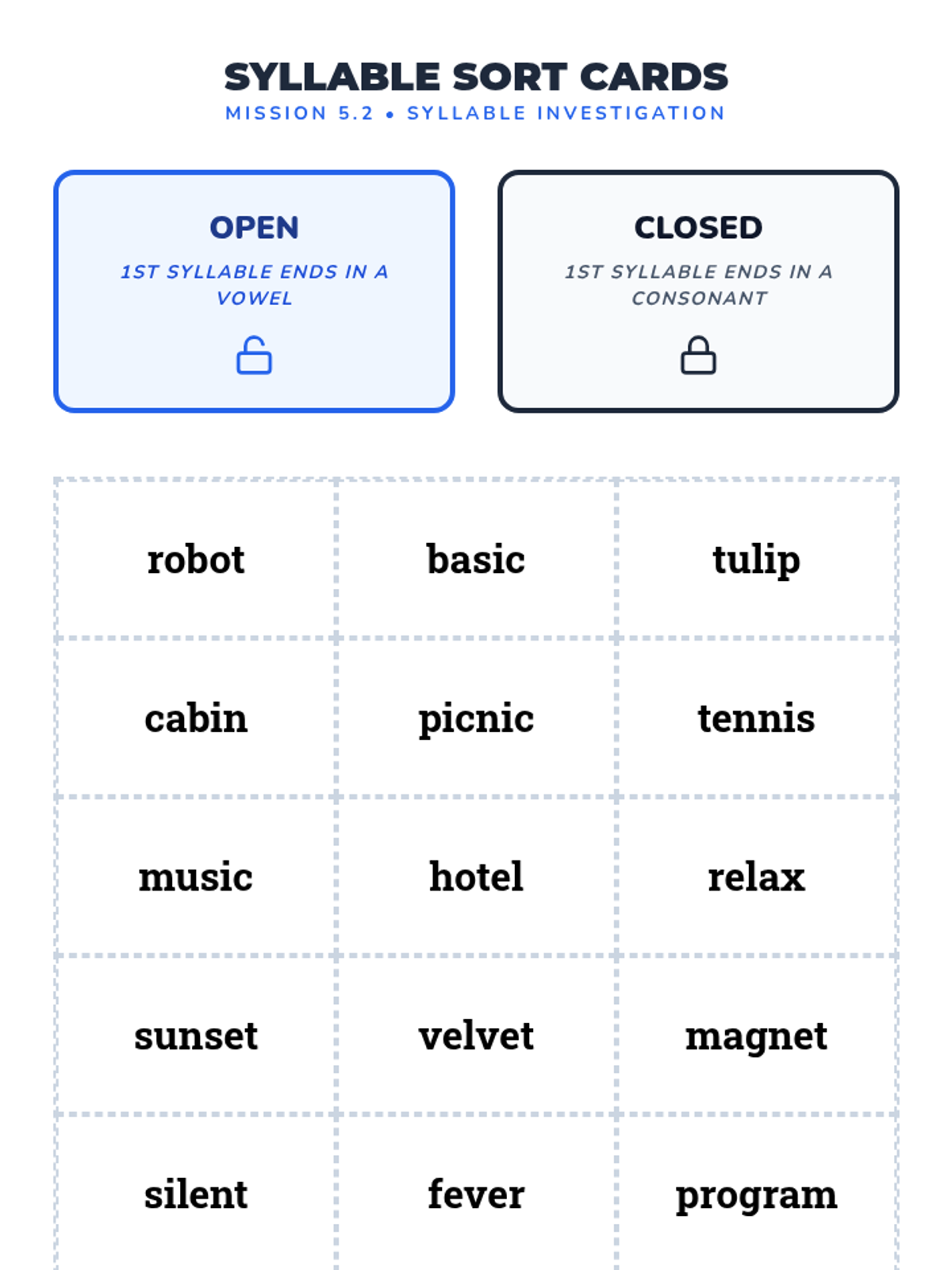
Printable sorting cards for multi-syllabic words, designed for students to categorize words by their first syllable type (Open vs. Closed). Fits Wilson Reading Step 5.2.
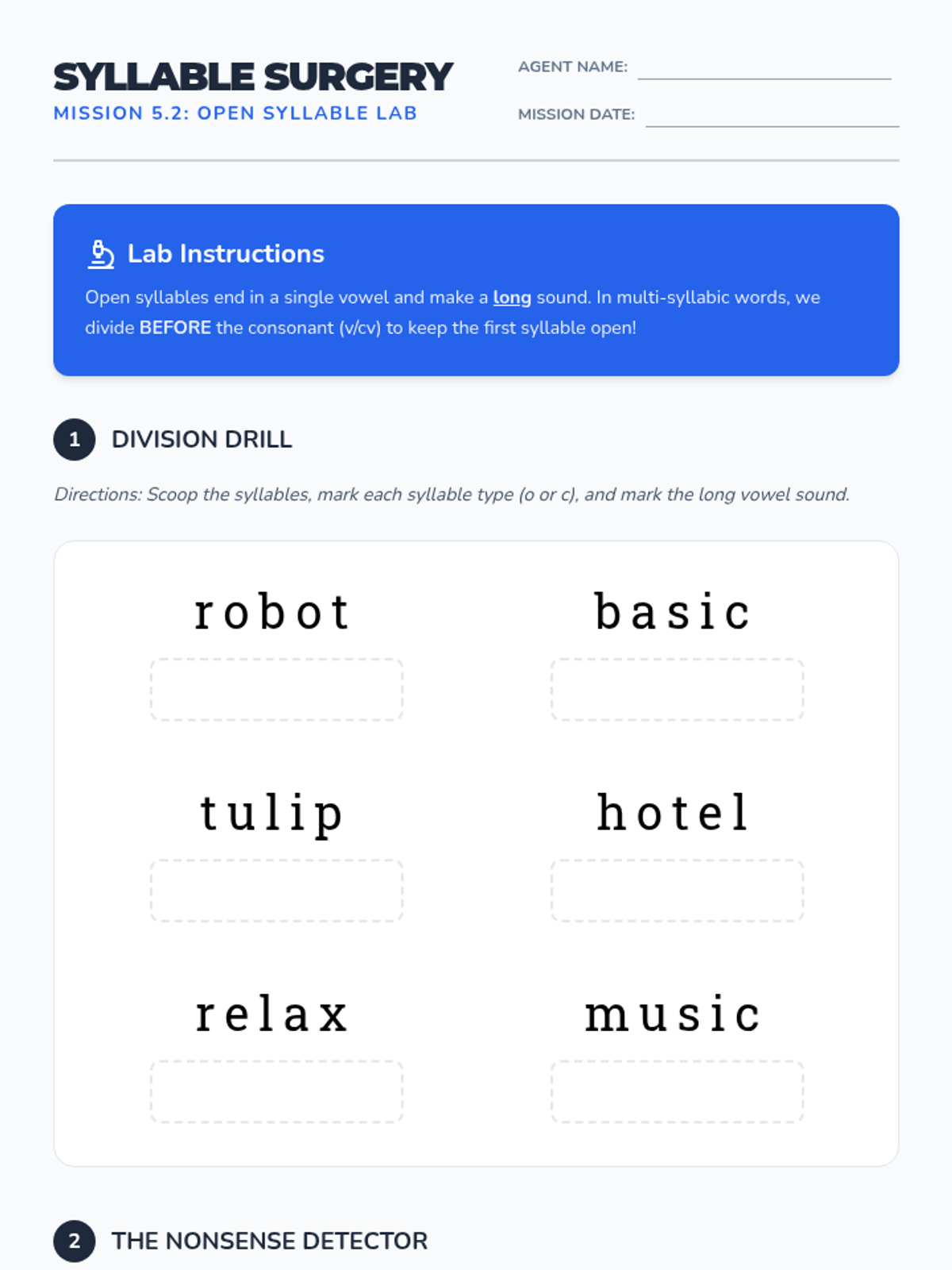
A student worksheet for Wilson Reading Step 5.2 focusing on scooping and dividing words with open syllables. Includes division practice, nonsense syllable identification, and sentence reading.
Instructional slides for Wilson Reading Step 5.2, featuring the detective-themed "Syllable Secrets" aesthetic. Covers the open syllable rule, v/cv division, and marking strategies.
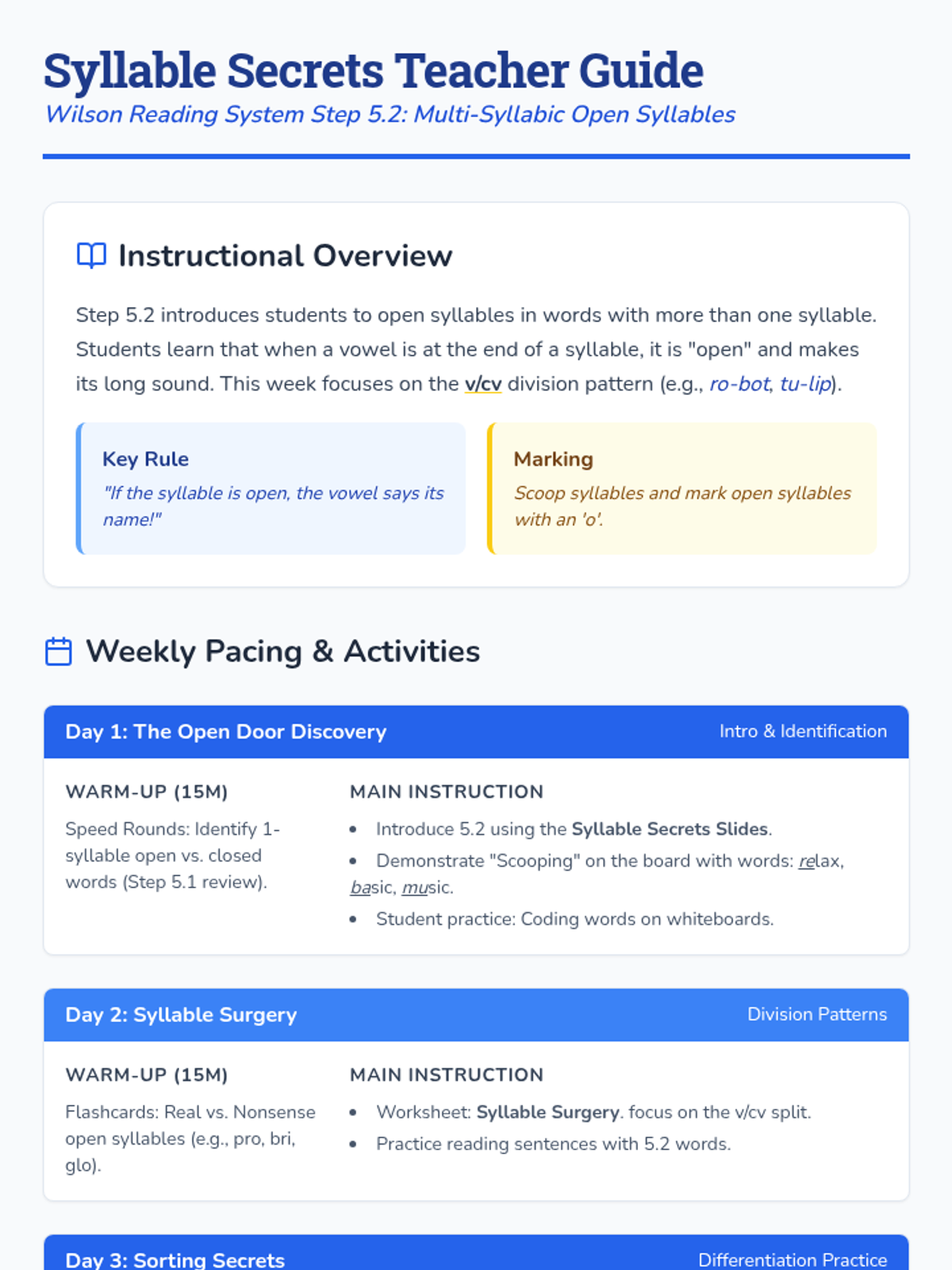
A comprehensive week-long teacher facilitation guide for Wilson Reading Step 5.2, including daily pacing, warm-up ideas, and a master word bank.
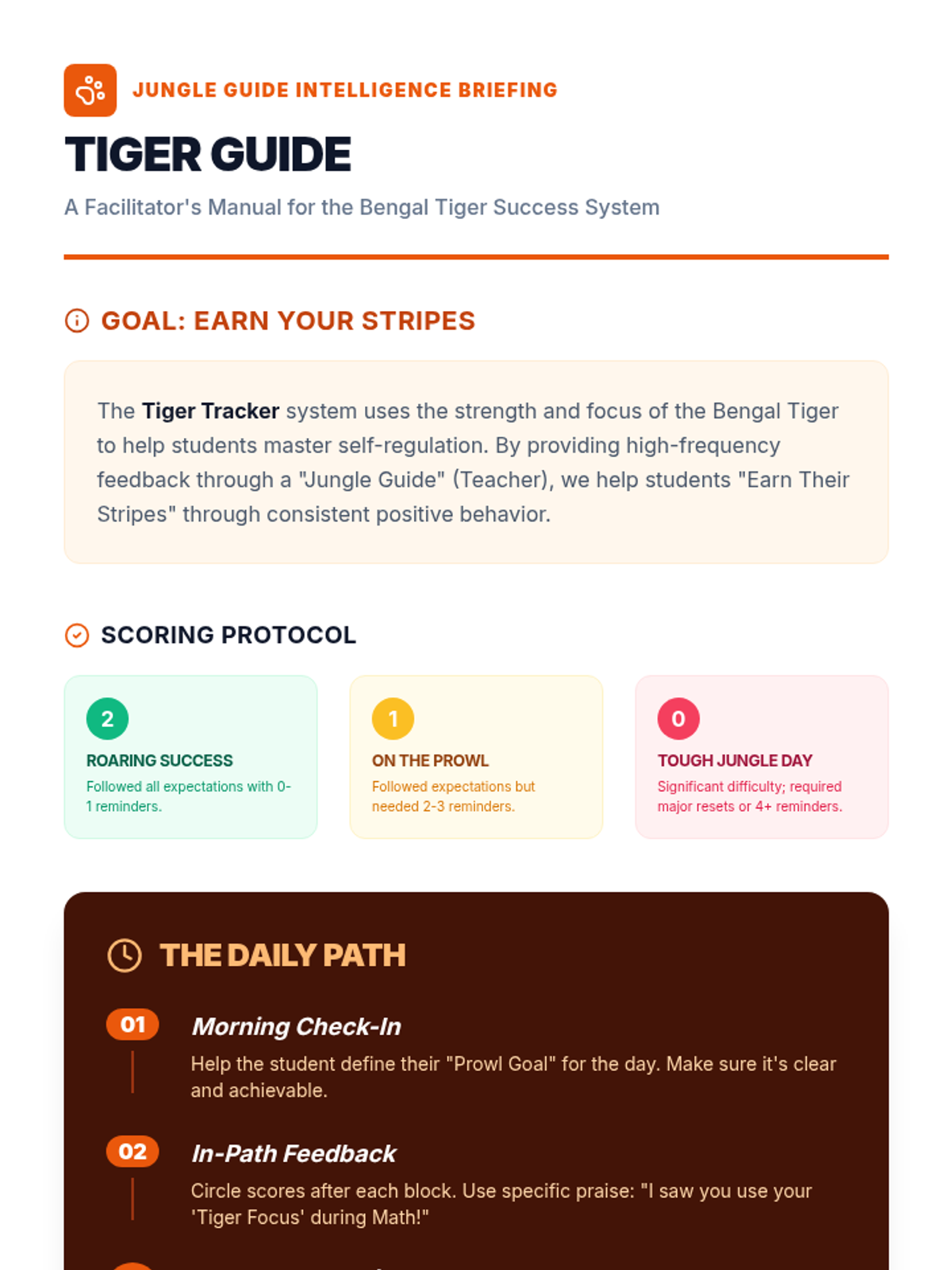
Bengal Tiger-themed teacher guide for facilitating the Tiger Tracker CICO system, including scoring protocols and reflection strategies.
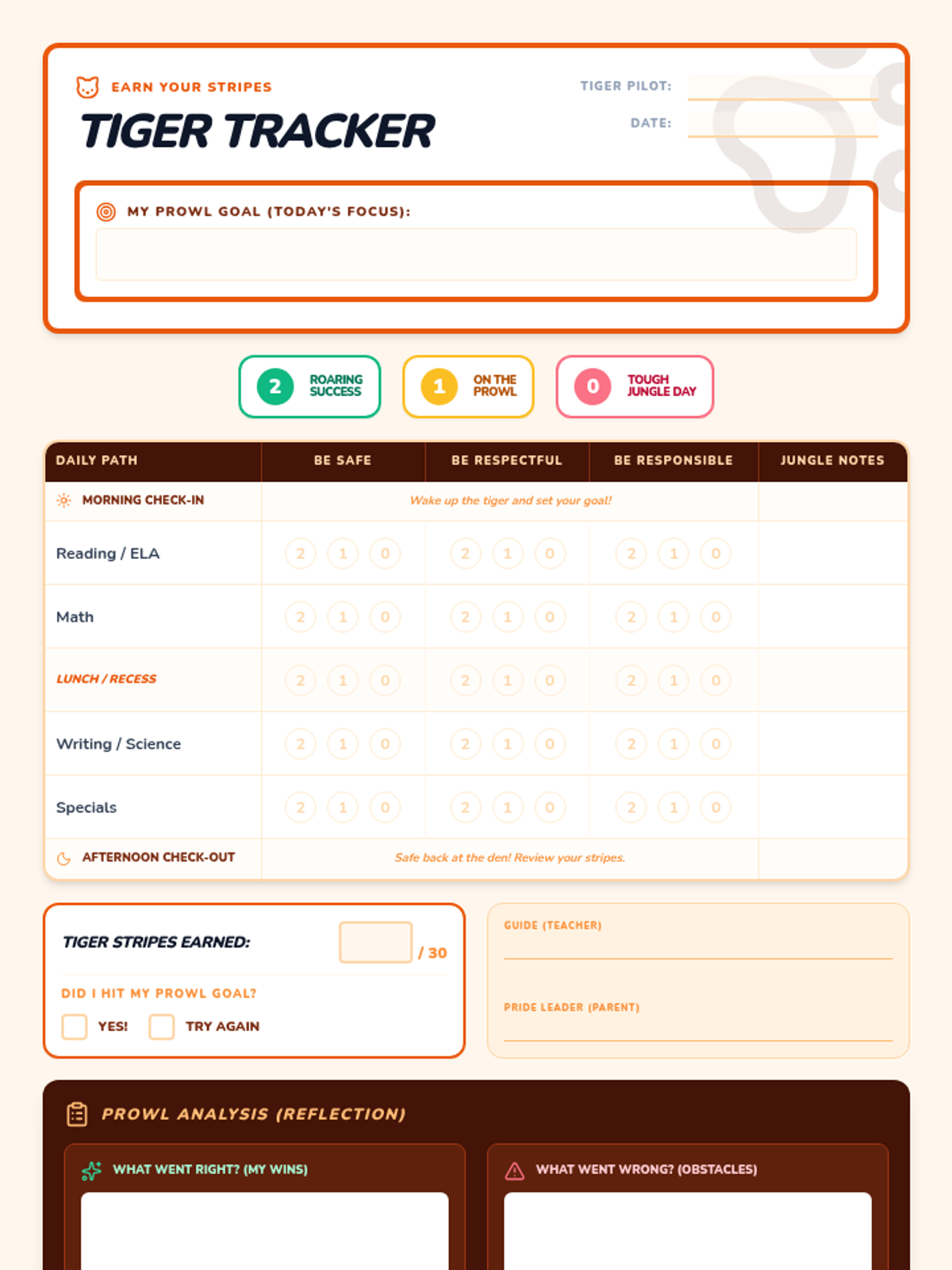
Updated Tiger-themed daily behavior tracking sheet with reflection areas for wins and obstacles, featuring a Bengal Tiger aesthetic.
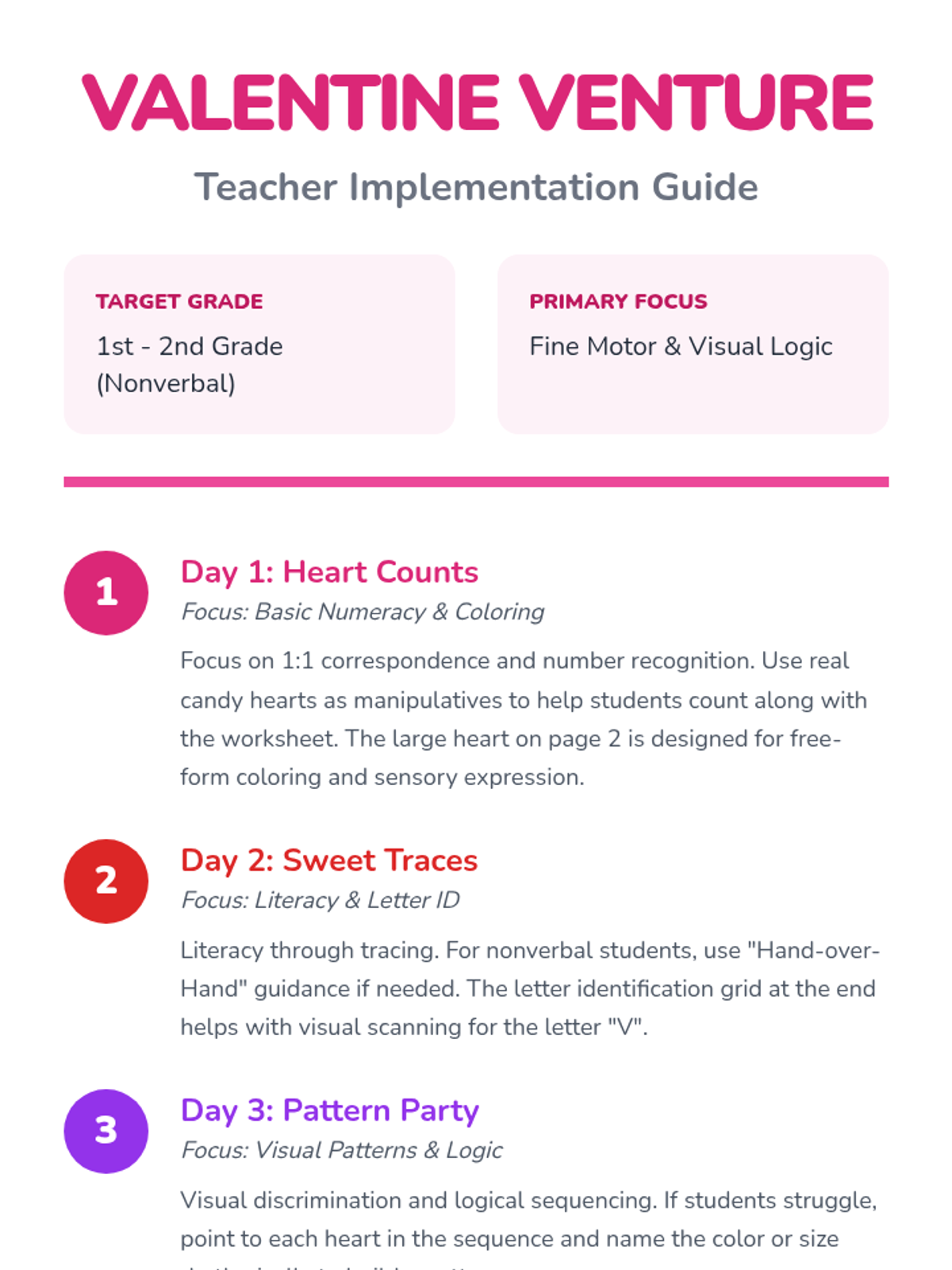
A comprehensive teacher guide for the Valentine Venture sequence, providing implementation strategies, differentiation tips, and daily goals for teaching nonverbal students.
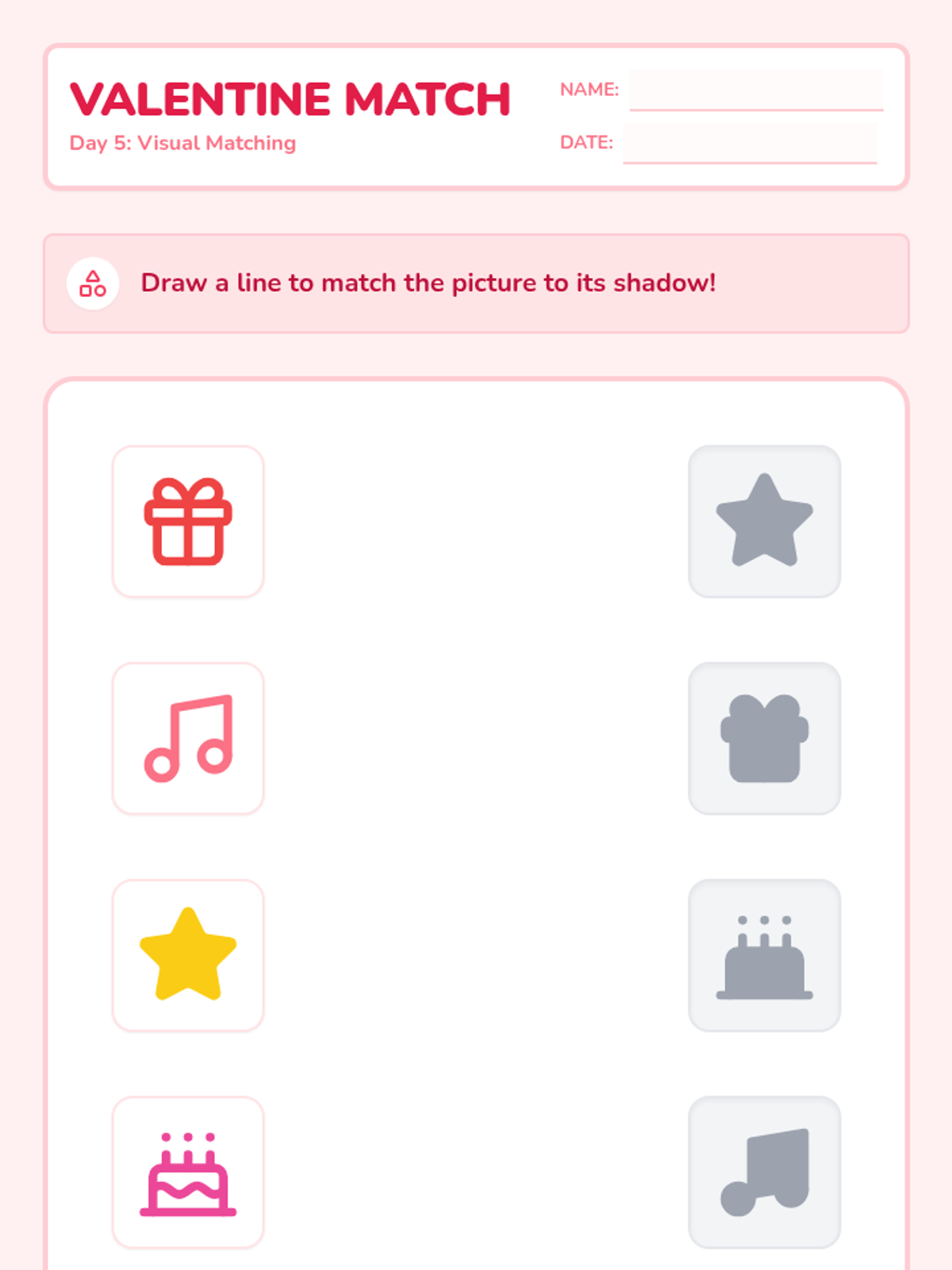
A shadow matching worksheet for Day 5. Students draw lines to connect colorful Valentine-themed objects with their corresponding gray silhouettes to practice visual discrimination.
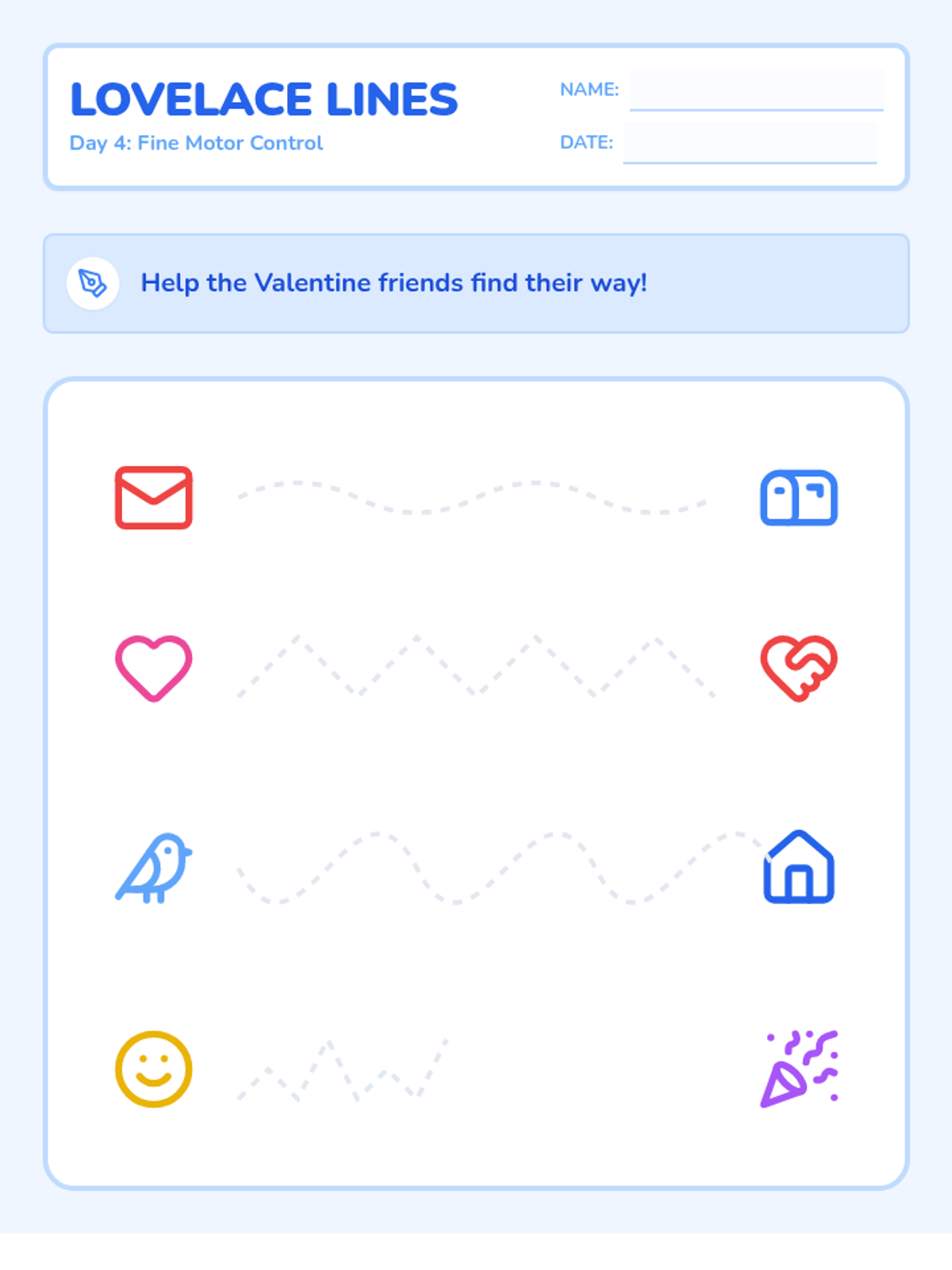
A fine motor tracing worksheet for Day 4. Students navigate complex line paths (wavy, zig-zag, loops) to help Valentine-themed icons reach their destinations.
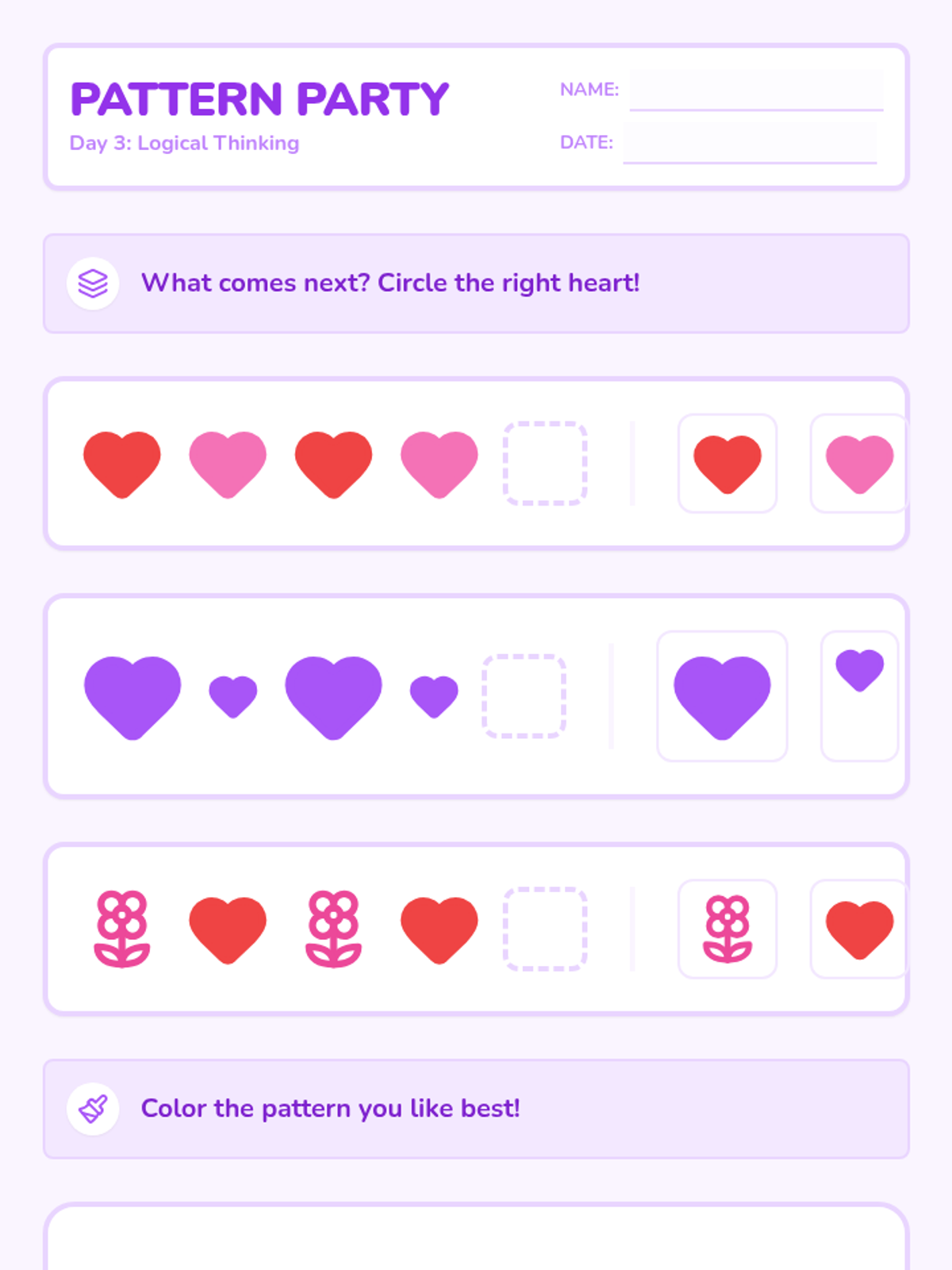
A pattern recognition worksheet for Day 3. Students identify and complete Valentine-themed patterns using color, size, and shape, followed by a coloring activity.
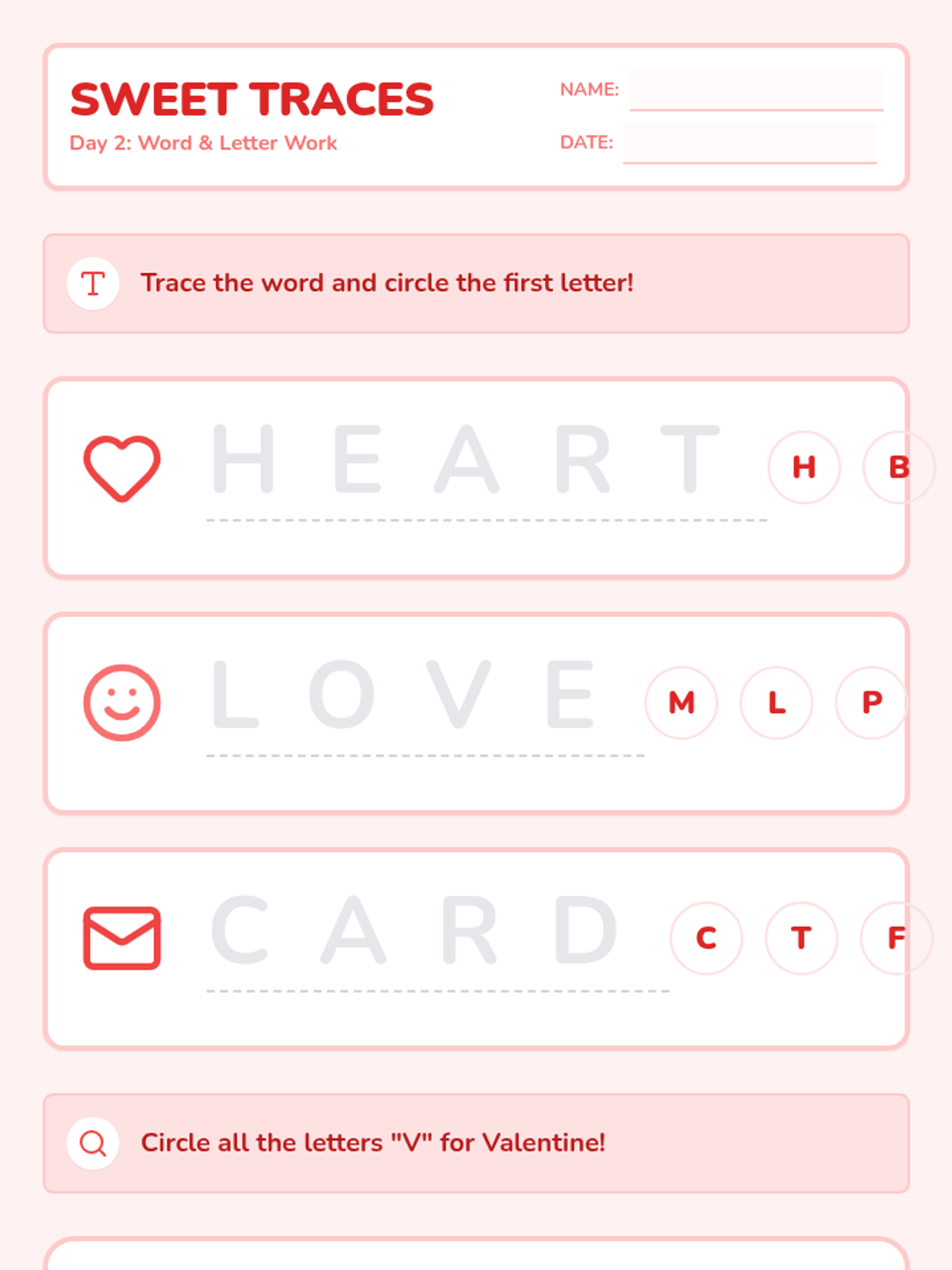
A tracing and letter identification worksheet for Day 2. Students trace Valentine-themed words and circle specific letters to build fine motor and literacy skills.
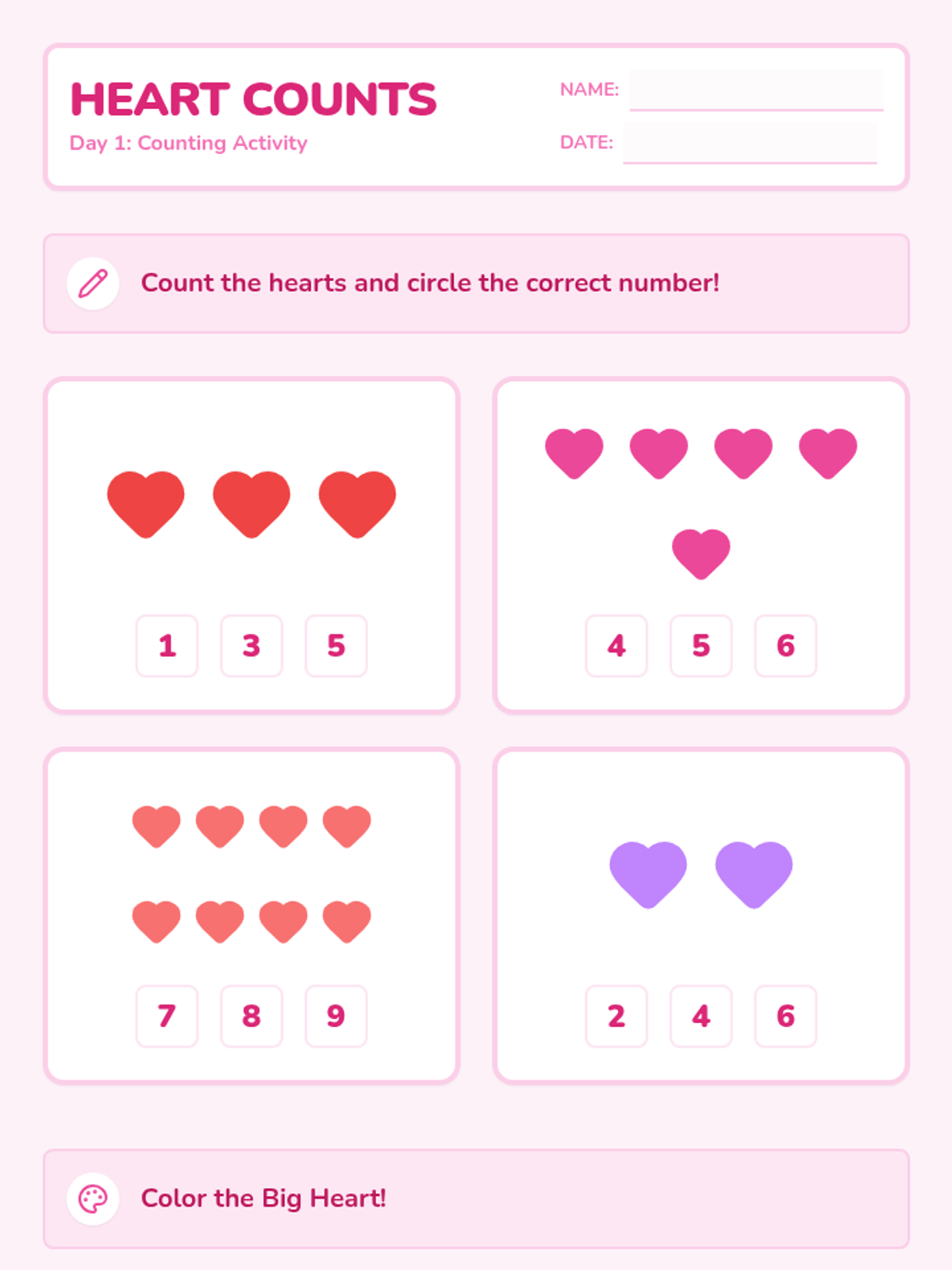
A counting and coloring worksheet for Day 1 of the Valentine Venture sequence. Students count groups of hearts and select the correct number, followed by a large heart coloring activity.
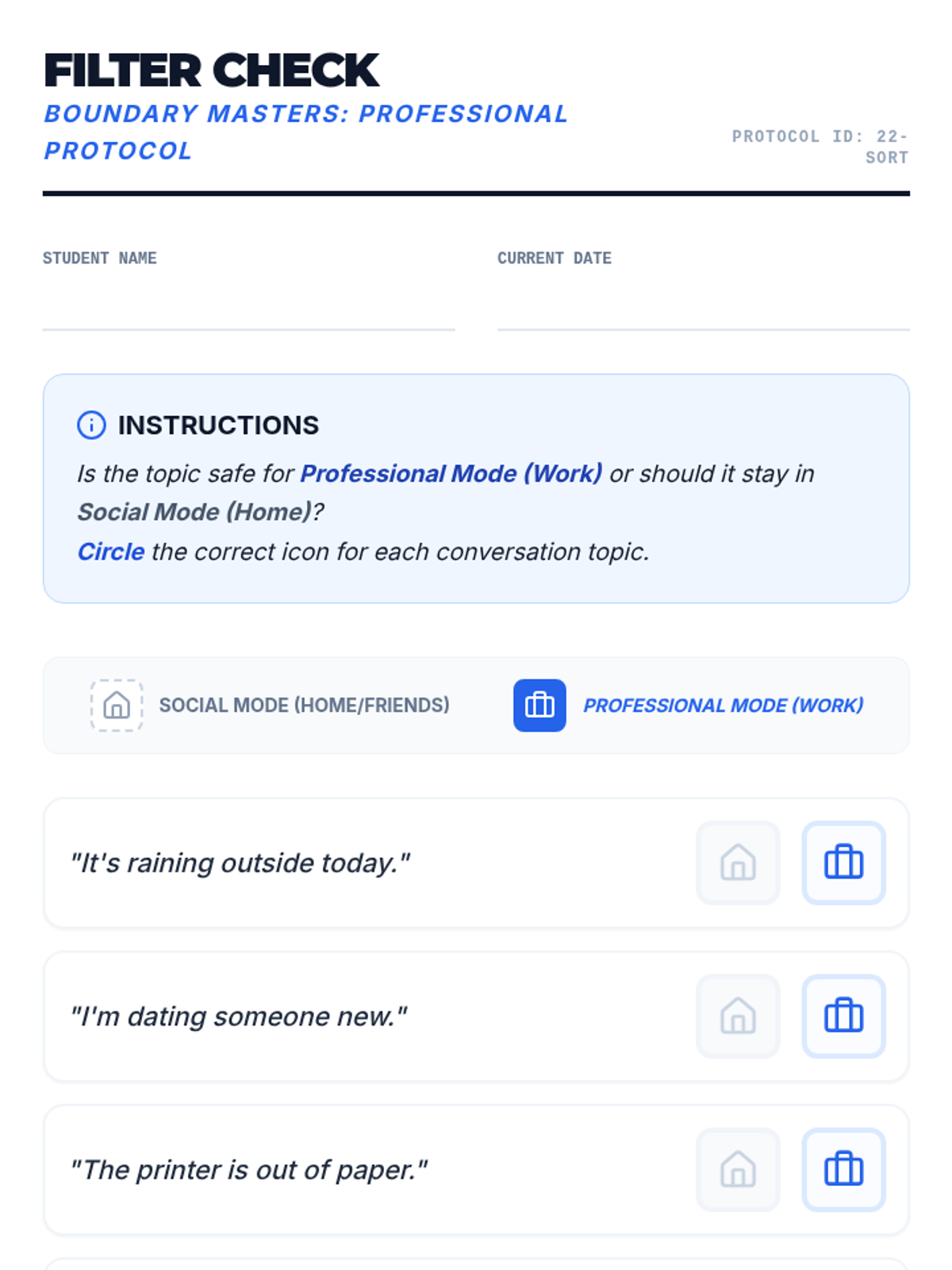
A visual identification worksheet where students circle icons to categorize conversation topics as "Social Mode" (private/home) or "Professional Mode" (work-appropriate). Replaces the cut-and-sort with a more accessible circling format.
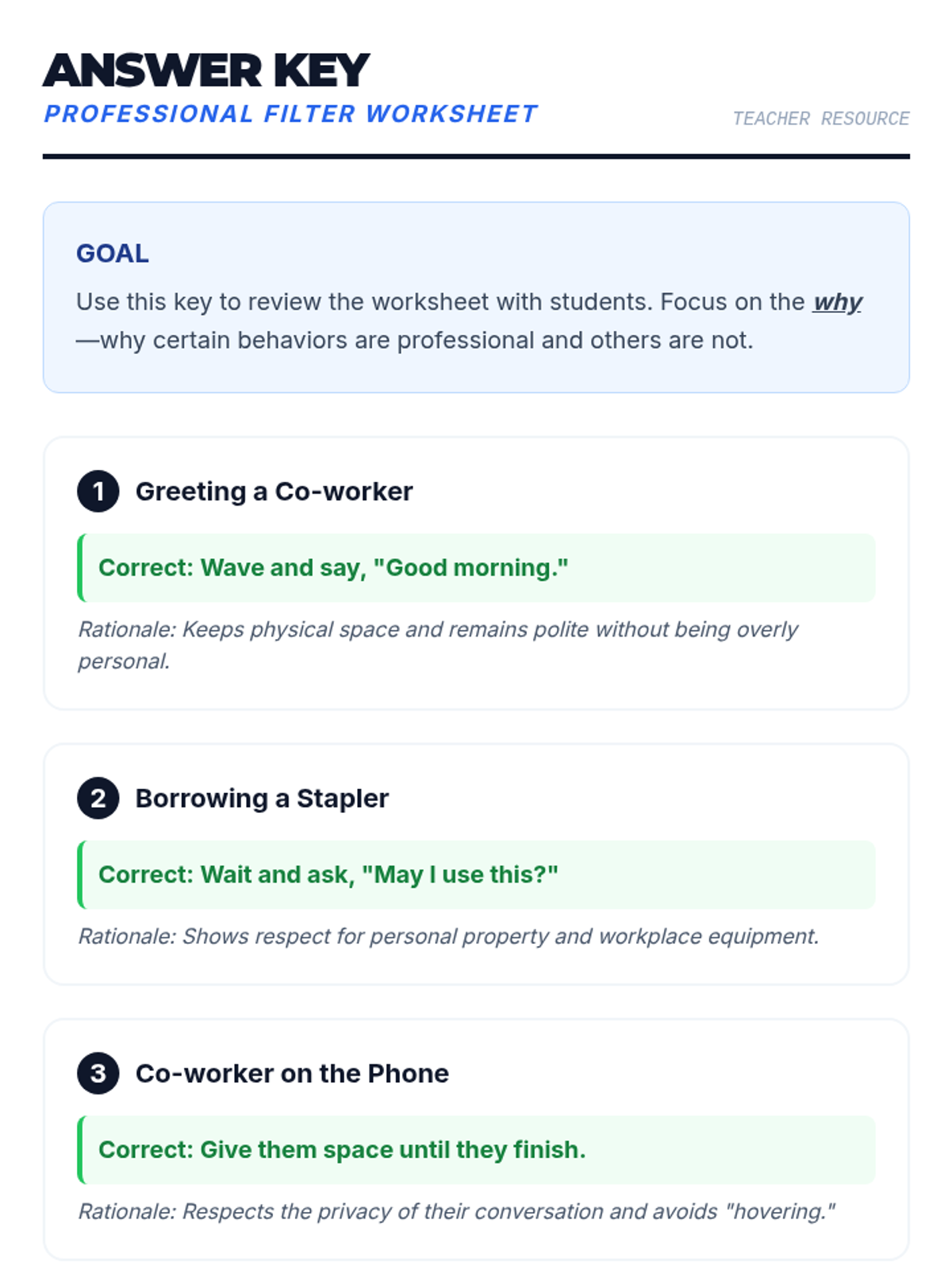
An answer key for the Professional Filter Worksheet, providing correct answers and rationales for workplace-based boundary decisions.
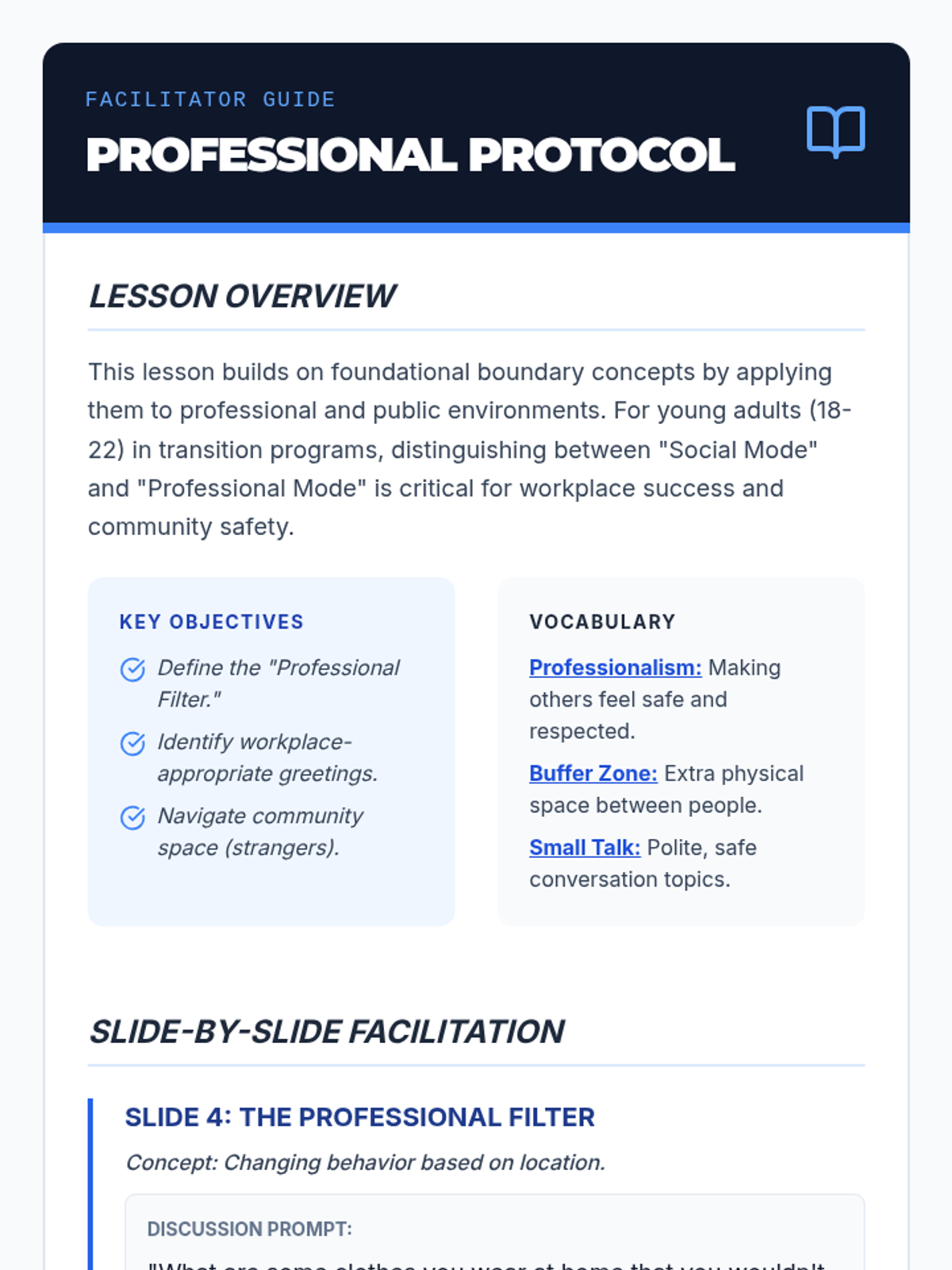
A comprehensive facilitator guide for the Professional Protocol lesson, featuring key vocabulary definitions, facilitation tips for diverse learners, and detailed discussion prompts for each workplace and community scenario.
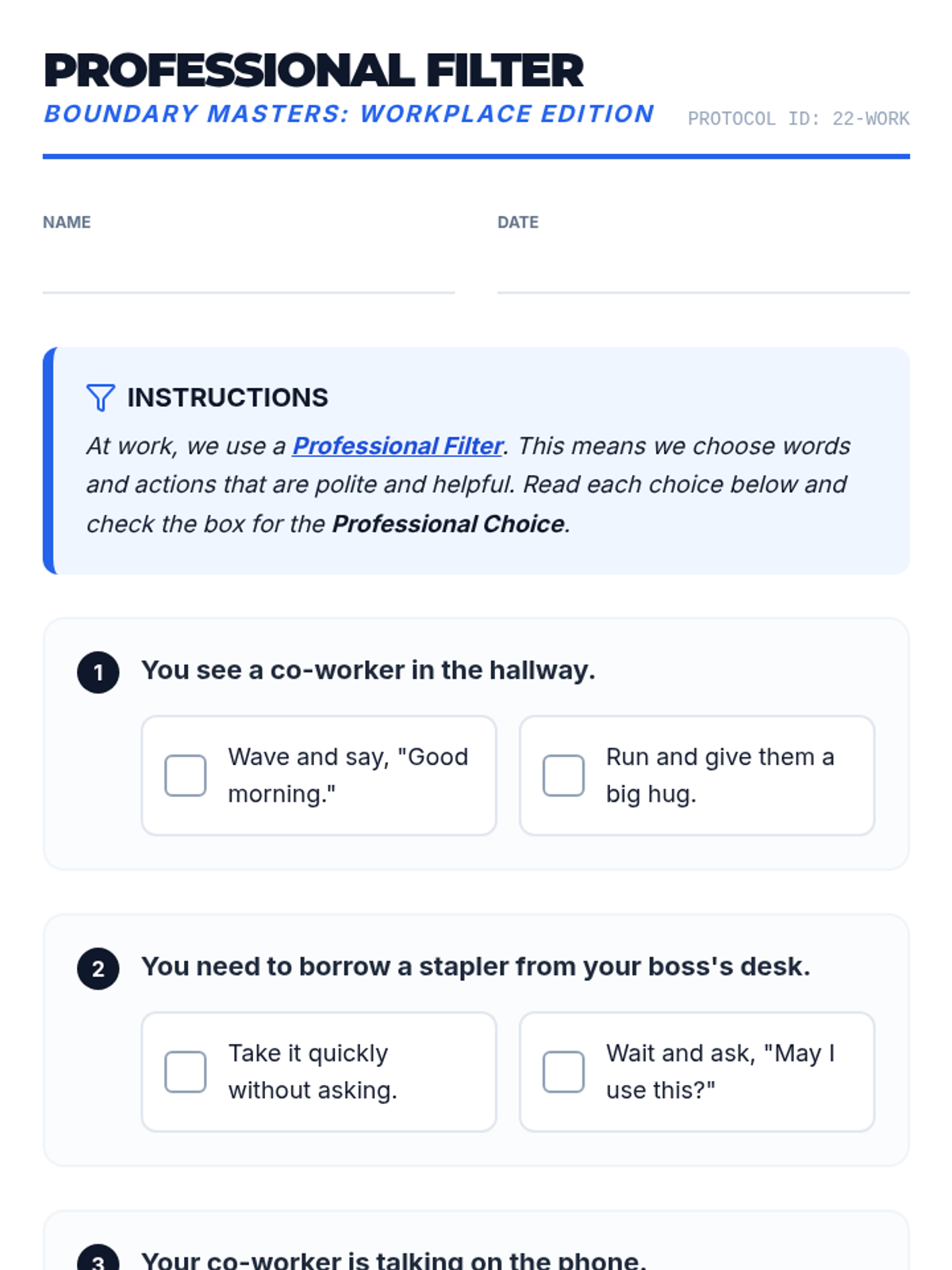
A 2-page worksheet for young adults to practice identifying professional vs. personal boundaries in workplace scenarios. Includes multiple-choice questions and short-answer writing practice with a high-contrast, professional layout.
A 16-slide presentation for young adults (18-22) with cognitive disabilities, focusing on professional boundaries in the workplace and community. Features high-contrast blueprint-style visuals, adult-centric scenarios, and clear instructional scripts for workplace interactions.
Updated Mission Control Guide for teachers, now including instructions on how to facilitate the "Mission Analysis" reflection and debrief session with the student.
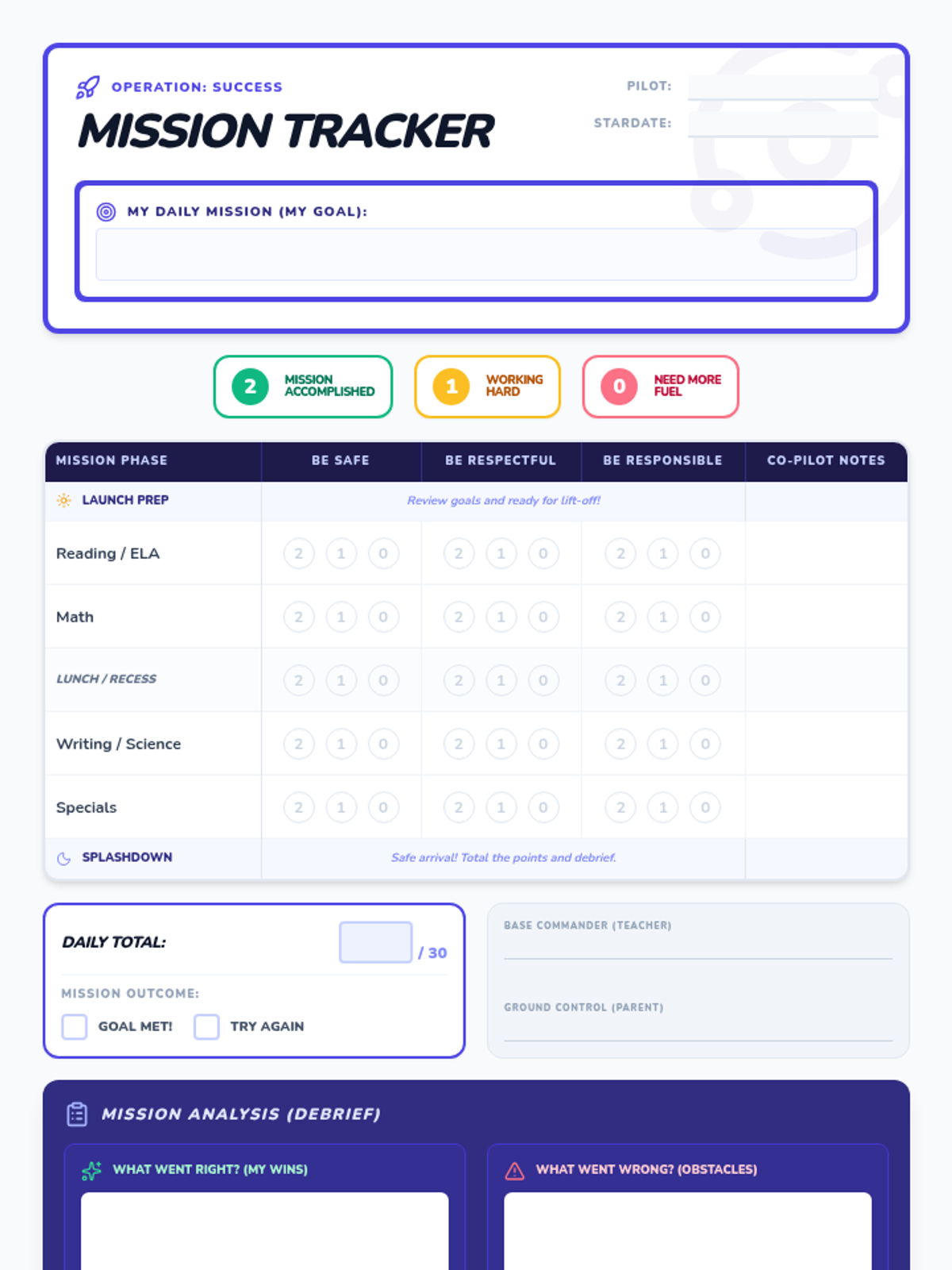
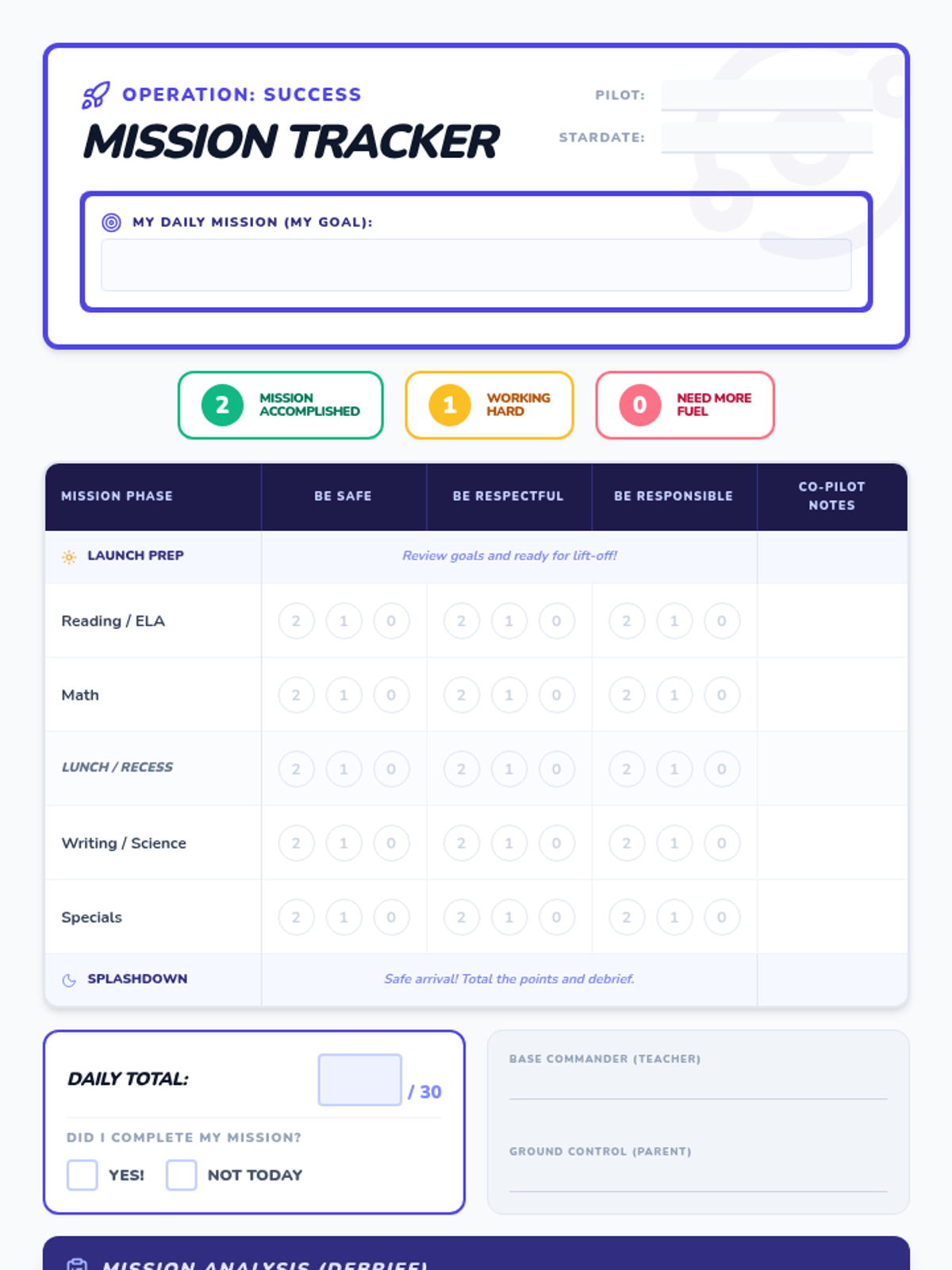
Updated Mission Tracker CICO sheet for a 3rd grade student, featuring a dedicated "Mission Analysis" section for self-reflection on goal success, wins, and obstacles.
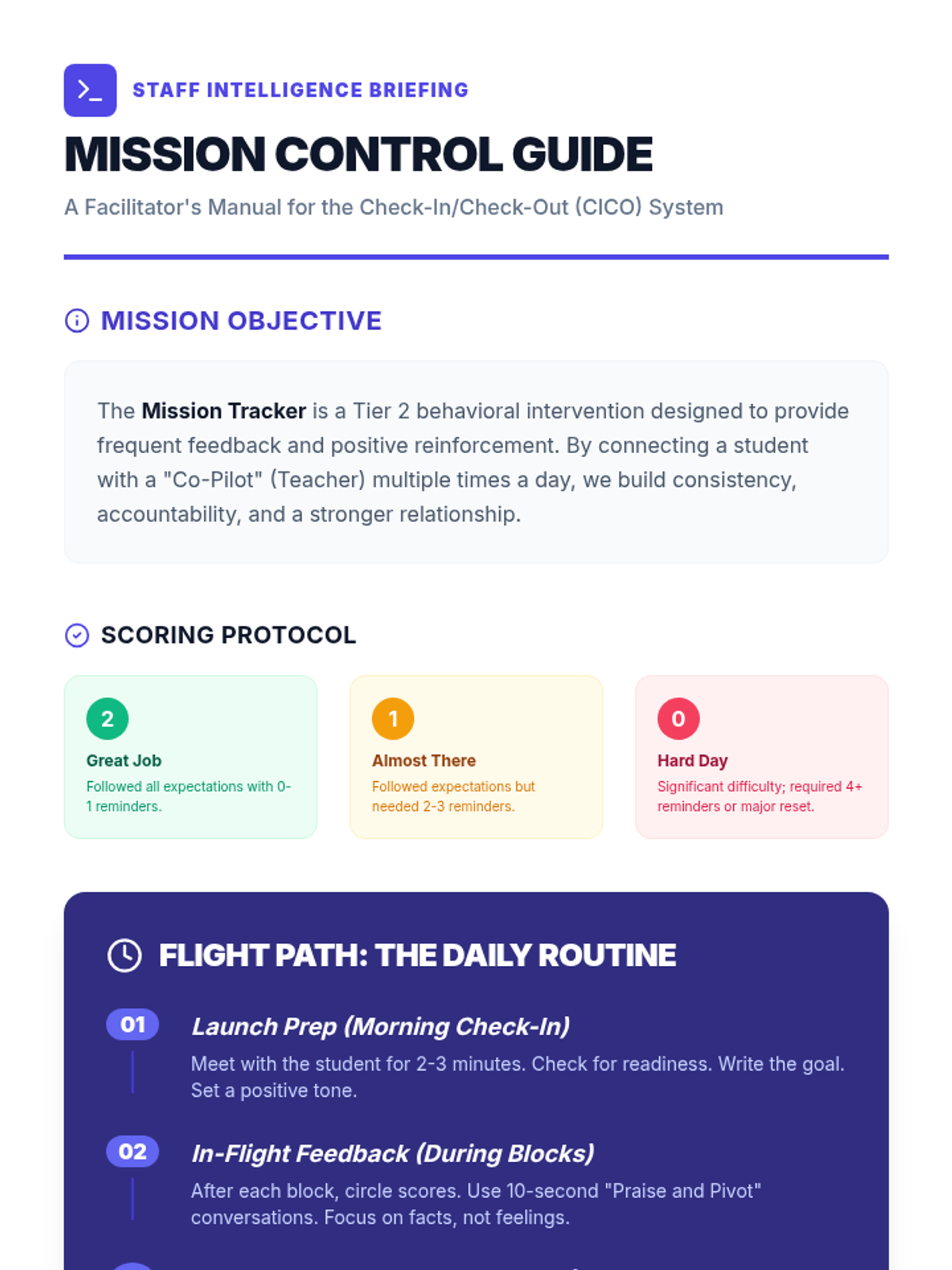
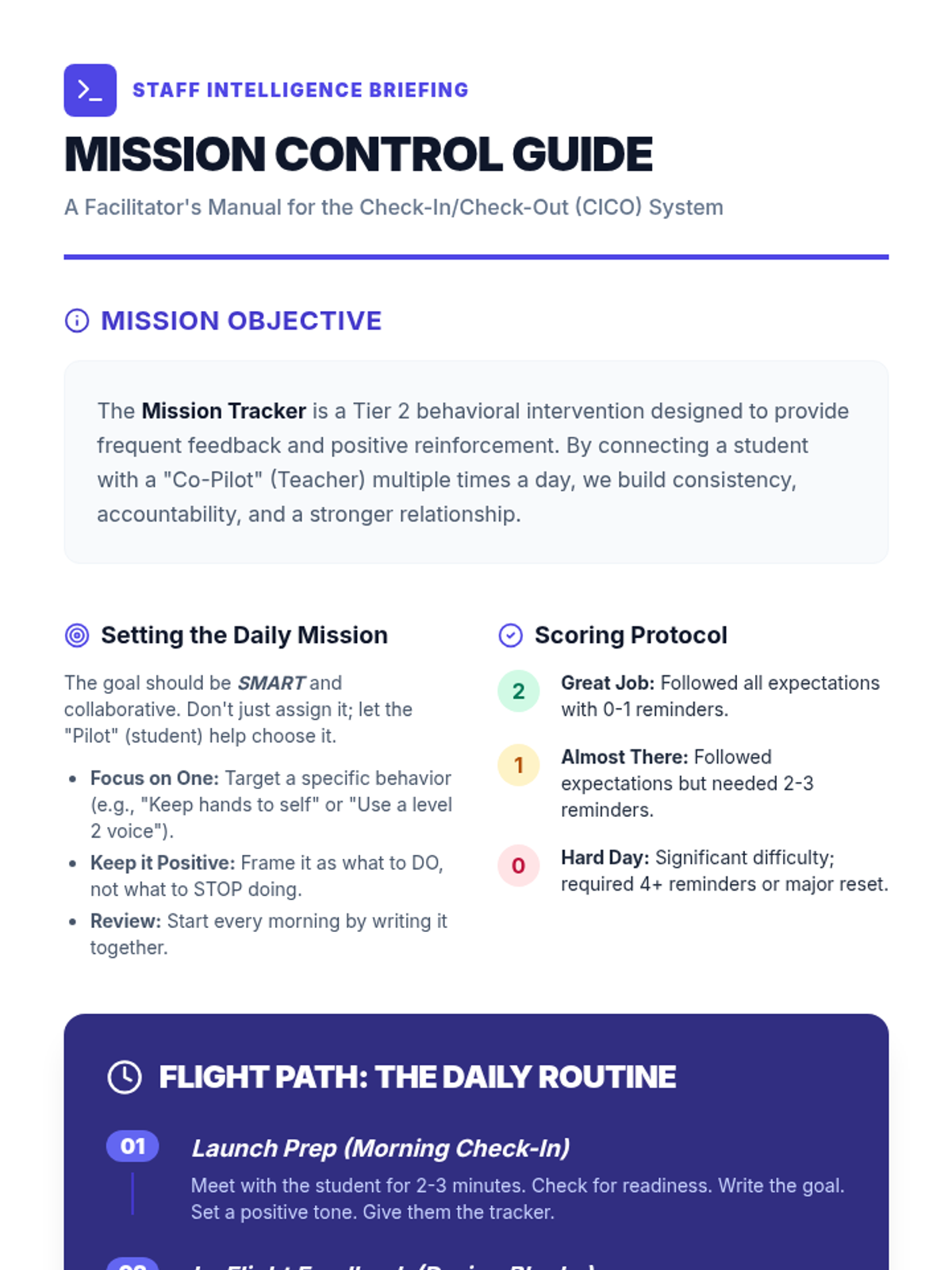
A comprehensive teacher resource explaining how to implement the Mission Tracker CICO system, including goal setting, scoring, and daily routines.
Updated daily behavior tracking sheet with a robust "Mission Analysis" section for reflecting on successes (what went right) and challenges (what went wrong).
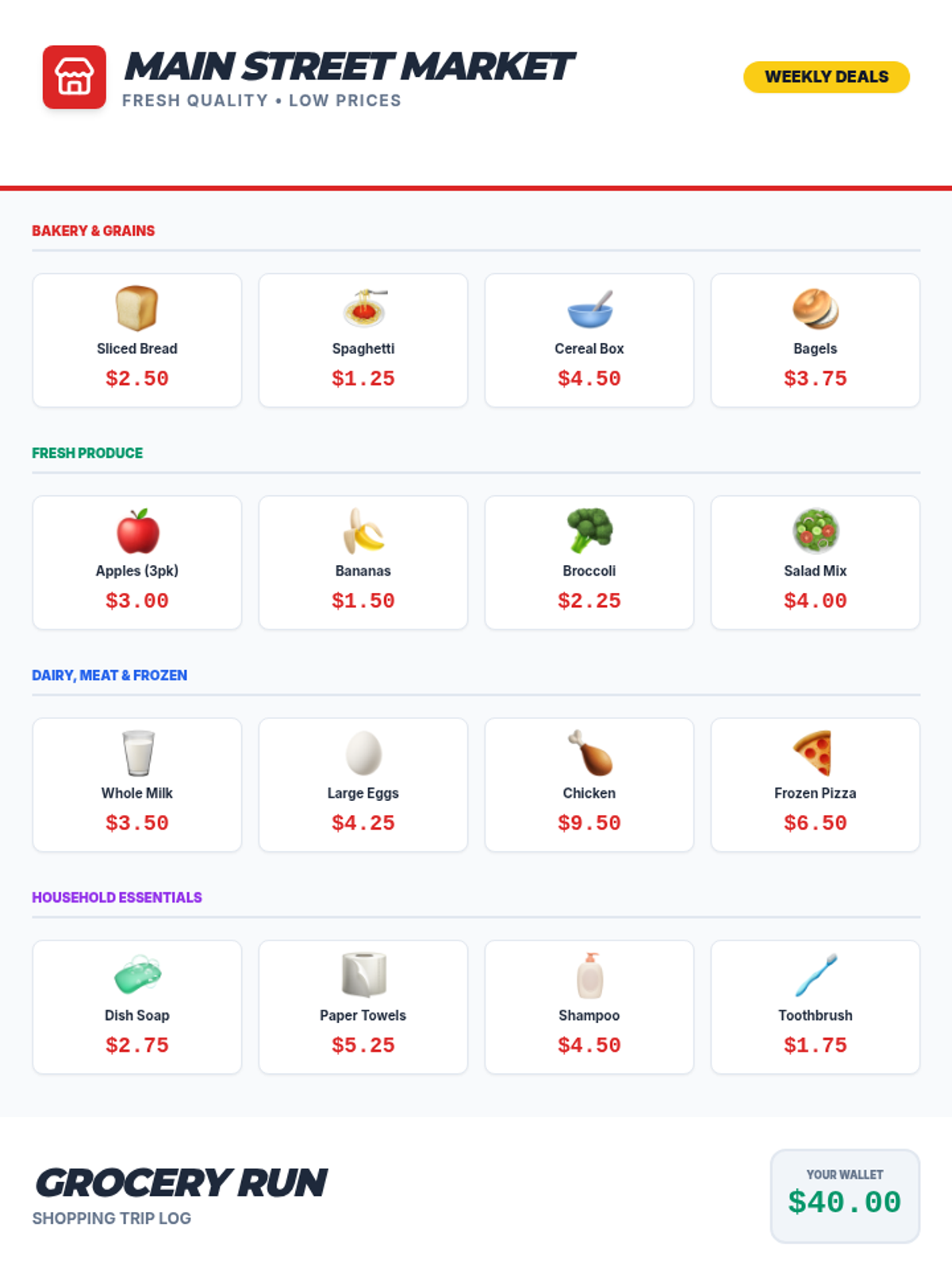
A realistic grocery shopping simulation featuring a "Main Street Market" circular and a $40 shopping trip log. Optimized for 8.5x11 printing with clear margins and structured workspaces for students with intellectual disabilities or autism.
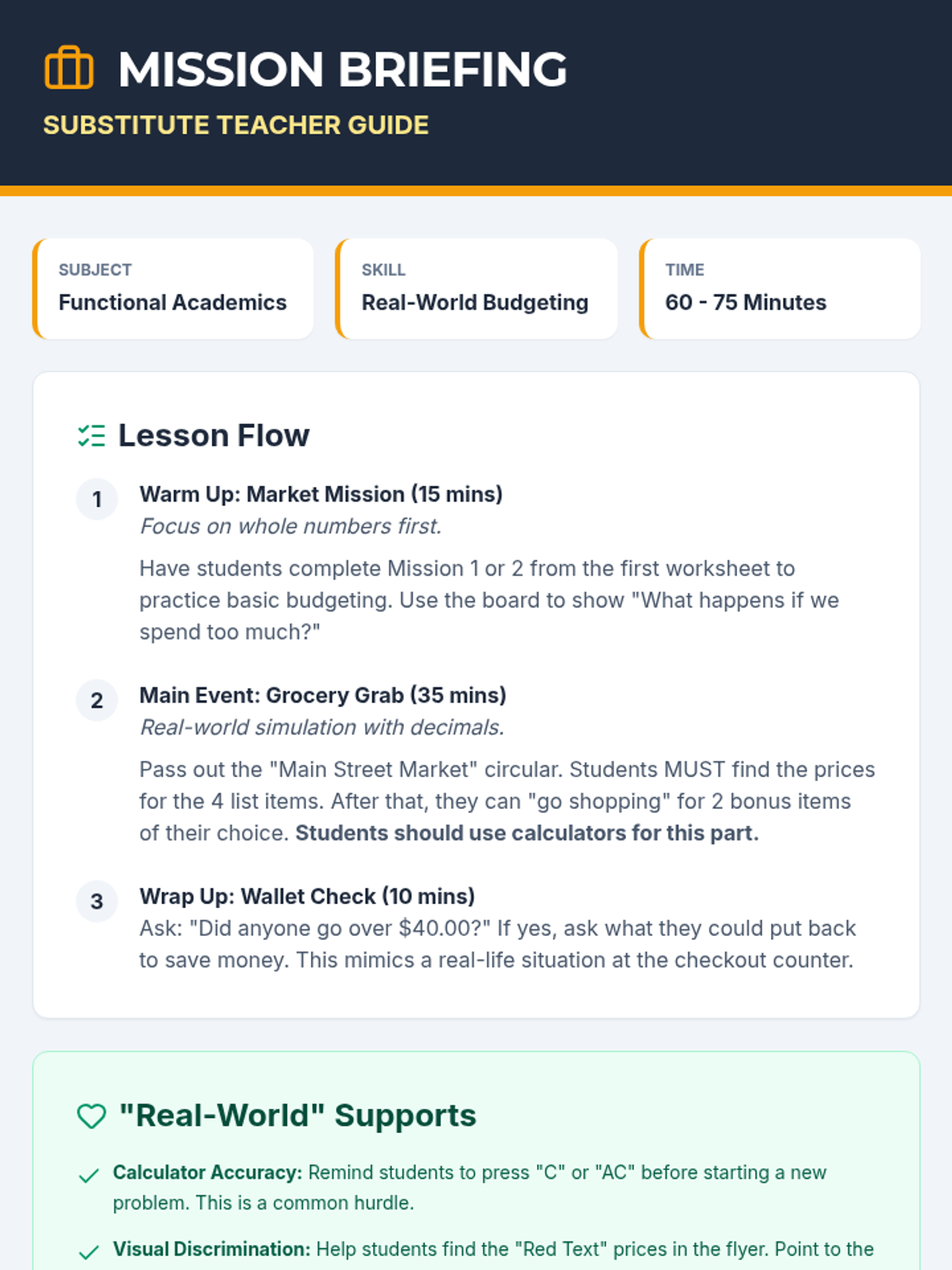
The final substitute teacher guide for the "Real World" Market Mission lesson. Includes timing for both the whole-number missions and the decimal-based grocery simulation, with specific guidance on calculator use and needs-vs-wants prioritization.
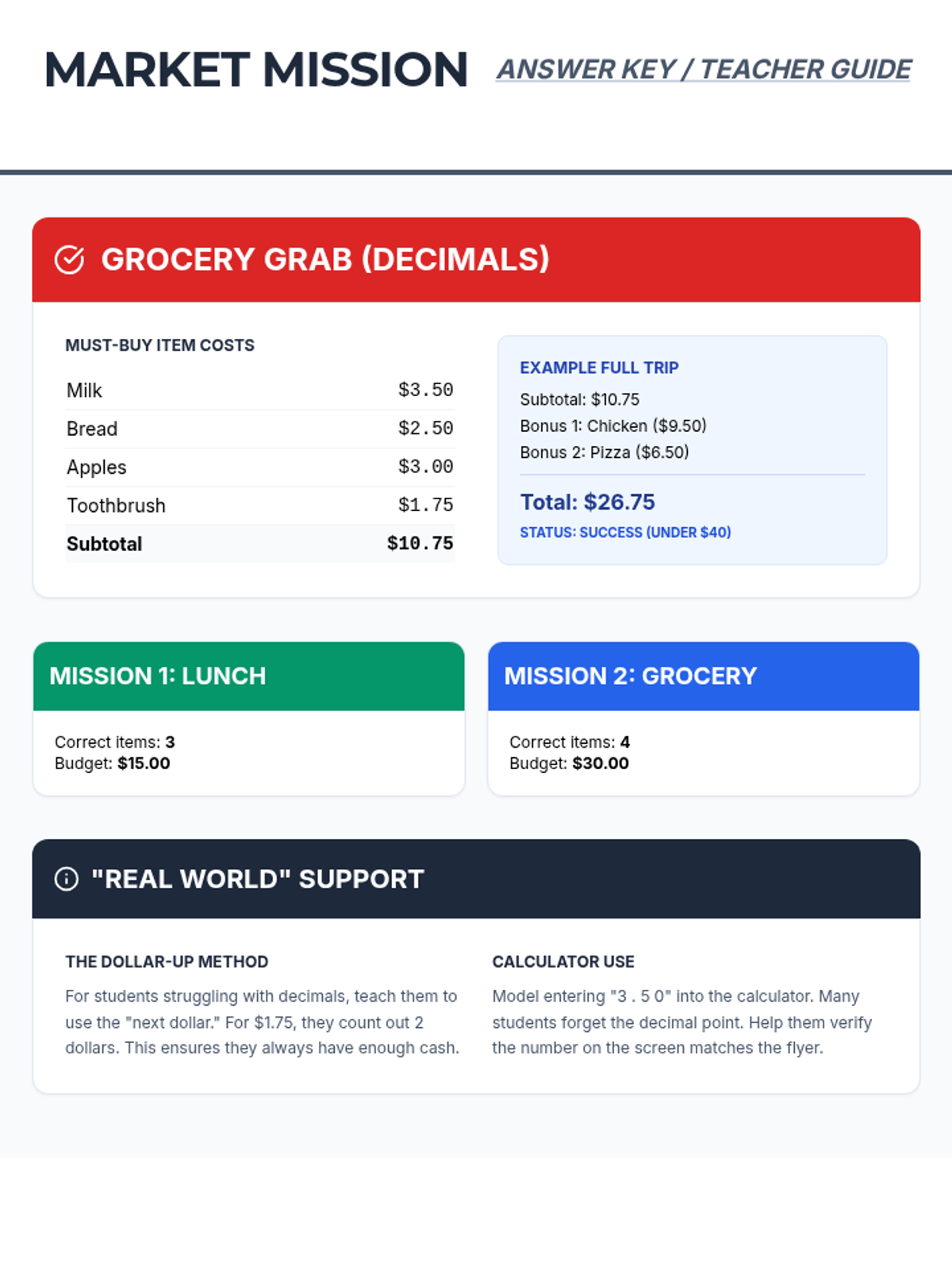
An updated answer key for the Market Mission activity, now including solutions and instructional strategies for the realistic "Grocery Grab" simulation. It details essential item costs, provides example totals, and introduces "Real World" teaching methods like the Dollar-Up approach.
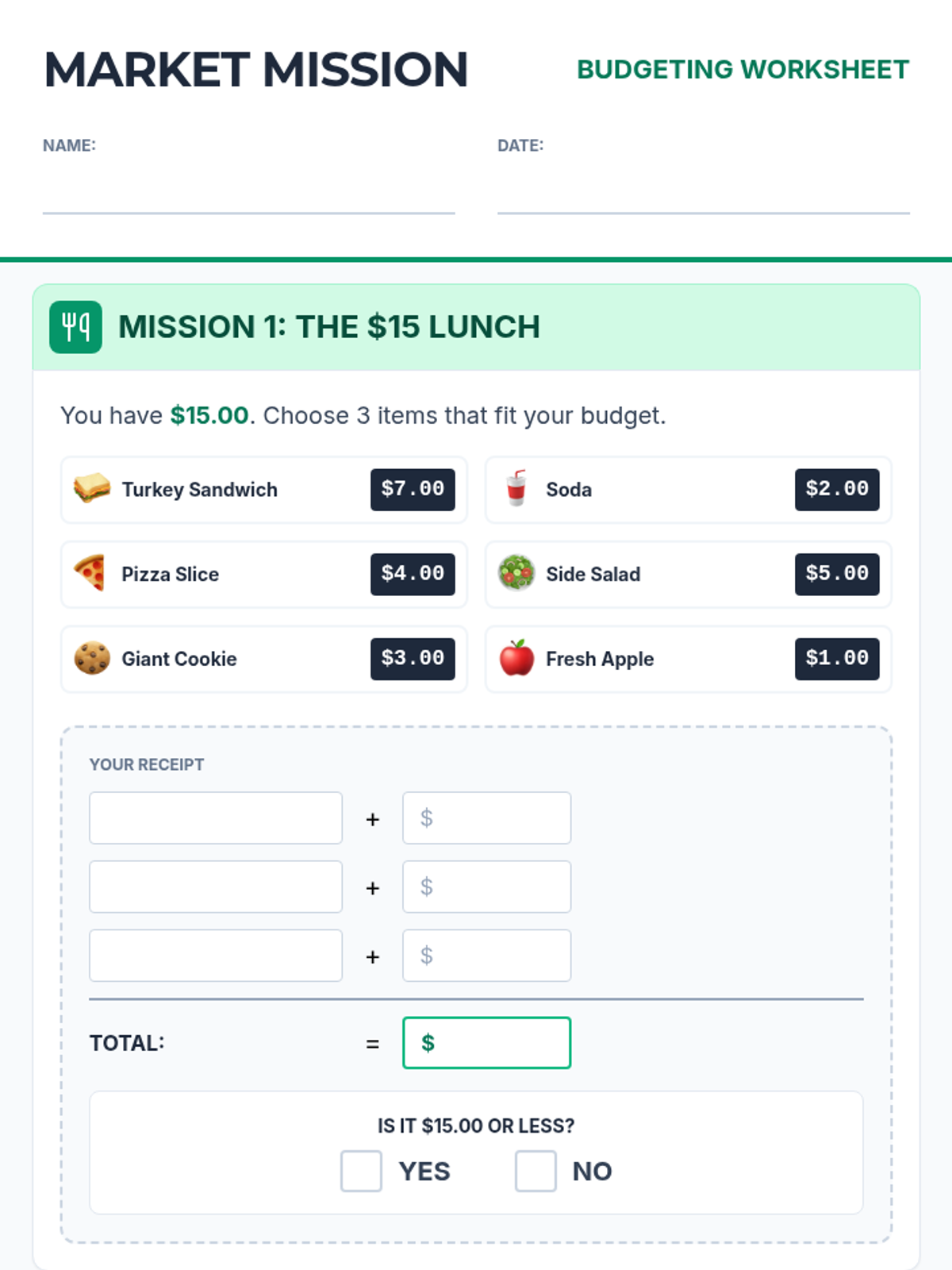
A budgeting worksheet for young adults focusing on four scenarios: lunch ($15), groceries ($30), birthday gift ($20), and movie night ($25). Features clear visuals and structured calculation areas to support students with intellectual disabilities or autism. Updated for optimized 8.5x11 printing.
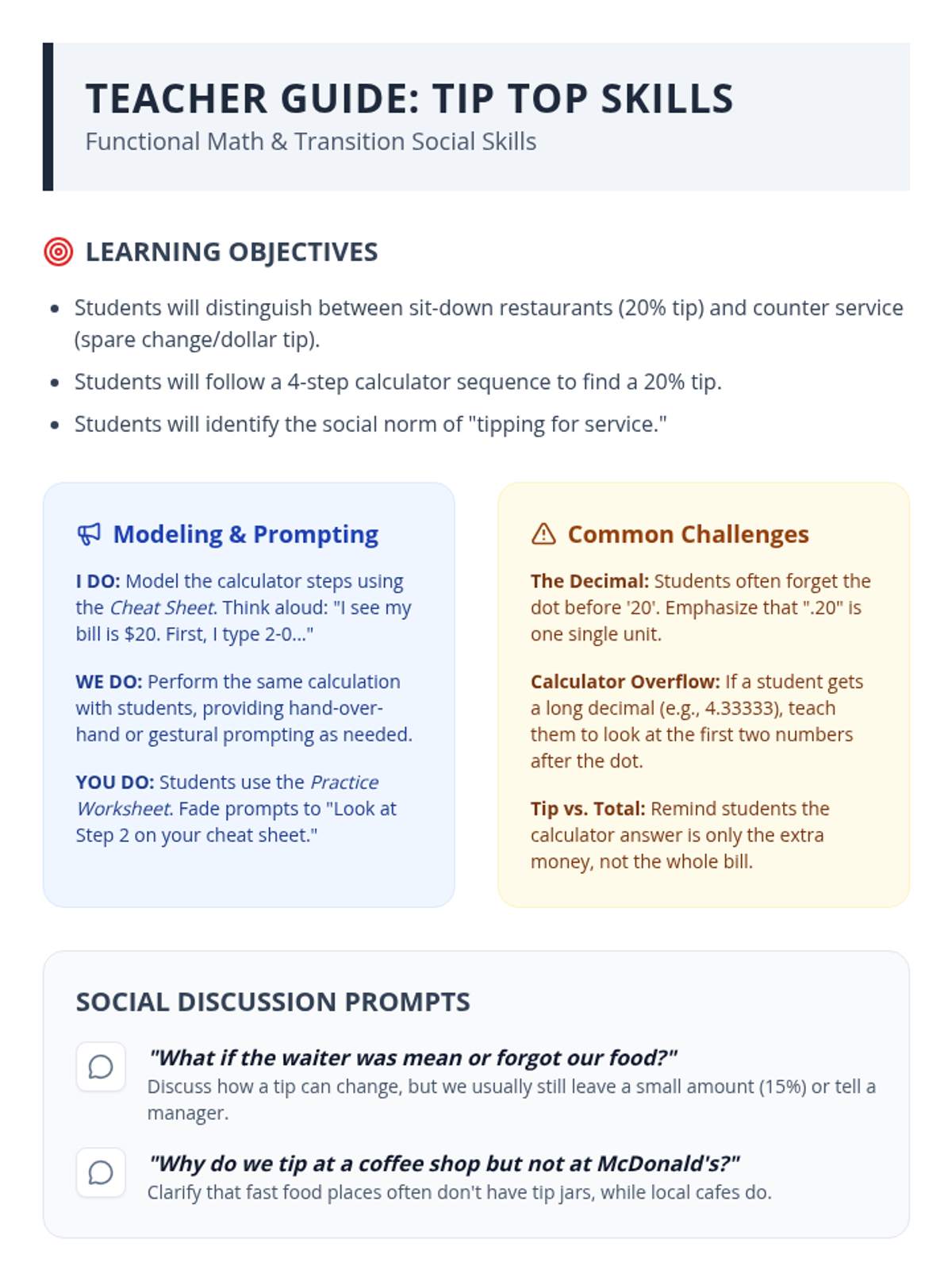
A comprehensive guide for teachers to facilitate the tipping lesson, including prompting hierarchies, discussion points for social norms, and differentiation strategies for students with varying needs.
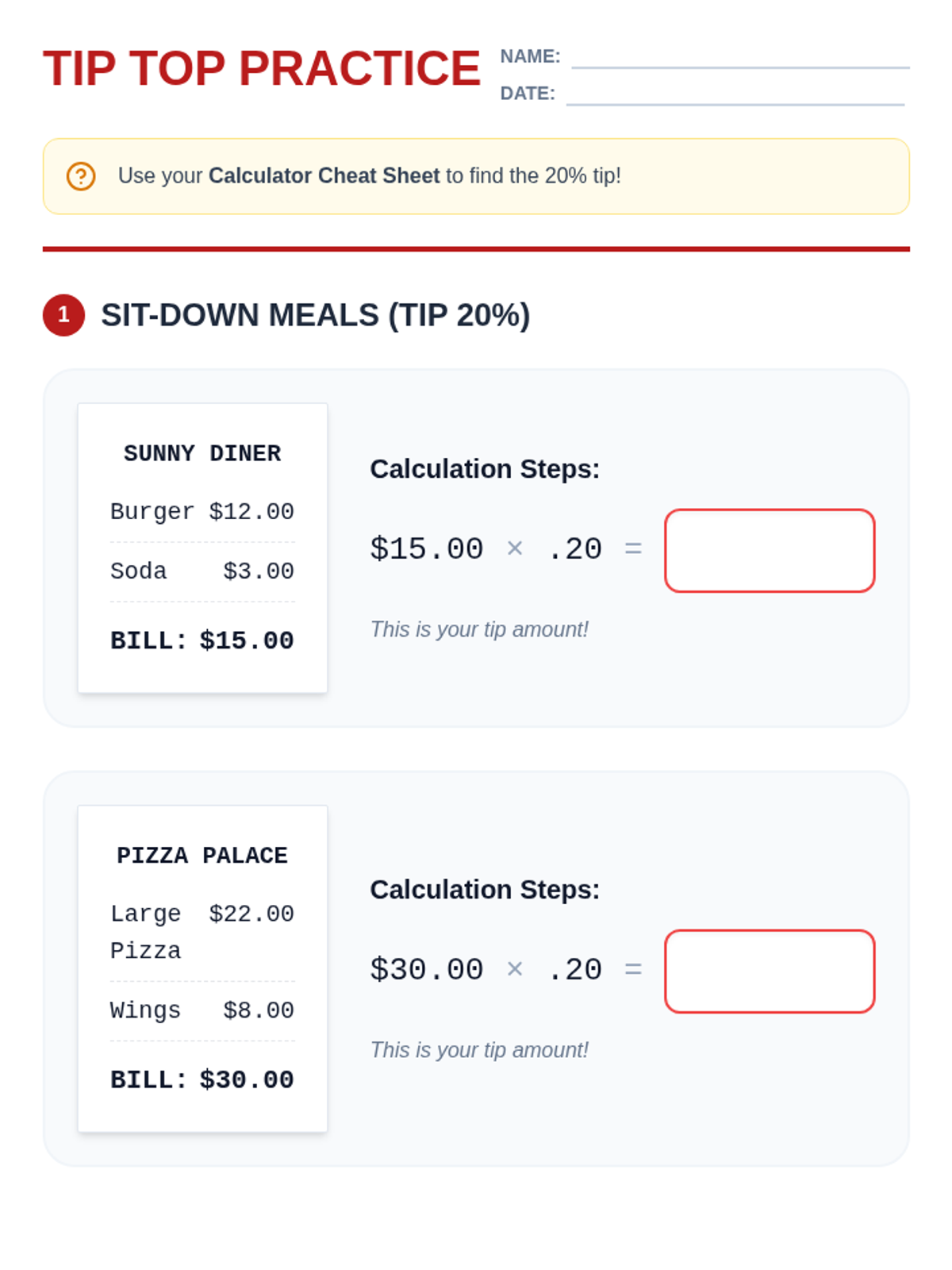
Practice worksheet for students to calculate 20% tips for diner-style receipts and make situational decisions for cafe-style tipping. Includes large work areas and visual receipts.
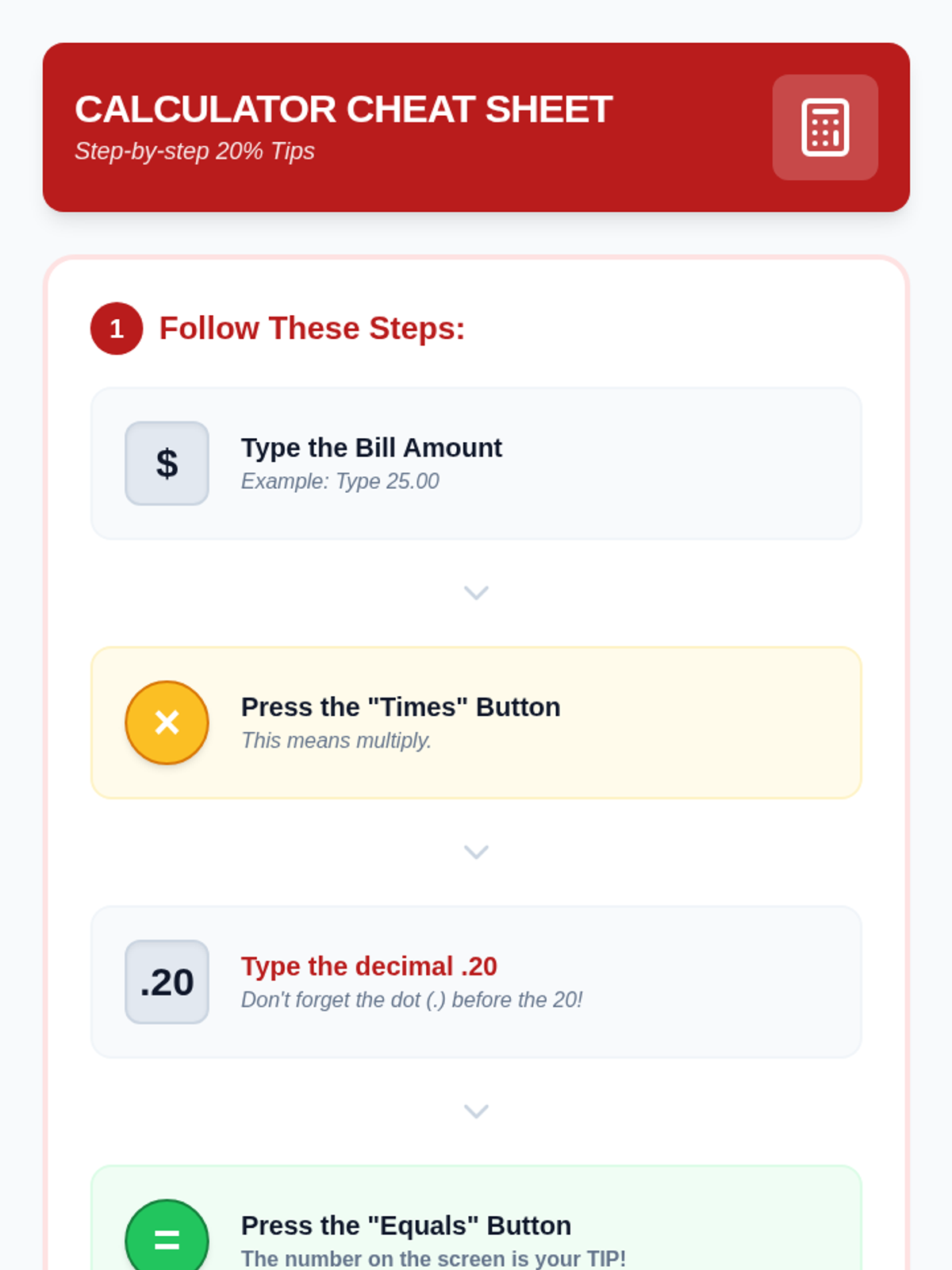
A visual, step-by-step calculator guide for students to refer to while practicing tipping. Includes large icons and clear button sequences.
Introductory presentation for tipping skills, featuring clear visual steps for using a calculator, distinctions between sit-down and counter service, and high-contrast visuals for students with autism and ID.
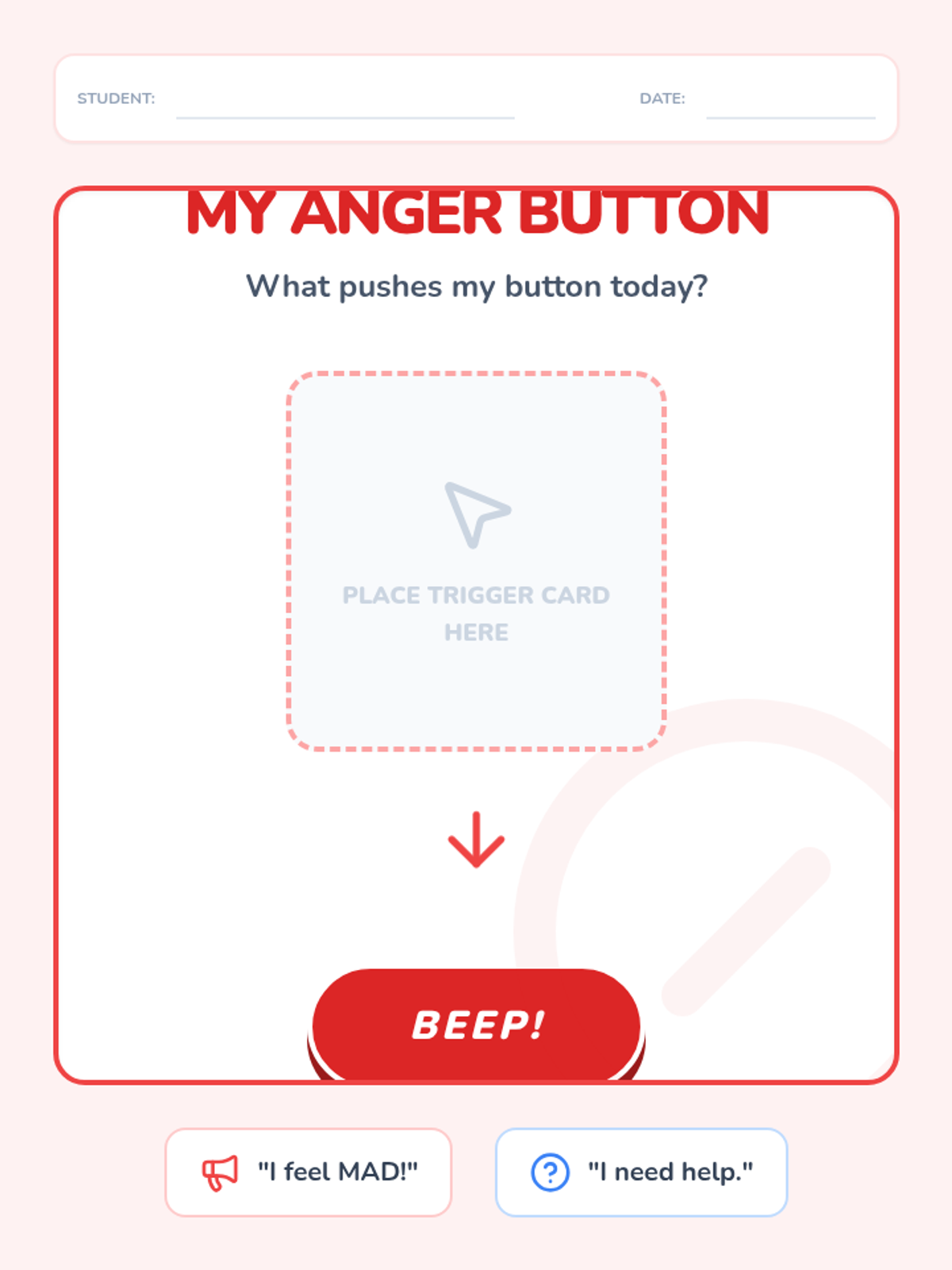
A choice board mat for kindergarten students to identify their anger triggers. Includes a clear placement area for trigger cards and visual cues for non-verbal communication.
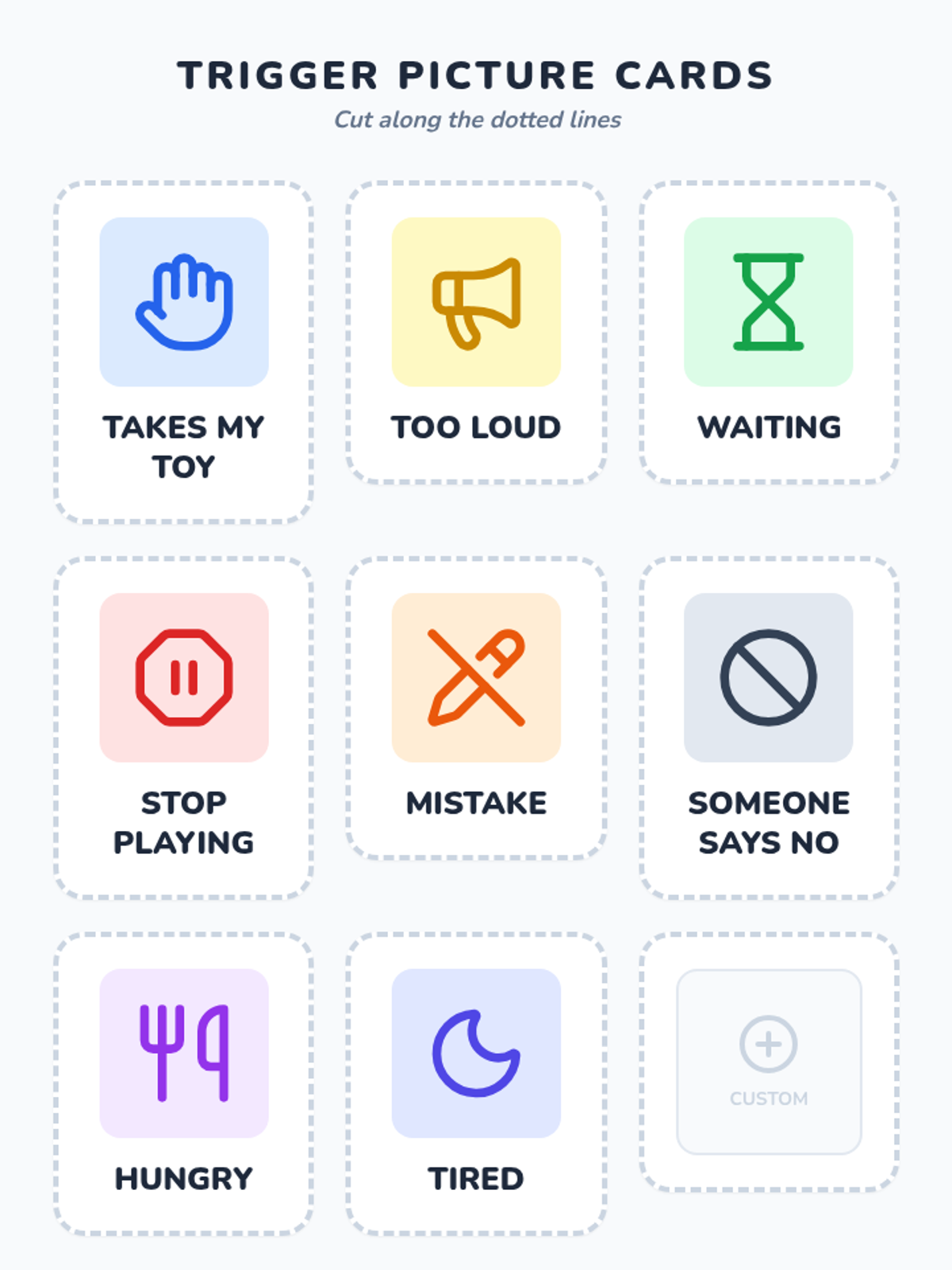
A set of 9 high-contrast, simple picture cards representing common kindergarten anger triggers like sharing, loud noises, and waiting. Designed for SPED and non-verbal students.
Introductory visual slides for a kindergarten SPED lesson, using a 'Red Button' metaphor to help students identify what makes them feel angry.
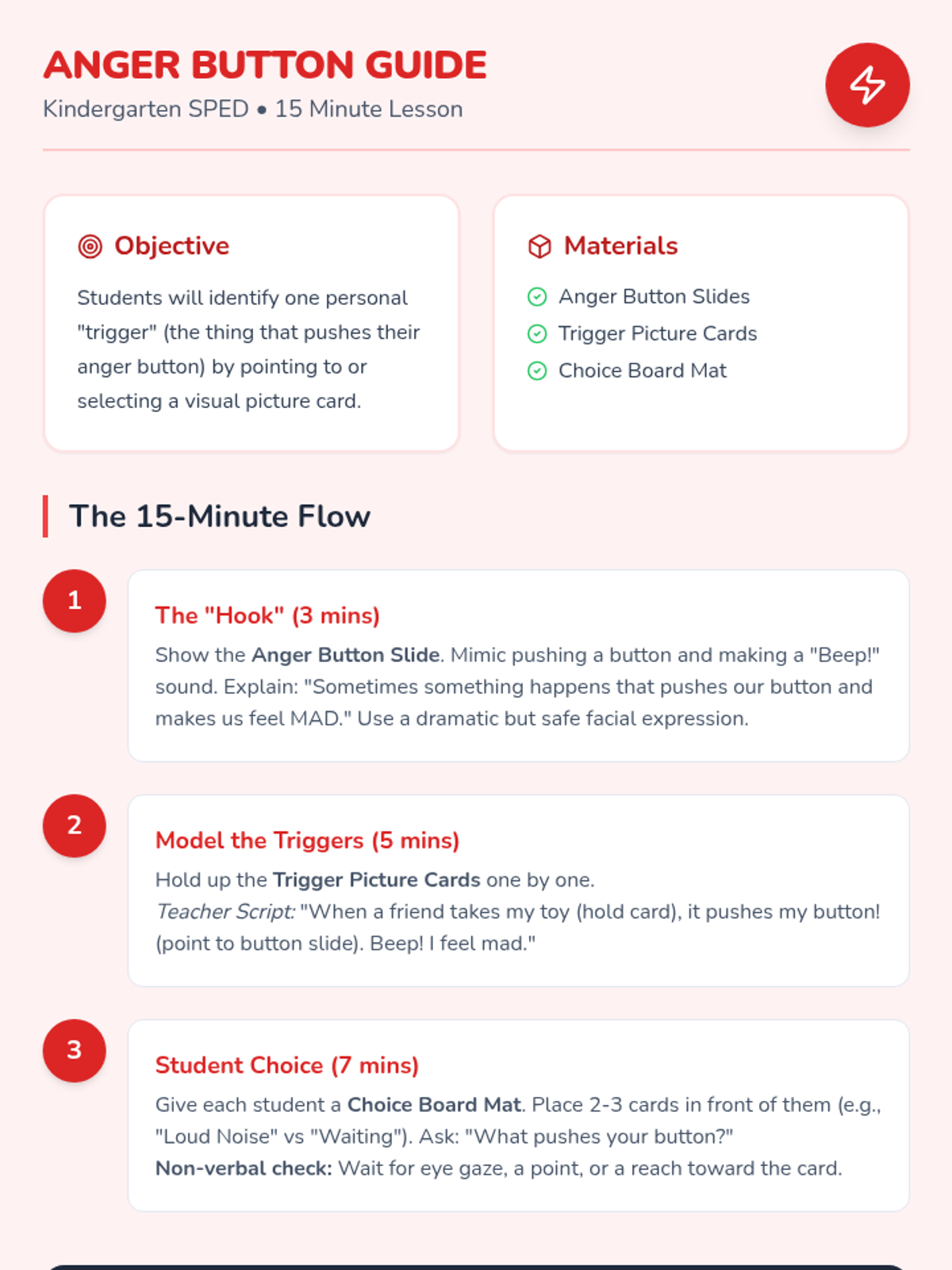
A teacher facilitation guide for a 15-minute SPED lesson on identifying anger triggers, featuring a structured flow and visual communication strategies.
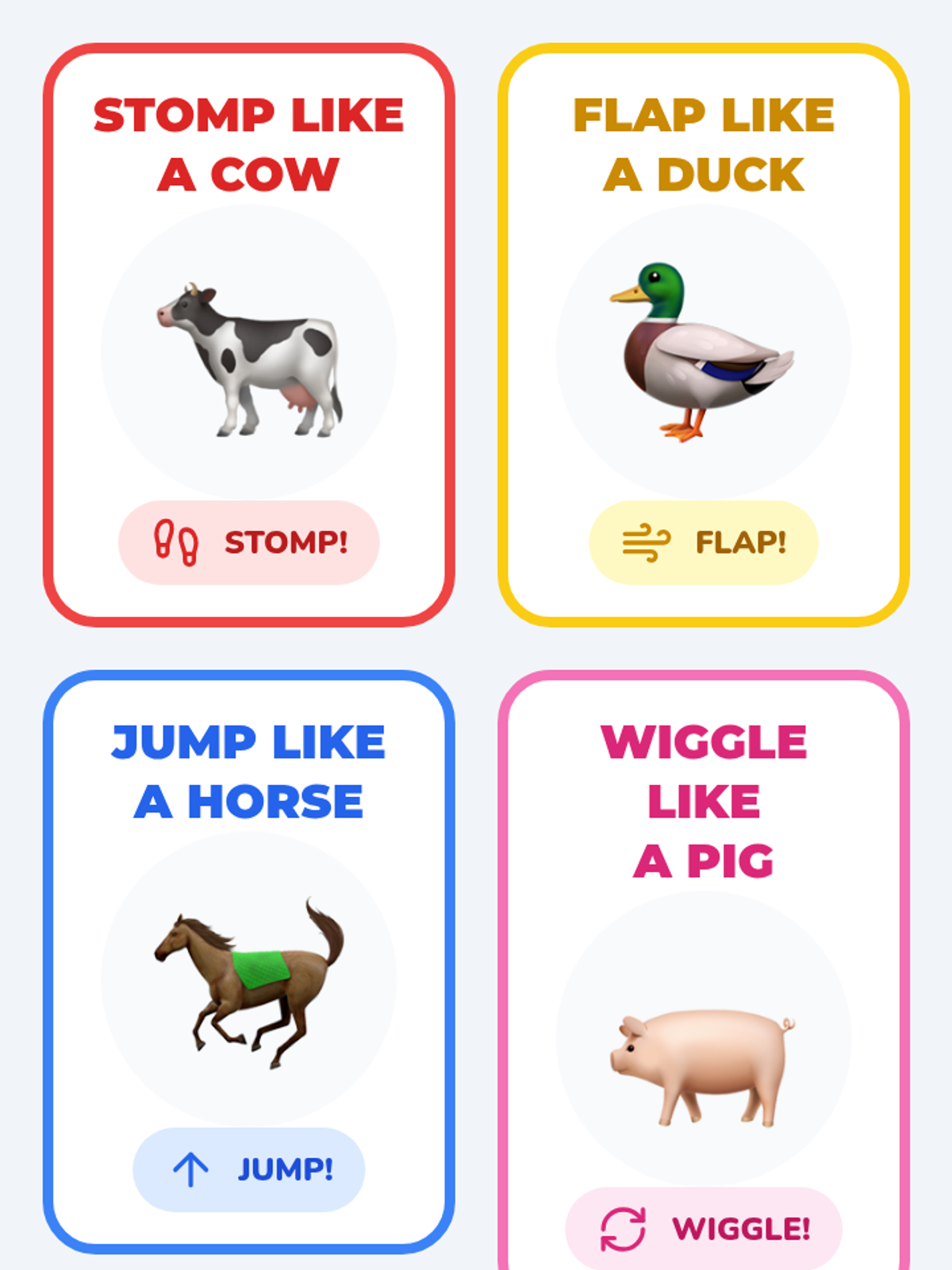
Ten large-format animal action cards designed for motor movement imitation, featuring high-contrast text and icons for early childhood learners.
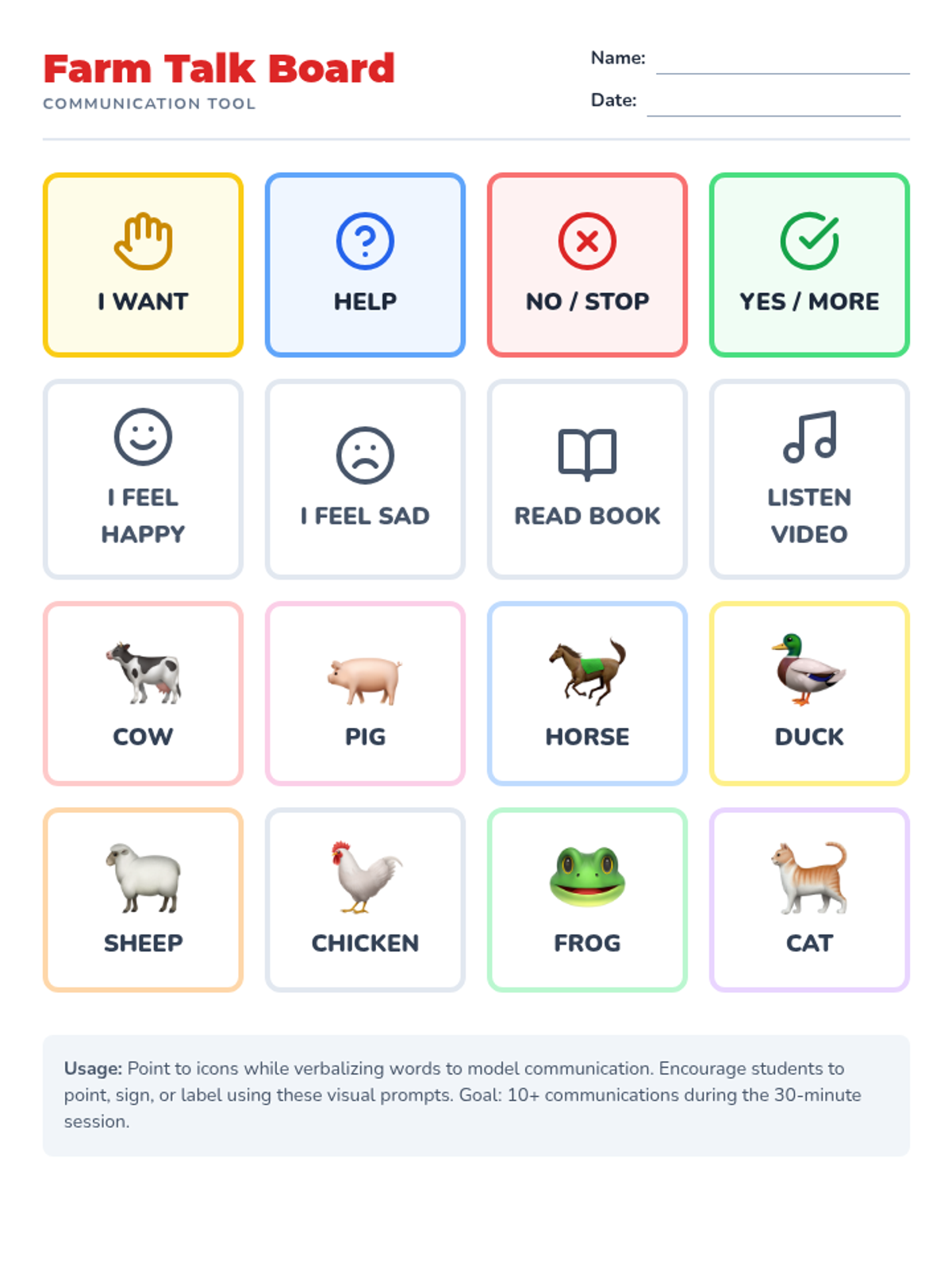
A visual communication board featuring core requests, emotions, and farm animals to support labeling, requesting, and phrase use for students.
Interactive visual slides for the 'Barnyard Bash' lesson, featuring animal identification, sound imitation, and movement prompts for joint class participation.
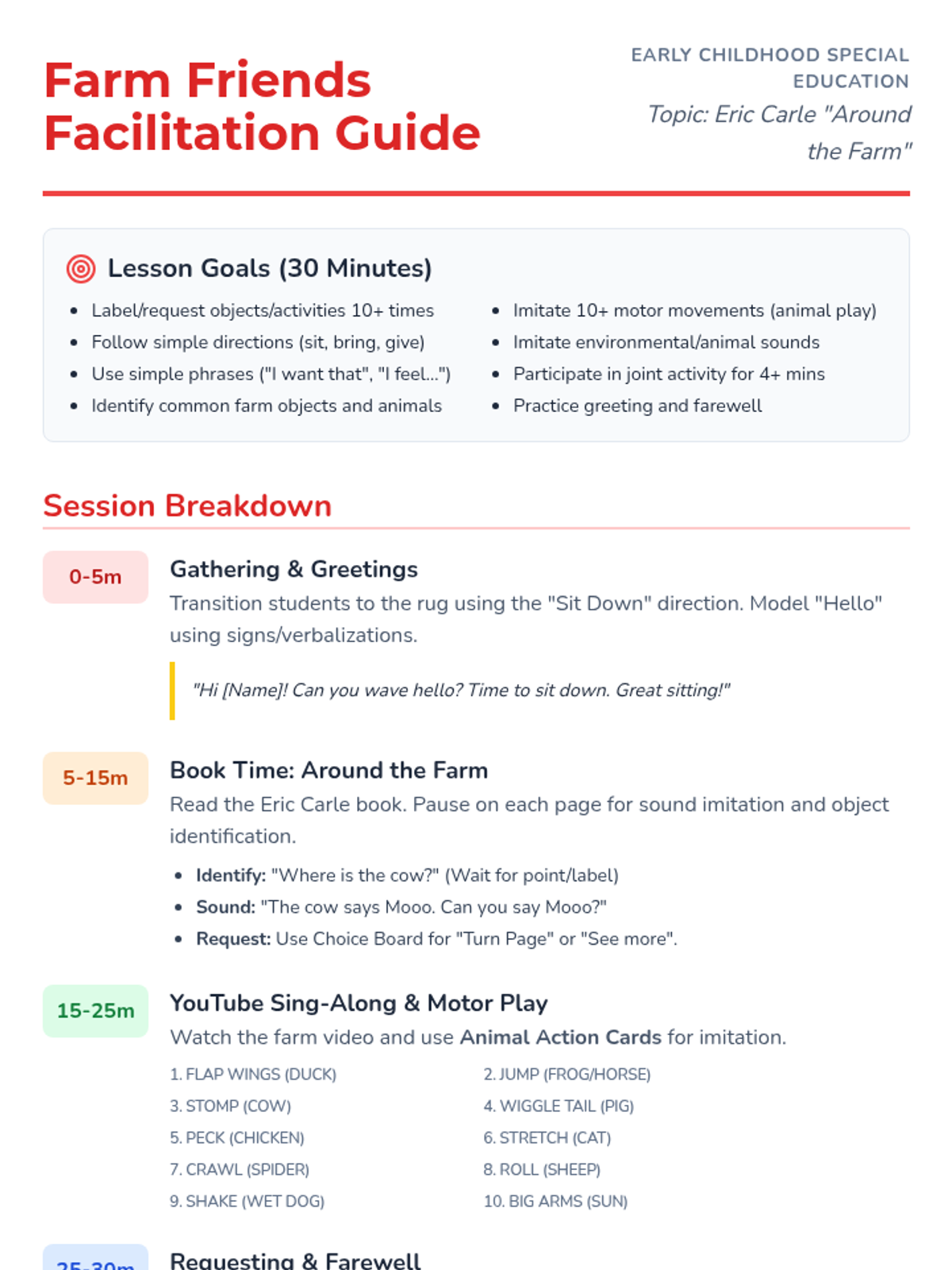
A 30-minute facilitation guide for teachers, breaking down the lesson into timed segments with specific prompts and strategies for early childhood autistic students.
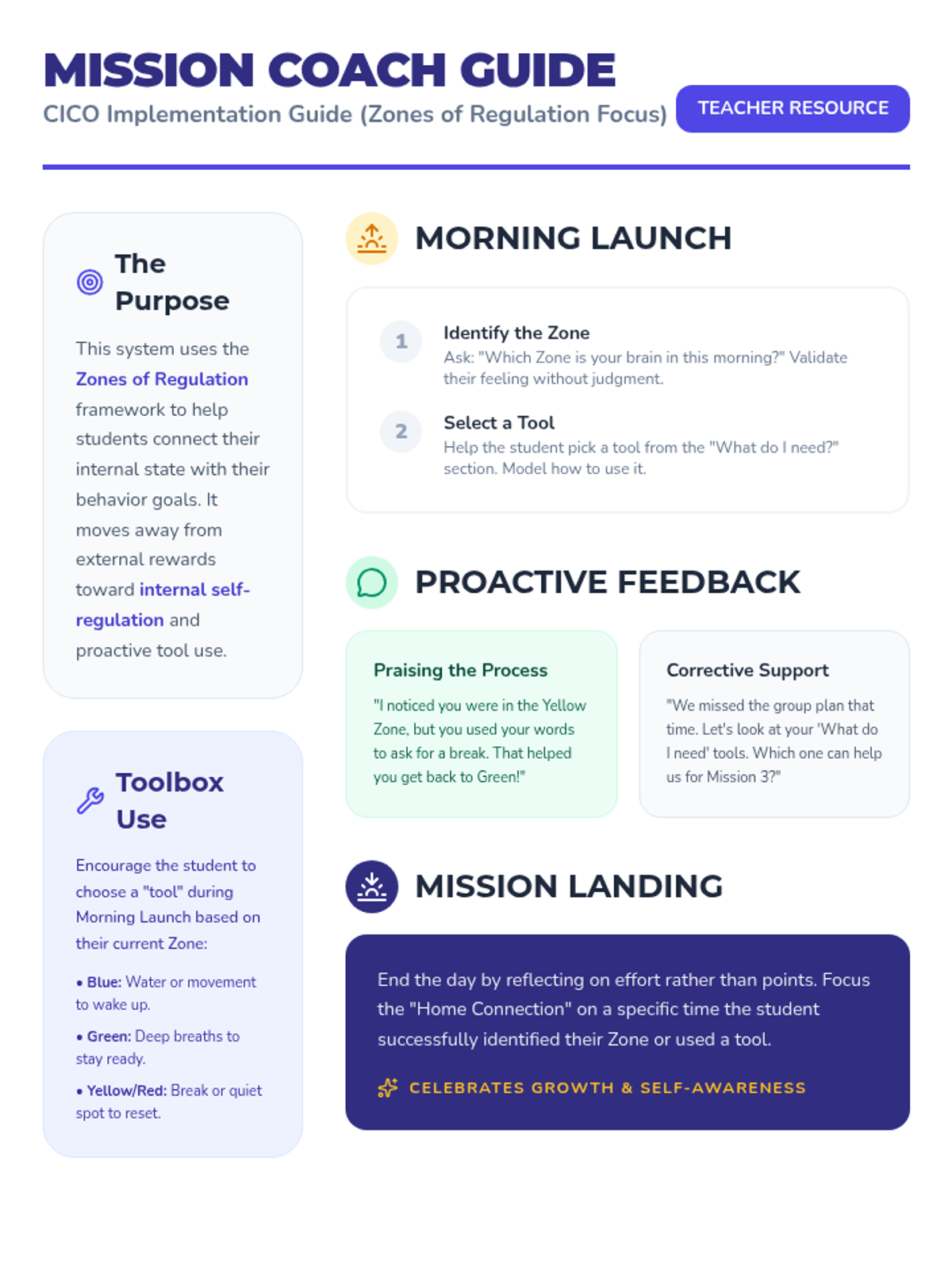
Updated Teacher Guide for the CICO system, focusing on Zones of Regulation implementation and tool-based self-regulation. Provides scripts for identifying zones and selecting proactive tools instead of point-based rewards.
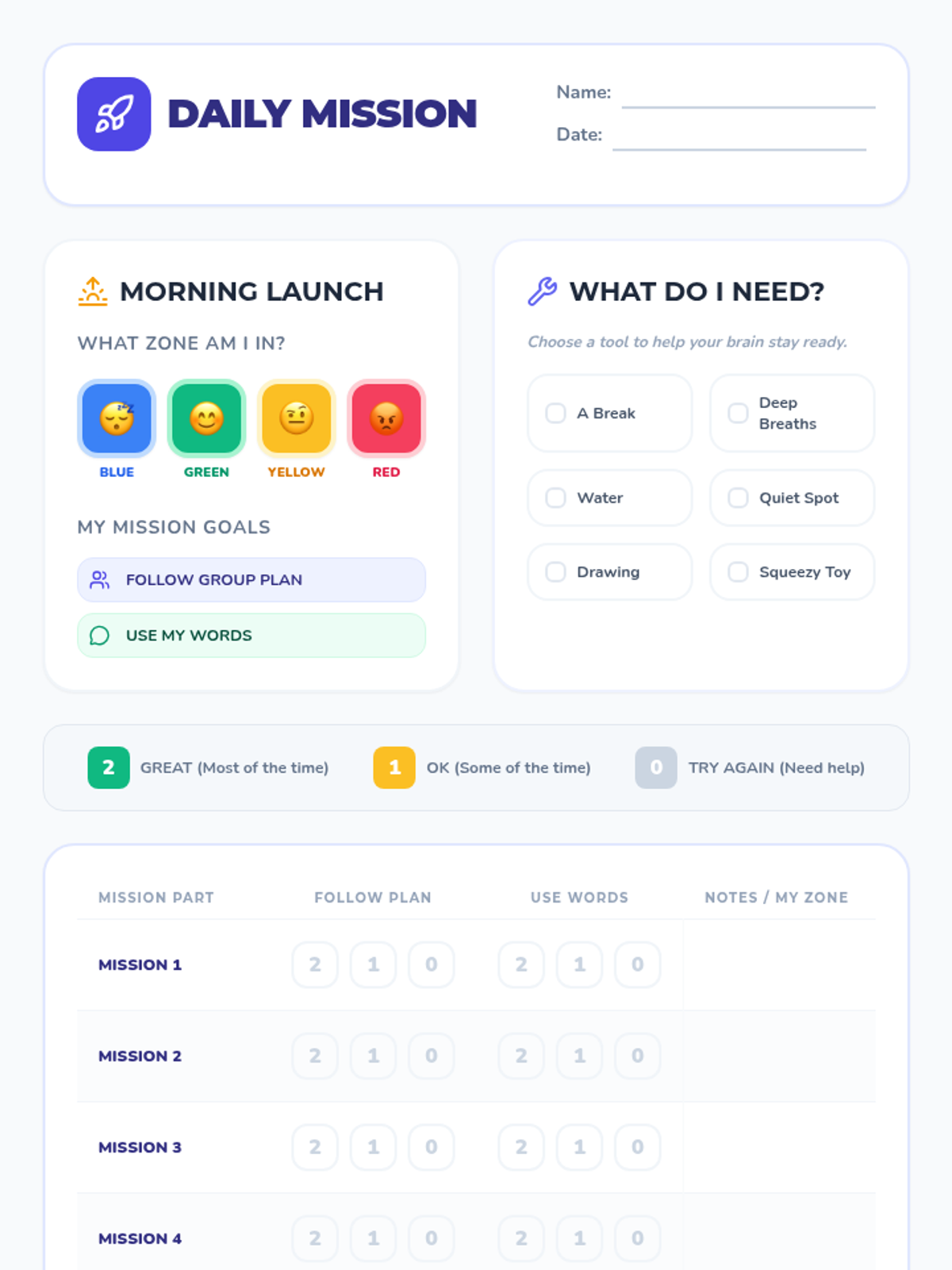
Updated Daily Mission sheet for 1st grade featuring Zones of Regulation for feelings check-in, a 'What do I need' tool section, and flexible mission blocks instead of a fixed schedule. Rewards references have been removed as requested.
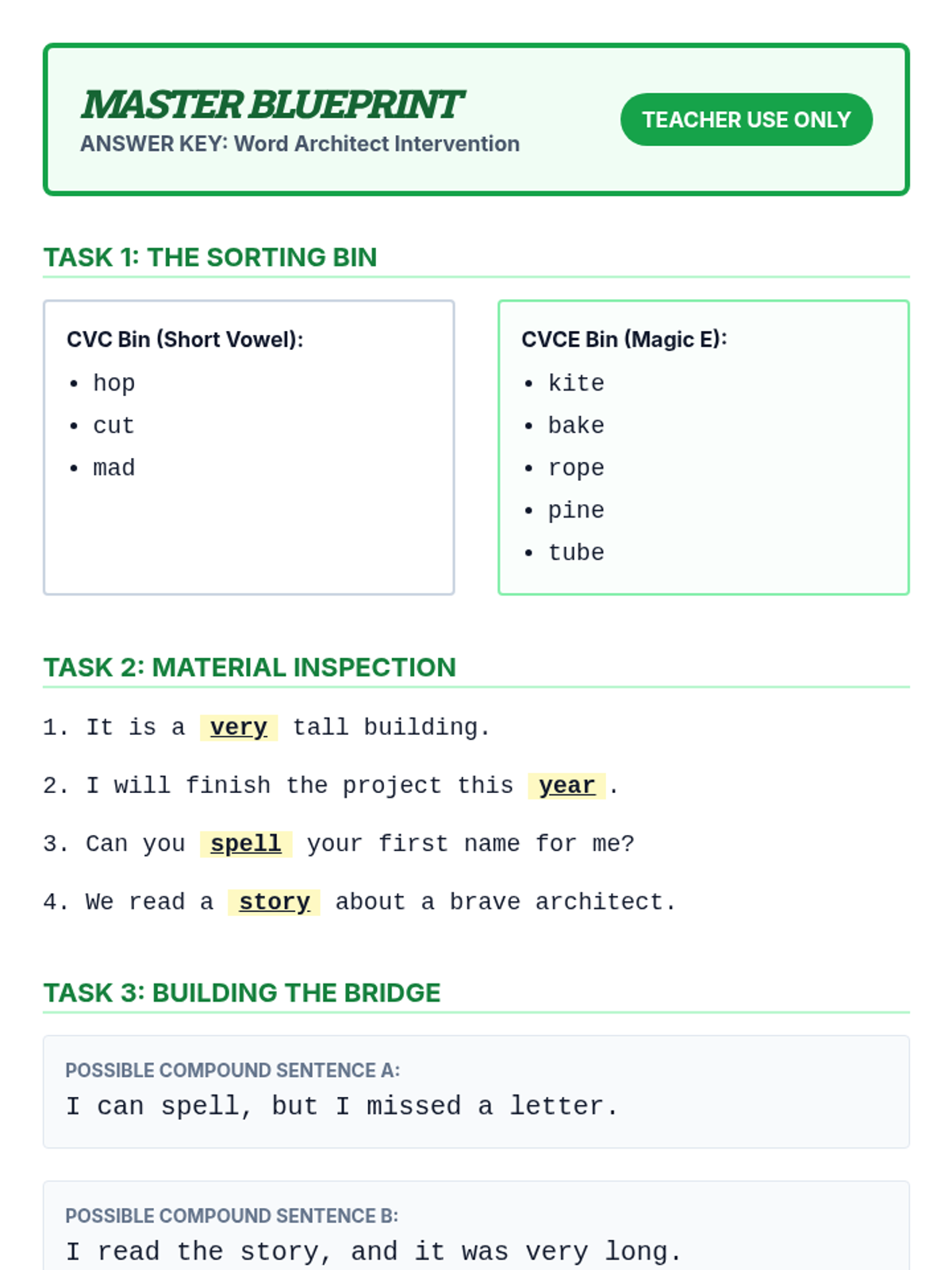
The master answer key for the Logic Blueprint Worksheet, providing correct categorizations for phonics, sight word placement, and sample compound sentences.
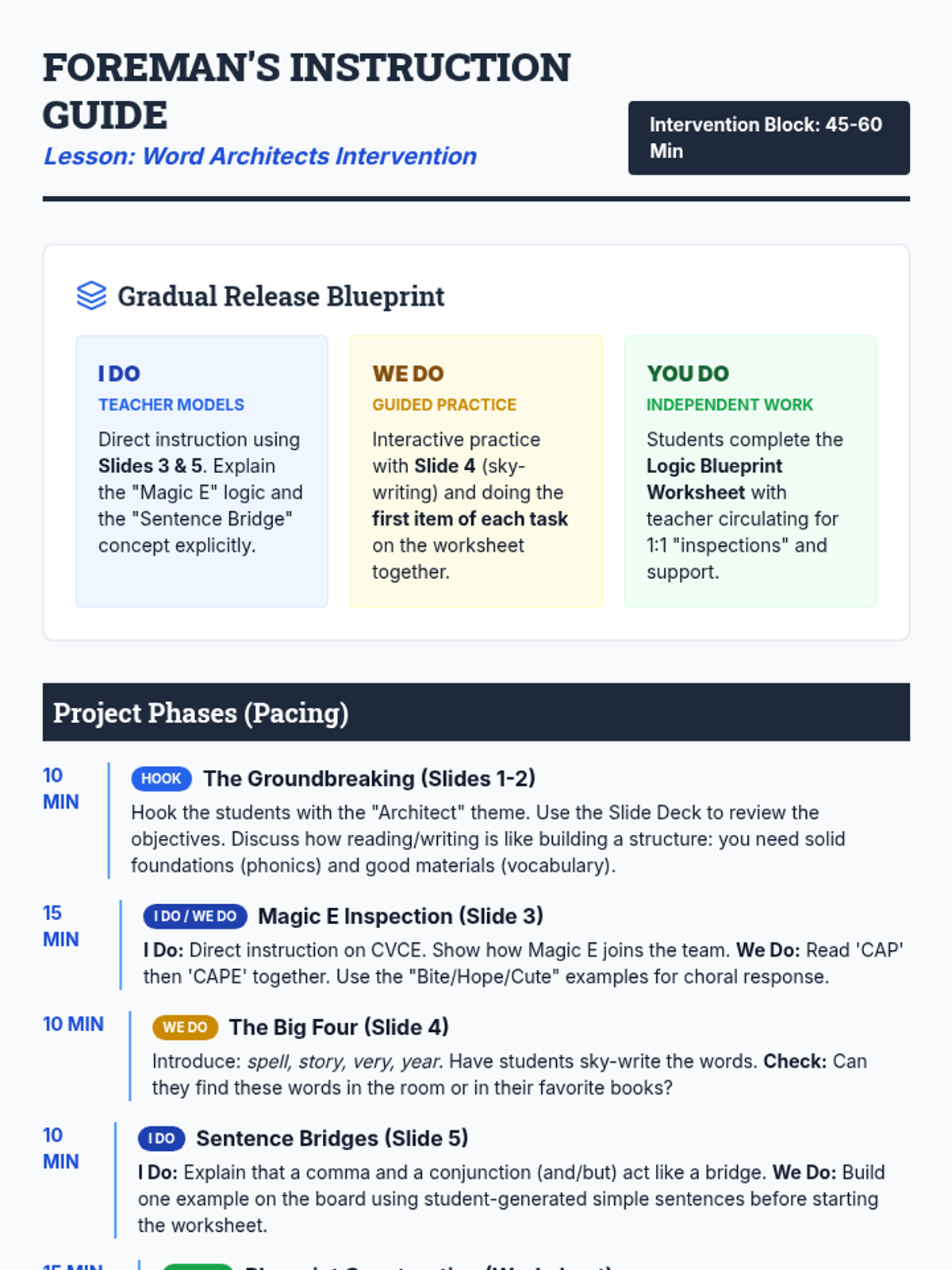
Updated Foreman's Instruction Guide now featuring a clear Gradual Release Blueprint (I Do, We Do, You Do) to assist the teacher in lesson delivery within a 15:1 intervention setting.
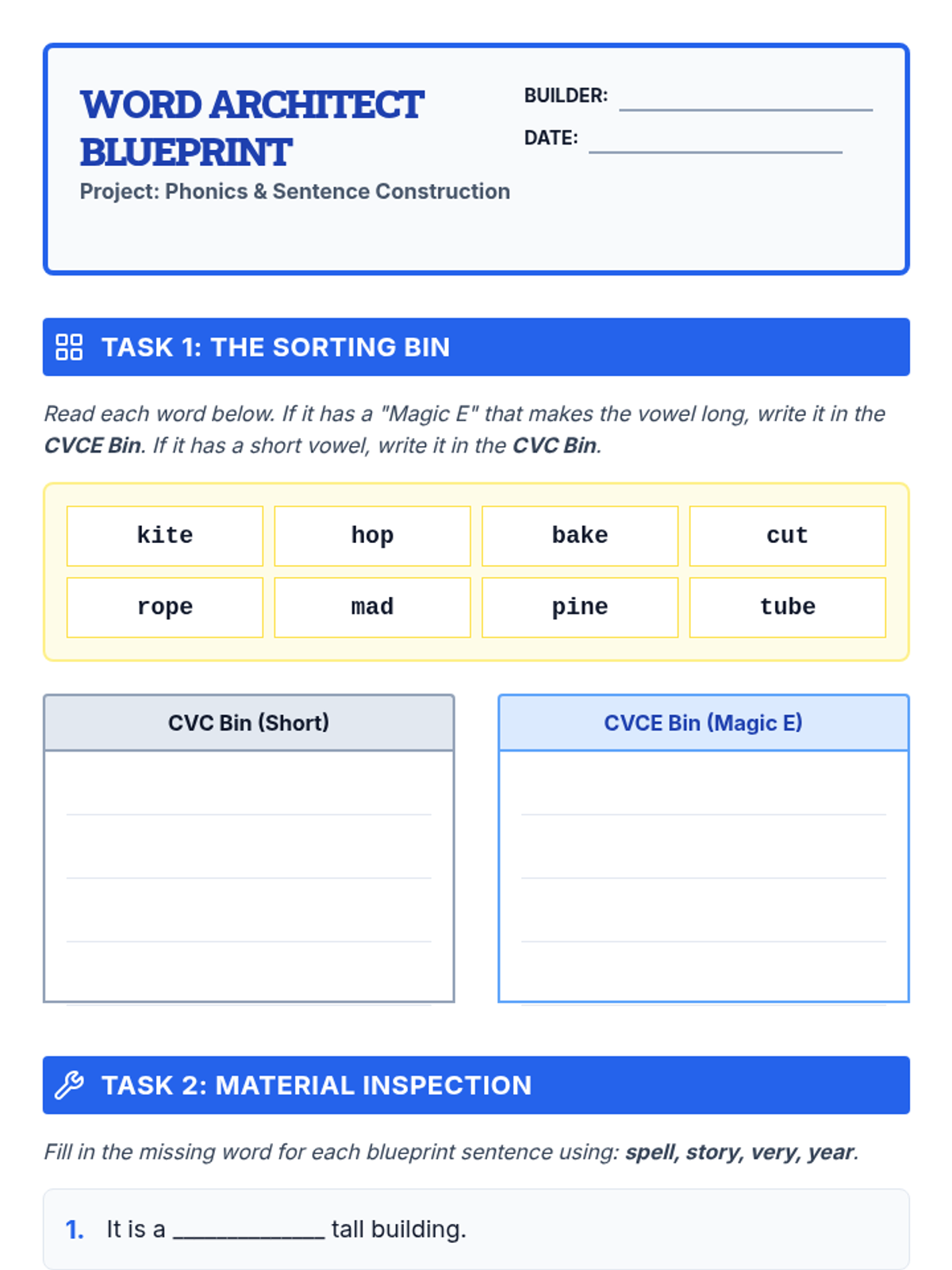
A student worksheet designed as an architectural blueprint, featuring a CVCE vs. CVC sorting task, a cloze activity for sight words (spell, story, very, year), and a sentence-matching exercise to practice compound sentences.
An instructional slide deck with an architectural theme, focusing on CVCE phonics logic, high-frequency sight words (spell, story, very, year), and the structure of simple and compound sentences.