A clean, single-page tracking ledger for the 46 Grade 2 Dolch sight words with five date columns and white backgrounds for handwriting. Consistent with the other grade-level layouts.
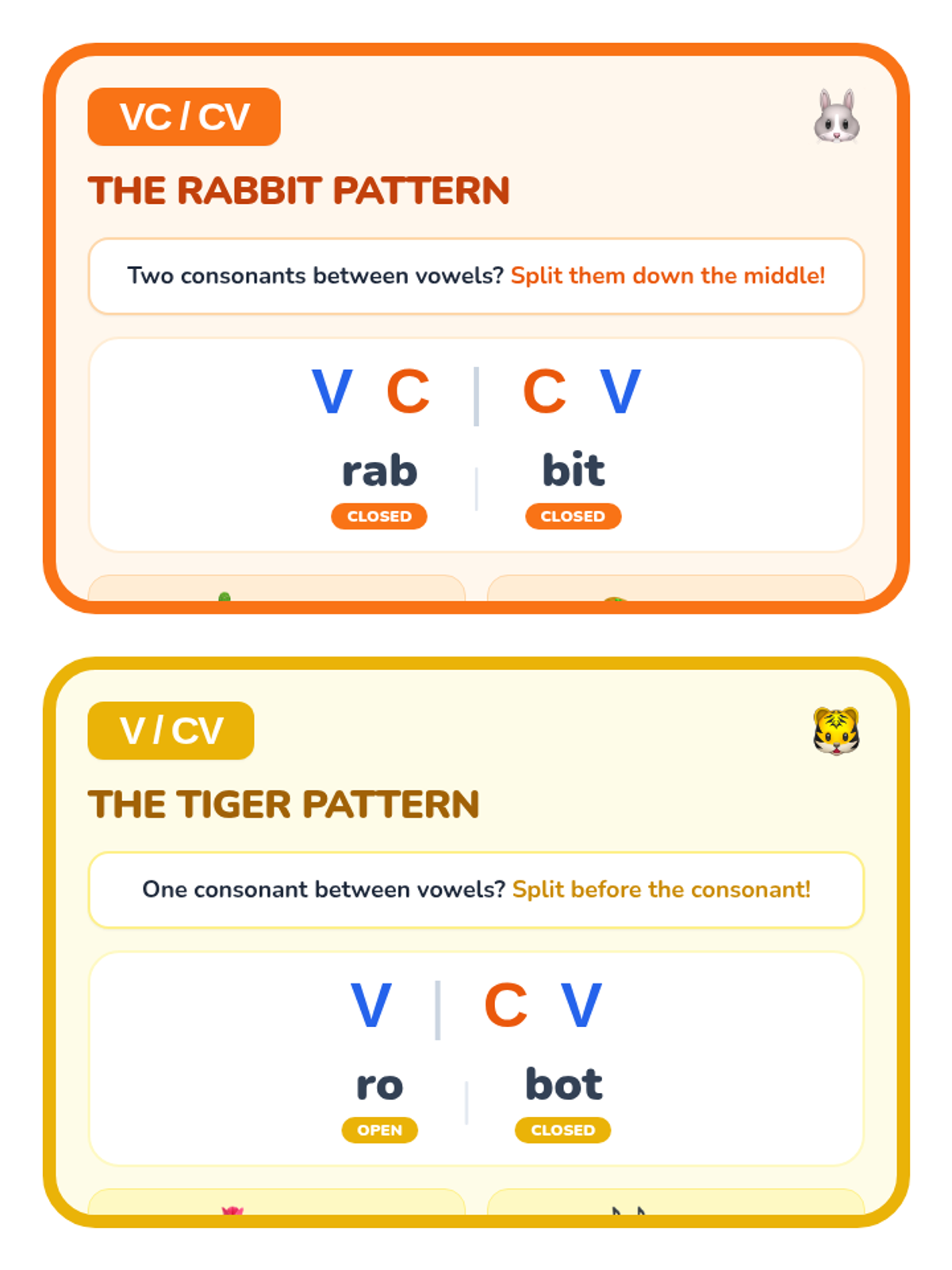
A set of four vibrant anchor charts for syllable division patterns (Rabbit, Tiger, Camel, and Lion), now formatted 2-per-page for space-efficient classroom use. Each chart features a clear rule statement, a visual syllable diagram, an example breakdown, and additional illustrated word examples.
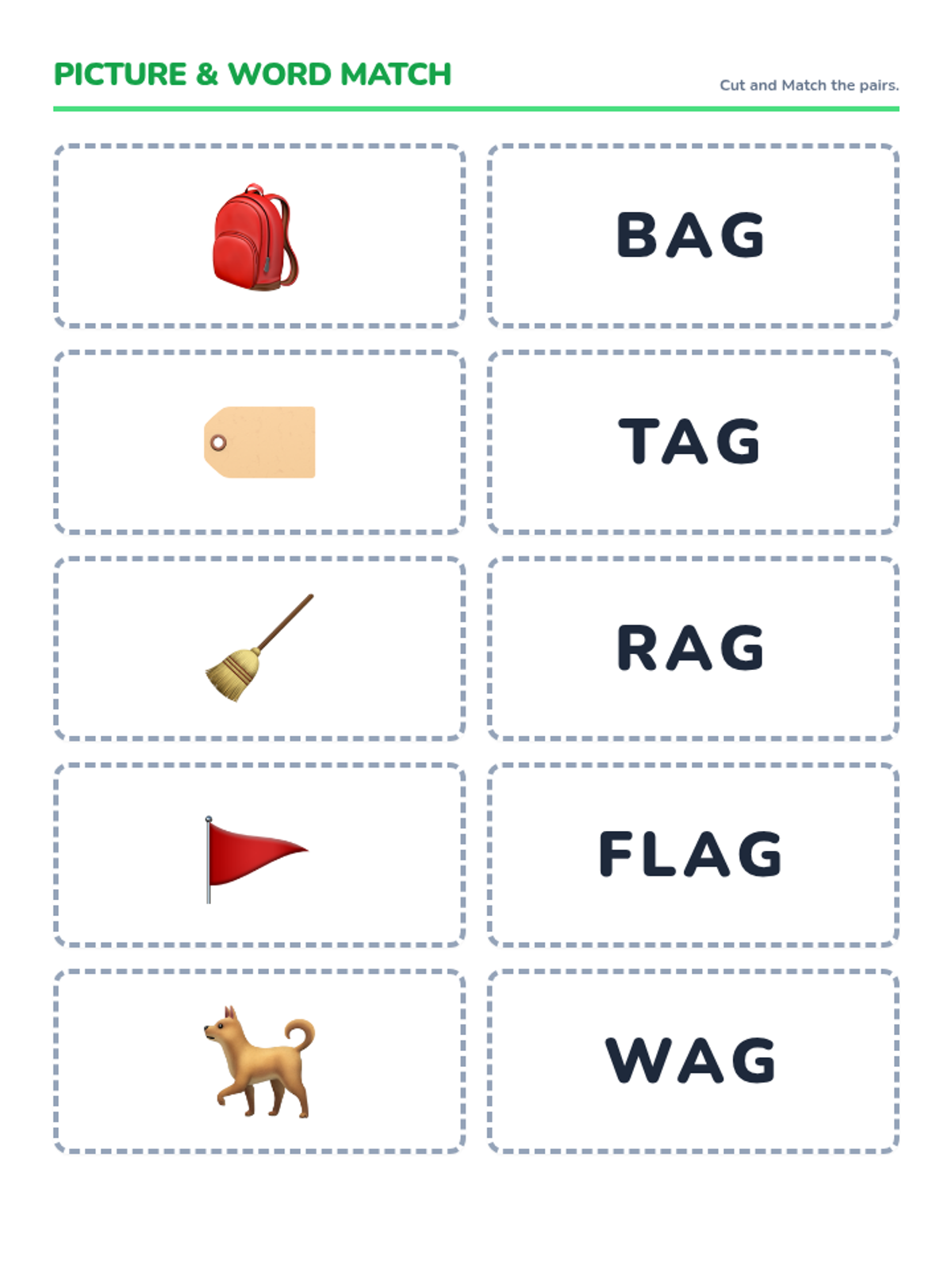
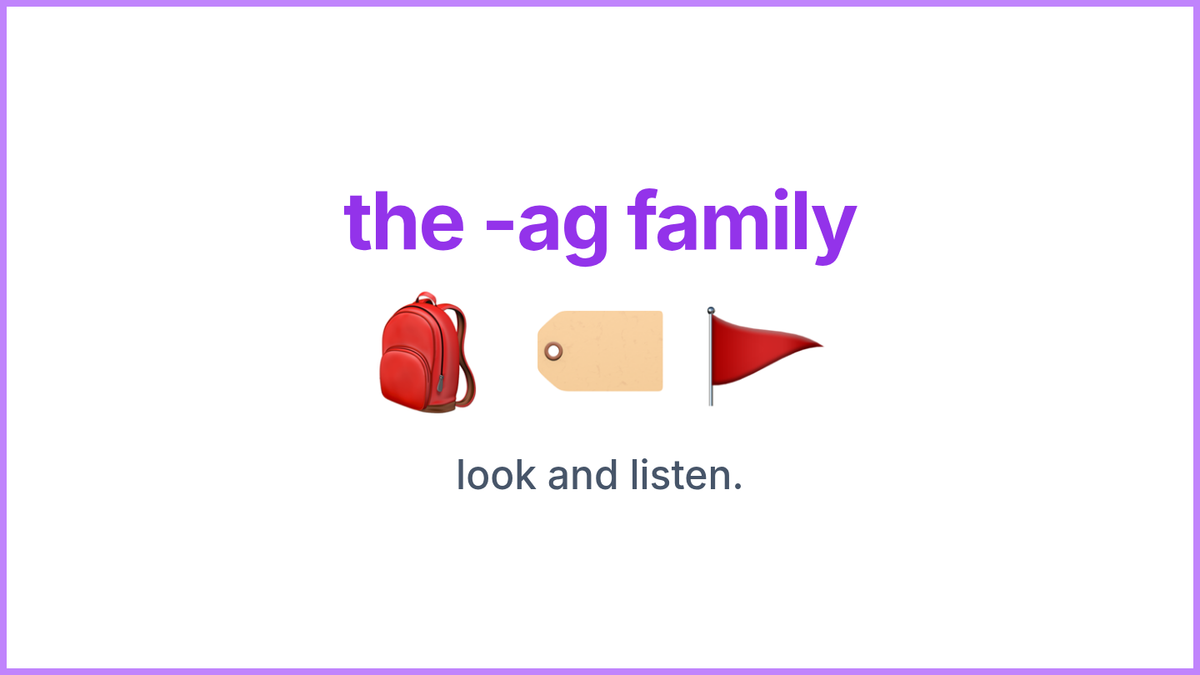
A matching game featuring the '-ag' word family. Includes two sets of cards: one with icons and one with words. Students can play memory or simple matching games to reinforce the connection between visual concepts and their written forms.
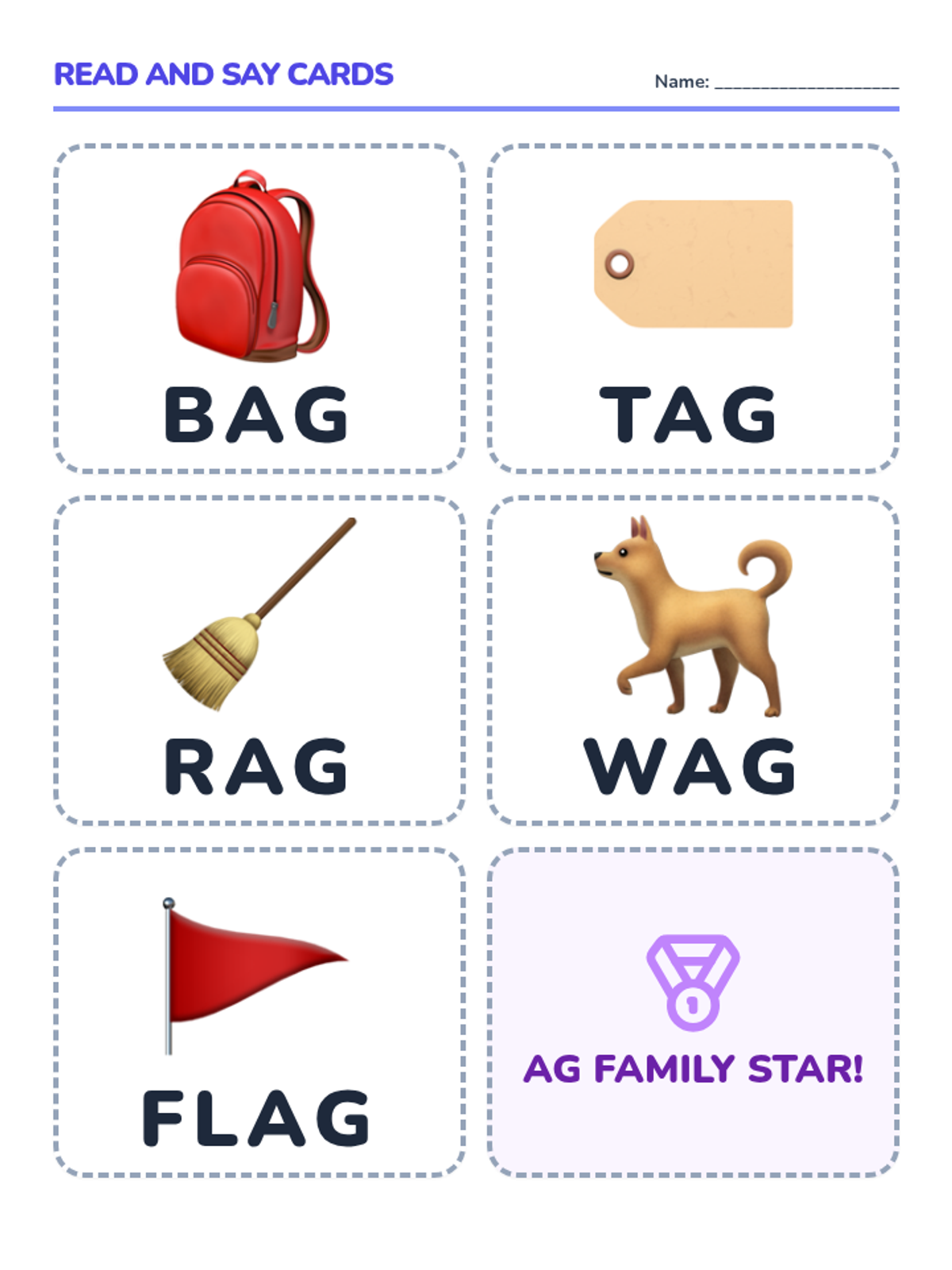
A set of large, high-contrast flashcards for the '-ag' word family, featuring both a clear icon and the word. Designed for reading practice and building sight word recognition for students with significant cognitive needs.
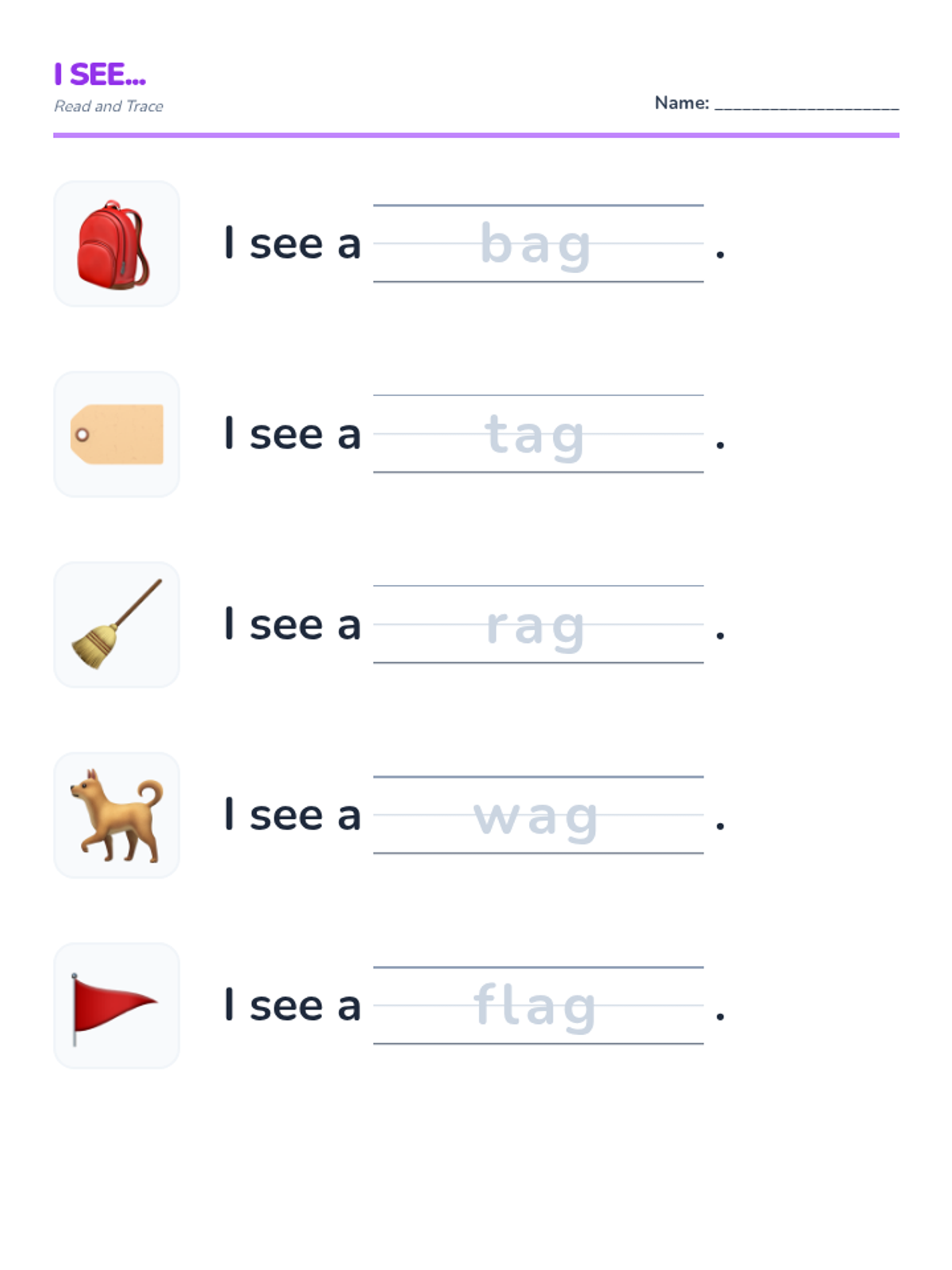
A simple fill-in-the-blank sentence worksheet for the '-ag' word family. Each sentence follows the repetitive 'I see a...' structure with a ghosted word on primary lines and a corresponding visual icon to support reading and writing practice.
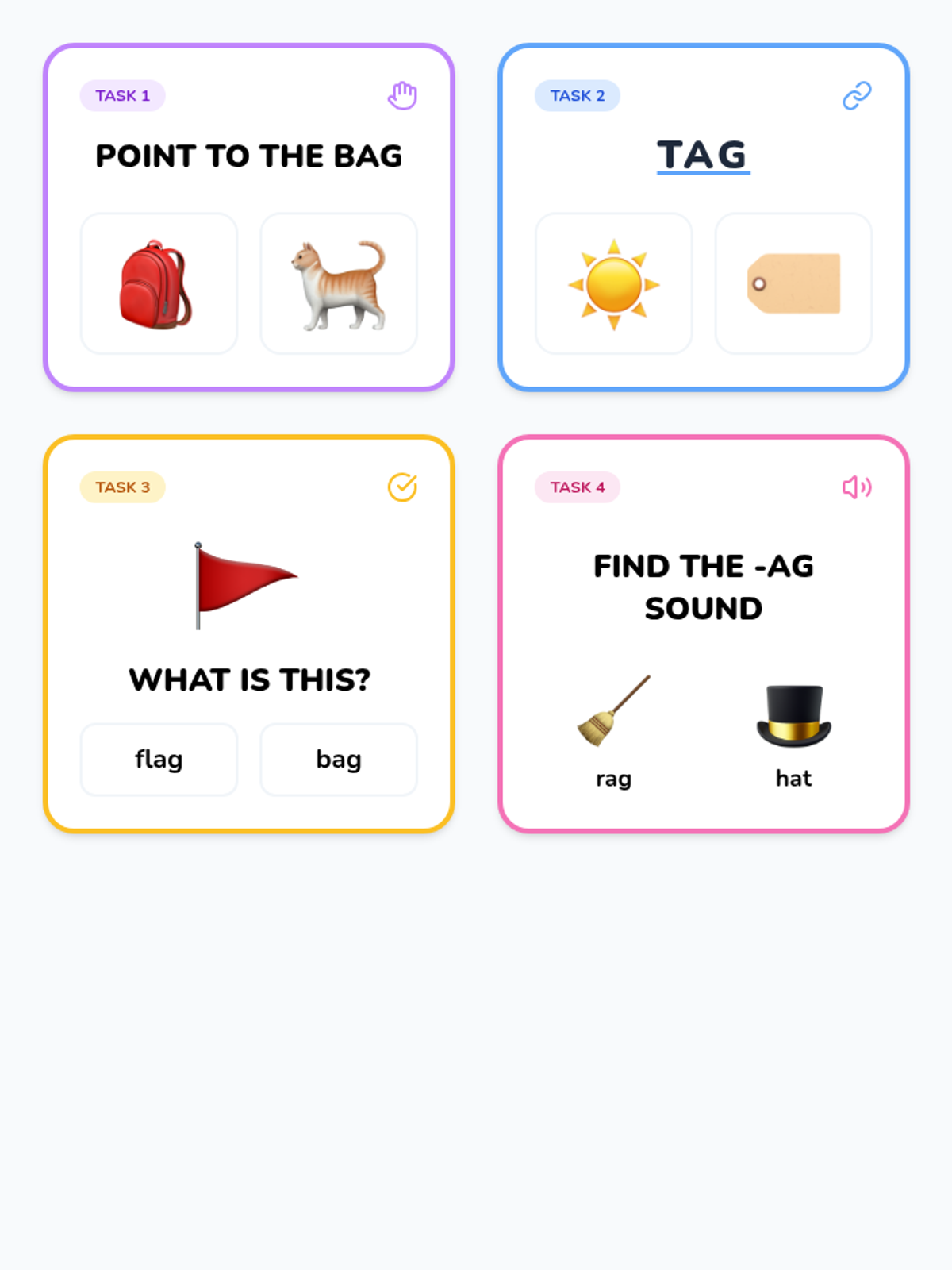
A set of four instructional task cards designed for one-on-one or small group intervention. Each card focuses on a different receptive language skill: pointing, matching, identification, and phoneme isolation.
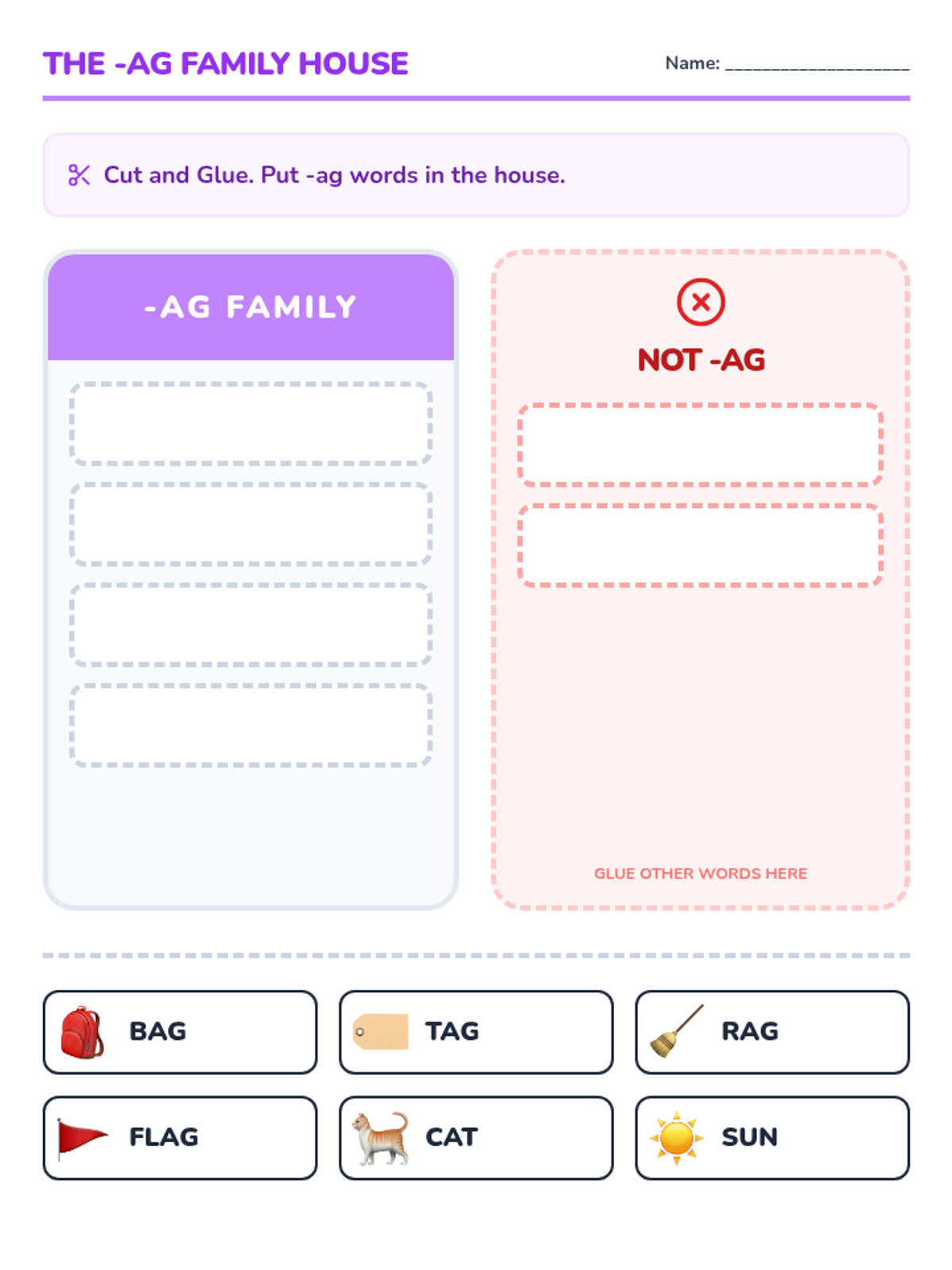
A cut-and-paste sorting activity where the student categorizes pictures as belonging to the '-ag' word family house or the 'not -ag' area. This builds phonemic awareness and visual discrimination. Includes improved contrast and a single-page layout for easier use.
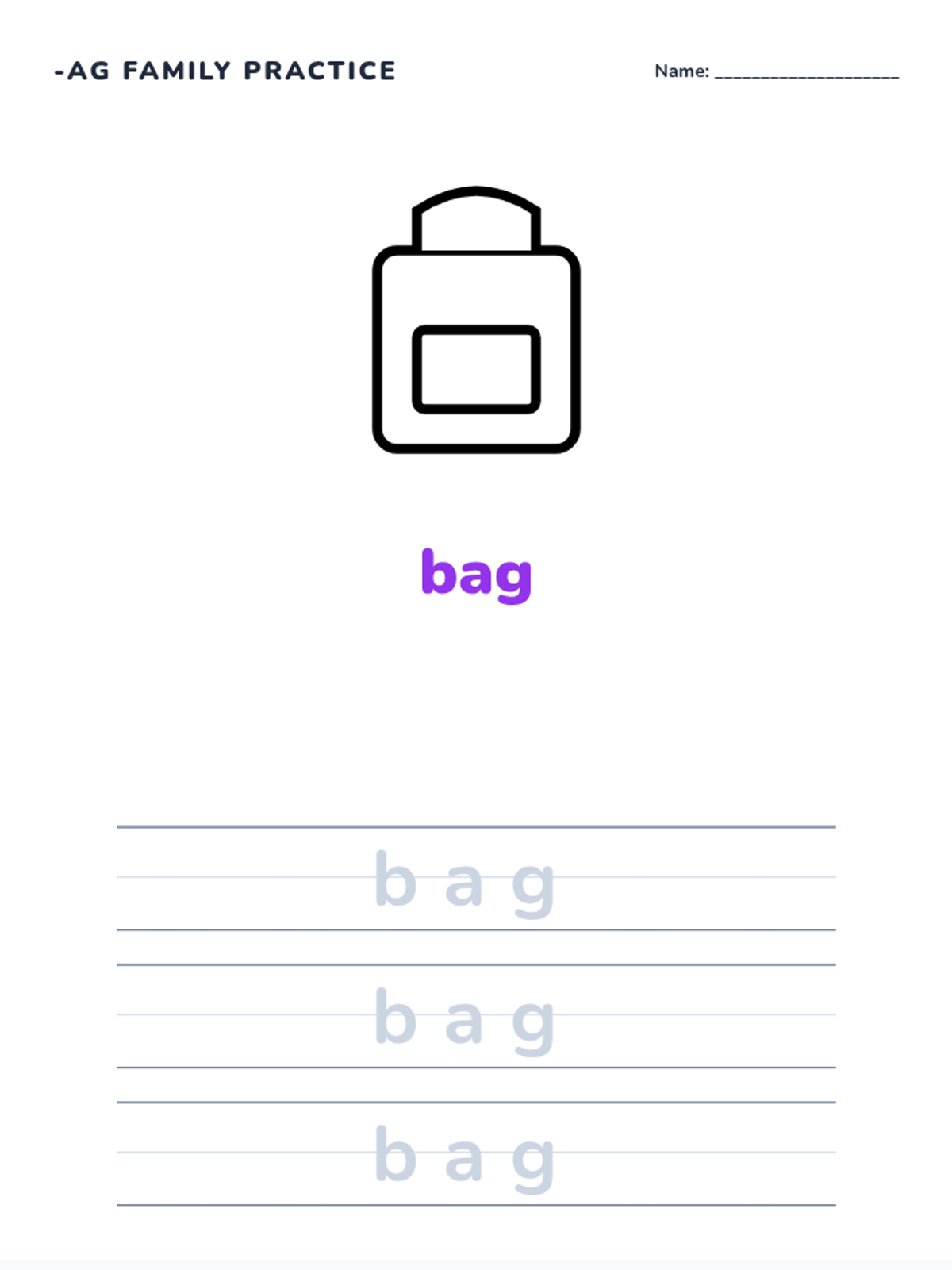
A multi-page coloring and tracing book for the '-ag' word family, providing extended independent practice time. Each page features a large icon and multiple tracing lines to build fine motor skills and word recognition. Each page includes improved tracing lines and clear coloring areas.
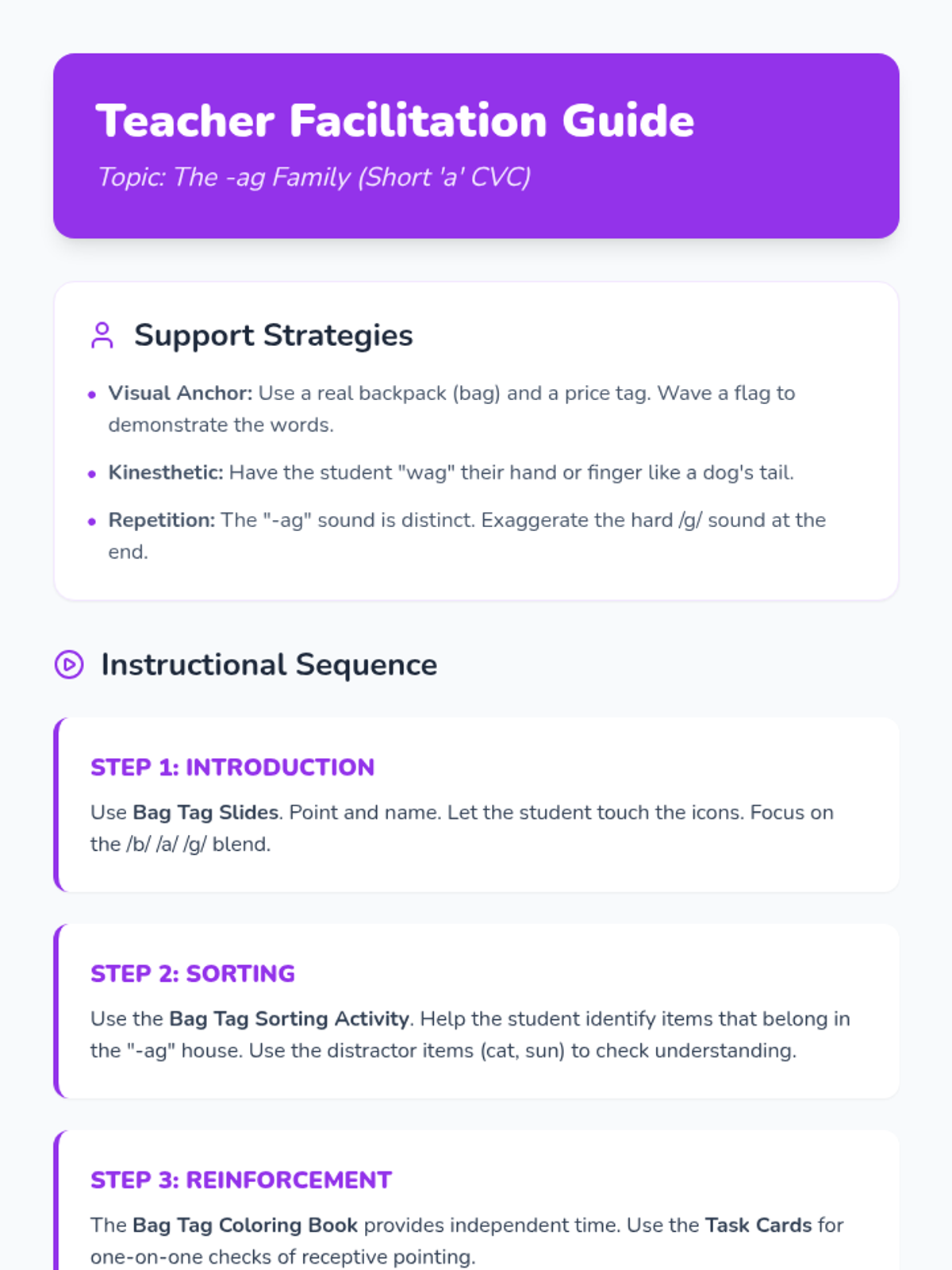
A teacher-facing guide providing specific instructional strategies and pacing advice for teaching '-ag' CVC words to a student with significant cognitive and language needs.
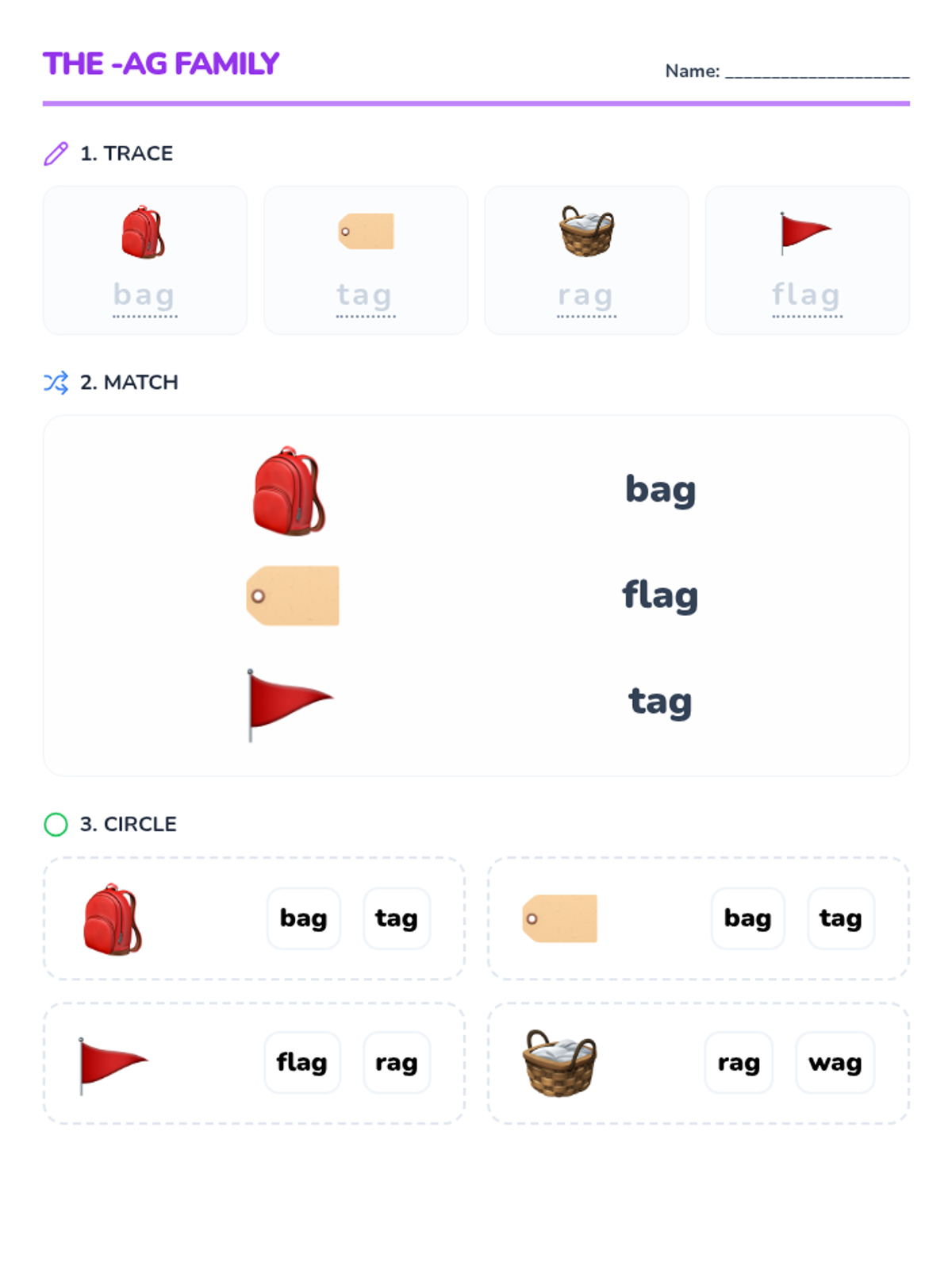
A highly visual phonics worksheet for the '-ag' word family, featuring tracing, matching, and identification exercises specifically designed for a student with significant cognitive and language delays. Condenses multiple activities onto a single page for efficient printing.
Visual introductory slides for the '-ag' CVC word family, featuring large emojis, color-coded phonemes, and clear, lowercase text to support a non-verbal ESL student with cognitive challenges.
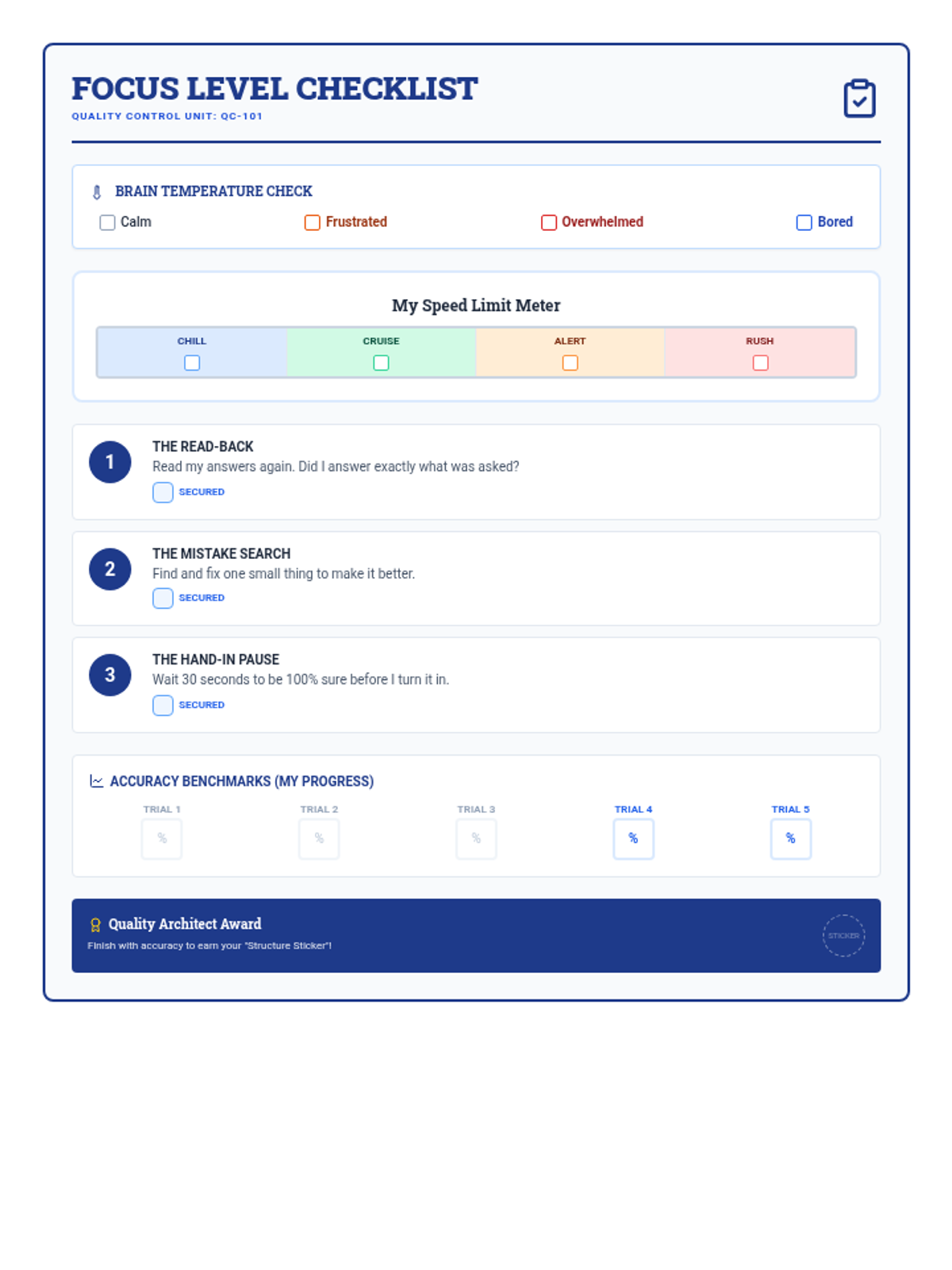
A daily self-monitoring checklist for the student to manage work speed, perform quality checks, and monitor emotional focus levels.
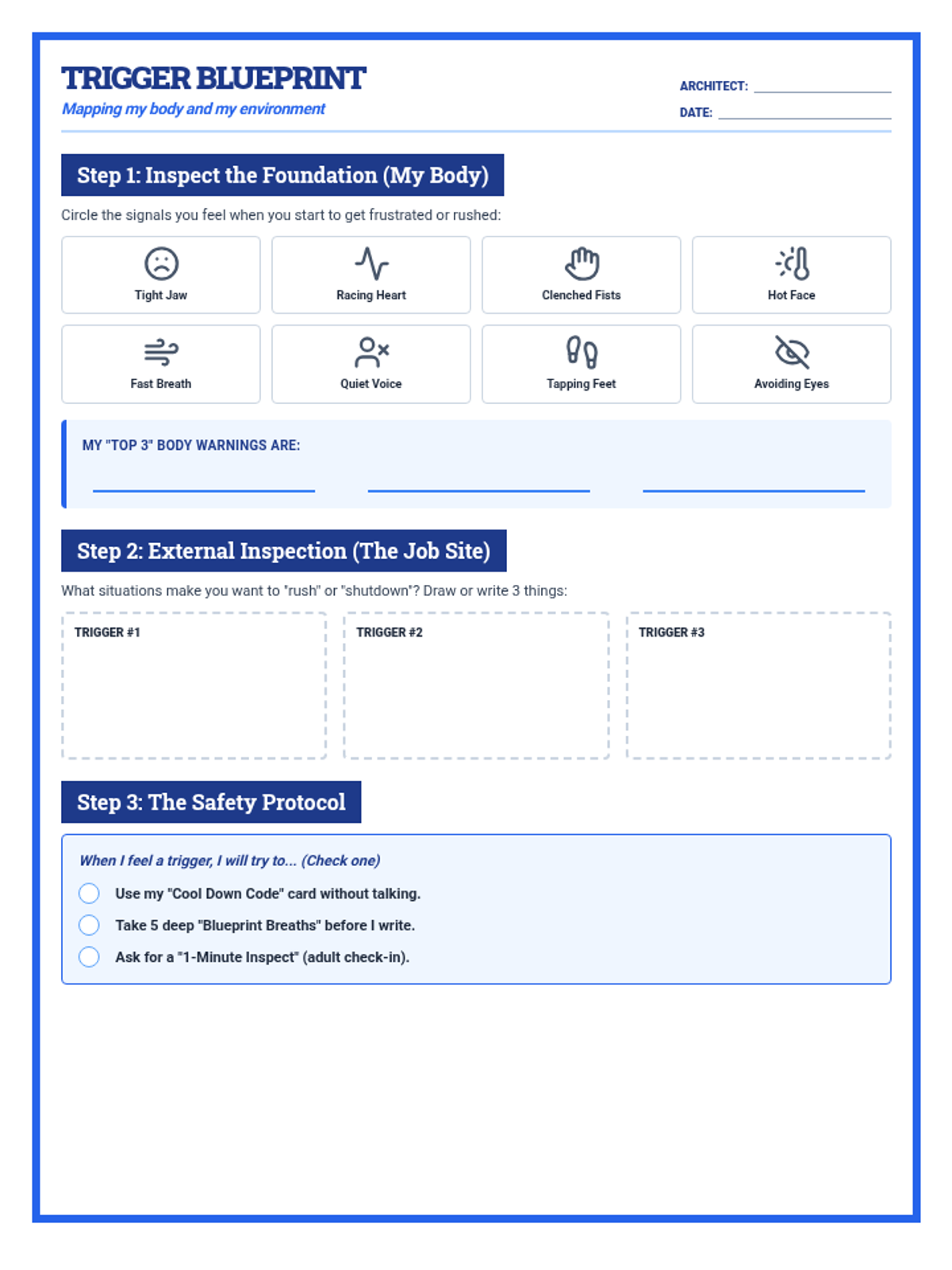
A student-facing worksheet to help identify physical body signals and environmental triggers for emotional shutdowns and rushing.
An instructional slide deck for the student, explaining what triggers are, identifying body signals, and introducing the '2-Minute Quality Rule' to manage rushing.
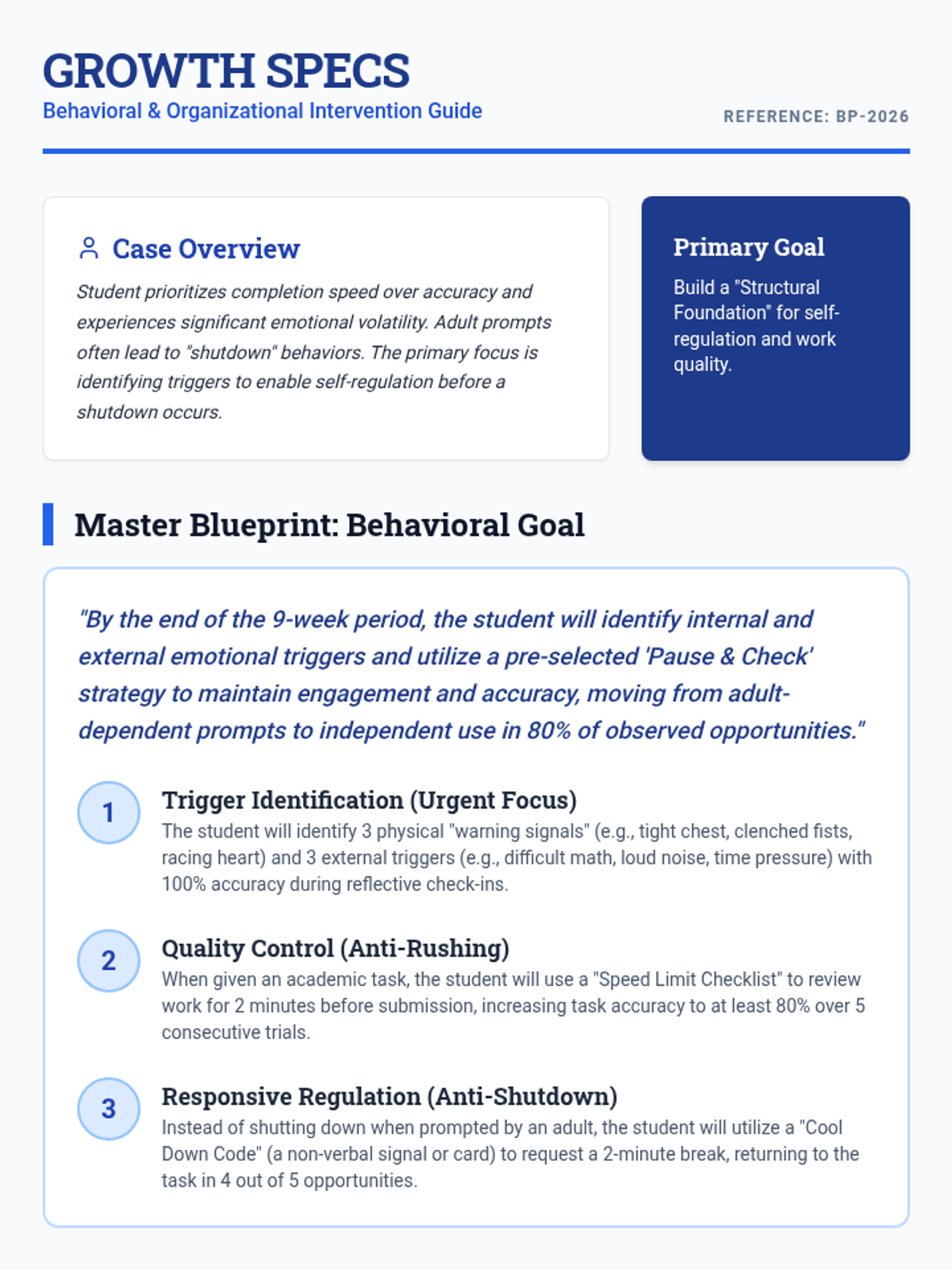
A teacher-facing guide outlining a comprehensive behavioral goal, specific objectives for trigger identification and work quality, and strategies to prevent emotional shutdowns.
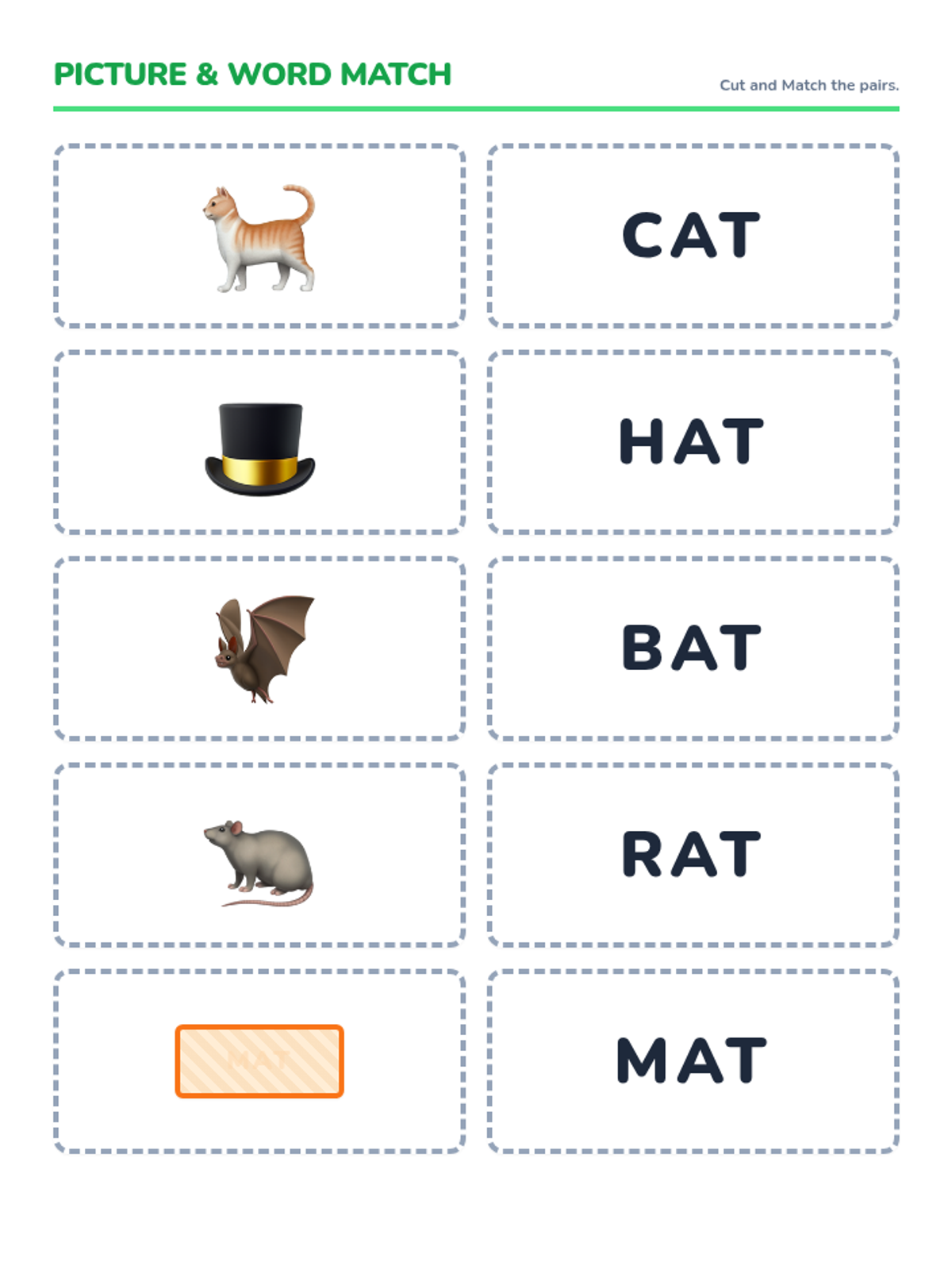
A matching game featuring the '-at' word family. Includes two sets of cards: one with icons and one with words. Students can play memory or simple matching games to reinforce the connection between visual concepts and their written forms.
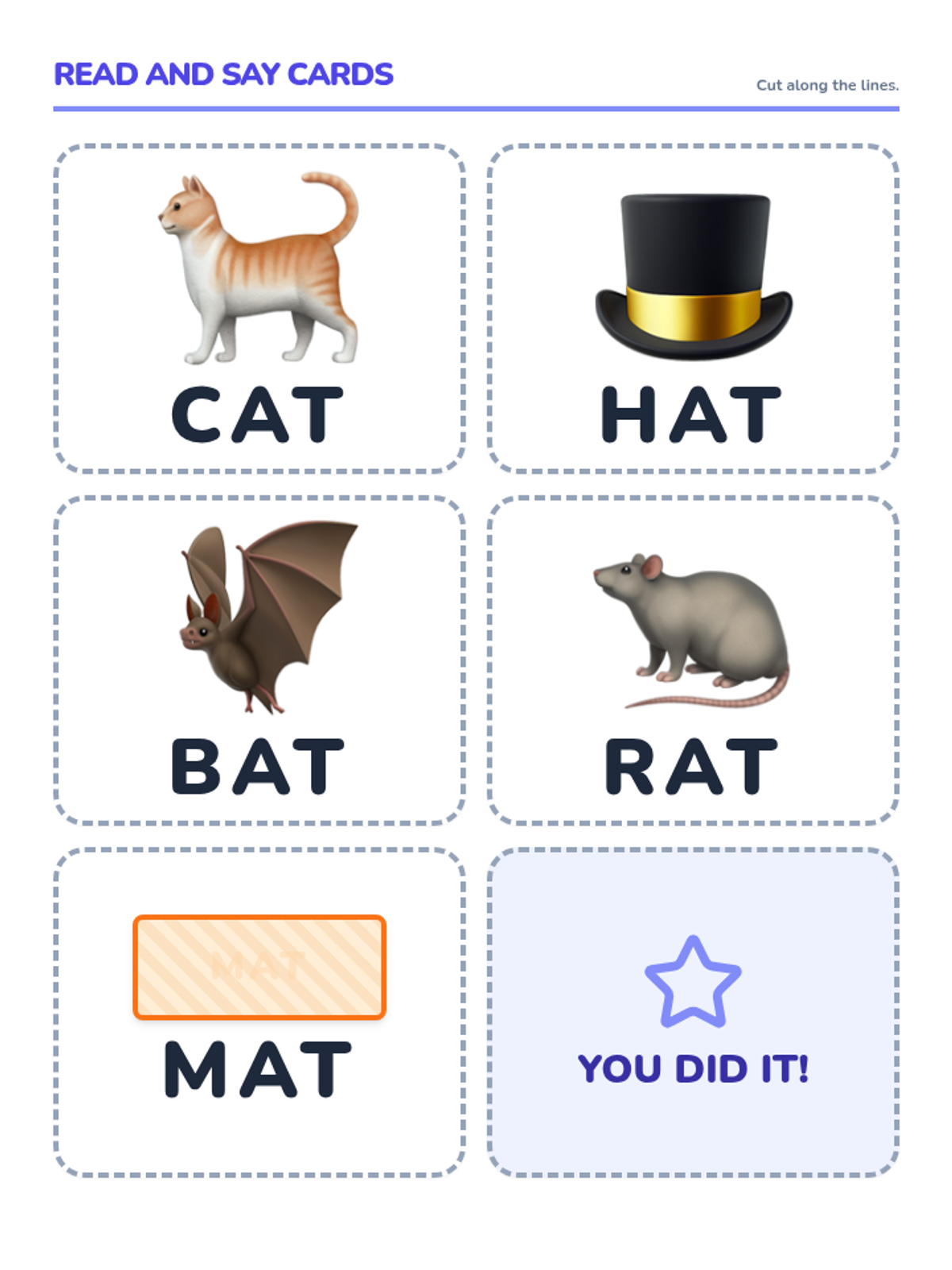
A set of large, high-contrast flashcards for the '-at' word family, featuring both a clear icon and the word. Designed for reading practice and building sight word recognition for students with significant cognitive needs.
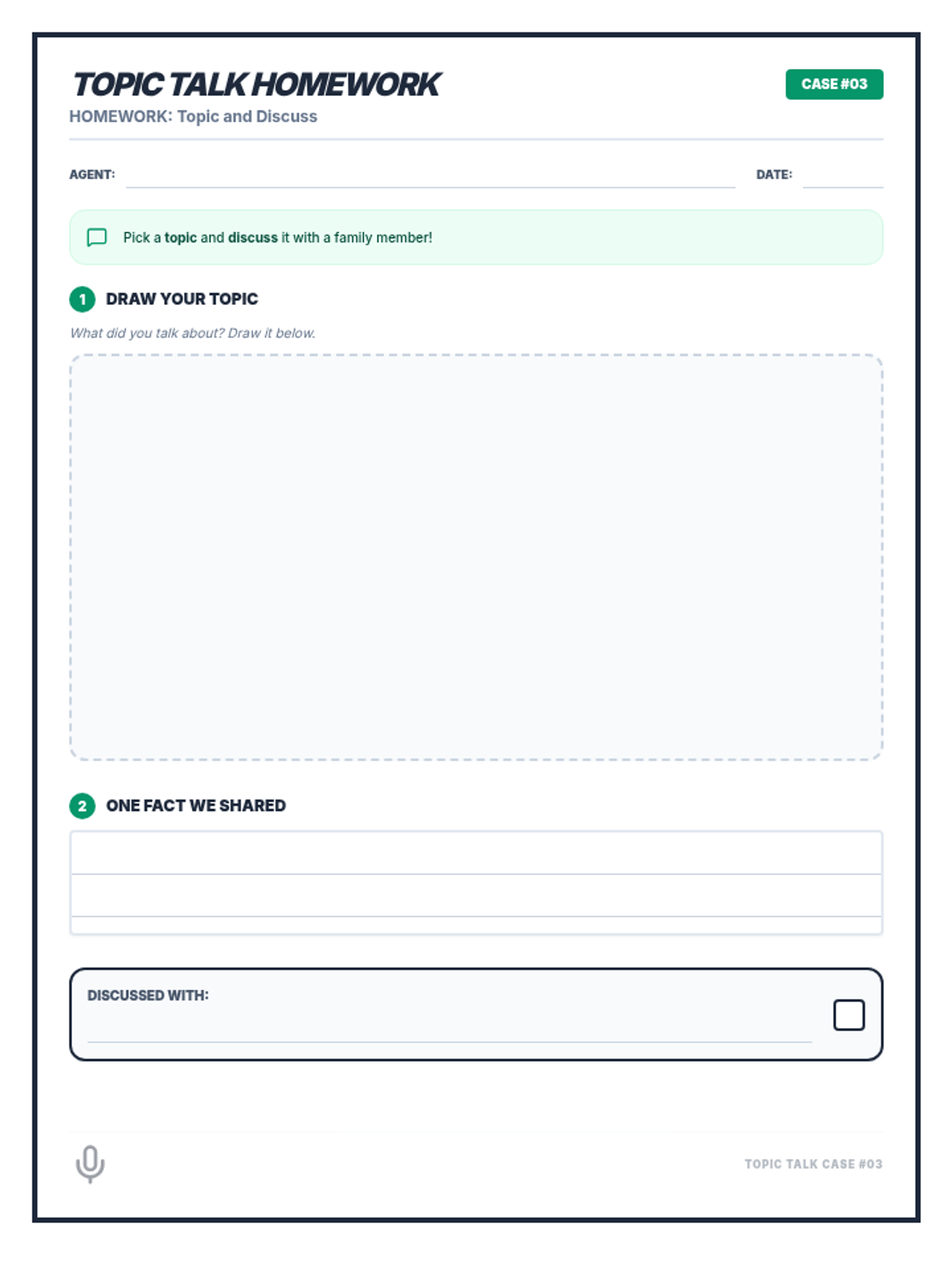
A home discussion log where students pick a topic, discuss it with a family member, and record a fact they shared. Focuses on reinforcing the definitions of 'topic' and 'discuss' in a real-world setting. Revised for 1-page layout and improved contrast.
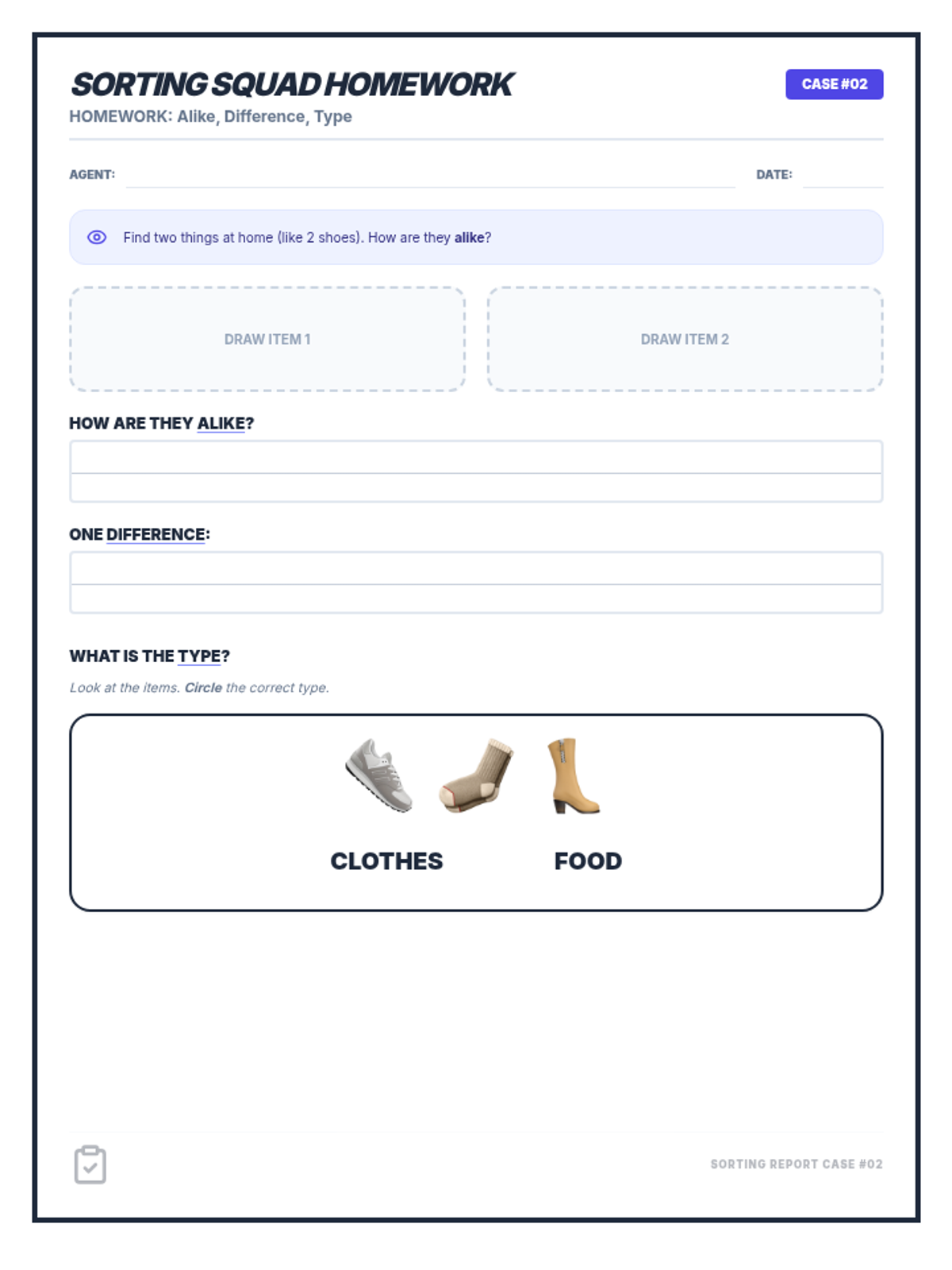
A comparison-focused homework sheet where students find and compare two household items, identifying how they are alike and different, and practicing the concept of 'type' with visual groups. Revised for 1-page layout and improved contrast for handwriting lines.
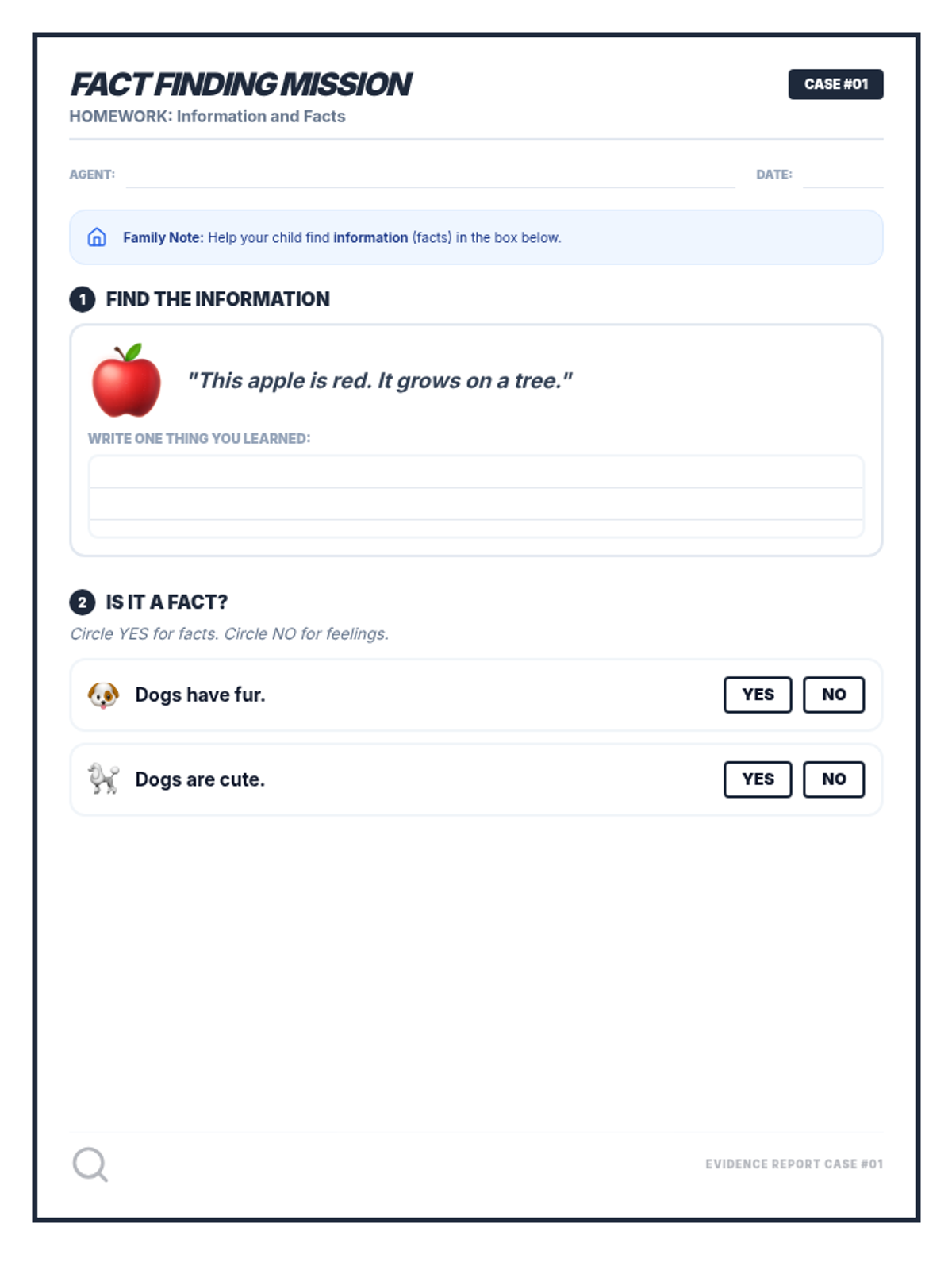
A homework sheet focused on 'information' and 'fact'. Students practice finding information in a simple context and distinguishing between facts and opinions with a family-friendly instruction note. Revised for 1-page layout and improved contrast.
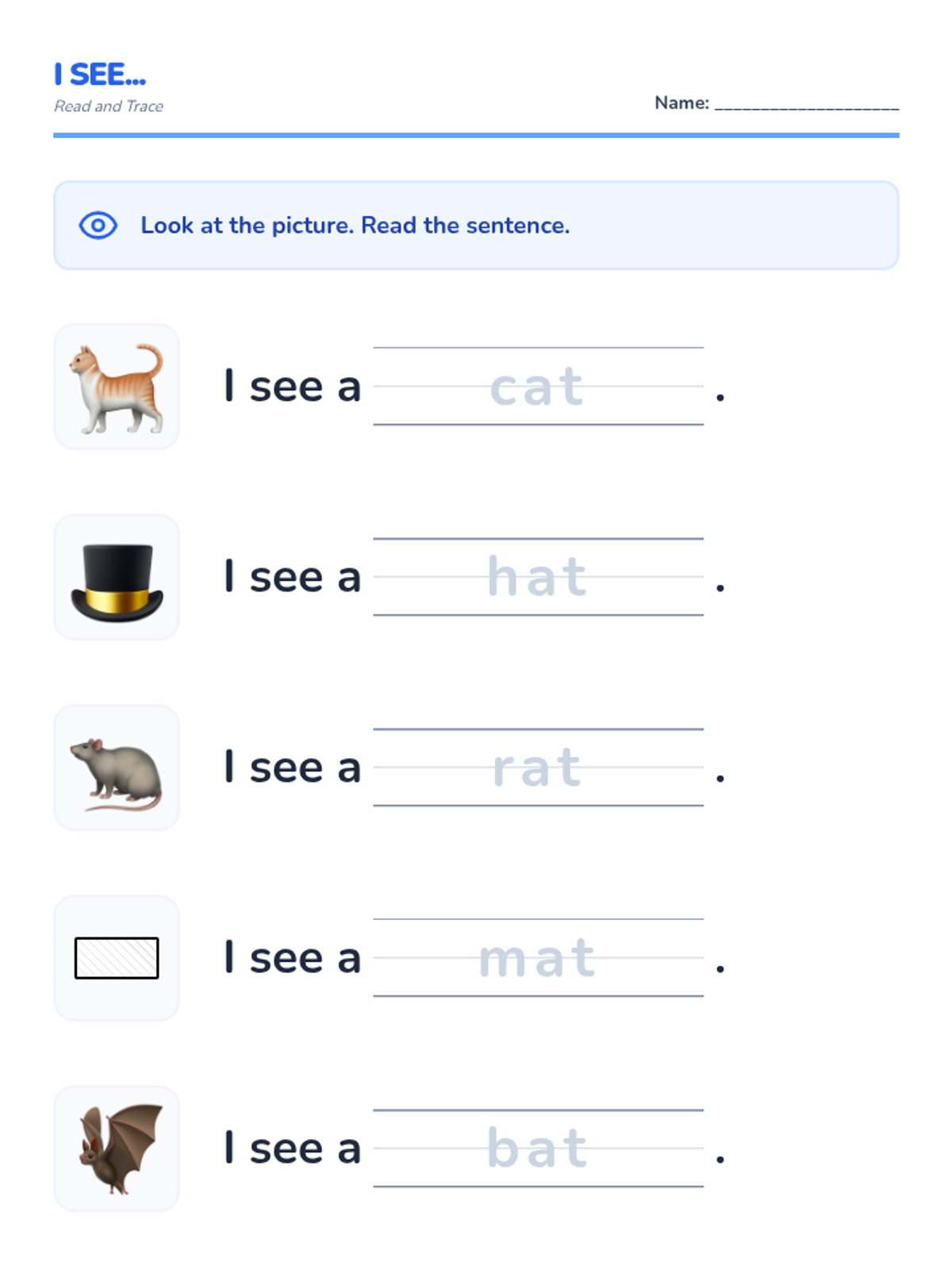
A simple fill-in-the-blank sentence worksheet for the '-at' word family. Each sentence follows the repetitive 'I see a...' structure with a ghosted word on primary lines and a corresponding visual icon to support reading and writing practice.
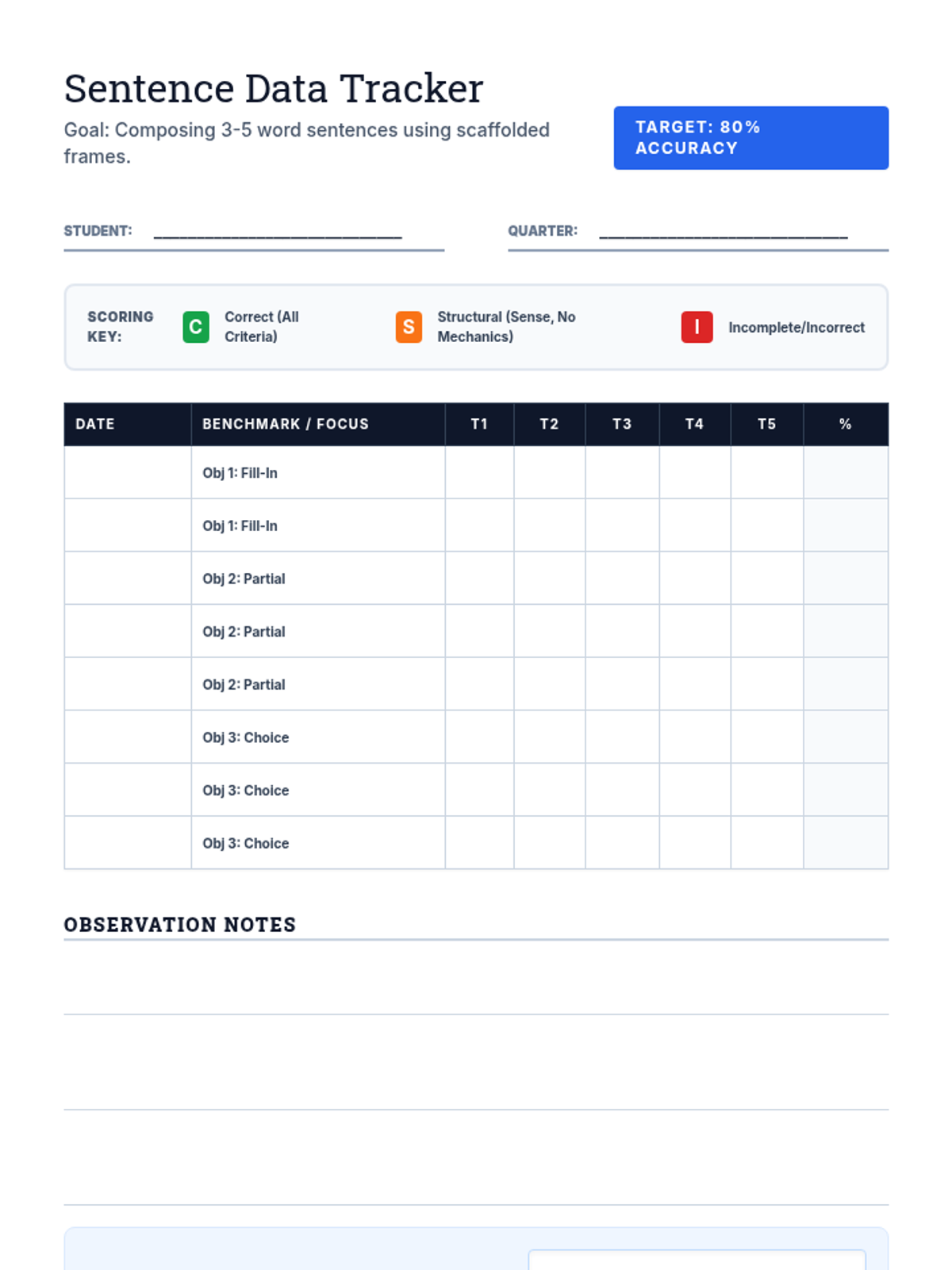
A data tracking tool for teachers to record progress on sentence construction trials, including scoring for structural correctness and mechanics. Fits on one page.
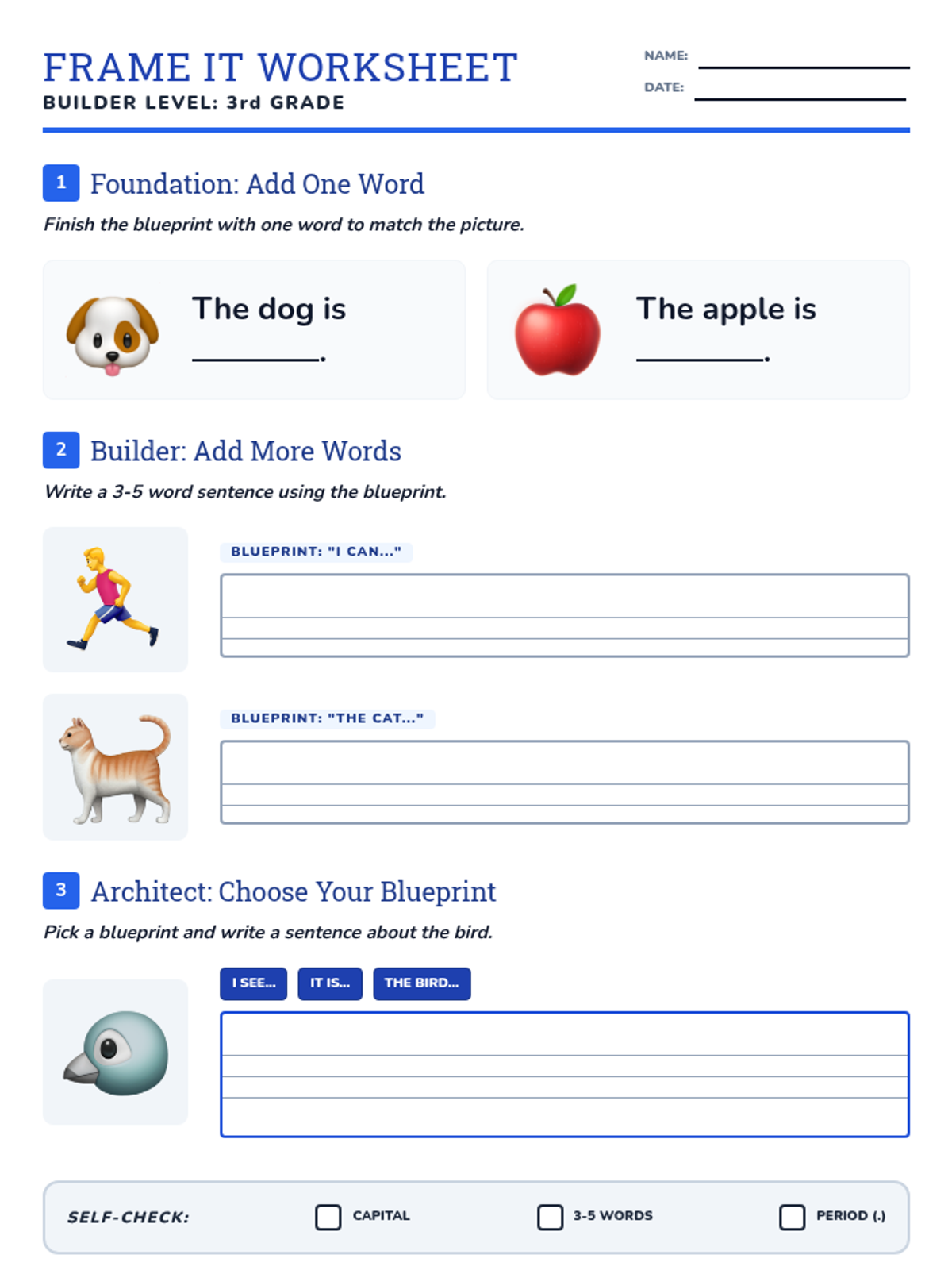
A leveled practice worksheet that guides students from filling in a single word to using a full sentence frame and eventually choosing their own frame for a 3-5 word response. Includes handwriting lines.
A colorful, high-contrast slide deck that introduces the concept of sentence frames as 'blueprints' for building sentences, perfect for visual learners in 3rd grade.
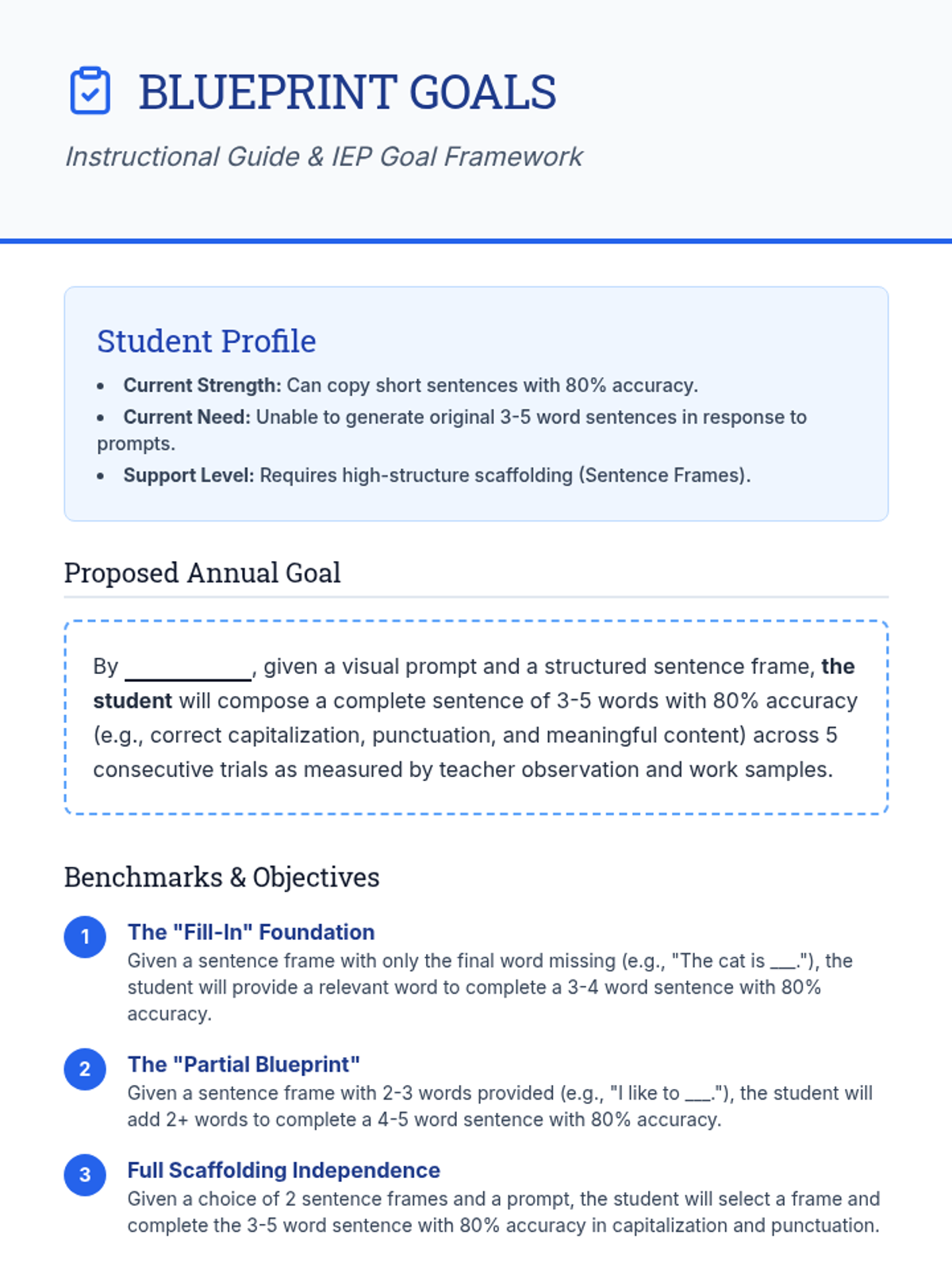
A professional teacher guide containing the proposed IEP goal, three specific benchmarks for sentence construction, and implementation strategies for a 3rd-grade student.
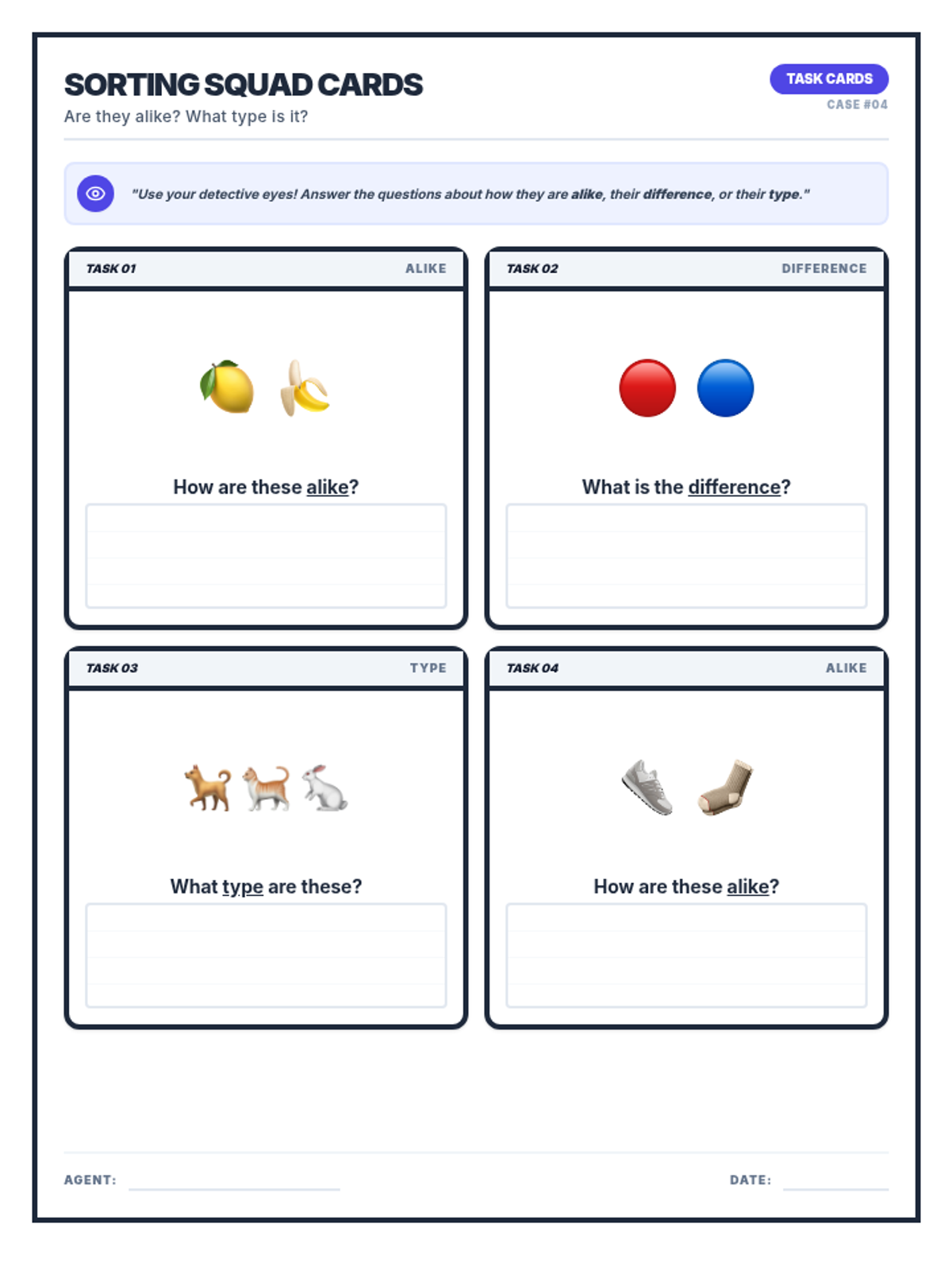
A set of task cards for comparing and categorizing items. Students analyze visual pairs and sets to identify how they are alike, their differences, or their shared 'type'. Revised for single-page layout with larger response areas and white backgrounds for legibility.
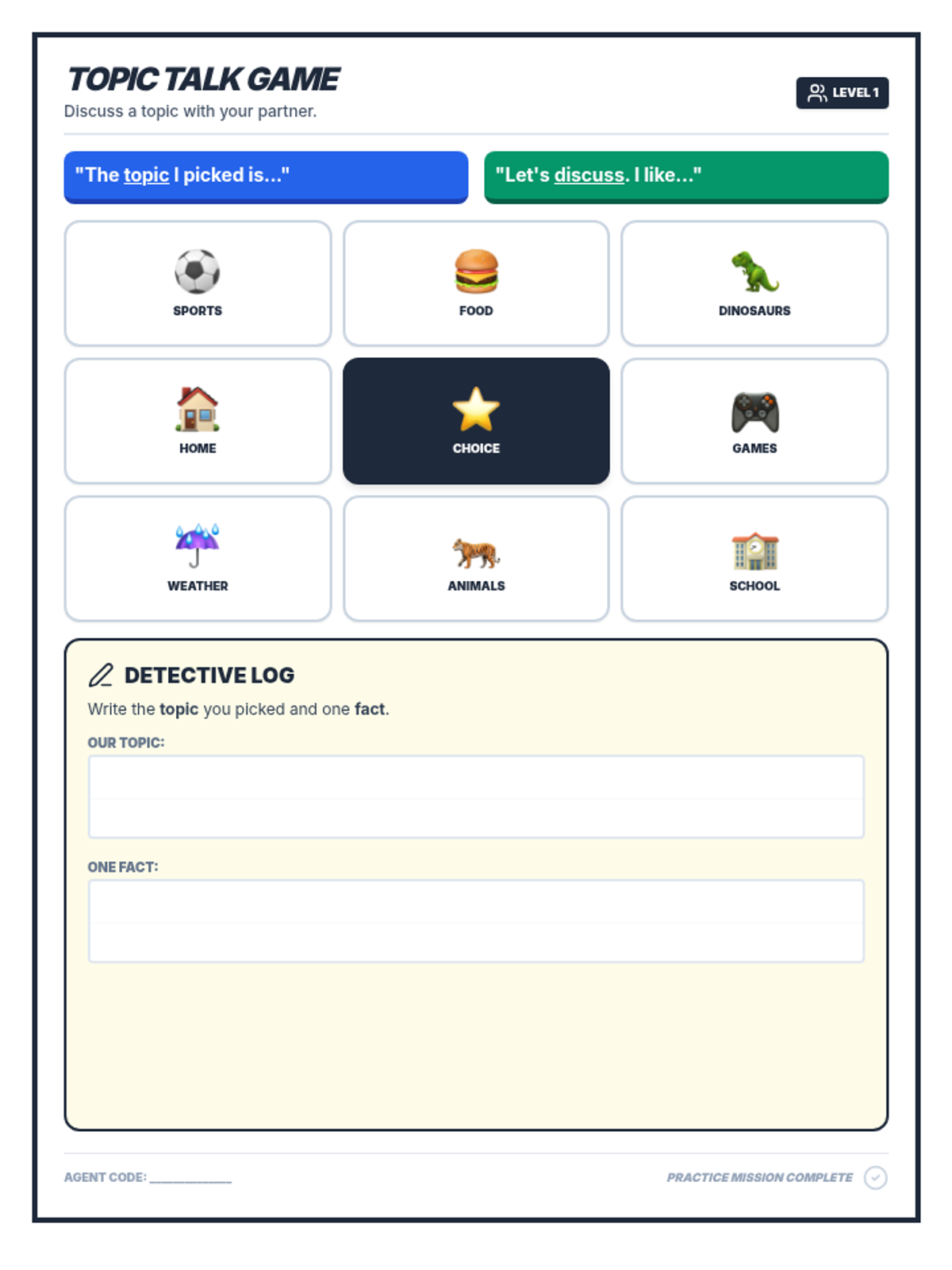
A partner-based discussion game featuring a choice board of visual topics. Students use sentence starters to practice identifying a topic and engaging in discussion with their peers. Revised to fit on a single page with a new 'Detective Log' for written practice. Grid heights and padding optimized for 1-page layout.
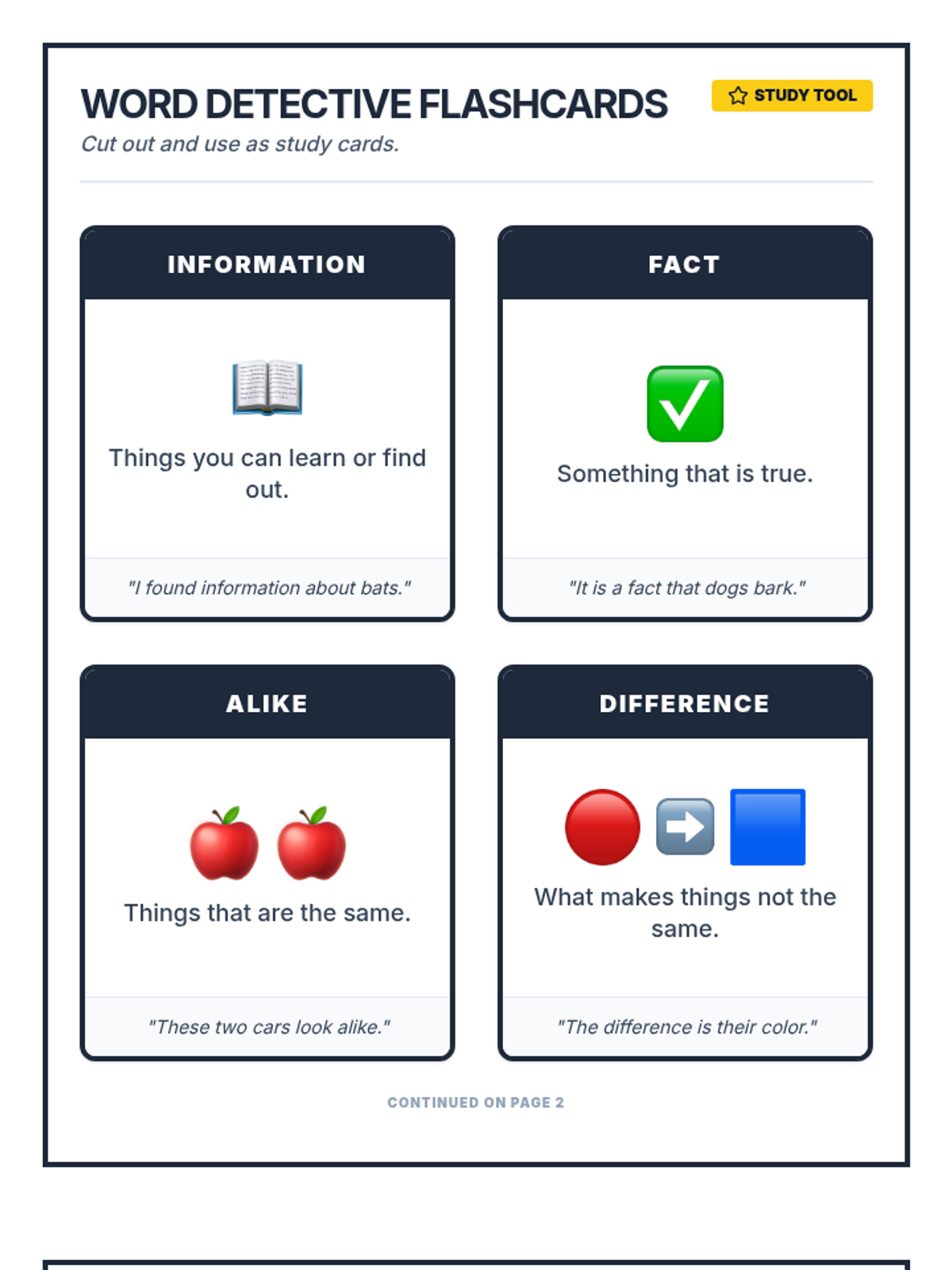
Visual vocabulary flashcards for the seven target academic words, featuring simple definitions, clear icons, and example sentences to support student mastery. Revised for consistent 2-page layout with borders and improved writing space for notes. Example sentences increased for better readability. Corrected arrow rendering and removed placeholder text.
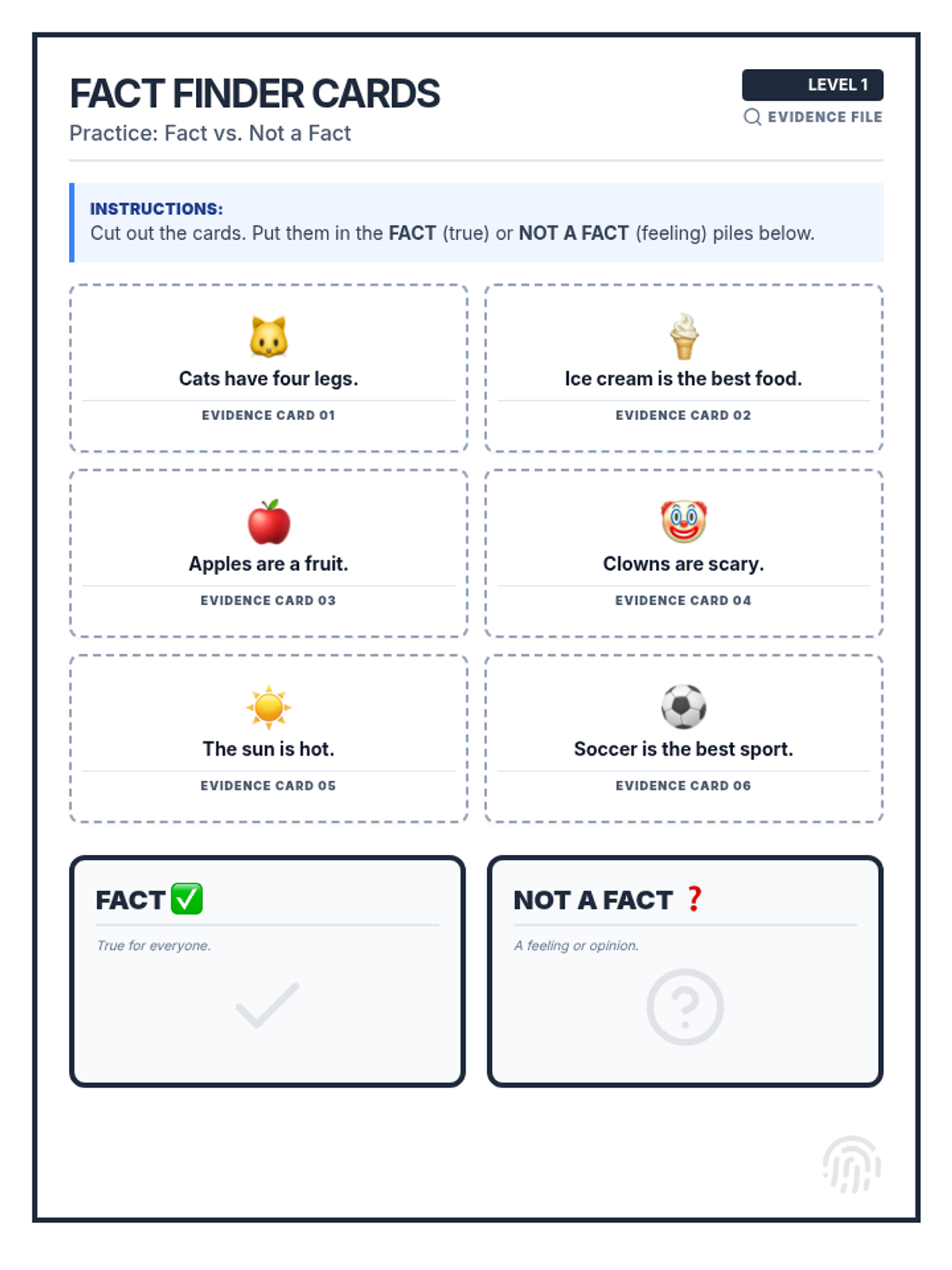
A hands-on sorting activity where students cut out cards and categorize statements as either 'Fact' or 'Not a Fact' to practice the concept of information versus opinion. Revised to fit on a single page with high-contrast text and larger sorting zones.
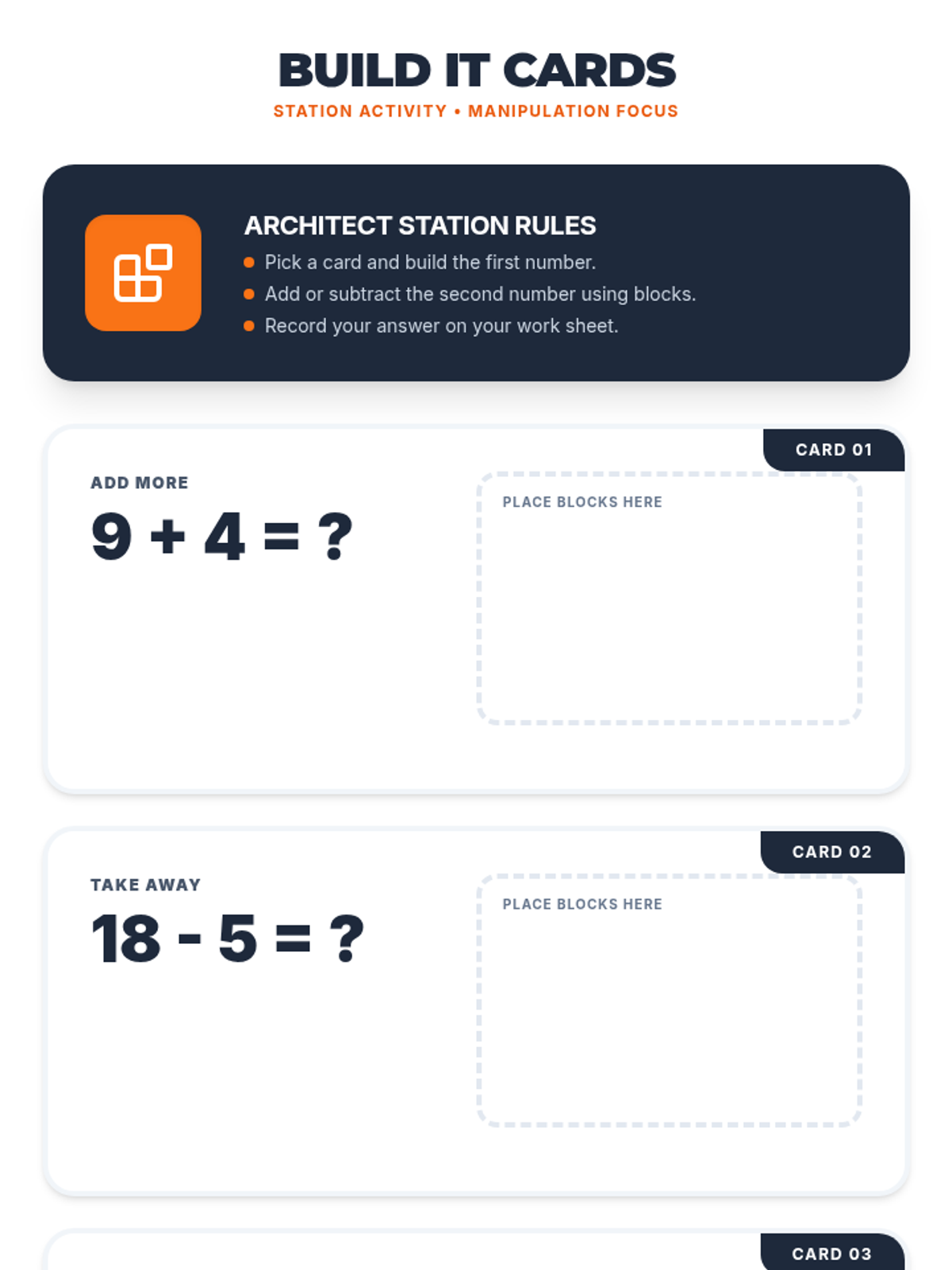
A set of 6 task cards designed for independent math stations. Each card presents an addition or subtraction problem within 20, providing a designated space for students to physically place base ten blocks to model the equation.
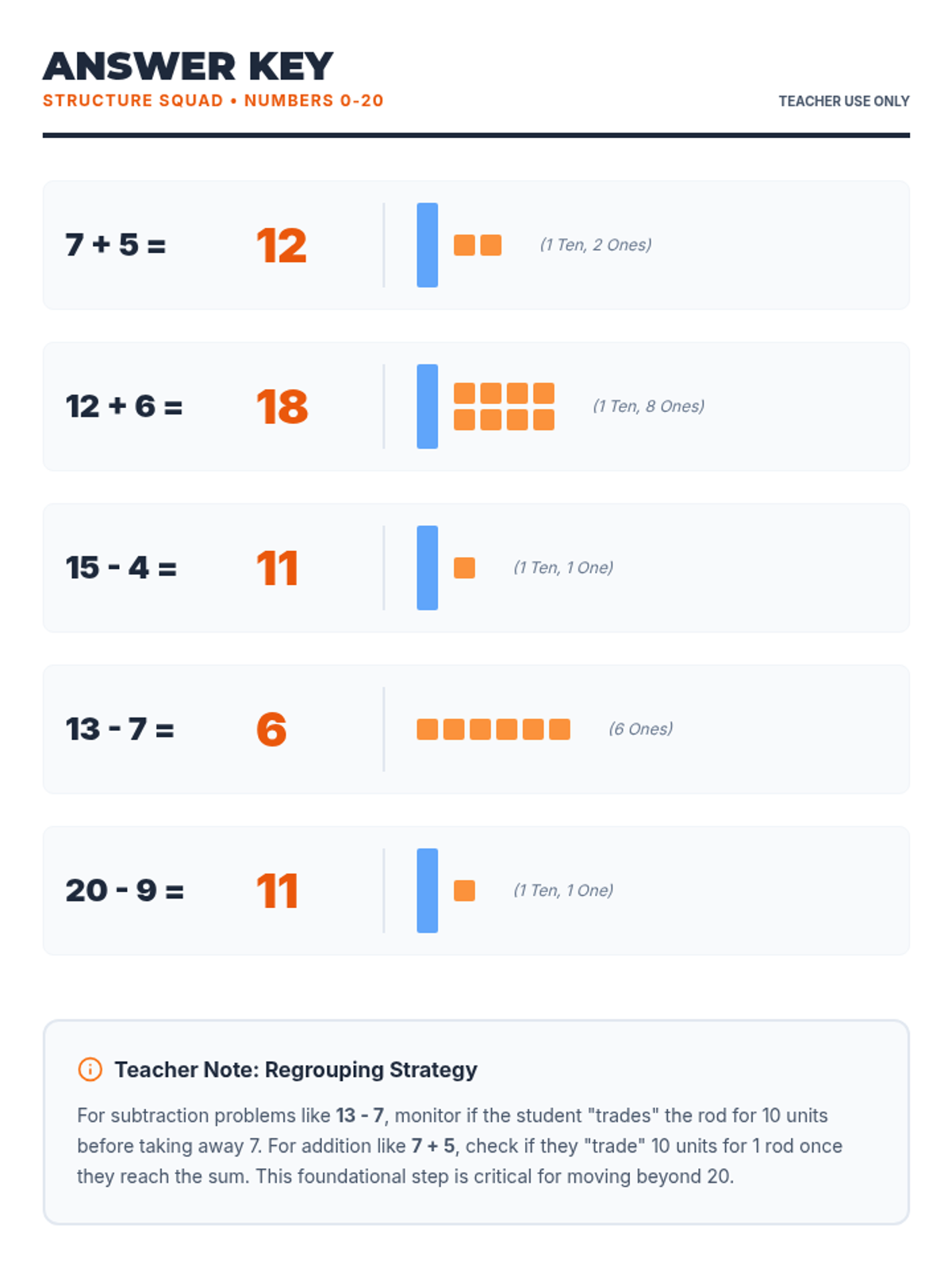
A teacher's answer key for the Structure Squad Worksheet. It provides both the numerical answers and visual representations of the base ten block models, including notes on regrouping strategies.