Printable detective badges for students to wear during the program. Reusable across all sessions.
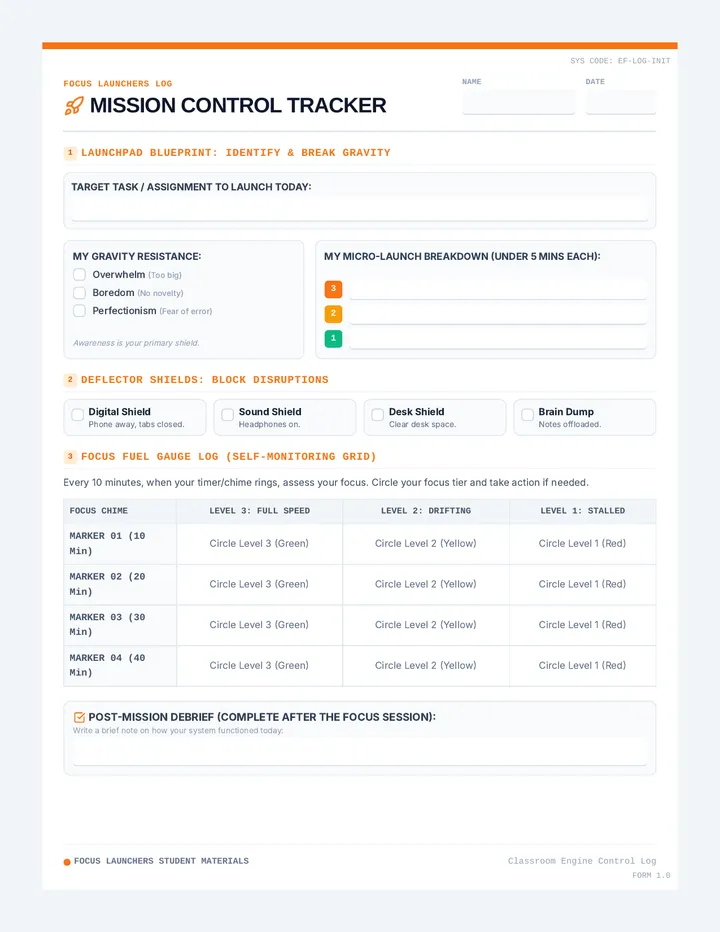
A stylized student worksheet modeled as a 'Mission Control Flight Log' to guide students in breaking down a hard task into micro-steps, preparing their distraction shields, and logging focus levels.
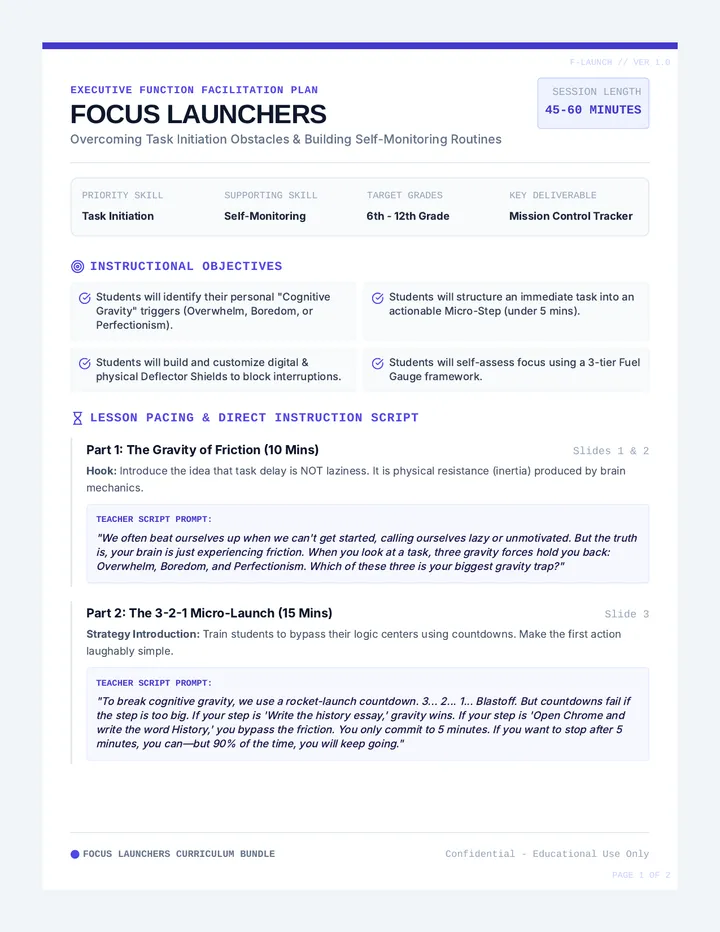
Comprehensive teacher facilitation and lesson pacing guide featuring scripted prompts, slide alignments, and troubleshooting strategies to deliver the Focus Launchers curriculum.
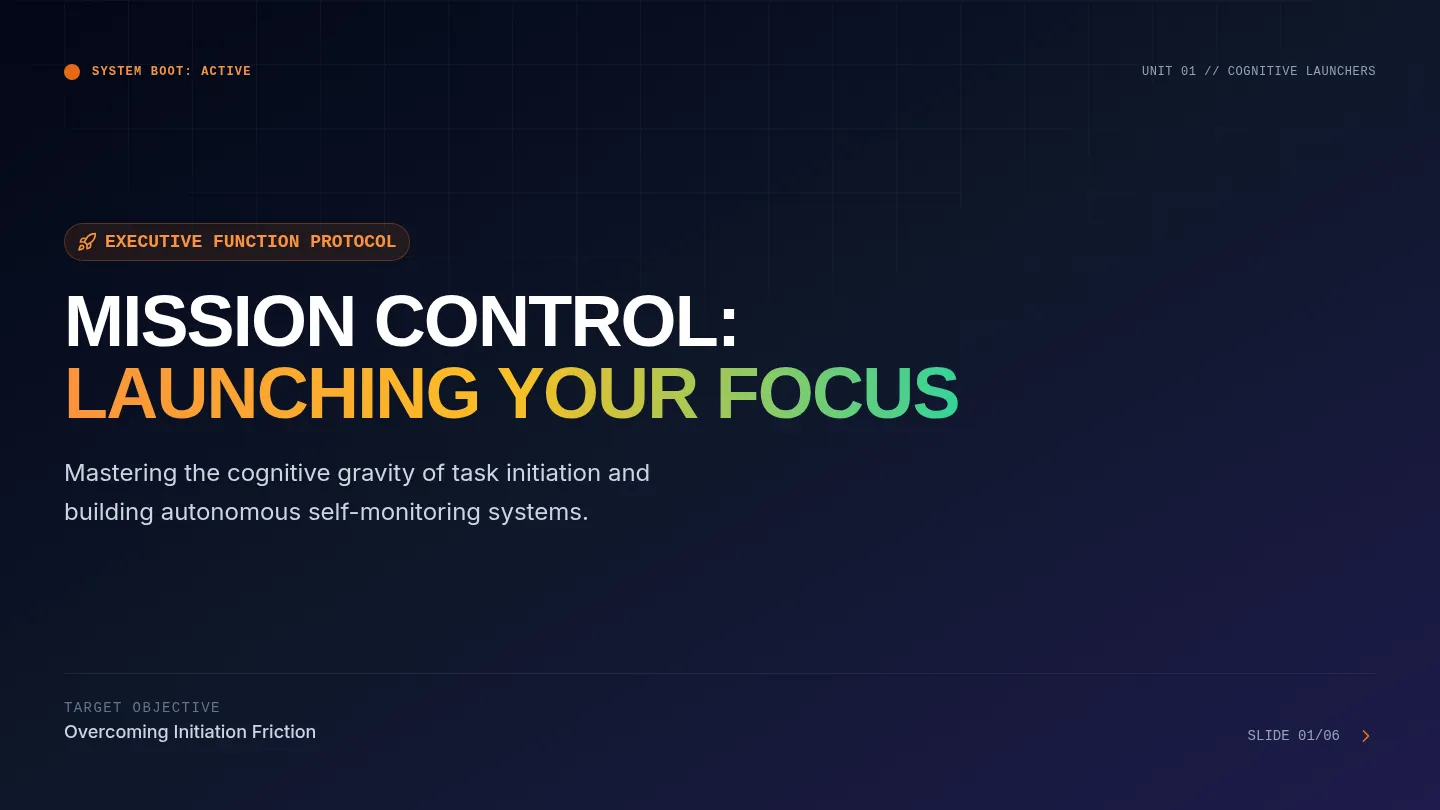
Interactive, high-impact instructional slides styled as a 'Mission Control Dashboard' to teach students task initiation (Micro-Launches, Deflector Shields, and Fuel Gauges) for self-monitoring.
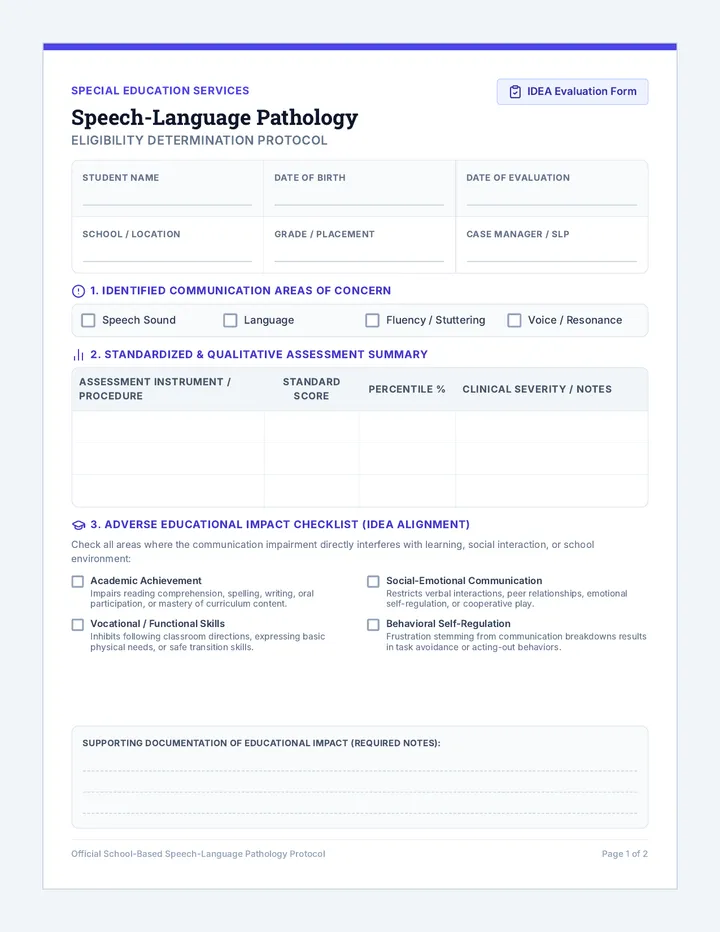
A professional 2-page print-ready Speech-Language Pathology (SLP) eligibility determination protocol. It features comprehensive fields for student information, assessment summaries, educational impact checklists, and a dedicated professional reference section highlighting the ASHA School-Based Eligibility guidelines with the requested URL.
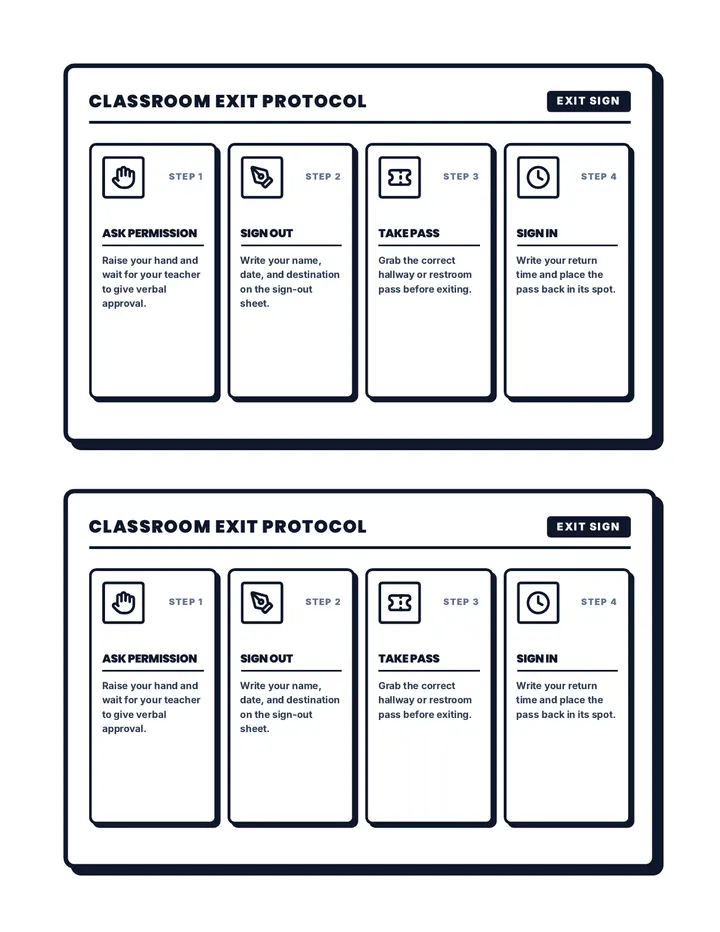
A pair of printable half-sheet exit protocol signs featuring the four step-by-step procedures for leaving and returning to the classroom, designed to perfectly match the entry signage layout.
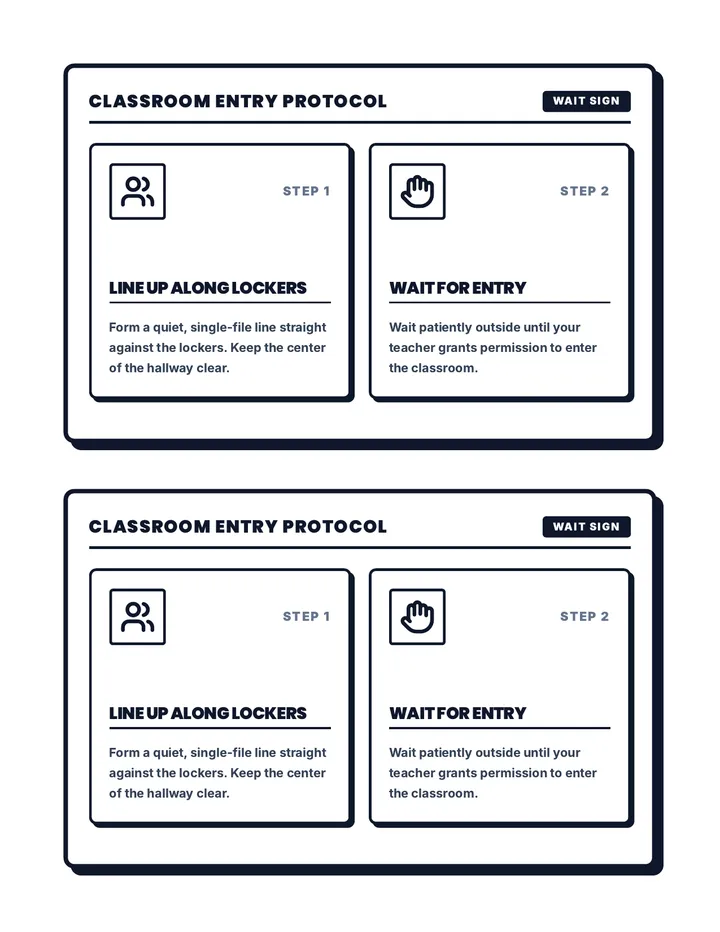
A cleaner, simplified pair of doubled half-sheet signs with the middle dashed cut lines removed. The vertical layout, sizing, and spacing have been perfectly preserved using an invisible spacer.
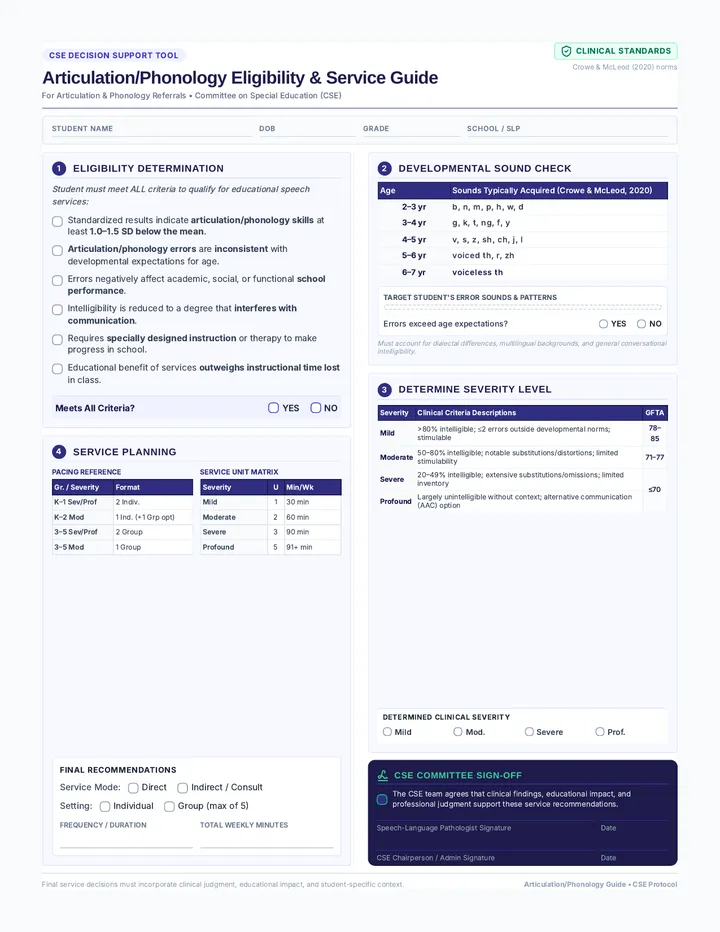
A professional, comprehensive CSE eligibility and service recommendation worksheet designed for Speech-Language Pathologists and CSE committees to determine student qualification for articulation/phonology services. It includes checkboxes for the 6 core criteria, developmental milestones, a severity matrix, and service recommendation guidelines.
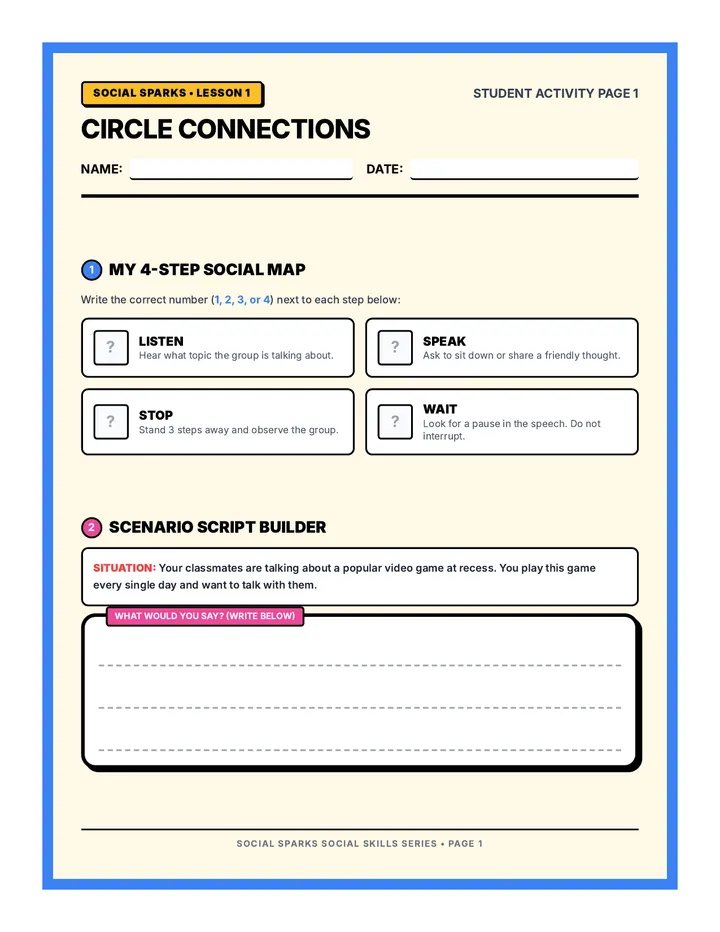
A highly visual, 2-page student worksheet designed to accompany the Circle Slides lesson. Features a step-ordering activity, speech bubble templates for student-written dialogues, a board-game style social path activity, and a self-reflection scorecard.
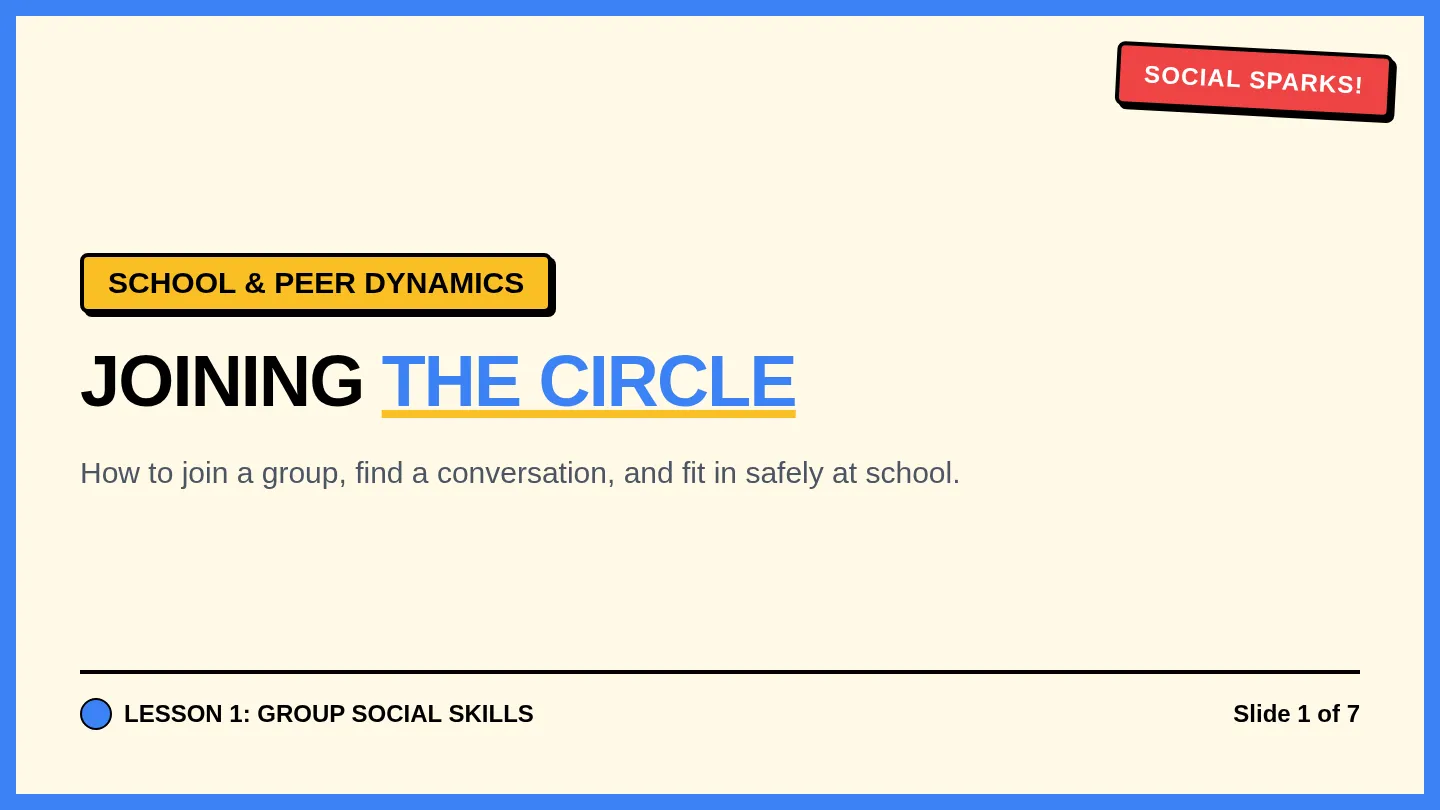
An expanded, highly visual slide deck for teaching students how to join a peer conversation. Features step-by-step guidance, three school-based practice scenarios, a Game Show challenge, and classroom discussion prompts with text size optimized for visibility.
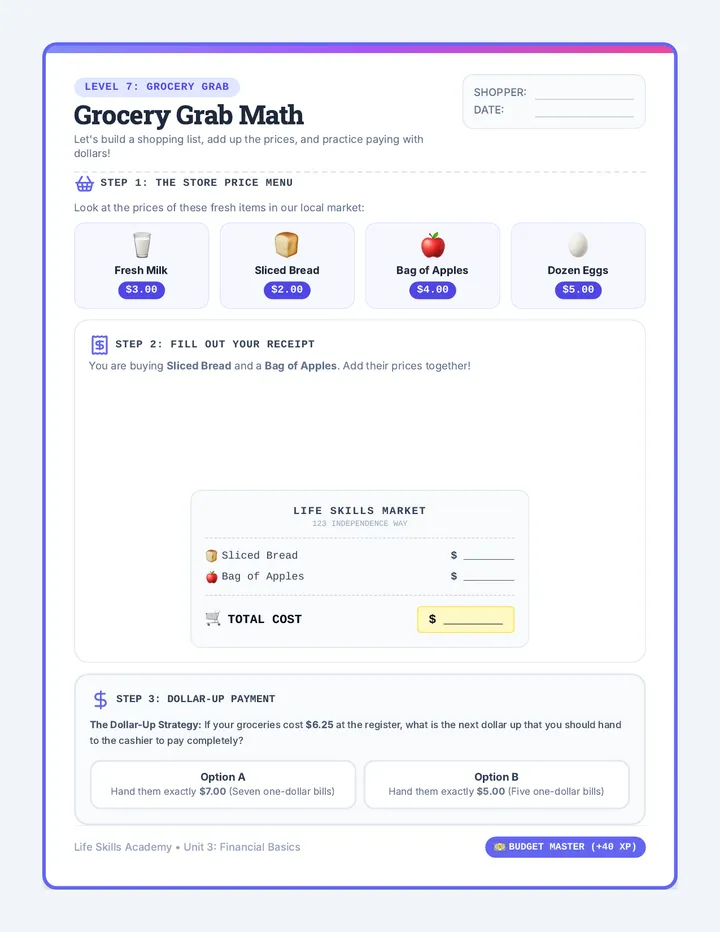
A functional math and budgeting worksheet designed for students with intellectual disabilities. Teaches grocery list creation, basic price addition, and the 'next dollar up' payment strategy.
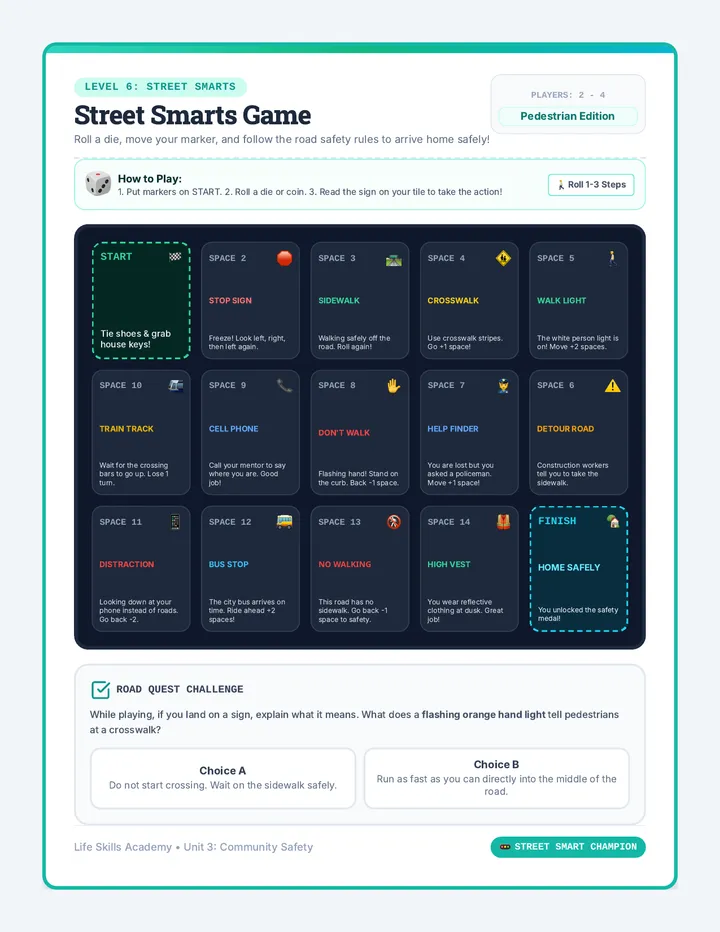
A printable, gamified pedestrian safety board game that teaches students with intellectual disabilities to read community safety signs, crosswalk signals, and find helpers.
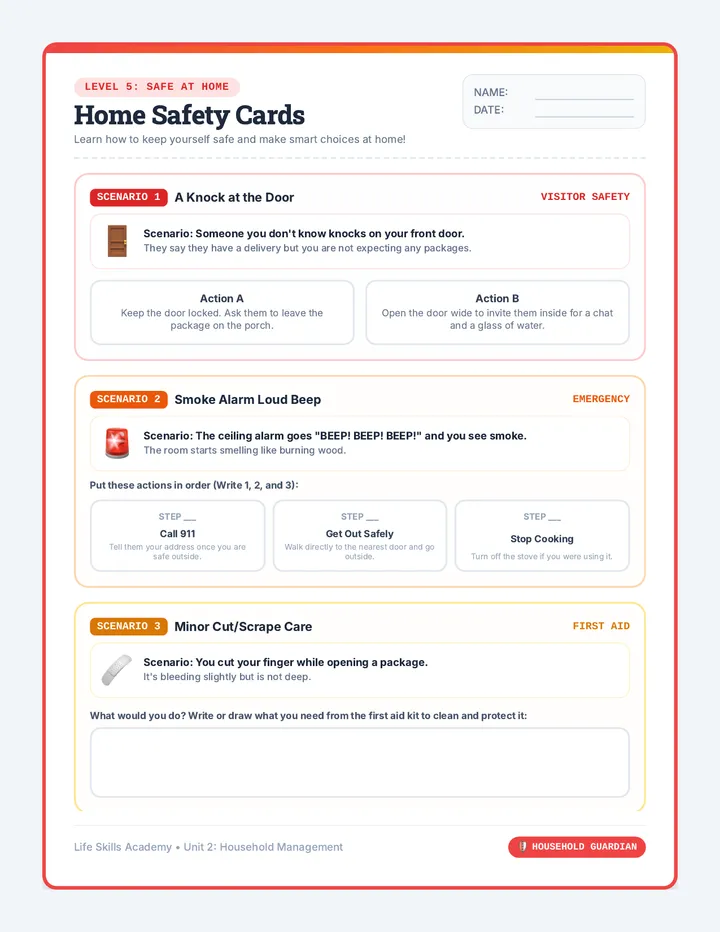
Differentiated safety scenario cards focused on key emergency responses for students with intellectual disabilities, covering strangers at the door, smoke alarms, and basic first aid.
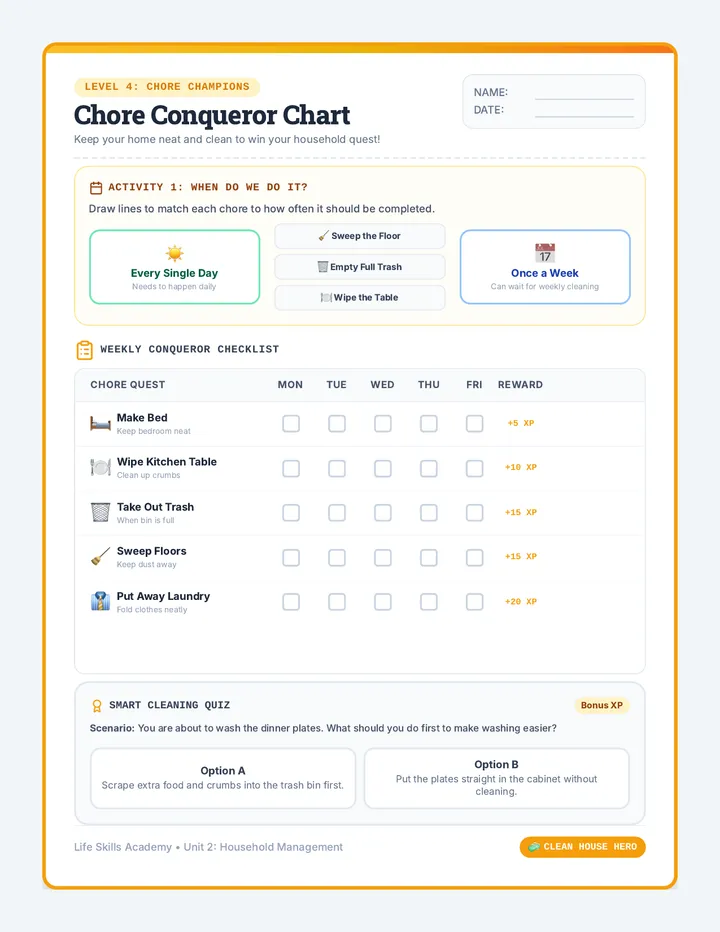
A daily and weekly household chore planner designed for students with intellectual disabilities. Features a visual frequency sorter and clear tracking checkboxes for essential housekeeping tasks.
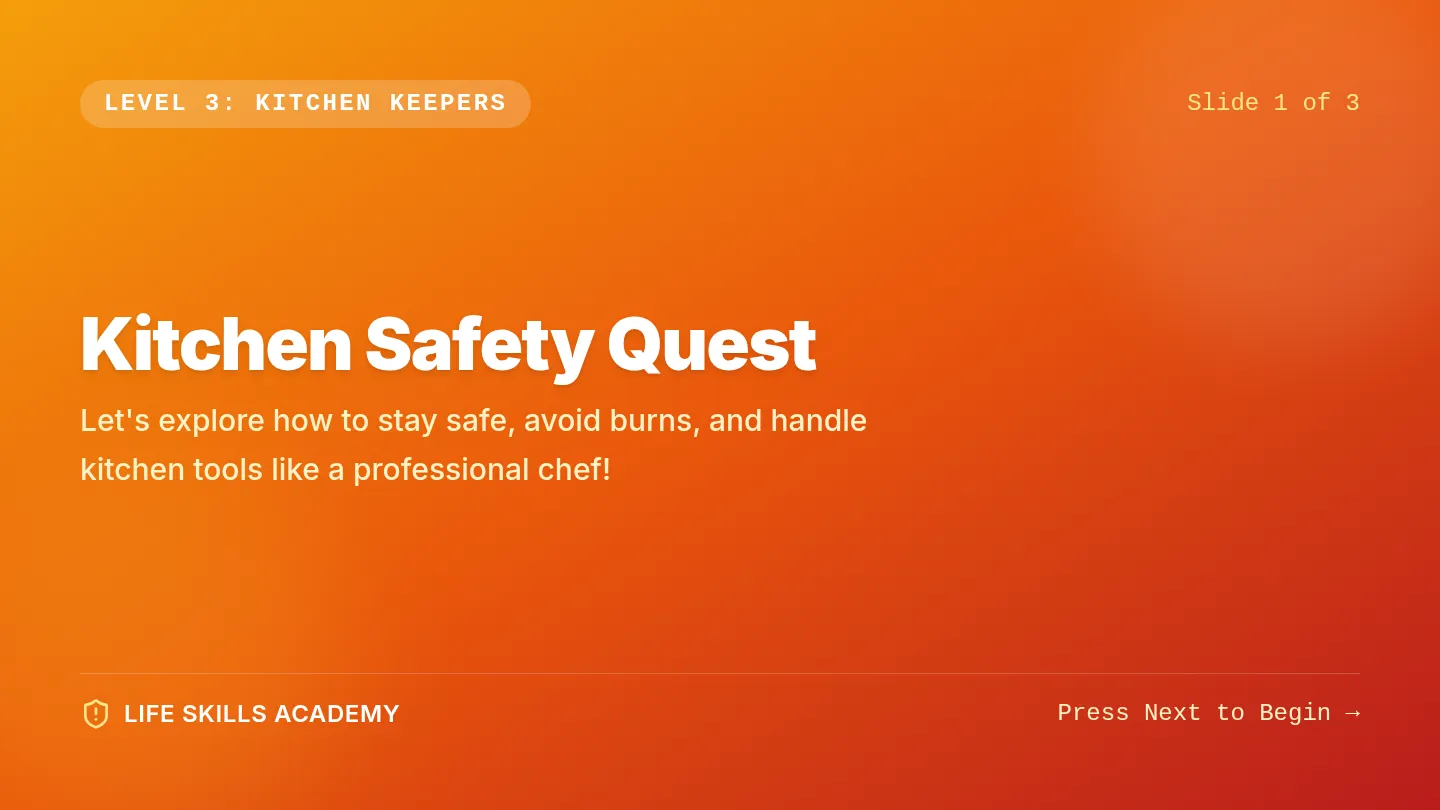
An interactive slide deck for teaching kitchen safety, featuring bold visual scenarios and large, readable text designed for group discussion.
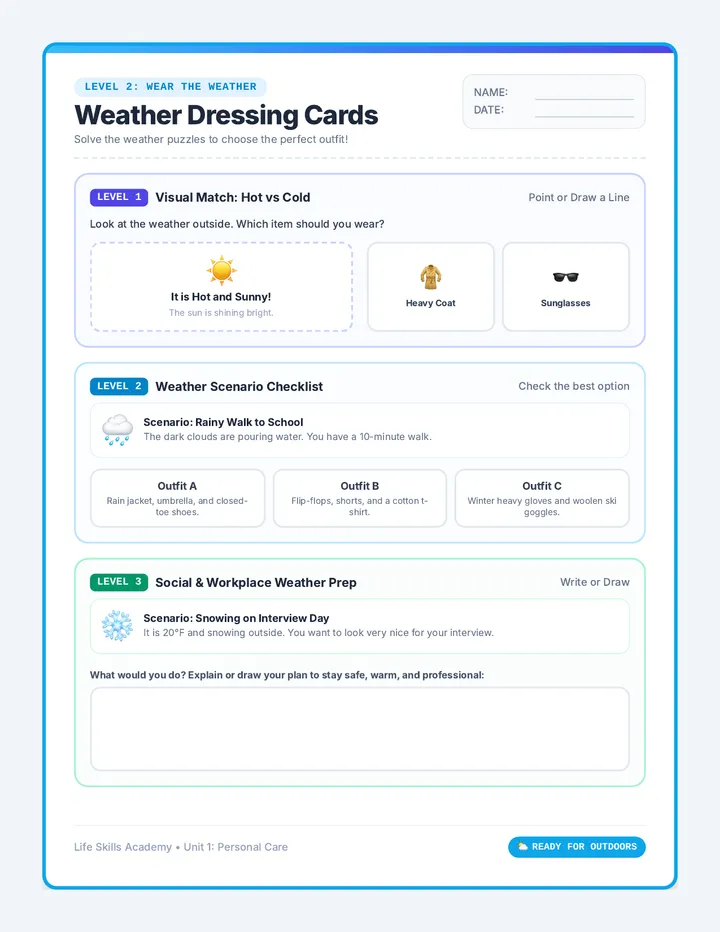
Differentiated weather dressing task cards featuring three levels of independence to help students with intellectual disabilities select appropriate clothing for various weather conditions and scenarios.
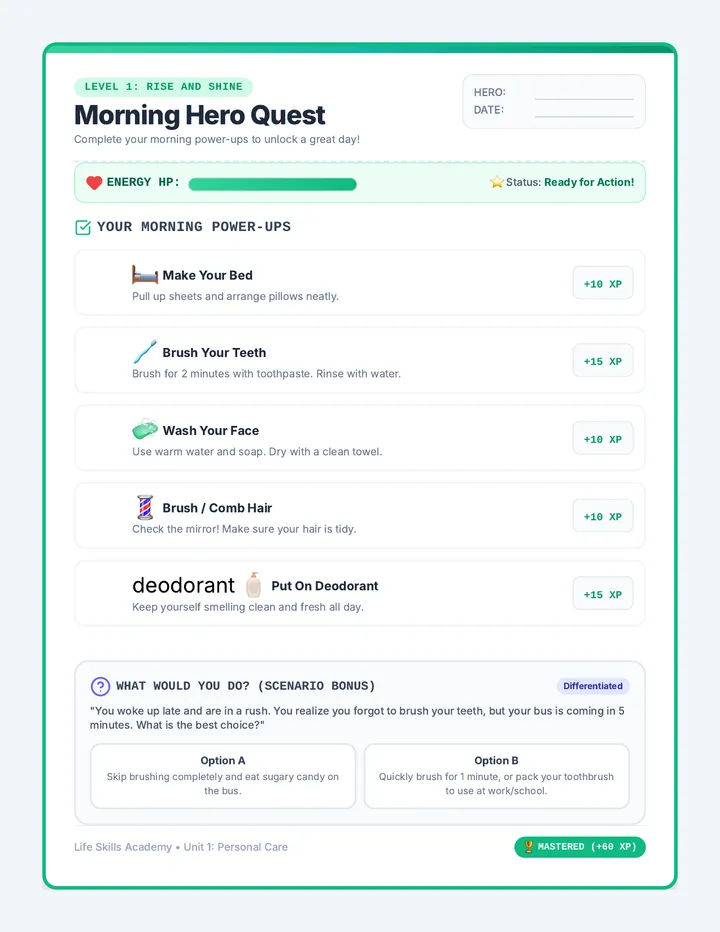
A gamified morning routine tracking sheet styled as a retro video game 'level-up' quest. Helps students with intellectual disabilities independently track personal hygiene and self-care steps with visual checklists and simple scenarios.
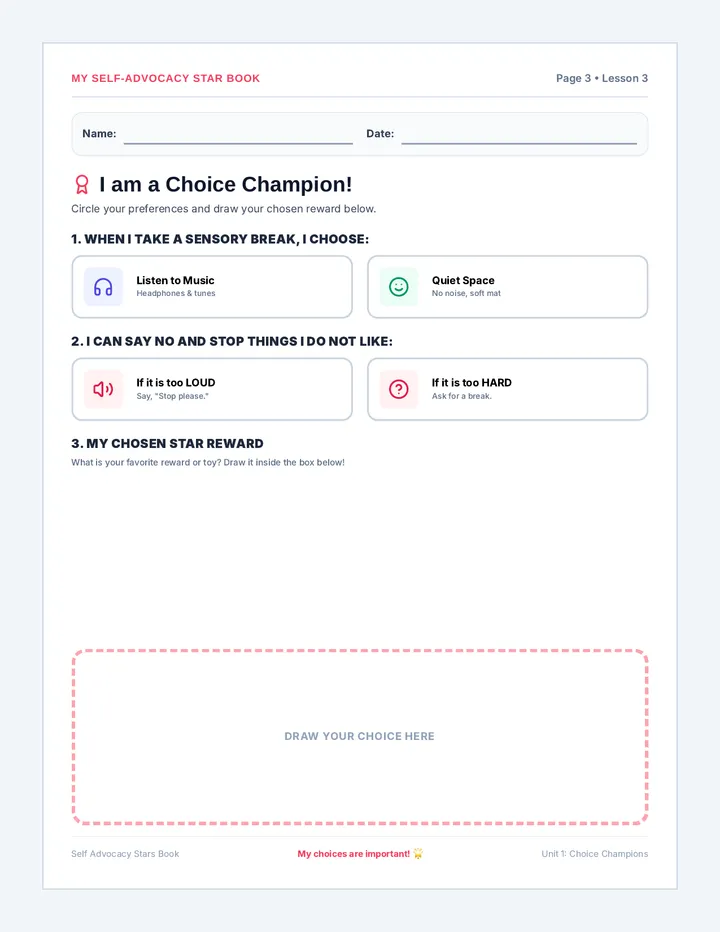
A student choice booklet page for Lesson 3: Choice Champions. Students circle their preference for daily tasks and breaks, mark their boundaries, and draw their chosen reward on a white student canvas.
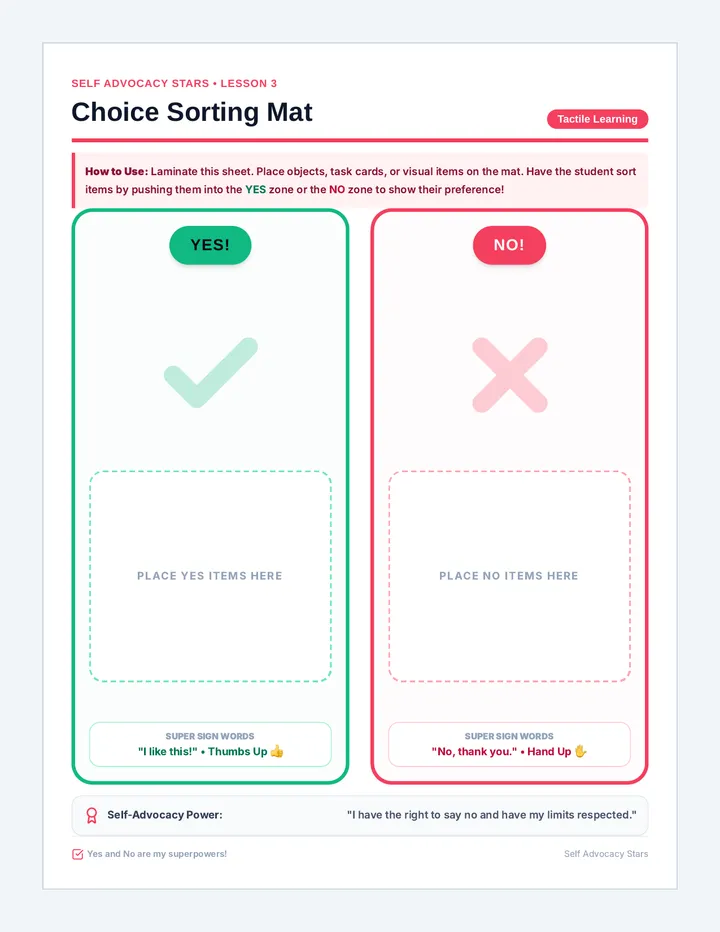
Printable Choice Sorting Mat for Lesson 3: Choice Champions. A dual-category tactile mat dividing space into high-contrast 'YES' and 'NO' sections for students to place physical objects or cards to express preferences.
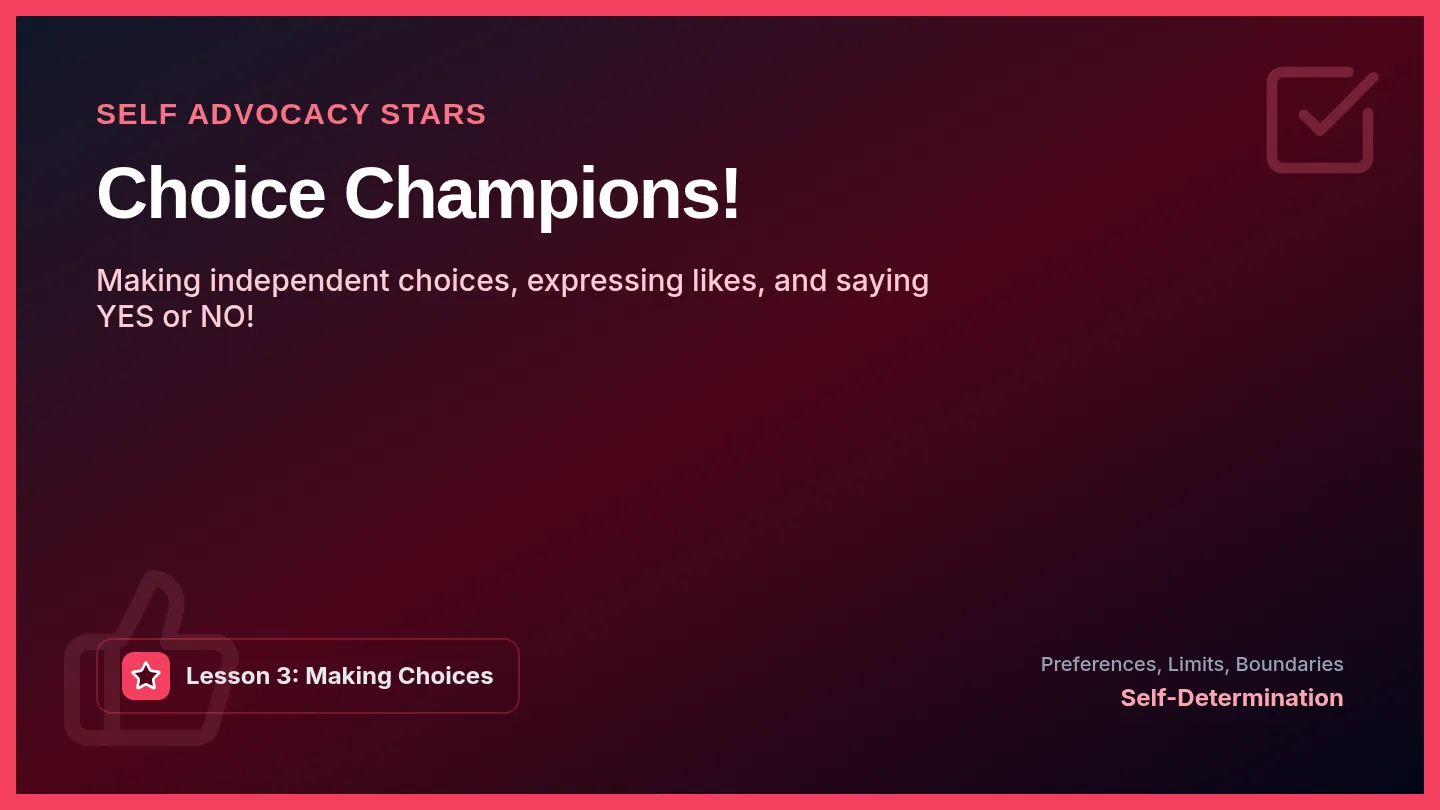
Visual presentation slides for Lesson 3: Choice Champions. Focuses on setting personal boundaries, choosing preferences, and practicing saying "Yes" or "No" with confidence and support.
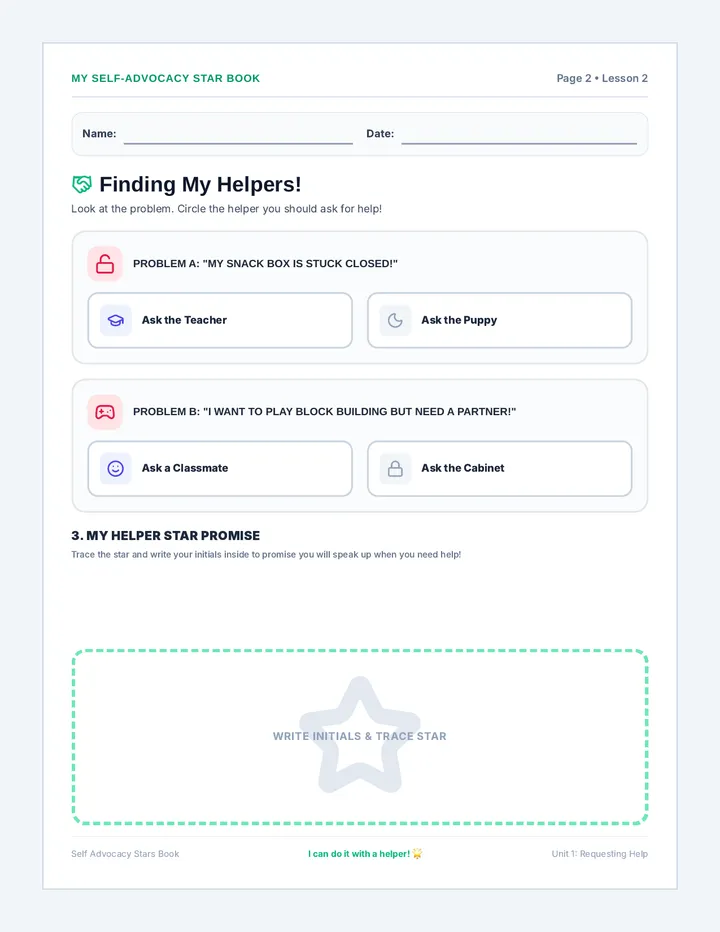
A student reflection and match-up worksheet for Lesson 2: Help Helpers. Students identify when they need help, circle the correct helper, and sign their Help Star commitment.
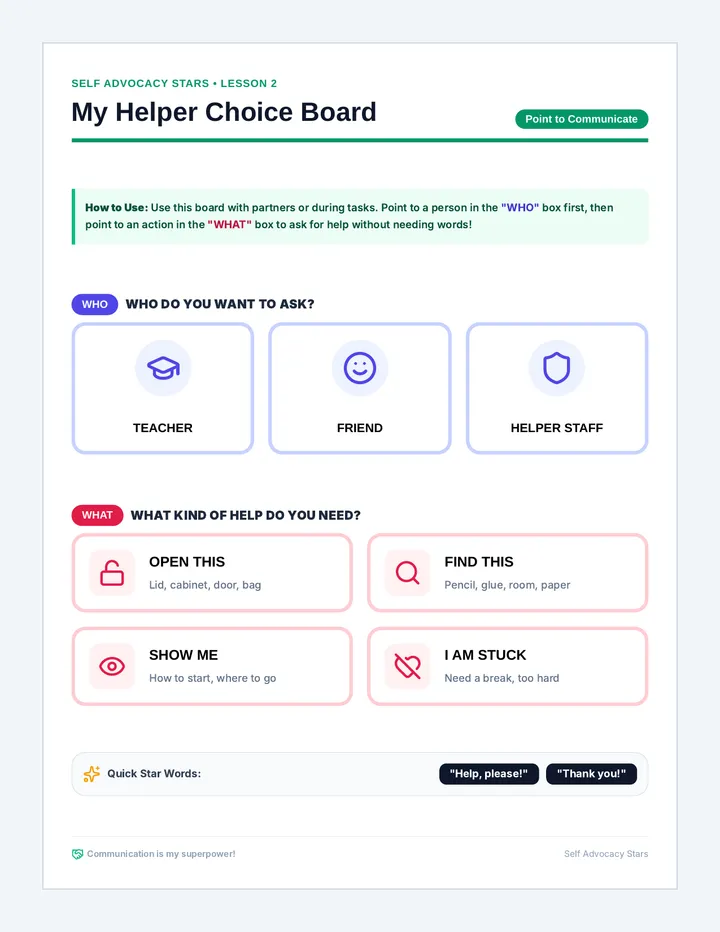
Printable Helper Choice Board for Lesson 2: Help Helpers. A high-contrast, dual-category communication board helping students point to who they want to ask for help and what type of support they need.
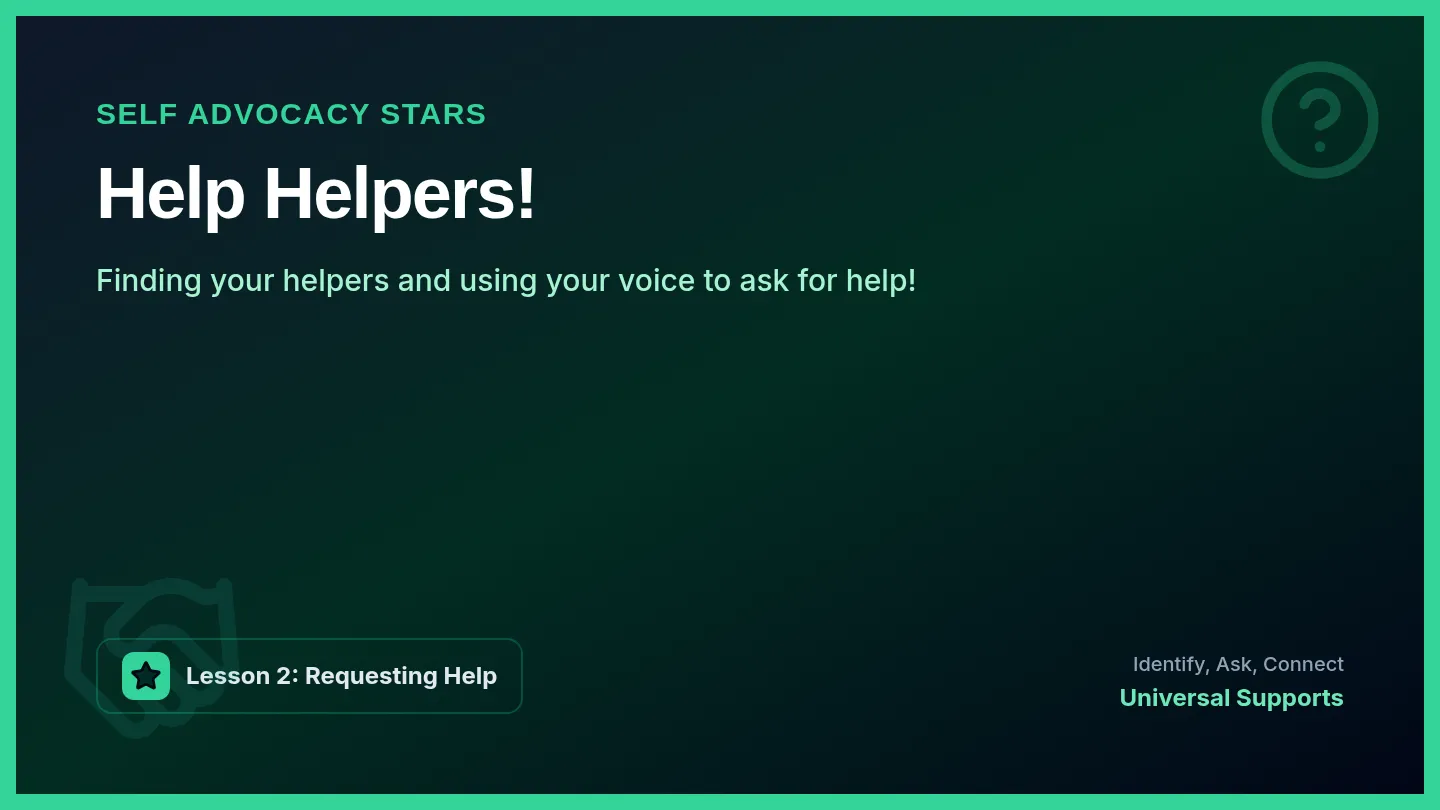
Visual presentation slides for Lesson 2: Help Helpers. Focuses on identifying when students need help, who to ask, and how to communicate that request with simple visual scaffolds.
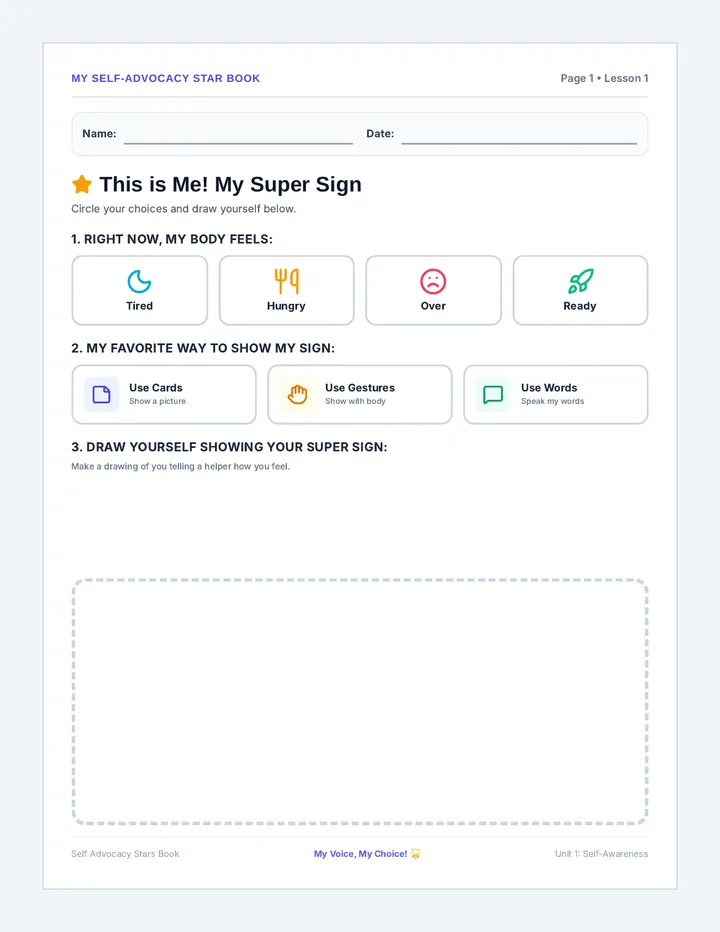
A visual reflection sheet and communication booklet page for Lesson 1: My Super Sign. Students check in on how their body feels, select their preferred communication style, and draw themselves using their super sign.
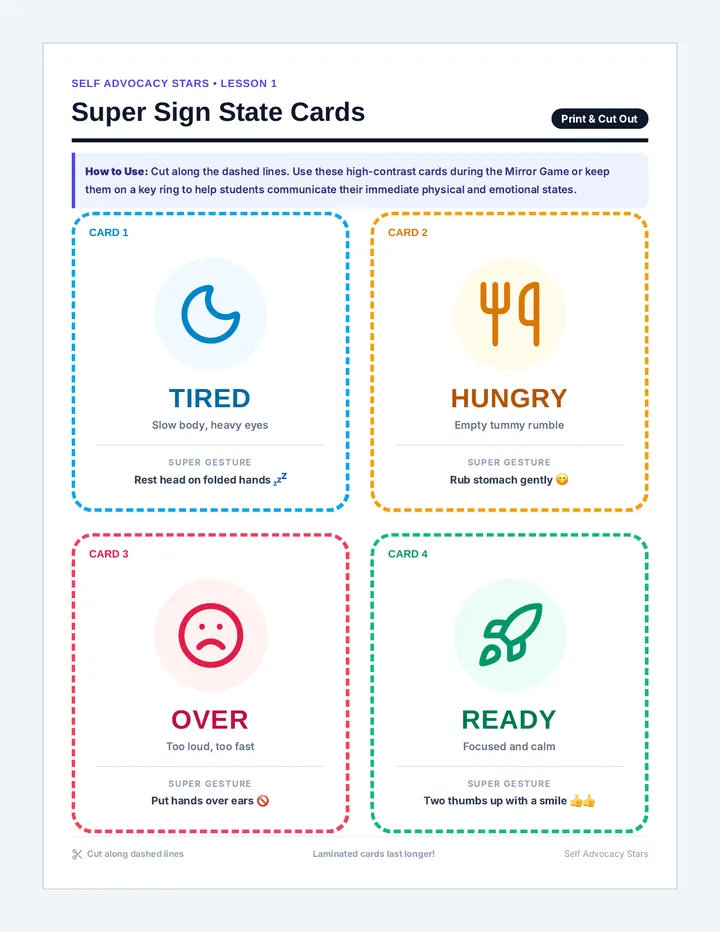
Printable game cards for Lesson 1: My Super Sign. Features a 4-card set of high-contrast state cards with clear icons, descriptive labels, and physical gesture guidelines to support non-verbal, gestural, and verbal expression.
Visual presentation slides for Lesson 1: My Super Sign. Features high-contrast cosmic superhero themes, huge text, clear visual cues, and guided group prompts to help students identify and express physical and emotional states.
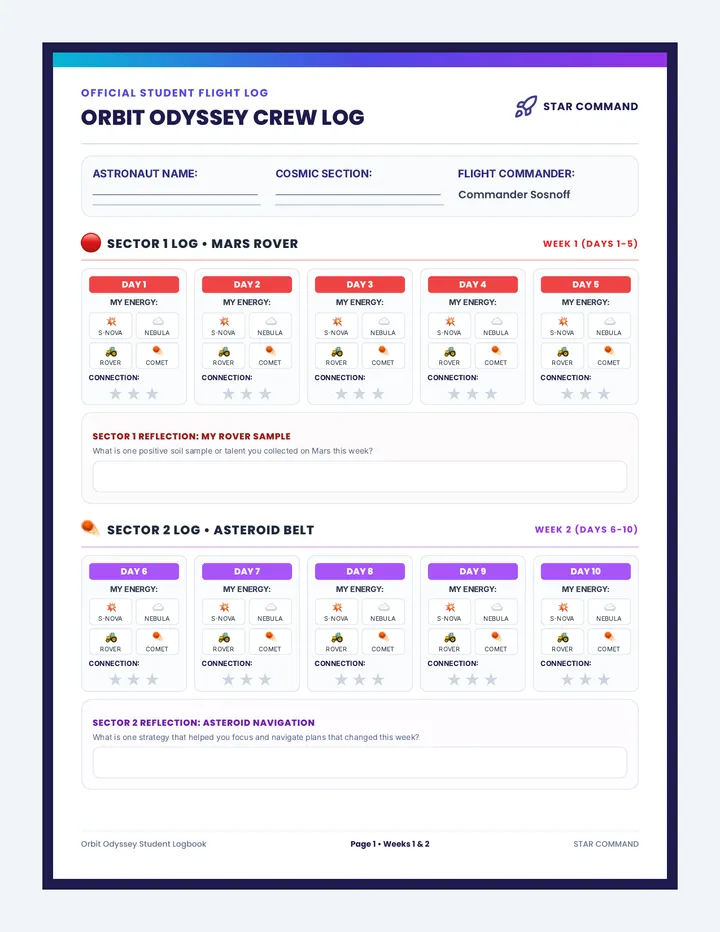
A 2-page printable student daily workbook and self-regulation tracker for the 4-week Orbit Odyssey. It features intuitive layouts with name/date fields, visual check-ins for daily cosmic energy states, simplified reflection boxes, and partner-connection star ratings. Tailored for middle school scholars with disabilities.
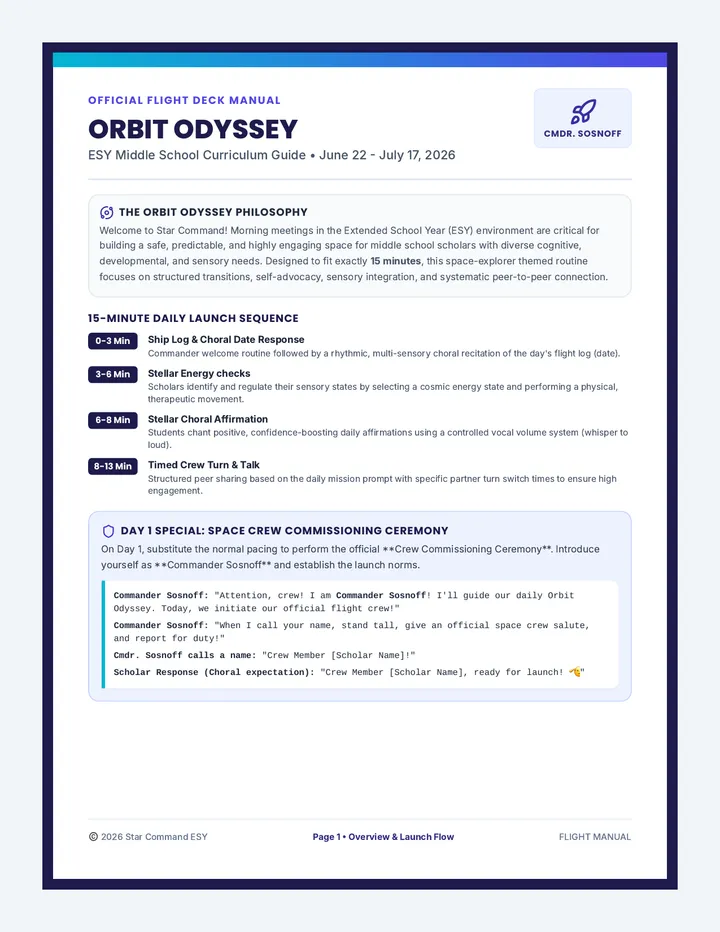
A comprehensive 3-page teacher facilitation guide for the 4-week Orbit Odyssey morning meetings. It features a detailed 15-minute pacing breakdown, explicit verbal scripts for choral responses (ship logs and daily affirmations), active sensory cues for daily cosmic energy checks, and structured guidelines for a timed crew turn-and-talk sharing session. Featuring Commander Sosnoff.