A student reflection sheet with questions about strategy preference, future application, and goal setting.
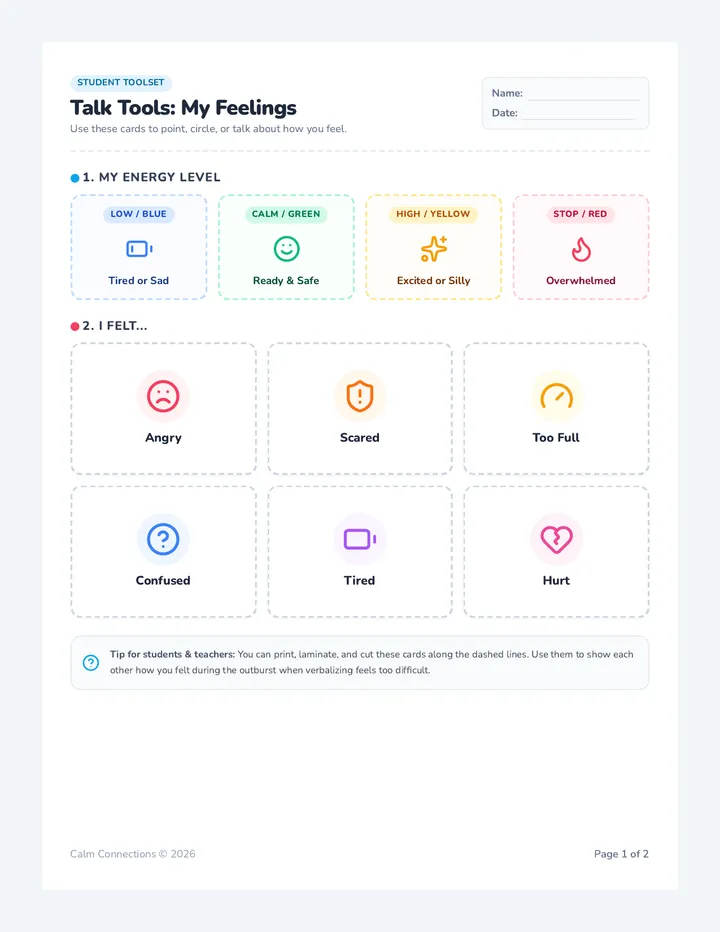
A set of printable visual communication support cards featuring simplified sentence starters, emotion descriptors, and de-escalation choices designed for students with emerging language skills.
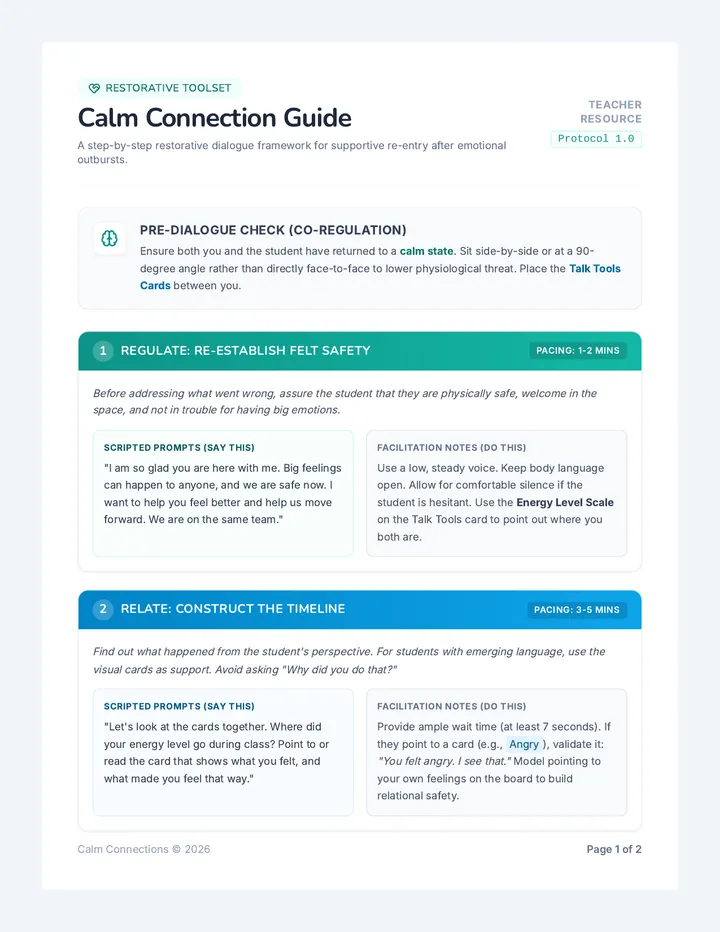
A comprehensive teacher facilitation guide featuring step-by-step scripts, co-regulation strategies, and structured restorative dialogue pathways to navigate the four phases of re-entry after an emotional outburst.
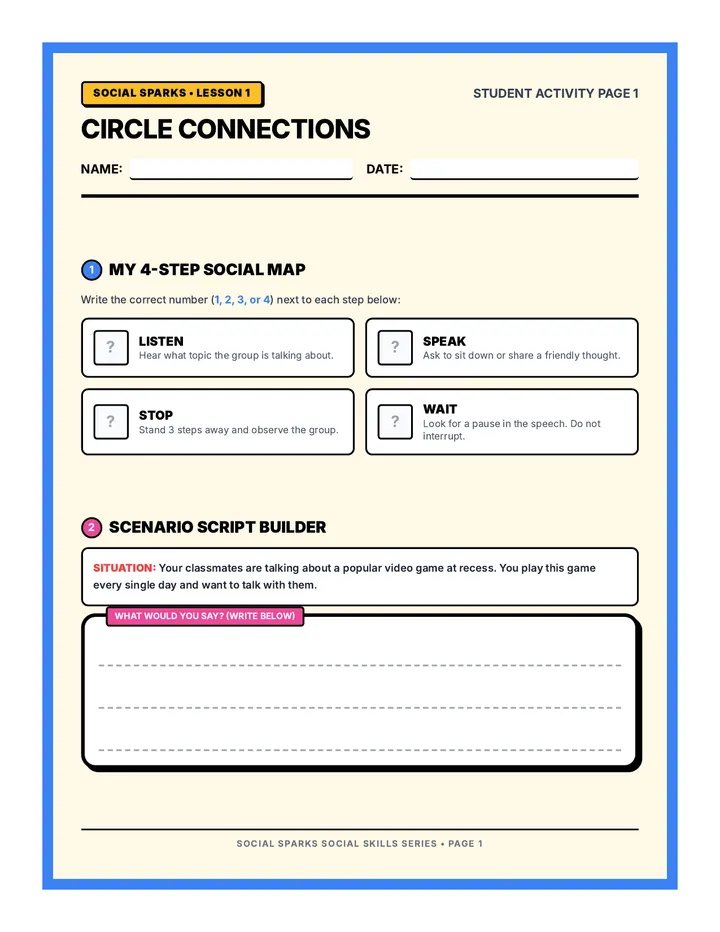
A highly visual, 2-page student worksheet designed to accompany the Circle Slides lesson. Features a step-ordering activity, speech bubble templates for student-written dialogues, a board-game style social path activity, and a self-reflection scorecard.
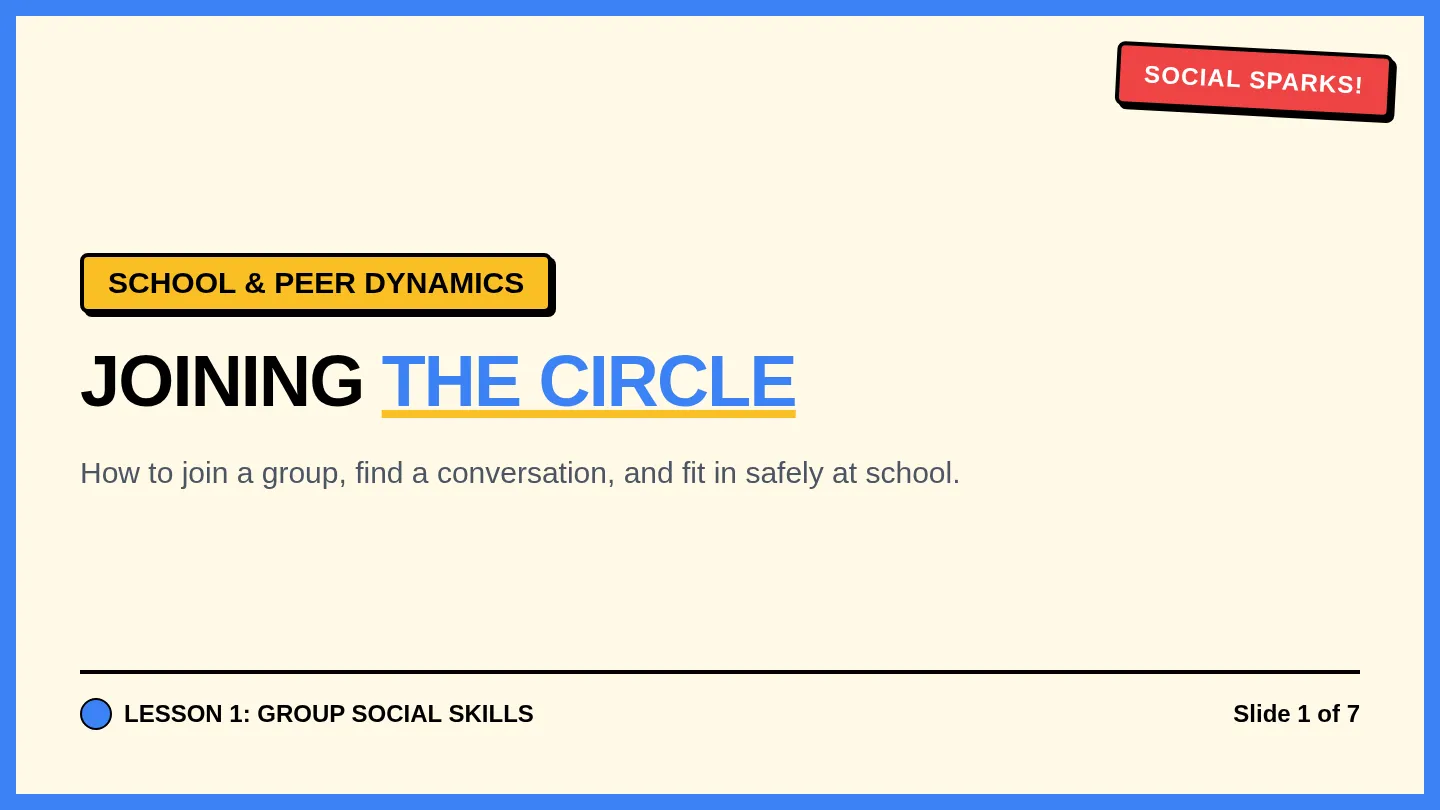
An expanded, highly visual slide deck for teaching students how to join a peer conversation. Features step-by-step guidance, three school-based practice scenarios, a Game Show challenge, and classroom discussion prompts with text size optimized for visibility.
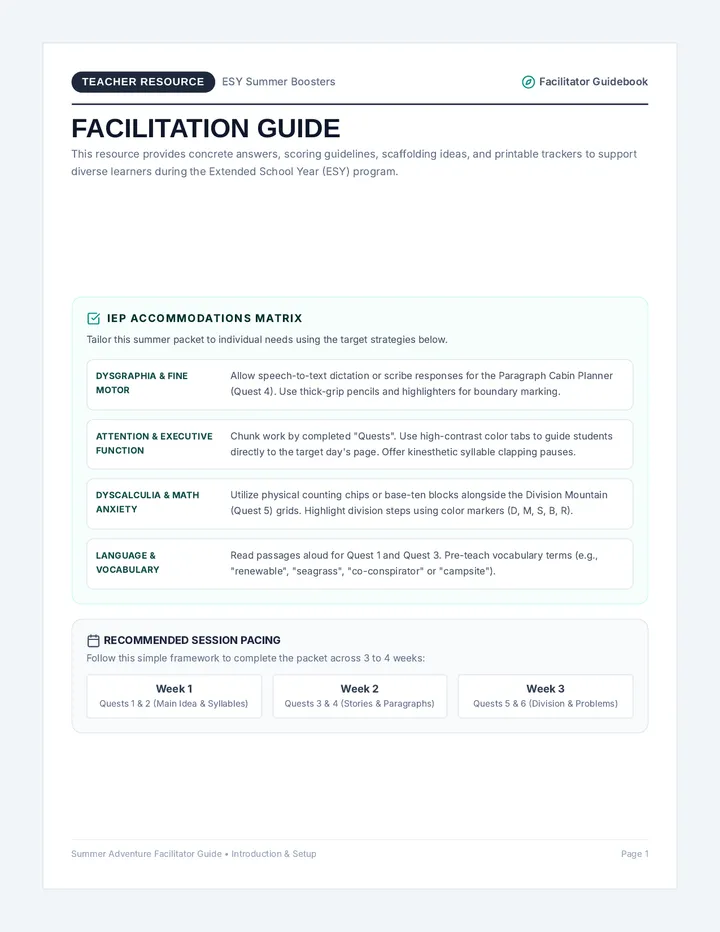
An educator facilitation guide and complete answer key containing multi-level accommodation ideas, visual rubrics, problem-solving keys, and a printable progress tracker to monitor IEP goal mastery during ESY.
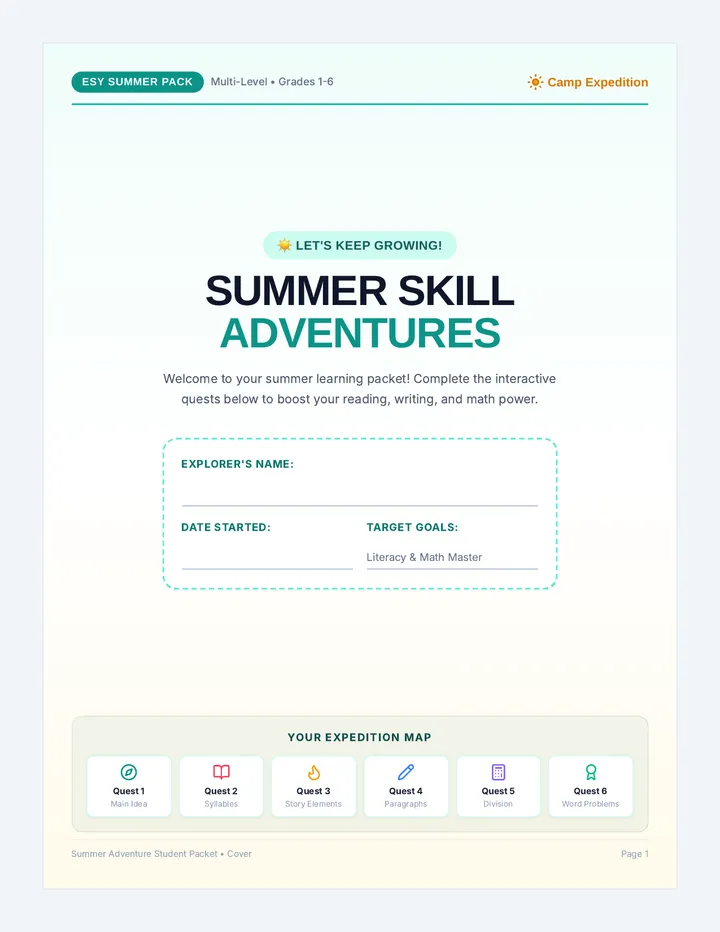
A comprehensive, highly scaffolded, multi-level ESY student packet containing 8 themed pages of skill boosters across main idea, phonics, story grammar, paragraph writing, long division, and multi-step math problems. Designed with a vibrant Summer Adventure theme, light handwriting-friendly background areas, grids, and graphic organizers.
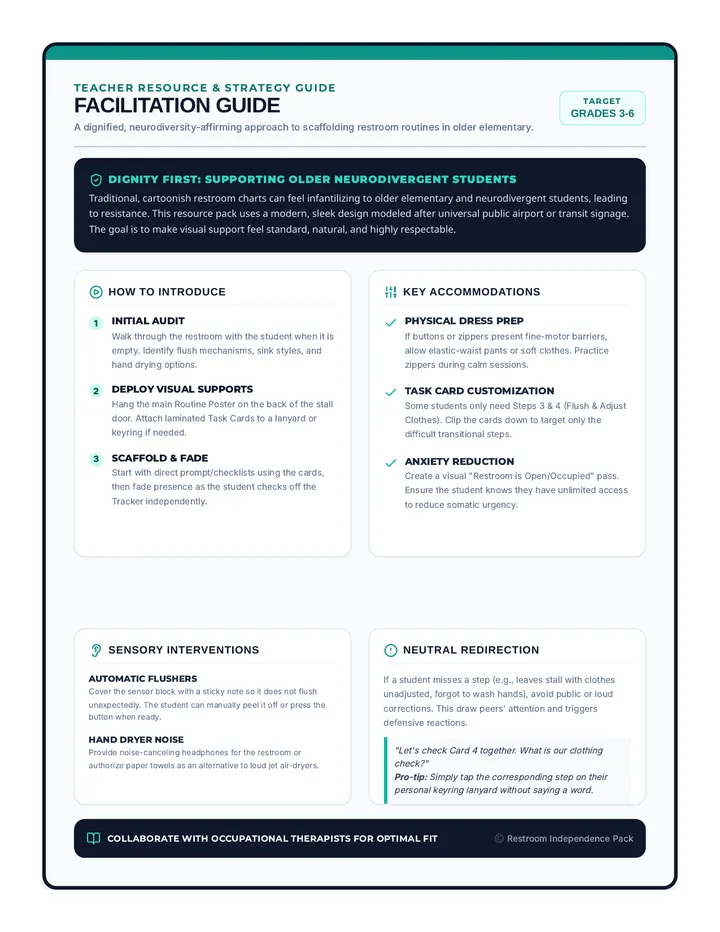
A professional single-page implementation and facilitation guide for teachers. Provides structured strategies, neurodivergent accommodations, and troubleshooting advice to foster student restroom independence with dignity.
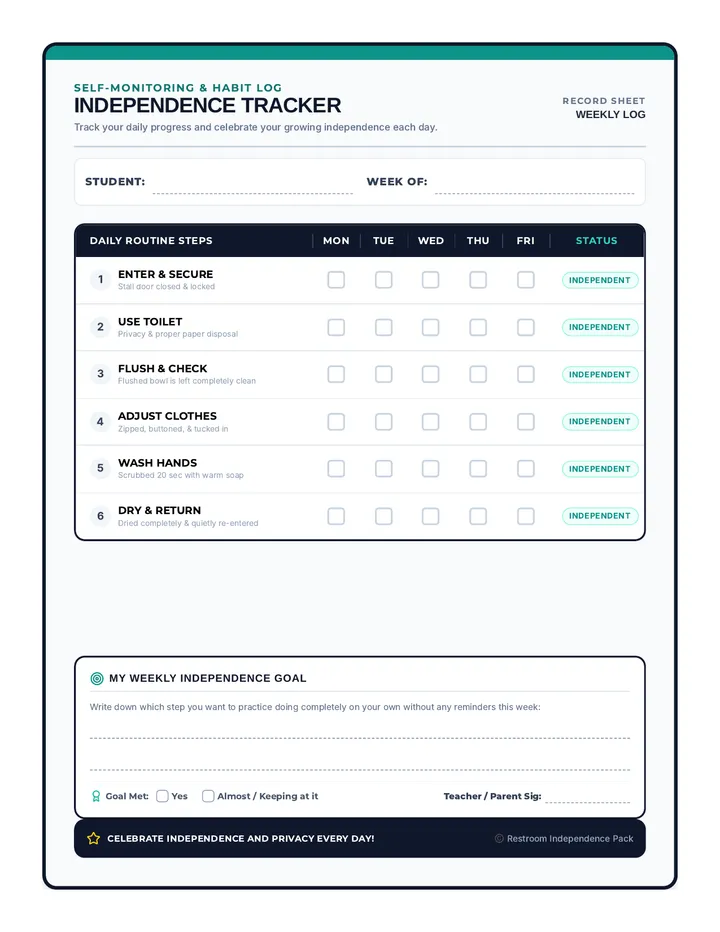
A printable self-monitoring habit log and reflection tracker. Allows older elementary and neurodivergent students to track their restroom routine independence across a 5-day school week with a clean, dignified layout.
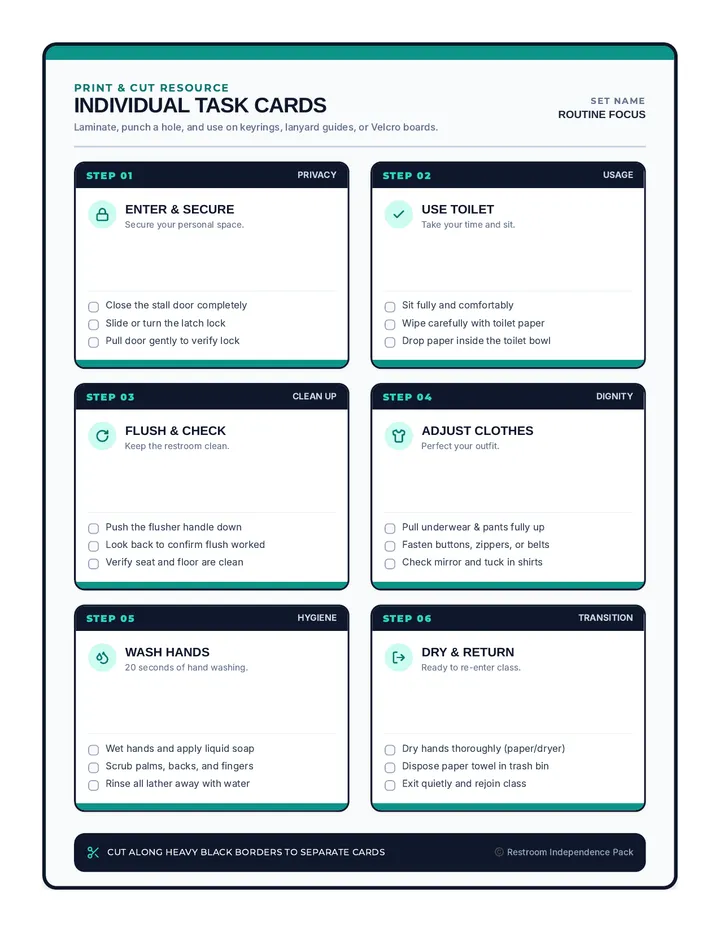
A printable sheet containing 6 highly detailed individual pocket task cards. Each card features standard checklists, high-contrast visual cues, and a modern design that fits neatly on keyrings or visual schedule boards.
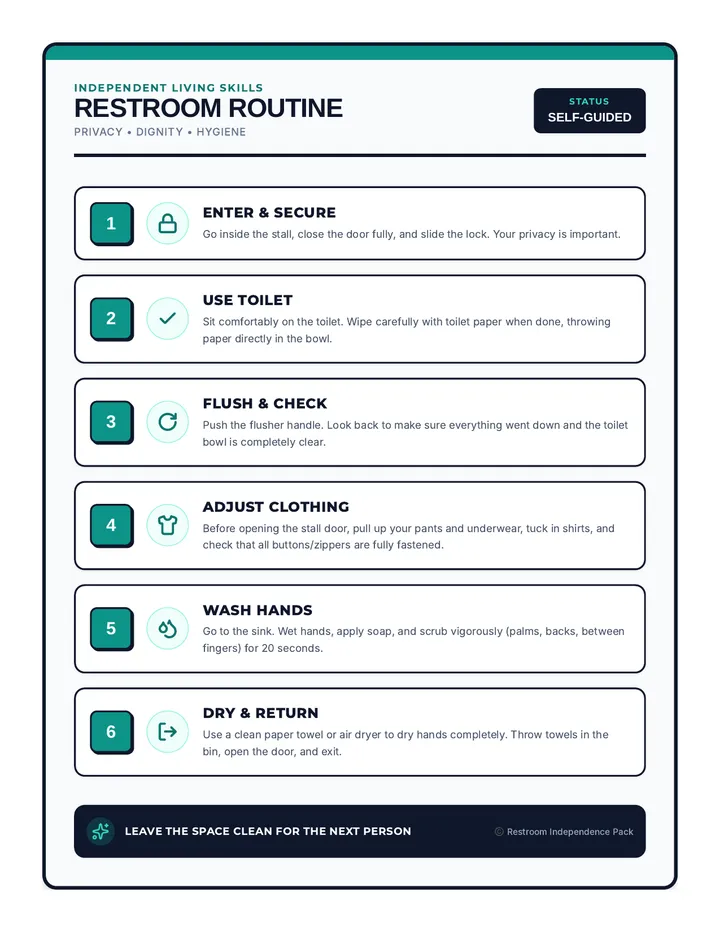
A modern, dignified single-page wall poster detailing the 6 steps of the restroom routine. Features high-contrast layouts, sleek typography, and crisp visual support icons suitable for older elementary and neurodivergent students.
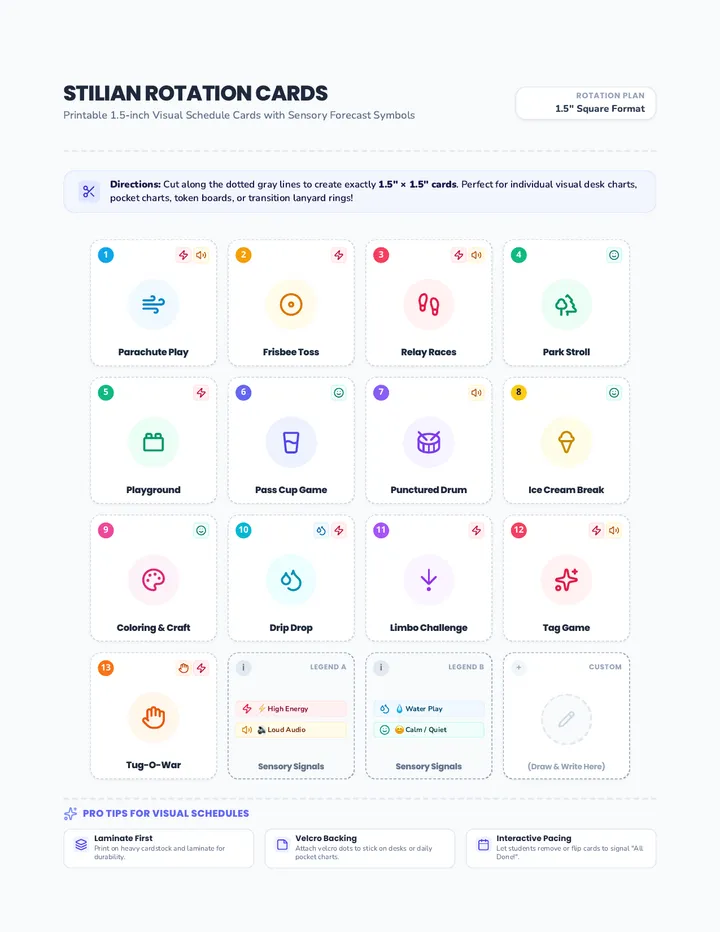
A visual schedule sheet featuring 16 customizable and pre-made 1.5-inch square rotation cards (4x4 grid) with corresponding sensory icons and visual pictures to help students transition through scheduled activities.
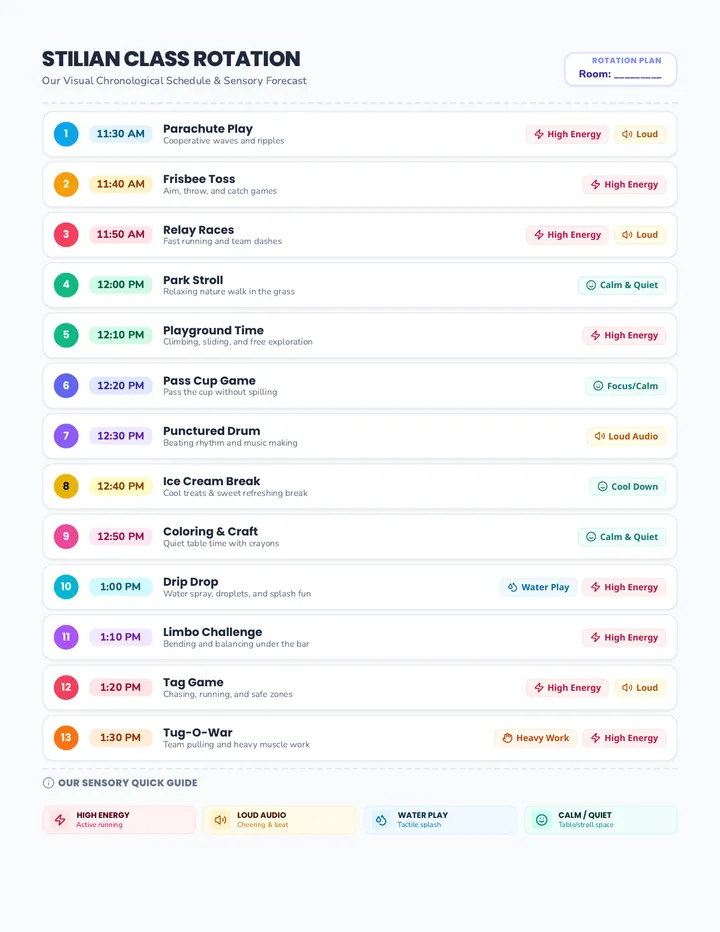
A chronological list-format visual schedule for the Stilian Class Rotation, specifically designed with clear sensory labels including high energy, loud volume, and water involvement flags to help students prepare for sensory changes.
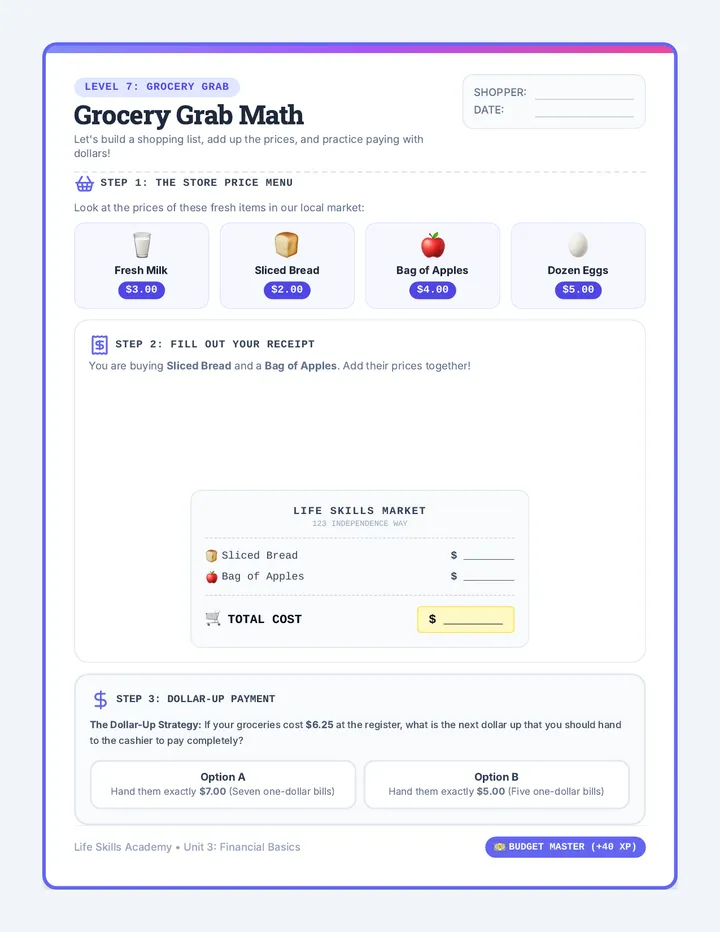
A functional math and budgeting worksheet designed for students with intellectual disabilities. Teaches grocery list creation, basic price addition, and the 'next dollar up' payment strategy.
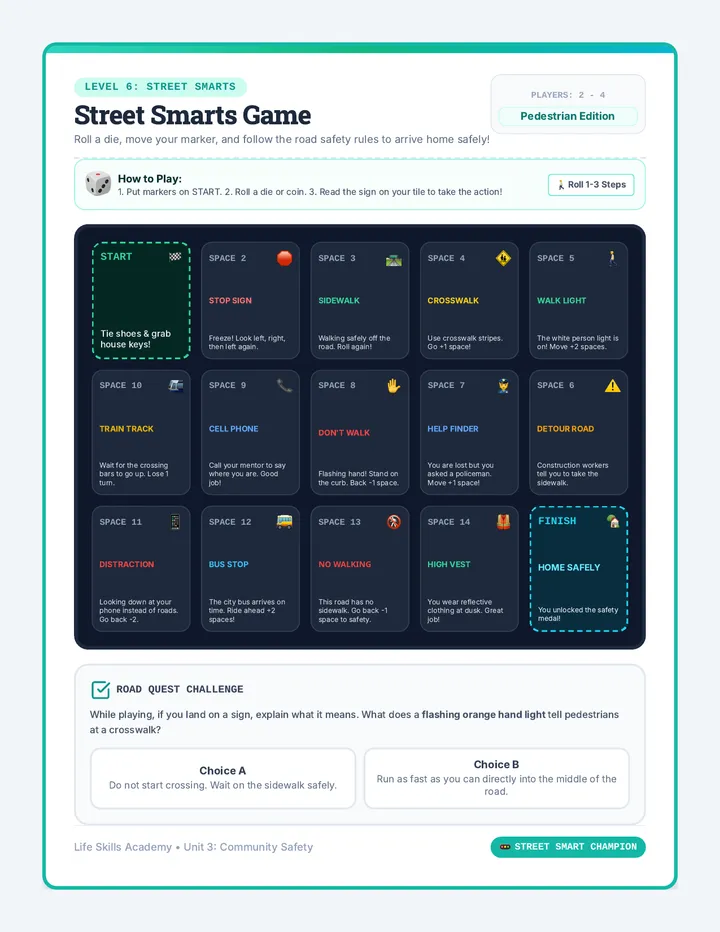
A printable, gamified pedestrian safety board game that teaches students with intellectual disabilities to read community safety signs, crosswalk signals, and find helpers.
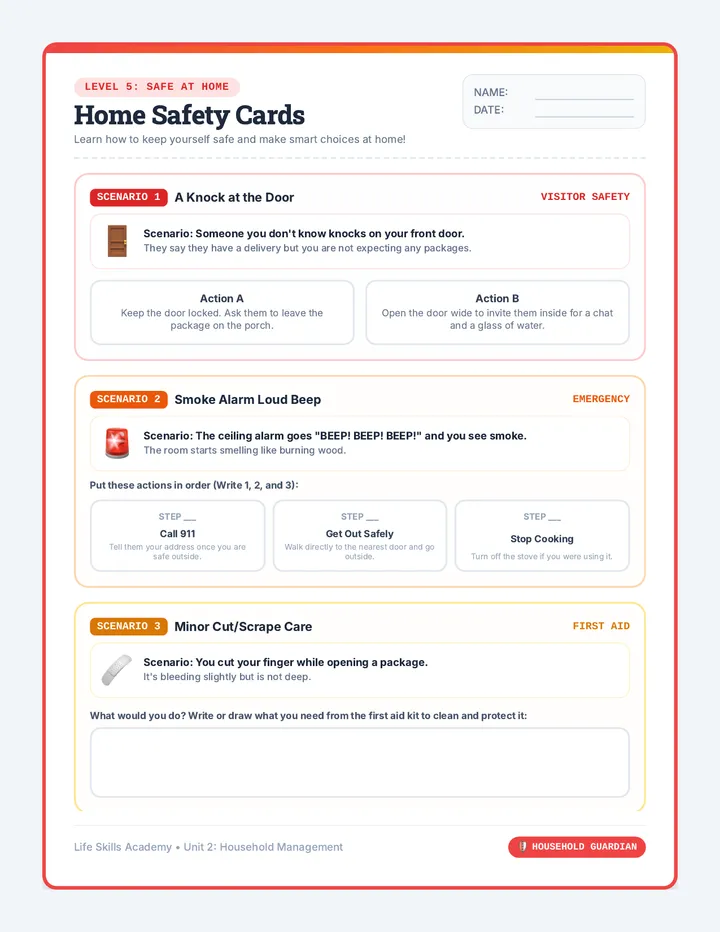
Differentiated safety scenario cards focused on key emergency responses for students with intellectual disabilities, covering strangers at the door, smoke alarms, and basic first aid.
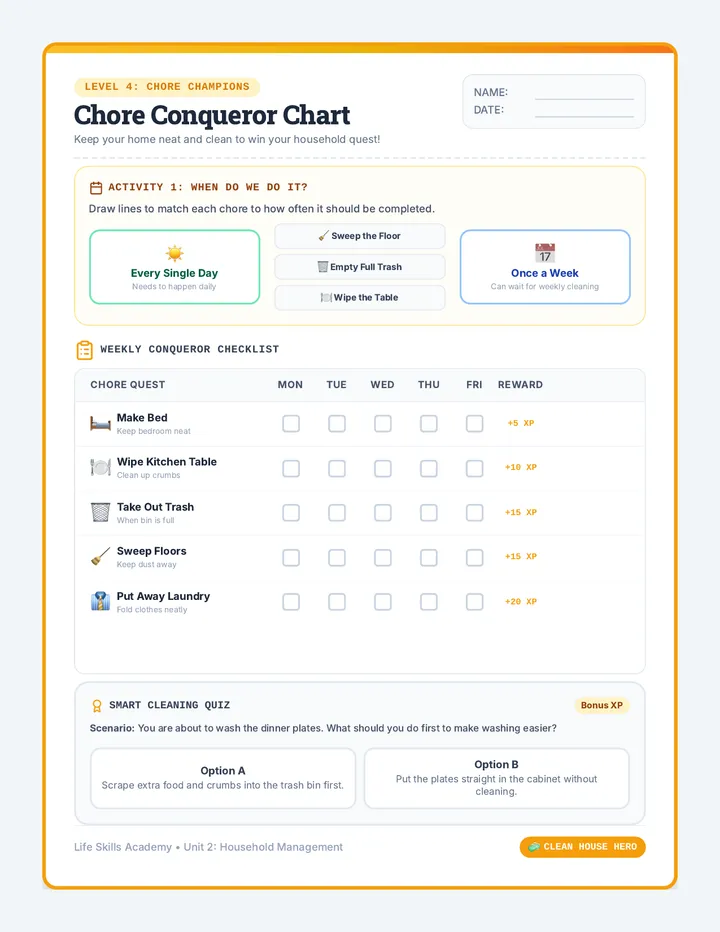
A daily and weekly household chore planner designed for students with intellectual disabilities. Features a visual frequency sorter and clear tracking checkboxes for essential housekeeping tasks.
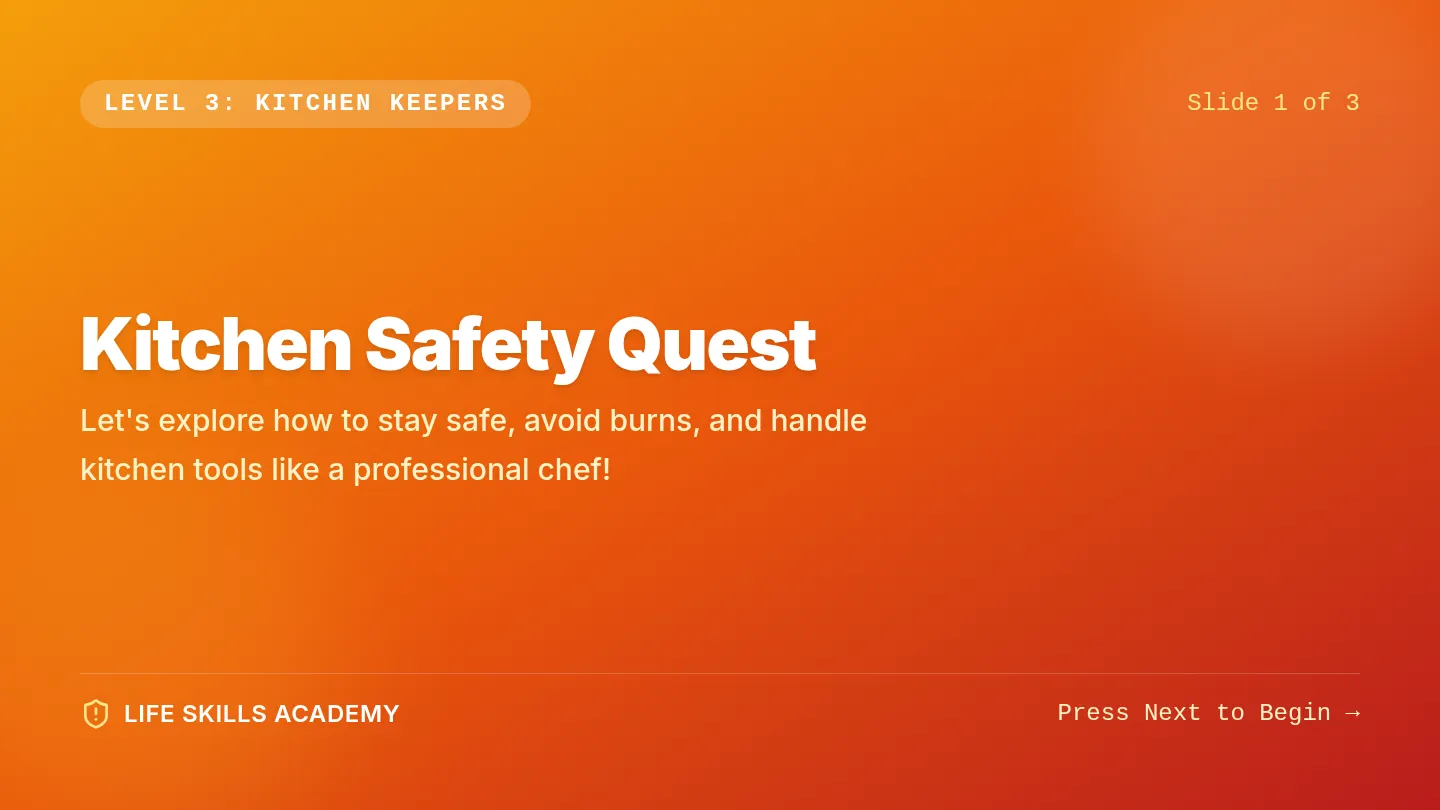
An interactive slide deck for teaching kitchen safety, featuring bold visual scenarios and large, readable text designed for group discussion.
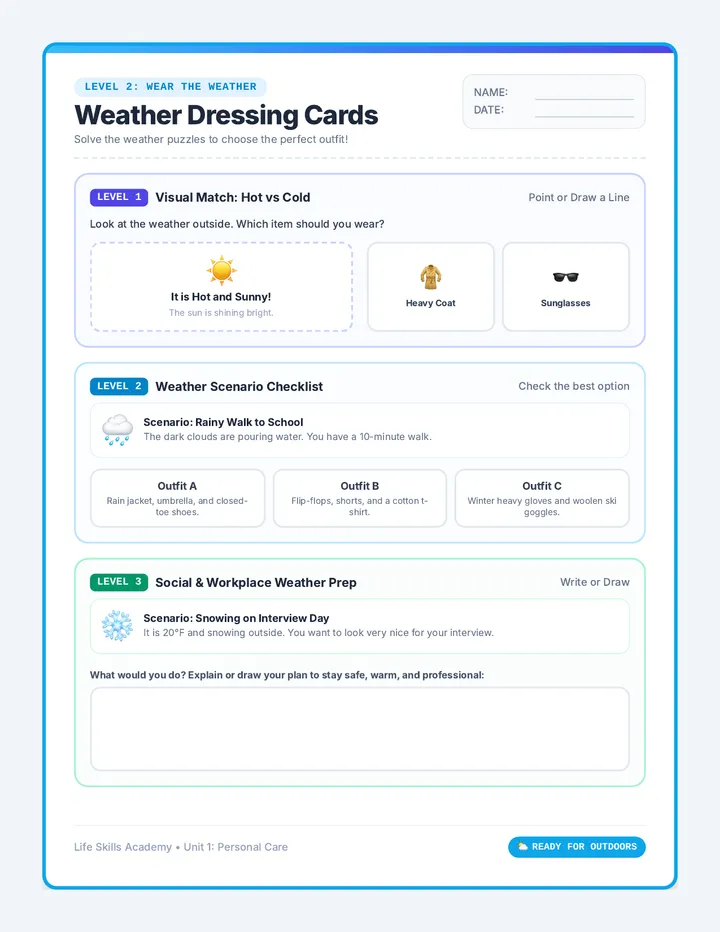
Differentiated weather dressing task cards featuring three levels of independence to help students with intellectual disabilities select appropriate clothing for various weather conditions and scenarios.
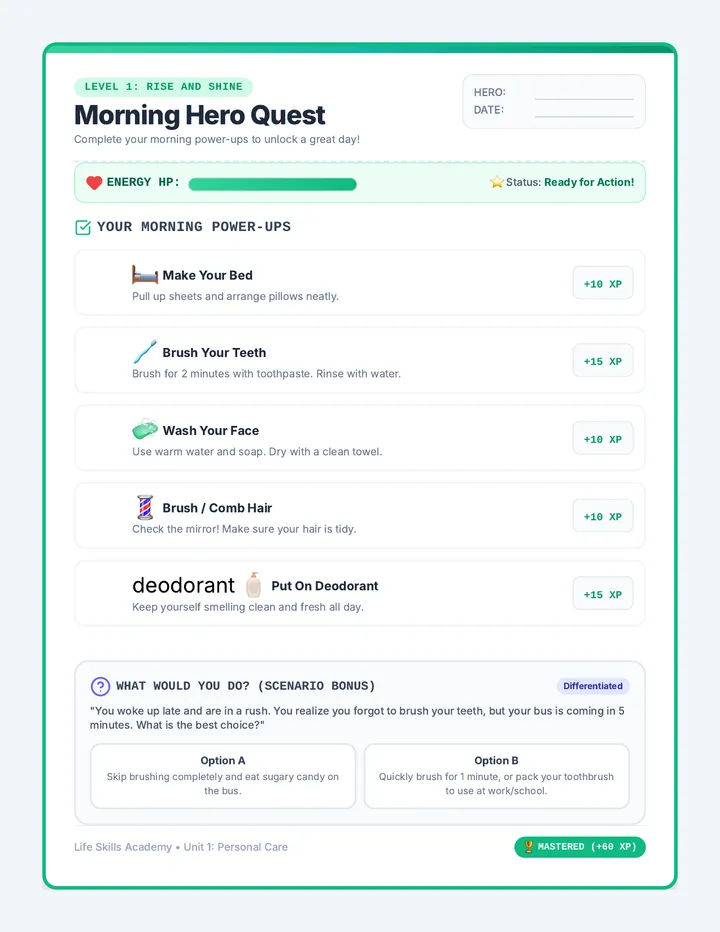
A gamified morning routine tracking sheet styled as a retro video game 'level-up' quest. Helps students with intellectual disabilities independently track personal hygiene and self-care steps with visual checklists and simple scenarios.
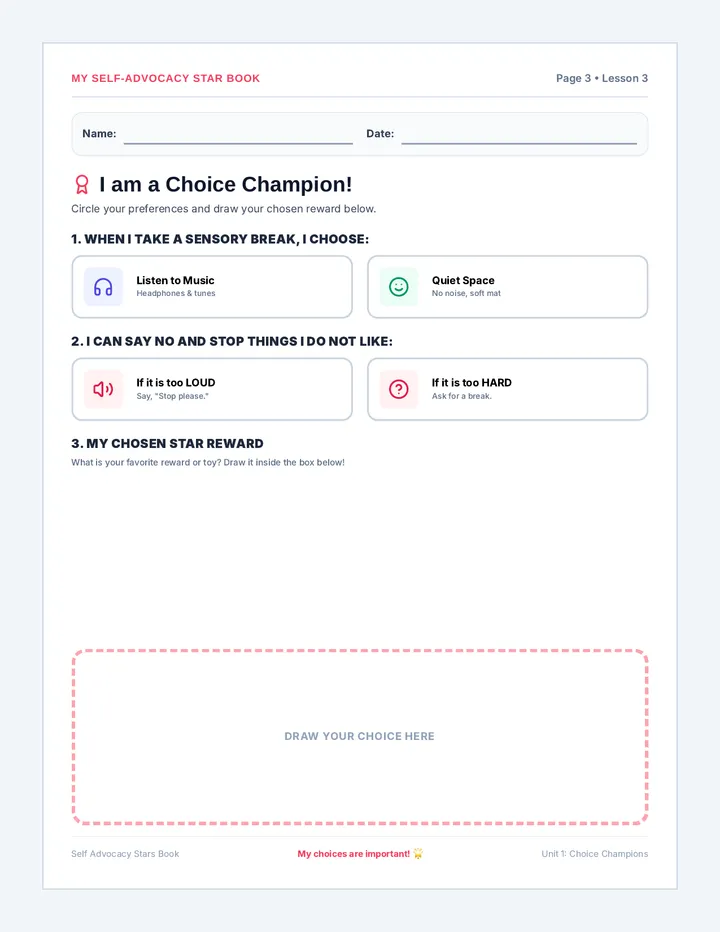
A student choice booklet page for Lesson 3: Choice Champions. Students circle their preference for daily tasks and breaks, mark their boundaries, and draw their chosen reward on a white student canvas.
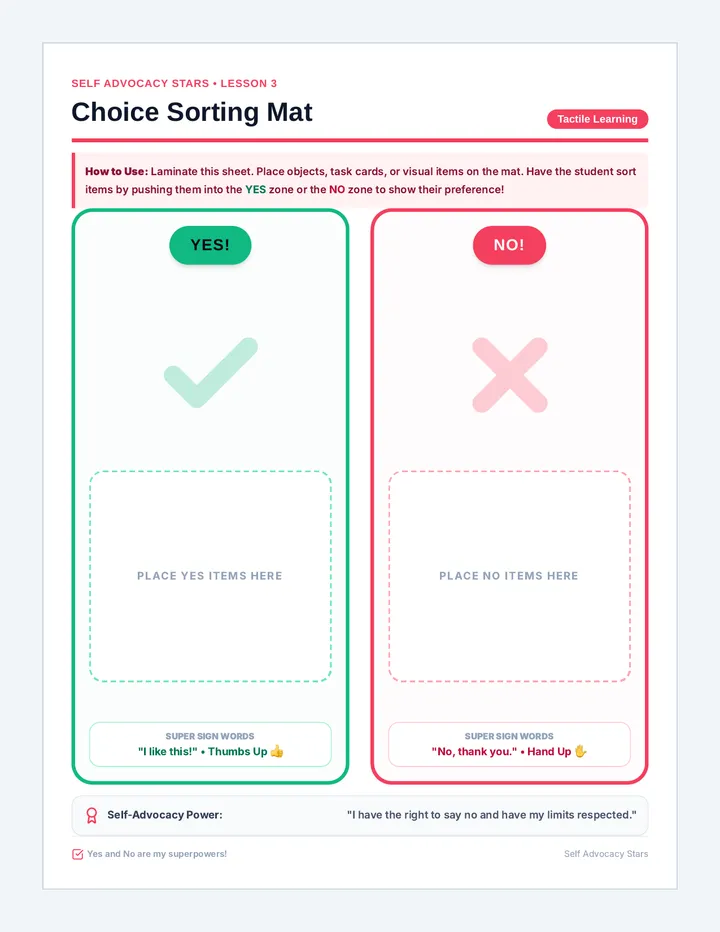
Printable Choice Sorting Mat for Lesson 3: Choice Champions. A dual-category tactile mat dividing space into high-contrast 'YES' and 'NO' sections for students to place physical objects or cards to express preferences.
Visual presentation slides for Lesson 3: Choice Champions. Focuses on setting personal boundaries, choosing preferences, and practicing saying "Yes" or "No" with confidence and support.
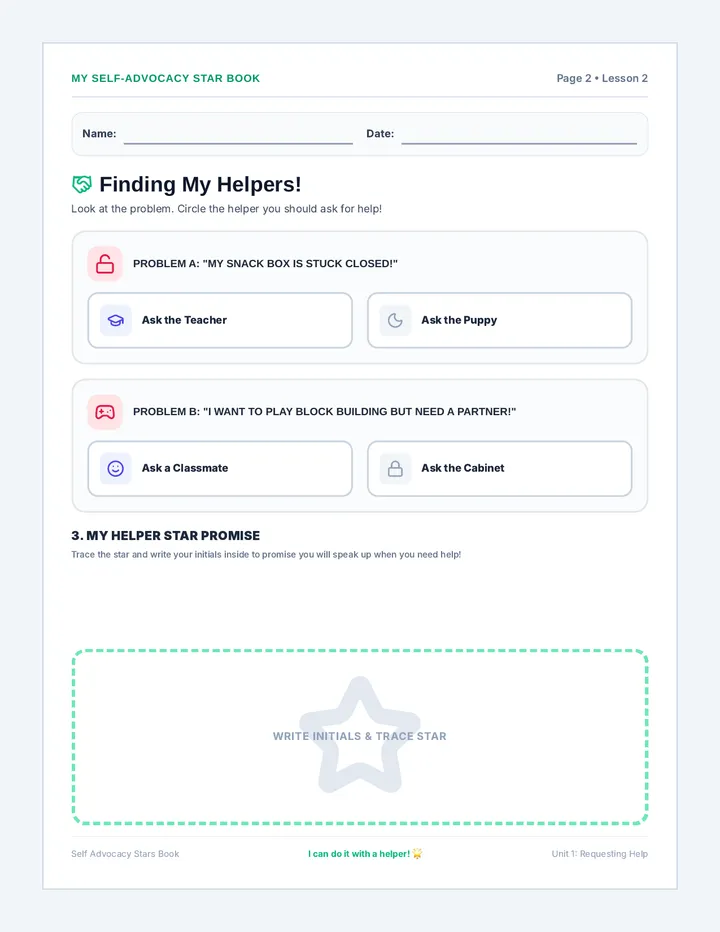
A student reflection and match-up worksheet for Lesson 2: Help Helpers. Students identify when they need help, circle the correct helper, and sign their Help Star commitment.
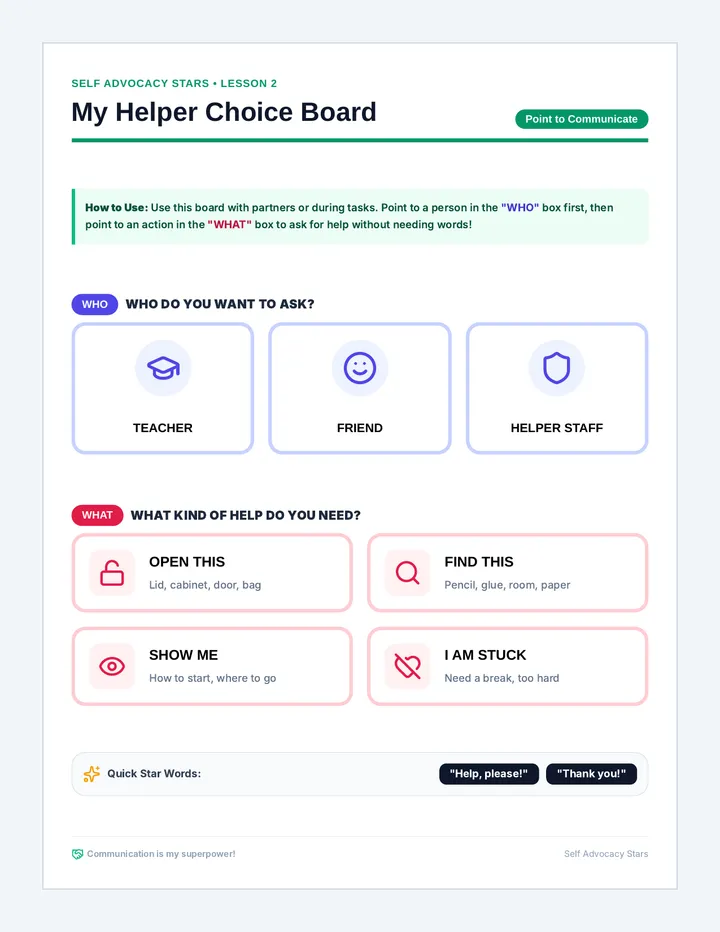
Printable Helper Choice Board for Lesson 2: Help Helpers. A high-contrast, dual-category communication board helping students point to who they want to ask for help and what type of support they need.
Visual presentation slides for Lesson 2: Help Helpers. Focuses on identifying when students need help, who to ask, and how to communicate that request with simple visual scaffolds.
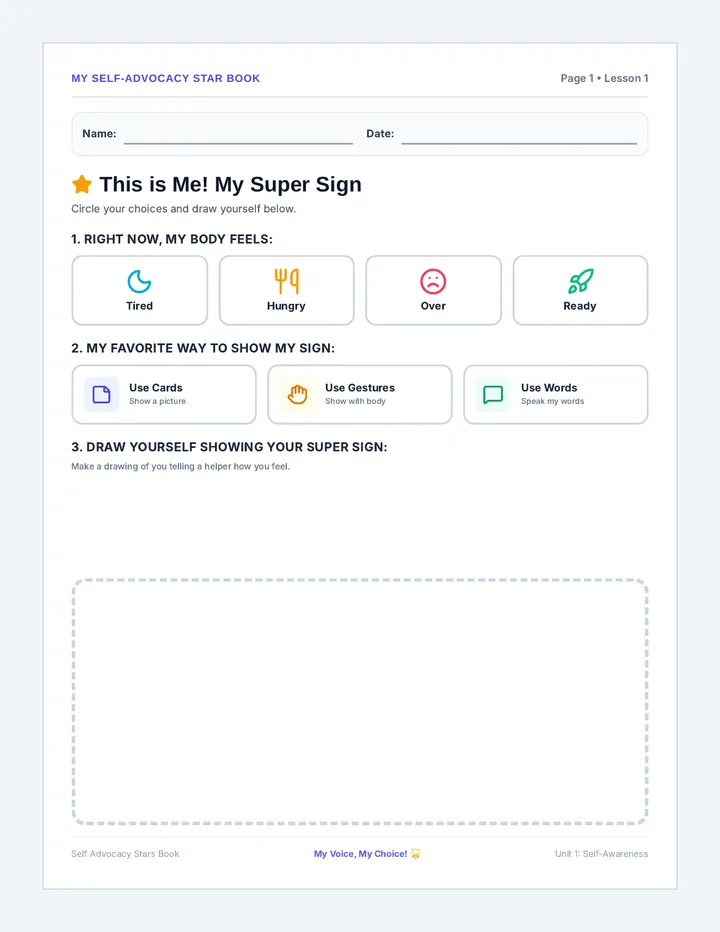
A visual reflection sheet and communication booklet page for Lesson 1: My Super Sign. Students check in on how their body feels, select their preferred communication style, and draw themselves using their super sign.
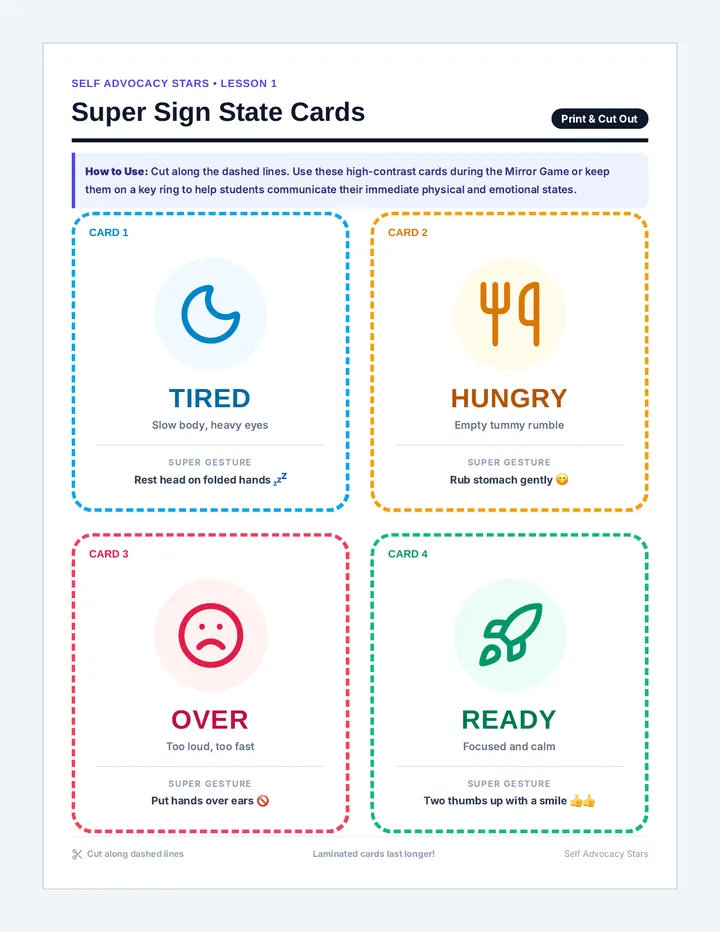
Printable game cards for Lesson 1: My Super Sign. Features a 4-card set of high-contrast state cards with clear icons, descriptive labels, and physical gesture guidelines to support non-verbal, gestural, and verbal expression.
Visual presentation slides for Lesson 1: My Super Sign. Features high-contrast cosmic superhero themes, huge text, clear visual cues, and guided group prompts to help students identify and express physical and emotional states.
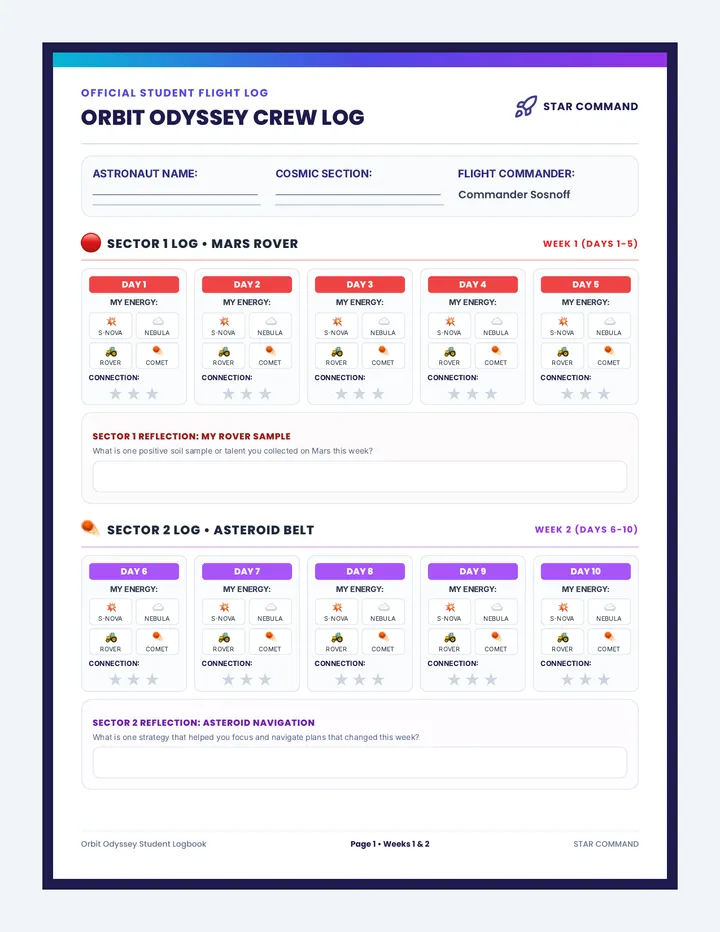
A 2-page printable student daily workbook and self-regulation tracker for the 4-week Orbit Odyssey. It features intuitive layouts with name/date fields, visual check-ins for daily cosmic energy states, simplified reflection boxes, and partner-connection star ratings. Tailored for middle school scholars with disabilities.
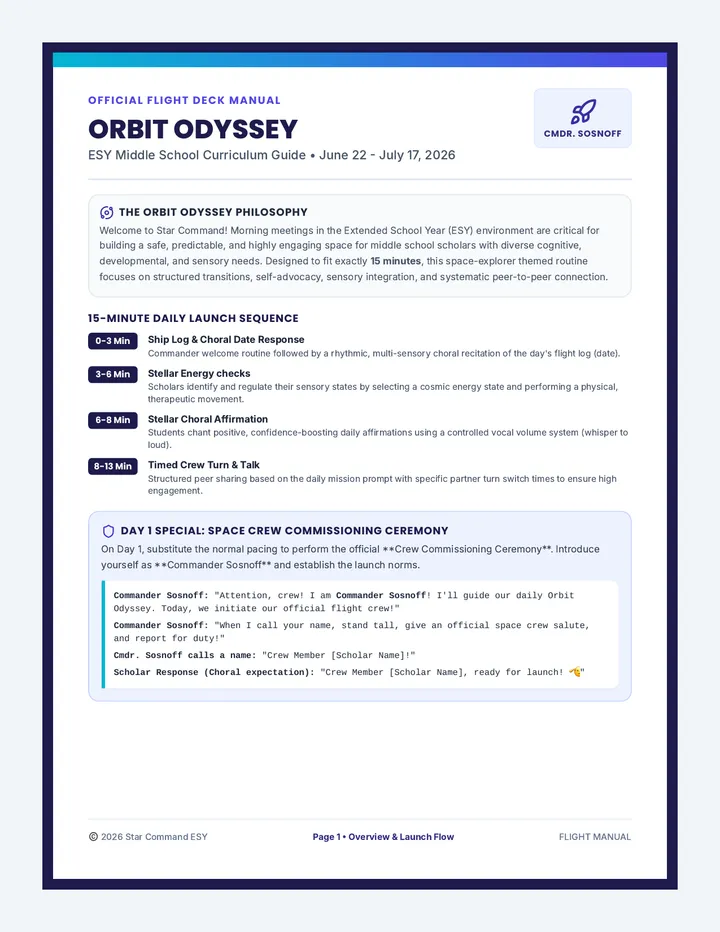
A comprehensive 3-page teacher facilitation guide for the 4-week Orbit Odyssey morning meetings. It features a detailed 15-minute pacing breakdown, explicit verbal scripts for choral responses (ship logs and daily affirmations), active sensory cues for daily cosmic energy checks, and structured guidelines for a timed crew turn-and-talk sharing session. Featuring Commander Sosnoff.
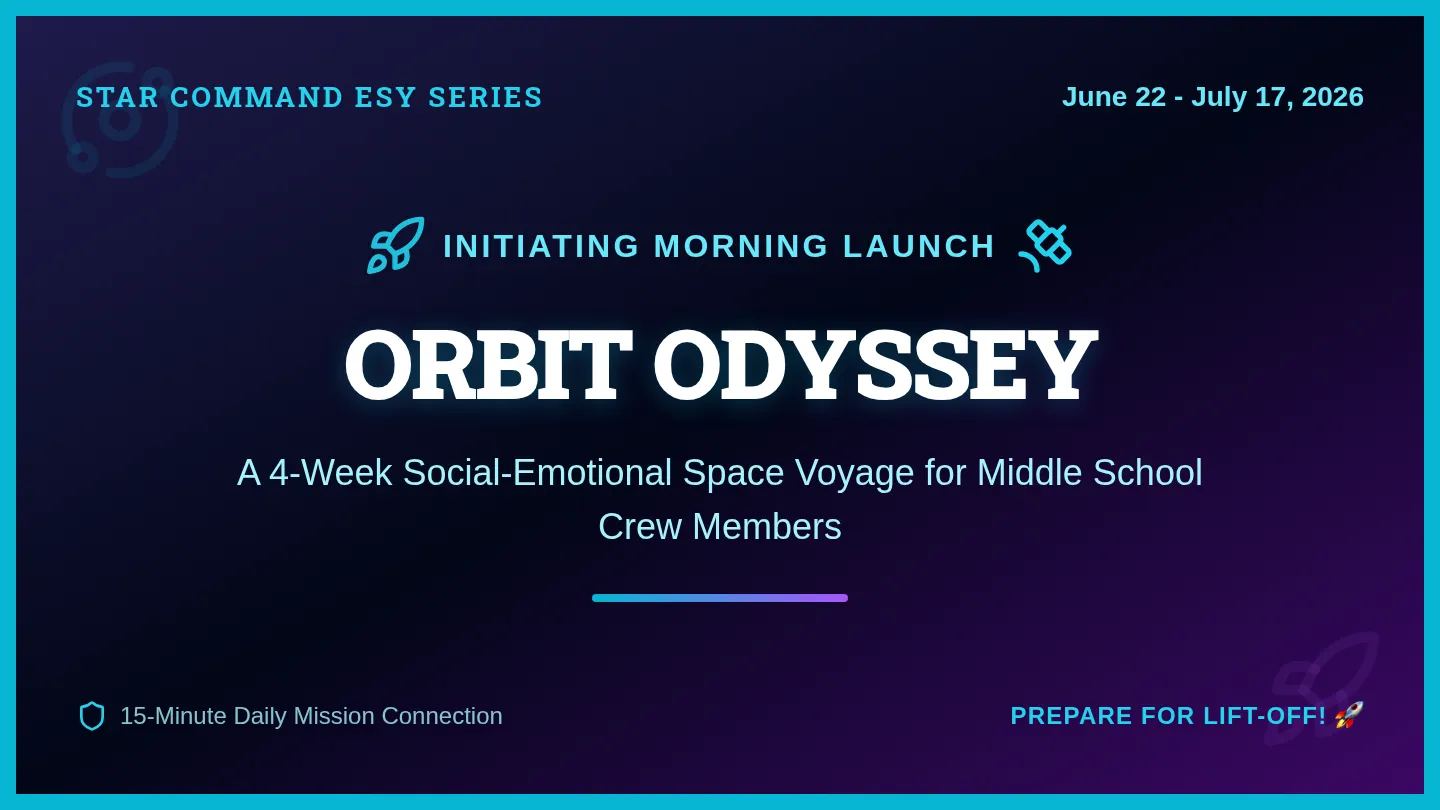
A 26-slide presentation for a 4-week, 20-day space explorer themed morning meeting series. Designed specifically for middle school scholars with disabilities, it is led by Commander Sosnoff. Features daily ship logs, cosmic energy/sensory checks, stellar affirmations, and timed turn-and-talk sharing prompts, with no text smaller than 24px.
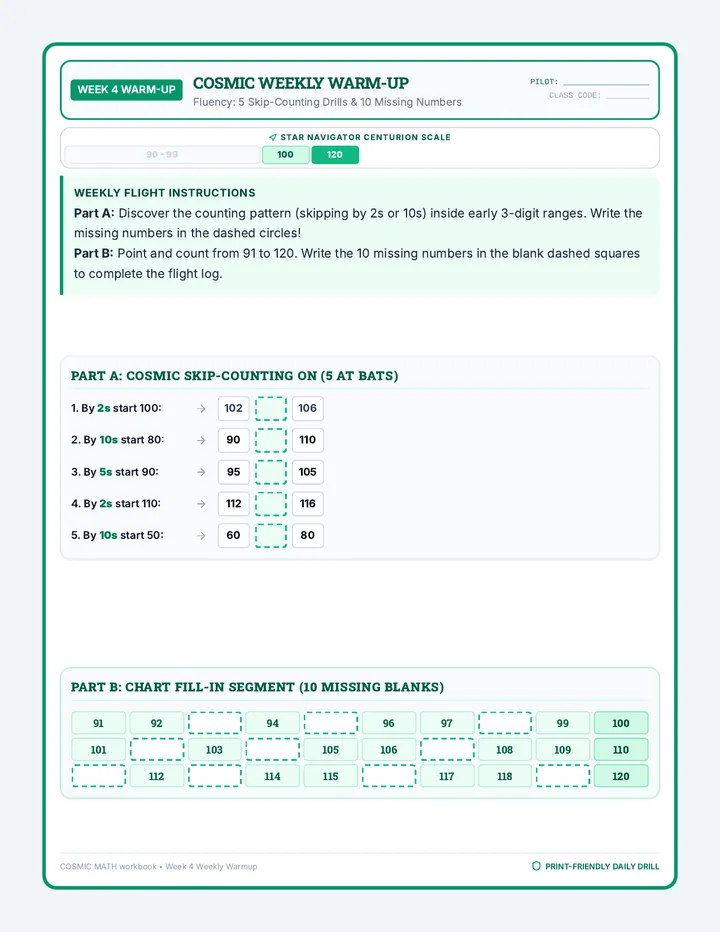
A 1-page print-friendly daily warm-up with a clean white background. Features 5 skip-counting drills (Part A) and a segment 100s chart with at least 10 missing blank boxes (Part B) for Week 4 patterns and 3-digit.
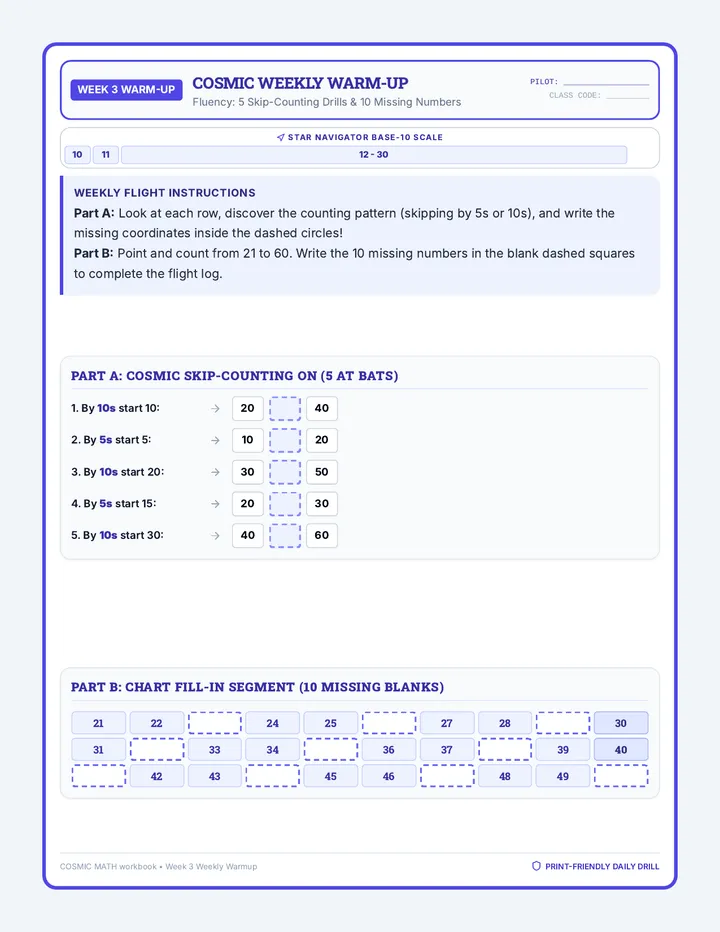
A 1-page print-friendly daily warm-up with a clean white background. Features 5 skip-counting drills (Part A) and a segment 100s chart with at least 10 missing blank boxes (Part B) for Week 3 place value.
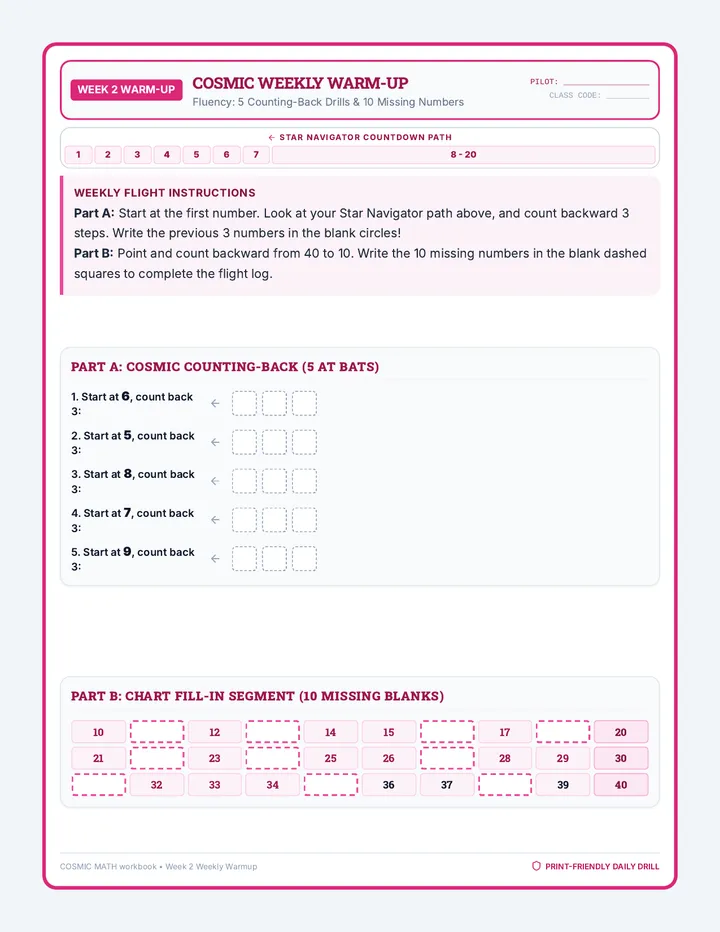
A 1-page print-friendly daily warm-up with a clean white background. Features 5 backwards-counting drills (Part A) and a segment 100s chart with at least 10 missing blank boxes (Part B) for Week 2 subtraction.
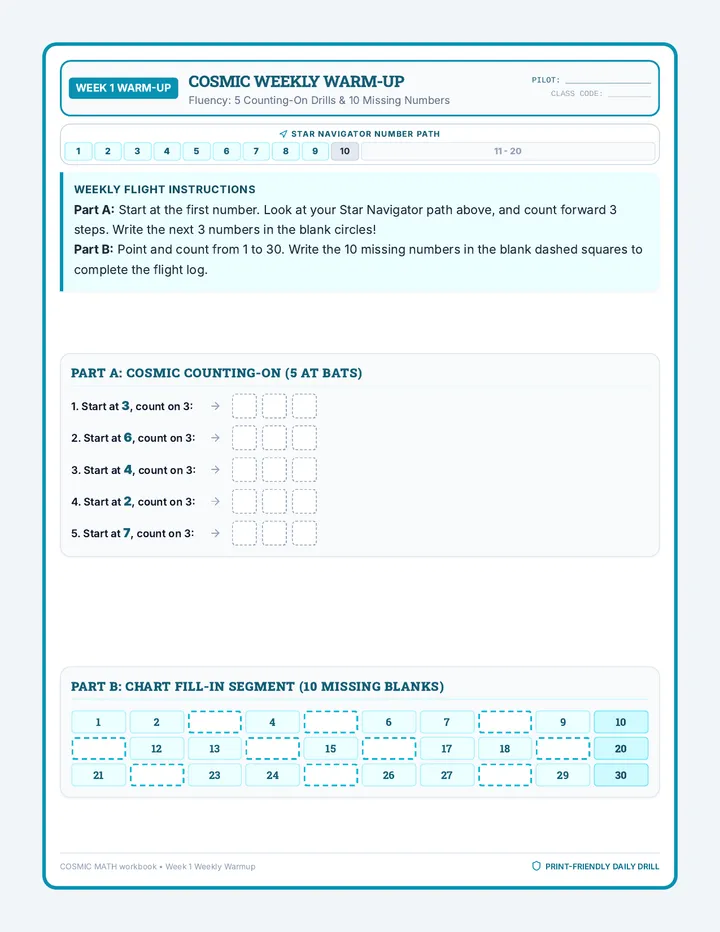
A 1-page print-friendly daily warm-up with a clean white background. Features 5 counting-on drills (Part A) and a segment 100s chart with at least 10 missing blank boxes (Part B) for Week 1 addition.
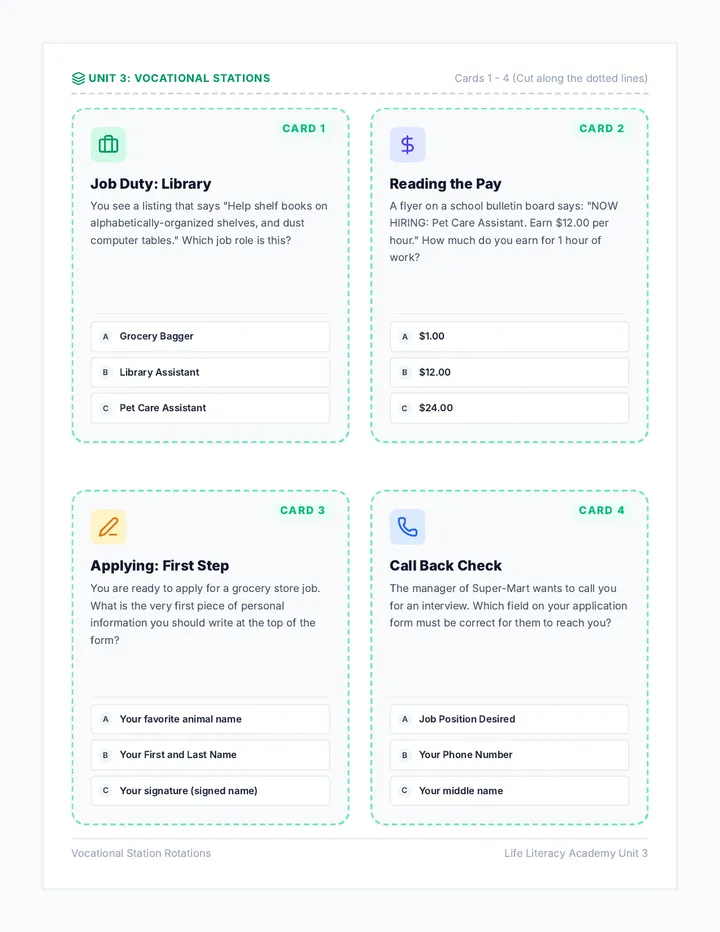
A 2-page collection of task cards (8 total) with vocational scenarios, application matching, and sequencing prompts.
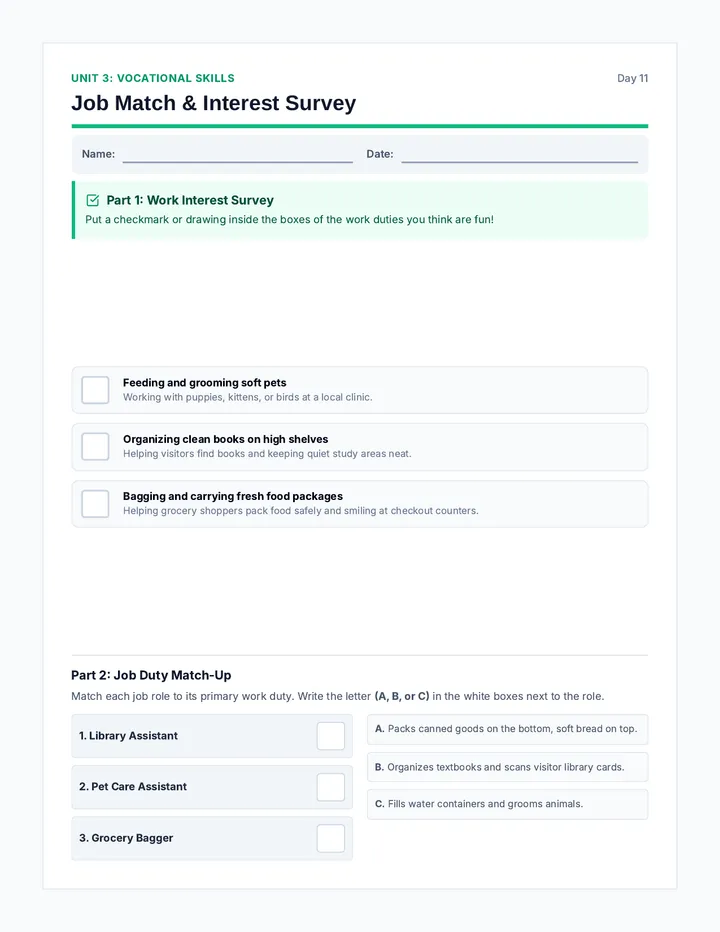
A 4-page student worksheet packet for Vocational Skills and Job Applications. It covers job interest inventory, simplified job posting comprehension, step-by-step job application practice, and a work sequence ordering activity.
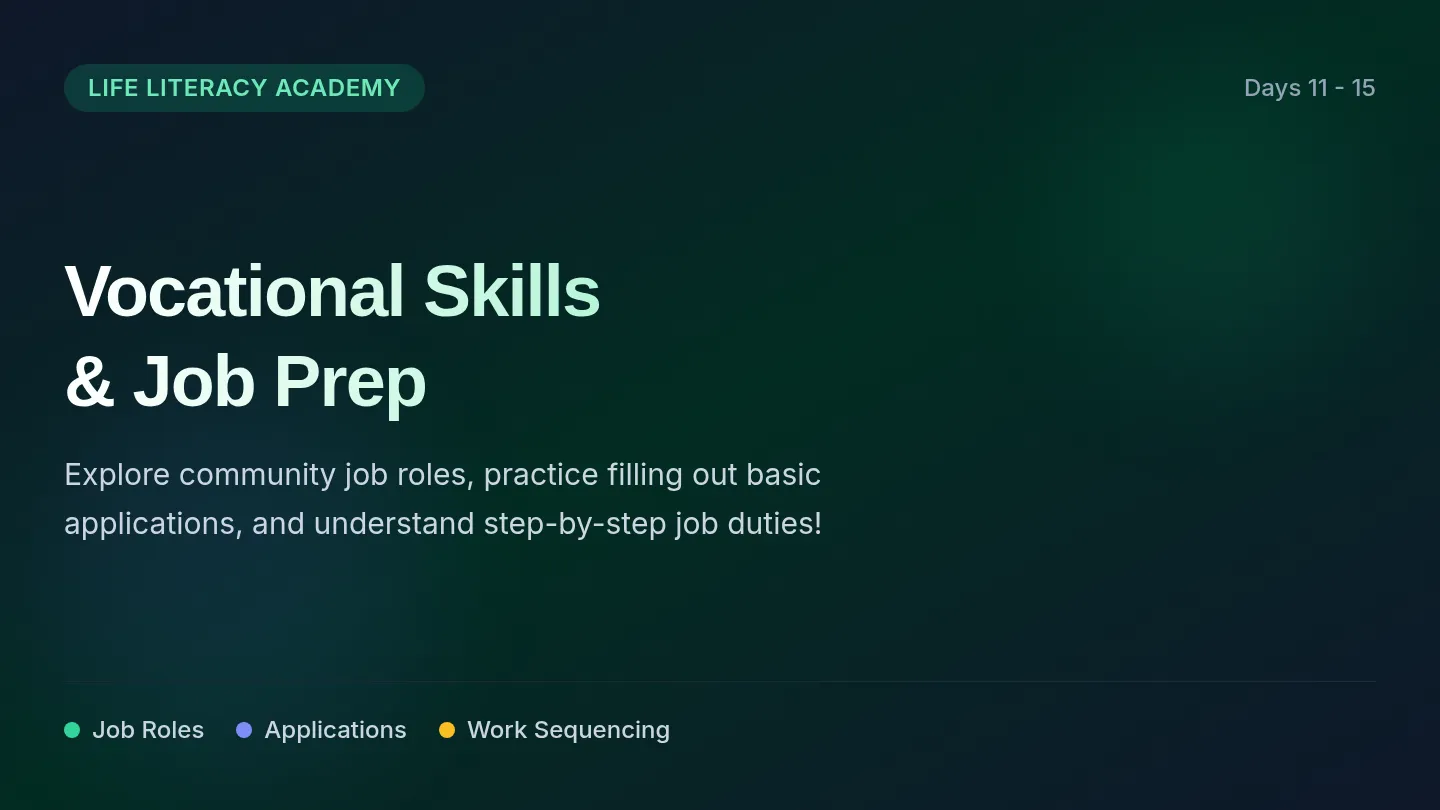
A 6-slide presentation for Days 11 to 15 of the Vocational Skills and Job Applications lesson. It covers work roles, job postings, simple application forms, task sequencing, and finding the main theme/goal of work.
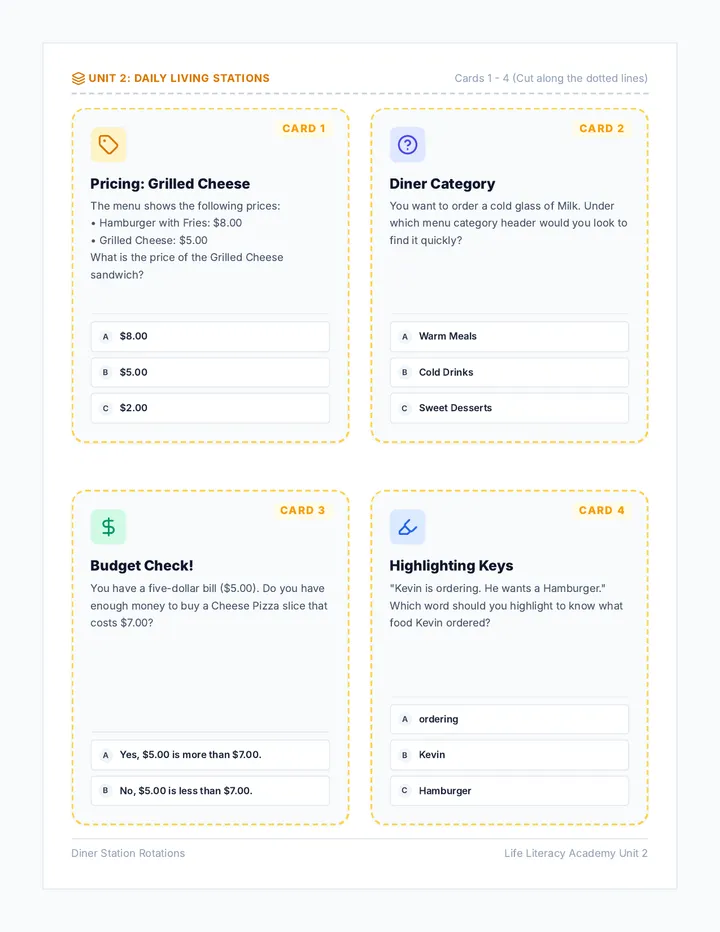
A 2-page collection of menu-reading and inferencing task cards (8 total) for independent practice stations.
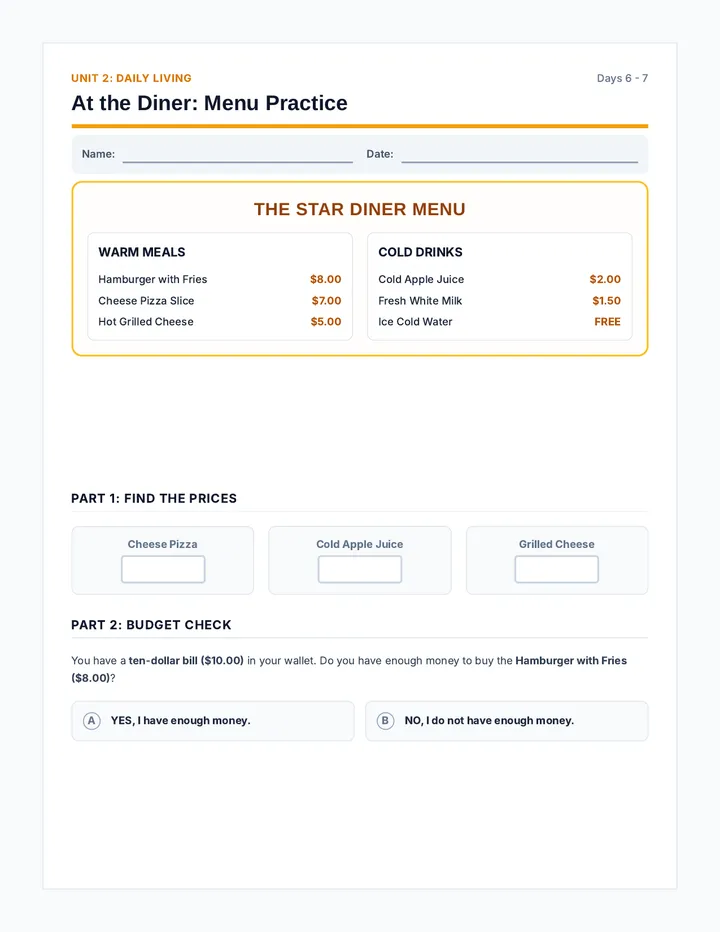
A 4-page student worksheet packet for Daily Living and Menus. It covers menu reading (finding specific items, simple math), text-highlighting exercises, inferencing card activities, and reading passages with WH questions.
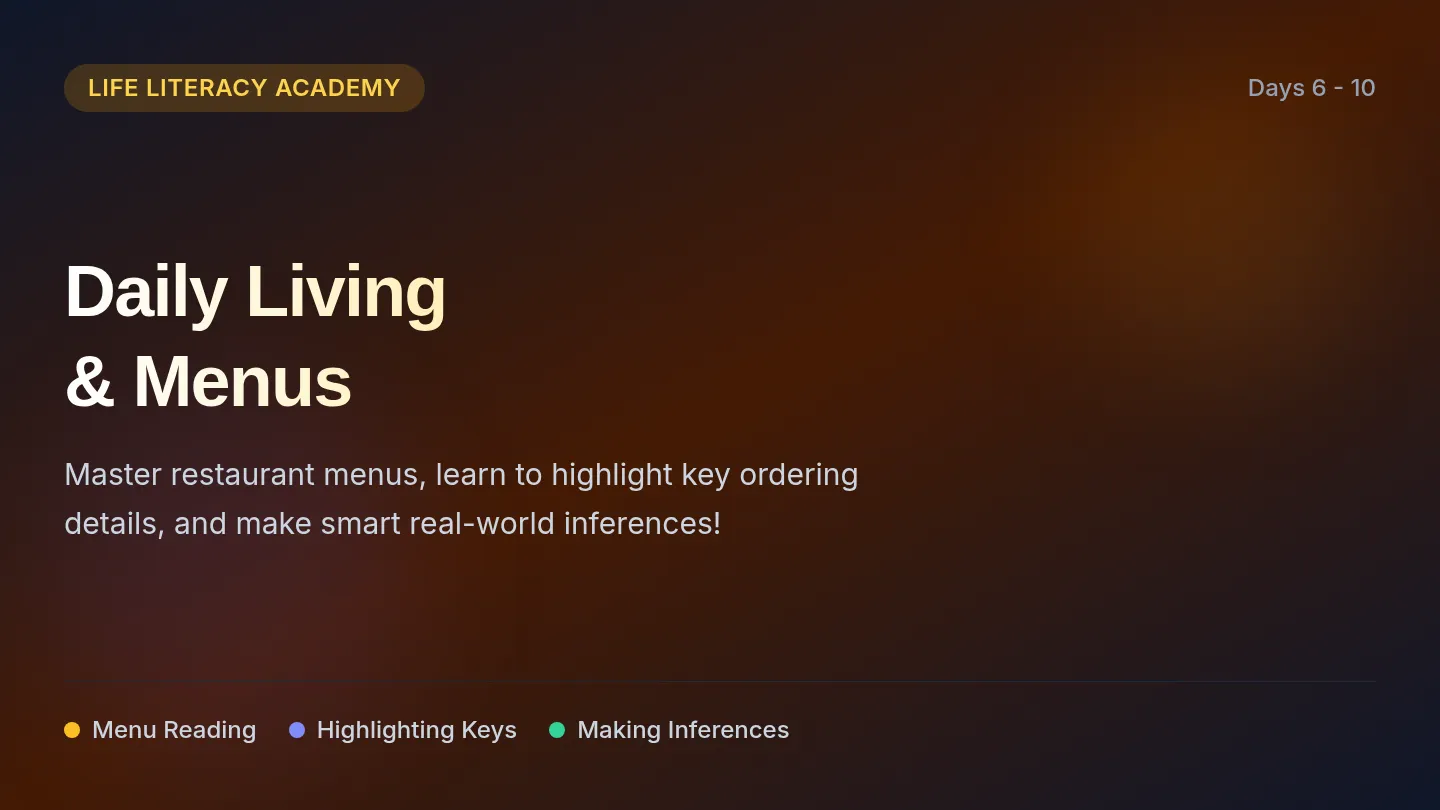
A 6-slide presentation for Days 6 to 10 of the Daily Living and Menus lesson. It covers menu navigation, highlighting key information, making inferences from real-world situations, and literary comprehension.
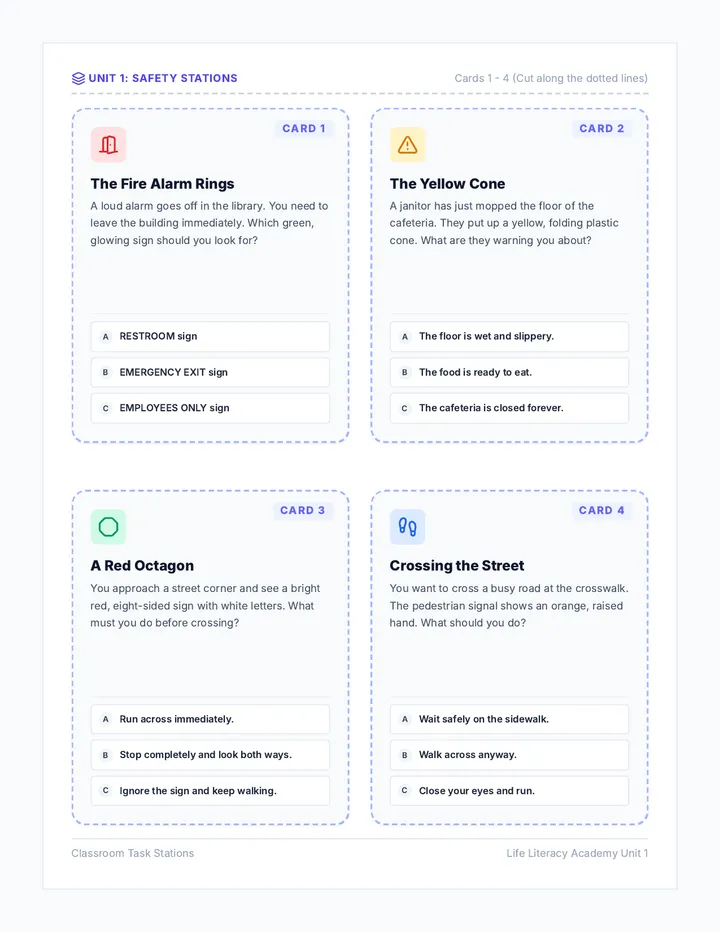
A 2-page printable activity pack containing 8 safety sign and schedule reading task cards (4 per page in a grid) for small groups, partner activities, or independent practice stations.