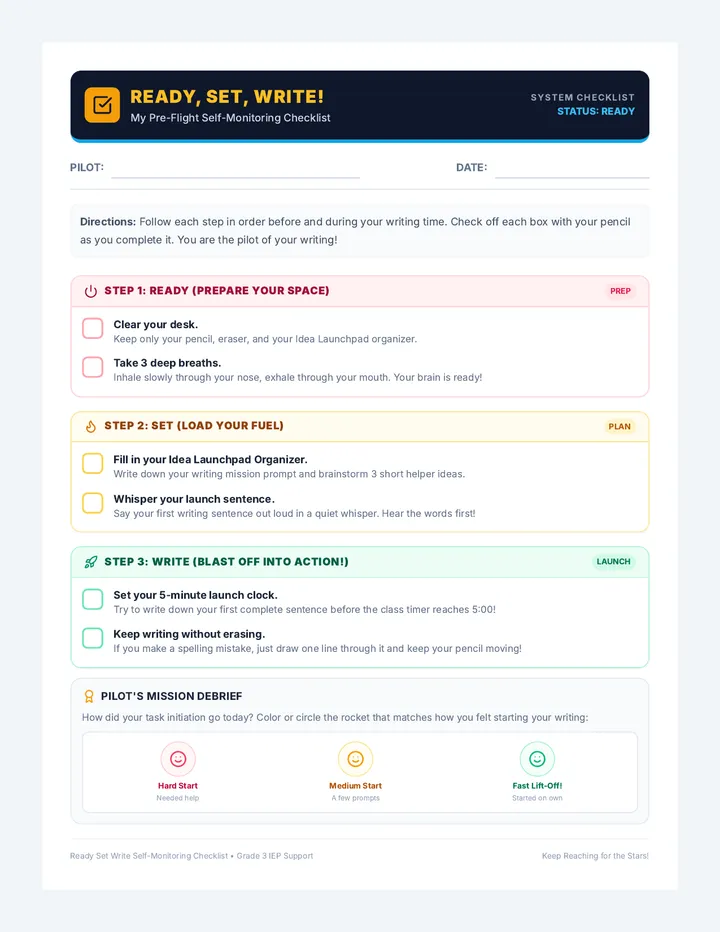
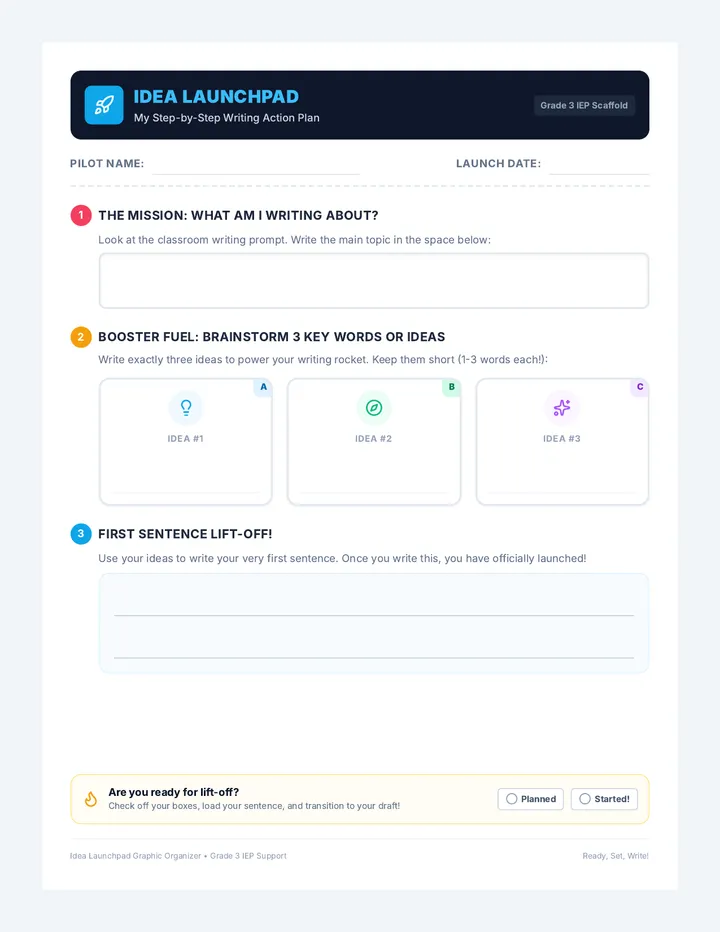
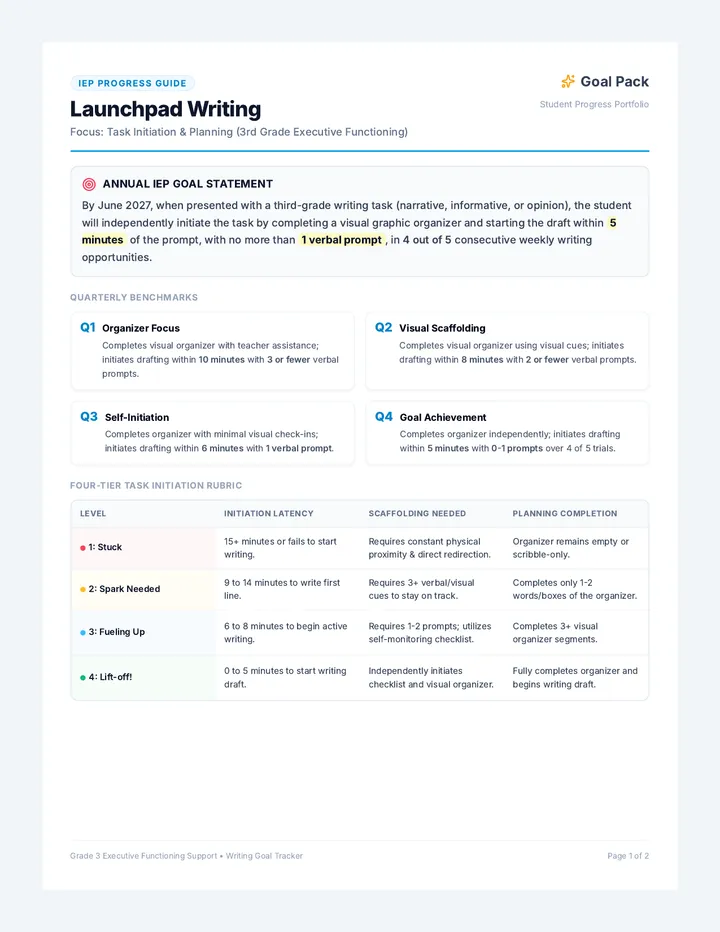
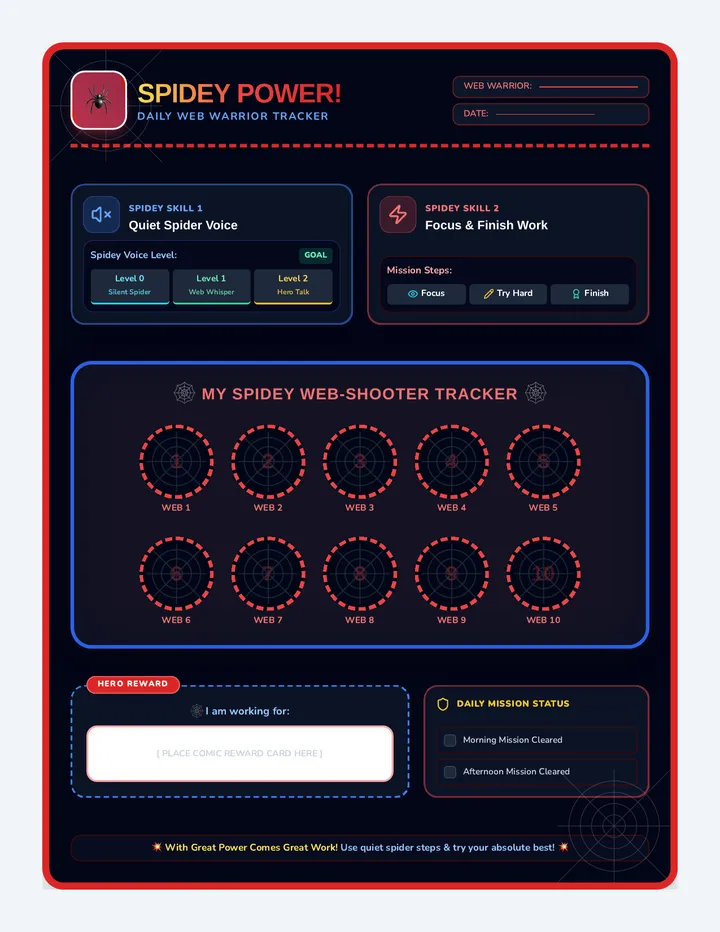
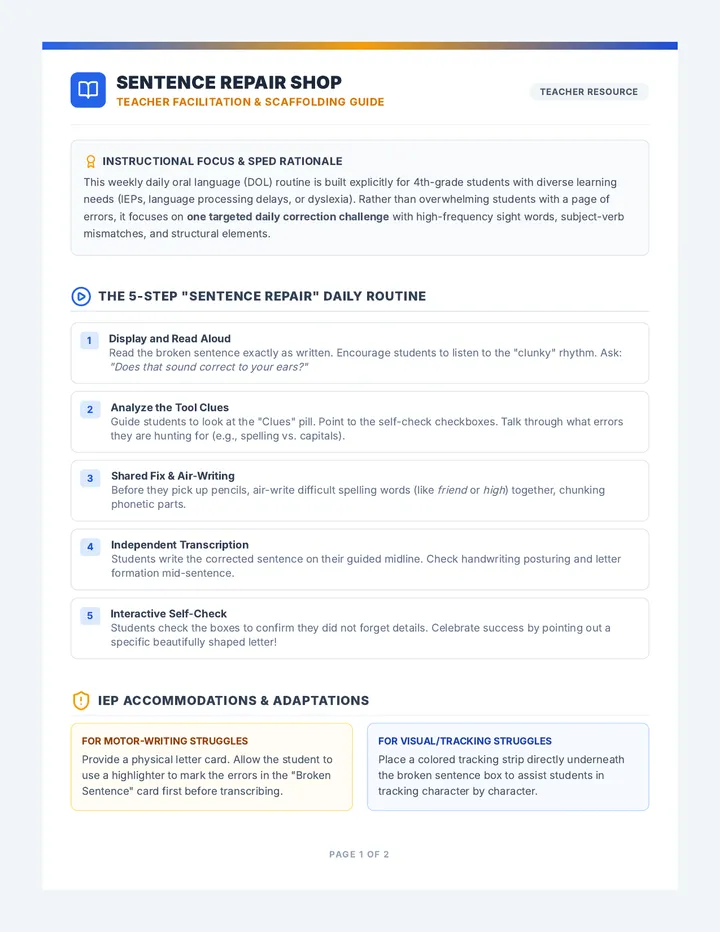
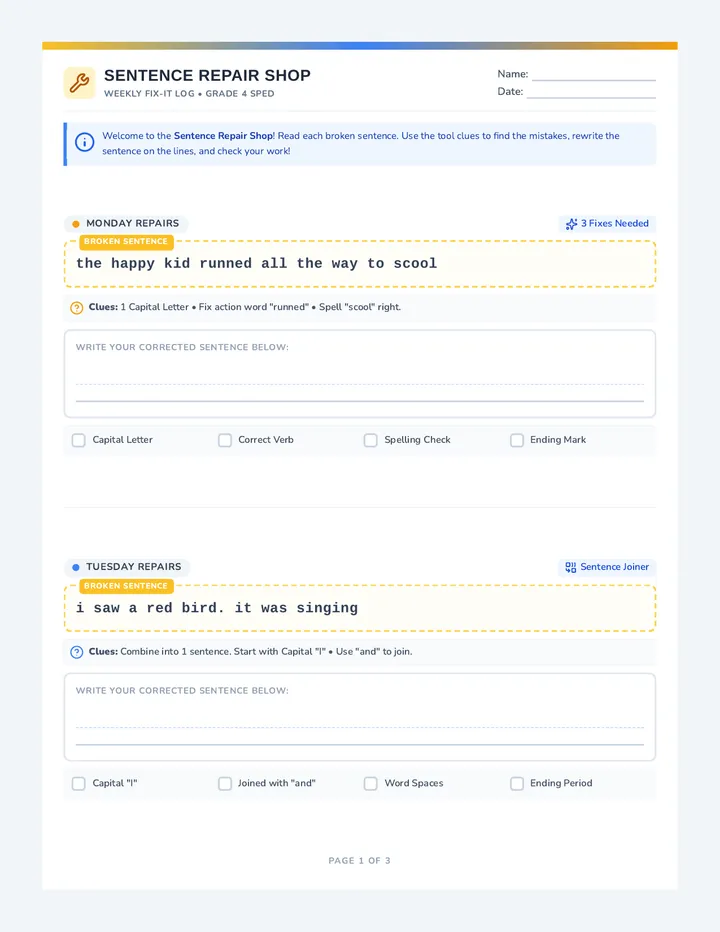
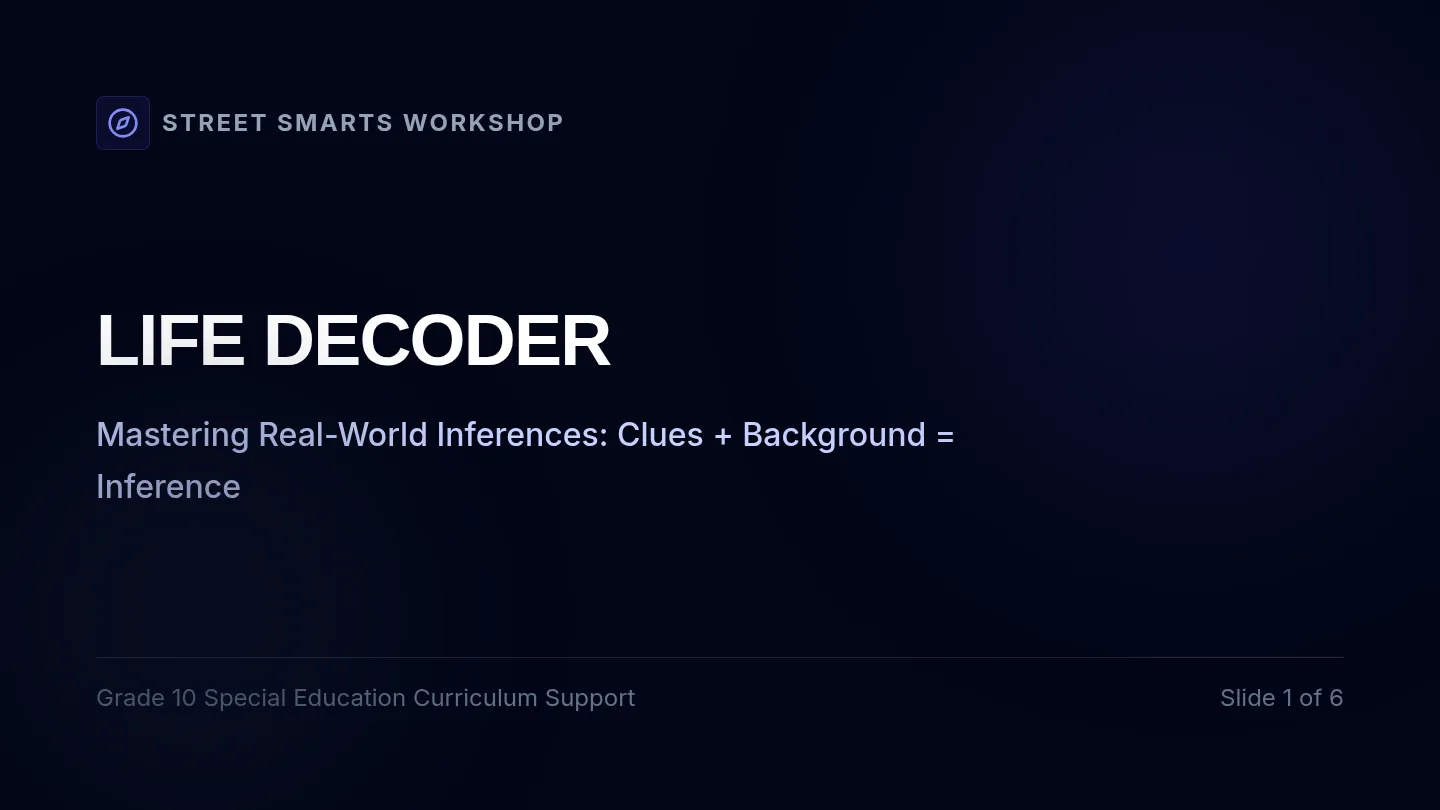
A slide deck for Lesson 2 focusing on antecedent strategies and environmental prevention. It introduces physical, visual, and interpersonal modifications to reduce behavioral triggers.
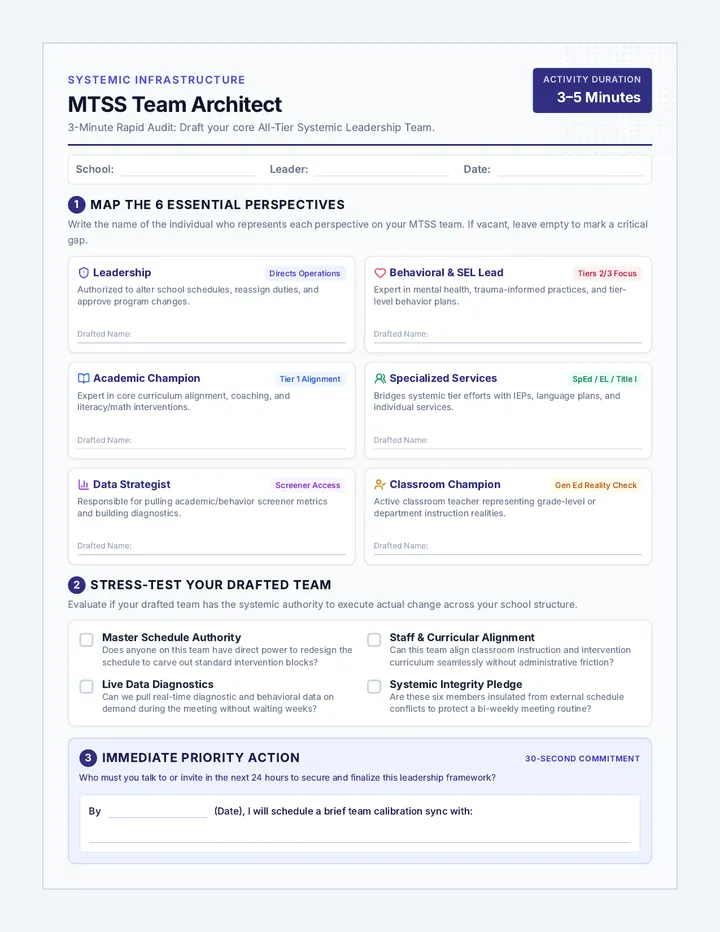
A facilitator guide for teachers to deliver the IEP self-advocacy lesson. Now optimized to fit on a single page with all headings and content together.
A student worksheet that helps individuals break down their own IEP goals using the "Blueprint Formula" (Goal, Barrier, Tool). Now optimized to fit on a single page with consistent work area styling and a clearer connection to the roleplay activity.
A set of four scenario cards for roleplaying self-advocacy in the classroom. Each card provides a specific IEP-related situation, a student prompt, and a teacher prompt to facilitate realistic practice. Now optimized to fit on a single printable page with cut lines.
A visual presentation introducing students to the concept of IEP goals and the "Blueprint Formula" for self-advocacy. Features clear, bold text and a construction theme to make complex legal terms accessible.
A comprehensive facilitator's guide for the session, providing step-by-step instructions and strategies using the new 'Start the Convo, Say What You Need, Make a Plan' framework. Includes timing and instructions for the Scenarios Handout and Practice Notes. Updated for better spacing and clarity.
A post-activity reflection sheet designed for student self-assessment. It helps students identify their strengths and growth areas in self-advocacy and includes a section for drafting a personal 'Professor Pitch' using the new student-friendly blueprint framework. Optimized for printability and ease of use.
A clear, three-role guide for students to use during advocacy role-play. It includes specific goals for the Advocate, the Authority, and the Observer, along with a student-friendly fill-in-the-blank script for extra support.
A collection of four realistic scenarios ranging from easy to difficult, focusing on college and workplace self-advocacy. Each scenario includes a "twist" to make the role-play more challenging and authentic. Includes a practice notes area for students and uses student-friendly blueprint terminology.
A professional and engaging 9-slide presentation designed for high school seniors. It covers the transition to college advocacy, provides a three-step script (Start the Convo, Say What You Need, Make a Plan) for communicating needs, and sets up real-world role-play scenarios. Updated for improved contrast and layout clarity.
A teacher's guide for facilitating lessons on social boundaries, handling rejection, and physical positioning for middle schoolers with autism.
A practice worksheet with social scenarios and reflection questions to help the student process personal space rules and responses to rejection.
A two-page social story handout for a middle school boy with autism, detailing specific rules for personal space, responding to requests to move, and handling social rejection.
A visual presentation for 7th-grade students on personal space, handling rejection, and responding to social cues appropriately.
A behavior incident tracking sheet designed for teachers to record antecedents, specific defiant behaviors, and the effectiveness of various redirection strategies to identify long-term patterns.
A detailed professional document for teachers outlining evidence-based interventions including Behavioral Momentum, Antecedent Modifications, and Functional Communication Training specifically for students with ADHD and defiant behaviors.
A printable quick-reference guide featuring four cut-out cards for teachers to keep on their desks, focusing on diffusing power struggles, low-profile redirection, ADHD support, and crisis de-escalation scripts.
A teacher-facing intervention guide for 8th-grade students struggling with elopement and vandalism. It outlines the restorative justice approach, implementation steps for the Daily Route Map, and specific de-escalation strategies for task avoidance and boredom.
A visual schedule and check-in sheet for 8th-grade students. It uses a construction/blueprint theme and includes a period-by-period schedule, task breakdown area, incentive tracker, and alternative behavior list.
A restorative justice packet for 8th-grade students to reflect on vandalism and elopement behaviors. It includes sections for impact mapping, root cause analysis, and creating a restoration plan.