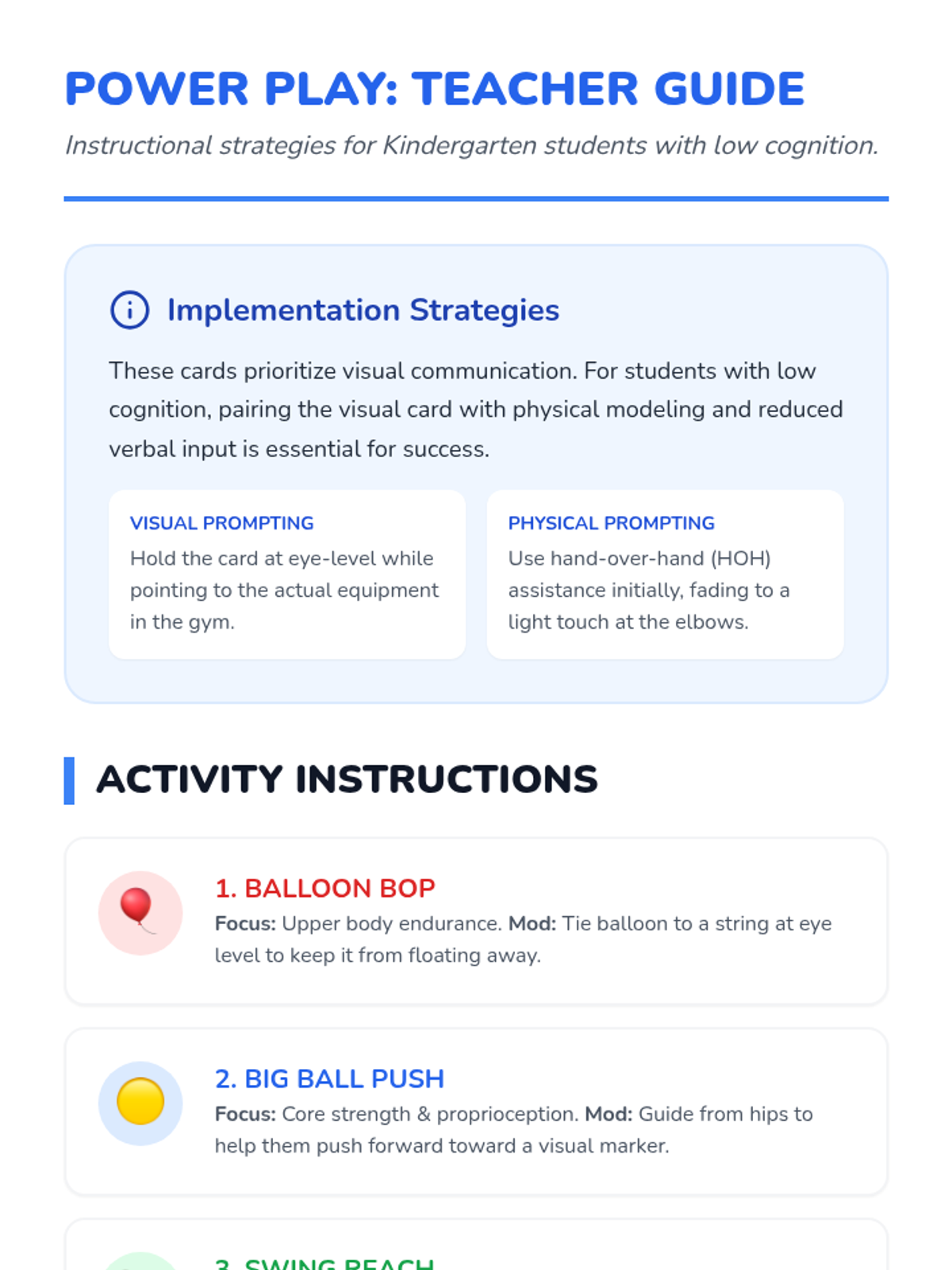
Set of 6 high-visual activity cards for kindergarten students with low cognition, focusing on core and upper body strength using common therapy gym equipment. Each card features large icons and simple one-sentence instructions.
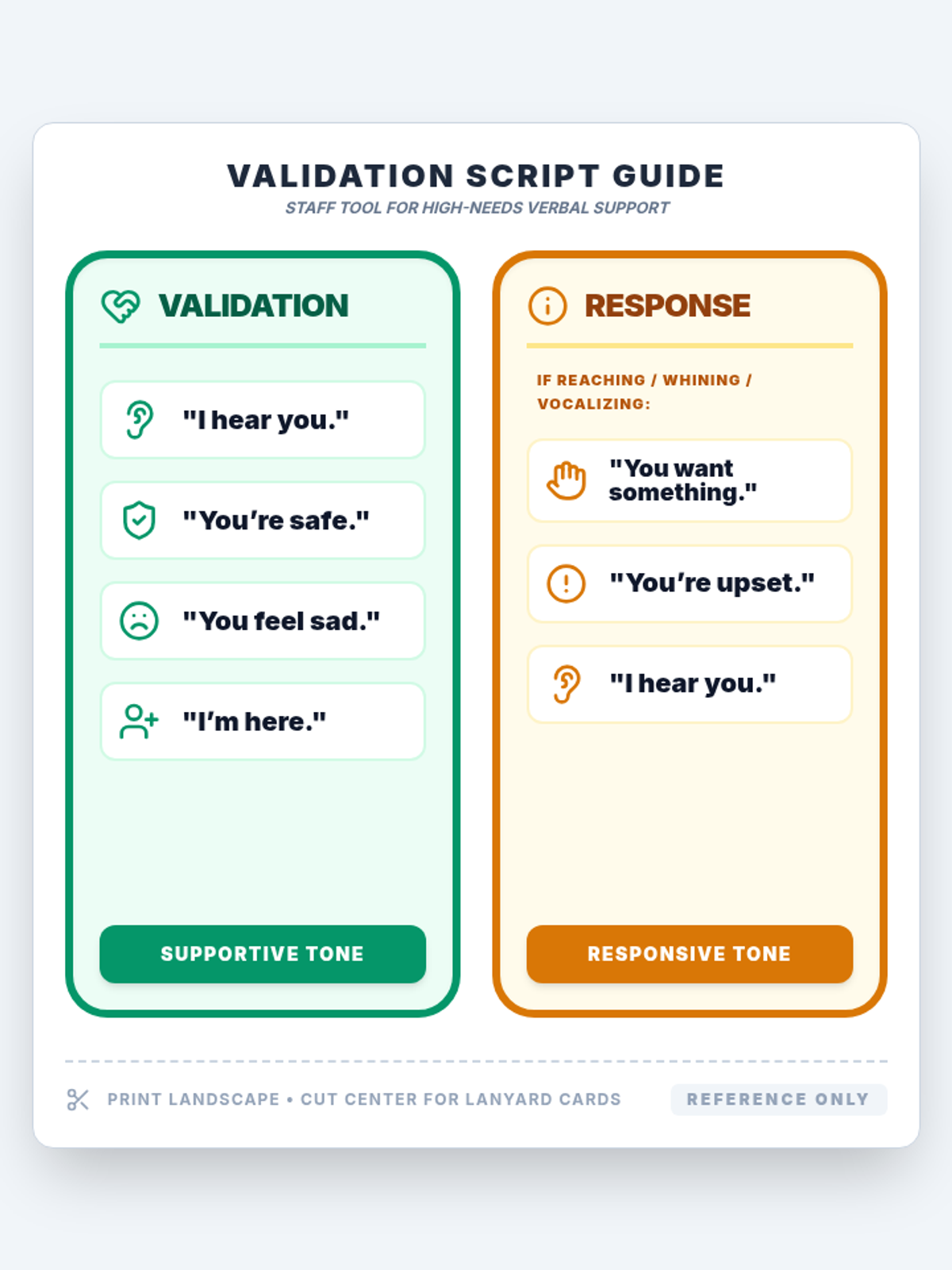
A quick-reference validation guide for staff. Features two color-coded cards with specific empathetic phrases for general validation and reactive behavior responses. Optimized for landscape printing and lanyard use with clear visual cues.
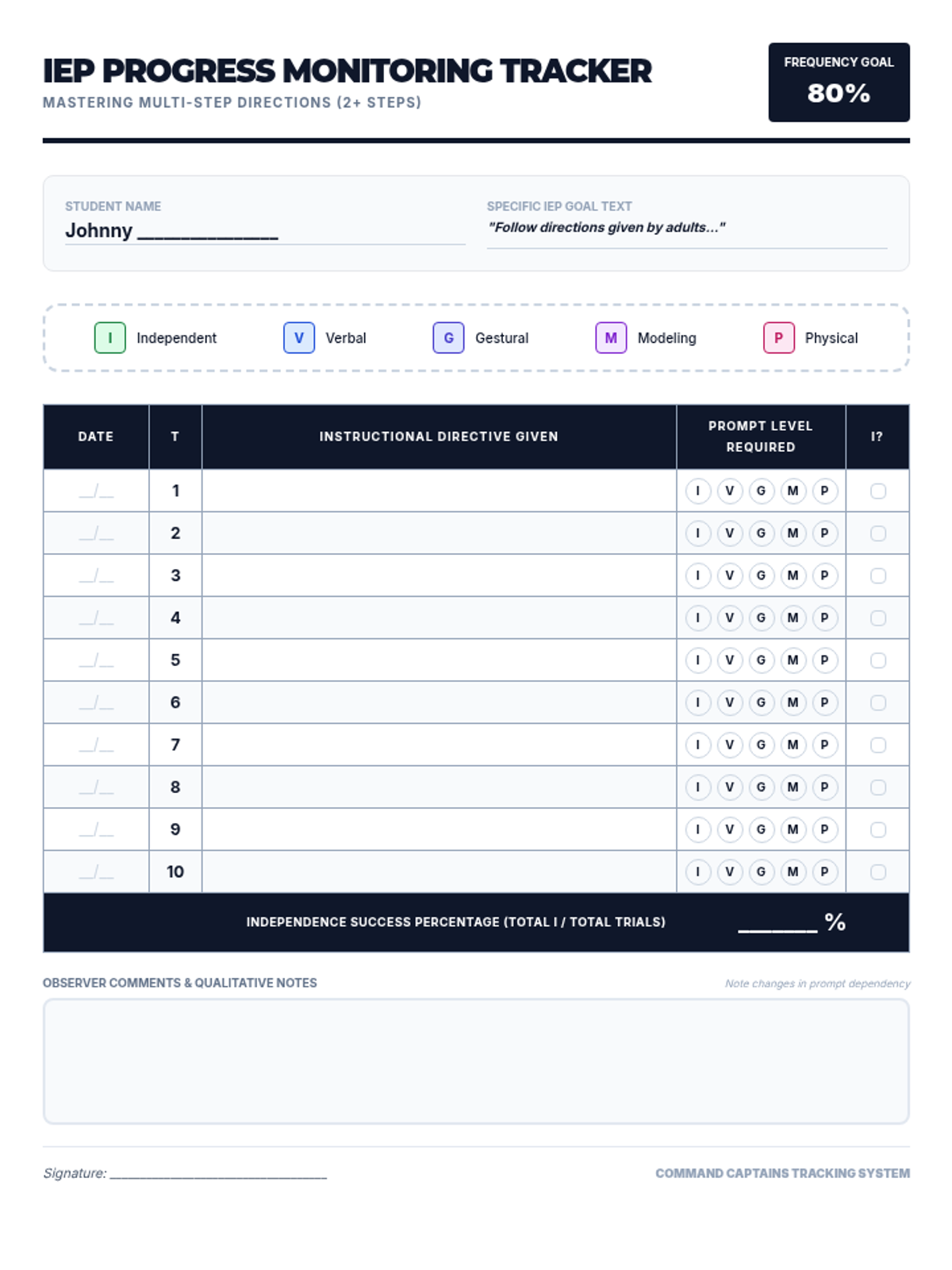
A formal progress monitoring data sheet for tracking IEP goal progress over time. It uses the Prompt Level Rubric to record multiple trials per session and calculate a success percentage.
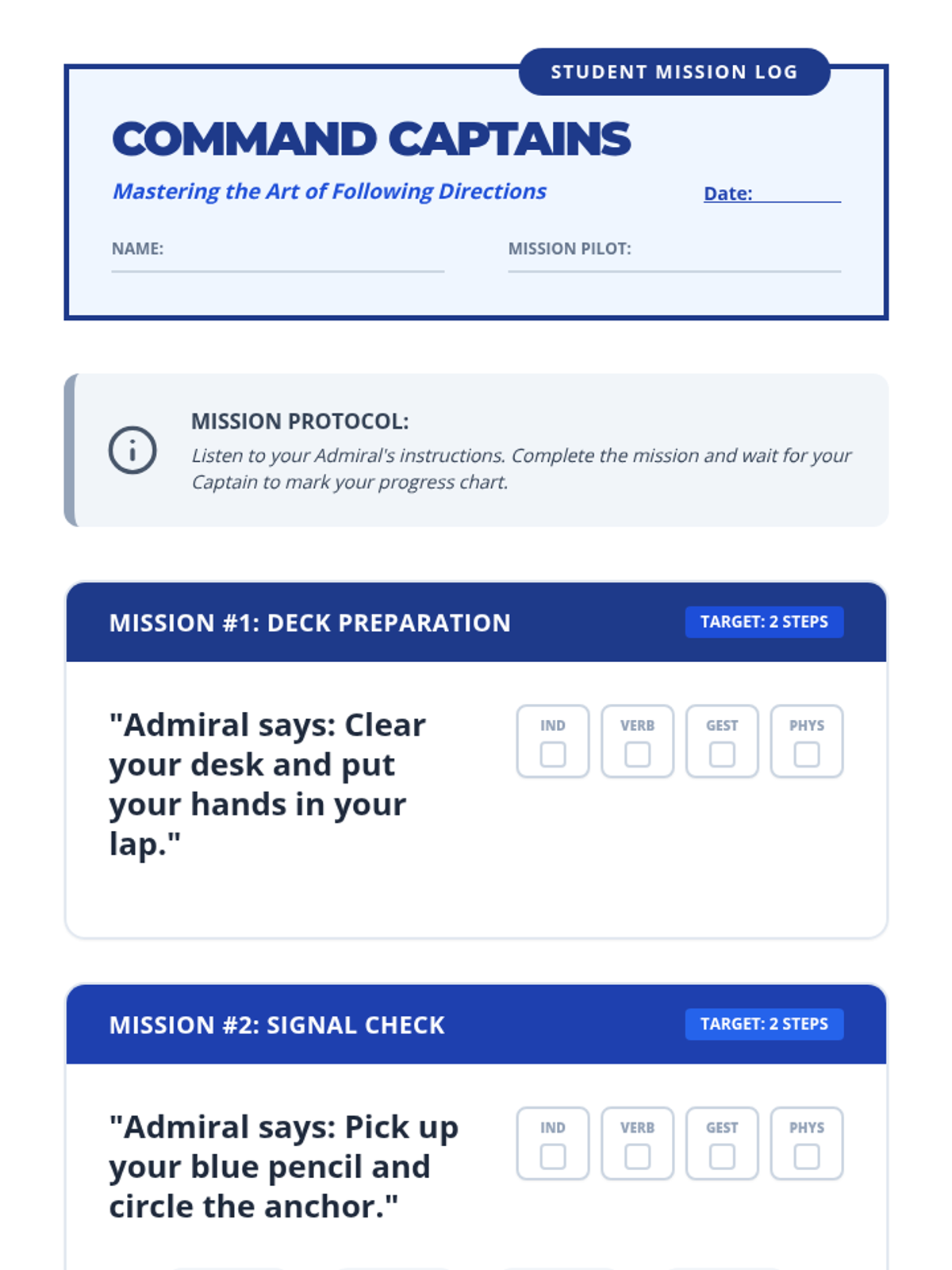
A student-facing mission log for practicing multi-step directions. It includes visual cues for directions and a built-in prompt tracking area for the teacher to quickly monitor progress during the lesson.
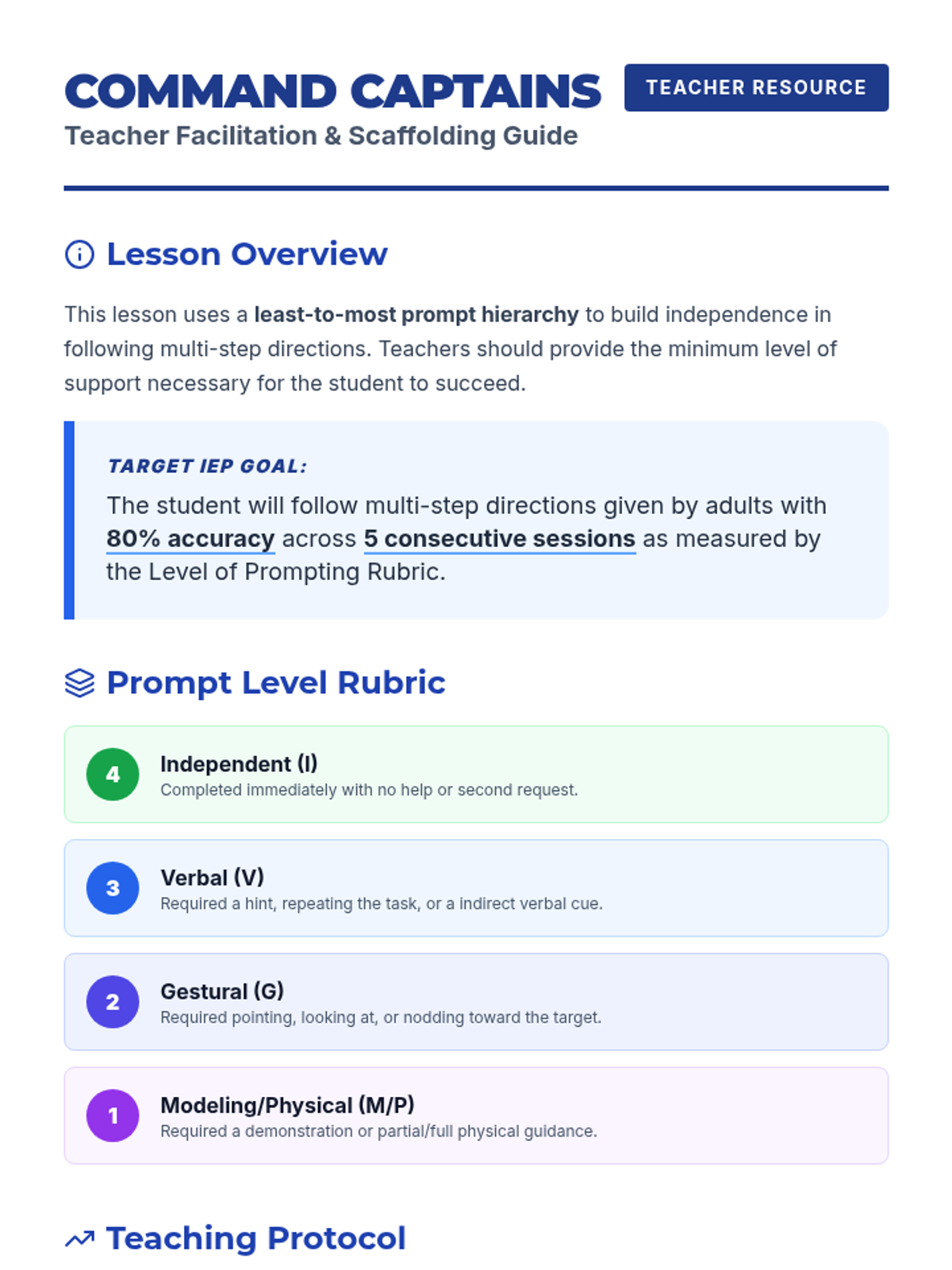
A facilitation guide for teachers explaining the least-to-most prompt hierarchy and providing instructions on how to scaffold directions and record progress for IEP goals.
Visual slides for introducing the 'Command Captains' lesson on following directions. Includes a 'Prompt Ladder' visual for students to understand the scaffolding process.
A teacher's guide for implementing the Power Play activity cards, providing instructional focus, modifications, and prompting strategies specifically for kindergarten students with low cognition.
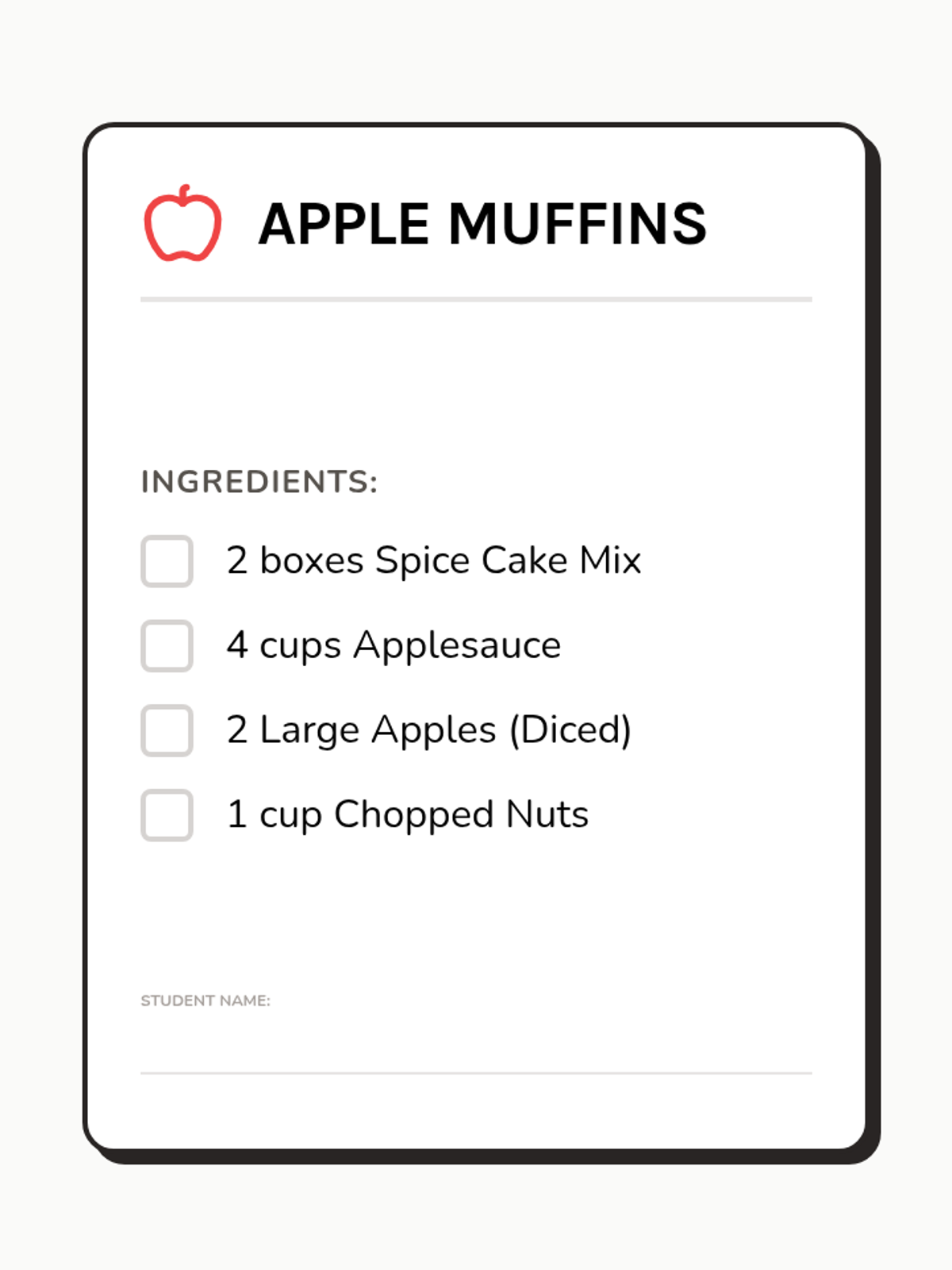
A set of large-format visual recipe task cards for 3-Ingredient Apple Muffins, with one card per page. Designed for easy viewing in a classroom or kitchen, these cards feature bold line-art illustrations, a tools checklist, and step-by-step baking instructions.
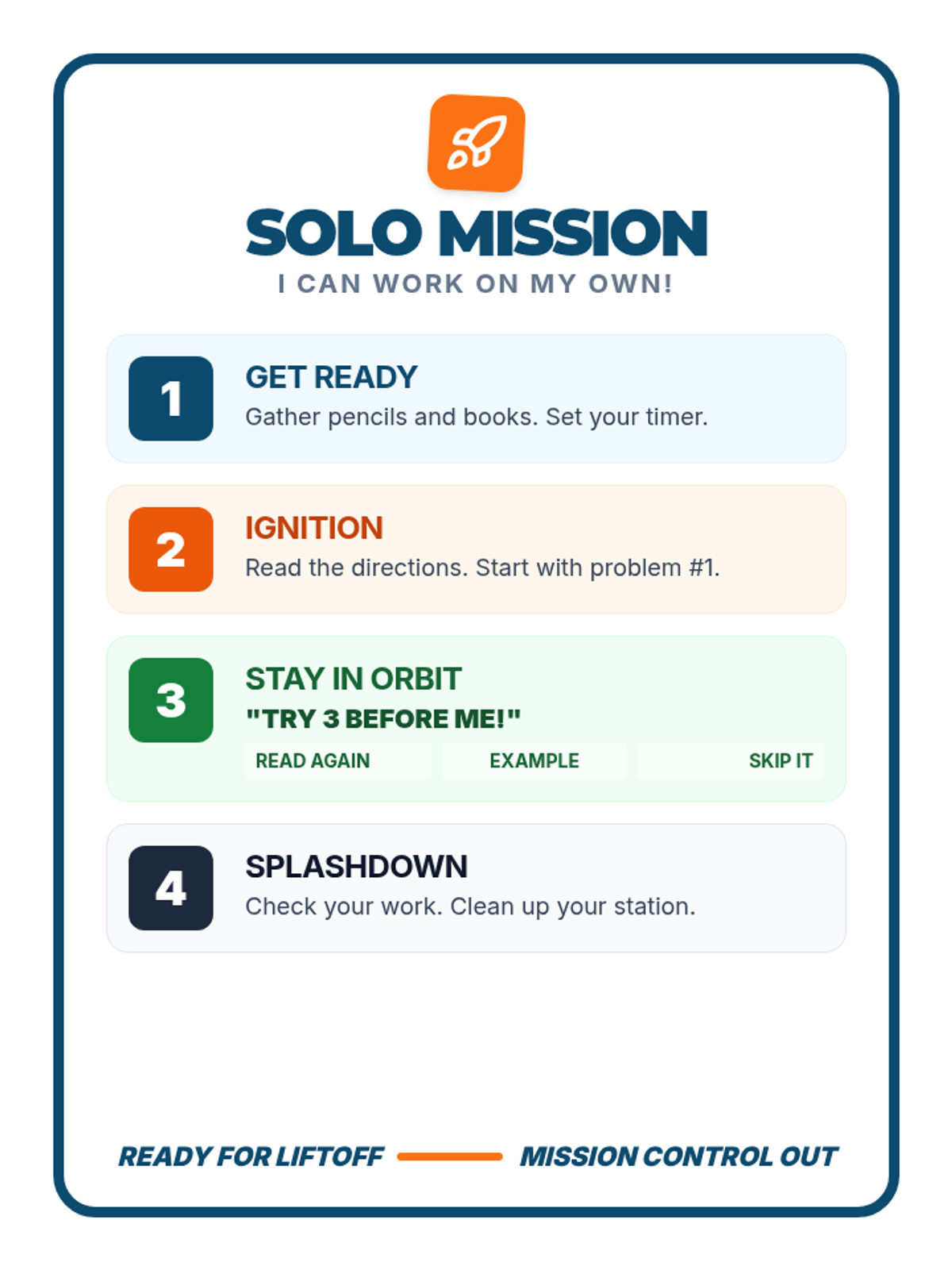
A visual anchor chart designed for a student's desk to serve as a step-by-step reminder of independent work procedures and self-help strategies.
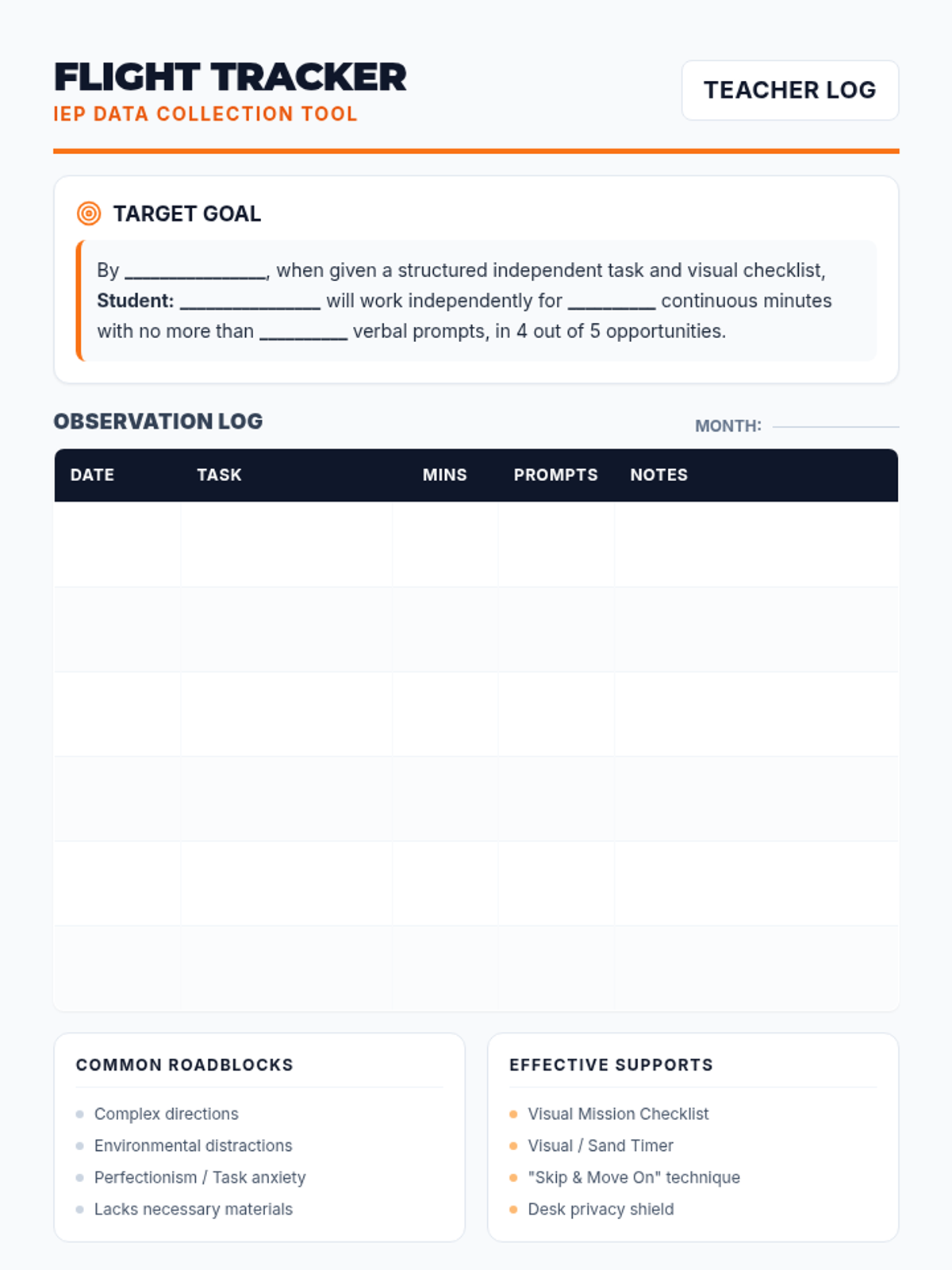
A teacher-facing data collection tool designed to track progress toward a specific IEP goal for independent work, including a frequency log and prompt tracker.
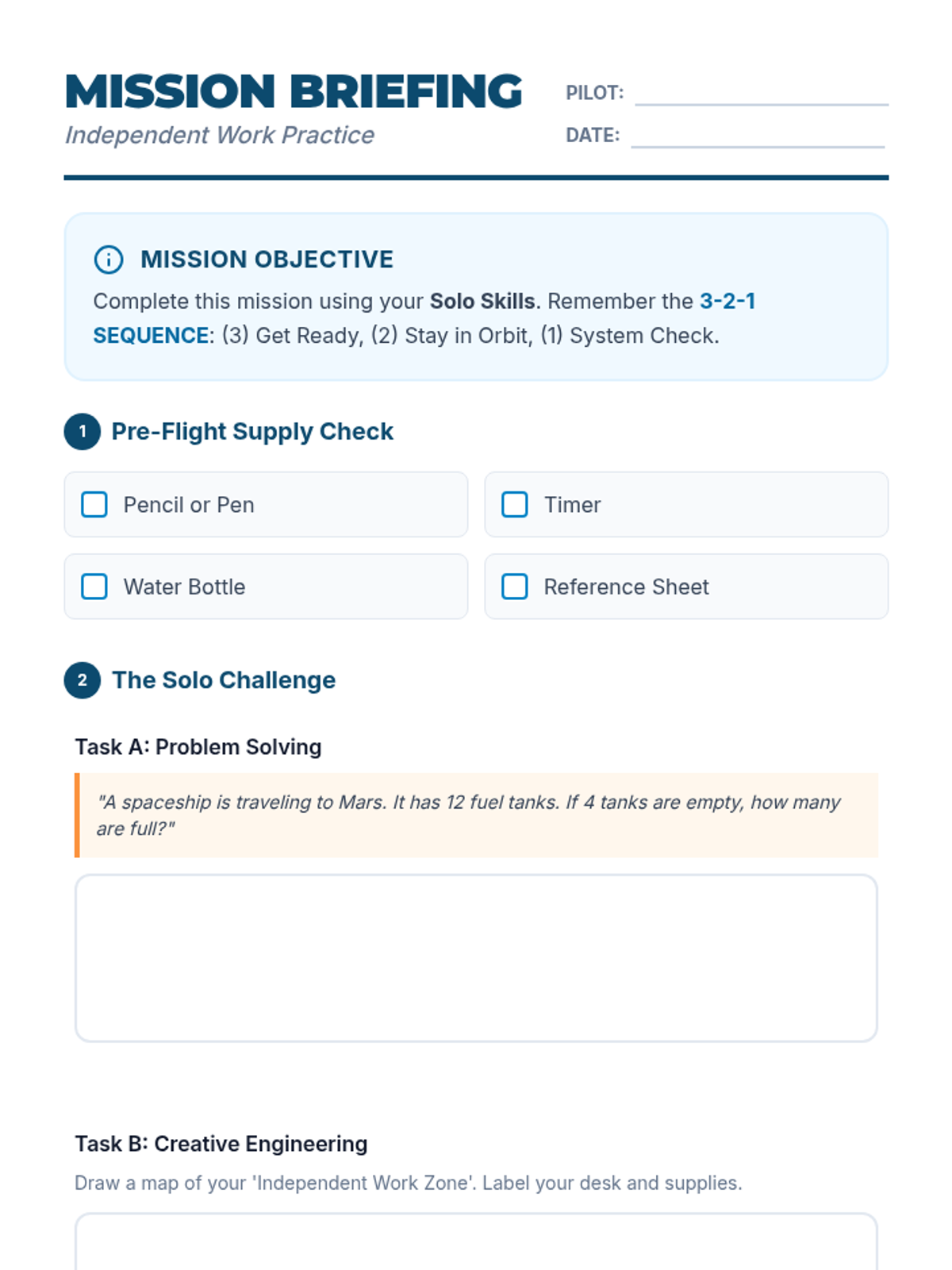
An independent work practice activity where students follow a structured process to complete tasks and self-reflect on their ability to work without teacher prompting.
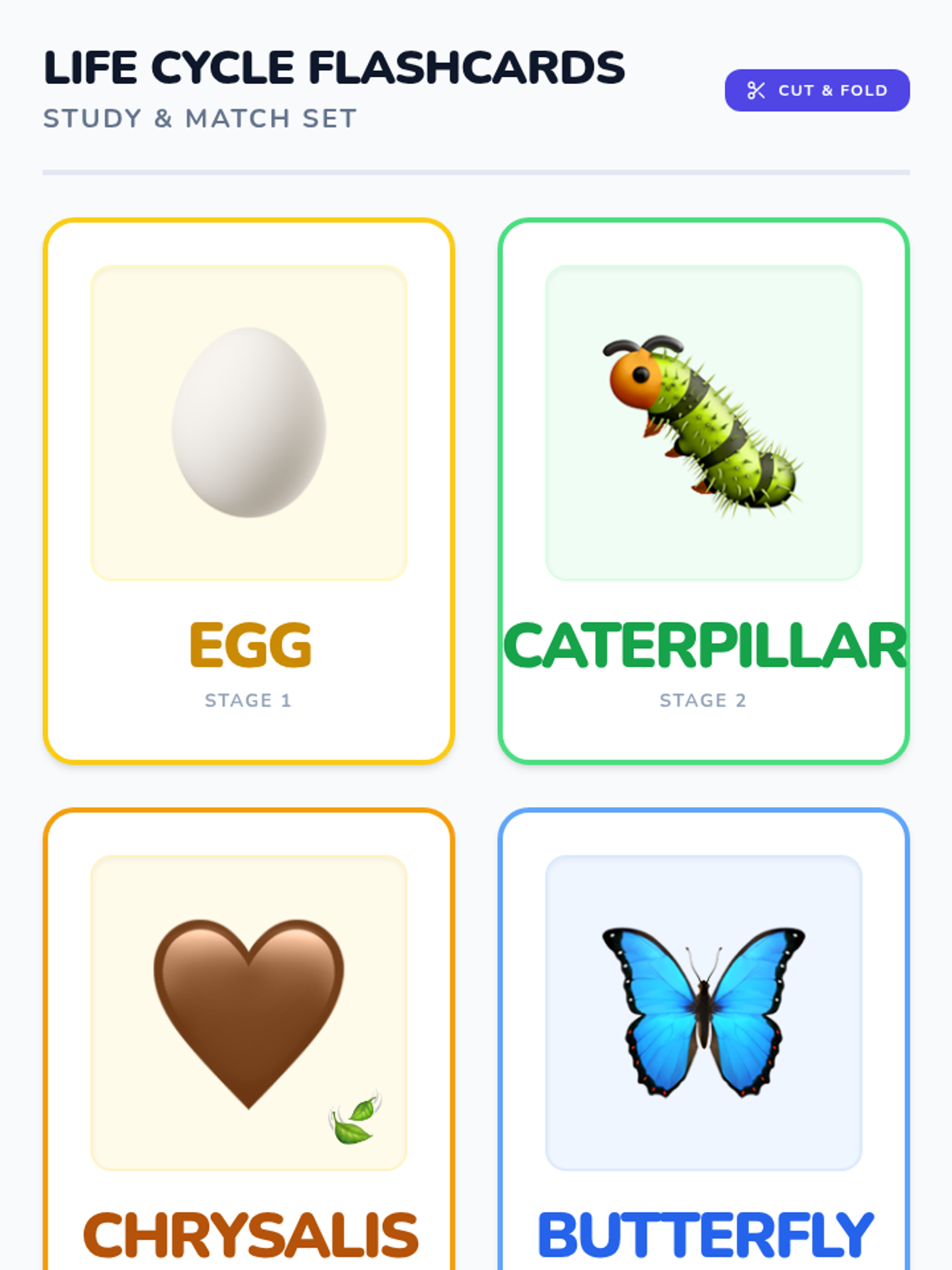
A set of high-contrast, visual flashcards for the butterfly life cycle, featuring large emojis and clear text labels for each stage. Includes a matching card set and a practice drawing area.
A high-energy slide deck that uses a "Mission Control" theme to teach students the procedural steps and self-regulation skills needed for independent work.
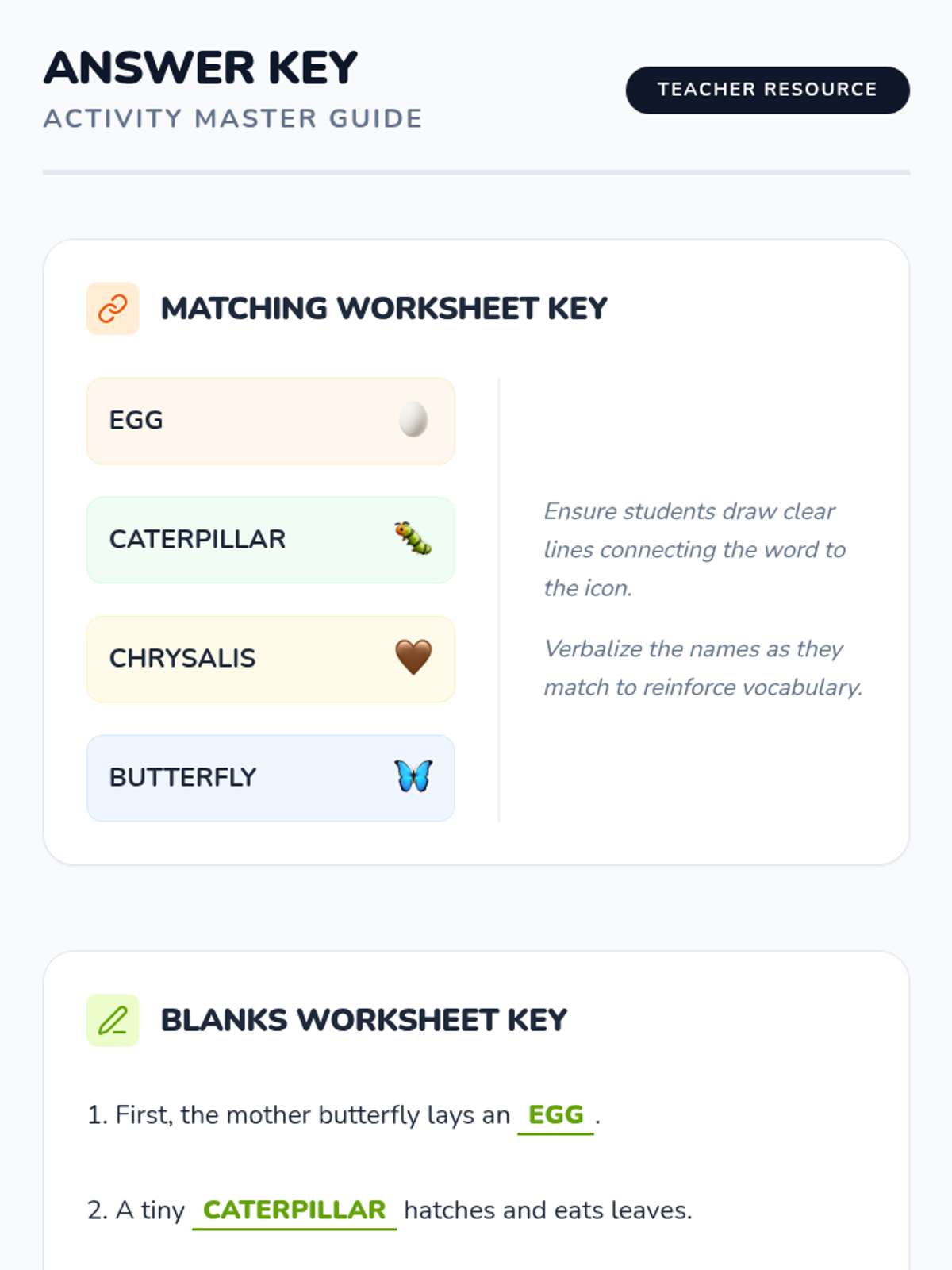
A comprehensive teacher answer key for the life cycle matching and fill-in-the-blank activities. Optimized to fit on a single page for teacher convenience.
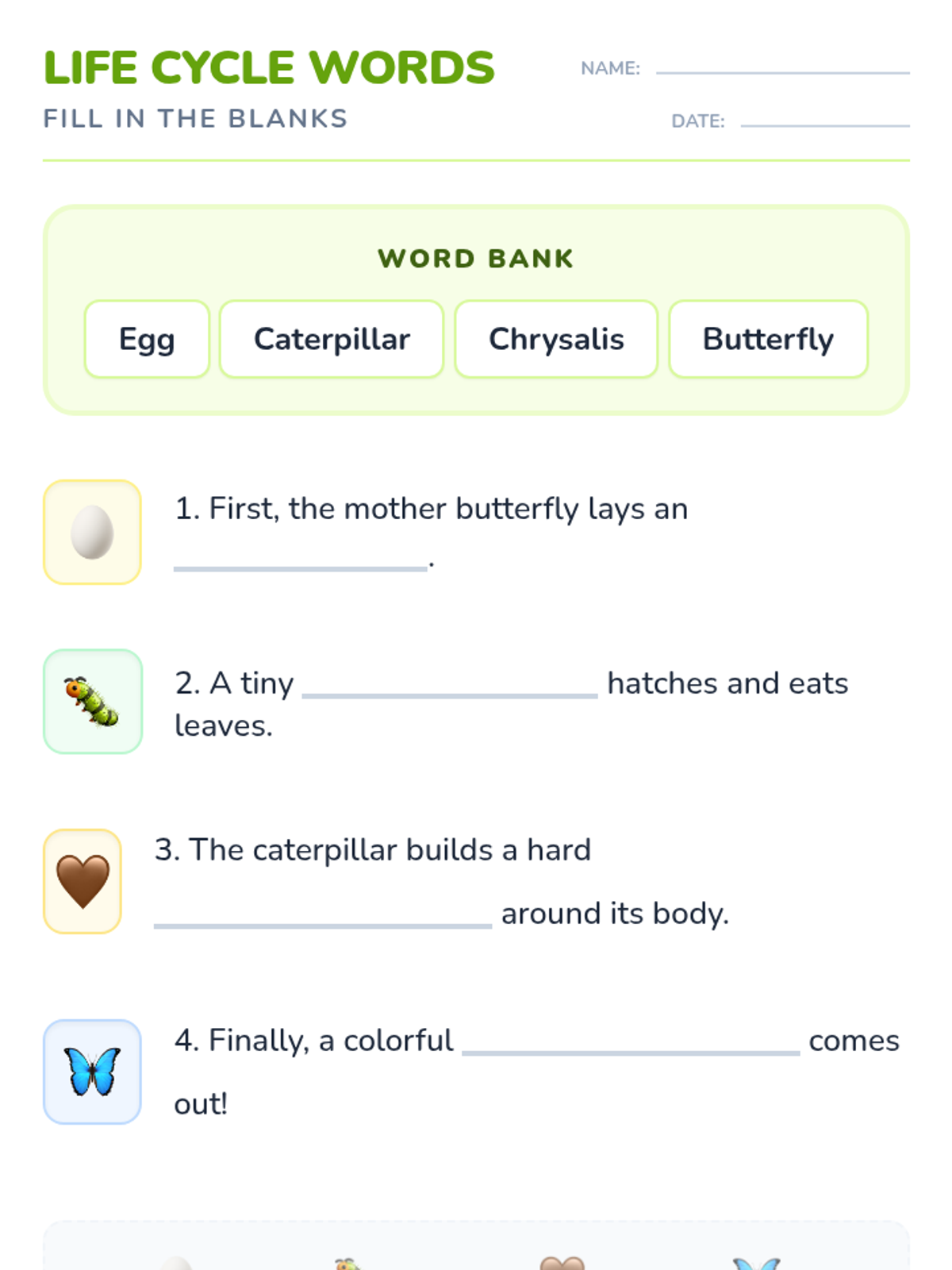
A fill-in-the-blank worksheet for the butterfly life cycle, featuring a word bank and emoji picture support for each sentence. Refined to prevent text wrapping and fit on one page.
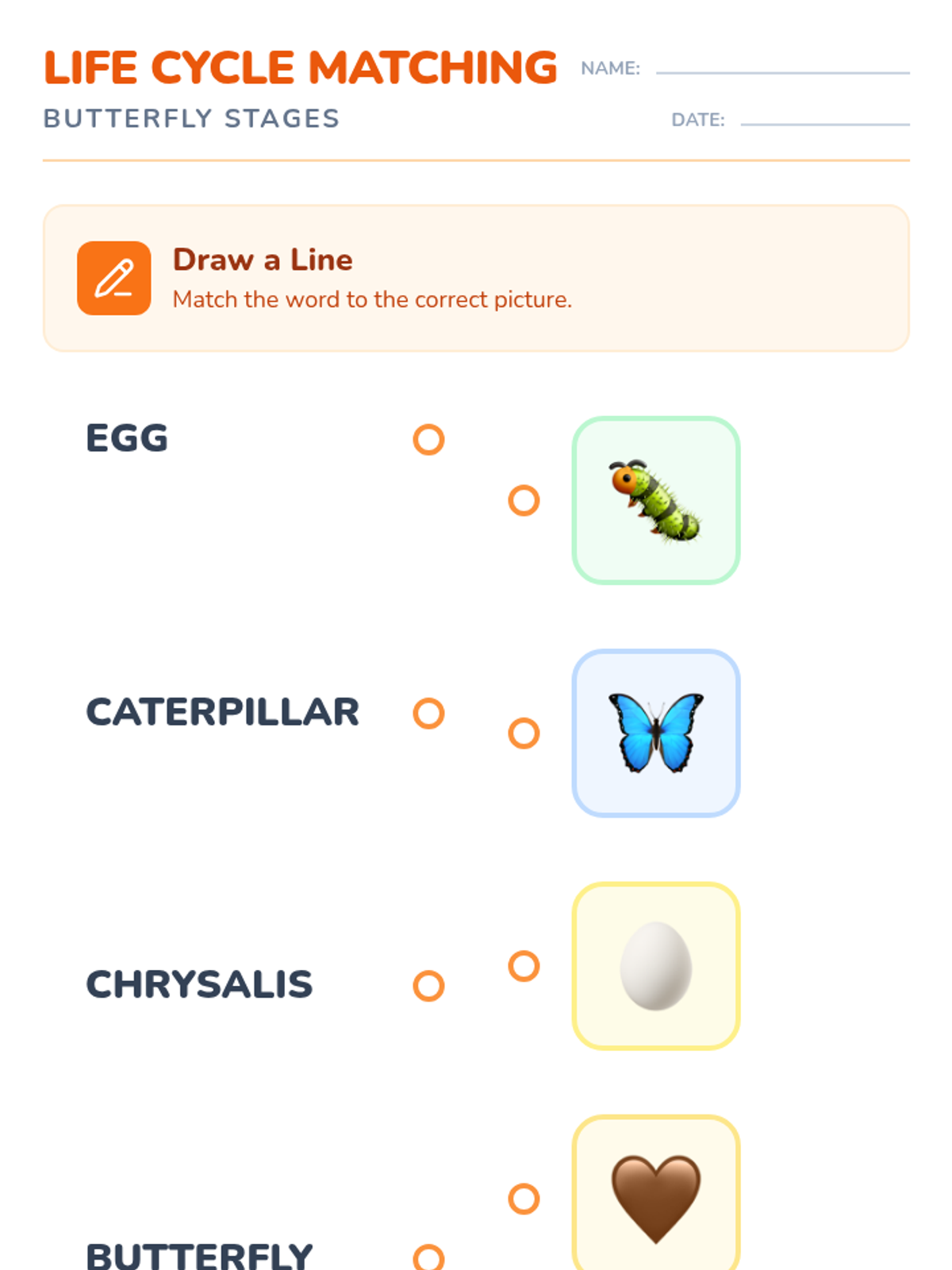
A visual matching worksheet for the butterfly life cycle, connecting stage names to corresponding pictures (emojis) with large, student-friendly targets. Optimized to fit on one page.
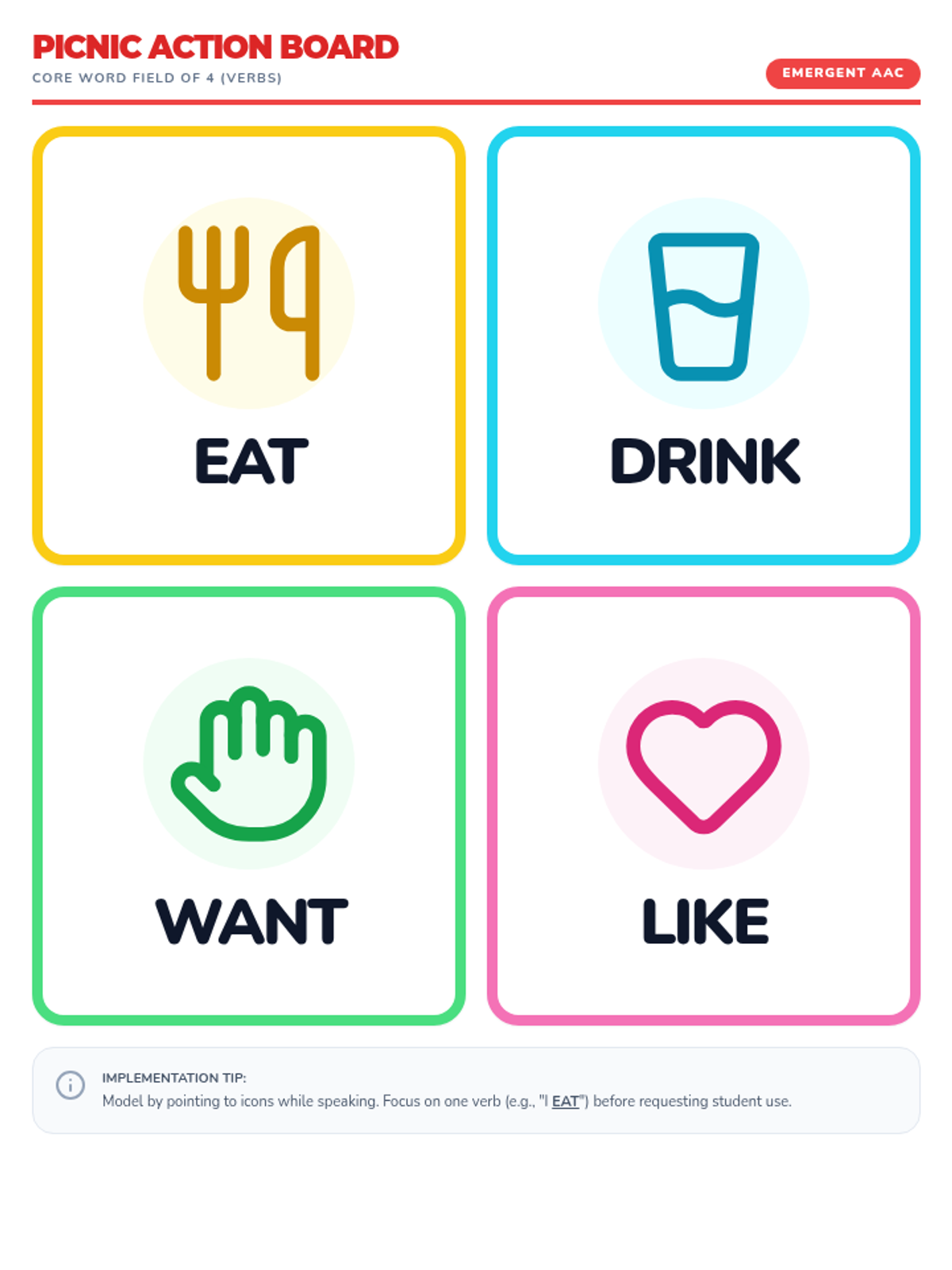
A high-contrast communication board featuring a field of four core verbs (Eat, Drink, Want, Like) designed for emergent AAC users.
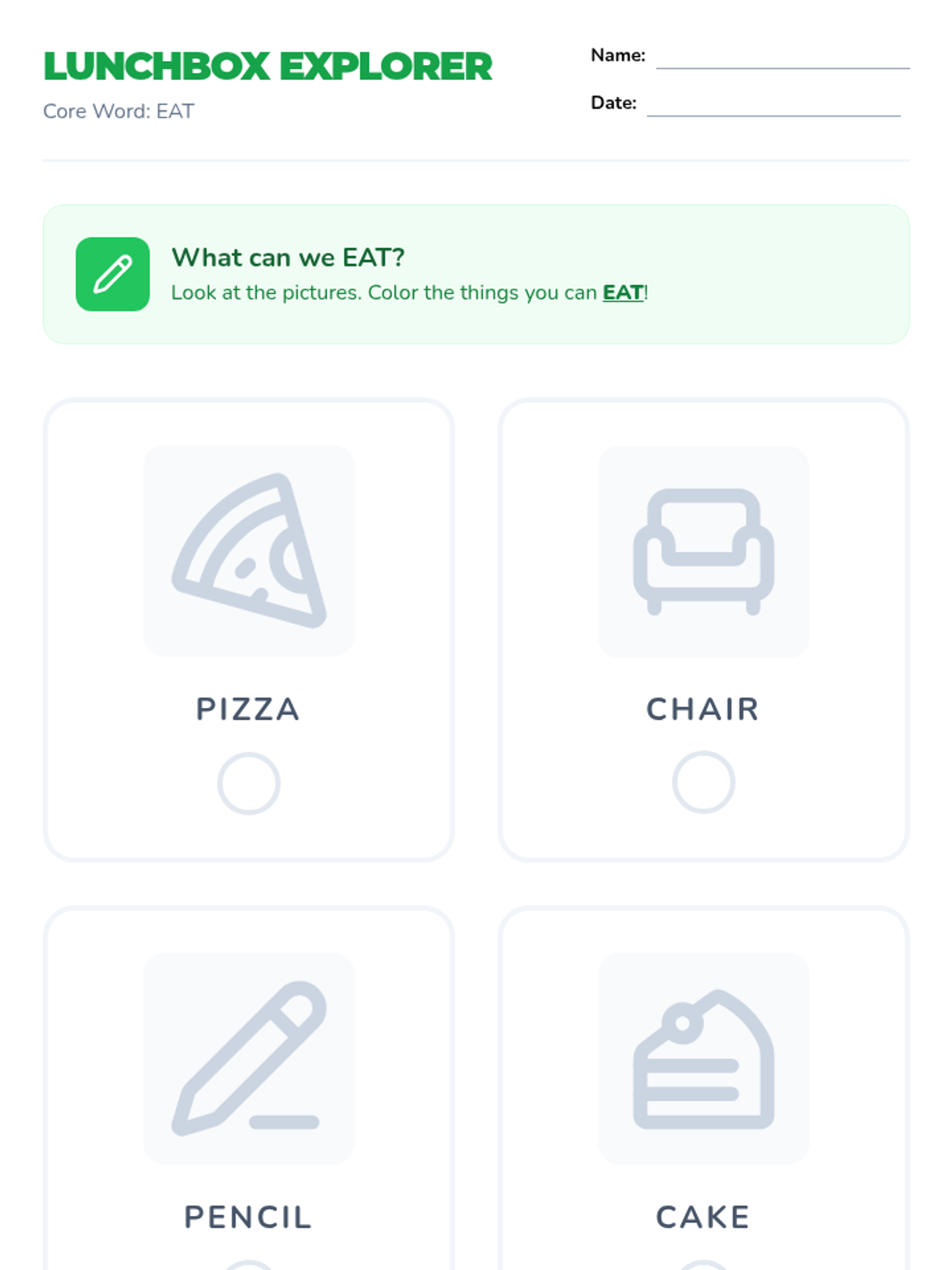
A simple identification worksheet where students circle items that can be eaten, reinforcing the core word 'eat' through categorization and non-examples.
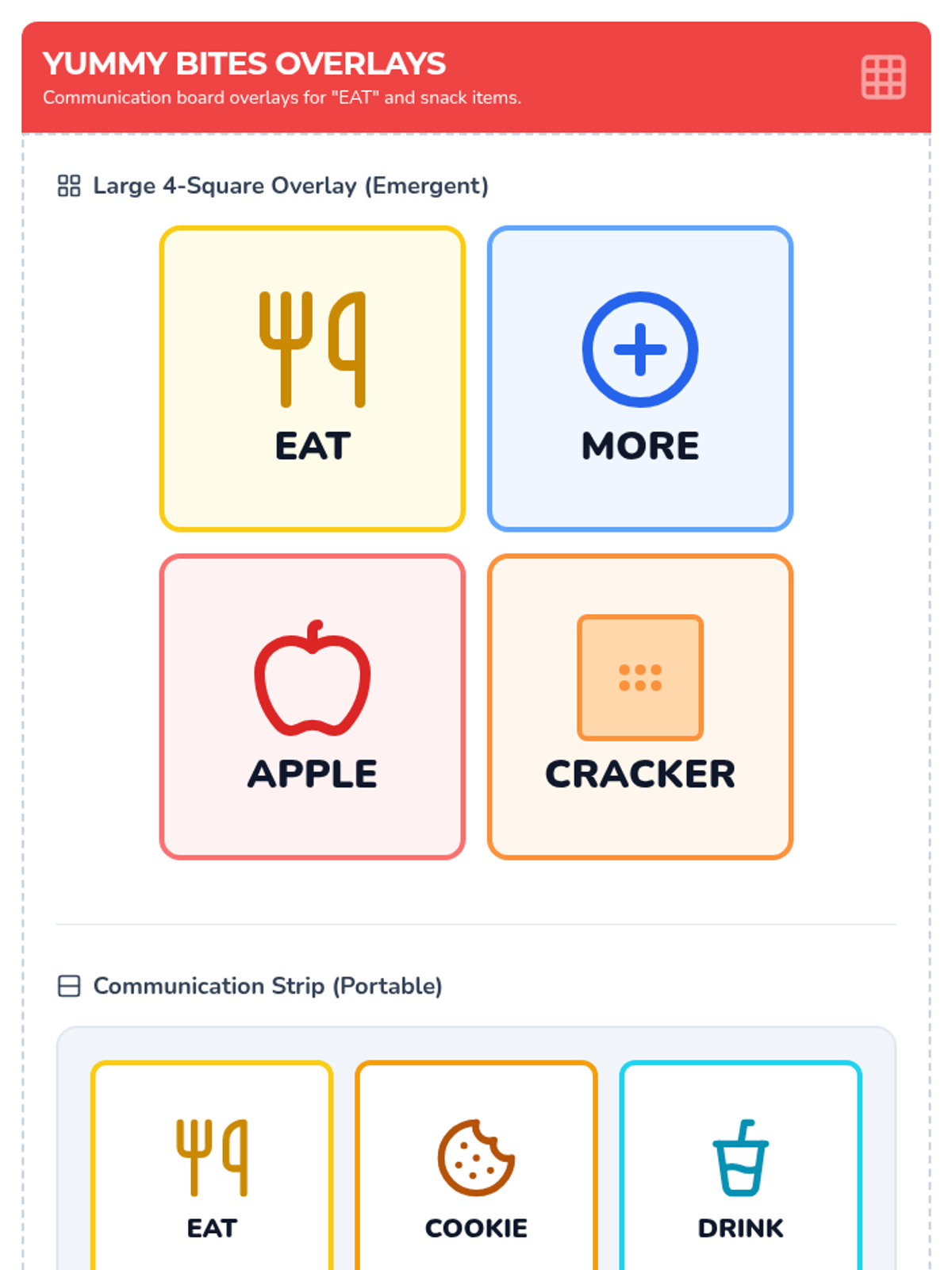
Printable communication board overlays featuring the core word 'eat' alongside high-frequency fringe vocabulary, available in multiple sizes for different access needs.
An engaging, high-contrast slide deck designed to introduce and model the core word 'eat' using clear icons, real-world examples, and a humorous non-example.
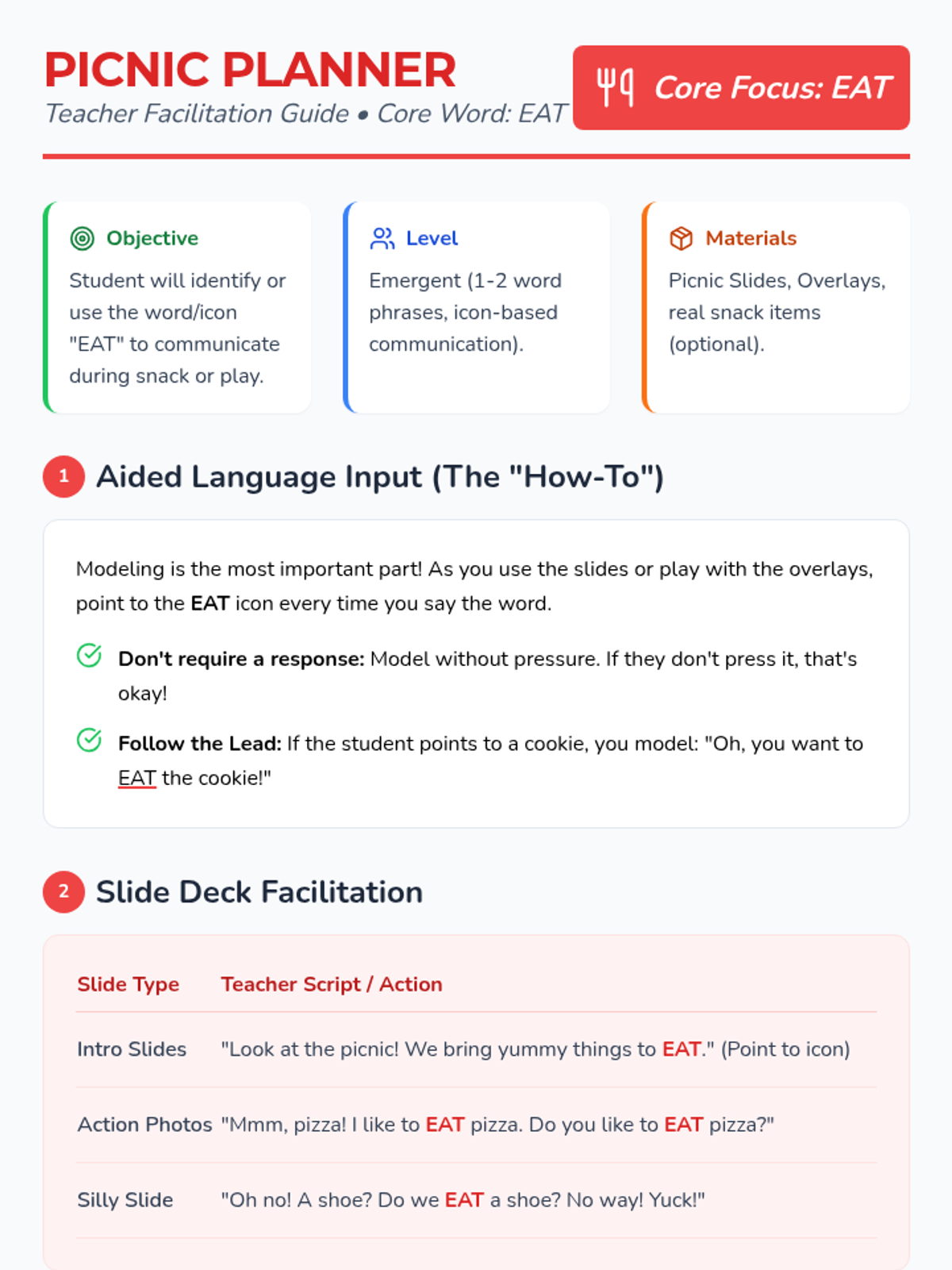
A comprehensive teacher guide for facilitating the 'Picnic Party' AAC lesson, including modeling tips, slide scripts, and a simple data collection tool.