A guide for teachers and facilitators on how to support non-verbal students in completing their favorite things poster, including tips for choice-making and display. Updated for white background printing and matching material categories.
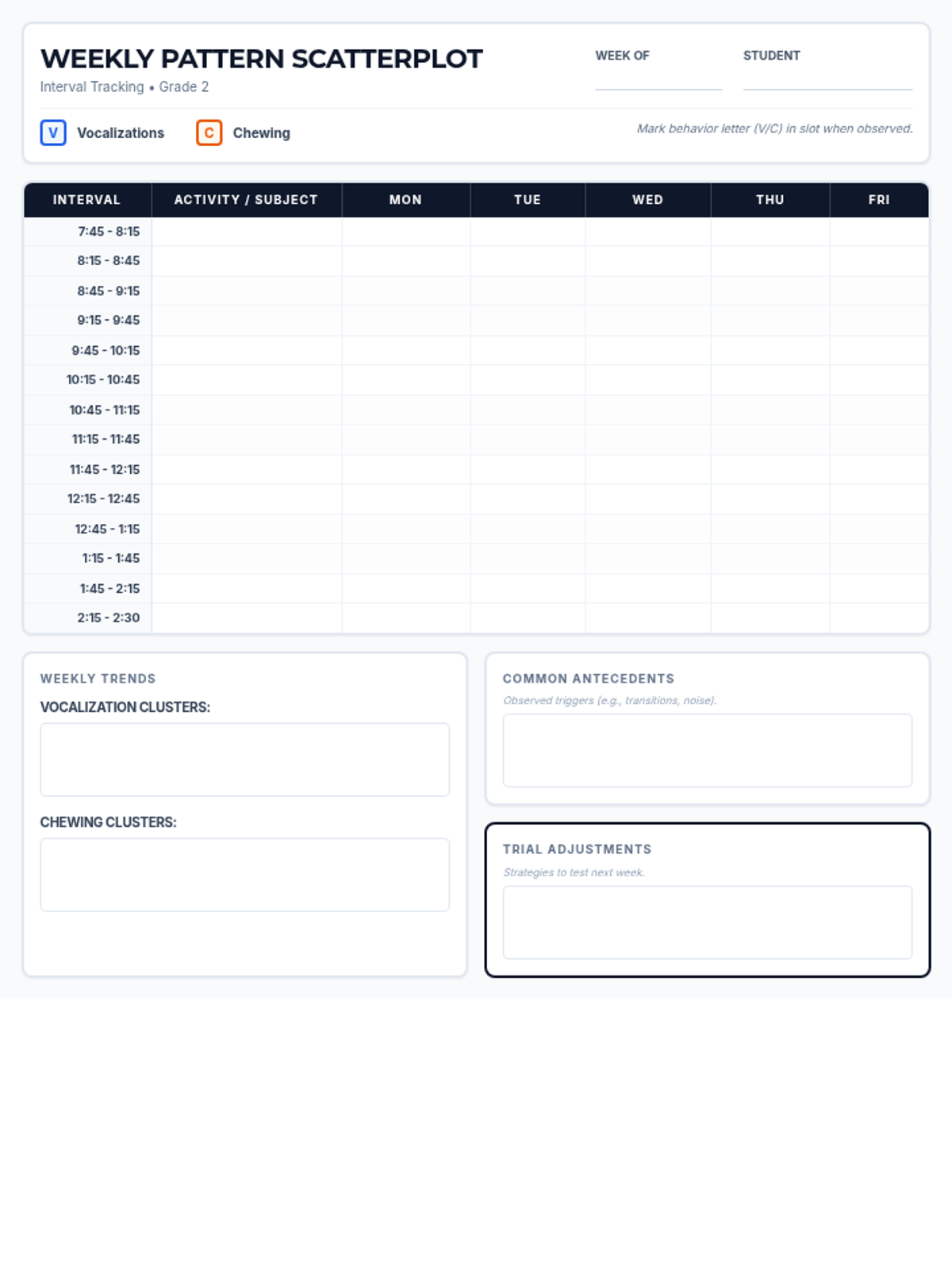
A weekly scatterplot data sheet for tracking patterns of vocalizations and chewing across 30-minute intervals. Designed to help identify time-of-day clusters and environmental triggers for a second-grade student. Includes a new section for documenting common antecedents.
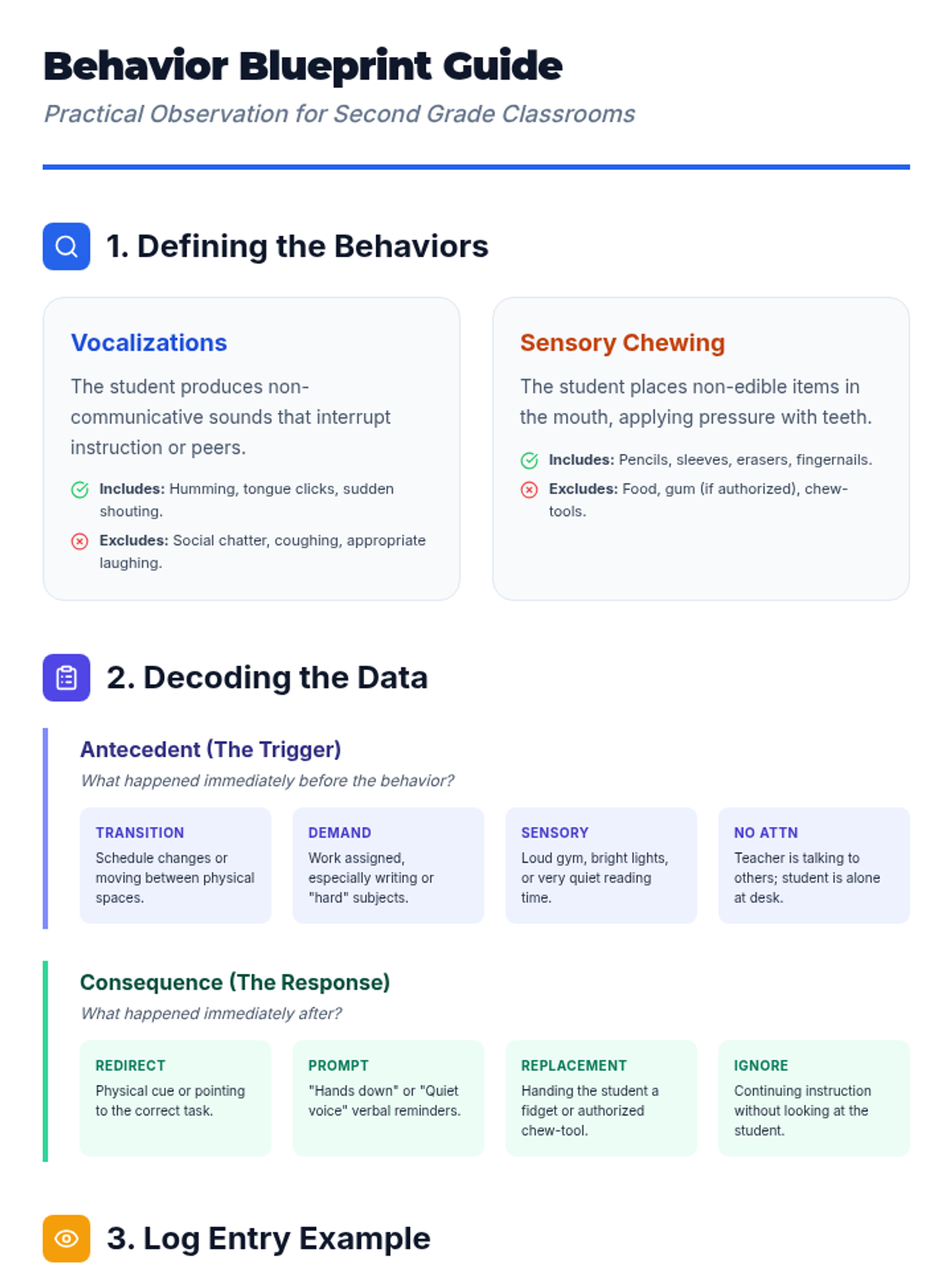
A detailed instructional guide for educators on how to accurately define, observe, and documentation behaviors using the ABC framework. Specifically tailored for second-grade students with sensory and vocalization needs.
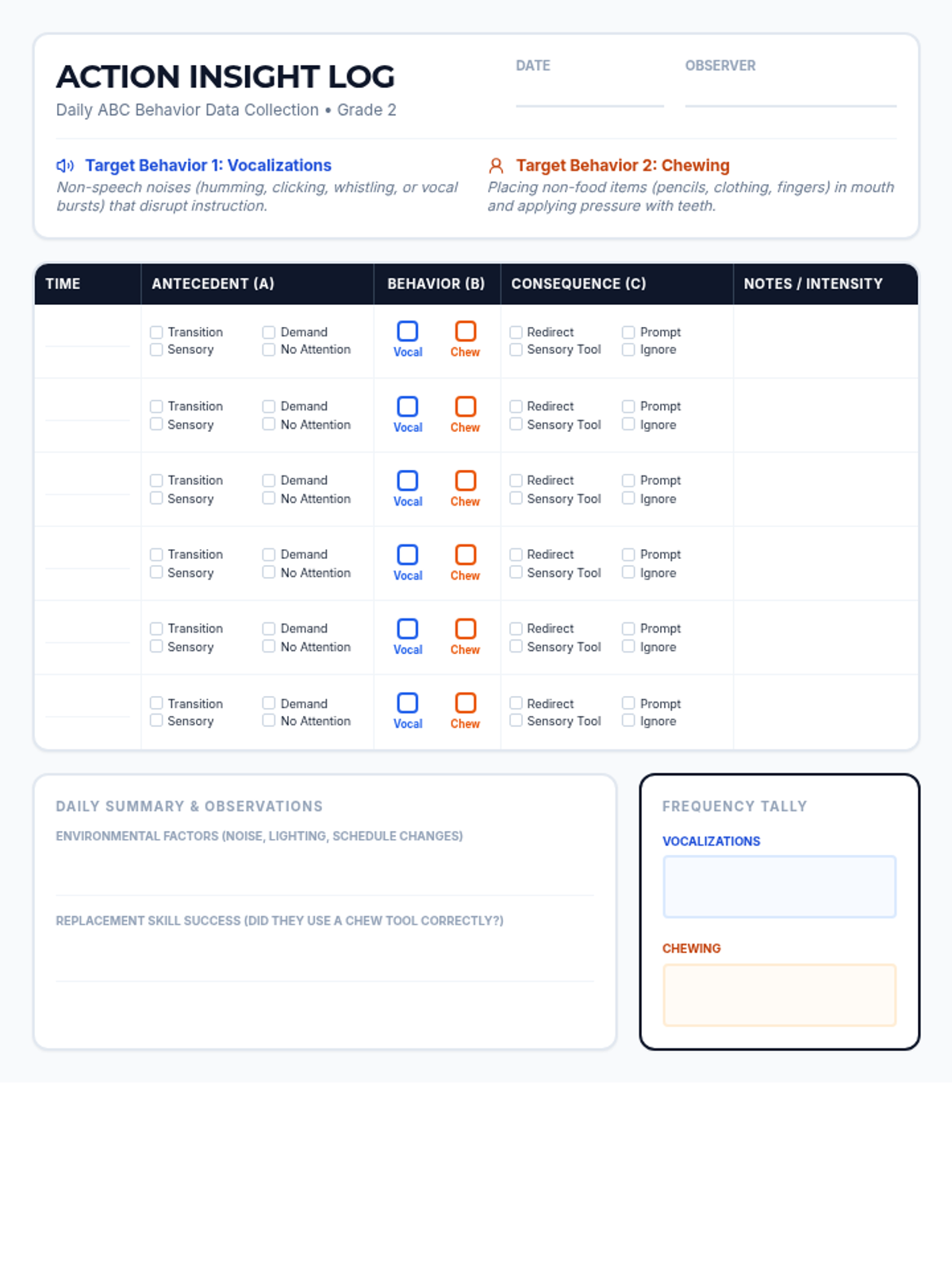
A professional, organized ABC data collection sheet designed for tracking vocalizations and sensory chewing in a classroom setting. Includes operational definitions, checkbox-style tracking for efficiency, and an end-of-day summary section.
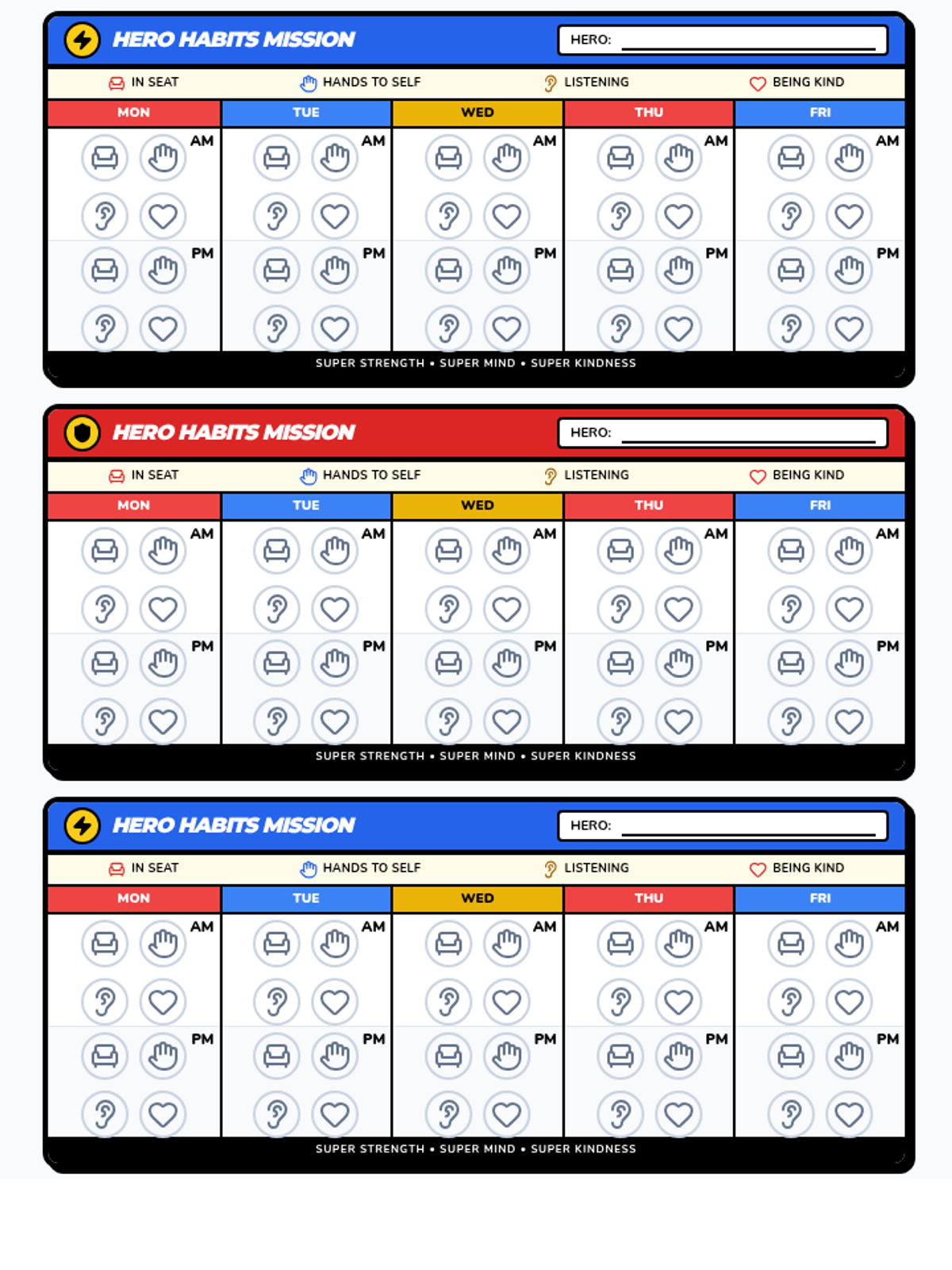
Superhero-themed behavior desk strips for kindergarteners, condensed into a single-page layout with three strips per sheet. Features Monday-Friday tracking with AM/PM slots for four specific behavioral goals. Standardized for consistent icon sizing and tracking areas.
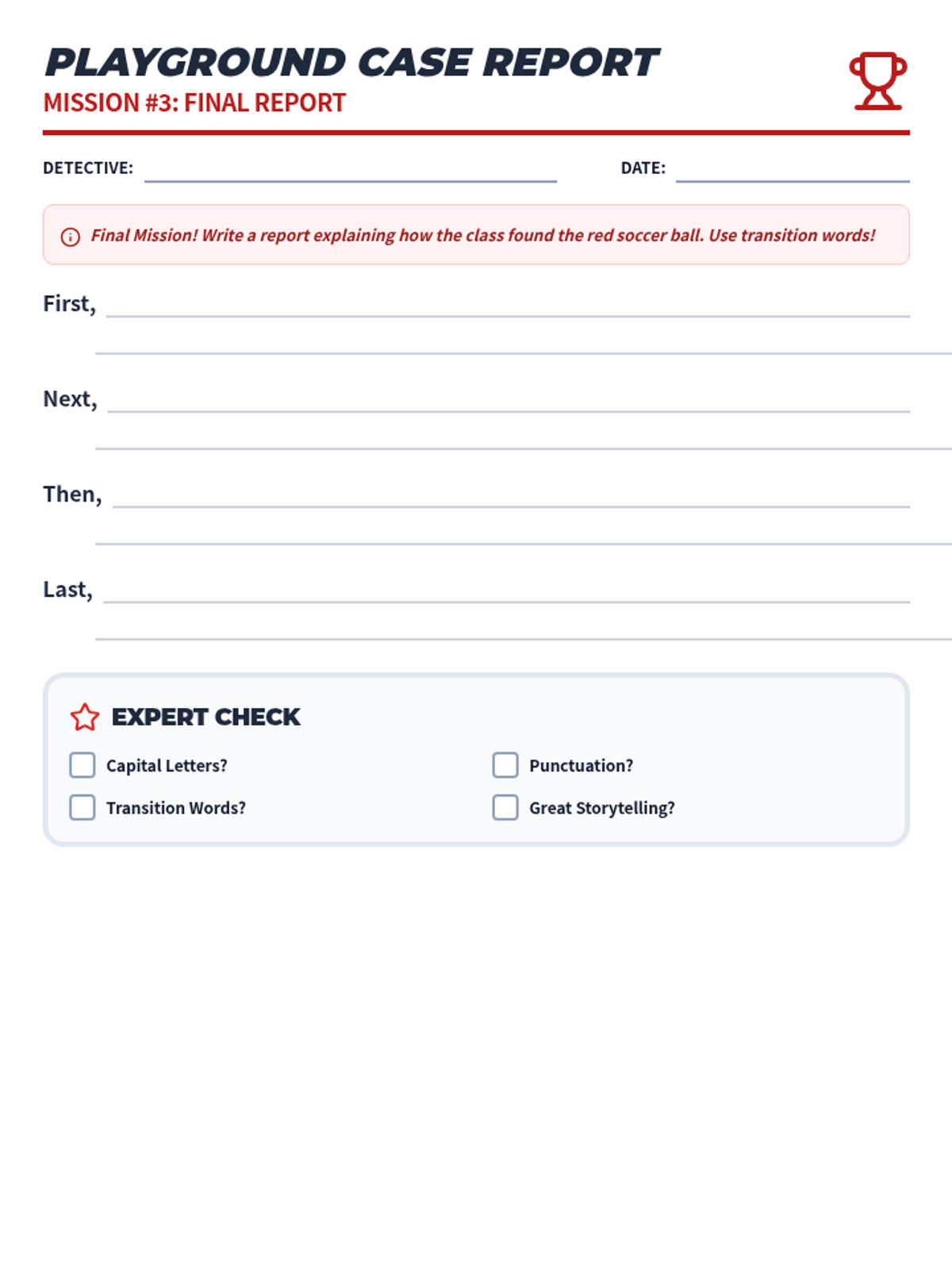
A structured writing worksheet for the Mission 3 mystery, focused on the Case of the Hidden Playground Ball. Revised for more writing space and darker icons.
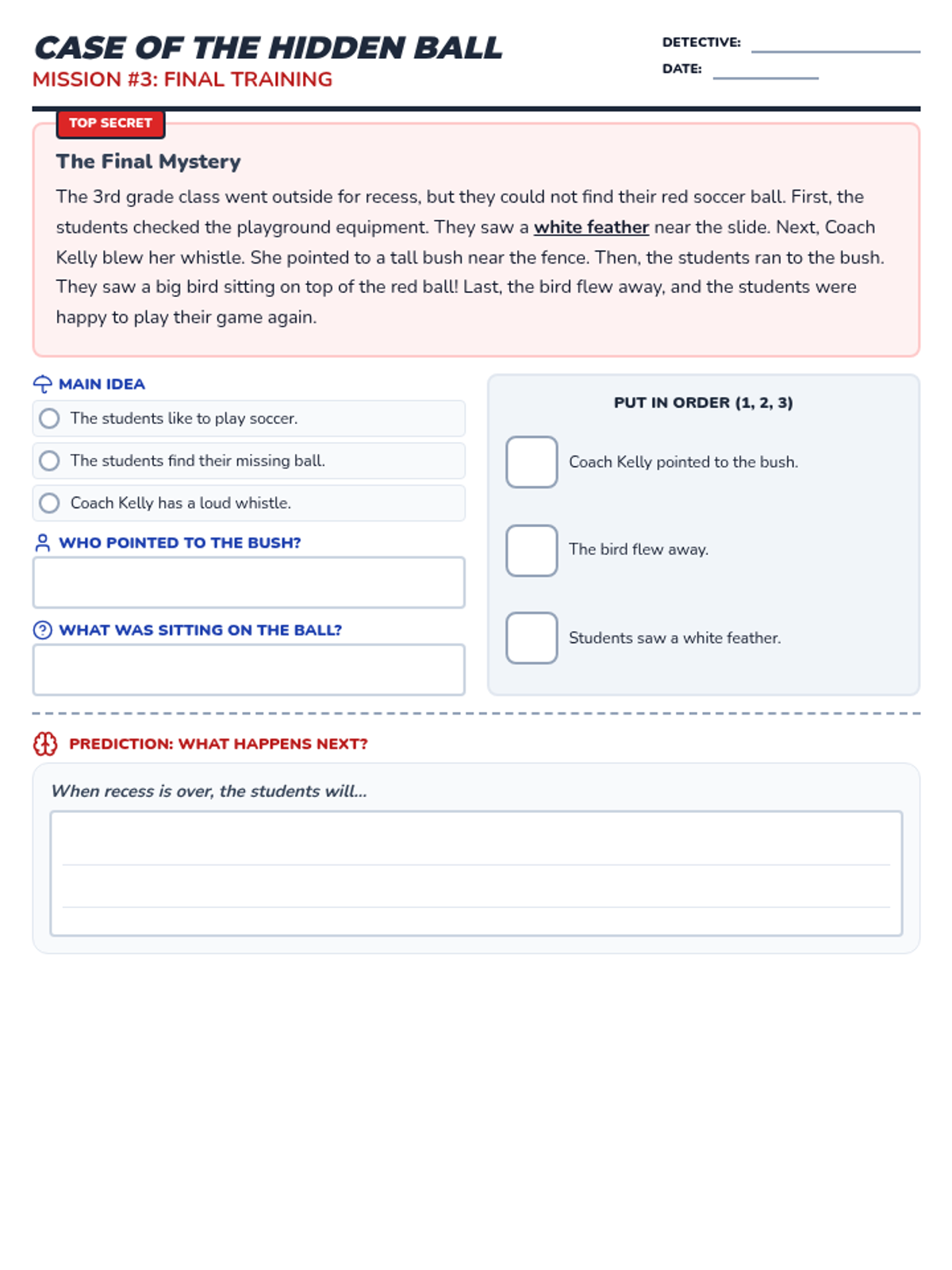
A reading comprehension worksheet for the final Mission 3 mystery 'The Case of the Hidden Ball', including WH- questions, sequencing, and prediction. Revised for better work areas.
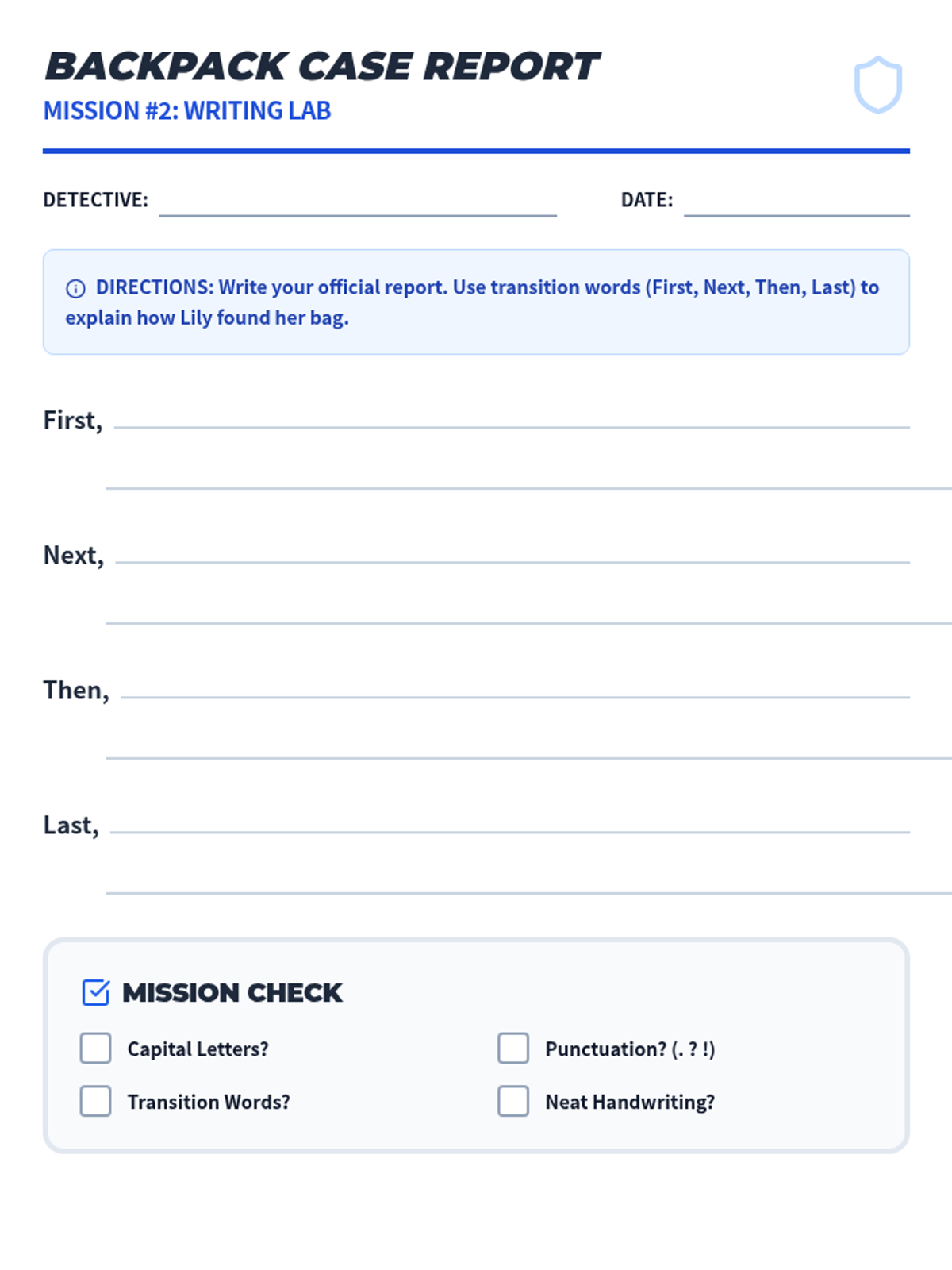
A structured writing worksheet for the Mission 2 mystery, providing sentence starters and an editing checklist for the Case of the Missing Backpack.
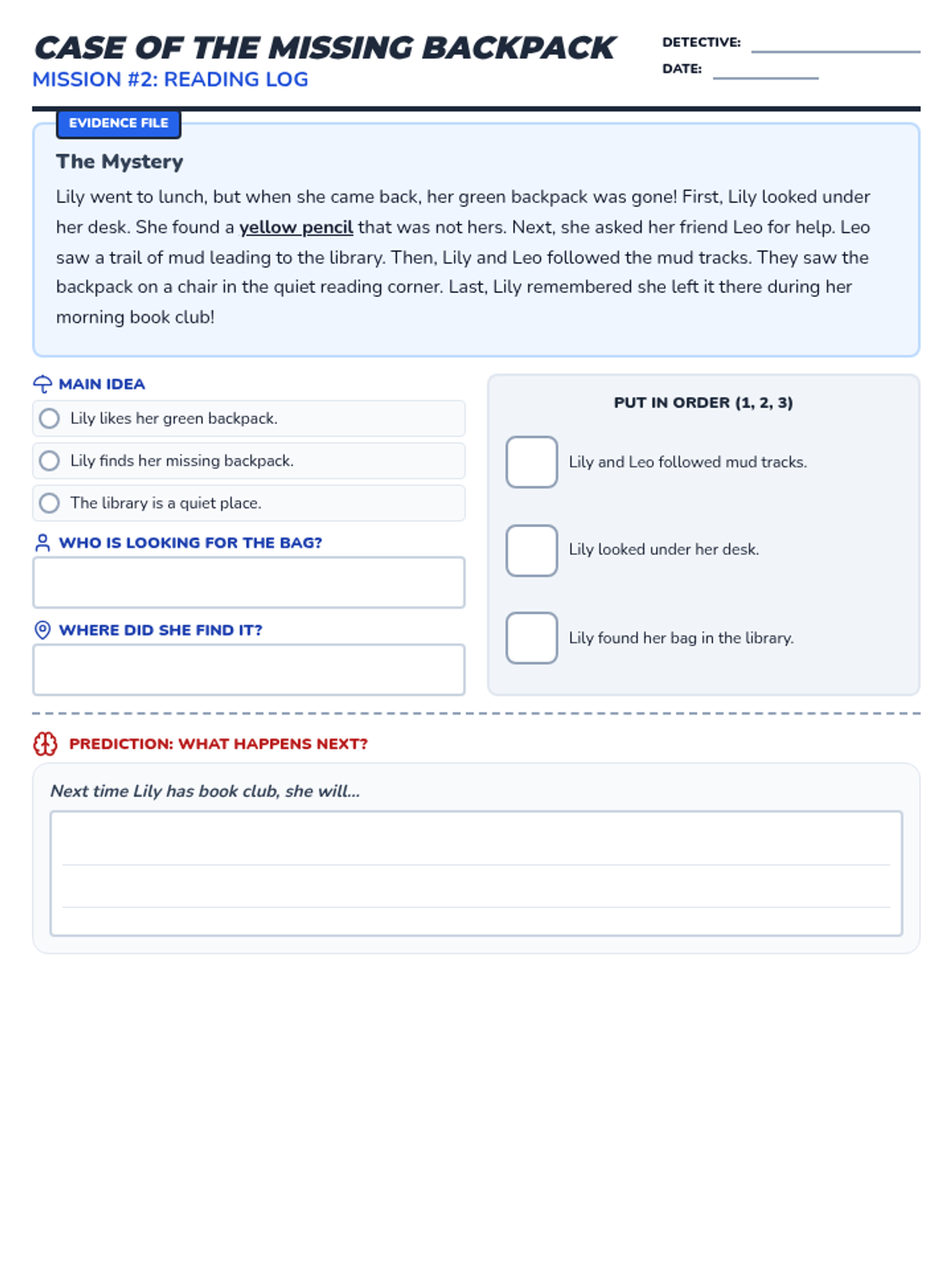
A reading comprehension worksheet for the Mission 2 mystery 'The Case of the Missing Backpack', featuring WH- questions, sequencing, and a prediction prompt. Revised for better spacing and work areas.
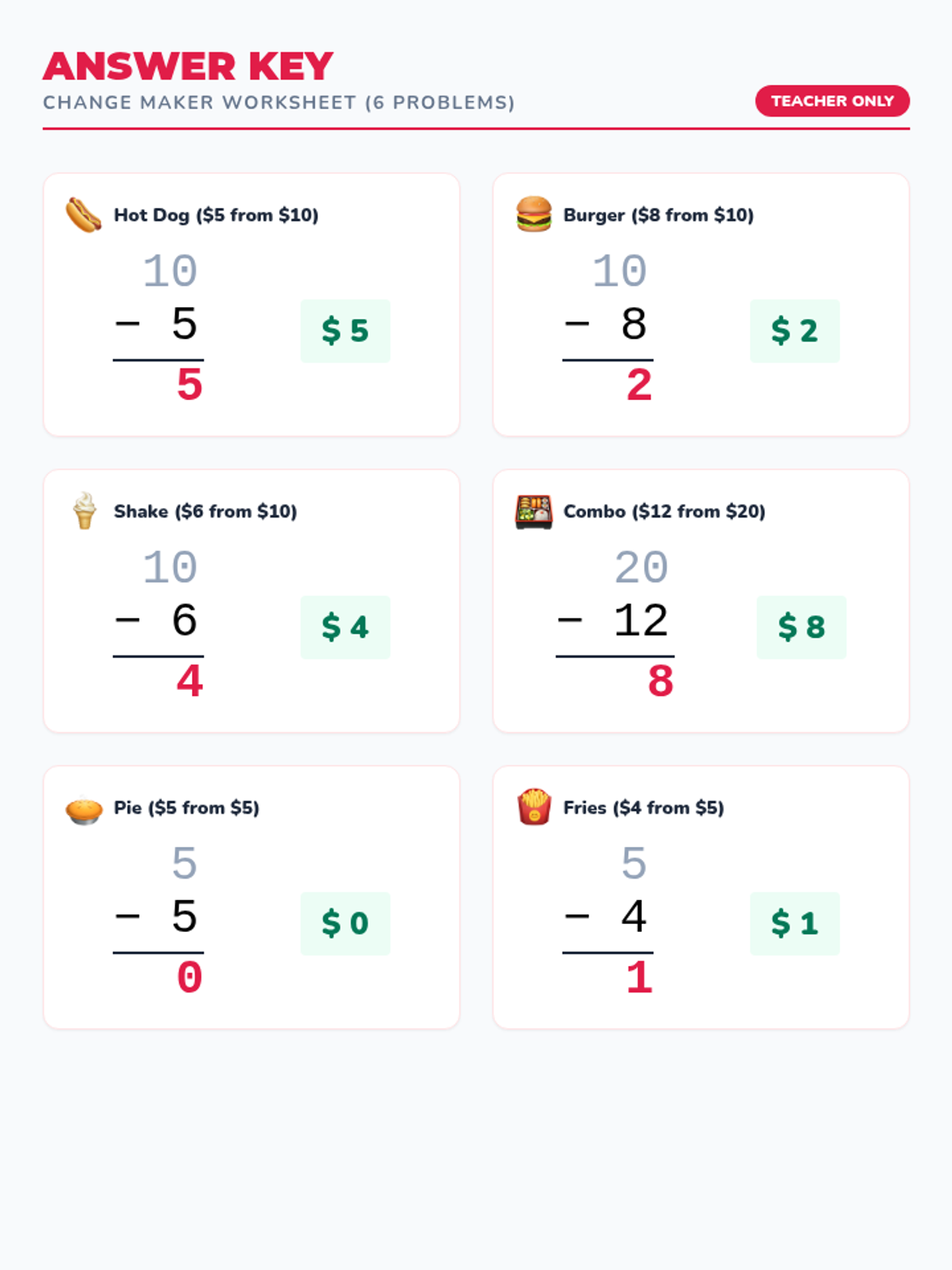
An answer key for the Change Maker Worksheet, showing completed subtraction problems and correct change amounts for all 6 problems.
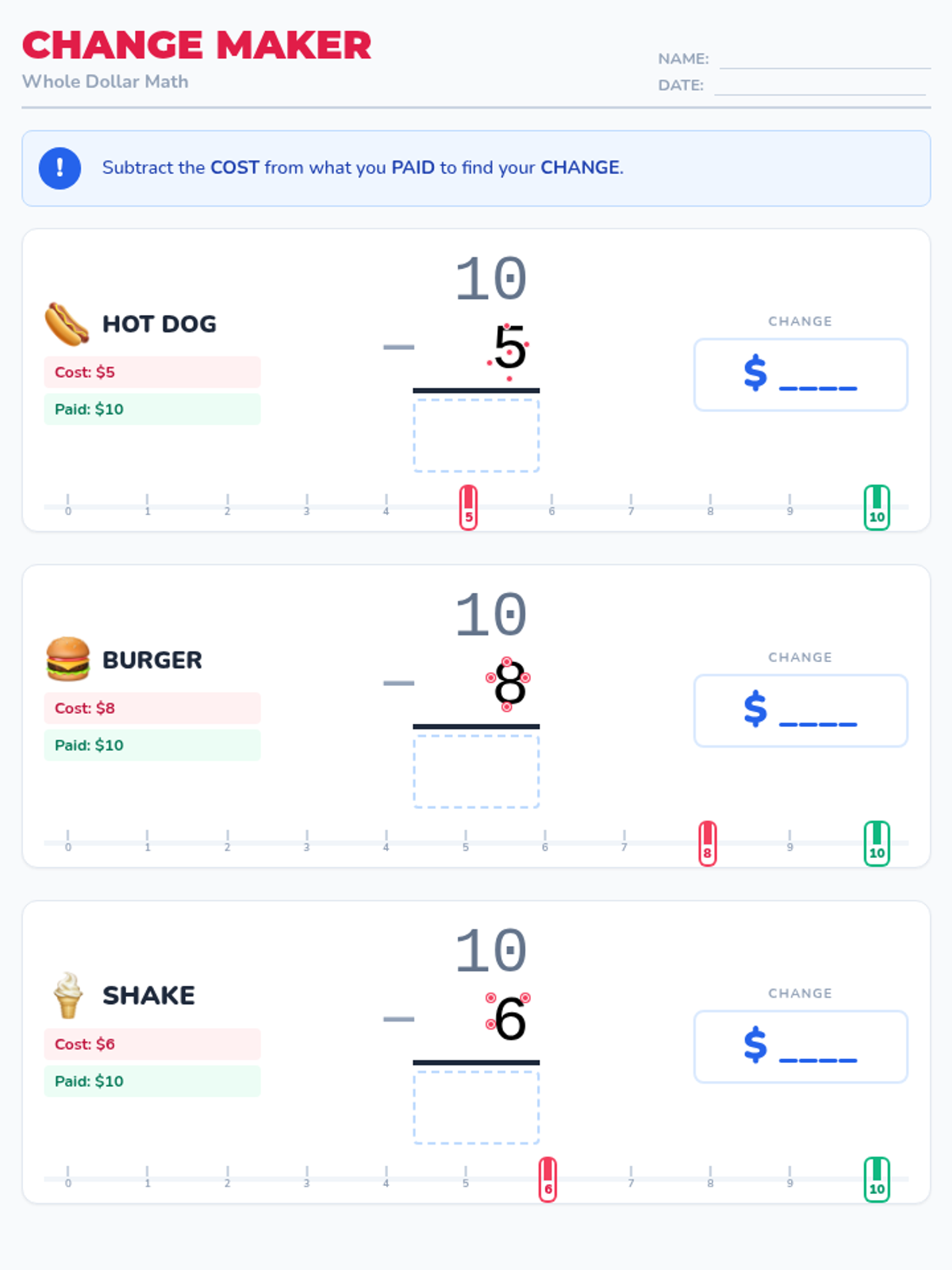
A modified math worksheet for calculating change from whole dollar amounts, featuring visual icons, pre-filled subtraction frames, and dedicated answer spaces. expanded to 2 pages with 6 problems.
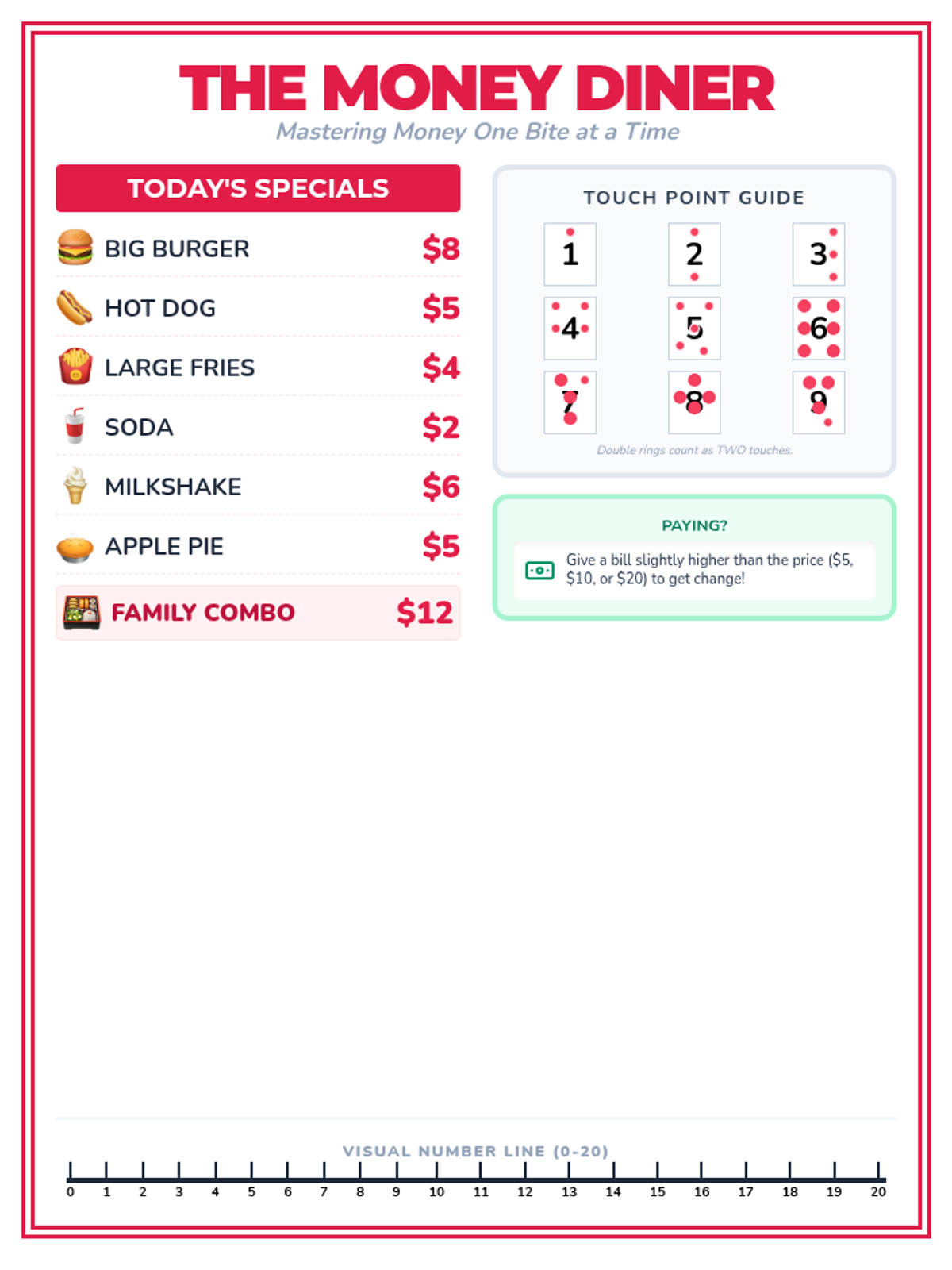
A visual menu reference for students, featuring diner food items with whole dollar prices, a touch-point number guide (1-6), and a 0-20 number line for counting.
Introductory slides for the Diner Math lesson, featuring touch-point numbers, an explanation of the dollar-over method, and a step-by-step subtraction guide for calculating change.
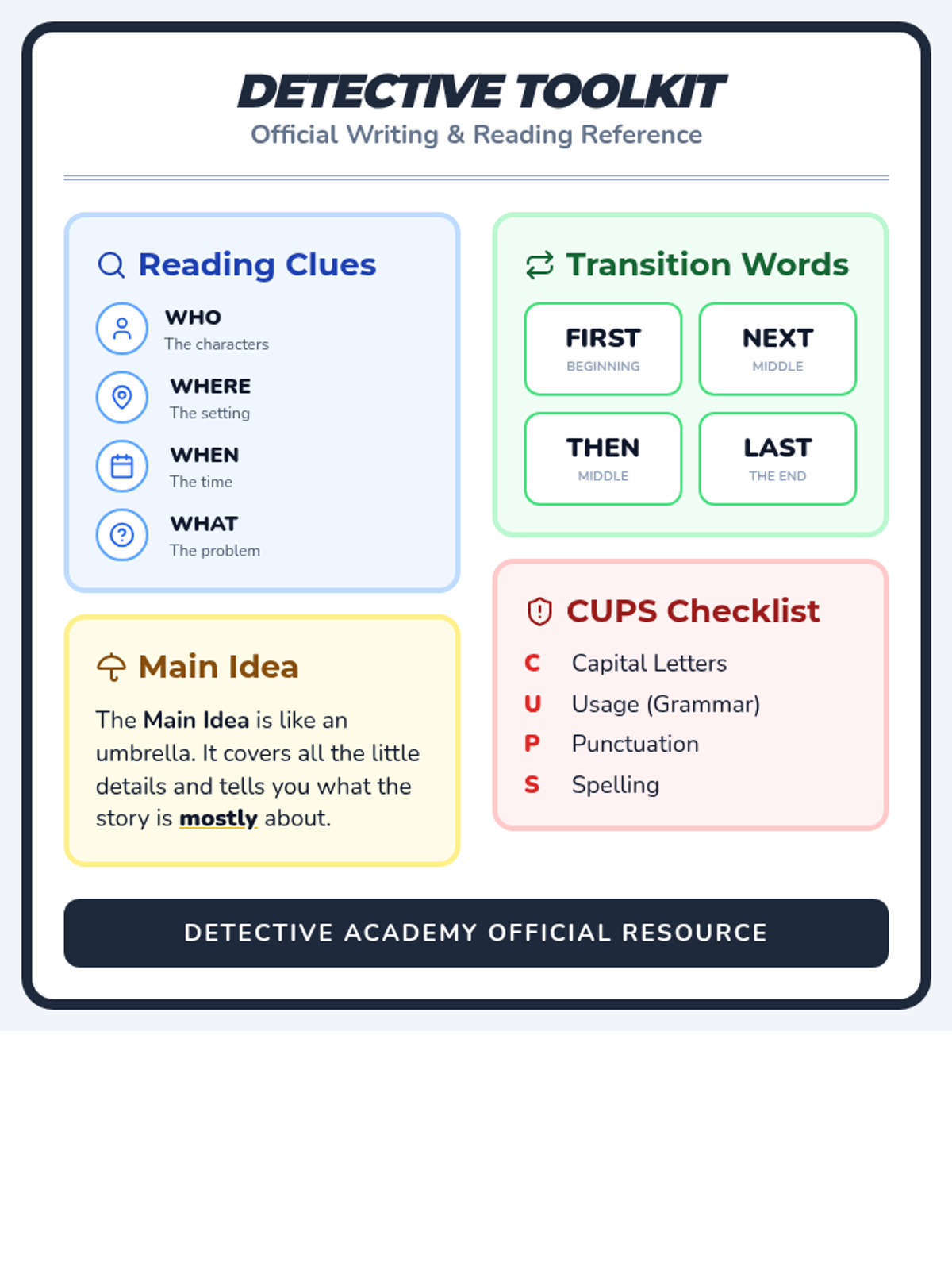
A one-page reference anchor chart or "toolkit" for students, providing visual reminders for 'Wh' questions, the main idea umbrella, transition words, and the CUPS editing checklist.
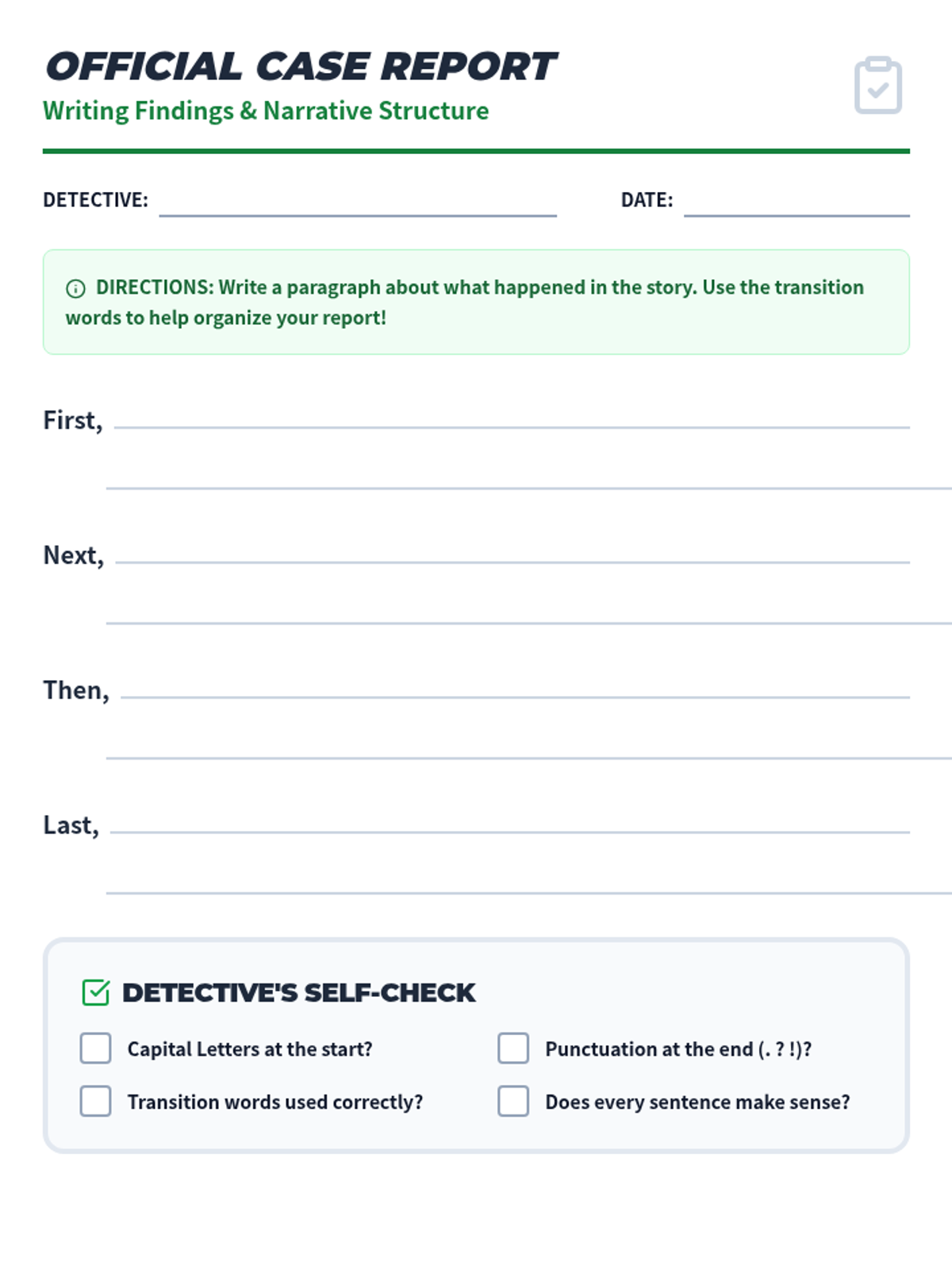
A structured writing worksheet for students to draft a paragraph report about the mystery story, using transition word sentence starters and a self-check editing list.
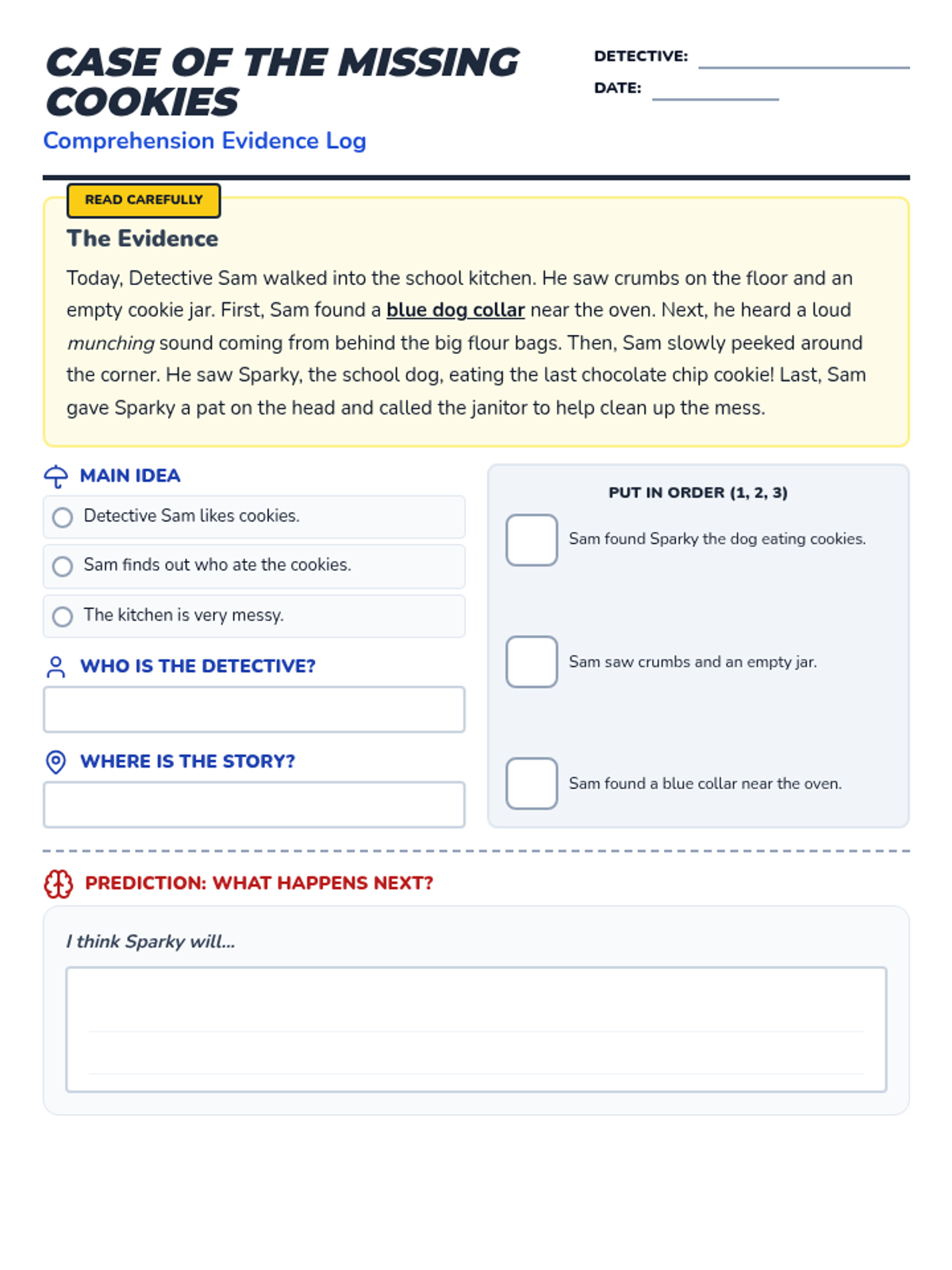
A reading comprehension worksheet featuring a short mystery story, multiple-choice main idea question, 'Wh' fill-in-the-blanks, a sequencing activity, and a prediction writing prompt.
A visual slide deck for the Detective Academy lesson, introducing main idea, 'Wh' questions, sequencing transition words, and prediction strategies with high-contrast, accessible design. Expansion includes interactive practice slides for Wh- questions, sequencing, and writing mechanics.
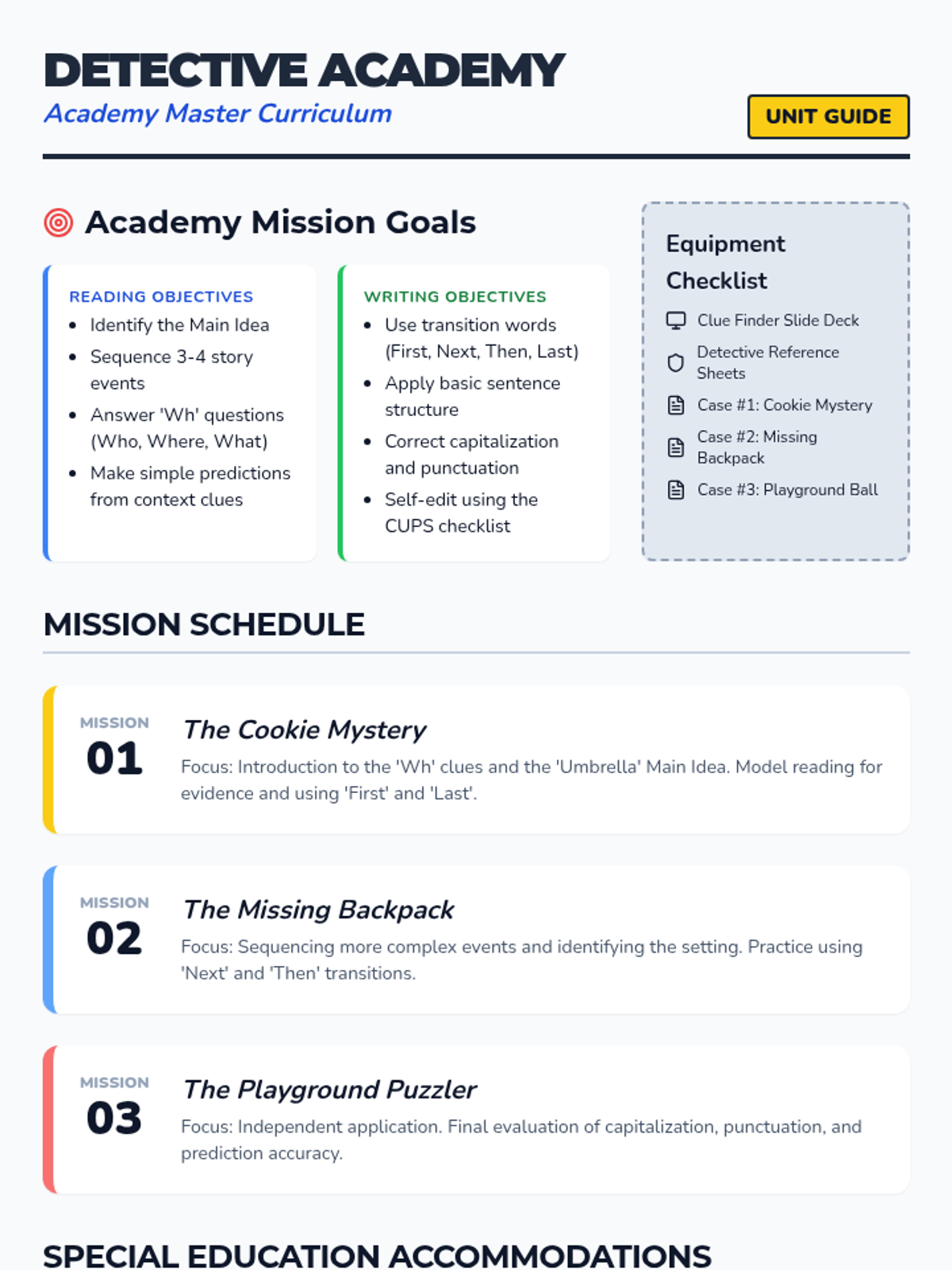
An updated master teacher facilitation guide covering all three missions of the Detective Academy Junior sequence, with tiered goals and specific IEP strategies.
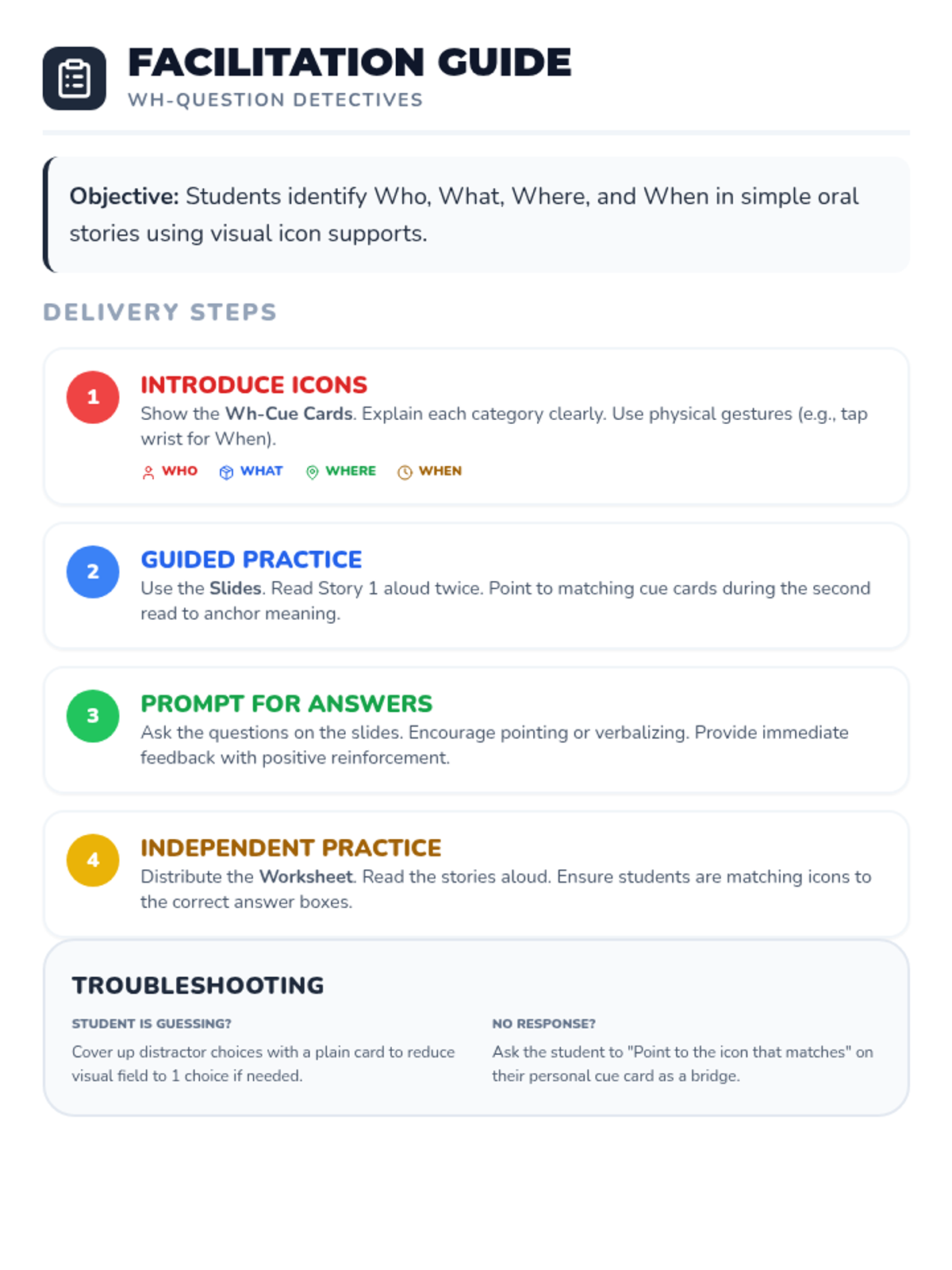
A teacher facilitation guide for the Wh-Question Detective lesson. Includes streamlined instructional steps, visual icon keys, and differentiation strategies for students with disabilities.
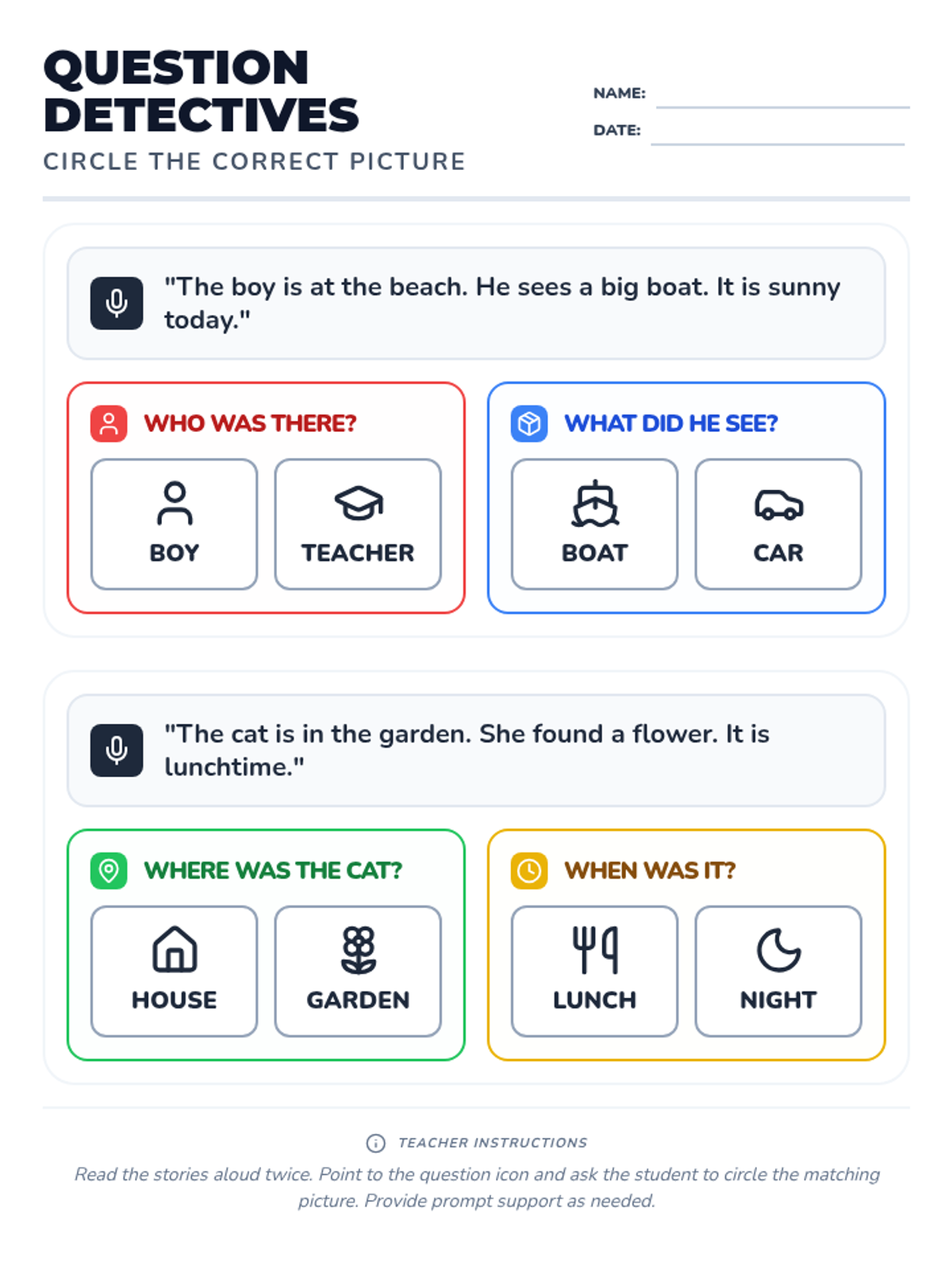
A printable comprehension worksheet for emergent learners. Features 2-3 sentence stories with visual answer choices and consistent color-coded question categories.
An instructional slide deck designed for oral presentation of Wh-questions. Features 2-3 sentence stories with consistent color-coded visual icons and categories.
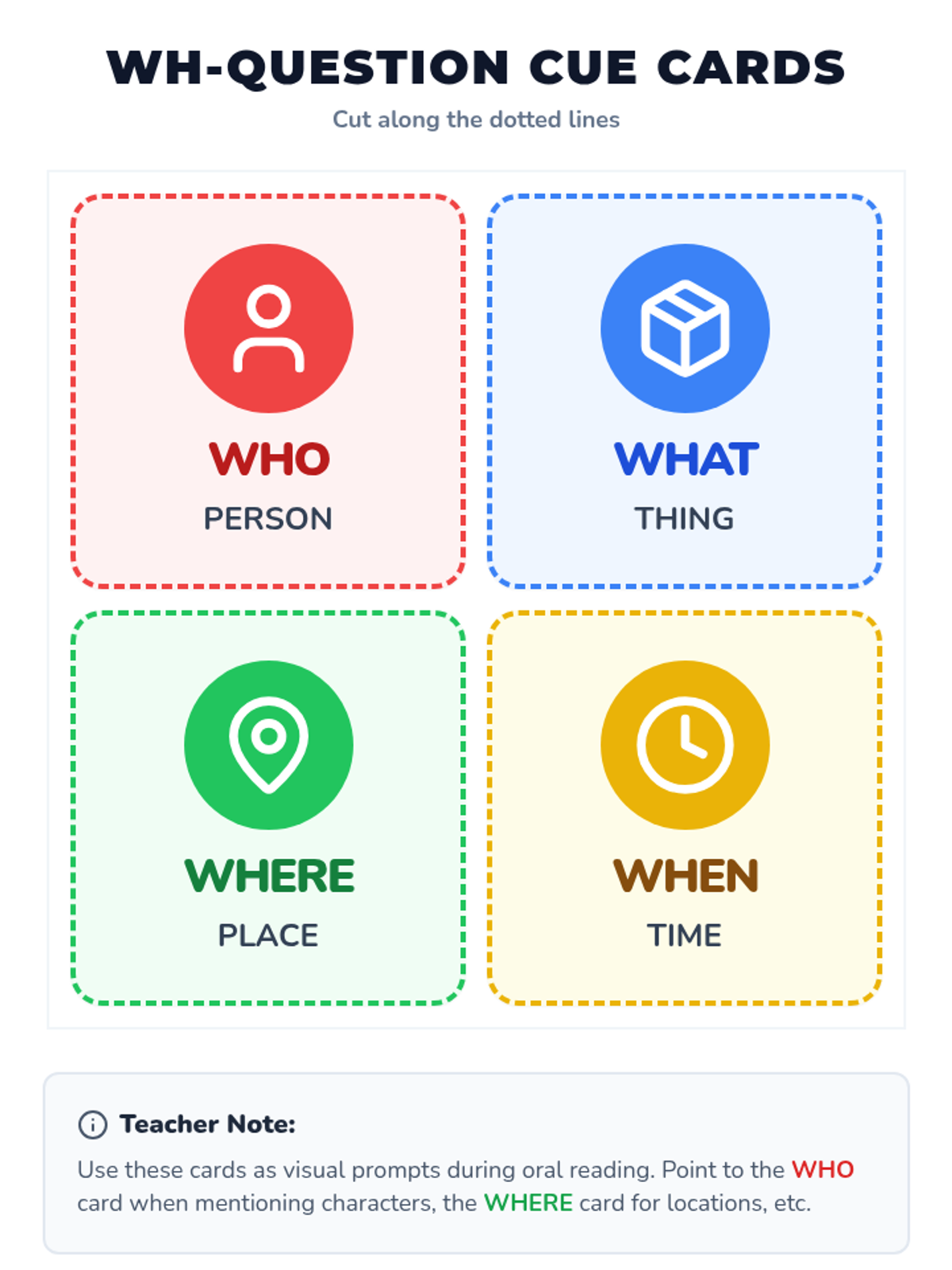
A set of four visual cue cards (Who, What, Where, When) featuring high-contrast icons and labels, plus a second page of teacher-ready oral scripts for auditory comprehension practice.
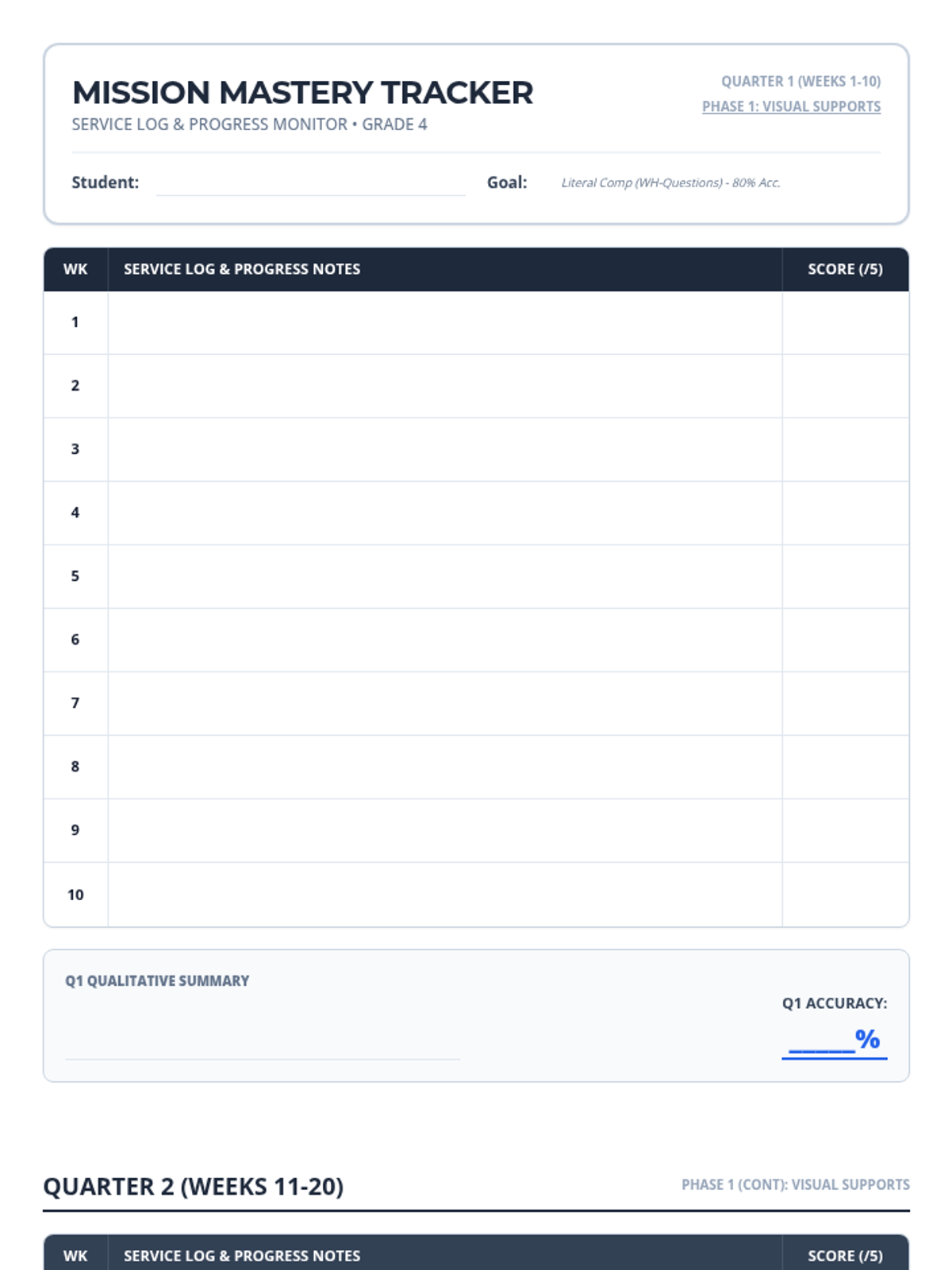
A comprehensive 40-week service log and progress monitoring tracker designed for a student with Autism. It features quarterly breakdown sections with space for dates, service notes, scores for literal comprehension questions, and quarterly accuracy calculations.
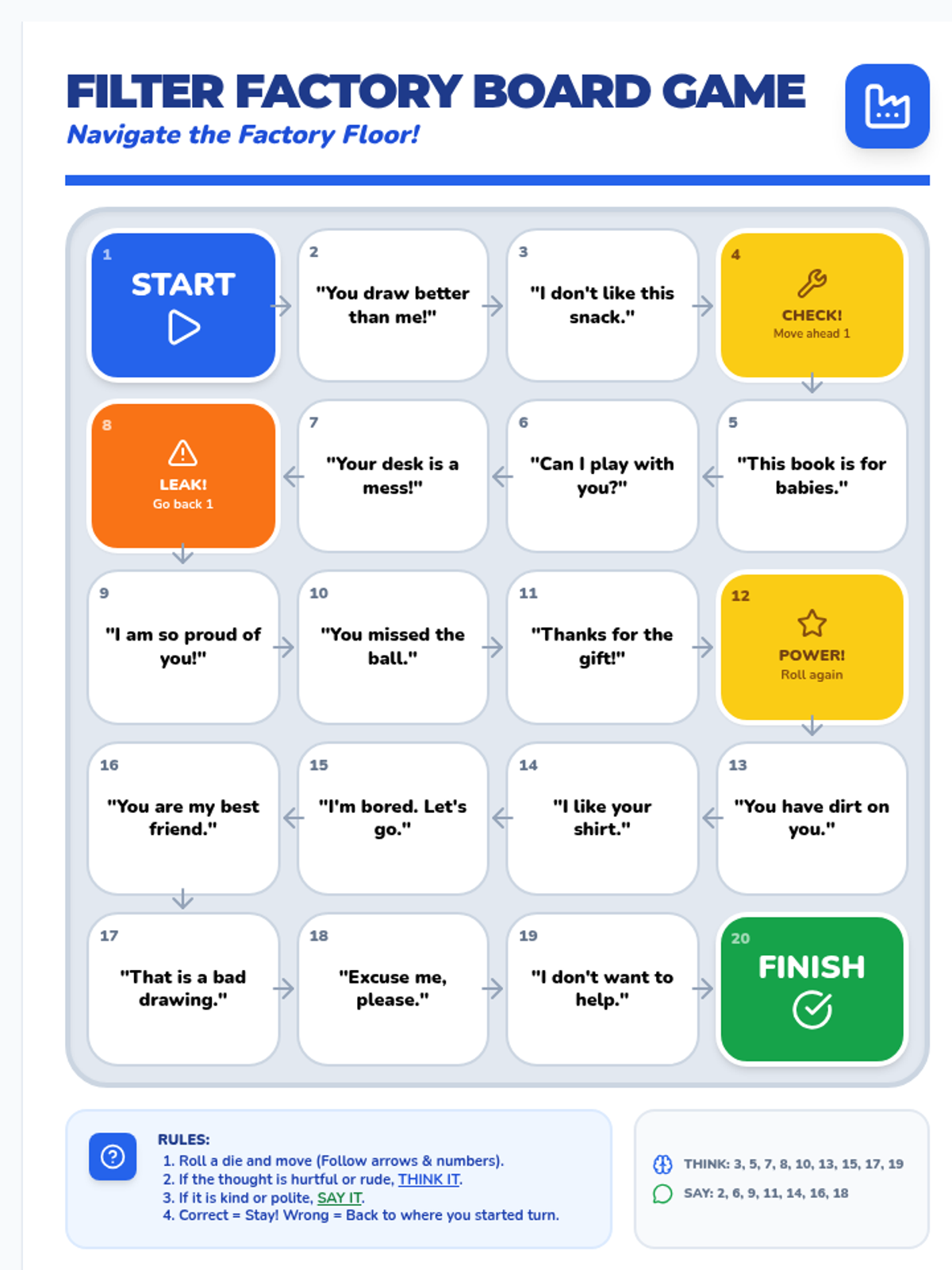
A thematic board game where students navigate a 'factory floor' by evaluating social scenarios to move their pieces from start to finish.
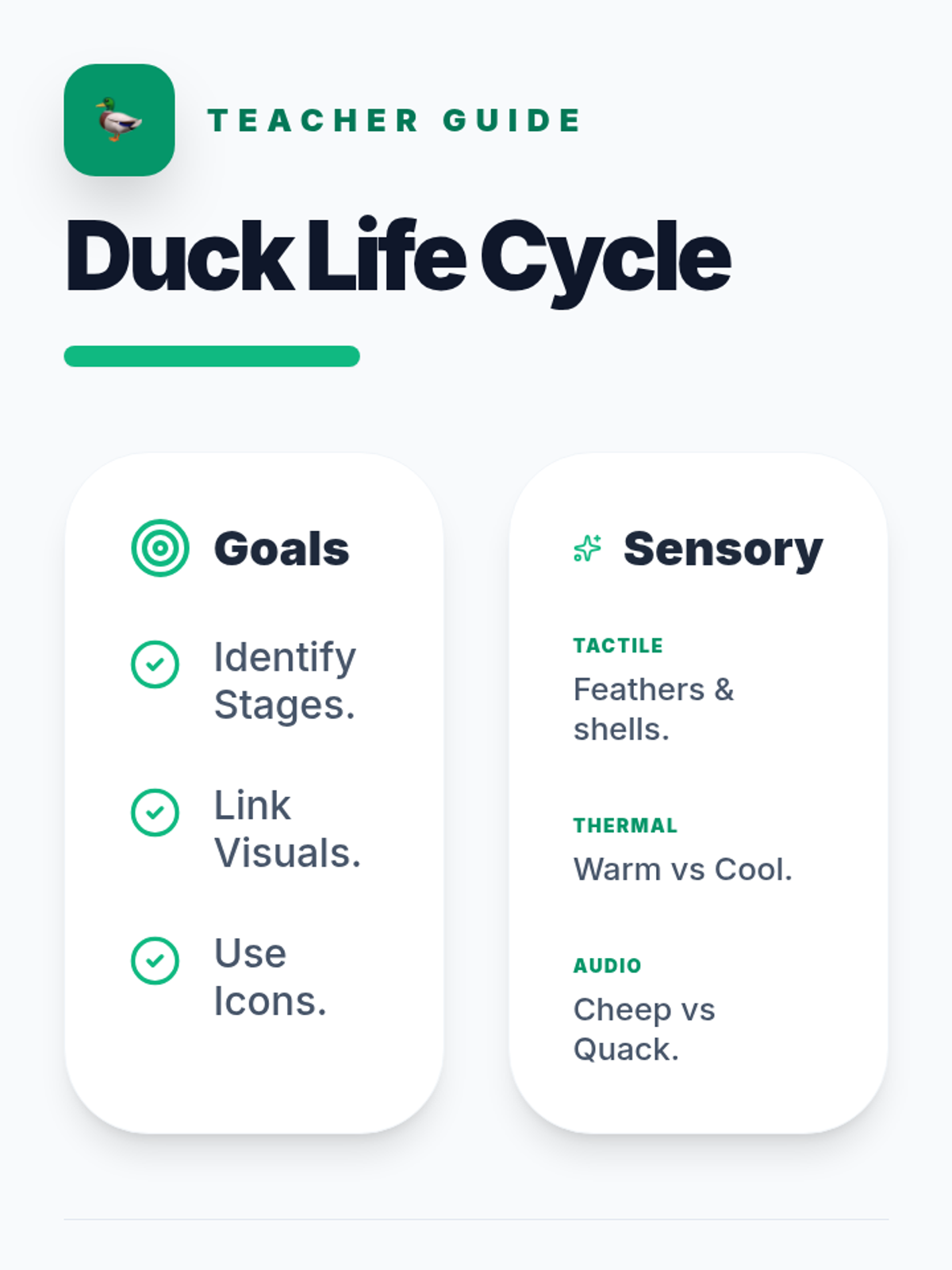
A comprehensive teacher guide for delivering the duck life cycle lesson to special needs students. Includes sensory ideas, learning goals, and a step-by-step instructional flow.
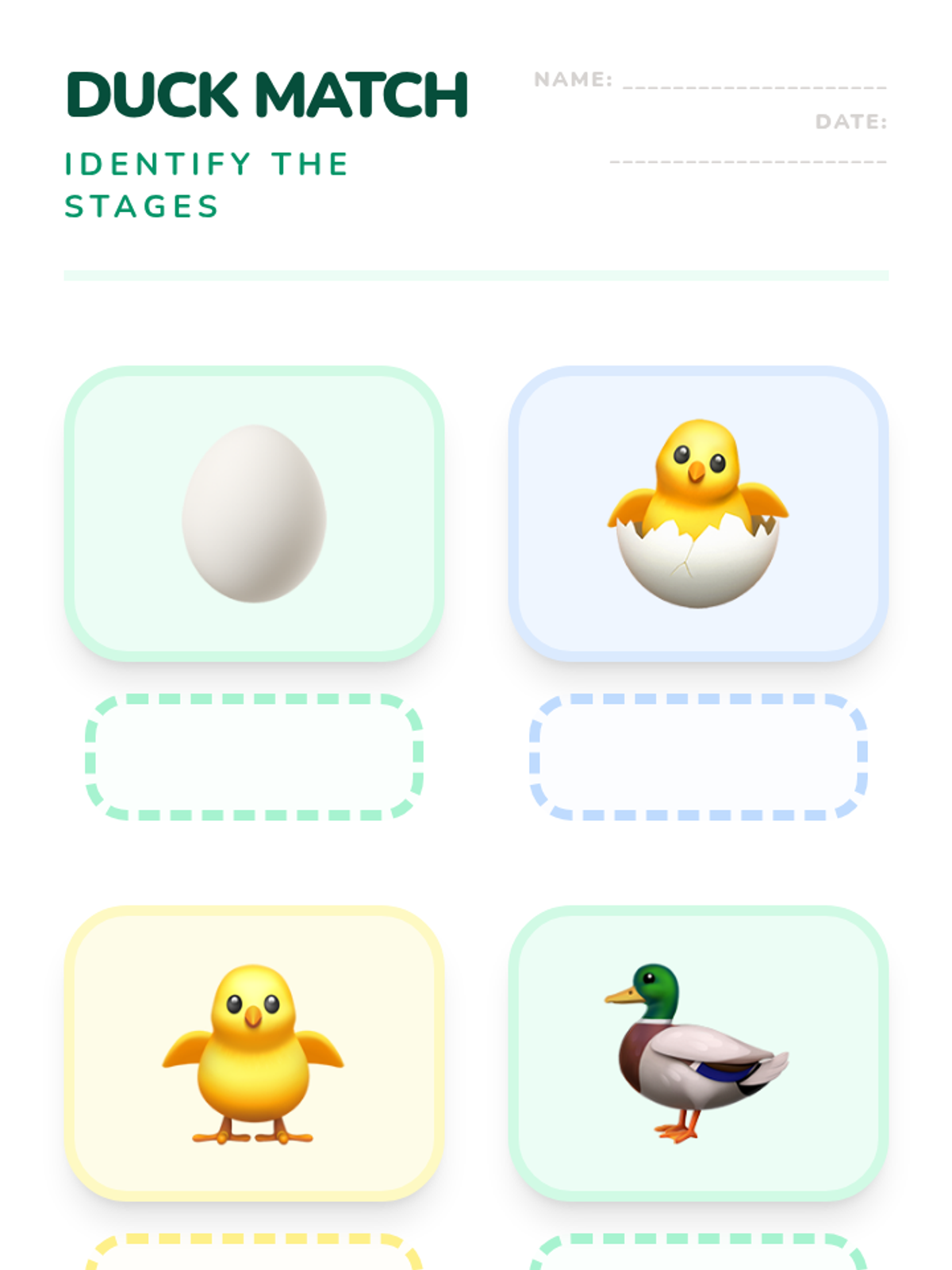
A matching activity where students identify duck life cycle stages using clear icons. Designed for simple identification and matching for special needs students.
Engaging presentation slides showing the duck life cycle with high-contrast icons and minimal text to support diverse learners.
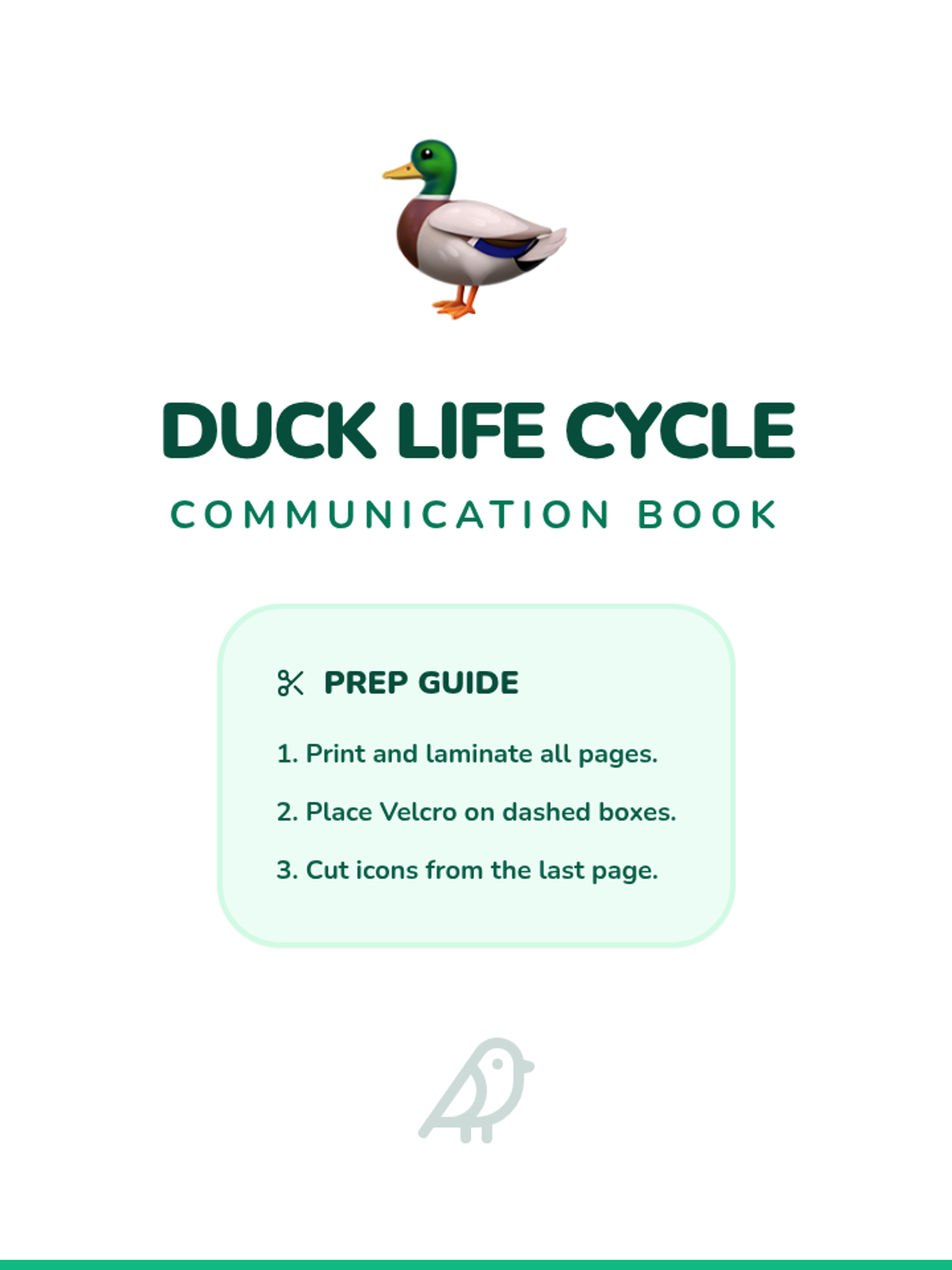
An adaptive book featuring clear icons and repetitive sentence structures. Designed for students with severe special needs, it includes interactive Velcro areas for matching stages of the duck life cycle.
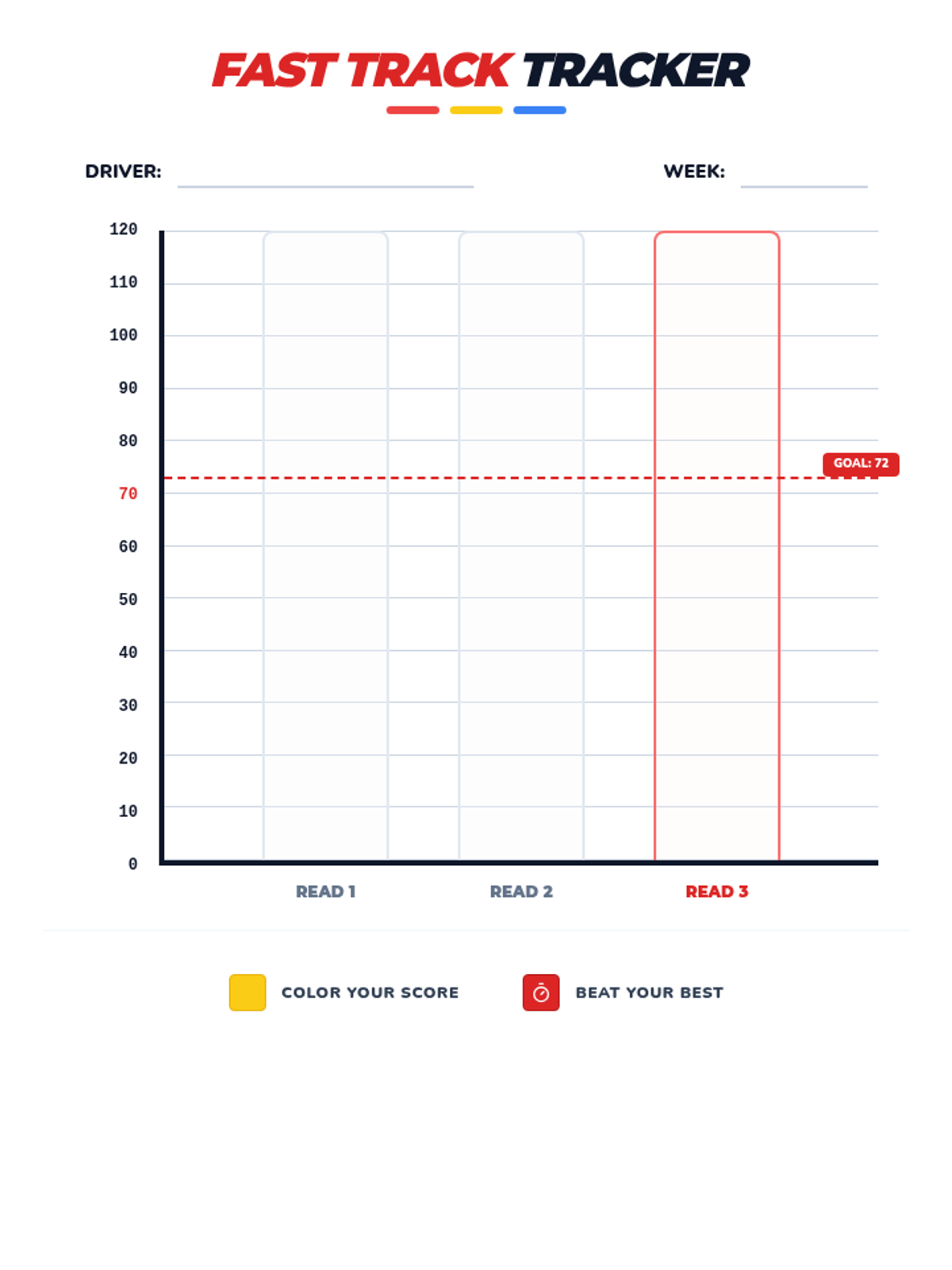
A visual progress tracker for students to record and celebrate their words correct per minute (WCPM) growth across three reads.
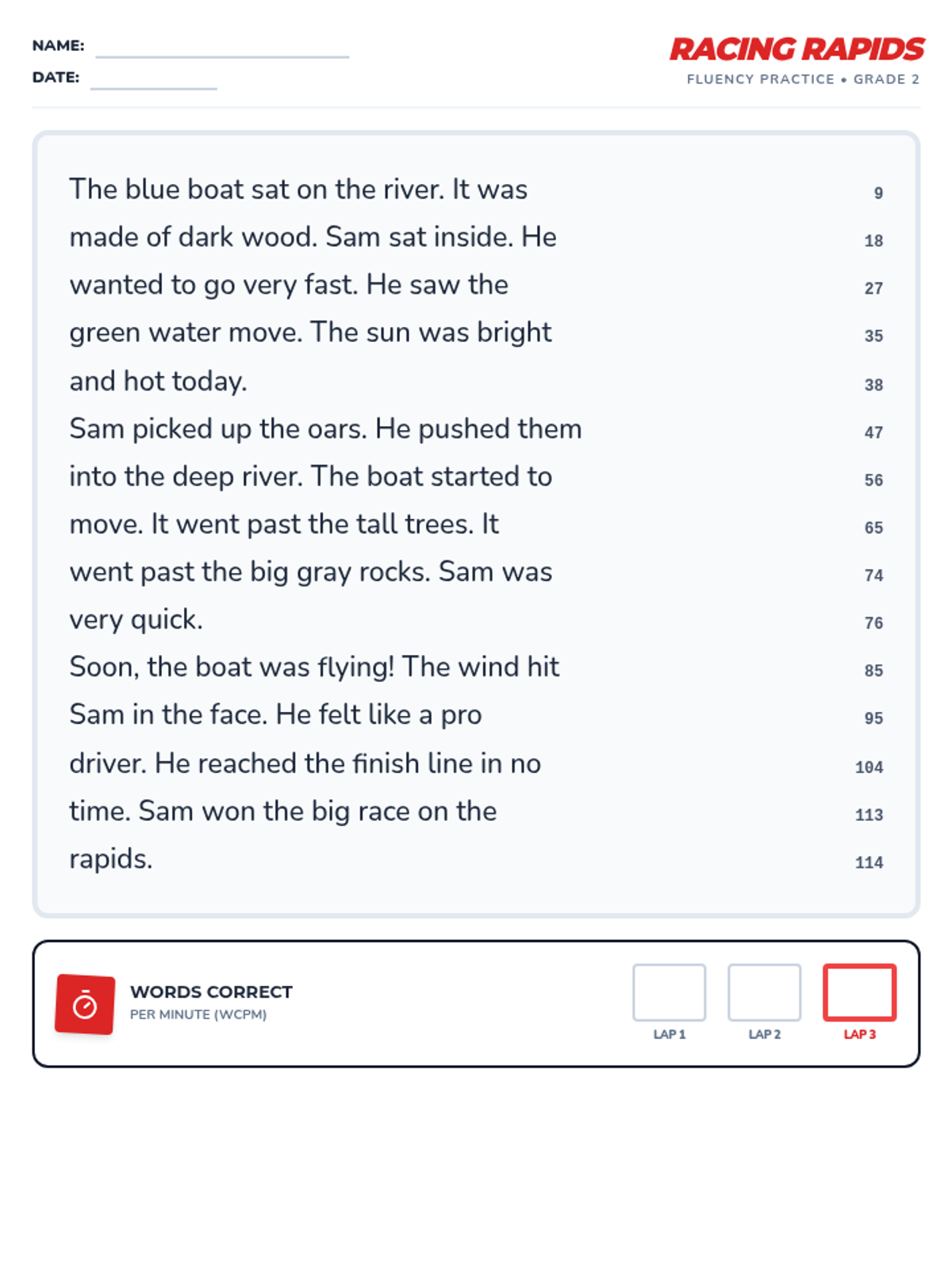
A 2nd-grade level reading passage designed for fluency practice with cumulative word counts for easy teacher scoring.
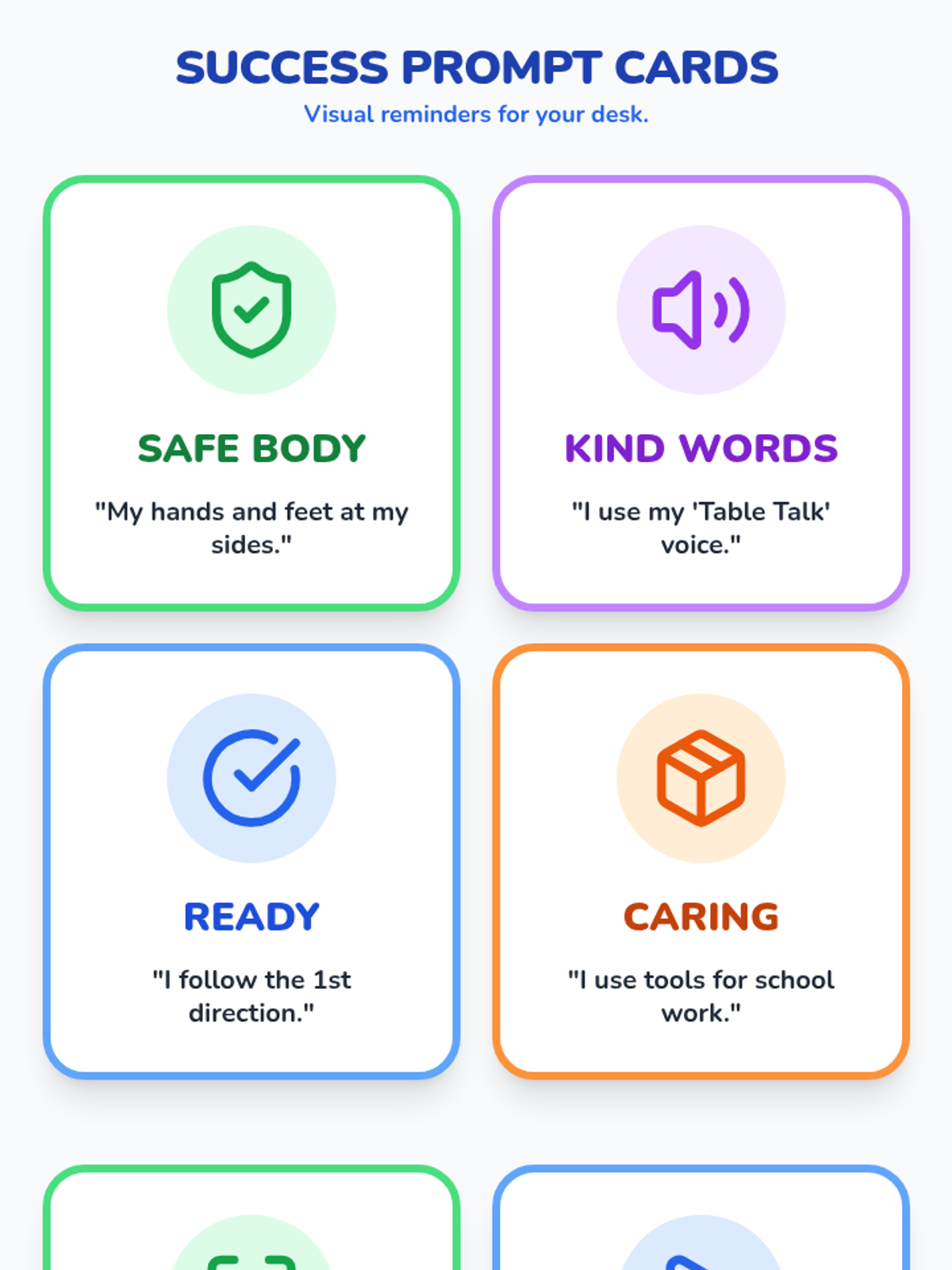
Visual prompt cards that provide specific, concrete examples of success behaviors for a student to keep at their desk. Updated with better icons and improved layout. Now includes a mini card log.
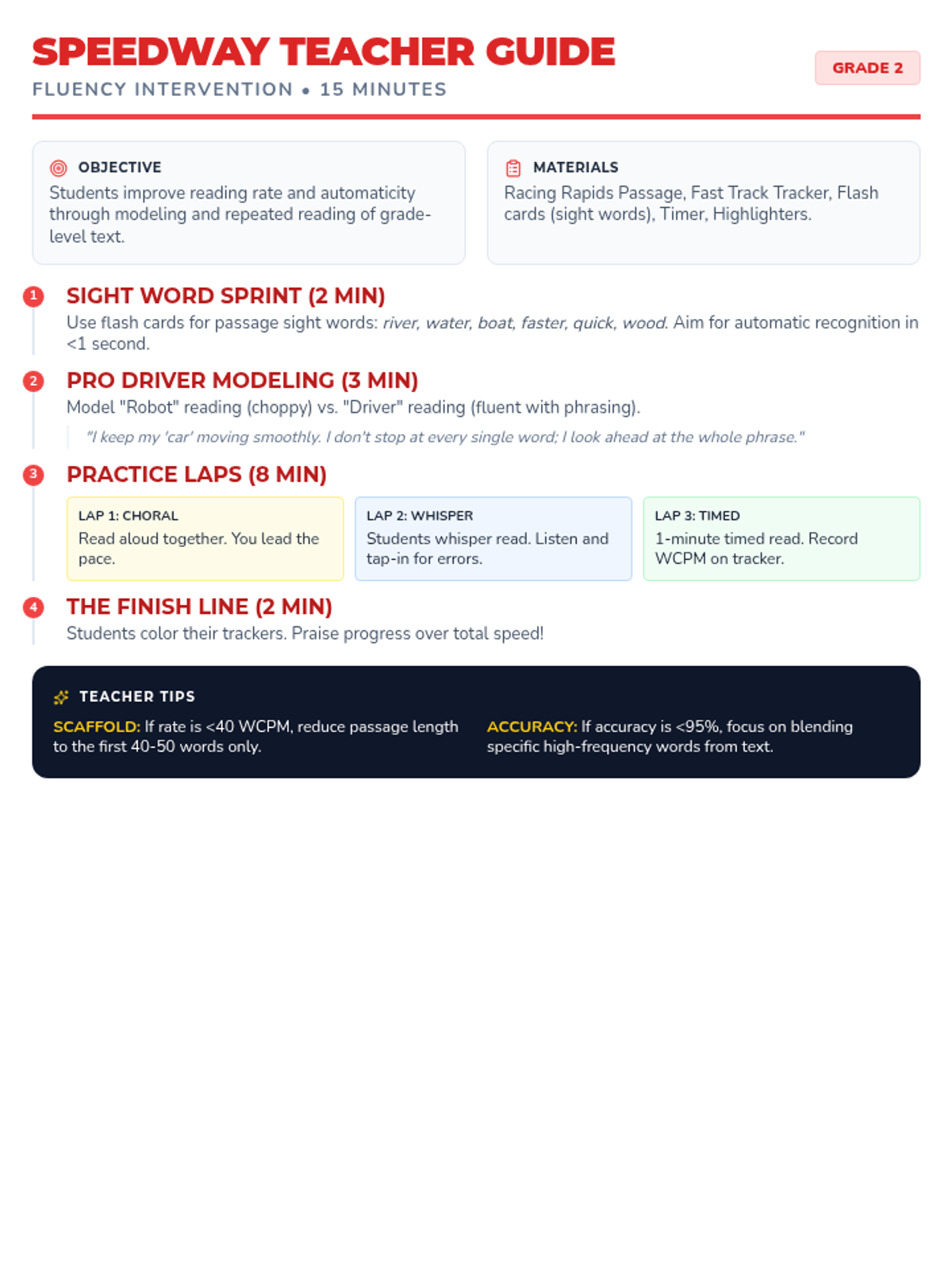
A 15-minute instructional guide for teachers to lead a small group fluency intervention focused on reading rate and automaticity.
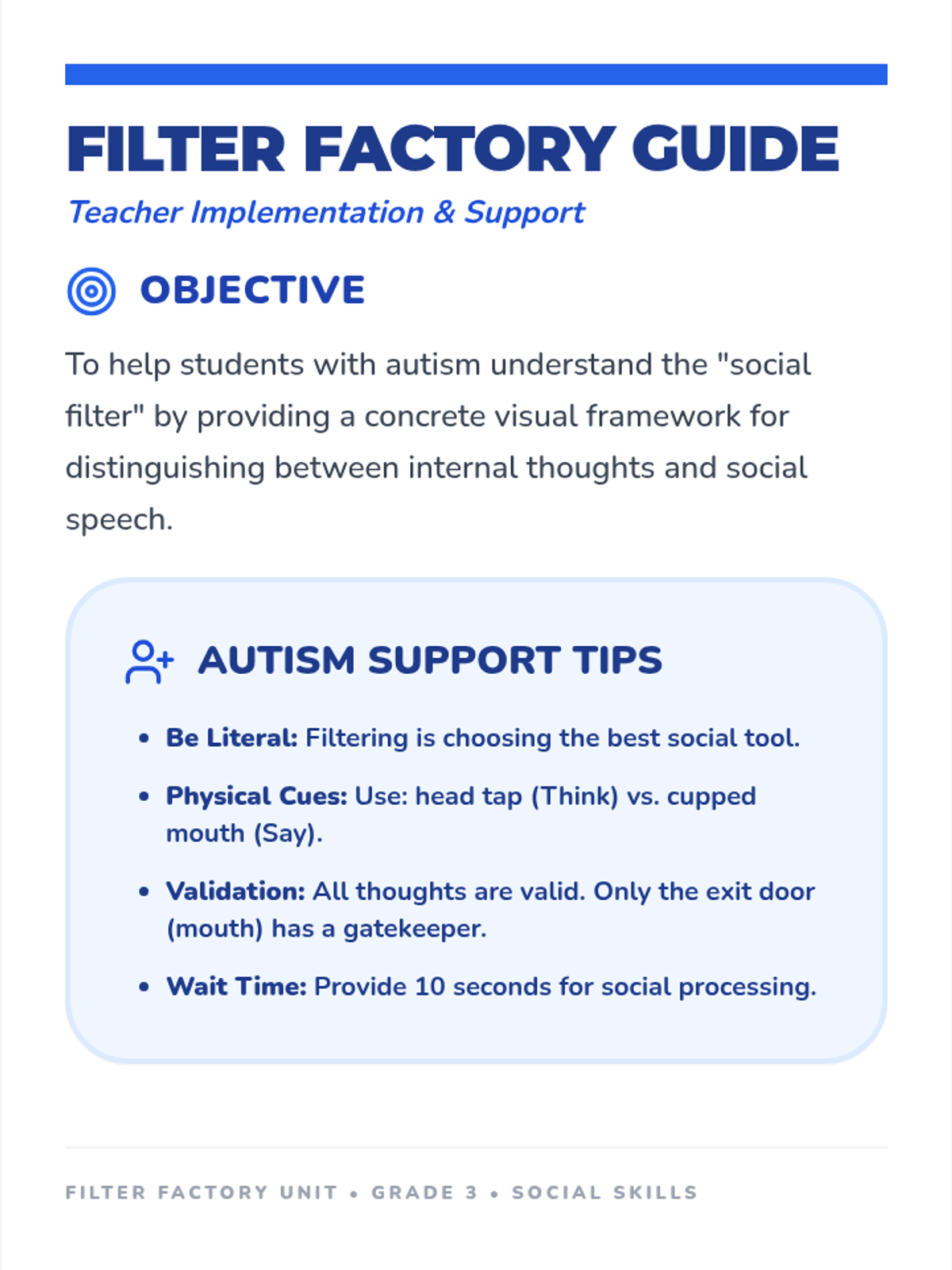
A comprehensive teacher guide providing implementation strategies, autism-specific support tips, and a step-by-step lesson flow for the Filter Factory unit.
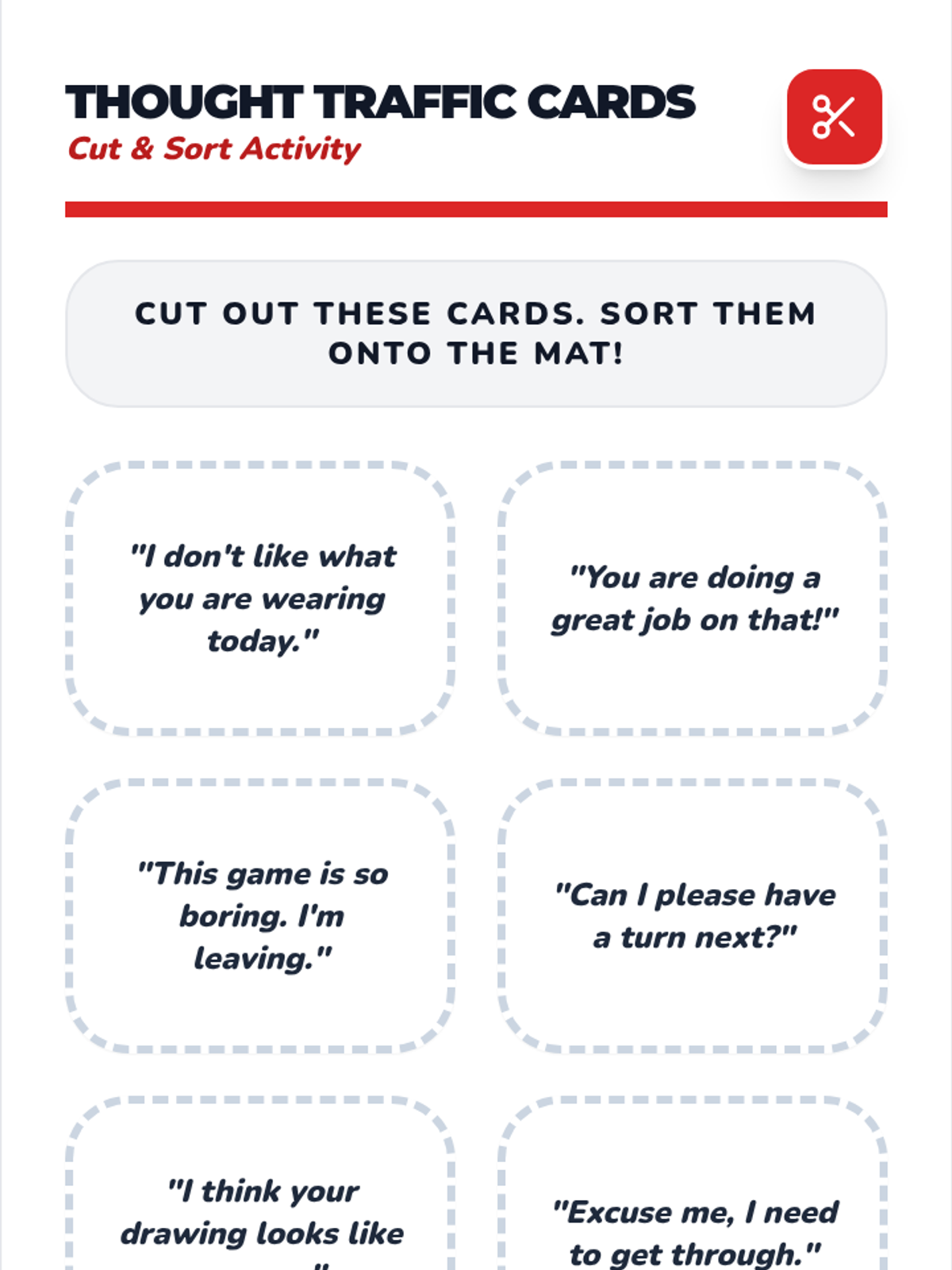
A hands-on card sorting activity where students categorize various scenarios into 'Think It' or 'Say It' using a visual sorting mat.
A highly visual slide deck designed for students with autism, using a factory metaphor to teach the difference between thoughts to keep inside and words to say out loud.
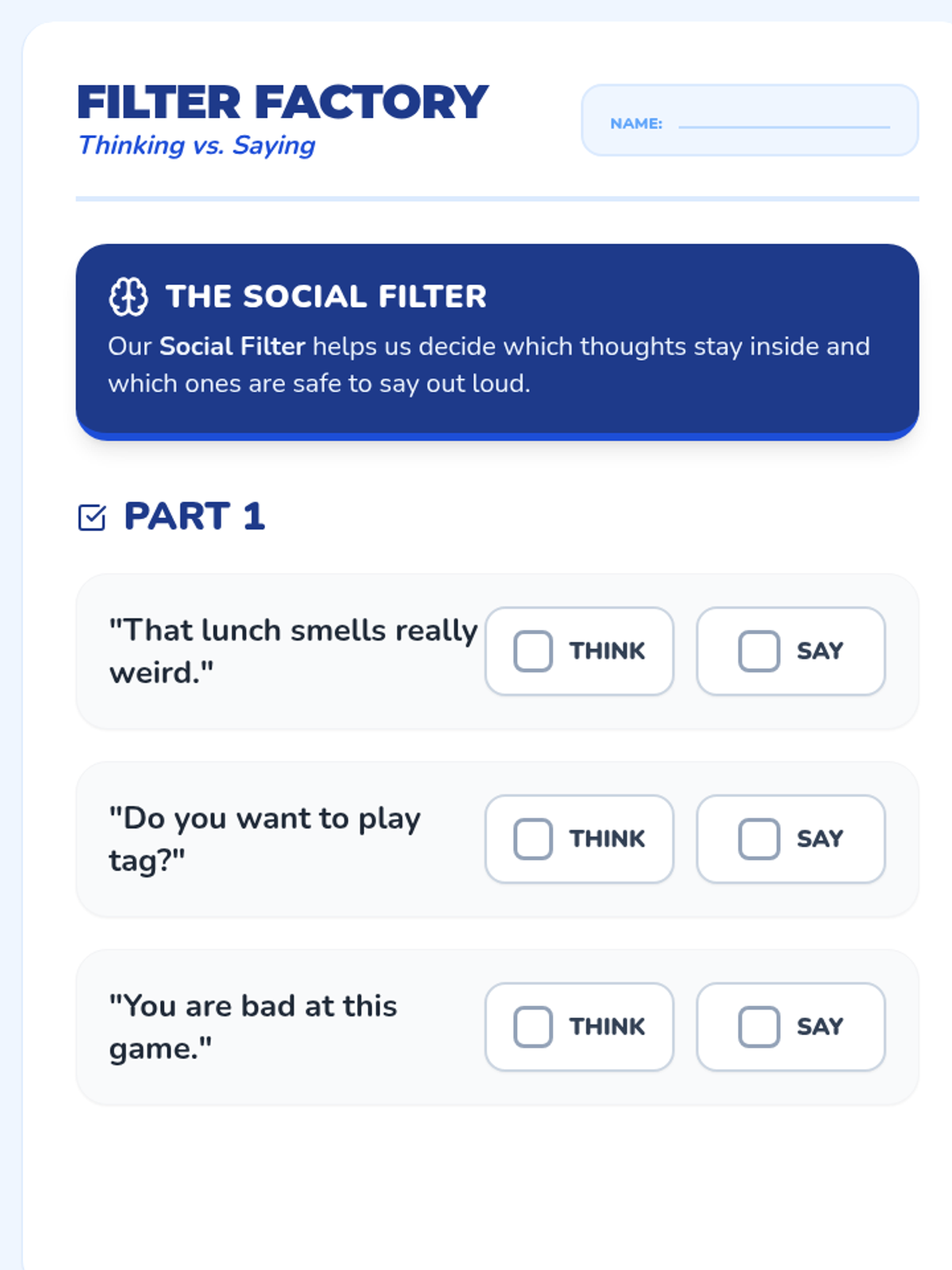
A visual worksheet for students to practice categorizing social thoughts as 'Think It' or 'Say It' using a clear, color-coded structure.
A facilitator's guide for implementing the behavior blueprint system with fidelity and positive reinforcement strategies. Consolidated to a single page.
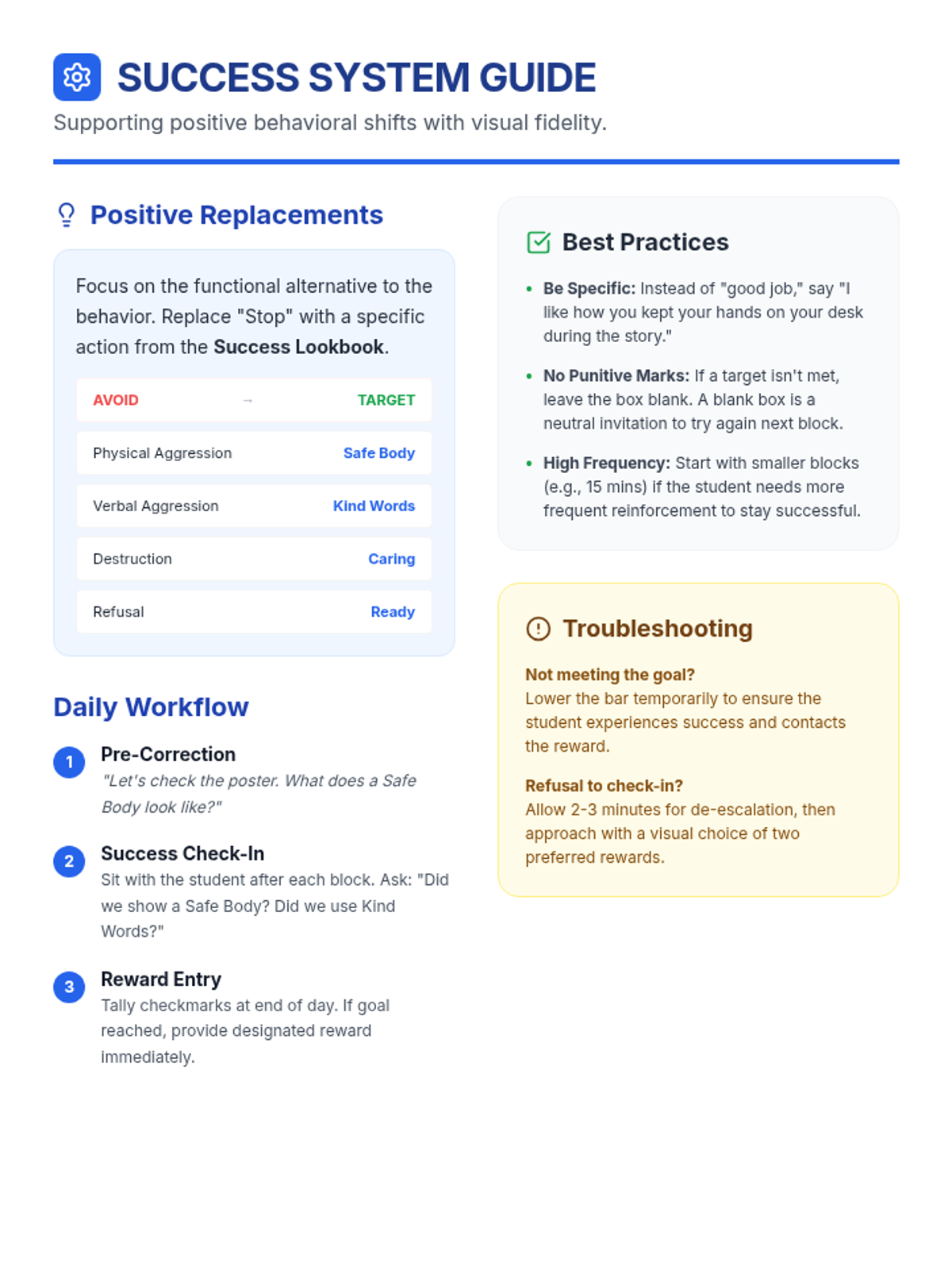
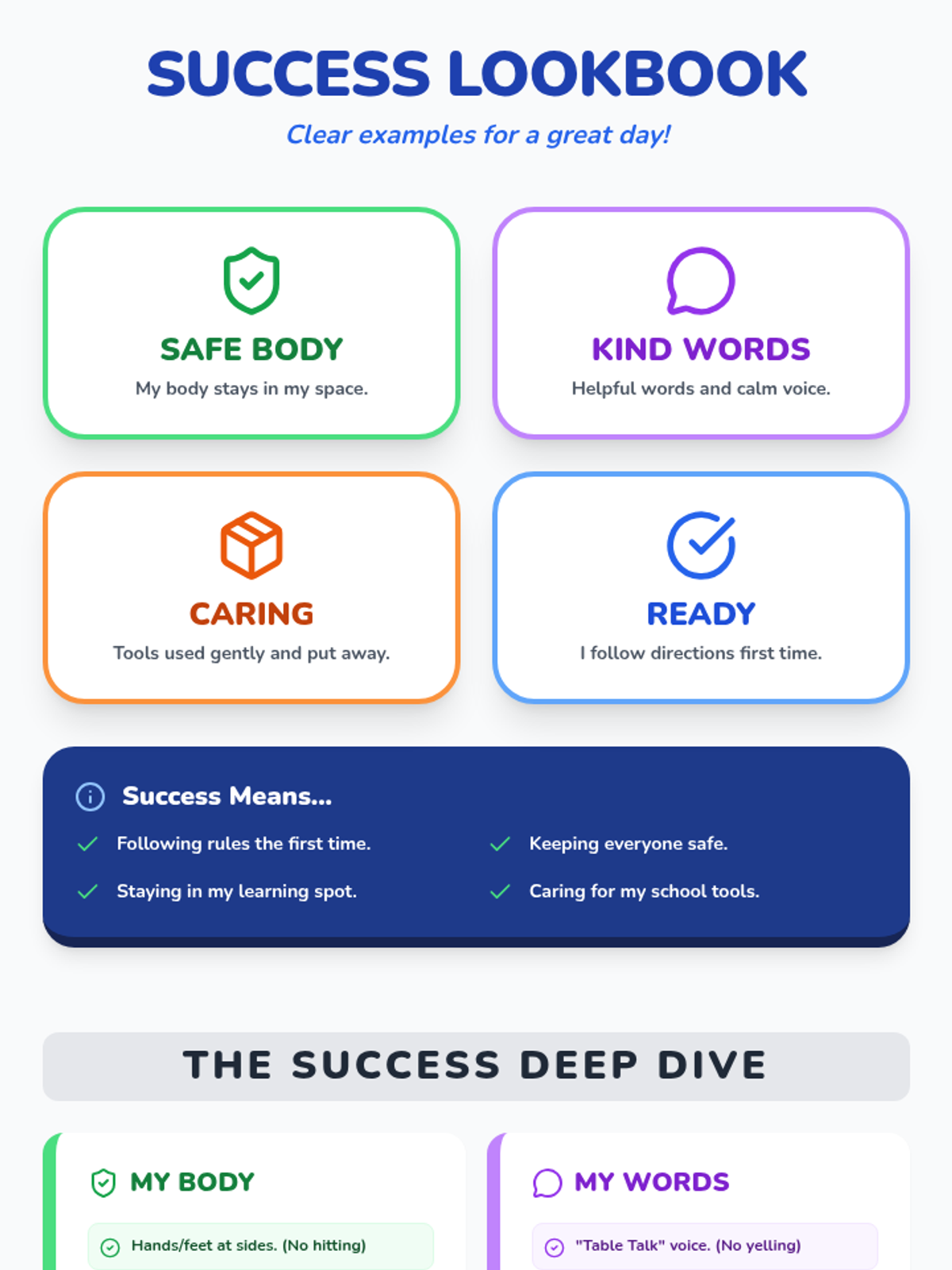
A comprehensive visual poster defining positive behavior expectations with a high-level overview and a "Deep Dive" section containing many specific examples for a rigid student. Now includes a summary log.
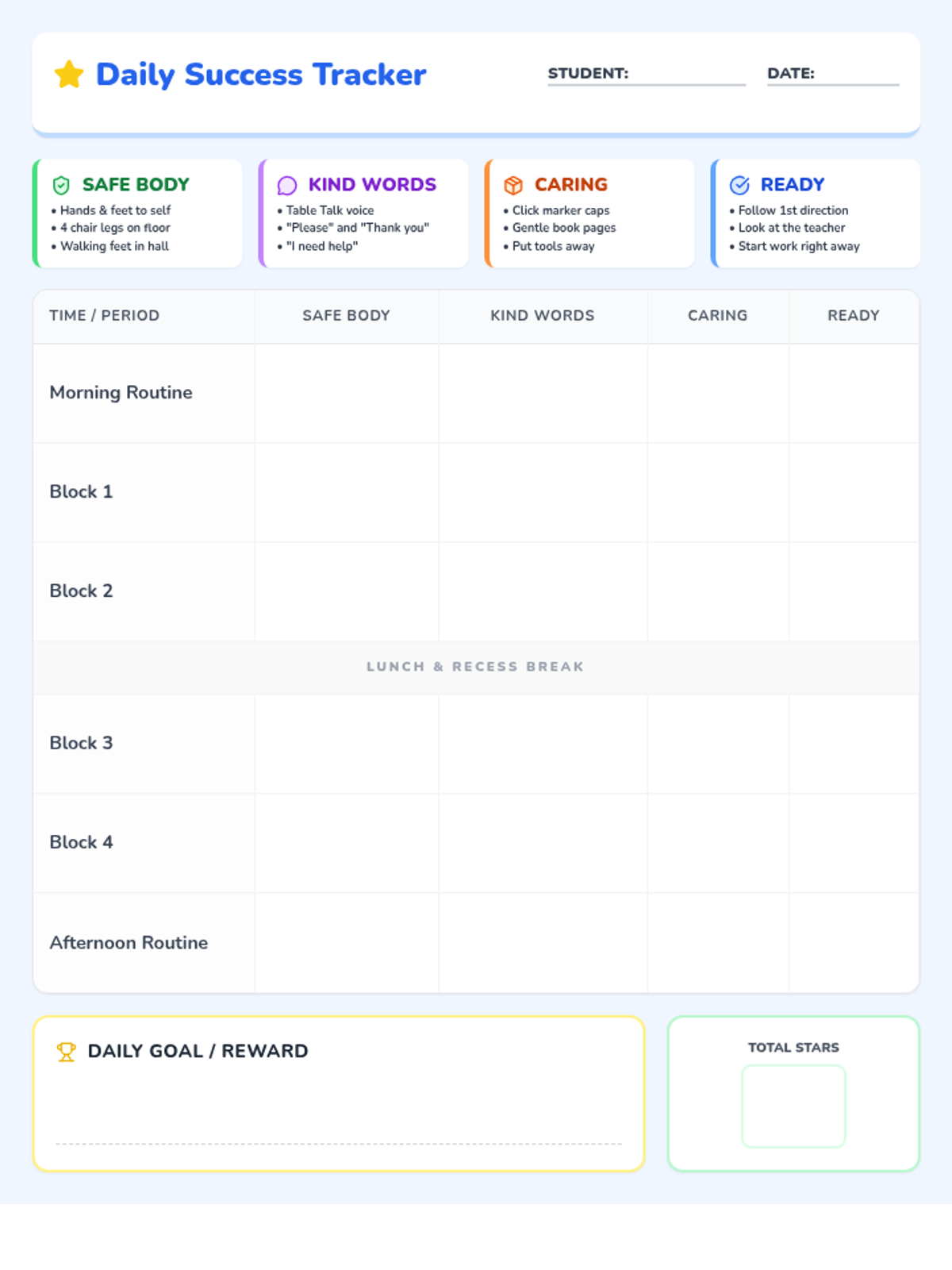
A visual daily tracking log for behavior expectations using positive reinforcement and simple icons. Updated with improved text contrast and cleaner student work areas.
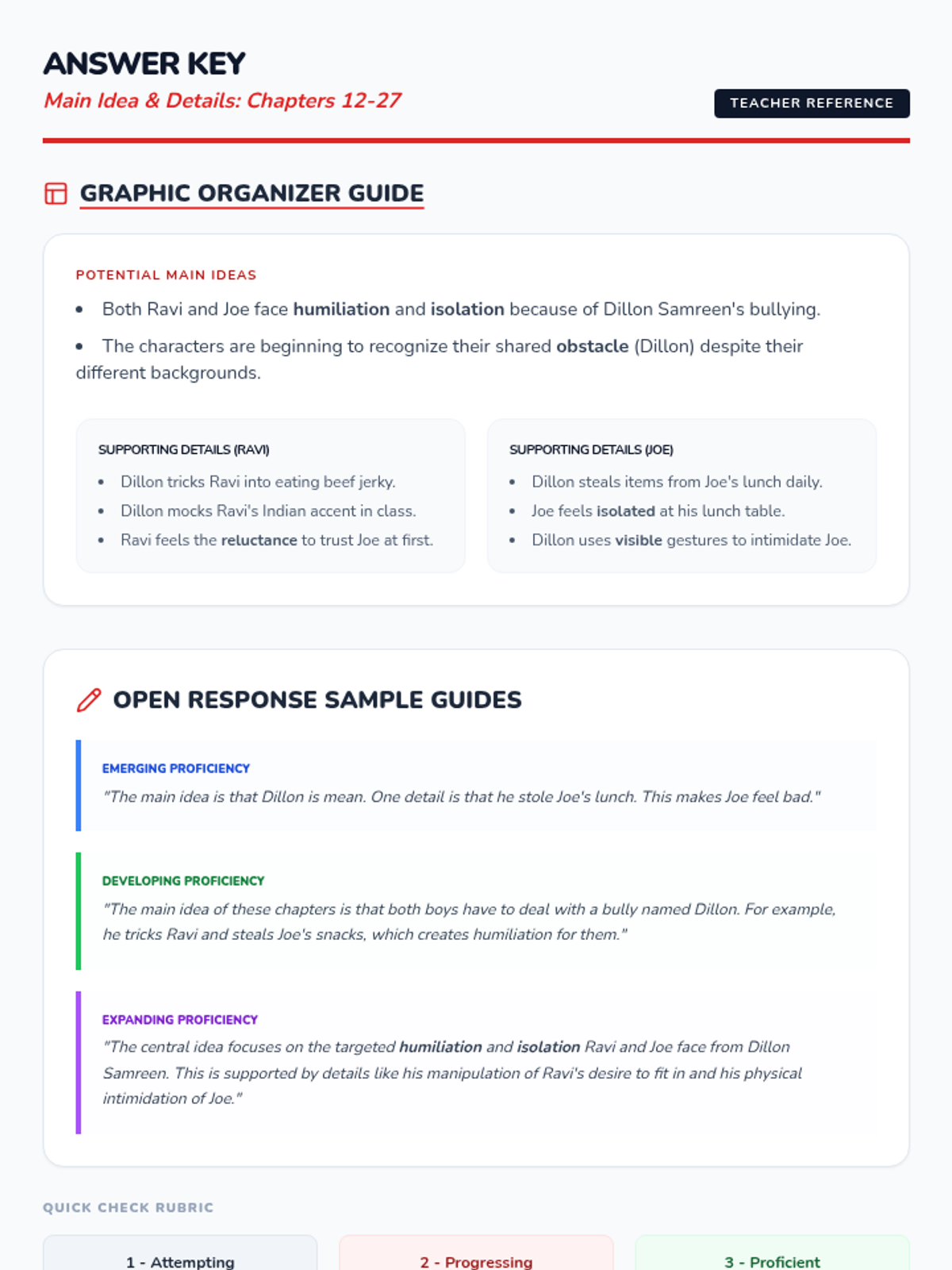
A teacher's answer key for the Main Idea Details Worksheet. Provides model responses for the graphic organizer and sample summaries at the developing and expanding proficiency levels to assist in grading and providing feedback. Optimized for single-page printing.
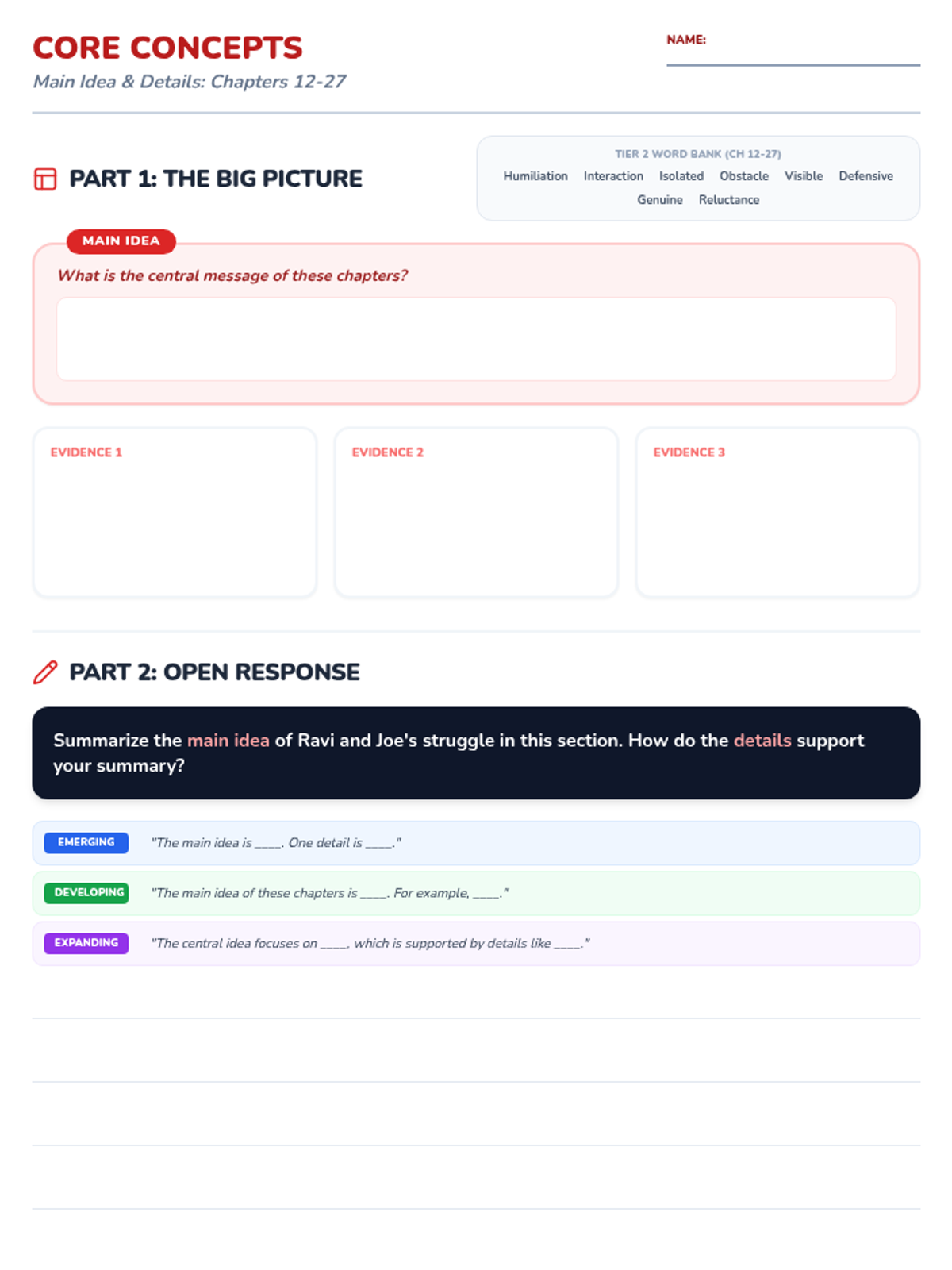
A graphic organizer and response worksheet focused on identifying the main idea and supporting details for Chapters 12-27. Includes tiered sentence starters for developing and expanding ELL students to support reading comprehension. Optimized for single-page printing.
A graphic organizer for Lesson 2 with improved label contrast, increased writing space for character traits, and added differentiated sentence starters for ELL students. Optimized for single-page printing.