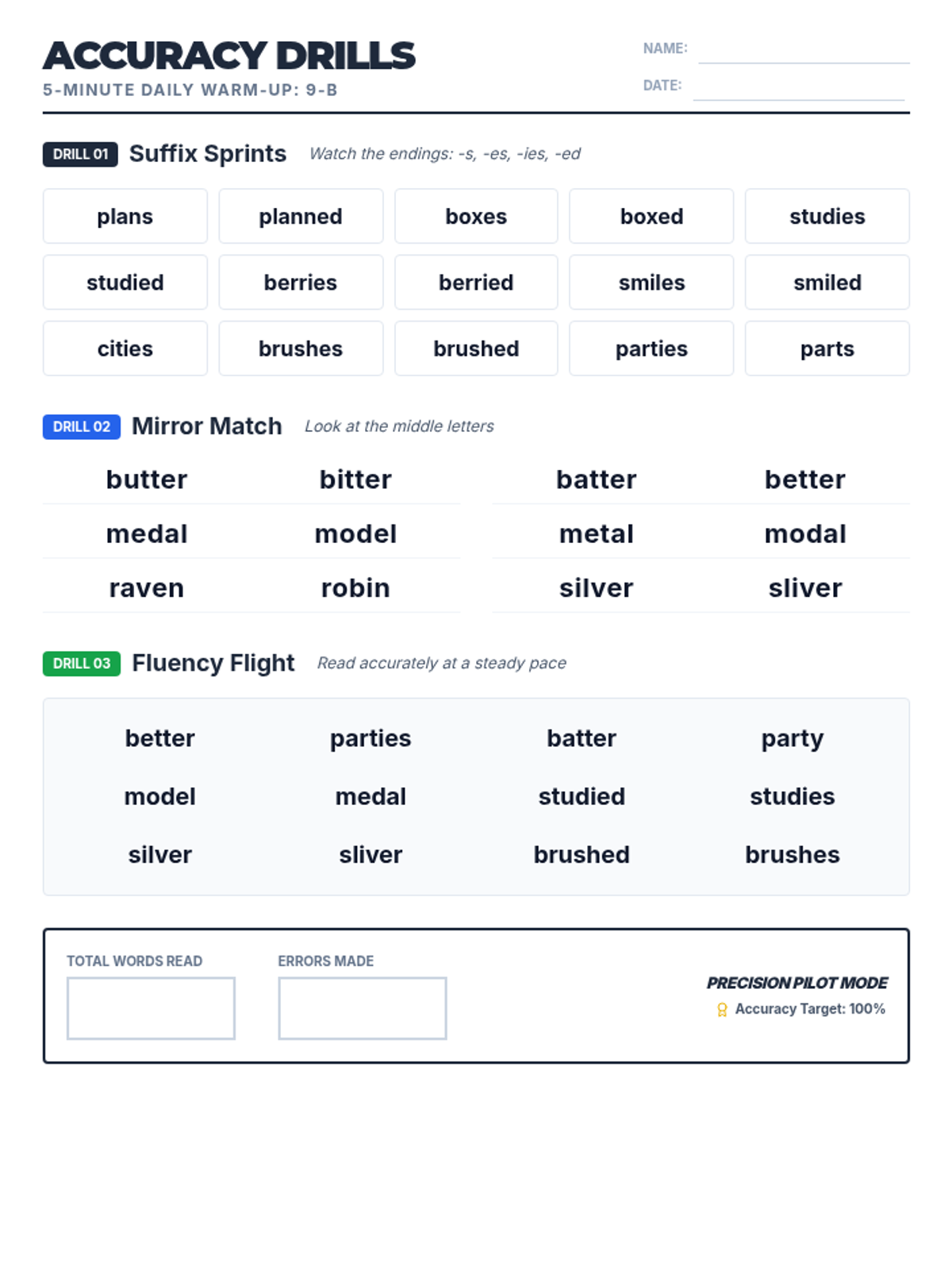
A high-contrast student drill sheet for 9th-grade special education, focusing on suffix accuracy and visual discrimination of look-alike word pairs like party/parties and pottery.
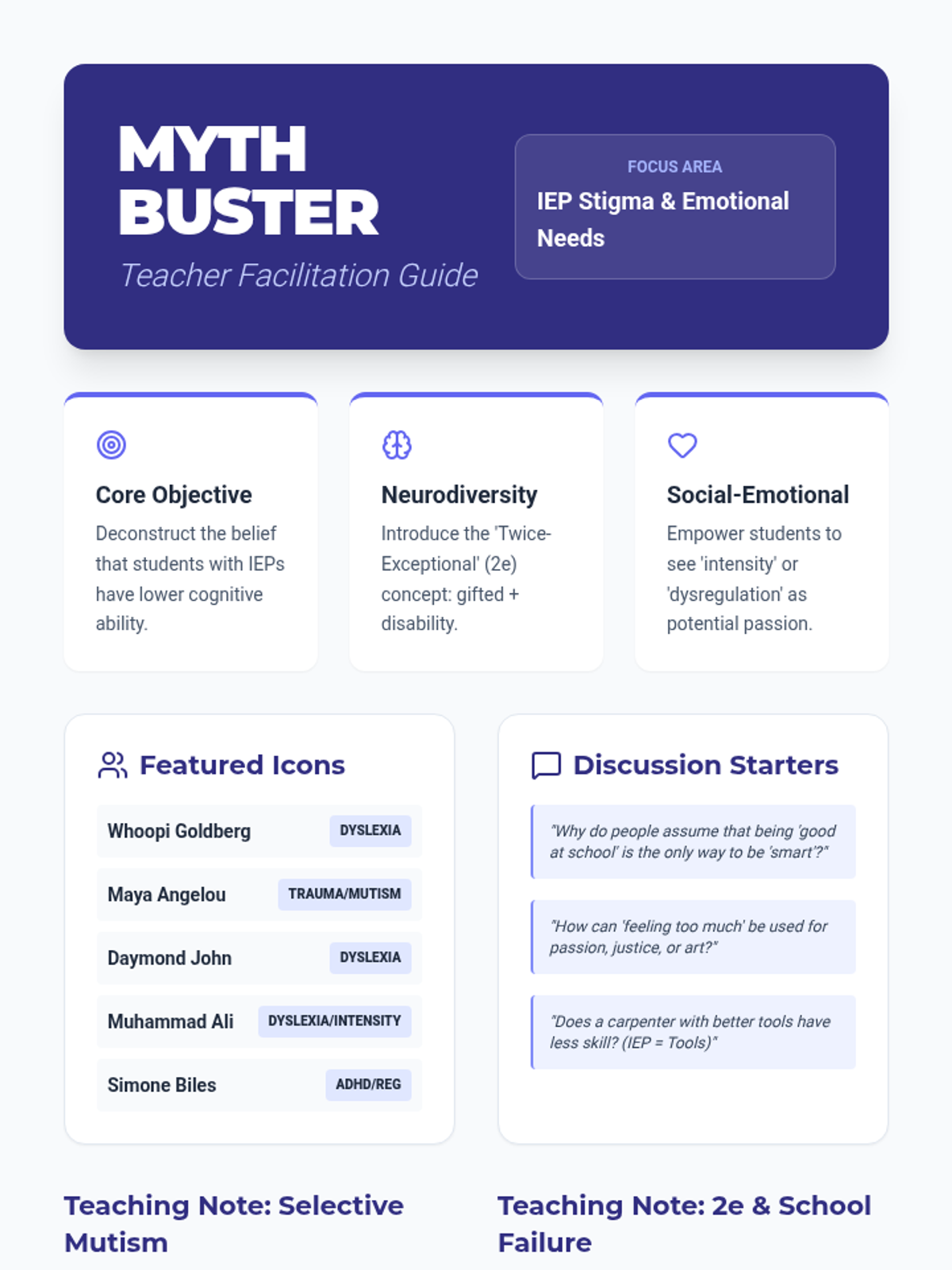
A comprehensive facilitation guide for teachers to lead discussions on the IEP stigma. It includes critical discussion prompts, teaching notes on the specific figures (like Maya Angelou and Daymond John), and a 'stigma-busting' vocabulary guide to reframe behavioral challenges as strengths.
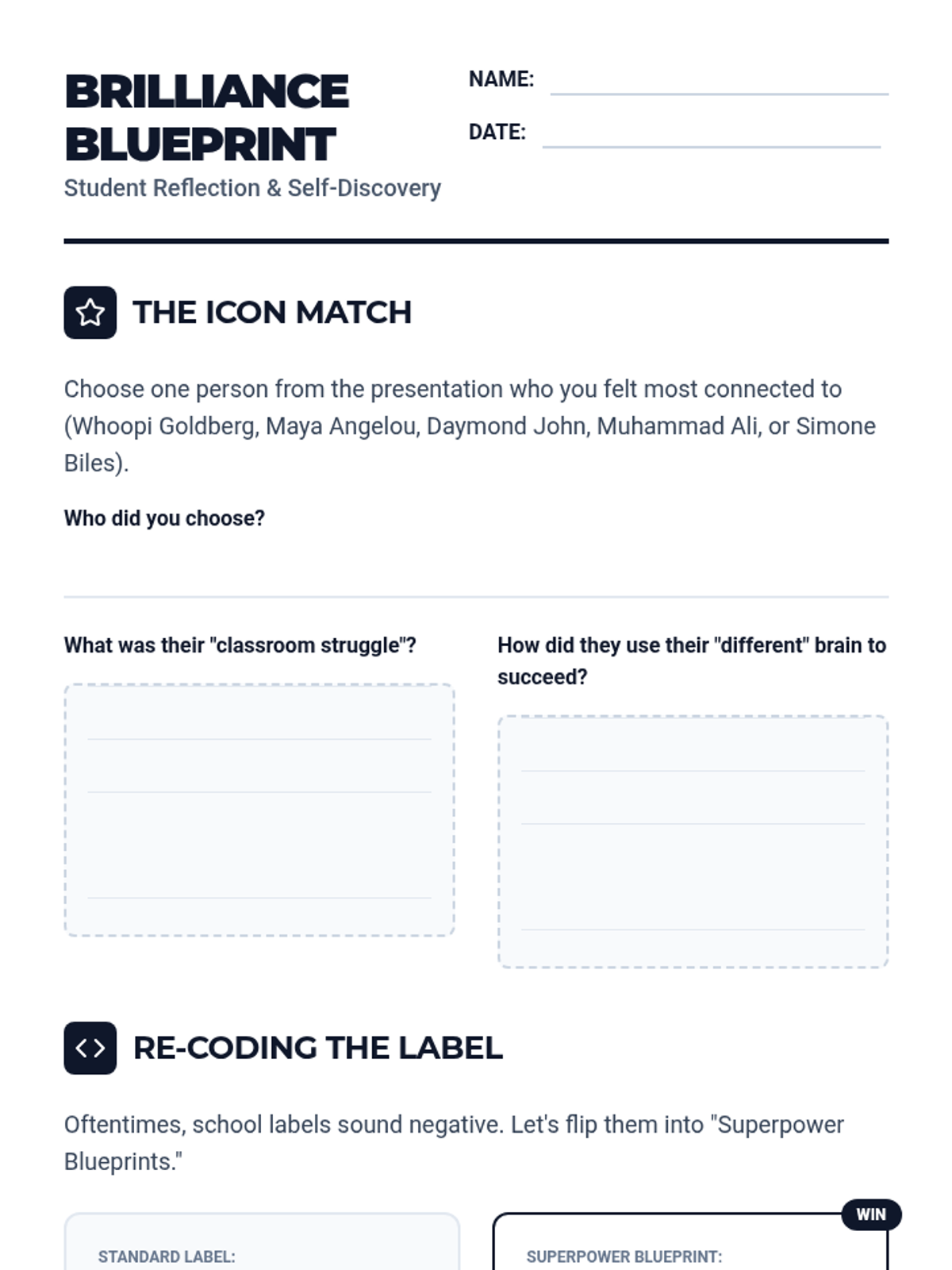
A reflective worksheet for students to process the 'Mind over Myths' presentation. It includes space to connect with famous figures, reframe behavioral labels into positive superpowers, and identify their own unique strengths.
A bold, modern slide deck dismantling the 'IEP = not smart' stigma by showcasing successful African Americans like Whoopi Goldberg, Maya Angelou, and Daymond John. It reframes emotional dysregulation and learning differences as unique ways of processing rather than deficits in intelligence.
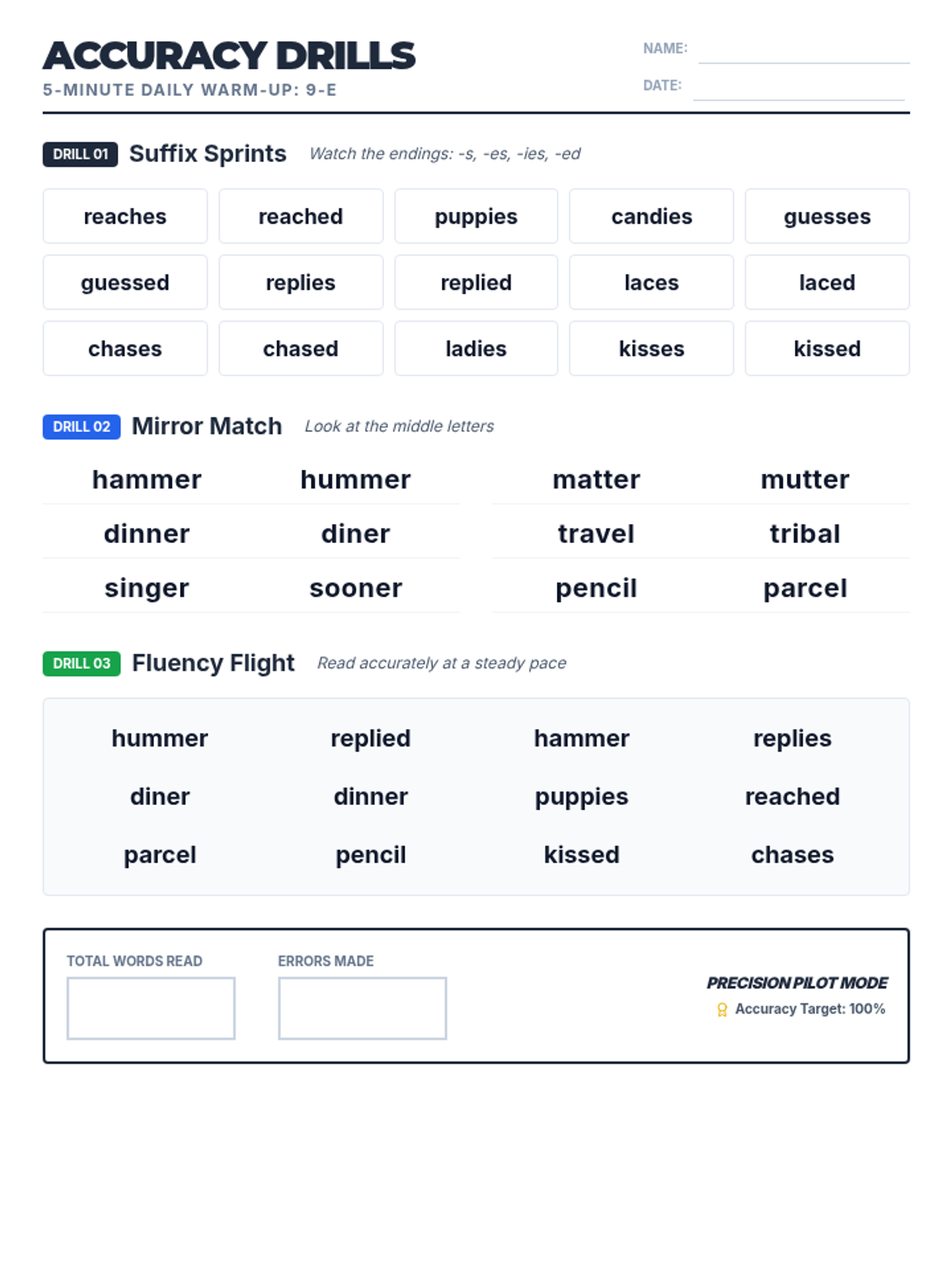
High-contrast student drill sheet Version E for 9th-grade special education, focusing on suffix accuracy and visual discrimination of look-alike word pairs like dinner/diner.
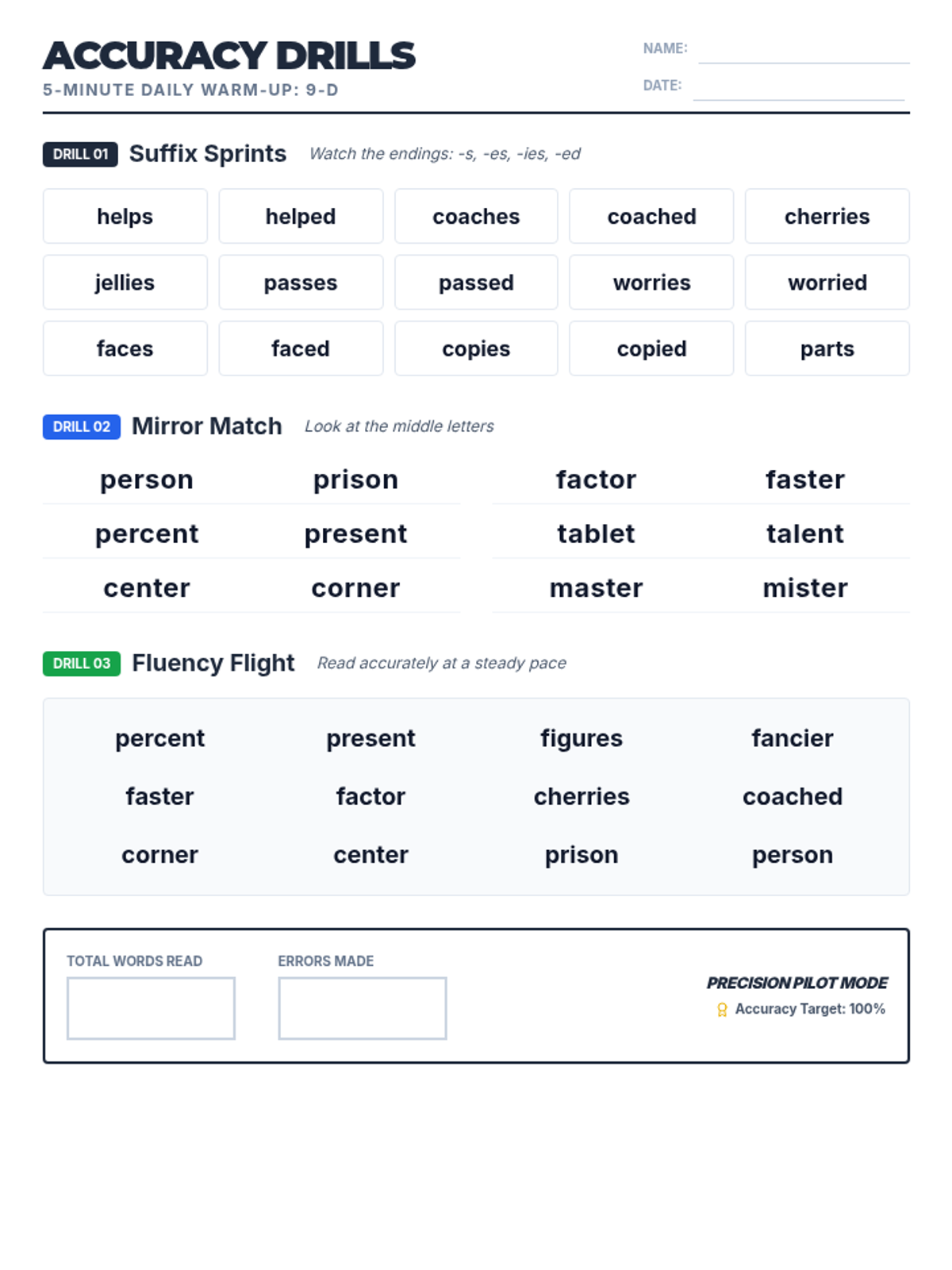
High-contrast student drill sheet Version D for 9th-grade special education, focusing on suffix accuracy and visual discrimination of look-alike word pairs like person/prison.
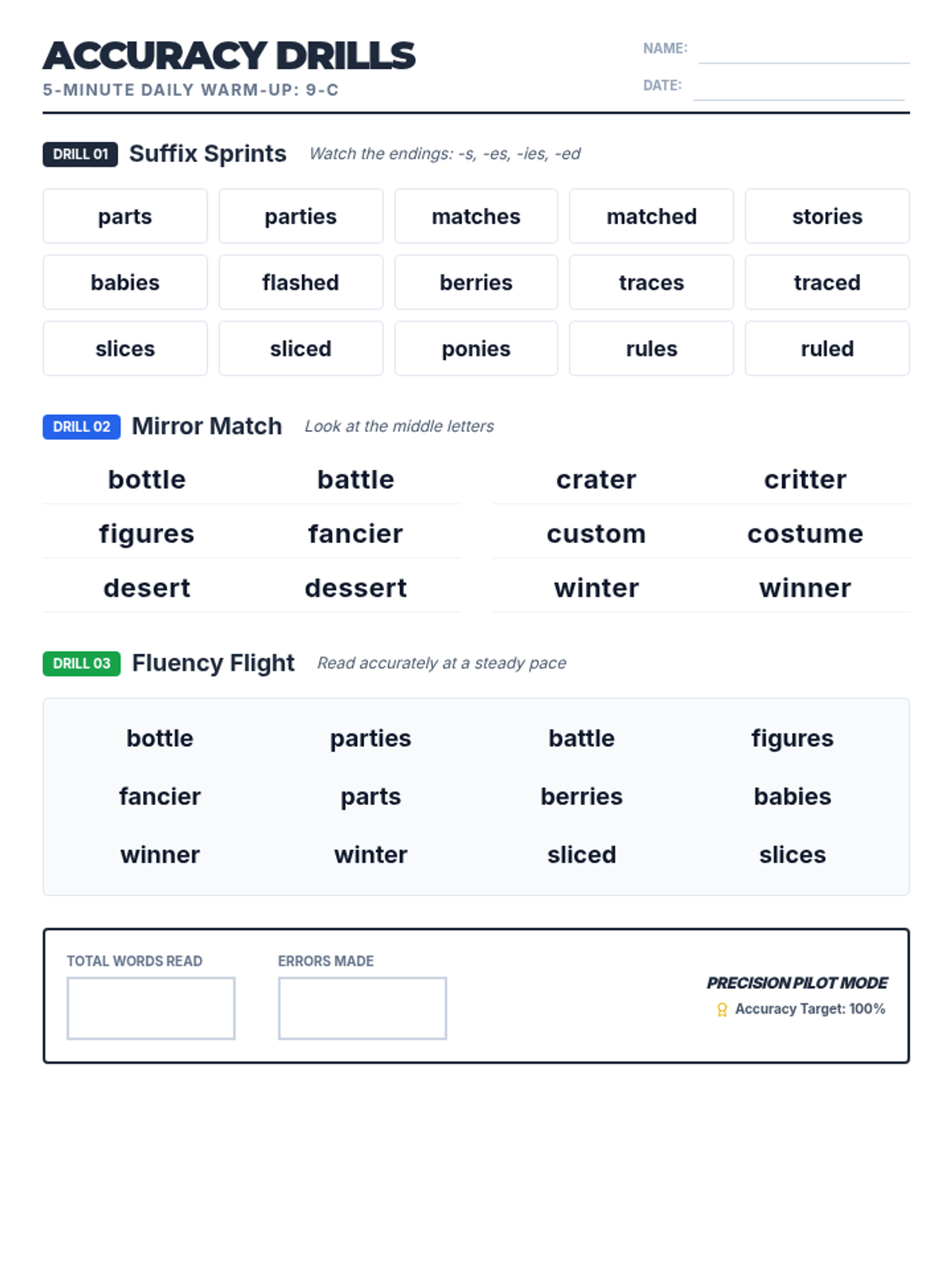
High-contrast student drill sheet Version C for 9th-grade special education, focusing on suffix accuracy and visual discrimination of look-alike word pairs like bottle/battle.
High-contrast student drill sheet Version B for 9th-grade special education, focusing on suffix accuracy and visual discrimination of look-alike word pairs like batter/better.
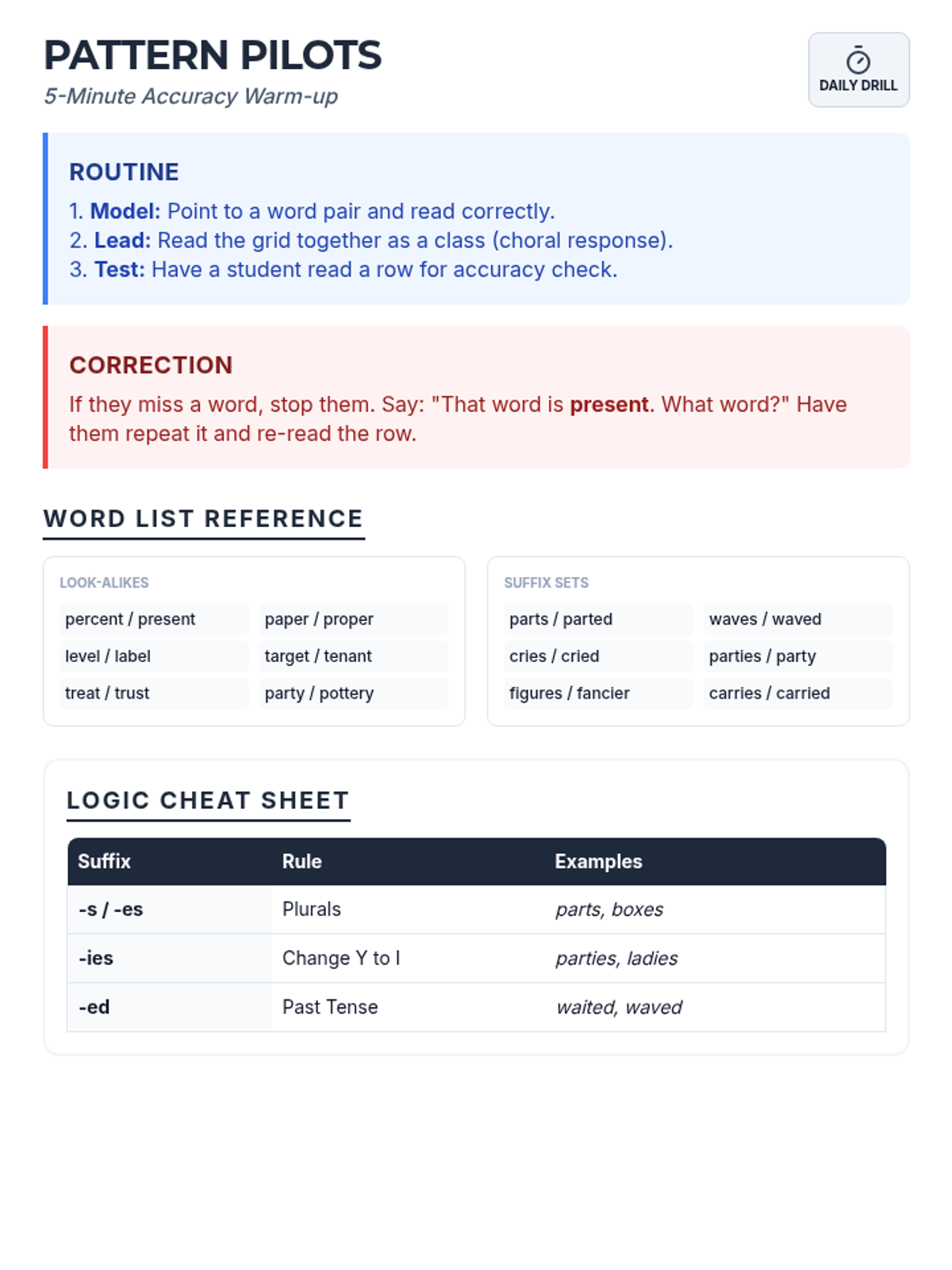
A simplified one-page teacher implementation guide for 9th-grade special education reading fluency drills, focusing on suffix accuracy and visual discrimination strategies.
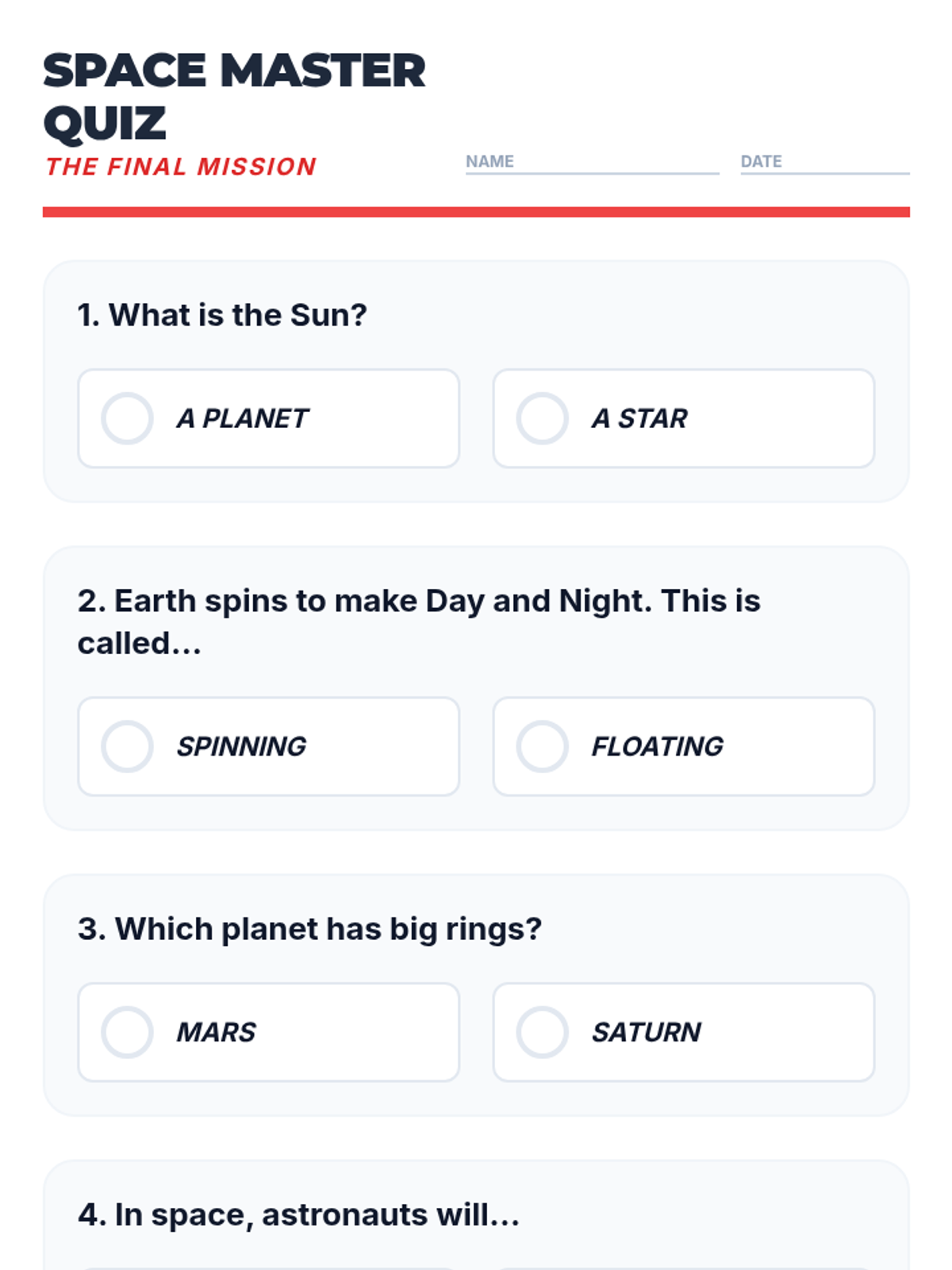
A final unit assessment designed for accessibility. It features large, clear fonts, simplified multiple-choice options with identical styling to prevent cues, and a creative drawing area for students to demonstrate their favorite concept from the unit.
A fun, interactive trivia-style slide deck to review unit concepts. It poses multiple-choice questions about the Sun, Earth's cycles, and the planets with high-contrast, visually supportive layouts to encourage student participation and confidence before the final assessment.
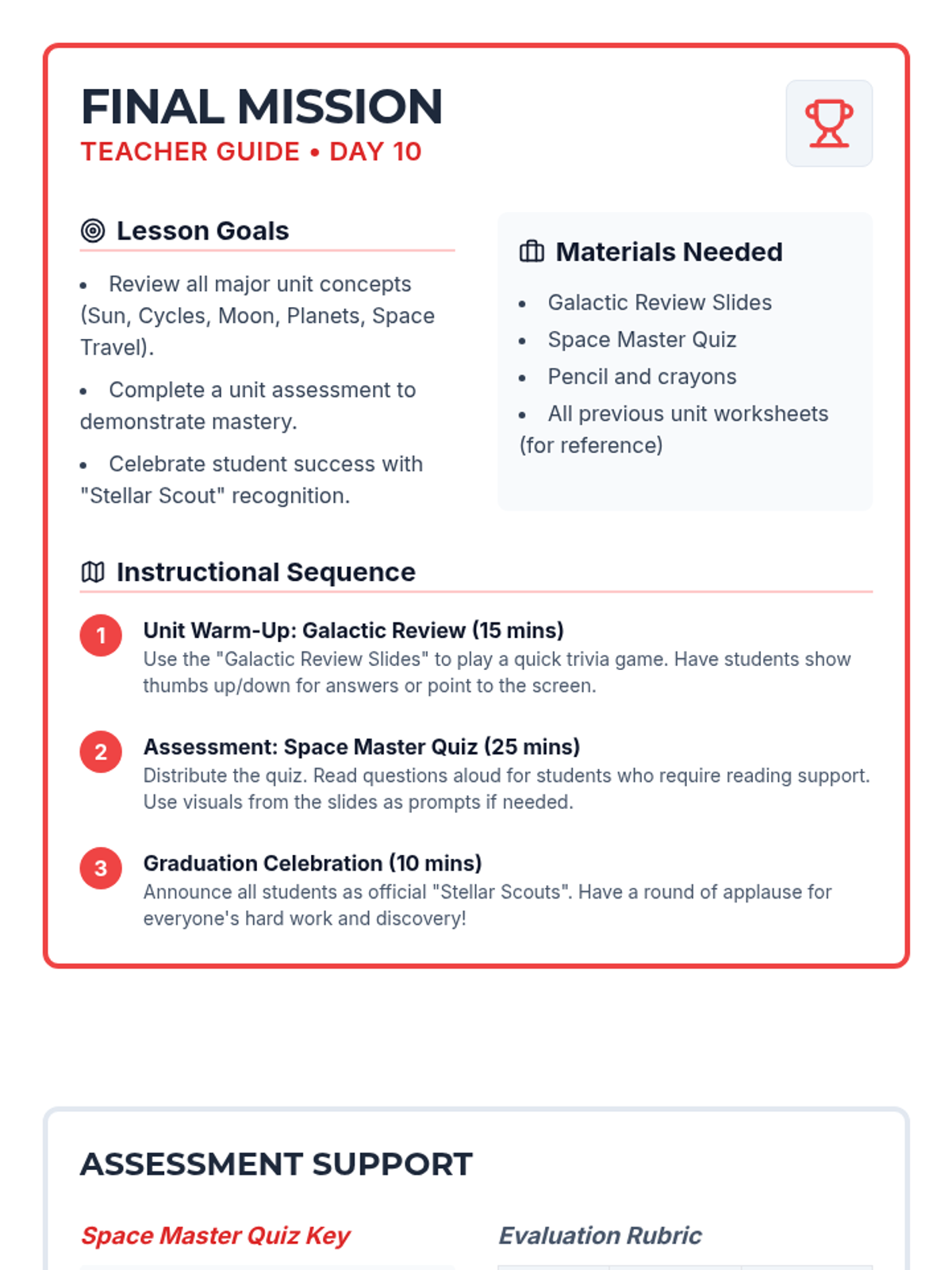
A teacher guide for the final lesson of the unit. It includes a structured review plan, an assessment guide for the Space Master Quiz, and a simple rubric for evaluating student progress without requiring stickers or prizes.
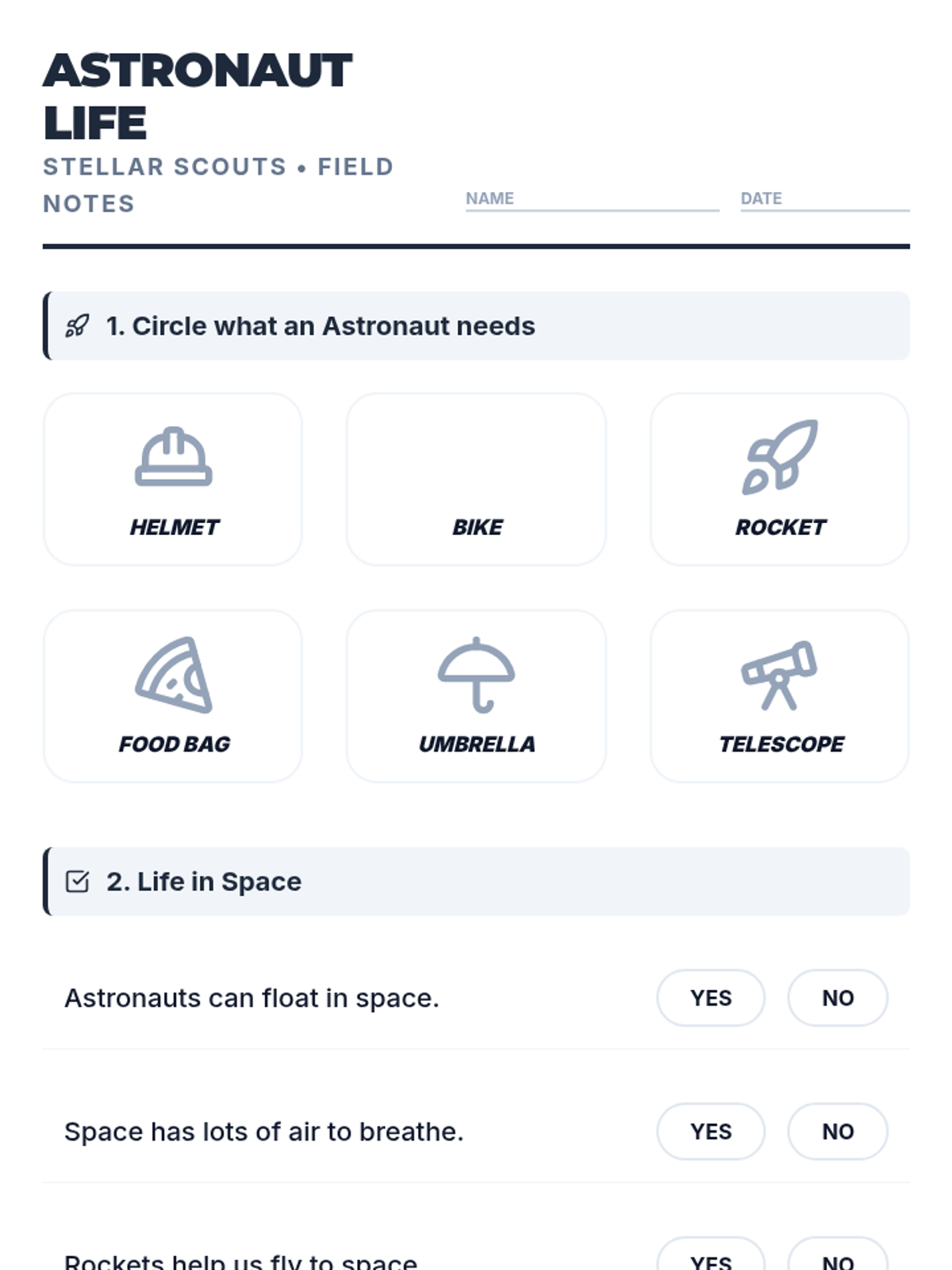
A worksheet helping students identify the tools and experiences of an astronaut. It features a categorization task (what is needed in space), simple Yes/No comprehension questions about space travel, and a personal reflection prompt about being an explorer.
An instructional slide deck about space exploration. Features clear visuals of telescopes and rockets, explains the concept of zero gravity with relatable examples, and includes an embedded video tour of the International Space Station to show how astronauts live in space.
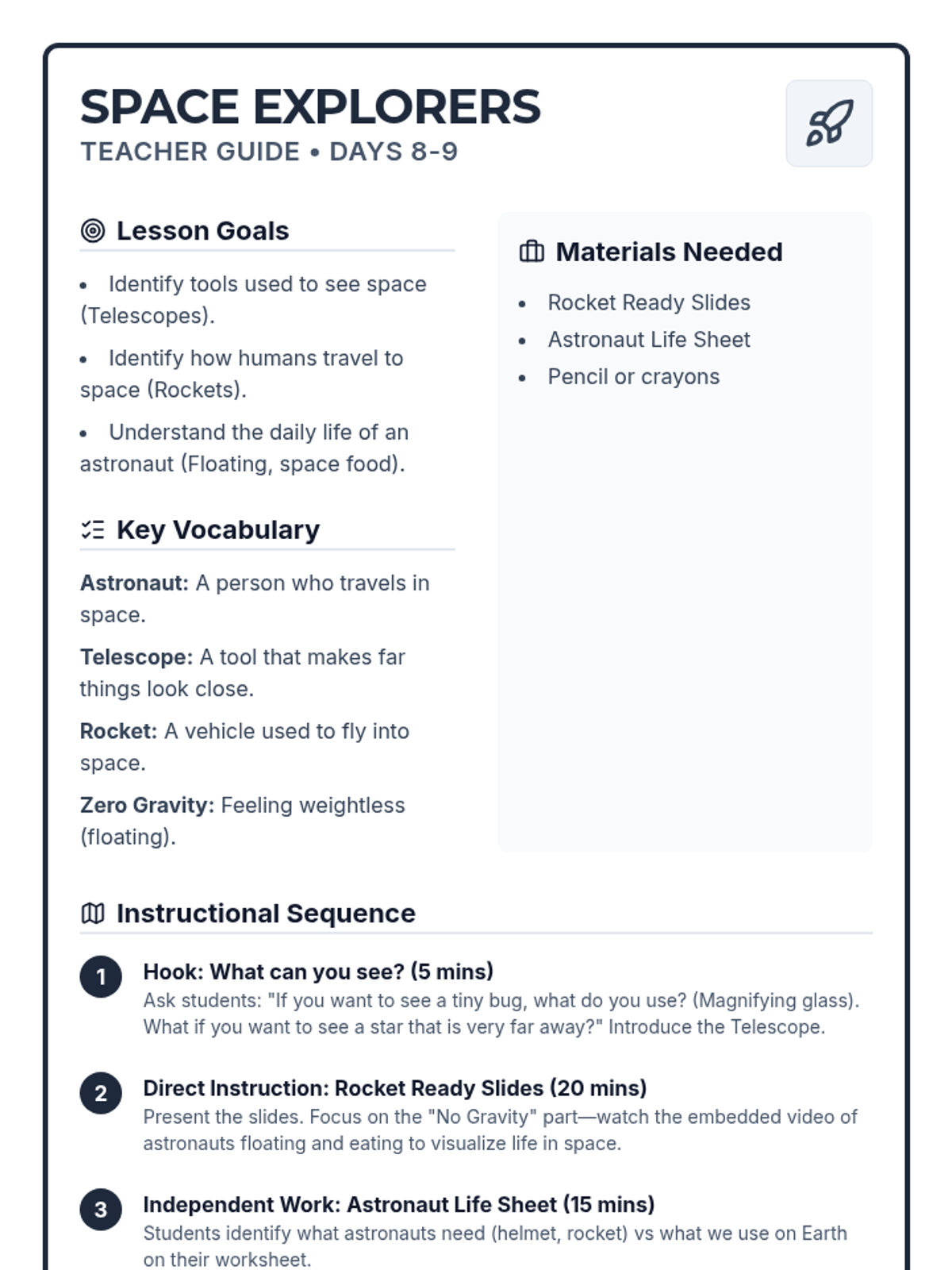
A teacher guide for the Space Explorers lesson, covering astronauts, rockets, and telescopes. Includes interesting facts about daily life in space with focus on visual and video instruction, without requiring physical props.
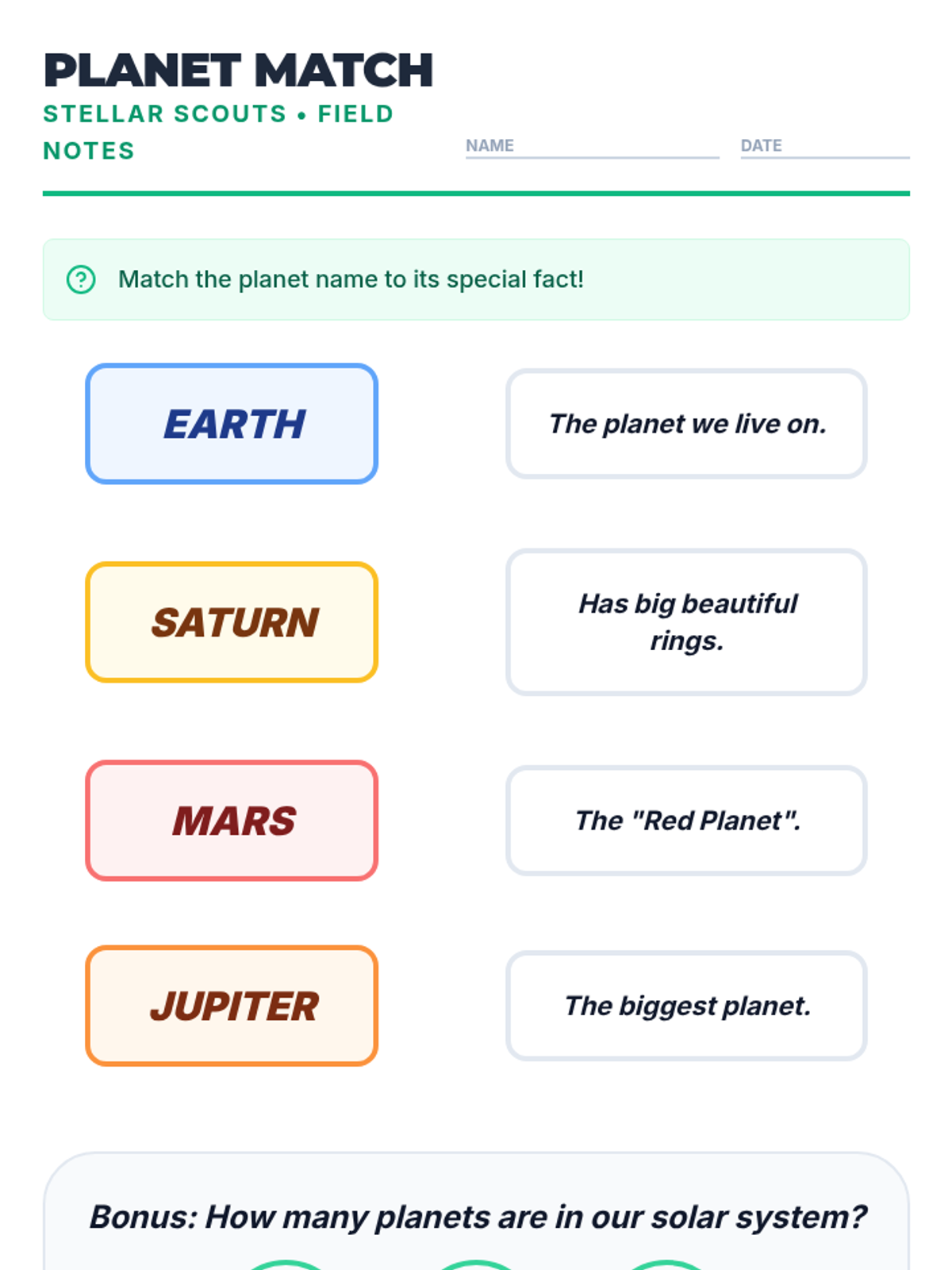
A matching worksheet focusing on key planets. Students match Earth, Saturn, Mars, and Jupiter to their defining characteristics using a clear, large-print layout suitable for students with diverse learning needs.
An engaging slide deck that tours the eight planets of the solar system. It categorizes planets into rocky inner worlds and gaseous outer giants, highlights iconic features (like Saturn's rings), and teaches a mnemonic device for remembering the order of the planets.
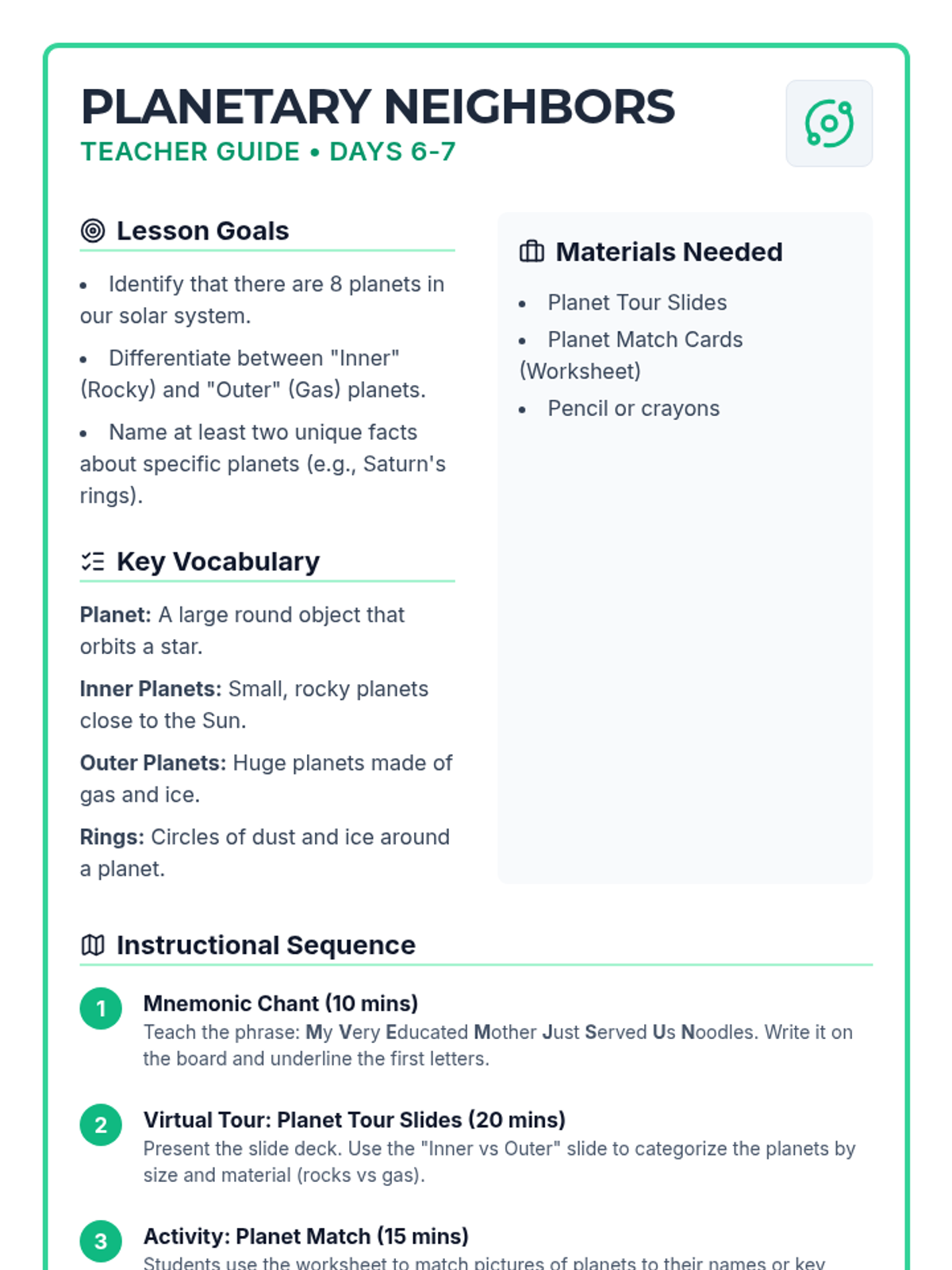
A teacher guide for the Planetary Neighbors lesson. It covers the eight planets, differentiating between inner rocky planets and outer gas giants. Includes a mnemonic for memory and quick-fact summaries without physical models.
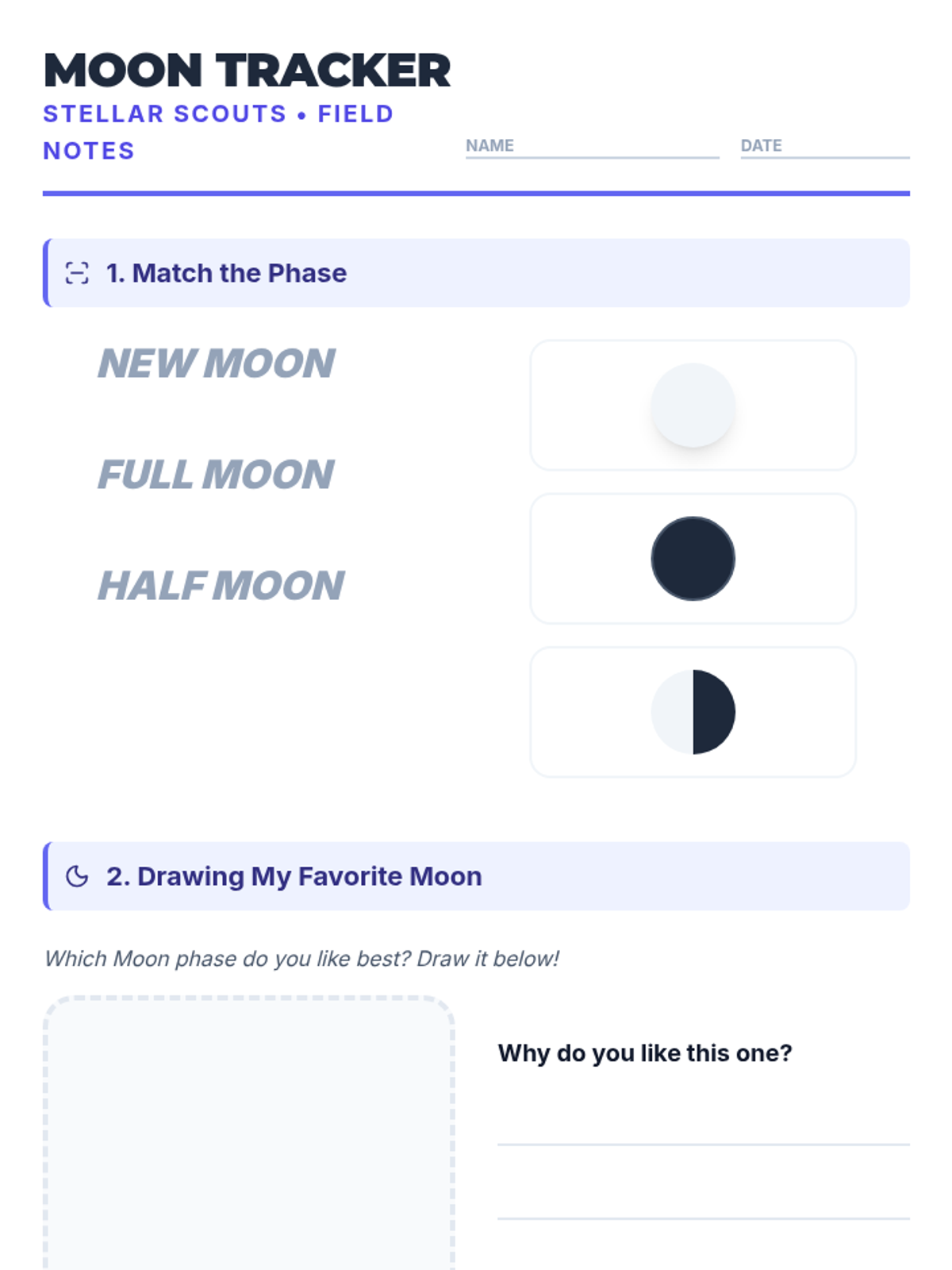
A worksheet for students to identify and match moon phases (New, Full, Half). It includes a creative drawing section for students to illustrate their favorite phase and write a simple sentence about it.
An instructional slide deck covering the Moon's characteristics and its phases. It uses high-contrast visuals to explain that the Moon orbits Earth, reflects sunlight, and appears in different shapes throughout the month.
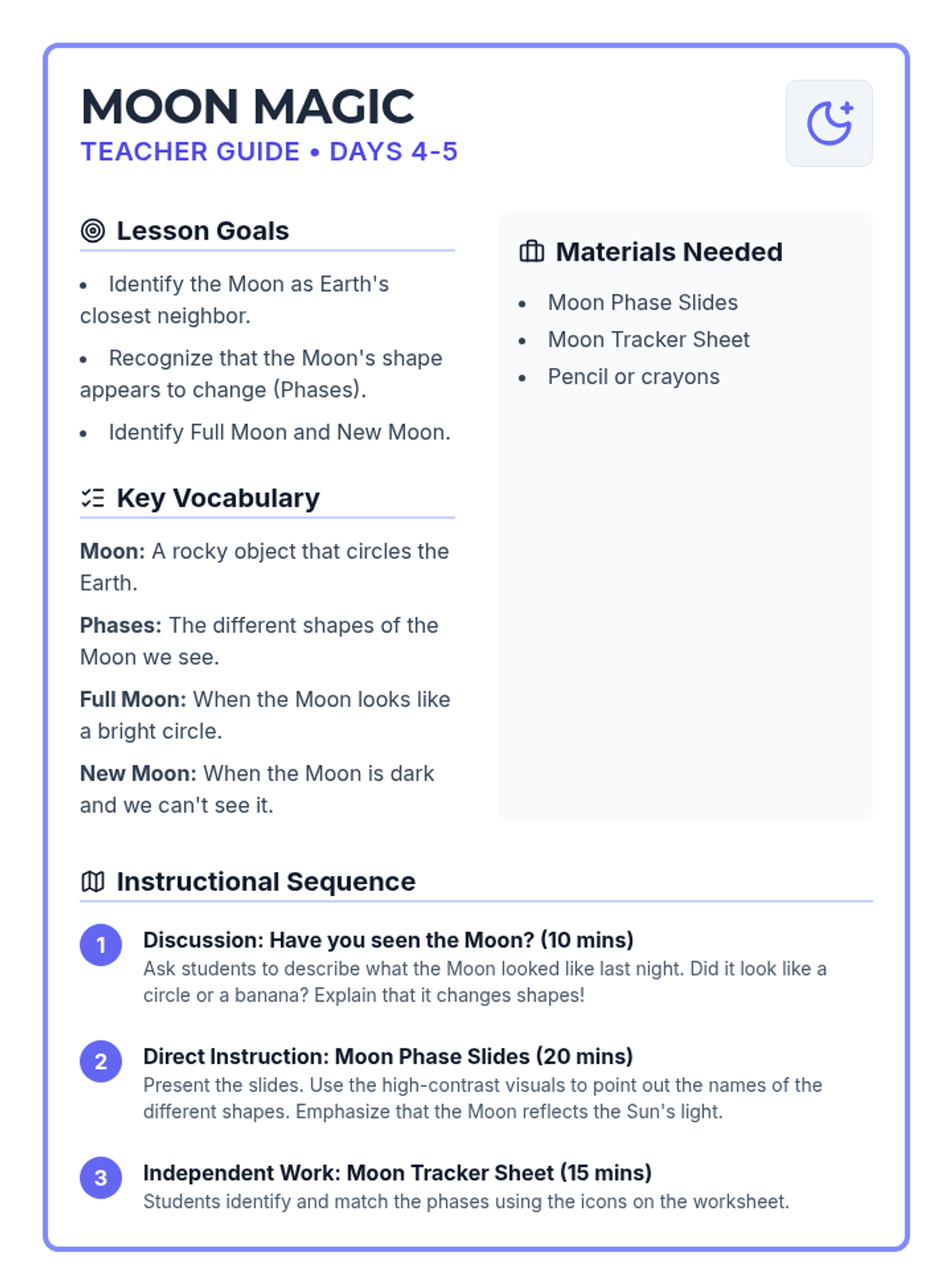
A teacher guide for the Moon Magic lesson, focusing on moon phases. Includes visual analogies and discussion prompts to explain the lunar cycle without requiring physical cookies or props.
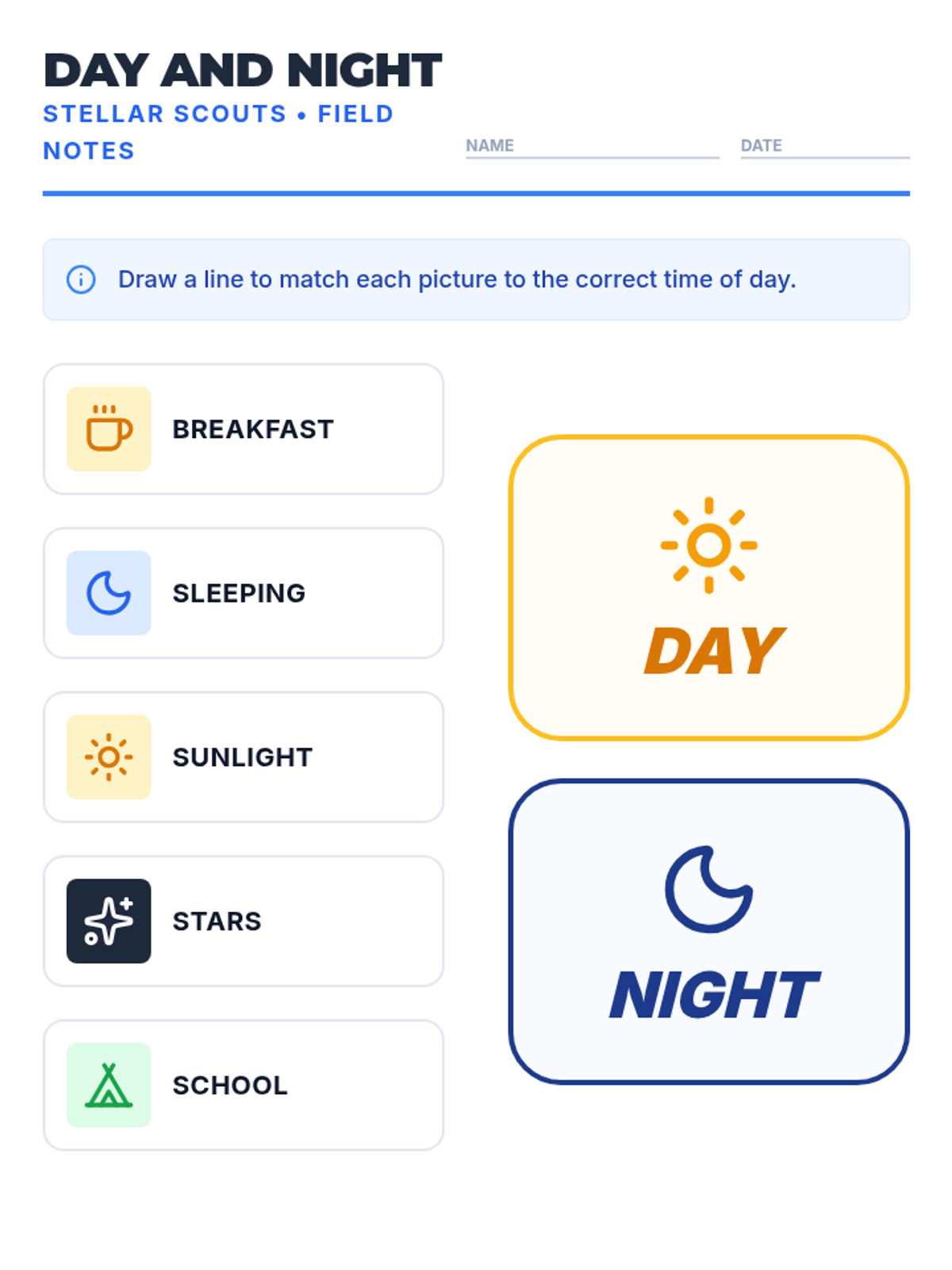
A matching activity worksheet where students connect images of daily activities (like eating breakfast or seeing stars) to either the 'Day' or 'Night' category. Designed with clear icons and large targets for students with fine motor challenges.
An instructional slide deck explaining Earth's rotation and revolution. Uses high-contrast visuals, animations, and simple comparisons (like spinning like a top) to teach students about day, night, and the length of a year.
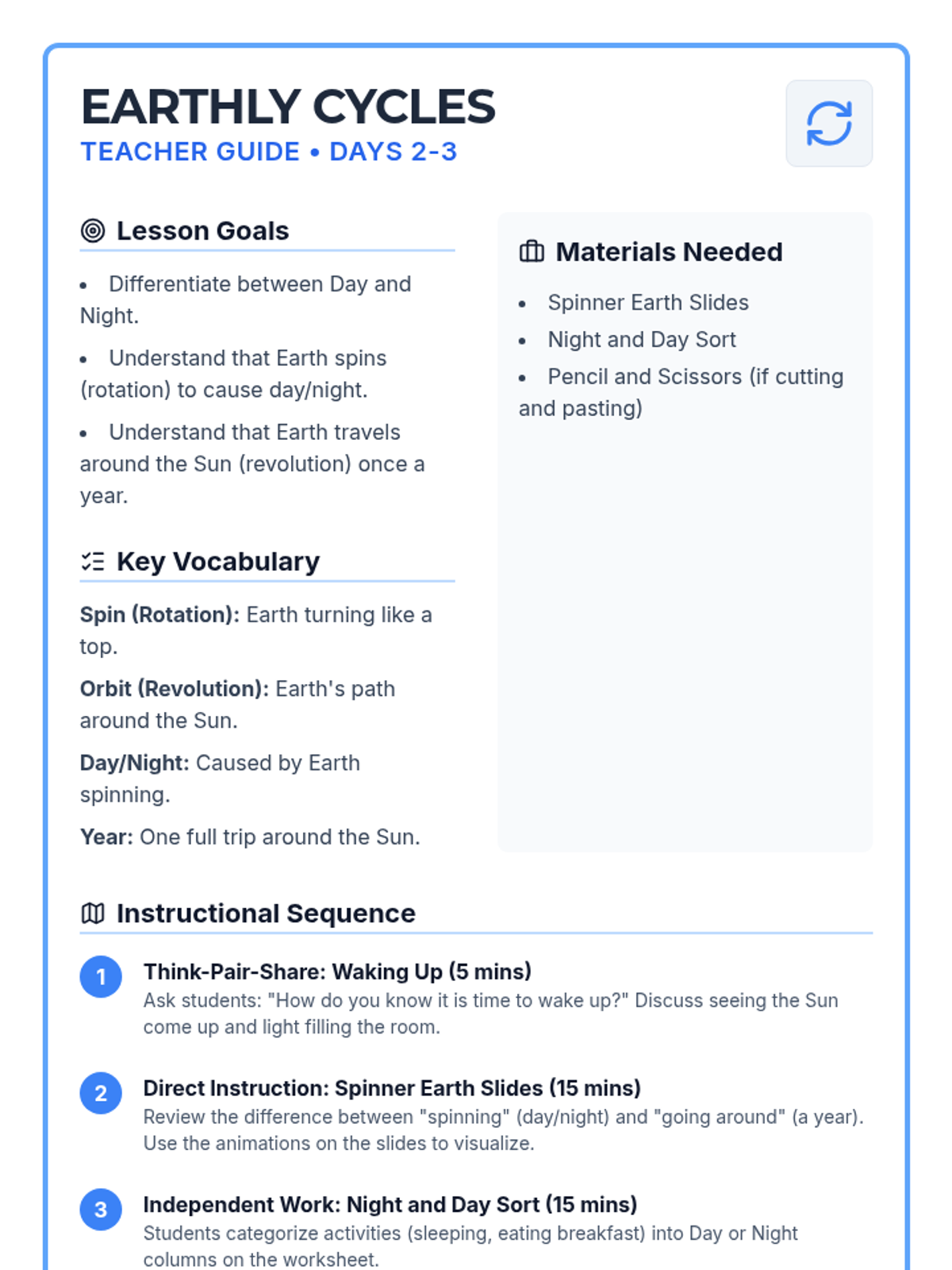
A detailed teacher guide for Lesson 2, covering Earth's rotation and revolution. Includes instructional strategies for differentiating day and night using visual analogies and movement, without physical props.
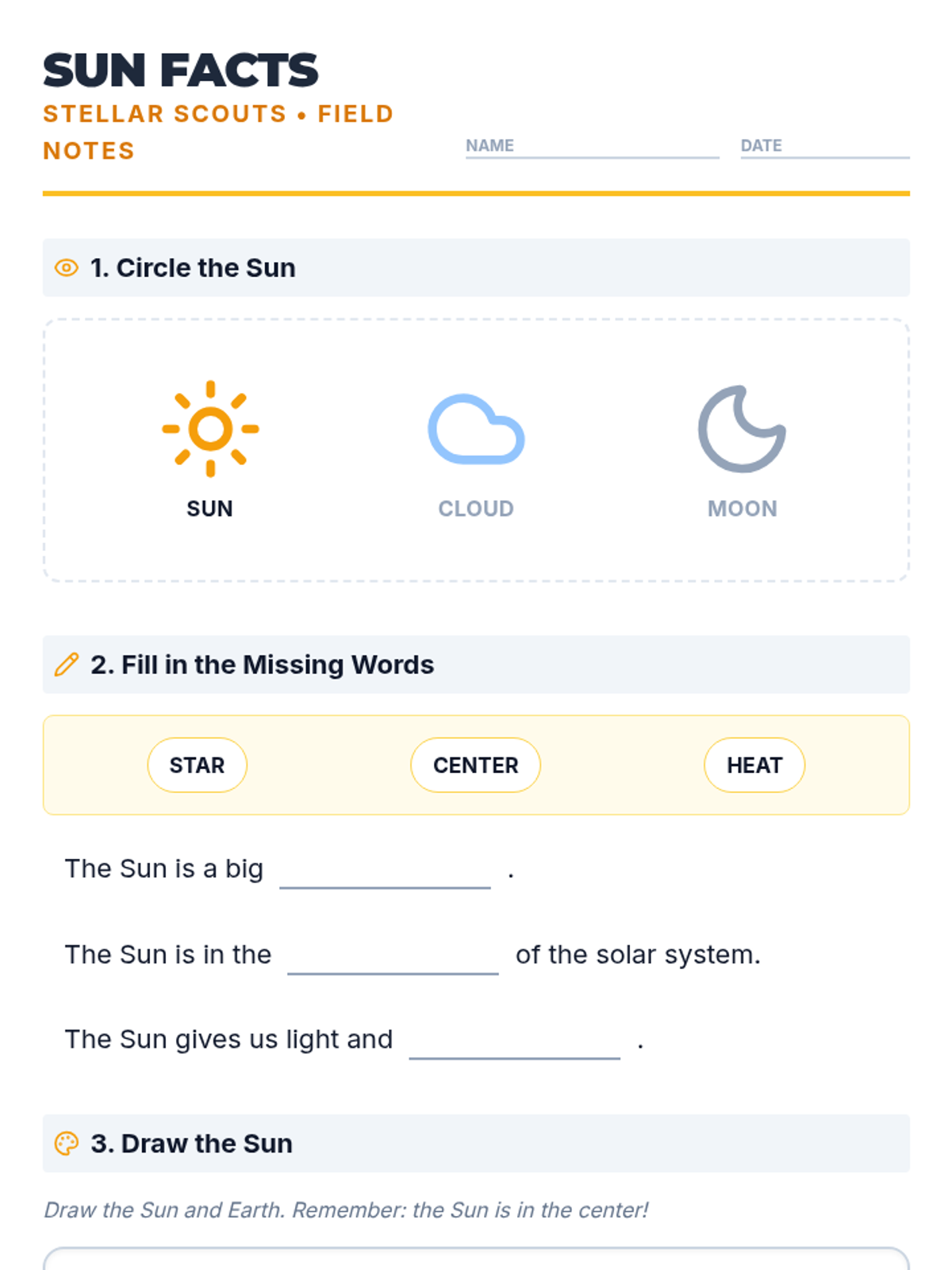
A student worksheet for the Sun Center lesson. It includes a visual identification task, simple fill-in-the-blank sentences using a word bank, and a drawing area to reinforce the concept of the Sun as the center of the solar system.