A structured feedback form for staff to use while observing a CSE meeting role-play. It tracks tone, strategy usage, and key turning points in the resolution process.
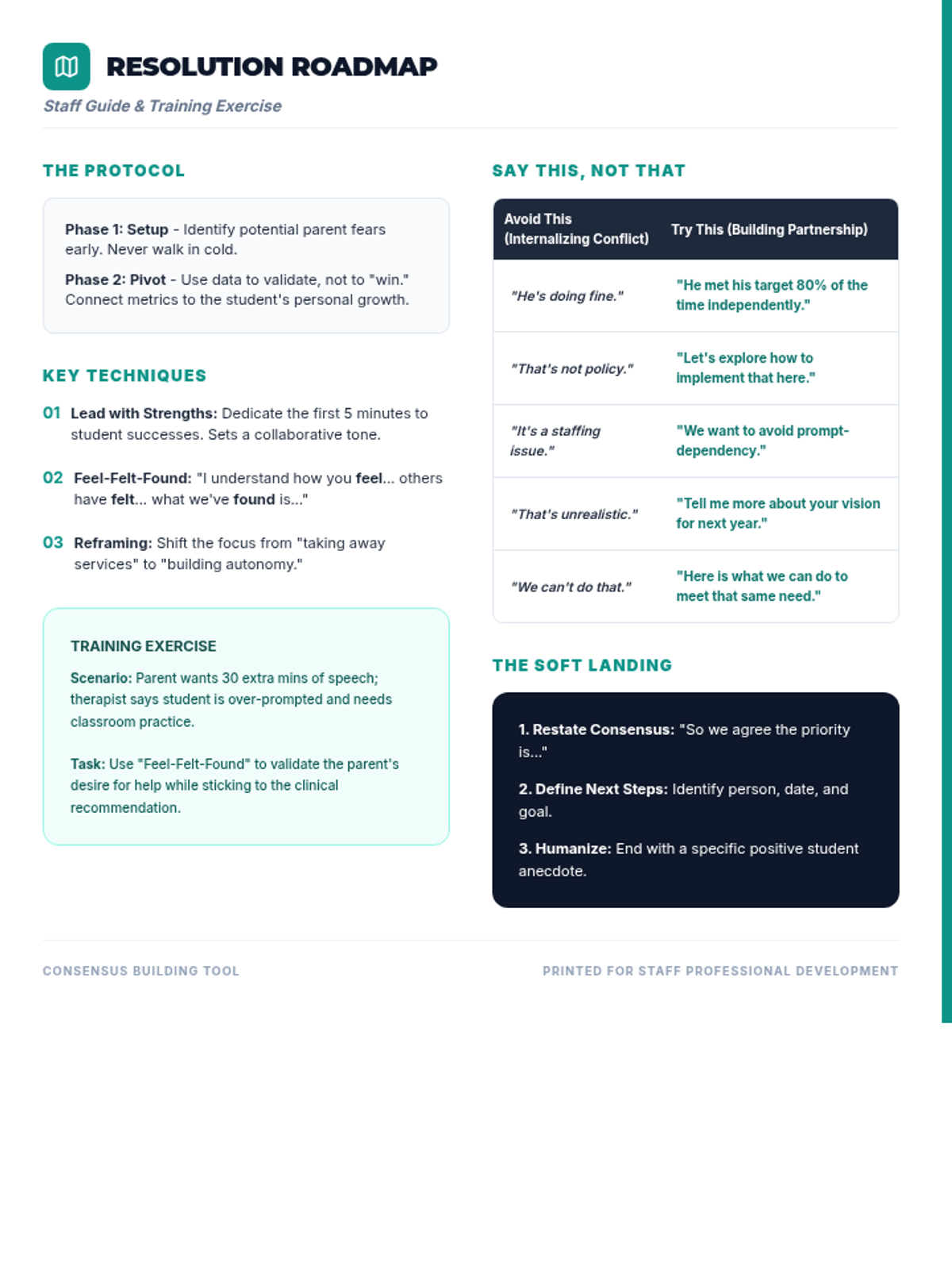
A one-page reference guide for school staff providing strategies, phrasing, and phases for successfully resolving parent issues in CSE meetings.
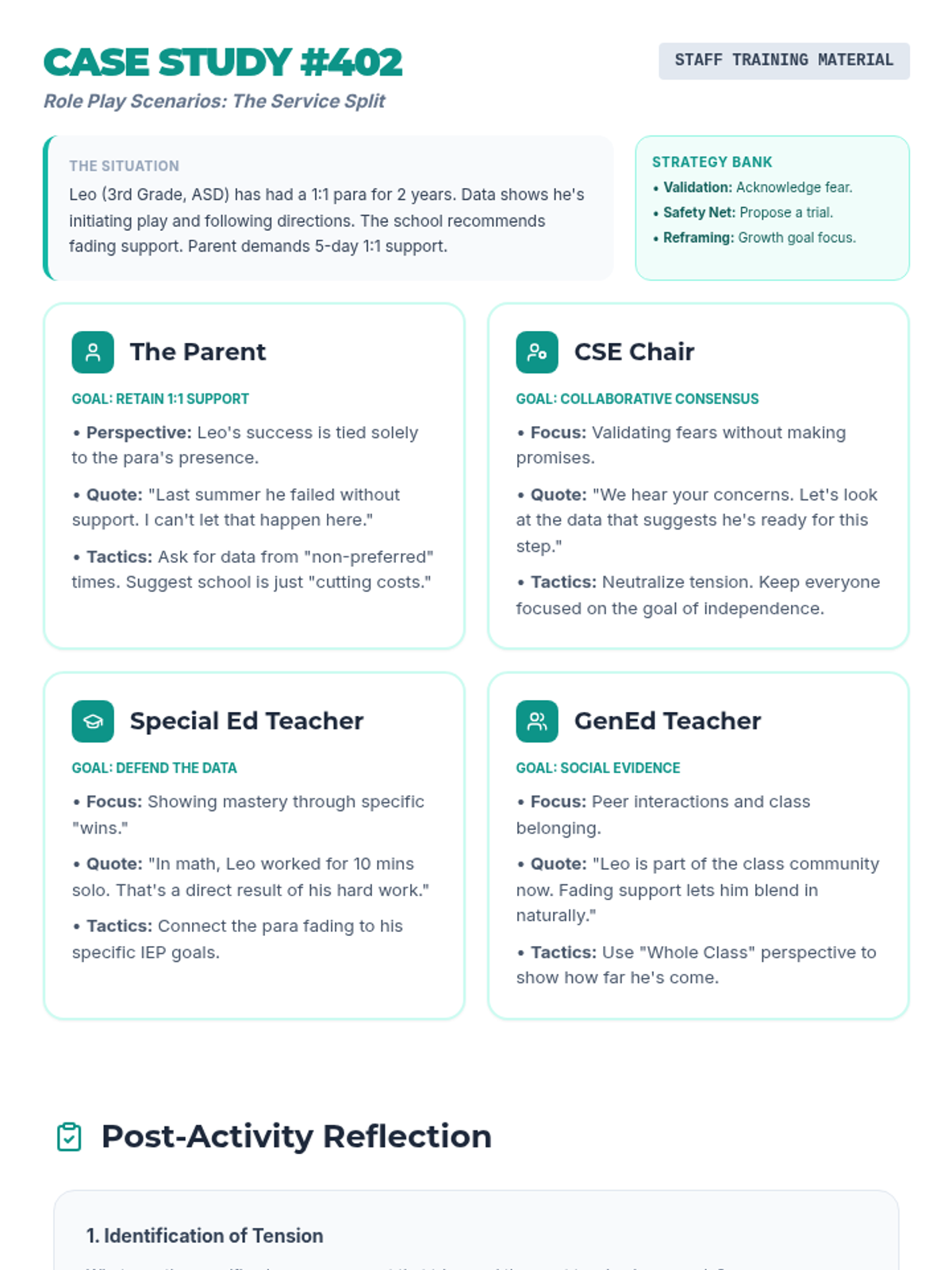
A set of role-play scenario cards and resolution strategies for school staff to practice handling parent conflict in CSE meetings. It includes specific prompts for a Parent, CSE Chair, and Teachers.
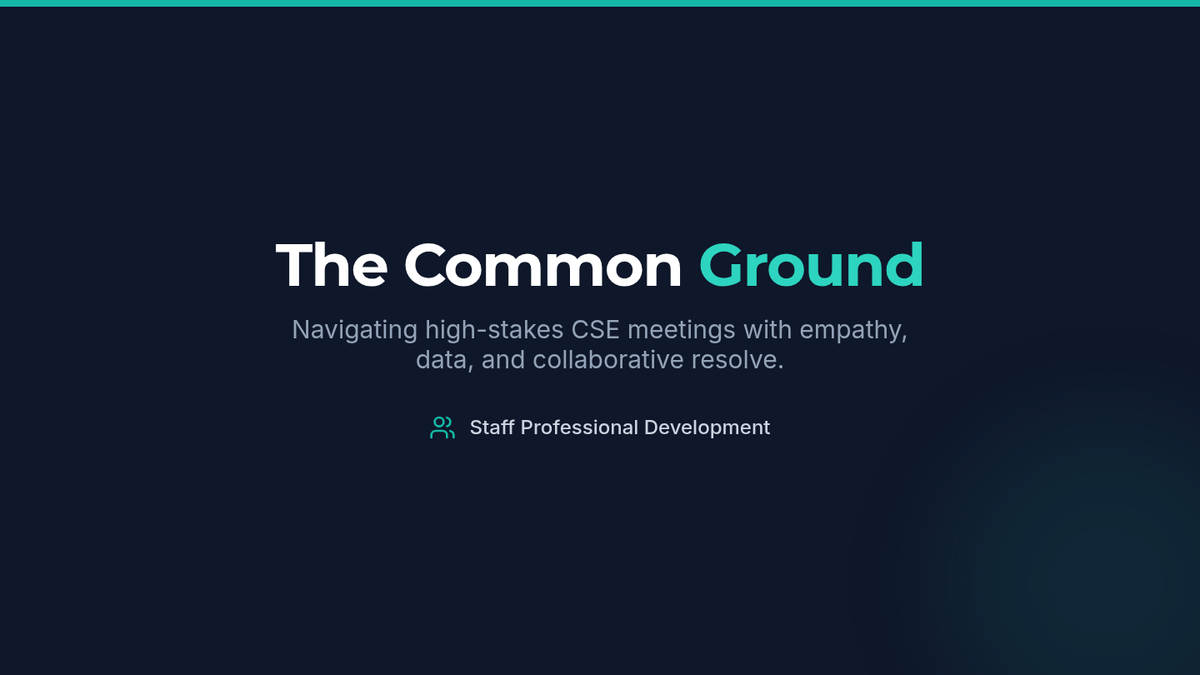
A slide deck designed to facilitate a staff training session on resolving parent conflicts in CSE meetings. It includes goals, common conflict points, a role-play scenario, and debrief prompts.
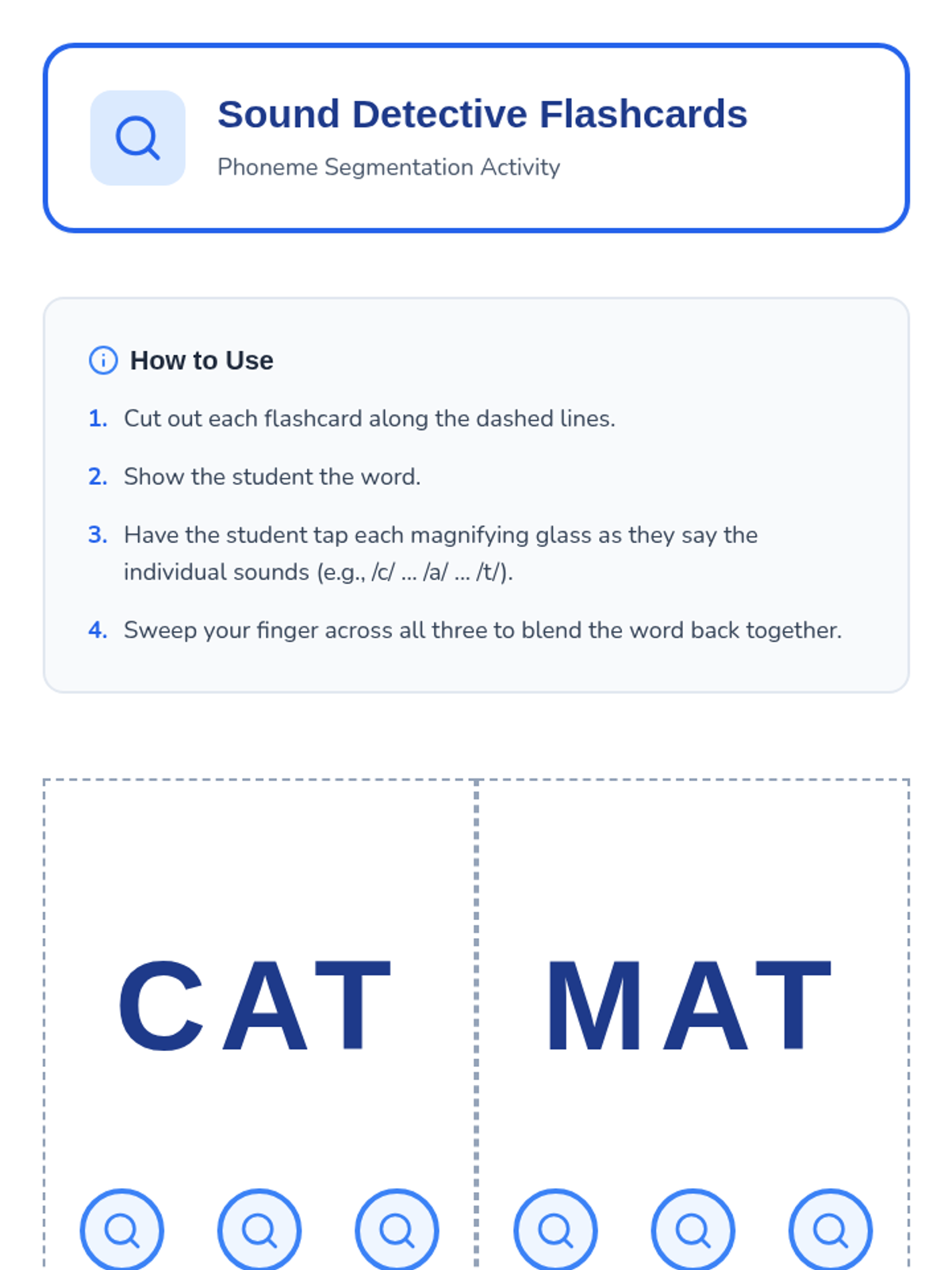
A set of large CVC word flashcards designed for phoneme segmentation practice. Each card features a word in bold uppercase letters and three magnifying glass icons to guide students in 'searching' for each individual sound.
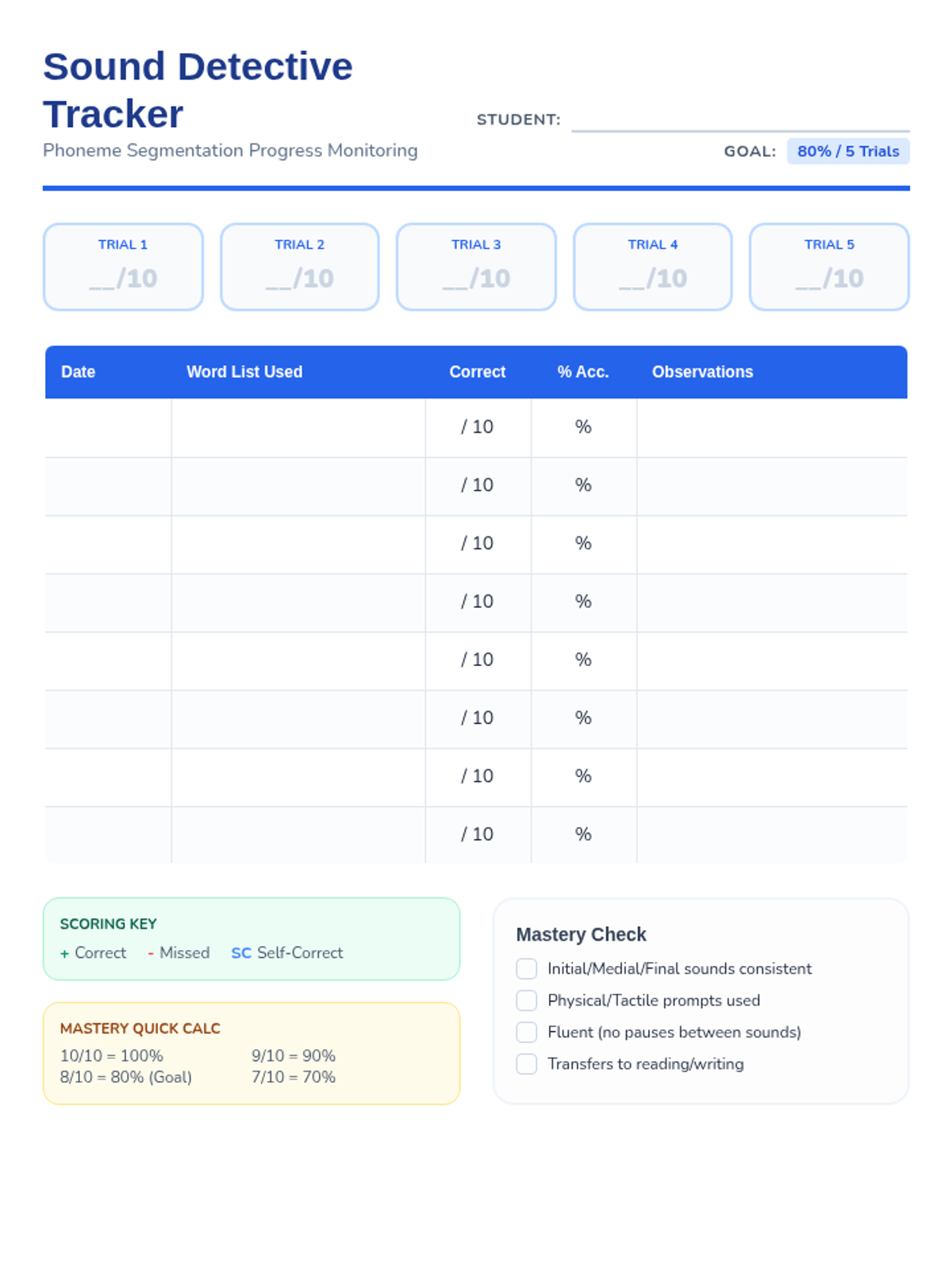
A structured data collection sheet for monitoring progress on phoneme segmentation goals. Includes space for tracking dates, word lists, and accuracy across multiple trials with a built-in scoring guide.
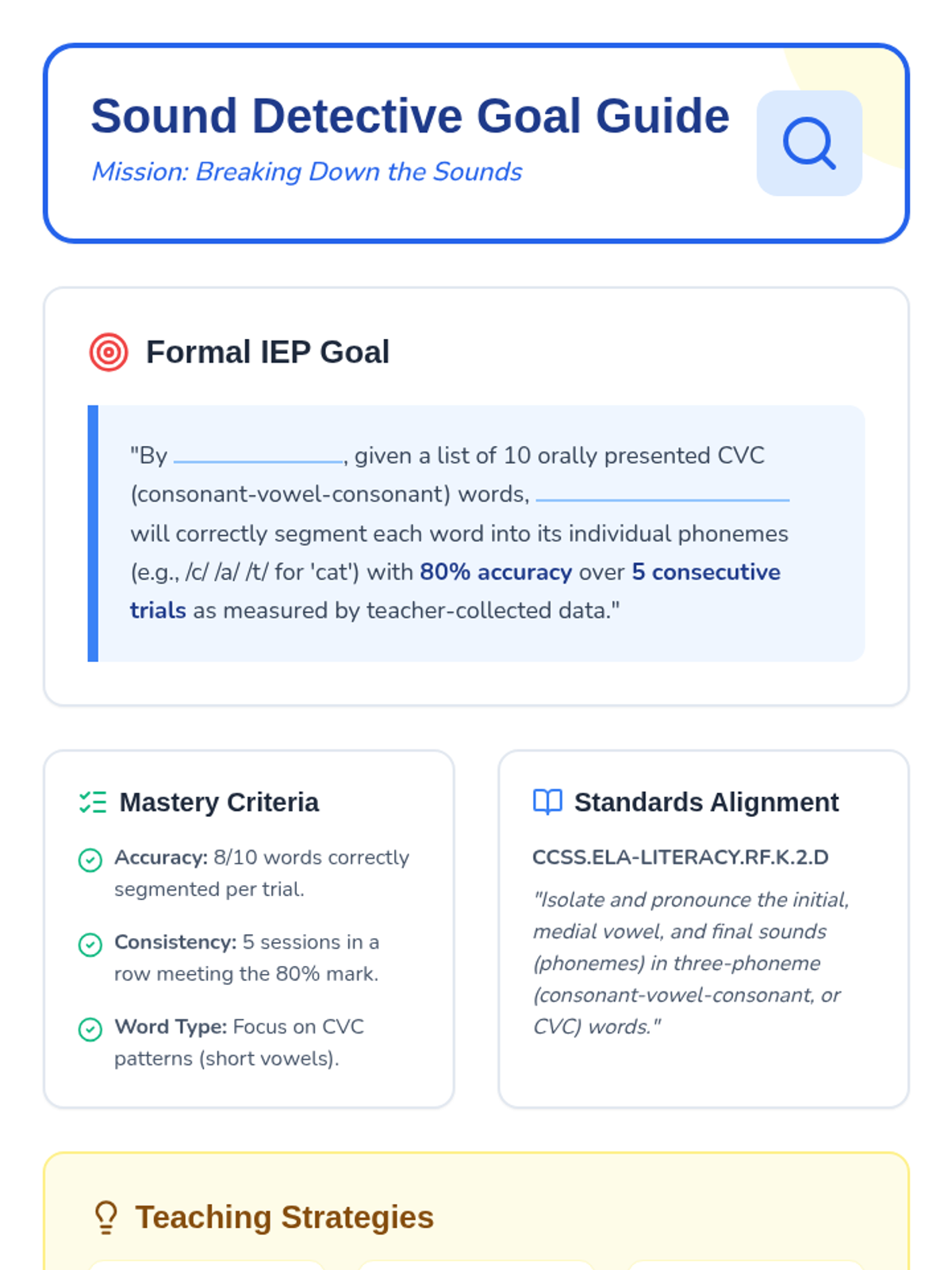
A comprehensive teacher guide for a Kindergarten IEP goal on phoneme segmentation, including formal goal language, mastery criteria, standards alignment, and sample CVC word lists.
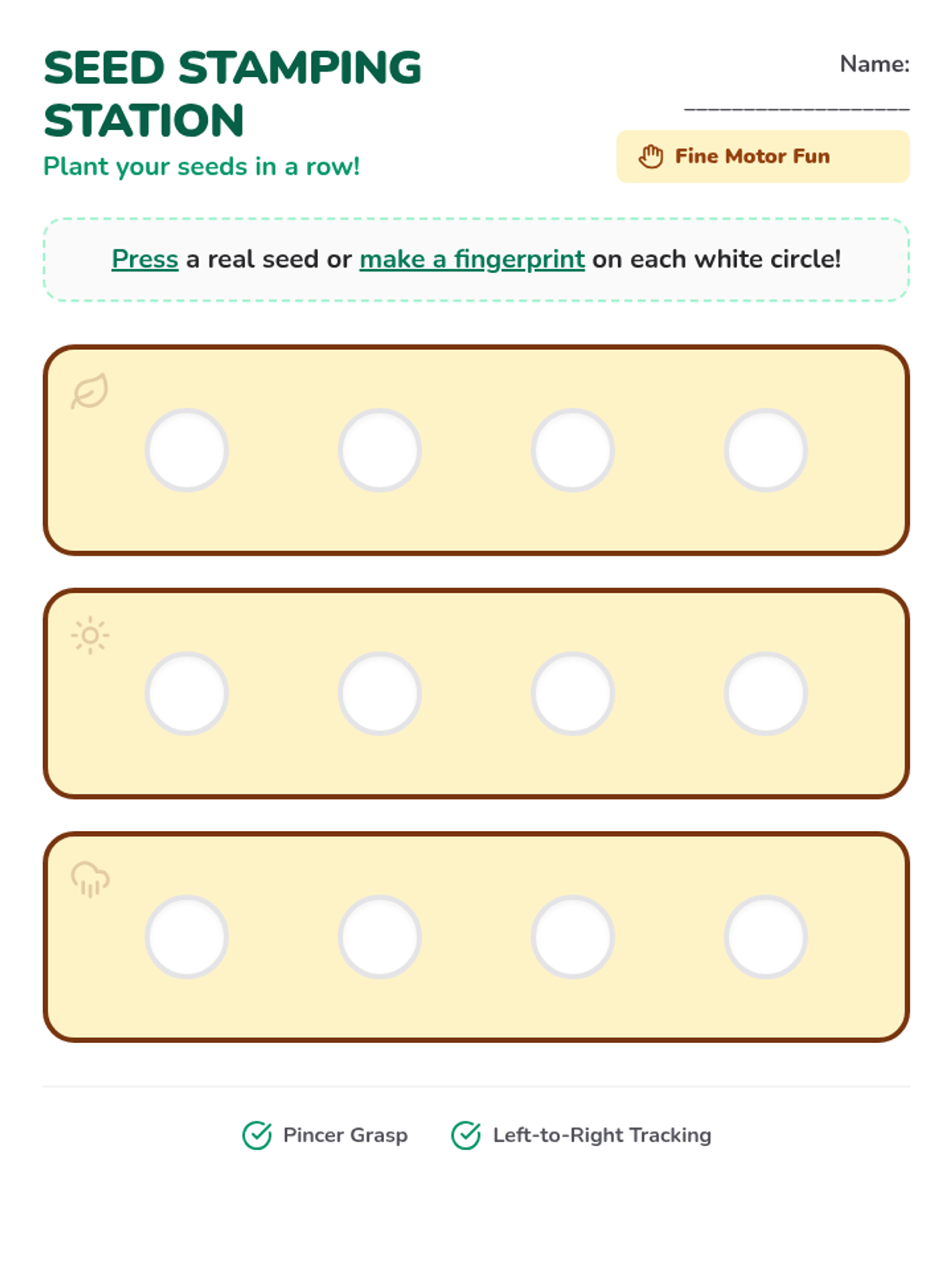
A fine motor activity sheet where students practice the pincer grasp and left-to-right tracking by "planting" seeds or making fingerprints on designated target dots within soil-themed rows.
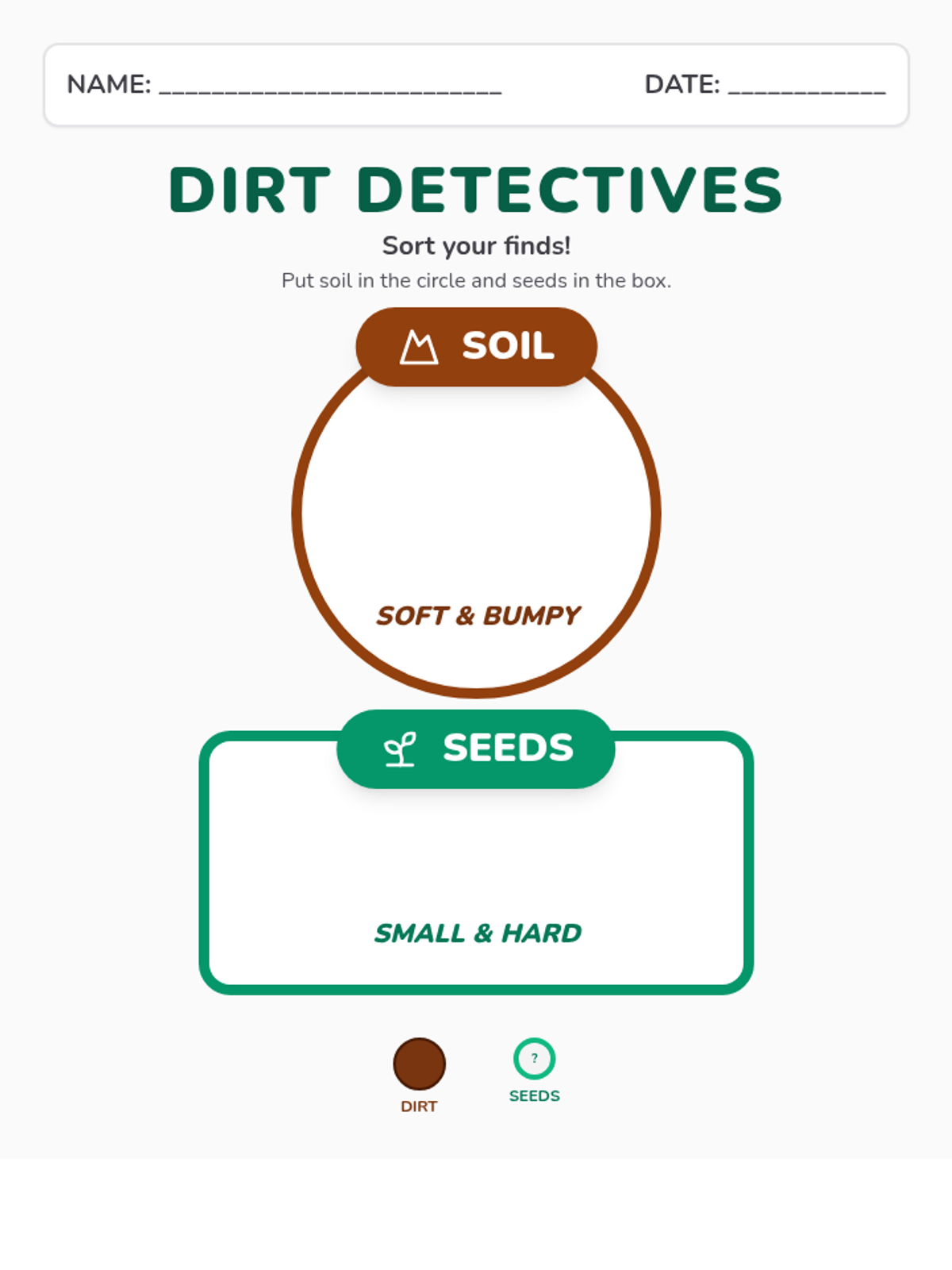
A tactile sorting mat for Pre-K students to categorize soil and seeds during their sensory exploration, featuring high-contrast borders and clear visual labels.
Engaging visual slides for the Sensory Seedlings Lab with large text, clear icons, and visual prompts for Pre-K students to identify soil, seeds, and classroom routines.
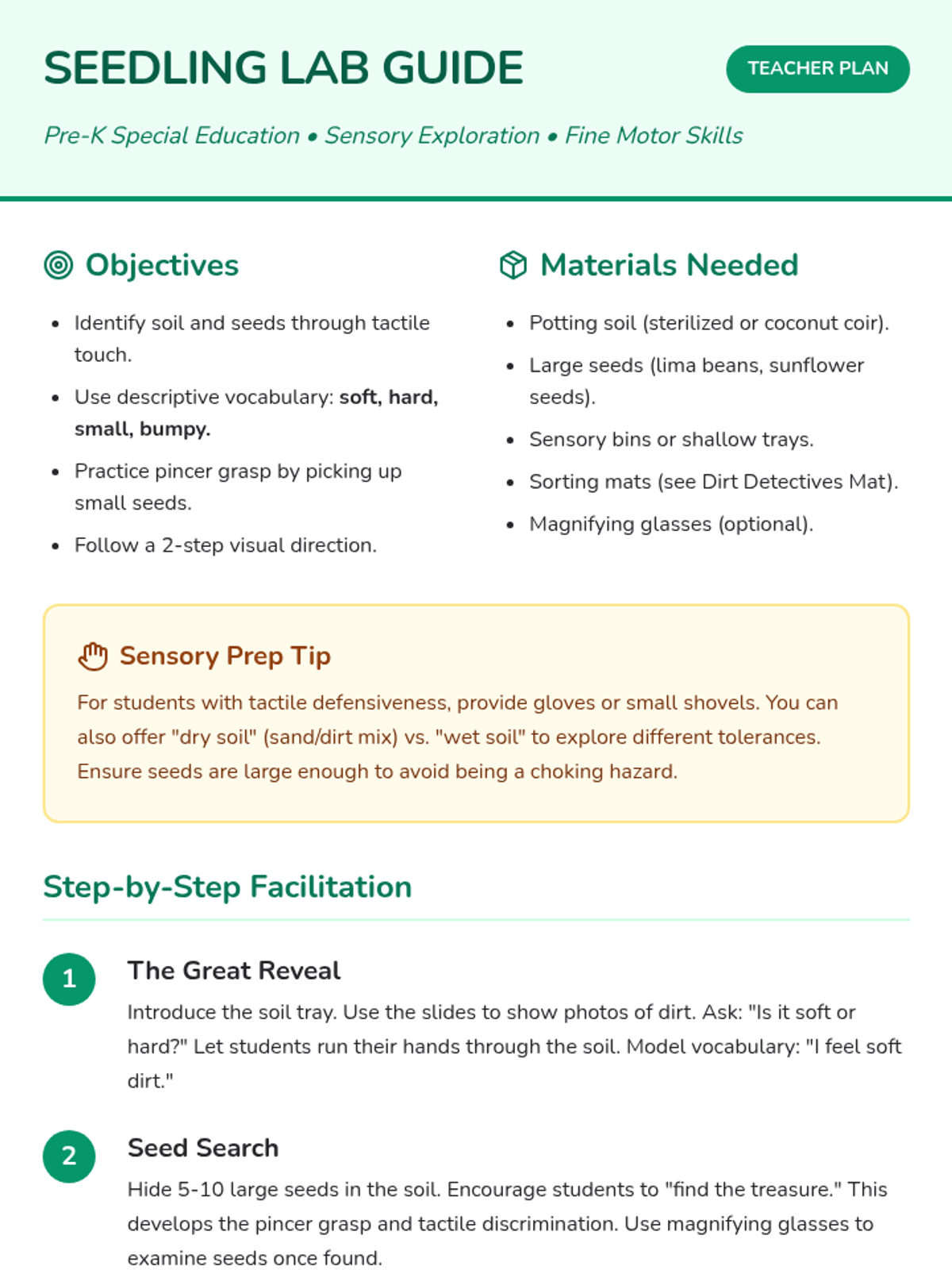
A comprehensive teacher's guide for the Sensory Seedlings Lab, including instructional steps, sensory accommodation tips, and differentiation strategies for Pre-K Special Education.
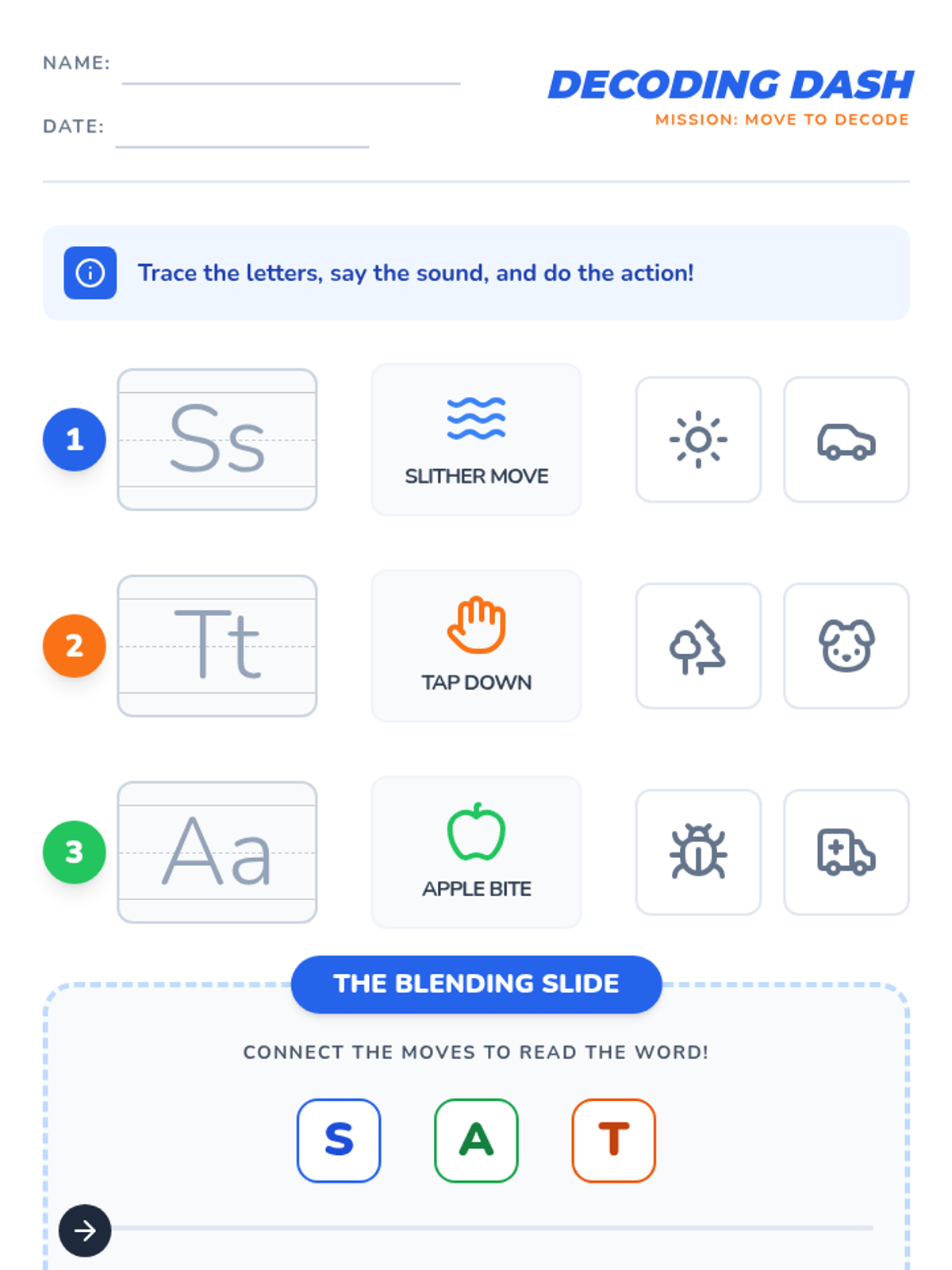
A hands-on worksheet where students practice tracing letters, identifying starting sounds, and performing kinetic gestures for phonemes.
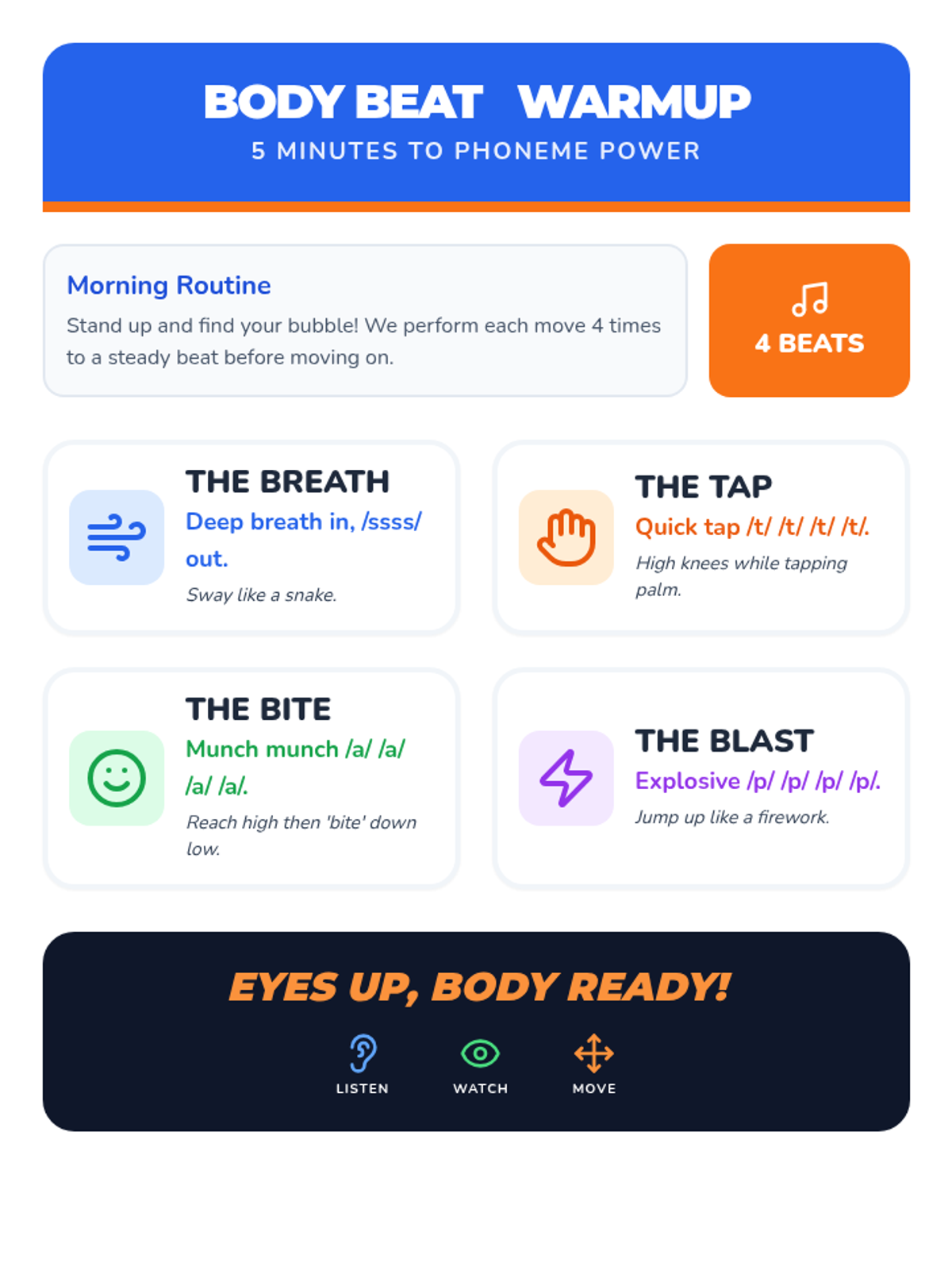
A quick-start visual reference guide for students to perform the daily kinetic phonics routine and build muscle memory.
An energetic presentation featuring high-contrast visuals and specific gesture instructions for key phonemes and CVC blending.
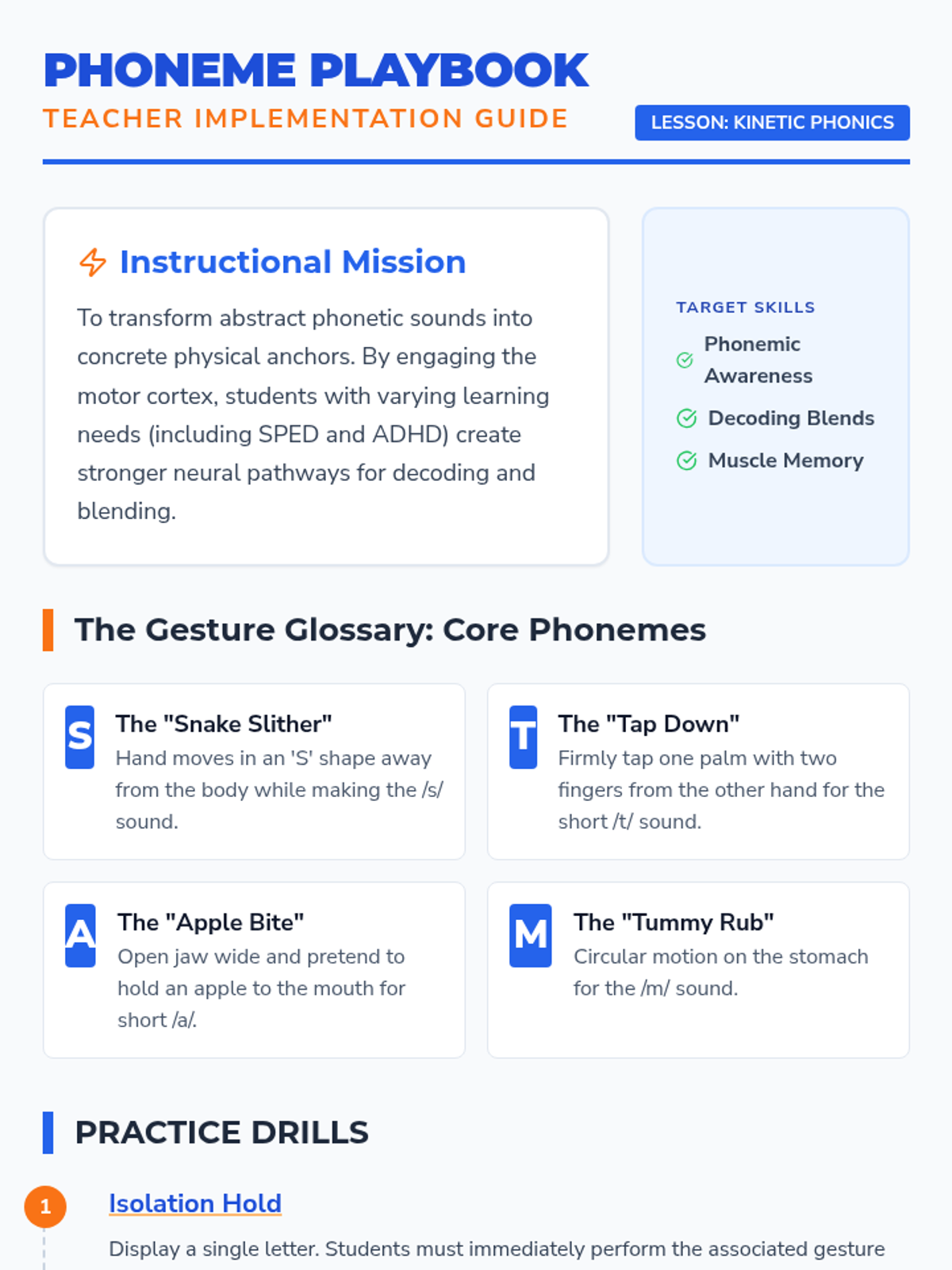
A comprehensive guide for teachers outlining the kinetic gestures, instructional goals, and differentiation strategies for movement-based phonics instruction.
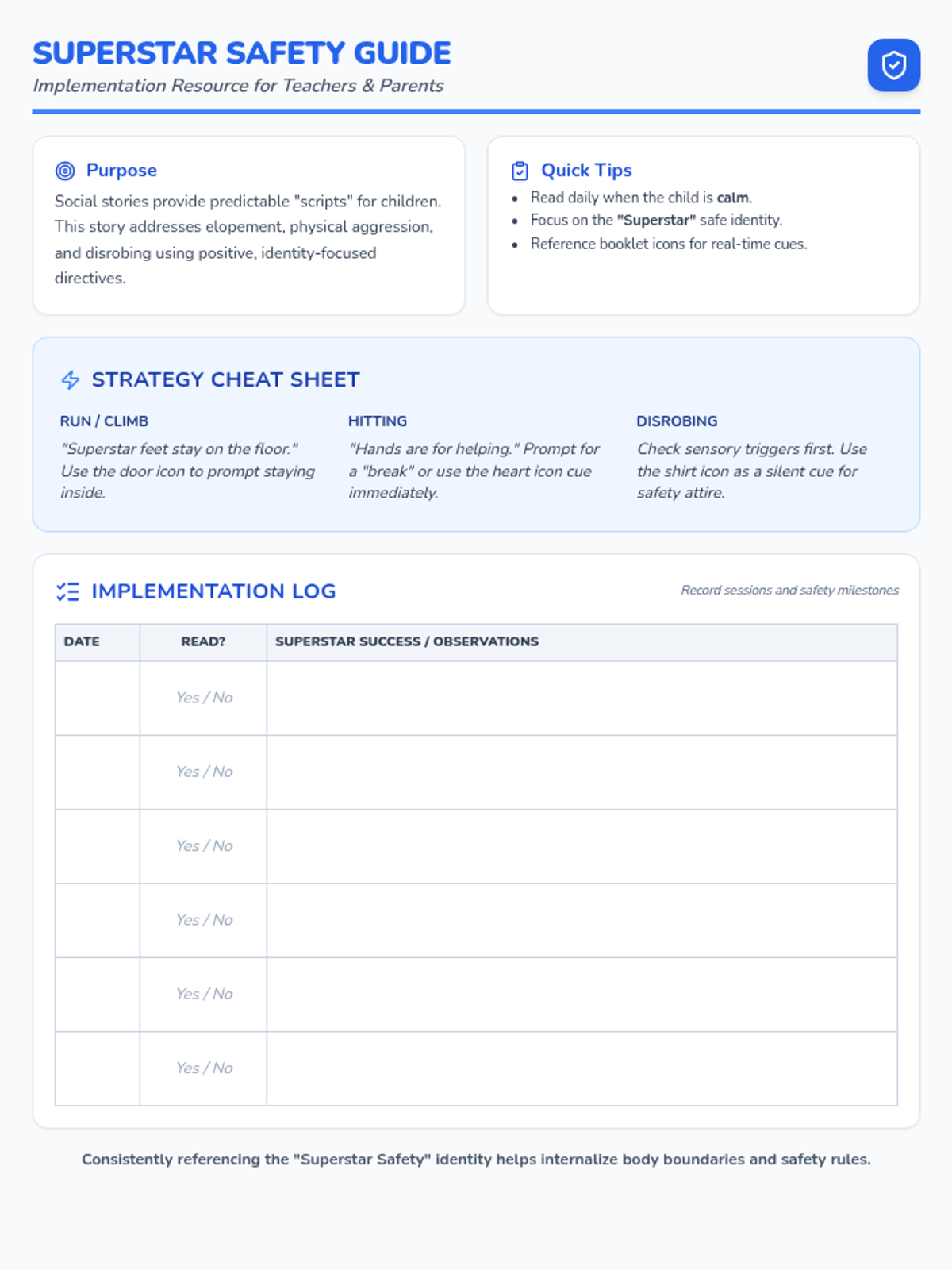
An instructional guide for teachers and parents on how to effectively implement the Superstar Safety social story with young children, including troubleshooting tips for specific behaviors.
A 7-page social story booklet for 5-year-olds that teaches essential school safety rules, including staying in the classroom, keeping hands gentle, and maintaining appropriate attire.
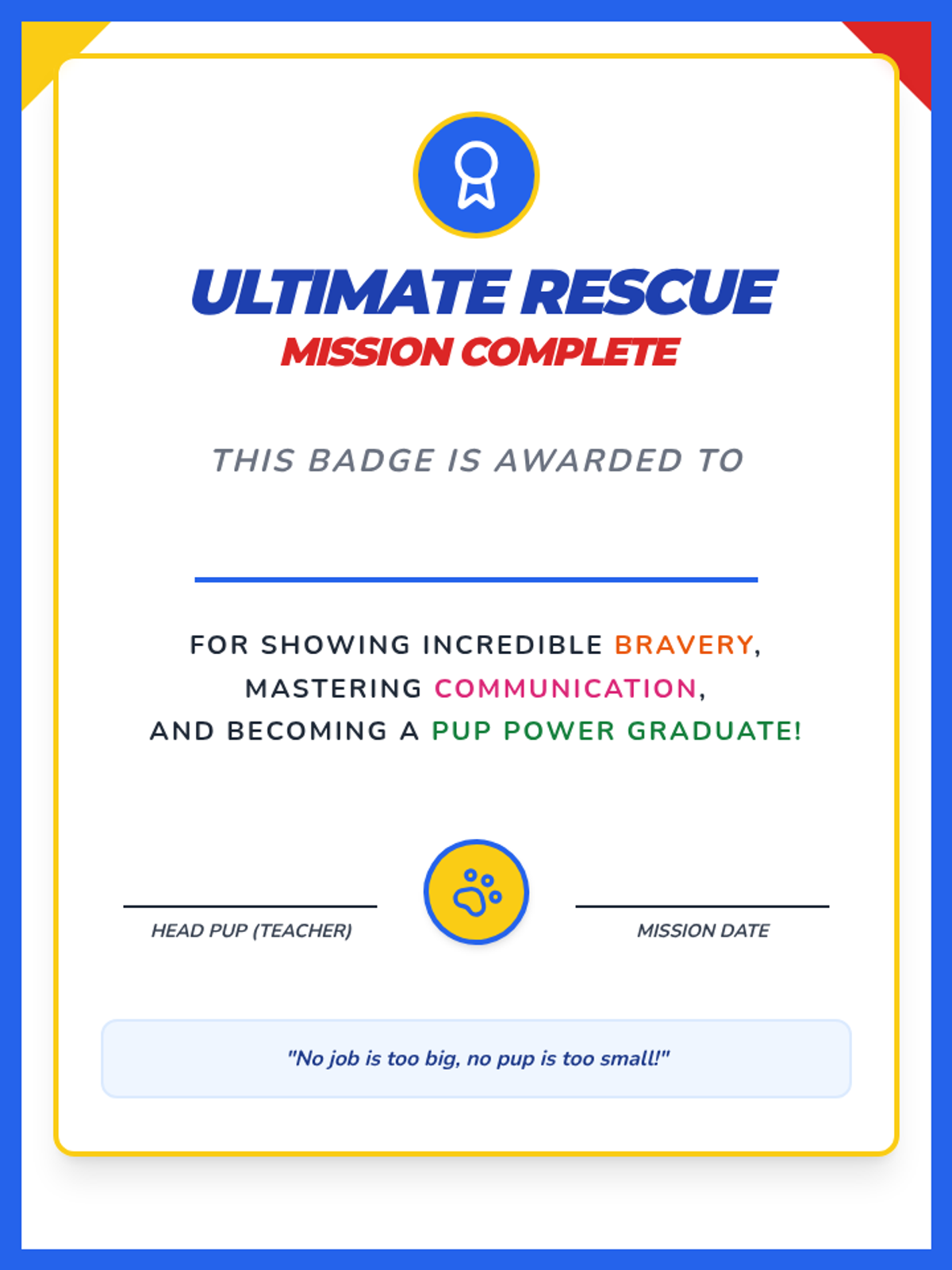
Graduation certificate. Sizing and layout polished to ensure a clean 1-page fit and improved handwriting space for the teacher.
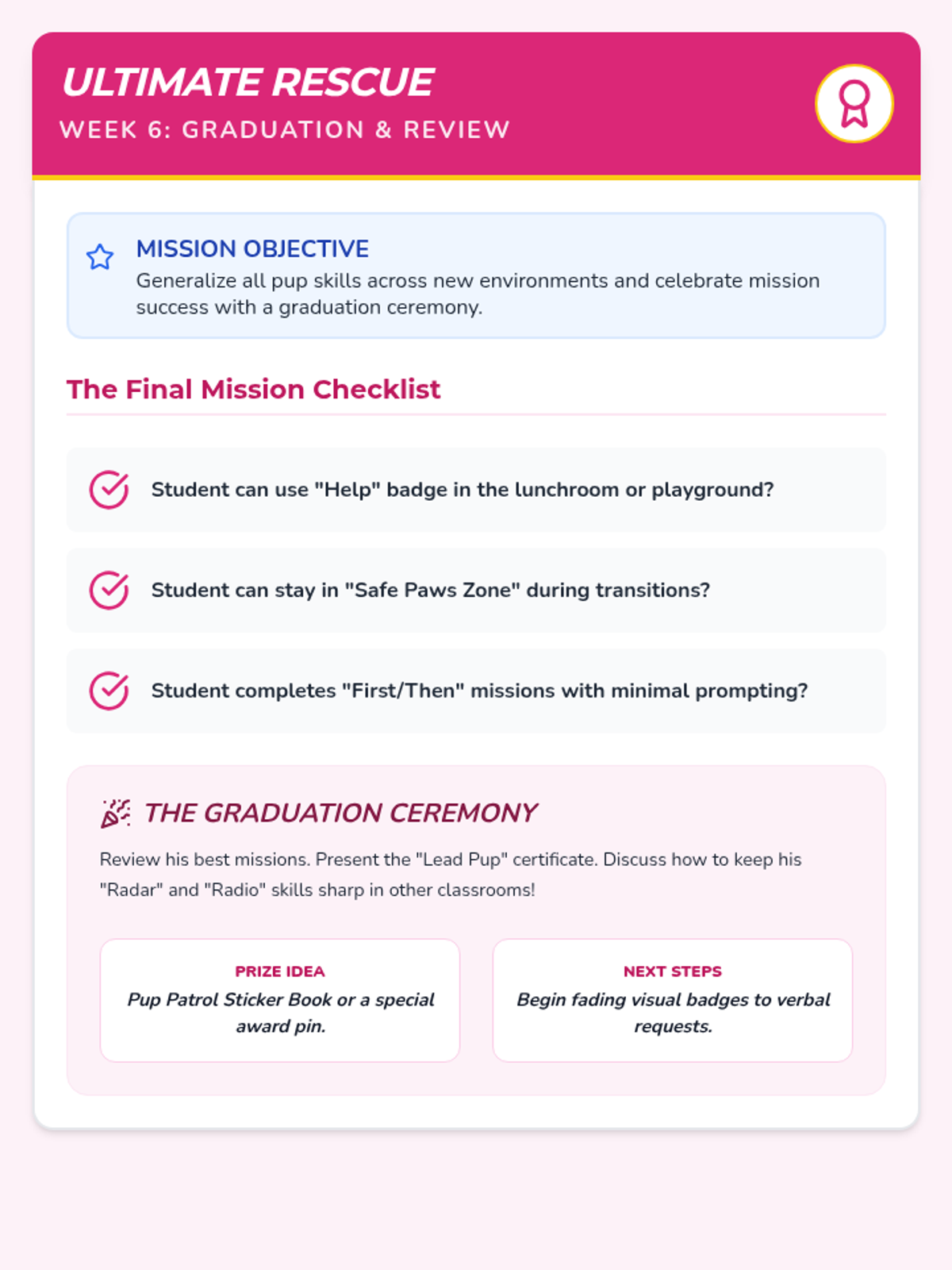
Teacher guide for Week 6. Spacing and text sizes optimized to ensure readability and a professional look on a single page.
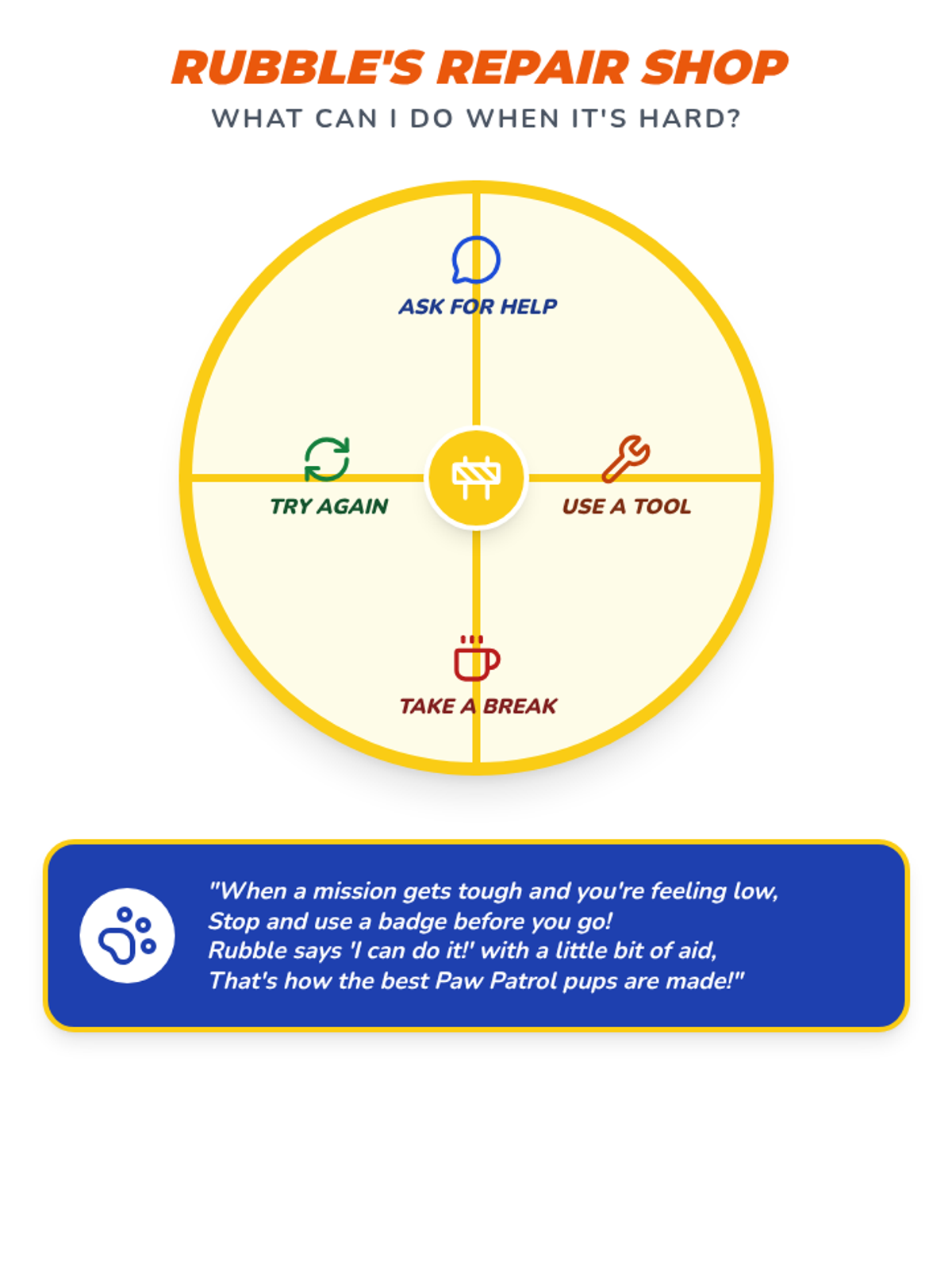
Rubble Repair Choice Board. Dividers fixed, contrast improved, and rhyme box spacing optimized to prevent page breaks.
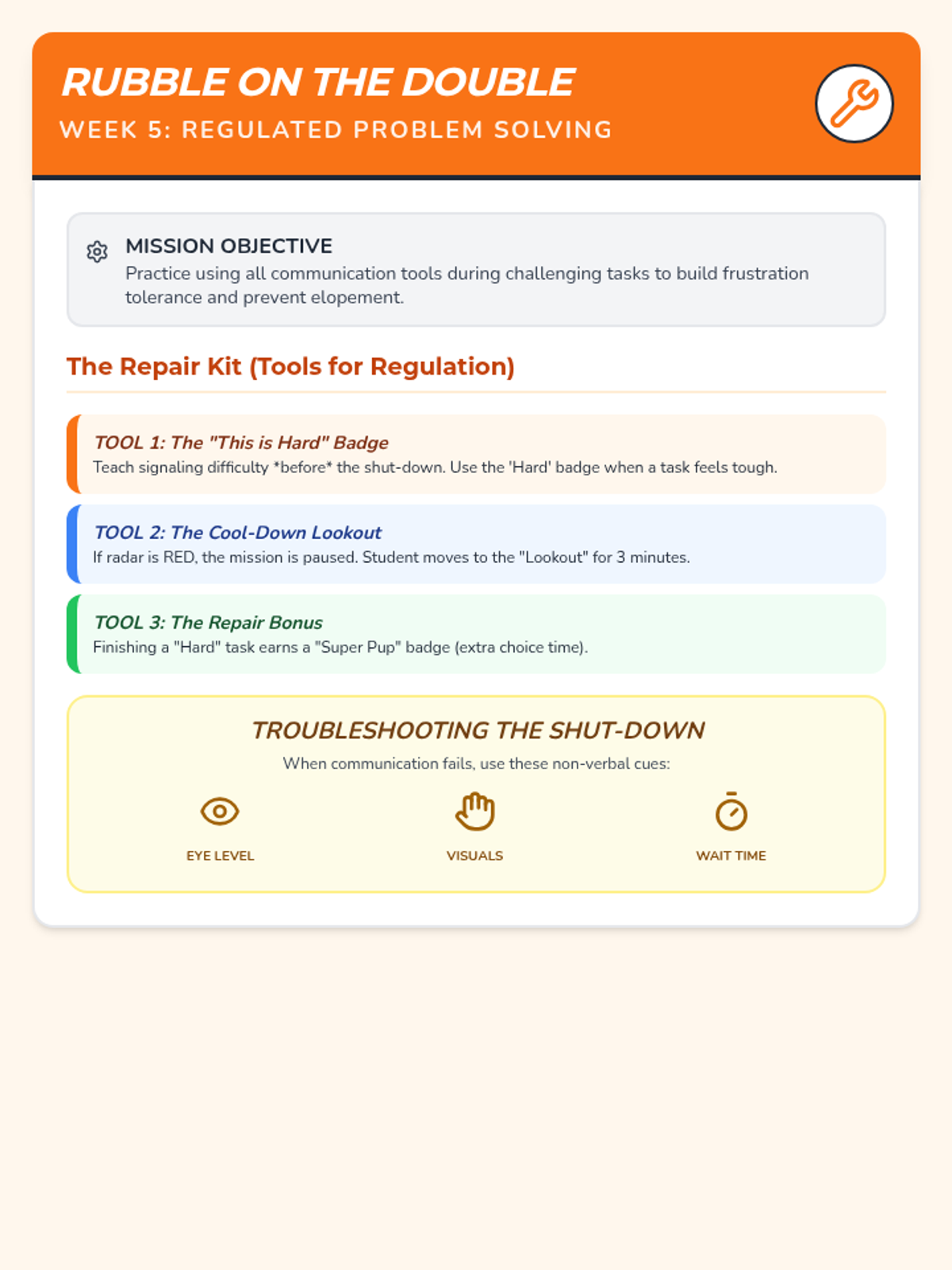
Teacher guide for Week 5. Layout tightened to fit on 1 page and higher contrast for text.
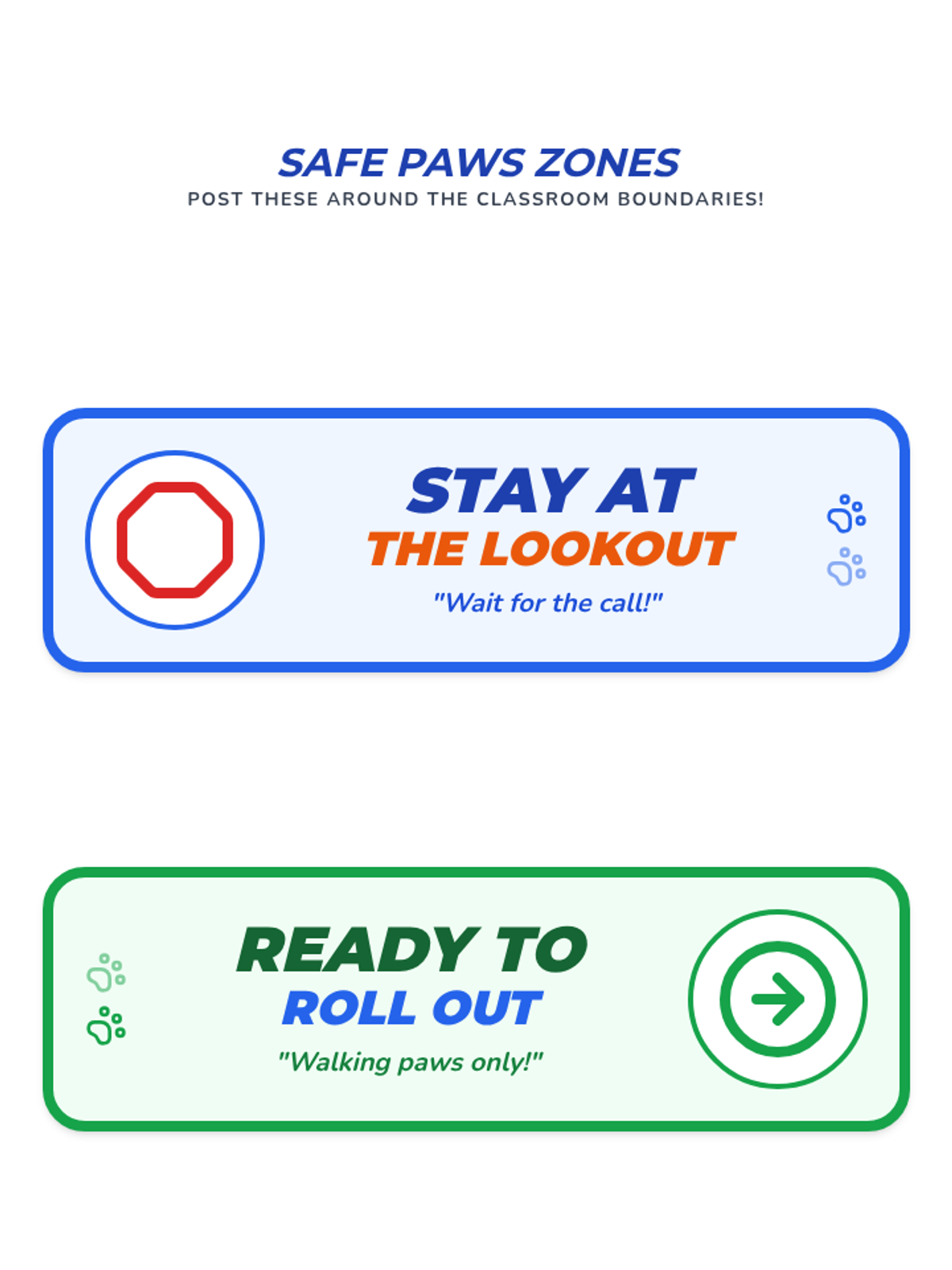
Boundary Safe Paws visual aids. Fixed page break issue by putting the Check-Out card on its own page and improved contrast.
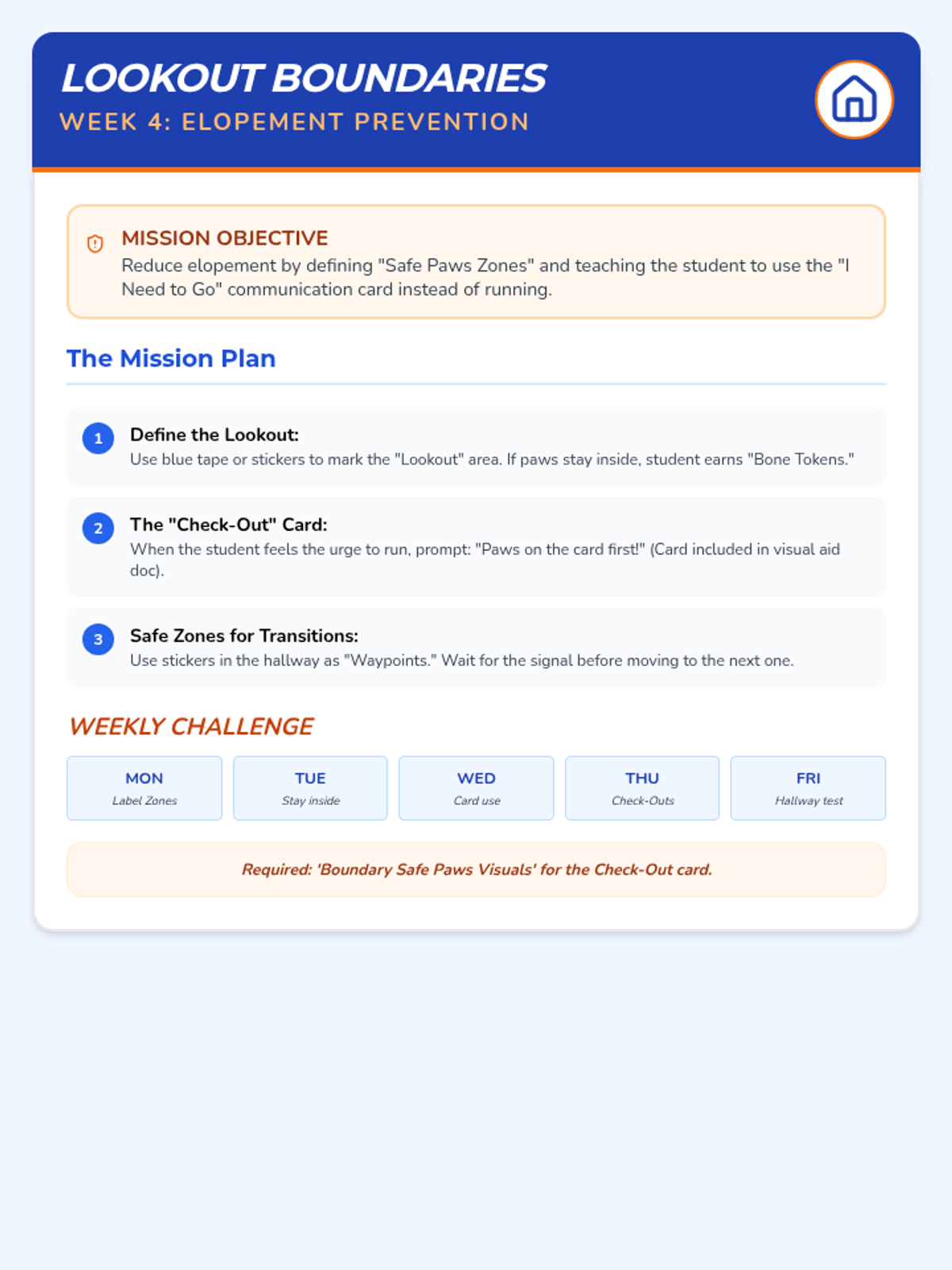
Teacher guide for Week 4. Spacing adjusted to ensure the weekly challenge fits on a single page with the header.
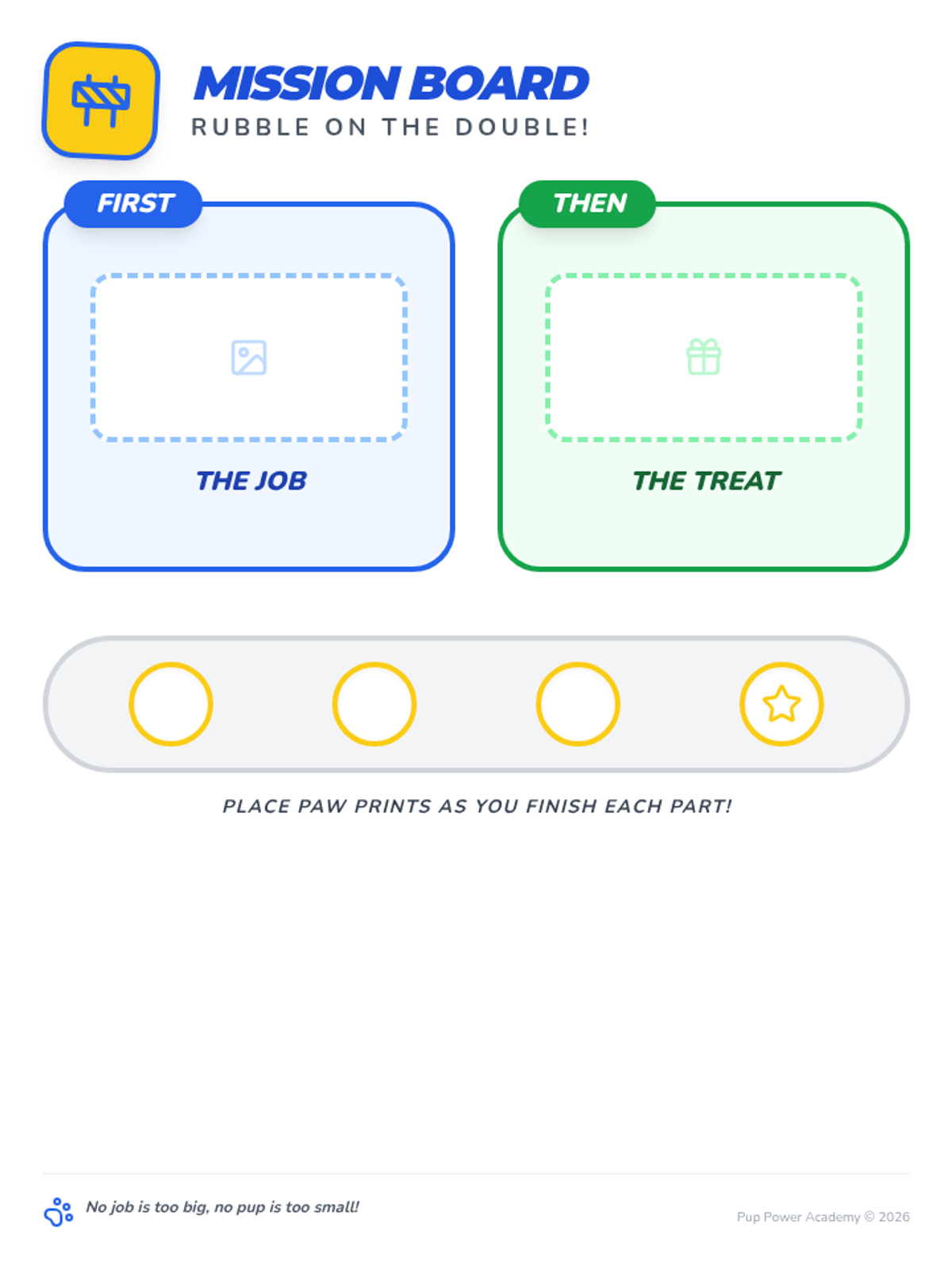
Mission Board visual with placeholders removed. Added a second page with cut-out paw print tokens as requested.
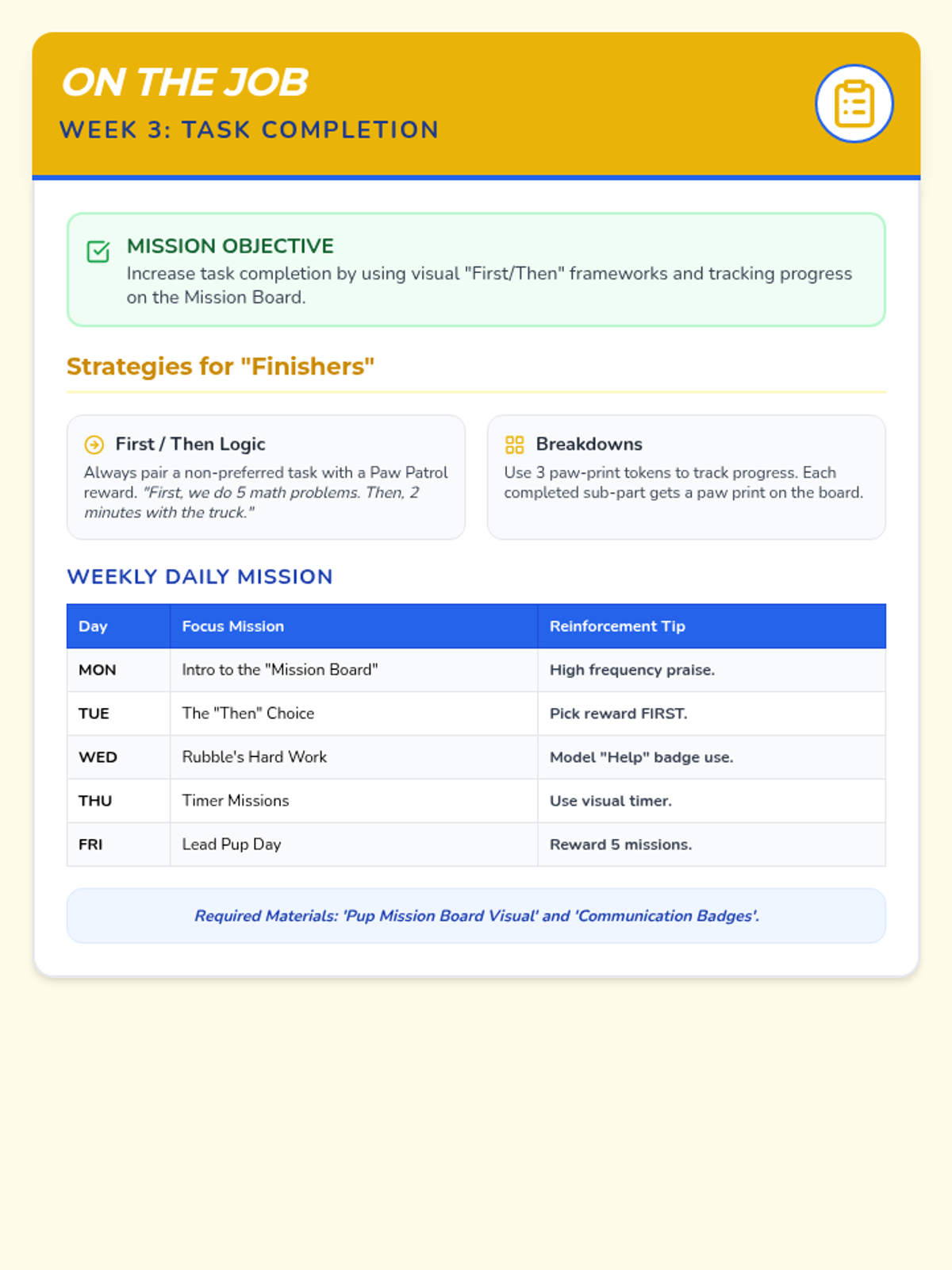
Teacher guide for Week 3. Table and layout optimized for 1-page fit with higher contrast text.
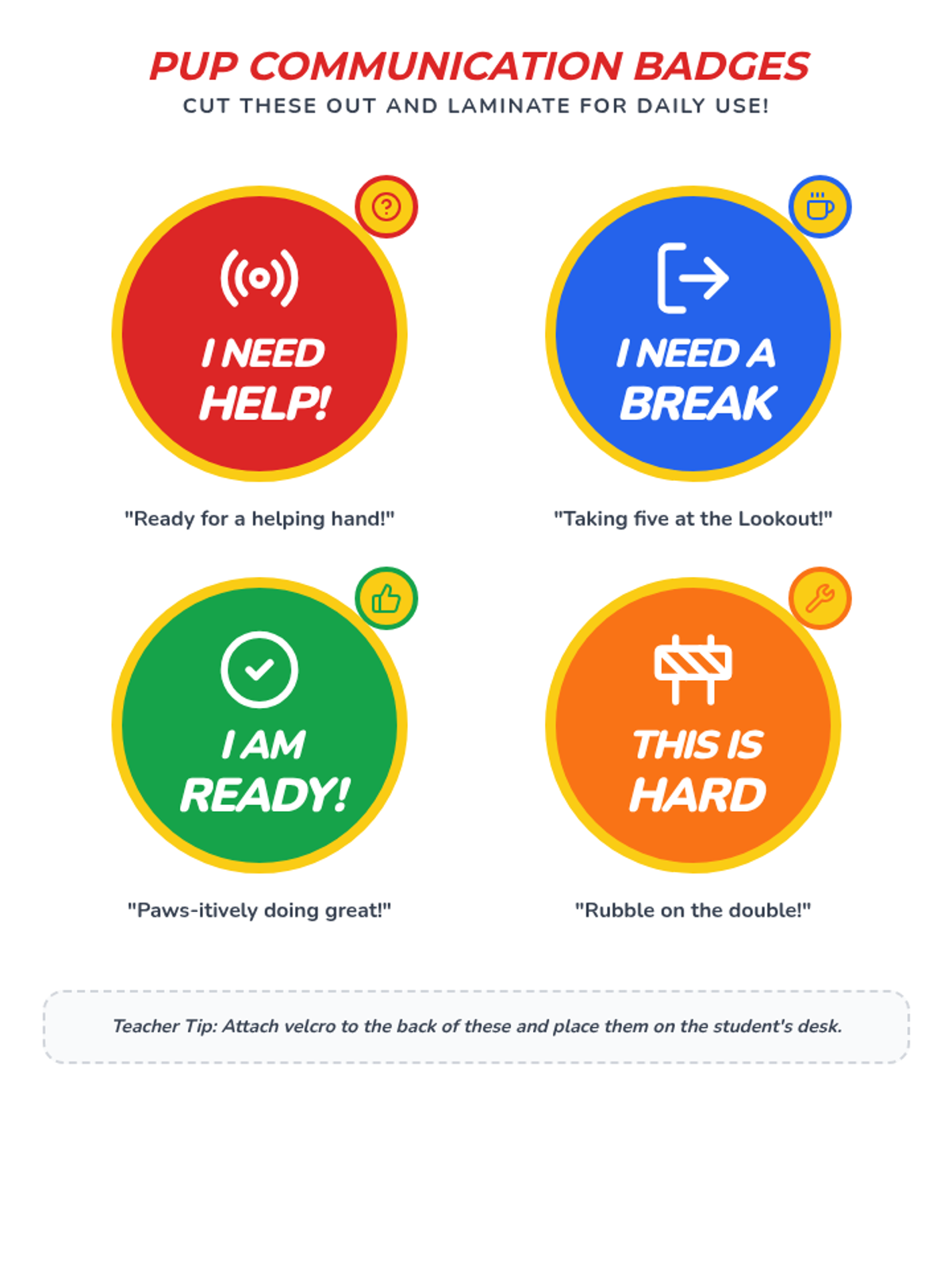
Printable non-verbal communication badges. Contrast improved and page breaks fixed.
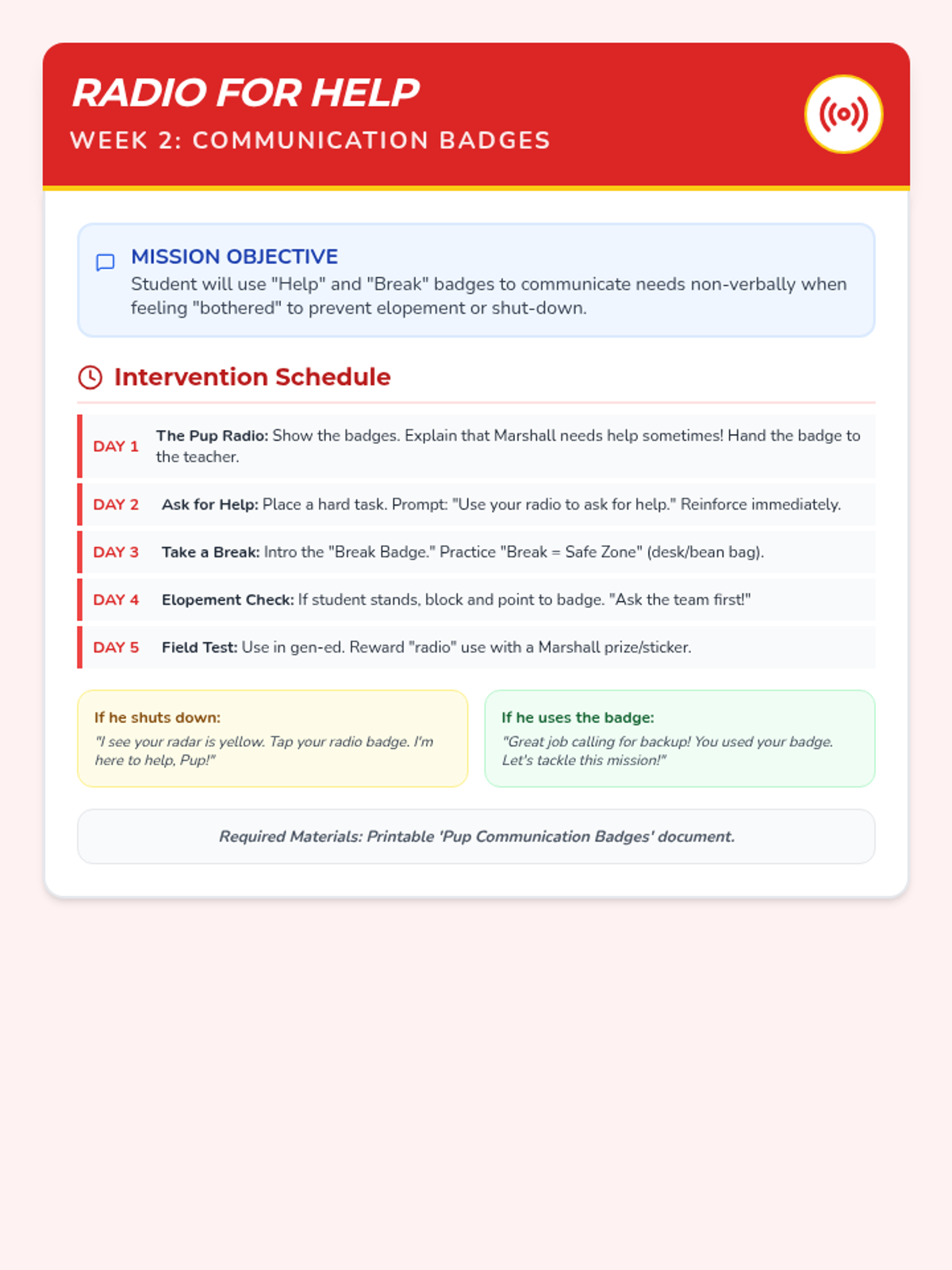
Teacher guide for Week 2, introducing 'Radio for Help' communication badges. Spacing fixed for 1-page printing.
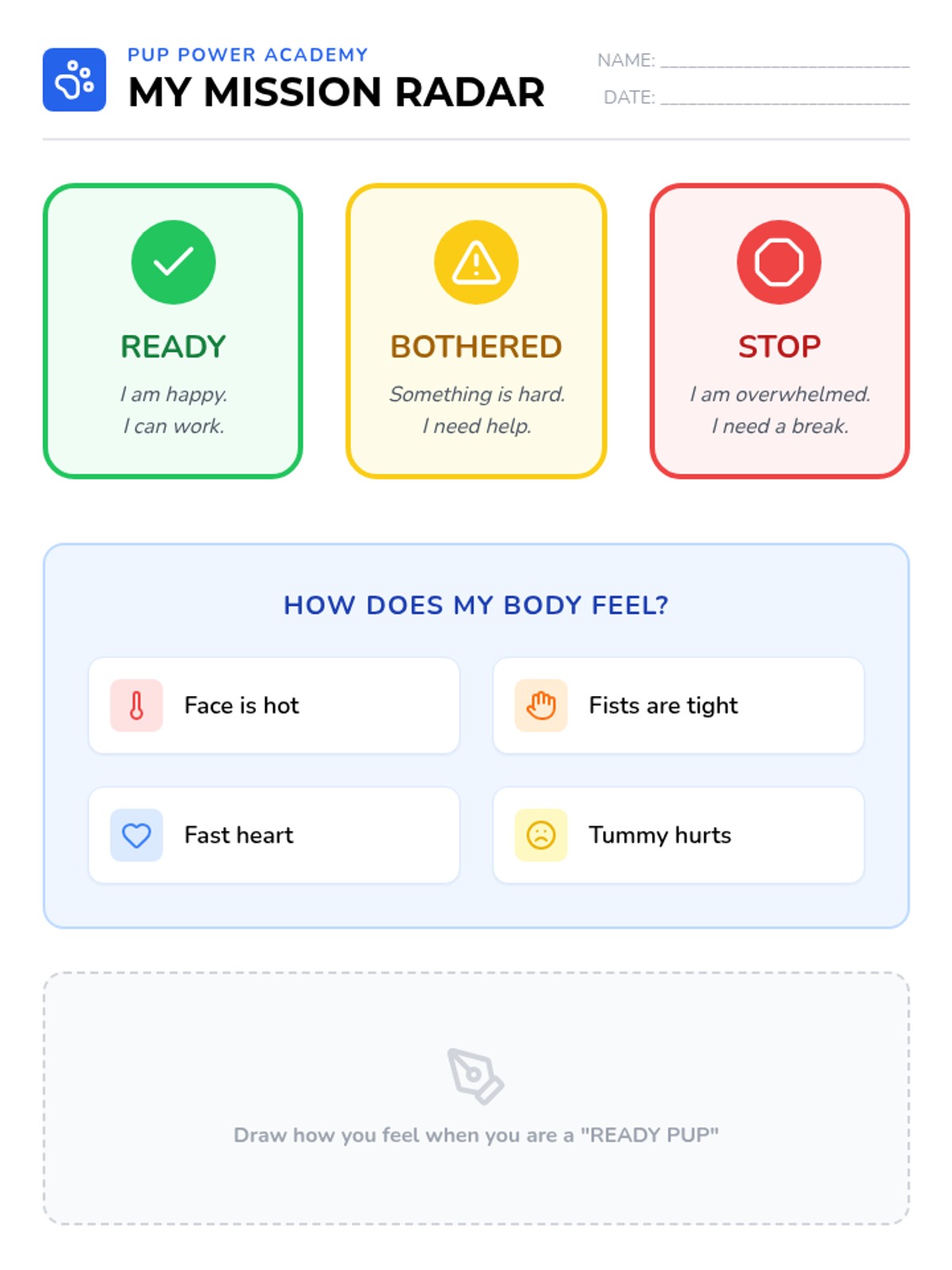
Student visual aid for Week 1, featuring a color-coded 'Mission Radar' to help identify feelings and physical symptoms of stress.
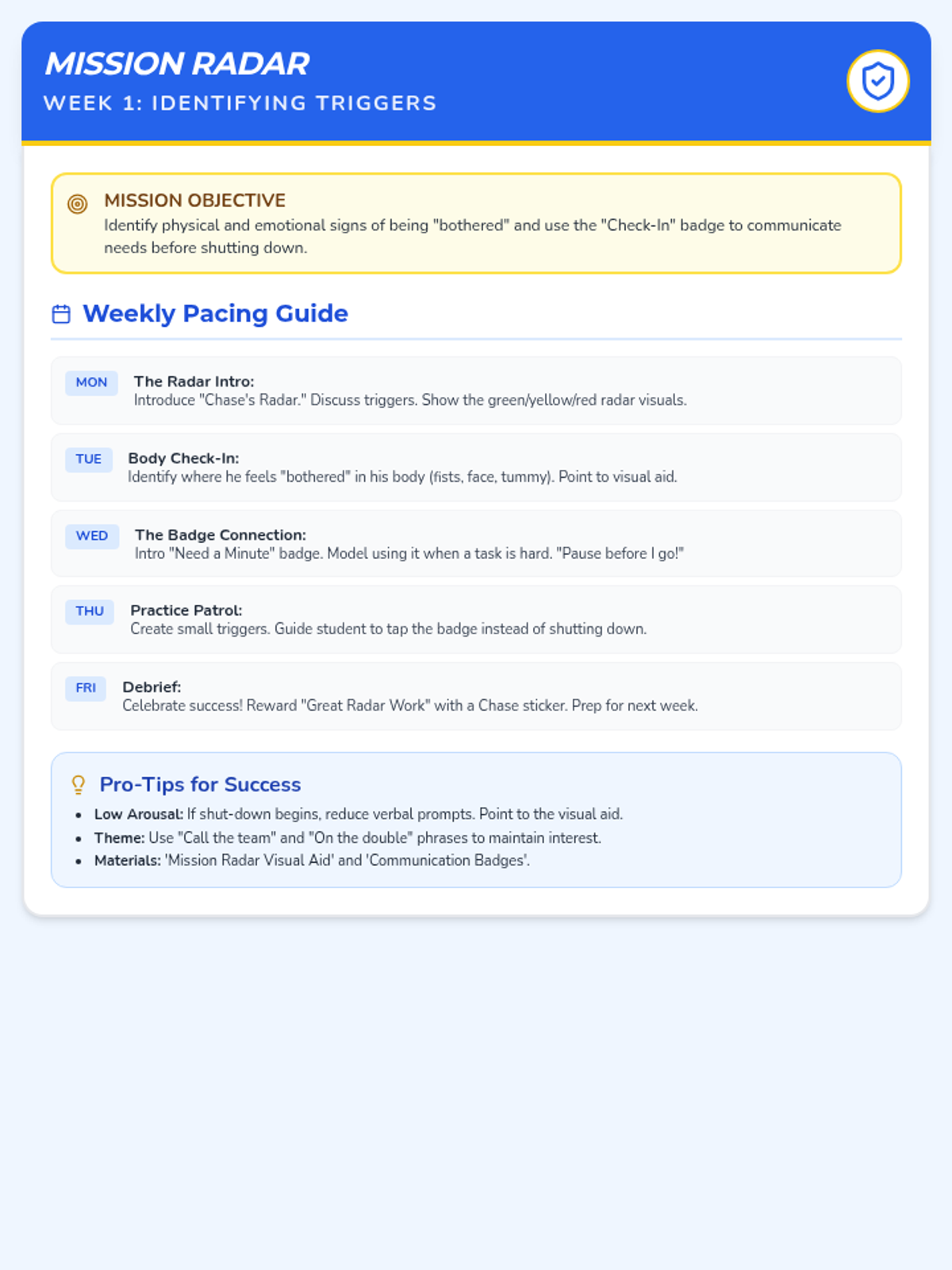
Teacher-facing lesson plan for Week 1, focusing on identifying emotional triggers using the 'Mission Radar' concept. Spacing updated for 1-page fit.
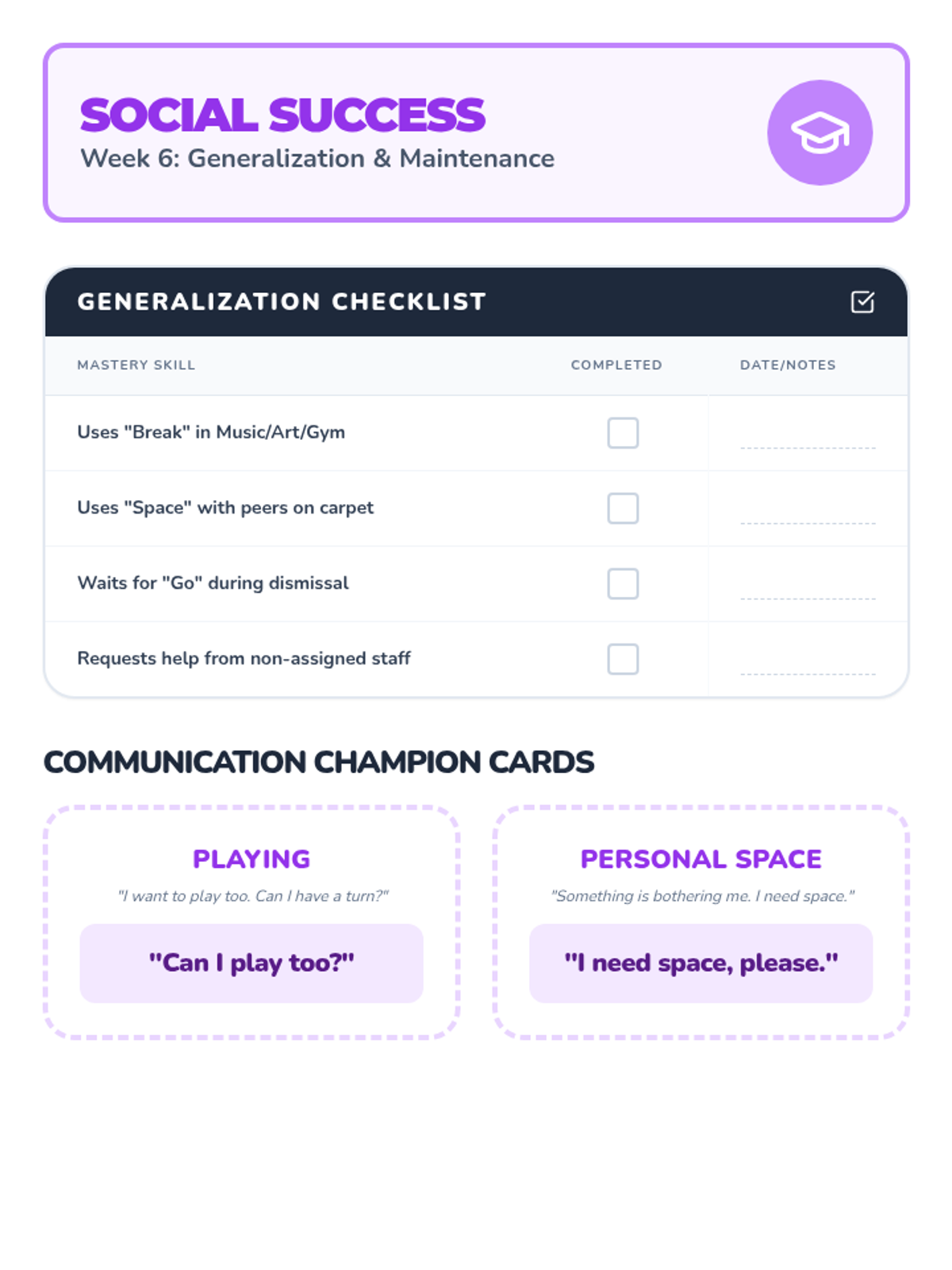
A generalization checklist, peer prompt cards, and an achievement certificate for Week 6, updated with a better tracking table, reinforced layout to prevent card splitting, and a larger, centered achievement certificate.
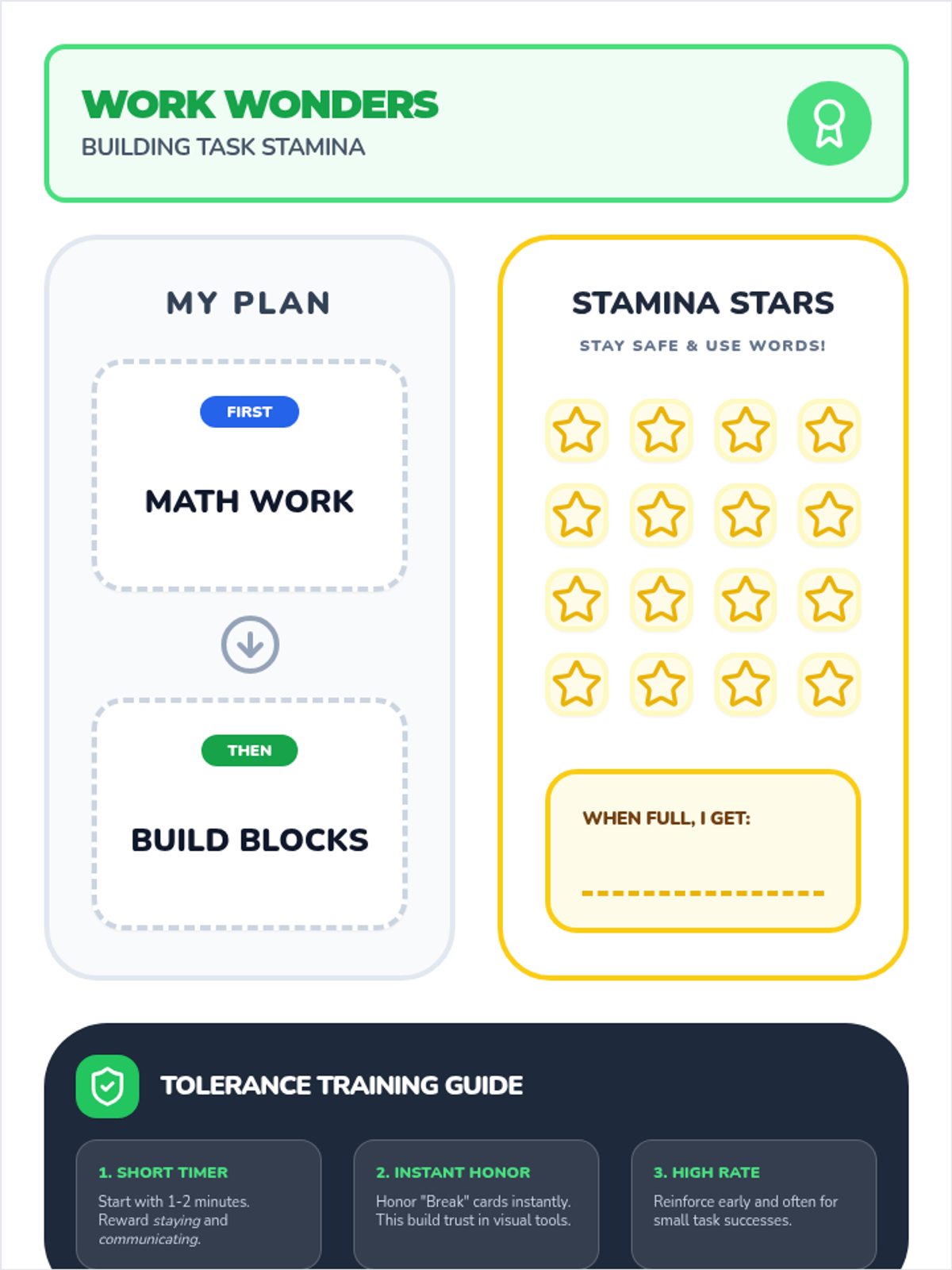
A 'First/Then' board and stamina tracking chart for Week 5, updated with higher contrast placeholder text, a refined layout that keeps teacher strategies on the same page, and a cleaner stamina star grid. Content sizing adjusted for 1st-grade readability.
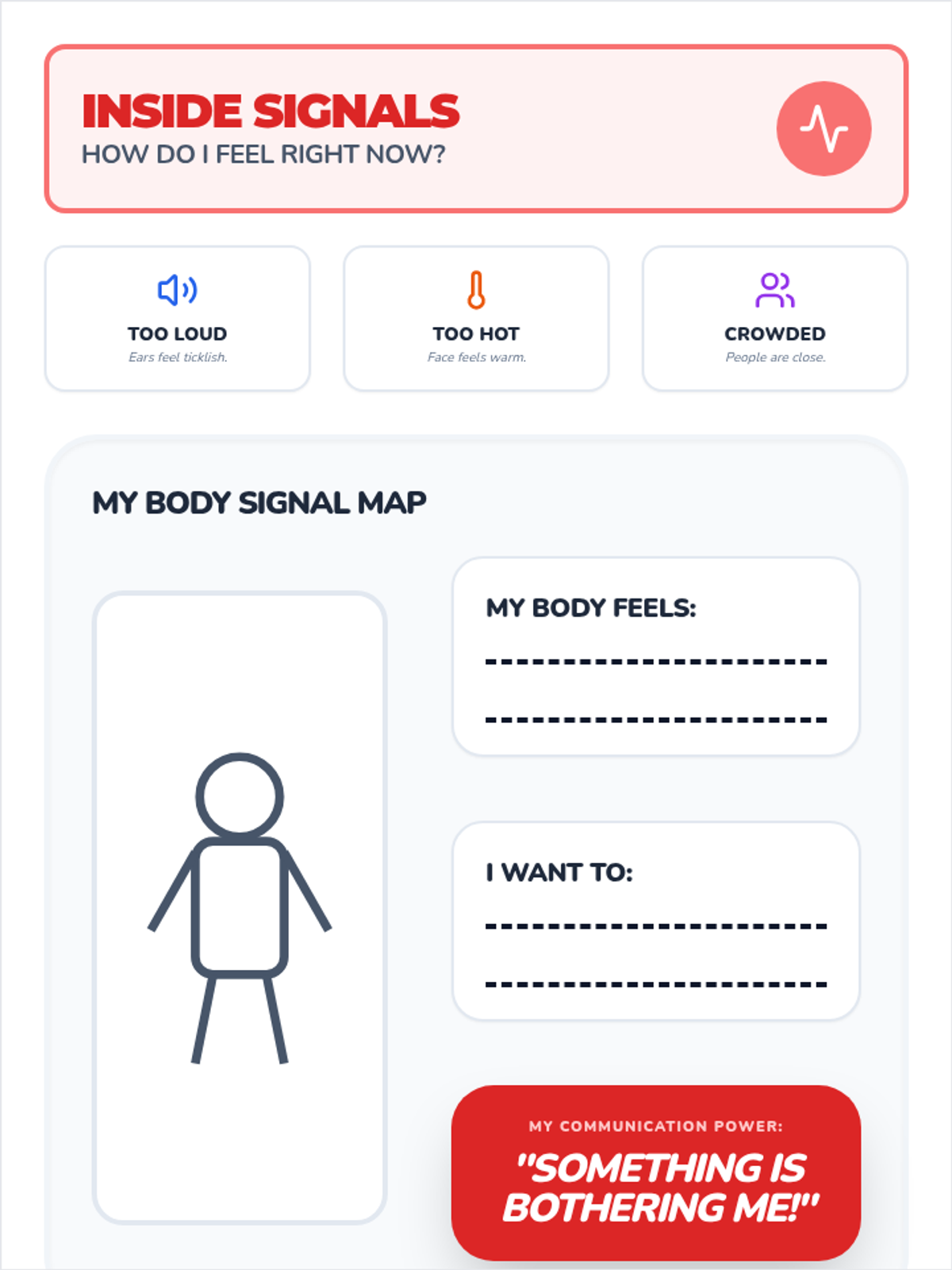
A 'Body Check' chart and student activity for Week 4, updated with improved body outline visibility, larger handwriting lines for primary students, and a layout that fits entirely on one page.
Visual instruction slides for Week 3, updated with improved text contrast, literal icons for clearer communication, and larger font sizes for 1st-grade readability. Content bleeding issues and typography collage resolved.
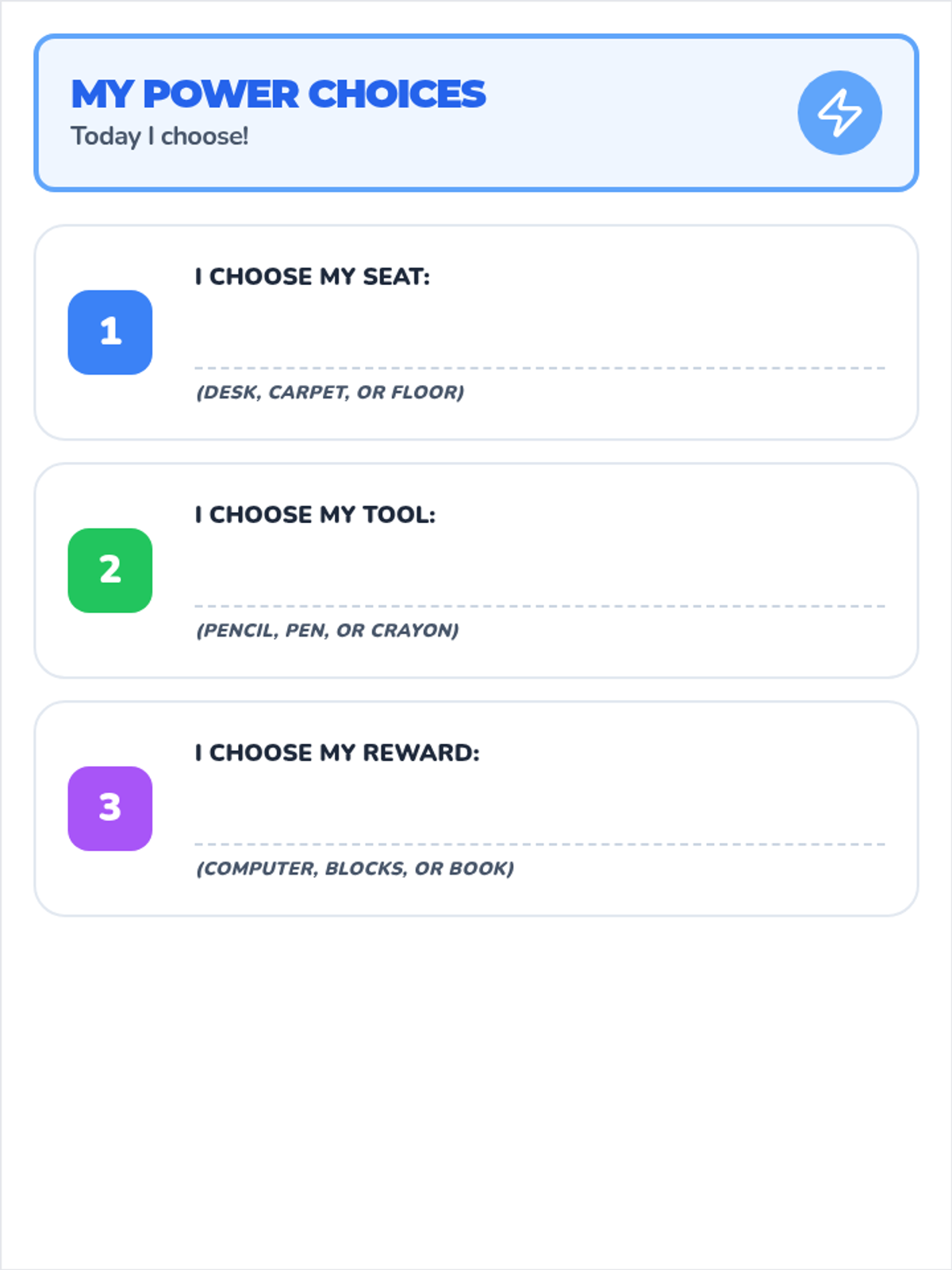
A choice board and preference sheet for Week 2, updated with larger text, high-contrast options, and a refined layout to ensure all content fits on a single printed page. Content is now split across two logical pages to prevent overflow.
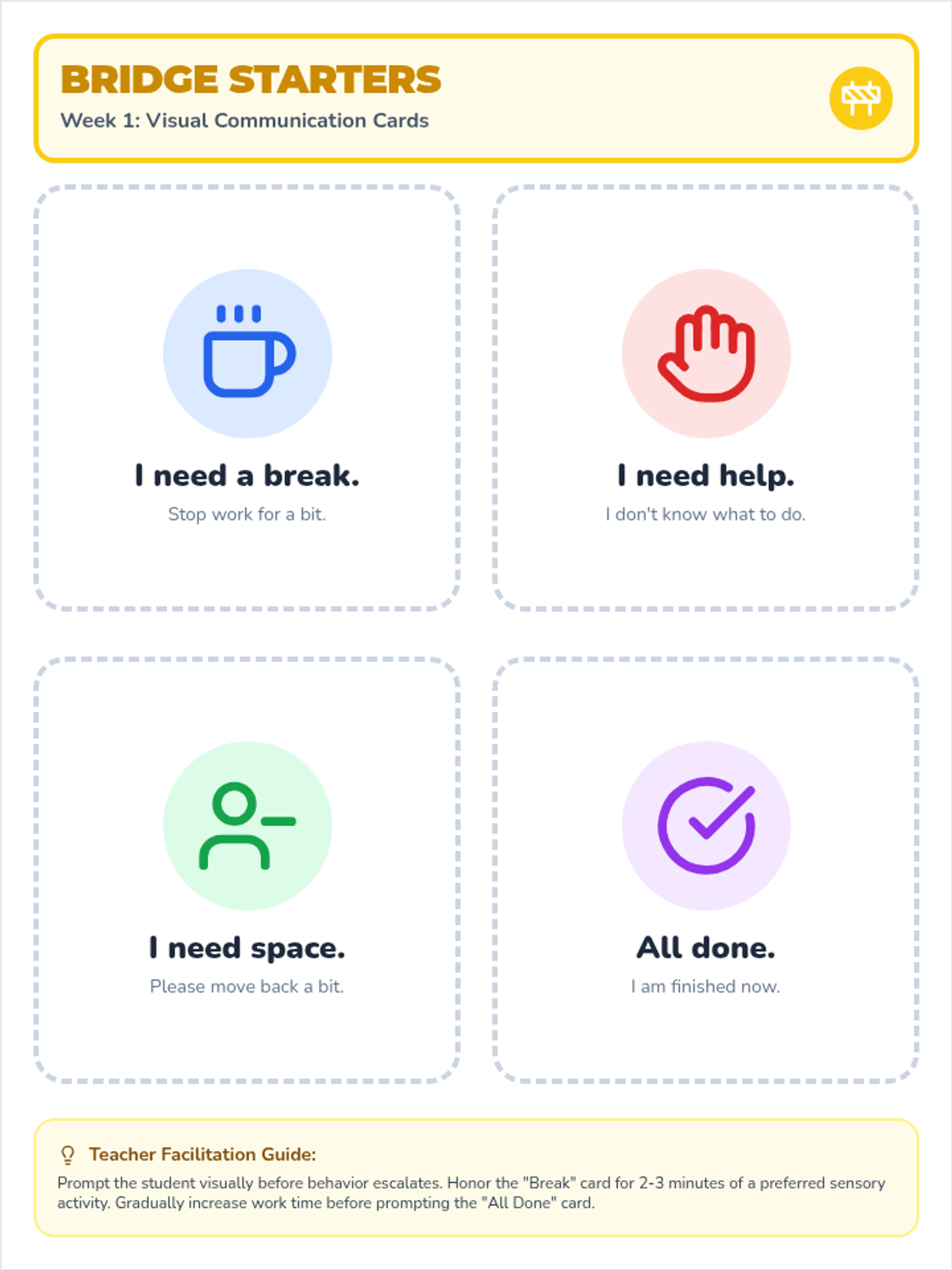
A set of visual functional communication cards and a teacher facilitation guide for Week 1, focusing on teaching 'Break' and 'Help' requests to replace task avoidance. Improved icon clarity and page layout for print.
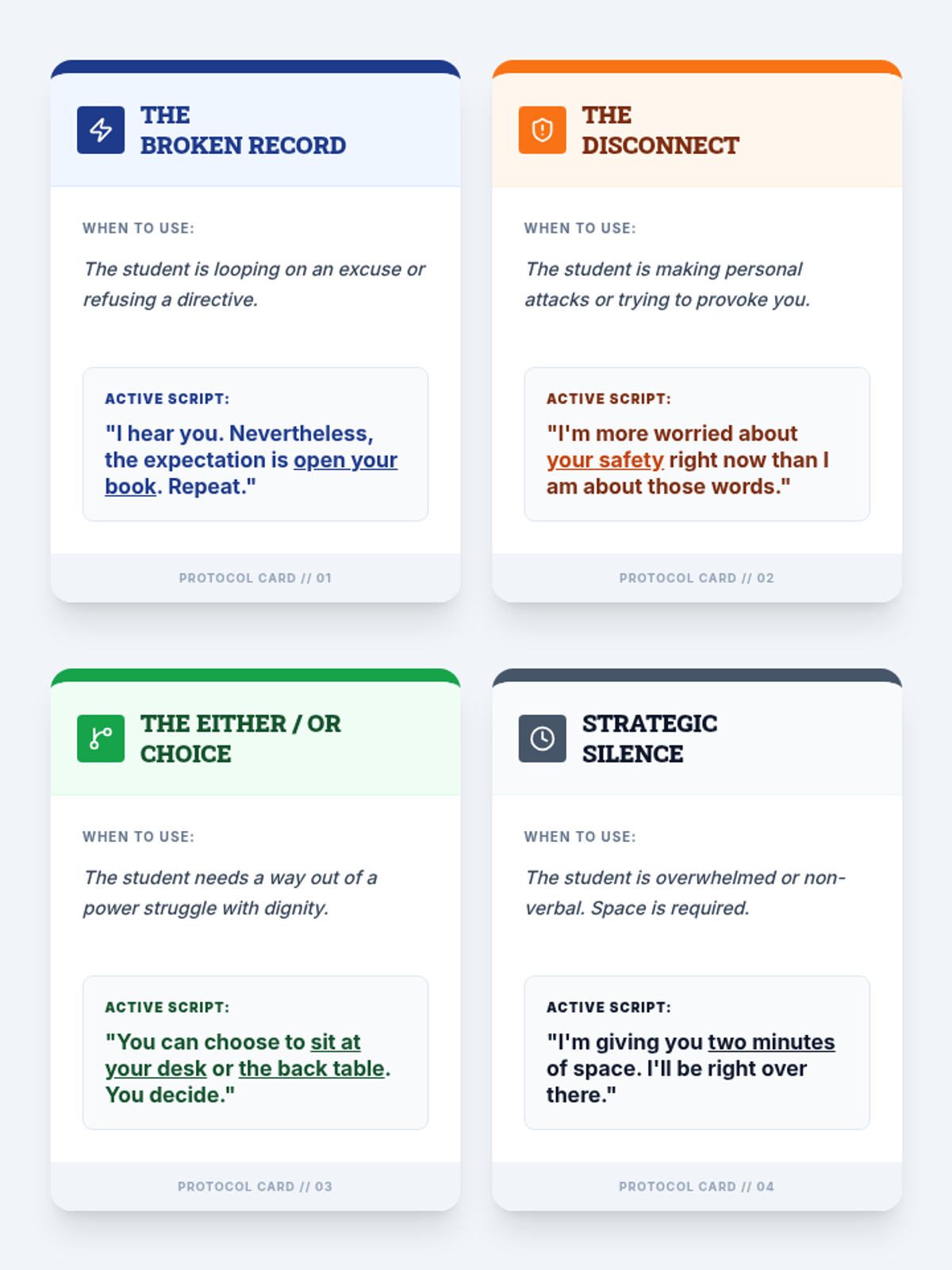
A set of four pocket-sized de-escalation script cards for staff to carry, providing immediate access to standardized verbal protocols for common behavior scenarios.
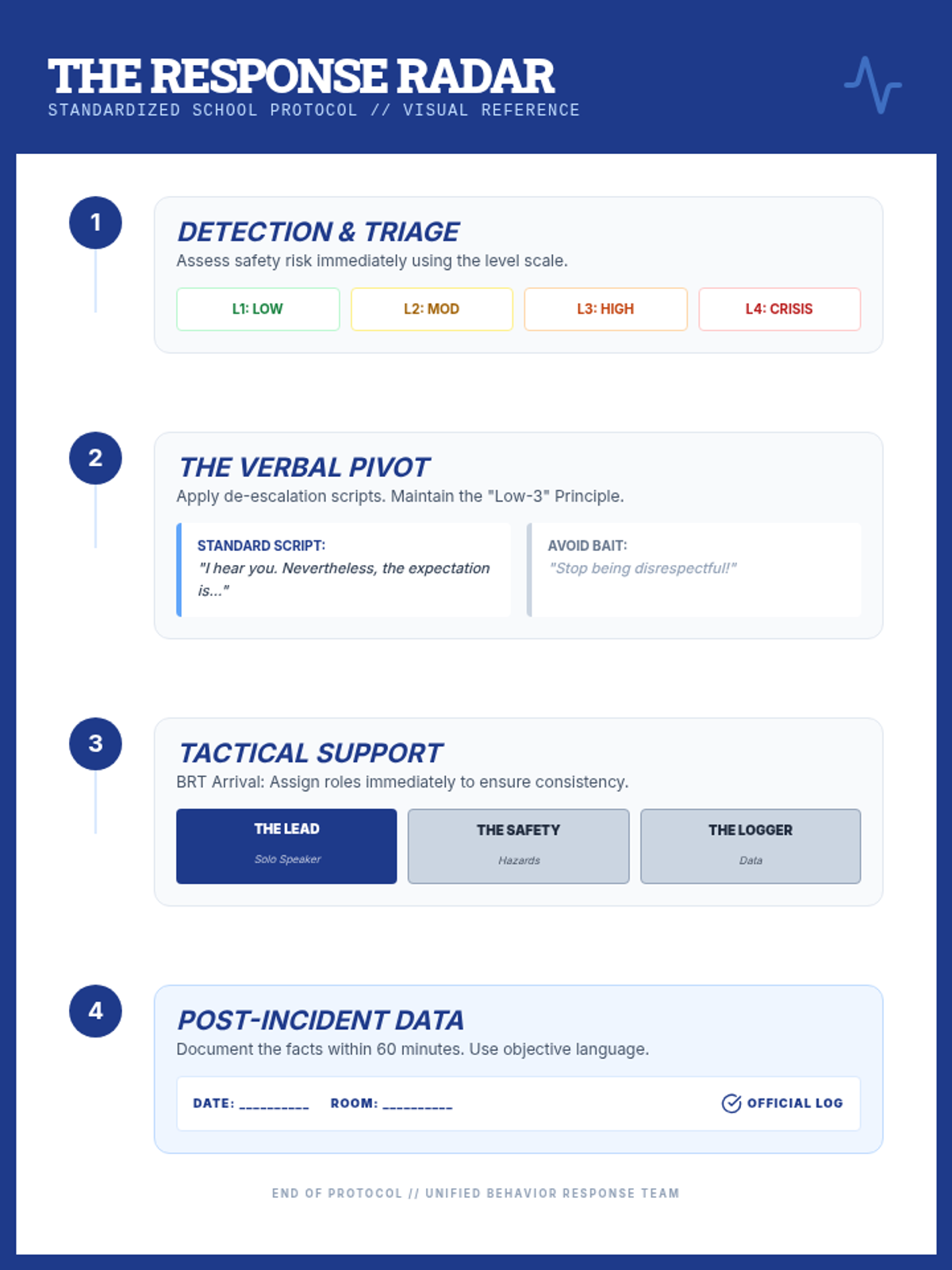
A high-impact visual flowchart (poster format) summarizing the four key phases of behavior response: Detection, De-escalation, Team Response, and Documentation.
A step-by-step operations manual for a school's Behavior Response Team, featuring standardized de-escalation scripts, an escalation ladder, and defined team roles to ensure campus-wide consistency.
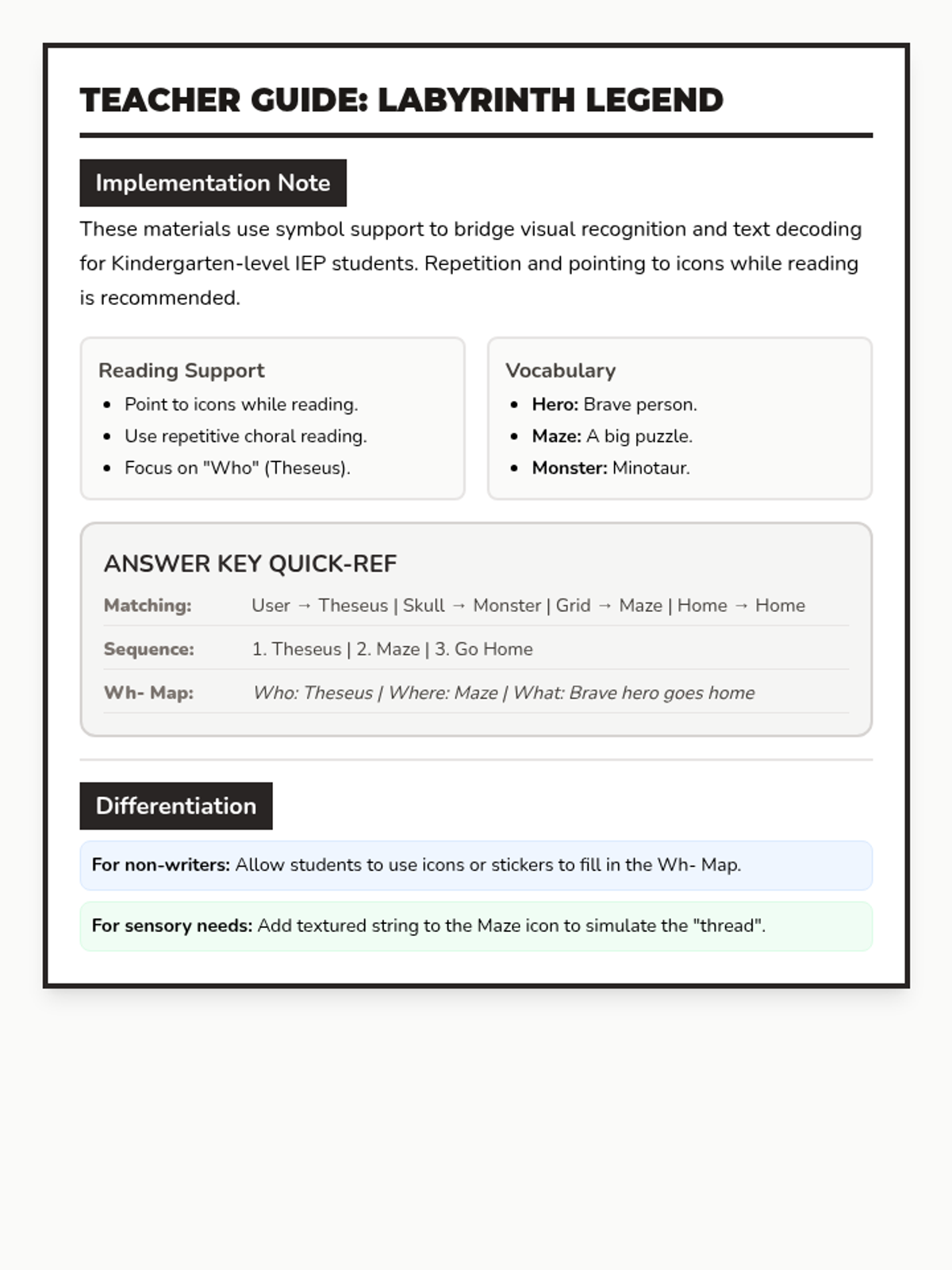
A teacher-facing resource providing implementation strategies, vocabulary definitions, answer keys, and differentiation tips for the Labyrinth Legend lesson.
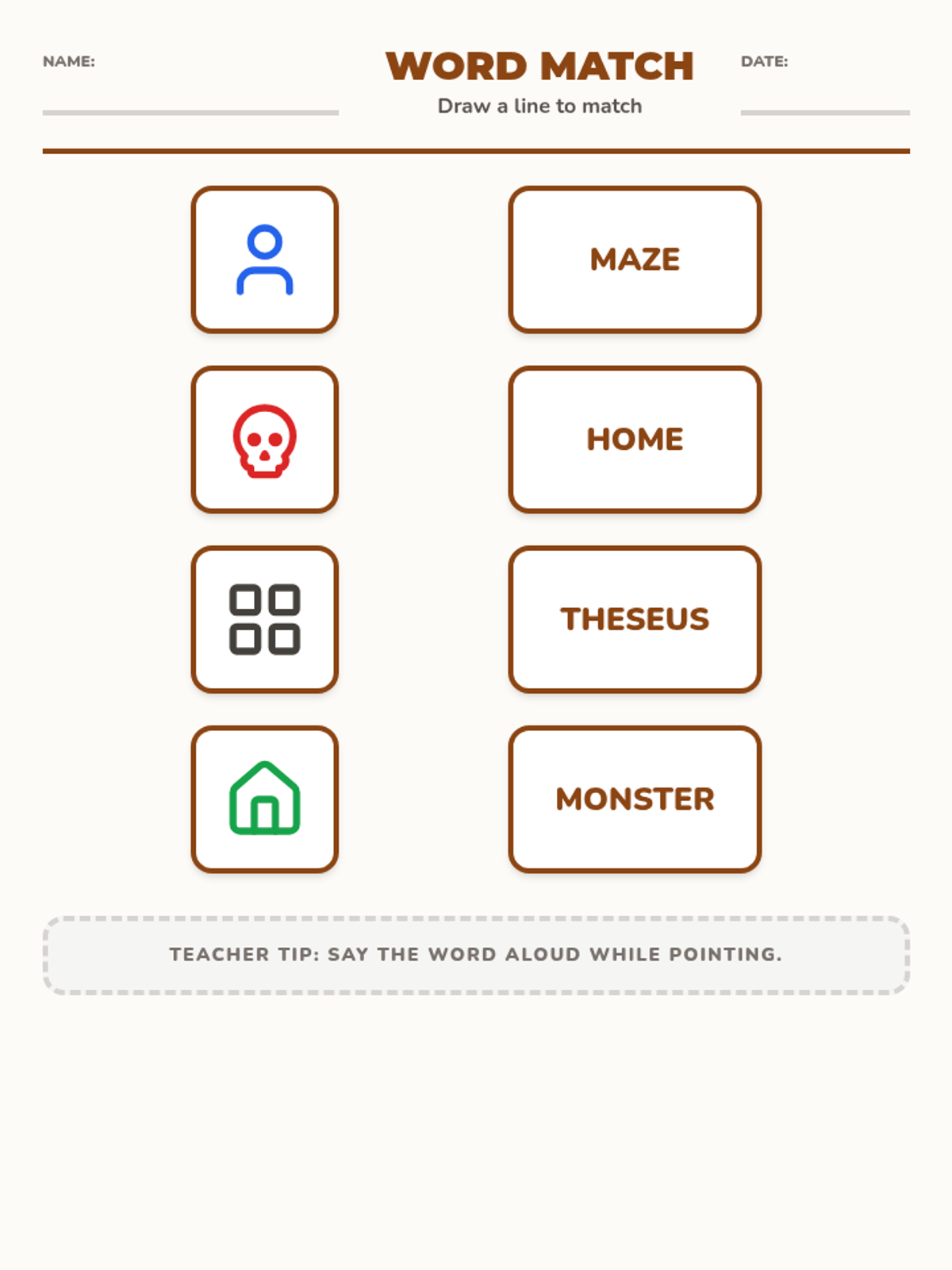
A picture-to-text matching worksheet where students connect story icons with their corresponding capitalized vocabulary words.
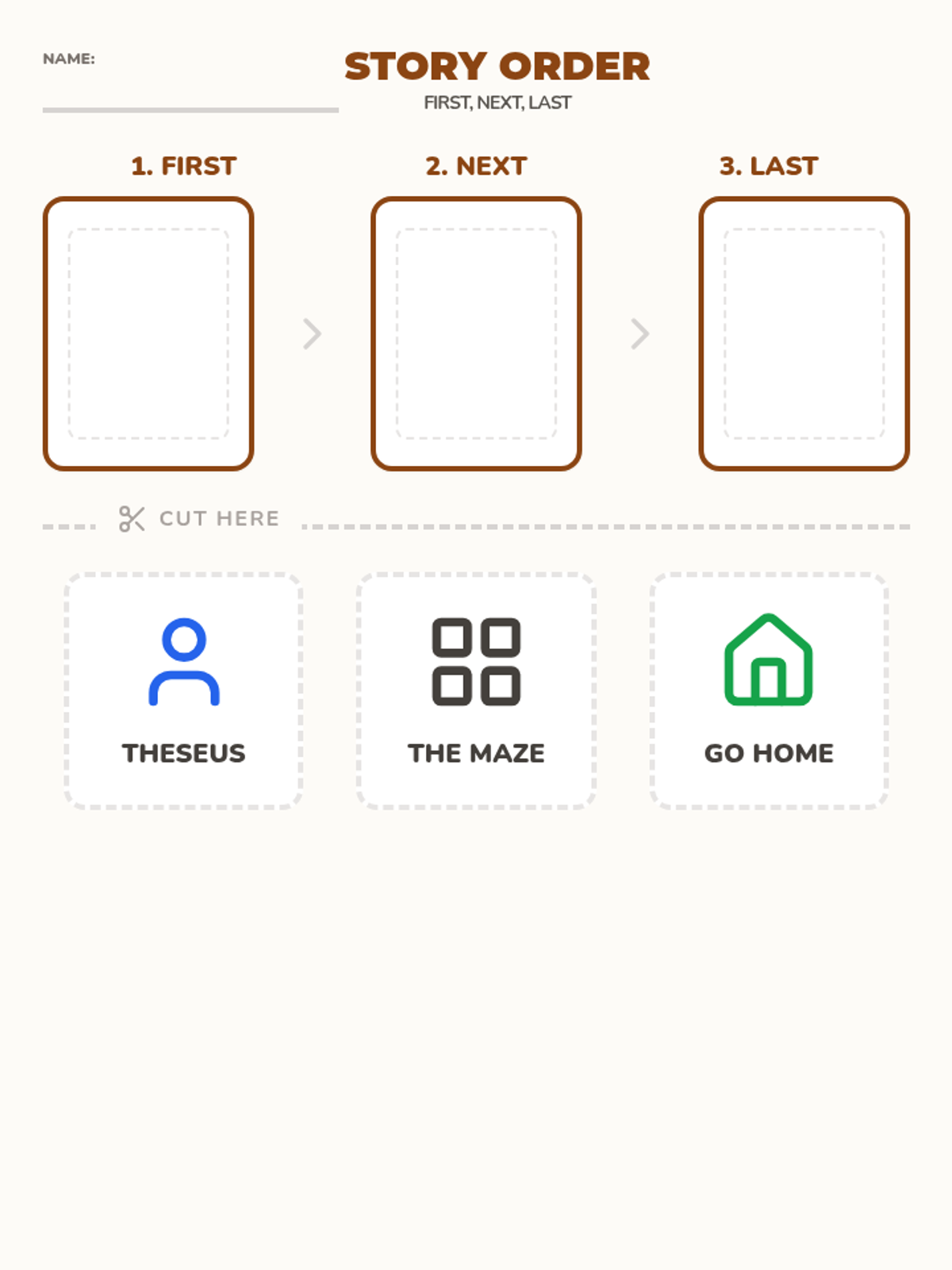
A cut-and-paste sequencing activity where students order three key events from the story (Hero, Maze, Home).
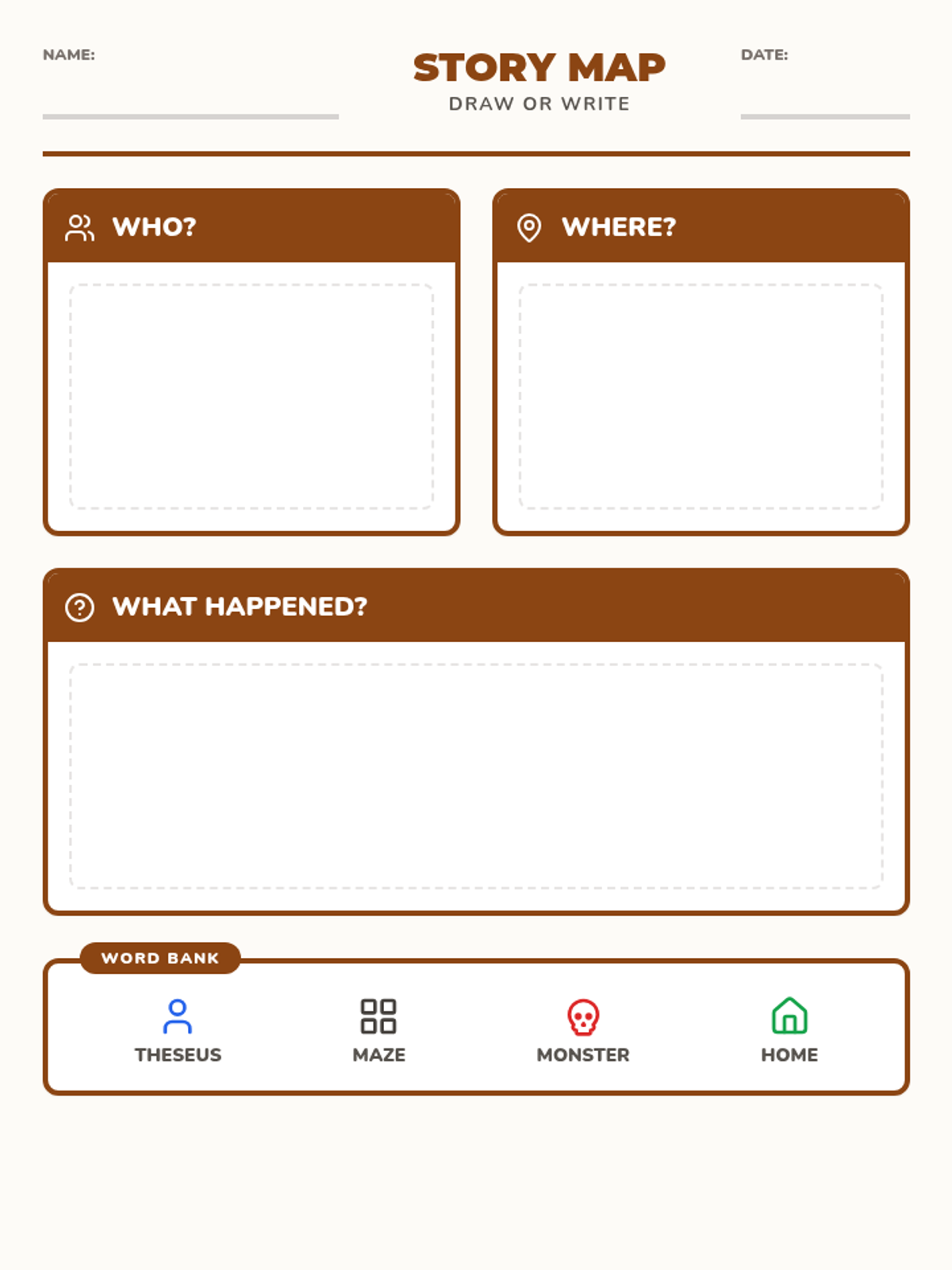
A Wh- question graphic organizer (Who, Where, What) for Kindergarten students to identify key story elements through drawing or simple writing.