A set of 30 number strips containing 5 boxes each. One number in the sequence (ranging from 1-100) is missing for the student to identify. Each strip uses high-contrast borders and large font sizes to support students with autism.
An answer key for teachers, providing correct responses for all expanded reading, math, and phonics activities in the Animal Friends packet.
A math worksheet focused on subtraction up to 20, using arctic animal and ice emojis as visual counting supports. Fixed counts and visibility issues.
A math worksheet focused on addition up to 20, using forest animal and plant emojis as visual counting supports. Difficulty progresses from sums of 9 to sums of 20.
A simple reading comprehension page featuring a short passage about a giraffe with three multiple-choice questions.
A simple reading comprehension page featuring a short passage about a hippo with three multiple-choice questions.
An answer key for teachers, providing correct responses for all reading, math, and phonics activities in the Animal Friends packet.
A subtraction worksheet focused on numbers up to 20, using swamp animal emojis for visual 'take away' practice and numerical equations.
A phonics activity for CVC word blending, featuring animal images and letter boxes for students to practice spelling 'cat', 'pig', 'dog', and 'hen'.
A math worksheet focused on addition up to 20, using animal emojis as visual counting supports and numeric equations for practice.
A simple reading comprehension page featuring a short passage about a lion with three multiple-choice questions supported by visual emojis.
The cover page for the Animal Friends packet, featuring student name fields and a simple warm-up activity.
A student activity sheet for counting frogs and identifying numbers, designed with high-contrast visuals, a bonus matching section, and large name/date fields for accessibility.
A two-page printable game board featuring large numbered lily pads for tactile counting practice with frog manipulatives. Optimized for visibility and physical space for up to 10 manipulatives.
A high-contrast, visual-heavy slide deck for teaching 1-10 counting with pond themes, optimized for students with cognitive delays. Includes step-by-step numbers 1-5 and a summary for 6-10.
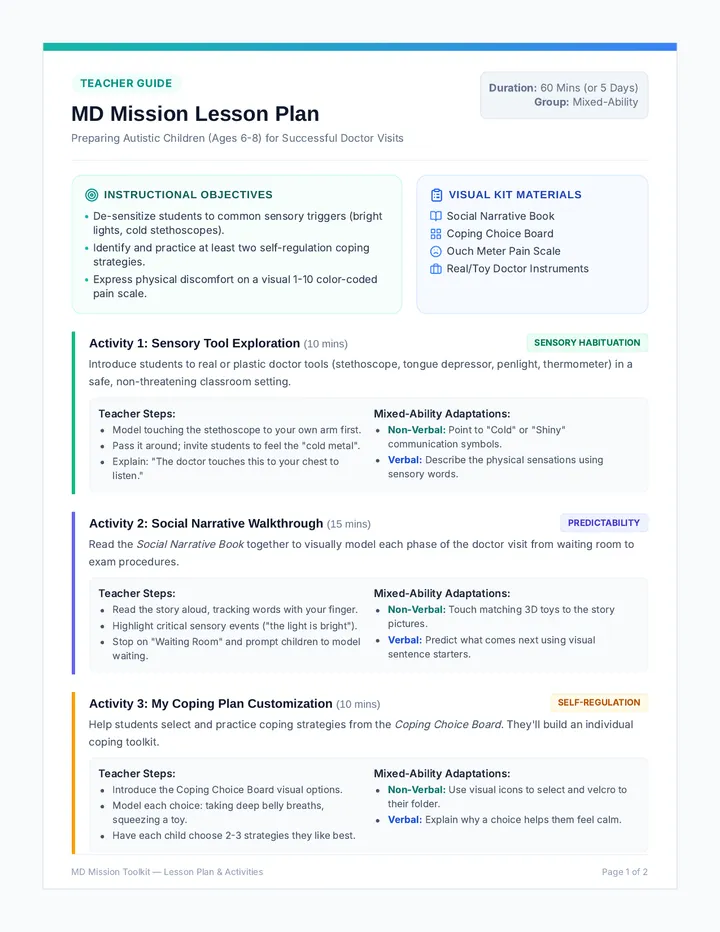
A detailed teacher guide for a multisensory math lesson focusing on 1:1 correspondence and number recognition 1-10 using frog-themed activities.
A teacher's answer key for the Ship Spotters Worksheet, providing clear solutions for the 'Who, What, Where' questions and instructional tips for supporting students with autism. Updated for single-page efficiency and icon consistency.
A reading comprehension worksheet featuring the story of Quin and Jax at the dock. It includes three structured 'Wh-' questions (Who, What, Where) with visual icons and primary-style writing lines designed for students with autism. Updated for single-page efficiency and better writing support.
A teacher-facing data recording sheet for the LNF assessment, including a matching scoring grid, performance summary, and qualitative observation tools.
A student-facing letter naming fluency chart featuring a randomized grid of mixed uppercase and lowercase letters for LNF assessment.
Engaging visual slides to introduce the Bug Hunt activity. Explains the "mission," reviews target numbers (0-20), and clearly displays the color code for the class to see.
A teacher's answer key for the Bug Hunt Pixel Art activity, showing the final ladybug image. Includes teacher tips and differentiation strategies.
A color-by-number pixel art worksheet where students identify numbers 0-20 to reveal a hidden ladybug image. Includes a clear color key and garden-themed design.
Tactile task cards with visual syllable markers designed for hands-on articulation practice and quick drills.
An articulation practice sheet featuring tiered sentence challenges for 3 and 4-syllable words, including tracking markers and a creative writing prompt.
A comprehensive word list featuring 3 and 4-syllable words with visual syllable markers to aid articulation and phonological awareness.
Nonsense word flashcards for NWF practice, categorized by difficulty (CVC, digraphs, and blends) to support decoding and recoding skills.
Instructional workshop mats featuring 3- and 4-sound Elkonin boxes and a visual finger-tapping guide for phoneme segmentation scaffolding.
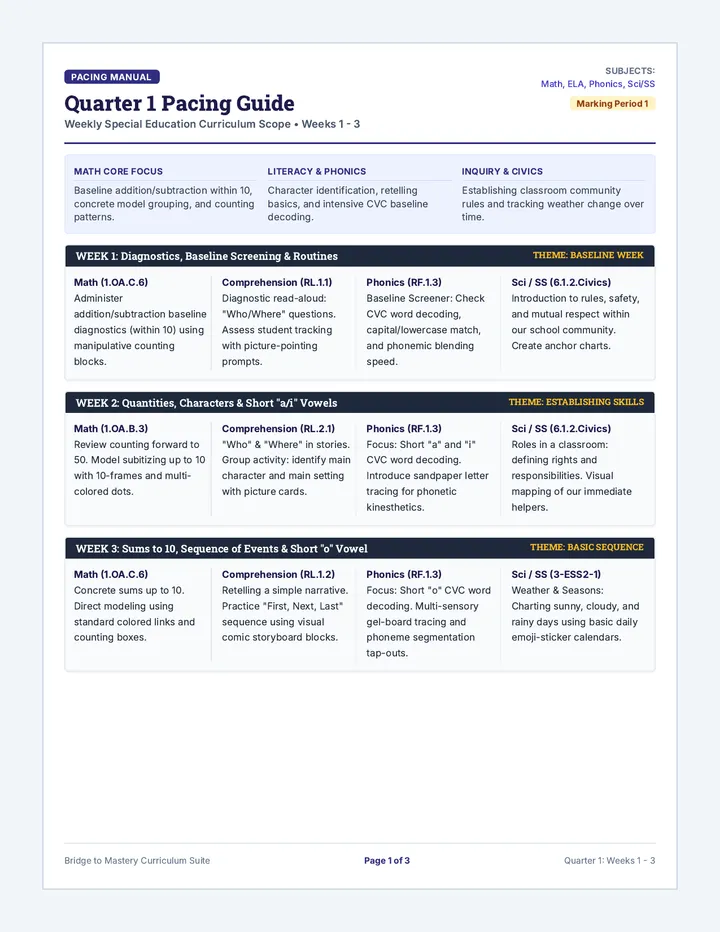
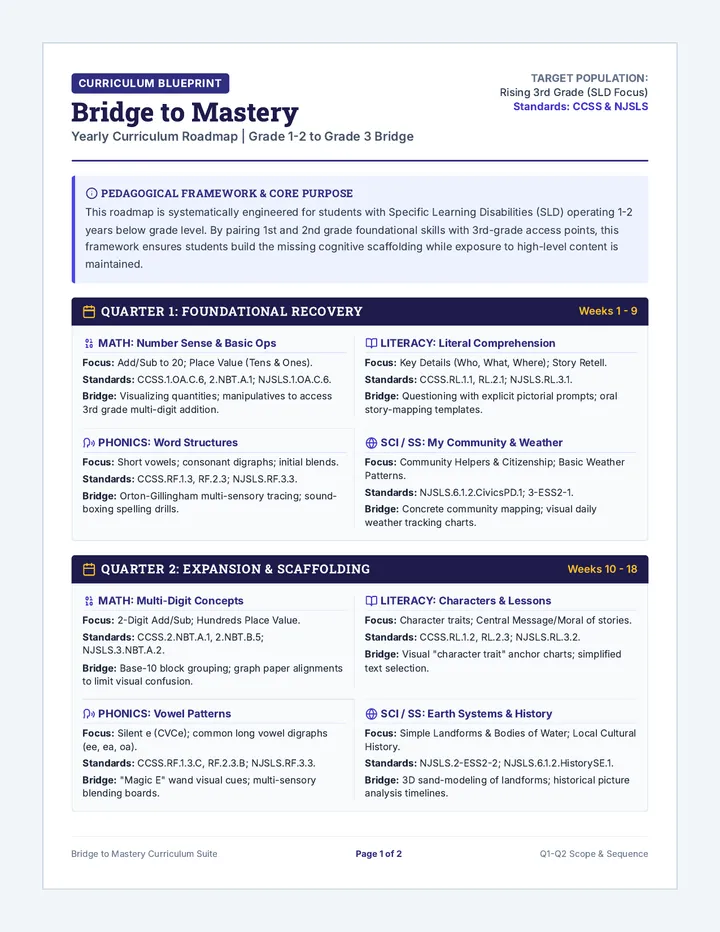
A 40-week master plan for reading intervention, outlining quarterly goals, weekly focuses, and specific scaffolding tools for PSF and NWF.
A comprehensive skill checklist for assessing student progress in PSF and NWF, covering letter naming, phoneme segmentation, and decoding levels.
A visual progression chart for tracking growth in Phoneme Segmentation Fluency (PSF) and Nonsense Word Fluency (NWF) over 40 weeks, including milestone goals.
A formal service log for tracking 40 weeks of intervention sessions, including space for dates, objectives, and student performance data.