A teacher answer key for the modified Grade 6 Module 6 assessment. Wording matches the ultra-simplified student materials, including the revised "P is UP. R is DOWN." answer for Question 3.
An updated slide deck for 6th-grade students with IEPs, now featuring additional scenario slides for identifying appropriate times to ask for help, alongside the visual checklist and social story.
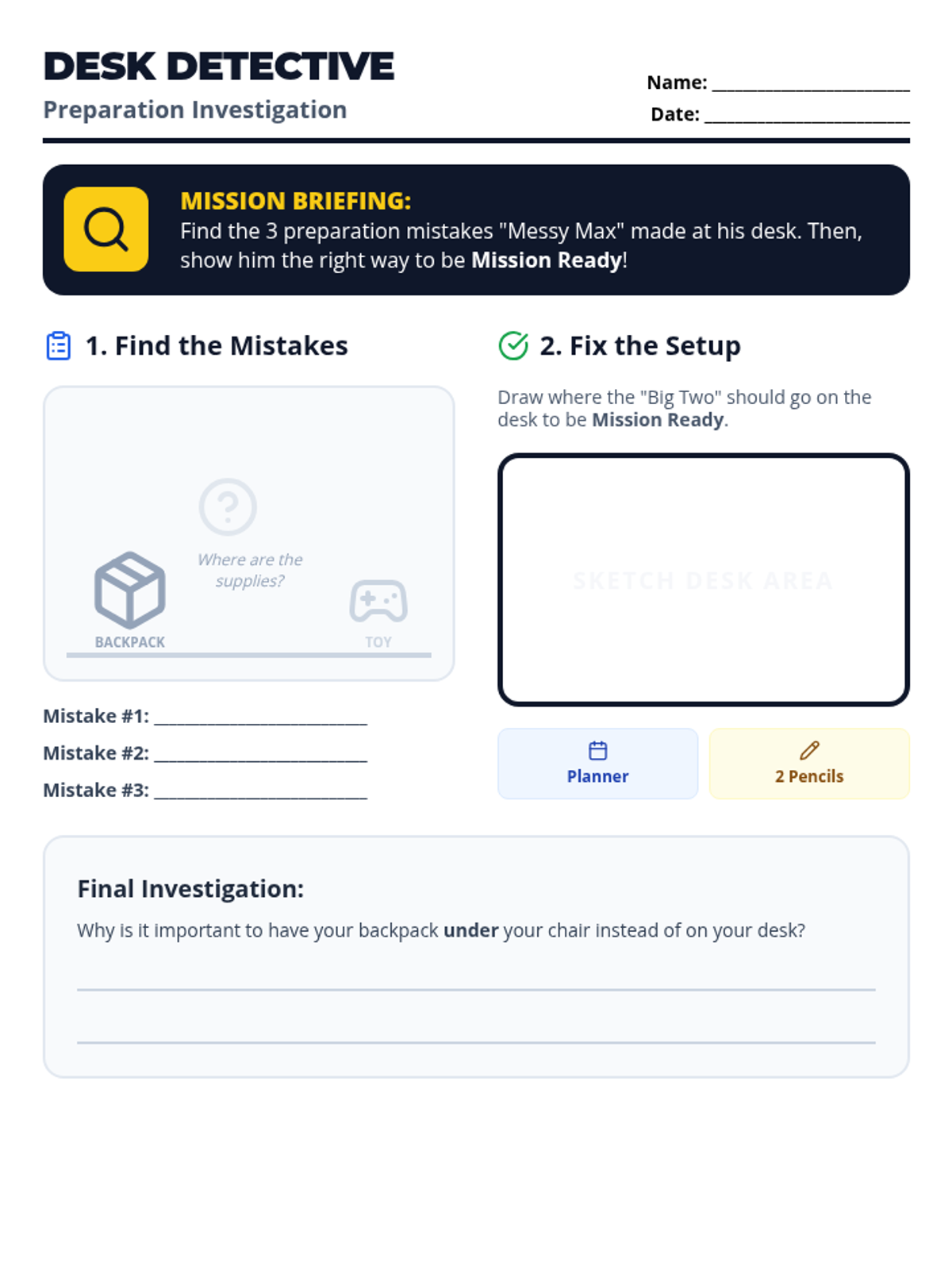
A visual worksheet where students act as "Desk Detectives" to identify organizational errors and practice setting up a "Mission Ready" workspace. No placeholder text; visual elements used to depict errors. Fits on one page.
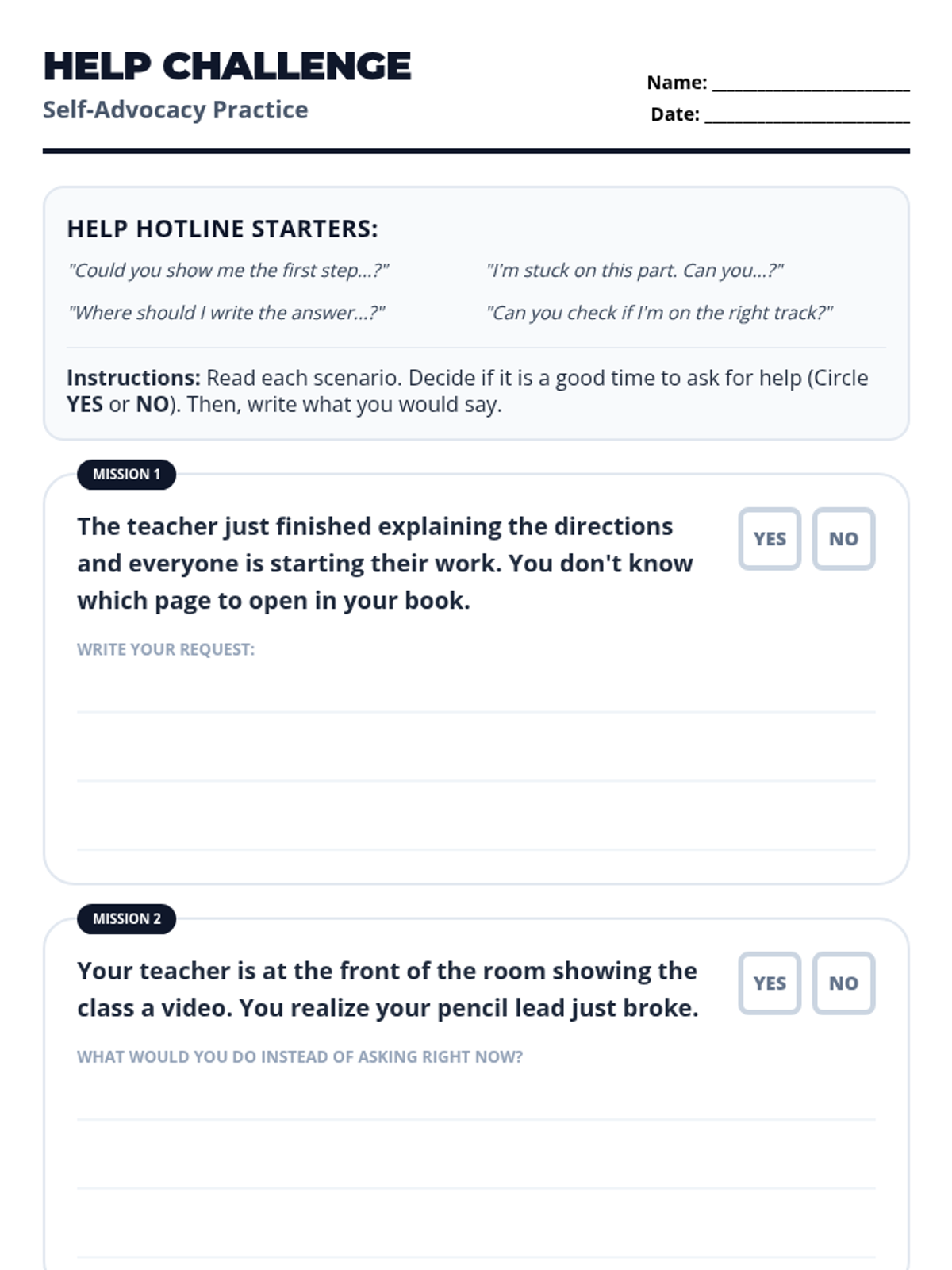
A worksheet for students to practice evaluating classroom scenarios. Students decide when it is appropriate to ask for help and practice writing out their requests using the sentence starters from the lesson. Provide multiple lines for handwriting.
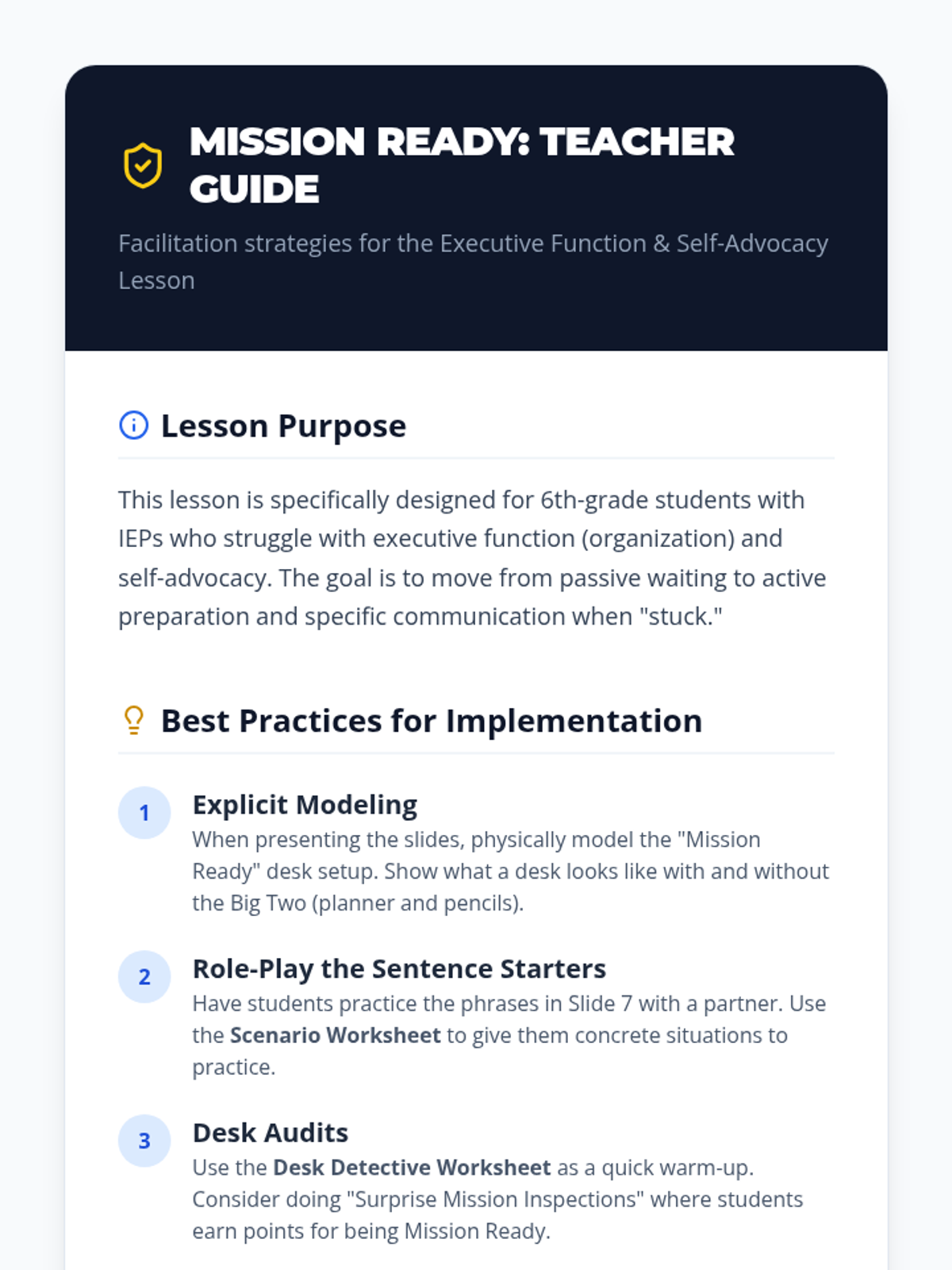
Updated teacher guide including instructions for the new scenario and desk detective worksheets, along with expanded scaffolding tips for anxiety and visual support.
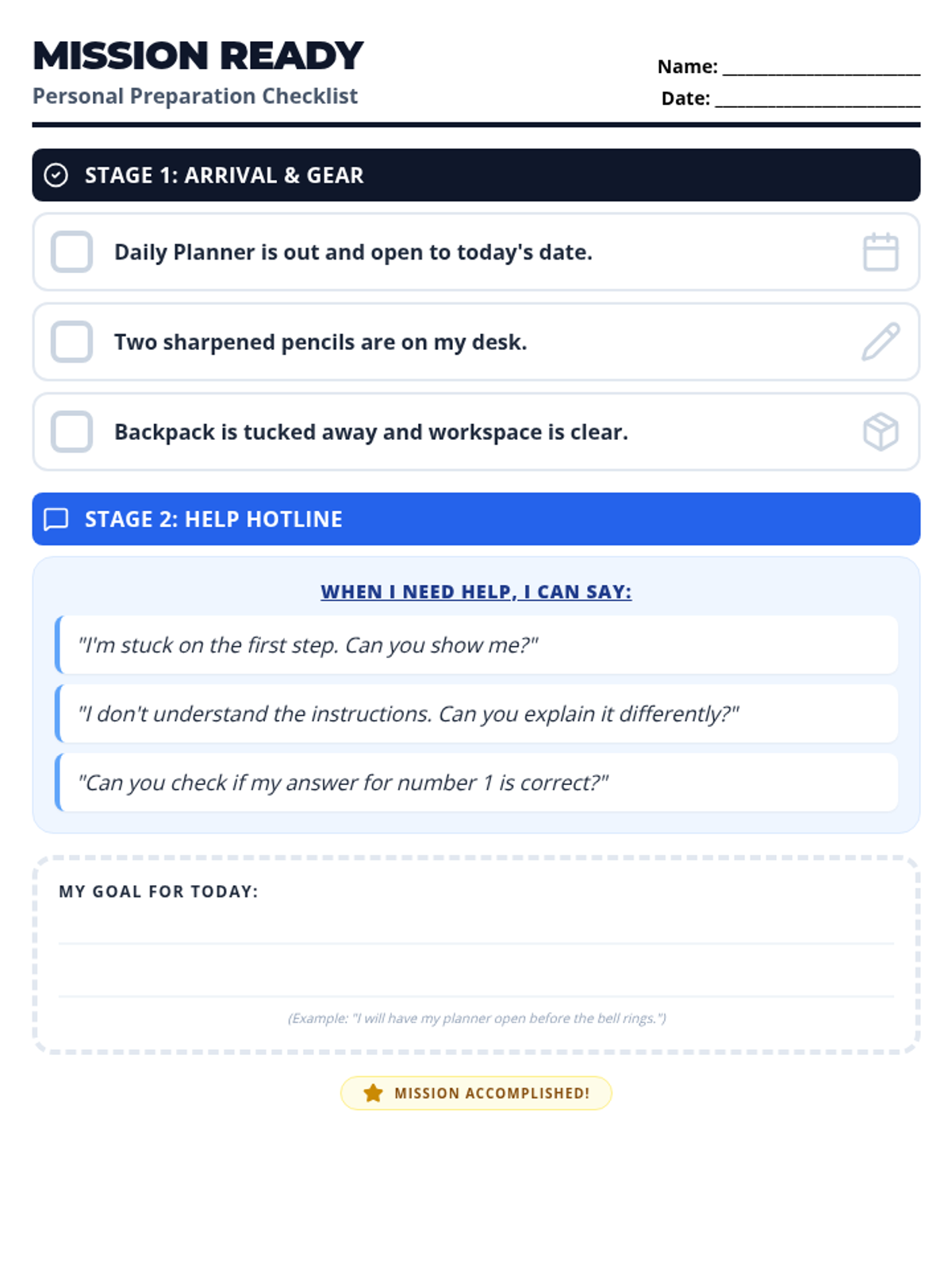
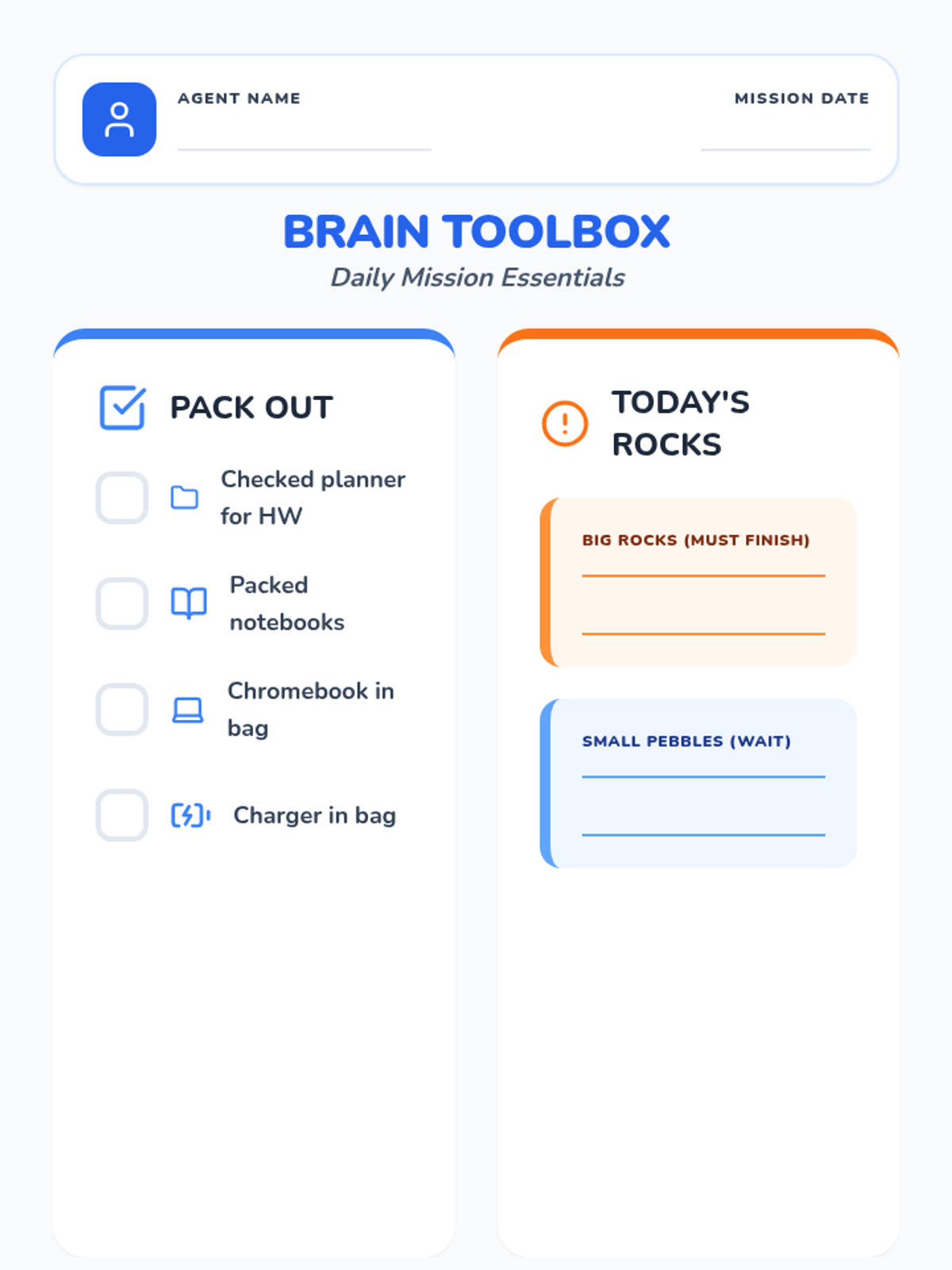
A printable step-by-step checklist for students to use at their desk. Includes preparation checks for planners and pencils, as well as a 'Help Hotline' section with scripted sentence starters for self-advocacy. Tightened for single-page printing.
A student-facing handout featuring locker/backpack checklists, a priority matrix, scripts for asking for help, and a visual cooling station guide.
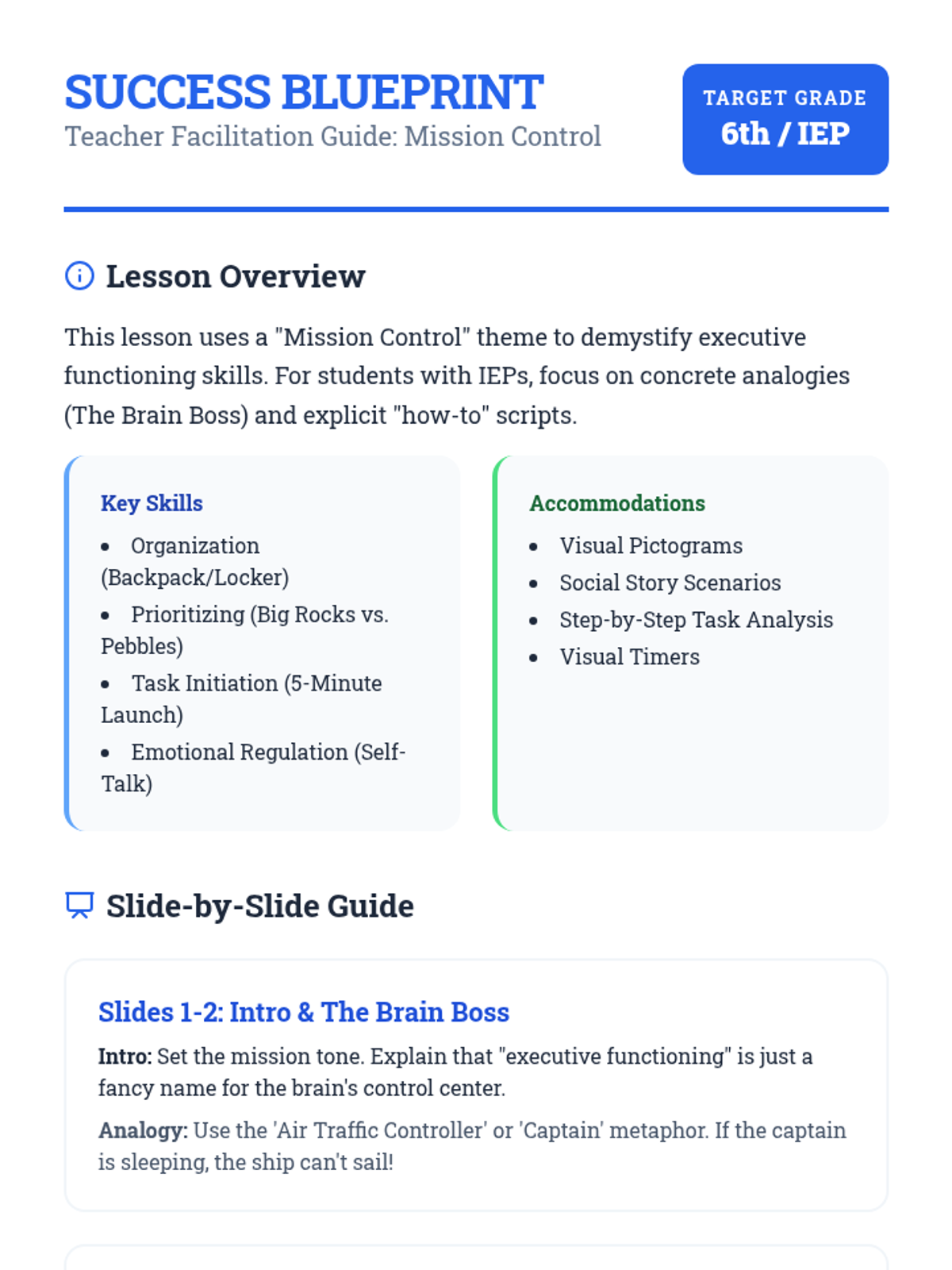
A teacher guide providing facilitation scripts, role-play scenarios, and extension activities to support the delivery of executive functioning skills instruction.
A high-contrast, visually supported slide deck for 6th-grade students with IEPs, focusing on organization, priority setting, task initiation, and emotional regulation using mission-themed pictograms and clear steps.
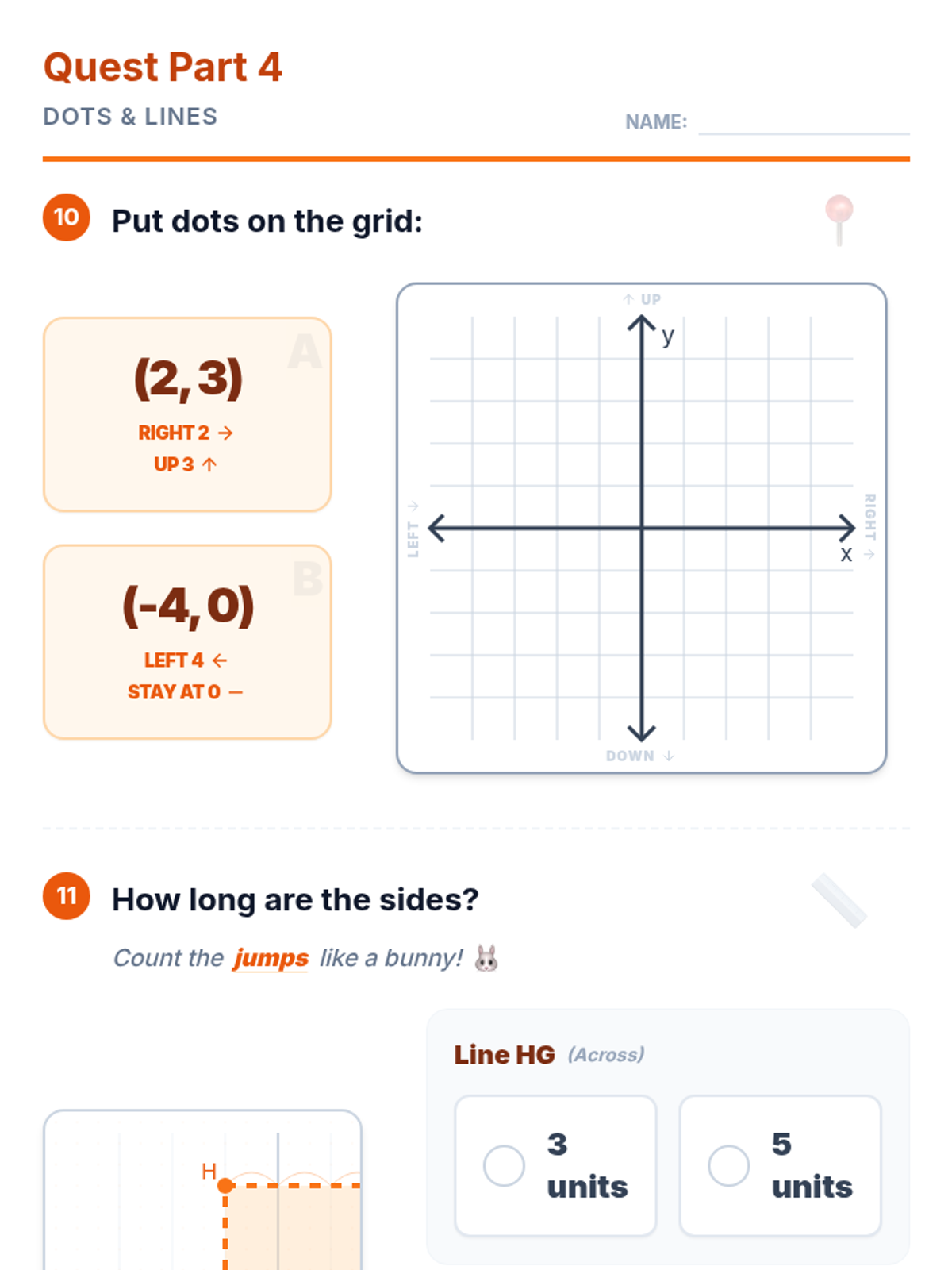
Part 4 of the modified assessment, covering questions 10-11. The rectangle in Question 11 is now perfectly centered both in the coordinate plane and on the page, with symmetric choices and enhanced visual "jump" counting aids to support students with IEPs.
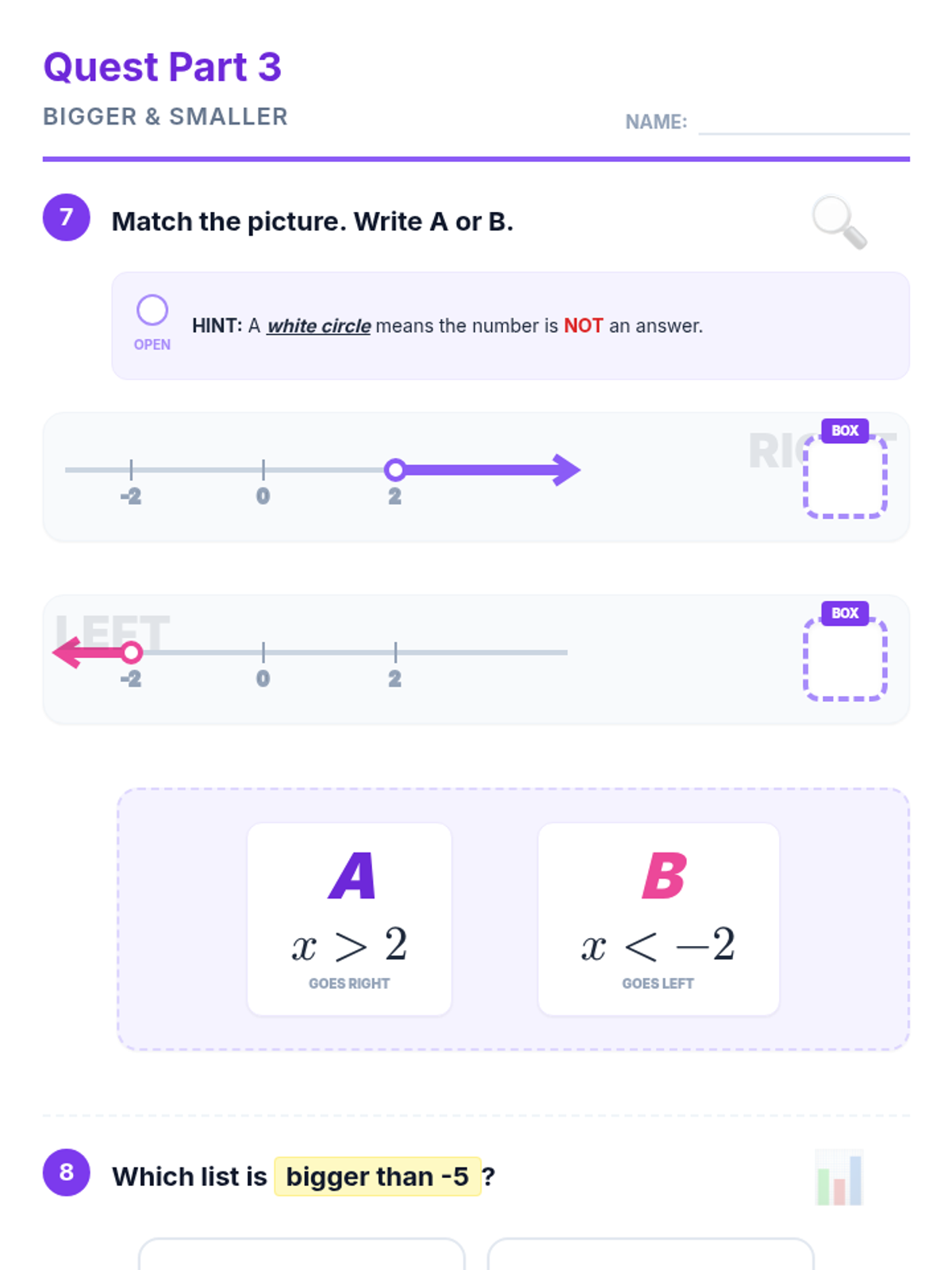
Part 3 of the modified assessment, covering questions 7-9. Features high-contrast visuals including direction labels (LEFT/RIGHT), larger matching boxes, and a polished Yes/No table with improved selection areas for students with IEPs.
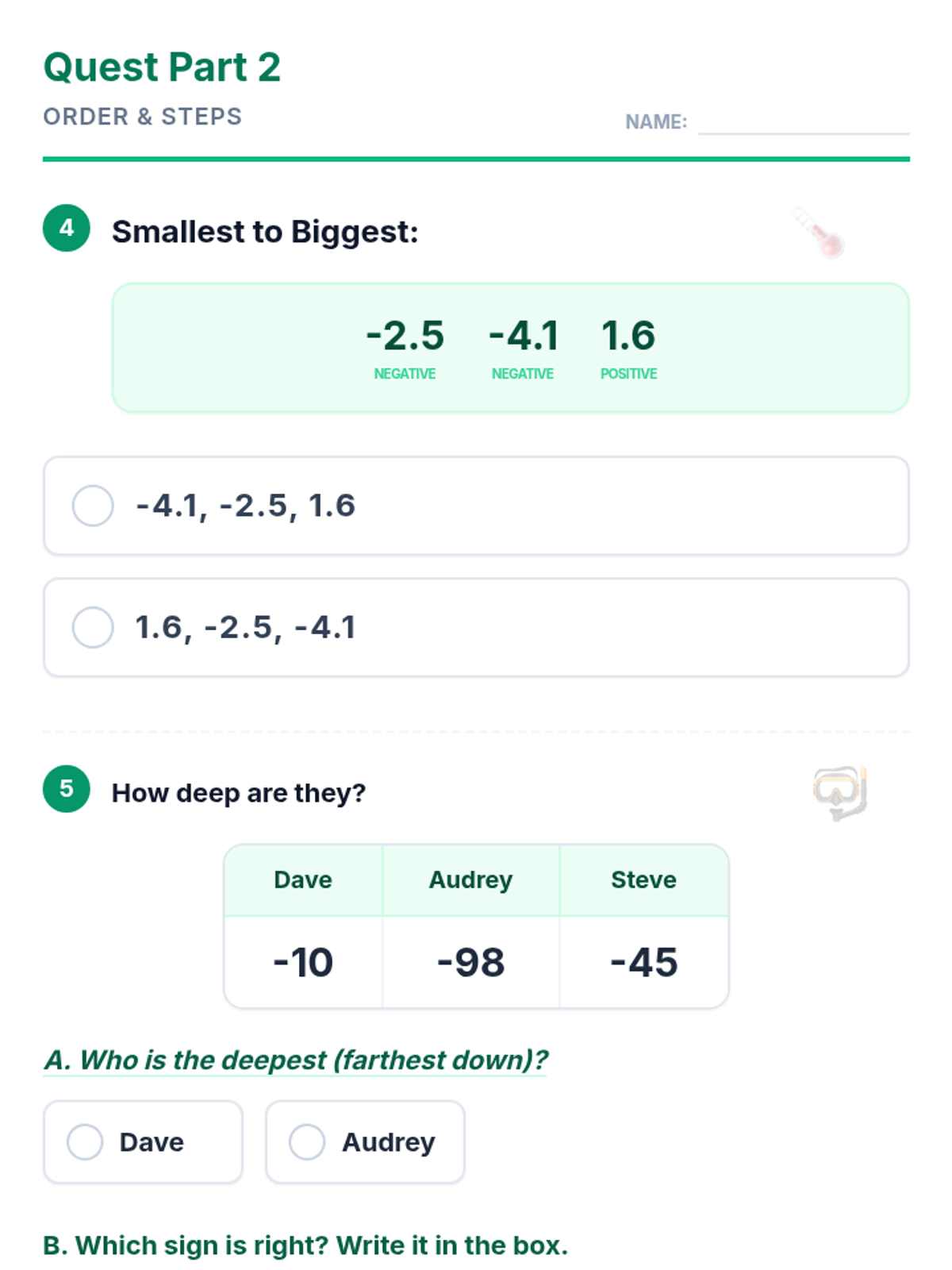
Part 2 of the modified assessment, covering questions 4-6. Visuals have been simplified by removing emojis, distracting jump marks, and extra labels, providing a cleaner interface for students with IEPs while maintaining key mathematical scaffolding.
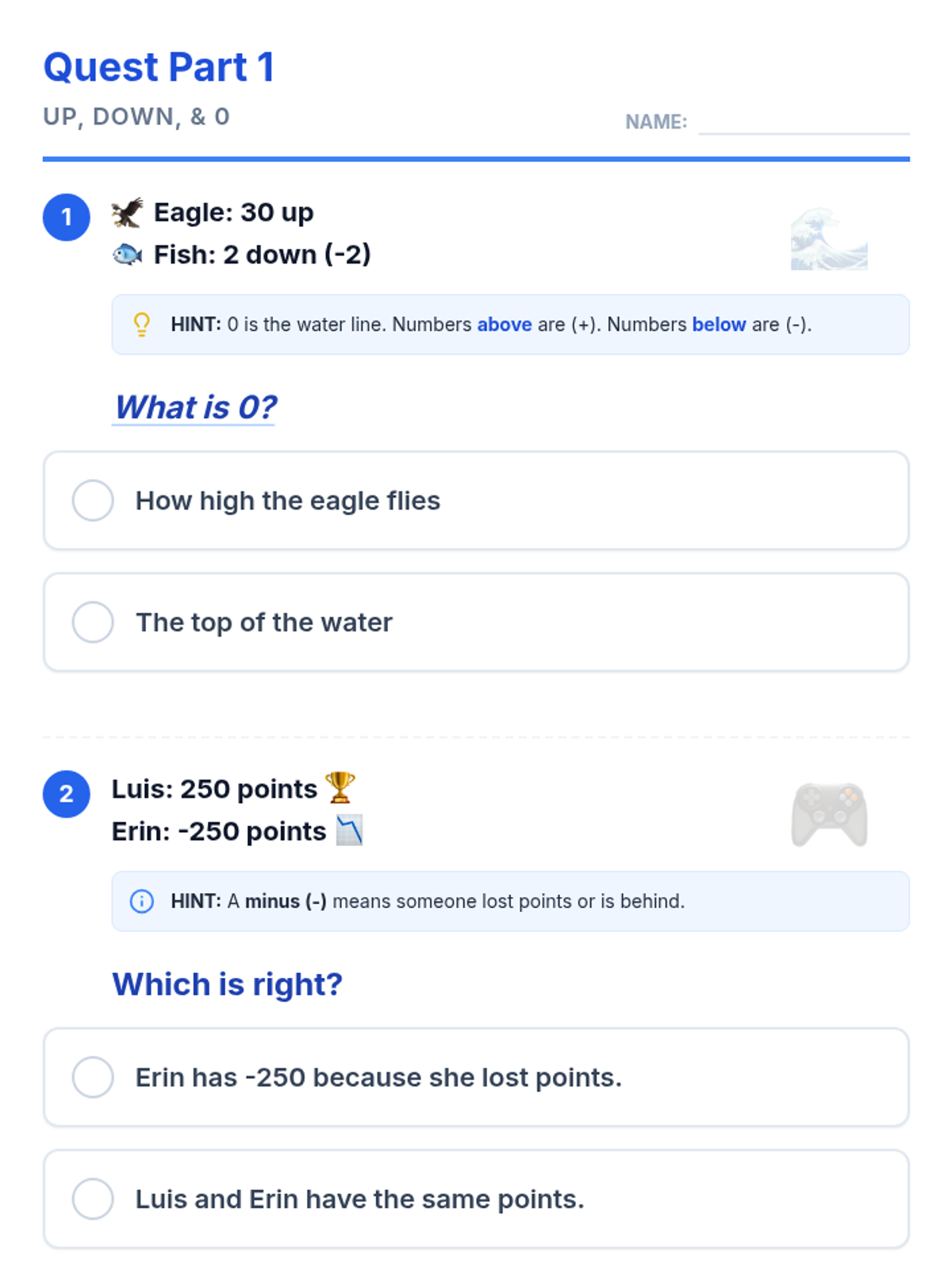
Part 1 of the modified assessment, covering questions 1-3. Answer options for Question 3 have been ultra-simplified to "P is UP. R is DOWN." vs "Both are UP." to support students with IEPs by reducing reading complexity.
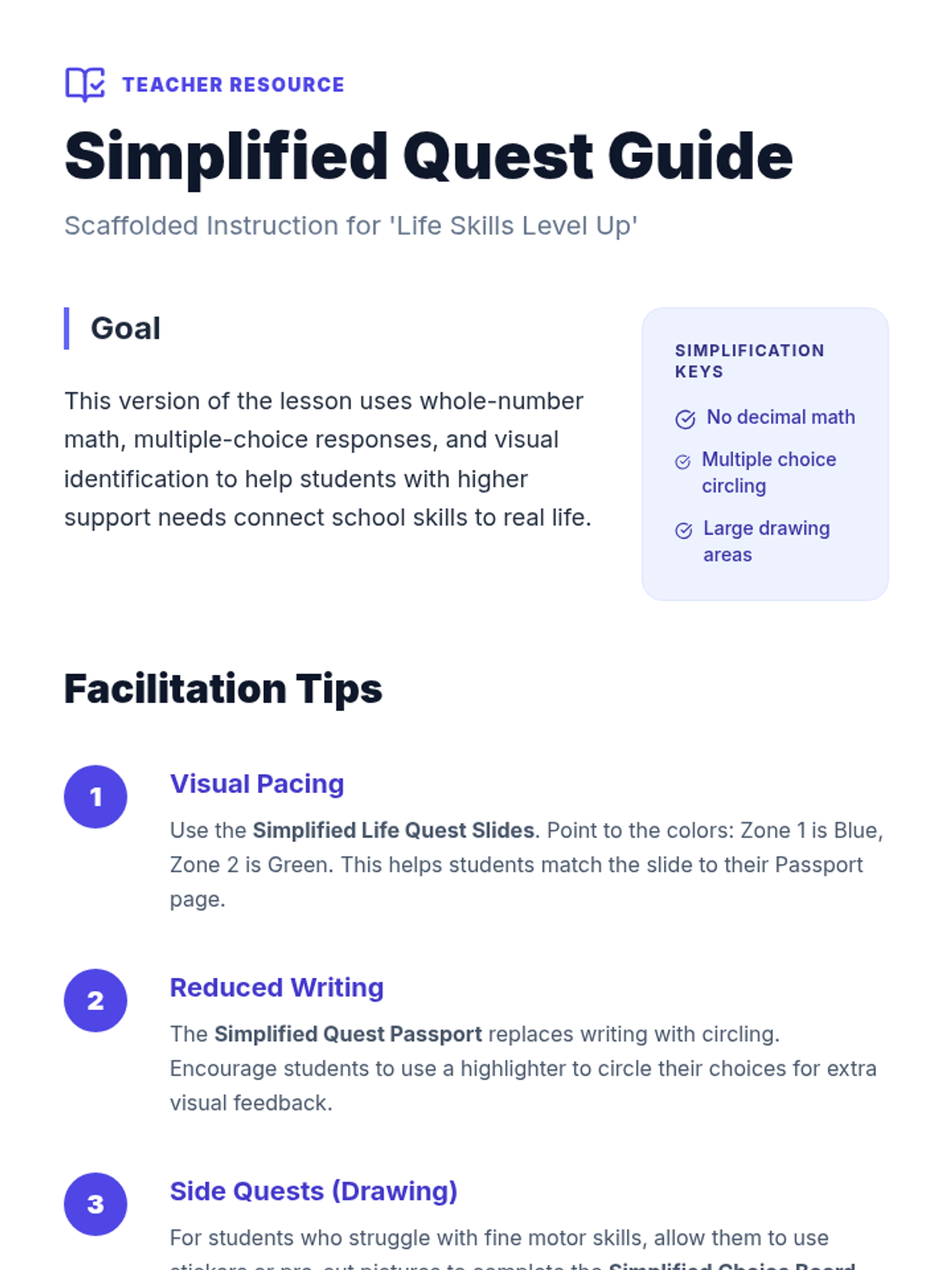
Updated Teacher Guidebook for the simplified 'Life Skills Level Up' lesson. Includes specific strategies for connecting classroom skills to real jobs (Baker, Driver, Cashier, Librarian) and adult independence, with an updated walkthrough for the new 'Skill Connections' slide.
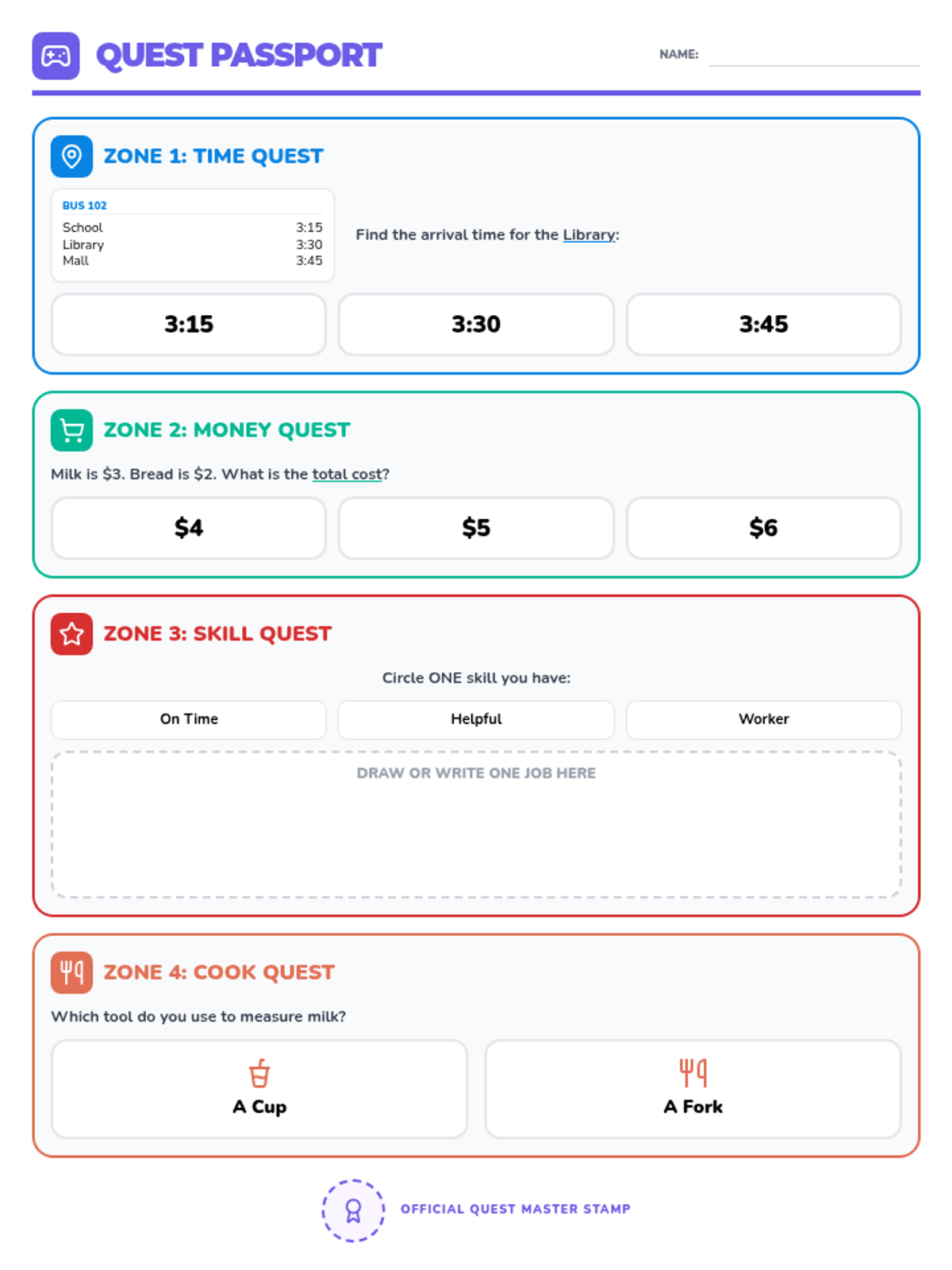
A simplified Quest Passport for 6th-grade IEP students. Includes visual references, multiple-choice options, job examples (Baker, Driver, Cashier, Librarian), and a "Big Idea" reflection section. Fits on one page.
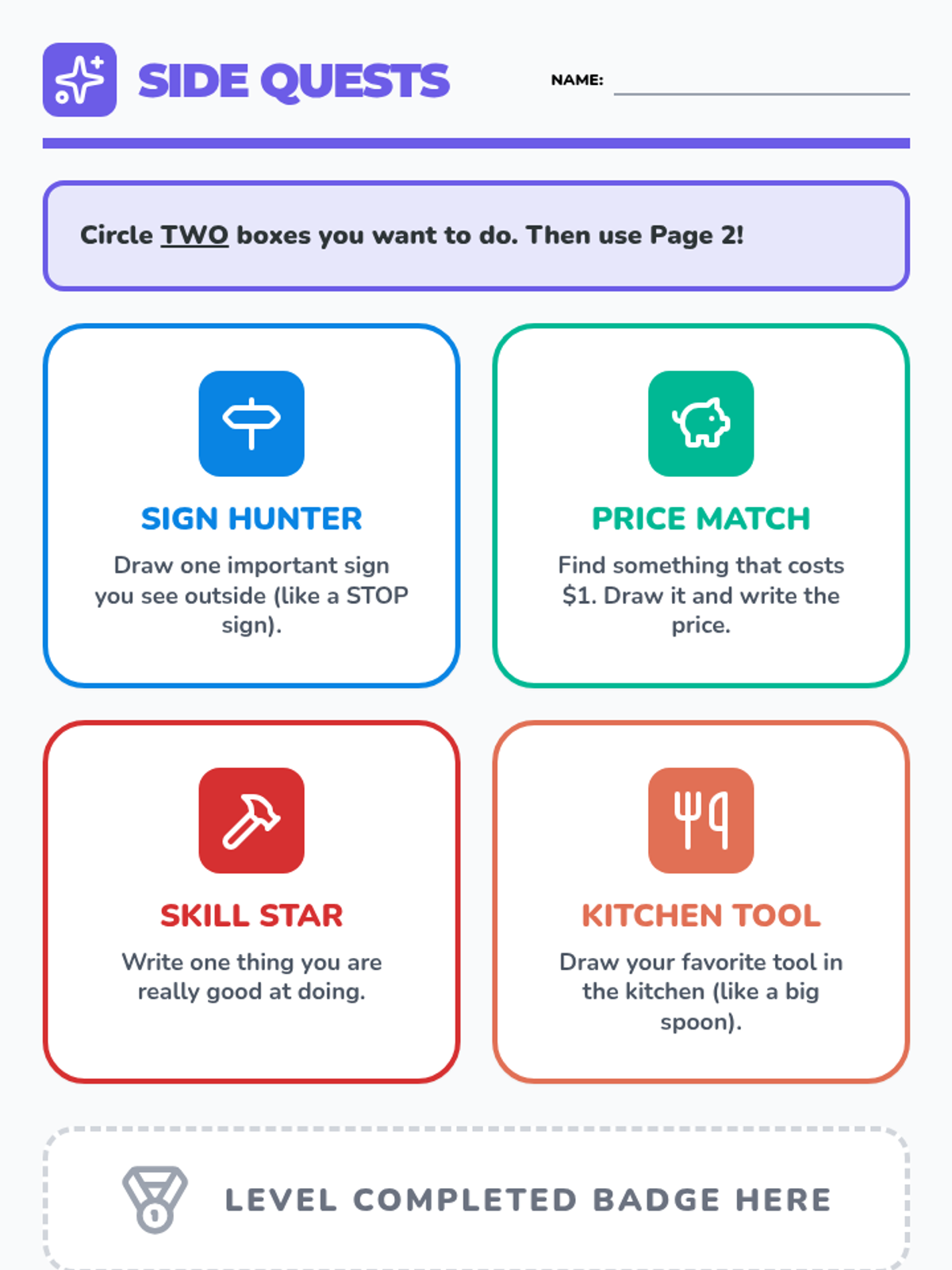
A simplified visual choice board for 6th-grade IEP students with reduced task complexity. Students choose two 'Side Quests' and complete them in large, designated work areas on a second page. Improved contrast for printing.
Simplified Life Quest slides for 6th-grade IEP students, featuring interactive visual choice layouts, whole-number math, and clear visual cues for each skill zone. Includes a new 'Skill Connections' power map and explicit links between school subjects and adult independence.
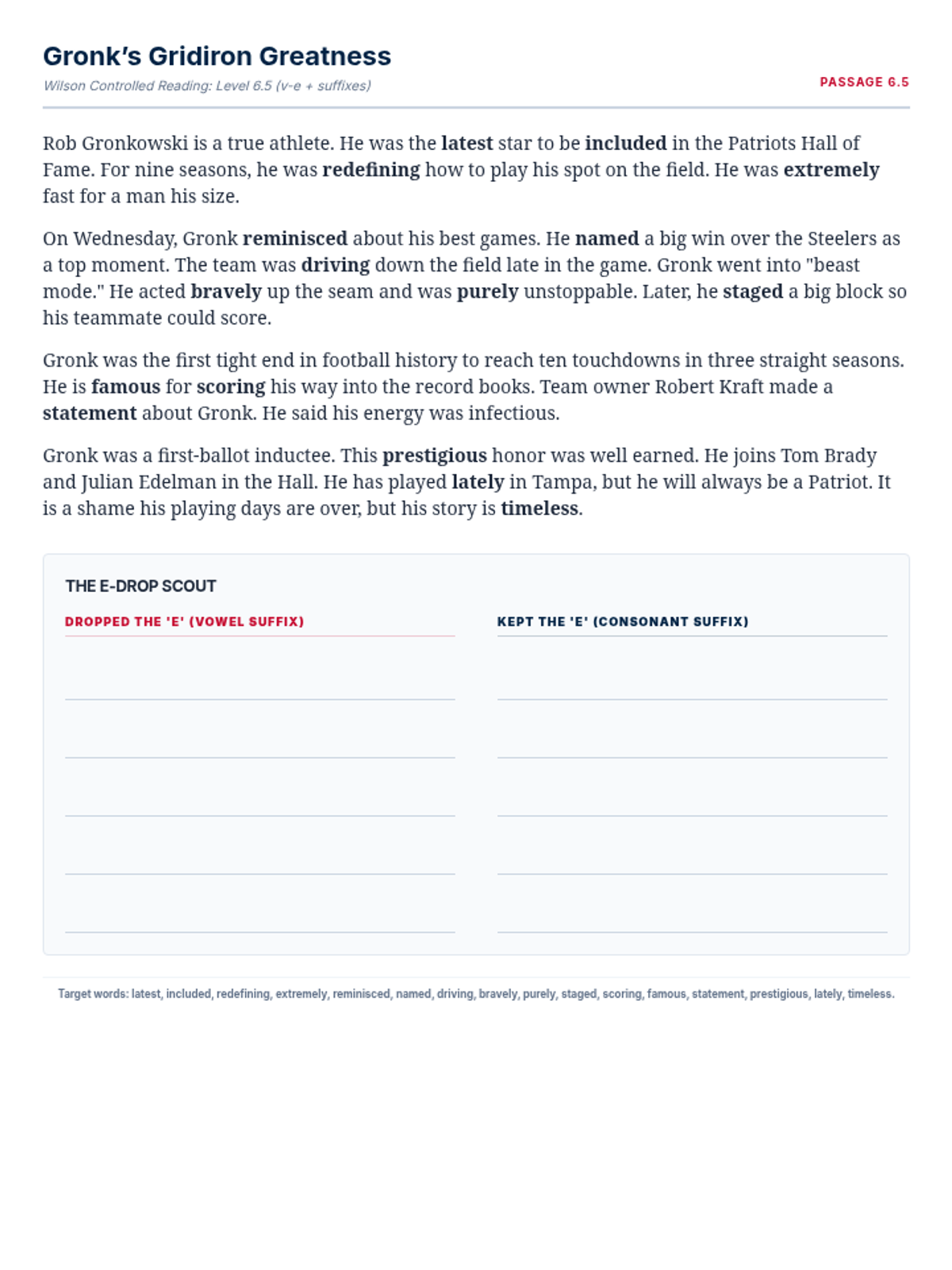
A Wilson-aligned controlled reading passage for Level 6.5, adapting the news of Rob Gronkowski's Hall of Fame induction and his favorite game moments to target the silent E spelling rule.