A comprehensive data tracking sheet for monitoring task initiation progress. Revised with an aligned graph, 12 trial rows, and improved page layout. Consolidated to a single-page view.
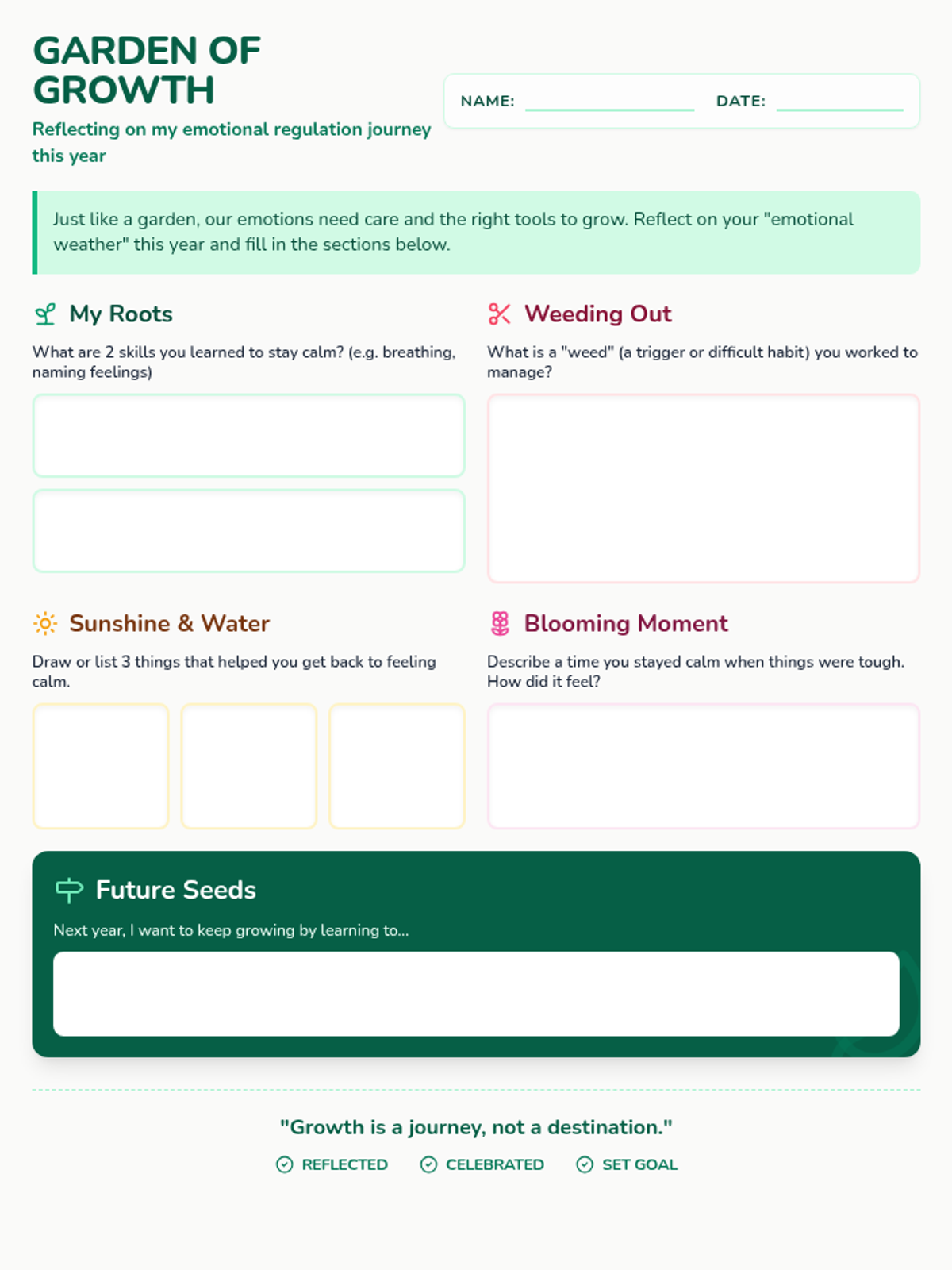
A revised one-page garden-themed counseling worksheet for end-of-year reflection on emotional regulation progress, featuring compact sections for skills, triggers, coping strategies, and future goals.
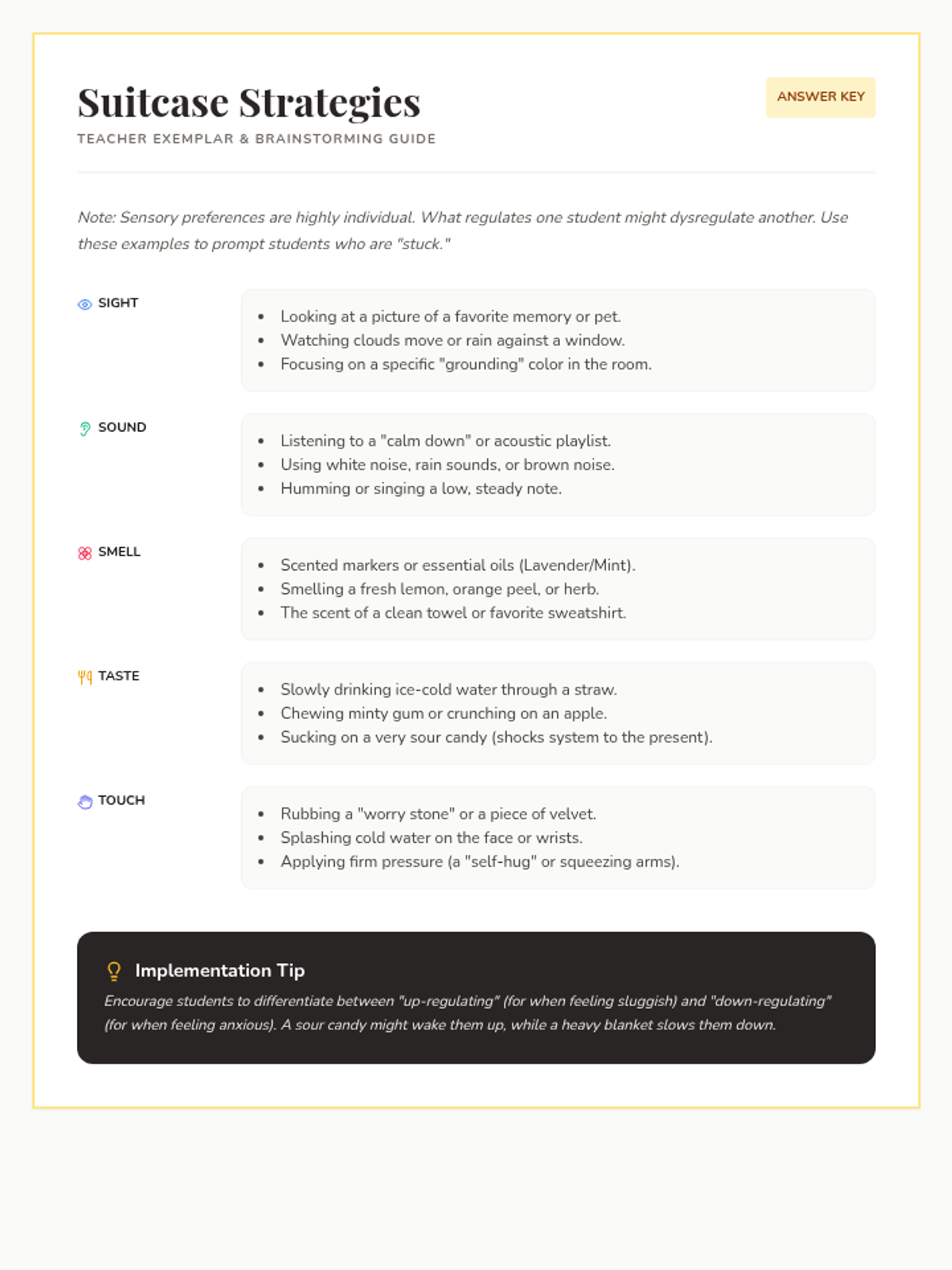
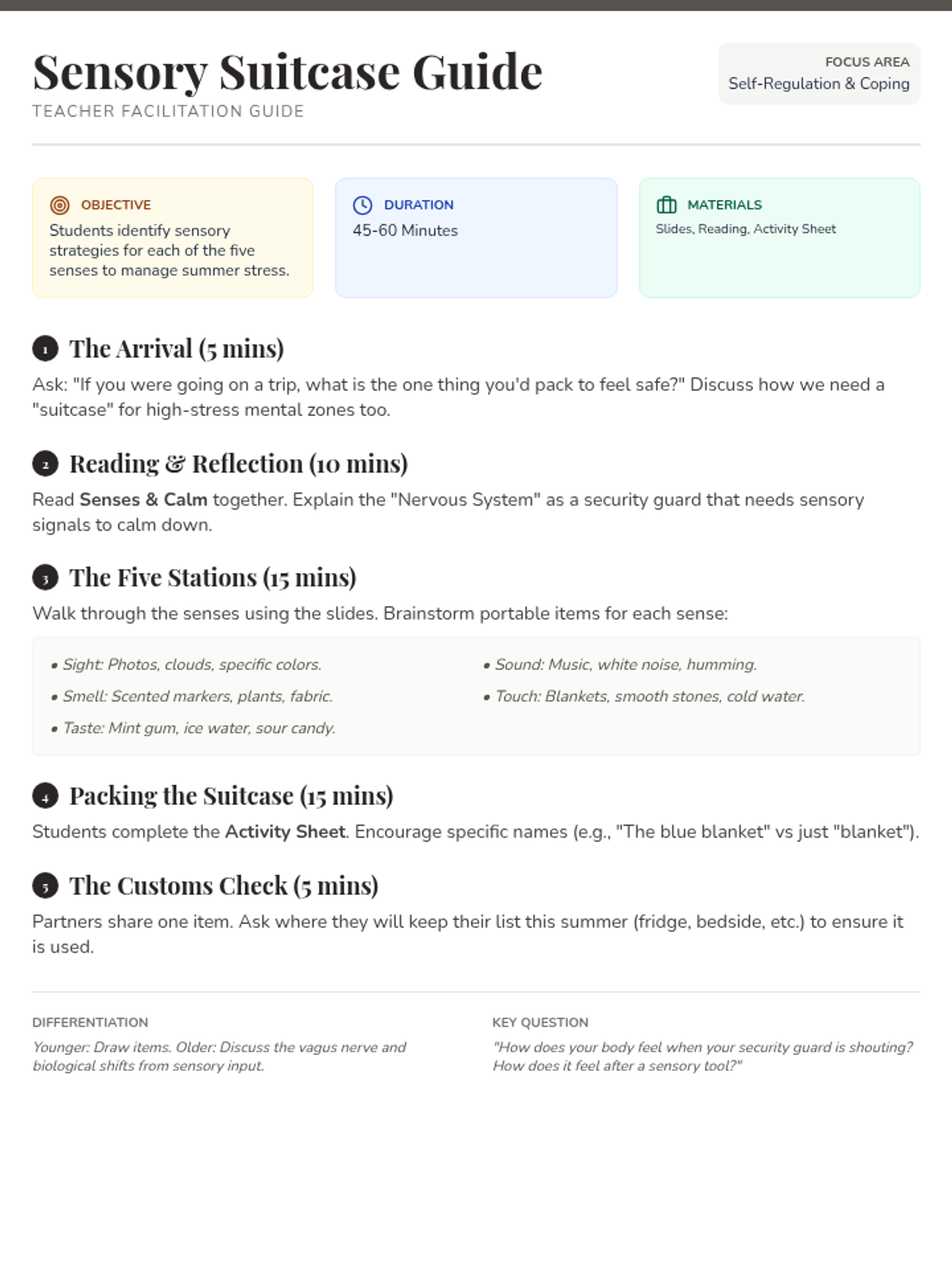
A teacher-facing answer key and brainstorming guide providing specific sensory strategy examples to help students fill out their Sensory Suitcase.
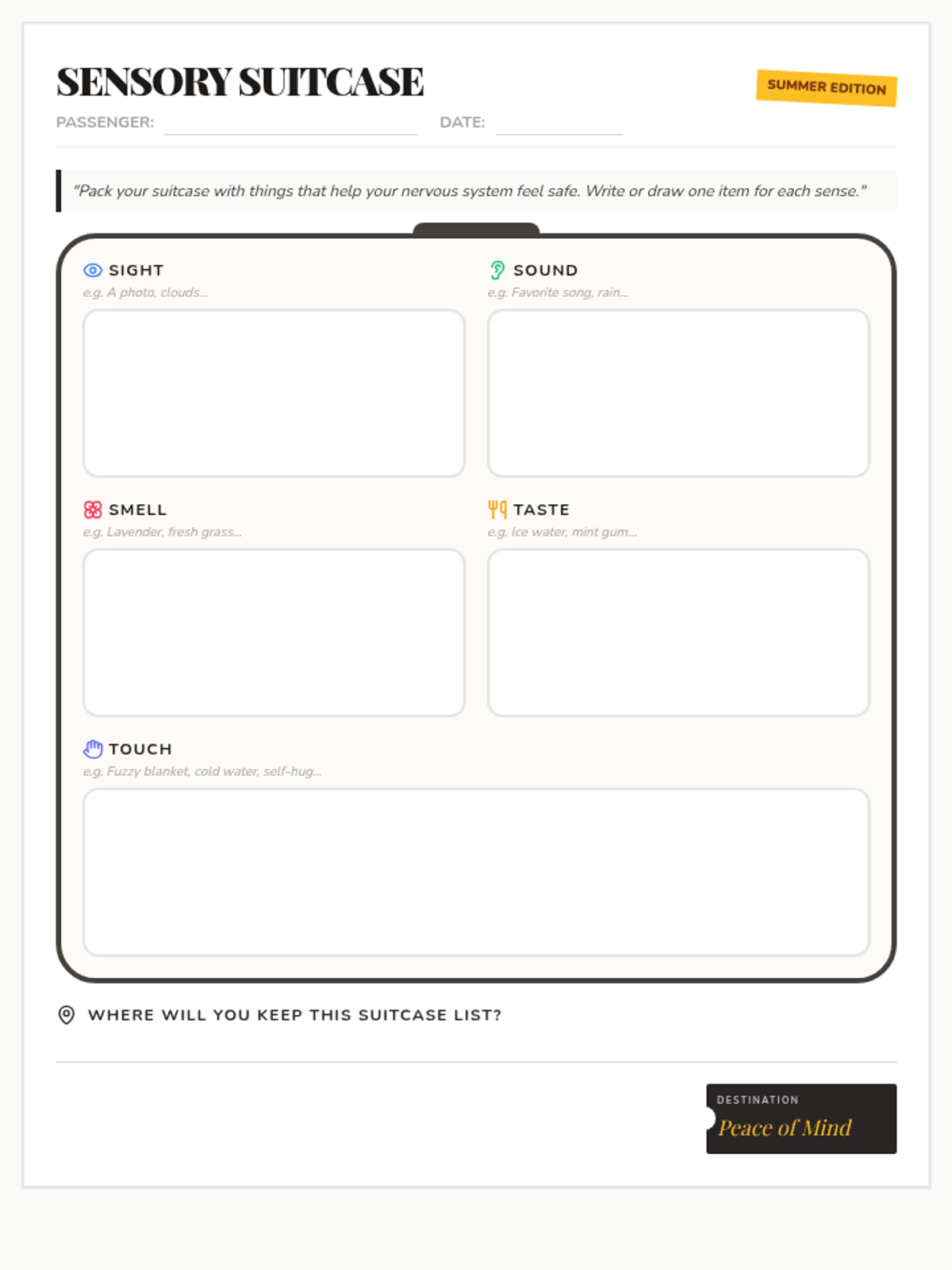
A student worksheet designed as a metaphorical suitcase where students write or draw sensory strategies to help them stay calm and regulated during the summer.
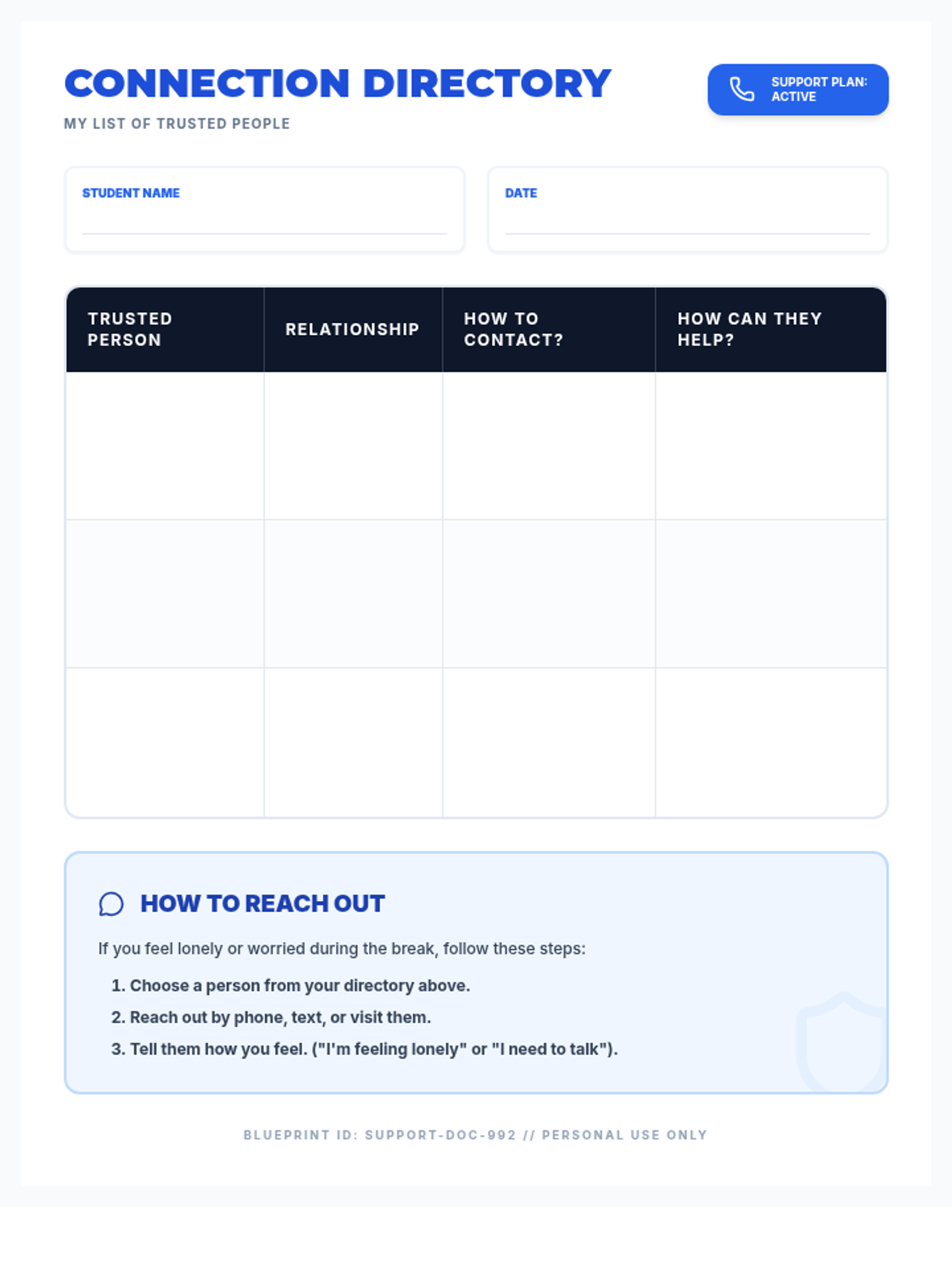
A directory worksheet for students to record names, contact methods, and support roles for their trusted adults, completing the 'Connection Blueprint' intervention.
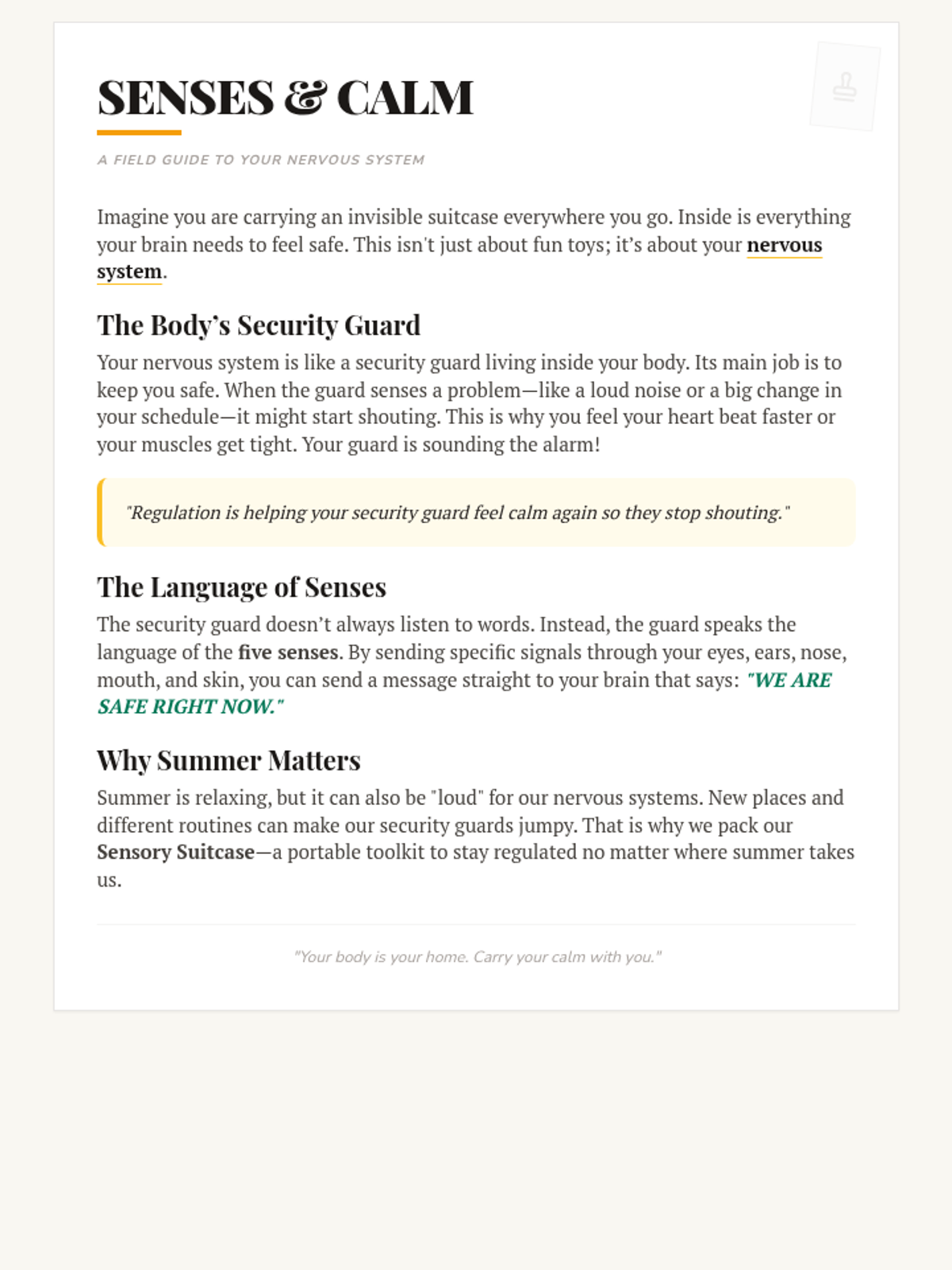
An accessible reading passage for students that explains the concept of the nervous system as a 'security guard' and how sensory inputs can help regulate emotions.
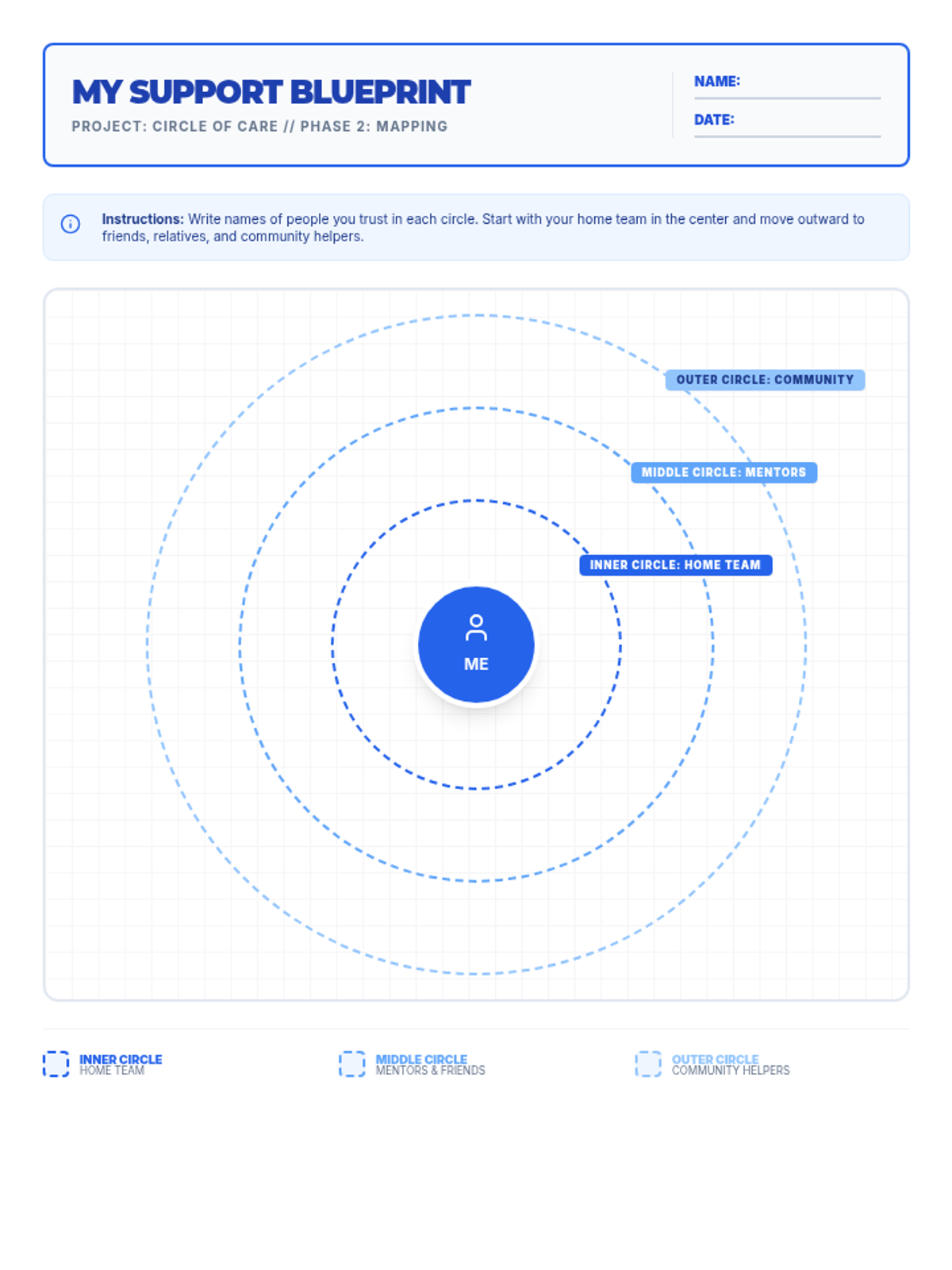
A visual mapping activity for students to identify their support networks using concentric circles, following the 'Connection Blueprint' theme.
Visual presentation for the Sensory Suitcase lesson, explaining the nervous system's role in regulation and providing concrete sensory strategy examples for students.
Engaging visual presentation for 'The Connection Blueprint' lesson, using a consistent architectural theme to explain the 'Circle of Care' concept and identify trusted adults.
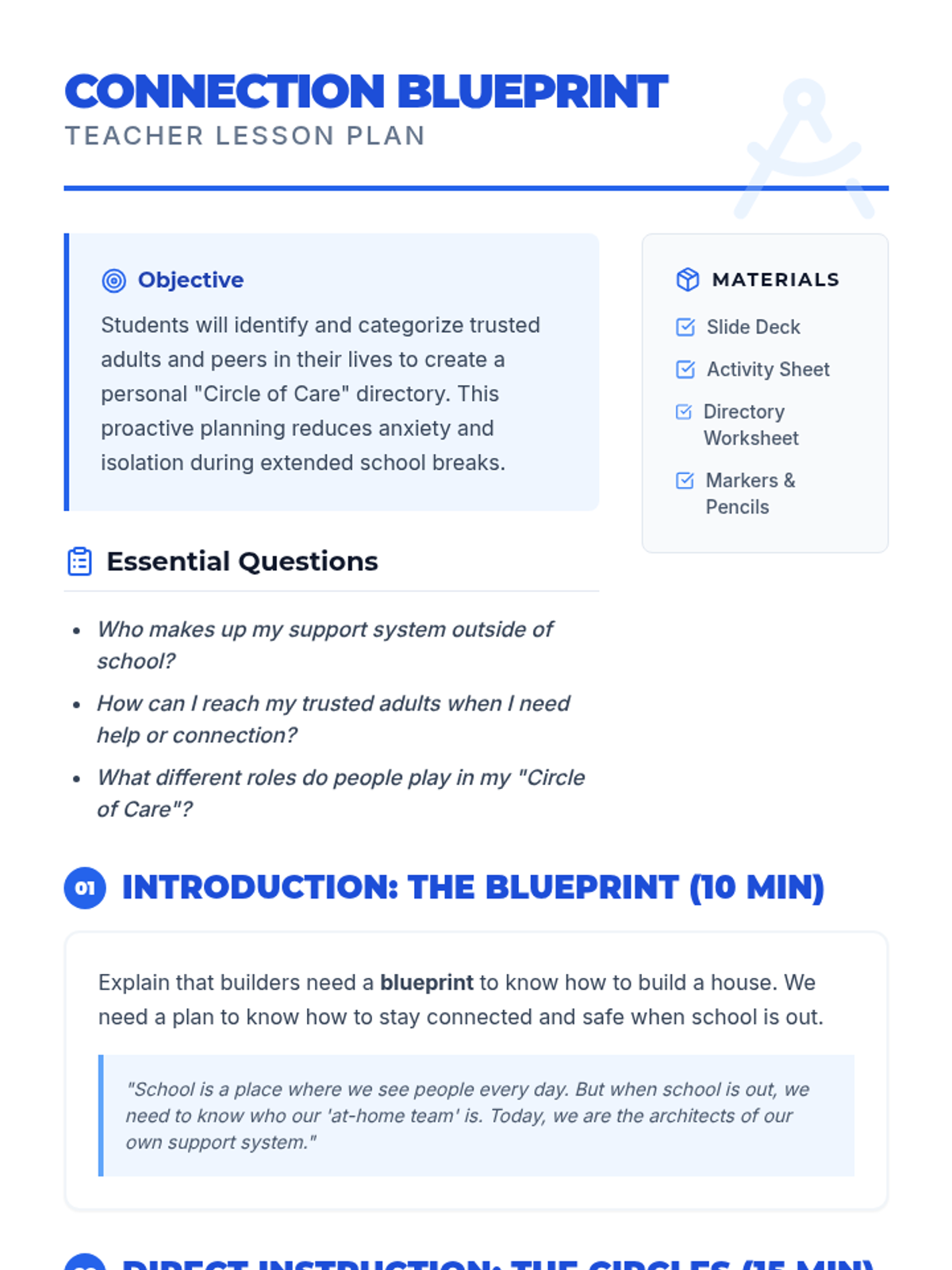
Comprehensive teacher guide for 'The Connection Blueprint' intervention, featuring lesson objectives, detailed procedures, and pedagogical tips for helping students build support networks.
A comprehensive teacher guide for facilitating the Sensory Suitcase lesson, including instructional steps, brainstorming prompts, and differentiation strategies.
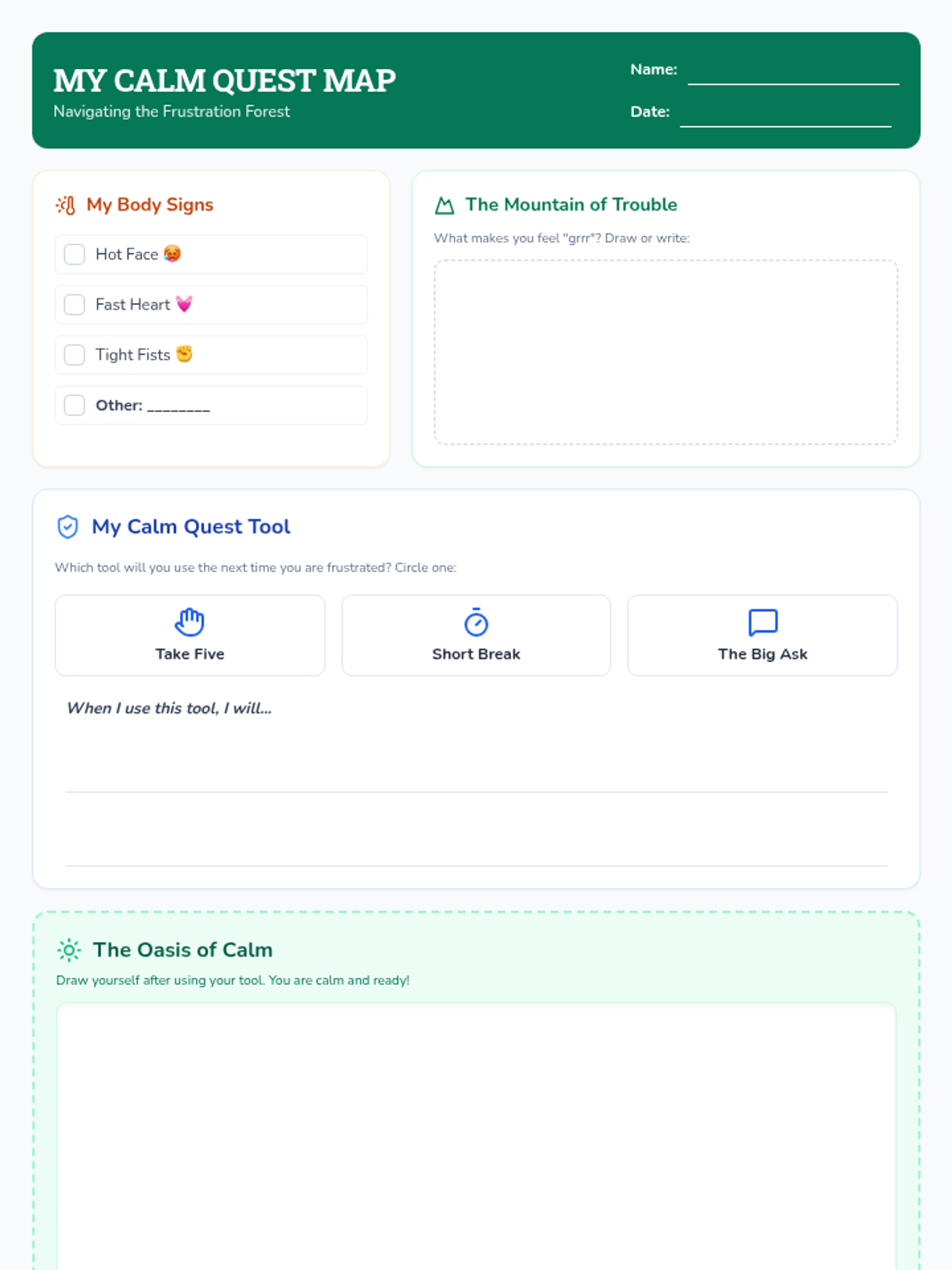
A student worksheet for self-reflection on frustration. Students identify their physical signs of frustration, specify a personal 'trigger', choose a coping strategy, and draw their 'calm' self.
A visual presentation featuring three social stories about managing frustration. Each story illustrates a common trigger and introduces a specific coping strategy: breathing, taking a break, and asking for help.
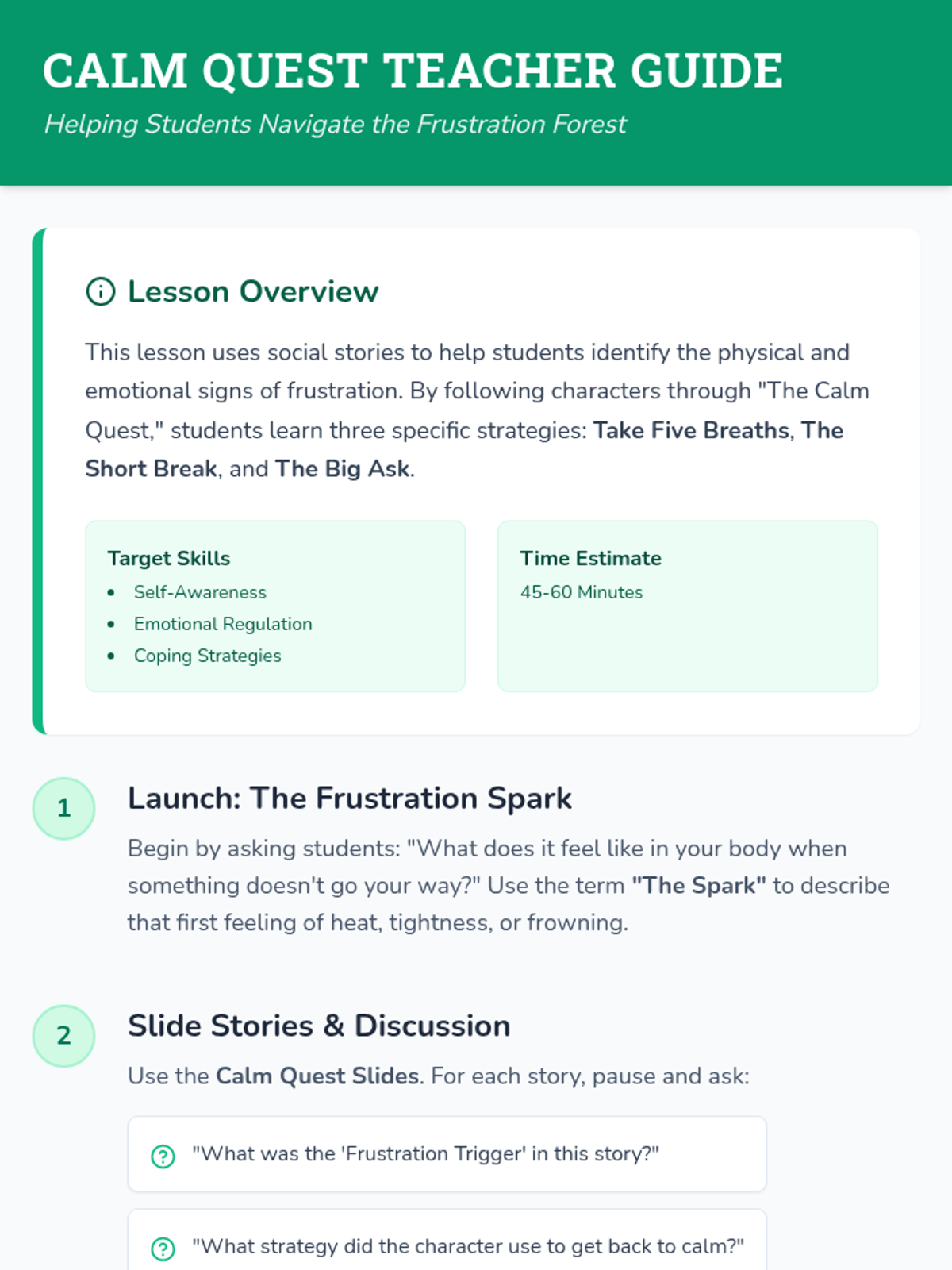
A comprehensive teacher guide for facilitating the Calm Quest lesson, including instructional steps, discussion prompts, and an overview of the core coping strategies for managing frustration.
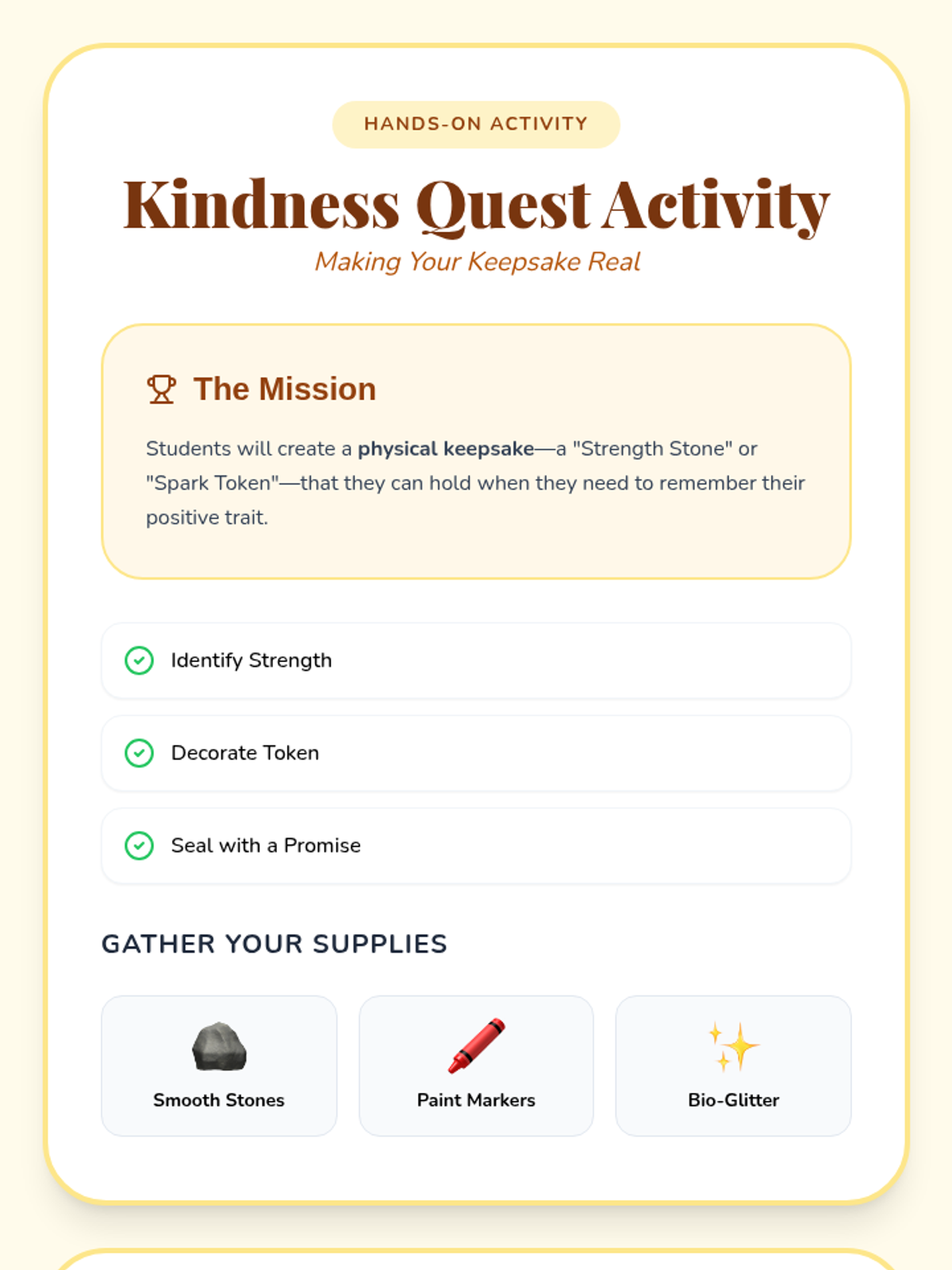
A step-by-step activity guide for creating physical keepsake tokens (Strength Stones) to represent personal positive traits.
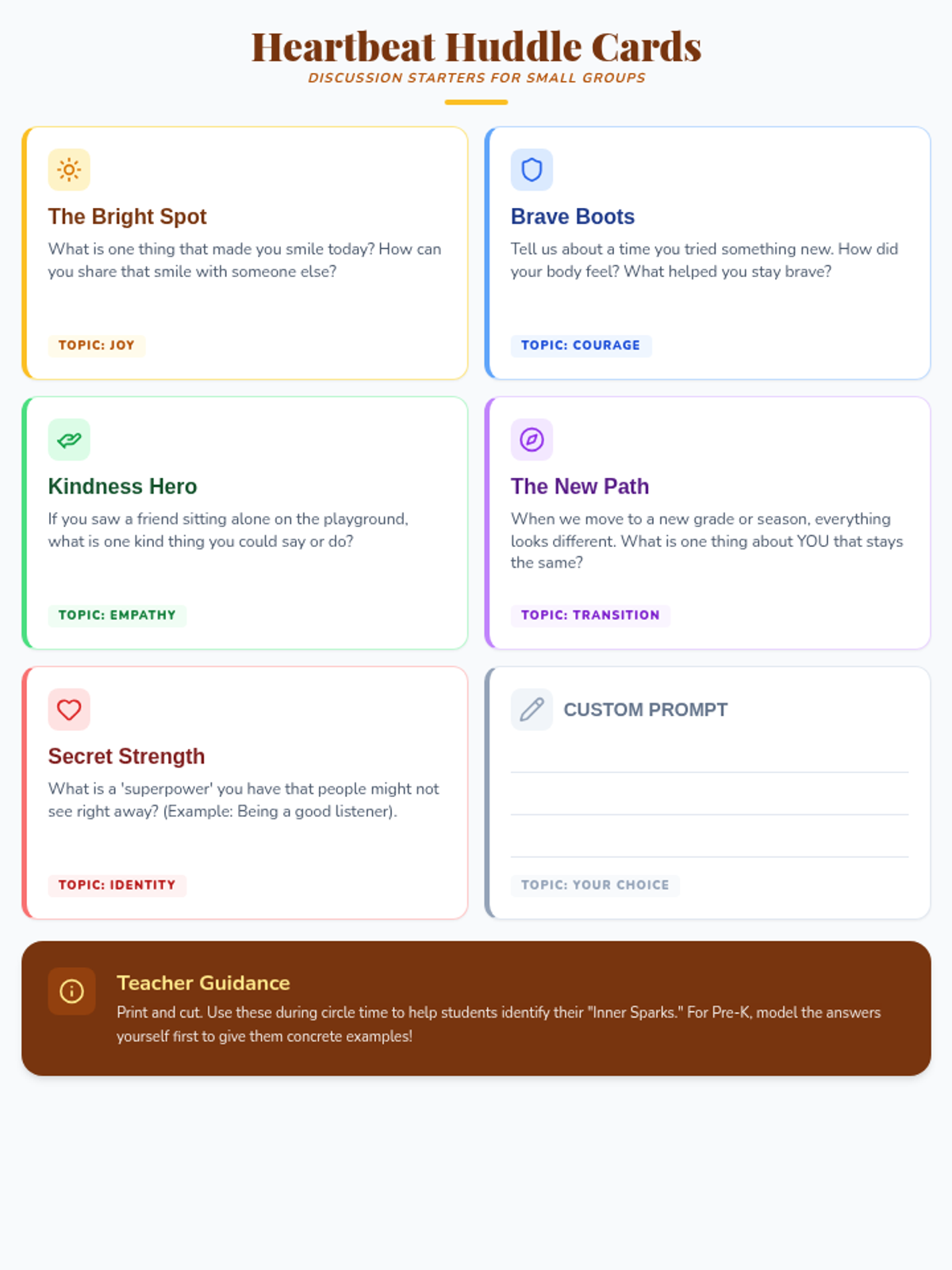
A set of discussion starter cards with age-appropriate prompts about kindness, bravery, and self-identity to use in small groups or circle time.
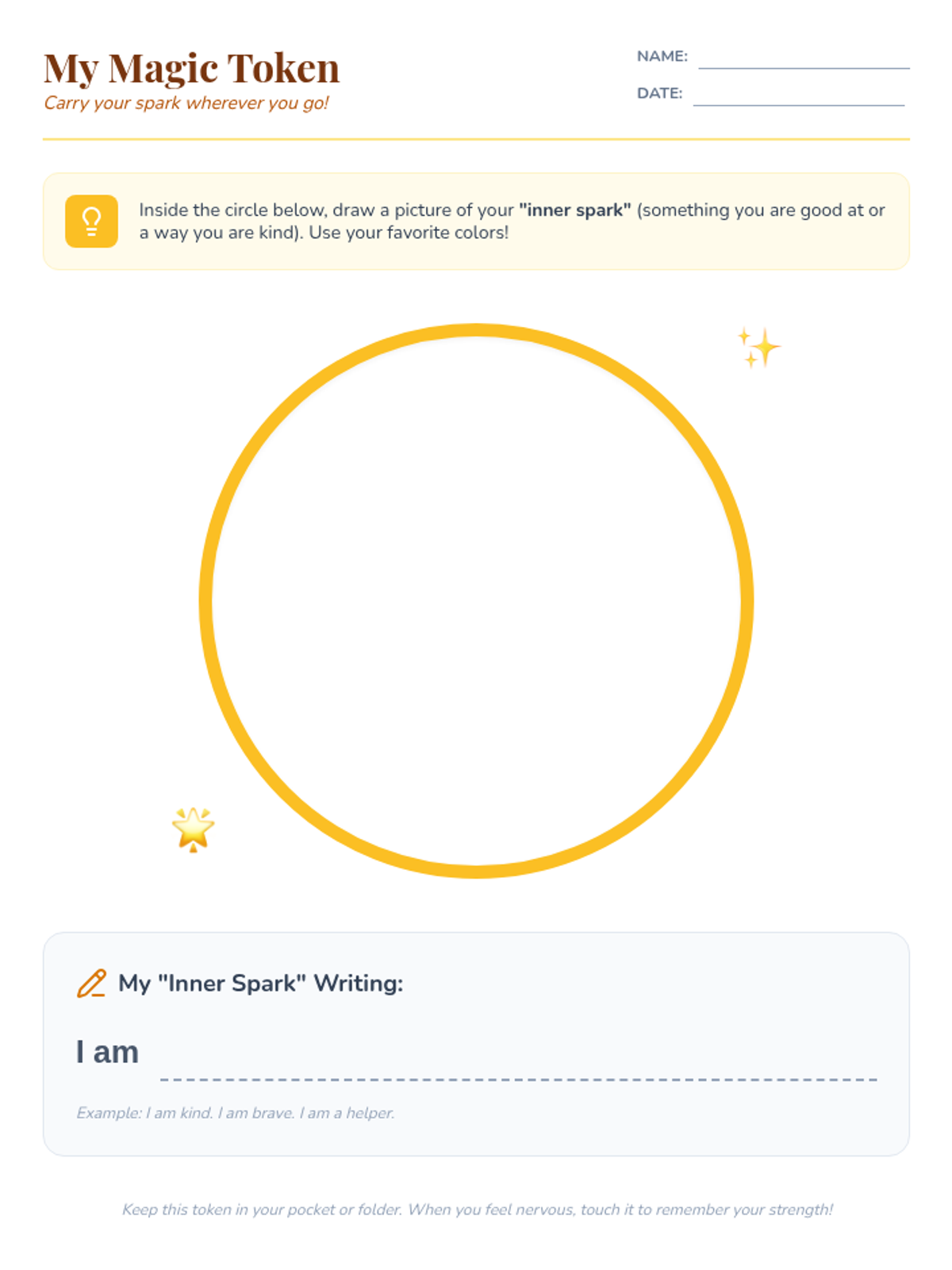
A student worksheet featuring a large circular space to draw their personal 'inner spark' and a sentence starter to practice self-affirmation.
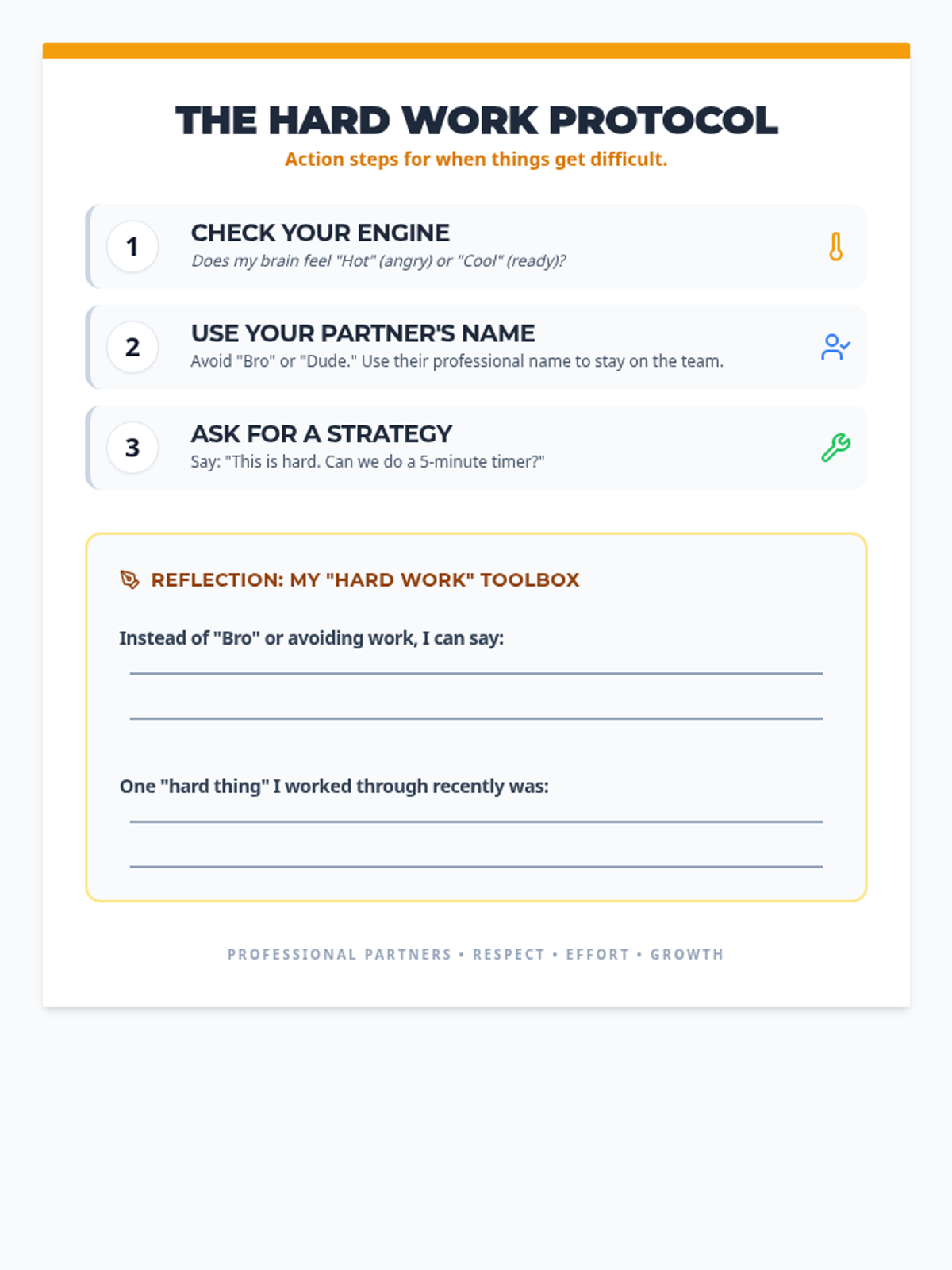
A visual guide and reflection sheet for the student to use when encountering challenging tasks, focusing on self-regulation and professional communication.
Visual presentation with large text and engaging graphics to guide Pre-K to 2nd grade students through identifying their personal 'inner spark'.
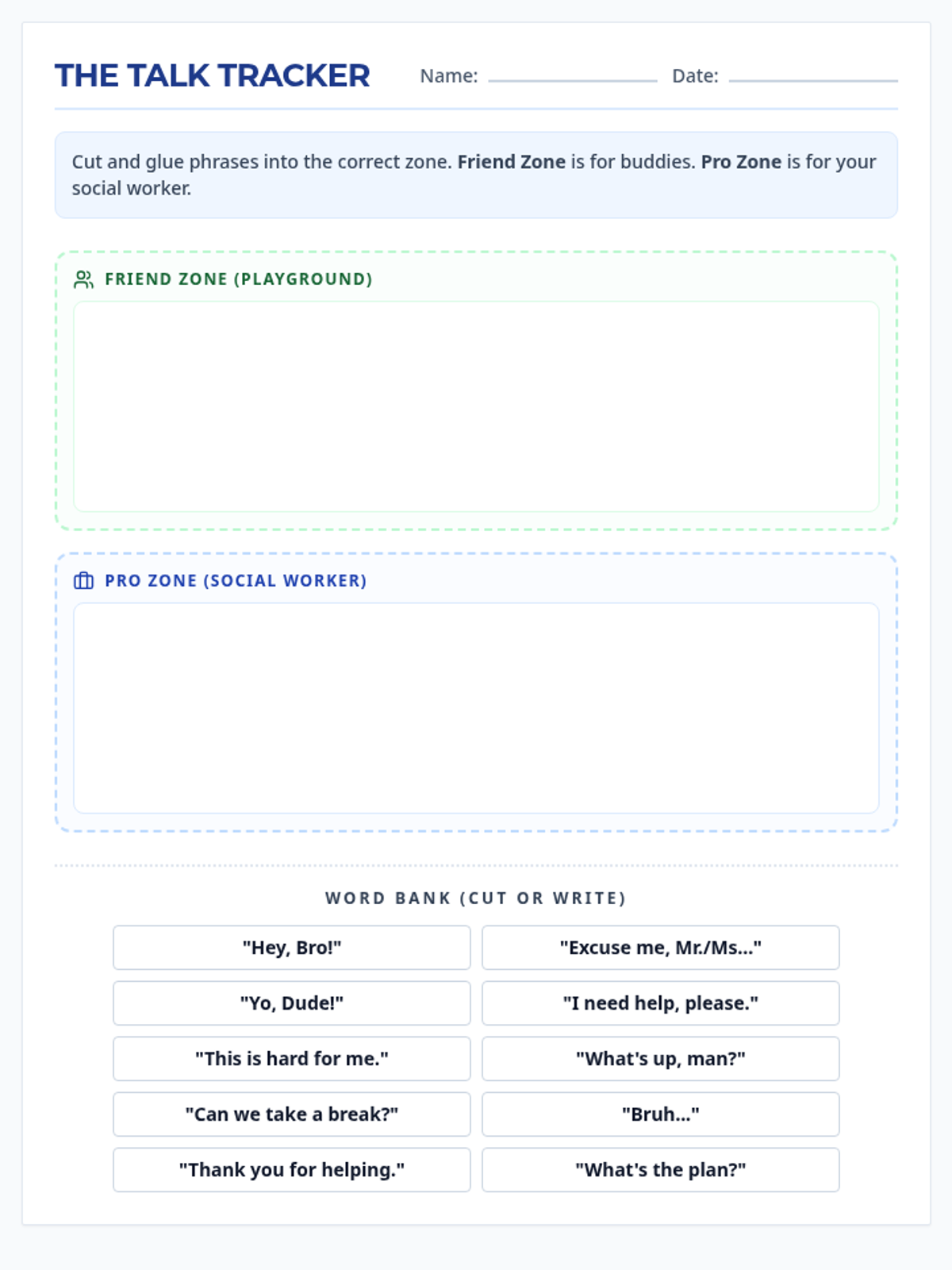
A sorting activity to help the student distinguish between casual language used with peers and professional language used with teachers.
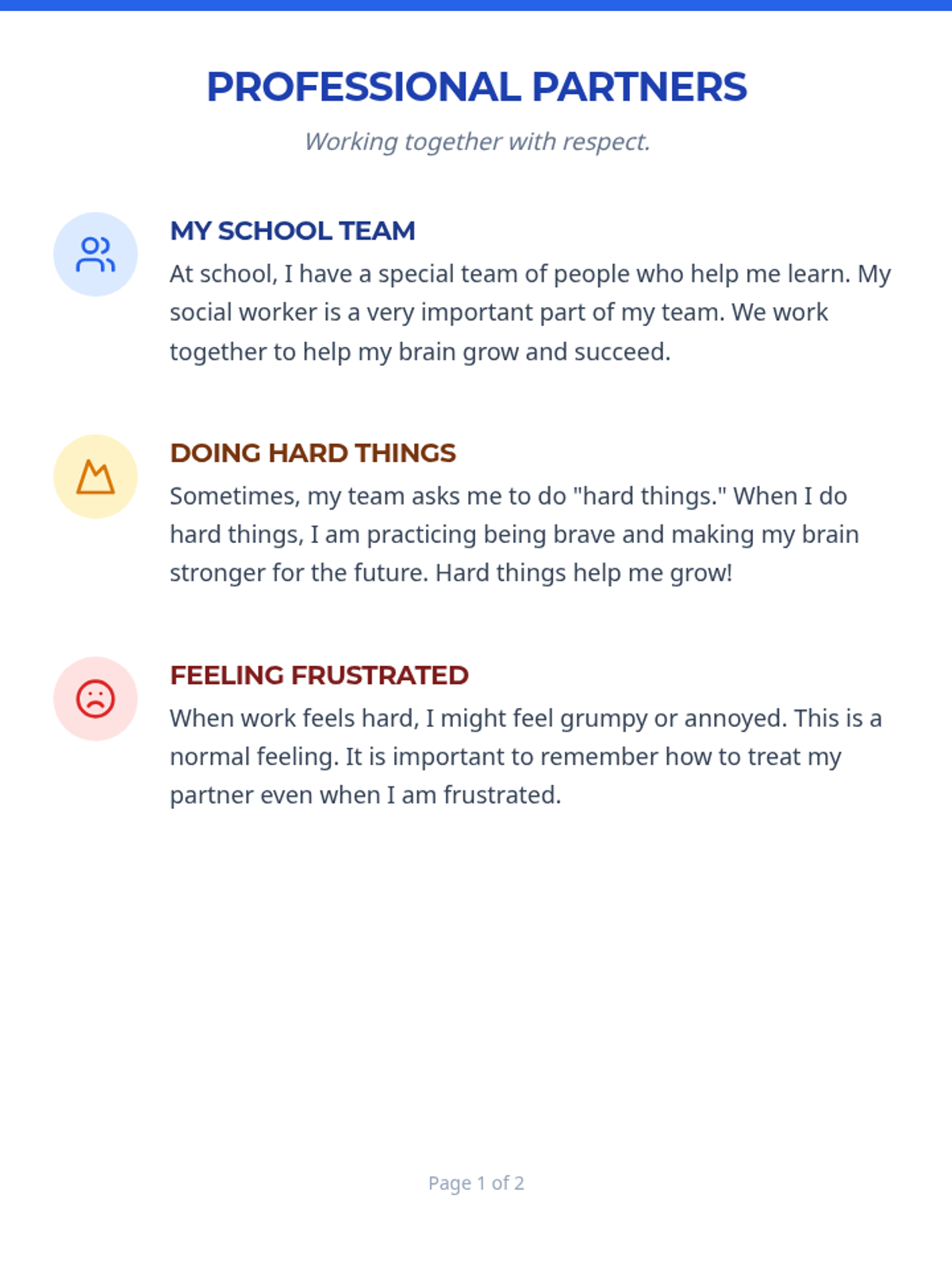
A multi-page social story that explains the difference between friend talk and professional talk, emphasizing respect during challenging tasks.
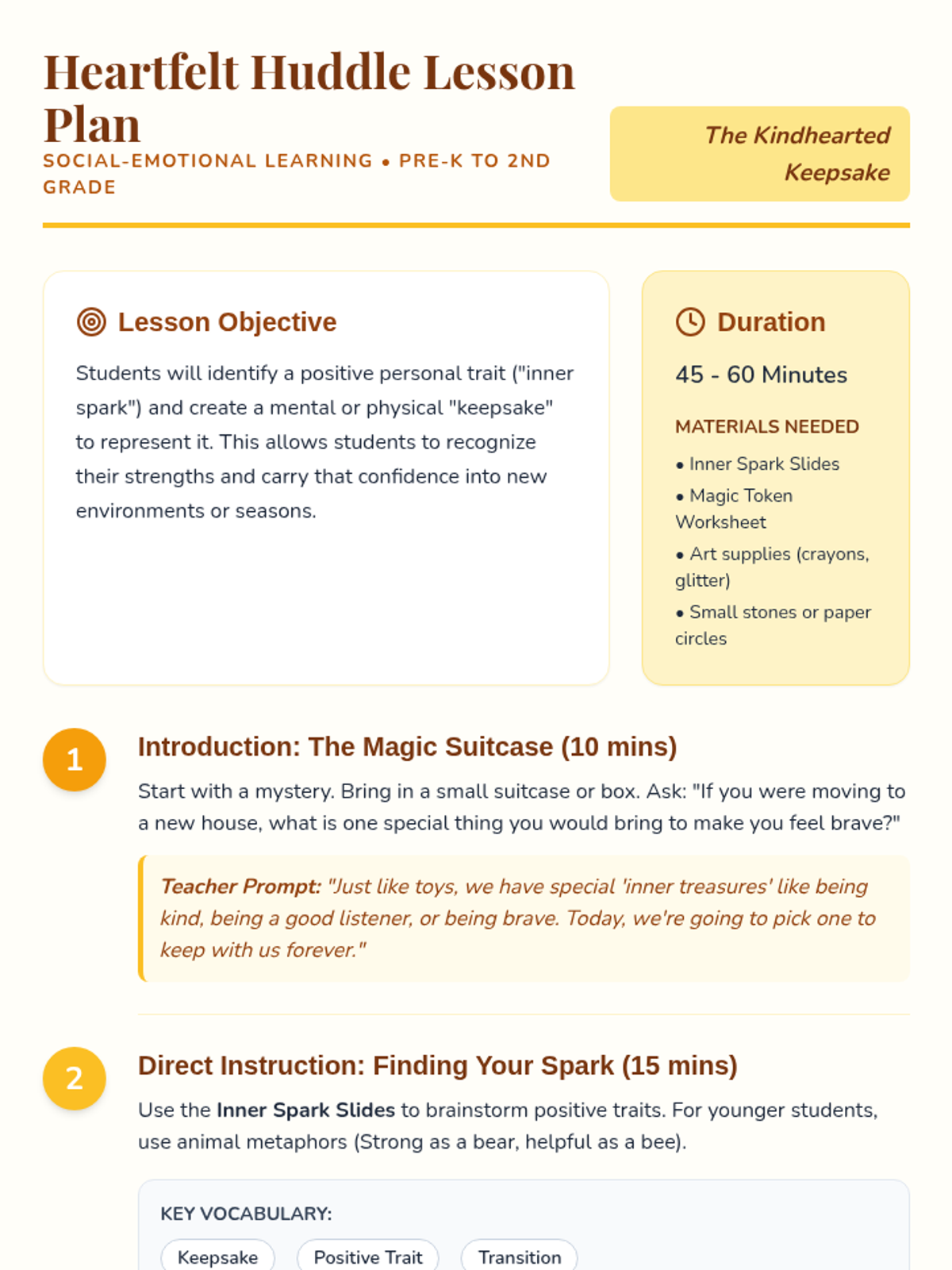
A detailed lesson plan for educators to lead a SEL activity about identifying personal strengths and carrying them through seasonal transitions.
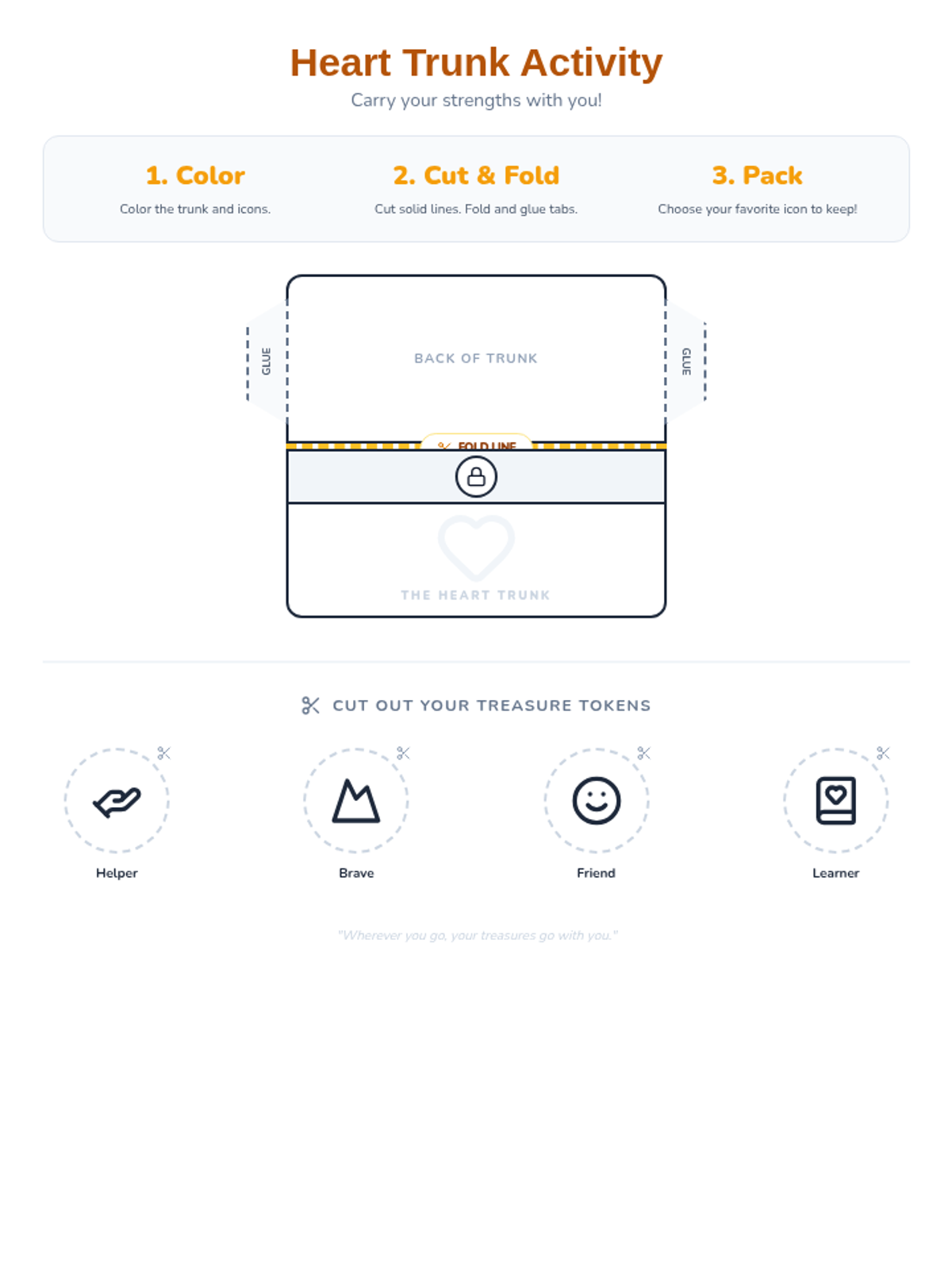
A physical craft activity sheet for assembling a 'heart trunk' pocket. Redesigned with a functional template (front, back, and glue tabs), higher contrast, and single-page layout.
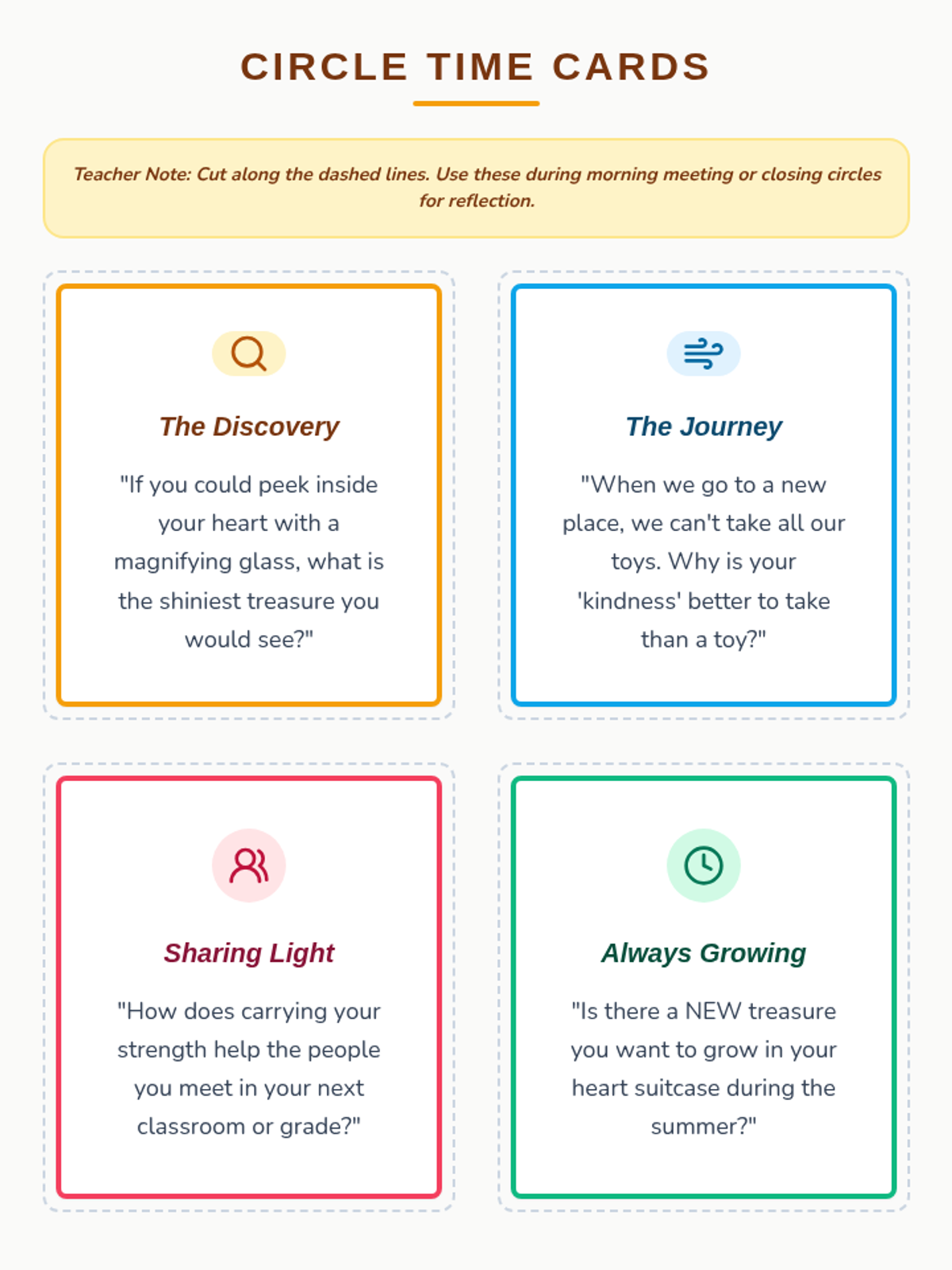
Printable discussion cards with high-contrast borders and clear cutting guides. Revised to fit all content on a single page with improved teacher instructions and simplified cutting paths.
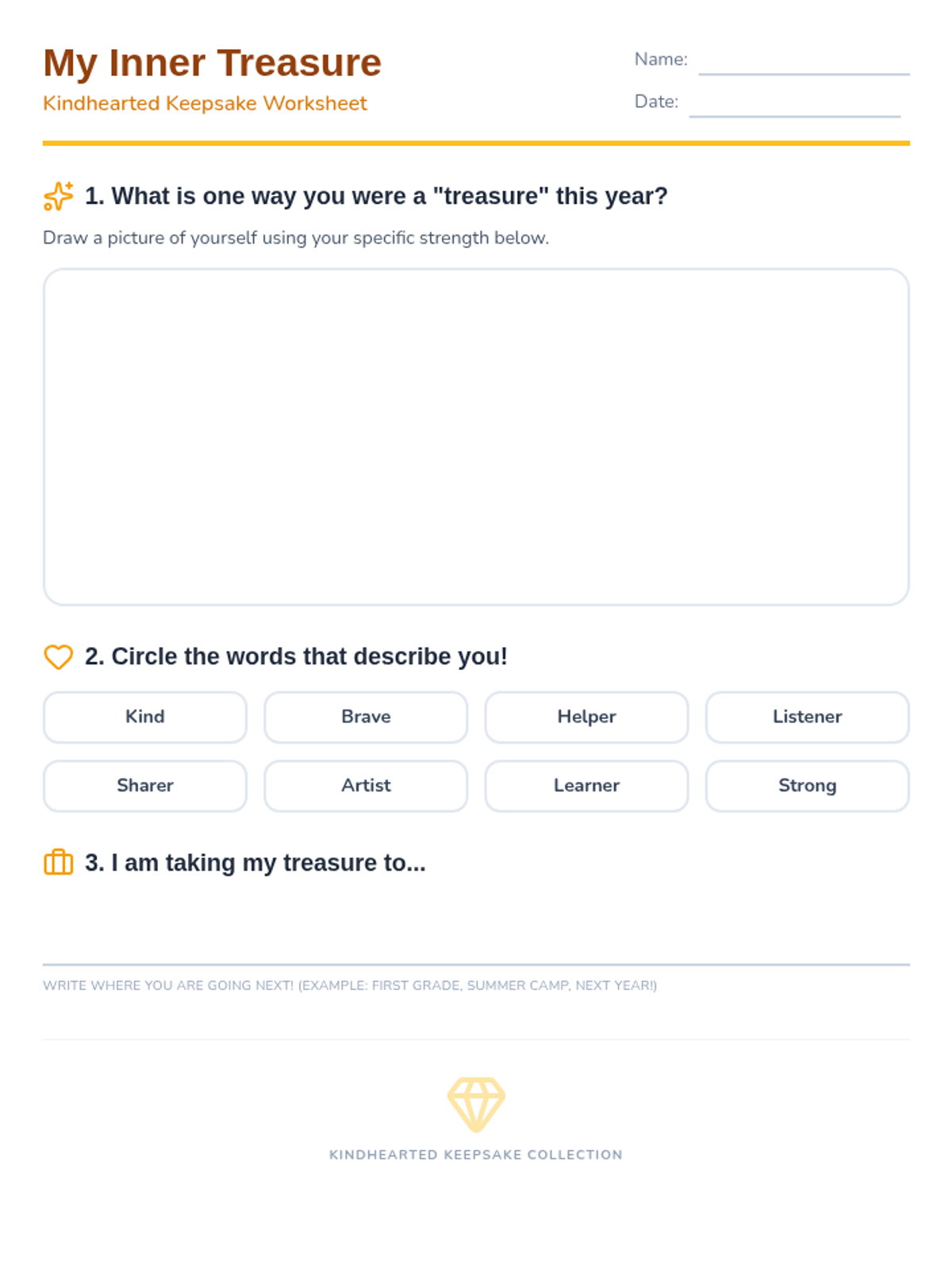
A student worksheet for drawing and identifying personal strengths. Revised for single-page printing and improved layout.
A colorful and engaging visual presentation to guide students through the concept of 'keepsakes' and 'invisible treasures' (personal strengths).
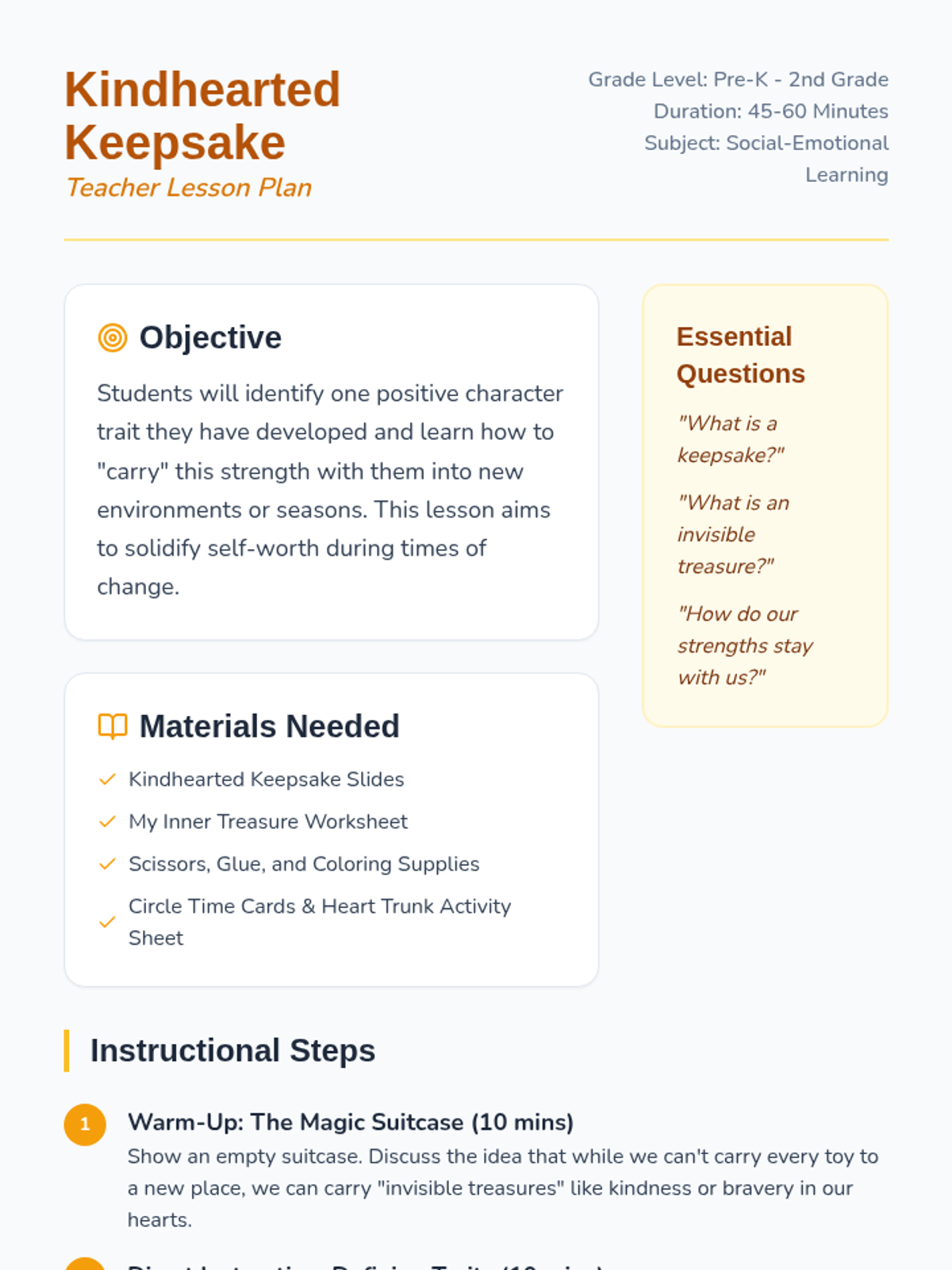
A detailed lesson plan for teachers, outlining objectives, materials, and step-by-step instructions for the Kindhearted Keepsake lesson. Adjusted for better flow and printability.
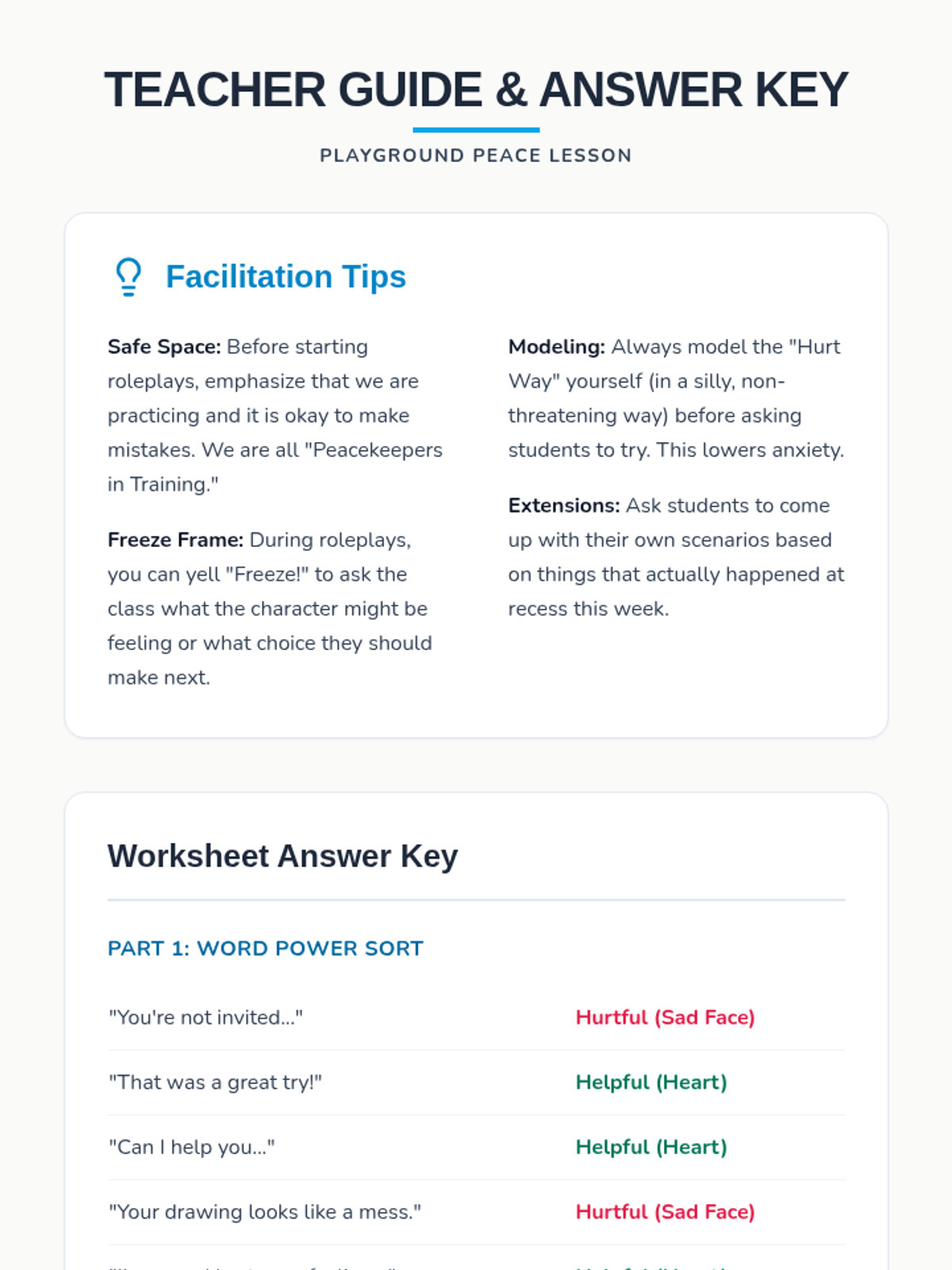
A comprehensive guide for teachers to facilitate the Playground Peace lesson. Includes facilitation tips, an answer key for the student worksheet, and discussion points for each roleplay scenario.
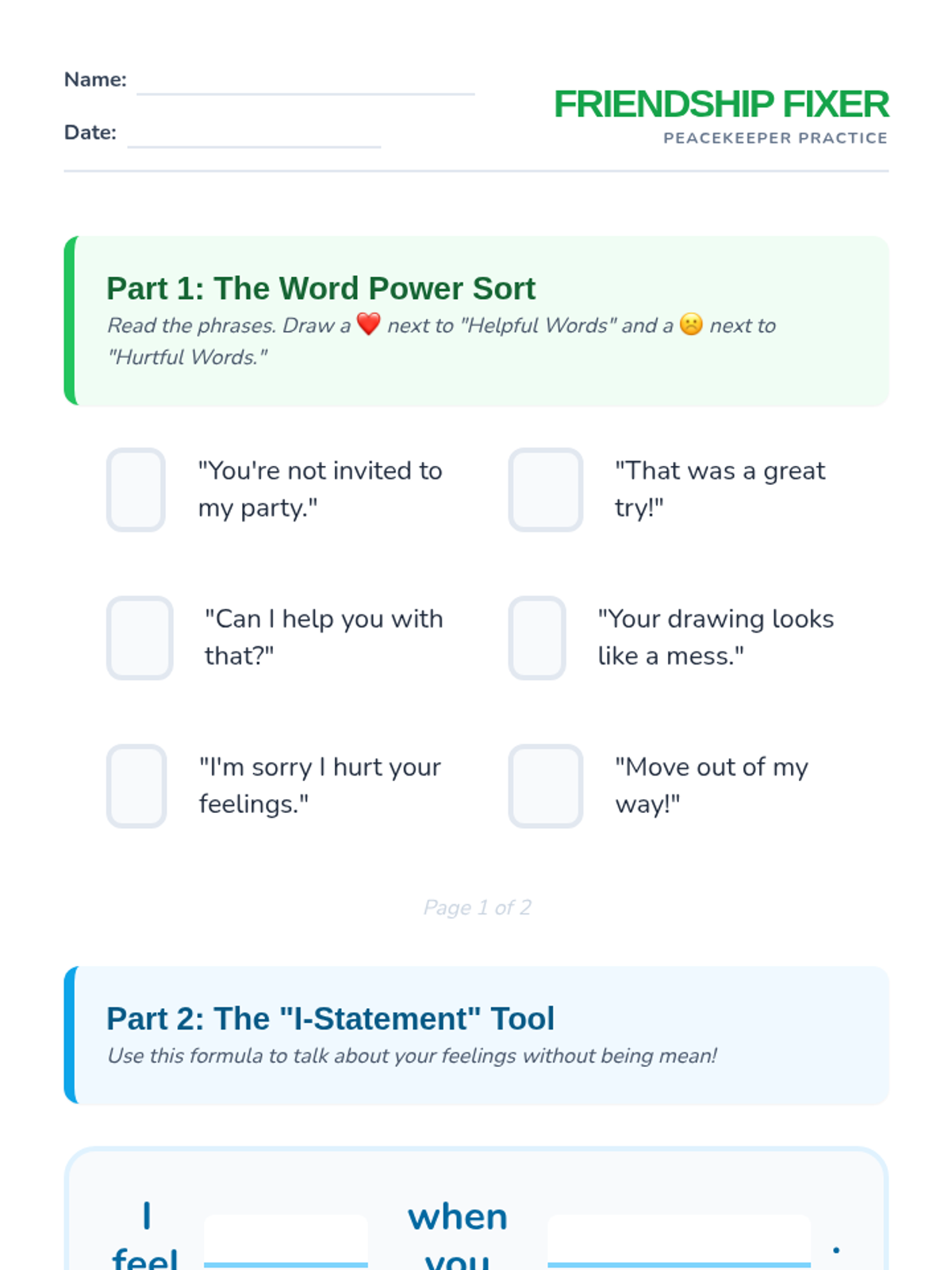
A student worksheet focusing on distinguishing between helpful and hurtful words, practicing 'I-statements,' and visualizing positive friendship behaviors through drawing. Ideal for second-grade social-emotional learning.
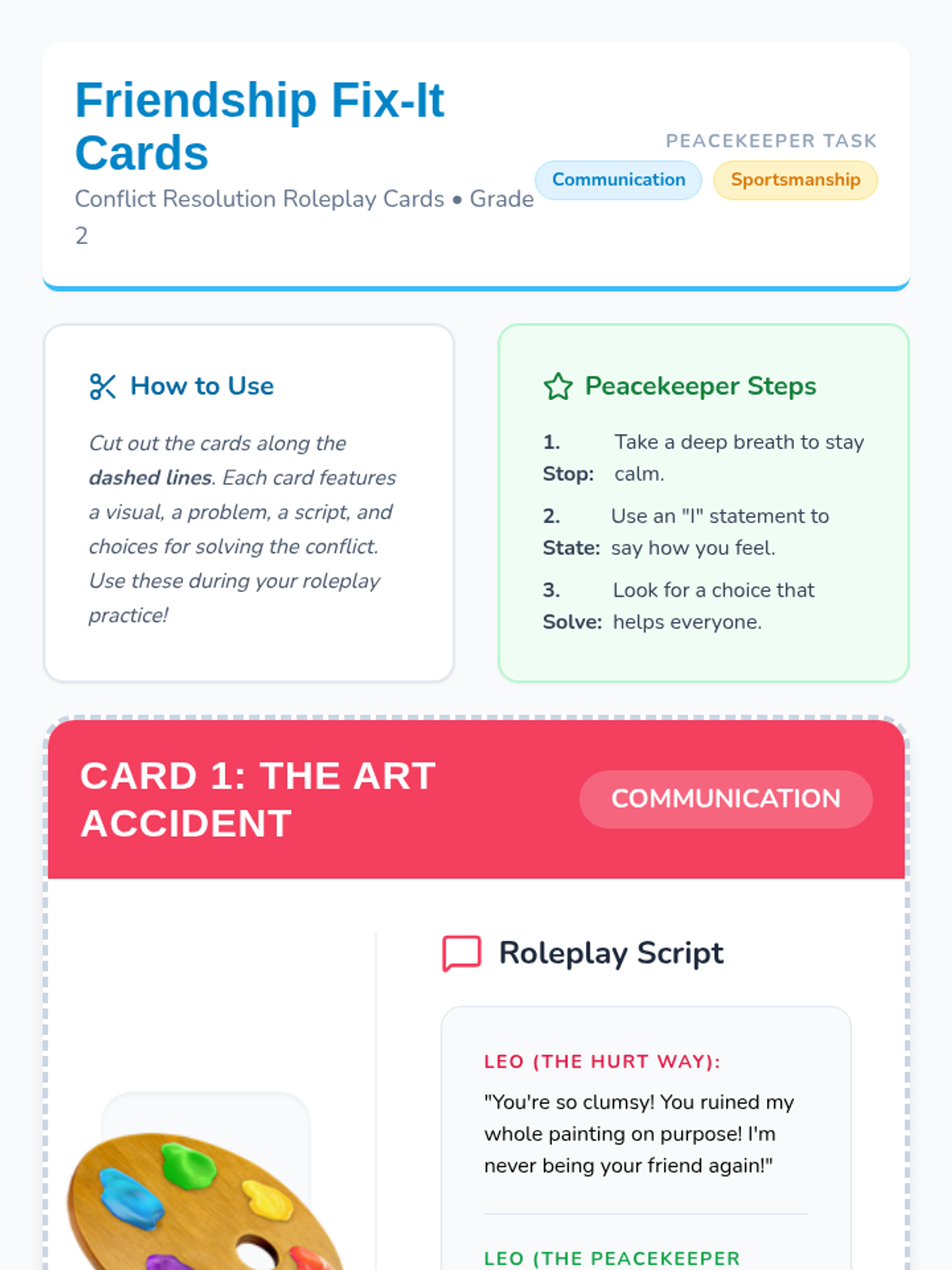
A set of printable roleplay cards for second-grade students. Each card includes a visual prompt, a common playground scenario, scripted dialogues demonstrating hurtful vs. helpful communication, and reflection questions to guide classroom discussion.
A vibrant and engaging slide deck designed for second-grade students to introduce the concepts of kind communication, sportsmanship, and inclusion on the playground. Includes visual examples and definitions of 'Peacekeeper' behaviors.
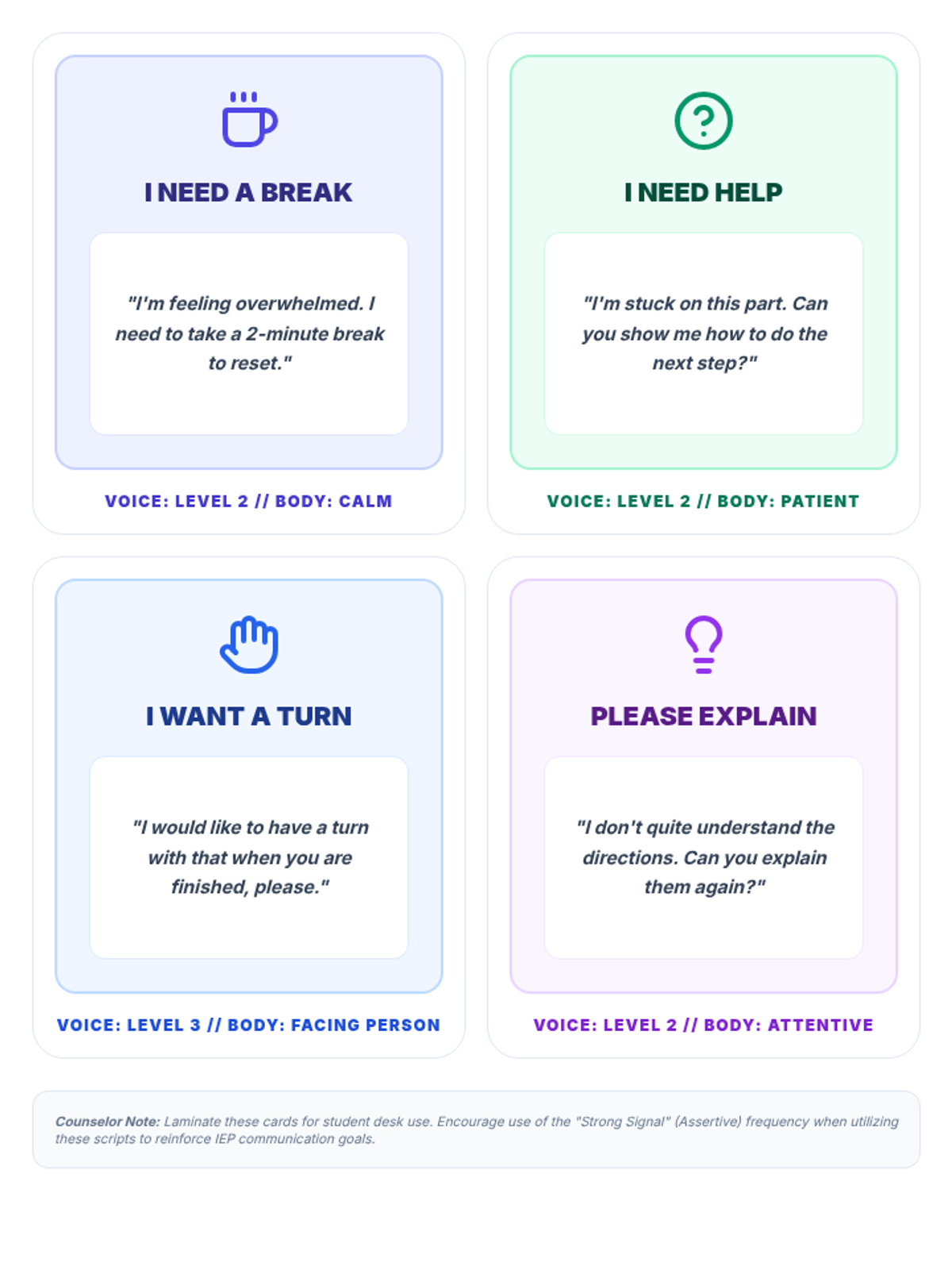
Portable reference cards for students containing specific scripts for asking for breaks, help, turns, and explanations.
Instructional slides for Lesson 3 that address the psychological barriers to asking for help and provide specific scripts for common needs in school.
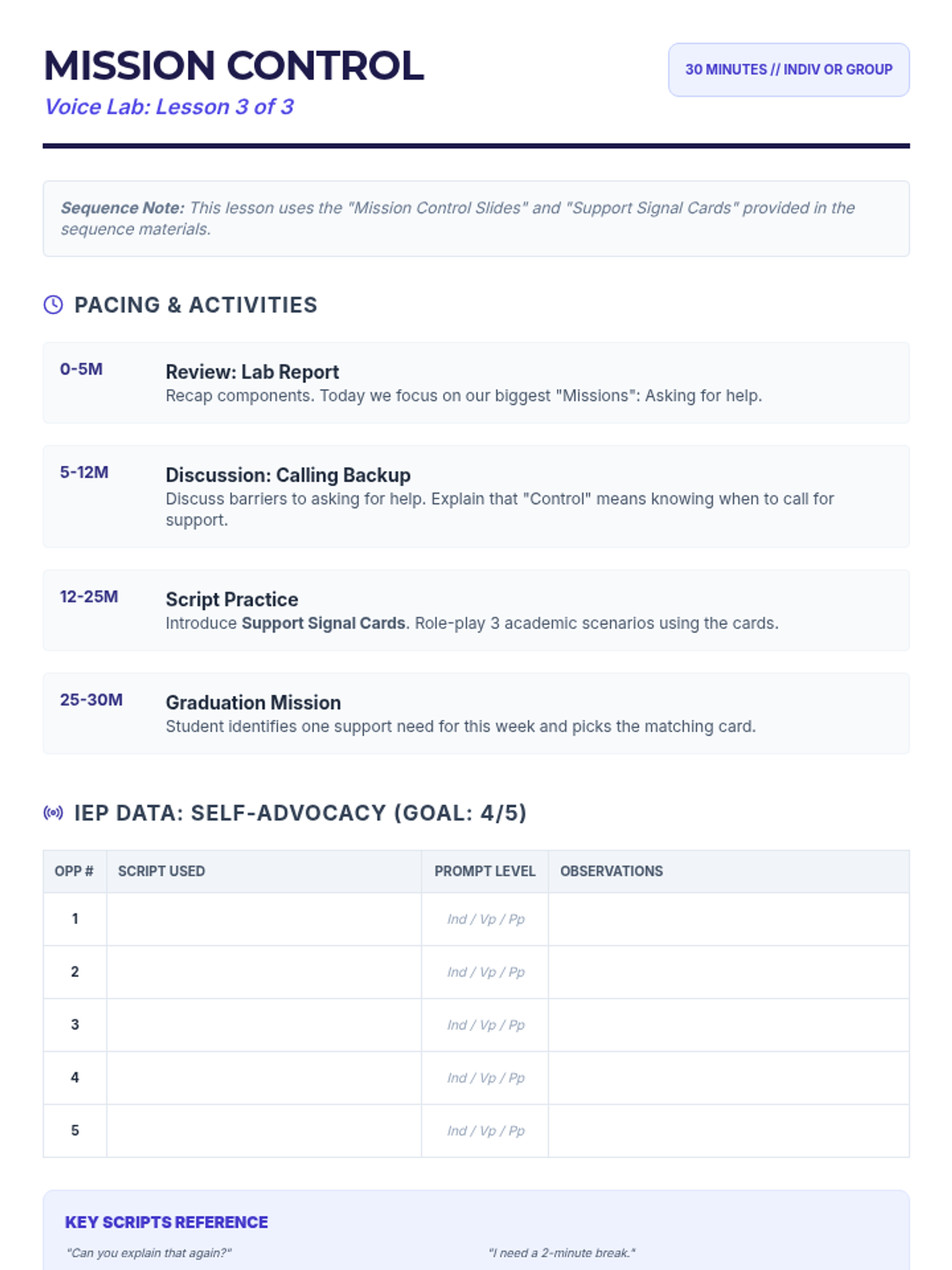
A 30-minute counseling lesson plan for Lesson 3, focusing on self-advocacy, asking for help, and using pre-written support scripts.
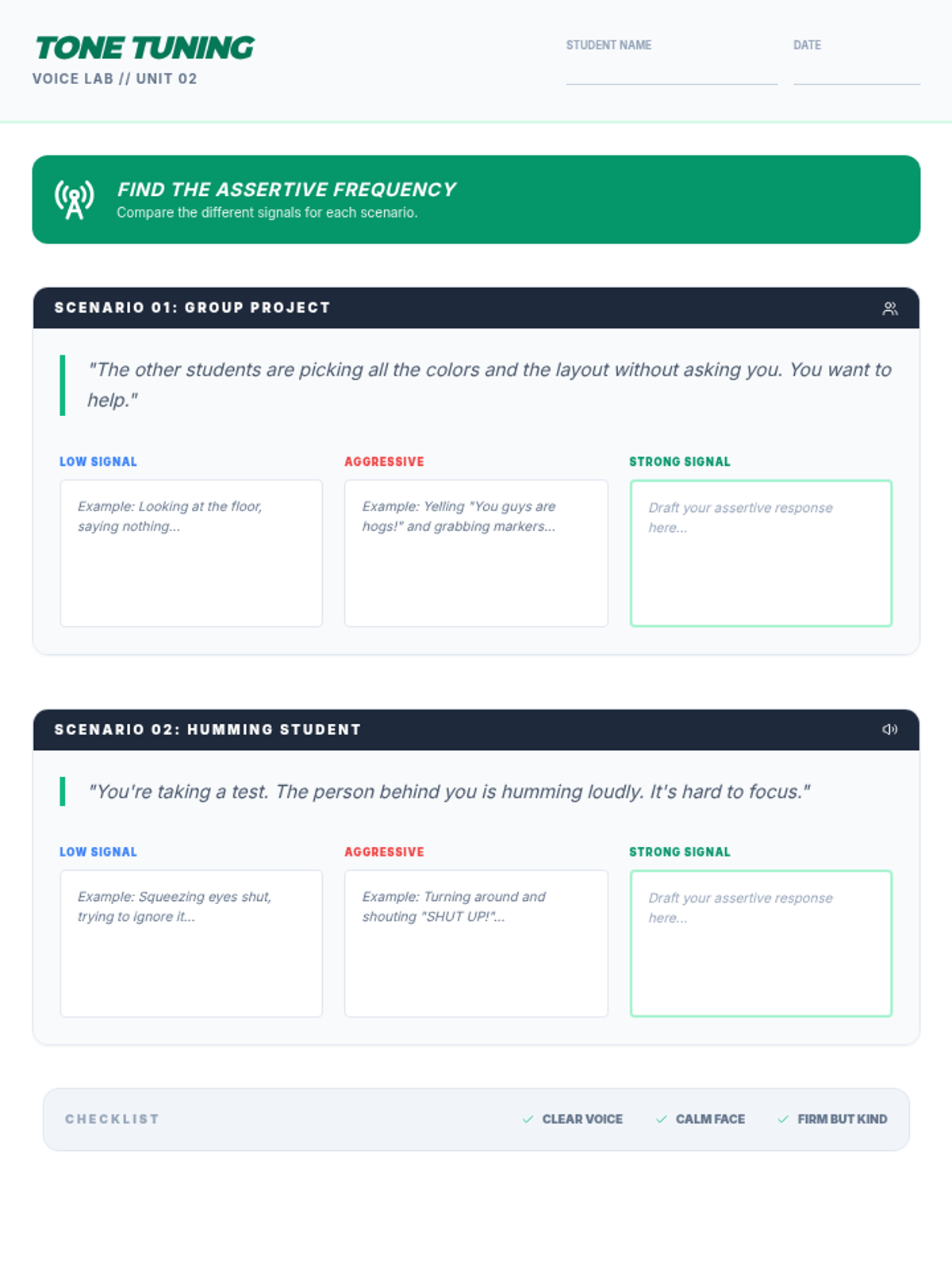
A practice worksheet for Lesson 2 that asks students to identify passive, aggressive, and assertive responses to common social and academic scenarios.
Instructional slides for Lesson 2 that explain the importance of tone and body language, and introduce the concepts of passive, assertive, and aggressive communication signals.
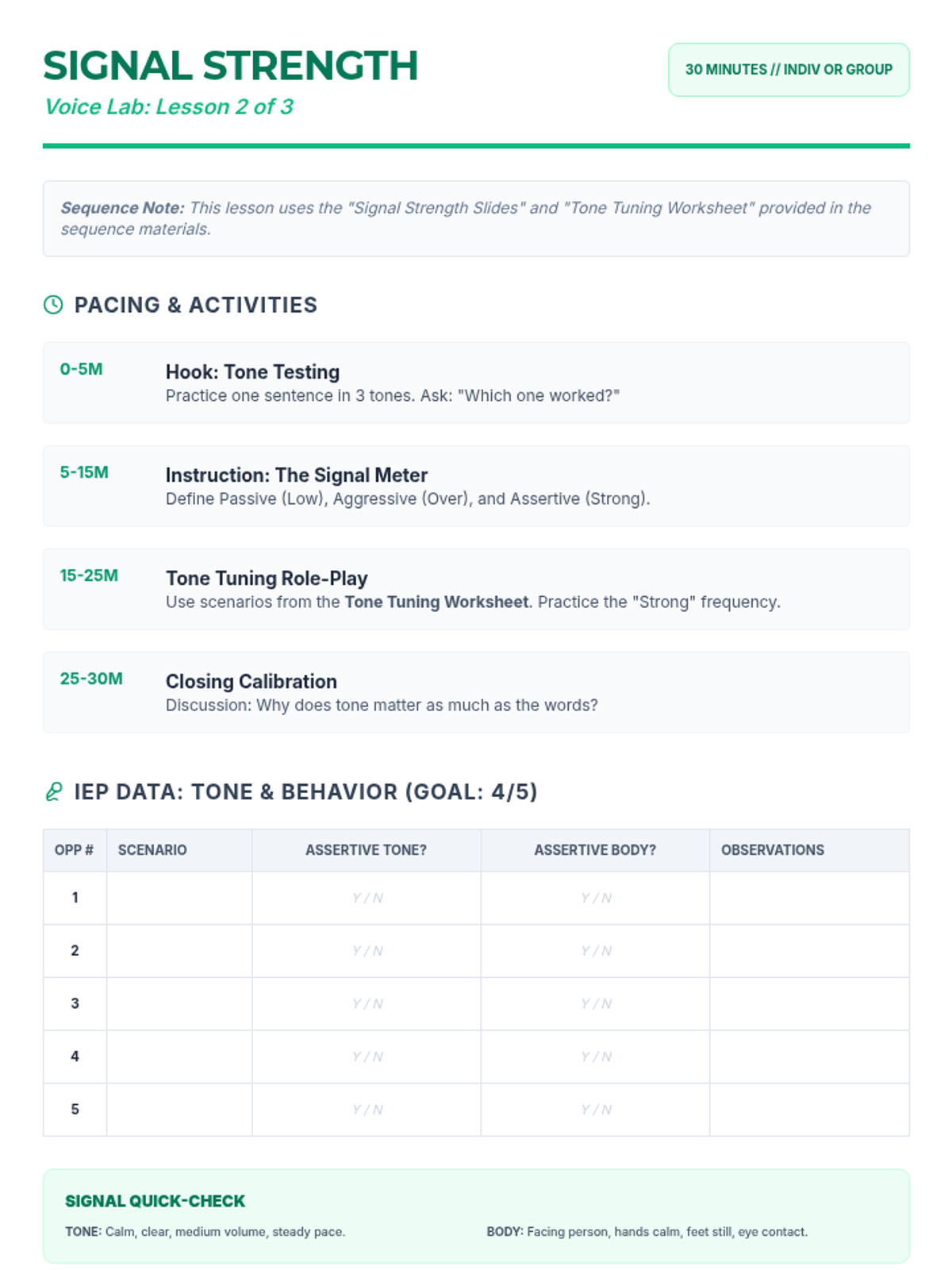
A 30-minute counseling lesson plan for Lesson 2, focusing on tone of voice, body language, and assertive communication.
Instructional slides for Lesson 1 that define thoughts, feelings, and needs, and contrast 'static' communication with 'mapped' communication.
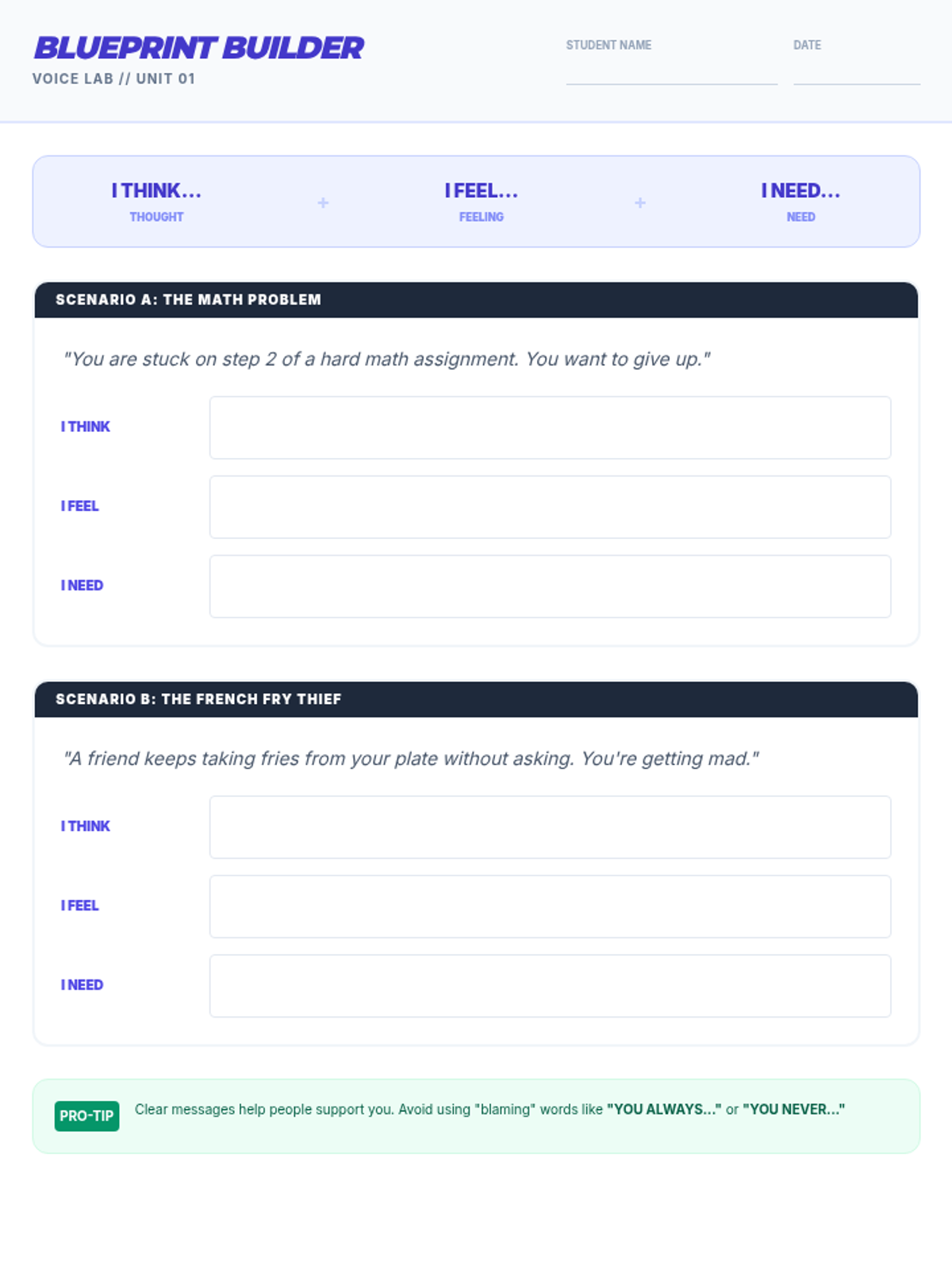
A guided practice worksheet for students to build 'I' statements using the think-feel-need formula in various social and academic scenarios.
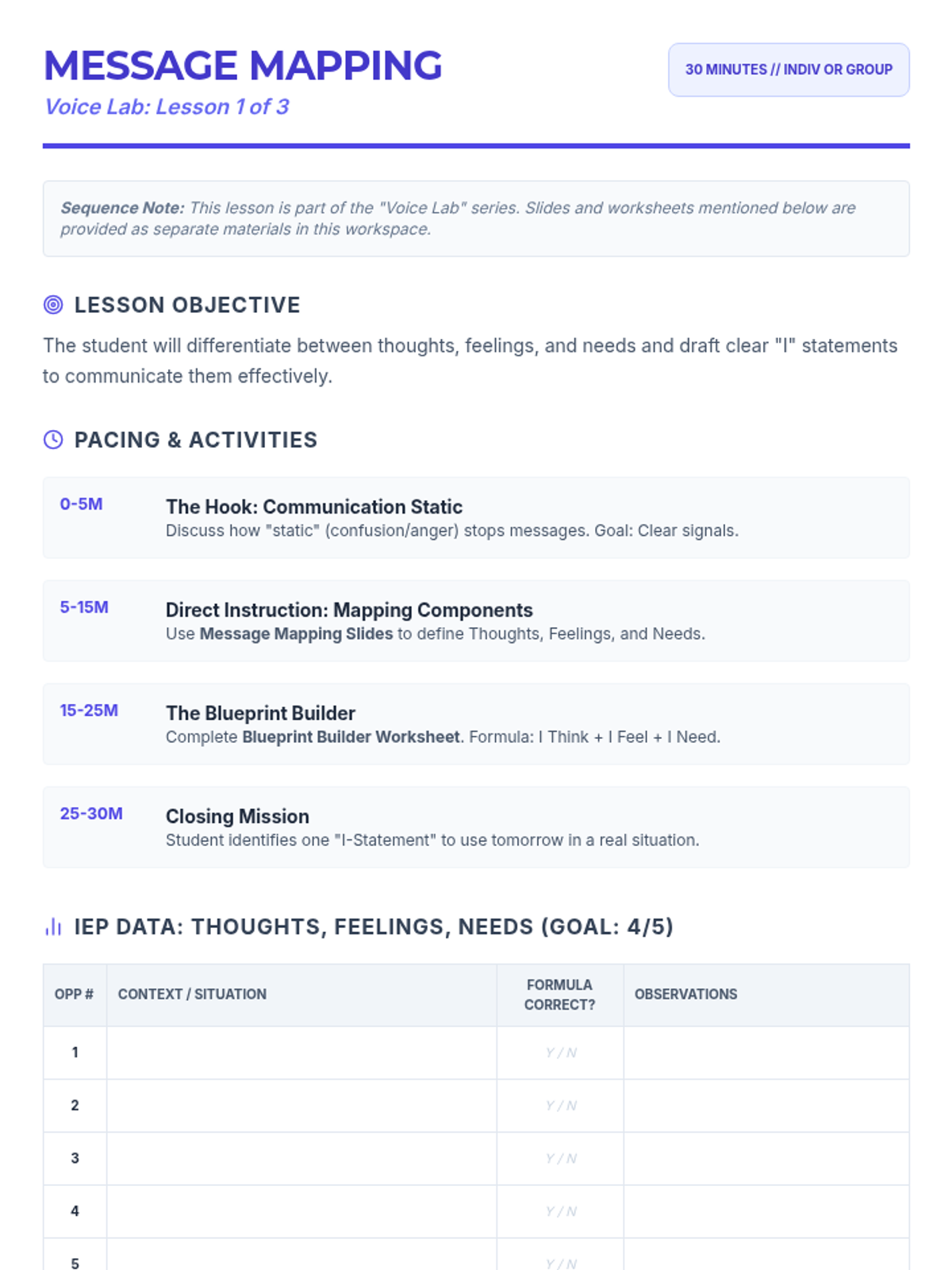
A 30-minute counseling lesson plan for Lesson 1, detailing the hook, direct instruction, and guided practice for identifying thoughts, feelings, and needs.
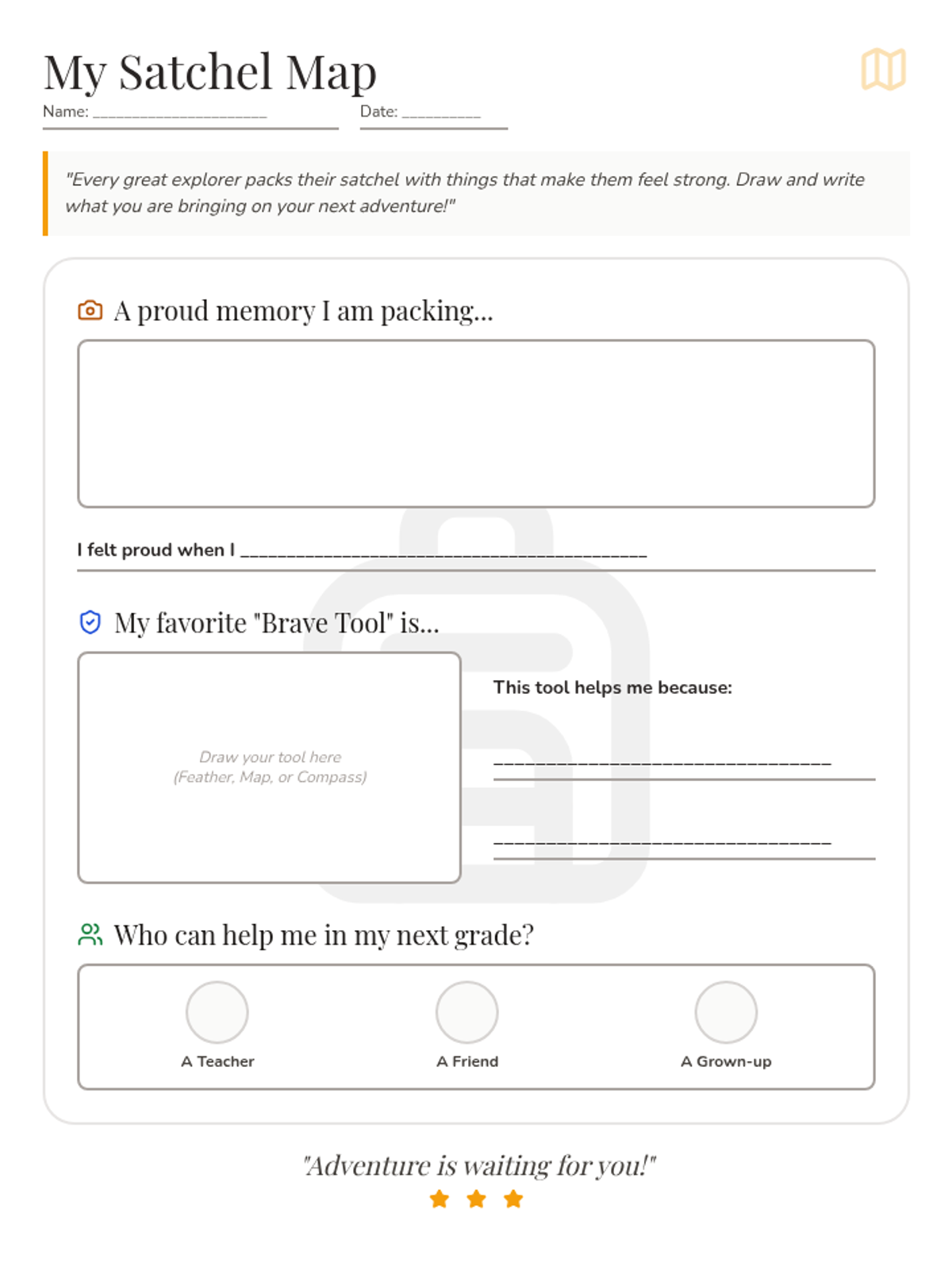
A student reflection worksheet featuring the satchel metaphor where children can draw and write about their proud memories, choose a coping tool, and identify their support system for the coming school year.
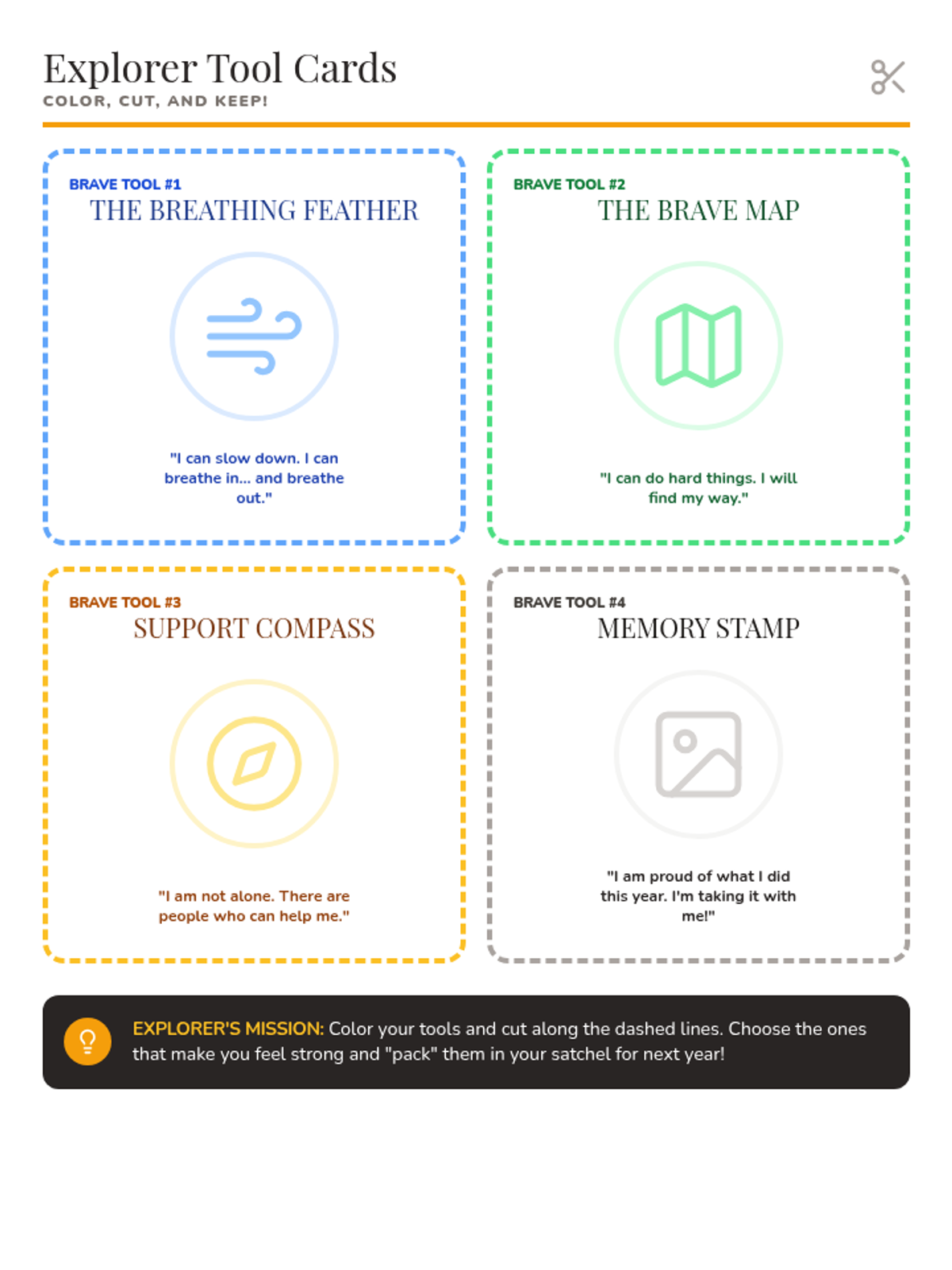
A set of four printable "Brave Tool" cards (The Breathing Feather, The Brave Map, The Support Compass, and The Memory Stamp) for students to color and use as tangible reminders of their coping skills.
A visually engaging slide deck for K-2 students that introduces the explorer's satchel metaphor, teaches coping tools (breathing, self-talk, support), and builds confidence for grade-level transitions.