Visual presentation to introduce the concepts of descriptive adjectives and personal memories for Mother's Day writing, specifically modeled for IEP students.
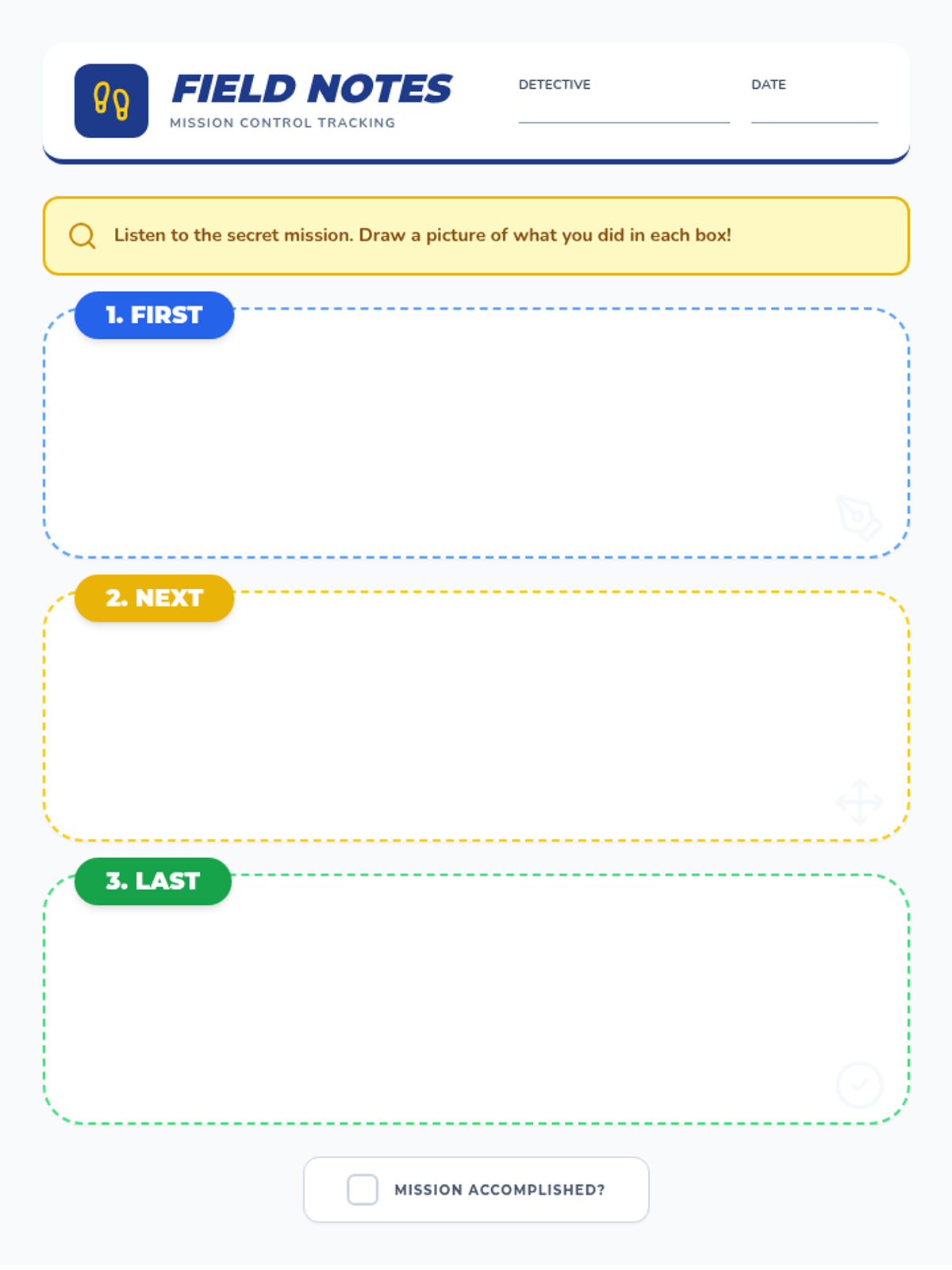
A student worksheet for 1st graders to record the steps of a 3-part direction sequence using drawings, supporting the "Direction Detectives" game.
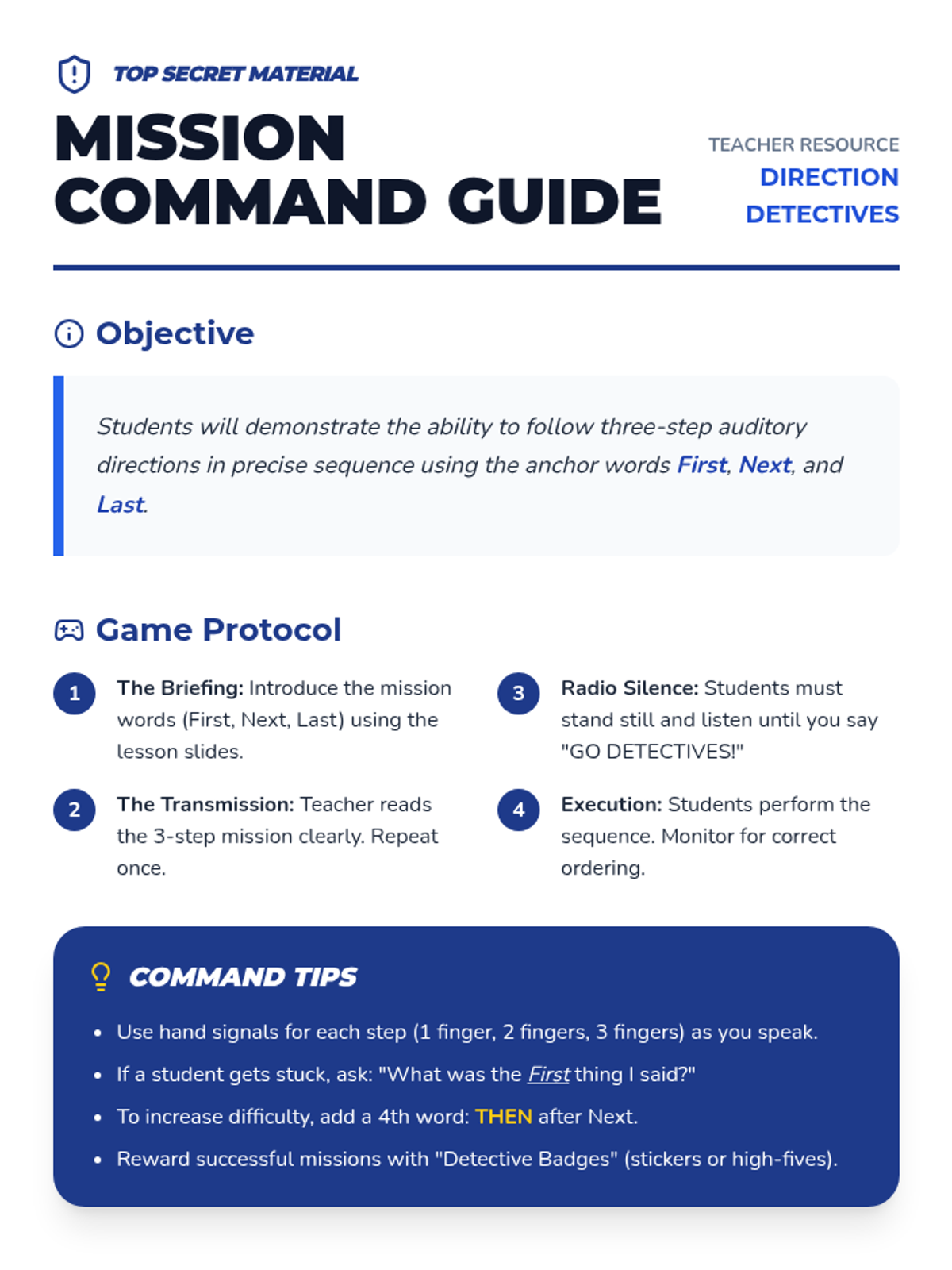
A comprehensive teacher guide for the "Direction Detectives" game, including step-by-step protocols and leveled mission lists for 1st graders.
Instructional slides to introduce 1st grade students to the "Direction Detectives" game, focusing on First, Next, and Last sequencing.
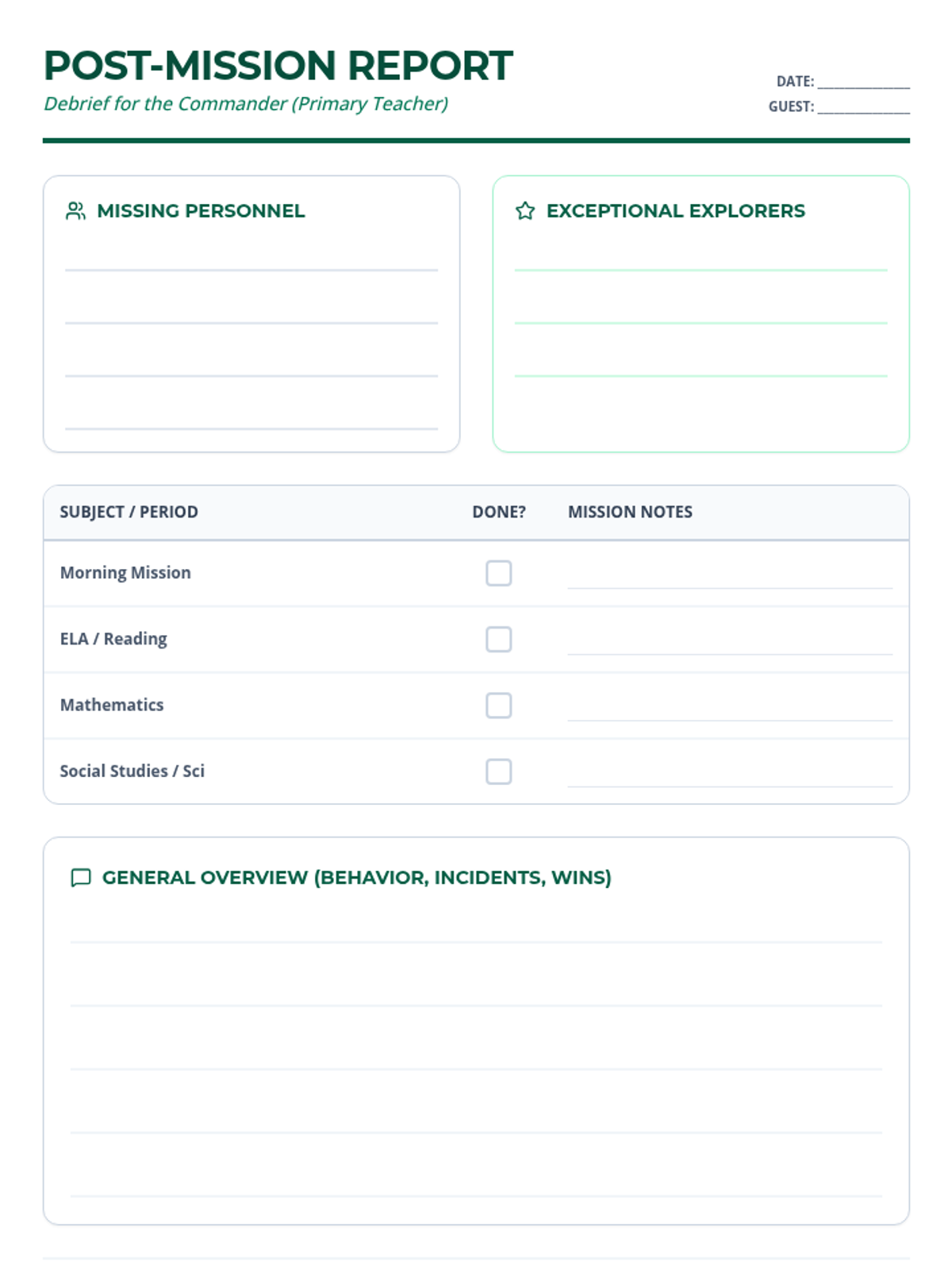
A report form for substitute teachers to leave detailed notes for the regular classroom teacher about student behavior, absences, and lesson progress.
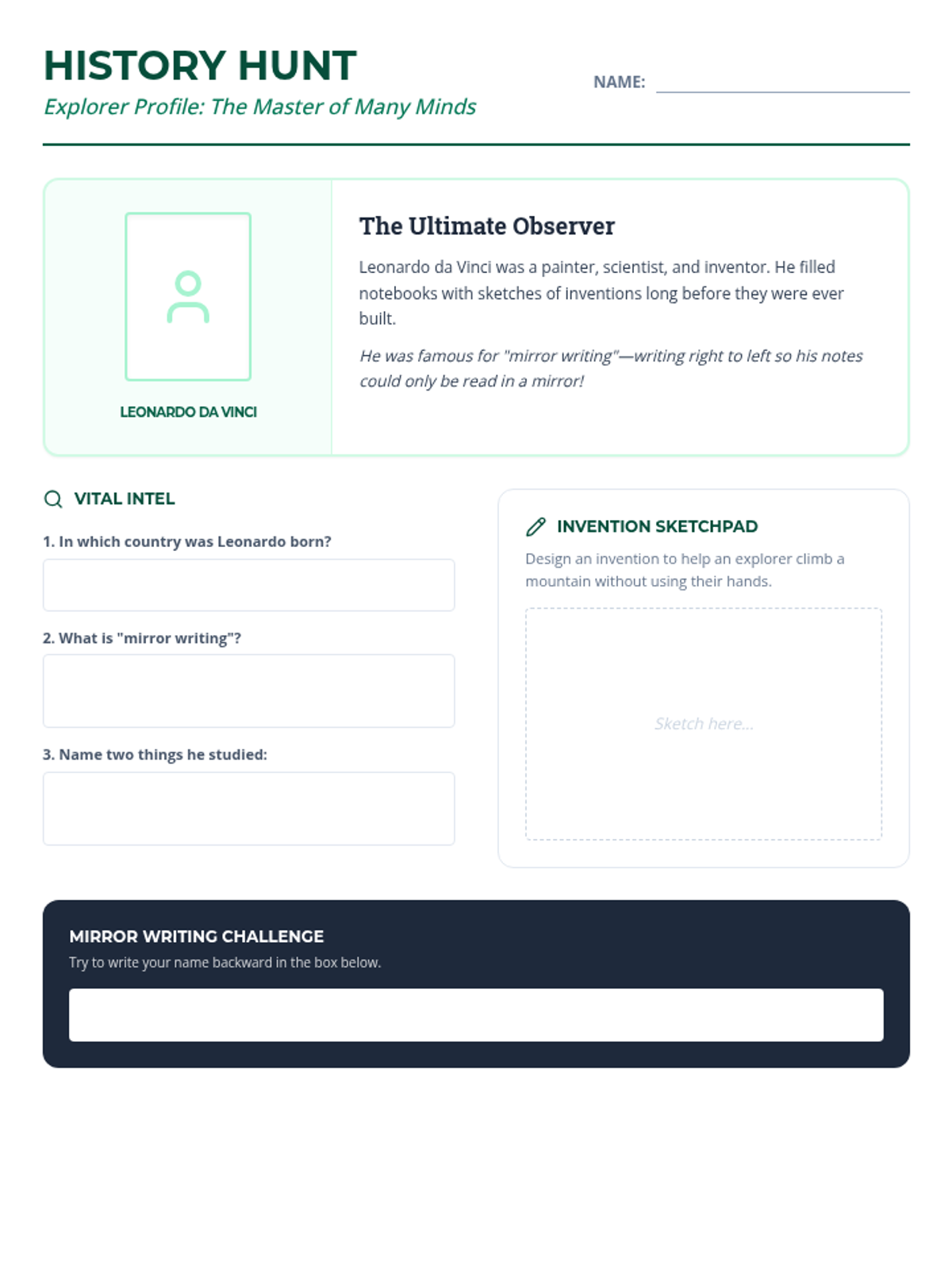
A history worksheet about Leonardo da Vinci, featuring a biography, reading comprehension questions, and a creative design challenge.
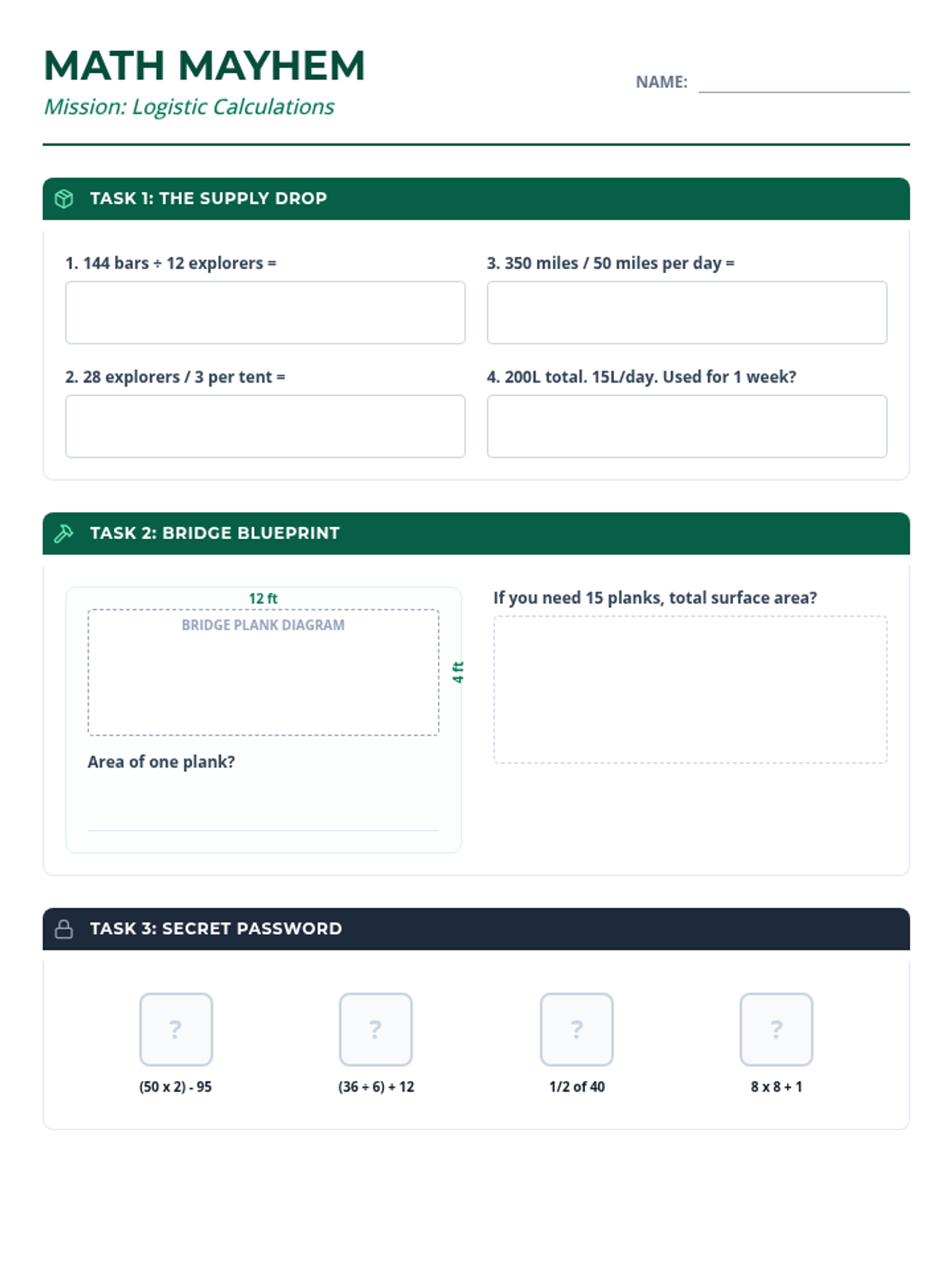
A math worksheet with thematic problems involving supply logistics, geometry for bridge building, and a code-breaking puzzle.
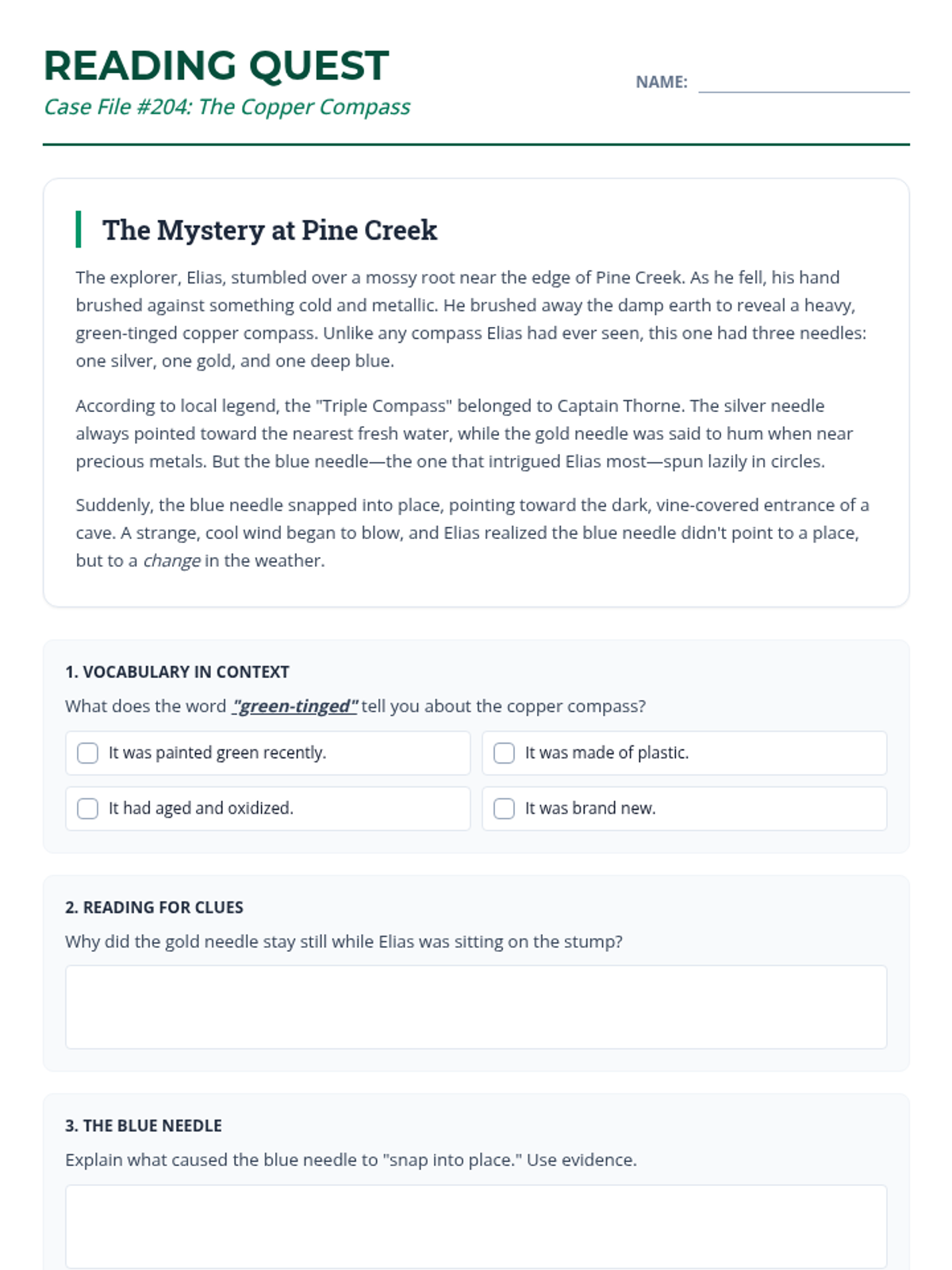
A reading comprehension worksheet featuring a short mystery story about an explorer, vocabulary questions, and critical thinking prompts.
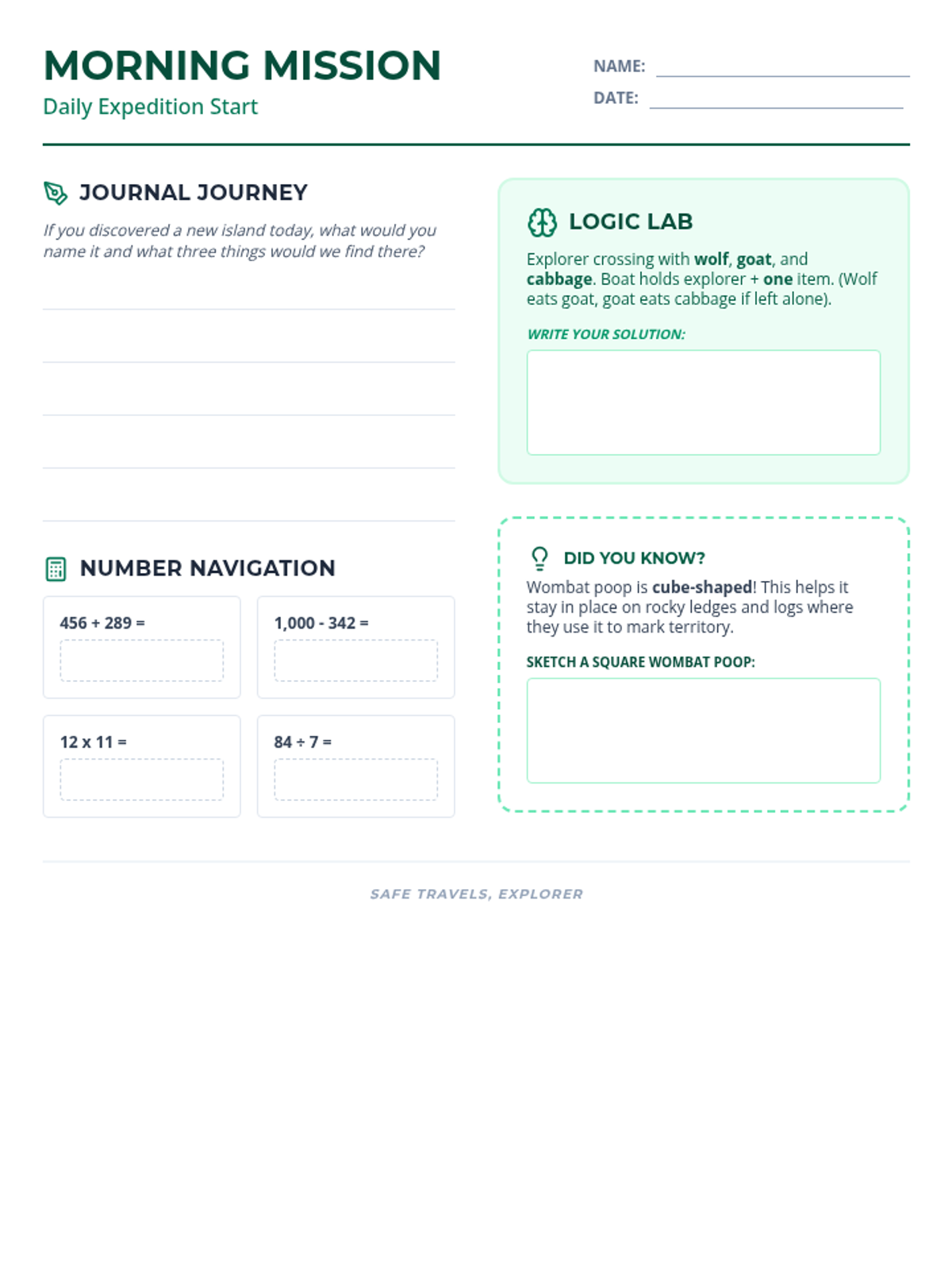
An engaging morning warm-up worksheet for students, including a journaling prompt, math challenges, a logic puzzle, and a fun fact.
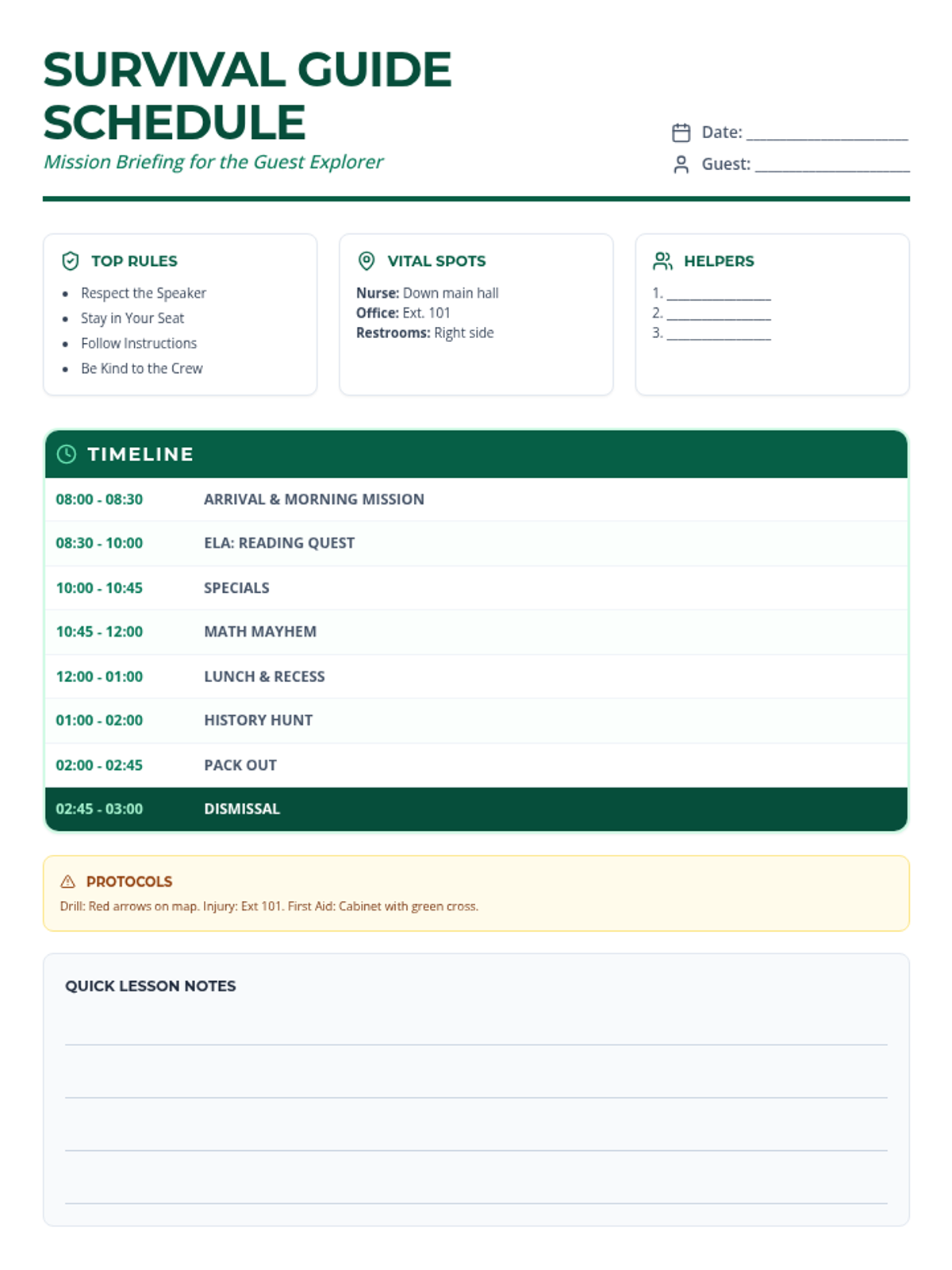
A detailed daily schedule and guide for substitute teachers, featuring a timeline of activities, classroom rules, key locations, and emergency protocols.
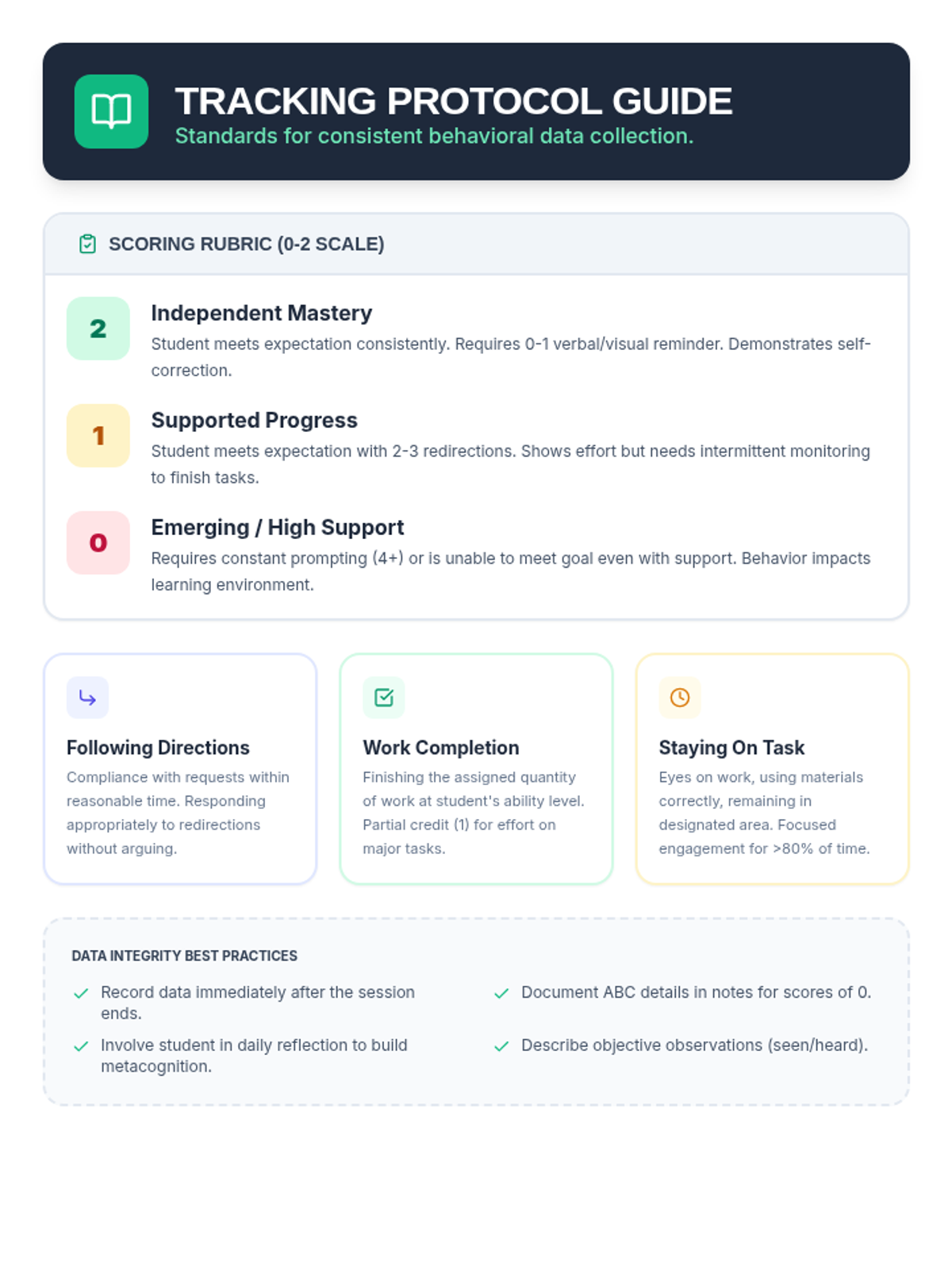
A teacher's reference guide for implementing the Engagement Engineering tracking system. Provides objective definitions for target behaviors and clear criteria for the 0-2 scoring rubric to ensure inter-rater reliability.
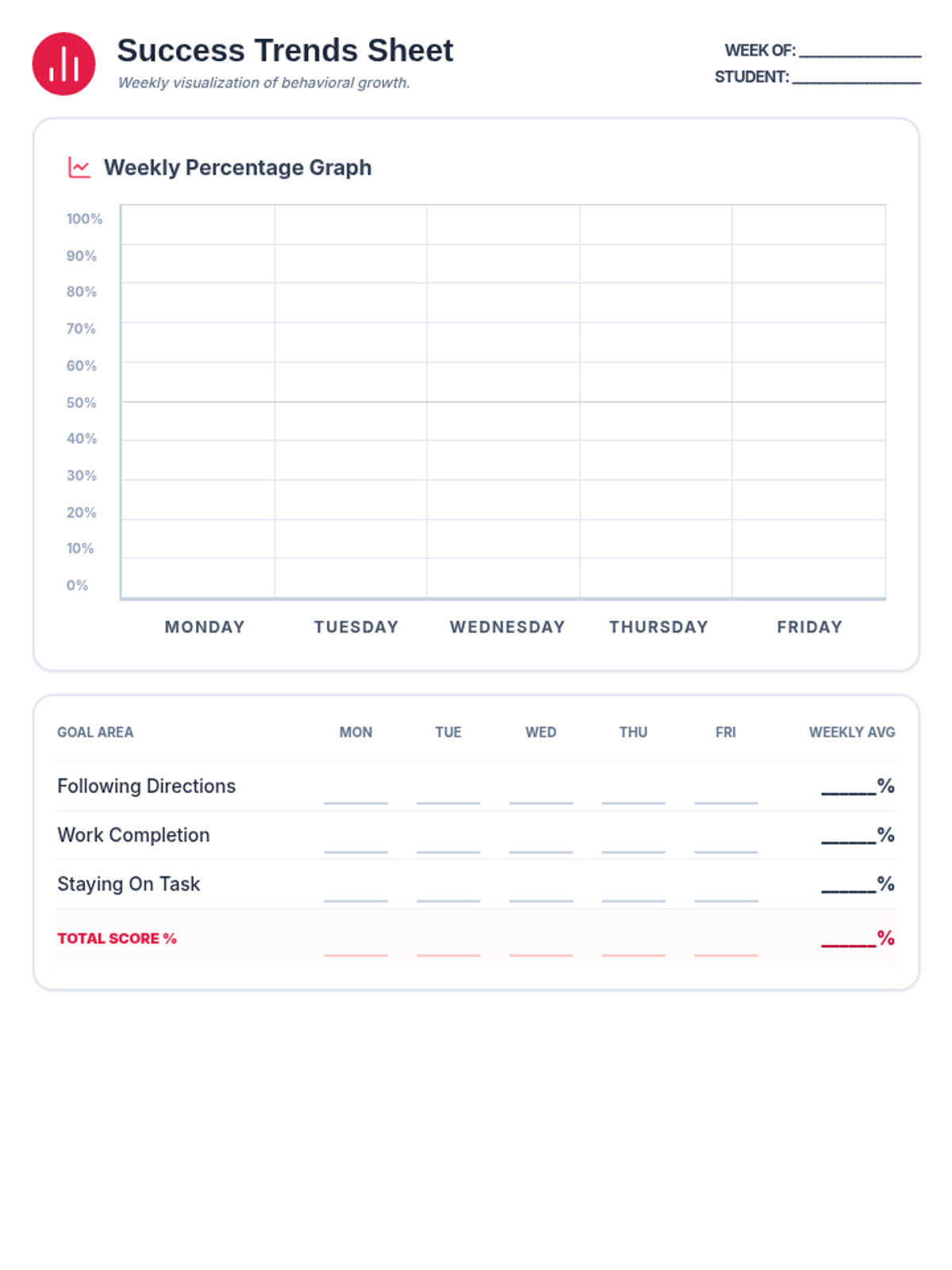
A weekly progress graphing and summary sheet for individual students. Includes a blank percentage graph for data visualization and a weekly average calculation table for targeted behavioral goals.
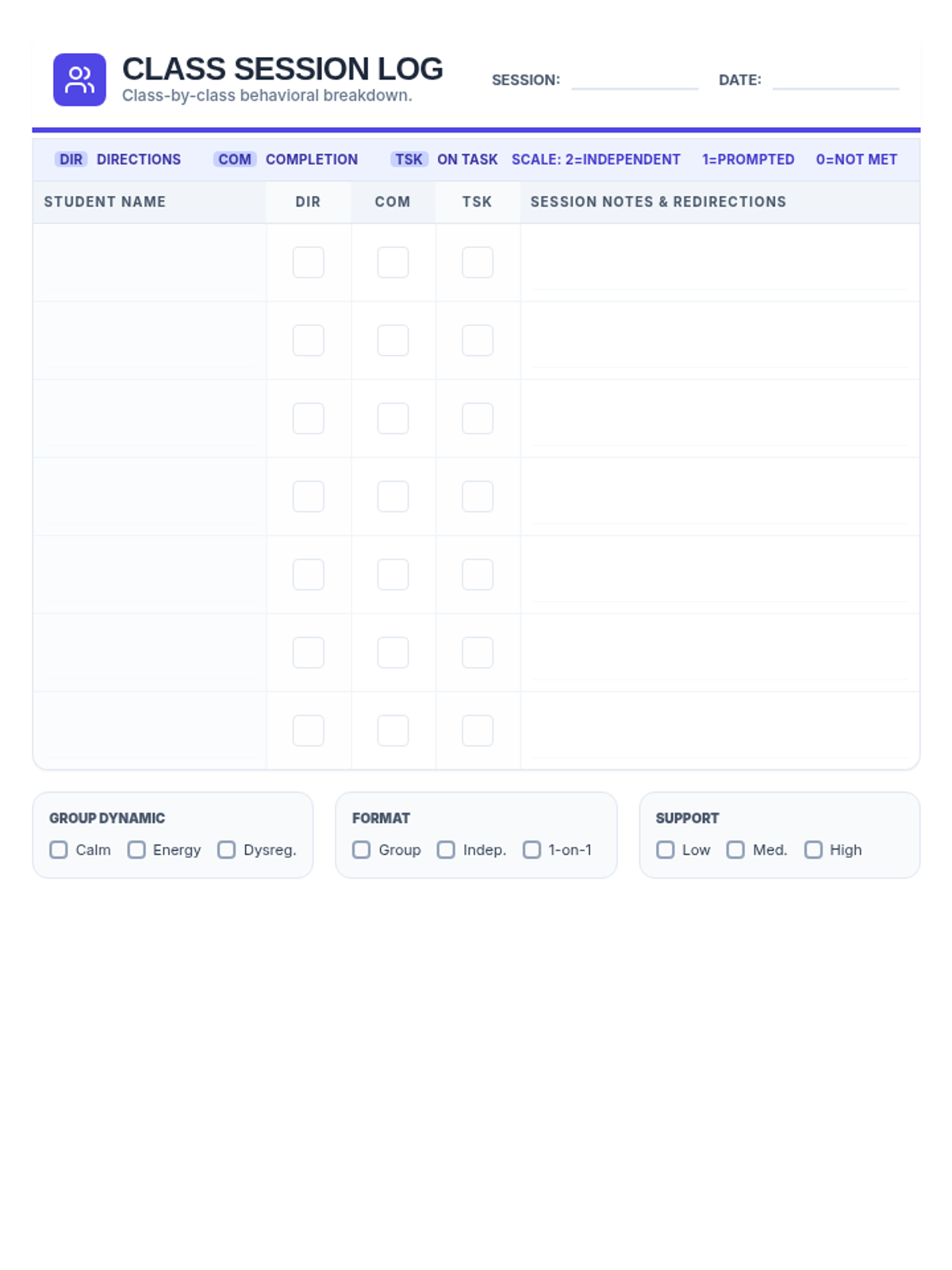
A teacher-facing session log for tracking behavioral data for up to eight students during a single class period. Features a shorthand coding system and space for qualitative notes and group environmental context.
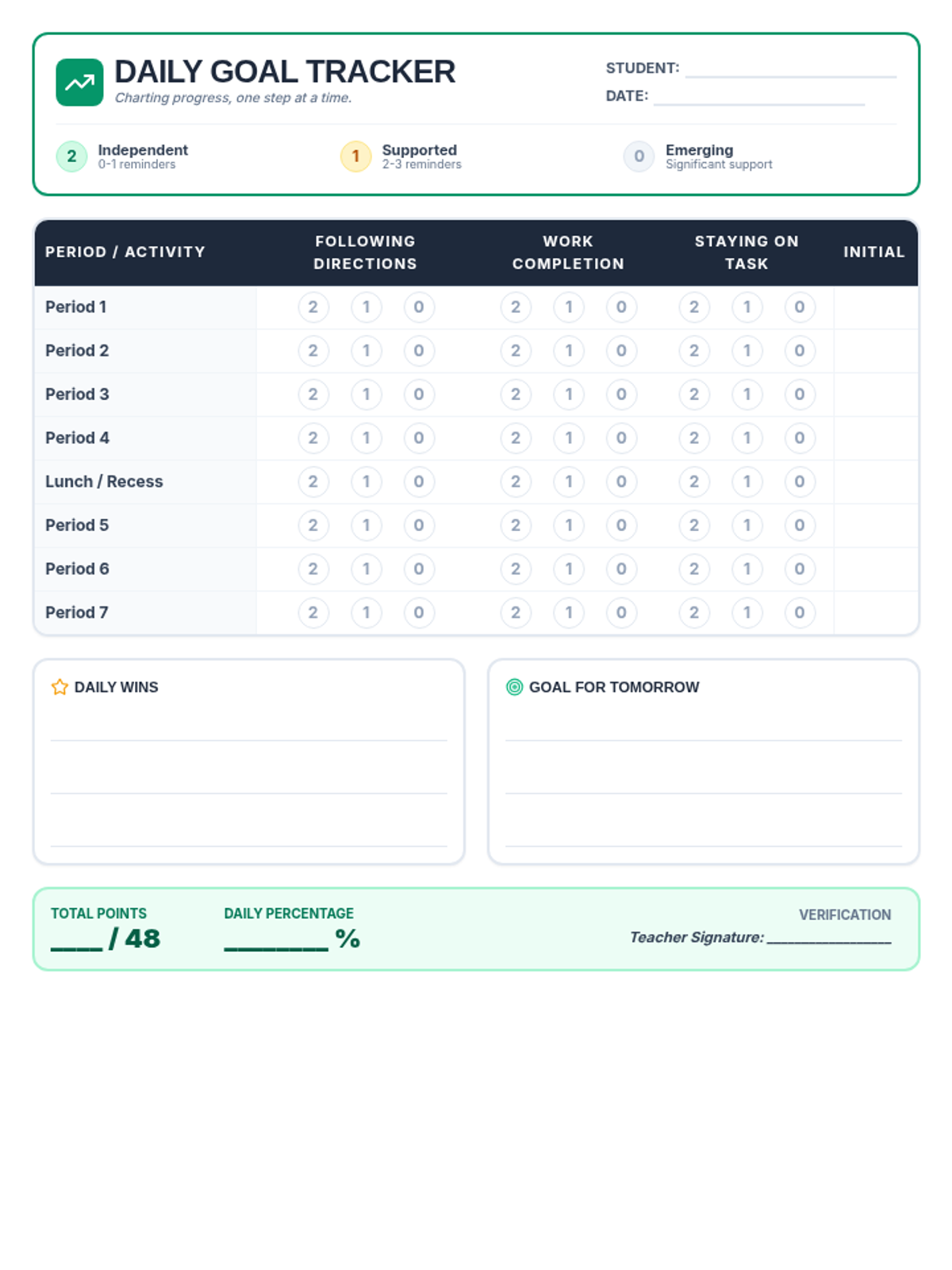
A student-specific daily tracker designed to monitor following directions, work completion, and staying on task across seven periods plus lunch/recess. Includes a 0-2 rating scale and a daily reflection area.
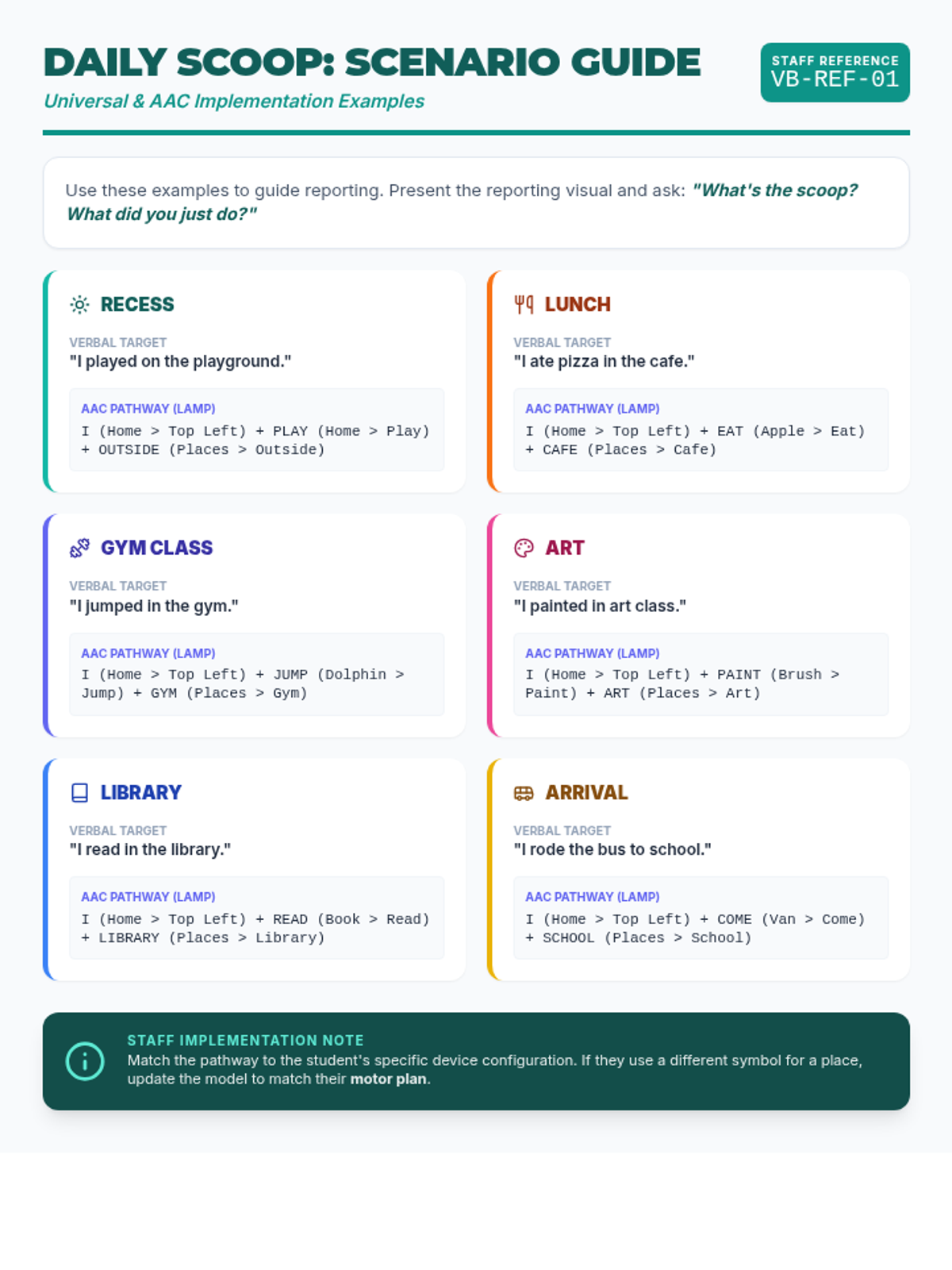
A teacher reference guide providing specific examples for common school activities like recess, lunch, gym, and art to help staff prompt the student effectively.
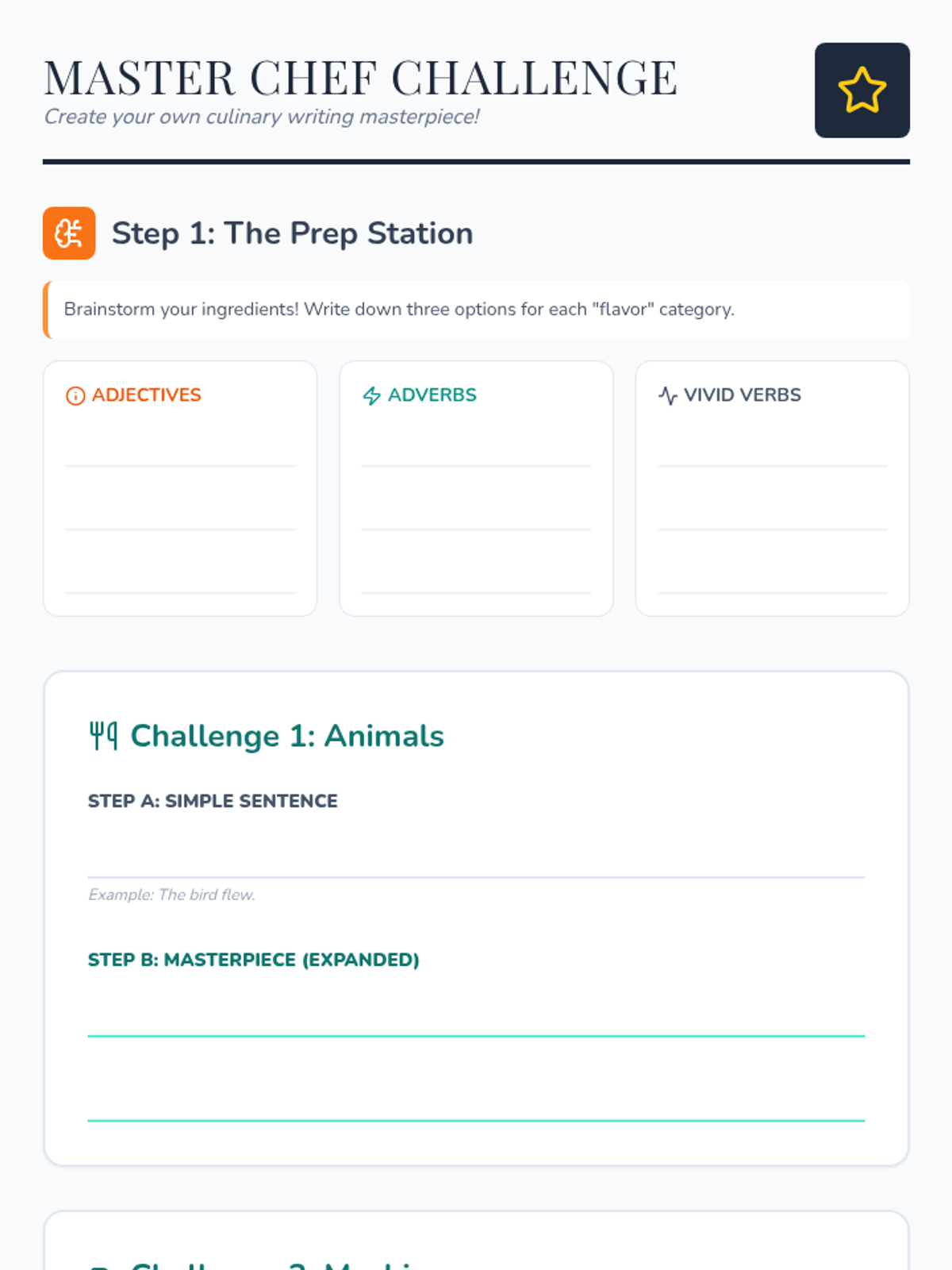
An independent practice worksheet for sentence expansion. It includes a brainstorming "Prep Station" and three writing challenges where students expand simple sentences using their own descriptors without word bank support.
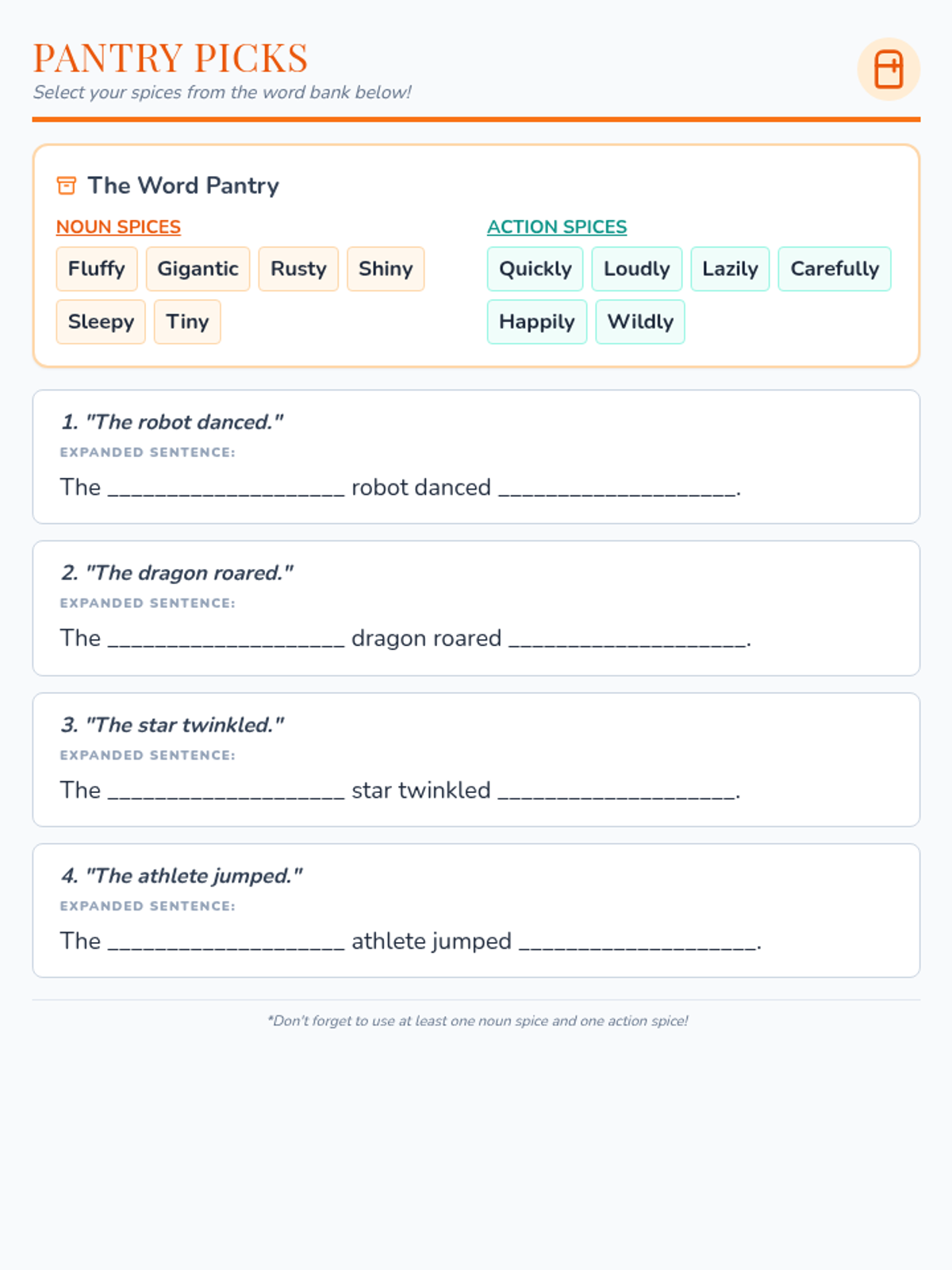
A student worksheet focused on using word bank supports to expand simple sentences. Includes categorized adjectives and adverbs (Noun and Action Spices) for students to fill into sentence frames.
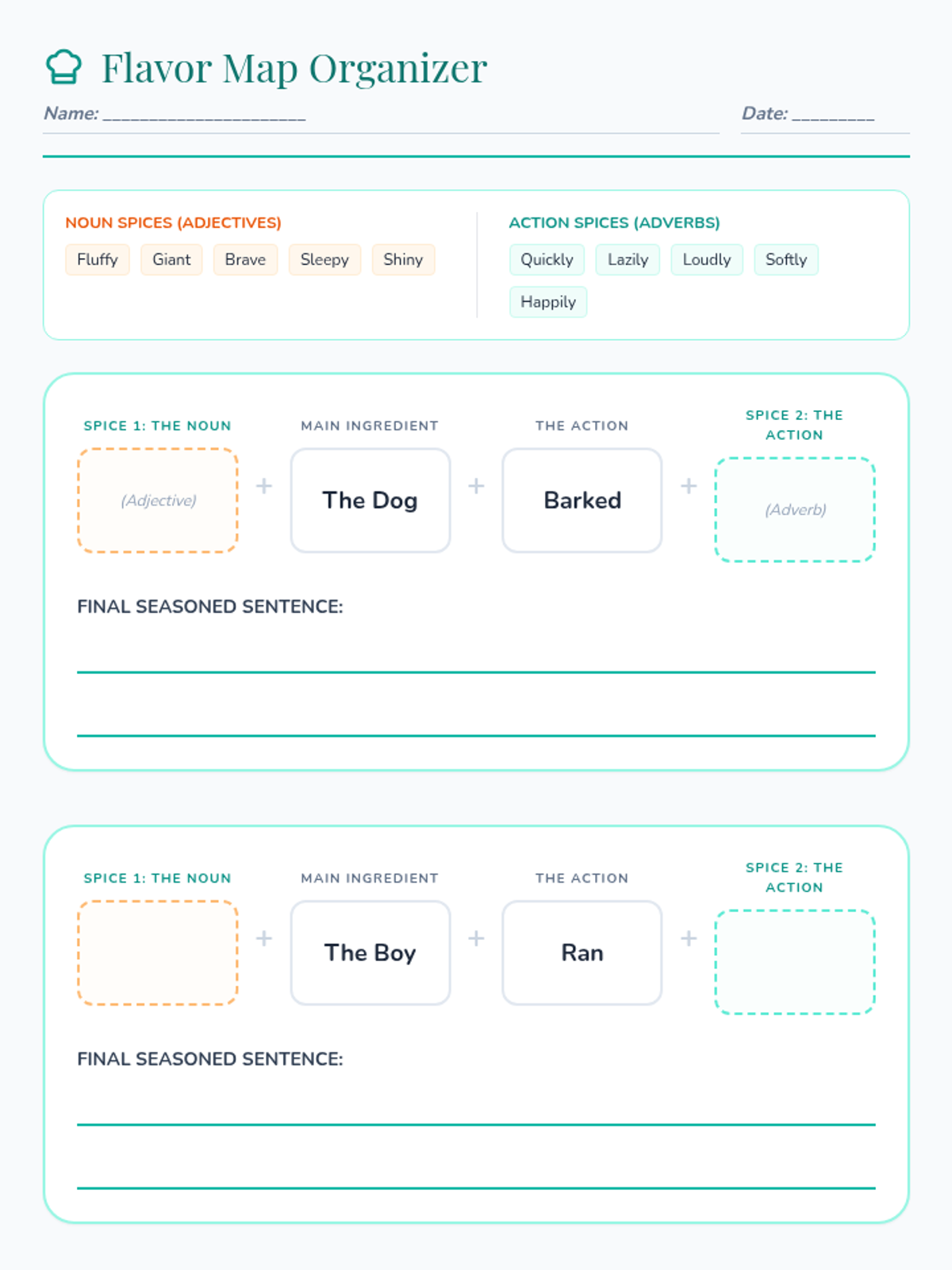
A culinary-themed graphic organizer that helps students plan adjectives and adverbs to expand simple sentences. Includes scaffolded examples and a space for a final "seasoned" sentence.
A visually engaging slide deck that uses a culinary metaphor to teach students how to expand simple sentences with adjectives (Who/What spices) and adverbs (Action spices).
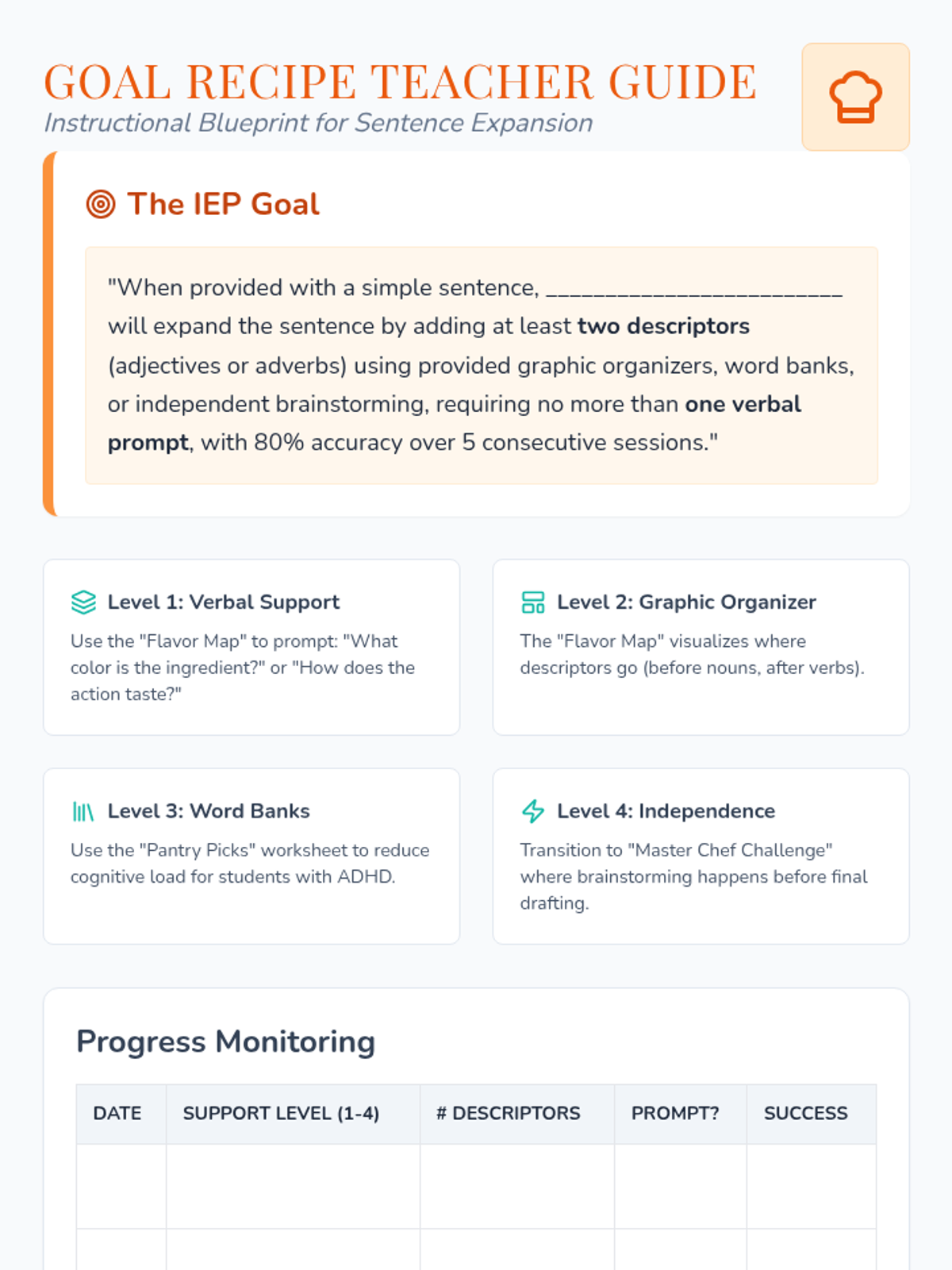
A teacher-facing instructional guide containing the specific IEP goal, scaffolding levels, a progress monitoring table, and a verbal prompting script for sentence expansion instruction.
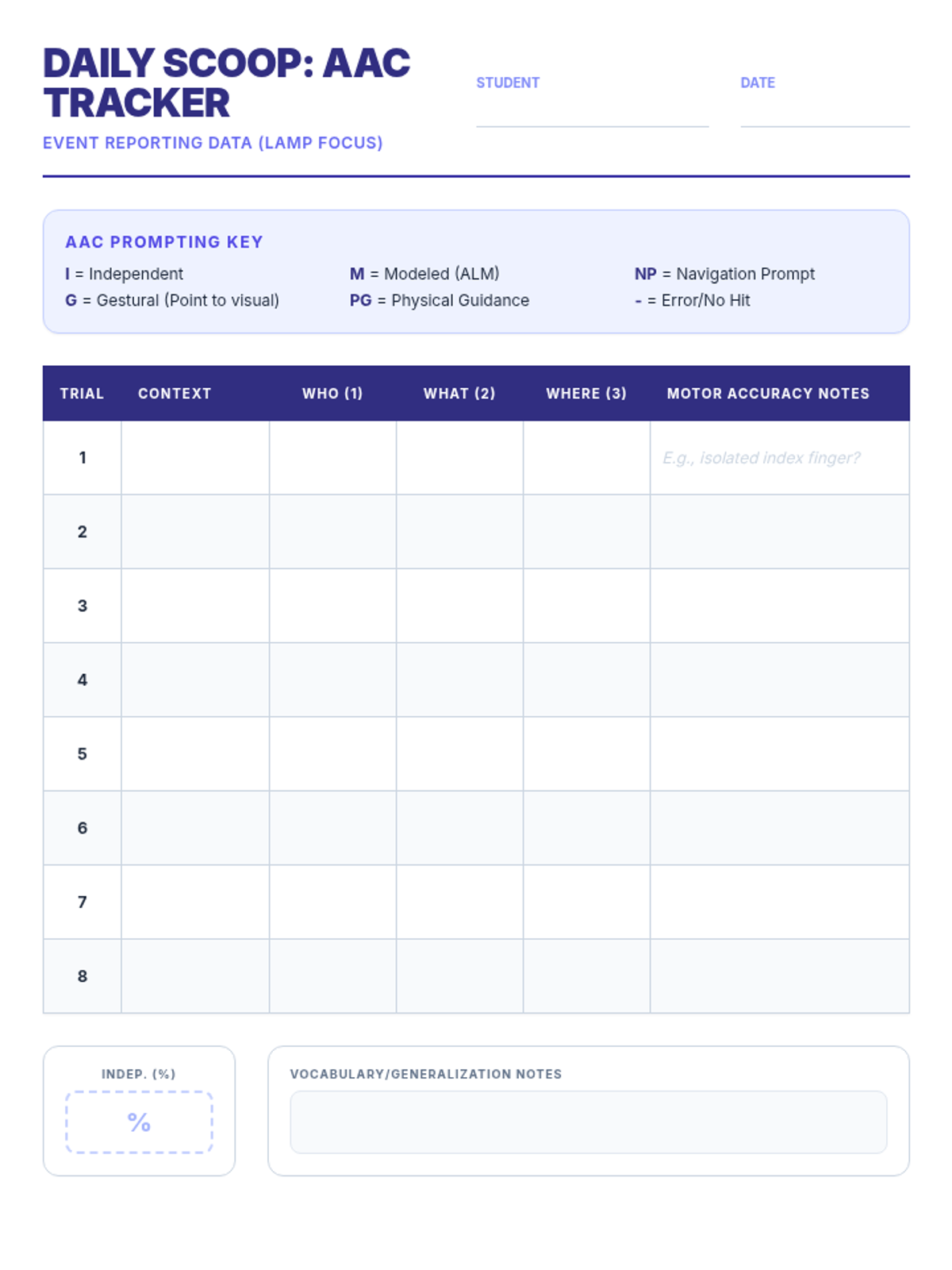
A specialized data tracker for AAC users, emphasizing navigation pathways, motor accuracy, and aided language modeling (ALM) prompt levels.
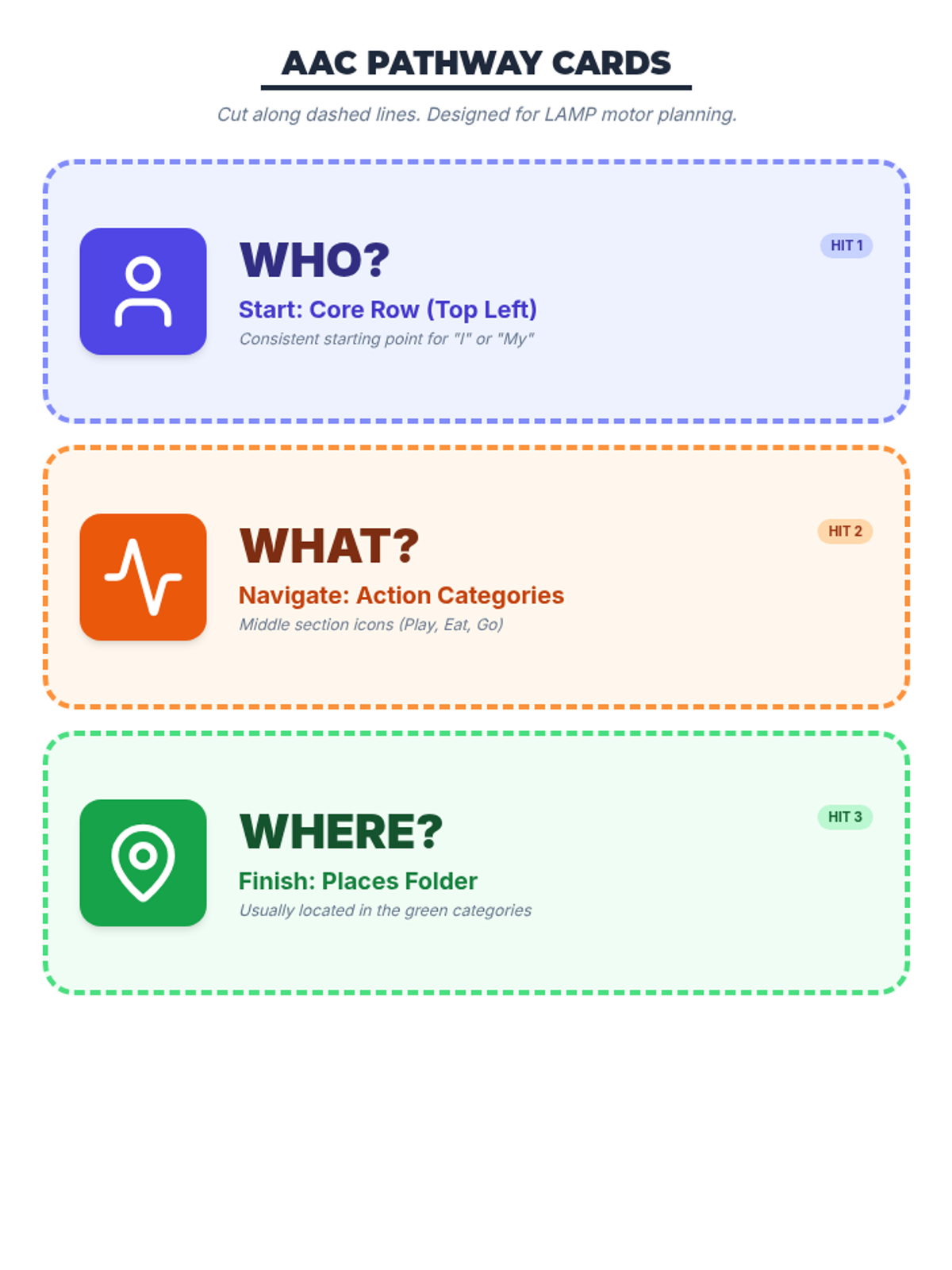
Visual prompt cards and desk strips adapted for AAC users, featuring pathway indicators and clear color-coding to support LAMP motor planning.
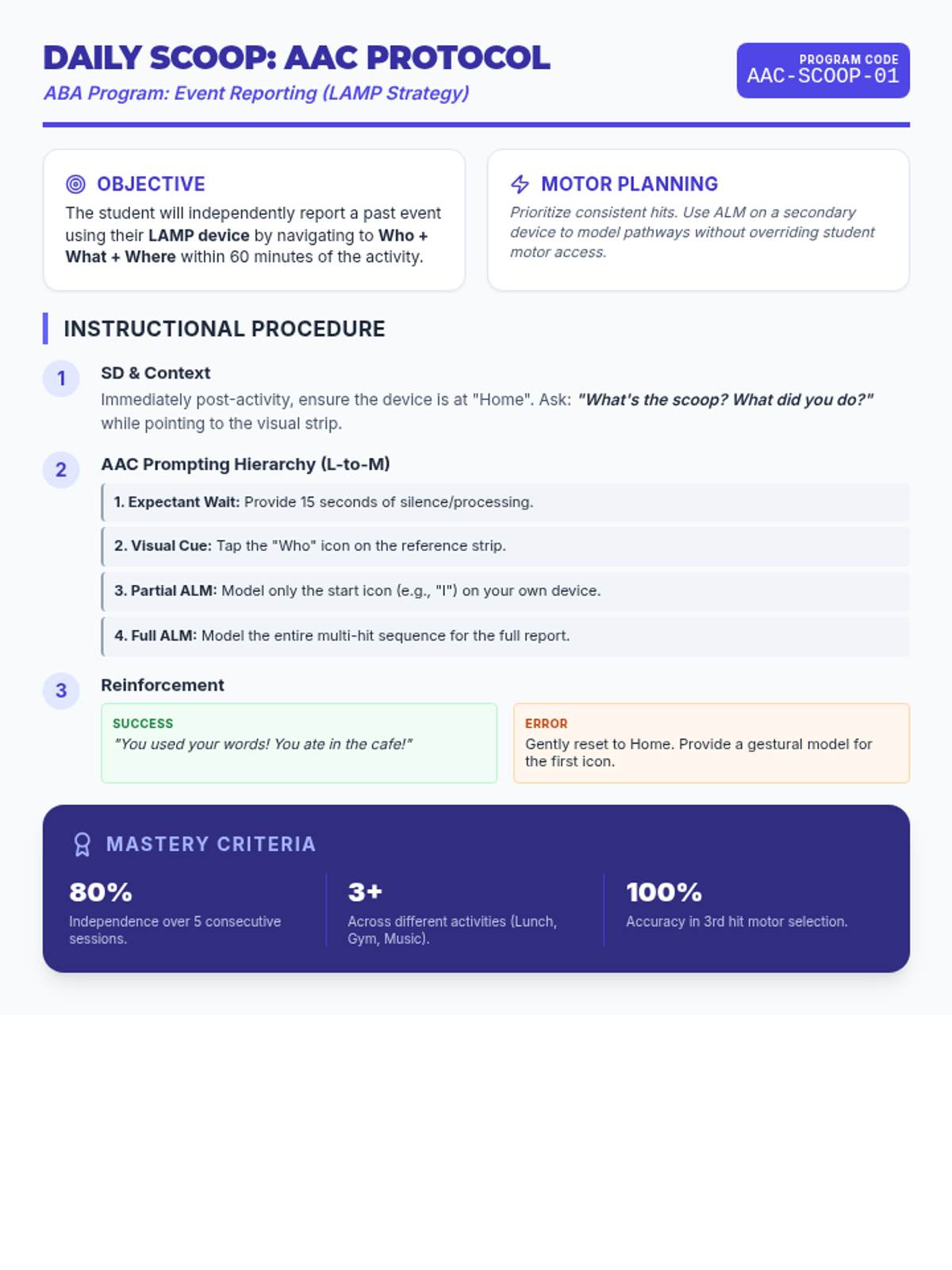
A detailed ABA instructional protocol adapted for AAC (LAMP) users, focusing on motor planning, aided language modeling, and specific device pathways.
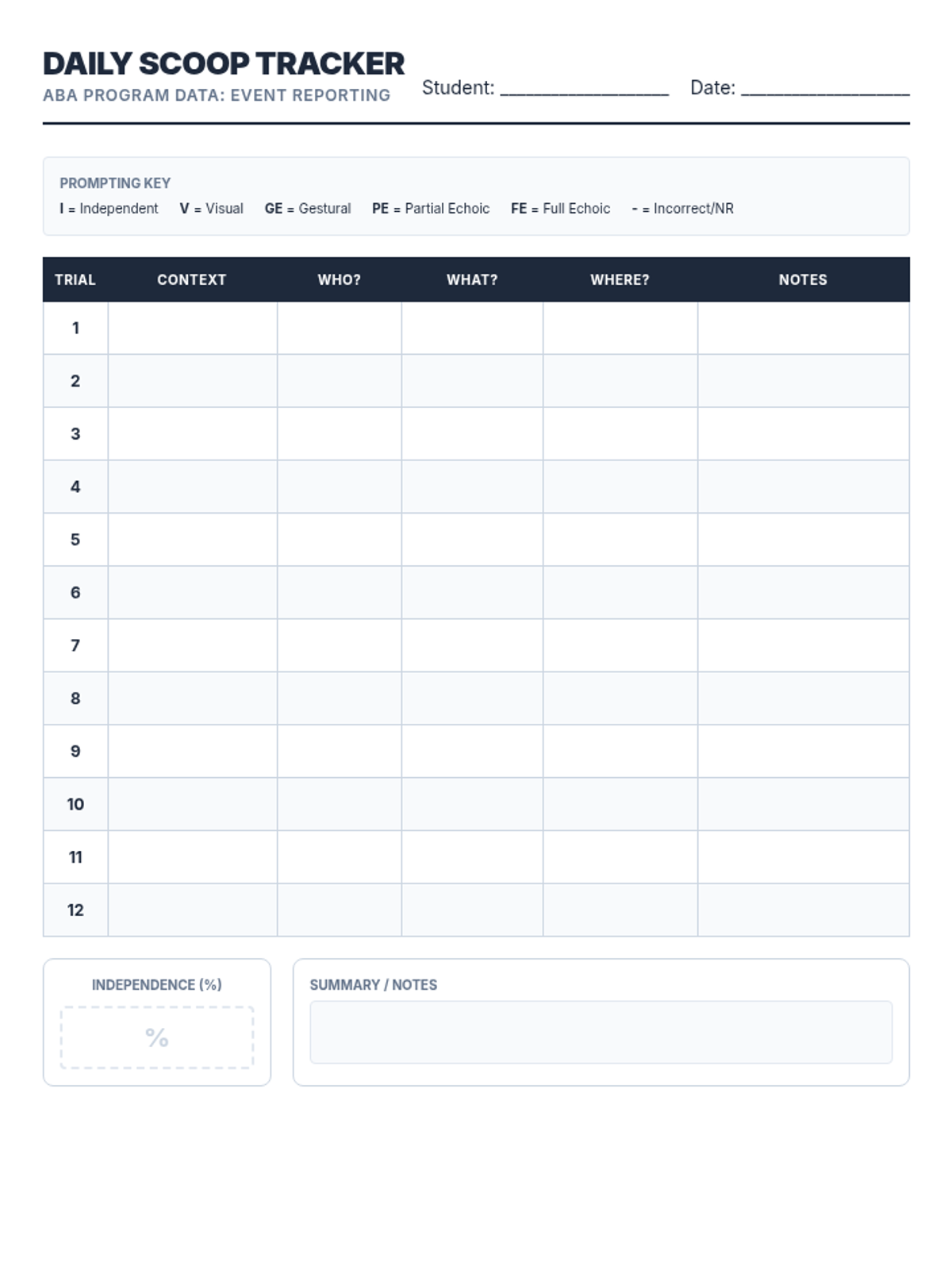
A structured data collection table for tracking student progress in reporting Who, What, and Where elements of an event, including a prompting key and summary section.
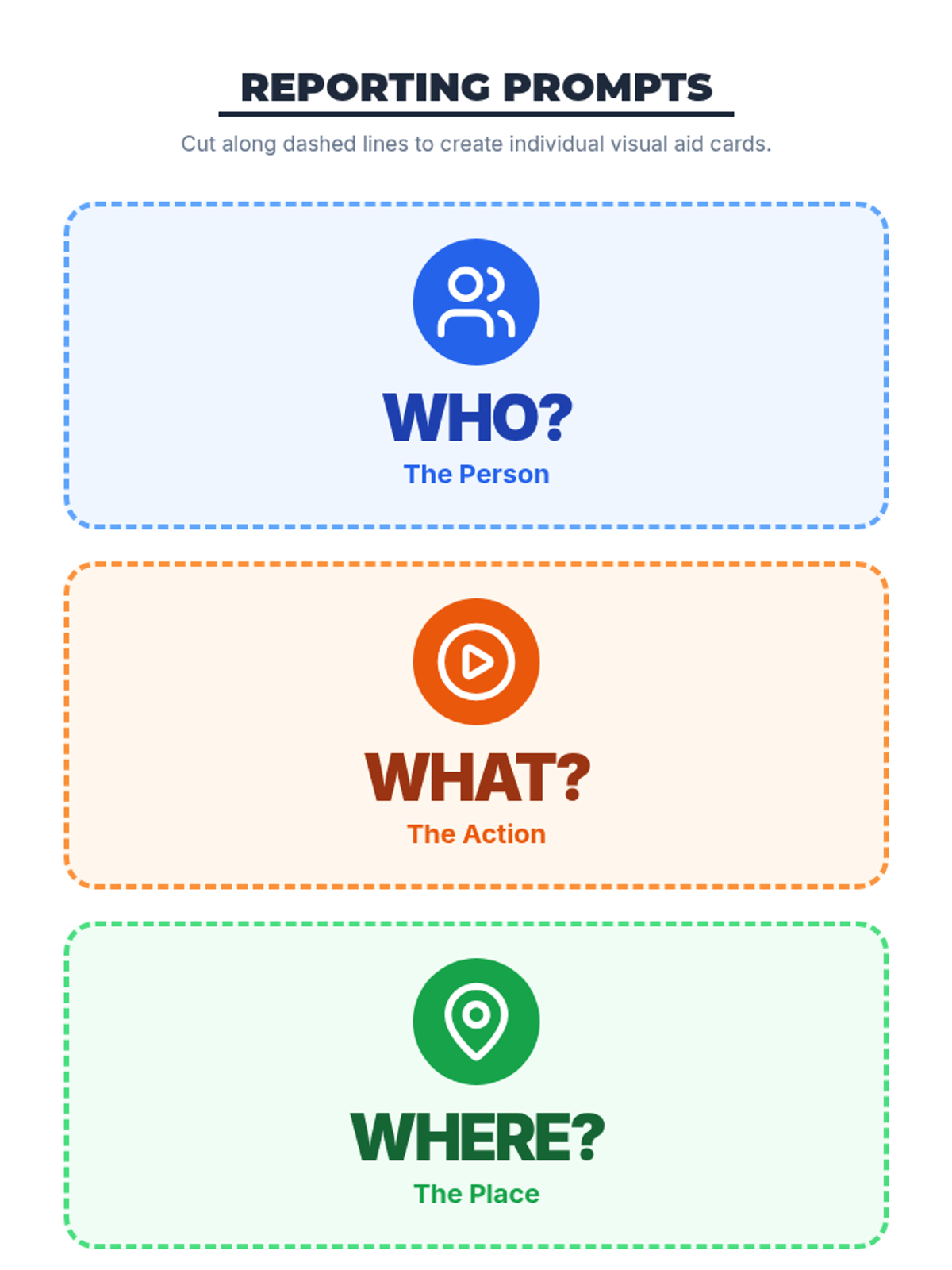
Visual prompt cards for Who, What, and Where questions to support students in reporting events, featuring both large cards and a desktop reference strip.
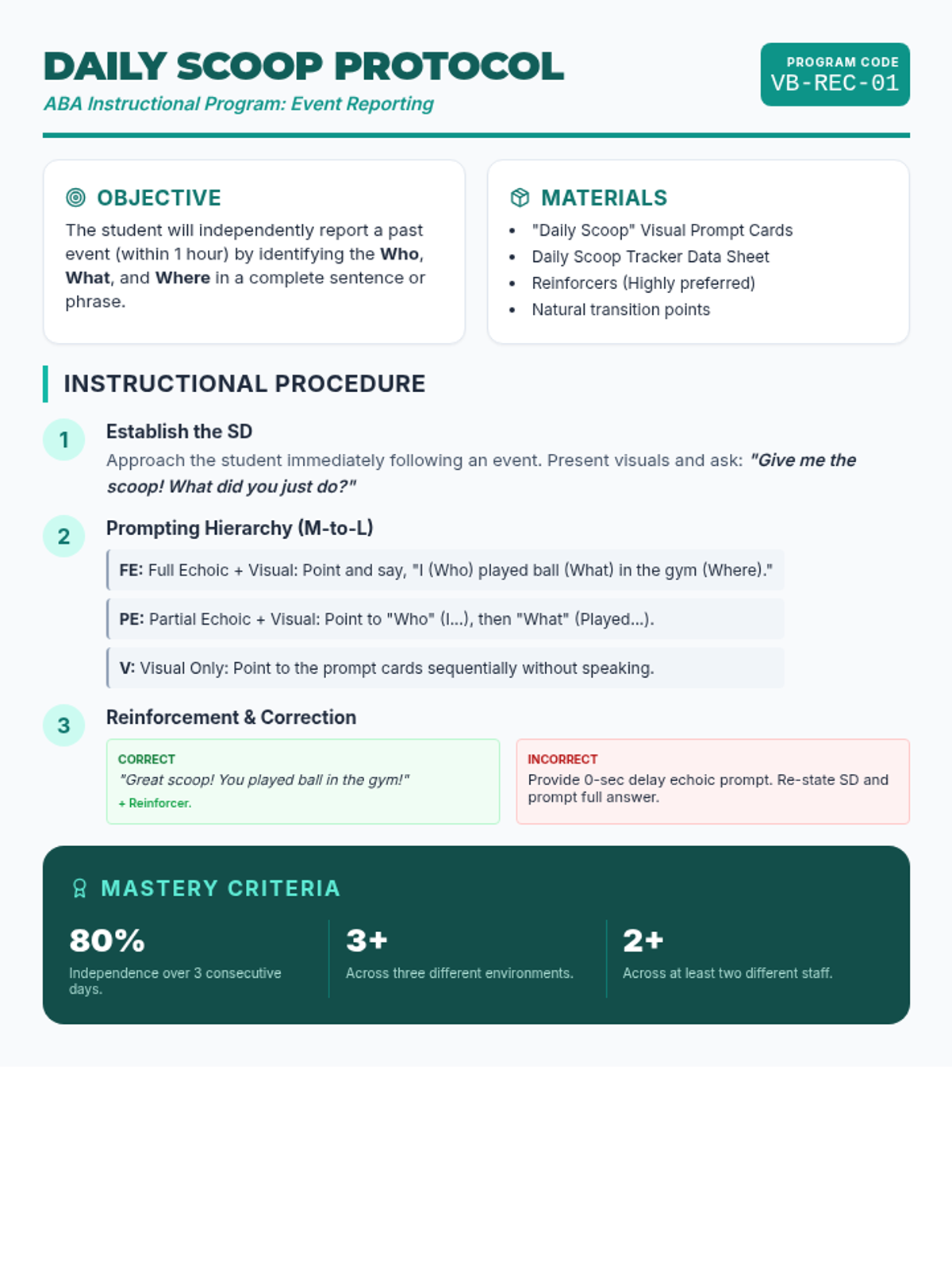
A detailed ABA instructional protocol for teaching students to report events using Who, What, and Where questions, including prompting hierarchies and mastery criteria.
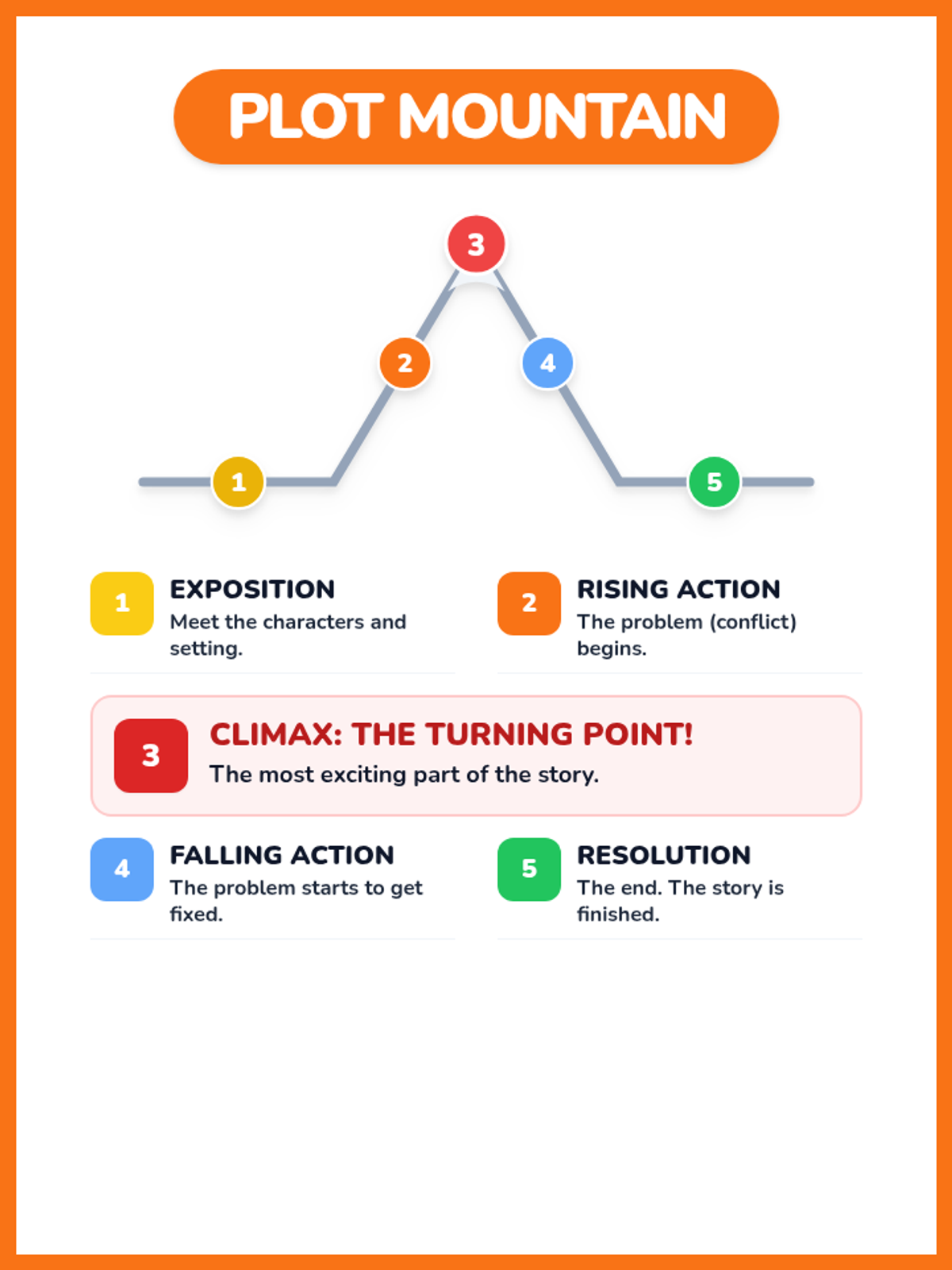
A bold, color-coded visual reference sheet identifying the five key elements of a plot with clear definitions and icons. Updated to ensure all content fits on one page and numbering is sequential.