A structured ABC (Antecedent-Behavior-Consequence) observation sheet designed for tracking off-task behaviors like staring off, including environmental context checklists and functional hypothesis areas.
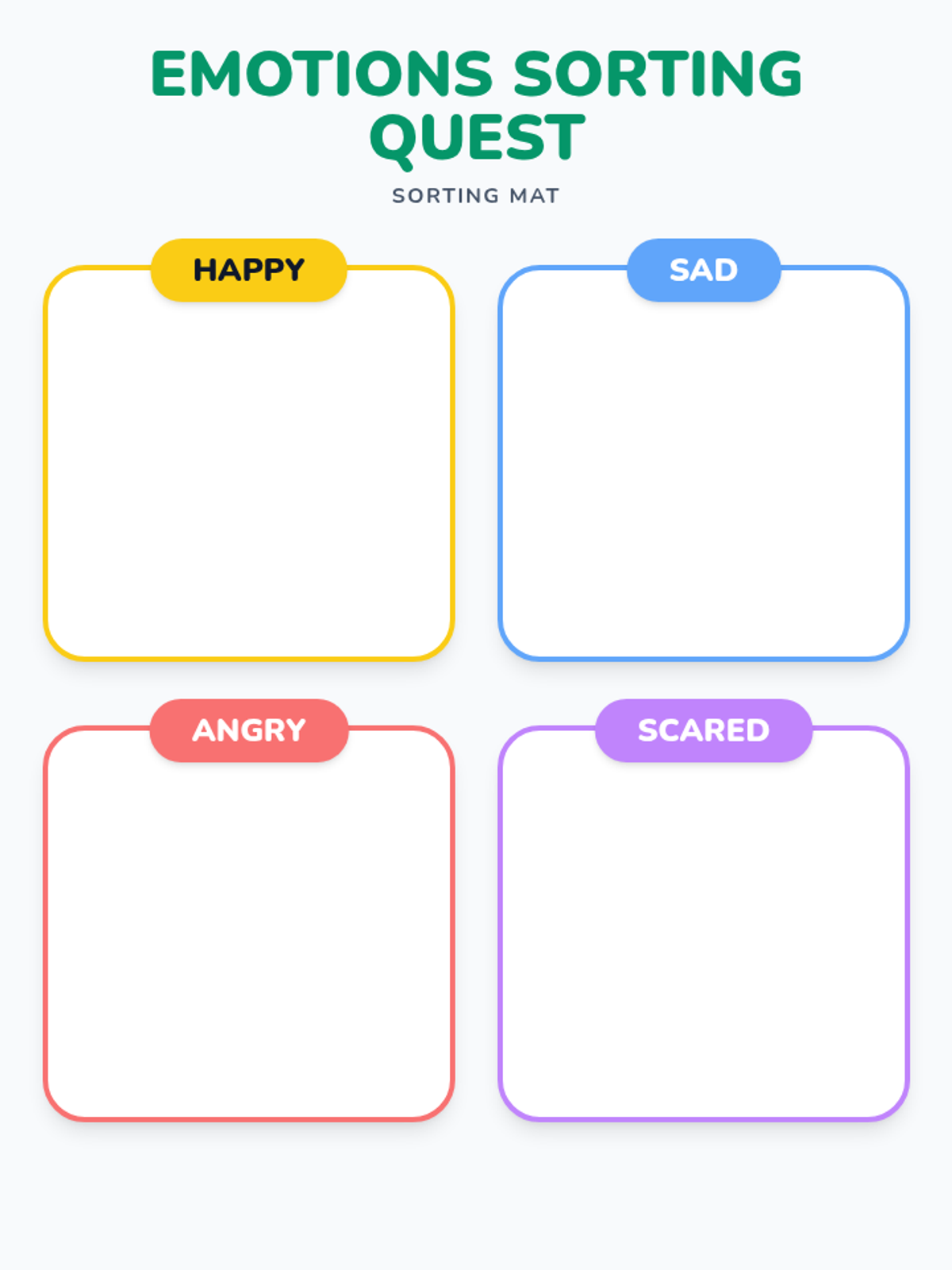
A hands-on activity where students cut out situational scenario cards and sort them into matching feeling mats. Now features dedicated sorting mat and cut-out pages, improved contrast, and purely situational icons to challenge student identification.
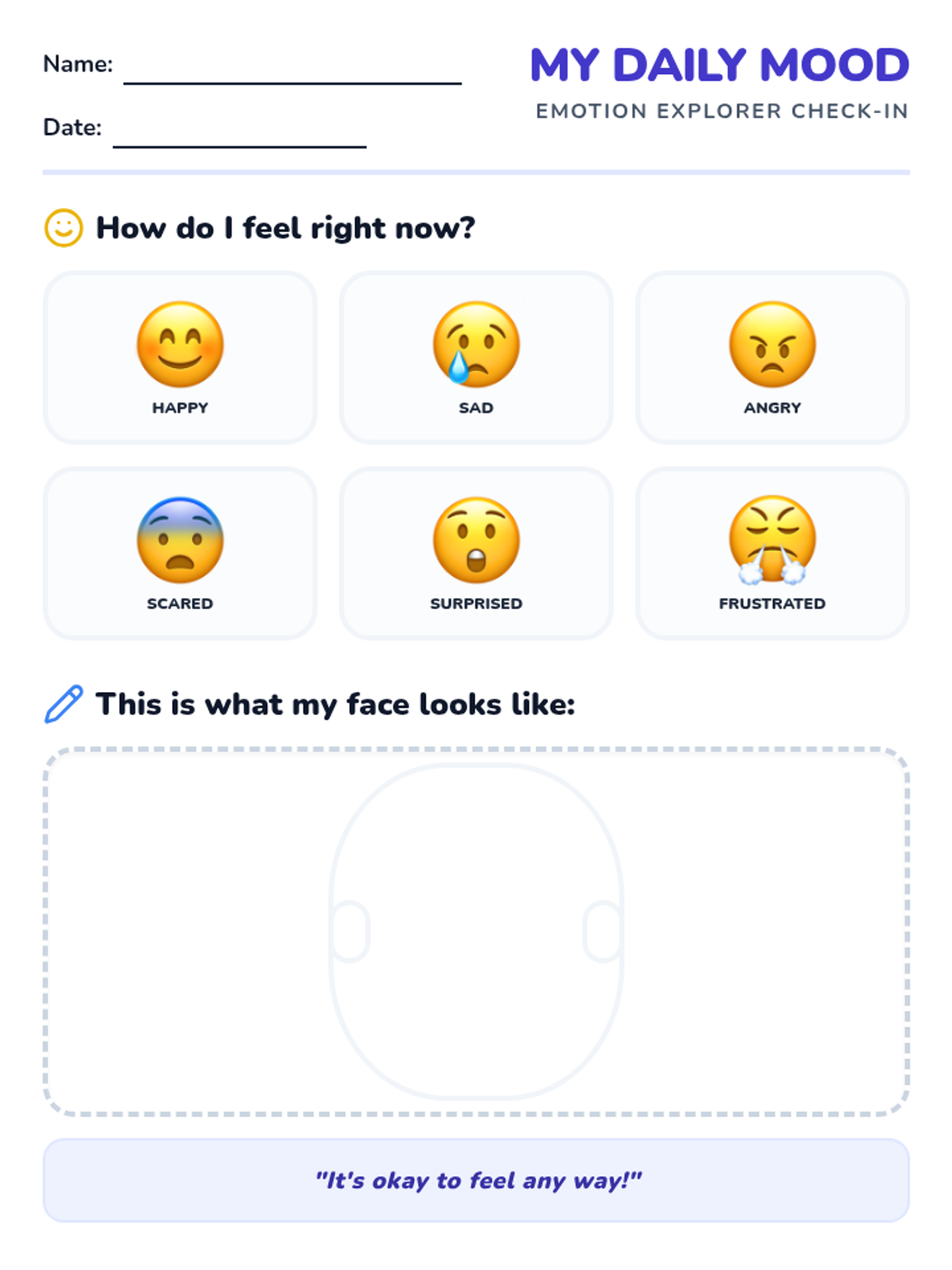
A daily check-in worksheet for Kindergarten students to identify and draw their current emotions. Features high-contrast labels, a single-page layout to avoid cutoff, and a clean white drawing area.
A visual slide deck to introduce primary and secondary emotions to Kindergarten students. Features high-contrast visuals, emojis, and practice scenarios to help identify feelings. Now includes a dedicated 'Scared' slide and consistent title case styling.
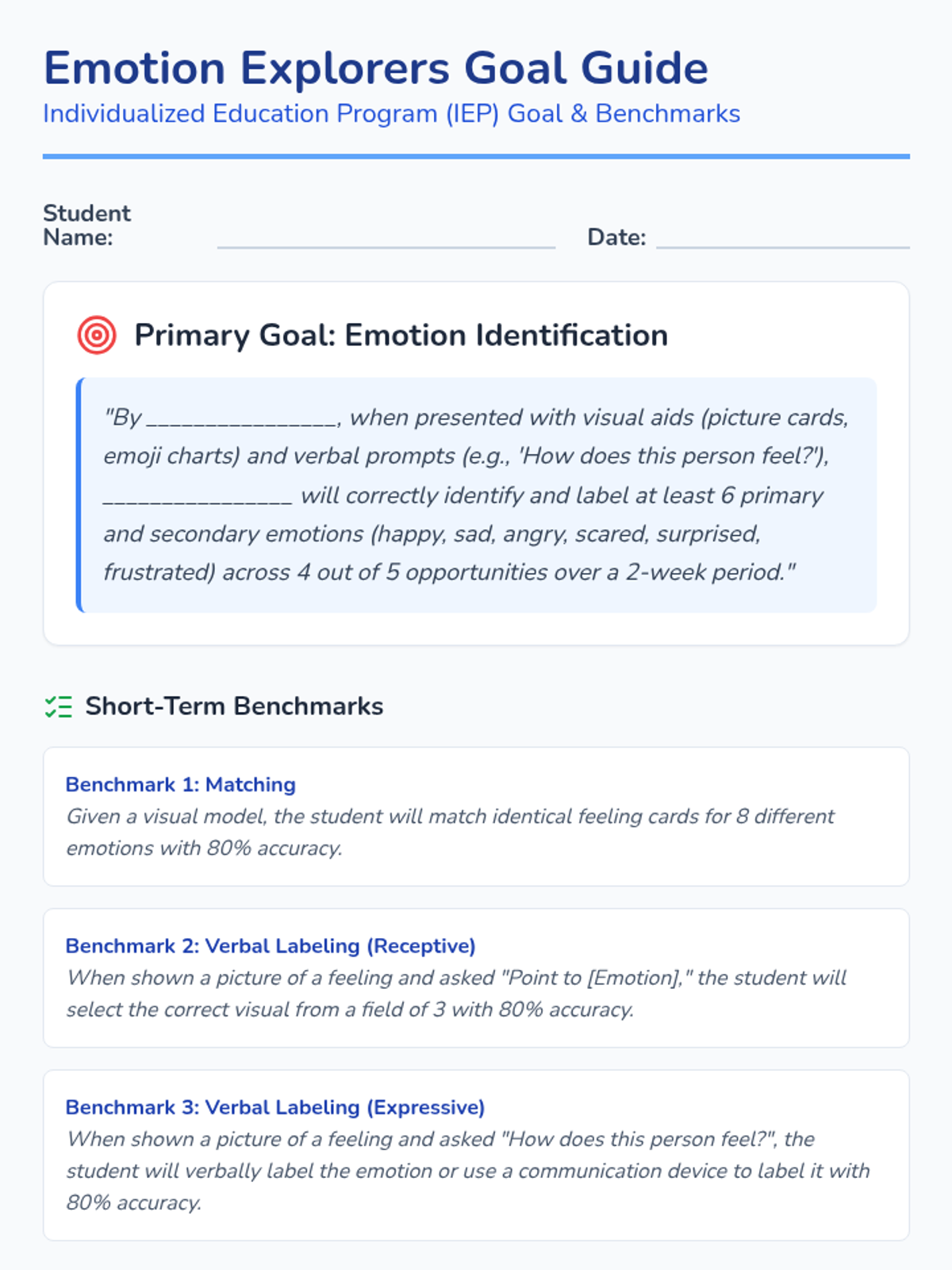
An IEP goal document for a Kindergarten student focused on identifying emotions. Includes formal goal language with blanks for personalization, measurable benchmarks, and a weekly data tracking table with increased writing space.
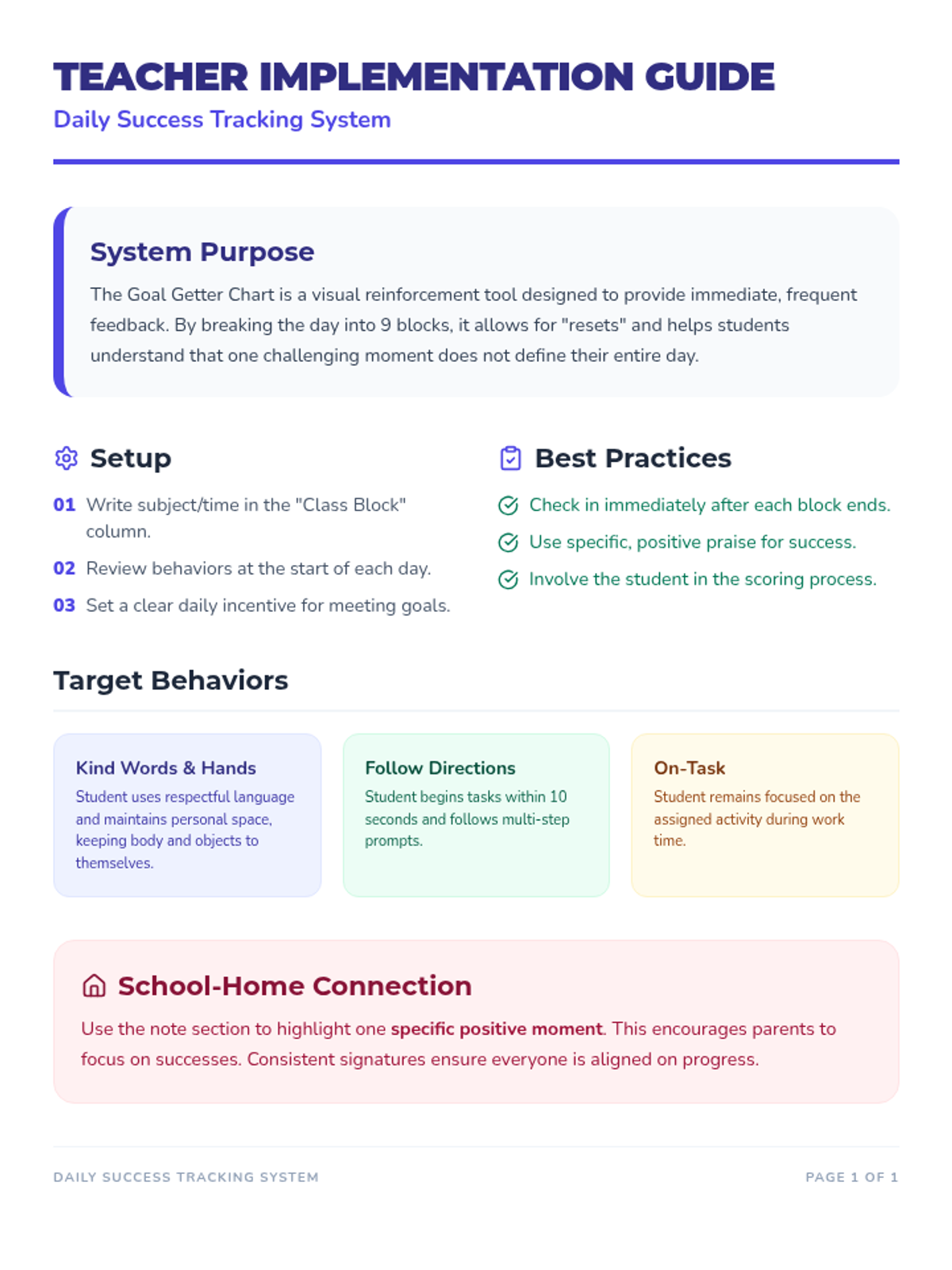
A professional implementation guide for teachers, detailing how to set up, manage, and communicate progress using the Goal Getter behavior system, updated with the 'Kind Words & Hands' goal.
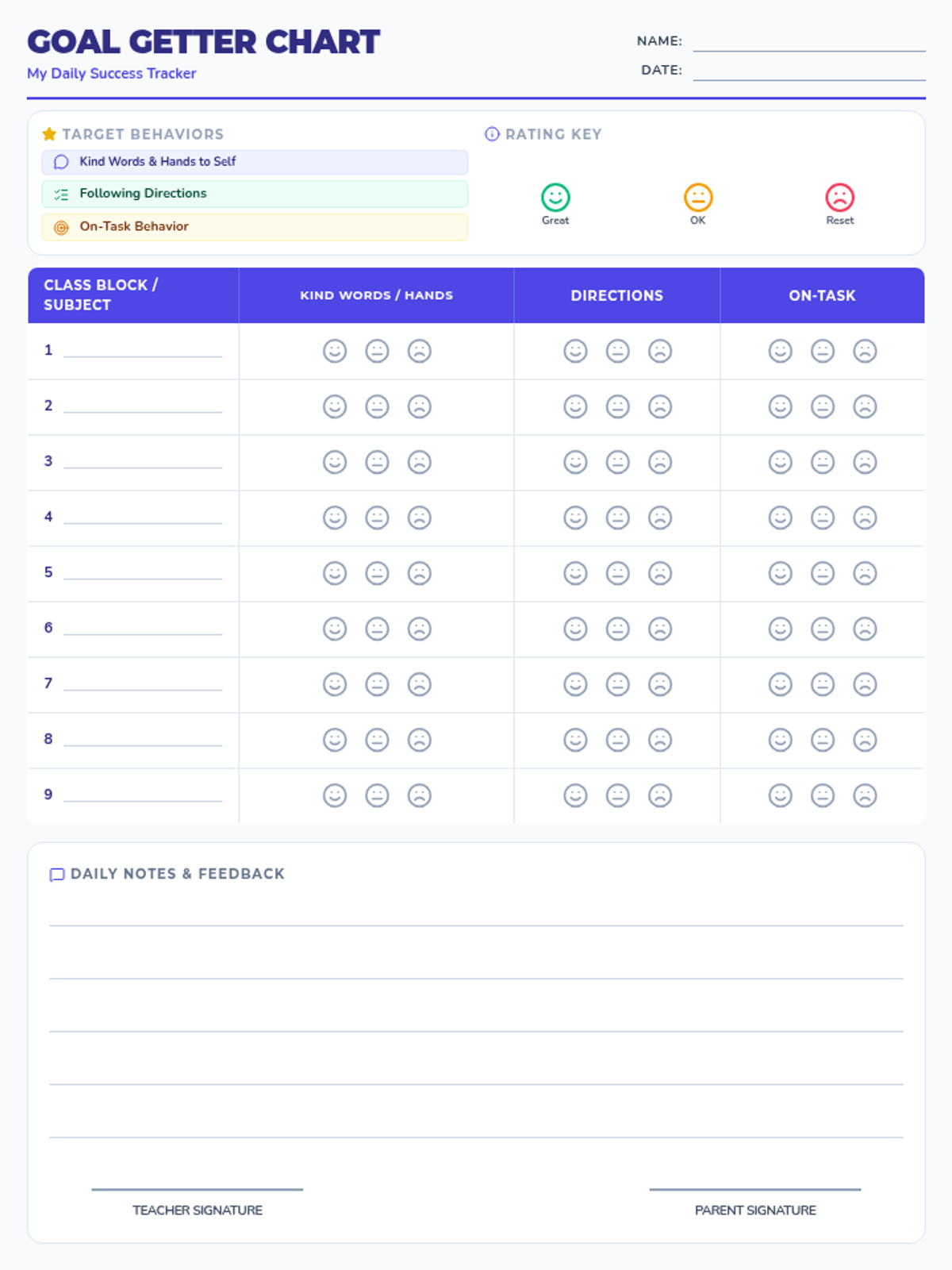
A daily behavior tracking chart featuring 9 customizable class blocks, a 3-point smiley face scale for three specific target behaviors (including Kind Words & Hands to Self), and a dedicated enlarged note section.
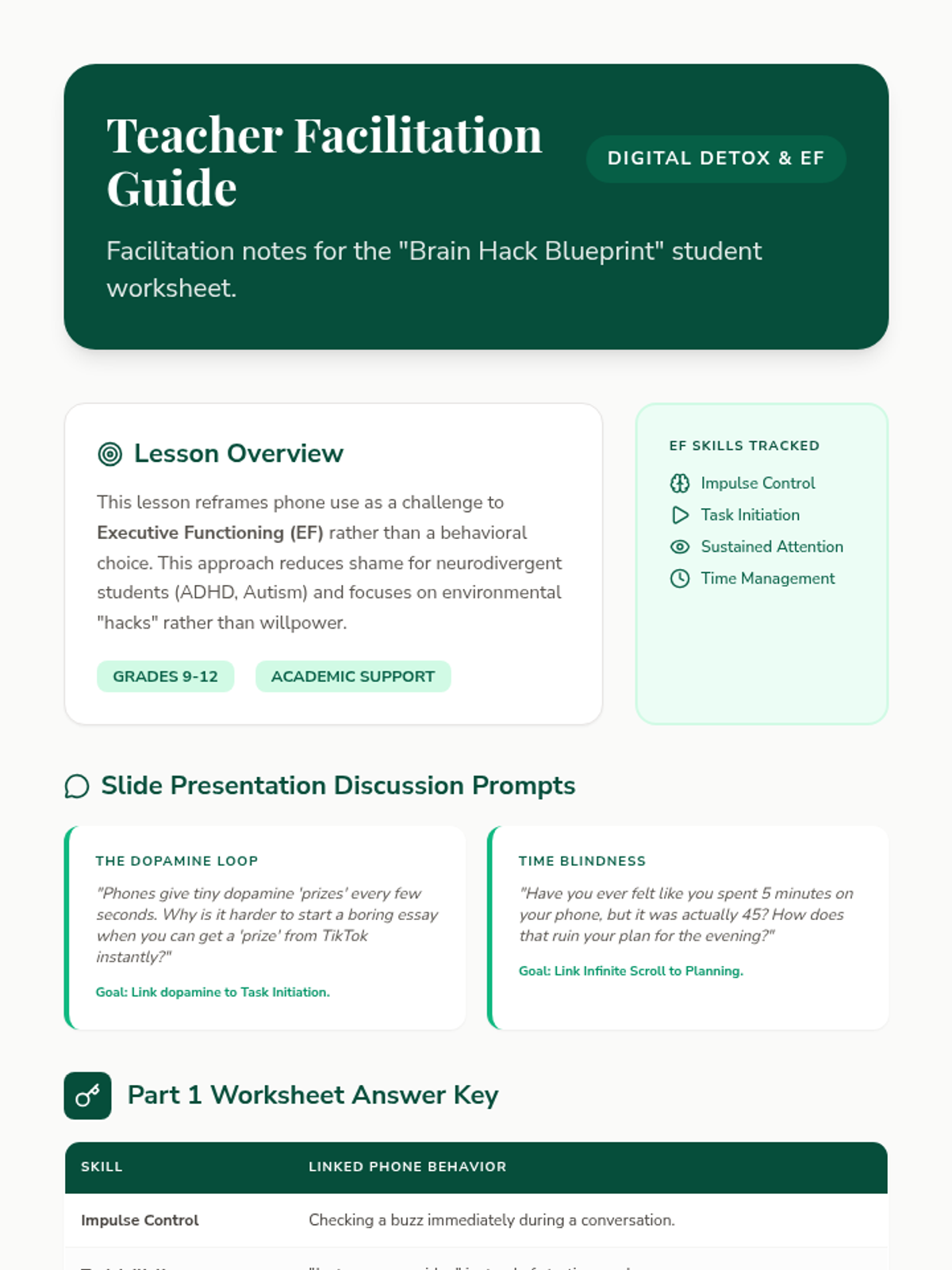
A comprehensive facilitator guide for teachers, providing background on executive functioning, discussion prompts for the slides, and an answer key for the student worksheet.
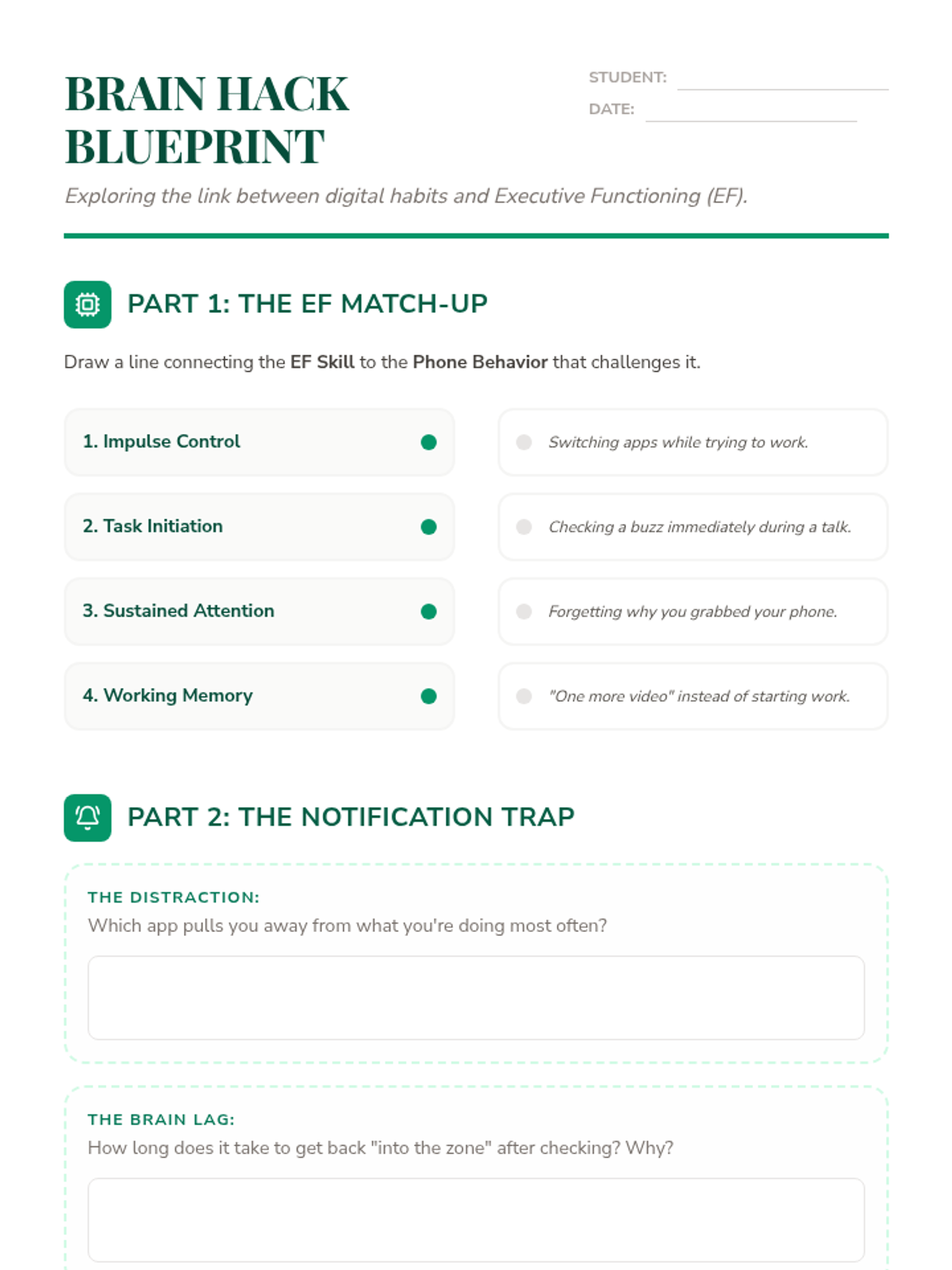
A worksheet for high school students in academic support classes that links specific executive functioning skills (impulse control, task initiation, etc.) to common phone behaviors and provides space for strategy planning.
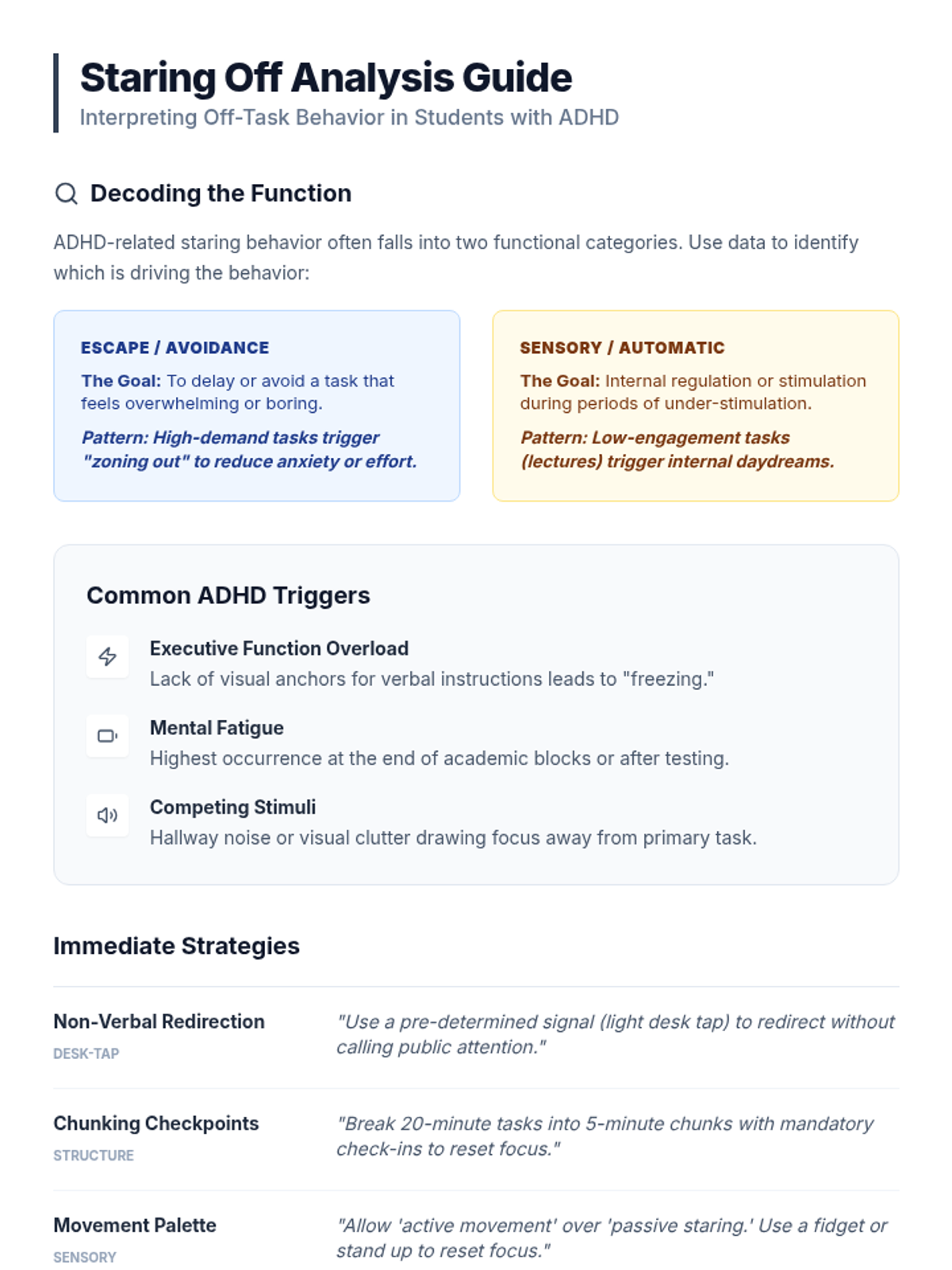
A professional guide for teachers and specialists to analyze "staring off" behavior, distinguishing between sensory and escape functions, and providing targeted intervention strategies.
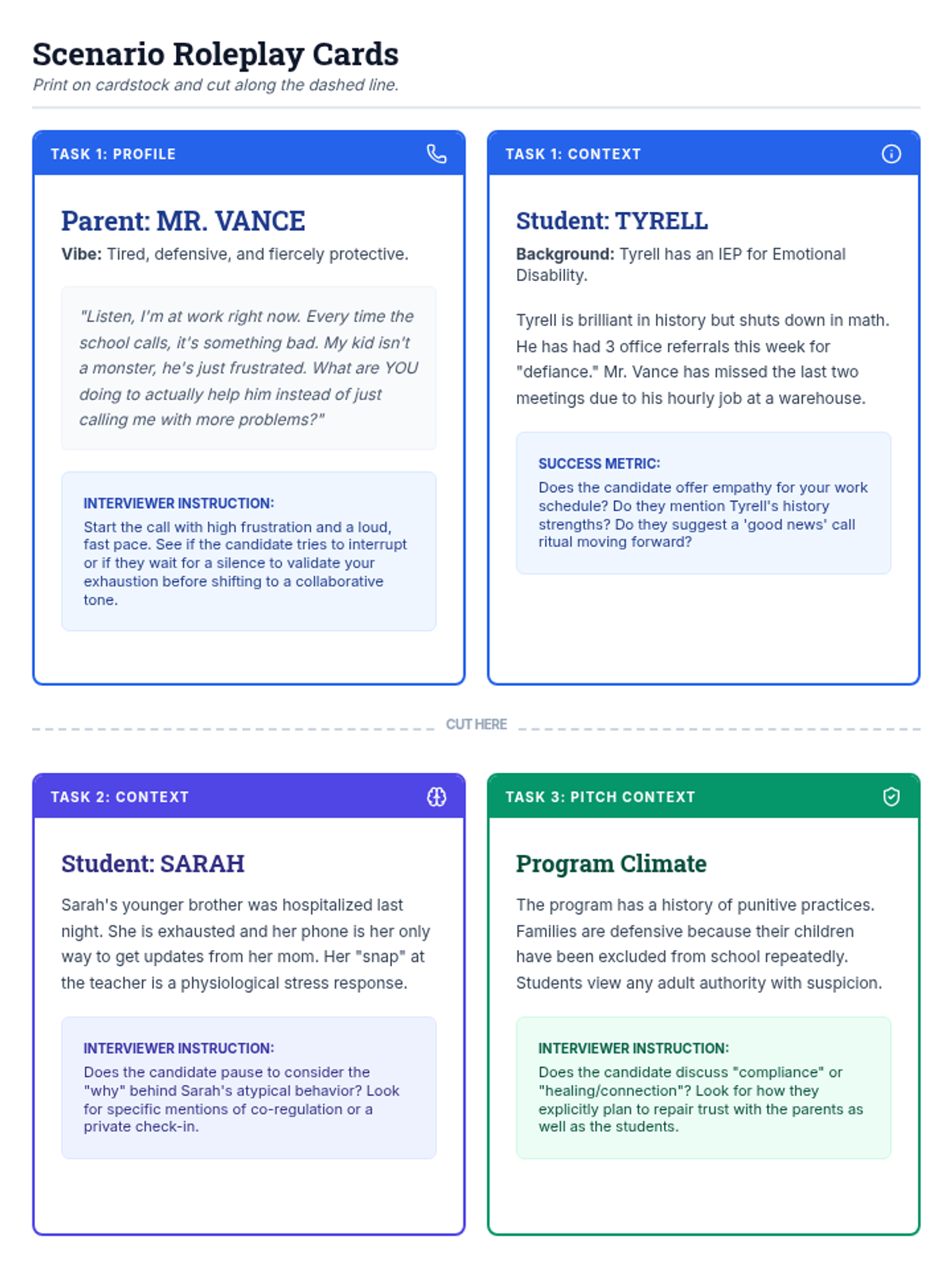
Printable scenario cards for use during the interview process, including a parent profile for the family partnership simulation and hidden context for trauma-informed analysis. Includes clear cutting guides and optimized spacing.
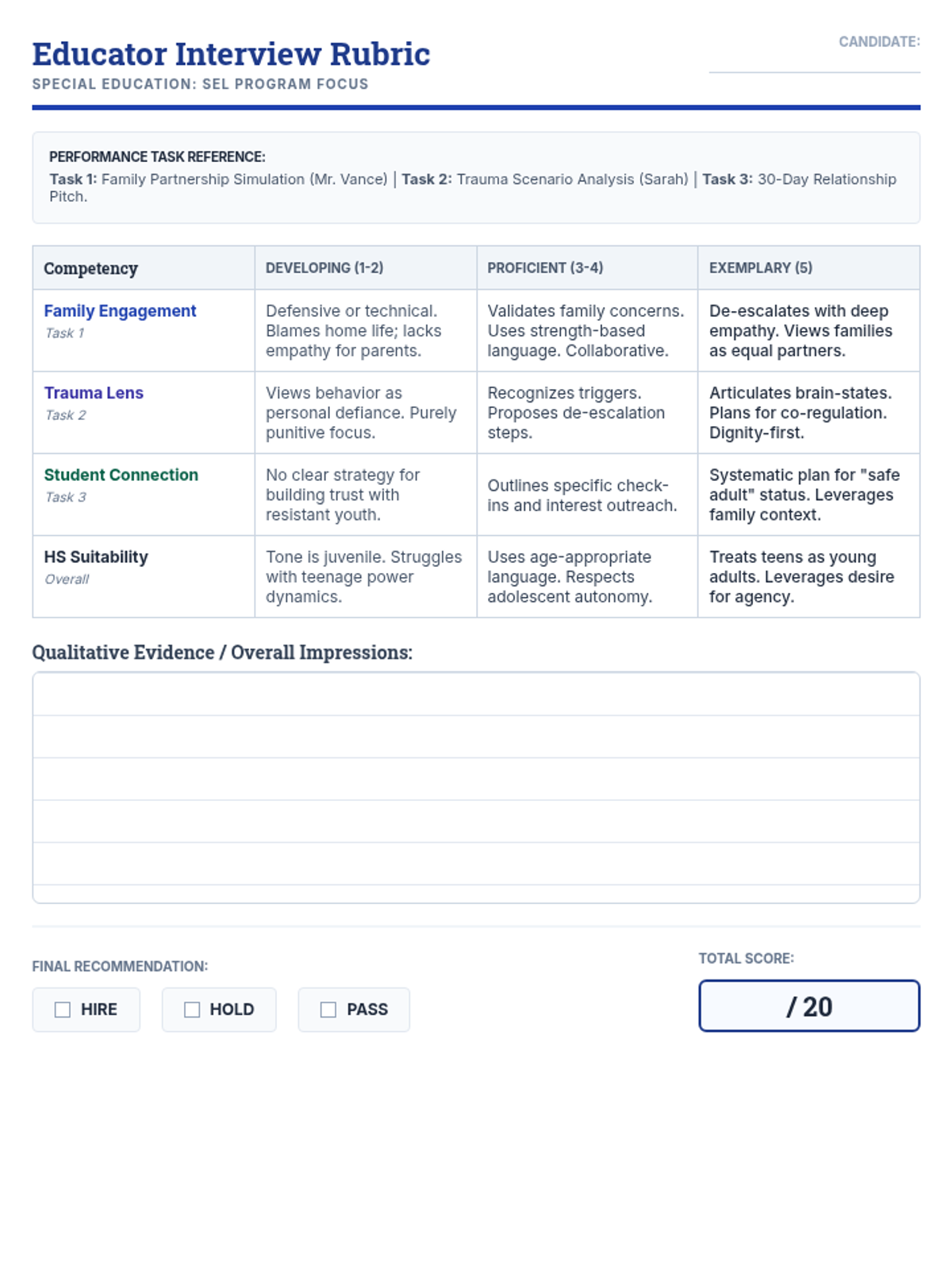
A streamlined assessment rubric designed to fit on a single page, focusing on family engagement, trauma-informed practices, and relationship-building skills for high school special education candidates. Includes lined space for qualitative notes.